EP4019128A1 - Organic borate-based catalyst, method for preparing isobutene oligomer by using same, and isobutene oligomer prepared thereby - Google Patents
Organic borate-based catalyst, method for preparing isobutene oligomer by using same, and isobutene oligomer prepared thereby Download PDFInfo
- Publication number
- EP4019128A1 EP4019128A1 EP20854908.9A EP20854908A EP4019128A1 EP 4019128 A1 EP4019128 A1 EP 4019128A1 EP 20854908 A EP20854908 A EP 20854908A EP 4019128 A1 EP4019128 A1 EP 4019128A1
- Authority
- EP
- European Patent Office
- Prior art keywords
- group
- carbon atoms
- formula
- represented
- isobutene
- Prior art date
- Legal status (The legal status is an assumption and is not a legal conclusion. Google has not performed a legal analysis and makes no representation as to the accuracy of the status listed.)
- Granted
Links
Images


Classifications
-
- C—CHEMISTRY; METALLURGY
- C07—ORGANIC CHEMISTRY
- C07F—ACYCLIC, CARBOCYCLIC OR HETEROCYCLIC COMPOUNDS CONTAINING ELEMENTS OTHER THAN CARBON, HYDROGEN, HALOGEN, OXYGEN, NITROGEN, SULFUR, SELENIUM OR TELLURIUM
- C07F5/00—Compounds containing elements of Groups 3 or 13 of the Periodic Table
- C07F5/02—Boron compounds
- C07F5/027—Organoboranes and organoborohydrides
-
- C—CHEMISTRY; METALLURGY
- C08—ORGANIC MACROMOLECULAR COMPOUNDS; THEIR PREPARATION OR CHEMICAL WORKING-UP; COMPOSITIONS BASED THEREON
- C08F—MACROMOLECULAR COMPOUNDS OBTAINED BY REACTIONS ONLY INVOLVING CARBON-TO-CARBON UNSATURATED BONDS
- C08F110/00—Homopolymers of unsaturated aliphatic hydrocarbons having only one carbon-to-carbon double bond
- C08F110/04—Monomers containing three or four carbon atoms
- C08F110/08—Butenes
- C08F110/10—Isobutene
-
- C—CHEMISTRY; METALLURGY
- C08—ORGANIC MACROMOLECULAR COMPOUNDS; THEIR PREPARATION OR CHEMICAL WORKING-UP; COMPOSITIONS BASED THEREON
- C08F—MACROMOLECULAR COMPOUNDS OBTAINED BY REACTIONS ONLY INVOLVING CARBON-TO-CARBON UNSATURATED BONDS
- C08F10/00—Homopolymers and copolymers of unsaturated aliphatic hydrocarbons having only one carbon-to-carbon double bond
- C08F10/04—Monomers containing three or four carbon atoms
- C08F10/08—Butenes
- C08F10/10—Isobutene
-
- B—PERFORMING OPERATIONS; TRANSPORTING
- B01—PHYSICAL OR CHEMICAL PROCESSES OR APPARATUS IN GENERAL
- B01J—CHEMICAL OR PHYSICAL PROCESSES, e.g. CATALYSIS OR COLLOID CHEMISTRY; THEIR RELEVANT APPARATUS
- B01J31/00—Catalysts comprising hydrides, coordination complexes or organic compounds
- B01J31/02—Catalysts comprising hydrides, coordination complexes or organic compounds containing organic compounds or metal hydrides
- B01J31/0272—Catalysts comprising hydrides, coordination complexes or organic compounds containing organic compounds or metal hydrides containing elements other than those covered by B01J31/0201 - B01J31/0255
- B01J31/0274—Catalysts comprising hydrides, coordination complexes or organic compounds containing organic compounds or metal hydrides containing elements other than those covered by B01J31/0201 - B01J31/0255 containing silicon
-
- B—PERFORMING OPERATIONS; TRANSPORTING
- B01—PHYSICAL OR CHEMICAL PROCESSES OR APPARATUS IN GENERAL
- B01J—CHEMICAL OR PHYSICAL PROCESSES, e.g. CATALYSIS OR COLLOID CHEMISTRY; THEIR RELEVANT APPARATUS
- B01J31/00—Catalysts comprising hydrides, coordination complexes or organic compounds
- B01J31/02—Catalysts comprising hydrides, coordination complexes or organic compounds containing organic compounds or metal hydrides
- B01J31/12—Catalysts comprising hydrides, coordination complexes or organic compounds containing organic compounds or metal hydrides containing organo-metallic compounds or metal hydrides
- B01J31/14—Catalysts comprising hydrides, coordination complexes or organic compounds containing organic compounds or metal hydrides containing organo-metallic compounds or metal hydrides of aluminium or boron
- B01J31/146—Catalysts comprising hydrides, coordination complexes or organic compounds containing organic compounds or metal hydrides containing organo-metallic compounds or metal hydrides of aluminium or boron of boron
-
- C—CHEMISTRY; METALLURGY
- C07—ORGANIC CHEMISTRY
- C07F—ACYCLIC, CARBOCYCLIC OR HETEROCYCLIC COMPOUNDS CONTAINING ELEMENTS OTHER THAN CARBON, HYDROGEN, HALOGEN, OXYGEN, NITROGEN, SULFUR, SELENIUM OR TELLURIUM
- C07F7/00—Compounds containing elements of Groups 4 or 14 of the Periodic Table
- C07F7/02—Silicon compounds
- C07F7/08—Compounds having one or more C—Si linkages
- C07F7/18—Compounds having one or more C—Si linkages as well as one or more C—O—Si linkages
- C07F7/1804—Compounds having Si-O-C linkages
-
- C—CHEMISTRY; METALLURGY
- C08—ORGANIC MACROMOLECULAR COMPOUNDS; THEIR PREPARATION OR CHEMICAL WORKING-UP; COMPOSITIONS BASED THEREON
- C08F—MACROMOLECULAR COMPOUNDS OBTAINED BY REACTIONS ONLY INVOLVING CARBON-TO-CARBON UNSATURATED BONDS
- C08F2/00—Processes of polymerisation
- C08F2/04—Polymerisation in solution
-
- C—CHEMISTRY; METALLURGY
- C08—ORGANIC MACROMOLECULAR COMPOUNDS; THEIR PREPARATION OR CHEMICAL WORKING-UP; COMPOSITIONS BASED THEREON
- C08F—MACROMOLECULAR COMPOUNDS OBTAINED BY REACTIONS ONLY INVOLVING CARBON-TO-CARBON UNSATURATED BONDS
- C08F2/00—Processes of polymerisation
- C08F2/38—Polymerisation using regulators, e.g. chain terminating agents, e.g. telomerisation
-
- C—CHEMISTRY; METALLURGY
- C08—ORGANIC MACROMOLECULAR COMPOUNDS; THEIR PREPARATION OR CHEMICAL WORKING-UP; COMPOSITIONS BASED THEREON
- C08F—MACROMOLECULAR COMPOUNDS OBTAINED BY REACTIONS ONLY INVOLVING CARBON-TO-CARBON UNSATURATED BONDS
- C08F4/00—Polymerisation catalysts
- C08F4/42—Metals; Metal hydrides; Metallo-organic compounds; Use thereof as catalyst precursors
- C08F4/44—Metals; Metal hydrides; Metallo-organic compounds; Use thereof as catalyst precursors selected from light metals, zinc, cadmium, mercury, copper, silver, gold, boron, gallium, indium, thallium, rare earths or actinides
- C08F4/52—Metals; Metal hydrides; Metallo-organic compounds; Use thereof as catalyst precursors selected from light metals, zinc, cadmium, mercury, copper, silver, gold, boron, gallium, indium, thallium, rare earths or actinides selected from boron, aluminium, gallium, indium, thallium or rare earths
-
- C—CHEMISTRY; METALLURGY
- C08—ORGANIC MACROMOLECULAR COMPOUNDS; THEIR PREPARATION OR CHEMICAL WORKING-UP; COMPOSITIONS BASED THEREON
- C08F—MACROMOLECULAR COMPOUNDS OBTAINED BY REACTIONS ONLY INVOLVING CARBON-TO-CARBON UNSATURATED BONDS
- C08F4/00—Polymerisation catalysts
- C08F4/42—Metals; Metal hydrides; Metallo-organic compounds; Use thereof as catalyst precursors
- C08F4/44—Metals; Metal hydrides; Metallo-organic compounds; Use thereof as catalyst precursors selected from light metals, zinc, cadmium, mercury, copper, silver, gold, boron, gallium, indium, thallium, rare earths or actinides
- C08F4/54—Metals; Metal hydrides; Metallo-organic compounds; Use thereof as catalyst precursors selected from light metals, zinc, cadmium, mercury, copper, silver, gold, boron, gallium, indium, thallium, rare earths or actinides together with other compounds thereof
-
- B—PERFORMING OPERATIONS; TRANSPORTING
- B01—PHYSICAL OR CHEMICAL PROCESSES OR APPARATUS IN GENERAL
- B01J—CHEMICAL OR PHYSICAL PROCESSES, e.g. CATALYSIS OR COLLOID CHEMISTRY; THEIR RELEVANT APPARATUS
- B01J2231/00—Catalytic reactions performed with catalysts classified in B01J31/00
- B01J2231/20—Olefin oligomerisation or telomerisation
Definitions
- the present invention relates to an organic borate-based catalyst including a hydroxyl group-containing compound, a method for preparing an isobutene oligomer using the same and an isobutene oligomer prepared thereby.
- a propagating polymer chain includes an active moiety which has a positive charge.
- the active moiety may be a carbocation or an oxonium ion.
- Examples of a monomer which may carrying out such cationic polymerization include styrene, isobutene, cyclopentadiene, dicyclopentadiene and derivatives thereof, and polyisobutene obtained by polymerizing isobutene is the most typical example.
- Polyisobutene is classified into a low molecular weight, medium molecular weight and high molecular weight range according to the range of molecular weight.
- the low molecular weight polyisobutene has a number average molecular weight in a range of about 10,000 or less, and includes product groups of common polybutene and high reactive polybutene (HR-PB).
- the high reactive polybutene includes a carbon-carbon double bond mainly positioned at the terminal of the polybutene, and after introducing a functional group using a vinylidene functional group at the terminal (>80%), the high reactive polybutene is used as a fuel additive or an engine oil additive.
- the medium molecular weight polyisobutene has a number average molecular weight in a range of about 30,000-100,000, and is mainly used in a sticking agent, an adhesive, a sealant and a wax, or may be used as a reforming agent of polyethylene or used in combination with natural rubber and synthetic rubber for improving antiaging properties and ozone resistance.
- a boron-based catalyst such as BF 3 has been used in the conventional technique, but this catalyst is toxic and has a gas type and is difficult to handle.
- a boron-alcohol or boron-ether composite is prepared and used, but there are problems in that the activity of the catalyst is reduced over time.
- a halogen-containing solvent such as methyl chloride (CH 3 Cl) and dichloromethane (CH 2 Cl 2 ) is used as a polymerization solvent.
- the polyisobutene thus produced is used in a fuel additive or a lubricant, but in this case, remaining halogen causes corrosion defects in an internal combustion engine, and in case of discharging the halogen, problems of environmental contamination are caused.
- catalyst activity was lost, and the preparation of a high reactive polybutene was difficult. Particularly, the generation of the cationic polymerization reaction in moderate reaction conditions without setting extreme polymerization environment was almost impossible.
- the present inventors studied to develop a catalyst which may prepare a high reactive polybutene having better stability than the conventionally used catalyst in high efficiency.
- Patent Document 1 Korean Registration Patent Publication No. 10-0486044
- An object of the present invention is to provide a novel organic borate-based catalyst including a hydroxyl group-containing compound and a method for preparing the same.
- Another object of the present invention is to provide a method for preparing an isobutene oligomer using the organic borate-based catalyst.
- Another object of the present invention is to provide a novel isobutene oligomer prepared by the preparation method.
- an organic borate-based catalyst including a compound represented by Formula 1 below and a hydroxyl group-containing compound, wherein a silicon atom (Si) of the compound represented by Formula 1 and an oxygen atom (O) of the hydroxyl group-containing compound form a covalent bond.
- each R0 is independently hydrogen, an alkyl group of 1 to 20 carbon atoms, an alkoxy group of 1 to 20 carbon atoms, an aryl group of 6 to 20 carbon atoms or an aryloxy group of 6 to 20 carbon atoms
- R 1 to R 4 are each independently hydrogen, a halogen group or an alkyl group of 1 to 20 carbon atoms
- o, p, q and r are each independently an integer of 1 to 5.
- the present invention provides a method for preparing an isobutene oligomer, including a step of polymerizing an isobutene monomer in the presence of the organic borate-based catalyst.
- the present invention provides an isobutene oligomer including functional groups represented by Formulae a to e below, not including a functional group represented by Formula f below, and having a number average molecular weight of 1,000 or more.
- X is a halogen atom.
- the present invention provides a method for preparing an organic borate-based catalyst, including a step of injecting the compound represented by Formula 1 and the hydroxyl group-containing compound in a hydrocarbon solvent, and stirring.
- the novel organic borate-based catalyst of the present invention has higher stability than the conventionally used catalyst and may be usefully used for the preparation of an oligomer or a polymer, and has high catalyst activity and may relatively reduce the amount used, and thus, may be economical and eco-friendly.
- the catalyst of the present invention is used in cationic polymerization reaction, there are no problems of remaining some structures derived from the catalyst in an initiation step in an oligomer or polymer, and the mixing of undesired some functional groups in the polymer may be prevented, and accordingly, there are advantages in efficiently preparing an oligomer and polymer with high purity.
- the novel isobutene oligomer provided in the present invention includes terminal carbon-carbon double bonds in a high amount and has high reactivity and thus, is useful in commercial use. At the same time, since double bonds with diverse types positioned at the inner part of the oligomer are further included, the characteristics of improved processability of the isobutene oligomer may be achieved. Further, there are advantages in that different functional groups may be employed in the middle of or at the terminal of the polymer or oligomer by using the reactivity difference of each of the double bonds having diverse types, while keeping the common physical properties.
- an aluminum- or boron-based Lewis acid has been generally used as a catalyst or initiator for cationic polymerization.
- a Lewis acid catalyst requires a large amount of the catalyst, and after the reaction, a large amount of basic materials (NaOH, KOH, NH 4 OH, etc.) are used for removing the catalyst, and additional washing with water is performed to generate a large amount of waste water.
- the organic borate-based catalyst of the present invention is a novel catalyst developed for solving various problems of the conventional Lewis acid catalyst for cationic polymerization as described above, and is noncorrosive and has high catalyst activity different from the conventional Lewis acid catalyst. Accordingly, the amount used of the catalyst required for obtaining an equivalent level of effects is small, and catalyst cost is saved.
- the catalyst of the present invention has a structure in which a silicon atom (Si) and an oxygen atom (O) form a covalent bond to form a composite, and the catalyst stability is markedly improved when compared with a case where an organic borate-based compound is solely present.
- a stabilized catalyst may be used for polymerizing a monomer and preparing an oligomer, and particularly, in case of forming an oligomer by the cationic polymerization of an isobutene monomer, there are characteristics in that the exo-content is high, and an oligomer having excellent reactivity may be efficiently prepared.
- the organic borate-based catalyst of the present invention is characterized in including a compound represented by Formula 1 below and a hydroxyl group-containing compound, and a silicon atom (Si) of the compound represented by Formula 1 and an oxygen atom (O) of the hydroxyl group-containing compound form a covalent bond.
- the organic borate, included in Formula 1 above, may particularly be one or more selected from the group consisting of tetrakis(phenyl)borate, tetrakis(pentafluorophenyl)borate, tetrakis[3,5-bis(trifluoromethyl)phenyl]borate and derivatives thereof, preferably, tetrakis(pentafluorophenyl)borate.
- alkyl group may mean a monovalent aliphatic saturated hydrocarbon, and may include both a linear alkyl group such as methyl, ethyl, propyl and butyl, and a branched alkyl group such as isopropyl, sec-butyl, tert-butyl and neopentyl.
- a methyl group, an ethyl group, a propyl group, an isopropyl group, a butyl group, a tert-butyl group, a sec-butyl group, a 1-methyl-butyl group, a 1-ethylbutyl group, a pentyl group, an isopentyl group, a neopentyl group, a tert-pentyl group, a 1-methylpentyl group, a 2-methylpentyl group, a 4-methyl-2-pentyl group, a hexyl group, an isohexyl group, a 4-methylhexyl group, a 5-methylhexyl group, an heptyl group, etc. may be included, without limitation.
- the "alkoxy group” may be a linear type, a branch type or a ring type. Particularly, methoxy, ethoxy, n-propoxy, isopropoxy, i-propyloxy, n-butoxy, isobutoxy, tert-butoxy, sec-butoxy, n-pentyloxy, neopentyloxy, isopentyloxy, n-hexyloxy, 3,3-dimethylbutyloxy, 2-ethylbutyloxy, n-octyloxy, n-nonyloxy, n-decyloxy, benzyloxy, p-methylbenzyloxy, etc., may be included, without limitation.
- the "aryl group” may mean a cyclic aromatic hydrocarbon, and may include both monocyclic aromatic hydrocarbon in which one ring is formed, and polycyclic aromatic hydrocarbon in which two or more rings are formed.
- the monocyclic aromatic hydrocarbon may include a phenyl group, a biphenyl group, a terphenyl group, etc.
- the polycyclic aromatic hydrocarbon may include a naphthyl group, an anthracenyl group, a phenanthryl group, a pyrenyl group, a perylenyl group, a triphenyl group, a chrysenyl group, a fluorenyl group, etc., without limitation.
- the "aryloxy group” includes phenoxy, p-tolyloxy, m-tolyloxy, 3,5-dimethyl-phenoxy, 2,4,6-trimethylphenoxy, p-tert-butylphenoxy, 3-biphenyloxy, 4-biphenyloxy, 1-naphthyloxy, 2-naphthyloxy, 4-methyl-1-naphthyloxy, 5-methyl-2-naphthyloxy, 1-anthryloxy, 2-anthryloxy, 9-anthryloxy, 1-phenanthryloxy, 3-phenanthryloxy, 9-phenanthryloxy, etc., without limitation.
- the hydroxyl group-containing compound may be water (H 2 O) or a compound represented by Formula 2 below.
- R 5 to R 7 are each independently hydrogen, a hydroxyl group, a hydroxyalkyl group of 1 to 20 carbon atoms, an alkyl group of 1 to 20 carbon atoms, an alkenyl group of 2 to 20 carbon atoms, an alkynyl group of 2 to 20 carbon atoms, a cycloalkyl group of 3 to 20 carbon atoms, an aryl group of 6 to 20 carbon atoms, a heteroaryl group of 5 to 20 carbon atoms, an alkoxy group of 1 to 20 carbon atoms, an aryloxy group of 6 to 20 carbon atoms, an alkylaryl group of 7 to 20 carbon atoms or an arylalkyl group of 7 to 20 carbon atoms.
- the hydroxyl group-containing compound is a compound represented by Formula 2, and in this case, R 5 to R 7 may be each independently hydrogen, an alkyl group of 1 to 20 carbon atoms, an alkenyl group of 2 to 20 carbon atoms, an alkynyl group of 2 to 20 carbon atoms, a cycloalkyl group of 3 to 20 carbon atoms, an aryl group of 6 to 20 carbon atoms, a heteroaryl group of 5 to 20 carbon atoms, an alkylaryl group of 7 to 20 carbon atoms or an arylalkyl group of 7 to 20 carbon atoms.
- R 5 to R 7 may be each independently hydrogen, an alkyl group of 1 to 20 carbon atoms, an alkenyl group of 2 to 20 carbon atoms, an alkynyl group of 2 to 20 carbon atoms, a cycloalkyl group of 3 to 20 carbon atoms, an aryl group of 6 to 20 carbon atoms, a heteroaryl group of 5
- the compound represented by Formula 2 may correspond to any one among a primary alcohol, a secondary alcohol and a tertiary alcohol
- the primary alcohol includes methanol, ethanol, propanol, butanol, pentanol, hexanol, heptanol, octanol, nonanol, decanol or combinations thereof
- the secondary alcohol includes propan-2-ol, butan-2-ol, pentan-2-ol, hexan-2-ol, heptan-2-ol, octan-2-ol, nonan-2-ol, decan-2-ol, butan-3-ol, pentan-3-ol, hexan-3-ol, heptan-3-ol, octan-3-ol, nonan-3-ol, decan-3-ol, or combinations thereof
- the tertiary alcohol includes 2-methylpropan-2-ol, 2-methylbutan-2-ol, 2-methyl
- the organic borate-based catalyst may be a compound represented by Formula 3 below.
- the catalyst of the present invention has a structure in which a silicon atom included in the compound represented by Formula 1 and an oxygen atom included in the hydroxyl group-containing compound interact, and the oxygen-hydrogen bond of a hydroxyl group is activated.
- a hydrogen atom in the activated oxygen-hydrogen bond reacts with the monomer to produce carbocation to initiate polymerization.
- the catalyst of the present invention is a compound having a structure below.
- the weight ratio of the compound represented by Formula 1 and the hydroxyl group-containing compound may be 1:0.5 to 1:4, preferably, 1:1 to 1:4, 1:0.1 to 1:2, more preferably, 1:1 to 1:2.
- the catalyst of the present invention has a type forming a composite by the reaction of the compound represented by Formula 1 and the hydroxyl group-containing compound, and considering the reaction efficiency of the two compounds, the compound represented by Formula 1 and the hydroxyl group-containing compound may be used in the same weights, but a person skilled in the art may control the ratio suitably and use.
- a method for preparing the organic borate-based catalyst is characterized in including a step of injecting a compound represented by Formula 1 below and a hydroxyl group-containing compound into a hydrocarbon solvent and stirring.
- the time required for performing the stirring may be 0.5 hours or more, 1 hour or more, and 20 hours or less, 15 hours or less, without limitation.
- the compound represented by Formula 1 and the hydroxyl group-containing compound are sufficiently mixed in the hydrocarbon solvent, and the silicon atom of the compound represented by Formula 1 and the oxygen atom of the hydroxyl group-containing compound form a covalent bond from each other to prepare the organic borate-based catalyst of the present invention.
- the conventional catalyst undergoes polymerization reaction while producing carbocations in a catalyst preparing process, and if the catalyst does not react with a monomer immediately after preparing the catalyst, the properties of returning back to a previous step through reverse reaction are significant due to the unstability of the carbocation, and the use of the catalyst after storing for a certain time after preparation is impossible.
- the catalyst of the present invention becomes to have a composite type in which a silicon atom and an oxygen atom form a covalent bond through the stirring step, and this type may be used after a certain time from the preparation, because this type has excellent stability. If used after storing for a few minutes to a few hours from the preparation of the catalyst of the present invention, the above-described stirring may be continuously carried out during storing, or if a composite is formed through sufficient stirring, may be stood without stirring.
- the organic borate-based catalyst according to the present invention may be used for preparing an oligomer or a polymer, including a step of polymerizing a monomer in the presence of the organic borate-based catalyst.
- the "oligomer” means a polymer formed by polymerizing a monomer and having a number average molecular weight of less than 10,000.
- the "polymer” means a polymer formed by polymerizing a monomer and having a number average molecular weight of 10,000 or more.
- the polymerization step may be initiated by a hydrogen cation derived from the hydroxyl group in the organic borate-based catalyst.
- a hydrogen cation derived from the hydroxyl group in the organic borate-based catalyst for example, the initiation reaction of polymerizing a monomer by the hydrogen cation may be performed by the reaction below.
- the double bond of the monomer reacts with the hydrogen cation to initiate cationic polymerization.
- polymerization is initiated by the combination of not the hydrogen cation but a carbocation formed from a catalyst initiating polymerization or a separate reaction initiator with a monomer as described above, and a structure derived from the catalyst or reaction initiator remains in a finally prepared oligomer or polymer, resulting in the positioning of an unnecessary terminal structure.
- a functional group derived from the catalyst or reaction initiator may not be contained in an oligomer or a polymer.
- an oligomer or a polymer with a desired structure may be prepared in high purity.
- the monomer may be isobutene, styrene, cyclopentadiene, dicyclopentadiene, tetrahydrofuran, derivatives thereof or combinations thereof, without limitation.
- the monomer may be 1 wt% or more, 5 wt% or more, 50 wt% or less, 25 wt% or less based on the total weight of the reactant.
- the organic borate-based catalyst may be 0.005 wt% or more, 0.01 wt% or more, 1 wt% or less, 0.025 wt% or less based on the total weight of the reactant.
- the organic borate-based catalyst may be 0.01 wt% or more, 1 wt% or less, 0.05 wt% or less based on the weight of the monomer, particularly, the compound represented by Formula 1 may be 0.005 wt% or more, 0.01 wt% or more, 0.05 wt% or less, 0.03 wt% or less based on the weight of the monomer, and the hydroxyl group-containing compound may be 0.005 wt% or more, 0.01 wt% or more, 0.05 wt% or less, 0.03 wt% or less based on the weight of the monomer, without limitation.
- the polymerization may be performed form 30 minutes to 120 minutes.
- high reactive polybutene may have the exo-content of 50 to 99%, preferably, 80 to 99%.
- the exo-content represents a case where carbon-carbon double bonds are positioned at the terminal of a polyolefin, and if the exo-content increases, the reactivity increases.
- an oligomer prepared using the organic borate-based catalyst of the present invention may have a number average molecular weight of less than 10,000, 3,000 or less, 2,000 or less, 800 or more, 900 or more, and a polymer having a medium molecular weight or more and prepared using the organic borate-based catalyst of the present invention may have a number average molecular weight of 10,000 or more, 40,000 or more, 100,000 or less, 80,000 or less.
- the molecular weight distribution of the oligomer or the polymer may be 1.5 to 5.0.
- the preparation method of the oligomer or polymer may further include a step of removing the organic borate-based catalyst after the step of polymerizing a monomer.
- the organic borate-based catalyst of the present invention may be efficiently removed through a physical simple filtering process, and the use and removal thereof is even easier than the conventional Lewis catalyst acid.
- the organic solvent is removed so that the organic solvent may be controlled to 40 wt% or less, 20 wt% or less or 5 wt% or less of the oligomer or polymer.
- a step of filtering insoluble materials using a glass filter of 80 mesh or more, 100 mesh or more or 200 mesh or more is performed. Otherwise, the catalyst may be removed by passing the oligomer or polymer having flowability through a silica, celite or zeolite filter.
- flowability is given using one or more selected from the group consisting of a linear alkyl solvent, for example, pentane, cyclopentane, hexane, cyclohexane, heptane, and octane, and an ether solvent, for example, diethyl ether, and petroleum ether, and then the step of filtering through the glass filter, silica, celite or zeolite filter may be performed.
- a linear alkyl solvent for example, pentane, cyclopentane, hexane, cyclohexane, heptane, and octane
- ether solvent for example, diethyl ether, and petroleum ether
- the oligomer or polymer thus produced is dissolved in an organic solvent including pentane, cyclopentane, hexane, cyclohexane, heptane, octane, diethyl ether or petroleum ether and washed to remove an organometallic catalyst.
- an organic solvent including pentane, cyclopentane, hexane, cyclohexane, heptane, octane, diethyl ether or petroleum ether.
- the organic borate-based catalyst may be efficiently removed through the above-described simple filtering step, and a separate washing step may not be performed.
- the method for preparing an isobutene oligomer of the present invention is characterized in including a step of polymerizing an isobutene monomer in the presence of the above-described organic borate-based catalyst.
- the polymerization may be performed in the presence of a halogen-free solvent, and a halogenated hydrocarbon solvent may not be included at all. That is, the halogen-free solvent and the halogenated hydrocarbon solvent may be mixed and used, or only the halogen-free solvent may be used solely as a solvent.
- the halogen-free solvent may be an aliphatic hydrocarbon solvent or an aromatic hydrocarbon solvent.
- the aliphatic hydrocarbon solvent may be one or more selected from the group consisting of butane, pentane, neopentane, hexane, cyclohexane, methylcyclohexane, heptane and octane
- the aromatic hydrocarbon solvent may be one or more selected from the group consisting of benzene, toluene, xylene and ethylbenzene, without limitation.
- the halogenated hydrocarbon solvent may be one or more selected from the group consisting of chloromethane, dichloromethane, trichloromethane, 1-chlorobutane and chlorobenzene, without limitation.
- a volume ratio may be 100:1 to 1:2, particularly, 100:1 to 1:1, without limitation.
- the silicon atom of the compound represented by Formula 1 and the oxygen atom of the hydroxyl group-containing compound form a covalent bond first to produce a composite forming a stable catalyst system as described above, and then, the composite is mixed with an isobutene monomer to initiate polymerization reaction. If the compound represented by Formula 1 and the hydroxyl group-containing compound do not form a composite but are mixed at once with the isobutene monomer as individual materials, polymerization reaction may not be properly performed.
- the preparation method may be performed by dissolving the organic borate-based catalyst of the present invention in a halogen-free solvent to prepare a solution, dissolving an isobutene monomer in other halogen-free solvent to prepare another solution, and mixing two solutions.
- the polymerization of the isobutene monomer may be performed at 10 to 30°C, particularly, 15 to 30°C, more particularly, 20 to 30°C.
- the polymerization since the composite formed by the compound represented by Formula 1 and the hydroxyl group-containing compound is used as a catalyst, though polymerization is performed in a halogen-free solvent, the polymerization may be preferably performed not at an extremely low temperature of -30°C or less but under moderate reaction conditions of about 10 to 30°C. Accordingly, there are advantages in saving reaction equipment, cost, etc., which are required for setting the extremely low temperature.
- the polymerization may have a conversion ratio (%) value calculated by Mathematical Formula 1 below of 80% or more.
- Conversion ratio % isobutene oligomer weight / isobutene monomer weight ⁇ 100
- the terminal carbon-carbon double bond content of the isobutene oligomer prepared by the preparation method of the present invention may be 85 mol% or more, particularly, 90 mol% or more, or 94 mol% or more.
- the carbon-carbon double bond positioned at the terminal of the isobutene oligomer may be referred to as an exo-olefin, and since the terminal carbon-carbon double bond undergoes reaction more favorably toward the inner part of the chain of the oligomer, the terminal carbon-carbon double bond (exo-content) acts as an important factor for determining the quality of the isobutene oligomer, and the increased content represents an isobutene oligomer having excellent reactivity.
- the number average molecular weight of the isobutene oligomer prepared by the preparation method of the present invention may be 5,500 or less, or 4,000 or less, or 2,000 or less, and 500 or more, or 750 or more, or 900 or more.
- the molecular weight distribution of the isobutene oligomer prepared by the preparation method of the present invention may be 5.0 or less, particularly, 1.5 to 5.0.
- the polymerization of the isobutene monomer may be performed by a batch type or a continuous type process, and as a polymerization method, a solution polymerization method, a suspension polymerization method, a vapor polymerization method by which a small amount of s polymer is impregnated with a catalyst solution with a high concentration, etc. may be used.
- a reactor used for the polymerization may use a known reactor used for polymerizing an isobutene monomer as it is, or after processing.
- the amount of the isobutene monomer may be 1 to 50 wt%, preferably, 5 to 25 wt% based on the total weight of the polymerization solution.
- the amount of the compound represented by Formula 1 may be 0.005 to 1 wt%, preferably, 0.01 to 0.025 wt% based on the total weight of the polymerization solution. If the numerical range is satisfied, polymerization may be efficiently performed, but if an excessive amount is injected than the numerical range, polymerization efficiency may not be significantly improved in contrast to the increased cost of raw materials.
- a step of removing the catalyst by washing a polymerization product may not be separately performed after the polymerization. Instead, the polymerization product may be filtered to easily remove the catalyst.
- the filtering may be performed using a porous material, for example, a filter including one or more selected from the group consisting of celite, silica and zeolite, and alumina.
- a porous material for example, a filter including one or more selected from the group consisting of celite, silica and zeolite, and alumina.
- the catalyst is considered to be filtered through the absorption principle of the porous material, etc. Accordingly, if a glass fiber or a filter having a minute pore size is used, catalyst filtering efficiency may be deteriorated.
- the preparation method of the isobutene oligomer of the present invention may further include a step of drying remaining solvent after the filtering step.
- the drying temperature may be 30 to 200°C, or 40 to 150°C
- the vacuum degree may be 300 torr or less, 200 torr or less, or 100 torr or less.
- a desired isobutene oligomer may be efficiently obtained.
- a drying method is not specifically limited, and a common method may be applied.
- a step of drying the solvent may be separately performed after polymerization and before the filtering.
- drying conditions may be the same as described above, without specific limitation.
- the catalyst may be easily removed through the aforementioned simple filtering, and the drying step of the solvent after polymerization and before the filtering may be omitted, and the process may be simplified.
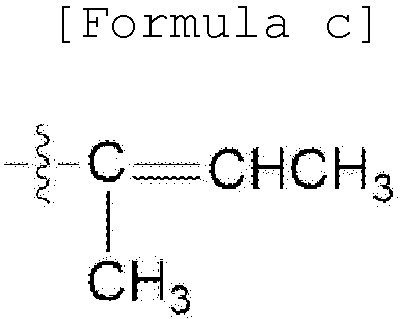
- the isobutene oligomer of the present invention is characterized in including functional groups represented by Formulae a to e below, not including a functional group represented by Formula f below, and having a number average molecular weight of 1,000 or more.
- the isobutene oligomer may be prepared by a preparation method including a step of performing cationic polymerization of an isobutene monomer in the presence of the above-described organic borate-based catalyst.
- X is a halogen atom.
- exo-functional group represents a case where a carbon-carbon double bond is positioned at the terminal of an isobutene oligomer, i.e., a vinylidene double bond.
- the double bond positioned at the terminal of the isobutene oligomer reacts toward the inner part of other polymer chain more favorably, and the exo-functional group content may be utilized as an index for evaluating the reactivity of the isobutene oligomer, wherein the high content means that the isobutene oligomer has excellent reactivity.
- the functional group represented by Formula a may be a functional group represented by Formulae a-1 below.
- n is an integer of 1 to 200.
- the amount of the functional group represented by Formula a may be 70 to 95 mol%, more particularly, 70 to 90 mol%, 80 to 95 mol%, 80 to 93 mol% based on the total amount of the functional groups represented by Formulae a to e.
- the isobutene oligomer of the present invention includes the functional group represented by Formula a in the high content as described above, the reactivity is excellent, the commercial use thereof is suitable.
- the content of the functional group represented by Formula a is high, and at the same time, various types of double bonds positioned in the oligomer are included, processability is also improved, and thus, both high reactivity and processability may be achieved.
- the functional group represented by Formula b (hereinafter, "endo-functional group” will be used interchangeably) is a case where a double bond is present in a carbon-carbon bond just adjacent to the terminal of an oligomer, and as illustrated in Reaction 1 below, may be produced by the generation of proton transfer reaction in a mechanism forming the functional group represented by Formula a.
- the functional group represented by Formula b may be a functional group represented by Formulae b-1 below.
- n is an integer of 1 to 200.
- isobutene oligomer of the present invention includes all functional groups represented by Formulae c to e below.
- the functional groups represented by Formulae c to e above are functional groups which are types formed in case where isomerization reaction is carried out during the cationic polymerization of isobutene, and if the isomerization reaction is carried out during synthesizing an isobutene oligomer, all are inevitable functional groups.
- the conventionally used oligomer intended to increase the content of the functional group represented by Formula a i.e., the exo-functional group content
- the temperature of polymerization reaction during cationic polymerization was set to less than 10°C, preferably, less than 0°C, or less than -10°C, and the polymerization reaction was performed.
- An oligomer prepared in such extremely low temperature environment mainly underwent the reaction of the path represented by Reaction 1 above, and only the functional groups represented by Formulae a and b were confirmed, and the functional groups represented by Formulae c to e were not formed.
- the oligomer of the present invention is an oligomer produced in moderate temperature conditions of 20°C or more by using the above-described organic borate-based catalyst, and in such temperature conditions, diverse isomerization reactions are shown during the polymerization process, and accordingly, a novel structure including all functional groups represented by Formulae c to e may be obtained.
- the oligomer of the present invention is prepared by using an organic borate-based catalyst and is an oligomer including the functional groups included in the conventional isobutene oligomer in addition to all functional groups represented by Formulae c to e, which are isomers thereof.
- the oligomer also includes the terminal double bond in the high content and has high reactivity.
- the functional group represented by Formula c may be a functional group represented by Formulae c-1 below.
- n is an integer of 1 to 200.
- the functional group represented by Formula c may be prepared via hydride shift and methyl shift as shown below in cationic polymerization reaction.
- the total amount of the functional groups represented by Formulae b and c may be 3 to 12 mol%, 4 to 10 mol% based on the total amount of the functional groups represented by Formulae a to e.
- the functional group represented by Formula d may be a functional group represented by Formulae d-1 below.
- n is an integer of 1 to 200.
- the functional group represented by Formula d may be prepared via hydride shift and methyl shift as shown below in cationic polymerization reaction.
- the amount of the functional group represented by Formula d may be 3 to 10 mol%, 3 to 8 mol%, 4 to 6 mol% based on the total amount of the functional groups represented by Formulae a to e.
- the functional group represented by Formula e may be a functional group represented by Formulae e-1 below.
- n is an integer of 1 to 200.
- the isobutene oligomer of the present invention includes a functional group having high reactivity like the functional group represented by Formula e, there are advantages in that the introduction of a functional group into the oligomer is easy.
- the functional group represented by Formula e may be prepared through the reaction below in cationic polymerization reaction.
- the amount of the functional group represented by Formula e may be 0.1 to 10 mol%, 0.5 to 10 mol%, 0.5 to 8 mol%, 0.5 to 6 mol% based on the total amount of the functional groups represented by Formulae a to e.
- the isobutene oligomer of the present invention does not include the functional group represented by Formula f below.
- X is a halogen atom.
- MX 4- counterion is present during the reaction, and the functional group represented by Formula f is a functional group produced by the reaction of a carbocation with a halogen atom ion during a termination process after forming all oligomer chains.
- This functional group inhibits the purpose for introducing functional groups by containing as much terminal double bonds in the isobutene oligomer, materials such as HCl and HF are produced by water during a washing process, and problems of introducing the materials to the terminal double bond of the isobutene oligomer by hydrohalogenation reaction may arise.
- harmful materials including halogen are discharged during combustion, and problems of generating environmental contamination may be shown.
- the isobutene oligomer of the present invention is prepared using the above-described organic borate-based catalyst and does not include the functional group represented by Formula f in the oligomer. Accordingly, excellent properties of not showing the problems induced by the functional group represented by Formula f in the oligomer may be achieved.
- the isobutene oligomer of the present invention may include the functional groups represented by Formulae a to e based on the total amount of the functional groups represented by Formulae a to e: 70 to 90 mol% of the functional group represented by Formula a; 5 to 10 mol% of the sum of the functional groups represented by Formulae b and c; 3 to 10 mol% of the functional group represented by Formula d; and 0.1 to 10 mol% of the functional group represented by Formula e.
- the isobutene oligomer of the present invention includes the functional group of Formula a which is the terminal carbon-carbon double bond in the high content, and also includes the functional groups of Formulae b to e, which are double bonds formed through various isomerization during cationic polymerization process.
- the terminal carbon-carbon double bond content of the oligomer that is, the content of the functional group represented by Formula a is still high, and various functional groups are included without losing the high reactivity due to the terminal double bond, and thus, there are advantages of improving processability.
- the number average molecular weight of the isobutene oligomer of the present invention may be 1,000 or more, 1,100 or more, and molecular weight distribution may be 1.5 to 3.5.
- the isobutene oligomer of the present invention does not include the functional group represented by Formula f. If the functional group represented by Formula f is present, this is activated by a metal halide catalyst to generate counterions again and continue polymer chain propagation. Accordingly, in order for the isobutene oligomer prepared by the metal halide catalyst to have a number average molecular weight of the above-described level, the functional group represented by Formula f is required to be included.
- the metal halide catalyst is not used, but a bulky organic borate is included as an anion part to stabilize carbocation in the present invention, and there are advantages in that the molecular weight of an oligomer may be increased at one time during cationic polymerization.
- Catalysts were prepared by the same method as in Preparation Example 1 except for changing the type and amount of materials used as in Table 1 below.
- Table 1 Division Compound represented by Formula 1 Wt% with respect to isobutene monomer Hydroxyl group-containing compound Wt% with respect to isobutene monomer
- Preparation Example 1 [Et 3 Si][B(C 6 F 5 ) 4 ] 0.01 wt% 2-phenylpropan-2-ol 0.02 wt%
- Preparation Example 2 [Et 3 Si][B(C 6 F 5 ) 4 ] 0.02 wt% 2-phenylpropan-2-ol 0.01 wt%
- Preparation Example 3 [Et 3 Si][B(C 6 F 5 ) 4 ] 0.01 wt% 2-methylpropan-2-ol 0.01 wt%
- Preparation Example 4 [Et 3 Si][B(C 6 F 5 ) 4 ] 0.01 wt% 2-phenylprop
- the catalyst prepared in Preparation Example 1 was diluted in toluene and taken in a syringe and prepared.
- the catalyst thus prepared was added to the Andrew glass flask, the flask was transported to a bath set to 30°C, and polymerization was performed.
- the reaction time was 45 minutes, and after finishing the reaction, the Andrew glass flask was opened, remaining isobutene was removed, and the reaction was quenched with methanol. Remaining solvent was removed through a rotary evaporator, and remaining polymer was completely dried in vacuum until no weight change was observed.
- Isobutene oilgomers were prepared by the same method as in Example 1 except for changing the catalyst, the polymerization temperature and the type of the solvent as in Table 1 below.
- An isobutene oligomer was prepared by using [Et 3 Si][B(C 6 F 5 ) 4 ] and 2-phenylpropan-2-ol in the same amounts as in Preparation Example 2, omitting the step of mixing and stirring thereof to prepare a composite, and injecting to an isobutene monomer separately.
- the weight of a dried isobutene oligomer was measured and the conversion ratio was calculated.
- isobutene oligomers having high exo-content could be prepared in various reaction conditions using Preparation Examples 1 to 4 which are the organic borate-based catalysts of the present invention.
- a halogenated hydrocarbon solvent such as DCM and a nonpolar hydrocarbon solvent such as toluene may be used as the reaction solvent, and a mixture thereof may also be used.
- Example 1 In order to confirm the stability of the catalyst according to the present invention with the passage of time, comparison with the results of Example 1 using the organic borate-based catalyst immediately after preparation was made. Particularly, isobutene oligomers were prepared in the same conditions as in Example 1 except for using organic borate-based catalysts after 15 hours from preparation.
- Isobutene oligomers were prepared in the same conditions as in Examples 2, 6, and 7 and Comparative Example 3, respectively, except for using an organic borate-based catalyst after 15 hours from preparation.
- [Table 4] Division Catalyst Catalyst using (polymerization) point Temperature (°C) Solvent
- Example 1 Preparation Example 1 Immediately after preparation 30 Toluene Example 1-1 Preparation Example 1 After 15 hours 30 Toluene Example 2 Preparation Example 1 Immediately after preparation 30 Dichloromethane + toluene (1:1 v/v) Example 2-1 Preparation Example 1 After 15 hours 30 Dichloromethane + toluene (1:1 v/v) Example 6 Preparation Example 3 Immediately after preparation 30 Toluene Example 6-1 Preparation Example 3 After 15 hours 30 Toluene Example 7 Preparation Example 3 Immediately after preparation 30 Dichloromethane + toluene (1:1 v/v) Example 7-1 Preparation Example 3 After 15 hours 30
- the catalyst of the present invention has excellent stability, and no quality degradation was generated though the catalyst was used after storing or distributing for a certain time.
- HRPB 1300 of Daelim Industrial Co., Ltd. was purchased as Comparative Example 8
- HRPB 2300 of Daelim Industrial Co., Ltd. was purchased as Comparative Example 9, and 1 H NMR was measured and calculation was performed in the same way.
- Example 8 is shown in FIG. 1
- Comparative Example 8 is shown in FIG. 2
- Example 1 86 8 4 2 - Example 2 88 7 4 1 - Example 3
- 10 5 2 -
- Example 5 84 9 6 1 -
- Example 6 85
- Example 7 92 4 3 ⁇ 1 -
- Example 9 84 8 6 2 - Comparative Example 8 85 15 - - - Comparative Example 9 85 15 - - - - Comparative Example 9 85 15 - - - -
- Example 8 In the isobutene oligomer of Example 8 according to the present invention, various peaks were detected in addition to an exo-functional group and an endo-functional group as shown in FIG. 1 .
- the presence of a tri-functional group was confirmed through the presence of additional peaks in addition to the peaks showing the endo-functional group around 5.20 ppm, and the presence of the tetra-functional group was confirmed by the peaks around 2.90 ppm. Further, the presence of the PIB-coupled-functional group was confirmed through the presence of peaks between 4.80 ppm and 4.90 ppm in addition to the peaks around 4.90 ppm, 4.70 ppm, showing the presence of the exo-functional group.
- the exo-content is shown high to the similar degree as in the Comparative Examples, and all the tri-functional group, tetra-functional group and PIB-coupled-functional group are present, and thus, the content of each functional group was calculated as in the table.
- the exo-content is similar to that of the oligomer of the present invention, but the remainder is all composed of the endo-functional group, and double bonds by diverse isomerization reaction were not included.
- the isobutene oligomers of the present invention include diverse oligomer inner double bonds (tri-functional group, tetra-functional group, PIB-coupled-functional group) without reduced exo-content, and are all novel isobutene oligomers having different structure, shape and physical properties from the Comparative Examples.
- the isobutene oligomer of the present invention showed higher number average molecular weight and lower viscosity when compared with the Comparative Example, and it could be found to have improved processability and to be easily applied in various uses.
Landscapes
- Chemical & Material Sciences (AREA)
- Organic Chemistry (AREA)
- Chemical Kinetics & Catalysis (AREA)
- Health & Medical Sciences (AREA)
- Medicinal Chemistry (AREA)
- Polymers & Plastics (AREA)
- Engineering & Computer Science (AREA)
- Materials Engineering (AREA)
- Addition Polymer Or Copolymer, Post-Treatments, Or Chemical Modifications (AREA)
- Transition And Organic Metals Composition Catalysts For Addition Polymerization (AREA)
- Polymerization Catalysts (AREA)
- Low-Molecular Organic Synthesis Reactions Using Catalysts (AREA)
- Organic Low-Molecular-Weight Compounds And Preparation Thereof (AREA)
Abstract
Description
- The present application claims the benefit of priority based on
Korean Patent Application No. 10-2019-0101204, filed on August 19, 2019 Korean Patent Application No. 10-2019-0101203, filed on August 19, 2019 - The present invention relates to an organic borate-based catalyst including a hydroxyl group-containing compound, a method for preparing an isobutene oligomer using the same and an isobutene oligomer prepared thereby.
- Generally, in a process for preparing an oligomer or a polymer by the cationic polymerization of a monomer, a propagating polymer chain includes an active moiety which has a positive charge. For example, the active moiety may be a carbocation or an oxonium ion. Examples of a monomer which may carrying out such cationic polymerization include styrene, isobutene, cyclopentadiene, dicyclopentadiene and derivatives thereof, and polyisobutene obtained by polymerizing isobutene is the most typical example.
- Polyisobutene is classified into a low molecular weight, medium molecular weight and high molecular weight range according to the range of molecular weight. The low molecular weight polyisobutene has a number average molecular weight in a range of about 10,000 or less, and includes product groups of common polybutene and high reactive polybutene (HR-PB). The high reactive polybutene includes a carbon-carbon double bond mainly positioned at the terminal of the polybutene, and after introducing a functional group using a vinylidene functional group at the terminal (>80%), the high reactive polybutene is used as a fuel additive or an engine oil additive. In addition, the medium molecular weight polyisobutene has a number average molecular weight in a range of about 30,000-100,000, and is mainly used in a sticking agent, an adhesive, a sealant and a wax, or may be used as a reforming agent of polyethylene or used in combination with natural rubber and synthetic rubber for improving antiaging properties and ozone resistance.
- For the polymerization of the polyisobutene, a boron-based catalyst such as BF3 has been used in the conventional technique, but this catalyst is toxic and has a gas type and is difficult to handle. In addition, in order to increase reactivity and selectivity, a boron-alcohol or boron-ether composite is prepared and used, but there are problems in that the activity of the catalyst is reduced over time.
- Meanwhile, according to a solvent-ligated organometal catalyst studied by professor Kuhn of Technical University of Munich (Macromol. Rapid Commun., vol. 20, no. 10, pp. 555-559), problems relating to the deterioration of product quality and corrosiveness due to the toxic component such as a boron-based Lewis acid catalyst of the conventional technique may be solved, but since the reaction time is 16 hours and fundamentally long for attaining a high conversion ratio, structural isomerization is generated through the reaction of a portion of the product with the catalyst as time increases, and the exo-content decreases, and thus, the competitiveness is lower than the Lewis acid catalyst.
- In case of using isobutene with high purity as a raw material for synthesizing the polyisobutene, a halogen-containing solvent such as methyl chloride (CH3Cl) and dichloromethane (CH2Cl2) is used as a polymerization solvent. The polyisobutene thus produced is used in a fuel additive or a lubricant, but in this case, remaining halogen causes corrosion defects in an internal combustion engine, and in case of discharging the halogen, problems of environmental contamination are caused. In addition, in case of using the above-described conventional catalyst in a halogen-containing solvent, catalyst activity was lost, and the preparation of a high reactive polybutene was difficult. Particularly, the generation of the cationic polymerization reaction in moderate reaction conditions without setting extreme polymerization environment was almost impossible.
- Against such background, the present inventors studied to develop a catalyst which may prepare a high reactive polybutene having better stability than the conventionally used catalyst in high efficiency.
- (Patent Document 1)
Korean Registration Patent Publication No. 10-0486044 - An object of the present invention is to provide a novel organic borate-based catalyst including a hydroxyl group-containing compound and a method for preparing the same.
- Another object of the present invention is to provide a method for preparing an isobutene oligomer using the organic borate-based catalyst.
- Another object of the present invention is to provide a novel isobutene oligomer prepared by the preparation method.
- In order to solve the above-described tasks, the present invention provides an organic borate-based catalyst including a compound represented by Formula 1 below and a hydroxyl group-containing compound, wherein a silicon atom (Si) of the compound represented by Formula 1 and an oxygen atom (O) of the hydroxyl group-containing compound form a covalent bond.

- In Formula 1, each R0 is independently hydrogen, an alkyl group of 1 to 20 carbon atoms, an alkoxy group of 1 to 20 carbon atoms, an aryl group of 6 to 20 carbon atoms or an aryloxy group of 6 to 20 carbon atoms, R1 to R4 are each independently hydrogen, a halogen group or an alkyl group of 1 to 20 carbon atoms, and o, p, q and r are each independently an integer of 1 to 5.
- In addition, the present invention provides a method for preparing an isobutene oligomer, including a step of polymerizing an isobutene monomer in the presence of the organic borate-based catalyst.
- Further, the present invention provides an isobutene oligomer including functional groups represented by Formulae a to e below, not including a functional group represented by Formula f below, and having a number average molecular weight of 1,000 or more.




- In Formula f,
X is a halogen atom. - In addition, the present invention provides a method for preparing an organic borate-based catalyst, including a step of injecting the compound represented by Formula 1 and the hydroxyl group-containing compound in a hydrocarbon solvent, and stirring.
- The novel organic borate-based catalyst of the present invention has higher stability than the conventionally used catalyst and may be usefully used for the preparation of an oligomer or a polymer, and has high catalyst activity and may relatively reduce the amount used, and thus, may be economical and eco-friendly. In addition, in case where the catalyst of the present invention is used in cationic polymerization reaction, there are no problems of remaining some structures derived from the catalyst in an initiation step in an oligomer or polymer, and the mixing of undesired some functional groups in the polymer may be prevented, and accordingly, there are advantages in efficiently preparing an oligomer and polymer with high purity.
- In addition, in case of using the organic borate-based catalyst and not using a halogen-containing solvent, toxicity due to remaining halogen may be reduced, the corrosion of an internal combustion engine, environmental contamination, etc. may be prevented, and polymerization reaction may be performed even under moderate reaction conditions in an excellent conversion ratio.
- The novel isobutene oligomer provided in the present invention includes terminal carbon-carbon double bonds in a high amount and has high reactivity and thus, is useful in commercial use. At the same time, since double bonds with diverse types positioned at the inner part of the oligomer are further included, the characteristics of improved processability of the isobutene oligomer may be achieved. Further, there are advantages in that different functional groups may be employed in the middle of or at the terminal of the polymer or oligomer by using the reactivity difference of each of the double bonds having diverse types, while keeping the common physical properties.
-
-
FIG. 1 shows the 1H NMR spectrum of an isobutene oligomer according to an embodiment of the present invention. -
FIG. 2 shows the 1H NMR spectrum of an isobutene oligomer according to a comparative embodiment in the present invention. - Hereinafter, the present invention will be described in more detail in order to assist the understanding of the present invention. It will be understood that words or terms used in the description and claims of the present invention shall not be interpreted as the meaning defined in commonly used dictionaries. It will be further understood that the words or terms should be interpreted as having a meaning that is consistent with their meaning of the technical idea of the invention, based on the principle that an inventor may properly define the meaning of the words or terms to best explain the invention.
- The terms used herein are for the purpose of describing particular embodiments only and are not intended to limit the present invention. The singular forms are intended to include the plural forms as well, unless the context clearly indicates otherwise.
- Conventionally, an aluminum- or boron-based Lewis acid has been generally used as a catalyst or initiator for cationic polymerization. Examples of the Lewis acid include AlX3, BX3 (X=F, Br, Cl, I), etc., and there are problems in that these are corrosive, generate halogen components such as HCl and HF during a quenching process, and remain in a product to deteriorate product quality. In addition, a Lewis acid catalyst requires a large amount of the catalyst, and after the reaction, a large amount of basic materials (NaOH, KOH, NH4OH, etc.) are used for removing the catalyst, and additional washing with water is performed to generate a large amount of waste water.
- The organic borate-based catalyst of the present invention is a novel catalyst developed for solving various problems of the conventional Lewis acid catalyst for cationic polymerization as described above, and is noncorrosive and has high catalyst activity different from the conventional Lewis acid catalyst. Accordingly, the amount used of the catalyst required for obtaining an equivalent level of effects is small, and catalyst cost is saved.
- Also, in case of the conventional Lewis acid catalyst, there are problems of generating a large amount of highly toxic waste water during removing a catalyst through washing with a basic salt such as NaOH after finishing the reaction, but on the contrary, in the organic borate-based catalyst of the present invention, a catalyst may be removed by simple filtering, and the generation of waste water may be prevented. In addition, in case of the conventional Lewis acid catalyst, there are problems in that HF or HCl is produced during a quenching process, and halogen remains in a product to deteriorate product quality, but in the organic borate-based catalyst of the present invention, such problems may be solved and a product with clean and high quality may be produced.
- Particularly, the catalyst of the present invention has a structure in which a silicon atom (Si) and an oxygen atom (O) form a covalent bond to form a composite, and the catalyst stability is markedly improved when compared with a case where an organic borate-based compound is solely present. Such a stabilized catalyst may be used for polymerizing a monomer and preparing an oligomer, and particularly, in case of forming an oligomer by the cationic polymerization of an isobutene monomer, there are characteristics in that the exo-content is high, and an oligomer having excellent reactivity may be efficiently prepared.
- The organic borate-based catalyst of the present invention is characterized in including a compound represented by Formula 1 below and a hydroxyl group-containing compound, and a silicon atom (Si) of the compound represented by Formula 1 and an oxygen atom (O) of the hydroxyl group-containing compound form a covalent bond.

- In Formula 1,
- each R0 is independently hydrogen, an alkyl group of 1 to 20 carbon atoms, an alkoxy group of 1 to 20 carbon atoms, an aryl group of 6 to 20 carbon atoms or an aryloxy group of 6 to 20 carbon atoms, preferably, hydrogen, an alkyl group of 1 to 12 carbon atoms, an alkoxy group of 1 to 12 carbon atoms, an aryl group of 6 to 12 carbon atoms or an aryloxy group of 6 to 12 carbon atoms, more preferably, hydrogen, an alkyl group of 1 to 6 carbon atoms or an alkoxy group of 1 to 6 carbon atoms,
- R1 to R4 are each independently hydrogen, a halogen group or an alkyl group of 1 to 20 carbon atoms, preferably, a halogen group-substituted alkyl group of 1 to 12 carbon atoms, more preferably, a halogen group-substituted alkyl group of 1 to 4 carbon atoms, and
- o, p, q and r are each independently an integer of 1 to 5.
- The organic borate,

- The "alkyl group" may mean a monovalent aliphatic saturated hydrocarbon, and may include both a linear alkyl group such as methyl, ethyl, propyl and butyl, and a branched alkyl group such as isopropyl, sec-butyl, tert-butyl and neopentyl. Particularly, a methyl group, an ethyl group, a propyl group, an isopropyl group, a butyl group, a tert-butyl group, a sec-butyl group, a 1-methyl-butyl group, a 1-ethylbutyl group, a pentyl group, an isopentyl group, a neopentyl group, a tert-pentyl group, a 1-methylpentyl group, a 2-methylpentyl group, a 4-methyl-2-pentyl group, a hexyl group, an isohexyl group, a 4-methylhexyl group, a 5-methylhexyl group, an heptyl group, etc., may be included, without limitation.
- The "alkoxy group" may be a linear type, a branch type or a ring type. Particularly, methoxy, ethoxy, n-propoxy, isopropoxy, i-propyloxy, n-butoxy, isobutoxy, tert-butoxy, sec-butoxy, n-pentyloxy, neopentyloxy, isopentyloxy, n-hexyloxy, 3,3-dimethylbutyloxy, 2-ethylbutyloxy, n-octyloxy, n-nonyloxy, n-decyloxy, benzyloxy, p-methylbenzyloxy, etc., may be included, without limitation.
- The "aryl group" may mean a cyclic aromatic hydrocarbon, and may include both monocyclic aromatic hydrocarbon in which one ring is formed, and polycyclic aromatic hydrocarbon in which two or more rings are formed. The monocyclic aromatic hydrocarbon may include a phenyl group, a biphenyl group, a terphenyl group, etc., and the polycyclic aromatic hydrocarbon may include a naphthyl group, an anthracenyl group, a phenanthryl group, a pyrenyl group, a perylenyl group, a triphenyl group, a chrysenyl group, a fluorenyl group, etc., without limitation.
- The "aryloxy group" includes phenoxy, p-tolyloxy, m-tolyloxy, 3,5-dimethyl-phenoxy, 2,4,6-trimethylphenoxy, p-tert-butylphenoxy, 3-biphenyloxy, 4-biphenyloxy, 1-naphthyloxy, 2-naphthyloxy, 4-methyl-1-naphthyloxy, 5-methyl-2-naphthyloxy, 1-anthryloxy, 2-anthryloxy, 9-anthryloxy, 1-phenanthryloxy, 3-phenanthryloxy, 9-phenanthryloxy, etc., without limitation.
- In the present invention, the hydroxyl group-containing compound may be water (H2O) or a compound represented by Formula 2 below.

- In Formula 2,
R5 to R7 are each independently hydrogen, a hydroxyl group, a hydroxyalkyl group of 1 to 20 carbon atoms, an alkyl group of 1 to 20 carbon atoms, an alkenyl group of 2 to 20 carbon atoms, an alkynyl group of 2 to 20 carbon atoms, a cycloalkyl group of 3 to 20 carbon atoms, an aryl group of 6 to 20 carbon atoms, a heteroaryl group of 5 to 20 carbon atoms, an alkoxy group of 1 to 20 carbon atoms, an aryloxy group of 6 to 20 carbon atoms, an alkylaryl group of 7 to 20 carbon atoms or an arylalkyl group of 7 to 20 carbon atoms. - Preferably, the hydroxyl group-containing compound is a compound represented by Formula 2, and in this case, R5 to R7 may be each independently hydrogen, an alkyl group of 1 to 20 carbon atoms, an alkenyl group of 2 to 20 carbon atoms, an alkynyl group of 2 to 20 carbon atoms, a cycloalkyl group of 3 to 20 carbon atoms, an aryl group of 6 to 20 carbon atoms, a heteroaryl group of 5 to 20 carbon atoms, an alkylaryl group of 7 to 20 carbon atoms or an arylalkyl group of 7 to 20 carbon atoms.
- For example, the compound represented by Formula 2 may correspond to any one among a primary alcohol, a secondary alcohol and a tertiary alcohol, and the primary alcohol includes methanol, ethanol, propanol, butanol, pentanol, hexanol, heptanol, octanol, nonanol, decanol or combinations thereof, the secondary alcohol includes propan-2-ol, butan-2-ol, pentan-2-ol, hexan-2-ol, heptan-2-ol, octan-2-ol, nonan-2-ol, decan-2-ol, butan-3-ol, pentan-3-ol, hexan-3-ol, heptan-3-ol, octan-3-ol, nonan-3-ol, decan-3-ol, or combinations thereof, and the tertiary alcohol includes 2-methylpropan-2-ol, 2-methylbutan-2-ol, 2-methylpentan-2-ol, 2-methylhexan-2-ol, 2-methylheptan-2-ol, 3-methylpentan-3-ol, 3-methylhexan-3-ol, 3-methylheptan-3-ol, 3-methyloctan-3-ol, 2-phenylpropan-2-ol, 2-phenylbutan-2-ol, 2-phenylpentan-2-ol, 2-phenylhexan-2-ol, 2-phenylheptan-2-ol, 3-phenylpentan-3-ol, 3-phenylhexan-3-ol, 3-phenylheptan-3-ol, 3-phenyloctan-3-ol, or combinations thereof, preferably, 2-methylpropan-2-ol, 2-phenylpropan-2-ol, or combinations thereof, without limitation. All compounds may be applicable only corresponding to the compound represented by Formula b in the present invention without limiting the types thereof.
- In the present invention, the organic borate-based catalyst may be a compound represented by Formula 3 below.

- In Formula 3,
- each R0 is independently hydrogen, an alkyl group of 1 to 20 carbon atoms, an alkoxy group of 1 to 20 carbon atoms, an aryl group of 6 to 20 carbon atoms or an aryloxy group of 6 to 20 carbon atoms, preferably, hydrogen, an alkyl group of 1 to 12 carbon atoms, an alkoxy group of 1 to 12 carbon atoms, an aryl group of 6 to 12 carbon atoms or an aryloxy group of 6 to 12 carbon atoms, more preferably, hydrogen, an alkyl group of 1 to 6 carbon atoms, or an alkoxy group of 1 to 6 carbon atoms,
- R1 to R4 are each independently hydrogen, a halogen group or an alkyl group of 1 to 20 carbon atoms, preferably, a halogen group-substituted alkyl group of 1 to 12 carbon atoms, more preferably, a halogen group-substituted alkyl group of 1 to 4 carbon atoms,
- o, p, q and r are each independently an integer of 1 to 5, and
- R5 to R7 are each independently hydrogen, a hydroxyl group, a hydroxyalkyl group of 1 to 20 carbon atoms, an alkyl group of 1 to 20 carbon atoms, an alkenyl group of 2 to 20 carbon atoms, an alkynyl group of 2 to 20 carbon atoms, a cycloalkyl group of 3 to 20 carbon atoms, an aryl group of 6 to 20 carbon atoms, a heteroaryl group of 5 to 20 carbon atoms, an alkoxy group of 1 to 20 carbon atoms, an aryloxy group of 6 to 20 carbon atoms, an alkylaryl group of 7 to 20 carbon atoms or an arylalkyl group of 7 to 20 carbon atoms, preferably, hydrogen, an alkyl group of 1 to 20 carbon atoms, an alkenyl group of 2 to 20 carbon atoms, an alkynyl group of 2 to 20 carbon atoms, a cycloalkyl group of 3 to 20 carbon atoms, an aryl group of 6 to 20 carbon atoms, a heteroaryl group of 5 to 20 carbon atoms, an alkylaryl group of 7 to 20 carbon atoms or an arylalkyl group of 7 to 20 carbon atoms.
- As in Formula 3, the catalyst of the present invention has a structure in which a silicon atom included in the compound represented by Formula 1 and an oxygen atom included in the hydroxyl group-containing compound interact, and the oxygen-hydrogen bond of a hydroxyl group is activated. In conditions where a monomer is present, a hydrogen atom in the activated oxygen-hydrogen bond reacts with the monomer to produce carbocation to initiate polymerization.
- For example, in case where the compound represented by Formula 1 is [Et3Si][B(C6F5)4], and the hydroxyl group-containing compound is 2-phenylpropan-2-ol in the present invention, the catalyst of the present invention is a compound having a structure below.

- In the present invention, the weight ratio of the compound represented by Formula 1 and the hydroxyl group-containing compound may be 1:0.5 to 1:4, preferably, 1:1 to 1:4, 1:0.1 to 1:2, more preferably, 1:1 to 1:2.
- The catalyst of the present invention has a type forming a composite by the reaction of the compound represented by Formula 1 and the hydroxyl group-containing compound, and considering the reaction efficiency of the two compounds, the compound represented by Formula 1 and the hydroxyl group-containing compound may be used in the same weights, but a person skilled in the art may control the ratio suitably and use.
- A method for preparing the organic borate-based catalyst is characterized in including a step of injecting a compound represented by Formula 1 below and a hydroxyl group-containing compound into a hydrocarbon solvent and stirring.

- The definition on Formula 1 is the same as described above.
- In the present invention, the time required for performing the stirring may be 0.5 hours or more, 1 hour or more, and 20 hours or less, 15 hours or less, without limitation.
- Through the stirring, the compound represented by Formula 1 and the hydroxyl group-containing compound are sufficiently mixed in the hydrocarbon solvent, and the silicon atom of the compound represented by Formula 1 and the oxygen atom of the hydroxyl group-containing compound form a covalent bond from each other to prepare the organic borate-based catalyst of the present invention.
- The conventional catalyst undergoes polymerization reaction while producing carbocations in a catalyst preparing process, and if the catalyst does not react with a monomer immediately after preparing the catalyst, the properties of returning back to a previous step through reverse reaction are significant due to the unstability of the carbocation, and the use of the catalyst after storing for a certain time after preparation is impossible.
- In this case, the storage stability as a catalyst product itself is deteriorated, and since the carbocations with the unstable properties are required to show catalyst activity, the amount substantially playing the role of the catalyst is not large with respect to a raw material injected, and there are problems in that the economic feasibility and efficiency of a process using the catalyst is deteriorated.
- On the contrary, the catalyst of the present invention becomes to have a composite type in which a silicon atom and an oxygen atom form a covalent bond through the stirring step, and this type may be used after a certain time from the preparation, because this type has excellent stability. If used after storing for a few minutes to a few hours from the preparation of the catalyst of the present invention, the above-described stirring may be continuously carried out during storing, or if a composite is formed through sufficient stirring, may be stood without stirring.
- The organic borate-based catalyst according to the present invention may be used for preparing an oligomer or a polymer, including a step of polymerizing a monomer in the presence of the organic borate-based catalyst.
- The "oligomer" means a polymer formed by polymerizing a monomer and having a number average molecular weight of less than 10,000.
- The "polymer" means a polymer formed by polymerizing a monomer and having a number average molecular weight of 10,000 or more.
- Particularly, the polymerization step may be initiated by a hydrogen cation derived from the hydroxyl group in the organic borate-based catalyst. For example, the initiation reaction of polymerizing a monomer by the hydrogen cation may be performed by the reaction below.

- As shown in the reaction above, in case of using the organic borate-based catalyst of the present invention in polymerization reaction, the double bond of the monomer reacts with the hydrogen cation to initiate cationic polymerization.
- In case of using the conventional catalyst, polymerization is initiated by the combination of not the hydrogen cation but a carbocation formed from a catalyst initiating polymerization or a separate reaction initiator with a monomer as described above, and a structure derived from the catalyst or reaction initiator remains in a finally prepared oligomer or polymer, resulting in the positioning of an unnecessary terminal structure. On the contrary, in case of using the catalyst of the present invention, a functional group derived from the catalyst or reaction initiator may not be contained in an oligomer or a polymer. Like this, by using the organic borate-based catalyst of the present invention in preparing an oligomer or a polymer, an oligomer or a polymer with a desired structure may be prepared in high purity.
- The monomer may be isobutene, styrene, cyclopentadiene, dicyclopentadiene, tetrahydrofuran, derivatives thereof or combinations thereof, without limitation.
- In the step of polymerizing the monomer, the monomer may be 1 wt% or more, 5 wt% or more, 50 wt% or less, 25 wt% or less based on the total weight of the reactant. In addition, the organic borate-based catalyst may be 0.005 wt% or more, 0.01 wt% or more, 1 wt% or less, 0.025 wt% or less based on the total weight of the reactant.
- The organic borate-based catalyst may be 0.01 wt% or more, 1 wt% or less, 0.05 wt% or less based on the weight of the monomer, particularly, the compound represented by Formula 1 may be 0.005 wt% or more, 0.01 wt% or more, 0.05 wt% or less, 0.03 wt% or less based on the weight of the monomer, and the hydroxyl group-containing compound may be 0.005 wt% or more, 0.01 wt% or more, 0.05 wt% or less, 0.03 wt% or less based on the weight of the monomer, without limitation. The polymerization may be performed form 30 minutes to 120 minutes.
- As the oligomer prepared using the organic borate-based catalyst of the present invention, high reactive polybutene (HR-PB) may have the exo-content of 50 to 99%, preferably, 80 to 99%. The exo-content represents a case where carbon-carbon double bonds are positioned at the terminal of a polyolefin, and if the exo-content increases, the reactivity increases.
- Also, an oligomer prepared using the organic borate-based catalyst of the present invention may have a number average molecular weight of less than 10,000, 3,000 or less, 2,000 or less, 800 or more, 900 or more, and a polymer having a medium molecular weight or more and prepared using the organic borate-based catalyst of the present invention may have a number average molecular weight of 10,000 or more, 40,000 or more, 100,000 or less, 80,000 or less.
- In addition, the molecular weight distribution of the oligomer or the polymer may be 1.5 to 5.0.
- The preparation method of the oligomer or polymer may further include a step of removing the organic borate-based catalyst after the step of polymerizing a monomer.
- The organic borate-based catalyst of the present invention may be efficiently removed through a physical simple filtering process, and the use and removal thereof is even easier than the conventional Lewis catalyst acid.
- Particularly, after polymerizing the monomer, the organic solvent is removed so that the organic solvent may be controlled to 40 wt% or less, 20 wt% or less or 5 wt% or less of the oligomer or polymer.
- Then, in case of an oligomer or a polymer having flowability, a step of filtering insoluble materials using a glass filter of 80 mesh or more, 100 mesh or more or 200 mesh or more is performed. Otherwise, the catalyst may be removed by passing the oligomer or polymer having flowability through a silica, celite or zeolite filter.
- Meanwhile, in case of an oligomer or polymer having small flowability, flowability is given using one or more selected from the group consisting of a linear alkyl solvent, for example, pentane, cyclopentane, hexane, cyclohexane, heptane, and octane, and an ether solvent, for example, diethyl ether, and petroleum ether, and then the step of filtering through the glass filter, silica, celite or zeolite filter may be performed.
- Generally, the oligomer or polymer thus produced is dissolved in an organic solvent including pentane, cyclopentane, hexane, cyclohexane, heptane, octane, diethyl ether or petroleum ether and washed to remove an organometallic catalyst. However, in the present invention, the organic borate-based catalyst may be efficiently removed through the above-described simple filtering step, and a separate washing step may not be performed.
- The method for preparing an isobutene oligomer of the present invention is characterized in including a step of polymerizing an isobutene monomer in the presence of the above-described organic borate-based catalyst.
- The polymerization may be performed in the presence of a halogen-free solvent, and a halogenated hydrocarbon solvent may not be included at all. That is, the halogen-free solvent and the halogenated hydrocarbon solvent may be mixed and used, or only the halogen-free solvent may be used solely as a solvent.
- The halogen-free solvent may be an aliphatic hydrocarbon solvent or an aromatic hydrocarbon solvent. For example, the aliphatic hydrocarbon solvent may be one or more selected from the group consisting of butane, pentane, neopentane, hexane, cyclohexane, methylcyclohexane, heptane and octane, and the aromatic hydrocarbon solvent may be one or more selected from the group consisting of benzene, toluene, xylene and ethylbenzene, without limitation.
- The halogenated hydrocarbon solvent may be one or more selected from the group consisting of chloromethane, dichloromethane, trichloromethane, 1-chlorobutane and chlorobenzene, without limitation.
- In case of mixing the halogen-free solvent and the halogenated hydrocarbon solvent and using thereof in the present invention, a volume ratio may be 100:1 to 1:2, particularly, 100:1 to 1:1, without limitation.
- In the present invention, the silicon atom of the compound represented by Formula 1 and the oxygen atom of the hydroxyl group-containing compound form a covalent bond first to produce a composite forming a stable catalyst system as described above, and then, the composite is mixed with an isobutene monomer to initiate polymerization reaction. If the compound represented by Formula 1 and the hydroxyl group-containing compound do not form a composite but are mixed at once with the isobutene monomer as individual materials, polymerization reaction may not be properly performed.
- For example, the preparation method may be performed by dissolving the organic borate-based catalyst of the present invention in a halogen-free solvent to prepare a solution, dissolving an isobutene monomer in other halogen-free solvent to prepare another solution, and mixing two solutions.
- The polymerization of the isobutene monomer may be performed at 10 to 30°C, particularly, 15 to 30°C, more particularly, 20 to 30°C.
- In the preparation method of the present invention, since the composite formed by the compound represented by Formula 1 and the hydroxyl group-containing compound is used as a catalyst, though polymerization is performed in a halogen-free solvent, the polymerization may be preferably performed not at an extremely low temperature of -30°C or less but under moderate reaction conditions of about 10 to 30°C. Accordingly, there are advantages in saving reaction equipment, cost, etc., which are required for setting the extremely low temperature.
- In the present invention, the polymerization may have a conversion ratio (%) value calculated by Mathematical Formula 1 below of 80% or more.

- The terminal carbon-carbon double bond content of the isobutene oligomer prepared by the preparation method of the present invention may be 85 mol% or more, particularly, 90 mol% or more, or 94 mol% or more. The carbon-carbon double bond positioned at the terminal of the isobutene oligomer may be referred to as an exo-olefin, and since the terminal carbon-carbon double bond undergoes reaction more favorably toward the inner part of the chain of the oligomer, the terminal carbon-carbon double bond (exo-content) acts as an important factor for determining the quality of the isobutene oligomer, and the increased content represents an isobutene oligomer having excellent reactivity.
- The number average molecular weight of the isobutene oligomer prepared by the preparation method of the present invention may be 5,500 or less, or 4,000 or less, or 2,000 or less, and 500 or more, or 750 or more, or 900 or more.
- The molecular weight distribution of the isobutene oligomer prepared by the preparation method of the present invention may be 5.0 or less, particularly, 1.5 to 5.0.
- The polymerization of the isobutene monomer may be performed by a batch type or a continuous type process, and as a polymerization method, a solution polymerization method, a suspension polymerization method, a vapor polymerization method by which a small amount of s polymer is impregnated with a catalyst solution with a high concentration, etc. may be used. A reactor used for the polymerization may use a known reactor used for polymerizing an isobutene monomer as it is, or after processing.
- In the polymerization of the isobutene monomer, the amount of the isobutene monomer may be 1 to 50 wt%, preferably, 5 to 25 wt% based on the total weight of the polymerization solution. In addition, the amount of the compound represented by Formula 1 may be 0.005 to 1 wt%, preferably, 0.01 to 0.025 wt% based on the total weight of the polymerization solution. If the numerical range is satisfied, polymerization may be efficiently performed, but if an excessive amount is injected than the numerical range, polymerization efficiency may not be significantly improved in contrast to the increased cost of raw materials.
- In the preparation method of the isobutene oligomer of the present invention, a step of removing the catalyst by washing a polymerization product may not be separately performed after the polymerization. Instead, the polymerization product may be filtered to easily remove the catalyst.
- The filtering may be performed using a porous material, for example, a filter including one or more selected from the group consisting of celite, silica and zeolite, and alumina. In this case, the catalyst is considered to be filtered through the absorption principle of the porous material, etc. Accordingly, if a glass fiber or a filter having a minute pore size is used, catalyst filtering efficiency may be deteriorated.
- The preparation method of the isobutene oligomer of the present invention may further include a step of drying remaining solvent after the filtering step. For example, the drying temperature may be 30 to 200°C, or 40 to 150°C, and the vacuum degree may be 300 torr or less, 200 torr or less, or 100 torr or less. At last, a desired isobutene oligomer may be efficiently obtained. In addition, a drying method is not specifically limited, and a common method may be applied.
- Further, in the preparation method of the isobutene oligomer of the present invention, a step of drying the solvent may be separately performed after polymerization and before the filtering. In case of performing the drying step, drying conditions may be the same as described above, without specific limitation.
- In case of separately performing the drying of the solvent, there are advantages of obtaining an isobutene oligomer in high purity. However, according to the present invention, the catalyst may be easily removed through the aforementioned simple filtering, and the drying step of the solvent after polymerization and before the filtering may be omitted, and the process may be simplified.
- The isobutene oligomer of the present invention is characterized in including functional groups represented by Formulae a to e below, not including a functional group represented by Formula f below, and having a number average molecular weight of 1,000 or more. The isobutene oligomer may be prepared by a preparation method including a step of performing cationic polymerization of an isobutene monomer in the presence of the above-described organic borate-based catalyst.


- In Formula f,
X is a halogen atom. - The functional group represented by Formula a (hereinafter, "exo-functional group" will be used interchangeably) represents a case where a carbon-carbon double bond is positioned at the terminal of an isobutene oligomer, i.e., a vinylidene double bond. The double bond positioned at the terminal of the isobutene oligomer reacts toward the inner part of other polymer chain more favorably, and the exo-functional group content may be utilized as an index for evaluating the reactivity of the isobutene oligomer, wherein the high content means that the isobutene oligomer has excellent reactivity.
- The functional group represented by Formula a may be a functional group represented by Formulae a-1 below.

- In Formula a-1,
n is an integer of 1 to 200. - In addition, the amount of the functional group represented by Formula a may be 70 to 95 mol%, more particularly, 70 to 90 mol%, 80 to 95 mol%, 80 to 93 mol% based on the total amount of the functional groups represented by Formulae a to e.
- Since the isobutene oligomer of the present invention includes the functional group represented by Formula a in the high content as described above, the reactivity is excellent, the commercial use thereof is suitable. In addition, as described herein below, since the content of the functional group represented by Formula a is high, and at the same time, various types of double bonds positioned in the oligomer are included, processability is also improved, and thus, both high reactivity and processability may be achieved.
- The functional group represented by Formula b (hereinafter, "endo-functional group" will be used interchangeably) is a case where a double bond is present in a carbon-carbon bond just adjacent to the terminal of an oligomer, and as illustrated in Reaction 1 below, may be produced by the generation of proton transfer reaction in a mechanism forming the functional group represented by Formula a.


- The functional group represented by Formula b may be a functional group represented by Formulae b-1 below.

- In Formula b-1,
n is an integer of 1 to 200. - In addition, the isobutene oligomer of the present invention includes all functional groups represented by Formulae c to e below.


- The functional groups represented by Formulae c to e above are functional groups which are types formed in case where isomerization reaction is carried out during the cationic polymerization of isobutene, and if the isomerization reaction is carried out during synthesizing an isobutene oligomer, all are inevitable functional groups.
- However, in order to improve the reactivity, the conventionally used oligomer intended to increase the content of the functional group represented by Formula a, i.e., the exo-functional group content, and for this, the temperature of polymerization reaction during cationic polymerization was set to less than 10°C, preferably, less than 0°C, or less than -10°C, and the polymerization reaction was performed. An oligomer prepared in such extremely low temperature environment mainly underwent the reaction of the path represented by Reaction 1 above, and only the functional groups represented by Formulae a and b were confirmed, and the functional groups represented by Formulae c to e were not formed.
- Differently, the oligomer of the present invention is an oligomer produced in moderate temperature conditions of 20°C or more by using the above-described organic borate-based catalyst, and in such temperature conditions, diverse isomerization reactions are shown during the polymerization process, and accordingly, a novel structure including all functional groups represented by Formulae c to e may be obtained.
- That is, the oligomer of the present invention is prepared by using an organic borate-based catalyst and is an oligomer including the functional groups included in the conventional isobutene oligomer in addition to all functional groups represented by Formulae c to e, which are isomers thereof. At the same time, the oligomer also includes the terminal double bond in the high content and has high reactivity.
- The functional group represented by Formula c may be a functional group represented by Formulae c-1 below.

- In Formula c-1,
n is an integer of 1 to 200. - The functional group represented by Formula c may be prepared via hydride shift and methyl shift as shown below in cationic polymerization reaction.


- If represented by mol%, the total amount of the functional groups represented by Formulae b and c may be 3 to 12 mol%, 4 to 10 mol% based on the total amount of the functional groups represented by Formulae a to e.
- The functional group represented by Formula d may be a functional group represented by Formulae d-1 below.

- In Formula d-1,
n is an integer of 1 to 200. - The functional group represented by Formula d may be prepared via hydride shift and methyl shift as shown below in cationic polymerization reaction.

- If represented by mol%, the amount of the functional group represented by Formula d may be 3 to 10 mol%, 3 to 8 mol%, 4 to 6 mol% based on the total amount of the functional groups represented by Formulae a to e.
- The functional group represented by Formula e may be a functional group represented by Formulae e-1 below.


- In Formula e-1,
n is an integer of 1 to 200. - Since the isobutene oligomer of the present invention includes a functional group having high reactivity like the functional group represented by Formula e, there are advantages in that the introduction of a functional group into the oligomer is easy.
- The functional group represented by Formula e may be prepared through the reaction below in cationic polymerization reaction.


- If represented by mol%, the amount of the functional group represented by Formula e may be 0.1 to 10 mol%, 0.5 to 10 mol%, 0.5 to 8 mol%, 0.5 to 6 mol% based on the total amount of the functional groups represented by Formulae a to e.
- The isobutene oligomer of the present invention does not include the functional group represented by Formula f below.

- In Formula f,
X is a halogen atom. - In case of using a metal halide catalyst (MX3, M: Al, Fe, Ga, Ti, X: F, Cl, Br, I), MX4- counterion is present during the reaction, and the functional group represented by Formula f is a functional group produced by the reaction of a carbocation with a halogen atom ion during a termination process after forming all oligomer chains. This functional group inhibits the purpose for introducing functional groups by containing as much terminal double bonds in the isobutene oligomer, materials such as HCl and HF are produced by water during a washing process, and problems of introducing the materials to the terminal double bond of the isobutene oligomer by hydrohalogenation reaction may arise. In addition, in case of introducing the functional group into the isobutene oligomer and using as an engine oil, fuel additive, etc., harmful materials including halogen are discharged during combustion, and problems of generating environmental contamination may be shown.
- The isobutene oligomer of the present invention is prepared using the above-described organic borate-based catalyst and does not include the functional group represented by Formula f in the oligomer. Accordingly, excellent properties of not showing the problems induced by the functional group represented by Formula f in the oligomer may be achieved.
- In addition, the isobutene oligomer of the present invention may include the functional groups represented by Formulae a to e based on the total amount of the functional groups represented by Formulae a to e: 70 to 90 mol% of the functional group represented by Formula a; 5 to 10 mol% of the sum of the functional groups represented by Formulae b and c; 3 to 10 mol% of the functional group represented by Formula d; and 0.1 to 10 mol% of the functional group represented by Formula e.
- As described above, the isobutene oligomer of the present invention includes the functional group of Formula a which is the terminal carbon-carbon double bond in the high content, and also includes the functional groups of Formulae b to e, which are double bonds formed through various isomerization during cationic polymerization process. Like this, though including various double bonds through the isomerization, the terminal carbon-carbon double bond content of the oligomer, that is, the content of the functional group represented by Formula a is still high, and various functional groups are included without losing the high reactivity due to the terminal double bond, and thus, there are advantages of improving processability.
- The number average molecular weight of the isobutene oligomer of the present invention may be 1,000 or more, 1,100 or more, and molecular weight distribution may be 1.5 to 3.5.
- As described above, the isobutene oligomer of the present invention does not include the functional group represented by Formula f. If the functional group represented by Formula f is present, this is activated by a metal halide catalyst to generate counterions again and continue polymer chain propagation. Accordingly, in order for the isobutene oligomer prepared by the metal halide catalyst to have a number average molecular weight of the above-described level, the functional group represented by Formula f is required to be included.
- On the contrary, the metal halide catalyst is not used, but a bulky organic borate is included as an anion part to stabilize carbocation in the present invention, and there are advantages in that the molecular weight of an oligomer may be increased at one time during cationic polymerization.
- Hereinafter, preferred embodiments will be described in detail so as to assist the understanding of the present invention. However, the embodiments below are only illustrations, and the invention may be changed and modified in many different forms and should not be construed as being limited to the embodiments set forth herein, and such change and modification should be included in attached claims.
- 0.01 wt% of [Et3Si][B(C6F5)4] and 0.02 wt% of 2-phenylpropan-2-ol with respect to the weight of a monomer were dissolved in toluene, respectively, and stirred for 1 hour.
- Catalysts were prepared by the same method as in Preparation Example 1 except for changing the type and amount of materials used as in Table 1 below.
[Table 1] Division Compound represented by Formula 1 Wt% with respect to isobutene monomer Hydroxyl group-containing compound Wt% with respect to isobutene monomer Preparation Example 1 [Et3Si][B(C6F5)4] 0.01 wt% 2-phenylpropan-2-ol 0.02 wt% Preparation Example 2 [Et3Si][B(C6F5)4] 0.02 wt% 2-phenylpropan-2-ol 0.01 wt% Preparation Example 3 [Et3Si][B(C6F5)4] 0.01 wt% 2-methylpropan-2-ol 0.01 wt% Preparation Example 4 [Et3Si][B(C6F5)4] 0.01 wt% 2-phenylpropan-2-ol 0.01 wt% Comparative Preparation Example 1 B(C6F5)3 0.1 wt% 2-phenylpropan-2-ol 0.2 wt% Comparative Preparation Example 2 [Et3Si][B(C6F5)4] 0.01 wt% - - - To an Andrew glass flask well-dried in a convection oven, a magnetic bar was put, and vacuum was applied and kept for about 1 hour. An ice bath of -20°C was manufactured using acetone-dry ice, and the Andrew glass flask was put therein to cool. 20 g of isobutene was injected, and purified toluene was added as a solvent using a syringe.
- The catalyst prepared in Preparation Example 1 was diluted in toluene and taken in a syringe and prepared. The catalyst thus prepared was added to the Andrew glass flask, the flask was transported to a bath set to 30°C, and polymerization was performed. The reaction time was 45 minutes, and after finishing the reaction, the Andrew glass flask was opened, remaining isobutene was removed, and the reaction was quenched with methanol. Remaining solvent was removed through a rotary evaporator, and remaining polymer was completely dried in vacuum until no weight change was observed.
- Isobutene oilgomers were prepared by the same method as in Example 1 except for changing the catalyst, the polymerization temperature and the type of the solvent as in Table 1 below.
- An isobutene oligomer was prepared by using [Et3Si][B(C6F5)4] and 2-phenylpropan-2-ol in the same amounts as in Preparation Example 2, omitting the step of mixing and stirring thereof to prepare a composite, and injecting to an isobutene monomer separately.
[Table 2] Division Catalyst Temperatu re (°C) Solvent Example 1 Preparation Example 1 30 Toluene Example 2 Preparation Example 1 30 Dichloromethane + toluene (1:1 v/v) Example 3 Preparation Example 1 30 Dichloromethane Example 4 Preparation Example 2 30 Toluene Example 5 Preparation Example 2 30 Dichloromethane + toluene (1:1 v/v) Example 6 Preparation Example 3 30 Toluene Example 7 Preparation Example 3 30 Dichloromethane + toluene (1:1 v/v) Example 8 Preparation Example 4 30 Toluene Example 9 Preparation Example 4 30 Dichloromethane + toluene (1:1 v/v) Comparative Example 1 Comparative Preparation Example 1 30 Dichloromethane + toluene (1:1 v/v) Comparative Example 2 Comparative Preparation Example 1 30 Dichloromethane Comparative Example 3 Comparative Preparation Example 1 30 Toluene Comparative Example 4 Comparative Preparation Example 1 30 Toluene Comparative Example 5 Comparative Preparation Example 2 30 Toluene Comparative Example 6 Comparative Preparation Example 2 30 Dichloromethane Comparative Example 7 [Et3Si][B(C6F5)4], 2-phenylpropan-2-ol 30 Toluene - With respect to the isobutene oligomers of the Examples and the Comparative Examples, conversion ratio, exo-content, number average molecular weight and molecular weight distribution values were measured by the methods below and summarized in Table 3.
- The weight of a dried isobutene oligomer was measured and the conversion ratio was calculated.
- 1H NMR was measured using 500 MHz NMR (Varian Co.). The presence of an exo-functional group, an endo-functional group, a tri-functional group, a tetra-functional group, a PIB-coupled-functional group, of which double bonds are present at different positions according to the positions of peaks was confirmed, and the exo-content (%) was calculated according to the following equation:

- Measurement was conducted under gel permeation chromatography (GPC) analysis conditions below.
- Column: PL MiniMixed B x 2
- Solvent: THF
- Flow rate: 0.3 ml/min
- Specimen concentration: 2.0 mg/ml
- Injection amount: 10 µl
- Column temperature: 40°C
- Detector: Agilent RI detector
- Standard: polystyrene (corrected by a cubic function)
- Data processing: ChemStation
- Calculation was performed by weight average molecular weight (Mw)/number average molecular weight (Mn).
[Table 3] Division Conversion ratio (%) Exo-content Mn Mw Mp MWD Example 1 98 86 1190 2320 2030 1.90 Example 2 95 88 1730 3930 3700 2.30 Example 3 >99 83 1117 3602 2692 3.20 Example 4 98 84 1194 2318 2026 1.90 Example 5 92 84 1394 4095 3463 2.90 Example 6 83 85 1660 3720 3550 2.20 Example 7 92 92 1860 4230 4070 2.30 Example 8 85 82 1220 2380 1900 1.95 Example 9 88 84 1426 4203 3504 2.90 Comparative Example 1 - - - - - - Comparative Example 2 - - - - - - Comparative Example 3 - - - - - - Comparative Example 4 - - - - - - Comparative Example 5 2.2 80 1648 4866 3421 2.95 Comparative Example 6 8.6 93 5759 14662 10725 2.55 Comparative Example 7 0.2 91 1569 4325 2944 2.76 - As shown in Table 3 above, it was confirmed that isobutene oligomers having high exo-content could be prepared in various reaction conditions using Preparation Examples 1 to 4 which are the organic borate-based catalysts of the present invention. In addition, a halogenated hydrocarbon solvent such as DCM and a nonpolar hydrocarbon solvent such as toluene may be used as the reaction solvent, and a mixture thereof may also be used.
- When comparing the Examples making experiments by changing the mixing ratio of the solvents, when comparing Examples 1 to 3 using the same catalyst of Preparation Example 1, Examples 4 and 5 using the same catalyst of Preparation Example 2, Examples 6 and 7 using the catalyst of Preparation Example 3, and Examples 8 and 9 using the catalyst of Preparation Example 4, it could be found that with the increase of the toluene content of the solvent, the exo-content of the oligomer increased, and an isobutene oligomer having narrow molecular weight distribution could be prepared.
- That is, by using the organic borate-based catalyst of the present invention and suitably controlling the mixing ratio of the halogenated hydrocarbon solvent and the nonpolar hydrocarbon solvent, stirring time, etc., it could be confirmed that an isobutene oligomer satisfying the exo-content and the conversion ratio at the same time could be efficiently prepared.
- Meanwhile, in Comparative Examples 1 to 4 using not the compound represented by Formula 1 but a catalyst prepared by mixing B(C6F5)3 and 2-phenylpropan-2-ol, though performing cationic polymerization reaction using a greater amount by 10 times the catalyst of the Example under the same conditions, the activity as the catalyst of cationic polymerization reaction was not shown in all conditions, and an isobutene oligomer was not prepared. This shows that B(C6F5)3 and 2-phenylpropan-2-ol could not form a stable composite, differently from the organic borate-based catalyst of the present invention, and catalyst activity could not properly be shown.
- In addition, in case of Comparative Examples 5 and 6 using only the compound represented by Formula 1 and excluding the hydroxyl group-containing compound, it was confirmed that the conversion ratio was markedly reduced.
- In addition, in Comparative Example 7, the silicon atom of [Et3Si] [B (C6F5)4] and the oxygen atom of 2-phenylpropan-2-ol did not form a covalent bond but used as separately independent materials in the polymerization of an isobutene monomer, and in this case, it could be found that polymerization reaction was rarely performed.
- In order to confirm the stability of the catalyst according to the present invention with the passage of time, comparison with the results of Example 1 using the organic borate-based catalyst immediately after preparation was made. Particularly, isobutene oligomers were prepared in the same conditions as in Example 1 except for using organic borate-based catalysts after 15 hours from preparation.
- Isobutene oligomers were prepared in the same conditions as in Examples 2, 6, and 7 and Comparative Example 3, respectively, except for using an organic borate-based catalyst after 15 hours from preparation.
[Table 4] Division Catalyst Catalyst using (polymerization) point Temperature (°C) Solvent Example 1 Preparation Example 1 Immediately after preparation 30 Toluene Example 1-1 Preparation Example 1 After 15 hours 30 Toluene Example 2 Preparation Example 1 Immediately after preparation 30 Dichloromethane + toluene (1:1 v/v) Example 2-1 Preparation Example 1 After 15 hours 30 Dichloromethane + toluene (1:1 v/v) Example 6 Preparation Example 3 Immediately after preparation 30 Toluene Example 6-1 Preparation Example 3 After 15 hours 30 Toluene Example 7 Preparation Example 3 Immediately after preparation 30 Dichloromethane + toluene (1:1 v/v) Example 7-1 Preparation Example 3 After 15 hours 30 Dichloromethane + toluene (1:1 v/v) Comparative Example 3 Comparative Preparation Example 1 Immediately after preparation 30 Toluene Comparative Example 3-1 Comparative Preparation Example 1 After 15 hours 30 Toluene - With respect to the Examples and Comparative Examples, the exo-content, number average molecular weight and molecular weight distribution values were measured by the same methods in Experimental Example 1 and summarized in Table 5.
[Table 5] Division Conversion ratio (%) Exo-content Mn Mw Mp PDI Example 1 98 86 1190 2320 2030 1.9 Example 1-1 95 89 1230 2290 2180 1.9 Example 2 95 88 1730 3930 3700 2.3 Example 2-1 96 84 1640 3660 3550 2.3 Example 6 83 85 1660 3720 3550 2.2 Example 6-1 81 87 1720 3690 3580 2.2 Example 7 92 92 1860 4230 4070 2.3 Example 7-1 89 87 1910 4660 4460 2.4 Comparative Example 3 - - - - - - Comparative Example 3-1 - - - - - - - As the results above, in the Examples using the organic borate-based catalyst of the present invention, it was confirmed that similar degrees of conversion ratios were shown though using the catalyst after 15 hours from the preparation as a case of using immediately after preparation, and isobutene oligomers having similar physical properties were prepared. That is, the catalyst of the present invention has excellent stability, and no quality degradation was generated though the catalyst was used after storing or distributing for a certain time.
- From the 1H NMR measurement results using 500 MHz NMR (Varian Co.) in Experimental Example 1, the tri+endo-content, tetra-content, and PIB-coupled-content of the isobutene oligomers of Examples 1 to 9 were calculated.


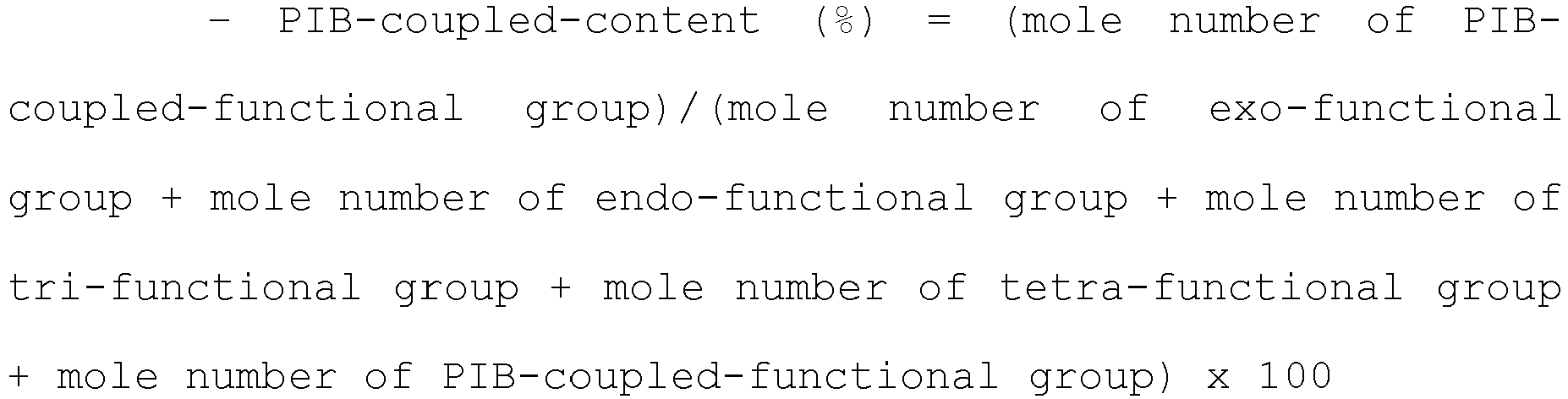
- In order to confirm the inclusion or not of such functional groups in commercially available materials, HRPB 1300 of Daelim Industrial Co., Ltd. was purchased as Comparative Example 8, and HRPB 2300 of Daelim Industrial Co., Ltd. was purchased as Comparative Example 9, and 1H NMR was measured and calculation was performed in the same way.
- In addition, the 1H NMR spectrum of Example 8 is shown in
FIG. 1 , and the 1H NMR spectrum of Comparative Example 8 is shown inFIG. 2 .[Table 6] exo-content tri+endo-content tetra-content PIB-coupled-content PIB-Cl-content Example 1 86 8 4 2 - Example 2 88 7 4 1 - Example 3 83 10 5 2 - Example 4 84 9 5 2 - Example 5 84 9 6 1 - Example 6 85 8 4 3 - Example 7 92 4 3 <1 - Example 8 82 6 6 6 - Example 9 84 8 6 2 - Comparative Example 8 85 15 - - - Comparative Example 9 85 15 - - - - In the isobutene oligomer of Example 8 according to the present invention, various peaks were detected in addition to an exo-functional group and an endo-functional group as shown in
FIG. 1 . - Particularly, as shown in
FIG. 1 , the presence of a tri-functional group was confirmed through the presence of additional peaks in addition to the peaks showing the endo-functional group around 5.20 ppm, and the presence of the tetra-functional group was confirmed by the peaks around 2.90 ppm. Further, the presence of the PIB-coupled-functional group was confirmed through the presence of peaks between 4.80 ppm and 4.90 ppm in addition to the peaks around 4.90 ppm, 4.70 ppm, showing the presence of the exo-functional group. - On the contrary, as shown in
FIG. 2 , in case of the isobutene oligomer which has been commonly used, only peaks around 4.90 ppm and 4.70 ppm, showing the exo-functional group and peaks around 5.20 ppm, showing the endo-functional group are clearly shown, and it could be confirmed that only the exo-functional group and endo-functional group are present in the oligomer, but different from the isobutene oligomer of the present invention, other double bonds positioned at the inner part of the oligomer including the tri-functional group, tetra-functional group, PIB-coupled-functional group, etc. are not present. - Like this, in cases of the conventional commonly used isobutene oligomers of Comparative Examples 8 and 9, only the exo-functional group and endo-functional group were confirmed. In the table above, the tri-functional group and the endo contents are added and shown as 15%, but this is because the peaks of the tri-functional group and endo-functional group are very close in the NMR spectrum. In practice, in terms of
FIG. 2 , the tri-functional group is not present in the Comparative Example. That is, an isobutene oligomer has the exo-content of 85% and the endo content of 15%. - On the contrary, in the isobutene oligomers of the Examples according to the present invention, the exo-content is shown high to the similar degree as in the Comparative Examples, and all the tri-functional group, tetra-functional group and PIB-coupled-functional group are present, and thus, the content of each functional group was calculated as in the table.
- That is, in case of the Comparative Examples, the exo-content is similar to that of the oligomer of the present invention, but the remainder is all composed of the endo-functional group, and double bonds by diverse isomerization reaction were not included. On the contrary, the isobutene oligomers of the present invention include diverse oligomer inner double bonds (tri-functional group, tetra-functional group, PIB-coupled-functional group) without reduced exo-content, and are all novel isobutene oligomers having different structure, shape and physical properties from the Comparative Examples.
- With respect to the isobutene oligomers prepared in Example 8 and Comparative Example 8, viscosity was measured, and the values are shown in Table 7 below.
- Measurement was performed by a ASTM D445 dynamic viscosity measurement method at 100°C.
[Table 7] Viscosity Example 8 440 Comparative Example 8 460 - As shown in Table 7 above, the isobutene oligomer of the present invention showed higher number average molecular weight and lower viscosity when compared with the Comparative Example, and it could be found to have improved processability and to be easily applied in various uses.
- After polymerizing an isobutene oligomer according to Example 1, a polymerized solution was passed as it was through a column charged with celite to remove a catalyst.
- Then, with respect to a case of removing the catalyst through the celite filter, a case of removing the catalyst through dissolving in an organic solvent and washing by a conventional method, and a case of not removing the catalyst, ICP and IC analyses were performed, respectively, by the method below, and the results are shown in Table 8 below.
- Measurement was performed using Combustion IC (ICS-2100/AQF-5000, Thermo Scientific Dionex) under the conditions below.
- Column: IonPac AS18 analytical (4 x 250 mm), IonPac AG18 guard (4 x 50 mm)
- Eluent type: KOH (30.5 mM)
- Eluent flow rate: 1 mL/min
- Detector: Suppressed Conductivity Detector
- SRS Current: 76 mA
- Injection Volume: 20 µl
- Isocratic/Gradient conditions: Isocratic
- As shown from the results above, it could be found that remaining catalyst may be effectively removed through a simple method of preparing an isobutene oligomer using the organic borate-based catalyst of the present invention and passing through a filter without a separate washing process.
| Specimen name | Anion component [mg/kg] | |
| F | Cl | |
| PB in a case of removing catalyst through filter | <10 | <10 |
| PB in a case of removing catalyst through washing | <10 | <10 |
| PB in a case of not removing catalyst | 40 | 45 |
Claims (20)
- An organic borate-based catalyst comprising a compound represented by the following Formula 1 and a hydroxyl group-containing compound, whereina silicon atom (Si) of the compound represented by Formula 1 and an oxygen atom (O) of the hydroxyl group-containing compound form a covalent bond:
 in Formula 1,each R0 is independently hydrogen, an alkyl group of 1 to 20 carbon atoms, an alkoxy group of 1 to 20 carbon atoms, an aryl group of 6 to 20 carbon atoms or an aryloxy group of 6 to 20 carbon atoms,R1 to R4 are each independently hydrogen, a halogen group or an alkyl group of 1 to 20 carbon atoms, ando, p, q and r are each independently an integer of 1 to 5.
 - The organic borate-based catalyst according to claim 1, wherein each R0 is independently hydrogen, an alkyl group of 1 to 12 carbon atoms, an alkoxy group of 1 to 12 carbon atoms, an aryl group of 6 to 12 carbon atoms or an aryloxy group of 6 to 12 carbon atoms, and
R1 to R4 are each independently hydrogen, a halogen group or a halogen group-substituted alkyl group of 1 to 12 carbon atoms. - The organic borate-based catalyst according to claim 1, wherein the hydroxyl group-containing compound is water (H2O) or a compound represented by the following Formula 2:
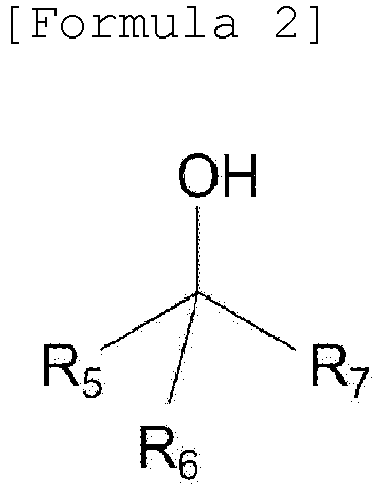
R5 to R7 are each independently hydrogen, a hydroxyl group, a hydroxyalkyl group of 1 to 20 carbon atoms, an alkyl group of 1 to 20 carbon atoms, an alkenyl group of 2 to 20 carbon atoms, an alkynyl group of 2 to 20 carbon atoms, a cycloalkyl group of 3 to 20 carbon atoms, an aryl group of 6 to 20 carbon atoms, a heteroaryl group of 5 to 20 carbon atoms, an alkoxy group of 1 to 20 carbon atoms, an aryloxy group of 6 to 20 carbon atoms, an alkylaryl group of 7 to 20 carbon atoms or an arylalkyl group of 7 to 20 carbon atoms. - The organic borate-based catalyst according to claim 3, whereinthe hydroxyl group-containing compound is a compound represented by Formula 2, andR5 to R7 are each independently hydrogen, an alkyl group of 1 to 20 carbon atoms, an alkenyl group of 2 to 20 carbon atoms, an alkynyl group of 2 to 20 carbon atoms, a cycloalkyl group of 3 to 20 carbon atoms, an aryl group of 6 to 20 carbon atoms, a heteroaryl group of 5 to 20 carbon atoms, an alkylaryl group of 7 to 20 carbon atoms or an arylalkyl group of 7 to 20 carbon atoms.
- The organic borate-based catalyst according to claim 3, wherein the organic borate-based catalyst is a compound represented by the following Formula 3:

 each R0 is independently hydrogen, an alkyl group of 1 to 20 carbon atoms, an alkoxy group of 1 to 20 carbon atoms, an aryl group of 6 to 20 carbon atoms or an aryloxy group of 6 to 20 carbon atoms,R1 to R4 are each independently hydrogen, a halogen group or an alkyl group of 1 to 20 carbon atoms,o, p, q and r are each independently an integer of 1 to 5, andR5 to R7 are each independently hydrogen, a hydroxyl group, a hydroxyalkyl group of 1 to 20 carbon atoms, an alkyl group of 1 to 20 carbon atoms, an alkenyl group of 2 to 20 carbon atoms, an alkynyl group of 2 to 20 carbon atoms, a cycloalkyl group of 3 to 20 carbon atoms, an aryl group of 6 to 20 carbon atoms, a heteroaryl group of 5 to 20 carbon atoms, an alkoxy group of 1 to 20 carbon atoms, an aryloxy group of 6 to 20 carbon atoms, an alkylaryl group of 7 to 20 carbon atoms or an arylalkyl group of 7 to 20 carbon atoms.
 - The organic borate-based catalyst according to claim 1, wherein a weight ratio of the compound represented by Formula 1 and the hydroxyl group-containing compound is 1:0.5 to 1:4.
- A method for preparing an isobutene oligomer, comprising a step of polymerizing an isobutene monomer in the presence of the organic borate-based catalyst according to any one of claims 1 to 6.
- The method for preparing an isobutene oligomer according to claim 7, wherein the polymerization is performed in the presence of a halogen-free solvent.
- The method for preparing an isobutene oligomer according to claim 8, wherein the halogen-free solvent is one or more selected from the group consisting of butane, pentane, neopentane, hexane, cyclohexane, methylcyclohexane, heptane, octane, benzene, toluene, xylene and ethylbenzene.
- The method for preparing an isobutene oligomer according to claim 7, wherein the polymerization is performed at a temperature of 10 to 30°C.
- An isobutene oligomer comprising functional groups represented by the following Formulae a to e,not comprising a functional group represented by the following Formula f, andhaving a number average molecular weight of 1,000 or more:




 in Formula f,
X is a halogen atom. - The isobutene oligomer according to claim 11, wherein the functional groups represented by Formulae a to e are functional groups represented by the following Formulae a-1 to e-1, respectively:


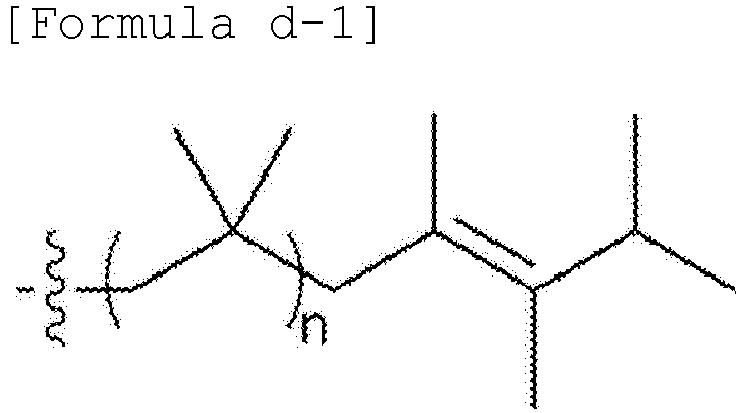

n is an integer of 1 to 200. - The isobutene oligomer according to claim 11, wherein the functional group represented by Formula a is 70 to 95 mol% based on a total amount of the functional groups represented by Formulae a to e.
- The isobutene oligomer according to claim 11, wherein a sum of the functional groups represented by Formulae b and c is 3 to 12 mol% based on a total amount of the functional groups represented by Formulae a to e.
- The isobutene oligomer according to claim 11, wherein the functional group represented by Formula d is 3 to 10 mol% based on a total amount of the functional groups represented by Formulae a to e.
- The isobutene oligomer according to claim 11, wherein the functional group represented by Formula e is 0.1 to 10 mol% based on a total amount of the functional groups represented by Formulae a to e.
- The isobutene oligomer according to claim 11, wherein, based on a total amount of the functional groups represented by Formulae a to e, comprising 70 to 90 mol% of the functional group represented by Formula a; 3 to 10 mol% of a sum of the functional groups represented by Formulae b and c; 3 to 10 mol% of the functional group represented by Formula d; and 0.1 to 10 mol% of the functional group represented by Formula e.
- The isobutene oligomer according to claim 11, having a number average molecular weight of 1,100 or more, and a molecular weight distribution of 1.5 to 3.5.
- A method for preparing an organic borate-based catalyst, the method comprising a step of injecting a compound represented by the following Formula 1 and a hydroxyl group-containing compound to a hydrocarbon solvent, and stirring:
 each R0 is independently hydrogen, an alkyl group of 1 to 20 carbon atoms, an alkoxy group of 1 to 20 carbon atoms, an aryl group of 6 to 20 carbon atoms or an aryloxy group of 6 to 20 carbon atoms,R1 to R4 are each independently hydrogen, a halogen group or an alkyl group of 1 to 20 carbon atoms, ando, p, q and r are each independently an integer of 1 to 5.
 - The method for preparing an organic borate-based catalyst according to claim 19, wherein the stirring is performed for 0.5 to 20 hours.
Applications Claiming Priority (3)
| Application Number | Priority Date | Filing Date | Title |
|---|---|---|---|
| KR20190101203 | 2019-08-19 | ||
| KR20190101204 | 2019-08-19 | ||
| PCT/KR2020/010872 WO2021034041A1 (en) | 2019-08-19 | 2020-08-19 | Organic borate-based catalyst, method for preparing isobutene oligomer by using same, and isobutene oligomer prepared thereby |
Publications (3)
| Publication Number | Publication Date |
|---|---|
| EP4019128A1 true EP4019128A1 (en) | 2022-06-29 |
| EP4019128A4 EP4019128A4 (en) | 2023-01-25 |
| EP4019128B1 EP4019128B1 (en) | 2024-02-21 |
Family
ID=74660580
Family Applications (1)
| Application Number | Title | Priority Date | Filing Date |
|---|---|---|---|
| EP20854908.9A Active EP4019128B1 (en) | 2019-08-19 | 2020-08-19 | Organic borate-based catalyst, method for preparing isobutene oligomer by using same, and isobutene oligomer prepared thereby |
Country Status (6)
| Country | Link |
|---|---|
| US (1) | US12221458B2 (en) |
| EP (1) | EP4019128B1 (en) |
| JP (2) | JP7141544B2 (en) |
| KR (2) | KR102469493B1 (en) |
| CN (1) | CN113661185B (en) |
| WO (1) | WO2021034041A1 (en) |
Families Citing this family (1)
| Publication number | Priority date | Publication date | Assignee | Title |
|---|---|---|---|---|
| WO2021112617A1 (en) * | 2019-12-06 | 2021-06-10 | 주식회사 엘지화학 | Catalyst composition and method for preparing polyisobutene by using same |
Family Cites Families (33)
| Publication number | Priority date | Publication date | Assignee | Title |
|---|---|---|---|---|
| US5122572A (en) * | 1985-06-20 | 1992-06-16 | Kennedy Joseph P | Living catalysts, complexes and polymers therefrom |
| GB8818711D0 (en) | 1988-08-05 | 1988-09-07 | Shell Int Research | Lubricating oil dispersants |
| US5296433A (en) | 1992-04-14 | 1994-03-22 | Minnesota Mining And Manufacturing Company | Tris(pentafluorophenyl)borane complexes and catalysts derived therefrom |
| US6008307A (en) | 1994-04-28 | 1999-12-28 | Exxon Chemical Patents Inc | Process for producing olefin polymers using cationic catalysts |
| US5625087A (en) * | 1994-09-12 | 1997-04-29 | The Dow Chemical Company | Silylium cationic polymerization activators for metallocene complexes |
| US5705503A (en) | 1995-05-25 | 1998-01-06 | Goodall; Brian Leslie | Addition polymers of polycycloolefins containing functional substituents |
| JP3683364B2 (en) * | 1996-11-01 | 2005-08-17 | 日本ポリオレフィン株式会社 | Boron compound, olefin polymerization catalyst containing the compound, and polyolefin production method using the catalyst |
| US6165235A (en) | 1997-08-26 | 2000-12-26 | The Lubrizol Corporation | Low chlorine content compositions for use in lubricants and fuels |
| DE19825334A1 (en) | 1998-06-05 | 1999-12-09 | Basf Ag | Process for the production of highly reactive polyisobutenes |
| KR100279498B1 (en) | 1998-09-08 | 2001-02-01 | 박찬구 | Method for preparing polyisobutene using transition metal compound-methylaluminoxane catalyst system |
| KR100324566B1 (en) | 1999-05-28 | 2002-02-16 | 박찬구 | Preparation of polyisobutene |
| US6346585B1 (en) | 1999-06-24 | 2002-02-12 | The Lubrizol Corporation | Ammonium heteropolyacid catalized polymerization of olefins |
| TW548283B (en) | 2000-01-11 | 2003-08-21 | Dow Chemical Co | Chemically-modified supports and supported catalyst systems prepared therefrom |
| KR20010082913A (en) | 2000-02-22 | 2001-08-31 | 박찬구 | Preparation of polyisobutene by bis(arylamido)group 4 catalyst compounds |
| KR100486044B1 (en) | 2000-11-13 | 2005-04-29 | 대림산업 주식회사 | Method for producing polybutene |
| JP4386637B2 (en) * | 2000-12-19 | 2009-12-16 | サンアロマー株式会社 | Method for storing catalyst for olefin polymerization |
| MXPA03010095A (en) | 2001-05-04 | 2004-03-16 | Dow Global Technologies Inc | Random or block co-or terpolymers produced by using of metal complex catalysts. |
| DE10211418A1 (en) | 2002-03-15 | 2003-09-25 | Bayer Ag | Process for the production of highly reactive polyisobutenes |
| CA2535107A1 (en) | 2003-08-01 | 2005-02-10 | The Lubrizol Corporation | Mixed dispersants for lubricants |
| DE102005038283A1 (en) | 2005-08-12 | 2007-02-22 | Basf Ag | Solvent-stabilized metal complexes with weakly coordinating counteranions as polymerization catalysts |
| DE102005055817A1 (en) * | 2005-11-21 | 2007-05-24 | Basf Ag | Process for the preparation of highly reactive isobutene homo- or copolymers by means of boron-containing catalyst complexes |
| DE102005055819A1 (en) * | 2005-11-21 | 2007-05-24 | Basf Ag | Process for the preparation of highly reactive Isobutenhomo- or copolymers from technical C4 hydrocarbon streams using proton acid catalyst complexes |
| CA2575652A1 (en) | 2006-02-15 | 2007-08-15 | Lanxess Inc. | Method of halogenating butyl rubber without acid neutralization agents |
| CN100506855C (en) * | 2006-04-29 | 2009-07-01 | 北京化工大学 | Preparation method of polyisobutylene |
| CN101613423B (en) * | 2008-06-27 | 2011-05-18 | 北京化工大学 | Initiation system used for synthesizing polyisobutylene with high reaction activity |
| ES2446096T3 (en) | 2009-10-19 | 2014-03-06 | Sasol Technology (Proprietary) Limited | Oligomerization of olefinic compounds with reduced polymer formation. |
| KR102253845B1 (en) | 2013-05-10 | 2021-05-21 | 헨켈 아이피 앤드 홀딩 게엠베하 | Functional polyisobutylene-containing oligomers and polymers |
| US9631038B2 (en) | 2013-10-11 | 2017-04-25 | University Of Massachusetts | Polymerization initiating system and method to produce highly reactive olefin functional polymers |
| WO2015156408A1 (en) | 2014-04-11 | 2015-10-15 | 出光興産株式会社 | Production method for olefin-based polymer, olefin polymerization catalyst, and olefin-based polymer |
| EP3328904A4 (en) | 2015-07-30 | 2019-03-13 | Henkel IP & Holding GmbH | Synthesis of functionalized polyisobutylenes |
| BR112018016567B1 (en) * | 2016-02-16 | 2022-07-05 | Basf Se | PROCESS FOR PREPARING HIGH-REACTIVITY ISOBUTENE HOMO- OR COPOLYMERS |
| KR102732181B1 (en) | 2016-02-16 | 2024-11-19 | 바스프 에스이 | Method for producing highly reactive isobutene homo- or copolymers |
| KR20190040619A (en) * | 2017-10-11 | 2019-04-19 | 한화토탈 주식회사 | method for preparing isobutene oligomer |
-
2020
- 2020-08-19 US US17/601,544 patent/US12221458B2/en active Active
- 2020-08-19 WO PCT/KR2020/010872 patent/WO2021034041A1/en not_active Ceased
- 2020-08-19 CN CN202080026130.6A patent/CN113661185B/en active Active
- 2020-08-19 EP EP20854908.9A patent/EP4019128B1/en active Active
- 2020-08-19 KR KR1020200103863A patent/KR102469493B1/en active Active
- 2020-08-19 JP JP2021551827A patent/JP7141544B2/en active Active
-
2022
- 2022-08-16 KR KR1020220101927A patent/KR102570890B1/en active Active
- 2022-08-23 JP JP2022132448A patent/JP7368567B2/en active Active
Also Published As
| Publication number | Publication date |
|---|---|
| KR102469493B1 (en) | 2022-11-23 |
| US20220204533A1 (en) | 2022-06-30 |
| EP4019128B1 (en) | 2024-02-21 |
| JP7368567B2 (en) | 2023-10-24 |
| KR102570890B1 (en) | 2023-08-29 |
| KR20210021926A (en) | 2021-03-02 |
| CN113661185B (en) | 2023-12-29 |
| JP2022522794A (en) | 2022-04-20 |
| WO2021034041A1 (en) | 2021-02-25 |
| EP4019128A4 (en) | 2023-01-25 |
| JP2022169684A (en) | 2022-11-09 |
| US12221458B2 (en) | 2025-02-11 |
| KR20220121224A (en) | 2022-08-31 |
| CN113661185A (en) | 2021-11-16 |
| JP7141544B2 (en) | 2022-09-22 |
Similar Documents
| Publication | Publication Date | Title |
|---|---|---|
| EP4019128B1 (en) | Organic borate-based catalyst, method for preparing isobutene oligomer by using same, and isobutene oligomer prepared thereby | |
| EP3943516B1 (en) | Catalyst composition and method for preparing polyisobutene by using same | |
| KR102301668B1 (en) | Method For Preparing Polybutene Olygomer | |
| KR102506502B1 (en) | Catalyst composition and preparation method of polyisobutene using the same | |
| EP3722333B1 (en) | Method for preparing polybutene oligomer | |
| EP3913004B1 (en) | Catalyst composition and method for preparing hydrocarbon resin using the same | |
| Zhao et al. | Synergistic bulky substituent strategy in iminopyridyl nickel and palladium catalysts enables High-Molecular-Weight (Co) polymers and living ethylene polymerization | |
| KR102817781B1 (en) | Method for producing polyisobutene | |
| US12252576B2 (en) | Process and catalyst composition for producing linear alpha olefins in high yield by ethylene oligomerization | |
| EP3702379B1 (en) | Propylene random copolymer | |
| KR102719854B1 (en) | Organometallic catalyst composition and method for preparing butene oligomer using the same | |
| CN121045422A (en) | Solid catalyst components, catalysts, polyolefins, their preparation methods and applications for olefin polymerization | |
| Li et al. | Unsymmetrical α‐diimine nickel (II) complex with rigid bicyclic ring ligand: Synthesis, characterization, and ethylene polymerization in the presence of AlEt2Cl | |
| EP1406726B1 (en) | Organoaluminium catalyst, its preparation and its use in a process for the polymerization of alkylene oxides | |
| EP4071185A1 (en) | Catalyst composition and method for preparing isobutene-isoprene copolymer by using same | |
| WO2020223672A1 (en) | Functionalized cyclic polymers and methods of preparing same | |
| KR20210074635A (en) | Transition metal catalyst composition and method for preparing polyisobutene using the same |
Legal Events
| Date | Code | Title | Description |
|---|---|---|---|
| STAA | Information on the status of an ep patent application or granted ep patent |
Free format text: STATUS: THE INTERNATIONAL PUBLICATION HAS BEEN MADE |
|
| PUAI | Public reference made under article 153(3) epc to a published international application that has entered the european phase |
Free format text: ORIGINAL CODE: 0009012 |
|
| STAA | Information on the status of an ep patent application or granted ep patent |
Free format text: STATUS: REQUEST FOR EXAMINATION WAS MADE |
|
| 17P | Request for examination filed |
Effective date: 20210928 |
|
| AK | Designated contracting states |
Kind code of ref document: A1 Designated state(s): AL AT BE BG CH CY CZ DE DK EE ES FI FR GB GR HR HU IE IS IT LI LT LU LV MC MK MT NL NO PL PT RO RS SE SI SK SM TR |
|
| RIC1 | Information provided on ipc code assigned before grant |
Ipc: C08F 2/38 20060101ALI20220912BHEP Ipc: C08F 2/04 20060101ALI20220912BHEP Ipc: C08F 4/54 20060101ALI20220912BHEP Ipc: C08F 10/10 20060101ALI20220912BHEP Ipc: C08F 4/52 20060101ALI20220912BHEP Ipc: B01J 31/02 20060101ALI20220912BHEP Ipc: B01J 31/14 20060101AFI20220912BHEP |
|
| DAV | Request for validation of the european patent (deleted) | ||
| DAX | Request for extension of the european patent (deleted) | ||
| A4 | Supplementary search report drawn up and despatched |
Effective date: 20230102 |
|
| RIC1 | Information provided on ipc code assigned before grant |
Ipc: C08F 2/38 20060101ALI20221220BHEP Ipc: C08F 2/04 20060101ALI20221220BHEP Ipc: C08F 4/54 20060101ALI20221220BHEP Ipc: C08F 10/10 20060101ALI20221220BHEP Ipc: C08F 4/52 20060101ALI20221220BHEP Ipc: B01J 31/02 20060101ALI20221220BHEP Ipc: B01J 31/14 20060101AFI20221220BHEP |
|
| GRAP | Despatch of communication of intention to grant a patent |
Free format text: ORIGINAL CODE: EPIDOSNIGR1 |
|
| STAA | Information on the status of an ep patent application or granted ep patent |
Free format text: STATUS: GRANT OF PATENT IS INTENDED |
|
| INTG | Intention to grant announced |
Effective date: 20231213 |
|
| GRAS | Grant fee paid |
Free format text: ORIGINAL CODE: EPIDOSNIGR3 |
|
| GRAA | (expected) grant |
Free format text: ORIGINAL CODE: 0009210 |
|
| STAA | Information on the status of an ep patent application or granted ep patent |
Free format text: STATUS: THE PATENT HAS BEEN GRANTED |
|
| AK | Designated contracting states |
Kind code of ref document: B1 Designated state(s): AL AT BE BG CH CY CZ DE DK EE ES FI FR GB GR HR HU IE IS IT LI LT LU LV MC MK MT NL NO PL PT RO RS SE SI SK SM TR |
|
| REG | Reference to a national code |
Ref country code: GB Ref legal event code: FG4D |
|
| REG | Reference to a national code |
Ref country code: CH Ref legal event code: EP |
|
| REG | Reference to a national code |
Ref country code: DE Ref legal event code: R096 Ref document number: 602020026198 Country of ref document: DE |
|
| REG | Reference to a national code |
Ref country code: IE Ref legal event code: FG4D |
|
| REG | Reference to a national code |
Ref country code: LT Ref legal event code: MG9D |
|
| REG | Reference to a national code |
Ref country code: NL Ref legal event code: MP Effective date: 20240221 |
|
| PG25 | Lapsed in a contracting state [announced via postgrant information from national office to epo] |
Ref country code: IS Free format text: LAPSE BECAUSE OF FAILURE TO SUBMIT A TRANSLATION OF THE DESCRIPTION OR TO PAY THE FEE WITHIN THE PRESCRIBED TIME-LIMIT Effective date: 20240621 |
|
| PG25 | Lapsed in a contracting state [announced via postgrant information from national office to epo] |
Ref country code: LT Free format text: LAPSE BECAUSE OF FAILURE TO SUBMIT A TRANSLATION OF THE DESCRIPTION OR TO PAY THE FEE WITHIN THE PRESCRIBED TIME-LIMIT Effective date: 20240221 |
|
| PG25 | Lapsed in a contracting state [announced via postgrant information from national office to epo] |
Ref country code: GR Free format text: LAPSE BECAUSE OF FAILURE TO SUBMIT A TRANSLATION OF THE DESCRIPTION OR TO PAY THE FEE WITHIN THE PRESCRIBED TIME-LIMIT Effective date: 20240522 |
|
| REG | Reference to a national code |
Ref country code: AT Ref legal event code: MK05 Ref document number: 1658649 Country of ref document: AT Kind code of ref document: T Effective date: 20240221 |
|
| PG25 | Lapsed in a contracting state [announced via postgrant information from national office to epo] |
Ref country code: HR Free format text: LAPSE BECAUSE OF FAILURE TO SUBMIT A TRANSLATION OF THE DESCRIPTION OR TO PAY THE FEE WITHIN THE PRESCRIBED TIME-LIMIT Effective date: 20240221 Ref country code: RS Free format text: LAPSE BECAUSE OF FAILURE TO SUBMIT A TRANSLATION OF THE DESCRIPTION OR TO PAY THE FEE WITHIN THE PRESCRIBED TIME-LIMIT Effective date: 20240521 Ref country code: NL Free format text: LAPSE BECAUSE OF FAILURE TO SUBMIT A TRANSLATION OF THE DESCRIPTION OR TO PAY THE FEE WITHIN THE PRESCRIBED TIME-LIMIT Effective date: 20240221 |
|
| PG25 | Lapsed in a contracting state [announced via postgrant information from national office to epo] |
Ref country code: ES Free format text: LAPSE BECAUSE OF FAILURE TO SUBMIT A TRANSLATION OF THE DESCRIPTION OR TO PAY THE FEE WITHIN THE PRESCRIBED TIME-LIMIT Effective date: 20240221 |
|
| PG25 | Lapsed in a contracting state [announced via postgrant information from national office to epo] |
Ref country code: AT Free format text: LAPSE BECAUSE OF FAILURE TO SUBMIT A TRANSLATION OF THE DESCRIPTION OR TO PAY THE FEE WITHIN THE PRESCRIBED TIME-LIMIT Effective date: 20240221 |
|
| PG25 | Lapsed in a contracting state [announced via postgrant information from national office to epo] |
Ref country code: RS Free format text: LAPSE BECAUSE OF FAILURE TO SUBMIT A TRANSLATION OF THE DESCRIPTION OR TO PAY THE FEE WITHIN THE PRESCRIBED TIME-LIMIT Effective date: 20240521 Ref country code: NO Free format text: LAPSE BECAUSE OF FAILURE TO SUBMIT A TRANSLATION OF THE DESCRIPTION OR TO PAY THE FEE WITHIN THE PRESCRIBED TIME-LIMIT Effective date: 20240521 Ref country code: NL Free format text: LAPSE BECAUSE OF FAILURE TO SUBMIT A TRANSLATION OF THE DESCRIPTION OR TO PAY THE FEE WITHIN THE PRESCRIBED TIME-LIMIT Effective date: 20240221 Ref country code: LT Free format text: LAPSE BECAUSE OF FAILURE TO SUBMIT A TRANSLATION OF THE DESCRIPTION OR TO PAY THE FEE WITHIN THE PRESCRIBED TIME-LIMIT Effective date: 20240221 Ref country code: IS Free format text: LAPSE BECAUSE OF FAILURE TO SUBMIT A TRANSLATION OF THE DESCRIPTION OR TO PAY THE FEE WITHIN THE PRESCRIBED TIME-LIMIT Effective date: 20240621 Ref country code: HR Free format text: LAPSE BECAUSE OF FAILURE TO SUBMIT A TRANSLATION OF THE DESCRIPTION OR TO PAY THE FEE WITHIN THE PRESCRIBED TIME-LIMIT Effective date: 20240221 Ref country code: GR Free format text: LAPSE BECAUSE OF FAILURE TO SUBMIT A TRANSLATION OF THE DESCRIPTION OR TO PAY THE FEE WITHIN THE PRESCRIBED TIME-LIMIT Effective date: 20240522 Ref country code: FI Free format text: LAPSE BECAUSE OF FAILURE TO SUBMIT A TRANSLATION OF THE DESCRIPTION OR TO PAY THE FEE WITHIN THE PRESCRIBED TIME-LIMIT Effective date: 20240221 Ref country code: ES Free format text: LAPSE BECAUSE OF FAILURE TO SUBMIT A TRANSLATION OF THE DESCRIPTION OR TO PAY THE FEE WITHIN THE PRESCRIBED TIME-LIMIT Effective date: 20240221 Ref country code: BG Free format text: LAPSE BECAUSE OF FAILURE TO SUBMIT A TRANSLATION OF THE DESCRIPTION OR TO PAY THE FEE WITHIN THE PRESCRIBED TIME-LIMIT Effective date: 20240221 Ref country code: AT Free format text: LAPSE BECAUSE OF FAILURE TO SUBMIT A TRANSLATION OF THE DESCRIPTION OR TO PAY THE FEE WITHIN THE PRESCRIBED TIME-LIMIT Effective date: 20240221 |
|
| PG25 | Lapsed in a contracting state [announced via postgrant information from national office to epo] |
Ref country code: PL Free format text: LAPSE BECAUSE OF FAILURE TO SUBMIT A TRANSLATION OF THE DESCRIPTION OR TO PAY THE FEE WITHIN THE PRESCRIBED TIME-LIMIT Effective date: 20240221 Ref country code: PT Free format text: LAPSE BECAUSE OF FAILURE TO SUBMIT A TRANSLATION OF THE DESCRIPTION OR TO PAY THE FEE WITHIN THE PRESCRIBED TIME-LIMIT Effective date: 20240621 |
|
| PG25 | Lapsed in a contracting state [announced via postgrant information from national office to epo] |
Ref country code: SE Free format text: LAPSE BECAUSE OF FAILURE TO SUBMIT A TRANSLATION OF THE DESCRIPTION OR TO PAY THE FEE WITHIN THE PRESCRIBED TIME-LIMIT Effective date: 20240221 Ref country code: PT Free format text: LAPSE BECAUSE OF FAILURE TO SUBMIT A TRANSLATION OF THE DESCRIPTION OR TO PAY THE FEE WITHIN THE PRESCRIBED TIME-LIMIT Effective date: 20240621 Ref country code: PL Free format text: LAPSE BECAUSE OF FAILURE TO SUBMIT A TRANSLATION OF THE DESCRIPTION OR TO PAY THE FEE WITHIN THE PRESCRIBED TIME-LIMIT Effective date: 20240221 Ref country code: LV Free format text: LAPSE BECAUSE OF FAILURE TO SUBMIT A TRANSLATION OF THE DESCRIPTION OR TO PAY THE FEE WITHIN THE PRESCRIBED TIME-LIMIT Effective date: 20240221 |
|
| PG25 | Lapsed in a contracting state [announced via postgrant information from national office to epo] |
Ref country code: DK Free format text: LAPSE BECAUSE OF FAILURE TO SUBMIT A TRANSLATION OF THE DESCRIPTION OR TO PAY THE FEE WITHIN THE PRESCRIBED TIME-LIMIT Effective date: 20240221 |
|
| PG25 | Lapsed in a contracting state [announced via postgrant information from national office to epo] |
Ref country code: SM Free format text: LAPSE BECAUSE OF FAILURE TO SUBMIT A TRANSLATION OF THE DESCRIPTION OR TO PAY THE FEE WITHIN THE PRESCRIBED TIME-LIMIT Effective date: 20240221 |
|
| PG25 | Lapsed in a contracting state [announced via postgrant information from national office to epo] |
Ref country code: EE Free format text: LAPSE BECAUSE OF FAILURE TO SUBMIT A TRANSLATION OF THE DESCRIPTION OR TO PAY THE FEE WITHIN THE PRESCRIBED TIME-LIMIT Effective date: 20240221 Ref country code: CZ Free format text: LAPSE BECAUSE OF FAILURE TO SUBMIT A TRANSLATION OF THE DESCRIPTION OR TO PAY THE FEE WITHIN THE PRESCRIBED TIME-LIMIT Effective date: 20240221 |
|
| PG25 | Lapsed in a contracting state [announced via postgrant information from national office to epo] |
Ref country code: SK Free format text: LAPSE BECAUSE OF FAILURE TO SUBMIT A TRANSLATION OF THE DESCRIPTION OR TO PAY THE FEE WITHIN THE PRESCRIBED TIME-LIMIT Effective date: 20240221 |
|
| PG25 | Lapsed in a contracting state [announced via postgrant information from national office to epo] |
Ref country code: SM Free format text: LAPSE BECAUSE OF FAILURE TO SUBMIT A TRANSLATION OF THE DESCRIPTION OR TO PAY THE FEE WITHIN THE PRESCRIBED TIME-LIMIT Effective date: 20240221 Ref country code: SK Free format text: LAPSE BECAUSE OF FAILURE TO SUBMIT A TRANSLATION OF THE DESCRIPTION OR TO PAY THE FEE WITHIN THE PRESCRIBED TIME-LIMIT Effective date: 20240221 Ref country code: RO Free format text: LAPSE BECAUSE OF FAILURE TO SUBMIT A TRANSLATION OF THE DESCRIPTION OR TO PAY THE FEE WITHIN THE PRESCRIBED TIME-LIMIT Effective date: 20240221 Ref country code: EE Free format text: LAPSE BECAUSE OF FAILURE TO SUBMIT A TRANSLATION OF THE DESCRIPTION OR TO PAY THE FEE WITHIN THE PRESCRIBED TIME-LIMIT Effective date: 20240221 Ref country code: DK Free format text: LAPSE BECAUSE OF FAILURE TO SUBMIT A TRANSLATION OF THE DESCRIPTION OR TO PAY THE FEE WITHIN THE PRESCRIBED TIME-LIMIT Effective date: 20240221 Ref country code: CZ Free format text: LAPSE BECAUSE OF FAILURE TO SUBMIT A TRANSLATION OF THE DESCRIPTION OR TO PAY THE FEE WITHIN THE PRESCRIBED TIME-LIMIT Effective date: 20240221 |
|
| REG | Reference to a national code |
Ref country code: DE Ref legal event code: R097 Ref document number: 602020026198 Country of ref document: DE |
|
| PLBE | No opposition filed within time limit |
Free format text: ORIGINAL CODE: 0009261 |
|
| STAA | Information on the status of an ep patent application or granted ep patent |
Free format text: STATUS: NO OPPOSITION FILED WITHIN TIME LIMIT |
|
| 26N | No opposition filed |
Effective date: 20241122 |
|
| REG | Reference to a national code |
Ref country code: CH Ref legal event code: PL |
|
| PG25 | Lapsed in a contracting state [announced via postgrant information from national office to epo] |
Ref country code: LU Free format text: LAPSE BECAUSE OF NON-PAYMENT OF DUE FEES Effective date: 20240819 |
|
| PG25 | Lapsed in a contracting state [announced via postgrant information from national office to epo] |
Ref country code: CH Free format text: LAPSE BECAUSE OF NON-PAYMENT OF DUE FEES Effective date: 20240831 Ref country code: MC Free format text: LAPSE BECAUSE OF FAILURE TO SUBMIT A TRANSLATION OF THE DESCRIPTION OR TO PAY THE FEE WITHIN THE PRESCRIBED TIME-LIMIT Effective date: 20240221 Ref country code: SI Free format text: LAPSE BECAUSE OF FAILURE TO SUBMIT A TRANSLATION OF THE DESCRIPTION OR TO PAY THE FEE WITHIN THE PRESCRIBED TIME-LIMIT Effective date: 20240221 |
|
| REG | Reference to a national code |
Ref country code: BE Ref legal event code: MM Effective date: 20240831 |
|
| PG25 | Lapsed in a contracting state [announced via postgrant information from national office to epo] |
Ref country code: BE Free format text: LAPSE BECAUSE OF NON-PAYMENT OF DUE FEES Effective date: 20240831 |
|
| PG25 | Lapsed in a contracting state [announced via postgrant information from national office to epo] |
Ref country code: IE Free format text: LAPSE BECAUSE OF NON-PAYMENT OF DUE FEES Effective date: 20240819 |
|
| PGFP | Annual fee paid to national office [announced via postgrant information from national office to epo] |
Ref country code: DE Payment date: 20250721 Year of fee payment: 6 |
|
| PGFP | Annual fee paid to national office [announced via postgrant information from national office to epo] |
Ref country code: IT Payment date: 20250722 Year of fee payment: 6 |
|
| PGFP | Annual fee paid to national office [announced via postgrant information from national office to epo] |
Ref country code: GB Payment date: 20250722 Year of fee payment: 6 |
|
| PGFP | Annual fee paid to national office [announced via postgrant information from national office to epo] |
Ref country code: FR Payment date: 20250725 Year of fee payment: 6 |
|
| PG25 | Lapsed in a contracting state [announced via postgrant information from national office to epo] |
Ref country code: CY Free format text: LAPSE BECAUSE OF FAILURE TO SUBMIT A TRANSLATION OF THE DESCRIPTION OR TO PAY THE FEE WITHIN THE PRESCRIBED TIME-LIMIT; INVALID AB INITIO Effective date: 20200819 |
|
| PG25 | Lapsed in a contracting state [announced via postgrant information from national office to epo] |
Ref country code: HU Free format text: LAPSE BECAUSE OF FAILURE TO SUBMIT A TRANSLATION OF THE DESCRIPTION OR TO PAY THE FEE WITHIN THE PRESCRIBED TIME-LIMIT; INVALID AB INITIO Effective date: 20200819 |