EP4018725B1 - Verfahren und vorrichtung zum steuern von netzabschnitten in einem drahtlosen kommunikationssystem - Google Patents
Verfahren und vorrichtung zum steuern von netzabschnitten in einem drahtlosen kommunikationssystem Download PDFInfo
- Publication number
- EP4018725B1 EP4018725B1 EP20884677.4A EP20884677A EP4018725B1 EP 4018725 B1 EP4018725 B1 EP 4018725B1 EP 20884677 A EP20884677 A EP 20884677A EP 4018725 B1 EP4018725 B1 EP 4018725B1
- Authority
- EP
- European Patent Office
- Prior art keywords
- nssai
- slice
- rejected
- amf
- registration
- Prior art date
- Legal status (The legal status is an assumption and is not a legal conclusion. Google has not performed a legal analysis and makes no representation as to the accuracy of the status listed.)
- Active
Links
Images

Classifications
-
- H—ELECTRICITY
- H04—ELECTRIC COMMUNICATION TECHNIQUE
- H04W—WIRELESS COMMUNICATION NETWORKS
- H04W60/00—Affiliation to network, e.g. registration; Terminating affiliation with the network, e.g. de-registration
-
- H—ELECTRICITY
- H04—ELECTRIC COMMUNICATION TECHNIQUE
- H04W—WIRELESS COMMUNICATION NETWORKS
- H04W48/00—Access restriction; Network selection; Access point selection
- H04W48/18—Selecting a network or a communication service
-
- H—ELECTRICITY
- H04—ELECTRIC COMMUNICATION TECHNIQUE
- H04W—WIRELESS COMMUNICATION NETWORKS
- H04W60/00—Affiliation to network, e.g. registration; Terminating affiliation with the network, e.g. de-registration
- H04W60/001—Registration rejection or failure
-
- H—ELECTRICITY
- H04—ELECTRIC COMMUNICATION TECHNIQUE
- H04W—WIRELESS COMMUNICATION NETWORKS
- H04W60/00—Affiliation to network, e.g. registration; Terminating affiliation with the network, e.g. de-registration
- H04W60/002—Registration for requesting network slices
-
- H—ELECTRICITY
- H04—ELECTRIC COMMUNICATION TECHNIQUE
- H04W—WIRELESS COMMUNICATION NETWORKS
- H04W28/00—Network traffic management; Network resource management
- H04W28/02—Traffic management, e.g. flow control or congestion control
- H04W28/0289—Congestion control
Definitions
- the invention relates controlling a network slice in a wireless communication system.
- the 5G or pre-5G communication system is also called a beyond 4th-generation (4G) network communication system or post long term evolution (LTE) system.
- Ultra-frequency bands e.g., 60 giga-Hertz (GHz) bands
- GHz bands giga-Hertz bands
- beamforming massive multiple-input multiple-output (MIMO)
- FD-MIMO full dimensional MIMO
- array antenna analog beamforming
- large-scale antenna techniques are under discussion.
- ACM advanced coding modulation
- FQAM hybrid FSK and QAM modulation
- SWSC sliding window superposition coding
- FBMC filter bank multi carrier
- NOMA non-orthogonal multiple access
- SCMA sparse code multiple access
- NFs virtualized network functions
- ITs information technologies
- NFs virtualized network functions
- the NFs may be installed/operated in various types of clouds or data centers (DCs).
- DCs data centers
- the NF may be freely scaled, initiated, or terminated depending on service requirements, system capacity, or network load.
- the NFs need to be driven basically in a physical entity, e.g., a certain equipment even though implemented in software, so it is noted that physical entities in relation to the NFs are not left out of consideration.
- the NFs may be implemented in a simple physical configuration, i.e., in hardware.
- Network slicing is a technology that logically configures a network into a set of NFs to support a certain service, and separate one slice from another slice.
- a terminal may access two or more slices to receive various services.
- a method for a user equipment to update a policy in a wireless communication system may include transmitting a first registration request message to an access and mobility management function (AMF), wherein the first registration request message includes requested network slice selection assistance information (NSSAI) including single (S)-NSSAI corresponding to a network slice with which the user equipment wants to register; receiving a first registration accept message as a response to the first registration request message from the AMF, wherein the first registration accept message includes an allowed NSSAI including at least one S-NSSAI allowed by the AMF; and requesting the update of a network slice selection policy (NSSP) associated with new S-NSSAI from the AMF when the new S-NSSAI not included in the requested NSSAI is included in the allowed NSSAI and the NSSP associated with the new S-NSSAI is not present.
- NSSAI network slice selection assistance information
- NSSP network slice selection policy
- 5G fifth generation
- NR new radio
- LTE long term evolution
- delivering information or policies about a radio access technology has the same meaning as delivering information that may be used for selecting a certain RAT, i.e., information about an access type or a policy.
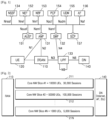
- FIG. 1 illustrates a wireless communication system, according to an embodiment of the disclosure.
- a radio access node (RAN) 110 and a UE 120 are shown as part of nodes that use a radio channel in a wireless communication system. Although there is one RAN 110 and one UE 120 shown in FIG. 1 , another RAN, which is identical or similar to the RAN 110, may be further included. Furthermore FIG. 1 is focused on an occasion when the single UE 120 performs communication in the single RAN 110. It is, however, obvious that there may be a plurality of UEs communicating in the single RAN 110.
- the RAN 110 is a network infrastructure that provides wireless access for the UE 120.
- the RAN 110 has coverage defined to be a certain geographical area based on a range within which a signal may be transmitted from the RAN 110 (not shown in FIG. 1 ).
- the RAN 110 may also be referred to as a base station (BS), an access point (AP), an eNodeB (eNB), a 5G node, a wireless point, a transmission/reception point (TRP), or other terms having equal technical meaning.
- BS base station
- AP access point
- eNB eNodeB
- 5G node a wireless point
- TRP transmission/reception point
- the UE 120 is a device used by a user, which performs communication with the RAN 110 through a radio channel. In some cases, the UE 120 may be operated without intervention of the user.
- the UE 120 is a device for performing machine type communication (MTC), which may not be carried by the user.
- MTC machine type communication
- the UE 120 shown in FIG. 1 may include at least one user portable device, which may include at least one MTC.
- the UE 120 may also be referred to as a terminal, an MS, a subscriber station, a remote terminal, a wireless terminal, a user device, or other terms having equal technical meaning.
- An AMF device 131 may be a network entity that manages mobility of the UE 120.
- An SMF device 132 may be a network entity that manages connection of a packet data network for providing packing data to the UE 120. Connection between the UE 120 and the SMF 132 may be a packet data unit (PDU) session.
- PDU packet data unit
- a user plane function (UPF) device 133 may be a gateway that delivers packets transmitted or received by the UE 120 or a network entity that serves as the gateway.
- the UPF device 133 may be connected to a data network (DN) 140 via the Internet to provide a path between the UE 120 and the DN 140 for data transmission or reception. Accordingly, the UPF device 133 may route data to be delivered to the Internet from among the packets transmitted by the UE 120 to an Internet data network.
- DN data network
- An authentication server function (AUSF) device 151 may be a network entity that provides a subscriber authentication service.
- a network exposure function (NEF) device 152 may be a network entity that is able to access information for managing the UE 120 in the 5G network, subscribe to a mobility management event of the UE 120, subscribe to a session management event of the UE 120, request session-related information, set charging information of the UE 120, request a change in PDU session policy for the UE 120, and transmit a small amount of data for the UE 120.
- NEF network exposure function
- a network repository function (NRF) device 153 may be an NF or network entity that stores an NF profile containing information about details of each NF or status information of the NF or NF instance, and may deliver the NF profile or the status information stored therein when requested by another NF.
- NRF network repository function
- a policy and charging function (PCF) device 154 may be a network entity that applies a mobile communication operator's service policy, charging policy, and PDU session policy for the UE 120.
- a unified data management (UDM) device 155 may be a network entity that stores information about a subscriber and/or the UE 120.
- An application function (AF) device 156 may be a service application server or network entity which work with a network to provide a service.
- the aforementioned AMF device 131, the SMF device 132, the UPF device 133, the NSSF device 134, the AUSF device 151, the NEF device 152, the NRF device 153, the PCF device 154, the UDM device 155, the AF device 156, and the SCP 157 device may have the form of software or firmware to be driven in at least one of devices and/or systems.
- the devices 131, 132, 133, 134, 151, 152, 153, 154, 155, 156, and 157 may be implemented in hardware when required. In the following description, these terms will be simply expressed without the word 'device'.
- the AMF device 131 will be called AMF 131
- the SMF device 132 will be called SMF 132.
- interface N1 may be used between the UE 120 and the AMF 131
- interface N2 may be used between the RAN 110 and the AMF 131
- interface N3 may be used between the RAN 110 and the UPF 133
- interface N4 may be used between the SMF 132 and the UPF 133
- interface N9 may be used between UPFs 133 or within the UPF 133
- interface N6 may be used between the UPF 133 and the DN 140.
- FG. 2 shows a configuration of a wireless communication system, according to various embodiments of the disclosure.
- a mobile communication system may include a wireless base station, e.g., the RAN 110, and one or more core network slices.
- a wireless base station e.g., the RAN 110
- core network slices there are N core network slices 211, 212,..., 21N shown.
- the RAN 110 may perform data transmission or reception between a UE, e.g., the UE 120 of FIG. 1 , and the DN 140 through at least one core network slice.
- a core network may be configured in the form of slices or without slices, or may coexist between them.
- a core network slice may basically include one or more core network NFs.
- NFs corresponding to a core network may include the AMF 131, the SMF 132, and the UPF 133.
- the NFs may include at least one of the AMF 131, the SMF 132, or the UPF 133.
- the NFs may further include other network function device in addition to the AMF 131, the SMF 132, and the UPF 133.
- the NFs may include at least one of the AMF 131, the SMF 132, or the UPF 133, and further include at least one other device than the aforementioned devices.
- the network slices 211, 212,..., and 21N may respectively provide services suited to their characteristics, and capacities that may be simultaneously provided by the respective network slices 211, 212,..., and 21N may be different.
- the capacities of the network slices 211, 212,..., and 21N may each correspond to e.g., the maximum number of UEs (subscribers) and the number of sessions.
- Each of the network slices 211, 212,..., and 21N may control access to a network based on its capacity.
- the first network slice 211 may be accessed by 10,000 UEs and accommodate 30,000 sessions.
- the second network slice 212 may be accessed by 50,000 UEs and accommodate 100,000 sessions.
- the N-th network slice 21N may be accessed by 1,000 UEs and accommodate 5,000 sessions.
- capacities of the respective network slices 211, 212,..., and 21N may be differently set according to the mobile communication operator's settings.
- capacities for the respective slices may be differently set according to a service level agreement (SLA).
- SLA service level agreement
- a capacity or quota of a network slice may be represented by at least one of the following parameters:
- the capacity of a single network slice may be set based on the number of UEs that may simultaneously access the network slice (parameter 1) and the maximum number of sessions that may be simultaneously supported by the network slice (parameter 2). Furthermore, the capacity of a single network slice may be set using at least one, or two or more of the aforementioned parameters.
- the parameters related to sessions and flows may be represented by a certain value for each slice (e.g., support 10,000 sessions per network slice), or by a certain value for each UE that accesses the network slice (e.g., support up to 4 sessions at a time for each UE that accesses the network slice).
- an operator's mobile communication network may be protected from being overloaded, resources of the network may be effectively used, and accurate charging between the mobile communication operator and the network slice user may be performed.
- quota-based access control for each network slice when quota-based access control for each network slice is performed, it may happen to reach a limit of the quota actually set for the network slice.
- the quota for the network slice is set as the maximum number of concurrent access users (or UEs), when an access request beyond the quota occurs, a technology to deal with this is required.
- a method of dealing with an access request occurring when the maximum number of concurrent access users has reached a quota limit may be proposed as follows:
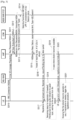
- FIG. 3 illustrates a flowchart illustrating a procedure for performing access control for each network slice, according to an embodiment of the disclosure.
- the NSSF 134 may provide information of a network slice.
- the NRF 153, the SCP 157, or the PCF 154 may also provide the information of the network slice.
- the UE 120 may select a network slice that the UE 120 intends to access, and transmit a connection request (e.g., radio resource control (RRC) connection (network slice selection assistance information (NSSAI)) message to the NG-RAN 110.
- RRC radio resource control
- NSSAI network slice selection assistance information
- the NG-RAN 110 is an example of a base station, without being limited thereto. That is, any type of base station may be used for the NG-RAN 110.
- the NG-RAN 110 may select the AMF 131 by using a network slice identifier specified by the UE 120, and forward an initial UE message including a registration request (e.g., Registration Req (Requested NSSAI)) to the AMF 131 based on the connection request message, e.g., N1 (NAS) message (e.g., the registration request message) transmitted by the UE 120.
- a registration request e.g., Registration Req (Requested NSSAI)
- NAS N1
- the AMF 131 may perform an operation to process the registration request message transmitted by the UE 120 through the NG-RAN 110.
- the AMF 131 may receive the subscription data from the UDM 155, in which case access and mobility related subscription data may include information of a slice, to which the UE 120 is subscribed (one or more pieces of subscribed S-NSSAI), in operation S312.
- the AMF 131 may transmit a network slice selection request (NSSelection Req) message to the NSSF 134.
- the network slice selection request (NSSelection Req) message may be used through Nnssf_NSSelection service's GET operation provided by the NSSF 134.
- information for slice selection may be requested not only from the NSSF 134 but from the NRF 153, the SCP 157, or the PCF 154. For this, service operation for each NF may be used, or information stored in the AMF 131 may be used.
- the AMF 131 may include network slice identifiers requested by the UE 120 (requested NSSAI) and network slice identifiers included in the subscription data (subscribed NSSI) in the network slice selection request (NSSelection Req) message. Furthermore, when the AMF 131 transmits the network slice selection request (NSSelection Req) message, the AMF 131 may inform that targets to be selected are all NFs included in the network slice or designate a particular NF type to be selected in the network slice. In operation S314, the NSSF 134 may perform an operation to select a network slice at the request of the AMF 131.
- information for each slice (e.g., maximum capacity or current load (quantity used) for the slice) received from an NF or operations, administration and management (OAM) or stored may be taken into account.
- the network slice and candidate NFs included in the network slice may be selected, taking into account the whole status of the network slice. For example, when the network slice includes the AMF 131, the SMF 132, and the UPF 133, the AMF 131, the SMF 132, and the UPF 133 may all be included in the candidate NFs.
- candidate NFs having the corresponding NF type may be selected.
- the network slice is made up with instances, a network slice instance may be selected. When there are several NFs or instances to be selected, the NFs or instances may be selected such that the load is distributed in consideration of a maximum capacity received and a current load state.
- the NSSF 134 may deliver a network slice selection response that includes network slice information to the AMF 131.
- the network slice selection response may be implemented in the form of Nnssf_NSSelection Service, and may include authorized network slice information (AuthorizedNetworkSliceInfo) that includes information of the previously selected network slice.
- AuthorizedNetworkSliceInfo authorized network slice information
- the network slice and candidate NFs included in the network slice may be included in the AuthorizedNetworkSliceInfo, taking into account the whole status of the network slice.
- the network slice includes the AMF 131, the SMF 132, and the UPF 133
- information of candidates of the AMF 131, the SMF 132, and the UPF 133 may be included.
- candidate NFs having the corresponding NF type may be included.
- a slice instance may be included.
- the information including the network slice may be made up in the form of a name or identifier to identify the selected network slice candidate or the selected instance.
- the UE 120 upon reception of the registration response from the AMF 131, the UE 120 performs the rest of the registration process.
- the received response message includes information indicating that access to a particular slice or slices is rejected due to the quota limit and the access to the slice is pending
- an operation traffic transmission to the slice and PDU session creation process for the traffic transmission
- the UE 120 may notify an upper layer that access to the particular slice or slices is rejected due to the quota limit for the slice and the access is pending, so that a service application may operate by taking this into account or perform an operation such as transmitting an alarm to the user.
- the UE 120 may select a network slice that the UE 120 intends to access, and transmit a connection request (e.g., RRC connection (NSSAI)) message to the NG-RAN 110.
- a connection request e.g., RRC connection (NSSAI)
- NSSAI RRC connection
- the NG-RAN 110 is an example of a base station, without being limited thereto. That is, any type of base station may be used for the NG-RAN 110.
- the UE 120 upon reception of the registration response from the AMF 131, the UE 120 performs the rest of the registration process.
- the received response message includes information indicating that access to a particular slice or slices is rejected due to the quota limit and the access to the slice is pending
- an operation traffic transmission to the slice and PDU session creation process for the traffic transmission
- the UE 120 may not re-try the access until the UE 120 receives separate accept information from the network or until the timer is expired when the timer for retry has been received.
- the accept message includes information indicating that services through the default slice are available, the UE 120 may receive the service through the default slice.
- the AMF 131 may notify the UE 120 of this, i.e., operations S319 to S321 may be equally applied in FIG. 4 .
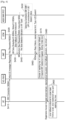
- FIG. 5 illustrates a flowchart illustrating a procedure of shifting a UE into another radio access type to provide a service, according to an embodiment of the disclosure.
- the NSSF 134 may provide information of a network slice.
- the NSSF 134 may be replaced by the NRF 153, the SCP 157, or the PCF 154.
- the NG-RAN 110 may select the AMF 131 by using a network slice identifier specified by the UE 120, and forward an initial UE message including a registration request (e.g., Registration Req (Requested NSSAI)) to the AMF 131 based on the connection request message, e.g., N1 (NAS) message (e.g., the registration request message as described above) transmitted by the UE 120.
- a registration request e.g., Registration Req (Requested NSSAI)
- NAS N1
- the AMF 131 may perform an operation to process the registration request message transmitted by the UE 120 through the NG-RAN 110.
- the AMF 131 may receive the subscription data from the UDM 155, in which case access and mobility related subscription data may include information of a slice to which the UE subscribes (one or more pieces of subscribed S-NSSAI), information of a default available slice (one or more pieces of Default S-NSSAI), and information of an allowed wireless network (access type), and the subscription data may additionally include whether fallback of the UE 120 to a particular access type is allowed when it is hard for the UE 120 to access the slice the UE 120 has requested or the slice exceeds its access capacity or quota.
- the AMF 131 may transmit a network slice selection request (NSSelection Req) message to the NSSF 134.
- the network slice selection request (NSSelection Req) message may be used through Nnssf_NSSelection service's GET operation provided by the NSSF 134.
- information for slice selection may be requested not only from the NSSF 134 but from the NRF 153, the SCP 157, or the PCF 154. For this, service operation for each NF may be used, or information stored in the AMF 131 may be used.
- the AMF 131 may insert network slice identifiers requested by the UE 120 (requested NSSAI) and network slice identifiers included in the subscription data (subscribed NSSI) into the network slice selection request (NSSelection Req) message. Furthermore, when transmitting the network slice selection request (NSSelection Req) message, the AMF 131 may inform that targets to be selected are all NFs included in the network slice or designate a particular NF type to be selected in the network slice.
- the NSSF 134 may perform an operation to select a network slice at the request of the AMF 131.
- information for each slice e.g., maximum capacity for each slice or current load (quantity used)
- the request of the AMF 131 is about the whole network slice
- the network slice and candidate NFs included in the network slice may be selected, taking into account the whole status of the network slice. For example, when the network slice includes the AMF 131, the SMF 132, and the UPF 133, the AMF 131, the SMF 132, and the UPF 133 may all be included in the candidate NFs.
- candidate NFs having the corresponding NF type may be selected.
- a network slice instance may be selected.
- the NFs or instances may be selected such that the load is distributed in consideration of a maximum capacity or quota received and a current load state.
- the NSSF 134 may deliver a network slice selection response that includes network slice information to the AMF 131.
- the network slice selection response may be implemented in the form of Nnssf_NSSelection Service, and may include authorized network slice information (AuthorizedNetworkSliceInfo) that includes previously selected network slice information.
- AuthorizedNetworkSliceInfo authorized network slice information
- the network slice and candidate NFs included in the network slice may be selected in the AuthorizedNetworkSliceInfo, taking into account the whole status of the network slice.
- the AMF 131, the SMF 132, and the UPF 133 may include information of candidates of them.
- slice information included in a response message may include candidate NFs that correspond to the corresponding NF type.
- an instance may include a slice instance.
- the information including the network slice may be made up in the form of a name or identifier to identify the selected candidate or the selected instance.
- the NSSF 134 may transmit a result and/or cause of the failure in the network slice selection response message. By doing this, the NSSF 134 may inform the AMF 131 of the cause of the NF selection failure. In the allowable quota based control for a slice in particular, the NSSF 134 may give information about a detailed cause (e.g., of the quota, which one-the number of UEs/subscribers, the number of sessions, or the like- has reached the highest value).
- access control for a situation where of the slice's quota, the maximum number of users (or UEs) of the slice is exceeded or the maximum number of sessions belonging to the particular slice is exceeded is considered.
- the AMF 131 may know based on the slice information received in operation S560 that a corresponding condition has occurred to one or more slices requested by the UE 120 for access. In this case, the AMF 131 may allow the UE 120 to have access to another RAT so that the UE 120 may receive a default service from the other RAT although hardly receiving a service through a slice requested by a RAT currently requested by the UE 120 for access.
- the AMF 131 transmits a response message to the registration request to the UE 120 that has transmitted the registration request.
- the response message may be a UE registration reject message.
- rejected slice information (rejected nssai) may include an identifier of the rejected slice and may indicate that quota (the number of users accessing the slice, the number of sessions of the slice, etc.) limit is a cause of the rejection of the access.
- the response message may also include an indication to guide access through a particular RAT.
- the response message may include a timer value used when whether to try re-access to the current RAT and slice, access to which has been rejected due to the limit of quota, i.e., the maximum number of accesses, is determined.
- the AMF 131 is required to have stored information about the requested slice and the slice, access to which is pending due to the quota limit, in a UE context for the UE 120.
- the AMF 131 may insert information (RFSP Index or SPID) guiding the UE 120 to increase priority of access to the particular RAT (in the embodiment of the disclosure, another RAT to be accessible when the slice exceeds its capacity) into a message transmitted to the NG-RAN 110, and the NG-RAN 110, upon receiving the message, may change a radio access configuration of the UE 120 to increase priority of access to the particular RAT.
- RFID Radio Resource Identity
- the UE 120 that has received a registration response from the AMF 131 may shift to a particular RAT to perform an operation for receiving a service when the response message includes information to access the particular RAT and operate accordingly.
- a retry timer is included in the message received from the AMF 131, the UE 120 may not retry the registration request for the rejected slice in the original RAT until the timer is expired.
- the UE 120 may change the RAT again and try registration request for the corresponding slice.
- the UE 120 may optionally notify an upper layer that access to the particular slice or slices is rejected due to the quota limit for each slice and a change in RAT is to be made, so that a service application may operate by taking this into account or may be guided to an operation e.g., transmitting an alarm to the user.
- the AMF 131 may notify the UE 120 of this, i.e., operations S319 to S321 may be equally applied in the embodiment of the disclosure.
- a mobility management entity MME (not shown) may receive information indicating that a particular slice has become available from a 5G NF such as the AMF 131 or the UDM 155, and the message may be forwarded to the UE 120 from the MME instead of the AMF 131.
- the UE 120 may additionally perform an operation to change the RAT before performing a registration procedure.
- FIG. 6 illustrates a block diagram illustrating a configuration 7 of a UE, according to an embodiment of the disclosure.
- the UE in the disclosure may include a transceiver 610, a memory 620, and a processor 630.
- the transceiver 610, the memory 620, and the processor 630 of the UE may operate according to the aforementioned communication method of the UE. Components of the UE are not, however, limited thereto. For example, the UE may include more or fewer elements than described above.
- the transceiver 610, the memory 620, and the processor 630 may be implemented in a single chip.
- the transceiver 610 is a collective term of a UE transmitter and a UE receiver, and may transmit or receive a signal to or from a base station.
- the signals to be transmitted to or received from the BS may include control information and data.
- the transceiver 610 may include an RF transmitter for up-converting the frequency of a signal to be transmitted and amplifying the signal and an RF receiver for low-noise amplifying a received signal and down-converting the frequency of the received signal.
- Transceiver 610 is merely an example, and the elements of the transceiver 610 are not limited to the RF transmitter and RF receiver.
- the transceiver 610 may receive a signal on a wireless channel and output the signal to the processor 630, or transmit a signal output from the processor 630 on a wireless channel.
- the memory 620 may store a program and data required for operation of the BS. Furthermore, the memory 620 may store control information or data included in a signal obtained by the UE.
- the memory 620 may include a storage medium such as a read only memory (ROM), a random access memory (RAM), a hard disk, a compact disc ROM (CD-ROM), and a digital versatile disc (DVD), or a combination of storage mediums.
- the processor 630 may control a series of processes for the UE to be operated according to the embodiments of the disclosure.
- the processor 630 may include at least one processor.
- the processor 630 may include a communication processor (CP) for controlling communication and an application processor (AP) for controlling an upper layer such as an application program.
- CP communication processor
- AP application processor
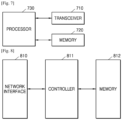
- FIG. 7 illustrates a block diagram illustrating a configuration of a network entity, according to an embodiment of the disclosure.
- a network entity in the disclosure may include a transceiver 710, a memory 720, and a processor 730.
- the transceiver 710, the memory 720, and the processor 730 of the network entity may operate according to the aforementioned communication method of the network entity. Components of the network entity are not, however, limited thereto.
- the network entity may include more or fewer elements than described above.
- the transceiver 710, the memory 720, and the processor 730 may be implemented in a single chip.
- the network entity may include NFs such as an AMF, an SMF, a PCF, a NEF, a UDM, a UPF, etc., as described above.
- the network entity may include a base station.
- the transceiver 710 is a collective term of a network entity transmitter and a network entity receiver, and may transmit or receive a signal to or from a UE or another network entity.
- the signal to be transmitted to or received may include control information and data.
- the transceiver 710 may include an RF transmitter for up-converting the frequency of a signal to be transmitted and amplifying the signal and an RF receiver for low-noise amplifying a received signal and down-converting the frequency of the received signal.
- Transceiver 710 is merely an example, and the elements of the transceiver 710 are not limited to the RF transmitter and RF receiver.
- the transceiver 710 may include a wired/wireless transceiver, including various components for signal transmission and reception.
- the transceiver 710 may receive a signal on a communication channel (e.g., a wireless channel) and output the signal to the processor 730, or transmit a signal output from the processor 730 on the communication channel.
- a communication channel e.g., a wireless channel
- the memory 720 may store a program and data required for an operation of the network entity. Furthermore, the memory 720 may store control information or data included in a signal obtained by the network entity.
- the memory 720 may include a storage medium such as a ROM, a RAM, a hard disk, a CD-ROM, and a DVD, or a combination of storage mediums.
- the processor 730 may control a series of processes for the network entity to be operated according to the embodiments of the disclosure.
- the processor 730 may include at least one processor.
- FIG. 8 illustrates another block diagram illustrating a configuration of a network entity, according to an embodiment of the disclosure.
- the network entity of FIG. 8 may be configured to correspond to the configuration of the network entity as described above in connection with FIG. 7 .
- the network entity may include NFs, which may include the AMF 131, the SMF 132, and the UPF 133, as described above.
- the NFs may include the NSSF 134, the NFR 153, and the SCP 157.
- the NFs may be implemented as separate network entities.
- a network interface 810 may communicate with another network entity in a core network.
- the NF may communicate with the SMF 132, the UPF 133, the NSSF 134, the NRF 153, and/or the SCP 157.
- the NF may communicate with the AMF 131, the UPF 133, the NSSF 134, the NRF 153, and/or the SCP 157.
- the NF may communicate with the AMF 131, the UPF 133, the SMF 132, the NRF 153, and/or the SCP 157.
- the NF may communicate with other entities in the core network.
- a controller 811 may be implemented with at least one processor and/or program for performing an operation of the NF. For example, when the NF is the AMF 131, the controller 811 may perform the aforementioned operation of the AMF 131. In another example, when the NF is the NSSF 134, the controller may perform the aforementioned operation of the NSSF 134. Even for another network entity, the controller 811 may control the aforementioned operation of the network entity.
- a memory 812 may store a program and various kinds of control information required by the controller 811, and the respective information as described above.
- the memory 812 may store the aforementioned information received from the AMF 131 or an external entity.
- the memory 812 may store control information required by the NSSF 134 and/or information received.
- the memory 812 may store information required for the aforementioned operation of the network entity.
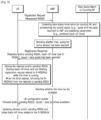
- FIG. 9 illustrates a flowchart illustrating operations between a UE and a network, according to an embodiment of the disclosure.
- a UE transmits a registration request message requesting to use a certain slice to an AMF.
- the message may include a set of identifiers (S-NSSAI) of target slices that the UE requests permission to use, i.e., Requested NSSAI.
- S-NSSAI set of identifiers
- the message may include information indicating whether to support a function for quota management for each slice (cause reception, back-off timer use, rejected/pending NSSAI handling, etc.) or whether to support a generic network slice template (gst) based slice control function, which may be included as part of 5G mobility management (5GMM) capability in the registration request.
- 5GMM 5G mobility management
- the AMF may identify current status of the slice (status of the number of currently concurrent access UEs/subscribers for the slice, whether a new UE/subscriber is additionally accepted or not, etc.). The identification may be performed by exchanging information between an NF that manages the quota of the slice in the network (counts the number of access UEs/subscribers of the slice) and the AMF.
- the NF that manages the quota may collects the number of UEs currently registered for each slice from other NFs (e.g., AMF) in the network, and considering this comprehensively, determine whether the number of UEs has reached the maximum number of concurrent access UEs set for the slice.
- NFs e.g., AMF
- the slice quota management NF may determine and deliver to the AMF information of the slice (at least one of a total number of access UEs for the current slice, the maximum allowable number of concurrent UEs of the slice, or whether a new UE is allowed to access the current slice or whether the quota limit of the slice has been reached), and parameters (e.g., a cause value and preferred back-off timer) to be used when access to the slice is restricted.
- the operations 1 and 2 may be performed separately or in a reverse order.
- the AMF may process the registration request of the UE.
- the UE determines that there is a slice whose quota (a limit of the maximum number of concurrent access UEs/subscribers) is to be managed, among slices identified by S-NSSAIs included in Requested NSSAI requested by the UE, the UE may determine, based on the information received in operation 2, whether the UE is allowed to register for the slice according the current status of the slice. Parameters set by the AMF to control the UE may be applied in this and following operations when the AMF is informed in the operation 1 that the UE supports a quota based slice control function or a GST based slice control function.
- the AMF may include information relating to access restriction based on quota management for each slice in a registration response (e.g., registration accept or registration reject) message to be transmitted to the UE.
- a registration response e.g., registration accept or registration reject
- the AMF may operate by selecting one of the following three options:
- the AMF may store the information (the rejected or pending NSSAI and associated cause, or the back-off timer value) in a context of the UE.
- the UE may store the information received from the AMF in the registration response message in operation 4.
- the message received by the UE includes a cause indicating that access to a slice is restricted due to the quota limit of the slice, and a back-off timer vale
- the UE may start a back-off timer and may not transmit a registration request for an associated S-NSSAI in the corresponding PLMN until the back-off timer is expired.
- the UE is unable to expire or cancel the timer even while in cell change, RAT change, PLMN change, or access type change.
- the UE may operate differently according to the options of the operation 4. Operations of the UE according to options 1 to 3 will now be described.
- Option 1 in a case that the UE receives a rejected NSSAI having a cause of the quota limit of the slice, and the rejected NSSAI is applied to the overall PLMN, the registration request of the UE for an S-NSSAI included in the NSSAI in the entire PLMN is not accepted. Furthermore, when the rejected NSSAI is applied to the registration area RA, the registration request may not be accepted in the registration area RA but accepted in other registration areas RAs.
- the UE may delete a corresponding S-NSSAI from the rejected NSSAI when a back-off timer associated with the S-NSSAI is expired. Subsequently, the UE may start requesting registration for permission for use of the corresponding slice S-NSSAI.
- Option 2 in a case that the UE receives a pending NSSAI having a cause of quota limit of the slice, and the NSSAI is applied to the overall PLMN, the registration request of the UE for an S-NSSAI included in the NSSAI in the entire PLMN is not accepted. Furthermore, when the NSSAI is applied to the registration area RA, the registration request may not be accepted in the registration area RA but accepted in other registration areas RAs.
- the UE may delete a corresponding S-NSSAI from the pending NSSAI when a back-off timer associated with the S-NSSAI is expired. Subsequently, the UE may start requesting registration for permission for use of the corresponding slice S-NSSAI.
- Option 3 when the UE receives a back-off timer value associated with an S-NSSAI having a cause of the quota limit of a slice, the UE is not able to request registration related to the S-NSSAI while the timer is running, and may start requesting registration for permission for use of the slice S-NSSAI after the timer is expired.
- Operation 6 and the subsequent operations may be performed optionally after the previous operation.
- the operation 6 and the subsequent operations may not be performed.
- the AMF may determine whether at least one of the slices that have not accepted new access thereto due to the quota limit becomes newly accessible. This may be performed by receiving the status information of the slice as in the operation 2.
- the AMF may deliver information indicating that the slice becomes available to the UE that transmitted an access request for the slice but access of which is pending.
- the AMF may change the slice into available state by inserting the slice into the allowed NSSAI.
- the AMF may transmit a cause or indicator indicating that the slice is in a state of allowing an access request for the slice while maintaining the pending NSSAI status for the UE.
- the AMF may set the back-off timer of the slice to '0' and transmit the value to the UE.
- the registration response message may be used, and otherwise, a UE configuration update message may be used.
- the UE may update the status of the slice based on the message received from the AMF.
- the UE may determine that use of the slice is permitted.
- the UE may expire the back-off timer for the slice and transmit the registration request for the slice.
- the UE may set a timer value to '0' or expire the timer and transmit a registration request for the slice.
- a computer-readable storage medium storing one or more programs (software modules) may be provided.
- the one or more programs stored in the computer-readable storage medium are configured for execution by one or more processors in an electronic device.
- the one or more programs may include instructions that cause the electronic device to perform the methods in accordance with the claims of the disclosure or the embodiments described in the specification.
- the programs may be stored in a RAM, a non-volatile memory including a flash memory, a ROM, an electrically erasable programmable ROM (EEPROM), a magnetic disc storage device, a CD-ROM, a DVD or other types of optical storage device, and/or a magnetic cassette.
- the programs may be stored in a memory including a combination of some or all of them. There may be a plurality of memories.
- the program may also be stored in an attachable storage device that may be accessed over a communication network including the Internet, an intranet, a local area network (LAN), a wide LAN (WLAN), or a storage area network (SAN), or a combination thereof.
- the storage device may be connected to an apparatus performing the embodiments of the disclosure through an external port.
- a separate storage device in the communication network may be connected to the apparatus performing the embodiments of the disclosure.
- services may be provided more effectively.
- a component is represented in a singular or plural form. It should be understood, however, that the singular or plural representations are selected appropriately according to the situations presented for convenience of explanation, and the disclosure is not limited to the singular or plural form of the component. Further, the component expressed in the plural form may also imply the singular form, and vice versa.
Landscapes
- Engineering & Computer Science (AREA)
- Computer Networks & Wireless Communication (AREA)
- Signal Processing (AREA)
- Computer Security & Cryptography (AREA)
- Mobile Radio Communication Systems (AREA)
Claims (14)
- Verfahren, das von einem Benutzergerät, UE, (120) in einem drahtlosen Kommunikationssystem durchgeführt wird, wobei das Verfahren Folgendes umfasst:Übertragen einer Registrierungsanforderungsnachricht an eine Zugriffs- und Mobilitätsverwaltungsfunktions-, AMF,-Einheit (131), die eine angeforderte Netzwerkscheibenauswahlunterstützungsinformation, NSSAI, und Informationen bezüglich der Unterstützung einer abgelehnten NSSAI enthält, wobei die angeforderte NSSAI mindestens eine einzelne NSSAI, S-NSSAI, enthält;Empfangen einer Registrierungsantwortnachricht von der AMF-Einheit, die eine abgelehnte NSSAI, die eine abgelehnte S-NSSAI mit einer Ablehnungsursache enthält, enthält, basierend auf der Registrierungsanforderungsnachricht;Identifizieren, ob die abgelehnte S-NSSAI der Ablehnungsursache zugeordnet ist, die angibt, dass eine maximale Anzahl von UEs pro Netzwerkscheibe erreicht wurde;für den Fall, dass die abgelehnte S-NSSAI der Ablehnungsursache zugeordnet ist, die angibt, dass die maximale Anzahl von UEs pro Netzwerkscheibe erreicht ist, Starten eines Back-off Timers für die abgelehnte S-NSSAI; undEntfernen der abgelehnten S-NSSAI aus der abgelehnten NSSAI, falls der Back-off Timer abgelaufen ist.
- Verfahren nach Anspruch 1, wobei die Informationen bezüglich der Unterstützung der abgelehnten NSSAI in einer 5G-Mobilitätsverwaltungs-, 5GMM,-Fähigkeitsinformation der Registrierungsanforderungsnachricht enthalten sind.
- Verfahren nach Anspruch 1,
wobei die Registrierungsantwortnachricht einen Wert des Back-Off Timers in Bezug auf die abgelehnte S-NSSAI, die in der abgelehnten NSSAI enthalten ist, enthält. - Verfahren nach Anspruch 1, ferner umfassend:
Übertragen einer weiteren Registrierungsanforderungsnachricht an die AMF-Einheit, die die abgelehnte S-NSSAI enthält, falls der Back-off Timer abläuft. - Verfahren nach Anspruch 1,wobei die Registrierungsantwortnachricht ferner eine erlaubte NSSAI enthält, falls eine maximale Anzahl von UEs für eine oder mehrere S-NSSAls, aber nicht für alle S-NSSAls in der angeforderten NSSAI erreicht wurde,wobei die erlaubte NSSAI mindestens eine der erlaubten S-NSSAI enthält, die in der angeforderten NSSAI enthalten ist, undwobei die Registrierungsantwortnachricht einer Registrierungsannahmenachricht entspricht.
- Verfahren nach Anspruch 1,wobei die Registrierungsantwortnachricht ferner eine erlaubte NSSAI enthält, falls eine maximale Anzahl von UEs für alle S-NSSAls in der angeforderten NSSAI erreicht wurde und eine oder mehrere Standard-S-NSSAls für das UE erlaubt sind,wobei die erlaubte NSSAI die eine oder mehreren Standard-S-NSSAI enthält, undwobei die Registrierungsantwortnachricht einer Registrierungsannahmenachricht entspricht.
- Verfahren nach Anspruch 1,wobei die Registrierungsantwortnachricht die abgelehnte NSSAI enthält, falls eine maximale Anzahl von UEs für alle S-NSSAls in der Anforderungs-NSSAI erreicht wurde, undwobei die Registrierungsantwortnachricht einer Registrierungsablehnungsnachricht entspricht.
- Verfahren, das von einer Zugriffs- und Mobilitätsverwaltungsfunktions-, AMF,-Einheit (131), in einem drahtlosen Kommunikationssystem durchgeführt wird, wobei das Verfahren umfasst:Empfangen einer Registrierungsanforderungsnachricht (120) von einem Benutzergerät, UE, (120), die eine angeforderte Netzwerkscheibenauswahlunterstützungsinformation, NSSAI, und Informationen bezüglich der Unterstützung einer abgelehnten NSSAI enthält, wobei die angeforderte NSSAI mindestens eine einzelne NSSAI, S-NSSAI, enthält;Übertragen einer Anforderungsnachricht, die Informationen in Bezug auf eine Anzahl von UEs enthält, die mit der mindestens einen S-NSSAI registriert sind, an eine Netzwerkfunktions-, NF,-Einheit;Empfangen einer Antwortnachricht von der NF-Einheit, die Informationen enthält, die anzeigen, ob die maximale Anzahl von UEs für die mindestens eine S-NSSAI erreicht wurde; undSenden einer Registrierungsantwortnachricht an das UE, die eine abgelehnte NSSAI, die eine abgelehnte S-NSSAI mit einer Ablehnungsursache enthält, enthält, basierend auf der Registrierungsanforderungsnachricht,wobei die Registrierungsantwortnachricht ferner einen Wert eines Back-Off Timers in Bezug auf die abgelehnte S-NSSAI enthält.
- Verfahren nach Anspruch 8,
wobei die Informationen bezüglich der Unterstützung der abgelehnten NSSAI in einer 5G-Mobilitätsverwaltungs-, 5GMM-Fähigkeitsinformation der Registrierungsanforderungsnachricht enthalten sind. - Verfahren nach Anspruch 8, ferner umfassend:
Empfangen einer weiteren Registrierungsanforderungsnachricht vom UE, die die abgelehnte S-NSSAI enthält, falls der Back-off Timer abläuft. - Verfahren nach Anspruch 8,wobei die Registrierungsantwortnachricht ferner eine erlaubte NSSAI enthält, falls eine maximale Anzahl von UEs für eine oder mehrere S-NSSAls, aber nicht für alle S-NSSAls in der angeforderten NSSAI erreicht wurde,wobei die erlaubte NSSAI mindestens eine der erlaubten S-NSSAI enthält, die in der angeforderten NSSAI enthalten ist, undwobei die Registrierungsantwortnachricht einer Registrierungsannahmenachricht entspricht.
- Verfahren nach Anspruch 8,wobei die Registrierungsantwortnachricht ferner eine erlaubte NSSAI enthält, falls eine maximale Anzahl von UEs für alle S-NSSAls in der angeforderten NSSAI erreicht wurde und eine oder mehrere Standard-S-NSSAls für das UE erlaubt sind,wobei die erlaubte NSSAI die eine oder mehreren Standard-S-NSSAI enthält, undwobei die Registrierungsantwortnachricht einer Registrierungsannahmenachricht entspricht.
- Verfahren nach Anspruch 8,wobei die Registrierungsantwortnachricht die abgelehnte NSSAI enthält, falls eine maximale Anzahl von UEs für alle S-NSSAls in der Anforderungs-NSSAI erreicht wurde, undwobei die Registrierungsantwortnachricht einer Registrierungsablehnungsnachricht entspricht.
- Benutzergerät, UE, (120), das in einem drahtlosen Kommunikationssystem durchgeführt wird, wobei das UE umfasst:einen Transceiver; undmindestens einen Prozessor, der mit dem Transceiver gekoppelt ist und konfiguriert ist zum:Steuern des Transceivers so, dass er an eine Zugriffs- und Mobilitätsverwaltungsfunktions-, AMF,-Einheit (131) eine Registrierungsanforderungsnachricht sendet, die eine angeforderte Netzwerkscheibenauswahlunterstützungsinformation, NSSAI, und Informationen bezüglich der Unterstützung einer abgelehnten NSSAI enthält, wobei die angeforderte NSSAI mindestens eine einzelne NSSAI, S-NSSAI, enthält,Steuern des Transceivers so, dass er von der AMF-Einheit eine Registrierungsantwortnachricht empfängt, die eine abgelehnte NSSAI, die eine abgelehnte S-NSSAI mit einer Ablehnungsursache enthält, enthält, basierend auf der Registrierungsanforderungsnachricht,Identifizieren, ob die abgelehnte S-NSSAI der Ablehnungsursache zugeordnet ist, die angibt, dass eine maximale Anzahl von UEs pro Netzwerkscheibe erreicht wurde,für den Fall, dass die abgelehnte S-NSSAI der Ablehnungsursache zugeordnet ist, die angibt, dass die maximale Anzahl von UEs pro Netzwerkscheibe erreicht ist, Starten eines Back-off Timers für die abgelehnte S-NSSAI, undEntfernen der abgelehnten S-NSSAI aus der abgelehnten NSSAI, wenn der Back-off Timer abgelaufen ist.
Applications Claiming Priority (3)
| Application Number | Priority Date | Filing Date | Title |
|---|---|---|---|
| KR20190141247 | 2019-11-06 | ||
| KR1020200061212A KR20210054970A (ko) | 2019-11-06 | 2020-05-21 | 무선 통신 시스템에서 네트워크 슬라이스를 제어하는 방법 및 장치 |
| PCT/KR2020/015469 WO2021091285A1 (en) | 2019-11-06 | 2020-11-06 | Method and apparatus for controlling network slice in wireless communication system |
Publications (3)
| Publication Number | Publication Date |
|---|---|
| EP4018725A1 EP4018725A1 (de) | 2022-06-29 |
| EP4018725A4 EP4018725A4 (de) | 2022-10-26 |
| EP4018725B1 true EP4018725B1 (de) | 2025-06-25 |
Family
ID=75686380
Family Applications (1)
| Application Number | Title | Priority Date | Filing Date |
|---|---|---|---|
| EP20884677.4A Active EP4018725B1 (de) | 2019-11-06 | 2020-11-06 | Verfahren und vorrichtung zum steuern von netzabschnitten in einem drahtlosen kommunikationssystem |
Country Status (4)
| Country | Link |
|---|---|
| US (2) | US11516762B2 (de) |
| EP (1) | EP4018725B1 (de) |
| CN (1) | CN114651482B (de) |
| WO (1) | WO2021091285A1 (de) |
Families Citing this family (33)
| Publication number | Priority date | Publication date | Assignee | Title |
|---|---|---|---|---|
| WO2021092561A1 (en) * | 2019-11-07 | 2021-05-14 | Ofinno, Llc | Session management for a network slice |
| JP2023018162A (ja) * | 2019-12-26 | 2023-02-08 | シャープ株式会社 | UE(User Equipment) |
| JP2023018164A (ja) * | 2019-12-27 | 2023-02-08 | シャープ株式会社 | UE(User Equipment) |
| US12363629B2 (en) * | 2020-02-18 | 2025-07-15 | Lg Electronics Inc. | Communication related to network slice |
| WO2022014944A1 (ko) * | 2020-07-14 | 2022-01-20 | 엘지전자 주식회사 | Nssaa 실패로 인한 거절된 nssai 처리 |
| US12137432B2 (en) * | 2020-08-13 | 2024-11-05 | Apple Inc. | User equipment (UE) techniques for constraints on simultaneous use of network slices |
| WO2022056799A1 (en) * | 2020-09-18 | 2022-03-24 | Qualcomm Incorporated | Fast slicing switching via scg suspension or activation |
| EP4292336A1 (de) * | 2021-02-12 | 2023-12-20 | Lenovo (Singapore) Pte. Ltd. | Zugangssteuerung auf basis registrierter benutzergeräte |
| US11716283B2 (en) * | 2021-03-05 | 2023-08-01 | Oracle International Corporation | Methods, systems, and computer readable media for selecting a software defined wide area network (SD-WAN) link using network slice information |
| CN115134869B (zh) * | 2021-03-29 | 2025-02-25 | 华为技术有限公司 | 网络切片的准入控制方法及装置 |
| US11818102B2 (en) * | 2021-04-16 | 2023-11-14 | Nokia Technologies Oy | Security enhancement on inter-network communication |
| FR3122544A1 (fr) * | 2021-05-03 | 2022-11-04 | Orange | Procédé et dispositif de paramétrage d’un dispositif terminal |
| CN115551122A (zh) * | 2021-06-30 | 2022-12-30 | 华为技术有限公司 | 切片准入控制的方法和通信装置 |
| AU2022323658A1 (en) * | 2021-08-06 | 2024-01-18 | Lenovo (Singapore) Pte. Ltd. | Registration to a network slice subject to admission control |
| KR20230022767A (ko) * | 2021-08-09 | 2023-02-16 | 삼성전자주식회사 | 무선 통신 시스템에서 단말을 인증하기 위한 방법 및 장치 |
| CN115843029A (zh) * | 2021-09-18 | 2023-03-24 | 华为技术有限公司 | 网络验证的方法和装置 |
| US12010550B2 (en) * | 2021-09-30 | 2024-06-11 | Amazon Technologies, Inc. | Customer-defined capacity limit plans for communication networks |
| EP4712672A3 (de) * | 2021-10-26 | 2026-05-20 | Samsung Electronics Co., Ltd. | Verfahren und vorrichtung zur unterstützung eines alternativen netzwerk-slices in einem drahtlosen kommunikationssystem |
| CN114189922B (zh) * | 2021-12-08 | 2024-12-13 | 中国电信股份有限公司 | 无线切片接纳方法、装置、存储介质及电子设备 |
| CN116456389A (zh) * | 2022-01-10 | 2023-07-18 | 维沃移动通信有限公司 | 资源控制方法、装置、终端、网络侧设备及可读存储介质 |
| EP4380305A3 (de) | 2022-03-17 | 2024-09-04 | Ofinno, LLC | Netzwerkschichtverwaltung auf der basis von inaktivität |
| CN117479268A (zh) * | 2022-07-21 | 2024-01-30 | 维沃移动通信有限公司 | 允许的nssai的获取方法、终端及网络侧设备 |
| KR20240013566A (ko) * | 2022-07-22 | 2024-01-30 | 삼성전자주식회사 | 이동 통신 시스템에서 단말의 이동성을 지원하기 위한 방법 및 장치 |
| CN117544975A (zh) * | 2022-08-01 | 2024-02-09 | 华为技术有限公司 | 一种网络切片的管理方法、通信装置及通信系统 |
| CN119605249A (zh) * | 2022-08-08 | 2025-03-11 | 联想(新加坡)私人有限公司 | 用于改变协议数据单元会话的网络切片的技术 |
| CN117897934A (zh) * | 2022-08-15 | 2024-04-16 | 上海诺基亚贝尔股份有限公司 | 用于切片调度的方法和装置 |
| CN115412434B (zh) * | 2022-08-26 | 2024-02-09 | 哲库科技(北京)有限公司 | 一种切片请求方法和终端设备 |
| CN118042589A (zh) * | 2022-11-03 | 2024-05-14 | 中兴通讯股份有限公司 | 一种无线通信的方法及电子设备 |
| CN119895942A (zh) * | 2022-11-14 | 2025-04-25 | 联想(新加坡)私人有限公司 | 在无线通信网络中替换网络切片 |
| CN118575521A (zh) * | 2022-12-29 | 2024-08-30 | 北京小米移动软件有限公司 | 一种网络切片的授权方法、装置、设备及存储介质 |
| WO2025063624A1 (en) * | 2023-09-21 | 2025-03-27 | Lg Electronics Inc. | Communication based on network slice |
| CN121367912A (zh) * | 2024-07-19 | 2026-01-20 | 华为技术有限公司 | 通信方法及相关装置 |
| KR20260023402A (ko) * | 2024-08-09 | 2026-02-20 | 삼성전자주식회사 | 무선 통신 시스템에서 nas 메시지를 이용하여 네트워크 접속을 제어하기 위한 방법 및 장치 |
Family Cites Families (15)
| Publication number | Priority date | Publication date | Assignee | Title |
|---|---|---|---|---|
| US9172678B2 (en) * | 2011-06-28 | 2015-10-27 | At&T Intellectual Property I, L.P. | Methods and apparatus to improve security of a virtual private mobile network |
| US10582432B2 (en) | 2017-05-04 | 2020-03-03 | Comcast Cable Communications, Llc | Communications for network slicing using resource status information |
| US10820185B2 (en) | 2017-05-08 | 2020-10-27 | Qualcomm Incorporated | Mobility between areas with heterogeneous network slices |
| CN110999431B (zh) * | 2017-06-17 | 2022-04-05 | Lg电子株式会社 | 用于在无线通信系统中注册终端的方法及其设备 |
| CN109257769B (zh) | 2017-07-12 | 2020-09-01 | 维沃移动通信有限公司 | 一种处理网络切片拥塞的方法、相关设备和系统 |
| EP3471464B1 (de) | 2017-10-16 | 2020-04-01 | Ntt Docomo, Inc. | Verfahren und vorrichtung zur gewährung von zugriffsrechten eines kommunikationsdienstes |
| CN110022581B (zh) * | 2018-01-10 | 2023-07-14 | 维沃移动通信有限公司 | 一种支持网络承载控制的方法、装置、网络单元及终端 |
| JP6869908B2 (ja) | 2018-01-12 | 2021-05-12 | シャープ株式会社 | Ue及びueの通信制御方法 |
| WO2019216526A1 (ko) * | 2018-05-08 | 2019-11-14 | 엘지전자 주식회사 | 5gs에서 액세스 제어를 수행하는 방법 및 사용자 장치 |
| CN110912723B (zh) * | 2018-09-17 | 2021-07-09 | 华为技术有限公司 | 通信方法和装置 |
| BR112021005537A2 (pt) * | 2018-09-24 | 2021-06-29 | Nokia Technologies Oy | sistemas e método para proteção de segurança de mensagens nas |
| EP3881584A1 (de) * | 2018-11-16 | 2021-09-22 | Lenovo (Singapore) Pte. Ltd. | Zugriff auf eine verweigerte netzwerkressource |
| US11563536B2 (en) * | 2018-11-30 | 2023-01-24 | Nokia Technologies Oy | Method and apparatus for enabling concurrent transport via control plane |
| KR102840530B1 (ko) * | 2019-03-13 | 2025-07-30 | 인터디지탈 패튼 홀딩스, 인크 | 동적 네트워크 능력 구성 |
| US11962478B2 (en) * | 2019-04-05 | 2024-04-16 | Nokia Technologies Oy | Feasibility check for network slice instantiation |
-
2020
- 2020-11-06 EP EP20884677.4A patent/EP4018725B1/de active Active
- 2020-11-06 WO PCT/KR2020/015469 patent/WO2021091285A1/en not_active Ceased
- 2020-11-06 US US17/092,088 patent/US11516762B2/en active Active
- 2020-11-06 CN CN202080077397.8A patent/CN114651482B/zh active Active
-
2022
- 2022-11-28 US US18/059,188 patent/US12550094B2/en active Active
Also Published As
| Publication number | Publication date |
|---|---|
| US20210136715A1 (en) | 2021-05-06 |
| EP4018725A1 (de) | 2022-06-29 |
| WO2021091285A1 (en) | 2021-05-14 |
| US11516762B2 (en) | 2022-11-29 |
| CN114651482A (zh) | 2022-06-21 |
| EP4018725A4 (de) | 2022-10-26 |
| US20230091600A1 (en) | 2023-03-23 |
| US12550094B2 (en) | 2026-02-10 |
| CN114651482B (zh) | 2025-03-28 |
Similar Documents
| Publication | Publication Date | Title |
|---|---|---|
| US12550094B2 (en) | Method and apparatus for controlling network slice in wireless communication system | |
| EP4055920B1 (de) | Verfahren und vorrichtung zur verbesserung der netzwerkslicesteuerungspräzision in einem drahtlosen kommunikationssystem | |
| US12075332B2 (en) | System and method for enabling subscriber-based policy decisions | |
| US11558813B2 (en) | Apparatus and method for network automation in wireless communication system | |
| US11997634B2 (en) | Method and apparatus for registering with network slice in wireless communication system | |
| CN114667765A (zh) | 无线通信系统中选择网络切片的方法和装置 | |
| JP7673050B2 (ja) | 複数のsimを利用したサービス提供方法及びその装置 | |
| US12262307B2 (en) | Method and apparatus for session management in wireless communication system | |
| US11743811B2 (en) | Apparatus and method for managing user plane function in wireless communication system | |
| US11910475B2 (en) | Systems and methods for enabling efficient establishment of policy control associations | |
| EP4042733A1 (de) | Sicherheit für groupcast-nachrichten in der d2d-kommunikation | |
| US20200107246A1 (en) | Method and apparatus providing access control | |
| EP4142377B1 (de) | Verfahren und vorrichtung zum abrufen und auswählen eines servers zur endgeräteauthentifizierung und teilnehmerdatenübertragung | |
| EP4066518B1 (de) | Verfahren und vorrichtung zur gruppenverwaltung zur gruppenereignisüberwachung | |
| KR20220015350A (ko) | 슬라이스 연동을 지원하는 방법 및 장치 | |
| KR20210054970A (ko) | 무선 통신 시스템에서 네트워크 슬라이스를 제어하는 방법 및 장치 | |
| KR20210054972A (ko) | 무선 통신 시스템에서 네트워크 쿼터에 따라 세션을 제어하는 방법 및 장치 | |
| KR20230060179A (ko) | 무선 통신 시스템에서 이용 가능한 서비스를 제공하기 위한 방법 및 장치 | |
| KR20210087862A (ko) | 무선통신시스템에서 네트워크 슬라이스 등록 방법 및 장치 | |
| KR20210054967A (ko) | 무선통신 시스템에서 네트워크 슬라이스를 관리하는 방법 및 장치 |
Legal Events
| Date | Code | Title | Description |
|---|---|---|---|
| STAA | Information on the status of an ep patent application or granted ep patent |
Free format text: STATUS: THE INTERNATIONAL PUBLICATION HAS BEEN MADE |
|
| PUAI | Public reference made under article 153(3) epc to a published international application that has entered the european phase |
Free format text: ORIGINAL CODE: 0009012 |
|
| STAA | Information on the status of an ep patent application or granted ep patent |
Free format text: STATUS: REQUEST FOR EXAMINATION WAS MADE |
|
| 17P | Request for examination filed |
Effective date: 20220325 |
|
| AK | Designated contracting states |
Kind code of ref document: A1 Designated state(s): AL AT BE BG CH CY CZ DE DK EE ES FI FR GB GR HR HU IE IS IT LI LT LU LV MC MK MT NL NO PL PT RO RS SE SI SK SM TR |
|
| REG | Reference to a national code |
Ref country code: DE Ref legal event code: R079 Free format text: PREVIOUS MAIN CLASS: H04W0048180000 Ipc: H04W0028020000 Ref document number: 602020053521 Country of ref document: DE |
|
| A4 | Supplementary search report drawn up and despatched |
Effective date: 20220926 |
|
| RIC1 | Information provided on ipc code assigned before grant |
Ipc: H04W 60/00 20090101ALI20220920BHEP Ipc: H04W 48/18 20090101ALI20220920BHEP Ipc: H04W 28/02 20090101AFI20220920BHEP |
|
| DAV | Request for validation of the european patent (deleted) | ||
| DAX | Request for extension of the european patent (deleted) | ||
| GRAP | Despatch of communication of intention to grant a patent |
Free format text: ORIGINAL CODE: EPIDOSNIGR1 |
|
| STAA | Information on the status of an ep patent application or granted ep patent |
Free format text: STATUS: GRANT OF PATENT IS INTENDED |
|
| INTG | Intention to grant announced |
Effective date: 20240807 |
|
| GRAJ | Information related to disapproval of communication of intention to grant by the applicant or resumption of examination proceedings by the epo deleted |
Free format text: ORIGINAL CODE: EPIDOSDIGR1 |
|
| STAA | Information on the status of an ep patent application or granted ep patent |
Free format text: STATUS: REQUEST FOR EXAMINATION WAS MADE |
|
| GRAP | Despatch of communication of intention to grant a patent |
Free format text: ORIGINAL CODE: EPIDOSNIGR1 |
|
| STAA | Information on the status of an ep patent application or granted ep patent |
Free format text: STATUS: GRANT OF PATENT IS INTENDED |
|
| INTC | Intention to grant announced (deleted) | ||
| INTG | Intention to grant announced |
Effective date: 20250103 |
|
| GRAS | Grant fee paid |
Free format text: ORIGINAL CODE: EPIDOSNIGR3 |
|
| GRAA | (expected) grant |
Free format text: ORIGINAL CODE: 0009210 |
|
| STAA | Information on the status of an ep patent application or granted ep patent |
Free format text: STATUS: THE PATENT HAS BEEN GRANTED |
|
| AK | Designated contracting states |
Kind code of ref document: B1 Designated state(s): AL AT BE BG CH CY CZ DE DK EE ES FI FR GB GR HR HU IE IS IT LI LT LU LV MC MK MT NL NO PL PT RO RS SE SI SK SM TR |
|
| REG | Reference to a national code |
Ref country code: GB Ref legal event code: FG4D |
|
| REG | Reference to a national code |
Ref country code: CH Ref legal event code: EP |
|
| REG | Reference to a national code |
Ref country code: DE Ref legal event code: R096 Ref document number: 602020053521 Country of ref document: DE |
|
| REG | Reference to a national code |
Ref country code: CH Ref legal event code: EP |
|
| REG | Reference to a national code |
Ref country code: IE Ref legal event code: FG4D |
|
| REG | Reference to a national code |
Ref country code: NL Ref legal event code: FP |
|
| PG25 | Lapsed in a contracting state [announced via postgrant information from national office to epo] |
Ref country code: FI Free format text: LAPSE BECAUSE OF FAILURE TO SUBMIT A TRANSLATION OF THE DESCRIPTION OR TO PAY THE FEE WITHIN THE PRESCRIBED TIME-LIMIT Effective date: 20250625 |
|
| REG | Reference to a national code |
Ref country code: LT Ref legal event code: MG9D |
|
| PG25 | Lapsed in a contracting state [announced via postgrant information from national office to epo] |
Ref country code: NO Free format text: LAPSE BECAUSE OF FAILURE TO SUBMIT A TRANSLATION OF THE DESCRIPTION OR TO PAY THE FEE WITHIN THE PRESCRIBED TIME-LIMIT Effective date: 20250925 Ref country code: GR Free format text: LAPSE BECAUSE OF FAILURE TO SUBMIT A TRANSLATION OF THE DESCRIPTION OR TO PAY THE FEE WITHIN THE PRESCRIBED TIME-LIMIT Effective date: 20250926 |
|
| PG25 | Lapsed in a contracting state [announced via postgrant information from national office to epo] |
Ref country code: BG Free format text: LAPSE BECAUSE OF FAILURE TO SUBMIT A TRANSLATION OF THE DESCRIPTION OR TO PAY THE FEE WITHIN THE PRESCRIBED TIME-LIMIT Effective date: 20250625 |
|
| PG25 | Lapsed in a contracting state [announced via postgrant information from national office to epo] |
Ref country code: HR Free format text: LAPSE BECAUSE OF FAILURE TO SUBMIT A TRANSLATION OF THE DESCRIPTION OR TO PAY THE FEE WITHIN THE PRESCRIBED TIME-LIMIT Effective date: 20250625 |
|
| PG25 | Lapsed in a contracting state [announced via postgrant information from national office to epo] |
Ref country code: RS Free format text: LAPSE BECAUSE OF FAILURE TO SUBMIT A TRANSLATION OF THE DESCRIPTION OR TO PAY THE FEE WITHIN THE PRESCRIBED TIME-LIMIT Effective date: 20250925 |
|
| PG25 | Lapsed in a contracting state [announced via postgrant information from national office to epo] |
Ref country code: LV Free format text: LAPSE BECAUSE OF FAILURE TO SUBMIT A TRANSLATION OF THE DESCRIPTION OR TO PAY THE FEE WITHIN THE PRESCRIBED TIME-LIMIT Effective date: 20250625 |
|
| PGFP | Annual fee paid to national office [announced via postgrant information from national office to epo] |
Ref country code: NL Payment date: 20251020 Year of fee payment: 6 |
|
| PG25 | Lapsed in a contracting state [announced via postgrant information from national office to epo] |
Ref country code: PT Free format text: LAPSE BECAUSE OF FAILURE TO SUBMIT A TRANSLATION OF THE DESCRIPTION OR TO PAY THE FEE WITHIN THE PRESCRIBED TIME-LIMIT Effective date: 20251027 |
|
| REG | Reference to a national code |
Ref country code: AT Ref legal event code: MK05 Ref document number: 1807931 Country of ref document: AT Kind code of ref document: T Effective date: 20250625 |
|
| PG25 | Lapsed in a contracting state [announced via postgrant information from national office to epo] |
Ref country code: IS Free format text: LAPSE BECAUSE OF FAILURE TO SUBMIT A TRANSLATION OF THE DESCRIPTION OR TO PAY THE FEE WITHIN THE PRESCRIBED TIME-LIMIT Effective date: 20251025 |
|
| PGFP | Annual fee paid to national office [announced via postgrant information from national office to epo] |
Ref country code: DE Payment date: 20251020 Year of fee payment: 6 |
|
| PGFP | Annual fee paid to national office [announced via postgrant information from national office to epo] |
Ref country code: GB Payment date: 20251023 Year of fee payment: 6 |
|
| PG25 | Lapsed in a contracting state [announced via postgrant information from national office to epo] |
Ref country code: AT Free format text: LAPSE BECAUSE OF FAILURE TO SUBMIT A TRANSLATION OF THE DESCRIPTION OR TO PAY THE FEE WITHIN THE PRESCRIBED TIME-LIMIT Effective date: 20250625 Ref country code: SM Free format text: LAPSE BECAUSE OF FAILURE TO SUBMIT A TRANSLATION OF THE DESCRIPTION OR TO PAY THE FEE WITHIN THE PRESCRIBED TIME-LIMIT Effective date: 20250625 |
|
| PG25 | Lapsed in a contracting state [announced via postgrant information from national office to epo] |
Ref country code: CZ Free format text: LAPSE BECAUSE OF FAILURE TO SUBMIT A TRANSLATION OF THE DESCRIPTION OR TO PAY THE FEE WITHIN THE PRESCRIBED TIME-LIMIT Effective date: 20250625 |
|
| PG25 | Lapsed in a contracting state [announced via postgrant information from national office to epo] |
Ref country code: PL Free format text: LAPSE BECAUSE OF FAILURE TO SUBMIT A TRANSLATION OF THE DESCRIPTION OR TO PAY THE FEE WITHIN THE PRESCRIBED TIME-LIMIT Effective date: 20250625 |
|
| PG25 | Lapsed in a contracting state [announced via postgrant information from national office to epo] |
Ref country code: EE Free format text: LAPSE BECAUSE OF FAILURE TO SUBMIT A TRANSLATION OF THE DESCRIPTION OR TO PAY THE FEE WITHIN THE PRESCRIBED TIME-LIMIT Effective date: 20250625 |
|
| PG25 | Lapsed in a contracting state [announced via postgrant information from national office to epo] |
Ref country code: SK Free format text: LAPSE BECAUSE OF FAILURE TO SUBMIT A TRANSLATION OF THE DESCRIPTION OR TO PAY THE FEE WITHIN THE PRESCRIBED TIME-LIMIT Effective date: 20250625 |
|
| PG25 | Lapsed in a contracting state [announced via postgrant information from national office to epo] |
Ref country code: ES Free format text: LAPSE BECAUSE OF FAILURE TO SUBMIT A TRANSLATION OF THE DESCRIPTION OR TO PAY THE FEE WITHIN THE PRESCRIBED TIME-LIMIT Effective date: 20250625 |
|
| PG25 | Lapsed in a contracting state [announced via postgrant information from national office to epo] |
Ref country code: RO Free format text: LAPSE BECAUSE OF FAILURE TO SUBMIT A TRANSLATION OF THE DESCRIPTION OR TO PAY THE FEE WITHIN THE PRESCRIBED TIME-LIMIT Effective date: 20250625 |
|
| REG | Reference to a national code |
Ref country code: DE Ref legal event code: R097 Ref document number: 602020053521 Country of ref document: DE |
|
| PG25 | Lapsed in a contracting state [announced via postgrant information from national office to epo] |
Ref country code: DK Free format text: LAPSE BECAUSE OF FAILURE TO SUBMIT A TRANSLATION OF THE DESCRIPTION OR TO PAY THE FEE WITHIN THE PRESCRIBED TIME-LIMIT Effective date: 20250625 |
|
| PG25 | Lapsed in a contracting state [announced via postgrant information from national office to epo] |
Ref country code: IT Free format text: LAPSE BECAUSE OF FAILURE TO SUBMIT A TRANSLATION OF THE DESCRIPTION OR TO PAY THE FEE WITHIN THE PRESCRIBED TIME-LIMIT Effective date: 20250625 |
|
| PLBE | No opposition filed within time limit |
Free format text: ORIGINAL CODE: 0009261 |
|
| STAA | Information on the status of an ep patent application or granted ep patent |
Free format text: STATUS: NO OPPOSITION FILED WITHIN TIME LIMIT |
|
| REG | Reference to a national code |
Ref country code: CH Ref legal event code: L10 Free format text: ST27 STATUS EVENT CODE: U-0-0-L10-L00 (AS PROVIDED BY THE NATIONAL OFFICE) Effective date: 20260507 |
|
| 26N | No opposition filed |
Effective date: 20260326 |
|
| REG | Reference to a national code |
Ref country code: CH Ref legal event code: H13 Free format text: ST27 STATUS EVENT CODE: U-0-0-H10-H13 (AS PROVIDED BY THE NATIONAL OFFICE) Effective date: 20260623 |
|
| PG25 | Lapsed in a contracting state [announced via postgrant information from national office to epo] |
Ref country code: LT Free format text: LAPSE BECAUSE OF FAILURE TO SUBMIT A TRANSLATION OF THE DESCRIPTION OR TO PAY THE FEE WITHIN THE PRESCRIBED TIME-LIMIT Effective date: 20250625 |
|
| PG25 | Lapsed in a contracting state [announced via postgrant information from national office to epo] |
Ref country code: MC Free format text: LAPSE BECAUSE OF FAILURE TO SUBMIT A TRANSLATION OF THE DESCRIPTION OR TO PAY THE FEE WITHIN THE PRESCRIBED TIME-LIMIT Effective date: 20250625 |
|
| PG25 | Lapsed in a contracting state [announced via postgrant information from national office to epo] |
Ref country code: LU Free format text: LAPSE BECAUSE OF NON-PAYMENT OF DUE FEES Effective date: 20251106 Ref country code: CH Free format text: LAPSE BECAUSE OF NON-PAYMENT OF DUE FEES Effective date: 20251130 |
|
| PG25 | Lapsed in a contracting state [announced via postgrant information from national office to epo] |
Ref country code: SE Free format text: LAPSE BECAUSE OF FAILURE TO SUBMIT A TRANSLATION OF THE DESCRIPTION OR TO PAY THE FEE WITHIN THE PRESCRIBED TIME-LIMIT Effective date: 20250625 |