EP4016474A2 - Verfahren und vorrichtung zum erkennen des rechtswidrigen parkens von fahrzeug, gerät und speichermedium dafür - Google Patents
Verfahren und vorrichtung zum erkennen des rechtswidrigen parkens von fahrzeug, gerät und speichermedium dafür Download PDFInfo
- Publication number
- EP4016474A2 EP4016474A2 EP22170540.3A EP22170540A EP4016474A2 EP 4016474 A2 EP4016474 A2 EP 4016474A2 EP 22170540 A EP22170540 A EP 22170540A EP 4016474 A2 EP4016474 A2 EP 4016474A2
- Authority
- EP
- European Patent Office
- Prior art keywords
- vehicle
- image
- video image
- parking area
- shooting angle
- Prior art date
- Legal status (The legal status is an assumption and is not a legal conclusion. Google has not performed a legal analysis and makes no representation as to the accuracy of the status listed.)
- Withdrawn
Links
Images


Classifications
-
- G—PHYSICS
- G06—COMPUTING OR CALCULATING; COUNTING
- G06V—IMAGE OR VIDEO RECOGNITION OR UNDERSTANDING
- G06V20/00—Scenes; Scene-specific elements
- G06V20/50—Context or environment of the image
- G06V20/52—Surveillance or monitoring of activities, e.g. for recognising suspicious objects
-
- G—PHYSICS
- G06—COMPUTING OR CALCULATING; COUNTING
- G06V—IMAGE OR VIDEO RECOGNITION OR UNDERSTANDING
- G06V20/00—Scenes; Scene-specific elements
- G06V20/50—Context or environment of the image
- G06V20/56—Context or environment of the image exterior to a vehicle by using sensors mounted on the vehicle
- G06V20/58—Recognition of moving objects or obstacles, e.g. vehicles or pedestrians; Recognition of traffic objects, e.g. traffic signs, traffic lights or roads
- G06V20/586—Recognition of moving objects or obstacles, e.g. vehicles or pedestrians; Recognition of traffic objects, e.g. traffic signs, traffic lights or roads of parking space
-
- G—PHYSICS
- G06—COMPUTING OR CALCULATING; COUNTING
- G06T—IMAGE DATA PROCESSING OR GENERATION, IN GENERAL
- G06T3/00—Geometric image transformations in the plane of the image
- G06T3/40—Scaling of whole images or parts thereof, e.g. expanding or contracting
-
- G—PHYSICS
- G06—COMPUTING OR CALCULATING; COUNTING
- G06T—IMAGE DATA PROCESSING OR GENERATION, IN GENERAL
- G06T7/00—Image analysis
- G06T7/0002—Inspection of images, e.g. flaw detection
- G06T7/0004—Industrial image inspection
- G06T7/001—Industrial image inspection using an image reference approach
-
- G—PHYSICS
- G06—COMPUTING OR CALCULATING; COUNTING
- G06T—IMAGE DATA PROCESSING OR GENERATION, IN GENERAL
- G06T7/00—Image analysis
- G06T7/10—Segmentation; Edge detection
- G06T7/11—Region-based segmentation
-
- G—PHYSICS
- G06—COMPUTING OR CALCULATING; COUNTING
- G06T—IMAGE DATA PROCESSING OR GENERATION, IN GENERAL
- G06T7/00—Image analysis
- G06T7/70—Determining position or orientation of objects or cameras
-
- G—PHYSICS
- G06—COMPUTING OR CALCULATING; COUNTING
- G06V—IMAGE OR VIDEO RECOGNITION OR UNDERSTANDING
- G06V10/00—Arrangements for image or video recognition or understanding
- G06V10/70—Arrangements for image or video recognition or understanding using pattern recognition or machine learning
- G06V10/82—Arrangements for image or video recognition or understanding using pattern recognition or machine learning using neural networks
-
- G—PHYSICS
- G06—COMPUTING OR CALCULATING; COUNTING
- G06V—IMAGE OR VIDEO RECOGNITION OR UNDERSTANDING
- G06V20/00—Scenes; Scene-specific elements
- G06V20/40—Scenes; Scene-specific elements in video content
-
- G—PHYSICS
- G06—COMPUTING OR CALCULATING; COUNTING
- G06V—IMAGE OR VIDEO RECOGNITION OR UNDERSTANDING
- G06V20/00—Scenes; Scene-specific elements
- G06V20/40—Scenes; Scene-specific elements in video content
- G06V20/46—Extracting features or characteristics from the video content, e.g. video fingerprints, representative shots or key frames
-
- G—PHYSICS
- G06—COMPUTING OR CALCULATING; COUNTING
- G06V—IMAGE OR VIDEO RECOGNITION OR UNDERSTANDING
- G06V20/00—Scenes; Scene-specific elements
- G06V20/40—Scenes; Scene-specific elements in video content
- G06V20/49—Segmenting video sequences, i.e. computational techniques such as parsing or cutting the sequence, low-level clustering or determining units such as shots or scenes
-
- G—PHYSICS
- G06—COMPUTING OR CALCULATING; COUNTING
- G06V—IMAGE OR VIDEO RECOGNITION OR UNDERSTANDING
- G06V20/00—Scenes; Scene-specific elements
- G06V20/50—Context or environment of the image
- G06V20/52—Surveillance or monitoring of activities, e.g. for recognising suspicious objects
- G06V20/54—Surveillance or monitoring of activities, e.g. for recognising suspicious objects of traffic, e.g. cars on the road, trains or boats
-
- G—PHYSICS
- G08—SIGNALLING
- G08B—SIGNALLING SYSTEMS, e.g. PERSONAL CALLING SYSTEMS; ORDER TELEGRAPHS; ALARM SYSTEMS
- G08B21/00—Alarms responsive to a single specified undesired or abnormal condition and not otherwise provided for
- G08B21/18—Status alarms
- G08B21/24—Reminder alarms, e.g. anti-loss alarms
-
- G—PHYSICS
- G08—SIGNALLING
- G08B—SIGNALLING SYSTEMS, e.g. PERSONAL CALLING SYSTEMS; ORDER TELEGRAPHS; ALARM SYSTEMS
- G08B25/00—Alarm systems in which the location of the alarm condition is signalled to a central station, e.g. fire or police telegraphic systems
-
- G—PHYSICS
- G08—SIGNALLING
- G08G—TRAFFIC CONTROL SYSTEMS
- G08G1/00—Traffic control systems for road vehicles
- G08G1/01—Detecting movement of traffic to be counted or controlled
-
- G—PHYSICS
- G08—SIGNALLING
- G08G—TRAFFIC CONTROL SYSTEMS
- G08G1/00—Traffic control systems for road vehicles
- G08G1/01—Detecting movement of traffic to be counted or controlled
- G08G1/0104—Measuring and analyzing of parameters relative to traffic conditions
- G08G1/0108—Measuring and analyzing of parameters relative to traffic conditions based on the source of data
- G08G1/0116—Measuring and analyzing of parameters relative to traffic conditions based on the source of data from roadside infrastructure, e.g. beacons
-
- G—PHYSICS
- G08—SIGNALLING
- G08G—TRAFFIC CONTROL SYSTEMS
- G08G1/00—Traffic control systems for road vehicles
- G08G1/01—Detecting movement of traffic to be counted or controlled
- G08G1/0104—Measuring and analyzing of parameters relative to traffic conditions
- G08G1/0125—Traffic data processing
- G08G1/0133—Traffic data processing for classifying traffic situation
-
- G—PHYSICS
- G08—SIGNALLING
- G08G—TRAFFIC CONTROL SYSTEMS
- G08G1/00—Traffic control systems for road vehicles
- G08G1/01—Detecting movement of traffic to be counted or controlled
- G08G1/0104—Measuring and analyzing of parameters relative to traffic conditions
- G08G1/0137—Measuring and analyzing of parameters relative to traffic conditions for specific applications
- G08G1/0141—Measuring and analyzing of parameters relative to traffic conditions for specific applications for traffic information dissemination
-
- G—PHYSICS
- G08—SIGNALLING
- G08G—TRAFFIC CONTROL SYSTEMS
- G08G1/00—Traffic control systems for road vehicles
- G08G1/01—Detecting movement of traffic to be counted or controlled
- G08G1/017—Detecting movement of traffic to be counted or controlled identifying vehicles
- G08G1/0175—Detecting movement of traffic to be counted or controlled identifying vehicles by photographing vehicles, e.g. when violating traffic rules
-
- G—PHYSICS
- G08—SIGNALLING
- G08G—TRAFFIC CONTROL SYSTEMS
- G08G1/00—Traffic control systems for road vehicles
- G08G1/01—Detecting movement of traffic to be counted or controlled
- G08G1/04—Detecting movement of traffic to be counted or controlled using optical or ultrasonic detectors
-
- H—ELECTRICITY
- H04—ELECTRIC COMMUNICATION TECHNIQUE
- H04N—PICTORIAL COMMUNICATION, e.g. TELEVISION
- H04N23/00—Cameras or camera modules comprising electronic image sensors; Control thereof
- H04N23/60—Control of cameras or camera modules
- H04N23/63—Control of cameras or camera modules by using electronic viewfinders
- H04N23/633—Control of cameras or camera modules by using electronic viewfinders for displaying additional information relating to control or operation of the camera
- H04N23/635—Region indicators; Field of view indicators
-
- H—ELECTRICITY
- H04—ELECTRIC COMMUNICATION TECHNIQUE
- H04N—PICTORIAL COMMUNICATION, e.g. TELEVISION
- H04N7/00—Television systems
- H04N7/18—Closed-circuit television [CCTV] systems, i.e. systems in which the video signal is not broadcast
- H04N7/181—Closed-circuit television [CCTV] systems, i.e. systems in which the video signal is not broadcast for receiving images from a plurality of remote sources
-
- G—PHYSICS
- G06—COMPUTING OR CALCULATING; COUNTING
- G06T—IMAGE DATA PROCESSING OR GENERATION, IN GENERAL
- G06T2207/00—Indexing scheme for image analysis or image enhancement
- G06T2207/10—Image acquisition modality
- G06T2207/10016—Video; Image sequence
-
- G—PHYSICS
- G06—COMPUTING OR CALCULATING; COUNTING
- G06T—IMAGE DATA PROCESSING OR GENERATION, IN GENERAL
- G06T2207/00—Indexing scheme for image analysis or image enhancement
- G06T2207/30—Subject of image; Context of image processing
- G06T2207/30236—Traffic on road, railway or crossing
-
- G—PHYSICS
- G06—COMPUTING OR CALCULATING; COUNTING
- G06T—IMAGE DATA PROCESSING OR GENERATION, IN GENERAL
- G06T2207/00—Indexing scheme for image analysis or image enhancement
- G06T2207/30—Subject of image; Context of image processing
- G06T2207/30248—Vehicle exterior or interior
- G06T2207/30252—Vehicle exterior; Vicinity of vehicle
-
- G—PHYSICS
- G06—COMPUTING OR CALCULATING; COUNTING
- G06T—IMAGE DATA PROCESSING OR GENERATION, IN GENERAL
- G06T2207/00—Indexing scheme for image analysis or image enhancement
- G06T2207/30—Subject of image; Context of image processing
- G06T2207/30248—Vehicle exterior or interior
- G06T2207/30252—Vehicle exterior; Vicinity of vehicle
- G06T2207/30264—Parking
-
- G—PHYSICS
- G06—COMPUTING OR CALCULATING; COUNTING
- G06V—IMAGE OR VIDEO RECOGNITION OR UNDERSTANDING
- G06V2201/00—Indexing scheme relating to image or video recognition or understanding
- G06V2201/08—Detecting or categorising vehicles
-
- Y—GENERAL TAGGING OF NEW TECHNOLOGICAL DEVELOPMENTS; GENERAL TAGGING OF CROSS-SECTIONAL TECHNOLOGIES SPANNING OVER SEVERAL SECTIONS OF THE IPC; TECHNICAL SUBJECTS COVERED BY FORMER USPC CROSS-REFERENCE ART COLLECTIONS [XRACs] AND DIGESTS
- Y02—TECHNOLOGIES OR APPLICATIONS FOR MITIGATION OR ADAPTATION AGAINST CLIMATE CHANGE
- Y02T—CLIMATE CHANGE MITIGATION TECHNOLOGIES RELATED TO TRANSPORTATION
- Y02T10/00—Road transport of goods or passengers
- Y02T10/10—Internal combustion engine [ICE] based vehicles
- Y02T10/40—Engine management systems
Definitions
- the present disclosure relates to a field of artificial intelligence, in particular to fields of deep learning, cloud computing, computer vision and the like. Specifically, the present disclosure relates to a method and an apparatus of recognizing illegal parking of a vehicle, a device, a storage medium and a computer program product.
- a method and an apparatus of recognizing illegal parking of a vehicle a device, a storage medium and a computer program product.
- a method of recognizing illegal parking of a vehicle including: obtaining a video image collected by an electronic device; recognizing a parking area of the vehicle in the video image; determining a shooting angle used by the electronic device for collecting the video image; determining an illegal parking area in the video image based on the shooting angle; and recognizing whether the vehicle is illegally parked or not based on the parking area of the vehicle and the illegal parking area.
- an apparatus of recognizing illegal parking of a vehicle including: an acquisition module configured to obtain a video image collected by an electronic device; a first recognition module configured to recognize a parking area of the vehicle in the video image; a first determination module configured to determine a shooting angle used by the electronic device for collecting the video image; a second determination module configured to determine an illegal parking area in the video image based on the shooting angle; and a second recognition module configured to recognize whether the vehicle is illegally parked or not based on the parking area of the vehicle and the illegal parking area.
- an electronic device including: at least one processor; and a memory communicatively connected to the at least one processor; wherein the memory is stored with instructions capable of being executed by the at least one processor, the instructions are executed by the at least one processor, so that the at least one processor is configured to perform the method according to the embodiments of the present disclosure.
- a non-transitory computer-readable storage medium stored with computer instructions, wherein the computer instructions are configured to cause a computer to perform the method according to the embodiments of the present disclosure.
- a computer program product including a computer program is provided, wherein the computer program, when executed by a processor, implements the method according to the embodiments of the present disclosure.
- the collection, storage, use, processing, transmission, provision, disclosure, and application of the monitoring data involved all comply with the provisions of relevant laws and regulations, and do not violate public order and good customs.
- authorization or consent is obtained from the user before the user's personal information is obtained or collected.
- the embodiments of the present disclosure propose a multi-view-based method of recognizing illegal parking of a vehicle.
- a similarity model may be used to match an illegal parking area under a corresponding camera angle (shooting angle).
- An instance segmentation model may be used to recognize a specific parking area of a vehicle (such as a non-motor vehicle). Then it is determined whether the specific parking area of the vehicle is within the corresponding illegal parking area or not. If the specific parking area of the vehicle is within the corresponding illegal parking area, a reminder may be sent. For example, a relevant business may be reminded that a relevant vehicle parked at a traffic intersection is illegal parked. Alternatively, for example, traffic management personnel may be reminded that there is a vehicle parked illegally at a traffic intersection.
- a system architecture of the method and the apparatus of recognizing illegal parking of a vehicle suitable for the embodiments of the present disclosure is introduced as follows.
- FIG. 1A exemplarily shows a system architecture of a method and an apparatus of recognizing illegal parking of a vehicle suitable for the embodiments of the present disclosure. It should be noted that FIG. 1A is only an example of the system architecture to which the embodiments of the present disclosure may be applied, so as to help those skilled in the art to understand the technical content of the present disclosure, but it does not mean that the embodiments of the present disclosure cannot be applied to other environments or scenarios.
- the system architecture 100 may include: a server 104 and electronic devices 101, 102, 103... deployed at different traffic intersections.
- the electronic devices 101, 102, 103... may be monitoring devices capable of collecting video images from multiple views.
- the electronic devices 101, 102, 103... may be spherical monitoring cameras, which may monitor in 360° directions without dead ends.
- Video stream data collected in real time by any of the electronic devices 101, 102, 103... may be uploaded to the server 104.
- the video stream data may be decoded by the server 104, and whether there is any illegally parked vehicle in an illegal parking area under a current image shooting angle may be determined based on each frame of the decoded video images. Further, if it is determined that there is an illegally parked vehicle, a reminder may be sent to a corresponding vehicle management manufacturer by the server 104, so as to remind the relevant manufacturer the relevant vehicle parked at a certain traffic intersection is illegally parked which needs to be dealt with as soon as possible to smooth the road traffic.
- a reminder message may be sent to both a person in charge of manufacturer A and a person in charge of manufacturer B, so as to remind them as soon as possible to notify stuff to deal with the illegally parked vehicles on site.
- the reminder information may also be sent to management personnel of a relevant department (such as traffic management personnel) to promptly remind that there are a large or small number of illegally parked vehicles at a traffic intersection which need to be dealt with as soon as possible to smooth the road traffic.
- management personnel of a relevant department such as traffic management personnel
- the method of multi-view-based vehicle illegal parking recognition may monitor whether there is any illegally parked vehicle in each illegal parking area in an all-round way without dead ends, so that the illegally parked vehicle may be dealt with in time to smooth the road traffic.
- the method and the apparatus of recognizing illegal parking of a vehicle may be used to recognize whether a vehicle (including a motor vehicle or a non-motor vehicle) is parked illegally or not.
- the non-motor vehicle may include but is not limited to one or more of: a personal electric vehicle, a shared electric vehicle produced by each manufacturer, a personal bicycle, a shared bicycle produced by each manufacturer, and the like.
- the method and the apparatus of recognizing illegal parking of a vehicle provided by the embodiments of the present disclosure may be a method and an apparatus of recognizing illegal parking of a vehicle based on multi-view monitoring.
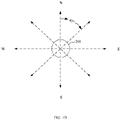
- a traffic intersection may be video monitored by a spherical monitoring camera 201 in an all-round 360° direction without dead ends.
- the 360°angle may be equally divided into 8 parts, and each rotation of an angle of 45° is defined as a new shooting angle.
- the shooting angle may be defined as follows: due north, 45° north-west, due west, 45° south-west, due south, 45° south-east, due-east, 45° north-east.
- the 360° may be equally divided into N parts, and N belongs to any integer greater than or equal to 2. In this way, each rotation of an angle of (360/N)° may be defined as a new shooting angle.
- a shared bicycle will be used as an example to describe in detail a process or steps of recognizing the illegal parking of the vehicle.
- a method of recognizing illegal parking of a vehicle is provided.
- FIG. 2 exemplarily shows a flowchart of a method of recognizing illegal parking of a vehicle according to the embodiments of the present disclosure.
- the method 200 of recognizing illegal parking of a vehicle may include operations S210-S250.
- a shooting angle used by the electronic device for collecting the video image is determined.
- an illegal parking area in the video image is determined based on the shooting angle.
- monitoring video stream data collected in real time may be decoded first, and then the above operations S210 to S250 may be performed for each frame of video image obtained after decoding, thereby recognizing whether there is any illegally parked vehicle in the illegal parking area at each traffic intersection or not.
- a reminder may be sent to a corresponding manufacturer that the relevant vehicle parked at the traffic intersection is illegally parked which needs to be dealt with as soon as possible to smooth the road traffic.
- a reminder may be sent to traffic management personnel to promptly remind that there are a large number or a small number of illegally parked vehicles a traffic intersection which need to be dealt with as soon as possible to smooth the road traffic.
- the electronic device is provided with the multi-view shooting function, and the illegal parking areas that may be monitored by the electronic device under each shooting angle are different. Therefore, in a process of recognizing illegal parking of a vehicle, the shooting angle of the video image may be determined first for each frame of video image, and then the illegal parking area that may be monitored by the electronic device under the shooting angle may be determined. The parking area of the vehicle in the image (i.e., a specific parking area of the vehicle) may also be determined for each frame of video image. Finally, for the same frame of video image, whether the vehicle in the image is illegally parked or not may be recognized based on the parking area of the vehicle in the image and the illegal parking area that may be monitored under the current image shooting angle.
- the shooting angle of the image for each frame of video image collected by the multi-view monitoring device, it is possible to determine the shooting angle of the image first, then the illegal parking area in the image under the shooting angle is determined, and then whether there is any illegally parked vehicle in the illegal parking area in the image or not is recognized.
- an accuracy of recognizing whether there is any illegally parked vehicle in the current monitoring area or not is increased.
- relevant personnel may be notified in time to deal with the illegal parking on site according to the violation conditions, so as to smooth each traffic intersection.
- determining the shooting angle used by the electronic device for collecting the video image may include the following operations.
- a plurality of reference images pre-collected by the electronic device under a plurality of given shooting angles are obtained. Different reference images in the plurality of reference images correspond to different shooting angles.
- a similarity matching is performed between the video image and each of the plurality of reference images respectively, so as to obtain a target reference image with the highest similarity in the plurality of reference images to the video image.
- a shooting angle corresponding to the target reference image is obtained, and the shooting angle corresponding to the target reference image is determined as the shooting angle used by the electronic device for collecting video images.
- a plurality of shooting angles of the electronic device may be predefined, and a reference image may be collected in each of the plurality of shooting angles in advance, and then an illegal parking area presented in each reference image may be recognized by using image recognition technology.
- the shooting angle may be defined as follows: due north, 45° north-west, due west, 45° south-west, due south, 45° south-east, due east, 45° north-east.
- the reference images pre-collected at these shooting angles are image 1 to image 8 in sequence.
- the illegal parking areas presented in the 8 images may be respectively recognized, such as area 1 to area 8 in sequence.
- the video image may be matched with each reference image for similarity matching respectively, so as to obtain a reference image with the highest similarity to the video image. Since the shooting angle of the reference image is given, the shooting angle of the reference image may be directly used as the shooting angle of the video image to determine the illegal parking area included in the video image.
- a similarity model may be used to determine a similarity between each frame of video image and each reference image.
- the shooting angle of the video image obtained in real time may be determined by performing similarity matching between the video image obtained in real time and the reference image of the given shooting angle. Further, since the shooting angle may be determined, the illegal parking area included in the video image may also be accurately determined. In this way, whether there is any illegally parked vehicle in the illegal parking area in the image or not may be accurately determined.
- determining the shooting angle used by the electronic device for collecting the video image may include the following operations.
- a plurality of reference images pre-collected by the electronic device under a plurality of given shooting angles may be obtained. Different reference images in the plurality of reference images correspond to different shooting angles.
- the video image is reduced to a first image with a first preset size.
- a similarity matching is performed between the first image and each of the plurality of reference images respectively, so as to obtain a target reference image with a highest similarity in the plurality of reference images to the first image.
- a shooting angle corresponding to the target reference image is obtained, and the shooting angle corresponding to the target reference image is determined as the shooting angle used by the electronic device for collecting the video image.
- a similarity model may be used to determine a similarity between each frame of video image and each reference image.
- the video image before inputting each frame of video image into the similarity model, the video image may be preprocessed, such as scaling the video image to a fixed size (e.g., 224 ⁇ 224).
- preprocessing the video image may further include normalizing the image after the image is scaled to a fixed size.
- a flow of an image normalization processing may include the following operations. For example, a value of each pixel point in the image is divided by 255, then a RGB mean is subtracted (e.g. [0.485, 0.456, 0.406]), and the obtained value is divided by a RGB variance (e.g. [0.229, 0.224, 0.225]).
- the preprocessed image is input to the similarity model, the similarity matching is performed with the reference images of each given shooting angle, so that a feature distance between similar images is closer, and a feature distance between dissimilar images is farther, so as to classify the shooting angle of the video image.
- recognizing whether the vehicle is illegally parked or not based on the parking area of the vehicle and the illegal parking area may include the following operations.
- the vehicle is determined to be illegally parked in response to recognizing the parking area of the vehicle being within the illegal parking area based on the video image.
- the vehicle if the parking area of the vehicle is completely within the illegal parking area, the vehicle is considered to have been parked illegally. In other embodiments of the present disclosure, if the parking area of the vehicle intersects with the illegal parking area, the vehicle is considered to have been parked illegally. In other embodiments of the present disclosure, if the parking area of the vehicle intersects with the illegal parking area, and the intersection exceeds a preset value, the vehicle is consider to have been parked illegally.
- recognizing whether the parking area of the vehicle is within the illegal parking area or not based on the video image may include: calculating whether the intersection between the parking area of the vehicle and the illegal parking area is greater than the preset value or not based on the video image.
- the parking area of the vehicle is determined to be within the illegal parking area. If the intersection is smaller than the preset value, the parking area of the vehicle is determined to be not within the illegal parking area.
- all pixel values in the illegal parking area in the image may be set to 0 or 1. Taking 0 as an example, when the intersection between the parking area of the vehicle and the illegal parking area is calculated, the intersection may be determined by counting the number of pixels with the pixel value of 0 in the parking area of the vehicle in the image.
- the intersection between the two may also be determined by calculating an overlapping area of the parking area of the vehicle and the illegal parking area in the image.
- the specific parking area of the vehicle is indicated to have been fallen into the corresponding illegal parking area, that is, the vehicle is indicated to have been parked illegally. Further, after the vehicle is determined to be parked illegally, it is also possible to notify each vehicle manufacturer or relevant department to deal with the illegally parked vehicle in time according to a classification result of the vehicle by an instance segmentation model.
- recognizing the parking area of the vehicle in the video image may include: inputting the video image to an instance segmentation model to output a segmentation result of parking areas of different types of vehicles in the image.
- the video image may be directly input to a pre-trained instance segmentation model, so that a segmentation result of parking areas of different types of vehicles in the video image may be output.
- the segmentation result of the specific parking area of the shared bicycle managed by the manufacturer A in the video image and the segmentation result of the specific parking area of the shared bicycle operated by manufacturer B in the video image may be output by the instance segmentation model.
- recognizing the parking area of the vehicle in the video image may include the following operations.
- the video image is reduced to a second image with a second preset size.
- the second image is input to an instance segmentation model to output a segmentation result of parking areas of different types of vehicles in the image.
- the instance segmentation model may be used to output the segmentation result of parking areas of different types of vehicles in each video image.
- the adopted instance segmentation model may be a segmentation algorithm whose framework is based on Mask_R-CNN network.
- the algorithm may not only be used to segment types, but may also be used to segment whether objects of a same type are the same instance or not. Therefore, by using the instance segmentation model, a segmentation result of specific parking areas of different types of non-motor vehicles may be output, that is, the output result may include each non-motor vehicle type and the segmentation result of the parking areas of each type of non-motor vehicle.
- the video image may be preprocessed before inputting the video image to the instance segmentation model for processing.
- the video image may also be reduced to an image of a fixed size.
- an extent of image reduction may be lower than an extent of image reduction in the process of image similarity matching. That is, the second preset size may be larger than the first preset size.
- each frame of video image may be preprocessed before the video image is input to the instance segmentation model.
- the video image may be scaled to a fixed size (e.g., 800 ⁇ 800).
- preprocessing the video image in the process of image segmentation may further include: normalizing the image after scaling the image to a fixed size.
- a flow of an image normalization processing may include the following operations. For example, a value of each pixel point in the image is divided by 255, then a RGB mean is subtracted (e.g. [0.485, 0.456, 0.406]), and the obtained value is divided by a RGB variance (e.g. [0.229, 0.224, 0.225]).
- the preprocessed image is input to the instance segmentation model, the similarity matching is performed between the reference images of each given shooting angle, so that a feature distance between similar images is closer, and a feature distance between dissimilar images is farther, so as to classify the shooting angle of the video image.
- the above-mentioned vehicles may include but are not limited to: motor vehicles and non-motor vehicles.
- Non-motor vehicles may further include but are not limited to: a personal electric vehicle, a shared electric vehicle produced by each business, a personal bicycle, a shared bicycle produced by each business, and the like.
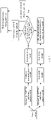
- the video image obtained by decoding the monitoring video stream may be input into two branches.
- One branch is used to determine the shooting angle of the video image and the illegal parking area included in the image under the shooting angle through the image similarity matching.
- the branch includes the following processes: the video image is scaled to a fixed size of 224 ⁇ 224, and image preprocessing is performed; the image after being preprocessed is input to the similarity model; the image similarity matching is performed through the model, and the similarity result is output; and the illegal parking area is determined based on the similarity result.
- the other branch is used to determine the specific parking area of the photographed non-motor vehicle through the image segmentation.
- the branch includes the following processes: the video image is scaled to a fixed size of 800 ⁇ 800, and image preprocessing is performed; the image after being preprocessed is input to the instance segmentation model for non-motor vehicles; the image recognition and segmentation is performed through the model, and the segmentation result of the specific parking area (each segmented area) of each type of non-motor vehicles in the image are output.
- each segmented area is within the illegal parking area or not may be determined based on the processing results of the above two branches. If it is within the illegal parking area, the corresponding non-motor vehicle is considered to be parked illegally. In addition, in this case, relevant personnel may be notified according to the recognition result. If it is not within the illegal parking area, the corresponding non-motor vehicle is considered to be parked normally, that is, there is no illegal parking. In addition, in this case, the relevant personnel may also be notified based on the recognition result.
- an apparatus of recognizing illegal parking of a vehicle is also provided.
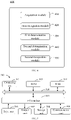
- FIG. 4 exemplarily shows a block diagram of an apparatus of recognizing illegal parking of a vehicle according to the embodiments of the present disclosure.
- the apparatus 400 of recognizing illegal parking of a vehicle may include: an acquisition module 410, a first recognition module 420, a first determination module 430, a second determination module 440, and a second recognition module 450.
- the acquisition module 410 is used to obtain a video image collected by the electronic device.
- the first recognition module 420 is used to recognize a parking area of the vehicle in the video image.
- the first determination module 430 is used to determine a shooting angle used by the electronic device for collecting the video image.
- the second determination module 440 is used to determine an illegal parking area in the video image based on the shooting angle.
- the second recognition module 450 is used to recognize whether the vehicle is illegally parked or not based on the parking area of the vehicle and the illegal parking area.
- the first determination module includes: a first acquisition unit used to obtain a plurality of reference images pre-collected by the electronic device under a plurality of given shooting angles, and different reference images in the plurality of reference images correspond to different shooting angles; a first matching unit used to perform a similarity matching between the video image and each of the plurality of reference images respectively, so as to obtain a target reference image with a highest similarity in the plurality of reference images to the video image; and a second acquisition unit used to obtain a shooting angle corresponding to the target reference image, and the shooting angle corresponding to the target reference image is determined as the shooting angle used by the electronic device for collecting the video image.
- the first determination module includes: a third acquisition unit used to obtain a plurality of reference images pre-collected by the electronic device under a plurality of given shooting angles, and different reference images in the plurality of reference images correspond to different shooting angles; a preprocessing unit used to reduce the video image to a first image with a first preset size; a second matching unit used to perform a similarity matching between the first image and each of the plurality of reference images respectively, so as to obtain a target reference image with the highest similarity in the plurality of reference images to the first image; and a fourth acquisition unit used to obtain a shooting angle corresponding to the target reference image, and the shooting angle corresponding to the target reference image is determined as the shooting angle used by the electronic device for collecting the video image.
- a third acquisition unit used to obtain a plurality of reference images pre-collected by the electronic device under a plurality of given shooting angles, and different reference images in the plurality of reference images correspond to different shooting angles
- a preprocessing unit used to reduce the video image to a
- the second recognition module includes: a recognition unit used to recognize whether the parking area of the vehicle is within the illegal parking area or not based on the video image; and a determination unit used to determine the vehicle is illegally parked in response to recognizing the parking area of the vehicle being within the illegal parking area based on the video image.
- the recognition unit is also used to calculate whether an intersection between the parking area of the vehicle and the illegal parking area is greater than a preset value or not based on the video image.
- the parking area of the vehicle is determined to be within the illegal parking area.
- the first recognition module is also used to input the video image to an instance segmentation model to output a segmentation result of parking areas of different types of vehicles in the image.
- the first recognition module is also used to reduce the video image to a second image with a second preset size; and input the second image to an instance segmentation model to output a segmentation result of parking areas of different types of vehicles in the image.
- the vehicle includes a motor vehicle and a non-motor vehicle.
- an electronic device a readable storage medium, and a computer program product are also provided.
- FIG. 5 shows a schematic block diagram of an exemplary electronic device 500 capable of implementing the embodiments of the present disclosure.
- the electronic device is intended to represent various forms of digital computers, such as a laptop computer, a desktop computer, a workstation, a personal digital assistant, a server, a blade server, a mainframe computer, and other suitable computers.
- the electronic device may also represent various forms of mobile apparatuses, such as a personal digital processor, a cellular phone, a smart phone, a wearable device, and other similar computing apparatuses.
- the components shown herein, connections and relationships thereof, and functions thereof are by way of example only, and are not intended to limit implementations of the disclosure described and/or claimed herein.
- the electronic device 500 includes a computing unit 501, the computing unit is capable of performing various suitable actions and processing based on a computer program stored in a read-only memory (ROM) 502 or computer program uploaded to a random-access memory (RAM) from a storage unit 508.
- ROM read-only memory
- RAM random-access memory
- various programs and data required for the operation of the electronic device 500 may also be stored.
- the computing unit 501, the ROM 502, and the RAM 503 are connected to each other through a bus 504.
- An input/output (I/O) interface 505 is also connected to bus 504.
- a plurality of components in the electronic device 500 are connected to the I/O interface 505, including: an input unit 506, such as a keyboard, a mouse, etc.; an output unit 507, such as various types of displays, speakers, etc.; a storage unit 508, such as a magnetic disk, an optical disk, etc.; and a communication unit 509, such as a network card, a modem, a wireless communication transceiver, and the like.
- the communication unit 509 enables the device 500 to exchange information/data with other devices through a computer network such as the Internet and/or various telecommunication networks.
- the computing unit 501 may be various general-purpose and/or special-purpose processing components with processing and computing capabilities. Some examples of the computing unit 501 include, but are not limited to, a central processing unit (CPU), a graphics processing unit (GPU), various specialized artificial intelligence (AI) computing chips, various computing units run machine learning model algorithms, a digital signal processor (DSP), and any suitable processor, controller, microcontroller, etc.
- the computing unit 501 is used to implement the various methods and processing described above, such as the method of recognizing illegal parking of the vehicle.
- the method of recognizing illegal parking of the vehicle may be implemented as a computer software program tangibly contained in a machine-readable medium, such as the storage unit 508.
- part or all of the computer program may be loaded and/or installed on the device 500 via the ROM 502 and/or the communication unit 509.
- the computer program When the computer program is loaded to RAM 503 and executed by the computing unit 501, one or more steps of the above-described method of recognizing illegal parking of the vehicle may be performed.
- the computing unit 501 may be configured by any other suitable means (e.g., by means of firmware) to perform the method of recognizing illegal parking of the vehicle.
- Various implementations of the system and technique described herein above may be implemented in a digital electronic circuit, an integrated circuit system, a field programmable gate array (FPGA), an application specific integrated circuit (ASIC), an application specific standard product (ASSP), a System-on-a-chip (SOC), a complex programmable logic device (CPLD), computer hardware, firmware, software, and/or a combination thereof.
- FPGA field programmable gate array
- ASIC application specific integrated circuit
- ASSP application specific standard product
- SOC System-on-a-chip
- CPLD complex programmable logic device
- computer hardware firmware, software, and/or a combination thereof.
- the programmable processor may be a special-purpose or general-purpose programmable processor, the programmable processor may receive data and instructions from a storage system, at least one input apparatus, and at least one output apparatus, and transmit data and instructions to the storage system, the at least one input apparatus, and the at least one output apparatus.
- Program codes for implementing the method of the present disclosure may be written in any combination of one or more programming languages.
- the program codes may be provided to a processor or controller of a general-purpose computer, a special-purpose computer or other programmable data processing apparatuses, such that when executed by the processor or controller, the program codes enables functions/operations specified in the flowchart and/or block diagram to be implemented.
- the program codes may be executed entirely on the machine, partly on the machine, partly on the machine and partly on a remote machine as a stand-alone software package or entirely on the remote machine or server.
- a machine-readable medium may be a tangible medium that may include or store a program for use by or in connection with an instruction execution system, apparatus or device.
- the machine-readable medium may be a machine-readable signal medium or a machine-readable storage medium.
- the machine-readable medium may include, but is not limited to, an electronic, magnetic, optical, electromagnetic, infrared, or semiconductor system, apparatus, or device, or any suitable combination thereof.
- machine-readable storage medium may include an electrical connection based on one or more wires, a portable computer disk, a hard disk, a random access memory (RAM), a read only memory (ROM), an erasable programmable read only memory (EPROM or flash memory), an optical fiber, a compact disk read only memory (CD-ROM), an optical storage device, a magnetic storage device, or any suitable combination thereof.
- RAM random access memory
- ROM read only memory
- EPROM or flash memory erasable programmable read only memory
- CD-ROM compact disk read only memory
- magnetic storage device or any suitable combination thereof.
- a computer having: a display apparatus (e.g., a CRT (cathode ray tube) or an LCD (liquid crystal display) monitor) for displaying information to the user; and a keyboard and pointing apparatus (e.g., a mouse or trackball) through which the user may provide input to the computer.
- a display apparatus e.g., a CRT (cathode ray tube) or an LCD (liquid crystal display) monitor
- a keyboard and pointing apparatus e.g., a mouse or trackball
- Other types of apparatuses may also be used to provide the interaction with the user.
- a feedback provided to the user may be any form of sensory feedback (e.g., visual feedback, auditory feedback, or tactile feedback); and may receive input in any form (including acoustic input, voice input, or tactile input) from the user.
- the system and technique described herein may be implemented on a computing system including back-end components (e.g., a data server), or a computing system including middleware components (e.g., an application server), or a computing system including front-end components (e.g., a user's computer with a graphical user interface or a web browser through which the user may interact with implementations of the system and technique described herein), or a computing system including any combination of such back-end components, middleware components, or front-end components.
- the components of the system may be interconnected by any form or medium of digital data communication (e.g., a communication network). Examples of the communication network includes: a Local Area Network (LAN), a Wide Area Networks (WAN), and the Internet.
- LAN Local Area Network
- WAN Wide Area Networks
- a computer system may include a client and a server.
- the client and the server are generally remote from each other and usually interact through a communication network.
- a relationship between the client and the server is generated by computer programs running on respective computers and having a client-server relationship to each other.
- the server may be a cloud server, also known as a cloud computing server or a cloud host, which is a host product in the cloud computing service system to solve defects of difficult management and weak business expansion of traditional physical hosts and VPS services ("Virtual Private Server", or "VPS" for short).
- the server may also be a server of a distributed system, or a server combined with a blockchain.
- steps may be reordered, added or deleted using the various forms of the flow shown above.
- steps described in the present disclosure may be executed in parallel, sequentially, or in different orders, as long as the desired result of the technical solution disclosed in the present disclosure may be achieved, which is not limited herein.
Landscapes
- Engineering & Computer Science (AREA)
- Physics & Mathematics (AREA)
- General Physics & Mathematics (AREA)
- Theoretical Computer Science (AREA)
- Multimedia (AREA)
- Computer Vision & Pattern Recognition (AREA)
- Evolutionary Computation (AREA)
- Signal Processing (AREA)
- Computing Systems (AREA)
- Analytical Chemistry (AREA)
- Chemical & Material Sciences (AREA)
- Health & Medical Sciences (AREA)
- Databases & Information Systems (AREA)
- General Health & Medical Sciences (AREA)
- Medical Informatics (AREA)
- Software Systems (AREA)
- Artificial Intelligence (AREA)
- Business, Economics & Management (AREA)
- Emergency Management (AREA)
- Quality & Reliability (AREA)
- Traffic Control Systems (AREA)
- Image Analysis (AREA)
Applications Claiming Priority (1)
| Application Number | Priority Date | Filing Date | Title |
|---|---|---|---|
| CN202110469314.6A CN113299073B (zh) | 2021-04-28 | 2021-04-28 | 识别车辆违章停车的方法、装置、设备和存储介质 |
Publications (3)
| Publication Number | Publication Date |
|---|---|
| EP4016474A2 true EP4016474A2 (de) | 2022-06-22 |
| EP4016474A8 EP4016474A8 (de) | 2022-08-10 |
| EP4016474A3 EP4016474A3 (de) | 2022-10-26 |
Family
ID=77320366
Family Applications (1)
| Application Number | Title | Priority Date | Filing Date |
|---|---|---|---|
| EP22170540.3A Withdrawn EP4016474A3 (de) | 2021-04-28 | 2022-04-28 | Verfahren und vorrichtung zur erkennung von illegalem parken eines fahrzeugs, vorrichtung und speichermedium |
Country Status (5)
| Country | Link |
|---|---|
| US (1) | US12039864B2 (de) |
| EP (1) | EP4016474A3 (de) |
| JP (1) | JP7270808B2 (de) |
| KR (1) | KR20220062460A (de) |
| CN (1) | CN113299073B (de) |
Families Citing this family (9)
| Publication number | Priority date | Publication date | Assignee | Title |
|---|---|---|---|---|
| CN113807209B (zh) * | 2021-08-30 | 2024-08-23 | 阿波罗智联(北京)科技有限公司 | 车位检测方法、装置、电子设备及存储介质 |
| CN114267019A (zh) * | 2021-12-29 | 2022-04-01 | 北京精英路通科技有限公司 | 识别方法、装置、设备以及存储介质 |
| CN115472035B (zh) * | 2022-08-16 | 2023-09-29 | 常德智眼云科技有限公司 | 一种共享车辆停车识别管理系统 |
| CN115880632A (zh) * | 2022-12-02 | 2023-03-31 | 美的集团(上海)有限公司 | 超时停留检测方法、监控设备、计算机可读存储介质和芯片 |
| CN115909234B (zh) * | 2022-12-07 | 2026-01-06 | 中电智安科技有限公司 | 一种用于精确监测车辆违停、乱放的方法 |
| CN115775459B (zh) * | 2023-02-13 | 2023-04-28 | 青岛图达互联信息科技有限公司 | 一种基于智能图像处理的数据采集系统及方法 |
| CN117275248A (zh) * | 2023-10-10 | 2023-12-22 | 高新兴智联科技股份有限公司 | 一种非机动车违停抓拍的车载视射频一体方法及装置 |
| CN117765417B (zh) * | 2023-12-20 | 2024-07-09 | 城市大脑(广州)科技有限公司 | 一种基于无人机的共享车辆巡检方法、装置及存储介质 |
| CN118918547B (zh) * | 2024-10-09 | 2024-12-27 | 浙江大华技术股份有限公司 | 共享单车违规停放检测方法、装置、电子设备和存储介质 |
Family Cites Families (19)
| Publication number | Priority date | Publication date | Assignee | Title |
|---|---|---|---|---|
| JP2001101567A (ja) * | 1999-09-28 | 2001-04-13 | Matsushita Electric Ind Co Ltd | 交通情報システム |
| JP4140159B2 (ja) * | 2000-01-19 | 2008-08-27 | 株式会社明電舎 | 監視カメラの監視エリア設定装置及びその方法 |
| CN100565555C (zh) * | 2007-12-05 | 2009-12-02 | 浙江工业大学 | 基于计算机视觉的违章停车检测装置 |
| JP5702544B2 (ja) | 2010-03-15 | 2015-04-15 | 株式会社Kddi研究所 | 車両交通監視装置およびプログラム |
| US9489839B2 (en) * | 2012-08-06 | 2016-11-08 | Cloudparc, Inc. | Tracking a vehicle using an unmanned aerial vehicle |
| US9171213B2 (en) * | 2013-03-15 | 2015-10-27 | Xerox Corporation | Two-dimensional and three-dimensional sliding window-based methods and systems for detecting vehicles |
| CN103927878B (zh) * | 2014-04-10 | 2016-05-25 | 中海网络科技股份有限公司 | 一种用于违章停车的自动抓拍装置及自动抓拍方法 |
| CN104050679B (zh) * | 2014-07-03 | 2017-05-17 | 杭州藏愚科技有限公司 | 一种违法停车的自动取证方法 |
| CN105389990B (zh) * | 2015-11-20 | 2017-10-31 | 北京信路威科技股份有限公司 | 一种基于监控球机的违章停车检测识别方法 |
| WO2018076182A1 (zh) | 2016-10-25 | 2018-05-03 | 华为技术有限公司 | 一种图像拍摄方法及装置 |
| US11055989B2 (en) | 2017-08-31 | 2021-07-06 | Nec Corporation | Viewpoint invariant object recognition by synthesization and domain adaptation |
| JP7029170B2 (ja) * | 2017-09-01 | 2022-03-03 | 株式会社コンピュータサイエンス研究所 | 歩道進行支援システム及び歩道進行支援ソフトウェア |
| US10176405B1 (en) | 2018-06-18 | 2019-01-08 | Inception Institute Of Artificial Intelligence | Vehicle re-identification techniques using neural networks for image analysis, viewpoint-aware pattern recognition, and generation of multi- view vehicle representations |
| CN109035329A (zh) * | 2018-08-03 | 2018-12-18 | 厦门大学 | 基于深度特征的相机姿态估计优化方法 |
| CN109785637B (zh) | 2019-01-28 | 2022-07-08 | 平安科技(深圳)有限公司 | 车辆违规的分析评价方法及装置 |
| CN110135356A (zh) | 2019-05-17 | 2019-08-16 | 北京百度网讯科技有限公司 | 违章停车的检测方法及装置、电子设备、计算机可读介质 |
| JP7418171B2 (ja) | 2019-08-30 | 2024-01-19 | キヤノン株式会社 | 画像処理装置、放射線撮影システム、画像処理方法及びプログラム |
| CN111105621B (zh) * | 2019-12-17 | 2021-11-16 | 浙江大华技术股份有限公司 | 一种检测违章停车的方法及装置 |
| CN111275771B (zh) * | 2020-02-19 | 2023-04-25 | 电子科技大学中山学院 | 一种摄像头标定方法、装置、电子设备及存储介质 |
-
2021
- 2021-04-28 CN CN202110469314.6A patent/CN113299073B/zh active Active
-
2022
- 2022-04-27 US US17/730,961 patent/US12039864B2/en active Active
- 2022-04-27 JP JP2022073279A patent/JP7270808B2/ja active Active
- 2022-04-28 KR KR1020220052623A patent/KR20220062460A/ko not_active Ceased
- 2022-04-28 EP EP22170540.3A patent/EP4016474A3/de not_active Withdrawn
Also Published As
| Publication number | Publication date |
|---|---|
| EP4016474A8 (de) | 2022-08-10 |
| KR20220062460A (ko) | 2022-05-17 |
| JP2022093481A (ja) | 2022-06-23 |
| CN113299073B (zh) | 2023-05-23 |
| US12039864B2 (en) | 2024-07-16 |
| US20220254251A1 (en) | 2022-08-11 |
| JP7270808B2 (ja) | 2023-05-10 |
| EP4016474A3 (de) | 2022-10-26 |
| CN113299073A (zh) | 2021-08-24 |
Similar Documents
| Publication | Publication Date | Title |
|---|---|---|
| EP4016474A2 (de) | Verfahren und vorrichtung zum erkennen des rechtswidrigen parkens von fahrzeug, gerät und speichermedium dafür | |
| CN112085952B (zh) | 监控车辆数据方法、装置、计算机设备及存储介质 | |
| CN112287875B (zh) | 异常车牌识别方法、装置、设备及可读存储介质 | |
| CN114943936B (zh) | 目标行为识别方法、装置、电子设备及存储介质 | |
| EP3951741B1 (de) | Verfahren zur erfassung des verkehrszustandes, entsprechende vorrichtung, strassenseitige vorrichtung und cloud-steuerungsplattform | |
| CN113344121A (zh) | 训练招牌分类模型和招牌分类的方法 | |
| CN112509126B (zh) | 三维物体检测的方法、装置、设备及存储介质 | |
| CN114581890B (zh) | 确定车道线的方法、装置、电子设备和存储介质 | |
| EP4080479A2 (de) | Verfahren zur identifizierung von verkehrsampeln, vorrichtung, cloud-steuerungsplattform und fahrzeug-strasse-koordinationssystem | |
| CN113052048A (zh) | 交通事件检测方法、装置、路侧设备以及云控平台 | |
| CN111209856B (zh) | 发票信息的识别方法、装置、电子设备及存储介质 | |
| WO2019214321A1 (zh) | 车辆损伤识别的处理方法、处理设备、客户端及服务器 | |
| CN115063765B (zh) | 一种道路边界线确定方法、装置、设备及存储介质 | |
| CN114998883A (zh) | 车牌识别方法、装置、电子设备、智能交通设备 | |
| KR20220106718A (ko) | 이미지 인식 방법, 장치, 전자 기기, 저장 매체 및 컴퓨터 프로그램 | |
| CN117132964B (zh) | 模型训练方法、点云编码方法、对象处理方法及装置 | |
| CN114581794B (zh) | 地理数字孪生信息获取方法、装置、电子设备及存储介质 | |
| CN115908816A (zh) | 基于人工智能的积水识别方法、装置、设备及存储介质 | |
| CN114724113B (zh) | 道路标牌识别方法、自动驾驶方法、装置和设备 | |
| CN115131725A (zh) | 交通流统计方法、装置、设备及存储介质 | |
| CN118762235B (zh) | 标签确定的方法、装置、设备及介质 | |
| CN117315406B (zh) | 一种样本图像处理方法、装置及设备 | |
| CN113806361B (zh) | 电子监控设备与道路的关联方法、装置及存储介质 | |
| CN115810270A (zh) | 车辆转向检测的方法、装置、电子设备及存储介质 | |
| CN114708498A (zh) | 图像处理方法、装置、电子设备以及存储介质 |
Legal Events
| Date | Code | Title | Description |
|---|---|---|---|
| PUAI | Public reference made under article 153(3) epc to a published international application that has entered the european phase |
Free format text: ORIGINAL CODE: 0009012 |
|
| STAA | Information on the status of an ep patent application or granted ep patent |
Free format text: STATUS: REQUEST FOR EXAMINATION WAS MADE |
|
| 17P | Request for examination filed |
Effective date: 20220428 |
|
| AK | Designated contracting states |
Kind code of ref document: A2 Designated state(s): AL AT BE BG CH CY CZ DE DK EE ES FI FR GB GR HR HU IE IS IT LI LT LU LV MC MK MT NL NO PL PT RO RS SE SI SK SM TR |
|
| RAP3 | Party data changed (applicant data changed or rights of an application transferred) |
Owner name: BEIJING BAIDU NETCOM SCIENCE TECHNOLOGY CO., LTD. |
|
| PUAL | Search report despatched |
Free format text: ORIGINAL CODE: 0009013 |
|
| AK | Designated contracting states |
Kind code of ref document: A3 Designated state(s): AL AT BE BG CH CY CZ DE DK EE ES FI FR GB GR HR HU IE IS IT LI LT LU LV MC MK MT NL NO PL PT RO RS SE SI SK SM TR |
|
| RIC1 | Information provided on ipc code assigned before grant |
Ipc: H04N 7/18 20060101ALI20220916BHEP Ipc: G06V 20/52 20220101AFI20220916BHEP |
|
| STAA | Information on the status of an ep patent application or granted ep patent |
Free format text: STATUS: THE APPLICATION IS DEEMED TO BE WITHDRAWN |
|
| 18D | Application deemed to be withdrawn |
Effective date: 20230427 |