EP4015862B1 - A method for automatically warming up a clutch actuator - Google Patents
A method for automatically warming up a clutch actuator Download PDFInfo
- Publication number
- EP4015862B1 EP4015862B1 EP21212510.8A EP21212510A EP4015862B1 EP 4015862 B1 EP4015862 B1 EP 4015862B1 EP 21212510 A EP21212510 A EP 21212510A EP 4015862 B1 EP4015862 B1 EP 4015862B1
- Authority
- EP
- European Patent Office
- Prior art keywords
- clutch actuator
- clutch
- transmission
- temperature
- state
- Prior art date
- Legal status (The legal status is an assumption and is not a legal conclusion. Google has not performed a legal analysis and makes no representation as to the accuracy of the status listed.)
- Active
Links
Images

Classifications
-
- F—MECHANICAL ENGINEERING; LIGHTING; HEATING; WEAPONS; BLASTING
- F16—ENGINEERING ELEMENTS AND UNITS; GENERAL MEASURES FOR PRODUCING AND MAINTAINING EFFECTIVE FUNCTIONING OF MACHINES OR INSTALLATIONS; THERMAL INSULATION IN GENERAL
- F16D—COUPLINGS FOR TRANSMITTING ROTATION; CLUTCHES; BRAKES
- F16D25/00—Fluid-actuated clutches
- F16D25/12—Details not specific to one of the before-mentioned types
-
- F—MECHANICAL ENGINEERING; LIGHTING; HEATING; WEAPONS; BLASTING
- F16—ENGINEERING ELEMENTS AND UNITS; GENERAL MEASURES FOR PRODUCING AND MAINTAINING EFFECTIVE FUNCTIONING OF MACHINES OR INSTALLATIONS; THERMAL INSULATION IN GENERAL
- F16D—COUPLINGS FOR TRANSMITTING ROTATION; CLUTCHES; BRAKES
- F16D48/00—External control of clutches
- F16D48/06—Control by electric or electronic means, e.g. of fluid pressure
- F16D48/066—Control of fluid pressure, e.g. using an accumulator
-
- B—PERFORMING OPERATIONS; TRANSPORTING
- B60—VEHICLES IN GENERAL
- B60W—CONJOINT CONTROL OF VEHICLE SUB-UNITS OF DIFFERENT TYPE OR DIFFERENT FUNCTION; CONTROL SYSTEMS SPECIALLY ADAPTED FOR HYBRID VEHICLES; ROAD VEHICLE DRIVE CONTROL SYSTEMS FOR PURPOSES NOT RELATED TO THE CONTROL OF A PARTICULAR SUB-UNIT
- B60W30/00—Purposes of road vehicle drive control systems not related to the control of a particular sub-unit, e.g. of systems using conjoint control of vehicle sub-units
- B60W30/18—Propelling the vehicle
- B60W30/192—Mitigating problems related to power-up or power-down of the driveline, e.g. start-up of a cold engine
- B60W30/194—Mitigating problems related to power-up or power-down of the driveline, e.g. start-up of a cold engine related to low temperature conditions, e.g. high viscosity of hydraulic fluid
-
- F—MECHANICAL ENGINEERING; LIGHTING; HEATING; WEAPONS; BLASTING
- F16—ENGINEERING ELEMENTS AND UNITS; GENERAL MEASURES FOR PRODUCING AND MAINTAINING EFFECTIVE FUNCTIONING OF MACHINES OR INSTALLATIONS; THERMAL INSULATION IN GENERAL
- F16D—COUPLINGS FOR TRANSMITTING ROTATION; CLUTCHES; BRAKES
- F16D48/00—External control of clutches
- F16D48/06—Control by electric or electronic means, e.g. of fluid pressure
-
- B—PERFORMING OPERATIONS; TRANSPORTING
- B60—VEHICLES IN GENERAL
- B60W—CONJOINT CONTROL OF VEHICLE SUB-UNITS OF DIFFERENT TYPE OR DIFFERENT FUNCTION; CONTROL SYSTEMS SPECIALLY ADAPTED FOR HYBRID VEHICLES; ROAD VEHICLE DRIVE CONTROL SYSTEMS FOR PURPOSES NOT RELATED TO THE CONTROL OF A PARTICULAR SUB-UNIT
- B60W10/00—Conjoint control of vehicle sub-units of different type or different function
- B60W10/02—Conjoint control of vehicle sub-units of different type or different function including control of driveline clutches
- B60W10/023—Fluid clutches
-
- F—MECHANICAL ENGINEERING; LIGHTING; HEATING; WEAPONS; BLASTING
- F15—FLUID-PRESSURE ACTUATORS; HYDRAULICS OR PNEUMATICS IN GENERAL
- F15B—SYSTEMS ACTING BY MEANS OF FLUIDS IN GENERAL; FLUID-PRESSURE ACTUATORS, e.g. SERVOMOTORS; DETAILS OF FLUID-PRESSURE SYSTEMS, NOT OTHERWISE PROVIDED FOR
- F15B20/00—Safety arrangements for fluid actuator systems; Applications of safety devices in fluid actuator systems; Emergency measures for fluid actuator systems
- F15B20/005—Leakage; Spillage; Hose burst
-
- F—MECHANICAL ENGINEERING; LIGHTING; HEATING; WEAPONS; BLASTING
- F16—ENGINEERING ELEMENTS AND UNITS; GENERAL MEASURES FOR PRODUCING AND MAINTAINING EFFECTIVE FUNCTIONING OF MACHINES OR INSTALLATIONS; THERMAL INSULATION IN GENERAL
- F16D—COUPLINGS FOR TRANSMITTING ROTATION; CLUTCHES; BRAKES
- F16D25/00—Fluid-actuated clutches
- F16D25/08—Fluid-actuated clutches with fluid-actuated member not rotating with a clutching member
- F16D25/082—Fluid-actuated clutches with fluid-actuated member not rotating with a clutching member the line of action of the fluid-actuated members co-inciding with the axis of rotation
- F16D25/083—Actuators therefor
-
- F—MECHANICAL ENGINEERING; LIGHTING; HEATING; WEAPONS; BLASTING
- F16—ENGINEERING ELEMENTS AND UNITS; GENERAL MEASURES FOR PRODUCING AND MAINTAINING EFFECTIVE FUNCTIONING OF MACHINES OR INSTALLATIONS; THERMAL INSULATION IN GENERAL
- F16D—COUPLINGS FOR TRANSMITTING ROTATION; CLUTCHES; BRAKES
- F16D48/00—External control of clutches
- F16D48/06—Control by electric or electronic means, e.g. of fluid pressure
- F16D48/08—Regulating clutch take-up on starting
-
- F—MECHANICAL ENGINEERING; LIGHTING; HEATING; WEAPONS; BLASTING
- F16—ENGINEERING ELEMENTS AND UNITS; GENERAL MEASURES FOR PRODUCING AND MAINTAINING EFFECTIVE FUNCTIONING OF MACHINES OR INSTALLATIONS; THERMAL INSULATION IN GENERAL
- F16H—GEARING
- F16H61/00—Control functions within control units of change-speed- or reversing-gearings for conveying rotary motion ; Control of exclusively fluid gearing, friction gearing, gearings with endless flexible members or other particular types of gearing
- F16H61/12—Detecting malfunction or potential malfunction, e.g. fail safe ; Circumventing or fixing failures
-
- B—PERFORMING OPERATIONS; TRANSPORTING
- B60—VEHICLES IN GENERAL
- B60W—CONJOINT CONTROL OF VEHICLE SUB-UNITS OF DIFFERENT TYPE OR DIFFERENT FUNCTION; CONTROL SYSTEMS SPECIALLY ADAPTED FOR HYBRID VEHICLES; ROAD VEHICLE DRIVE CONTROL SYSTEMS FOR PURPOSES NOT RELATED TO THE CONTROL OF A PARTICULAR SUB-UNIT
- B60W2510/00—Input parameters relating to a particular sub-units
- B60W2510/10—Change speed gearings
- B60W2510/107—Temperature
-
- F—MECHANICAL ENGINEERING; LIGHTING; HEATING; WEAPONS; BLASTING
- F15—FLUID-PRESSURE ACTUATORS; HYDRAULICS OR PNEUMATICS IN GENERAL
- F15B—SYSTEMS ACTING BY MEANS OF FLUIDS IN GENERAL; FLUID-PRESSURE ACTUATORS, e.g. SERVOMOTORS; DETAILS OF FLUID-PRESSURE SYSTEMS, NOT OTHERWISE PROVIDED FOR
- F15B15/00—Fluid-actuated devices for displacing a member from one position to another; Gearing associated therewith
- F15B15/08—Characterised by the construction of the motor unit
- F15B15/14—Characterised by the construction of the motor unit of the straight-cylinder type
- F15B15/1423—Component parts; Constructional details
- F15B15/1485—Special measures for cooling or heating
-
- F—MECHANICAL ENGINEERING; LIGHTING; HEATING; WEAPONS; BLASTING
- F15—FLUID-PRESSURE ACTUATORS; HYDRAULICS OR PNEUMATICS IN GENERAL
- F15B—SYSTEMS ACTING BY MEANS OF FLUIDS IN GENERAL; FLUID-PRESSURE ACTUATORS, e.g. SERVOMOTORS; DETAILS OF FLUID-PRESSURE SYSTEMS, NOT OTHERWISE PROVIDED FOR
- F15B2211/00—Circuits for servomotor systems
- F15B2211/60—Circuit components or control therefor
- F15B2211/62—Cooling or heating means
-
- F—MECHANICAL ENGINEERING; LIGHTING; HEATING; WEAPONS; BLASTING
- F16—ENGINEERING ELEMENTS AND UNITS; GENERAL MEASURES FOR PRODUCING AND MAINTAINING EFFECTIVE FUNCTIONING OF MACHINES OR INSTALLATIONS; THERMAL INSULATION IN GENERAL
- F16D—COUPLINGS FOR TRANSMITTING ROTATION; CLUTCHES; BRAKES
- F16D66/00—Arrangements for monitoring working conditions, e.g. wear, temperature
- F16D2066/001—Temperature
-
- F—MECHANICAL ENGINEERING; LIGHTING; HEATING; WEAPONS; BLASTING
- F16—ENGINEERING ELEMENTS AND UNITS; GENERAL MEASURES FOR PRODUCING AND MAINTAINING EFFECTIVE FUNCTIONING OF MACHINES OR INSTALLATIONS; THERMAL INSULATION IN GENERAL
- F16D—COUPLINGS FOR TRANSMITTING ROTATION; CLUTCHES; BRAKES
- F16D66/00—Arrangements for monitoring working conditions, e.g. wear, temperature
- F16D2066/008—Arrangements for monitoring working conditions, e.g. wear, temperature of clutches
-
- F—MECHANICAL ENGINEERING; LIGHTING; HEATING; WEAPONS; BLASTING
- F16—ENGINEERING ELEMENTS AND UNITS; GENERAL MEASURES FOR PRODUCING AND MAINTAINING EFFECTIVE FUNCTIONING OF MACHINES OR INSTALLATIONS; THERMAL INSULATION IN GENERAL
- F16D—COUPLINGS FOR TRANSMITTING ROTATION; CLUTCHES; BRAKES
- F16D2300/00—Special features for couplings or clutches
- F16D2300/04—Heating means
-
- F—MECHANICAL ENGINEERING; LIGHTING; HEATING; WEAPONS; BLASTING
- F16—ENGINEERING ELEMENTS AND UNITS; GENERAL MEASURES FOR PRODUCING AND MAINTAINING EFFECTIVE FUNCTIONING OF MACHINES OR INSTALLATIONS; THERMAL INSULATION IN GENERAL
- F16D—COUPLINGS FOR TRANSMITTING ROTATION; CLUTCHES; BRAKES
- F16D2500/00—External control of clutches by electric or electronic means
- F16D2500/10—System to be controlled
- F16D2500/102—Actuator
- F16D2500/1026—Hydraulic
-
- F—MECHANICAL ENGINEERING; LIGHTING; HEATING; WEAPONS; BLASTING
- F16—ENGINEERING ELEMENTS AND UNITS; GENERAL MEASURES FOR PRODUCING AND MAINTAINING EFFECTIVE FUNCTIONING OF MACHINES OR INSTALLATIONS; THERMAL INSULATION IN GENERAL
- F16D—COUPLINGS FOR TRANSMITTING ROTATION; CLUTCHES; BRAKES
- F16D2500/00—External control of clutches by electric or electronic means
- F16D2500/10—System to be controlled
- F16D2500/102—Actuator
- F16D2500/1028—Pneumatic
-
- F—MECHANICAL ENGINEERING; LIGHTING; HEATING; WEAPONS; BLASTING
- F16—ENGINEERING ELEMENTS AND UNITS; GENERAL MEASURES FOR PRODUCING AND MAINTAINING EFFECTIVE FUNCTIONING OF MACHINES OR INSTALLATIONS; THERMAL INSULATION IN GENERAL
- F16D—COUPLINGS FOR TRANSMITTING ROTATION; CLUTCHES; BRAKES
- F16D2500/00—External control of clutches by electric or electronic means
- F16D2500/10—System to be controlled
- F16D2500/104—Clutch
- F16D2500/10406—Clutch position
- F16D2500/10412—Transmission line of a vehicle
-
- F—MECHANICAL ENGINEERING; LIGHTING; HEATING; WEAPONS; BLASTING
- F16—ENGINEERING ELEMENTS AND UNITS; GENERAL MEASURES FOR PRODUCING AND MAINTAINING EFFECTIVE FUNCTIONING OF MACHINES OR INSTALLATIONS; THERMAL INSULATION IN GENERAL
- F16D—COUPLINGS FOR TRANSMITTING ROTATION; CLUTCHES; BRAKES
- F16D2500/00—External control of clutches by electric or electronic means
- F16D2500/10—System to be controlled
- F16D2500/108—Gear
- F16D2500/1081—Actuation type
- F16D2500/1083—Automated manual transmission
-
- F—MECHANICAL ENGINEERING; LIGHTING; HEATING; WEAPONS; BLASTING
- F16—ENGINEERING ELEMENTS AND UNITS; GENERAL MEASURES FOR PRODUCING AND MAINTAINING EFFECTIVE FUNCTIONING OF MACHINES OR INSTALLATIONS; THERMAL INSULATION IN GENERAL
- F16D—COUPLINGS FOR TRANSMITTING ROTATION; CLUTCHES; BRAKES
- F16D2500/00—External control of clutches by electric or electronic means
- F16D2500/10—System to be controlled
- F16D2500/11—Application
- F16D2500/1107—Vehicles
- F16D2500/1112—Heavy vehicle
-
- F—MECHANICAL ENGINEERING; LIGHTING; HEATING; WEAPONS; BLASTING
- F16—ENGINEERING ELEMENTS AND UNITS; GENERAL MEASURES FOR PRODUCING AND MAINTAINING EFFECTIVE FUNCTIONING OF MACHINES OR INSTALLATIONS; THERMAL INSULATION IN GENERAL
- F16D—COUPLINGS FOR TRANSMITTING ROTATION; CLUTCHES; BRAKES
- F16D2500/00—External control of clutches by electric or electronic means
- F16D2500/30—Signal inputs
- F16D2500/302—Signal inputs from the actuator
- F16D2500/3026—Stroke
-
- F—MECHANICAL ENGINEERING; LIGHTING; HEATING; WEAPONS; BLASTING
- F16—ENGINEERING ELEMENTS AND UNITS; GENERAL MEASURES FOR PRODUCING AND MAINTAINING EFFECTIVE FUNCTIONING OF MACHINES OR INSTALLATIONS; THERMAL INSULATION IN GENERAL
- F16D—COUPLINGS FOR TRANSMITTING ROTATION; CLUTCHES; BRAKES
- F16D2500/00—External control of clutches by electric or electronic means
- F16D2500/30—Signal inputs
- F16D2500/304—Signal inputs from the clutch
- F16D2500/30404—Clutch temperature
-
- F—MECHANICAL ENGINEERING; LIGHTING; HEATING; WEAPONS; BLASTING
- F16—ENGINEERING ELEMENTS AND UNITS; GENERAL MEASURES FOR PRODUCING AND MAINTAINING EFFECTIVE FUNCTIONING OF MACHINES OR INSTALLATIONS; THERMAL INSULATION IN GENERAL
- F16D—COUPLINGS FOR TRANSMITTING ROTATION; CLUTCHES; BRAKES
- F16D2500/00—External control of clutches by electric or electronic means
- F16D2500/30—Signal inputs
- F16D2500/304—Signal inputs from the clutch
- F16D2500/30404—Clutch temperature
- F16D2500/30405—Estimated clutch temperature
-
- F—MECHANICAL ENGINEERING; LIGHTING; HEATING; WEAPONS; BLASTING
- F16—ENGINEERING ELEMENTS AND UNITS; GENERAL MEASURES FOR PRODUCING AND MAINTAINING EFFECTIVE FUNCTIONING OF MACHINES OR INSTALLATIONS; THERMAL INSULATION IN GENERAL
- F16D—COUPLINGS FOR TRANSMITTING ROTATION; CLUTCHES; BRAKES
- F16D2500/00—External control of clutches by electric or electronic means
- F16D2500/30—Signal inputs
- F16D2500/308—Signal inputs from the transmission
- F16D2500/30802—Transmission oil properties
- F16D2500/30803—Oil temperature
-
- F—MECHANICAL ENGINEERING; LIGHTING; HEATING; WEAPONS; BLASTING
- F16—ENGINEERING ELEMENTS AND UNITS; GENERAL MEASURES FOR PRODUCING AND MAINTAINING EFFECTIVE FUNCTIONING OF MACHINES OR INSTALLATIONS; THERMAL INSULATION IN GENERAL
- F16D—COUPLINGS FOR TRANSMITTING ROTATION; CLUTCHES; BRAKES
- F16D2500/00—External control of clutches by electric or electronic means
- F16D2500/30—Signal inputs
- F16D2500/312—External to the vehicle
- F16D2500/3121—Ambient conditions, e.g. air humidity, air temperature, ambient pressure
- F16D2500/3122—Ambient temperature
-
- F—MECHANICAL ENGINEERING; LIGHTING; HEATING; WEAPONS; BLASTING
- F16—ENGINEERING ELEMENTS AND UNITS; GENERAL MEASURES FOR PRODUCING AND MAINTAINING EFFECTIVE FUNCTIONING OF MACHINES OR INSTALLATIONS; THERMAL INSULATION IN GENERAL
- F16D—COUPLINGS FOR TRANSMITTING ROTATION; CLUTCHES; BRAKES
- F16D2500/00—External control of clutches by electric or electronic means
- F16D2500/30—Signal inputs
- F16D2500/316—Other signal inputs not covered by the groups above
- F16D2500/3168—Temperature detection of any component of the control system
-
- F—MECHANICAL ENGINEERING; LIGHTING; HEATING; WEAPONS; BLASTING
- F16—ENGINEERING ELEMENTS AND UNITS; GENERAL MEASURES FOR PRODUCING AND MAINTAINING EFFECTIVE FUNCTIONING OF MACHINES OR INSTALLATIONS; THERMAL INSULATION IN GENERAL
- F16D—COUPLINGS FOR TRANSMITTING ROTATION; CLUTCHES; BRAKES
- F16D2500/00—External control of clutches by electric or electronic means
- F16D2500/50—Problem to be solved by the control system
- F16D2500/508—Relating driving conditions
- F16D2500/50808—Cold starting
-
- F—MECHANICAL ENGINEERING; LIGHTING; HEATING; WEAPONS; BLASTING
- F16—ENGINEERING ELEMENTS AND UNITS; GENERAL MEASURES FOR PRODUCING AND MAINTAINING EFFECTIVE FUNCTIONING OF MACHINES OR INSTALLATIONS; THERMAL INSULATION IN GENERAL
- F16D—COUPLINGS FOR TRANSMITTING ROTATION; CLUTCHES; BRAKES
- F16D2500/00—External control of clutches by electric or electronic means
- F16D2500/50—Problem to be solved by the control system
- F16D2500/51—Relating safety
- F16D2500/5108—Failure diagnosis
- F16D2500/511—Leak detection
-
- F—MECHANICAL ENGINEERING; LIGHTING; HEATING; WEAPONS; BLASTING
- F16—ENGINEERING ELEMENTS AND UNITS; GENERAL MEASURES FOR PRODUCING AND MAINTAINING EFFECTIVE FUNCTIONING OF MACHINES OR INSTALLATIONS; THERMAL INSULATION IN GENERAL
- F16D—COUPLINGS FOR TRANSMITTING ROTATION; CLUTCHES; BRAKES
- F16D2500/00—External control of clutches by electric or electronic means
- F16D2500/50—Problem to be solved by the control system
- F16D2500/52—General
- F16D2500/525—Improve response of control system
-
- F—MECHANICAL ENGINEERING; LIGHTING; HEATING; WEAPONS; BLASTING
- F16—ENGINEERING ELEMENTS AND UNITS; GENERAL MEASURES FOR PRODUCING AND MAINTAINING EFFECTIVE FUNCTIONING OF MACHINES OR INSTALLATIONS; THERMAL INSULATION IN GENERAL
- F16D—COUPLINGS FOR TRANSMITTING ROTATION; CLUTCHES; BRAKES
- F16D2500/00—External control of clutches by electric or electronic means
- F16D2500/70—Details about the implementation of the control system
- F16D2500/704—Output parameters from the control unit; Target parameters to be controlled
- F16D2500/70402—Actuator parameters
- F16D2500/70406—Pressure
-
- F—MECHANICAL ENGINEERING; LIGHTING; HEATING; WEAPONS; BLASTING
- F16—ENGINEERING ELEMENTS AND UNITS; GENERAL MEASURES FOR PRODUCING AND MAINTAINING EFFECTIVE FUNCTIONING OF MACHINES OR INSTALLATIONS; THERMAL INSULATION IN GENERAL
- F16D—COUPLINGS FOR TRANSMITTING ROTATION; CLUTCHES; BRAKES
- F16D2500/00—External control of clutches by electric or electronic means
- F16D2500/70—Details about the implementation of the control system
- F16D2500/704—Output parameters from the control unit; Target parameters to be controlled
- F16D2500/70402—Actuator parameters
- F16D2500/7041—Position
-
- F—MECHANICAL ENGINEERING; LIGHTING; HEATING; WEAPONS; BLASTING
- F16—ENGINEERING ELEMENTS AND UNITS; GENERAL MEASURES FOR PRODUCING AND MAINTAINING EFFECTIVE FUNCTIONING OF MACHINES OR INSTALLATIONS; THERMAL INSULATION IN GENERAL
- F16D—COUPLINGS FOR TRANSMITTING ROTATION; CLUTCHES; BRAKES
- F16D2500/00—External control of clutches by electric or electronic means
- F16D2500/70—Details about the implementation of the control system
- F16D2500/71—Actions
- F16D2500/7107—Others
- F16D2500/7109—Pulsed signal; Generating or processing pulsed signals; PWM, width modulation, frequency or amplitude modulation
-
- F—MECHANICAL ENGINEERING; LIGHTING; HEATING; WEAPONS; BLASTING
- F16—ENGINEERING ELEMENTS AND UNITS; GENERAL MEASURES FOR PRODUCING AND MAINTAINING EFFECTIVE FUNCTIONING OF MACHINES OR INSTALLATIONS; THERMAL INSULATION IN GENERAL
- F16H—GEARING
- F16H61/00—Control functions within control units of change-speed- or reversing-gearings for conveying rotary motion ; Control of exclusively fluid gearing, friction gearing, gearings with endless flexible members or other particular types of gearing
- F16H61/12—Detecting malfunction or potential malfunction, e.g. fail safe ; Circumventing or fixing failures
- F16H2061/1208—Detecting malfunction or potential malfunction, e.g. fail safe ; Circumventing or fixing failures with diagnostic check cycles; Monitoring of failures
-
- F—MECHANICAL ENGINEERING; LIGHTING; HEATING; WEAPONS; BLASTING
- F16—ENGINEERING ELEMENTS AND UNITS; GENERAL MEASURES FOR PRODUCING AND MAINTAINING EFFECTIVE FUNCTIONING OF MACHINES OR INSTALLATIONS; THERMAL INSULATION IN GENERAL
- F16H—GEARING
- F16H61/00—Control functions within control units of change-speed- or reversing-gearings for conveying rotary motion ; Control of exclusively fluid gearing, friction gearing, gearings with endless flexible members or other particular types of gearing
- F16H61/12—Detecting malfunction or potential malfunction, e.g. fail safe ; Circumventing or fixing failures
- F16H2061/1248—Resuming normal operation
-
- F—MECHANICAL ENGINEERING; LIGHTING; HEATING; WEAPONS; BLASTING
- F16—ENGINEERING ELEMENTS AND UNITS; GENERAL MEASURES FOR PRODUCING AND MAINTAINING EFFECTIVE FUNCTIONING OF MACHINES OR INSTALLATIONS; THERMAL INSULATION IN GENERAL
- F16H—GEARING
- F16H61/00—Control functions within control units of change-speed- or reversing-gearings for conveying rotary motion ; Control of exclusively fluid gearing, friction gearing, gearings with endless flexible members or other particular types of gearing
- F16H61/12—Detecting malfunction or potential malfunction, e.g. fail safe ; Circumventing or fixing failures
- F16H2061/1256—Detecting malfunction or potential malfunction, e.g. fail safe ; Circumventing or fixing failures characterised by the parts or units where malfunctioning was assumed or detected
- F16H2061/126—Detecting malfunction or potential malfunction, e.g. fail safe ; Circumventing or fixing failures characterised by the parts or units where malfunctioning was assumed or detected the failing part is the controller
- F16H2061/1264—Hydraulic parts of the controller, e.g. a sticking valve or clogged channel
Definitions
- the invention relates to a method for automatically warming up a clutch actuator for a clutch of a transmission in a vehicle.
- the invention also relates to a transmission control unit for a clutch actuator, a transmission and to a vehicle comprising the transmission.
- the invention can be applied in heavy-duty vehicles, such as trucks, buses and construction equipment. Although the invention will be described with respect to a heavy-duty truck, the invention is not restricted to this particular vehicle, but may also be used in other vehicles such as light-weight trucks, light-weight buses, wheel loaders, excavators, and also passenger cars.
- a vehicle transmission may to at least some degree be automated.
- AMT Automated Mechanical Transmissions
- the AMT comprises a clutch which is actuated by use of a clutch actuator.
- the clutch actuator is typically actuated by use of pressurized air, but also other actuating techniques are possible, such as using a hydraulic clutch actuator instead of a pneumatic clutch actuator.
- the clutch can be actuated by the clutch actuator between an engaged state and a disengaged state, and typically the clutch is biased, e.g. spring-biased, towards one of the states.
- the clutch may be spring-biased towards the engaged state, whereby the clutch actuator is used for actuating the clutch from the engaged state to the disengaged state.
- the clutch actuators may experience problems when the vehicle is started in cold conditions.
- clutch actuator cylinders using pressurized air may sometimes experience problems with air leakage when it is too cold.
- the clutch may not be able to disengage when it is too cold, or at least it may be difficult to control the clutch in a normal manner.
- an object of the invention is to provide an improved method for automatically warming up a clutch actuator for a clutch of a transmission in a vehicle, or at least to provide a useful alternative.
- Another object of the invention is to provide an improved transmission control unit, an improved transmission and a vehicle.
- a method for automatically warming up a clutch actuator for a clutch of a transmission in a vehicle is provided.
- the clutch actuator is operable by use of pressurized fluid and configured to actuate the clutch from an engaged to a disengaged state, and/or vice versa.
- the method comprises:
- an improved method for warming up a clutch actuator is achieved. It has namely been realized that by use of the pressurized fluid, which is energized when pressurized, the energy in the fluid can efficiently warm up seals of the clutch actuator which are too cold to function properly. More specifically, it has been realized that it is beneficial to repeatedly pressurize the clutch actuator, since the pressurizing repetitions may increase the amount of energy in the fluid, thereby warming up the seals more rapidly. Consequently, the warming up procedure can be shortened, allowing the vehicle to take off in shorter time after a cold start.
- repeatedly pressurizing the clutch actuator is herein meant to perform a series of pressurizing repetitions. Accordingly, the series of pressurizing repetitions are performed in a repetitive manner by applying pressure followed by releasing pressure.
- the application of pressure should be of a magnitude and/or have a duration which is intended to result in a movement of the clutch actuator for actuating the clutch when the clutch actuator is functional.
- the application of pressure should be of a magnitude and/or have a duration intended to actuate the clutch from the engaged state to the disengaged state, or vice versa, when the clutch actuator is functional.
- the release of pressure should be of a magnitude and/or have a duration which is intended to result in a movement of the clutch actuator for actuating the clutch when the clutch actuator is functional.
- the release of pressure should be of a magnitude and/or have a duration intended to move the clutch from the disengaged state to the engaged state, or vice versa, when the clutch actuator is functional.
- the application of pressure may be of a magnitude which corresponds to a maximum possible application of pressure. This implies a faster warming up procedure.
- the release of pressure may mean that all the pressure is released.
- the pressurizing repetitions may repetitively alter between applying maximum possible pressure and no pressure.
- the pressurizing repetitions may be repeated with a predetermined time interval.
- the predetermined time interval may be adjusted, such as adjusted in dependence on the temperature.
- the method may be adapted to the current temperature condition, implying a further improved warming up procedure.
- a fast warming up procedure may be achieved, implying increased service life.
- the predetermined time interval may correspond to applying pressure during a specific time period, such as during 1-10 seconds, followed by releasing pressure, wherein the pressure is released during a specific time period, such as during 1-10 seconds, until pressure is applied again.
- the pressure for the pressurizing repetitions may be adjusted between and/or during the pressurizing repetitions.
- a more flexible warming up procedure may be achieved, allowing e.g. the speed of the warming up procedure to be accelerated after an end of a pre-phase of the warming up-procedure.
- the pre-phase may use a lower pressure and/or a longer time interval between the pressurizing repetitions, allowing other components to e.g. be lubricated before increasing the frequency of the repetitions and/or the pressure.
- identifying if the clutch actuator is leaking may comprise:
- the leaking condition may be identified in a reliable manner, indicative of a real leakage of the clutch actuator. As such, it may be more reliably identified that it is actually the clutch actuator which is leaking, and not any other possible fault.
- the state indicative of the clutch actuator being functional may be determined by identifying if a functional condition is fulfilled which is indicative of an allowable positional change and/or an allowable pressure drop over time of the clutch actuator when the clutch actuator is pressurized. Determining if the clutch actuator is functional in this manner has been found to reliably determine if the clutch actuator is functional or not.
- the functional condition may be a threshold value, implying facilitated identification, requiring e.g. less processing power.
- the maximum run out state may be determined by identifying that the clutch actuator does not reach the disengaged or engaged state after a predetermined number of pressurizing repetitions have been performed and/or after a predetermined run out time has been reached.
- the predetermined number of pressurizing repetitions and/or the predetermined run out time may be adjustable with respect to the temperature.
- the predetermined number of pressurizing repetitions and/or the predetermined run out time may be set to automatically vary with respect to the temperature.
- a more versatile and/or adaptable method may be achieved. For example, fewer pressurizing repetitions may be allowed if the temperature is not too low in comparison to if the temperature is very low. Purely by way of example, fewer pressurizing repetitions may be allowed if the temperature is about -15 degrees Celsius in comparison to if the temperature is -25 degrees Celsius.
- the temperature may be at least one of a clutch actuator temperature, a transmission oil temperature and an ambient temperature with respect to the vehicle.
- a clutch actuator temperature e.g., a clutch actuator temperature
- a transmission oil temperature e.g., a transmission oil temperature
- an ambient temperature e.g., a temperature of the vehicle.
- one or more sensors may advantageously be used which are configured to measure the temperature at one or more locations.
- the predetermined temperature value may correspond to a glass transition temperature of a seal for sealing a fluid chamber of the clutch actuator.
- the predetermined temperature value may be the glass transition temperature, or it may be set with a safety margin with respect to the glass transition temperature.
- the predetermined temperature value may be adjustable. For example, it has been realized that the seals, made of e.g. rubber or the like, may deteriorate over time, and this may have an effect on the temperature at which the seals function properly. Thereby, by adjusting the predetermined temperature value, the warming up procedure may be better adapted for the current condition of the seals.
- the clutch actuator is a pneumatic clutch actuator.
- the clutch actuator is a hydraulic clutch actuator.
- the clutch actuator may be biased, such as spring-biased, towards the engaged or the disengaged state.
- the fluid for the clutch actuator may be pressurized by a compressor.
- the compressor may be driven by power from an internal combustion engine of the vehicle, power from an electric motor of the vehicle, and/or electric power from a battery or from the power grid.
- the method may further comprise preventing the vehicle from taking off until the warming up procedure is completed. Thereby it can be assured that the clutch actuator is working properly before the vehicle is allowed to take off.
- the method may further comprise notifying a user, such as a driver, when the clutch actuator is warming up.
- a user such as a driver
- the user typically the driver, will know that the clutch actuator is warming up, implying increased awareness for the user.
- the method may further comprise prohibiting any clutch fault codes until after the warming procedure has finished. It has been realized that a too cold clutch actuator may lead to fault codes of the transmission when the vehicle is started.
- a fault code may be defined as issuing of a signal which is indicative of a transmission fault.
- a transmission control unit for a clutch actuator for a clutch of a transmission.
- the transmission control unit is configured to perform the method according to any one of the embodiments of the first aspect of the invention.
- the transmission control unit is configured to issue a signal to repeatedly pressurizing the clutch actuator as disclosed herein.
- the transmission control unit is an electronic control unit and may comprise processing circuitry, hardware and/or software, one or more memory units etc.
- the transmission control unit may be a computer. It may also be constituted by two or more sub-control units.
- the object of the invention is also achieved by a computer program comprising program code means for performing the steps of any one of the embodiments of the first aspect of the invention, when said program is run on a computer, such as on the aforementioned transmission control unit.
- a computer readable medium carrying a computer program comprising program code means for performing the steps of any one of the embodiments of the first aspect of the invention when said program product is run on a computer, such as on the aforementioned transmission control unit.
- a transmission for a vehicle which comprises a clutch and a clutch actuator for actuating the clutch from an engaged to a disengaged state, and/or vice versa, wherein the transmission further comprises the transmission control unit according to any one of the embodiments of the second aspect of the invention.
- the object is achieved by a vehicle according to claim 10, which comprises the transmission according to any one of the embodiments of the third aspect of the invention.
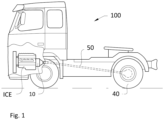
- Fig. 1 shows a side view of a vehicle 100 according to an example embodiment of the present invention.
- the vehicle 100 is here a heavy-duty truck, adapted to tow one or more trailers (not shown). It shall however be understood that the invention is not limited to only this type of vehicle, but may also be used for other types of vehicles as e.g. mentioned herein.
- the vehicle 100 comprises an internal combustion engine, ICE, which is drivingly connected to a transmission 10 according to an example embodiment of the invention.
- the transmission 10 drivingly connects the ICE to a propulsion shaft 50, which in turn is drivingly connected to drive wheels 40.
- Fig. 2 shows a cross-sectional and simplified view of a clutch actuator 1 for actuating a clutch 2 as e.g. shown in fig. 3 .
- fig. 3 shows a cross-sectional view of a transmission 10 according to an example embodiment.
- the transmission 10 as shown is an Automated Manual Transmission, AMT. It comprises a clutch 2 for selectively engaging and disengaging the ICE to an input shaft 3 of the transmission 10.
- the transmission 10 as shown further comprises an intermediate shaft 6, a number of gear wheels 7, 8, 9, 11 and a range gear 12.
- the range gear 12 is drivingly connected to an output shaft 13.
- the output shaft 13 may be drivingly connected to the propeller shaft 50.
- the transmission 10 may be any type of transmission known to a skilled person, with e.g. more or fewer gear wheels as shown in fig. 3 , with and without the range gear 12 etc.
- the transmission 10 as shown in fig. 3 is only one example embodiment of a transmission according to the present invention.
- the clutch actuator 1 as shown in fig. 2 for actuating the clutch 2 comprises a cylinder C and a piston P which is movable back and forth in the direction of the shown arrow. Accordingly, any positional change of the clutch actuator 1 is referring to a positional change of the piston P.
- the clutch actuator 1 further comprises at least one seal S for sealing a fluid chamber C1 which is defined and delimited by inner walls of the cylinder C. It shall be understood that the clutch actuator 1 as shown is simplified. As such, the clutch actuator 1 may comprise more parts, such one or more valves, more seals etc.
- the piston P is actuated by pressurizing the inside of the cylinder C by a fluid, such as by pressurized air.
- a method for automatically warming up a clutch actuator 1 for a clutch 2 of a transmission 10 in a vehicle 100 wherein the clutch actuator 1 is operable by use of pressurized fluid and configured to actuate the clutch 2 from an engaged to a disengaged state, and/or vice versa.
- the method comprises:
- the predetermined temperature value may for example be in the range of -5 to -30 degrees Celsius.
- Identifying if the clutch actuator 1 is leaking may comprise:
- identifying if the clutch actuator 1 is leaking may comprise:
- the state indicative of the clutch actuator 1 being functional may be determined by identifying if a functional condition is fulfilled which is indicative of an allowable positional change and/or an allowable pressure drop over time of the clutch actuator 1 when the clutch actuator 1 is pressurized.
- the clutch actuator may comprise a sensor for measuring and obtaining a value indicative of a position of the piston P, and/or it may comprise a sensor for measuring and obtaining a value indicative of pressure in the fluid chamber C1.
- the maximum run out state may be determined by identifying that the clutch actuator 1 does not reach the disengaged or engaged state after a predetermined number of pressurizing repetitions have been performed and/or after a predetermined run out time has been reached.
- the predetermined number of pressurizing repetitions and/or the predetermined run out time may be adjustable with respect to the temperature.
- the temperature may be at least one of a clutch actuator temperature, a transmission oil temperature and an ambient temperature with respect to the vehicle 100.
- the predetermined temperature value may correspond to a glass transition temperature of the seal S for sealing the fluid chamber C1 of the clutch actuator 1.
- the transmission control unit may comprise and/or utilize the above-mentioned computer program and/or computer readable medium.
- the transmission control unit may obtain measurement values from the above-mentioned sensors, i.e. sensors for measuring temperature, pressure and/or position of the piston P.
- the transmission control unit may issue a signal for controlling the clutch actuator 1 to be repeatedly pressurized as mentioned in the above.
- the transmission control unit may then also monitor the clutch actuator 1 in order to identify when the state is reached indicative of the clutch actuator 1 being functional, or until a maximum run out state is reached indicative of a faulty clutch actuator 1.
- the transmission control unit may also be configured to automatically control shifting of gears in the transmission 10.
- a versatile transmission control unit may be realized which is adapted to perform various tasks relating the control of the transmission 10.
Landscapes
- Engineering & Computer Science (AREA)
- General Engineering & Computer Science (AREA)
- Mechanical Engineering (AREA)
- Physics & Mathematics (AREA)
- Fluid Mechanics (AREA)
- Chemical & Material Sciences (AREA)
- Transportation (AREA)
- Analytical Chemistry (AREA)
- Automation & Control Theory (AREA)
- Combustion & Propulsion (AREA)
- Hydraulic Clutches, Magnetic Clutches, Fluid Clutches, And Fluid Joints (AREA)
Description
- The invention relates to a method for automatically warming up a clutch actuator for a clutch of a transmission in a vehicle. The invention also relates to a transmission control unit for a clutch actuator, a transmission and to a vehicle comprising the transmission. The invention can be applied in heavy-duty vehicles, such as trucks, buses and construction equipment. Although the invention will be described with respect to a heavy-duty truck, the invention is not restricted to this particular vehicle, but may also be used in other vehicles such as light-weight trucks, light-weight buses, wheel loaders, excavators, and also passenger cars.
- See for state-of-the-art documents in the field of the invention
US 2019/186564 andUS2019/186562 . - A vehicle transmission may to at least some degree be automated. For example, it is known to use so called Automated Mechanical Transmissions (AMT) for heavy-duty trucks. The AMT comprises a clutch which is actuated by use of a clutch actuator. The clutch actuator is typically actuated by use of pressurized air, but also other actuating techniques are possible, such as using a hydraulic clutch actuator instead of a pneumatic clutch actuator.
- The clutch can be actuated by the clutch actuator between an engaged state and a disengaged state, and typically the clutch is biased, e.g. spring-biased, towards one of the states. For example, the clutch may be spring-biased towards the engaged state, whereby the clutch actuator is used for actuating the clutch from the engaged state to the disengaged state.
- It has been found that the clutch actuators may experience problems when the vehicle is started in cold conditions. For example, clutch actuator cylinders using pressurized air may sometimes experience problems with air leakage when it is too cold. As such, with the above-mentioned clutch which is spring-biased towards the engaged state, the clutch may not be able to disengage when it is too cold, or at least it may be difficult to control the clutch in a normal manner.
- To this end, it has been proposed in
US 2019/0186562 A1 to warm up the clutch by increasing the rotational speed of a drive aggregate to a speed which is higher than an idling speed. - However, it has been realized that there is a need to provide a further improved method for warming up a clutch actuator, or at least to find a suitable alternative.
- In view of the above, an object of the invention is to provide an improved method for automatically warming up a clutch actuator for a clutch of a transmission in a vehicle, or at least to provide a useful alternative. Another object of the invention is to provide an improved transmission control unit, an improved transmission and a vehicle.
- According to a first aspect of the invention, the object is achieved by a method according to
claim 1. Thus, a method for automatically warming up a clutch actuator for a clutch of a transmission in a vehicle is provided. The clutch actuator is operable by use of pressurized fluid and configured to actuate the clutch from an engaged to a disengaged state, and/or vice versa. The method comprises: - identifying if a temperature is below a predetermined temperature value and if the clutch actuator is leaking, and if it is identified that the temperature is below the predetermined temperature value and that the clutch actuator is leaking; then
- repeatedly pressurizing the clutch actuator by use of the pressurized fluid until a state is reached indicative of the clutch actuator being functional, or until a maximum run out state is reached indicative of a faulty clutch actuator.
- By the provision of a method as disclosed herein, an improved method for warming up a clutch actuator is achieved. It has namely been realized that by use of the pressurized fluid, which is energized when pressurized, the energy in the fluid can efficiently warm up seals of the clutch actuator which are too cold to function properly. More specifically, it has been realized that it is beneficial to repeatedly pressurize the clutch actuator, since the pressurizing repetitions may increase the amount of energy in the fluid, thereby warming up the seals more rapidly. Consequently, the warming up procedure can be shortened, allowing the vehicle to take off in shorter time after a cold start.
- By repeatedly pressurizing the clutch actuator is herein meant to perform a series of pressurizing repetitions. Accordingly, the series of pressurizing repetitions are performed in a repetitive manner by applying pressure followed by releasing pressure.
- The application of pressure should be of a magnitude and/or have a duration which is intended to result in a movement of the clutch actuator for actuating the clutch when the clutch actuator is functional. Preferably, the application of pressure should be of a magnitude and/or have a duration intended to actuate the clutch from the engaged state to the disengaged state, or vice versa, when the clutch actuator is functional.
- In a similar manner, the release of pressure should be of a magnitude and/or have a duration which is intended to result in a movement of the clutch actuator for actuating the clutch when the clutch actuator is functional. Preferably, the release of pressure should be of a magnitude and/or have a duration intended to move the clutch from the disengaged state to the engaged state, or vice versa, when the clutch actuator is functional.
- For example, the application of pressure may be of a magnitude which corresponds to a maximum possible application of pressure. This implies a faster warming up procedure. As another example, the release of pressure may mean that all the pressure is released. As such, by way of example, the pressurizing repetitions may repetitively alter between applying maximum possible pressure and no pressure.
- Optionally, the pressurizing repetitions may be repeated with a predetermined time interval. The predetermined time interval may be adjusted, such as adjusted in dependence on the temperature. Thereby, the method may be adapted to the current temperature condition, implying a further improved warming up procedure. In other words, a fast warming up procedure may be achieved, implying increased service life. By way of example, the predetermined time interval may correspond to applying pressure during a specific time period, such as during 1-10 seconds, followed by releasing pressure, wherein the pressure is released during a specific time period, such as during 1-10 seconds, until pressure is applied again. Still optionally, the pressure for the pressurizing repetitions may be adjusted between and/or during the pressurizing repetitions. Thereby, a more flexible warming up procedure may be achieved, allowing e.g. the speed of the warming up procedure to be accelerated after an end of a pre-phase of the warming up-procedure. The pre-phase may use a lower pressure and/or a longer time interval between the pressurizing repetitions, allowing other components to e.g. be lubricated before increasing the frequency of the repetitions and/or the pressure.
- Optionally, identifying if the clutch actuator is leaking may comprise:
- identifying if a leaking condition is fulfilled which is indicative of an unallowable positional change and/or an unallowable pressure drop over time of the clutch actuator when the clutch actuator is pressurized by the pressurized fluid, and/or
- identifying if the clutch actuator does not reach the disengaged or engaged state when the clutch actuator is pressurized by the pressurized fluid.
- Thereby, the leaking condition may be identified in a reliable manner, indicative of a real leakage of the clutch actuator. As such, it may be more reliably identified that it is actually the clutch actuator which is leaking, and not any other possible fault.
- Optionally, the state indicative of the clutch actuator being functional may be determined by identifying if a functional condition is fulfilled which is indicative of an allowable positional change and/or an allowable pressure drop over time of the clutch actuator when the clutch actuator is pressurized. Determining if the clutch actuator is functional in this manner has been found to reliably determine if the clutch actuator is functional or not. For example, the functional condition may be a threshold value, implying facilitated identification, requiring e.g. less processing power.
- Optionally, the maximum run out state may be determined by identifying that the clutch actuator does not reach the disengaged or engaged state after a predetermined number of pressurizing repetitions have been performed and/or after a predetermined run out time has been reached. Still optionally, the predetermined number of pressurizing repetitions and/or the predetermined run out time may be adjustable with respect to the temperature. Still optionally, the predetermined number of pressurizing repetitions and/or the predetermined run out time may be set to automatically vary with respect to the temperature. In view of the foregoing, a more versatile and/or adaptable method may be achieved. For example, fewer pressurizing repetitions may be allowed if the temperature is not too low in comparison to if the temperature is very low. Purely by way of example, fewer pressurizing repetitions may be allowed if the temperature is about -15 degrees Celsius in comparison to if the temperature is -25 degrees Celsius.
- Optionally, the temperature may be at least one of a clutch actuator temperature, a transmission oil temperature and an ambient temperature with respect to the vehicle. For example, one or more sensors may advantageously be used which are configured to measure the temperature at one or more locations.
- Optionally, the predetermined temperature value may correspond to a glass transition temperature of a seal for sealing a fluid chamber of the clutch actuator. The predetermined temperature value may be the glass transition temperature, or it may be set with a safety margin with respect to the glass transition temperature. Still optionally, the predetermined temperature value may be adjustable. For example, it has been realized that the seals, made of e.g. rubber or the like, may deteriorate over time, and this may have an effect on the temperature at which the seals function properly. Thereby, by adjusting the predetermined temperature value, the warming up procedure may be better adapted for the current condition of the seals.
- Optionally, the clutch actuator is a pneumatic clutch actuator. Alternatively, the clutch actuator is a hydraulic clutch actuator. Still optionally, the clutch actuator may be biased, such as spring-biased, towards the engaged or the disengaged state.
- Optionally, the fluid for the clutch actuator may be pressurized by a compressor. The compressor may be driven by power from an internal combustion engine of the vehicle, power from an electric motor of the vehicle, and/or electric power from a battery or from the power grid.
- Optionally, the method may further comprise preventing the vehicle from taking off until the warming up procedure is completed. Thereby it can be assured that the clutch actuator is working properly before the vehicle is allowed to take off.
- Optionally, the method may further comprise notifying a user, such as a driver, when the clutch actuator is warming up. Thereby, the user, typically the driver, will know that the clutch actuator is warming up, implying increased awareness for the user.
- Optionally, the method may further comprise prohibiting any clutch fault codes until after the warming procedure has finished. It has been realized that a too cold clutch actuator may lead to fault codes of the transmission when the vehicle is started. A fault code may be defined as issuing of a signal which is indicative of a transmission fault. By prohibiting any such fault codes before the clutch actuator has been warmed up, unnecessary fault codes may not be issued. Thereby, a user may not take any unnecessary actions, such as contacting a workshop, due to the unnecessary fault codes.
- According to a second aspect of the invention, the object is achieved by a transmission control unit according to
claim 8. Thus, a transmission control unit for a clutch actuator for a clutch of a transmission is provided. The transmission control unit is configured to perform the method according to any one of the embodiments of the first aspect of the invention. For example, the transmission control unit is configured to issue a signal to repeatedly pressurizing the clutch actuator as disclosed herein. - Advantages and effects of the second aspect are largely analogous to the advantages and effects of the first aspect of the invention.
- The transmission control unit is an electronic control unit and may comprise processing circuitry, hardware and/or software, one or more memory units etc. The transmission control unit may be a computer. It may also be constituted by two or more sub-control units.
- The object of the invention is also achieved by a computer program comprising program code means for performing the steps of any one of the embodiments of the first aspect of the invention, when said program is run on a computer, such as on the aforementioned transmission control unit.
- Still further, the object of the invention is also achieved by a computer readable medium carrying a computer program comprising program code means for performing the steps of any one of the embodiments of the first aspect of the invention when said program product is run on a computer, such as on the aforementioned transmission control unit.
- According to a third aspect of the invention, the object is achieved by a transmission for a vehicle according to
claim 9. Thus a transmission for a vehicle is provided which comprises a clutch and a clutch actuator for actuating the clutch from an engaged to a disengaged state, and/or vice versa, wherein the transmission further comprises the transmission control unit according to any one of the embodiments of the second aspect of the invention. - Advantages and effects of the third aspect are largely analogous to the advantages and effects of the first and second aspects of the invention. It shall also be noted that all embodiments of the first and second aspects are combinable with all embodiments of the third aspect of the invention, and vice versa.
- According to a fourth aspect of the invention, the object is achieved by a vehicle according to
claim 10, which comprises the transmission according to any one of the embodiments of the third aspect of the invention. - Advantages and effects of the fourth aspect are largely analogous to the advantages and effects of the first, second and third aspects of the invention. It shall also be noted that all embodiments of the first, second and third aspects are combinable with all embodiments of the fourth aspect of the invention, and vice versa.
- Further advantages and advantageous features of the invention are disclosed in the following description and in the dependent claims.
- With reference to the appended drawings, below follows a more detailed description of embodiments of the invention cited as examples.
- In the drawings:
-
Fig. 1 is a side view vehicle according to an example embodiment of the present invention; -
Fig. 2 is a schematic cross-sectional view of a clutch actuator according to an example embodiment of the present invention; -
Fig. 3 is a cross-sectional view of a transmission according to an example embodiment of the present invention; and -
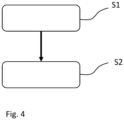
Fig. 4 is a flowchart of a method according to an example embodiment of the present invention. - The drawings show diagrammatic exemplifying embodiments of the present invention and are thus not necessarily drawn to scale. It shall be understood that the embodiments shown and described are exemplifying and that the invention is not limited to these embodiments. It shall also be noted that some details in the drawings may be exaggerated in order to better describe and illustrate the invention. Like reference characters refer to like elements throughout the description, unless expressed otherwise.
-
Fig. 1 shows a side view of avehicle 100 according to an example embodiment of the present invention. Thevehicle 100 is here a heavy-duty truck, adapted to tow one or more trailers (not shown). It shall however be understood that the invention is not limited to only this type of vehicle, but may also be used for other types of vehicles as e.g. mentioned herein. Thevehicle 100 comprises an internal combustion engine, ICE, which is drivingly connected to atransmission 10 according to an example embodiment of the invention. Thetransmission 10 drivingly connects the ICE to apropulsion shaft 50, which in turn is drivingly connected to drivewheels 40. -
Fig. 2 shows a cross-sectional and simplified view of aclutch actuator 1 for actuating a clutch 2 as e.g. shown infig. 3 . Accordingly,fig. 3 shows a cross-sectional view of atransmission 10 according to an example embodiment. - The
transmission 10 as shown is an Automated Manual Transmission, AMT. It comprises aclutch 2 for selectively engaging and disengaging the ICE to aninput shaft 3 of thetransmission 10. Thetransmission 10 as shown further comprises an intermediate shaft 6, a number ofgear wheels range gear 12. Therange gear 12 is drivingly connected to anoutput shaft 13. Theoutput shaft 13 may be drivingly connected to thepropeller shaft 50. It shall be understood that thetransmission 10 may be any type of transmission known to a skilled person, with e.g. more or fewer gear wheels as shown infig. 3 , with and without therange gear 12 etc. As such, thetransmission 10 as shown infig. 3 is only one example embodiment of a transmission according to the present invention. - The
clutch actuator 1 as shown infig. 2 for actuating theclutch 2 comprises a cylinder C and a piston P which is movable back and forth in the direction of the shown arrow. Accordingly, any positional change of theclutch actuator 1 is referring to a positional change of the piston P. Theclutch actuator 1 further comprises at least one seal S for sealing a fluid chamber C1 which is defined and delimited by inner walls of the cylinder C. It shall be understood that theclutch actuator 1 as shown is simplified. As such, theclutch actuator 1 may comprise more parts, such one or more valves, more seals etc. The piston P is actuated by pressurizing the inside of the cylinder C by a fluid, such as by pressurized air. - Referring to
figs. 2-3 , and also tofig. 4 which shows a flowchart, a method according to example embodiments of the invention will be described. - Thus, a method for automatically warming up a
clutch actuator 1 for aclutch 2 of atransmission 10 in avehicle 100 is provided, wherein theclutch actuator 1 is operable by use of pressurized fluid and configured to actuate the clutch 2 from an engaged to a disengaged state, and/or vice versa. The method comprises: - S1: identifying if a temperature is below a predetermined temperature value and if the
clutch actuator 1 is leaking, and if it is identified that the temperature is below the predetermined temperature value and that theclutch actuator 1 is leaking; then - S2: repeatedly pressurizing the
clutch actuator 1 by use of the pressurized fluid until a state is reached indicative of theclutch actuator 1 being functional or until a maximum run out state is reached indicative of a faultyclutch actuator 1. - The predetermined temperature value may for example be in the range of -5 to -30 degrees Celsius.
- Identifying if the
clutch actuator 1 is leaking may comprise: - identifying if a leaking condition is fulfilled which is indicative of an unallowable positional change and/or an unallowable pressure drop over time of the
clutch actuator 1 when theclutch actuator 1 is pressurized by the pressurized fluid. For example, it may be identified that theclutch actuator 1, i.e. the piston P, is moving at an unallowable speed when theclutch actuator 1 is pressurized, which may be considered as an unallowable positional change over time. - Additionally, or alternatively, identifying if the
clutch actuator 1 is leaking may comprise: - identifying if the
clutch actuator 1 does not reach the disengaged or engaged state when theclutch actuator 1 is pressurized by the pressurized fluid. - The state indicative of the
clutch actuator 1 being functional may be determined by identifying if a functional condition is fulfilled which is indicative of an allowable positional change and/or an allowable pressure drop over time of theclutch actuator 1 when theclutch actuator 1 is pressurized. Accordingly, the clutch actuator may comprise a sensor for measuring and obtaining a value indicative of a position of the piston P, and/or it may comprise a sensor for measuring and obtaining a value indicative of pressure in the fluid chamber C1. - The maximum run out state may be determined by identifying that the
clutch actuator 1 does not reach the disengaged or engaged state after a predetermined number of pressurizing repetitions have been performed and/or after a predetermined run out time has been reached. - The predetermined number of pressurizing repetitions and/or the predetermined run out time may be adjustable with respect to the temperature.
- The temperature may be at least one of a clutch actuator temperature, a transmission oil temperature and an ambient temperature with respect to the
vehicle 100. - The predetermined temperature value may correspond to a glass transition temperature of the seal S for sealing the fluid chamber C1 of the
clutch actuator 1. - The method is advantageously implemented in a transmission control unit (not shown), by use of hardware and/or software. For example, the transmission control unit may comprise and/or utilize the above-mentioned computer program and/or computer readable medium. For example, the transmission control unit may obtain measurement values from the above-mentioned sensors, i.e. sensors for measuring temperature, pressure and/or position of the piston P. By use of the measurement values, the transmission control unit may issue a signal for controlling the
clutch actuator 1 to be repeatedly pressurized as mentioned in the above. The transmission control unit may then also monitor theclutch actuator 1 in order to identify when the state is reached indicative of theclutch actuator 1 being functional, or until a maximum run out state is reached indicative of a faultyclutch actuator 1. In addition, the transmission control unit may also be configured to automatically control shifting of gears in thetransmission 10. As such, a versatile transmission control unit may be realized which is adapted to perform various tasks relating the control of thetransmission 10. - It is to be understood that the present invention is not limited to the embodiments described above and illustrated in the drawings; rather, the skilled person will recognize that many changes and modifications may be made within the scope of the appended claims.
Claims (10)
- A method for automatically warming up a clutch actuator (1) for a clutch (2) of a transmission (10) in a vehicle (100), wherein the clutch actuator (1) is operable by use of pressurized fluid and configured to actuate the clutch (2) from an engaged to a disengaged state, and/or vice versa, the method comprising:- identifying (S1) if a temperature is below a predetermined temperature value and if the clutch actuator (1) is leaking, and, characterized in that, if it is identified that the temperature is below the predetermined temperature value and that the clutch actuator (1) is leaking; then- repeatedly (S2) pressurizing the clutch actuator (1) by use of the pressurized fluid until a state is reached indicative of the clutch actuator (1) being functional, or until a maximum run out state is reached indicative of a faulty clutch actuator (1).
- The method according to claim 1, wherein identifying if the clutch actuator is leaking comprises:- identifying if a leaking condition is fulfilled which is indicative of an unallowable positional change and/or an unallowable pressure drop over time of the clutch actuator when the clutch actuator is pressurized by the pressurized fluid, and/or- identifying if the clutch actuator does not reach the disengaged or engaged state when the clutch actuator is pressurized by the pressurized fluid.
- The method according to any one of the preceding claims, wherein the state indicative of the clutch actuator being functional is determined by identifying if a functional condition is fulfilled which is indicative of an allowable positional change and/or an allowable pressure drop over time of the clutch actuator when the clutch actuator is pressurized.
- The method according to any one of the preceding claims, wherein the maximum run out state is determined by identifying that the clutch actuator does not reach the disengaged or engaged state after a predetermined number of pressurizing repetitions have been performed and/or after a predetermined run out time has been reached.
- The method according to claim 4, wherein the predetermined number of pressurizing repetitions and/or the predetermined run out time is adjustable with respect to the temperature.
- The method according to any one of the preceding claims, wherein the temperature is at least one of a clutch actuator temperature, a transmission oil temperature and an ambient temperature with respect to the vehicle.
- The method according to any one of the preceding claims, wherein the predetermined temperature value corresponds to a glass transition temperature of a seal (S) for sealing a fluid chamber of the clutch actuator.
- A transmission control unit for a clutch actuator for a clutch of a transmission, the transmission control unit being configured to perform the method according to any one of the preceding claims.
- A transmission for a vehicle comprising a clutch and a clutch actuator for actuating the clutch from an engaged to a disengaged state, and/or vice versa, wherein the transmission further comprises the transmission control unit according to claim 8.
- A vehicle comprising the transmission according to claim 9.
Applications Claiming Priority (1)
| Application Number | Priority Date | Filing Date | Title |
|---|---|---|---|
| SE2051456A SE544485C2 (en) | 2020-12-14 | 2020-12-14 | A method for automatically warming up a clutch actuator |
Publications (3)
| Publication Number | Publication Date |
|---|---|
| EP4015862A1 EP4015862A1 (en) | 2022-06-22 |
| EP4015862C0 EP4015862C0 (en) | 2023-11-08 |
| EP4015862B1 true EP4015862B1 (en) | 2023-11-08 |
Family
ID=78821762
Family Applications (1)
| Application Number | Title | Priority Date | Filing Date |
|---|---|---|---|
| EP21212510.8A Active EP4015862B1 (en) | 2020-12-14 | 2021-12-06 | A method for automatically warming up a clutch actuator |
Country Status (4)
| Country | Link |
|---|---|
| US (1) | US11585396B2 (en) |
| EP (1) | EP4015862B1 (en) |
| CN (1) | CN114623171A (en) |
| SE (1) | SE544485C2 (en) |
Families Citing this family (1)
| Publication number | Priority date | Publication date | Assignee | Title |
|---|---|---|---|---|
| EP4083474B1 (en) * | 2021-04-26 | 2024-02-28 | Volvo Truck Corporation | A method for controlling ventilation of a transmission |
Family Cites Families (12)
| Publication number | Priority date | Publication date | Assignee | Title |
|---|---|---|---|---|
| US5667051A (en) * | 1995-03-01 | 1997-09-16 | Sundstrand Corporation | Hydraulic control and lubrication system with compressed air pre-heat circuit for rapid response at low ambient temperatures |
| US7007782B2 (en) * | 2003-02-14 | 2006-03-07 | Automotive Components Holdings Llc | Control of a hydraulic coupling system |
| ATE499533T1 (en) * | 2005-12-15 | 2011-03-15 | Volvo Lastvagnar Ab | METHOD FOR DETECTING CLUTCH CYLINDER LEAKAGE |
| US7648439B2 (en) * | 2006-12-05 | 2010-01-19 | Ford Global Technologies, Llc | Operation of electrically controlled transmissions at lower temperatures |
| DE102008053387A1 (en) * | 2007-11-15 | 2009-05-20 | Luk Lamellen Und Kupplungsbau Beteiligungs Kg | Method for controlling an automated friction clutch |
| JP2013185475A (en) * | 2012-03-07 | 2013-09-19 | Suzuki Motor Corp | Dpf regeneration device for vehicle |
| DE102012220242A1 (en) * | 2012-11-07 | 2014-05-08 | Zf Friedrichshafen Ag | Automatic transmission for vehicle e.g. commercial vehicle, has pneumatic components for the automation of switching functions which are arranged in ventilation space |
| DE102017212571B4 (en) * | 2016-07-25 | 2018-10-11 | Magna Powertrain Inc. | Selectable one-way clutch assembly |
| DE102016221126A1 (en) * | 2016-10-26 | 2018-04-26 | Zf Friedrichshafen Ag | Method for performing a cold start |
| WO2019072383A1 (en) * | 2017-10-11 | 2019-04-18 | Volvo Truck Corporation | A method for controlling a clutch arrangement |
| DE102017223049A1 (en) * | 2017-12-18 | 2019-06-19 | Zf Friedrichshafen Ag | Method for controlling a pneumatic actuating means |
| DE102017223046A1 (en) * | 2017-12-18 | 2019-06-19 | Zf Friedrichshafen Ag | Method for warming up a pneumatic clutch actuator |
-
2020
- 2020-12-14 SE SE2051456A patent/SE544485C2/en unknown
-
2021
- 2021-12-06 EP EP21212510.8A patent/EP4015862B1/en active Active
- 2021-12-13 US US17/548,705 patent/US11585396B2/en active Active
- 2021-12-13 CN CN202111518054.3A patent/CN114623171A/en active Pending
Also Published As
| Publication number | Publication date |
|---|---|
| US20220186796A1 (en) | 2022-06-16 |
| EP4015862A1 (en) | 2022-06-22 |
| EP4015862C0 (en) | 2023-11-08 |
| SE2051456A1 (en) | 2022-06-14 |
| US11585396B2 (en) | 2023-02-21 |
| CN114623171A (en) | 2022-06-14 |
| SE544485C2 (en) | 2022-06-14 |
Similar Documents
| Publication | Publication Date | Title |
|---|---|---|
| US8639424B2 (en) | System and method for controlling an automatic engine stop-start accumulator | |
| US8311714B2 (en) | Method for monitoring a drive train | |
| US20060154781A1 (en) | Process for operating an automatically actuated friction clutch and/or a transmission | |
| CN110439994B (en) | Torque converter clutch position estimation based on accumulated slip | |
| US8855878B2 (en) | System and method for controlling an accumulator based on vehicle conditions | |
| US11287033B2 (en) | Hydraulic system for an automatic gearbox of a motor vehicle | |
| US9074949B2 (en) | Diagnostic device for temperature sensor | |
| GB2506674A (en) | Method of producing an adaptive dataset of disengaged clutch pedal positions | |
| EP4015862B1 (en) | A method for automatically warming up a clutch actuator | |
| CN108216207B (en) | Method for diagnosing oil leakage of engine clutch in hybrid electric vehicle | |
| KR20090021291A (en) | Method and device for identifying a passive rolling moment of a motor vehicle | |
| JP2000511493A (en) | Clutch system | |
| US20060223672A1 (en) | Clutch control apparatus | |
| CN120917250A (en) | Method for controlling a hydraulic system | |
| JP6172907B2 (en) | Overload history storage device for friction clutch for vehicle | |
| US9267597B2 (en) | System for adjusting fluid volume in a transmission and method thereof | |
| KR20200071181A (en) | Method for stuck diagnosis of lubrication control valve of hybrid vehicle | |
| US12071963B2 (en) | Method for controlling a hydraulic system | |
| JP4735566B2 (en) | Control device for clutch operating device | |
| CN103557245B (en) | A kind of vehicular clutch guard method and protection device | |
| US9168910B2 (en) | Control apparatus for vehicle | |
| CN117957387A (en) | Device and method for determining hydraulic fluid parameters of a transmission of a vehicle | |
| JP2008128438A (en) | Shift control device for transmission | |
| EP1632689A2 (en) | Method for clutch control, specially for parallel shifting transmission with wet clutch or double wet clutch | |
| CN112455416A (en) | Automatic start control for gear-engaging parking |
Legal Events
| Date | Code | Title | Description |
|---|---|---|---|
| PUAI | Public reference made under article 153(3) epc to a published international application that has entered the european phase |
Free format text: ORIGINAL CODE: 0009012 |
|
| STAA | Information on the status of an ep patent application or granted ep patent |
Free format text: STATUS: THE APPLICATION HAS BEEN PUBLISHED |
|
| AK | Designated contracting states |
Kind code of ref document: A1 Designated state(s): AL AT BE BG CH CY CZ DE DK EE ES FI FR GB GR HR HU IE IS IT LI LT LU LV MC MK MT NL NO PL PT RO RS SE SI SK SM TR |
|
| STAA | Information on the status of an ep patent application or granted ep patent |
Free format text: STATUS: REQUEST FOR EXAMINATION WAS MADE |
|
| 17P | Request for examination filed |
Effective date: 20221216 |
|
| RBV | Designated contracting states (corrected) |
Designated state(s): AL AT BE BG CH CY CZ DE DK EE ES FI FR GB GR HR HU IE IS IT LI LT LU LV MC MK MT NL NO PL PT RO RS SE SI SK SM TR |
|
| GRAP | Despatch of communication of intention to grant a patent |
Free format text: ORIGINAL CODE: EPIDOSNIGR1 |
|
| STAA | Information on the status of an ep patent application or granted ep patent |
Free format text: STATUS: GRANT OF PATENT IS INTENDED |
|
| INTG | Intention to grant announced |
Effective date: 20230704 |
|
| GRAS | Grant fee paid |
Free format text: ORIGINAL CODE: EPIDOSNIGR3 |
|
| GRAA | (expected) grant |
Free format text: ORIGINAL CODE: 0009210 |
|
| STAA | Information on the status of an ep patent application or granted ep patent |
Free format text: STATUS: THE PATENT HAS BEEN GRANTED |
|
| AK | Designated contracting states |
Kind code of ref document: B1 Designated state(s): AL AT BE BG CH CY CZ DE DK EE ES FI FR GB GR HR HU IE IS IT LI LT LU LV MC MK MT NL NO PL PT RO RS SE SI SK SM TR |
|
| REG | Reference to a national code |
Ref country code: GB Ref legal event code: FG4D |
|
| REG | Reference to a national code |
Ref country code: CH Ref legal event code: EP |
|
| REG | Reference to a national code |
Ref country code: DE Ref legal event code: R096 Ref document number: 602021006634 Country of ref document: DE |
|
| REG | Reference to a national code |
Ref country code: IE Ref legal event code: FG4D |
|
| U01 | Request for unitary effect filed |
Effective date: 20231108 |
|
| U07 | Unitary effect registered |
Designated state(s): AT BE BG DE DK EE FI FR IT LT LU LV MT NL PT SE SI Effective date: 20231113 |
|
| U20 | Renewal fee for the european patent with unitary effect paid |
Year of fee payment: 3 Effective date: 20240117 |
|
| PG25 | Lapsed in a contracting state [announced via postgrant information from national office to epo] |
Ref country code: GR Free format text: LAPSE BECAUSE OF FAILURE TO SUBMIT A TRANSLATION OF THE DESCRIPTION OR TO PAY THE FEE WITHIN THE PRESCRIBED TIME-LIMIT Effective date: 20240209 |
|
| PG25 | Lapsed in a contracting state [announced via postgrant information from national office to epo] |
Ref country code: IS Free format text: LAPSE BECAUSE OF FAILURE TO SUBMIT A TRANSLATION OF THE DESCRIPTION OR TO PAY THE FEE WITHIN THE PRESCRIBED TIME-LIMIT Effective date: 20240308 |
|
| PG25 | Lapsed in a contracting state [announced via postgrant information from national office to epo] |
Ref country code: ES Free format text: LAPSE BECAUSE OF FAILURE TO SUBMIT A TRANSLATION OF THE DESCRIPTION OR TO PAY THE FEE WITHIN THE PRESCRIBED TIME-LIMIT Effective date: 20231108 |
|
| PG25 | Lapsed in a contracting state [announced via postgrant information from national office to epo] |
Ref country code: IS Free format text: LAPSE BECAUSE OF FAILURE TO SUBMIT A TRANSLATION OF THE DESCRIPTION OR TO PAY THE FEE WITHIN THE PRESCRIBED TIME-LIMIT Effective date: 20240308 Ref country code: GR Free format text: LAPSE BECAUSE OF FAILURE TO SUBMIT A TRANSLATION OF THE DESCRIPTION OR TO PAY THE FEE WITHIN THE PRESCRIBED TIME-LIMIT Effective date: 20240209 Ref country code: ES Free format text: LAPSE BECAUSE OF FAILURE TO SUBMIT A TRANSLATION OF THE DESCRIPTION OR TO PAY THE FEE WITHIN THE PRESCRIBED TIME-LIMIT Effective date: 20231108 |
|
| PG25 | Lapsed in a contracting state [announced via postgrant information from national office to epo] |
Ref country code: RS Free format text: LAPSE BECAUSE OF FAILURE TO SUBMIT A TRANSLATION OF THE DESCRIPTION OR TO PAY THE FEE WITHIN THE PRESCRIBED TIME-LIMIT Effective date: 20231108 Ref country code: PL Free format text: LAPSE BECAUSE OF FAILURE TO SUBMIT A TRANSLATION OF THE DESCRIPTION OR TO PAY THE FEE WITHIN THE PRESCRIBED TIME-LIMIT Effective date: 20231108 Ref country code: NO Free format text: LAPSE BECAUSE OF FAILURE TO SUBMIT A TRANSLATION OF THE DESCRIPTION OR TO PAY THE FEE WITHIN THE PRESCRIBED TIME-LIMIT Effective date: 20240208 Ref country code: HR Free format text: LAPSE BECAUSE OF FAILURE TO SUBMIT A TRANSLATION OF THE DESCRIPTION OR TO PAY THE FEE WITHIN THE PRESCRIBED TIME-LIMIT Effective date: 20231108 |
|
| PG25 | Lapsed in a contracting state [announced via postgrant information from national office to epo] |
Ref country code: CZ Free format text: LAPSE BECAUSE OF FAILURE TO SUBMIT A TRANSLATION OF THE DESCRIPTION OR TO PAY THE FEE WITHIN THE PRESCRIBED TIME-LIMIT Effective date: 20231108 |
|
| PG25 | Lapsed in a contracting state [announced via postgrant information from national office to epo] |
Ref country code: SK Free format text: LAPSE BECAUSE OF FAILURE TO SUBMIT A TRANSLATION OF THE DESCRIPTION OR TO PAY THE FEE WITHIN THE PRESCRIBED TIME-LIMIT Effective date: 20231108 |
|
| PG25 | Lapsed in a contracting state [announced via postgrant information from national office to epo] |
Ref country code: SM Free format text: LAPSE BECAUSE OF FAILURE TO SUBMIT A TRANSLATION OF THE DESCRIPTION OR TO PAY THE FEE WITHIN THE PRESCRIBED TIME-LIMIT Effective date: 20231108 Ref country code: SK Free format text: LAPSE BECAUSE OF FAILURE TO SUBMIT A TRANSLATION OF THE DESCRIPTION OR TO PAY THE FEE WITHIN THE PRESCRIBED TIME-LIMIT Effective date: 20231108 Ref country code: RO Free format text: LAPSE BECAUSE OF FAILURE TO SUBMIT A TRANSLATION OF THE DESCRIPTION OR TO PAY THE FEE WITHIN THE PRESCRIBED TIME-LIMIT Effective date: 20231108 Ref country code: CZ Free format text: LAPSE BECAUSE OF FAILURE TO SUBMIT A TRANSLATION OF THE DESCRIPTION OR TO PAY THE FEE WITHIN THE PRESCRIBED TIME-LIMIT Effective date: 20231108 |
|
| REG | Reference to a national code |
Ref country code: DE Ref legal event code: R097 Ref document number: 602021006634 Country of ref document: DE |
|
| PG25 | Lapsed in a contracting state [announced via postgrant information from national office to epo] |
Ref country code: MC Free format text: LAPSE BECAUSE OF FAILURE TO SUBMIT A TRANSLATION OF THE DESCRIPTION OR TO PAY THE FEE WITHIN THE PRESCRIBED TIME-LIMIT Effective date: 20231108 |
|
| PG25 | Lapsed in a contracting state [announced via postgrant information from national office to epo] |
Ref country code: MC Free format text: LAPSE BECAUSE OF FAILURE TO SUBMIT A TRANSLATION OF THE DESCRIPTION OR TO PAY THE FEE WITHIN THE PRESCRIBED TIME-LIMIT Effective date: 20231108 |
|
| PLBE | No opposition filed within time limit |
Free format text: ORIGINAL CODE: 0009261 |
|
| STAA | Information on the status of an ep patent application or granted ep patent |
Free format text: STATUS: NO OPPOSITION FILED WITHIN TIME LIMIT |
|
| REG | Reference to a national code |
Ref country code: IE Ref legal event code: MM4A |
|
| PG25 | Lapsed in a contracting state [announced via postgrant information from national office to epo] |
Ref country code: IE Free format text: LAPSE BECAUSE OF NON-PAYMENT OF DUE FEES Effective date: 20231206 |
|
| 26N | No opposition filed |
Effective date: 20240809 |
|
| PG25 | Lapsed in a contracting state [announced via postgrant information from national office to epo] |
Ref country code: IE Free format text: LAPSE BECAUSE OF NON-PAYMENT OF DUE FEES Effective date: 20231206 |
|
| U20 | Renewal fee for the european patent with unitary effect paid |
Year of fee payment: 4 Effective date: 20241211 |
|
| PG25 | Lapsed in a contracting state [announced via postgrant information from national office to epo] |
Ref country code: CY Free format text: LAPSE BECAUSE OF FAILURE TO SUBMIT A TRANSLATION OF THE DESCRIPTION OR TO PAY THE FEE WITHIN THE PRESCRIBED TIME-LIMIT; INVALID AB INITIO Effective date: 20211206 |
|
| REG | Reference to a national code |
Ref country code: CH Ref legal event code: PL |
|
| PG25 | Lapsed in a contracting state [announced via postgrant information from national office to epo] |
Ref country code: CH Free format text: LAPSE BECAUSE OF NON-PAYMENT OF DUE FEES Effective date: 20241231 |
|
| PG25 | Lapsed in a contracting state [announced via postgrant information from national office to epo] |
Ref country code: TR Free format text: LAPSE BECAUSE OF FAILURE TO SUBMIT A TRANSLATION OF THE DESCRIPTION OR TO PAY THE FEE WITHIN THE PRESCRIBED TIME-LIMIT Effective date: 20231108 |
|
| U20 | Renewal fee for the european patent with unitary effect paid |
Year of fee payment: 5 Effective date: 20251223 |