EP4015669B1 - Hic-resistant and large deformation-resistant pipeline steel and preparation method therefor - Google Patents
Hic-resistant and large deformation-resistant pipeline steel and preparation method therefor Download PDFInfo
- Publication number
- EP4015669B1 EP4015669B1 EP20896953.5A EP20896953A EP4015669B1 EP 4015669 B1 EP4015669 B1 EP 4015669B1 EP 20896953 A EP20896953 A EP 20896953A EP 4015669 B1 EP4015669 B1 EP 4015669B1
- Authority
- EP
- European Patent Office
- Prior art keywords
- steel
- rolling
- pipeline steel
- resistance
- temperature
- Prior art date
- Legal status (The legal status is an assumption and is not a legal conclusion. Google has not performed a legal analysis and makes no representation as to the accuracy of the status listed.)
- Active
Links
Images
Classifications
-
- C—CHEMISTRY; METALLURGY
- C21—METALLURGY OF IRON
- C21D—MODIFYING THE PHYSICAL STRUCTURE OF FERROUS METALS; GENERAL DEVICES FOR HEAT TREATMENT OF FERROUS OR NON-FERROUS METALS OR ALLOYS; MAKING METAL MALLEABLE, e.g. BY DECARBURISATION OR TEMPERING
- C21D1/00—General methods or devices for heat treatment, e.g. annealing, hardening, quenching or tempering
- C21D1/02—Hardening articles or materials formed by forging or rolling, with no further heating beyond that required for the formation
-
- C—CHEMISTRY; METALLURGY
- C21—METALLURGY OF IRON
- C21D—MODIFYING THE PHYSICAL STRUCTURE OF FERROUS METALS; GENERAL DEVICES FOR HEAT TREATMENT OF FERROUS OR NON-FERROUS METALS OR ALLOYS; MAKING METAL MALLEABLE, e.g. BY DECARBURISATION OR TEMPERING
- C21D1/00—General methods or devices for heat treatment, e.g. annealing, hardening, quenching or tempering
- C21D1/18—Hardening; Quenching with or without subsequent tempering
- C21D1/19—Hardening; Quenching with or without subsequent tempering by interrupted quenching
-
- C—CHEMISTRY; METALLURGY
- C21—METALLURGY OF IRON
- C21D—MODIFYING THE PHYSICAL STRUCTURE OF FERROUS METALS; GENERAL DEVICES FOR HEAT TREATMENT OF FERROUS OR NON-FERROUS METALS OR ALLOYS; MAKING METAL MALLEABLE, e.g. BY DECARBURISATION OR TEMPERING
- C21D1/00—General methods or devices for heat treatment, e.g. annealing, hardening, quenching or tempering
- C21D1/56—General methods or devices for heat treatment, e.g. annealing, hardening, quenching or tempering characterised by the quenching agents
- C21D1/60—Aqueous agents
-
- C—CHEMISTRY; METALLURGY
- C21—METALLURGY OF IRON
- C21D—MODIFYING THE PHYSICAL STRUCTURE OF FERROUS METALS; GENERAL DEVICES FOR HEAT TREATMENT OF FERROUS OR NON-FERROUS METALS OR ALLOYS; MAKING METAL MALLEABLE, e.g. BY DECARBURISATION OR TEMPERING
- C21D1/00—General methods or devices for heat treatment, e.g. annealing, hardening, quenching or tempering
- C21D1/56—General methods or devices for heat treatment, e.g. annealing, hardening, quenching or tempering characterised by the quenching agents
- C21D1/613—Gases; Liquefied or solidified normally gaseous material
-
- C—CHEMISTRY; METALLURGY
- C21—METALLURGY OF IRON
- C21D—MODIFYING THE PHYSICAL STRUCTURE OF FERROUS METALS; GENERAL DEVICES FOR HEAT TREATMENT OF FERROUS OR NON-FERROUS METALS OR ALLOYS; MAKING METAL MALLEABLE, e.g. BY DECARBURISATION OR TEMPERING
- C21D8/00—Modifying the physical properties of ferrous metals or ferrous alloys by deformation combined with, or followed by, heat treatment
- C21D8/02—Modifying the physical properties of ferrous metals or ferrous alloys by deformation combined with, or followed by, heat treatment during manufacturing of plates or strips
-
- C—CHEMISTRY; METALLURGY
- C21—METALLURGY OF IRON
- C21D—MODIFYING THE PHYSICAL STRUCTURE OF FERROUS METALS; GENERAL DEVICES FOR HEAT TREATMENT OF FERROUS OR NON-FERROUS METALS OR ALLOYS; MAKING METAL MALLEABLE, e.g. BY DECARBURISATION OR TEMPERING
- C21D8/00—Modifying the physical properties of ferrous metals or ferrous alloys by deformation combined with, or followed by, heat treatment
- C21D8/02—Modifying the physical properties of ferrous metals or ferrous alloys by deformation combined with, or followed by, heat treatment during manufacturing of plates or strips
- C21D8/0221—Modifying the physical properties of ferrous metals or ferrous alloys by deformation combined with, or followed by, heat treatment during manufacturing of plates or strips characterised by the working steps
- C21D8/0226—Hot rolling
-
- C—CHEMISTRY; METALLURGY
- C21—METALLURGY OF IRON
- C21D—MODIFYING THE PHYSICAL STRUCTURE OF FERROUS METALS; GENERAL DEVICES FOR HEAT TREATMENT OF FERROUS OR NON-FERROUS METALS OR ALLOYS; MAKING METAL MALLEABLE, e.g. BY DECARBURISATION OR TEMPERING
- C21D8/00—Modifying the physical properties of ferrous metals or ferrous alloys by deformation combined with, or followed by, heat treatment
- C21D8/02—Modifying the physical properties of ferrous metals or ferrous alloys by deformation combined with, or followed by, heat treatment during manufacturing of plates or strips
- C21D8/0221—Modifying the physical properties of ferrous metals or ferrous alloys by deformation combined with, or followed by, heat treatment during manufacturing of plates or strips characterised by the working steps
- C21D8/0236—Cold rolling
-
- C—CHEMISTRY; METALLURGY
- C21—METALLURGY OF IRON
- C21D—MODIFYING THE PHYSICAL STRUCTURE OF FERROUS METALS; GENERAL DEVICES FOR HEAT TREATMENT OF FERROUS OR NON-FERROUS METALS OR ALLOYS; MAKING METAL MALLEABLE, e.g. BY DECARBURISATION OR TEMPERING
- C21D8/00—Modifying the physical properties of ferrous metals or ferrous alloys by deformation combined with, or followed by, heat treatment
- C21D8/02—Modifying the physical properties of ferrous metals or ferrous alloys by deformation combined with, or followed by, heat treatment during manufacturing of plates or strips
- C21D8/0247—Modifying the physical properties of ferrous metals or ferrous alloys by deformation combined with, or followed by, heat treatment during manufacturing of plates or strips characterised by the heat treatment
-
- C—CHEMISTRY; METALLURGY
- C21—METALLURGY OF IRON
- C21D—MODIFYING THE PHYSICAL STRUCTURE OF FERROUS METALS; GENERAL DEVICES FOR HEAT TREATMENT OF FERROUS OR NON-FERROUS METALS OR ALLOYS; MAKING METAL MALLEABLE, e.g. BY DECARBURISATION OR TEMPERING
- C21D8/00—Modifying the physical properties of ferrous metals or ferrous alloys by deformation combined with, or followed by, heat treatment
- C21D8/02—Modifying the physical properties of ferrous metals or ferrous alloys by deformation combined with, or followed by, heat treatment during manufacturing of plates or strips
- C21D8/0247—Modifying the physical properties of ferrous metals or ferrous alloys by deformation combined with, or followed by, heat treatment during manufacturing of plates or strips characterised by the heat treatment
- C21D8/0263—Modifying the physical properties of ferrous metals or ferrous alloys by deformation combined with, or followed by, heat treatment during manufacturing of plates or strips characterised by the heat treatment following hot rolling
-
- C—CHEMISTRY; METALLURGY
- C21—METALLURGY OF IRON
- C21D—MODIFYING THE PHYSICAL STRUCTURE OF FERROUS METALS; GENERAL DEVICES FOR HEAT TREATMENT OF FERROUS OR NON-FERROUS METALS OR ALLOYS; MAKING METAL MALLEABLE, e.g. BY DECARBURISATION OR TEMPERING
- C21D9/00—Heat treatment, e.g. annealing, hardening, quenching or tempering, adapted for particular articles; Furnaces therefor
- C21D9/46—Heat treatment, e.g. annealing, hardening, quenching or tempering, adapted for particular articles; Furnaces therefor for sheet metals
-
- C—CHEMISTRY; METALLURGY
- C22—METALLURGY; FERROUS OR NON-FERROUS ALLOYS; TREATMENT OF ALLOYS OR NON-FERROUS METALS
- C22C—ALLOYS
- C22C38/00—Ferrous alloys, e.g. steel alloys
- C22C38/02—Ferrous alloys, e.g. steel alloys containing silicon
-
- C—CHEMISTRY; METALLURGY
- C22—METALLURGY; FERROUS OR NON-FERROUS ALLOYS; TREATMENT OF ALLOYS OR NON-FERROUS METALS
- C22C—ALLOYS
- C22C38/00—Ferrous alloys, e.g. steel alloys
- C22C38/04—Ferrous alloys, e.g. steel alloys containing manganese
-
- C—CHEMISTRY; METALLURGY
- C22—METALLURGY; FERROUS OR NON-FERROUS ALLOYS; TREATMENT OF ALLOYS OR NON-FERROUS METALS
- C22C—ALLOYS
- C22C38/00—Ferrous alloys, e.g. steel alloys
- C22C38/06—Ferrous alloys, e.g. steel alloys containing aluminium
-
- C—CHEMISTRY; METALLURGY
- C22—METALLURGY; FERROUS OR NON-FERROUS ALLOYS; TREATMENT OF ALLOYS OR NON-FERROUS METALS
- C22C—ALLOYS
- C22C38/00—Ferrous alloys, e.g. steel alloys
- C22C38/18—Ferrous alloys, e.g. steel alloys containing chromium
- C22C38/40—Ferrous alloys, e.g. steel alloys containing chromium with nickel
- C22C38/42—Ferrous alloys, e.g. steel alloys containing chromium with nickel with copper
-
- C—CHEMISTRY; METALLURGY
- C22—METALLURGY; FERROUS OR NON-FERROUS ALLOYS; TREATMENT OF ALLOYS OR NON-FERROUS METALS
- C22C—ALLOYS
- C22C38/00—Ferrous alloys, e.g. steel alloys
- C22C38/18—Ferrous alloys, e.g. steel alloys containing chromium
- C22C38/40—Ferrous alloys, e.g. steel alloys containing chromium with nickel
- C22C38/44—Ferrous alloys, e.g. steel alloys containing chromium with nickel with molybdenum or tungsten
-
- C—CHEMISTRY; METALLURGY
- C22—METALLURGY; FERROUS OR NON-FERROUS ALLOYS; TREATMENT OF ALLOYS OR NON-FERROUS METALS
- C22C—ALLOYS
- C22C38/00—Ferrous alloys, e.g. steel alloys
- C22C38/18—Ferrous alloys, e.g. steel alloys containing chromium
- C22C38/40—Ferrous alloys, e.g. steel alloys containing chromium with nickel
- C22C38/46—Ferrous alloys, e.g. steel alloys containing chromium with nickel with vanadium
-
- C—CHEMISTRY; METALLURGY
- C22—METALLURGY; FERROUS OR NON-FERROUS ALLOYS; TREATMENT OF ALLOYS OR NON-FERROUS METALS
- C22C—ALLOYS
- C22C38/00—Ferrous alloys, e.g. steel alloys
- C22C38/18—Ferrous alloys, e.g. steel alloys containing chromium
- C22C38/40—Ferrous alloys, e.g. steel alloys containing chromium with nickel
- C22C38/48—Ferrous alloys, e.g. steel alloys containing chromium with nickel with niobium or tantalum
-
- C—CHEMISTRY; METALLURGY
- C22—METALLURGY; FERROUS OR NON-FERROUS ALLOYS; TREATMENT OF ALLOYS OR NON-FERROUS METALS
- C22C—ALLOYS
- C22C38/00—Ferrous alloys, e.g. steel alloys
- C22C38/18—Ferrous alloys, e.g. steel alloys containing chromium
- C22C38/40—Ferrous alloys, e.g. steel alloys containing chromium with nickel
- C22C38/50—Ferrous alloys, e.g. steel alloys containing chromium with nickel with titanium or zirconium
-
- C—CHEMISTRY; METALLURGY
- C22—METALLURGY; FERROUS OR NON-FERROUS ALLOYS; TREATMENT OF ALLOYS OR NON-FERROUS METALS
- C22C—ALLOYS
- C22C38/00—Ferrous alloys, e.g. steel alloys
- C22C38/18—Ferrous alloys, e.g. steel alloys containing chromium
- C22C38/40—Ferrous alloys, e.g. steel alloys containing chromium with nickel
- C22C38/58—Ferrous alloys, e.g. steel alloys containing chromium with nickel with more than 1.5% by weight of manganese
-
- C—CHEMISTRY; METALLURGY
- C21—METALLURGY OF IRON
- C21D—MODIFYING THE PHYSICAL STRUCTURE OF FERROUS METALS; GENERAL DEVICES FOR HEAT TREATMENT OF FERROUS OR NON-FERROUS METALS OR ALLOYS; MAKING METAL MALLEABLE, e.g. BY DECARBURISATION OR TEMPERING
- C21D2211/00—Microstructure comprising significant phases
- C21D2211/002—Bainite
Definitions
- the invention belongs to the technical field of iron-based alloys, in particular to a pipeline steel.
- Pipeline transportation is the most economical and reasonable transportation mode of oil and natural gas.
- the long transmission pipeline not only needs to pass through different temperature areas, but also needs to pass through the stratum movement areas caused by natural disasters such as earthquake tundra, debris flow and landslide. Therefore, in addition to meeting the requirements of high strength and high toughness, the pipeline also needs to have relatively high anti deformation ability to adapt to the transmission geological environment.
- pipeline steels disclosed in patent documents such as application No. CN2009100760066.8 , CN201210327206 and CN2009100760066.8 involve obtaining ferrite + bainite dual phase structure by relaxation and other methods, which has good resistance to a large deformation characteristics.
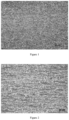
- the structure is two-phase structure, see Fig. 2 .
- the two-phase structure has obvious strip along the rolling direction, so the HIC resistance is not ideal.
- the two-phase structure is easy to accumulate hydrogen at boundary, and the strip structure can also induce hydrogen accumulation.
- the HIC resistance is tested according to the corresponding NACE standards.
- the steel plate has many HIC cracks along different directions of thickness, and the HIC resistance is not ideal. Further prior art is disclosed in CN104451446A .
- the invention provides a pipeline steel with both HIC resistance and resistance to a large deformation and a production method thereof, which can adapt to the product development of pipeline steel plate of Grade X80 and below.
- the pipeline steel not only has the characteristics of resistance to a large deformation such as low yield strength ratio, high uniform elongation and high stress ratio, but also shows good HIC resistance.
- the technical scheme adopted by the invention to solve the above problems is: a pipeline steel with both HIC resistance and resistance to a large deformation, which is characterized in that the alloy constituents adopted are C: 0.015-0.039%, Si: 0.15-0.35%, Mn: 1.6-1.9%, S: ⁇ 0.002%, P: ⁇ 0.012%, Al: 0.02- 0.045%, Cr: 0.15-0.35%, 0.05 ⁇ Nb + V + Ti ⁇ 0.1%, Nb, V and Ti are not 0, Ni: 0.15-0.50%, Cu: 0.01-0.25%, Ca: ⁇ 0.002%, N: ⁇ 0.0046%, Mo: 0.01-0.20%, and the balance is Fe and unavoidable impurity elements.
- the content of Nb is determined as per the content of C and niobium carbide, and the content of Ti is determined as per the stoichiometric ratio of Ti / N of 3.42.
- the product is bainite single-phase structure, and the grain size of bainite is grade 11.5 to grade 12.
- the transverse yield strength of the product of the invention Rt0.5: 490 - 550MPa, transverse tensile strength Rm: ⁇ 710MPa, transverse yield ratio Rt0.5 / Rm ⁇ 0.78, - 20 °C Charpy impact energy ⁇ 350J, - 20 °C drop weight shear area SA% ⁇ 90%;Longitudinal yield strength 460-530MPa; Longitudinal tensile strength ⁇ 690MPa, longitudinal uniform elongation Uel ⁇ 11%, longitudinal yield ratio ⁇ 0.77; Longitudinal stress ratio Rt1.5/Rt0.5 ⁇ 1.18, Rt2.0/Rt1.0 ⁇ 1.1; And the HIC resistance of the product: after soaking in a solution according to NACE TM0284-2004 A for 96 hours, the crack length rate %: 0, the crack width rate %: 0, and the crack sensitivity rate %: 0.
- the production method of pipeline steel with both HIC resistance and resistance to a large deformation in the application first smelt the molten steel conforming to the chemical constituents design, cast the continuous casting billet with the chemical constituents consistent with the chemical constituents of the finished steel plate, heat the continuous casting billet to 1120-1160 °C for 3-4 hours, and then discharge the furnace; After descaling with high-pressure water, two-stage rolling is carried out: the first stage is recrystallization zone rolling, and the start rolling temperature is 1110-1150 °C. After multi pass rolling, the final rolling temperature is controlled at 1030-1080 °C , and the rolling deformation rate of two passes of rough rolling is controlled to be ⁇ 19%; The second stage is rolled in the non-recrystallization zone.
- the start rolling temperature is 830-900 °C
- the final rolling temperature is controlled at 750-840 °C
- the rolling cumulative deformation rate in the second stage is ⁇ 70%;
- the billet is directly quenched, air cooled to Ar 3 temperature after direct quenching, and then cooled rapidly.
- the final cooling temperature is controlled below 280 °C, straightened with temperature, and finally air cooled to room temperature to obtain X80 pipeline steel plate with both HIC and resistance to a large deformation .
- the conveying speed of billet roller table after rolling shall take into account the microstructure dislocation movement of steel plate after sufficient deformation of austenite to obtain microstructure with different dislocation density at different grain positions, so as to provide growth conditions for obtaining very fine bainite structure.
- the invention has the advantages that according to the HIC resistance principle and hydrogen trap theory, in order to achieve good HIC resistance performance, it is prefer to have a relatively single and uniform structure. While according to the resistance to a large deformation principle, the structure needs to have excellent cooperative deformation ability in deformation in order to have excellent resistance to a large deformation ability. It is confirmed by research, some low carbon bainites have the ability to combine these two properties. According to the deformation principle, the bainite needs to be very small in order to give play to the good cooperative deformation effect between grains in the deformation process, so as to obtain excellent resistance to a large deformation . In order to obtain this very fine bainite, it is necessary to design the constituents and process.
- the pipeline steel developed by the invention has a uniform microstructure of very fine bainite, and the microstructure grain size reaches more than grade 11.5. Compared with the two-phase structure, H is not easy to aggregate, so it shows good HIC resistance.
- the following embodiments take pipeline steel of X80 steel grade as an example.
- the performance and production difficulty of steel grades below X80 steel grade, such as X70 and X60, are lower than those of X80, so they are not listed one by one in this application.
- the continuous casting billet with thickness no more than 370mm is produced by continuously casting the molten steel consistent with the chemical constituents of the prepared pipeline steel plate through the continuous casting machine.
- the chemical constituents of the obtained continuous casting billet includes: C: 0.015%, Si: 0.28%, Mn: 1.6%, S ⁇ 0.002%, P ⁇ 0.012%, Al: 0.03%, Cr: 0.35%, Nb + V + Ti: 0.06%, Ni: 0.50%, Cu: 0.15%, Ca: ⁇ 0.002%, N: ⁇ 0.0046%, Mo: 0.13%.
- the balance is Fe and unavoidable impurity elements.
- the continuous casting billet is heated to 1150 °C for 3.5 hours, discharged from the furnace, descaled by 20MPa high-pressure water, and then rolled in two stages: The first stage is rolled in the recrystallization zone, the start rolling temperature is 1150 °C, and rolled in seven passes, in which the deformation rate of two passes is ⁇ 19%.
- the final rolling temperature is 1050 °C, and the thickness of the intermediate billet obtained after rolling in the recrystallization zone is 90mm;
- the second stage is rolled in the non-recrystallization zone.
- the start rolling temperature is 850 °C
- the final rolling temperature is 810 °C
- the cumulative deformation rate of rolling in the non-recrystallization zone is ⁇ 70%
- the thickness of the finished pipeline steel plate is 22mm;
- the steel plate is sent to the cooling system through a 60m long roller table at the conveying speed of 1.1m/s. First, it is directly quenched in water, then air cooled to Ar 3 temperature after water is discharged, then is cooled rapidly by ACC, the final cooling temperature is 250 °C, and finally air cooled to room temperature.
- the microstructure of the obtained pipeline steel is very fine bainite with grain size of 11.5.
- the microstructure morphology in the thickness direction is shown in Fig. 1 .
- the continuous casting billet with thickness no more than 370mm is produced by continuously casting the molten steel consistent with the chemical constituents of the prepared pipeline steel plate through the continuous casting machine.
- the chemical constituents of the obtained continuous casting billet includes: C: 0.03%, Si: 0.30%, Mn: 1.6%, S ⁇ 0.002%, P ⁇ 0.012%, Al: 0.03%, Cr: 0.25%, Nb + V + Ti: 0.06%, Ni: 0.25%, Cu: 0.15%, Ca: ⁇ 0.002%, N: ⁇ 0.0046%, Mo: 0.13%.
- the balance is Fe and unavoidable impurity elements.
- the continuous casting billet is heated to 1150 °C for 3.5 hours, discharged from the furnace, descaled by 20MPa high-pressure water, and then rolled in two stages: The first stage is rolled in the recrystallization zone, the start rolling temperature is 1150 °C, and rolled in seven passes, in which the deformation rate of two passes is ⁇ 19%.
- the final rolling temperature is 1050 °C, and the thickness of the intermediate billet obtained after rolling in the recrystallization zone is 90mm;
- the second stage is rolled in the non-recrystallization zone.
- the start rolling temperature is 850 °C
- the final rolling temperature is 810 °C
- the cumulative deformation rate of rolling in the non-recrystallization zone is ⁇ 70%
- the thickness of the finished pipeline steel plate is 22mm;
- the steel plate is sent to the cooling system through a 60m long roller table at the conveying speed of 1.1m/s. First, it is directly quenched in water, then air cooled to Ar 3 temperature after water is discharged, then is cooled rapidly by ACC, the final cooling temperature is 250 °C, and finally air cooled to room temperature.
- the microstructure of the obtained pipeline steel is very fine bainite with grain size of 11.5.
- the microstructure morphology in the thickness direction is shown in Fig. 1 .
- the microstructure is more uniform and the bainite grain is finer.
- the continuous casting billet with thickness no more than 370mm is produced by continuously casting the molten steel consistent with the chemical constituents of the prepared pipeline steel plate through the continuous casting machine.
- the chemical constituents of the obtained continuous casting billet includes: C: 0.033%, Si: 0.25%, Mn: 1.8%, S ⁇ 0.002%, P ⁇ 0.012%, Al: 0.03%, Cr: 0.25%, Nb+V+Ti: 0.08%, Ni: 0.3%, Cu: 0.12%, Ca: ⁇ 0.002%, N: ⁇ 0.0046%, Mo: 0.20%.
- the balance is Fe and unavoidable impurity elements.
- the continuous casting billet is heated to 1150 °C for 3.0 hours, discharged from the furnace, descaled by 20MPa high-pressure water, and then rolled in two stages: The first stage is rolled in the recrystallization zone, the start rolling temperature is 1150 °C, and rolled in five passes, in which the deformation rate of two passes is ⁇ 17%.
- the final rolling temperature is 1030 °C, and the thickness of the intermediate billet obtained after rolling in the recrystallization zone is 95mm;
- the second stage is rolled in the non-recrystallization zone.
- the start rolling temperature is 850 °C
- the final rolling temperature is 830 °C
- the cumulative deformation rate of rolling in the non-recrystallization zone is ⁇ 60%
- the thickness of the finished pipeline steel plate is 26.4mm
- the steel plate is sent to the cooling system through a 60m long roller table at the conveying speed of 1.55m/s. First, it is directly quenched in water, then air cooled to Ar 3 temperature after water is discharged, then is cooled rapidly by ACC, the final cooling temperature is 270 °C, and finally air cooled to room temperature.
- the microstructure of the obtained pipeline steel is very fine bainite.
- the continuous casting billet with a thickness of no more than 370mm is produced by continuously casting the molten steel consistent with the chemical constituents of the prepared pipeline steel plate through the continuous casting machine.
- the chemical constituents of the obtained continuous casting billet includes: C: 0.039%, Si: 0.25%, Mn: 1.85%, S ⁇ 0.002%, P ⁇ 0.012%, Al: 0.03%, Cr: 0.25%, Nb + V + Ti: 0.10%, Ni: 0.45%, Cu: 0.25%, Ca: ⁇ 0.002%, N: ⁇ 0.0046%, Mo: 0.20%.
- the balance is Fe and unavoidable impurity elements.
- the continuous casting billet is heated to 1160 °C for 4.0 hours, discharged from the furnace, descaled by 20MPa high-pressure water, and then rolled in two stages:
- the first stage is rolled in the recrystallization zone, the start rolling temperature is 1140 °C, and rolled in five passes, in which the deformation rate of two passes is ⁇ 17%.
- the final rolling temperature is 1050 °C, and the thickness of the intermediate billet obtained after rolling in the recrystallization zone is 110mm;
- the second stage is rolled in the non-recrystallization zone.
- the start rolling temperature is 870 °C
- the final rolling temperature is 840 °C
- the cumulative deformation rate of rolling in the non-recrystallization zone is ⁇ 60%
- the thickness of the finished pipeline steel plate is 33mm
- the steel plate is sent to the cooling system through a 85m long roller table at the conveying speed of 2.0m/s. First, it is directly quenched in water, then air cooled to Ar 3 temperature after water is discharged, then is cooled rapidly by ACC, the final cooling temperature is 280 °C, and finally air cooled to room temperature.
- the microstructure of the obtained pipeline steel is very fine bainite.
Landscapes
- Chemical & Material Sciences (AREA)
- Engineering & Computer Science (AREA)
- Mechanical Engineering (AREA)
- Materials Engineering (AREA)
- Metallurgy (AREA)
- Organic Chemistry (AREA)
- Physics & Mathematics (AREA)
- Thermal Sciences (AREA)
- Crystallography & Structural Chemistry (AREA)
- Heat Treatment Of Steel (AREA)
Description
- The invention belongs to the technical field of iron-based alloys, in particular to a pipeline steel.
- Pipeline transportation is the most economical and reasonable transportation mode of oil and natural gas. The long transmission pipeline not only needs to pass through different temperature areas, but also needs to pass through the stratum movement areas caused by natural disasters such as earthquake tundra, debris flow and landslide. Therefore, in addition to meeting the requirements of high strength and high toughness, the pipeline also needs to have relatively high anti deformation ability to adapt to the transmission geological environment.
- Large deformation resistant pipeline steel is one of the most challenging research fields in the development of pipeline steel, which requires pipeline steel to have higher compression and tensile strain resistance. A large number of studies have proved that in addition to the basic strength plasticity performance parameters, such as yield strength, tensile strength and elongation, the main indexes that can measure its resistance to large deformation are "uniform plastic deformation elongation Ue ≥ 10%, yield strength ratio Rt0.5 / Rm ≤ 0.80", etc.
- For the requirement of "resistance to a large deformation ", pipeline steels disclosed in patent documents such as application No.
CN2009100760066.8 CN201210327206 CN2009100760066.8 Fig. 2 . Moreover, the two-phase structure has obvious strip along the rolling direction, so the HIC resistance is not ideal. The two-phase structure is easy to accumulate hydrogen at boundary, and the strip structure can also induce hydrogen accumulation. For the pipeline steel with two-phase structure of ferrite + bainite, the HIC resistance is tested according to the corresponding NACE standards. The steel plate has many HIC cracks along different directions of thickness, and the HIC resistance is not ideal. Further prior art is disclosed inCN104451446A . - Aiming at the above prior art, the invention provides a pipeline steel with both HIC resistance and resistance to a large deformation and a production method thereof, which can adapt to the product development of pipeline steel plate of Grade X80 and below. The pipeline steel not only has the characteristics of resistance to a large deformation such as low yield strength ratio, high uniform elongation and high stress ratio, but also shows good HIC resistance.
- The technical scheme adopted by the invention to solve the above problems is: a pipeline steel with both HIC resistance and resistance to a large deformation, which is characterized in that the alloy constituents adopted are C: 0.015-0.039%, Si: 0.15-0.35%, Mn: 1.6-1.9%, S: ≤ 0.002%, P: ≤ 0.012%, Al: 0.02- 0.045%, Cr: 0.15-0.35%, 0.05 ≤ Nb + V + Ti ≤ 0.1%, Nb, V and Ti are not 0, Ni: 0.15-0.50%, Cu: 0.01-0.25%, Ca: ≤ 0.002%, N: ≤ 0.0046%, Mo: 0.01-0.20%, and the balance is Fe and unavoidable impurity elements.
- The content of Nb is determined as per the content of C and niobium carbide, and the content of Ti is determined as per the stoichiometric ratio of Ti / N of 3.42.
- Further, the product is bainite single-phase structure, and the grain size of bainite is grade 11.5 to grade 12.
- The transverse yield strength of the product of the invention Rt0.5: 490 - 550MPa, transverse tensile strength Rm: ≥ 710MPa, transverse yield ratio Rt0.5 / Rm ≤ 0.78, - 20 °C Charpy impact energy ≥ 350J, - 20 °C drop weight shear area SA% ≥ 90%;Longitudinal yield strength 460-530MPa; Longitudinal tensile strength ≥ 690MPa, longitudinal uniform elongation Uel ≥ 11%, longitudinal yield ratio ≤ 0.77; Longitudinal stress ratio Rt1.5/Rt0.5≥1.18, Rt2.0/Rt1.0≥1.1; And the HIC resistance of the product: after soaking in a solution according to NACE TM0284-2004 A for 96 hours, the crack length rate %: 0, the crack width rate %: 0, and the crack sensitivity rate %: 0.
- The design basis for chemical constituents of the pipeline steel of the invention are as follows:
- C: It is the most economical and basic strengthening element in steel. The strength of steel can be significantly improved through solid solution and precipitation, but it will have an adverse impact on the toughness, ductility and welding performance of steel. Therefore, the development trend of pipeline steel is to continuously reduce the C content. Considering the characteristics of large deformation resistant steel structure, in order to ensure the acquisition of specific bainite structure, it is necessary to control C within an appropriate range. In the invention, the content of C is controlled at ≤ 0.039%, preferably 0.015-0.039%.
- Si:It is a deoxidizing element in steel, which improves the strength of steel in the form of solid solution strengthening, and is conducive to the corrosion resistance of steel. When the Si content is low, the deoxidation effect is poor, and when the Si content is high, the toughness will be reduced. The Si content of the invention is controlled to be 0.15-0.35%.
- Mn: improving the strength of steel through solid solution strengthening is the most important element in pipeline steel to make up for the strength loss caused by the reduction of C content. Mn is also the element to expand y phase zone, reduce γ→α phase transformation temperature of steel. Mn is helpful to obtain fine phase transformation products, improve the toughness of steel and reduce the ductile brittle transition temperature. Mn is also an element to improve the hardenability of steel. The Mn content in the invention is designed to be in the range of 1.6-1.9%.
- Al: mainly for nitrogen fixation and deoxidation. AlN formed by the bonding of Al and N can effectively refine the grain, but too high content will damage the toughness of the steel and deteriorate the hot workability. Therefore, the invention controls its content (Alt) in the range of 0.02-0.045%.
- Cr: It is a ferrite forming element. At the same time, Cr can also improve the hardenability of steel. The invention controls Cr at 0.15-0.35%.
- Nb: It is an element with obvious effect on grain refinement. The γ→α phase transformation of steel can be delayed by solution drag of Nb. During the hot rolling process, Nb (C, N) strain induced precipitation can hinder the recovery and recrystallization of austenite. After rapid cooling, the deformed austenite rolled in the non-recrystallized zone forms fine phase transformation products during phase transformation, so as to improve the strength and toughness of steel. The invention determines the Nb content through the content of C, and the content of Nb and C is determined according to the relationship of 1:1.
- V: It has high precipitation strengthening and weak grain refinement. When Nb, V and Ti are used in combination, V mainly plays the role of precipitation strengthening.
- Ti: It is an element which can strongly solidify N element. The stoichiometric ratio of Ti / N is 3.42. Using about 0.02% Ti can fix the N below 60ppm in the steel, and TiN precipitates can be formed during billet continuous casting. This fine precipitates can effectively prevent the growth of austenite grains during billet heating and help to improve the solid solubility of Nb in austenite. At the same time, it can improve the impact toughness of welding heat affected zone, which is an indispensable element in pipeline steel.
- Mo: It can suppress formation of ferrite during γ→α phase transformation. It plays an important role in controlling phase transformation and improving the hardenability of steel. The invention controls Mo in the range of 0.01-0.20%.
- S, P: It is an unavoidable impurity element in pipeline steel, which is easy to form segregation, inclusions and other defects, which will have an adverse impact on the toughness and hot workability of the steel plate, and its content should be reduced as far as possible. Adding an appropriate amount of Ca can change the long strip sulfide inclusion in the pipeline steel into spherical CaS inclusion, and significantly reduce the segregation of sulfur at the grain boundary. Ca is very beneficial to reduce the brittleness of the pipeline steel and improve the hot crack resistance of the pipeline steel during casting, but adding too much calcium will increase the inclusions in the pipeline steel, which is unfavorable to the improvement of toughness. The invention controls P ≤ 0.012%, S ≤ 0.002% and Ca ≤ 0.002%, so that the pipeline steel can obtain better toughness.
- Cu, Ni: The strength of steel can be improved through solid solution strengthening. On the one hand, the addition of Ni can improve the toughness of steel and improve the thermal brittleness easily caused by Cu in steel. On the other hand, the addition of Ni can improve the hardenability. The invention controls Cu at 0.01-0.25%; Ni is controlled at 0.15-0.50%.
- N: It is an impurity element harmful to toughness. In order to obtain excellent low-temperature toughness, the invention controls its content in steel ≤ 0.0046%.
- The production method of pipeline steel with both HIC resistance and resistance to a large deformation in the application: first smelt the molten steel conforming to the chemical constituents design, cast the continuous casting billet with the chemical constituents consistent with the chemical constituents of the finished steel plate, heat the continuous casting billet to 1120-1160 °C for 3-4 hours, and then discharge the furnace; After descaling with high-pressure water, two-stage rolling is carried out: the first stage is recrystallization zone rolling, and the start rolling temperature is 1110-1150 °C. After multi pass rolling, the final rolling temperature is controlled at 1030-1080 °C , and the rolling deformation rate of two passes of rough rolling is controlled to be ≥ 19%; The second stage is rolled in the non-recrystallization zone. The start rolling temperature is 830-900 °C , the final rolling temperature is controlled at 750-840 °C, and the rolling cumulative deformation rate in the second stage is ≥ 70%; After rolling, according to the change of austenite microstructure, the steel plate is sent to the cooling system through a 45m-95m long roller table at a conveying speed of V = a * H, H is the steel plate thickness mm, a = 0.05-0.08m / (s * mm);
- In the cooling system, the billet is directly quenched, air cooled to Ar3 temperature after direct quenching, and then cooled rapidly. The final cooling temperature is controlled below 280 °C, straightened with temperature, and finally air cooled to room temperature to obtain X80 pipeline steel plate with both HIC and resistance to a large deformation .
- The conveying speed of billet roller table after rolling shall take into account the microstructure dislocation movement of steel plate after sufficient deformation of austenite to obtain microstructure with different dislocation density at different grain positions, so as to provide growth conditions for obtaining very fine bainite structure.
- Compared with the prior art, the invention has the advantages that according to the HIC resistance principle and hydrogen trap theory, in order to achieve good HIC resistance performance, it is prefer to have a relatively single and uniform structure. While according to the resistance to a large deformation principle, the structure needs to have excellent cooperative deformation ability in deformation in order to have excellent resistance to a large deformation ability. It is confirmed by research, some low carbon bainites have the ability to combine these two properties. According to the deformation principle, the bainite needs to be very small in order to give play to the good cooperative deformation effect between grains in the deformation process, so as to obtain excellent resistance to a large deformation . In order to obtain this very fine bainite, it is necessary to design the constituents and process. The pipeline steel developed by the invention has a uniform microstructure of very fine bainite, and the microstructure grain size reaches more than grade 11.5. Compared with the two-phase structure, H is not easy to aggregate, so it shows good HIC resistance.
-
-
Figure 1 is the organization diagram of X80 grade pipeline steel plate with HIC and resistance to a large deformation in the embodiment of the invention; -
Figure 2 shows the near surface microstructure of X80 pipeline steel obtained by conventional relaxation air cooling. - The invention is described in further detail below in combination with the embodiments of the attached drawings. The embodiments described below with reference to the attached drawings are exemplary and are intended to explain the invention and cannot be understood as limitations on the invention.
- The following embodiments take pipeline steel of X80 steel grade as an example. The performance and production difficulty of steel grades below X80 steel grade, such as X70 and X60, are lower than those of X80, so they are not listed one by one in this application.
- The continuous casting billet with thickness no more than 370mm is produced by continuously casting the molten steel consistent with the chemical constituents of the prepared pipeline steel plate through the continuous casting machine. The chemical constituents of the obtained continuous casting billet includes: C: 0.015%, Si: 0.28%, Mn: 1.6%, S ≤ 0.002%, P ≤ 0.012%, Al: 0.03%, Cr: 0.35%, Nb + V + Ti: 0.06%, Ni: 0.50%, Cu: 0.15%, Ca: ≤ 0.002%, N: ≤ 0.0046%, Mo: 0.13%. The balance is Fe and unavoidable impurity elements.
- The continuous casting billet is heated to 1150 °C for 3.5 hours, discharged from the furnace, descaled by 20MPa high-pressure water, and then rolled in two stages: The first stage is rolled in the recrystallization zone, the start rolling temperature is 1150 °C, and rolled in seven passes, in which the deformation rate of two passes is ≥ 19%.The final rolling temperature is 1050 °C, and the thickness of the intermediate billet obtained after rolling in the recrystallization zone is 90mm; The second stage is rolled in the non-recrystallization zone. The start rolling temperature is 850 °C, the final rolling temperature is 810 °C, the cumulative deformation rate of rolling in the non-recrystallization zone is ≥ 70%, and the thickness of the finished pipeline steel plate is 22mm;After rolling, the steel plate is sent to the cooling system through a 60m long roller table at the conveying speed of 1.1m/s. First, it is directly quenched in water, then air cooled to Ar3 temperature after water is discharged, then is cooled rapidly by ACC, the final cooling temperature is 250 °C, and finally air cooled to room temperature. The microstructure of the obtained pipeline steel is very fine bainite with grain size of 11.5. The microstructure morphology in the thickness direction is shown in
Fig. 1 . Compared with X80 pipeline steel in the ferrite + bainite dual phase structure, as prepared by conventional relaxation air cooling shown inFig. 2 , the microstructure is more uniform and the bainite grain is finer. After testing, the strength and plasticity indexes are as follows: transverse yield strength Rt0.5: 540MPa; Tensile strength Rm: 740MPa, transverse yield ratio Rt0.5/Rm=0.76; Longitudinal yield strength 510MPa, - 20 °C Charpy impact energy = 450J, SA% (- 20 °C) = 90%; Longitudinal tensile strength Rm: 730MPa longitudinal uniform elongation Uel = 11%; Longitudinal yield ratio = 0.70; Longitudinal Rt1.5/Rt0.5=1.25, Rt2.0/Rt1.0 = 1.16.The HIC resistance test results are shown in Table 1. - The continuous casting billet with thickness no more than 370mm is produced by continuously casting the molten steel consistent with the chemical constituents of the prepared pipeline steel plate through the continuous casting machine. The chemical constituents of the obtained continuous casting billet includes: C: 0.03%, Si: 0.30%, Mn: 1.6%, S≤ 0.002%, P ≤ 0.012%, Al: 0.03%, Cr: 0.25%, Nb + V + Ti: 0.06%, Ni: 0.25%, Cu: 0.15%, Ca: ≤ 0.002%, N: ≤ 0.0046%, Mo: 0.13%. The balance is Fe and unavoidable impurity elements.
- The continuous casting billet is heated to 1150 °C for 3.5 hours, discharged from the furnace, descaled by 20MPa high-pressure water, and then rolled in two stages: The first stage is rolled in the recrystallization zone, the start rolling temperature is 1150 °C, and rolled in seven passes, in which the deformation rate of two passes is ≥ 19%.The final rolling temperature is 1050 °C, and the thickness of the intermediate billet obtained after rolling in the recrystallization zone is 90mm;The second stage is rolled in the non-recrystallization zone. The start rolling temperature is 850 °C, the final rolling temperature is 810 °C, the cumulative deformation rate of rolling in the non-recrystallization zone is ≥ 70%, and the thickness of the finished pipeline steel plate is 22mm;After rolling, the steel plate is sent to the cooling system through a 60m long roller table at the conveying speed of 1.1m/s. First, it is directly quenched in water, then air cooled to Ar3 temperature after water is discharged, then is cooled rapidly by ACC, the final cooling temperature is 250 °C, and finally air cooled to room temperature. The microstructure of the obtained pipeline steel is very fine bainite with grain size of 11.5. The microstructure morphology in the thickness direction is shown in
Fig. 1 . Compared with X80 pipeline steel in the ferrite + bainite dual phase structure, as prepared by conventional relaxation air cooling shown inFig. 2 , the microstructure is more uniform and the bainite grain is finer. After testing, the strength and plasticity indexes are as follows: transverse yield strength Rt0.5: 535MPa; Tensile strength Rm: 735MPa, transverse yield ratio Rt0.5/Rm=0.76; Longitudinal yield strength 500MPa, - 20 °C Charpy impact energy = 450J, SA% (- 20 °C) = 90%; Longitudinal tensile strength Rm: 730MPa longitudinal uniform elongation Uel = 12%; Longitudinal yield ratio = 0.68; Longitudinal Rt1.5/Rt0.5=1.27, Rt2.0/Rt1.0 = 1.17, the HIC resistance test results are shown in Table 1. - The continuous casting billet with thickness no more than 370mm is produced by continuously casting the molten steel consistent with the chemical constituents of the prepared pipeline steel plate through the continuous casting machine. The chemical constituents of the obtained continuous casting billet includes: C: 0.033%, Si: 0.25%, Mn: 1.8%, S≤0.002%, P≤0.012%, Al: 0.03%, Cr: 0.25%, Nb+V+Ti: 0.08%, Ni: 0.3%, Cu: 0.12%, Ca: ≤0.002%, N: ≤0.0046%, Mo: 0.20%. The balance is Fe and unavoidable impurity elements.
- The continuous casting billet is heated to 1150 °C for 3.0 hours, discharged from the furnace, descaled by 20MPa high-pressure water, and then rolled in two stages: The first stage is rolled in the recrystallization zone, the start rolling temperature is 1150 °C, and rolled in five passes, in which the deformation rate of two passes is ≥ 17%. The final rolling temperature is 1030 °C, and the thickness of the intermediate billet obtained after rolling in the recrystallization zone is 95mm; The second stage is rolled in the non-recrystallization zone. The start rolling temperature is 850 °C, the final rolling temperature is 830 °C, the cumulative deformation rate of rolling in the non-recrystallization zone is ≥ 60%, and the thickness of the finished pipeline steel plate is 26.4mm;After rolling, the steel plate is sent to the cooling system through a 60m long roller table at the conveying speed of 1.55m/s. First, it is directly quenched in water, then air cooled to Ar3 temperature after water is discharged, then is cooled rapidly by ACC, the final cooling temperature is 270 °C, and finally air cooled to room temperature. The microstructure of the obtained pipeline steel is very fine bainite. After testing, the strength and plasticity indexes are as follows: Transverse yield strength Rt0.5: 510MPa; Tensile strength RM: 705MPa, Transverse yield ratio Rt0.5/Rm=0.72; Longitudinal yield strength 505MPa, - 20 °C Charpy impact energy=380J, SA% (-20 °C )=96%; Longitudinal tensile strength Rm: 700MPa longitudinal uniform elongation Uel=12.5%; Longitudinal yield ratio = 0.72; Longitudinal Rt1.5/Rt0.5=1.22, Rt2.0/Rt1.0=1.18, the HIC resistance test results are shown in Table 1.
- The continuous casting billet with a thickness of no more than 370mm is produced by continuously casting the molten steel consistent with the chemical constituents of the prepared pipeline steel plate through the continuous casting machine. The chemical constituents of the obtained continuous casting billet includes: C: 0.039%, Si: 0.25%, Mn: 1.85%, S ≤ 0.002%, P ≤ 0.012%, Al: 0.03%, Cr: 0.25%, Nb + V + Ti: 0.10%, Ni: 0.45%, Cu: 0.25%, Ca: ≤ 0.002%, N: ≤ 0.0046%, Mo: 0.20%. The balance is Fe and unavoidable impurity elements.
- The continuous casting billet is heated to 1160 °C for 4.0 hours, discharged from the furnace, descaled by 20MPa high-pressure water, and then rolled in two stages: The first stage is rolled in the recrystallization zone, the start rolling temperature is 1140 °C, and rolled in five passes, in which the deformation rate of two passes is ≥ 17%. The final rolling temperature is 1050 °C, and the thickness of the intermediate billet obtained after rolling in the recrystallization zone is 110mm; The second stage is rolled in the non-recrystallization zone. The start rolling temperature is 870 °C, the final rolling temperature is 840 °C, the cumulative deformation rate of rolling in the non-recrystallization zone is ≥ 60%, and the thickness of the finished pipeline steel plate is 33mm; After rolling, the steel plate is sent to the cooling system through a 85m long roller table at the conveying speed of 2.0m/s. First, it is directly quenched in water, then air cooled to Ar3 temperature after water is discharged, then is cooled rapidly by ACC, the final cooling temperature is 280 °C, and finally air cooled to room temperature. The microstructure of the obtained pipeline steel is very fine bainite. After testing, the strength and plasticity indexes are as follows: Transverse yield strength Rt0.5: 485MPa; Tensile strength Rm: 710MPa, transverse yield ratio Rt0.5/Rm=0.68; Longitudinal yield strength 475MPa, - 20 °C Charpy impact energy=420J, SA% (- 20 °C)=85%; Longitudinal tensile strength Rm: 695MPa longitudinal uniform elongation Uel=12.5%; Longitudinal yield ratio = 0.68; Longitudinal Rt1.5/Rt0.5=1.23, Rt2.0/Rt1.0=1.17, The HIC resistance test results are shown in Table 1.
Table 1 HIC Resistance of X80 Pipeline Steel in Each Embodiment Embodiment HIC test standard: soak in a solution according to NACE TM0284-2004 A for 96 hours Crack length rate% Crack width ratio% Crack sensitivity% 1 0 0 0 0 0 0 0 0 0 2 0 0 0 0 0 0 0 0 0 3 0 0 0 0 0 0 0 0 0 4 0 0 0 0 0 0 0 0 0
Claims (3)
- A pipeline steel with both HIC resistance and resistance to a large deformation, which is characterized in that the alloy constituents are C: 0.015-0.039%, Si: 0.15-0.35%, Mn: 1.6-1.9%, S: ≤ 0.002%, P: ≤ 0.012%, Al: 0.02-0.045%, Cr: 0.15-0.35%, 0.05 ≤ Nb + V + Ti ≤ 0.1%, Nb, V and Ti are not 0, Ni: 0.15-0.50%, Cu: 0.01-0.25%, Ca: ≤ 0.002%, N: ≤ 0.0046%, Mo: 0.01-0.20%, and the balance is Fe and unavoidable impurity elements;wherein the pipeline steel has a bainite single-phase structure, and the grain size of bainite is grade 11.5 to grade 12;wherein transverse yield strength of the pipeline steel is Rt0.5: 490-550MPa, transverse tensile strength Rm: ≥ 710MPa, transverse yield ratio Rt0.5 / Rm ≤ 0.78, - 20 °C Charpy impact energy ≥ 350J, - 20 °C drop weight shear area SA% ≥ 90%; longitudinal yield strength 460-530MPa; longitudinal tensile strength ≥ 690MPa, longitudinal uniform elongation Uel ≥ 11%, longitudinal yield ratio ≤ 0.77; longitudinal stress ratio Rt1.5/Rt0.5≥1.18, Rt2.0/Rt1.0≥1.1;and the HIC resistance of the pipeline steel: after soaking in a solution according to NACE TM0284-2004 A for 96 hours, the crack length rate % is 0, the crack width rate % is 0, and the crack sensitivity rate % is 0.
- A production method for pipeline steel with both HIC resistance and resistance to a large deformation according to claim 1, whereina continuous casting billet is heated to 1120-1160°C for 3-4 hours, removed out of the furnace, descaled by high-pressure water, and then rolled in two stages:the first stage is rolling in recrystallization zones, wherein the start rolling temperature is 1110-1150°C, and after rolling of several passes, the final rolling temperature is 1030-1080°C, wherein a deformation rate of two passes is ≥19%;the second stage is rolling in non-recrystallization zones, wherein the start rolling temperature is 830-900 °C , the final rolling temperature is 750-840 °C, and the total deformation rate of rolling in the second stage is ≥ 70%;after rolling, the steel plate is sent to a cooling system through a 45m-95m long roller table at a conveying speed of V=a*H. wherein H is thickness of steel mm, a= 0.05-0.08 m/(s*mm) ;in the cooling system, firstly directly quenching in water, then air cooling to Ar3 temperature, and then rapidly cooling, and a final cooling temperature is controlled to be lower than 280 °C, straightening when the steel plate is still warm, and finally air cooling to room temperature, to obtain X80 grade pipeline steel with both HIC resistance and resistance to a large deformation .
- The production method of pipeline steel with both HIC resistance and resistance to a large deformation according to claim 2, wherein ACC water cooling is adopted for rapid cooling in the cooling system.
Applications Claiming Priority (2)
| Application Number | Priority Date | Filing Date | Title |
|---|---|---|---|
| CN201911245533.5A CN110964991B (en) | 2019-12-07 | 2019-12-07 | Pipeline steel with HIC (hydrogen induced cracking) resistance and large deformation resistance and manufacturing method thereof |
| PCT/CN2020/088281 WO2021109439A1 (en) | 2019-12-07 | 2020-04-30 | Hic-resistant and large deformation-resistant pipeline steel and preparation method therefor |
Publications (3)
| Publication Number | Publication Date |
|---|---|
| EP4015669A1 EP4015669A1 (en) | 2022-06-22 |
| EP4015669A4 EP4015669A4 (en) | 2022-12-21 |
| EP4015669B1 true EP4015669B1 (en) | 2025-05-07 |
Family
ID=70033279
Family Applications (1)
| Application Number | Title | Priority Date | Filing Date |
|---|---|---|---|
| EP20896953.5A Active EP4015669B1 (en) | 2019-12-07 | 2020-04-30 | Hic-resistant and large deformation-resistant pipeline steel and preparation method therefor |
Country Status (3)
| Country | Link |
|---|---|
| EP (1) | EP4015669B1 (en) |
| CN (1) | CN110964991B (en) |
| WO (1) | WO2021109439A1 (en) |
Families Citing this family (7)
| Publication number | Priority date | Publication date | Assignee | Title |
|---|---|---|---|---|
| CN110964991B (en) * | 2019-12-07 | 2021-02-26 | 江阴兴澄特种钢铁有限公司 | Pipeline steel with HIC (hydrogen induced cracking) resistance and large deformation resistance and manufacturing method thereof |
| CN111690801B (en) * | 2020-05-25 | 2021-11-02 | 中天钢铁集团有限公司 | A kind of production process of alloy tool steel wire rod with full bainite structure |
| CN111961957B (en) * | 2020-06-29 | 2022-04-05 | 江阴兴澄特种钢铁有限公司 | X80-grade pipeline steel plate with seawater corrosion resistance and large deformation resistance and manufacturing method thereof |
| CN113913695B (en) * | 2021-10-13 | 2022-10-18 | 鞍钢股份有限公司 | Corrosion-resistant and fatigue-resistant pipeline steel for underwater oil and gas production and transportation and its production method |
| CN114836683B (en) * | 2022-03-22 | 2023-09-15 | 江阴兴澄特种钢铁有限公司 | A high-strength, high-toughness, low-yield-ratio pipeline steel plate suitable for wet hydrogen sulfide environments and a manufacturing method thereof |
| CN115181907B (en) * | 2022-07-06 | 2023-05-12 | 鞍钢股份有限公司 | High-strength high-strain reinforced V-containing pipeline wide and thick plate and production method thereof |
| CN119643421B (en) * | 2023-09-15 | 2025-10-10 | 中国石油化工股份有限公司 | Evaluation and prediction method of sulfur resistance performance of girth welds in sour gas field gathering and transportation pipelines in service |
Family Cites Families (15)
| Publication number | Priority date | Publication date | Assignee | Title |
|---|---|---|---|---|
| CN102011064B (en) * | 2010-11-18 | 2013-06-19 | 中国石油天然气集团公司 | Application of steel for X80 grade low-temperature pipe fitting |
| JP5782828B2 (en) * | 2011-05-24 | 2015-09-24 | Jfeスチール株式会社 | High compressive strength steel pipe and manufacturing method thereof |
| JP5565420B2 (en) * | 2012-02-02 | 2014-08-06 | 新日鐵住金株式会社 | UOE steel pipe for line pipe |
| JP2015189984A (en) * | 2014-03-27 | 2015-11-02 | Jfeスチール株式会社 | Low yield ratio high strength and high toughness steel plate, method for producing low yield ratio high strength and high toughness steel plate, and steel pipe |
| CN104250713B (en) * | 2014-09-19 | 2017-01-11 | 江阴兴澄特种钢铁有限公司 | X80-grade large-deformation-resistant pipeline steel plate and manufacturing method thereof |
| JP6222041B2 (en) * | 2014-10-30 | 2017-11-01 | Jfeスチール株式会社 | Ultra-thick steel plate with excellent HIC resistance and manufacturing method thereof |
| CN104451446B (en) * | 2014-12-05 | 2017-01-25 | 武汉钢铁(集团)公司 | Thick-gauge, high-strength and high-toughness bainite engineering steel and production method thereof |
| JP6256654B2 (en) * | 2015-03-26 | 2018-01-10 | Jfeスチール株式会社 | Thick steel plate for structural pipe, method for manufacturing thick steel plate for structural pipe, and structural pipe |
| CN108342655B (en) * | 2017-01-22 | 2020-10-27 | 宝山钢铁股份有限公司 | A kind of quenched and tempered acid-resistant pipeline steel and its manufacturing method |
| CN108342651A (en) * | 2018-04-02 | 2018-07-31 | 首钢集团有限公司 | A kind of microbial corrosion resistance Pipeline Steel Plate and preparation method thereof |
| CN109252089B (en) * | 2018-08-20 | 2020-11-06 | 安阳钢铁股份有限公司 | Strain design pipeline steel X65 steel plate and production method thereof |
| CN109128065B (en) * | 2018-09-25 | 2020-07-21 | 湖南华菱湘潭钢铁有限公司 | Production method of medium-thickness steel plate for deep sea pipeline |
| CN110284066B (en) * | 2019-07-24 | 2021-04-16 | 宝钢湛江钢铁有限公司 | Thin-gauge low-yield-ratio pipeline steel and manufacturing method thereof |
| CN110964991B (en) * | 2019-12-07 | 2021-02-26 | 江阴兴澄特种钢铁有限公司 | Pipeline steel with HIC (hydrogen induced cracking) resistance and large deformation resistance and manufacturing method thereof |
| CN111961957B (en) * | 2020-06-29 | 2022-04-05 | 江阴兴澄特种钢铁有限公司 | X80-grade pipeline steel plate with seawater corrosion resistance and large deformation resistance and manufacturing method thereof |
-
2019
- 2019-12-07 CN CN201911245533.5A patent/CN110964991B/en active Active
-
2020
- 2020-04-30 WO PCT/CN2020/088281 patent/WO2021109439A1/en not_active Ceased
- 2020-04-30 EP EP20896953.5A patent/EP4015669B1/en active Active
Also Published As
| Publication number | Publication date |
|---|---|
| CN110964991A (en) | 2020-04-07 |
| WO2021109439A1 (en) | 2021-06-10 |
| CN110964991B (en) | 2021-02-26 |
| EP4015669A4 (en) | 2022-12-21 |
| EP4015669A1 (en) | 2022-06-22 |
Similar Documents
| Publication | Publication Date | Title |
|---|---|---|
| CN103014554B (en) | Low-yield-ratio high-tenacity steel plate and manufacture method thereof | |
| EP4015669A1 (en) | Hic-resistant and large deformation-resistant pipeline steel and preparation method therefor | |
| CN101418416B (en) | Yield strength 800MPa grade low welding crack sensitivity steel plate and its manufacturing method | |
| CN103526111B (en) | Hot-rolled plate band steel with yield strength being 900MPa and preparation method thereof | |
| CN101985722B (en) | Pipeline steel plate with low yield ratio, fine grains and high strength and production method thereof | |
| US11053563B2 (en) | X80 pipeline steel with good strain-aging performance, pipeline tube and method for producing same | |
| CN103952643B (en) | Low-yield ratio steel plate with yield strength of 690MPa and preparation method of steel plate | |
| CN102953018B (en) | High-strength pipeline steel, steel pipe and manufacture method thereof | |
| US20200255917A1 (en) | Steel for coiled tubing with low yield ratio and ultra-high strength and preparation method thereof | |
| CN111996449B (en) | A kind of thick plate for pipeline with excellent plasticity and toughness and production method thereof | |
| CN104250713B (en) | X80-grade large-deformation-resistant pipeline steel plate and manufacturing method thereof | |
| CN110284066B (en) | Thin-gauge low-yield-ratio pipeline steel and manufacturing method thereof | |
| CN102912250B (en) | Economical low-yield-ratio pipe fitting steel for oil and gas transmission and production method thereof | |
| CN115558863B (en) | Marine steel with yield strength of more than or equal to 750MPa and low yield ratio and production process thereof | |
| JP7244718B2 (en) | Steel material for thick high-strength line pipe with excellent low-temperature toughness, elongation and small yield ratio, and method for producing the same | |
| KR101778406B1 (en) | Thick Plate for Linepipes Having High Strength and Excellent Excessive Low Temperature Toughness And Method For Manufacturing The Same | |
| CN101512033B (en) | Fire-resistant steel excellent in high-temperature strength, toughness, and reheat embrittlement resistance, and manufacturing method thereof | |
| CN111893386B (en) | Thick plate for deepwater pipeline designed based on plastic deformation and crush resistance and production method thereof | |
| CN111542621A (en) | High-strength high-toughness hot-rolled steel sheet and method for producing same | |
| CN111321354B (en) | X70M hot-rolled steel strip and manufacturing method thereof | |
| CN104451446B (en) | Thick-gauge, high-strength and high-toughness bainite engineering steel and production method thereof | |
| CN104532158A (en) | 800MPa-grade (yield strength) quenched-tempered high-strength steel and production method thereof | |
| CN101591756A (en) | Yield strength 620MPa grade low crack sensitivity steel plate and its manufacturing method | |
| CN103014553A (en) | High-strength and high-toughness steel plate with 630 Mpa-level yield strength and preparation method of steel plate | |
| KR101647226B1 (en) | Steel plate having excellent fracture resistance and yield ratio, and method for manufacturing the same |
Legal Events
| Date | Code | Title | Description |
|---|---|---|---|
| STAA | Information on the status of an ep patent application or granted ep patent |
Free format text: STATUS: THE INTERNATIONAL PUBLICATION HAS BEEN MADE |
|
| PUAI | Public reference made under article 153(3) epc to a published international application that has entered the european phase |
Free format text: ORIGINAL CODE: 0009012 |
|
| STAA | Information on the status of an ep patent application or granted ep patent |
Free format text: STATUS: REQUEST FOR EXAMINATION WAS MADE |
|
| 17P | Request for examination filed |
Effective date: 20220316 |
|
| AK | Designated contracting states |
Kind code of ref document: A1 Designated state(s): AL AT BE BG CH CY CZ DE DK EE ES FI FR GB GR HR HU IE IS IT LI LT LU LV MC MK MT NL NO PL PT RO RS SE SI SK SM TR |
|
| A4 | Supplementary search report drawn up and despatched |
Effective date: 20221118 |
|
| RIC1 | Information provided on ipc code assigned before grant |
Ipc: C21D 8/02 20060101ALI20221115BHEP Ipc: C22C 38/06 20060101ALI20221115BHEP Ipc: C22C 38/02 20060101ALI20221115BHEP Ipc: C22C 38/44 20060101ALI20221115BHEP Ipc: C22C 38/42 20060101ALI20221115BHEP Ipc: C22C 38/50 20060101ALI20221115BHEP Ipc: C22C 38/46 20060101ALI20221115BHEP Ipc: C22C 38/48 20060101ALI20221115BHEP Ipc: C22C 38/58 20060101AFI20221115BHEP |
|
| DAV | Request for validation of the european patent (deleted) | ||
| DAX | Request for extension of the european patent (deleted) | ||
| REG | Reference to a national code |
Ref country code: DE Ref legal event code: R079 Free format text: PREVIOUS MAIN CLASS: C22C0038580000 Ipc: C22C0038040000 Ref document number: 602020051076 Country of ref document: DE |
|
| GRAP | Despatch of communication of intention to grant a patent |
Free format text: ORIGINAL CODE: EPIDOSNIGR1 |
|
| STAA | Information on the status of an ep patent application or granted ep patent |
Free format text: STATUS: GRANT OF PATENT IS INTENDED |
|
| RIC1 | Information provided on ipc code assigned before grant |
Ipc: C21D 1/613 20060101ALI20250211BHEP Ipc: C21D 1/60 20060101ALI20250211BHEP Ipc: C21D 1/19 20060101ALI20250211BHEP Ipc: C21D 1/02 20060101ALI20250211BHEP Ipc: C21D 9/46 20060101ALI20250211BHEP Ipc: C21D 8/02 20060101ALI20250211BHEP Ipc: C22C 38/06 20060101ALI20250211BHEP Ipc: C22C 38/02 20060101ALI20250211BHEP Ipc: C22C 38/44 20060101ALI20250211BHEP Ipc: C22C 38/42 20060101ALI20250211BHEP Ipc: C22C 38/50 20060101ALI20250211BHEP Ipc: C22C 38/46 20060101ALI20250211BHEP Ipc: C22C 38/48 20060101ALI20250211BHEP Ipc: C22C 38/58 20060101ALI20250211BHEP Ipc: C22C 38/04 20060101AFI20250211BHEP |
|
| INTG | Intention to grant announced |
Effective date: 20250220 |
|
| GRAS | Grant fee paid |
Free format text: ORIGINAL CODE: EPIDOSNIGR3 |
|
| GRAA | (expected) grant |
Free format text: ORIGINAL CODE: 0009210 |
|
| STAA | Information on the status of an ep patent application or granted ep patent |
Free format text: STATUS: THE PATENT HAS BEEN GRANTED |
|
| AK | Designated contracting states |
Kind code of ref document: B1 Designated state(s): AL AT BE BG CH CY CZ DE DK EE ES FI FR GB GR HR HU IE IS IT LI LT LU LV MC MK MT NL NO PL PT RO RS SE SI SK SM TR |
|
| REG | Reference to a national code |
Ref country code: GB Ref legal event code: FG4D |
|
| REG | Reference to a national code |
Ref country code: CH Ref legal event code: EP |
|
| REG | Reference to a national code |
Ref country code: DE Ref legal event code: R096 Ref document number: 602020051076 Country of ref document: DE |
|
| REG | Reference to a national code |
Ref country code: IE Ref legal event code: FG4D |
|
| REG | Reference to a national code |
Ref country code: NL Ref legal event code: MP Effective date: 20250507 |
|
| PG25 | Lapsed in a contracting state [announced via postgrant information from national office to epo] |
Ref country code: PT Free format text: LAPSE BECAUSE OF FAILURE TO SUBMIT A TRANSLATION OF THE DESCRIPTION OR TO PAY THE FEE WITHIN THE PRESCRIBED TIME-LIMIT Effective date: 20250908 Ref country code: FI Free format text: LAPSE BECAUSE OF FAILURE TO SUBMIT A TRANSLATION OF THE DESCRIPTION OR TO PAY THE FEE WITHIN THE PRESCRIBED TIME-LIMIT Effective date: 20250507 Ref country code: ES Free format text: LAPSE BECAUSE OF FAILURE TO SUBMIT A TRANSLATION OF THE DESCRIPTION OR TO PAY THE FEE WITHIN THE PRESCRIBED TIME-LIMIT Effective date: 20250507 |
|
| REG | Reference to a national code |
Ref country code: LT Ref legal event code: MG9D |
|
| PG25 | Lapsed in a contracting state [announced via postgrant information from national office to epo] |
Ref country code: GR Free format text: LAPSE BECAUSE OF FAILURE TO SUBMIT A TRANSLATION OF THE DESCRIPTION OR TO PAY THE FEE WITHIN THE PRESCRIBED TIME-LIMIT Effective date: 20250808 Ref country code: NO Free format text: LAPSE BECAUSE OF FAILURE TO SUBMIT A TRANSLATION OF THE DESCRIPTION OR TO PAY THE FEE WITHIN THE PRESCRIBED TIME-LIMIT Effective date: 20250807 |
|
| PG25 | Lapsed in a contracting state [announced via postgrant information from national office to epo] |
Ref country code: NL Free format text: LAPSE BECAUSE OF FAILURE TO SUBMIT A TRANSLATION OF THE DESCRIPTION OR TO PAY THE FEE WITHIN THE PRESCRIBED TIME-LIMIT Effective date: 20250507 Ref country code: PL Free format text: LAPSE BECAUSE OF FAILURE TO SUBMIT A TRANSLATION OF THE DESCRIPTION OR TO PAY THE FEE WITHIN THE PRESCRIBED TIME-LIMIT Effective date: 20250507 |
|
| REG | Reference to a national code |
Ref country code: AT Ref legal event code: MK05 Ref document number: 1792534 Country of ref document: AT Kind code of ref document: T Effective date: 20250507 |
|
| PG25 | Lapsed in a contracting state [announced via postgrant information from national office to epo] |
Ref country code: BG Free format text: LAPSE BECAUSE OF FAILURE TO SUBMIT A TRANSLATION OF THE DESCRIPTION OR TO PAY THE FEE WITHIN THE PRESCRIBED TIME-LIMIT Effective date: 20250507 |
|
| PG25 | Lapsed in a contracting state [announced via postgrant information from national office to epo] |
Ref country code: HR Free format text: LAPSE BECAUSE OF FAILURE TO SUBMIT A TRANSLATION OF THE DESCRIPTION OR TO PAY THE FEE WITHIN THE PRESCRIBED TIME-LIMIT Effective date: 20250507 |
|
| PG25 | Lapsed in a contracting state [announced via postgrant information from national office to epo] |
Ref country code: AT Free format text: LAPSE BECAUSE OF FAILURE TO SUBMIT A TRANSLATION OF THE DESCRIPTION OR TO PAY THE FEE WITHIN THE PRESCRIBED TIME-LIMIT Effective date: 20250507 |
|
| PG25 | Lapsed in a contracting state [announced via postgrant information from national office to epo] |
Ref country code: RS Free format text: LAPSE BECAUSE OF FAILURE TO SUBMIT A TRANSLATION OF THE DESCRIPTION OR TO PAY THE FEE WITHIN THE PRESCRIBED TIME-LIMIT Effective date: 20250807 |
|
| PG25 | Lapsed in a contracting state [announced via postgrant information from national office to epo] |
Ref country code: IS Free format text: LAPSE BECAUSE OF FAILURE TO SUBMIT A TRANSLATION OF THE DESCRIPTION OR TO PAY THE FEE WITHIN THE PRESCRIBED TIME-LIMIT Effective date: 20250907 |
|
| PG25 | Lapsed in a contracting state [announced via postgrant information from national office to epo] |
Ref country code: LV Free format text: LAPSE BECAUSE OF FAILURE TO SUBMIT A TRANSLATION OF THE DESCRIPTION OR TO PAY THE FEE WITHIN THE PRESCRIBED TIME-LIMIT Effective date: 20250507 |
|
| PG25 | Lapsed in a contracting state [announced via postgrant information from national office to epo] |
Ref country code: DK Free format text: LAPSE BECAUSE OF FAILURE TO SUBMIT A TRANSLATION OF THE DESCRIPTION OR TO PAY THE FEE WITHIN THE PRESCRIBED TIME-LIMIT Effective date: 20250507 Ref country code: SM Free format text: LAPSE BECAUSE OF FAILURE TO SUBMIT A TRANSLATION OF THE DESCRIPTION OR TO PAY THE FEE WITHIN THE PRESCRIBED TIME-LIMIT Effective date: 20250507 |
|
| PG25 | Lapsed in a contracting state [announced via postgrant information from national office to epo] |
Ref country code: CZ Free format text: LAPSE BECAUSE OF FAILURE TO SUBMIT A TRANSLATION OF THE DESCRIPTION OR TO PAY THE FEE WITHIN THE PRESCRIBED TIME-LIMIT Effective date: 20250507 |
|
| PG25 | Lapsed in a contracting state [announced via postgrant information from national office to epo] |
Ref country code: EE Free format text: LAPSE BECAUSE OF FAILURE TO SUBMIT A TRANSLATION OF THE DESCRIPTION OR TO PAY THE FEE WITHIN THE PRESCRIBED TIME-LIMIT Effective date: 20250507 |
|
| PG25 | Lapsed in a contracting state [announced via postgrant information from national office to epo] |
Ref country code: RO Free format text: LAPSE BECAUSE OF FAILURE TO SUBMIT A TRANSLATION OF THE DESCRIPTION OR TO PAY THE FEE WITHIN THE PRESCRIBED TIME-LIMIT Effective date: 20250507 Ref country code: SK Free format text: LAPSE BECAUSE OF FAILURE TO SUBMIT A TRANSLATION OF THE DESCRIPTION OR TO PAY THE FEE WITHIN THE PRESCRIBED TIME-LIMIT Effective date: 20250507 |
|
| PG25 | Lapsed in a contracting state [announced via postgrant information from national office to epo] |
Ref country code: IT Free format text: LAPSE BECAUSE OF FAILURE TO SUBMIT A TRANSLATION OF THE DESCRIPTION OR TO PAY THE FEE WITHIN THE PRESCRIBED TIME-LIMIT Effective date: 20250507 |
|
| REG | Reference to a national code |
Ref country code: DE Ref legal event code: R097 Ref document number: 602020051076 Country of ref document: DE |
|
| PLBE | No opposition filed within time limit |
Free format text: ORIGINAL CODE: 0009261 |
|
| STAA | Information on the status of an ep patent application or granted ep patent |
Free format text: STATUS: NO OPPOSITION FILED WITHIN TIME LIMIT |
|
| REG | Reference to a national code |
Ref country code: CH Ref legal event code: L10 Free format text: ST27 STATUS EVENT CODE: U-0-0-L10-L00 (AS PROVIDED BY THE NATIONAL OFFICE) Effective date: 20260318 |
|
| 26N | No opposition filed |
Effective date: 20260210 |