EP4015663A1 - Aluminum sheet material for separator of fuel cell and manufacturing method therefor - Google Patents
Aluminum sheet material for separator of fuel cell and manufacturing method therefor Download PDFInfo
- Publication number
- EP4015663A1 EP4015663A1 EP21186059.8A EP21186059A EP4015663A1 EP 4015663 A1 EP4015663 A1 EP 4015663A1 EP 21186059 A EP21186059 A EP 21186059A EP 4015663 A1 EP4015663 A1 EP 4015663A1
- Authority
- EP
- European Patent Office
- Prior art keywords
- sheet material
- aluminum sheet
- cold
- less
- separator
- Prior art date
- Legal status (The legal status is an assumption and is not a legal conclusion. Google has not performed a legal analysis and makes no representation as to the accuracy of the status listed.)
- Pending
Links
Images


Classifications
-
- C—CHEMISTRY; METALLURGY
- C22—METALLURGY; FERROUS OR NON-FERROUS ALLOYS; TREATMENT OF ALLOYS OR NON-FERROUS METALS
- C22C—ALLOYS
- C22C21/00—Alloys based on aluminium
- C22C21/06—Alloys based on aluminium with magnesium as the next major constituent
-
- B—PERFORMING OPERATIONS; TRANSPORTING
- B21—MECHANICAL METAL-WORKING WITHOUT ESSENTIALLY REMOVING MATERIAL; PUNCHING METAL
- B21B—ROLLING OF METAL
- B21B1/00—Metal-rolling methods or mills for making semi-finished products of solid or profiled cross-section; Sequence of operations in milling trains; Layout of rolling-mill plant, e.g. grouping of stands; Succession of passes or of sectional pass alternations
- B21B1/38—Metal-rolling methods or mills for making semi-finished products of solid or profiled cross-section; Sequence of operations in milling trains; Layout of rolling-mill plant, e.g. grouping of stands; Succession of passes or of sectional pass alternations for rolling sheets of limited length, e.g. folded sheets, superimposed sheets, pack rolling
-
- B—PERFORMING OPERATIONS; TRANSPORTING
- B21—MECHANICAL METAL-WORKING WITHOUT ESSENTIALLY REMOVING MATERIAL; PUNCHING METAL
- B21B—ROLLING OF METAL
- B21B3/00—Rolling materials of special alloys so far as the composition of the alloy requires or permits special rolling methods or sequences ; Rolling of aluminium, copper, zinc or other non-ferrous metals
-
- B—PERFORMING OPERATIONS; TRANSPORTING
- B22—CASTING; POWDER METALLURGY
- B22D—CASTING OF METALS; CASTING OF OTHER SUBSTANCES BY THE SAME PROCESSES OR DEVICES
- B22D21/00—Casting non-ferrous metals or metallic compounds so far as their metallurgical properties are of importance for the casting procedure; Selection of compositions therefor
- B22D21/02—Casting exceedingly oxidisable non-ferrous metals, e.g. in inert atmosphere
- B22D21/04—Casting aluminium or magnesium
-
- C—CHEMISTRY; METALLURGY
- C22—METALLURGY; FERROUS OR NON-FERROUS ALLOYS; TREATMENT OF ALLOYS OR NON-FERROUS METALS
- C22F—CHANGING THE PHYSICAL STRUCTURE OF NON-FERROUS METALS AND NON-FERROUS ALLOYS
- C22F1/00—Changing the physical structure of non-ferrous metals or alloys by heat treatment or by hot or cold working
- C22F1/04—Changing the physical structure of non-ferrous metals or alloys by heat treatment or by hot or cold working of aluminium or alloys based thereon
- C22F1/047—Changing the physical structure of non-ferrous metals or alloys by heat treatment or by hot or cold working of aluminium or alloys based thereon of alloys with magnesium as the next major constituent
-
- H—ELECTRICITY
- H01—ELECTRIC ELEMENTS
- H01M—PROCESSES OR MEANS, e.g. BATTERIES, FOR THE DIRECT CONVERSION OF CHEMICAL ENERGY INTO ELECTRICAL ENERGY
- H01M8/00—Fuel cells; Manufacture thereof
- H01M8/02—Details
- H01M8/0202—Collectors; Separators, e.g. bipolar separators; Interconnectors
- H01M8/0204—Non-porous and characterised by the material
- H01M8/0206—Metals or alloys
- H01M8/0208—Alloys
-
- B—PERFORMING OPERATIONS; TRANSPORTING
- B21—MECHANICAL METAL-WORKING WITHOUT ESSENTIALLY REMOVING MATERIAL; PUNCHING METAL
- B21B—ROLLING OF METAL
- B21B3/00—Rolling materials of special alloys so far as the composition of the alloy requires or permits special rolling methods or sequences ; Rolling of aluminium, copper, zinc or other non-ferrous metals
- B21B2003/001—Aluminium or its alloys
-
- Y—GENERAL TAGGING OF NEW TECHNOLOGICAL DEVELOPMENTS; GENERAL TAGGING OF CROSS-SECTIONAL TECHNOLOGIES SPANNING OVER SEVERAL SECTIONS OF THE IPC; TECHNICAL SUBJECTS COVERED BY FORMER USPC CROSS-REFERENCE ART COLLECTIONS [XRACs] AND DIGESTS
- Y02—TECHNOLOGIES OR APPLICATIONS FOR MITIGATION OR ADAPTATION AGAINST CLIMATE CHANGE
- Y02E—REDUCTION OF GREENHOUSE GAS [GHG] EMISSIONS, RELATED TO ENERGY GENERATION, TRANSMISSION OR DISTRIBUTION
- Y02E60/00—Enabling technologies; Technologies with a potential or indirect contribution to GHG emissions mitigation
- Y02E60/30—Hydrogen technology
- Y02E60/50—Fuel cells
Definitions
- the present disclosure relates to an aluminum sheet material for a separator in a fuel cell and a manufacturing method therefor, and more specifically, to an aluminum sheet material for a separator in a fuel cell.
- a fuel cell is a type of generator unit which converts the chemical energy of a fuel into electrical energy through electrochemical reactions in a stack.
- Fuel cells may be used for commercial, industrial, and residential primary and backup power generation as well as being useful as power sources for compact electronic devices including electronic handheld devices. They are also used to power fuel cell vehicles. The fields in which fuel cells are available as clean energy sources have recently been expanded.
- a membrane-electrode assembly In a typical fuel cell stack, a membrane-electrode assembly (MEA) is at the innermost position of the fuel stack.
- a typical membrane-electrode assembly includes a polymer electrolyte membrane and two electrodes. The polymer electrolyte membrane allows protons to pass through and is sandwiched between the two electrodes, that is, a fuel electrode (anode) and an air electrode (cathode) which are coated with a catalyst to react hydrogen and oxygen.
- GDL gas diffusion layer
- the separator is made of a metallic substance. During operation, a fuel cell generates water as a result of the reaction between hydrogen and oxygen. The generated water flows through the flow field formed in the separator and is discharged outside.
- the separator is thus fabricated with a stainless substance highly resistant to corrosion.
- a separator has to retain yield strength, elongation, and corrosion resistance at some levels.
- a separator made of an aluminum substance although achieving a necessary level in terms of corrosion resistance, can hardly meet necessary levels in terms of yield strength and elongation.
- a separator is typically required to have a thickness of 0.5 mm or less.
- An aluminum sheet material failing to meet the necessary yield strength and elongation is insufficient in formability and thus has a difficulty in being molded into a separator 0.5 mm or less in thickness.
- the present disclosure provides an aluminum sheet material for a separator of a fuel cell, which is obtained with modified alloy ingredients and manufacturing conditions and has excellent yield strength and elongation while retaining a thickness of 0.5 mm or less, and a manufacturing method therefor.
- the present disclosure provides an aluminum sheet material for a separator of a fuel cell, the aluminum sheet material comprising: 9-10 wt% of Mg based on a total wt% of the aluminum sheet material ; and a balance of Al and inevitable impurities, wherein the aluminum sheet material has a cube texture and a rotated cube texture therein.
- the aluminum sheet material may further comprise either or both of 0.12wt% or less of Mn and 0.12wt% or less of Cr.
- the aluminum sheet material may have a yield strength of 150 MPa or higher.
- the aluminum sheet material may have an elongation of 28% or more.
- the aluminum sheet material may have a thickness of 0.5 mm or less.
- the aluminum sheet material may have Al 3 Mg 2 formed as a precipitation phase therein.
- the present disclosure provides a method for manufacturing an aluminum sheet material for a separator of a fuel cell, the method comprising the steps of: casting a molten metal containing 9-10wt% of Mg and a balance of Al and inevitable impurities to prepare a rod-shaped as-cast material; cold rolling the as-cast material into a rolled plate; cold-pack rolling the rolled plate to prepare a sheet material, with multiple copies of the rolled plate being stacked; and thermally treating the sheet material.
- the molten metal may further comprise either or both of Mn: 0.12wt% or less of Mn and 0.12wt% or less of Cr.
- the rolled plate is rolled at a temperature of less than 100°C.
- the rolled plate is rolled at room temperature.
- the rolled plate is rolled to a thickness of 0.5 mm or less.
- the sheet material is thermally treated at 350-400°C for 30-60 minutes.
- the method may further comprise a step of extruding the as-cast material to prepare a plate-like extruded material between the casting step and the cold-rolling step, wherein the extruded material is cold rolled in the cold rolling step to prepare a rolled plate.
- the aluminum sheet material for a separator of a fuel cell according to the present disclosure which is used for forming a separator that is applied to a fuel cell stack, has a cube texture and a rotated cube (R-cube) texture formed therein by optimizing contents of main alloy components and thermal conditions, thereby exhibiting improved yield strength and elongation.
- the aluminum sheet material comprises 9-10 wt% of Mg and a balance of Al and inevitable impurities.
- the aluminum sheet material may further comprise either or both of: 0.12wt% or less of Mn; and 0.12wt% or less of Cr.
- % when representing the unit of amount of component, refers to "wt %”.
- Magnesium (Mg) which is a solid solution hardening element, interferes with dislocation and reduces stacking fault energy. Hence, the element obstructs dislocation cross slip and increases the work hardening exponent. As a result, the strength and the elongation are both increased with the decrease of local deformation. Too small a content of magnesium (Mg) brings about only a slight improvement in strength and elongation. Thus, magnesium is contained in an amount of 9% or higher.
- magnesium (Mg) When magnesium (Mg) is contained at a content of 9% or higher, the precipitation phase of Al 3 Mg 2 appears. Through control of the generation of such precipitation phase, an improvement in strength and formability can be guaranteed. However, a magnesium (Mg) content exceeding 10% causes the problem of decreasing the elongation. Therefore, the content of magnesium (Mg) is limited to the range of 9-10%.
- Manganese (Mn) which is an element enhancing processability at high temperatures, provokes the precipitation of fine dispersion phases and suppresses the growth of recrystallized grains upon homogenization to enhance processability.
- Mg manganese
- Mg the content of manganese
- Mn the content of manganese (Mn) is limited to up to 0.12%.
- Chromium (Cr) which increases strength and deep drawing, forms a fine intermetallic compound to make grains fine.
- a content of chromium (Cr) exceeding 0.12% decreases the elongation with the increasing of yield strength.
- the content of chromium is limited to up to 0.12%.
- the present disclosure provides a method for manufacturing an aluminum sheet material for a separator of a fuel cell, the method comprising the steps of: preparing a molten metal having the aforementioned composition; casting a molten metal to prepare a rod-shaped as-cast material; extruding the as-cast material into a plate-like extruded material; cold rolling the extrusion material into a rolled plate; cold-pack rolling the rolled plate to prepare a sheet material, with multiple copies of the rolled plate being stacked; and thermally treating the sheet material.
- the casting step, the extruding step, and the cold rolling step are carried out according to a typical manufacturing method for sheet materials.
- the step of extruding the as-cast material may be omitted, but may be conducted in order to minimize pores and internal defects in the as-cast material.
- the sheet material may be prepared by conducting cold-pack rolling, but not hot rolling, cold rolling, and cross rolling, which are conventionally used, in order to avoid a roll lifting phenomenon.
- thermal treatment temperature is limited to the range of 350°C-400°C and thermal treatment time is limited to the range of 30-60 minutes in order to control the growth of grains and textures.
- thermal treatment temperature and time are deviated from the condition, a desired pattern of textures is not formed, or desired strength and elongation cannot be obtained because grains increase.
- the molten metals with various contents of the components as in Table 1 were cast and the as-cast materials were extruded and cold rolled.
- Four copies of the rolled plate in a sheet form were stacked and subjected cold-pack rolling. In this regard, the rolling was conducted 8 times to afford a sheet material 0.2 mm thick.
- Example 6 5 0.12 0.12 146.5 301.8 25.0 C.
- Example 7 6 0.12 0.12 162.5 315.7 25.3 C.
- Example 8 7 0.12 0.12 150.0 346.7 25.6 C.
- Example 9 8 0.12 0.12 175.3 382.5 27.7
- Example 3 9 0.12 0.12 166.7 361.2 30.2
- Example 4 10 0.12 0.12 174.5 377.9 31.3 C.
- Example 10 12 0.12 0.12 160.5 343.5 27.8
- the sheet materials of the Examples which met kinds and contents of the alloy components proposed in the present disclosure all exhibited a yield strength of 150MPa or higher, a tensile strength of 360MPa or higher, and an elongation of 28% or higher.
- Examples 3 and 4 which contained Mn and Cu, were superior in terms of yield strength and elongation to Examples 1 and 2, which do not contain Mn and Cu.
- Comparative Examples 3 and 9 which had a Mg content slightly lower than that proposed in the present disclosure, exhibited higher yield strength and tensile strength, but lower elongation than the Examples.
- Comparative Example 10 that had a Mg content higher than that proposed in the present disclosure exhibited yield strength similar to or higher than those of the Examples, but was rather lower in elongation than the Examples.
- Sheet materials having the composition of Example 4 in Table 1 were prepared and subjected to thermal treatment as indicated in Table 2.
- the specimens thus obtained were measured for grain size, texture state, and formability and the results are summarized in Table 2 and depicted in FIGS. 1 and 2 .
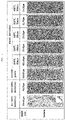
- FIG. 1 shows texture states according to manufacturing steps and thermal treatment conditions
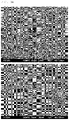
- FIG. 2 shows orientation distribution function analysis results according to thermal treatment conditions.
- TABLE 2 Thermal treatment condition BA 200°C 30 min 250°C 30 min 300°C 30 min 350°C 30 min 400°C 30 min 400°C 120 min Texture Copper, Brass, S, Goss Cube Cube, R-Cube Cube, R-Cube Formability (LDH) 3.1mm 4.2mm 6.5mm 7.0mm 7.3mm 7.4mm -
- the thermal treatment made the grains fine to the level as small as 22-25 ⁇ m.
- the thermal treatment induced the formation of cube texture and R-cube (rotated cube) texture, leading to increasing the elongation and enhancing the formability.
- FIGS. 3A and 3B are electron microscopic images of the specimens of Comparative Example 1 and Example 1 in Table 1, respectively.
- an aluminum-based separator superior in terms of yield strength and elongation can be manufactured and used, in substitution for stainless steel-based separator, in fuel cell stacks, thus making the fuel cell stacks light without a functional decrease in the fuel cell stacks.
Landscapes
- Chemical & Material Sciences (AREA)
- Engineering & Computer Science (AREA)
- Mechanical Engineering (AREA)
- Materials Engineering (AREA)
- Metallurgy (AREA)
- Organic Chemistry (AREA)
- Sustainable Development (AREA)
- Manufacturing & Machinery (AREA)
- Life Sciences & Earth Sciences (AREA)
- Sustainable Energy (AREA)
- Chemical Kinetics & Catalysis (AREA)
- Electrochemistry (AREA)
- General Chemical & Material Sciences (AREA)
- Physics & Mathematics (AREA)
- Thermal Sciences (AREA)
- Crystallography & Structural Chemistry (AREA)
- Fuel Cell (AREA)
- Metal Rolling (AREA)
Abstract
Description
- The present disclosure relates to an aluminum sheet material for a separator in a fuel cell and a manufacturing method therefor, and more specifically, to an aluminum sheet material for a separator in a fuel cell.
- A fuel cell is a type of generator unit which converts the chemical energy of a fuel into electrical energy through electrochemical reactions in a stack. Fuel cells may be used for commercial, industrial, and residential primary and backup power generation as well as being useful as power sources for compact electronic devices including electronic handheld devices. They are also used to power fuel cell vehicles. The fields in which fuel cells are available as clean energy sources have recently been expanded.
- In a typical fuel cell stack, a membrane-electrode assembly (MEA) is at the innermost position of the fuel stack. A typical membrane-electrode assembly includes a polymer electrolyte membrane and two electrodes. The polymer electrolyte membrane allows protons to pass through and is sandwiched between the two electrodes, that is, a fuel electrode (anode) and an air electrode (cathode) which are coated with a catalyst to react hydrogen and oxygen.
- In addition, a gas diffusion layer (GDL) is stacked on the outer surface of each of the fuel electrode and the air electrode. Separators in which flow fields are formed to discharge water generated by the reaction are respectively disposed on the outer surfaces of the gas diffusion layers, with end plates for supporting and fixing the components being coupled to the outermost side.
- The separator is made of a metallic substance. During operation, a fuel cell generates water as a result of the reaction between hydrogen and oxygen. The generated water flows through the flow field formed in the separator and is discharged outside. The separator is thus fabricated with a stainless substance highly resistant to corrosion.
- In order to make a fuel cell stack light, research into lightweight separators is ongoing. For example, research attention has been paid to aluminum as an alternative substance that can achieve the weight reduction while retaining the anti-corrosive property of stainless substances.
- However, a separator has to retain yield strength, elongation, and corrosion resistance at some levels. A separator made of an aluminum substance, although achieving a necessary level in terms of corrosion resistance, can hardly meet necessary levels in terms of yield strength and elongation.
- Moreover, a separator is typically required to have a thickness of 0.5 mm or less. An aluminum sheet material failing to meet the necessary yield strength and elongation is insufficient in formability and thus has a difficulty in being molded into a separator 0.5 mm or less in thickness.
- The foregoing is intended merely to aid in the understanding of the background of the present disclosure, and is not intended to mean that the present disclosure falls within the purview of the related art that is already known to those skilled in the art.
- The present disclosure provides an aluminum sheet material for a separator of a fuel cell, which is obtained with modified alloy ingredients and manufacturing conditions and has excellent yield strength and elongation while retaining a thickness of 0.5 mm or less, and a manufacturing method therefor.
- According to an aspect thereof, the present disclosure provides an aluminum sheet material for a separator of a fuel cell, the aluminum sheet material comprising: 9-10 wt% of Mg based on a total wt% of the aluminum sheet material ; and a balance of Al and inevitable impurities, wherein the aluminum sheet material has a cube texture and a rotated cube texture therein.
- The aluminum sheet material may further comprise either or both of 0.12wt% or less of Mn and 0.12wt% or less of Cr.
- The aluminum sheet material may have a yield strength of 150 MPa or higher.
- The aluminum sheet material may have an elongation of 28% or more.
- The aluminum sheet material may have a thickness of 0.5 mm or less.
The aluminum sheet material may have Al3Mg2 formed as a precipitation phase therein. - According to another aspect thereof, the present disclosure provides a method for manufacturing an aluminum sheet material for a separator of a fuel cell, the method comprising the steps of: casting a molten metal containing 9-10wt% of Mg and a balance of Al and inevitable impurities to prepare a rod-shaped as-cast material; cold rolling the as-cast material into a rolled plate; cold-pack rolling the rolled plate to prepare a sheet material, with multiple copies of the rolled plate being stacked; and thermally treating the sheet material.
- In the casting step, the molten metal may further comprise either or both of Mn: 0.12wt% or less of Mn and 0.12wt% or less of Cr.
- In the cold-pack rolling step, the rolled plate is rolled at a temperature of less than 100°C.
- In the cold-pack rolling step, the rolled plate is rolled at room temperature.
- In the cold-pack rolling step, the rolled plate is rolled to a thickness of 0.5 mm or less.
- In the thermal treating step, the sheet material is thermally treated at 350-400°C for 30-60 minutes.
- The method may further comprise a step of extruding the as-cast material to prepare a plate-like extruded material between the casting step and the cold-rolling step, wherein the extruded material is cold rolled in the cold rolling step to prepare a rolled plate.
- The above and other aspects, features and advantages of the present disclosure will be more apparent from the following detailed description taken in conjunction with the accompanying drawings, in which:
-
FIG. 1 shows changes in texture state according to manufacturing steps and thermal treatment conditions; -
FIG. 2 shows orientation distribution function analysis results according to thermal treatment conditions; -
FIG. 3A is an electron microscopic image of the specimen of Comparative Example 1 in Table 1; and -
FIG. 3B is an electron microscopic image of the specimen of Example 1 in Table 1. - Exemplary embodiments of the present disclosure will be described below in more detail with reference to the accompanying drawings. The present disclosure may, however, be embodied in different forms and should not be construed as limited to the embodiments set forth herein. Rather, these embodiments are provided so that this disclosure will be thorough and complete, and will fully convey the scope of the present disclosure to those skilled in the art.
- The aluminum sheet material for a separator of a fuel cell according to the present disclosure, which is used for forming a separator that is applied to a fuel cell stack, has a cube texture and a rotated cube (R-cube) texture formed therein by optimizing contents of main alloy components and thermal conditions, thereby exhibiting improved yield strength and elongation.
- In detail, the aluminum sheet material comprises 9-10 wt% of Mg and a balance of Al and inevitable impurities. In an embodiment, the aluminum sheet material may further comprise either or both of: 0.12wt% or less of Mn; and 0.12wt% or less of Cr.
In the present disclosure, the reason why the alloy components and the amounts thereof are limited is as follows. Unless otherwise stated, "%", when representing the unit of amount of component, refers to "wt %". - Magnesium (Mg), which is a solid solution hardening element, interferes with dislocation and reduces stacking fault energy. Hence, the element obstructs dislocation cross slip and increases the work hardening exponent. As a result, the strength and the elongation are both increased with the decrease of local deformation. Too small a content of magnesium (Mg) brings about only a slight improvement in strength and elongation. Thus, magnesium is contained in an amount of 9% or higher.
- When magnesium (Mg) is contained at a content of 9% or higher, the precipitation phase of Al3Mg2 appears. Through control of the generation of such precipitation phase, an improvement in strength and formability can be guaranteed. However, a magnesium (Mg) content exceeding 10% causes the problem of decreasing the elongation. Therefore, the content of magnesium (Mg) is limited to the range of 9-10%.
- Manganese (Mn), which is an element enhancing processability at high temperatures, provokes the precipitation of fine dispersion phases and suppresses the growth of recrystallized grains upon homogenization to enhance processability. However, when the content of manganese (Mg) exceeds 0.12%, the dispersibility of the precipitation phases is lowered and micro cracks are generated around the crowded precipitation phases upon rolling. Thus, the content of manganese (Mn) is limited to up to 0.12%.
- Chromium (Cr), which increases strength and deep drawing, forms a fine intermetallic compound to make grains fine. However, a content of chromium (Cr) exceeding 0.12% decreases the elongation with the increasing of yield strength. Thus, the content of chromium is limited to up to 0.12%.
- Except the aforementioned ingredients, the rest is accounted for by aluminum and inevitable impurities.
- Below, a description will be given of a method for manufacturing an aluminum sheet material having the composition for a separator of a fuel cell.
- According to an embodiment thereof, the present disclosure provides a method for manufacturing an aluminum sheet material for a separator of a fuel cell, the method comprising the steps of: preparing a molten metal having the aforementioned composition; casting a molten metal to prepare a rod-shaped as-cast material; extruding the as-cast material into a plate-like extruded material; cold rolling the extrusion material into a rolled plate; cold-pack rolling the rolled plate to prepare a sheet material, with multiple copies of the rolled plate being stacked; and thermally treating the sheet material.
- In an embodiment, the casting step, the extruding step, and the cold rolling step are carried out according to a typical manufacturing method for sheet materials. In this regard, the step of extruding the as-cast material may be omitted, but may be conducted in order to minimize pores and internal defects in the as-cast material.
- However, after the rolled plate is prepared, the sheet material may be prepared by conducting cold-pack rolling, but not hot rolling, cold rolling, and cross rolling, which are conventionally used, in order to avoid a roll lifting phenomenon.
- For example, when hot rolling is applied to the preparation of the sheet material, grains increase in size with increasing of the cycles of rolling, thus reducing the elongation.
- When typical cold rolling is applied to the preparation of the sheet material, it may be difficult to make a sheet 0.5 mm or less in thickness due to a roll lifting phenomenon caused by a repulsive force of the substance.
- In addition, when cross rolling is applied to the preparation of the sheet material, the elongation decreases as the size of the grains is excessively reduced by shear strain, with the resultant insignificant effect of formability.
- In this embodiment, therefore, 4 to 6 copies of the rolled plate are stacked and rolled at 100°C or less and preferably at room temperature to prepare a sheet material having a thickness of 0.5 mm or less, preferably 0.2 mm or less.
- In the thermal treating method, limitation is made of the thermal treatment temperature is limited to the range of 350°C-400°C and thermal treatment time is limited to the range of 30-60 minutes in order to control the growth of grains and textures. When the thermal treatment temperature and time are deviated from the condition, a desired pattern of textures is not formed, or desired strength and elongation cannot be obtained because grains increase.
- Hereinafter, the present disclosure is explained with reference to Examples and Comparative Examples.
- The molten metals produced with various contents of components as shown in Table 1, below, were subjected to extrusion, cold rolling, cold-pack rolling, and thermal treatment.
- In detail, the molten metals with various contents of the components as in Table 1 were cast and the as-cast materials were extruded and cold rolled. Four copies of the rolled plate in a sheet form were stacked and subjected cold-pack rolling. In this regard, the rolling was conducted 8 times to afford a sheet material 0.2 mm thick.
- The 0.2-mm-thick sheet material thus prepared was thermally treated at 350°C for 60 min and then measured for yield strength, tensile strength, and elongation. The results are summarized in Table 1.
TABLE 1 Ex. # Mg Mn Cr Yield Strength Tensile Strength Elongation C. Example 1 6 - - 128.2 302.5 20.7 C. Example 2 7 - - 146.1 323.4 24.1 C. Example 3 8 - - 158.2 345.0 23.4 Example 1 9 - - 157.1 362.8 30.4 Example 2 10 - - 159.3 369.3 31.7 C. Example 4 2 0.12 0.12 61.9 168.8 17.5 C. Example 5 4 0.12 0.12 116.9 244.7 21.3 C. Example 6 5 0.12 0.12 146.5 301.8 25.0 C. Example 7 6 0.12 0.12 162.5 315.7 25.3 C. Example 8 7 0.12 0.12 150.0 346.7 25.6 C. Example 9 8 0.12 0.12 175.3 382.5 27.7 Example 3 9 0.12 0.12 166.7 361.2 30.2 Example 4 10 0.12 0.12 174.5 377.9 31.3 C. Example 10 12 0.12 0.12 160.5 343.5 27.8 - As is understood from the data of Table 1, the sheet materials of the Examples which met kinds and contents of the alloy components proposed in the present disclosure all exhibited a yield strength of 150MPa or higher, a tensile strength of 360MPa or higher, and an elongation of 28% or higher.
- Particularly, Examples 3 and 4, which contained Mn and Cu, were superior in terms of yield strength and elongation to Examples 1 and 2, which do not contain Mn and Cu.
- In addition, Comparative Examples 1, 2, 4, 5, and 6, which included Mg at a content less than that proposed in the present disclosure, were observed to be lower in all yield strength, tensile strength, and elongation, compared to the Examples.
- Comparative Examples 3 and 9, which had a Mg content slightly lower than that proposed in the present disclosure, exhibited higher yield strength and tensile strength, but lower elongation than the Examples.
- Furthermore, Comparative Example 10 that had a Mg content higher than that proposed in the present disclosure exhibited yield strength similar to or higher than those of the Examples, but was rather lower in elongation than the Examples.
- Next, experiments were conducted to examine grain sizes, texture formation, and formability (LDH) according to thermal treatment conditions for the sheet material.
- Sheet materials having the composition of Example 4 in Table 1 were prepared and subjected to thermal treatment as indicated in Table 2. The specimens thus obtained were measured for grain size, texture state, and formability and the results are summarized in Table 2 and depicted in
FIGS. 1 and2 . -
FIG. 1 shows texture states according to manufacturing steps and thermal treatment conditions, andFIG. 2 shows orientation distribution function analysis results according to thermal treatment conditions.TABLE 2 Thermal treatment condition BA 200°C 30 min 250°C 30 min 300°C 30 min 350°C 30 min 400°C 30 min 400°C 120 min Texture Copper, Brass, S, Goss Cube Cube, R-Cube Cube, R-Cube Formability (LDH) 3.1mm 4.2mm 6.5mm 7.0mm 7.3mm 7.4mm - - As shown in
FIG. 1 , the thermal treatment made the grains fine to the level as small as 22-25 µm. - From the data of Table 2 and
FIG. 2 , the thermal treatment induced the formation of cube texture and R-cube (rotated cube) texture, leading to increasing the elongation and enhancing the formability. - At a temperature lower than that proposed herein, however, grains were neither made fine, nor was R-cube (rotated cube) formed.
- In addition, a thermal treatment time longer than that proposed herein decreased the elongation rather, and thus deteriorated the formability.
-
FIGS. 3A and3B are electron microscopic images of the specimens of Comparative Example 1 and Example 1 in Table 1, respectively. - As shown in
FIG. 3A , the formation of precipitates did not occur for Comparative Example 1. - In contrast, precipitates were observed and identified as Al3Mg2 as shown in
FIG. 3B . - Therefore, it was found that Al3Mg2 precipitated in the atomic solution with the increase of Mg content, contributing to an improvement in strength and formability.
- Although the exemplary embodiments of the present invention have been disclosed for illustrative purposes, those skilled in the art will appreciate that various modifications, additions and substitutions are possible, without departing from the scope of the accompanying claims.
- As described hitherto, according to an embodiment of the present disclosure, an aluminum-based separator superior in terms of yield strength and elongation can be manufactured and used, in substitution for stainless steel-based separator, in fuel cell stacks, thus making the fuel cell stacks light without a functional decrease in the fuel cell stacks.
Claims (13)
- An aluminum sheet material for a separator of a fuel cell, the aluminum sheet material comprising:9-10 wt% of Magnesium (Mg), based on a total wt% of the aluminum sheet material; and
a balance of Aluminum (Al) and inevitable impurities,
wherein the aluminum sheet material has a formation of cube texture and a rotated cube texture therein. - The aluminum sheet material of claim 1, further comprising at least one of, based on the total wt% of the aluminum sheet material, 0.12 wt% or less of Manganese (Mn) or 0.12 wt% or less of Chromium (Cr).
- The aluminum sheet material of claim 1 or 2, wherein the aluminum sheet material has a yield strength of 150 MPa or higher.
- The aluminum sheet material of any one of the preceding claims, wherein the aluminum sheet material has an elongation of 28% or more.
- The aluminum sheet material of any one of the preceding claims, wherein the aluminum sheet material has a thickness of 0.5 mm or less.
- The aluminum sheet material of any one of the preceding claims, wherein the aluminum sheet material has a precipitation phase of Al3Mg2 therein.
- A method for manufacturing an aluminum sheet material for a separator of a fuel cell, the method comprising steps of:casting a molten metal, which contains 9-10 wt% of Magnesium (Mg), based on a total wt% of the molten material, a balance of Aluminum (Al) and inevitable impurities, to prepare a a cast material having a rod shape;cold rolling the cast material into a rolled plate;cold-pack rolling the rolled plate to prepare a sheet material, with multiple copies of the rolled plate being stacked; andthermally treating the sheet material.
- The method of claim 7, wherein, in the casting step, the molten metal further comprises at least one of 0.12wt% or less of Manganese (Mn) or 0.12 wt% or less of Chromium (Cr), based on the total wt% of the molten material.
- The method of claim 7 or 8, wherein, in the cold-pack rolling step, the rolled plate is rolled at a temperature of less than 100°C.
- The method of claim 9, wherein, in the cold-pack rolling step, the rolled plate is rolled at a room temperature.
- The method of any one of claims 7 to 10, wherein, in the cold-pack rolling step, the rolled plate is rolled to a thickness of 0.5 mm or less.
- The method of any one of claims 7 to 11, wherein, in the thermal treating step, the sheet material is thermally treated at 350-400°C for 30-60 minutes.
- The method of any one of claims 7 to 12, further comprising a step of extruding the cast material to prepare an extruded material having a plate shape between the casting step and the cold-rolling step,
wherein the extruded material is cold rolled in the cold rolling step to prepare the rolled plate.
Applications Claiming Priority (1)
| Application Number | Priority Date | Filing Date | Title |
|---|---|---|---|
| KR1020200177693A KR102950067B1 (en) | 2020-12-17 | 2020-12-17 | Aluminium sheets material for separator of fuel cell and manufacturing method thereof |
Publications (1)
| Publication Number | Publication Date |
|---|---|
| EP4015663A1 true EP4015663A1 (en) | 2022-06-22 |
Family
ID=76958777
Family Applications (1)
| Application Number | Title | Priority Date | Filing Date |
|---|---|---|---|
| EP21186059.8A Pending EP4015663A1 (en) | 2020-12-17 | 2021-07-16 | Aluminum sheet material for separator of fuel cell and manufacturing method therefor |
Country Status (4)
| Country | Link |
|---|---|
| US (2) | US11739406B2 (en) |
| EP (1) | EP4015663A1 (en) |
| KR (1) | KR102950067B1 (en) |
| CN (1) | CN114645164A (en) |
Citations (5)
| Publication number | Priority date | Publication date | Assignee | Title |
|---|---|---|---|---|
| JPH06136497A (en) * | 1992-10-23 | 1994-05-17 | Furukawa Alum Co Ltd | Production of aluminum alloy sheet with high formability |
| US5423925A (en) * | 1992-10-23 | 1995-06-13 | The Furukawa Electric Co., Ltd. | Process for manufacturing Al-Mg alloy sheets for press forming |
| US20090071576A1 (en) * | 2005-01-19 | 2009-03-19 | Kabushiki Kaisha Kobe Seiko Sho | Aluminum alloy plate and process for producing the same |
| JP4550598B2 (en) * | 2005-01-21 | 2010-09-22 | 株式会社神戸製鋼所 | Aluminum alloy sheet for forming |
| US20190172487A1 (en) * | 2016-08-01 | 2019-06-06 | Uacj Corporation | Aluminum alloy plate for magnetic disc substrate, method for producing the same, and magnetic disc |
Family Cites Families (10)
| Publication number | Priority date | Publication date | Assignee | Title |
|---|---|---|---|---|
| KR100559831B1 (en) | 2000-10-23 | 2006-03-10 | 현대자동차주식회사 | High strength aluminum sheet composition |
| JP2005302669A (en) * | 2004-04-16 | 2005-10-27 | Nippon Light Metal Co Ltd | Method for producing aluminum separator for fuel cell |
| JP4799294B2 (en) * | 2006-06-30 | 2011-10-26 | 古河スカイ株式会社 | Method for producing high formability Al-Mg alloy plate |
| KR100978558B1 (en) | 2009-09-28 | 2010-08-27 | 최홍신 | High strength aluminum-magnesium alloy |
| JP5927614B2 (en) * | 2012-08-29 | 2016-06-01 | 株式会社神戸製鋼所 | Aluminum hard foil for battery current collector |
| JP6542649B2 (en) * | 2015-11-20 | 2019-07-10 | 株式会社神戸製鋼所 | Aluminum alloy clad plate and aluminum alloy clad structural member |
| CN105543587B (en) * | 2015-11-20 | 2018-04-24 | 江苏大学 | A kind of strong nanocrystalline Al-Mg aluminum alloy materials of superelevation and preparation method thereof |
| US20190211423A1 (en) * | 2016-08-29 | 2019-07-11 | Mitsubishi Aluminum Co., Ltd. | Aluminum alloy hard thin foil for secondary battery cathode collector, secondary battery cathode collector, and method for manufacturing aluminum alloy hard thin foil |
| CN109402458B (en) * | 2018-12-11 | 2020-12-04 | 广西百色兴和铝业有限公司 | 3003 alloy double-sided dark aluminum foil for high-strength lithium battery and manufacturing method thereof |
| CN112391563B (en) * | 2019-08-19 | 2021-11-09 | 南京理工大学 | Preparation method of layered nano heterogeneous aluminum magnesium alloy block material |
-
2020
- 2020-12-17 KR KR1020200177693A patent/KR102950067B1/en active Active
-
2021
- 2021-07-15 US US17/376,673 patent/US11739406B2/en active Active
- 2021-07-16 EP EP21186059.8A patent/EP4015663A1/en active Pending
- 2021-08-10 CN CN202110912470.5A patent/CN114645164A/en active Pending
-
2023
- 2023-07-05 US US18/218,306 patent/US20230357910A1/en not_active Abandoned
Patent Citations (5)
| Publication number | Priority date | Publication date | Assignee | Title |
|---|---|---|---|---|
| JPH06136497A (en) * | 1992-10-23 | 1994-05-17 | Furukawa Alum Co Ltd | Production of aluminum alloy sheet with high formability |
| US5423925A (en) * | 1992-10-23 | 1995-06-13 | The Furukawa Electric Co., Ltd. | Process for manufacturing Al-Mg alloy sheets for press forming |
| US20090071576A1 (en) * | 2005-01-19 | 2009-03-19 | Kabushiki Kaisha Kobe Seiko Sho | Aluminum alloy plate and process for producing the same |
| JP4550598B2 (en) * | 2005-01-21 | 2010-09-22 | 株式会社神戸製鋼所 | Aluminum alloy sheet for forming |
| US20190172487A1 (en) * | 2016-08-01 | 2019-06-06 | Uacj Corporation | Aluminum alloy plate for magnetic disc substrate, method for producing the same, and magnetic disc |
Also Published As
| Publication number | Publication date |
|---|---|
| KR102950067B1 (en) | 2026-04-07 |
| US11739406B2 (en) | 2023-08-29 |
| US20230357910A1 (en) | 2023-11-09 |
| US20220195572A1 (en) | 2022-06-23 |
| KR20220087210A (en) | 2022-06-24 |
| CN114645164A (en) | 2022-06-21 |
Similar Documents
| Publication | Publication Date | Title |
|---|---|---|
| EP2597710B1 (en) | Polymer electrolyte fuel cell comprising titanium separator | |
| EP2597711A1 (en) | Titanium fuel cell separator | |
| KR101597721B1 (en) | Titanium material for solid polymer fuel cell separators, method for producing same, and solid polymer fuel cell using same | |
| EP2677580A1 (en) | Fuel cell separator | |
| CA2714829C (en) | Metallic material for conductive member, separator for fuel cell using the same, and fuel cell using the separator | |
| TWI478430B (en) | Stainless steel for separator for fuel cell excellent in conductivity and ductility, and a method for manufacturing the same | |
| JP2011077018A (en) | Method of manufacturing fuel cell separator | |
| AU2004271148B2 (en) | Oxidation resistant ferritic stainless steels | |
| CN100545293C (en) | heat-resistant steel | |
| WO2016147858A1 (en) | Titanium alloy, separator, and solid polymer fuel cell | |
| EP4302890A1 (en) | Steel plate with excellent hydrophilicity and conductivity | |
| EP4302889A1 (en) | Steel sheet having excellent hydrophilicity and conductivity | |
| US11739406B2 (en) | Aluminum sheet material for separator of fuel cell and manufacturing method therefor | |
| JP5306631B2 (en) | Ferritic steel for solid oxide fuel cells and other high temperature applications | |
| US11255001B2 (en) | Aluminum-alloy foil | |
| JP5217755B2 (en) | Stainless steel for fuel cell separator and fuel cell separator | |
| JP2017088931A (en) | Titanium alloy for solid polymer electrolyte fuel cell, titanium material using the same and solid polymer electrolyte fuel cell using the same | |
| JP4967398B2 (en) | Stainless steel suitable for polymer electrolyte fuel cell and its separator | |
| JP5703560B2 (en) | Stainless steel plate for fuel cell separator with excellent conductivity | |
| JP2008303436A (en) | Ferritic stainless steel for polymer electrolyte fuel cell separator and polymer electrolyte fuel cell using the same | |
| EP1204778B1 (en) | Air-side solid oxide fuel cell components | |
| JP6308330B2 (en) | Titanium alloy, titanium material, separator, cell, and polymer electrolyte fuel cell |
Legal Events
| Date | Code | Title | Description |
|---|---|---|---|
| PUAI | Public reference made under article 153(3) epc to a published international application that has entered the european phase |
Free format text: ORIGINAL CODE: 0009012 |
|
| STAA | Information on the status of an ep patent application or granted ep patent |
Free format text: STATUS: THE APPLICATION HAS BEEN PUBLISHED |
|
| AK | Designated contracting states |
Kind code of ref document: A1 Designated state(s): AL AT BE BG CH CY CZ DE DK EE ES FI FR GB GR HR HU IE IS IT LI LT LU LV MC MK MT NL NO PL PT RO RS SE SI SK SM TR |
|
| STAA | Information on the status of an ep patent application or granted ep patent |
Free format text: STATUS: REQUEST FOR EXAMINATION WAS MADE |
|
| 17P | Request for examination filed |
Effective date: 20221214 |
|
| RBV | Designated contracting states (corrected) |
Designated state(s): AL AT BE BG CH CY CZ DE DK EE ES FI FR GB GR HR HU IE IS IT LI LT LU LV MC MK MT NL NO PL PT RO RS SE SI SK SM TR |
|
| P01 | Opt-out of the competence of the unified patent court (upc) registered |
Effective date: 20230428 |
|
| STAA | Information on the status of an ep patent application or granted ep patent |
Free format text: STATUS: EXAMINATION IS IN PROGRESS |
|
| 17Q | First examination report despatched |
Effective date: 20251218 |