EP4015247B1 - Fahrzeugluftreifen - Google Patents
Fahrzeugluftreifen Download PDFInfo
- Publication number
- EP4015247B1 EP4015247B1 EP21210070.5A EP21210070A EP4015247B1 EP 4015247 B1 EP4015247 B1 EP 4015247B1 EP 21210070 A EP21210070 A EP 21210070A EP 4015247 B1 EP4015247 B1 EP 4015247B1
- Authority
- EP
- European Patent Office
- Prior art keywords
- tread
- shoulder
- groove
- pneumatic vehicle
- profile
- Prior art date
- Legal status (The legal status is an assumption and is not a legal conclusion. Google has not performed a legal analysis and makes no representation as to the accuracy of the status listed.)
- Active
Links
Images


Classifications
-
- B—PERFORMING OPERATIONS; TRANSPORTING
- B60—VEHICLES IN GENERAL
- B60C—VEHICLE TYRES; TYRE INFLATION; TYRE CHANGING; CONNECTING VALVES TO INFLATABLE ELASTIC BODIES IN GENERAL; DEVICES OR ARRANGEMENTS RELATED TO TYRES
- B60C11/00—Tyre tread bands; Tread patterns; Anti-skid inserts
- B60C11/03—Tread patterns
- B60C11/0327—Tread patterns characterised by special properties of the tread pattern
-
- B—PERFORMING OPERATIONS; TRANSPORTING
- B60—VEHICLES IN GENERAL
- B60C—VEHICLE TYRES; TYRE INFLATION; TYRE CHANGING; CONNECTING VALVES TO INFLATABLE ELASTIC BODIES IN GENERAL; DEVICES OR ARRANGEMENTS RELATED TO TYRES
- B60C11/00—Tyre tread bands; Tread patterns; Anti-skid inserts
- B60C11/03—Tread patterns
- B60C11/13—Tread patterns characterised by the groove cross-section, e.g. for buttressing or preventing stone-trapping
- B60C11/1369—Tie bars for linking block elements and bridging the groove
-
- B—PERFORMING OPERATIONS; TRANSPORTING
- B60—VEHICLES IN GENERAL
- B60C—VEHICLE TYRES; TYRE INFLATION; TYRE CHANGING; CONNECTING VALVES TO INFLATABLE ELASTIC BODIES IN GENERAL; DEVICES OR ARRANGEMENTS RELATED TO TYRES
- B60C11/00—Tyre tread bands; Tread patterns; Anti-skid inserts
- B60C11/03—Tread patterns
- B60C2011/0337—Tread patterns characterised by particular design features of the pattern
- B60C2011/0339—Grooves
- B60C2011/0358—Lateral grooves, i.e. having an angle of 45 to 90 degees to the equatorial plane
- B60C2011/0365—Lateral grooves, i.e. having an angle of 45 to 90 degees to the equatorial plane characterised by width
-
- B—PERFORMING OPERATIONS; TRANSPORTING
- B60—VEHICLES IN GENERAL
- B60C—VEHICLE TYRES; TYRE INFLATION; TYRE CHANGING; CONNECTING VALVES TO INFLATABLE ELASTIC BODIES IN GENERAL; DEVICES OR ARRANGEMENTS RELATED TO TYRES
- B60C11/00—Tyre tread bands; Tread patterns; Anti-skid inserts
- B60C11/03—Tread patterns
- B60C2011/0337—Tread patterns characterised by particular design features of the pattern
- B60C2011/0339—Grooves
- B60C2011/0358—Lateral grooves, i.e. having an angle of 45 to 90 degees to the equatorial plane
- B60C2011/0367—Lateral grooves, i.e. having an angle of 45 to 90 degees to the equatorial plane characterised by depth
- B60C2011/0369—Lateral grooves, i.e. having an angle of 45 to 90 degees to the equatorial plane characterised by depth with varying depth of the groove
Definitions
- the invention relates to a pneumatic vehicle tire with a tread with at least one shoulder-side tread block row, which is delimited by a shoulder-side circumferential groove designed to the tread depth and is provided with transverse grooves which run parallel to one another in plan view, each with a groove base and a length projected in the axial direction within the ground contact area, wherein each transverse groove has a groove section on the outside of the tread running over the majority of its length and over the lateral edge of the ground contact area with a width determined within the ground contact area and a groove section on the inside of the tread which opens into the shoulder-side circumferential groove and has a width which is smaller than the width of the groove section on the outside of the tread, wherein the The groove section on the inside of the tread is shallower over its entire extent in the radial direction than the groove section on the outside of the tread, the groove base having a stepped base section running over the groove section on the inside of the tread with at least two step surfaces and the step surfaces having constant distances determined from the level of the tread depth in
- Such a pneumatic vehicle tire is, for example, from US 2011/0041972 A1 known.
- the tread has shoulder-side rows of tread blocks with transverse grooves, with a first transverse groove alternatingly following a second transverse groove in the circumferential direction.
- Each first transverse groove is composed of a groove section on the outside of the tread and a narrower, partially funnel-shaped groove section on the inside of the tread.
- the groove base In the groove section on the inside of the tread, the groove base has a base section with two step surfaces, the distances of which from the level of the tread depth increase gradually in the direction of the shoulder-side circumferential groove.
- the tire should have a low rolling noise.
- each transverse groove has a groove section on the inside of the tread, a central groove section and a groove section on the outside of the tread, as well as a short, relatively deep mouth section adjoining the circumferential groove.
- the groove section on the inside of the tread and the mouth section are narrower than the two other groove sections.
- the row of tread blocks on the shoulder side of the circumferential groove has a circumferential section that is stiffer than the other row of tread blocks, which is also referred to as a “handling rib”. Due to its greater rigidity, the handling rib improves the transfer of cornering forces to the ground when cornering. Unfortunately, the water drainage capacity is reduced in the area of the handling rib due to the narrower and shallower groove section on the inside of the tread.
- the invention is therefore based on the object of solving the conflict of objectives that exists between the rigidity required for good lateral force transmission and the water drainage capacity better than before in a pneumatic vehicle tire of the type mentioned at the beginning.
- transverse grooves each consist of the groove section on the inside of the tread, the groove section on the outside of the tread and a transition section which is formed between the groove sections and widens in a funnel shape between them and has a length projected in the axial direction of 1.0 mm to 3. Put together 0 mm.
- the area of the shoulder-side tread block row adjacent to the circumferential groove i.e. the handling rib
- the handling rib is specifically stiffened. Since the stepped base section extends to the shoulder-side circumferential groove and the distances between the step surfaces gradually increase in the direction of the shoulder-side circumferential groove, the handling rib is most stiffened at its circumferential section which is immediately adjacent to the shoulder-side circumferential groove and is critical in terms of stiffness.
- the at least one further step surface has a smaller distance from the level of the profile depth - compared to other step surfaces.
- This step surface also contributes to the stiffening of the handling rib, with a transverse groove cross-section (larger empty volume fraction) remaining in the area of this step surface due to the smaller distance to the level of the profile depth.
- the specially stepped base section makes it possible to balance the rigidity of the tread block row and the water drainage capacity of the transverse grooves in a particularly favorable manner, so that the mentioned conflict of objectives is solved more advantageously than before.
- the transition section enables a low-turbulence water flow from the groove section on the inside of the tread to the groove section on the outside of the tread and therefore promotes water drainage.
- the distance which is greatest is at most 50%, in particular at most 40%, of the tread depth.
- the biggest distance is that Distance of the step surface which extends to the circumferential groove on the shoulder side.
- a step surface designed in this way and lying directly on the shoulder-side circumferential groove is particularly advantageous for stiffening the handling rib.
- the distance which is the smallest is preferably at least 2.0 mm. This is the distance from the step surface that is closest to the wider groove section of the transverse groove on the outside of the tread.
- the stepped base section is designed such that the distances between immediately adjacent step surfaces differ from one another by 0.5 mm to 1.5 mm, in particular by 1.0 mm. This measure enables a particularly advantageous compromise between the rigidity of the shoulder-side profile block row required for good lateral force transmission and the water drainage capacity of the transverse groove.
- a further preferred embodiment is characterized in that the stepped base section has at least three, in particular exactly three or exactly four, step surfaces.
- Such a basic section contributes to a particularly advantageous solution to the conflict of objectives mentioned.
- Two further preferred embodiments relate to the design of the handling rib or the inner tread groove section of the shoulder-side transverse grooves running therein and ensure a particularly advantageous rigidity of the shoulder-side tread block row with regard to the lateral force transmission.
- the first relevant embodiment is characterized in that the groove section on the inside of the tread has a length projected in the axial direction of 30% to 40%, in particular 33% to 37%, of the length of the transverse groove.
- the length of the groove section on the inside of the tread projected in the axial direction correlates with or corresponds to the width of the handling rib determined in the axial direction.
- the second relevant embodiment is characterized in that the width of the groove section on the inside of the tread is 50% to 70%, in particular 55% to 65%, of the width of the groove section on the outside of the tread.
- the width of the groove section on the outside of the tread is 2.5 mm to 5.5 mm, in particular 3.0 mm to 4.5 mm.
- the groove section on the outside of the tread has a depth of up to 100% of the tread depth in the radial direction at its deepest point, the depth being in particular 1.0 mm to 1.5 mm less than the tread depth.
- an additional groove is formed in the shoulder-side profile block row, interrupted by the transverse grooves, straight in plan view and circumferential in the circumferential direction, which has a width of 1.0 mm to 3.0 mm and a depth of 1.5 mm in the radial direction up to 2.5 mm, in particular 2.0 mm, and - based on its groove center line - has a distance of 30% to 40% of the length of the transverse grooves from the shoulder-side circumferential groove in the axial direction.
- the additional groove improves the drainage of the tread block row, with water absorbed by it being diverted into the transverse groove.
- the transverse grooves extend to the axial direction at an angle of 0° to 25°, in particular 5° to 15°.
- a further preferred embodiment is characterized in that the tread has a second shoulder-side tread block row, which is designed symmetrically to the other shoulder-side tread block row with respect to the tire equatorial plane, the second shoulder-side tread block row optionally being offset in the circumferential direction relative to the other shoulder-side tread block row.
- Fig. 1 shows a top view of a peripheral section of a tread of a pneumatic vehicle tire.
- the lateral edges of the ground contact area of the tread are indicated by dashed lines l.
- the ground contact area corresponds to the statically determined footprint according to ETRTO standards (load at 70% of the maximum load capacity at an internal pressure of 85% according to ETRTO standards).
- the tread has two shoulder-side profile block rows 1 and two middle profile ribs 2, the middle profile ribs 2 being separated by a central circumferential groove 3 and the shoulder-side profile block rows 1 being separated from the adjacent middle profile rib 2 by a shoulder-side circumferential groove 4.
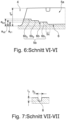
- the circumferential grooves 3, 4 run straight in plan view and are in the radial direction to the respective intended profile depth T P ( Fig. 6 , shown for a shoulder-side circumferential groove 4), which is usually 6.5 mm to 10.0 mm for the preferred tire type.
- the middle profile ribs 2 are only shown schematically and can be structured in a manner known per se with grooves, incisions and the like.
- the shoulder-side tread block rows 1 each have a plurality of shoulder-side tread blocks 1a, which are separated from one another by shoulder-side transverse grooves 5 which open into the respective shoulder-side circumferential groove 4.
- the shoulder-side transverse grooves 5, viewed in plan view, run straight within each shoulder-side profile block row 1 parallel to each other and to the axial direction at an angle ⁇ ( Fig. 2 ) from 0 ° to 25 °, in particular from 5 ° to 15 °, whereby in the exemplary embodiment shown, the shoulder-side transverse grooves 5 located in one shoulder-side profile block row 1 are inclined in opposite directions with respect to the axial direction to the shoulder-side transverse grooves 5 located in the other shoulder-side profile block row 1 .
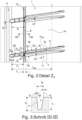
- Each shoulder-side transverse groove 5 within the ground contact area has a length l QR determined on the tread periphery and projected in the axial direction and is made up of a groove section 5a on the outside of the tread that extends beyond the lateral edge (line 1) of the ground contact area and an inside tread that is narrower than this Groove section 5b and a transition section 5c together.
- the transverse groove 5 is delimited over all sections 5a, 5b, 5c by a groove base 6 and two groove flanks 7.
- the groove section 5a on the outside of the tread runs over a large part of the length l QR of the transverse groove 5 and, determined within the ground contact area, has a width b a measured on the tread periphery perpendicular to the groove center line m QR (see Fig. Fig. 3 ) from 2.5 mm to 5.5 mm, in particular from 3.0 mm to 4.5 mm, and in the radial direction at its deepest point a depth t a ( Fig. 3 ) of up to 100% of the tread depth T p ( Fig. 3 ), whereby the depth t a is in particular 1.0 mm to 1.5 mm less than the profile depth T P .
- Fig. 3 the width b a measured on the tread periphery perpendicular to the groove center line m QR (see Fig. Fig. 3 ) from 2.5 mm to 5.5 mm, in particular from 3.0 mm to 4.5 mm, and in the radial direction at its deepest point a depth
- the groove flanks 7 run in the groove section 5a on the outside of the tread, viewed in the cross section aligned perpendicular to the groove center line m QR (see section line III-III in Fig. 2 ), to the radial direction in each case at a constant angle ⁇ of 0 ° to 12 °, in particular of at least 3 °, whereby the angle ⁇ of one groove flank 7 can deviate from the angle ⁇ of the other groove flank 7 by, in particular, up to 7 °.
- the groove section 5b on the inside of the tread has a length l b of 30% to 40%, in particular from 33% to 37%, of the length l QR of the transverse groove, projected in the axial direction and determined on the tread periphery, based on the groove center line m QR 5 as well as a width b b measured at the tread periphery perpendicular to the groove center line m QR (see Fig. Fig. 4, Fig. 5 ) from 50% to 70%, in particular from 55% to 65%, of the width b a of the outside of the tread Groove section 5a.
- the groove flanks 7 run in the groove section 5b on the inside of the tread, viewed in the cross section oriented perpendicular to the groove center line m QR , to the radial direction at a constant angle ⁇ ( Fig. 4 and Fig. 5 ) from 0° to 10°, in particular from 3° to 7°, the angles ⁇ of the two groove flanks 7 preferably matching.
- the transition section 5c has a length l c of 1.0 mm to 3.0 mm, determined on the tread periphery and projected in the axial direction, based on the center line m QR , and widens in a funnel shape from the groove section 5b on the inside of the tread to the groove section 5a on the outside of the tread, where it has a width b b at the connection point to the groove section 5b on the inside of the tread and its width b a at the point of connection to the groove section 5a on the outside of the tread.
- the groove flanks 7 preferably run in the transition section 5c in accordance with one of the groove sections 5a, 5b and can alternatively run in the radial direction.
- the groove base 6 has a multi-stepped base section 6b which extends over the entire groove section 5b on the inside of the tread and, in the exemplary embodiment shown, projects into the transition section 5c, through which the groove section 5b on the inside of the tread is made shallower over its entire extent than the groove section 5a on the outside of the tread inside the ground contact area.
- the stepped base section 6b comprises a first step surface 6b 1 furthest away from the shoulder-side circumferential groove 4, a middle second step surface 6b 2 and a third step surface 6b 3 extending towards the shoulder-side circumferential groove 4, the step surfaces 6b 1 , 6b 2 , 6b 3 facing each other the level of the profile depth T P at different, constant distances a b1 (step surface 6b 1 ), a b2 (step surface 6b 2 ), a b3 (step surfaces 6b 3 ), determined in the radial direction.
- the distances a b1 , a b2 , a b3 increase gradually from step surface to step surface in the direction of the shoulder-side circumferential groove 4, whereby the smallest distance a b1 is at least 2.0 mm and the largest distance a b3 is at most 50%, in particular at most 40%, the tread depth is T P.
- the distance a b1 is 2.0 mm to 3.0 mm, preferably 2.5 mm, with the distance a b2 being larger by 0.5 mm to 1.5 mm, preferably by 1.0 mm as the distance a b1 and wherein the distance a b3 is greater than the distance a b2 by 0.5 mm to 1.5 mm, preferably by 1.0 mm.
- the first step surface 6b 1 projects with an end section into the transition section 5c.
- an additional groove 8 is formed in the shoulder-side profile block row 1, which traverses all the shoulder-side profile blocks 1a, is straight in plan view and runs circumferentially, which is partially interrupted by the transverse grooves 5, therefore opens into them and - based on its groove center line mz - to the shoulder-side Circumferential groove 4 on the tread periphery has a distance a z of 30% to 40% of the length l QR of the transverse grooves 5 in the axial direction.
- the additional groove 8 has a flat U-shaped cross section, at the tread periphery a width b z of 1.0 mm to 3.0 mm determined in the axial direction and a depth t z of 1.5 mm to 2 in the radial direction, 5 mm, in particular 2.0 mm.
- the distance a z and the width b z are as in Fig. 2 shown, preferably matched to the length l b of the groove section 5b on the inside of the tread and the length l c of the transition section 5c, so that the additional groove 8 opens exclusively into the transition sections 5c of the transverse grooves 5.
- the additional groove 8 can open into the groove sections 5a of the transverse grooves 5 on the outside of the tread or the groove sections 5b of the transverse grooves 5 on the inside of the tread. If transverse grooves 5 are provided without transition sections 5c, the additional groove 8 preferably opens at the mutual connection area of the groove sections 5a, 5b, i.e. simultaneously into both groove sections 5a, 5b, or adjacent to the mutual connection area of the groove sections 5a, 5b into one of the groove sections 5a, 5b.
- the invention is not limited to the exemplary embodiment described.
- the tread has at least one shoulder-side tread block row 1 designed according to the invention.
- the additional 8 below are optional.
- the stepped base section 6b has at least two step surfaces and can in particular have up to four step surfaces.
Landscapes
- Engineering & Computer Science (AREA)
- Mechanical Engineering (AREA)
- Tires In General (AREA)
Description
- Die Erfindung betrifft einen Fahrzeugluftreifen mit einem Laufstreifen mit zumindest einer schulterseitigen Profilblockreihe, welche durch eine auf Profiltiefe ausgeführte, schulterseitige Umfangsrille begrenzt und mit in Draufsicht parallel zueinander verlaufenden Querrillen mit jeweils einem Rillengrund und einer innerhalb der Bodenaufstandsfläche in die axiale Richtung projizierten Länge versehen ist, wobei jede Querrille einen über den Großteil ihrer Länge sowie über den seitlichen Rand der Bodenaufstandsfläche verlaufenden laufstreifenaußenseitigen Rillenabschnitt mit einer innerhalb der Bodenaufstandsfläche ermittelten Breite und einen in die schulterseitige Umfangsrille einmündenden, laufstreifeninnenseitigen Rillenabschnitt mit einer gegenüber der Breite des laufstreifenaußenseitigen Rillenabschnittes geringeren Breite aufweist, wobei der laufstreifeninnenseitige Rillenabschnitt über seine gesamte Erstreckung in radialer Richtung seichter ausgeführt ist als der laufstreifenaußenseitige Rillenabschnitt, wobei der Rillengrund einen über den laufstreifeninnenseitigen Rillenabschnitt verlaufenden, gestuften Grundabschnitt mit zumindest zwei Stufenflächen aufweist und wobei die Stufenflächen zum Niveau der Profiltiefe in radialer Richtung ermittelte konstante Abstände aufweisen, welche von Stufenfläche zu Stufenfläche in Richtung zur schulterseitigen Umfangsrille schrittweise zunehmen.
- Ein derartiger Fahrzeugluftreifen ist beispielsweise aus der
US 2011/0041972 A1 bekannt. Der Laufstreifen weist schulterseitige Profilblockreihen mit Querrillen auf, wobei in Umfangsrichtung abwechselnd eine erste Querrille auf eine zweite Querrille folgt. Jede erste Querrille setzt sich aus einem laufstreifenaußenseitigen Rillenabschnitt und einem schmäleren, abschnittsweise trichterförmigen, laufstreifeninnenseitigen Rillenabschnitt zusammen. Der Rillengrund weist im laufstreifeninnenseitigen Rillenabschnitt einen Grundabschnitt mit zwei Stufenflächen auf, deren Abstände zum Niveau der Profiltiefe in Richtung zur schulterseitigen Umfangsrille schrittweise zunehmen. Der Reifen soll ein geringes Abrollgeräusch aufweisen. - Ferner ist aus der
EP 3 124 290 A1 ein Fahrzeugluftreifen mit einem Laufstreifen mit zumindest einer schulterseitigen Profilblockreihe mit Querrille bekannt, wobei die Querrillen in die an die schulterseitige Profilblockreihe angrenzende schulterseitige Umfangsrille einmünden, wobei jede Querrille innerhalb der Bodenaufstandsfläche mindestens zwei aneinander anschließende Rillenabschnitte unterschiedlicher Tiefe aufweist, wodurch der beim Abrollen des Reifens Geräuschemissionen verursachende Air-Pumping-Effekt unterdrückt wird. Gemäß dem beschriebenen Ausführungsbeispiel weist jede Querrille einen laufstreifeninnenseitigen Rillenabschnitt, einen mittleren Rillenabschnitt und einen laufstreifenaußenseitigen Rillenabschnitt sowie einen kurzen an die Umfangsrille anschließenden, relativ tief ausgeführten Mündungsabschnitt auf. Der laufstreifeninnenseitige Rillenabschnitt und der Mündungsabschnitt sind schmäler ausgeführt als die beiden weiteren Rillenabschnitte. Bei einer einfacheren Ausgestaltung ist kein Mündungsabschnitt vorgesehen und die Querrille weist nur zwei der drei Rillenabschnitte auf, sodass bei einer entsprechenden Kombination der Abschnitte der Querrille ein Fahrzeugluftreifen der eingangs genannten Art offenbart ist. - Durch den gegenüber dem laufstreifenaußenseitigen Rillenabschnitt schmäleren und seichteren laufstreifeninnenseitigen Rillenabschnitt weist die schulterseitige Profilblockreihe an der schulterseitigen Umfangsrille einen gegenüber der sonstigen Profilblockreihe steifer ausgeführten Umfangsabschnitt auf, welcher auch als "Handlingrippe" bezeichnet wird. Bedingt durch ihre höhere Steifigkeit verbessert die Handlingrippe bei Kurvenfahrt die Übertragung von Seitenführungskräften auf den Untergrund. Ungünstiger Weise ist im Bereich der Handlingrippe durch den schmäleren und seichteren laufstreifeninnenseitigen Rillenabschnitt das Wasserdrainagevermögen reduziert.
- Bei Fahrzeugluftreifen der eingangs genannten Art besteht bei der Auslegung der schulterseitigen Profilblockreihe somit ein Zielkonflikt zwischen der für eine gute Seitenkraftübertragung erforderlichen Steifigkeit der Handlingrippe und dem Wasserdrainagevermögen, welcher bisher nicht optimal gelöst ist.
- Der Erfindung liegt daher die Aufgabe zugrunde, bei einem Fahrzeugluftreifen eingangs genannter Art den zwischen der für eine gute Seitenkraftübertragung erforderlichen Steifigkeit und dem Wasserdrainagevermögen bestehenden Zielkonflikt besser als bisher zu lösen.
- Gelöst wird die gestellte Aufgabe erfindungsgemäß dadurch, dass sich die Querrillen jeweils aus dem laufstreifeninnenseitigen Rillenabschnitt, dem laufstreifenaußenseitigen Rillenabschnitt und einem zwischen den Rillenabschnitten ausgebildeten, sich trichterförmig zwischen diesen verbreiternden Übergangsabschnitt mit einer in die axiale Richtung projizierten Länge von 1,0 mm bis 3,0 mm zusammensetzen.
- Durch den gestuften Grundabschnitt im seichter ausgeführten, laufstreifeninnenseitigen Rillenabschnitt wird der an die Umfangsrille angrenzende Bereich der schulterseitigen Profilblockreihe, also die Handlingrippe, gezielt versteift. Da der gestufte Grundabschnitt bis zur schulterseitigen Umfangsrille reicht und die Abstände der Stufenflächen in Richtung zur schulterseitigen Umfangsrille schrittweise zunehmen, ist die Handlingrippe an ihrem unmittelbar an die schulterseitige Umfangsrille angrenzenden, im Hinblick auf die Steifigkeit kritischen Umfangsabschnitt am stärksten versteift. Die zumindest eine weitere Stufenfläche weist zum Niveau der Profiltiefe - im Vergleich zu anderen Stufenfläche - einen geringeren Abstand auf. Auch diese Stufenfläche trägt zur Versteifung der Handlingrippe bei, wobei im Bereich dieser Stufenfläche durch den kleineren Abstand zum Niveau der Profiltiefe ein im Hinblick auf das Wasserdrainagevermögen günstigerer Querrillenquerschnitt (größerer Leervolumenanteil) verbleibt. Durch den speziell gestuften Grundabschnitt gelingt es somit, die Steifigkeit der Profilblockreihe und das Wasserdrainagevermögen der Querrillen auf besonders günstige Weise auszubalancieren, sodass der erwähnte Zielkonflikt vorteilhafter als bisher gelöst ist. Der Übergangsabschnitt ermöglicht einen verwirbelungsarmen Wasserfluss vom laufstreifeninnenseitigen Rillenabschnitt zum laufstreifenaußenseitigen Rillenabschnitt und begünstigt daher die Wasserdrainage.
- Gemäß einer bevorzugten Ausführung beträgt jener Abstand, welcher am größten ist, höchstens 50%, insbesondere höchstens 40%, der Profiltiefe. Der größte Abstand ist der Abstand jener Stufenfläche, welche bis zur schulterseitigen Umfangsrille verläuft. Eine derart ausgeführte, unmittelbar an der schulterseitigen Umfangsrille liegende Stufenfläche ist für die Versteifung der Handlingrippe besonders von Vorteil.
- Jener Abstand, welcher am kleinsten ist, beträgt vorzugsweise mindestens 2,0 mm. Dies ist der Abstand jener Stufenfläche, welche sich am nächsten zum breiter ausgeführten, laufstreifenaußenseitigen Rillenabschnitt der Querrille befindet.
- Gemäß einer weiteren bevorzugten Ausführung ist der gestufte Grundabschnitt derart ausgeführt, dass sich die Abstände unmittelbar benachbarter Stufenflächen voneinander um 0,5 mm bis 1,5 mm, insbesondere um 1,0 mm, unterscheiden. Diese Maßnahme ermöglicht einen besonders vorteilhaften Kompromiss zwischen der für gute Seitenkraftübertragung erforderlichen Steifigkeit der schulterseitigen Profilblockreihe und dem Wasserdrainagevermögen der Querrille.
- Eine weitere bevorzugten Ausführung ist dadurch gekennzeichnet, dass der gestufte Grundabschnitt zumindest drei, insbesondere genau drei oder genau vier, Stufenflächen aufweist. Ein solcher Grundabschnitt trägt zu einer besonders vorteilhaften Lösung des erwähnten Zielkonfliktes bei.
- Besonders günstig ist eine Ausführung, bei welcher der gestufte Grundabschnitt genau drei Stufenflächen aufweist, wobei
- der Abstand der ersten Stufenfläche zum Niveau der Profiltiefe 2,0 mm bis 3,0 mm, insbesondere 2,5 mm, beträgt,
- der Abstand der zweiten Stufenfläche zum Niveau der Profiltiefe um 0,5 mm bis 1,5 mm, bevorzugt um 1,0 mm, größer ist als der Abstand der ersten Stufenfläche zum Niveau der Profiltiefe und
- der Abstand der dritten Stufenfläche zum Niveau der Profiltiefe um 0,5 mm bis 1,5 mm, bevorzugt um 1,0 mm, größer ist als der Abstand der zweiten Stufenfläche zum Niveau der Profiltiefe.
- Zwei weitere bevorzugte Ausführungen betreffen die Ausgestaltung der Handlingrippe bzw. des in dieser verlaufenden laufstreifeninnenseitigen Rillenabschnittes der schulterseitigen Querrillen und sorgen für eine im Hinblick auf die Seitenkraftübertragung besonders vorteilhafte Steifigkeit der schulterseitigen Profilblockreihe.
- Die erste diesbezügliche Ausführung ist dadurch gekennzeichnet, dass der laufstreifeninnenseitige Rillenabschnitt eine in die axiale Richtung projizierte Länge von 30% bis 40%, insbesondere von 33% bis 37%, der Länge der Querrille aufweist. Die in die axiale Richtung projizierte Länge des laufstreifeninnenseitigen Rillenabschnittes korreliert mit der bzw. entspricht der in axialer Richtung ermittelten Breite der Handlingrippe.
- Die zweite diesbezügliche Ausführung ist dadurch gekennzeichnet, dass die Breite des laufstreifeninnenseitigen Rillenabschnittes 50% bis 70%, insbesondere 55% bis 65%, der Breite des laufstreifenaußenseitigen Rillenabschnittes beträgt.
- Bevorzugter Weise beträgt die Breite des laufstreifenaußenseitigen Rillenabschnittes 2,5 mm bis 5,5 mm, insbesondere 3,0 mm bis 4,5 mm.
- Für das Wasserdrainagevermögen ist es günstig, wenn der laufstreifenaußenseitige Rillenabschnitt in radialer Richtung an seiner tiefsten Stelle eine Tiefe von bis zu 100% der Profiltiefe aufweist, wobei die Tiefe um insbesondere 1,0 mm bis 1,5 mm geringer ist als die Profiltiefe.
- Gemäß einer weitere bevorzugten Ausführung ist in der schulterseitigen Profilblockreihe eine durch die Querrillen unterbrochene, in Draufsicht gerade sowie in Umfangsrichtung umlaufende Zusatznut ausgebildet, welche eine Breite von 1,0 mm bis 3,0 mm, in radialer Richtung eine Tiefe von 1,5 mm bis 2,5 mm, insbesondere von 2,0 mm, und - bezogen auf ihre Nutmittellinie - zur schulterseitigen Umfangsrille in axialer Richtung einen Abstand von 30% bis 40% der Länge der Querrillen aufweist. Die Zusatznut verbessert die Entwässerung der Profilblockreihe, wobei von ihr aufgenommenes Wasser in die Querrille abgeleitet wird.
- Bei dieser Ausführung ist es besonders günstig, wenn die Zusatznut in die Übergangsabschnitte der jeweiligen Querrillen einmündet.
- Bevorzugter Weise verlaufen die Querrillen, in Draufsicht betrachtet, zur axialen Richtung unter einem Winkel von 0° bis 25°, insbesondere von 5° bis 15°.
- Eine weitere bevorzugte Ausführung ist dadurch gekennzeichnet, dass der Laufstreifen eine zweite schulterseitige Profilblockreihe aufweist, welche bezüglich der Reifenäquatorialebene symmetrisch zur anderen schulterseitigen Profilblockreihe ausgeführt ist, wobei die zweite schulterseitige Profilblockreihe gegebenenfalls gegenüber der anderen schulterseitigen Profilblockreihe in Umfangsrichtung versetzt ist.
- Weitere Merkmale, Vorteile und Einzelheiten der Erfindung werden nun anhand der Zeichnung, die schematisch ein Ausführungsbeispiel der Erfindung zeigt, näher erläutert. Dabei zeigen
-
Fig. 1 eine Draufsicht auf einen in die Ebene abgewickelten Umfangsabschnitt eines Laufstreifens eines Fahrzeugluftreifens mit einer Ausführungsvariante der Erfindung, -
Fig. 2 eine vergrößerte Draufsicht auf das Detail Z2 derFig. 1 , -
Fig. 3 einen Schnitt entlang der Linie III-III derFig. 2 , -
Fig. 4 einen Schnitt entlang der Linie IV-IV derFig. 2 , -
Fig. 5 einen Schnitt entlang der Linie V-V derFig. 2 , -
Fig. 6 einen Schnitt entlang der Linie VI-VI derFig. 2 und -
Fig. 7 einen Schnitt entlang der Linie VII-VII derFig. 2 . - Gemäß der Erfindung ausgeführte Fahrzeugluftreifen sind Reifen für mehrspurige Kraftfahrzeuge, sowie vorzugsweise Reifen in Radialbauart für Personenkraftwagen, Vans oder Light-Trucks (=Leichte LKWs mit zGM ≤ 7,5 t).
-
Fig. 1 zeigt eine Draufsicht auf einen Umfangsabschnitt eines Laufstreifens eines Fahrzeugluftreifens. Die seitlichen Ränder der Bodenaufstandsfläche des Laufstreifens sind durch gestrichelte Linien l angedeutet. Die Bodenaufstandsfläche entspricht dem statisch ermittelten Footprint gemäß E.T.R.T.O.-Standards (Last bei 70 % der maximalen Tragfähigkeit bei einem Innendruck von 85 % nach E.T.R.T.O.-Norm). - Der Laufstreifen weist zwei schulterseitige Profilblockreihen 1 und zwei mittlere Profilrippen 2 auf, wobei die mittleren Profilrippen 2 durch eine zentrale Umfangsrille 3 und die schulterseitigen Profilblockreihen 1 zur jeweils benachbarten mittleren Profilrippe 2 durch je eine schulterseitige Umfangsrille 4 getrennt sind. Die Umfangsrillen 3, 4 verlaufen beim gezeigten Ausführungsbeispiel in Draufsicht gerade und sind in radialer Richtung auf die jeweils vorgesehene Profiltiefe TP (
Fig. 6 , gezeigt für eine schulterseitige Umfangsrille 4) ausgeführt, welche für den bevorzugten Reifentyp üblicherweise 6,5 mm bis 10,0 mm beträgt. Die mittleren Profilrippen 2 sind lediglich schematisch dargestellt und können in an sich bekannter Weise mit Rillen, Einschnitten und dergleichen strukturiert sein. - Die schulterseitigen Profilblockreihen 1 weisen jeweils eine Vielzahl von schulterseitigen Profilblöcken 1a auf, welche voneinander durch in die jeweilige schulterseitige Umfangsrille 4 einmündende, schulterseitige Querrillen 5 getrennt sind. Die schulterseitigen Querrillen 5 verlaufen, in Draufsicht betrachtet, gerade, innerhalb jeder schulterseitigen Profilblockreihe 1 parallel zueinander sowie zur axialen Richtung unter einem Winkel α (
Fig. 2 ) von 0° bis 25°, insbesondere von 5° bis 15°, wobei beim gezeigten Ausführungsbeispiel die in der einen schulterseitigen Profilblockreihe 1 befindlichen schulterseitigen Querrillen 5 zu den in der anderen schulterseitigen Profilblockreihe 1 befindlichen schulterseitigen Querrillen 5 bezüglich der axialen Richtung gegensinnig geneigt sind. - Die weitere Ausgestaltung der schulterseitigen Profilblockreihen 1 und der schulterseitigen Querrillen 5 wird nachfolgend anhand der in
Fig. 1 rechten schulterseitigen Profilblockreihe 1 sowie unter Bezugnahme aufFig. 2 bis Fig. 7 erläutert. InFig. 2 ist bei der unteren Querrille 5 innerhalb der Bodenaufstandsfläche die zugehörige Rillenmittellinie mQR eingezeichnet. - Gemäß
Fig. 2 weist jede schulterseitige Querrille 5 innerhalb der Bodenaufstandsfläche eine an der Laufstreifenperipherie ermittelte, in die axialer Richtung projizierte Länge lQR auf und setzt sich aus einem über den seitlichen Rand (Linie 1) der Bodenaufstandsfläche hinausverlaufenden, laufstreifenaußenseitigen Rillenabschnitt 5a, einen gegenüber diesen schmäler ausgeführten laufstreifeninnenseitigen Rillenabschnitt 5b und einem Übergangsabschnitt 5c zusammen. Die Querrille 5 ist über sämtliche Abschnitte 5a, 5b, 5c durch einen Rillengrund 6 und zwei Rillenflanken 7 begrenzt. - Der laufstreifenaußenseitige Rillenabschnitt 5a verläuft über einen Großteil der Länge lQR der Querrille 5 und weist, jeweils ermittelt innerhalb der Bodenaufstandsfläche, eine an der Laufstreifenperipherie senkrecht zur Rillenmittellinie mQR gemessene Breite ba (vergl.
Fig. 3 ) von 2,5 mm bis 5,5 mm, insbesondere von 3,0 mm bis 4,5 mm, und in radialer Richtung an seiner tiefsten Stelle eine Tiefe ta (Fig. 3 ) von bis zu 100% der Profiltiefe Tp (Fig. 3 ) auf, wobei die Tiefe ta insbesondere 1,0 mm bis 1,5 mm geringer ist als die Profiltiefe TP. GemäßFig. 3 verlaufen die Rillenflanken 7 im laufstreifenaußenseitigen Rillenabschnitt 5a, im senkrecht zur Rillenmittellinie mQR ausgerichteten Querschnitt betrachtet (vergl. Schnittlinie III-III inFig. 2 ), zur radialen Richtung jeweils unter einem konstanten Winkel β von 0° bis 12°, insbesondere von zumindest 3°, wobei der Winkel β der einen Rillenflanke 7 vom Winkel β der anderen Rillenflanke 7 um insbesondere bis zu 7° abweichen kann. - Wie
Fig. 2 ferner zeigt, weist der laufstreifeninnenseitige Rillenabschnitt 5b eine in die axiale Richtung projizierte, an der Laufstreifenperipherie ermittelte, auf die Rillenmittellinie mQR bezogene Länge lb von 30% bis 40%, insbesondere von 33% bis 37%, der Länge lQR der Querrille 5 sowie eine an der Laufstreifenperipherie senkrecht zur Rillenmittellinie mQR gemessene Breite bb (vergl.Fig. 4, Fig. 5 ) von 50% bis 70%, insbesondere von 55% bis 65%, der Breite ba des laufstreifenaußenseitigen Rillenabschnittes 5a auf. Die Rillenflanken 7 verlaufen im laufstreifeninnenseitigen Rillenabschnitt 5b, im senkrecht zur Rillenmittellinie mQR ausgerichteten Querschnitt betrachtet, zur radialen Richtung jeweils unter einem konstanten Winkel γ (Fig. 4 und Fig. 5 ) von 0° bis 10°, insbesondere von 3° bis 7°, wobei die Winkel γ der beiden Rillenflanken 7 vorzugsweise übereinstimmen. - Der Übergangsabschnitt 5c weist eine an der Laufstreifenperipherie ermittelte, in die axiale Richtung projizierte, auf die Mittellinie mQR bezogene Länge lc von 1,0 mm bis 3,0 mm auf, verbreitert sich trichterförmig vom laufstreifeninnenseitigen Rillenabschnitt 5b zum laufstreifenaußenseitigen Rillenabschnitt 5a, wobei er an der Anschlussstelle zum laufstreifeninnenseitigen Rillenabschnitt 5b dessen Breite bb und an der Anschlussstelle zum laufstreifenaußenseitigen Rillenabschnitt 5a dessen Breite ba aufweist. Die Rillenflanken 7 verlaufen im Übergangsabschnitt 5c vorzugsweise übereinstimmend zu einem der Rillenabschnitte 5a, 5b und können alternativ in radialer Richtung verlaufen.
- Wie
Fig. 6 zeigt, weist der Rillengrund 6 einen sich über den kompletten laufstreifeninnenseitigen Rillenabschnitt 5b erstreckenden, beim gezeigten Ausführungsbeispiel in den Übergangsabschnitt 5c hineinragenden, mehrfach gestuften Grundabschnitt 6b auf, durch welchen der laufstreifeninnenseitige Rillenabschnitt 5b über seine gesamte Erstreckung seichter ausgeführt ist als der laufstreifenaußenseitige Rillenabschnitt 5a innerhalb der Bodenaufstandsfläche. Der gestufte Grundabschnitt 6b umfasst eine am weitesten von der schulterseitigen Umfangsrille 4 entfernte erste Stufenfläche 6b1, eine mittlere zweite Stufenflächen 6b2 und eine zur schulterseitigen Umfangsrille 4 verlaufende dritte Stufenfläche 6b3, wobei sich die Stufenflächen 6b1, 6b2, 6b3 gegenüber dem Niveau der Profiltiefe TP in unterschiedlichen, in radialer Richtung ermittelten, jeweils konstanten Abständen ab1 (Stufenfläche 6b1), ab2 (Stufenfläche 6b2), ab3 (Stufenflächen 6b3) befinden. Die Abstände ab1, ab2, ab3 nehmen von Stufenfläche zu Stufenfläche in Richtung zur schulterseitigen Umfangsrille 4 schrittweise zu, wobei der kleinste Abstand ab1 mindestens 2,0 mm und der größte Abstand ab3 höchstens 50%, insbesondere höchstens 40%, der Profiltiefe TP beträgt. Gemäß einer bevorzugten Ausführung beträgt der Abstand ab1 2,0 mm bis 3,0 mm, bevorzugt 2,5 mm, wobei der Abstand ab2 um 0,5 mm bis 1,5 mm, bevorzugt um 1,0 mm, größer ist als der Abstand ab1 und wobei der Abstand ab3 um 0,5 mm bis 1,5 mm, bevorzugt um 1,0 mm, größer ist als der Abstand ab2. Beim gezeigten Ausführungsbeispiel ragt die erste Stufenfläche 6b1 mit einem Endabschnitt in den Übergangsabschnitt 5c hinein. - Gemäß
Fig. 2 ist beim gezeigten Ausführungsbeispiel in der schulterseitigen Profilblockreihe 1 eine sämtliche schulterseitige Profilblöcke 1a durchquerende, in Draufsicht gerade sowie in Umfangsrichtung umlaufende Zusatznut 8 ausgebildet, welche durch die Querrillen 5 partiell unterbrochen ist, in diese daher einmündet und - bezogen auf ihre Nutmittellinie mz - zur schulterseitigen Umfangsrille 4 an der Laufstreifenperipherie in axialer Richtung einen Abstand az von 30% bis 40% der Länge lQR der Querrillen 5 aufweist. WieFig. 7 zeigt, weist die Zusatznut 8 einen flach U-förmigen Querschnitt, an der Laufstreifenperipherie eine in axialer Richtung ermittelte Breite bz von 1,0 mm bis 3,0 mm und in radialer Richtung eine Tiefe tz von 1,5 mm bis 2,5 mm, insbesondere von 2,0 mm, auf. Der Abstand az und die Breite bz sind, wie inFig. 2 gezeigt, vorzugsweise derart auf die Länge lb des laufstreifeninnenseitigen Rillenabschnittes 5b und die Länge lc des Übergangsabschnittes 5c abgestimmt, dass die Zusatznut 8 ausschließlich in die Übergangsabschnitte 5c der Querrillen 5 einmündet. Alternativ kann die Zusatznut 8 in die laufstreifenaußenseitigen Rillenabschnitte 5a der Querrillen 5 oder die laufstreifeninnenseitigen Rillenabschnitte 5b der Querrillen 5 einmünden. Sind Querrillen 5 ohne Übergangsabschnitte 5c vorgesehen, mündet die Zusatznut 8 vorzugsweise am gegenseitigen Anschlussbereich der Rillenabschnitte 5a, 5b, also gleichzeitig in beide Rillenabschnitte 5a, 5b, oder angrenzend am gegenseitigen Anschlussbereich der Rillenabschnitte 5a, 5b in einen der Rillenabschnitte 5a, 5b ein. - Die Erfindung ist auf das beschriebene Ausführungsbeispiel nicht beschränkt.
- Der Laufstreifen weist zumindest eine gemäß der Erfindung ausgeführte schulterseitige Profilblockreihe 1 auf. Die Zusatzunten 8 sind optional. Der gestufte Grundabschnitt 6b weist zumindest zwei Stufenflächen auf und kann insbesondere bis zu vier Stufenflächen aufweisen.
-
- 1
- schulterseitige Profilblockreihe
- 1a
- schulterseitiger Profilblock
- 2
- mittlere Profilrippe
- 3
- zentrale Umfangsrille
- 4
- schulterseitige Umfangsrille
- 5
- schulterseitige Querrille
- 5a
- laufstreifenaußenseitiger Rillenabschnitt
- 5b
- laufstreifeninnenseitiger Rillenabschnitt
- 5c
- Übergangsabschnitt
- 6
- Rillengrund
- 6b
- Grundabschnitt
- 6b1, 6b2, 6b3
- Stufenfläche
- 7
- Rillenflanke
- 8
- Zusatznut
- ab1, ab2, ab3, az
- Abstand
- ba, bb, bz
- Breite
- 1
- Linie (seitlicher Rand der Bodenaufstandsfläche)
- lQR, lb, lc
- Länge
- mQR
- Rillenmittellinie
- mZ
- Nutmittellinie
- ta, tz
- Tiefe
- TP
- Profiltiefe
- Z2
- Detail
- α, β, γ
- Winkel
Claims (14)
- Fahrzeugluftreifen mit einem Laufstreifen mit zumindest einer schulterseitigen Profilblockreihe (1), welche durch eine auf Profiltiefe (TP) ausgeführte, schulterseitige Umfangsrille (4) begrenzt und mit in Draufsicht parallel zueinander verlaufenden Querrillen (5) mit jeweils einem Rillengrund (6) und einer innerhalb der Bodenaufstandsfläche in die axiale Richtung projizierten Länge (lQR) versehen ist, wobei jede Querrille (5) einen über den Großteil ihrer Länge (lQR) sowie über den seitlichen Rand (l) der Bodenaufstandsfläche verlaufenden laufstreifenaußenseitigen Rillenabschnitt (5a) mit einer innerhalb der Bodenaufstandsfläche ermittelten Breite (ba) und einen in die schulterseitige Umfangsrille (4) einmündenden, laufstreifeninnenseitigen Rillenabschnitt (5b) mit einer gegenüber der Breite (ba) des laufstreifenaußenseitigen Rillenabschnittes (5a) geringeren, konstanten Breite (bb) aufweist, wobei der laufstreifeninnenseitige Rillenabschnitt (5b) über seine gesamte Erstreckung in radialer Richtung seichter ausgeführt ist als der laufstreifenaußenseitige Rillenabschnitt (5a), wobei sich die Querrillen (5) jeweils aus dem laufstreifeninnenseitigen Rillenabschnitt (5b), dem laufstreifenaußenseitigen Rillenabschnitt (5a) und einem zwischen den Rillenabschnitten (5a, 5b) ausgebildeten, sich trichterförmig zwischen diesen verbreiternden Übergangsabschnitt (5c) zusammensetzen,dadurch gekennzeichnet,dassder Rillengrund (6) einen über den laufstreifeninnenseitigen Rillenabschnitt (5b) verlaufenden, gestuften Grundabschnitt (6b) mit zumindest zwei Stufenflächen (6b1, 6b2, 6b3) im laufstreifeninnenseitigen Rillenabschnitt (5b) aufweist.wobei die Stufenflächen (6b1, 6b2, 6b3) zum Niveau der Profiltiefe (TP) in radialer Richtung ermittelte konstante Abstände (ab1, ab2, ab3) aufweisen, welche von Stufenfläche (6b1, 6b2, 6b3) zu Stufenfläche (6b1, 6b2, 6b3) in Richtung zur wobei der Übergangsabschnitt (5c) eine in die axiale Richtung projizierte Länge (lc) von 1,0 mm bis 3,0 mm aufweist.
- Fahrzeugluftreifen nach Anspruch 1, dadurch gekennzeichnet, dass jener Abstand (ab3), welcher am größten ist, höchstens 50%, insbesondere höchstens 40%, der Profiltiefe (TP) beträgt.
- Fahrzeugluftreifen nach Anspruch 1 oder 2, dadurch gekennzeichnet, dass jener Abstand (ab1), welcher am kleinsten ist, mindestens 2,0 mm beträgt.
- Fahrzeugluftreifen nach einem der Ansprüche 1 bis 3, dadurch gekennzeichnet, dass sich die Abstände (ab1, ab2, ab3) unmittelbar benachbarter Stufenflächen (6b1, 6b2, 6b3) voneinander um 0,5 mm bis 1,5 mm, insbesondere um 1,0 mm, unterscheiden.
- Fahrzeugluftreifen nach einem der Ansprüche 1 bis 4, dadurch gekennzeichnet, dass der gestufte Grundabschnitt (6b) zumindest drei, insbesondere genau drei oder genau vier, Stufenflächen (6b1, 6b2, 6b3) aufweist.
- Fahrzeugluftreifen nach Anspruch 5, dadurch gekennzeichnet, dass der gestufte Grundabschnitt (6b) genau drei Stufenflächen (6b1, 6b2, 6b3) aufweist, wobei- der Abstand (ab1) der ersten Stufenfläche (6b1) zum Niveau der Profiltiefe (TP) 2,0 mm bis 3,0 mm, insbesondere 2,5 mm, beträgt,- der Abstand (ab2) der zweiten Stufenfläche (6b2) zum Niveau der Profiltiefe (TP) um 0,5 mm bis 1,5 mm, bevorzugt um 1,0 mm, größer ist als der Abstand (ab1) der ersten Stufenfläche (6b1) zum Niveau der Profiltiefe (TP) und- der Abstand (ab3) der dritten Stufenfläche (6b3) zum Niveau der Profiltiefe (TP) um 0,5 mm bis 1,5 mm, bevorzugt um 1,0 mm, größer ist als der Abstand (ab2) der zweiten Stufenfläche (6b2) zum Niveau der Profiltiefe (TP).
- Fahrzeugluftreifen nach einem der Ansprüche 1 bis 6, dadurch gekennzeichnet, dass der laufstreifeninnenseitige Rillenabschnitt (5b) eine in die axiale Richtung projizierte Länge (lb) von 30% bis 40%, insbesondere von 33% bis 37%, der Länge (lQR) der Querrille (5) aufweist.
- Fahrzeugluftreifen nach einem der Ansprüche 1 bis 7, dadurch gekennzeichnet, dass die Breite (bb) des laufstreifeninnenseitigen Rillenabschnittes (5b) 50% bis 70%, insbesondere 55% bis 65%, der Breite (ba) des laufstreifenaußenseitigen Rillenabschnittes (5a) beträgt.
- Fahrzeugluftreifen nach einem der Ansprüche 1 bis 8, dadurch gekennzeichnet, dass die Breite (ba) des laufstreifenaußenseitigen Rillenabschnittes (5a) 2,5 mm bis 5,5 mm, insbesondere 3,0 mm bis 4,5 mm, beträgt.
- Fahrzeugluftreifen nach einem der Ansprüche 1 bis 9, dadurch gekennzeichnet, dass der laufstreifenaußenseitige Rillenabschnitt (5a) in radialer Richtung an seiner tiefsten Stelle eine Tiefe (ta) von bis zu 100% der Profiltiefe (TP) aufweist, wobei die Tiefe (ta) insbesondere um 1,0 mm bis 1,5 mm geringer ist als die Profiltiefe (TP).
- Fahrzeugluftreifen nach einem der Ansprüche 1 bis 10, dadurch gekennzeichnet, dass in der schulterseitigen Profilblockreihe (1) eine durch die Querrillen (5) unterbrochene, in Draufsicht gerade sowie in Umfangsrichtung umlaufende Zusatznut (8) ausgebildet ist, welche eine Breite (bz) von 1,0 mm bis 3,0 mm, in radialer Richtung eine Tiefe (tz) von 1,5 mm bis 2,5 mm, insbesondere von 2,0 mm, und - bezogen auf ihre Nutmittellinie (mz) - zur schulterseitigen Umfangsrille (4) in axialer Richtung einen Abstand (az) von 30% bis 40% der Länge (lQR) der Querrillen (5) aufweist.
- Fahrzeugluftreifen nach einem der Ansprüche 1 bis 11, dadurch gekennzeichnet, dass die Zusatznut (8) in die Übergangsabschnitte (5c) der jeweiligen Querrillen (5) einmündet.
- Fahrzeugluftreifen nach einem der Ansprüche 1 bis 12, dadurch gekennzeichnet, dass die Querrillen (5), in Draufsicht betrachtet, zur axialen Richtung unter einem Winkel (α) von 0° bis 25°, insbesondere von 5° bis 15°, verlaufen.
- Fahrzeugluftreifen nach einem der der Ansprüche 1 bis 13, dadurch gekennzeichnet, dass der Laufstreifen eine zweite schulterseitige Profilblockreihe (1) aufweist, welche bezüglich der Reifenäquatorialebene symmetrisch zur anderen schulterseitigen Profilblockreihe (1) ausgeführt ist, wobei die zweite schulterseitige Profilblockreihe (1) gegebenenfalls gegenüber der anderen schulterseitigen Profilblockreihe (1) in Umfangsrichtung versetzt ist.
Applications Claiming Priority (1)
| Application Number | Priority Date | Filing Date | Title |
|---|---|---|---|
| DE102020216408.8A DE102020216408A1 (de) | 2020-12-21 | 2020-12-21 | Fahrzeugluftreifen |
Publications (2)
| Publication Number | Publication Date |
|---|---|
| EP4015247A1 EP4015247A1 (de) | 2022-06-22 |
| EP4015247B1 true EP4015247B1 (de) | 2024-01-31 |
Family
ID=78789635
Family Applications (1)
| Application Number | Title | Priority Date | Filing Date |
|---|---|---|---|
| EP21210070.5A Active EP4015247B1 (de) | 2020-12-21 | 2021-11-23 | Fahrzeugluftreifen |
Country Status (2)
| Country | Link |
|---|---|
| EP (1) | EP4015247B1 (de) |
| DE (1) | DE102020216408A1 (de) |
Family Cites Families (7)
| Publication number | Priority date | Publication date | Assignee | Title |
|---|---|---|---|---|
| KR950012253B1 (ko) * | 1993-10-26 | 1995-10-16 | 한국타이어제조주식회사 | 공기압 타이어 |
| JPH11198612A (ja) * | 1998-01-13 | 1999-07-27 | Sumitomo Rubber Ind Ltd | 空気入りタイヤ |
| US7762297B2 (en) * | 2004-11-18 | 2010-07-27 | Sumitomo Rubber Industries, Ltd. | Heavy duty pneumatic tire |
| DE102007015354A1 (de) * | 2007-03-30 | 2008-10-02 | Continental Aktiengesellschaft | Fahrzeugluftreifen |
| JP4825288B2 (ja) * | 2009-08-24 | 2011-11-30 | 住友ゴム工業株式会社 | 空気入りタイヤ |
| DE102015214483A1 (de) | 2015-07-30 | 2017-02-02 | Continental Reifen Deutschland Gmbh | Fahrzeugluftreifen |
| KR102034814B1 (ko) * | 2018-09-13 | 2019-10-21 | 한국타이어앤테크놀로지주식회사 | 공기입 타이어 |
-
2020
- 2020-12-21 DE DE102020216408.8A patent/DE102020216408A1/de active Pending
-
2021
- 2021-11-23 EP EP21210070.5A patent/EP4015247B1/de active Active
Also Published As
| Publication number | Publication date |
|---|---|
| EP4015247A1 (de) | 2022-06-22 |
| DE102020216408A1 (de) | 2022-06-23 |
Similar Documents
| Publication | Publication Date | Title |
|---|---|---|
| DE102007061148A1 (de) | Fahrzeugluftreifen | |
| EP2636544B1 (de) | Fahrzeugluftreifen | |
| EP3300926B1 (de) | Fahrzeugluftreifen | |
| EP3181378B1 (de) | Fahrzeugluftreifen | |
| EP3388256A1 (de) | Fahrzeugluftreifen | |
| EP2448776B1 (de) | Fahrzeugluftreifen | |
| DE102018218252A1 (de) | Fahrzeugluftreifen | |
| DE202007019375U1 (de) | Fahrzeugluftreifen | |
| DE102004024162A1 (de) | Luftreifen | |
| EP4058304B1 (de) | Fahrzeugluftreifen | |
| EP4015247B1 (de) | Fahrzeugluftreifen | |
| EP4173847B1 (de) | Fahrzeugluftreifen | |
| EP3079925B1 (de) | Fahrzeugluftreifen | |
| EP3560735B1 (de) | Nutzfahrzeugreifen | |
| EP3300925B1 (de) | Fahrzeugluftreifen | |
| EP4244079B1 (de) | Fahrzeugluftreifen | |
| EP3888951B1 (de) | Fahrzeugluftreifen | |
| DE102019208593A1 (de) | Fahrzeugluftreifen | |
| EP4347276B1 (de) | Fahrzeugluftreifen | |
| EP4281296B1 (de) | Fahrzeugluftreifen | |
| EP4281297B1 (de) | Fahrzeugluftreifen | |
| DE102021210022A1 (de) | Fahrzeugluftreifen | |
| WO2021013440A1 (de) | Fahrzeugluftreifen | |
| EP4301609B1 (de) | Fahrzeugluftreifen | |
| EP4360913B1 (de) | Fahrzeugluftreifen |
Legal Events
| Date | Code | Title | Description |
|---|---|---|---|
| PUAI | Public reference made under article 153(3) epc to a published international application that has entered the european phase |
Free format text: ORIGINAL CODE: 0009012 |
|
| STAA | Information on the status of an ep patent application or granted ep patent |
Free format text: STATUS: THE APPLICATION HAS BEEN PUBLISHED |
|
| AK | Designated contracting states |
Kind code of ref document: A1 Designated state(s): AL AT BE BG CH CY CZ DE DK EE ES FI FR GB GR HR HU IE IS IT LI LT LU LV MC MK MT NL NO PL PT RO RS SE SI SK SM TR |
|
| STAA | Information on the status of an ep patent application or granted ep patent |
Free format text: STATUS: REQUEST FOR EXAMINATION WAS MADE |
|
| 17P | Request for examination filed |
Effective date: 20221222 |
|
| RBV | Designated contracting states (corrected) |
Designated state(s): AL AT BE BG CH CY CZ DE DK EE ES FI FR GB GR HR HU IE IS IT LI LT LU LV MC MK MT NL NO PL PT RO RS SE SI SK SM TR |
|
| GRAP | Despatch of communication of intention to grant a patent |
Free format text: ORIGINAL CODE: EPIDOSNIGR1 |
|
| STAA | Information on the status of an ep patent application or granted ep patent |
Free format text: STATUS: GRANT OF PATENT IS INTENDED |
|
| INTG | Intention to grant announced |
Effective date: 20230912 |
|
| GRAS | Grant fee paid |
Free format text: ORIGINAL CODE: EPIDOSNIGR3 |
|
| GRAA | (expected) grant |
Free format text: ORIGINAL CODE: 0009210 |
|
| STAA | Information on the status of an ep patent application or granted ep patent |
Free format text: STATUS: THE PATENT HAS BEEN GRANTED |
|
| P01 | Opt-out of the competence of the unified patent court (upc) registered |
Effective date: 20231207 |
|
| AK | Designated contracting states |
Kind code of ref document: B1 Designated state(s): AL AT BE BG CH CY CZ DE DK EE ES FI FR GB GR HR HU IE IS IT LI LT LU LV MC MK MT NL NO PL PT RO RS SE SI SK SM TR |
|
| REG | Reference to a national code |
Ref country code: GB Ref legal event code: FG4D Free format text: NOT ENGLISH Ref country code: CH Ref legal event code: EP |
|
| REG | Reference to a national code |
Ref country code: DE Ref legal event code: R096 Ref document number: 502021002566 Country of ref document: DE |
|
| REG | Reference to a national code |
Ref country code: IE Ref legal event code: FG4D Free format text: LANGUAGE OF EP DOCUMENT: GERMAN |
|
| RAP4 | Party data changed (patent owner data changed or rights of a patent transferred) |
Owner name: CONTINENTAL REIFEN DEUTSCHLAND GMBH |
|
| REG | Reference to a national code |
Ref country code: DE Ref legal event code: R081 Ref document number: 502021002566 Country of ref document: DE Owner name: CONTINENTAL REIFEN DEUTSCHLAND GMBH, DE Free format text: FORMER OWNER: CONTINENTAL REIFEN DEUTSCHLAND GMBH, 30173 HANNOVER, DE |
|
| REG | Reference to a national code |
Ref country code: SE Ref legal event code: TRGR |
|
| REG | Reference to a national code |
Ref country code: LT Ref legal event code: MG9D |
|
| REG | Reference to a national code |
Ref country code: NL Ref legal event code: FP |
|
| PG25 | Lapsed in a contracting state [announced via postgrant information from national office to epo] |
Ref country code: IS Free format text: LAPSE BECAUSE OF FAILURE TO SUBMIT A TRANSLATION OF THE DESCRIPTION OR TO PAY THE FEE WITHIN THE PRESCRIBED TIME-LIMIT Effective date: 20240531 |
|
| PG25 | Lapsed in a contracting state [announced via postgrant information from national office to epo] |
Ref country code: LT Free format text: LAPSE BECAUSE OF FAILURE TO SUBMIT A TRANSLATION OF THE DESCRIPTION OR TO PAY THE FEE WITHIN THE PRESCRIBED TIME-LIMIT Effective date: 20240131 |
|
| PG25 | Lapsed in a contracting state [announced via postgrant information from national office to epo] |
Ref country code: GR Free format text: LAPSE BECAUSE OF FAILURE TO SUBMIT A TRANSLATION OF THE DESCRIPTION OR TO PAY THE FEE WITHIN THE PRESCRIBED TIME-LIMIT Effective date: 20240501 |
|
| PG25 | Lapsed in a contracting state [announced via postgrant information from national office to epo] |
Ref country code: RS Free format text: LAPSE BECAUSE OF FAILURE TO SUBMIT A TRANSLATION OF THE DESCRIPTION OR TO PAY THE FEE WITHIN THE PRESCRIBED TIME-LIMIT Effective date: 20240430 Ref country code: HR Free format text: LAPSE BECAUSE OF FAILURE TO SUBMIT A TRANSLATION OF THE DESCRIPTION OR TO PAY THE FEE WITHIN THE PRESCRIBED TIME-LIMIT Effective date: 20240131 |
|
| PG25 | Lapsed in a contracting state [announced via postgrant information from national office to epo] |
Ref country code: ES Free format text: LAPSE BECAUSE OF FAILURE TO SUBMIT A TRANSLATION OF THE DESCRIPTION OR TO PAY THE FEE WITHIN THE PRESCRIBED TIME-LIMIT Effective date: 20240131 |
|
| PG25 | Lapsed in a contracting state [announced via postgrant information from national office to epo] |
Ref country code: RS Free format text: LAPSE BECAUSE OF FAILURE TO SUBMIT A TRANSLATION OF THE DESCRIPTION OR TO PAY THE FEE WITHIN THE PRESCRIBED TIME-LIMIT Effective date: 20240430 Ref country code: NO Free format text: LAPSE BECAUSE OF FAILURE TO SUBMIT A TRANSLATION OF THE DESCRIPTION OR TO PAY THE FEE WITHIN THE PRESCRIBED TIME-LIMIT Effective date: 20240430 Ref country code: LT Free format text: LAPSE BECAUSE OF FAILURE TO SUBMIT A TRANSLATION OF THE DESCRIPTION OR TO PAY THE FEE WITHIN THE PRESCRIBED TIME-LIMIT Effective date: 20240131 Ref country code: IS Free format text: LAPSE BECAUSE OF FAILURE TO SUBMIT A TRANSLATION OF THE DESCRIPTION OR TO PAY THE FEE WITHIN THE PRESCRIBED TIME-LIMIT Effective date: 20240531 Ref country code: HR Free format text: LAPSE BECAUSE OF FAILURE TO SUBMIT A TRANSLATION OF THE DESCRIPTION OR TO PAY THE FEE WITHIN THE PRESCRIBED TIME-LIMIT Effective date: 20240131 Ref country code: GR Free format text: LAPSE BECAUSE OF FAILURE TO SUBMIT A TRANSLATION OF THE DESCRIPTION OR TO PAY THE FEE WITHIN THE PRESCRIBED TIME-LIMIT Effective date: 20240501 Ref country code: FI Free format text: LAPSE BECAUSE OF FAILURE TO SUBMIT A TRANSLATION OF THE DESCRIPTION OR TO PAY THE FEE WITHIN THE PRESCRIBED TIME-LIMIT Effective date: 20240131 Ref country code: ES Free format text: LAPSE BECAUSE OF FAILURE TO SUBMIT A TRANSLATION OF THE DESCRIPTION OR TO PAY THE FEE WITHIN THE PRESCRIBED TIME-LIMIT Effective date: 20240131 Ref country code: BG Free format text: LAPSE BECAUSE OF FAILURE TO SUBMIT A TRANSLATION OF THE DESCRIPTION OR TO PAY THE FEE WITHIN THE PRESCRIBED TIME-LIMIT Effective date: 20240131 |
|
| PG25 | Lapsed in a contracting state [announced via postgrant information from national office to epo] |
Ref country code: PL Free format text: LAPSE BECAUSE OF FAILURE TO SUBMIT A TRANSLATION OF THE DESCRIPTION OR TO PAY THE FEE WITHIN THE PRESCRIBED TIME-LIMIT Effective date: 20240131 Ref country code: PT Free format text: LAPSE BECAUSE OF FAILURE TO SUBMIT A TRANSLATION OF THE DESCRIPTION OR TO PAY THE FEE WITHIN THE PRESCRIBED TIME-LIMIT Effective date: 20240531 |
|
| PG25 | Lapsed in a contracting state [announced via postgrant information from national office to epo] |
Ref country code: PT Free format text: LAPSE BECAUSE OF FAILURE TO SUBMIT A TRANSLATION OF THE DESCRIPTION OR TO PAY THE FEE WITHIN THE PRESCRIBED TIME-LIMIT Effective date: 20240531 Ref country code: PL Free format text: LAPSE BECAUSE OF FAILURE TO SUBMIT A TRANSLATION OF THE DESCRIPTION OR TO PAY THE FEE WITHIN THE PRESCRIBED TIME-LIMIT Effective date: 20240131 Ref country code: LV Free format text: LAPSE BECAUSE OF FAILURE TO SUBMIT A TRANSLATION OF THE DESCRIPTION OR TO PAY THE FEE WITHIN THE PRESCRIBED TIME-LIMIT Effective date: 20240131 |
|
| PG25 | Lapsed in a contracting state [announced via postgrant information from national office to epo] |
Ref country code: DK Free format text: LAPSE BECAUSE OF FAILURE TO SUBMIT A TRANSLATION OF THE DESCRIPTION OR TO PAY THE FEE WITHIN THE PRESCRIBED TIME-LIMIT Effective date: 20240131 |
|
| PG25 | Lapsed in a contracting state [announced via postgrant information from national office to epo] |
Ref country code: SM Free format text: LAPSE BECAUSE OF FAILURE TO SUBMIT A TRANSLATION OF THE DESCRIPTION OR TO PAY THE FEE WITHIN THE PRESCRIBED TIME-LIMIT Effective date: 20240131 |
|
| PG25 | Lapsed in a contracting state [announced via postgrant information from national office to epo] |
Ref country code: CZ Free format text: LAPSE BECAUSE OF FAILURE TO SUBMIT A TRANSLATION OF THE DESCRIPTION OR TO PAY THE FEE WITHIN THE PRESCRIBED TIME-LIMIT Effective date: 20240131 Ref country code: EE Free format text: LAPSE BECAUSE OF FAILURE TO SUBMIT A TRANSLATION OF THE DESCRIPTION OR TO PAY THE FEE WITHIN THE PRESCRIBED TIME-LIMIT Effective date: 20240131 |
|
| PG25 | Lapsed in a contracting state [announced via postgrant information from national office to epo] |
Ref country code: SK Free format text: LAPSE BECAUSE OF FAILURE TO SUBMIT A TRANSLATION OF THE DESCRIPTION OR TO PAY THE FEE WITHIN THE PRESCRIBED TIME-LIMIT Effective date: 20240131 |
|
| PG25 | Lapsed in a contracting state [announced via postgrant information from national office to epo] |
Ref country code: SM Free format text: LAPSE BECAUSE OF FAILURE TO SUBMIT A TRANSLATION OF THE DESCRIPTION OR TO PAY THE FEE WITHIN THE PRESCRIBED TIME-LIMIT Effective date: 20240131 Ref country code: SK Free format text: LAPSE BECAUSE OF FAILURE TO SUBMIT A TRANSLATION OF THE DESCRIPTION OR TO PAY THE FEE WITHIN THE PRESCRIBED TIME-LIMIT Effective date: 20240131 Ref country code: RO Free format text: LAPSE BECAUSE OF FAILURE TO SUBMIT A TRANSLATION OF THE DESCRIPTION OR TO PAY THE FEE WITHIN THE PRESCRIBED TIME-LIMIT Effective date: 20240131 Ref country code: EE Free format text: LAPSE BECAUSE OF FAILURE TO SUBMIT A TRANSLATION OF THE DESCRIPTION OR TO PAY THE FEE WITHIN THE PRESCRIBED TIME-LIMIT Effective date: 20240131 Ref country code: DK Free format text: LAPSE BECAUSE OF FAILURE TO SUBMIT A TRANSLATION OF THE DESCRIPTION OR TO PAY THE FEE WITHIN THE PRESCRIBED TIME-LIMIT Effective date: 20240131 Ref country code: CZ Free format text: LAPSE BECAUSE OF FAILURE TO SUBMIT A TRANSLATION OF THE DESCRIPTION OR TO PAY THE FEE WITHIN THE PRESCRIBED TIME-LIMIT Effective date: 20240131 |
|
| REG | Reference to a national code |
Ref country code: DE Ref legal event code: R097 Ref document number: 502021002566 Country of ref document: DE |
|
| PG25 | Lapsed in a contracting state [announced via postgrant information from national office to epo] |
Ref country code: IT Free format text: LAPSE BECAUSE OF FAILURE TO SUBMIT A TRANSLATION OF THE DESCRIPTION OR TO PAY THE FEE WITHIN THE PRESCRIBED TIME-LIMIT Effective date: 20240131 |
|
| PLBE | No opposition filed within time limit |
Free format text: ORIGINAL CODE: 0009261 |
|
| STAA | Information on the status of an ep patent application or granted ep patent |
Free format text: STATUS: NO OPPOSITION FILED WITHIN TIME LIMIT |
|
| PG25 | Lapsed in a contracting state [announced via postgrant information from national office to epo] |
Ref country code: IT Free format text: LAPSE BECAUSE OF FAILURE TO SUBMIT A TRANSLATION OF THE DESCRIPTION OR TO PAY THE FEE WITHIN THE PRESCRIBED TIME-LIMIT Effective date: 20240131 |
|
| 26N | No opposition filed |
Effective date: 20241101 |
|
| PG25 | Lapsed in a contracting state [announced via postgrant information from national office to epo] |
Ref country code: SI Free format text: LAPSE BECAUSE OF FAILURE TO SUBMIT A TRANSLATION OF THE DESCRIPTION OR TO PAY THE FEE WITHIN THE PRESCRIBED TIME-LIMIT Effective date: 20240131 |
|
| REG | Reference to a national code |
Ref country code: CH Ref legal event code: PL |
|
| PG25 | Lapsed in a contracting state [announced via postgrant information from national office to epo] |
Ref country code: MC Free format text: LAPSE BECAUSE OF FAILURE TO SUBMIT A TRANSLATION OF THE DESCRIPTION OR TO PAY THE FEE WITHIN THE PRESCRIBED TIME-LIMIT Effective date: 20240131 |
|
| PG25 | Lapsed in a contracting state [announced via postgrant information from national office to epo] |
Ref country code: LU Free format text: LAPSE BECAUSE OF NON-PAYMENT OF DUE FEES Effective date: 20241123 |
|
| REG | Reference to a national code |
Ref country code: CH Ref legal event code: PL |
|
| PG25 | Lapsed in a contracting state [announced via postgrant information from national office to epo] |
Ref country code: CH Free format text: LAPSE BECAUSE OF NON-PAYMENT OF DUE FEES Effective date: 20241130 |
|
| REG | Reference to a national code |
Ref country code: BE Ref legal event code: MM Effective date: 20241130 |
|
| PG25 | Lapsed in a contracting state [announced via postgrant information from national office to epo] |
Ref country code: BE Free format text: LAPSE BECAUSE OF NON-PAYMENT OF DUE FEES Effective date: 20241130 |
|
| PG25 | Lapsed in a contracting state [announced via postgrant information from national office to epo] |
Ref country code: FR Free format text: LAPSE BECAUSE OF NON-PAYMENT OF DUE FEES Effective date: 20241130 |
|
| PG25 | Lapsed in a contracting state [announced via postgrant information from national office to epo] |
Ref country code: IE Free format text: LAPSE BECAUSE OF NON-PAYMENT OF DUE FEES Effective date: 20241123 |
|
| PGFP | Annual fee paid to national office [announced via postgrant information from national office to epo] |
Ref country code: NL Payment date: 20251119 Year of fee payment: 5 |
|
| PGFP | Annual fee paid to national office [announced via postgrant information from national office to epo] |
Ref country code: DE Payment date: 20251130 Year of fee payment: 5 |
|
| PGFP | Annual fee paid to national office [announced via postgrant information from national office to epo] |
Ref country code: AT Payment date: 20260113 Year of fee payment: 5 |
|
| PGFP | Annual fee paid to national office [announced via postgrant information from national office to epo] |
Ref country code: SE Payment date: 20251119 Year of fee payment: 5 |
|
| PG25 | Lapsed in a contracting state [announced via postgrant information from national office to epo] |
Ref country code: HU Free format text: LAPSE BECAUSE OF FAILURE TO SUBMIT A TRANSLATION OF THE DESCRIPTION OR TO PAY THE FEE WITHIN THE PRESCRIBED TIME-LIMIT; INVALID AB INITIO Effective date: 20211123 |
|
| PG25 | Lapsed in a contracting state [announced via postgrant information from national office to epo] |
Ref country code: CY Free format text: LAPSE BECAUSE OF FAILURE TO SUBMIT A TRANSLATION OF THE DESCRIPTION OR TO PAY THE FEE WITHIN THE PRESCRIBED TIME-LIMIT; INVALID AB INITIO Effective date: 20211123 |