EP4014577B1 - Bootstrapping-dienst für nrf und nssf - Google Patents
Bootstrapping-dienst für nrf und nssf Download PDFInfo
- Publication number
- EP4014577B1 EP4014577B1 EP20757675.2A EP20757675A EP4014577B1 EP 4014577 B1 EP4014577 B1 EP 4014577B1 EP 20757675 A EP20757675 A EP 20757675A EP 4014577 B1 EP4014577 B1 EP 4014577B1
- Authority
- EP
- European Patent Office
- Prior art keywords
- request
- services
- service
- nrf
- network
- Prior art date
- Legal status (The legal status is an assumption and is not a legal conclusion. Google has not performed a legal analysis and makes no representation as to the accuracy of the status listed.)
- Active
Links
Images





Classifications
-
- H—ELECTRICITY
- H04—ELECTRIC COMMUNICATION TECHNIQUE
- H04W—WIRELESS COMMUNICATION NETWORKS
- H04W48/00—Access restriction; Network selection; Access point selection
- H04W48/18—Selecting a network or a communication service
-
- H—ELECTRICITY
- H04—ELECTRIC COMMUNICATION TECHNIQUE
- H04L—TRANSMISSION OF DIGITAL INFORMATION, e.g. TELEGRAPHIC COMMUNICATION
- H04L67/00—Network arrangements or protocols for supporting network services or applications
- H04L67/50—Network services
- H04L67/51—Discovery or management thereof, e.g. service location protocol [SLP] or web services
-
- H—ELECTRICITY
- H04—ELECTRIC COMMUNICATION TECHNIQUE
- H04W—WIRELESS COMMUNICATION NETWORKS
- H04W48/00—Access restriction; Network selection; Access point selection
- H04W48/16—Discovering, processing access restriction or access information
-
- H—ELECTRICITY
- H04—ELECTRIC COMMUNICATION TECHNIQUE
- H04W—WIRELESS COMMUNICATION NETWORKS
- H04W8/00—Network data management
-
- H—ELECTRICITY
- H04—ELECTRIC COMMUNICATION TECHNIQUE
- H04L—TRANSMISSION OF DIGITAL INFORMATION, e.g. TELEGRAPHIC COMMUNICATION
- H04L67/00—Network arrangements or protocols for supporting network services or applications
- H04L67/01—Protocols
- H04L67/02—Protocols based on web technology, e.g. hypertext transfer protocol [HTTP]
-
- H—ELECTRICITY
- H04—ELECTRIC COMMUNICATION TECHNIQUE
- H04W—WIRELESS COMMUNICATION NETWORKS
- H04W84/00—Network topologies
- H04W84/02—Hierarchically pre-organised networks, e.g. paging networks, cellular networks, WLAN [Wireless Local Area Network] or WLL [Wireless Local Loop]
- H04W84/04—Large scale networks; Deep hierarchical networks
- H04W84/042—Public Land Mobile systems, e.g. cellular systems
Definitions
- the present disclosure relates to interactions between Network Functions (NFs) and a NF Repository Function (NRF) or Network Slice Selection Function (NSSF) in a core network of a cellular communications system.
- NFs Network Functions
- NRF NF Repository Function
- NSSF Network Slice Selection Function
- NFs Network Functions
- 5G Fifth Generation
- a NF in a visited Public Land Mobile Network (PLMN) vPLMN
- hPLMN home PLMN
- the NF in the vPLMN (which is referred to herein as a "vNF”) will discover the address and services of the NFs in the hPLMN (which is referred to herein as a "hNF”) by means of the NF Repository Function (NRF) discovery service.
- NRF NF Repository Function
- the vNFs only interact with NRFs in their own PLMN (i.e., the vPLMN); therefore, the vNF will invoke the discovery service in the visited NRF (vNRF), and the vNRF in turn will invoke the discovery service in the home NRF (hNRF).
- vNRF visited NRF
- hNRF home NRF
- SLA Service-Level Agreement
- the vNRF needs to dynamically construct the address of the hNRF based on the Mobile Country Code (MCC) / Mobile Network Code (MNC) values of the User Equipment (UE) that is camping on the vPLMN.
- MCC Mobile Country Code
- MNC Mobile Network Code
- FIG. 1 is a call flow diagram illustrating a conventional process for interaction between a vNF and an hNF.
- the vNF determines the address of the vNRF by means of local configuration, which is feasible given that it is a configuration local to the vPLMN.
- the vNRF in the absence of static configuration (SLA) about the hPLMN, builds the address of the hNRF based on the MCC/MNC of the UE.
- SLA static configuration
- the vNRF lacks information about the version of the API deployed by the hNRF, and accordingly defaults to using the lowest version (v1) of the API deployed by the hNRF.
- the hNRF returns the search result of the discovery to the vNRF.
- the vNRF returns the search result of the discovery to the vNF.
- NSSF Network Slice Selection Function
- vNSSF The visited NSSF
- hNSSF home NSSF
- URI Service Request URI
- the vNSSF needs to know the version of the APIs deployed by the hNSSF. Accordingly, the same problem for communication between a vNRF and an hNRF exists between a vNSSF and an hNSSF. There currently exist certain challenge(s). There is currently no solution in 3GPP to address the problem described above.
- vNRF As of today, the vNRF (or vNSSF) has no other means than defaulting to version 1 (v1) or, otherwise, rely on static configuration (SLA) when accessing APIs deployed by an hNRF (or hNSSF).
- SLA static configuration
- a method performed by a first NF in a core network of a cellular communications system comprises receiving, from a second NF, a request for services exposed by the first NF. The method further comprises, responsive to receiving the request, sending, to the second NF, information about one or more services exposed by the first NF.
- the information about one or more services exposed by the first NF includes Application Programming Interface (API) versions of the one or more services. In this manner, flexibility is provided in the network since there is no need for static configuration of service parameters.
- API Application Programming Interface
- the first NF is a NF Repository Function (NRF), and the second NF is a NF service consumer.
- the first NF is a home NRF (hNRF) in a home Public Land Mobile Network (PLMN) (hPLMN) of a particular User Equipment (UE), and the second NF is a visited NRF (vNRF) in a visited PLMN (vPLMN) of the particular UE.
- PLMN Public Land Mobile Network
- vNRF visited NRF
- receiving the request comprises receiving the request for a bootstrapping service of the first NF.
- the first NF is a NRF
- the bootstrapping service is separate from a discovery service of the NRF.
- the request is a Hyper-Text Transfer Protocol (HTTP) GET request addressed to ⁇ nrfApiRoot ⁇ /bootstrapping, where ⁇ nrfApiRoot ⁇ is a concatenation of a scheme component and an authority component of the NRF.
- HTTP Hyper-Text Transfer Protocol
- sending the information about the one or more services exposed by the first NF to the second NF comprises sending the information in a HATEOAS document that contains a number of link relations that correspond to the one or more services exposed by the first NF and base Uniform Resource Indicators (URIs) of the one or more services, wherein the base URIs comprise API major versions of the one or more services.
- URIs Uniform Resource Indicators
- the information about the one or more services exposed by the first NF comprises API versions of the one or more services exposed by the first NF. In one embodiment, the information about the one or more services exposed by the first NF further comprises one or more additional parameters. In one embodiment, the one or more additional parameters comprise load, status, or both load and status.
- a first NF for a core network of a cellular communications system is adapted to receive, from a second NF, a request for services exposed by the first NF.
- the first NF is further adapted to, responsive to receiving the request, send, to the second NF, information about one or more services exposed by the first NF, wherein the first NF is a Network Repository Function, NRF, (402; 508) and the second NF is an NF service consumer.
- NRF Network Repository Function
- a network node that implements a first NF for a core network of a cellular communications system comprises processing circuitry configured to cause the network node to receive, from a second NF, a request for services exposed by the first NF.
- the processing circuitry is further configured to cause the network node to, responsive to receiving the request, send, to the second NF, information about one or more services exposed by the first NF, wherein the first NF is a Network Repository Function, NRF, and the second NF is an NF service consumer.
- NRF Network Repository Function
- Embodiments of a method performed by a second NF in a core network of a cellular communications system are also disclosed.
- a method performed by a second NF in a core network of a cellular communications system comprises sending, to a first NF, a request for services exposed by the first NF.
- the method further comprises, responsive to sending the request, receiving, from the first NF, information about one or more services exposed by the first NF.
- the information about one or more services exposed by the first NF includes API versions of the one or more services.
- the first NF is an NRF
- the second NF is an NF service consumer.
- the first NF is an hNRF in an hPLMN of a particular UE
- the second NF is a vNRF in a vPLMN of the particular UE.
- sending the request comprises sending the request to a bootstrapping service of the first NF.
- the first NF is an NRF
- the bootstrapping service is separate from a discovery service of the NRF.
- the request is an HTTP GET request addressed to ⁇ nrfApiRoot ⁇ /bootstrapping, where ⁇ nrfApiRoot ⁇ is a concatenation of a scheme component and an authority component of the NRF.
- the request is an HTTP GET request addressed to https://nrf.5gc.mnc ⁇ MNC>.mcc ⁇ MCC>.3gppnetwork.org/bootstrapping, where "MNC" is a MNC of a particular UE associated with the request and "MCC” is a MCC of the particular UE.
- the request comprises an indication of support for a HATEOAS format.
- the HATEOAS format is the 3gppHal+json format.
- receiving the information about the one or more services exposed by the first NF comprises receiving the information in a HATEOAS document that contains a number of link relations that correspond to the one or more services exposed by the first NF and base URIs of the one or more services, wherein the base URIs comprise API major versions of the one or more services.
- the information about the one or more services exposed by the first NF comprises API versions of the one or more services exposed by the first NF. In one embodiment, the information about the one or more services exposed by the first NF further comprises one or more additional parameters. In one embodiment, the one or more additional parameters comprise load, status, or both load and status.
- a second NF for a core network of a cellular communications system is adapted to send, to a first NF, a request for services exposed by the first NF.
- the second NF is further adapted to, responsive to sending the request, receive, from the first NF, information about one or more services exposed by the first NF, wherein the first NF is a Network Repository Function, NRF, and the second NF is an NF service consumer.
- NRF Network Repository Function
- a network node that implements a second NF for a core network of a cellular communications system comprises processing circuity configured to cause the network node to send, to a first NF, a request for services exposed by the first NF.
- the processing circuitry is further configured to cause the network node to, responsive to sending the request, receive, from the first NF, information about one or more services exposed by the first NF, wherein the first NF is a Network Repository Function, NRF, and the second NF is an NF service consumer.
- NRF Network Repository Function
- Radio Node As used herein, a "radio node” is either a radio access node or a wireless device.
- Radio Access Node As used herein, a "radio access node” or “radio network node” is any node in a Radio Access Network (RAN) of a cellular communications network that operates to wirelessly transmit and/or receive signals.
- a radio access node include, but are not limited to, a base station (e.g., a New Radio (NR) base station (gNB) in a Third Generation Partnership Project (3GPP) Fifth Generation (5G) NR network or an enhanced or evolved Node B (eNB) in a 3GPP Long Term Evolution (LTE) network), a high-power or macro base station, a low-power base station (e.g., a micro base station, a pico base station, a home eNB, or the like), and a relay node.
- a base station e.g., a New Radio (NR) base station (gNB) in a Third Generation Partnership Project (3GPP) Fifth Generation (5G) NR network or an enhanced or evolved Node B (eNB)
- a "core network node” is any type of node in a core network or any node that implements a core network function.
- Some examples of a core network node include, e.g., a Mobility Management Entity (MME), a Packet Data Network Gateway (P-GW), a Service Capability Exposure Function (SCEF), a Home Subscriber Server (HSS), or the like.
- MME Mobility Management Entity
- P-GW Packet Data Network Gateway
- SCEF Service Capability Exposure Function
- HSS Home Subscriber Server
- a core network node examples include a node implementing an Access and Mobility Function (AMF), a User Plane Function (UPF), a Session Management Function (SMF), an Authentication Server Function (AUSF), a Network Slice Selection Function (NSSF), a Network Exposure Function (NEF), a Network Function (NF) Repository Function (NRF), a Policy Control Function (PCF), a Unified Data Management (UDM), or the like.
- AMF Access and Mobility Function
- UPF User Plane Function
- SMF Session Management Function
- AUSF Authentication Server Function
- NSSF Network Slice Selection Function
- NEF Network Exposure Function
- NRF Network Exposure Function
- NRF Network Exposure Function
- PCF Policy Control Function
- UDM Unified Data Management
- a “wireless device” is any type of device that has access to (i.e., is served by) a cellular communications network by wirelessly transmitting and/or receiving signals to a radio access node(s).
- a wireless device include, but are not limited to, a User Equipment device (UE) in a 3GPP network and a Machine Type Communication (MTC) device.
- UE User Equipment device
- MTC Machine Type Communication
- Network Node As used herein, a "network node” is any node that is either part of the RAN or the core network of a cellular communications network/system.
- vPLMN visited Public Land Mobile Network
- vNRF visited NRF
- vNSSF visited NSSF
- HATEOAS Engine of Application State
- REST main Representational State Transfer
- a bootstrapping service allows NFs in a vPLMN to learn dynamically about the services exposed by NFs in a home PLMN (hPLMN) that are not discovered by means of the NRF discovery service. Rather than relying on static configuration, the NFs can get initial information that allows them to invoke further services such as the NRF discovery service on the hPLMN.
- Certain embodiments may provide one or more of the following technical advantage(s).
- the principles described in the present disclosure provide several advantages to the operation of a network including:
- FIG. 2 illustrates one example of a cellular communications system 200 in which embodiments of the present disclosure may be implemented.
- the cellular communications system 200 is a 5G System (5GS) including a NR RAN.
- the RAN includes base stations 202-1 and 202-2, which in 5G NR are referred to as gNBs, controlling corresponding (macro) cells 204-1 and 204-2.
- the base stations 202-1 and 202-2 are generally referred to herein collectively as base stations 202 and individually as base station 202.
- the (macro) cells 204-1 and 204-2 are generally referred to herein collectively as (macro) cells 204 and individually as (macro) cell 204.
- the RAN may also include a number of low power nodes 206-1 through 206-4 controlling corresponding small cells 208-1 through 208-4.
- the low power nodes 206-1 through 206-4 can be small base stations (such as pico or femto base stations) or Remote Radio Heads (RRHs), or the like.
- RRHs Remote Radio Heads
- one or more of the small cells 208-1 through 208-4 may alternatively be provided by the base stations 202.
- the low power nodes 206-1 through 206-4 are generally referred to herein collectively as low power nodes 206 and individually as low power node 206.
- the small cells 208-1 through 208-4 are generally referred to herein collectively as small cells 208 and individually as small cell 208.
- the cellular communications system 200 also includes a core network 210, which in the 5GS is referred to as the 5G Core (5GC).
- the base stations 202 (and optionally the low power nodes 206) are connected to the core network 210.
- the base stations 202 and the low power nodes 206 provide service to wireless devices 212-1 through 212-5 in the corresponding cells 204 and 208.
- the wireless devices 212-1 through 212-5 are generally referred to herein collectively as wireless devices 212 and individually as wireless device 212.
- the wireless devices 212 are also sometimes referred to herein as UEs.
- Figure 3 illustrates a wireless communication system represented as a 5G network architecture composed of core NFs, where interaction between any two NFs is represented by a point-to-point reference point/interface.
- Figure 3 can be viewed as one particular implementation of the system 200 of Figure 2 .
- the 5G network architecture shown in Figure 3 comprises a plurality of UEs 212 connected to either a RAN 202 or an Access Network (AN) as well as an AMF 300.
- the R(AN) 202 comprises base stations, e.g. such as eNBs or gNBs or similar.
- the 5GC NFs shown in Figure 3 include a NSSF 302, an AUSF 304, a UDM 306, the AMF 300, a SMF 308, a PCF 310, and an Application Function (AF) 312.
- the N1 reference point is defined to carry signaling between the UE 212 and AMF 300.
- the reference points for connecting between the AN 202 and AMF 300 and between the AN 202 and UPF 314 are defined as N2 and N3, respectively.
- N4 is used by the SMF 308 and UPF 314 so that the UPF 314 can be set using the control signal generated by the SMF 308, and the UPF 314 can report its state to the SMF 308.
- N9 is the reference point for the connection between different UPFs 314, and N14 is the reference point connecting between different AMFs 300, respectively.
- N15 and N7 are defined since the PCF 310 applies policy to the AMF 300 and SMF 308, respectively.
- N12 is required for the AMF 300 to perform authentication of the UE 212.
- N8 and N10 are defined because the subscription data of the UE 212 is required for the AMF 300 and SMF 308.
- the 5GC network aims at separating user plane and control plane.
- the user plane carries user traffic while the control plane carries signaling in the network.
- the UPF 314 is in the user plane and all other NFs, i.e., the AMF 300, SMF 308, PCF 310, AF 312, NSSF 302, AUSF 304, and UDM 306, are in the control plane. Separating the user and control planes guarantees each plane resource to be scaled independently. It also allows UPFs to be deployed separately from control plane functions in a distributed fashion. In this architecture, UPFs may be deployed very close to UEs to shorten the Round Trip Time (RTT) between UEs and data network for some applications requiring low latency.
- RTT Round Trip Time
- the core 5G network architecture is composed of modularized functions.
- the AMF 300 and SMF 308 are independent functions in the control plane. Separated AMF 300 and SMF 308 allow independent evolution and scaling.
- Other control plane functions like the PCF 310 and AUSF 304 can be separated as shown in Figure 3 . Modularized function design enables the 5GC network to support various services flexibly.
- Each NF interacts with another NF directly. It is possible to use intermediate functions to route messages from one NF to another NF.
- a set of interactions between two NFs is defined as service so that its reuse is possible. This service enables support for modularity.
- the user plane supports interactions such as forwarding operations between different UPFs.
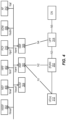
- Figure 4 illustrates a 5G network architecture using service-based interfaces between the NFs in the control plane, instead of the point-to-point reference points/interfaces used in the 5G network architecture of Figure 3 .
- the NFs described above with reference to Figure 3 correspond to the NFs shown in Figure 4 .
- the service(s) etc. that a NF provides to other authorized NFs can be exposed to the authorized NFs through the service-based interface.
- the service based interfaces are indicated by the letter "N" followed by the name of the NF, e.g. Namf for the service based interface of the AMF 300 and Nsmf for the service based interface of the SMF 308, etc.
- the AMF 300 provides UE-based authentication, authorization, mobility management, etc.
- a UE 212 even using multiple access technologies is basically connected to a single AMF 300 because the AMF 300 is independent of the access technologies.
- the SMF 308 is responsible for session management and allocates Internet Protocol (IP) addresses to UEs. It also selects and controls the UPF 314 for data transfer. If a UE 212 has multiple sessions, different SMFs 308 may be allocated to each session to manage them individually and possibly provide different functionalities per session.
- the AF 312 provides information on the packet flow to the PCF 310 responsible for policy control in order to support Quality of Service (QoS).
- QoS Quality of Service
- the PCF 310 determines policies about mobility and session management to make the AMF 300 and SMF 308 operate properly.
- the AUSF 304 supports authentication function for UEs or similar and thus stores data for authentication of UEs or similar while the UDM 306 stores subscription data of the UE 212.
- the Data Network (DN) not part of the 5GC network, provides Internet access or operator services and similar.
- An NF may be implemented either as a network element on a dedicated hardware, as a software instance running on a dedicated hardware, or as a virtualized function instantiated on an appropriate platform, e.g., a cloud infrastructure.
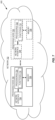
- FIG. 5 shows a call flow diagram illustrating a process for interaction between a visited NF (vNF) 500 in a vPLMN 502 and a home NF (hNF) (not shown) in an hPLMN 504 via a vNRF 506 / hNRF 508.
- the vNF 500 determines the address of the vNRF 506 by means of local configuration, which is feasible given that it is a configuration local to the vPLMN 502, and sends a discovery request (including a GET request for the determined address) to the vNRF 506.
- the vNRF 506 after determining that it does not have any static configuration or prior information about the hPLMN 504, builds a bootstrapping URI of the hNRF 508 as follows:
- step 3 the hNRF 508 answers with a HATEOAS document containing a number of link relations corresponding to the different services and their base URIs (which include the API major version), and maybe additional useful parameters ("status" and "load” below).
- An example response is shown below:
- the vNRF 506 uses the bootstrapping information received to build the effective Uniform Resource Indicators (URIs) used for the different services exposed by the hNRF 508. As shown, the vNRF 506 uses the latest version of the discovery API available, which is version 2 (v2). If the bootstrapping described above were not available, the vNRF 506 would not know which APIs were implemented by the hNRF 508 (e.g., which versions of the APIs) and thus would be forced to rely on static configuration (Service-Level Agreement (SLA)) or default to the lowest possible version of the desired API, for example, version 1 (v1).
- SLA Service-Level Agreement
- the vNRF 506 returns the search result of the discovery to the vNRF 506.
- the vNRF 506 returns the search result of the discovery to the vNF 500.
- an NF within a PLMN may communicate with an NRF in the same PLMN.
- an operator would configure the NF with an address, URIs, and API version(s) supported by the NRF. This means that every time a new API version is rolled out by the NRF, the NF must be re-configured to communicate with the NRF using the new API version.
- Using the bootstrapping process discussed above with respect to Figure 5 within the same PLMN allows NFs in a PLMN to dynamically adapt to changes in an NRF in the same PLMN without reconfiguration.
- FIG. 6 is a schematic block diagram of a network node 600 according to some embodiments of the present disclosure.
- the network node 600 may be, for example, a network node that implements a core network entity or core network function such as, e.g., the vNF service consumer of Figure 5 , the vNRF of Figure 5 , or the hNRF of Figure 5 .
- the network node 600 includes one or more processors 604 (e.g., Central Processing Units (CPUs), Application Specific Integrated Circuits (ASICs), Field Programmable Gate Arrays (FPGAs), and/or the like), memory 606, and a network interface 608.
- the one or more processors 604 are also referred to herein as processing circuitry.
- the one or more processors 604 operate to provide one or more functions of a network node 600 as described herein (e.g., one or more functions of the vNF service consumer of Figure 5 , one or more functions of the vNRF of Figure 5 , or one or more functions of the hNRF of Figure 5 , as described above).
- the function(s) are implemented in software that is stored, e.g., in the memory 606 and executed by the one or more processors 604.
- FIG 7 is a schematic block diagram that illustrates a virtualized embodiment of the network node 600 according to some embodiments of the present disclosure.
- a "virtualized" network node is an implementation of the network node 600 in which at least a portion of the functionality of the network node 600 (e.g., one or more functions of the vNF service consumer of Figure 5 , one or more functions of the vNRF of Figure 5 , or one or more functions of the hNRF of Figure 5 , as described above) is implemented as a virtual component(s) (e.g., via a virtual machine(s) executing on a physical processing node(s) in a network(s)).
- the network node 600 includes one or more processing nodes 700 coupled to or included as part of a network(s) 702.
- Each processing node 700 includes one or more processors 704 (e.g., CPUs, ASICs, FPGAs, and/or the like), memory 706, and a network interface 708.
- functions 710 of the network node 600 described herein are implemented at the one or more processing nodes 700 or distributed across two or more processing nodes 700 in any desired manner.
- some or all of the functions 710 of the network node 600 described herein are implemented as virtual components executed by one or more virtual machines implemented in a virtual environment(s) hosted by the processing node(s) 700.
- a computer program including instructions which, when executed by at least one processor, causes the at least one processor to carry out the functionality of the network node 600 or a node (e.g., a processing node 700) implementing one or more of the functions 710 of the network node 600 in a virtual environment according to any of the embodiments described herein is provided.
- a carrier comprising the aforementioned computer program product is provided.
- the carrier is one of an electronic signal, an optical signal, a radio signal, or a computer readable storage medium (e.g., a non-transitory computer readable medium such as memory).
- FIG 8 is a schematic block diagram of the network node 600 according to some other embodiments of the present disclosure.
- the network node 600 includes one or more modules 800, each of which is implemented in software.
- the module(s) 800 provide the functionality of the network node 600 described herein (e.g., one or more functions of the vNF service consumer of Figure 5 , one or more functions of the vNRF of Figure 5 , or one or more functions of the hNRF of Figure 5 , as described above).
- This discussion is equally applicable to the processing node 700 of Figure 7 where the modules 800 may be implemented at one of the processing nodes 700 or distributed across multiple processing nodes 700 and/or distributed across two or more of the processing nodes 700.
- the NRF offers an Nnrf_Bootstrapping service to let NF Service Consumers of the NRF know about the services endpoints it supports, by using a version-independent URI endpoint that does not need to be discovered by using a Discovery service.
- This service shall be used in inter-PLMN scenarios where the NRF in a PLMN-A needs to invoke services from an NRF in PLMN-B, when there is no pre-configured information indicating the version of the services deployed in PLMN-B.
- This service may also be used in intra-PLMN scenarios, to avoid configuring statically in the different NFs information about the service versions deployed in the NRF to be used by those NFs.
- Nnrf_Bootstrapping service The services operations defined for the Nnrf_Bootstrapping service are as follows:
- This service operation is used by an NF Service Consumer to request bootstrapping information from the NRF.
- URIs of this API shall have the following root: ⁇ nrfApiRoot ⁇ where ⁇ nrfApiRoot ⁇ represents the concatenation of the "scheme” and "authority” components of the NRF, as defined in IETF RFC 3986 [17].
- HTTP/2 as defined in IETF RFC 7540 [9], shall be used as specified in clause 5 of 3GPP TS 29.500 [4].
- HTTP/2 shall be transported as specified in clause 5.3 of 3GPP TS 29.500 [4].
- HTTP headers as specified in clause 4.4 of IETF RFC 6749 [16] shall be supported, with the exception that there shall not be "Authorization" HTTP request header in the access token request.
- Table 6.x.3.1-1 provides an overview of the resources and applicable HTTP methods.
- Table 6.x.3.1-1 Resources and methods overview Resource name Resource URI HTTP method or custom operati on Description Bootstrappin 9 (Document) ⁇ nrfApiRoot ⁇ /bootstrapping GET Retrieve a collection of links pointing to other services exposed by NRF.
- This resource represents a collection of links pointing to other services exposed by NRF.
- This method retrieves a list of links pointing to other services exposed by NRF.
- This method shall support the URI query parameters specified in table 6.x.3.2.3.1-1.
- This method shall support the request data structures specified in table 6.x.3.2.3.1-2 and the response data structures and response codes specified in table 6.x.3.2.3.1-3.
- Table 6.x.3.2.3.1-2 Data structures supported by the GET Request Body on this resource Data type P Cardinality Description n/a Table 6.x.3.2.3.1-3: Data structures supported by the GET Response Body on this resource Data type P Cardinality Response codes Description Bootstrappin glnfo M 1 200 OK
- the response body contains a "_links" object containing the URI of each service exposed by the NRF.
- This clause specifies the application data model supported by the API.
- Table 6.x.6.1-1 specifies the data types defined for the Nnrf_Bootstrapping service-based interface protocol.
- Table 6.x.6.1-1 Nnrf_Bootstrapping specific Data Types Data type Clause defined Description BootstrappingInfo 6.x.6.2.2
- Table 6.x.6.1-2 specifies data types re-used by the Nnrf_Bootstrapping service-based interface protocol from other specifications, including a reference to their respective specifications and when needed, a short description of their use within the Nnrf service-based interface.
- Table 6.x.6.1-2 Nnrf_Bootstrapping re-used Data Types Data type Reference Comments LinksValueSchema 3GPP TS 29.571 [7] 3GPP Hypermedia link Problem Details 3GPP TS 29.571 [7]
- Table 6.x.6.2.2-1 Definition of type BootstrappingInfo Attribute name Data type P Cardinal ity Description status Status O 0..1 Status of the NRF (operative, non-operative, ...) _links map(LinksVa lueSchema) M 1..N Map of LinksValueSchema objects, where the keys are the link relations, as described in Table 6.x.6.3.3.1-1, and the values are objects containing an "href" attribute, whose value is an absolute URI corresponding to each link relation.
- the "href” attribute of the object associated to this relation type contains the URI of the resource used in the Nnrf_NFManagement API to manage subscriptions to the NRF (i.e. the "subscriptions” collection resource).
- discover The "href” attribute of the object associated to this relation type contains the URI of the resource used in the Nnrf_NFManagement API (i.e. the "subscriptions” collection resource).
- authorize The "href” attribute of the object associated to this relation type contains the URI of the Oauth2 Access Token Request endpoint, used to request authorization to other APIs in the 5G Core Network.
- any appropriate steps, methods, features, functions, or benefits disclosed herein may be performed through one or more functional units or modules of one or more virtual apparatuses.
- Each virtual apparatus may comprise a number of these functional units.
- These functional units may be implemented via processing circuitry, which may include one or more microprocessor or microcontrollers, as well as other digital hardware, which may include Digital Signal Processor (DSPs), special-purpose digital logic, and the like.
- the processing circuitry may be configured to execute program code stored in memory, which may include one or several types of memory such as Read Only Memory (ROM), Random Access Memory (RAM), cache memory, flash memory devices, optical storage devices, etc.
- Program code stored in memory includes program instructions for executing one or more telecommunications and/or data communications protocols as well as instructions for carrying out one or more of the techniques described herein.
- the processing circuitry may be used to cause the respective functional unit to perform corresponding functions according one or more embodiments of the present disclosure.
Landscapes
- Engineering & Computer Science (AREA)
- Computer Networks & Wireless Communication (AREA)
- Signal Processing (AREA)
- Computer Security & Cryptography (AREA)
- Databases & Information Systems (AREA)
- Mobile Radio Communication Systems (AREA)
Claims (14)
- Verfahren, das durch eine erste Netzfunktion, NF, in einem Kernnetz (210) eines zellularen Kommunikationssystems (200) durchgeführt wird, wobei das Verfahren Folgendes umfasst:Empfangen (Fig. 5, Schritt 2; Fig. 9, Schritt 1), von einer zweiten NF, einer Anforderung für Dienste, die durch die erste NF angeboten sind; undals Reaktion auf das Empfangen (Fig. 5, Schritt 2; Fig. 9, Schritt 1) der Anforderung, Senden (Fig. 5, Schritt 3; Fig. 9, Schritt 2), an die zweite NF, von Informationen über einen oder mehrere Dienste, die durch die erste NF angeboten sind;wobei es sich bei der ersten NF um eine Netz-Repository-Funktion, NRF, (402; 508) handelt und es sich bei der zweiten NF um einen NF-Dienstverbraucher handelt.
- Verfahren nach Anspruch 1, wobei das Empfangen (Fig. 5, Schritt 2; Fig. 9, Schritt 1) der Anforderung Empfangen der Anforderung für einen Bootstrapping-Dienst der ersten NF umfasst, wobei der Bootstrapping-Dienst durch die erste NF angeboten wird, um NF-Dienstverbraucher der ersten NF über die Dienst-Endpunkte, die sie unterstützt, zu informieren und optional, wobei der Bootstrapping-Dienst von einem Entdeckungsdienst der ersten NF (402; 508) getrennt ist.
- Verfahren nach Anspruch 2, wobei es sich bei der Anforderung um eine Hypertext-Transfer-Protocol-(HTTP)-GET-Anforderung handelt, die an {nrfApiRoot}/bootstrapping adressiert ist, wobei es sich bei {nrfApiRoot} um eine Verkettung einer Schemakomponente und einer Autoritätskomponente der NRF (402; 508) handelt
oder
wobei es sich bei der Anforderung um eine Hypertext-Transfer-Protocol-(HTTP)-GET-Anforderung handelt, die an https://nrf.5gc.mnc<MNC>.mcc<MCC>.3gppnetwork.org/bootstrappin g adressiert ist, wobei es sich bei "MNC" um einen Mobilfunknetzcode einer bestimmten UE (212) handelt, die mit der Anforderung assoziiert ist, und es sich bei "MCC" um einen Mobilfunkländercode der bestimmten UE (212) handelt. - Verfahren nach Anspruch 3, wobei die Anforderung eine Angabe der Unterstützung für ein Format Hypermedia as the Engine of Application State, HATEOAS, umfasst;und optional wobei es sich bei dem HATEOAS-Format um das 3gppHal+json-Format handelt;und ferner optionalwobei das Senden (Fig. 5, Schritt 3; Fig. 9, Schritt 2) der Informationen über den einen oder die mehreren Dienste, die durch die erste NF angeboten sind, an die zweite NF Senden der Informationen in einem HATEOAS-Dokument umfasst, das eine Anzahl von Verknüpfungsbeziehungen beinhaltet, die dem einen oder den mehreren Diensten entsprechen, die durch die erste NF angeboten sind, und Basis-Uniform-Resource-Indicators, Basis-URIs, des einen oder der mehreren Dienste, wobei die Basis-URIs Hauptversionen der Anwendungsprogrammierschnittstelle, API, des einen oder der mehreren Dienste umfassen.
- Verfahren nach einem der Ansprüche 1 bis 4, wobei die Informationen über den einen oder die mehreren Dienste, die durch die erste NF angeboten sind, Versionen der Anwendungsprogrammierschnittstelle, API, des einen oder der mehreren Dienste umfassen, die durch die erste NF angeboten sind;und optionalwobei die Informationen über den einen oder die mehreren Dienste, die durch die erste NF angeboten sind, ferner einen oder mehrere zusätzliche Parameter umfasst;und ferner optionalwobei der eine oder die mehreren zusätzlichen Parameter Last, Status oder sowohl Last als auch Status umfassen.
- Erste Netzfunktion, NF, für ein Kernnetz (210) eines zellularen Kommunikationssystems (200), wobei die erste NF zu Folgendem ausgelegt ist:Empfangen (Fig. 5, Schritt 2; Fig. 9, Schritt 1), von einer zweiten NF, einer Anforderung für Dienste, die durch die erste NF angeboten sind; undals Reaktion auf das Empfangen (Fig. 5, Schritt 2; Fig. 9, Schritt 1) der Anforderung, Senden (Fig. 5, Schritt 3; Fig. 9, Schritt 2), an die zweite NF, von Informationen über einen oder mehrere Dienste, die durch die erste NF angeboten sind;wobei es sich bei der ersten NF um eine Netz-Repository-Funktion, NRF, (402; 508) handelt und es sich bei der zweiten NF um einen NF-Dienstverbraucher handelt.
- Erste NF nach Anspruch 6, wobei die erste NF ferner dazu ausgelegt ist, das Verfahren nach einem der Ansprüche 2 bis 5 durchzuführen.
- Verfahren, das durch eine zweite Netzfunktion, NF, in einem Kernnetz (210) eines zellularen Kommunikationssystems (200) durchgeführt wird, wobei das Verfahren Folgendes umfasst:Senden (Fig. 5, Schritt 2; Fig. 9, Schritt 1), an eine erste NF, einer Anforderung für Dienste, die durch die erste NF angeboten sind; undals Reaktion auf das Senden (Fig. 5, Schritt 2; Fig. 9, Schritt 1) der Anforderung, Empfangen (Fig. 5, Schritt 3; Fig. 9, Schritt 2), von der ersten NF, von Informationen über einen oder mehrere Dienste, die durch die erste NF angeboten sind;wobei es sich bei der ersten NF um eine Netz-Repository-Funktion, NRF, (402; 508) handelt und es sich bei der zweiten NF um einen NF-Dienstverbraucher handelt.
- Verfahren nach Anspruch 8, wobei das Senden (Fig. 5, Schritt 2; Fig. 9, Schritt 1) der Anforderung Senden der Anforderung an einen Bootstrapping-Dienst der ersten NF umfasst, wobei der Bootstrapping-Dienst durch die erste NF angeboten wird, um NF-Dienstverbraucher der ersten NF über die Dienst-Endpunkte zu informieren, die sie unterstützt;und optionalwobei der Bootstrapping-Dienst von einem Entdeckungsdienst der ersten NF (402; 508) getrennt ist.
- Verfahren nach Anspruch 9,wobei es sich bei der Anforderung um eine Hypertext-Transfer-Protocol-(HTTP)-GET-Anforderung handelt, die an {nrfApiRoot}/bootstrapping adressiert ist, wobei es sich bei {nrfApiRoot} um eine Verkettung einer Schemakomponente und einer Autoritätskomponente des NRF (402; 508) handelt;und optionalwobei es sich bei der Anforderung um eine Hypertext-Transfer-Protocol-(HTTP)-GET-Anforderung handelt, die an https://nrf.5gc.mnc<MNC>.mcc<MCC>.3gppnetwork.org/bootstrappin g adressiert ist, wobei es sich bei "MNC" um einen Mobilfunknetzcode einer bestimmten UE (212) handelt, die mit der Anforderung assoziiert ist, und es sich bei "MCC" um einen Mobilfunkländercode der bestimmten UE (212) handelt.
- Verfahren nach Anspruch 10,wobei die Anforderung eine Angabe der Unterstützung für ein Format Hypermedia as the Engine of Application State, HATEOAS umfasst;und optionalwobei es sich bei dem HATEOAS-Format um das 3gppHal+json-Format handelt;und ferner optionalwobei das Empfangen der Informationen über den einen oder die mehreren Dienste, die durch die erste NF angeboten sind, Empfangen der Informationen in einem HATEOAS-Dokument umfasst, das eine Anzahl von Verknüpfungsbeziehungen beinhaltet, die dem einen oder den mehreren Diensten, die durch die erste NF angeboten sind und Basis-Uniform-Resource-Indicators, Basis-URIs, des einen oder der mehreren Dienste entsprechen, wobei die Basis-URIs Hauptversionen der Anwendungsprogrammierschnittstelle, API, des einen oder der mehreren Dienste umfassen.
- Verfahren nach einem der Ansprüche 8 bis 11,wobei die Informationen über den einen oder die mehreren Dienste, die durch die erste NF angeboten sind, Versionen der Anwendungsprogrammierschnittstelle, API, des einen oder der mehreren Dienste umfassen, die durch die erste NF angeboten sind;und optionalwobei die Informationen über den einen oder die mehreren Dienste, die durch die erste NF angeboten sind, ferner einen oder mehrere zusätzliche Parameter umfassen;und ferner optionalwobei der eine oder die mehreren zusätzlichen Parameter Last, Status oder sowohl Last als auch Status umfassen.
- Zweite Netzfunktion, NF, für ein Kernnetz (210) eines zellularen Kommunikationssystems (200), wobei die zweite NF zu Folgendem ausgelegt ist:Senden (Fig. 5, Schritt 2; Fig. 9, Schritt 1), an eine erste NF, einer Anforderung für Dienste, die durch die erste NF angeboten sind; undals Reaktion auf das Senden (Fig. 5, Schritt 2; Fig. 9, Schritt 1) der Anforderung, Empfangen (Fig. 5, Schritt 3; Fig. 9, Schritt 2), von der ersten NF, von Informationen über einen oder mehrere Dienste, die durch die erste NF angeboten sind;wobei es sich bei der ersten NF um eine Netz-Repository-Funktion, NRF, (402; 508) handelt und es sich bei der zweiten NF um einen NF-Dienstverbraucher handelt.
- Zweite NF nach Anspruch 13, wobei die zweite NF ferner dazu ausgelegt ist, das Verfahren nach einem der Ansprüche 9 bis 12 durchzuführen.
Applications Claiming Priority (2)
| Application Number | Priority Date | Filing Date | Title |
|---|---|---|---|
| US201962887784P | 2019-08-16 | 2019-08-16 | |
| PCT/IB2020/057522 WO2021033074A1 (en) | 2019-08-16 | 2020-08-10 | Bootstrapping service for nrf and nssf |
Publications (3)
| Publication Number | Publication Date |
|---|---|
| EP4014577A1 EP4014577A1 (de) | 2022-06-22 |
| EP4014577B1 true EP4014577B1 (de) | 2025-05-07 |
| EP4014577C0 EP4014577C0 (de) | 2025-05-07 |
Family
ID=72139627
Family Applications (1)
| Application Number | Title | Priority Date | Filing Date |
|---|---|---|---|
| EP20757675.2A Active EP4014577B1 (de) | 2019-08-16 | 2020-08-10 | Bootstrapping-dienst für nrf und nssf |
Country Status (5)
| Country | Link |
|---|---|
| US (1) | US12167324B2 (de) |
| EP (1) | EP4014577B1 (de) |
| CO (1) | CO2022002926A2 (de) |
| ES (1) | ES3030911T3 (de) |
| WO (1) | WO2021033074A1 (de) |
Families Citing this family (4)
| Publication number | Priority date | Publication date | Assignee | Title |
|---|---|---|---|---|
| US11558732B1 (en) * | 2021-04-16 | 2023-01-17 | T-Mobile Innovations Llc | Network function discovery through network repository functions in a wireless communication network |
| US12185205B2 (en) * | 2021-12-13 | 2024-12-31 | Oracle International Corporation | Methods, systems, and computer readable media for reducing inter-public land mobile network (PLMN) forwarding of messages relating to Nnrf service operations |
| US20250193286A1 (en) * | 2022-03-09 | 2025-06-12 | Telefonaktiebolaget Lm Ericsson (Publ) | Service request processing |
| US12052319B2 (en) * | 2022-05-27 | 2024-07-30 | T-Mobile Innovations Llc | Static discovery fallback for query-based network function interaction discovery |
Family Cites Families (7)
| Publication number | Priority date | Publication date | Assignee | Title |
|---|---|---|---|---|
| US9584377B2 (en) | 2014-11-21 | 2017-02-28 | Oracle International Corporation | Transparent orchestration and management of composite network functions |
| US10506429B2 (en) | 2016-03-09 | 2019-12-10 | Telefonaktiebolaget Lm Ericsson (Publ) | Systems and methods for using GBA for services used by multiple functions on the same device |
| US10387631B2 (en) | 2016-05-06 | 2019-08-20 | Enterpriseweb Llc | Systems and methods for domain-driven design and execution of modular and dynamic services, applications and processes |
| CN110771251B (zh) | 2017-06-16 | 2023-09-22 | 艾普拉控股有限公司 | 作为通信网络中的服务的小数据传送、数据缓冲及数据管理 |
| CN112586060B (zh) * | 2018-08-20 | 2024-07-09 | 瑞典爱立信有限公司 | 用于服务发现的方法和装置 |
| US10819676B1 (en) * | 2019-05-22 | 2020-10-27 | Verizon Patent And Licensing Inc. | System and method of acquiring network-centric information for customer premises equipment (CPE) management |
| WO2021064062A1 (en) | 2019-10-01 | 2021-04-08 | Telefonaktiebolaget Lm Ericsson (Publ) | Support of indirect communication with tls |
-
2020
- 2020-08-10 US US17/635,741 patent/US12167324B2/en active Active
- 2020-08-10 WO PCT/IB2020/057522 patent/WO2021033074A1/en not_active Ceased
- 2020-08-10 EP EP20757675.2A patent/EP4014577B1/de active Active
- 2020-08-10 ES ES20757675T patent/ES3030911T3/es active Active
-
2022
- 2022-03-14 CO CONC2022/0002926A patent/CO2022002926A2/es unknown
Also Published As
| Publication number | Publication date |
|---|---|
| CO2022002926A2 (es) | 2022-04-19 |
| US20220272622A1 (en) | 2022-08-25 |
| US12167324B2 (en) | 2024-12-10 |
| EP4014577A1 (de) | 2022-06-22 |
| EP4014577C0 (de) | 2025-05-07 |
| ES3030911T3 (en) | 2025-07-02 |
| WO2021033074A1 (en) | 2021-02-25 |
Similar Documents
| Publication | Publication Date | Title |
|---|---|---|
| EP3944646B1 (de) | Benachrichtigungen über eine profiländerung eines abonnenements für eine netzwerkfunktion | |
| EP4014577B1 (de) | Bootstrapping-dienst für nrf und nssf | |
| US11924641B2 (en) | Security management for service access in a communication system | |
| US20230370830A1 (en) | Methods and devices for network function discovery and selection | |
| US20250203680A1 (en) | Using dnai to identify a smf supporting connection to a local dn | |
| WO2020220319A1 (en) | Session management function selection | |
| US20240236910A1 (en) | Method of first access and mobility management function (amf) apparatus, method of user equipment (ue), first access and mobility management function (amf) apparatus, and user equipment (ue) | |
| WO2022003570A1 (en) | Determining a default network slice | |
| US20250126475A1 (en) | Oauth2 requirement per plmn to the definition of type nfservice | |
| EP4466895A1 (de) | Dynamische rückgewinnung von nsac-informationen | |
| US20240187972A1 (en) | NF DISCOVERY BETWEEN DIFFERENT NETWORKS SUCH AS DIFFERENT SNPNs | |
| WO2022033478A1 (en) | Method and apparatus for security communication | |
| US20230239174A1 (en) | Packet detection rules derived from ethernet forwarding information | |
| WO2022013281A1 (en) | Group management based on seal enhancements | |
| US20240397417A1 (en) | Methods, Network Nodes, and Computer Readable Media for Dynamically Discovering Serving Network Node in Core Network | |
| AU2023409921A1 (en) | Methods and apparatuses for conveying traffic offload policies to vplmn for home routed session breakout | |
| EP4295550A1 (de) | Unterstützung von mehrfach-dccf-einsatz | |
| US20250193286A1 (en) | Service request processing | |
| US20250301302A1 (en) | Ursp rule provisioning in roaming | |
| WO2024235751A1 (en) | Optimized conditional transactions with udr | |
| WO2025016968A1 (en) | Enhancement on the smf selection based on subscription | |
| US20240023182A1 (en) | Handling the unknown rrc establishment cause value in nr | |
| WO2022214395A1 (en) | Enhancement on upf selection via nrf | |
| WO2025242805A1 (en) | Subscription of an upf event via an i-smf/v-smf | |
| CN119497047A (zh) | 通信方法及装置 |
Legal Events
| Date | Code | Title | Description |
|---|---|---|---|
| STAA | Information on the status of an ep patent application or granted ep patent |
Free format text: STATUS: UNKNOWN |
|
| STAA | Information on the status of an ep patent application or granted ep patent |
Free format text: STATUS: THE INTERNATIONAL PUBLICATION HAS BEEN MADE |
|
| PUAI | Public reference made under article 153(3) epc to a published international application that has entered the european phase |
Free format text: ORIGINAL CODE: 0009012 |
|
| STAA | Information on the status of an ep patent application or granted ep patent |
Free format text: STATUS: REQUEST FOR EXAMINATION WAS MADE |
|
| 17P | Request for examination filed |
Effective date: 20220309 |
|
| AK | Designated contracting states |
Kind code of ref document: A1 Designated state(s): AL AT BE BG CH CY CZ DE DK EE ES FI FR GB GR HR HU IE IS IT LI LT LU LV MC MK MT NL NO PL PT RO RS SE SI SK SM TR |
|
| DAV | Request for validation of the european patent (deleted) | ||
| DAX | Request for extension of the european patent (deleted) | ||
| REG | Reference to a national code |
Ref legal event code: R079 Ipc: H04W0008000000 Ref country code: DE Ref legal event code: R079 Ref document number: 602020050865 Country of ref document: DE Free format text: PREVIOUS MAIN CLASS: H04W0048180000 Ipc: H04W0008000000 |
|
| RIC1 | Information provided on ipc code assigned before grant |
Ipc: H04W 48/18 20090101ALI20240417BHEP Ipc: H04W 8/00 20090101AFI20240417BHEP |
|
| GRAP | Despatch of communication of intention to grant a patent |
Free format text: ORIGINAL CODE: EPIDOSNIGR1 |
|
| STAA | Information on the status of an ep patent application or granted ep patent |
Free format text: STATUS: GRANT OF PATENT IS INTENDED |
|
| INTG | Intention to grant announced |
Effective date: 20240619 |
|
| GRAJ | Information related to disapproval of communication of intention to grant by the applicant or resumption of examination proceedings by the epo deleted |
Free format text: ORIGINAL CODE: EPIDOSDIGR1 |
|
| STAA | Information on the status of an ep patent application or granted ep patent |
Free format text: STATUS: REQUEST FOR EXAMINATION WAS MADE |
|
| STAA | Information on the status of an ep patent application or granted ep patent |
Free format text: STATUS: EXAMINATION IS IN PROGRESS |
|
| INTC | Intention to grant announced (deleted) | ||
| 17Q | First examination report despatched |
Effective date: 20240813 |
|
| GRAP | Despatch of communication of intention to grant a patent |
Free format text: ORIGINAL CODE: EPIDOSNIGR1 |
|
| STAA | Information on the status of an ep patent application or granted ep patent |
Free format text: STATUS: GRANT OF PATENT IS INTENDED |
|
| INTG | Intention to grant announced |
Effective date: 20250103 |
|
| GRAS | Grant fee paid |
Free format text: ORIGINAL CODE: EPIDOSNIGR3 |
|
| GRAA | (expected) grant |
Free format text: ORIGINAL CODE: 0009210 |
|
| STAA | Information on the status of an ep patent application or granted ep patent |
Free format text: STATUS: THE PATENT HAS BEEN GRANTED |
|
| AK | Designated contracting states |
Kind code of ref document: B1 Designated state(s): AL AT BE BG CH CY CZ DE DK EE ES FI FR GB GR HR HU IE IS IT LI LT LU LV MC MK MT NL NO PL PT RO RS SE SI SK SM TR |
|
| REG | Reference to a national code |
Ref country code: GB Ref legal event code: FG4D |
|
| REG | Reference to a national code |
Ref country code: CH Ref legal event code: EP |
|
| REG | Reference to a national code |
Ref country code: DE Ref legal event code: R096 Ref document number: 602020050865 Country of ref document: DE |
|
| REG | Reference to a national code |
Ref country code: IE Ref legal event code: FG4D |
|
| U01 | Request for unitary effect filed |
Effective date: 20250512 |
|
| U07 | Unitary effect registered |
Designated state(s): AT BE BG DE DK EE FI FR IT LT LU LV MT NL PT RO SE SI Effective date: 20250516 |
|
| REG | Reference to a national code |
Ref country code: ES Ref legal event code: FG2A Ref document number: 3030911 Country of ref document: ES Kind code of ref document: T3 Effective date: 20250702 |
|
| U20 | Renewal fee for the european patent with unitary effect paid |
Year of fee payment: 6 Effective date: 20250827 |
|
| PGFP | Annual fee paid to national office [announced via postgrant information from national office to epo] |
Ref country code: ES Payment date: 20250901 Year of fee payment: 6 |
|
| PG25 | Lapsed in a contracting state [announced via postgrant information from national office to epo] |
Ref country code: GR Free format text: LAPSE BECAUSE OF FAILURE TO SUBMIT A TRANSLATION OF THE DESCRIPTION OR TO PAY THE FEE WITHIN THE PRESCRIBED TIME-LIMIT Effective date: 20250808 Ref country code: NO Free format text: LAPSE BECAUSE OF FAILURE TO SUBMIT A TRANSLATION OF THE DESCRIPTION OR TO PAY THE FEE WITHIN THE PRESCRIBED TIME-LIMIT Effective date: 20250807 |
|
| PG25 | Lapsed in a contracting state [announced via postgrant information from national office to epo] |
Ref country code: PL Free format text: LAPSE BECAUSE OF FAILURE TO SUBMIT A TRANSLATION OF THE DESCRIPTION OR TO PAY THE FEE WITHIN THE PRESCRIBED TIME-LIMIT Effective date: 20250507 |
|
| PGFP | Annual fee paid to national office [announced via postgrant information from national office to epo] |
Ref country code: GB Payment date: 20250827 Year of fee payment: 6 |
|
| PG25 | Lapsed in a contracting state [announced via postgrant information from national office to epo] |
Ref country code: HR Free format text: LAPSE BECAUSE OF FAILURE TO SUBMIT A TRANSLATION OF THE DESCRIPTION OR TO PAY THE FEE WITHIN THE PRESCRIBED TIME-LIMIT Effective date: 20250507 |
|
| PG25 | Lapsed in a contracting state [announced via postgrant information from national office to epo] |
Ref country code: RS Free format text: LAPSE BECAUSE OF FAILURE TO SUBMIT A TRANSLATION OF THE DESCRIPTION OR TO PAY THE FEE WITHIN THE PRESCRIBED TIME-LIMIT Effective date: 20250807 |
|
| PG25 | Lapsed in a contracting state [announced via postgrant information from national office to epo] |
Ref country code: IS Free format text: LAPSE BECAUSE OF FAILURE TO SUBMIT A TRANSLATION OF THE DESCRIPTION OR TO PAY THE FEE WITHIN THE PRESCRIBED TIME-LIMIT Effective date: 20250907 |
|
| PG25 | Lapsed in a contracting state [announced via postgrant information from national office to epo] |
Ref country code: SM Free format text: LAPSE BECAUSE OF FAILURE TO SUBMIT A TRANSLATION OF THE DESCRIPTION OR TO PAY THE FEE WITHIN THE PRESCRIBED TIME-LIMIT Effective date: 20250507 |
|
| PG25 | Lapsed in a contracting state [announced via postgrant information from national office to epo] |
Ref country code: CZ Free format text: LAPSE BECAUSE OF FAILURE TO SUBMIT A TRANSLATION OF THE DESCRIPTION OR TO PAY THE FEE WITHIN THE PRESCRIBED TIME-LIMIT Effective date: 20250507 |
|
| PG25 | Lapsed in a contracting state [announced via postgrant information from national office to epo] |
Ref country code: SK Free format text: LAPSE BECAUSE OF FAILURE TO SUBMIT A TRANSLATION OF THE DESCRIPTION OR TO PAY THE FEE WITHIN THE PRESCRIBED TIME-LIMIT Effective date: 20250507 |