EP4014435B1 - Automatisiertes support-system für verbundene geräte - Google Patents
Automatisiertes support-system für verbundene geräte Download PDFInfo
- Publication number
- EP4014435B1 EP4014435B1 EP20753368.8A EP20753368A EP4014435B1 EP 4014435 B1 EP4014435 B1 EP 4014435B1 EP 20753368 A EP20753368 A EP 20753368A EP 4014435 B1 EP4014435 B1 EP 4014435B1
- Authority
- EP
- European Patent Office
- Prior art keywords
- resolution
- local network
- issue
- engine
- context
- Prior art date
- Legal status (The legal status is an assumption and is not a legal conclusion. Google has not performed a legal analysis and makes no representation as to the accuracy of the status listed.)
- Active
Links
Images


Classifications
-
- H—ELECTRICITY
- H04—ELECTRIC COMMUNICATION TECHNIQUE
- H04L—TRANSMISSION OF DIGITAL INFORMATION, e.g. TELEGRAPHIC COMMUNICATION
- H04L41/00—Arrangements for maintenance, administration or management of data switching networks, e.g. of packet switching networks
- H04L41/50—Network service management, e.g. ensuring proper service fulfilment according to agreements
- H04L41/5061—Network service management, e.g. ensuring proper service fulfilment according to agreements characterised by the interaction between service providers and their network customers, e.g. customer relationship management
-
- H—ELECTRICITY
- H04—ELECTRIC COMMUNICATION TECHNIQUE
- H04L—TRANSMISSION OF DIGITAL INFORMATION, e.g. TELEGRAPHIC COMMUNICATION
- H04L41/00—Arrangements for maintenance, administration or management of data switching networks, e.g. of packet switching networks
- H04L41/04—Network management architectures or arrangements
- H04L41/046—Network management architectures or arrangements comprising network management agents or mobile agents therefor
-
- H—ELECTRICITY
- H04—ELECTRIC COMMUNICATION TECHNIQUE
- H04L—TRANSMISSION OF DIGITAL INFORMATION, e.g. TELEGRAPHIC COMMUNICATION
- H04L41/00—Arrangements for maintenance, administration or management of data switching networks, e.g. of packet switching networks
- H04L41/16—Arrangements for maintenance, administration or management of data switching networks, e.g. of packet switching networks using machine learning or artificial intelligence
-
- H—ELECTRICITY
- H04—ELECTRIC COMMUNICATION TECHNIQUE
- H04L—TRANSMISSION OF DIGITAL INFORMATION, e.g. TELEGRAPHIC COMMUNICATION
- H04L41/00—Arrangements for maintenance, administration or management of data switching networks, e.g. of packet switching networks
- H04L41/50—Network service management, e.g. ensuring proper service fulfilment according to agreements
- H04L41/5061—Network service management, e.g. ensuring proper service fulfilment according to agreements characterised by the interaction between service providers and their network customers, e.g. customer relationship management
- H04L41/5074—Handling of user complaints or trouble tickets
-
- H—ELECTRICITY
- H04—ELECTRIC COMMUNICATION TECHNIQUE
- H04L—TRANSMISSION OF DIGITAL INFORMATION, e.g. TELEGRAPHIC COMMUNICATION
- H04L51/00—User-to-user messaging in packet-switching networks, transmitted according to store-and-forward or real-time protocols, e.g. e-mail
- H04L51/21—Monitoring or handling of messages
- H04L51/216—Handling conversation history, e.g. grouping of messages in sessions or threads
-
- H—ELECTRICITY
- H04—ELECTRIC COMMUNICATION TECHNIQUE
- H04L—TRANSMISSION OF DIGITAL INFORMATION, e.g. TELEGRAPHIC COMMUNICATION
- H04L41/00—Arrangements for maintenance, administration or management of data switching networks, e.g. of packet switching networks
- H04L41/08—Configuration management of networks or network elements
- H04L41/0894—Policy-based network configuration management
-
- H—ELECTRICITY
- H04—ELECTRIC COMMUNICATION TECHNIQUE
- H04L—TRANSMISSION OF DIGITAL INFORMATION, e.g. TELEGRAPHIC COMMUNICATION
- H04L43/00—Arrangements for monitoring or testing data switching networks
- H04L43/08—Monitoring or testing based on specific metrics, e.g. QoS, energy consumption or environmental parameters
Definitions
- the invention relates to support for connected devices in local networks, especially devices in the home or small business.
- local network is used for a group of connected devices with internet connectivity, such as in a home or small business.
- a problem at present is that, in a building, devices vary in terms of their connectivity to the internet and in terms of their user diagnostics capabilities.
- the invention is directed towards providing an automated support system for local networks to address these issues.
- the invention provides an automated support system as set out in claim 1.
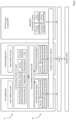
- an automated support system 1 comprises a cloud-based server recommendation engine 2 and a server analytics engine 3. There are also cloud-based administration tools 4 and a content management system (CMS) 5.
- CMS content management system
- the automated support system is for local networks of connected devices.
- the system has local ("home") network agents 12 each comprising a digital processor, a memory, a local communications wireless interface for communicating locally with devices in the local network, and remotely with cloud-based servers.
- local (“home”) network agents 12 each comprising a digital processor, a memory, a local communications wireless interface for communicating locally with devices in the local network, and remotely with cloud-based servers.
- the interface 10 is linked with a database 20 for storage of live context data for the local network devices, services and networks.
- the functions of the recommendation engine 2 include the following which flow in sequence:
- the output from this stream is the creation of an interaction instance specific to the customer's issue, this is passed over the MQTT bus (see Fig. 2 ) between the engine 2 ("platform") and the other system components, processing the interaction steps as instructed by the configured instance.
- FIG. 2 shows the architecture of the server, in which there is communication via a cloud layer, an MQTT layer, and a common C library ("Sweepr" is the name of the service provided by the engine 2).
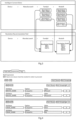
- Fig. 4 illustrates rule expressions, for defining devices and issues to be handled.
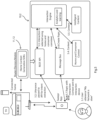
- Fig. 5 illustrates a path through the system from a local network agent and back in one use case.
- the engine 2 uses a Natural Language Processing engine along with the core entity model to identify the relevant device or service. This also uses synonyms for device and services which can be created using the platform tools and uses clarification questions back to the user if the stated device or service is unknown or ambiguous. This also uses previously reported issue history to avoid repeated questions and to show knowledge of the user's local network.
- Device selection for a given service issue is based on a learned confidence factor that associates device types with a service, and this factor is configured at system commissioning and automatically changes based on the accuracy of the device selection.
- the system uses a prioritisation associated with matching the device type with a use-case. For example if a user raises a complaint about watching a particular streaming service and they have never used the system 1, the system prioritizes larger display devices over smaller display sizes, so even though the streaming service can be watched on a mobile phone the system look for larger devices first (for example a Smart TV" Once the user starts to use the system 1 it prioritizes previously-used devices more than ones which have never been involved in a resolution.
- Resolutions are the series of steps taken to resolve a customer issue, once the issue has been clarified using device/service and Issue detection.
- An issue context and the local network context then provide an enriched data set that are used to feed a resolution selection process. This process is where rules are applied for the given device, network or service and the matching rule then returns a listing of matching resolutions. There may be more than one matching resolution, so prioritisation is applied to ensure the Resolution most likely to work is selected. This prioritisation is based on a machine learning mechanism that ensures the most successful resolutions are always selected for a given issue.
- the rules that are used to select the resolutions are either fixed rules that are created using a resolution recommender tool, or are dynamic rules that use a prediction engine, a machine learning enabled analytics software tool that uses issues as they are processed to train the model, then selects the most likely resolution based on the overall context. Every time an issue is processed feedback to the platform enriches the training of the model to ensure that it is always improving as end users interact with the platform.
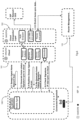
- the engine 2 enriches training of the resolution selection component 3 according to feedback arising from interactions with the engine 2. This is referred to as machine learning, and referring to Fig. 7 , using both a content-based algorithm and a collaborative filtering algorithm, and one of the algorithm outputs is selected.
- Rec 1 Final Score CB Rec 1 Score * CB Priority + CF Rec 1 Score * CF Priority CB Priority + CF Priority
- the content-based algorithm has been optimised to support a 'cold start' scenario, where a new Resolution is created and the platform needs to include it as a possible Prediction, this uses a 'similarity score' for the Resolution to assess what existing Resolutions the new Resolution is similar to.
- This method allows new Resolutions to be selected by the Machine learning algorithm without retraining the model.
- the parameters are:
- the priority values are in one example generated overnight in a batch training process.
- a resolution is executed. This is a series of steps that may be diagnostic checks, content, prompts, system actions or branching logic.
- a core orchestration engine executes the resolution flow but each step may be executed either on the server, the client interaction device, or one of the other hardware items in the environment, such as a home router or device, a "RunAt" Indicator specifies where a step needs to be executed.
- Server-side steps integrate with the local network via a management protocol such as TR-69 or more real-time protocols using Web sockets or other TCP based direct connections to the local network.
- a feedback stage This is a series of steps that gather feedback from the user and may also use diagnostic checks to ensure that the issue is resolved, and then feeds the outcome back into the analytics component to drive machine learning and other analytics.
- the block 2.4 feeds into the analytics engine 3 for machine learning according to feedback to update an historical context database 6.
- This database is accessed by the block 2.3 for enrichment of context stored by the local network interface database 20.
- the interface 10 and the home network agents 12 are configured to perform home network synchronisation using a mechanism to maintain unique device and router identity that utilises attributes of the device that are discovered by an agent 12 within the home using a range of IP protocols.
- the attributes are hashed to generate a unique device identity that ensures issue diagnostics do not have to rely solely on the device MAC Address.
- the platform uses a network agent 12 that is deployed within the home network 11.
- This agent uses a number of IP-based protocols (DNS, Netbios, uPNP, Bonjour, Ping) to auto discover that home network environment.
- DNS IP-based protocols
- the IP protocol scans provide a set of attributes that describe each device within the home. These attributes are collated into a single hash value that then uniquely describes each device without the need for hardware-based identifiers such as MAC addresses. This solves the problem of over reliance on the MAC Address for device identity, which are becoming increasingly random and therefore unreliable.
- the agent 12 may be deployed on any device that is running on the home network, such as a fixed router, a gateway or an extender to a mobile device.
- the agent may be a hardware-based component deployed as firmware, or a software-based component which is deployed as an application onto the mobile operating system.
- the home network 11 primary router identifier has a similar problem to device identification, this was typically reliant on the device MAC address. However recently this data point has been randomised by manufacturers, making identification of the router difficult, a similar approach to device identity is taken, creating a broader hash of the router identities that may include the MAC Address, plus other identifiers such as the router BSSID, Customer's account identifiers plus other attributes such as open ports and HTTP headers.
- the interface 10 performs local network synchronisation in a manner which is highly efficient in terms of bandwidth.
- a unique identifier is generated for each device in each local network 11.
- the extent of communication is minimised by the following process.
- the agent 12 uploads a full dataset instead of the signature, and the interface 10 receives and processes this dataset.
- the system does not store usage state data on the server side.
- the only state which is stored as part of the signature mechanism is an indication as to whether the device is connected or not.
- the interface 10 and the agents 12 ensure prompt and accurate synchronisation, i.e. ensuring that there is an up-to-date dataset for each local network 11.This is achieved without need for regular uploads of the device identifiers and state data and hence communications bandwidth requirements are reduced. Moreover, it means that there is less processing required in the server, the above mechanism very promptly identifying any changes in each network 11 in turn.
- the signature is generated using both device identifiers and state data.
- the state data includes the device identifiers and connectivity status, the overall local network status and may include other usage-related statistics that detail how and when devices are used. This can comprise a large dataset and use of the signature reduces the overhead of sending large datasets of cloud-based services for this purpose.
- the small, secure signature 'Hash' describes the connected home status, and if this status does not change between measurement intervals only this signature is transferred, however if the state changes the device level data that has changed is passed to the server for processing. This also keeps a store of all previously seen signatures and their list of devices so that minor changes in state do not require re-processing to gather previously existing device data. In this way the data is secured and data transfers are greatly reduced in both size and frequency while also ensuring a near real time status of the connected home is maintained on the cloud-based servers.
- the use of the signature is very advantageous, it is only synchronised once for a given household status, thereby ensuring that multiple synchronisations of the same state do not occur, hence reducing network bandwidth and improving the efficiency of the diagnostic process by ensuring speed of availability of the home network state.
- each local network 11 the agent 12 communicates locally with all of the devices to locally maintain a dataset. This functions even if there is a problem with direct linking of a device with the Internet, for example, for logging with the device's manufacturer.
- the agent 12 is programmed to communicate with the manufacturer server on behalf of the device. This ensures comprehensive connectivity for devices on the edges of WiFi strength.
- a support request is received by the interface 10 most often via an application on the user's device.
- the request may concern functioning of a device or of a service such as live streaming of media.
- the recommendation engine 2 processes each request in an automated manner. It gathers a context using the connected home state as synchronized to the server along with the other context such as the user's support history and Service context, and when an issue is reported the agent activates a series of diagnostic steps to gather more context specific to the issue reported. Context such as speeds, signal strengths, device health and other such data are gathered. This context is then applied to either fixed rules or a prediction engine to select a resolution. These rules and predictions are also selected based on the entity model and the device, network or service's location within the model, this is hierarchical so it can select a resolution at any point in the hierarchy that matches the rule or prediction. This ensures that even devices or services that do not have specific resolutions built can use common resolutions from the hierarchy. For example, a resolution designed to support all streaming video services could be applied if a resolution for a specifically requested video service was not available. This hierarchy model may be edited and extended to support the ever-changing set of services, devices and networks within connected homes.
- the recommendation engine's blocks 2.1 to 2.4 may generate a recommendation which is not technically the best but is most suited to the particular user.
- This uses the skill level of the user to select appropriate resolutions, hence the user "skill level" forms part of the context and will be used in resolution selection. This ensures the platform does not select a resolution that the user in question could not be able to execute on, or understand, and the platform may select a simpler, less effective, but more appropriate resolution for that user.
- the skill level is dynamic, it is set at first usage based on a simple question to assess the initial level, then dynamically updates after this based on the user's speed of execution and ability to complete resolutions.
- the entity model includes device types, versions and even firmware patch versions, service types and how they all behave and are layered together in a connected environment.
- This awareness coupled with the hierarchy allows for the automated support for new and changed devices and services without the need for explicit sets of rules, diagnostics and issue resolution for each node in the hierarchy.
- Machine learned issue resolution handling on top of this hierarchy allows for the support of both new and known devices and services without need for ongoing maintenance of a potentially complex hierarchy of connected devices and services.
- the hierarchy ensures any given device or service may be supported, by allowing for abstract Resolutions at manufacturer or service type level, for example a resolution may be built to apply to all Cookers or all Gaming services.
- Part of this hierarchy model means it also can support very specific handling of the features and nuances of each device and service by allowing for precedence to be given to the more specific leaf node. This approach will allow for more flexible and granular scale which will be essential for providing support for the connected home.
- the system 1 enables dynamic assessment of skill levels within the connected home user base, and this capability creates cohorts of users that have distinct skill levels and associated capabilities in handling connected home technical issues.
- the platform can be much more effective at driving end user interaction, promoting end user education and driving the end user to a more successful outcome.
- This is stored at the user level in the main platform (recommendation engine 2) database, not in the entity model.
- the skill level is assessed at time of registration using a small number of key questions, and is maintained as the user interacts with the platform thereafter, learning dynamically as the user's technical knowledge and skill levels change and altering how interactions are presented to achieve best outcomes in issue handling.
- the recommendation engine 2 provides a lightweight distributed processing approach to user-initiated device or service problem diagnostics and resolution.
- the local network often requires a multitude of devices and services to interact to facilitate the end user.
- the diagnostics and issue handling may invoke one or more of these devices or services, a smart connected home hub, a home router or gateway and a number of cloud based server components to gather diagnostics, make changes and interact with the end user.
- the recommendation engine 2 uses an issue resolution taxonomy that carries within the issue context, state, steps to be performed, and other data such as the capabilities of that home and the skill level of the end user.
- Each home support issue results in an instance of this taxonomy being created, this is enriched throughout the lifetime of the issue handling and passed between the components via a message bus..
- An instance of the taxonomy is created and passed along with the home and user context using a distributed Message Bus. For each interaction a message topic is created and this is used to link multiple actors in the processing of the Interaction.
- This taxonomy supports specific device capabilities, connected home capabilities, end user skill level knowledge and other context that allows for a highly targeted, personalized and effective processing of the reported issue, this in turn increases its chances of successful resolution.
- a resolution recommendation editor is a tool which allows users to configure Resolution Rules that determine which Diagnoses and Resolutions should be applied for a specific issue with a specific device, network type or service, and the order in which they will be applied.
- Diagnosis and Resolutions files each set out a sequence of steps that are followed in order to accomplish these tasks.
- the sequence of steps takes the form of a decision tree.
- Resolution and diagnosis files are created in the intelligent content editor in a JSON format, and are pulled into a resolution rule if the resolution or diagnosis file shares a tag with the resolution rule.
- a resolution rule is expected to contain no more than one diagnosis file, and this file is assigned the highest priority so that its decision tree is the first to be followed when the engine 2 applies a resolution rule to a reported issue.
- Diagnosis files are tagged with one or more tags, one of which must be the DIAGNOSE Tag, which distinguishes the diagnosis from the resolution files.
- Information captured by the actions and interactions in a diagnosis file are entered into the context for the household and may be used later by the Resolution files to address the issue.
- a resolution rule is expected to contain one or more resolution files. Each resolution file is assigned a priority that is unique within that resolution rule and that is not the highest priority (since this is reserved for the diagnosis file). Diagnosis files are tagged with various tags.
- Diagnosis and Resolution files contain any number of the following: Type Description Appears in Action An action is a task performed by the agent 12 against the device or household or performed by the engine 2 against a third party information source, for example, a speed test. Diagnosis Interaction An interaction is an exchange that takes place between the consumer and the agent 12, to gain information from the consumer in order to further clarify or resolve the issue. Diagnosis & Resolution Requests A question requesting information or instruction from the consumer. This could be to further clarify the issue, e.g., "Which gaming device is showing the problem?
- the context is a collection of attributes that catalog all information gained by the engine 2 in relation to a local network.
- the attributes take the form of key:value pairs, in which the keys have been predefined for each device, service, network type and issue type, and the values come from a variety of sources that include the NLP aliases that have been matched to user utterances; the user profile; any previous history with the same device, service and/or issue type; and data from the diagnostics, e.g., a speed test.
- the engine 2 uses the household context to identify the intent and the location in the hierarchy for the device, service or network with the issue, and then compares the information in the context to the expressions for the resolution rules at that place in the hierarchy in order to select a Resolution Rule appropriate to the issue.
- the Service context is an additional set of data about the service that the consumer may have an issue with; this includes the minimum bandwidth and latency for high quality service operation, a real-time check of the service status for the given location, and a prediction of the likelihood of a possible problem with the service based on analytics of the number of consumers reporting an issue with the service.
- a resolution recommendation editor is used once a range of resolutions and the device, service, network and issues hierarchies have been created in the intelligent content editor.
- the resolution recommendation editor allows users to create categories of device, network or service at any level in the hierarchy. These categories are called resolution rules.
- An example of a resolution rule is a "charger issues" rule, which contains a diagnosis and set of resolutions that handle any charger problems for a device at that level in the hierarchy. If the resolution rule "charger issues" is positioned in the device hierarchy at Device > MakeX > ModelY, then the engine 2 will use the diagnosis and resolutions in this rule to handle problems for this device.
- Each resolution rule is tagged with a set of key words that are used by the engine 2 to associate appropriate diagnosis and resolutions with a resolution rule.
- tags are "RESET”, or “FROZEN”, as well as "DIAGNOSE”.
- the use of tags provides a loose coupling between the rule logic and the diagnostic and resolution stages that ensures an easy migration from a rule-based selection mechanism to a machine-learned, data centric, prediction model. This will allow for a given domain to move from rule-based to prediction-based by replacing the rule evaluator with a prediction evaluator.
- Resolution RuleA is tagged with TAG1, TAG2 and TAG13.
- the resolutions that share one or more of these tags are Resolution2 and Resolution1, so these are the resolutions that will be coupled with Resolution RuleA.
- Resolution RuleB is tagged with TAG11, TAG12, TAG5, TAG10 and TAG13.
- the resolutions that share one or more of these tags are Resolution1, Resolution6 and Resolution7, so these are the resolutions that will be coupled with Resolution RuleB.
- Resolution3, Resolution4 and Resolutions are not used by Resolution RuleA or RuleB, and indeed, may not be used by any Resolution Rules.
- Fig. 4 gives an example screen for expression rules.
- Each resolution rule has an expression associated with it.
- An expression is a set of conditions that are defined with Boolean, conditional and equality operators, and which contain one or more attributes with stated values. Expressions are evaluated as True or False when compared to the information captured about the reported issue in the household context.
- This expression asks if the information in the context for that household (Household context) contains an attribute called ENTITY_TYPE that is populated with the value "network” AND an attribute called CLOUD _RSSI that is populated with a value that is greater or equal to -50 AND an attribute called cloud_NetworkSpeed that is populated with a value that is less than 500. If it does, then this Resolution Rule is selected and its resolutions are applied to the issue.
- Is equal to Is not equal to Contains Is greater than Is less than Is greater than or equal to Is less than or equal to Is after Is before True False Value
- the value of the attribute. Values are derived from the information captured by the system 1 from the interaction with the home user, e.g. the nature of the reported issue, and with information captured autonomously by The system 1 about the household e.g., the result of a speed test. This information is processed by the NLP Alias engine, which matches home user utterances to a the system 1 Alias, which in turn allows The system 1 to identify each attribute that is appropriate to the issue and populate it with the relevant alias.
- Each resolution in a resolution rule is assigned a priority.
- the priority of a resolution determines the order in which the resolutions in a resolution rule are applied to an issue, with the resolution with the highest priority applied first. If the resolution rule contains a diagnosis, the diagnosis is always assigned a priority of 1 so that it is run before the resolutions.
- the resolution rule "Nest > Nest Protect Smoke Detector > Unexpected Alarm1" contains the following resolutions, where the priority is in brackets:
- Resolutions are expected to have a priority that is unique within a resolution rule; however, in the event that the same priority value is assigned to more than one resolution in a resolution rule, The system 1 will select randomly one of these resolutions and apply it to the issue.
- Priority of a resolution is set initially by a permissioned user via the intelligent content editor. However, any existing priority value is subject to change by the system 1 as a result of its feedback and associated machine learning.
- the engine 2 is able to intervene in a resolution rule to change the priority of its resolutions if it has learnt that a lower priority resolution is more successful at addressing issues than the resolutions with higher priority.
- the engine 2 searches for another resolution rule that is at the same level in the hierarchy, and checks to see if the information in the household context meets the criteria set out in its expression. If the expression criteria are met, then the engine 2 will apply the diagnosis and resolutions in this next resolution rule.
- the engine 2 When an issue is raised by a home user or detected by the agent 12, the engine 2 will pick out the key words from the home user communication and match them to an NLP alias. The relevant aliases are then used to populate attributes in the context for the household. The attribute values are then compared to the attribute values in the Resolution Rule expressions, and the Resolution Rule for which the expression returns true is selected to apply to the reported issue.
- the engine 2 finds that a resolution has addressed the issue, it asks the home user via the agent 12 if they are satisfied with the outcome, and if the home user confirms that the issue has been addressed, then the issue is closed. If the engine 2 has applied every resolution in a resolution rule and the issue has not been fixed to the satisfaction of the home user, then the system will ask the home user if they wish to escalate the issue to the care team at the client. If the home user elects to escalate the issue, then it is added to the list of open issues in the customer care manager dashboard for investigation by the care team.
- FIG. 5 a simple example of operation of the system 1 is illustrated.
- a user communicates (1) an issue using his phone, and (2) this is passed to an API for intent extraction by the agent 12.
- a message is transmitted (3) to a REST API of the engine 2, and from there to an interaction engine which is a combination of the selection 2.1 and detection 2.2 components of the engine 2.
- a topic (which is a type of message with a unique identifier linked to the specific Interaction) is created (4) and a message bus sends the topic with an interaction context to the user's device.
- the device then communicates with the engine 2 and other parties such as in-home devices or routers using this Topic. Thereafter all communications for this interaction come in the form of messages related to the unique 'Topic', this allows for complex multi-stage, distributed processing of an Interaction.
- FIG. 6 an alternative automated support system for local networks of connected devices is illustrated.
- local network agents 100 each comprising a digital processor, a memory, a local communications wireless interface for communicating locally with devices in the local network, and remotely with cloud-based servers.
- These servers 101 and 102 have interfaces for communicating with the local network agents 100 and functionality of a recommendation engine to dynamically communicate with the local network agents via said interface and a routers 103 to capture support requests concerning devices and services, to perform work flow processing to generate a resolution for such support requests, and to communicate the resolution to the local network agents 100.
- the first group of servers include software functions for actions in response to support requests, and for service monitoring, device synchronization, and interactions via an API.
- the second group 102 include authentication, "Last-Mile", and router end points.
- the major steps for agent 100 synchronization are the following steps:
- This aspect is advantageous because it uses the routers 103 to, in real time enrich the local network ("home”) network synchronization data and generate and send a fresh signature.
- FIG. 7 a machine learning flow is illustrated in more detail, as follows:
- the embedded agent 12 implements a synchronization protocol to efficiently gather a consistent snapshot of unique devices in the local network.
- a device typically has a MacAddress, an IP address and a DNS name on a network, but due to privacy reasons often these details are not available to modern mobile device operating systems.
- a device will often (usually after a device has gone offline for a period) be given a new random IP address, and so the IP address cannot be relied upon after a given period (usually 15-30 minutes after it has gone offline) and even a DNS Name has stopped being made available within the local environment of some networks by some routers, for privacy reasons.
- the apparatus of the invention is configured to provide improved device recognition to address this problem.
- the agent 12 provides an alternative to the MacAddress in the form of a unique 64-bit hash code for a given device based on combining specific fields retrieved from scanning mechanisms during a scan of the network.
- the identifier has a value as HASH64(Idenitifer1 + Idenitifer2 + Idenitifer3 .... ) where the IdentifierNs are found using different protocols. In various examples they are some or all of a DNS name, a Bonjour name, a specific hardware identifier, a UPNP (Universal Plug and Play) identifier, a device name, a firmware identifier, a list of open ports.
- This provides a consistent set of identifiers for a given device using all the protocols available to the agent 12 and generates a consistent 64-bit hash value as an alternative to a MacAddress.
- a variation of this approach arises where the agent 12 can only get an assigned IP address but only needs it for consistency for a short and defined period of time.
- the agent uses the IP address + a valid time period as a "temporal Hash". This can be useful in situations where the agent can only get an IP address but needs to persist and recognise a device 'consistently' on a home network for a given period of time, for example, during and after a router reboot, or when a device has goes offline and online intermittently. With this 'hash' the system can have some level of confidence that the same device is 'seen' in the absence of other mechanisms.
- BSSID basic service set identifier
- SSID basic service set identifier
- the BSSID is a router obfuscated version of a MacAddress
- the SSID is the visible name of the network router e.g. the WIFI name.
- the BSSID could be used to recognise the router manufacturer and possibly the router model and therefore it is very useful for a number of typical diagnostic use-cases, but the BSSD can be randomised for privacy reasons.
- the agent 12 uses a similar approach using a HASH (identifier1 + identifier2 ... ) - using alternative known protocols to retrieve identifiers for a given local network.
- the invention provides a technical infrastructure for efficient and comprehensive automated processing of support requests related to a device local network. Human involvement is minimized and, in many cases, eliminated due to the comprehensiveness of the automation.
Landscapes
- Engineering & Computer Science (AREA)
- Computer Networks & Wireless Communication (AREA)
- Signal Processing (AREA)
- Business, Economics & Management (AREA)
- General Business, Economics & Management (AREA)
- Artificial Intelligence (AREA)
- Evolutionary Computation (AREA)
- Medical Informatics (AREA)
- Software Systems (AREA)
- Databases & Information Systems (AREA)
- Computer Vision & Pattern Recognition (AREA)
- Management, Administration, Business Operations System, And Electronic Commerce (AREA)
- Information Transfer Between Computers (AREA)
- Data Exchanges In Wide-Area Networks (AREA)
Claims (11)
- Automatisiertes Supportsystem für lokale Netzwerke von verbundenen Geräten, wobei das System Folgendes umfasst:mehrere lokale Netzwerkagenten (12), die jeweils einen digitalen Prozessor, einen Arbeitsspeicher, eine lokale drahtlose Kommunikationsschnittstelle zur lokalen Kommunikation mit assoziierten Geräten in einem der genannten lokalen Netzwerke und zur Fernkommunikation mit cloudbasierten Servern umfassen, undeine Gruppe von einem oder mehreren der genannten Server (2, 3) mit digitalen Prozessoren, Internet-Kommunikationsschnittstellen, Arbeitsspeicher und Speicher, konfiguriert zum Bereitstellen von:einer Server-Schnittstelle (10) zur Kommunikation mit den lokalen Netzwerkagenten (12),einer Empfehlungsmaschine (2), konfiguriert zum dynamischen Kommunizieren mit den lokalen Netzwerkagenten (12) über die genannte Schnittstelle, um Supportanfragen zu Geräten und Diensten des mit jedem Agenten assoziierten lokalen Netzwerks zu erfassen, zum Durchführen einer Workflow-Verarbeitung zum Erzeugen einer Lösung für solche Supportanfragen und zum Kommunizieren der Lösung an den lokalen Netzwerkagenten (12),wobei die Empfehlungsmaschine (2) zum automatischen Erzeugen eines Kontexts für jede Supportanfrage konfiguriert ist, wobei der Kontext historische Lösungsdaten für das assoziierte lokale Netzwerk und das Gerät und den Dienst enthält,wobei die Server-Schnittstelle (10) und die lokalen Netzwerkagenten (12) zum Durchführen von lokaler Netzwerksynchronisation mit geringem Bandbreiten-Overhead durch die Agenten konfiguriert sind, wobei jeder:asynchron eine Hash-Signatur erzeugt unddie genannte Signatur zur Server-Schnittstelle (10) überträgt, um den Status aller Geräte in dem genannten mit dem lokalen Netzwerk (11) assoziierten Agenten anzuzeigen, und die genannte Synchronisation so durchgeführt wird, dass nur zuvor nicht aufgezeichnete Gerätedaten synchronisiert werden müssen, wobei:jeder Agent konfiguriert ist zum automatischen Erzeugen der genannten Hash-Signatur mit Kennungen aller seiner assoziierten Geräte (11), wenn seit einem letzten Hochladen keine Änderung am Gerät oder Status stattgefunden hat, und zum Hochladen der genannten Hash-Signatur zusammen mit einer Kennung des lokalen Netzwerks (11), und die Server-Schnittstelle (10) konfiguriert ist zum Empfangen der genannten Hash-Signatur und zum Verifizieren, ob sie mit einer vorherigen Signatur übereinstimmt, und wenn ja, zum Protokollieren eines unveränderten Status für dieses lokale Netzwerk (11),jeder lokale Netzwerkagent (12) zum Hochladen eines vollständigen Geräte- und Statusdatensatzes konfiguriert ist, wenn eine Änderung stattgefunden hat,die Server-Schnittstelle (10) zum Empfangen und Verarbeiten des genannten Datensatzes konfiguriert ist,jeder lokale Netzwerkagent (12) zum Beibehalten der Konnektivität aller Geräte in seinem assoziierten lokalen Netzwerk (11) konfiguriert ist, einschließlich Geräten, die nicht zum direkten Kommunizieren mit dem Internet konfiguriert sind, indem sie sich an den Rändern des lokalen Netzwerks befinden, wobei der genannte Agent zum Verwenden eines lokalen Netzwerkprotokolls konfiguriert ist, so dass die genannten Geräte mit dem Agenten kommunizieren, unddie Empfehlungsmaschine eine Reihe von Komponenten umfasst, die so angeordnet sind, dass sie nacheinander arbeiten, um eine Supportanfrage zu verarbeiten, wobei die genannten Komponenten Folgendes umfassen:eine Auswahlkomponente (2.1), die zum Auswählen des auf die Supportanfrage anwendbaren Geräts oder Dienstes konfiguriert ist,eine Problemerkennungskomponente (2.2), die zum Erkennen eines Problems für die Supportanfrage konfiguriert ist,eine Lösungsauswahlkomponente (3.1), die zum Auswählen einer Lösung für das Problem konfiguriert ist, undeine Lösungsausführungskomponente (4.1), die zum Kommunizieren mit dem lokalen Netzwerkagenten konfiguriert ist, um das Problem der Supportanfrage durch Ausführen einer Lösungsregel zu lösen;wobei:die Empfehlungsmaschine (2) ein Entitätsmodell umfasst und zum automatischen Aktualisieren des genannten Entitätsmodells konfiguriert ist, einschließlich Gerätetypen, Versionen und Firmware-Patch-Versionen, Diensttypen und wie sie sich verhalten und in einer verbundenen Umgebung in Schichten angeordnet sind, wobei die Struktur des Entitätsmodells in einer Hierarchie vorliegt, in der die maschinell erlernte Problemlösungsbehandlung an der Spitze dieser Hierarchie den Support von sowohl neuen als auch bekannten Geräten und Diensten ermöglicht, ohne dass eine potenziell komplexe Hierarchie verbundener Geräte und Dienste fortlaufend geführt werden muss;die genannte Auswahlkomponente (2.1) und die genannte Problemerkennungskomponente (2.2) jeweils eine NLP-(Natural Language Processing)-Maschine und ein Kernentitätsmodell zum Identifizieren eines relevanten Geräts oder Dienstes oder Problems umfassen, indem Synonyme für bekannte Geräte und Dienste und Probleme verwendet werden, die in der Empfehlungsmaschine (2) gespeichert und für eine Interaktion mit dem lokalen Netzwerkagenten konfiguriert sind, wenn das Gerät oder der Dienst oder das Problem unbekannt ist;und wobei die Komponenten zum automatischen Erzeugen eines Kontexts für jedes/n ausgewählte(n) Gerät oder Dienst und das ausgewählte Problem konfiguriert sind, wobei der genannte Kontext ein der Lösungsauswahlkomponente (2.3) zugeführter angereicherter Datensatz ist; und wobei die Lösungsauswahlkomponente zum Ausführen von auf den Kontext abgestimmten Regeln zum Zurückgeben einer Liste passender Lösungen und zum Anwenden einer Priorisierung auf die mehreren passenden Lösungen auf der Basis eines Machine-Learning-Mechanismus konfiguriert ist.
- Automatisiertes Supportsystem nach Anspruch 1, wobei die Statusdaten Gerätegeschwindigkeiten, Konnektivitätsstatus, allgemeinen lokalen Netzwerkstatus und nutzungsbezogene verwandte Statistiken darüber umfassen, wie und wann Geräte verwendet werden.
- Automatisiertes Supportsystem nach Anspruch 1 oder 2, wobei die genannte Auflösungsauswahlkomponente (2.3) zum Auswählen von Lösungen konfiguriert ist, die entweder mit einem Auflösungsempfehlungstool erstellte feste Regeln oder eine Vorhersagemaschine verwendende dynamische Regeln sind, wobei die genannte Vorhersagemaschine ein maschinelles Lernen ermöglichendes Analysesoftware-Tool ist, das Probleme während ihrer Verarbeitung zum Trainieren eines Modells verwendet und dann die wahrscheinlichste Auflösung auf der Basis des Gesamtkontexts auswählt.
- Automatisiertes Supportsystem nach Anspruch 3, wobei die Lösungsausführungskomponente zum Ausführen einer Reihe von Schritten einschließlich Diagnose-Checks, Inhalt, Eingabeaufforderungen, Systemaktionen und Verzweigungslogik konfiguriert ist und eine Koordinierungsmaschine umfasst, die zum Ausführen eines Lösungsablaufs von durch die Empfehlungsmaschine (2) und den lokalen Netzwerkagenten (12) ausgeführten Schritten konfiguriert ist; und wobei die genannte Lösungskomponente eine Feedback-Stufe umfasst, die zum Sammeln von Feedback vom Benutzer und zum Verwenden von Diagnose-Checks konfiguriert ist, um sicherzustellen, dass das Problem gelöst wird, und dann Ergebnisdaten in eine Analysemaschine (3) zurückführt, um maschinelles Lernen gemäß Feedback zu steuern, um eine historische Kontextdatenbank (6) zu aktualisieren.
- Automatisiertes Supportsystem nach Anspruch 4, wobei die genannten Komponenten zum Erzeugen, für jede Interaktion auf einem Nachrichtenbus, eines Nachrichtenthemas konfiguriert sind, um mehrere Hardware-Geräte oder -Systeme bei der Verarbeitung der Supportanfrage zu verknüpfen; und wobei das System zum Ausführen der folgenden Schritte konfiguriert ist:Empfangen, an dem lokalen Netzwerkagenten (12), einer Supportanfrage von einem lokalen Netzwerkgerät (11), das eine API ausführt, zum Durchführen einer Absichtsextraktion,Übertragen, durch den lokalen Netzwerkagenten (12), einer Nachricht zu einer API der Empfehlungsmaschine (2) und von dort zu einem Interaktionsprogramm, das eine Interaktion als Antwort auf die Supportanfrage erkennt,wobei das Interaktionsprogramm eine Themennachricht mit einer eindeutigen, mit der Interaktion verknüpften Kennung erzeugt und ein Nachrichtenbus das Thema mit einem Interaktionskontext zu dem lokalen Netzwerkgerät sendet, unddie Empfehlungsmaschine (2) anschließend Nachrichten aus dem lokalen Netzwerk durch Erkennen des assoziierten Themas als zu dieser Interaktion gehörig erkennt.
- Automatisiertes Supportsystem nach einem vorherigen Anspruch, wobei jede Lösungsregel mit einem Satz von Schlüsselwörtern getaggt ist, die von der Empfehlungsmaschine (2) verwendet werden, um eine geeignete Diagnose und Lösung in eine Lösungsregel zu ziehen, wobei die genannten Tags Lösungen mit einer Lösungsregel koppeln, wobei einige Lösungsregeln Tags gemeinsam haben, und wobei die genannten Tags eine Kopplung zwischen Regellogik und Lösungsstufen bereitstellen, um die Migration von einem regelbasierten Auswahlmechanismus zu einem maschinell erlernten, datenzentrischen Vorhersagemodell zu erleichtern.
- Automatisiertes Supportsystem nach einem vorherigen Anspruch, wobei das System (1) zum Erzeugen eines Kontexts als eine Sammlung von Attributen konfiguriert ist, die alle von der Maschine (2) in Bezug auf ein lokales Netzwerk gewonnenen Informationen katalogisieren, wobei die genannten Attribute die Form von Schlüssel-Wert-Paaren haben, wobei die Schlüssel für jedes/n Gerät, Dienst, Netzwerktyp und Problemtyp vordefiniert wurden und die Werte aus mehreren Quellen importiert werden, die Folgendes umfassen: NLP-Aliasnamen, die mit Benutzeräußerungen abgeglichen wurden; und/oder Benutzerprofile; und/oder Daten bezüglich der Historie der Verarbeitung von Supportanfragen für das/denselbe(n) Geräte- oder Problemtyp; und Daten von einem Diagnose-Tool.
- Automatisiertes Supportsystem nach Anspruch 7, wobei die Empfehlungsmaschine (2) zum Identifizieren eines Orts in einer Hierarchie für ein(en) Gerät, Dienst oder Netzwerk mit einem Supportanfrageproblem und zum Vergleichen der Informationen in dem Kontext mit Ausdrücken für Lösungsregeln an dieser Stelle in der Hierarchie konfiguriert ist, um eine für das Problem geeignete Lösungsregel auszuwählen; und wobei die genannten lokalen Netzwerkagenten (12) zum Senden angereicherter lokaler Netzwerksynchronisationsdaten in Echtzeit konfiguriert sind, um eine neue Signatur zu erzeugen und die genannte Signatur zu den Servern zu senden.
- Automatisiertes Supportsystem nach einem vorherigen Anspruch, wobei die Empfehlungsmaschine (2) zum Durchführen einer Geräteauswahl für eine gegebene Dienstanfrage gemäß einem erlernten Konfidenzfaktor konfiguriert ist, der Gerätetypen mit einem Dienst assoziiert, und wobei sich der genannte Faktor automatisch auf der Basis der Genauigkeit der Geräteauswahl ändert.
- Automatisiertes Supportsystem nach einem vorherigen Anspruch, wobei die Empfehlungsmaschine (2) zum Anreichern des Trainings der Lösungsauswahlkomponente (3) gemäß sich aus Interaktionen mit der Maschine (2) in einem Machine-Learning-Prozess ergebendem Feedback konfiguriert ist, in dem ein inhaltsbasierter Algorithmus und ein kollaborativer Filteralgorithmus für die Lösungsauswahl ausgeführt werden und einer der Algorithmusausgänge ausgewählt wird; und wobei das System zum Ausführen eines Trainingsprozesses konfiguriert ist, in dem Prioritätswerte für einen inhaltsbasierten Algorithmus und für einen kollaborativen Filteralgorithmus bestimmt werden und in Echtzeit als Teil eines kombinierten Algorithmus zur Auflösungsauswahl verwendet werden.
- Automatisiertes Supportsystem nach Anspruch 10, wobei das System konfiguriert ist zum automatischen Erzeugen eines gewichteten Durchschnitts von Bewertungen für jede empfohlene Lösung, Rec 1 Final Score, gemäß:
 CB Rec1 Score die Bewertung des inhaltsbasierten Algorithmus ist,CF Rec1 Score die Bewertung des kollaborativen Filterns ist,CB Priority ein Ausgangswert aus dem Training mit dem inhaltsbasierten Algorithmus ist,CF Priority ein Ausgangswert aus dem Training mit dem auf kollaborativem Filtern basierenden Algorithmus ist.
Applications Claiming Priority (2)
| Application Number | Priority Date | Filing Date | Title |
|---|---|---|---|
| EP19191280 | 2019-08-12 | ||
| PCT/EP2020/072522 WO2021028442A1 (en) | 2019-08-12 | 2020-08-11 | An automated support system for connected devices |
Publications (3)
| Publication Number | Publication Date |
|---|---|
| EP4014435A1 EP4014435A1 (de) | 2022-06-22 |
| EP4014435C0 EP4014435C0 (de) | 2025-05-21 |
| EP4014435B1 true EP4014435B1 (de) | 2025-05-21 |
Family
ID=67658688
Family Applications (1)
| Application Number | Title | Priority Date | Filing Date |
|---|---|---|---|
| EP20753368.8A Active EP4014435B1 (de) | 2019-08-12 | 2020-08-11 | Automatisiertes support-system für verbundene geräte |
Country Status (3)
| Country | Link |
|---|---|
| US (1) | US11677642B2 (de) |
| EP (1) | EP4014435B1 (de) |
| WO (1) | WO2021028442A1 (de) |
Families Citing this family (6)
| Publication number | Priority date | Publication date | Assignee | Title |
|---|---|---|---|---|
| US11770307B2 (en) | 2021-10-29 | 2023-09-26 | T-Mobile Usa, Inc. | Recommendation engine with machine learning for guided service management, such as for use with events related to telecommunications subscribers |
| US12361304B2 (en) | 2021-11-29 | 2025-07-15 | Rockwell Collins, Inc. | Method and system for developing battlefield AI taxonomy |
| US12468961B2 (en) | 2021-11-30 | 2025-11-11 | T-Mobile Usa, Inc. | Algorithm selector for profiling application usage based on network signals |
| US12169447B2 (en) * | 2022-09-07 | 2024-12-17 | Okta, Inc. | Techniques for managing software agent health |
| US11895091B1 (en) * | 2023-02-03 | 2024-02-06 | Dice Corporation | Scalable router interface communication paths |
| CN117234759B (zh) * | 2023-11-13 | 2024-02-23 | 长沙时代跳动科技有限公司 | 一种app服务平台的数据处理方法及系统 |
Family Cites Families (3)
| Publication number | Priority date | Publication date | Assignee | Title |
|---|---|---|---|---|
| EP1190475A1 (de) * | 1999-05-29 | 2002-03-27 | Nowonder, Inc | Verfahren und system zur benutzerunterstützung |
| US8935153B2 (en) * | 2012-03-28 | 2015-01-13 | Xerox Corporation | Natural language incident resolution |
| US9641599B2 (en) * | 2013-04-09 | 2017-05-02 | Citrix Systems, Inc. | Providing a native desktop using cloud-synchronized data |
-
2020
- 2020-08-11 WO PCT/EP2020/072522 patent/WO2021028442A1/en not_active Ceased
- 2020-08-11 EP EP20753368.8A patent/EP4014435B1/de active Active
- 2020-08-11 US US17/634,357 patent/US11677642B2/en active Active
Also Published As
| Publication number | Publication date |
|---|---|
| WO2021028442A1 (en) | 2021-02-18 |
| US11677642B2 (en) | 2023-06-13 |
| EP4014435A1 (de) | 2022-06-22 |
| EP4014435C0 (de) | 2025-05-21 |
| US20220286371A1 (en) | 2022-09-08 |
Similar Documents
| Publication | Publication Date | Title |
|---|---|---|
| EP4014435B1 (de) | Automatisiertes support-system für verbundene geräte | |
| US11522857B1 (en) | Video gateway for camera discovery and authentication | |
| US11579923B2 (en) | Task delegation and cooperation for automated assistants | |
| US11438221B1 (en) | System and method for centralized analytics through provision of enrichment data to an edge device | |
| CN110602087B (zh) | 智能投屏方法、装置、智能终端及服务器 | |
| US20200042515A1 (en) | Methods and apparatus for performing machine learning to improve capabilities of an artificial intelligence (ai) entity used for online communications | |
| US12088611B1 (en) | Systems and methods for training a machine learning model to detect beaconing communications | |
| US12438774B2 (en) | Multi-layered policy management | |
| US11936545B1 (en) | Systems and methods for detecting beaconing communications in aggregated traffic data | |
| US12199997B1 (en) | Systems and methods for detecting beaconing communications using machine learning techniques | |
| US20170331784A1 (en) | Oid configuration, resolution method, client, node, database and storage medium | |
| WO2014089024A2 (en) | Knowledge base in virtual mobile management | |
| US12455923B2 (en) | Intelligent collaborative decision generation system with iterative prediction of link set in knowledge graph | |
| CN110347451B (zh) | 一种基于ai和iot的通用人机交互系统和方法 | |
| EP1696606B1 (de) | Dienstrahmen für Heimnetze | |
| US20200162580A1 (en) | Server recommendations for broadcasted services | |
| CN116668494A (zh) | 物联网设备控制方法、装置、服务器及存储介质 | |
| CN112825549B (zh) | 一种实现摄像头快速配置的方法、装置及计算机可读介质 | |
| CN113439272B (zh) | IoT应用学习 | |
| CN114222094B (zh) | 一种报警联动配置方法和安防系统 | |
| US20250310302A1 (en) | Method and System for Identification and Retrieval of Data of Interest in an OPC UA PubSub Automation Network | |
| CN118585407B (zh) | 页签行为监控系统及方法 | |
| US20250278647A1 (en) | Method, apparatus, system, and computer program for providing copilot service based on artificial intelligence | |
| WO2020190581A1 (en) | Home automation system determining deviated operation device pattern and related methods | |
| US12445508B1 (en) | Data stream processing to facilitate conferencing based on protocols |
Legal Events
| Date | Code | Title | Description |
|---|---|---|---|
| STAA | Information on the status of an ep patent application or granted ep patent |
Free format text: STATUS: UNKNOWN |
|
| STAA | Information on the status of an ep patent application or granted ep patent |
Free format text: STATUS: THE INTERNATIONAL PUBLICATION HAS BEEN MADE |
|
| PUAI | Public reference made under article 153(3) epc to a published international application that has entered the european phase |
Free format text: ORIGINAL CODE: 0009012 |
|
| STAA | Information on the status of an ep patent application or granted ep patent |
Free format text: STATUS: REQUEST FOR EXAMINATION WAS MADE |
|
| 17P | Request for examination filed |
Effective date: 20220303 |
|
| AK | Designated contracting states |
Kind code of ref document: A1 Designated state(s): AL AT BE BG CH CY CZ DE DK EE ES FI FR GB GR HR HU IE IS IT LI LT LU LV MC MK MT NL NO PL PT RO RS SE SI SK SM TR |
|
| DAV | Request for validation of the european patent (deleted) | ||
| DAX | Request for extension of the european patent (deleted) | ||
| STAA | Information on the status of an ep patent application or granted ep patent |
Free format text: STATUS: EXAMINATION IS IN PROGRESS |
|
| 17Q | First examination report despatched |
Effective date: 20231212 |
|
| REG | Reference to a national code |
Ref country code: DE Ref legal event code: R079 Free format text: PREVIOUS MAIN CLASS: H04L0012240000 Ipc: H04L0041506100 Ref country code: DE Ref legal event code: R079 Ref document number: 602020051624 Country of ref document: DE Free format text: PREVIOUS MAIN CLASS: H04L0012240000 Ipc: H04L0041506100 |
|
| GRAP | Despatch of communication of intention to grant a patent |
Free format text: ORIGINAL CODE: EPIDOSNIGR1 |
|
| STAA | Information on the status of an ep patent application or granted ep patent |
Free format text: STATUS: GRANT OF PATENT IS INTENDED |
|
| RIC1 | Information provided on ipc code assigned before grant |
Ipc: H04L 41/16 20220101ALI20250217BHEP Ipc: H04L 41/046 20220101ALI20250217BHEP Ipc: H04L 43/08 20220101ALI20250217BHEP Ipc: H04L 41/5061 20220101AFI20250217BHEP |
|
| INTG | Intention to grant announced |
Effective date: 20250226 |
|
| RIN1 | Information on inventor provided before grant (corrected) |
Inventor name: COLEMAN, ALAN Inventor name: MAGUIRE, JOHN Inventor name: HANNON, JAMES Inventor name: O'FLAHERTY, JEROME |
|
| GRAS | Grant fee paid |
Free format text: ORIGINAL CODE: EPIDOSNIGR3 |
|
| GRAA | (expected) grant |
Free format text: ORIGINAL CODE: 0009210 |
|
| STAA | Information on the status of an ep patent application or granted ep patent |
Free format text: STATUS: THE PATENT HAS BEEN GRANTED |
|
| AK | Designated contracting states |
Kind code of ref document: B1 Designated state(s): AL AT BE BG CH CY CZ DE DK EE ES FI FR GB GR HR HU IE IS IT LI LT LU LV MC MK MT NL NO PL PT RO RS SE SI SK SM TR |
|
| REG | Reference to a national code |
Ref country code: GB Ref legal event code: FG4D |
|
| REG | Reference to a national code |
Ref country code: CH Ref legal event code: EP |
|
| REG | Reference to a national code |
Ref country code: DE Ref legal event code: R096 Ref document number: 602020051624 Country of ref document: DE |
|
| REG | Reference to a national code |
Ref country code: IE Ref legal event code: FG4D |
|
| U01 | Request for unitary effect filed |
Effective date: 20250522 |
|
| U07 | Unitary effect registered |
Designated state(s): AT BE BG DE DK EE FI FR IT LT LU LV MT NL PT RO SE SI Effective date: 20250530 |
|
| PGFP | Annual fee paid to national office [announced via postgrant information from national office to epo] |
Ref country code: GB Payment date: 20250609 Year of fee payment: 6 |
|
| U20 | Renewal fee for the european patent with unitary effect paid |
Year of fee payment: 6 Effective date: 20250609 |
|
| PGFP | Annual fee paid to national office [announced via postgrant information from national office to epo] |
Ref country code: IE Payment date: 20250612 Year of fee payment: 6 |
|
| PG25 | Lapsed in a contracting state [announced via postgrant information from national office to epo] |
Ref country code: ES Free format text: LAPSE BECAUSE OF FAILURE TO SUBMIT A TRANSLATION OF THE DESCRIPTION OR TO PAY THE FEE WITHIN THE PRESCRIBED TIME-LIMIT Effective date: 20250521 |
|
| PG25 | Lapsed in a contracting state [announced via postgrant information from national office to epo] |
Ref country code: GR Free format text: LAPSE BECAUSE OF FAILURE TO SUBMIT A TRANSLATION OF THE DESCRIPTION OR TO PAY THE FEE WITHIN THE PRESCRIBED TIME-LIMIT Effective date: 20250822 Ref country code: NO Free format text: LAPSE BECAUSE OF FAILURE TO SUBMIT A TRANSLATION OF THE DESCRIPTION OR TO PAY THE FEE WITHIN THE PRESCRIBED TIME-LIMIT Effective date: 20250821 |
|
| PG25 | Lapsed in a contracting state [announced via postgrant information from national office to epo] |
Ref country code: PL Free format text: LAPSE BECAUSE OF FAILURE TO SUBMIT A TRANSLATION OF THE DESCRIPTION OR TO PAY THE FEE WITHIN THE PRESCRIBED TIME-LIMIT Effective date: 20250521 |
|
| PG25 | Lapsed in a contracting state [announced via postgrant information from national office to epo] |
Ref country code: HR Free format text: LAPSE BECAUSE OF FAILURE TO SUBMIT A TRANSLATION OF THE DESCRIPTION OR TO PAY THE FEE WITHIN THE PRESCRIBED TIME-LIMIT Effective date: 20250521 |
|
| PG25 | Lapsed in a contracting state [announced via postgrant information from national office to epo] |
Ref country code: RS Free format text: LAPSE BECAUSE OF FAILURE TO SUBMIT A TRANSLATION OF THE DESCRIPTION OR TO PAY THE FEE WITHIN THE PRESCRIBED TIME-LIMIT Effective date: 20250821 |
|
| PG25 | Lapsed in a contracting state [announced via postgrant information from national office to epo] |
Ref country code: IS Free format text: LAPSE BECAUSE OF FAILURE TO SUBMIT A TRANSLATION OF THE DESCRIPTION OR TO PAY THE FEE WITHIN THE PRESCRIBED TIME-LIMIT Effective date: 20250921 |