EP4014232B1 - Elektronische vorrichtung und steuerungsverfahren dafür - Google Patents
Elektronische vorrichtung und steuerungsverfahren dafür Download PDFInfo
- Publication number
- EP4014232B1 EP4014232B1 EP20914932.7A EP20914932A EP4014232B1 EP 4014232 B1 EP4014232 B1 EP 4014232B1 EP 20914932 A EP20914932 A EP 20914932A EP 4014232 B1 EP4014232 B1 EP 4014232B1
- Authority
- EP
- European Patent Office
- Prior art keywords
- voice
- data
- category information
- neural network
- network model
- Prior art date
- Legal status (The legal status is an assumption and is not a legal conclusion. Google has not performed a legal analysis and makes no representation as to the accuracy of the status listed.)
- Active
Links
Images



Classifications
-
- G—PHYSICS
- G10—MUSICAL INSTRUMENTS; ACOUSTICS
- G10L—SPEECH ANALYSIS TECHNIQUES OR SPEECH SYNTHESIS; SPEECH RECOGNITION; SPEECH OR VOICE PROCESSING TECHNIQUES; SPEECH OR AUDIO CODING OR DECODING
- G10L17/00—Speaker identification or verification techniques
- G10L17/18—Artificial neural networks; Connectionist approaches
-
- G—PHYSICS
- G06—COMPUTING OR CALCULATING; COUNTING
- G06F—ELECTRIC DIGITAL DATA PROCESSING
- G06F3/00—Input arrangements for transferring data to be processed into a form capable of being handled by the computer; Output arrangements for transferring data from processing unit to output unit, e.g. interface arrangements
- G06F3/16—Sound input; Sound output
- G06F3/167—Audio in a user interface, e.g. using voice commands for navigating, audio feedback
-
- G—PHYSICS
- G06—COMPUTING OR CALCULATING; COUNTING
- G06F—ELECTRIC DIGITAL DATA PROCESSING
- G06F40/00—Handling natural language data
- G06F40/20—Natural language analysis
- G06F40/205—Parsing
- G06F40/216—Parsing using statistical methods
-
- G—PHYSICS
- G06—COMPUTING OR CALCULATING; COUNTING
- G06F—ELECTRIC DIGITAL DATA PROCESSING
- G06F40/00—Handling natural language data
- G06F40/30—Semantic analysis
-
- G—PHYSICS
- G06—COMPUTING OR CALCULATING; COUNTING
- G06F—ELECTRIC DIGITAL DATA PROCESSING
- G06F40/00—Handling natural language data
- G06F40/30—Semantic analysis
- G06F40/35—Discourse or dialogue representation
-
- G—PHYSICS
- G06—COMPUTING OR CALCULATING; COUNTING
- G06N—COMPUTING ARRANGEMENTS BASED ON SPECIFIC COMPUTATIONAL MODELS
- G06N3/00—Computing arrangements based on biological models
- G06N3/02—Neural networks
- G06N3/04—Architecture, e.g. interconnection topology
- G06N3/045—Combinations of networks
-
- G—PHYSICS
- G06—COMPUTING OR CALCULATING; COUNTING
- G06N—COMPUTING ARRANGEMENTS BASED ON SPECIFIC COMPUTATIONAL MODELS
- G06N3/00—Computing arrangements based on biological models
- G06N3/02—Neural networks
- G06N3/08—Learning methods
-
- G—PHYSICS
- G06—COMPUTING OR CALCULATING; COUNTING
- G06N—COMPUTING ARRANGEMENTS BASED ON SPECIFIC COMPUTATIONAL MODELS
- G06N3/00—Computing arrangements based on biological models
- G06N3/02—Neural networks
- G06N3/08—Learning methods
- G06N3/0895—Weakly supervised learning, e.g. semi-supervised or self-supervised learning
-
- G—PHYSICS
- G06—COMPUTING OR CALCULATING; COUNTING
- G06N—COMPUTING ARRANGEMENTS BASED ON SPECIFIC COMPUTATIONAL MODELS
- G06N3/00—Computing arrangements based on biological models
- G06N3/02—Neural networks
- G06N3/08—Learning methods
- G06N3/09—Supervised learning
-
- G—PHYSICS
- G10—MUSICAL INSTRUMENTS; ACOUSTICS
- G10L—SPEECH ANALYSIS TECHNIQUES OR SPEECH SYNTHESIS; SPEECH RECOGNITION; SPEECH OR VOICE PROCESSING TECHNIQUES; SPEECH OR AUDIO CODING OR DECODING
- G10L15/00—Speech recognition
- G10L15/08—Speech classification or search
- G10L15/16—Speech classification or search using artificial neural networks
-
- G—PHYSICS
- G10—MUSICAL INSTRUMENTS; ACOUSTICS
- G10L—SPEECH ANALYSIS TECHNIQUES OR SPEECH SYNTHESIS; SPEECH RECOGNITION; SPEECH OR VOICE PROCESSING TECHNIQUES; SPEECH OR AUDIO CODING OR DECODING
- G10L15/00—Speech recognition
- G10L15/22—Procedures used during a speech recognition process, e.g. man-machine dialogue
-
- G—PHYSICS
- G10—MUSICAL INSTRUMENTS; ACOUSTICS
- G10L—SPEECH ANALYSIS TECHNIQUES OR SPEECH SYNTHESIS; SPEECH RECOGNITION; SPEECH OR VOICE PROCESSING TECHNIQUES; SPEECH OR AUDIO CODING OR DECODING
- G10L17/00—Speaker identification or verification techniques
- G10L17/04—Training, enrolment or model building
-
- G—PHYSICS
- G10—MUSICAL INSTRUMENTS; ACOUSTICS
- G10L—SPEECH ANALYSIS TECHNIQUES OR SPEECH SYNTHESIS; SPEECH RECOGNITION; SPEECH OR VOICE PROCESSING TECHNIQUES; SPEECH OR AUDIO CODING OR DECODING
- G10L17/00—Speaker identification or verification techniques
- G10L17/22—Interactive procedures; Man-machine interfaces
-
- G—PHYSICS
- G11—INFORMATION STORAGE
- G11B—INFORMATION STORAGE BASED ON RELATIVE MOVEMENT BETWEEN RECORD CARRIER AND TRANSDUCER
- G11B20/00—Signal processing not specific to the method of recording or reproducing; Circuits therefor
- G11B20/10—Digital recording or reproducing
-
- G—PHYSICS
- G10—MUSICAL INSTRUMENTS; ACOUSTICS
- G10L—SPEECH ANALYSIS TECHNIQUES OR SPEECH SYNTHESIS; SPEECH RECOGNITION; SPEECH OR VOICE PROCESSING TECHNIQUES; SPEECH OR AUDIO CODING OR DECODING
- G10L15/00—Speech recognition
- G10L15/08—Speech classification or search
- G10L15/18—Speech classification or search using natural language modelling
- G10L15/1822—Parsing for meaning understanding
-
- G—PHYSICS
- G10—MUSICAL INSTRUMENTS; ACOUSTICS
- G10L—SPEECH ANALYSIS TECHNIQUES OR SPEECH SYNTHESIS; SPEECH RECOGNITION; SPEECH OR VOICE PROCESSING TECHNIQUES; SPEECH OR AUDIO CODING OR DECODING
- G10L15/00—Speech recognition
- G10L15/26—Speech to text systems
-
- G—PHYSICS
- G10—MUSICAL INSTRUMENTS; ACOUSTICS
- G10L—SPEECH ANALYSIS TECHNIQUES OR SPEECH SYNTHESIS; SPEECH RECOGNITION; SPEECH OR VOICE PROCESSING TECHNIQUES; SPEECH OR AUDIO CODING OR DECODING
- G10L17/00—Speaker identification or verification techniques
Definitions
- the disclosure relates to an electronic device which identifies a category for a voice of a customer, and a control method thereof.
- a chatbot at a call center is providing responses to inquiries of customers in place of human counselors.
- chatbot For training such a chatbot, an administrator needed to find a case wherein a chatbot misrecognized a customer's inquiry and extract learning data by himself, and update the chatbot.
- Korean patent application KR2018005598W provides a method and an apparatus for classifying a class, to which a sentence belongs, using a deep neural network.
- One embodiment of the disclosure provides a method and an apparatus for: learning a first sentence and a second sentence through a first neural network and a second neural network, respectively; acquiring a contrastive loss value on the basis of whether a first feature vector and a second feature vector. which are generated as output data of learning, are identical to classes to which the first and second sentences belong; and repeating learning so as to maximize the contrastive loss value.
- D1 WO2018/212584 discloses training a first neural network with a feature vector representing a voice comprising a sentence and with a first class. A second class is similarly retrieved by a second neural network.
- the first neural network is trained based on similarity of the classes.
- D2 US2020/004821 discloses training a neural network based on a feature vector representing a conversation sentence and a classification value. The neural network is trained based on the classification value and a second classification value and feature vector corresponding to another conversation sentence.
- Embodiments of the disclosure address the aforementioned need and provide an electronic device which automatically trains an artificial intelligence model included in a chatbot using voice data including a content of a conversation between a customer and a counselor, and a control method thereof
- a control method of an electronic device storing recording data including a content of a conversation according to an embodiment of the disclosure is provided according to claim 10.
- Example embodiments of the disclosure address the aforementioned need, and provide an electronic device which automatically trains an artificial intelligence model included in a chatbot using voice data including a content of a conversation between a customer and a counselor, and a control method thereof.
- one element e.g.. a first element
- another element e.g.: a second element
- a third element e.g., a third element
- a module or “a part” performs at least one function or operation, and may be implemented as hardware or software, or as a combination of hardware and software. Further, a plurality of “modules” or “parts” may be integrated into at least one module and implemented as at least one processor (not shown), except “modules” or “parts” which need to be implemented as specific hardware.
- the term “user” may refer to a person who uses a terminal device or a device using a terminal device (e.g.: an artificial intelligence electronic device).
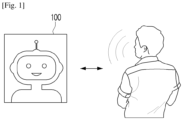
- FIG. 1 is a diagram illustrating an example electronic device in place of a counselor according to an embodiment of the disclosure.
- An electronic device 100 may be a device which understands a user voice transmitted from a terminal device, etc., and provides a response.
- the electronic device 100 may be implemented, for example, and without limitation, as a chatbot, a smartphone, a server, etc.
- a chatbot may, for example, include a device which understands a user voice and provides a response, and may, for example, include a device simulating humans, and it may, for example, be a chatbot in place of a counselor at a call center.
- the electronic device 100 may, for example, and without limitation, provide response information in the form of a voice or response information in the form of a visual UI corresponding to the content of a customer's inquiry to a terminal device through a chatbot.
- a process wherein a chatbot is trained may be automated. Accordingly, the cost spent for training and maintaining a chatbot may be reduced and time spent may also be shortened.
- the accuracy of the chatbot in understanding the content of the customer's inquiry is improved.
- the accuracy of category information for the content of the response may be improved. Accordingly, the accuracy of a chatbot in understanding the content of a customer's inquiry may be improved.
- the electronic device 100 It is important for the electronic device 100 to identify the content of an inquiry accurately to provide an appropriate response to the content of a customer's inquiry.
- a method for the electronic device 100 to train a neural network model used to identify the content of an inquiry will be described in greater detail below with reference to the drawings according to the various example embodiments of the disclosure.
- FIG. 2 is a flowchart illustrating example training of a neural network model according to an embodiment of the disclosure.
- Training of a neural network model classifying the category of the content of an inquiry may be performed at the electronic device 100.
- voice data may be input into the electronic device 100 at operation S205.
- Voice data may include, for example, recording data including the content of a conversation.
- recording data may be recording data including the content of a conversation between a customer and a counselor, and may include the voice of the customer and the voice of the counselor.
- the voice of a customer included in recording data may include, for example, an inquiry content
- the voice of a counselor may include, for example, a response content.
- recording data may include, for example, data including all the content of the conversation during one call between a customer and a counselor.
- recording data may be data including an inquiry content of a customer and a response content corresponding thereto.
- the electronic device 100 may identify an inquiry form in a customer's voice or text data corresponding to a customer's voice, and identify a response form in a counselor's voice or text data corresponding to a counselor's voice.
- An inquiry form may include, for example, and without limitation, not only a general interrogative form but also various cases of requesting a response to the counterparty
- a response form may include, for example, and without limitation, not only a general declarative form but also various cases of providing information.
- recording data may be data edited such that a voice in an inquiry form of a customer and a voice in a response form of a counselor are included. Accordingly, information on greetings, customer information, etc. that are unnecessary for training a neural network model classifying the category of an inquiry content may be excluded from recording data.
- recording data will be assumed as data including all the content of the conversation during one call between a customer and a counselor.
- Recording data may be data wherein the content of a conversation between a customer and a counselor was recorded previously, or data wherein the content of a conversation between a customer and a counselor is recorded in real time.
- Recording data may be input from an external device (e.g., an external server, an external database, etc.).
- the electronic device 100 may distinguish different voices included in the input recording data.
- the electronic device 100 may distinguish a first voice and a second voice included in the input recording data at operation S210.
- the first voice may correspond to a customer's voice
- the second voice may correspond to a counselor's voice.
- explanation will be made based on an example wherein the first voice is a customer's voice, and the second voice is a counselor's voice, for the convenience and ease of explanation.
- the electronic device 100 may identify the second voice in recording data based on pre-stored voice profile information related to the second voice.
- voice profile information may include, for example, and without limitation, waveform information regarding a counselor's voice, voice identification information including a counselor's name and the like, etc.
- the electronic device 100 may compare the frequency waveform information of a voice included in voice profile information and the frequency waveform information of a voice included in recording data and identify the second voice in the recording data.
- the electronic device 100 may identify the remaining voice different from the second voice among the voices included in the recording data as the first voice which may, for example, be a customer's voice.
- the disclosure is not limited thereto, and the second voice which is a counselor's voice may be identified based on the content of the voice. For example, a voice corresponding to a content inducing an inquiry such as "What can I help you with ?" or a content identifying personal information may be identified as the second voice which is a counselor's voice.
- Information for a content for identifying the second voice as above may be stored in the electronic device 100 in advance, or received from the outside. If at least some of the second voice is identified based on the content of the recording data, the electronic device 100 may acquire voice profile information corresponding to a counselor's voice based on the characteristic information of the identified second voice.
- the electronic device 100 may perform voice recognition for the first voice and acquire text data corresponding to the first voice (hereinafter, the first text data) at operation S215.
- the electronic device 100 may perform voice recognition for the first voice using a neural network model for voice recognition.
- voice recognition for the first voice may be performed at an external device, an external server, etc., and the electronic device 100 may receive the first text data corresponding to the first voice from the outside.
- the electronic device 100 may identify whether the first text data is an inquiry form at operation S220.
- An inquiry form may, for example, include not only a general interrogative form but also various cases of requesting a response to the counterparty.
- the electronic device 100 may perform voice recognition for another first voice.
- the electronic device 100 may perform voice recognition for the second voice and acquire text data corresponding to the second voice (hereinafter, the second text data) at operation S225.
- Voice recognition for the second voice may be performed in a manner which is the same as/similar to the voice recognition for the first voice.
- the electronic device 100 may identify whether the second text data is a response form at operation S230.
- a response form may include, for example, not only a general declarative form but also various cases of providing information.
- the electronic device 100 may perform voice recognition for another second voice.
- the electronic device 100 may identify whether the second voice corresponding to the second text data was uttered after the first voice corresponding to the first text data at operation S235. This is because the second voice of the counselor uttered after the first voice which is the inquiry of the customer may be a response corresponding to the inquiry of the customer. Detailed explanation in this regard will be made below with reference to FIG. 4 .
- the electronic device 100 may identify that the first text data and the second text data are not matched. Accordingly, the electronic device 100 may perform voice recognition for the first voice and the second voice different from the previous one so that the matched first text data and second text data are identified.
- the electronic device 100 may input the first text data into the first neural network model.
- the first neural network model may output at least one category information and a probability value of the first text data at operation S240.
- a probability value may be a probability value for the accuracy of the data of the first voice being classified as the category information.
- the first neural network model may be trained using the text data corresponding to the first voice and the category information of the text data as a pair of input and output data. For example, the first neural network model may be trained to output probability information corresponding to each of a plurality of pre-defined categories if the first text data corresponding to the first voice is input.
- the first neural network model may output the category information and the probability value of the first text data corresponding to the first voice as "breakdown of air-conditioning (category ID: 2000), probability value 0.9,” “window opened (category ID: 1010), probability value 0.1,” etc.
- the electronic device 100 may acquire the category information (the first category information) of the data corresponding to the first voice based on the highest probability value at operation S245. For example, the electronic device 100 may acquire " breakdown of air-conditioning (category ID: 2000)."
- Category information may include, for example, information classified based on frequently asked questions (FAQ), and a range having the same characteristic may be classified as one category information. Characteristics may include the type, the function, etc. of a device. Category information may be classified according to a predetermined depth. For example, in a wide range, problems related to an air conditioner may be classified as the same category information, and in a narrow range, different functions of an air conditioner may be classified as separate category information. Such category information may be different for each business operator.
- FAQ frequently asked questions
- the electronic device 100 may input the second text data into the second neural network model.
- the second neural network model may output at least one category information and a probability value of the second text data at operation S250.
- the second neural network model may be trained using the text data corresponding to the second voice and the category information of the text data as a pair of input and output data. For example, the second neural network model may be trained to output probability information corresponding to each of a plurality of pre-defined categories if the second text data corresponding to the second voice is input.
- the second neural network model may output the category information and the probability value of the data corresponding to the second voice as "breakdown of air-conditioning (category ID: 2000), probability value 0.9,” “window opened (category ID: 1010), probability value 0.1,” etc.
- the electronic device 100 may acquire the category information (the second category information) of the data corresponding to the second voice based on the highest probability value at operation S255.
- the electronic device 100 may acquire "breakdown of air-conditioning (category ID: 2000)."
- the operation S255 of acquiring the category information of the data corresponding to the second voice will be described in detail below with reference to FIG. 3 .
- the category information of the data corresponding to the first voice may be referred to as the first category information
- the category information of the data corresponding to the second voice may be referred to as the second category information.
- the electronic device 100 may compare the first category information and the second category information output from the first neural network model and the second neural network model at operation S260.
- the input data of the first neural network model is the first text data corresponding to the first voice
- the input data of the second neural network model is the second text data corresponding to the second voice
- the category information output from the first neural network model and the second neural network model may be separate independent information.
- the first neural network model identifies that the correct category information corresponding to the recording data was output, and thus there is no need to use the recording data as the learning data of the first neural network model. Accordingly, the electronic device 100 may exclude the recording data from training of the first neural network model at operation S265.
- the first neural network model determines that appropriate training based on the recording data was not performed, and the recording data may be used in training of the first neural network model at operation S270.
- the electronic device 100 may train the first neural network model based on the first text data corresponding to the first voice and the second category information. In other words, based on the premise that training of the second neural network model has already been performed well and the second neural network model outputs more accurate category information than the first neural network model, the electronic device 100 may determine that the accuracy of the second category information is relatively high compared to the first category information output from the first neural network model, and train the first neural network model using the first text data corresponding to the first voice and the second category information respectively as input data and output data. For example, a case wherein the recording data includes an inquiry content "Cold wind is suddenly not coming out of the air conditioner" and a response content "Select the desired temperature as the lowest” will be assumed. In this case, the data corresponding to the first voice may be “Cold wind is suddenly not coming out of the air conditioner” and the data corresponding to the second voice may be “Select the desired temperature as the lowest.”
- the second neural network model was trained in advance to classify the category of a response content well, and outputs category information having high credibility for a response content included in the recording data. Also, in case the category information acquired from the first neural network model and the category information acquired from the second neural network model are different, the first neural network model may be trained based on the second category information.
- the electronic device 100 may train the first neural network model based on the data corresponding to the first voice and the second category information, and afterwards, in case the voice "Cold wind is suddenly not coming out of the air conditioner" is included in the first voice, the first neural network model may output category information corresponding to "breakdown of air-conditioning (category ID: 2000)” but not category information corresponding to "the problem of the fan of the air conditioner (category ID: 2050).”
- the first neural network model may be trained such that the inquiry is classified as "the problem of air-conditioning (category ID: 2000).
- Each of the aforementioned first neural network model and second neural network model may include a plurality of neural network layers.
- Each of the plurality of neural network layers may have a plurality of weight values, and may perform a neural network operation through an operation between the operation result of the previous layer and the plurality of weight values.
- the plurality of weight values that the plurality of neural network layers have may be optimized and/or improved by a learning result of a neural network model. For example, the plurality of weight values may be updated such that a loss value or a cost value acquired from a neural network model during a learning process is reduced or minimized.
- An artificial neural network may include, for example, and without limitation, a convolutional neural network (CNN), a deep neural network (DNN), a recurrent neural network (RNN), a restricted Boltzmann machine (RBM), a deep belief network (DBN), a bidirectional recurrent deep neural network (BRDNN), or a deep Q-network, etc., but the disclosure is not limited to the aforementioned examples.
- CNN convolutional neural network
- DNN deep neural network
- RNN recurrent neural network
- RBM restricted Boltzmann machine
- DNN deep belief network
- BNN bidirectional recurrent deep neural network
- BDN bidirectional recurrent deep neural network
- a deep Q-network etc.
- the output portions of the first neural network model and the second neural network model may be implemented such that softmax processing is possible.
- the softmax is a function that normalizes all input values to values between 0 and 1, and always makes the sum of the output values as 1, and may perform the function of outputting probability values for each class.
- the output portions of the first neural network model and the second neural network model may be implemented such that argmax processing is possible.
- the argmax is a function that selects a label having the highest possibility among a plurality of labels, and here, it may perform the function of selecting a ratio having the biggest value among the probability values for each class. For example, in case argmax processing has been performed on the output portions of each of the first neural network model and the second neural network model, only one category information having the highest probability value can be output.
- the first neural network model and the second neural network model may have been trained by the electronic device 100 or a separate server/system through various learning algorithms.
- a learning algorithm may include, for example, a method of training a specific subject device using a plurality of learning data and thereby enabling the specific subject device to make a decision or a prediction by itself.
- Examples of learning algorithms include, for example, and without limitation, supervised learning, unsupervised learning, semi-supervised learning, reinforcement learning, or the like, and the learning algorithms in the disclosure are not limited to the aforementioned examples excluding specified cases.
- the first neural network model may be used for a chatbot function, as an example.
- a device performing a chatbot function may identify category information corresponding to a customer's inquiry content through the first neural network model, and acquire a response content corresponding to the identified category information from a memory and provide the response content.
- samples of response contents corresponding to each category information may have been stored in advance.
- the first neural network model trained according to an embodiment of the disclosure may be used while being included in a chatbot function, but the second neural network model may not be used for a chatbot function.
- a method of acquiring the second category information using the second neural network model will be described in greater detail below with reference to FIG. 3 .
- FIG. 3 is a flowchart illustrating an example process of acquiring the second category information according to an embodiment of the disclosure.
- FIG. 3 is a flowchart illustrating operation S255 of acquiring the second category information in FIG. 2 .
- various embodiments of the disclosure are based on the premise that the response content included in the second text data corresponding to the second voice (e.g., a counselor's voice) is a correct answer to the inquiry content and the premise that the second category information for the second voice is also information having high accuracy compared to the first category information.
- the response content included in the second text data corresponding to the second voice e.g., a counselor's voice
- the second category information for the second voice is also information having high accuracy compared to the first category information.
- forms of making inquiries, expressions for making inquiries, etc. are diverse for each customer
- response contents of a counselor are provided according to predetermined manual data, and accordingly, the diversity of forms of response contents or expressions for response contents is relatively small compared to inquiries, and thus it can be assumed that the second category information is information having high accuracy compared to the first category information.
- the first neural network model is trained based on the second category information, and thus it is important to acquire accurate second category information.
- the second category information may be acquired
- the electronic device 100 may distinguish sentences included in the second text data at operation S310.
- a sentence may refer, for example, to a minimum unit expressing a completed content.
- the disclosure is not limited thereto, and it is apparent that the second text data can be divided by various standards, such as being divided based on intentions. Hereinafter, for convenience of explanation, it will be described that the second text data is divided based on sentences.
- the electronic device 100 may sequentially input text data corresponding to each of a plurality of sentences included in the second text data corresponding to the second voice into the second neural network model.
- the second neural network model may output the category information for each sentence and probability values corresponding to the category information at operation S315.
- the electronic device 100 may input each of "Please ventilate” and "Please turn on the air blast” included in the second text data into the second neural network model and acquire the category information and the probability values for each of them.
- the category information and the probability values of the sentence "Please ventilate” may be classified as "the problem of gas leakage (category ID: 3000), probability value 0.78," "the problem of the smell of the air-conditioner, probability value 0.19,” etc.
- the electronic device 100 may acquire the category information of the sentence "Please ventilate” as "the problem of gas leakage (category ID: 3000)” based on the highest probability value.
- the electronic device 100 may identify whether the probability values of the category information corresponding to each sentence are greater than or equal to a threshold value at operation S320. If each of the acquired probability values are greater than or equal to a threshold value at operation S320-Y, the electronic device 100 may acquire each of the acquired category information as the second category information of each corresponding sentence at operation S325. In other words, the electronic device 100 may identify the acquired category information as the second category information.
- the electronic device 100 may identify "Please ventilate” as the category information for "the problem of gas leakage (category ID: 3000)” and "Please turn on the air blast” as the category information for "the problem of the fan of the air conditioner (category ID: 2050),” and identify them as category information different from each other.
- the electronic device 100 may combine at least some of the plurality of sentences at operation S330, and input the combined sentences into the second neural network model.
- the electronic device 100 may combine the sentences like "Please ventilate. Please turn on the air blast," and input the combined sentences into the second neural network model.
- the second neural network model may output the category information and the probability value corresponding to the combined sentences at operation S335.
- the electronic device 100 may identify whether the probability value of the category information corresponding to the combined sentences is greater than or equal to the threshold value at operation S340. If the probability value for the combined sentences is greater than or equal to the threshold value, the electronic device 100 may acquire the acquired category information as the second category information of the combined sentences at operation S345. In other words, the electronic device 100 may identify the acquired category information as the second category information. If the probability value for the combined sentences is smaller than the threshold value, the electronic device 100 may acquire each of the acquired category information as the second category information of each corresponding sentence at operation S325.
- the electronic device 100 may identify the acquired category information (the problem of the smell of the air conditioner (category ID: 1500)) as the second category information.
- the electronic device 100 may identify the acquired category information (the problem of the smell of the air conditioner (category ID: 1500)) as the second category information.
- the threshold value e.g. 0.
- the electronic device 100 may identify the acquired category information (the problem of the smell of the air conditioner (category ID: 1500)) as the second category information.
- "Please ventilate. Please turn on the air blast” is a combination of each sentence and may be identified as one response content corresponding to one inquiry content.
- the electronic device 100 may combine only the sentences of which category information acquired at the operation S325 is the same, and input the combined sentences into the second neural network model and acquire a probability value. For example, in case the category information of the sentence "Please ventilate” is classified as “the problem of gas leakage (category ID: 3000),” and the category information of the sentence “Please turn on the air blast” is classified as “the problem of the fan of the air conditioner (category ID: 2050)" and each sentence has different category information from each other, the sentences may not become a subject for combination.
- the category information may be used in learning of the first neural network model using the first category related to the category information for the combined sentences.
- the sentences may be combined, and in case the probability value of the category information of the combined sentences is greater than the probability values of the category information of each sentence before combination, the electronic device 100 may use the category information in learning of the first neural network model using the first category related to the category information for the combined sentences.
- the electronic device 100 may apply a weight value to the probability value of the category information corresponding to the acquired sentence based on at least one of the type or the number of times of the connective word.
- a connective word may, for example, be a word playing the role of connecting each sentence naturally, and for example, a connective word may be expressed as a conjunctive word.
- causal connective words such as "accordingly, thus," and adversative connective words such as "nevertheless, however" may be included.
- a connective word indicates that two sentences are associated with each other, and thus, in case two sentences are combined, it is desirable that the electronic device 100 adds a weight value to the probability value for the category information corresponding to the two sentences.
- the electronic device 100 may not acquire the category information and the probability values of each sentence, but may directly acquire the category information and the probability value for a plurality of sentences connected by a connective word, i.e., combined sentences.
- the electronic device 100 may determine whether to train the first neural network model using the first voice or the text data associated with the response information as learning data. For example, in case the first voice or the second voice matched with the first text data or the second category information of the second text data is output through the second neural network model and response information according to the second category information was provided, but there was a negative feedback by the customer for the response information, the electronic device 100 may identify that the second category information does not correspond to the first voice or the first text data and may not train the first neural network model based on the first voice or the first text data, and the second category information. In other words, the electronic device 100 may determine learning data for training the first neural network model based on the feedback information of the customer.
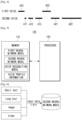
- FIG. 4 is a diagram illustrating an example corresponding relation between a first voice and a second voice according to an embodiment of the disclosure.
- the electronic device 100 may train the first neural network model by comparing the first category information corresponding to the first voice and the second category information corresponding to the second voice.
- the first voice of the first category information and the second voice of the second category information should be an inquiry content and a response content matched with each other.
- the second voice which is the subject of comparison is a voice including response information corresponding to the first voice
- the first voice and the text may be used as learning data for training the first neural network model.
- the electronic device 100 identifies the second voice matched with the first voice will be described.
- FIG. 4 is a diagram wherein the first voice and the second voice included in the recording data are indicated while being distinguished from each other.
- the voices are indicated according to the passage of time, and are indicated in solid lines during the time when each voice is uttered, and the first voice is filtered as an inquiry form and the second voice is filtered as a response form is assumed.
- the electronic device 100 may match the first voice and the second voice based on the utterance points of each voice. For example, the electronic device 100 may identify the second voice uttered after the first voice as a candidate group matched with the first voice. This is because the response information of the counselor is uttered after the inquiry of the customer.
- the electronic device 100 may identify a plurality of second voices 411, 412, 413 uttered between the first first voice 410 and the second first voice 420 in FIG. 4 as voices matched with the first first voice 410.
- the electronic device 100 may identify a plurality of second voices 421, 422 uttered after the second first voice 420 in FIG. 4 as voices matched with the second first voice 420.
- the electronic device 100 may identify whether the plurality of second voices 411, 412, 413 are combined ones having one category information and are one response content, or separate ones having respective category information, as in the operation in FIG. 3 .
- the electronic device 100 may identify whether there is relevance between the utterance points of each voice and each voice, and acquire the first voice and the second voice matched with each other. For example, the electronic device 100 may identify the plurality of second voices 411, 412, 413 uttered between the first first voice 410 and the second first voice 420 in FIG. 4 as a candidate group of the second voices matched with the first first voice 410.
- the electronic device 100 may identify whether there is relevance between the first voice 410 and the second voice candidate group 411, 412, 413.
- the electronic device 100 may extract a keyword included in the first voice 410 or the first text data corresponding to the first voice, and extract a keyword included in the second voice candidate group 411, 412, 413 or the text data corresponding to the second voice candidate group, and identify whether there is relevance between the two keywords.
- the electronic device 100 may identify “smell” and "ventilation" as relevant keywords, and determine that the first voice and the second voice are matched.
- Relevance between keywords may be identified through an artificial intelligence model, or identified through an external server.
- the electronic device 100 may identify whether there is relevance between keywords based on information on the relevance among words stored in the memory.
- the electronic device 100 may identify the plurality of second voices 421, 422 uttered after the second first voice 420 as a candidate group of the second voices matched with the second first voice 420. If it is identified that there is no relevance between the second first voice 420 and the second voice candidate group 421, 422, the electronic device 100 may exclude the second first voice 420 and the second voice candidate group 421, 422 from learning data for training the first neural network model.
- the electronic device 100 may identify the plurality of second voices 411, 412, 413, 421, 422 uttered after the first first voice 410 as a candidate group matched with the first first voice 410.
- FIG. 5 is a block diagram illustrating an example configuration of an example electronic device according to an embodiment of the disclosure.
- the electronic device 100 may include a memory 110 and a processor (e.g., including processing circuitry) 120.
- a processor e.g., including processing circuitry
- the memory 110 may be electronically connected with the processor 120, and store data necessary for the various embodiments of the disclosure.
- the memory 110 may be implemented in the form of a memory embedded in the electronic device 100, or in the form of a memory that can be attached to or detached from the electronic device 100, according to the usage of stored data.
- the data may be stored in a memory embedded in the electronic device 100
- the data may be stored in a memory that can be attached to or detached from the electronic device 100.
- the memory may be implemented as at least one of a volatile memory (e.g.: a dynamic RAM (DRAM), a static RAM (SRAM) or a synchronous dynamic RAM (SDRAM), etc.) or a nonvolatile memory (e.g.: a one time programmable ROM (OTPROM), a programmable ROM (PROM), an erasable and programmable ROM (EPROM), an electrically erasable and programmable ROM (EEPROM), a mask ROM, a flash ROM, a flash memory (e.g.: NAND flash or NOR flash, etc.), a hard drive, or a solid state drive (SSD)).
- a volatile memory e.g.: a dynamic RAM (DRAM), a static RAM (SRAM) or a synchronous dynamic RAM (SDRAM), etc.
- a nonvolatile memory e.g.: a one time programmable ROM (OTPROM), a programmable ROM (PROM), an era
- the memory may be implemented in a form such as a memory card (e.g., compact flash (CF), secure digital (SD), micro secure digital (Micro-SD), mini secure digital (Mini-SD), extreme digital (xD), a multi-media card (MMC), etc.) and an external memory that can be connected to a USB port (e.g., a USB memory), etc.
- a memory card e.g., compact flash (CF), secure digital (SD), micro secure digital (Micro-SD), mini secure digital (Mini-SD), extreme digital (xD), a multi-media card (MMC), etc.
- CF compact flash
- SD secure digital
- Micro-SD micro secure digital
- Mini-SD mini secure digital
- xD extreme digital
- MMC multi-media card
- the memory 110 may store a first neural network model, a second neural network model, and a voice recognition model.
- the first neural network model may be a model that outputs at least one category information and the probability values of the first voice or the first text data corresponding to the first voice
- the second neural network model may be a model that outputs at least one category information and the probability values of the second voice or the second text data corresponding to the second voice.
- the first neural network model and the second neural network model may output the category information as unknown.
- the category information is "unknown.”
- the voice recognition model may be a model that recognizes a user voice and outputs the voice as a text, and may be implemented, for example, as an automatic speech recognition (ASR) model.
- ASR automatic speech recognition
- the voice recognition model may output the first voice as the first text data corresponding to the first voice, and output the second voice as the second text data corresponding to the second voice.
- the disclosure is not limited thereto, and in case a voice recognition model is not included in the memory 110, it is possible that voice recognition for the first voice and the second voice is performed at an external device, an external server, etc., and the electronic device 100 receives the first text data and the second text data corresponding to the first voice and the second voice from the outside.
- the memory 110 may store voice profile information related to the second voice.
- the voice profile information may include waveform information regarding a counselor's voice, voice identification information including a counselor's name and the like, etc.
- the memory 110 may include sample information of response contents corresponding to each category information. For example, in case the category information of the first voice is identified through the trained first neural network model, response contents stored in the memory 110 may be provided through the speaker of the terminal device according to control of the processor 120.
- the processor 120 may include various processing circuitry and is electronically connected with the memory 110, and controls the overall operations of the electronic device 100.
- the processor 120 controls the overall operations of the electronic device 100 using various kinds of instructions or programs stored in the memory 110.
- the main CPU may copy a program in the RAM according to an instruction stored in the ROM, and access the RAM and execute the program.
- a program may include an artificial intelligence model, etc.
- the processor 120 may load the first neural network model, the second neural network model, the voice recognition model, etc. stored in the memory 110 to the processor 120. For example, for training the first neural network model, the processor 120 may load the first neural network model stored in the memory 110 outside the processor 120 to the memory (not shown) inside the processor 120. In addition, the processor 120 may load the voice recognition model stored in the memory 110 to the memory inside the processor 120, and access the loaded voice recognition model and perform voice recognition.
- FIG. 6 is a diagram illustrating an example process of training a second neural network model according to an embodiment of the disclosure.
- a second neural network model may be a model that outputs at least one category information and the probability values of the second text data.
- the second neural network model may be a model that outputs the category information of the text data corresponding to a counselor's voice (the second voice), and thus the second neural network model may be trained based on data associated with the counselor's voice.
- the electronic device 100 may train the second neural network model based on a short text, a long text, etc. included in the second text data corresponding to the second voice.
- the electronic device 100 may use a short text “Use after ventilation” included in the second text data as input data, and train the second neural network model with the output data in accordance thereto as "the problem of the smell of the air conditioner (category ID: 1500).”
- the electronic device 100 may use a long text "The air conditioner uses an air circulating method of absorbing the indoor air and exchanging the air with cool air, and then discharging the air.
- the discharged air?” included in the second text data as input data and train the second neural network model with the output data in accordance thereto as "the problem of the smell of the air conditioner (category ID: 1500).”
- the input second text data includes “Use after ventilation” or "The air conditioner uses an air circulating method of absorbing the indoor air and exchanging the air with cool air, and then discharging the air.
- the discharged air?” the second neural network model may be trained to output "the problem of the smell of the air conditioner (category ID: 1500)" as category information corresponding thereto.
- the electronic device 100 may train the second neural network model using data in various forms that a counselor provided as response information, other than the second text data corresponding to the second voice.
- the electronic device 100 may train the second neural network model using an image regarding a method of replacing an air conditioner filter as input data, and with the output data in accordance thereto as "the problem of the smell of the air conditioner (category ID: 1500).”
- the second neural network model may output "the problem of the smell of the air conditioner (category ID: 1500)" as category information corresponding thereto.
- the electronic device 100 may train the second neural network model using video image data. For example, the electronic device 100 may extract a subtitle (a text) from the moving image. For example, in case the moving image includes a text such as "Please remember that you can reduce occurrence of smell if you finish driving of the air conditioner and then use it after ventilating the indoors," the electronic device 100 may extract such a text and use the text as input data of the second neural network model.
- a subtitle a text
- the second neural network model may output "the problem of the smell of the air conditioner (category ID: 1500)" as category information corresponding thereto.
- the second neural network model may output category information corresponding thereto.
- the second neural network model may be trained to output "the problem of the smell of the air conditioner (category ID: 1500)" as category information corresponding thereto.
- the second neural network model may be trained based on at least one of predetermined manual data regarding responses or frequently asked questions (FAQ) data in addition to data related to a counselor's voice.
- predetermined manual data or FAQ data is data of which category information has already been classified, there is no need to separately proceed with a step of acquiring category information.
- the electronic device 100 may train the second neural network model using response manual data as input data, and using category information in accordance thereto as output data. As described above, category information of manual data or FAQ data has already been acquired, and thus the second neural network model may be trained without a process of matching a response content and category information separately.
- FIG. 7 is a flowchart illustrating an example method of controlling an electronic device according to an embodiment of the disclosure.
- the electronic device 100 may input the first data corresponding to the first voice in the content of a conversation included in recording data into the first neural network model and acquire the category information of the first data as a result of inputting the first data into the first neural network model at operation S710.
- the recording data is data including the content of counseling between a customer and a counselor
- the first voice may be the voice of the customer
- the second voice that will be described below may be the voice of the counselor.
- the electronic device 100 may identify the second voice in the recording data based on voice profile information related to the pre-stored data corresponding to the second voice.
- the electronic device 100 may acquire the category information of the second data corresponding to the second voice in the content of the conversation at operation S720.
- the electronic device 100 may input the data corresponding to the second voice into the second neural network model and acquire the category information of the data corresponding to the second voice.
- the electronic device 100 may input a sentence acquired by combining at least some of each of a plurality of sentences included in the data corresponding to the second voice into the second neural network model and acquire the category information of the data corresponding to the second voice.
- the electronic device 100 may input the acquired data into the second neural network model and acquire the category information of the data corresponding to the second voice.
- the electronic device 100 may train the first neural network model based on the category information of the second data and the first data at operation S730.
- the electronic device 100 may sequentially input text data corresponding to each of a plurality of sentences included in the data corresponding to the second voice into the second neural network model, acquire at least one category information corresponding to each of the plurality of sentences and the first probability value corresponding to the at least one category information from the second neural network model, input text data corresponding to a sentence acquired by combining at least some of each of the plurality of sentences into the second neural network model, acquire at least one category information corresponding to the acquired sentence and the second probability value corresponding to the at least one category information from the second neural network model, and train the first neural network model based on a sentence selected based on the first probability value and the second probability value and the category information corresponding to the selected sentence.
- the electronic device 100 may select a sentence having the probability value greater than or equal to a threshold value between the first probability value and the second probability value, and train the first neural network model based on the selected sentence and the category information corresponding to the selected sentence.
- the electronic device 100 may apply a weight value to the probability value corresponding to the acquired sentence based on at least one of the type or the number of times of the connective word.
- the electronic device 100 may input text data corresponding to the user voice data into the trained first neural network model, and acquire the category information corresponding to the user voice data, and acquire response information corresponding to the user voice data based on the category information.
- Methods according to the aforementioned various example embodiments of the disclosure may be implemented by software upgrade, or hardware upgrade for conventional electronic devices.
- the aforementioned various example embodiments of the disclosure may be performed through an embedded server provided on an electronic device, or at least one external server of an electronic device.
- the various embodiments described above may be implemented as software including instructions stored in machine-readable storage media, which can be read by machines (e.g.: computers).
- the machines may refer, for example, to devices that call instructions stored in a storage medium, and can operate according to the called instructions, and the devices may include the electronic device according to the aforementioned embodiments.
- the processor may perform a function corresponding to the instruction by itself, or using other components under its control.
- An instruction may include a code made by a compiler or a code executable by an interpreter.
- a storage medium that is readable by machines may be provided in the form of a non-transitory storage medium.
- the 'non-transitory' storage medium does not include signals, and is tangible, but does not indicate whether data is stored in the storage medium semi-permanently or temporarily.
- 'a non-transitory storage medium' may include a buffer wherein data is temporarily stored.
- a computer program product refers to a product, and it can be traded between a seller and a buyer.
- a computer program product can be distributed on-line in the form of a storage medium that is readable by machines (e.g., a compact disc read only memory (CD-ROM)), or through an application store (e.g, Playstore TM).
- machines e.g., a compact disc read only memory (CD-ROM)
- application store e.g, Playstore TM
- at least a portion of a computer program product may be stored in a storage medium such as the server of the manufacturer, the server of the application store, and the memory of the relay server at least temporarily, or may be generated temporarily.
- the aforementioned various embodiments may be implemented in a recording medium that can be read by a computer or a device similar to a computer, using software, hardware, or a combination thereof.
- the embodiments described in this specification may be implemented by a processor itself.
- the embodiments such as processes and functions described in this disclosure may be implemented by separate software modules. Each of the software modules can perform one or more functions and operations described in this specification.
- Computer instructions for performing processing operations of machines according to the aforementioned various embodiments may be stored in a non-transitory computer-readable medium.
- Computer instructions stored in such a non-transitory computer-readable medium make the processing operations at machines according to the aforementioned various embodiments performed by a specific machine, when the instructions are executed by the processor of the specific machine.
- a non-transitory computer-readable medium may include a CD, a DVD, a hard disc, a blue-ray disc, a USB, a memory card, a ROM and the like.
- Each of the components according to the aforementioned various embodiments may include a singular object or a plurality of objects.
- some sub components may be omitted, or other sub components may be further included in the various embodiments.
- some components e.g., a module or a program
Landscapes
- Engineering & Computer Science (AREA)
- Physics & Mathematics (AREA)
- Theoretical Computer Science (AREA)
- Health & Medical Sciences (AREA)
- Computational Linguistics (AREA)
- Audiology, Speech & Language Pathology (AREA)
- Artificial Intelligence (AREA)
- General Engineering & Computer Science (AREA)
- General Physics & Mathematics (AREA)
- General Health & Medical Sciences (AREA)
- Multimedia (AREA)
- Human Computer Interaction (AREA)
- Acoustics & Sound (AREA)
- Evolutionary Computation (AREA)
- Molecular Biology (AREA)
- Data Mining & Analysis (AREA)
- Life Sciences & Earth Sciences (AREA)
- Computing Systems (AREA)
- Biophysics (AREA)
- Biomedical Technology (AREA)
- Mathematical Physics (AREA)
- Software Systems (AREA)
- Signal Processing (AREA)
- Probability & Statistics with Applications (AREA)
- Information Retrieval, Db Structures And Fs Structures Therefor (AREA)
Claims (13)
- Elektronische Vorrichtung, umfassend:einen Speicher, der Aufzeichnungsdaten speichert, darunter einen Inhalt einer Unterhaltung, Stimmprofilinformationen in Bezug auf Daten, die einer zweiten Stimme der Unterhaltung entsprechen, und mindestens eine Anweisung; undeinen Prozessor, der, durch Ausführen der mindestens einen Anweisung, konfiguriert ist zum:Eingeben erster Daten, die einer ersten Stimme in dem Inhalt der Unterhaltung entsprechen, in ein erstes neuronales Netzwerkmodell und Erfassen von Kategorieinformationen der ersten Daten, wobei die ersten Daten eine Anfrage sind, undIdentifizieren der zweiten Stimme in den Aufnahmedaten basierend auf den gespeicherten Stimmprofilinformationen, undIdentifizieren, ob die den zweiten Daten entsprechende zweite Stimme nach der den ersten Daten entsprechenden ersten Stimme geäußert wird, undErfassen von Kategorieinformationen der zweiten Daten, die der zweiten Stimme in dem Inhalt der Unterhaltung entsprechen, wobei die zweiten Daten eine Antwort sind, undbasierend darauf, dass die Kategorieinformationen der ersten Daten und die Kategorieinformationen der zweiten Daten unterschiedlich sind, Trainieren des ersten neuronalen Netzwerkmodells basierend auf den Kategorieinformationen der zweiten Daten und der ersten Daten.
- Elektronische Vorrichtung nach Anspruch 1,
wobei der Prozessor konfiguriert ist zum:
Eingeben von Daten, die der zweiten Stimme entsprechen, in ein zweites neuronales Netzwerkmodell und Erfassen der Kategorieinformationen der der zweiten Stimme entsprechenden Daten. - Elektronische Vorrichtung nach Anspruch 2,
wobei der Prozessor konfiguriert ist zum:
Eingeben eines Satzes, der durch Kombinieren mindestens eines Teils jedes einer Vielzahl von Sätzen erfasst wird, die in den der zweiten Stimme entsprechenden Daten enthalten sind, in das zweite neuronale Netzwerkmodell und Erfassen der Kategorieinformationen der der zweiten Stimme entsprechenden Daten. - Elektronische Vorrichtung nach Anspruch 2,
wobei der Prozessor konfiguriert ist zum:sequenziellen Eingeben von Textdaten, die jedem der Vielzahl von Sätzen entsprechen, die in den der zweiten Stimme entsprechenden Daten enthalten sind, in das zweite neuronale Netzwerkmodell und Erfassen mindestens einer Kategorieinformation, die jedem der Vielzahl von Sätzen entspricht, und eines ersten Wahrscheinlichkeitswerts, der der mindestens einen Kategorieinformation aus dem zweiten neuronalen Netzwerkmodell entspricht,Eingeben von Textdaten, die dem Satz entsprechen, der durch Kombinieren mindestens eines Teils jedes der Vielzahl von Sätzen erfasst wird, in das zweite neuronale Netzwerkmodell und Erfassen mindestens einer Kategorieinformation, die dem erfassten Satz entspricht, und eines zweiten Wahrscheinlichkeitswerts, der der mindestens einen Kategorieinformation aus dem zweiten neuronalen Netzwerkmodell entspricht, undTrainieren des ersten neuronalen Netzwerkmodells basierend auf einem Satz, der ausgewählt wird basierend auf dem ersten Wahrscheinlichkeitswert und dem zweiten Wahrscheinlichkeitswert und den ersten Kategorieinformationen, die dem ausgewählten Satz entsprechen. - Elektronische Vorrichtung nach Anspruch 4,
wobei der Prozessor konfiguriert ist zum:
Auswählen eines Satzes mit einem Wahrscheinlichkeitswert, der größer oder gleich einem Schwellenwert zwischen dem ersten Wahrscheinlichkeitswert und dem zweiten Wahrscheinlichkeitswert ist, und Trainieren des ersten neuronalen Netzwerkmodells basierend auf dem ausgewählten Satz und den ersten Kategorieinformationen, die dem ausgewählten Satz entsprechen. - Elektronische Vorrichtung nach Anspruch 4,
wobei der Prozessor zu Folgendem konfiguriert ist:
basierend auf einem Bindewort, das in dem Satz enthalten ist, der durch Kombinieren mindestens eines Teils jedes der Vielzahl von Sätzen erfasst wird, Anwenden eines Gewichtungswerts auf einen Wahrscheinlichkeitswert, der dem erfassten Satz entspricht, basierend auf mindestens einem der Art oder Anzahl von Malen des Bindeworts. - Elektronische Vorrichtung nach Anspruch 2,
wobei der Prozessor zu Folgendem konfiguriert ist:
basierend auf dem Erfassen mindestens eines von Bewegtbilddaten, Textdaten oder Bilddaten in Bezug auf die zweite Stimme aus mindestens einem von Bewegtbilddaten, Bilddaten oder Textdaten, Eingeben der erfassten Daten in das zweite neuronale Netzwerkmodell und Erfassen der Kategorieinformationen der der zweiten Stimme entsprechenden Daten. - Elektronische Vorrichtung nach Anspruch 1,
wobei der Prozessor zu Folgendem konfiguriert ist:
basierend auf Benutzerstimmdaten, die eingegeben werden, Eingeben von Textdaten, die den Stimmdaten des Benutzers entsprechen, in das trainierte erste neuronale Netzwerkmodell und Erfassen von Kategorieinformationen, die den Benutzerstimmdaten entsprechen, und Erfassen von Antwortinformationen, die den Benutzerstimmdaten entsprechen, basierend auf den Kategorieinformationen. - Elektronische Vorrichtung nach Anspruch 1,wobei die Aufzeichnungsdaten Daten einschließlich eines Inhalts einer Beratung zwischen einem Kunden und einem Berater umfassen, unddie erste Stimme die Stimme des Kunden ist, unddie zweite Stimme die Stimme des Beraters ist.
- Verfahren zum Steuern einer elektronischen Vorrichtung, die Aufzeichnungsdaten speichert, darunter einen Inhalt einer Unterhaltung, wobei das Verfahren umfasst:Eingeben erster Daten, die einer ersten Stimme in dem Inhalt der Unterhaltung entsprechen, in ein erstes neuronales Netzwerkmodell und Erfassen von Kategorieinformationen der ersten Daten, wobei die ersten Daten eine Anfrage sind;Identifizieren der zweiten Stimme in den Aufzeichnungsdaten basierend auf Stimmprofilinformationen in Bezug auf die der zweiten Stimme entsprechenden vorab gespeicherten Daten;Identifizieren, ob die den zweiten Daten entsprechende zweite Stimme nach der den ersten Daten entsprechenden ersten Stimme geäußert wird;Erfassen von Kategorieinformationen der zweiten Daten, die einer zweiten Stimme in dem Inhalt der Unterhaltung entsprechen, wobei die zweiten Daten eine Antwort sind; undbasierend darauf, dass die Kategorieinformationen der ersten Daten und die Kategorieinformationen der zweiten Daten unterschiedlich sind, Trainieren des ersten neuronalen Netzwerkmodells basierend auf den Kategorieinformationen der zweiten Daten und der ersten Daten.
- Verfahren nach Anspruch 10,
wobei das Erfassen der Kategorieinformationen der zweiten Daten umfasst:
Eingeben von Daten, die der zweiten Stimme entsprechen, in ein zweites neuronales Netzwerkmodell und Erfassen der Kategorieinformationen der der zweiten Stimme entsprechenden Daten. - Verfahren nach Anspruch 11,
wobei das Erfassen der Kategorieinformationen der zweiten Daten umfasst:
Eingeben eines Satzes, der durch Kombinieren mindestens eines Teils jedes einer Vielzahl von Sätzen erfasst wird, die in den der zweiten Stimme entsprechenden Daten enthalten sind, in das zweite neuronale Netzwerkmodell und Erfassen der Kategorieinformationen der der zweiten Stimme entsprechenden Daten. - Verfahren nach Anspruch 12,
wobei das Trainieren des ersten neuronalen Netzwerkmodells umfasst:sequenzielles Eingeben von Textdaten, die jedem der Vielzahl von Sätzen entsprechen, die in den der zweiten Stimme entsprechenden Daten enthalten sind, in das zweite neuronale Netzwerkmodell und Erfassen mindestens einer Kategorieinformation, die jedem der Vielzahl von Sätzen entspricht, und eines ersten Wahrscheinlichkeitswerts, der der mindestens einen Kategorieinformation aus dem zweiten neuronalen Netzwerkmodell entspricht;Eingeben von Textdaten, die dem Satz entsprechen, der durch Kombinieren mindestens eines Teils jedes der Vielzahl von Sätzen erfasst wird, in das zweite neuronale Netzwerkmodell und Erfassen mindestens einer Kategorieinformation, die dem erfassten Satz entspricht, und eines zweiten Wahrscheinlichkeitswerts, der der mindestens einen Kategorieinformation aus dem zweiten neuronalen Netzwerkmodell entspricht; undTrainieren des ersten neuronalen Netzwerkmodells basierend auf einem Satz, der ausgewählt wird basierend auf dem ersten Wahrscheinlichkeitswert und dem zweiten Wahrscheinlichkeitswert und den ersten Kategorieinformationen, die dem ausgewählten Satz entsprechen.
Applications Claiming Priority (2)
| Application Number | Priority Date | Filing Date | Title |
|---|---|---|---|
| KR1020200009316A KR102737990B1 (ko) | 2020-01-23 | 2020-01-23 | 음성 데이터를 이용하여 챗봇과 관련된 인공지능 모델을 학습시키는 전자 장치 및 방법 |
| PCT/KR2020/006718 WO2021149878A1 (en) | 2020-01-23 | 2020-05-22 | Electronic device and control method thereof |
Publications (4)
| Publication Number | Publication Date |
|---|---|
| EP4014232A1 EP4014232A1 (de) | 2022-06-22 |
| EP4014232A4 EP4014232A4 (de) | 2022-10-19 |
| EP4014232B1 true EP4014232B1 (de) | 2025-02-12 |
| EP4014232C0 EP4014232C0 (de) | 2025-02-12 |
Family
ID=76970192
Family Applications (1)
| Application Number | Title | Priority Date | Filing Date |
|---|---|---|---|
| EP20914932.7A Active EP4014232B1 (de) | 2020-01-23 | 2020-05-22 | Elektronische vorrichtung und steuerungsverfahren dafür |
Country Status (5)
| Country | Link |
|---|---|
| US (2) | US11227608B2 (de) |
| EP (1) | EP4014232B1 (de) |
| KR (1) | KR102737990B1 (de) |
| CN (1) | CN114830229B (de) |
| WO (1) | WO2021149878A1 (de) |
Families Citing this family (6)
| Publication number | Priority date | Publication date | Assignee | Title |
|---|---|---|---|---|
| KR102737990B1 (ko) * | 2020-01-23 | 2024-12-05 | 삼성전자주식회사 | 음성 데이터를 이용하여 챗봇과 관련된 인공지능 모델을 학습시키는 전자 장치 및 방법 |
| US11308971B2 (en) * | 2020-07-15 | 2022-04-19 | Bank Of America Corporation | Intelligent noise cancellation system for video conference calls in telepresence rooms |
| KR102592859B1 (ko) * | 2022-12-21 | 2023-10-24 | 주식회사 지뉴소프트 | 인공지능 챗봇에서의 다중입력정보에 기초한 답변정보 도출방법 및 시스템 |
| US12548553B1 (en) * | 2023-03-20 | 2026-02-10 | Amazon Technologies, Inc. | Techniques for machine learning based playback |
| US12323373B2 (en) * | 2023-10-20 | 2025-06-03 | Google Llc | Simulation of automated telephone call(s) |
| KR102796556B1 (ko) * | 2024-04-02 | 2025-04-16 | 주식회사 리턴제로 | 자연어 처리를 이용한 중요 발화 감지 방법 및 이를 위한 장치 |
Family Cites Families (46)
| Publication number | Priority date | Publication date | Assignee | Title |
|---|---|---|---|---|
| US20040199482A1 (en) * | 2002-04-15 | 2004-10-07 | Wilson Scott B. | Systems and methods for automatic and incremental learning of patient states from biomedical signals |
| US7995717B2 (en) * | 2005-05-18 | 2011-08-09 | Mattersight Corporation | Method and system for analyzing separated voice data of a telephonic communication between a customer and a contact center by applying a psychological behavioral model thereto |
| US8214208B2 (en) * | 2006-09-28 | 2012-07-03 | Reqall, Inc. | Method and system for sharing portable voice profiles |
| US20090163183A1 (en) * | 2007-10-04 | 2009-06-25 | O'donoghue Hugh | Recommendation generation systems, apparatus and methods |
| US8130915B2 (en) * | 2009-08-26 | 2012-03-06 | International Business Machines Corporation | Verification of user presence during an interactive voice response system session |
| WO2011050494A1 (en) * | 2009-10-29 | 2011-05-05 | Google Inc. | Generating input suggestions |
| KR20140054643A (ko) * | 2012-10-29 | 2014-05-09 | 삼성전자주식회사 | 음성인식장치 및 음성인식방법 |
| RU2530268C2 (ru) * | 2012-11-28 | 2014-10-10 | Общество с ограниченной ответственностью "Спиктуит" | Способ обучения информационной диалоговой системы пользователем |
| KR102014665B1 (ko) * | 2013-03-15 | 2019-08-26 | 애플 인크. | 지능형 디지털 어시스턴트에 의한 사용자 트레이닝 |
| US9547471B2 (en) * | 2014-07-03 | 2017-01-17 | Microsoft Technology Licensing, Llc | Generating computer responses to social conversational inputs |
| KR102033435B1 (ko) * | 2014-11-19 | 2019-11-11 | 한국전자통신연구원 | 자연어 질의응답 시스템과 방법 및 패러프라이즈 모듈 |
| US10380154B2 (en) * | 2015-10-17 | 2019-08-13 | International Business Machines Corporation | Information retrieval using structured resources for paraphrase resolution |
| US9805264B2 (en) * | 2015-10-19 | 2017-10-31 | Disney Enterprises, Inc. | Incremental learning framework for object detection in videos |
| KR102795172B1 (ko) * | 2016-09-01 | 2025-04-15 | 삼성전자주식회사 | 음성 인식 장치 및 방법 |
| KR101854431B1 (ko) * | 2016-11-15 | 2018-05-03 | 주식회사 로보러스 | 컨시어지 로봇 |
| KR101872863B1 (ko) | 2016-11-24 | 2018-07-02 | 주식회사 와이즈넛 | 채팅봇을 이용한 비즈니스 지원 방법 |
| CN108305619B (zh) * | 2017-03-10 | 2020-08-04 | 腾讯科技(深圳)有限公司 | 语音数据集训练方法和装置 |
| US10783561B2 (en) * | 2017-01-31 | 2020-09-22 | Walmart Apollo, Llc | Systems and methods for optimizing targeted advertising through social media interactions |
| KR102266879B1 (ko) | 2017-04-14 | 2021-06-22 | 삼성전자주식회사 | 대화형 콘텐츠 제공 시스템 |
| WO2018212584A2 (ko) * | 2017-05-16 | 2018-11-22 | 삼성전자 주식회사 | 딥 뉴럴 네트워크를 이용하여 문장이 속하는 클래스를 분류하는 방법 및 장치 |
| KR102071582B1 (ko) * | 2017-05-16 | 2020-01-30 | 삼성전자주식회사 | 딥 뉴럴 네트워크(Deep Neural Network)를 이용하여 문장이 속하는 클래스(class)를 분류하는 방법 및 장치 |
| CN108346428B (zh) * | 2017-09-13 | 2020-10-02 | 腾讯科技(深圳)有限公司 | 语音活动检测及其模型建立方法、装置、设备及存储介质 |
| US11551135B2 (en) * | 2017-09-29 | 2023-01-10 | Oracle International Corporation | Techniques for generating a hierarchical model to identify a class among a plurality of classes |
| KR102033175B1 (ko) * | 2017-11-15 | 2019-10-16 | (주)페르소나시스템 | 머신 러닝 기반의 챗봇용 데이터 추가 장치 |
| KR102535411B1 (ko) * | 2017-11-16 | 2023-05-23 | 삼성전자주식회사 | 메트릭 학습 기반의 데이터 분류와 관련된 장치 및 그 방법 |
| CN107977183A (zh) * | 2017-11-16 | 2018-05-01 | 百度在线网络技术(北京)有限公司 | 语音交互方法、装置及设备 |
| KR20190062848A (ko) | 2017-11-29 | 2019-06-07 | 주식회사 비네아 | 점진적 학습 모델을 이용한 빅데이터 마이닝 시스템 및 그 방법 |
| KR102034647B1 (ko) * | 2017-12-22 | 2019-10-22 | 주식회사 솔트룩스 | 복수의 질의 응답 모듈을 가지는 자동 질의 응답 시스템 |
| US10522167B1 (en) * | 2018-02-13 | 2019-12-31 | Amazon Techonlogies, Inc. | Multichannel noise cancellation using deep neural network masking |
| US20190260694A1 (en) | 2018-02-16 | 2019-08-22 | Mz Ip Holdings, Llc | System and method for chat community question answering |
| US10553236B1 (en) * | 2018-02-27 | 2020-02-04 | Amazon Technologies, Inc. | Multichannel noise cancellation using frequency domain spectrum masking |
| US10755728B1 (en) * | 2018-02-27 | 2020-08-25 | Amazon Technologies, Inc. | Multichannel noise cancellation using frequency domain spectrum masking |
| KR102103273B1 (ko) * | 2018-02-27 | 2020-04-22 | 주식회사 와이즈넛 | 계층적으로 사용자 표현을 이해하고 답변을 생성하는 대화형 상담 챗봇 장치 및 방법 |
| KR20190117837A (ko) * | 2018-03-26 | 2019-10-17 | 삼성전자주식회사 | 사용자 입력에 대한 답변 메시지를 제공하는 디바이스 및 방법 |
| KR102199423B1 (ko) | 2018-04-27 | 2021-01-06 | 아토머스 주식회사 | 심리 상담 데이터를 기계 학습한 자동 대화 장치 및 그 방법 |
| US11164572B2 (en) * | 2018-05-01 | 2021-11-02 | Dell Products, L.P. | Intelligent assistance across voice services |
| US10803251B2 (en) * | 2018-06-30 | 2020-10-13 | Wipro Limited | Method and device for extracting action of interest from natural language sentences |
| KR20200030789A (ko) * | 2018-09-13 | 2020-03-23 | 삼성전자주식회사 | 음성 인식 방법 및 장치 |
| US10891969B2 (en) * | 2018-10-19 | 2021-01-12 | Microsoft Technology Licensing, Llc | Transforming audio content into images |
| JP7376985B2 (ja) * | 2018-10-24 | 2023-11-09 | パナソニック インテレクチュアル プロパティ コーポレーション オブ アメリカ | 情報処理方法、情報処理装置、及び、プログラム |
| US20190074013A1 (en) * | 2018-11-02 | 2019-03-07 | Intel Corporation | Method, device and system to facilitate communication between voice assistants |
| US10575197B1 (en) * | 2018-11-06 | 2020-02-25 | Verizon Patent And Licensing Inc. | Automated network voice testing platform |
| US10885912B2 (en) * | 2018-11-13 | 2021-01-05 | Motorola Solutions, Inc. | Methods and systems for providing a corrected voice command |
| US11880666B2 (en) * | 2019-02-01 | 2024-01-23 | Asapp, Inc. | Generating conversation descriptions using neural networks |
| CN110287297A (zh) * | 2019-05-22 | 2019-09-27 | 深圳壹账通智能科技有限公司 | 对话答复方法、装置、计算机设备及计算机可读存储介质 |
| KR102737990B1 (ko) * | 2020-01-23 | 2024-12-05 | 삼성전자주식회사 | 음성 데이터를 이용하여 챗봇과 관련된 인공지능 모델을 학습시키는 전자 장치 및 방법 |
-
2020
- 2020-01-23 KR KR1020200009316A patent/KR102737990B1/ko active Active
- 2020-05-22 CN CN202080085442.4A patent/CN114830229B/zh active Active
- 2020-05-22 EP EP20914932.7A patent/EP4014232B1/de active Active
- 2020-05-22 WO PCT/KR2020/006718 patent/WO2021149878A1/en not_active Ceased
- 2020-06-12 US US16/899,854 patent/US11227608B2/en active Active
-
2021
- 2021-12-15 US US17/551,421 patent/US12211510B2/en active Active
Also Published As
| Publication number | Publication date |
|---|---|
| KR102737990B1 (ko) | 2024-12-05 |
| US12211510B2 (en) | 2025-01-28 |
| US20220108703A1 (en) | 2022-04-07 |
| EP4014232C0 (de) | 2025-02-12 |
| EP4014232A1 (de) | 2022-06-22 |
| WO2021149878A1 (en) | 2021-07-29 |
| EP4014232A4 (de) | 2022-10-19 |
| KR20210095431A (ko) | 2021-08-02 |
| CN114830229B (zh) | 2025-11-28 |
| US20210233540A1 (en) | 2021-07-29 |
| CN114830229A (zh) | 2022-07-29 |
| US11227608B2 (en) | 2022-01-18 |
Similar Documents
| Publication | Publication Date | Title |
|---|---|---|
| US12211510B2 (en) | Electronic device and control method thereof | |
| CN109003624B (zh) | 情绪识别方法、装置、计算机设备及存储介质 | |
| US11367434B2 (en) | Electronic device, method for determining utterance intention of user thereof, and non-transitory computer-readable recording medium | |
| CN113870844B (zh) | 语音识别模型的训练方法、装置和计算机设备 | |
| CN110175329B (zh) | 一种样本扩充的方法、装置、电子设备与存储介质 | |
| JP2021515905A (ja) | 音声認識方法、並びにその装置、デバイス、記憶媒体及びプログラム | |
| WO2022142041A1 (zh) | 意图识别模型的训练方法、装置、计算机设备和存储介质 | |
| CN112667076A (zh) | 一种语音交互的数据处理方法和装置 | |
| US20240005099A1 (en) | Integrated synthetic labeling optimization for machine learning | |
| CN117370495A (zh) | 文本的情绪识别方法、装置、计算机存储介质及电子设备 | |
| US20250124915A1 (en) | Method and apparatus for automatically training speech recognition system | |
| CN112149754B (zh) | 一种信息的分类方法、装置、设备及存储介质 | |
| US20250201142A1 (en) | Systems and methods for generating a user attribute score | |
| CN119943034A (zh) | 基于意图预测的语音指令识别方法、系统、装置及介质 | |
| CN120632078B (zh) | 一种基于自然语言处理的人工智能客服系统 | |
| CN114822517B (zh) | 语音标注质量评价方法、装置、电子设备与存储介质 | |
| US11024302B2 (en) | Quality feedback on user-recorded keywords for automatic speech recognition systems | |
| CN110808036B (zh) | 一种增量式语音命令词识别方法 | |
| CN112542173A (zh) | 一种语音交互方法、装置、设备和介质 | |
| US11977841B2 (en) | Classification of documents | |
| CN115206300A (zh) | 热词权重动态配置方法、装置、设备及介质 | |
| CN115936740A (zh) | 营销方法、装置、设备及计算机可读存储介质 | |
| KR102539256B1 (ko) | 음성 데이터에서 특정 화자의 음성을 구분하는 모델을 학습시키는 기법 | |
| US12277149B2 (en) | Response determining device and controlling method of electronic device therefor | |
| US11847407B2 (en) | Apparatus for removing text noise for text analysis and method thereof |
Legal Events
| Date | Code | Title | Description |
|---|---|---|---|
| STAA | Information on the status of an ep patent application or granted ep patent |
Free format text: STATUS: THE INTERNATIONAL PUBLICATION HAS BEEN MADE |
|
| PUAI | Public reference made under article 153(3) epc to a published international application that has entered the european phase |
Free format text: ORIGINAL CODE: 0009012 |
|
| STAA | Information on the status of an ep patent application or granted ep patent |
Free format text: STATUS: REQUEST FOR EXAMINATION WAS MADE |
|
| 17P | Request for examination filed |
Effective date: 20220317 |
|
| AK | Designated contracting states |
Kind code of ref document: A1 Designated state(s): AL AT BE BG CH CY CZ DE DK EE ES FI FR GB GR HR HU IE IS IT LI LT LU LV MC MK MT NL NO PL PT RO RS SE SI SK SM TR |
|
| REG | Reference to a national code |
Ref country code: DE Free format text: PREVIOUS MAIN CLASS: G10L0017220000 Ref country code: DE Ref legal event code: R079 Ref document number: 602020046146 Country of ref document: DE Free format text: PREVIOUS MAIN CLASS: G10L0017220000 Ipc: G10L0015220000 |
|
| A4 | Supplementary search report drawn up and despatched |
Effective date: 20220915 |
|
| RIC1 | Information provided on ipc code assigned before grant |
Ipc: G06N 3/04 20060101ALI20220909BHEP Ipc: G06F 40/216 20200101ALI20220909BHEP Ipc: G10L 17/00 20130101ALI20220909BHEP Ipc: G10L 15/18 20130101ALI20220909BHEP Ipc: G06F 40/30 20200101ALI20220909BHEP Ipc: G06N 20/00 20190101ALI20220909BHEP Ipc: G06N 3/02 20060101ALI20220909BHEP Ipc: G06F 40/35 20200101ALI20220909BHEP Ipc: G06N 3/08 20060101ALI20220909BHEP Ipc: G11B 20/10 20060101ALI20220909BHEP Ipc: G06F 3/16 20060101ALI20220909BHEP Ipc: G10L 15/26 20060101ALI20220909BHEP Ipc: G10L 15/16 20060101ALI20220909BHEP Ipc: G10L 17/22 20130101ALI20220909BHEP Ipc: G10L 15/22 20060101AFI20220909BHEP |
|
| DAV | Request for validation of the european patent (deleted) | ||
| DAX | Request for extension of the european patent (deleted) | ||
| STAA | Information on the status of an ep patent application or granted ep patent |
Free format text: STATUS: EXAMINATION IS IN PROGRESS |
|
| 17Q | First examination report despatched |
Effective date: 20240424 |
|
| REG | Reference to a national code |
Ref legal event code: R079 Ref country code: DE Ref legal event code: R079 Ref document number: 602020046146 Country of ref document: DE Free format text: PREVIOUS MAIN CLASS: G10L0015220000 Ipc: G06N0003045000 |
|
| GRAP | Despatch of communication of intention to grant a patent |
Free format text: ORIGINAL CODE: EPIDOSNIGR1 |
|
| STAA | Information on the status of an ep patent application or granted ep patent |
Free format text: STATUS: GRANT OF PATENT IS INTENDED |
|
| RIC1 | Information provided on ipc code assigned before grant |
Ipc: G06N 3/08 20060101ALI20240821BHEP Ipc: G06F 3/16 20060101ALI20240821BHEP Ipc: G10L 17/00 20130101ALI20240821BHEP Ipc: G06F 40/216 20200101ALI20240821BHEP Ipc: G06F 40/35 20200101ALI20240821BHEP Ipc: G06F 40/30 20200101ALI20240821BHEP Ipc: G10L 15/26 20060101ALI20240821BHEP Ipc: G10L 15/22 20060101ALI20240821BHEP Ipc: G10L 15/18 20130101ALI20240821BHEP Ipc: G06N 3/045 20230101AFI20240821BHEP |
|
| INTG | Intention to grant announced |
Effective date: 20240918 |
|
| RIN1 | Information on inventor provided before grant (corrected) |
Inventor name: CHOI, WONJONG Inventor name: PARK, YEWON Inventor name: HAM, JINA Inventor name: KIM, SOOFEEL |
|
| GRAS | Grant fee paid |
Free format text: ORIGINAL CODE: EPIDOSNIGR3 |
|
| GRAA | (expected) grant |
Free format text: ORIGINAL CODE: 0009210 |
|
| STAA | Information on the status of an ep patent application or granted ep patent |
Free format text: STATUS: THE PATENT HAS BEEN GRANTED |
|
| AK | Designated contracting states |
Kind code of ref document: B1 Designated state(s): AL AT BE BG CH CY CZ DE DK EE ES FI FR GB GR HR HU IE IS IT LI LT LU LV MC MK MT NL NO PL PT RO RS SE SI SK SM TR |
|
| REG | Reference to a national code |
Ref country code: GB Ref legal event code: FG4D |
|
| REG | Reference to a national code |
Ref country code: CH Ref legal event code: EP |
|
| REG | Reference to a national code |
Ref country code: DE Ref legal event code: R096 Ref document number: 602020046146 Country of ref document: DE |
|
| REG | Reference to a national code |
Ref country code: IE Ref legal event code: FG4D |
|
| U01 | Request for unitary effect filed |
Effective date: 20250304 |
|
| U07 | Unitary effect registered |
Designated state(s): AT BE BG DE DK EE FI FR IT LT LU LV MT NL PT RO SE SI Effective date: 20250312 |
|
| U20 | Renewal fee for the european patent with unitary effect paid |
Year of fee payment: 6 Effective date: 20250523 |
|
| PG25 | Lapsed in a contracting state [announced via postgrant information from national office to epo] |
Ref country code: RS Free format text: LAPSE BECAUSE OF FAILURE TO SUBMIT A TRANSLATION OF THE DESCRIPTION OR TO PAY THE FEE WITHIN THE PRESCRIBED TIME-LIMIT Effective date: 20250512 |
|
| PG25 | Lapsed in a contracting state [announced via postgrant information from national office to epo] |
Ref country code: PL Free format text: LAPSE BECAUSE OF FAILURE TO SUBMIT A TRANSLATION OF THE DESCRIPTION OR TO PAY THE FEE WITHIN THE PRESCRIBED TIME-LIMIT Effective date: 20250212 |
|
| PG25 | Lapsed in a contracting state [announced via postgrant information from national office to epo] |
Ref country code: ES Free format text: LAPSE BECAUSE OF FAILURE TO SUBMIT A TRANSLATION OF THE DESCRIPTION OR TO PAY THE FEE WITHIN THE PRESCRIBED TIME-LIMIT Effective date: 20250212 |
|
| PG25 | Lapsed in a contracting state [announced via postgrant information from national office to epo] |
Ref country code: NO Free format text: LAPSE BECAUSE OF FAILURE TO SUBMIT A TRANSLATION OF THE DESCRIPTION OR TO PAY THE FEE WITHIN THE PRESCRIBED TIME-LIMIT Effective date: 20250512 Ref country code: IS Free format text: LAPSE BECAUSE OF FAILURE TO SUBMIT A TRANSLATION OF THE DESCRIPTION OR TO PAY THE FEE WITHIN THE PRESCRIBED TIME-LIMIT Effective date: 20250612 |
|
| PG25 | Lapsed in a contracting state [announced via postgrant information from national office to epo] |
Ref country code: HR Free format text: LAPSE BECAUSE OF FAILURE TO SUBMIT A TRANSLATION OF THE DESCRIPTION OR TO PAY THE FEE WITHIN THE PRESCRIBED TIME-LIMIT Effective date: 20250212 |
|
| PG25 | Lapsed in a contracting state [announced via postgrant information from national office to epo] |
Ref country code: GR Free format text: LAPSE BECAUSE OF FAILURE TO SUBMIT A TRANSLATION OF THE DESCRIPTION OR TO PAY THE FEE WITHIN THE PRESCRIBED TIME-LIMIT Effective date: 20250513 |
|
| PG25 | Lapsed in a contracting state [announced via postgrant information from national office to epo] |
Ref country code: SM Free format text: LAPSE BECAUSE OF FAILURE TO SUBMIT A TRANSLATION OF THE DESCRIPTION OR TO PAY THE FEE WITHIN THE PRESCRIBED TIME-LIMIT Effective date: 20250212 |
|
| PG25 | Lapsed in a contracting state [announced via postgrant information from national office to epo] |
Ref country code: CZ Free format text: LAPSE BECAUSE OF FAILURE TO SUBMIT A TRANSLATION OF THE DESCRIPTION OR TO PAY THE FEE WITHIN THE PRESCRIBED TIME-LIMIT Effective date: 20250212 |
|
| PG25 | Lapsed in a contracting state [announced via postgrant information from national office to epo] |
Ref country code: SK Free format text: LAPSE BECAUSE OF FAILURE TO SUBMIT A TRANSLATION OF THE DESCRIPTION OR TO PAY THE FEE WITHIN THE PRESCRIBED TIME-LIMIT Effective date: 20250212 |
|
| PLBE | No opposition filed within time limit |
Free format text: ORIGINAL CODE: 0009261 |
|
| STAA | Information on the status of an ep patent application or granted ep patent |
Free format text: STATUS: NO OPPOSITION FILED WITHIN TIME LIMIT |
|
| REG | Reference to a national code |
Ref country code: CH Ref legal event code: H13 Free format text: ST27 STATUS EVENT CODE: U-0-0-H10-H13 (AS PROVIDED BY THE NATIONAL OFFICE) Effective date: 20251223 |
|
| REG | Reference to a national code |
Ref country code: CH Ref legal event code: L10 Free format text: ST27 STATUS EVENT CODE: U-0-0-L10-L00 (AS PROVIDED BY THE NATIONAL OFFICE) Effective date: 20251224 |
|
| PG25 | Lapsed in a contracting state [announced via postgrant information from national office to epo] |
Ref country code: CH Free format text: LAPSE BECAUSE OF NON-PAYMENT OF DUE FEES Effective date: 20250531 |
|
| 26N | No opposition filed |
Effective date: 20251113 |
|
| PG25 | Lapsed in a contracting state [announced via postgrant information from national office to epo] |
Ref country code: MC Free format text: LAPSE BECAUSE OF FAILURE TO SUBMIT A TRANSLATION OF THE DESCRIPTION OR TO PAY THE FEE WITHIN THE PRESCRIBED TIME-LIMIT Effective date: 20250212 |
|
| PGFP | Annual fee paid to national office [announced via postgrant information from national office to epo] |
Ref country code: GB Payment date: 20260324 Year of fee payment: 7 |
|
| PG25 | Lapsed in a contracting state [announced via postgrant information from national office to epo] |
Ref country code: IE Free format text: LAPSE BECAUSE OF NON-PAYMENT OF DUE FEES Effective date: 20250522 |
|
| U20 | Renewal fee for the european patent with unitary effect paid |
Year of fee payment: 7 Effective date: 20260522 |
|
| PG25 | Lapsed in a contracting state [announced via postgrant information from national office to epo] |
Ref country code: CY Free format text: LAPSE BECAUSE OF FAILURE TO SUBMIT A TRANSLATION OF THE DESCRIPTION OR TO PAY THE FEE WITHIN THE PRESCRIBED TIME-LIMIT Effective date: 20250212 |