EP4012575B1 - Étape prospective pour extraction de données accélérée - Google Patents
Étape prospective pour extraction de données accélérée Download PDFInfo
- Publication number
- EP4012575B1 EP4012575B1 EP21195925.9A EP21195925A EP4012575B1 EP 4012575 B1 EP4012575 B1 EP 4012575B1 EP 21195925 A EP21195925 A EP 21195925A EP 4012575 B1 EP4012575 B1 EP 4012575B1
- Authority
- EP
- European Patent Office
- Prior art keywords
- data
- package
- next package
- job
- staging area
- Prior art date
- Legal status (The legal status is an assumption and is not a legal conclusion. Google has not performed a legal analysis and makes no representation as to the accuracy of the status listed.)
- Active
Links
Images


Classifications
-
- G—PHYSICS
- G06—COMPUTING OR CALCULATING; COUNTING
- G06F—ELECTRIC DIGITAL DATA PROCESSING
- G06F9/00—Arrangements for program control, e.g. control units
- G06F9/06—Arrangements for program control, e.g. control units using stored programs, i.e. using an internal store of processing equipment to receive or retain programs
- G06F9/46—Multiprogramming arrangements
- G06F9/54—Interprogram communication
- G06F9/542—Event management; Broadcasting; Multicasting; Notifications
-
- G—PHYSICS
- G06—COMPUTING OR CALCULATING; COUNTING
- G06F—ELECTRIC DIGITAL DATA PROCESSING
- G06F16/00—Information retrieval; Database structures therefor; File system structures therefor
- G06F16/20—Information retrieval; Database structures therefor; File system structures therefor of structured data, e.g. relational data
- G06F16/27—Replication, distribution or synchronisation of data between databases or within a distributed database system; Distributed database system architectures therefor
-
- G—PHYSICS
- G06—COMPUTING OR CALCULATING; COUNTING
- G06F—ELECTRIC DIGITAL DATA PROCESSING
- G06F16/00—Information retrieval; Database structures therefor; File system structures therefor
- G06F16/20—Information retrieval; Database structures therefor; File system structures therefor of structured data, e.g. relational data
- G06F16/23—Updating
- G06F16/2379—Updates performed during online database operations; commit processing
-
- G—PHYSICS
- G06—COMPUTING OR CALCULATING; COUNTING
- G06F—ELECTRIC DIGITAL DATA PROCESSING
- G06F16/00—Information retrieval; Database structures therefor; File system structures therefor
- G06F16/20—Information retrieval; Database structures therefor; File system structures therefor of structured data, e.g. relational data
- G06F16/22—Indexing; Data structures therefor; Storage structures
- G06F16/2282—Tablespace storage structures; Management thereof
-
- G—PHYSICS
- G06—COMPUTING OR CALCULATING; COUNTING
- G06F—ELECTRIC DIGITAL DATA PROCESSING
- G06F16/00—Information retrieval; Database structures therefor; File system structures therefor
- G06F16/20—Information retrieval; Database structures therefor; File system structures therefor of structured data, e.g. relational data
- G06F16/23—Updating
- G06F16/2358—Change logging, detection, and notification
-
- G—PHYSICS
- G06—COMPUTING OR CALCULATING; COUNTING
- G06F—ELECTRIC DIGITAL DATA PROCESSING
- G06F16/00—Information retrieval; Database structures therefor; File system structures therefor
- G06F16/20—Information retrieval; Database structures therefor; File system structures therefor of structured data, e.g. relational data
- G06F16/24—Querying
- G06F16/245—Query processing
- G06F16/2457—Query processing with adaptation to user needs
- G06F16/24573—Query processing with adaptation to user needs using data annotations, e.g. user-defined metadata
-
- G—PHYSICS
- G06—COMPUTING OR CALCULATING; COUNTING
- G06F—ELECTRIC DIGITAL DATA PROCESSING
- G06F16/00—Information retrieval; Database structures therefor; File system structures therefor
- G06F16/20—Information retrieval; Database structures therefor; File system structures therefor of structured data, e.g. relational data
- G06F16/25—Integrating or interfacing systems involving database management systems
- G06F16/254—Extract, transform and load [ETL] procedures, e.g. ETL data flows in data warehouses
-
- G—PHYSICS
- G06—COMPUTING OR CALCULATING; COUNTING
- G06F—ELECTRIC DIGITAL DATA PROCESSING
- G06F9/00—Arrangements for program control, e.g. control units
- G06F9/06—Arrangements for program control, e.g. control units using stored programs, i.e. using an internal store of processing equipment to receive or retain programs
- G06F9/46—Multiprogramming arrangements
- G06F9/54—Interprogram communication
- G06F9/541—Interprogram communication via adapters, e.g. between incompatible applications
Definitions
- a producer job can extract data from the source system and send the extracted data to a consumer job at the target system.
- the producer job can perform delta extraction from the source system and send the extracted data changes to the consumer job at the target system.
- the source system can often create a package (also referred to as a transaction) to transfer data to the target system.
- a package can represent a set of data changes that are either applied in full in the target system or are not applied at all.
- packages must be applied in full in the target system in order of creation to ensure data consistency between the source system and target system.
- the producer job can wait to receive a notification that the consumer job successfully committed the package before processing a new package. While the producer job waits for the notification from the consumer job, the source system and target system can lock their respective persistent storages to ensure data consistency between the source system and the target system. If a problem occurs anywhere between the source system and the target system, the source system can roll back the uncommitted package and try reconstructing it in the target system.
- this handshake process between the producer job and the consumer job can introduce a long wait time that reduces data throughput between the producer job and the consumer job.
- this handshake process can limit the number of producer jobs and consumer jobs that can be executed in parallel because each job may need to be assigned to a separate region of data or else wait for its assigned region of data to be unlocked by another job.
- US 2019/0361913 A1 contemplates the use of Change Data Capture (CDC) between a source database and a target database.
- CDC Change Data Capture
- one or more computer processors execute the steps of obtaining a plurality of log records comprising information on transactions processed in the source database, grouping the plurality of log records into a plurality of groups based on a predetermined condition, and determining that the plurality of obtained log records is to be replicated from the source database to the target database in parallel in a unit of a group.
- the problem relates to accelerate data extraction from a source system to a target system.
- LAS look-ahead-staging
- An embodiment operates by receiving a data change for a data extraction from a producer job at a source system.
- the embodiment stores the data change in a staging area of a persistent storage together with a respective sequence identifier, wherein the staging area corresponds to the data extraction.
- receives a request for a next package of data changes in the staging area from a consumer job at a target system.
- the embodiment generates the next package of data changes from the staging area.
- the embodiment transmits the next package to the consumer job.
- the embodiment receives a commit notification for the next package from the consumer job in response to the transmitting.
- the embodiment then removes the data changes in the next package from the staging area in response to receiving the commit notification for the next package.
- the embodiment can solve at least four technological problems when performing a data extraction from a source system to a target system.
- the embodiment can increase data throughput by breaking the dependency between a producer job at the source system and a consumer job at the target system.
- the producer job can store a data change for the data extraction in a LAS and immediately commit the data change to a persistent storage of the source system. This can allow the producer job to continue with the data extraction without waiting for a consumer job at the target system to actually commit the data change. Because both the producer job and the consumer job are decoupled, they no longer need to synchronize with each other and can scale independently. As a result, there can be an increase in data throughput between the producer job and the consumer job.
- the embodiment can improve load balancing among multiple producer jobs and multiple consumer jobs.
- the LAS can generate a separate staging area in its persistent storage for each data extraction performed by a producer job. This can allow the producer job to store data changes from its respective data extraction in its respective staging area without blocking another producer job. As a result, multiple producer jobs can be executed in parallel, thereby increasing data throughput.
- the LAS can enable switching to a different producer job when the staging area for the current producer job is full.
- the LAS can enable switching to a different consumer job when the staging area for the current consumer job is empty. This can further increase data throughput between the source system and the target system.
- the embodiment can increase data throughput between the source system and the target system by reducing the amount of time the persistent storage of the source system is locked.
- a producer job can store data changes in its respective staging area and then immediately commit those data changes to the persistent storage of the source system without waiting for those data changes to be committed at the target system.
- a consumer job can retrieve a package of data changes from the LAS without blocking a producer job from processing more data changes for the consumer job.
- a consumer job can retrieve a package of data changes from the LAS without blocking another consumer job from retrieving a package of data changes from the LAS.
- Source system 102 can be a desktop computer, server, virtual machine, container, laptop, tablet, smartphone, or other device as would be appreciated by a person of ordinary skill in the art.
- Source system 102 can also be a software platform for cloud computing.
- LAS 104 can construct a package from the data changes.
- a package (also referred to as a transaction) can represent a set of data changes that are either applied in full in target system 108 (also referred to as committed) or are not applied at all.
- LAS 104 can transmit the package to a consumer job in target system 108.
- LAS 104 can break the dependency between source system 102 and target system 108. Because LAS 104 decouples a producer job from a consumer job, the producer job and the consumer job may no longer need to synchronize and can scale independently, thereby potentially allowing maximum data throughput between source system 102 and target system 108 during data extraction.
- LAS 104 can generate a separate staging area in persistent storage 112 for each data extraction.
- a staging area can be a log of data changes made to persistent storage 110 for a given data extraction.
- a producer job can append a data change for a data extraction to its corresponding staging area.
- LAS 104 can generate a package from the data changes in the staging area. LAS 104 can then transmit the package to a consumer job at target system 108 to apply the data changes to persistent storage 114.
- FIG. 2 is an example staging area 200 for a data extraction from a producer job at source system 102, according to some embodiments.
- FIG. 2 is described with reference to FIG. 1 .
- LAS 104 can generate staging area 200 for a data extraction from a producer job at source system 102.
- LAS 104 can generate staging area 200 from a schema for a database object (e.g., a database table).
- LAS 104 can generate staging area 200 by extending the schema for the database object with additional fields.
- staging area 200 can include data change entries 210, 212, 214, 216, and 218.
- a data change entry can include an underlying data change 202 to the database object, a sequence identifier 204, an operation type 206, and a package identifier 208.
- LAS 104 can set the size of staging area 200.
- LAS 104 can calculate the size of staging area 200 based on throughput.
- LAS 104 can calculate the size of staging area 200 based on a maximum package size, a number of active producers, and a number of active consumer jobs.
- the maximum package size, the number of active producers, and the number of active consumer jobs can be stored in control area 300 as maximum package size 324, number of active producers 326, and number of active consumers 328, respectively, as described in FIG. 3 .
- LAS 104 can calculate the size of staging area 200 based on various other parameters as would be appreciated by a person of ordinary skill in the art.
- the "pull" producer job can be re-invoked by the input adapter of LAS 104.
- writing into LAS 104 can happen from a process inside LAS 104.
- a "pull" producer job can be software in which its invocation occurs in an external execution environment.
- source system 102 can reduce a size of the data changes stored in staging area 200, as well as a number of operations that may need to be performed by a consumer job.
- Source system 102 can reduce a number of rows that are pushed into a producer job, and if feasible into persistent storage 110, by applying one or more filters.
- a filter can remove the loading of one or more unnecessary rows. For example, if source data in persistent storage 110 has a field for "year," and a query only applies to the current year, the producer job can skip loading the other years.
- Source system 102 can apply one or more filters where a producer job does not support filtering itself.
- a producer job can "push down” a filter by applying it in the producer job. In some other embodiments, the producer job can "push down” a filter into a source database on persistent storage 110 by incorporating it into a database query.
- Source system 102 can also reduce number of columns that are pushed into a producer job, and if feasible into persistent storage 110, by applying one or more projections.
- a projection can remove the loading of one or more unnecessary columns (also referred to as a fields).
- a producer job can "push down” a projection by applying it in the producer job. In some other embodiments, the producer job can "push down” a projection into a source database on persistent storage 110 by incorporating it into a database query.
- LAS 104 can generate one or more packages from the staging area 200 for transmission to one or more consumer jobs at target system 108.
- a package (also referred to as a transaction) can represent a set of data changes that are either applied in full in target system 108 (also referred to as committed) or are not applied at all.
- LAS 104 can transmit the package to a consumer job in target system 108.
- LAS 104 can break the dependency between source system 102 and target system 108. Because LAS 104 decouples a producer job and a consumer job, the producer job and the consumer job may no longer need to synchronize and can scale independently, thereby potentially allowing maximum throughput during data extraction between source system 102 and target system 108.
- LAS 104 can perform a mark and sweep process to generate a package for transmission to a consumer job on target system 108.
- the mark and sweep process can involve LAS 104 marking data change entries in a staging area with a next package identifier.
- LAS 104 can then identify data change entries in the staging area assigned the next package identifier.
- LAS 104 can then generate a package for the next package identifier that includes the identified data change entries.
- LAS 104 can perform the mark and sweep process using staging area 200 and a control area.
- the control area can track the data changes in staging area 200, reduce pressure on staging area 200, and coordinate the generation and transmission of one or more packages between a producer job on source system 102 and a consumer job on target system 108.
- FIG. 3 is an example control area 300 for accelerating a data extraction, according to some embodiments.
- FIG. 3 is described with reference to FIGS. 1 and 2 .
- Control area 300 can include various control flags.
- Control area 300 can include staging area is full 320, data available 322, maximum package size 324, number of active producers 326, number of active consumers 328, and next package identifier 330.
- Staging area is full 320 can indicate whether staging area 200 is currently full.
- a producer job can check staging area is full 320 to determine if it can append a data change to staging area 200.
- a producer job can often determine if the staging area 200 is full much faster and computationally cheaper using staging area is full 300. This is because checking a flag (e.g., staging area is full 300) is often much faster and computationally cheaper than calculating whether staging area 200 is full each time.
- Data available 322 can indicate whether one or more data changes are available in staging area 200 for package transmission to a consumer job at target system 108.
- a consumer job can check data available 322 to determine if it can retrieve a package of data changes from LAS 104.
- Maximum package size 324 can indicate a maximum package size for a package.
- Maximum package size 324 can specify a maximum package size as a maximum number of data changes or a maximum data size.
- Maximum package size 324 can specify a maximum package size in various other ways as would be appreciated by a person of ordinary skill in the art.
- Number of active producers 326 can indicate the number of active producer jobs interacting with LAS 104.
- LAS 104 can use number of active producer 326 to perform load balancing.
- Number of active consumers 328 can indicate the number of active consumer jobs interacting with LAS 104.
- LAS 104 can use number of active consumers 328 to perform load balancing.
- Control area 300 can include package entries 310, 312, 314, 316, and 318. Each package entry can represent a package that was processed by a consumer job, is being processed by a consumer job, or will be processed by a consumer job. Each package can include a subscription identifier 302, a package identifier 304, a package status 306, and data changes 308. As would be appreciated by a person of ordinary skill in the art, each package can include various other types of fields.
- Subscription identifier 302 can uniquely identify a subscription of packages.
- a subscription of packages can represent a group of logically related packages.
- a subscription of packages can represent a set of packages associated with a particular user.
- Package identifier 304 can identify a set of data changes in staging area 200 that are either applied in full in target system 108 or are not applied at all. Package identifier 304 can also uniquely identify a logical position of a package within a subscription that is to be processed by a consumer job and committed to target system 108.
- Package status 306 can represent a processing status of a package.
- a status of "committed” can indicate the corresponding package was committed by target system 108 to persistent storage 114.
- a status of "in-progress” can indicate the corresponding package is currently being processed by a consumer job and has not yet been committed by target system 108 to persistent storage 114.
- a status of "rolled back” can indicate the corresponding package failed to be committed by target system 108 to persistent storage 114 and therefore needs to be reconstructed.
- a status of "new” can indicate the corresponding package has not yet been processed by a consumer job.
- a package can have various other statuses.
- Data changes 308 can represent the actual set of data changes making up a package.
- data changes 308 can include a set of data changes in staging area 200 having been marked with the corresponding package identifier 304.
- Data changes 308 can represent a series of structured query language (SQL) statements.
- SQL structured query language
- Data changes 308 can also contain the actual contents of the package.
- Data changes 308 can also contain references to the content of the package.
- data changes 308 can contain various other types of data.
- a consumer job can determine if data changes are available in staging area 200 using control area 300.
- the consumer job can determine if data changes are available using control area 300 via an output adapter of LAS 104 (also referred to as LAS OUT).
- the output adapter of LAS 104 can be an API.
- the consumer job can determine if data changes are available by checking that data available 322 is set.
- Data available 322 can be a flag that indicates that data changes are available in staging area 200 for package transmission to the consumer job.
- consumer job can determine if data changes are available using various other techniques.
- LAS 104 can allow another consumer job to proceed with requesting a next package of data changes.
- the other consumer job can determine if data changes are available for it and then request a package of those data changes.
- LAS 104 can determine a work list of consumer jobs having data available for them. LAS 104 can allow each of the consumer jobs in this list to proceed with requesting a respective next package of data changes.
- LAS 104 can periodically get a work list of extractions. LAS 104 can then determine which extraction to execute from the work list. This can avoid the case of having one or more extractions run idle most of the time.
- the consumer job can request a next package from LAS 104.
- the consumer job can request the next package via LAS OUT.
- LAS 104 can retrieve the first package that was "rolled back” after a failure to commit the respective package at target system 108 to persistent storage 114. If there is no "rolled back" package, LAS 104 can generate a new package.
- LAS 104 can claim the next package identifier by atomically incrementing the next package identifier 330 in control area 300.
- Next package identifier 330 can indicate the next package identifier for a newly generated package.
- LAS 104 can then perform a marking process.
- LAS 104 can atomically mark data change entries in staging area 200 with the next package identifier.
- LAS 104 can mark one or more data change entries in staging area 200 such that their respective package identifiers 208 are set to the next package identifier.
- LAS 104 can mark one or more data changes entries in staging area 200 up to maximum package size 324.
- Maximum package size 324 can specify a maximum package size as a maximum number of data changes or a maximum data size.
- Maximum package size 324 can specify a maximum package size in various other ways as would be appreciated by a person of ordinary skill in the art.
- LAS 104 can block other consumer jobs from modifying staging area 200 during the marking process. This can prevent the other consumer jobs from marking the same data change entries. LAS 104 can perform the marking process using a single database operator.
- LAS 104 can perform the sweeping process without blocking other consumer jobs. This is possible because the data change entries were already marked (e.g., claimed) in staging area 200, and thus this alerts the other consumer jobs so that they avoid remarking these data change entries.
- LAS 104 can store the generated package as a package entry in control area 300. LAS 104 can set the package status 306 of the generated package to "New.” A status of "new" can indicate that a consumer job has not yet started processing the corresponding package.
- LAS 104 can also rollback and reconstruct all succeeding "in-progress” packages.
- LAS 104 can identify the succeeding "in-progress” packages as those packages having a package status 306 of "in-progress” and a package identifier 304 having a time of receipt (e.g., a larger package identifier) that is later than the package being rolled back.
- LAS 104 can identify the succeeding "in-progress" packages as those packages having a package status 306 of "in-progress," a package identifier 304 having a time of receipt (e.g., a larger package identifier) that is later than the package being rolled back, and a subscription identifier 302 that is the same as the subscription identifier 302 of the package being rolled back.
- LAS 104 can then generate new packages corresponding to all the succeeding "in-progress" packages. LAS 104 can change the package status 306 of each of the generated packages to "rolled back.” LAS 104 can then sequentially transmit each of the generated packages to a consumer job. LAS 104 can change the package status 306 of each of the generated packages to "in-progress” after transmitting the respective generated package to the consumer job.
- LAS 104 can generate these new packages using a variation of the mark and sweep process. LAS 104 can generate these new packages in response to a consumer job requesting a next package. LAS 104 can retrieve the first package that was "rolled back" after a failure to commit the respective package at target system 108 to persistent storage 114. In other words, LAS 104 can retrieve the package identifier 304 of the first "rolled back" package.
- LAS 104 can skip the mark process for the first "rolled back" package because the data change entries in staging area 200 were previously marked with the corresponding package identifier 304. LAS 104 can then perform the sweep process. LAS 104 can identify the data change entries in staging area 200 that are assigned the package identifier 304 of the "rolled back" package. LAS 104 can then generate a package for the "rolled back" package that includes the identified data change entries.
- LAS 104 can facilitate load balancing by controlling how often a producer job appends data changes to staging area 200.
- LAS 104 can append data changes for a data extraction from a producer job to staging area 200 until reaching a high-water mark of data in staging area 200. This can prevent the ordered list of data changes from growing unbounded and can provide the producer job a chance to do other work.
- LAS 104 can append data changes for a data extraction from a producer job to staging area 200 until staging area 200 contains a threshold number of data changes. For example, LAS 104 can append data changes to staging area 200 while the staging area 200 contains less than a threshold number of data changes.
- LAS 104 can append data changes for a data extraction from a producer job to staging area 200 until staging area 200 contains a threshold level of data. In some other embodiments, LAS 104 can append data changes for a data extraction from a producer job to staging area 200 until reaching various other threshold values.
- LAS 104 can append data changes for a data extraction from a producer job to staging area 200 until reaching a global high-water mark of data.
- the global high-water mark of data can be a threshold level of data that is independent of whether the next received data change is part of the same logical set of packages (e.g., shares the same subscription identifier 302).
- LAS 104 can append data changes for a data extraction from a producer job to staging area 200 until reaching a subscription high-water mark of data.
- the subscription high-water mark of data can be a threshold level of data that is subscription identifier 302 specific.
- a producer job can determine whether it can append a data change to staging area 200 by checking staging area is full 220.
- Staging area is full 220 can be a flag that represents whether staging area 200 is full.
- LAS 104 can ensure that staging area is full 220 reflects whether staging area 200 is full. This can enable the producer job to avoid having to calculate whether staging area 200 is full.
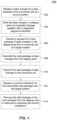
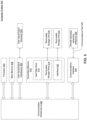
- FIG. 4 is a flowchart for a method 400 for utilizing a LAS to accelerate data extraction from a source system to a target system while guaranteeing consistency and reproducibility, according to an embodiment.
- Method 400 can be performed by processing logic that can comprise hardware (e.g., circuitry, dedicated logic, programmable logic, microcode, etc.), software (e.g., instructions executing on a processing device), or a combination thereof. It is to be appreciated that not all steps may be needed to perform the disclosure provided herein. Further, some of the steps may be performed simultaneously, or in a different order than shown in FIG. 4 , as will be understood by a person of ordinary skill in the art.
- Method 400 shall be described with reference to FIGS. 1 , 2 , and 3 . However, method 400 is not limited to that example embodiment.
- LAS 104 receives a data change for a data extraction from a producer job at source system 102 for appending to staging area 200.
- LAS 104 can generate staging area 200 for the data extraction.
- LAS 104 can generate staging area 200 based on a schema of a database object (e.g., a database table) associated with the data extraction.
- LAS 104 can also generate staging area 200 based on a schema of a database object (e.g., a database table) associated with the data extraction and maximum package size 324.
- LAS 104 can also generate staging area 200 based on a schema of a database object (e.g., a database table) associated with the data extraction, maximum package size 324, and number of active consumers 328.
- LAS 104 can also generate staging area 200 based on a schema of a database object (e.g., a database table) associated with the data extraction, maximum package size 324, number of active producers 326, and number of active consumers 328.
- LAS 104 can determine whether staging area 200 is partially empty. LAS 104 can receive the data change for the data extraction from the producer job in response to determining that staging area 200 is partially empty.
- LAS 104 stores the data change in staging area 200 of persistent storage 112 together with a respective sequence identifier 204.
- LAS 104 can generate the respective sequence identifier 204 in response to receiving the data change.
- the respective sequence identifier 204 can identify an order of the data change in the data extraction.
- LAS 104 can generate the sequence identifier 204 using a monotonically increasing number. LAS 104 can also generate the sequence identifier 204 using a timestamp of the data change. LAS 104 can also generate the sequence identifier 204 using various other techniques as would be appreciated by a person of ordinary skill in the art.
- LAS 104 receives a request for a next package of data changes in staging area 200 from a consumer job at target system 108.
- LAS 104 can receive the request via an output adapter of LAS 104 (also referred to as LAS OUT).
- the output adapter of LAS 104 can be an API.
- LAS 104 can determine whether staging area 200 contains data changes for a next package. LAS can determine whether staging area 20 contains data changes for a next package by checking whether data available 322 is set. LAS 104 can receive the request for a next package of data changes from the consumer job in response to determining that staging area 200 contains data changes for a next package.
- LAS 104 can allow another consumer job to proceed with requesting a next package of data changes.
- the other consumer job can determine if data changes are available for it and then request a package of those data changes.
- LAS 104 can determine a work list of consumer jobs having data available for them. LAS 104 can allow each of the consumer jobs in this list to proceed with requesting a respective next package of data changes.
- LAS 104 generates the next package of data changes from staging area 200.
- LAS 104 can generate a new package. To generate the new package, LAS 104 can claim the next package identifier by atomically incrementing the next package identifier 330 in control area 300. LAS 104 can then atomically mark data change entries in staging area 200 with the next package identifier. LAS 104 can mark one or more data change entries in staging area 200 such that their respective package identifiers 208 are set to the next package identifier.
- LAS 104 can identify data change entries in staging area 200 assigned the next package identifier. LAS 104 can then generate a new package for the next package identifier that includes the identified data change entries. LAS 104 can store the generated package as a package entry in control area 300. LAS 104 can set the package status 306 of the generated package to "New.”
- LAS 104 can retrieve the first package that was “rolled back” after a failure to commit the respective package at target system 108 to persistent storage 114. In other words, LAS 104 can retrieve the package identifier 304 of the first "rolled back" package.
- LAS 104 can skip the mark process for the first "rolled back" package because the data change entries in staging area 200 were previously marked with the corresponding package identifier 304. LAS 104 can then perform the sweep process. LAS 104 can identify the data change entries in staging area 200 that are assigned the package identifier 304 of the "rolled back" package. LAS 104 can then generate a package for the "rolled back" package that includes the identified data change entries.
- LAS 104 can set data available 322 in control area 300 after generating the next package.
- LAS 104 transmits the next package of data changes to the consumer job.
- LAS 104 can set the corresponding package status 306 of the next package to "in progress" after transmitting the next package to the consumer job.
- LAS 104 receives a commit notification 120 for the transmitted next package from target system 108.
- LAS 104 can receive the commit notification 120 via an output adapter of LAS 104 (also referred to as LAS OUT).
- the output adapter of LAS 104 can be an API.
- LAS 104 can mark the transmitted package as "committed" in control area 300 in response to receiving the commit notification 120.
- LAS 104 removes the data changes in the next package from staging area 200 in response to receiving the commit notification 120. LAS 104 can also delete the corresponding package from control area 300.
- Computer system 500 may also include one or more secondary storage devices or memory 510.
- Secondary memory 510 may include, for example, a hard disk drive 512 and/or a removable storage device or drive 514.
- Removable storage drive 514 may be a floppy disk drive, a magnetic tape drive, a compact disk drive, an optical storage device, tape backup device, and/or any other storage device/drive.
- Removable storage drive 514 may interact with a removable storage unit 518.
- Removable storage unit 518 may include a computer usable or readable storage device having stored thereon computer software (control logic) and/or data.
- Removable storage unit 518 may be a floppy disk, magnetic tape, compact disk, DVD, optical storage disk, and/ any other computer data storage device.
- Removable storage drive 514 may read from and/or write to removable storage unit 518.
- Secondary memory 510 may include other means, devices, components, instrumentalities or other approaches for allowing computer programs and/or other instructions and/or data to be accessed by computer system 500.
- Such means, devices, components, instrumentalities or other approaches may include, for example, a removable storage unit 522 and an interface 520.
- Examples of the removable storage unit 522 and the interface 520 may include a program cartridge and cartridge interface (such as that found in video game devices), a removable memory chip (such as an EPROM or PROM) and associated socket, a memory stick and USB port, a memory card and associated memory card slot, and/or any other removable storage unit and associated interface.
- Computer system 500 may further include a communication or network interface 524.
- Communication interface 524 may enable computer system 500 to communicate and interact with any combination of external devices, external networks, external entities, etc. (individually and collectively referenced by reference number 528).
- communication interface 524 may allow computer system 500 to communicate with external or remote devices 528 over communications path 526, which may be wired and/or wireless (or a combination thereof), and which may include any combination of LANs, WANs, the Internet, etc.
- Control logic and/or data may be transmitted to and from computer system 500 via communication path 526.
- Computer system 500 may also be any of a personal digital assistant (PDA), desktop workstation, laptop or notebook computer, netbook, tablet, smart phone, smart watch or other wearable, appliance, part of the Internet-of-Things, and/or embedded system, to name a few non-limiting examples, or any combination thereof.
- PDA personal digital assistant
- Computer system 500 may be a client or server, accessing or hosting any applications and/or data through any delivery paradigm, including but not limited to remote or distributed cloud computing solutions; local or on-premises software ("on-premise” cloud-based solutions); "as a service” models (e.g., content as a service (CaaS), digital content as a service (DCaaS), software as a service (SaaS), managed software as a service (MSaaS), platform as a service (PaaS), desktop as a service (DaaS), framework as a service (FaaS), backend as a service (BaaS), mobile backend as a service (MBaaS), infrastructure as a service (IaaS), etc.); and/or a hybrid model including any combination of the foregoing examples or other services or delivery paradigms.
- as a service” models e.g., content as a service (CaaS), digital content as a service (DCaaS), software as a
- Any applicable data structures, file formats, and schemas in computer system 500 may be derived from standards including but not limited to JavaScript Object Notation (JSON), Extensible Markup Language (XML), Yet Another Markup Language (YAML), Extensible Hypertext Markup Language (XHTML), Wireless Markup Language (WML), MessagePack, XML User Interface Language (XUL), or any other functionally similar representations alone or in combination.
- JSON JavaScript Object Notation
- XML Extensible Markup Language
- YAML Yet Another Markup Language
- XHTML Extensible Hypertext Markup Language
- WML Wireless Markup Language
- MessagePack XML User Interface Language
- XUL XML User Interface Language
- a tangible, non-transitory apparatus or article of manufacture comprising a tangible, non-transitory computer useable or readable medium having control logic (software) stored thereon may also be referred to herein as a computer program product or program storage device.
- control logic software stored thereon
- control logic when executed by one or more data processing devices (such as computer system 500), may cause such data processing devices to operate as described herein.
- references herein to "one embodiment,” “an embodiment,” “an example embodiment,” or similar phrases, indicate that the embodiment described can include a particular feature, structure, or characteristic, but every embodiment can not necessarily include the particular feature, structure, or characteristic. Moreover, such phrases are not necessarily referring to the same embodiment. Further, when a particular feature, structure, or characteristic is described in connection with an embodiment, it would be within the knowledge of persons skilled in the relevant art(s) to incorporate such feature, structure, or characteristic into other embodiments whether or not explicitly mentioned or described herein. Additionally, some embodiments can be described using the expression “coupled” and “connected” along with their derivatives. These terms are not necessarily intended as synonyms for each other.
- Coupled can also mean that two or more elements are not in direct contact with each other, but yet still co-operate or interact with each other.
Landscapes
- Engineering & Computer Science (AREA)
- Theoretical Computer Science (AREA)
- Databases & Information Systems (AREA)
- Physics & Mathematics (AREA)
- General Engineering & Computer Science (AREA)
- General Physics & Mathematics (AREA)
- Data Mining & Analysis (AREA)
- Software Systems (AREA)
- Library & Information Science (AREA)
- Computational Linguistics (AREA)
- Computing Systems (AREA)
- Multimedia (AREA)
- Information Retrieval, Db Structures And Fs Structures Therefor (AREA)
Claims (15)
- Procédé mis en œuvre par ordinateur pour accélérer une extraction de données d'un système source (102) à un système cible (108), comprenant :recevoir, par au moins un processeur, un changement de données (202) pour l'extraction de données d'une tâche de producteur au niveau du système source (102), le système source (102) étant couplé de manière communicative à un premier stockage persistant (110) ;stocker, par l'au moins un processeur, le changement de données (102) dans une zone de préparation (200) d'un second stockage persistant (112) conjointement à un identifiant de séquence respectif (204), dans lequel la zone de préparation (200) correspond à l'extraction de données ;transmettre, par l'au moins un processeur, une réponse à la tâche de producteur que le stockage du changement de données (102) a réussi, amenant la tâche de producteur à valider le changement de données, dans lequel en réponse à la validation du changement de données par la tâche de producteur, le système source (102) libère un verrou associée sur le premier stockage persistant (110) ;recevoir, par l'au moins un processeur, une requête pour un prochain paquet de changements de données dans la zone de préparation (200) d'une tâche de consommateur au niveau du système cible (108) ;générer, par l'au moins un processeur, le prochain paquet à partir de la zone de préparation (200) ;transmettre, par l'au moins un processeur, le prochain paquet à la tâche de consommateur ;recevoir, par l'au moins un processeur, une notification de validation (120) pour le prochain paquet de la tâche de consommateur en réponse à la transmission du prochain paquet ; etretirer, par l'au moins un processeur, les changements de données dans le prochain paquet de la zone de préparation (200) en réponse à la réception de la notification de validation (120) pour le prochain paquet.
- Procédé selon la revendication 1, comprenant en outre :déterminer, par l'au moins un processeur, que la zone de préparation (200) est partiellement vide ; etdans lequel la réception du changement de données (202) comprend en outre recevoir, par l'au moins un processeur, le changement de données de la tâche de producteur en réponse à la détermination que la zone de préparation (200) est partiellement vide.
- Procédé selon la revendication 1 ou 2, comprenant en outre :
générer, par l'au moins un processeur, l'identifiant de séquence respectif (204) en réponse à la réception du changement de données (202), dans lequel l'identifiant de séquence respectif identifie un ordre du changement de données dans l'extraction de données. - Procédé selon l'une quelconque des revendications précédentes, dans lequel la génération du prochain paquet comprend en outre :générer, par au moins un processeur, un prochain identifiant de paquet en fonction d'un prochain identifiant de paquet dans une zone de commande (300) du second stockage persistant (112), où la génération du prochain identifiant de paquet est réalisée de manière atomique ;marquer, par l'au moins un processeur, un ensemble de changements de données dans la zone de préparation avec le prochain identifiant de paquet en fonction d'une taille de paquet maximale dans la zone de commande, où le marquage de l'ensemble de changements de données est réalisé de manière atomique ; etgénérer, par l'au moins un processeur, le prochain paquet en fonction de l'ensemble de changements de données marqué avec le prochain identifiant de paquet, dans lequel la génération du prochain paquet est réalisée de manière non atomique,dans lequel le procédé comprend en outre en option :régler, par l'au moins un processeur, un statut de paquet pour le prochain paquet dans la zone de commande sur « en progrès » ; etrégler, par l'au moins un processeur, un drapeau de données disponibles dans la zone de commande, dans lequel le drapeau de données disponibles indique que des données sont disponibles pour la tâche de consommateur.
- Procédé selon l'une quelconque des revendications précédentes, dans lequel la génération du prochain paquet comprend en outre :récupérer, par l'au moins un processeur, un prochain identifiant de paquet correspondant à un paquet qui a été répété ; etgénérer, par l'au moins un processeur, le prochain paquet en fonction d'un ensemble de changements de données dans la zone de préparation (200) marqué avec le prochain identifiant de paquet.
- Procédé selon l'une quelconque des revendications précédentes, comprenant en outre :
générer, par l'au moins un processeur, la zone de préparation (200) pour l'extraction de données en fonction d'un schéma d'une table de base de données et d'une taille de paquet maximale, dans lequel la zone de préparation comprend un ensemble de changements de données, dans lequel chaque changement de données comprend un identifiant de séquence, un identifiant de paquet et un type d'opération. - Système, comprenant :une mémoire ; etau moins un processeur couplé à la mémoire et configuré pour :recevoir un changement de données (202) pour une extraction de données d'une tâche de producteur au niveau d'un système source (102), le système source (102) étant couplé de manière communicative à un premier stockage persistant (110) ;stocker le changement de données dans une zone de préparation (200) d'un second stockage persistant (112) conjointement à un identifiant de séquence respectif (204), dans lequel la zone de préparation correspond à l'extraction de données ;transmettre, par l'au moins un processeur, une réponse à la tâche de producteur que le stockage du changement de données (102) a réussi, amenant la tâche de producteur à valider le changement de données, dans lequel en réponse à la validation du changement de données par la tâche de producteur, le système source (102) est configuré pour libérer un verrou associée sur le premier stockage persistant (110) ;recevoir une requête pour un prochain paquet de changements de données dans la zone de préparation d'une tâche de consommateur au niveau d'un système cible (108) ;générer le prochain paquet à partir de la zone de préparation (200) ;transmettre le prochain paquet à la tâche de consommateur ;recevoir une notification de validation (120) pour le prochain paquet de la tâche de consommateur en réponse à la transmission du prochain paquet à la tâche de consommateur ; etretirer les changements de données dans le prochain paquet de la zone de préparation (200) en réponse à la réception de la notification de validation (120) pour le prochain paquet.
- Système selon la revendication 7, dans lequel l'au moins un processeur est en outre configuré pour :déterminer que la zone de préparation (200) est partiellement vide ; etdans lequel pour recevoir le changement de données, l'au moins un processeur est en outre configuré pour recevoir le changement de données de la tâche de producteur en réponse à la détermination que la zone de préparation est partiellement vide,dans lequel l'au moins un processeur peut en outre être configuré pour :
générer l'identifiant de séquence respectif en réponse à la réception du changement de données, dans lequel l'identifiant de séquence respectif identifie un ordre du changement de données dans l'extraction de données. - Système selon la revendication 7 ou 8, dans lequel pour générer le prochain paquet, l'au moins un processeur est en outre configuré pour :générer un prochain identifiant de paquet en fonction d'un prochain identifiant de paquet dans une zone de commande (300) du second stockage persistant (112), où la génération du prochain identifiant de paquet est réalisée de manière atomique ;marquer un ensemble de changements de données dans la zone de préparation avec le prochain identifiant de paquet en fonction d'une taille de paquet maximale dans la zone de commande, où le marquage de l'ensemble de changements de données est réalisé de manière atomique ; etgénérer le prochain paquet en fonction de l'ensemble de changements de données marqué avec le prochain identifiant de paquet, dans lequel la génération du prochain paquet est réalisée de manière non atomique,dans lequel l'au moins un processeur peut en outre être configuré pour :régler un statut de paquet pour le prochain paquet dans la zone de commande sur « en progrès » ; etrégler un drapeau de données disponibles dans la zone de commande, dans lequel le drapeau de données disponibles indique que des données sont disponibles pour la tâche de consommateur.
- Système selon l'une quelconque des revendications 7 à 9, dans lequel pour générer le prochain paquet, l'au moins un processeur est en outre configuré pour :récupérer un prochain identifiant de paquet correspondant à un paquet qui a été répété ; etgénérer le prochain paquet en fonction d'un ensemble de changement de données dans la zone de préparation marqué avec le prochain identifiant de paquet.
- Système selon l'une quelconque des revendications 7 à 10, dans lequel l'au moins un processeur est en outre configuré pour :générer la zone de préparation (200) pour l'extraction de données en fonction d'un schéma d'une table de base de données et d'une taille de paquet maximale,dans lequel la zone de préparation comprend un ensemble de changements de données, dans lequel chaque changement de données comprend un identifiant de séquence, un identifiant de paquet et un type d'opération.
- Support non transitoire lisible par ordinateur ayant des instructions stockées sur lui qui, lors de leur exécution par au moins un dispositif informatique, amènent l'au moins un dispositif informatique à réaliser des opérations comprenant :recevoir un changement de données (202) pour une extraction de données d'une tâche de producteur au niveau d'un système source (102), le système source (102) étant couplé de manière communicative à un premier stockage persistant (110) ;stocker le changement de données dans une zone de préparation (200) d'un second stockage persistant (112) conjointement à un identifiant de séquence respectif (204), dans lequel la zone de préparation correspond à l'extraction de données ;transmettre, par l'au moins un processeur, une réponse à la tâche de producteur que le stockage du changement de données (102) a réussi, amenant la tâche de producteur à valider le changement de données, dans lequel en réponse à la validation du changement de données par la tâche de producteur, le système source (102) libère un verrou associée sur le premier stockage persistant (110) ;recevoir une requête pour un prochain paquet de changements de données dans la zone de préparation d'une tâche de consommateur au niveau d'un système cible (108) ;générer le prochain paquet à partir de la zone de préparation (200) ;transmettre le prochain paquet à la tâche de consommateur ;recevoir une notification de validation (120) pour le prochain paquet de la tâche de consommateur en réponse à la transmission du prochain paquet ; etretirer les changements de données dans le prochain paquet de la zone de préparation en réponse à la réception de la notification de validation pour le prochain paquet.
- Support non transitoire lisible par ordinateur selon la revendication 12, dans lequel les opérations comprennent en outre :déterminer que la zone de préparation (200) est partiellement vide ; etdans lequel la réception du changement de données comprend en outre recevoir le changement de données de la tâche de producteur en réponse à la détermination que la zone de préparation est partiellement vide ; et/ou dans lequel les opérations comprennent en outre :
générer l'identifiant de séquence respectif en réponse à la réception du changement de données, dans lequel l'identifiant de séquence respectif identifie un ordre du changement de données dans l'extraction de données. - Support non transitoire lisible par ordinateur selon la revendication 12 ou 13, dans lequel générer le prochain paquet comprend en outre :générer un prochain identifiant de paquet en fonction d'un prochain identifiant de paquet dans une zone de commande du second stockage persistant, où la génération du prochain identifiant de paquet est réalisée de manière atomique ;marquer un ensemble de changements de données dans la zone de préparation avec le prochain identifiant de paquet en fonction d'une taille de paquet maximale dans la zone de commande, où le marquage de l'ensemble de changements de données est réalisé de manière atomique ; etgénérer le prochain paquet en fonction de l'ensemble de changements de données marqué avec le prochain identifiant de paquet, dans lequel la génération du prochain paquet est réalisée de manière non atomique,dans lequel les opérations peuvent en outre comprendre :régler un statut de paquet pour le prochain paquet dans la zone de commande sur « en progrès » ; etrégler un drapeau de données disponibles dans la zone de commande, dans lequel le drapeau de données disponibles indique que des données sont disponibles pour la tâche de consommateur.
- Support non transitoire lisible par ordinateur selon l'une quelconque des revendications 12 à 14, dans lequel la génération du prochain paquet comprend en outre :récupérer un prochain identifiant de paquet correspondant à un paquet qui a été répété ; etgénérer le prochain paquet en fonction d'un ensemble de changement de données dans la zone de préparation marqué avec le prochain identifiant de paquet.
Priority Applications (1)
| Application Number | Priority Date | Filing Date | Title |
|---|---|---|---|
| EP25186524.2A EP4641401A1 (fr) | 2020-12-11 | 2021-09-10 | Stadification anticipée pour extraction de données accélérée |
Applications Claiming Priority (1)
| Application Number | Priority Date | Filing Date | Title |
|---|---|---|---|
| US17/118,770 US11423017B2 (en) | 2020-12-11 | 2020-12-11 | Look-ahead staging for accelerated data extraction |
Related Child Applications (1)
| Application Number | Title | Priority Date | Filing Date |
|---|---|---|---|
| EP25186524.2A Division EP4641401A1 (fr) | 2020-12-11 | 2021-09-10 | Stadification anticipée pour extraction de données accélérée |
Publications (3)
| Publication Number | Publication Date |
|---|---|
| EP4012575A1 EP4012575A1 (fr) | 2022-06-15 |
| EP4012575C0 EP4012575C0 (fr) | 2025-07-02 |
| EP4012575B1 true EP4012575B1 (fr) | 2025-07-02 |
Family
ID=77710618
Family Applications (2)
| Application Number | Title | Priority Date | Filing Date |
|---|---|---|---|
| EP25186524.2A Pending EP4641401A1 (fr) | 2020-12-11 | 2021-09-10 | Stadification anticipée pour extraction de données accélérée |
| EP21195925.9A Active EP4012575B1 (fr) | 2020-12-11 | 2021-09-10 | Étape prospective pour extraction de données accélérée |
Family Applications Before (1)
| Application Number | Title | Priority Date | Filing Date |
|---|---|---|---|
| EP25186524.2A Pending EP4641401A1 (fr) | 2020-12-11 | 2021-09-10 | Stadification anticipée pour extraction de données accélérée |
Country Status (3)
| Country | Link |
|---|---|
| US (1) | US11423017B2 (fr) |
| EP (2) | EP4641401A1 (fr) |
| CN (1) | CN114625548B (fr) |
Family Cites Families (19)
| Publication number | Priority date | Publication date | Assignee | Title |
|---|---|---|---|---|
| CN100428138C (zh) * | 2002-04-19 | 2008-10-22 | 皇家飞利浦电子股份有限公司 | 用于改变输出速率的方法和设备 |
| US8374966B1 (en) * | 2002-08-01 | 2013-02-12 | Oracle International Corporation | In memory streaming with disk backup and recovery of messages captured from a database redo stream |
| EP1498815A3 (fr) * | 2003-06-30 | 2006-11-29 | Gravic, Inc. | Méthode pour le maintien de l'intégrité organo-fonctionnelle d'une moteur replicatif et multifils |
| US8825615B2 (en) * | 2004-05-11 | 2014-09-02 | Oracle International Corporation | Simplifying implementation of custom atomic transactions in a programming environment |
| US7668879B2 (en) | 2005-11-30 | 2010-02-23 | Oracle International Corporation | Database system configured for automatic failover with no data loss |
| US20150032710A1 (en) * | 2013-07-26 | 2015-01-29 | Broadview Networks, Inc. | Method Of Communicating Changes In A Main Database To A Client Application |
| US9760617B2 (en) | 2014-05-29 | 2017-09-12 | Sap Se | Applying transaction log in parallel |
| WO2016010527A1 (fr) | 2014-07-15 | 2016-01-21 | Hewlett-Packard Development Company, L. P. | Reproduction de transactions de base de données |
| WO2016024986A1 (fr) | 2014-08-15 | 2016-02-18 | Hewlett-Packard Development Company, L.P. | Archivage triphasé pour un système de fichiers distribué |
| US10318297B2 (en) | 2015-01-30 | 2019-06-11 | Huawei Technologies Co., Ltd. | Method and apparatus for operating a self-timed parallelized multi-core processor |
| US20160275089A1 (en) * | 2015-03-17 | 2016-09-22 | Netapp, Inc. | Methods for implementing nosql database snapshots and devices thereof |
| US10372458B2 (en) | 2015-04-01 | 2019-08-06 | Huawei Technologies Co., Ltd | Method and apparatus for a self-clocked, event triggered superscalar processor |
| US20170255663A1 (en) | 2016-03-07 | 2017-09-07 | Researchgate Gmbh | Propagation of data changes in a distributed system |
| KR101956236B1 (ko) | 2016-11-16 | 2019-03-11 | 주식회사 실크로드소프트 | 데이터베이스 관리 시스템에서의 데이터 복제 기법 |
| US10901974B2 (en) * | 2018-03-29 | 2021-01-26 | Salesforce.Com, Inc. | Hybrid cloud chain management of centralized and decentralized data |
| US10692086B2 (en) * | 2018-05-07 | 2020-06-23 | Accenture Global Solutions Limited | Distributed ledger based identity and origins of supply chain application enabling financial inclusion and sustainability |
| US20200310798A1 (en) | 2019-03-28 | 2020-10-01 | Manjunath Shevgoor | Technology For Providing Memory Atomicity With Low Overhead |
| US11249983B2 (en) | 2019-04-02 | 2022-02-15 | International Business Machines Corporation | Transaction change data forwarding |
| US11269741B2 (en) * | 2019-07-30 | 2022-03-08 | Salesforce.Com, Inc. | Change-protected database system |
-
2020
- 2020-12-11 US US17/118,770 patent/US11423017B2/en active Active
-
2021
- 2021-09-10 EP EP25186524.2A patent/EP4641401A1/fr active Pending
- 2021-09-10 EP EP21195925.9A patent/EP4012575B1/fr active Active
- 2021-09-27 CN CN202111132957.8A patent/CN114625548B/zh active Active
Also Published As
| Publication number | Publication date |
|---|---|
| CN114625548A (zh) | 2022-06-14 |
| EP4012575C0 (fr) | 2025-07-02 |
| US20220188294A1 (en) | 2022-06-16 |
| US11423017B2 (en) | 2022-08-23 |
| EP4012575A1 (fr) | 2022-06-15 |
| EP4641401A1 (fr) | 2025-10-29 |
| CN114625548B (zh) | 2025-08-08 |
Similar Documents
| Publication | Publication Date | Title |
|---|---|---|
| US11334422B2 (en) | System and method for data redistribution in a database | |
| US9747356B2 (en) | Eager replication of uncommitted transactions | |
| US12164496B2 (en) | Transaction execution method, computing device, and storage medium | |
| US12007857B2 (en) | Non-blocking backup in a log replay node for tertiary initialization | |
| US20190155705A1 (en) | Coordinated Replication of Heterogeneous Database Stores | |
| US10824519B2 (en) | Database recovery and optimization with batch processing | |
| US11269825B2 (en) | Privilege retention for database migration | |
| US12124446B2 (en) | Intelligent sharing pagination mechanism adaptive to huge data | |
| US12511309B2 (en) | Keeping stable leadership in raft-based protocol with fast automatic failover | |
| US11397717B2 (en) | Data storage system and method | |
| EP4012575B1 (fr) | Étape prospective pour extraction de données accélérée | |
| EP4012561B1 (fr) | Mise en scène anticipée pour une reconstruction de voyage dans le temps | |
| US20240143321A1 (en) | Computing node upgrading system | |
| US12158801B2 (en) | Method of responding to operation, electronic device, and storage medium | |
| US12461854B1 (en) | Data storage management system | |
| US20240211328A1 (en) | Resilient post-processing architecture for abnormal process termination | |
| US12373402B1 (en) | Resource efficient schema object creation system | |
| US20260037439A1 (en) | Data storage management system | |
| US12242727B2 (en) | Lock-free read access to vector data structures | |
| US20240231975A1 (en) | Data synchronization without middleware | |
| CN117763038A (zh) | 一种数据同步方法、装置、电子设备及计算机可读介质 |
Legal Events
| Date | Code | Title | Description |
|---|---|---|---|
| PUAI | Public reference made under article 153(3) epc to a published international application that has entered the european phase |
Free format text: ORIGINAL CODE: 0009012 |
|
| STAA | Information on the status of an ep patent application or granted ep patent |
Free format text: STATUS: THE APPLICATION HAS BEEN PUBLISHED |
|
| AK | Designated contracting states |
Kind code of ref document: A1 Designated state(s): AL AT BE BG CH CY CZ DE DK EE ES FI FR GB GR HR HU IE IS IT LI LT LU LV MC MK MT NL NO PL PT RO RS SE SI SK SM TR |
|
| STAA | Information on the status of an ep patent application or granted ep patent |
Free format text: STATUS: REQUEST FOR EXAMINATION WAS MADE |
|
| 17P | Request for examination filed |
Effective date: 20221124 |
|
| RBV | Designated contracting states (corrected) |
Designated state(s): AL AT BE BG CH CY CZ DE DK EE ES FI FR GB GR HR HU IE IS IT LI LT LU LV MC MK MT NL NO PL PT RO RS SE SI SK SM TR |
|
| GRAP | Despatch of communication of intention to grant a patent |
Free format text: ORIGINAL CODE: EPIDOSNIGR1 |
|
| STAA | Information on the status of an ep patent application or granted ep patent |
Free format text: STATUS: GRANT OF PATENT IS INTENDED |
|
| INTG | Intention to grant announced |
Effective date: 20250319 |
|
| GRAS | Grant fee paid |
Free format text: ORIGINAL CODE: EPIDOSNIGR3 |
|
| GRAA | (expected) grant |
Free format text: ORIGINAL CODE: 0009210 |
|
| STAA | Information on the status of an ep patent application or granted ep patent |
Free format text: STATUS: THE PATENT HAS BEEN GRANTED |
|
| AK | Designated contracting states |
Kind code of ref document: B1 Designated state(s): AL AT BE BG CH CY CZ DE DK EE ES FI FR GB GR HR HU IE IS IT LI LT LU LV MC MK MT NL NO PL PT RO RS SE SI SK SM TR |
|
| REG | Reference to a national code |
Ref country code: GB Ref legal event code: FG4D |
|
| REG | Reference to a national code |
Ref country code: CH Ref legal event code: EP |
|
| REG | Reference to a national code |
Ref country code: DE Ref legal event code: R096 Ref document number: 602021033230 Country of ref document: DE |
|
| REG | Reference to a national code |
Ref country code: IE Ref legal event code: FG4D |
|
| U01 | Request for unitary effect filed |
Effective date: 20250716 |
|
| U07 | Unitary effect registered |
Designated state(s): AT BE BG DE DK EE FI FR IT LT LU LV MT NL PT RO SE SI Effective date: 20250723 |
|
| PGFP | Annual fee paid to national office [announced via postgrant information from national office to epo] |
Ref country code: GB Payment date: 20250919 Year of fee payment: 5 |
|
| U20 | Renewal fee for the european patent with unitary effect paid |
Year of fee payment: 5 Effective date: 20250924 |
|
| PG25 | Lapsed in a contracting state [announced via postgrant information from national office to epo] |
Ref country code: IS Free format text: LAPSE BECAUSE OF FAILURE TO SUBMIT A TRANSLATION OF THE DESCRIPTION OR TO PAY THE FEE WITHIN THE PRESCRIBED TIME-LIMIT Effective date: 20251102 |
|
| PG25 | Lapsed in a contracting state [announced via postgrant information from national office to epo] |
Ref country code: NO Free format text: LAPSE BECAUSE OF FAILURE TO SUBMIT A TRANSLATION OF THE DESCRIPTION OR TO PAY THE FEE WITHIN THE PRESCRIBED TIME-LIMIT Effective date: 20251002 |
|
| PG25 | Lapsed in a contracting state [announced via postgrant information from national office to epo] |
Ref country code: HR Free format text: LAPSE BECAUSE OF FAILURE TO SUBMIT A TRANSLATION OF THE DESCRIPTION OR TO PAY THE FEE WITHIN THE PRESCRIBED TIME-LIMIT Effective date: 20250702 |
|
| PG25 | Lapsed in a contracting state [announced via postgrant information from national office to epo] |
Ref country code: GR Free format text: LAPSE BECAUSE OF FAILURE TO SUBMIT A TRANSLATION OF THE DESCRIPTION OR TO PAY THE FEE WITHIN THE PRESCRIBED TIME-LIMIT Effective date: 20251003 |
|
| PG25 | Lapsed in a contracting state [announced via postgrant information from national office to epo] |
Ref country code: CZ Free format text: LAPSE BECAUSE OF FAILURE TO SUBMIT A TRANSLATION OF THE DESCRIPTION OR TO PAY THE FEE WITHIN THE PRESCRIBED TIME-LIMIT Effective date: 20250702 |
|
| PG25 | Lapsed in a contracting state [announced via postgrant information from national office to epo] |
Ref country code: PL Free format text: LAPSE BECAUSE OF FAILURE TO SUBMIT A TRANSLATION OF THE DESCRIPTION OR TO PAY THE FEE WITHIN THE PRESCRIBED TIME-LIMIT Effective date: 20250702 |
|
| PG25 | Lapsed in a contracting state [announced via postgrant information from national office to epo] |
Ref country code: RS Free format text: LAPSE BECAUSE OF FAILURE TO SUBMIT A TRANSLATION OF THE DESCRIPTION OR TO PAY THE FEE WITHIN THE PRESCRIBED TIME-LIMIT Effective date: 20251002 |
|
| PG25 | Lapsed in a contracting state [announced via postgrant information from national office to epo] |
Ref country code: ES Free format text: LAPSE BECAUSE OF FAILURE TO SUBMIT A TRANSLATION OF THE DESCRIPTION OR TO PAY THE FEE WITHIN THE PRESCRIBED TIME-LIMIT Effective date: 20250702 |