EP4011497A1 - Mysx/zsh mixture as sulfidizing agent in mineral flotation processes - Google Patents
Mysx/zsh mixture as sulfidizing agent in mineral flotation processes Download PDFInfo
- Publication number
- EP4011497A1 EP4011497A1 EP21210991.2A EP21210991A EP4011497A1 EP 4011497 A1 EP4011497 A1 EP 4011497A1 EP 21210991 A EP21210991 A EP 21210991A EP 4011497 A1 EP4011497 A1 EP 4011497A1
- Authority
- EP
- European Patent Office
- Prior art keywords
- sulfidizing agent
- agent
- flotation
- sulfidizing
- sup
- Prior art date
- Legal status (The legal status is an assumption and is not a legal conclusion. Google has not performed a legal analysis and makes no representation as to the accuracy of the status listed.)
- Granted
Links
Images


Classifications
-
- B—PERFORMING OPERATIONS; TRANSPORTING
- B03—SEPARATION OF SOLID MATERIALS USING LIQUIDS OR USING PNEUMATIC TABLES OR JIGS; MAGNETIC OR ELECTROSTATIC SEPARATION OF SOLID MATERIALS FROM SOLID MATERIALS OR FLUIDS; SEPARATION BY HIGH-VOLTAGE ELECTRIC FIELDS
- B03B—SEPARATING SOLID MATERIALS USING LIQUIDS OR USING PNEUMATIC TABLES OR JIGS
- B03B1/00—Conditioning for facilitating separation by altering physical properties of the matter to be treated
- B03B1/04—Conditioning for facilitating separation by altering physical properties of the matter to be treated by additives
-
- B—PERFORMING OPERATIONS; TRANSPORTING
- B03—SEPARATION OF SOLID MATERIALS USING LIQUIDS OR USING PNEUMATIC TABLES OR JIGS; MAGNETIC OR ELECTROSTATIC SEPARATION OF SOLID MATERIALS FROM SOLID MATERIALS OR FLUIDS; SEPARATION BY HIGH-VOLTAGE ELECTRIC FIELDS
- B03D—FLOTATION; DIFFERENTIAL SEDIMENTATION
- B03D1/00—Flotation
- B03D1/001—Flotation agents
-
- B—PERFORMING OPERATIONS; TRANSPORTING
- B03—SEPARATION OF SOLID MATERIALS USING LIQUIDS OR USING PNEUMATIC TABLES OR JIGS; MAGNETIC OR ELECTROSTATIC SEPARATION OF SOLID MATERIALS FROM SOLID MATERIALS OR FLUIDS; SEPARATION BY HIGH-VOLTAGE ELECTRIC FIELDS
- B03D—FLOTATION; DIFFERENTIAL SEDIMENTATION
- B03D1/00—Flotation
- B03D1/02—Froth-flotation processes
-
- C—CHEMISTRY; METALLURGY
- C01—INORGANIC CHEMISTRY
- C01B—NON-METALLIC ELEMENTS; COMPOUNDS THEREOF; METALLOIDS OR COMPOUNDS THEREOF NOT COVERED BY SUBCLASS C01C
- C01B17/00—Sulfur; Compounds thereof
- C01B17/22—Alkali metal sulfides or polysulfides
-
- C—CHEMISTRY; METALLURGY
- C01—INORGANIC CHEMISTRY
- C01B—NON-METALLIC ELEMENTS; COMPOUNDS THEREOF; METALLOIDS OR COMPOUNDS THEREOF NOT COVERED BY SUBCLASS C01C
- C01B17/00—Sulfur; Compounds thereof
- C01B17/42—Sulfides or polysulfides of magnesium, calcium, strontium, or barium
-
- B—PERFORMING OPERATIONS; TRANSPORTING
- B03—SEPARATION OF SOLID MATERIALS USING LIQUIDS OR USING PNEUMATIC TABLES OR JIGS; MAGNETIC OR ELECTROSTATIC SEPARATION OF SOLID MATERIALS FROM SOLID MATERIALS OR FLUIDS; SEPARATION BY HIGH-VOLTAGE ELECTRIC FIELDS
- B03D—FLOTATION; DIFFERENTIAL SEDIMENTATION
- B03D1/00—Flotation
- B03D1/001—Flotation agents
- B03D1/002—Inorganic compounds
-
- B—PERFORMING OPERATIONS; TRANSPORTING
- B03—SEPARATION OF SOLID MATERIALS USING LIQUIDS OR USING PNEUMATIC TABLES OR JIGS; MAGNETIC OR ELECTROSTATIC SEPARATION OF SOLID MATERIALS FROM SOLID MATERIALS OR FLUIDS; SEPARATION BY HIGH-VOLTAGE ELECTRIC FIELDS
- B03D—FLOTATION; DIFFERENTIAL SEDIMENTATION
- B03D1/00—Flotation
- B03D1/001—Flotation agents
- B03D1/004—Organic compounds
- B03D1/008—Organic compounds containing oxygen
-
- B—PERFORMING OPERATIONS; TRANSPORTING
- B03—SEPARATION OF SOLID MATERIALS USING LIQUIDS OR USING PNEUMATIC TABLES OR JIGS; MAGNETIC OR ELECTROSTATIC SEPARATION OF SOLID MATERIALS FROM SOLID MATERIALS OR FLUIDS; SEPARATION BY HIGH-VOLTAGE ELECTRIC FIELDS
- B03D—FLOTATION; DIFFERENTIAL SEDIMENTATION
- B03D1/00—Flotation
- B03D1/001—Flotation agents
- B03D1/004—Organic compounds
- B03D1/012—Organic compounds containing sulfur
-
- B—PERFORMING OPERATIONS; TRANSPORTING
- B03—SEPARATION OF SOLID MATERIALS USING LIQUIDS OR USING PNEUMATIC TABLES OR JIGS; MAGNETIC OR ELECTROSTATIC SEPARATION OF SOLID MATERIALS FROM SOLID MATERIALS OR FLUIDS; SEPARATION BY HIGH-VOLTAGE ELECTRIC FIELDS
- B03D—FLOTATION; DIFFERENTIAL SEDIMENTATION
- B03D1/00—Flotation
- B03D1/001—Flotation agents
- B03D1/004—Organic compounds
- B03D1/014—Organic compounds containing phosphorus
-
- B—PERFORMING OPERATIONS; TRANSPORTING
- B03—SEPARATION OF SOLID MATERIALS USING LIQUIDS OR USING PNEUMATIC TABLES OR JIGS; MAGNETIC OR ELECTROSTATIC SEPARATION OF SOLID MATERIALS FROM SOLID MATERIALS OR FLUIDS; SEPARATION BY HIGH-VOLTAGE ELECTRIC FIELDS
- B03D—FLOTATION; DIFFERENTIAL SEDIMENTATION
- B03D1/00—Flotation
- B03D1/001—Flotation agents
- B03D1/018—Mixtures of inorganic and organic compounds
-
- B—PERFORMING OPERATIONS; TRANSPORTING
- B03—SEPARATION OF SOLID MATERIALS USING LIQUIDS OR USING PNEUMATIC TABLES OR JIGS; MAGNETIC OR ELECTROSTATIC SEPARATION OF SOLID MATERIALS FROM SOLID MATERIALS OR FLUIDS; SEPARATION BY HIGH-VOLTAGE ELECTRIC FIELDS
- B03D—FLOTATION; DIFFERENTIAL SEDIMENTATION
- B03D1/00—Flotation
- B03D1/14—Flotation machines
-
- B—PERFORMING OPERATIONS; TRANSPORTING
- B03—SEPARATION OF SOLID MATERIALS USING LIQUIDS OR USING PNEUMATIC TABLES OR JIGS; MAGNETIC OR ELECTROSTATIC SEPARATION OF SOLID MATERIALS FROM SOLID MATERIALS OR FLUIDS; SEPARATION BY HIGH-VOLTAGE ELECTRIC FIELDS
- B03D—FLOTATION; DIFFERENTIAL SEDIMENTATION
- B03D2201/00—Specified effects produced by the flotation agents
-
- B—PERFORMING OPERATIONS; TRANSPORTING
- B03—SEPARATION OF SOLID MATERIALS USING LIQUIDS OR USING PNEUMATIC TABLES OR JIGS; MAGNETIC OR ELECTROSTATIC SEPARATION OF SOLID MATERIALS FROM SOLID MATERIALS OR FLUIDS; SEPARATION BY HIGH-VOLTAGE ELECTRIC FIELDS
- B03D—FLOTATION; DIFFERENTIAL SEDIMENTATION
- B03D2201/00—Specified effects produced by the flotation agents
- B03D2201/02—Collectors
-
- B—PERFORMING OPERATIONS; TRANSPORTING
- B03—SEPARATION OF SOLID MATERIALS USING LIQUIDS OR USING PNEUMATIC TABLES OR JIGS; MAGNETIC OR ELECTROSTATIC SEPARATION OF SOLID MATERIALS FROM SOLID MATERIALS OR FLUIDS; SEPARATION BY HIGH-VOLTAGE ELECTRIC FIELDS
- B03D—FLOTATION; DIFFERENTIAL SEDIMENTATION
- B03D2203/00—Specified materials treated by the flotation agents; Specified applications
- B03D2203/02—Ores
- B03D2203/025—Precious metal ores
-
- C—CHEMISTRY; METALLURGY
- C02—TREATMENT OF WATER, WASTE WATER, SEWAGE, OR SLUDGE
- C02F—TREATMENT OF WATER, WASTE WATER, SEWAGE, OR SLUDGE
- C02F1/00—Treatment of water, waste water, or sewage
- C02F1/24—Treatment of water, waste water, or sewage by flotation
-
- Y—GENERAL TAGGING OF NEW TECHNOLOGICAL DEVELOPMENTS; GENERAL TAGGING OF CROSS-SECTIONAL TECHNOLOGIES SPANNING OVER SEVERAL SECTIONS OF THE IPC; TECHNICAL SUBJECTS COVERED BY FORMER USPC CROSS-REFERENCE ART COLLECTIONS [XRACs] AND DIGESTS
- Y02—TECHNOLOGIES OR APPLICATIONS FOR MITIGATION OR ADAPTATION AGAINST CLIMATE CHANGE
- Y02P—CLIMATE CHANGE MITIGATION TECHNOLOGIES IN THE PRODUCTION OR PROCESSING OF GOODS
- Y02P10/00—Technologies related to metal processing
- Y02P10/20—Recycling
Definitions
- leaching extracts a species of interest from a mineral sample by means of reagents that dissolve or transform the species into soluble salts.
- useful species are recovered from a liquid phase, corresponding to the substance or a salt thereof in aqueous solution.
- leaching processes require a high working acidity and, in some cases, produce toxic residual effluents.
- Leaching processes can also suffer lower efficiency, due to low temperatures of operation, which dramatically affect the rates of chemical reaction.
- Separation by froth flotation is based on the ability of air bubbles to selectively attach to those particles that were previously rendered hydrophobic.
- the particle-bubble combinations then rise to the froth phase from where the flotation cell is discharged, whilst the hydrophilic particles remain in the flotation cell.
- Particle hydrophobicity is, in turn, induced by special chemicals called collectors.
- collectors In direct flotation systems, it is the economically valuable minerals which are rendered hydrophobic by the action of the collector.
- the collector renders hydrophobicity to those mineral particles considered waste.
- the efficiency of the separation process is quantified in terms of recovery and grade. Recovery refers to the percentage of valuable product contained in the ore that is removed into the concentrate stream after flotation.
- Grade refers to the percentage of the economically valuable product in the concentrate after flotation. A higher value of recovery or grade indicates a more efficient flotation system.
- foaming agents can also be used in a froth flotation process.
- Foaming agents have three main functions, namely, they aid formation and preservation of small bubbles, they reduce bubble rise velocity and they aid formation of froth. In this sense they have a completely different role from collectors, which generally need to impart lipophilicity to minerals in order to float them. Surfactants achieve this by adsorbing onto mineral surfaces rendering them water repellent, reducing the stability of the hydrated layer separating the mineral from the air bubble to such a level that attachment of the particle to the bubble can be made. For this reason, foaming agents are characterized by needing to have a much lower log P (partition-coefficient) value than collector components, or to say it in other words, foaming agents are generally much more hydrophilic than collectors.
- log P partition-coefficient
- oxidized and sulfurized ores are found mixed in many different proportions.
- the most common oxidized copper or oxide minerals are carbonates (malachite and azurite), sulfates (brochantite and antlerite), and oxychloride (atacamite and chrysocolla hydrated silicate), while the most common sulphide copper minerals are chalcopyrite (CuFeS 2 ), bornite (Cu 5 FeS 4 ), chalcosine (Cu 2 S), covelin (CuS) and enargite (Cu 3 AsS 4 ) .
- sulfidization is used as an important tool to improve recovery of some of the oxides.
- a sulfidizing agent such as sodium hydrogen sulfide (NaSH)
- NaSH sodium hydrogen sulfide
- sodium hydrogen sulfide In case of sodium hydrogen sulfide, doses greater than 100 g/ton of mineral must be used to obtain good results. However, overdosing of sodium hydrogen sulfide results in an adverse depressant effect, which causes the metal to be recovered not to float and to be lost in the tailings. In addition, the use of sodium hydrogen sulfide is associated with handling issues, due to potential H 2 S emissions.
- the invention provides a sulfidizing agent obtainable by mixing M y S x and ZSH in a weight ratio of from 90:10 to 10:90, wherein M is selected from Li + , Na + , K + , Rb + , Cs + , NH 4 + , Mg 2+ or Ca 2+ , y is 1 or 2, x is from 1.1 to 5, and Z is independently selected from Li + , Na + , K + , Rb + , Cs + and NH 4 + .
- sulfidizing agents prepared by mixing M y S x and ZSH in accordance with the first aspect of the invention have been found to provide superior or similar recovery yields to NaSH, while exhibiting a very low depressant effect and significantly reduced H 2 S emissions. These advantages lead to an improvement in safety and means that dosing does not have to be continuously adjusted in order to avoid depressing the mineral.
- the mixtures also allow for lower amounts of the sulfidizing agent to be used, thus minimizing the amounts of reagents consumed.
- a sulfidizing agent in accordance with the first aspect of the invention does not require plant modification and/or installation of additional equipment, such as cells (i.e., floatation cells).
- the invention provides a process for recovering one or more metal ores and/or polymetallic minerals from gangue, the process comprising:
- This process provides a safer, quicker, less costly and more reliable route for recovering one or more metal ores and/or polymetallic minerals from gangue, including from a copper mine.
- the process increases the performance of a selective sulfide flotation process by sulfidizing at least a portion of oxidised metal ores and/or polymetallic minerals contained in the gangue that would otherwise not be recovered.
- the present disclosure is directed to a sulfidizing agent obtainable by mixing M y S x and ZSH in a weight ratio of from 90:10 to 10:90, wherein M is selected from Li + , Na + , K + , Rb + , Cs + , NH 4 + , Mg 2+ or Ca 2+ , y is 1 or 2, x is from 1.1 to 5, and Z is independently selected from Li + , Na + , K + , Rb + , Cs + and NH 4 + .
- x has a value of from 1.1 to 4.5, preferably of from 2.1 to 4, and more preferably of from 3 to 4. In order to obtain the highest sulfur content while maintaining good stability, x preferably has a value of 4.
- M and/or Z is preferably Li + , Na + , K + , Rb + or Cs + , more preferably K + or Na + and most preferably Na + .
- M y S x is Na 2 S 4 and/or ZSH is NaSH.
- M y S x and ZSH may be mixed in a weight ratio of from 90:10 to 10:90, preferably of from 90:10 to 30:70, more preferably of from 90:10 to 50:50 and most preferably of from 70:30 to 50:50.
- M y S x When M y S x is mixed with ZSH to prepare the sulfidizing agent of the invention, a new polysulfide (M y S x ) composition is formed, wherein the value of x varies depending on the weight ratio of the M y S x /ZSH mixture used.
- M y S x a new polysulfide composition
- the NaSH effectively reduces the x value of Na 2 S 4 from 4, forming a new polysulfide composition having an average value of x that depends on the weight ratio of NaSH/Na 2 S 4 mixture used.
- This dependency of x on the weight ratio is quantified in the below table: Mixing ratio NaSH/Na 2 S 4 resulting x value 10:90 3.25 30 : 70 2.23 50 : 50 1.67 70 : 30 1.23
- This variation in resulting x values means that by mixing M y S x and ZSH at different weight ratios, the sulfidizing agent of the present invention can be tailored to the requirements of an individual mine.
- the sulfidizing agent of the invention When used to aid recovery of one or more metal ores and/or polymetallic minerals in a sulfide floatation process, a collector, and optionally a foaming agent, is required to separate the sulfidized metal ores/polymetallic minerals by floatation, as described above.
- the sulfidizing agent of the invention when used with a collector and optional foaming agent, is a promoter of oxidized metals and the combination is able to increase the performance of a selective sulfide flotation process by sulfidizing and floating at least a portion of oxidised metal ores and/or polymetallic minerals contained in the gangue that would otherwise not be recovered.
- the sulfidizing agent may include at least one collector.
- the at least one collector is a monothiophosphate or dithiophosphate collector.
- Suitable monothiophosphate collectors include sodium diethyl monothiophosphate, sodium di-sec-butyl monothiophosphate, sodium diisobutyl monothiophosphate and sodium diisoamyl monothiophosphate.
- Suitable dithiophosphate collectors include monoalkyl dithiophosphates, such as sodium ethyl dithiophosphate, sodium propyl dithiophosphate, sodium isopropyl dithiophosphate, sodium butyl dithiophosphate, sodium sec-butyl dithiophosphate, and sodium isobutyl dithiophosphate, dialkyl dithiophosphates, such as sodium diethyl dithiophosphate, sodium di-sec-butyl dithiophosphate, sodium diisobutyl dithiophosphate, and sodium diisoamyl dithiophosphate, and diaryl dithiophosphates, such as sodium dicresyl dithiophosphate.
- the sulfidizing agent may include a mixture of two or more monothiophosphate and/or dithiophosphate collectors.
- the at least one collector may be present in the sulfidizing agent in an amount of from 1 to 20 wt%, more preferably from 5 to 10 wt%, based on the total weight of the sulfidizing agent.
- the sulfidizing agent may comprise a mixture of M y S x , ZSH and collector in a weight ratio of (M y S x and ZSH) : collector of from 99:1 to 80:20, more preferably of from 95:5 to 90:10.
- the sulfidizing agent may comprise a mixture of M y S x , ZSH and collector in a weight ratio of from 50:50:0 to 40:40:20, preferably of from 49:49:2 to 47:47:6.
- the sulfidizing agent may include at least one foaming agent.
- the at least one foaming agent may be selected from the group of phenols, alkyl sulfates, aliphatic alcohols, generally C5-C8 cyclic alcohols, alkoxyalkanes, polypropylene glycol ethers, polyglycol ethers, polyglycol glycerol ethers, pyridine base, natural oils such as terpineol (pine oil) and cresols, mixed ethers, aldehydes and ketone co-products of oxo alcohol production, and ethoxylated alcohols.
- the at least one foaming agent is a polyglycol, for example, a polypropylene glycol ether, a polyglycol ether or a polyglycol glycerol ether.
- the sulfidizing agent may include a mixture of two or more foaming agents.
- the at least one foaming agent may be present in the sulfidizing agent in an amount of from 1 to 20 wt%, more preferably from 5 to 10 wt%, based on the total weight of the sulfidizing agent.
- the sulfidizing agent may comprise a mixture of M y S x , ZSH and at least one foaming agent in a weight ratio of (M y S x and ZSH) : foaming agent of from 99:1 to 80:20, more preferably of from 95:5 to 90:10.
- the sulfidizing agent may comprise a mixture of M y S x , ZSH and foaming agent in a weight ratio of from 50:50:0 to 40:40:20, preferably of from 49:49:2 to 47:47:6.
- the sulfidizing agent when the sulfidizing agent contains a collector and/or a foaming agent, it becomes a promoter of oxidized metals. Furthermore, inclusion of a collector and/or a foaming agent into the sulfidizing agent streamlines any dosing to a sulfide floatation process, and substantially reduces storage requirements.
- the sulfidizing agent may comprise a mixture of M y S x , ZSH, collector and foaming agent in a weight ratio of (M y S x and ZSH) : collector: foaming agent of from 98:1:1 to 60:20:20, more preferably of from 90:5:5 to 80:10:10.
- the sulfidizing agent comprises a mixture of M y S x , ZSH, collector and foaming agent in a weight ratio of from 49:49:1:1 to 35:35:15:15, and more preferably of from 45:45:5:5 to 40:40:10:10.
- the present invention is further directed to a process for recovering one or more metal ores and/or polymetallic minerals from gangue, the process comprising:
- x has a value of from 1.1 to 4.5, preferably of from 2.1 to 4, and more preferably of from 3 to 4. In order to obtain the highest sulfur content while maintaining good stability, x preferably has a value of 4.
- M and/or Z is preferably Li + , Na + , K + , Rb + or Cs + , more preferably K + or Na + and most preferably Na + .
- M y S x is Na 2 S 4 and/or ZSH is NaSH.
- M y S x and ZSH may be mixed in a weight ratio of from 90:10 to 10:90, preferably of from 90:10 to 30:70, more preferably of from 90:10 to 50:50 and most preferably of from 70:30 to 50:50.
- the weight ratio of M y S x and ZSH mixture can be varied to adjust the average value of x in the resulting polysulfide composition. This means that the sulfidizing agent can be tailored to the individual requirements of any mine.
- the sulfidizing agent may include at least one collector and/or at least one foaming agent.
- Exemplary collectors and foaming agents, and their suitable amounts are set out in relation to the first aspect of the invention above.
- at least one collector and/or at least one foaming agent may be added to the one or more metal ores and/or polymetallic minerals separately from the sulfidizing agent.
- the process of the present invention is used for recovering one or more metal ores and/or polymetallic minerals from gangue.
- the one or more metal ores may be selected from ores of copper (Cu), molybdenum (Mo), gold (Au), silver (Ag), lead (Pb), Nickel (Ni) and Cobalt (Co).
- the one or more metal ores are selected from ores of copper, molybdenum, silver and gold, more preferably ores of copper.
- Examples of possible polymetallic minerals include Cu-Mo, Cu-Au, Pb-Zn-Cu, Ag-Cu, Zn-Pb-Ag, Cu-Zn-Pb-Ag, Sn-Cu and Zn-Pb minerals.
- the metal ore and/or polymetallic minerals contain at least 1 wt% of oxidized ore over the total mineral.
- step (i) of the process the one or more metal ores and/or polymetallic minerals are treated with the sulfidizing agent.
- the treatment in step (i) may be performed by adding the sulfidizing agent to the one or more metal ores and/or polymetallic minerals in an amount of from 1 to 300 g/ton, preferably of from 10 to 100 g/ton, more preferably of from 20 to 70 g/ton, based on a dose of grams of agent per ton of dry ore/dry mineral treated.
- treatment in step (i) may be performed by adding the sulfidizing agent to the one or more metal ores and/or polymetallic minerals in an amount of from 1 to 400 g/ton, preferably of from 10 to 130 g/ton, more preferably of from 20 to 90 g/ton, based on a dose of grams of agent per ton of dry ore/dry mineral treated.
- treatment in step (i) may be performed by adding the sulfidizing agent to the one or more metal ores and/or polymetallic minerals in an amount of from 1 to 400 g/ton, preferably of from 10 to 130 g/ton, more preferably of from 20 to 90 g/ton, based on a dose of grams of agent per ton of dry ore/dry mineral treated.
- treatment in step (i) may be performed by adding the sulfidizing agent to the one or more metal ores and/or polymetallic minerals in an amount of from 2 to 500 g/ton, preferably of from 10 to 160 g/ton, more preferably of from 20 to 100 g/ton, based on a dose of grams of agent per ton of dry ore/dry mineral treated.
- the sulfidizing agent is preferably added to the one or more metal ores and/or polymetallic minerals in at least two, preferably at least three and more preferably at least four portions.
- the time intervals between dosing portions and/or the amount of each dosing portion may be the same or different, preferably different.
- Each portion of sulfidizing agent added to the one or more metal ores and/or polymetallic minerals requires addition of at least one collector, and optionally at least one foaming agent, such that the extra "sulfidized" material yielded by the sulfidizing agent can be recovered.
- the collector(s), foaming agent(s) and sulfidizing agent may be added in any order.
- the at least one collector and/or at least one foaming agent are added to the one or more metal ores and/or polymetallic minerals before or at the same time as the sulfidizing agent.
- no sulfidizing agent is added to the one or more metal ores and/or polymetallic minerals before the flotation process begins. Instead, it has been found to be advantageous to delay the first addition of sulfidizing agent to the one or more metal ores and/or polymetallic minerals until at least 1 minute, preferably at least 2 minutes, more preferably at least 3 minutes after the flotation process begins. Preferably, the delay is no longer than 5 minutes and more preferably no longer than 4 minutes.
- a first portion of sulfidizing agent is added to the one or more metal ores and/or polymetallic minerals in a rougher flotation stage of the sulfide floatation process and a further portion of sulfidizing agent is added to the one or more metal ores and/or polymetallic minerals in at least one cleaning stage of the sulfide floatation process.
- a further portion of sulfidizing agent is added to the one or more metal ores and/or polymetallic minerals in each cleaning stage of the sulfide floatation process.
- At least a first and a second portion of sulfidizing agent is added to the one or more metal ores and/or polymetallic minerals in the rougher flotation stage of the sulfide floatation process.
- at least two, three, four, six or eight portions of sulfidizing agent may be added to the rougher flotation stage of the sulfide floatation process.
- sulfidizing agent When at least a first and a second portion of sulfidizing agent is added to the one or more metal ores and/or polymetallic minerals in the rougher flotation stage of the sulfide floatation process, said portions may be separated by a rougher concentrate regrinding (scavenging) stage that is downstream of the rougher floatation and upstream of the cleaning floatation.
- a rougher concentrate regrinding (scavenging) stage In processes with intermediate grinding (scavenging), the surface effect obtained by the sulfidizing agent is partially eliminated, and so a subsequent dose of sulfidizing agent is advantageous to recover the performance that this stage loses.
- the sulfidizing agent (when free of collector and foaming agent) may be added to the rougher flotation stage and cleaning stages in amounts proportional to the solubility ratio (oxidised copper to total copper) of the ore/mineral as shown in Table A: Table A Solubility ratio Dosing in rougher floatation stage Dosing in cleaning stages 3-10% 10 - 50 g/ton 3 - 8 g/ton 10-20% 30 - 100 g/ton 7 - 12 g/ton >20% > 70 g/ton > 15 g/ton
- the dosing amount for each stage shown in Table A may be split into two or more portions.
- the amount of each dosing portion may be the same or different, preferably different.
- step (ii) of the process the treated metal ores and/or polymetallic minerals are separated from gangue using a sulfide floatation process.
- the process is a direct flotation process of the treated metal ores and/or polymetallic minerals.
- the process comprises the following steps:
- Example 1 was performed using a mineral sample with the following composition:
- the mineral is mainly made up of primary sulfides. It was not possible to observe gold particles under the light microscope. This is attributed to the too low grade (1.0 g/t Au).
- the pulp (the mixture of ground mineral and water) was deposited in an Agitair flotation cell with a volume of 2.7 L. Drinking water was added to adjust the pulp to 30% solids and the pH was measured (natural value, pH 8). The flotation machine was then started (or energized) to stir the pulp, and 48 g/t collector 208, 24 g/t collector 3894, and 30 g/t foaming agent was added.
- the pulp was conditioned for 3 minutes without injection of air. After the pulp conditioning stage, extraction of the foam was begun with 4 paddles per minute (frequency every 15 seconds), making sure to cover the entire flotation surface. The concentrates were obtained in separate containers (trays) and identified as "2 minutes” and "16 minutes”. The entire test was carried out at room temperature (20 ⁇ 1°C).
- the chemical composition of the head ore, concentrates and tailings was established by determining total Cu, Au, and soluble (oxidized) Cu.
- the elements Cu and Ag were determined by Atomic Absorption Spectroscopy Method (using an Atomic Absorption Spectrophotometer).
- Au was tested by Fire Refining Method (Docimasia), using an oven.
- Soluble Cu was obtained by the Attack Method with Citric Acid (using Atomic Absorption Spectroscopy).
- Table 1 Results of metal recovery tests with and without sulfidizing agent of present invention Sulfidizing agent Recovery (%) Total copper Oxidized copper Gold Na 2 S 4 /NaSH (1:1) 94.03 75.39 93.47 None 88.28 48.83 91.51
- FIG. 1 the flotation process performed, and the different fractions collected, are illustrated schematically.
- A is the pulp feed
- 1 is the mill
- 2 and 3 are rougher floatation cells
- 4 is the conditioning stage, where 48 g/t collector 208, 24 g/t collector 3894 and 30 g/t foaming agent are added (pH 8.0; 30wt% solids)
- 5 is at a flotation time of 2 minutes, where 65.3 g/t Na 2 S 4 and 65.3 g/t NaSH is added, 6 is the rougher tailings and 7 is the rougher concentrate.
- Example 2 was performed using a mineral sample with the following composition:
- a mineral sample containing 0.55% copper (of which, 0.133% was oxidized copper) and 0.0092% Mo was ground to a grain size of 100% through a 10 mesh (2000 ⁇ m) ASTM E11-20. Subsequently, the sample was homogenized and fractionated in a pro-splitter cutter ("carousel”), to generate the packages for the grinding and flotation tests.
- a pro-splitter cutter (“carousel")
- the mineral is mainly made up of chalcopyrite (that is, primary sulfide, 58.20%), with minor fractions of chalcosine, covelin and bornite (secondary sulfides, 35.57%).
- chalcopyrite that is, primary sulfide, 58.20%
- minor fractions of chalcosine, covelin and bornite secondary sulfides, 35.57%.
- the rest of the copper is found in oxidized species (cuprite / tenorite, malachite / azurite, chrysocolla / dipotase, brochantite).
- the copper containing species are further detailed below.
- Cu containing species (expressed in % weight of total copper containing species):
- sulfidizing agents In the case of tests with sulfidizing agents, at 4 minutes of flotation (after the first concentrate had been extracted), 27.5 g/t of sulfidizing agent was added (i.e., in step i) above), comprising a mixture of Na 2 S 4 and NaSH in a weight ratio of 1:1. After 30 seconds conditioning without air, and 30 seconds with air, the concentrate extraction was continued.
- the pulp (the mixture of ground rougher concentrate and water) was deposited in a Denver flotation cell with a volume of 1.15 L, and process water was added to adjust to 18% solids. Then the pH was measured.
- Table 2 Results of metal recovery tests with sulfidizing agent of present invention, NaSH or none Sulfidizing agent Recovery (%) Total copper Oxidized copper Molybdenum Na 2 S 4 /NaSH (1:1) 78.19 54.35 50.63 NaSH 73.50 46.87 48.47 None 64.17 35.87 48.09
- FIG. 2 the flotation process performed, and the different fractions collected, are illustrated schematically.
- A is the pulp feed
- 1 is the mill
- 2 3 and 4 are rougher floatation cells
- 5 is the conditioning stage, where 14.4 g/t Hostaflot-7169, 14.4 g/t Matfroth 50 and 12 g/t diesel oil are added (pH 10.5, with lime)
- 6 is at a flotation time of 4 minutes, where 9.6 g/t Hostaflot-7169, 9.6 g/t Matfroth 50, 13.75 g/t Na 2 S 4 and 13.75 g/t NaSH is added
- 7 is at a flotation time of 7 minutes, where 13.75 g/t Na 2 S 4 and 13.75 g/t NaSH is added
- 8 is the rougher tailings
- 9 is the rougher concentrate
- 10 is the mill for re-grinding the rougher concentrate
- 11, 12 and 13 are cleaner floatation cells
- 14 is the cleaner conditioning stage, where 0.9 g
- a mineral sample containing 0.452% copper (of which, 0.121% is oxidized copper) and 3.505 ppm silver was ground to a desirable flotation size. The sample was then placed into a Denver flotation cell and mixing started. The sample was then conditioned with a collector and foaming agent.
- sulfidizing agent comprising a mixture of Na 2 S 4 and NaSH in a weight ratio of 70:30 was added to the flotation cell.
- the rougher flotation was followed by two cleaning steps.
- the concentrate was collected and analyzed.
- the concentrations of copper concentrate obtained in tests 3.2 and 3.3 were also higher than that of Test 3.1. This means that the sulfidizing agent of the invention obtains a final copper product of better quality (i.e., more concentrated).
- Test 3.2 was repeated, but an initial and additional dosage of 15 g/ton dry mineral of the sulfidizing agent was added in the milling step.
- the yield of total copper extraction was 59.1%.
- This result is worse than Test 3.2 and supports the dosing regimen of the preferred embodiments, i.e., only after the flotation process has started and in more advance stages of flotation and subsequent cleaners, to improve extractive yields. It is believed that dosing at these points is advantageous since the oxide ores are being concentrated in the cell as the flotation begins. Additionally, it has been found that the depressant power of the NaSH in the sulfidizing agent mixture competes with the sulfidizing power (resulting in an undesired effect) if the addition is made to early in the process.
- Example 4 was performed using a mineral sample with the following composition:
- a mineral sample containing 0.642% copper (of which, 0.093% was oxidized copper) and 0.0006% silver was ground to a granulometry of 100% through a 10 mesh (2000 ⁇ m) according to ASTM E11-20. Subsequently, the sample was homogenized and fractionated in a Pro-Splitter cutter ("carousel”), to generate the packages for the grinding and flotation tests.
- carbel Pro-Splitter cutter
- Table 4 Results of metal recovery tests with sulfidizing agent of present invention, NaSH or none Sulfidizing agent Dosage (g/t) Recovery (%) Total copper Oxidized copper None - 84.67 45.90 Na 2 S 4 /NaSH (1:1) 70 90.53 82.93 Na 2 S 4 /NaSH (3:7) 70 90.38 76.14 NaSH 70 89.61 74.77 Na 2 S 4 /NaSH (1:1) 35 89.88 80.35
- FIG. 1 the flotation process performed in Example 4, and the different fractions collected, are illustrated schematically.
- A is the mill feed
- 1 is the mill
- 2 and 3 are rougher floatation cells
- 4 is the conditioning stage, where 15 g/t collector MX-3753, 20 g/t foaming agent MB-78 and 15 g/t foaming agent MIBC are added (pH 10.0; 38 wt% solids)
- 5 is at a flotation time of 7 minutes, where Na 2 S 4 and/or NaSH is added
- 6 is the rougher tailings
- 7 is the rougher concentrate.
Landscapes
- Chemical & Material Sciences (AREA)
- Organic Chemistry (AREA)
- Inorganic Chemistry (AREA)
- Manufacture And Refinement Of Metals (AREA)
- Fodder In General (AREA)
- Pharmaceuticals Containing Other Organic And Inorganic Compounds (AREA)
Abstract
Description
- Currently, there are two main metallic extraction processes used in mining to recover metal ores and/or polymetallic minerals from gangue. If the ore/mineral is in its oxidised form (i.e., minerals formed by the bond between metals and metalloids with oxygen), recovery is generally through leaching, while froth floatation is generally used for metallic sulfides.
- The process of leaching extracts a species of interest from a mineral sample by means of reagents that dissolve or transform the species into soluble salts. Thus, in leaching, useful species are recovered from a liquid phase, corresponding to the substance or a salt thereof in aqueous solution. However, leaching processes require a high working acidity and, in some cases, produce toxic residual effluents. Leaching processes can also suffer lower efficiency, due to low temperatures of operation, which dramatically affect the rates of chemical reaction.
- Separation by froth flotation is based on the ability of air bubbles to selectively attach to those particles that were previously rendered hydrophobic. The particle-bubble combinations then rise to the froth phase from where the flotation cell is discharged, whilst the hydrophilic particles remain in the flotation cell. Particle hydrophobicity is, in turn, induced by special chemicals called collectors. In direct flotation systems, it is the economically valuable minerals which are rendered hydrophobic by the action of the collector. Similarly, in reverse flotation systems, the collector renders hydrophobicity to those mineral particles considered waste. The efficiency of the separation process is quantified in terms of recovery and grade. Recovery refers to the percentage of valuable product contained in the ore that is removed into the concentrate stream after flotation. Grade refers to the percentage of the economically valuable product in the concentrate after flotation. A higher value of recovery or grade indicates a more efficient flotation system.
- Besides collectors, foaming agents (or frothers) can also be used in a froth flotation process. Foaming agents have three main functions, namely, they aid formation and preservation of small bubbles, they reduce bubble rise velocity and they aid formation of froth. In this sense they have a completely different role from collectors, which generally need to impart lipophilicity to minerals in order to float them. Surfactants achieve this by adsorbing onto mineral surfaces rendering them water repellent, reducing the stability of the hydrated layer separating the mineral from the air bubble to such a level that attachment of the particle to the bubble can be made. For this reason, foaming agents are characterized by needing to have a much lower log P (partition-coefficient) value than collector components, or to say it in other words, foaming agents are generally much more hydrophilic than collectors.
- A problem faced by many mines, is that they have a combination of sulfide and oxide ores. Thus, they must decide if they process the mixture through flotation, increasing the oxide losses, or process through leaching, where they lose some of the sulfide content. In copper mining, for example, oxidized and sulfurized ores are found mixed in many different proportions. The most common oxidized copper or oxide minerals are carbonates (malachite and azurite), sulfates (brochantite and antlerite), and oxychloride (atacamite and chrysocolla hydrated silicate), while the most common sulphide copper minerals are chalcopyrite (CuFeS2), bornite (Cu5FeS4), chalcosine (Cu2S), covelin (CuS) and enargite (Cu3AsS4).
- It is traditional for copper mines to recover metal ores and/or polymetallic minerals from gangue using froth flotation. In some cases, "sulfidization" is used as an important tool to improve recovery of some of the oxides. Here, a sulfidizing agent, such as sodium hydrogen sulfide (NaSH), is added during froth flotation or just before the milled mineral pulp is fed into the flotation cells, in order to produce a sulfide-metal layer on an oxidized ore or mineral surface, to allow the sulfide collectors to attach to the mineral surface and cause the mineral particles to be hydrophobic, so that they can be recovered by normal sulfide flotation (i.e., direct flotation).
- The advantage of this process is that it allows recovery of important amounts of metal that otherwise would be lost, without need of investing in new plants and equipment, since the only difference to traditional flotation is that the sulfidizing agent is added to the process.
- In case of sodium hydrogen sulfide, doses greater than 100 g/ton of mineral must be used to obtain good results. However, overdosing of sodium hydrogen sulfide results in an adverse depressant effect, which causes the metal to be recovered not to float and to be lost in the tailings. In addition, the use of sodium hydrogen sulfide is associated with handling issues, due to potential H2S emissions.
- Accordingly, there is a need to provide improved sulfidizing agents and processes, that have good recovery yields, and which cause reduced depressant effects and H2S emissions.
- In a first aspect, the invention provides a sulfidizing agent obtainable by mixing MySx and ZSH in a weight ratio of from 90:10 to 10:90, wherein M is selected from Li+, Na+, K+, Rb+, Cs+, NH4 +, Mg2+ or Ca2+, y is 1 or 2, x is from 1.1 to 5, and Z is independently selected from Li+, Na+, K+, Rb+, Cs+ and NH4 +.
- Advantageously, sulfidizing agents prepared by mixing MySx and ZSH in accordance with the first aspect of the invention have been found to provide superior or similar recovery yields to NaSH, while exhibiting a very low depressant effect and significantly reduced H2S emissions. These advantages lead to an improvement in safety and means that dosing does not have to be continuously adjusted in order to avoid depressing the mineral. The mixtures also allow for lower amounts of the sulfidizing agent to be used, thus minimizing the amounts of reagents consumed.
- Furthermore, use of a sulfidizing agent in accordance with the first aspect of the invention does not require plant modification and/or installation of additional equipment, such as cells (i.e., floatation cells).
- In a second aspect, the invention provides a process for recovering one or more metal ores and/or polymetallic minerals from gangue, the process comprising:
- (i) treating the one or more metal ores and/or polymetallic minerals with a sulfidizing agent; and
- (ii) separating the treated metal ores and/or polymetallic minerals using a sulfide floatation process;
- This process provides a safer, quicker, less costly and more reliable route for recovering one or more metal ores and/or polymetallic minerals from gangue, including from a copper mine. In particular, the process increases the performance of a selective sulfide flotation process by sulfidizing at least a portion of oxidised metal ores and/or polymetallic minerals contained in the gangue that would otherwise not be recovered.
-
-
Figure 1 is a schematic of the flotation steps performed, and the different fractions collected, in Example 1 and Example 4. -
Figure 2 is a schematic of the flotation steps performed, and the different fractions collected, in Example 2. -
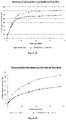
Figure 3 shows the results of the flotation kinetic tests of Example 2, when using a sulfidizing agent comprising a mixture of Na2S4 and NaSH in a weight ratio of 1:1 as compared to using no sulfidizing agent (Figure 3A showing total copper recovery andFigure 3B showing oxidized copper recovery). - As indicated above, the present disclosure is directed to a sulfidizing agent obtainable by mixing MySx and ZSH in a weight ratio of from 90:10 to 10:90, wherein M is selected from Li+, Na+, K+, Rb+, Cs+, NH4 +, Mg2+ or Ca2+, y is 1 or 2, x is from 1.1 to 5, and Z is independently selected from Li+, Na+, K+, Rb+, Cs+ and NH4 +.
- Preferably, x has a value of from 1.1 to 4.5, preferably of from 2.1 to 4, and more preferably of from 3 to 4. In order to obtain the highest sulfur content while maintaining good stability, x preferably has a value of 4.
- M and/or Z is preferably Li+, Na+, K+, Rb+ or Cs+, more preferably K+ or Na+ and most preferably Na+. In a preferred embodiment, MySx is Na2S4 and/or ZSH is NaSH.
- MySx and ZSH may be mixed in a weight ratio of from 90:10 to 10:90, preferably of from 90:10 to 30:70, more preferably of from 90:10 to 50:50 and most preferably of from 70:30 to 50:50.
- When MySx is mixed with ZSH to prepare the sulfidizing agent of the invention, a new polysulfide (MySx) composition is formed, wherein the value of x varies depending on the weight ratio of the MySx/ZSH mixture used. For example, when NaSH is mixed with Na2S4, the NaSH effectively reduces the x value of Na2S4 from 4, forming a new polysulfide composition having an average value of x that depends on the weight ratio of NaSH/Na2S4 mixture used. This dependency of x on the weight ratio is quantified in the below table:
Mixing ratio NaSH/Na2S4 resulting x value 10:90 3.25 30 : 70 2.23 50 : 50 1.67 70 : 30 1.23 - This variation in resulting x values means that by mixing MySx and ZSH at different weight ratios, the sulfidizing agent of the present invention can be tailored to the requirements of an individual mine.
- When the sulfidizing agent of the invention is used to aid recovery of one or more metal ores and/or polymetallic minerals in a sulfide floatation process, a collector, and optionally a foaming agent, is required to separate the sulfidized metal ores/polymetallic minerals by floatation, as described above. Thus, when used with a collector and optional foaming agent, the sulfidizing agent of the invention is a promoter of oxidized metals and the combination is able to increase the performance of a selective sulfide flotation process by sulfidizing and floating at least a portion of oxidised metal ores and/or polymetallic minerals contained in the gangue that would otherwise not be recovered.
- The sulfidizing agent may include at least one collector. Preferably, the at least one collector is a monothiophosphate or dithiophosphate collector. Suitable monothiophosphate collectors include sodium diethyl monothiophosphate, sodium di-sec-butyl monothiophosphate, sodium diisobutyl monothiophosphate and sodium diisoamyl monothiophosphate. Suitable dithiophosphate collectors include monoalkyl dithiophosphates, such as sodium ethyl dithiophosphate, sodium propyl dithiophosphate, sodium isopropyl dithiophosphate, sodium butyl dithiophosphate, sodium sec-butyl dithiophosphate, and sodium isobutyl dithiophosphate, dialkyl dithiophosphates, such as sodium diethyl dithiophosphate, sodium di-sec-butyl dithiophosphate, sodium diisobutyl dithiophosphate, and sodium diisoamyl dithiophosphate, and diaryl dithiophosphates, such as sodium dicresyl dithiophosphate. The sulfidizing agent may include a mixture of two or more monothiophosphate and/or dithiophosphate collectors.
- When included, the at least one collector may be present in the sulfidizing agent in an amount of from 1 to 20 wt%, more preferably from 5 to 10 wt%, based on the total weight of the sulfidizing agent. In particular, the sulfidizing agent may comprise a mixture of MySx, ZSH and collector in a weight ratio of (MySx and ZSH) : collector of from 99:1 to 80:20, more preferably of from 95:5 to 90:10. In particular embodiments, the sulfidizing agent may comprise a mixture of MySx, ZSH and collector in a weight ratio of from 50:50:0 to 40:40:20, preferably of from 49:49:2 to 47:47:6.
- The sulfidizing agent may include at least one foaming agent. The at least one foaming agent may be selected from the group of phenols, alkyl sulfates, aliphatic alcohols, generally C5-C8 cyclic alcohols, alkoxyalkanes, polypropylene glycol ethers, polyglycol ethers, polyglycol glycerol ethers, pyridine base, natural oils such as terpineol (pine oil) and cresols, mixed ethers, aldehydes and ketone co-products of oxo alcohol production, and ethoxylated alcohols. Preferably, the at least one foaming agent is a polyglycol, for example, a polypropylene glycol ether, a polyglycol ether or a polyglycol glycerol ether. The sulfidizing agent may include a mixture of two or more foaming agents.
- When included, the at least one foaming agent may be present in the sulfidizing agent in an amount of from 1 to 20 wt%, more preferably from 5 to 10 wt%, based on the total weight of the sulfidizing agent. In particular, the sulfidizing agent may comprise a mixture of MySx, ZSH and at least one foaming agent in a weight ratio of (MySx and ZSH) : foaming agent of from 99:1 to 80:20, more preferably of from 95:5 to 90:10. In particular embodiments, the sulfidizing agent may comprise a mixture of MySx, ZSH and foaming agent in a weight ratio of from 50:50:0 to 40:40:20, preferably of from 49:49:2 to 47:47:6.
- As explained above, when the sulfidizing agent contains a collector and/or a foaming agent, it becomes a promoter of oxidized metals. Furthermore, inclusion of a collector and/or a foaming agent into the sulfidizing agent streamlines any dosing to a sulfide floatation process, and substantially reduces storage requirements. When both a collector and foaming agent are included, the sulfidizing agent may comprise a mixture of MySx, ZSH, collector and foaming agent in a weight ratio of (MySx and ZSH) : collector: foaming agent of from 98:1:1 to 60:20:20, more preferably of from 90:5:5 to 80:10:10. In a preferred embodiment, the sulfidizing agent comprises a mixture of MySx, ZSH, collector and foaming agent in a weight ratio of from 49:49:1:1 to 35:35:15:15, and more preferably of from 45:45:5:5 to 40:40:10:10.
- The present invention is further directed to a process for recovering one or more metal ores and/or polymetallic minerals from gangue, the process comprising:
- (i) treating the one or more metal ores and/or polymetallic minerals with a sulfidizing agent; and
- (ii) separating the treated metal ores and/or polymetallic minerals using a sulfide floatation process;
- Preferably, x has a value of from 1.1 to 4.5, preferably of from 2.1 to 4, and more preferably of from 3 to 4. In order to obtain the highest sulfur content while maintaining good stability, x preferably has a value of 4.
- M and/or Z is preferably Li+, Na+, K+, Rb+ or Cs+, more preferably K+ or Na+ and most preferably Na+. In a preferred embodiment, MySx is Na2S4 and/or ZSH is NaSH.
- MySx and ZSH may be mixed in a weight ratio of from 90:10 to 10:90, preferably of from 90:10 to 30:70, more preferably of from 90:10 to 50:50 and most preferably of from 70:30 to 50:50. As mentioned above, the weight ratio of MySx and ZSH mixture can be varied to adjust the average value of x in the resulting polysulfide composition. This means that the sulfidizing agent can be tailored to the individual requirements of any mine.
- The sulfidizing agent may include at least one collector and/or at least one foaming agent. Exemplary collectors and foaming agents, and their suitable amounts are set out in relation to the first aspect of the invention above. Alternatively, at least one collector and/or at least one foaming agent may be added to the one or more metal ores and/or polymetallic minerals separately from the sulfidizing agent.
- The process of the present invention is used for recovering one or more metal ores and/or polymetallic minerals from gangue. The one or more metal ores may be selected from ores of copper (Cu), molybdenum (Mo), gold (Au), silver (Ag), lead (Pb), Nickel (Ni) and Cobalt (Co). Preferably the one or more metal ores are selected from ores of copper, molybdenum, silver and gold, more preferably ores of copper. Examples of possible polymetallic minerals include Cu-Mo, Cu-Au, Pb-Zn-Cu, Ag-Cu, Zn-Pb-Ag, Cu-Zn-Pb-Ag, Sn-Cu and Zn-Pb minerals. Preferably, the metal ore and/or polymetallic minerals contain at least 1 wt% of oxidized ore over the total mineral.
- In step (i) of the process, the one or more metal ores and/or polymetallic minerals are treated with the sulfidizing agent. The treatment in step (i) may be performed by adding the sulfidizing agent to the one or more metal ores and/or polymetallic minerals in an amount of from 1 to 300 g/ton, preferably of from 10 to 100 g/ton, more preferably of from 20 to 70 g/ton, based on a dose of grams of agent per ton of dry ore/dry mineral treated.
- When the sulfidizing agent includes at least one collector, treatment in step (i) may be performed by adding the sulfidizing agent to the one or more metal ores and/or polymetallic minerals in an amount of from 1 to 400 g/ton, preferably of from 10 to 130 g/ton, more preferably of from 20 to 90 g/ton, based on a dose of grams of agent per ton of dry ore/dry mineral treated.
- When the sulfidizing agent includes at least one foaming agent, treatment in step (i) may be performed by adding the sulfidizing agent to the one or more metal ores and/or polymetallic minerals in an amount of from 1 to 400 g/ton, preferably of from 10 to 130 g/ton, more preferably of from 20 to 90 g/ton, based on a dose of grams of agent per ton of dry ore/dry mineral treated.
- When the sulfidizing agent includes at least one collector and at least one foaming agent, treatment in step (i) may be performed by adding the sulfidizing agent to the one or more metal ores and/or polymetallic minerals in an amount of from 2 to 500 g/ton, preferably of from 10 to 160 g/ton, more preferably of from 20 to 100 g/ton, based on a dose of grams of agent per ton of dry ore/dry mineral treated.
- The sulfidizing agent is preferably added to the one or more metal ores and/or polymetallic minerals in at least two, preferably at least three and more preferably at least four portions. The time intervals between dosing portions and/or the amount of each dosing portion may be the same or different, preferably different.
- Each portion of sulfidizing agent added to the one or more metal ores and/or polymetallic minerals requires addition of at least one collector, and optionally at least one foaming agent, such that the extra "sulfidized" material yielded by the sulfidizing agent can be recovered. When the at least one collector and/or at least one foaming agent are added to the one or more metal ores and/or polymetallic minerals separately from the sulfidizing agent, the collector(s), foaming agent(s) and sulfidizing agent may be added in any order. Preferably, the at least one collector and/or at least one foaming agent are added to the one or more metal ores and/or polymetallic minerals before or at the same time as the sulfidizing agent.
- Preferably, no sulfidizing agent is added to the one or more metal ores and/or polymetallic minerals before the flotation process begins. Instead, it has been found to be advantageous to delay the first addition of sulfidizing agent to the one or more metal ores and/or polymetallic minerals until at least 1 minute, preferably at least 2 minutes, more preferably at least 3 minutes after the flotation process begins. Preferably, the delay is no longer than 5 minutes and more preferably no longer than 4 minutes.
- In a preferred embodiment, a first portion of sulfidizing agent is added to the one or more metal ores and/or polymetallic minerals in a rougher flotation stage of the sulfide floatation process and a further portion of sulfidizing agent is added to the one or more metal ores and/or polymetallic minerals in at least one cleaning stage of the sulfide floatation process. Preferably, a further portion of sulfidizing agent is added to the one or more metal ores and/or polymetallic minerals in each cleaning stage of the sulfide floatation process.
- In a more preferred embodiment, at least a first and a second portion of sulfidizing agent is added to the one or more metal ores and/or polymetallic minerals in the rougher flotation stage of the sulfide floatation process. In particular, at least two, three, four, six or eight portions of sulfidizing agent may be added to the rougher flotation stage of the sulfide floatation process.
- When at least a first and a second portion of sulfidizing agent is added to the one or more metal ores and/or polymetallic minerals in the rougher flotation stage of the sulfide floatation process, said portions may be separated by a rougher concentrate regrinding (scavenging) stage that is downstream of the rougher floatation and upstream of the cleaning floatation. In processes with intermediate grinding (scavenging), the surface effect obtained by the sulfidizing agent is partially eliminated, and so a subsequent dose of sulfidizing agent is advantageous to recover the performance that this stage loses.
- The sulfidizing agent (when free of collector and foaming agent) may be added to the rougher flotation stage and cleaning stages in amounts proportional to the solubility ratio (oxidised copper to total copper) of the ore/mineral as shown in Table A:
Table A Solubility ratio Dosing in rougher floatation stage Dosing in cleaning stages 3-10% 10 - 50 g/ton 3 - 8 g/ton 10-20% 30 - 100 g/ton 7 - 12 g/ton >20% > 70 g/ton > 15 g/ton - As explained above, the dosing amount for each stage shown in Table A may be split into two or more portions. The amount of each dosing portion may be the same or different, preferably different.
- In step (ii) of the process, the treated metal ores and/or polymetallic minerals are separated from gangue using a sulfide floatation process. Preferably, the process is a direct flotation process of the treated metal ores and/or polymetallic minerals.
- More specifically, in a preferred embodiment where the sulfidizing agent does not contain a collector or a foaming agent, the process comprises the following steps:
- a) mixing a ground ore/mineral with an aqueous medium to form a pulp;
- b) conditioning the pulp with a collector, and optionally a foaming agent, as described above;
- c) feeding the conditioned ore/mineral mixture into a rougher flotation cell;
- d) introducing air into the rougher floatation cell to start the froth flotation process to recover the ore/mineral;
- e) after a delay of at least 1 minute, adding a portion of the sulfidizing agent as described above to the rougher flotation cell together with additional collector and foaming agent;
- f) optionally, adding a second portion of the of the sulfidizing agent along with a collector and foaming agent to the rougher flotation cell;
- g) skimming off the froth formed (rougher concentrate) and feeding it into a cleaning cell; and
- h) adding a further portion of the sulfidizing agent along with a collector and foaming agent into the cleaning cell.
- It is noted that various elements of the present invention, including but not limited to preferred ranges for the various parameters, can be combined unless they are mutually exclusive.
- The invention will be elucidated by the following examples without being limited thereto or thereby.
-
Sample Total copper (%) Oxidized copper (%) Solubility ratio (%) Au (g/t) Ag (g/t) Example 1 1.93 0.261 13.52 1.0 6.45 -
Parameter Unit Flotation Machine - Agitair type Cell volume L 2.7 Agitation rpm 1100 Percentage of Solids % 30 Flotation pH - 10.00 (with calcium oxide) Feed granulometry 70% through a 200 mesh (74 µm), according to ASTM E 11-20 (Standard Specification for Woven Wire Test Sieve Cloth and Test Sieves, 2020) Conditioninq Time min 3 Paddle Frequency sec 15 Air flow L/min 0 - 3 mins: 1.5 3-10 mins: 2.5 10 - 16 mins: 4.0 Extraction Times min 2 (first), 16 (second) Water Type - Drinking water Water temperature °C 20 (±1) Collector 208* (g/t) 48 Conditioning) Collector 3894* (g/t) 24 (Conditioninq) Foaming D-400§ (g/t) 30 (Conditioning) *supplied by Solvay
§supplied by Dow Chemicals - An ore sample containing 1.93% copper (of which, 0.261% was oxidized copper) and 1.0 g/t gold was ground to a granulometry of 100% through a 10 mesh (2000 µm) according to ASTM E11-20. Subsequently, the sample was homogenized and fractionated in a pro-splitter cutter ("carousel"), to generate the packages for the grinding and flotation tests.
- The following mineralogical species were observed, listed in order of relative abundances
- Majority: magnetite
- In smaller quantities: pyrite, chalcopyrite, hematite, bornite
- Minority: digenite, coveline, chalcosine, tenantite-tetrahedrite
- In traces: limonite, galena, sphalerite, native Cu, marcasite, pyrrhotine
-
SPECIES FORMULA Cu sulfides Chalcopyrite 4.31 CuFeS2 Calcosine 0.13 Cu2S Digenite 0.16 Cu9S5 Covelina Tr (1) CuS Bornite 0.18 Cu5FeS4 Native Copper Tr (1) Cu Other sulfides Pyrita 2.09 FeS2 Molybdenite 0.02 MoS2 Sphalerite Tr (1) (Zn, Fe)S Galena Tr (1) PbS Marcasita Tr (1) FeS2 Pirrotin Tr(1) FeS Metal oxides Magnetite 33.24 Fe2+Fe3+ 2 O4 Hematite 0.62 Fe2O3 Limonite 0.06 FeO(OH)nH2O Rutile 0.04 TiO2 Non-metallic minerals (gangue) 59.16 Indeterminate TOTAL 100 (1) trace mineral that cannot be quantified - As can be seen from this summary table, for copper, i.e., the useful species in this example, the mineral is mainly made up of primary sulfides. It was not possible to observe gold particles under the light microscope. This is attributed to the too low grade (1.0 g/t Au).
- 1.3.1 10 kg of single size 1-inch steel ball grinding elements were deposited in a laboratory batch mill and drinking water was added in an amount sufficient to obtain the 66.67% of solids required for grinding. The mineral was then loaded (at a load of 1000 g) into the mill and ground to obtain a grain size of 70% through a 200 mesh (ASTM E11-20). (Mill Addition Summary: mineral = 1000 g; water = 500 mL).
- 1.3.2 The pulp (the mixture of ground mineral and water) was deposited in an Agitair flotation cell with a volume of 2.7 L. Drinking water was added to adjust the pulp to 30% solids and the pH was measured (natural value, pH 8). The flotation machine was then started (or energized) to stir the pulp, and 48 g/t collector 208, 24 g/t collector 3894, and 30 g/t foaming agent was added.
- The pulp was conditioned for 3 minutes without injection of air. After the pulp conditioning stage, extraction of the foam was begun with 4 paddles per minute (frequency every 15 seconds), making sure to cover the entire flotation surface. The concentrates were obtained in separate containers (trays) and identified as "2 minutes" and "16 minutes". The entire test was carried out at room temperature (20 ± 1°C).
- In the case of the tests with sulfidizing agents, at 2 minutes of flotation (after the first concentrate had been extracted), 130.6 g/t of sulfidizing agent was added, which comprised a mixture of Na2S4 and NaSH in a weight ratio of 1:1. After 30 seconds of airless conditioning, the concentrate extraction was continued.
- 1.3.3 The rougher concentrates and rougher tailings were then collected, filtered, dried and cooled, before being prepared mechanically (100% through 140 mesh - 105 µm) for chemical analysis according to the usual procedure for such activities (detailed below).
- 1. Pressure filter the concentrates and tailings in pressure filter equipment (drum);
- 2. Transfer each filtered solid to a tray and dry in an oven at 100 ± 5 °C;
- 3. Weigh dry concentrates and tailings and, by weight difference, obtain the recovered mass;
- 4. Transfer the tailings to a rolling cloth and disaggregate with a roller to homogenize;
- 5. Divide the tailings and obtain a sample for chemical and control tests;
- 6. Pulverize (100% through 140 mesh) samples of tailings and concentrates for chemical tests.
- 1.3.4 The chemical composition of the head ore, concentrates and tailings was established by determining total Cu, Au, and soluble (oxidized) Cu. The elements Cu and Ag were determined by Atomic Absorption Spectroscopy Method (using an Atomic Absorption Spectrophotometer). Au was tested by Fire Refining Method (Docimasia), using an oven. Soluble Cu was obtained by the Attack Method with Citric Acid (using Atomic Absorption Spectroscopy).
- The same test was performed using no sulfidizing agent, and the results of each test are summarized in Table 1.
Table 1: Results of metal recovery tests with and without sulfidizing agent of present invention Sulfidizing agent Recovery (%) Total copper Oxidized copper Gold Na2S4/NaSH (1:1) 94.03 75.39 93.47 None 88.28 48.83 91.51 - The results show that use of a sulfidizing agent comprising a mixture of Na2S4 and NaSH in a weight ratio of 1:1 increases total copper and total gold recovery from the mineral sample. A significant improvement is also seen in the recovery of the soluble (i.e., oxidised) copper.
- In
Figure 1 , the flotation process performed, and the different fractions collected, are illustrated schematically. Here: A is the pulp feed, 1 is the mill, 2 and 3 are rougher floatation cells, 4 is the conditioning stage, where 48 g/t collector 208, 24 g/t collector 3894 and 30 g/t foaming agent are added (pH 8.0; 30wt% solids), 5 is at a flotation time of 2 minutes, where 65.3 g/t Na2S4 and 65.3 g/t NaSH is added, 6 is the rougher tailings and 7 is the rougher concentrate. -
Sample Total copper (%) Oxidized copper (%) Solubility ratio (%) Mo (%) Fe (%) Example 2 0.55 0.133 23.63 0.0092 4.35 -
Parameter Unit Flotation Machine - Denver Cell volume L 4.0 Agitation rpm 1000 Percentage of Solids % 35 pH Flotation - 10.50 (with calcium oxide) Feed granulometry P80 = 250 µm (80% through 250 µm sieve) Conditioning Time min 3 Paddle Frequency sec 15 Air flow L/ min 10 Water temperature °C 20 (±1) Extraction Times min 0.5, 1, 3, 4, 7, 10.5, 15 Water Type Process water Diesel (g/t) 12 Collector Hostaflot-7169δ (g/t) 24 total 60% at conditioning 40% at flotation = 4 mins (30 sec without air, 30 sec with air) Foaming MatFroth-50¥ (g/t) 24 total 60% at conditioning 40% at flotation = 4 mins (30 sec without air, 30 sec with air) δsupplied by Clariant; *supplied by Mathiesen - A mineral sample containing 0.55% copper (of which, 0.133% was oxidized copper) and 0.0092% Mo was ground to a grain size of 100% through a 10 mesh (2000 µm) ASTM E11-20. Subsequently, the sample was homogenized and fractionated in a pro-splitter cutter ("carousel"), to generate the packages for the grinding and flotation tests.
- The following mineralogical species were observed:
-
Mineral Wt% @ 250 µm granularity Chalcocite 0.19 Covellite 0.06 Chalcopyrite 1.03 Bornite 0.05 Enargite/Tennantite 0.00 Native Copper 0.00 Cuprite/Tenorite 0.00 Malachite/Azurite 0.00 Brochantite 0.01 Atacamite 0.00 Turquoise 0.00 Pseudomalachite 0.00 Cu-Mn Wad 0.00 Chrysocolla/dioptase 0.05 Cu-bearing Clays 0.01 Cu-bearing Fe Ox/OH 0.01 Other Cu Mins 0.01 Pyrite 2.01 Galena 0.00 Sphalerite 0.01 Molybdenite 0.01 Fe Oxides 3.32 Ilmenite 0.44 Rutile 0.50 Corundum 0.00 Qu a rtz 38.94 Orthoclase 5.51 Albite 6.64 Plagioclase 1.53 Muscovite/Sericite 29.78 Kaolinite 0.56 Pyrophyllite/Smectite 0.28 Biotite 1.18 Chlorite 6.86 Hornblende 0.22 Calcite/CO3 0.00 Gypsum/Anhydrite 0.03 Alunite 0.02 Jarosite 0.03 Mg-SO4 0.00 Barite 0.01 Svanbergite 0.00 Fe-Al-PO4 0.01 Apatite 0.37 Monazite 0.01 Zircon 0.01 Others 0.27 Total 100.00 - As can be seen from this summary table, for copper, i.e., the useful species in this example, the mineral is mainly made up of chalcopyrite (that is, primary sulfide, 58.20%), with minor fractions of chalcosine, covelin and bornite (secondary sulfides, 35.57%). The rest of the copper is found in oxidized species (cuprite / tenorite, malachite / azurite, chrysocolla / dipotase, brochantite). The copper containing species are further detailed below.
-
Copper mineral Wt% @ 250 µm granularity Chalcocite 24.09 Covellite 6.75 Chalcopyrite 58.20 Bornite 4.73 Enargite/Tennantite 0.01 Native Copper 0.24 Cuprite/Tenorite 0.63 Malachite/Azurite 0.18 Brochantite 0.83 Atacamite 0.01 Turquoise 0.00 Pseudomalachite 0.04 Cu-Mn Wad 0.01 Chrysocolla/dioptase 3.14 Cu-bearing Clays 0.23 Cu-bearing Fe Ox/OH 0.14 Other Cu Mins 0.53 Others 0.25 Total 100.00 - 2.3.1 10 kg of single size 1-inch steel ball grinding elements were loaded into a laboratory batch mill and drinking water was added in an amount sufficient to obtain the 66.67% of solids required for grinding. The mineral was then loaded (at a load of 1800 g) into the mill and ground to obtain a granularity of P80 = 250 µm. (Mill Addition Summary: mineral = 1800 g; water = 900 mL).
- 2.3.2 The pulp (the mixture of ground mineral and water) was loaded in a Denver flotation cell with a volume of 4.0 L, then process water was added to adjust to 35% solids and the pH (natural value) was measured.
- Details of the rougher floatation process are as follows (the entire test is carried out at room temperature (20 ± 1 ° C)):
- a) Start pulp stirring in flotation cell (15-30 seconds);
- b) Measure pH of the pulp and adjust to 10.5 using 12% calcium hydroxide;
- c) Add 14.4 g/t foaming agent Matfroth 50 (60% of a total dose of 24 g/t), 14.4 g/t Hostaflot-7169 collector (60% of a total dose of 24 g/t) and 12 g/t diesel oil;
- d) Condition the pulp for 2 minutes without injection of air and for 1 minute with air injection;
- e) After conditioning stage, start extraction of the foam with 4 paddles, making sure to cover the entire flotation surface. Taking the first sample sweep should be considered as "0 min";
- f) Continue with foam extraction with 4 paddles every 15 seconds and obtain concentrates in separate containers for the 0.5 - 1 - 3 minute extractions;
- g) Continue with extraction of the sample with paddles every 15 seconds between 3 and 4 minutes;
- h) Cut air injection at
minute 4 from the start of the floatation test; - i) Add the remaining 40% dose of
Matfroth 50 foaming agent and remaining 40% dose of Hostaflot-7169 collector; - j) Condition the pulp for 30 seconds without injection of air and with air injection for 30 seconds;
- k) Restart sample extraction with paddles every 15 seconds and obtain concentrates in separate containers after 4 - 7 - 10.5 - 15 minute extractions. Making sure to cover the entire floatation surface. Taking the first sample sweep should be considered as "0 min" of this second float stage.
- In the case of tests with sulfidizing agents, at 4 minutes of flotation (after the first concentrate had been extracted), 27.5 g/t of sulfidizing agent was added (i.e., in step i) above), comprising a mixture of Na2S4 and NaSH in a weight ratio of 1:1. After 30 seconds conditioning without air, and 30 seconds with air, the concentrate extraction was continued.
- A similar procedure occurred at 7 minutes of flotation, with a re-addition of the sulfidizing agent.
- 2.3.3 The concentrates and tailings were then collected, filtered, dried and cooled, before being prepared mechanically (100% through 140 mesh - 105 µm) for chemical analysis according to the usual procedure for such activities (described below).
- 1. Pressure filter the concentrates and tailings obtained, in pressure filter equipment (drum);
- 2. Transfer each filtered solid to a tray and dry in an oven at 100 ± 5 °C;
- 3. Weigh dry concentrates and tailings and, by weight difference, obtain the recovered mass;
- 4. Transfer the tailings to a rolling cloth and disintegrate with a roller to homogenize;
- 5. Divide the tailings and obtain a sample for chemical and control tests;
- 6. Pulverize (100% through 140 mesh) samples of tailings and concentrates for chemical tests.
- 2.3.4 The chemical composition of the head ore, concentrates and tailings was established by determining total Cu, Fe, Mo and soluble (oxidized) Cu. The elements Cu, Fe and Mo were determined by Atomic Absorption Spectroscopy Method (using an Atomic Absorption Spectrophotometer). Soluble Cu was obtained by the Attack Method with Citric Acid (using Atomic Absorption Spectroscopy).
- To obtain sufficient mass of rougher concentrate to allow the cleaner flotation kinetic test to be carried out, 3x rougher floatation were carried out, at a total time of 15 minutes, and the rougher concentrates generated in the tests were combined.
- 10 kg of single size 1-inch steel ball grinding elements were loaded into a laboratory batch mill and the rougher concentrate pulp was added and drained to obtain the 50% solids required for grinding. The rougher concentrate pulp was then re-ground to obtain a granulation of P80 = 44 µm. (Summary of pulp addition to the mill: rougher concentrate = 235 g approx. (dry base); water = 1071 mL).
- 2.4.3 The pulp (the mixture of ground rougher concentrate and water) was deposited in a Denver flotation cell with a volume of 1.15 L, and process water was added to adjust to 18% solids. Then the pH was measured.
- Details of the cleaner floatation process are as follows (the entire test is carried out at room temperature (20 ± 1° C)):
- Start pulp agitation in flotation cell (15-30 seconds);
- Measure pH of the pulp and adjust to 11.0 using 12% calcium hydroxide;
- Add 1.12 g/
t Matfroth 50 foaming agent and 0.9 g/t Hostaflot-7169 collector; - Condition the pulp for 30 seconds without injection of air and for 30 seconds with air injection;
- After the conditioning stage, begin extraction of the foam with 4 paddles, making sure to cover the entire flotation surface. Taking the first sample sweep should be considered as "0 min";
- Continue with foam extraction with 4 paddles every 10 seconds and obtain concentrates in separate containers for the 0.5 - 1 - 3 - 6 min extractions;
- Continue with sample extraction with paddles every 15 seconds;
- Cut air injection at
minute 12 from the start of the float test; - Add 1.12 g/
t Matfroth 50 foaming agent; - Condition the pulp for 30 seconds without injection of air and with air injection for 30 seconds;
- Restart sample extraction with paddles every 10 seconds and obtain concentrates in separate containers for 12 - 18 - 30 min extractions making sure to cover the entire floatation surface. Taking the first sample sweep should be considered as "0 min" of this second floatation stage.
- In the case of the tests with sulfidizing agents, at 12 minutes of flotation (after extraction of the first concentrate), 4.0 g/t of sulfidizing agent was added, comprising a mixture of Na2S4 and NaSH in a weight ratio of 1:1. After 30 seconds conditioning without air, and 30 seconds with air, the concentrate extraction was continued. A similar procedure occurred at 18 minutes of flotation, with re-addition of the sulfidizing agent.
- 2.4.4 The cleaner concentrate, cleaner tailings and rougher tailings were then collected, filtered, dried and cooled, before being mechanically prepared (pulverization to get 100% through 140 mesh - 105 µm) for chemical analysis according to the usual procedure for such activities (described in 2.3.3 above).
- 2.4.5 The chemical composition of the head ore, concentrates and tailings was established by determining total Cu, Fe, Mo and soluble (oxidized) Cu. The elements Cu, Fe and Mo were determined by Atomic Absorption Spectroscopy Method (using an Atomic Absorption Spectrophotometer). Soluble Cu was obtained by the Attack Method with Citric Acid (using Atomic Absorption Spectroscopy).
- The same tests were performed using no sulfidizing agent or using NaSH as the sole sulfidising agent, and the results of each test are summarized in Table 2.
Table 2: Results of metal recovery tests with sulfidizing agent of present invention, NaSH or none Sulfidizing agent Recovery (%) Total copper Oxidized copper Molybdenum Na2S4/NaSH (1:1) 78.19 54.35 50.63 NaSH 73.50 46.87 48.47 None 64.17 35.87 48.09 - The results show that use of a sulfidizing agent comprising a mixture of Na2S4 and NaSH in a weight ratio of 1:1 increases total copper and total molybdenum recovery from the mineral sample compared to using NaSH alone. A significant improvement is also seen in the recovery of the soluble (i.e., oxidised) copper.
- In
Figure 2 , the flotation process performed, and the different fractions collected, are illustrated schematically. Here: A is the pulp feed, 1 is the mill, 2, 3 and 4 are rougher floatation cells, 5 is the conditioning stage, where 14.4 g/t Hostaflot-7169, 14.4 g/t Matfroth 50 and 12 g/t diesel oil are added (pH 10.5, with lime), 6 is at a flotation time of 4 minutes, where 9.6 g/t Hostaflot-7169, 9.6 g/t Matfroth 50, 13.75 g/t Na2S4 and 13.75 g/t NaSH is added, 7 is at a flotation time of 7 minutes, where 13.75 g/t Na2S4 and 13.75 g/t NaSH is added, 8 is the rougher tailings, 9 is the rougher concentrate, 10 is the mill for re-grinding the rougher concentrate, 11, 12 and 13 are cleaner floatation cells, 14 is the cleaner conditioning stage, where 0.9 g/t Hostaflot-7169 and 1.12 g/t Matfroth 50 is added (pH 11.0, with lime), 15 is at a flotation time of 12 minutes, where 1.12 g/t Matfroth 50, 2 g/t Na2S4 and 2 g/t NaSH is added, 16 is at a flotation time of 18 minutes, where 2 g/t Na2S4 and 2 g/t NaSH is added, 17 is the cleaner tailings and 18 is the cleaner concentrate. - The flotation kinetics for total copper recovery and soluble (i.e., oxidized) copper recovery when using a sulfidizing agent comprising a mixture of Na2S4 and NaSH in a weight ratio of 1:1 ("STANDARD + SULFIDIZING") as compared to using no sulfidizing agent ("STANDARD") are shown in
Figure 3 . - A mineral sample containing 0.452% copper (of which, 0.121% is oxidized copper) and 3.505 ppm silver was ground to a desirable flotation size. The sample was then placed into a Denver flotation cell and mixing started. The sample was then conditioned with a collector and foaming agent.
- After the conditioning steps, water was added to obtain a total pulp volume of 2.3 L having 35% solids and a pH of 10.5, and the flotation was started. The rougher flotation was performed at RT (20 ± 1 °C) with 1,150 rpm agitation.
- After a slight delay, sulfidizing agent comprising a mixture of Na2S4 and NaSH in a weight ratio of 70:30 was added to the flotation cell.
- The rougher flotation was followed by two cleaning steps. The concentrate was collected and analyzed.
- The process was performed using different doses of the sulfidizing agent. The recovery results are summarized in Table 3.
Table 3: Results of metal recovery tests with different doses of sulfidizing agent Test Na2S4/NaSH (70:30) (g/ton dry mineral) Recovery (%) Obtained copper concentrate (%) Copper Silver 3.1 0 60.50 16.10 5.5 3.2 15 70.00 23.00 6.7 3.3 30 79.30 20.20 5.7 - The results show that notable improvements in copper and silver recovery were obtained with doses much lower than those required when using NaSH as the sulfidizing agent (i.e. > 100 g/ton dry mineral). This is believed to be due to the higher amounts of sulfur in the formulation.
- The concentrations of copper concentrate obtained in tests 3.2 and 3.3 were also higher than that of Test 3.1. This means that the sulfidizing agent of the invention obtains a final copper product of better quality (i.e., more concentrated).
- Test 3.2 was repeated, but an initial and additional dosage of 15 g/ton dry mineral of the sulfidizing agent was added in the milling step. The yield of total copper extraction was 59.1%. This result is worse than Test 3.2 and supports the dosing regimen of the preferred embodiments, i.e., only after the flotation process has started and in more advance stages of flotation and subsequent cleaners, to improve extractive yields. It is believed that dosing at these points is advantageous since the oxide ores are being concentrated in the cell as the flotation begins. Additionally, it has been found that the depressant power of the NaSH in the sulfidizing agent mixture competes with the sulfidizing power (resulting in an undesired effect) if the addition is made to early in the process.
-
Sample Total copper (%) Oxidized copper (%) Solubility ratio (%) Ag (%) Fe (%) Example 4 0.642 0.093 14.49 0.0006 4.03 -
Parameter Unit Flotation Machine - Wenco type Cell volume L 2.8 Agitation rpm 1200 Percentage of Solids % 38 Flotation pH - 10.00 (with calcium oxide) Feed granulometry P80 = 260 µm (80% through 260 µm sieve) Conditioning Time min 2 Paddle Frequency sec 10 Air flow L/ Min 10 Extraction Times min Standard: 1, 5, 15, 30 Water Type - Process water Water temperature °C 20 (±1) Collector Matcol AP-7156 ¥ (g/t) 25 (Milling) Collector MX-3753* (g/t) 15 (Conditioninq) Foaming MB-78* (g/t) 20 (Conditioninq) Foaming MIBC* (g/t) 15 (Conditioning) *supplied by Mathiesen; *supplied by Solvay - A mineral sample containing 0.642% copper (of which, 0.093% was oxidized copper) and 0.0006% silver was ground to a granulometry of 100% through a 10 mesh (2000 µm) according to ASTM E11-20. Subsequently, the sample was homogenized and fractionated in a Pro-Splitter cutter ("carousel"), to generate the packages for the grinding and flotation tests.
- 4.2.1 10 kg of single size 1-inch steel ball grinding elements were loaded into a laboratory batch mill and process water was added in an amount sufficient to obtain the 66.67% of solids required for grinding. The mineral (at a load of 1000 g) and the collecting reagent AP-7156 (0.025 g) were then loaded into the mill and ground to obtain a granularity of P80 = 250 µm. (Mill Addition Summary: mineral = 1000 g; collecting reagent AP-7156 = 0.025 g; water = 500 mL).
- 4.2.2 The pulp (the mixture of ground mineral, collecting agent AP-7156 and water) was loaded in a Wenco flotation cell with a volume of 4.0 L, then process water was added to adjust to 38% solids and the pH (natural value, of the order of 8) was measured.
- Details of the rougher floatation process are as follows (the entire test is carried out at room temperature (20 ± 1 °C):
- a) Start pulp stirring in flotation cell (15-30 seconds);
- b) Measure pH of the pulp and adjust to 10 using 12% calcium oxide;
- c) Add 15 g/t collector MX-3753, 20 g/t foaming agent MB-78 and 15 g/t foaming agent MIBC;
- d) Condition the pulp for 2 minutes without injection of air;
- e) After conditioning stage, start extraction of the foam with 6 paddles, making sure to cover the entire flotation surface; Taking the first sample sweep should be considered as "0 min";
- f) Continue with foam extraction with 6 paddles every 60 seconds and obtain concentrates in separate containers for the 1 - 5 - 15 - 30 minute extractions;
- g) Stop floatation process and thoroughly wash all parts (agitator, sample extraction paddle, etc.) to ensure that all solid material is contained in the resulting pulp within the flotation cell.
- 4.2.3 In the case of tests with sulfidizing agents: at 7 minutes of flotation (after the first 2 concentrates had been extracted), sulfidizing agent was added in accordance with Table 4. After 30 seconds conditioning without air, and 30 seconds with air, the concentrate extraction was continued.
- 4.2.4 The concentrates and tailings were then collected, filtered, dried and cooled, before being prepared mechanically (100% through 140 mesh - 105 µm) for chemical analysis according to the usual procedure for such activities (described below).
- 1. Pressure filter the concentrates and tailings obtained, in pressure filter equipment (drum);
- 2. Transfer each filtered solid to a tray and dry in an oven at 100 ± 5 °C;
- 3. Weigh dry concentrates and tailings and, by weight difference, obtain the recovered mass;
- 4. Transfer the tailings to a rolling cloth and disintegrate with a roller to homogenize;
- 5. Divide the tailings and obtain a sample for chemical and control tests;
- 6. Pulverize (100% through 140 mesh) samples of tailings and concentrates for chemical tests.
- 4.2.5 The chemical composition of the head ore, concentrates and tailings was established by determining total Cu and soluble Cu (oxidized). The element Cu was determined by Atomic Absorption Spectroscopy Method (using Atomic Absorption Spectrophotometer). Soluble Cu was obtained by the Attack Method with Citric Acid (using Atomic Absorption Spectroscopy).
- The same test was performed using no sulfidizing agent, or using NaSH as the sole sulfidising agent, and the results of each test are summarized in Table 4.
Table 4: Results of metal recovery tests with sulfidizing agent of present invention, NaSH or none Sulfidizing agent Dosage (g/t) Recovery (%) Total copper Oxidized copper None - 84.67 45.90 Na2S4/NaSH (1:1) 70 90.53 82.93 Na2S4/NaSH (3:7) 70 90.38 76.14 NaSH 70 89.61 74.77 Na2S4/NaSH (1:1) 35 89.88 80.35 - The results show that the use of a sulfidizing agent comprising a mixture of Na2S4 and NaSH in a weight ratio of 1:1 and 3:7 increases the recovery of total copper recovery from the mineral sample compared to using no sulfidizing agent or NaSH alone. A significant improvement is also seen in the recovery of soluble (oxidized) copper. It is also seen in the last row, that a dosage of a mixture of Na2S4 and NaSH in a weight ratio of 1:1, which is 50% of the NaSH dose, still shows better performance than NaSH alone.
- In
Figure 1 , the flotation process performed in Example 4, and the different fractions collected, are illustrated schematically. Here: A is the mill feed, 1 is the mill, 2 and 3 are rougher floatation cells, 4 is the conditioning stage, where 15 g/t collector MX-3753, 20 g/t foaming agent MB-78 and 15 g/t foaming agent MIBC are added (pH 10.0; 38 wt% solids), 5 is at a flotation time of 7 minutes, where Na2S4 and/or NaSH is added, 6 is the rougher tailings and 7 is the rougher concentrate. - In this specification, unless expressly otherwise indicated, the word 'or' is used in the sense of an operator that returns a true value when either or both of the stated conditions is met, as opposed to the operator 'exclusive or' which requires that only one of the conditions is met. The word 'comprising' is used in the sense of 'including' rather than to mean 'consisting of. All prior teachings acknowledged above are hereby incorporated by reference. No acknowledgement of any prior published document herein should be taken to be an admission or representation that the teaching thereof was common general knowledge in Europe or elsewhere at the date hereof.
Claims (15)
- A sulfidizing agent obtainable by mixing MySx and ZSH in a weight ratio of from 90:10 to 10:90, wherein M is selected from Li+, Na+, K+, Rb+, Cs+, NH4 +, Mg2+ or Ca2+, y is 1 or 2, x is from 1.1 to 5, and Z is independently selected from Li+, Na+, K+, Rb+, Cs+ and NH4 +.
- A sulfidizing agent as claimed in claim 1, wherein x is from 2.1 to 5, preferably 4.
- A sulfidizing agent as claimed in claim 1 or claim 2, wherein M and/or Z is selected from Li+, Na+, K+, Rb+ or Cs+, preferably Na+.
- A sulfidizing agent as claimed in any preceding claim, wherein the weight ratio of MySx to ZSH is from 90:10 to 30:70, preferably 90:10 to 50:50, more preferably 70:30 to 50:50.
- A sulfidizing agent as claimed in any preceding claim, comprising a dithiophosphate or a monothiophosphate-based collector and/or a polyglycol-based foaming agent.
- A process for recovering one or more metal ores and/or polymetallic minerals from gangue, the process comprising:(i) treating the one or more metal ores and/or polymetallic minerals with a sulfidizing agent; and(ii) separating the treated metal ores and/or polymetallic minerals using a sulfide floatation process;wherein the sulfidizing agent is obtainable by mixing MySx and ZSH in a weight ratio of from 90:10 to 10:90, wherein M is selected from Li+, Na+, K+, Rb+, Cs+, NH4 +, Mg2+ or Ca2+, y is 1 or 2, x is from 1.1 to 5, and Z is independently selected from Li+, Na+, K+, Rb+, Cs+ and NH4 +.
- A process as claimed in claim 6, wherein x is from 1.1 to 4.5, preferably 4.
- A process as claimed in claim 6 or claim 7, wherein M and/or Z is selected from Li+, Na+, K+, Rb+ or Cs+, preferably Na+.
- A process as claimed in any of claims 6 to 8, wherein the weight ratio MySx to ZSH is from 90:10 to 30:70, preferably 90:10 to 50:50, more preferably 70:30 to 50:50.
- A process as claimed in any of claims 6 to 9, wherein the sulfidizing agent comprises a dithiophosphate or a monothiophosphate-based collector and/or a polyglycol-based foaming agent.
- A process as claimed in any of claims 6 to 10, wherein the one or more metal ores is selected from ores of copper (Cu), molybdenum (Mo), gold (Au), silver (Ag), lead (Pb), Nickel (Ni) and Cobalt (Co) and/or the one or more polymetallic minerals is selected from Cu-Mo, Cu-Au, Pb-Zn-Cu, Ag-Cu, Zn-Pb-Ag, Cu-Zn-Pb-Ag, Sn-Cu and Zn-Pb minerals.
- A process as claimed in any of claims 6 to 11, wherein the treatment in step (i) is performed by adding the sulfidizing agent to the one or more metal ores and/or polymetallic minerals in an amount of from 2 to 500 g/ton, preferably of from 10 to 160 g/ton, more preferably of from 20 to 100 g/ton, based on a dose of grams of agent per ton of dry ore/dry mineral treated.
- A process as claimed in any of claims 6 to 12, wherein the treatment in step (i) is performed by adding a first portion of sulfidizing agent to the one or more metal ores and/or polymetallic minerals in a rougher floatation stage of the sulfide floatation process and adding a further portion of sulfidizing agent to the one or more metal ores and/or polymetallic minerals in at least one cleaning stage of the sulfide floatation process.
- A process as claimed in claim 13, wherein the sulfidizing agent is added to the rougher floatation stage in an amount of from 10 to 70 g/ton and to the at least one cleaning stage in an amount of from 3 to 15 g/ton, based on a dose of grams of agent per ton of dry ore/dry mineral.
- A process as claimed in claim 13 or claim 14, wherein the sulfidizing agent is added to the rougher floatation stage after a delay of at least 3 minutes after the flotation process begins.
Applications Claiming Priority (1)
| Application Number | Priority Date | Filing Date | Title |
|---|---|---|---|
| EP20383076 | 2020-12-10 |
Publications (2)
| Publication Number | Publication Date |
|---|---|
| EP4011497A1 true EP4011497A1 (en) | 2022-06-15 |
| EP4011497B1 EP4011497B1 (en) | 2025-03-26 |
Family
ID=73834428
Family Applications (1)
| Application Number | Title | Priority Date | Filing Date |
|---|---|---|---|
| EP21210991.2A Active EP4011497B1 (en) | 2020-12-10 | 2021-11-29 | Mysx/zsh mixture as sulfidizing agent in mineral flotation processes |
Country Status (13)
| Country | Link |
|---|---|
| US (1) | US12364990B2 (en) |
| EP (1) | EP4011497B1 (en) |
| AR (1) | AR124293A1 (en) |
| AU (1) | AU2021277602B2 (en) |
| BR (1) | BR102021024891A2 (en) |
| CA (1) | CA3141755C (en) |
| CL (1) | CL2021003276A1 (en) |
| ES (1) | ES3032865T3 (en) |
| FI (1) | FI4011497T3 (en) |
| MX (1) | MX2021015332A (en) |
| PE (1) | PE20220249A1 (en) |
| PL (1) | PL4011497T3 (en) |
| ZA (1) | ZA202109949B (en) |
Families Citing this family (1)
| Publication number | Priority date | Publication date | Assignee | Title |
|---|---|---|---|---|
| CN115745365A (en) * | 2022-11-21 | 2023-03-07 | 广东石油化工学院 | Treatment method of flocculated sludge |
Citations (4)
| Publication number | Priority date | Publication date | Assignee | Title |
|---|---|---|---|---|
| US4684459A (en) * | 1985-11-29 | 1987-08-04 | The Dow Chemical Company | Collector compositions for the froth flotation of mineral values |
| WO2015157498A1 (en) * | 2014-04-11 | 2015-10-15 | Tessenderlo Kerley, Inc. | Depression of copper and iron sulfides in molybdenite flotation circuits |
| US20190256950A1 (en) * | 2018-02-21 | 2019-08-22 | Passau S.A. | Process for metal recovery in flotation operations |
| CN111530636A (en) * | 2020-05-09 | 2020-08-14 | 昆明理工大学 | A kind of copper-ammine complex step-activated copper oxide ore strengthening method for sulfidation flotation recovery |
Family Cites Families (6)
| Publication number | Priority date | Publication date | Assignee | Title |
|---|---|---|---|---|
| US2811255A (en) * | 1954-04-21 | 1957-10-29 | Charles M Nokes | Process for recovery of molybdenite from copper sulfide-molybdenite flotation concentrates |
| JP2009202065A (en) * | 2008-02-26 | 2009-09-10 | Taiheiyo Cement Corp | Method of treating fine powder comprising calcium component and lead component |
| JP5441506B2 (en) * | 2009-06-10 | 2014-03-12 | 横浜金属株式会社 | Method for concentrating precious metals in refining raw materials containing dental powders by flotation |
| JP2013513025A (en) * | 2009-12-04 | 2013-04-18 | バリック・ゴールド・コーポレイション | Separation of copper minerals from pyrite using air-metabisulfite treatment |
| CL2010000051A1 (en) * | 2010-01-22 | 2010-06-18 | Rossana Ginocchio Cea 36% | Collecting and foaming agent for foamy flotation in the recovery of metals from sulphured or non-sulphided minerals consisting of organic waste derived from aerobic or anaerobic treatment or decomposition processes; production process of said agent; its use; and foamy flotation process. |
| CN107790292A (en) * | 2017-10-21 | 2018-03-13 | 江西理工大学 | A kind of application of salicylide oxime compound in copper oxide mineral flotation |
-
2021
- 2021-11-29 AU AU2021277602A patent/AU2021277602B2/en active Active
- 2021-11-29 PL PL21210991.2T patent/PL4011497T3/en unknown
- 2021-11-29 FI FIEP21210991.2T patent/FI4011497T3/en active
- 2021-11-29 ES ES21210991T patent/ES3032865T3/en active Active
- 2021-11-29 EP EP21210991.2A patent/EP4011497B1/en active Active
- 2021-12-03 ZA ZA2021/09949A patent/ZA202109949B/en unknown
- 2021-12-09 AR ARP210103418A patent/AR124293A1/en active IP Right Grant
- 2021-12-09 BR BR102021024891-2A patent/BR102021024891A2/en unknown
- 2021-12-09 CA CA3141755A patent/CA3141755C/en active Active
- 2021-12-09 US US17/643,477 patent/US12364990B2/en active Active
- 2021-12-09 CL CL2021003276A patent/CL2021003276A1/en unknown
- 2021-12-10 PE PE2021002073A patent/PE20220249A1/en unknown
- 2021-12-10 MX MX2021015332A patent/MX2021015332A/en unknown
Patent Citations (4)
| Publication number | Priority date | Publication date | Assignee | Title |
|---|---|---|---|---|
| US4684459A (en) * | 1985-11-29 | 1987-08-04 | The Dow Chemical Company | Collector compositions for the froth flotation of mineral values |
| WO2015157498A1 (en) * | 2014-04-11 | 2015-10-15 | Tessenderlo Kerley, Inc. | Depression of copper and iron sulfides in molybdenite flotation circuits |
| US20190256950A1 (en) * | 2018-02-21 | 2019-08-22 | Passau S.A. | Process for metal recovery in flotation operations |
| CN111530636A (en) * | 2020-05-09 | 2020-08-14 | 昆明理工大学 | A kind of copper-ammine complex step-activated copper oxide ore strengthening method for sulfidation flotation recovery |
Also Published As
| Publication number | Publication date |
|---|---|
| AU2021277602B2 (en) | 2023-02-02 |
| US12364990B2 (en) | 2025-07-22 |
| ES3032865T3 (en) | 2025-07-28 |
| CA3141755A1 (en) | 2022-06-10 |
| ZA202109949B (en) | 2025-12-17 |
| PE20220249A1 (en) | 2022-02-14 |
| EP4011497B1 (en) | 2025-03-26 |
| FI4011497T3 (en) | 2025-07-01 |
| BR102021024891A2 (en) | 2022-06-14 |
| PL4011497T3 (en) | 2025-05-19 |
| MX2021015332A (en) | 2022-06-13 |
| US20220184630A1 (en) | 2022-06-16 |
| AU2021277602A1 (en) | 2022-06-30 |
| CA3141755C (en) | 2023-10-03 |
| CL2021003276A1 (en) | 2022-10-07 |
| AR124293A1 (en) | 2023-03-15 |
Similar Documents
| Publication | Publication Date | Title |
|---|---|---|
| EP0185732B1 (en) | A process for froth flotation of mineral values from ore | |
| Rashchi et al. | Anglesite flotation: a study for lead recovery from zinc leach residue | |
| EP2806975B1 (en) | Enrichment of metal sulfide ores by oxidant assisted froth flotation | |
| US9889452B2 (en) | Methods for facilitating mineral extraction | |
| AU2007284003A1 (en) | Collectors and flotation methods | |
| US8931642B2 (en) | Activated flotation circuit for processing combined oxide and sulfide ores | |
| MX2014013532A (en) | Method and apparatus for separation of molybdenite from pyrite containing copper-molybdenum ores. | |
| JPH0152063B2 (en) | ||
| US4879022A (en) | Ore flotation process and use of mixed hydrocarbyl dithiophosphoric acids and salts thereof | |
| EP4011497B1 (en) | Mysx/zsh mixture as sulfidizing agent in mineral flotation processes | |
| RU1831373C (en) | Collector composition for an extraction of metal-containing sulfide or sulphidated metal-containing oxide minerals from an ore by a foam flotation | |
| US4269702A (en) | Ore treatment process | |
| US3827557A (en) | Method of copper sulfide ore flotation | |
| WO2009109812A1 (en) | Process for recovering copper sulphide from copper bearing ores by froth flotation | |
| WO1989000457A1 (en) | Process for beneficiation of sulfide ores by froth flotation | |
| AU8213791A (en) | Ore flotation process using carbamate compounds | |
| JP2557125B2 (en) | Recovery of valuable minerals by foam flotation | |
| USRE32778E (en) | Frothers demonstrating enhanced recovery of coarse particles in froth floatation | |
| EP0874693A1 (en) | Process for recovering minerals and compositions for use in this | |
| Ignatkina et al. | Basic principles of selecting separation methods for sulfide minerals having similar properties in complex ore concentrates | |
| AU3291297A (en) | New collector composition for flotation of activated sphalerite | |
| WO2025129238A1 (en) | A flotation collector composition and flotation method | |
| WO2025068822A9 (en) | Beneficiation of an ore bearing one or more sulphide minerals | |
| CA1093225A (en) | Ore flotation with an aliphatic aldoxime | |
| PL164768B1 (en) | Method of recovering minerals by froth flotation |
Legal Events
| Date | Code | Title | Description |
|---|---|---|---|
| PUAI | Public reference made under article 153(3) epc to a published international application that has entered the european phase |
Free format text: ORIGINAL CODE: 0009012 |
|
| STAA | Information on the status of an ep patent application or granted ep patent |
Free format text: STATUS: REQUEST FOR EXAMINATION WAS MADE |
|
| 17P | Request for examination filed |
Effective date: 20211129 |
|
| AK | Designated contracting states |
Kind code of ref document: A1 Designated state(s): AL AT BE BG CH CY CZ DE DK EE ES FI FR GB GR HR HU IE IS IT LI LT LU LV MC MK MT NL NO PL PT RO RS SE SI SK SM TR |
|
| P01 | Opt-out of the competence of the unified patent court (upc) registered |
Effective date: 20230515 |
|
| GRAP | Despatch of communication of intention to grant a patent |
Free format text: ORIGINAL CODE: EPIDOSNIGR1 |
|
| STAA | Information on the status of an ep patent application or granted ep patent |
Free format text: STATUS: GRANT OF PATENT IS INTENDED |
|
| INTG | Intention to grant announced |
Effective date: 20241022 |
|
| GRAS | Grant fee paid |
Free format text: ORIGINAL CODE: EPIDOSNIGR3 |
|
| GRAA | (expected) grant |
Free format text: ORIGINAL CODE: 0009210 |
|
| STAA | Information on the status of an ep patent application or granted ep patent |
Free format text: STATUS: THE PATENT HAS BEEN GRANTED |
|
| AK | Designated contracting states |
Kind code of ref document: B1 Designated state(s): AL AT BE BG CH CY CZ DE DK EE ES FI FR GB GR HR HU IE IS IT LI LT LU LV MC MK MT NL NO PL PT RO RS SE SI SK SM TR |
|
| REG | Reference to a national code |
Ref country code: GB Ref legal event code: FG4D |
|
| REG | Reference to a national code |
Ref country code: CH Ref legal event code: EP |
|
| REG | Reference to a national code |
Ref country code: DE Ref legal event code: R096 Ref document number: 602021028077 Country of ref document: DE |
|
| REG | Reference to a national code |
Ref country code: IE Ref legal event code: FG4D |
|
| REG | Reference to a national code |
Ref country code: SE Ref legal event code: TRGR Ref country code: FI Ref legal event code: FGE |
|
| PG25 | Lapsed in a contracting state [announced via postgrant information from national office to epo] |
Ref country code: RS Free format text: LAPSE BECAUSE OF FAILURE TO SUBMIT A TRANSLATION OF THE DESCRIPTION OR TO PAY THE FEE WITHIN THE PRESCRIBED TIME-LIMIT Effective date: 20250626 |
|
| REG | Reference to a national code |
Ref country code: LT Ref legal event code: MG9D |
|
| PG25 | Lapsed in a contracting state [announced via postgrant information from national office to epo] |
Ref country code: NO Free format text: LAPSE BECAUSE OF FAILURE TO SUBMIT A TRANSLATION OF THE DESCRIPTION OR TO PAY THE FEE WITHIN THE PRESCRIBED TIME-LIMIT Effective date: 20250626 |
|
| PG25 | Lapsed in a contracting state [announced via postgrant information from national office to epo] |
Ref country code: HR Free format text: LAPSE BECAUSE OF FAILURE TO SUBMIT A TRANSLATION OF THE DESCRIPTION OR TO PAY THE FEE WITHIN THE PRESCRIBED TIME-LIMIT Effective date: 20250326 |
|
| PG25 | Lapsed in a contracting state [announced via postgrant information from national office to epo] |
Ref country code: LV Free format text: LAPSE BECAUSE OF FAILURE TO SUBMIT A TRANSLATION OF THE DESCRIPTION OR TO PAY THE FEE WITHIN THE PRESCRIBED TIME-LIMIT Effective date: 20250326 |
|
| PG25 | Lapsed in a contracting state [announced via postgrant information from national office to epo] |
Ref country code: GR Free format text: LAPSE BECAUSE OF FAILURE TO SUBMIT A TRANSLATION OF THE DESCRIPTION OR TO PAY THE FEE WITHIN THE PRESCRIBED TIME-LIMIT Effective date: 20250627 Ref country code: BG Free format text: LAPSE BECAUSE OF FAILURE TO SUBMIT A TRANSLATION OF THE DESCRIPTION OR TO PAY THE FEE WITHIN THE PRESCRIBED TIME-LIMIT Effective date: 20250326 |
|
| REG | Reference to a national code |
Ref country code: ES Ref legal event code: FG2A Ref document number: 3032865 Country of ref document: ES Kind code of ref document: T3 Effective date: 20250728 |
|
| REG | Reference to a national code |
Ref country code: NL Ref legal event code: MP Effective date: 20250326 |
|
| PG25 | Lapsed in a contracting state [announced via postgrant information from national office to epo] |
Ref country code: NL Free format text: LAPSE BECAUSE OF FAILURE TO SUBMIT A TRANSLATION OF THE DESCRIPTION OR TO PAY THE FEE WITHIN THE PRESCRIBED TIME-LIMIT Effective date: 20250326 |
|
| REG | Reference to a national code |
Ref country code: AT Ref legal event code: MK05 Ref document number: 1778544 Country of ref document: AT Kind code of ref document: T Effective date: 20250326 |
|
| PG25 | Lapsed in a contracting state [announced via postgrant information from national office to epo] |
Ref country code: SM Free format text: LAPSE BECAUSE OF FAILURE TO SUBMIT A TRANSLATION OF THE DESCRIPTION OR TO PAY THE FEE WITHIN THE PRESCRIBED TIME-LIMIT Effective date: 20250326 |
|
| PG25 | Lapsed in a contracting state [announced via postgrant information from national office to epo] |
Ref country code: PT Free format text: LAPSE BECAUSE OF FAILURE TO SUBMIT A TRANSLATION OF THE DESCRIPTION OR TO PAY THE FEE WITHIN THE PRESCRIBED TIME-LIMIT Effective date: 20250728 |
|
| PG25 | Lapsed in a contracting state [announced via postgrant information from national office to epo] |
Ref country code: IT Free format text: LAPSE BECAUSE OF FAILURE TO SUBMIT A TRANSLATION OF THE DESCRIPTION OR TO PAY THE FEE WITHIN THE PRESCRIBED TIME-LIMIT Effective date: 20250326 |
|
| PG25 | Lapsed in a contracting state [announced via postgrant information from national office to epo] |
Ref country code: AT Free format text: LAPSE BECAUSE OF FAILURE TO SUBMIT A TRANSLATION OF THE DESCRIPTION OR TO PAY THE FEE WITHIN THE PRESCRIBED TIME-LIMIT Effective date: 20250326 |
|
| PG25 | Lapsed in a contracting state [announced via postgrant information from national office to epo] |
Ref country code: EE Free format text: LAPSE BECAUSE OF FAILURE TO SUBMIT A TRANSLATION OF THE DESCRIPTION OR TO PAY THE FEE WITHIN THE PRESCRIBED TIME-LIMIT Effective date: 20250326 |
|
| PG25 | Lapsed in a contracting state [announced via postgrant information from national office to epo] |
Ref country code: RO Free format text: LAPSE BECAUSE OF FAILURE TO SUBMIT A TRANSLATION OF THE DESCRIPTION OR TO PAY THE FEE WITHIN THE PRESCRIBED TIME-LIMIT Effective date: 20250326 |
|
| PG25 | Lapsed in a contracting state [announced via postgrant information from national office to epo] |
Ref country code: SK Free format text: LAPSE BECAUSE OF FAILURE TO SUBMIT A TRANSLATION OF THE DESCRIPTION OR TO PAY THE FEE WITHIN THE PRESCRIBED TIME-LIMIT Effective date: 20250326 |
|
| PG25 | Lapsed in a contracting state [announced via postgrant information from national office to epo] |
Ref country code: IS Free format text: LAPSE BECAUSE OF FAILURE TO SUBMIT A TRANSLATION OF THE DESCRIPTION OR TO PAY THE FEE WITHIN THE PRESCRIBED TIME-LIMIT Effective date: 20250726 |
|
| REG | Reference to a national code |
Ref country code: DE Ref legal event code: R097 Ref document number: 602021028077 Country of ref document: DE |
|
| PG25 | Lapsed in a contracting state [announced via postgrant information from national office to epo] |
Ref country code: DK Free format text: LAPSE BECAUSE OF FAILURE TO SUBMIT A TRANSLATION OF THE DESCRIPTION OR TO PAY THE FEE WITHIN THE PRESCRIBED TIME-LIMIT Effective date: 20250326 |
|
| PGFP | Annual fee paid to national office [announced via postgrant information from national office to epo] |
Ref country code: FI Payment date: 20251125 Year of fee payment: 5 |
|
| PGFP | Annual fee paid to national office [announced via postgrant information from national office to epo] |
Ref country code: SE Payment date: 20251127 Year of fee payment: 5 |
|
| PG25 | Lapsed in a contracting state [announced via postgrant information from national office to epo] |
Ref country code: CZ Free format text: LAPSE BECAUSE OF FAILURE TO SUBMIT A TRANSLATION OF THE DESCRIPTION OR TO PAY THE FEE WITHIN THE PRESCRIBED TIME-LIMIT Effective date: 20250326 |
|
| PGFP | Annual fee paid to national office [announced via postgrant information from national office to epo] |
Ref country code: PL Payment date: 20251105 Year of fee payment: 5 |
|
| PGFP | Annual fee paid to national office [announced via postgrant information from national office to epo] |
Ref country code: ES Payment date: 20251201 Year of fee payment: 5 |
|
| PLBE | No opposition filed within time limit |
Free format text: ORIGINAL CODE: 0009261 |
|
| STAA | Information on the status of an ep patent application or granted ep patent |
Free format text: STATUS: NO OPPOSITION FILED WITHIN TIME LIMIT |
|
| REG | Reference to a national code |
Ref country code: CH Ref legal event code: L10 Free format text: ST27 STATUS EVENT CODE: U-0-0-L10-L00 (AS PROVIDED BY THE NATIONAL OFFICE) Effective date: 20260211 |
|
| 26N | No opposition filed |
Effective date: 20260105 |