EP4009162B1 - Codeänderungssverfahren und -vorrichtung - Google Patents
Codeänderungssverfahren und -vorrichtung Download PDFInfo
- Publication number
- EP4009162B1 EP4009162B1 EP20858958.0A EP20858958A EP4009162B1 EP 4009162 B1 EP4009162 B1 EP 4009162B1 EP 20858958 A EP20858958 A EP 20858958A EP 4009162 B1 EP4009162 B1 EP 4009162B1
- Authority
- EP
- European Patent Office
- Prior art keywords
- change
- changer
- software code
- changers
- changed
- Prior art date
- Legal status (The legal status is an assumption and is not a legal conclusion. Google has not performed a legal analysis and makes no representation as to the accuracy of the status listed.)
- Active
Links
Images




Classifications
-
- G—PHYSICS
- G06—COMPUTING OR CALCULATING; COUNTING
- G06F—ELECTRIC DIGITAL DATA PROCESSING
- G06F8/00—Arrangements for software engineering
- G06F8/70—Software maintenance or management
- G06F8/71—Version control; Configuration management
-
- G—PHYSICS
- G06—COMPUTING OR CALCULATING; COUNTING
- G06F—ELECTRIC DIGITAL DATA PROCESSING
- G06F8/00—Arrangements for software engineering
- G06F8/60—Software deployment
- G06F8/65—Updates
-
- G—PHYSICS
- G06—COMPUTING OR CALCULATING; COUNTING
- G06F—ELECTRIC DIGITAL DATA PROCESSING
- G06F8/00—Arrangements for software engineering
- G06F8/70—Software maintenance or management
- G06F8/72—Code refactoring
Definitions
- This application relates to the field of computer technologies, and in particular to a code change method and apparatus.
- software code needs to be changed in many scenarios, for example, software code update after library upgrade or software code format change.
- changes on software code have a plurality of different change types.
- a formal parameter of a library function is changed, and in this case, actual parameters in all references of the library function in software code need to be changed.
- a name of a library function is changed, and in this case, the name of the library function in software code needs to be changed to a changed name of the library function.
- an indentation manner, an alignment manner, or the like of software code may need to be changed.
- CSOP constraint satisfaction optimisation problem
- This application provides a code change method, to provide an efficient change manner in which a plurality of change types can be performed simultaneously on software code.
- this application provides a code change method as defined in the appended claims.
- the method may be performed by a change apparatus.
- the change apparatus may obtain software code and change configuration information of the software code that are input by a user.
- the software code is written by a programmer by using a language supported by a development tool.
- the software code includes a collection of digits or letters that have a pointing meaning.
- the software code includes a plurality of lines of code, a line number is set for each line, and the line of code is identified by the line number.
- the software code cannot be directly executed on a computer, and requires a build system to call a compiler based on configuration information recorded in a build file to convert the software code into binary code that can be recognized by a machine.
- the binary code is also referred to as executable code.
- the library is a set of code callable when software code is written.
- the library includes a plurality of pieces of fixedly configured code, and the code in the library may be directly called when a software program is written.
- the library may be provided by a third party, and embedded in the software code by reference (calling), to improve code reuse and development efficiency.
- the build system is a tool configured to generate, based on software code, an executable program that can be recognized by a machine.
- the build system needs to know some configuration information, such as a position of a toolchain component, a position of the software code, library dependencies, a position of a library, and a version of the library.
- the configuration information is usually recorded in a build file that the build system can read.
- a writing specification such as object-oriented programming (OOP) or procedure-oriented programming (POP) needs to be met in a process of writing software code.
- Programming languages of the object-oriented programming include C++, Java, C#, and the like.
- Programming languages of the procedure-oriented programming include fortran, C, and the like.
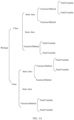
- Software code written by using a writing specification may include code elements such as a class, a package, a function/method, and a field/variable. For a relationship between different types of code elements, refer to FIG. 1A .
- a package may include one or more classes. Each class may include an inner class and a function/method. A field/variable may be called in the function/method.
- the inner class is similar to the class, and the inner class may also include a function/method.
- the class is a construction of an object-oriented computer programming language in the object-oriented programming, and describes a common method and field of created objects.
- the function/method is a sub-program in the class.
- a method usually includes a series of statements and can perform a function. It is referred to as a method in the writing specification of object-oriented programming, and referred to as a function in the writing specification of procedure-oriented programming.
- the field/variable stores some data, such as an integer and a character, a string, a hash table, and a pointer.
- the package is used to describe a path structure of a program.
- a package usually includes a plurality of classes. When a class is referenced, a complete package path needs to be filled in a package import area.
- the inner class is a class included in a class.
- the parallel change mode means that a plurality of changers simultaneously change to-be-changed software code, and then changed software code generated by all the changers by changing the to-be-changed software code is merged, to generate final changed software code.
- the serial change mode means that a plurality of changers sequentially change to-be-changed software code, an input of each changer is an output of a previous changer, and an input of the first called changer is the to-be-changed software code.
- the partial serial or partial parallel mode is a combination of the parallel change mode and the serial change mode, where a plurality of changers include changers that require serial calling and changers that require parallel calling.
- the partial serial or partial parallel mode may be classified into a serial-parallel mode dominated by the parallel mode and a serial-parallel mode dominated by the serial mode.
- each changer combination includes one or more changers.
- the plurality of changer combinations simultaneously change to-be-changed software code, and then changed software code generated by all the changer combination by changing the to-be-changed software code is merged.
- a plurality of changers in the plurality of changer combinations may use the parallel change mode or the serial change mode.
- each changer combination includes one or more changers.
- the plurality of changer combinations sequentially change to-be-changed software code, an input of each changer combination is an output of a previous changer combination, and an input of the first called changer combination is the to-be-changed software code.
- a plurality of changers in the plurality of changer combinations may use the parallel change mode or the serial change mode.
- Each changer is configured to perform a type of changes on to-be-changed software code, and may change a code element (such as a class, a method, or a field) in the to-be-changed software code. Different changers change different code elements.
- three name changers include two sub-changers, and each sub-changer is configured to change a specific area (such as a reference area and a package import area) of software code.
- the class name changer is used as an example.
- the class name changer may be divided into a class reference sub-changer and a package import sub-changer.
- Class reference sub-changer In the library upgrade scenario, when a class name of a class needs to be changed, the sub-changer may change all referenced class names of the class in software code (or in other words, class names of the class in a reference area) to a name of another class.
- Package import sub-changer In the library upgrade scenario, when a class name of a class needs to be changed, the sub-changer may change the class name of the class in a package import area in software code to a class name of another class.
- the changer or the sub-changer may be understood as a software apparatus, and the software apparatus includes an input and an output.
- the input is software code that needs to be changed, and the output is changed software code.
- the changer When each changer changes software code, the changer usually changes some fields or some formats in the software code.
- the changer changes the software code a part that needs to be changed is referred to as change content of the changer.
- the change content of the changer may include direct change content and delayed change content.
- the change content of the changer may include only the direct change content or the delayed change content.
- the direct change content refers to a part where the software code can be directly changed, and the change of the part does not affect a change of a subsequent changer.
- the delayed change content refers to a part where a change of a subsequent changer is affected if the software code is directly changed.
- a type of the delayed change content may be preset. When a changer is called to change software code, it may be determined, based on the preset type of the delayed change content and a change type performed by the changer, whether change content of the changer includes delayed change content.
- a first class in to-be-changed software code needs to be changed to a second class, and one or more inner classes in the first class need to be changed to another class.
- the another class is a class other than the first class.
- change content generated when the changer changes the first class of a package import area to the second class and change content generated when the changer changes the one or more inner classes in the first class of the package import area to the another class may both be used as inner class change content of the changer.
- a class A there are a plurality of inner classes in a class A, which are an inner class B, an inner class C, and an inner class D, respectively
- the class A needs to be changed to a class ZZ
- one or more of the inner class B, the inner class C, and the inner class D need to be changed to another class.
- the inner class B needs to be changed to the class ZZ
- the inner class C needs to be changed to a class F
- the inner class D needs to be changed to a class Q.
- a changer 1 is configured to change the class A to the class ZZ
- a changer 2 is configured to change the inner class B to the class ZZ
- a changer 3 is configured to change the inner class C to the class F
- a changer 4 is configured to change the inner class D to the class Q.
- the changer 1 first changes the class A in all the import statements in the to-be-changed software code to the class ZZ. Subsequently, when the changer 2, the changer 3, and the changer 4 further change changed software code of the changer 1, because the class A cannot be found in a package import area of the changed software code of the changer 1, the inner classes in the class A cannot be obtained by query, and cannot be changed.
- change content of the changer 1, the changer 2, the changer 3, and the changer 4 for the package import area are all inner class change content.
- a class A includes a field E and a method F
- the class A needs to be changed to a class X
- the field E and the method F need to be changed to another class.
- the field E needs to be changed to a class Y
- the method F needs to be changed to a class Z.
- a changer 5 is configured to change the class A to the class X
- a changer 6 is configured to change the field E to the class Y
- a changer 7 is configured to change the method F to the class X.
- the changer 5 first changes the class A in all the import statements in the to-be-changed software code to the class X. Subsequently, when the changer 6 and the changer 7 further change changed software code of the changer 1, because the class A cannot be found in the package import area of the changed software code of the changer 5, the field E and the method F in the class A cannot be obtained by query, and cannot be changed.
- change content of the changer 5, the changer 6, and the changer 7 for the package import area are all class split change content.
- the two conflicting changers mean that when the two changers change a same piece of software code, change content of one changer affects a change of the other.
- a change apparatus may preconfigure a changer set.
- the changer set includes one or more changers, and any two changers in the changer set do not conflict.
- the change apparatus calls changers in the changer set to change to-be-changed software code
- the changers in the changer set may be called in the parallel change mode to change the to-be-changed software code.
- a configuration manner of the changer set is not limited in the embodiments of this application.
- the changer set may be manually configured, or changers that can be parallel called may be placed in the changer set after simulation.
- An original change instance set of a changer includes one or more change instances, and each original change instance in the original change instance set records a line that needs to be changed in software code input into the changer (that is, software code output by a previous changer of the changer), and changed content of the line.
- An intermediate change instance set of the changer includes one or more change instances, and each change instance in the intermediate change instance set records a line that needs to be changed by the changer in to-be-changed software code, and changed content of the line.
- a difference between the original change instance set and the intermediate change instance set lies in being based on different software code.
- the original change instance set is based on the software code input into the changer.
- the intermediate change instance set is based on the to-be-changed software code, which is to-be-changed software code initially determined by the change apparatus.
- an original change instance set and an intermediate change instance set of the first called changer are the same, an original change instance set of the second called changer is based on software code output by the first called changer, and an intermediate change instance set of the second called changer is based on the to-be-changed software code.
- a change instance in the intermediate change instance set of the changer corresponds to a change instance in the original change instance set of the changer, and the change instance in the intermediate change instance set of the changer is generated based on the corresponding change instance in the original change instance set of the changer, and is determined based on an intermediate change instance set of a changer called prior to the changer.
- a target change instance set of the changer is generated after conflict between changers is eliminated.
- the target change instance includes one or more change instances, and each change instance in the target change instance set records a line that needs to be changed in the software code input into the changer (that is, the software code output by the previous changer of the changer), and changed content of the line.
- Change instances included in the original change instance set and the target change instance set may be the same, or the target change instance set may include only some change instances in the original change instance set.
- the change instance in the target change instance set of the changer records direct change content generated by a change actually performed when the changer changes the input software code.
- the change instance in the original change instance set of the changer records change content generated by a change expected to be performed when the changer changes the input software code. Because some change instances are deleted in a process of eliminating the conflict between the changers, the target change instance set includes only some change instances in the original change instance set.
- the change apparatus needs to maintain an intermediate change instance set for each changer. Based on the intermediate change instance set of the changer, the change apparatus can eliminate conflict between changers by using attributes of the changers, and determine a change instance that needs to be deleted from the intermediate change instance set of the changer.
- the change apparatus may summarize intermediate change instance sets that are of changers needing to be called and that are obtained after conflict between the changers is eliminated (if a change instance that needs to be deleted exists, after the conflict between the changers is eliminated, intermediate change instance sets of the changers are intermediate change instance sets in which the change instance has been deleted). Summarized intermediate change instance sets (which may be briefly referred to as a total change instance set for ease of description) are stored, and displayed to a user on a display.
- the total change instance set includes a plurality of change instances, which is based on the to-be-changed software code, and records change content generated by changes actually performed on the to-be-changed software code when the change apparatus calls the plurality of changers in the serial change mode.
- the change apparatus may also delete one or more corresponding change instances from original change instance sets of the changers, to generate target change instance sets of the changers.
- Change type 1 When a formal parameter of a library function is changed, actual parameters in all references to the library function in software code need to be changed. For this type of changes, all actual parameters called by the library function in to-be-changed software code need to be changed.
- Change type 2 When a name of a library function is changed, the name of the library function in software code needs to be changed to a name of another library function. For this type of changes, all specific names of the library function that are present in to-be-changed software code need to be changed to a name of another library function.
- a change apparatus may select changers, determines a calling sequence of the changers, and set attributes of each changer based on change configuration information from a user on to-be-changed software code. Subsequently, the change apparatus sequentially calls the changers based on the determined calling sequence to perform changes.
- An input of the first called changer is the to-be-changed software code, and an input of any changer other than the first called changer is an output of a previous changer.
- the change apparatus can call a plurality of different changers based on the change configuration information of the user, to implement a plurality of different types of changes on the to-be-changed software code.
- a plurality of different changers can be flexibly organized to change the to-be-changed software code, which helps improve efficiency of software code change.
- the software code change method that supports a plurality of types of changes and that is provided in the embodiments of this application is performed by a change apparatus.
- a deployment position of the change apparatus is not limited in the embodiments of this application.
- the change apparatus may be deployed in a cloud.
- the change apparatus may be a cloud server.
- the change apparatus may be a virtual machine created in a cloud server.
- the change apparatus may be a software apparatus deployed on a cloud server or a virtual machine.
- the software apparatus is configured to perform a plurality of different types of changes on to-be-changed software code.
- the software apparatus may be deployed on a plurality of servers in a distributed manner, or deployed on a plurality of virtual machines in a distributed manner, or deployed on a virtual machine and a server in a distributed manner.
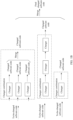
- FIG. 2A shows a change apparatus 100 according to an embodiment of this application.
- the change apparatus includes an import module 110, a changer library 120, a configuration module 130, and a change module 140.
- the import module 110 is configured to determine to-be-changed software code and change configuration information from a user on the to-be-changed software code.
- the changer library 120 stores a plurality of changers. Some changers (such as name changers) include one or more sub-changers, and each changer can change a code element.
- the configuration module 130 may select changers from the changer library 120 based on the change configuration information, and configure a calling mode, for example, select a serial change mode or a parallel change mode, and may also configure attributes of each changer.
- the change module 140 may call, based on the calling mode selected by the configuration module 130, the changers selected by the configuration module 130, to change the to-be-changed software code.
- each changer may change software code input into the changer.
- Each module included in the change apparatus 100 may be a software module.
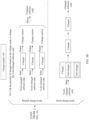
- FIG. 2B shows a computer cluster according to an embodiment of this application.
- the computer cluster includes at least one computing device 100.
- a communication channel is established between computing devices 100 through a communications network.
- Each computing device 100 includes a bus 101, a processor 102, a communications interface 103, and a memory 104.
- the computing device 10 may further include a display 105.
- the processor 102, the memory 104, and the communications interface 103 communicate with each other through the bus 101.
- the processor 102 may include one or more general-purpose processors, for example, a central processing unit (CPU), or a combination of a CPU and a hardware chip.
- the hardware chip may be an application-specific integrated circuit (ASIC), a programmable logic device (PLD), or a combination thereof.
- the PLD may be a complex programmable logic device (CPLD), a field-programmable gate array (FPGA), generic array logic (GAL), or any combination thereof.
- the memory 104 may include a volatile memory, for example, a random access memory (RAM).
- the memory 104 may further include a non-volatile memory (NVM), for example, a read-only memory (ROM), a flash memory, a hard disk drive (HDD), or a solid-state drive (SSD).
- NVM non-volatile memory
- ROM read-only memory
- HDD hard disk drive
- SSD solid-state drive
- the memory 104 may further include a combination of the foregoing types.
- the memory 104 stores executable code.
- the processor 102 may read the executable code in the memory 104 to implement a function, and may further communicate with another computing device through the communications interface 103.
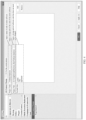
- the processor 102 may further trigger the display 105 to display information to a user, such as information included in interfaces shown in FIG. 4 , FIG. 9, and FIG. 10 in the embodiments of this application.
- the processor 102 may implement functions of one or more modules (for example, one or more of the import module 110, the changer library 120, the configuration module 130, and the change module 140) of the change apparatus 100.
- the memory 104 stores the one or more modules (for example, the one or more of the import module 110, the changer library 120, the configuration module 130, and the change module 140) of the change apparatus 100.
- processors 102 in a plurality of computing devices 100 may work in coordination, to perform the software code change method that supports a plurality of types of changes and that is provided in the embodiments of this application.
- the change module 140 when the memory 104 stores the change module 140, the change module 140 further includes a cache space.
- the cache space is located in the memory 104, and the cache space may be configured to store an analysis result obtained by the first called changer by analyzing to-be-changed software code, and delayed change content of each called changer.
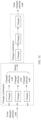
- FIG. 2C shows a system architecture according to an embodiment of this application.
- the system architecture includes a client 200 and a cloud device 300 on which a change apparatus is deployed.
- the client 200 is connected to the cloud device 300 by using a network.
- the cloud device 300 is located in a cloud environment, and may be a server or a virtual machine deployed in a cloud data center.
- FIG. 2C shows only an example in which the change apparatus is deployed on one cloud device 300. In a possible implementation, the change apparatus may be deployed on a plurality of cloud devices 300 in a distributed manner.
- the client 200 includes a bus 201, a processor 202, a communications interface 203, and a memory 204.
- the client 200 further includes a display 205.
- the processor 202, the memory 204, and the communications interface 203 communicate with each other through the bus 201.
- the memory 204 stores executable code
- the processor 202 may read the executable code in the memory 204 to implement a function.
- the processor 202 may further trigger the display 205 to display information to a user, such as information included in interfaces shown in FIG. 4 , FIG. 9, and FIG.
- the processor 202 may further communicate with the cloud device through the communications interface 203.
- the processor 202 may prompt, by using the display, the user to input to-be-changed software code and change configuration information, and determine the to-be-changed software code and the change configuration information when triggered by the user; and feed back the to-be-changed software code and the change configuration information to the cloud device 300 by using the communications interface 203.
- the cloud device 300 includes a bus 301, a processor 302, a communications interface 303, and a memory 304.
- the processor 302, the memory 304, and the communications interface 303 communicate with each other through the bus 301.
- the memory 304 stores executable code.
- the processor 302 may read the executable code in the memory 304 to implement a function, and may further communicate with the client 200 through the communications interface 303.
- processors 302 of a plurality of cloud devices 300 may cooperate to implement functions of the change apparatus 100.
- the memory 304 stores one or more of the import module 110, the changer library 120, the configuration module 130, and the change module 140 of the change apparatus 100.
- the change module 140 when the memory 304 stores the change module 140, the change module 140 further includes a cache space.
- the cache space is located in the memory 304, and the cache space may be configured to store an analysis result obtained by the first called changer by analyzing the to-be-changed software code, and delayed change content of each called changer.
- the processor 302 may call the module stored in the memory 304 to implement the code change method provided in the embodiments of this application, and generate changed software code.
- the processor 302 may send the changed software code to the client 200 by using the communications interface 303.
- the processor 302 may further determine direct change content and delayed change content of all called changers, and send the direct change content and the delayed change content of all the called changers to the client 200 by using the communications interface 303.
- the processor 202 in the client 200 may trigger the display 205 to display the changed software code and the direct change content and the delayed change content of all the called changers to the user.
- a software code change method that supports a plurality of types of changes and that is provided in an embodiment of this application is described below with reference to FIG. 3A and FIG. 3B .
- the method includes the following steps.
- Step 301 The import module 110 determines to-be-changed software code and change configuration information from a user on the to-be-changed software code.
- the change configuration information includes a to-be-changed code element, a change manner (for example, modify or delete) of the to-be-changed code element, and a changed code element corresponding to the to-be-changed code element.
- a changed code element corresponding to the to-be-changed code element is a null value.
- a quantity of to-be-changed code elements is not limited in this embodiment of this application, and may be one or more.
- the change configuration information may be configured by the user or may be fixed. This is not limited in this embodiment of this application.
- the change configuration information includes a plurality of to-be-changed code elements.
- the configuration module 130 only needs to select, from the changer library 120, a changer that can correspondingly change the to-be-changed code element, and the change module 140 only needs to call the changer to change the to-be-changed software code.
- the import module 110 determines the to-be-changed software code or the change configuration information.
- the user may trigger a terminal device to send, to the import module 110, a request message that carries the to-be-changed software code and the change configuration information.
- the request message is used to request the change apparatus 100 to change the to-be-changed software code.
- the user may import the to-be-changed software code to the import module 110, and set the change configuration information when prompted by the import module 110.
- the to-be-changed software code may be code of entire software (all files in a plurality of directories), or may be code (all files in a specific directory) used to implement a specific function in the code of the entire software, or may be a specific code file in the code of the entire software.
- the user may import the code files of the entire software into the import module 110.
- the user may select software code that does not need to be changed from the code files of the entire software when prompted by the import module 110, and remaining software code is used as the to-be-changed software code.
- the user inputs a storage path of the software code that does not need to be changed, so that the import module 110 may determine the to-be-changed code from a part of code in the code files of the entire software.
- the change configuration information may further include other information, and the other information includes one or both of the following: an identifier (ID) of a changer that needs to be called, and a change mode (such as a serial change mode, a parallel change mode, or a partial serial or partial parallel mode) of the to-be-changed software code.
- ID an identifier
- change mode such as a serial change mode, a parallel change mode, or a partial serial or partial parallel mode
- the change configuration information may further include a calling sequence of the changers and attributes of each changer.
- the user when determining that the to-be-changed software code needs to be changed, the user may autonomously select a changer that needs to be called when the to-be-changed software code is changed.
- a quantity of changers that need to be called and that are selected by the user is not limited in this embodiment of this application.
- the changers selected by the user may change only some to-be-changed code elements in the change configuration information.
- a changer required to change another to-be-changed code element in the change configuration information may be selected by the configuration module 130. For a selection manner, refer to step 302.
- the user may also select a change mode of the to-be-changed software code. For example, when the user determines that changes on a plurality of to-be-changed code elements in the to-be-changed software code do not conflict, the user may select the parallel change mode. When the user determines that changes on a plurality of to-be-changed software elements in the to-be-changed software code conflict, the user may select the serial change mode.
- the user may further set a calling sequence and attributes of each changer for a plurality of selected changers.
- attributes may be set for each changer, and options of the attributes are a merge change attribute, an ignore change attribute, and an overwrite change attribute, respectively.
- the merge change attribute is used to indicate whether to merge changes on a specific line that are performed by the changer and a changer called prior to the changer.
- One or more same lines of the to-be-changed software code that are changed by the two changers are briefly referred to as specific lines.
- the merge change attribute of the changer may be set to true or false. When the merge change attribute is true, it indicates to merge the changes on the specific line of the to-be-changed software code that are performed by the changer and the changer called prior to the changer. When the merge change attribute is false, it indicates not to merge the changes on the specific line that are performed by the changer and the changer called prior to the changer. In this case, the overwrite change attribute needs to be viewed.
- the ignore change attribute is used to describe whether to ignore a change performed by the changer on another line of the to-be-changed software code.
- the another line is a line other than the specific line in the to-be-changed software code.
- the ignore change attribute of the changer may be set to true or false. When the ignore change attribute is true, it indicates to ignore the change performed by the changer on the another line. When the ignore change attribute is false, it indicates not to ignore the change performed by the changer on the another line.
- the overwrite change attribute is used to describe whether to overwrite the change performed on the specific line of the to-be-changed software code by the changer called prior to the changer.
- the overwrite change attribute of the changer may be set to true or false. When the overwrite change attribute is true, it indicates to overwrite the change performed on the specific line by the changer called prior to the changer, that is, the change performed on the specific line by the changer called prior to the changer is invalid, and only the change performed by the changer on the specific line is retained. When the overwrite change attribute is false, it indicates not to overwrite the change performed on the specific line by the changer called prior to the changer. In this case, the merge change attribute needs to be viewed.
- Step 302 The configuration module 130 selects changers from the changer library 120 based on the change configuration information.
- the configuration module 130 may select, from the changer library 120 based on the to-be-changed code element, a changer that can change the to-be-changed code element to the corresponding changed code element.
- a quantity of changers selected by the configuration module 130 is not limited in this embodiment of this application. The quantity of changers is related to the change configuration information.
- the configuration module 130 may select, from the changer library 120 based on the ID of the changer, the changer that needs to be called. If the changer corresponding to the ID, included in the change configuration information, of the changer that needs to be called can change only some to-be-changed code elements, the configuration module 130 further needs to select, from the changer library 120, a changer that can change a remaining to-be-changed code element to a corresponding changed code element.
- a quantity of changers selected by the configuration module 130 is not limited in this embodiment of this application. The quantity of changers is related to a quantity of remaining to-be-changed code elements in the change configuration information.
- Step 303 The configuration module 130 determines, based on the change configuration information, a change mode of the to-be-changed software code, for example, the serial change mode, the parallel change mode, or the partial serial or partial parallel mode.
- a change mode of the to-be-changed software code for example, the serial change mode, the parallel change mode, or the partial serial or partial parallel mode.
- the configuration module 130 may directly determine the change mode of the to-be-changed software code based on the change configuration information.
- the configuration module 130 may determine the change mode of the to-be-changed software code based on the selected changers.
- the configuration module 130 determines whether there are two conflicting changers in the plurality of selected changers. If there are not two conflicting changers, the configuration module 130 may use the parallel change mode, or otherwise, the serial change mode or the partial serial or partial parallel mode (where conflicting changers are in the serial mode, and changers that do not conflict are in the parallel mode) is used.
- the configuration module 130 may further set a calling sequence of the changers and attributes of each changer.
- the configuration module 130 may directly set the calling sequence of the changers and the attributes of each changer based on the change configuration information.
- the configuration module 130 may first set the calling sequence of the plurality of changers, and then configure the attributes of each changer based on the calling sequence.
- a manner of setting the calling sequence is not limited in this embodiment of this application.
- the configuration module 130 may set priorities for the plurality of changers in the changer library 120, and a changer with a higher priority needs to be called first, and a changer with a lower priority needs to be called later.
- the configuration module 130 may determine the calling sequence based on the priorities of the plurality of changers.
- the configuration module 130 prestores a plurality of calling schemes, and each calling scheme may include all changers, or may include some changers.
- the configuration module 130 may perform matching between the plurality of changers and the plurality of calling schemes to obtain a target calling scheme.
- the target calling scheme includes the plurality of changers, and the target calling scheme may further include another changer in addition to the plurality of changers.
- the configuration module 130 may determine the calling sequence of the plurality of changers based on a sequence of the plurality of changers in the target calling scheme.
- the changer library 120 prestores five different changers, which are a changer A, a changer B, a changer C, a changer D, and a changer E, respectively, and the configuration module 130 preconfigures three calling schemes.
- a scheme 1 is A->B->D->E->C.
- a scheme 2 is A->B->D->E.
- a scheme 3 is A->D->E->C.
- the changers selected by the configuration module 130 are the changer A, the changer B, and the changer C. Only the scheme 1 includes the changer A, the changer B, and the changer C, and therefore, the scheme 1 is the target calling scheme. Because the changer D and the changer E are not selected, the scheme 1 may be converted to A->B->C, and the calling sequence configured by the configuration module 130 is A->B->C.
- the configuration module 130 determines the calling sequence is not limited in this embodiment of this application. In a possible implementation, the configuration module 130 may alternatively determine the calling sequence of the plurality of changers in a random manner.
- the configuration module 130 may set, based on the calling sequence (and the change configuration information), attributes of a changer other than the first called changer.
- the configuration module 130 may prestore attribute configuration schemes of changers.
- An attribute configuration scheme of a changer records a calling sequence between the changer and another changer (the another changer is a changer that may conflict with the changer), and attributes of the changer in the sequence.
- the configuration module 130 sets the attributes of the plurality of changers based on the calling sequence of the changers and attribute configuration schemes of the changers.
- an attribute configuration scheme of the changer B is as follows: When the changer B is called prior to the changer A, three attributes of the changer B are all set to false. If the changer A is called prior to the changer B, a merge change attribute of the changer B is true, and an ignore change attribute and an overwrite change attribute are false.
- An attribute configuration scheme of the changer C is as follows: When the changer C is called prior to the changer B, three attributes of the changer C are all set to false. If the changer B is called prior to the changer C, a merge change attribute and an ignore change attribute of the changer C are false, and an overwrite change attribute of the changer C is true.
- the merge change attribute of the changer B is true, and the ignore change attribute and the overwrite change attribute of the changer B are false; and the merge change attribute and the ignore change attribute of the changer C are false, and the overwrite change attribute of the changer C is true. Because the changer A is the first called changer, no changer is called prior to the first called changer, so that the configuration module 130 may not set attributes of the changer A.
- Step 304 The change module 140 calls the plurality of changers based on the change mode of the to-be-changed software code, to change the to-be-changed software code.
- the partial serial or partial parallel mode is essentially a combination of the parallel change mode and the serial change mode.
- the change module 140 calls the plurality of changers in the partial serial or partial parallel mode to change the to-be-changed software code, refer to the following descriptions in Manner 1 and Manner 2.
- the change module 140 calls the plurality of changers in Manner 1 to change software code input into the plurality of changers.
- the change module 140 calls the plurality of changers (or changer combinations) in Manner 2 to change software code input into the plurality of changers (or changer combinations).
- Manner 1 Based on the parallel change mode, the plurality of changers are simultaneously called to change the to-be-changed software code.
- the change module 140 may call the plurality of changers to simultaneously change the to-be-changed software code. After a change of each of the plurality of changers ends, changed software code generated by all the changer may be merged. Merged software code is final changed software code.
- the change module 140 may determine change content of each changer, for example, determine one or more lines of code that are changed when each changer changes the to-be-changed software code, and replace, with the change content of each changer, software code that is in the to-be-changed software code and that is at a position corresponding to the change content of each changer, to obtain the final changed software code.
- the change module 140 determines whether the changer includes direct change content or delayed change content. If the changer includes direct change content and delayed change content, the direct change content of the changer is directly applied to the to-be-changed software code, the delayed change content of the changer is retained, and after calling of all the changers is completed, all delayed change content of the plurality of called changers is applied to software code output by the last changer, to obtain the changed software code.
- direct change content is distinguished from delayed change content that may have change conflict in change content of each changer, and all the delayed change content generated by the plurality of changers is applied to the to-be-changed software code at the end, so that conflict caused by changes directly performed by different changers in a calling process can be effectively avoided.
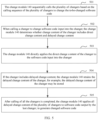
- FIG. 5 is a schematic diagram of a method in which the change module 140 changes the to-be-changed software code in the serial change mode. The method includes the following steps.
- Step 501 The change module 140 sequentially calls the plurality of changers based on the calling sequence of the plurality of changers to change the to-be-changed software code.
- An input of each changer is an output of a previous changer, and the to-be-changed software code is an input of the first called changer.
- Step 502 When calling a changer to change software code input into the changer, the change module 140 determines whether change content of the changer includes direct change content and delayed change content.
- Step 503 The change module 140 directly applies the direct change content of the changer to the software code input into the changer.
- Step 504 If the changer includes delayed change content, the change module 140 retains the delayed change content of the changer, for example, the delayed change content of the changer may be stored.
- Step 505 After calling of all the changers is completed, the change module 140 applies all delayed change content of the plurality of changers to software code output by the last changer, to generate changed software code.
- FIG. 6A and FIG. 6B are a flowchart in which the change module 140 changes the to-be-changed software code in the serial change mode.
- the change module 140 sequentially calls the changer A, the changer B, and the changer C based on the calling sequence of A->B->C.
- the change module 140 inputs the to-be-changed software code into the changer A, and when calling the changer A, determines whether change content of the changer A includes direct change content and delayed change content. If the change content includes direct change content, the change module 140 applies the direct change content to the to-be-changed software code (1), and changed software code is software code output by the changer A. If the change content includes delayed change content, the change module 140 retains the delayed change content (2).
- an analysis result of the to-be-changed software code may be further stored (3).
- the analysis result includes positions of all the code elements in the to-be-changed software code (for a description of the analysis result, refer to the following description, and details are not described herein).
- the change module 140 inputs, into the changer B, the software code output by the changer A, and when calling the changer B, the change module 140 determines whether change content of the changer B includes direct change content and delayed change content. If the change content includes direct change content, the change module 140 applies the direct change content to the software code input into the changer B (5), and changed software code is software code output by the changer B. If the change content includes delayed change content, the change module 140 retains the delayed change content (6).
- the changer B changes the software code input into the changer B
- the analysis result stored by the changer A may be further called (4), and a change position of the software code input into the changer B is determined based on the analysis result.
- the change module 140 inputs, into the changer C, the software code output by the changer B, and when calling the changer C, the change module 140 determines whether change content of the changer C includes direct change content and delayed change content. If the change content includes direct change content, the change module 140 applies the direct change content to the software code input into the changer C (8), and changed software code is software code output by the changer C. If the change content includes delayed change content, the change module 140 retains the delayed change content (9).
- the analysis result stored in the changer A may be further called (7), and a change position of the software code input into the changer C is determined based on the analysis result.
- the change module 140 applies all delayed change content of the plurality of changers to the software code output by the changer C, to generate changed software code.
- the change module 140 may determine, based on preset delayed change content (such as inner class change content and class split change content), whether change content of the changer includes delayed change content, and if the change content includes delayed change content, retain the delayed change content. If the change content does not include delayed change content, the change module 140 determines direct change content of the changer.
- preset delayed change content such as inner class change content and class split change content
- the delayed change content of the changer is retained from the change content of the changer, there still may be some potential conflict between changers.
- the potential conflict may result in that only a part of content other than the delayed change content in the change content of the changer can be applied to the software code input into the changer (the part is direct change content), and other direct change content that cannot be applied to the software code input into the changer is deleted.
- the change module 140 When determining the direct change content in the change content of the changer, the change module 140 needs to use attributes of the called changer to determine the direct change content of the changer based on some or all attributes of the changer. The following describes a manner in which the change module 140 determines the direct change content of the changer.
- Step 1 Each time a changer is called, the change module 140 determines an original change instance set of the changer.
- Step 2 The change module 140 generates an intermediate change instance set of the changer based on the original change instance set of the changer and an original change instance set of a changer called prior to the changer.
- the change instance 1 For a change instance 1 in the original change instance set of the changer, the change instance 1 records a line number 1 of a line that needs to be changed, the change module 140 may search the original change instance set of the changer called prior to the changer for all line number changes before the line number 1.
- the line number changes include, but are not limited to, line number changes resulting from adding or deleting a line by the changer called prior to the changer.
- the change module 140 may calculate, in an accumulation manner, a line change quantity caused by changing the to-be-changed software code by the changer called prior to the changer. For example, if the changer called prior to the changer adds N lines, an accumulated value is a positive number and is N. If the changer called prior to the changer deletes M line numbers, an accumulated value is a negative number and is -M.
- the change module 140 subtracts the line change quantity from the line number 1 recorded in the change instance 1 of the changer, to determine a line number 2 that the changer needs to change when based on the to-be-changed software code, and generate a change instance 2 (where a line number is a line number 2, and changed content of the line is the same as changed content of the line of the line number 1 recorded in the change instance 1) that is in the intermediate change instance set of the changer and that corresponds to the change instance 1. In the foregoing manner, all change instances in the intermediate change instance set of the changer may be generated.
- FIG. 7 shows three serial changers, which are a changer A, a changer B, and a changer C, respectively.
- a line number of a line that needs to be changed and changed content when each changer changes software code input into the changer are marked below each changer (which may be considered as an original change instance set of each changer), and identified by an operation (a value 1, a value 2).
- the operation may be classified into add, modify , and delete.
- the value 1 indicates a line number
- the value 2 indicates a quantity of operated lines.
- add (3, 2) indicates that two lines of code are inserted at the third line of the software code input into the changer
- delete (4, 1) indicates that one line of code is deleted from the fourth line of the software code input into the changer
- modify (6, 1) indicates that one line of code is modified at the sixth line of the software code input into the changer (that is, a quantity of lines does not increase or decrease).
- An operation of the changer B is add (2, 1). Because changes are performed on code after the second line when a previous changer (changer A) of the changer B changes the to-be- changed software code, the line number in the operation does not change.
- Another operation of the changer B is modify (6, 1). It can be learned that when the changer A changes the to-be-changed software code, two lines are inserted and one line is deleted before the sixth line, and a line change quantity is 1. Therefore, for the another operation modify (6, 1) of the changer B, if a change is performed based on the to-be-changed software code, the operation should be modify (5, 1). Similarly, an operation modify (8, 1) of the changer C is changed to modify (6, 1).
- Step 3 The change module 140 generates a target change instance set of the changer based on attributes of the changer, the intermediate change instance set of the changer, and an intermediate change instance set of the changer called prior to the changer.
- Step 4 After generating the target change instance set of the changer, the change module 140 may change, by using the target change instance set of the changer, software code input into the changer.
- the change module 140 may determine, based on an intermediate change instance set of the changer and an intermediate change instance set of a changer called prior to the changer, whether the changer and the changer called prior to the changer change one or more same lines of the to-be-changed software code. If the changer and the changer called prior to the changer change one or more same lines of the to-be-changed software code, such changes easily cause conflict between the changers, and the conflict needs to be eliminated.
- the change module 140 may determine, based on a merge change attribute of the changer, whether changes on the specific line that are performed by the changer and the changer called prior to the changer need to be merged. If the changes need to be merged, a change instance corresponding to the specific line may be retained in the intermediate change instance set of the changer, and a change instance corresponding to the specific line may be retained in the original change instance of the changer.
- the change module 140 may determine, based on an ignore change attribute of the changer, whether to ignore a change performed by the changer on another line of the to-be-changed software code. If the change needs to be ignored, a change instance corresponding to the another line may be deleted from the intermediate change instance set of the changer, and a change instance corresponding to the another line may be deleted from the original change instance of the changer.
- the change module 140 may determine, based on an overwrite change attribute of the changer, whether to overwrite a change performed on the specific line of the to-be-changed software code by the changer called prior to the changer. If the change needs to be overwritten, the change module 140 may retain a change instance corresponding to the specific line in the intermediate change instance set of the changer, and may retain a change instance corresponding to the specific line in the intermediate change instance set of the changer.
- the change module 140 updates the original change instance set of the changer (for example, deletes a change instance or retains a change instance) based on the attributes of the changer.
- An updated original change instance set of the changer is the target change instance set of the changer.
- the change module 140 may add a change instance in an updated intermediate change instance set of the changer to a total change instance set.
- FIG. 8 shows three serial changers, which are a changer E, a changer F, and a changer G, respectively.
- a line number of a line that needs to be changed and changed content when each changer changes the to-be-changed software code are marked below each changer (which may be considered as an intermediate change instance set of each changer).
- a marking manner is the same as that in the embodiment shown in FIG. 5 , and details are not described herein again.
- m1, m2, m3, m4, and m5 are used to indicate modification content, and are only used to distinguish between different modifications.
- the merge change attribute, the ignore change attribute, and the overwrite change attribute are marked as true or false above the changer F and the changer G.
- the merge change attribute of the changer B is true, and the ignore change attribute and the overwrite change attribute of the changer B are false.
- the merge change attribute and the ignore change attribute of the changer C are false, and the overwrite change attribute of the changer C is true.
- a change instance of the changer F is modify (4, m3)
- a change instance of the changer E is modify (4, m2), indicating that the changer E also modifies the fourth line.
- the change instance modify (4, m3) is retained in an intermediate change instance set of the changer B
- a change instance corresponding to the change instance modify (4, m3) is retained in an original change instance set of the changer F.
- An updated original change instance set of the changer F is a target change instance set of the changer F.
- a change instance of the changer G is modify (1, m4). It can be learned that neither of the changers (changer E and changer F) called prior to the changer G modifies the first line, and the ignore change attribute of the changer G is true.
- the change instance modify (1, m4) is deleted from an intermediate change instance set of the changer G, and a change instance corresponding to the change instance modify (1, m4) is deleted from an original change instance set of the changer G.
- Another operation of the changer G is modify (3, m5), the changer E also modifies the third line, and the overwrite change attribute of the changer G is true.
- the change module 140 retains the change instance modify (3, m5) in the intermediate change instance set of the changer G, and the change module 140 retains, in the original change instance set of the changer G, a change instance corresponding to the change instance modify (3, m5).
- An updated original change instance set of the changer G is a target instance set of the changer G.
- the changer 140 may also add change instances in the updated intermediate change instance set of the changer E, the updated intermediate change instance set of the changer F, and the updated intermediate change instance set of the changer G to a total change instance set.
- the total change instance set includes modify (4, m2), modify (3, m1), modify (4, m3), and modify (3, m5).
- the change instance modify (4, m3) of the changer F and the change instance modify (4, m2) of the changer E may be merged, and a merged change instance is modify (4, [m2, m3]).
- the merged change instance modify (4, [m2, m3]) replaces modify (4, m2) and modify (4, m3) in the total change instance set.
- each changer when changing input software code, each changer needs to first analyze the input software code, to obtain positions of all code elements in the input software code, then find a position (for example, one or more lines) of a to-be-changed code element, and change the to-be-changed code element at the position.
- Positions (such as lines) at which two changers perform changes when changing the to-be-changed software code may be the same.
- a name of a method is changed, and a formal parameter of the method is also changed, which require a changer that changes the name of the method and a changer that changes an actual parameter of the method.
- change positions (lines) of the name of the method and the actual parameter of the method are the same. In this case, the two changers conflict.
- each changer When changing the input software code, each changer usually needs to first analyze the input software code, to obtain the positions of all the code elements in the input software code, and may further analyze an inclusion relationship between the code elements, for example, a function/method included in a class, and a variable/field referenced in the function/method.
- the process of analyzing the input software code by each changer usually requires time.
- the first called changer may store an analysis result of the to-be-changed software code.
- the analysis result includes positions of all code elements in the to-be-changed software code and an inclusion relationship between the code elements.
- the analysis result may be stored in the cache space in the change module 140.
- the analysis result stored by the first called changer may be called, and changed software code output by a previous changer is changed based on the analysis result stored by the first changer.
- the change module 140 may apply the direct change content of each changer to the software code input into the changer.
- the change module 140 may apply all delayed change content of all the changers to software code output by the last changer.
- all the delayed change content of the plurality of changers may also be applied in the serial or parallel mode to the software code output by the last changer.
- the serial mode is similar to that in the embodiment shown in FIG. 5 or FIG. 6A and FIG. 6B .
- delayed change content of any changer in all the delayed change content of the plurality of changers is represented by using a delayed change instance set.
- a change instance in the delayed change instance set is based on the to-be-changed software code, and a manner of determining the change instance in the delayed change instance set is similar to the manner of determining a change instance in an intermediate change instance set of a changer, where it is also necessary to determine a line change quantity caused by changing the to-be-changed software code by the changer called prior to the changer, and perform corresponding accumulation, to determine the change instance in the delayed change instance set. Further, based on the attributes of the plurality of changers, conflicting content in different delayed change content may be avoided, and a change instance may be deleted from the delayed change instance set, to update the delayed change instance set. Subsequently, a change instance in an updated delayed change instance set is updated to the total change instance set.
- the change module 140 may display the total change instance set to the user by using the display in the computing device, that is, display lines of all changes performed by the change module 140 on the to-be-changed software code, change manners (delete, modify, add, and the like), and changed content.
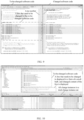
- the change module 140 provides the following two display manners.
- the change module 140 may display a contrast interface between the changed software code and the to-be-changed software code.
- the left side is the to-be-changed software code
- the right side is the changed software code.
- a line number is used for marking in the interface.
- a line that needs to be changed is marked in bold in the to-be-changed software code.
- the user may confirm the line that needs to be changed and changed content, and after the change is confirmed as correct, the initial imported to-be-changed software code may be replaced with the changed software code.
- the change module 140 may display the to-be-changed software code, and display all change instances in the total change instance set at a lower part of an interface.
- a display interface of the to-be-changed software code a line that needs to be changed is displayed in a form of a small bulb, and changed content of the line is displayed.
- the user may confirm changed content of a line, and if the changed content of the line is confirmed as correct, the changed content of the line may be separately applied to the to-be-changed software code.
- the disclosed system, apparatus, and method may be implemented in other manners.
- the described apparatus embodiment is merely an example.
- the unit division is merely logical function division and may be other division in actual implementation.
- a plurality of units or components may be combined or integrated into another system, or some features may be ignored or not performed.
- the displayed or discussed mutual couplings or direct couplings or communication connections may be implemented through some interfaces.
- the indirect couplings or communication connections between the apparatuses or units may be implemented in electronic, mechanical, or other forms.
- the units described as separate parts may or may not be physically separate, and parts displayed as units may or may not be physical units, may be located in one position, or may be distributed on a plurality of network units. Some or all of the units may be selected based on actual requirements to achieve the objectives of the solutions of the embodiments.
Landscapes
- Engineering & Computer Science (AREA)
- Software Systems (AREA)
- General Engineering & Computer Science (AREA)
- Theoretical Computer Science (AREA)
- Physics & Mathematics (AREA)
- General Physics & Mathematics (AREA)
- Computer Security & Cryptography (AREA)
- Stored Programmes (AREA)
Claims (12)
- Codeänderungsverfahren, wobei das Verfahren Folgendes umfasst:Erlangen (301) von Softwarecode und Änderungskonfigurationsinformationen, die durch einen Benutzer eingegeben werden, wobei die Änderungskonfigurationsinformationen ein zu änderndes Codeelement in dem Softwarecode, eine Änderungsart des zu ändernden Codeelements und ein geändertes Codeelement, das dem zu ändernden Codeelement entspricht, umfassen;Bestimmen (302) einer Vielzahl von Änderern und einer Aufrufsequenz der Vielzahl von Änderern basierend auf den Änderungskonfigurationsinformationen; undSequenzielles Aufrufen (303) der Vielzahl von Änderern basierend auf der Aufrufsequenz der Vielzahl von Änderern zum Ändern des Softwarecodes, wobeijeder Änderer ein Softwaregerät umfasst, das Softwaregerät einen Eingang und einen Ausgang umfasst; undjeder Änderer dazu konfiguriert ist, ein zu änderndes Codeelement in dem Softwarecode zu ändern, eine Eingabe des ersten aufgerufenen Änderers der Vielzahl von Änderern der Softwarecode ist, eine Ausgabe des ersten aufgerufenen Änderers geänderter Softwarecode ist und der geänderte Softwarecode des ersten aufgerufenen Änderers in einen weiteren Änderer der Vielzahl von Änderern eingegeben wird, wobei das Verfahren dadurch gekennzeichnet ist, dass das Bestimmen einer Aufrufsequenz der Vielzahl von Änderern basierend auf den Änderungskonfigurationsinformationen des Softwarecodes ferner Folgendes umfasst:wenn es in der Vielzahl von Änderern widersprüchliche Änderer gibt, Bestimmen, dass ein Änderungsmodus des Softwarecodes ein serieller Änderungsmodus oder ein teilweise serieller oder teilweise paralleler Änderungsmodus ist; undwenn es in der Vielzahl von Änderern keine widersprüchlichen Änderer gibt, Bestimmen, dass ein Änderungsmodus des Softwarecodes ein paralleler Änderungsmodus ist.
- Verfahren nach Anspruch 1, wobei mindestens einer der Vielzahl von Änderern direkte Änderungsinhalte und verzögerte Änderungsinhalte umfasst; und das sequenzielle Aufrufen der Vielzahl von Änderern basierend auf der Aufrufsequenz der Vielzahl von Änderern, um den Softwarecode zu ändern, Folgendes umfasst:wenn der mindestens eine Änderer aufgerufen wird, Anwenden (503) der direkten Änderungsinhalte auf Softwarecode, der in den mindestens einen Änderer eingegeben wird; undAnwenden (505) der verzögerten Änderungsinhalte, nachdem der Aufruf des letzten Änderers der Vielzahl von Änderern endet.
- Verfahren nach Anspruch 2, wobei das Verfahren vor dem sequenziellen Aufrufen der Vielzahl von Änderern ferner Folgendes umfasst:
Bestimmen von Attributen jedes Änderers basierend auf der Aufrufsequenz der Vielzahl von Änderern, wobei das Attribut jedes Änderers verwendet wird, um eine Verarbeitung zu beschreiben, die durch jeden Änderer an einer Änderung in einer Zielzeile in dem Softwarecode durchgeführt wird, und wobei das Attribut eines oder mehrere aus einem Attribut zum Zusammenführen von Änderungen, einem Attribut zum Ignorieren von Änderungen und einem Attribut zum Überschreiben von Änderungen umfasst. - Verfahren nach Anspruch 2, wobei die Änderungskonfigurationsinformationen ferner Attribute jedes Änderers umfassen und das Attribut jedes Änderers verwendet wird, um eine Verarbeitung zu beschreiben, die durch jeden Änderer an einer Änderung in einer Zielzeile in dem Softwarecode durchgeführt wird.
- Verfahren nach Anspruch 3 oder 4, wobei das Verfahren ferner Folgendes umfasst:
Bestimmen der direkten Änderungsinhalte des mindestens einen Änderers basierend auf Attributen des mindestens einen Änderers. - Verfahren nach Anspruch 5, wobei das Bestimmen der direkten Änderungsinhalte des mindestens einen Änderers basierend auf Attributen des mindestens einen Änderers Folgendes umfasst:
Bestimmen der direkten Änderungsinhalte des mindestens einen Änderers basierend auf einem ersten Attribut des mindestens einen Änderers, wobei das erste Attribut des mindestens einen Änderers verwendet wird, um eine Beibehaltung oder Löschung einer Änderung in einer ersten Zielzeile des Softwarecodes zu beschreiben, und die erste Zielzeile eine Zeile ist, in der sowohl der mindestens eine Änderer als auch ein Änderer, der vor dem mindestens einen Änderer aufgerufen wird, den Softwarecode ändern. - Verfahren nach Anspruch 5 oder 6, wobei das Bestimmen des direkten Änderungsinhalts des mindestens einen Änderers basierend auf Attributen des mindestens einen Änderers Folgendes umfasst:
Bestimmen des direkten Änderungsinhalts des mindestens einen Änderers basierend auf einem zweiten Attribut des mindestens einen Änderers, wobei das zweite Attribut des mindestens einen Änderers verwendet wird, um eine Beibehaltung oder Löschung einer Änderung in einer zweiten Zielzeile des Softwarecodes zu beschreiben, und die zweite Zielzeile eine Zeile ist, in der der mindestens eine Änderer den Softwarecode ändert und der Änderer, der vor dem mindestens einen Änderer aufgerufen wird, den Softwarecode nicht ändert. - Verfahren nach einem der Ansprüche 1 bis 7, wobei das Verfahren ferner Folgendes umfasst:
Speichern eines Analyseergebnisses des ersten aufgerufenen Änderers auf dem Softwarecode, wobei das Analyseergebnis eine Position jedes Codeelements in dem Softwarecode umfasst, wobei ein weiterer Änderer der Vielzahl von Änderern das gespeicherte Analyseergebnis liest und den Softwarecode ändert. - Änderungsgerät, wobei das Gerät Folgendes umfasst:ein Importmodul (110), das dazu konfiguriert ist, Softwarecode und Änderungskonfigurationsinformationen zu erlangen, die durch einen Benutzer eingegeben werden, wobei die Änderungskonfigurationsinformationen ein zu änderndes Codeelement in dem Softwarecode, eine Änderungsart des zu ändernden Codeelements und ein geändertes Codeelement, das dem zu ändernden Codeelement entspricht, umfassen;ein Konfigurationsmodul (130), das dazu konfiguriert ist, eine Vielzahl von Änderern und eine Aufrufsequenz der Vielzahl von Änderern basierend auf den Änderungskonfigurationsinformationen zu bestimmen; undein Änderungsmodul (140), das dazu konfiguriert ist, die Vielzahl von Änderern basierend auf der Aufrufsequenz der Vielzahl von Änderern sequenziell aufzurufen, um den Softwarecode zu ändern, wobeijeder Änderer ein Softwaregerät umfasst, das Softwaregerät einen Eingang und einen Ausgang umfasst; undjeder Änderer dazu konfiguriert ist, ein zu änderndes Codeelement in dem Softwarecode zu ändern, eine Eingabe des ersten aufgerufenen Änderers der Vielzahl von Änderern der Softwarecode ist, eine Ausgabe des ersten aufgerufenen Änderers geänderter Softwarecode ist und der geänderte Softwarecode des ersten aufgerufenen Änderers in einen weiteren Änderer der Vielzahl von Änderern eingegeben wird, wobei das Änderungsgerät dadurch gekennzeichnet ist, dass das Konfigurationsmodul (130) vor Bestimmen der Aufrufsequenz der Vielzahl von Änderern basierend auf den Änderungskonfigurationsinformationen des Softwarecodes ferner zu Folgendem konfiguriert ist:wenn es in der Vielzahl von Änderern widersprüchliche Änderer gibt, Bestimmen, dass ein Änderungsmodus des Softwarecodes ein serieller Änderungsmodus oder ein teilweise serieller oder teilweise paralleler Änderungsmodus ist; undwenn es in der Vielzahl von Änderern keine widersprüchlichen Änderer gibt, Bestimmen, dass ein Änderungsmodus des Softwarecodes ein paralleler Änderungsmodus ist.
- Gerät nach Anspruch 9, wobei mindestens einer der Vielzahl von Änderern direkte Änderungsinhalte und verzögerte Änderungsinhalte umfasst; und, wenn die Vielzahl von Änderern basierend auf der Aufrufsequenz der Vielzahl von Änderern sequenziell aufgerufen wird, um den Softwarecode zu ändern, das Änderungsmodul (140) speziell zu Folgendem konfiguriert ist:wenn der mindestens eine Änderer aufgerufen wird, Anwenden der direkten Änderungsinhalte auf Softwarecode, der in den mindestens einen Änderer eingegeben wird; undAnwenden der verzögerten Änderungsinhalte, nachdem der Aufruf des letzten Änderers der Vielzahl von Änderern endet.
- Gerät nach Anspruch 10, wobei das Konfigurationsmodul (130), bevor die Vielzahl von Änderern sequenziell aufgerufen wird, ferner zu Folgendem konfiguriert ist:
Bestimmen von Attributen jedes Änderers basierend auf der Aufrufsequenz der Vielzahl von Änderern, wobei das Attribut jedes Änderers verwendet wird, um eine Verarbeitung, die durch jeden Änderer an einer Änderung in einer Zielzeile in dem Softwarecode durchgeführt wird, zu beschreiben, und wobei das Attribut eines oder mehrere aus einem Attribut zum Zusammenführen von Änderungen, einem Attribut zum Ignorieren von Änderungen und einem Attribut zum Überschreiben von Änderungen umfasst. - Gerät nach Anspruch 10, wobei die Änderungskonfigurationsinformationen ferner Attribute jedes Änderers umfassen und das Attribut jedes Änderers verwendet wird, um eine Verarbeitung zu beschreiben, die durch jeden Änderer an einer Änderung in einer Zielzeile in dem Softwarecode durchgeführt wird.
Applications Claiming Priority (3)
| Application Number | Priority Date | Filing Date | Title |
|---|---|---|---|
| CN201910792544 | 2019-08-26 | ||
| CN201910877510.XA CN110780897B (zh) | 2019-08-26 | 2019-09-17 | 一种代码变更方法以及装置 |
| PCT/CN2020/111326 WO2021037050A1 (zh) | 2019-08-26 | 2020-08-26 | 一种代码变更方法及装置 |
Publications (3)
| Publication Number | Publication Date |
|---|---|
| EP4009162A1 EP4009162A1 (de) | 2022-06-08 |
| EP4009162A4 EP4009162A4 (de) | 2022-09-21 |
| EP4009162B1 true EP4009162B1 (de) | 2025-05-21 |
Family
ID=69383528
Family Applications (1)
| Application Number | Title | Priority Date | Filing Date |
|---|---|---|---|
| EP20858958.0A Active EP4009162B1 (de) | 2019-08-26 | 2020-08-26 | Codeänderungssverfahren und -vorrichtung |
Country Status (4)
| Country | Link |
|---|---|
| US (1) | US12307228B2 (de) |
| EP (1) | EP4009162B1 (de) |
| CN (1) | CN110780897B (de) |
| WO (1) | WO2021037050A1 (de) |
Families Citing this family (8)
| Publication number | Priority date | Publication date | Assignee | Title |
|---|---|---|---|---|
| CN110780897B (zh) | 2019-08-26 | 2022-05-10 | 华为云计算技术有限公司 | 一种代码变更方法以及装置 |
| CN112559024A (zh) * | 2020-12-14 | 2021-03-26 | 建信金融科技有限责任公司 | 一种生成交易码变更列表的方法和装置 |
| CN112925561B (zh) * | 2021-03-23 | 2024-07-16 | 抖音视界有限公司 | 一种软件开发方法、装置、计算机设备及存储介质 |
| US11656977B2 (en) * | 2021-04-06 | 2023-05-23 | EMC IP Holding Company LLC | Automated code checking |
| CN115543277A (zh) * | 2021-06-30 | 2022-12-30 | 中兴通讯股份有限公司 | 代码集成验证方法及装置 |
| US11971806B2 (en) | 2022-02-23 | 2024-04-30 | Bank Of America Corporation | System and method for dynamic monitoring of changes in coding data |
| US11632301B1 (en) * | 2022-05-24 | 2023-04-18 | Cisco Technology, Inc. | Parallel execution of network services with overlapping device configuration |
| CN116661812B (zh) * | 2022-11-25 | 2024-04-02 | 荣耀终端有限公司 | 设备升级方法、电子设备及系统 |
Family Cites Families (25)
| Publication number | Priority date | Publication date | Assignee | Title |
|---|---|---|---|---|
| CA2256931A1 (en) * | 1998-12-23 | 2000-06-23 | Robert Weisz | Source editing in a graphical hierarchical environment |
| US6564374B1 (en) * | 1999-04-22 | 2003-05-13 | International Business Machines Corporation | Method and apparatus for employing cognitive compares in compare statement sequences |
| US7257805B2 (en) * | 2001-11-09 | 2007-08-14 | International Business Machines Corporation | Restoring debugging breakpoints subsequent to program code modifications |
| US20030131342A1 (en) * | 2002-01-08 | 2003-07-10 | International Business Machines Corporation | Debugger with activity alert |
| US20070300215A1 (en) * | 2006-06-26 | 2007-12-27 | Bardsley Jeffrey S | Methods, systems, and computer program products for obtaining and utilizing a score indicative of an overall performance effect of a software update on a software host |
| US8266594B2 (en) * | 2008-08-20 | 2012-09-11 | International Business Machines Corporation | System, method and program product for correcting semantic errors in code using peer submitted code snippets |
| JP2012510661A (ja) * | 2008-12-01 | 2012-05-10 | ケーピーアイティ クミンズ インフォシステムズ リミテッド | 逐次コンピュータプログラムコードを並列処理する方法及びシステム |
| US8464261B2 (en) * | 2010-03-31 | 2013-06-11 | Oracle International Corporation | System and method for executing a transaction using parallel co-transactions |
| US8768902B2 (en) * | 2010-06-11 | 2014-07-01 | Microsoft Corporation | Unified concurrent changes to data, schema, and application |
| US9141519B2 (en) * | 2010-10-05 | 2015-09-22 | Infinera Corporation | Accurate identification of software tests based on changes to computer software code |
| US8990771B2 (en) * | 2011-08-19 | 2015-03-24 | Red Hat, Inc. | Building and distributing software packages |
| US9459862B2 (en) * | 2013-01-29 | 2016-10-04 | ArtinSoft Corporation | Automated porting of application to mobile infrastructures |
| CN106033391B (zh) * | 2015-03-13 | 2019-06-21 | 上海爱韦讯信息技术股份有限公司 | 基于FOG数据的修复bug和变更控制的方法及装置 |
| CN105159715B (zh) * | 2015-09-01 | 2018-07-20 | 南京大学 | 一种基于抽象语法树节点变更抽取的Python代码变更提示方法 |
| US9703554B2 (en) * | 2015-12-07 | 2017-07-11 | Sap Se | Custom code migration suggestion system based on actual change references |
| US9727623B1 (en) * | 2016-02-05 | 2017-08-08 | Accenture Global Solutions Limited | Integrated developer workflow for data visualization development |
| US10223076B1 (en) * | 2016-08-29 | 2019-03-05 | The Mathworks, Inc. | Generating code based on user interactions with a user interface element in a code editor |
| CN106648618B (zh) * | 2016-11-16 | 2020-02-07 | 腾讯科技(深圳)有限公司 | 虚拟应用的文本信息生成方法和装置 |
| CN106648636B (zh) * | 2016-12-08 | 2020-01-03 | 北京航空航天大学 | 一种基于图挖掘的软件函数变更预测系统及方法 |
| CN109933326B (zh) * | 2017-12-15 | 2023-03-17 | 北京奇虎科技有限公司 | 改写代码的编译方法、装置及相应终端 |
| CN109117164B (zh) * | 2018-06-22 | 2020-08-25 | 北京大学 | 基于关键元素差异性分析的微服务更新方法及系统 |
| WO2020061587A1 (en) * | 2018-09-22 | 2020-03-26 | Manhattan Engineering Incorporated | Error recovery |
| US11074049B2 (en) * | 2018-12-21 | 2021-07-27 | Dspace Digital Signal Processing And Control Engineering Gmbh | Method and system for generating program code modified by rule sets |
| CN109828808B (zh) * | 2018-12-24 | 2023-01-31 | 珠海海鸟科技有限公司 | 一种防拦截方法及相关设备 |
| CN110780897B (zh) * | 2019-08-26 | 2022-05-10 | 华为云计算技术有限公司 | 一种代码变更方法以及装置 |
-
2019
- 2019-09-17 CN CN201910877510.XA patent/CN110780897B/zh active Active
-
2020
- 2020-08-26 WO PCT/CN2020/111326 patent/WO2021037050A1/zh not_active Ceased
- 2020-08-26 EP EP20858958.0A patent/EP4009162B1/de active Active
-
2022
- 2022-02-23 US US17/678,625 patent/US12307228B2/en active Active
Also Published As
| Publication number | Publication date |
|---|---|
| CN110780897A (zh) | 2020-02-11 |
| WO2021037050A1 (zh) | 2021-03-04 |
| EP4009162A1 (de) | 2022-06-08 |
| US12307228B2 (en) | 2025-05-20 |
| CN110780897B (zh) | 2022-05-10 |
| EP4009162A4 (de) | 2022-09-21 |
| US20220179642A1 (en) | 2022-06-09 |
Similar Documents
| Publication | Publication Date | Title |
|---|---|---|
| EP4009162B1 (de) | Codeänderungssverfahren und -vorrichtung | |
| CN111142903B (zh) | 一种基于文件对比的配置文件交互式更新方法及装置 | |
| CN106775723B (zh) | 基于Android平台的系统固件定制的方法和Android设备 | |
| CN106598612B (zh) | 一种数据库中数据表的操作方法及系统 | |
| CN111176717B (zh) | 生成安装包的方法、装置及电子设备 | |
| CN107632827B (zh) | 应用的安装包的生成方法及装置 | |
| CN112650766A (zh) | 数据库数据操作的方法、系统及服务器 | |
| CN114020840A (zh) | 一种数据处理方法、装置、服务器、存储介质及产品 | |
| CN111068328A (zh) | 游戏广告配置表格的生成方法、终端设备及介质 | |
| CN112528619A (zh) | 页面模板文件生成方法、装置、电子设备和存储介质 | |
| CN112506492A (zh) | 一种支持动态场景配置的可视化埋点方法 | |
| CN111176912A (zh) | 一种继电保护装置硬件配置信息管理系统和方法 | |
| CN113254040A (zh) | 前端框架更新方法、装置、设备及存储介质 | |
| CN107220044B (zh) | 基于元模型驱动业务对象的方法和装置 | |
| CN114625372A (zh) | 组件自动编译方法、装置、计算机设备及存储介质 | |
| CN111124386B (zh) | 基于Unity的动画事件处理方法、装置、设备和存储介质 | |
| HK40076619A (en) | Code change method and device | |
| CN118295694A (zh) | 一种配置参数的处理方法和装置 | |
| CN115422219A (zh) | 机器人机型数据同步方法、系统及介质 | |
| CN118331624A (zh) | 软件开发工具包的追溯方法、装置、电子设备及存储介质 | |
| CN114895958A (zh) | 配置表的代码声明的生成方法、装置、电子设备及介质 | |
| CN113343649A (zh) | 文件注释方法、装置、存储介质和计算设备 | |
| CN116627390B (zh) | 航空软件开发中icd文件的替代方法及装置 | |
| US20240403036A1 (en) | Application program management system and application program management method | |
| CN117492737A (zh) | 一种组件管理方法、系统、电子设备及存储介质 |
Legal Events
| Date | Code | Title | Description |
|---|---|---|---|
| STAA | Information on the status of an ep patent application or granted ep patent |
Free format text: STATUS: THE INTERNATIONAL PUBLICATION HAS BEEN MADE |
|
| PUAI | Public reference made under article 153(3) epc to a published international application that has entered the european phase |
Free format text: ORIGINAL CODE: 0009012 |
|
| STAA | Information on the status of an ep patent application or granted ep patent |
Free format text: STATUS: REQUEST FOR EXAMINATION WAS MADE |
|
| 17P | Request for examination filed |
Effective date: 20220303 |
|
| AK | Designated contracting states |
Kind code of ref document: A1 Designated state(s): AL AT BE BG CH CY CZ DE DK EE ES FI FR GB GR HR HU IE IS IT LI LT LU LV MC MK MT NL NO PL PT RO RS SE SI SK SM TR |
|
| REG | Reference to a national code |
Ref country code: DE Ref legal event code: R079 Free format text: PREVIOUS MAIN CLASS: G06F0008650000 Ipc: G06F0008720000 Ref country code: DE Ref legal event code: R079 Ref document number: 602020051787 Country of ref document: DE Free format text: PREVIOUS MAIN CLASS: G06F0008650000 Ipc: G06F0008720000 |
|
| A4 | Supplementary search report drawn up and despatched |
Effective date: 20220823 |
|
| RIC1 | Information provided on ipc code assigned before grant |
Ipc: G06F 8/71 20180101ALI20220817BHEP Ipc: G06F 8/72 20180101AFI20220817BHEP |
|
| DAV | Request for validation of the european patent (deleted) | ||
| DAX | Request for extension of the european patent (deleted) | ||
| REG | Reference to a national code |
Ref country code: HK Ref legal event code: DE Ref document number: 40076619 Country of ref document: HK |
|
| STAA | Information on the status of an ep patent application or granted ep patent |
Free format text: STATUS: EXAMINATION IS IN PROGRESS |
|
| 17Q | First examination report despatched |
Effective date: 20240220 |
|
| GRAP | Despatch of communication of intention to grant a patent |
Free format text: ORIGINAL CODE: EPIDOSNIGR1 |
|
| STAA | Information on the status of an ep patent application or granted ep patent |
Free format text: STATUS: GRANT OF PATENT IS INTENDED |
|
| INTG | Intention to grant announced |
Effective date: 20250103 |
|
| GRAS | Grant fee paid |
Free format text: ORIGINAL CODE: EPIDOSNIGR3 |
|
| GRAA | (expected) grant |
Free format text: ORIGINAL CODE: 0009210 |
|
| STAA | Information on the status of an ep patent application or granted ep patent |
Free format text: STATUS: THE PATENT HAS BEEN GRANTED |
|
| P01 | Opt-out of the competence of the unified patent court (upc) registered |
Free format text: CASE NUMBER: APP_15176/2025 Effective date: 20250327 |
|
| AK | Designated contracting states |
Kind code of ref document: B1 Designated state(s): AL AT BE BG CH CY CZ DE DK EE ES FI FR GB GR HR HU IE IS IT LI LT LU LV MC MK MT NL NO PL PT RO RS SE SI SK SM TR |
|
| REG | Reference to a national code |
Ref country code: GB Ref legal event code: FG4D |
|
| REG | Reference to a national code |
Ref country code: CH Ref legal event code: EP |
|
| REG | Reference to a national code |
Ref country code: DE Ref legal event code: R096 Ref document number: 602020051787 Country of ref document: DE |
|
| REG | Reference to a national code |
Ref country code: IE Ref legal event code: FG4D |
|
| REG | Reference to a national code |
Ref country code: NL Ref legal event code: MP Effective date: 20250521 |
|
| PG25 | Lapsed in a contracting state [announced via postgrant information from national office to epo] |
Ref country code: FI Free format text: LAPSE BECAUSE OF FAILURE TO SUBMIT A TRANSLATION OF THE DESCRIPTION OR TO PAY THE FEE WITHIN THE PRESCRIBED TIME-LIMIT Effective date: 20250521 Ref country code: ES Free format text: LAPSE BECAUSE OF FAILURE TO SUBMIT A TRANSLATION OF THE DESCRIPTION OR TO PAY THE FEE WITHIN THE PRESCRIBED TIME-LIMIT Effective date: 20250521 Ref country code: PT Free format text: LAPSE BECAUSE OF FAILURE TO SUBMIT A TRANSLATION OF THE DESCRIPTION OR TO PAY THE FEE WITHIN THE PRESCRIBED TIME-LIMIT Effective date: 20250922 |
|
| PGFP | Annual fee paid to national office [announced via postgrant information from national office to epo] |
Ref country code: DE Payment date: 20250702 Year of fee payment: 6 |
|
| REG | Reference to a national code |
Ref country code: LT Ref legal event code: MG9D |
|
| PG25 | Lapsed in a contracting state [announced via postgrant information from national office to epo] |
Ref country code: GR Free format text: LAPSE BECAUSE OF FAILURE TO SUBMIT A TRANSLATION OF THE DESCRIPTION OR TO PAY THE FEE WITHIN THE PRESCRIBED TIME-LIMIT Effective date: 20250822 Ref country code: NO Free format text: LAPSE BECAUSE OF FAILURE TO SUBMIT A TRANSLATION OF THE DESCRIPTION OR TO PAY THE FEE WITHIN THE PRESCRIBED TIME-LIMIT Effective date: 20250821 |
|
| PG25 | Lapsed in a contracting state [announced via postgrant information from national office to epo] |
Ref country code: NL Free format text: LAPSE BECAUSE OF FAILURE TO SUBMIT A TRANSLATION OF THE DESCRIPTION OR TO PAY THE FEE WITHIN THE PRESCRIBED TIME-LIMIT Effective date: 20250521 Ref country code: PL Free format text: LAPSE BECAUSE OF FAILURE TO SUBMIT A TRANSLATION OF THE DESCRIPTION OR TO PAY THE FEE WITHIN THE PRESCRIBED TIME-LIMIT Effective date: 20250521 |
|
| PG25 | Lapsed in a contracting state [announced via postgrant information from national office to epo] |
Ref country code: BG Free format text: LAPSE BECAUSE OF FAILURE TO SUBMIT A TRANSLATION OF THE DESCRIPTION OR TO PAY THE FEE WITHIN THE PRESCRIBED TIME-LIMIT Effective date: 20250521 |
|
| PGFP | Annual fee paid to national office [announced via postgrant information from national office to epo] |
Ref country code: GB Payment date: 20250703 Year of fee payment: 6 |
|
| PG25 | Lapsed in a contracting state [announced via postgrant information from national office to epo] |
Ref country code: HR Free format text: LAPSE BECAUSE OF FAILURE TO SUBMIT A TRANSLATION OF THE DESCRIPTION OR TO PAY THE FEE WITHIN THE PRESCRIBED TIME-LIMIT Effective date: 20250521 |
|
| PGFP | Annual fee paid to national office [announced via postgrant information from national office to epo] |
Ref country code: FR Payment date: 20250703 Year of fee payment: 6 |
|
| PG25 | Lapsed in a contracting state [announced via postgrant information from national office to epo] |
Ref country code: RS Free format text: LAPSE BECAUSE OF FAILURE TO SUBMIT A TRANSLATION OF THE DESCRIPTION OR TO PAY THE FEE WITHIN THE PRESCRIBED TIME-LIMIT Effective date: 20250821 |
|
| PG25 | Lapsed in a contracting state [announced via postgrant information from national office to epo] |
Ref country code: IS Free format text: LAPSE BECAUSE OF FAILURE TO SUBMIT A TRANSLATION OF THE DESCRIPTION OR TO PAY THE FEE WITHIN THE PRESCRIBED TIME-LIMIT Effective date: 20250921 |
|
| PG25 | Lapsed in a contracting state [announced via postgrant information from national office to epo] |
Ref country code: LV Free format text: LAPSE BECAUSE OF FAILURE TO SUBMIT A TRANSLATION OF THE DESCRIPTION OR TO PAY THE FEE WITHIN THE PRESCRIBED TIME-LIMIT Effective date: 20250521 |
|
| REG | Reference to a national code |
Ref country code: AT Ref legal event code: MK05 Ref document number: 1797338 Country of ref document: AT Kind code of ref document: T Effective date: 20250521 |
|
| PG25 | Lapsed in a contracting state [announced via postgrant information from national office to epo] |
Ref country code: SM Free format text: LAPSE BECAUSE OF FAILURE TO SUBMIT A TRANSLATION OF THE DESCRIPTION OR TO PAY THE FEE WITHIN THE PRESCRIBED TIME-LIMIT Effective date: 20250521 Ref country code: AT Free format text: LAPSE BECAUSE OF FAILURE TO SUBMIT A TRANSLATION OF THE DESCRIPTION OR TO PAY THE FEE WITHIN THE PRESCRIBED TIME-LIMIT Effective date: 20250521 Ref country code: DK Free format text: LAPSE BECAUSE OF FAILURE TO SUBMIT A TRANSLATION OF THE DESCRIPTION OR TO PAY THE FEE WITHIN THE PRESCRIBED TIME-LIMIT Effective date: 20250521 |
|
| PG25 | Lapsed in a contracting state [announced via postgrant information from national office to epo] |
Ref country code: CZ Free format text: LAPSE BECAUSE OF FAILURE TO SUBMIT A TRANSLATION OF THE DESCRIPTION OR TO PAY THE FEE WITHIN THE PRESCRIBED TIME-LIMIT Effective date: 20250521 |
|
| PG25 | Lapsed in a contracting state [announced via postgrant information from national office to epo] |
Ref country code: EE Free format text: LAPSE BECAUSE OF FAILURE TO SUBMIT A TRANSLATION OF THE DESCRIPTION OR TO PAY THE FEE WITHIN THE PRESCRIBED TIME-LIMIT Effective date: 20250521 |
|
| PG25 | Lapsed in a contracting state [announced via postgrant information from national office to epo] |
Ref country code: SK Free format text: LAPSE BECAUSE OF FAILURE TO SUBMIT A TRANSLATION OF THE DESCRIPTION OR TO PAY THE FEE WITHIN THE PRESCRIBED TIME-LIMIT Effective date: 20250521 Ref country code: RO Free format text: LAPSE BECAUSE OF FAILURE TO SUBMIT A TRANSLATION OF THE DESCRIPTION OR TO PAY THE FEE WITHIN THE PRESCRIBED TIME-LIMIT Effective date: 20250521 |
|
| PG25 | Lapsed in a contracting state [announced via postgrant information from national office to epo] |
Ref country code: IT Free format text: LAPSE BECAUSE OF FAILURE TO SUBMIT A TRANSLATION OF THE DESCRIPTION OR TO PAY THE FEE WITHIN THE PRESCRIBED TIME-LIMIT Effective date: 20250521 |
|
| REG | Reference to a national code |
Ref country code: CH Ref legal event code: H13 Free format text: ST27 STATUS EVENT CODE: U-0-0-H10-H13 (AS PROVIDED BY THE NATIONAL OFFICE) Effective date: 20260324 |
|
| PLBE | No opposition filed within time limit |
Free format text: ORIGINAL CODE: 0009261 |
|
| STAA | Information on the status of an ep patent application or granted ep patent |
Free format text: STATUS: NO OPPOSITION FILED WITHIN TIME LIMIT |