EP4007968B1 - Systems and methods of identification verification using hybrid near-field communication and optical authentication - Google Patents
Systems and methods of identification verification using hybrid near-field communication and optical authentication Download PDFInfo
- Publication number
- EP4007968B1 EP4007968B1 EP20847720.8A EP20847720A EP4007968B1 EP 4007968 B1 EP4007968 B1 EP 4007968B1 EP 20847720 A EP20847720 A EP 20847720A EP 4007968 B1 EP4007968 B1 EP 4007968B1
- Authority
- EP
- European Patent Office
- Prior art keywords
- document
- service provider
- nfc chip
- user
- verification
- Prior art date
- Legal status (The legal status is an assumption and is not a legal conclusion. Google has not performed a legal analysis and makes no representation as to the accuracy of the status listed.)
- Active
Links
Images


Classifications
-
- G—PHYSICS
- G06—COMPUTING OR CALCULATING; COUNTING
- G06K—GRAPHICAL DATA READING; PRESENTATION OF DATA; RECORD CARRIERS; HANDLING RECORD CARRIERS
- G06K7/00—Methods or arrangements for sensing record carriers, e.g. for reading patterns
- G06K7/10—Methods or arrangements for sensing record carriers, e.g. for reading patterns by electromagnetic radiation, e.g. optical sensing; by corpuscular radiation
- G06K7/10009—Methods or arrangements for sensing record carriers, e.g. for reading patterns by electromagnetic radiation, e.g. optical sensing; by corpuscular radiation sensing by radiation using wavelengths larger than 0.1 mm, e.g. radio-waves or microwaves
- G06K7/10366—Methods or arrangements for sensing record carriers, e.g. for reading patterns by electromagnetic radiation, e.g. optical sensing; by corpuscular radiation sensing by radiation using wavelengths larger than 0.1 mm, e.g. radio-waves or microwaves the interrogation device being adapted for miscellaneous applications
- G06K7/10376—Methods or arrangements for sensing record carriers, e.g. for reading patterns by electromagnetic radiation, e.g. optical sensing; by corpuscular radiation sensing by radiation using wavelengths larger than 0.1 mm, e.g. radio-waves or microwaves the interrogation device being adapted for miscellaneous applications the interrogation device being adapted for being moveable
- G06K7/10386—Methods or arrangements for sensing record carriers, e.g. for reading patterns by electromagnetic radiation, e.g. optical sensing; by corpuscular radiation sensing by radiation using wavelengths larger than 0.1 mm, e.g. radio-waves or microwaves the interrogation device being adapted for miscellaneous applications the interrogation device being adapted for being moveable the interrogation device being of the portable or hand-handheld type, e.g. incorporated in ubiquitous hand-held devices such as PDA or mobile phone, or in the form of a portable dedicated RFID reader
-
- G—PHYSICS
- G06—COMPUTING OR CALCULATING; COUNTING
- G06F—ELECTRIC DIGITAL DATA PROCESSING
- G06F21/00—Security arrangements for protecting computers, components thereof, programs or data against unauthorised activity
- G06F21/30—Authentication, i.e. establishing the identity or authorisation of security principals
- G06F21/31—User authentication
- G06F21/32—User authentication using biometric data, e.g. fingerprints, iris scans or voiceprints
-
- G—PHYSICS
- G06—COMPUTING OR CALCULATING; COUNTING
- G06F—ELECTRIC DIGITAL DATA PROCESSING
- G06F21/00—Security arrangements for protecting computers, components thereof, programs or data against unauthorised activity
- G06F21/30—Authentication, i.e. establishing the identity or authorisation of security principals
- G06F21/31—User authentication
- G06F21/34—User authentication involving the use of external additional devices, e.g. dongles or smart cards
- G06F21/35—User authentication involving the use of external additional devices, e.g. dongles or smart cards communicating wirelessly
-
- G—PHYSICS
- G06—COMPUTING OR CALCULATING; COUNTING
- G06K—GRAPHICAL DATA READING; PRESENTATION OF DATA; RECORD CARRIERS; HANDLING RECORD CARRIERS
- G06K7/00—Methods or arrangements for sensing record carriers, e.g. for reading patterns
- G06K7/10—Methods or arrangements for sensing record carriers, e.g. for reading patterns by electromagnetic radiation, e.g. optical sensing; by corpuscular radiation
- G06K7/10009—Methods or arrangements for sensing record carriers, e.g. for reading patterns by electromagnetic radiation, e.g. optical sensing; by corpuscular radiation sensing by radiation using wavelengths larger than 0.1 mm, e.g. radio-waves or microwaves
-
- G—PHYSICS
- G06—COMPUTING OR CALCULATING; COUNTING
- G06Q—INFORMATION AND COMMUNICATION TECHNOLOGY [ICT] SPECIALLY ADAPTED FOR ADMINISTRATIVE, COMMERCIAL, FINANCIAL, MANAGERIAL OR SUPERVISORY PURPOSES; SYSTEMS OR METHODS SPECIALLY ADAPTED FOR ADMINISTRATIVE, COMMERCIAL, FINANCIAL, MANAGERIAL OR SUPERVISORY PURPOSES, NOT OTHERWISE PROVIDED FOR
- G06Q10/00—Administration; Management
- G06Q10/10—Office automation; Time management
-
- G—PHYSICS
- G06—COMPUTING OR CALCULATING; COUNTING
- G06Q—INFORMATION AND COMMUNICATION TECHNOLOGY [ICT] SPECIALLY ADAPTED FOR ADMINISTRATIVE, COMMERCIAL, FINANCIAL, MANAGERIAL OR SUPERVISORY PURPOSES; SYSTEMS OR METHODS SPECIALLY ADAPTED FOR ADMINISTRATIVE, COMMERCIAL, FINANCIAL, MANAGERIAL OR SUPERVISORY PURPOSES, NOT OTHERWISE PROVIDED FOR
- G06Q50/00—Information and communication technology [ICT] specially adapted for implementation of business processes of specific business sectors, e.g. utilities or tourism
-
- H—ELECTRICITY
- H04—ELECTRIC COMMUNICATION TECHNIQUE
- H04W—WIRELESS COMMUNICATION NETWORKS
- H04W12/00—Security arrangements; Authentication; Protecting privacy or anonymity
- H04W12/06—Authentication
-
- H—ELECTRICITY
- H04—ELECTRIC COMMUNICATION TECHNIQUE
- H04W—WIRELESS COMMUNICATION NETWORKS
- H04W12/00—Security arrangements; Authentication; Protecting privacy or anonymity
- H04W12/40—Security arrangements using identity modules
- H04W12/47—Security arrangements using identity modules using near field communication [NFC] or radio frequency identification [RFID] modules
Definitions
- the present disclosure relates generally to data processing and, more specifically, to identification (ID) verification using systems and methods of hybrid near-field communication (NFC) and optical authentication.
- ID identification
- NFC near-field communication
- U.S. Patent Application Publication No. US 2015/0347839 A1 discloses a method for identification (ID) verification using a device with embedded radio-frequency identification (RFID) functionality.
- the method comprises capturing, by a camera associated with a client device, an image of an ID document having an embedded RFID chip.
- the image is transmitted to a server for optical character recognition to extract and recognize printed data associated with the ID document.
- the client device can receive the printed data from the server and use the printed data to unlock the RFID chip by an RFID reader.
- Digital data associated with the ID document can be retrieved from the RFID chip and compared to the printed data. If the digital data and the printed data match, the ID document is verified. Otherwise, the ID document is rejected.
- a device possessing a secure multifunctional authentication service integrated with data storage capability is described.
- the device is disposed to comprise a multifunctional intelligent peripheral or accessory device, which, upon implementation into a system, is disposed to control a set of transactions that the system is designated to perform by the device, in conjunction with a data transfer medium which is under the control of the device.
- the disclosed methods and systems are directed to near-field communication authentication and optical authentication, as well as hybrid methods of both near field communication authentication and optical authentication.
- An exemplary method includes receiving, by a client device, an image of an ID document. Based on the image of the ID document received, a determination is made whether the ID document includes a near-field communications (NFC) chip that stores data comprising identifying information for an owner of the identification. Based on this determination of whether the ID document includes an NFC chip, the ID document is verified by selectively using at least one of NFC chip authentication and optical authentication, to obtain a verification result.
- NFC near-field communications
- a method for identification (ID) verification using hybrid near-field communications (NFC) chip and optical authentication is also disclosed.
- An image of an ID document is received by a client device. Based on the image of the ID document, a determination is made by the service provider that the ID document includes the NFC chip that stores data comprising identifying information for an owner of the identification.
- Data obtained from the near-field communications (NFC) chip of the ID document is transmitted by a client device to the service provider.
- the service provider a first verification result for the ID document based on verification of an identity of the owner and validity of the NFC chip.
- a photo of the user is captured using a camera associated with the client device, and the photo of the user is then received by the service provider. The service provider then compares the ID photo with the photo of the user.
- the service provider Based on this comparison, the service provider provides a second verification result for the ID document. Both the first and second verification results are transmitted by the service provider to the client device. These first and second verification results, based on NFC authentication and optical authentication, respectively, are an excellent way to ensure that maximum ID verification measures are being utilized to confirm the identity of a person.
- Identity verification is important in enabling and securing financial operations, hiring processes, health care, professional services, and so forth.
- ID documents can be tampered with and falsified for fraudulent purposes.
- an RFID chip can be embedded in the ID document. Digital data stored on the RFID chip can duplicate data printed on the ID document. The digital data can be authenticated via Public Key Infrastructure, which makes forgery difficult and expensive.
- conventional digital verification using RFID chip requires special purpose readers.
- a system for ID document verification can allow verification of ID documentation having an embedded RFID chip.
- An image of the ID document can be captured using a camera associated with a client device.
- the client device can transmit the ID document image to a server for processing for retrieval of printed data represented by the ID document (e.g., holder's name, age, fingerprints, document number, and expiration date).
- the retrieved data may be sent back to the client device and further to a server.
- the system for ID document verification residing on the client device may use the retrieved data as a key to unlock the RFID chip and access digital data stored in the RFID chip.
- the digital data may be transmitted to the server, where the system for ID document verification compares the printed and digital data to determine whether the printed and digital data are identical.
- system for ID document verification may perform a facial recognition using the printed and digital data. Based on the comparison and/or recognition, similarities between the printed and digital data may be ascertained. Such verification can establish whether printed data in the ID document was altered and whether the ID document is authentic.
- system for ID document verification can also allow for personal information extraction from a physical ID document.
- FIG. 1 illustrates an environment 100 within which the systems and methods for ID document verification can be implemented, in accordance with some embodiments.
- a system 200 for ID document verification may include a server-based distributed application, which may include a central component residing on a server 150 and one or more client applications residing on a client device 120 and communicating with the central component via a network 110.
- a user may communicate with the system 200 via a client application available through the client device 120.
- the system 200 may be a cloud-based application with the central component residing on the server 150 and accessible via a web browser on the client device 120.
- the network 110 may include the Internet or any other network capable of communicating data between devices. Suitable networks may include or interface with any one or more of, for instance, a local intranet, a Personal Area Network, a Local Area Network (LAN), a Wide Area Network (WAN), a Metropolitan Area Network (MAN), a Virtual Private Network (VPN), a storage area network, a frame relay connection, an Advanced Intelligent Network connection, a synchronous optical network connection, a digital T1, T3, E1 or E3 line, Digital Data Service connection, Digital Subscriber Line connection, an Ethernet connection, an Integrated Services Digital Network (ISDN) line, a dial-up port such as a V.90, V.34 or V.34bis analog modem connection, a cable modem, an Asynchronous Transfer Mode connection, or an Fiber Distributed Data Interface or Copper Distributed Data Interface connection.
- LAN Local Area Network
- WAN Wide Area Network
- MAN Metropolitan Area Network
- VPN Virtual Private Network
- a storage area network a frame relay connection
- an Advanced Intelligent Network connection a synchronous optical network
- communications may also include links to any of a variety of wireless networks, including Wireless Application Protocol, General Packet Radio Service, Global System for Mobile Communication, Code Division Multiple Access or Time Division Multiple Access, cellular phone networks, Global Positioning System (GPS), cellular digital packet data, Research in Motion, Limited duplex paging network, Bluetooth radio, or an IEEE 802.11-based radio frequency network.
- the network 110 can further include or interface with any one or more of an RS-232 serial connection, an IEEE-1394 (Firewire) connection, a Fiber Channel connection, an infrared port, a Small Computer Systems Interface connection, a Universal Serial Bus (USB) connection or other wired or wireless, digital or analog interface or connection, mesh, or Digi ® networking.
- the network 110 may include a network of data processing nodes that are interconnected for the purpose of data communication.
- the network may include a Software-defined Networking (SDN).
- SDN Software-defined Networking
- the SDN may include one or more of the above network types.
- the network 110 may include a number of similar or dissimilar devices connected together by a transport medium enabling communication between the devices by using a predefined protocol.
- transport medium enabling communication between the devices by using a predefined protocol.
- An ID document 140 can include a document having an embedded RFID chip (for example, a biometric passport, digital passport, government issued ID, drivers' license, and so forth).
- a user can cause the system 200 capture an image 130 of the ID document 140 by using a camera associated with the client device 120 (smart phone, a notebook, a personal computer (PC), a tablet PC, or the like).
- An image 130 associated with the ID document 140 may be transmitted to the server 150 either via a mobile application, a stand-alone web application, or via a fully integrated service (XML, i-frame).
- the image 130 may be captured by a camera associated with the client device 120, e.g. a phone camera, a tablet PC camera, and so forth.
- the server 150 may receive and analyze the image 130 to recognize printed data associated with the ID document 140 (for example, issue date, holder's name, age, gender, holder's fingerprint, and so forth).
- Printed data can be recognized by optical character recognition (OCR).
- the results of the printed data analysis can be transmitted back to the client device 120.
- the client device 120 may scan the RFID chip embedded in the ID document 140 using an RFID reader (or an NFC reader).
- the RFID reader can be a part of the client device 120 or it can be detachably attached to the client device 120 via one of the ports. Alternatively, the RFID reader can be a stand-alone device and the client device 120 can communicate with it wirelessly (for example, via Bluetooth).
- the retrieved printed data can be used as a key to access the digital data on the RFID chip of the ID document 140.
- the system 200 for ID document verification may confirm authenticity of the ID document 140.
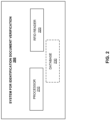
- FIG. 2 shows a detailed block diagram of the system 200 for ID document verification, in accordance with an example embodiment.
- the system 200 may include a processor 210, an RFID reader 220, and an optional database 230.
- the processor 210 may be configured to receive an image associated with an ID document. The image may be captured by the camera associated with the client device.
- the processor 210 may transmit the image to a remote server.
- the server processes the image using OCR to detect various zones on the image containing data associated with the ID document and a holder of the ID document and extract printed data from the image.
- the processor 210 may be further configured to receive the extracted printed data from the server.
- the RFID reader 220 may use the printed data as a key to access the RFID chip of the ID document.
- the RFID reader 220 may retrieve digital data from the RFID chip.
- the processor 210 may analyze the digital data and match the digital and printed data to check if they are identical.
- a server may perform the analysis.
- the server may further perform facial recognition based on photos from the digital data (e.g., RFID passphoto), from the printed data (e.g., passphoto ID), and/or a photo of the user captured by the client device. If the digital and printed data proves identical, the ID document may be verified. If the digital and printed data differ or are absent or nonstandard, the ID document may be refused.
- An optional database 230 may be configured to store printed data and digital data as well as verification results.
- the processor 210 may comprise, or may be in communication with, media (for example, computer-readable media) that stores instructions that, when executed by the processor 210, cause the processor 210 to perform the elements described herein. Furthermore, the processor 210 may operate any operating system capable of supporting locally executed applications, client-server based applications, and/or browser or browser-enabled applications.
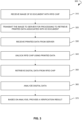
- FIG. 3 is a process flow diagram showing a method 300 for ID document verification within the environment described with reference to FIG. 1 .
- the method 300 may commence with receiving an image of an ID document that has an embedded RFID chip at operation 310.
- the ID document may include a government issued ID, a student ID, an employment ID, a driver's license, a passport, a travel document, and so forth.
- the received image may include a picture, a scan, and so forth.
- the image may be captured by a camera associated with the user (for example, a standalone camera; a camera of a user device, such as a smart phone, a PC, a tablet PC; and so forth).
- the method 300 may proceed with transmitting the image to a server for processing at operation 320.
- the processing can include optical character recognition to obtain printed data.
- the printed data may include holder's name, date of birth, gender, fingerprint, document number, and so forth.
- the printed data obtained as a result of processing may be received from the server at operation 330 and used to unlock the RFID chip at operation 340.
- After unlocking the RFID chip (for example, using any recognized text as a key to access the RFID chip), digital data (or biometric data) stored in the RFID chip may be retrieved at operation 350.
- the digital data may be analyzed to check the authenticity of the ID document.
- the digital data in general duplicates the printed data.
- the system for ID document verification can ensure that printed data was not altered and the ID document is not forged.
- the system may determine that the digital data and printed data are identical and verify the ID document.
- the system may determine one or more evidences of forgery (for example, a difference of the printed data and the digital data, an absence of the digital data, nonstandard digital data, and so forth). On the determining the one or more evidences of forgery, the system may reject the ID document.
- a verification result may be provided at operation 370.
- data of the verified ID document may be used to automatically populate an electronic form, fields associated with a web resource, and so forth.
- filling in forms may be facilitated and accelerated.
- automatic filling in of electronic forms or blanks allows avoiding mistakes and misprints pertaining to manual entry.
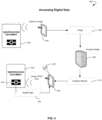
- FIG. 4 illustrates accessing digital data 400 in a RFID chip associated with the ID document, in accordance with some embodiments.
- a user may capture an image 406 of an ID document 402 using a camera embedded in or connected to a client device 404.
- the image 406 may be automatically transmitted to a server 408.
- the image 406 received by the server 408 may be subjected to OCR.
- Printed information in the image 406 may be analyzed to extract textual and/or other relevant data associated with the ID document 402 and the holder of the ID document 402 (e.g., holder's date of birth, first name, last name, and the like).
- the results of the analysis 410 can be transmitted back to the client device 404.
- the client device 404 can scan an RFID chip 416 in the ID document 402 using an RFID reader 418 (or an NFC reader).
- the RFID reader 418 can be either embedded in the client device 404 or detachably attached to the client device 404 via a port of the client device 404.
- the digital data 414 in the RFID chip 416 may be encrypted, so the retrieved printed data can be used as a key to access the digital data 414.
- the digital data 414 and printed data can be compared on the client device 404 to verify ID document identity. Additionally, the digital data 414 can be used to fill-in forms, employment forms, medical records, and so forth.
- FIG. 5 shows a diagrammatic representation of a computing device for a machine in the exemplary electronic form of a computer system 500, within which a set of instructions for causing the machine to perform any one or more of the methodologies discussed herein can be executed.
- the machine operates as a standalone device or can be connected (e.g., networked) to other machines.
- the machine can operate in the capacity of a server or a client machine in a server-client network environment, or as a peer machine in a peer-to-peer (or distributed) network environment.
- the machine can be a PC, a tablet PC, a set-top box, a cellular telephone, a digital camera, a portable music player (e.g., a portable hard drive audio device, such as an Moving Picture Experts Group Audio Layer 3 player), a web appliance, a network router, a switch, a bridge, or any machine capable of executing a set of instructions (sequential or otherwise) that specify actions to be taken by that machine.
- a portable music player e.g., a portable hard drive audio device, such as an Moving Picture Experts Group Audio Layer 3 player
- a web appliance e.g., a web appliance, a network router, a switch, a bridge, or any machine capable of executing a set of instructions (sequential or otherwise) that specify actions to be taken by that machine.
- a network router e.g., a router, a switch, a bridge, or any machine capable of executing a set of instructions (sequential or otherwise) that specify actions to be taken
- the example computer system 500 includes a processor or multiple processors 502, a hard disk drive 504, a main memory 506, and a static memory 508, which communicate with each other via a bus 510.
- the computer system 500 may also include a network interface device 512.
- the hard disk drive 504 may include a computer-readable medium 520, which stores one or more sets of instructions 522 embodying or utilized by any one or more of the methodologies or functions described herein.
- the instructions 522 can also reside, completely or at least partially, within the main memory 506, the static memory 508, and/or within the processors 502 during execution thereof by the computer system 500.
- the main memory 506 and the processors 502 also constitute machine-readable media.
- While the computer-readable medium 520 is shown in an exemplary embodiment to be a single medium, the term "computer-readable medium” should be taken to include a single medium or multiple media (e.g., a centralized or distributed database, and/or associated caches and servers) that store the one or more sets of instructions.
- the term "computer-readable medium” shall also be taken to include any medium that is capable of storing, encoding, or carrying a set of instructions for execution by the machine and that causes the machine to perform any one or more of the methodologies of the present application, or that is capable of storing, encoding, or carrying data structures utilized by or associated with such a set of instructions.
- the term “computer-readable medium” shall accordingly be taken to include, but not be limited to, solid-state memories, optical and magnetic media. Such media can also include, without limitation, hard disks, floppy disks, NAND or NOR flash memory, digital video disks (DVDs), Random Access Memory (RAM), Read-Only Memory (ROM), and the like.
- the exemplary embodiments described herein can be implemented in an operating environment comprising computer-executable instructions (e.g., software) installed on a computer, in hardware, or in a combination of software and hardware.
- the computer-executable instructions can be written in a computer programming language or can be embodied in firmware logic. If written in a programming language conforming to a recognized standard, such instructions can be executed on a variety of hardware platforms and for interfaces to a variety of operating systems.
- the computer system 500 may be implemented as a cloud-based computing environment, such as a virtual machine operating within a computing cloud.
- the computer system 500 may itself include a cloud-based computing environment, where the functionalities of the computer system 500 are executed in a distributed fashion.
- the computer system 500 when configured as a computing cloud, may include pluralities of computing devices in various forms, as will be described in greater detail below.
- a cloud-based computing environment is a resource that typically combines the computational power of a large grouping of processors (such as within web servers) and/or that combines the storage capacity of a large grouping of computer memories or storage devices.
- Systems that provide cloud-based resources may be utilized exclusively by their owners, or such systems may be accessible to outside users who deploy applications within the computing infrastructure to obtain the benefit of large computational or storage resources.
- the cloud may be formed, for example, by a network of web servers that comprise a plurality of computing devices, such as a client device, with each server (or at least a plurality thereof) providing processor and/or storage resources.
- These servers may manage workloads provided by multiple users (e.g., cloud resource customers or other users).
- each user places workload demands upon the cloud that vary in real-time, sometimes dramatically. The nature and extent of these variations typically depends on the type of business associated with the user.
- Non-volatile media include, for example, optical or magnetic disks, such as a fixed disk.
- Volatile media include dynamic memory, such as system RAM.
- Transmission media include coaxial cables, copper wire, and fiber optics, among others, including the wires that comprise one embodiment of a bus.
- Transmission media can also take the form of acoustic or light waves, such as those generated during radio frequency (RF) and infrared (IR) data communications.
- RF radio frequency
- IR infrared
- Common forms of computer-readable media include, for example, a floppy disk, a flexible disk, a hard disk, magnetic tape, any other magnetic medium, a CD-ROM disk, DVD, any other optical medium, any other physical medium with patterns of marks or holes, a RAM, a Programmable Read-Only Memory (PROM), an Erasable Programmable Read-Only Memory (EPROM), an Electrically Erasable Programmable Read-Only Memory (EEPROM), a FlashEPROM, any other memory chip or data exchange adapter, a carrier wave, or any other medium from which a computer can read.
- PROM Programmable Read-Only Memory
- EPROM Erasable Programmable Read-Only Memory
- EEPROM Electrically Erasable Programmable Read-Only Memory
- FlashEPROM any other memory chip or
- a bus carries the data to system RAM, from which a CPU retrieves and executes the instructions.
- the instructions received by system RAM can optionally be stored on a fixed disk either before or after execution by a CPU.
- Computer program code for carrying out operations for aspects of the present technology may be written in any combination of one or more programming languages, including an object oriented programming language such as Java, Smalltalk, C++ or the like and conventional procedural programming languages, such as the "C" programming language or similar programming languages.
- the program code may execute entirely on the user's computer, partly on the user's computer, as a stand-alone software package, partly on the user's computer and partly on a remote computer or entirely on the remote computer or server.
- the remote computer may be connected to the user's computer through any type of network, including a LAN or a WAN, or the connection may be made to an external computer (for example, through the Internet using an Internet Service Provider).
- These computer program instructions may also be stored in a computer readable medium that can direct a computer, other programmable data processing apparatus, or other devices to function in a particular manner, such that the instructions stored in the computer readable medium produce an article of manufacture including instructions which implement the function/act specified in the flowchart and/or block diagram block or blocks.
- NFC near-field communications
- the NFC chip is included or can be embedded in an ID document. Data stored on the NFC chip can include identification information for the owner of the ID document.
- a system for ID document verification can allow verification of ID documentation having an embedded NFC chip.
- An image of the ID document can be captured using a camera associated with a client device.
- the client device can transmit the ID document image to a server for processing for retrieval of data including the ID photo associated with the ID document.
- the ID photo is stored on the NFC chip of the ID document and is typically a high-resolution photo of the ID document which can be used to verify the identity of the owner of the ID document.
- the ID photo that is stored on the ID document may be a digital passphoto that can be downloaded from the NFC chip.
- Further data that is represented by the ID document includes printed data (e.g., holder's name, age, fingerprints, document number, and expiration date).
- the retrieved data may be sent back to the client device and further to a server.
- the system for ID document verification residing on the client device may use the retrieved data as a key to unlock the NFC chip and access the data stored in the NFC chip.
- the data from the NFC chip may be transmitted to the server, where the system for ID document verification may use various verification methods to determine whether the ID document is authentic. Additionally, the system for ID document verification may perform a facial recognition. Such verification methods described herein can establish whether the ID document was altered, whether the ID document is authentic and/or whether the NFC chip was tampered with.
- the system for ID document verification can also allow for personal information extraction from a physical ID document. Once the system verifies that the ID document is valid and verifies the user's identity, this verification of a user's identity can be stored, attached, linked, coupled or otherwise associated to the user's client device.
- the systems described herein can follow one or both of two distinct paths in a seamless manner, in terms of user experience.
- the system obtains a photo of the ID document being used, transmits the photo to the service provider of the system, and determines based on the photo if the ID document has an NFC chip. If the system determines from inspection of the photo taken that the ID document includes an NFC chip, then the NFC authentication path is taken. On the other hand, if the system determines from inspection of the photo taken that the ID document does not includes an NFC chip, then the system will proceed with a method of optical authentication without having to retrace steps. More detailed descriptions of both the NFC authentication and the optical authentication are provided later herein.
- NFC authentication and optical authentication are helpful to provide coverage in a number of possible scenarios. For instance, if the user is a Dutch citizen who wishes to open a bank account, and they have a Dutch passport or identification card that has an NFC chip as their ID document, then they can use that ID document to verify their identity with the bank, by utilizing the NFC authentication path.
- the NFC authentication path can be skipped altogether by the system, and the optical authentication path can be utilized instead by the system to verify identification automatically and in a seamless manner.
- the system can authenticate a document in a hybrid fashion performing the steps of both paths (namely, NFC chip authentication and optical authentication).
- the system can transmit the NFC data to the server and it can also perform optical authentication using images that the system already has stored on the server or perform optical authentication based on a comparison of a selfie photo of the user of the mobile device and the photo stored on the ID document.
- the user may request a two-way face comparison or a three-way face comparison for optical authentication.
- a two-way face comparison the face comparison is made between the digital passphoto downloaded from the NFC chip of the ID document and a selfie of the user has taken using the client device.
- a photo stored on the NFC chip of an ID document can be compared against a user's selfie.
- the face comparison is between the digital passphoto downloaded from the NFC chip of the ID document, the selfie of the user that the user has taken using the client device, and a portrait on the ID document (which is a photo that is visible on the ID document). It should be noted that the photo stored on the NFC chip of an ID document is harder (if not impossible) to tamper with, whereas the portrait on the ID document could be physically replaced.
- identification verification refers to the verification of whether an object (such as an ID document) provided by the user is authentic and original.
- user verification refers to a verification of whether the user is who they claim to be.
- NFC when available, provides a highly reliable means of authenticating the validity of an object or an ID document.
- NFC chip supports clone detection measures (which many do not)
- NFC authentication alone is not sufficient to prove that the user currently has physical control of the document, which an image of the document does do.
- the hybrid NFC chip authentication and optical authentication approach is more reliable than either method separately.
- a digital passphoto provides a third data point (besides the two data points of a physical object or ID document image and a user selfie), which serves to improve the confidence of the comparison/assessment.
- a comparison can be made of a photo of a physical object or an ID document, a photo of a user's selfie, and a digital passphoto, in order to determine whether the user is who they claim to be. If the three data points match or are substantially similar, then the system will provide a verification result indicating the user is indeed who they claim to be.
- these systems and methods can be used in conjunction with a self-sovereign identity (SSI) that is backed by verification of near-field communication (NFC) information stored on an object, such as an identification document.
- SSI self-sovereign identity
- NFC near-field communication
- NFC authentication on the other hand, has zero known vulnerability. A user who successfully passes both passive and active authentication absolutely has physical access to the original government-issued ID.
- NFC authentication can be combined with face comparison technology, and an unbroken chain of trust can be established directly from the user to the issuing government entity.
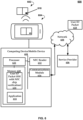
- FIG. 6 illustrates another example system 600 that can be used for identification.
- the system 600 leverages the tamper-resistant nature of near-field communication hardware to allow for secure identification of a user.
- the user can utilize the system 600 to obtain a user identity packet (e.g., self-sovereign identification data) that can be stored in an encrypted manner on a computing device or a mobile device.
- the system 600 leverages the tamper-resistant nature of near-field communication hardware to allow for secure, self-sovereign identification of a user.
- the user can utilize the system 600 to obtain a user identity packet (e.g., self-sovereign identification data) that can be stored in an encrypted manner on a mobile device.
- a user identity packet e.g., self-sovereign identification data
- the user need only verify their identity and/or ID document once by a service provider using methods disclosed herein. Once the user identity packet is obtained from the service provider and stored on the mobile device, subsequent processes that would have necessitated the use of the ID document can be resolved using the user identity packet stored on the mobile device
- the system 600 can include an ID document 602, a computing device or a mobile device 604, a service provider 606, and a network 608.
- the network 608 can include any of the network(s) disclosed infra.
- the ID document 602 includes a near-field communication (NFC) chip 610 that is adapted to store data such as a country signing certificate, a data hash or other data construct used to store at least information regarding an owner of the ID document.
- NFC near-field communication
- Authentication of data stored on the NFC chip involves performing a chain-of-trust process to analyze the data on the NFC chip that utilizes the country signing certificate.
- data stored on chip that may be encrypted with a private key. These data can be obtained using a public key provided by the issuing country or other authority.
- any other computing device can be configured for use in accordance with the present disclosure. That is, any computing device can be used as long as the computing device includes at least a short-range wireless reader that can be used for NFC, RFID, and the like.
- the computing device can be configured to include a camera for obtaining images of a user as disclosed herein.
- the mobile device 604 comprises an NFC reader 612 that is configured to read data from the NFC chip 610, an application 614, and a communications module 616.
- the user may be prompted to obtain an image of the ID document 602 from an application 614 executing on the mobile device 604.
- the application 614 can present a message on the display of the mobile device 604 to prompt the user to obtain an image of the ID document 602 using a camera of the mobile device 604.
- the image can be transmitted to the service provider 606 using the communications module 616 over the network 608.
- the ID document 602 can be verified in an optional step using any of the processes described above with respect to the embodiments of FIGs. 1-4 and also in FIGs. 7 , 8A and 8B .
- the application 614 can further prompt the user to extract data stored on the NFC chip 610. Data obtained from the NFC chip 610 can be transmitted to the service provider 606 for verification. For example, using the public key provided by the issuing country, the mobile device 604 can utilize the public key to extract the data on the NFC chip 610 and transmit the same to the service provider 606.
- the user can be instructed to obtain a current biometric such as a selfie or photograph with their mobile device 604, such as in the case where optical authentication is utilized for ID verification of the ID document.
- the biometric can be received and evaluated, the biometric being used as a second or additional means for verifying the identity of the owner/user.
- the biometric (other than a photo) can be used to initially verify the identity of the owner/user.
- the biometric could include a retinal or iris scan, a fingerprint, or other biometric data.
- the NFC chip 610 or the service provider 606 can store baseline biometric data for the user. These baseline biometric data can be obtained when the user originally applies for or obtains the ID document 602. These data are embedded or stored on the NFC chip 610 of the ID document 602 by the issuing authority. This biometric data can be used to verify that the user is the correct user to be submitting the credentials in question.
- the current biometric obtained by the mobile device 604 can be transmitted to the service provider 606.
- the service provider 606 can evaluate the data extracted from the NFC chip 610 and confirm the identity of the user. As noted above, this can include using a current biometric, in some embodiments.
- the service provider 606 can also validate that the data stored on the NFC chip 610 has not been tampered with. This can include examining a hash string of data stored on the NFC chip 610 to ensure data consistency. When the service provider 606 verifies the identity of the owner of the ID document 602 and the validity of the NFC chip 610, the service provider 606 can generate a user identity packet 618.
- the SSI is augmented with the validation of the NFC chip 610, which can (as noted herein) create an unbroken chain of trust.
- the user identity packet as described herein can include the SSI that is backed by validation of the NFC chip.
- the service provider 606 transmits the user identity packet 618 to the computing or mobile device 604 for storage locally on the mobile device 604.
- the user identity packet 618 can be stored locally in memory 620 of the mobile device 604.
- the mobile device 604 can include a processor 622 that can execute instructions stored in memory 620 such as the application 614.
- the user can be alleviated from having to resubmit their ID document 602 each and every time their identity needs to be confirmed. Further details regarding self-sovereign identity systems and methods can be found in related U.S. Application No. 16/917,776 filed on June 30, 2020 , entitled “Self-Sovereign Identity Systems and Methods for Identification Documents ".
- the storage of the user identity packet 618 (NFC chip validation, augmented SSI). on the computing or mobile device 604 effectively and logically links the ID document 602 to the mobile device 604.
- the image of the user can be linked to the mobile device 604 and ID document 602.
- some embodiments do not require the use of a selfie or photograph to enable creation and storage of the user identity packet 618, but in situations where the selfie or photograph is used, this ensures that the mobile device being accessed by the person is also associated with the identity stored on the ID document.
- One or more optional databases may be configured to store printed data, photos for facial recognition mechanisms (as described later herein) and digital data, including data comprising identifying information for an owner of the identification document, as well as verification results based on the systems and methods described herein.
- the ID document 602 can be linked with the mobile device 604 by comparing a device identifier with expected or stored information that identifies the mobile device 604.
- the service provider 606 can determine that an IMEI (International Mobile Equipment Identity) number obtained from the mobile device 604 matches a stored IMEI number for the owner.
- the stored IMEI can be obtained initially when an owner of the ID document 602 initially registers or provides ownership/identity information to obtain their ID document 602 from an issuing authority.
- the IMEI could be read from the mobile device 604 using any known method and compared with prior IMEI information that was obtained at a prior point in time when data was read from the NFC chip 610. To be sure, while an IMEI number has been described, any other data that can be used to uniquely identify a computing device can be used.
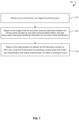
- FIG. 7 is a process flow diagram showing a method 700 for ID document verification of the present disclosure that can be executed by a mobile device, a computing device or other communication device as disclosed herein.
- the method 700 may commence with receiving, by a client device, an image of an object, such as an ID document, at operation 710.
- the ID document may include a government issued ID, a permanent residency ID card, a student ID, an employment ID, a driver's license, a passport, a travel document, and so forth.
- the received image may include a picture, a scan, and so forth.
- the image may be captured by a camera associated with the user (for example, a standalone camera; a camera of a user device, such as a smart phone, a PC, a tablet PC; and so forth).
- the method 700 may proceed with determining whether the ID document includes a near-field communications (NFC) chip at operation 720.
- the NFC chip stores data comprising identifying information for an owner of the identification.
- the NFC chip may contain a digital passphoto of the owner of the ID document.
- the image quality of the photo contained on the NFC chip may be significantly higher than that of a normal photo, such as a selfie. Also, if the photo of an ID document is stored on an NFC chip of that ID document, it would be virtually impossible to tamper with such a photo.
- the determination of whether the ID document includes an NFC chip, based on the image of the ID document, at operation 720, can be performed by the client device (or any other type of computing device), a service provider, in a cloud network or a combination of both the client device, a cloud network, and a service provider.
- the determination of whether an ID document contains an NFC chip may be based on an image of the ID document. Also, the determination may be based on further factors.
- the MRZ (machine readable zone) of the ID document is read and based on this reading, the owner's date of birth and the date of expiry for the ID document are both determined. Then, an issue date of the ID document is computed.
- This computation may be based on the owner's date of birth, the date of expiry of the ID document and the type of ID document that is at hand.
- information from a database is obtained.
- This database stores each country and each ID document type that is issued for a given country.
- the database provides the validity period of a given ID document.
- the database also provides the date of when the first ID document with an NFC chip was first issued by that given country. For instance, in some countries, children's passports are valid for 3 years, adult passports are valid for 5 years, and passports for seniors are valid for ten or more years.
- a determination is made whether the issue predates or postdates the issue date of the first known ID document having an NFC chip, for that given type of ID document. All of these steps may be done on the client device (on-device), in a cloud network, by a service provider or any combination thereof.
- the ID document is verified by selectively using at least one of NFC chip authentication and optical authentication, to obtain a verification result, at operation 730.
- the ID document upon verifying the ID document, the ID document is logically associated to the client device. In other words, the ID document can be considered logically bound to the client device, such that the mobile device being accessed by the user is also associated with the identity stored on the ID document.
- NFC chip authentication is utilized when it is determined that the ID document has an NFC chip. Specifically, NFC chip authentication allows for verification of the ID document by verifying the validity of the NFC chip.
- the NFC chip authentication comprises several steps. First, the client device transmits the image of the ID document to the service provider. Then, based on the image of the ID document, the service provider determines that the ID document includes the NFC chip. The service provider then selects or other determines that NFC chip authentication is suitable for verification of the ID document. Then, data obtained from the near-field communications (NFC) chip of the ID document is transmitted to the service provider. The service provider provides a verification result for the ID document based on verification of an identity of the owner and validity of the NFC chip. Then, the verification result is transmitted by the service provider to the client device.
- NFC near-field communications
- a user identity packet is received from the service provider.
- the user identity packet is generated by the service provider based on verification of an identity of the owner and validity of the NFC chip.
- the user identity package is transmitted by the service provider, the user identity packet to the client device for storage.
- optical authentication allows for verification of the ID document by comparing a ID photo of the ID document against a photo of the user of the mobile or computing device. In other embodiments, optical authentication allows for verification of the ID document by comparing a ID photo of the ID document against a previously stored or previously authenticated photo of the owner of the client device.
- the optical authentication comprises several steps. First, the client device transmits the image of the ID document to the service provider. Then, based on the image of the ID document, the service provider determines that the ID document does not include the NFC chip or the NFC chip is not detected by the NFC reader. The service provider then selects or otherwise determines that optical authentication is suitable for user verification (verification that the user is who they claim to be). Then, a photo of the user (a selfie) is captured, by a camera associated with the client device. The photo of the user is received from the client device by the service provider. The service provider then compares the ID photo with the selfie photo taken by the user. Based on the comparison made by the service provider of these two photos, the service provider provides a user verification result.
- a photo of the user a selfie
- the service provider compares the ID photo with the selfie photo taken by the user. Based on the comparison made by the service provider of these two photos, the service provider provides a user verification result.
- the user verification result is transmitted by the service provider to the client device.
- the user verification result comprises a confirmation of authenticity of the user when the photo stored on the ID document shares matching characteristics (e.g., face map) to that of the selfie photo of a user of the client device.
- the ID document can be verified in an optional step using any of the processes described above with respect to the embodiments of FIGs. 1-4 and also in FIGs. 7 , 8A and 8B .
- Optical authentication can be done by two-way face comparison or three-way comparison as described earlier herein.
- the verification result may comprise a determination of at least one evidence of falsification.
- the service provider may reject the ID document and transmit such a notification of this rejection to the client device.
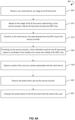
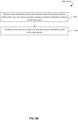
- FIG. 8A and 8B are process flow diagrams showing a method 800 for ID document verification utilizing hybrid NFC and optical authentication of the present disclosure that can be executed by a mobile device as disclosed herein.
- the method 800 comprises a hybrid method which utilizes both NFC authentication and optical authentication to provide maximum authentication.
- this hybrid method is desirable for when maximum authentication and security layers are required, such as in the case of when one wishes to open a bank account.
- the bank may wish to ensure that the true identity of a prospective bank account holder and therefore may wish to have both NFC authentication and optical authentication to verify all the data that is available to the bank.
- the method 800 can commence by receiving an image of an ID document by a client device at operation 805. Based on the image of the ID document, the service provider determines that the ID document includes the NFC chip that stores data comprising identifying information for an owner of the identification at operation 810. Also, the determination of whether an ID document contains an NFC chip may be based on further factors. In some embodiments, the MRZ (machine readable zone) of the ID document is read and based on this reading, the owner's date of birth and the date of expiry for the ID document are both determined. Then, an issue date of the ID document is computed. This computation may be based on the owner's date of birth, the date of expiry of the ID document and the type of ID document that is at hand.
- This database stores each country and each ID document type that is issued for a given country.
- the database provides the validity period of a given ID document.
- the database also provides the date of when the first ID document with an NFC chip was first issued by that given country. For instance, in some countries, children's passports are valid for 3 years, adult passports are valid for 5 years, and passports for seniors are valid for ten or more years.
- a determination is made whether the issue predates or postdates the issue date of the first known ID document having an NFC chip, for that given type of ID document. All of these steps may be done on the client device (on-device), in a cloud network, by a service provider or any combination thereof.
- the data obtained from the near-field communications (NFC) chip of the ID document is transmitted by the client device to the service provider at operation 815.
- the service provider provides a first verification result for the ID document based on verification of an identity of the owner and validity of the NFC chip at operation 820.
- the client device performs these steps, rather than the service provider.
- these steps occur in the cloud network, such as the network 608 in FIG. 6 , rather than by the service provider.
- the method 800 continues with capturing a photo of the user by a camera associated with the client device at operation 825.
- the photo of the user is received by the service provider.
- the service provider compares the photo stored on the ID document with the photo of the user.
- the service provider may compare the photo stored on the ID Document, the photo of the user and any previously stored photo(s) of the verified owner of the client device, in any combination.
- the service provider based on the comparison of the photo stored on the ID document with the photo of the user to verify the identity of the owner, the service provider provides a second verification result for the ID document at operation 840.
- the second verification result may be a verification of identity of the owner.
- the service provider transmits both the first and second verification results to the client device.
- data of the verified ID document may be used to automatically populate an electronic form, fields associated with a web resource, and so forth.
- filling in forms may be facilitated and accelerated.
- automatic filling in of electronic forms or blanks allows avoiding mistakes and misprints pertaining to manual entry.
- the service provider can also be configured to execute method steps such as receiving an image of the identification document by the service provider from a mobile device and confirming presence of the identification document based on the image.
- Example methods can further include receiving a photograph of a user of the mobile device and confirming the user by comparing the photograph of the user to a stored image of the user using facial recognition. When the image matches the stored image, the mobile device can be linked to the identity document based on the user identity packet.
- the exemplary embodiments described herein can be implemented in an operating environment comprising computer-executable instructions (e.g., software) installed on a computer, in hardware, or in a combination of software and hardware.
- the computer-executable instructions can be written in a computer programming language or can be embodied in firmware logic. If written in a programming language conforming to a recognized standard, such instructions can be executed on a variety of hardware platforms and for interfaces to a variety of operating systems.
- the computer system 500 may be implemented as a cloud-based computing environment, such as a virtual machine operating within a computing cloud.
- the computer system 500 may itself include a cloud-based computing environment, where the functionalities of the computer system 500 are executed in a distributed fashion.
- the computer system 500 when configured as a computing cloud, may include pluralities of computing devices in various forms, as will be described in greater detail below.
- a cloud-based computing environment is a resource that typically combines the computational power of a large grouping of processors (such as within web servers) and/or that combines the storage capacity of a large grouping of computer memories or storage devices.
- Systems that provide cloud-based resources may be utilized exclusively by their owners, or such systems may be accessible to outside users who deploy applications within the computing infrastructure to obtain the benefit of large computational or storage resources.
- the cloud may be formed, for example, by a network of web servers that comprise a plurality of computing devices, such as a client device, with each server (or at least a plurality thereof) providing processor and/or storage resources.
- These servers may manage workloads provided by multiple users (e.g., cloud resource customers or other users).
- each user places workload demands upon the cloud that vary in real-time, sometimes dramatically. The nature and extent of these variations typically depends on the type of business associated with the user.
- Non-volatile media include, for example, optical or magnetic disks, such as a fixed disk.
- Volatile media include dynamic memory, such as system RAM.
- Transmission media include coaxial cables, copper wire, and fiber optics, among others, including the wires that comprise one embodiment of a bus.
- Transmission media can also take the form of acoustic or light waves, such as those generated during radio frequency (RF) and infrared (IR) data communications.
- RF radio frequency
- IR infrared
- Common forms of computer-readable media include, for example, a floppy disk, a flexible disk, a hard disk, magnetic tape, any other magnetic medium, a CD-ROM disk, DVD, any other optical medium, any other physical medium with patterns of marks or holes, a RAM, a Programmable Read-Only Memory (PROM), an Erasable Programmable Read-Only Memory (EPROM), an Electrically Erasable Programmable Read-Only Memory (EEPROM), a FlashEPROM, any other memory chip or data exchange adapter, a carrier wave, or any other medium from which a computer can read.
- PROM Programmable Read-Only Memory
- EPROM Erasable Programmable Read-Only Memory
- EEPROM Electrically Erasable Programmable Read-Only Memory
- FlashEPROM any other memory chip or
- a bus carries the data to system RAM, from which a CPU retrieves and executes the instructions.
- the instructions received by system RAM can optionally be stored on a fixed disk either before or after execution by a CPU.
- Computer program code for carrying out operations for aspects of the present technology may be written in any combination of one or more programming languages, including an object oriented programming language such as Java, Smalltalk, C++ or the like and conventional procedural programming languages, such as the "C" programming language or similar programming languages.
- the program code may execute entirely on the user's computer, partly on the user's computer, as a stand-alone software package, partly on the user's computer and partly on a remote computer or entirely on the remote computer or server.
- the remote computer may be connected to the user's computer through any type of network, including a LAN or a WAN, or the connection may be made to an external computer (for example, through the Internet using an Internet Service Provider).
- These computer program instructions may also be stored in a computer readable medium that can direct a computer, other programmable data processing apparatus, or other devices to function in a particular manner, such that the instructions stored in the computer readable medium produce an article of manufacture including instructions which implement the function/act specified in the flowchart and/or block diagram block or blocks.
Landscapes
- Engineering & Computer Science (AREA)
- Physics & Mathematics (AREA)
- Theoretical Computer Science (AREA)
- Health & Medical Sciences (AREA)
- General Physics & Mathematics (AREA)
- Toxicology (AREA)
- Business, Economics & Management (AREA)
- Computer Security & Cryptography (AREA)
- General Health & Medical Sciences (AREA)
- Strategic Management (AREA)
- Human Resources & Organizations (AREA)
- Artificial Intelligence (AREA)
- Computer Vision & Pattern Recognition (AREA)
- Electromagnetism (AREA)
- Entrepreneurship & Innovation (AREA)
- Tourism & Hospitality (AREA)
- Marketing (AREA)
- General Business, Economics & Management (AREA)
- Economics (AREA)
- Computer Networks & Wireless Communication (AREA)
- Operations Research (AREA)
- Quality & Reliability (AREA)
- Data Mining & Analysis (AREA)
- Computer Hardware Design (AREA)
- Software Systems (AREA)
- General Engineering & Computer Science (AREA)
- Signal Processing (AREA)
- Primary Health Care (AREA)
- Collating Specific Patterns (AREA)
- Management, Administration, Business Operations System, And Electronic Commerce (AREA)
- Telephone Function (AREA)
- Mobile Radio Communication Systems (AREA)
- User Interface Of Digital Computer (AREA)
Description
- The present disclosure relates generally to data processing and, more specifically, to identification (ID) verification using systems and methods of hybrid near-field communication (NFC) and optical authentication.
- U.S. Patent Application Publication No.
US 2015/0347839 A1 discloses a method for identification (ID) verification using a device with embedded radio-frequency identification (RFID) functionality. The method comprises capturing, by a camera associated with a client device, an image of an ID document having an embedded RFID chip. The image is transmitted to a server for optical character recognition to extract and recognize printed data associated with the ID document. The client device can receive the printed data from the server and use the printed data to unlock the RFID chip by an RFID reader. Digital data associated with the ID document can be retrieved from the RFID chip and compared to the printed data. If the digital data and the printed data match, the ID document is verified. Otherwise, the ID document is rejected. - In U.S. Patent Application Publication No.
US 2012/0139703 A1 , a device possessing a secure multifunctional authentication service integrated with data storage capability is described. The device is disposed to comprise a multifunctional intelligent peripheral or accessory device, which, upon implementation into a system, is disposed to control a set of transactions that the system is designated to perform by the device, in conjunction with a data transfer medium which is under the control of the device. - The invention is defined in the independent claims. Particular embodiments are set out in the dependent claims.
- This summary is provided to introduce a selection of concepts in a simplified form that are further described below in the Detailed Description. This summary is not intended to identify key features or essential features of the claimed subject matter, nor is it intended to be used as an aid in determining the scope of the claimed subject matter.
- Provided are methods and systems for ID document verification. In general, the disclosed methods and systems are directed to near-field communication authentication and optical authentication, as well as hybrid methods of both near field communication authentication and optical authentication.
- For example, systems and methods for identification (ID) document verification using hybrid near-field communications (NFC) chip and optical authentication are provided. An exemplary method includes receiving, by a client device, an image of an ID document. Based on the image of the ID document received, a determination is made whether the ID document includes a near-field communications (NFC) chip that stores data comprising identifying information for an owner of the identification. Based on this determination of whether the ID document includes an NFC chip, the ID document is verified by selectively using at least one of NFC chip authentication and optical authentication, to obtain a verification result.
- A method for identification (ID) verification using hybrid near-field communications (NFC) chip and optical authentication is also disclosed. An image of an ID document is received by a client device. Based on the image of the ID document, a determination is made by the service provider that the ID document includes the NFC chip that stores data comprising identifying information for an owner of the identification. Data obtained from the near-field communications (NFC) chip of the ID document is transmitted by a client device to the service provider. Then, the service provider a first verification result for the ID document based on verification of an identity of the owner and validity of the NFC chip. A photo of the user is captured using a camera associated with the client device, and the photo of the user is then received by the service provider. The service provider then compares the ID photo with the photo of the user. Based on this comparison, the service provider provides a second verification result for the ID document. Both the first and second verification results are transmitted by the service provider to the client device. These first and second verification results, based on NFC authentication and optical authentication, respectively, are an excellent way to ensure that maximum ID verification measures are being utilized to confirm the identity of a person.
- Other aspects of the disclosure will become apparent from the following description taken in conjunction with the following drawings.
- Embodiments are illustrated by way of example and not limitation in the figures of the accompanying drawings.
-
FIG. 1 illustrates an environment within which systems and methods for ID document verification are implemented. -
FIG. 2 is a block diagram showing a system for ID document verification. -
FIG. 3 is a process flow diagram showing a method for ID document verification. -
FIG. 4 illustrates accessing digital data related to an ID document. -
FIG. 5 illustrates a diagrammatic representation of a computing device for a machine in the exemplary electronic form of a computer system, within which a set of instructions for causing the machine to perform any one or more of the methodologies discussed herein can be executed. -
FIG. 6 illustrates an environment within which systems and methods for ID document verification are implemented. -
FIG. 7 is a flowchart of an exemplary method of the present disclosure. -
FIGs. 8A and8B are flowcharts of another example method of the present disclosure. - The following detailed description includes references to the accompanying drawings, which form a part of the detailed description. The drawings show illustrations in accordance with exemplary embodiments. These exemplary embodiments, which are also referred to herein as "examples," are described in enough detail to enable those skilled in the art to practice the present subject matter. The embodiments can be combined, other embodiments can be utilized, or structural, logical, and electrical changes can be made without departing from the scope of what is claimed. The following detailed description is, therefore, not to be taken in a limiting sense, and the scope is defined by the appended claims.
- Identity verification is important in enabling and securing financial operations, hiring processes, health care, professional services, and so forth. However, ID documents can be tampered with and falsified for fraudulent purposes. To provide an additional protective measure, an RFID chip can be embedded in the ID document. Digital data stored on the RFID chip can duplicate data printed on the ID document. The digital data can be authenticated via Public Key Infrastructure, which makes forgery difficult and expensive. However, conventional digital verification using RFID chip requires special purpose readers.
- A system for ID document verification is provided. The system for ID document verification can allow verification of ID documentation having an embedded RFID chip. An image of the ID document can be captured using a camera associated with a client device. The client device can transmit the ID document image to a server for processing for retrieval of printed data represented by the ID document (e.g., holder's name, age, fingerprints, document number, and expiration date). The retrieved data may be sent back to the client device and further to a server. The system for ID document verification residing on the client device may use the retrieved data as a key to unlock the RFID chip and access digital data stored in the RFID chip. The digital data may be transmitted to the server, where the system for ID document verification compares the printed and digital data to determine whether the printed and digital data are identical. Additionally, the system for ID document verification may perform a facial recognition using the printed and digital data. Based on the comparison and/or recognition, similarities between the printed and digital data may be ascertained. Such verification can establish whether printed data in the ID document was altered and whether the ID document is authentic.
- In some embodiments, the system for ID document verification can also allow for personal information extraction from a physical ID document.
-
FIG. 1 illustrates anenvironment 100 within which the systems and methods for ID document verification can be implemented, in accordance with some embodiments. Asystem 200 for ID document verification may include a server-based distributed application, which may include a central component residing on aserver 150 and one or more client applications residing on aclient device 120 and communicating with the central component via anetwork 110. A user may communicate with thesystem 200 via a client application available through theclient device 120. In other embodiments, thesystem 200 may be a cloud-based application with the central component residing on theserver 150 and accessible via a web browser on theclient device 120. - The
network 110 may include the Internet or any other network capable of communicating data between devices. Suitable networks may include or interface with any one or more of, for instance, a local intranet, a Personal Area Network, a Local Area Network (LAN), a Wide Area Network (WAN), a Metropolitan Area Network (MAN), a Virtual Private Network (VPN), a storage area network, a frame relay connection, an Advanced Intelligent Network connection, a synchronous optical network connection, a digital T1, T3, E1 or E3 line, Digital Data Service connection, Digital Subscriber Line connection, an Ethernet connection, an Integrated Services Digital Network (ISDN) line, a dial-up port such as a V.90, V.34 or V.34bis analog modem connection, a cable modem, an Asynchronous Transfer Mode connection, or an Fiber Distributed Data Interface or Copper Distributed Data Interface connection. Furthermore, communications may also include links to any of a variety of wireless networks, including Wireless Application Protocol, General Packet Radio Service, Global System for Mobile Communication, Code Division Multiple Access or Time Division Multiple Access, cellular phone networks, Global Positioning System (GPS), cellular digital packet data, Research in Motion, Limited duplex paging network, Bluetooth radio, or an IEEE 802.11-based radio frequency network. Thenetwork 110 can further include or interface with any one or more of an RS-232 serial connection, an IEEE-1394 (Firewire) connection, a Fiber Channel connection, an infrared port, a Small Computer Systems Interface connection, a Universal Serial Bus (USB) connection or other wired or wireless, digital or analog interface or connection, mesh, or Digi® networking. Thenetwork 110 may include a network of data processing nodes that are interconnected for the purpose of data communication. The network may include a Software-defined Networking (SDN). The SDN may include one or more of the above network types. Generally, thenetwork 110 may include a number of similar or dissimilar devices connected together by a transport medium enabling communication between the devices by using a predefined protocol. Those skilled in the art will recognize that the present disclosure may be practiced within a variety of network configuration environments and on a variety of computing devices. - An
ID document 140 can include a document having an embedded RFID chip (for example, a biometric passport, digital passport, government issued ID, drivers' license, and so forth). - To verify the
ID document 140, a user can cause thesystem 200 capture animage 130 of theID document 140 by using a camera associated with the client device 120 (smart phone, a notebook, a personal computer (PC), a tablet PC, or the like). Animage 130 associated with theID document 140 may be transmitted to theserver 150 either via a mobile application, a stand-alone web application, or via a fully integrated service (XML, i-frame). Theimage 130 may be captured by a camera associated with theclient device 120, e.g. a phone camera, a tablet PC camera, and so forth. Theserver 150 may receive and analyze theimage 130 to recognize printed data associated with the ID document 140 (for example, issue date, holder's name, age, gender, holder's fingerprint, and so forth). Printed data can be recognized by optical character recognition (OCR). - The results of the printed data analysis can be transmitted back to the
client device 120. Theclient device 120 may scan the RFID chip embedded in theID document 140 using an RFID reader (or an NFC reader). The RFID reader can be a part of theclient device 120 or it can be detachably attached to theclient device 120 via one of the ports. Alternatively, the RFID reader can be a stand-alone device and theclient device 120 can communicate with it wirelessly (for example, via Bluetooth). - The retrieved printed data can be used as a key to access the digital data on the RFID chip of the
ID document 140. By matching the digital and printed data, thesystem 200 for ID document verification may confirm authenticity of theID document 140. -
FIG. 2 shows a detailed block diagram of thesystem 200 for ID document verification, in accordance with an example embodiment. Thesystem 200 may include aprocessor 210, anRFID reader 220, and anoptional database 230. Theprocessor 210 may be configured to receive an image associated with an ID document. The image may be captured by the camera associated with the client device. Theprocessor 210 may transmit the image to a remote server. The server processes the image using OCR to detect various zones on the image containing data associated with the ID document and a holder of the ID document and extract printed data from the image. Theprocessor 210 may be further configured to receive the extracted printed data from the server. TheRFID reader 220 may use the printed data as a key to access the RFID chip of the ID document. In such a way, theRFID reader 220 may retrieve digital data from the RFID chip. Theprocessor 210 may analyze the digital data and match the digital and printed data to check if they are identical. Alternatively, a server may perform the analysis. The server may further perform facial recognition based on photos from the digital data (e.g., RFID passphoto), from the printed data (e.g., passphoto ID), and/or a photo of the user captured by the client device. If the digital and printed data proves identical, the ID document may be verified. If the digital and printed data differ or are absent or nonstandard, the ID document may be refused. - An
optional database 230 may be configured to store printed data and digital data as well as verification results. - The
processor 210 may comprise, or may be in communication with, media (for example, computer-readable media) that stores instructions that, when executed by theprocessor 210, cause theprocessor 210 to perform the elements described herein. Furthermore, theprocessor 210 may operate any operating system capable of supporting locally executed applications, client-server based applications, and/or browser or browser-enabled applications. -
FIG. 3 is a process flow diagram showing amethod 300 for ID document verification within the environment described with reference toFIG. 1 . Themethod 300 may commence with receiving an image of an ID document that has an embedded RFID chip atoperation 310. The ID document may include a government issued ID, a student ID, an employment ID, a driver's license, a passport, a travel document, and so forth. The received image may include a picture, a scan, and so forth. The image may be captured by a camera associated with the user (for example, a standalone camera; a camera of a user device, such as a smart phone, a PC, a tablet PC; and so forth). - The
method 300 may proceed with transmitting the image to a server for processing atoperation 320. The processing can include optical character recognition to obtain printed data. The printed data may include holder's name, date of birth, gender, fingerprint, document number, and so forth. The printed data obtained as a result of processing may be received from the server atoperation 330 and used to unlock the RFID chip atoperation 340. After unlocking the RFID chip (for example, using any recognized text as a key to access the RFID chip), digital data (or biometric data) stored in the RFID chip may be retrieved atoperation 350. - At
operation 360, the digital data may be analyzed to check the authenticity of the ID document. The digital data in general duplicates the printed data. By comparing the digital data from the RFID chip and the recognized printed data, the system for ID document verification can ensure that printed data was not altered and the ID document is not forged. Based on the analysis, the system may determine that the digital data and printed data are identical and verify the ID document. Alternatively, according to the analysis, the system may determine one or more evidences of forgery (for example, a difference of the printed data and the digital data, an absence of the digital data, nonstandard digital data, and so forth). On the determining the one or more evidences of forgery, the system may reject the ID document. A verification result may be provided atoperation 370. - In some embodiments, data of the verified ID document may be used to automatically populate an electronic form, fields associated with a web resource, and so forth. Thus, filling in forms, may be facilitated and accelerated. Moreover, automatic filling in of electronic forms or blanks allows avoiding mistakes and misprints pertaining to manual entry.
-
FIG. 4 illustrates accessingdigital data 400 in a RFID chip associated with the ID document, in accordance with some embodiments. A user may capture animage 406 of anID document 402 using a camera embedded in or connected to aclient device 404. Theimage 406 may be automatically transmitted to aserver 408. Theimage 406 received by theserver 408 may be subjected to OCR. Printed information in theimage 406 may be analyzed to extract textual and/or other relevant data associated with theID document 402 and the holder of the ID document 402 (e.g., holder's date of birth, first name, last name, and the like). The results of theanalysis 410 can be transmitted back to theclient device 404. - The
client device 404 can scan anRFID chip 416 in theID document 402 using an RFID reader 418 (or an NFC reader). TheRFID reader 418 can be either embedded in theclient device 404 or detachably attached to theclient device 404 via a port of theclient device 404. Thedigital data 414 in theRFID chip 416 may be encrypted, so the retrieved printed data can be used as a key to access thedigital data 414. - The
digital data 414 and printed data can be compared on theclient device 404 to verify ID document identity. Additionally, thedigital data 414 can be used to fill-in forms, employment forms, medical records, and so forth. -
FIG. 5 shows a diagrammatic representation of a computing device for a machine in the exemplary electronic form of acomputer system 500, within which a set of instructions for causing the machine to perform any one or more of the methodologies discussed herein can be executed. In various exemplary embodiments, the machine operates as a standalone device or can be connected (e.g., networked) to other machines. In a networked deployment, the machine can operate in the capacity of a server or a client machine in a server-client network environment, or as a peer machine in a peer-to-peer (or distributed) network environment. The machine can be a PC, a tablet PC, a set-top box, a cellular telephone, a digital camera, a portable music player (e.g., a portable hard drive audio device, such as an Moving Picture Experts Group Audio Layer 3 player), a web appliance, a network router, a switch, a bridge, or any machine capable of executing a set of instructions (sequential or otherwise) that specify actions to be taken by that machine. Further, while only a single machine is illustrated, the term "machine" shall also be taken to include any collection of machines that individually or jointly execute a set (or multiple sets) of instructions to perform any one or more of the methodologies discussed herein. - The
example computer system 500 includes a processor ormultiple processors 502, ahard disk drive 504, amain memory 506, and astatic memory 508, which communicate with each other via abus 510. Thecomputer system 500 may also include anetwork interface device 512. Thehard disk drive 504 may include a computer-readable medium 520, which stores one or more sets ofinstructions 522 embodying or utilized by any one or more of the methodologies or functions described herein. Theinstructions 522 can also reside, completely or at least partially, within themain memory 506, thestatic memory 508, and/or within theprocessors 502 during execution thereof by thecomputer system 500. Themain memory 506 and theprocessors 502 also constitute machine-readable media. - While the computer-
readable medium 520 is shown in an exemplary embodiment to be a single medium, the term "computer-readable medium" should be taken to include a single medium or multiple media (e.g., a centralized or distributed database, and/or associated caches and servers) that store the one or more sets of instructions. The term "computer-readable medium" shall also be taken to include any medium that is capable of storing, encoding, or carrying a set of instructions for execution by the machine and that causes the machine to perform any one or more of the methodologies of the present application, or that is capable of storing, encoding, or carrying data structures utilized by or associated with such a set of instructions. The term "computer-readable medium" shall accordingly be taken to include, but not be limited to, solid-state memories, optical and magnetic media. Such media can also include, without limitation, hard disks, floppy disks, NAND or NOR flash memory, digital video disks (DVDs), Random Access Memory (RAM), Read-Only Memory (ROM), and the like. - The exemplary embodiments described herein can be implemented in an operating environment comprising computer-executable instructions (e.g., software) installed on a computer, in hardware, or in a combination of software and hardware. The computer-executable instructions can be written in a computer programming language or can be embodied in firmware logic. If written in a programming language conforming to a recognized standard, such instructions can be executed on a variety of hardware platforms and for interfaces to a variety of operating systems.
- In some embodiments, the
computer system 500 may be implemented as a cloud-based computing environment, such as a virtual machine operating within a computing cloud. In other embodiments, thecomputer system 500 may itself include a cloud-based computing environment, where the functionalities of thecomputer system 500 are executed in a distributed fashion. Thus, thecomputer system 500, when configured as a computing cloud, may include pluralities of computing devices in various forms, as will be described in greater detail below. - In general, a cloud-based computing environment is a resource that typically combines the computational power of a large grouping of processors (such as within web servers) and/or that combines the storage capacity of a large grouping of computer memories or storage devices. Systems that provide cloud-based resources may be utilized exclusively by their owners, or such systems may be accessible to outside users who deploy applications within the computing infrastructure to obtain the benefit of large computational or storage resources.
- The cloud may be formed, for example, by a network of web servers that comprise a plurality of computing devices, such as a client device, with each server (or at least a plurality thereof) providing processor and/or storage resources. These servers may manage workloads provided by multiple users (e.g., cloud resource customers or other users). Typically, each user places workload demands upon the cloud that vary in real-time, sometimes dramatically. The nature and extent of these variations typically depends on the type of business associated with the user.
- It is noteworthy that any hardware platform suitable for performing the processing described herein is suitable for use with the technology. The terms "computer-readable storage medium" and "computer-readable storage media" as used herein refer to any medium or media that participate in providing instructions to a central processing unit (CPU) for execution. Such media can take many forms, including, but not limited to, non-volatile media, volatile media and transmission media. Non-volatile media include, for example, optical or magnetic disks, such as a fixed disk. Volatile media include dynamic memory, such as system RAM. Transmission media include coaxial cables, copper wire, and fiber optics, among others, including the wires that comprise one embodiment of a bus. Transmission media can also take the form of acoustic or light waves, such as those generated during radio frequency (RF) and infrared (IR) data communications. Common forms of computer-readable media include, for example, a floppy disk, a flexible disk, a hard disk, magnetic tape, any other magnetic medium, a CD-ROM disk, DVD, any other optical medium, any other physical medium with patterns of marks or holes, a RAM, a Programmable Read-Only Memory (PROM), an Erasable Programmable Read-Only Memory (EPROM), an Electrically Erasable Programmable Read-Only Memory (EEPROM), a FlashEPROM, any other memory chip or data exchange adapter, a carrier wave, or any other medium from which a computer can read.
- Various forms of computer-readable media may be involved in carrying one or more sequences of one or more instructions to a CPU for execution. A bus carries the data to system RAM, from which a CPU retrieves and executes the instructions. The instructions received by system RAM can optionally be stored on a fixed disk either before or after execution by a CPU.
- Computer program code for carrying out operations for aspects of the present technology may be written in any combination of one or more programming languages, including an object oriented programming language such as Java, Smalltalk, C++ or the like and conventional procedural programming languages, such as the "C" programming language or similar programming languages. The program code may execute entirely on the user's computer, partly on the user's computer, as a stand-alone software package, partly on the user's computer and partly on a remote computer or entirely on the remote computer or server. In the latter scenario, the remote computer may be connected to the user's computer through any type of network, including a LAN or a WAN, or the connection may be made to an external computer (for example, through the Internet using an Internet Service Provider).
- Exemplary embodiments were chosen and described in order to best explain the principles of the present technology and its practical application, and to enable others of ordinary skill in the art to understand the disclosure for various embodiments with various modifications as are suited to the particular use contemplated.
- Aspects of the present technology are described above with reference to flowchart illustrations and/or block diagrams of methods, apparatus (systems), and computer program products according to embodiments of the disclosure. It will be understood that each block of the flowchart illustrations and/or block diagrams, and combinations of blocks in the flowchart illustrations and/or block diagrams, can be implemented by computer program instructions. These computer program instructions may be provided to a processor of a general purpose computer, special purpose computer, or other programmable data processing apparatus to produce a machine, such that the instructions, which execute via the processor of the computer or other programmable data processing apparatus, create means for implementing the functions/acts specified in the flowchart and/or block diagram block or blocks.
- These computer program instructions may also be stored in a computer readable medium that can direct a computer, other programmable data processing apparatus, or other devices to function in a particular manner, such that the instructions stored in the computer readable medium produce an article of manufacture including instructions which implement the function/act specified in the flowchart and/or block diagram block or blocks.
- Thus, computer-implemented methods and systems for identification document verification are described.
- Accordingly, the specification and drawings are to be regarded in an illustrative rather than a restrictive sense.
- As previously described, ID documents can be tampered with, misused, and falsified for fraudulent purposes. To provide an additional security layer or additional protective measures, identification verification utilizing near-field communications (NFC) authentication can be used. According to the present disclosure, the NFC chip is included or can be embedded in an ID document. Data stored on the NFC chip can include identification information for the owner of the ID document.
- A system for ID document verification is provided. The system for ID document verification can allow verification of ID documentation having an embedded NFC chip. An image of the ID document can be captured using a camera associated with a client device. The client device can transmit the ID document image to a server for processing for retrieval of data including the ID photo associated with the ID document. The ID photo is stored on the NFC chip of the ID document and is typically a high-resolution photo of the ID document which can be used to verify the identity of the owner of the ID document. In some embodiments, the ID photo that is stored on the ID document may be a digital passphoto that can be downloaded from the NFC chip. Further data that is represented by the ID document includes printed data (e.g., holder's name, age, fingerprints, document number, and expiration date). The retrieved data may be sent back to the client device and further to a server. The system for ID document verification residing on the client device may use the retrieved data as a key to unlock the NFC chip and access the data stored in the NFC chip. The data from the NFC chip may be transmitted to the server, where the system for ID document verification may use various verification methods to determine whether the ID document is authentic. Additionally, the system for ID document verification may perform a facial recognition. Such verification methods described herein can establish whether the ID document was altered, whether the ID document is authentic and/or whether the NFC chip was tampered with. In some embodiments, the system for ID document verification can also allow for personal information extraction from a physical ID document. Once the system verifies that the ID document is valid and verifies the user's identity, this verification of a user's identity can be stored, attached, linked, coupled or otherwise associated to the user's client device.
- Furthermore, in some embodiments, the systems described herein can follow one or both of two distinct paths in a seamless manner, in terms of user experience. In one embodiment, the system obtains a photo of the ID document being used, transmits the photo to the service provider of the system, and determines based on the photo if the ID document has an NFC chip. If the system determines from inspection of the photo taken that the ID document includes an NFC chip, then the NFC authentication path is taken. On the other hand, if the system determines from inspection of the photo taken that the ID document does not includes an NFC chip, then the system will proceed with a method of optical authentication without having to retrace steps. More detailed descriptions of both the NFC authentication and the optical authentication are provided later herein.
- The ability to utilize the paths of one or both NFC authentication and optical authentication are helpful to provide coverage in a number of possible scenarios. For instance, if the user is a Dutch citizen who wishes to open a bank account, and they have a Dutch passport or identification card that has an NFC chip as their ID document, then they can use that ID document to verify their identity with the bank, by utilizing the NFC authentication path.
- However, if the user does not have a passport, but rather has a driver's license that does not have an NFC chip, or if the user is having difficulty in having their NFC chip of their ID document read by the NFC reader, the NFC authentication path can be skipped altogether by the system, and the optical authentication path can be utilized instead by the system to verify identification automatically and in a seamless manner.
- In further embodiments, the system can authenticate a document in a hybrid fashion performing the steps of both paths (namely, NFC chip authentication and optical authentication). In other words, the system can transmit the NFC data to the server and it can also perform optical authentication using images that the system already has stored on the server or perform optical authentication based on a comparison of a selfie photo of the user of the mobile device and the photo stored on the ID document. These hybrid methods help to incorporate a standard NFC authentication step into the workflow for users who are unable to have their NFC chip successfully read by the NFC reader using their mobile device.
- The user may request a two-way face comparison or a three-way face comparison for optical authentication. For a two-way face comparison, the face comparison is made between the digital passphoto downloaded from the NFC chip of the ID document and a selfie of the user has taken using the client device. In other words, a photo stored on the NFC chip of an ID document can be compared against a user's selfie.
- If the user requests for a three-way face comparison for optical authentication, then the face comparison is between the digital passphoto downloaded from the NFC chip of the ID document, the selfie of the user that the user has taken using the client device, and a portrait on the ID document (which is a photo that is visible on the ID document). It should be noted that the photo stored on the NFC chip of an ID document is harder (if not impossible) to tamper with, whereas the portrait on the ID document could be physically replaced.
- The hybrid NFC chip authentication and optical authentication methods provides benefits to both identification verification and user verification. As used throughout this application, identification verification refers to the verification of whether an object (such as an ID document) provided by the user is authentic and original. In contrast, user verification refers to a verification of whether the user is who they claim to be.
- NFC, when available, provides a highly reliable means of authenticating the validity of an object or an ID document. However, unless the NFC chip supports clone detection measures (which many do not), NFC authentication alone is not sufficient to prove that the user currently has physical control of the document, which an image of the document does do. Thus, the hybrid NFC chip authentication and optical authentication approach is more reliable than either method separately. Also regarding user verification, a digital passphoto provides a third data point (besides the two data points of a physical object or ID document image and a user selfie), which serves to improve the confidence of the comparison/assessment. In other words, a comparison can be made of a photo of a physical object or an ID document, a photo of a user's selfie, and a digital passphoto, in order to determine whether the user is who they claim to be. If the three data points match or are substantially similar, then the system will provide a verification result indicating the user is indeed who they claim to be.
- In some embodiments, these systems and methods can be used in conjunction with a self-sovereign identity (SSI) that is backed by verification of near-field communication (NFC) information stored on an object, such as an identification document. It will be understood that while some embodiments disclosed herein may contemplate using NFC-backed SSI in use cases involving government-issued IDs or other identity documents, the concepts of the present disclosure are not so limited. That is, any process or use case that relies upon obtaining data from an NFC chip to perform a transaction (financial or otherwise) can leverage the NFC-backed SSI solutions described herein.
- For context, some forms of SSI evidence contradict core principles of control, persistence, portability, and interoperability. Information backing some identity elements is owned and operated by private companies, who may restrict, alter, or delete that data (not to mention go out of business) without warning. These concerns do not typically apply to government-issued IDs, which incorporate an NFC chip on which NFC data is stored.
- Most of the methods proposed to authenticate an SSI today rely on a quantity of identity elements to make up for shortcomings in the authentication quality of any single element. However, the critical flaw in this logic is that these identity elements are far more interconnected than people would care to admit. Yes, a person's identity can be recognized and authenticated by a combination of [mobile phone + social media account #1 + social media account #2 + banking information], but what happens when the user's email is compromised, or their phone is stolen? Suddenly these "unique" elements all fall like a house of cards, and a bad actor completely controls the user's identity.
- NFC authentication, on the other hand, has zero known vulnerability. A user who successfully passes both passive and active authentication absolutely has physical access to the original government-issued ID. In further adaptations, NFC authentication can be combined with face comparison technology, and an unbroken chain of trust can be established directly from the user to the issuing government entity.
- Also, there are four central principles of SSI: control, access, consent, and minimalization. Using the systems and methods disclosed herein, an identity owner can freely access their identity elements, select the specific identity elements they wish to share, and rest assured that the remainder of their identity remains protected and unshared. These and other advantages of NFC-backed SSI are disclosed herein and with reference to
FIGs. 6 ,7 ,8A and8B . -
FIG. 6 illustrates anotherexample system 600 that can be used for identification. Generally, thesystem 600 leverages the tamper-resistant nature of near-field communication hardware to allow for secure identification of a user. Broadly, the user can utilize thesystem 600 to obtain a user identity packet (e.g., self-sovereign identification data) that can be stored in an encrypted manner on a computing device or a mobile device. Generally, thesystem 600 leverages the tamper-resistant nature of near-field communication hardware to allow for secure, self-sovereign identification of a user. Broadly, the user can utilize thesystem 600 to obtain a user identity packet (e.g., self-sovereign identification data) that can be stored in an encrypted manner on a mobile device. - Further details regarding self-sovereign identity systems and methods can be found in related
U.S. Application No. 16/917,776 filed on June 30, 2020 - To be sure, many systems or services require presentation of an ID document for access. These systems or services desire to confirm the identity of the user. Rather than having to submit and verify the user's identification each time such identification is needed by a device/system or service, the user can submit the user identity packet rather than present an ID document such as a driver's license or passport.
- In general, the user need only verify their identity and/or ID document once by a service provider using methods disclosed herein. Once the user identity packet is obtained from the service provider and stored on the mobile device, subsequent processes that would have necessitated the use of the ID document can be resolved using the user identity packet stored on the mobile device
- In general, the
system 600 can include anID document 602, a computing device or amobile device 604, aservice provider 606, and anetwork 608. Thenetwork 608 can include any of the network(s) disclosed infra. TheID document 602 includes a near-field communication (NFC)chip 610 that is adapted to store data such as a country signing certificate, a data hash or other data construct used to store at least information regarding an owner of the ID document. Authentication of data stored on the NFC chip involves performing a chain-of-trust process to analyze the data on the NFC chip that utilizes the country signing certificate. In general, data stored on chip that may be encrypted with a private key. These data can be obtained using a public key provided by the issuing country or other authority. - It will be understood that while some embodiments contemplate the use of NFC or RFID chips, the teachings of the present disclosure are not so limited. That is, the processes disclosed herein can be enabled using similar types of hardware enabled ID documents. Additionally, while some examples rely on the use of the
mobile device 604, any other computing device can be configured for use in accordance with the present disclosure. That is, any computing device can be used as long as the computing device includes at least a short-range wireless reader that can be used for NFC, RFID, and the like. In some embodiments, the computing device can be configured to include a camera for obtaining images of a user as disclosed herein. - The
mobile device 604 comprises anNFC reader 612 that is configured to read data from theNFC chip 610, anapplication 614, and acommunications module 616. In some embodiments, to determine whether the NFC authentication path or the optical authentication path will be utilized to verify the ID document, the user may be prompted to obtain an image of theID document 602 from anapplication 614 executing on themobile device 604. Theapplication 614 can present a message on the display of themobile device 604 to prompt the user to obtain an image of theID document 602 using a camera of themobile device 604. Once the image of theID document 602 is obtained, the image can be transmitted to theservice provider 606 using thecommunications module 616 over thenetwork 608. - In some embodiments, the
ID document 602 can be verified in an optional step using any of the processes described above with respect to the embodiments ofFIGs. 1-4 and also inFIGs. 7 ,8A and8B . Theapplication 614 can further prompt the user to extract data stored on theNFC chip 610. Data obtained from theNFC chip 610 can be transmitted to theservice provider 606 for verification. For example, using the public key provided by the issuing country, themobile device 604 can utilize the public key to extract the data on theNFC chip 610 and transmit the same to theservice provider 606. - In some instances, the user can be instructed to obtain a current biometric such as a selfie or photograph with their
mobile device 604, such as in the case where optical authentication is utilized for ID verification of the ID document. The biometric can be received and evaluated, the biometric being used as a second or additional means for verifying the identity of the owner/user. In some instances, the biometric (other than a photo) can be used to initially verify the identity of the owner/user. The biometric could include a retinal or iris scan, a fingerprint, or other biometric data. TheNFC chip 610 or theservice provider 606 can store baseline biometric data for the user. These baseline biometric data can be obtained when the user originally applies for or obtains theID document 602. These data are embedded or stored on theNFC chip 610 of theID document 602 by the issuing authority. This biometric data can be used to verify that the user is the correct user to be submitting the credentials in question. - The current biometric obtained by the
mobile device 604 can be transmitted to theservice provider 606. Theservice provider 606 can evaluate the data extracted from theNFC chip 610 and confirm the identity of the user. As noted above, this can include using a current biometric, in some embodiments. - The
service provider 606 can also validate that the data stored on theNFC chip 610 has not been tampered with. This can include examining a hash string of data stored on theNFC chip 610 to ensure data consistency. When theservice provider 606 verifies the identity of the owner of theID document 602 and the validity of theNFC chip 610, theservice provider 606 can generate a user identity packet 618. The SSI is augmented with the validation of theNFC chip 610, which can (as noted herein) create an unbroken chain of trust. The user identity packet as described herein can include the SSI that is backed by validation of the NFC chip. - The
service provider 606 transmits the user identity packet 618 to the computing ormobile device 604 for storage locally on themobile device 604. The user identity packet 618 can be stored locally in memory 620 of themobile device 604. To be sure, themobile device 604 can include aprocessor 622 that can execute instructions stored in memory 620 such as theapplication 614. Advantageously, the user can be alleviated from having to resubmit theirID document 602 each and every time their identity needs to be confirmed. Further details regarding self-sovereign identity systems and methods can be found in relatedU.S. Application No. 16/917,776 filed on June 30, 2020 - Additionally, the storage of the user identity packet 618 (NFC chip validation, augmented SSI). on the computing or
mobile device 604 effectively and logically links theID document 602 to themobile device 604. When a selfie or photograph is used to verify that the user who is operating themobile device 604 is associated with theID document 602, the image of the user can be linked to themobile device 604 andID document 602. Again, some embodiments do not require the use of a selfie or photograph to enable creation and storage of the user identity packet 618, but in situations where the selfie or photograph is used, this ensures that the mobile device being accessed by the person is also associated with the identity stored on the ID document. - One or more optional databases may be configured to store printed data, photos for facial recognition mechanisms (as described later herein) and digital data, including data comprising identifying information for an owner of the identification document, as well as verification results based on the systems and methods described herein.
- In some embodiments, the
ID document 602 can be linked with themobile device 604 by comparing a device identifier with expected or stored information that identifies themobile device 604. For example, theservice provider 606 can determine that an IMEI (International Mobile Equipment Identity) number obtained from themobile device 604 matches a stored IMEI number for the owner. For example, the stored IMEI can be obtained initially when an owner of theID document 602 initially registers or provides ownership/identity information to obtain theirID document 602 from an issuing authority. In some embodiments, the IMEI could be read from themobile device 604 using any known method and compared with prior IMEI information that was obtained at a prior point in time when data was read from theNFC chip 610. To be sure, while an IMEI number has been described, any other data that can be used to uniquely identify a computing device can be used. -
FIG. 7 is a process flow diagram showing amethod 700 for ID document verification of the present disclosure that can be executed by a mobile device, a computing device or other communication device as disclosed herein. Themethod 700 may commence with receiving, by a client device, an image of an object, such as an ID document, atoperation 710. The ID document may include a government issued ID, a permanent residency ID card, a student ID, an employment ID, a driver's license, a passport, a travel document, and so forth. The received image may include a picture, a scan, and so forth. The image may be captured by a camera associated with the user (for example, a standalone camera; a camera of a user device, such as a smart phone, a PC, a tablet PC; and so forth). - The
method 700 may proceed with determining whether the ID document includes a near-field communications (NFC) chip atoperation 720. The NFC chip stores data comprising identifying information for an owner of the identification. For instance, the NFC chip may contain a digital passphoto of the owner of the ID document. The image quality of the photo contained on the NFC chip may be significantly higher than that of a normal photo, such as a selfie. Also, if the photo of an ID document is stored on an NFC chip of that ID document, it would be virtually impossible to tamper with such a photo. The determination of whether the ID document includes an NFC chip, based on the image of the ID document, atoperation 720, can be performed by the client device (or any other type of computing device), a service provider, in a cloud network or a combination of both the client device, a cloud network, and a service provider. The determination of whether an ID document contains an NFC chip may be based on an image of the ID document. Also, the determination may be based on further factors. In some embodiments, the MRZ (machine readable zone) of the ID document is read and based on this reading, the owner's date of birth and the date of expiry for the ID document are both determined. Then, an issue date of the ID document is computed. This computation may be based on the owner's date of birth, the date of expiry of the ID document and the type of ID document that is at hand. To make this computation, information from a database is obtained. This database stores each country and each ID document type that is issued for a given country. The database provides the validity period of a given ID document. The database also provides the date of when the first ID document with an NFC chip was first issued by that given country. For instance, in some countries, children's passports are valid for 3 years, adult passports are valid for 5 years, and passports for seniors are valid for ten or more years. Finally, a determination is made whether the issue predates or postdates the issue date of the first known ID document having an NFC chip, for that given type of ID document. All of these steps may be done on the client device (on-device), in a cloud network, by a service provider or any combination thereof. - Then, based on the determination of whether the ID document includes an NFC chip that occurs in
operation 720, the ID document is verified by selectively using at least one of NFC chip authentication and optical authentication, to obtain a verification result, atoperation 730. In some embodiments, upon verifying the ID document, the ID document is logically associated to the client device. In other words, the ID document can be considered logically bound to the client device, such that the mobile device being accessed by the user is also associated with the identity stored on the ID document. - Turning back to
operation 730, in some embodiments, NFC chip authentication is utilized when it is determined that the ID document has an NFC chip. Specifically, NFC chip authentication allows for verification of the ID document by verifying the validity of the NFC chip. - In some embodiments, the NFC chip authentication comprises several steps. First, the client device transmits the image of the ID document to the service provider. Then, based on the image of the ID document, the service provider determines that the ID document includes the NFC chip. The service provider then selects or other determines that NFC chip authentication is suitable for verification of the ID document. Then, data obtained from the near-field communications (NFC) chip of the ID document is transmitted to the service provider. The service provider provides a verification result for the ID document based on verification of an identity of the owner and validity of the NFC chip. Then, the verification result is transmitted by the service provider to the client device.
- In some embodiments, a user identity packet is received from the service provider. The user identity packet is generated by the service provider based on verification of an identity of the owner and validity of the NFC chip. The user identity package is transmitted by the service provider, the user identity packet to the client device for storage.
- Returning to
operation 730, if an NFC chip is not detected or not included on the ID document, an optical authentication takes place, rather than the NFC chip authentication. Specifically, optical authentication allows for verification of the ID document by comparing a ID photo of the ID document against a photo of the user of the mobile or computing device. In other embodiments, optical authentication allows for verification of the ID document by comparing a ID photo of the ID document against a previously stored or previously authenticated photo of the owner of the client device. - In some embodiments, the optical authentication comprises several steps. First, the client device transmits the image of the ID document to the service provider. Then, based on the image of the ID document, the service provider determines that the ID document does not include the NFC chip or the NFC chip is not detected by the NFC reader. The service provider then selects or otherwise determines that optical authentication is suitable for user verification (verification that the user is who they claim to be). Then, a photo of the user (a selfie) is captured, by a camera associated with the client device. The photo of the user is received from the client device by the service provider. The service provider then compares the ID photo with the selfie photo taken by the user. Based on the comparison made by the service provider of these two photos, the service provider provides a user verification result. This user verification result is transmitted by the service provider to the client device. In some embodiments, the user verification result comprises a confirmation of authenticity of the user when the photo stored on the ID document shares matching characteristics (e.g., face map) to that of the selfie photo of a user of the client device. The ID document can be verified in an optional step using any of the processes described above with respect to the embodiments of
FIGs. 1-4 and also inFIGs. 7 ,8A and8B . - Optical authentication can be done by two-way face comparison or three-way comparison as described earlier herein.
- For either or both of the NFC chip authentication and optical authentication methods described herein, the verification result may comprise a determination of at least one evidence of falsification. In response to the determination of at least one evidence of falsification, the service provider may reject the ID document and transmit such a notification of this rejection to the client device.
- Now referring to both
FIGs. 8A and8B ,FIG. 8A and8B are process flow diagrams showing amethod 800 for ID document verification utilizing hybrid NFC and optical authentication of the present disclosure that can be executed by a mobile device as disclosed herein. Themethod 800 comprises a hybrid method which utilizes both NFC authentication and optical authentication to provide maximum authentication. In some embodiments, this hybrid method is desirable for when maximum authentication and security layers are required, such as in the case of when one wishes to open a bank account. The bank may wish to ensure that the true identity of a prospective bank account holder and therefore may wish to have both NFC authentication and optical authentication to verify all the data that is available to the bank. - The
method 800 can commence by receiving an image of an ID document by a client device atoperation 805. Based on the image of the ID document, the service provider determines that the ID document includes the NFC chip that stores data comprising identifying information for an owner of the identification atoperation 810. Also, the determination of whether an ID document contains an NFC chip may be based on further factors. In some embodiments, the MRZ (machine readable zone) of the ID document is read and based on this reading, the owner's date of birth and the date of expiry for the ID document are both determined. Then, an issue date of the ID document is computed. This computation may be based on the owner's date of birth, the date of expiry of the ID document and the type of ID document that is at hand. To make this computation, information from a database is obtained. This database stores each country and each ID document type that is issued for a given country. The database provides the validity period of a given ID document. The database also provides the date of when the first ID document with an NFC chip was first issued by that given country. For instance, in some countries, children's passports are valid for 3 years, adult passports are valid for 5 years, and passports for seniors are valid for ten or more years. Finally, a determination is made whether the issue predates or postdates the issue date of the first known ID document having an NFC chip, for that given type of ID document. All of these steps may be done on the client device (on-device), in a cloud network, by a service provider or any combination thereof. - Then, the data obtained from the near-field communications (NFC) chip of the ID document is transmitted by the client device to the service provider at
operation 815. The service provider provides a first verification result for the ID document based on verification of an identity of the owner and validity of the NFC chip atoperation 820. - In alternative embodiments, for one or more of the
operations operations network 608 inFIG. 6 , rather than by the service provider. - The
method 800 continues with capturing a photo of the user by a camera associated with the client device atoperation 825. Atoperation 830, the photo of the user is received by the service provider. Atoperation 835, the service provider compares the photo stored on the ID document with the photo of the user. In an optional step, the service provider may compare the photo stored on the ID Document, the photo of the user and any previously stored photo(s) of the verified owner of the client device, in any combination. - Turning back to the
method 800, based on the comparison of the photo stored on the ID document with the photo of the user to verify the identity of the owner, the service provider provides a second verification result for the ID document atoperation 840. In some embodiment, if the photo stored on the ID document shared matching characteristics (e.g., face map) with the photo of the user, then the second verification result may be a verification of identity of the owner. Atoperation 845, the service provider transmits both the first and second verification results to the client device. - In some embodiments, data of the verified ID document may be used to automatically populate an electronic form, fields associated with a web resource, and so forth. Thus, filling in forms, may be facilitated and accelerated. Moreover, automatic filling in of electronic forms or blanks allows avoiding mistakes and misprints pertaining to manual entry.
- The service provider can also be configured to execute method steps such as receiving an image of the identification document by the service provider from a mobile device and confirming presence of the identification document based on the image. Example methods can further include receiving a photograph of a user of the mobile device and confirming the user by comparing the photograph of the user to a stored image of the user using facial recognition. When the image matches the stored image, the mobile device can be linked to the identity document based on the user identity packet.
- The exemplary embodiments described herein can be implemented in an operating environment comprising computer-executable instructions (e.g., software) installed on a computer, in hardware, or in a combination of software and hardware. The computer-executable instructions can be written in a computer programming language or can be embodied in firmware logic. If written in a programming language conforming to a recognized standard, such instructions can be executed on a variety of hardware platforms and for interfaces to a variety of operating systems.
- In some embodiments, the
computer system 500 may be implemented as a cloud-based computing environment, such as a virtual machine operating within a computing cloud. In other embodiments, thecomputer system 500 may itself include a cloud-based computing environment, where the functionalities of thecomputer system 500 are executed in a distributed fashion. Thus, thecomputer system 500, when configured as a computing cloud, may include pluralities of computing devices in various forms, as will be described in greater detail below. - In general, a cloud-based computing environment is a resource that typically combines the computational power of a large grouping of processors (such as within web servers) and/or that combines the storage capacity of a large grouping of computer memories or storage devices. Systems that provide cloud-based resources may be utilized exclusively by their owners, or such systems may be accessible to outside users who deploy applications within the computing infrastructure to obtain the benefit of large computational or storage resources.
- The cloud may be formed, for example, by a network of web servers that comprise a plurality of computing devices, such as a client device, with each server (or at least a plurality thereof) providing processor and/or storage resources. These servers may manage workloads provided by multiple users (e.g., cloud resource customers or other users). Typically, each user places workload demands upon the cloud that vary in real-time, sometimes dramatically. The nature and extent of these variations typically depends on the type of business associated with the user.
- It is noteworthy that any hardware platform suitable for performing the processing described herein is suitable for use with the technology. The terms "computer-readable storage medium" and "computer-readable storage media" as used herein refer to any medium or media that participate in providing instructions to a central processing unit (CPU) for execution. Such media can take many forms, including, but not limited to, non-volatile media, volatile media and transmission media. Non-volatile media include, for example, optical or magnetic disks, such as a fixed disk. Volatile media include dynamic memory, such as system RAM. Transmission media include coaxial cables, copper wire, and fiber optics, among others, including the wires that comprise one embodiment of a bus. Transmission media can also take the form of acoustic or light waves, such as those generated during radio frequency (RF) and infrared (IR) data communications. Common forms of computer-readable media include, for example, a floppy disk, a flexible disk, a hard disk, magnetic tape, any other magnetic medium, a CD-ROM disk, DVD, any other optical medium, any other physical medium with patterns of marks or holes, a RAM, a Programmable Read-Only Memory (PROM), an Erasable Programmable Read-Only Memory (EPROM), an Electrically Erasable Programmable Read-Only Memory (EEPROM), a FlashEPROM, any other memory chip or data exchange adapter, a carrier wave, or any other medium from which a computer can read.
- Various forms of computer-readable media may be involved in carrying one or more sequences of one or more instructions to a CPU for execution. A bus carries the data to system RAM, from which a CPU retrieves and executes the instructions. The instructions received by system RAM can optionally be stored on a fixed disk either before or after execution by a CPU.
- Computer program code for carrying out operations for aspects of the present technology may be written in any combination of one or more programming languages, including an object oriented programming language such as Java, Smalltalk, C++ or the like and conventional procedural programming languages, such as the "C" programming language or similar programming languages. The program code may execute entirely on the user's computer, partly on the user's computer, as a stand-alone software package, partly on the user's computer and partly on a remote computer or entirely on the remote computer or server. In the latter scenario, the remote computer may be connected to the user's computer through any type of network, including a LAN or a WAN, or the connection may be made to an external computer (for example, through the Internet using an Internet Service Provider).
- The description of the present technology has been presented for purposes of illustration and description, but is not intended to be exhaustive or limited to the disclosure. Many modifications and variations will be apparent to those of ordinary skill in the art without departing from the scope of the disclosure. Exemplary embodiments were chosen and described in order to best explain the principles of the present technology and its practical application, and to enable others of ordinary skill in the art to understand the disclosure for various embodiments with various modifications as are suited to the particular use contemplated.
- Aspects of the present technology are described above with reference to flowchart illustrations and/or block diagrams of methods, apparatus (systems), and computer program products according to embodiments of the disclosure. It will be understood that each block of the flowchart illustrations and/or block diagrams, and combinations of blocks in the flowchart illustrations and/or block diagrams, can be implemented by computer program instructions. These computer program instructions may be provided to a processor of a general purpose computer, special purpose computer, or other programmable data processing apparatus to produce a machine, such that the instructions, which execute via the processor of the computer or other programmable data processing apparatus, create means for implementing the functions/acts specified in the flowchart and/or block diagram block or blocks.
- These computer program instructions may also be stored in a computer readable medium that can direct a computer, other programmable data processing apparatus, or other devices to function in a particular manner, such that the instructions stored in the computer readable medium produce an article of manufacture including instructions which implement the function/act specified in the flowchart and/or block diagram block or blocks.
- Thus, computer-implemented methods and systems for identification document verification are described. Although embodiments have been described with reference to specific exemplary embodiments, it will be evident that various modifications and changes can be made to these exemplary embodiments without departing from the scope of the present application. Accordingly, the specification and drawings are to be regarded in an illustrative rather than a restrictive sense.
Claims (15)
- A computer-implemented method for identification, ID, verification, the method comprising:receiving (710), by a computing device (604), an image of an ID document (602);based on the image of the ID document (602) received, determining (720) from inspection of the image of the ID document (602) whether or not the ID document (602) includes a near-field communications, NFC, chip (610) that stores data comprising identifying information for an owner of the identification; andbased on the determination (720) of whether or not the ID document (602) includes an NFC chip (610), verifying (730) the ID document (602) by selectively using at least one of NFC chip authentication and optical authentication, to obtain a verification result.
- The method of claim 1, wherein the determination (720) of whether or not the ID document (602) includes an NFC chip (610), based on the image of the ID document (602), is performed by the computing device (604), by a service provider (606), or in a cloud network.
- The method of claim 1 or 2, wherein upon verifying (730) the ID document (602) by using at least one of NFC chip authentication and optical authentication, the ID document (602) is logically associated to the computing device (604).
- The method of claim 1, 2 or 3, further comprising:transmitting, by the computing device (604), the image of the ID document (602) to a or the service provider (606);based on the image of the ID document (602), determining (810) that the ID document (602) includes the NFC chip (610) and selecting NFC chip authentication for verification of the ID document (602);transmitting (815) the data obtained from the NFC chip (610) of the ID document (602) to the service provider (606);providing (820), by the service provider (606), a first verification result for the ID document (602) based on verification of an identity of the owner and validity of the NFC chip (610); andtransmitting (845), by the service provider (606), the first verification result to the computing device (604) as the verification result.
- The method of claim 4, further comprising:receiving a user identity packet (618) from the service provider (606), the user identity packet (618) being generated by the service provider (606) based on verification of an identity of the owner and validity of the NFC chip (610); andtransmitting, by the service provider (606), the user identity packet (618) to the computing device (604) for storage.
- The method of claim 1, 2 or 3, further comprising:transmitting, by the computing device (604), the image of the ID document (602) to the service provider (606);based on the image of the ID document (602), determining that the ID document does not include the NFC chip (610), and selecting optical authentication for verification of the ID document (602);capturing (825), by a camera associated with the computing device (604), a photo of a user of the computing device (604);receiving (830), from the computing device (604), the photo of the user;comparing (835), by the service provider (606), a photo stored on the NFC chip (610) of the ID document (604) with the photo of the user;based on the comparing (835) and on verification of an identity of the owner, providing (840), by the service provider (606), a second verification result for the ID document (602); andtransmitting (845), by the service provider (606), the second verification result to the computing device (604) as the verification result.
- The method of claim 6, wherein the second verification result comprises a confirmation of authenticity of the ID document (602) when the photo stored on the NFC chip (610) of the ID document (602) has matching characteristics to that of the photo of the user of the computing device (604).
- The method of claim 6 or 7, wherein comparing (835), by the service provider (606), the photo stored on the NFC chip (610) of the ID document (602) with the photo of the user further comprises comparing, by the service provider (606), the photo stored on the NFC chip (610) of the ID document (602) with a portrait on the ID document (602).
- The method of any of the preceding claims, wherein the verification result comprises a determination of at least one evidence of falsification, and in response to the determination of at least one evidence of falsification, rejecting, by the service provider (606), the ID document (602).
- The method of any of the preceding claims, further comprising receiving and evaluating a biometric obtained from the computing device (604), the biometric being used as a second or additional means for verifying the identity of the owner.
- The method of any of the preceding claims, wherein determining (720) whether or not the ID document (602) includes a near-field communications, NFC, chip that stores data comprising identifying information for an owner of the identification further comprises:determining from the ID document (602) the owner's date of birth;determining from the ID document (602) the date of expiry of the ID document (602);computing an issue date of the ID document (602), based on the owner's date of birth, the date of expiry, and the type of ID document (602); anddetermining whether the issue date of the ID document predates or postdates the issue date of the first ID document having an NFC chip, for that given type of ID document.
- The method of any of the preceding claims, wherein both optical authentication and NFC chip authentication are performed in a hybrid fashion for verification of the ID document (602).
- A computing system comprising one or more processors (502, 622) configured to perform the method of any of claims 1-12.
- A computer-readable storage medium comprising instructions which, when executed by a computing system (500, 600), cause the computing system (500, 600) to carry out the method of any of claims 1-12.
- A computer program comprising instructions which, when the program is executed by a computing system (500, 600), cause the computing device (500, 600) to carry out the method of any of claims 1-12.
Applications Claiming Priority (3)
| Application Number | Priority Date | Filing Date | Title |
|---|---|---|---|
| US201462004101P | 2014-05-28 | 2014-05-28 | |
| US16/529,293 US10747971B2 (en) | 2014-05-28 | 2019-08-01 | Identification verification using a device with embedded radio-frequency identification functionality |
| PCT/US2020/040374 WO2021021374A1 (en) | 2014-05-28 | 2020-06-30 | Systems and methods of identification verification using hybrid near-field communication and optical authentication |
Publications (4)
| Publication Number | Publication Date |
|---|---|
| EP4007968A1 EP4007968A1 (en) | 2022-06-08 |
| EP4007968A4 EP4007968A4 (en) | 2023-08-23 |
| EP4007968B1 true EP4007968B1 (en) | 2025-01-22 |
| EP4007968C0 EP4007968C0 (en) | 2025-01-22 |
Family
ID=54702158
Family Applications (3)
| Application Number | Title | Priority Date | Filing Date |
|---|---|---|---|
| EP20846349.7A Active EP4008059B1 (en) | 2014-05-28 | 2020-06-30 | Alignment of antennas on near field communication devices for communication |
| EP20846235.8A Pending EP4007984A4 (en) | 2014-05-28 | 2020-06-30 | INDEPENDENT IDENTITY SYSTEMS AND PROCEDURES FOR IDENTIFICATION DOCUMENTS |
| EP20847720.8A Active EP4007968B1 (en) | 2014-05-28 | 2020-06-30 | Systems and methods of identification verification using hybrid near-field communication and optical authentication |
Family Applications Before (2)
| Application Number | Title | Priority Date | Filing Date |
|---|---|---|---|
| EP20846349.7A Active EP4008059B1 (en) | 2014-05-28 | 2020-06-30 | Alignment of antennas on near field communication devices for communication |
| EP20846235.8A Pending EP4007984A4 (en) | 2014-05-28 | 2020-06-30 | INDEPENDENT IDENTITY SYSTEMS AND PROCEDURES FOR IDENTIFICATION DOCUMENTS |
Country Status (3)
| Country | Link |
|---|---|
| US (3) | US9665754B2 (en) |
| EP (3) | EP4008059B1 (en) |
| WO (3) | WO2021021372A1 (en) |
Cited By (1)
| Publication number | Priority date | Publication date | Assignee | Title |
|---|---|---|---|---|
| US12524635B2 (en) | 2014-05-28 | 2026-01-13 | Mitek Systems, Inc. | User identification document verifications |
Families Citing this family (17)
| Publication number | Priority date | Publication date | Assignee | Title |
|---|---|---|---|---|
| US9495586B1 (en) | 2013-09-18 | 2016-11-15 | IDChecker, Inc. | Identity verification using biometric data |
| US8995774B1 (en) | 2013-09-19 | 2015-03-31 | IDChecker, Inc. | Automated document recognition, identification, and data extraction |
| US12198215B2 (en) * | 2014-05-28 | 2025-01-14 | Mitek Systems, Inc. | Self-sovereign identity systems and methods for identification documents |
| US9665754B2 (en) * | 2014-05-28 | 2017-05-30 | IDChecker, Inc. | Identification verification using a device with embedded radio-frequency identification functionality |
| US11640582B2 (en) * | 2014-05-28 | 2023-05-02 | Mitek Systems, Inc. | Alignment of antennas on near field communication devices for communication |
| US20190347888A1 (en) * | 2016-07-13 | 2019-11-14 | Botosoft Technologies Ltd | Document authentication system |
| FR3055713B1 (en) * | 2016-09-08 | 2020-01-03 | Revive Sas | DEVICE FOR ASSOCIATING AT LEAST ONE PHYSICAL SUPPORT WITH A DATABASE FOR STORING DIGITAL DATA |
| US10489643B2 (en) | 2016-12-30 | 2019-11-26 | Morphotrust Usa, Llc | Identity document validation using biometric image data |
| CN111052131B (en) * | 2017-09-28 | 2024-04-09 | 松下知识产权经营株式会社 | Authentication device, authentication system, authentication method and storage medium |
| CN108229457A (en) * | 2017-12-14 | 2018-06-29 | 深圳市商汤科技有限公司 | Verification method, device, electronic equipment and the storage medium of certificate |
| CN112241672B (en) * | 2019-07-19 | 2024-05-03 | 杭州海康威视数字技术股份有限公司 | Identity data association method and device, electronic equipment and storage medium |
| US12192201B2 (en) * | 2019-10-14 | 2025-01-07 | Workbright | Multi-party document validation |
| EP3901926A1 (en) * | 2020-04-21 | 2021-10-27 | Deutsche Post AG | Validation method and apparatus for identification documents |
| FR3115128A1 (en) * | 2020-10-13 | 2022-04-15 | Advanced Track And Trace | METHOD AND DEVICE FOR REMOTE SIGNATURE AND CERTIFICATION OF IDENTIFICATION DATA OF A PERSON |
| CN112465527B (en) * | 2020-12-10 | 2024-07-12 | 中华人民共和国北京出入境边防检查总站 | Electronic passport authentication method, device and computer readable storage medium |
| US12591652B1 (en) * | 2022-03-31 | 2026-03-31 | United Services Automobile Association (Usaa) | Secure personal information system including personal information objects |
| US12574732B2 (en) | 2023-09-26 | 2026-03-10 | T-Mobile Usa, Inc. | Providing location-based telecommunications resources to users systems and methods |
Citations (7)
| Publication number | Priority date | Publication date | Assignee | Title |
|---|---|---|---|---|
| US6269169B1 (en) | 1998-07-17 | 2001-07-31 | Imaging Automation, Inc. | Secure document reader and method therefor |
| WO2006014481A2 (en) | 2004-07-06 | 2006-02-09 | Viisage Technology, Inc. | Document classification and authentication |
| US20120139703A1 (en) | 2009-08-13 | 2012-06-07 | Thomas Szoke | Intelligent Peripheral Device and System for the Authentication and Verification of Individuals and/or Documents Through a Secure Multifunctional Authentication Service with Data Storage Capability |
| US20150347839A1 (en) | 2014-05-28 | 2015-12-03 | IDChecker, Inc. | Identification verification using a device with embedded radio-frequency identification functionality |
| WO2016193765A1 (en) | 2015-06-02 | 2016-12-08 | Ayres Stuart | Improvements in or relating to the verification of personal identity |
| US20170213211A1 (en) | 2016-01-25 | 2017-07-27 | Apple Inc. | Document importation into secure element |
| EP2313872B1 (en) | 2008-08-08 | 2021-04-14 | Bundesdruckerei GmbH | Method for testing the authenticity of a document, computer program product, testing equipment and data processing system |
Family Cites Families (121)
| Publication number | Priority date | Publication date | Assignee | Title |
|---|---|---|---|---|
| US5881172A (en) | 1996-12-09 | 1999-03-09 | Mitek Systems, Inc. | Hierarchical character recognition system |
| US20020169721A1 (en) * | 2001-05-10 | 2002-11-14 | Cooley William Ray | Digital watermarking apparatus, systems and methods |
| US7152786B2 (en) * | 2002-02-12 | 2006-12-26 | Digimarc Corporation | Identification document including embedded data |
| EP1481347A4 (en) | 2002-02-19 | 2009-08-26 | Digimarc Corp | SECURITY SYSTEMS USING DRIVING LICENSES AND OTHER DOCUMENTS |
| CA2500998A1 (en) | 2002-09-27 | 2004-04-08 | Ginganet Corporation | Remote education system, attendance confirmation method, and attendance confirmation program |
| US7221258B2 (en) * | 2002-11-23 | 2007-05-22 | Kathleen Lane | Hierarchical electronic watermarks and method of use |
| EP1755065B2 (en) | 2002-12-18 | 2021-03-31 | Symbol Technologies, Inc. | System and method for verifying optical code reads and RFID reads |
| EP1646966A4 (en) | 2003-07-17 | 2008-12-31 | Digimarc Corp | Uniquely linking security elements in identification documents |
| JP3822592B2 (en) | 2003-10-24 | 2006-09-20 | 東芝テリー株式会社 | Device and method for identifying object with wireless tag |
| US7420457B2 (en) | 2004-01-13 | 2008-09-02 | George Schmitt & Company, Inc. | System and method for validating radio frequency identification tags |
| US7201323B2 (en) | 2004-12-10 | 2007-04-10 | Mitek Systems, Inc. | System and method for check fraud detection using signature validation |
| US7168614B2 (en) | 2004-12-10 | 2007-01-30 | Mitek Systems, Inc. | System and method for check fraud detection using signature validation |
| US7249717B2 (en) | 2004-12-10 | 2007-07-31 | Mitek Systems, Inc. | System and method for check fraud detection using signature validation |
| US20060267737A1 (en) * | 2005-05-27 | 2006-11-30 | Colby Steven M | RF Powered Remote Control |
| US20070200680A1 (en) * | 2005-05-06 | 2007-08-30 | Colby Steven M | Transaction Card Including Switchable RFID Tag |
| US20070200679A1 (en) * | 2005-05-06 | 2007-08-30 | Colby Steven M | RFID Device Including Multiple RFID Tags |
| US20070200681A1 (en) * | 2005-05-06 | 2007-08-30 | Colby Steven M | Identity Device Including Switchable RFID Tag |
| US20070200684A1 (en) * | 2005-05-06 | 2007-08-30 | Colby Steven M | RFID Device Configured for Data Entry |
| US7924156B2 (en) * | 2005-05-06 | 2011-04-12 | Colby Steven M | Electronically switchable RFID tags |
| GB0503972D0 (en) | 2005-02-25 | 2005-04-06 | Firstondemand Ltd | Identification systems |
| US7741965B2 (en) | 2005-05-19 | 2010-06-22 | Chung Nam Electronics Co., Ltd. | Radio frequency identification (RFID) system |
| US7720221B2 (en) * | 2005-05-20 | 2010-05-18 | Certicom Corp. | Privacy-enhanced e-passport authentication protocol |
| DE102005025806B4 (en) * | 2005-06-02 | 2008-04-17 | Bundesdruckerei Gmbh | Method for access from a terminal to an electronic device |
| US20060274945A1 (en) * | 2005-06-03 | 2006-12-07 | Chu Soy L | System and method for automatically extracting a picture of a person from a government issued identification piece for use on a badge |
| US8208764B2 (en) | 2006-01-21 | 2012-06-26 | Elizabeth Guckenberger | Photo automatic linking system and method for accessing, linking, and visualizing “key-face” and/or multiple similar facial images along with associated electronic data via a facial image recognition search engine |
| US7667646B2 (en) | 2006-02-21 | 2010-02-23 | Nokia Corporation | System and methods for direction finding using a handheld device |
| US7657091B2 (en) | 2006-03-06 | 2010-02-02 | Mitek Systems, Inc. | Method for automatic removal of text from a signature area |
| JP4743522B2 (en) | 2006-03-15 | 2011-08-10 | 株式会社日立プラントテクノロジー | Image data recording method, work result recording method using image data, image data recording apparatus, and work result recording system using image data |
| EP2008483B1 (en) * | 2006-04-19 | 2020-03-04 | Orange | Method of securing access to a proximity communication module in a mobile terminal |
| US20070260886A1 (en) | 2006-05-02 | 2007-11-08 | Labcal Technologies Inc. | Biometric authentication device having machine-readable-zone (MRZ) reading functionality and method for implementing same |
| US7787695B2 (en) | 2006-06-06 | 2010-08-31 | Mitek Systems, Inc. | Method for applying a signature simplicity analysis for improving the accuracy of signature validation |
| DE102006030406A1 (en) | 2006-06-29 | 2008-01-03 | Bundesdruckerei Gmbh | Value or security document with at least two display devices |
| US7512567B2 (en) | 2006-06-29 | 2009-03-31 | Yt Acquisition Corporation | Method and system for providing biometric authentication at a point-of-sale via a mobile device |
| US7769345B2 (en) | 2006-09-29 | 2010-08-03 | Sony Ericsson Mobile Communications Ab | Device and method for guiding a user to a communication position |
| US7860268B2 (en) * | 2006-12-13 | 2010-12-28 | Graphic Security Systems Corporation | Object authentication using encoded images digitally stored on the object |
| WO2008092527A1 (en) * | 2007-01-31 | 2008-08-07 | International Business Machines Corporation | Deliberate access permission to data on contactless devices |
| US7561049B2 (en) * | 2007-04-02 | 2009-07-14 | James Neil Rodgers | Scope reduction of RFID medium |
| US7851517B2 (en) * | 2007-05-08 | 2010-12-14 | Lisa Marie Holmes | Antimicrobial credit cards, identification cards, membership cards and identification badges and badge holders |
| US8058972B2 (en) * | 2007-05-09 | 2011-11-15 | University Of North Texas | Methods and devices for enrollment and verification of biometric information in identification documents |
| MX2008007447A (en) * | 2007-06-07 | 2010-06-21 | Neology Inc | Systems and methods for authenticating and providing anti-counterfeiting features for import documents. |
| WO2009002139A1 (en) * | 2007-06-28 | 2008-12-31 | Iris Corporation Berhad | Method of reading mrz using sam for electronic chip based travel document or identification document |
| DE102007000886B4 (en) | 2007-11-12 | 2018-04-05 | Bundesdruckerei Gmbh | Document with an integrated display device, and reader for such a document |
| US8194933B2 (en) * | 2007-12-12 | 2012-06-05 | 3M Innovative Properties Company | Identification and verification of an unknown document according to an eigen image process |
| EP2073153A1 (en) | 2007-12-18 | 2009-06-24 | Gemplus | Method of authorising communication with a portable electronic device, such as to access a memory zone, corresponding electronic device and system |
| FR2925993A1 (en) | 2007-12-31 | 2009-07-03 | Radiotelephone Sfr | USING TOOL FOR AUTHENTICATION OF DOCUMENTS, METHODS OF USING THE TOOL AND DOCUMENTS PRODUCED BY THE METHOD (S) |
| US8577118B2 (en) | 2008-01-18 | 2013-11-05 | Mitek Systems | Systems for mobile image capture and remittance processing |
| US8379914B2 (en) | 2008-01-18 | 2013-02-19 | Mitek Systems, Inc. | Systems and methods for mobile image capture and remittance processing |
| US8483473B2 (en) | 2008-01-18 | 2013-07-09 | Mitek Systems, Inc. | Systems and methods for obtaining financial offers using mobile image capture |
| US9842331B2 (en) | 2008-01-18 | 2017-12-12 | Mitek Systems, Inc. | Systems and methods for mobile image capture and processing of checks |
| US8000514B2 (en) | 2008-01-18 | 2011-08-16 | Mitek Systems, Inc. | Methods for mobile image capture and processing of checks |
| US8582862B2 (en) | 2010-05-12 | 2013-11-12 | Mitek Systems | Mobile image quality assurance in mobile document image processing applications |
| WO2009097577A1 (en) * | 2008-01-30 | 2009-08-06 | Neology, Inc. | Rfid authentication architecture and methods for rfid authentication |
| JP2009181532A (en) | 2008-02-01 | 2009-08-13 | Brother Ind Ltd | RFID tag communication device, tag label production device, label image management system |
| DE102008023914A1 (en) | 2008-05-16 | 2009-12-10 | Siemens Aktiengesellschaft | Method for authenticating an RFID tag |
| GB0810807D0 (en) | 2008-06-12 | 2008-07-23 | Rue De Int Ltd | Securing document security systems and method of controlling access |
| US9269010B2 (en) | 2008-07-14 | 2016-02-23 | Jumio Inc. | Mobile phone payment system using integrated camera credit card reader |
| JP2010109594A (en) | 2008-10-29 | 2010-05-13 | Canon Inc | Radio communication apparatus and method of controlling the same |
| DE102009027123A1 (en) * | 2009-06-23 | 2010-12-30 | Bundesdruckerei Gmbh | RFID reader and RFID system |
| JP5326859B2 (en) | 2009-06-24 | 2013-10-30 | 富士ゼロックス株式会社 | Image processing device |
| US8977571B1 (en) * | 2009-08-21 | 2015-03-10 | United Services Automobile Association (Usaa) | Systems and methods for image monitoring of check during mobile deposit |
| US8851382B2 (en) * | 2009-09-24 | 2014-10-07 | Ebay Inc. | System and method for estimation and classification of barcodes using heuristic and statistical measures |
| DE102009045186B4 (en) * | 2009-09-30 | 2018-09-20 | Bundesdruckerei Gmbh | RFID reader, RFID system, method for controlling the transmission line of an RFID reader and computer program product |
| IL202028A (en) * | 2009-11-10 | 2016-06-30 | Icts Holding Company Ltd | Product, devices and methods for computerized authentication of electronic documents |
| US9020432B2 (en) | 2009-11-30 | 2015-04-28 | Panasonic Intellectual Property Corporation Of America | Mobile communication device, communication method, integrated circuit, and program |
| US20110209192A1 (en) | 2010-02-25 | 2011-08-25 | Leclerc Greer Katelyn M | Biometric social networking |
| US8360317B2 (en) * | 2010-06-21 | 2013-01-29 | Victor Zazzu | Apparatus and method for enhancing card security |
| FR2962616B1 (en) * | 2010-07-08 | 2012-08-17 | Ryad Boulanouar | SYSTEM AND METHOD FOR SECURE IDENTIFICATION AND IDENTITY RECORDING. |
| US9147300B2 (en) * | 2010-12-20 | 2015-09-29 | LOCHINTECH Corporation | Intelligent document with stored text and image |
| US9288300B2 (en) * | 2010-12-28 | 2016-03-15 | Panasonic Intellectual Property Corporation Of America | Communication apparatus and communication method |
| EP2474931A1 (en) | 2010-12-31 | 2012-07-11 | Gemalto SA | System providing an improved skimming resistance for an electronic identity document. |
| US8811711B2 (en) | 2011-03-08 | 2014-08-19 | Bank Of America Corporation | Recognizing financial document images |
| US8965134B2 (en) | 2011-04-05 | 2015-02-24 | Hewlett-Packard Development Company, L.P. | Document registration |
| JP5764387B2 (en) * | 2011-05-27 | 2015-08-19 | 京セラ株式会社 | Remote control device, remote control system and control program |
| DE102011078121A1 (en) | 2011-06-27 | 2012-12-27 | Bundesdruckerei Gmbh | Computer mouse and method for reading data from a document |
| EP2603019B1 (en) | 2011-12-05 | 2018-03-21 | BlackBerry Limited | Mobile wireless communications device providing guide direction indicator for near field communication (NFC) initiation and related methods |
| US8884744B2 (en) | 2011-12-29 | 2014-11-11 | Symbol Technologies, Inc. | Portable data tag reader device, system and method for identifying a location of a data tag using a read zone and location of the reader |
| US9058580B1 (en) * | 2012-01-12 | 2015-06-16 | Kofax, Inc. | Systems and methods for identification document processing and business workflow integration |
| TWI492166B (en) | 2012-01-12 | 2015-07-11 | Kofax Inc | System and method for capturing and processing motion images |
| US20130198079A1 (en) | 2012-01-27 | 2013-08-01 | Daniel Mattes | Verification of Online Transactions |
| US20130204786A1 (en) | 2012-02-03 | 2013-08-08 | Daniel Mattes | Verification of Online Transactions |
| JP6096671B2 (en) | 2012-02-28 | 2017-03-15 | パナソニック インテレクチュアル プロパティ コーポレーション オブ アメリカPanasonic Intellectual Property Corporation of America | COMMUNICATION DEVICE, COMMUNICATION METHOD, COMMUNICATION PROGRAM, SERVER DEVICE, SERVER DEVICE INFORMATION UPDATE METHOD, AND COMMUNICATION SYSTEM |
| US8831361B2 (en) | 2012-03-09 | 2014-09-09 | Ancora Software Inc. | Method and system for commercial document image classification |
| CA2867002A1 (en) * | 2012-03-16 | 2013-09-19 | L-1 Secure Credentialing, Inc. | Ipassport method and apparatus |
| US9087204B2 (en) * | 2012-04-10 | 2015-07-21 | Sita Information Networking Computing Ireland Limited | Airport security check system and method therefor |
| US8929810B2 (en) | 2012-04-23 | 2015-01-06 | Qualcomm Incorporated | Methods and apparatus for improving NFC connection through device positioning |
| US8792715B2 (en) | 2012-07-02 | 2014-07-29 | Palo Alto Research Center Incorporated | System and method for forms classification by line-art alignment |
| US20140046954A1 (en) * | 2012-08-07 | 2014-02-13 | 3M Innovative Properties Company And A Completed | Software tool for creation and management of document reference templates |
| EP2885751A4 (en) | 2012-08-15 | 2016-03-30 | Jumio Inc | IMAGE PROCESSING FOR VALIDATION OF CREDIT |
| EP2701415A1 (en) * | 2012-08-24 | 2014-02-26 | Raja Kuppuswamy | Mobile electronic device and use thereof for electronic transactions |
| US9378352B2 (en) * | 2013-02-08 | 2016-06-28 | Intel Corporation | Barcode authentication for resource requests |
| US9406046B2 (en) * | 2013-03-07 | 2016-08-02 | Intelleflex Corporation | RFID systems and methods for associating images of documents with RFID tag-related data |
| US9152930B2 (en) | 2013-03-15 | 2015-10-06 | United Airlines, Inc. | Expedited international flight online check-in |
| US10270748B2 (en) | 2013-03-22 | 2019-04-23 | Nok Nok Labs, Inc. | Advanced authentication techniques and applications |
| HK1217557A1 (en) * | 2013-05-15 | 2017-01-13 | 维萨国际服务协会 | Methods and systems for provisioning payment credentials |
| US9495586B1 (en) | 2013-09-18 | 2016-11-15 | IDChecker, Inc. | Identity verification using biometric data |
| US8995774B1 (en) | 2013-09-19 | 2015-03-31 | IDChecker, Inc. | Automated document recognition, identification, and data extraction |
| US10885598B2 (en) * | 2013-09-20 | 2021-01-05 | Dallas/Fort Worth International Airport | Apparatus, system, and method supporting compliance with customs/border requirements |
| BR102013031062A2 (en) | 2013-12-03 | 2015-10-20 | Antonio Ferreira De Souza | electronic consultation system and verification of authenticity, validity and restriction of national driving license (cnh), vehicle registration certificate (crv) and vehicle registration and licensing certificate (crlv), using approach data reading technology |
| JP6378909B2 (en) | 2014-03-19 | 2018-08-22 | サトーホールディングス株式会社 | RFID medium read / write verification apparatus and read / write verification method thereof |
| JP6446905B2 (en) * | 2014-08-18 | 2019-01-09 | 株式会社リコー | Information processing system, terminal device, image forming apparatus, and information processing program |
| US9576194B2 (en) * | 2014-10-13 | 2017-02-21 | Klink Technologies | Method and system for identity and age verification |
| US20160210621A1 (en) * | 2014-12-03 | 2016-07-21 | Sal Khan | Verifiable credentials and methods thereof |
| US10171476B2 (en) * | 2015-01-12 | 2019-01-01 | Sal Khan | System and method for protecting the privacy of identity and financial information of the consumer conducting online business |
| US9369287B1 (en) * | 2015-01-27 | 2016-06-14 | Seyed Amin Ghorashi Sarvestani | System and method for applying a digital signature and authenticating physical documents |
| EP4525372A3 (en) * | 2015-02-13 | 2025-04-02 | Yoti Holding Limited | Digital identity |
| US20180092136A1 (en) | 2015-05-15 | 2018-03-29 | Sharp Kabushiki Kaisha | Information processing device, method for controlling information processing device, and control device |
| KR101634980B1 (en) | 2015-12-01 | 2016-07-08 | 주식회사 한국엔에프씨 | System and method for performing user authentication using a fingerprint, and the financial card information stored in the mobile communication terminal |
| WO2017207064A1 (en) * | 2016-06-03 | 2017-12-07 | Veridas Digital Authentication Solutions, S.L. | A method for authenticating a document |
| US20190347888A1 (en) | 2016-07-13 | 2019-11-14 | Botosoft Technologies Ltd | Document authentication system |
| WO2018018175A1 (en) | 2016-07-29 | 2018-02-01 | 吴茂全 | Authentication device and method for article |
| CA3048889A1 (en) * | 2016-12-29 | 2018-07-05 | Idemia Identity & Security USA LLC | Trusted mobile biometric enrollment |
| US10262191B2 (en) * | 2017-03-08 | 2019-04-16 | Morphotrust Usa, Llc | System and method for manufacturing and inspecting identification documents |
| GB2563925B (en) | 2017-06-30 | 2022-02-09 | Cryptomathic Ltd | System and method |
| KR101900719B1 (en) | 2017-07-07 | 2018-11-06 | 주식회사 올아이티탑 | Forgery passport inspection method and system using card in checking finger |
| WO2019048574A1 (en) * | 2017-09-07 | 2019-03-14 | Yoti Holding Limited | Digital identity system |
| DE112018005260T5 (en) * | 2017-11-06 | 2020-06-18 | Intel Corporation | Safe device onboarding techniques |
| US20190173873A1 (en) * | 2017-12-01 | 2019-06-06 | Averon Us, Inc. | Identity verification document request handling utilizing a user certificate system and user identity document repository |
| CN108229457A (en) | 2017-12-14 | 2018-06-29 | 深圳市商汤科技有限公司 | Verification method, device, electronic equipment and the storage medium of certificate |
| US11113485B2 (en) | 2018-05-17 | 2021-09-07 | Motorola Mobility Llc | Method to correlate an object with a localized tag |
| US10402944B1 (en) | 2018-08-20 | 2019-09-03 | Capital One Services, Llc | Determining a position of an object in a rotation corrected image |
| US10467445B1 (en) | 2019-03-28 | 2019-11-05 | Capital One Services, Llc | Devices and methods for contactless card alignment with a foldable mobile device |
-
2015
- 2015-05-26 US US14/722,058 patent/US9665754B2/en active Active
-
2017
- 2017-05-24 US US15/604,372 patent/US10372950B2/en active Active
-
2019
- 2019-08-01 US US16/529,293 patent/US10747971B2/en active Active
-
2020
- 2020-06-30 WO PCT/US2020/040368 patent/WO2021021372A1/en not_active Ceased
- 2020-06-30 WO PCT/US2020/040371 patent/WO2021021373A1/en not_active Ceased
- 2020-06-30 EP EP20846349.7A patent/EP4008059B1/en active Active
- 2020-06-30 WO PCT/US2020/040374 patent/WO2021021374A1/en not_active Ceased
- 2020-06-30 EP EP20846235.8A patent/EP4007984A4/en active Pending
- 2020-06-30 EP EP20847720.8A patent/EP4007968B1/en active Active
Patent Citations (8)
| Publication number | Priority date | Publication date | Assignee | Title |
|---|---|---|---|---|
| US6269169B1 (en) | 1998-07-17 | 2001-07-31 | Imaging Automation, Inc. | Secure document reader and method therefor |
| WO2006014481A2 (en) | 2004-07-06 | 2006-02-09 | Viisage Technology, Inc. | Document classification and authentication |
| EP2313872B1 (en) | 2008-08-08 | 2021-04-14 | Bundesdruckerei GmbH | Method for testing the authenticity of a document, computer program product, testing equipment and data processing system |
| US20120139703A1 (en) | 2009-08-13 | 2012-06-07 | Thomas Szoke | Intelligent Peripheral Device and System for the Authentication and Verification of Individuals and/or Documents Through a Secure Multifunctional Authentication Service with Data Storage Capability |
| US20150347839A1 (en) | 2014-05-28 | 2015-12-03 | IDChecker, Inc. | Identification verification using a device with embedded radio-frequency identification functionality |
| US10372950B2 (en) | 2014-05-28 | 2019-08-06 | IDChecker, Inc. | Identification verification using a device with embedded radio-frequency identification functionality |
| WO2016193765A1 (en) | 2015-06-02 | 2016-12-08 | Ayres Stuart | Improvements in or relating to the verification of personal identity |
| US20170213211A1 (en) | 2016-01-25 | 2017-07-27 | Apple Inc. | Document importation into secure element |
Non-Patent Citations (2)
| Title |
|---|
| FRONTEX: "Best Practice Technical Guidelines for Automated Border Control (ABC) Systems", FRONTEX, WARSAW, POLAND, 1 September 2015 (2015-09-01), Warsaw, Poland , pages 1 - 62, XP055313786, ISBN: 978-92-9-520550-5, Retrieved from the Internet <URL:http://frontex.europa.eu/assets/Publications/Research/Best_Practice_Technical_Guidelines_ABC.pdf> |
| PATRICK MUTABAZI: "Biometric Passports/ePassports and their Benefits", LINKEDIN, pages 1 - 10, XP009565051, Retrieved from the Internet <URL:https://www.linkedin.com/pulse/biometric-passportsepassports-benefits-patrick-mutabazi> [retrieved on 20250806] |
Cited By (1)
| Publication number | Priority date | Publication date | Assignee | Title |
|---|---|---|---|---|
| US12524635B2 (en) | 2014-05-28 | 2026-01-13 | Mitek Systems, Inc. | User identification document verifications |
Also Published As
| Publication number | Publication date |
|---|---|
| US9665754B2 (en) | 2017-05-30 |
| EP4008059B1 (en) | 2024-11-06 |
| WO2021021372A1 (en) | 2021-02-04 |
| EP4007984A1 (en) | 2022-06-08 |
| EP4007968A1 (en) | 2022-06-08 |
| US10372950B2 (en) | 2019-08-06 |
| WO2021021373A1 (en) | 2021-02-04 |
| US20190354736A1 (en) | 2019-11-21 |
| EP4007968A4 (en) | 2023-08-23 |
| EP4008059C0 (en) | 2024-11-06 |
| US20150347839A1 (en) | 2015-12-03 |
| WO2021021374A1 (en) | 2021-02-04 |
| EP4008059A1 (en) | 2022-06-08 |
| US20170255800A1 (en) | 2017-09-07 |
| EP4007984A4 (en) | 2023-09-06 |
| EP4007968C0 (en) | 2025-01-22 |
| EP4008059A4 (en) | 2023-10-04 |
| US10747971B2 (en) | 2020-08-18 |
Similar Documents
| Publication | Publication Date | Title |
|---|---|---|
| US12524635B2 (en) | User identification document verifications | |
| EP4007968A1 (en) | Systems and methods of identification verification using hybrid near-field communication and optical authentication | |
| US12536340B2 (en) | System and method for validating authorship of an electronic signature session | |
| US20250104174A1 (en) | Systems and methods of generating user identity packets using biometrics | |
| US12026670B2 (en) | Systems and methods for aligning documents with near field communication devices | |
| EP3561706B1 (en) | Biometric authentication method, system, and computer program | |
| US10715520B2 (en) | Systems and methods for decentralized biometric enrollment | |
| US9946865B2 (en) | Document authentication based on expected wear | |
| US10320807B2 (en) | Systems and methods relating to the authenticity and verification of photographic identity documents | |
| KR20210004319A (en) | Method, apparatus and system for performing authentication using face recognition | |
| AU2010282394A1 (en) | An intelligent peripheral device and system for the authentication and verification of individuals and/ or documents through a secure multifunctional authentication service with data storage capability | |
| CN104735067B (en) | O2O real names register access system and method | |
| WO2026050046A1 (en) | System and method for authenticated digital asset transfer | |
| CN119992701A (en) | Method and system for remote authorization of intelligent access control applied to banking system | |
| FR3113323A1 (en) | METHOD FOR GENERATING A SECURE DIGITAL DOCUMENT STORED ON A MOBILE TERMINAL AND ASSOCIATED WITH A DIGITAL IDENTITY |
Legal Events
| Date | Code | Title | Description |
|---|---|---|---|
| STAA | Information on the status of an ep patent application or granted ep patent |
Free format text: STATUS: THE INTERNATIONAL PUBLICATION HAS BEEN MADE |
|
| PUAI | Public reference made under article 153(3) epc to a published international application that has entered the european phase |
Free format text: ORIGINAL CODE: 0009012 |
|
| STAA | Information on the status of an ep patent application or granted ep patent |
Free format text: STATUS: REQUEST FOR EXAMINATION WAS MADE |
|
| 17P | Request for examination filed |
Effective date: 20220228 |
|
| AK | Designated contracting states |
Kind code of ref document: A1 Designated state(s): AL AT BE BG CH CY CZ DE DK EE ES FI FR GB GR HR HU IE IS IT LI LT LU LV MC MK MT NL NO PL PT RO RS SE SI SK SM TR |
|
| DAV | Request for validation of the european patent (deleted) | ||
| DAX | Request for extension of the european patent (deleted) | ||
| A4 | Supplementary search report drawn up and despatched |
Effective date: 20230725 |
|
| RIC1 | Information provided on ipc code assigned before grant |
Ipc: G06T 11/60 20060101ALI20230719BHEP Ipc: G06Q 50/00 20120101ALI20230719BHEP Ipc: G06Q 10/10 20120101ALI20230719BHEP Ipc: G06K 7/10 20060101AFI20230719BHEP |
|
| GRAP | Despatch of communication of intention to grant a patent |
Free format text: ORIGINAL CODE: EPIDOSNIGR1 |
|
| STAA | Information on the status of an ep patent application or granted ep patent |
Free format text: STATUS: GRANT OF PATENT IS INTENDED |
|
| INTG | Intention to grant announced |
Effective date: 20240816 |
|
| GRAS | Grant fee paid |
Free format text: ORIGINAL CODE: EPIDOSNIGR3 |
|
| GRAA | (expected) grant |
Free format text: ORIGINAL CODE: 0009210 |
|
| STAA | Information on the status of an ep patent application or granted ep patent |
Free format text: STATUS: THE PATENT HAS BEEN GRANTED |
|
| AK | Designated contracting states |
Kind code of ref document: B1 Designated state(s): AL AT BE BG CH CY CZ DE DK EE ES FI FR GB GR HR HU IE IS IT LI LT LU LV MC MK MT NL NO PL PT RO RS SE SI SK SM TR |
|
| REG | Reference to a national code |
Ref country code: GB Ref legal event code: FG4D |
|
| REG | Reference to a national code |
Ref country code: CH Ref legal event code: EP |
|
| REG | Reference to a national code |
Ref country code: IE Ref legal event code: FG4D |
|
| REG | Reference to a national code |
Ref country code: DE Ref legal event code: R096 Ref document number: 602020045281 Country of ref document: DE |
|
| U01 | Request for unitary effect filed |
Effective date: 20250203 |
|
| U07 | Unitary effect registered |
Designated state(s): AT BE BG DE DK EE FI FR IT LT LU LV MT NL PT RO SE SI Effective date: 20250211 |
|
| PG25 | Lapsed in a contracting state [announced via postgrant information from national office to epo] |
Ref country code: RS Free format text: LAPSE BECAUSE OF FAILURE TO SUBMIT A TRANSLATION OF THE DESCRIPTION OR TO PAY THE FEE WITHIN THE PRESCRIBED TIME-LIMIT Effective date: 20250422 |
|
| PG25 | Lapsed in a contracting state [announced via postgrant information from national office to epo] |
Ref country code: PL Free format text: LAPSE BECAUSE OF FAILURE TO SUBMIT A TRANSLATION OF THE DESCRIPTION OR TO PAY THE FEE WITHIN THE PRESCRIBED TIME-LIMIT Effective date: 20250122 |
|
| PG25 | Lapsed in a contracting state [announced via postgrant information from national office to epo] |
Ref country code: ES Free format text: LAPSE BECAUSE OF FAILURE TO SUBMIT A TRANSLATION OF THE DESCRIPTION OR TO PAY THE FEE WITHIN THE PRESCRIBED TIME-LIMIT Effective date: 20250122 |
|
| PG25 | Lapsed in a contracting state [announced via postgrant information from national office to epo] |
Ref country code: NO Free format text: LAPSE BECAUSE OF FAILURE TO SUBMIT A TRANSLATION OF THE DESCRIPTION OR TO PAY THE FEE WITHIN THE PRESCRIBED TIME-LIMIT Effective date: 20250422 Ref country code: IS Free format text: LAPSE BECAUSE OF FAILURE TO SUBMIT A TRANSLATION OF THE DESCRIPTION OR TO PAY THE FEE WITHIN THE PRESCRIBED TIME-LIMIT Effective date: 20250522 |
|
| PG25 | Lapsed in a contracting state [announced via postgrant information from national office to epo] |
Ref country code: HR Free format text: LAPSE BECAUSE OF FAILURE TO SUBMIT A TRANSLATION OF THE DESCRIPTION OR TO PAY THE FEE WITHIN THE PRESCRIBED TIME-LIMIT Effective date: 20250122 |
|
| PG25 | Lapsed in a contracting state [announced via postgrant information from national office to epo] |
Ref country code: GR Free format text: LAPSE BECAUSE OF FAILURE TO SUBMIT A TRANSLATION OF THE DESCRIPTION OR TO PAY THE FEE WITHIN THE PRESCRIBED TIME-LIMIT Effective date: 20250423 |
|
| U20 | Renewal fee for the european patent with unitary effect paid |
Year of fee payment: 6 Effective date: 20250627 |
|
| PG25 | Lapsed in a contracting state [announced via postgrant information from national office to epo] |
Ref country code: SM Free format text: LAPSE BECAUSE OF FAILURE TO SUBMIT A TRANSLATION OF THE DESCRIPTION OR TO PAY THE FEE WITHIN THE PRESCRIBED TIME-LIMIT Effective date: 20250122 |
|
| PG25 | Lapsed in a contracting state [announced via postgrant information from national office to epo] |
Ref country code: CZ Free format text: LAPSE BECAUSE OF FAILURE TO SUBMIT A TRANSLATION OF THE DESCRIPTION OR TO PAY THE FEE WITHIN THE PRESCRIBED TIME-LIMIT Effective date: 20250122 |
|
| PLBI | Opposition filed |
Free format text: ORIGINAL CODE: 0009260 |
|
| PG25 | Lapsed in a contracting state [announced via postgrant information from national office to epo] |
Ref country code: SK Free format text: LAPSE BECAUSE OF FAILURE TO SUBMIT A TRANSLATION OF THE DESCRIPTION OR TO PAY THE FEE WITHIN THE PRESCRIBED TIME-LIMIT Effective date: 20250122 |
|
| REG | Reference to a national code |
Ref country code: CH Ref legal event code: L10 Free format text: ST27 STATUS EVENT CODE: U-0-0-L10-L00 (AS PROVIDED BY THE NATIONAL OFFICE) Effective date: 20251029 |
|
| PLAX | Notice of opposition and request to file observation + time limit sent |
Free format text: ORIGINAL CODE: EPIDOSNOBS2 |
|
| 26 | Opposition filed |
Opponent name: BOEHMERT & BOEHMERT ANWALTSPARTNERSCHAFT MBB Effective date: 20251022 |
|
| REG | Reference to a national code |
Ref country code: CH Ref legal event code: H13 Free format text: ST27 STATUS EVENT CODE: U-0-0-H10-H13 (AS PROVIDED BY THE NATIONAL OFFICE) Effective date: 20260127 |
|
| PG25 | Lapsed in a contracting state [announced via postgrant information from national office to epo] |
Ref country code: MC Free format text: LAPSE BECAUSE OF FAILURE TO SUBMIT A TRANSLATION OF THE DESCRIPTION OR TO PAY THE FEE WITHIN THE PRESCRIBED TIME-LIMIT Effective date: 20250122 |
|
| PLBB | Reply of patent proprietor to notice(s) of opposition received |
Free format text: ORIGINAL CODE: EPIDOSNOBS3 |
|
| PG25 | Lapsed in a contracting state [announced via postgrant information from national office to epo] |
Ref country code: IE Free format text: LAPSE BECAUSE OF NON-PAYMENT OF DUE FEES Effective date: 20250630 |
|
| PG25 | Lapsed in a contracting state [announced via postgrant information from national office to epo] |
Ref country code: CH Free format text: LAPSE BECAUSE OF NON-PAYMENT OF DUE FEES Effective date: 20250630 |
|
| PGFP | Annual fee paid to national office [announced via postgrant information from national office to epo] |
Ref country code: GB Payment date: 20260626 Year of fee payment: 7 |
|
| U20 | Renewal fee for the european patent with unitary effect paid |
Year of fee payment: 7 Effective date: 20260629 |
|
| PG25 | Lapsed in a contracting state [announced via postgrant information from national office to epo] |
Ref country code: CY Free format text: LAPSE BECAUSE OF FAILURE TO SUBMIT A TRANSLATION OF THE DESCRIPTION OR TO PAY THE FEE WITHIN THE PRESCRIBED TIME-LIMIT Effective date: 20250122 |