EP4007909B1 - Colorimetric sensor for ph measurements - Google Patents
Colorimetric sensor for ph measurements Download PDFInfo
- Publication number
- EP4007909B1 EP4007909B1 EP20764450.1A EP20764450A EP4007909B1 EP 4007909 B1 EP4007909 B1 EP 4007909B1 EP 20764450 A EP20764450 A EP 20764450A EP 4007909 B1 EP4007909 B1 EP 4007909B1
- Authority
- EP
- European Patent Office
- Prior art keywords
- colorimetric sensor
- sensor array
- indicator
- array according
- surfactant
- Prior art date
- Legal status (The legal status is an assumption and is not a legal conclusion. Google has not performed a legal analysis and makes no representation as to the accuracy of the status listed.)
- Active
Links
Images

Classifications
-
- G—PHYSICS
- G01—MEASURING; TESTING
- G01N—INVESTIGATING OR ANALYSING MATERIALS BY DETERMINING THEIR CHEMICAL OR PHYSICAL PROPERTIES
- G01N21/00—Investigating or analysing materials by the use of optical means, i.e. using sub-millimetre waves, infrared, visible or ultraviolet light
- G01N21/75—Systems in which material is subjected to a chemical reaction, the progress or the result of the reaction being investigated
- G01N21/77—Systems in which material is subjected to a chemical reaction, the progress or the result of the reaction being investigated by observing the effect on a chemical indicator
- G01N21/78—Systems in which material is subjected to a chemical reaction, the progress or the result of the reaction being investigated by observing the effect on a chemical indicator producing a change of colour
- G01N21/80—Indicating pH value
-
- G—PHYSICS
- G01—MEASURING; TESTING
- G01N—INVESTIGATING OR ANALYSING MATERIALS BY DETERMINING THEIR CHEMICAL OR PHYSICAL PROPERTIES
- G01N21/00—Investigating or analysing materials by the use of optical means, i.e. using sub-millimetre waves, infrared, visible or ultraviolet light
- G01N21/75—Systems in which material is subjected to a chemical reaction, the progress or the result of the reaction being investigated
- G01N21/77—Systems in which material is subjected to a chemical reaction, the progress or the result of the reaction being investigated by observing the effect on a chemical indicator
- G01N21/78—Systems in which material is subjected to a chemical reaction, the progress or the result of the reaction being investigated by observing the effect on a chemical indicator producing a change of colour
-
- G—PHYSICS
- G01—MEASURING; TESTING
- G01N—INVESTIGATING OR ANALYSING MATERIALS BY DETERMINING THEIR CHEMICAL OR PHYSICAL PROPERTIES
- G01N21/00—Investigating or analysing materials by the use of optical means, i.e. using sub-millimetre waves, infrared, visible or ultraviolet light
- G01N21/75—Systems in which material is subjected to a chemical reaction, the progress or the result of the reaction being investigated
- G01N21/77—Systems in which material is subjected to a chemical reaction, the progress or the result of the reaction being investigated by observing the effect on a chemical indicator
- G01N21/78—Systems in which material is subjected to a chemical reaction, the progress or the result of the reaction being investigated by observing the effect on a chemical indicator producing a change of colour
- G01N21/783—Systems in which material is subjected to a chemical reaction, the progress or the result of the reaction being investigated by observing the effect on a chemical indicator producing a change of colour for analysing gases
-
- G—PHYSICS
- G01—MEASURING; TESTING
- G01N—INVESTIGATING OR ANALYSING MATERIALS BY DETERMINING THEIR CHEMICAL OR PHYSICAL PROPERTIES
- G01N31/00—Investigating or analysing non-biological materials by the use of the chemical methods specified in the subgroup; Apparatus specially adapted for such methods
- G01N31/22—Investigating or analysing non-biological materials by the use of the chemical methods specified in the subgroup; Apparatus specially adapted for such methods using chemical indicators
- G01N31/221—Investigating or analysing non-biological materials by the use of the chemical methods specified in the subgroup; Apparatus specially adapted for such methods using chemical indicators for investigating pH value
-
- G—PHYSICS
- G01—MEASURING; TESTING
- G01N—INVESTIGATING OR ANALYSING MATERIALS BY DETERMINING THEIR CHEMICAL OR PHYSICAL PROPERTIES
- G01N31/00—Investigating or analysing non-biological materials by the use of the chemical methods specified in the subgroup; Apparatus specially adapted for such methods
- G01N31/22—Investigating or analysing non-biological materials by the use of the chemical methods specified in the subgroup; Apparatus specially adapted for such methods using chemical indicators
- G01N31/223—Investigating or analysing non-biological materials by the use of the chemical methods specified in the subgroup; Apparatus specially adapted for such methods using chemical indicators for investigating presence of specific gases or aerosols
Definitions
- the present invention finds application in the field of optoelectronic sensors.
- the immobilization of indicator molecules plays a key role in the analytical performance of a CSA.
- the arrays used include: cellulose acetate, sol-gel, PVC, acrylic-methacrylic copolymer and different compounds based on the system SiO 2 /ZrO 2 -styrene.
- the various strategies used include the retention of the dye on ion exchange resins such as Amberlite or adsorption on materials such as styrene/divinylbenzene copolymer, cellulose, or cellulose acetate.
- This aspect is very useful because it allows to minimize the problems associated with the acquisition of images by the device, the problem of sensor non-homogeneity due to the deposition technique used and the variation in the concentration of the indicator due to leaching.
- a first object of the present invention is a colorimetric sensor array as defined in claim 1.
- the invention describes a process for preparing the colorimetric sensor array as defined in claim 13.
- a method for measuring an analyte is defined in claim 17.
- spot is intended as an area, preferably circular, resulting from the application of a preparation comprising an indicator and a surfactant on a support. In fact, it represents a single sensor.
- a first object of the invention is a colorimetric sensor comprising a preparation of a colorimetric indicator and a surfactant.
- this sensor is in the form of a polymeric membrane of organic-inorganic nature.
- This preparation is deposited and adsorbed on a solid porous support, in particular shortly after having been prepared in the form of sol, as detailed below.
- the described sensor comprises a preparation of an indicator, a dye (which could also be an indicator) and a surfactant.
- the dyes used may be Bromocresol Green and Methyl Red.
- the support for the deposit is a porous PVDF membrane, having for example an average porosity of 0.2 um (for example sold by Bio-Rad).
- this comprises: precursors, an indicator with the solvent thereof, a surfactant and acid or basic water (milli-Q).
- TEOS tetraethyl orthosilicate
- MTES methyltrimethoxysilane
- ETES ethyltriethoxysilane
- FTMS phenyltrimethoxysilane
- octyl-TEOS dodecyltriethoxysilane
- dodecyl-TEOS dodecyltriethoxysilane
- At least two precursors are used for the preparation of the membrane, one of which is TEOS.
- the membranes are prepared starting from TEOS/octyl-TEOS.
- the preparation is also referred to as OrMoSil.
- the calibration sensitivity of a single sensor depends on the ratio ⁇ H / ⁇ p H , where ⁇ H is the difference value between the H values of the dissociated and undissociated form of the indicator and ⁇ pH is the pH range within which the H coordinate varies.
- ⁇ H The maximum possible value of ⁇ H depends on the choice of the indicator but hardly exceeds the value of 0.55.
- an indicator is selected from the group comprising: Cresol Red; Metacresol Purple; Thymol Blue; Carmine; Tetrabromophenol Blue; Methyl Orange; 2-4-dinitrophenol; Bromophenol Blue; Congo Red; Ethyl Orange; Alizarin Violet N; Bromocresol Green; Methyl Red; Propyl Red; Chlorophenol Red; Basic Green 4; Bromophenol Red; Nitrazine Yellow; Purple Pyrocatecol Violet; Bright Yellow; Nile Red; Resazurin; Aurin; Bromothymol Blue; Phenol Red; Orange II; Phenolphthalein; Xylenol Blue; Nile Blue; Thiazole Yellow.
- the solvent is ethanol for almost all the indicators.
- Nitrazine Yellow and Bright Yellow instead require 2-methoxy-ethanol.
- the surfactant is a cationic surfactant, therefore capable of minimizing the repulsions between silanol groups and negatively charged indicator molecules, especially in basic environments.
- surfactants having a chain of 16 carbon atoms are advantageously capable of preventing smoothing and irreversibility phenomena, such as, for example, hexadecyltrimethylammonium p-toluenesulfonate (CTApTs).
- CTApTs hexadecyltrimethylammonium p-toluenesulfonate
- C18 surfactants have an equally optimal sensitivity but the modulation of the H profile position occurs in a smaller pH range with respect to C16.
- the surfactant/precursor ratio and preferably of CTApTs/precursors, must be comprised between 0.05 and 0.40 g CTApTS /g precursor , and preferably between about 0.11 and 0.38 g CTApTs /g precursor .
- Dyes which may be used for the purposes of the present invention are selected from the group comprising: Acid Green 25, Direct Blue 15, Trypan Blue, Methylene Blue.
- dyes which by their nature are also indicators, such as, for example: Tetrabromophenol Blue (TBB), Indigo Carmine (IC).
- the preparation of the sensor is obtained with a process comprising the steps of:
- step a) preferably the above-mentioned precursors are added to water in the presence of hydrochloric acid.
- two precursors are added to water, one of which is TEOS.
- hydrolysis catalyst hydrochloric acid is preferably added up to a pH of about 2.00.
- the two precursors are TEOS and Ottil-TEOS.
- the hydrolysis is carried out until the phase separation disappears; for this purpose, vigorous magnetic stirring may be required for about an hour.
- step b) the surfactant is added in an amount such that the surfactant/precursor ratio is between about 0.11 and 0.38 g CTApTs /g precursor .
- the solvent preferably is ethanol or 2-methoxy-ethanol, conveniently chosen as a function of the indicator.
- step d) there may be two or more than two added dyes.
- the dyes used may be Bromocresol Green and Methyl Red.
- the indicator concentration (in mg) for each gram of sol comprising precursors, water, hydrochloric acid, and surfactant (excluding the indicator solvent) is approximately: Indicator Range (mg) Amount (mg) Bromochlorophenol blue (BCPB) 6.5-6.7 6.61 Bromocresol green (BCG) 7.5-8.1 7.94 Thymol blue (TB) 0.80-1.0 0.90 Bromothymol blue (BB) 6.90-7.20 7.10 Nitrazine yellow (NY) 6.10-6.22 6.17 Tetrabromophenol blue (TBB) 8.9-9.1 8.97 Bright yellow (BY) 7.0-7.2 7.10 Methyl red (MR) 2.9-3.1 3.06 M-cresol purple (CP) 4.30-4.4 4.35 Phenol red (PR) 3.9-4.1 4.03 Cresol red (CR) 3.4-3.55 3.48 Xylenol blue (XB) 0.80-1.0 0.90 Cresol purple (CP) 3.4-3.55 3.48
- the preparation of a colorimetric sensor may be prepared starting from: Precursors 5.0-6.0 g Water 2.0-2.5 g Hydrochloric acid as needed up to approx. pH 2.00 Surfactant 0.4-2.1 g Indicator 0.8-9.1 mg Solvent 6.3-8.1 g Dye 0-3.0 mg
- step d) in which a solution of one or two dyes (which could be, by their nature, independently of each other, indicators) is added to the sol of the indicator; in this way a preparation comprising an indicator and one or two dyes (or dye(s)/indicator) is obtained.
- a solution of one or two dyes which could be, by their nature, independently of each other, indicators
- the ratios between the indicator the performance of which is to be improved and the dye may be those reported in the following table: 0.01 ⁇ n TBB /n XB ⁇ 0.19 0.18 ⁇ n TBB /n MR ⁇ 0.35 0.186 ⁇ n TBB/ n PR ⁇ 0.324
- step c) or d) one or more additives capable of giving rise to chemical reactions with variation of pH may be added.
- palladium chloride (II) and/or diethylethanolamine (DEEA) may be added.
- the solution obtained (from step c) or from step d)) is then deposited on the support membrane, preferably PVDF, and is stored in a dry place protected from light for a period, for example three days, until completion of the polymerization.
- the support membrane preferably PVDF
- the deposition is carried so as to form spots with a diameter of a few mm.
- the amount of sol deposited for each spot is about 90-105 ⁇ g, preferably about 95 ⁇ g.
- a plurality of spots (thus forming the colorimetric sensor array), each of which comprises an indicator, is deposited on the support.
- each spot stands out from the other spots for the concentration of surfactant.
- the CSA preparation process may end, after step c) or step d), with the calibration step; this step is carried out by the manufacturer, since the deposition procedure is reproducible in time and space.
- the support is then subjected to the steps of:
- the support is immersed in various acid pH to basic pH buffer solutions for approximately 30-40 seconds, until equilibrium is reached for the H coordinate of the HSV color space.
- the colorimetric sensor of the invention is suitable not only for measuring pH but also for measuring for example: amines, ethylene, carbon monoxide, carbon dioxide, sulfur dioxide, glucose, sugars.
- the described method allows to detect pH, presence of carbon dioxide, carbon monoxide, sulfur dioxide, amines, ethylene, sulfur dioxide, glucose, sugars.
- the described sensor is a pH sensor.
- the pH measurements are based on the Hue profile (H) of the HSV color space.
- a photographic image of said sensor or said array (i.e., of each sensor of said array) is acquired.
- the H coordinate of a portion of each image is acquired, preferably as the median value of the pixels of the most homogeneous and saturated portion of each spot.
- the acquisition of the color coordinates is preferably optimized if constant illumination is maintained with a D65 LED (medium sunlight).
- Two vials are prepared, of which one corresponding to the lowest surfactant concentration (about 0.11 g CTApTs /g precursor ; LOW) and one corresponding to the highest surfactant concentration (about 0.38 g CTApTs /g precursor ; HIGH) starting from: Component LOW HIGH grams Water 1.82 1.82 HCl 0.64 0.64 CTApTS 2.01 0.60 Octyl-TEOS 0.75 0.75 TEOS 4.64 4.64 Gel/portion 9.86 8.45 Solvent 7.36 6.35
- Indicator Range (mg) Amount (mg) Bromochlorophenol blue (BCPB) 6.5-6.7 6.61 Bromocresol green (BCG) 7.5-8.1 7.94 Thymol blue (TB) 0.8-1.0 0.9 Bromothymol blue (BB) 6.90-7.20 7.10 Nitrazine yellow (NY) 6.10-6.22 6.17 Tetrabromophenol blue (TBB) 8.9-9.1 8.97 Bright yellow (BY) 7.0-7.2 7.10 Methyl red (MR) 2.9-3.1 3.06 M-cresol purple (CP) 4.30-4.4 4.35 Phenol red (PR) 3.9-4.1 4.03 Cresol red (CR) 3.4-3.55 3.48 Xylenol blue (XB) 0.8-1.0 0.9 Cresol purple (CP) 3.4-3.55 3.48
- Figure 2 shows the results of an assay to verify the reversibility of the system of the present invention.
- the profiles have already undergone a conditioning cycle demonstrating the high system reversibility.
- the experimental data are obtained by immersing the sensor in different buffers from pH 1 to 12.
- BB bromothymol blue
- TBB tetrabromophenol blue
- PR phenol red
- the amount of sol TBB added to the PR and BB vials corresponds to: 0 g, 0.3 g, 0.7 g, 1.1 g, 1.6 g, 2.1 g, 2.7 g, 3.7 g, and 5.4 g corresponding to a TBB molar/indicator ratio of: 0, 0.026, 0.061, 0.096, 0.140,0.184, 0.236, 0.324, 0.473, respectively.
- PVDF supports (6 x 3.5 x 0.1 cm) were used as solid supports on which the OrMoSil sol was deposited through a steel bar (filed base with 1.6 mm diameter) at 20 ⁇ 2°C. The calibration was carried out in accordance with the description in the present patent application.
- the sensor described considerably reduces the prediction error associated with the pH measurement, which is comparable with that typical of potentiometric measurements ( ⁇ 0.02 pH units) due to the modulation of the surfactant concentration.
- a sensor was obtained capable of providing high accuracy in a wide pH range (up to 7 pH units), due to the modulation of the pKa of the indicator used.
- the senor is reversible and may therefore be reused.
- the pH measurement is carried out with response times around ten seconds.
- the H coordinate (hue) of the HSV color space (hue, saturation, value) used for the measurements is stable, simple to calculate and easily obtainable from commercial devices, maintaining better accuracy with variations in indicator concentration, membrane thickness and illumination, compared to the other color spaces.
- the device also lends itself to online measurements due to the use of a porous support such as PVDF; in fact, the permeation of Ormosil also from the opposite side of the PVDF sheet is possible due to the surfactant which reduces the surface tension, also allowing the pH measurement of turbid samples.
- the size of the spots is very small (around 1 mm in diameter), allowing to prepare portable, low-cost sensors.
Landscapes
- Life Sciences & Earth Sciences (AREA)
- Chemical & Material Sciences (AREA)
- Physics & Mathematics (AREA)
- Health & Medical Sciences (AREA)
- Pathology (AREA)
- Immunology (AREA)
- General Physics & Mathematics (AREA)
- Analytical Chemistry (AREA)
- Biochemistry (AREA)
- General Health & Medical Sciences (AREA)
- Chemical Kinetics & Catalysis (AREA)
- Plasma & Fusion (AREA)
- Engineering & Computer Science (AREA)
- Biophysics (AREA)
- Molecular Biology (AREA)
- Dispersion Chemistry (AREA)
- Investigating Or Analysing Materials By The Use Of Chemical Reactions (AREA)
- Investigating Or Analyzing Non-Biological Materials By The Use Of Chemical Means (AREA)
- Spectrometry And Color Measurement (AREA)
Description
- The present invention finds application in the field of optoelectronic sensors.
- A colorimetric sensor (CSA = Colorimetric Sensor Array) generally consists of a membrane, conveniently supported, characterized by the presence of sensitive molecules which take on a certain color depending on the concentration of the analyte in hand.
- The immobilization of indicator molecules plays a key role in the analytical performance of a CSA.
- In the literature, the arrays used include: cellulose acetate, sol-gel, PVC, acrylic-methacrylic copolymer and different compounds based on the system SiO2/ZrO2-styrene.
- The various strategies used include the retention of the dye on ion exchange resins such as Amberlite or adsorption on materials such as styrene/divinylbenzene copolymer, cellulose, or cellulose acetate.
- Lastly, it is also possible to create covalent bonds with the membrane using different polymers such as polyacrylamide, agarose, or polyamides.
- In the latter case, although the leaching problem has been solved, the response times are very long (>>3 min) .
- The choice of an appropriate color space is equally crucial in the intent to create a sensor with accuracy comparable to the pH meter.
- This aspect is very useful because it allows to minimize the problems associated with the acquisition of images by the device, the problem of sensor non-homogeneity due to the deposition technique used and the variation in the concentration of the indicator due to leaching.
- However, in the presence of these phenomena, the color saturation value turns out to be significantly lower, leading to an increase in the error on the discriminated pH which is not resolved by the choice of the color space alone.
- All the CSAs findable in the background art for pH determination are affected by multiple problems:
- 1. Narrow measuring range and/or
- 2. Low pH prediction accuracy (error>>0.02 pH units) and/or
- 3. Long response times and/or
- 4. Non reversibility and/or
- 5. Leaching for pH > 9.
- The authors of the present invention have surprisingly found that it is possible to obtain a colorimetric sensor which solves and overcomes the limits of the sensors of the background art.
- A first object of the present invention is a colorimetric sensor array as defined in claim 1.
- In a second object, the invention describes a process for preparing the colorimetric sensor array as defined in claim 13.
- In a third object, a method for measuring an analyte is defined in claim 17.
-
-
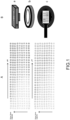
Figure 1A shows an image of a CSA, consisting of an array of hand-deposited spots, with various molar ratios of Tetrabromophenol Blue (TBB)/Bromothymol Blue (BB) (above) or TBB/Phenol Red (PR) (below). The molar ratio increases in the direction of the arrows from bottom to top while pH increases from left to right. -
Figure 1B shows the components of the CSA calibration cell: a) Camera; b) Housing for the camera under which 6 LED D65s are circularly arranged; c) Circular support in which the sensor may be inserted. -
Figure 2 shows as an example the calibration curves of the indicators TBB, BB and PR. The repetition of the calibration curves verifies the reversibility of the sensor of the present invention. - For the purposes of the present invention, the term spot (or sensor) is intended as an area, preferably circular, resulting from the application of a preparation comprising an indicator and a surfactant on a support. In fact, it represents a single sensor.
- For the present purposes, the term colorimetric sensor array (or simply array, or CSA = Colorimetric Sensor Array) is intended as a set of a plurality of spots on the same support.
- Therefore, a first object of the invention is a colorimetric sensor comprising a preparation of a colorimetric indicator and a surfactant.
- More in particular, this sensor is in the form of a polymeric membrane of organic-inorganic nature.
- This preparation is deposited and adsorbed on a solid porous support, in particular shortly after having been prepared in the form of sol, as detailed below.
- According to an aspect of the present invention, the described sensor comprises a preparation of an indicator, a dye (which could also be an indicator) and a surfactant.
- According to a particular aspect of the present invention, there may be two or more than two added dyes.
- For example, the dyes used may be Bromocresol Green and Methyl Red.
- For the purposes of the present invention, the support for the deposit is a porous PVDF membrane, having for example an average porosity of 0.2 um (for example sold by Bio-Rad).
- Advantageously, by varying the porosity of the support (PVDF 0.2 um, Teflon 2.0 um) it is possible to improve the kinetics of the sensor, and therefore the response time.
- As regards the preparation of the membrane (in the form of sol), this comprises: precursors, an indicator with the solvent thereof, a surfactant and acid or basic water (milli-Q).
- The following precursors may be used for the purposes of the present invention: TEOS (tetraethyl orthosilicate), methyltrimethoxysilane (MTES), ethyltriethoxysilane (ETES), phenyltrimethoxysilane (FTMS), ethyltriethoxysilane (octyl-TEOS), dodecyltriethoxysilane (dodecyl-TEOS), hexadecyltrimethoxysilane.
- In a preferred aspect of the invention at least two precursors are used for the preparation of the membrane, one of which is TEOS.
- Even more preferably, the membranes are prepared starting from TEOS/octyl-TEOS.
- Due to the presence of such precursors, the preparation is also referred to as OrMoSil.
- The calibration sensitivity of a single sensor depends on the ratio ΔH/ΔpH, where ΔH is the difference value between the H values of the dissociated and undissociated form of the indicator and ΔpH is the pH range within which the H coordinate varies.
- The maximum possible value of ΔH depends on the choice of the indicator but hardly exceeds the value of 0.55.
- For the purposes of the present invention, an indicator is selected from the group comprising: Cresol Red; Metacresol Purple; Thymol Blue; Carmine; Tetrabromophenol Blue; Methyl Orange; 2-4-dinitrophenol; Bromophenol Blue; Congo Red; Ethyl Orange; Alizarin Violet N; Bromocresol Green; Methyl Red; Propyl Red; Chlorophenol Red;
Basic Green 4; Bromophenol Red; Nitrazine Yellow; Purple Pyrocatecol Violet; Bright Yellow; Nile Red; Resazurin; Aurin; Bromothymol Blue; Phenol Red; Orange II; Phenolphthalein; Xylenol Blue; Nile Blue; Thiazole Yellow. - The indicators which work in a broad pH range are: Bromophenol Blue (pH = 1.50-6.50), a mixture of Bromocresol Green and Methyl Red (pH = 2.00-8.00) and Bromothymol Blue (pH = 5.80-13.50) .
- They are all characterized by a transition between complementary colors.
- For the purposes of the present invention, the solvent is ethanol for almost all the indicators.
- Nitrazine Yellow and Bright Yellow instead require 2-methoxy-ethanol.
- For the purposes of the present invention, the surfactant is a cationic surfactant, therefore capable of minimizing the repulsions between silanol groups and negatively charged indicator molecules, especially in basic environments.
- It has been surprisingly found that surfactants having a chain of 16 carbon atoms are advantageously capable of preventing smoothing and irreversibility phenomena, such as, for example, hexadecyltrimethylammonium p-toluenesulfonate (CTApTs).
- Stability tests with analogous compounds which differ only by the chain length (C = 8,10,12) have shown that the reversibility with chains shorter than C16 is incomplete.
- C18 surfactants have an equally optimal sensitivity but the modulation of the H profile position occurs in a smaller pH range with respect to C16.
- In a preferred aspect of the present invention, the surfactant/precursor ratio, and preferably of CTApTs/precursors, must be comprised between 0.05 and 0.40 gCTApTS/gprecursor, and preferably between about 0.11 and 0.38 gCTApTs/gprecursor.
- Dyes which may be used for the purposes of the present invention are selected from the group comprising: Acid Green 25, Direct Blue 15, Trypan Blue, Methylene Blue.
- Furthermore, some dyes may be used which by their nature are also indicators, such as, for example: Tetrabromophenol Blue (TBB), Indigo Carmine (IC).
- In accordance with a second object of the invention, the preparation of the sensor is obtained with a process comprising the steps of:
- a) hydrolysis of the precursors,
- b) addition of the cationic surfactant,
- c) addition of a solution of the indicator dissolved in a suitable solvent, while stirring, or
- d) addition of a solution of an indicator dissolved in a suitable solvent and a solution of a dye dissolved in a suitable solvent.
- In step a), preferably the above-mentioned precursors are added to water in the presence of hydrochloric acid.
- In a preferred aspect of the invention, two precursors are added to water, one of which is TEOS.
- In particular, hydrolysis catalyst hydrochloric acid is preferably added up to a pH of about 2.00.
- In a preferred aspect of the invention the two precursors are TEOS and Ottil-TEOS.
- The hydrolysis is carried out until the phase separation disappears; for this purpose, vigorous magnetic stirring may be required for about an hour.
- In step b), the surfactant is added in an amount such that the surfactant/precursor ratio is between about 0.11 and 0.38 gCTApTs/gprecursor.
- In step c) the solvent preferably is ethanol or 2-methoxy-ethanol, conveniently chosen as a function of the indicator.
- According to a particular aspect of the present invention, in step d) there may be two or more than two added dyes.
- For example, the dyes used may be Bromocresol Green and Methyl Red.
- In preferred aspects of the invention, the indicator concentration (in mg) for each gram of sol comprising precursors, water, hydrochloric acid, and surfactant (excluding the indicator solvent) is approximately:
Indicator Range (mg) Amount (mg) Bromochlorophenol blue (BCPB) 6.5-6.7 6.61 Bromocresol green (BCG) 7.5-8.1 7.94 Thymol blue (TB) 0.80-1.0 0.90 Bromothymol blue (BB) 6.90-7.20 7.10 Nitrazine yellow (NY) 6.10-6.22 6.17 Tetrabromophenol blue (TBB) 8.9-9.1 8.97 Bright yellow (BY) 7.0-7.2 7.10 Methyl red (MR) 2.9-3.1 3.06 M-cresol purple (CP) 4.30-4.4 4.35 Phenol red (PR) 3.9-4.1 4.03 Cresol red (CR) 3.4-3.55 3.48 Xylenol blue (XB) 0.80-1.0 0.90 Cresol purple (CP) 3.4-3.55 3.48 - Stirring may also be carried out for about 10 minutes.
- More generally, the preparation of a colorimetric sensor may be prepared starting from:
Precursors 5.0-6.0 g Water 2.0-2.5 g Hydrochloric acid as needed up to approx. pH 2.00 Surfactant 0.4-2.1 g Indicator 0.8-9.1 mg Solvent 6.3-8.1 g Dye 0-3.0 mg - To optimize the sensitivity of some indicators, it is possible to conduct a step d) in which a solution of one or two dyes (which could be, by their nature, independently of each other, indicators) is added to the sol of the indicator; in this way a preparation comprising an indicator and one or two dyes (or dye(s)/indicator) is obtained.
- In preferred aspects of the present invention, the ratios between the indicator the performance of which is to be improved and the dye may be those reported in the following table:
0.01<nTBB/nXB<0.19 0.18<nTBB/nMR<0.35 0.186<nTBB/nPR<0.324 - TBB = Tetrabromophenol
- Blue
- XB = Xylenol Blue
- MR=Methyl Red
- PR=Phenol Red
- According to an aspect of the present invention, in step c) or d) one or more additives capable of giving rise to chemical reactions with variation of pH may be added.
- For this purpose, palladium chloride (II) and/or diethylethanolamine (DEEA) may be added.
- The solution obtained (from step c) or from step d)) is then deposited on the support membrane, preferably PVDF, and is stored in a dry place protected from light for a period, for example three days, until completion of the polymerization.
- For the purposes of the present invention, the deposition is carried so as to form spots with a diameter of a few mm.
- The amount of sol deposited for each spot is about 90-105 µg, preferably about 95 µg.
- A plurality of spots (thus forming the colorimetric sensor array), each of which comprises an indicator, is deposited on the support.
- In the array, each spot stands out from the other spots for the concentration of surfactant.
- The CSA preparation process may end, after step c) or step d), with the calibration step; this step is carried out by the manufacturer, since the deposition procedure is reproducible in time and space.
- The support is then subjected to the steps of:
- maintenance at pH=1 for about 2 minutes and then washing with water (milli-Q),
- maintenance at pH=12 for about 2 minutes and then washing with water (milli-Q),
- maintenance at pH=1 for about 2 minutes and then washing with water (milli-Q).
- During calibration, the support is immersed in various acid pH to basic pH buffer solutions for approximately 30-40 seconds, until equilibrium is reached for the H coordinate of the HSV color space.
- The colorimetric sensor of the invention is suitable not only for measuring pH but also for measuring for example: amines, ethylene, carbon monoxide, carbon dioxide, sulfur dioxide, glucose, sugars.
- In this case, it may be necessary to include further additives in the preparation of the indicator such as: palladium chloride (II) or diethylethanolamine (DEEA), which give rise to chemical reactions with variation of pH, and therefore color change of the individual spots.
- In a third object, a method for measuring an analyte using the colorimetric sensor array of the invention is described.
- Consequently, the described method allows to detect pH, presence of carbon dioxide, carbon monoxide, sulfur dioxide, amines, ethylene, sulfur dioxide, glucose, sugars.
- In a preferred aspect of the invention, the described sensor is a pH sensor.
- For the purposes of the present invention, the pH measurements are based on the Hue profile (H) of the HSV color space.
- According to the present invention, after having been in contact with the analyte, a photographic image of said sensor or said array (i.e., of each sensor of said array) is acquired.
- The H coordinate of a portion of each image is acquired, preferably as the median value of the pixels of the most homogeneous and saturated portion of each spot.
- The acquisition of the color coordinates is preferably optimized if constant illumination is maintained with a D65 LED (medium sunlight).
- Two vials are prepared, of which one corresponding to the lowest surfactant concentration (about 0.11 gCTApTs/gprecursor; LOW) and one corresponding to the highest surfactant concentration (about 0.38 gCTApTs/gprecursor; HIGH) starting from:
Component LOW HIGH grams Water 1.82 1.82 HCl 0.64 0.64 CTApTS 2.01 0.60 Octyl-TEOS 0.75 0.75 TEOS 4.64 4.64 Gel/portion 9.86 8.45 Solvent 7.36 6.35 - The amount in mg of each indicator used is the same for the two vials:
Indicator Range (mg) Amount (mg) Bromochlorophenol blue (BCPB) 6.5-6.7 6.61 Bromocresol green (BCG) 7.5-8.1 7.94 Thymol blue (TB) 0.8-1.0 0.9 Bromothymol blue (BB) 6.90-7.20 7.10 Nitrazine yellow (NY) 6.10-6.22 6.17 Tetrabromophenol blue (TBB) 8.9-9.1 8.97 Bright yellow (BY) 7.0-7.2 7.10 Methyl red (MR) 2.9-3.1 3.06 M-cresol purple (CP) 4.30-4.4 4.35 Phenol red (PR) 3.9-4.1 4.03 Cresol red (CR) 3.4-3.55 3.48 Xylenol blue (XB) 0.8-1.0 0.9 Cresol purple (CP) 3.4-3.55 3.48 - From the two vials, once the indicator solution has been added, all the possible arrays with intermediate surfactant concentrations are obtained. The amount of solvent in the two vials (LOW, HIGH) is different to allow for a similar slope of the sigmoid of H vs pH throughout the surfactant modulation range.
-
Figure 2 shows the results of an assay to verify the reversibility of the system of the present invention. - In the test illustrated, the profiles have already undergone a conditioning cycle demonstrating the high system reversibility. The fitting is related to the experimental points (about 150 for each indicator, performed on 5 identical spots) of TBB = Tetrabromophenol Blue, BB = Bromothymol Blue, PR = Phenol Red. The experimental data are obtained by immersing the sensor in different buffers from pH 1 to 12. The experimental point at pH = 6.865 is obtained with a standard buffer to the third decimal place and perfectly matches the experimental data fittings.
- Using a single spot sensor with TBB indicator and CTApTs surfactant at concentration 0.38 gCTApTs/gprecursor the pH prediction error, referred to as spH is equal to 0.012 at pH = 2.20.
- With just two identical spots it decreases to spH=0.008.
- By adding 15 spots with different concentrations of CTApTs in the range 0.11-0.38 gCTApTs/gprecursor, the same precision is obtained throughout the range between pH = 2 and pH = 4. Since the spots have a diameter of 3 mm, an increase in the number thereof does not cause problems from a sensor size point of view.
- OrMoSil sol was prepared by mixing the main components in this order: 4.03 g of TEOS, 0.65 g of Dodecyl-TEOS, 1.58 g of Milli-Q water and 0.55 g of aqueous solution of HCl at pH = 2.03. After 40-45 minutes under magnetic stirring at room temperature, the initial cloudy solution became transparent, due to the disappearance of the phase separation. 1.75 g of CTApTs cationic surfactant was then added, followed by stirring for 30 minutes. The pH indicator solution was then added to the sol under stirring for a further 5 minutes. The solutions of BB (bromothymol blue), TBB (tetrabromophenol blue) and PR (phenol red) were obtained by mixing 50.5, 79.7, 28.7 mg of indicator, respectively, in 6.40 g of ethanol. The total weight of each sol solution is 8.56 g. The sols of the individual indicators were then conveniently mixed. The amount of sol TBB added to the PR and BB vials corresponds to: 0 g, 0.3 g, 0.7 g, 1.1 g, 1.6 g, 2.1 g, 2.7 g, 3.7 g, and 5.4 g corresponding to a TBB molar/indicator ratio of: 0, 0.026, 0.061, 0.096, 0.140,0.184, 0.236, 0.324, 0.473, respectively.
- PVDF supports (6 x 3.5 x 0.1 cm) were used as solid supports on which the OrMoSil sol was deposited through a steel bar (filed base with 1.6 mm diameter) at 20±2°C. The calibration was carried out in accordance with the description in the present patent application.
- The array thus obtained is shown in
figure 1 . - From the above description, the benefits offered by present invention will be immediately apparent to those skilled in the art.
- First, the sensor described considerably reduces the prediction error associated with the pH measurement, which is comparable with that typical of potentiometric measurements (<0.02 pH units) due to the modulation of the surfactant concentration.
- In the case of an indicator characterized by a transition between non-complementary colors, the range within which the addition of a dye actually leads to an improvement in the precision and accuracy of the pH measurement has been identified.
- In particular, a sensor was obtained capable of providing high accuracy in a wide pH range (up to 7 pH units), due to the modulation of the pKa of the indicator used.
- Furthermore, the sensor is reversible and may therefore be reused.
- The pH measurement is carried out with response times around ten seconds.
- The H coordinate (hue) of the HSV color space (hue, saturation, value) used for the measurements is stable, simple to calculate and easily obtainable from commercial devices, maintaining better accuracy with variations in indicator concentration, membrane thickness and illumination, compared to the other color spaces.
- A considerable benefit is the possibility of the manufacturer carrying out the calibration on a membrane only once.
- Moreover, the device also lends itself to online measurements due to the use of a porous support such as PVDF; in fact, the permeation of Ormosil also from the opposite side of the PVDF sheet is possible due to the surfactant which reduces the surface tension, also allowing the pH measurement of turbid samples.
- In addition, the device is suitable for measurements in sea water (pH = 7.0-8.5) where the high ionic strength of the solution results in a considerable variation of the electrode joint potential in glass.
- The temperature dependence of the calibration profiles in the 10-30°C range has proven to be negligible.
- The size of the spots is very small (around 1 mm in diameter), allowing to prepare portable, low-cost sensors.
Claims (18)
- A colorimetric sensor array comprising a support and a plurality of colorimetric sensors deposited onto the support, wherein each colorimetric sensor comprises at least an indicator characterized in that it comprises a cationic surfactant, and in that each colorimetric sensor comprises a different concentration of the surfactant.
- A colorimetric sensor array according to claim 1, wherein the colorimetric sensor array is a pH sensor.
- A colorimetric sensor array according to any of the preceding claims, wherein each sensor is in the form of a polymeric membrane of organic-inorganic nature, comprising a preparation of an indicator in a suitable solvent and a cationic surfactant, precursors and acid or basic water.
- A colorimetric sensor array according to the preceding claim, wherein the surfactant/precursor ratio is comprised between 0.05 and 0.40.
- A colorimetric sensor array according to claim 3, wherein the surfactant/precursor ratio is comprised between 0.11 and 0.38.
- A colorimetric sensor array according to any of the preceding claims, wherein the surfactant has a chain of 16 carbon atoms.
- A colorimetric sensor array according to any of claims 1-5, wherein the surfactant has a chain of 18 carbon atoms.
- A colorimetric sensor array according to any of the preceding claims, wherein each colorimetric sensor further comprising a dye or a combination of two or more dyes.
- A colorimetric sensor array according to the preceding claim, wherein each colorimetric sensor comprises a different indicator and/or a different dye or different dyes with respect to the other sensors.
- A colorimetric sensor array according to any one of the preceding claims, wherein said indicator is selected from the group comprising: Cresol Red; Metacresol Purple; Thymol Blue; Carmine; Tetrabromophenol Blue; Methyl Orange; 2-4-dinitrophenol; Bromophenol Blue; Congo Red; Ethyl Orange; Alizarin Violet N; Bromocresol Green; Methyl Red; Propyl Red; Chlorophenol Red; Basic Green 4; Bromophenol Red;Nitrazine Yellow; Purple Pyrocatecol Violet; Bright Yellow; Nile Red; Resazurin; Aurin; Bromothymol Blue; Phenol Red; Orange II; Phenolphthalein; Xylenol Blue; Nile Blue; Thiazole Yellow.
- A colorimetric sensor array according to any one of the preceding claims, wherein said surfactant is hexadecyltrimethylammonium p-toluenesulfonate (CTApTs).
- A colorimetric sensor array according to any one of the preceding claims, further comprising one or more additives capable of giving rise to chemical reactions with variation of pH.
- A process for obtaining the colorimetric sensor array according to any one of the preceding claims, wherein for each sensor the process of obtaining the polymeric membrane comprises the steps of:a) hydrolysis of the precursors,b) addition of the cationic surfactant,c) addition of a solution of the indicator dissolved in a suitable solvent, while stirring, ord) addition of a solution of an indicator dissolved in a suitable solvent and a solution of one, two or more dyes dissolved in a suitable solvent.
- A process according to the preceding claim, wherein said precursors are selected from the group comprising: TEOS (tetraethyl orthosilicate), methyltrimethoxysilane (MTES), ethyl-triethoxysilane (ETES),phenyltrimethoxysilane (FTMS), octyltriethoxysilane (octyl-TEOS), dodecyl- triethoxysilane (dodecyl-TEOS), hexadecyl-trimethoxysilane, zirconium tetrapropoxide (ZTP), 3-methacryloxypropyl-trimethoxysilane (MAPTMS), titanium tetrapropoxide (TTP), titanium isopropoxide(TTIP).
- A process according to claim 13 or 14, wherein said step a) comprises the addition of an acid up to a pH of about 2.00.
- A process according to any one of the claims 12 to 15, wherein in step c) or step d) one or more additives capable of giving rise to chemical reactions with variation of pH are added.
- A method for measuring either pH, carbon dioxide, carbon monoxide, sulphur dioxide, amines, ethylene, sulphur dioxide, glucose, sugars of a solution comprising the steps of:- placing the solution in contact with the colorimetric sensor array according to any one of the claims 1 to 11,- acquiring a photographic image of said sensor or said array,- acquiring the H coordinate of a portion of each image.
- A method according to the preceding claim, wherein said step of acquiring the H coordinate is conducted online.
Applications Claiming Priority (2)
| Application Number | Priority Date | Filing Date | Title |
|---|---|---|---|
| IT102019000013878A IT201900013878A1 (en) | 2019-08-02 | 2019-08-02 | COLORIMETRIC SENSOR FOR PH MEASUREMENTS |
| PCT/IB2020/057318 WO2021024156A1 (en) | 2019-08-02 | 2020-08-03 | Colorimetric sensor for ph measurements |
Publications (3)
| Publication Number | Publication Date |
|---|---|
| EP4007909A1 EP4007909A1 (en) | 2022-06-08 |
| EP4007909C0 EP4007909C0 (en) | 2024-04-03 |
| EP4007909B1 true EP4007909B1 (en) | 2024-04-03 |
Family
ID=69024502
Family Applications (1)
| Application Number | Title | Priority Date | Filing Date |
|---|---|---|---|
| EP20764450.1A Active EP4007909B1 (en) | 2019-08-02 | 2020-08-03 | Colorimetric sensor for ph measurements |
Country Status (7)
| Country | Link |
|---|---|
| US (1) | US20220276177A1 (en) |
| EP (1) | EP4007909B1 (en) |
| JP (1) | JP2022542709A (en) |
| KR (1) | KR20220041895A (en) |
| CN (1) | CN114222912A (en) |
| IT (1) | IT201900013878A1 (en) |
| WO (1) | WO2021024156A1 (en) |
Families Citing this family (1)
| Publication number | Priority date | Publication date | Assignee | Title |
|---|---|---|---|---|
| IT202300023679A1 (en) | 2023-11-09 | 2025-05-09 | Univ Degli Studi Padova | COLORIMETRIC SENSOR FOR MEASURING PH, PARTICULARLY FOR AQUEOUS SOLUTIONS, COLORIMETRIC SENSOR MATRIX, APPARATUS FOR MEASURING PH AND METHOD OF PREPARING SUCH COLORIMETRIC SENSOR MATRIX |
Family Cites Families (4)
| Publication number | Priority date | Publication date | Assignee | Title |
|---|---|---|---|---|
| US20160327491A1 (en) * | 2014-01-06 | 2016-11-10 | 3M Innovative Properties Company | Colorimetric indicator responsive to air flow |
| CN105044321A (en) * | 2015-06-23 | 2015-11-11 | 上海交通大学 | 17 beta-estradiol colorimetric detecting method based on nanogold collected by surfactant |
| CN106706612B (en) * | 2015-11-12 | 2020-08-28 | 中国科学院大连化学物理研究所 | Method for improving detection sensitivity of gas colorimetric sensor to acid/alkaline gas |
| EP3579982A4 (en) * | 2017-02-16 | 2021-03-31 | Isense LLC | NUCLEOPHILIC INDICATOR SENSOR NETWORKS |
-
2019
- 2019-08-02 IT IT102019000013878A patent/IT201900013878A1/en unknown
-
2020
- 2020-08-03 EP EP20764450.1A patent/EP4007909B1/en active Active
- 2020-08-03 US US17/632,103 patent/US20220276177A1/en not_active Abandoned
- 2020-08-03 WO PCT/IB2020/057318 patent/WO2021024156A1/en not_active Ceased
- 2020-08-03 JP JP2022506742A patent/JP2022542709A/en active Pending
- 2020-08-03 KR KR1020227006878A patent/KR20220041895A/en not_active Withdrawn
- 2020-08-03 CN CN202080055343.1A patent/CN114222912A/en active Pending
Also Published As
| Publication number | Publication date |
|---|---|
| IT201900013878A1 (en) | 2021-02-02 |
| JP2022542709A (en) | 2022-10-06 |
| EP4007909C0 (en) | 2024-04-03 |
| US20220276177A1 (en) | 2022-09-01 |
| KR20220041895A (en) | 2022-04-01 |
| CN114222912A (en) | 2022-03-22 |
| WO2021024156A1 (en) | 2021-02-11 |
| EP4007909A1 (en) | 2022-06-08 |
Similar Documents
| Publication | Publication Date | Title |
|---|---|---|
| Werner et al. | Optical sensor for the pH 10–13 range using a new support material | |
| ES2592205T3 (en) | Colorimetric sensor matrices based on nanoporous pigments | |
| CN101675331B (en) | Method and apparatus for measuring ph of low alkalinity solutions | |
| Fernández-Ramos et al. | Optical humidity sensor using methylene blue immobilized on a hydrophilic polymer | |
| JP2010527001A5 (en) | ||
| Supian et al. | Quantitative determination of Al (III) ion by using Alizarin Red S including its microspheres optical sensing material | |
| Janata | Ion optodes | |
| Bacci et al. | Spectrophotometric investigations on immobilized acid-base indicators | |
| EP3184994A1 (en) | Optical sensor for detecting a chemical species, sensor system comprising the same and method of producing the same | |
| Jerónimo et al. | Colorimetric bismuth determination in pharmaceuticals using a xylenol orange sol–gel sensor coupled to a multicommutated flow system | |
| KR100940513B1 (en) | Optical Sensor Membrane, Apparatus and Method for Simultaneous Detection of Two or More Variables of Dissolved Oxygen, pH and Temperature | |
| US20220276177A1 (en) | Colorimetric sensor for ph measurements | |
| Ando et al. | A highly Li+-selective glass optode based on fluorescence ratiometry | |
| Rajendraprasad et al. | Highly sensitive spectrophotometric determination of olanzapine using cerium (IV) and iron (II) complexes of 1, 10-phenanthroline and 2, 2′-bipyridyl | |
| Mohr et al. | Synthesis and characterization of fluorophore-absorber pairs for sensing of ammonia based on fluorescence | |
| RU2391659C1 (en) | Method of detecting silver using polymethacrylate matrix | |
| Kang et al. | Rapid response optical ion/gas sensors using dimer–monomer metalloporphyrin equilibrium in ultrathin polymeric films coated on waveguides | |
| Mohr et al. | Effects of the polymer matrix on an optical nitrate sensor based on a polarity-sensitive dye | |
| RU2428686C1 (en) | Method of determining cobalt (ii) using polymethacrylate matrix | |
| Brigo et al. | Natively porous films as halide anion fluorescence optical sensors | |
| IT202300023679A1 (en) | COLORIMETRIC SENSOR FOR MEASURING PH, PARTICULARLY FOR AQUEOUS SOLUTIONS, COLORIMETRIC SENSOR MATRIX, APPARATUS FOR MEASURING PH AND METHOD OF PREPARING SUCH COLORIMETRIC SENSOR MATRIX | |
| US20130251594A1 (en) | Sol-Gel Based Optical Chemical Sensor For Detection of Organophosphates and Method For Preparation Thereof | |
| RU149409U1 (en) | OPTICAL SENSITIVE ELEMENT FOR DETERMINING METAL IONS IN LIQUID MEDIA | |
| Pastore | pH Colorimetric Sensor Arrays: Preparation, Characterization, and Application | |
| Sadaoka et al. | Optical humidity sensor using Nafion-dye composite thin films. |
Legal Events
| Date | Code | Title | Description |
|---|---|---|---|
| STAA | Information on the status of an ep patent application or granted ep patent |
Free format text: STATUS: UNKNOWN |
|
| STAA | Information on the status of an ep patent application or granted ep patent |
Free format text: STATUS: THE INTERNATIONAL PUBLICATION HAS BEEN MADE |
|
| PUAI | Public reference made under article 153(3) epc to a published international application that has entered the european phase |
Free format text: ORIGINAL CODE: 0009012 |
|
| STAA | Information on the status of an ep patent application or granted ep patent |
Free format text: STATUS: REQUEST FOR EXAMINATION WAS MADE |
|
| 17P | Request for examination filed |
Effective date: 20220301 |
|
| AK | Designated contracting states |
Kind code of ref document: A1 Designated state(s): AL AT BE BG CH CY CZ DE DK EE ES FI FR GB GR HR HU IE IS IT LI LT LU LV MC MK MT NL NO PL PT RO RS SE SI SK SM TR |
|
| DAV | Request for validation of the european patent (deleted) | ||
| DAX | Request for extension of the european patent (deleted) | ||
| GRAP | Despatch of communication of intention to grant a patent |
Free format text: ORIGINAL CODE: EPIDOSNIGR1 |
|
| STAA | Information on the status of an ep patent application or granted ep patent |
Free format text: STATUS: GRANT OF PATENT IS INTENDED |
|
| INTG | Intention to grant announced |
Effective date: 20231016 |
|
| GRAS | Grant fee paid |
Free format text: ORIGINAL CODE: EPIDOSNIGR3 |
|
| GRAA | (expected) grant |
Free format text: ORIGINAL CODE: 0009210 |
|
| STAA | Information on the status of an ep patent application or granted ep patent |
Free format text: STATUS: THE PATENT HAS BEEN GRANTED |
|
| AK | Designated contracting states |
Kind code of ref document: B1 Designated state(s): AL AT BE BG CH CY CZ DE DK EE ES FI FR GB GR HR HU IE IS IT LI LT LU LV MC MK MT NL NO PL PT RO RS SE SI SK SM TR |
|
| REG | Reference to a national code |
Ref country code: CH Ref legal event code: EP |
|
| REG | Reference to a national code |
Ref country code: DE Ref legal event code: R096 Ref document number: 602020028400 Country of ref document: DE |
|
| REG | Reference to a national code |
Ref country code: IE Ref legal event code: FG4D |
|
| U01 | Request for unitary effect filed |
Effective date: 20240424 |
|
| U07 | Unitary effect registered |
Designated state(s): AT BE BG DE DK EE FI FR IT LT LU LV MT NL PT SE SI Effective date: 20240430 |
|
| U20 | Renewal fee for the european patent with unitary effect paid |
Year of fee payment: 5 Effective date: 20240807 |
|
| PG25 | Lapsed in a contracting state [announced via postgrant information from national office to epo] |
Ref country code: IS Free format text: LAPSE BECAUSE OF FAILURE TO SUBMIT A TRANSLATION OF THE DESCRIPTION OR TO PAY THE FEE WITHIN THE PRESCRIBED TIME-LIMIT Effective date: 20240803 |
|
| PG25 | Lapsed in a contracting state [announced via postgrant information from national office to epo] |
Ref country code: HR Free format text: LAPSE BECAUSE OF FAILURE TO SUBMIT A TRANSLATION OF THE DESCRIPTION OR TO PAY THE FEE WITHIN THE PRESCRIBED TIME-LIMIT Effective date: 20240403 |
|
| PG25 | Lapsed in a contracting state [announced via postgrant information from national office to epo] |
Ref country code: GR Free format text: LAPSE BECAUSE OF FAILURE TO SUBMIT A TRANSLATION OF THE DESCRIPTION OR TO PAY THE FEE WITHIN THE PRESCRIBED TIME-LIMIT Effective date: 20240704 |
|
| PG25 | Lapsed in a contracting state [announced via postgrant information from national office to epo] |
Ref country code: ES Free format text: LAPSE BECAUSE OF FAILURE TO SUBMIT A TRANSLATION OF THE DESCRIPTION OR TO PAY THE FEE WITHIN THE PRESCRIBED TIME-LIMIT Effective date: 20240403 |
|
| PG25 | Lapsed in a contracting state [announced via postgrant information from national office to epo] |
Ref country code: CZ Free format text: LAPSE BECAUSE OF FAILURE TO SUBMIT A TRANSLATION OF THE DESCRIPTION OR TO PAY THE FEE WITHIN THE PRESCRIBED TIME-LIMIT Effective date: 20240403 |
|
| PG25 | Lapsed in a contracting state [announced via postgrant information from national office to epo] |
Ref country code: PL Free format text: LAPSE BECAUSE OF FAILURE TO SUBMIT A TRANSLATION OF THE DESCRIPTION OR TO PAY THE FEE WITHIN THE PRESCRIBED TIME-LIMIT Effective date: 20240403 |
|
| PG25 | Lapsed in a contracting state [announced via postgrant information from national office to epo] |
Ref country code: PL Free format text: LAPSE BECAUSE OF FAILURE TO SUBMIT A TRANSLATION OF THE DESCRIPTION OR TO PAY THE FEE WITHIN THE PRESCRIBED TIME-LIMIT Effective date: 20240403 Ref country code: NO Free format text: LAPSE BECAUSE OF FAILURE TO SUBMIT A TRANSLATION OF THE DESCRIPTION OR TO PAY THE FEE WITHIN THE PRESCRIBED TIME-LIMIT Effective date: 20240703 Ref country code: IS Free format text: LAPSE BECAUSE OF FAILURE TO SUBMIT A TRANSLATION OF THE DESCRIPTION OR TO PAY THE FEE WITHIN THE PRESCRIBED TIME-LIMIT Effective date: 20240803 Ref country code: HR Free format text: LAPSE BECAUSE OF FAILURE TO SUBMIT A TRANSLATION OF THE DESCRIPTION OR TO PAY THE FEE WITHIN THE PRESCRIBED TIME-LIMIT Effective date: 20240403 Ref country code: GR Free format text: LAPSE BECAUSE OF FAILURE TO SUBMIT A TRANSLATION OF THE DESCRIPTION OR TO PAY THE FEE WITHIN THE PRESCRIBED TIME-LIMIT Effective date: 20240704 Ref country code: ES Free format text: LAPSE BECAUSE OF FAILURE TO SUBMIT A TRANSLATION OF THE DESCRIPTION OR TO PAY THE FEE WITHIN THE PRESCRIBED TIME-LIMIT Effective date: 20240403 Ref country code: CZ Free format text: LAPSE BECAUSE OF FAILURE TO SUBMIT A TRANSLATION OF THE DESCRIPTION OR TO PAY THE FEE WITHIN THE PRESCRIBED TIME-LIMIT Effective date: 20240403 Ref country code: RS Free format text: LAPSE BECAUSE OF FAILURE TO SUBMIT A TRANSLATION OF THE DESCRIPTION OR TO PAY THE FEE WITHIN THE PRESCRIBED TIME-LIMIT Effective date: 20240703 |
|
| REG | Reference to a national code |
Ref country code: DE Ref legal event code: R097 Ref document number: 602020028400 Country of ref document: DE |
|
| PG25 | Lapsed in a contracting state [announced via postgrant information from national office to epo] |
Ref country code: RO Free format text: LAPSE BECAUSE OF FAILURE TO SUBMIT A TRANSLATION OF THE DESCRIPTION OR TO PAY THE FEE WITHIN THE PRESCRIBED TIME-LIMIT Effective date: 20240403 Ref country code: SK Free format text: LAPSE BECAUSE OF FAILURE TO SUBMIT A TRANSLATION OF THE DESCRIPTION OR TO PAY THE FEE WITHIN THE PRESCRIBED TIME-LIMIT Effective date: 20240403 |
|
| PG25 | Lapsed in a contracting state [announced via postgrant information from national office to epo] |
Ref country code: SM Free format text: LAPSE BECAUSE OF FAILURE TO SUBMIT A TRANSLATION OF THE DESCRIPTION OR TO PAY THE FEE WITHIN THE PRESCRIBED TIME-LIMIT Effective date: 20240403 |
|
| PG25 | Lapsed in a contracting state [announced via postgrant information from national office to epo] |
Ref country code: SM Free format text: LAPSE BECAUSE OF FAILURE TO SUBMIT A TRANSLATION OF THE DESCRIPTION OR TO PAY THE FEE WITHIN THE PRESCRIBED TIME-LIMIT Effective date: 20240403 Ref country code: SK Free format text: LAPSE BECAUSE OF FAILURE TO SUBMIT A TRANSLATION OF THE DESCRIPTION OR TO PAY THE FEE WITHIN THE PRESCRIBED TIME-LIMIT Effective date: 20240403 Ref country code: RO Free format text: LAPSE BECAUSE OF FAILURE TO SUBMIT A TRANSLATION OF THE DESCRIPTION OR TO PAY THE FEE WITHIN THE PRESCRIBED TIME-LIMIT Effective date: 20240403 |
|
| PLBE | No opposition filed within time limit |
Free format text: ORIGINAL CODE: 0009261 |
|
| STAA | Information on the status of an ep patent application or granted ep patent |
Free format text: STATUS: NO OPPOSITION FILED WITHIN TIME LIMIT |
|
| 26N | No opposition filed |
Effective date: 20250106 |
|
| REG | Reference to a national code |
Ref country code: CH Ref legal event code: PL |
|
| GBPC | Gb: european patent ceased through non-payment of renewal fee |
Effective date: 20240803 |
|
| PG25 | Lapsed in a contracting state [announced via postgrant information from national office to epo] |
Ref country code: CH Free format text: LAPSE BECAUSE OF NON-PAYMENT OF DUE FEES Effective date: 20240831 Ref country code: MC Free format text: LAPSE BECAUSE OF FAILURE TO SUBMIT A TRANSLATION OF THE DESCRIPTION OR TO PAY THE FEE WITHIN THE PRESCRIBED TIME-LIMIT Effective date: 20240403 |
|
| PG25 | Lapsed in a contracting state [announced via postgrant information from national office to epo] |
Ref country code: GB Free format text: LAPSE BECAUSE OF NON-PAYMENT OF DUE FEES Effective date: 20240803 |
|
| PG25 | Lapsed in a contracting state [announced via postgrant information from national office to epo] |
Ref country code: IE Free format text: LAPSE BECAUSE OF NON-PAYMENT OF DUE FEES Effective date: 20240803 |
|
| U20 | Renewal fee for the european patent with unitary effect paid |
Year of fee payment: 6 Effective date: 20250806 |
|
| PG25 | Lapsed in a contracting state [announced via postgrant information from national office to epo] |
Ref country code: CY Free format text: LAPSE BECAUSE OF FAILURE TO SUBMIT A TRANSLATION OF THE DESCRIPTION OR TO PAY THE FEE WITHIN THE PRESCRIBED TIME-LIMIT; INVALID AB INITIO Effective date: 20200803 |
|
| U1N | Appointed representative for the unitary patent procedure changed after the registration of the unitary effect |
Representative=s name: SORANZO, BENEDETTA; IT |
|
| PG25 | Lapsed in a contracting state [announced via postgrant information from national office to epo] |
Ref country code: HU Free format text: LAPSE BECAUSE OF FAILURE TO SUBMIT A TRANSLATION OF THE DESCRIPTION OR TO PAY THE FEE WITHIN THE PRESCRIBED TIME-LIMIT; INVALID AB INITIO Effective date: 20200803 |
|
| PG25 | Lapsed in a contracting state [announced via postgrant information from national office to epo] |
Ref country code: TR Free format text: LAPSE BECAUSE OF FAILURE TO SUBMIT A TRANSLATION OF THE DESCRIPTION OR TO PAY THE FEE WITHIN THE PRESCRIBED TIME-LIMIT Effective date: 20240403 |
|
| U20 | Renewal fee for the european patent with unitary effect paid |
Year of fee payment: 7 Effective date: 20260706 |