EP4007221A1 - Kommunikationssystem, -vorrichtung und -verfahren sowie nichtflüchties computerlesbares medium - Google Patents
Kommunikationssystem, -vorrichtung und -verfahren sowie nichtflüchties computerlesbares medium Download PDFInfo
- Publication number
- EP4007221A1 EP4007221A1 EP21829584.8A EP21829584A EP4007221A1 EP 4007221 A1 EP4007221 A1 EP 4007221A1 EP 21829584 A EP21829584 A EP 21829584A EP 4007221 A1 EP4007221 A1 EP 4007221A1
- Authority
- EP
- European Patent Office
- Prior art keywords
- communication
- data
- packet
- wireless
- broadcast
- Prior art date
- Legal status (The legal status is an assumption and is not a legal conclusion. Google has not performed a legal analysis and makes no representation as to the accuracy of the status listed.)
- Withdrawn
Links
- 238000004891 communication Methods 0.000 title claims abstract description 424
- 238000000034 method Methods 0.000 title claims description 32
- 238000012545 processing Methods 0.000 claims abstract description 107
- 230000005540 biological transmission Effects 0.000 claims abstract description 69
- 238000012546 transfer Methods 0.000 description 63
- 238000005538 encapsulation Methods 0.000 description 14
- 238000010586 diagram Methods 0.000 description 13
- 230000006870 function Effects 0.000 description 7
- 238000003860 storage Methods 0.000 description 4
- 238000013459 approach Methods 0.000 description 2
- 230000008901 benefit Effects 0.000 description 2
- 238000009826 distribution Methods 0.000 description 2
- 238000005259 measurement Methods 0.000 description 2
- 230000005641 tunneling Effects 0.000 description 2
- 238000004590 computer program Methods 0.000 description 1
- 238000001514 detection method Methods 0.000 description 1
- 238000011161 development Methods 0.000 description 1
- 230000000694 effects Effects 0.000 description 1
- 238000005516 engineering process Methods 0.000 description 1
- 238000012423 maintenance Methods 0.000 description 1
- 238000004519 manufacturing process Methods 0.000 description 1
- 238000012986 modification Methods 0.000 description 1
- 230000004048 modification Effects 0.000 description 1
- 230000003287 optical effect Effects 0.000 description 1
- 239000013307 optical fiber Substances 0.000 description 1
- 239000004065 semiconductor Substances 0.000 description 1
- 230000003595 spectral effect Effects 0.000 description 1
Images




Classifications
-
- H—ELECTRICITY
- H04—ELECTRIC COMMUNICATION TECHNIQUE
- H04L—TRANSMISSION OF DIGITAL INFORMATION, e.g. TELEGRAPHIC COMMUNICATION
- H04L12/00—Data switching networks
- H04L12/28—Data switching networks characterised by path configuration, e.g. LAN [Local Area Networks] or WAN [Wide Area Networks]
- H04L12/46—Interconnection of networks
- H04L12/4633—Interconnection of networks using encapsulation techniques, e.g. tunneling
-
- H—ELECTRICITY
- H04—ELECTRIC COMMUNICATION TECHNIQUE
- H04L—TRANSMISSION OF DIGITAL INFORMATION, e.g. TELEGRAPHIC COMMUNICATION
- H04L12/00—Data switching networks
- H04L12/28—Data switching networks characterised by path configuration, e.g. LAN [Local Area Networks] or WAN [Wide Area Networks]
- H04L12/40—Bus networks
- H04L12/407—Bus networks with decentralised control
- H04L12/413—Bus networks with decentralised control with random access, e.g. carrier-sense multiple-access with collision detection [CSMA-CD]
-
- H—ELECTRICITY
- H04—ELECTRIC COMMUNICATION TECHNIQUE
- H04L—TRANSMISSION OF DIGITAL INFORMATION, e.g. TELEGRAPHIC COMMUNICATION
- H04L45/00—Routing or path finding of packets in data switching networks
-
- H—ELECTRICITY
- H04—ELECTRIC COMMUNICATION TECHNIQUE
- H04L—TRANSMISSION OF DIGITAL INFORMATION, e.g. TELEGRAPHIC COMMUNICATION
- H04L45/00—Routing or path finding of packets in data switching networks
- H04L45/16—Multipoint routing
-
- H—ELECTRICITY
- H04—ELECTRIC COMMUNICATION TECHNIQUE
- H04L—TRANSMISSION OF DIGITAL INFORMATION, e.g. TELEGRAPHIC COMMUNICATION
- H04L49/00—Packet switching elements
- H04L49/35—Switches specially adapted for specific applications
- H04L49/354—Switches specially adapted for specific applications for supporting virtual local area networks [VLAN]
-
- H—ELECTRICITY
- H04—ELECTRIC COMMUNICATION TECHNIQUE
- H04L—TRANSMISSION OF DIGITAL INFORMATION, e.g. TELEGRAPHIC COMMUNICATION
- H04L69/00—Network arrangements, protocols or services independent of the application payload and not provided for in the other groups of this subclass
- H04L69/04—Protocols for data compression, e.g. ROHC
-
- H—ELECTRICITY
- H04—ELECTRIC COMMUNICATION TECHNIQUE
- H04W—WIRELESS COMMUNICATION NETWORKS
- H04W28/00—Network traffic management; Network resource management
- H04W28/02—Traffic management, e.g. flow control or congestion control
- H04W28/0231—Traffic management, e.g. flow control or congestion control based on communication conditions
-
- H—ELECTRICITY
- H04—ELECTRIC COMMUNICATION TECHNIQUE
- H04W—WIRELESS COMMUNICATION NETWORKS
- H04W4/00—Services specially adapted for wireless communication networks; Facilities therefor
- H04W4/06—Selective distribution of broadcast services, e.g. multimedia broadcast multicast service [MBMS]; Services to user groups; One-way selective calling services
-
- H—ELECTRICITY
- H04—ELECTRIC COMMUNICATION TECHNIQUE
- H04W—WIRELESS COMMUNICATION NETWORKS
- H04W40/00—Communication routing or communication path finding
- H04W40/02—Communication route or path selection, e.g. power-based or shortest path routing
- H04W40/22—Communication route or path selection, e.g. power-based or shortest path routing using selective relaying for reaching a BTS [Base Transceiver Station] or an access point
-
- H—ELECTRICITY
- H04—ELECTRIC COMMUNICATION TECHNIQUE
- H04L—TRANSMISSION OF DIGITAL INFORMATION, e.g. TELEGRAPHIC COMMUNICATION
- H04L2101/00—Indexing scheme associated with group H04L61/00
- H04L2101/60—Types of network addresses
- H04L2101/618—Details of network addresses
- H04L2101/622—Layer-2 addresses, e.g. medium access control [MAC] addresses
-
- H—ELECTRICITY
- H04—ELECTRIC COMMUNICATION TECHNIQUE
- H04L—TRANSMISSION OF DIGITAL INFORMATION, e.g. TELEGRAPHIC COMMUNICATION
- H04L45/00—Routing or path finding of packets in data switching networks
- H04L45/66—Layer 2 routing, e.g. in Ethernet based MAN's
-
- H—ELECTRICITY
- H04—ELECTRIC COMMUNICATION TECHNIQUE
- H04L—TRANSMISSION OF DIGITAL INFORMATION, e.g. TELEGRAPHIC COMMUNICATION
- H04L47/00—Traffic control in data switching networks
- H04L47/10—Flow control; Congestion control
- H04L47/11—Identifying congestion
-
- H—ELECTRICITY
- H04—ELECTRIC COMMUNICATION TECHNIQUE
- H04L—TRANSMISSION OF DIGITAL INFORMATION, e.g. TELEGRAPHIC COMMUNICATION
- H04L47/00—Traffic control in data switching networks
- H04L47/10—Flow control; Congestion control
- H04L47/32—Flow control; Congestion control by discarding or delaying data units, e.g. packets or frames
-
- H—ELECTRICITY
- H04—ELECTRIC COMMUNICATION TECHNIQUE
- H04L—TRANSMISSION OF DIGITAL INFORMATION, e.g. TELEGRAPHIC COMMUNICATION
- H04L61/00—Network arrangements, protocols or services for addressing or naming
- H04L61/09—Mapping addresses
- H04L61/10—Mapping addresses of different types
- H04L61/103—Mapping addresses of different types across network layers, e.g. resolution of network layer into physical layer addresses or address resolution protocol [ARP]
-
- H—ELECTRICITY
- H04—ELECTRIC COMMUNICATION TECHNIQUE
- H04L—TRANSMISSION OF DIGITAL INFORMATION, e.g. TELEGRAPHIC COMMUNICATION
- H04L61/00—Network arrangements, protocols or services for addressing or naming
- H04L61/58—Caching of addresses or names
-
- H—ELECTRICITY
- H04—ELECTRIC COMMUNICATION TECHNIQUE
- H04L—TRANSMISSION OF DIGITAL INFORMATION, e.g. TELEGRAPHIC COMMUNICATION
- H04L69/00—Network arrangements, protocols or services independent of the application payload and not provided for in the other groups of this subclass
- H04L69/30—Definitions, standards or architectural aspects of layered protocol stacks
- H04L69/32—Architecture of open systems interconnection [OSI] 7-layer type protocol stacks, e.g. the interfaces between the data link level and the physical level
- H04L69/321—Interlayer communication protocols or service data unit [SDU] definitions; Interfaces between layers
-
- H—ELECTRICITY
- H04—ELECTRIC COMMUNICATION TECHNIQUE
- H04L—TRANSMISSION OF DIGITAL INFORMATION, e.g. TELEGRAPHIC COMMUNICATION
- H04L69/00—Network arrangements, protocols or services independent of the application payload and not provided for in the other groups of this subclass
- H04L69/30—Definitions, standards or architectural aspects of layered protocol stacks
- H04L69/32—Architecture of open systems interconnection [OSI] 7-layer type protocol stacks, e.g. the interfaces between the data link level and the physical level
- H04L69/322—Intralayer communication protocols among peer entities or protocol data unit [PDU] definitions
- H04L69/324—Intralayer communication protocols among peer entities or protocol data unit [PDU] definitions in the data link layer [OSI layer 2], e.g. HDLC
-
- Y—GENERAL TAGGING OF NEW TECHNOLOGICAL DEVELOPMENTS; GENERAL TAGGING OF CROSS-SECTIONAL TECHNOLOGIES SPANNING OVER SEVERAL SECTIONS OF THE IPC; TECHNICAL SUBJECTS COVERED BY FORMER USPC CROSS-REFERENCE ART COLLECTIONS [XRACs] AND DIGESTS
- Y02—TECHNOLOGIES OR APPLICATIONS FOR MITIGATION OR ADAPTATION AGAINST CLIMATE CHANGE
- Y02D—CLIMATE CHANGE MITIGATION TECHNOLOGIES IN INFORMATION AND COMMUNICATION TECHNOLOGIES [ICT], I.E. INFORMATION AND COMMUNICATION TECHNOLOGIES AIMING AT THE REDUCTION OF THEIR OWN ENERGY USE
- Y02D30/00—Reducing energy consumption in communication networks
- Y02D30/70—Reducing energy consumption in communication networks in wireless communication networks
Definitions
- One method for maintaining stable communication quality is that a terminal mounts thereon a plurality of wireless interfaces and, at a time of performing a wireless communication, the terminal communicates by using a wireless interface with high communication quality.
- PTL 1 describes a technique of encapsulating a packet in communication using a virtual extensible local area network (VXLAN).
- VXLAN virtual extensible local area network
- a packet is addressed not to a multicast IP address for the VXLAN, but to a unicast IP address of a transfer server.
- PTL 1 In communication using encapsulation described above, there arises a problem that an amount of data for communication may increase (a communication load increases) due to encapsulation.
- a communication load due to packet encapsulation is reduced by addressing a packet to a unicast IP address of a transfer server at a time of encapsulation.
- PTL 1 is based on a premise that a virtual network is configured by using the VXLAN, and a communication load cannot be reduced in some cases because some network devices do not support the VXLAN scheme.
- An object of the present disclosure is to provide a communication system, a communication apparatus, a communication method, and a non-transitory computer readable medium for preventing increase in a communication load.
- a communication system includes a reception device and a transmission apparatus communicating with the reception device, and the transmission apparatus includes a data processing unit that encapsulates communication data relating to a communication when the communication data are unicast data, and does not encapsulate the communication data at least either when the communication data are multicast data or when the communication data are broadcast data, and a transmission unit that transmits the communication data encapsulated by the data processing unit to the reception device.
- a non-transitory computer readable medium stores a program that causes a computer to execute a step of encapsulating communication data relating to a communication and transmitting the encapsulated communication data to a reception device when the communication data are unicast data, and a step of not encapsulating the communication data at least either when the communication data are multicast data or when the communication data are broadcast data.
- a first method is to prepare an L2 switch in a terminal, make a plurality of wireless interfaces belong to the switch, and activate only a wireless interface to use.
- a second method is to virtualize a plurality of wireless interfaces as one communication path.
- the second method is to solve the problems of the first method.
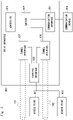
- the second method is described with reference to Fig. 1 .
- a communication device 901 and a communication device 904 communicate data through a wireless terminal 902 and a relay apparatus 903.
- the relay apparatus 903 is arranged oppositely to the wireless terminal 902 across a communication channel.
- the wireless terminal 902 and the relay apparatus 903 are each provided with a plurality of tunnel interfaces (communication tunnels) TU1 and TU2, and a tunneling protocol such as Generic Routing Encapsulation (GRE) or Layer 2 Tunneling Protocol (L2TP) is used for the tunnel interfaces TU1 and TU2.
- GRE Generic Routing Encapsulation
- L2TP Layer 2 Tunneling Protocol
- Access points 905 and 906 relay communications between the wireless terminal 902 and the relay apparatus 903.
- Wireless communications are performed between the wireless terminal 902 and the access points 905 and 906 (indicated by dashed lines in Figs. 1 to 3 ).
- the wireless terminal 902 and the relay apparatus 903 are described in further detail by using Figs. 2 and 3 .
- the wireless terminal 902 includes a communication interface 911, a switch 912, a controller 913, tunnel interfaces 914 and 915, and wireless interfaces 916 and 917.
- the relay apparatus 903 includes a communication interface 921, a switch 922, a controller 923, tunnel interfaces 924 and 925, and a wireless interface 926.
- the communication device 901 transmits a packet to the communication device 904, first, the communication device 901 transmits a packet to the communication interface 911.
- the transmitted packet is output by the switch 912 to a path of either the tunnel interface 914 or 915.
- the switch 912 can switch, under control of the controller 913, a communication path in such a way that a tunnel interface with better communication quality is selected for communication.
- the tunnel interface 914 or 915 encapsulates the acquired packet in accordance with a protocol such as GRE, and sends the encapsulated packet from either the wireless interface 916 or 917 connected thereto.
- the packet sent from either the wireless interface 916 or 917 is received by the wireless interface 926 of the relay apparatus 903 via either the access point 905 or 906.
- the packet encapsulated by the tunnel interface 914 is decapsulated (encapsulation is canceled) by the tunnel interface 924 associated to the tunnel interface 914.
- the packet encapsulated by the tunnel interface 915 is decapsulated by the tunnel interface 925 associated to the tunnel interface 915.
- the packet decapsulated by the tunnel interface 924 or 925 is output by the switch 922 to the communication interface 921.
- the communication interface 921 transmits the packet to the communication device 904.
- a packet transmitted from the communication device 904 to the communication interface 921 is output by the switch 922 to a path of either the tunnel interface 924 or 925.
- the switch 922 can switch, under control of the controller 923, a communication path in such a way that a tunnel interface with better communication quality is selected for communication.
- the tunnel interface 924 or 925 encapsulates the acquired packet in accordance with a protocol such as GRE, and sends the packet from the wireless interface 926 connected thereto.
- the sent packet is received by either the wireless interface 916 or 917 of the wireless terminal 902 via either the access point 905 or 906.
- the packet encapsulated by the tunnel interface 924 is decapsulated by the tunnel interface 914, and the packet encapsulated by the tunnel interface 925 is decapsulated by the tunnel interface 915.
- the decapsulated packet is output by the switch 922 to the communication interface 921, and the communication interface 921 transmits the packet to the communication device 901.
- Use of the second method allows for changing a communication path by setting external transmission source and destination addresses of an encapsulated packet according to a selected communication path. This eliminates need to use a packet of four-address configuration as in the first method. Further, changing a communication path involves no concern about occurrence of inconsistency in an ARP table, since there is no need to rewrite internal address information of an encapsulated packet.
- switches for a wireless terminal and a relay apparatus
- L2 switch and an L3 switch
- tunnels two kinds of tunnels are conceivable; an L2 tunnel and an L3 tunnel.
- a communication between the communication device 901 connected to the wireless terminal 902 and the communication device 904 connected to the relay apparatus 903 is an L2 connection.
- communication devices at opposite ends of a wireless communication channel are connected in L2.
- communication devices at opposite ends of a wireless communication are generally connected in L2.
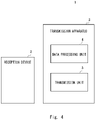
- Fig. 4 is a schematic diagram illustrating a configuration of a communication system 1 according to the first example embodiment.
- the communication system 1 includes a reception device 2 and a transmission apparatus 3.
- the reception device 2 is a device that communicates with the transmission apparatus 3, and the transmission apparatus 3 transmits communication data to the reception device 2 that is another device.
- the transmission apparatus 3 may transmit communication data by wire or wirelessly to the reception device 2.
- the reception device 2 may transfer received communication data to another device by wire or wirelessly.
- the reception device 2 or a device receiving transfer of communication data from the reception device 2 may wirelessly transmit communication data to a terminal configuring a wireless network (for example, a wireless LAN) with the device.
- a wireless network for example, a wireless LAN
- the transmission apparatus 3 includes a data processing unit 4 and a transmission unit 5.
- the data processing unit 4 encapsulates the communication data. However, at least either when communication data handled by the transmission apparatus 3 are multicast data or when communication data handled by the transmission apparatus 3 are broadcast data, the data processing unit 4 does not encapsulate the communication data. In other words, the data processing unit 4 may not encapsulate communication data when the communication data are multicast data or when the communication data are broadcast data, and may encapsulate communication data otherwise. Alternatively, the data processing unit 4 may not encapsulate communication data both when the communication data are multicast data and when the communication data are broadcast data.
- communication data are unicast data means that communication data are to be transmitted to one particular device.
- Communication data are multicast data means that communication data are to be transmitted to a plurality of particular devices.
- Communication data are broadcast data means that communication data are to be transmitted to all devices connected to a network through which the communication data are transmitted.
- a transmission method such as unicast, multicast, or broadcast is determined by assuming that, for example, a packet of communication data is a unicast packet, a multicast packet, or a broadcast packet, but not limited thereto.
- the data processing unit 4 outputs encapsulated communication data to the transmission unit 5.
- the transmission unit 5 transmits the communication data encapsulated by the data processing unit 4 to the reception device 2.
- the data processing unit 4 may not output not encapsulated multicast data or broadcast data to the transmission unit 5.
- the transmission apparatus 3 does not need to transfer the data to other apparatuses, since the broadcast data are transmitted by the another apparatus to all nodes (devices) on the same network as the apparatus.
- the transmission apparatus 3 does not need to transfer the data to the reception device 2. Therefore, the transmission apparatus 3 does not need to transmit the data to the reception device 2.
- communication data transmitted by multicast or broadcast are addressed to a plurality of devices as transmission destinations thereof, encapsulating data induces need to perform transmission processing individually on individual devices that are destinations of the data. This increases a communication load.
- communication data are not encapsulated at least either when the communication data are multicast data or when the communication data are broadcast data. This eliminates need to perform transmission processing individually on individual devices that are destinations of the data, and can prevent increase in a communication load caused by encapsulation.
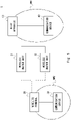
- Fig. 5 is a schematic diagram illustrating a configuration of a communication system S according to the second example embodiment.
- the communication system S includes a relay apparatus 10, a wireless terminal 20, wireless master units 31 and 32, and communication devices 40 and 50.
- the relay apparatus 10 and the communication device 40 form a network NW1
- the wireless terminal 20 and the communication device 50 form a network NW2.
- the number of wireless terminals 20, wireless master units 31 and 32, and communication devices 40 and 50 is not limited to one, but may be any number.
- a connection drawn by a solid line represents a wired communication
- a connection drawn by a dashed line represents a wireless communication.
- a wired communication is replaceable with a wireless communication.
- the relay apparatus 10 is a relay apparatus that relays a communication between the communication device 40 and the wireless terminal 20 or the communication device 50.
- the relay apparatus 10 temporarily receives, by wire, a packet transmitted by the communication device 40 or another communication device belonging to the network NW1 to the wireless terminal 20 or the communication device 50, and thereafter transfers the packet to the wireless terminal 20 or the communication device 50 through the wireless master unit 31 or 32.
- the relay apparatus 10 is equivalent to the transmission apparatus 3 according to the first example embodiment, and at least any of the wireless master units 31 and 32, the wireless terminal 20, and the communication device 50 is equivalent to the reception device 2 according to the first example embodiment.
- the relay apparatus 10 encapsulates a packet by using a protocol such as GRE or L2TP, and thereafter transmits the encapsulated packet to the NW2 side.
- the relay apparatus 10 encapsulates a packet as needed.
- the relay apparatus 10 can also receive a packet by wire transmitted from the NW2 side.
- the relay apparatus 10 processes the packet in the own apparatus.
- a destination of a received packet is the communication device 40 or another communication device belonging to the network NW1
- the relay apparatus 10 transfers the packet to the device.
- the relay apparatus 10 decapsulates the packet.
- the wireless terminal 20 communicates with the relay apparatus 10, the communication device 40, or another communication device belonging to the network NW1 via the wireless master unit 31 or 32, by wirelessly communicating with the wireless master units 31 and 32 using a wireless communication standard of a wireless LAN or the like. Further, the wireless terminal 20 communicates, by wire, also with the communication device 50 or another communication device belonging to the network NW2.
- the wireless terminal 20 transmits, to the relay apparatus 10 via the wireless master unit 31 or 32, a packet transmitted from the communication device 50 or another communication device belonging to the network NW2 or a packet generated and to be transmitted by the wireless terminal 20 itself. At this time, the wireless terminal 20 encapsulates a packet to be transmitted by using a protocol such as GRE or L2TP as needed. Further, the wireless terminal 20 temporarily receives a packet transmitted from the relay apparatus 10 via the wireless master unit 31 or 32. When a destination of a received packet is the own apparatus, the wireless terminal 20 processes the packet in the own apparatus. When a destination of a received packet is the communication device 50 or another communication device belonging to the network NW2, the wireless terminal 20 transfers the packet to the device. Furthermore, when a packet is encapsulated, the wireless terminal 20 decapsulates the packet.
- a protocol such as GRE or L2TP
- the communication devices 40 and 50 are communication devices that communicate with each other through the relay apparatus 10, the wireless master unit 31 or 32, and the wireless terminal 20.
- the communication device 40 belongs to NW1 on the relay apparatus 10 side
- the communication device 50 belongs to NW2 on the wireless terminal 20 side.
- Fig. 6 is a block diagram illustrating a configuration of the relay apparatus 10.
- the relay apparatus 10 includes a communication unit 101, a packet type determination unit 102, a transfer processing unit 103, and a communication unit 104.
- the communication unit 101 is a communication unit connected to the NW1 side, and receives a packet from a device (for example, the communication device 40) on the NW1 side. Further, the communication unit 101 transmits a packet received from the NW2 side to a device (for example, the communication device 40) on the NW1 side that is a destination of the packet.
- the packet to be transmitted to a device on the NW1 side is a unicast packet decapsulated by the transfer processing unit 103, or a multicast packet or a broadcast packet received in a non-encapsulated state from the NW2 side.
- the packet type determination unit 102 refers to a destination address of a packet received by the communication unit 101, and determines whether the packet is a unicast packet. When the packet is a unicast packet, the packet is output to the transfer processing unit 103. Further, when the packet is not a unicast packet (in other words, the packet is a broadcast packet or a multicast packet), the packet is not output to the transfer processing unit 103, but is discarded. The packet discarded herein is transferred to the wireless master unit 31 or 32 by a transfer function of a switching hub (not illustrated in Fig. 6 ). When the transferred packet is a multicast packet, normal transmission processing for a multicast packet is performed on a plurality of particular devices that are destinations of the multicast packet. When the transferred packet is a broadcast packet, the packet is broadcasted as a broadcast frame to all the wireless terminals 20 connected to the wireless master unit 31 or 32.
- the transfer processing unit 103 determines, for a packet received by the communication unit 104, whether a packet is an encapsulated unicast packet. When determining that a packet to be determined is an encapsulated unicast packet, the transfer processing unit 103 decapsulates the packet. When a destination of a decapsulated packet is other than the own apparatus (the relay apparatus 10), the transfer processing unit 103 outputs the packet to the communication unit 101. Further, when a destination of a decapsulated packet is the own apparatus, the transfer processing unit 103 performs normal packet reception processing for the packet. In other words, the transfer processing unit 103 executes both of encapsulation and decapsulation of a packet being relayed by the relay apparatus 10.
- the communication unit 104 is a communication unit connected to the NW2 side through the wireless master unit 31 or 32, receives a packet from a device (for example, the communication device 50) on the NW2 side, and transmits a packet output from the transfer processing unit 103 to a device on the NW2 side.
- the communication unit 104 and the switching hub are equivalent to the transmission unit 5 according to the first example embodiment.
- the communication units 101 and 104 are implemented as individual components in the relay apparatus 10 in the second example embodiment, but may be implemented as a single component in the relay apparatus 10.
- the wireless communication unit 201 is a communication unit connected to the NW1 side through the wireless master unit 31 or 32, and functions as a reception unit that receives a packet from a device (for example, the communication device 40) on the NW1 side by a wireless communication. Further, the wireless communication unit 201 transmits a packet encapsulated by the transfer processing unit 203 to a device in NW1.
- the packet type determination unit 202 determines whether a received packet is an encapsulated unicast packet addressed to a device (for example, the communication device 50) on the NW2 side or addressed to the own apparatus (the wireless terminal 20). Further, when a received packet is not an encapsulated unicast packet, the packet type determination unit 202 determines whether the received packet is a broadcast packet or a multicast packet that is addressed to a device on the NW2 side (in other words, that should be transmitted to a device on the NW2 side), or a packet that is not addressed to a device on the NW2 side or the own apparatus (in other words, that should not be transmitted to a device on the NW2 side). After determination, the packet type determination unit 202 outputs the packet together with information indicating a result of determination to the transfer processing unit 203.
- the transfer processing unit 203 processes, for a packet received by the wireless communication unit 201, a packet according to a result of determination of the packet type determination unit 202. Specifically, when the packet type determination unit 202 determines that a packet to be determined is an encapsulated unicast packet addressed to a device on the NW2 side or the own apparatus, the transfer processing unit 203 functions as a decapsulation unit that decapsulates the packet. When a destination of the decapsulated packet is other than the own apparatus (the wireless terminal 20), the transfer processing unit 203 outputs the packet to the communication unit 204. Further, when a destination of the decapsulated packet is the own apparatus, the transfer processing unit 203 performs normal packet reception processing for the packet.
- the transfer processing unit 203 when the packet type determination unit 202 determines that a received packet is a broadcast packet or a multicast packet that is addressed to a device on the NW2 side, the transfer processing unit 203 outputs the packet to the communication unit 204 without encapsulating or decapsulating the packet. When the packet type determination unit 202 determines that a received packet is a packet that is not addressed to a device on the NW2 side or the own apparatus, the transfer processing unit 203 discards the packet.
- the transfer processing unit 203 encapsulates a packet received from the communication unit 204 and to be transmitted to a device on the NW1 side, and outputs the encapsulated packet to the wireless communication unit 201. Specifically, the transfer processing unit 203 selects the communication device 40 appropriate as a destination by referring to a destination media access control (MAC) address of a packet to be transferred. The transfer processing unit 203 encapsulates a packet by using a packet addressed to the communication device 40. Note that, for a method of selecting a transfer destination, an approach similar to normal MAC address learning of a switching hub can be used.
- MAC media access control
- the communication unit 204 is a communication unit connected to the NW2 side, and transmits a packet to a device (for example, the communication device 50) on the NW2 side.
- the packet to be transmitted is a packet decapsulated by the transfer processing unit 203 or a multicast packet or a broadcast packet transferred as is without being decapsulated by the transfer processing unit 203.
- the communication unit 204 transmits the packet to the wireless terminal 20.
- the communication unit 204 receives a packet to be transmitted to a device on the NW1 side from a device on the NW2 side, and outputs the packet to the transfer processing unit 203.
- the transfer processing unit 203 needs to encapsulate or decapsulate a packet at a time of communication using a unicast packet, the wireless communication unit 201 and the communication unit 204 are not directly connected (a direct connection is, for example, a connection in a bridge configuration.).
- the packet type determination unit 202 and the transfer processing unit 203 need to output a multicast packet or a broadcast packet other than a unicast packet received by the wireless communication unit 201 to the communication unit 204, as described above.
- processing executed by the relay apparatus 10 and the wireless terminal 20 when the communication device 40 transmits a data packet to the communication device 50 is described with reference to Figs. 8 and 9 .
- processing of the relay apparatus 10 is described with reference to Fig. 8 .
- the transfer processing unit 103 discards the packet (Step S105).
- the packet discarded herein is a multicast packet or a broadcast packet, and is thus transferred to the wireless master unit 31 or 32 by a transfer function of a switching hub.
- the transferred packet is a multicast packet, normal transmission processing for a multicast packet is performed on a plurality of particular devices that are destinations of the multicast packet.
- the transferred packet is a broadcast packet, the packet is broadcasted as a broadcast frame to all the wireless terminals 20 connected to the wireless master unit 31 or 32.
- the transfer processing unit 203 decapsulates the packet (Step S203). Thereafter, the transfer processing unit 203 refers to a destination address of the decapsulated packet, determines that a destination is the communication device 50, and outputs the packet to the communication unit 204.
- the communication unit 204 transmits the decapsulated packet to the communication device 50 (Step S204). Note that, when a destination is the wireless terminal 20, the wireless terminal 20 itself performs reception processing for the packet.
- the packet type determination unit 202 determines whether the packet to be determined is a broadcast packet or a multicast packet that is addressed to a device on the NW2 side (Step S205).
- the transfer processing unit 203 outputs the packet to the communication unit 204 without encapsulating or decapsulating the packet.
- the communication unit 204 transmits the packet to a device on the NW2 side that is a destination (Step S206). For example, when the packet is a broadcast packet, the communication unit 204 transmits the packet to be transmitted simultaneously to all devices belonging to NW2.
- the transfer processing unit 203 discards the packet (Step S207).
- the packet type determination unit 102 of the relay apparatus 10 determines a packet to be transmitted as a unicast packet, and the transfer processing unit 103 encapsulates the unicast packet.
- the packet type determination unit 202 of the wireless terminal 20 determines a received packet as a unicast packet, and the transfer processing unit 203 decapsulates the unicast packet.
- the relay apparatus 10 when ten wireless terminals 20 are wirelessly connected to the wireless master unit 31 and the relay apparatus 10 encapsulates and transmits a broadcast packet to the wireless terminals 20, the relay apparatus 10 needs to generate ten unicast packets.
- a wireless communication load is reduced to about 1/10. In other words, a radio frequency band for use in communication is reduced to about 1/10.
- the above-described processing executed by the relay apparatus 10 or the wireless terminal 20 is applicable to not only wireless communication data, but also communication data transmitted by wire.
- the configuration of the communication system or the communication apparatus described in the first and second example embodiments is applicable to a factory (a so-called smart factory) or the like that utilizes the Internet of things (IoT) technology and includes a large number of senser apparatuses wirelessly connected to a management apparatus.
- a factory a so-called smart factory
- IoT Internet of things
- a plurality of communication devices 50 are provided in each of a plurality of areas (production lines, floors, and the like), and may act as sensor apparatuses for detecting a measurement target.
- a communication for transmitting a command to control the sensor apparatuses is performed as a communication using a unicast packet.
- a communication for distributing a video taken by a camera or the like arranged in the factory is performed as a communication using a multicast packet. This is because the video distribution is performed assuming that a video is not only displayed on a central display panel (for example, a display unit of the communication device 40), but also transmitted simultaneously to a plurality of devices, for example, as in a case in which on-site workers use tablets to see a state inside the factory.
- a communication for transmitting an ARP packet to the sensor apparatuses at a time of starting a unicast communication is performed as a communication using a broadcast packet.
- the transmission apparatus 3 according to the first example embodiment or the relay apparatus 10 according to the second example embodiment may select encapsulation/decapsulation of a multicast packet or a broadcast packet, based on a status of a wireless communication.
- the status of a wireless communication described herein is, for example, (a) an amount of multicast packets or broadcast packets per unit time (for example, the number of packets per second), (b) the total number of communication devices connected to a wireless communication network, (c) a degree of congestion in a network, and (d) wireless communication quality.
- the relay apparatus 10 detects an amount of broadcast packets to be transmitted to the NW2 side per unit time, and, when the detected amount is less than a predetermined threshold value, the transfer processing unit 103 encapsulates a packet to be transmitted even when the packet type determination unit 102 determines the packet as a broadcast packet.
- the communication unit 104 transmits the encapsulated broadcast packet to the NW2 side.
- the relay apparatus 10 transmits the broadcast packet to the NW2 side without encapsulating the broadcast packet, as described in detail in the second example embodiment.
- the control described in the fourth example embodiment may be performed by a wireless communication, or may be performed by a communication by wire.
- the relay apparatus 10 can acquire at least one piece of information including the number of the wireless terminals 20 for receiving packet data by a wireless communication, a degree of congestion of a wireless communication between the wireless terminal 20 and the wireless master unit 31 or 32, and quality of a wireless communication.
- the degree of congestion of a wireless communication include, for example, a quantity of packets (especially, the number of packets per unit time) being transferred by the relay apparatus 10 and a ratio of time being in a busy time of a wireless communication.
- the quality of a wireless communication include a received signal strength indicator (RSSI), a packet loss rate, and a packet retransmission rate.
- RSSI received signal strength indicator
- the degree of congestion of a wireless communication and the quality of a wireless communication are represented by such quantitative numerical values.
- a communication is determined as congested when the quantity of packets or the ratio of time being in a busy time is equal to or more than a predetermined threshold value, and a communication is determined as not congested when the quantity of packets or the ratio of time being in a busy time is less than a predetermined threshold value.
- the quality of a wireless communication is determined as high when the received signal strength indicator is equal to or more than a predetermined threshold value, and the quality of a wireless communication is determined as low when the received signal strength indicator is less than a predetermined threshold value.
- the quality of a wireless communication is determined as high when the packet loss rate and the packet retransmission rate are less than a predetermined threshold value, and the quality of a wireless communication is determined as low when the packet loss rate and the packet retransmission rate are equal to or more than a predetermined threshold value.
- These pieces of information may be acquired by the relay apparatus 10 by being detected intermittently or constantly by the wireless terminal 20 or the wireless master unit 31 or 32 and transmitted to the relay apparatus 10.
- the information may be stored in the relay apparatus 10, or may be acquired by the relay apparatus 10 by being input to the relay apparatus 10 by an administrator.
- the relay apparatus 10 can also detect these pieces of information.
- the relay apparatus 10 transmits a broadcast packet, the relay apparatus 10 changes, based on the acquired information, whether to encapsulate the packet by the transfer processing unit 103.
- the transfer processing unit 103 encapsulates a packet to be transmitted by the relay apparatus 10 even when the packet is determined as a broadcast packet by the packet type determination unit 102. Conversely, when the number of the wireless terminals 20 is equal to or more than a predetermined threshold value, the relay apparatus 10 transmits a broadcast packet to the NW2 side without encapsulating the broadcast packet, as described in detail in the second example embodiment.
- the transfer processing unit 103 may encapsulate a packet to be transmitted by the relay apparatus 10 even when the packet is determined as a broadcast packet by the packet type determination unit 102. Similar processing can be performed even when the quality of a wireless communication is high. Conversely, when the degree of congestion of a wireless communication between the wireless terminal 20 and the wireless master unit 31 or 32 is high, the relay apparatus 10 may transmit a broadcast packet to the NW2 side without encapsulating the broadcast packet. Similar processing can be performed even when the quality of a wireless communication is low.
- the packet When a packet encapsulated by the wireless terminal 20 is received, the packet is determined as encapsulated by the packet type determination unit 202, and the packet is decapsulated by the transfer processing unit 203. Then, the communication unit 204 transmits the decapsulated broadcast packet to a device on the NW2 side.
- a broadcast packet In a wireless communication using a wireless LAN, use of a broadcast packet enables distribution of data with one frame to all wireless terminals connected to a wireless master unit, which provides high communication efficiency.
- a communication using a unicast packet for example, acknowledgement and retransmission by use of the transmission control protocol (TCP) are performed, whereas, in a communication using a broadcast packet, such processing is not performed. Therefore, a communication using a broadcast packet can be said as having low reliability of a wireless communication compared with a communication using a unicast packet.
- TCP transmission control protocol
- parameters (a) to (d) are listed as statuses of a wireless communication, only one of these parameters may be used, or two or more parameters of these parameters may be used. Further, the above-described processing can be executed also by using a multicast packet rather than a broadcast packet.
- the relay apparatus 10 may select whether to encapsulate or not to encapsulate a packet according to required quality of a communication application. Specifically, the transfer processing unit 103 of the relay apparatus 10 encapsulates a broadcast packet to be transmitted in a communication for an application with a high latency requirement, thereby achieving a highly reliable communication by unicast.
- the communication for an application with a high latency requirement is, for example, transmission of a control command to a device in a factory, an automatic guided vehicle (AGV), and the like.
- the transfer processing unit 103 of the relay apparatus 10 does not encapsulate a broadcast packet in an application with a low latency requirement, thereby reducing a load on a wireless communication.
- the application with a low latency requirement is, for example, a communication for regularly collecting an operation log of a device in a factory. This processing can hold balance between both keeping a low load on a wireless communication and achieving required quality of an application. Further, the above-described processing can be executed also by using a multicast packet rather than a broadcast packet. Further, the control described in the fifth example embodiment may be performed by a wireless communication, or may be performed by a communication by wire.
- the transmission apparatus 3 according to the first example embodiment and the relay apparatus 10 or the wireless terminal 20 according to the second example embodiment may include a plurality of tunnel interfaces, as described in the related art illustrated in Figs. 1 to 3 .
- Each apparatus or terminal selects a tunnel interface with best communication quality from among a plurality of tunnel interfaces, and the selected tunnel interface functions as a communication unit that transmits or receives data.
- a function of the communication unit is as described in detail in the first and second example embodiments.
- An L2 tunnel can be used as a tunnel interface, and an L2 switch can be used as a switch for use in switching of a tunnel interface.
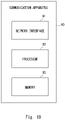
- Fig. 10 is a block diagram illustrating a hardware configuration example of the transmission apparatus 3 according to the first example embodiment and the relay apparatus 10 or the wireless terminal 20 according to the second example embodiment.
- a communication apparatus 90 that is a general term for the above-described apparatus and the like includes a network interface 91, a processor 92, and a memory 93.
- the network interface 91 can transmit and receive, by a wireless communication or a communication by wire, data to and from an apparatus and the like connected with the communication apparatus 90.
- the processor 92 performs processing of the apparatus described in the above example embodiments by reading software (a computer program) from the memory 93 and executing the software.
- the processor 92 may be, for example, a microprocessor, a micro-processing unit (MPU), or a central processing unit (CPU).
- the processor 92 may include a plurality of processors.
- the memory 93 is configured by a combination of a volatile memory and a non-volatile memory.
- the memory 93 may include a storage arranged separately from the processor 92.
- the processor 92 may access the memory 93 through an unillustrated input/output (I/O) interface.
- the memory 93 is used to store software modules.
- the processor 92 can perform processing of the apparatus and the like described in the above example embodiments by reading these software modules from the memory 93 and executing the software modules.
- each processor included in the apparatus and the like according to the above example embodiments executes one or a plurality of programs that include instructions for causing a computer to perform an algorithm described by using the drawings. This processing can achieve the communication method described in the first and second example embodiments.
- a program can be stored by using various types of non-transitory computer readable media and supplied to a computer.
- the non-transitory computer readable media include various types of tangible storage media.
- Examples of the non-transitory computer readable media include a magnetic storage medium (for example, a flexible disk, a magnetic tape, and a hard disk drive), a magneto-optical storage medium (for example, a magneto-optical disk), a CD-read only memory (ROM), a CD-R, a CD-R/W, and a semiconductor memory (for example, a mask ROM, a programmable ROM (PROM), an erasable PROM (EPROM), a flash ROM, and a random access memory (RAM)).
- a magnetic storage medium for example, a flexible disk, a magnetic tape, and a hard disk drive
- a magneto-optical storage medium for example, a magneto-optical disk
- ROM read only memory
- CD-R compact disc read only memory
- a program may be supplied to a computer by a various types of transitory computer readable media.
- the transitory computer readable media include an electrical signal, an optical signal, and an electromagnetic wave.
- the transitory computer readable media can supply a program to a computer through a wired communication channel such as an electrical wire and an optical fiber or a wireless communication channel.
Landscapes
- Engineering & Computer Science (AREA)
- Computer Networks & Wireless Communication (AREA)
- Signal Processing (AREA)
- Computer Security & Cryptography (AREA)
- Multimedia (AREA)
- Data Exchanges In Wide-Area Networks (AREA)
- Mobile Radio Communication Systems (AREA)
Applications Claiming Priority (2)
| Application Number | Priority Date | Filing Date | Title |
|---|---|---|---|
| JP2020107454 | 2020-06-23 | ||
| PCT/JP2021/020533 WO2021261175A1 (ja) | 2020-06-23 | 2021-05-28 | 通信システム、通信装置、通信方法及び非一時的なコンピュータ可読媒体 |
Publications (2)
| Publication Number | Publication Date |
|---|---|
| EP4007221A1 true EP4007221A1 (de) | 2022-06-01 |
| EP4007221A4 EP4007221A4 (de) | 2022-11-23 |
Family
ID=79282515
Family Applications (1)
| Application Number | Title | Priority Date | Filing Date |
|---|---|---|---|
| EP21829584.8A Withdrawn EP4007221A4 (de) | 2020-06-23 | 2021-05-28 | Kommunikationssystem, -vorrichtung und -verfahren sowie nichtflüchties computerlesbares medium |
Country Status (4)
| Country | Link |
|---|---|
| US (1) | US20220286893A1 (de) |
| EP (1) | EP4007221A4 (de) |
| JP (1) | JP7302742B2 (de) |
| WO (1) | WO2021261175A1 (de) |
Family Cites Families (12)
| Publication number | Priority date | Publication date | Assignee | Title |
|---|---|---|---|---|
| US20070189290A1 (en) * | 2006-02-14 | 2007-08-16 | Packethop, Inc. | Dynamic multicasting scheme for mesh networks |
| JP4629639B2 (ja) | 2006-09-29 | 2011-02-09 | 富士通株式会社 | パケット中継装置 |
| JP4825696B2 (ja) * | 2007-01-22 | 2011-11-30 | アラクサラネットワークス株式会社 | パケット中継装置 |
| CN101325536A (zh) * | 2007-06-15 | 2008-12-17 | 上海贝尔阿尔卡特股份有限公司 | WiMAX系统的基站和网关中控制组播数据包传输的方法及装置 |
| CN101946458B (zh) * | 2008-02-25 | 2013-11-20 | 艾利森电话股份有限公司 | 组播数据的传送 |
| JP5224418B2 (ja) | 2011-01-11 | 2013-07-03 | 古河電気工業株式会社 | データ中継方法、その装置およびその装置を用いたデータ中継システム |
| US8625406B2 (en) * | 2011-02-28 | 2014-01-07 | Verizon Patent And Licensing Inc. | Multicast fast re-route |
| JP6379702B2 (ja) | 2014-06-06 | 2018-08-29 | 日本電気株式会社 | データ転送システム、データ転送サーバ、データ転送方法、および、プログラム |
| US10326694B2 (en) * | 2016-04-08 | 2019-06-18 | Cisco Technology, Inc. | Asymmetric multi-destination traffic replication in overlay networks |
| US10681000B2 (en) * | 2017-06-30 | 2020-06-09 | Nicira, Inc. | Assignment of unique physical network addresses for logical network addresses |
| JP7156016B2 (ja) | 2018-12-27 | 2022-10-19 | 株式会社豊田中央研究所 | 熱電併給システム |
| US11184274B2 (en) * | 2019-05-31 | 2021-11-23 | Microsoft Technology Licensing, Llc | Multi-cast support for a virtual network |
-
2021
- 2021-05-28 US US17/637,157 patent/US20220286893A1/en not_active Abandoned
- 2021-05-28 WO PCT/JP2021/020533 patent/WO2021261175A1/ja not_active Ceased
- 2021-05-28 EP EP21829584.8A patent/EP4007221A4/de not_active Withdrawn
- 2021-05-28 JP JP2022532460A patent/JP7302742B2/ja active Active
Also Published As
| Publication number | Publication date |
|---|---|
| EP4007221A4 (de) | 2022-11-23 |
| US20220286893A1 (en) | 2022-09-08 |
| JP7302742B2 (ja) | 2023-07-04 |
| WO2021261175A1 (ja) | 2021-12-30 |
| JPWO2021261175A1 (de) | 2021-12-30 |
Similar Documents
| Publication | Publication Date | Title |
|---|---|---|
| US11882035B2 (en) | Communication method and communications apparatus | |
| US11856632B2 (en) | Method and apparatus for implementing a forwarding path on a user plane function network element | |
| US9838219B2 (en) | Virtual local area network mismatch detection in networks | |
| EP3208974A1 (de) | Steuerungsvorrichtung, -system und -verfahren für stromleitungsträgerkommunikationsendgerät | |
| US9210096B2 (en) | Routing method and node equipment | |
| CN113938405A (zh) | 一种数据处理的方法、装置 | |
| US10499305B2 (en) | Method for transmitting data in wireless local area network mesh network, apparatus, and system | |
| JP2016103724A (ja) | 中継システムおよびスイッチ装置 | |
| US20100085969A1 (en) | Communication network, information processor and address assigning method | |
| US9973444B2 (en) | Relay system and switching device | |
| JP4993202B2 (ja) | フィールドネットワークシステム | |
| JP5092241B2 (ja) | ネットワークシステム | |
| EP4007221A1 (de) | Kommunikationssystem, -vorrichtung und -verfahren sowie nichtflüchties computerlesbares medium | |
| KR102210357B1 (ko) | G.hn 표준에 따라 레거시 G.hn 릴레이를 지원하는 한편 1905.1 릴레이 (MAC 릴레이)를 지원하기 위해 G.hn 노드들을 인에이블하기 위한 시스템 및 방법 | |
| EP3070889A1 (de) | Zugangsnetzwerkvorrichtung, verwaltungsvorrichtung, kommunikationssystem, informationsbereitstellungsverfahren, verwaltungsverfahren und programm | |
| JP2002094516A (ja) | フレーム通信方法、フレーム通信装置および記録媒体 | |
| EP2978177B1 (de) | Gateway-vorrichtung | |
| US11265798B2 (en) | Method and radio communication system for an industrial automation system | |
| US12120611B2 (en) | Wake-up by a network device | |
| US20160127271A1 (en) | Relay System and Switching Device | |
| US9622146B2 (en) | Transmitting apparatus, receiving apparatus, managing apparatus, and computer readable medium | |
| EP4007220A1 (de) | Kommunikationsvorrichtung, -system, -verfahren und kommunikationsprogramm, das darin nichtflüchtiges computerlesbare medien speichert | |
| US20220078636A1 (en) | Communication apparatus and communication control method | |
| US20250063002A1 (en) | Communication system, communication apparatus, communication method, and non-transitory computer-readable medium storing communication program | |
| US20250080204A1 (en) | Range extender for home automation network |
Legal Events
| Date | Code | Title | Description |
|---|---|---|---|
| STAA | Information on the status of an ep patent application or granted ep patent |
Free format text: STATUS: THE INTERNATIONAL PUBLICATION HAS BEEN MADE |
|
| PUAI | Public reference made under article 153(3) epc to a published international application that has entered the european phase |
Free format text: ORIGINAL CODE: 0009012 |
|
| STAA | Information on the status of an ep patent application or granted ep patent |
Free format text: STATUS: REQUEST FOR EXAMINATION WAS MADE |
|
| 17P | Request for examination filed |
Effective date: 20220228 |
|
| AK | Designated contracting states |
Kind code of ref document: A1 Designated state(s): AL AT BE BG CH CY CZ DE DK EE ES FI FR GB GR HR HU IE IS IT LI LT LU LV MC MK MT NL NO PL PT RO RS SE SI SK SM TR |
|
| STAA | Information on the status of an ep patent application or granted ep patent |
Free format text: STATUS: THE APPLICATION HAS BEEN WITHDRAWN |
|
| A4 | Supplementary search report drawn up and despatched |
Effective date: 20221025 |
|
| RIC1 | Information provided on ipc code assigned before grant |
Ipc: H04L 12/46 20060101AFI20221019BHEP |
|
| 18W | Application withdrawn |
Effective date: 20221101 |