EP4007060A1 - Secondary battery and battery pack comprising secondary battery - Google Patents
Secondary battery and battery pack comprising secondary battery Download PDFInfo
- Publication number
- EP4007060A1 EP4007060A1 EP20879491.7A EP20879491A EP4007060A1 EP 4007060 A1 EP4007060 A1 EP 4007060A1 EP 20879491 A EP20879491 A EP 20879491A EP 4007060 A1 EP4007060 A1 EP 4007060A1
- Authority
- EP
- European Patent Office
- Prior art keywords
- short
- secondary battery
- circuit part
- separator
- electrode tab
- Prior art date
- Legal status (The legal status is an assumption and is not a legal conclusion. Google has not performed a legal analysis and makes no representation as to the accuracy of the status listed.)
- Pending
Links
Images



Classifications
-
- H—ELECTRICITY
- H01—ELECTRIC ELEMENTS
- H01M—PROCESSES OR MEANS, e.g. BATTERIES, FOR THE DIRECT CONVERSION OF CHEMICAL ENERGY INTO ELECTRICAL ENERGY
- H01M50/00—Constructional details or processes of manufacture of the non-active parts of electrochemical cells other than fuel cells, e.g. hybrid cells
- H01M50/50—Current conducting connections for cells or batteries
- H01M50/569—Constructional details of current conducting connections for detecting conditions inside cells or batteries, e.g. details of voltage sensing terminals
-
- H—ELECTRICITY
- H01—ELECTRIC ELEMENTS
- H01M—PROCESSES OR MEANS, e.g. BATTERIES, FOR THE DIRECT CONVERSION OF CHEMICAL ENERGY INTO ELECTRICAL ENERGY
- H01M10/00—Secondary cells; Manufacture thereof
- H01M10/42—Methods or arrangements for servicing or maintenance of secondary cells or secondary half-cells
- H01M10/4235—Safety or regulating additives or arrangements in electrodes, separators or electrolyte
-
- H—ELECTRICITY
- H01—ELECTRIC ELEMENTS
- H01M—PROCESSES OR MEANS, e.g. BATTERIES, FOR THE DIRECT CONVERSION OF CHEMICAL ENERGY INTO ELECTRICAL ENERGY
- H01M10/00—Secondary cells; Manufacture thereof
- H01M10/02—Details
-
- H—ELECTRICITY
- H01—ELECTRIC ELEMENTS
- H01M—PROCESSES OR MEANS, e.g. BATTERIES, FOR THE DIRECT CONVERSION OF CHEMICAL ENERGY INTO ELECTRICAL ENERGY
- H01M50/00—Constructional details or processes of manufacture of the non-active parts of electrochemical cells other than fuel cells, e.g. hybrid cells
- H01M50/10—Primary casings; Jackets or wrappings
- H01M50/102—Primary casings; Jackets or wrappings characterised by their shape or physical structure
- H01M50/105—Pouches or flexible bags
-
- H—ELECTRICITY
- H01—ELECTRIC ELEMENTS
- H01M—PROCESSES OR MEANS, e.g. BATTERIES, FOR THE DIRECT CONVERSION OF CHEMICAL ENERGY INTO ELECTRICAL ENERGY
- H01M50/00—Constructional details or processes of manufacture of the non-active parts of electrochemical cells other than fuel cells, e.g. hybrid cells
- H01M50/40—Separators; Membranes; Diaphragms; Spacing elements inside cells
-
- H—ELECTRICITY
- H01—ELECTRIC ELEMENTS
- H01M—PROCESSES OR MEANS, e.g. BATTERIES, FOR THE DIRECT CONVERSION OF CHEMICAL ENERGY INTO ELECTRICAL ENERGY
- H01M50/00—Constructional details or processes of manufacture of the non-active parts of electrochemical cells other than fuel cells, e.g. hybrid cells
- H01M50/40—Separators; Membranes; Diaphragms; Spacing elements inside cells
- H01M50/409—Separators, membranes or diaphragms characterised by the material
- H01M50/411—Organic material
- H01M50/414—Synthetic resins, e.g. thermoplastics or thermosetting resins
- H01M50/417—Polyolefins
-
- H—ELECTRICITY
- H01—ELECTRIC ELEMENTS
- H01M—PROCESSES OR MEANS, e.g. BATTERIES, FOR THE DIRECT CONVERSION OF CHEMICAL ENERGY INTO ELECTRICAL ENERGY
- H01M50/00—Constructional details or processes of manufacture of the non-active parts of electrochemical cells other than fuel cells, e.g. hybrid cells
- H01M50/40—Separators; Membranes; Diaphragms; Spacing elements inside cells
- H01M50/489—Separators, membranes, diaphragms or spacing elements inside the cells, characterised by their physical properties, e.g. swelling degree, hydrophilicity or shut down properties
-
- H—ELECTRICITY
- H01—ELECTRIC ELEMENTS
- H01M—PROCESSES OR MEANS, e.g. BATTERIES, FOR THE DIRECT CONVERSION OF CHEMICAL ENERGY INTO ELECTRICAL ENERGY
- H01M50/00—Constructional details or processes of manufacture of the non-active parts of electrochemical cells other than fuel cells, e.g. hybrid cells
- H01M50/50—Current conducting connections for cells or batteries
- H01M50/531—Electrode connections inside a battery casing
-
- H—ELECTRICITY
- H01—ELECTRIC ELEMENTS
- H01M—PROCESSES OR MEANS, e.g. BATTERIES, FOR THE DIRECT CONVERSION OF CHEMICAL ENERGY INTO ELECTRICAL ENERGY
- H01M50/00—Constructional details or processes of manufacture of the non-active parts of electrochemical cells other than fuel cells, e.g. hybrid cells
- H01M50/50—Current conducting connections for cells or batteries
- H01M50/543—Terminals
- H01M50/547—Terminals characterised by the disposition of the terminals on the cells
- H01M50/548—Terminals characterised by the disposition of the terminals on the cells on opposite sides of the cell
-
- H—ELECTRICITY
- H01—ELECTRIC ELEMENTS
- H01M—PROCESSES OR MEANS, e.g. BATTERIES, FOR THE DIRECT CONVERSION OF CHEMICAL ENERGY INTO ELECTRICAL ENERGY
- H01M50/00—Constructional details or processes of manufacture of the non-active parts of electrochemical cells other than fuel cells, e.g. hybrid cells
- H01M50/50—Current conducting connections for cells or batteries
- H01M50/572—Means for preventing undesired use or discharge
- H01M50/574—Devices or arrangements for the interruption of current
-
- H—ELECTRICITY
- H01—ELECTRIC ELEMENTS
- H01M—PROCESSES OR MEANS, e.g. BATTERIES, FOR THE DIRECT CONVERSION OF CHEMICAL ENERGY INTO ELECTRICAL ENERGY
- H01M50/00—Constructional details or processes of manufacture of the non-active parts of electrochemical cells other than fuel cells, e.g. hybrid cells
- H01M50/50—Current conducting connections for cells or batteries
- H01M50/572—Means for preventing undesired use or discharge
- H01M50/574—Devices or arrangements for the interruption of current
- H01M50/581—Devices or arrangements for the interruption of current in response to temperature
-
- H—ELECTRICITY
- H01—ELECTRIC ELEMENTS
- H01M—PROCESSES OR MEANS, e.g. BATTERIES, FOR THE DIRECT CONVERSION OF CHEMICAL ENERGY INTO ELECTRICAL ENERGY
- H01M50/00—Constructional details or processes of manufacture of the non-active parts of electrochemical cells other than fuel cells, e.g. hybrid cells
- H01M50/50—Current conducting connections for cells or batteries
- H01M50/572—Means for preventing undesired use or discharge
- H01M50/584—Means for preventing undesired use or discharge for preventing incorrect connections inside or outside the batteries
- H01M50/586—Means for preventing undesired use or discharge for preventing incorrect connections inside or outside the batteries inside the batteries, e.g. incorrect connections of electrodes
-
- H—ELECTRICITY
- H01—ELECTRIC ELEMENTS
- H01M—PROCESSES OR MEANS, e.g. BATTERIES, FOR THE DIRECT CONVERSION OF CHEMICAL ENERGY INTO ELECTRICAL ENERGY
- H01M2200/00—Safety devices for primary or secondary batteries
- H01M2200/10—Temperature sensitive devices
-
- Y—GENERAL TAGGING OF NEW TECHNOLOGICAL DEVELOPMENTS; GENERAL TAGGING OF CROSS-SECTIONAL TECHNOLOGIES SPANNING OVER SEVERAL SECTIONS OF THE IPC; TECHNICAL SUBJECTS COVERED BY FORMER USPC CROSS-REFERENCE ART COLLECTIONS [XRACs] AND DIGESTS
- Y02—TECHNOLOGIES OR APPLICATIONS FOR MITIGATION OR ADAPTATION AGAINST CLIMATE CHANGE
- Y02E—REDUCTION OF GREENHOUSE GAS [GHG] EMISSIONS, RELATED TO ENERGY GENERATION, TRANSMISSION OR DISTRIBUTION
- Y02E60/00—Enabling technologies; Technologies with a potential or indirect contribution to GHG emissions mitigation
- Y02E60/10—Energy storage using batteries
Definitions
- the present invention relates to a secondary battery and a battery pack including the secondary battery, and more particularly, to a secondary battery having a structure that is capable of preventing ignition from occurring when the secondary battery increases in temperature, and a battery pack including the secondary battery.
- Secondary batteries that are repetitively chargeable and dischargeable may be classified into pouch type secondary batteries, prismatic type secondary batteries, and cylindrical type secondary batteries according to their manufacturing methods or structures.
- a pouch type secondary battery has a structure in which an electrode assembly is accommodated in a pouch having the form of a sheet.
- the pouch type secondary battery has advantages in terms of simplicity of a manufacturing method and a capacity per unit volume when compared to other types of secondary batteries and thus are being widely used in various fields.
- the secondary battery has a problem that explosion or fire may occur during the use. For example, if the secondary battery abnormally increases in temperature due to an abnormal operation of the secondary battery, the explosion or fire may occur.
- An object of the present invention for solving the above problem is to prevent explosion or fire of a secondary battery from occurring by inducing short circuit in the secondary battery when the secondary battery abnormally increases in temperature.
- a secondary battery including: an electrode assembly having a structure, in which a positive electrode, a separator, a negative electrode, and a separator are alternately disposed, the electrode assembly including a positive electrode tab protruding from the positive electrode and a negative electrode tab protruding from the negative electrode; an exterior configured to accommodate the electrode assembly; and a short-circuit part accommodated in the exterior and having electrical conductivity, wherein the short-circuit part is attached to the separator in the electrode assembly, the short-circuit part is spaced apart from the positive electrode tab and the negative electrode tab at a temperature less than a predetermined temperature, and the short-circuit part is in contact with the positive electrode tab and the negative electrode tab by contraction of the separator, to which the short-circuit part is attached, at a temperature equal to or greater than the predetermined temperature to electrically connect the positive electrode tab to the negative electrode tab.
- the positive electrode tab may protrude from one side of the electrode assembly, and the negative electrode tab may protrude from the other side of the electrode assembly.
- the short-circuit part may be attached to one of a plurality of separators in the electrode assembly.
- the short-circuit part may be attached to two or more of a plurality of separators in the electrode assembly.
- the short-circuit part may be attached along a circumference of the separator in the electrode assembly.
- the short-circuit part may be provided in plurality, wherein one of the plurality of short-circuit parts may be attached to a circumference of one side of the separator, to which the short-circuit part is attached, and the other of the plurality of short-circuit parts may be attached to a circumference of the other side of the separator, to which the short-circuit part is attached.
- the short-circuit part may be provided to be spaced inward from the exterior.
- the negative electrode tab may protrude from the other side of the electrode assembly, which is formed at a side opposite to the one side of the electrode assembly.
- the negative electrode tab may protrude from the other side of the electrode assembly, which is formed at a side adjacent to the one side of the electrode assembly.
- the short-circuit part may be spaced apart from the positive electrode and the negative electrode in the electrode assembly at the temperature less than the predetermined temperature and the temperature equal to or greater than the predetermined temperature.
- the short-circuit part may extend from a position, which is spaced a first distance (D1) from the positive electrode tab, to a position, which is spaced a second distance (D2) from the negative electrode tab, at the temperature less than the predetermined temperature, wherein a length by which the separator, to which the short-circuiting part is attached, is contracted in a direction parallel to the first distance (D1) may be greater than the first distance (D1), and a length by which the separator, to which the short-circuiting part is attached, is contracted in a direction parallel to the second distance (D2) may be greater than the second distance (D2).
- the exterior may include a pouch-type sheet exterior.
- a battery pack in which the secondary battery of claim 1 is provided in plurality.
- the short circuit when the temperature of the secondary battery increases abnormally, the short circuit may be induced in the secondary battery to prevent the explosion or fire of the secondary battery from occurring.
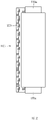
- FIG. 1 is a plan view illustrating a state in which a secondary battery normally operates according to a first embodiment of the present invention
- FIG. 2 is a plan view illustrating a state in which the secondary battery abnormally increases in temperature according to the first embodiment of the present invention.
- a secondary battery according to the present invention may include an electrode assembly 100.
- the electrode assembly 100 may have a structure in which a positive electrode, a separator, a negative electrode, and a separator are alternately disposed in a thickness direction thereof.
- the electrode assembly 100 may include a positive electrode tab 110a protruding from the positive electrode and a negative electrode tab 120a protruding from the negative electrode.
- the positive electrode tab 110a may protrude from one side of the electrode assembly 100
- the negative electrode tab 120a may protrude from the other side of the electrode assembly 100.
- FIGS. 1 and 2 illustrate a configuration in which the positive electrode tab 110a protrudes from one side (an upper side of the electrode assembly with reference to FIGS. 1 and 2 ) of the electrode assembly 100, and the negative electrode tab 120a protrudes from the other side (a lower side of the electrode assembly with reference to FIGS. 1 and 2 ) of the electrode assembly, which is formed at an opposite side of the one side of the electrode assembly, from which the positive electrode tab protrudes.
- the secondary battery according to the present invention may further include an exterior (not shown) accommodating the electrode assembly 100.
- the exterior may be a pouch-type sheet exterior. That is, the secondary battery according to the present invention may be a pouch type secondary battery.
- the secondary battery according to the present invention is not limited to the pouch type secondary battery and may be applied to various types of secondary batteries.
- the secondary battery according to the present invention may further include a short-circuit part 200 having electrical conductivity.
- the short-circuit part 200 may be a constituent accommodated in the exterior of the secondary battery.
- the short-circuit part 200 according to the present invention may be attached to the separator of the electrode assembly 100.
- the short-circuit part 200 may be attached along a circumference of the separator in the electrode assembly 100.
- the separator may have a size greater than that of each of the positive electrode and the negative electrode.
- an area of the separator, which does not face the positive electrode and the negative electrode may be formed on the circumference of the separator.
- the short-circuit part 200 may be attached along the area of the circumference of the separator in the electrode assembly 100, which does not face the positive electrode and the negative electrode.
- the short-circuit part 200 may have electrical conductivity.
- the short-circuit part 200 When the short-circuit part 200 is attached to an area of the separator, which faces the positive electrode or the negative electrode, the short-circuit part may be in direct contact with the positive electrode or the negative electrode. In this case, performance of the secondary battery may be adversely affected.
- the short-circuit part 200 may be spaced apart from the positive electrode tab 110a and the negative electrode tab 120a.
- the separators in the electrode assembly are contracted. This may be due to the fact that the separator is contracted when the separator is exposed to an abnormal high-temperature due to characteristics of a material.
- the separator is usually made of a polymer material such as polyethylene or polypropylene, and the polymer material is contracted while being melted at a high temperature. It is seen that the present invention utilizes characteristics of the separator made of the polymer material such as polyethylene or polypropylene at the high temperature.
- the short-circuit part 200 may be in contact with each of the positive electrode 110a and the negative electrode tab 120a by the contraction of the separator, to which the short-circuit part 200 is attached, and thus, the positive electrode tab 110a and the negative electrode tab 120a are electrically connected to each other by the short-circuit part 200.
- short circuit occurs between the positive electrode and the negative electrode to cause discharge of the secondary battery, thereby stopping the temperature increase of the secondary battery.
- the electrode assembly 100 may include a plurality of separators.
- the short-circuit part 200 may be attached to only one of the plurality of separators in the electrode assembly 100.
- the short-circuit part 200 may be attached to two or more of the plurality of separators in the electrode assembly 100. According to the above example of the present invention, since the short-circuit part 200 only needs to be attached to one separator, the process may be simplified.
- the short-circuit part 200 may still be attached to the other separator, and thus a normal operation of the short-circuit part 200 may be possible.
- the short-circuit part 200 when the short-circuit part 200 is in direct contact with the positive or negative electrode of the electrode assembly 100, performance of the secondary battery may be adversely affected.
- the short-circuit part 200 may be spaced apart from the positive electrode and the negative electrode in the electrode assembly 100 regardless of the temperature of the secondary battery. That is, according to the present invention, the short-circuit part 200 may be separated from the positive electrode and the negative electrode in the electrode assembly 100 at a temperature less than the predetermined temperature and a temperature equal to or greater than the predetermined temperature.
- the short-circuit part 200 when the short-circuit part 200 is in direct contact with the exterior of the secondary battery, the exterior may be damaged due to a reaction between the exterior and the short-circuit part 200.
- the short-circuit part 200 may be provided to be spaced inward from the exterior of the secondary battery.
- the short-circuiting part 200 may be provided in a single number.
- FIGS. 1 and 2 illustrate a state in which one short-circuit part 200 is attached to a circumference of one side of the separator.
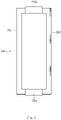
- FIG. 3 is a plan view illustrating a state in which a secondary battery normally operates according to a second embodiment of the present invention
- FIG. 4 is a plan view illustrating a state in which the secondary battery abnormally increases in temperature according to the second embodiment of the present invention.
- a plurality of short-circuit parts 200 may be provided in a secondary battery.
- FIGS. 3 and 4 illustrate a state in which two short-circuit parts 200 are provided. Separators to which the two short-circuit parts 200 are attached may be identical to each other.
- one of the two short-circuit parts 200 may be attached along a circumference of one side of the separator, to which the short-circuit part 200 is attached, and the other may be attached along a circumference of the other side of the separator, to which the short-circuit part 200 is attached.
- the separators which the two short-circuit parts 200 are attached may be separators different from each other.
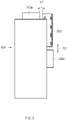
- FIG. 5 is a plan view illustrating a state in which a secondary battery normally operates according to a third embodiment of the present invention
- FIG. 6 is a plan view illustrating a state in which the secondary battery abnormally increases in temperature according to the third embodiment of the present invention.
- a negative electrode tab 120a may protrude from the other side (a right side of an electrode assembly in FIGS. 5 and 6 ) of the electrode assembly, which is formed adjacent to one side (an upper side of the electrode assembly in FIGS. 5 and 6 ) of the electrode assembly, from which a positive electrode tab 110a protrudes.
- the short-circuit part 200 may be attached along a circumference having the shortest distance, which connects the positive electrode tab 110a to the negative electrode tab 120a, on a circumferences of the separator of the electrode assembly.
- the short-circuit part 200 may have an approximately L-shape.
- the short-circuit part 200 may be spaced apart from the positive electrode tab 110a and the negative electrode tab 120a at a temperature less than a predetermined temperature, and then the short-circuit part 200 may be in contact with the positive electrode tab 110a and the negative electrode tab 120a at a temperature equal to or greater than the predetermined temperature.
- the short-circuiting part 200 may be attached to the separator in a state of extending from a position spaced a first distance D1 from the positive electrode tab 110a to a position spaced a second distance D2 from the negative electrode tab 120a at the temperature less than the predetermined temperature.
- a length by which the separator, to which the short-circuiting part 200 is attached, is contracted in a direction parallel to the first distance D1 may be greater than the first distance D1. This is to allow the short-circuit part 200 to be in contact with the positive electrode tab 110a at the temperature equal to or greater than the predetermined temperature.
- a length by which the separator, to which the short-circuiting part 200 is attached, is contracted in a direction parallel to the second distance D2 may be greater than the second distance D2. This is to allow the short-circuit part 200 to be in contact with the negative electrode tab 120a at the temperature equal to or greater than the predetermined temperature.
- a battery pack according to the present invention may include a plurality of secondary batteries, each of which includes a short-circuit part. Contents on the short-circuit part and the secondary battery are substituted with the above contents.
- At least some of the plurality of secondary batteries constituting the battery pack according to the present invention may share one short-circuit part with each other. That is, according to the present invention, one short-circuit part may be attached to each of the separators in the secondary batteries different from each other. In this case, when a temperature of the battery pack or the secondary battery increases abnormally, since the use of the short-circuit part is minimized while occurring short circuit between the positive electrode and the negative electrode by the short-circuit part, it may be more advantageous in terms of saving materials for manufacturing the battery pack.
Landscapes
- Chemical & Material Sciences (AREA)
- Chemical Kinetics & Catalysis (AREA)
- Electrochemistry (AREA)
- General Chemical & Material Sciences (AREA)
- Engineering & Computer Science (AREA)
- Manufacturing & Machinery (AREA)
- Connection Of Batteries Or Terminals (AREA)
- Secondary Cells (AREA)
Abstract
Description
- The present application claims the benefit of the priority of
Korean Patent Application 10-2019-0133212, filed on October 24, 2019 - The present invention relates to a secondary battery and a battery pack including the secondary battery, and more particularly, to a secondary battery having a structure that is capable of preventing ignition from occurring when the secondary battery increases in temperature, and a battery pack including the secondary battery.
- Secondary batteries that are repetitively chargeable and dischargeable may be classified into pouch type secondary batteries, prismatic type secondary batteries, and cylindrical type secondary batteries according to their manufacturing methods or structures. For example, such a pouch type secondary battery has a structure in which an electrode assembly is accommodated in a pouch having the form of a sheet. The pouch type secondary battery has advantages in terms of simplicity of a manufacturing method and a capacity per unit volume when compared to other types of secondary batteries and thus are being widely used in various fields.
- The secondary battery has a problem that explosion or fire may occur during the use. For example, if the secondary battery abnormally increases in temperature due to an abnormal operation of the secondary battery, the explosion or fire may occur.
- Therefore, when the temperature of the secondary battery increases abnormally, it is necessary to stop the operation of the secondary battery, thereby reducing a risk of the explosion or fire of the secondary battery.
- An object of the present invention for solving the above problem is to prevent explosion or fire of a secondary battery from occurring by inducing short circuit in the secondary battery when the secondary battery abnormally increases in temperature.
- According to one aspect of the present invention for achieving the above object, provided is a secondary battery including: an electrode assembly having a structure, in which a positive electrode, a separator, a negative electrode, and a separator are alternately disposed, the electrode assembly including a positive electrode tab protruding from the positive electrode and a negative electrode tab protruding from the negative electrode; an exterior configured to accommodate the electrode assembly; and a short-circuit part accommodated in the exterior and having electrical conductivity, wherein the short-circuit part is attached to the separator in the electrode assembly, the short-circuit part is spaced apart from the positive electrode tab and the negative electrode tab at a temperature less than a predetermined temperature, and the short-circuit part is in contact with the positive electrode tab and the negative electrode tab by contraction of the separator, to which the short-circuit part is attached, at a temperature equal to or greater than the predetermined temperature to electrically connect the positive electrode tab to the negative electrode tab.
- The positive electrode tab may protrude from one side of the electrode assembly, and the negative electrode tab may protrude from the other side of the electrode assembly.
- The short-circuit part may be attached to one of a plurality of separators in the electrode assembly.
- The short-circuit part may be attached to two or more of a plurality of separators in the electrode assembly.
- The short-circuit part may be attached along a circumference of the separator in the electrode assembly.
- The short-circuit part may be provided in plurality, wherein one of the plurality of short-circuit parts may be attached to a circumference of one side of the separator, to which the short-circuit part is attached, and the other of the plurality of short-circuit parts may be attached to a circumference of the other side of the separator, to which the short-circuit part is attached.
- The short-circuit part may be provided to be spaced inward from the exterior.
- The negative electrode tab may protrude from the other side of the electrode assembly, which is formed at a side opposite to the one side of the electrode assembly.
- The negative electrode tab may protrude from the other side of the electrode assembly, which is formed at a side adjacent to the one side of the electrode assembly.
- The short-circuit part may be spaced apart from the positive electrode and the negative electrode in the electrode assembly at the temperature less than the predetermined temperature and the temperature equal to or greater than the predetermined temperature.
- The short-circuit part may extend from a position, which is spaced a first distance (D1) from the positive electrode tab, to a position, which is spaced a second distance (D2) from the negative electrode tab, at the temperature less than the predetermined temperature, wherein a length by which the separator, to which the short-circuiting part is attached, is contracted in a direction parallel to the first distance (D1) may be greater than the first distance (D1), and a length by which the separator, to which the short-circuiting part is attached, is contracted in a direction parallel to the second distance (D2) may be greater than the second distance (D2).
- The exterior may include a pouch-type sheet exterior.
- According to another aspect of the prevent invention for achieving the above object, a battery pack in which the secondary battery of claim 1 is provided in plurality.
- According to the present invention, when the temperature of the secondary battery increases abnormally, the short circuit may be induced in the secondary battery to prevent the explosion or fire of the secondary battery from occurring.
-
-
FIG. 1 is a plan view illustrating a state in which a secondary battery normally operates according to a first embodiment of the present invention. -
FIG. 2 is a plan view illustrating a state in which the secondary battery abnormally increases in temperature according to the first embodiment of the present invention. -
FIG. 3 is a plan view illustrating a state in which a secondary battery normally operates according to a second embodiment of the present invention. -
FIG. 4 is a plan view illustrating a state in which the secondary battery abnormally increases in temperature according to the second embodiment of the present invention. -
FIG. 5 is a plan view illustrating a state in which a secondary battery normally operates according to a third embodiment of the present invention. -
FIG. 6 is a plan view illustrating a state in which the secondary battery abnormally increases in temperature according to the third embodiment of the present invention. - Hereinafter, a structure of a secondary battery according to the present invention will be described with reference to the accompanying drawings.
-
FIG. 1 is a plan view illustrating a state in which a secondary battery normally operates according to a first embodiment of the present invention, andFIG. 2 is a plan view illustrating a state in which the secondary battery abnormally increases in temperature according to the first embodiment of the present invention. - As illustrated in
FIGS. 1 and2 , a secondary battery according to the present invention may include anelectrode assembly 100. Theelectrode assembly 100 may have a structure in which a positive electrode, a separator, a negative electrode, and a separator are alternately disposed in a thickness direction thereof. - The
electrode assembly 100 may include apositive electrode tab 110a protruding from the positive electrode and anegative electrode tab 120a protruding from the negative electrode. Thepositive electrode tab 110a may protrude from one side of theelectrode assembly 100, and thenegative electrode tab 120a may protrude from the other side of theelectrode assembly 100.FIGS. 1 and2 illustrate a configuration in which thepositive electrode tab 110a protrudes from one side (an upper side of the electrode assembly with reference toFIGS. 1 and2 ) of theelectrode assembly 100, and thenegative electrode tab 120a protrudes from the other side (a lower side of the electrode assembly with reference toFIGS. 1 and2 ) of the electrode assembly, which is formed at an opposite side of the one side of the electrode assembly, from which the positive electrode tab protrudes. - Also, the secondary battery according to the present invention may further include an exterior (not shown) accommodating the
electrode assembly 100. The exterior may be a pouch-type sheet exterior. That is, the secondary battery according to the present invention may be a pouch type secondary battery. However, the secondary battery according to the present invention is not limited to the pouch type secondary battery and may be applied to various types of secondary batteries. - Continuously, referring to
FIGS. 1 and2 , the secondary battery according to the present invention may further include a short-circuit part 200 having electrical conductivity. The short-circuit part 200 may be a constituent accommodated in the exterior of the secondary battery. - The short-
circuit part 200 according to the present invention may be attached to the separator of theelectrode assembly 100. - In this specification, that "the short-circuit part is attached inside the separator of the electrode assembly" means that when predetermined adhesion force is formed between the short-circuit part and the separator, and thus, when the separator is contracted or expanded in a region in which the adhesion force between the short-circuit part and the separator is generated, the short-circuit part may also be contracted or expanded according to the contraction and expansion of the separator.
- The short-
circuit part 200 may be attached along a circumference of the separator in theelectrode assembly 100. - In the secondary battery according to the present invention, the separator may have a size greater than that of each of the positive electrode and the negative electrode. Thus, an area of the separator, which does not face the positive electrode and the negative electrode, may be formed on the circumference of the separator. Thus, the short-
circuit part 200 may be attached along the area of the circumference of the separator in theelectrode assembly 100, which does not face the positive electrode and the negative electrode. - As described above, the short-
circuit part 200 may have electrical conductivity. When the short-circuit part 200 is attached to an area of the separator, which faces the positive electrode or the negative electrode, the short-circuit part may be in direct contact with the positive electrode or the negative electrode. In this case, performance of the secondary battery may be adversely affected. - An operating principle of the short-
circuit part 200 in the secondary battery according to the present invention will be described as follows. - When the temperature in the secondary battery is less than a predetermined temperature, the short-
circuit part 200 may be spaced apart from thepositive electrode tab 110a and thenegative electrode tab 120a. - Then, when the temperature in the secondary battery reaches the predetermined temperature or more, the separators in the electrode assembly are contracted. This may be due to the fact that the separator is contracted when the separator is exposed to an abnormal high-temperature due to characteristics of a material.
- That is, the separator is usually made of a polymer material such as polyethylene or polypropylene, and the polymer material is contracted while being melted at a high temperature. It is seen that the present invention utilizes characteristics of the separator made of the polymer material such as polyethylene or polypropylene at the high temperature.
- Accordingly, the short-
circuit part 200 may be in contact with each of thepositive electrode 110a and thenegative electrode tab 120a by the contraction of the separator, to which the short-circuit part 200 is attached, and thus, thepositive electrode tab 110a and thenegative electrode tab 120a are electrically connected to each other by the short-circuit part 200. As a result, short circuit occurs between the positive electrode and the negative electrode to cause discharge of the secondary battery, thereby stopping the temperature increase of the secondary battery. - The
electrode assembly 100 may include a plurality of separators. According to an example of the present invention, the short-circuit part 200 may be attached to only one of the plurality of separators in theelectrode assembly 100. However, unlike this structure, according to another example of the present invention, the short-circuit part 200 may be attached to two or more of the plurality of separators in theelectrode assembly 100. According to the above example of the present invention, since the short-circuit part 200 only needs to be attached to one separator, the process may be simplified. On the other hand, according to the other example of the present invention, even if the short-circuit part 200 is separated from one of the plurality of separators, the short-circuit part 200 may still be attached to the other separator, and thus a normal operation of the short-circuit part 200 may be possible. - As described above, when the short-
circuit part 200 is in direct contact with the positive or negative electrode of theelectrode assembly 100, performance of the secondary battery may be adversely affected. Thus, according to the present invention, the short-circuit part 200 may be spaced apart from the positive electrode and the negative electrode in theelectrode assembly 100 regardless of the temperature of the secondary battery. That is, according to the present invention, the short-circuit part 200 may be separated from the positive electrode and the negative electrode in theelectrode assembly 100 at a temperature less than the predetermined temperature and a temperature equal to or greater than the predetermined temperature. - Also, when the short-
circuit part 200 is in direct contact with the exterior of the secondary battery, the exterior may be damaged due to a reaction between the exterior and the short-circuit part 200. Thus, according to the present invention, the short-circuit part 200 may be provided to be spaced inward from the exterior of the secondary battery. - As illustrated in
FIGS. 1 and2 , according to the first embodiment of the present invention, the short-circuiting part 200 may be provided in a single number.FIGS. 1 and2 illustrate a state in which one short-circuit part 200 is attached to a circumference of one side of the separator. -
FIG. 3 is a plan view illustrating a state in which a secondary battery normally operates according to a second embodiment of the present invention, andFIG. 4 is a plan view illustrating a state in which the secondary battery abnormally increases in temperature according to the second embodiment of the present invention. - According to the second embodiment of the present invention, a plurality of short-
circuit parts 200 may be provided in a secondary battery.FIGS. 3 and4 illustrate a state in which two short-circuit parts 200 are provided. Separators to which the two short-circuit parts 200 are attached may be identical to each other. - Here, as illustrated in
FIGS. 3 and4 , one of the two short-circuit parts 200 may be attached along a circumference of one side of the separator, to which the short-circuit part 200 is attached, and the other may be attached along a circumference of the other side of the separator, to which the short-circuit part 200 is attached. However, unlike this structure, the separators which the two short-circuit parts 200 are attached may be separators different from each other. -
FIG. 5 is a plan view illustrating a state in which a secondary battery normally operates according to a third embodiment of the present invention, andFIG. 6 is a plan view illustrating a state in which the secondary battery abnormally increases in temperature according to the third embodiment of the present invention. - Unlike the first and second embodiments of the present invention, according to the third embodiment of the present invention, a
negative electrode tab 120a may protrude from the other side (a right side of an electrode assembly inFIGS. 5 and6 ) of the electrode assembly, which is formed adjacent to one side (an upper side of the electrode assembly inFIGS. 5 and6 ) of the electrode assembly, from which apositive electrode tab 110a protrudes. Also, the short-circuit part 200 may be attached along a circumference having the shortest distance, which connects thepositive electrode tab 110a to thenegative electrode tab 120a, on a circumferences of the separator of the electrode assembly. Thus, according to the third embodiment of the present invention, the short-circuit part 200 may have an approximately L-shape. - As described above, according to the present invention, the short-
circuit part 200 may be spaced apart from thepositive electrode tab 110a and thenegative electrode tab 120a at a temperature less than a predetermined temperature, and then the short-circuit part 200 may be in contact with thepositive electrode tab 110a and thenegative electrode tab 120a at a temperature equal to or greater than the predetermined temperature. - Thus, as illustrated in
FIGS. 1 ,3 , and5 , the short-circuiting part 200 may be attached to the separator in a state of extending from a position spaced a first distance D1 from thepositive electrode tab 110a to a position spaced a second distance D2 from thenegative electrode tab 120a at the temperature less than the predetermined temperature. - Then, when the separator is contracted at the temperature equal to or greater than the predetermined temperature, a length by which the separator, to which the short-
circuiting part 200 is attached, is contracted in a direction parallel to the first distance D1 may be greater than the first distance D1. This is to allow the short-circuit part 200 to be in contact with thepositive electrode tab 110a at the temperature equal to or greater than the predetermined temperature. - Similarly, when the separator is contracted at the temperature equal to or greater than the predetermined temperature, a length by which the separator, to which the short-
circuiting part 200 is attached, is contracted in a direction parallel to the second distance D2 may be greater than the second distance D2. This is to allow the short-circuit part 200 to be in contact with thenegative electrode tab 120a at the temperature equal to or greater than the predetermined temperature. - A battery pack according to the present invention may include a plurality of secondary batteries, each of which includes a short-circuit part. Contents on the short-circuit part and the secondary battery are substituted with the above contents.
- At least some of the plurality of secondary batteries constituting the battery pack according to the present invention may share one short-circuit part with each other. That is, according to the present invention, one short-circuit part may be attached to each of the separators in the secondary batteries different from each other. In this case, when a temperature of the battery pack or the secondary battery increases abnormally, since the use of the short-circuit part is minimized while occurring short circuit between the positive electrode and the negative electrode by the short-circuit part, it may be more advantageous in terms of saving materials for manufacturing the battery pack.
- While the embodiments of the present invention have been described with reference to the specific embodiments, it will be apparent to those skilled in the art that various changes and modifications may be made without departing from the spirit and scope of the invention as defined in the following claims.
-
- 100 :
- Electrode assembly
- 110a :
- Positive electrode tab
- 120a :
- Negative electrode tab
- 200 :
- Short-circuit part
Claims (13)
- A secondary battery comprising:an electrode assembly having a structure, in which a positive electrode, a separator, a negative electrode, and a separator are alternately disposed, the electrode assembly comprising a positive electrode tab protruding from the positive electrode and a negative electrode tab protruding from the negative electrode;an exterior configured to accommodate the electrode assembly; anda short-circuit part accommodated in the exterior and having electrical conductivity,wherein the short-circuit part is attached to the separator in the electrode assembly,the short-circuit part is spaced apart from the positive electrode tab and the negative electrode tab at a temperature less than a predetermined temperature, andthe short-circuit part is in contact with the positive electrode tab and the negative electrode tab by contraction of the separator, to which the short-circuit part is attached, at a temperature equal to or greater than the predetermined temperature to electrically connect the positive electrode tab to the negative electrode tab.
- The secondary battery of claim 1, wherein the positive electrode tab protrudes from one side of the electrode assembly, and
the negative electrode tab protrudes from the other side of the electrode assembly. - The secondary battery of claim 1, wherein the short-circuit part is attached to one of a plurality of separators in the electrode assembly.
- The secondary battery of claim 1, wherein the short-circuit part is attached to two or more of a plurality of separators in the electrode assembly.
- The secondary battery of claim 1, wherein the short-circuit part is attached along a circumference of the separator in the electrode assembly.
- The secondary battery of claim 5, wherein the short-circuit part is provided in plurality,wherein one of the plurality of short-circuit parts is attached to a circumference of one side of the separator, to which the short-circuit part is attached, andthe other of the plurality of short-circuit parts is attached to a circumference of the other side of the separator, to which the short-circuit part is attached.
- The secondary battery of claim 1, wherein the short-circuit part is provided to be spaced inward from the exterior.
- The secondary battery of claim 2, wherein the negative electrode tab protrudes from the other side of the electrode assembly, which is formed at a side opposite to the one side of the electrode assembly.
- The secondary battery of claim 2, wherein the negative electrode tab protrudes from the other side of the electrode assembly, which is formed at a side adjacent to the one side of the electrode assembly.
- The secondary battery of claim 1, wherein the short-circuit part is spaced apart from the positive electrode and the negative electrode in the electrode assembly at the temperature less than the predetermined temperature and the temperature equal to or greater than the predetermined temperature.
- The secondary battery of claim 5, wherein the short-circuit part extends from a position, which is spaced a first distance (D1) from the positive electrode tab, to a position, which is spaced a second distance (D2) from the negative electrode tab, at the temperature less than the predetermined temperature,wherein a length by which the separator, to which the short-circuiting part is attached, is contracted in a direction parallel to the first distance (D1) is greater than the first distance (D1), anda length by which the separator, to which the short-circuiting part is attached, is contracted in a direction parallel to the second distance (D2) is greater than the second distance (D2).
- The secondary battery of claim 1, wherein the exterior comprises a pouch-type sheet exterior.
- A battery pack in which the secondary battery of claim 1 is provided in plurality.
Applications Claiming Priority (2)
| Application Number | Priority Date | Filing Date | Title |
|---|---|---|---|
| KR1020190133212A KR102847786B1 (en) | 2019-10-24 | 2019-10-24 | Secondary battery and battery pack including the same |
| PCT/KR2020/013794 WO2021080224A1 (en) | 2019-10-24 | 2020-10-08 | Secondary battery and battery pack comprising secondary battery |
Publications (2)
| Publication Number | Publication Date |
|---|---|
| EP4007060A1 true EP4007060A1 (en) | 2022-06-01 |
| EP4007060A4 EP4007060A4 (en) | 2023-05-10 |
Family
ID=75620109
Family Applications (1)
| Application Number | Title | Priority Date | Filing Date |
|---|---|---|---|
| EP20879491.7A Pending EP4007060A4 (en) | 2019-10-24 | 2020-10-08 | SECONDARY BATTERY AND BATTERY PACK INCLUDING A SECONDARY BATTERY |
Country Status (6)
| Country | Link |
|---|---|
| US (2) | US12308398B2 (en) |
| EP (1) | EP4007060A4 (en) |
| JP (1) | JP7275453B2 (en) |
| KR (1) | KR102847786B1 (en) |
| CN (1) | CN114365345B (en) |
| WO (1) | WO2021080224A1 (en) |
Families Citing this family (1)
| Publication number | Priority date | Publication date | Assignee | Title |
|---|---|---|---|---|
| CN115312981A (en) * | 2022-03-30 | 2022-11-08 | 陕西奥林波斯电力能源有限责任公司 | High-capacity battery shell, high-capacity battery with shell and series battery pack |
Family Cites Families (36)
| Publication number | Priority date | Publication date | Assignee | Title |
|---|---|---|---|---|
| JP3331287B2 (en) * | 1995-11-28 | 2002-10-07 | エフ・ディ−・ケイ株式会社 | Alkaline battery |
| JP2002246012A (en) * | 2001-02-21 | 2002-08-30 | Japan Storage Battery Co Ltd | Non-aqueous electrolyte secondary battery |
| JP4797260B2 (en) * | 2001-03-13 | 2011-10-19 | Tdk株式会社 | Electrochemical devices |
| JP2003243036A (en) * | 2002-02-18 | 2003-08-29 | Shin Kobe Electric Mach Co Ltd | Cylindrical lithium secondary battery |
| US20050026036A1 (en) * | 2003-07-31 | 2005-02-03 | Matsushita Electric Industrial Co., Ltd. | Battery |
| JP2005100899A (en) | 2003-09-26 | 2005-04-14 | Sony Corp | Nonaqueous electrolyte secondary battery |
| KR20060039955A (en) | 2004-11-02 | 2006-05-10 | 유니썸테크놀로지 주식회사 | Battery safety device |
| JP4984456B2 (en) * | 2005-08-19 | 2012-07-25 | トヨタ自動車株式会社 | battery |
| JP5003117B2 (en) | 2006-11-22 | 2012-08-15 | ソニー株式会社 | Batteries and battery units |
| KR100973310B1 (en) | 2007-12-21 | 2010-07-30 | 삼성에스디아이 주식회사 | Electrode tab for secondary battery and secondary battery having same |
| JP5526488B2 (en) | 2008-03-26 | 2014-06-18 | Tdk株式会社 | Electrochemical devices |
| JP5232751B2 (en) * | 2009-09-28 | 2013-07-10 | 日立ビークルエナジー株式会社 | Lithium ion secondary battery |
| KR101246825B1 (en) * | 2010-11-01 | 2013-03-28 | 주식회사 아모그린텍 | Separator with heat resistance, rechargeable battery using the same and method of manufacturing the same |
| US9887404B2 (en) * | 2011-05-25 | 2018-02-06 | Samsung Sdi Co., Ltd. | Secondary battery |
| KR101363113B1 (en) | 2012-02-24 | 2014-02-14 | 성균관대학교산학협력단 | Separator with enhanced heat-resistance and electrochemical device containing the same |
| JP5727090B2 (en) | 2012-03-15 | 2015-06-03 | 株式会社東芝 | Lithium ion secondary battery |
| JP5735170B2 (en) | 2012-03-15 | 2015-06-17 | 株式会社東芝 | Lithium ion secondary battery |
| KR101520148B1 (en) | 2012-05-25 | 2015-05-13 | 주식회사 엘지화학 | Secondary battery comprising apparatus for preventing overcharge |
| JP6554261B2 (en) * | 2012-12-05 | 2019-07-31 | 三星エスディアイ株式会社Samsung SDI Co., Ltd. | Non-aqueous electrolyte secondary battery pack |
| KR20150033381A (en) * | 2013-09-24 | 2015-04-01 | 주식회사 엘지화학 | Electrode lead and secondary battery comprising the same |
| KR20150045241A (en) * | 2013-10-18 | 2015-04-28 | 주식회사 엘지화학 | Battery cell equipped with disconnection device, and Battery module and Battery pack comprising the same |
| KR101778829B1 (en) | 2013-11-29 | 2017-09-14 | 주식회사 엘지화학 | Short circuit detection device |
| KR101683974B1 (en) * | 2014-08-05 | 2016-12-08 | 에스케이이노베이션 주식회사 | Lithium polymer secondary battery |
| JP2016081668A (en) | 2014-10-15 | 2016-05-16 | 株式会社日本自動車部品総合研究所 | Secondary battery |
| JP6550732B2 (en) | 2014-12-01 | 2019-07-31 | 日本電気株式会社 | Secondary battery |
| JP6547295B2 (en) * | 2014-12-26 | 2019-07-24 | 日本電気株式会社 | Battery and method of manufacturing the same |
| CN205376656U (en) | 2016-01-20 | 2016-07-06 | 宁德新能源科技有限公司 | Secondary battery |
| KR102028073B1 (en) | 2016-06-09 | 2019-10-04 | 주식회사 엘지화학 | Secondary Battery and Battery Pack |
| KR102118549B1 (en) * | 2016-08-12 | 2020-06-03 | 주식회사 엘지화학 | Secondary Battery and Battery Pack |
| KR102152143B1 (en) * | 2016-11-24 | 2020-09-04 | 주식회사 엘지화학 | Electrode Assembly Comprising Separator Having Insulation-enhancing Part Formed on Edge Portion of Electrode |
| KR102278993B1 (en) * | 2017-03-20 | 2021-07-20 | 주식회사 엘지에너지솔루션 | Electrode assembly |
| KR102273100B1 (en) * | 2017-11-01 | 2021-07-02 | 주식회사 엘지에너지솔루션 | Electrode assembly and method of stabilizing secondary battery |
| JP2019102206A (en) | 2017-11-30 | 2019-06-24 | 三菱自動車工業株式会社 | Laminate type secondary battery |
| KR102351246B1 (en) * | 2017-12-07 | 2022-01-17 | 주식회사 엘지에너지솔루션 | Electrode assembly |
| KR102953468B1 (en) * | 2021-04-15 | 2026-04-15 | 주식회사 엘지에너지솔루션 | Electrode with improved safety and manufacturing method thereof |
| JP2024127537A (en) * | 2023-03-09 | 2024-09-20 | 本田技研工業株式会社 | Lithium secondary battery |
-
2019
- 2019-10-24 KR KR1020190133212A patent/KR102847786B1/en active Active
-
2020
- 2020-10-08 WO PCT/KR2020/013794 patent/WO2021080224A1/en not_active Ceased
- 2020-10-08 JP JP2022512301A patent/JP7275453B2/en active Active
- 2020-10-08 EP EP20879491.7A patent/EP4007060A4/en active Pending
- 2020-10-08 US US17/641,270 patent/US12308398B2/en active Active
- 2020-10-08 CN CN202080063332.8A patent/CN114365345B/en active Active
-
2025
- 2025-04-21 US US19/184,754 patent/US20250246694A1/en active Pending
Also Published As
| Publication number | Publication date |
|---|---|
| CN114365345A (en) | 2022-04-15 |
| US20250246694A1 (en) | 2025-07-31 |
| CN114365345B (en) | 2024-07-12 |
| US20220294032A1 (en) | 2022-09-15 |
| KR20210048924A (en) | 2021-05-04 |
| KR102847786B1 (en) | 2025-08-19 |
| WO2021080224A1 (en) | 2021-04-29 |
| JP2022546329A (en) | 2022-11-04 |
| EP4007060A4 (en) | 2023-05-10 |
| US12308398B2 (en) | 2025-05-20 |
| JP7275453B2 (en) | 2023-05-18 |
Similar Documents
| Publication | Publication Date | Title |
|---|---|---|
| EP2429018B1 (en) | Secondary battery | |
| US9099732B2 (en) | Rechargeable battery having a fuse with an insulating blocking member | |
| US20100047674A1 (en) | Safety Switch Using Heat Shrinkage Tube and Secondary Battery Including The Same | |
| CN107871840B (en) | Battery unit | |
| EP2793295A2 (en) | Rechargeable battery | |
| KR101702985B1 (en) | Rechargeable battery | |
| US12051822B2 (en) | Secondary battery and battery pack including the same | |
| KR102373537B1 (en) | Battery module | |
| CN109075304B (en) | Rechargeable battery with diaphragm | |
| US20250246694A1 (en) | Secondary battery and battery pack including the same | |
| US10511000B2 (en) | Battery pack | |
| EP3654412B1 (en) | Secondary battery | |
| JPH1173941A (en) | Battery safety device | |
| CN207938710U (en) | Battery Systems and Electric Vehicles | |
| KR102332443B1 (en) | Battery module | |
| EP4661199A1 (en) | Battery cell, battery pack, and vehicle comprising same | |
| EP3490035B1 (en) | Secondary battery and method for manufacturing the same | |
| CN108475760B (en) | Secondary battery | |
| CA3285538A1 (en) | Battery cell, battery pack, and vehicle including same |
Legal Events
| Date | Code | Title | Description |
|---|---|---|---|
| STAA | Information on the status of an ep patent application or granted ep patent |
Free format text: STATUS: THE INTERNATIONAL PUBLICATION HAS BEEN MADE |
|
| PUAI | Public reference made under article 153(3) epc to a published international application that has entered the european phase |
Free format text: ORIGINAL CODE: 0009012 |
|
| STAA | Information on the status of an ep patent application or granted ep patent |
Free format text: STATUS: REQUEST FOR EXAMINATION WAS MADE |
|
| 17P | Request for examination filed |
Effective date: 20220228 |
|
| AK | Designated contracting states |
Kind code of ref document: A1 Designated state(s): AL AT BE BG CH CY CZ DE DK EE ES FI FR GB GR HR HU IE IS IT LI LT LU LV MC MK MT NL NO PL PT RO RS SE SI SK SM TR |
|
| DAV | Request for validation of the european patent (deleted) | ||
| DAX | Request for extension of the european patent (deleted) | ||
| A4 | Supplementary search report drawn up and despatched |
Effective date: 20230414 |
|
| RIC1 | Information provided on ipc code assigned before grant |
Ipc: H01M 50/581 20210101ALI20230406BHEP Ipc: H01M 50/105 20210101ALI20230406BHEP Ipc: H01M 50/586 20210101ALI20230406BHEP Ipc: H01M 50/574 20210101ALI20230406BHEP Ipc: H01M 50/548 20210101ALI20230406BHEP Ipc: H01M 50/531 20210101ALI20230406BHEP Ipc: H01M 50/417 20210101ALI20230406BHEP Ipc: H01M 50/489 20210101ALI20230406BHEP Ipc: H01M 50/40 20210101ALI20230406BHEP Ipc: H01M 10/42 20060101ALI20230406BHEP Ipc: H01M 50/572 20210101AFI20230406BHEP |