EP4004422B1 - Vorrichtung und verfahren für transiente abschwächungsvorrichtung in kontinuierlichen rohrleitungen für druckstossregelung - Google Patents
Vorrichtung und verfahren für transiente abschwächungsvorrichtung in kontinuierlichen rohrleitungen für druckstossregelung Download PDFInfo
- Publication number
- EP4004422B1 EP4004422B1 EP20843192.4A EP20843192A EP4004422B1 EP 4004422 B1 EP4004422 B1 EP 4004422B1 EP 20843192 A EP20843192 A EP 20843192A EP 4004422 B1 EP4004422 B1 EP 4004422B1
- Authority
- EP
- European Patent Office
- Prior art keywords
- pipeline
- tmd
- pressure
- wave
- pipe
- Prior art date
- Legal status (The legal status is an assumption and is not a legal conclusion. Google has not performed a legal analysis and makes no representation as to the accuracy of the status listed.)
- Active
Links
Images





Classifications
-
- F—MECHANICAL ENGINEERING; LIGHTING; HEATING; WEAPONS; BLASTING
- F16—ENGINEERING ELEMENTS AND UNITS; GENERAL MEASURES FOR PRODUCING AND MAINTAINING EFFECTIVE FUNCTIONING OF MACHINES OR INSTALLATIONS; THERMAL INSULATION IN GENERAL
- F16L—PIPES; JOINTS OR FITTINGS FOR PIPES; SUPPORTS FOR PIPES, CABLES OR PROTECTIVE TUBING; MEANS FOR THERMAL INSULATION IN GENERAL
- F16L55/00—Devices or appurtenances for use in, or in connection with, pipes or pipe systems
- F16L55/04—Devices damping pulsations or vibrations in fluids
- F16L55/045—Devices damping pulsations or vibrations in fluids specially adapted to prevent or minimise the effects of water hammer
- F16L55/05—Buffers therefor
- F16L55/052—Pneumatic reservoirs
- F16L55/053—Pneumatic reservoirs the gas in the reservoir being separated from the fluid in the pipe
- F16L55/054—Pneumatic reservoirs the gas in the reservoir being separated from the fluid in the pipe the reservoir being placed in or around the pipe from which it is separated by a sleeve-shaped membrane
-
- F—MECHANICAL ENGINEERING; LIGHTING; HEATING; WEAPONS; BLASTING
- F16—ENGINEERING ELEMENTS AND UNITS; GENERAL MEASURES FOR PRODUCING AND MAINTAINING EFFECTIVE FUNCTIONING OF MACHINES OR INSTALLATIONS; THERMAL INSULATION IN GENERAL
- F16L—PIPES; JOINTS OR FITTINGS FOR PIPES; SUPPORTS FOR PIPES, CABLES OR PROTECTIVE TUBING; MEANS FOR THERMAL INSULATION IN GENERAL
- F16L55/00—Devices or appurtenances for use in, or in connection with, pipes or pipe systems
- F16L55/04—Devices damping pulsations or vibrations in fluids
- F16L55/045—Devices damping pulsations or vibrations in fluids specially adapted to prevent or minimise the effects of water hammer
- F16L55/05—Buffers therefor
- F16L55/052—Pneumatic reservoirs
- F16L55/053—Pneumatic reservoirs the gas in the reservoir being separated from the fluid in the pipe
-
- F—MECHANICAL ENGINEERING; LIGHTING; HEATING; WEAPONS; BLASTING
- F16—ENGINEERING ELEMENTS AND UNITS; GENERAL MEASURES FOR PRODUCING AND MAINTAINING EFFECTIVE FUNCTIONING OF MACHINES OR INSTALLATIONS; THERMAL INSULATION IN GENERAL
- F16L—PIPES; JOINTS OR FITTINGS FOR PIPES; SUPPORTS FOR PIPES, CABLES OR PROTECTIVE TUBING; MEANS FOR THERMAL INSULATION IN GENERAL
- F16L55/00—Devices or appurtenances for use in, or in connection with, pipes or pipe systems
- F16L55/04—Devices damping pulsations or vibrations in fluids
- F16L55/041—Devices damping pulsations or vibrations in fluids specially adapted for preventing vibrations
-
- G—PHYSICS
- G01—MEASURING; TESTING
- G01H—MEASUREMENT OF MECHANICAL VIBRATIONS OR ULTRASONIC, SONIC OR INFRASONIC WAVES
- G01H3/00—Measuring characteristics of vibrations by using a detector in a fluid
-
- G—PHYSICS
- G01—MEASURING; TESTING
- G01H—MEASUREMENT OF MECHANICAL VIBRATIONS OR ULTRASONIC, SONIC OR INFRASONIC WAVES
- G01H3/00—Measuring characteristics of vibrations by using a detector in a fluid
- G01H3/10—Amplitude; Power
Definitions
- the 10,288,207 and 10,436,667 patents for In Line Inspection are for methods of continuous or intermittent monitoring of the structural health of any RTP (Reinforced Thermoplastic Pipe) system that is fitted with a multiplicity of discreet sensors, whereby this novel system is integral to the Transient Mitigation Device (TMD) technology of the present invention as it provides data used in the TMD simulations.
- RTP Reinforced Thermoplastic Pipe
- TMD Transient Mitigation Device
- Smartpipe a multi layered composite pipe
- the present patent application conforms to the extended art of the "Smartpipe” RTP invention where the present invention compliments the original product, and adds a novel application to facilitate an existing industry need to control pipeline over-pressure and surge pressures utilizing a composite pipe-based device.
- the pipelines can be subject to destructive pressure surges, over MOP (a maximum operating pressure) pressure events, and internal transient pressure impacts, all in excess of the operating conditions of the pipeline and are due to the transient state of the transported medium in different flow regimes and determined by valve closures, planned and unplanned, and unknown pipeline obstructions.
- the present invention is designed specifically to mitigate transient pressure events with a composite piping system (RTP), for installation within a host pipeline or steel apparatus, or as a stand-alone apparatus for transporting potentially explosive, flammable, and/or toxic liquids such as hydrocarbons, refined products, and gases such methane and propane, and water at high pressures, in order to prevent significant structural damage to such pipelines or conduits.
- RTP composite piping system
- the present invention relates to a method and structurally inventive system-construction or mechanism for mitigation by attenuation of transient events of a transported medium of fluids and gases subjected to surges, and over pressure events caused by the transient state of a transported medium in different flow regimes generally caused by valve closures, planned and unplanned, and unknown pipeline obstructions, as related here, on non-metallic pipelines and conduits of composite flexible structures instrumented with detection monitoring, activating and deactivating of such inventive systems.
- the TMD Transient Mitigation Device
- the TMD composite system can also be installed independently into a steel pipe system to protect that composite system, where it would serve as a pressure surge mitigation device in a linear form with the pipeline, as opposed to vacuum tanks presently used at the remote part of the installation of pipelines.
- the TMD system is a composite pipe made from polymeric materials.
- the structural reinforcement fibres in multiple layers, bear the pressure load, and have an elastic modulus, and flexibility that provides for maximum deflection, while still functioning within the operating parameters during destructive surges and over-pressure events, caused by surges in the transient state of the transported medium. Due to the flexible nature of the composite TMD, the mitigation of the surge pressure magnitude is controlled by the hoop expansion of the TMD assembly to not exceed a pre-determined design including safety factors.
- the Smartpipe ® performance in its original function as the primary pipeline is capable of mitigating a transient surge pressure, because the Smartpipe ® is designed to expand within an annulus space encased by a rigid pipe sleeve.
- the structural reinforcement of the Smartpipe ® the fibres that bear the pressure load have an elastic modulus that is about one third that of steel.
- the surge pressure magnitude is very much dependent on the hoop expansion and the stiffness of the pipe, the effects of a transient event would be considerably mitigated by the Smartpipe ® TMD device product, due to available hoop expansion and stiffness compared to steel, and in such function it will reduce the magnitude of the surge pressure.
- the properties of the polymer used in the fibres are of a much larger delta between the short term burst pressure and the maximum operating pressure of Smartpipe ® than that of a steel pipe.
- the short term and long term burst pressures for steel are practically the same, and this is not the case for a composite Smartpipe.
- the composite materials are subjected to creep and creep rupture until a failure mode is reached.
- the maximum operating pressure for Smartpipe ® is based on long term testing where a lower boundary strength is obtained, and used for an intended service life while designing with the various fluids in service of the pipeline. A quick burst pressure test of Smartpipe would indicate that Smartpipe ® can withstand a transient pressure surge of approximately 5 times the maximum operating pressure.
- the TMD as a spooled type device without a rigid sleeve can also be applied in its freestanding capacity where it can function at different modalities subject to an engineering design. This would involve the shape modifications, undulations, various types of induced wave forms, and other type of combinations in pipelines.
- the TMD device is not currently available in the industry, and with this invention it can be provided, for example, in the form of a short section installed in a rigid sleeve, where it would be readily transported to site.
- the TMD application in a spooled type device without rigid sleeve will also have a capacity to fulfill this function at different modalities.
- the TMD device can be used in lengths of pipeline up to 10 miles between connectors, as continuous pipelines, or lined pipelines, and the TMD can be manufactured and installed on site.
- the present known methods used in the industry are related to mitigation of surge impacts and anomalies in the flow, and are all limited to outside containment devices which absorb flow impacts from the pipelines by means of safety valves, or diversion valves causing the over-pressure flow to divert to lower pressure tank systems, vacuum pressure tank systems, alternate steel line segments, and with such devices as flexible loops that are added to the pipelines in order to compensate for the expansion and stress concentrations.
- Fluid carrying pipelines are subject to transient pressure with spikes in pressure, whenever the flow in velocity becomes altered by events such as a valve closure, a sudden pump shutdown, or by some other means of the blockage of the flow.
- the pressure spike magnitude depends on how quickly the flow velocity is changed. Due to the compressibility of the fluid and the hoop expansion of the pipe, stopping the flow at one end of a pipeline does not immediately stop the flow at the other end. More fluid will tend to flow into the pipeline. The effect is termed "packing”. This condition causes a surge in apipeline's pressure. The time that it takes for a pressure wave to traverse the length of the pipeline, will increase the "packing" pressure and will significantly increase the impact of the "hammer” effect depending on the pipeline length.
- the length of the pipeline affects the transient pressure waves in several combinations.
- the mass of a fluid in the pipe is proportionally manifested in relationship to the length of the pipeline.
- the force derived from such activity of the proportionality of the mass and the length of the pipeline will impact the structure of the pipeline. Offsetting this effect of the length of the pipeline is mitigated by the effect of friction in the flow regime.
- the friction between the fluid and the pipe wall is always acting to slow the fluid and it is demonstrated by an accumulated total friction force which is also proportional to the pipeline's length.
- the property of a fluid's viscosity versus the diameter of the pipe has a significant effect on the friction force.
- the friction force is formulated.
- the initial pressure distribution along the pipeline and the flow friction increase in its variability and demonstrates a mode by which the pressure forms the surge. It was found that in long pipelines the wave length may spread over a long distance with an amplitude that can engage a pipe section longer when compared to a standard and a practical and manufactured TMD device, which will be manufactured as a means of being a transportable section, readily inserted, as a complete system, or as replaceable cartridge where necessary.
- Variations of the TMD devices can also be manufactured in a combined form having multiple walls, and where such assembly would eliminate the need for rigid sleeves, providing the means of coiling the device in long lengths to be suitable for transportation and installation.
- This type of coiled TMD device can be used in case where longer sections in pipelines are needed to attenuate the hydraulic hammer impact from long waves.
- a fractional volumetric change of the liquid is caused by the pressure change, under a condition where the wave speed is pressuring the liquid against a rigid (stiff) pipe, causing the pipe's hoop expansion, and where the resulting wave propagation and its speed of the liquid increases to a point where the rupture or failure of the pipeline occurs.
- the surge under such pressure can be described as a kinetic energy accumulation within the fluid, which is then mitigated by the energy absorption by means of the flaw's frictional losses, and by regulating mechanical means where the energy conversion by the TMD invented device, stores, offsets, and converts the potential energy into a manageable force, or reduces the potential energy of a wave by reducing amplification through initiating an active counter wave of similar frequency, phase and amplitude.
- the TMD is a device with the flexible pipe wall allowing for the expansion due to a high strength of the materials used and under the controlled design it is capable to absorb and to attenuate the effects of the hydraulic force stress.
- the lower hoop stiffness of the Smartpipe ® flexible properties will absorb and attenuate more energy for a given increase in pressure when compared to a rigid type of pipe, such as a steel pipe. If it were not for the elasticity of the pipeline material and the compressibility of the liquid, simple physics predicts infinite pressure would result from an instantaneous valve closure and other irregularities that are associated with a pipeline operation.
- the novelty of this invention is based on a compensation mechanism where the liquid and the pipe are elastic and engaged in minimizing the surge pressures. Rigid steel pipelines cannot mitigate fluid surges within their walls, due to lack of elasticity, and are not capable of containing or attenuating surge pressures to prevent the damage.
- the rate of flow under a change of velocity and pressure in the pipelines is usually mitigated by equipment with the in-line valve closing operations and when over pressured by use of external safety valves, or diversion valves causing the excess pressure flow to divert to lower pressure tank systems, vacuum pressure tank systems, or to alternate steel line segments, and segments with flexible loops added to the pipelines to compensate for the expansion due to the stress force concentrations.
- Industry standards or performance allowances by authorities that regulate pipelines limit internal pressures in steel pipelines during surge events to no more than 10% above the pipeline's maximum operating pressure. (ASME B3 1.4 paragraph 403.3.4)
- the TMD inventive system provides for an in-line spooled or sectional device, prefabricated and ready for insertion into an operable pipeline at any designated point where the surge pressures are subject to occur.
- the TMD system is also a prefabricated stored system ready to be used in case of emergency.
- the TMD system can also be made available in long lengths and coiled to be transported to the site for installation. This type of the coiled system has an outside flexible sleeve composed of multi-layered material and concentrically positioned with the inner composite pipes.
- the TMD method also has a unique benefit in the case of the variable pressure mitigation in pipelines where a rate of absorption would require a special design for its attenuation, and where the step down attenuation is accomplished by a multiple concentric pipe system within the TMD device.
- the offsite manufacturing provision and delivery of such finished product as a ready-made device for the shipment to distant sites for installation can be done.
- the TMD inventive system can also be produced at the project site, and it is transportable by various methods of transportation.
- the TDM product is a light type construction assembly suitable for standard type equipment in installation.
- the TMD assembly consists of and functions in concept based on the elasticity of the Smartpipe ® and its capacity to carry significant over pressures on a short term basis, with its "stretching and plastic" capacity.
- the TDM system uses the helical reinforcement of the Smartpipe ® where a balanced hoop stress and axial strain attenuate the surge pressure within the pipeline, facility or conduit system.
- the TMD inventive system is equipped with electronic monitoring sensors which determine the stress ratio in the device and can combine with a rest of the pipeline's continuous measuring mode.
- Prior to delivery of the TMD product tests and certifications is part of the system's factory manufacturing procedure.
- the system for acoustical, strain, temperature and pressure detection is a method of determining the capacity of the TMD, where the stages of the performance of the TMD device clearly are conveyed into the computerized data gathering and are interpreted accordingly showing at least four stages towards the desirable failure of the TMD device. This safeguards and instructs the TMD device to be installed for the operator to recognize the condition of the water hammer impact and necessary steps for the event rectification.
- the acoustical detection system is also provided in actual operation of the TMD in the pipeline.
- US 2,712,831 relates to hydraulic systems and particularly to the prevention of excessive rise in pressure which occurs during the acceleration or deceleration of a fluid stream moving in pipe lines, and also for the prevention of pressure fluctuation in pipe lines employing pumps which develop pressure fluctuation at the discharge into the pipe line.
- a method of mitigating transient events in a transported medium of fluids and gases subjected to surges, and over pressure events caused by the transient state of a transported medium in a pipeline as set out in claim 7.
- the inventive system and methods for an upset surge pressure mitigation in pipelines by means of the in-line insertion of the TMD product is a novel method and apparatus which is non-existent in the presently available pipeline industry.
- the TMD product inspection from manufacturing, through the transportation and installation, is a pre-designed element for upset surges and peak pressures in the pipelines and conduits, and it is designed to be responsive in a specific pipeline.
- the inventive TMD system is a regulating component device, inserted as a fully assembled piece, in one or more places at the designated points of the pipeline.
- the TMD function will interrupt the wave propagation by altering the wave geometry and offsetting the upset surge pressures along the length of the pipeline and by attenuating the wave function.
- the designed TMD system can be specific to resolve and to nullify wave propagation by attenuation and to convert the flow into a laminar regime inside the pipeline.
- the TMD device is a continuous piece of the pipeline as opposed to an outside component of the pipeline installation, re-routing of the pipeline with a bypass or other means of compensatory equipment such as vacuum tanks.
- This continuation is beneficial in preserving of a steady flow in the pipeline; it reduces the hydraulic losses as compared to looped sections of the pipeline which are counted as loss in the flow.
- the advantage of the TMD device is that laminar liquid flow is continuing under the normal operation of the pipeline and that the upset surge is mitigated and attenuated with the same system.
- Such dual purpose of TMD device is of the same function as the rest of the pipeline where it does not offset a continuity of the flow, but it is more used or fatigued under the surge pressures, and for that reason may have a replacement life shorter than the rest of the remaining pipeline. The TMD is then the element readily available for replacement as needed.
- TMD system needs to be inserted at different locations in a pipeline, in order to compound the effect of the surge attenuation. Such determination is a subject of a design. Multiple combinations are possible including TMD installation above ground, within a building, underground, in conduits, culverts, and within the processing pipelines and conduits.
- the inventive system also provides TMD product as a standby manufactured device for the pipelines, or a coiled device, which is stored and ready to be used in case of emergency replacement as would be required by customers. It is also equipped with multiple sensors and a monitoring system capable to inform the user of the TMD device performance and also to be coordinated within the overall pipeline monitoring system.
- the TMD devices as designed are utilizing Smartpipe ® composite pipe designs within a chamber assembly and the sleeve system with flanged ends. These end pieces fit with the existing pipeline as constructed for insertion of the TMD device into the line.
- the long type TMD devices are made as assembly of the Smartpipe ® multilayered concentric flexible pipes, capable of being coiled and transported to the site for installation due to the flexible sleeve.
- TMD transient pressure detector
- the TMD mechanism is claimed to be invention in its entirety manufactured in one assembled piece, ready for transportation to the site for installation, constructed by insertion into the pipeline and conduits, which may be renewed, reconstructed, and stand alone, where it will be used for surge impact dissipation, attenuation and potentially nullification.
- TMD device has the reporting quality of relating the wave and stress propagations from the surges in operation of the pipeline, whereby, it informs the user of the fluctuations in the pipeline and allows for the planning of the remedial actions to lower the impacts, such as control of the valve closures, and pressure modifications.
- novel method of the new pipeline designed structures may require a multiplicity of the inner composite liners in a concentric configuration which would produce attenuation a step down reduction or "cushioning" of the surge wave and dissipation of the pressure in a moderated fashion, i.e. by gradually transferring the pressure from one layer of the Smartpipe ® composite pipe to another layer.
- These complex TMD devices would have a "dumper" effect upon the surges in the pipelines.
- this step-down feature would reduce the wave length in a shorter length of the TMD device which will incorporate multiple elements in a concentric form.
- inventive computer hardware and software is also a part of the inventive system to be used in a theoretical modeling as well as in the actual programming of the surge system, wave propagation, attenuation, temperature and the leak detections within the TMD device alone.
- This inventive instrumented TMD device is also sensitive to data collection relative to the pipeline function. Other measurements may be taken such as temperature changes and pipe elongations, compression loads and reporting danger and giving warnings.
- the acoustic system for monitoring is a method indicating the stages of the TMD device in the process of expansion and towards the burst in failure. This system transmits localized information to the operator for each unit installed. The data are collected by the method of the computerized information and processed with the warnings and instruction for further actions that are appropriate to maintain the pipeline safety condition.
- the present mode of the upset surges, peak pressures and waves generated in the pipelines has no provision for the types of devices constructed in-line, and in continuity within pipelines, no provision for an in-time action on the pipeline under a sudden stress from the non-standard performance and operation of the pipeline, and no provision for temporary standby procedures possible for an in situ implementation.
- the manufactured TMD device is a readily available product with all monitoring components already built in, prefabricated and suitable for site installation.
- the reference is noted that a prior art invention Smartpipe ® is used in the manufacturing of the TMD product.
- the TMD inventive system is suitable mostly for reinforced thermoplastic composite and other non-- metallic pipelines and conduits. This novel method of ready-made TMD device, as manufactured for the insertion into a contiguous manner into the pipelines and conduits, has not been previously available in the industry.
- the novelty of this inventive system is that the TMD device structure and its component members are designed specifically for the acceptance of the upset surges in the pipelines, and to fit those pipeline sizes.
- the TMD device length is suitable for transportation. Included in this consideration is also a type of transportation mode, such as containers, barges, flotillas, and other means of transportation.
- TMD device is constructed out of a multiplicity of combinations, where the multi layers of the flexible Smartpipe ® are combined into a concentric arrangements , or used as a single layer, where a cover pipe holds the assembly with an adequate solid wall, which may be made of steel and other materials, where the long devices are coiled and contained within the flexible sleeve, and where the ends of the device are specially made as the spool pieces capable of holding assembly of the Smartpipe ® together with specially developed grips, and where the adaptor ends contain the measuring instrumentation and connections for electronic monitoring systems. This would include the connection to the pipeline monitoring system.
- the types of monitoring systems may combine radio transmitters, remote readers, direct wiring and other combinations.
- the inventive system's data collection allows for the assessment of the condition of the pipeline and its abuse from surge pressures and irregularities in operation.
- the engineers would use the data to introduce measures to improve the pipeline operation. This may involve the redesign of the equipment outside of the pipeline.
- the novelty of this inventive system is in its advantage where the new pipelines, such as composite pipelines are made of multiple components, multi layered high strength, light weight, durable and ready-made for their multi-faceted ways of installations and transportation, easy handling due to the weight factor, when compared to the heavy duty, rigid and solid type pipes which for these technical reasons are not suitable for such a long length coiling.
- the novelty of the invention is in its mechanics of the methods for using the flexible multi layered composition of the high strength materials and the combinations that are modulated in order to produce capacity for attenuation of the wave and absorption of the stress and impact.
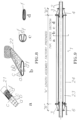
- This method as depicted in the Figures 1 through 15 , illustrates the geometry that is formed in the type of the prefabricated device, in the modes of different lengths, coiled or encased inside the rigid sleeve, and transportable to the site for installation.
- the system illustrates the monitoring capacities for the TMD device and its ability to be incorporated with all these features directly and in contiguous way within the pipeline.
- the invention relates to the TMD devices made from the plastic and reinforced thermoplastic composite pipes and applicable to pipelines and conduits by inline insertion.
- the invention is a unique in-line surge protection and monitoring device, and a measuring method in such application for pipelines that provides for attenuation of the impacting forces.
- the TMD device is prefabricated, tested and stored, site delivered, and prepared for installation for both old and new pipelines.
- the TMD technology is made available in conjunction with the prior art for making the composite pipelines.
- This technology is capable of accommodating the " C” formed sections as well as other patented cross sections, as referenced here as “form shaped sections", and specifically noted in the Smartpipe ® patents.
- the pipeline coiling and the storage capacity is reserved for the longer TMD devices which may be installed over several hundreds of feet or more, and where those will function as fully operable pipelines as well as the attenuation mechanism for the impact waves.
- the form-shaped TMD devices are made with a reduced area in cross section of the pipes and made of flexible material suitable for coiling onto the reels or spools.
- This inventive system of TMD devices is capable to be installed in a variety of ways, such as in multiple sections at certain locations of the pipeline, in one long section, and in positions above ground, below ground, inside the host pipes and in the new pipes and conduits.
- the Transient Mitigation Device (TMD) 1 of "A" length has been factory assembled and installed in a pipeline 2 cut to receive the TMD between the two open ends of the pipeline 2.
- the two end piece assemblies 3 of "B" length are special adaptors each mounted on the open ends of the pipeline 2 containing connecting mechanism for instrumentation 13 and providing a chamber 4 for alleviation and excess pressure mitigation from the main chamber of the TMD 1.
- the end piece assemblies 3 each comprise ANSI flanges 5 with ring sealers, flow through connection 7 for monitoring instruments 13, an adaptor 8 for Smartpipe RTP, a contra wave injector 6, internal o-ring seals and an instrumental monitoring port 29.
- the dimensions "A” and " B " are suitable dimensions for the various sizes of installation based on the design and demands for a pipeline.
- the embodiment of a TMD 1 of "A" length shown in Figure 1 has two ends each fitted with a Smartpipe RTP adaptor spool 8 for connection to the end pieces 3 mounted on the open ends of the pipeline 2. As depicted in Figure 1 , this embodiment illustrates a "confined” method of transient mitigation.
- the TMD 1 has an outer steel spool pipe 9 of "A" length running longitudinally between the Smartpipe RTP adaptor spools 8.
- the outer steel spool pipe 9 acts as a casement shield for liquid fill 10 contained in the annular space 23 between the outer steel spool pipe 9 and at least one or more concentric flexible Smartpipe RTPs running longitudinally between the Smartpipe RTP adaptor spools 8, where the inside diameter of innermost flexible Smartpipe RTP 11 would be no less than the inside diameter of the pipeline 9 and the TMD 1 would act as a fully functional component of the pipeline 2.
- the second or multiple flexible Smartpipe RTPs 12 concentric to the innermost flexible Smartpipe RTP 11 would provide transient mitigation.
- instrumentation and monitoring 13 running longitudinally for the full length of the TMD 1 between the end pieces 3 between the concentric elements of the TMD 1.
- FIG. 3 shows a longitudinal cross section of a factory assembled TMD 1 with a single flexible Smartpipe RTP 1 1 engaged and under impacts. As shown, internal shock caused by increased pressure is mitigated by energy dissipation with the system's capacity to expand and contract as well as elongate, without breaking. The strength of the TMD 1 allows for multiple uses and safety of several increases over the pressure oscillations. Also shown are monitoring sensors 34 to monitor performance and water hammer impact.
- FIG. 4 shows the components of the multi layered composite Smartpipe RTP with the components of the pipe construction including the monitoring systems, pulling systems, and other features of such composite pipe design.
- the typical cross section of the "shape formed” pipe is illustrated in "C” formation, among others previously patented, showing the applicability to long TMD devices.
- the components are depicted as follows:
- the embodiment of the TMD device shown in Figure 5 illustrates a flexible attenuated assembly 14 with a flexible sleeve 15.
- This embodiment features variable lengths, and where manufactured in longer lengths can be coiled on a reel or spool.
- the end pieces 16 for this embodiment 14 are special adaptors 17 containing connecting mechanism for instrumentation.
- the dimension "A" is a suitable dimension for various lengths based on the design and demands for a pipeline 2.
- the model shown in Figure 5 indicates a singular inner flexible Smartpipe RTP pipe 19 and outer flexible Smartpipe RTP pipe 20 of the same making, but a multiplicity of pipes is also anticipated in this invention.
- the multiplicity of pipes is a prime means for impact wave attenuation and energy absorption.
- the cross section shown in Figure 6 shows the flexible sleeve, the flexible Smartpipe RTP 19 and the host pipe 2. Also shown is the liquid fill 1 8 in the annular space 23 between the flexible sleeve and the flexible Smartpipe RTP pipes 19 and 20.
- Figure 7 shows the flexible embodiment 14 of the TMD device with a flexible sleeve 15 inserted in line in a pipeline 2 with a single use of the flexible Smartpipe RTP 19 inside and the flexible Smartpipe RTP 20 outside, engaged and under impact.
- internal shock caused by increased pressure is mitigated by energy dissipation with the system's capacity to expand and contract as well as elongate, without breaking.
- the strength of the TMD 14 allows for multiple uses and safety of several increases over the pressure oscillations.
- monitoring sensors 21 to monitor performance and water hammer impact.
- Figure 8 shows the cured type of the TMD device with the components for flexible Smartpipe RTP assembled in a type of hose form 21, and where required capable of being flat 22 and coiled on reels and spools.
- the elements are as above identified in Figure 4 , with alternative cross sectional shapes shown as a, b, c and d.
- Figure 9 depicts the TMD device 1 shown in Figure 1 that has been factory assembled and installed in a pipeline 2.
- the confined annular space 23 may be filled with gas fluid, gel or other flexible medium and thermal liquids 24 if designed for heat attenuation.
- foam expansion chambers 4 for difference in flexible pipe expansion.
- contra wave injector 6 for injection of a contra wave force by outside means.
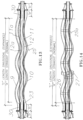
- the embodiment of the TMD device 25 shown in Figure 10 illustrates the oriented wave simulation feature where the TMD device 25 has the ability to conform to the shape of the wave, generally in a sinusoidal patterns and where "A" is the normal straight length and "C” is the expanded sinusoidal length.
- the foam expansion chambers 4 in the end pieces 3 would compensate for the flexible pipe expansion.
- the outer steel spool pipe 9 would be sized in relation to the wave size.
- the design parameters for the TMD device 25 would be predicated on wave propagation as applicable to each pipeline 2.
- the annulus 23 is shown as extended to match the amplitude for wave propagation with a mechanism for one directional wave movement.
- the first flexible Smartpipe RTP pipe is shown is shown in both the expanded position 11a and the before position 11, compressed with the ability to expand.
- this assembly in addition to the first flexible Smartpipe RTP pipe 11 there is a second or multiple flexible Smartpipe RTP pipes shown before 12 and after 12a the anticipated sinusoidal movement corresponding to wave propagation conditions.
- the embodiment of the TMD device 25a shown in Figure 11 illustrates all the oriented wave simulation features shown in Figure 10 with the addition of orientation collars or annulus spacers 26 that are flexible components designed to provide for orientation of sinusoidal movement and compression or expansion in conformance with the force of impact.
- a maximum extension 27 of the outer steel spool pipe 9 to allow for maximum expansion of the TMD device 25a wave simulation movement as calculated for allowable flexible Smartpipe RTP pipe movement until breakage.
- FIG. 1 la a cross section of one of the end pieces 3 to the TMD device 25a is shown with ANSI flanges 5 with ring sealers, and a Smartpipe RTP adaptor spool 8.
- the TMD device 25a with the wave simulation feature shown in Figure 12 is shown with a preinstalled management system 28 in block diagram for receiving, processing and transmitting information gathered from two connecting ports 29 at each end of the TMD device 25a.
- the system will monitor pipeline surges for consideration as to operator intervention or a system automatic emergency procedure intervention if so programmed.
- This system of monitoring has several technological features where it could be combined with sensors, fiber optics, strain sensors and other means available in the contemporary technologies.
- the TMD device 25 with the wave simulation feature shown in Figure 13 is shown with the outer steel spool pipe 9 as a rigid restrictive mechanism used in the wave formulation with stiffener extensions 30 on the Smartpipe RTP adaptor spool 8 at each end of the TMD device 25.
- the embodiment of the TMD device 25a shown in Figure 14 illustrates all the oriented wave simulation features shown in Figure 13 with the addition of orientation collars or annulus spacers 26 that are flexible components designed to provide for orientation of sinusoidal movement.
- a maximum extension 27 of the outer steel spool pipe 9 to allow for maximum expansion of the TMD device 25a wave simulation movement.
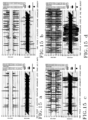
- FIG. 15 A system for acoustical detection is shown in Figure 15 with acoustical transmission due to an acoustical wave generated from heat and pressure detectable during both operation and for testing.
- a block diagram 31 shows the receiving and processing of the acoustic transmission. The illustration depicts how the system for acoustical detection in the TMD device 1 is used to its maximum, and it shows that the restrictions can be implemented to prevent the burst of the TMD device 1, as well as, to direct the overall pipeline operation in regards to a condition of critical hammer impact.
- connector ports 29 and acoustic micro packs 32 with an alternative flanged fitting 33 for testing are also shown.
- Figures 15a-15d are a graphical presentation of the four stages of an acoustical impact.
Landscapes
- Engineering & Computer Science (AREA)
- General Engineering & Computer Science (AREA)
- Mechanical Engineering (AREA)
- Physics & Mathematics (AREA)
- General Physics & Mathematics (AREA)
- Pipeline Systems (AREA)
Claims (9)
- Vorrichtung (1) zum Mindern von transienten Ereignissen in einem transportierten Medium aus Fluiden und Gasen, das Druckstößen und Überdruckereignissen ausgesetzt ist, die durch den transienten Zustand eines transportierten Mediums in einer kontinuierlichen Rohrleitung (2) verursacht werden, während sie als ein kontinuierliches Stück der Rohrleitung fungiert, Folgendes umfassend:a. ein äußeres Spulenrohr (9) als Umrahmung für ein oder mehrere konzentrisch angeordnete mehrschichtige Verbundrohre (11), umfassend ein Kernrohr, spiralförmige und kreisförmige Ummantelungsschichten sowie Sensoren und Leser, wobei sich zwischen dem Spulenrohr und den mehrschichtigen Verbundrohren ein Ringraum (23) befindet, wobei der Ringraum mit einem Fluidmedium gefüllt ist;b. Endstückadapter (8) zum Verbinden mit offenen Enden (3) der Rohrleitung, wenn die Vorrichtung inline mit der Rohrleitung installiert ist, und worin die Endstückadapter ferner jeweils Flansche (5), Kammern zur Überdruckminderung aus dem Ringraum (4), eine Verbindung (7) für Überwachungsinstrumente und eine Instrumentenüberwachungsöffnung (29) umfassen, undc. Instrumentierung und Überwachung (13), die in Längsrichtung über die gesamte Länge der Vorrichtung verläuft.
- Vorrichtung nach Anspruch 1, worin das äußere Spulenrohr aus mehrschichtigem Verbundmaterial besteht und die Vorrichtung in einer flach aufrollbaren Schlauchform zusammengebaut werden kann.
- Vorrichtung nach Anspruch 1, die ferner so ausgelegt ist, dass sie eine Verstärkung von transienten Druckwellen durch Simulation von Gegenwellen verringert, worin die Endstückadapter ferner einen Gegenwelleninjektor (6) umfassen, um den Ringraum zu erweitern, damit sich die mehrschichtigen Verbundrohre innerhalb des äußeren Spulenrohrs zu einer sinusförmigen Form ausdehnen.
- Vorrichtung nach Anspruch 3, die ferner ringförmige Abstandshalter umfasst, um eine Ausrichtung einer sinusförmigen Bewegung der mehrschichtigen Verbundrohre bereitzustellen.
- Vorrichtung nach Anspruch 4, die ferner ein Managementsystem zum Empfangen, Verarbeiten und Übertragen von Informationen umfasst, die von der Instrumentenüberwachungsöffnung an jedem Endstückadapter und in Kombination mit einer vorhandenen Rohrleitungsüberwachung erfasst werden.
- Vorrichtung nach Anspruch 1, die ferner ein akustisches Erfassungssystem zum Empfangen und Verarbeiten einer akustischen Übertragung umfasst, die auf eine durch Hitze und Druck erzeugte akustische Welle zurückzuführen ist, die durch ein akustisches Mikropaket erkannt wird.
- Verfahren zum Mindern von transienten Ereignissen in einem transportierten Medium aus Fluiden und Gasen, das Druckstößen und Überdruckereignissen ausgesetzt ist, die durch den transienten Zustand eines transportierten Mediums in einer Rohrleitung (2) verursacht werden, umfassend die folgenden Schritte:a. Installieren einer Inline-Vorrichtung (1) nach einem der vorhergehenden Ansprüche, die sowohl als Minderungsvorrichtung als auch als voll funktionsfähiges Rohrleitungsbauteil in der Rohrleitung fungiert, worin die Vorrichtung Folgendes umfasst:ein äußeres Spulenrohr (9) als Umrahmung für ein oder mehrere konzentrisch angeordnete mehrschichtige Verbundrohre (11), umfassend ein Kernrohr, spiralförmige und kreisförmige Ummantelungsschichten sowie Sensoren und Leser, wobei sich zwischen dem Spulenrohr und den mehrschichtigen Verbundrohren ein Ringraum (23) befindet, wobei der Ringraum mit einem Fluidmedium gefüllt ist;Endstückadapter (8) zum Verbinden mit offenen Enden (3) der Rohrleitung, wenn die Vorrichtung inline mit der Rohrleitung installiert ist, und worin die Endstückadapter ferner jeweils Flansche (5), Kammern zur Überdruckminderung aus dem Ringraum (4), eine Verbindung (7) für Überwachungsinstrumente und eine Instrumentenüberwachungsöffnung (29) umfassen, undInstrumentierung und Überwachung (13), die in Längsrichtung über die gesamte Länge der Vorrichtung verläuft;b. Überwachen von Ereignissen mit erhöhtem Druck in der Rohrleitung durch Installieren eines Managementsystems zum Empfangen, Verarbeiten und Übertragen von Informationen, die von der Instrumentenüberwachungsöffnung an jedem Endstückadapter und in Kombination mit einer vorhandenen Rohrleitungsüberwachung erfasst werden;c. Zulassen, dass die Inline-Vorrichtung den Einfluss von hohem Druck durch Energiedissipation mindert.
- Verfahren nach Anspruch 7, worin die installierte Inline-Vorrichtung ferner einen Gegenwelleninjektor (6) umfasst, um den Ringraum zu erweitern, damit sich die mehrschichtigen Verbundrohre innerhalb des äußeren Spulenrohrs zu einer sinusförmigen Form ausdehnen, und die mehrschichtigen Verbundrohre als Reaktion auf eine Druckwelle in der Rohrleitung zu einer sinusförmigen Form ausgedehnt werden, um eine aktive Gegenwelle zu der Druckwelle zu initiieren, um die Verstärkung der Druckwelle zu verringern.
- Verfahren nach Anspruch 8, worin die Inline-Vorrichtung ferner ein akustisches Erkennungssystem umfasst, um eine akustische Welle zu erkennen, die durch Hitze und Druck in der Rohrleitung erzeugt wird, und bei Erkennung einer akustischen Welle eine Reaktion zum Schutz der Rohrleitung auszulösen.
Applications Claiming Priority (2)
| Application Number | Priority Date | Filing Date | Title |
|---|---|---|---|
| US201962877501P | 2019-07-23 | 2019-07-23 | |
| PCT/US2020/043302 WO2021016470A1 (en) | 2019-07-23 | 2020-07-23 | System and method for transient mitigation device in continuous pipelines for surge impact control |
Publications (3)
| Publication Number | Publication Date |
|---|---|
| EP4004422A1 EP4004422A1 (de) | 2022-06-01 |
| EP4004422A4 EP4004422A4 (de) | 2023-06-21 |
| EP4004422B1 true EP4004422B1 (de) | 2025-01-15 |
Family
ID=74190157
Family Applications (1)
| Application Number | Title | Priority Date | Filing Date |
|---|---|---|---|
| EP20843192.4A Active EP4004422B1 (de) | 2019-07-23 | 2020-07-23 | Vorrichtung und verfahren für transiente abschwächungsvorrichtung in kontinuierlichen rohrleitungen für druckstossregelung |
Country Status (4)
| Country | Link |
|---|---|
| US (1) | US11112049B2 (de) |
| EP (1) | EP4004422B1 (de) |
| CA (1) | CA3148247A1 (de) |
| WO (1) | WO2021016470A1 (de) |
Families Citing this family (5)
| Publication number | Priority date | Publication date | Assignee | Title |
|---|---|---|---|---|
| WO2021173868A1 (en) * | 2020-02-25 | 2021-09-02 | Smart Pipe Company, Inc. | In line inspection strain device method and apparatus for performing in line joint inspections |
| US12455044B2 (en) | 2020-11-12 | 2025-10-28 | Braindrip, Llc | Apparatus and methodology for the onsite autonomous manufacturing and placement of a coiled, cannular intelligent composite structure for the high volume, localized and resilient storage of hydrogen and other gaseous and liquid media |
| AU2021380840A1 (en) | 2020-11-12 | 2023-06-22 | Safeguard, Llc | Methods and materials for intelligent composite renewal system for standalone, storage, and renewed pipelines, including for reduced carbon emission and for conversion of in place pipelines for conveyance of hydrogen and other clean fuels |
| CN113009085A (zh) * | 2021-03-08 | 2021-06-22 | 沈阳大学 | 一种可移动式原位气体熏蒸装置 |
| EP4235002A1 (de) * | 2022-02-25 | 2023-08-30 | MAGNA Energy Storage Systems GesmbH | Thermisch isolierte transferleitung |
Family Cites Families (19)
| Publication number | Priority date | Publication date | Assignee | Title |
|---|---|---|---|---|
| US2712831A (en) * | 1948-11-27 | 1955-07-12 | Grover A Day | Shock pressure absorber and pulsation dampers |
| US2838073A (en) * | 1953-09-01 | 1958-06-10 | Mattia Samuel P Di | Surge pressure absorber |
| US3473565A (en) | 1966-05-25 | 1969-10-21 | Josam Mfg Co | Shock absorber for liquid flow lines |
| DE1902217B2 (de) * | 1969-01-17 | 1971-11-25 | Alfred Teves Gmbh, 6000 Frankfurt | Hydropneumatischer rohrspeicher |
| US3874417A (en) | 1973-05-24 | 1975-04-01 | Robert B Clay | Pneumatic pump surge chamber |
| US3878867A (en) * | 1973-11-14 | 1975-04-22 | Josam Mfg Co | Liquid line shock absorber |
| US4497388A (en) * | 1981-08-25 | 1985-02-05 | Gaulin Corporation | Pulsation dampener and acoustic attenuator |
| US4500487A (en) | 1982-02-26 | 1985-02-19 | The United States Of America As Represented By The United States Department Of Energy | Pressure surge attenuator |
| DE3615177A1 (de) * | 1985-08-06 | 1987-02-19 | Nobuyuki Sugimura | Isolierteil in einem einbauspeicher |
| US8678042B2 (en) * | 1995-09-28 | 2014-03-25 | Fiberspar Corporation | Composite spoolable tube |
| US5860452A (en) * | 1998-04-02 | 1999-01-19 | Ellis; Harrell P. | Pulsation dampener |
| US6293311B1 (en) | 1998-05-22 | 2001-09-25 | Pmd Holdings Corp. | Multilayer composite pipe fluid conduit system using multilayer composite pipe and method of making the composite |
| US6418969B1 (en) * | 2000-11-08 | 2002-07-16 | Watts Regulator Co. | In-line thermal expansion tank |
| US7108015B2 (en) * | 2002-07-25 | 2006-09-19 | Flexcon Industries | In-line flow through diaphragm tank |
| US7306006B1 (en) * | 2003-04-10 | 2007-12-11 | Blacoh Fluid Controls, Inc. | Multi-function fluid component |
| EP2943714A4 (de) | 2013-01-09 | 2016-08-17 | Cidra Corporate Services Inc | Intelligentes rohrkonzept auf basis eines eingebetteten taggant-sensors und/oder farbcodierter elemente zur überwachung eines auskleidungsverschleisses in ausgekleideten rohrleitungen einschliesslich mit urethan ausgekleideter rohrleitungen |
| FR3028057A1 (fr) | 2014-10-31 | 2016-05-06 | Serac Group | Dispositif de regulation de debit a membrane tubulaire deformable, ligne de distribution de fluide et installation comportant un tel dispositif |
| US10436667B2 (en) * | 2017-09-25 | 2019-10-08 | Smart Pipe Company, Inc. | In line inspection method and apparatus for performing in line inspections |
| US20200158063A1 (en) * | 2018-11-15 | 2020-05-21 | Hamilton Sundstrand Corporation | Fluid pulsation attenuating arrangement |
-
2020
- 2020-07-23 EP EP20843192.4A patent/EP4004422B1/de active Active
- 2020-07-23 WO PCT/US2020/043302 patent/WO2021016470A1/en not_active Ceased
- 2020-07-23 US US16/937,090 patent/US11112049B2/en active Active
- 2020-07-23 CA CA3148247A patent/CA3148247A1/en active Pending
Also Published As
| Publication number | Publication date |
|---|---|
| US20210025530A1 (en) | 2021-01-28 |
| EP4004422A1 (de) | 2022-06-01 |
| WO2021016470A1 (en) | 2021-01-28 |
| EP4004422A4 (de) | 2023-06-21 |
| CA3148247A1 (en) | 2021-01-28 |
| US11112049B2 (en) | 2021-09-07 |
Similar Documents
| Publication | Publication Date | Title |
|---|---|---|
| EP4004422B1 (de) | Vorrichtung und verfahren für transiente abschwächungsvorrichtung in kontinuierlichen rohrleitungen für druckstossregelung | |
| Drumond et al. | Pipelines, risers and umbilicals failures: A literature review | |
| US11841293B2 (en) | In line inspection strain device method and apparatus for performing in line joint inspections | |
| AU2021380840A1 (en) | Methods and materials for intelligent composite renewal system for standalone, storage, and renewed pipelines, including for reduced carbon emission and for conversion of in place pipelines for conveyance of hydrogen and other clean fuels | |
| Britton et al. | Avoiding water hammer and other hydraulic transients | |
| Stryzhalo et al. | Estimation of the load carrying capacity of the bellows compensator for gas pipelines in the areas of mining production | |
| Nessim et al. | Limit States Design for Onshore Pipelines: Design Rules for Operating Pressure and Equipment Impact Loads | |
| Mo et al. | Requirements and applicable standards for design, manufacturing and installation of flexible pipes | |
| Owolabi | Critical review of subsea structures in the Gulf of Guinea:“Finite element analysis to predict the behaviour of a multi-layer non-bonded flexible pipe under hydrate plug in a static application” | |
| Horner | Pump Station Design II: A Tale of Two Pump Stations | |
| US20230400125A1 (en) | Method and apparatus for achieving zero emissions of gaseous substances in rtp pipelines and conduits | |
| Yarmukhametov et al. | Pipestone Acid Gas Injection System | |
| Ahmed | APPROVAL SHEET | |
| Hassan et al. | Aspect and necessity of hydraulic transient analysis in water distribution system in Dhaka | |
| Mason | Thermoplastic Liners for Oilfield Pipelines | |
| Bouey et al. | Considerations for Selecting Sustainable Corrosion Resistant Pipeline Solutions for the Oil & Gas Industry | |
| Hanken et al. | In-place FE modeling of unbonded flexible pipelines capturing pressure stiffening and decoupled axial/nonlinear bending stiffness | |
| Rostamy et al. | Process for Pipeline Stand-Up Pressure Test: A Reliable Method for Integrity Verification | |
| Okyere | Stress‐Based Design of Pipelines | |
| Yananto et al. | Conceptual design for offshore pipeline replacement in mature field by flexible pipe for CAPEX and OPEX optimization | |
| Kanninen et al. | The Design of a Self-Monitoring Thermoplastic Composite Pipe for High Pressure Gas/Liquid Transport | |
| Carpita et al. | Evaluations of Piping Integrity Under Jet Fire Emergency Conditions in Gas Plants | |
| Lefer et al. | Enhance Flow Assurance in Large Diameter Gas Flexible Pipes | |
| Yu et al. | High Temperature Flowline Thermal Design Using Rotating Buoyancy Modules | |
| Adams | Integrity management of subsea flexible pipelines |
Legal Events
| Date | Code | Title | Description |
|---|---|---|---|
| STAA | Information on the status of an ep patent application or granted ep patent |
Free format text: STATUS: THE INTERNATIONAL PUBLICATION HAS BEEN MADE |
|
| PUAI | Public reference made under article 153(3) epc to a published international application that has entered the european phase |
Free format text: ORIGINAL CODE: 0009012 |
|
| STAA | Information on the status of an ep patent application or granted ep patent |
Free format text: STATUS: REQUEST FOR EXAMINATION WAS MADE |
|
| 17P | Request for examination filed |
Effective date: 20220127 |
|
| AK | Designated contracting states |
Kind code of ref document: A1 Designated state(s): AL AT BE BG CH CY CZ DE DK EE ES FI FR GB GR HR HU IE IS IT LI LT LU LV MC MK MT NL NO PL PT RO RS SE SI SK SM TR |
|
| DAV | Request for validation of the european patent (deleted) | ||
| DAX | Request for extension of the european patent (deleted) | ||
| A4 | Supplementary search report drawn up and despatched |
Effective date: 20230519 |
|
| RIC1 | Information provided on ipc code assigned before grant |
Ipc: G01H 3/10 20060101ALI20230512BHEP Ipc: B29C 65/00 20060101ALI20230512BHEP Ipc: B29C 53/08 20060101ALI20230512BHEP Ipc: G01M 3/00 20060101ALI20230512BHEP Ipc: F16L 55/054 20060101ALI20230512BHEP Ipc: F16L 55/04 20060101AFI20230512BHEP |
|
| GRAP | Despatch of communication of intention to grant a patent |
Free format text: ORIGINAL CODE: EPIDOSNIGR1 |
|
| STAA | Information on the status of an ep patent application or granted ep patent |
Free format text: STATUS: GRANT OF PATENT IS INTENDED |
|
| INTG | Intention to grant announced |
Effective date: 20240318 |
|
| RAP3 | Party data changed (applicant data changed or rights of an application transferred) |
Owner name: SMART PIPE COMPANY, INC. |
|
| GRAJ | Information related to disapproval of communication of intention to grant by the applicant or resumption of examination proceedings by the epo deleted |
Free format text: ORIGINAL CODE: EPIDOSDIGR1 |
|
| STAA | Information on the status of an ep patent application or granted ep patent |
Free format text: STATUS: REQUEST FOR EXAMINATION WAS MADE |
|
| GRAP | Despatch of communication of intention to grant a patent |
Free format text: ORIGINAL CODE: EPIDOSNIGR1 |
|
| STAA | Information on the status of an ep patent application or granted ep patent |
Free format text: STATUS: GRANT OF PATENT IS INTENDED |
|
| INTC | Intention to grant announced (deleted) | ||
| INTG | Intention to grant announced |
Effective date: 20240806 |
|
| GRAS | Grant fee paid |
Free format text: ORIGINAL CODE: EPIDOSNIGR3 |
|
| GRAA | (expected) grant |
Free format text: ORIGINAL CODE: 0009210 |
|
| STAA | Information on the status of an ep patent application or granted ep patent |
Free format text: STATUS: THE PATENT HAS BEEN GRANTED |
|
| AK | Designated contracting states |
Kind code of ref document: B1 Designated state(s): AL AT BE BG CH CY CZ DE DK EE ES FI FR GB GR HR HU IE IS IT LI LT LU LV MC MK MT NL NO PL PT RO RS SE SI SK SM TR |
|
| REG | Reference to a national code |
Ref country code: CH Ref legal event code: EP Ref country code: GB Ref legal event code: FG4D |
|
| REG | Reference to a national code |
Ref country code: DE Ref legal event code: R096 Ref document number: 602020044945 Country of ref document: DE |
|
| REG | Reference to a national code |
Ref country code: IE Ref legal event code: FG4D |
|
| REG | Reference to a national code |
Ref country code: NL Ref legal event code: MP Effective date: 20250115 |
|
| PG25 | Lapsed in a contracting state [announced via postgrant information from national office to epo] |
Ref country code: NL Free format text: LAPSE BECAUSE OF FAILURE TO SUBMIT A TRANSLATION OF THE DESCRIPTION OR TO PAY THE FEE WITHIN THE PRESCRIBED TIME-LIMIT Effective date: 20250115 |
|
| PG25 | Lapsed in a contracting state [announced via postgrant information from national office to epo] |
Ref country code: RS Free format text: LAPSE BECAUSE OF FAILURE TO SUBMIT A TRANSLATION OF THE DESCRIPTION OR TO PAY THE FEE WITHIN THE PRESCRIBED TIME-LIMIT Effective date: 20250415 |
|
| PG25 | Lapsed in a contracting state [announced via postgrant information from national office to epo] |
Ref country code: FI Free format text: LAPSE BECAUSE OF FAILURE TO SUBMIT A TRANSLATION OF THE DESCRIPTION OR TO PAY THE FEE WITHIN THE PRESCRIBED TIME-LIMIT Effective date: 20250115 |
|
| PG25 | Lapsed in a contracting state [announced via postgrant information from national office to epo] |
Ref country code: PL Free format text: LAPSE BECAUSE OF FAILURE TO SUBMIT A TRANSLATION OF THE DESCRIPTION OR TO PAY THE FEE WITHIN THE PRESCRIBED TIME-LIMIT Effective date: 20250115 |
|
| PG25 | Lapsed in a contracting state [announced via postgrant information from national office to epo] |
Ref country code: ES Free format text: LAPSE BECAUSE OF FAILURE TO SUBMIT A TRANSLATION OF THE DESCRIPTION OR TO PAY THE FEE WITHIN THE PRESCRIBED TIME-LIMIT Effective date: 20250115 |
|
| PGFP | Annual fee paid to national office [announced via postgrant information from national office to epo] |
Ref country code: GB Payment date: 20250605 Year of fee payment: 6 |
|
| REG | Reference to a national code |
Ref country code: LT Ref legal event code: MG9D |
|
| PG25 | Lapsed in a contracting state [announced via postgrant information from national office to epo] |
Ref country code: NO Free format text: LAPSE BECAUSE OF FAILURE TO SUBMIT A TRANSLATION OF THE DESCRIPTION OR TO PAY THE FEE WITHIN THE PRESCRIBED TIME-LIMIT Effective date: 20250415 Ref country code: IS Free format text: LAPSE BECAUSE OF FAILURE TO SUBMIT A TRANSLATION OF THE DESCRIPTION OR TO PAY THE FEE WITHIN THE PRESCRIBED TIME-LIMIT Effective date: 20250515 |
|
| REG | Reference to a national code |
Ref country code: AT Ref legal event code: MK05 Ref document number: 1760047 Country of ref document: AT Kind code of ref document: T Effective date: 20250115 |
|
| PG25 | Lapsed in a contracting state [announced via postgrant information from national office to epo] |
Ref country code: HR Free format text: LAPSE BECAUSE OF FAILURE TO SUBMIT A TRANSLATION OF THE DESCRIPTION OR TO PAY THE FEE WITHIN THE PRESCRIBED TIME-LIMIT Effective date: 20250115 |
|
| PG25 | Lapsed in a contracting state [announced via postgrant information from national office to epo] |
Ref country code: LV Free format text: LAPSE BECAUSE OF FAILURE TO SUBMIT A TRANSLATION OF THE DESCRIPTION OR TO PAY THE FEE WITHIN THE PRESCRIBED TIME-LIMIT Effective date: 20250115 Ref country code: PT Free format text: LAPSE BECAUSE OF FAILURE TO SUBMIT A TRANSLATION OF THE DESCRIPTION OR TO PAY THE FEE WITHIN THE PRESCRIBED TIME-LIMIT Effective date: 20250515 |
|
| PGFP | Annual fee paid to national office [announced via postgrant information from national office to epo] |
Ref country code: FR Payment date: 20250610 Year of fee payment: 6 |
|
| PG25 | Lapsed in a contracting state [announced via postgrant information from national office to epo] |
Ref country code: BG Free format text: LAPSE BECAUSE OF FAILURE TO SUBMIT A TRANSLATION OF THE DESCRIPTION OR TO PAY THE FEE WITHIN THE PRESCRIBED TIME-LIMIT Effective date: 20250115 Ref country code: GR Free format text: LAPSE BECAUSE OF FAILURE TO SUBMIT A TRANSLATION OF THE DESCRIPTION OR TO PAY THE FEE WITHIN THE PRESCRIBED TIME-LIMIT Effective date: 20250416 |
|
| PG25 | Lapsed in a contracting state [announced via postgrant information from national office to epo] |
Ref country code: AT Free format text: LAPSE BECAUSE OF FAILURE TO SUBMIT A TRANSLATION OF THE DESCRIPTION OR TO PAY THE FEE WITHIN THE PRESCRIBED TIME-LIMIT Effective date: 20250115 |
|
| PG25 | Lapsed in a contracting state [announced via postgrant information from national office to epo] |
Ref country code: SE Free format text: LAPSE BECAUSE OF FAILURE TO SUBMIT A TRANSLATION OF THE DESCRIPTION OR TO PAY THE FEE WITHIN THE PRESCRIBED TIME-LIMIT Effective date: 20250115 |
|
| PG25 | Lapsed in a contracting state [announced via postgrant information from national office to epo] |
Ref country code: SM Free format text: LAPSE BECAUSE OF FAILURE TO SUBMIT A TRANSLATION OF THE DESCRIPTION OR TO PAY THE FEE WITHIN THE PRESCRIBED TIME-LIMIT Effective date: 20250115 |
|
| PG25 | Lapsed in a contracting state [announced via postgrant information from national office to epo] |
Ref country code: DK Free format text: LAPSE BECAUSE OF FAILURE TO SUBMIT A TRANSLATION OF THE DESCRIPTION OR TO PAY THE FEE WITHIN THE PRESCRIBED TIME-LIMIT Effective date: 20250115 |
|
| PGFP | Annual fee paid to national office [announced via postgrant information from national office to epo] |
Ref country code: DE Payment date: 20250604 Year of fee payment: 6 |
|
| PGFP | Annual fee paid to national office [announced via postgrant information from national office to epo] |
Ref country code: IT Payment date: 20250623 Year of fee payment: 6 |
|
| REG | Reference to a national code |
Ref country code: DE Ref legal event code: R097 Ref document number: 602020044945 Country of ref document: DE |
|
| PG25 | Lapsed in a contracting state [announced via postgrant information from national office to epo] |
Ref country code: CZ Free format text: LAPSE BECAUSE OF FAILURE TO SUBMIT A TRANSLATION OF THE DESCRIPTION OR TO PAY THE FEE WITHIN THE PRESCRIBED TIME-LIMIT Effective date: 20250115 Ref country code: EE Free format text: LAPSE BECAUSE OF FAILURE TO SUBMIT A TRANSLATION OF THE DESCRIPTION OR TO PAY THE FEE WITHIN THE PRESCRIBED TIME-LIMIT Effective date: 20250115 |
|
| PG25 | Lapsed in a contracting state [announced via postgrant information from national office to epo] |
Ref country code: RO Free format text: LAPSE BECAUSE OF FAILURE TO SUBMIT A TRANSLATION OF THE DESCRIPTION OR TO PAY THE FEE WITHIN THE PRESCRIBED TIME-LIMIT Effective date: 20250115 |
|
| PG25 | Lapsed in a contracting state [announced via postgrant information from national office to epo] |
Ref country code: SK Free format text: LAPSE BECAUSE OF FAILURE TO SUBMIT A TRANSLATION OF THE DESCRIPTION OR TO PAY THE FEE WITHIN THE PRESCRIBED TIME-LIMIT Effective date: 20250115 |
|
| PLBE | No opposition filed within time limit |
Free format text: ORIGINAL CODE: 0009261 |
|
| STAA | Information on the status of an ep patent application or granted ep patent |
Free format text: STATUS: NO OPPOSITION FILED WITHIN TIME LIMIT |
|
| REG | Reference to a national code |
Ref country code: CH Ref legal event code: L10 Free format text: ST27 STATUS EVENT CODE: U-0-0-L10-L00 (AS PROVIDED BY THE NATIONAL OFFICE) Effective date: 20251126 |
|
| 26N | No opposition filed |
Effective date: 20251016 |
|
| REG | Reference to a national code |
Ref country code: CH Ref legal event code: H13 Free format text: ST27 STATUS EVENT CODE: U-0-0-H10-H13 (AS PROVIDED BY THE NATIONAL OFFICE) Effective date: 20260224 |
|
| PG25 | Lapsed in a contracting state [announced via postgrant information from national office to epo] |
Ref country code: LU Free format text: LAPSE BECAUSE OF NON-PAYMENT OF DUE FEES Effective date: 20250723 |
|
| REG | Reference to a national code |
Ref country code: BE Ref legal event code: MM Effective date: 20250731 |
|
| PG25 | Lapsed in a contracting state [announced via postgrant information from national office to epo] |
Ref country code: BE Free format text: LAPSE BECAUSE OF NON-PAYMENT OF DUE FEES Effective date: 20250731 |
|
| PG25 | Lapsed in a contracting state [announced via postgrant information from national office to epo] |
Ref country code: CH Free format text: LAPSE BECAUSE OF NON-PAYMENT OF DUE FEES Effective date: 20250731 |