EP4002325A1 - System for controlling vehicle driving through roundabout and method of controlling the same - Google Patents
System for controlling vehicle driving through roundabout and method of controlling the same Download PDFInfo
- Publication number
- EP4002325A1 EP4002325A1 EP21208304.2A EP21208304A EP4002325A1 EP 4002325 A1 EP4002325 A1 EP 4002325A1 EP 21208304 A EP21208304 A EP 21208304A EP 4002325 A1 EP4002325 A1 EP 4002325A1
- Authority
- EP
- European Patent Office
- Prior art keywords
- vehicle
- roundabout
- host vehicle
- time
- entry
- Prior art date
- Legal status (The legal status is an assumption and is not a legal conclusion. Google has not performed a legal analysis and makes no representation as to the accuracy of the status listed.)
- Granted
Links
Images

Classifications
-
- G—PHYSICS
- G08—SIGNALLING
- G08G—TRAFFIC CONTROL SYSTEMS
- G08G1/00—Traffic control systems for road vehicles
- G08G1/16—Anti-collision systems
- G08G1/161—Decentralised systems, e.g. inter-vehicle communication
- G08G1/163—Decentralised systems, e.g. inter-vehicle communication involving continuous checking
-
- B—PERFORMING OPERATIONS; TRANSPORTING
- B60—VEHICLES IN GENERAL
- B60W—CONJOINT CONTROL OF VEHICLE SUB-UNITS OF DIFFERENT TYPE OR DIFFERENT FUNCTION; CONTROL SYSTEMS SPECIALLY ADAPTED FOR HYBRID VEHICLES; ROAD VEHICLE DRIVE CONTROL SYSTEMS FOR PURPOSES NOT RELATED TO THE CONTROL OF A PARTICULAR SUB-UNIT
- B60W30/00—Purposes of road vehicle drive control systems not related to the control of a particular sub-unit, e.g. of systems using conjoint control of vehicle sub-units
- B60W30/18—Propelling the vehicle
- B60W30/18009—Propelling the vehicle related to particular drive situations
- B60W30/18154—Approaching an intersection
-
- G—PHYSICS
- G08—SIGNALLING
- G08G—TRAFFIC CONTROL SYSTEMS
- G08G1/00—Traffic control systems for road vehicles
- G08G1/16—Anti-collision systems
- G08G1/161—Decentralised systems, e.g. inter-vehicle communication
- G08G1/162—Decentralised systems, e.g. inter-vehicle communication event-triggered
-
- B—PERFORMING OPERATIONS; TRANSPORTING
- B60—VEHICLES IN GENERAL
- B60Q—ARRANGEMENT OF SIGNALLING OR LIGHTING DEVICES, THE MOUNTING OR SUPPORTING THEREOF OR CIRCUITS THEREFOR, FOR VEHICLES IN GENERAL
- B60Q9/00—Arrangement or adaptation of signal devices not provided for in one of main groups B60Q1/00 - B60Q7/00, e.g. haptic signalling
- B60Q9/008—Arrangement or adaptation of signal devices not provided for in one of main groups B60Q1/00 - B60Q7/00, e.g. haptic signalling for anti-collision purposes
-
- B—PERFORMING OPERATIONS; TRANSPORTING
- B60—VEHICLES IN GENERAL
- B60W—CONJOINT CONTROL OF VEHICLE SUB-UNITS OF DIFFERENT TYPE OR DIFFERENT FUNCTION; CONTROL SYSTEMS SPECIALLY ADAPTED FOR HYBRID VEHICLES; ROAD VEHICLE DRIVE CONTROL SYSTEMS FOR PURPOSES NOT RELATED TO THE CONTROL OF A PARTICULAR SUB-UNIT
- B60W30/00—Purposes of road vehicle drive control systems not related to the control of a particular sub-unit, e.g. of systems using conjoint control of vehicle sub-units
- B60W30/08—Active safety systems predicting or avoiding probable or impending collision or attempting to minimise its consequences
- B60W30/095—Predicting travel path or likelihood of collision
- B60W30/0953—Predicting travel path or likelihood of collision the prediction being responsive to vehicle dynamic parameters
-
- B—PERFORMING OPERATIONS; TRANSPORTING
- B60—VEHICLES IN GENERAL
- B60W—CONJOINT CONTROL OF VEHICLE SUB-UNITS OF DIFFERENT TYPE OR DIFFERENT FUNCTION; CONTROL SYSTEMS SPECIALLY ADAPTED FOR HYBRID VEHICLES; ROAD VEHICLE DRIVE CONTROL SYSTEMS FOR PURPOSES NOT RELATED TO THE CONTROL OF A PARTICULAR SUB-UNIT
- B60W30/00—Purposes of road vehicle drive control systems not related to the control of a particular sub-unit, e.g. of systems using conjoint control of vehicle sub-units
- B60W30/08—Active safety systems predicting or avoiding probable or impending collision or attempting to minimise its consequences
- B60W30/095—Predicting travel path or likelihood of collision
- B60W30/0956—Predicting travel path or likelihood of collision the prediction being responsive to traffic or environmental parameters
-
- B—PERFORMING OPERATIONS; TRANSPORTING
- B60—VEHICLES IN GENERAL
- B60W—CONJOINT CONTROL OF VEHICLE SUB-UNITS OF DIFFERENT TYPE OR DIFFERENT FUNCTION; CONTROL SYSTEMS SPECIALLY ADAPTED FOR HYBRID VEHICLES; ROAD VEHICLE DRIVE CONTROL SYSTEMS FOR PURPOSES NOT RELATED TO THE CONTROL OF A PARTICULAR SUB-UNIT
- B60W30/00—Purposes of road vehicle drive control systems not related to the control of a particular sub-unit, e.g. of systems using conjoint control of vehicle sub-units
- B60W30/18—Propelling the vehicle
- B60W30/18009—Propelling the vehicle related to particular drive situations
- B60W30/18159—Traversing an intersection
-
- B—PERFORMING OPERATIONS; TRANSPORTING
- B60—VEHICLES IN GENERAL
- B60W—CONJOINT CONTROL OF VEHICLE SUB-UNITS OF DIFFERENT TYPE OR DIFFERENT FUNCTION; CONTROL SYSTEMS SPECIALLY ADAPTED FOR HYBRID VEHICLES; ROAD VEHICLE DRIVE CONTROL SYSTEMS FOR PURPOSES NOT RELATED TO THE CONTROL OF A PARTICULAR SUB-UNIT
- B60W40/00—Estimation or calculation of non-directly measurable driving parameters for road vehicle drive control systems not related to the control of a particular sub unit, e.g. by using mathematical models
- B60W40/02—Estimation or calculation of non-directly measurable driving parameters for road vehicle drive control systems not related to the control of a particular sub unit, e.g. by using mathematical models related to ambient conditions
-
- B—PERFORMING OPERATIONS; TRANSPORTING
- B60—VEHICLES IN GENERAL
- B60W—CONJOINT CONTROL OF VEHICLE SUB-UNITS OF DIFFERENT TYPE OR DIFFERENT FUNCTION; CONTROL SYSTEMS SPECIALLY ADAPTED FOR HYBRID VEHICLES; ROAD VEHICLE DRIVE CONTROL SYSTEMS FOR PURPOSES NOT RELATED TO THE CONTROL OF A PARTICULAR SUB-UNIT
- B60W40/00—Estimation or calculation of non-directly measurable driving parameters for road vehicle drive control systems not related to the control of a particular sub unit, e.g. by using mathematical models
- B60W40/10—Estimation or calculation of non-directly measurable driving parameters for road vehicle drive control systems not related to the control of a particular sub unit, e.g. by using mathematical models related to vehicle motion
-
- B—PERFORMING OPERATIONS; TRANSPORTING
- B60—VEHICLES IN GENERAL
- B60W—CONJOINT CONTROL OF VEHICLE SUB-UNITS OF DIFFERENT TYPE OR DIFFERENT FUNCTION; CONTROL SYSTEMS SPECIALLY ADAPTED FOR HYBRID VEHICLES; ROAD VEHICLE DRIVE CONTROL SYSTEMS FOR PURPOSES NOT RELATED TO THE CONTROL OF A PARTICULAR SUB-UNIT
- B60W60/00—Drive control systems specially adapted for autonomous road vehicles
- B60W60/001—Planning or execution of driving tasks
- B60W60/0015—Planning or execution of driving tasks specially adapted for safety
-
- G—PHYSICS
- G06—COMPUTING OR CALCULATING; COUNTING
- G06V—IMAGE OR VIDEO RECOGNITION OR UNDERSTANDING
- G06V20/00—Scenes; Scene-specific elements
- G06V20/50—Context or environment of the image
- G06V20/56—Context or environment of the image exterior to a vehicle by using sensors mounted on the vehicle
- G06V20/58—Recognition of moving objects or obstacles, e.g. vehicles or pedestrians; Recognition of traffic objects, e.g. traffic signs, traffic lights or roads
- G06V20/584—Recognition of moving objects or obstacles, e.g. vehicles or pedestrians; Recognition of traffic objects, e.g. traffic signs, traffic lights or roads of vehicle lights or traffic lights
-
- G—PHYSICS
- G08—SIGNALLING
- G08G—TRAFFIC CONTROL SYSTEMS
- G08G1/00—Traffic control systems for road vehicles
- G08G1/01—Detecting movement of traffic to be counted or controlled
- G08G1/0104—Measuring and analyzing of parameters relative to traffic conditions
- G08G1/0108—Measuring and analyzing of parameters relative to traffic conditions based on the source of data
- G08G1/0112—Measuring and analyzing of parameters relative to traffic conditions based on the source of data from the vehicle, e.g. floating car data [FCD]
-
- G—PHYSICS
- G08—SIGNALLING
- G08G—TRAFFIC CONTROL SYSTEMS
- G08G1/00—Traffic control systems for road vehicles
- G08G1/01—Detecting movement of traffic to be counted or controlled
- G08G1/0104—Measuring and analyzing of parameters relative to traffic conditions
- G08G1/0125—Traffic data processing
- G08G1/0133—Traffic data processing for classifying traffic situation
-
- G—PHYSICS
- G08—SIGNALLING
- G08G—TRAFFIC CONTROL SYSTEMS
- G08G1/00—Traffic control systems for road vehicles
- G08G1/01—Detecting movement of traffic to be counted or controlled
- G08G1/0104—Measuring and analyzing of parameters relative to traffic conditions
- G08G1/0137—Measuring and analyzing of parameters relative to traffic conditions for specific applications
- G08G1/0141—Measuring and analyzing of parameters relative to traffic conditions for specific applications for traffic information dissemination
-
- G—PHYSICS
- G08—SIGNALLING
- G08G—TRAFFIC CONTROL SYSTEMS
- G08G1/00—Traffic control systems for road vehicles
- G08G1/16—Anti-collision systems
- G08G1/166—Anti-collision systems for active traffic, e.g. moving vehicles, pedestrians, bikes
-
- B—PERFORMING OPERATIONS; TRANSPORTING
- B60—VEHICLES IN GENERAL
- B60W—CONJOINT CONTROL OF VEHICLE SUB-UNITS OF DIFFERENT TYPE OR DIFFERENT FUNCTION; CONTROL SYSTEMS SPECIALLY ADAPTED FOR HYBRID VEHICLES; ROAD VEHICLE DRIVE CONTROL SYSTEMS FOR PURPOSES NOT RELATED TO THE CONTROL OF A PARTICULAR SUB-UNIT
- B60W50/00—Details of control systems for road vehicle drive control not related to the control of a particular sub-unit, e.g. process diagnostic or vehicle driver interfaces
- B60W50/08—Interaction between the driver and the control system
- B60W50/14—Means for informing the driver, warning the driver or prompting a driver intervention
- B60W2050/143—Alarm means
-
- B—PERFORMING OPERATIONS; TRANSPORTING
- B60—VEHICLES IN GENERAL
- B60W—CONJOINT CONTROL OF VEHICLE SUB-UNITS OF DIFFERENT TYPE OR DIFFERENT FUNCTION; CONTROL SYSTEMS SPECIALLY ADAPTED FOR HYBRID VEHICLES; ROAD VEHICLE DRIVE CONTROL SYSTEMS FOR PURPOSES NOT RELATED TO THE CONTROL OF A PARTICULAR SUB-UNIT
- B60W2554/00—Input parameters relating to objects
- B60W2554/40—Dynamic objects, e.g. animals, windblown objects
- B60W2554/404—Characteristics
- B60W2554/4041—Position
-
- B—PERFORMING OPERATIONS; TRANSPORTING
- B60—VEHICLES IN GENERAL
- B60W—CONJOINT CONTROL OF VEHICLE SUB-UNITS OF DIFFERENT TYPE OR DIFFERENT FUNCTION; CONTROL SYSTEMS SPECIALLY ADAPTED FOR HYBRID VEHICLES; ROAD VEHICLE DRIVE CONTROL SYSTEMS FOR PURPOSES NOT RELATED TO THE CONTROL OF A PARTICULAR SUB-UNIT
- B60W2555/00—Input parameters relating to exterior conditions, not covered by groups B60W2552/00, B60W2554/00
- B60W2555/20—Ambient conditions, e.g. wind or rain
-
- B—PERFORMING OPERATIONS; TRANSPORTING
- B60—VEHICLES IN GENERAL
- B60W—CONJOINT CONTROL OF VEHICLE SUB-UNITS OF DIFFERENT TYPE OR DIFFERENT FUNCTION; CONTROL SYSTEMS SPECIALLY ADAPTED FOR HYBRID VEHICLES; ROAD VEHICLE DRIVE CONTROL SYSTEMS FOR PURPOSES NOT RELATED TO THE CONTROL OF A PARTICULAR SUB-UNIT
- B60W2556/00—Input parameters relating to data
- B60W2556/45—External transmission of data to or from the vehicle
-
- B—PERFORMING OPERATIONS; TRANSPORTING
- B60—VEHICLES IN GENERAL
- B60W—CONJOINT CONTROL OF VEHICLE SUB-UNITS OF DIFFERENT TYPE OR DIFFERENT FUNCTION; CONTROL SYSTEMS SPECIALLY ADAPTED FOR HYBRID VEHICLES; ROAD VEHICLE DRIVE CONTROL SYSTEMS FOR PURPOSES NOT RELATED TO THE CONTROL OF A PARTICULAR SUB-UNIT
- B60W2556/00—Input parameters relating to data
- B60W2556/45—External transmission of data to or from the vehicle
- B60W2556/50—External transmission of data to or from the vehicle of positioning data, e.g. GPS [Global Positioning System] data
-
- B—PERFORMING OPERATIONS; TRANSPORTING
- B60—VEHICLES IN GENERAL
- B60W—CONJOINT CONTROL OF VEHICLE SUB-UNITS OF DIFFERENT TYPE OR DIFFERENT FUNCTION; CONTROL SYSTEMS SPECIALLY ADAPTED FOR HYBRID VEHICLES; ROAD VEHICLE DRIVE CONTROL SYSTEMS FOR PURPOSES NOT RELATED TO THE CONTROL OF A PARTICULAR SUB-UNIT
- B60W2556/00—Input parameters relating to data
- B60W2556/45—External transmission of data to or from the vehicle
- B60W2556/65—Data transmitted between vehicles
-
- B—PERFORMING OPERATIONS; TRANSPORTING
- B60—VEHICLES IN GENERAL
- B60W—CONJOINT CONTROL OF VEHICLE SUB-UNITS OF DIFFERENT TYPE OR DIFFERENT FUNCTION; CONTROL SYSTEMS SPECIALLY ADAPTED FOR HYBRID VEHICLES; ROAD VEHICLE DRIVE CONTROL SYSTEMS FOR PURPOSES NOT RELATED TO THE CONTROL OF A PARTICULAR SUB-UNIT
- B60W2756/00—Output or target parameters relating to data
- B60W2756/10—Involving external transmission of data to or from the vehicle
-
- B—PERFORMING OPERATIONS; TRANSPORTING
- B60—VEHICLES IN GENERAL
- B60Y—INDEXING SCHEME RELATING TO ASPECTS CROSS-CUTTING VEHICLE TECHNOLOGY
- B60Y2300/00—Purposes or special features of road vehicle drive control systems
- B60Y2300/18—Propelling the vehicle
- B60Y2300/18008—Propelling the vehicle related to particular drive situations
- B60Y2300/18158—Approaching intersection
Definitions
- the present invention relates to a technology for controlling vehicle driving through a roundabout, and more specifically, to a technology applicable to autonomous vehicles.
- Autonomous vehicles aim to understand surrounding situations and road situations by themselves, set an appropriate driving path according thereto and automatically travel along the set path without driver intervention.
- an autonomous vehicle that intends to enter a roundabout determines an entry time
- autonomous vehicles should be construed as including vehicles that require partial driver intervention as well as vehicles without driver intervention according to levels thereof, and a "vehicle” described hereinafter should be construed as referring to any vehicle having the above-described autonomous driving technologies of various levels.
- a system with control of vehicle driving through a roundabout includes: a position recognizer configured to recognize that a host vehicle is traveling around the roundabout; a front sensor disposed at a front of the host vehicle and configured to sense a vehicle that possibly enters the roundabout while the host vehicle is traveling around the roundabout; a rear sensor disposed at a rear of the host vehicle and configured to recognize a vehicle following the host vehicle while the host vehicle is traveling around the roundabout; a controller configured to calculate a possible entry time of the vehicle that possibly enters the roundabout, using information sensed by the rear sensor; and a communicator configured to provide the calculated possible entry time to the vehicle that possibly enters the roundabout.
- the system may further include a warning device configured to warn the vehicle that possibly enters the roundabout.
- the controller may be further configured to drive the warning device to warn the vehicle that possibly enters the roundabout about danger of entry, in response to the front sensor sensing entry of the vehicle into the roundabout before the possible entry time.
- the controller may be further configured to determine, as the possible entry time, a latest time among a time at which the host vehicle is expected to pass through an entry point of the roundabout, a time at which a vehicle following immediately behind the host vehicle passes through the entry point, and a time at which a vehicle following the host vehicle on a side of the host vehicle passes through the entry point.
- the controller may be further configured to determine the possible entry time by adding a first weight proportional to a radius of the roundabout to a latest time among a time at which the host vehicle is expected to pass through an entry point of the roundabout, a time at which a vehicle following immediately behind the host vehicle passes through the entry point, and a time at which a vehicle following the host vehicle on a side of the host vehicle passes through the entry point.
- the controller may be further configured to determine the possible entry time by adding a second weight according to a weather condition of the roundabout to the first weight.
- a method with control of a system for controlling vehicle driving through a roundabout includes: determining whether a host vehicle is traveling around the roundabout; determining whether there is a vehicle that possibly enters the roundabout in front of the host vehicle while the host vehicle is traveling around the roundabout; sensing a vehicle following the host vehicle while the host vehicle is traveling around the roundabout; calculating a possible entry time of the vehicle that possibly enters the roundabout using information on the vehicle following the host vehicle; and providing the calculated possible entry time to the vehicle that possibly enters the roundabout.
- the determining of whether the host vehicle is traveling around the roundabout may include determining that the host vehicle is traveling around the roundabout, in response to determining that GPS position information on the host vehicle indicates that the host vehicle is located at the roundabout on a navigation map using GPS information and navigation map information of the host vehicle.
- the method may further include warning the vehicle that possibly enters the roundabout about danger of entry, in response to sensing entry of the vehicle to the roundabout before the calculated possible entry time.
- the warning of the vehicle may include warning about the danger of entry using any one or any combination of any two or more of a visual warning device, an auditory warning device, and a vehicle-to-vehicle communication device.
- the calculating of the possible entry time may include determining, as the possible entry time, a latest time among a time at which the host vehicle is expected to pass through an entry point of the roundabout, a time at which a vehicle following immediately behind the host vehicle passes through the entry point, and a time at which a vehicle following the host vehicle on a side of the host vehicle passes through the entry point.
- the calculating of the possible entry time may include determining the possible entry time by adding a first weight proportional to a radius of the roundabout to a latest time among a time at which the host vehicle is expected to pass through an entry point of the roundabout, a time at which a vehicle following immediately behind the host vehicle passes through the entry point, and a time at which a vehicle following the host vehicle on a side of the host vehicle passes through the entry point.
- the calculating of the possible entry time comprises determining the possible entry time by adding a first weight proportional to a radius of the roundabout and a second weight according to a weather condition of the roundabout to a latest time among a time at which the host vehicle is expected to pass through an entry point of the roundabout, a time at which a vehicle following immediately behind the host vehicle passes through the entry point, and a time at which a vehicle following the host vehicle on a side of the host vehicle passes through the entry point.
- a non-transitory computer-readable storage medium stores instructions that, when executed by a processor, cause the processor to perform the method described above.
- first and/or “second” are used to describe various components, but such components are not limited by these terms. The terms are used to discriminate one component from another component. For example, a first component may be called a second component and the second component may be called the first component within the technical spirit of the present invention.
- a component When a component is “coupled” or “connected” to another component, it should be understood that a third component may be present between the two components although the component may be directly coupled or connected to the other component. When a component is “directly coupled” or “directly connected” to another component, it should be understood that no element is present between the two components. Further, other representations describing a relationship between components, that is, “between”, “immediately between”, “adjacent to” and “directly adjacent to” should be construed likewise.
- a system for controlling vehicle driving through a roundabout includes a position recognition unit 1 (may also be referred to as position recognizer 1) configured to recognize that a vehicle V is traveling around a roundabout, a front sensor 3 provided at the front of the vehicle V to sense a vehicle that possibly enters the roundabout during traveling around the roundabout, a rear sensor 5 provided at the rear of the vehicle to sense vehicles V1 and V2 following the vehicle V traveling around the roundabout, a controller 7 configured to calculate a possible entry time at which a vehicle V3 that possibly enters the roundabout sensed by the front sensor 3 can enter the roundabout using information sensed by the rear sensor 5, and a communication unit 9 (may also be referred to as communicator 9) configured to provide information on the calculated possible entry time to the vehicle V3.
- a position recognition unit 1 may also be referred to as position recognizer 1
- a front sensor 3 provided at the front of the vehicle V to sense a vehicle that possibly enters the roundabout during traveling around the roundabout
- a rear sensor 5 provided at the rear of
- the system for controlling vehicle driving through a roundabout provides information on a possible entry time, calculated in consideration of even information on vehicles V1 and V2 following the host vehicle V traveling around the roundabout, to the vehicle V3 that intends to enter the roundabout such that the vehicle V3 can enter the roundabout upon determining a roundabout entry time accurately and safely, thereby preventing collision that may occur when a vehicle enters a roundabout.
- the vehicle V3 that intends to enter the roundabout be configured to receive information from the host vehicle V that provides the possible entry time while traveling around the roundabout to control entry to the roundabout on the basis of the information.
- the position recognition unit 1 may be configured to determine that the vehicle V is traveling around a roundabout using global positioning system (GPS) information and navigation information of the vehicle V when GPS position information of the vehicle V indicates that the vehicle V is located at the roundabout in a navigation map.
- GPS global positioning system
- a device such as a front camera or a front radar may be used as the front sensor 3 and a device such as a rear camera or a rear radar may be used as the rear sensor 5.
- a device such as a rear camera or a rear radar may be used as the rear sensor 5.
- an ultrasonic sensor or lidar attached to the front and rear of the vehicle V may be used as the front sensor 3 and the rear sensor 5.
- the communication unit 9 be configured as a device capable of performing vehicle-to-vehicle wireless communication using radio waves or the like.
- the system for controlling vehicle driving through a roundabout may further include a warning means (may also be referred to as a warning device) configured to warn the vehicle that possibly enters the roundabout, and the controller 7 is configured to drive the warning means to warn the vehicle about danger of entry when the front sensor 3 senses entry of the vehicle to the roundabout before the possible entry time.
- a warning means may also be referred to as a warning device
- the controller 7 is configured to drive the warning means to warn the vehicle about danger of entry when the front sensor 3 senses entry of the vehicle to the roundabout before the possible entry time.
- the warning means may be configured as a horn 11 of the vehicle which is a kind of auditory warning means (may also be referred to as an auditory warning device) or a headlamp 13 that can be used as visual warning means (may also be referred to as a visual warning device).
- the controller 7 can operate the horn 11 or turn on the headlamp 13 to warn the vehicle about danger of entry or may operate both the horn 11 and the headlamp 13 in order to improve the warning effect.
- the controller 7 is configured to determine, as the possible entry time, a latest time among a time at which the host vehicle V is expected to pass through an entry point of the roundabout, a time at which the vehicle V1 following immediately behind the host vehicle V passes through the entry point, and a time at which the vehicle V2 following the host vehicle V on the side passes through the entry point.
- a "host vehicle V” means a vehicle to which the present invention is applied and is used to be clearly distinguished from the immediately rear vehicle V1, the side rear vehicle V2, and the vehicle V that possibly enters the roundabout.
- vehicle V3 that possibly enters a roundabout means both a vehicle approaching an entry point of the roundabout and a vehicle waiting at the entry point.
- the times at which the vehicles V1 and V2 are expected to pass through the entry point may be calculated using traveling speeds of the vehicles and distances between the vehicles and the entry point.
- the controller 7 may be configured to determine the possible entry time by adding a first weight proportional to the radius of the roundabout to the latest time among the time at which the host vehicle V is expected to pass through the entry point of the roundabout, the time at which the vehicle V1 following immediately behind the host vehicle V passes through the entry point, and the time at which the vehicle V2 following the host vehicle V on the side passes through the entry point.
- a time taken for the corresponding vehicle to arrive at the entry point of the roundabout generally increases as the radius of the roundabout increases. Accordingly, the possible entry time is calculated more accurately in consideration of the first weight.
- controller 7 may be configured to determine the possible entry time by adding a second weight according to the weather condition of the roundabout in addition to the first weight.
- the possibly entry time is calculated more accurately in consideration of the second weight.
- the first weight and the second weight may be determined as appropriate values through various experiments and analyses according to the above-described technical purpose.
- a method for controlling the system for controlling vehicle driving through a roundabout includes a step S10 of determining whetherthe host vehicle V is traveling around a roundabout, a step S20 of determining whether there is a vehicle V3 that possibly enters the roundabout in front of the host vehicle V if the host vehicle V is traveling around the roundabout, a step S30 of sensing vehicles V1 and V2 following the host vehicle V during traveling around the roundabout, a step S40 of calculating a possible entry time of the vehicle V3 that possibly enters the roundabout using information on the vehicles V1 and V2 following the host vehicle V, and a step S50 of providing the calculated possible entry time to the vehicle V3 that possibly enters the roundabout.
- step S10 of determining whether the host vehicle V is traveling around the roundabout it is possible to determine that the host vehicle V is traveling around the roundabout upon determining that GPS position information on the host vehicle V indicates that the host vehicle V is located at the roundabout on a navigation map using GPS information and navigation map information of the host vehicle V.
- a step S60 of warning of danger of entry upon sensing entry of the vehicle V3 that possibly enters the roundabout to the roundabout before the calculated possible entry time may be additionally executed.
- step S60 of warning of danger of entry it is possible to warn of danger of entry using at least one of a visual warning means and an auditory warning means and a vehicle-to-vehicle communication means (may also be referred to as a vehicle-to-vehicle communication device).
- the vehicle that intends to enter the roundabout is warned about a dangerous situation by turning on or off the headlamp 13 that is a visual warning means or operating the horn 11 that is an auditory warning means and, simultaneously, the vehicle is warned about a dangerous situation through a vehicle-to-vehicle wireless communication means.
- a latest time among a time at which the host vehicle V is expected to pass through an entry point of the roundabout, a time at which the vehicle V1 following immediately behind the host vehicle V passes through the entry point, and a time at which the vehicle V2 following the host vehicle V on the side passes through the entry point may be determined as the possible entry time.
- the possible entry time may be determined by adding a first weight proportional to the radius of the roundabout to the latest time among the time at which the host vehicle V is expected to pass through the entry point of the roundabout, the time at which the vehicle V1 following immediately behind the host vehicle V passes through the entry point, and the time at which the vehicle V2 following the host vehicle V on the side passes through the entry point.
- the possible entry time may be determined by adding the first weight proportional to the radius of the roundabout and a second weight according to the weather condition of the roundabout to the latest time among the time at which the host vehicle V is expected to pass through the entry point of the roundabout, the time at which the vehicle V1 following immediately behind the host vehicle V passes through the entry point, and the time at which the vehicle V2 following the host vehicle V on the side passes through the entry point.
- the position recognizer 1, the communicator 9, and the units, modules, and components that perform the operations described in this application are implemented by hardware components configured to perform the operations described in this application that are performed by the hardware components.
- hardware components that may be used to perform the operations described in this application where appropriate include controllers, sensors, generators, drivers, memories, comparators, arithmetic logic units, adders, subtractors, multipliers, dividers, integrators, and any other electronic components configured to perform the operations described in this application.
- one or more of the hardware components that perform the operations described in this application are implemented by computing hardware, for example, by one or more processors or computers.
- a processor or computer may be implemented by one or more processing elements, such as an array of logic gates, a controller and an arithmetic logic unit, a digital signal processor, a microcomputer, a programmable logic controller, a field-programmable gate array, a programmable logic array, a microprocessor, or any other device or combination of devices that is configured to respond to and execute instructions in a defined manner to achieve a desired result.
- a processor or computer includes, or is connected to, one or more memories storing instructions or software that are executed by the processor or computer.
- Hardware components implemented by a processor or computer may execute instructions or software, such as an operating system (OS) and one or more software applications that run on the OS, to perform the operations described in this application.
- OS operating system
- the hardware components may also access, manipulate, process, create, and store data in response to execution of the instructions or software.
- processor or “computer” may be used in the description of the examples described in this application, but in other examples multiple processors or computers may be used, or a processor or computer may include multiple processing elements, or multiple types of processing elements, or both.
- a single hardware component or two or more hardware components may be implemented by a single processor, or two or more processors, or a processor and a controller.
- One or more hardware components may be implemented by one or more processors, or a processor and a controller, and one or more other hardware components may be implemented by one or more other processors, or another processor and another controller.
- One or more processors may implement a single hardware component, or two or more hardware components.
- a hardware component may have any one or more of different processing configurations, examples of which include a single processor, independent processors, parallel processors, single-instruction single-data (SISD) multiprocessing, single-instruction multiple-data (SIMD) multiprocessing, multiple-instruction single-data (MISD) multiprocessing, and multiple-instruction multiple-data (MIMD) multiprocessing.
- SISD single-instruction single-data
- SIMD single-instruction multiple-data
- MIMD multiple-instruction multiple-data
- the present invention can easily and safely achieve autonomous driving of an autonomous vehicle as well as a vehicle driven by a driver at a roundabout and effectively prevent collision between a vehicle that is traveling around a roundabout and a vehicle that intends to enter the roundabout by notifying vehicles that intend to enter the roundabout of an appropriate entry time.
Landscapes
- Engineering & Computer Science (AREA)
- Mechanical Engineering (AREA)
- Automation & Control Theory (AREA)
- Transportation (AREA)
- Physics & Mathematics (AREA)
- General Physics & Mathematics (AREA)
- Analytical Chemistry (AREA)
- Chemical & Material Sciences (AREA)
- Human Computer Interaction (AREA)
- Mathematical Physics (AREA)
- Multimedia (AREA)
- Theoretical Computer Science (AREA)
- Traffic Control Systems (AREA)
Abstract
Description
- The present invention relates to a technology for controlling vehicle driving through a roundabout, and more specifically, to a technology applicable to autonomous vehicles.
- Autonomous vehicles aim to understand surrounding situations and road situations by themselves, set an appropriate driving path according thereto and automatically travel along the set path without driver intervention.
- Although autonomous driving can be realized relatively easily and safely on straight roads or gently winding roads, there is a possibility of collision between a vehicle traveling around a roundabout and a vehicle newly entering the roundabout.
- Particularly, when an autonomous vehicle that intends to enter a roundabout determines an entry time, it is very difficult to determine a safe entry time if additional infrastructure for guiding a time of entry to a roundabout is not constructed because it is difficult to sense a vehicle following a vehicle that is traveling toward a point to which the autonomous vehicle will travel.
- For reference, autonomous vehicles should be construed as including vehicles that require partial driver intervention as well as vehicles without driver intervention according to levels thereof, and a "vehicle" described hereinafter should be construed as referring to any vehicle having the above-described autonomous driving technologies of various levels.
- It will be understood that the above matters described in the related art are merely for promotion of understanding of the background of the invention and should not be recognized as prior art well-known to those skilled in the art.
- This Summary is provided to introduce a selection of concepts in a simplified form that are further described below in the Detailed Description. This Summary is not intended to identify key features or essential features of the claimed subject matter, nor is it intended to be used as an aid in determining the scope of the claimed subject matter.
- In one general aspect, a system with control of vehicle driving through a roundabout includes: a position recognizer configured to recognize that a host vehicle is traveling around the roundabout; a front sensor disposed at a front of the host vehicle and configured to sense a vehicle that possibly enters the roundabout while the host vehicle is traveling around the roundabout; a rear sensor disposed at a rear of the host vehicle and configured to recognize a vehicle following the host vehicle while the host vehicle is traveling around the roundabout; a controller configured to calculate a possible entry time of the vehicle that possibly enters the roundabout, using information sensed by the rear sensor; and a communicator configured to provide the calculated possible entry time to the vehicle that possibly enters the roundabout.
- The system may further include a warning device configured to warn the vehicle that possibly enters the roundabout. The controller may be further configured to drive the warning device to warn the vehicle that possibly enters the roundabout about danger of entry, in response to the front sensor sensing entry of the vehicle into the roundabout before the possible entry time.
- The controller may be further configured to determine, as the possible entry time, a latest time among a time at which the host vehicle is expected to pass through an entry point of the roundabout, a time at which a vehicle following immediately behind the host vehicle passes through the entry point, and a time at which a vehicle following the host vehicle on a side of the host vehicle passes through the entry point.
- The controller may be further configured to determine the possible entry time by adding a first weight proportional to a radius of the roundabout to a latest time among a time at which the host vehicle is expected to pass through an entry point of the roundabout, a time at which a vehicle following immediately behind the host vehicle passes through the entry point, and a time at which a vehicle following the host vehicle on a side of the host vehicle passes through the entry point.
- The controller may be further configured to determine the possible entry time by adding a second weight according to a weather condition of the roundabout to the first weight.
- In another general aspect, a method with control of a system for controlling vehicle driving through a roundabout includes: determining whether a host vehicle is traveling around the roundabout; determining whether there is a vehicle that possibly enters the roundabout in front of the host vehicle while the host vehicle is traveling around the roundabout; sensing a vehicle following the host vehicle while the host vehicle is traveling around the roundabout; calculating a possible entry time of the vehicle that possibly enters the roundabout using information on the vehicle following the host vehicle; and providing the calculated possible entry time to the vehicle that possibly enters the roundabout.
- The determining of whether the host vehicle is traveling around the roundabout may include determining that the host vehicle is traveling around the roundabout, in response to determining that GPS position information on the host vehicle indicates that the host vehicle is located at the roundabout on a navigation map using GPS information and navigation map information of the host vehicle.
- The method may further include warning the vehicle that possibly enters the roundabout about danger of entry, in response to sensing entry of the vehicle to the roundabout before the calculated possible entry time.
- The warning of the vehicle may include warning about the danger of entry using any one or any combination of any two or more of a visual warning device, an auditory warning device, and a vehicle-to-vehicle communication device.
- The calculating of the possible entry time may include determining, as the possible entry time, a latest time among a time at which the host vehicle is expected to pass through an entry point of the roundabout, a time at which a vehicle following immediately behind the host vehicle passes through the entry point, and a time at which a vehicle following the host vehicle on a side of the host vehicle passes through the entry point.
- The calculating of the possible entry time may include determining the possible entry time by adding a first weight proportional to a radius of the roundabout to a latest time among a time at which the host vehicle is expected to pass through an entry point of the roundabout, a time at which a vehicle following immediately behind the host vehicle passes through the entry point, and a time at which a vehicle following the host vehicle on a side of the host vehicle passes through the entry point.
- The calculating of the possible entry time comprises determining the possible entry time by adding a first weight proportional to a radius of the roundabout and a second weight according to a weather condition of the roundabout to a latest time among a time at which the host vehicle is expected to pass through an entry point of the roundabout, a time at which a vehicle following immediately behind the host vehicle passes through the entry point, and a time at which a vehicle following the host vehicle on a side of the host vehicle passes through the entry point.
- In another general aspect, a non-transitory computer-readable storage medium stores instructions that, when executed by a processor, cause the processor to perform the method described above.
- Other features and aspects will be apparent from the following detailed description, the drawings, and the claims.
- The above and other objects, features and other advantages of the present invention will be more clearly understood from the following detailed description taken in conjunction with the accompanying drawings, in which:
-
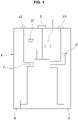
FIG. 1 is a conceptual diagram for describing a vehicle to which a system for controlling vehicle driving at a roundabout according to the present invention is applied; -
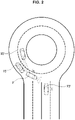
FIG. 2 is a diagram for describing a situation in which the present invention is applied to a vehicle driving through a roundabout; and -
FIG. 3 is a flowchart illustrating an embodiment of a method for controlling vehicle driving through a roundabout according to the present invention. - Specific structural and functional descriptions of embodiments of the present invention disclosed in the present specification or application are illustrated for the purpose of describing embodiments according to the present invention, and embodiments according to the present invention may be implemented in various forms and should not be construed as being limited to the embodiments described in the present specification and application.
- While embodiments according to the present invention are susceptible to various modifications and alternative forms, specific embodiments are shown by way of example in the drawings. However, the present invention should not be construed as limited to the embodiments set forth herein, but on the contrary, the present invention is to cover all modifications, equivalents, and alternatives falling within the spirit and scope of the present invention.
- The terms "first" and/or "second" are used to describe various components, but such components are not limited by these terms. The terms are used to discriminate one component from another component. For example, a first component may be called a second component and the second component may be called the first component within the technical spirit of the present invention.
- When a component is "coupled" or "connected" to another component, it should be understood that a third component may be present between the two components although the component may be directly coupled or connected to the other component. When a component is "directly coupled" or "directly connected" to another component, it should be understood that no element is present between the two components. Further, other representations describing a relationship between components, that is, "between", "immediately between", "adjacent to" and "directly adjacent to" should be construed likewise.
- The terms used in the specification of the present invention are merely used in order to describe particular embodiments, and are not intended to limit the scope of the present invention. An element described in the singular form is intended to include a plurality of elements unless the context clearly indicates otherwise. In the specification of the present invention, it will be further understood that the term "comprise" or "include" specifies the presence of a stated feature, figure, step, operation, component, part or a combination thereof, but does not preclude the presence or addition of one or more other features, figures, steps, operations, components, or combinations thereof.
- All the terms that are technical, scientific or otherwise agree with the meanings as understood by a person skilled in the art unless defined to the contrary. Common terms as found in dictionaries should be interpreted in the context of the related technical writings not too ideally or impractically unless expressly disclosed herein.
- Hereinafter, preferred embodiments of the present invention will be described in detail with reference to the attached drawings. Throughout the drawings, the same reference numerals represent the same members.
- Referring to
FIG. 1 andFIG. 2 , a system for controlling vehicle driving through a roundabout according to an embodiment of the present invention includes a position recognition unit 1 (may also be referred to as position recognizer 1) configured to recognize that a vehicle V is traveling around a roundabout, afront sensor 3 provided at the front of the vehicle V to sense a vehicle that possibly enters the roundabout during traveling around the roundabout, arear sensor 5 provided at the rear of the vehicle to sense vehicles V1 and V2 following the vehicle V traveling around the roundabout, acontroller 7 configured to calculate a possible entry time at which a vehicle V3 that possibly enters the roundabout sensed by thefront sensor 3 can enter the roundabout using information sensed by therear sensor 5, and a communication unit 9 (may also be referred to as communicator 9) configured to provide information on the calculated possible entry time to the vehicle V3. - That is, the system for controlling vehicle driving through a roundabout provides information on a possible entry time, calculated in consideration of even information on vehicles V1 and V2 following the host vehicle V traveling around the roundabout, to the vehicle V3 that intends to enter the roundabout such that the vehicle V3 can enter the roundabout upon determining a roundabout entry time accurately and safely, thereby preventing collision that may occur when a vehicle enters a roundabout.
- It is desirable that the vehicle V3 that intends to enter the roundabout be configured to receive information from the host vehicle V that provides the possible entry time while traveling around the roundabout to control entry to the roundabout on the basis of the information.
- Here, the position recognition unit 1 may be configured to determine that the vehicle V is traveling around a roundabout using global positioning system (GPS) information and navigation information of the vehicle V when GPS position information of the vehicle V indicates that the vehicle V is located at the roundabout in a navigation map.
- A device such as a front camera or a front radar may be used as the
front sensor 3 and a device such as a rear camera or a rear radar may be used as therear sensor 5. In addition, an ultrasonic sensor or lidar attached to the front and rear of the vehicle V may be used as thefront sensor 3 and therear sensor 5. - It is desirable that the
communication unit 9 be configured as a device capable of performing vehicle-to-vehicle wireless communication using radio waves or the like. - The system for controlling vehicle driving through a roundabout according to an embodiment of the present invention may further include a warning means (may also be referred to as a warning device) configured to warn the vehicle that possibly enters the roundabout, and the
controller 7 is configured to drive the warning means to warn the vehicle about danger of entry when thefront sensor 3 senses entry of the vehicle to the roundabout before the possible entry time. - Here, the warning means may be configured as a
horn 11 of the vehicle which is a kind of auditory warning means (may also be referred to as an auditory warning device) or aheadlamp 13 that can be used as visual warning means (may also be referred to as a visual warning device). - That is, when movement of a vehicle intending to enter the roundabout before a possible entry time is detected, the
controller 7 can operate thehorn 11 or turn on theheadlamp 13 to warn the vehicle about danger of entry or may operate both thehorn 11 and theheadlamp 13 in order to improve the warning effect. - When the vehicle V is warned about danger of entry to the roundabout through the warning means, as described above, the vehicle V3 is prevented from entering the roundabout and thus occurrence of an accident can be prevented.
- The
controller 7 is configured to determine, as the possible entry time, a latest time among a time at which the host vehicle V is expected to pass through an entry point of the roundabout, a time at which the vehicle V1 following immediately behind the host vehicle V passes through the entry point, and a time at which the vehicle V2 following the host vehicle V on the side passes through the entry point. - Here, a "host vehicle V" means a vehicle to which the present invention is applied and is used to be clearly distinguished from the immediately rear vehicle V1, the side rear vehicle V2, and the vehicle V that possibly enters the roundabout.
- Further, "vehicle V3 that possibly enters a roundabout" means both a vehicle approaching an entry point of the roundabout and a vehicle waiting at the entry point.
- The times at which the vehicles V1 and V2 are expected to pass through the entry point may be calculated using traveling speeds of the vehicles and distances between the vehicles and the entry point.
- Moreover, the
controller 7 may be configured to determine the possible entry time by adding a first weight proportional to the radius of the roundabout to the latest time among the time at which the host vehicle V is expected to pass through the entry point of the roundabout, the time at which the vehicle V1 following immediately behind the host vehicle V passes through the entry point, and the time at which the vehicle V2 following the host vehicle V on the side passes through the entry point. - That is, even if straight distances between the vehicles V, V1, and V2 that are traveling around the roundabout and the vehicle V3 that possibly enters the roundabout are identical, a time taken for the corresponding vehicle to arrive at the entry point of the roundabout generally increases as the radius of the roundabout increases. Accordingly, the possible entry time is calculated more accurately in consideration of the first weight.
- In addition, the
controller 7 may be configured to determine the possible entry time by adding a second weight according to the weather condition of the roundabout in addition to the first weight. - That is, when the weather condition of the roundabout is rain or the night time, times taken for the vehicles V, V1, and V2 that are traveling around the roundabout to arrive at the entry point are highly likely to increase. Accordingly, the possibly entry time is calculated more accurately in consideration of the second weight.
- The first weight and the second weight may be determined as appropriate values through various experiments and analyses according to the above-described technical purpose.
- Referring to
FIG. 3 , a method for controlling the system for controlling vehicle driving through a roundabout according to the present invention includes a step S10 of determining whetherthe host vehicle V is traveling around a roundabout, a step S20 of determining whether there is a vehicle V3 that possibly enters the roundabout in front of the host vehicle V if the host vehicle V is traveling around the roundabout, a step S30 of sensing vehicles V1 and V2 following the host vehicle V during traveling around the roundabout, a step S40 of calculating a possible entry time of the vehicle V3 that possibly enters the roundabout using information on the vehicles V1 and V2 following the host vehicle V, and a step S50 of providing the calculated possible entry time to the vehicle V3 that possibly enters the roundabout. - In the step S10 of determining whether the host vehicle V is traveling around the roundabout, it is possible to determine that the host vehicle V is traveling around the roundabout upon determining that GPS position information on the host vehicle V indicates that the host vehicle V is located at the roundabout on a navigation map using GPS information and navigation map information of the host vehicle V.
- A step S60 of warning of danger of entry upon sensing entry of the vehicle V3 that possibly enters the roundabout to the roundabout before the calculated possible entry time may be additionally executed.
- In the step S60 of warning of danger of entry, it is possible to warn of danger of entry using at least one of a visual warning means and an auditory warning means and a vehicle-to-vehicle communication means (may also be referred to as a vehicle-to-vehicle communication device).
- That is, the vehicle that intends to enter the roundabout is warned about a dangerous situation by turning on or off the
headlamp 13 that is a visual warning means or operating thehorn 11 that is an auditory warning means and, simultaneously, the vehicle is warned about a dangerous situation through a vehicle-to-vehicle wireless communication means. - In the step S40 of calculating the possible entry time of the vehicle V3 that possibly enters the roundabout, a latest time among a time at which the host vehicle V is expected to pass through an entry point of the roundabout, a time at which the vehicle V1 following immediately behind the host vehicle V passes through the entry point, and a time at which the vehicle V2 following the host vehicle V on the side passes through the entry point may be determined as the possible entry time.
- Further, in the step S40 of calculating the possible entry time of the vehicle V3 that possibly enters the roundabout, the possible entry time may be determined by adding a first weight proportional to the radius of the roundabout to the latest time among the time at which the host vehicle V is expected to pass through the entry point of the roundabout, the time at which the vehicle V1 following immediately behind the host vehicle V passes through the entry point, and the time at which the vehicle V2 following the host vehicle V on the side passes through the entry point.
- Moreover, in the step S40 of calculating the possible entry time of the vehicle V3 that possibly enters the roundabout, the possible entry time may be determined by adding the first weight proportional to the radius of the roundabout and a second weight according to the weather condition of the roundabout to the latest time among the time at which the host vehicle V is expected to pass through the entry point of the roundabout, the time at which the vehicle V1 following immediately behind the host vehicle V passes through the entry point, and the time at which the vehicle V2 following the host vehicle V on the side passes through the entry point.
- The position recognizer 1, the
communicator 9, and the units, modules, and components that perform the operations described in this application are implemented by hardware components configured to perform the operations described in this application that are performed by the hardware components. Examples of hardware components that may be used to perform the operations described in this application where appropriate include controllers, sensors, generators, drivers, memories, comparators, arithmetic logic units, adders, subtractors, multipliers, dividers, integrators, and any other electronic components configured to perform the operations described in this application. In other examples, one or more of the hardware components that perform the operations described in this application are implemented by computing hardware, for example, by one or more processors or computers. A processor or computer may be implemented by one or more processing elements, such as an array of logic gates, a controller and an arithmetic logic unit, a digital signal processor, a microcomputer, a programmable logic controller, a field-programmable gate array, a programmable logic array, a microprocessor, or any other device or combination of devices that is configured to respond to and execute instructions in a defined manner to achieve a desired result. In one example, a processor or computer includes, or is connected to, one or more memories storing instructions or software that are executed by the processor or computer. Hardware components implemented by a processor or computer may execute instructions or software, such as an operating system (OS) and one or more software applications that run on the OS, to perform the operations described in this application. The hardware components may also access, manipulate, process, create, and store data in response to execution of the instructions or software. For simplicity, the singular term "processor" or "computer" may be used in the description of the examples described in this application, but in other examples multiple processors or computers may be used, or a processor or computer may include multiple processing elements, or multiple types of processing elements, or both. For example, a single hardware component or two or more hardware components may be implemented by a single processor, or two or more processors, or a processor and a controller. One or more hardware components may be implemented by one or more processors, or a processor and a controller, and one or more other hardware components may be implemented by one or more other processors, or another processor and another controller. One or more processors, or a processor and a controller, may implement a single hardware component, or two or more hardware components. A hardware component may have any one or more of different processing configurations, examples of which include a single processor, independent processors, parallel processors, single-instruction single-data (SISD) multiprocessing, single-instruction multiple-data (SIMD) multiprocessing, multiple-instruction single-data (MISD) multiprocessing, and multiple-instruction multiple-data (MIMD) multiprocessing. - Although the preferred embodiments of the present invention have been disclosed for illustrative purposes, those skilled in the art will appreciate that various modifications, additions and substitutions are possible, without departing from the scope and spirit of the invention as disclosed in the accompanying claims.
- The present invention can easily and safely achieve autonomous driving of an autonomous vehicle as well as a vehicle driven by a driver at a roundabout and effectively prevent collision between a vehicle that is traveling around a roundabout and a vehicle that intends to enter the roundabout by notifying vehicles that intend to enter the roundabout of an appropriate entry time.
Claims (13)
- A system with control of vehicle driving through a roundabout, comprising:a position recognizer configured to recognize that a host vehicle is traveling around the roundabout;a front sensor disposed at a front of the host vehicle and configured to sense a vehicle that possibly enters the roundabout while the host vehicle is traveling around the roundabout;a rear sensor disposed at a rear of the host vehicle and configured to recognize a vehicle following the host vehicle while the host vehicle is traveling around the roundabout;a controller configured to calculate a possible entry time of the vehicle that possibly enters the roundabout, using information sensed by the rear sensor; anda communicator configured to provide the calculated possible entry time to the vehicle that possibly enters the roundabout.
- The system according to claim 1, further comprising a warning device configured to warn the vehicle that possibly enters the roundabout,
wherein the controller is further configured to drive the warning device to warn the vehicle that possibly enters the roundabout about danger of entry, in response to the front sensor sensing entry of the vehicle into the roundabout before the possible entry time. - The system according to claim 1, wherein the controller is further configured to determine, as the possible entry time, a latest time among a time at which the host vehicle is expected to pass through an entry point of the roundabout, a time at which a vehicle following immediately behind the host vehicle passes through the entry point, and a time at which a vehicle following the host vehicle on a side of the host vehicle passes through the entry point.
- The system according to claim 1, wherein the controller is further configured to determine the possible entry time by adding a first weight proportional to a radius of the roundabout to a latest time among a time at which the host vehicle is expected to pass through an entry point of the roundabout, a time at which a vehicle following immediately behind the host vehicle passes through the entry point, and a time at which a vehicle following the host vehicle on a side of the host vehicle passes through the entry point.
- The system according to claim 4, wherein the controller is further configured to determine the possible entry time by adding a second weight according to a weather condition of the roundabout to the first weight.
- A method with control of a system for controlling vehicle driving through a roundabout, comprising:determining whether a host vehicle is traveling around the roundabout;determining whether there is a vehicle that possibly enters the roundabout in front of the host vehicle while the host vehicle is traveling around the roundabout;sensing a vehicle following the host vehicle while the host vehicle is traveling around the roundabout;calculating a possible entry time of the vehicle that possibly enters the roundabout using information on the vehicle following the host vehicle; andproviding the calculated possible entry time to the vehicle that possibly enters the roundabout.
- The method according to claim 6, wherein the determining of whether the host vehicle is traveling around the roundabout comprises determining that the host vehicle is traveling around the roundabout, in response to determining that GPS position information on the host vehicle indicates that the host vehicle is located at the roundabout on a navigation map using GPS information and navigation map information of the host vehicle.
- The method according to claim 6, further comprising warning the vehicle that possibly enters the roundabout about danger of entry, in response to sensing entry of the vehicle to the roundabout before the calculated possible entry time.
- The method according to claim 8, wherein the warning of the vehicle comprises warning about the danger of entry using any one or any combination of any two or more of a visual warning device, an auditory warning device, and a vehicle-to-vehicle communication device.
- The method according to claim 6, wherein the calculating of the possible entry time comprises determining, as the possible entry time, a latest time among a time at which the host vehicle is expected to pass through an entry point of the roundabout, a time at which a vehicle following immediately behind the host vehicle passes through the entry point, and a time at which a vehicle following the host vehicle on a side of the host vehicle passes through the entry point.
- The method according to claim 6, wherein the calculating of the possible entry time comprises determining the possible entry time by adding a first weight proportional to a radius of the roundabout to a latest time among a time at which the host vehicle is expected to pass through an entry point of the roundabout, a time at which a vehicle following immediately behind the host vehicle passes through the entry point, and a time at which a vehicle following the host vehicle on a side of the host vehicle passes through the entry point.
- The method according to claim 6, wherein the calculating of the possible entry time comprises determining the possible entry time by adding a first weight proportional to a radius of the roundabout and a second weight according to a weather condition of the roundabout to a latest time among a time at which the host vehicle is expected to pass through an entry point of the roundabout, a time at which a vehicle following immediately behind the host vehicle passes through the entry point, and a time at which a vehicle following the host vehicle on a side of the host vehicle passes through the entry point.
- A non-transitory computer-readable storage medium storing instructions that, when executed by a processor, cause the processor to perform the method of claim 6.
Applications Claiming Priority (1)
| Application Number | Priority Date | Filing Date | Title |
|---|---|---|---|
| KR1020200156721A KR20220069520A (en) | 2020-11-20 | 2020-11-20 | Vehicle driving control system and control method thereof at roundabout |
Publications (2)
| Publication Number | Publication Date |
|---|---|
| EP4002325A1 true EP4002325A1 (en) | 2022-05-25 |
| EP4002325B1 EP4002325B1 (en) | 2023-07-12 |
Family
ID=78649172
Family Applications (1)
| Application Number | Title | Priority Date | Filing Date |
|---|---|---|---|
| EP21208304.2A Active EP4002325B1 (en) | 2020-11-20 | 2021-11-15 | System for controlling vehicle driving through roundabout and method of controlling the same |
Country Status (3)
| Country | Link |
|---|---|
| US (1) | US11854399B2 (en) |
| EP (1) | EP4002325B1 (en) |
| KR (1) | KR20220069520A (en) |
Families Citing this family (3)
| Publication number | Priority date | Publication date | Assignee | Title |
|---|---|---|---|---|
| DE102019211599A1 (en) * | 2019-08-01 | 2021-02-04 | Robert Bosch Gmbh | Trajectory planning of a commercial vehicle |
| JP7616183B2 (en) * | 2022-09-22 | 2025-01-17 | トヨタ自動車株式会社 | Travel plan creation device, travel plan creation method, and travel plan creation computer program |
| JP7760986B2 (en) * | 2022-11-01 | 2025-10-28 | トヨタ自動車株式会社 | Driving assistance device and processing method for driving assistance device |
Citations (5)
| Publication number | Priority date | Publication date | Assignee | Title |
|---|---|---|---|---|
| US20200074863A1 (en) * | 2018-08-31 | 2020-03-05 | Hyundai Motor Company | Collision avoidance control system and method |
| US20200110418A1 (en) * | 2018-10-08 | 2020-04-09 | Mando Corporation | Vehicle control apparatus, vehicle control system, and image sensor |
| US20200160704A1 (en) * | 2018-11-16 | 2020-05-21 | Samsung Electronics Co., Ltd. | Electronic device and method of providing driving guide information |
| US20200211379A1 (en) * | 2018-12-27 | 2020-07-02 | Continental Automotive Systems Inc. | Roundabout assist |
| US20200272159A1 (en) * | 2019-02-25 | 2020-08-27 | Denso International America, Inc. | Method and vehicle control system for intelligent vehicle control about a roundabout |
Family Cites Families (2)
| Publication number | Priority date | Publication date | Assignee | Title |
|---|---|---|---|---|
| EP3179212A1 (en) * | 2015-12-11 | 2017-06-14 | C.R.F. Società Consortile Per Azioni | Motor vehicle driver assistance for negotiating a roundabout |
| KR102112142B1 (en) | 2018-07-16 | 2020-05-19 | 군산대학교 산학협력단 | Method and device of controlling guidelight at roundabout |
-
2020
- 2020-11-20 KR KR1020200156721A patent/KR20220069520A/en active Pending
-
2021
- 2021-11-01 US US17/515,820 patent/US11854399B2/en active Active
- 2021-11-15 EP EP21208304.2A patent/EP4002325B1/en active Active
Patent Citations (5)
| Publication number | Priority date | Publication date | Assignee | Title |
|---|---|---|---|---|
| US20200074863A1 (en) * | 2018-08-31 | 2020-03-05 | Hyundai Motor Company | Collision avoidance control system and method |
| US20200110418A1 (en) * | 2018-10-08 | 2020-04-09 | Mando Corporation | Vehicle control apparatus, vehicle control system, and image sensor |
| US20200160704A1 (en) * | 2018-11-16 | 2020-05-21 | Samsung Electronics Co., Ltd. | Electronic device and method of providing driving guide information |
| US20200211379A1 (en) * | 2018-12-27 | 2020-07-02 | Continental Automotive Systems Inc. | Roundabout assist |
| US20200272159A1 (en) * | 2019-02-25 | 2020-08-27 | Denso International America, Inc. | Method and vehicle control system for intelligent vehicle control about a roundabout |
Also Published As
| Publication number | Publication date |
|---|---|
| KR20220069520A (en) | 2022-05-27 |
| US11854399B2 (en) | 2023-12-26 |
| US20220165159A1 (en) | 2022-05-26 |
| EP4002325B1 (en) | 2023-07-12 |
Similar Documents
| Publication | Publication Date | Title |
|---|---|---|
| US20240217557A1 (en) | Behavior planning for autonomous vehicles in yield scenarios | |
| EP4002325B1 (en) | System for controlling vehicle driving through roundabout and method of controlling the same | |
| CN110641472B (en) | Neural Network Based Safety Monitoring System for Autonomous Vehicles | |
| US10496097B2 (en) | Method and apparatus for controlling driving of vehicle | |
| JP6619778B2 (en) | Method and system for making driving decisions by predicting vehicle traffic behavior of autonomous vehicles | |
| CN112424846B (en) | Driving assistance device | |
| EP3467799A1 (en) | Vehicle movement prediction method and apparatus | |
| US20190039613A1 (en) | Apparatus and method for changing route of vehicle based on emergency vehicle | |
| EP3493108A1 (en) | Lane maintaining method and apparatus | |
| JPWO2018211708A1 (en) | Driving support device and driving support method | |
| US11623660B2 (en) | Method, apparatus, and computer program for avoiding collision of autonomous vehicle | |
| JP2021024457A (en) | Vehicular travel control system | |
| US10583816B2 (en) | Lane departure prevention device | |
| CN115123212A (en) | Driving support device, vehicle, and driving support method | |
| EP3709279A1 (en) | Target detection device for vehicle | |
| JP2021131902A (en) | Vehicular obstacle avoidance method, device, electronic apparatus, and computer storage media | |
| JPWO2018066133A1 (en) | Vehicle determination method, travel route correction method, vehicle determination device, and travel route correction device | |
| US20220177007A1 (en) | Vehicle control system | |
| US11364922B2 (en) | Driving assistance device, driving assistance method, and computer readable medium | |
| US20200385023A1 (en) | Vehicle control apparatus, vehicle, operation method of vehicle control apparatus, and non-transitory computer-readable storage medium | |
| CN112339760A (en) | Vehicle travel control method, control device, vehicle, and readable storage medium | |
| US10053092B2 (en) | Road environment recognition device, vehicle control device, and vehicle control method | |
| US20260008460A1 (en) | Vehicle driving control system and method | |
| RU2712732C2 (en) | Method, system and computer-readable media for identifying device for receiving barrier | |
| JP2011175367A (en) | Vehicle control apparatus |
Legal Events
| Date | Code | Title | Description |
|---|---|---|---|
| PUAI | Public reference made under article 153(3) epc to a published international application that has entered the european phase |
Free format text: ORIGINAL CODE: 0009012 |
|
| STAA | Information on the status of an ep patent application or granted ep patent |
Free format text: STATUS: REQUEST FOR EXAMINATION WAS MADE |
|
| 17P | Request for examination filed |
Effective date: 20211115 |
|
| AK | Designated contracting states |
Kind code of ref document: A1 Designated state(s): AL AT BE BG CH CY CZ DE DK EE ES FI FR GB GR HR HU IE IS IT LI LT LU LV MC MK MT NL NO PL PT RO RS SE SI SK SM TR |
|
| RBV | Designated contracting states (corrected) |
Designated state(s): AL AT BE BG CH CY CZ DE DK EE ES FI FR GB GR HR HU IE IS IT LI LT LU LV MC MK MT NL NO PL PT RO RS SE SI SK SM TR |
|
| GRAP | Despatch of communication of intention to grant a patent |
Free format text: ORIGINAL CODE: EPIDOSNIGR1 |
|
| STAA | Information on the status of an ep patent application or granted ep patent |
Free format text: STATUS: GRANT OF PATENT IS INTENDED |
|
| RIC1 | Information provided on ipc code assigned before grant |
Ipc: B60W 30/18 20060101ALI20230120BHEP Ipc: B60W 30/095 20120101ALI20230120BHEP Ipc: G08G 1/01 20060101ALI20230120BHEP Ipc: B60W 50/14 20120101ALI20230120BHEP Ipc: G08G 1/16 20060101AFI20230120BHEP |
|
| INTG | Intention to grant announced |
Effective date: 20230208 |
|
| GRAS | Grant fee paid |
Free format text: ORIGINAL CODE: EPIDOSNIGR3 |
|
| GRAA | (expected) grant |
Free format text: ORIGINAL CODE: 0009210 |
|
| STAA | Information on the status of an ep patent application or granted ep patent |
Free format text: STATUS: THE PATENT HAS BEEN GRANTED |
|
| AK | Designated contracting states |
Kind code of ref document: B1 Designated state(s): AL AT BE BG CH CY CZ DE DK EE ES FI FR GB GR HR HU IE IS IT LI LT LU LV MC MK MT NL NO PL PT RO RS SE SI SK SM TR |
|
| REG | Reference to a national code |
Ref country code: CH Ref legal event code: EP |
|
| REG | Reference to a national code |
Ref country code: IE Ref legal event code: FG4D |
|
| REG | Reference to a national code |
Ref country code: DE Ref legal event code: R096 Ref document number: 602021003436 Country of ref document: DE |
|
| P01 | Opt-out of the competence of the unified patent court (upc) registered |
Effective date: 20230922 |
|
| REG | Reference to a national code |
Ref country code: LT Ref legal event code: MG9D |
|
| REG | Reference to a national code |
Ref country code: NL Ref legal event code: MP Effective date: 20230712 |
|
| REG | Reference to a national code |
Ref country code: AT Ref legal event code: MK05 Ref document number: 1587974 Country of ref document: AT Kind code of ref document: T Effective date: 20230712 |
|
| PG25 | Lapsed in a contracting state [announced via postgrant information from national office to epo] |
Ref country code: NL Free format text: LAPSE BECAUSE OF FAILURE TO SUBMIT A TRANSLATION OF THE DESCRIPTION OR TO PAY THE FEE WITHIN THE PRESCRIBED TIME-LIMIT Effective date: 20230712 |
|
| PG25 | Lapsed in a contracting state [announced via postgrant information from national office to epo] |
Ref country code: GR Free format text: LAPSE BECAUSE OF FAILURE TO SUBMIT A TRANSLATION OF THE DESCRIPTION OR TO PAY THE FEE WITHIN THE PRESCRIBED TIME-LIMIT Effective date: 20231013 |
|
| PG25 | Lapsed in a contracting state [announced via postgrant information from national office to epo] |
Ref country code: ES Free format text: LAPSE BECAUSE OF FAILURE TO SUBMIT A TRANSLATION OF THE DESCRIPTION OR TO PAY THE FEE WITHIN THE PRESCRIBED TIME-LIMIT Effective date: 20230712 |
|
| PG25 | Lapsed in a contracting state [announced via postgrant information from national office to epo] |
Ref country code: IS Free format text: LAPSE BECAUSE OF FAILURE TO SUBMIT A TRANSLATION OF THE DESCRIPTION OR TO PAY THE FEE WITHIN THE PRESCRIBED TIME-LIMIT Effective date: 20231112 |
|
| PG25 | Lapsed in a contracting state [announced via postgrant information from national office to epo] |
Ref country code: SE Free format text: LAPSE BECAUSE OF FAILURE TO SUBMIT A TRANSLATION OF THE DESCRIPTION OR TO PAY THE FEE WITHIN THE PRESCRIBED TIME-LIMIT Effective date: 20230712 Ref country code: RS Free format text: LAPSE BECAUSE OF FAILURE TO SUBMIT A TRANSLATION OF THE DESCRIPTION OR TO PAY THE FEE WITHIN THE PRESCRIBED TIME-LIMIT Effective date: 20230712 Ref country code: PT Free format text: LAPSE BECAUSE OF FAILURE TO SUBMIT A TRANSLATION OF THE DESCRIPTION OR TO PAY THE FEE WITHIN THE PRESCRIBED TIME-LIMIT Effective date: 20231113 Ref country code: NO Free format text: LAPSE BECAUSE OF FAILURE TO SUBMIT A TRANSLATION OF THE DESCRIPTION OR TO PAY THE FEE WITHIN THE PRESCRIBED TIME-LIMIT Effective date: 20231012 Ref country code: LV Free format text: LAPSE BECAUSE OF FAILURE TO SUBMIT A TRANSLATION OF THE DESCRIPTION OR TO PAY THE FEE WITHIN THE PRESCRIBED TIME-LIMIT Effective date: 20230712 Ref country code: LT Free format text: LAPSE BECAUSE OF FAILURE TO SUBMIT A TRANSLATION OF THE DESCRIPTION OR TO PAY THE FEE WITHIN THE PRESCRIBED TIME-LIMIT Effective date: 20230712 Ref country code: IS Free format text: LAPSE BECAUSE OF FAILURE TO SUBMIT A TRANSLATION OF THE DESCRIPTION OR TO PAY THE FEE WITHIN THE PRESCRIBED TIME-LIMIT Effective date: 20231112 Ref country code: HR Free format text: LAPSE BECAUSE OF FAILURE TO SUBMIT A TRANSLATION OF THE DESCRIPTION OR TO PAY THE FEE WITHIN THE PRESCRIBED TIME-LIMIT Effective date: 20230712 Ref country code: GR Free format text: LAPSE BECAUSE OF FAILURE TO SUBMIT A TRANSLATION OF THE DESCRIPTION OR TO PAY THE FEE WITHIN THE PRESCRIBED TIME-LIMIT Effective date: 20231013 Ref country code: FI Free format text: LAPSE BECAUSE OF FAILURE TO SUBMIT A TRANSLATION OF THE DESCRIPTION OR TO PAY THE FEE WITHIN THE PRESCRIBED TIME-LIMIT Effective date: 20230712 Ref country code: ES Free format text: LAPSE BECAUSE OF FAILURE TO SUBMIT A TRANSLATION OF THE DESCRIPTION OR TO PAY THE FEE WITHIN THE PRESCRIBED TIME-LIMIT Effective date: 20230712 Ref country code: AT Free format text: LAPSE BECAUSE OF FAILURE TO SUBMIT A TRANSLATION OF THE DESCRIPTION OR TO PAY THE FEE WITHIN THE PRESCRIBED TIME-LIMIT Effective date: 20230712 |
|
| PG25 | Lapsed in a contracting state [announced via postgrant information from national office to epo] |
Ref country code: PL Free format text: LAPSE BECAUSE OF FAILURE TO SUBMIT A TRANSLATION OF THE DESCRIPTION OR TO PAY THE FEE WITHIN THE PRESCRIBED TIME-LIMIT Effective date: 20230712 |
|
| REG | Reference to a national code |
Ref country code: DE Ref legal event code: R097 Ref document number: 602021003436 Country of ref document: DE |
|
| PG25 | Lapsed in a contracting state [announced via postgrant information from national office to epo] |
Ref country code: SM Free format text: LAPSE BECAUSE OF FAILURE TO SUBMIT A TRANSLATION OF THE DESCRIPTION OR TO PAY THE FEE WITHIN THE PRESCRIBED TIME-LIMIT Effective date: 20230712 Ref country code: RO Free format text: LAPSE BECAUSE OF FAILURE TO SUBMIT A TRANSLATION OF THE DESCRIPTION OR TO PAY THE FEE WITHIN THE PRESCRIBED TIME-LIMIT Effective date: 20230712 Ref country code: EE Free format text: LAPSE BECAUSE OF FAILURE TO SUBMIT A TRANSLATION OF THE DESCRIPTION OR TO PAY THE FEE WITHIN THE PRESCRIBED TIME-LIMIT Effective date: 20230712 Ref country code: DK Free format text: LAPSE BECAUSE OF FAILURE TO SUBMIT A TRANSLATION OF THE DESCRIPTION OR TO PAY THE FEE WITHIN THE PRESCRIBED TIME-LIMIT Effective date: 20230712 Ref country code: CZ Free format text: LAPSE BECAUSE OF FAILURE TO SUBMIT A TRANSLATION OF THE DESCRIPTION OR TO PAY THE FEE WITHIN THE PRESCRIBED TIME-LIMIT Effective date: 20230712 Ref country code: SK Free format text: LAPSE BECAUSE OF FAILURE TO SUBMIT A TRANSLATION OF THE DESCRIPTION OR TO PAY THE FEE WITHIN THE PRESCRIBED TIME-LIMIT Effective date: 20230712 |
|
| PLBE | No opposition filed within time limit |
Free format text: ORIGINAL CODE: 0009261 |
|
| STAA | Information on the status of an ep patent application or granted ep patent |
Free format text: STATUS: NO OPPOSITION FILED WITHIN TIME LIMIT |
|
| PG25 | Lapsed in a contracting state [announced via postgrant information from national office to epo] |
Ref country code: IT Free format text: LAPSE BECAUSE OF FAILURE TO SUBMIT A TRANSLATION OF THE DESCRIPTION OR TO PAY THE FEE WITHIN THE PRESCRIBED TIME-LIMIT Effective date: 20230712 |
|
| 26N | No opposition filed |
Effective date: 20240415 |
|
| PG25 | Lapsed in a contracting state [announced via postgrant information from national office to epo] |
Ref country code: MC Free format text: LAPSE BECAUSE OF FAILURE TO SUBMIT A TRANSLATION OF THE DESCRIPTION OR TO PAY THE FEE WITHIN THE PRESCRIBED TIME-LIMIT Effective date: 20230712 |
|
| PG25 | Lapsed in a contracting state [announced via postgrant information from national office to epo] |
Ref country code: LU Free format text: LAPSE BECAUSE OF NON-PAYMENT OF DUE FEES Effective date: 20231115 |
|
| PG25 | Lapsed in a contracting state [announced via postgrant information from national office to epo] |
Ref country code: MC Free format text: LAPSE BECAUSE OF FAILURE TO SUBMIT A TRANSLATION OF THE DESCRIPTION OR TO PAY THE FEE WITHIN THE PRESCRIBED TIME-LIMIT Effective date: 20230712 Ref country code: LU Free format text: LAPSE BECAUSE OF NON-PAYMENT OF DUE FEES Effective date: 20231115 Ref country code: SI Free format text: LAPSE BECAUSE OF FAILURE TO SUBMIT A TRANSLATION OF THE DESCRIPTION OR TO PAY THE FEE WITHIN THE PRESCRIBED TIME-LIMIT Effective date: 20230712 |
|
| REG | Reference to a national code |
Ref country code: BE Ref legal event code: MM Effective date: 20231130 |
|
| REG | Reference to a national code |
Ref country code: IE Ref legal event code: MM4A |
|
| PG25 | Lapsed in a contracting state [announced via postgrant information from national office to epo] |
Ref country code: IE Free format text: LAPSE BECAUSE OF NON-PAYMENT OF DUE FEES Effective date: 20231115 |
|
| PG25 | Lapsed in a contracting state [announced via postgrant information from national office to epo] |
Ref country code: BE Free format text: LAPSE BECAUSE OF NON-PAYMENT OF DUE FEES Effective date: 20231130 |
|
| PG25 | Lapsed in a contracting state [announced via postgrant information from national office to epo] |
Ref country code: IE Free format text: LAPSE BECAUSE OF NON-PAYMENT OF DUE FEES Effective date: 20231115 Ref country code: BE Free format text: LAPSE BECAUSE OF NON-PAYMENT OF DUE FEES Effective date: 20231130 |
|
| PG25 | Lapsed in a contracting state [announced via postgrant information from national office to epo] |
Ref country code: BG Free format text: LAPSE BECAUSE OF FAILURE TO SUBMIT A TRANSLATION OF THE DESCRIPTION OR TO PAY THE FEE WITHIN THE PRESCRIBED TIME-LIMIT Effective date: 20230712 |
|
| PG25 | Lapsed in a contracting state [announced via postgrant information from national office to epo] |
Ref country code: BG Free format text: LAPSE BECAUSE OF FAILURE TO SUBMIT A TRANSLATION OF THE DESCRIPTION OR TO PAY THE FEE WITHIN THE PRESCRIBED TIME-LIMIT Effective date: 20230712 |
|
| REG | Reference to a national code |
Ref country code: CH Ref legal event code: PL |
|
| REG | Reference to a national code |
Ref country code: CH Ref legal event code: PL |
|
| PG25 | Lapsed in a contracting state [announced via postgrant information from national office to epo] |
Ref country code: CH Free format text: LAPSE BECAUSE OF NON-PAYMENT OF DUE FEES Effective date: 20241130 |
|
| PG25 | Lapsed in a contracting state [announced via postgrant information from national office to epo] |
Ref country code: CY Free format text: LAPSE BECAUSE OF FAILURE TO SUBMIT A TRANSLATION OF THE DESCRIPTION OR TO PAY THE FEE WITHIN THE PRESCRIBED TIME-LIMIT; INVALID AB INITIO Effective date: 20211115 |
|
| PGFP | Annual fee paid to national office [announced via postgrant information from national office to epo] |
Ref country code: GB Payment date: 20250922 Year of fee payment: 5 |
|
| PGFP | Annual fee paid to national office [announced via postgrant information from national office to epo] |
Ref country code: FR Payment date: 20250925 Year of fee payment: 5 |
|
| PG25 | Lapsed in a contracting state [announced via postgrant information from national office to epo] |
Ref country code: TR Free format text: LAPSE BECAUSE OF FAILURE TO SUBMIT A TRANSLATION OF THE DESCRIPTION OR TO PAY THE FEE WITHIN THE PRESCRIBED TIME-LIMIT Effective date: 20230712 |
|
| PGFP | Annual fee paid to national office [announced via postgrant information from national office to epo] |
Ref country code: DE Payment date: 20250922 Year of fee payment: 5 |
|
| PG25 | Lapsed in a contracting state [announced via postgrant information from national office to epo] |
Ref country code: HU Free format text: LAPSE BECAUSE OF FAILURE TO SUBMIT A TRANSLATION OF THE DESCRIPTION OR TO PAY THE FEE WITHIN THE PRESCRIBED TIME-LIMIT; INVALID AB INITIO Effective date: 20211115 |
|
| PG25 | Lapsed in a contracting state [announced via postgrant information from national office to epo] |
Ref country code: CH Free format text: THE PATENT HAS BEEN ANNULLED BY A DECISION OF A NATIONAL AUTHORITY Effective date: 20241130 |
|
| PG25 | Lapsed in a contracting state [announced via postgrant information from national office to epo] |
Ref country code: MT Free format text: LAPSE BECAUSE OF NON-PAYMENT OF DUE FEES Effective date: 20231115 |