EP4002234B1 - System und verfahren zur echtzeit-verteilten dynamischen aufgabenplanung - Google Patents
System und verfahren zur echtzeit-verteilten dynamischen aufgabenplanung Download PDFInfo
- Publication number
- EP4002234B1 EP4002234B1 EP21159683.8A EP21159683A EP4002234B1 EP 4002234 B1 EP4002234 B1 EP 4002234B1 EP 21159683 A EP21159683 A EP 21159683A EP 4002234 B1 EP4002234 B1 EP 4002234B1
- Authority
- EP
- European Patent Office
- Prior art keywords
- agents
- tasks
- hardware processors
- agent
- self
- Prior art date
- Legal status (The legal status is an assumption and is not a legal conclusion. Google has not performed a legal analysis and makes no representation as to the accuracy of the status listed.)
- Active
Links
Images




Classifications
-
- G—PHYSICS
- G06—COMPUTING OR CALCULATING; COUNTING
- G06Q—INFORMATION AND COMMUNICATION TECHNOLOGY [ICT] SPECIALLY ADAPTED FOR ADMINISTRATIVE, COMMERCIAL, FINANCIAL, MANAGERIAL OR SUPERVISORY PURPOSES; SYSTEMS OR METHODS SPECIALLY ADAPTED FOR ADMINISTRATIVE, COMMERCIAL, FINANCIAL, MANAGERIAL OR SUPERVISORY PURPOSES, NOT OTHERWISE PROVIDED FOR
- G06Q10/00—Administration; Management
-
- G—PHYSICS
- G06—COMPUTING OR CALCULATING; COUNTING
- G06Q—INFORMATION AND COMMUNICATION TECHNOLOGY [ICT] SPECIALLY ADAPTED FOR ADMINISTRATIVE, COMMERCIAL, FINANCIAL, MANAGERIAL OR SUPERVISORY PURPOSES; SYSTEMS OR METHODS SPECIALLY ADAPTED FOR ADMINISTRATIVE, COMMERCIAL, FINANCIAL, MANAGERIAL OR SUPERVISORY PURPOSES, NOT OTHERWISE PROVIDED FOR
- G06Q10/00—Administration; Management
- G06Q10/06—Resources, workflows, human or project management; Enterprise or organisation planning; Enterprise or organisation modelling
- G06Q10/063—Operations research, analysis or management
- G06Q10/0631—Resource planning, allocation, distributing or scheduling for enterprises or organisations
- G06Q10/06311—Scheduling, planning or task assignment for a person or group
- G06Q10/063112—Skill-based matching of a person or a group to a task
Definitions
- the disclosure herein generally relates to field of real-time distributed dynamic task scheduling, and, more particularly, to a system and method for a game theory based real-time distributed dynamic task scheduling among a plurality of agents
- Task scheduling is one of the fundamental issues in the domain of multi-agent scenario, even with homogeneous agents.
- Application of task scheduling includes manufacturing, automated transport of goods in warehouse, environmental monitoring and surveillance, earth observation satellites, and so on.
- Embodiments of the present disclosure present technological improvements as solutions to one or more of the above-mentioned technical problems recognized by the inventors in conventional systems. For example, in one embodiment, a processor-implemented method for a game theory based real-time distributed dynamic task scheduling among a plurality of agents is provided.
- the processor-implemented method comprising receiving a plurality of predefined attributes of each task, and a plurality of predefined attributes of each agent.
- a plurality of agents is given an identification so that each of the plurality of agents is uniquely identified.
- a set of tasks are self-allocated among the plurality of agents satisfying one or more constraints.
- One or more strategies are determined based on task self-allocation among the plurality of agents.
- the predefined constraints include capability of each of the plurality of agents to complete the self-allocated task within a predefined execution time, and minimization of penalty of each task strategy.
- Each determined strategy is a union of self-allocated set of tasks of all agents.
- a reward of each agents' every strategy following the principle of multi-agent markov decision process (MMDP) and a consensus is determined among the plurality of agents based on a pure strategy correlated equilibrium (PSCE), the determined one or more strategies and the computed reward for each of the one or more strategies.
- the set of tasks are scheduled among the plurality of agents based on the determined consensus.
- the scheduling of the set of tasks among the plurality of agents in a distributed fashion.
- a system configured for a game theory based real-time distributed dynamic task scheduling among a plurality of agents.
- the system includes an input/output interface, at least one memory storing a plurality of instructions, and one or more hardware processors communicatively coupled with the at least one memory, wherein the one or more hardware processors are configured to execute programmed instructions stored in the at least one memory.
- a plurality of agents is given an identification so that each of the plurality of agents is uniquely identified.
- a set of tasks are self-allocated among the plurality of agents satisfying one or more constraints.
- One or more strategies are determined based on task self-allocation among the plurality of agents.
- the predefined constraints include capability of each of the plurality of agents to complete the self-allocated task within a predefined execution time, and minimization of penalty of each task strategy.
- Each determined strategy is a union of self-allocated set of tasks.
- a reward of each agents' every strategy following the principle of multi-agent markov decision process (MMDP) and a consensus is determined among the plurality of agents based on a pure strategy correlated equilibrium (PSCE), the determined one or more strategies and the computed reward for each of the one or more strategies.
- the set of tasks are scheduled among the plurality of agents based on the determined consensus.
- the scheduling of the set of tasks among the plurality of agents in a distributed fashion.
- a non-transitory computer readable medium for a game theory based real-time distributed dynamic task scheduling among a plurality of agents is provided.
- the non-transitory computer readable medium storing one or more instructions which when executed by a processor on a system cause the processor to perform method.
- the method comprising receiving a plurality of predefined attributes of each task, and a plurality of predefined attributes of each agent.
- a plurality of agents is given an identification so that each of the plurality of agents is uniquely identified.
- a set of tasks are self-allocated among the plurality of agents satisfying one or more constraints.
- One or more strategies are determined based on task self-allocation among the plurality of agents.
- the predefined constraints include capability of each of the plurality of agents to complete the self-allocated task within a predefined execution time, and minimization of penalty of each task strategy.
- Each determined strategy is a union of self-allocated set of tasks of all agents.
- a reward of each agents' every strategy following the principle of multi-agent markov decision process (MMDP) and a consensus is determined among the plurality of agents based on a pure strategy correlated equilibrium (PSCE), the determined one or more strategies and the computed reward for each of the one or more strategies.
- the set of tasks are scheduled among the plurality of agents based on the determined consensus.
- the scheduling of the set of tasks among the plurality of agents in a distributed fashion.
- FIG. 1 through FIG. 6 where similar reference characters denote corresponding features consistently throughout the figures, there are shown preferred embodiments and these embodiments are described in the context of the following exemplary system and/or method.
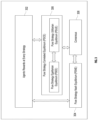
- FIG. 1 illustrates a block diagram of a system 100 for a game theory based real-time distributed dynamic task scheduling among a plurality of agents, in accordance with an example embodiment.
- the system 100 may comprises one or more computing devices 102, such as a laptop computer, a desktop computer, a notebook, a workstation, a cloud-based computing environment and the like. It will be understood that the system 100 may be accessed through one or more input/output interfaces 104-1, 104-2... 104-N, collectively referred to as I/O interface 104.
- Examples of the I/O interface 104 may include, but are not limited to, a user interface, a portable computer, a personal digital assistant, a handheld device, a smartphone, a tablet computer, a workstation, and the like.
- the I/O interface 104 are communicatively coupled to the access control system 100 through a network 106.
- the network 106 may be a wireless or a wired network, or a combination thereof.
- the network 106 can be implemented as a computer network, as one of the different types of networks, such as virtual private network (VPN), intranet, local area network (LAN), wide area network (WAN), the internet, and such.
- the network 106 may either be a dedicated network or a shared network, which represents an association of the different types of networks that use a variety of protocols, for example, Hypertext Transfer Protocol (HTTP), Transmission Control Protocol/Internet Protocol (TCP/IP), and Wireless Application Protocol (WAP), to communicate with each other.
- the network 106 may include a variety of network devices, including routers, bridges, servers, computing devices, storage devices. The network devices within the network 106 may interact with the system 100 through communication links.
- the system 100 may be implemented in a workstation, a server, and a network server.
- the computing device 102 further comprises one or more hardware processors 108, one or more memory 110, hereinafter referred as a memory 110 and a data repository 112, for example, a repository 112.
- the memory 110 is in communication with the one or more hardware processors 108, wherein the one or more hardware processors 108 are configured to execute programmed instructions stored in the memory 110, to perform various functions as explained in the later part of the disclosure.
- the repository 112 may store data processed, received, and generated by the access control system 100 as shown in FIG. 2 .
- the access control system 100 supports various connectivity options such as BLUETOOTH ® , USB, ZigBee and other cellular services.
- the network environment enables connection of various components of the system 100 using any communication link including Internet, WAN, MAN, and so on.
- the system 100 is implemented to operate as a stand-alone device.
- the system 100 may be implemented to work as a loosely coupled device to a smart computing environment. The components and functionalities of the system 100 are described further in detail.
- the system (100) provides a game-theoretic real-time distributed dynamic scheduler, wherein the plurality of agents distributively self-allocate tasks following a particular sequence satisfying agent capacity and task deadline.
- the system (100) distributes the plurality of agents into one or more groups containing a predefined number of agents. It is to be noted that along with the distributed dynamic scheduling, group is priority is determined by employing the plurality of agents rewards at consensus. This makes the scheduler robust in terms of average run-time and average reward attained at consensus.
- scheduler with heuristic formulation guarantees optimal solution and a complexity analysis conveys that the time-complexity for each strategy formation is independent of agent count but depends on the task count along with agent's capacity. While the computation burden for the consensus formation by employing pure strategy correlated equilibrium (PSCE) depends on the number of agents and is independent of task count, which varies linearly with the plurality of agents. Simulation result confirms that the scheduler outperforms the relevant reference scheduler to attain consensus in terms of average run-time and average reward attained at consensus.
- PSCE pure strategy correlated equilibrium
- an input/output interface 104 is configured to receive a plurality of predefined attributes of each of the set of tasks, and a plurality of predefined attributes of each of the plurality of agents.
- Each of the plurality of agents self-allocate the set of tasks dynamically in a distributed fashion, following an ordered sequence of agent indexes.
- the motivation of following the ordered sequence of agent indexes is allowing each of the plurality of agents to select its best strategy once by exploiting the greedy characteristic of each of the plurality of agents.
- At least one preferred agent self-allocates the set of tasks among the plurality of agents based on the minimum equidistant norm between one or more attributes of each task and one or more attributes of each agent.
- the one or more attributes of each task and the one or more attributes of each agent refer to collection of corresponding position vector, execution time, deadline, capacity and so on.
- the system is configured to determine one or more strategies based on the allocated set of tasks among the plurality of agents. It is to be noted that the onetime self-allocation of the set of tasks following the ordered sequence results in a strategy, which is the collection of the set of tasks self-allocated to each of the plurality of agents. It is apparent that multiple sequences containing unlike agent indexes are required to determine multiple strategies. With the aim of creating multiple unique strategies, agent indexes are ordered by employing the permutation of agent indexes. It would be appreciated that each strategy is considered as a union of self-allocated tasks among the plurality of agents.
- i ⁇ [1, m] be an index for i th agent and permutation of m agents indexes creates one sequence denoted by S. Therefore, t j i ⁇ t j i ⁇ t i , i ⁇ S , S ⁇ S argmin j q i ⁇ q t j + q t j ⁇ h f j C i 1 C i 2 , ⁇ i
- q i denotes position vector of the agent i
- q t j refers to the position vector of the j th task dependency
- h f j be the position vector of the final destination of the j th task.
- the argmin j q i ⁇ q t j + q t j ⁇ h f j computes the required L2 form, and the j* task index for which the computed equidistant is minimum.
- C i 1 , and C i 2 are constraints to explain agent capacity, task deadline etc. need to be satisfied by the agent i during strategy formation.
- the system is configured to self-allocate the received set of tasks among the plurality of agents based on predefined constraints.
- the predefined constraints include capability of each of the plurality of agents to complete the allocated task within a predefined execution time, and minimization of penalty of each strategy.
- Each strategy offered by a sequence needs to satisfy one or more predefined constraints. For example, a first constraint is regarding the agent's task completion capability and task execution time and a second constraint deals with the penalty minimization because of unscheduled tasks within stipulated execution time.
- constraints C i 1 imposes upon the agent i to keep a limit while self-allocating tasks.
- each time agents need to check whether allocation of the new task is executable within the task execution time or not. This checking is done by C i 2 .
- C i 2 satisfaction is required at two particular situations as shown in FIG. 5(a) & 5(b) .
- the dotted line is the path obtained by employing to reach the gray rectangle (next destination) indicated by h f i .
- the ⁇ is a user defined threshold indicated by a dotted circle.
- the system is configured to compute a reward for each of the one or more strategies based on principle of multi-agent markov decision process (MMDP).
- MMDP multi-agent markov decision process
- a heuristic reward function is employed to satisfy the one or more predefined constraints.
- the plurality of agents reach consensus based on a pure strategy correlated equilibrium (PSCE), and the determined one or more strategies.
- PSCE pure strategy correlated equilibrium
- the computed reward is received by each agent along with a transition probability from the environment as a feedback.
- MDP Markov Decision Process
- each of the plurality of agents is influenced by the remaining agents and to adapt behavior of each agent, the MDP process is extended to a Multi-agent Markov Decision Process (MMDP).
- PSCE Pure Strategy Correlated Equilibrium
- PSEE Pure Strategy Egalitarian Equilibrium
- PSUE Pure Strategy Utilitarian Equilibrium
- the system 100 is configured to determine a consensus among the plurality of agents based on a pure strategy correlated equilibrium (PSCE), the determined one or more strategies and computed reward for each of the one or more strategies.
- PSCE pure strategy correlated equilibrium
- FIG. 3 a flow diagram to illustrate a consensus formation among the plurality of agents, that can be formed in two ways. It comprises attempts to identify 304 the PSNE from the one or more strategies and further computing 306 the two types of PSCE. The first one is the PSEE, while maximizes the reward of least efficient agent of the plurality of agents and ensures optimum resource utilization.
- the PSEE and PSUE are jointly satisfied and is defined as consensus 308 for task scheduling.
- the system (100) is configured to make the scheduler scalable for larger number of agents.
- the plurality of agents is distributed into a plurality of groups based on the mutual minimum L2 Norm.
- Each of the plurality of groups forms a consensus among the plurality of agents.
- One such agent is declared as a leader of each corresponding group.
- the leader of each group broadcasts summation of the plurality of agents' rewards at consensus of corresponding the plurality of groups.
- the basis of summed reward is borrowed from the concept of utilitarianism.
- group priority queue is determined by employing the plurality of agents rewards at consensus.
- the preference is based on performance of each of the plurality of groups, which indeed improve efficiency of the system 100.
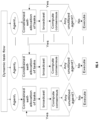
- FIG. 4 a functional flow diagram to show the optimal strategy that is identified by evaluating an equilibrium, which is a general agreement or consensus or a balanced situation among the plurality of agents in terms of rewards earned by each agent. It is a situation from which no agent deviates selfishly. Because at equilibrium all agents attain their highest reward. If any one agent deviates selfishly, then the agent's reward as well as the team's reward are reduced. Indeed, the equilibrium's corresponding strategy is the optimal one. Hence, a correlated equilibrium is used, which is a more general solution concept in the domain of game theory, than the same by Nash equilibrium.
- the plurality of agents herein self-allocates the one or more tasks based on a Euclidean distance between agent and task, task allocation capacity, task deadline, task completion time, the union of the plurality of agents' self-allocated tasks results in one strategy.
- a heuristic numerical measure is defined based on the Euclidean distance and time parameters.
- the numeric measure is the cost of strategy, which needs to be minimized to obtain an optimal strategy.
- a merit of game theory is employed, wherein one numerical value is maximized corresponding to each strategy.
- the heuristic reward function is defined as the reciprocal of the heuristic cost function.
- the simulation procedure is of two-fold.
- First fold is regarding the average run-time evaluation and the second fold deals with the procedure of average reward earning by each agent.
- t ⁇ l be the run-time required to schedule all the tasks by m agents forming a series of consensus denoted by s ⁇ in l th run, where ⁇ ⁇ ⁇ ee, ue, ne, ee + ue ⁇ .
- l ⁇ av be the average of total number of iterations to schedule all tasks by m agents following ⁇ ⁇ ⁇ ee, ue, ne, ee + ue ⁇ .
- the iteration count is notated by employing a counter.
- the second fold is for the average reward computation.
- r i l s ⁇ be the reward earned by an agent i ⁇ [1, m ] in the i th run following the strategy s ⁇
- r ⁇ av be the average reward earned by m agents to form s ⁇ .
- FIG. 5(a) & 5(b) a schematic diagram, wherein q t n in the FIG. 5(a) refers to a current position of a new task t n .
- q t n denotes the current position of a new destination h n .
- the consensus which appears first s c (1) ⁇ ⁇ s c ⁇ is executed in a distributed dynamic scheduling algorithm to maintain synchronization among the plurality of agents.
- the agents are distributed into a number of small groups based on the mutual minimum L2 norm.
- Each group form consensus among m w , number of agents.
- One such agent is declared a leader of corresponding group.
- the leader broadcasts summation of all agents' rewards at consensus of corresponding group.
- leader of each group receives summed reward at consensus from remaining groups.
- the basis of summed reward is borrowed from the concept of utilitarianism.
- the groups act based on the formed group priority queue.
- the motive of forming group priority queue is preferring the best performing group, which indeed improve the system efficiency.
- the group scheduling is done following consensus and, the group priority queue is formed based on the rewards at consensus. Hence the group scheduling is optimal. Therefore, the formulated heuristic reward function enjoys the merit of game theory and guarantees optimality.
- time-complexity analysis for strategy formation and corresponding reward computation is elaborated.
- the strategy formation is initiated from self-allocating one task by an agent i which requires (
- Time-complexity to self-allocate t i number of tasks is
- a strategy is the collection of t i , ⁇ i , i ⁇ [1, m,].
- the time-complexity for strategy formation and corresponding reward computation is independent of agent count. However, it depends on the agent capacity L i because t i is the function of L i . Therefore, the computational burden for strategy formation and corresponding reward computation is common for consensus formation either by PSNE or by PSCE.
- time-complexity to compute PSNE and PSCE respectively vary exponentially and linearly with the variation of total number of agents and the time-complexity for consensus formation either follows PSNE or PSCE and independent of task count.
- group scheduling respectively the time-complexity to form consensus in a group by employing the PSCE and PSNE are O (
- m w ! be the number of strategies and m w ⁇ m max be the total number of agents in w th group.
- time-complexity in the PSNE and PSCE respectively vary exponentially and linearly with the variation of agent number m w .
- time-complexity for consensus formation by employing PSCE is O (
- m w ! ⁇ O (
- m w !
- time-complexity for consensus formation by employing PSNE is O (
- m w ! ⁇ O (
- m w !.
- time-complexity for consensus formation is independent of task count. Hence, it can be inferred here that obtaining consensus by employing PSCE is superior than the same by employing PSNE in terms of time-complexity.
- FIG. 6 a flow chart to illustrate a processor-implemented method (600) for a game theory based real-time distributed dynamic task scheduling among a plurality of agents.
- the method comprises one or more steps as follows.
- each of the plurality of agents self-allocate the set of tasks dynamically in a distributed fashion, following an ordered sequence of agent indexes.
- the motivation of following the ordered sequence of agent indexes is allowing each of the plurality of agents to select its best strategy once by exploiting the greedy characteristic of each of the plurality of agents.
- each of the plurality of agents is given an identification for an ordering to allow each agent in selecting its best strategy by exploiting a greedy characteristic of the agent.
- the preferred agent (based on the ordered sequence) self-allocates tasks among multiple based on the minimum L2 Norm between agent position vector and task related position vectors.
- One-time self-allocation of tasks by all agents following the said ordered sequence results in one strategy, which is the collection of all agents self-allocated tasks. It is apparent that multiple sequences containing unlike unique agent identification indexes are required to obtain multiple strategies.
- next step (606) determining one or more strategies based on the self-allocated set of tasks among the plurality of agents, wherein each strategy is a union of the plurality of agents self-allocated tasks.
- the PSCE includes a Pure Strategy Egalitarian Equilibrium (PSEE) and a Pure Strategy Utilitarian Equilibrium (PSUE).
- PSEE Pure Strategy Egalitarian Equilibrium
- PSUE Pure Strategy Utilitarian Equilibrium
- next step (610) determining a consensus among the plurality of agents based on a pure strategy correlated equilibrium (PSCE) employing rewards of the plurality of agents.
- PSCE strategy correlated equilibrium
- step (612) scheduling the set of tasks among the plurality of agents based on the determined consensus, wherein the scheduling of the set of tasks among the plurality of agents in a distributed fashion.
- the processor-implemented method comprising one or more steps for scalable scheduling the larger number of agents.
- the method comprising creating one or more groups from the plurality of agents based on a predefined mutual equidistant principle and determining one or more strategies within each of the one or more groups based on task self-allocation among the agents of each group.
- the method includes computing a reward for each of the one or more strategies of each of the one or more groups with the assumption of MMDP. and determining a consensus among the agents of each group based on the PSCE.
- a group lead is identified randomly consensus, determining a group priority queue based on each group reward at consensus, and scheduling the set of tasks among the plurality of agents based on the identified group lead and determined a group priority queue.
- the embodiments of present disclosure herein address unresolved problem of auction-based bid generation technique in a distributed dynamic task scheduling among the plurality of agents.
- the auction-based bid generation technique is a NP-hard problem and is not suitable for real-time task scheduling among the plurality of agents.
- the embodiments thus provide a distributed dynamic scheduler, wherein the plurality of agents self-allocate tasks among themselves dynamically in a distributed fashion, following an ordered sequence of agent indexes.
- the motivation of following the ordered sequence of agent indexes is allowing each agent to select its best strategy once by exploiting the greedy characteristic of the agent.
- the preferred agent (based on the ordered sequence) self-allocates tasks among multiple based on the minimum L2 Norm between task attributes and agent attributes.
- task and agent attributes refer to the collection of corresponding position vector, execution time, deadline, capacity, and so on.
- One-time self-allocation of tasks following the said ordered sequence results in a strategy, which is the collection of all agents self-allocated tasks.
- the strategy offered by a sequence needs to satisfy predefined constraints.
- a heuristic reward function for each strategy is proposed. Based on these rewards, agents reach consensus by playing an exact potential game.
- the hardware device can be any kind of device which can be programmed including e.g. any kind of computer like a server or a personal computer, or the like, or any combination thereof.
- the device may also include means which could be e.g. hardware means like e.g. an application-specific integrated circuit (ASIC), a field-programmable gate array (FPGA), or a combination of hardware and software means, e.g.
- ASIC application-specific integrated circuit
- FPGA field-programmable gate array
- the means can include each hardware means, and software means.
- the method embodiments described herein could be implemented in hardware and software.
- the device may also include software means.
- the embodiments may be implemented on different hardware devices, e.g. using a plurality of CPUs.
- the embodiments herein can comprise hardware and software elements.
- the embodiments that are implemented in software include but are not limited to, firmware, resident software, microcode, etc.
- the functions performed by various components described herein may be implemented in other components or combinations of other components.
- a computer-usable or computer readable medium can be any apparatus that can comprise, store, communicate, propagate, or transport the program for use by or in connection with the instruction execution system, apparatus, or device.
- a computer-readable storage medium refers to any type of physical memory on which information or data readable by a processor may be stored.
- a computer-readable storage medium may store instructions for execution by one or more processors, including instructions for causing the processor(s) to perform steps or stages consistent with the embodiments described herein.
- the term "computer-readable medium” should be understood to include tangible items and exclude carrier waves and transient signals, i.e., be non-transitory. Examples include random access memory (RAM), read-only memory (ROM), volatile memory, nonvolatile memory, hard drives, CD ROMs, DVDs, flash drives, disks, and any other known physical storage media.
Landscapes
- Business, Economics & Management (AREA)
- Human Resources & Organizations (AREA)
- Engineering & Computer Science (AREA)
- Strategic Management (AREA)
- Economics (AREA)
- Entrepreneurship & Innovation (AREA)
- Educational Administration (AREA)
- Tourism & Hospitality (AREA)
- Marketing (AREA)
- Operations Research (AREA)
- Quality & Reliability (AREA)
- Physics & Mathematics (AREA)
- General Business, Economics & Management (AREA)
- General Physics & Mathematics (AREA)
- Theoretical Computer Science (AREA)
- Game Theory and Decision Science (AREA)
- Development Economics (AREA)
- Management, Administration, Business Operations System, And Electronic Commerce (AREA)
- Data Exchanges In Wide-Area Networks (AREA)
Claims (6)
- Prozessorimplementiertes Verfahren (600) für eine spieltheoriebasierte verteilte dynamische Echtzeit-Aufgabenplanung unter einer Mehrzahl von Agenten, umfassend:Empfangen (602), über einen oder mehrere Hardwareprozessoren, einer Mehrzahl von vordefinierten Attributen jedes des Satzes von Aufgaben und einer Mehrzahl von vordefinierten Attributen jedes der Mehrzahl von Agenten;Selbstzuordnen (604), über einen oder mehrere Hardwareprozessoren, des empfangenen Satzes von Aufgaben unter der Mehrzahl von Agenten, die vordefinierte Einschränkungen erfüllen, dynamisch in einer verteilten Weise, einer geordneten Sequenz von Agentenindizes folgend, wobei die vordefinierten Einschränkungen die Fähigkeit jedes der Mehrzahl von Agenten, die selbstzugeordnete Aufgabe innerhalb einer vordefinierten Ausführungszeit abzuschließen, und die Minimierung der Strafe jeder Strategie beinhalten, wobei basierend auf der geordneten Sequenz mindestens ein bevorzugter Agent den Satz von Aufgaben unter der Mehrzahl von Agenten basierend auf einer minimalen äquidistanten Norm zwischen einem oder mehreren Attributen jeder Aufgabe und einem oder mehreren Attributen jedes Agenten selbstzuordnet;Bestimmen (606), über einen oder mehrere Hardwareprozessoren, einer oder mehrerer Strategien basierend auf der Selbstzuordnung des Satzes von Aufgaben unter der Mehrzahl von Agenten, wobei jede Strategie eine Vereinigung von selbstzugeordneten Sätzen von Aufgaben jedes Agenten ist;Berechnen (608), über einen oder mehrere Hardwareprozessoren, einer Belohnung für jede Strategie jedes der Mehrzahl von Agenten mit einer Annahme eines Multi-Agent-Markov-Entscheidungsprozesses (MMDP);Bestimmen (610), über einen oder mehrere Hardwareprozessoren, eines Konsens unter der Mehrzahl von Agenten basierend auf einem reinen strategiekorrelierten Gleichgewicht (PSCE), das Belohnungen der Mehrzahl von Agenten einsetzt;Planen (612), über einen oder mehrere Hardwareprozessoren, des Satzes von selbstzugeordneten Aufgaben unter der Mehrzahl von Agenten in der Echtzeit basierend auf dem bestimmten Konsens, wobei die Echtzeitplanung des Satzes von Aufgaben unter der Mehrzahl von Agenten in einer verteilten Weise durchgeführt wird;Erzeugen, über einen oder mehrere Hardwareprozessoren, einer oder mehrerer Gruppen aus der Mehrzahl von Agenten basierend auf einem vordefinierten gegenseitigen äquidistanten Prinzip;Bestimmen, über den einen oder die mehreren Hardwareprozessoren, einer oder mehrerer Strategien innerhalb jeder der einen oder mehreren Gruppen basierend auf Aufgabenzuordnung unter den Agenten jeder Gruppe;Berechnen, über den einen oder die mehreren Hardwareprozessoren, einer Belohnungsfunktion jeder der einen oder mehreren bestimmten Strategien jedes der Mehrzahl von Agenten mit MMDP- Annahme;Bestimmen, über den einen oder die mehreren Hardwareprozessoren, eines Konsens unter den Agenten jeder Gruppe basierend auf dem PSCE, wobei eine Gruppenleitung zufällig identifiziert wird;Bestimmen, über den einen oder die mehreren Hardwareprozessoren, einer Gruppenprioritätswarteschlange basierend auf dem bestimmten Konsens unter den Agenten jeder Gruppe; undPlanen, über den einen oder die mehreren Hardwareprozessoren, des Satzes von Aufgaben unter der Mehrzahl von Agenten basierend auf der identifizierten Gruppenleitung und Aufgaben werden nach der bestimmten Prioritätswarteschlange ausgeführt.
- Prozessorimplementiertes Verfahren (600) nach Anspruch 1, wobei das PSCE ein reines Strategieegalitäres Gleichgewicht (PSEE) und ein reines Strategieutilitaristisches Gleichgewicht (PSUE) beinhaltet.
- Prozessorimplementiertes Verfahren (600) nach Anspruch 2, wobei das reine Strategieegalitäre Gleichgewicht (PSEE) ausgewählt wird, um die Belohnung der Belohnung des am wenigsten effizienten Agenten in der einen oder den mehreren Gruppen zu maximieren.
- Prozessorimplementiertes Verfahren (600) nach Anspruch 2, wobei das reine Strategieutilitaristische Gleichgewicht (PSUE) ausgewählt wird, um die Summe aller Agentenbelohnungen zu maximieren, die tatsächlich die maximale Ressourcennutzung in der einen oder den mehreren Gruppen sicherstellen.
- System (100) für eine spieltheoriebasierte verteilte dynamische Echtzeit-Aufgabenplanung unter einer Mehrzahl von Agenten, wobei das System umfasst:eine Eingabe-/Ausgabeschnittstelle (104) zum Empfangen einer Mehrzahl von vordefinierten Attributen jeder Aufgabe und einer Mehrzahl von vordefinierten Attributen jedes Agenten;
einen oder mehrere Hardwareprozessoren (108);mindestens einen Speicher (110) in Kommunikation mit dem einen oder den mehreren Hardwareprozessoren (108), wobei der eine oder die mehreren Hardwareprozessoren (108) konfiguriert sind, um programmierte Anweisungen auszuführen, die in dem Speicher (110) gespeichert sind, um:den empfangenen Satz von Aufgaben unter der Mehrzahl von Agenten, die vordefinierte Einschränkungen erfüllen, dynamisch in einer verteilten Weise, einer geordneten Sequenz von Agentenindizes folgend, selbstzuzuordnen, wobei die vordefinierten Einschränkungen die Fähigkeit jedes der Mehrzahl von Agenten, die selbstzugeordnete Aufgabe innerhalb einer vordefinierten Ausführungszeit abzuschließen, und die Minimierung der Strafe jeder Strategie beinhalten, wobei basierend auf der geordneten Sequenz mindestens ein bevorzugter Agent den Satz von Aufgaben unter der Mehrzahl von Agenten basierend auf einer minimalen äquidistanten Norm zwischen einem oder mehreren Attributen jeder Aufgabe und einem oder mehreren Attributen jedes Agenten selbstzuordnet;eine oder mehrere Strategien basierend auf der Selbstzuordnung des Satzes von Aufgaben unter der Mehrzahl von Agenten zu bestimmen, wobei jede Strategie eine Vereinigung von selbstzugeordneten Sätzen von Aufgaben jedes Agenten ist;eine Belohnung für jede Strategie jedes der Mehrzahl von Agenten mit einer Annahme eines Multi-Agent-Markov-Entscheidungsprozesses (MMDP) zu berechnen;einen Konsens unter der Mehrzahl von Agenten basierend auf einem reinen strategiekorrelierten Gleichgewicht (PSCE), das Belohnungen der Mehrzahl von Agenten einsetzt, zu bestimmen;die Menge von selbstzugeordneten Aufgaben unter der Mehrzahl von Agenten in der Echtzeit basierend auf dem bestimmten Konsens zu planen, wobei die Echtzeitplanung des Satzes von Aufgaben unter der Mehrzahl von Agenten in einer verteilten Weise erfolgt;eine oder mehrere Gruppen aus der Mehrzahl von Agenten basierend auf einem vordefinierten gegenseitigen äquidistanten Prinzip zu erzeugen;eine oder mehrere Strategien innerhalb jeder der einen oder mehreren Gruppen basierend auf Aufgabenzuordnung unter den Agenten jeder Gruppe zu bestimmen;eine Belohnungsfunktion jeder der einen oder mehreren bestimmten Strategien jedes der Mehrzahl von Agenten mit MMDP-Annahme zu berechnen;einen Konsens unter den Agenten jeder Gruppe basierend auf dem PSCE zu bestimmen, wobei eine Gruppenleitung zufällig identifiziert wird;eine Gruppenprioritätswarteschlange basierend auf dem bestimmten Konsens unter den Agenten jeder Gruppe zu bestimmen; und
die Menge von Aufgaben unter der Mehrzahl von Agenten basierend auf der identifizierten Gruppenleitung und Aufgaben nach der bestimmten Prioritätswarteschlange auszuführen. - Nichtflüchtiges computerlesbares Medium, das eine oder mehrere Anweisungen speichert, die, wenn sie von einem oder mehreren Prozessoren auf einem System ausgeführt werden, den einen oder die mehreren Prozessoren veranlassen, das Verfahren durchzuführen, umfassend:Empfangen (602), über einen oder mehrere Hardwareprozessoren, einer Mehrzahl von vordefinierten Attributen jedes des Satzes von Aufgaben und einer Mehrzahl von vordefinierten Attributen jedes der Mehrzahl von Agenten;Selbstzuordnen (604), über einen oder mehrere Hardwareprozessoren, des empfangenen Satzes von Aufgaben unter der Mehrzahl von Agenten, die vordefinierte Einschränkungen erfüllen, dynamisch in einer verteilten Weise, einer geordneten Sequenz von Agentenindizes folgend, wobei die vordefinierten Einschränkungen die Fähigkeit jedes der Mehrzahl von Agenten, die selbstzugeordnete Aufgabe innerhalb einer vordefinierten Ausführungszeit abzuschließen, und die Minimierung der Strafe jeder Strategie beinhalten, wobei basierend auf der geordneten Sequenz mindestens ein bevorzugter Agent den Satz von Aufgaben unter der Mehrzahl von Agenten basierend auf einer minimalen äquidistanten Norm zwischen einem oder mehreren Attributen jeder Aufgabe und einem oder mehreren Attributen jedes Agenten selbstzuordnet;Bestimmen (606), über einen oder mehrere Hardwareprozessoren, einer oder mehrerer Strategien basierend auf der Selbstzuordnung des Satzes von Aufgaben unter der Mehrzahl von Agenten, wobei jede Strategie eine Vereinigung von selbstzugeordneten Sätzen von Aufgaben jedes Agenten ist;Berechnen (608), über einen oder mehrere Hardwareprozessoren, einer Belohnung für jede Strategie jedes der Mehrzahl von Agenten mit einer Annahme eines Multi-Agent-Markov-Entscheidungsprozesses (MMDP);Bestimmen (610), über einen oder mehrere Hardwareprozessoren, eines Konsens unter der Mehrzahl von Agenten basierend auf einem reinen strategiekorrelierten Gleichgewicht (PSCE), das Belohnungen der Mehrzahl von Agenten einsetzt;Planen (612), über einen oder mehrere Hardwareprozessoren, des Satzes von selbstzugeordneten Aufgaben unter der Mehrzahl von Agenten in der Echtzeit basierend auf dem bestimmten Konsens, wobei die Echtzeitplanung des Satzes von Aufgaben unter der Mehrzahl von Agenten in einer verteilten Weise durchgeführt wird;Erzeugen, über einen oder mehrere Hardwareprozessoren, einer oder mehrerer Gruppen aus der Mehrzahl von Agenten basierend auf einem vordefinierten gegenseitigen äquidistanten Prinzip;Bestimmen, über den einen oder die mehreren Hardwareprozessoren, einer oder mehrerer Strategien innerhalb jeder der einen oder mehreren Gruppen basierend auf Aufgabenzuordnung unter den Agenten jeder Gruppe;Berechnen, über den einen oder die mehreren Hardwareprozessoren, einer Belohnungsfunktion jeder der einen oder mehreren bestimmten Strategien jedes der Mehrzahl von Agenten mit MMDP-Annahme;Bestimmen, über den einen oder die mehreren Hardwareprozessoren, eines Konsens unter den Agenten jeder Gruppe basierend auf dem PSCE, wobei eine Gruppenleitung zufällig identifiziert wird;Bestimmen, über den einen oder die mehreren Hardwareprozessoren, einer Gruppenprioritätswarteschlange basierend auf dem bestimmten Konsens unter den Agenten jeder Gruppe;Planen, über den einen oder die mehreren Hardwareprozessoren, des Satzes von Aufgaben unter der Mehrzahl von Agenten basierend auf der identifizierten Gruppenleitung und Aufgaben werden nach der bestimmten Prioritätswarteschlange ausgeführt;
Applications Claiming Priority (1)
| Application Number | Priority Date | Filing Date | Title |
|---|---|---|---|
| IN202021049766 | 2020-11-13 |
Publications (3)
| Publication Number | Publication Date |
|---|---|
| EP4002234A1 EP4002234A1 (de) | 2022-05-25 |
| EP4002234B1 true EP4002234B1 (de) | 2025-06-25 |
| EP4002234C0 EP4002234C0 (de) | 2025-06-25 |
Family
ID=74797866
Family Applications (1)
| Application Number | Title | Priority Date | Filing Date |
|---|---|---|---|
| EP21159683.8A Active EP4002234B1 (de) | 2020-11-13 | 2021-02-26 | System und verfahren zur echtzeit-verteilten dynamischen aufgabenplanung |
Country Status (2)
| Country | Link |
|---|---|
| US (1) | US20220156674A1 (de) |
| EP (1) | EP4002234B1 (de) |
Families Citing this family (3)
| Publication number | Priority date | Publication date | Assignee | Title |
|---|---|---|---|---|
| CN115580655B (zh) * | 2022-11-23 | 2023-03-10 | 亚信科技(中国)有限公司 | 任务调度方法、装置、电子设备及存储介质 |
| CN121210033A (zh) * | 2024-06-24 | 2025-12-26 | 中兴通讯股份有限公司 | 任务处理方法、服务器、介质和产品 |
| CN120218827B (zh) * | 2025-05-30 | 2025-08-22 | 山东智慧云通网络科技有限公司 | 一种基于智能体的物料处理决策优化方法 |
Family Cites Families (5)
| Publication number | Priority date | Publication date | Assignee | Title |
|---|---|---|---|---|
| WO2018163174A1 (en) * | 2017-03-07 | 2018-09-13 | B. G. Negev Technologies And Applications Ltd., At Ben-Gurion University | Market equilibrium mechanism for task allocation |
| US11328214B2 (en) * | 2017-09-28 | 2022-05-10 | Kyndryl, Inc. | Real-time multi-agent response based on a preference-based consensus |
| EP3605334A1 (de) * | 2018-07-31 | 2020-02-05 | Prowler.io Limited | Anreizsteuerung für multiagentensysteme |
| US11393341B2 (en) * | 2019-02-26 | 2022-07-19 | Beijing Didi Infinity Technology And Development Co., Ltd. | Joint order dispatching and fleet management for online ride-sharing platforms |
| US20200285936A1 (en) * | 2019-03-05 | 2020-09-10 | STATGRAF Research LLP. | Cognitive system |
-
2021
- 2021-02-26 EP EP21159683.8A patent/EP4002234B1/de active Active
- 2021-03-02 US US17/249,450 patent/US20220156674A1/en not_active Abandoned
Also Published As
| Publication number | Publication date |
|---|---|
| US20220156674A1 (en) | 2022-05-19 |
| EP4002234A1 (de) | 2022-05-25 |
| EP4002234C0 (de) | 2025-06-25 |
Similar Documents
| Publication | Publication Date | Title |
|---|---|---|
| EP4002234B1 (de) | System und verfahren zur echtzeit-verteilten dynamischen aufgabenplanung | |
| Goyal et al. | On minimizing budget and time in influence propagation over social networks | |
| Yeoh et al. | Distributed problem solving | |
| Mohamed et al. | QoS routing RPL for low power and lossy networks | |
| US10679274B2 (en) | Method and system for data processing to recommend list of physical stores in real-time | |
| US20170262898A1 (en) | Automated Selection Of User/Message Combinations | |
| US11200257B2 (en) | Classifying social media users | |
| Deng et al. | Constraints-driven service composition in mobile cloud computing | |
| Mohamadi et al. | Solving target coverage problem using cover sets in wireless sensor networks based on learning automata | |
| Galanopoulos et al. | Cooperative edge computing of data analytics for the Internet of Things | |
| Subramaniam et al. | Hybrid optimal ensemble SVM forest classifier for task offloading in mobile cloud computing | |
| Bakhtiari et al. | A trust management system for fog computing using improved genetic algorithm | |
| Alghayadh et al. | Dynamic data-driven resource allocation for NB-IoT performance in mobile devices | |
| US20120254448A1 (en) | System and method for selection of network transport within a mobile device | |
| Camilo et al. | Profitpilot: Enabling rebalancing in payment channel networks through profitable cycle creation | |
| Xiao et al. | Eliciting joint truthful answers and profiles from strategic workers in mobile crowdsourcing systems | |
| Fallatah et al. | Social network-based framework for web services discovery | |
| Behdani et al. | The lifetime maximization problem in wireless sensor networks with a mobile sink: mixed-integer programming formulations and algorithms | |
| Turajlić et al. | A hybrid metaheuristic based on variable neighborhood search and tabu search for the web service selection problem | |
| Kim | New bargaining game based computation offloading scheme for flying ad-hoc networks | |
| Zhan et al. | Joint UAV placement and dependent task offloading in multi-UAV MEC networks: A graph attention enhanced DRL approach | |
| Eriksson et al. | Radio and computational resource management for fog computing enabled wireless camera networks | |
| Shukla et al. | A computationally efficient and QoS-aware data offloading framework for biased fog networks | |
| US20250005369A1 (en) | Value-based action selection algorithm in reinforcement learning | |
| Tinh et al. | Crossheterofl: Cross-stratified sampling composition-fitting to federated learning for heterogeneous clients |
Legal Events
| Date | Code | Title | Description |
|---|---|---|---|
| PUAI | Public reference made under article 153(3) epc to a published international application that has entered the european phase |
Free format text: ORIGINAL CODE: 0009012 |
|
| STAA | Information on the status of an ep patent application or granted ep patent |
Free format text: STATUS: THE APPLICATION HAS BEEN PUBLISHED |
|
| AK | Designated contracting states |
Kind code of ref document: A1 Designated state(s): AL AT BE BG CH CY CZ DE DK EE ES FI FR GB GR HR HU IE IS IT LI LT LU LV MC MK MT NL NO PL PT RO RS SE SI SK SM TR |
|
| STAA | Information on the status of an ep patent application or granted ep patent |
Free format text: STATUS: REQUEST FOR EXAMINATION WAS MADE |
|
| 17P | Request for examination filed |
Effective date: 20220720 |
|
| RBV | Designated contracting states (corrected) |
Designated state(s): AL AT BE BG CH CY CZ DE DK EE ES FI FR GB GR HR HU IE IS IT LI LT LU LV MC MK MT NL NO PL PT RO RS SE SI SK SM TR |
|
| GRAP | Despatch of communication of intention to grant a patent |
Free format text: ORIGINAL CODE: EPIDOSNIGR1 |
|
| STAA | Information on the status of an ep patent application or granted ep patent |
Free format text: STATUS: GRANT OF PATENT IS INTENDED |
|
| INTG | Intention to grant announced |
Effective date: 20250226 |
|
| GRAS | Grant fee paid |
Free format text: ORIGINAL CODE: EPIDOSNIGR3 |
|
| GRAA | (expected) grant |
Free format text: ORIGINAL CODE: 0009210 |
|
| STAA | Information on the status of an ep patent application or granted ep patent |
Free format text: STATUS: THE PATENT HAS BEEN GRANTED |
|
| AK | Designated contracting states |
Kind code of ref document: B1 Designated state(s): AL AT BE BG CH CY CZ DE DK EE ES FI FR GB GR HR HU IE IS IT LI LT LU LV MC MK MT NL NO PL PT RO RS SE SI SK SM TR |
|
| REG | Reference to a national code |
Ref country code: GB Ref legal event code: FG4D |
|
| REG | Reference to a national code |
Ref country code: CH Ref legal event code: EP |
|
| REG | Reference to a national code |
Ref country code: CH Ref legal event code: EP |
|
| REG | Reference to a national code |
Ref country code: IE Ref legal event code: FG4D |
|
| U01 | Request for unitary effect filed |
Effective date: 20250625 |
|
| U07 | Unitary effect registered |
Designated state(s): AT BE BG DE DK EE FI FR IT LT LU LV MT NL PT RO SE SI Effective date: 20250701 |
|
| PG25 | Lapsed in a contracting state [announced via postgrant information from national office to epo] |
Ref country code: NO Free format text: LAPSE BECAUSE OF FAILURE TO SUBMIT A TRANSLATION OF THE DESCRIPTION OR TO PAY THE FEE WITHIN THE PRESCRIBED TIME-LIMIT Effective date: 20250925 Ref country code: GR Free format text: LAPSE BECAUSE OF FAILURE TO SUBMIT A TRANSLATION OF THE DESCRIPTION OR TO PAY THE FEE WITHIN THE PRESCRIBED TIME-LIMIT Effective date: 20250926 |
|
| PG25 | Lapsed in a contracting state [announced via postgrant information from national office to epo] |
Ref country code: HR Free format text: LAPSE BECAUSE OF FAILURE TO SUBMIT A TRANSLATION OF THE DESCRIPTION OR TO PAY THE FEE WITHIN THE PRESCRIBED TIME-LIMIT Effective date: 20250625 |
|
| PG25 | Lapsed in a contracting state [announced via postgrant information from national office to epo] |
Ref country code: RS Free format text: LAPSE BECAUSE OF FAILURE TO SUBMIT A TRANSLATION OF THE DESCRIPTION OR TO PAY THE FEE WITHIN THE PRESCRIBED TIME-LIMIT Effective date: 20250925 |
|
| PG25 | Lapsed in a contracting state [announced via postgrant information from national office to epo] |
Ref country code: IS Free format text: LAPSE BECAUSE OF FAILURE TO SUBMIT A TRANSLATION OF THE DESCRIPTION OR TO PAY THE FEE WITHIN THE PRESCRIBED TIME-LIMIT Effective date: 20251025 |
|
| PG25 | Lapsed in a contracting state [announced via postgrant information from national office to epo] |
Ref country code: SM Free format text: LAPSE BECAUSE OF FAILURE TO SUBMIT A TRANSLATION OF THE DESCRIPTION OR TO PAY THE FEE WITHIN THE PRESCRIBED TIME-LIMIT Effective date: 20250625 |
|
| PG25 | Lapsed in a contracting state [announced via postgrant information from national office to epo] |
Ref country code: CZ Free format text: LAPSE BECAUSE OF FAILURE TO SUBMIT A TRANSLATION OF THE DESCRIPTION OR TO PAY THE FEE WITHIN THE PRESCRIBED TIME-LIMIT Effective date: 20250625 |
|
| PG25 | Lapsed in a contracting state [announced via postgrant information from national office to epo] |
Ref country code: PL Free format text: LAPSE BECAUSE OF FAILURE TO SUBMIT A TRANSLATION OF THE DESCRIPTION OR TO PAY THE FEE WITHIN THE PRESCRIBED TIME-LIMIT Effective date: 20250625 |
|
| PG25 | Lapsed in a contracting state [announced via postgrant information from national office to epo] |
Ref country code: SK Free format text: LAPSE BECAUSE OF FAILURE TO SUBMIT A TRANSLATION OF THE DESCRIPTION OR TO PAY THE FEE WITHIN THE PRESCRIBED TIME-LIMIT Effective date: 20250625 |
|
| PG25 | Lapsed in a contracting state [announced via postgrant information from national office to epo] |
Ref country code: ES Free format text: LAPSE BECAUSE OF FAILURE TO SUBMIT A TRANSLATION OF THE DESCRIPTION OR TO PAY THE FEE WITHIN THE PRESCRIBED TIME-LIMIT Effective date: 20250625 |