EP3999362B1 - Pre-cured tread stone rejection design - Google Patents
Pre-cured tread stone rejection design Download PDFInfo
- Publication number
- EP3999362B1 EP3999362B1 EP20840084.6A EP20840084A EP3999362B1 EP 3999362 B1 EP3999362 B1 EP 3999362B1 EP 20840084 A EP20840084 A EP 20840084A EP 3999362 B1 EP3999362 B1 EP 3999362B1
- Authority
- EP
- European Patent Office
- Prior art keywords
- platform
- groove
- groove sidewall
- wall
- degrees
- Prior art date
- Legal status (The legal status is an assumption and is not a legal conclusion. Google has not performed a legal analysis and makes no representation as to the accuracy of the status listed.)
- Active
Links
Images



Classifications
-
- B—PERFORMING OPERATIONS; TRANSPORTING
- B60—VEHICLES IN GENERAL
- B60C—VEHICLE TYRES; TYRE INFLATION; TYRE CHANGING; CONNECTING VALVES TO INFLATABLE ELASTIC BODIES IN GENERAL; DEVICES OR ARRANGEMENTS RELATED TO TYRES
- B60C11/00—Tyre tread bands; Tread patterns; Anti-skid inserts
- B60C11/03—Tread patterns
- B60C11/04—Tread patterns in which the raised area of the pattern consists only of continuous circumferential ribs, e.g. zig-zag
- B60C11/042—Tread patterns in which the raised area of the pattern consists only of continuous circumferential ribs, e.g. zig-zag further characterised by the groove cross-section
- B60C11/047—Tread patterns in which the raised area of the pattern consists only of continuous circumferential ribs, e.g. zig-zag further characterised by the groove cross-section the groove bottom comprising stone trapping protection elements, e.g. ribs
-
- B—PERFORMING OPERATIONS; TRANSPORTING
- B60—VEHICLES IN GENERAL
- B60C—VEHICLE TYRES; TYRE INFLATION; TYRE CHANGING; CONNECTING VALVES TO INFLATABLE ELASTIC BODIES IN GENERAL; DEVICES OR ARRANGEMENTS RELATED TO TYRES
- B60C11/00—Tyre tread bands; Tread patterns; Anti-skid inserts
- B60C11/03—Tread patterns
- B60C11/04—Tread patterns in which the raised area of the pattern consists only of continuous circumferential ribs, e.g. zig-zag
-
- B—PERFORMING OPERATIONS; TRANSPORTING
- B60—VEHICLES IN GENERAL
- B60C—VEHICLE TYRES; TYRE INFLATION; TYRE CHANGING; CONNECTING VALVES TO INFLATABLE ELASTIC BODIES IN GENERAL; DEVICES OR ARRANGEMENTS RELATED TO TYRES
- B60C11/00—Tyre tread bands; Tread patterns; Anti-skid inserts
- B60C11/03—Tread patterns
- B60C11/13—Tread patterns characterised by the groove cross-section, e.g. for buttressing or preventing stone-trapping
-
- B—PERFORMING OPERATIONS; TRANSPORTING
- B60—VEHICLES IN GENERAL
- B60C—VEHICLE TYRES; TYRE INFLATION; TYRE CHANGING; CONNECTING VALVES TO INFLATABLE ELASTIC BODIES IN GENERAL; DEVICES OR ARRANGEMENTS RELATED TO TYRES
- B60C11/00—Tyre tread bands; Tread patterns; Anti-skid inserts
- B60C11/03—Tread patterns
- B60C11/13—Tread patterns characterised by the groove cross-section, e.g. for buttressing or preventing stone-trapping
- B60C11/1369—Tie bars for linking block elements and bridging the groove
-
- B—PERFORMING OPERATIONS; TRANSPORTING
- B60—VEHICLES IN GENERAL
- B60C—VEHICLE TYRES; TYRE INFLATION; TYRE CHANGING; CONNECTING VALVES TO INFLATABLE ELASTIC BODIES IN GENERAL; DEVICES OR ARRANGEMENTS RELATED TO TYRES
- B60C11/00—Tyre tread bands; Tread patterns; Anti-skid inserts
- B60C11/03—Tread patterns
- B60C2011/0337—Tread patterns characterised by particular design features of the pattern
- B60C2011/0339—Grooves
- B60C2011/0341—Circumferential grooves
- B60C2011/0346—Circumferential grooves with zigzag shape
-
- B—PERFORMING OPERATIONS; TRANSPORTING
- B60—VEHICLES IN GENERAL
- B60C—VEHICLE TYRES; TYRE INFLATION; TYRE CHANGING; CONNECTING VALVES TO INFLATABLE ELASTIC BODIES IN GENERAL; DEVICES OR ARRANGEMENTS RELATED TO TYRES
- B60C11/00—Tyre tread bands; Tread patterns; Anti-skid inserts
- B60C11/03—Tread patterns
- B60C11/13—Tread patterns characterised by the groove cross-section, e.g. for buttressing or preventing stone-trapping
- B60C11/1353—Tread patterns characterised by the groove cross-section, e.g. for buttressing or preventing stone-trapping with special features of the groove bottom
- B60C2011/1361—Tread patterns characterised by the groove cross-section, e.g. for buttressing or preventing stone-trapping with special features of the groove bottom with protrusions extending from the groove bottom
-
- B—PERFORMING OPERATIONS; TRANSPORTING
- B60—VEHICLES IN GENERAL
- B60C—VEHICLE TYRES; TYRE INFLATION; TYRE CHANGING; CONNECTING VALVES TO INFLATABLE ELASTIC BODIES IN GENERAL; DEVICES OR ARRANGEMENTS RELATED TO TYRES
- B60C2200/00—Tyres specially adapted for particular applications
- B60C2200/06—Tyres specially adapted for particular applications for heavy duty vehicles
Definitions
- the present invention relates generally to the field of pneumatic tires, and more particularly, but not by way of limitation, to improved constructions for the stone rejectors located in the tread region of a tire.
- a pneumatic tire having a tread portion includes a generally circumferentially extending groove defined therein.
- the groove has a groove cross-section defined by a groove bottom, a first groove sidewall, and a second groove sidewall.
- the second groove sidewall is opposite and substantially parallel to the first groove sidewall.
- the groove has a groove width defined between the first groove sidewall and the second groove sidewall.
- a plurality of stone rejecters extend between the first groove sidewall and the second groove sidewall.
- Each stone rejector in the plurality of stone rejectors is circumferentially spaced from an adjacent stone rejector.
- Each stone rejector includes a raised platform and a protrusion.
- the raised platform extends axially from the first groove sidewall to the second groove sidewall.
- the protrusion extends from a top surface of the raised platform.
- a tread portion in a second set of embodiments, includes a generally circumferentially extending groove defined therein.
- the groove has a groove cross-section defined by a groove bottom, a first groove sidewall, and a second groove sidewall.
- the second groove sidewall is opposite and substantially parallel to the first groove sidewall.
- the groove has a groove width defined between the first groove sidewall and the second groove sidewall.
- a plurality of stone rejectors extend between the first groove sidewall and the second groove sidewall.
- Each stone rejector in the plurality of stone rejectors is circumferentially spaced from an adjacent stone rejector.
- Each stone rejector includes a raised platform and a protrusion.
- the raised platform extends axially from the first groove sidewall to the second groove sidewall.
- the protrusion extends from a top surface of the raised platform.
- Embodiments described herein relate generally to a plurality of grooves along a tread portion of a pneumatic tire that include a plurality of stone rejectors, each with a stone rejector rib and a stone rejector protrusion formed thereupon.
- the stone rejectors are configured to impede and eject debris (e.g., stones, concrete, rocks, etc.) and foreign objects from entering the grooves early in the tire's life. Absent the plurality of stone rejector ribs and stone rejector protrusions along the grooves, the depth of the deep grooves of the tread portion allows for the stones to be held or trapped by the compression of the rubber in the sides or walls of the ribs formed by adjacent grooves. Eventually the stones are forced against the bottom of the groove by pressure of the load on the tire and road surfaces, thereby wearing or puncturing the tire.
- debris e.g., stones, concrete, rocks, etc.
- FIG. 1 a schematic cross-section view is shown of a pneumatic tire 100.
- the tire 100 has first and second sidewalls 112 and 114.
- a circumferential tread area or tread portion 116 extends between the sidewalls.
- the term "circumferential” refers to the direction extending along the perimeter of the surface of the annular tread perpendicular to the axial direction, where the axial direction is the direction that is parallel to the axis of rotation of the tire 100, and the radial direction is perpendicular to the axis of rotation of a tire 100.
- First beads 118 and the second beads 120 are located in the first bead portions 122 and the second bead portions 124 of the first sidewall 112 and second sidewall 114, respectively.
- bead or “bead core” refers to that part of a tire 100 comprising an annular tensile member, the bead core, wrapped by ply cords (e.g., continuous layer of rubber coated parallel cords) and shaped, with or without other reinforcement elements to fit a designed tire rim.
- ply cords e.g., continuous layer of rubber coated parallel cords
- a carcass 126 including one or more body plies 176 and 178 extends through the tread portion 116, down through the sidewalls 112 and 114, and wraps around the beads 118 and 120 terminating in turn-up ends 130.
- the term "carcass” 126 refers to the tire structure apart from the belt structure, tread, undertread, and sidewall rubber but including the beads, (carcass plies are wrapped around the beads).
- One or more circumferentially extending reinforcing belts which may be generally referred to as a belt package 132, are placed in the tread portion 116 radially outside of the carcass 126.
- the tread portion 116 includes a radially outer ground contacting surface 134 having a plurality of tread grooves 20, shown in FIG. 1 as a first tread groove 180, a second tread groove 182, a third tread groove 184, and a fourth tread groove 186.
- Each tread groove in the plurality of tread grooves 20 includes a plurality of stone rejectors 10, each with a raised platform 152 (e.g., stone rejector ribs) and a protrusion 154 (e.g., stone rejector protrusions).
- each raised platform 152 in the plurality of raised platforms 152 includes a protrusion 154 and each raised platform 152 extends axially along the tread groove and spaced radially away from an adjacent raised platform.
- the plurality of grooves 20 may have a groove depth 145 in unworn condition.
- the plurality of raised platforms 152 with the plurality of protrusions 154 may be implemented in a wide variety of groove widths and depth dimensions in the tread portion 116.
- a tread groove from the plurality of tread grooves 20 located at or near the center of the tread portion 116 may be wider or narrower, deeper or shallower than the grooves located at or near the outer edges (e.g., proximate to the sidewalls 112, 114) of the tire tread portion 116.
- each tread groove in the plurality of tread grooves 20 includes a groove bottom 138, a first groove sidewall 140, and a second groove sidewall 142.
- Each groove in the plurality of grooves 20 has a groove width 144 defined as a shortest width between the first groove sidewall 140 and the second groove sidewall 142.
- each groove in the plurality of tread grooves 20 has a groove length 146 extending generally parallel to the first groove sidewall 140 and the second groove sidewall 142.
- Each groove in the plurality of grooves 20 extends generally circumferentially around the circumference of the tire 100. As shown in FIG.
- each groove in the plurality of grooves 20 extends circumferentially around the tire 100 in a zig-zag pattern including alternating straight portions 148 joined at obtuse corners 150.
- the groove length 146 may be defined along each of the straight portions 148.
- the shape of the plurality of grooves 20 is shown in FIGS. 2 and 3 as a zig-zag shape, a wide variety of shapes and patterns may be implemented as the groove pattern.
- the plurality of grooves 20 may be completely straight grooves running in a straight fashion circumferentially around the entire circumference of the tire 100.
- the plurality of grooves 20 may have a wavy or alternative zig-zag shape.
- the length of the groove in the plurality of grooves 20 refers to a line generally parallel to (e.g., paralleling) the sidewalls 140, 142 of the groove and extending generally around the circumference of the tire 100.
- Each of the first tread groove 180, second tread groove 182, third tread groove 184, and fourth tread groove 186 form alternatingly-angled parallel walls that include a sequence or row of stone rejectors 10.
- Each stone rejector 10 in the plurality of grooves 20 is circumferentially spaced apart along the groove length 146.
- Each of the raised platforms 152 spans between the first groove sidewall 140 and the opposed second groove sidewall 142 and extends upward from the groove bottom 138 (e.g., away from the body plies 176).
- Each raised platform 152 is substantially parallel to an adjacent raised platform 152 along the groove length 146 of the groove 20.
- Each protrusion 154 extends from the top surface 202 of the raised platform 152 in an elliptical shape (e.g., capsule) such that a top portion 310 of the elliptical shape is exposed.
- each stone rejector 10 may have a row or sequence circumferentially spaced apart along the groove length 146.
- the stone rejectors 10 may be angled with respect to the rotational axis of the tire 100 and still provide substantially the same function as described herein.
- the raised platform 152 may extend from the first groove sidewall 140 toward the second groove sidewall 142 at an angle of plus or minus 20-degrees to the rotational axis of the tire 100.
- the protrusion 154 may be positioned on the top surface 200 at an angle of plus or minus 20-degrees with respect to the sidewall of the raised platform 152.
- the protrusion 154 may be a spherocylinder (e.g., capsule-shaped) with only a top portion of the spherocylinder exposed and protruding from the raised platform 152.
- the protrusion 154 is a three-dimensional shape that includes a cylinder with hemispherical ends and has a surface area of 2 ⁇ (2r+a) where "a" is the length between the two spheres and "r" is the radius of the respective half spheres.
- a range of forty-percent to eighty-percent (e.g., 40%-80%) of the surface area may be exposed along the top surface 202 of the raised platform 152.
- the raised platform 152 may extend across one of the plurality of tread grooves 20 (e.g., the first tread groove 180, the second tread groove 182, the third tread groove 184, the fourth tread groove 186, etc.) in a direction substantially parallel to a rotational axis of the tire 100.
- the raised platform 152 may also extend across one of the plurality of tread grooves 20 parallel to each other. While it is preferred that the raised platform 152 extend parallel to the rotational axis of the tire 100, it will be appreciated that the raised platform 152 could be placed at a small angle to the rotational axis of the tire 100 and still provide substantially the same function as described herein. For example, the raised platform 152 slanted at an angle of plus or minus 20-degrees to the rotational axis of the tire 100 would still result in a functional raised platform (e.g., stone rejector rib).
- a functional raised platform e.g., stone rejector rib
- the raised platform 152 extends axially (e.g., laterally) between the first groove sidewall 140 and the second groove sidewall 142. In some embodiments, the platform width is equal to the groove width 144. The raised platform 152 extends in the radial direction away from and out of the groove bottom 138 to a platform height 166. In some embodiments, the raised platform 152 extends away from the groove bottom 138 in a direction substantially perpendicular to the groove bottom 138.
- the platform height 166 may be between 2% and 75% of the groove depth 145. In some embodiments, the platform height 166 is between 5% and 70% of the groove depth 145.In some embodiments, the platform height 166 is approximately 20% of the groove depth 145. As shown in FIG. 4 , the platform height 166 is 1% to 75% of the groove depth 145., In some embodiments, the groove depth 145 and the groove width 144 are dependent on tread design. In some embodiments, the platform height 166 may be in a range of from about 1 mm to about 10 mm. In some embodiments, the platform height 166 may be in a range of from about 3 mm to about 7 mm. As shown in FIG. 4 , the platform height 166 is approximately 3 mm, the unworn groove depth 145 is approximately 22 mm, and the groove width 144 is approximately 12 mm.
- the protrusion 154 may be elliptical shaped (e.g., elongated rounded shaped) defined by a major axis 170 and a minor axis 172. While the protrusion 154 is described as "elliptical,” the protrusion 154 may also more generally include an elongated shape having rounded ends and need not be precisely elliptical.
- the protrusion 154 extends axially along the top surface 202 of the raised platform 152 and is substantially centered along the top surface 202 such that the major axis 170 is substantially parallel to the groove bottom 138 and substantially perpendicular to the first groove sidewall 140 and the second groove sidewall 142.
- the protrusion 154 includes a more pronounced curvature along the circumference (e.g., the vertex and co-vertex are closer together), while in other embodiments, the protrusion 154 includes a softer curvature along the circumference (e.g., the vertex and co-vertex are further apart).
- the protrusion 154 extends in the radial direction away from and out of the groove bottom 138 to a protrusion height 366.
- the protrusion height 366 is substantially similar to half the minor axis 172 (e.g., the protrusion height 366 is substantially half of the length of the minor axis 172).
- the protrusion height 366 may be greater or less than the length of the minor axis 172 as more or less of the elliptical-shape is exposed-or left on during formation-to provide more surface area along the top surface 202 of the raised platform 152 to reject stones.
- the protrusion 154 has a periphery that is entirely smooth and free of any abrupt changes in tangential direction (e.g., no sharp corners).
- the protrusion height 366 may be in a range of about 1 mm to about 4 mm. In some embodiments, the protrusion height 366 is in a range of from about 2 mm to about 3 mm.
- the protrusion 154 and the raised platform 152 are pre-cured with the tread portion 116. In some embodiments, the protrusion 154 and the raised platform 152 are a part of the groove mold. In some embodiments, the protrusion height 366 is 1% to 40% of the groove depth 145.
- the width of the protrusion 154 (e.g., the length of the major axis 170) is between 5% and 95% of the groove width 144. In some embodiments, the width of the protrusion 154 is between 70% and 90% of the groove width 144.
- the stone rejector height 266 is equal to the sum of the protrusion height 366 and the platform height 166.
- the stone rejectors 10 are applied to the groove bottom 138 and are configured to prevent stones from being held by (e.g., wedged within, stuck in, etc.) the groove 20 and potentially begin to drill (e.g., cut, penetrate) into the belts (e.g., belt package 132) of the tire 100.
- the raised platforms 152 are fully attached to the groove sidewalls 140 and 142 to provide extra stiffness, which will help keep the raised platforms 152 from being displaced by larger stones that have a higher potential to drill into the groove bottom 138 of the grooves 20.
- the stone rejectors 10 in a radial pattern (e.g., substantially parallel to the rotational axis of the tire 100)allows the circumferential spaces between the stone rejectors 10 to open and close as the tire rolls through its footprint on the ground surface, making it harder for a larger stone to get held in the area between the raised portions 152.
- the protrusion 154 provides an additional surface that can contact and reject stones from entering the grooves 20. As the tire rolls out of its footprint on the ground surface, and the space between the raised portions 152 and the protrusions 154 opens up again, any smaller stone that may have been able to fit in while the space was closed up will be able to fall out.
- the protrusions 154 and top surface 202 of the raised platforms 152 are compressed toward each other slightly, and as the tire rolls out of its footprint the protrusions 154 and top surface 202 of the raised platforms 152 spring back away from each other to their original shape.
- the angle of the raised platform sidewalls and protrusion and the spacing between adjacent stone rejectors 10 causes the circumferential gap between stone rejector 10 to act like a mini-groove to provide an area that is less likely to hold stones than a typical grooved bottom.
- each stone rejector 10 includes a raised platform 152 and a protrusion 154 along the top surface 202 of the raised platform 152.
- Each stone rejector 10 in the plurality of stone rejectors 10 may be equally circumferentially spaced around the circumference of the tire 100.
- Raised platforms 152 of adjacent stone rejectors 10 may be spaced apart at a pitch spacing 168 in a range of between 10% and 300% of the groove width 144.
- adjacent stone rejectors 10 are spaced apart at the platform base 158 (e.g., length of the raised platform 152) by a base spacing 162, in some embodiments no greater than the groove width 144.
- a base spacing 162 At the platform top surface 202, adjacent stone rejectors 10 are spaced apart by a top spacing 164 equal to or greater than the groove width 144.
- Such dimensioning of the stone rejectors 10 relative to the groove width 144 provides that opposed stone rejector sidewalls (e.g., first sidewall 190 and second sidewall 192) of adjacent stone rejectors 10 will resist retention between the adjacent stone rejectors 10 of stone having dimensions equal to or greater than the groove width 144.
- Each raised platform 152 includes a circumferentially facing first sidewall 190 and a circumferentially facing second sidewall 192.
- the first sidewall 190 and the second sidewall 192 are sloped at an angle 156 with respect to a radius of the tire 100 such that the first sidewall 190 is a forward facing sloped rejector wall and the second sidewall 192 is a rearward facing sloped rejector wall.
- the angle 156 may be in a range of about 0-degrees to about 10-degrees with respect to the radius of the tire 100. In other embodiments, the angle 156 is in a range of from about 0-degrees to about 25-degrees.
- each raised platform 152 will have a wider platform base 158 and a narrow platform top surface 202.
- the raised platform 152 may be described as rectangular in cross-section or as substantially vertical from the platform base 158 to the platform top surface 202.
- the platform top surface 202 has a width 173 in a range from 1mm to 8mm. In other embodiments, the platform top surface 202 has a width 173 in the range of 2mm to 3mm.
- the protrusion 154 may be formed by removing a top excess surface from the triangular shape 110 of the raised platform 152.
- the triangular shape 110 is the extending first sidewall 190 meeting the second sidewall 192 at a point.
- the protrusion 154 and the raised platform 152 are formed as a single mold.
- the platform height 166 is approximately 6 mm
- the protrusion height is approximately 1mm
- the angle 156 is approximately 5°
- the unworn groove depth 145 is approximately 19 mm
- the groove width 144 is approximately 10 mm
- the top spacing 164 is approximately 10.2 mm
- the pitch spacing 168 is approximately 11.6 mm.
- adjacent stone rejectors 10 are spaced apart at the platform base 758 by a base spacing 762, in some embodiments no greater than the groove width 144.
- base spacing 762 At the top surface 702, adjacent stone rejectors 10 are spaced apart by a top spacing 764 equal to or greater than the groove width 144.
- Such dimensioning of the stone rejectors 10 relative to the groove width 144 provides that opposed stone rejector sidewalls (e.g., first sidewall 790 and second sidewall 792) of adjacent stone rejectors 10 will resist retention between the adjacent stone rejectors 10 of stone having dimensions equal to or greater than the groove width 144.
- the protrusion 154 may be formed by removing a top excess surface from the triangular shape 770 of the raised platform 752.
- the triangular shape 770 is the extending first sidewall 790 meeting the second sidewall 792 at a point.
- the protrusion 154 and the raised platform 152 are formed as a single mold.
- the platform height 766 is approximately 6 mm
- the angle 756 is approximately 20°
- the unworn groove depth is approximately 19 mm
- the groove width 144 is approximately 10 mm
- the top spacing 764 is approximately 10.2 mm
- the pitch spacing 768 is approximately 11.6 mm.
- radially inner refers to an element that is closer to the axis of rotation than is a “radially outer” element.
- axially inward and axially inwardly refer to a general direction towards the equatorial plane of the tire, whereas “axially outward” and “axially outwardly” refer to a general direction away from the equatorial plane of the tire and towards the sidewall of the tire.
- Coupled means the joining of two members directly or indirectly to one another. Such joining may be stationary (e.g., permanent) or moveable (e.g., removable or releasable). Such joining may be achieved with the two members or the two members and any additional intermediate members being integrally formed as a single unitary body with one another or with the two members or the two members and any additional intermediate members being attached to one another.
Landscapes
- Engineering & Computer Science (AREA)
- Mechanical Engineering (AREA)
- Tires In General (AREA)
Description
- The present invention relates generally to the field of pneumatic tires, and more particularly, but not by way of limitation, to improved constructions for the stone rejectors located in the tread region of a tire.
- One problem encountered in the use of pneumatic tires, and particularly for relatively large tires such as those referred to as truck and bus radial tires which are utilized on eighteen-wheeler trucks and on buses, is the entrapment of stones in the relatively large tread grooves of the tires. If a stone is trapped in the tread groove against the bottom of the tread groove, repeated impacting of the stone against the ground surface may cause the stone to cut into or drill into the bottom of the tread groove thus eventually reaching the structural members of the tire and degrading the strength and life of the tire. Documents
US 2015/306918 A1 andUS 2015/360519 A1 disclose tires according to the state of the art. - There is a continuing need for improvement in the design and construction of such stone rejectors.
- In a first set of embodiments, a pneumatic tire having a tread portion is described. The tread portion includes a generally circumferentially extending groove defined therein. The groove has a groove cross-section defined by a groove bottom, a first groove sidewall, and a second groove sidewall. The second groove sidewall is opposite and substantially parallel to the first groove sidewall. The groove has a groove width defined between the first groove sidewall and the second groove sidewall. A plurality of stone rejecters extend between the first groove sidewall and the second groove sidewall. Each stone rejector in the plurality of stone rejectors is circumferentially spaced from an adjacent stone rejector. Each stone rejector includes a raised platform and a protrusion. The raised platform extends axially from the first groove sidewall to the second groove sidewall. The protrusion extends from a top surface of the raised platform.
- In a second set of embodiments, a tread portion is described. The tread portion includes a generally circumferentially extending groove defined therein. The groove has a groove cross-section defined by a groove bottom, a first groove sidewall, and a second groove sidewall. The second groove sidewall is opposite and substantially parallel to the first groove sidewall. The groove has a groove width defined between the first groove sidewall and the second groove sidewall. A plurality of stone rejectors extend between the first groove sidewall and the second groove sidewall. Each stone rejector in the plurality of stone rejectors is circumferentially spaced from an adjacent stone rejector. Each stone rejector includes a raised platform and a protrusion. The raised platform extends axially from the first groove sidewall to the second groove sidewall. The protrusion extends from a top surface of the raised platform.
- The foregoing and other features of the present invention will become more fully apparent from the following description and appended claims, taken in conjunction with the accompanying drawings. Understanding that these drawings depict only several implementations in accordance with the invention and are therefore, not to be considered limiting of its scope, the invention will be described with additional specificity and detail through use of the accompanying drawings.
-
FIG. 1 is a schematic cross-section view of a pneumatic tire incorporating stone rejector protrusions on stone rejector ribs, according to an example embodiment. -
FIG. 2 is a perspective view of the tread region of the tire ofFIG. 1 . -
FIG. 3 is a perspective view of a tread region and a stone rejector protrusion on the stone rejector ribs, according to another example embodiment. -
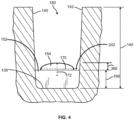
FIG. 4 is a schematic cross-sectional view of a tread groove along lateral line 4-4 ofFIG. 2 . -
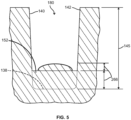
FIG. 5 is a schematic cross-sectional view of a tread groove along lateral line 5-5 ofFIG. 2 . -
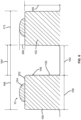
FIG. 6 is a schematic cross-sectional view tread groove along radial line 6-6 ofFIG. 2 . -
FIG. 7 is a schematic cross-sectional view tread groove along radial line 6-6 of a tread region with angled raised platforms, according to an example embodiment. - Reference is made to the accompanying drawings throughout the following detailed description. In the drawings, similar symbols typically identify similar components, unless context dictates otherwise. The illustrative implementations described in the detailed description, drawings are not meant to be limiting. Other implementations may be utilized, and other changes may be made, without departing from the scope of the claims.
- Embodiments described herein relate generally to a plurality of grooves along a tread portion of a pneumatic tire that include a plurality of stone rejectors, each with a stone rejector rib and a stone rejector protrusion formed thereupon. The stone rejectors are configured to impede and eject debris (e.g., stones, concrete, rocks, etc.) and foreign objects from entering the grooves early in the tire's life. Absent the plurality of stone rejector ribs and stone rejector protrusions along the grooves, the depth of the deep grooves of the tread portion allows for the stones to be held or trapped by the compression of the rubber in the sides or walls of the ribs formed by adjacent grooves. Eventually the stones are forced against the bottom of the groove by pressure of the load on the tire and road surfaces, thereby wearing or puncturing the tire.
- Referring to
FIG. 1 , a schematic cross-section view is shown of apneumatic tire 100. Thetire 100 has first andsecond sidewalls tread portion 116 extends between the sidewalls. The term "circumferential" refers to the direction extending along the perimeter of the surface of the annular tread perpendicular to the axial direction, where the axial direction is the direction that is parallel to the axis of rotation of thetire 100, and the radial direction is perpendicular to the axis of rotation of atire 100.First beads 118 and thesecond beads 120 are located in thefirst bead portions 122 and thesecond bead portions 124 of thefirst sidewall 112 andsecond sidewall 114, respectively. As used herein, the term "bead" or "bead core" refers to that part of atire 100 comprising an annular tensile member, the bead core, wrapped by ply cords (e.g., continuous layer of rubber coated parallel cords) and shaped, with or without other reinforcement elements to fit a designed tire rim. - A
carcass 126 including one ormore body plies tread portion 116, down through thesidewalls beads up ends 130. As used herein, the term "carcass" 126 refers to the tire structure apart from the belt structure, tread, undertread, and sidewall rubber but including the beads, (carcass plies are wrapped around the beads). One or more circumferentially extending reinforcing belts, which may be generally referred to as abelt package 132, are placed in thetread portion 116 radially outside of thecarcass 126. - The
tread portion 116 includes a radially outerground contacting surface 134 having a plurality oftread grooves 20, shown inFIG. 1 as afirst tread groove 180, asecond tread groove 182, athird tread groove 184, and afourth tread groove 186. Each tread groove in the plurality oftread grooves 20 includes a plurality ofstone rejectors 10, each with a raised platform 152 (e.g., stone rejector ribs) and a protrusion 154 (e.g., stone rejector protrusions). As discussed in greater detail below, each raisedplatform 152 in the plurality of raisedplatforms 152 includes aprotrusion 154 and each raisedplatform 152 extends axially along the tread groove and spaced radially away from an adjacent raised platform. In some embodiments, the plurality ofgrooves 20 may have agroove depth 145 in unworn condition. The plurality ofraised platforms 152 with the plurality ofprotrusions 154 may be implemented in a wide variety of groove widths and depth dimensions in thetread portion 116. For example, a tread groove from the plurality oftread grooves 20 located at or near the center of thetread portion 116 may be wider or narrower, deeper or shallower than the grooves located at or near the outer edges (e.g., proximate to thesidewalls 112, 114) of thetire tread portion 116. - As shown in
FIGS. 2 and4 , each tread groove in the plurality oftread grooves 20 includes agroove bottom 138, afirst groove sidewall 140, and asecond groove sidewall 142. Each groove in the plurality ofgrooves 20 has agroove width 144 defined as a shortest width between thefirst groove sidewall 140 and thesecond groove sidewall 142. Relatedly, each groove in the plurality oftread grooves 20 has agroove length 146 extending generally parallel to thefirst groove sidewall 140 and thesecond groove sidewall 142. Each groove in the plurality ofgrooves 20 extends generally circumferentially around the circumference of thetire 100. As shown inFIG. 2 , each groove in the plurality ofgrooves 20 extends circumferentially around thetire 100 in a zig-zag pattern including alternatingstraight portions 148 joined atobtuse corners 150. With respect to zig-zag grooves 20, thegroove length 146 may be defined along each of thestraight portions 148. - While the shape of the plurality of
grooves 20 is shown inFIGS. 2 and3 as a zig-zag shape, a wide variety of shapes and patterns may be implemented as the groove pattern. For example, in some embodiments, the plurality ofgrooves 20 may be completely straight grooves running in a straight fashion circumferentially around the entire circumference of thetire 100. In other embodiments, the plurality ofgrooves 20 may have a wavy or alternative zig-zag shape. In general, the length of the groove in the plurality ofgrooves 20 refers to a line generally parallel to (e.g., paralleling) thesidewalls tire 100. - Referring to
FIG. 2 , a zig-zag shaped plurality ofgrooves 20 is shown. Each of thefirst tread groove 180,second tread groove 182,third tread groove 184, andfourth tread groove 186 form alternatingly-angled parallel walls that include a sequence or row ofstone rejectors 10. Eachstone rejector 10 in the plurality ofgrooves 20 is circumferentially spaced apart along thegroove length 146. Each of the raisedplatforms 152 spans between thefirst groove sidewall 140 and the opposedsecond groove sidewall 142 and extends upward from the groove bottom 138 (e.g., away from the body plies 176). Each raisedplatform 152 is substantially parallel to an adjacent raisedplatform 152 along thegroove length 146 of thegroove 20. Eachprotrusion 154 extends from thetop surface 202 of the raisedplatform 152 in an elliptical shape (e.g., capsule) such that a top portion 310 of the elliptical shape is exposed. - As shown in
FIG. 3 , eachstone rejector 10 may have a row or sequence circumferentially spaced apart along thegroove length 146. In some embodiments, thestone rejectors 10 may be angled with respect to the rotational axis of thetire 100 and still provide substantially the same function as described herein. For example, the raisedplatform 152 may extend from thefirst groove sidewall 140 toward thesecond groove sidewall 142 at an angle of plus or minus 20-degrees to the rotational axis of thetire 100. Additionally, theprotrusion 154 may be positioned on the top surface 200 at an angle of plus or minus 20-degrees with respect to the sidewall of the raisedplatform 152. In some embodiments, theprotrusion 154 may be a spherocylinder (e.g., capsule-shaped) with only a top portion of the spherocylinder exposed and protruding from the raisedplatform 152. In those embodiments, theprotrusion 154 is a three-dimensional shape that includes a cylinder with hemispherical ends and has a surface area of 2π(2r+a) where "a" is the length between the two spheres and "r" is the radius of the respective half spheres. A range of forty-percent to eighty-percent (e.g., 40%-80%) of the surface area may be exposed along thetop surface 202 of the raisedplatform 152. - As seen in
FIG. 2 , the raisedplatform 152 may extend across one of the plurality of tread grooves 20 (e.g., thefirst tread groove 180, thesecond tread groove 182, thethird tread groove 184, thefourth tread groove 186, etc.) in a direction substantially parallel to a rotational axis of thetire 100. The raisedplatform 152 may also extend across one of the plurality oftread grooves 20 parallel to each other. While it is preferred that the raisedplatform 152 extend parallel to the rotational axis of thetire 100, it will be appreciated that the raisedplatform 152 could be placed at a small angle to the rotational axis of thetire 100 and still provide substantially the same function as described herein. For example, the raisedplatform 152 slanted at an angle of plus or minus 20-degrees to the rotational axis of thetire 100 would still result in a functional raised platform (e.g., stone rejector rib). - Referring to
FIGS. 4 and5 , a cross-sectional view of thefirst tread groove 180 along the lateral line 4-4 ofFIG. 2 and the lateral line 5-5 ofFIG. 2 , respectively, is shown. The raisedplatform 152 extends axially (e.g., laterally) between thefirst groove sidewall 140 and thesecond groove sidewall 142. In some embodiments, the platform width is equal to thegroove width 144. The raisedplatform 152 extends in the radial direction away from and out of thegroove bottom 138 to aplatform height 166. In some embodiments, the raisedplatform 152 extends away from thegroove bottom 138 in a direction substantially perpendicular to thegroove bottom 138. In some embodiments, theplatform height 166 may be between 2% and 75% of thegroove depth 145. In some embodiments, theplatform height 166 is between 5% and 70% of the groove depth 145.In some embodiments, theplatform height 166 is approximately 20% of thegroove depth 145. As shown inFIG. 4 , theplatform height 166 is 1% to 75% of the groove depth 145., In some embodiments, thegroove depth 145 and thegroove width 144 are dependent on tread design. In some embodiments, theplatform height 166 may be in a range of from about 1 mm to about 10 mm. In some embodiments, theplatform height 166 may be in a range of from about 3 mm to about 7 mm. As shown inFIG. 4 , theplatform height 166 is approximately 3 mm, theunworn groove depth 145 is approximately 22 mm, and thegroove width 144 is approximately 12 mm. - The
protrusion 154, as shown inFIG. 4 , may be elliptical shaped (e.g., elongated rounded shaped) defined by amajor axis 170 and aminor axis 172. While theprotrusion 154 is described as "elliptical," theprotrusion 154 may also more generally include an elongated shape having rounded ends and need not be precisely elliptical. Theprotrusion 154 extends axially along thetop surface 202 of the raisedplatform 152 and is substantially centered along thetop surface 202 such that themajor axis 170 is substantially parallel to thegroove bottom 138 and substantially perpendicular to thefirst groove sidewall 140 and thesecond groove sidewall 142. In some embodiments, theprotrusion 154 includes a more pronounced curvature along the circumference (e.g., the vertex and co-vertex are closer together), while in other embodiments, theprotrusion 154 includes a softer curvature along the circumference (e.g., the vertex and co-vertex are further apart). - The
protrusion 154 extends in the radial direction away from and out of thegroove bottom 138 to aprotrusion height 366. Generally, theprotrusion height 366 is substantially similar to half the minor axis 172 (e.g., theprotrusion height 366 is substantially half of the length of the minor axis 172). However, in some embodiments, theprotrusion height 366 may be greater or less than the length of theminor axis 172 as more or less of the elliptical-shape is exposed-or left on during formation-to provide more surface area along thetop surface 202 of the raisedplatform 152 to reject stones. In some embodiments, theprotrusion 154 has a periphery that is entirely smooth and free of any abrupt changes in tangential direction (e.g., no sharp corners). Theprotrusion height 366 may be in a range of about 1 mm to about 4 mm. In some embodiments, theprotrusion height 366 is in a range of from about 2 mm to about 3 mm. In some embodiments, theprotrusion 154 and the raisedplatform 152 are pre-cured with thetread portion 116. In some embodiments, theprotrusion 154 and the raisedplatform 152 are a part of the groove mold. In some embodiments, theprotrusion height 366 is 1% to 40% of thegroove depth 145. In the invention, the width of the protrusion 154 (e.g., the length of the major axis 170) is between 5% and 95% of thegroove width 144. In some embodiments, the width of theprotrusion 154 is between 70% and 90% of thegroove width 144. - Referring to
FIG. 5 , thestone rejector height 266 is equal to the sum of theprotrusion height 366 and theplatform height 166. Generally speaking, thestone rejectors 10 are applied to thegroove bottom 138 and are configured to prevent stones from being held by (e.g., wedged within, stuck in, etc.) thegroove 20 and potentially begin to drill (e.g., cut, penetrate) into the belts (e.g., belt package 132) of thetire 100. The raisedplatforms 152 are fully attached to thegroove sidewalls platforms 152 from being displaced by larger stones that have a higher potential to drill into thegroove bottom 138 of thegrooves 20. Placing thestone rejectors 10 in a radial pattern (e.g., substantially parallel to the rotational axis of the tire 100)allows the circumferential spaces between thestone rejectors 10 to open and close as the tire rolls through its footprint on the ground surface, making it harder for a larger stone to get held in the area between the raisedportions 152. Additionally, theprotrusion 154 provides an additional surface that can contact and reject stones from entering thegrooves 20. As the tire rolls out of its footprint on the ground surface, and the space between the raisedportions 152 and theprotrusions 154 opens up again, any smaller stone that may have been able to fit in while the space was closed up will be able to fall out. As thetire 100 rolls through its footprint, theprotrusions 154 andtop surface 202 of the raisedplatforms 152 are compressed toward each other slightly, and as the tire rolls out of its footprint theprotrusions 154 andtop surface 202 of the raisedplatforms 152 spring back away from each other to their original shape. The angle of the raised platform sidewalls and protrusion and the spacing betweenadjacent stone rejectors 10 causes the circumferential gap betweenstone rejector 10 to act like a mini-groove to provide an area that is less likely to hold stones than a typical grooved bottom. - As shown in
FIG. 6 , eachstone rejector 10 includes a raisedplatform 152 and aprotrusion 154 along thetop surface 202 of the raisedplatform 152. Eachstone rejector 10 in the plurality ofstone rejectors 10 may be equally circumferentially spaced around the circumference of thetire 100. Raisedplatforms 152 ofadjacent stone rejectors 10 may be spaced apart at apitch spacing 168 in a range of between 10% and 300% of thegroove width 144. - In some embodiments,
adjacent stone rejectors 10 are spaced apart at the platform base 158 (e.g., length of the raised platform 152) by abase spacing 162, in some embodiments no greater than thegroove width 144. At the platformtop surface 202,adjacent stone rejectors 10 are spaced apart by atop spacing 164 equal to or greater than thegroove width 144. Such dimensioning of thestone rejectors 10 relative to thegroove width 144 provides that opposed stone rejector sidewalls (e.g.,first sidewall 190 and second sidewall 192) ofadjacent stone rejectors 10 will resist retention between theadjacent stone rejectors 10 of stone having dimensions equal to or greater than thegroove width 144. - Each raised
platform 152 includes a circumferentially facingfirst sidewall 190 and a circumferentially facingsecond sidewall 192. Thefirst sidewall 190 and thesecond sidewall 192 are sloped at anangle 156 with respect to a radius of thetire 100 such that thefirst sidewall 190 is a forward facing sloped rejector wall and thesecond sidewall 192 is a rearward facing sloped rejector wall. Theangle 156 may be in a range of about 0-degrees to about 10-degrees with respect to the radius of thetire 100. In other embodiments, theangle 156 is in a range of from about 0-degrees to about 25-degrees. As shown inFIG. 6 , each raisedplatform 152 will have awider platform base 158 and a narrow platformtop surface 202. Accordingly, the raisedplatform 152 may be described as rectangular in cross-section or as substantially vertical from theplatform base 158 to the platformtop surface 202. In some embodiments, the platformtop surface 202 has awidth 173 in a range from 1mm to 8mm. In other embodiments, the platformtop surface 202 has awidth 173 in the range of 2mm to 3mm. - In some embodiments, the
protrusion 154 may be formed by removing a top excess surface from the triangular shape 110 of the raisedplatform 152. The triangular shape 110 is the extendingfirst sidewall 190 meeting thesecond sidewall 192 at a point. In other embodiments, theprotrusion 154 and the raisedplatform 152 are formed as a single mold. In one example embodiment, theplatform height 166 is approximately 6 mm, the protrusion height is approximately 1mm, theangle 156 is approximately 5°, theunworn groove depth 145 is approximately 19 mm, thegroove width 144 is approximately 10 mm, thetop spacing 164 is approximately 10.2 mm, and thepitch spacing 168 is approximately 11.6 mm. - Turning to
FIG. 7 , a schematic cross-sectional view tread groove along radial line 6-6 of a tread region with angled raisedplatforms 752 is shown, according to an example embodiment. The plurality ofstone rejectors 700 is similar to the plurality ofstone rejectors 10 ofFIGS. 1-6 . A difference between the plurality of stone rejectors 700 and the plurality ofstone rejectors 10 is the plurality ofstone rejectors 700 includes angled sidewalls along the raisedplatforms 752. Accordingly, similar numbering will be used for similar features of the plurality of stone rejectors 700 and the plurality ofstone rejectors 10. Eachstone rejector 700 includes a raisedplatform 752 and aprotrusion 154 along thetop surface 702 of the raisedplatform 752. Each stone rejector in the plurality of stone rejectors 700 may be equally circumferentially spaced around the circumference of thetire 100. Raisedplatforms 752 of adjacent stone rejectors 700 may be spaced apart at apitch spacing 768 in a range of between 100% and 250% of thegroove width 144. - In some embodiments,
adjacent stone rejectors 10 are spaced apart at theplatform base 758 by abase spacing 762, in some embodiments no greater than thegroove width 144. At thetop surface 702,adjacent stone rejectors 10 are spaced apart by atop spacing 764 equal to or greater than thegroove width 144. Such dimensioning of thestone rejectors 10 relative to thegroove width 144 provides that opposed stone rejector sidewalls (e.g.,first sidewall 790 and second sidewall 792) ofadjacent stone rejectors 10 will resist retention between theadjacent stone rejectors 10 of stone having dimensions equal to or greater than thegroove width 144. - Each raised
platform 752 includes a circumferentially facing slopedfirst sidewall 790 and a circumferentially facing slopedsecond sidewall 792. Thefirst sidewall 790 and thesecond sidewall 792 are sloped at anangle 756 with respect to a radius of thetire 100 such that thefirst sidewall 790 is a forward facing sloped rejector wall and thesecond sidewall 792 is a rearward facing sloped rejector wall. Theangle 756 may be in a range of about 10-degrees to about 30-degrees with respect to the radius of thetire 100. In other embodiments, theangle 756 is in a range of from about 15-degrees to about 25-degrees. As shown inFIG. 7 , theangle 756 is approximately 20-degrees. As shown inFIG. 7 , each raisedplatform 752 will have awider platform base 758 and a narrowtop surface 702. Accordingly, the raisedplatform 752 may be described as pyramidal in cross-section or as vertically tapered from theplatform base 758 to thetop surface 702. In some embodiments, thetop surface 702 has awidth 772 in a range from 1mm to 5mm. In other embodiments, thetop surface 702 has awidth 772 in the range of 2mm to 3mm. - In some embodiments, the
protrusion 154 may be formed by removing a top excess surface from the triangular shape 770 of the raisedplatform 752. The triangular shape 770 is the extendingfirst sidewall 790 meeting thesecond sidewall 792 at a point. In other embodiments, theprotrusion 154 and the raisedplatform 152 are formed as a single mold. In one example embodiment, theplatform height 766 is approximately 6 mm, theangle 756 is approximately 20°, the unworn groove depth is approximately 19 mm, thegroove width 144 is approximately 10 mm, thetop spacing 764 is approximately 10.2 mm, and thepitch spacing 768 is approximately 11.6 mm. - It should be noted that the term "example" as used herein to describe various embodiments is intended to indicate that such embodiments are possible examples, representations, and/or illustrations of possible embodiments (and such term is not intended to connote that such embodiments are necessarily extraordinary or superlative examples).
- As utilized herein, the term "substantially" and similar terms are intended to have a broad meaning in harmony with the common and accepted usage by those of ordinary skill in the art to which the subject matter of this invention pertains. It should be understood by those of skill in the art who review this invention that these terms are intended to allow a description of certain features described and claimed without restricting the scope of these features to the precise numerical ranges provided. Accordingly, these terms should be interpreted as indicating that insubstantial or inconsequential modifications or alterations of the subject matter described and claimed (e.g., within plus or minus five percent of a given angle or other value) are considered to be within the scope of the invention as recited in the appended claims. The term "approximately" when used with respect to values means plus or minus five percent of the associated value.
- Directions are also stated in this application with reference to the axis of rotation of the tire. The terms "upward" and "upwardly" refer to a general direction towards the tread of the tire, whereas "downward" and "downwardly" refer to the general direction towards the axis of rotation of the tire. Thus, when relative directional terms such as "upper" and "lower" are used in connection with an element, the "upper" element is spaced closer to the tread than the "lower" element. Additionally, when relative directional terms such as "above" or "below" are used in connection with an element, an element that is "above" another element is closer to the tread than the other element. Additionally, the term "radially inner" refers to an element that is closer to the axis of rotation than is a "radially outer" element. The terms "axially inward" and "axially inwardly" refer to a general direction towards the equatorial plane of the tire, whereas "axially outward" and "axially outwardly" refer to a general direction away from the equatorial plane of the tire and towards the sidewall of the tire.
- The terms "coupled," "connected," and the like as used herein mean the joining of two members directly or indirectly to one another. Such joining may be stationary (e.g., permanent) or moveable (e.g., removable or releasable). Such joining may be achieved with the two members or the two members and any additional intermediate members being integrally formed as a single unitary body with one another or with the two members or the two members and any additional intermediate members being attached to one another.
- It is important to note that the construction and arrangement of the various exemplary embodiments are illustrative only. Although only a few embodiments have been described, those skilled in the art will readily appreciate that many modifications are possible (e.g., variations in sizes, dimensions, structures, shapes and proportions of the various elements, values of parameters, mounting arrangements, use of materials, colors, orientations, etc.) without materially departing from the novel teachings and advantages of the subject matter described herein. Other substitutions, modifications, changes and omissions may also be made in the design, operating conditions and arrangement of the various exemplary embodiments without departing from the scope of the claims.
- While this specification contains many specific implementation details, these should not be construed as limitations, but rather as descriptions of features specific to particular implementations of particular embodiments. Certain features described in this specification in the context of separate implementations can also be implemented in combination in a single implementation. Conversely, various features described in the context of a single implementation can also be implemented in multiple implementations separately or in any suitable subcombination. Moreover, although features may be described above as acting in certain combinations and even initially claimed as such, one or more features from a claimed combination can in some cases be excised from the combination, and the claimed combination may be directed to a subcombination or variation of a subcombination.
Claims (15)
- A tread portion (116) comprising:a generally circumferentially extending groove (20, 180, 182, 184, 186) defined therein, the groove (20, 180, 182, 184, 186) having a groove cross-section defined by a groove bottom (138), a first groove sidewall (140), and a second groove sidewall (142), the second groove sidewall (142) opposite and substantially parallel to the first groove sidewall (140), the groove (20, 180, 182, 184, 186) having a groove width (144) defined between the first groove sidewall (140) and the second groove sidewall (142); anda plurality of stone rejectors (10, 700) extending between the first groove sidewall (140) and the second groove sidewall (142), each of the stone rejectors (10, 700) in the plurality of stone rejectors (10, 700) circumferentially spaced from an adjacent stone rejector of the plurality of stone rejectors (10, 700), wherein each of the stone rejectors (10, 700) comprises a raised platform (152, 752) and a protrusion (154), the raised platform (152, 752) extending axially from the first groove sidewall (140) to the second groove sidewall (142) and the protrusion (154) extending from a top surface (202, 702) of the raised platform (152, 752),characterized in thatthe protrusion (154) has an elongated shape that extends axially along the top surface (202, 702) to a width that is 5% to 95% of the groove width (144).
- The tread portion (116) of claim 1, wherein:the protrusion (154) has an elliptically shaped cross-section viewed from a circumferential direction of the tread portion (116), with a top portion (310) of the elliptical shape exposed above the top surface (202, 702), the elliptically shaped cross-section defining a major axis (170) and a minor axis (172),the major axis (170) of the protrusion (154) is perpendicular to the first groove sidewall (140) and the second groove sidewall (142), andthe minor axis (172) of the protrusion (154) is parallel to the first groove sidewall (140) and the second groove sidewall (142).
- The tread portion (116) of claim 1, wherein the raised platform (152, 752) comprises:a first platform wall (190, 790) extending axially from the first groove sidewall (140) to the second groove sidewall (142), anda second platform wall (192, 792) extending axially from the first groove sidewall (140) to the second groove sidewall (142), the first platform wall (190, 790) being circumferentially disposed from and parallel to the second platform wall (192, 792), anda platform base (158, 758) adjacent the groove bottom (138) and extending from the first platform wall (190, 790) circumferentially toward the second platform wall (192, 792),wherein the top surface (202, 702) is radially spaced from the groove bottom (138) and extends from the first platform wall (190, 790) circumferentially to the second platform wall (192, 792).
- The tread portion (116) of claim 3, wherein the first platform wall (190, 790) is sloped at a slope angle (156, 756) in a range of from about 0-degrees to about 5-degrees with respect to a first radial axis defined between the first platform wall (190, 790) and the groove bottom (138), and the second platform wall (192, 792) is at the slope angle (156, 756) in the range of from about 0-degrees to about 5-degrees with respect to a second radial axis defined between the second platform wall (192, 792) and the groove bottom (138) such that the platform base (158, 758) of the raised platform (152, 752) is wider than the top surface (202, 702) of the raised platform (152, 752).
- The tread portion (116) of claim 3, wherein the first platform wall (190, 790) is sloped at a slope angle (156, 756) in a range of from about 10-degrees to about 30-degrees with respect to a first radial axis defined between the first platform wall (190, 790) and the groove bottom (138), and the second platform wall (192, 792) is at the slope angle (156, 756) in the range of from about 10-degrees to about 30-degrees with respect to a second radial axis defined between the second platform wall (192, 792) and the groove bottom (138) such that the platform base (158, 758) of the raised platform (152, 752) is wider than the top surface (202, 702) of the raised platform (152, 752).
- The tread portion (116) of claim 3, wherein:the first platform wall (190, 790) and the groove bottom (138) are joined by a first curved surface,the second platform wall (192, 792) and the groove bottom (138) are joined by a second curved surface, andthe first curved surface and the second curved surface are mirrored about a radial axis through a center of the platform base (158, 758).
- The tread portion (116) of claim 3, wherein a platform base length (164, 764) is defined by a distance between the first platform wall (190, 790) and the second platform wall (192, 792), and wherein a length (173, 772) of the top surface (202, 702) of the raised platform (152, 752) is substantially similar to the platform base length (164, 764).
- The tread portion (116) of claim 1, wherein:the protrusion (154) is elliptically shaped defining a major axis (170) and a minor axis (172),the major axis (170) extends along the top surface (202, 702) of the raised platform (152, 752), andthe minor axis (172) of the protrusion (154) is parallel to the first groove sidewall (140) and the second groove sidewall (142).
- The tread portion (116) of claim 1, wherein the protrusion (154) is a spherocylinder comprising a cylinder extending a length between a first hemispherical end and a second hemispherical end, the first hemispherical end and the second hemispherical end defining a diameter, wherein the diameter is parallel to the first groove sidewall (140) and the second groove sidewall (142) and the length is perpendicular to the to the first groove sidewall (140) and the second groove sidewall (142).
- The tread portion (116) of claim 1, wherein the protrusion (154) is a spherocylinder comprising a cylinder extending a length between a first hemispherical end and a second hemispherical end, the first hemispherical end and the second hemispherical end defining a diameter, wherein the diameter is perpendicular to the groove bottom (138) and the length is parallel to the to the top surface (202, 702) of the raised platform (152, 752).
- The tread portion (116) of claim 1, wherein the protrusion (154) has a different shape and size from the raised platform (152, 752), and wherein the protrusion (154) is centered along the top surface (202, 702) of the raised platform (152, 752).
- A pneumatic tire (100) comprising the tread portion (116) of claim 1.
- The pneumatic tire (100) of claim 12, wherein the raised platform (152, 752) comprises:a first platform wall (190, 790) extending axially from the first groove sidewall (140) to the second groove sidewall (142),a second platform wall (192, 792) extending axially from the first groove sidewall (140) to the second groove sidewall (142), the first platform wall (190, 790) circumferentially disposed from and parallel to the second platform wall (192, 792), anda platform base (158, 758) adjacent the groove bottom (138) and extending from the first platform wall (190, 790) circumferentially toward the second platform wall (192, 792), wherein the top surface (202, 702) is radially spaced from the groove bottom (138) and extends from the first platform wall (190, 790) circumferentially to the second platform wall (192, 792).
- The pneumatic tire (100) of claim 13, wherein the first platform wall (190, 790) is sloped at a slope angle (156, 756) in a range of from about 0-degrees to about 5-degrees to a radius of the pneumatic tire (100) and the second platform wall (192, 792) is at the slope angle (156, 756) in the range of from about 0-degrees to about 5-degrees to the radius of the pneumatic tire (100) such that the platform base (158, 758) of the raised platform (152, 752) is wider than the top surface (202, 702) of the raised platform (152, 752).
- The pneumatic tire (100) of claim 13, wherein the first platform wall (190, 790) is sloped at a slope angle (156, 756) in a range of from about 10-degrees to about 30-degrees to a radius of the pneumatic tire (100) and the second platform wall (192, 792) is at the slope angle (156, 756) in the range of from about 10-degrees to about 30-degrees to the radius of the pneumatic tire (100) such that the platform base of the raised platform (152, 752) is wider than the top surface (202, 702) of the raised platform (152, 752).
Applications Claiming Priority (2)
| Application Number | Priority Date | Filing Date | Title |
|---|---|---|---|
| US201962875136P | 2019-07-17 | 2019-07-17 | |
| PCT/US2020/042253 WO2021011728A1 (en) | 2019-07-17 | 2020-07-16 | Pre-cured tread stone rejection design |
Publications (3)
| Publication Number | Publication Date |
|---|---|
| EP3999362A1 EP3999362A1 (en) | 2022-05-25 |
| EP3999362A4 EP3999362A4 (en) | 2023-08-16 |
| EP3999362B1 true EP3999362B1 (en) | 2025-06-25 |
Family
ID=74209978
Family Applications (1)
| Application Number | Title | Priority Date | Filing Date |
|---|---|---|---|
| EP20840084.6A Active EP3999362B1 (en) | 2019-07-17 | 2020-07-16 | Pre-cured tread stone rejection design |
Country Status (4)
| Country | Link |
|---|---|
| US (1) | US20220258542A1 (en) |
| EP (1) | EP3999362B1 (en) |
| CN (1) | CN114269568A (en) |
| WO (1) | WO2021011728A1 (en) |
Families Citing this family (1)
| Publication number | Priority date | Publication date | Assignee | Title |
|---|---|---|---|---|
| KR102848185B1 (en) * | 2022-09-07 | 2025-08-20 | 금호타이어 주식회사 | Pneumatic tire |
Family Cites Families (20)
| Publication number | Priority date | Publication date | Assignee | Title |
|---|---|---|---|---|
| US5115850A (en) * | 1991-02-19 | 1992-05-26 | The Goodyear Tire & Rubber Company | Tread with improved groove design |
| US6000451A (en) * | 1996-07-19 | 1999-12-14 | Sumitomo Rubber Industries, Ltd. | Pneumatic tire including at least one projection |
| JP2001030715A (en) * | 1999-07-16 | 2001-02-06 | Ohtsu Tire & Rubber Co Ltd :The | Pneumatic tire |
| JP4462001B2 (en) * | 2004-10-18 | 2010-05-12 | 横浜ゴム株式会社 | Pneumatic tire |
| KR100728541B1 (en) * | 2005-11-24 | 2007-06-14 | 한국타이어 주식회사 | Pneumatic tire |
| JP5041466B2 (en) * | 2006-11-08 | 2012-10-03 | 株式会社ブリヂストン | Pneumatic tire |
| US8156980B2 (en) * | 2008-12-04 | 2012-04-17 | Bridgestone Americas Tire Operations, Llc | Sidewall protector ribs |
| JP5491953B2 (en) * | 2010-05-07 | 2014-05-14 | 株式会社ブリヂストン | tire |
| JP5798003B2 (en) * | 2011-10-28 | 2015-10-21 | 株式会社ブリヂストン | tire |
| JP2013144486A (en) * | 2012-01-13 | 2013-07-25 | Yokohama Rubber Co Ltd:The | Pneumatic tire |
| US20150328936A1 (en) * | 2012-03-30 | 2015-11-19 | Michelin Recherche Et Technique S.A. | Tire treads with reduced undertread thickness |
| CN105073450B (en) * | 2012-12-21 | 2017-06-13 | 倍耐力轮胎股份公司 | For the tire of heavy-duty vehicle wheel |
| EP3102439B1 (en) * | 2014-02-04 | 2020-02-19 | Bridgestone Americas Tire Operations, LLC | Radial stone ejectors |
| US20160332491A1 (en) * | 2014-02-04 | 2016-11-17 | Bridgestone Americas Tire Operations, Llc | Rounded stone ejectors |
| JP6209482B2 (en) * | 2014-04-25 | 2017-10-04 | 東洋ゴム工業株式会社 | Pneumatic tire |
| JP6261454B2 (en) | 2014-06-13 | 2018-01-17 | 東洋ゴム工業株式会社 | Pneumatic tire |
| KR101840689B1 (en) * | 2016-11-02 | 2018-03-22 | 금호타이어 주식회사 | Heavy duty pneumatic tire with stone ejector |
| CN206653869U (en) * | 2017-03-30 | 2017-11-21 | 厦门正新海燕轮胎有限公司 | A kind of anti-horsestone tire |
| DE102017219532A1 (en) * | 2017-11-03 | 2019-05-09 | Continental Reifen Deutschland Gmbh | Commercial vehicle tires |
| CN208812898U (en) * | 2018-09-03 | 2019-05-03 | 潍坊市跃龙橡胶有限公司 | Automatic row's stone tire tread structure and the tire with the structure |
-
2020
- 2020-07-16 US US17/627,555 patent/US20220258542A1/en active Pending
- 2020-07-16 EP EP20840084.6A patent/EP3999362B1/en active Active
- 2020-07-16 CN CN202080056809.XA patent/CN114269568A/en active Pending
- 2020-07-16 WO PCT/US2020/042253 patent/WO2021011728A1/en not_active Ceased
Also Published As
| Publication number | Publication date |
|---|---|
| US20220258542A1 (en) | 2022-08-18 |
| WO2021011728A1 (en) | 2021-01-21 |
| EP3999362A4 (en) | 2023-08-16 |
| EP3999362A1 (en) | 2022-05-25 |
| CN114269568A (en) | 2022-04-01 |
| BR112022000776A2 (en) | 2022-03-15 |
Similar Documents
| Publication | Publication Date | Title |
|---|---|---|
| EP3102439B1 (en) | Radial stone ejectors | |
| EP3235662B1 (en) | Tire tread and pneumatic tire | |
| JP6378084B2 (en) | Pneumatic tire | |
| JP4990396B2 (en) | Tire with side wall protection | |
| EP3393827B1 (en) | Tire having exposed three dimensional sipe patterns | |
| EP3299182A2 (en) | Heavy duty tire | |
| JP5109481B2 (en) | Heavy duty pneumatic tire | |
| EP3999362B1 (en) | Pre-cured tread stone rejection design | |
| JP5098427B2 (en) | Pneumatic tire | |
| JP3254171B2 (en) | Heavy duty pneumatic tires | |
| JP2018090079A (en) | Pneumatic tire | |
| EP1676723A1 (en) | Pneumatic tire with lateral shoulder grooves | |
| JP4551163B2 (en) | Heavy duty tire | |
| JP7275464B2 (en) | pneumatic tire | |
| EP2230104A1 (en) | Tire having tread blocks with blended wall-shapes | |
| CN119159930A (en) | Tires and Tire Treads | |
| JP5331535B2 (en) | Heavy duty pneumatic radial tire | |
| EP4249290B1 (en) | Tire | |
| JP6422760B2 (en) | Pneumatic tire | |
| JP4286588B2 (en) | Pneumatic tire | |
| JP2003291611A (en) | Radial tire for heavy load | |
| BR112022000776B1 (en) | PNEUMATIC TIRE AND TREADMILL PORTION | |
| CN114786964B (en) | tire | |
| JPH08216621A (en) | Retreaded tire | |
| JP2006273258A (en) | Pneumatic tire for heavy load |
Legal Events
| Date | Code | Title | Description |
|---|---|---|---|
| STAA | Information on the status of an ep patent application or granted ep patent |
Free format text: STATUS: THE INTERNATIONAL PUBLICATION HAS BEEN MADE |
|
| PUAI | Public reference made under article 153(3) epc to a published international application that has entered the european phase |
Free format text: ORIGINAL CODE: 0009012 |
|
| STAA | Information on the status of an ep patent application or granted ep patent |
Free format text: STATUS: REQUEST FOR EXAMINATION WAS MADE |
|
| 17P | Request for examination filed |
Effective date: 20220128 |
|
| AK | Designated contracting states |
Kind code of ref document: A1 Designated state(s): AL AT BE BG CH CY CZ DE DK EE ES FI FR GB GR HR HU IE IS IT LI LT LU LV MC MK MT NL NO PL PT RO RS SE SI SK SM TR |
|
| DAV | Request for validation of the european patent (deleted) | ||
| DAX | Request for extension of the european patent (deleted) | ||
| A4 | Supplementary search report drawn up and despatched |
Effective date: 20230713 |
|
| RIC1 | Information provided on ipc code assigned before grant |
Ipc: B60C 11/04 20060101ALI20230707BHEP Ipc: B60C 11/03 20060101ALI20230707BHEP Ipc: B60C 11/13 20060101AFI20230707BHEP |
|
| STAA | Information on the status of an ep patent application or granted ep patent |
Free format text: STATUS: EXAMINATION IS IN PROGRESS |
|
| 17Q | First examination report despatched |
Effective date: 20241122 |
|
| GRAP | Despatch of communication of intention to grant a patent |
Free format text: ORIGINAL CODE: EPIDOSNIGR1 |
|
| STAA | Information on the status of an ep patent application or granted ep patent |
Free format text: STATUS: GRANT OF PATENT IS INTENDED |
|
| INTG | Intention to grant announced |
Effective date: 20250220 |
|
| P01 | Opt-out of the competence of the unified patent court (upc) registered |
Free format text: CASE NUMBER: APP_9540/2025 Effective date: 20250226 |
|
| GRAS | Grant fee paid |
Free format text: ORIGINAL CODE: EPIDOSNIGR3 |
|
| GRAA | (expected) grant |
Free format text: ORIGINAL CODE: 0009210 |
|
| STAA | Information on the status of an ep patent application or granted ep patent |
Free format text: STATUS: THE PATENT HAS BEEN GRANTED |
|
| AK | Designated contracting states |
Kind code of ref document: B1 Designated state(s): AL AT BE BG CH CY CZ DE DK EE ES FI FR GB GR HR HU IE IS IT LI LT LU LV MC MK MT NL NO PL PT RO RS SE SI SK SM TR |
|
| REG | Reference to a national code |
Ref country code: GB Ref legal event code: FG4D |
|
| REG | Reference to a national code |
Ref country code: CH Ref legal event code: EP |
|
| REG | Reference to a national code |
Ref country code: DE Ref legal event code: R096 Ref document number: 602020053445 Country of ref document: DE |
|
| REG | Reference to a national code |
Ref country code: CH Ref legal event code: EP |
|
| REG | Reference to a national code |
Ref country code: IE Ref legal event code: FG4D |
|
| REG | Reference to a national code |
Ref country code: NL Ref legal event code: FP |
|
| PGFP | Annual fee paid to national office [announced via postgrant information from national office to epo] |
Ref country code: NL Payment date: 20250723 Year of fee payment: 6 |
|
| PG25 | Lapsed in a contracting state [announced via postgrant information from national office to epo] |
Ref country code: FI Free format text: LAPSE BECAUSE OF FAILURE TO SUBMIT A TRANSLATION OF THE DESCRIPTION OR TO PAY THE FEE WITHIN THE PRESCRIBED TIME-LIMIT Effective date: 20250625 |
|
| PGFP | Annual fee paid to national office [announced via postgrant information from national office to epo] |
Ref country code: DE Payment date: 20250620 Year of fee payment: 6 |
|
| REG | Reference to a national code |
Ref country code: LT Ref legal event code: MG9D |
|
| PG25 | Lapsed in a contracting state [announced via postgrant information from national office to epo] |
Ref country code: NO Free format text: LAPSE BECAUSE OF FAILURE TO SUBMIT A TRANSLATION OF THE DESCRIPTION OR TO PAY THE FEE WITHIN THE PRESCRIBED TIME-LIMIT Effective date: 20250925 Ref country code: GR Free format text: LAPSE BECAUSE OF FAILURE TO SUBMIT A TRANSLATION OF THE DESCRIPTION OR TO PAY THE FEE WITHIN THE PRESCRIBED TIME-LIMIT Effective date: 20250926 |
|
| PG25 | Lapsed in a contracting state [announced via postgrant information from national office to epo] |
Ref country code: BG Free format text: LAPSE BECAUSE OF FAILURE TO SUBMIT A TRANSLATION OF THE DESCRIPTION OR TO PAY THE FEE WITHIN THE PRESCRIBED TIME-LIMIT Effective date: 20250625 |
|
| PGFP | Annual fee paid to national office [announced via postgrant information from national office to epo] |
Ref country code: BE Payment date: 20250723 Year of fee payment: 6 |
|
| PG25 | Lapsed in a contracting state [announced via postgrant information from national office to epo] |
Ref country code: HR Free format text: LAPSE BECAUSE OF FAILURE TO SUBMIT A TRANSLATION OF THE DESCRIPTION OR TO PAY THE FEE WITHIN THE PRESCRIBED TIME-LIMIT Effective date: 20250625 |
|
| PGFP | Annual fee paid to national office [announced via postgrant information from national office to epo] |
Ref country code: FR Payment date: 20250723 Year of fee payment: 6 |
|
| PG25 | Lapsed in a contracting state [announced via postgrant information from national office to epo] |
Ref country code: RS Free format text: LAPSE BECAUSE OF FAILURE TO SUBMIT A TRANSLATION OF THE DESCRIPTION OR TO PAY THE FEE WITHIN THE PRESCRIBED TIME-LIMIT Effective date: 20250925 |
|
| PG25 | Lapsed in a contracting state [announced via postgrant information from national office to epo] |
Ref country code: LV Free format text: LAPSE BECAUSE OF FAILURE TO SUBMIT A TRANSLATION OF THE DESCRIPTION OR TO PAY THE FEE WITHIN THE PRESCRIBED TIME-LIMIT Effective date: 20250625 |
|
| PG25 | Lapsed in a contracting state [announced via postgrant information from national office to epo] |
Ref country code: PT Free format text: LAPSE BECAUSE OF FAILURE TO SUBMIT A TRANSLATION OF THE DESCRIPTION OR TO PAY THE FEE WITHIN THE PRESCRIBED TIME-LIMIT Effective date: 20251027 |
|
| REG | Reference to a national code |
Ref country code: AT Ref legal event code: MK05 Ref document number: 1806126 Country of ref document: AT Kind code of ref document: T Effective date: 20250625 |
|
| PG25 | Lapsed in a contracting state [announced via postgrant information from national office to epo] |
Ref country code: IS Free format text: LAPSE BECAUSE OF FAILURE TO SUBMIT A TRANSLATION OF THE DESCRIPTION OR TO PAY THE FEE WITHIN THE PRESCRIBED TIME-LIMIT Effective date: 20251025 |
|
| PG25 | Lapsed in a contracting state [announced via postgrant information from national office to epo] |
Ref country code: AT Free format text: LAPSE BECAUSE OF FAILURE TO SUBMIT A TRANSLATION OF THE DESCRIPTION OR TO PAY THE FEE WITHIN THE PRESCRIBED TIME-LIMIT Effective date: 20250625 Ref country code: SM Free format text: LAPSE BECAUSE OF FAILURE TO SUBMIT A TRANSLATION OF THE DESCRIPTION OR TO PAY THE FEE WITHIN THE PRESCRIBED TIME-LIMIT Effective date: 20250625 |
|
| PG25 | Lapsed in a contracting state [announced via postgrant information from national office to epo] |
Ref country code: CZ Free format text: LAPSE BECAUSE OF FAILURE TO SUBMIT A TRANSLATION OF THE DESCRIPTION OR TO PAY THE FEE WITHIN THE PRESCRIBED TIME-LIMIT Effective date: 20250625 |
|
| PG25 | Lapsed in a contracting state [announced via postgrant information from national office to epo] |
Ref country code: PL Free format text: LAPSE BECAUSE OF FAILURE TO SUBMIT A TRANSLATION OF THE DESCRIPTION OR TO PAY THE FEE WITHIN THE PRESCRIBED TIME-LIMIT Effective date: 20250625 |
|
| PG25 | Lapsed in a contracting state [announced via postgrant information from national office to epo] |
Ref country code: EE Free format text: LAPSE BECAUSE OF FAILURE TO SUBMIT A TRANSLATION OF THE DESCRIPTION OR TO PAY THE FEE WITHIN THE PRESCRIBED TIME-LIMIT Effective date: 20250625 |
|
| PG25 | Lapsed in a contracting state [announced via postgrant information from national office to epo] |
Ref country code: SK Free format text: LAPSE BECAUSE OF FAILURE TO SUBMIT A TRANSLATION OF THE DESCRIPTION OR TO PAY THE FEE WITHIN THE PRESCRIBED TIME-LIMIT Effective date: 20250625 |
|
| PG25 | Lapsed in a contracting state [announced via postgrant information from national office to epo] |
Ref country code: ES Free format text: LAPSE BECAUSE OF FAILURE TO SUBMIT A TRANSLATION OF THE DESCRIPTION OR TO PAY THE FEE WITHIN THE PRESCRIBED TIME-LIMIT Effective date: 20250625 |
|
| REG | Reference to a national code |
Ref country code: CH Ref legal event code: H13 Free format text: ST27 STATUS EVENT CODE: U-0-0-H10-H13 (AS PROVIDED BY THE NATIONAL OFFICE) Effective date: 20260224 |
|
| PG25 | Lapsed in a contracting state [announced via postgrant information from national office to epo] |
Ref country code: RO Free format text: LAPSE BECAUSE OF FAILURE TO SUBMIT A TRANSLATION OF THE DESCRIPTION OR TO PAY THE FEE WITHIN THE PRESCRIBED TIME-LIMIT Effective date: 20250625 Ref country code: LU Free format text: LAPSE BECAUSE OF NON-PAYMENT OF DUE FEES Effective date: 20250716 |
|
| PG25 | Lapsed in a contracting state [announced via postgrant information from national office to epo] |
Ref country code: MC Free format text: LAPSE BECAUSE OF FAILURE TO SUBMIT A TRANSLATION OF THE DESCRIPTION OR TO PAY THE FEE WITHIN THE PRESCRIBED TIME-LIMIT Effective date: 20250625 |
|
| PG25 | Lapsed in a contracting state [announced via postgrant information from national office to epo] |
Ref country code: DK Free format text: LAPSE BECAUSE OF FAILURE TO SUBMIT A TRANSLATION OF THE DESCRIPTION OR TO PAY THE FEE WITHIN THE PRESCRIBED TIME-LIMIT Effective date: 20250625 |
|
| PG25 | Lapsed in a contracting state [announced via postgrant information from national office to epo] |
Ref country code: CH Free format text: LAPSE BECAUSE OF NON-PAYMENT OF DUE FEES Effective date: 20250731 |
|
| PLBE | No opposition filed within time limit |
Free format text: ORIGINAL CODE: 0009261 |
|
| STAA | Information on the status of an ep patent application or granted ep patent |
Free format text: STATUS: NO OPPOSITION FILED WITHIN TIME LIMIT |