EP3998787A1 - Service optimization method and communication device - Google Patents
Service optimization method and communication device Download PDFInfo
- Publication number
- EP3998787A1 EP3998787A1 EP20851665.8A EP20851665A EP3998787A1 EP 3998787 A1 EP3998787 A1 EP 3998787A1 EP 20851665 A EP20851665 A EP 20851665A EP 3998787 A1 EP3998787 A1 EP 3998787A1
- Authority
- EP
- European Patent Office
- Prior art keywords
- time period
- communications device
- network
- waiting
- incoming call
- Prior art date
- Legal status (The legal status is an assumption and is not a legal conclusion. Google has not performed a legal analysis and makes no representation as to the accuracy of the status listed.)
- Granted
Links
Images

Classifications
-
- H—ELECTRICITY
- H04—ELECTRIC COMMUNICATION TECHNIQUE
- H04W—WIRELESS COMMUNICATION NETWORKS
- H04W4/00—Services specially adapted for wireless communication networks; Facilities therefor
- H04W4/90—Services for handling of emergency or hazardous situations, e.g. earthquake and tsunami warning systems [ETWS]
-
- H—ELECTRICITY
- H04—ELECTRIC COMMUNICATION TECHNIQUE
- H04W—WIRELESS COMMUNICATION NETWORKS
- H04W4/00—Services specially adapted for wireless communication networks; Facilities therefor
- H04W4/16—Communication-related supplementary services, e.g. call-transfer or call-hold
-
- H—ELECTRICITY
- H04—ELECTRIC COMMUNICATION TECHNIQUE
- H04W—WIRELESS COMMUNICATION NETWORKS
- H04W76/00—Connection management
- H04W76/30—Connection release
- H04W76/38—Connection release triggered by timers
-
- H—ELECTRICITY
- H04—ELECTRIC COMMUNICATION TECHNIQUE
- H04W—WIRELESS COMMUNICATION NETWORKS
- H04W76/00—Connection management
- H04W76/50—Connection management for emergency connections
-
- H—ELECTRICITY
- H04—ELECTRIC COMMUNICATION TECHNIQUE
- H04W—WIRELESS COMMUNICATION NETWORKS
- H04W60/00—Affiliation to network, e.g. registration; Terminating affiliation with the network, e.g. de-registration
- H04W60/06—De-registration or detaching
-
- H—ELECTRICITY
- H04—ELECTRIC COMMUNICATION TECHNIQUE
- H04W—WIRELESS COMMUNICATION NETWORKS
- H04W76/00—Connection management
- H04W76/30—Connection release
-
- H—ELECTRICITY
- H04—ELECTRIC COMMUNICATION TECHNIQUE
- H04W—WIRELESS COMMUNICATION NETWORKS
- H04W8/00—Network data management
- H04W8/18—Processing of user or subscriber data, e.g. subscribed services, user preferences or user profiles; Transfer of user or subscriber data
- H04W8/183—Processing at user equipment or user record carrier
-
- H—ELECTRICITY
- H04—ELECTRIC COMMUNICATION TECHNIQUE
- H04W—WIRELESS COMMUNICATION NETWORKS
- H04W88/00—Devices specially adapted for wireless communication networks, e.g. terminals, base stations or access point devices
- H04W88/02—Terminal devices
- H04W88/06—Terminal devices adapted for operation in multiple networks or having at least two operational modes, e.g. multi-mode terminals
-
- Y—GENERAL TAGGING OF NEW TECHNOLOGICAL DEVELOPMENTS; GENERAL TAGGING OF CROSS-SECTIONAL TECHNOLOGIES SPANNING OVER SEVERAL SECTIONS OF THE IPC; TECHNICAL SUBJECTS COVERED BY FORMER USPC CROSS-REFERENCE ART COLLECTIONS [XRACs] AND DIGESTS
- Y02—TECHNOLOGIES OR APPLICATIONS FOR MITIGATION OR ADAPTATION AGAINST CLIMATE CHANGE
- Y02D—CLIMATE CHANGE MITIGATION TECHNOLOGIES IN INFORMATION AND COMMUNICATION TECHNOLOGIES [ICT], I.E. INFORMATION AND COMMUNICATION TECHNOLOGIES AIMING AT THE REDUCTION OF THEIR OWN ENERGY USE
- Y02D30/00—Reducing energy consumption in communication networks
- Y02D30/70—Reducing energy consumption in communication networks in wireless communication networks
Definitions
- Embodiments of the present disclosure relate to the field of wireless communications technologies, and in particular, to a method for service optimization and a communications device.
- a dual standby SIM terminal such as a mobile phone has become increasingly commonly used.
- user experience for adaption is not optimized to be satisfying enough. For example, there may be paging conflict and the like. How to optimize user experience with a dual SIM terminal is an urgent technical problem to be resolved at present.
- Embodiments of the present disclosure provide a method for service optimization and a communications device, to resolve the problem of optimizing user experience with a dual SIM terminal.
- an embodiment of the present disclosure provides a method for service optimization, applied to a first communications device, and including:
- an embodiment of the present disclosure provides a method for service optimization, applied to a second communications device, and including:
- an embodiment of the present disclosure provides a communications device, where the communications device is a first communications device, including:
- an embodiment of the present disclosure provides a communications device, where the communications device is a second communications device, including:
- an embodiment of the present disclosure provides a communications device, including a processor, a memory, and a computer program stored in the memory and executable on the processor.
- the computer program when executed by the processor, implements the steps of the foregoing method for service optimization.
- an embodiment of the present disclosure provides a computer-readable storage medium, where the computer-readable storage medium stores a computer program, and the computer program, when executed by a processor, implements the steps of the foregoing method for service optimization.
- performing of an operation related to returning to a primary card may be waited for a period of time, to deal with an emergency callback to the secondary card, such that dual SIM optimization is supported to optimize user experience with a dual SIM terminal.
- the word such as “exemplary” or “example” is used to represent giving an example, an illustration, or an explanation. Any embodiment or design scheme described as an "exemplary” or “example” in the embodiments of the present disclosure should not be explained as being more preferred or having more advantages than another embodiment or design scheme. To be exact, use of the term such as “example” or “for example” is intended to present a relevant concept in a specific manner.
- a multi-card terminal may be capable of using one card for sending and both for receiving, using one card for sending and the other for receiving, and using both cards for sending and receiving.
- a terminal that is only capable of using one card for sending (such as using one card for sending and the other for receiving or using one card for sending and both for receiving)
- only one card can be active, and there is a matter of selecting one card between a first card and a second card.
- the terminal may actively initiate radio resource control (Radio Resource Control, RRC) connection suspend or RRC connection release after a service of one card is ended.
- RRC Radio Resource Control
- one card is set as a data card, which is a primary card, and the other card is a secondary card.
- a user may select the primary card or the secondary card to initiate an IP multimedia subsystem (IP Multimedia Subsystem, IMS) phone call.
- IMS IP Multimedia Subsystem
- a WeChat call is usually implemented on a data card.
- the terminal After an IMS phone call based on the secondary card is ended, the terminal returns to the primary card.
- the terminal may perform one of the following:
- the IMS phone call based on the secondary card is an emergency call
- the terminal after a session (session) of the emergency call is ended, if the terminal immediately requests the detachment of the secondary card, the terminal returns to the primary card. In this case, when there is an emergency callback to the secondary card, the call cannot go through.
- the detachment herein is not detachment caused by turning down the terminal or the card is taken out of the terminal, or the like.
- an emergency callback is usually followed. After a session of the emergency call is ended, if the terminal immediately requests an RRC connection of the secondary card be suspended, the terminal returns to the primary card. When there is an emergency callback, a network needs to page the secondary card again, and the terminal receives an RRC connection that requires an immediate request of primary card suspend after the paging, and recovers the RRC connection of the secondary card.
- a method for guarantee may be that: After a session of an emergency call based on the secondary card is ended, the terminal waits for a period of time before performing one of the following: detachment (Detach) of the secondary card; and a request of suspending or releasing an RRC connection of the secondary card.
- the time for waiting may be set by the terminal, or may be given by a network at an emergency attachment side. Further, there is an exception before the time for waiting is overrun: If a user selects the primary card for calling, to ensure that the primary card can initiate a voice service, it is the primary card that must be switched to, and the RRC connection of the secondary card should be immediately released or suspended.
- an action of obtaining may be understood as obtaining by a configuration, obtaining through receiving, obtaining after receiving by a request, obtaining through self-learning, obtaining through inferring based on information that is not received, or obtaining after processing based on received information. This may be specifically determined based on an actual requirement, and is not limited in the embodiments of the present disclosure. For example, when specific capability indication information sent by a device is not received, it may be inferred that the device does not support the capability.
- an action of sending may include broadcasting, broadcasting in a system message, and returning after responding to a request.
- an emergency service may be referred to as an emergency voice service.
- a voice service may include an IMS voice service.
- the IMS voice service may include at least one of the following: an IMS voice service according to 3GPP, and an IMS voice service not according to 3GPP:
- a communications network element may include at least one of the following: a core network network element and a radio access network network element.
- a network element of a first network includes at least one of the following: a core network network element of the first network, and a radio access network network element of the first network.
- a network element of a second network includes at least one of the following: a core network network element of the second network, and a radio access network network element of the second network.
- a first network may be a public network, and a second network may be a non-public network; a first network may be a non-public network, and a second network may be a public network; a first network may be a first non-public network, and a second network may be a second non-public network; or a first network may be a first public network, and a second network may be a second public network.
- NPN is short for a non-public network.
- the non-public network may be referred to as one of the following: a non-public communications network.
- the non-public network may be deployed as at least one of the following: a physical non-public network, a virtual non-public network, and a non-public network implemented in a public network.
- the non-public network is a closed access group (Closed Access Group, CAG).
- CAG may include a group of terminals.
- the non-public network may include or be referred to as a private network.
- the private network may be referred to as one of the following: a private communications network, a private network, a local area network (LAN), a private virtual network (PVN), an isolated communications network, a dedicated communications network, or another name. It should be noted that a naming manner is not specifically limited in the embodiments of the present disclosure.
- PN is short for a public network.
- the public network may be referred to as one of the following: a public communications network or another name.
- a plurality of logic terminals may be formed based on the terminal with each SIM card or subscription.
- the SIM card may be a card placed in a card slot of the terminal device, or an electronic card in the terminal device.
- the SIM card may include one of the following: a SIM card, a USIM card, and an eSIM.
- the SIM card may have another name, which is not limited in the present disclosure. For a terminal with two SIM cards, one card may be a primary card, and the other may be a secondary card.
- UE is a subscriber.
- One terminal device may be configured with a plurality of subscribers.
- the subscriber may be embodied by a SIM (Subscriber Identity Module) card.
- SIM Subscriber Identity Module
- One SIM card corresponds to one subscriber of one network.
- a SIM card stores an identifier of a subscriber, that is, an identifier of UE, for example, a subscription permanent identifier (Subscription Permanent Identifier, SUPI), or an international mobile subscription identity (International Mobile Subscription Identity, IMSI). Therefore, when one terminal is inserted with a plurality of SIM cards or configured with information of a plurality of electronic SIM cards, the terminal with different subscribers may form different UEs.
- SUPI subscription Permanent Identifier
- IMSI International Mobile Subscription Identity
- UE may be one of the following: a terminal formed by a terminal device with a subscriber, a terminal device, a SIM card, a subscriber corresponding to a SIM card, and a terminal formed by a terminal device with a SIM card.
- a first subscription and a second subscription may be two subscriptions of a same terminal device.
- a subscription means UE.
- the first subscription may be referred to as first UE
- the second subscription may be referred to as second UE.
- a terminal device and a terminal may have a same meaning.
- a subscription may include at least one of the following: a SIM card, a subscriber corresponding to a SIM card, UE associated with a SIM card, a terminal device, a terminal device with a subscriber, a terminal device with a SIM card.
- a communications device may include at least one of the following: a communications network element and a terminal.
- the terminal includes UE.
- a communications network element may include at least one of the following: a core network network element and a radio access network network element.
- the core network network element may include, but is not limited to, at least one of the following: a core network device, a core network node, a core network function, a core network network element, a mobility management entity (Mobility Management Entity, MME), an access management function (Access Management Function, AMF), a session management function (Session Management Function, SMF), a user plane function (User Plane Function, UPF), a serving gateway (serving GW, SGW), a PDN gateway (PDN Gateway, PDN gateway), a policy control function (Policy Control Function, PCF), a policy and charging rules function (Policy and Charging Rules Function, PCRF) unit, a serving GPRS support node (Serving GPRS Support Node, SGSN), a gateway GPRS support node (Gateway GPRS Support Node, GGSN), a unified data management (Unified Data Management, UDM), a unified data repository (Mobility Management Entity, MME), an access management function
- the RAN network element may include, but is not limited to, at least one of the following: a radio access network device, a radio access network node, a radio access network function, a radio access network unit, a 3GPP radio access network, a non-3GPP radio access network, a centralized unit (Centralized Unit, CU), a distributed unit (Distributed Unit, DU), a base station, an evolved NodeB (evolved NodeB, eNB), a 5G base station (gNB), a radio network controller (Radio Network Controller, RNC), a NodeB (NodeB), a non-3GPP interworking function (Non-3GPP Inter Working Function, N3IWF), an access controller (Access Controller, AC) node, an access point (Access Point, AP) device, a wireless local area network (Wireless Local Area Networks, WLAN) node, and N3IWF.
- a radio access network device a radio access network node, a radio access network function, a radio
- a proxy network element is a proxy network element, for example, N3IWF, for interaction between a first network and a second network.
- the proxy network element may be a network element of a first network element or a second network element.
- the base station may be a base transceiver station (Base Transceiver Station, BTS) in GSM or CDMA, or may be a NodeB (NodeB) in WCDMA, or may be an evolved NodeB (evolutional Node B, Node eNB or e-NodeB) in LTE and a 5G base station (gNB). This is not limited in the embodiments of the present disclosure.
- BTS Base Transceiver Station
- NodeB NodeB
- gNB 5G base station
- the terminal may include a relay that supports a terminal function and/or a terminal that supports a relay function.
- the terminal may further include a terminal device or user equipment (User Equipment, UE).
- the terminal may be a mobile phone, a tablet personal computer (Tablet Personal Computer), a laptop computer (Laptop Computer), a personal digital assistant (Personal Digital Assistant, PDA), a mobile internet device (Mobile Internet Device, MID), a wearable device (Wearable Device), a vehicle-mounted device, or another terminal side device.
- a specific type of the terminal is not limited in the embodiments of the present disclosure.
- An embodiment of the present disclosure provides a method for service optimization, applied to a first communications device, where the first communications device includes, but is not limited to a terminal. As shown in FIG. 1 , the method includes:
- Step 11 performing a waiting-related operation before performing a first operation.
- the waiting-related operation may be any one of the following:
- the first time period is a time period or duration starting from a time point at which an emergency service is ended.
- the end of the emergency service may include any one of the following: an end of an emergency call, a release of a PDU session of an emergency call, and a release of a PDN connection of an emergency call.
- the first operation may be performed after the first time period is overrun.
- waiting for the first time period may be implemented by starting a first time period timer, and after the timer has expired, the first operation may be performed.
- waiting for a time period may be implemented by setting an ending time point of the first time period, and after the ending time point of the first time period has been arrived, the first operation may be performed.
- the first time period may be configured by the first communications device, that is, the first time period may be a time period pre-configured by the first communications device, or the first time period may be obtained from first time period-related information received from a second communications device.
- the second communications device is, for example, a network element of a first network.
- the network element of the first network may include any one of the following: a RAN network element, and a CN network element (such as MME or AMF).
- the first time period-related information may include one of the following: duration for waiting, and an ending time point of waiting.
- the first condition may include at least one of the following:
- the incoming call may be an emergency callback.
- the outgoing call is received, and after the incoming call is refused or answered and the call is ended, if the first time period is still not overrun, waiting for the first time period may be stopped, and the first operation is performed.
- step 11 may include:
- the first network is a network corresponding to the first subscription of the terminal.
- the mode using one card for sending includes one of the following: a mode using one card for sending and both cards for receiving, and a mode using one card for sending and the other card for receiving.
- the multi-subscription includes two or more subscriptions.
- two cards mounted in a terminal are two subscriptions.
- Mounting a plurality of cards indicates a plurality of subscriptions.
- the card may be a USIM card, and the USIM card may be a physical card or may be an eSIM card.
- the foregoing first operation may include at least one of the following:
- the leaving-related information may include terminal assistance information
- the terminal assistance information includes one of the following: a request for leaving, a request for a release, a request for suspension (also referred to as a request for entering a non-active state), leaving, a release, suspension.
- detachment in the detach request message is not a type of detachment caused by turning off a phone, taking out a card, or the like.
- a type of the detachment is normal detachment or detachment due to a plurality of cards.
- Deregistration in the deregistration request message is not a type of detachment caused by turning off a phone, taking out a card, or the like.
- a type of the deregistration is normal deregistration or deregistration due to a plurality of cards.
- the network element of the first network includes at least one of the following: a CN network element of the first network, and a RAN network element of the first network.
- An embodiment of the present disclosure provides a method for service optimization, applied to a second communications device, where the second communications device includes, but is not limited to a network element of a first network, and the network element of the first network may include any one of the following: a RAN network element, and a CN network element (such as MME or AMF).
- the method includes: Step 21: sending first time period-related information.
- the first time period is a time period starting from a time point at which an emergency service is ended.
- the end of the emergency service may include any one of the following: an end of an emergency call, a release of a PDU session of an emergency call, and a release of a PDN connection of an emergency call.
- the first time period-related information may include one of the following: duration for waiting, and an ending time point of waiting.
- a terminal may obtain the first time period-related information from a second communications device, and determine the first time period based on the related information. In this way, after a secondary card of a terminal completes an emergency call, the terminal may perform an operation related to returning to a primary card after the first time period, to deal with an emergency callback to the secondary card.
- dual SIM optimization can be supported, such that user experience with a dual SIM terminal is optimized.
- a process of UE paging by a network element of a first network is mainly described. Refer to FIG. 3 . The following steps are included:
- the end of the emergency service may include any one of the following: an end of an emergency call, a release of a PDU session of an emergency call, and a release of a PDN connection of an emergency call.
- Step 33 The UE performs a first operation after the timer has expired or the first time period is overrun.
- the first operation performed by the UE may be one of the following:
- an embodiment of the present disclosure provides a communications device, where the communications device is a first communications device.
- the communications device 40 includes:
- the first condition includes at least one of the following:
- execution module 41 is further configured to:
- the first operation includes at least one of the following:
- the communications device 40 can implement every process implemented in the method embodiments as shown in FIG. 1 of the present disclosure, and achieve same beneficial effects. To avoid repetition, details are not described herein again.
- an embodiment of the present disclosure provides a communications device, where the communications device is a second communications device.
- the communications device 50 includes:
- the first time period-related information may include one of the following: duration for waiting, and an ending time point of waiting.
- the communications device 50 can implement every process implemented in the method embodiments as shown in FIG. 2 of the present disclosure, and achieve same beneficial effects. To avoid repetition, details are not described herein again.
- FIG. 6 is a schematic diagram of a structure of another communications device according to an embodiment of the present disclosure.
- the communications device 60 includes: a processor 61, a memory 62, and a computer program stored in the memory 62 and executable on the processor, where various components of the communications device 60 are coupled together through a bus interface 63.
- the computer program is executed by the processor 61, various processes implemented in the method embodiment as shown in FIG. 1 can be implemented or various processes implemented in the method embodiment as shown in FIG. 2 can be implemented, and same technical effects can be achieved. To avoid repetition, details are not described herein again.
- An embodiment of the present disclosure further provides a computer-readable storage medium.
- the computer-readable storage medium stores a computer program, and the computer program, when executed by a processor, various processes implemented in the method embodiment shown in FIG. 1 are implemented or various processes implemented in the method embodiment as shown in FIG. 2 are implemented, and same technical effects can be achieved. To avoid repetition, details are not described herein.
- the computer-readable storage medium is, for example, a read-only memory (Read-Only Memory, ROM), a random access memory (Random Access Memory, RAM), a magnetic disk, or an optical disc.
- the method in the foregoing embodiment may be implemented by software in addition to a necessary universal hardware platform or by hardware only. In most circumstances, the former is a preferred implementation.
- the technical solutions of the present disclosure essentially or the part contributing to the related technologies may be implemented in a form of a software product.
- the computer software product is stored in a storage medium (for example, a ROM/RAM, a magnetic disk, or a compact disc), and includes a plurality of instructions for instructing a terminal (which may be a mobile phone, a computer, a server, an air conditioner, a network device, or the like) to perform the method described in the embodiments of the present disclosure.
Landscapes
- Engineering & Computer Science (AREA)
- Computer Networks & Wireless Communication (AREA)
- Signal Processing (AREA)
- Environmental & Geological Engineering (AREA)
- Health & Medical Sciences (AREA)
- Emergency Management (AREA)
- Business, Economics & Management (AREA)
- Public Health (AREA)
- Databases & Information Systems (AREA)
- Mobile Radio Communication Systems (AREA)
- Telephone Function (AREA)
- Telephonic Communication Services (AREA)
- Exchange Systems With Centralized Control (AREA)
- Computer And Data Communications (AREA)
Abstract
Description
- This application claims priority to
Chinese Patent Application No.201910741458.5, filed on Monday, August 12, 2019 - Embodiments of the present disclosure relate to the field of wireless communications technologies, and in particular, to a method for service optimization and a communications device.
- In a network in a related technology, a dual standby SIM terminal such as a mobile phone has become increasingly commonly used. However, due to the lack of inter-network negotiation, user experience for adaption is not optimized to be satisfying enough. For example, there may be paging conflict and the like. How to optimize user experience with a dual SIM terminal is an urgent technical problem to be resolved at present.
- Embodiments of the present disclosure provide a method for service optimization and a communications device, to resolve the problem of optimizing user experience with a dual SIM terminal.
- To resolve the technical problems, the present disclosure is implemented as follows:
- According to a first aspect, an embodiment of the present disclosure provides a method for service optimization, applied to a first communications device, and including:
- performing a waiting-related operation before performing a first operation, where
- the waiting-related operation is any one of the following:
- an operation of waiting for a first time period;
- an operation, before the first time period is overrun, when a first condition is satisfied, of stopping waiting for the first time period; and
- an operation of waiting for an incoming call, where
- the first time period is a time period starting from a time point at which an emergency service is ended.
- According to a second aspect, an embodiment of the present disclosure provides a method for service optimization, applied to a second communications device, and including:
- sending first time period-related information, where
- the first time period is a time period starting from a time point at which an emergency service is ended.
- According to a third aspect, an embodiment of the present disclosure provides a communications device, where the communications device is a first communications device, including:
- an execution module, configured to perform a waiting-related operation before performing a first operation, where
- the waiting-related operation is any one of the following:
- an operation of waiting for a first time period;
- an operation, before the first time period is overrun, when a first condition is satisfied, of stopping waiting for the first time period; and
- an operation of waiting for an incoming call, where
- the first time period is a time period starting from a time point at which an emergency service is ended.
- According to a fourth aspect, an embodiment of the present disclosure provides a communications device, where the communications device is a second communications device, including:
- a sending module, configured to send first time period-related information, where
- the first time period is a time period starting from a time point at which an emergency service is ended.
- According to a fifth aspect, an embodiment of the present disclosure provides a communications device, including a processor, a memory, and a computer program stored in the memory and executable on the processor. The computer program, when executed by the processor, implements the steps of the foregoing method for service optimization.
- According to a sixth aspect, an embodiment of the present disclosure provides a computer-readable storage medium, where the computer-readable storage medium stores a computer program, and the computer program, when executed by a processor, implements the steps of the foregoing method for service optimization.
- In the embodiments of the present disclosure, after a secondary card of a terminal completes an emergency call, performing of an operation related to returning to a primary card may be waited for a period of time, to deal with an emergency callback to the secondary card, such that dual SIM optimization is supported to optimize user experience with a dual SIM terminal.
- For a person of ordinary skill in the art, various other advantages and benefits will become clearer by reading detailed descriptions of the following optional implementations. The accompanying drawings are merely used for illustrating the optional implementations, and are not considered as a limitation on the present disclosure. In all the accompanying drawings, a same reference symbol is used to indicate a same part. In the accompanying drawings:
-
FIG. 1 is a schematic flowchart of a method for service optimization according to an embodiment of the present disclosure; -
FIG. 2 is a schematic flowchart of another method for service optimization according to an embodiment of the present disclosure; -
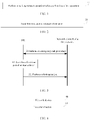
FIG. 3 is a schematic flowchart of a method for service optimization in an application scenario 1 according to an embodiment of the present disclosure; -
FIG. 4 is a diagram of a structure of a communications device according to an embodiment of the present disclosure; -
FIG. 5 is a diagram of a structure of another communications device according to an embodiment of the present disclosure; and -
FIG. 6 is a diagram of a structure of another communications device according to an embodiment of the present disclosure. - The technical solutions in embodiments of the present disclosure are described below clearly and completely with reference to the accompanying drawings in the embodiments of the present disclosure. Clearly, the described embodiments are some rather than all of the embodiments of the present disclosure. All other embodiments obtained by a person of ordinary skill in the art based on the embodiments of the present disclosure without creative efforts shall fall within the protection scope of the present disclosure.
- The term "include" and any other variants in the description and the claims of this application are intended to cover a non-exclusive inclusion, for example, a process, method, system, product, or device that includes a list of steps or units is not necessarily limited to those expressly listed steps or units, but may include other steps or units not expressly listed or inherent to such a process, method, product, or device. In addition, "and/or" used in the description and the claims means at least one of the connected objects. For example, A and/or B represents the following three cases: Only A exists, only B exists, and both A and B exist.
- In the embodiments of the present disclosure, the word such as "exemplary" or "example" is used to represent giving an example, an illustration, or an explanation. Any embodiment or design scheme described as an "exemplary" or "example" in the embodiments of the present disclosure should not be explained as being more preferred or having more advantages than another embodiment or design scheme. To be exact, use of the term such as "example" or "for example" is intended to present a relevant concept in a specific manner.
- In the embodiments of the present disclosure, a multi-card terminal may be capable of using one card for sending and both for receiving, using one card for sending and the other for receiving, and using both cards for sending and receiving. For a terminal that is only capable of using one card for sending (such as using one card for sending and the other for receiving or using one card for sending and both for receiving), only one card can be active, and there is a matter of selecting one card between a first card and a second card. For fast switching between two cards. the terminal may actively initiate radio resource control (Radio Resource Control, RRC) connection suspend or RRC connection release after a service of one card is ended.
- Generally, for a dual SIM terminal, one card is set as a data card, which is a primary card, and the other card is a secondary card. A user may select the primary card or the secondary card to initiate an IP multimedia subsystem (IP Multimedia Subsystem, IMS) phone call. For example, a WeChat call is usually implemented on a data card.
- After an IMS phone call based on the secondary card is ended, the terminal returns to the primary card. In this case, the terminal may perform one of the following:
- detachment (Detach) of the secondary card; and
- a request of suspending or releasing an RRC connection of the secondary card.
- In a case in which the IMS phone call based on the secondary card is an emergency call, after a session (session) of the emergency call is ended, if the terminal immediately requests the detachment of the secondary card, the terminal returns to the primary card. In this case, when there is an emergency callback to the secondary card, the call cannot go through. It should be noted that the detachment herein is not detachment caused by turning down the terminal or the card is taken out of the terminal, or the like.
- When the IMS phone call is an emergency call, an emergency callback is usually followed. After a session of the emergency call is ended, if the terminal immediately requests an RRC connection of the secondary card be suspended, the terminal returns to the primary card. When there is an emergency callback, a network needs to page the secondary card again, and the terminal receives an RRC connection that requires an immediate request of primary card suspend after the paging, and recovers the RRC connection of the secondary card.
- Because there is a high probability of an emergency callback, the foregoing operation is not necessary. In addition, for a terminal in a mode of using one card for receiving, there is a probability of encountering paging conflicts and being unable to monitor paging in a dual SIM case, which impacts an emergency callback.
- To ensure that an emergency callback goes well, a method for guarantee may be that: After a session of an emergency call based on the secondary card is ended, the terminal waits for a period of time before performing one of the following: detachment (Detach) of the secondary card; and a request of suspending or releasing an RRC connection of the secondary card. The time for waiting may be set by the terminal, or may be given by a network at an emergency attachment side. Further, there is an exception before the time for waiting is overrun: If a user selects the primary card for calling, to ensure that the primary card can initiate a voice service, it is the primary card that must be switched to, and the RRC connection of the secondary card should be immediately released or suspended.
- In the embodiments of the present disclosure, optionally, an action of obtaining may be understood as obtaining by a configuration, obtaining through receiving, obtaining after receiving by a request, obtaining through self-learning, obtaining through inferring based on information that is not received, or obtaining after processing based on received information. This may be specifically determined based on an actual requirement, and is not limited in the embodiments of the present disclosure. For example, when specific capability indication information sent by a device is not received, it may be inferred that the device does not support the capability.
- Optionally, an action of sending may include broadcasting, broadcasting in a system message, and returning after responding to a request.
- In an embodiment of the present disclosure, an emergency service may be referred to as an emergency voice service.
- In an embodiment of the present disclosure, a voice service may include an IMS voice service. The IMS voice service may include at least one of the following: an IMS voice service according to 3GPP, and an IMS voice service not according to 3GPP:
- In an embodiment of the present disclosure, a communications network element may include at least one of the following: a core network network element and a radio access network network element.
- In an embodiment of the present disclosure, a network element of a first network (or referred to as a first network network element) includes at least one of the following: a core network network element of the first network, and a radio access network network element of the first network. A network element of a second network (or referred to as a second network network element) includes at least one of the following: a core network network element of the second network, and a radio access network network element of the second network.
- In an embodiment of the present disclosure, a first network may be a public network, and a second network may be a non-public network; a first network may be a non-public network, and a second network may be a public network; a first network may be a first non-public network, and a second network may be a second non-public network; or a first network may be a first public network, and a second network may be a second public network.
- In an embodiment of the present disclosure, NPN is short for a non-public network. The non-public network may be referred to as one of the following: a non-public communications network. The non-public network may be deployed as at least one of the following: a physical non-public network, a virtual non-public network, and a non-public network implemented in a public network. In an implementation, the non-public network is a closed access group (Closed Access Group, CAG). One CAG may include a group of terminals.
- In an embodiment of the present disclosure, the non-public network may include or be referred to as a private network. The private network may be referred to as one of the following: a private communications network, a private network, a local area network (LAN), a private virtual network (PVN), an isolated communications network, a dedicated communications network, or another name. It should be noted that a naming manner is not specifically limited in the embodiments of the present disclosure.
- In an embodiment of the present disclosure, PN is short for a public network. The public network may be referred to as one of the following: a public communications network or another name.
- In an embodiment of the present disclosure, when a physical terminal has a plurality of SIM cards or a plurality of subscriptions, a plurality of logic terminals (such as UEs) may be formed based on the terminal with each SIM card or subscription. The SIM card may be a card placed in a card slot of the terminal device, or an electronic card in the terminal device. In an optional embodiment of the present disclosure, the SIM card may include one of the following: a SIM card, a USIM card, and an eSIM. The SIM card may have another name, which is not limited in the present disclosure. For a terminal with two SIM cards, one card may be a primary card, and the other may be a secondary card.
- In an optional implementation manner, UE is a subscriber. One terminal device may be configured with a plurality of subscribers. The subscriber may be embodied by a SIM (Subscriber Identity Module) card. One SIM card corresponds to one subscriber of one network. A SIM card stores an identifier of a subscriber, that is, an identifier of UE, for example, a subscription permanent identifier (Subscription Permanent Identifier, SUPI), or an international mobile subscription identity (International Mobile Subscription Identity, IMSI). Therefore, when one terminal is inserted with a plurality of SIM cards or configured with information of a plurality of electronic SIM cards, the terminal with different subscribers may form different UEs.
- In another implementation, UE may be one of the following: a terminal formed by a terminal device with a subscriber, a terminal device, a SIM card, a subscriber corresponding to a SIM card, and a terminal formed by a terminal device with a SIM card.
- In an optional embodiment of the present disclosure, a first subscription and a second subscription may be two subscriptions of a same terminal device. From the perspective of a network, a subscription means UE. The first subscription may be referred to as first UE, and the second subscription may be referred to as second UE.
- In an optional embodiment of the present disclosure, a terminal device and a terminal may have a same meaning. In an optional embodiment of the present disclosure, a subscription (subscription, or Subscriber) may include at least one of the following: a SIM card, a subscriber corresponding to a SIM card, UE associated with a SIM card, a terminal device, a terminal device with a subscriber, a terminal device with a SIM card.
- In an optional embodiment of the present disclosure, a communications device may include at least one of the following: a communications network element and a terminal. In an implementation, the terminal includes UE.
- In an embodiment of the present disclosure, a communications network element may include at least one of the following: a core network network element and a radio access network network element.
- In the embodiments of the present disclosure, the core network network element (a CN network element) may include, but is not limited to, at least one of the following: a core network device, a core network node, a core network function, a core network network element, a mobility management entity (Mobility Management Entity, MME), an access management function (Access Management Function, AMF), a session management function (Session Management Function, SMF), a user plane function (User Plane Function, UPF), a serving gateway (serving GW, SGW), a PDN gateway (PDN Gateway, PDN gateway), a policy control function (Policy Control Function, PCF), a policy and charging rules function (Policy and Charging Rules Function, PCRF) unit, a serving GPRS support node (Serving GPRS Support Node, SGSN), a gateway GPRS support node (Gateway GPRS Support Node, GGSN), a unified data management (Unified Data Management, UDM), a unified data repository (Unified Data Repository, UDR), a home subscriber server (Home Subscriber Server, HSS), and an application function (Application Function, AF).
- In the embodiments of the present disclosure, the RAN network element may include, but is not limited to, at least one of the following: a radio access network device, a radio access network node, a radio access network function, a radio access network unit, a 3GPP radio access network, a non-3GPP radio access network, a centralized unit (Centralized Unit, CU), a distributed unit (Distributed Unit, DU), a base station, an evolved NodeB (evolved NodeB, eNB), a 5G base station (gNB), a radio network controller (Radio Network Controller, RNC), a NodeB (NodeB), a non-3GPP interworking function (Non-3GPP Inter Working Function, N3IWF), an access controller (Access Controller, AC) node, an access point (Access Point, AP) device, a wireless local area network (Wireless Local Area Networks, WLAN) node, and N3IWF.
- In the embodiments of the present disclosure, a proxy network element is a proxy network element, for example, N3IWF, for interaction between a first network and a second network. The proxy network element may be a network element of a first network element or a second network element.
- The base station may be a base transceiver station (Base Transceiver Station, BTS) in GSM or CDMA, or may be a NodeB (NodeB) in WCDMA, or may be an evolved NodeB (evolutional Node B, Node eNB or e-NodeB) in LTE and a 5G base station (gNB). This is not limited in the embodiments of the present disclosure.
- In the embodiments of the present disclosure, the terminal may include a relay that supports a terminal function and/or a terminal that supports a relay function. The terminal may further include a terminal device or user equipment (User Equipment, UE). The terminal may be a mobile phone, a tablet personal computer (Tablet Personal Computer), a laptop computer (Laptop Computer), a personal digital assistant (Personal Digital Assistant, PDA), a mobile internet device (Mobile Internet Device, MID), a wearable device (Wearable Device), a vehicle-mounted device, or another terminal side device. It should be noted that a specific type of the terminal is not limited in the embodiments of the present disclosure.
- The following describes the method for service optimization in the embodiments of the present disclosure.
- Refer to
FIG. 1 . An embodiment of the present disclosure provides a method for service optimization, applied to a first communications device, where the first communications device includes, but is not limited to a terminal. As shown inFIG. 1 , the method includes: - Step 11: performing a waiting-related operation before performing a first operation.
- The waiting-related operation may be any one of the following:
- an operation of waiting for a first time period;
- an operation, before the first time period is overrun, when a first condition is satisfied, of stopping waiting for the first time period; and
- an operation of waiting for an incoming call.
- The first time period is a time period or duration starting from a time point at which an emergency service is ended. The end of the emergency service may include any one of the following: an end of an emergency call, a release of a PDU session of an emergency call, and a release of a PDN connection of an emergency call.
- In an implementation, after the first time period is overrun, the first operation may be performed.
- In an implementation, waiting for the first time period may be implemented by starting a first time period timer, and after the timer has expired, the first operation may be performed.
- In another implementation, waiting for a time period may be implemented by setting an ending time point of the first time period, and after the ending time point of the first time period has been arrived, the first operation may be performed.
- Optionally, the first time period may be configured by the first communications device, that is, the first time period may be a time period pre-configured by the first communications device, or the first time period may be obtained from first time period-related information received from a second communications device. The second communications device is, for example, a network element of a first network. The network element of the first network may include any one of the following: a RAN network element, and a CN network element (such as MME or AMF).
- In an implementation, the first time period-related information may include one of the following: duration for waiting, and an ending time point of waiting.
- Optionally, the first condition may include at least one of the following:
- an incoming call is received but not taken;
- an incoming call is received but refused to be taken; and
- an incoming call is received and taken, and the incoming call is ended, where
- the first communications device initiates an outgoing call by using a second subscription.
- In an implementation, the incoming call may be an emergency callback.
- In an implementation, before the first time period is overrun, the outgoing call is received, and after the incoming call is refused or answered and the call is ended, if the first time period is still not overrun, waiting for the first time period may be stopped, and the first operation is performed.
- In at least one embodiment of the present disclosure, optionally, step 11 may include:
- in a case in which a second condition is satisfied, performing the waiting-related operation before performing the first operation, where
- the second condition may include at least one of the following:
- the first communications device is in a mode using one card for sending;
- the first communications device is of multi-subscription;
- an emergency service of the first communications device is ended;
- the first communications device needs to return to a network corresponding to the second subscription; and
- a first subscription of the first communications device initiates an emergency service in a first network.
- It can be understood that the first network is a network corresponding to the first subscription of the terminal.
- In an implementation, the mode using one card for sending includes one of the following: a mode using one card for sending and both cards for receiving, and a mode using one card for sending and the other card for receiving.
- In an implementation, the multi-subscription includes two or more subscriptions. For example, two cards mounted in a terminal are two subscriptions. Mounting a plurality of cards indicates a plurality of subscriptions. The card may be a USIM card, and the USIM card may be a physical card or may be an eSIM card.
- Optionally, the foregoing first operation may include at least one of the following:
- sending a detach request to a network element of the first network;
- sending a deregistration request to the network element of the first network;
- sending leaving-related information or a message related to requesting leaving to the network element of the first network;
- sending an RRC connection release request to the network element of the first network;
- sending an RRC connection suspend request to the network element of the first network (where the RRC connection suspend request may also be referred to as a request for entering an RRC non-active state); and
- returning to a second network.
- In an implementation, the leaving-related information may include terminal assistance information, and the terminal assistance information includes one of the following: a request for leaving, a request for a release, a request for suspension (also referred to as a request for entering a non-active state), leaving, a release, suspension.
- In an implementation, detachment in the detach request message is not a type of detachment caused by turning off a phone, taking out a card, or the like. For example, a type of the detachment is normal detachment or detachment due to a plurality of cards. Deregistration in the deregistration request message is not a type of detachment caused by turning off a phone, taking out a card, or the like. For example, a type of the deregistration is normal deregistration or deregistration due to a plurality of cards.
- In an embodiment of the present disclosure, the network element of the first network includes at least one of the following: a CN network element of the first network, and a RAN network element of the first network.
- It can be easily understood that, in the embodiments, after a secondary card of a terminal completes an emergency call, performing of an operation related to returning to a primary card may be waited for a period of time, to deal with an emergency callback to the secondary card, such that dual SIM optimization is supported to optimize user experience with a dual SIM terminal.
- Refer to
FIG. 2 . An embodiment of the present disclosure provides a method for service optimization, applied to a second communications device, where the second communications device includes, but is not limited to a network element of a first network, and the network element of the first network may include any one of the following: a RAN network element, and a CN network element (such as MME or AMF). As shown inFIG. 2 , the method includes:
Step 21: sending first time period-related information. - The first time period is a time period starting from a time point at which an emergency service is ended. The end of the emergency service may include any one of the following: an end of an emergency call, a release of a PDU session of an emergency call, and a release of a PDN connection of an emergency call.
- In an implementation, the first time period-related information may include one of the following: duration for waiting, and an ending time point of waiting.
- In an implementation, a terminal may obtain the first time period-related information from a second communications device, and determine the first time period based on the related information. In this way, after a secondary card of a terminal completes an emergency call, the terminal may perform an operation related to returning to a primary card after the first time period, to deal with an emergency callback to the secondary card.
- It can be easily understood that, in the embodiments, dual SIM optimization can be supported, such that user experience with a dual SIM terminal is optimized.
- The following describes the method for service optimization in the embodiments of the present disclosure with reference to a specific application scenario.
- In an application scenario 1 of the embodiments of the present disclosure, a process of UE paging by a network element of a first network (such as a CN network element) is mainly described. Refer to
FIG. 3 . The following steps are included: - Step 31: UE initiates an emergency call procedure to the first network.
- Step 32: After the emergency service is ended, the UE waits for a first time period or starts a timer.
- Optionally, the end of the emergency service may include any one of the following: an end of an emergency call, a release of a PDU session of an emergency call, and a release of a PDN connection of an emergency call.
- Step 33: The UE performs a first operation after the timer has expired or the first time period is overrun.
- Optionally, the first operation performed by the UE may be one of the following:
- the UE sends a detach or deregistration request to the CN network element of the first network;
- the UE sends a leaving request to the CN network element of the first network;
- the UE sends a leaving request to the RAN network element of the first network;
- the UE sends an RRC release request to the RAN network element of the first network;
- the UE sends an RRC suspend request to the RAN network element of the first network, and makes a reservation for a preamble (preamble) of a next random access; and
- the UE sends terminal assistance information to the RAN network element of the first network, and the terminal assistance information includes one of the following: a request for leaving, a request for a release, a request for suspension (also referred to as a request for entering a non-active state), leaving, a release, suspension.
- Refer to
FIG. 4 , an embodiment of the present disclosure provides a communications device, where the communications device is a first communications device. As shown inFIG. 4 , thecommunications device 40 includes: - an
execution module 41, configured to perform a waiting-related operation before performing a first operation, where - the waiting-related operation is any one of the following:
- an operation of waiting for a first time period;
- an operation, before the first time period is overrun, when a first condition is satisfied, of stopping waiting for the first time period; and
- an operation of waiting for an incoming call, where
- the first time period is a time period starting from a time point at which an emergency service is ended.
- Optionally, the first condition includes at least one of the following:
- an incoming call is received but not taken;
- an incoming call is received but refused to be taken; and
- an incoming call is received and taken, and the incoming call is ended, where
- the first communications device initiates an outgoing call by using a second subscription.
- Optionally, the
execution module 41 is further configured to: - in a case in which a second condition is satisfied, perform the waiting-related operation before performing the first operation, where
- the second condition includes at least one of the following:
- the first communications device is in a mode using one card for sending;
- the first communications device is of multi-subscription;
- an emergency service of the first communications device is ended;
- the first communications device needs to return to a network corresponding to the second subscription; and
- a first subscription of the first communications device initiates an emergency service in a first network.
- Optionally, the first time period is configured by the first communications device; or
- the first time period is obtained from first time period-related information received from a second communications device.
- Optionally, the first operation includes at least one of the following:
- sending a detach request to a network element of the first network;
- sending a deregistration request to the network element of the first network;
- sending leaving-related information or a message related to requesting leaving to the network element of the first network;
- sending an RRC connection release request to the network element of the first network;
- sending an RRC connection suspend request to the network element of the first network; and
- returning to a second network.
- In this embodiment, the
communications device 40 can implement every process implemented in the method embodiments as shown inFIG. 1 of the present disclosure, and achieve same beneficial effects. To avoid repetition, details are not described herein again. - Refer to
FIG. 5 , an embodiment of the present disclosure provides a communications device, where the communications device is a second communications device. As shown inFIG. 5 , thecommunications device 50 includes: - a sending
module 51, configured to send first time period-related information, where - the first time period is a time period starting from a time point at which an emergency service is ended.
- In an implementation, the first time period-related information may include one of the following: duration for waiting, and an ending time point of waiting.
- In this embodiment, the
communications device 50 can implement every process implemented in the method embodiments as shown inFIG. 2 of the present disclosure, and achieve same beneficial effects. To avoid repetition, details are not described herein again. - Refer to
FIG. 6. FIG. 6 is a schematic diagram of a structure of another communications device according to an embodiment of the present disclosure. As shown inFIG. 6 , thecommunications device 60 includes: aprocessor 61, amemory 62, and a computer program stored in thememory 62 and executable on the processor, where various components of thecommunications device 60 are coupled together through abus interface 63. When the computer program is executed by theprocessor 61, various processes implemented in the method embodiment as shown inFIG. 1 can be implemented or various processes implemented in the method embodiment as shown inFIG. 2 can be implemented, and same technical effects can be achieved. To avoid repetition, details are not described herein again. - An embodiment of the present disclosure further provides a computer-readable storage medium. The computer-readable storage medium stores a computer program, and the computer program, when executed by a processor, various processes implemented in the method embodiment shown in
FIG. 1 are implemented or various processes implemented in the method embodiment as shown inFIG. 2 are implemented, and same technical effects can be achieved. To avoid repetition, details are not described herein. The computer-readable storage medium is, for example, a read-only memory (Read-Only Memory, ROM), a random access memory (Random Access Memory, RAM), a magnetic disk, or an optical disc. - It should be noted that in this specification, terms "include", "comprise" or any other variants thereof are intended to cover non-exclusive inclusion, so that a process, a method, an article or an apparatus that includes a series of elements not only includes those elements, but also includes other elements that are not explicitly listed, or includes inherent elements of the process, method, article, or apparatus. In the absence of more limitations, an element defined by "including a ..." does not preclude the existence of other identical elements in the process, method, article, or apparatus that includes the element.
- Based on the foregoing descriptions of the implementations, a person skilled in the art may clearly understand that the method in the foregoing embodiment may be implemented by software in addition to a necessary universal hardware platform or by hardware only. In most circumstances, the former is a preferred implementation. Based on such an understanding, the technical solutions of the present disclosure essentially or the part contributing to the related technologies may be implemented in a form of a software product. The computer software product is stored in a storage medium (for example, a ROM/RAM, a magnetic disk, or a compact disc), and includes a plurality of instructions for instructing a terminal (which may be a mobile phone, a computer, a server, an air conditioner, a network device, or the like) to perform the method described in the embodiments of the present disclosure.
- The embodiments of the present disclosure are described above with reference to the accompanying drawings, but the present disclosure is not limited to the foregoing specific implementations. The foregoing specific implementations are merely examples instead of restrictions. With enlightenment because of the present disclosure, a person of ordinary skills in the art may derive many forms without departing from the aim of the present disclosure and the protection scope of the claims, all of which shall fall within the protection of the present disclosure.
Claims (11)
- A method for service optimization, applied to a first communications device, and comprising:performing a waiting-related operation before performing a first operation, whereinthe waiting-related operation is any one of the following:an operation of waiting for a first time period;an operation, before the first time period is overrun, when a first condition is satisfied, of stopping waiting for the first time period; andan operation of waiting for an incoming call, whereinthe first time period is a time period starting from a time point at which an emergency service is ended.
- The method according to claim 1, wherein the first condition comprises at least one of the following:an incoming call is received but not taken;an incoming call is received but refused to be taken; andan incoming call is received and taken, and the incoming call is ended, whereinthe first communications device initiates an outgoing call by using a second subscription.
- The method according to claim 1, wherein the performing a waiting-related operation before performing a first operation comprises:in a case in which a second condition is satisfied, performing the waiting-related operation before performing the first operation, whereinthe second condition comprises at least one of the following:the first communications device is in a mode using one card for sending;the first communications device is of multi-subscription;an emergency service of the first communications device is ended;the first communications device needs to return to a network corresponding to the second subscription; anda first subscription of the first communications device initiates an emergency service in a first network.
- The method according to any one of claims 1 to 3, whereinthe first time period is configured by the first communications device; orthe first time period is obtained from first time period-related information received from a second communications device.
- The method according to any one of claims 1 to 3, wherein the first operation comprises at least one of the following:sending a detach request to a network element of the first network;sending a deregistration request to the network element of the first network;sending leaving-related information or a message related to requesting leaving to the network element of the first network;sending a radio resource control RRC connection release request to the network element of the first network;sending an RRC connection suspend request to the network element of the first network; andreturning to a second network.
- A method for service optimization, applied to a second communications device, and comprising:sending first time period-related information, whereinthe first time period is a time period starting from a time point at which an emergency service is ended.
- A communications device, wherein the communications device is a first communications device, comprising:an execution module, configured to perform a waiting-related operation before performing a first operation, whereinthe waiting-related operation is any one of the following:an operation of waiting for a first time period;an operation, before the first time period is overrun, when a first condition is satisfied, of stopping waiting for the first time period; andan operation of waiting for an incoming call, wherethe first time period is a time period starting from a time point at which an emergency service is ended.
- The communications device according to claim 7, wherein the first condition comprises at least one of the following:an incoming call is received but not taken;an incoming call is received but refused to be taken; andan incoming call is received and taken, and the incoming call is ended, whereinthe first communications device initiates an outgoing call by using a second subscription.
- A communications device, wherein the communications device is a second communications device, comprising:a sending module, configured to send first time period-related information, whereinthe first time period is a time period starting from a time point at which an emergency service is ended.
- A communications device, comprising a processor, a memory, and a computer program stored in the memory and executable on the processor, wherein the computer program, when executed by the processor, implements the steps of the method for service optimization according to any one of claims 1 to 5, or implements the steps of the method for service optimization according to claim 6.
- A computer-readable storage medium, wherein the computer-readable storage medium stores a computer program, and the computer program, when executed by a processor, implements the steps of the method for service optimization according to any one of claims 1 to 5, or implements the steps of the method for service optimization according to claim 6.
Applications Claiming Priority (2)
| Application Number | Priority Date | Filing Date | Title |
|---|---|---|---|
| CN201910741458.5A CN111836246B (en) | 2019-08-12 | 2019-08-12 | Service optimization method, communication device, and storage medium |
| PCT/CN2020/108642 WO2021027836A1 (en) | 2019-08-12 | 2020-08-12 | Service optimization method and communication device |
Publications (3)
| Publication Number | Publication Date |
|---|---|
| EP3998787A1 true EP3998787A1 (en) | 2022-05-18 |
| EP3998787A4 EP3998787A4 (en) | 2022-07-20 |
| EP3998787B1 EP3998787B1 (en) | 2023-07-26 |
Family
ID=72912515
Family Applications (1)
| Application Number | Title | Priority Date | Filing Date |
|---|---|---|---|
| EP20851665.8A Active EP3998787B1 (en) | 2019-08-12 | 2020-08-12 | Service optimization method and communication device |
Country Status (8)
| Country | Link |
|---|---|
| US (1) | US12167311B2 (en) |
| EP (1) | EP3998787B1 (en) |
| KR (1) | KR102714608B1 (en) |
| CN (1) | CN111836246B (en) |
| ES (1) | ES2953204T3 (en) |
| HU (1) | HUE062887T2 (en) |
| PT (1) | PT3998787T (en) |
| WO (1) | WO2021027836A1 (en) |
Families Citing this family (1)
| Publication number | Priority date | Publication date | Assignee | Title |
|---|---|---|---|---|
| CN114128362B (en) * | 2019-07-15 | 2024-05-14 | 高通股份有限公司 | RRC layer based suspension and recovery for multi-SIM UEs |
Family Cites Families (12)
| Publication number | Priority date | Publication date | Assignee | Title |
|---|---|---|---|---|
| JP2010530664A (en) * | 2007-06-08 | 2010-09-09 | リサーチ イン モーション リミテッド | Method and apparatus for handling disconnected emergency calls and other communications with mobile communication devices and remote monitoring of mobile communication devices |
| CN101867899A (en) | 2009-03-02 | 2010-10-20 | 华为技术有限公司 | Method for controlling user equipment access, related equipment and system |
| CN101835127A (en) | 2009-03-02 | 2010-09-15 | 华为技术有限公司 | Method, related equipment and system for controlling access of user equipment |
| CN101841793B (en) * | 2009-03-20 | 2013-02-27 | 中兴通讯股份有限公司 | Method and system for logging off emergency call user |
| CN102036207B (en) * | 2009-09-30 | 2014-08-13 | 中兴通讯股份有限公司 | Switching method and device for service state of terminal |
| US20110142207A1 (en) * | 2009-12-15 | 2011-06-16 | Alcatel-Lucent Usa Inc. | Method and apparatus for notifying emergency response organization of emergency message cluster |
| US20130150014A1 (en) * | 2011-12-12 | 2013-06-13 | Broadcom Corporation | Background Paging Monitoring For Multiple SIM User Equipment |
| US9204256B2 (en) * | 2013-03-11 | 2015-12-01 | Qualcomm Incorporated | Method and apparatus for providing user plane or control plane position services |
| US9445385B2 (en) * | 2014-02-25 | 2016-09-13 | Qualcomm Incorporated | System and methods for improving network registration for all SIMs of a multi-SIM device using a dynamically-determined registration order |
| US20170230809A1 (en) * | 2014-10-14 | 2017-08-10 | Samsung Electronics Co., Ltd | Method and user equipment for processing request for emergency call |
| US10084914B1 (en) * | 2017-03-24 | 2018-09-25 | T-Mobile Usa, Inc. | Guard timer to optimize E911 call handling |
| CN107360558A (en) * | 2017-06-19 | 2017-11-17 | 努比亚技术有限公司 | Emergency call control method, communication terminal and computer-readable recording medium |
-
2019
- 2019-08-12 CN CN201910741458.5A patent/CN111836246B/en active Active
-
2020
- 2020-08-12 EP EP20851665.8A patent/EP3998787B1/en active Active
- 2020-08-12 PT PT208516658T patent/PT3998787T/en unknown
- 2020-08-12 ES ES20851665T patent/ES2953204T3/en active Active
- 2020-08-12 WO PCT/CN2020/108642 patent/WO2021027836A1/en not_active Ceased
- 2020-08-12 HU HUE20851665A patent/HUE062887T2/en unknown
- 2020-08-12 KR KR1020227006710A patent/KR102714608B1/en active Active
-
2022
- 2022-02-10 US US17/669,228 patent/US12167311B2/en active Active
Also Published As
| Publication number | Publication date |
|---|---|
| US20220167143A1 (en) | 2022-05-26 |
| HUE062887T2 (en) | 2023-12-28 |
| EP3998787B1 (en) | 2023-07-26 |
| PT3998787T (en) | 2023-08-21 |
| EP3998787A4 (en) | 2022-07-20 |
| KR20220043174A (en) | 2022-04-05 |
| US12167311B2 (en) | 2024-12-10 |
| CN111836246A (en) | 2020-10-27 |
| CN111836246B (en) | 2023-03-14 |
| KR102714608B1 (en) | 2024-10-11 |
| WO2021027836A1 (en) | 2021-02-18 |
| ES2953204T3 (en) | 2023-11-08 |
Similar Documents
| Publication | Publication Date | Title |
|---|---|---|
| CN111278107B (en) | Information transmission method and communication device | |
| EP2428001B1 (en) | Method for supporting pdn gw selection | |
| KR102911081B1 (en) | Connection processing method and communication equipment | |
| EP3062478B1 (en) | Method of controlling packet switched data transmission and related communication device | |
| WO2021027835A1 (en) | Message transmission method and communication device | |
| US20230083832A1 (en) | Information indication method and apparatus and communication device | |
| US11997751B2 (en) | Method for supporting UE association and communications device | |
| CN105723797B (en) | Method for maintaining maximum number of bearers | |
| EP4266774A1 (en) | Information processing method and apparatus, device, and readable storage medium | |
| CN109951836A (en) | A kind of co-location update processing method, device and system | |
| EP2926608B1 (en) | Apparatus and method for paging in wireless communication system | |
| CN108990124B (en) | Voice call and data service switching method and device | |
| US20240098700A1 (en) | Information processing method and apparatus, communication device, and readable storage medium | |
| US12167311B2 (en) | Method for service optimization and communications device | |
| CN117545046A (en) | Terminal communication method and terminal equipment | |
| US20240064702A1 (en) | Information processing method and apparatus, communication device and readable storage medium | |
| EP4429291A1 (en) | Information processing method and apparatus, and communication device and readable storage medium | |
| KR102963671B1 (en) | Information indication method, device and communication device | |
| HK40071112A (en) | Connection processing method and communication device | |
| CN114205919A (en) | Leaving mode determining method and device and communication equipment | |
| CN113709913A (en) | Connection control method and device and communication equipment |
Legal Events
| Date | Code | Title | Description |
|---|---|---|---|
| STAA | Information on the status of an ep patent application or granted ep patent |
Free format text: STATUS: THE INTERNATIONAL PUBLICATION HAS BEEN MADE |
|
| PUAI | Public reference made under article 153(3) epc to a published international application that has entered the european phase |
Free format text: ORIGINAL CODE: 0009012 |
|
| STAA | Information on the status of an ep patent application or granted ep patent |
Free format text: STATUS: REQUEST FOR EXAMINATION WAS MADE |
|
| 17P | Request for examination filed |
Effective date: 20220209 |
|
| AK | Designated contracting states |
Kind code of ref document: A1 Designated state(s): AL AT BE BG CH CY CZ DE DK EE ES FI FR GB GR HR HU IE IS IT LI LT LU LV MC MK MT NL NO PL PT RO RS SE SI SK SM TR |
|
| A4 | Supplementary search report drawn up and despatched |
Effective date: 20220620 |
|
| RIC1 | Information provided on ipc code assigned before grant |
Ipc: H04W 8/18 20090101ALI20220614BHEP Ipc: H04W 88/06 20090101ALI20220614BHEP Ipc: H04W 76/15 20180101ALI20220614BHEP Ipc: H04W 4/90 20180101AFI20220614BHEP |
|
| DAV | Request for validation of the european patent (deleted) | ||
| DAX | Request for extension of the european patent (deleted) | ||
| GRAP | Despatch of communication of intention to grant a patent |
Free format text: ORIGINAL CODE: EPIDOSNIGR1 |
|
| STAA | Information on the status of an ep patent application or granted ep patent |
Free format text: STATUS: GRANT OF PATENT IS INTENDED |
|
| INTG | Intention to grant announced |
Effective date: 20230327 |
|
| GRAS | Grant fee paid |
Free format text: ORIGINAL CODE: EPIDOSNIGR3 |
|
| GRAA | (expected) grant |
Free format text: ORIGINAL CODE: 0009210 |
|
| STAA | Information on the status of an ep patent application or granted ep patent |
Free format text: STATUS: THE PATENT HAS BEEN GRANTED |
|
| AK | Designated contracting states |
Kind code of ref document: B1 Designated state(s): AL AT BE BG CH CY CZ DE DK EE ES FI FR GB GR HR HU IE IS IT LI LT LU LV MC MK MT NL NO PL PT RO RS SE SI SK SM TR |
|
| REG | Reference to a national code |
Ref country code: CH Ref legal event code: EP |
|
| REG | Reference to a national code |
Ref country code: IE Ref legal event code: FG4D |
|
| REG | Reference to a national code |
Ref country code: DE Ref legal event code: R096 Ref document number: 602020014655 Country of ref document: DE |
|
| REG | Reference to a national code |
Ref country code: PT Ref legal event code: SC4A Ref document number: 3998787 Country of ref document: PT Date of ref document: 20230821 Kind code of ref document: T Free format text: AVAILABILITY OF NATIONAL TRANSLATION Effective date: 20230811 |
|
| REG | Reference to a national code |
Ref country code: NL Ref legal event code: FP |
|
| REG | Reference to a national code |
Ref country code: SK Ref legal event code: T3 Ref document number: E 42155 Country of ref document: SK Ref country code: ES Ref legal event code: FG2A Ref document number: 2953204 Country of ref document: ES Kind code of ref document: T3 Effective date: 20231108 |
|
| REG | Reference to a national code |
Ref country code: LT Ref legal event code: MG9D |
|
| REG | Reference to a national code |
Ref country code: AT Ref legal event code: MK05 Ref document number: 1593361 Country of ref document: AT Kind code of ref document: T Effective date: 20230726 |
|
| REG | Reference to a national code |
Ref country code: HU Ref legal event code: AG4A Ref document number: E062887 Country of ref document: HU |
|
| PG25 | Lapsed in a contracting state [announced via postgrant information from national office to epo] |
Ref country code: GR Free format text: LAPSE BECAUSE OF FAILURE TO SUBMIT A TRANSLATION OF THE DESCRIPTION OR TO PAY THE FEE WITHIN THE PRESCRIBED TIME-LIMIT Effective date: 20231027 |
|
| PG25 | Lapsed in a contracting state [announced via postgrant information from national office to epo] |
Ref country code: IS Free format text: LAPSE BECAUSE OF FAILURE TO SUBMIT A TRANSLATION OF THE DESCRIPTION OR TO PAY THE FEE WITHIN THE PRESCRIBED TIME-LIMIT Effective date: 20231126 |
|
| PG25 | Lapsed in a contracting state [announced via postgrant information from national office to epo] |
Ref country code: SE Free format text: LAPSE BECAUSE OF FAILURE TO SUBMIT A TRANSLATION OF THE DESCRIPTION OR TO PAY THE FEE WITHIN THE PRESCRIBED TIME-LIMIT Effective date: 20230726 Ref country code: RS Free format text: LAPSE BECAUSE OF FAILURE TO SUBMIT A TRANSLATION OF THE DESCRIPTION OR TO PAY THE FEE WITHIN THE PRESCRIBED TIME-LIMIT Effective date: 20230726 Ref country code: NO Free format text: LAPSE BECAUSE OF FAILURE TO SUBMIT A TRANSLATION OF THE DESCRIPTION OR TO PAY THE FEE WITHIN THE PRESCRIBED TIME-LIMIT Effective date: 20231026 Ref country code: LV Free format text: LAPSE BECAUSE OF FAILURE TO SUBMIT A TRANSLATION OF THE DESCRIPTION OR TO PAY THE FEE WITHIN THE PRESCRIBED TIME-LIMIT Effective date: 20230726 Ref country code: LT Free format text: LAPSE BECAUSE OF FAILURE TO SUBMIT A TRANSLATION OF THE DESCRIPTION OR TO PAY THE FEE WITHIN THE PRESCRIBED TIME-LIMIT Effective date: 20230726 Ref country code: IS Free format text: LAPSE BECAUSE OF FAILURE TO SUBMIT A TRANSLATION OF THE DESCRIPTION OR TO PAY THE FEE WITHIN THE PRESCRIBED TIME-LIMIT Effective date: 20231126 Ref country code: HR Free format text: LAPSE BECAUSE OF FAILURE TO SUBMIT A TRANSLATION OF THE DESCRIPTION OR TO PAY THE FEE WITHIN THE PRESCRIBED TIME-LIMIT Effective date: 20230726 Ref country code: GR Free format text: LAPSE BECAUSE OF FAILURE TO SUBMIT A TRANSLATION OF THE DESCRIPTION OR TO PAY THE FEE WITHIN THE PRESCRIBED TIME-LIMIT Effective date: 20231027 Ref country code: FI Free format text: LAPSE BECAUSE OF FAILURE TO SUBMIT A TRANSLATION OF THE DESCRIPTION OR TO PAY THE FEE WITHIN THE PRESCRIBED TIME-LIMIT Effective date: 20230726 Ref country code: AT Free format text: LAPSE BECAUSE OF FAILURE TO SUBMIT A TRANSLATION OF THE DESCRIPTION OR TO PAY THE FEE WITHIN THE PRESCRIBED TIME-LIMIT Effective date: 20230726 |
|
| PG25 | Lapsed in a contracting state [announced via postgrant information from national office to epo] |
Ref country code: PL Free format text: LAPSE BECAUSE OF FAILURE TO SUBMIT A TRANSLATION OF THE DESCRIPTION OR TO PAY THE FEE WITHIN THE PRESCRIBED TIME-LIMIT Effective date: 20230726 |
|
| PG25 | Lapsed in a contracting state [announced via postgrant information from national office to epo] |
Ref country code: LU Free format text: LAPSE BECAUSE OF NON-PAYMENT OF DUE FEES Effective date: 20230812 |
|
| REG | Reference to a national code |
Ref country code: DE Ref legal event code: R097 Ref document number: 602020014655 Country of ref document: DE |
|
| PG25 | Lapsed in a contracting state [announced via postgrant information from national office to epo] |
Ref country code: SM Free format text: LAPSE BECAUSE OF FAILURE TO SUBMIT A TRANSLATION OF THE DESCRIPTION OR TO PAY THE FEE WITHIN THE PRESCRIBED TIME-LIMIT Effective date: 20230726 Ref country code: RO Free format text: LAPSE BECAUSE OF FAILURE TO SUBMIT A TRANSLATION OF THE DESCRIPTION OR TO PAY THE FEE WITHIN THE PRESCRIBED TIME-LIMIT Effective date: 20230726 Ref country code: LU Free format text: LAPSE BECAUSE OF NON-PAYMENT OF DUE FEES Effective date: 20230812 Ref country code: EE Free format text: LAPSE BECAUSE OF FAILURE TO SUBMIT A TRANSLATION OF THE DESCRIPTION OR TO PAY THE FEE WITHIN THE PRESCRIBED TIME-LIMIT Effective date: 20230726 Ref country code: DK Free format text: LAPSE BECAUSE OF FAILURE TO SUBMIT A TRANSLATION OF THE DESCRIPTION OR TO PAY THE FEE WITHIN THE PRESCRIBED TIME-LIMIT Effective date: 20230726 Ref country code: CZ Free format text: LAPSE BECAUSE OF FAILURE TO SUBMIT A TRANSLATION OF THE DESCRIPTION OR TO PAY THE FEE WITHIN THE PRESCRIBED TIME-LIMIT Effective date: 20230726 Ref country code: MC Free format text: LAPSE BECAUSE OF FAILURE TO SUBMIT A TRANSLATION OF THE DESCRIPTION OR TO PAY THE FEE WITHIN THE PRESCRIBED TIME-LIMIT Effective date: 20230726 |
|
| REG | Reference to a national code |
Ref country code: BE Ref legal event code: MM Effective date: 20230831 |
|
| PLBE | No opposition filed within time limit |
Free format text: ORIGINAL CODE: 0009261 |
|
| STAA | Information on the status of an ep patent application or granted ep patent |
Free format text: STATUS: NO OPPOSITION FILED WITHIN TIME LIMIT |
|
| 26N | No opposition filed |
Effective date: 20240429 |
|
| PG25 | Lapsed in a contracting state [announced via postgrant information from national office to epo] |
Ref country code: SI Free format text: LAPSE BECAUSE OF FAILURE TO SUBMIT A TRANSLATION OF THE DESCRIPTION OR TO PAY THE FEE WITHIN THE PRESCRIBED TIME-LIMIT Effective date: 20230726 |
|
| PG25 | Lapsed in a contracting state [announced via postgrant information from national office to epo] |
Ref country code: BE Free format text: LAPSE BECAUSE OF NON-PAYMENT OF DUE FEES Effective date: 20230831 |
|
| PG25 | Lapsed in a contracting state [announced via postgrant information from national office to epo] |
Ref country code: BG Free format text: LAPSE BECAUSE OF FAILURE TO SUBMIT A TRANSLATION OF THE DESCRIPTION OR TO PAY THE FEE WITHIN THE PRESCRIBED TIME-LIMIT Effective date: 20230726 |
|
| PG25 | Lapsed in a contracting state [announced via postgrant information from national office to epo] |
Ref country code: BG Free format text: LAPSE BECAUSE OF FAILURE TO SUBMIT A TRANSLATION OF THE DESCRIPTION OR TO PAY THE FEE WITHIN THE PRESCRIBED TIME-LIMIT Effective date: 20230726 |
|
| PGFP | Annual fee paid to national office [announced via postgrant information from national office to epo] |
Ref country code: GB Payment date: 20250626 Year of fee payment: 6 |
|
| PG25 | Lapsed in a contracting state [announced via postgrant information from national office to epo] |
Ref country code: CY Free format text: LAPSE BECAUSE OF FAILURE TO SUBMIT A TRANSLATION OF THE DESCRIPTION OR TO PAY THE FEE WITHIN THE PRESCRIBED TIME-LIMIT; INVALID AB INITIO Effective date: 20200812 |
|
| PGFP | Annual fee paid to national office [announced via postgrant information from national office to epo] |
Ref country code: NL Payment date: 20250704 Year of fee payment: 6 |
|
| PGFP | Annual fee paid to national office [announced via postgrant information from national office to epo] |
Ref country code: HU Payment date: 20250728 Year of fee payment: 6 |
|
| PGFP | Annual fee paid to national office [announced via postgrant information from national office to epo] |
Ref country code: PT Payment date: 20250807 Year of fee payment: 6 Ref country code: ES Payment date: 20250909 Year of fee payment: 6 |
|
| PGFP | Annual fee paid to national office [announced via postgrant information from national office to epo] |
Ref country code: DE Payment date: 20250702 Year of fee payment: 6 |
|
| PGFP | Annual fee paid to national office [announced via postgrant information from national office to epo] |
Ref country code: IT Payment date: 20250722 Year of fee payment: 6 |
|
| PGFP | Annual fee paid to national office [announced via postgrant information from national office to epo] |
Ref country code: FR Payment date: 20250703 Year of fee payment: 6 |
|
| PGFP | Annual fee paid to national office [announced via postgrant information from national office to epo] |
Ref country code: CH Payment date: 20250901 Year of fee payment: 6 |
|
| PGFP | Annual fee paid to national office [announced via postgrant information from national office to epo] |
Ref country code: IE Payment date: 20250702 Year of fee payment: 6 |
|
| PGFP | Annual fee paid to national office [announced via postgrant information from national office to epo] |
Ref country code: SK Payment date: 20250714 Year of fee payment: 6 |
|
| PG25 | Lapsed in a contracting state [announced via postgrant information from national office to epo] |
Ref country code: TR Free format text: LAPSE BECAUSE OF FAILURE TO SUBMIT A TRANSLATION OF THE DESCRIPTION OR TO PAY THE FEE WITHIN THE PRESCRIBED TIME-LIMIT Effective date: 20230726 |