EP3998670B1 - Battery apparatus and diagnosing method for heater - Google Patents
Battery apparatus and diagnosing method for heater Download PDFInfo
- Publication number
- EP3998670B1 EP3998670B1 EP21852025.2A EP21852025A EP3998670B1 EP 3998670 B1 EP3998670 B1 EP 3998670B1 EP 21852025 A EP21852025 A EP 21852025A EP 3998670 B1 EP3998670 B1 EP 3998670B1
- Authority
- EP
- European Patent Office
- Prior art keywords
- voltage
- terminal
- driver
- heater
- relay coil
- Prior art date
- Legal status (The legal status is an assumption and is not a legal conclusion. Google has not performed a legal analysis and makes no representation as to the accuracy of the status listed.)
- Active
Links
Images


Classifications
-
- G—PHYSICS
- G01—MEASURING; TESTING
- G01R—MEASURING ELECTRIC VARIABLES; MEASURING MAGNETIC VARIABLES
- G01R31/00—Arrangements for testing electric properties; Arrangements for locating electric faults; Arrangements for electrical testing characterised by what is being tested not provided for elsewhere
- G01R31/005—Testing of electric installations on transport means
- G01R31/006—Testing of electric installations on transport means on road vehicles, e.g. automobiles or trucks
- G01R31/007—Testing of electric installations on transport means on road vehicles, e.g. automobiles or trucks using microprocessors or computers
-
- H—ELECTRICITY
- H01—ELECTRIC ELEMENTS
- H01M—PROCESSES OR MEANS, e.g. BATTERIES, FOR THE DIRECT CONVERSION OF CHEMICAL ENERGY INTO ELECTRICAL ENERGY
- H01M10/00—Secondary cells; Manufacture thereof
- H01M10/60—Heating or cooling; Temperature control
- H01M10/63—Control systems
-
- H—ELECTRICITY
- H05—ELECTRIC TECHNIQUES NOT OTHERWISE PROVIDED FOR
- H05B—ELECTRIC HEATING; ELECTRIC LIGHT SOURCES NOT OTHERWISE PROVIDED FOR; CIRCUIT ARRANGEMENTS FOR ELECTRIC LIGHT SOURCES, IN GENERAL
- H05B1/00—Details of electric heating devices
- H05B1/02—Automatic switching arrangements specially adapted to apparatus ; Control of heating devices
- H05B1/0227—Applications
- H05B1/023—Industrial applications
- H05B1/0236—Industrial applications for vehicles
-
- B—PERFORMING OPERATIONS; TRANSPORTING
- B60—VEHICLES IN GENERAL
- B60L—PROPULSION OF ELECTRICALLY-PROPELLED VEHICLES; SUPPLYING ELECTRIC POWER FOR AUXILIARY EQUIPMENT OF ELECTRICALLY-PROPELLED VEHICLES; ELECTRODYNAMIC BRAKE SYSTEMS FOR VEHICLES IN GENERAL; MAGNETIC SUSPENSION OR LEVITATION FOR VEHICLES; MONITORING OPERATING VARIABLES OF ELECTRICALLY-PROPELLED VEHICLES; ELECTRIC SAFETY DEVICES FOR ELECTRICALLY-PROPELLED VEHICLES
- B60L3/00—Electric devices on electrically-propelled vehicles for safety purposes; Monitoring operating variables, e.g. speed, deceleration or energy consumption
- B60L3/0023—Detecting, eliminating, remedying or compensating for drive train abnormalities, e.g. failures within the drive train
-
- B—PERFORMING OPERATIONS; TRANSPORTING
- B60—VEHICLES IN GENERAL
- B60L—PROPULSION OF ELECTRICALLY-PROPELLED VEHICLES; SUPPLYING ELECTRIC POWER FOR AUXILIARY EQUIPMENT OF ELECTRICALLY-PROPELLED VEHICLES; ELECTRODYNAMIC BRAKE SYSTEMS FOR VEHICLES IN GENERAL; MAGNETIC SUSPENSION OR LEVITATION FOR VEHICLES; MONITORING OPERATING VARIABLES OF ELECTRICALLY-PROPELLED VEHICLES; ELECTRIC SAFETY DEVICES FOR ELECTRICALLY-PROPELLED VEHICLES
- B60L3/00—Electric devices on electrically-propelled vehicles for safety purposes; Monitoring operating variables, e.g. speed, deceleration or energy consumption
- B60L3/0023—Detecting, eliminating, remedying or compensating for drive train abnormalities, e.g. failures within the drive train
- B60L3/0046—Detecting, eliminating, remedying or compensating for drive train abnormalities, e.g. failures within the drive train relating to electric energy storage systems, e.g. batteries or capacitors
-
- B—PERFORMING OPERATIONS; TRANSPORTING
- B60—VEHICLES IN GENERAL
- B60L—PROPULSION OF ELECTRICALLY-PROPELLED VEHICLES; SUPPLYING ELECTRIC POWER FOR AUXILIARY EQUIPMENT OF ELECTRICALLY-PROPELLED VEHICLES; ELECTRODYNAMIC BRAKE SYSTEMS FOR VEHICLES IN GENERAL; MAGNETIC SUSPENSION OR LEVITATION FOR VEHICLES; MONITORING OPERATING VARIABLES OF ELECTRICALLY-PROPELLED VEHICLES; ELECTRIC SAFETY DEVICES FOR ELECTRICALLY-PROPELLED VEHICLES
- B60L50/00—Electric propulsion with power supplied within the vehicle
- B60L50/50—Electric propulsion with power supplied within the vehicle using propulsion power supplied by batteries or fuel cells
- B60L50/51—Electric propulsion with power supplied within the vehicle using propulsion power supplied by batteries or fuel cells characterised by AC-motors
-
- B—PERFORMING OPERATIONS; TRANSPORTING
- B60—VEHICLES IN GENERAL
- B60L—PROPULSION OF ELECTRICALLY-PROPELLED VEHICLES; SUPPLYING ELECTRIC POWER FOR AUXILIARY EQUIPMENT OF ELECTRICALLY-PROPELLED VEHICLES; ELECTRODYNAMIC BRAKE SYSTEMS FOR VEHICLES IN GENERAL; MAGNETIC SUSPENSION OR LEVITATION FOR VEHICLES; MONITORING OPERATING VARIABLES OF ELECTRICALLY-PROPELLED VEHICLES; ELECTRIC SAFETY DEVICES FOR ELECTRICALLY-PROPELLED VEHICLES
- B60L58/00—Methods or circuit arrangements for monitoring or controlling batteries or fuel cells, specially adapted for electric vehicles
- B60L58/10—Methods or circuit arrangements for monitoring or controlling batteries or fuel cells, specially adapted for electric vehicles for monitoring or controlling batteries
- B60L58/24—Methods or circuit arrangements for monitoring or controlling batteries or fuel cells, specially adapted for electric vehicles for monitoring or controlling batteries for controlling the temperature of batteries
- B60L58/27—Methods or circuit arrangements for monitoring or controlling batteries or fuel cells, specially adapted for electric vehicles for monitoring or controlling batteries for controlling the temperature of batteries by heating
-
- G—PHYSICS
- G01—MEASURING; TESTING
- G01R—MEASURING ELECTRIC VARIABLES; MEASURING MAGNETIC VARIABLES
- G01R19/00—Arrangements for measuring currents or voltages or for indicating presence or sign thereof
- G01R19/0046—Arrangements for measuring currents or voltages or for indicating presence or sign thereof characterised by a specific application or detail not covered by any other subgroup of G01R19/00
- G01R19/0053—Noise discrimination; Analog sampling; Measuring transients
-
- G—PHYSICS
- G01—MEASURING; TESTING
- G01R—MEASURING ELECTRIC VARIABLES; MEASURING MAGNETIC VARIABLES
- G01R19/00—Arrangements for measuring currents or voltages or for indicating presence or sign thereof
- G01R19/165—Indicating that current or voltage is either above or below a predetermined value or within or outside a predetermined range of values
-
- G—PHYSICS
- G01—MEASURING; TESTING
- G01R—MEASURING ELECTRIC VARIABLES; MEASURING MAGNETIC VARIABLES
- G01R19/00—Arrangements for measuring currents or voltages or for indicating presence or sign thereof
- G01R19/25—Arrangements for measuring currents or voltages or for indicating presence or sign thereof using digital measurement techniques
- G01R19/2503—Arrangements for measuring currents or voltages or for indicating presence or sign thereof using digital measurement techniques for measuring voltage only, e.g. digital volt meters (DVM's)
-
- G—PHYSICS
- G01—MEASURING; TESTING
- G01R—MEASURING ELECTRIC VARIABLES; MEASURING MAGNETIC VARIABLES
- G01R31/00—Arrangements for testing electric properties; Arrangements for locating electric faults; Arrangements for electrical testing characterised by what is being tested not provided for elsewhere
- G01R31/36—Arrangements for testing, measuring or monitoring the electrical condition of accumulators or electric batteries, e.g. capacity or state of charge [SoC]
-
- H—ELECTRICITY
- H01—ELECTRIC ELEMENTS
- H01M—PROCESSES OR MEANS, e.g. BATTERIES, FOR THE DIRECT CONVERSION OF CHEMICAL ENERGY INTO ELECTRICAL ENERGY
- H01M10/00—Secondary cells; Manufacture thereof
- H01M10/42—Methods or arrangements for servicing or maintenance of secondary cells or secondary half-cells
- H01M10/48—Accumulators combined with arrangements for measuring, testing or indicating the condition of cells, e.g. the level or density of the electrolyte
-
- H—ELECTRICITY
- H01—ELECTRIC ELEMENTS
- H01M—PROCESSES OR MEANS, e.g. BATTERIES, FOR THE DIRECT CONVERSION OF CHEMICAL ENERGY INTO ELECTRICAL ENERGY
- H01M10/00—Secondary cells; Manufacture thereof
- H01M10/60—Heating or cooling; Temperature control
- H01M10/61—Types of temperature control
- H01M10/615—Heating or keeping warm
-
- H—ELECTRICITY
- H01—ELECTRIC ELEMENTS
- H01M—PROCESSES OR MEANS, e.g. BATTERIES, FOR THE DIRECT CONVERSION OF CHEMICAL ENERGY INTO ELECTRICAL ENERGY
- H01M10/00—Secondary cells; Manufacture thereof
- H01M10/60—Heating or cooling; Temperature control
- H01M10/62—Heating or cooling; Temperature control specially adapted for specific applications
- H01M10/625—Vehicles
-
- H—ELECTRICITY
- H01—ELECTRIC ELEMENTS
- H01M—PROCESSES OR MEANS, e.g. BATTERIES, FOR THE DIRECT CONVERSION OF CHEMICAL ENERGY INTO ELECTRICAL ENERGY
- H01M10/00—Secondary cells; Manufacture thereof
- H01M10/60—Heating or cooling; Temperature control
- H01M10/65—Means for temperature control structurally associated with the cells
- H01M10/657—Means for temperature control structurally associated with the cells by electric or electromagnetic means
- H01M10/6571—Resistive heaters
-
- H—ELECTRICITY
- H05—ELECTRIC TECHNIQUES NOT OTHERWISE PROVIDED FOR
- H05B—ELECTRIC HEATING; ELECTRIC LIGHT SOURCES NOT OTHERWISE PROVIDED FOR; CIRCUIT ARRANGEMENTS FOR ELECTRIC LIGHT SOURCES, IN GENERAL
- H05B1/00—Details of electric heating devices
- H05B1/02—Automatic switching arrangements specially adapted to apparatus ; Control of heating devices
-
- B—PERFORMING OPERATIONS; TRANSPORTING
- B60—VEHICLES IN GENERAL
- B60Y—INDEXING SCHEME RELATING TO ASPECTS CROSS-CUTTING VEHICLE TECHNOLOGY
- B60Y2200/00—Type of vehicle
- B60Y2200/90—Vehicles comprising electric prime movers
- B60Y2200/91—Electric vehicles
-
- B—PERFORMING OPERATIONS; TRANSPORTING
- B60—VEHICLES IN GENERAL
- B60Y—INDEXING SCHEME RELATING TO ASPECTS CROSS-CUTTING VEHICLE TECHNOLOGY
- B60Y2200/00—Type of vehicle
- B60Y2200/90—Vehicles comprising electric prime movers
- B60Y2200/92—Hybrid vehicles
-
- Y—GENERAL TAGGING OF NEW TECHNOLOGICAL DEVELOPMENTS; GENERAL TAGGING OF CROSS-SECTIONAL TECHNOLOGIES SPANNING OVER SEVERAL SECTIONS OF THE IPC; TECHNICAL SUBJECTS COVERED BY FORMER USPC CROSS-REFERENCE ART COLLECTIONS [XRACs] AND DIGESTS
- Y02—TECHNOLOGIES OR APPLICATIONS FOR MITIGATION OR ADAPTATION AGAINST CLIMATE CHANGE
- Y02E—REDUCTION OF GREENHOUSE GAS [GHG] EMISSIONS, RELATED TO ENERGY GENERATION, TRANSMISSION OR DISTRIBUTION
- Y02E60/00—Enabling technologies; Technologies with a potential or indirect contribution to GHG emissions mitigation
- Y02E60/10—Energy storage using batteries
-
- Y—GENERAL TAGGING OF NEW TECHNOLOGICAL DEVELOPMENTS; GENERAL TAGGING OF CROSS-SECTIONAL TECHNOLOGIES SPANNING OVER SEVERAL SECTIONS OF THE IPC; TECHNICAL SUBJECTS COVERED BY FORMER USPC CROSS-REFERENCE ART COLLECTIONS [XRACs] AND DIGESTS
- Y02—TECHNOLOGIES OR APPLICATIONS FOR MITIGATION OR ADAPTATION AGAINST CLIMATE CHANGE
- Y02T—CLIMATE CHANGE MITIGATION TECHNOLOGIES RELATED TO TRANSPORTATION
- Y02T10/00—Road transport of goods or passengers
- Y02T10/60—Other road transportation technologies with climate change mitigation effect
- Y02T10/70—Energy storage systems for electromobility, e.g. batteries
Definitions
- the processor in response to detecting the voltage of the second terminal as a voltage corresponding to the second voltage in a state in which the first driver is enabled, the processor may diagnose a failure in the second driver.
- a battery apparatus including a battery pack, a heater, and a processor may be provided.
- the heater may include a heating resistor and a relay configured to control a current flowing to the heating resistor.
- the processor may detect voltages of a first terminal and a second terminal of a relay coil included in the relay before closing the relay, and diagnose the heater based on a voltage which the voltage of the first terminal and the voltage of the second terminal correspond to among a first voltage, a second voltage, and a third voltage.
- the first voltage and the second voltage may be provided for driving the relay, the first voltage may be higher than the second voltage, and the third voltage may be between the first voltage and the second voltage.
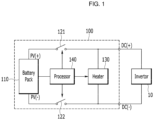
- FIG. 1 is a diagram showing a battery apparatus according to an embodiment.
- the battery pack 110 includes a plurality of battery cells (not shown), and has a positive terminal PV(+) and a negative terminal PV(-).
- the battery cell may be a rechargeable cell.
- a predetermined number of battery cells are connected in series to configure a battery module to supply desired power.
- a predetermined number of battery modules may be connected in series or in parallel to supply desired power.
- a first terminal of the main positive switch 221 may be connected to the positive terminal PV(+) of the battery pack 210, and a first terminal of the main negative switch 222 may be connected to the negative terminal PV(-)) of the battery pack 210.
- the relay switch 232a and the heating resistor 231 may be connected in series between a second terminal of the main positive switch 221 and a second terminal of the main negative switch 222. In one embodiment, as shown in FIG.
- the voltage sensing circuit 250 measures a voltage V1 of a contact point between the relay coil 232b and the driver 233, i.e., the voltage V1 of the first terminal of the relay coil 232b (or the second terminal of the driver 233).
- the voltage sensing circuit 260 measures a voltage V2 of a contact point between the relay coil 232b and the driver 234, i.e., the voltage V2 of the second terminal of the relay coil 232b (or the first terminal of the driver 234).
- the voltage sensing circuit 260 may include a plurality of resistors 261 and 262 connected in series between the second terminal of the relay coil 232b and the ground terminal.
- the processor 240 may detect the voltage of the second terminal of the relay coil 232b based on a voltage of a contact point between the resistors 261 and 262.
- an analog-to-digital converter for converting the voltage of the contact point between the resistors 261 and 262 into a digital signal and transferring the digital signal to the processor 240 may be further provided.
- a processor 240 may detect a voltage V1 of a first terminal of a relay coil 232b and a voltage V2 of a second terminal of the relay coil 232b as an approximately Vh voltage. In some embodiments, the processor 240 may detect that the voltage V1 of the first terminal of the relay coil 232b is the voltage Vh by sensing a voltage at which the voltage Vh is divided by resistors 251 and 252. Further, the processor 240 may detect that the voltage V2 of the second terminal of the relay coil 232b is the voltage Vh by sensing a voltage at which the voltage Vh is divided by resistors 261 and 262.
- the processor 240 may detect the voltages V1 and V2 of the both terminals of the relay coil 232b as approximately 0V. Therefore, when the processor 240 detects the voltage V1 of the first terminal of the relay coil 232b as approximately 0V, the processor 240 determines that the voltage of the relay coil 232b is incorrectly sensed due to the EMI signal, and then operates the heater normally. Accordingly, the processor 240 may apply the enable signal to each of the two drivers 233 and 234.
- the processor 240 may apply the enable signal to the driver 234 to detect the voltage V1 of the first terminal of the relay coil 232b or the voltage V2 of the second terminal of the relay coil 232b, thereby diagnosing the status of the heater.
- the processor 240 may apply the enable signal to the driver 234 to detect the voltage V1 of the first terminal of the relay coil 232b or the voltage V2 of the second terminal of the relay coil 232b, thereby diagnosing the status of the heater.
- the processor 240 may apply the enable signal to the driver 234 to detect the voltage V1 of the first terminal of the relay coil 232b or the voltage V2 of the second terminal of the relay coil 232b, thereby diagnosing the status of the heater.
- the processor 240 may apply the enable signal to the driver 233 while continuously applying a disable signal to the driver 234, in order to determine whether the short failure occurs in the driver 234 or the EMI signal is applied. While applying the control signals as described above, the processor 240 may detect the voltages V1 and V2 of the both terminals of the relay coil 232b.
- FIG. 6 is a flowchart showing a method for diagnosing a heater of a battery apparatus according to an embodiment.
- the processor may detect the voltages of the relay coil 232b by transferring a supply voltage (e.g., Vh in FIG. 2 ) of the heater or a voltage (e.g., 0V in FIG. 2 ) lower than the supply voltage to one terminal of the relay coil.
- a supply voltage e.g., Vh in FIG. 2
- a voltage e.g., 0V in FIG. 2
- the processor may transfer 0V to a low side terminal of the relay coil 232b at step S651.
- the processor may apply an enable signal to a driver 234 connected to the low side terminal of the relay coil 232b at step S651. While 0V is transferred to the low side terminal of the relay coil 232b, the processor detects the voltage V1 of a high side terminal of the relay coil 232b. In some embodiments, the processor may also detect the voltage V2 of the low side terminal of the relay coil 232b.
Landscapes
- Engineering & Computer Science (AREA)
- Chemical & Material Sciences (AREA)
- Manufacturing & Machinery (AREA)
- General Chemical & Material Sciences (AREA)
- Electrochemistry (AREA)
- Chemical Kinetics & Catalysis (AREA)
- Physics & Mathematics (AREA)
- Power Engineering (AREA)
- Life Sciences & Earth Sciences (AREA)
- Transportation (AREA)
- General Physics & Mathematics (AREA)
- Sustainable Development (AREA)
- Sustainable Energy (AREA)
- Mechanical Engineering (AREA)
- Automation & Control Theory (AREA)
- Electromagnetism (AREA)
- Microelectronics & Electronic Packaging (AREA)
- Computer Hardware Design (AREA)
- Combustion & Propulsion (AREA)
- Secondary Cells (AREA)
- Testing Of Short-Circuits, Discontinuities, Leakage, Or Incorrect Line Connections (AREA)
- Testing Electric Properties And Detecting Electric Faults (AREA)
- Electric Propulsion And Braking For Vehicles (AREA)
- Charge And Discharge Circuits For Batteries Or The Like (AREA)
Description
- This application claims priority to and the benefit of
Korean Patent Application No. 10-2020-0105145 filed in the Korean Intellectual Property Office on August 21, 2020 - The described technology relates to a battery apparatus and a diagnosing method of a heater.
- An electric vehicle or a hybrid vehicle is a vehicle that obtains power by driving a motor mainly using a battery as a power supply. The electric vehicles are being actively researched because they are alternatives that can solve pollution and energy problems of internal combustion vehicles. Rechargeable batteries are used in various external apparatuses other than the electric vehicles.
- An inverter is used to drive a motor in the vehicle such as the electric vehicle. The inverter converts DC power of a battery into AC power (e.g., three-phase power) to drive the motor. The inverter converts the DC power to the AC power by repeatedly turning on/off several switches. In this case, if the frequency of turning on/off the switches increase and current consumption increases in order to quickly drive the motor, an electromagnetic interference (EMI) signal may be generated. Such an EMI signal is induced through a contactor of a heater relay for driving a heater mounted on a battery to apply AC noise to a coil of the heater relay. The AC noise may affect the coil and cause misdiagnosis of the heater.
-
EP 3 296 142 A1 discloses a battery apparatus according to the preamble of claim 1. - Some embodiments provide a battery apparatus and a diagnosing method of a heater for preventing erroneous diagnosis of the heater
- According to an embodiment, a battery apparatus including a battery pack, a heater connected between a positive terminal and a negative terminal of the battery pack, and a processor configured to control the heater may be provided. The heater may include a relay, a heating resistor, a first driver, and a second driver. The relay may include a relay switch and a relay coil configured to drive the relay switch, and the relay switch and the heating resistor may be connected in series between the positive terminal and the negative terminal. The first driver may be connected between a power supply for supplying a first voltage and a first terminal of the relay coil, and may control transfer of the first voltage. The second driver may be connected between a second terminal of the relay coil and a terminal having a second voltage lower than the first voltage, and may control transfer of the second voltage. A third voltage for diagnosis may be transferred to the second terminal of the relay coil. The processor may control the first driver and the second driver, and diagnose the heater based on a voltage of the first terminal of the relay coil and a voltage of the second terminal of the relay coil.
- In some embodiments, the battery apparatus may further include a diode connected between the power supply for supplying the third voltage and the second terminal of the relay coil. In this case, the third voltage may be lower than the first voltage and higher than the second voltage.
- In some embodiments, the processor may detect the voltage of the first terminal and the voltage of the second terminal before operating the heater by enabling the first driver and the second driver, and diagnose the heater based on the voltage of the first terminal and the voltage of the second terminal.
- In some embodiments, in response to detecting the voltage of the first terminal and the voltage of the second terminal as voltages corresponding to the third voltage, respectively, the processor may enable the first driver and the second driver to operate the heater.
- In some embodiments, in response to detecting the voltage of the first terminal and the voltage of the second terminal as voltages corresponding to the first voltage, respectively, the processor may enable the second driver, and diagnose the heater based on the voltage of the first terminal that is detected in a state in which the second driver is enabled.
- In some embodiments, in response to detecting the voltage of the first terminal as a voltage corresponding to the second voltage in a state in which the second driver is enabled, the processor may enable the first driver and the second driver to operate the heater.
- In some embodiments, in response to detecting the voltage of the first terminal as a voltage corresponding to the first voltage in a state in which the second driver is enabled, the processor may diagnose a failure in the first driver.
- In some embodiments, in response to detecting the voltage of the first terminal and the voltage of the second terminal as voltages corresponding to the second voltage, respectively, the processor may enable the first driver, and diagnose the heater based on the voltage of the second terminal that is detected in a state in which the first driver is enabled.
- In some embodiments, in response to detecting the voltage of the second terminal as a voltage corresponding to the first voltage in a state in which the first driver is enabled, the processor may enable the first driver and the second driver to operate the heater.
- In some embodiments, in response to detecting the voltage of the second terminal as a voltage corresponding to the second voltage in a state in which the first driver is enabled, the processor may diagnose a failure in the second driver.
- According to another embodiment, a diagnosing method of a battery apparatus including a battery pack and a heater configured to heat the battery pack may be provided. The diagnosing method may include, before closing a relay configured to control a current flowing to a heating resistor of a heater, detecting voltages of a first terminal and a second terminal of a relay coil included in the relay, and diagnosing the heater based on a voltage which the voltage of the first terminal and the voltage of the second terminal correspond to among a first voltage, a second voltage, and a third voltage. In this case, the first voltage and the second voltage may be provided for driving the relay, the first voltage may be higher than the second voltage, and the third voltage may be between the first voltage and the second voltage.
- According to yet another embodiment, a battery apparatus including a battery pack, a heater, and a processor may be provided. The heater may include a heating resistor and a relay configured to control a current flowing to the heating resistor. The processor may detect voltages of a first terminal and a second terminal of a relay coil included in the relay before closing the relay, and diagnose the heater based on a voltage which the voltage of the first terminal and the voltage of the second terminal correspond to among a first voltage, a second voltage, and a third voltage. In this case, the first voltage and the second voltage may be provided for driving the relay, the first voltage may be higher than the second voltage, and the third voltage may be between the first voltage and the second voltage.
- According to some embodiments, the heater can be diagnosed based on a voltage of a relay coil. According to other some embodiments, it is possible to diagnose whether the voltage of the relay coil is not detected as the normal value due to a failure in the driver or the EMI signal.
-
-
FIG. 1 is a diagram showing a battery apparatus according to an embodiment. -
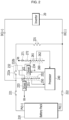
FIG. 2 is a diagram showing a battery apparatus for a heater diagnosis according to an embodiment. -
FIG. 3 is a diagram showing control signals in a case where a voltage of a relay coil is normally detected in a battery apparatus according to an embodiment. -
FIG. 4 and FIG. 5 are diagrams showing control signals in a case where a voltage of a relay coil is not normally detected in a battery apparatus according to various embodiments. -
FIG. 6 is a flowchart showing a method for diagnosing a heater of a battery apparatus according to an embodiment. - In the following detailed description, only certain embodiments have been shown and described, simply by way of illustration. As those skilled in the art would realize, the described embodiments may be modified in various different ways, all without departing from the scope of the present invention. Accordingly, the drawings and description are to be regarded as illustrative in nature and not restrictive. Like reference numerals designate like elements throughout the specification.
- When it is described that an element is "connected" to another element, it should be understood that the element may be directly connected to the other element or connected to the other element through a third element. On the other hand, when it is described that an element is "directly connected" to another element, it should be understood that the element is connected to the other element through no third element.
- As used herein, a singular form may be intended to include a plural form as well, unless the explicit expression such as "one" or "single" is used.
- In flowcharts described with reference to the drawings, the order of operations or steps may be changed, several operations or steps may be merged, a certain operation or step may be divided, and a specific operation or step may not be performed.
-
FIG. 1 is a diagram showing a battery apparatus according to an embodiment. - Referring to
FIG. 1 , abattery apparatus 100 has a structure that can be electrically connected to anexternal apparatus 10 through a positive link terminal DC(+) and a negative link terminal DC(-). In some embodiments, thebattery apparatus 100 may be connected to aninverter 10 of the external apparatus through the positive link terminal DC(+) and the negative link terminal DC(-). When the external apparatus is a load, thebattery apparatus 100 is discharged by operating as a power supply that supplies power to the load. The external apparatus operating as the load may be, for example, an electronic device, a mobility apparatus, or an energy storage system (ESS). The mobility apparatus may be, for example, a vehicle such as an electric vehicle, a hybrid vehicle, or a smart mobility. - The
battery apparatus 100 includes abattery pack 110, a mainpositive switch 121, a mainnegative switch 122, aheater 130, and aprocessor 140. - The
battery pack 110 includes a plurality of battery cells (not shown), and has a positive terminal PV(+) and a negative terminal PV(-). In some embodiments, the battery cell may be a rechargeable cell. In one embodiment, in thebattery pack 110, a predetermined number of battery cells are connected in series to configure a battery module to supply desired power. In another embodiment, in thebattery pack 110, a predetermined number of battery modules may be connected in series or in parallel to supply desired power. - The main
positive switch 121 is connected between the positive terminal PV(+) of thebattery pack 110 and the positive link terminal DC(+) of thebattery apparatus 100. The mainnegative switch 122 is connected between the negative terminal PV(-) of thebattery pack 110 and the negative link terminal DC(-) of thebattery apparatus 100. Theswitches processor 140 to control an electrical connection between thebattery pack 110 and the external apparatus. In one embodiment, each of theswitches switches battery apparatus 100 may further include driving circuits (not shown) for controlling theswitches - The
heater 130 controls a temperature by heating thebattery pack 110. - The
processor 140 controls theswitches heater 130, and may be, for example, a micro controller unit (MCU). - In some embodiments, the
battery apparatus 100 may further include various monitoring circuits (not shown). Various monitoring circuits may monitor a voltage, a temperature, a current, and the like of thebattery pack 110. Theprocessor 140 may determine a state of thebattery pack 110 based on information monitored by various monitoring circuits. In some embodiments, theprocessor 140 may control an operation of theheater 130 based on the temperature of thebattery pack 110. -
FIG. 2 is a diagram showing a battery apparatus for a heater diagnosis according to an embodiment. - Referring to
FIG. 2 , a battery apparatus includes abattery pack 210, a mainpositive switch 221, a mainnegative switch 222, a heater, and aprocessor 240. The heater includes aheating resistor 231, arelay 232, anddrivers - The
heating resistor 231 may generate heat when a current flows, and then heat thebattery pack 210 to raise a temperature. Therelay 232 includes arelay switch 232a and arelay coil 232b for driving therelay switch 232a. Therelay switch 232a and theheating resistor 231 are connected in series between a positive terminal PV(+) of thebattery pack 210 and a negative terminal PV(-) of thebattery pack 210. When therelay switch 232a is turned on, a current may flow from thebattery pack 210 to theheating resistor 231 to heat thebattery pack 210. - In some embodiments, a first terminal of the main
positive switch 221 may be connected to the positive terminal PV(+) of thebattery pack 210, and a first terminal of the mainnegative switch 222 may be connected to the negative terminal PV(-)) of thebattery pack 210. In this case, therelay switch 232a and theheating resistor 231 may be connected in series between a second terminal of the mainpositive switch 221 and a second terminal of the mainnegative switch 222. In one embodiment, as shown inFIG. 2 , a first terminal of therelay switch 232a may be connected to the second terminal of the mainpositive switch 221, a second terminal of therelay switch 232a may be connected to a first terminal of theheating resistor 231, and a second terminal of theheating resistor 231 may be connected to the second terminal of the mainnegative switch 222. In another embodiment, the first terminal of theheating resistor 231 may be connected to the second terminal of the mainpositive switch 221, the second terminal of theheating resistor 231 may be connected to the first terminal of therelay switch 232a and the second terminal of therelay switch 232a may be connected to the second terminal of the mainnegative switch 222. - The
driver 233 transfers a supply voltage Vh from a predetermined power supply to a first terminal of therelay coil 232b in response to an enable signal from theprocessor 240. Thedriver 234 connects a second terminal of therelay coil 232b to a terminal having a potential lower than the supply voltage Vh in response to an enable signal from theprocessor 240. Accordingly, a current may flow through therelay coil 232b. In this case, the first terminal of therelay coil 232b may be referred to as a high side terminal, and the second terminal of therelay coil 232b may be referred to as a low side terminal. In addition, thedriver 233 may be referred to as a high side driver (HSD) and thedriver 234 may be referred to as a low side driver (LSD). - In some embodiments, the terminal having the potential lower than the supply voltage Vh may be a ground terminal. Hereinafter, the terminal having the potential lower than the supply voltage Vh is described as the ground terminal. In some embodiments, the enable signal may be a control signal having an enable level from the
processor 240. When thedrivers - In some embodiments, a first terminal of the
driver 233 may be connected to the predetermined power supply supplying the supply voltage Vh, and a second terminal of thedriver 233 may be connected to the first terminal of therelay coil 232b. A first terminal of thedriver 234 may be connected to the second terminal of therelay coil 232b, and a second terminal of thedriver 234 may be connected to the ground terminal. In some embodiments, the power supply Vh for supplying the predetermined voltage may be a battery different from thebattery pack 210. In some embodiments, thedriver 233 may include a switch that is turned on in response to the enable signal fromprocessor 240, and thedriver 234 may include a switch that is turned on in response to the enable signal fromprocessor 240. - In some embodiments, the
processor 240 may transfer the enable signal for closing therelay 232 to thedrivers battery pack 210 is lower than a reference temperature. When the temperature of thebattery pack 210 is high and heating of thebattery pack 210 is not required, theprocessor 240 may transfer the disable signal for opening therelay 232 to thedrivers relay 232 may be referred to as an on of the relay, and opening of therelay 232 may be referred to as an off of the relay. - In some embodiments, the battery apparatus may further include
voltage sensing circuits processor 240. - The
voltage sensing circuit 250 measures a voltage V1 of a contact point between therelay coil 232b and thedriver 233, i.e., the voltage V1 of the first terminal of therelay coil 232b (or the second terminal of the driver 233). Thevoltage sensing circuit 260 measures a voltage V2 of a contact point between therelay coil 232b and thedriver 234, i.e., the voltage V2 of the second terminal of therelay coil 232b (or the first terminal of the driver 234). - In some embodiments, as shown in
FIG. 2 , thevoltage sensing circuit 250 may include a plurality ofresistors relay coil 232b and the ground terminal. In this case, theprocessor 240 may detect the voltage of the first terminal of therelay coil 232b based on a voltage of a contact point between theresistors resistors processor 240 may be further provided. - In some embodiments, as shown in
FIG. 2 , thevoltage sensing circuit 260 may include a plurality ofresistors relay coil 232b and the ground terminal. In this case, theprocessor 240 may detect the voltage of the second terminal of therelay coil 232b based on a voltage of a contact point between theresistors resistors processor 240 may be further provided. - In some embodiments, the battery apparatus may further include a
diode 271 connected between a power supply for supplying a diagnostic voltage Vs for diagnosis of the heater and a contact point between the second terminal of therelay coil 232b and theresistor 261. In some embodiments, the diagnostic voltage Vs may be a voltage lower than the supply voltage Vh. Since the supply voltage Vh is higher than the diagnostic voltage Vs, thediode 271 may block a current path to be formed from therelay coil 232b to the power supply supplying the diagnostic voltage Vs. In some embodiments, thevoltage sensing circuit 260 may further include aresistor 272 connected between thediode 271 and the contact point. In this case, an anode of thediode 271 may be connected to the power supply Vs, and theresistor 272 may be connected between a cathode of thediode 271 and the contact point. For example, the supply voltage Vh may be 12V and the diagnostic voltage Vs may be 5V. - An EMI signal generated from the
inverter 20 connected to the battery apparatus may flow into therelay coil 232b so that the voltages V1 and V2 of the two terminals of therelay coil 232b of the heater may be detected as values different from normal voltages. Alternatively, the Vh voltage or 0V may be transferred to therelay coil 232b due to a failure in thedrivers relay coil 232b of the heater may detected as values different from the normal voltages. - Next, a diagnosing method of the heater is described with reference to
FIG. 3 to FIG. 5 . -
FIG. 3 is a diagram showing control signals in a case where a voltage of a relay coil is normally detected in a battery apparatus according to an embodiment, andFIG. 4 and FIG. 5 are diagrams showing control signals in a case where a voltage of a relay coil is not normally detected in a battery apparatus according to various embodiments. While it has been shown inFIG. 3, FIG. 4, and FIG. 5 that a driver is enabled when a control signal has a high level, and the driver is disabled when the control signal has a low level, the driver may be disabled when the control signal has the high level, and may be enabled when the control signal has the low level. It is shown inFIG. 3, FIG. 4, and FIG. 5 that a driver connected to a high side terminal of a relay coil is shown as an HSD, and a driver connected to a low side terminal of the relay coil is shown as an LSD. - Referring to
FIG. 2 andFIG. 3 , aprocessor 240 detects voltages of both terminals of arelay coil 232b before closing aheater relay 232. That is, theprocessor 240 detects the voltages of both terminals of therelay coil 232b before applying an enable signal to twodrivers drivers - Since the enable signal has not been applied to the two
drivers drivers drivers relay coil 232b, so that the voltage V1 of the first terminal and the voltage V2 of the second terminal in therelay coil 232b become approximately the voltage Vs due to the diagnosis voltage Vs. In some embodiments, theprocessor 240 may detect that the voltage V1 of the first terminal of therelay coil 232b is the voltage Vs by sensing a voltage at which the voltage Vs is divided byresistors processor 240 may detect that the voltage V2 of the second terminal of therelay coil 232b is the Vs voltage by sensing a voltage at which the Vs voltage is divided byresistors - As such, when the voltages V1 and V2 of the both terminals of the
relay coil 232b are the Vs voltages, thedrivers relay coil 232b, so that the heater operates normally. Accordingly, theprocessor 240 drives the heater by applying the enable signal to each of the twodrivers drivers relay coil 232b by a supply voltage Vh, and accordingly, therelay switch 232a can be turned on. - On the contrary, before the enable signal is applied to each of the two
drivers processor 240 may detect that the voltage V1 of the first terminal of therelay coil 232b and the voltage V2 of the second terminal of therelay coil 232b are voltages other than the Vs voltage. In this case, theprocessor 240 may detect the voltage V1 of the first terminal of therelay coil 232b or the voltage V2 of the second terminal of therelay coil 232b by applying the enable signal to thedriver 233 or thedriver 234, thereby diagnosing a status of the heater. - In some embodiments, the
processor 240 may apply the enable signal to thedriver 233 to detect the voltage V1 of the first terminal of therelay coil 232b or the voltage V2 of the second terminal of therelay coil 232b, thereby diagnosing the status of the heater. Hereinafter, such an embodiment is described with reference toFIG. 2 andFIG. 4 . - Before applying an enable signal to each of two
drivers processor 240 may detect a voltage V1 of a first terminal of arelay coil 232b and a voltage V2 of a second terminal of therelay coil 232b as an approximately Vh voltage. In some embodiments, theprocessor 240 may detect that the voltage V1 of the first terminal of therelay coil 232b is the voltage Vh by sensing a voltage at which the voltage Vh is divided byresistors processor 240 may detect that the voltage V2 of the second terminal of therelay coil 232b is the voltage Vh by sensing a voltage at which the voltage Vh is divided byresistors - In this case, a short failure may occur in the
driver 233 so that the supply voltage Vh may be transferred to therelay coil 232b. As a result, the voltages V1 and V2 of the both terminals of therelay coil 232b may become the approximately Vh voltage. Alternatively, although thedriver 233 operates normally, an EMI signal may be applied to therelay coil 232b so that the voltages V1 and V2 of the both terminals of therelay coil 232b may become the approximately Vh voltage. - Referring to
FIG. 4 , theprocessor 240 may apply the enable signal to thedriver 234 while continuously applying a disable signal to thedriver 233, in order to determine whether the short failure occurs in thedriver 233 or the EMI signal is applied. While applying the control signals as described above, theprocessor 240 may detect the voltages V1 and V2 of the both terminals of therelay coil 232b. - The
driver 234 is enabled to apply 0V to the second terminal of therelay coil 232b. Further, the voltage Vh is applied to the first terminal of therelay coil 232b in case of the short failure of thedriver 233. Theprocessor 240 may detect the voltage V1 of the first terminal of therelay coil 232b as the approximately Vh voltage and the voltage V2 of the second terminal of therelay coil 232b as approximately 0V. Accordingly, when theprocessor 240 detects the voltage V1 of the first terminal of therelay coil 232b as the approximately Vh voltage, theprocessor 240 diagnoses thedriver 233 as the short failure and sends a warning that notifies the short failure of thedriver 233 to an external apparatus, e.g., a vehicle. - On the other hand, when the
driver 233 is not in a state of the short failure but operates normally, thedriver 233 is disabled and thedriver 234 is enabled to apply 0V to the both terminals of therelay coil 232b. In this case, theprocessor 240 may detect the voltages V1 and V2 of the both terminals of therelay coil 232b as approximately 0V. Therefore, when theprocessor 240 detects the voltage V1 of the first terminal of therelay coil 232b as approximately 0V, theprocessor 240 determines that the voltage of therelay coil 232b is incorrectly sensed due to the EMI signal, and then operates the heater normally. Accordingly, theprocessor 240 may apply the enable signal to each of the twodrivers - In some embodiments, the
processor 240 may apply the enable signal to thedriver 234 to detect the voltage V1 of the first terminal of therelay coil 232b or the voltage V2 of the second terminal of therelay coil 232b, thereby diagnosing the status of the heater. Hereinafter, such an embodiment is described with reference toFIG. 2 andFIG. 5 . - Before applying an enable signal to each of the two
drivers processor 240 may detect a voltage V1 of a first terminal of arelay coil 232b and a voltage V2 of a second terminal of therelay coil 232b as approximately 0V. In some embodiments, theprocessor 240 may detect that the voltage V1 of the first terminal of therelay coil 232b is 0V by sensing a voltage at which 0V is divided byresistors processor 240 may detect that the voltage V2 of the second terminal of therelay coil 232b is 0V by sensing a voltage at which 0V is divided byresistors - In this case, a short failure may occur in the
driver 234 so that 0V may be transferred to therelay coil 232b. As a result, the voltages V1 and V2 of the both terminals of therelay coil 232b may become approximately 0V. Alternatively, although thedriver 234 operates normally, an EMI signal may be applied to therelay coil 232b so that the voltages V1 and V2 of the both terminals of therelay coil 232b may become approximately 0V. - Referring to
FIG. 5 , theprocessor 240 may apply the enable signal to thedriver 233 while continuously applying a disable signal to thedriver 234, in order to determine whether the short failure occurs in thedriver 234 or the EMI signal is applied. While applying the control signals as described above, theprocessor 240 may detect the voltages V1 and V2 of the both terminals of therelay coil 232b. - The
driver 233 is enabled to apply the Vh voltage to the first terminal of therelay coil 232b. At this time, 0V is applied to the second terminal of therelay coil 232b in case of the short failure of thedriver 234. Theprocessor 240 may detect the voltage V1 of the first terminal of therelay coil 232b as the approximately Vh voltage and the voltage V2 of the second terminal of therelay coil 232b as approximately 0V. Accordingly, when theprocessor 240 detects the voltage V2 of the second terminal of therelay coil 232b as approximately 0V, theprocessor 240 diagnoses thedriver 234 as the short failure and sends a warning that notifies the short failure of thedriver 234 to an external apparatus, e.g., a vehicle. - On the other hand, when the
driver 234 is not in a state of the short failure but operates normally, thedriver 233 is enabled and thedriver 234 is disabled to apply the Vh voltage to the both terminals of therelay coil 232b. In this case, theprocessor 240 may detect the voltages V1 and V2 of the both terminals of therelay coil 232b as the approximately Vh voltage. Therefore, when theprocessor 240 detects the voltage V2 of the second terminal of therelay coil 232b as the approximately Vh voltage, theprocessor 240 determines that the voltage of therelay coil 232b is incorrectly sensed due to the EMI signal, and then operates the heater normally. Accordingly, theprocessor 240 may apply the enable signal to each of the twodrivers - According to the above-described embodiments, it can be diagnosed whether the voltage of the relay coil is sensed as a normal value. Further, it is possible to diagnose whether the voltage of the relay coil is not detected as the normal value due to the driver failure or the EMI signal. Accordingly, in case of the driver failure, a warning may be issued to request repair or replacement of the driver. If the voltage is incorrectly sensed by the EMI signal, the heater can be operated normally because there is no failure in the driver.
-
FIG. 6 is a flowchart showing a method for diagnosing a heater of a battery apparatus according to an embodiment. - Referring to
FIG. 6 , before transferring voltages for driving a relay to both terminals of a relay coil (e.g., 232b inFIG. 2 ) of a heater, a processor of a battery apparatus detects voltages V1 and V2 of the both terminals of therelay coil 232b at step S610. In some embodiments, the processor may detect the voltages V1 and V2 of the both terminals of therelay coil 232b at step S610 before applying an enable signal to each of two drivers (e.g., 233 and 234 inFIG. 2 ) connected to the both terminals of the relay coil. - When each of the voltages V1 and V2 of both terminals of the
relay coil 232b is detected as a voltage corresponding to a diagnostic voltage (e.g., Vs inFIG. 2 ) at step S620, the processor operates the heater by diagnosing the heater is in a normal state at step S630. In some embodiments, the processor may apply the enable signal to each of the twodrivers - When the voltages V1 and V2 of the both terminals of the
relay coil 232b are detected as voltages other than a voltage corresponding to the diagnosis voltage Vs at step S620, the processor may detect the voltages of therelay coil 232b by transferring a supply voltage (e.g., Vh inFIG. 2 ) of the heater or a voltage (e.g., 0V inFIG. 2 ) lower than the supply voltage to one terminal of the relay coil. - In some embodiments, when the voltages V1 and V2 of the both terminals of the
relay coil 232b are detected as a voltage corresponding to the Vh voltage of the heater at step S640, the processor may transfer 0V to a low side terminal of therelay coil 232b at step S651. In some embodiments, the processor may apply an enable signal to adriver 234 connected to the low side terminal of therelay coil 232b at step S651. While 0V is transferred to the low side terminal of therelay coil 232b, the processor detects the voltage V1 of a high side terminal of therelay coil 232b. In some embodiments, the processor may also detect the voltage V2 of the low side terminal of therelay coil 232b. When the voltage V1 of the high side terminal of therelay coil 232b is detected as a voltage corresponding to 0V at step S652, the processor may operate the heater at step S630 because the heater is in the normal state. In some embodiments, the processor may apply the enable signal to each of thedrivers drivers relay coil 232b is detected as a voltage corresponding to the Vh voltage at step S652, the processor may diagnose a failure in the heater at step S653. In some embodiments, the processor may diagnose a short failure in thedriver 233 at step S653. - In some embodiments, when the voltages V1 and V2 of the both terminals of the
relay coil 232b are detected as the voltage corresponding to 0V at step S640, the processor may transfer the Vh voltage to the high side terminal of therelay coil 232b at step S661. In some embodiments, the process may apply an enable signal to thedriver 233 connected to the high side terminal of therelay coil 232b at step S661. While the voltage Vh is transferred to the high side terminal of therelay coil 232b, the processor detects the voltage V2 of the low side terminal of therelay coil 232b. In some embodiments, the processor may also detect the voltage V1 of the high side terminal of therelay coil 232b. When the voltage V2 of the low side terminal of therelay coil 232b is detected as the voltage corresponding to the Vh voltage at step S662, the processor may operate the heater at step S630 because the heater is in the normal state. In some embodiments, the processor may apply the enable signal to each of thedrivers drivers relay coil 232b is detected as the voltage corresponding to 0V at step S662, the processor may diagnose the failure in the heater at step S663. In some embodiments, the processor may diagnose the short failure in thedriver 234 at step S663. - While this invention has been described in connection with what is presently considered to be practical embodiments, it is to be understood that the invention is not limited to the disclosed embodiments. On the contrary, it is intended to cover various modifications and equivalent arrangements included within the scope of the appended claims.
Claims (15)
- A battery apparatus comprising:a battery pack (210);a heater connected between a positive terminal (PV(+)) and a negative terminal (PV(-)) of the battery pack; anda processor (240) configured to control the heater,wherein the heater includes:a relay (232) including a relay switch (232a) and a relay coil (232b) configured to drive the relay switcha heating resistor (231) connected in series with the relay switch between the positive terminal and the negative terminal; characterized in that it further comprisesa first driver (233) connected between a power supply for supplying a first voltage (V1) and a first terminal of the relay coil, and configured to control transfer of the first voltage; anda second driver (234) connected between a second terminal of the relay coil and a terminal having a second voltage (V2) lower than the first voltage, and configured to control transfer of the second voltage,wherein a third voltage (Vs) for diagnosis is transferred to the second terminal of the relay coil, andwherein the processor is configured to control the first driver and the second driver, and diagnose the heater based on a voltage of the first terminal of the relay coil and a voltage of the second terminal of the relay coil.
- The battery apparatus of claim 1, further comprising a diode (271) connected between the power supply for supplying the third voltage and the second terminal of the relay coil,
wherein the third voltage is lower than the first voltage and higher than the second voltage. - The battery apparatus of claim 1 or 2, wherein the processor is configured to:detect the voltage of the first terminal and the voltage of the second terminal before operating the heater by enabling the first driver and the second driver; anddiagnose the heater based on the voltage of the first terminal and the voltage of the second terminal.
- The battery apparatus of claim 3, wherein the processor is configured to enable the first driver and the second driver to operate the heater, in response to detecting the voltage of the first terminal and the voltage of the second terminal as voltages corresponding to the third voltage, respectively.
- The battery apparatus of claim 3, wherein the processor is configured to enable the second driver, in response to detecting the voltage of the first terminal and the voltage of the second terminal as voltages corresponding to the first voltage, respectively, and diagnose the heater based on the voltage of the first terminal that is detected in a state in which the second driver is enabled.
- The battery apparatus of claim 5, wherein the processor is configured to enable the first driver and the second driver to operate the heater, in response to detecting the voltage of the first terminal as a voltage corresponding to the second voltage in a state in which the second driver is enabled.
- The battery apparatus of claim 5, wherein the processor is configured to diagnose a failure in the first driver, in response to detecting the voltage of the first terminal as a voltage corresponding to the first voltage in a state in which the second driver is enabled.
- The battery apparatus of claim 3, wherein the processor is configured to enable the first driver, in response to detecting the voltage of the first terminal and the voltage of the second terminal as voltages corresponding to the second voltage, respectively, and diagnose the heater based on the voltage of the second terminal that is detected in a state in which the first driver is enabled.
- The battery apparatus of claim 8, wherein the processor is configured to enable the first driver and the second driver to operate the heater, in response to detecting the voltage of the second terminal as a voltage corresponding to the first voltage in a state in which the first driver is enabled.
- The battery apparatus of claim 8, wherein the processor is configured to diagnose a failure in the second driver, in response to detecting the voltage of the second terminal as a voltage corresponding to the second voltage in a state in which the first driver is enabled.
- A diagnosing method of a battery apparatus including a battery pack (210) and a heater configured to heat the battery pack, the diagnosing method being characterized bybefore closing a relay (232) configured to control a current flowing to a heating resistor (231) of a heater, detecting voltages of a first terminal and a second terminal of a relay coil (232b) included in the relay; anddiagnosing the heater based on a voltage which the voltage of the first terminal and the voltage of the second terminal correspond to among a first voltage, a second voltage, and a third voltage,wherein the first voltage and the second voltage are provided for driving the relay, andwherein the first voltage is higher than the second voltage, and the third voltage is between the first voltage and the second voltage.
- The diagnosing method of claim 11, wherein diagnosing the heater includes diagnosing that the heater operates normally in response to detecting the voltage of the first terminal and the voltage of the second terminal as voltages corresponding to the third voltage, respectively.
- The diagnosing method of claim 11, wherein diagnosing the heater includes:transferring the second voltage to the second terminal in response to detecting the voltage of the first terminal and the voltage of the second terminal as voltages corresponding to the first voltage, respectively; anddiagnosing that the heater operates normally in response to detecting the voltage of the first terminal as a voltage corresponding to the second voltage in a state in which the second voltage is transferred to the second terminal.
- The diagnosing method of claim 11, wherein diagnosing the heater includes:transferring the second voltage to the second terminal in response to detecting the voltage of the first terminal and the voltage of the second terminal as voltages corresponding to the first voltage, respectively; anddiagnosing a failure in the heater in response to detecting the voltage of the first terminal as a voltage corresponding to the first voltage in a state in which the second voltage is transferred to the second terminal.
- The diagnosing method of claim 11, wherein diagnosing the heater includes:transferring the first voltage to the first terminal in response to detecting the voltage of the first terminal and the voltage of the second terminal as voltages corresponding to the second voltage, respectively;diagnosing that the heater operates normally in response to detecting the voltage of the second terminal as a voltage corresponding to the first voltage in a state in which the first voltage is transferred to the first terminal; anddiagnosing a failure in the heater in response to detecting the voltage of the second terminal as a voltage corresponding to the second voltage in a state in which the first voltage is transferred to the first terminal.
Applications Claiming Priority (2)
| Application Number | Priority Date | Filing Date | Title |
|---|---|---|---|
| KR1020200105145A KR102885256B1 (en) | 2020-08-21 | 2020-08-21 | Battery apparatus and diagnosing method of heater |
| PCT/KR2021/008398 WO2022039382A1 (en) | 2020-08-21 | 2021-07-02 | Battery apparatus and diagnosing method for heater |
Publications (3)
| Publication Number | Publication Date |
|---|---|
| EP3998670A1 EP3998670A1 (en) | 2022-05-18 |
| EP3998670A4 EP3998670A4 (en) | 2022-10-12 |
| EP3998670B1 true EP3998670B1 (en) | 2023-08-30 |
Family
ID=80323483
Family Applications (1)
| Application Number | Title | Priority Date | Filing Date |
|---|---|---|---|
| EP21852025.2A Active EP3998670B1 (en) | 2020-08-21 | 2021-07-02 | Battery apparatus and diagnosing method for heater |
Country Status (6)
| Country | Link |
|---|---|
| US (2) | US12176502B2 (en) |
| EP (1) | EP3998670B1 (en) |
| JP (1) | JP7294733B2 (en) |
| KR (1) | KR102885256B1 (en) |
| CN (1) | CN114402206B (en) |
| WO (1) | WO2022039382A1 (en) |
Families Citing this family (2)
| Publication number | Priority date | Publication date | Assignee | Title |
|---|---|---|---|---|
| KR102885256B1 (en) * | 2020-08-21 | 2025-11-12 | 주식회사 엘지에너지솔루션 | Battery apparatus and diagnosing method of heater |
| KR20240111092A (en) | 2023-01-09 | 2024-07-16 | 삼성에스디아이 주식회사 | Driving control device of relay for battery pack |
Family Cites Families (25)
| Publication number | Priority date | Publication date | Assignee | Title |
|---|---|---|---|---|
| JPH0672068A (en) * | 1992-05-29 | 1994-03-15 | Hiroshi Komata | Adhesive bookmarker, cover with adhesive part and cover with bookmarker |
| JP2599920Y2 (en) * | 1993-03-23 | 1999-09-27 | 株式会社不二越 | Disconnection short-circuit fault detection device |
| US7327122B2 (en) | 2002-07-17 | 2008-02-05 | Mathews Associates, Inc. | Battery heating circuit |
| JP2004178967A (en) | 2002-11-27 | 2004-06-24 | Kayaba Ind Co Ltd | Relay control device |
| KR100649570B1 (en) | 2005-12-19 | 2006-11-27 | 삼성에스디아이 주식회사 | Battery Management Systems and Methods and Battery Systems |
| KR200442744Y1 (en) * | 2007-04-11 | 2008-12-08 | 김현욱 | Near infrared heater driving device |
| KR101416126B1 (en) | 2013-01-17 | 2014-07-10 | 국방과학연구소 | Primary battery pack asassemby usable in low temperature and operating method of the same |
| KR101551088B1 (en) | 2014-05-09 | 2015-09-07 | 현대자동차주식회사 | Apparatus and Method for detecting fault of battery heating system and relay |
| JP2016152067A (en) | 2015-02-16 | 2016-08-22 | トヨタ自動車株式会社 | Power storage system |
| KR101698908B1 (en) | 2015-05-14 | 2017-02-01 | 주식회사 대화알로이테크 | Battery preheating device for hybrid vehicle and method for controlling the same |
| KR101893246B1 (en) * | 2015-08-26 | 2018-08-30 | 주식회사 엘지화학 | Apparatus for diagnosing state of control line |
| CN105226757B (en) | 2015-10-27 | 2018-07-31 | 北京新能源汽车股份有限公司 | Fault diagnosis device and method for battery heating system |
| JP2017143691A (en) | 2016-02-12 | 2017-08-17 | トヨタ自動車株式会社 | Temperature increasing system for battery |
| KR102297930B1 (en) * | 2016-03-08 | 2021-09-06 | 에스케이이노베이션 주식회사 | Apparatus for preventing overcharge of battery and method for preventing overcharge of battery by using the same |
| WO2017191679A1 (en) * | 2016-05-02 | 2017-11-09 | 株式会社 東芝 | Lithium ion battery pack |
| JP2017210936A (en) | 2016-05-27 | 2017-11-30 | 日立オートモティブシステムズ株式会社 | Failure diagnosis device for electromagnetic load drive circuit |
| KR20180017265A (en) * | 2016-08-08 | 2018-02-21 | 주식회사 피노스 | Method for Providing Asynchronous Reverse Direction Payment based on Application Interlocking by using Sound Signal Device |
| JP2018153074A (en) * | 2017-03-09 | 2018-09-27 | パナソニックIpマネジメント株式会社 | Charging device and in-vehicle power supply device |
| JP6863843B2 (en) * | 2017-07-13 | 2021-04-21 | 株式会社Subaru | Battery heating system |
| CN107825968A (en) * | 2017-09-18 | 2018-03-23 | 南京金龙新能源汽车研究院有限公司 | A kind of control system of electric motor car heating battery |
| CN108099685B (en) | 2018-02-06 | 2024-07-19 | 中创新航技术研究院(江苏)有限公司 | Lithium-ion battery system and charging and heating method for electric vehicles |
| JP2020061882A (en) * | 2018-10-11 | 2020-04-16 | 株式会社豊田自動織機 | Abnormality detection device for battery temperature raising circuit |
| KR102836759B1 (en) | 2018-11-20 | 2025-07-18 | 주식회사 엘지에너지솔루션 | Apparatus for battery heating, and battery pack including the apparatus, and method for controlling the apparatus |
| KR102609865B1 (en) | 2018-12-24 | 2023-12-05 | 삼성에스디아이 주식회사 | A battery pack and electronic device including the same |
| KR102885256B1 (en) * | 2020-08-21 | 2025-11-12 | 주식회사 엘지에너지솔루션 | Battery apparatus and diagnosing method of heater |
-
2020
- 2020-08-21 KR KR1020200105145A patent/KR102885256B1/en active Active
-
2021
- 2021-07-02 CN CN202180005066.8A patent/CN114402206B/en active Active
- 2021-07-02 EP EP21852025.2A patent/EP3998670B1/en active Active
- 2021-07-02 WO PCT/KR2021/008398 patent/WO2022039382A1/en not_active Ceased
- 2021-07-02 JP JP2022506641A patent/JP7294733B2/en active Active
- 2021-07-02 US US17/633,752 patent/US12176502B2/en active Active
-
2024
- 2024-12-18 US US18/985,243 patent/US20250149671A1/en active Pending
Also Published As
| Publication number | Publication date |
|---|---|
| EP3998670A4 (en) | 2022-10-12 |
| JP7294733B2 (en) | 2023-06-20 |
| CN114402206B (en) | 2025-07-29 |
| US20220271362A1 (en) | 2022-08-25 |
| EP3998670A1 (en) | 2022-05-18 |
| CN114402206A (en) | 2022-04-26 |
| WO2022039382A1 (en) | 2022-02-24 |
| JP2022549061A (en) | 2022-11-24 |
| KR102885256B1 (en) | 2025-11-12 |
| US20250149671A1 (en) | 2025-05-08 |
| KR20220023887A (en) | 2022-03-03 |
| US12176502B2 (en) | 2024-12-24 |
Similar Documents
| Publication | Publication Date | Title |
|---|---|---|
| US20250149671A1 (en) | Battery Apparatus and Diagnosing Method of Heater | |
| US8513918B2 (en) | Vehicle battery control system having a voltage sensor that measures a voltage between a contactor and an inverter equipment | |
| US9171407B2 (en) | System and method of detecting fuse disconnection of DC-DC converter | |
| US20100244558A1 (en) | Power supply apparatus for vehicle | |
| KR101326508B1 (en) | Trouble diagnosis method of current sensor for high voltage battery system | |
| EP4582280A2 (en) | A battery-ultracapacitor hybrid energy storage system architecture for mild-hybrid power systems | |
| WO2013175605A1 (en) | Battery control device | |
| KR100911540B1 (en) | Emergency operation in case of switch failure of DC / DC converter | |
| US20230103895A1 (en) | Battery heater failure diagnostic device for vehicle | |
| CN111123089B (en) | Relay detection circuit and device | |
| JP2015056934A (en) | Power supply device and battery unit | |
| US20150175018A1 (en) | Power storage system and control device of power storage device | |
| US12007445B2 (en) | Battery apparatus, battery management system, and method of diagnosing supply voltage of contactor | |
| CN113363113B (en) | Power relay assembly and control method thereof, and vehicle including the assembly | |
| EP3989388B1 (en) | Battery apparatus, battery management system, and method for correcting measured voltage | |
| CN219856831U (en) | A power control system | |
| KR102839450B1 (en) | Battery apparatus and drift fault diagnosis method | |
| EP4462142B1 (en) | Battery system capable of pack relay diagnosis and vehicle comprising the same | |
| JP7525461B2 (en) | Control device and battery pack | |
| EP4521125A1 (en) | A system and method for determining resistance value | |
| EP4700407A1 (en) | Battery management system, battery device, and method for diagnosing cell voltage measurement line | |
| JP5113728B2 (en) | Storage battery system, monitoring device and hybrid railway vehicle | |
| KR20240123601A (en) | Motor control apparatus | |
| CN121917954A (en) | Fault diagnosis method, diagnosis device and diagnosis device for battery relay | |
| CN121721339A (en) | Methods for monitoring the electrical connection status of electrical appliances and power supplies, and related vehicle components. |
Legal Events
| Date | Code | Title | Description |
|---|---|---|---|
| STAA | Information on the status of an ep patent application or granted ep patent |
Free format text: STATUS: UNKNOWN |
|
| STAA | Information on the status of an ep patent application or granted ep patent |
Free format text: STATUS: THE INTERNATIONAL PUBLICATION HAS BEEN MADE |
|
| PUAI | Public reference made under article 153(3) epc to a published international application that has entered the european phase |
Free format text: ORIGINAL CODE: 0009012 |
|
| STAA | Information on the status of an ep patent application or granted ep patent |
Free format text: STATUS: REQUEST FOR EXAMINATION WAS MADE |
|
| 17P | Request for examination filed |
Effective date: 20220211 |
|
| AK | Designated contracting states |
Kind code of ref document: A1 Designated state(s): AL AT BE BG CH CY CZ DE DK EE ES FI FR GB GR HR HU IE IS IT LI LT LU LV MC MK MT NL NO PL PT RO RS SE SI SK SM TR |
|
| A4 | Supplementary search report drawn up and despatched |
Effective date: 20220914 |
|
| RIC1 | Information provided on ipc code assigned before grant |
Ipc: B60L 3/00 20190101ALI20220908BHEP Ipc: B60L 50/51 20190101ALI20220908BHEP Ipc: B60L 58/27 20190101ALI20220908BHEP Ipc: G01R 19/00 20060101ALI20220908BHEP Ipc: G01R 19/165 20060101ALI20220908BHEP Ipc: H01M 10/625 20140101ALI20220908BHEP Ipc: H01M 10/615 20140101ALI20220908BHEP Ipc: H01M 10/6571 20140101ALI20220908BHEP Ipc: H01M 10/63 20140101ALI20220908BHEP Ipc: H05B 1/02 20060101AFI20220908BHEP |
|
| REG | Reference to a national code |
Ref country code: DE Ref legal event code: R079 Free format text: PREVIOUS MAIN CLASS: H01M0010630000 Ipc: H05B0001020000 Ref country code: DE Ref legal event code: R079 Ref document number: 602021004767 Country of ref document: DE Free format text: PREVIOUS MAIN CLASS: H01M0010630000 Ipc: H05B0001020000 |
|
| GRAP | Despatch of communication of intention to grant a patent |
Free format text: ORIGINAL CODE: EPIDOSNIGR1 |
|
| STAA | Information on the status of an ep patent application or granted ep patent |
Free format text: STATUS: GRANT OF PATENT IS INTENDED |
|
| RIC1 | Information provided on ipc code assigned before grant |
Ipc: G01R 31/36 20060101ALI20230227BHEP Ipc: B60L 3/00 20060101ALI20230227BHEP Ipc: B60L 50/51 20190101ALI20230227BHEP Ipc: B60L 58/27 20190101ALI20230227BHEP Ipc: G01R 19/00 20060101ALI20230227BHEP Ipc: G01R 19/165 20060101ALI20230227BHEP Ipc: H01M 10/625 20140101ALI20230227BHEP Ipc: H01M 10/615 20140101ALI20230227BHEP Ipc: H01M 10/6571 20140101ALI20230227BHEP Ipc: H01M 10/63 20140101ALI20230227BHEP Ipc: H05B 1/02 20060101AFI20230227BHEP |
|
| DAV | Request for validation of the european patent (deleted) | ||
| DAX | Request for extension of the european patent (deleted) | ||
| INTG | Intention to grant announced |
Effective date: 20230315 |
|
| P01 | Opt-out of the competence of the unified patent court (upc) registered |
Effective date: 20230516 |
|
| GRAS | Grant fee paid |
Free format text: ORIGINAL CODE: EPIDOSNIGR3 |
|
| GRAA | (expected) grant |
Free format text: ORIGINAL CODE: 0009210 |
|
| STAA | Information on the status of an ep patent application or granted ep patent |
Free format text: STATUS: THE PATENT HAS BEEN GRANTED |
|
| AK | Designated contracting states |
Kind code of ref document: B1 Designated state(s): AL AT BE BG CH CY CZ DE DK EE ES FI FR GB GR HR HU IE IS IT LI LT LU LV MC MK MT NL NO PL PT RO RS SE SI SK SM TR |
|
| REG | Reference to a national code |
Ref country code: GB Ref legal event code: FG4D |
|
| REG | Reference to a national code |
Ref country code: CH Ref legal event code: EP |
|
| REG | Reference to a national code |
Ref country code: DE Ref legal event code: R096 Ref document number: 602021004767 Country of ref document: DE |
|
| REG | Reference to a national code |
Ref country code: IE Ref legal event code: FG4D |
|
| REG | Reference to a national code |
Ref country code: LT Ref legal event code: MG9D |
|
| REG | Reference to a national code |
Ref country code: NL Ref legal event code: MP Effective date: 20230830 |
|
| REG | Reference to a national code |
Ref country code: AT Ref legal event code: MK05 Ref document number: 1607138 Country of ref document: AT Kind code of ref document: T Effective date: 20230830 |
|
| PG25 | Lapsed in a contracting state [announced via postgrant information from national office to epo] |
Ref country code: GR Free format text: LAPSE BECAUSE OF FAILURE TO SUBMIT A TRANSLATION OF THE DESCRIPTION OR TO PAY THE FEE WITHIN THE PRESCRIBED TIME-LIMIT Effective date: 20231201 |
|
| PG25 | Lapsed in a contracting state [announced via postgrant information from national office to epo] |
Ref country code: IS Free format text: LAPSE BECAUSE OF FAILURE TO SUBMIT A TRANSLATION OF THE DESCRIPTION OR TO PAY THE FEE WITHIN THE PRESCRIBED TIME-LIMIT Effective date: 20231230 |
|
| PG25 | Lapsed in a contracting state [announced via postgrant information from national office to epo] |
Ref country code: SE Free format text: LAPSE BECAUSE OF FAILURE TO SUBMIT A TRANSLATION OF THE DESCRIPTION OR TO PAY THE FEE WITHIN THE PRESCRIBED TIME-LIMIT Effective date: 20230830 Ref country code: RS Free format text: LAPSE BECAUSE OF FAILURE TO SUBMIT A TRANSLATION OF THE DESCRIPTION OR TO PAY THE FEE WITHIN THE PRESCRIBED TIME-LIMIT Effective date: 20230830 Ref country code: NO Free format text: LAPSE BECAUSE OF FAILURE TO SUBMIT A TRANSLATION OF THE DESCRIPTION OR TO PAY THE FEE WITHIN THE PRESCRIBED TIME-LIMIT Effective date: 20231130 Ref country code: LV Free format text: LAPSE BECAUSE OF FAILURE TO SUBMIT A TRANSLATION OF THE DESCRIPTION OR TO PAY THE FEE WITHIN THE PRESCRIBED TIME-LIMIT Effective date: 20230830 Ref country code: LT Free format text: LAPSE BECAUSE OF FAILURE TO SUBMIT A TRANSLATION OF THE DESCRIPTION OR TO PAY THE FEE WITHIN THE PRESCRIBED TIME-LIMIT Effective date: 20230830 Ref country code: IS Free format text: LAPSE BECAUSE OF FAILURE TO SUBMIT A TRANSLATION OF THE DESCRIPTION OR TO PAY THE FEE WITHIN THE PRESCRIBED TIME-LIMIT Effective date: 20231230 Ref country code: HR Free format text: LAPSE BECAUSE OF FAILURE TO SUBMIT A TRANSLATION OF THE DESCRIPTION OR TO PAY THE FEE WITHIN THE PRESCRIBED TIME-LIMIT Effective date: 20230830 Ref country code: GR Free format text: LAPSE BECAUSE OF FAILURE TO SUBMIT A TRANSLATION OF THE DESCRIPTION OR TO PAY THE FEE WITHIN THE PRESCRIBED TIME-LIMIT Effective date: 20231201 Ref country code: FI Free format text: LAPSE BECAUSE OF FAILURE TO SUBMIT A TRANSLATION OF THE DESCRIPTION OR TO PAY THE FEE WITHIN THE PRESCRIBED TIME-LIMIT Effective date: 20230830 Ref country code: AT Free format text: LAPSE BECAUSE OF FAILURE TO SUBMIT A TRANSLATION OF THE DESCRIPTION OR TO PAY THE FEE WITHIN THE PRESCRIBED TIME-LIMIT Effective date: 20230830 |
|
| PG25 | Lapsed in a contracting state [announced via postgrant information from national office to epo] |
Ref country code: PL Free format text: LAPSE BECAUSE OF FAILURE TO SUBMIT A TRANSLATION OF THE DESCRIPTION OR TO PAY THE FEE WITHIN THE PRESCRIBED TIME-LIMIT Effective date: 20230830 Ref country code: NL Free format text: LAPSE BECAUSE OF FAILURE TO SUBMIT A TRANSLATION OF THE DESCRIPTION OR TO PAY THE FEE WITHIN THE PRESCRIBED TIME-LIMIT Effective date: 20230830 |
|
| PG25 | Lapsed in a contracting state [announced via postgrant information from national office to epo] |
Ref country code: ES Free format text: LAPSE BECAUSE OF FAILURE TO SUBMIT A TRANSLATION OF THE DESCRIPTION OR TO PAY THE FEE WITHIN THE PRESCRIBED TIME-LIMIT Effective date: 20230830 |
|
| PG25 | Lapsed in a contracting state [announced via postgrant information from national office to epo] |
Ref country code: SM Free format text: LAPSE BECAUSE OF FAILURE TO SUBMIT A TRANSLATION OF THE DESCRIPTION OR TO PAY THE FEE WITHIN THE PRESCRIBED TIME-LIMIT Effective date: 20230830 Ref country code: RO Free format text: LAPSE BECAUSE OF FAILURE TO SUBMIT A TRANSLATION OF THE DESCRIPTION OR TO PAY THE FEE WITHIN THE PRESCRIBED TIME-LIMIT Effective date: 20230830 Ref country code: ES Free format text: LAPSE BECAUSE OF FAILURE TO SUBMIT A TRANSLATION OF THE DESCRIPTION OR TO PAY THE FEE WITHIN THE PRESCRIBED TIME-LIMIT Effective date: 20230830 Ref country code: EE Free format text: LAPSE BECAUSE OF FAILURE TO SUBMIT A TRANSLATION OF THE DESCRIPTION OR TO PAY THE FEE WITHIN THE PRESCRIBED TIME-LIMIT Effective date: 20230830 Ref country code: DK Free format text: LAPSE BECAUSE OF FAILURE TO SUBMIT A TRANSLATION OF THE DESCRIPTION OR TO PAY THE FEE WITHIN THE PRESCRIBED TIME-LIMIT Effective date: 20230830 Ref country code: CZ Free format text: LAPSE BECAUSE OF FAILURE TO SUBMIT A TRANSLATION OF THE DESCRIPTION OR TO PAY THE FEE WITHIN THE PRESCRIBED TIME-LIMIT Effective date: 20230830 Ref country code: SK Free format text: LAPSE BECAUSE OF FAILURE TO SUBMIT A TRANSLATION OF THE DESCRIPTION OR TO PAY THE FEE WITHIN THE PRESCRIBED TIME-LIMIT Effective date: 20230830 Ref country code: PT Free format text: LAPSE BECAUSE OF FAILURE TO SUBMIT A TRANSLATION OF THE DESCRIPTION OR TO PAY THE FEE WITHIN THE PRESCRIBED TIME-LIMIT Effective date: 20240102 |
|
| PG25 | Lapsed in a contracting state [announced via postgrant information from national office to epo] |
Ref country code: IT Free format text: LAPSE BECAUSE OF FAILURE TO SUBMIT A TRANSLATION OF THE DESCRIPTION OR TO PAY THE FEE WITHIN THE PRESCRIBED TIME-LIMIT Effective date: 20230830 |
|
| REG | Reference to a national code |
Ref country code: DE Ref legal event code: R097 Ref document number: 602021004767 Country of ref document: DE |
|
| PLBE | No opposition filed within time limit |
Free format text: ORIGINAL CODE: 0009261 |
|
| STAA | Information on the status of an ep patent application or granted ep patent |
Free format text: STATUS: NO OPPOSITION FILED WITHIN TIME LIMIT |
|
| PG25 | Lapsed in a contracting state [announced via postgrant information from national office to epo] |
Ref country code: SI Free format text: LAPSE BECAUSE OF FAILURE TO SUBMIT A TRANSLATION OF THE DESCRIPTION OR TO PAY THE FEE WITHIN THE PRESCRIBED TIME-LIMIT Effective date: 20230830 |
|
| 26N | No opposition filed |
Effective date: 20240603 |
|
| PG25 | Lapsed in a contracting state [announced via postgrant information from national office to epo] |
Ref country code: BG Free format text: LAPSE BECAUSE OF FAILURE TO SUBMIT A TRANSLATION OF THE DESCRIPTION OR TO PAY THE FEE WITHIN THE PRESCRIBED TIME-LIMIT Effective date: 20230830 |
|
| PG25 | Lapsed in a contracting state [announced via postgrant information from national office to epo] |
Ref country code: BG Free format text: LAPSE BECAUSE OF FAILURE TO SUBMIT A TRANSLATION OF THE DESCRIPTION OR TO PAY THE FEE WITHIN THE PRESCRIBED TIME-LIMIT Effective date: 20230830 |
|
| PG25 | Lapsed in a contracting state [announced via postgrant information from national office to epo] |
Ref country code: MC Free format text: LAPSE BECAUSE OF FAILURE TO SUBMIT A TRANSLATION OF THE DESCRIPTION OR TO PAY THE FEE WITHIN THE PRESCRIBED TIME-LIMIT Effective date: 20230830 |
|
| REG | Reference to a national code |
Ref country code: CH Ref legal event code: PL |
|
| PG25 | Lapsed in a contracting state [announced via postgrant information from national office to epo] |
Ref country code: LU Free format text: LAPSE BECAUSE OF NON-PAYMENT OF DUE FEES Effective date: 20240702 |
|
| PG25 | Lapsed in a contracting state [announced via postgrant information from national office to epo] |
Ref country code: LU Free format text: LAPSE BECAUSE OF NON-PAYMENT OF DUE FEES Effective date: 20240702 |
|
| PG25 | Lapsed in a contracting state [announced via postgrant information from national office to epo] |
Ref country code: CH Free format text: LAPSE BECAUSE OF NON-PAYMENT OF DUE FEES Effective date: 20240731 Ref country code: BE Free format text: LAPSE BECAUSE OF NON-PAYMENT OF DUE FEES Effective date: 20240731 |
|
| REG | Reference to a national code |
Ref country code: BE Ref legal event code: MM Effective date: 20240731 |
|
| PGFP | Annual fee paid to national office [announced via postgrant information from national office to epo] |
Ref country code: GB Payment date: 20250624 Year of fee payment: 5 |
|
| PGFP | Annual fee paid to national office [announced via postgrant information from national office to epo] |
Ref country code: FR Payment date: 20250624 Year of fee payment: 5 |
|
| PG25 | Lapsed in a contracting state [announced via postgrant information from national office to epo] |
Ref country code: IE Free format text: LAPSE BECAUSE OF NON-PAYMENT OF DUE FEES Effective date: 20240702 |
|
| PGFP | Annual fee paid to national office [announced via postgrant information from national office to epo] |
Ref country code: DE Payment date: 20250624 Year of fee payment: 5 |
|
| PG25 | Lapsed in a contracting state [announced via postgrant information from national office to epo] |
Ref country code: CY Free format text: LAPSE BECAUSE OF FAILURE TO SUBMIT A TRANSLATION OF THE DESCRIPTION OR TO PAY THE FEE WITHIN THE PRESCRIBED TIME-LIMIT; INVALID AB INITIO Effective date: 20210702 |
|
| PG25 | Lapsed in a contracting state [announced via postgrant information from national office to epo] |
Ref country code: HU Free format text: LAPSE BECAUSE OF FAILURE TO SUBMIT A TRANSLATION OF THE DESCRIPTION OR TO PAY THE FEE WITHIN THE PRESCRIBED TIME-LIMIT; INVALID AB INITIO Effective date: 20210702 |