EP3998540A1 - Artwork transaction method and transaction device, and program - Google Patents
Artwork transaction method and transaction device, and program Download PDFInfo
- Publication number
- EP3998540A1 EP3998540A1 EP20883815.1A EP20883815A EP3998540A1 EP 3998540 A1 EP3998540 A1 EP 3998540A1 EP 20883815 A EP20883815 A EP 20883815A EP 3998540 A1 EP3998540 A1 EP 3998540A1
- Authority
- EP
- European Patent Office
- Prior art keywords
- artwork
- transaction
- key
- computer
- watermark
- Prior art date
- Legal status (The legal status is an assumption and is not a legal conclusion. Google has not performed a legal analysis and makes no representation as to the accuracy of the status listed.)
- Withdrawn
Links
Images




Classifications
-
- G—PHYSICS
- G06—COMPUTING OR CALCULATING; COUNTING
- G06Q—INFORMATION AND COMMUNICATION TECHNOLOGY [ICT] SPECIALLY ADAPTED FOR ADMINISTRATIVE, COMMERCIAL, FINANCIAL, MANAGERIAL OR SUPERVISORY PURPOSES; SYSTEMS OR METHODS SPECIALLY ADAPTED FOR ADMINISTRATIVE, COMMERCIAL, FINANCIAL, MANAGERIAL OR SUPERVISORY PURPOSES, NOT OTHERWISE PROVIDED FOR
- G06Q20/00—Payment architectures, schemes or protocols
- G06Q20/38—Payment protocols; Details thereof
- G06Q20/382—Payment protocols; Details thereof insuring higher security of transaction
- G06Q20/3825—Use of electronic signatures
-
- G—PHYSICS
- G06—COMPUTING OR CALCULATING; COUNTING
- G06F—ELECTRIC DIGITAL DATA PROCESSING
- G06F21/00—Security arrangements for protecting computers, components thereof, programs or data against unauthorised activity
- G06F21/10—Protecting distributed programs or content, e.g. vending or licensing of copyrighted material ; Digital rights management [DRM]
-
- G—PHYSICS
- G06—COMPUTING OR CALCULATING; COUNTING
- G06F—ELECTRIC DIGITAL DATA PROCESSING
- G06F21/00—Security arrangements for protecting computers, components thereof, programs or data against unauthorised activity
- G06F21/10—Protecting distributed programs or content, e.g. vending or licensing of copyrighted material ; Digital rights management [DRM]
- G06F21/16—Program or content traceability, e.g. by watermarking
-
- G—PHYSICS
- G06—COMPUTING OR CALCULATING; COUNTING
- G06F—ELECTRIC DIGITAL DATA PROCESSING
- G06F21/00—Security arrangements for protecting computers, components thereof, programs or data against unauthorised activity
- G06F21/30—Authentication, i.e. establishing the identity or authorisation of security principals
- G06F21/31—User authentication
- G06F21/32—User authentication using biometric data, e.g. fingerprints, iris scans or voiceprints
-
- G—PHYSICS
- G06—COMPUTING OR CALCULATING; COUNTING
- G06F—ELECTRIC DIGITAL DATA PROCESSING
- G06F21/00—Security arrangements for protecting computers, components thereof, programs or data against unauthorised activity
- G06F21/60—Protecting data
- G06F21/64—Protecting data integrity, e.g. using checksums, certificates or signatures
-
- G—PHYSICS
- G06—COMPUTING OR CALCULATING; COUNTING
- G06Q—INFORMATION AND COMMUNICATION TECHNOLOGY [ICT] SPECIALLY ADAPTED FOR ADMINISTRATIVE, COMMERCIAL, FINANCIAL, MANAGERIAL OR SUPERVISORY PURPOSES; SYSTEMS OR METHODS SPECIALLY ADAPTED FOR ADMINISTRATIVE, COMMERCIAL, FINANCIAL, MANAGERIAL OR SUPERVISORY PURPOSES, NOT OTHERWISE PROVIDED FOR
- G06Q20/00—Payment architectures, schemes or protocols
- G06Q20/02—Payment architectures, schemes or protocols involving a neutral party, e.g. certification authority, notary or trusted third party [TTP]
-
- G—PHYSICS
- G06—COMPUTING OR CALCULATING; COUNTING
- G06Q—INFORMATION AND COMMUNICATION TECHNOLOGY [ICT] SPECIALLY ADAPTED FOR ADMINISTRATIVE, COMMERCIAL, FINANCIAL, MANAGERIAL OR SUPERVISORY PURPOSES; SYSTEMS OR METHODS SPECIALLY ADAPTED FOR ADMINISTRATIVE, COMMERCIAL, FINANCIAL, MANAGERIAL OR SUPERVISORY PURPOSES, NOT OTHERWISE PROVIDED FOR
- G06Q20/00—Payment architectures, schemes or protocols
- G06Q20/08—Payment architectures
- G06Q20/12—Payment architectures specially adapted for electronic shopping systems
- G06Q20/123—Shopping for digital content
- G06Q20/1235—Shopping for digital content with control of digital rights management [DRM]
-
- G—PHYSICS
- G06—COMPUTING OR CALCULATING; COUNTING
- G06Q—INFORMATION AND COMMUNICATION TECHNOLOGY [ICT] SPECIALLY ADAPTED FOR ADMINISTRATIVE, COMMERCIAL, FINANCIAL, MANAGERIAL OR SUPERVISORY PURPOSES; SYSTEMS OR METHODS SPECIALLY ADAPTED FOR ADMINISTRATIVE, COMMERCIAL, FINANCIAL, MANAGERIAL OR SUPERVISORY PURPOSES, NOT OTHERWISE PROVIDED FOR
- G06Q20/00—Payment architectures, schemes or protocols
- G06Q20/38—Payment protocols; Details thereof
- G06Q20/382—Payment protocols; Details thereof insuring higher security of transaction
- G06Q20/3827—Use of message hashing
-
- G—PHYSICS
- G06—COMPUTING OR CALCULATING; COUNTING
- G06Q—INFORMATION AND COMMUNICATION TECHNOLOGY [ICT] SPECIALLY ADAPTED FOR ADMINISTRATIVE, COMMERCIAL, FINANCIAL, MANAGERIAL OR SUPERVISORY PURPOSES; SYSTEMS OR METHODS SPECIALLY ADAPTED FOR ADMINISTRATIVE, COMMERCIAL, FINANCIAL, MANAGERIAL OR SUPERVISORY PURPOSES, NOT OTHERWISE PROVIDED FOR
- G06Q20/00—Payment architectures, schemes or protocols
- G06Q20/38—Payment protocols; Details thereof
- G06Q20/382—Payment protocols; Details thereof insuring higher security of transaction
- G06Q20/3829—Payment protocols; Details thereof insuring higher security of transaction involving key management
-
- G—PHYSICS
- G06—COMPUTING OR CALCULATING; COUNTING
- G06Q—INFORMATION AND COMMUNICATION TECHNOLOGY [ICT] SPECIALLY ADAPTED FOR ADMINISTRATIVE, COMMERCIAL, FINANCIAL, MANAGERIAL OR SUPERVISORY PURPOSES; SYSTEMS OR METHODS SPECIALLY ADAPTED FOR ADMINISTRATIVE, COMMERCIAL, FINANCIAL, MANAGERIAL OR SUPERVISORY PURPOSES, NOT OTHERWISE PROVIDED FOR
- G06Q20/00—Payment architectures, schemes or protocols
- G06Q20/38—Payment protocols; Details thereof
- G06Q20/40—Authorisation, e.g. identification of payer or payee, verification of customer or shop credentials; Review and approval of payers, e.g. check credit lines or negative lists
- G06Q20/401—Transaction verification
- G06Q20/4014—Identity check for transactions
- G06Q20/40145—Biometric identity checks
-
- G—PHYSICS
- G06—COMPUTING OR CALCULATING; COUNTING
- G06Q—INFORMATION AND COMMUNICATION TECHNOLOGY [ICT] SPECIALLY ADAPTED FOR ADMINISTRATIVE, COMMERCIAL, FINANCIAL, MANAGERIAL OR SUPERVISORY PURPOSES; SYSTEMS OR METHODS SPECIALLY ADAPTED FOR ADMINISTRATIVE, COMMERCIAL, FINANCIAL, MANAGERIAL OR SUPERVISORY PURPOSES, NOT OTHERWISE PROVIDED FOR
- G06Q30/00—Commerce
- G06Q30/06—Buying, selling or leasing transactions
- G06Q30/0601—Electronic shopping [e-shopping]
-
- H—ELECTRICITY
- H04—ELECTRIC COMMUNICATION TECHNIQUE
- H04L—TRANSMISSION OF DIGITAL INFORMATION, e.g. TELEGRAPHIC COMMUNICATION
- H04L9/00—Cryptographic mechanisms or cryptographic arrangements for secret or secure communications; Network security protocols
- H04L9/08—Key distribution or management, e.g. generation, sharing or updating, of cryptographic keys or passwords
-
- H—ELECTRICITY
- H04—ELECTRIC COMMUNICATION TECHNIQUE
- H04L—TRANSMISSION OF DIGITAL INFORMATION, e.g. TELEGRAPHIC COMMUNICATION
- H04L9/00—Cryptographic mechanisms or cryptographic arrangements for secret or secure communications; Network security protocols
- H04L9/32—Cryptographic mechanisms or cryptographic arrangements for secret or secure communications; Network security protocols including means for verifying the identity or authority of a user of the system or for message authentication, e.g. authorization, entity authentication, data integrity or data verification, non-repudiation, key authentication or verification of credentials
-
- G—PHYSICS
- G06—COMPUTING OR CALCULATING; COUNTING
- G06Q—INFORMATION AND COMMUNICATION TECHNOLOGY [ICT] SPECIALLY ADAPTED FOR ADMINISTRATIVE, COMMERCIAL, FINANCIAL, MANAGERIAL OR SUPERVISORY PURPOSES; SYSTEMS OR METHODS SPECIALLY ADAPTED FOR ADMINISTRATIVE, COMMERCIAL, FINANCIAL, MANAGERIAL OR SUPERVISORY PURPOSES, NOT OTHERWISE PROVIDED FOR
- G06Q2220/00—Business processing using cryptography
Definitions
- the present invention relates to a transaction method and a transaction apparatus of artwork and a program.
- Patent Document 1 JP-T-2019-524018
- the conventional smart contract cannot guarantee that the exhibitor of the artwork is the artist himself or herself and cannot guarantee that nobody has counterfeited the artwork after the exhibition.
- the conventional smart contract cannot specify the purchaser as a distributor when the artwork after the sale is illicitly distributed.
- an object of the present invention is to provide a transaction method and a transaction apparatus of artwork and a program that can use a smart contract to securely trade the artwork.
- the present invention provides a transaction method of artwork executed by a computer, the transaction method including a first reception step of using the computer to receive the artwork and biometric signature data, and an exhibition transaction issue step of using the computer to issue an exhibition transaction including information for identifying the artwork and the biometric signature data, to a contract account of a blockchain network.
- the present invention provides a transaction apparatus of artwork, the transaction apparatus including a reception unit that receives the artwork and biometric signature data, and a first transaction issue unit that issues an exhibition transaction including information for identifying the artwork and the biometric signature data, to a contract account of a blockchain network.
- the present invention provides a program of artwork for causing a computer to function as a transaction apparatus of artwork, the program causing the computer to execute a first reception step of receiving the artwork and biometric signature data, and an exhibition transaction issue step of issuing an exhibition transaction including information for identifying the artwork and the biometric signature data, to a contract account of a blockchain network.
- a smart contract can be used to securely trade artwork.
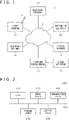
- FIG. 1 is a diagram illustrating a configuration of an artwork transaction system 1 according to the present embodiment.
- the artwork transaction system 1 includes a platform portal server 10, an artist terminal 40, a purchaser terminal 41, a blockchain network 50, a distributed file system 51, and a catalog database 52 that are connected to each other through a network 2.
- a secure key store 53 is connected to the platform portal server 10.
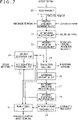
- FIG. 2 is a diagram illustrating an example of a hardware configuration of the platform portal server 10, the artist terminal 40, and the purchaser terminal 41.
- the platform portal server 10, the artist terminal 40, and the purchaser terminal 41 each include a computer 100 with an illustrated configuration.
- the computer 100 includes a CPU (Central Processing Unit) 101, a storage device 102, an input device 103, an output device 104, and a communication device 105.
- CPU Central Processing Unit
- the CPU 101 is a device that controls the respective components of the computer 100 and that reads and executes various programs stored in the storage device 102.
- the CPU 101 of the platform portal server 10 executes the programs stored in the storage device 102 to realize respective processes described later with reference to FIGS. 6 to 13 .
- the storage device 102 includes a main storage device, such as a DRAM (Dynamic Random Access Memory), and an auxiliary storage device, such as a hard disk.
- the storage device 102 plays a role of storing various programs that execute an operating system of the computer 100 and various applications, and storing data used in the programs.
- the input device 103 is a device that receives and supplies an input operation of a user to the CPU 101, and the input device 103 includes, for example, a keyboard, a mouse, and a touch detection device.
- the touch detection device is a device including a touch sensor and a touch controller and is used to detect pen input or touch input.
- the output device 104 is a device that outputs a processing result of the CPU 101 to the user, and the output device 104 includes, for example, a display and a speaker.
- the communication device 105 is a device that communicates with an external device, and the communication device 105 transmits and receives data according to an instruction of the CPU 101.
- the respective communication devices 105 communicate with each other to realize transmission and reception of data between the platform portal server 10, the artist terminal 40, and the purchaser terminal 41.
- the artist terminal 40 is a computer used by an artist to input and exhibit artwork and to input biometric signature data described later.
- the artwork and the biometric signature data are each digital data, and the artist uses a pen P to perform pen input to the input device 103 of the artist terminal 40, thereby generating the artwork and the biometric signature data.
- a specific process for exhibiting the artwork will be described later.
- FIG. 3 is a diagram illustrating a configuration of the biometric signature data.
- the biometric signature data is data generated according to, for example, WILL (Wacom Ink Layer Language) or FSS (Forensic Signature Stream), and as illustrated in FIG. 3 , the biometric signature data includes dynamic signature data; a hash value of a signed document; context information; additional information; a hash value of the dynamic signature data, the hash value of the signed document, and the context information; a hash value of the hash value and the additional information; and a checksum for detecting an error that may occur in transmitting and receiving the hash value.
- WILL Wicom Ink Layer Language
- FSS Formsic Signature Stream
- the dynamic signature data is digital ink data including a series of coordinate data forming a line drawing.
- Each piece of the coordinate data is data indicating the position of the pen P detected by the abovementioned touch detection device.
- the detection will be described in detail.
- the touch sensor includes a plurality of X electrodes extending in a Y-direction and arranged at equal intervals in an X-direction and includes a plurality of Y electrodes extending in the X-direction and arranged at equal intervals in the Y-direction.
- the plurality of X electrodes and the plurality of Y electrodes each receive a burst signal transmitted by the pen P, and the touch controller acquires coordinate data indicating the position of the pen P.
- the touch controller sequentially transmits signals to the plurality of X electrodes, and the plurality of Y electrodes receive the signals.
- the touch controller detects amplitude changes of the received signals to acquire coordinate data indicating the position of the pen P.
- the touch controller is configured to collect the coordinate data at a frequency of, for example, 100 or 200 times a second.
- the dynamic signature data may include a pen pressure value and pen angle data in addition to the coordinate data.
- the pen pressure value represents the pressure applied to the pen tip of the pen P.
- a built-in sensor of the pen P detects the pen pressure value, and the pen P supplies the pen pressure value to the touch sensor.
- FIG. 4 is a diagram describing the pen angle data.
- the pen angle data is data detected by the built-in sensor or the touch sensor of the pen P, and the pen angle data includes an azimuth angle ⁇ , a tilt angle ⁇ , and a rotation angle ⁇ illustrated in FIG. 4 .
- the hash value of the signed document is a hash value of electronic data of a document (such as exhibition application and contract document) signed by the artist to generate biometric signature data.
- the hash value is a value obtained by inputting the target electronic data to a predetermined one-way hash function. This is similar to other hash values described later.
- the context information is information including name data of signed artist, date and time of signature, a purpose of signature, information of touch detection device used for signature (such as manufacturer name and model name), information of application used for signature (such as application name and version information), information of operating system of the artist terminal 40 (such as operating system name and version information), address information of the artist terminal 40 (such as IP (Internet Protocol) address and MAC (Media Access Control) address), and the like.
- the additional information is information that can be designated as desired by the administrator of the artwork transaction system 1, other than the dynamic signature data, the hash value of the signed document, and the context information.
- the purchaser terminal 41 is a computer used by the purchaser to purchase artwork (artwork exhibited by the artist). A specific process for the purchase will be described later.
- the blockchain network 50 is a network of a plurality of computers connected to each other on a peer-to-peer basis and is configured to record a transaction of a smart contract in a blockchain.
- an example of the blockchain network 50 includes an Ethereum network.
- the transaction is recorded in the blockchain by some computers (hereinafter, referred to as "miners") connected to the blockchain network 50.
- each block of the blockchain includes a block header and data (transaction data) indicating specific details of the transaction.
- the block header includes a Merkle root that is data obtained by compressing the size of the transaction data, a hash value of immediately preceding block, and a nonce value that is any character string.
- a rule is set in the blockchain network 50 such that, in order to connect a new block to the blockchain, the hash value of the block needs to satisfy a predetermined condition (for example, a condition that the value starts from "000"). Therefore, the miners that try to record a block in the blockchain perform an operation (mining) of finding a nonce value in a round-robin manner such that the hash value of the block header of the block satisfies the predetermined condition. As a result of the operation, the miner that successfully discovers the nonce value at the earliest time connects the block to the blockchain, and in this way, the recording of the transaction in the blockchain is completed.
- the distributed file system 51 is a network of a plurality of computers connected to each other on a peer-to-peer basis and is configured to store any electronic data.
- a specific example of the distributed file system 51 includes IPFS (InterPlanetary File System).
- IPFS InterPlanetary File System
- the electronic data stored in the distributed file system 51 is identified by a hash value of the electronic data. That is, in the distributed file system 51, the hash value of the stored electronic data functions as address information of the electronic data.
- the distributed file system 51 is used for storing encrypted artwork.
- the catalog database 52 is a database installed on one or a plurality of computers. In the present embodiment, the catalog database 52 is used for storing a catalog of artwork (information necessary for sale). The catalog database 52 may be installed in the platform portal server 10.
- the secure key store 53 is a database that stores encryption keys used for encryption of data, and it is set in advance that the secure key store 53 accepts only the access from the platform portal server 10.
- the secure key store 53 is used for storing public keys 1 and 2, secret keys 1 and 2, and data encryption keys 1 and 2 described later.
- the platform portal server 10 is a computer that functions as a transaction apparatus of artwork, and the platform portal server 10 plays a role of accepting exhibition of artwork by the artist and realizing a purchase of the exhibited artwork.
- FIG. 5 is a diagram illustrating input and output of data to and from the platform portal server 10.
- the platform portal server 10 accepts exhibition of artwork from the artist terminal 40.
- the exhibition includes a main body of the artwork (for example, digital image data in a raster format, such as a JPEG file, or digital image data in a vector format, such as a digital ink file) and sale conditions (charged or free, price when charged, and the like). Note that it is preferable to indicate the price by a virtual currency (such as Ether) realized by the blockchain network 50.
- the platform portal server 10 also receives input of the abovementioned biometric signature data from the artist terminal 40.
- the platform portal server 10 that has received the exhibition and the biometric signature data records a transaction indicating the exhibition (exhibition transaction) in the blockchain network 50. Specific details of the exhibition transaction will be described later.
- the platform portal server 10 that has accepted the exhibition of the artwork uses the data encryption key 1 corresponding to a common key of a common key cryptosystem to encrypt the artwork main body and stores the artwork main body in the distributed file system 51.
- the platform portal server 10 generates a pair of a public key 1 and a secret key 1 corresponding to a public key and a secret key in a public key cryptosystem and uses the public key 1 to encrypt the data encryption key 1.
- the platform portal server 10 stores the pair of the public key 1 and the secret key 1 and the encrypted data encryption key 1 in the secure key store 53. Note that the reason that the artwork main body is encrypted by the data encryption key 1 instead of the public key 1 is that large-sized data such as artwork cannot be encrypted by the public key in the public key cryptosystem.
- the platform portal server 10 further registers, in the catalog database 52, a thumbnail of the exhibited artwork, sale conditions, and an ID (Identification) (identification information) of the exhibition transaction recorded in the blockchain network 50 and returns the ID of the exhibition transaction and the secret key 1 to the artist terminal 40.
- the returned ID of the exhibition transaction is used by the artist to refer to the blockchain network 50 and to check the details of the exhibition of the artist.
- the secret key 1 is used by the artist to extract the artwork of the artist from the distributed file system 51.
- the platform portal server 10 receives a purchase request from the purchaser terminal 41.
- the purchase request includes purchaser information indicating the purchaser (account of the blockchain network 50, name, and the like), information indicating the artwork selected by the purchaser, and cost (for example, information indicating any amount of virtual currency).
- the platform portal server 10 that has received the purchase request records a transaction indicating the purchase (purchase transaction) in the blockchain network 50. Specific details of the purchase transaction will be described later.
- the platform portal server 10 that has received the purchase request extracts the secret key 1 and the data encryption key 1 from the secure key store 53 and extracts the artwork from the distributed file system 51. The platform portal server 10 then uses the secret key 1 to decode the data encryption key 1 and uses the decoded data encryption key 1 to decode the artwork.
- the platform portal server 10 further embeds a watermark into the decoded artwork to generate watermarked artwork.
- the platform portal server 10 uses the data encryption key 2 to encrypt the watermarked artwork and stores the watermarked artwork in the distributed file system 51.
- the watermark is generated based on an ID (identification information) of the purchase transaction, which will be described in detail later.
- the platform portal server 10 also generates a pair of a public key 2 and a secret key 2 corresponding to a public key and a secret key in the public key cryptosystem and uses the public key 2 to encrypt the data encryption key 2.
- the platform portal server 10 then stores the pair of the public key 2 and the secret key 2 and the encrypted data encryption key 2 in the secure key store 53. Note that the reason that the watermarked artwork is encrypted by the data encryption key 2 instead of the public key 2 is that the size of the watermarked artwork is large, as in the case of the exhibition.
- the platform portal server 10 executes a process of returning the ID of the purchase transaction, the secret key 2, and the hash value of the artwork with encrypted watermark to the purchaser terminal 41 and executes a process of transmitting the ID of the purchase transaction and the proceeds to the artist terminal 40.
- the ID of the purchase transaction returned to each terminal is used by the purchaser and the artist to refer to the blockchain network 50 and to check the details of the purchase.
- the secret key 2 and the hash value of the artwork with encrypted watermark are used by the purchaser to extract the purchased artwork from the distributed file system 51 and to decode the artwork.
- FIGS. 6 and 7 are functional block diagrams of the platform portal server 10.
- FIG. 6 illustrates functional blocks of the platform portal server 10 regarding the exhibition of the artwork
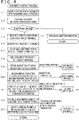
- FIG. 7 illustrates functional blocks of the platform portal server 10 regarding the sale of the artwork.
- the functional blocks of the platform portal server 10 will be described in detail with reference to FIGS. 6 and 7 .
- the platform portal server 10 includes, as functional blocks regarding the exhibition of the artwork, a reception unit 11, an overlap determination unit 12, an artwork encryption processing unit 13, an artwork storage processing unit 14, a key pair generation unit 15, a transaction issue unit 16, a key encryption processing unit 17, a catalog generation unit 18, and a transmission unit 19.
- the reception unit 11 receives exhibition of artwork from the artist terminal 40.
- the exhibition includes the main body of the artwork and the information of the sale conditions as described above.
- the overlap determination unit 12 determines whether or not the exhibited artwork overlaps with other artwork (that is, whether or not the exhibited artwork is unique). The determination may be carried out by, for example, comparing the exhibited artwork with the artwork stored in the past in the distributed file system 51 by the platform portal server 10, by comparing the exhibited artwork with images obtained by search on the Internet, or by carrying out both. As a result of the comparison, if other artwork overlapping with the exhibited artwork is not discovered, the overlap determination unit 12 determines that there is no overlap, and causes the reception unit 11 to further receive the abovementioned biometric signature data from the artist terminal 40. On the other hand, if other artwork overlapping with the exhibited artwork is discovered, the overlap determination unit 12 determines that there is an overlap, and returns an exhibition rejection to the artist terminal 40.
- the artwork encryption processing unit 13 encrypts the artwork if the overlap determination unit 12 determines that there is no overlap. Specifically, the artwork encryption processing unit 13 first generates the data encryption key 1 corresponding to the common key in the common key cryptosystem. The artwork encryption processing unit 13 then uses the generated data encryption key 1 to encrypt the artwork.
- the artwork storage processing unit 14 executes a process of storing the artwork encrypted by the artwork encryption processing unit 13 in the distributed file system 51 and acquires the hash value of the artwork.
- the key pair generation unit 15 generates a pair of the public key 1 and the secret key 1 corresponding to the public key and the secret key in the public key cryptosystem.
- the transaction issue unit 16 generates an exhibition transaction including the hash value of the encrypted artwork acquired by the artwork storage processing unit 14, the biometric signature data received by the reception unit 11, and the public key 1 generated by the key pair generation unit 15 and issues the exhibition transaction to a contract account (described later) of the blockchain network 50. Subsequently, any one of the miners connected to the blockchain network 50 completes recording of the exhibition transaction in the blockchain.
- the key encryption processing unit 17 uses the public key 1 generated by the key pair generation unit 15 to encrypt the data encryption key 1 and stores the data encryption key 1 in the secure key store 53 along with the pair of the public key 1 and the secret key 1 in association with the ID of the exhibition transaction issued by the transaction issue unit 16.
- the catalog generation unit 18 generates a thumbnail of the exhibited artwork and registers the thumbnail in the catalog database 52 along with the sale conditions and the ID of the exhibition transaction. In this way, the exhibited artwork is registered in the catalog database 52, and thus, the purchaser can refer to the catalog database 52 to select artwork to be purchased.
- the transmission unit 19 returns the ID of the exhibition transaction issued by the transaction issue unit 16 and the secret key 1 generated by the key pair generation unit 15 to the artist terminal 40.
- the artist can check the exhibition transaction on the blockchain network 50 and can acquire and decode the encrypted artwork stored in the distributed file system 51 to check the original artwork.
- the artist uses the artist terminal 40 to transmit the ID of the exhibition transaction and the secret key 1 to the platform portal server 10.
- the platform portal server 10 refers to the blockchain network 33 based on the ID of the exhibition transaction received from the artist terminal 40, to acquire the hash value of the encrypted artwork.
- the platform portal server 10 uses the acquired hash value to access the distributed file system 51 and reads the encrypted artwork.
- the platform portal server 10 also reads the encrypted data encryption key 1 from the secure key store 53 based on the ID of the exhibition transaction received from the artist terminal 40 and uses the secret key 1 received from the artist terminal 40 to decode the encrypted data encryption key 1.
- the platform portal server 10 uses the decoded data encryption key 1 to decode the encrypted artwork and thereby acquire the artwork and returns the artwork to the artist terminal 40. In this way, the artist can check the artwork.
- the platform portal server 10 includes, as functional blocks regarding the sale of the artwork, a reception unit 20, a purchase availability determination unit 21, a key decoding processing unit 22, an artwork decoding processing unit 23, a key pair generation unit 24, a transaction issue unit 25, a watermark generation unit 26, a watermark embedding processing unit 27, an artwork encryption processing unit 28, an artwork storage processing unit 29, a key encryption processing unit 30, and a transmission unit 31.
- the reception unit 11 receives a purchase request indicating an intention to purchase artwork, from the purchaser terminal 41.
- the purchase request includes the purchaser information, the information indicating the artwork selected by the purchaser, and the cost as described above.
- the purchase availability determination unit 21 determines whether or not the purchase request is approvable. Specifically, the purchase availability determination unit 21 first reads the corresponding sale conditions of the artwork and the ID of the exhibition transaction from the catalog database 52. The purchase availability determination unit 21 then compares the read sale conditions with the details of the purchase request and determines whether or not the purchase request is approvable, based on the result of the comparison. For example, when the sale conditions define that the price of the artwork is 1 Ether, the purchase availability determination unit 21 determines that the purchase request is approvable if the purchase request includes 1 Ether. On the other hand, if the purchase request does not include 1 Ether, the purchase availability determination unit 21 determines that the purchase request is not approvable. In the latter case, the purchase availability determination unit 21 returns a purchase rejection to the purchaser terminal 41.
- the key decoding processing unit 22 reads the secret key 1 and the encrypted data encryption key 1 from the secure key store 53 based on the ID of the exhibition transaction. The key decoding processing unit 22 then uses the read secret key 1 to decode the read encrypted data encryption key 1.
- the artwork decoding processing unit 23 refers to the blockchain network 50 based on the ID of the exhibition transaction, to acquire the hash value of the encrypted artwork.
- the artwork decoding processing unit 23 then reads the encrypted artwork from the distributed file system 51 based on the acquired hash value and uses the data encryption key 1 decoded by the key decoding processing unit 22, to decode the encrypted artwork.
- the key pair generation unit 24 generates a pair of the public key 2 and the secret key 2 corresponding to the public key and the secret key in the public key cryptosystem.
- the transaction issue unit 25 generates a purchase transaction including the purchaser information included in the purchase request, the ID of the exhibition transaction read by the purchase availability determination unit 21 from the catalog database 52, the amount of money indicating the purchase amount of the artwork, and the public key 2 generated by the key pair generation unit 24 and issues the purchase transaction to the contract account (described later) of the blockchain network 50. Subsequently, any one of the miners connected to the blockchain network 50 completes the recording of the purchase transaction in the blockchain.
- the watermark generation unit 26 generates a watermark based on the ID of the purchase transaction issued by the transaction issue unit 25.
- the watermark generated in this way is, for example, a QR code (registered trademark) indicating the ID of the purchase transaction.
- the watermark embedding processing unit 27 executes a process of embedding the watermark into the artwork decoded by the artwork decoding processing unit 23, to generate watermarked artwork. Details of the process will be described in detail later with reference to FIG. 12 .
- the artwork encryption processing unit 28 generates a data encryption key 2 corresponding to a common key in the common key cryptosystem and uses the generated data encryption key 2 to encrypt the watermarked artwork.
- the artwork storage processing unit 29 executes a process of storing the watermarked artwork encrypted by the artwork encryption processing unit 28 in the distributed file system 51 and acquires the hash value of the watermarked artwork.
- the key encryption processing unit 30 uses the public key 2 generated by the key pair generation unit 24 to encrypt the data encryption key 2 and stores the data encryption key 2 in the secure key store 53 in association with the ID of the purchase transaction issued by the transaction issue unit 25.
- the transmission unit 31 returns the ID of the purchase transaction, the hash value acquired by the artwork storage processing unit 29, and the secret key 2 generated by the key pair generation unit 24 to the purchaser terminal 41 and transmits the ID of the purchase transaction and the proceeds to the artist terminal 40.
- the purchaser and the artist can check the purchase transaction on the blockchain network 50.
- the purchaser can acquire and decode the artwork with encrypted watermark stored in the distributed file system 51, to acquire the purchased artwork in the watermarked state.
- the acquisition of the artwork by the purchaser will be described in more detail.
- the purchaser uses the purchaser terminal 41 to transmit the hash value of the artwork with encrypted watermark, the ID of the purchase transaction, and the secret key 2 to the platform portal server 10.
- the platform portal server 10 uses the hash value received from the purchaser terminal 41 to access the distributed file system 51 and reads the artwork with encrypted watermark.
- the platform portal server 10 also reads the encrypted data encryption key 2 from the secure key store 53 based on the ID of the purchase transaction received from the purchaser terminal 41 and uses the secret key 2 received from the purchaser terminal 41 to decode the encrypted data encryption key 2.
- the platform portal server 10 uses the decoded data encryption key 2 to decode the artwork with encrypted watermark and thereby acquire the watermarked artwork and returns the watermarked artwork to the purchaser terminal 41. In this way, the purchaser can acquire the watermarked artwork.
- FIGS. 8 to 12 are process flow diagrams illustrating processes executed by the platform portal server 10.
- the processes executed by the platform portal server 10 will be described in more detail with reference to FIGS. 8 to 12 .
- the platform portal server 10 first executes a process of generating an account (contract account) of the blockchain network 50 to allow the blockchain network 50 to record the exhibition and the purchase of the artwork in the blockchain network 50. Specifically, the platform portal server 10 transmits a transaction including a code of a contract to the blockchain network 50 (step S1) and acquires an address of a contract account generated as a result of the transmission (step S2).
- the platform portal server 10 repetitively executes a process of determining whether or not exhibition of artwork is received from the artist terminal 40 (step S3) and a process of determining whether or not a purchase request of artwork is received from the purchaser terminal 41 (step S4).
- step S3 If the platform portal server 10 determines that exhibition of artwork is received in step S3, the platform portal server 10 executes an artwork exhibition process (step S5). In addition, if the platform portal server 10 determines that a purchase request of artwork is received in step S4, the platform portal server 10 executes an artwork selling process (step S6).
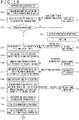
- FIG. 9 is a diagram illustrating details of the artwork exhibition process executed in step S5 of FIG. 8 .
- the platform portal server 10 that has started the artwork exhibition process acquires the exhibition of the artwork including the artwork main body and the sale conditions (step S11). Further, the platform portal server 10 compares the uploaded artwork with known work (step S12). The details of the comparison are as described above.
- the platform portal server 10 determines whether or not the artwork is unique, based on the result of the comparison executed in step S12 (step S13). As a result, if the platform portal server 10 determines that the artwork is not unique, the platform portal server 10 returns an exhibition rejection to the artist terminal 40 and then ends the artwork exhibition process (step S14). On the other hand, if the platform portal server 10 determines that the artwork is unique, the platform portal server 10 receives biometric signature data from the artist terminal 40 (step S15). Specifically, for example, the platform portal server 10 displays a screen for prompting the artist to sign a signature on the display of the artist terminal 40 and lets the artist input the dynamic signature data. The artist terminal 40 adds each piece of information described with reference to FIG. 3 to the dynamic signature data input in this way, to generate biometric signature data, and transmits the biometric signature data to the platform portal server 10.
- the platform portal server 10 generates a pair of the public key 1 and the secret key 1 (step S16). In addition, the platform portal server 10 generates a data encryption key 1 and uses the public key 1 to encrypt the data encryption key 1 (step S17).
- the platform portal server 10 uses the data encryption key 1 to encrypt the artwork (step S18) and stores the encrypted artwork in the distributed file system 51 (step S19). Subsequently, the platform portal server 10 issues an exhibition transaction including the hash value of the encrypted artwork, the biometric signature data, and the public key 1 to the contract account generated in steps S1 and S2 of FIG. 8 (step S20).
- the platform portal server 10 that has executed step S20 stores the pair of the public key 1 and the secret key 1 and the data encryption key 1 encrypted in step S17 in the secure key store 53 in association with the issued ID of the exhibition transaction (step S21). Further, the platform portal server 10 returns the ID of the exhibition transaction and the secret key 1 to the artist terminal 40 (step S22) and associates and registers the thumbnail of the artwork, the sale conditions, and the ID of the exhibition transaction in the catalog database 52 (step S23). The platform portal server 10 then ends the artwork exhibition process.
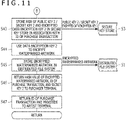
- FIGS. 10 and 11 are diagrams illustrating details of the artwork selling process executed in step S6 of FIG. 8 .
- the platform portal server 10 that has started the artwork selling process acquires a purchase request including the selection result of the artwork, the purchaser information, and the cost in the catalog database 52 (step S30). Further, the platform portal server 10 reads the sale conditions and the ID of the exhibition transaction from the catalog database 52 (step S31) and determines whether or not the purchase request is approvable (step S32). The details of the determination are as described above.
- the platform portal server 10 determines that the purchase is not approvable in step S32, the platform portal server 10 returns a purchase rejection to the purchaser terminal 41 and then ends the artwork selling process (step S33). On the other hand, if the platform portal server 10 determines that the purchase is approvable, the platform portal server 10 first reads the secret key 1 and the encrypted data encryption key 1 from the secure key store 53 based on the ID of the exhibition transaction (step S34) and uses the read secret key 1 to decode the read encrypted data encryption key 1 (step S35).
- the platform portal server 10 refers to the exhibition transaction in the blockchain network 50 to acquire the hash value of the encrypted artwork (step S34).
- the platform portal server 10 then reads the encrypted artwork from the distributed file system 51 based on the acquired hash value and uses the data encryption 1 acquired in step S35, to decode the encrypted artwork (step S37).
- the platform portal server 10 reads the encrypted data encryption key 1 from the secure key store 53 based on the storage location acquired in step S34 and uses the secret key 1 acquired in step S5 to decode the encrypted data encryption key 1 (step S36).
- the platform portal server 10 reads the encrypted artwork from the distributed file system 51 based on the hash value acquired in step S34 and uses the data encryption key 1 acquired in step S36, to decode the encrypted artwork (step S37).
- the platform portal server 10 generates a pair of the public key 2 and the secret key 2 (step S38). Further, the platform portal server 10 issues a purchase transaction including the purchaser information, the ID of the exhibition transaction, the amount of money, and the public key 2 to the contract account generated in steps S1 and S2 of FIG. 8 (step S39).
- the platform portal server 10 generates a QR code (registered trademark) from the ID of the purchase transaction (step S40) and executes a QR code (registered trademark) embedding process for embedding the generated QR code (registered trademark) into the artwork (step S41).
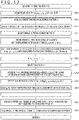
- FIG. 12 is a diagram illustrating details of the QR code (registered trademark) embedding process executed in step S41 of FIG. 10 .
- FIG. 12 illustrates an example of a case of an approach using SVD (Singular Value Decomposition) (SVD Based Approach)
- SVD Single Value Decomposition
- other approaches may be used to execute the QR code (registered trademark) embedding process.
- the approaches include an approach using DCT (Discrete Cosine Transform) (Optimal DCT-Psychovisual Threshold), an approach using encoding in a YCbCr color space (YCbCr Colour Space Encoding Approach), and an approach using multi-resolution analysis (Multi-resolution Wavelet Decomposition).
- DCT Discrete Cosine Transform
- YCbCr Colour Space Encoding Approach Optimal DCT-Psychovisual Threshold
- Multi-resolution Wavelet Decomposition Multi-resolution Wavelet Decomposition
- a QR code registered trademark
- W (w 1 , w 2 , ..., w n ⁇ n ) of n ⁇ n bits (step S50).
- Each of w 1 , w 2 , ..., and w n ⁇ n is a value of 0 or 1.
- the platform portal server 10 acquires a predetermined robustness factor ⁇ (step S51).
- the platform portal server 10 separates the artwork of m ⁇ m bits into three images 11, 12, and 13 by color channel (for example, red (Red), green (GReen), and blue (Blue) images in RGB color model) (step S52). Further, the platform portal server 10 selects the image with highest entropy (that is, image with most homogeneity and little variation) among the images 11, 12, and 13 (step S53). Here, the description will be continued by assuming that the entropy of the image 11 is the highest and that the image 11 is selected in step S53.
- color channel for example, red (Red), green (GReen), and blue (Blue) images in RGB color model
- the platform portal server 10 that has selected the image 11 divides the image 11 into blocks B(j) of 4 ⁇ 4 bits not overlapping with each other (step S54), where 1 ⁇ j ⁇ (m/4) ⁇ (m/4).
- U(p k ) and V(p k ) represent 4 ⁇ 4 unitary matrices.
- the platform portal server 10 uses the generated n ⁇ n pieces of WB(j) and (m/4) ⁇ (m/4)-n ⁇ n blocks B(j) not selected in step S57, to generate an image I1' (step S61). Specifically, the platform portal server 10 replaces n ⁇ n blocks B(p 1 ) to B(p n ⁇ n ) of (m/4) ⁇ (m/4) blocks B(j) included in the image Ii, with WB(p 1 ) to WB(p n ⁇ n ), respectively, to generate the image I1'.
- the platform portal server 10 uses the image I1' and the images 12 and 13 to generate watermarked artwork (step S62). Specifically, the platform portal server 10 combines the images I1', I2, and I3 to generate the watermarked artwork.
- FIG. 10 will be further described.
- the platform portal server 10 finished with the QR code (registered trademark) embedding process generates a data encryption key 2 and uses the public key 2 to encrypt the data encryption key 2 (step S42). Further, as illustrated in FIG. 11 , the platform portal server 10 stores the pair of the public key 2 and the secret key 2 and the encrypted data encryption key 2 in the secure key store 53 in association with the ID of the purchase transaction (step S43).
- QR code registered trademark
- the platform portal server 10 uses the data encryption key 2 to encrypt the watermarked artwork (step S44) and stores the encrypted watermarked artwork in the distributed file system 51 (step S45). Subsequently, the platform portal server 10 returns the hash value of the artwork with encrypted watermark, the ID of the purchase transaction, and the secret key 2 to the purchaser terminal 41 (step S46) and returns the ID of the purchase transaction and the proceeds to the artist terminal 40 (step S47). The platform portal server 10 then ends the artwork selling process.
- FIG. 13 illustrates a process for reading the QR code (registered trademark) from the watermarked artwork generated in the QR code (registered trademark) embedding process illustrated in FIG. 12 .
- QR code registered trademark
- FIG. 13 illustrates a process for reading the QR code (registered trademark) from the watermarked artwork generated in the QR code (registered trademark) embedding process illustrated in FIG. 12 .
- the platform portal server 10 executes the QR code (registered trademark) reading process in the following description
- another computer may execute the QR code (registered trademark) reading process.
- the platform portal server 10 first acquires a predetermined robustness factor ⁇ (step S71). It is preferable that the robustness factor ⁇ be the same value as the robustness factor ⁇ acquired in step S51 of FIG. 12 .
- the platform portal server 10 separates watermarked artwork of m ⁇ m bits into three images I1, I2, and 13 by color channel (step S71). Further, the platform portal server 10 selects the image with the highest entropy among the images 11, 12, and 13 (step S72).
- the process of steps S71 and S72 is the same process as steps S52 and S53 in FIG. 12 . The description will also be continued here by assuming that the entropy of the image 11 is the highest and that the image 11 is selected in step S72.
- the platform portal server 10 that has selected the image 11 divides the image 11 into blocks B(j) of 4 ⁇ 4 bits not overlapping with each other (step S73), where 1 ⁇ j ⁇ (m/4) ⁇ (m/4).
- the process is also the same process as step S54 in FIG. 12 .
- the predetermined seed used in step S74 needs to be the same as the seed used in step S55 of FIG. 12 .
- the QR code registered trademark
- the seed also functions as a kind of common key.
- the platform portal server 10 executes a process of steps S76 to S79 for each of integers k equal to or greater than 1 but equal to or smaller than n ⁇ n (step S75).
- the platform portal server 10 derives s2'-s3' (step S78).
- the value derived in this way is equal to ⁇ w k as is apparent from the derivation method of the diagonal matrix S'(p k ) described in step S59 of FIG. 12 . Therefore, the platform portal server 10 assigns 1 to w k if the derived value is equal to or greater than ⁇ /2 ( ⁇ w k ⁇ ⁇ /2), and assigns 0 to w k otherwise (step S79). In this way, kth w k is read.
- the biometric signature data including the signature of the artist is recorded as part of the exhibition transaction in the blockchain network 50, and this makes it possible to check later that the exhibitor of the artwork is the artist himself or herself.
- the artwork in the encrypted state is stored in the distributed file system 51, and this can guarantee that nobody has counterfeited the artwork after the exhibition.
- the QR code (registered trademark) indicating the ID of the purchase transaction is embedded in the sold artwork, and when the artwork after the sale is illicitly distributed, the QR code (registered trademark) can be read from the distributed artwork to specify the purchaser as a distributor. Therefore, according to the artwork transaction system 1 of the present embodiment, it can be stated that the smart contract can be used to securely trade the artwork.
- the watermark generation unit 26 may generate a watermark that is a QR code (registered trademark) or other bitmap representation, based on data acquired by the artist terminal 40 when the artist draws a digital image as artwork.
- the "data acquired by the artist terminal 40 when the artist draws a digital image” is, for example, data included in a digital ink file generated according to the WILL described above.
- examples of such data include one or more pieces of stroke data included in the digital image or in part of the digital image and identification information of the artist terminal 40 used to generate the artwork.
- the watermark generation unit 26 assigns the "data acquired by the artist terminal 40 when the artist draws a digital image" to a predetermined hash function to derive a hash value (fingerprint of the "data acquired by the artist terminal 40 when the artist draws a digital image") and generates a watermark based on the derived hash value.
Landscapes
- Engineering & Computer Science (AREA)
- Business, Economics & Management (AREA)
- Accounting & Taxation (AREA)
- Theoretical Computer Science (AREA)
- Computer Security & Cryptography (AREA)
- Physics & Mathematics (AREA)
- General Physics & Mathematics (AREA)
- Finance (AREA)
- Strategic Management (AREA)
- General Business, Economics & Management (AREA)
- Software Systems (AREA)
- General Engineering & Computer Science (AREA)
- Computer Hardware Design (AREA)
- Technology Law (AREA)
- Multimedia (AREA)
- Computer Networks & Wireless Communication (AREA)
- Economics (AREA)
- Development Economics (AREA)
- Marketing (AREA)
- Signal Processing (AREA)
- General Health & Medical Sciences (AREA)
- Bioethics (AREA)
- Health & Medical Sciences (AREA)
- Editing Of Facsimile Originals (AREA)
- Financial Or Insurance-Related Operations Such As Payment And Settlement (AREA)
- Storage Device Security (AREA)
- Management, Administration, Business Operations System, And Electronic Commerce (AREA)
Abstract
Description
- The present invention relates to a transaction method and a transaction apparatus of artwork and a program.
- In recent years, various services are created by using smart contracts in which a blockchain guarantees the validity of contracts. For example, the use of a smart contract for money lending by a bank is disclosed in
Patent Document 1. - Patent Document 1:
JP-T-2019-524018 - However, it is difficult to securely trade artwork such as a digital painting drawn in a tablet terminal, in the conventional smart contract. Specifically, the conventional smart contract cannot guarantee that the exhibitor of the artwork is the artist himself or herself and cannot guarantee that nobody has counterfeited the artwork after the exhibition. In addition, the conventional smart contract cannot specify the purchaser as a distributor when the artwork after the sale is illicitly distributed.
- Therefore, an object of the present invention is to provide a transaction method and a transaction apparatus of artwork and a program that can use a smart contract to securely trade the artwork.
- The present invention provides a transaction method of artwork executed by a computer, the transaction method including a first reception step of using the computer to receive the artwork and biometric signature data, and an exhibition transaction issue step of using the computer to issue an exhibition transaction including information for identifying the artwork and the biometric signature data, to a contract account of a blockchain network.
- The present invention provides a transaction apparatus of artwork, the transaction apparatus including a reception unit that receives the artwork and biometric signature data, and a first transaction issue unit that issues an exhibition transaction including information for identifying the artwork and the biometric signature data, to a contract account of a blockchain network.
- The present invention provides a program of artwork for causing a computer to function as a transaction apparatus of artwork, the program causing the computer to execute a first reception step of receiving the artwork and biometric signature data, and an exhibition transaction issue step of issuing an exhibition transaction including information for identifying the artwork and the biometric signature data, to a contract account of a blockchain network.
- According to the present invention, a smart contract can be used to securely trade artwork.
-
- [
FIG. 1 ]
FIG. 1 is a diagram illustrating a configuration of anartwork transaction system 1 according to an embodiment of the present invention. - [
FIG. 2 ]
FIG. 2 is a diagram illustrating an example of a hardware configuration of aplatform portal server 10, anartist terminal 40, and apurchaser terminal 41. - [
FIG. 3 ]
FIG. 3 is a diagram illustrating a configuration of biometric signature data. - [
FIG. 4 ]
FIG. 4 is a diagram describing pen angle data. - [
FIG. 5 ]
FIG. 5 is a diagram illustrating input and output of data to and from theplatform portal server 10. - [
FIG. 6 ]
FIG. 6 is a functional block diagram of theplatform portal server 10 regarding exhibition of artwork. - [
FIG. 7 ]
FIG. 7 is a functional block diagram of theplatform portal server 10 regarding sale of the artwork. - [
FIG. 8 ]
FIG. 8 is a process flow diagram illustrating a process executed by theplatform portal server 10. - [
FIG. 9 ]
FIG. 9 is a diagram illustrating details of an artwork exhibition process executed in step S5 ofFIG. 8 . - [
FIG. 10 ]
FIG. 10 is a diagram illustrating details of an artwork selling process executed in step S6 ofFIG. 8 . - [
FIG. 11 ]
FIG. 11 is a diagram illustrating the details of the artwork selling process executed in step S6 ofFIG. 8 . - [
FIG. 12 ]
FIG. 12 is a diagram illustrating details of a QR code (registered trademark) embedding process executed in step S41 ofFIG. 10 . - [
FIG. 13 ]
FIG. 13 is a process flow diagram illustrating a process for reading a QR code (registered trademark) from watermarked artwork generated in the QR code (registered trademark) embedding process illustrated inFIG. 12 . - Hereinafter, an embodiment of the present invention will be described in detail with reference to the attached drawings.
-
FIG. 1 is a diagram illustrating a configuration of anartwork transaction system 1 according to the present embodiment. As illustrated inFIG. 1 , theartwork transaction system 1 includes aplatform portal server 10, anartist terminal 40, apurchaser terminal 41, ablockchain network 50, adistributed file system 51, and acatalog database 52 that are connected to each other through anetwork 2. In addition, asecure key store 53 is connected to theplatform portal server 10. -
FIG. 2 is a diagram illustrating an example of a hardware configuration of theplatform portal server 10, theartist terminal 40, and thepurchaser terminal 41. Theplatform portal server 10, theartist terminal 40, and thepurchaser terminal 41 each include acomputer 100 with an illustrated configuration. - As illustrated in
FIG. 2 , thecomputer 100 includes a CPU (Central Processing Unit) 101, astorage device 102, aninput device 103, anoutput device 104, and acommunication device 105. - The
CPU 101 is a device that controls the respective components of thecomputer 100 and that reads and executes various programs stored in thestorage device 102. TheCPU 101 of theplatform portal server 10 executes the programs stored in thestorage device 102 to realize respective processes described later with reference toFIGS. 6 to 13 . - The
storage device 102 includes a main storage device, such as a DRAM (Dynamic Random Access Memory), and an auxiliary storage device, such as a hard disk. Thestorage device 102 plays a role of storing various programs that execute an operating system of thecomputer 100 and various applications, and storing data used in the programs. - The
input device 103 is a device that receives and supplies an input operation of a user to theCPU 101, and theinput device 103 includes, for example, a keyboard, a mouse, and a touch detection device. Among these, the touch detection device is a device including a touch sensor and a touch controller and is used to detect pen input or touch input. - The
output device 104 is a device that outputs a processing result of theCPU 101 to the user, and theoutput device 104 includes, for example, a display and a speaker. Thecommunication device 105 is a device that communicates with an external device, and thecommunication device 105 transmits and receives data according to an instruction of theCPU 101. Therespective communication devices 105 communicate with each other to realize transmission and reception of data between theplatform portal server 10, theartist terminal 40, and thepurchaser terminal 41. -
FIG. 1 will be further described. Theartist terminal 40 is a computer used by an artist to input and exhibit artwork and to input biometric signature data described later. The artwork and the biometric signature data are each digital data, and the artist uses a pen P to perform pen input to theinput device 103 of theartist terminal 40, thereby generating the artwork and the biometric signature data. A specific process for exhibiting the artwork will be described later. -
FIG. 3 is a diagram illustrating a configuration of the biometric signature data. The biometric signature data is data generated according to, for example, WILL (Wacom Ink Layer Language) or FSS (Forensic Signature Stream), and as illustrated inFIG. 3 , the biometric signature data includes dynamic signature data; a hash value of a signed document; context information; additional information; a hash value of the dynamic signature data, the hash value of the signed document, and the context information; a hash value of the hash value and the additional information; and a checksum for detecting an error that may occur in transmitting and receiving the hash value. - The dynamic signature data is digital ink data including a series of coordinate data forming a line drawing. Each piece of the coordinate data is data indicating the position of the pen P detected by the abovementioned touch detection device. The detection will be described in detail. The touch sensor includes a plurality of X electrodes extending in a Y-direction and arranged at equal intervals in an X-direction and includes a plurality of Y electrodes extending in the X-direction and arranged at equal intervals in the Y-direction. In a case where the pen P can transmit signals, the plurality of X electrodes and the plurality of Y electrodes each receive a burst signal transmitted by the pen P, and the touch controller acquires coordinate data indicating the position of the pen P. On the other hand, in a case where the pen P cannot transmit signals, the touch controller sequentially transmits signals to the plurality of X electrodes, and the plurality of Y electrodes receive the signals. The touch controller detects amplitude changes of the received signals to acquire coordinate data indicating the position of the pen P. The touch controller is configured to collect the coordinate data at a frequency of, for example, 100 or 200 times a second.
- The dynamic signature data may include a pen pressure value and pen angle data in addition to the coordinate data. The pen pressure value represents the pressure applied to the pen tip of the pen P. A built-in sensor of the pen P detects the pen pressure value, and the pen P supplies the pen pressure value to the touch sensor.
-
FIG. 4 is a diagram describing the pen angle data. The pen angle data is data detected by the built-in sensor or the touch sensor of the pen P, and the pen angle data includes an azimuth angle θ, a tilt angle ϕ, and a rotation angle ψ illustrated inFIG. 4 . -
FIG. 3 will be further described. The hash value of the signed document is a hash value of electronic data of a document (such as exhibition application and contract document) signed by the artist to generate biometric signature data. Note that the hash value is a value obtained by inputting the target electronic data to a predetermined one-way hash function. This is similar to other hash values described later. - The context information is information including name data of signed artist, date and time of signature, a purpose of signature, information of touch detection device used for signature (such as manufacturer name and model name), information of application used for signature (such as application name and version information), information of operating system of the artist terminal 40 (such as operating system name and version information), address information of the artist terminal 40 (such as IP (Internet Protocol) address and MAC (Media Access Control) address), and the like. The additional information is information that can be designated as desired by the administrator of the
artwork transaction system 1, other than the dynamic signature data, the hash value of the signed document, and the context information. -
FIG. 1 will be further described. Thepurchaser terminal 41 is a computer used by the purchaser to purchase artwork (artwork exhibited by the artist). A specific process for the purchase will be described later. - The
blockchain network 50 is a network of a plurality of computers connected to each other on a peer-to-peer basis and is configured to record a transaction of a smart contract in a blockchain. Specifically, an example of theblockchain network 50 includes an Ethereum network. The transaction is recorded in the blockchain by some computers (hereinafter, referred to as "miners") connected to theblockchain network 50. - Specifically, each block of the blockchain includes a block header and data (transaction data) indicating specific details of the transaction. Of these, the block header includes a Merkle root that is data obtained by compressing the size of the transaction data, a hash value of immediately preceding block, and a nonce value that is any character string. A rule is set in the
blockchain network 50 such that, in order to connect a new block to the blockchain, the hash value of the block needs to satisfy a predetermined condition (for example, a condition that the value starts from "000"). Therefore, the miners that try to record a block in the blockchain perform an operation (mining) of finding a nonce value in a round-robin manner such that the hash value of the block header of the block satisfies the predetermined condition. As a result of the operation, the miner that successfully discovers the nonce value at the earliest time connects the block to the blockchain, and in this way, the recording of the transaction in the blockchain is completed. - The distributed
file system 51 is a network of a plurality of computers connected to each other on a peer-to-peer basis and is configured to store any electronic data. A specific example of the distributedfile system 51 includes IPFS (InterPlanetary File System). The electronic data stored in the distributedfile system 51 is identified by a hash value of the electronic data. That is, in the distributedfile system 51, the hash value of the stored electronic data functions as address information of the electronic data. In the present embodiment, the distributedfile system 51 is used for storing encrypted artwork. - The
catalog database 52 is a database installed on one or a plurality of computers. In the present embodiment, thecatalog database 52 is used for storing a catalog of artwork (information necessary for sale). Thecatalog database 52 may be installed in theplatform portal server 10. - The secure
key store 53 is a database that stores encryption keys used for encryption of data, and it is set in advance that the securekey store 53 accepts only the access from theplatform portal server 10. In the present embodiment, the securekey store 53 is used for storingpublic keys secret keys data encryption keys - The
platform portal server 10 is a computer that functions as a transaction apparatus of artwork, and theplatform portal server 10 plays a role of accepting exhibition of artwork by the artist and realizing a purchase of the exhibited artwork. -
FIG. 5 is a diagram illustrating input and output of data to and from theplatform portal server 10. First, in a stage of accepting the exhibition of artwork, theplatform portal server 10 accepts exhibition of artwork from theartist terminal 40. The exhibition includes a main body of the artwork (for example, digital image data in a raster format, such as a JPEG file, or digital image data in a vector format, such as a digital ink file) and sale conditions (charged or free, price when charged, and the like). Note that it is preferable to indicate the price by a virtual currency (such as Ether) realized by theblockchain network 50. Theplatform portal server 10 also receives input of the abovementioned biometric signature data from theartist terminal 40. Theplatform portal server 10 that has received the exhibition and the biometric signature data records a transaction indicating the exhibition (exhibition transaction) in theblockchain network 50. Specific details of the exhibition transaction will be described later. - The
platform portal server 10 that has accepted the exhibition of the artwork uses thedata encryption key 1 corresponding to a common key of a common key cryptosystem to encrypt the artwork main body and stores the artwork main body in the distributedfile system 51. In addition, theplatform portal server 10 generates a pair of apublic key 1 and asecret key 1 corresponding to a public key and a secret key in a public key cryptosystem and uses thepublic key 1 to encrypt thedata encryption key 1. Further, theplatform portal server 10 stores the pair of thepublic key 1 and thesecret key 1 and the encrypteddata encryption key 1 in the securekey store 53. Note that the reason that the artwork main body is encrypted by thedata encryption key 1 instead of thepublic key 1 is that large-sized data such as artwork cannot be encrypted by the public key in the public key cryptosystem. - The
platform portal server 10 further registers, in thecatalog database 52, a thumbnail of the exhibited artwork, sale conditions, and an ID (Identification) (identification information) of the exhibition transaction recorded in theblockchain network 50 and returns the ID of the exhibition transaction and thesecret key 1 to theartist terminal 40. The returned ID of the exhibition transaction is used by the artist to refer to theblockchain network 50 and to check the details of the exhibition of the artist. In addition, thesecret key 1 is used by the artist to extract the artwork of the artist from the distributedfile system 51. - Next, in a stage of realizing the purchase of the exhibited artwork, the
platform portal server 10 receives a purchase request from thepurchaser terminal 41. The purchase request includes purchaser information indicating the purchaser (account of theblockchain network 50, name, and the like), information indicating the artwork selected by the purchaser, and cost (for example, information indicating any amount of virtual currency). Theplatform portal server 10 that has received the purchase request records a transaction indicating the purchase (purchase transaction) in theblockchain network 50. Specific details of the purchase transaction will be described later. - The
platform portal server 10 that has received the purchase request extracts thesecret key 1 and thedata encryption key 1 from the securekey store 53 and extracts the artwork from the distributedfile system 51. Theplatform portal server 10 then uses thesecret key 1 to decode thedata encryption key 1 and uses the decodeddata encryption key 1 to decode the artwork. - The
platform portal server 10 further embeds a watermark into the decoded artwork to generate watermarked artwork. Theplatform portal server 10 uses thedata encryption key 2 to encrypt the watermarked artwork and stores the watermarked artwork in the distributedfile system 51. The watermark is generated based on an ID (identification information) of the purchase transaction, which will be described in detail later. - The
platform portal server 10 also generates a pair of apublic key 2 and asecret key 2 corresponding to a public key and a secret key in the public key cryptosystem and uses thepublic key 2 to encrypt thedata encryption key 2. Theplatform portal server 10 then stores the pair of thepublic key 2 and thesecret key 2 and the encrypteddata encryption key 2 in the securekey store 53. Note that the reason that the watermarked artwork is encrypted by thedata encryption key 2 instead of thepublic key 2 is that the size of the watermarked artwork is large, as in the case of the exhibition. - Subsequently, the
platform portal server 10 executes a process of returning the ID of the purchase transaction, thesecret key 2, and the hash value of the artwork with encrypted watermark to thepurchaser terminal 41 and executes a process of transmitting the ID of the purchase transaction and the proceeds to theartist terminal 40. The ID of the purchase transaction returned to each terminal is used by the purchaser and the artist to refer to theblockchain network 50 and to check the details of the purchase. In addition, thesecret key 2 and the hash value of the artwork with encrypted watermark are used by the purchaser to extract the purchased artwork from the distributedfile system 51 and to decode the artwork. -
FIGS. 6 and7 are functional block diagrams of theplatform portal server 10.FIG. 6 illustrates functional blocks of theplatform portal server 10 regarding the exhibition of the artwork, andFIG. 7 illustrates functional blocks of theplatform portal server 10 regarding the sale of the artwork. Hereinafter, the functional blocks of theplatform portal server 10 will be described in detail with reference toFIGS. 6 and7 . - First, with reference to
FIG. 6 , theplatform portal server 10 includes, as functional blocks regarding the exhibition of the artwork, areception unit 11, anoverlap determination unit 12, an artworkencryption processing unit 13, an artworkstorage processing unit 14, a keypair generation unit 15, atransaction issue unit 16, a keyencryption processing unit 17, acatalog generation unit 18, and atransmission unit 19. - The
reception unit 11 receives exhibition of artwork from theartist terminal 40. The exhibition includes the main body of the artwork and the information of the sale conditions as described above. - The
overlap determination unit 12 determines whether or not the exhibited artwork overlaps with other artwork (that is, whether or not the exhibited artwork is unique). The determination may be carried out by, for example, comparing the exhibited artwork with the artwork stored in the past in the distributedfile system 51 by theplatform portal server 10, by comparing the exhibited artwork with images obtained by search on the Internet, or by carrying out both. As a result of the comparison, if other artwork overlapping with the exhibited artwork is not discovered, theoverlap determination unit 12 determines that there is no overlap, and causes thereception unit 11 to further receive the abovementioned biometric signature data from theartist terminal 40. On the other hand, if other artwork overlapping with the exhibited artwork is discovered, theoverlap determination unit 12 determines that there is an overlap, and returns an exhibition rejection to theartist terminal 40. - The artwork
encryption processing unit 13 encrypts the artwork if theoverlap determination unit 12 determines that there is no overlap. Specifically, the artworkencryption processing unit 13 first generates thedata encryption key 1 corresponding to the common key in the common key cryptosystem. The artworkencryption processing unit 13 then uses the generateddata encryption key 1 to encrypt the artwork. - The artwork
storage processing unit 14 executes a process of storing the artwork encrypted by the artworkencryption processing unit 13 in the distributedfile system 51 and acquires the hash value of the artwork. - The key
pair generation unit 15 generates a pair of thepublic key 1 and thesecret key 1 corresponding to the public key and the secret key in the public key cryptosystem. - The
transaction issue unit 16 generates an exhibition transaction including the hash value of the encrypted artwork acquired by the artworkstorage processing unit 14, the biometric signature data received by thereception unit 11, and thepublic key 1 generated by the keypair generation unit 15 and issues the exhibition transaction to a contract account (described later) of theblockchain network 50. Subsequently, any one of the miners connected to theblockchain network 50 completes recording of the exhibition transaction in the blockchain. - The key
encryption processing unit 17 uses thepublic key 1 generated by the keypair generation unit 15 to encrypt thedata encryption key 1 and stores thedata encryption key 1 in the securekey store 53 along with the pair of thepublic key 1 and thesecret key 1 in association with the ID of the exhibition transaction issued by thetransaction issue unit 16. - The
catalog generation unit 18 generates a thumbnail of the exhibited artwork and registers the thumbnail in thecatalog database 52 along with the sale conditions and the ID of the exhibition transaction. In this way, the exhibited artwork is registered in thecatalog database 52, and thus, the purchaser can refer to thecatalog database 52 to select artwork to be purchased. - The
transmission unit 19 returns the ID of the exhibition transaction issued by thetransaction issue unit 16 and thesecret key 1 generated by the keypair generation unit 15 to theartist terminal 40. In this way, the artist can check the exhibition transaction on theblockchain network 50 and can acquire and decode the encrypted artwork stored in the distributedfile system 51 to check the original artwork. - The check of the original artwork by the artist will be described in more detail. The artist uses the
artist terminal 40 to transmit the ID of the exhibition transaction and thesecret key 1 to theplatform portal server 10. Theplatform portal server 10 refers to the blockchain network 33 based on the ID of the exhibition transaction received from theartist terminal 40, to acquire the hash value of the encrypted artwork. Theplatform portal server 10 then uses the acquired hash value to access the distributedfile system 51 and reads the encrypted artwork. Theplatform portal server 10 also reads the encrypteddata encryption key 1 from the securekey store 53 based on the ID of the exhibition transaction received from theartist terminal 40 and uses thesecret key 1 received from theartist terminal 40 to decode the encrypteddata encryption key 1. Lastly, theplatform portal server 10 uses the decodeddata encryption key 1 to decode the encrypted artwork and thereby acquire the artwork and returns the artwork to theartist terminal 40. In this way, the artist can check the artwork. - Next, with reference to
FIG. 7 , theplatform portal server 10 includes, as functional blocks regarding the sale of the artwork, areception unit 20, a purchaseavailability determination unit 21, a keydecoding processing unit 22, an artworkdecoding processing unit 23, a keypair generation unit 24, atransaction issue unit 25, awatermark generation unit 26, a watermark embeddingprocessing unit 27, an artworkencryption processing unit 28, an artworkstorage processing unit 29, a keyencryption processing unit 30, and atransmission unit 31. - The
reception unit 11 receives a purchase request indicating an intention to purchase artwork, from thepurchaser terminal 41. The purchase request includes the purchaser information, the information indicating the artwork selected by the purchaser, and the cost as described above. - The purchase
availability determination unit 21 determines whether or not the purchase request is approvable. Specifically, the purchaseavailability determination unit 21 first reads the corresponding sale conditions of the artwork and the ID of the exhibition transaction from thecatalog database 52. The purchaseavailability determination unit 21 then compares the read sale conditions with the details of the purchase request and determines whether or not the purchase request is approvable, based on the result of the comparison. For example, when the sale conditions define that the price of the artwork is 1 Ether, the purchaseavailability determination unit 21 determines that the purchase request is approvable if the purchase request includes 1 Ether. On the other hand, if the purchase request does not include 1 Ether, the purchaseavailability determination unit 21 determines that the purchase request is not approvable. In the latter case, the purchaseavailability determination unit 21 returns a purchase rejection to thepurchaser terminal 41. - The key
decoding processing unit 22 reads thesecret key 1 and the encrypteddata encryption key 1 from the securekey store 53 based on the ID of the exhibition transaction. The keydecoding processing unit 22 then uses the readsecret key 1 to decode the read encrypteddata encryption key 1. - The artwork
decoding processing unit 23 refers to theblockchain network 50 based on the ID of the exhibition transaction, to acquire the hash value of the encrypted artwork. The artworkdecoding processing unit 23 then reads the encrypted artwork from the distributedfile system 51 based on the acquired hash value and uses thedata encryption key 1 decoded by the keydecoding processing unit 22, to decode the encrypted artwork. - The key
pair generation unit 24 generates a pair of thepublic key 2 and thesecret key 2 corresponding to the public key and the secret key in the public key cryptosystem. - The
transaction issue unit 25 generates a purchase transaction including the purchaser information included in the purchase request, the ID of the exhibition transaction read by the purchaseavailability determination unit 21 from thecatalog database 52, the amount of money indicating the purchase amount of the artwork, and thepublic key 2 generated by the keypair generation unit 24 and issues the purchase transaction to the contract account (described later) of theblockchain network 50. Subsequently, any one of the miners connected to theblockchain network 50 completes the recording of the purchase transaction in the blockchain. - The
watermark generation unit 26 generates a watermark based on the ID of the purchase transaction issued by thetransaction issue unit 25. The watermark generated in this way is, for example, a QR code (registered trademark) indicating the ID of the purchase transaction. The watermark embeddingprocessing unit 27 executes a process of embedding the watermark into the artwork decoded by the artworkdecoding processing unit 23, to generate watermarked artwork. Details of the process will be described in detail later with reference toFIG. 12 . - The artwork
encryption processing unit 28 generates adata encryption key 2 corresponding to a common key in the common key cryptosystem and uses the generateddata encryption key 2 to encrypt the watermarked artwork. The artworkstorage processing unit 29 executes a process of storing the watermarked artwork encrypted by the artworkencryption processing unit 28 in the distributedfile system 51 and acquires the hash value of the watermarked artwork. - The key
encryption processing unit 30 uses thepublic key 2 generated by the keypair generation unit 24 to encrypt thedata encryption key 2 and stores thedata encryption key 2 in the securekey store 53 in association with the ID of the purchase transaction issued by thetransaction issue unit 25. - The
transmission unit 31 returns the ID of the purchase transaction, the hash value acquired by the artworkstorage processing unit 29, and thesecret key 2 generated by the keypair generation unit 24 to thepurchaser terminal 41 and transmits the ID of the purchase transaction and the proceeds to theartist terminal 40. In this way, the purchaser and the artist can check the purchase transaction on theblockchain network 50. In addition, the purchaser can acquire and decode the artwork with encrypted watermark stored in the distributedfile system 51, to acquire the purchased artwork in the watermarked state. - The acquisition of the artwork by the purchaser will be described in more detail. The purchaser uses the
purchaser terminal 41 to transmit the hash value of the artwork with encrypted watermark, the ID of the purchase transaction, and thesecret key 2 to theplatform portal server 10. Theplatform portal server 10 uses the hash value received from thepurchaser terminal 41 to access the distributedfile system 51 and reads the artwork with encrypted watermark. Theplatform portal server 10 also reads the encrypteddata encryption key 2 from the securekey store 53 based on the ID of the purchase transaction received from thepurchaser terminal 41 and uses thesecret key 2 received from thepurchaser terminal 41 to decode the encrypteddata encryption key 2. Lastly, theplatform portal server 10 uses the decodeddata encryption key 2 to decode the artwork with encrypted watermark and thereby acquire the watermarked artwork and returns the watermarked artwork to thepurchaser terminal 41. In this way, the purchaser can acquire the watermarked artwork. -
FIGS. 8 to 12 are process flow diagrams illustrating processes executed by theplatform portal server 10. Hereinafter, the processes executed by theplatform portal server 10 will be described in more detail with reference toFIGS. 8 to 12 . - First, with reference to
FIG. 8 , theplatform portal server 10 first executes a process of generating an account (contract account) of theblockchain network 50 to allow theblockchain network 50 to record the exhibition and the purchase of the artwork in theblockchain network 50. Specifically, theplatform portal server 10 transmits a transaction including a code of a contract to the blockchain network 50 (step S1) and acquires an address of a contract account generated as a result of the transmission (step S2). - Subsequently, the
platform portal server 10 repetitively executes a process of determining whether or not exhibition of artwork is received from the artist terminal 40 (step S3) and a process of determining whether or not a purchase request of artwork is received from the purchaser terminal 41 (step S4). - If the
platform portal server 10 determines that exhibition of artwork is received in step S3, theplatform portal server 10 executes an artwork exhibition process (step S5). In addition, if theplatform portal server 10 determines that a purchase request of artwork is received in step S4, theplatform portal server 10 executes an artwork selling process (step S6). -
FIG. 9 is a diagram illustrating details of the artwork exhibition process executed in step S5 ofFIG. 8 . As illustrated inFIG. 9 , theplatform portal server 10 that has started the artwork exhibition process acquires the exhibition of the artwork including the artwork main body and the sale conditions (step S11). Further, theplatform portal server 10 compares the uploaded artwork with known work (step S12). The details of the comparison are as described above. - The
platform portal server 10 determines whether or not the artwork is unique, based on the result of the comparison executed in step S12 (step S13). As a result, if theplatform portal server 10 determines that the artwork is not unique, theplatform portal server 10 returns an exhibition rejection to theartist terminal 40 and then ends the artwork exhibition process (step S14). On the other hand, if theplatform portal server 10 determines that the artwork is unique, theplatform portal server 10 receives biometric signature data from the artist terminal 40 (step S15). Specifically, for example, theplatform portal server 10 displays a screen for prompting the artist to sign a signature on the display of theartist terminal 40 and lets the artist input the dynamic signature data. Theartist terminal 40 adds each piece of information described with reference toFIG. 3 to the dynamic signature data input in this way, to generate biometric signature data, and transmits the biometric signature data to theplatform portal server 10. - Next, the
platform portal server 10 generates a pair of thepublic key 1 and the secret key 1 (step S16). In addition, theplatform portal server 10 generates adata encryption key 1 and uses thepublic key 1 to encrypt the data encryption key 1 (step S17). - Next, the
platform portal server 10 uses thedata encryption key 1 to encrypt the artwork (step S18) and stores the encrypted artwork in the distributed file system 51 (step S19). Subsequently, theplatform portal server 10 issues an exhibition transaction including the hash value of the encrypted artwork, the biometric signature data, and thepublic key 1 to the contract account generated in steps S1 and S2 ofFIG. 8 (step S20). - The
platform portal server 10 that has executed step S20 stores the pair of thepublic key 1 and thesecret key 1 and thedata encryption key 1 encrypted in step S17 in the securekey store 53 in association with the issued ID of the exhibition transaction (step S21). Further, theplatform portal server 10 returns the ID of the exhibition transaction and thesecret key 1 to the artist terminal 40 (step S22) and associates and registers the thumbnail of the artwork, the sale conditions, and the ID of the exhibition transaction in the catalog database 52 (step S23). Theplatform portal server 10 then ends the artwork exhibition process. -
FIGS. 10 and11 are diagrams illustrating details of the artwork selling process executed in step S6 ofFIG. 8 . As illustrated inFIGS. 10 and11 , theplatform portal server 10 that has started the artwork selling process acquires a purchase request including the selection result of the artwork, the purchaser information, and the cost in the catalog database 52 (step S30). Further, theplatform portal server 10 reads the sale conditions and the ID of the exhibition transaction from the catalog database 52 (step S31) and determines whether or not the purchase request is approvable (step S32). The details of the determination are as described above. - If the
platform portal server 10 determines that the purchase is not approvable in step S32, theplatform portal server 10 returns a purchase rejection to thepurchaser terminal 41 and then ends the artwork selling process (step S33). On the other hand, if theplatform portal server 10 determines that the purchase is approvable, theplatform portal server 10 first reads thesecret key 1 and the encrypteddata encryption key 1 from the securekey store 53 based on the ID of the exhibition transaction (step S34) and uses the readsecret key 1 to decode the read encrypted data encryption key 1 (step S35). - Next, the
platform portal server 10 refers to the exhibition transaction in theblockchain network 50 to acquire the hash value of the encrypted artwork (step S34). Theplatform portal server 10 then reads the encrypted artwork from the distributedfile system 51 based on the acquired hash value and uses thedata encryption 1 acquired in step S35, to decode the encrypted artwork (step S37). - Subsequently, the
platform portal server 10 reads the encrypteddata encryption key 1 from the securekey store 53 based on the storage location acquired in step S34 and uses thesecret key 1 acquired in step S5 to decode the encrypted data encryption key 1 (step S36). In addition, theplatform portal server 10 reads the encrypted artwork from the distributedfile system 51 based on the hash value acquired in step S34 and uses thedata encryption key 1 acquired in step S36, to decode the encrypted artwork (step S37). - Next, the
platform portal server 10 generates a pair of thepublic key 2 and the secret key 2 (step S38). Further, theplatform portal server 10 issues a purchase transaction including the purchaser information, the ID of the exhibition transaction, the amount of money, and thepublic key 2 to the contract account generated in steps S1 and S2 ofFIG. 8 (step S39). - Next, the
platform portal server 10 generates a QR code (registered trademark) from the ID of the purchase transaction (step S40) and executes a QR code (registered trademark) embedding process for embedding the generated QR code (registered trademark) into the artwork (step S41). -
FIG. 12 is a diagram illustrating details of the QR code (registered trademark) embedding process executed in step S41 ofFIG. 10 . Note that, whileFIG. 12 illustrates an example of a case of an approach using SVD (Singular Value Decomposition) (SVD Based Approach), other approaches may be used to execute the QR code (registered trademark) embedding process. Examples of the approaches include an approach using DCT (Discrete Cosine Transform) (Optimal DCT-Psychovisual Threshold), an approach using encoding in a YCbCr color space (YCbCr Colour Space Encoding Approach), and an approach using multi-resolution analysis (Multi-resolution Wavelet Decomposition). - As illustrated in
FIG. 12 , theplatform portal server 10 first acquires a QR code (registered trademark) W = (w1, w2, ..., wn×n) of n×n bits (step S50). Each of w1, w2, ..., and wn×n is a value of 0 or 1. - Next, the
platform portal server 10 acquires a predetermined robustness factor σ (step S51). The larger the value of the robustness factor σ is, the higher the restorability of the embedded QR code (registered trademark) is. On the other hand, the larger the value of the robustness factor σ is, the lower the image quality of the watermarked artwork is. Therefore, it is preferable to take the restorability of the QR code (registered trademark) and the image quality of the watermarked artwork into account to determine the optimal value of σ in advance. - Subsequently, the
platform portal server 10 separates the artwork of m×m bits into threeimages platform portal server 10 selects the image with highest entropy (that is, image with most homogeneity and little variation) among theimages image 11 is the highest and that theimage 11 is selected in step S53. - The
platform portal server 10 that has selected theimage 11 divides theimage 11 into blocks B(j) of 4×4 bits not overlapping with each other (step S54), where 1 ≤ j ≤ (m/4)×(m/4). - Next, the
platform portal server 10 uses a predetermined seed to generate n×n sequences of random numbers P = (pi, p2, ..., pn×n) not overlapping with each other (step S55), where 1 ≤ pk ≤ (m/4)×(m/4). Further, theplatform portal server 10 executes a process of steps S57 to S60 for each of integers k equal to or greater than 1 but equal to or smaller than n×n (step S56). - The process of steps S57 to S60 will be specifically described. The
platform portal server 10 first selects a pkth block B(pk) (step S57). Next, theplatform portal server 10 acquires a 4×4 diagonal matrix S(pk) = diag(s1, s2, s3, s4) obtained by singular value decomposition of the selected block B(pk) (step S58). Note that the singular value decomposition is represented by B(pk) = U(pk)S(pk)V(pk)T. Here, U(pk) and V(pk) represent 4×4 unitary matrices. - Further, the
platform portal server 10 uses the robustness factor σ and bits wk to operate the diagonal matrix S(pk), thereby deriving a 4×4 diagonal matrix S'(pk) = diag(s1, s2 + σ × wk, s2, s3 × 0.1) (step S59). Further, theplatform portal server 10 uses the derived S'(pk) to execute a reverse process of the singular value decomposition, thereby generating WB(pk) (step S60). Specifically, theplatform portal server 10 performs calculation of WB(pk) = U(pk)S'(pk)V(pk)T to generate WB(pk). - Once the process of steps S57 to S60 is all completed, the
platform portal server 10 uses the generated n×n pieces of WB(j) and (m/4)×(m/4)-n×n blocks B(j) not selected in step S57, to generate an image I1' (step S61). Specifically, theplatform portal server 10 replaces n×n blocks B(p1) to B(pn×n) of (m/4)×(m/4) blocks B(j) included in the image Ii, with WB(p1) to WB(pn×n), respectively, to generate the image I1'. - Lastly, the
platform portal server 10 uses the image I1' and theimages platform portal server 10 combines the images I1', I2, and I3 to generate the watermarked artwork. -
FIG. 10 will be further described. Theplatform portal server 10 finished with the QR code (registered trademark) embedding process generates adata encryption key 2 and uses thepublic key 2 to encrypt the data encryption key 2 (step S42). Further, as illustrated inFIG. 11 , theplatform portal server 10 stores the pair of thepublic key 2 and thesecret key 2 and the encrypteddata encryption key 2 in the securekey store 53 in association with the ID of the purchase transaction (step S43). - Next, the
platform portal server 10 uses thedata encryption key 2 to encrypt the watermarked artwork (step S44) and stores the encrypted watermarked artwork in the distributed file system 51 (step S45). Subsequently, theplatform portal server 10 returns the hash value of the artwork with encrypted watermark, the ID of the purchase transaction, and thesecret key 2 to the purchaser terminal 41 (step S46) and returns the ID of the purchase transaction and the proceeds to the artist terminal 40 (step S47). Theplatform portal server 10 then ends the artwork selling process. - Here, a QR code (registered trademark) reading process for reading the QR code (registered trademark) from the watermarked artwork will be described with reference to
FIG. 13. FIG. 13 illustrates a process for reading the QR code (registered trademark) from the watermarked artwork generated in the QR code (registered trademark) embedding process illustrated inFIG. 12 . When the watermarked artwork is generated in another type of QR code (registered trademark) reading process, it is obvious that a reading process corresponding to the process is necessary. In addition, while theplatform portal server 10 executes the QR code (registered trademark) reading process in the following description, another computer may execute the QR code (registered trademark) reading process. - The
platform portal server 10 first acquires a predetermined robustness factor σ (step S71). It is preferable that the robustness factor σ be the same value as the robustness factor σ acquired in step S51 ofFIG. 12 . - Then, the
platform portal server 10 separates watermarked artwork of m×m bits into three images I1, I2, and 13 by color channel (step S71). Further, theplatform portal server 10 selects the image with the highest entropy among theimages FIG. 12 . The description will also be continued here by assuming that the entropy of theimage 11 is the highest and that theimage 11 is selected in step S72. - The
platform portal server 10 that has selected theimage 11 divides theimage 11 into blocks B(j) of 4×4 bits not overlapping with each other (step S73), where 1 ≤ j ≤ (m/4)×(m/4). The process is also the same process as step S54 inFIG. 12 . - Next, the
platform portal server 10 uses a predetermined seed to generate n×n sequences of random numbers P = (p1, p2, ..., pn×n) not overlapping with each other (step S74), where 1 ≤ pk ≤ (m/4)×(m/4). The predetermined seed used in step S74 needs to be the same as the seed used in step S55 ofFIG. 12 . The QR code (registered trademark) cannot be read if the seed is not known, and therefore, the seed also functions as a kind of common key. - Then, the
platform portal server 10 executes a process of steps S76 to S79 for each of integers k equal to or greater than 1 but equal to or smaller than n×n (step S75). - The process of steps S76 to S79 will be specifically described. The
platform portal server 10 first selects a pkth block B(pk) (step S76). Next, theplatform portal server 10 acquires a 4×4 diagonal matrix S'(pk) = diag(s1, s2', s3', s4') obtained by singular value decomposition of the selected block B(pk) (step S77). The singular value decomposition is represented by B(pk) = U(pk)S'(pk)V(pk)T as in step S58 ofFIG. 12 . - Next, the
platform portal server 10 derives s2'-s3' (step S78). The value derived in this way is equal to σ×wk as is apparent from the derivation method of the diagonal matrix S'(pk) described in step S59 ofFIG. 12 . Therefore, theplatform portal server 10 assigns 1 to wk if the derived value is equal to or greater than σ/2 (σ×wk ≥ σ/2), and assigns 0 to wk otherwise (step S79). In this way, kth wk is read. - Once the process of steps S76 to S79 is all completed, the
platform portal server 10 acquires the QR code (registered trademark) W = (w1, w2, ..., wn×n) of n×n bits based on the read n×n pieces of wk (step S80). In this way, the reading of the QR code (registered trademark) W is completed. - As described above, according to the
artwork transaction system 1 of the present embodiment, the biometric signature data including the signature of the artist is recorded as part of the exhibition transaction in theblockchain network 50, and this makes it possible to check later that the exhibitor of the artwork is the artist himself or herself. In addition, the artwork in the encrypted state is stored in the distributedfile system 51, and this can guarantee that nobody has counterfeited the artwork after the exhibition. Further, the QR code (registered trademark) indicating the ID of the purchase transaction is embedded in the sold artwork, and when the artwork after the sale is illicitly distributed, the QR code (registered trademark) can be read from the distributed artwork to specify the purchaser as a distributor. Therefore, according to theartwork transaction system 1 of the present embodiment, it can be stated that the smart contract can be used to securely trade the artwork. - Although the preferred embodiment of the present invention has been described, the present invention is not limited to the embodiment in any way, and it is obvious that the present invention can be carried out in various modes without departing from the gist of the present invention.
- For example, while the watermark embedded into the artwork to be sold is generated based on the ID of the purchase transaction in the example described in the embodiment, the watermark may be generated based on other information. Specifically, for example, the
watermark generation unit 26 may generate a watermark that is a QR code (registered trademark) or other bitmap representation, based on data acquired by theartist terminal 40 when the artist draws a digital image as artwork. Here, the "data acquired by theartist terminal 40 when the artist draws a digital image" is, for example, data included in a digital ink file generated according to the WILL described above. Specifically, examples of such data include one or more pieces of stroke data included in the digital image or in part of the digital image and identification information of theartist terminal 40 used to generate the artwork. It is sufficient that thewatermark generation unit 26 assigns the "data acquired by theartist terminal 40 when the artist draws a digital image" to a predetermined hash function to derive a hash value (fingerprint of the "data acquired by theartist terminal 40 when the artist draws a digital image") and generates a watermark based on the derived hash value. -
- 1 Artwork transaction system
- 2 Network
- 10 Platform portal server
- 11, 20 Reception unit
- 12 Overlap determination unit
- 13, 28 Artwork encryption processing unit
- 14, 29 Artwork storage processing unit
- 15, 24 Key pair generation unit
- 16, 25 Transaction issue unit
- 17, 30 Key encryption processing unit
- 18 Catalog generation unit
- 19, 31 Transmission unit
- 21 Purchase availability determination unit
- 22 Key decoding processing unit
- 23 Artwork decoding processing unit
- 26 Watermark generation unit
- 27 Watermark embedding processing unit
- 40 Artist terminal
- 41 Purchaser terminal
- 50 Blockchain network
- 51 Distributed file system
- 52 Catalog database
- 53 Secure key store
- 100 Computer
- 101 CPU
- 102 Storage device
- 103 Input device
- 104 Output device
- 105 Communication device
Claims (36)
- A transaction method of artwork executed by a computer, the transaction method comprising:a first reception step of using the computer to receive the artwork and biometric signature data; andan exhibition transaction issue step of using the computer to issue an exhibition transaction including information for identifying the artwork and the biometric signature data, to a contract account of a blockchain network.
- The transaction method of artwork according to claim 1, wherein
the biometric signature data includes digital ink data including a series of coordinate data forming a line drawing. - The transaction method of artwork according to claim 1 or 2, further comprising:an overlap determination step of determining whether or not the artwork overlaps with other artwork, wherein,in the exhibition transaction issue step, the exhibition transaction is issued when the computer determines that the artwork does not overlap with other artwork in the overlap determination step.
- The transaction method of artwork according to any one of claims 1 to 3, further comprising:a first artwork encryption step of using the computer to use a first data encryption key and encrypt the artwork; andthe first artwork storage step of using the computer to store the artwork encrypted in the first artwork encryption step, in a distributed file system.
- The transaction method of artwork according to claim 4, further comprising:a first key pair generation step of using the computer to generate a pair of a first public key and a first secret key; anda first key encryption step of using the computer to use the first public key and encrypt the first data encryption key.
- The transaction method of artwork according to claim 4, further comprising:a second reception step of using the computer to receive a purchase request indicating a purchase of the artwork;an artwork decoding step of using the computer to read the encrypted artwork from the distributed file system and use the first data encryption key to decode the encrypted artwork;a watermark embedding step of using the computer to embed a watermark into the artwork decoded in the artwork decoding step; anda second artwork storage step of using the computer to store the artwork including the embedded watermark in the distributed file system.
- The transaction method of artwork according to claim 5, further comprising:a second reception step of using the computer to receive a purchase request indicating a purchase of the artwork;a key decoding step of using the computer to use the first secret key and decode the first data encryption key;an artwork decoding step of using the computer to read the encrypted artwork from the distributed file system and use the first data encryption key decoded in the key decoding step to decode the encrypted artwork;a watermark embedding step of using the computer to embed a watermark into the artwork decoded in the artwork decoding step; anda second artwork storage step of using the computer to store the artwork including the embedded watermark in the distributed file system.
- The transaction method of artwork according to claim 6 or 7, further comprising:a second artwork encryption step of using the computer to use a second data encryption key and encrypt the artwork including the embedded watermark, wherein,in the second artwork storage step, the artwork that is encrypted in the second artwork encryption step and that includes the embedded watermark is stored in the distributed file system.
- The transaction method of artwork according to claim 8, further comprising:a second key pair generation step of using the computer to generate a pair of a second public key and a second secret key; anda second key encryption step of using the computer to use the second public key and encrypt the second data encryption key.
- The transaction method of artwork according to any one of claims 6 to 9 further comprising:a purchase availability determination step of using the computer to determine whether or not the purchase request is approvable; anda purchase transaction issue step of using the computer to issue a purchase transaction including information of a purchaser who has transmitted the purchase request and identification information of the exhibition transaction, to the contract account of the blockchain network when the computer determines that the purchase request is approvable in the purchase availability determination step.
- The transaction method of artwork according to claim 10, further comprising:
a watermark generation step of generating the watermark based on identification information of the purchase transaction. - The transaction method of artwork according to any one of claims 6 to 10, further comprising:
a watermark generation step of generating the watermark based on data acquired when the artwork is drawn. - A transaction apparatus of artwork, the transaction apparatus comprising:a reception unit that receives the artwork and biometric signature data; anda first transaction issue unit that issues an exhibition transaction including information for identifying the artwork and the biometric signature data, to a contract account of a blockchain network.
- The transaction apparatus of artwork according to claim 13, wherein the biometric signature data includes digital ink data including a series of coordinate data forming a line drawing.
- The transaction apparatus of artwork according to claim 13 or 14, further comprising:an overlap determination unit that determines whether or not the artwork overlaps with other artwork, whereinthe transaction issue unit issues the exhibition transaction when the overlap determination unit determines that the artwork does not overlap with other artwork.
- The transaction apparatus of artwork according to any one of claims 13 to 15, further comprising:a first artwork encryption processing unit that uses a first data encryption key to encrypt the artwork; anda first artwork storage processing unit that stores the artwork encrypted by the first artwork encryption processing unit, in a distributed file system.
- The transaction apparatus of artwork according to claim 16, further comprising:a first key pair generation unit that generates a pair of a first public key and a first secret key; anda first key encryption processing unit that uses the first public key to encrypt the first data encryption key.
- The transaction apparatus of artwork according to claim 16, further comprising:a second reception unit that receives a purchase request indicating a purchase of the artwork;an artwork decoding processing unit that reads the encrypted artwork from the distributed file system and that uses the first data encryption key to decode the encrypted artwork;a watermark embedding processing unit that embeds a watermark into the artwork decoded by the artwork decoding processing unit; anda second artwork storage processing unit that stores the artwork including the embedded watermark in the distributed file system.
- The transaction apparatus of artwork according to claim 17, further comprising:a second reception unit that receives a purchase request indicating a purchase of the artwork;a key decoding processing unit that uses the first secret key to decode the first data encryption key;an artwork decoding processing unit that reads the encrypted artwork from the distributed file system and that uses the first data encryption key decoded by the key decoding processing unit to decode the encrypted artwork;a watermark embedding processing unit that embeds a watermark into the artwork decoded by the artwork decoding processing unit; anda second artwork storage processing unit that stores the artwork including the embedded watermark in the distributed file system.
- The transaction apparatus of artwork according to claim 18 or 19, further comprising:a second artwork encryption processing unit that uses a second data encryption key to encrypt the artwork including the embedded watermark, whereinthe second artwork storage processing unit stores the artwork encrypted by the second artwork encryption processing unit and including the embedded watermark, in the distributed file system.
- The transaction apparatus of artwork according to claim 20, further comprising:a second key pair generation unit that generates a pair of a second public key and a second secret key; anda second key encryption processing unit that uses the second public key to encrypt the second data encryption key.
- The transaction apparatus of artwork according to any one of claims 18 to 21, further comprising:a purchase availability determination unit that determines whether or not the purchase request is approvable; anda second transaction issue unit that issues a purchase transaction including information of a purchaser who has transmitted the purchase request and identification information of the exhibition transaction, to the contract account of the blockchain network when the purchase availability determination unit determines that the purchase request is approvable.
- The transaction apparatus of artwork according to claim 22, further comprising:
a watermark generation unit that generates the watermark based on identification information of the purchase transaction. - The transaction apparatus of artwork according to any one of claims 18 to 22, further comprising:
a watermark generation unit that generates the watermark based on data acquired when the artwork is drawn. - A program for causing a computer to function as a transaction apparatus of artwork, the program causing the computer to execute:a first reception step of receiving the artwork and biometric signature data; andan exhibition transaction issue step of issuing an exhibition transaction including information for identifying the artwork and the biometric signature data, to a contract account of a blockchain network.
- The program according to claim 25, wherein
the biometric signature data includes digital ink data including a series of coordinate data forming a line drawing. - The program according to claim 25 or 26, further causing the computer to execute:an overlap determination step of determining whether or not the artwork overlaps with other artwork, wherein,in the exhibition transaction issue step, the exhibition transaction is issued when the computer determines that the artwork does not overlap with other artwork in the overlap determination step.
- The program according to any one of claims 25 to 27, further causing the computer to execute:a first artwork encryption step of using a first data encryption key to encrypt the artwork; anda first artwork storage step of storing the artwork encrypted in the first artwork encryption step, in a distributed file system.
- The program according to claim 28, further causing the computer to execute:a first key pair generation step of generating a pair of a first public key and a first secret key; anda first key encryption step of using the first public key to encrypt the first data encryption key.
- The program according to claim 28, further causing the computer to execute:a second reception step of receiving a purchase request indicating a purchase of the artwork;an artwork decoding step of reading the encrypted artwork from the distributed file system and using the first data encryption key to decode the encrypted artwork;a watermark embedding step of embedding a watermark into the artwork decoded in the artwork decoding step; anda second artwork storage step of storing the artwork including the embedded watermark in the distributed file system.
- The program according to claim 29, further causing the computer to execute:a second reception step of receiving a purchase request indicating a purchase of the artwork;a key decoding step of using the first secret key to decode the first data encryption key;an artwork decoding step of reading the encrypted artwork from the distributed file system and using the first data encryption key decoded in the key decoding step to decode the encrypted artwork;a watermark embedding step of embedding a watermark into the artwork decoded in the artwork decoding step; anda second artwork storage step of storing the artwork including the embedded watermark in the distributed file system.
- The program according to claim 30 or 31, further causing the computer to execute:a second artwork encryption step of using a second data encryption key to encrypt the artwork including the embedded watermark, wherein,in the second artwork storage step, the artwork encrypted in the second artwork encryption step and including the embedded watermark is stored in the distributed file system.
- The program according to claim 32, further causing the computer to execute:a second key pair generation step of generating a pair of a second public key and a second secret key; anda second key encryption step of using the second public key to encrypt the second data encryption key.
- The program according to any one of claims 30 to 33, further causing the computer to execute:a purchase availability determination step of determining whether or not the purchase request is approvable; anda purchase transaction issue step of issuing a purchase transaction including information of a purchaser who has transmitted the purchase request and identification information of the exhibition transaction, to the contract account of the blockchain network when the computer determines that the purchase request is approvable in the purchase availability determination step.
- The program according to claim 34, further causing the computer to execute:
a watermark generation step of generating the watermark based on identification information of the purchase transaction. - The program according to any one of claims 30 to 34, further causing the computer to execute:
a watermark generation step of generating the watermark based on data acquired when the artwork is drawn.
Applications Claiming Priority (3)
| Application Number | Priority Date | Filing Date | Title |
|---|---|---|---|
| JP2019203436 | 2019-11-08 | ||
| JP2020066189 | 2020-04-01 | ||
| PCT/JP2020/041205 WO2021090838A1 (en) | 2019-11-08 | 2020-11-04 | Artwork transaction method and transaction device, and program |
Publications (2)
| Publication Number | Publication Date |
|---|---|
| EP3998540A1 true EP3998540A1 (en) | 2022-05-18 |
| EP3998540A4 EP3998540A4 (en) | 2022-11-02 |
Family
ID=75848485
Family Applications (1)
| Application Number | Title | Priority Date | Filing Date |
|---|---|---|---|
| EP20883815.1A Withdrawn EP3998540A4 (en) | 2019-11-08 | 2020-11-04 | Artwork transaction method and transaction device, and program |
Country Status (5)
| Country | Link |
|---|---|
| US (2) | US11803843B2 (en) |
| EP (1) | EP3998540A4 (en) |
| JP (3) | JP6955128B2 (en) |
| CN (1) | CN113228087A (en) |
| WO (1) | WO2021090838A1 (en) |
Families Citing this family (10)
| Publication number | Priority date | Publication date | Assignee | Title |
|---|---|---|---|---|
| WO2022220062A1 (en) * | 2021-04-06 | 2022-10-20 | 株式会社ワコム | Artwork management method, computer, and program |
| TWI784623B (en) * | 2021-07-19 | 2022-11-21 | 林春蓉 | Method of managing fragmented digital creation and computer program product for the same |
| CN113806812B (en) * | 2021-08-13 | 2022-05-27 | 深圳市鹰硕技术有限公司 | User's handwriting data management method, device, system and storage medium |
| WO2023145373A1 (en) | 2022-01-28 | 2023-08-03 | 株式会社ワコム | Authorship determination method, computer, and program |
| CN114862437A (en) * | 2022-03-16 | 2022-08-05 | 山西国术之光国际艺术交流有限责任公司 | Artwork valuation system based on transaction data |
| CN114638740A (en) * | 2022-03-26 | 2022-06-17 | 海南大学 | Block chaining and IPFS assisted reversible robust watermark framework |
| CN114841701B (en) * | 2022-07-04 | 2022-10-21 | 浙江大学 | Digital artwork anti-theft credible transaction method and device based on NFT |
| US12462322B2 (en) * | 2022-07-05 | 2025-11-04 | Wacom Co., Ltd. | Digital image watermarking by embedding identifier bits in blocks of digital image |
| CN119137900A (en) * | 2022-07-06 | 2024-12-13 | 株式会社和冠 | Method, computer and program related to certification of the signer of a document |
| KR102741959B1 (en) | 2022-09-15 | 2024-12-16 | 성균관대학교산학협력단 | Watermarking method for smart contract |
Family Cites Families (27)
| Publication number | Priority date | Publication date | Assignee | Title |
|---|---|---|---|---|
| US20070276823A1 (en) * | 2003-05-22 | 2007-11-29 | Bruce Borden | Data management systems and methods for distributed data storage and management using content signatures |
| JP6173460B2 (en) * | 2012-08-29 | 2017-08-02 | シルバーレイク モビリティ エコシステム エスディーエヌ ビーエイチディー | How to pair a mobile device |
| US20140074855A1 (en) * | 2012-09-13 | 2014-03-13 | Verance Corporation | Multimedia content tags |
| US20140222607A1 (en) * | 2013-02-06 | 2014-08-07 | Sedition Art | Systems and Methods for Distributing Limited Edition Digital Artwork |
| US20150058202A1 (en) * | 2013-08-21 | 2015-02-26 | David Dahaeck | System and method for tracking and controlling ownership of digital works and rewarding authors, artists and/or their representatives over time |
| CN105212810B (en) * | 2014-06-30 | 2018-07-31 | 谢火县 | A kind of counted by angle controls the soap-solution device of positive and negative rotation of motor and liquid outlet quantity |
| US20160162961A1 (en) * | 2014-12-03 | 2016-06-09 | Claydo Lab Ltd. | System and method for ownership and transfer of digital art |
| JP6828014B2 (en) * | 2015-10-07 | 2021-02-10 | 株式会社ワコム | A computer implementation performed by a local computing device communicatively connected to one or more signing devices. |
| US20170116693A1 (en) * | 2015-10-27 | 2017-04-27 | Verimatrix, Inc. | Systems and Methods for Decentralizing Commerce and Rights Management for Digital Assets Using a Blockchain Rights Ledger |
| US20170243179A1 (en) * | 2016-02-24 | 2017-08-24 | David Dehaeck | System and method to monetize digital artwork |
| US10469487B1 (en) * | 2016-05-31 | 2019-11-05 | Wells Fargo Bank, N.A. | Biometric electronic signature authenticated key exchange token |
| US10447478B2 (en) | 2016-06-06 | 2019-10-15 | Microsoft Technology Licensing, Llc | Cryptographic applications for a blockchain system |
| CN107770115B (en) * | 2016-08-15 | 2021-01-05 | 华为技术有限公司 | Method and system for distributing digital content in a peer-to-peer network |
| US11409952B2 (en) * | 2016-08-16 | 2022-08-09 | Myscript | System and method for collaborative ink management |
| JP6703918B2 (en) * | 2016-08-31 | 2020-06-03 | ヤフー株式会社 | Generation program, generation device, and generation method |
| JP6570768B2 (en) * | 2017-06-28 | 2019-09-04 | 特定非営利活動法人サイバー・キャンパス・コンソーシアムTies | Content distribution program, content management system using the same, and content providing method |
| CN107330694A (en) * | 2017-07-03 | 2017-11-07 | 重庆小犀智能科技有限公司 | Copyright trading system and method for commerce based on block chain |
| CN111164636A (en) * | 2017-09-27 | 2020-05-15 | 株式会社Artrigger | Transaction management method, usage right management method, communication terminal, and program |
| CN107730384A (en) * | 2017-11-13 | 2018-02-23 | 深圳大学 | Art sales method and server, server end and system based on block chain |
| KR102039351B1 (en) * | 2018-02-22 | 2019-11-01 | (주)티비스톰 | A platform of performing inquiry and management for distribution and distribution history of goods through block chain |
| US10250381B1 (en) * | 2018-02-22 | 2019-04-02 | Capital One Services, Llc | Content validation using blockchain |
| CN110276170A (en) * | 2018-03-15 | 2019-09-24 | 巍乾全球技术有限责任公司 | Method, equipment and the medium of works protection are carried out based on block chain |
| IL288650B2 (en) * | 2018-06-02 | 2025-09-01 | Scarselli Bruno | Asset identification, registration, tracking and commercialization apparatuses and methods |
| CN108985761A (en) * | 2018-06-26 | 2018-12-11 | 林群涛 | Art work reservation exchange management method and its management platform based on block chain technology |
| CN109347878B (en) * | 2018-11-30 | 2020-06-05 | 西安电子科技大学 | Decentralized data verification and data security transaction system and method |
| CN111506882B (en) * | 2019-01-30 | 2024-02-27 | 京东方科技集团股份有限公司 | Electronic equipment and digital file management methods |
| US11182726B2 (en) * | 2019-03-28 | 2021-11-23 | Nest Global Solutions, Llc | Blockchain-based system for analyzing and tracking work performance |
-
2020
- 2020-11-04 CN CN202080007502.0A patent/CN113228087A/en active Pending
- 2020-11-04 WO PCT/JP2020/041205 patent/WO2021090838A1/en not_active Ceased
- 2020-11-04 EP EP20883815.1A patent/EP3998540A4/en not_active Withdrawn
- 2020-11-04 JP JP2021507092A patent/JP6955128B2/en active Active
-
2021
- 2021-08-18 US US17/405,945 patent/US11803843B2/en active Active
- 2021-09-30 JP JP2021161162A patent/JP7658873B2/en active Active
-
2023
- 2023-09-14 US US18/467,458 patent/US20240005313A1/en active Pending
-
2025
- 2025-03-27 JP JP2025053007A patent/JP2025092578A/en active Pending
Also Published As
| Publication number | Publication date |
|---|---|
| US11803843B2 (en) | 2023-10-31 |
| US20210374734A1 (en) | 2021-12-02 |
| EP3998540A4 (en) | 2022-11-02 |
| JP2025092578A (en) | 2025-06-19 |
| CN113228087A (en) | 2021-08-06 |
| WO2021090838A1 (en) | 2021-05-14 |
| JP6955128B2 (en) | 2021-10-27 |
| US20240005313A1 (en) | 2024-01-04 |
| JPWO2021090838A1 (en) | 2021-12-02 |
| JP7658873B2 (en) | 2025-04-08 |
| JP2022002130A (en) | 2022-01-06 |
Similar Documents
| Publication | Publication Date | Title |
|---|---|---|
| US11803843B2 (en) | Artwork transaction method and artwork transaction apparatus and computer program therefor | |
| US12452238B2 (en) | Robust encoding of machine readable information in host objects and biometrics, and associated decoding and authentication | |
| US12067573B2 (en) | Method, computer, and program for artwork management | |
| US7263205B2 (en) | System and method of generic symbol recognition and user authentication using a communication device with imaging capabilities | |
| US6661904B1 (en) | Method and system for automated electronic conveyance of hidden data | |
| WO2008006791A1 (en) | User authentication method and system and password management system | |
| US20250131134A1 (en) | Method, computer, and computer-readable medium related to certification of signatory of document | |
| CN113162770A (en) | Online signature method and system | |
| JP2000099471A (en) | Personal authentication information generating device, method, and recording medium | |
| JP7014901B2 (en) | Information display method and its devices, storage media and electronic devices | |
| US20140366103A1 (en) | Device authentication using display device irregularity | |
| US20230124197A1 (en) | Device and Method for Evacuating Cryptocurrency and Program Therefor | |
| CN106550236B (en) | Method and apparatus for generating and decoding video stream with verification data | |
| WO2024119225A1 (en) | A device of bi-directional fourier transform security, a method, and system thereof | |
| KR20260071720A (en) | Method for providing verification service on qr code and verification server using the same | |
| CN112163444A (en) | Ecological intelligent identification image code method, device, equipment and storage medium |
Legal Events
| Date | Code | Title | Description |
|---|---|---|---|
| STAA | Information on the status of an ep patent application or granted ep patent |
Free format text: STATUS: THE INTERNATIONAL PUBLICATION HAS BEEN MADE |
|
| PUAI | Public reference made under article 153(3) epc to a published international application that has entered the european phase |
Free format text: ORIGINAL CODE: 0009012 |
|
| STAA | Information on the status of an ep patent application or granted ep patent |
Free format text: STATUS: REQUEST FOR EXAMINATION WAS MADE |
|
| 17P | Request for examination filed |
Effective date: 20220208 |
|
| AK | Designated contracting states |
Kind code of ref document: A1 Designated state(s): AL AT BE BG CH CY CZ DE DK EE ES FI FR GB GR HR HU IE IS IT LI LT LU LV MC MK MT NL NO PL PT RO RS SE SI SK SM TR |
|
| A4 | Supplementary search report drawn up and despatched |
Effective date: 20221006 |
|
| RIC1 | Information provided on ipc code assigned before grant |
Ipc: H04L 9/32 20060101ALI20220929BHEP Ipc: H04L 9/08 20060101ALI20220929BHEP Ipc: G06F 21/64 20130101ALI20220929BHEP Ipc: G06F 21/10 20130101ALI20220929BHEP Ipc: G06F 21/16 20130101AFI20220929BHEP |
|
| DAV | Request for validation of the european patent (deleted) | ||
| DAX | Request for extension of the european patent (deleted) | ||
| STAA | Information on the status of an ep patent application or granted ep patent |
Free format text: STATUS: EXAMINATION IS IN PROGRESS |
|
| 17Q | First examination report despatched |
Effective date: 20230725 |
|
| GRAP | Despatch of communication of intention to grant a patent |
Free format text: ORIGINAL CODE: EPIDOSNIGR1 |
|
| STAA | Information on the status of an ep patent application or granted ep patent |
Free format text: STATUS: GRANT OF PATENT IS INTENDED |
|
| INTG | Intention to grant announced |
Effective date: 20250402 |
|
| STAA | Information on the status of an ep patent application or granted ep patent |
Free format text: STATUS: THE APPLICATION IS DEEMED TO BE WITHDRAWN |
|
| 18D | Application deemed to be withdrawn |
Effective date: 20250805 |