EP3997726B1 - Fuse apparatus with integrated solenoids - Google Patents
Fuse apparatus with integrated solenoids Download PDFInfo
- Publication number
- EP3997726B1 EP3997726B1 EP19937036.2A EP19937036A EP3997726B1 EP 3997726 B1 EP3997726 B1 EP 3997726B1 EP 19937036 A EP19937036 A EP 19937036A EP 3997726 B1 EP3997726 B1 EP 3997726B1
- Authority
- EP
- European Patent Office
- Prior art keywords
- fuse
- cover
- main body
- solenoids
- housing
- Prior art date
- Legal status (The legal status is an assumption and is not a legal conclusion. Google has not performed a legal analysis and makes no representation as to the accuracy of the status listed.)
- Active
Links
Images



Classifications
-
- H—ELECTRICITY
- H01—ELECTRIC ELEMENTS
- H01H—ELECTRIC SWITCHES; RELAYS; SELECTORS; EMERGENCY PROTECTIVE DEVICES
- H01H85/00—Protective devices in which the current flows through a part of fusible material and this current is interrupted by displacement of the fusible material when this current becomes excessive
- H01H85/0013—Means for preventing damage, e.g. by ambient influences to the fuse
- H01H85/0021—Means for preventing damage, e.g. by ambient influences to the fuse water or dustproof devices
-
- H—ELECTRICITY
- H01—ELECTRIC ELEMENTS
- H01H—ELECTRIC SWITCHES; RELAYS; SELECTORS; EMERGENCY PROTECTIVE DEVICES
- H01H85/00—Protective devices in which the current flows through a part of fusible material and this current is interrupted by displacement of the fusible material when this current becomes excessive
- H01H85/02—Details
- H01H85/0241—Structural association of a fuse and another component or apparatus
-
- H—ELECTRICITY
- H01—ELECTRIC ELEMENTS
- H01H—ELECTRIC SWITCHES; RELAYS; SELECTORS; EMERGENCY PROTECTIVE DEVICES
- H01H85/00—Protective devices in which the current flows through a part of fusible material and this current is interrupted by displacement of the fusible material when this current becomes excessive
- H01H85/02—Details
- H01H85/20—Bases for supporting the fuse; Separate parts thereof
- H01H85/2045—Mounting means or insulating parts of the base, e.g. covers, casings
-
- H—ELECTRICITY
- H01—ELECTRIC ELEMENTS
- H01H—ELECTRIC SWITCHES; RELAYS; SELECTORS; EMERGENCY PROTECTIVE DEVICES
- H01H85/00—Protective devices in which the current flows through a part of fusible material and this current is interrupted by displacement of the fusible material when this current becomes excessive
- H01H85/54—Protective devices wherein the fuse is carried, held, or retained by an intermediate or auxiliary part removable from the base, or used as sectionalisers
-
- B—PERFORMING OPERATIONS; TRANSPORTING
- B60—VEHICLES IN GENERAL
- B60R—VEHICLES, VEHICLE FITTINGS, OR VEHICLE PARTS, NOT OTHERWISE PROVIDED FOR
- B60R16/00—Electric or fluid circuits specially adapted for vehicles and not otherwise provided for; Arrangement of elements of electric or fluid circuits specially adapted for vehicles and not otherwise provided for
- B60R16/02—Electric or fluid circuits specially adapted for vehicles and not otherwise provided for; Arrangement of elements of electric or fluid circuits specially adapted for vehicles and not otherwise provided for electric constitutive elements
- B60R16/023—Electric or fluid circuits specially adapted for vehicles and not otherwise provided for; Arrangement of elements of electric or fluid circuits specially adapted for vehicles and not otherwise provided for electric constitutive elements for transmission of signals between vehicle parts or subsystems
- B60R16/0238—Electrical distribution centers
-
- H—ELECTRICITY
- H01—ELECTRIC ELEMENTS
- H01H—ELECTRIC SWITCHES; RELAYS; SELECTORS; EMERGENCY PROTECTIVE DEVICES
- H01H85/00—Protective devices in which the current flows through a part of fusible material and this current is interrupted by displacement of the fusible material when this current becomes excessive
- H01H85/02—Details
- H01H85/0241—Structural association of a fuse and another component or apparatus
- H01H2085/0275—Structural association with a printed circuit board
-
- H—ELECTRICITY
- H01—ELECTRIC ELEMENTS
- H01H—ELECTRIC SWITCHES; RELAYS; SELECTORS; EMERGENCY PROTECTIVE DEVICES
- H01H85/00—Protective devices in which the current flows through a part of fusible material and this current is interrupted by displacement of the fusible material when this current becomes excessive
- H01H85/02—Details
- H01H85/20—Bases for supporting the fuse; Separate parts thereof
- H01H2085/2075—Junction box, having holders integrated with several other holders in a particular wiring layout
- H01H2085/208—Junction box, having holders integrated with several other holders in a particular wiring layout specially adapted for vehicles
Definitions
- the disclosure relates generally to circuit protection devices, more particularly, to a fuse apparatus with integrated solenoids.
- An electrical relay is a device that enables a connection to be made between two electrodes in order to transmit a current.
- Some relays include a coil and a magnetic switch. When current flows through the coil, a magnetic field is created proportional to the current flow. At a predetermined point, the magnetic field is sufficiently strong to pull the switch's movable contact from its rest, or de-energized position, to its actuated, or energized position pressed against the switch's stationary contact. When the electrical power applied to the coil drops, the strength of the magnetic field drops, releasing the movable contact and allowing it to return to its original de-energized position. As the contacts of a relay are opened or closed, there is an electrical discharge called arcing, which may cause heating and burning of the contacts and typically results in degradation and eventual destruction of the contacts over time.
- a solenoid is a specific type of high-current electromagnetic relay. Solenoid operated switches are widely used to supply power to a load device in response to a relatively low level control current supplied to the solenoid. Solenoids may be used in a variety of applications. For example, solenoids may be used in electric starters for ease and convenience of starting various vehicles, including conventional automobiles, trucks, lawn tractors, larger lawn mowers, and the like.
- An electrical junction box has a fuse module with a plurality of fuse attachment portions open into a first side face and arranged side by side in a plurality of tiers that are placed one above another.
- a plurality of connector attachment portions and in which respective input terminals and of the fuse module are disposed are provided so as to open into a second side face that is perpendicular to the first side face and are disposed in mutually shifted positions in a direction in which the tiers of the fuse attachment portions are placed one above another.
- the product is easy to install, simplifies circuit design, reduces the difficulty of vehicle electrical layout, reduces the vehicle space occupied by the electrical system, and improves the electromagnetic compatibility of the system. ,reliability.
- the integrated heat dissipation efficiency can be higher than that of the original discrete components, thereby increasing the power density of the entire integration and reducing costs.
- a printed circuit board assembly may be provided within the housing to allow sharing of power and multiple outputs, which may be controlled by a PCBA controller.
- a sealed cover of the housing protects the internally positioned fuses and solenoids from harsh environmental conditions.
- the present disclosure integrates multiple solenoids and fuses into one smart structure, thus eliminating the need for different modules and associated wirings. Instead, the wiring layout is simplified, and thus the assembly time reduced.
- the fuses and solenoids are housed in a sealed box that protects the components from dust, water, and other contaminants. Thirdly, protection is also ensured by a vent that is waterproof yet air permeable, thus permitting circulation within the housing.
- pulse control to drive coils in a short time may eliminate thermal issues.
- the exemplary assembly 100 includes a housing 102 including a main body 104, a cover 106 coupled to a first side 110 of the main body 104, and a base 112 coupled to a second side 116 of the main body 104.
- the various components of the housing 102 may be made of an insulating material, such as an insulating plastic, e.g., nylon, glass-filled nylon, polyester and polycarbonate.
- the main body 104, the cover 106, and the base 112 can be made of the same or different materials.
- the cover 106 can be removed, for example, to replace an opened fuse 124 within the fuse cavity 120.
- the cover 106 can snap-fit to the main body 104 and/or include one or more latching fasteners 136 to releasably secure the cover 106 to the main body 104.
- the cover 106 may also include means to further facilitate grasping and removal, such as tabs, projections, recesses, etc.
- the cover 106 may be tethered to the main body 104 by a flexible connector 133.
- the cover 106 may include a sealing member 140 that prevents dust, moisture, and other contaminants from entering the fuse cavity 120 and the main cavity 122.
- the main body 104 may include the first wall 125 connected to the pair of side walls 127, 129 and to the pair of end walls 131, 134.
- the main body 104 may include a fuse perimeter wall 142 extending from the first wall 125, wherein the fuse perimeter wall 142 is configured to extend around and above the fuses 124 ( FIG. 2 ).
- the fuse perimeter wall 142 may define at least an upper portion of the fuse cavity 120.
- a lower wall 147 of the fuse cavity 120 may include one or more recesses 148 configured to receive one or more fuses 124 therein.
- the plurality of fuses 124 is be disposed within the fuse cavity 120.
- one or more fuses 124 are retained within respective recesses 148 in the lower wall 147, while fuse 124A may be directly coupled to an inner side 169 of the cover 106.
- the fuse 124A is be secured to the cover 106 by a pair of bolts or screws 170.
- the PCB 132 may be coupled to the lower wall 147 by a plurality of fasteners 172 (e.g., screws) secured within corresponding openings, wherein the PCB 132 is retained within the main cavity 122.
- the lower wall 147 may generally separate the fuse cavity 120 from the main cavity 122 of the housing 102.
- the assembly 100 may include a solenoid housing 175 disposed within the main cavity 122, wherein the solenoid housing 175 includes a plurality of cavities 176 each containing a respective solenoid 130 therein.
- the solenoid housing 175 may be disposed directly atop and/or adjacent an inner surface 178 of the base 112.
- one or more of the solenoids 130 may be a bi-stable electrical solenoid switch having a plunger responsive to a magnetic field.
- the solenoids 130 may be connected to a circuit.
- a controller such as printed circuit board assembly (PCBA) controller, may operate with the solenoids 130 to provide electrical connection between the solenoids 130, one or more power sources, and other circuitry.
- the PCB 132 may the electromechanical connection between these various components.
- a vent 190 may be formed through the main wall 183 of the base 112.
- the vent 190 may be formed through any of the sidewalls 184, 185 or the end walls 186, 187.
- the vent 190 which may be provided directly adjacent a mounting surface (not shown), allows a fluid such as air to flow in and out of the housing 102, thus ensuring that a large pressure differential does not occur, e.g., due to self-heating of components (e.g., the fuses 124) within the housing 102.
- the vent 190 may include a cover 195 including a membrane, such as an expanded polytetrafluoroethylene membrane.
- the cover 195 may be both waterproof and air permeable/breathable to allow air to pass therethrough.
- the vent 190 may include one or more support components extending across a vent opening for supporting the cover 195.
- the vent 190 and cover 195 are depicted as cylindrically shaped, other shapes and configurations for both the vent 190 and the cover 195 are possible in various alterantive embodiments.
- the PCB 132 may provide the circuit routing between the fuses and terminal connections.
- the PCB 132 includes traces that run from the fuse mounting terminals to the connector terminals, stud connectors, etc.
- the PCB 132 may be made of FR-4 material but can alternatively be ceramic if a more rigid material is needed.
- the PCB 132 can be single or multilayered and is customized as desired by the customer.
- the PCB 132 can provide a wider trace that serves as a buss bar or common connection for the fuse mounting terminals and connector terminals.
Landscapes
- Engineering & Computer Science (AREA)
- Power Engineering (AREA)
- Fuses (AREA)
Description
- The disclosure relates generally to circuit protection devices, more particularly, to a fuse apparatus with integrated solenoids.
- An electrical relay is a device that enables a connection to be made between two electrodes in order to transmit a current. Some relays include a coil and a magnetic switch. When current flows through the coil, a magnetic field is created proportional to the current flow. At a predetermined point, the magnetic field is sufficiently strong to pull the switch's movable contact from its rest, or de-energized position, to its actuated, or energized position pressed against the switch's stationary contact. When the electrical power applied to the coil drops, the strength of the magnetic field drops, releasing the movable contact and allowing it to return to its original de-energized position. As the contacts of a relay are opened or closed, there is an electrical discharge called arcing, which may cause heating and burning of the contacts and typically results in degradation and eventual destruction of the contacts over time.
- A solenoid is a specific type of high-current electromagnetic relay. Solenoid operated switches are widely used to supply power to a load device in response to a relatively low level control current supplied to the solenoid. Solenoids may be used in a variety of applications. For example, solenoids may be used in electric starters for ease and convenience of starting various vehicles, including conventional automobiles, trucks, lawn tractors, larger lawn mowers, and the like.
- Current solenoids and fuses are typically separated into separate systems, thus requiring different modules and associated wiring. Additionally, internal fuses and solenoids are not sufficiently protected from harsh operating environments, leading to damage of the solenoids and/or fuses.
- The abstract of
US 2013/343030A1 that discloses an apparatus according to the preamble of claim 1 states: An electrical junction box has a fuse module with a plurality of fuse attachment portions open into a first side face and arranged side by side in a plurality of tiers that are placed one above another. A plurality of connector attachment portions and in which respective input terminals and of the fuse module are disposed are provided so as to open into a second side face that is perpendicular to the first side face and are disposed in mutually shifted positions in a direction in which the tiers of the fuse attachment portions are placed one above another. - The abstract of
CN 205 149 739U states: The electric vehicle electrical component assembly provided by the invention includes a housing, a cover, electrical components, a fuse and a laminated busbar assembly. The housing and the cover form an inner cavity; the electrical components and the fuse are located in the inner cavity. The laminated busbar assembly includes a metal busbar group and an insulating substrate, and the electrical components include a motor control module, a charging module and a battery connection module; the metal busbar group is detachably connected between the charging module and the battery connection module; the metal busbar group is detachably connected to the Connected between the motor control module and the battery connection module. System integration design of key electrical components of electric vehicles. Some important electrical components share some electronic components. The product is easy to install, simplifies circuit design, reduces the difficulty of vehicle electrical layout, reduces the vehicle space occupied by the electrical system, and improves the electromagnetic compatibility of the system. ,reliability. The integrated heat dissipation efficiency can be higher than that of the original discrete components, thereby increasing the power density of the entire integration and reducing costs. - In view of the foregoing, it would be advantageous to provide an apparatus according to the features of independent claim 1.
- The addition to the state of the art is defined in the appended claims.
-
-
FIG. 1 is an isometric view illustrating an apparatus according to exemplary embodiments. -
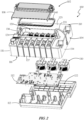
FIG. 2 is an exploded isometric view of the apparatus shown inFIG. 1 according to exemplary embodiments. -
FIG. 3 is a cutaway view of the assembly shown inFIG. 1 according to exemplary embodiments. -
FIG. 4 is a close-up side cross-sectional view of a cover and the main body of the housing of the apparatus ofFIG. 1 according to exemplary embodiments. -
FIG. 5 is an isometric cross-sectional view along cutline 5-5 ofFIG. 1 according to exemplary embodiments. -
FIG. 6 is a bottom view of the apparatus ofFIG. 1 according to exemplary embodiments. -
FIG. 7 is an isometric view of a base of the housing of the assembly shown inFIG. 1 according to exemplary embodiments - The drawings are not necessarily to scale. The drawings are merely representations, not intended to portray specific parameters of the disclosure. The drawings are intended to depict typical embodiments of the disclosure, and therefore should not be considered as limiting in scope. In the drawings, like numbering represents like elements.
- Furthermore, certain elements in some of the figures may be omitted, or illustrated not-to-scale, for illustrative clarity. Cross-sectional views may be in the form of "slices", or "near-sighted" cross-sectional views, omitting certain background lines otherwise visible in a "true" cross-sectional view, for illustrative clarity. Furthermore, for clarity, some reference numbers may be omitted in certain drawings.
- Fuse apparatuses and assemblies in accordance with the present disclosure will now be described more fully hereinafter with reference to the accompanying drawings, in which embodiments of the system and method are shown. The fuse apparatuses and assemblies, however, may be embodied in many different forms and should not be construed as being limited to the embodiments set forth herein. Rather, these embodiments are provided so that this disclosure will be thorough and complete, and will fully convey the scope of the system and method to those skilled in the art.
- Approaches herein provide a solution to combine solenoids and fuses into an integrated, compact housing assembly. In some embodiments, a printed circuit board assembly (PCBA) may be provided within the housing to allow sharing of power and multiple outputs, which may be controlled by a PCBA controller. A sealed cover of the housing protects the internally positioned fuses and solenoids from harsh environmental conditions.
- As will be further evident by the discussion that follows, at least the following advantages are achieved by the embodiments of the present disclosure. Firstly, the present disclosure integrates multiple solenoids and fuses into one smart structure, thus eliminating the need for different modules and associated wirings. Instead, the wiring layout is simplified, and thus the assembly time reduced. Secondly, the fuses and solenoids are housed in a sealed box that protects the components from dust, water, and other contaminants. Thirdly, protection is also ensured by a vent that is waterproof yet air permeable, thus permitting circulation within the housing. Fourthly, when bi-stable solenoids are employed, pulse control to drive coils in a short time may eliminate thermal issues.
- Referring to
FIGS. 1-2 , an exemplary embodiment of a fuse apparatus/assembly (hereinafter, "assembly") 100 in accordance with the present disclosure is shown. Theexemplary assembly 100 includes ahousing 102 including amain body 104, acover 106 coupled to afirst side 110 of themain body 104, and abase 112 coupled to asecond side 116 of themain body 104. Although non-limiting, the various components of thehousing 102 may be made of an insulating material, such as an insulating plastic, e.g., nylon, glass-filled nylon, polyester and polycarbonate. In various embodiments, themain body 104, thecover 106, and thebase 112 can be made of the same or different materials. - As will be described in greater detail below, the
cover 106 and themain body 104 defines afuse cavity 120. Thefuse cavity 120 includes a plurality of circuit protection devices, e.g.,fuses 124, disposed therein. Furthermore, thebase 112 and themain body 104 define amain cavity 122 housing a plurality ofsolenoids 130 and a printed circuit board (PCB) 132 therein. More specifically, themain cavity 122 may be surrounded by afirst wall 125, a pair ofside walls end walls base 112. In some embodiments, thesolenoids 130 may be electrically connected to thePCB 132. - The
cover 106 can be removed, for example, to replace an openedfuse 124 within thefuse cavity 120. In some embodiments, thecover 106 can snap-fit to themain body 104 and/or include one ormore latching fasteners 136 to releasably secure thecover 106 to themain body 104. Although not specifically illustrated, thecover 106 may also include means to further facilitate grasping and removal, such as tabs, projections, recesses, etc. In some embodiments, thecover 106 may be tethered to themain body 104 by aflexible connector 133. As further shown, thecover 106 may include a sealingmember 140 that prevents dust, moisture, and other contaminants from entering thefuse cavity 120 and themain cavity 122. - Turning now to
FIG. 3 , themain body 104 of thehousing 102 according to embodiments of the present disclosure will be described in greater detail. As shown, themain body 104 may include thefirst wall 125 connected to the pair ofside walls end walls main body 104 may include afuse perimeter wall 142 extending from thefirst wall 125, wherein thefuse perimeter wall 142 is configured to extend around and above the fuses 124 (FIG. 2 ). As shown, thefuse perimeter wall 142 may define at least an upper portion of thefuse cavity 120. Alower wall 147 of thefuse cavity 120 may include one ormore recesses 148 configured to receive one ormore fuses 124 therein. - Although non-limiting, the
fuse perimeter wall 142 may generally extend normal to a plane defined by an outer surface of thefirst wall 125. As shown, thefuse perimeter wall 142 may include anouter ledge 143 and one ormore support walls 144 operable to engage and support the cover 106 (FIGs. 1-2 ) when themain body 104 and thecover 106 are joined together. As further shown, apin 145 may extend between thesupport walls 144, wherein thepin 145 permits rotation of the latching fasteners 136 (FIGs. 1-2 ) thereabout. - Turning now to
FIG. 4 , a close-up view of a physical connection between thecover 106 and themain body 104 according to embodiments of the present disclosure will be described in greater detail. As shown, thecover 106 may be directly coupled to thefuse perimeter wall 142 along thefirst side 110 of themain body 104. In some embodiments, thecover 106 may include anattachment component 150 engaged with thefuse perimeter wall 142 and with thefastener 136. Specifically, theattachment component 150 may include ahead 151 extending from aneck 152, wherein theneck 152 extends from anouter surface 153 of thecover 106. As further shown, aninner surface 154 of thehead 151 may engage anouter surface 155 of thefuse perimeter wall 142. In some embodiments, a bottom corner of thehead 151 may engage with theouter ledge 143 along theouter surface 155 of thefuse perimeter wall 142. At an opposite end of theinner surface 154, anupper corner 157 and/or engagement surface of thehead 151 may engage with acorresponding latching surface 158 of thefastener 136 to maintain a secure connection between thefastener 136 and thecover 106 when thefastener 136 is in a closed position. - As further shown, the sealing
member 140 may extend around theouter surface 153 of thecover 106, and along/adjacent aninner surface 156 of thefuse perimeter wall 142. More specifically, the sealingmember 140 may be disposed within aslot 160 of thecover 106. As shown, a portion of thefuse perimeter wall 142 may also extend into theslot 160. In some embodiments, theslot 160 may extend around an entire perimeter of thecover 106 to provide protection to the components enclosed by thecover 106 and themain body 104. The sealingmember 140 may include acap 162 configured to extend over, and engage with, anupper surface 161 of thefuse perimeter wall 142. Connected with thecap 162 may be a series ofridges 163 engaged with theinner surface 156 of thefuse perimeter wall 142. During use, the sealingmember 140 acts as a mechanical gasket seated in theslot 160, wherein compression resulting from engagement between thecover 106 and themain body 104 creates a seal at the interface thereof. Specifically, thecap 162 may be pressed against theupper surface 161 by thehead 151 and theneck 152 of theattachment component 150, while theridges 163 may be sandwiched between theinner surface 156 of thefuse perimeter wall 142 and theouter surface 153 of thecover 106. Although non-limiting, the sealingmember 140 may be an elastomer or a polymer, such as polyethylene, PVC, nylon, etc. - As further shown in
FIG. 4 , the plurality offuses 124 is be disposed within thefuse cavity 120. In some embodiments, one ormore fuses 124 are retained withinrespective recesses 148 in thelower wall 147, whilefuse 124A may be directly coupled to aninner side 169 of thecover 106. Thefuse 124A is be secured to thecover 106 by a pair of bolts or screws 170. In some embodiments, thePCB 132 may be coupled to thelower wall 147 by a plurality of fasteners 172 (e.g., screws) secured within corresponding openings, wherein thePCB 132 is retained within themain cavity 122. Although non-limiting, thelower wall 147 may generally separate thefuse cavity 120 from themain cavity 122 of thehousing 102. - Turning now to
FIG. 5 , a cross-sectional view of theassembly 100 taken along cutline 5-5 ofFIG. 1 will be described in greater detail. As shown, theassembly 100 may include asolenoid housing 175 disposed within themain cavity 122, wherein thesolenoid housing 175 includes a plurality ofcavities 176 each containing arespective solenoid 130 therein. In some embodiments, thesolenoid housing 175 may be disposed directly atop and/or adjacent aninner surface 178 of thebase 112. - During use, each
solenoid 130 may be operable to electrically engage and disengage one or moreconductive plates 180 coupled to respective fuses 124 (not shown) upon respective application of power to thesolenoid 130. As shown, the conductive plate(s) 180 may have one ormore contacts 181 operable to engage acorresponding contact 182 of thesolenoid 130. - Although non-limiting, one or more of the
solenoids 130 may be a bi-stable electrical solenoid switch having a plunger responsive to a magnetic field. Although not shown, thesolenoids 130 may be connected to a circuit. For example, a controller, such as printed circuit board assembly (PCBA) controller, may operate with thesolenoids 130 to provide electrical connection between thesolenoids 130, one or more power sources, and other circuitry. In exemplary embodiments, thePCB 132 may the electromechanical connection between these various components. - Turning now to
FIGs. 6-7 , thebase 112 of thehousing 102 according to embodiments of the present disclosure will be described in greater detail. As shown, thebase 112 may include amain wall 183 joined together with a pair ofsidewalls end walls base 112 and themain body 104 are generally planar or flush with one another along thesecond side 116, as demonstrated inFIG. 6 . Thebase 112 and themain body 104 may be joined together using virtually any means, such as a plurality offasteners 193. Embodiments herein are not limited in this context, however. - As shown in
FIG. 7 , thebase 112 may include a plurality ofsupport pillars 188 extending into themain cavity 122. Thesupport pillars 188 may be operable to support one or more components of theassembly 100, e.g., the PCB 132 (not shown). In exemplary embodiments, thesupport pillars 188 may be integrally formed with themain wall 183 Embodiments herein are not limited to any number or configuration ofsupport pillars 188 however. - As further shown in
FIGs. 6-7 , avent 190 may be formed through themain wall 183 of thebase 112. In other embodiments, thevent 190 may be formed through any of thesidewalls end walls vent 190, which may be provided directly adjacent a mounting surface (not shown), allows a fluid such as air to flow in and out of thehousing 102, thus ensuring that a large pressure differential does not occur, e.g., due to self-heating of components (e.g., the fuses 124) within thehousing 102. Minimizing the pressure differential between the interior of thehousing 102 and the exterior of thehousing 102 also decreases stress on the seals (e.g., sealing member 140) and fasteners (e.g., latch). In some embodiments, thevent 190 may include multiple channels (not shown) extending alongmain wall 183 of the base 112 to increase air flow and decrease potential for obstruction from contaminants. Furthermore, providing thevent 190 throughmain wall 183 of the base 112 may enable thehousing 102 to be mounted in a variety of diverse locations, thus increasing versatility and value. - In some embodiments, the
vent 190 may include acover 195 including a membrane, such as an expanded polytetrafluoroethylene membrane. Thecover 195 may be both waterproof and air permeable/breathable to allow air to pass therethrough. Although not shown, thevent 190 may include one or more support components extending across a vent opening for supporting thecover 195. Furthermore, although thevent 190 and cover 195 are depicted as cylindrically shaped, other shapes and configurations for both thevent 190 and thecover 195 are possible in various alterantive embodiments. - As described above, the
PCB 132 may provide the circuit routing between the fuses and terminal connections. In some embodiments, thePCB 132 includes traces that run from the fuse mounting terminals to the connector terminals, stud connectors, etc. ThePCB 132 may be made of FR-4 material but can alternatively be ceramic if a more rigid material is needed. ThePCB 132 can be single or multilayered and is customized as desired by the customer. ThePCB 132 can provide a wider trace that serves as a buss bar or common connection for the fuse mounting terminals and connector terminals. - The
PCB 132 can also hold other types of circuit protection, such as overvoltage protection in the form of medal oxide varistors ("MOV's"), diodes, and thyristors. The overvoltage protection devices can be used for example to protect low operating voltage or signal level devices placed in the automobile. The overvoltage protection devices can be mounted on a same side of thePCB 132 as the fuses or be located on the opposite or bottom side of thePCB 132. - The foregoing discussion has been presented for purposes of illustration and description and is not intended to limit the disclosure to the form or forms disclosed herein. For example, various features of the disclosure may be grouped together in one or more aspects, embodiments, or configurations for the purpose of streamlining the disclosure. However, it should be understood that various features of the certain aspects, embodiments, or configurations of the disclosure may be combined in alternate aspects, embodiments, or configurations. Moreover, the following claims are hereby incorporated into this Detailed Description by this reference, with each claim standing on its own as a separate embodiment of the present disclosure.
- As used herein, an element or step recited in the singular and proceeded with the word "a" or "an" should be understood as not excluding plural elements or steps, unless such exclusion is explicitly recited. Furthermore, references to "one embodiment" of the present disclosure are not intended to be interpreted as excluding the existence of additional embodiments that also incorporate the recited features.
- The use of "including," "comprising," or "having" and variations thereof herein is meant to encompass the items listed thereafter and equivalents thereof as well as additional items. Accordingly, the terms "including," "comprising," or "having" and variations thereof are open-ended expressions and can be used interchangeably herein.
- The phrases "at least one", "one or more", and "and/or", as used herein, are open-ended expressions that are both conjunctive and disjunctive in operation. For example, each of the expressions "at least one of A, B and C", "at least one of A, B, or C", "one or more of A, B, and C", "one or more of A, B, or C" and "A, B, and/or C" means A alone, B alone, C alone, A and B together, A and C together, B and C together, or A, B and C together.
- All directional references (e.g., proximal, distal, upper, lower, upward, downward, left, right, lateral, longitudinal, front, back, top, bottom, above, below, vertical, horizontal, radial, axial, clockwise, and counterclockwise) are only used for identification purposes to aid the reader's understanding of the present disclosure, and do not create limitations, particularly as to the position, orientation, or use of this disclosure. Connection references (e.g., attached, coupled, connected, and joined) are to be construed broadly and may include intermediate members between a collection of elements and relative movement between elements unless otherwise indicated. As such, connection references do not necessarily infer that two elements are directly connected and in fixed relation to each other.
- Furthermore, identification references (e.g., primary, secondary, first, second, third, fourth, etc.) are not intended to connote importance or priority, but are used to distinguish one feature from another. The drawings are for purposes of illustration only and the dimensions, positions, order and relative sizes reflected in the drawings attached hereto may vary.
- Furthermore, the terms "substantial" or "substantially," as well as the terms "approximate" or "approximately," can be used interchangeably in some embodiments, and can be described using any relative measures acceptable by one of ordinary skill in the art. For example, these terms can serve as a comparison to a reference parameter, to indicate a deviation capable of providing the intended function. Although non-limiting, the deviation from the reference parameter can be, for example, in an amount of less than 1%, less than 3%, less than 5%, less than 10%, less than 15%, less than 20%, and so on. The present disclosure is not to be limited in scope by the specific embodiments described herein. Indeed, other various embodiments of and modifications to the present disclosure, in addition to those described herein, will be apparent to those of ordinary skill in the art from the foregoing description and accompanying drawings within the full scope of the appended claims.
Claims (8)
- An apparatus (100), comprising:a housing (102) including a main body (104), a cover (106) coupled to a first side (110) of the main body, and a base (112) coupled to a second side (116) of the main body, wherein the cover and the main body define a fuse cavity (120), and wherein the base and the main body define a main cavity (122);a plurality of circuit protection devices (124) disposed within the fuse cavity (120); anda plurality of solenoids (130) electrically connected to a printed circuit board (PCB) (132), wherein the plurality of circuit protection devices is disposed above the PCB, and wherein the PCB is positioned within the main cavity, characterized in that at least one (124A) of the plurality of circuit protection devices (124) is directly coupled to an inner side (169) of the cover (106).
- The apparatus of claim 1, the main body comprising:a first wall (125); anda fuse perimeter wall (142) extending from the first wall, wherein the fuse perimeter wall extends around one or more of the plurality of circuit protection devices.
- The apparatus of claim 2, further comprising a sealing member (140) extending around a surface (156) of the fuse perimeter wall.
- The apparatus of claim 3, wherein the sealing member is disposed within a slot (160) of the cover.
- The apparatus of claim 4, wherein the fuse perimeter wall extends into the slot of the cover.
- The apparatus of any of the claims 2-5, further comprising a fastener (136) rotatably coupled to the main body, the fastener operable to secure the cover and the main body together.
- The apparatus of any of the preceding claims, further comprising a solenoid housing (175) disposed within the main cavity, wherein the solenoid housing includes a plurality of cavities (176) each containing a respective solenoid of the plurality of solenoids, and wherein the solenoid housing is disposed directly adjacent an inner surface (178) of the base.
- The apparatus of any of the preceding claims, further comprising a vent (190) provided through the housing.
Applications Claiming Priority (1)
| Application Number | Priority Date | Filing Date | Title |
|---|---|---|---|
| PCT/CN2019/095597 WO2021003736A1 (en) | 2019-07-11 | 2019-07-11 | Fuse apparatus with integrated solenoids |
Publications (3)
| Publication Number | Publication Date |
|---|---|
| EP3997726A1 EP3997726A1 (en) | 2022-05-18 |
| EP3997726A4 EP3997726A4 (en) | 2023-04-05 |
| EP3997726B1 true EP3997726B1 (en) | 2025-04-09 |
Family
ID=74114348
Family Applications (1)
| Application Number | Title | Priority Date | Filing Date |
|---|---|---|---|
| EP19937036.2A Active EP3997726B1 (en) | 2019-07-11 | 2019-07-11 | Fuse apparatus with integrated solenoids |
Country Status (5)
| Country | Link |
|---|---|
| US (2) | US11842875B2 (en) |
| EP (1) | EP3997726B1 (en) |
| KR (1) | KR102691629B1 (en) |
| CN (1) | CN114223046A (en) |
| WO (1) | WO2021003736A1 (en) |
Families Citing this family (2)
| Publication number | Priority date | Publication date | Assignee | Title |
|---|---|---|---|---|
| WO2021003736A1 (en) * | 2019-07-11 | 2021-01-14 | Suzhou Littelfuse Ovs Co., Ltd. | Fuse apparatus with integrated solenoids |
| CN118232252A (en) * | 2022-12-20 | 2024-06-21 | 苏州力特奥维斯保险丝有限公司 | High voltage PDU design |
Family Cites Families (18)
| Publication number | Priority date | Publication date | Assignee | Title |
|---|---|---|---|---|
| JP2004032960A (en) * | 2002-06-28 | 2004-01-29 | Yazaki Corp | Electrical junction box and its manufacturing method |
| JP4601486B2 (en) * | 2005-04-28 | 2010-12-22 | 矢崎総業株式会社 | Busbar mounting structure |
| US9415730B2 (en) * | 2008-04-23 | 2016-08-16 | Littlefuse, Inc. | Flexible power distribution module cover assembly |
| CN201349369Y (en) | 2008-12-22 | 2009-11-18 | 奇瑞汽车股份有限公司 | Automobile front cabin electric box |
| US11335528B2 (en) * | 2011-01-19 | 2022-05-17 | Eaton Intelligent Power Limited | Fusible switching disconnect modules and devices with electromagnetic coil and trip mechanism |
| JP5696691B2 (en) | 2012-06-20 | 2015-04-08 | 住友電装株式会社 | Electrical junction box |
| CN102983046B (en) | 2012-11-21 | 2015-08-19 | 宁波市鄞州永林电子电器有限公司 | A kind of AUTOMOTIVE RELAY of sealed type band safeties |
| KR101989394B1 (en) | 2012-12-20 | 2019-06-14 | 한국단자공업 주식회사 | Box for vehicle |
| US20150016077A1 (en) | 2013-07-15 | 2015-01-15 | Delphi Technologies, Inc. | Electrical center for a vehicle |
| WO2015031885A1 (en) | 2013-08-30 | 2015-03-05 | Teleflex Medical Incorporated | Syringe with integral ampule |
| CN203707065U (en) | 2014-03-07 | 2014-07-09 | 宁波星峰机械有限公司 | Automobile front cabin fuse box assembly |
| US10199192B2 (en) * | 2014-12-30 | 2019-02-05 | Littlefuse, Inc. | Bi-stable electrical solenoid switch |
| US9911565B2 (en) * | 2015-10-01 | 2018-03-06 | Littelfuse, Inc. | Sealed modular power distribution apparatus |
| CN205149739U (en) | 2015-11-06 | 2016-04-13 | 上海埃而生电气有限公司 | Automatically controlled cabinet of low pressure for engineering machinery |
| US10249464B2 (en) * | 2016-05-20 | 2019-04-02 | Eaton Intelligent Power Limited | Modular circuit breaker and method of assembling |
| CN106061145B (en) | 2016-06-14 | 2017-11-10 | 珠海英搏尔电气股份有限公司 | Electric car electric component assembly |
| CN208622671U (en) | 2017-12-29 | 2019-03-19 | 安波福中央电气(上海)有限公司 | A kind of automobile-used PCB formula enging cabin electrical box |
| WO2021003736A1 (en) * | 2019-07-11 | 2021-01-14 | Suzhou Littelfuse Ovs Co., Ltd. | Fuse apparatus with integrated solenoids |
-
2019
- 2019-07-11 WO PCT/CN2019/095597 patent/WO2021003736A1/en not_active Ceased
- 2019-07-11 US US17/626,007 patent/US11842875B2/en active Active
- 2019-07-11 CN CN201980099298.7A patent/CN114223046A/en active Pending
- 2019-07-11 KR KR1020227002451A patent/KR102691629B1/en active Active
- 2019-07-11 EP EP19937036.2A patent/EP3997726B1/en active Active
-
2023
- 2023-11-02 US US18/500,171 patent/US12165824B2/en active Active
Also Published As
| Publication number | Publication date |
|---|---|
| US20220254593A1 (en) | 2022-08-11 |
| KR20220024919A (en) | 2022-03-03 |
| KR102691629B1 (en) | 2024-08-05 |
| US12165824B2 (en) | 2024-12-10 |
| EP3997726A4 (en) | 2023-04-05 |
| WO2021003736A1 (en) | 2021-01-14 |
| CN114223046A (en) | 2022-03-22 |
| US11842875B2 (en) | 2023-12-12 |
| EP3997726A1 (en) | 2022-05-18 |
| US20240062981A1 (en) | 2024-02-22 |
Similar Documents
| Publication | Publication Date | Title |
|---|---|---|
| US12165824B2 (en) | Fuse apparatus with integrated solenoids | |
| US4769557A (en) | Modular electric load controller | |
| US6617719B2 (en) | Brushless motor | |
| US5040097A (en) | Central electric unit for a motor vehicle | |
| US6404628B1 (en) | Integrated power electronics cooling housing | |
| US6313991B1 (en) | Power electronics system with fully-integrated cooling | |
| EP3357136B1 (en) | Sealed modular power distribution apparatus | |
| EP3024704B1 (en) | High voltage electrical center including a bulkhead | |
| EP2824776A1 (en) | Environmentally sealed electrical housing assembly with integrated connector | |
| US9343250B2 (en) | Compact bus bar assembly, switching device and power distribution system | |
| US20120261187A1 (en) | Power converting apparatus and filter switch | |
| US11019740B2 (en) | Electrical connection box | |
| EP1842217B1 (en) | Switchable fused power distribution block | |
| JP4053709B2 (en) | Brushless motor | |
| US12388333B2 (en) | Modular interface concept for an electric drive | |
| EP3687026B1 (en) | Vehicle power supply device | |
| US11120947B2 (en) | Connection structure of power storage elements and power storage module | |
| CN219812419U (en) | Motor controller, electric drive system comprising same and vehicle | |
| EP3771102B1 (en) | Solid state circuit breaker assembly | |
| US20260020156A1 (en) | Motor control device | |
| EP4576314A1 (en) | Battery control unit and high voltage power supply system | |
| EP1269273A1 (en) | Intelligent control unit | |
| JP7112308B2 (en) | Switch drive mechanism, battery unit and electric junction box | |
| CN121688594A (en) | Battery energy distribution unit and power battery |
Legal Events
| Date | Code | Title | Description |
|---|---|---|---|
| STAA | Information on the status of an ep patent application or granted ep patent |
Free format text: STATUS: THE INTERNATIONAL PUBLICATION HAS BEEN MADE |
|
| PUAI | Public reference made under article 153(3) epc to a published international application that has entered the european phase |
Free format text: ORIGINAL CODE: 0009012 |
|
| STAA | Information on the status of an ep patent application or granted ep patent |
Free format text: STATUS: REQUEST FOR EXAMINATION WAS MADE |
|
| 17P | Request for examination filed |
Effective date: 20220207 |
|
| AK | Designated contracting states |
Kind code of ref document: A1 Designated state(s): AL AT BE BG CH CY CZ DE DK EE ES FI FR GB GR HR HU IE IS IT LI LT LU LV MC MK MT NL NO PL PT RO RS SE SI SK SM TR |
|
| DAV | Request for validation of the european patent (deleted) | ||
| DAX | Request for extension of the european patent (deleted) | ||
| A4 | Supplementary search report drawn up and despatched |
Effective date: 20230303 |
|
| RIC1 | Information provided on ipc code assigned before grant |
Ipc: B60R 16/023 20060101ALN20230227BHEP Ipc: H01H 85/00 20060101ALI20230227BHEP Ipc: H05K 5/00 20060101ALI20230227BHEP Ipc: H01H 85/02 20060101ALI20230227BHEP Ipc: H01H 85/20 20060101AFI20230227BHEP |
|
| GRAP | Despatch of communication of intention to grant a patent |
Free format text: ORIGINAL CODE: EPIDOSNIGR1 |
|
| STAA | Information on the status of an ep patent application or granted ep patent |
Free format text: STATUS: GRANT OF PATENT IS INTENDED |
|
| RIC1 | Information provided on ipc code assigned before grant |
Ipc: B60R 16/023 20060101ALN20241127BHEP Ipc: H01H 85/00 20060101ALI20241127BHEP Ipc: H05K 5/00 20060101ALI20241127BHEP Ipc: H01H 85/02 20060101ALI20241127BHEP Ipc: H01H 85/20 20060101AFI20241127BHEP |
|
| INTG | Intention to grant announced |
Effective date: 20241205 |
|
| RAP3 | Party data changed (applicant data changed or rights of an application transferred) |
Owner name: SUZHOU LITTELFUSE OVS CO., LTD. |
|
| P01 | Opt-out of the competence of the unified patent court (upc) registered |
Free format text: CASE NUMBER: APP_695/2025 Effective date: 20250108 |
|
| GRAS | Grant fee paid |
Free format text: ORIGINAL CODE: EPIDOSNIGR3 |
|
| GRAA | (expected) grant |
Free format text: ORIGINAL CODE: 0009210 |
|
| STAA | Information on the status of an ep patent application or granted ep patent |
Free format text: STATUS: THE PATENT HAS BEEN GRANTED |
|
| AK | Designated contracting states |
Kind code of ref document: B1 Designated state(s): AL AT BE BG CH CY CZ DE DK EE ES FI FR GB GR HR HU IE IS IT LI LT LU LV MC MK MT NL NO PL PT RO RS SE SI SK SM TR |
|
| REG | Reference to a national code |
Ref country code: GB Ref legal event code: FG4D |
|
| REG | Reference to a national code |
Ref country code: CH Ref legal event code: EP |
|
| REG | Reference to a national code |
Ref country code: DE Ref legal event code: R096 Ref document number: 602019068586 Country of ref document: DE |
|
| REG | Reference to a national code |
Ref country code: IE Ref legal event code: FG4D |
|
| PGFP | Annual fee paid to national office [announced via postgrant information from national office to epo] |
Ref country code: GB Payment date: 20250529 Year of fee payment: 7 |
|
| REG | Reference to a national code |
Ref country code: NL Ref legal event code: MP Effective date: 20250409 |
|
| PG25 | Lapsed in a contracting state [announced via postgrant information from national office to epo] |
Ref country code: NL Free format text: LAPSE BECAUSE OF FAILURE TO SUBMIT A TRANSLATION OF THE DESCRIPTION OR TO PAY THE FEE WITHIN THE PRESCRIBED TIME-LIMIT Effective date: 20250409 |
|
| REG | Reference to a national code |
Ref country code: AT Ref legal event code: MK05 Ref document number: 1784360 Country of ref document: AT Kind code of ref document: T Effective date: 20250409 |
|
| PG25 | Lapsed in a contracting state [announced via postgrant information from national office to epo] |
Ref country code: PT Free format text: LAPSE BECAUSE OF FAILURE TO SUBMIT A TRANSLATION OF THE DESCRIPTION OR TO PAY THE FEE WITHIN THE PRESCRIBED TIME-LIMIT Effective date: 20250811 Ref country code: ES Free format text: LAPSE BECAUSE OF FAILURE TO SUBMIT A TRANSLATION OF THE DESCRIPTION OR TO PAY THE FEE WITHIN THE PRESCRIBED TIME-LIMIT Effective date: 20250409 Ref country code: FI Free format text: LAPSE BECAUSE OF FAILURE TO SUBMIT A TRANSLATION OF THE DESCRIPTION OR TO PAY THE FEE WITHIN THE PRESCRIBED TIME-LIMIT Effective date: 20250409 |
|
| PGFP | Annual fee paid to national office [announced via postgrant information from national office to epo] |
Ref country code: DE Payment date: 20250604 Year of fee payment: 7 |
|
| REG | Reference to a national code |
Ref country code: LT Ref legal event code: MG9D |
|
| PG25 | Lapsed in a contracting state [announced via postgrant information from national office to epo] |
Ref country code: GR Free format text: LAPSE BECAUSE OF FAILURE TO SUBMIT A TRANSLATION OF THE DESCRIPTION OR TO PAY THE FEE WITHIN THE PRESCRIBED TIME-LIMIT Effective date: 20250710 Ref country code: NO Free format text: LAPSE BECAUSE OF FAILURE TO SUBMIT A TRANSLATION OF THE DESCRIPTION OR TO PAY THE FEE WITHIN THE PRESCRIBED TIME-LIMIT Effective date: 20250709 |
|
| PG25 | Lapsed in a contracting state [announced via postgrant information from national office to epo] |
Ref country code: PL Free format text: LAPSE BECAUSE OF FAILURE TO SUBMIT A TRANSLATION OF THE DESCRIPTION OR TO PAY THE FEE WITHIN THE PRESCRIBED TIME-LIMIT Effective date: 20250409 |
|
| PGFP | Annual fee paid to national office [announced via postgrant information from national office to epo] |
Ref country code: IT Payment date: 20250623 Year of fee payment: 7 |
|
| PG25 | Lapsed in a contracting state [announced via postgrant information from national office to epo] |
Ref country code: BG Free format text: LAPSE BECAUSE OF FAILURE TO SUBMIT A TRANSLATION OF THE DESCRIPTION OR TO PAY THE FEE WITHIN THE PRESCRIBED TIME-LIMIT Effective date: 20250409 |
|
| PG25 | Lapsed in a contracting state [announced via postgrant information from national office to epo] |
Ref country code: HR Free format text: LAPSE BECAUSE OF FAILURE TO SUBMIT A TRANSLATION OF THE DESCRIPTION OR TO PAY THE FEE WITHIN THE PRESCRIBED TIME-LIMIT Effective date: 20250409 |
|
| PG25 | Lapsed in a contracting state [announced via postgrant information from national office to epo] |
Ref country code: AT Free format text: LAPSE BECAUSE OF FAILURE TO SUBMIT A TRANSLATION OF THE DESCRIPTION OR TO PAY THE FEE WITHIN THE PRESCRIBED TIME-LIMIT Effective date: 20250409 |
|
| PG25 | Lapsed in a contracting state [announced via postgrant information from national office to epo] |
Ref country code: RS Free format text: LAPSE BECAUSE OF FAILURE TO SUBMIT A TRANSLATION OF THE DESCRIPTION OR TO PAY THE FEE WITHIN THE PRESCRIBED TIME-LIMIT Effective date: 20250709 |
|
| PG25 | Lapsed in a contracting state [announced via postgrant information from national office to epo] |
Ref country code: IS Free format text: LAPSE BECAUSE OF FAILURE TO SUBMIT A TRANSLATION OF THE DESCRIPTION OR TO PAY THE FEE WITHIN THE PRESCRIBED TIME-LIMIT Effective date: 20250809 |
|
| PG25 | Lapsed in a contracting state [announced via postgrant information from national office to epo] |
Ref country code: LV Free format text: LAPSE BECAUSE OF FAILURE TO SUBMIT A TRANSLATION OF THE DESCRIPTION OR TO PAY THE FEE WITHIN THE PRESCRIBED TIME-LIMIT Effective date: 20250409 |
|
| REG | Reference to a national code |
Ref country code: DE Ref legal event code: R097 Ref document number: 602019068586 Country of ref document: DE |
|
| PG25 | Lapsed in a contracting state [announced via postgrant information from national office to epo] |
Ref country code: SM Free format text: LAPSE BECAUSE OF FAILURE TO SUBMIT A TRANSLATION OF THE DESCRIPTION OR TO PAY THE FEE WITHIN THE PRESCRIBED TIME-LIMIT Effective date: 20250409 Ref country code: DK Free format text: LAPSE BECAUSE OF FAILURE TO SUBMIT A TRANSLATION OF THE DESCRIPTION OR TO PAY THE FEE WITHIN THE PRESCRIBED TIME-LIMIT Effective date: 20250409 |
|
| PG25 | Lapsed in a contracting state [announced via postgrant information from national office to epo] |
Ref country code: CZ Free format text: LAPSE BECAUSE OF FAILURE TO SUBMIT A TRANSLATION OF THE DESCRIPTION OR TO PAY THE FEE WITHIN THE PRESCRIBED TIME-LIMIT Effective date: 20250409 |
|
| PG25 | Lapsed in a contracting state [announced via postgrant information from national office to epo] |
Ref country code: EE Free format text: LAPSE BECAUSE OF FAILURE TO SUBMIT A TRANSLATION OF THE DESCRIPTION OR TO PAY THE FEE WITHIN THE PRESCRIBED TIME-LIMIT Effective date: 20250409 |
|
| PG25 | Lapsed in a contracting state [announced via postgrant information from national office to epo] |
Ref country code: SK Free format text: LAPSE BECAUSE OF FAILURE TO SUBMIT A TRANSLATION OF THE DESCRIPTION OR TO PAY THE FEE WITHIN THE PRESCRIBED TIME-LIMIT Effective date: 20250409 Ref country code: RO Free format text: LAPSE BECAUSE OF FAILURE TO SUBMIT A TRANSLATION OF THE DESCRIPTION OR TO PAY THE FEE WITHIN THE PRESCRIBED TIME-LIMIT Effective date: 20250409 |
|
| PLBE | No opposition filed within time limit |
Free format text: ORIGINAL CODE: 0009261 |
|
| STAA | Information on the status of an ep patent application or granted ep patent |
Free format text: STATUS: NO OPPOSITION FILED WITHIN TIME LIMIT |
|
| REG | Reference to a national code |
Ref country code: CH Ref legal event code: L10 Free format text: ST27 STATUS EVENT CODE: U-0-0-L10-L00 (AS PROVIDED BY THE NATIONAL OFFICE) Effective date: 20260218 |
|
| REG | Reference to a national code |
Ref country code: CH Ref legal event code: H13 Free format text: ST27 STATUS EVENT CODE: U-0-0-H10-H13 (AS PROVIDED BY THE NATIONAL OFFICE) Effective date: 20260224 |
|
| PG25 | Lapsed in a contracting state [announced via postgrant information from national office to epo] |
Ref country code: LU Free format text: LAPSE BECAUSE OF NON-PAYMENT OF DUE FEES Effective date: 20250711 |
|
| 26N | No opposition filed |
Effective date: 20260112 |
|
| REG | Reference to a national code |
Ref country code: BE Ref legal event code: MM Effective date: 20250731 |
|
| PG25 | Lapsed in a contracting state [announced via postgrant information from national office to epo] |
Ref country code: BE Free format text: LAPSE BECAUSE OF NON-PAYMENT OF DUE FEES Effective date: 20250731 |
|
| PG25 | Lapsed in a contracting state [announced via postgrant information from national office to epo] |
Ref country code: FR Free format text: LAPSE BECAUSE OF NON-PAYMENT OF DUE FEES Effective date: 20250731 |
|
| PG25 | Lapsed in a contracting state [announced via postgrant information from national office to epo] |
Ref country code: CH Free format text: LAPSE BECAUSE OF NON-PAYMENT OF DUE FEES Effective date: 20250731 |