EP3995504A1 - Method for purifying virus or virus-like particle - Google Patents
Method for purifying virus or virus-like particle Download PDFInfo
- Publication number
- EP3995504A1 EP3995504A1 EP20834280.8A EP20834280A EP3995504A1 EP 3995504 A1 EP3995504 A1 EP 3995504A1 EP 20834280 A EP20834280 A EP 20834280A EP 3995504 A1 EP3995504 A1 EP 3995504A1
- Authority
- EP
- European Patent Office
- Prior art keywords
- virus
- particle
- liquid
- aav
- water
- Prior art date
- Legal status (The legal status is an assumption and is not a legal conclusion. Google has not performed a legal analysis and makes no representation as to the accuracy of the status listed.)
- Pending
Links
- 239000002245 particle Substances 0.000 title claims abstract description 125
- 241000700605 Viruses Species 0.000 title claims abstract description 114
- 238000000034 method Methods 0.000 title claims abstract description 71
- 239000007788 liquid Substances 0.000 claims abstract description 191
- 150000002484 inorganic compounds Chemical class 0.000 claims abstract description 77
- 229910010272 inorganic material Inorganic materials 0.000 claims abstract description 77
- OYPRJOBELJOOCE-UHFFFAOYSA-N Calcium Chemical compound [Ca] OYPRJOBELJOOCE-UHFFFAOYSA-N 0.000 claims abstract description 7
- FYYHWMGAXLPEAU-UHFFFAOYSA-N Magnesium Chemical compound [Mg] FYYHWMGAXLPEAU-UHFFFAOYSA-N 0.000 claims abstract description 7
- XAGFODPZIPBFFR-UHFFFAOYSA-N aluminium Chemical compound [Al] XAGFODPZIPBFFR-UHFFFAOYSA-N 0.000 claims abstract description 7
- 229910052782 aluminium Inorganic materials 0.000 claims abstract description 7
- 239000011575 calcium Substances 0.000 claims abstract description 7
- 229910052791 calcium Inorganic materials 0.000 claims abstract description 7
- 239000011777 magnesium Substances 0.000 claims abstract description 7
- 229910052749 magnesium Inorganic materials 0.000 claims abstract description 7
- OKTJSMMVPCPJKN-UHFFFAOYSA-N Carbon Chemical compound [C] OKTJSMMVPCPJKN-UHFFFAOYSA-N 0.000 claims description 117
- 108090000623 proteins and genes Proteins 0.000 claims description 80
- 102000004169 proteins and genes Human genes 0.000 claims description 79
- ZLNQQNXFFQJAID-UHFFFAOYSA-L magnesium carbonate Chemical compound [Mg+2].[O-]C([O-])=O ZLNQQNXFFQJAID-UHFFFAOYSA-L 0.000 claims description 58
- 239000001095 magnesium carbonate Substances 0.000 claims description 58
- 229910000021 magnesium carbonate Inorganic materials 0.000 claims description 58
- 102000039446 nucleic acids Human genes 0.000 claims description 37
- 108020004707 nucleic acids Proteins 0.000 claims description 37
- 150000007523 nucleic acids Chemical class 0.000 claims description 37
- 241000702421 Dependoparvovirus Species 0.000 claims description 20
- 238000001042 affinity chromatography Methods 0.000 claims description 16
- OSGAYBCDTDRGGQ-UHFFFAOYSA-L calcium sulfate Chemical compound [Ca+2].[O-]S([O-])(=O)=O OSGAYBCDTDRGGQ-UHFFFAOYSA-L 0.000 claims description 14
- 238000004587 chromatography analysis Methods 0.000 claims description 13
- VTHJTEIRLNZDEV-UHFFFAOYSA-L magnesium dihydroxide Chemical compound [OH-].[OH-].[Mg+2] VTHJTEIRLNZDEV-UHFFFAOYSA-L 0.000 claims description 8
- 239000000347 magnesium hydroxide Substances 0.000 claims description 8
- 229910001862 magnesium hydroxide Inorganic materials 0.000 claims description 8
- 239000000395 magnesium oxide Substances 0.000 claims description 8
- CPLXHLVBOLITMK-UHFFFAOYSA-N magnesium oxide Inorganic materials [Mg]=O CPLXHLVBOLITMK-UHFFFAOYSA-N 0.000 claims description 8
- AXZKOIWUVFPNLO-UHFFFAOYSA-N magnesium;oxygen(2-) Chemical compound [O-2].[Mg+2] AXZKOIWUVFPNLO-UHFFFAOYSA-N 0.000 claims description 8
- 239000000463 material Substances 0.000 claims description 7
- TWNQGVIAIRXVLR-UHFFFAOYSA-N oxo(oxoalumanyloxy)alumane Chemical compound O=[Al]O[Al]=O TWNQGVIAIRXVLR-UHFFFAOYSA-N 0.000 claims description 7
- 239000012930 cell culture fluid Substances 0.000 claims description 6
- 238000004519 manufacturing process Methods 0.000 claims description 5
- 210000004102 animal cell Anatomy 0.000 claims description 3
- 210000004027 cell Anatomy 0.000 description 74
- 239000012535 impurity Substances 0.000 description 45
- 239000000203 mixture Substances 0.000 description 36
- 239000000706 filtrate Substances 0.000 description 29
- 239000012528 membrane Substances 0.000 description 24
- FAPWRFPIFSIZLT-UHFFFAOYSA-M Sodium chloride Chemical compound [Na+].[Cl-] FAPWRFPIFSIZLT-UHFFFAOYSA-M 0.000 description 22
- 239000000654 additive Substances 0.000 description 22
- 230000000996 additive effect Effects 0.000 description 22
- 238000000746 purification Methods 0.000 description 21
- 230000000052 comparative effect Effects 0.000 description 18
- 238000000354 decomposition reaction Methods 0.000 description 17
- 241000713666 Lentivirus Species 0.000 description 16
- TWRXJAOTZQYOKJ-UHFFFAOYSA-L Magnesium chloride Chemical compound [Mg+2].[Cl-].[Cl-] TWRXJAOTZQYOKJ-UHFFFAOYSA-L 0.000 description 16
- 239000006228 supernatant Substances 0.000 description 16
- 238000000108 ultra-filtration Methods 0.000 description 16
- 239000002953 phosphate buffered saline Substances 0.000 description 15
- 239000011148 porous material Substances 0.000 description 15
- 102000004533 Endonucleases Human genes 0.000 description 12
- 108010042407 Endonucleases Proteins 0.000 description 12
- 239000003463 adsorbent Substances 0.000 description 12
- 238000005259 measurement Methods 0.000 description 12
- 101710163270 Nuclease Proteins 0.000 description 11
- 239000006285 cell suspension Substances 0.000 description 11
- 239000011780 sodium chloride Substances 0.000 description 11
- 230000000694 effects Effects 0.000 description 10
- 238000009826 distribution Methods 0.000 description 9
- 238000011084 recovery Methods 0.000 description 9
- XLYOFNOQVPJJNP-UHFFFAOYSA-N water Substances O XLYOFNOQVPJJNP-UHFFFAOYSA-N 0.000 description 9
- 239000007864 aqueous solution Substances 0.000 description 8
- 229910001629 magnesium chloride Inorganic materials 0.000 description 8
- 239000013612 plasmid Substances 0.000 description 8
- -1 polypropylene Polymers 0.000 description 8
- 239000000243 solution Substances 0.000 description 8
- 239000000126 substance Substances 0.000 description 8
- 230000004913 activation Effects 0.000 description 7
- 238000001914 filtration Methods 0.000 description 7
- 238000002360 preparation method Methods 0.000 description 7
- 239000004695 Polyether sulfone Substances 0.000 description 6
- 239000003610 charcoal Substances 0.000 description 6
- 239000003153 chemical reaction reagent Substances 0.000 description 6
- 229920006393 polyether sulfone Polymers 0.000 description 6
- 239000002994 raw material Substances 0.000 description 6
- 238000005199 ultracentrifugation Methods 0.000 description 6
- 229920002274 Nalgene Polymers 0.000 description 5
- 238000005119 centrifugation Methods 0.000 description 5
- 239000012531 culture fluid Substances 0.000 description 5
- 238000004090 dissolution Methods 0.000 description 5
- 238000011156 evaluation Methods 0.000 description 5
- 159000000003 magnesium salts Chemical class 0.000 description 5
- 238000002203 pretreatment Methods 0.000 description 5
- 238000003753 real-time PCR Methods 0.000 description 5
- 238000000926 separation method Methods 0.000 description 5
- YMHOBZXQZVXHBM-UHFFFAOYSA-N 2,5-dimethoxy-4-bromophenethylamine Chemical compound COC1=CC(CCN)=C(OC)C=C1Br YMHOBZXQZVXHBM-UHFFFAOYSA-N 0.000 description 4
- AXMJGXMRGDCRND-UHFFFAOYSA-N 2-[2-[2-[2-[2-[2-[2-[2-[2-[2-[4-(2,4,4-trimethylpentan-2-yl)cyclohexyl]oxyethoxy]ethoxy]ethoxy]ethoxy]ethoxy]ethoxy]ethoxy]ethoxy]ethoxy]ethanol Chemical compound CC(C)(C)CC(C)(C)C1CCC(OCCOCCOCCOCCOCCOCCOCCOCCOCCOCCO)CC1 AXMJGXMRGDCRND-UHFFFAOYSA-N 0.000 description 4
- 241000702423 Adeno-associated virus - 2 Species 0.000 description 4
- PNEYBMLMFCGWSK-UHFFFAOYSA-N Alumina Chemical compound [O-2].[O-2].[O-2].[Al+3].[Al+3] PNEYBMLMFCGWSK-UHFFFAOYSA-N 0.000 description 4
- NBIIXXVUZAFLBC-UHFFFAOYSA-N Phosphoric acid Chemical compound OP(O)(O)=O NBIIXXVUZAFLBC-UHFFFAOYSA-N 0.000 description 4
- 241000545067 Venus Species 0.000 description 4
- 239000000872 buffer Substances 0.000 description 4
- 238000004113 cell culture Methods 0.000 description 4
- 239000000356 contaminant Substances 0.000 description 4
- 239000012228 culture supernatant Substances 0.000 description 4
- 239000012530 fluid Substances 0.000 description 4
- 102000034287 fluorescent proteins Human genes 0.000 description 4
- 108091006047 fluorescent proteins Proteins 0.000 description 4
- 150000003839 salts Chemical class 0.000 description 4
- 239000002023 wood Substances 0.000 description 4
- JIAARYAFYJHUJI-UHFFFAOYSA-L zinc dichloride Chemical compound [Cl-].[Cl-].[Zn+2] JIAARYAFYJHUJI-UHFFFAOYSA-L 0.000 description 4
- 241001655883 Adeno-associated virus - 1 Species 0.000 description 3
- 241001634120 Adeno-associated virus - 5 Species 0.000 description 3
- 241000972680 Adeno-associated virus - 6 Species 0.000 description 3
- 108091003079 Bovine Serum Albumin Proteins 0.000 description 3
- 102000008186 Collagen Human genes 0.000 description 3
- 108010035532 Collagen Proteins 0.000 description 3
- 239000006144 Dulbecco’s modified Eagle's medium Substances 0.000 description 3
- WSFSSNUMVMOOMR-UHFFFAOYSA-N Formaldehyde Chemical compound O=C WSFSSNUMVMOOMR-UHFFFAOYSA-N 0.000 description 3
- VYPSYNLAJGMNEJ-UHFFFAOYSA-N Silicium dioxide Chemical compound O=[Si]=O VYPSYNLAJGMNEJ-UHFFFAOYSA-N 0.000 description 3
- 239000007983 Tris buffer Substances 0.000 description 3
- 229940098773 bovine serum albumin Drugs 0.000 description 3
- 229920002678 cellulose Polymers 0.000 description 3
- 239000001913 cellulose Substances 0.000 description 3
- 238000006243 chemical reaction Methods 0.000 description 3
- 229920001436 collagen Polymers 0.000 description 3
- 239000013078 crystal Substances 0.000 description 3
- 238000005516 engineering process Methods 0.000 description 3
- 239000006167 equilibration buffer Substances 0.000 description 3
- 238000002474 experimental method Methods 0.000 description 3
- 239000007789 gas Substances 0.000 description 3
- 238000001415 gene therapy Methods 0.000 description 3
- 239000001963 growth medium Substances 0.000 description 3
- 208000015181 infectious disease Diseases 0.000 description 3
- 239000003446 ligand Substances 0.000 description 3
- 150000002681 magnesium compounds Chemical class 0.000 description 3
- 239000008363 phosphate buffer Substances 0.000 description 3
- 239000000843 powder Substances 0.000 description 3
- 238000001179 sorption measurement Methods 0.000 description 3
- 239000004094 surface-active agent Substances 0.000 description 3
- 239000000725 suspension Substances 0.000 description 3
- LENZDBCJOHFCAS-UHFFFAOYSA-N tris Chemical compound OCC(N)(CO)CO LENZDBCJOHFCAS-UHFFFAOYSA-N 0.000 description 3
- 229960005486 vaccine Drugs 0.000 description 3
- 239000013607 AAV vector Substances 0.000 description 2
- CURLTUGMZLYLDI-UHFFFAOYSA-N Carbon dioxide Chemical compound O=C=O CURLTUGMZLYLDI-UHFFFAOYSA-N 0.000 description 2
- KCXVZYZYPLLWCC-UHFFFAOYSA-N EDTA Chemical compound OC(=O)CN(CC(O)=O)CCN(CC(O)=O)CC(O)=O KCXVZYZYPLLWCC-UHFFFAOYSA-N 0.000 description 2
- 241000709661 Enterovirus Species 0.000 description 2
- 239000012999 MAX PEI reagent Substances 0.000 description 2
- CSNNHWWHGAXBCP-UHFFFAOYSA-L Magnesium sulfate Chemical compound [Mg+2].[O-][S+2]([O-])([O-])[O-] CSNNHWWHGAXBCP-UHFFFAOYSA-L 0.000 description 2
- 239000004743 Polypropylene Substances 0.000 description 2
- MCMNRKCIXSYSNV-UHFFFAOYSA-N Zirconium dioxide Chemical compound O=[Zr]=O MCMNRKCIXSYSNV-UHFFFAOYSA-N 0.000 description 2
- MZVQCMJNVPIDEA-UHFFFAOYSA-N [CH2]CN(CC)CC Chemical group [CH2]CN(CC)CC MZVQCMJNVPIDEA-UHFFFAOYSA-N 0.000 description 2
- 229910000147 aluminium phosphate Inorganic materials 0.000 description 2
- 239000011324 bead Substances 0.000 description 2
- 239000007853 buffer solution Substances 0.000 description 2
- 210000000234 capsid Anatomy 0.000 description 2
- 239000013592 cell lysate Substances 0.000 description 2
- 239000003795 chemical substances by application Substances 0.000 description 2
- 239000003245 coal Substances 0.000 description 2
- 238000007398 colorimetric assay Methods 0.000 description 2
- 239000000306 component Substances 0.000 description 2
- ZPWVASYFFYYZEW-UHFFFAOYSA-L dipotassium hydrogen phosphate Chemical compound [K+].[K+].OP([O-])([O-])=O ZPWVASYFFYYZEW-UHFFFAOYSA-L 0.000 description 2
- 239000012149 elution buffer Substances 0.000 description 2
- 230000005284 excitation Effects 0.000 description 2
- 239000000835 fiber Substances 0.000 description 2
- 230000004907 flux Effects 0.000 description 2
- 238000003384 imaging method Methods 0.000 description 2
- 229910052500 inorganic mineral Inorganic materials 0.000 description 2
- 239000003077 lignite Substances 0.000 description 2
- WRUGWIBCXHJTDG-UHFFFAOYSA-L magnesium sulfate heptahydrate Chemical compound O.O.O.O.O.O.O.[Mg+2].[O-]S([O-])(=O)=O WRUGWIBCXHJTDG-UHFFFAOYSA-L 0.000 description 2
- 229940061634 magnesium sulfate heptahydrate Drugs 0.000 description 2
- 239000002609 medium Substances 0.000 description 2
- 235000010755 mineral Nutrition 0.000 description 2
- 239000011707 mineral Substances 0.000 description 2
- 230000001293 nucleolytic effect Effects 0.000 description 2
- 239000003415 peat Substances 0.000 description 2
- 239000000825 pharmaceutical preparation Substances 0.000 description 2
- 150000003013 phosphoric acid derivatives Chemical class 0.000 description 2
- 229920002338 polyhydroxyethylmethacrylate Polymers 0.000 description 2
- 229920001155 polypropylene Polymers 0.000 description 2
- 238000002731 protein assay Methods 0.000 description 2
- 239000011541 reaction mixture Substances 0.000 description 2
- 230000001603 reducing effect Effects 0.000 description 2
- GHMLBKRAJCXXBS-UHFFFAOYSA-N resorcinol Chemical compound OC1=CC=CC(O)=C1 GHMLBKRAJCXXBS-UHFFFAOYSA-N 0.000 description 2
- 238000003980 solgel method Methods 0.000 description 2
- 239000002904 solvent Substances 0.000 description 2
- 238000004448 titration Methods 0.000 description 2
- 239000012096 transfection reagent Substances 0.000 description 2
- 239000013598 vector Substances 0.000 description 2
- 239000011592 zinc chloride Substances 0.000 description 2
- 235000005074 zinc chloride Nutrition 0.000 description 2
- QKNYBSVHEMOAJP-UHFFFAOYSA-N 2-amino-2-(hydroxymethyl)propane-1,3-diol;hydron;chloride Chemical compound Cl.OCC(N)(CO)CO QKNYBSVHEMOAJP-UHFFFAOYSA-N 0.000 description 1
- KXGFMDJXCMQABM-UHFFFAOYSA-N 2-methoxy-6-methylphenol Chemical compound [CH]OC1=CC=CC([CH])=C1O KXGFMDJXCMQABM-UHFFFAOYSA-N 0.000 description 1
- QJZYHAIUNVAGQP-UHFFFAOYSA-N 3-nitrobicyclo[2.2.1]hept-5-ene-2,3-dicarboxylic acid Chemical compound C1C2C=CC1C(C(=O)O)C2(C(O)=O)[N+]([O-])=O QJZYHAIUNVAGQP-UHFFFAOYSA-N 0.000 description 1
- NLHHRLWOUZZQLW-UHFFFAOYSA-N Acrylonitrile Chemical compound C=CC#N NLHHRLWOUZZQLW-UHFFFAOYSA-N 0.000 description 1
- 241000580270 Adeno-associated virus - 4 Species 0.000 description 1
- 229920000936 Agarose Polymers 0.000 description 1
- 241000228212 Aspergillus Species 0.000 description 1
- IJGRMHOSHXDMSA-UHFFFAOYSA-N Atomic nitrogen Chemical compound N#N IJGRMHOSHXDMSA-UHFFFAOYSA-N 0.000 description 1
- 241000193830 Bacillus <bacterium> Species 0.000 description 1
- 244000063299 Bacillus subtilis Species 0.000 description 1
- 235000014469 Bacillus subtilis Nutrition 0.000 description 1
- 241000894006 Bacteria Species 0.000 description 1
- 108010017384 Blood Proteins Proteins 0.000 description 1
- 102000004506 Blood Proteins Human genes 0.000 description 1
- 229920001661 Chitosan Polymers 0.000 description 1
- KRKNYBCHXYNGOX-UHFFFAOYSA-K Citrate Chemical compound [O-]C(=O)CC(O)(CC([O-])=O)C([O-])=O KRKNYBCHXYNGOX-UHFFFAOYSA-K 0.000 description 1
- 241000709687 Coxsackievirus Species 0.000 description 1
- 239000012591 Dulbecco’s Phosphate Buffered Saline Substances 0.000 description 1
- 241001466953 Echovirus Species 0.000 description 1
- 241000991587 Enterovirus C Species 0.000 description 1
- 102000004190 Enzymes Human genes 0.000 description 1
- 108090000790 Enzymes Proteins 0.000 description 1
- 241000588724 Escherichia coli Species 0.000 description 1
- 241000233866 Fungi Species 0.000 description 1
- HTTJABKRGRZYRN-UHFFFAOYSA-N Heparin Chemical compound OC1C(NC(=O)C)C(O)OC(COS(O)(=O)=O)C1OC1C(OS(O)(=O)=O)C(O)C(OC2C(C(OS(O)(=O)=O)C(OC3C(C(O)C(O)C(O3)C(O)=O)OS(O)(=O)=O)C(CO)O2)NS(O)(=O)=O)C(C(O)=O)O1 HTTJABKRGRZYRN-UHFFFAOYSA-N 0.000 description 1
- 241000724675 Hepatitis E virus Species 0.000 description 1
- 241000709721 Hepatovirus A Species 0.000 description 1
- 241000238631 Hexapoda Species 0.000 description 1
- 241000701806 Human papillomavirus Species 0.000 description 1
- WOBHKFSMXKNTIM-UHFFFAOYSA-N Hydroxyethyl methacrylate Chemical compound CC(=C)C(=O)OCCO WOBHKFSMXKNTIM-UHFFFAOYSA-N 0.000 description 1
- 241000712079 Measles morbillivirus Species 0.000 description 1
- 229920000877 Melamine resin Polymers 0.000 description 1
- 241000711408 Murine respirovirus Species 0.000 description 1
- 239000000020 Nitrocellulose Substances 0.000 description 1
- 241001263478 Norovirus Species 0.000 description 1
- 239000012807 PCR reagent Substances 0.000 description 1
- ISWSIDIOOBJBQZ-UHFFFAOYSA-N Phenol Chemical compound OC1=CC=CC=C1 ISWSIDIOOBJBQZ-UHFFFAOYSA-N 0.000 description 1
- 239000004698 Polyethylene Substances 0.000 description 1
- 229920001213 Polysorbate 20 Polymers 0.000 description 1
- 241000125945 Protoparvovirus Species 0.000 description 1
- 229920000297 Rayon Polymers 0.000 description 1
- 241000702670 Rotavirus Species 0.000 description 1
- 240000004808 Saccharomyces cerevisiae Species 0.000 description 1
- 241000369757 Sapovirus Species 0.000 description 1
- 108010071390 Serum Albumin Proteins 0.000 description 1
- 102000007562 Serum Albumin Human genes 0.000 description 1
- 241000700584 Simplexvirus Species 0.000 description 1
- 241000700618 Vaccinia virus Species 0.000 description 1
- 239000002253 acid Substances 0.000 description 1
- 239000003929 acidic solution Substances 0.000 description 1
- 239000004480 active ingredient Substances 0.000 description 1
- 230000004931 aggregating effect Effects 0.000 description 1
- 239000003570 air Substances 0.000 description 1
- 238000004458 analytical method Methods 0.000 description 1
- 238000005571 anion exchange chromatography Methods 0.000 description 1
- RHZUVFJBSILHOK-UHFFFAOYSA-N anthracen-1-ylmethanolate Chemical compound C1=CC=C2C=C3C(C[O-])=CC=CC3=CC2=C1 RHZUVFJBSILHOK-UHFFFAOYSA-N 0.000 description 1
- 239000003830 anthracite Substances 0.000 description 1
- 244000309743 astrovirus Species 0.000 description 1
- 230000001580 bacterial effect Effects 0.000 description 1
- JRPBQTZRNDNNOP-UHFFFAOYSA-N barium titanate Chemical compound [Ba+2].[Ba+2].[O-][Ti]([O-])([O-])[O-] JRPBQTZRNDNNOP-UHFFFAOYSA-N 0.000 description 1
- 229910002113 barium titanate Inorganic materials 0.000 description 1
- 229960000074 biopharmaceutical Drugs 0.000 description 1
- 239000002775 capsule Substances 0.000 description 1
- 229910052799 carbon Inorganic materials 0.000 description 1
- 239000001569 carbon dioxide Substances 0.000 description 1
- 229910002092 carbon dioxide Inorganic materials 0.000 description 1
- 239000003575 carbonaceous material Substances 0.000 description 1
- 150000005323 carbonate salts Chemical class 0.000 description 1
- 238000003763 carbonization Methods 0.000 description 1
- 238000005277 cation exchange chromatography Methods 0.000 description 1
- 229920002301 cellulose acetate Polymers 0.000 description 1
- 210000004978 chinese hamster ovary cell Anatomy 0.000 description 1
- 239000007979 citrate buffer Substances 0.000 description 1
- 238000004440 column chromatography Methods 0.000 description 1
- 239000000567 combustion gas Substances 0.000 description 1
- 150000001875 compounds Chemical class 0.000 description 1
- 239000012141 concentrate Substances 0.000 description 1
- 238000007796 conventional method Methods 0.000 description 1
- 239000011162 core material Substances 0.000 description 1
- 230000001186 cumulative effect Effects 0.000 description 1
- 230000003247 decreasing effect Effects 0.000 description 1
- 239000008380 degradant Substances 0.000 description 1
- 238000011161 development Methods 0.000 description 1
- 238000000502 dialysis Methods 0.000 description 1
- 229910001873 dinitrogen Inorganic materials 0.000 description 1
- BNIILDVGGAEEIG-UHFFFAOYSA-L disodium hydrogen phosphate Chemical compound [Na+].[Na+].OP([O-])([O-])=O BNIILDVGGAEEIG-UHFFFAOYSA-L 0.000 description 1
- DGLRDKLJZLEJCY-UHFFFAOYSA-L disodium hydrogenphosphate dodecahydrate Chemical compound O.O.O.O.O.O.O.O.O.O.O.O.[Na+].[Na+].OP([O-])([O-])=O DGLRDKLJZLEJCY-UHFFFAOYSA-L 0.000 description 1
- 238000001035 drying Methods 0.000 description 1
- 239000003480 eluent Substances 0.000 description 1
- 239000004744 fabric Substances 0.000 description 1
- 238000011049 filling Methods 0.000 description 1
- 239000011521 glass Substances 0.000 description 1
- 150000004676 glycans Chemical class 0.000 description 1
- 229940017913 hemax Drugs 0.000 description 1
- 229920000669 heparin Polymers 0.000 description 1
- 229960002897 heparin Drugs 0.000 description 1
- 239000004021 humic acid Substances 0.000 description 1
- 230000002209 hydrophobic effect Effects 0.000 description 1
- 230000003100 immobilizing effect Effects 0.000 description 1
- 230000008105 immune reaction Effects 0.000 description 1
- 229910017053 inorganic salt Inorganic materials 0.000 description 1
- 238000005342 ion exchange Methods 0.000 description 1
- 238000004255 ion exchange chromatography Methods 0.000 description 1
- 150000002500 ions Chemical class 0.000 description 1
- 229910052943 magnesium sulfate Inorganic materials 0.000 description 1
- 235000019341 magnesium sulphate Nutrition 0.000 description 1
- JDSHMPZPIAZGSV-UHFFFAOYSA-N melamine Chemical compound NC1=NC(N)=NC(N)=N1 JDSHMPZPIAZGSV-UHFFFAOYSA-N 0.000 description 1
- 244000005700 microbiome Species 0.000 description 1
- 238000005065 mining Methods 0.000 description 1
- 229920001220 nitrocellulos Polymers 0.000 description 1
- 244000309711 non-enveloped viruses Species 0.000 description 1
- 150000007524 organic acids Chemical class 0.000 description 1
- 235000005985 organic acids Nutrition 0.000 description 1
- 150000002894 organic compounds Chemical class 0.000 description 1
- 238000004806 packaging method and process Methods 0.000 description 1
- 238000012856 packing Methods 0.000 description 1
- 229910001562 pearlite Inorganic materials 0.000 description 1
- 239000008188 pellet Substances 0.000 description 1
- 238000003359 percent control normalization Methods 0.000 description 1
- 239000003208 petroleum Substances 0.000 description 1
- 239000011301 petroleum pitch Substances 0.000 description 1
- 229940127557 pharmaceutical product Drugs 0.000 description 1
- 229920001568 phenolic resin Polymers 0.000 description 1
- 239000005011 phenolic resin Substances 0.000 description 1
- 229920002239 polyacrylonitrile Polymers 0.000 description 1
- 229920000728 polyester Polymers 0.000 description 1
- 229920000573 polyethylene Polymers 0.000 description 1
- 229920000642 polymer Polymers 0.000 description 1
- 239000000256 polyoxyethylene sorbitan monolaurate Substances 0.000 description 1
- 235000010486 polyoxyethylene sorbitan monolaurate Nutrition 0.000 description 1
- 229920001282 polysaccharide Polymers 0.000 description 1
- 239000005017 polysaccharide Substances 0.000 description 1
- 229920001343 polytetrafluoroethylene Polymers 0.000 description 1
- 239000004810 polytetrafluoroethylene Substances 0.000 description 1
- 239000004814 polyurethane Substances 0.000 description 1
- 229920002635 polyurethane Polymers 0.000 description 1
- 239000000047 product Substances 0.000 description 1
- 239000002964 rayon Substances 0.000 description 1
- 239000000377 silicon dioxide Substances 0.000 description 1
- IBUIVNCCBFLEJL-UHFFFAOYSA-M sodium;phosphoric acid;chloride Chemical compound [Na+].[Cl-].OP(O)(O)=O IBUIVNCCBFLEJL-UHFFFAOYSA-M 0.000 description 1
- 238000003756 stirring Methods 0.000 description 1
- 150000003467 sulfuric acid derivatives Chemical class 0.000 description 1
- 229920001059 synthetic polymer Polymers 0.000 description 1
- 238000012360 testing method Methods 0.000 description 1
- 238000002560 therapeutic procedure Methods 0.000 description 1
- 231100000419 toxicity Toxicity 0.000 description 1
- 230000001988 toxicity Effects 0.000 description 1
- 238000001890 transfection Methods 0.000 description 1
- 238000012546 transfer Methods 0.000 description 1
- 238000011426 transformation method Methods 0.000 description 1
- 241000701161 unidentified adenovirus Species 0.000 description 1
- 241000701447 unidentified baculovirus Species 0.000 description 1
- 241000712461 unidentified influenza virus Species 0.000 description 1
- 241001430294 unidentified retrovirus Species 0.000 description 1
- 230000005727 virus proliferation Effects 0.000 description 1
- 238000005406 washing Methods 0.000 description 1
- 230000004580 weight loss Effects 0.000 description 1
Images



Classifications
-
- C—CHEMISTRY; METALLURGY
- C12—BIOCHEMISTRY; BEER; SPIRITS; WINE; VINEGAR; MICROBIOLOGY; ENZYMOLOGY; MUTATION OR GENETIC ENGINEERING
- C12N—MICROORGANISMS OR ENZYMES; COMPOSITIONS THEREOF; PROPAGATING, PRESERVING, OR MAINTAINING MICROORGANISMS; MUTATION OR GENETIC ENGINEERING; CULTURE MEDIA
- C12N15/00—Mutation or genetic engineering; DNA or RNA concerning genetic engineering, vectors, e.g. plasmids, or their isolation, preparation or purification; Use of hosts therefor
- C12N15/09—Recombinant DNA-technology
- C12N15/63—Introduction of foreign genetic material using vectors; Vectors; Use of hosts therefor; Regulation of expression
- C12N15/79—Vectors or expression systems specially adapted for eukaryotic hosts
- C12N15/85—Vectors or expression systems specially adapted for eukaryotic hosts for animal cells
- C12N15/86—Viral vectors
-
- C—CHEMISTRY; METALLURGY
- C12—BIOCHEMISTRY; BEER; SPIRITS; WINE; VINEGAR; MICROBIOLOGY; ENZYMOLOGY; MUTATION OR GENETIC ENGINEERING
- C12N—MICROORGANISMS OR ENZYMES; COMPOSITIONS THEREOF; PROPAGATING, PRESERVING, OR MAINTAINING MICROORGANISMS; MUTATION OR GENETIC ENGINEERING; CULTURE MEDIA
- C12N7/00—Viruses; Bacteriophages; Compositions thereof; Preparation or purification thereof
- C12N7/02—Recovery or purification
-
- B—PERFORMING OPERATIONS; TRANSPORTING
- B01—PHYSICAL OR CHEMICAL PROCESSES OR APPARATUS IN GENERAL
- B01D—SEPARATION
- B01D15/00—Separating processes involving the treatment of liquids with solid sorbents; Apparatus therefor
- B01D15/08—Selective adsorption, e.g. chromatography
- B01D15/26—Selective adsorption, e.g. chromatography characterised by the separation mechanism
- B01D15/38—Selective adsorption, e.g. chromatography characterised by the separation mechanism involving specific interaction not covered by one or more of groups B01D15/265 and B01D15/30 - B01D15/36, e.g. affinity, ligand exchange or chiral chromatography
- B01D15/3804—Affinity chromatography
-
- C—CHEMISTRY; METALLURGY
- C07—ORGANIC CHEMISTRY
- C07K—PEPTIDES
- C07K1/00—General methods for the preparation of peptides, i.e. processes for the organic chemical preparation of peptides or proteins of any length
- C07K1/14—Extraction; Separation; Purification
- C07K1/16—Extraction; Separation; Purification by chromatography
- C07K1/20—Partition-, reverse-phase or hydrophobic interaction chromatography
-
- C—CHEMISTRY; METALLURGY
- C07—ORGANIC CHEMISTRY
- C07K—PEPTIDES
- C07K1/00—General methods for the preparation of peptides, i.e. processes for the organic chemical preparation of peptides or proteins of any length
- C07K1/14—Extraction; Separation; Purification
- C07K1/16—Extraction; Separation; Purification by chromatography
- C07K1/22—Affinity chromatography or related techniques based upon selective absorption processes
-
- C—CHEMISTRY; METALLURGY
- C12—BIOCHEMISTRY; BEER; SPIRITS; WINE; VINEGAR; MICROBIOLOGY; ENZYMOLOGY; MUTATION OR GENETIC ENGINEERING
- C12N—MICROORGANISMS OR ENZYMES; COMPOSITIONS THEREOF; PROPAGATING, PRESERVING, OR MAINTAINING MICROORGANISMS; MUTATION OR GENETIC ENGINEERING; CULTURE MEDIA
- C12N2750/00—MICROORGANISMS OR ENZYMES; COMPOSITIONS THEREOF; PROPAGATING, PRESERVING, OR MAINTAINING MICROORGANISMS; MUTATION OR GENETIC ENGINEERING; CULTURE MEDIA ssDNA viruses
- C12N2750/00011—Details
- C12N2750/14011—Parvoviridae
- C12N2750/14111—Dependovirus, e.g. adenoassociated viruses
- C12N2750/14123—Virus like particles [VLP]
-
- C—CHEMISTRY; METALLURGY
- C12—BIOCHEMISTRY; BEER; SPIRITS; WINE; VINEGAR; MICROBIOLOGY; ENZYMOLOGY; MUTATION OR GENETIC ENGINEERING
- C12N—MICROORGANISMS OR ENZYMES; COMPOSITIONS THEREOF; PROPAGATING, PRESERVING, OR MAINTAINING MICROORGANISMS; MUTATION OR GENETIC ENGINEERING; CULTURE MEDIA
- C12N2750/00—MICROORGANISMS OR ENZYMES; COMPOSITIONS THEREOF; PROPAGATING, PRESERVING, OR MAINTAINING MICROORGANISMS; MUTATION OR GENETIC ENGINEERING; CULTURE MEDIA ssDNA viruses
- C12N2750/00011—Details
- C12N2750/14011—Parvoviridae
- C12N2750/14111—Dependovirus, e.g. adenoassociated viruses
- C12N2750/14141—Use of virus, viral particle or viral elements as a vector
- C12N2750/14143—Use of virus, viral particle or viral elements as a vector viral genome or elements thereof as genetic vector
-
- C—CHEMISTRY; METALLURGY
- C12—BIOCHEMISTRY; BEER; SPIRITS; WINE; VINEGAR; MICROBIOLOGY; ENZYMOLOGY; MUTATION OR GENETIC ENGINEERING
- C12N—MICROORGANISMS OR ENZYMES; COMPOSITIONS THEREOF; PROPAGATING, PRESERVING, OR MAINTAINING MICROORGANISMS; MUTATION OR GENETIC ENGINEERING; CULTURE MEDIA
- C12N2750/00—MICROORGANISMS OR ENZYMES; COMPOSITIONS THEREOF; PROPAGATING, PRESERVING, OR MAINTAINING MICROORGANISMS; MUTATION OR GENETIC ENGINEERING; CULTURE MEDIA ssDNA viruses
- C12N2750/00011—Details
- C12N2750/14011—Parvoviridae
- C12N2750/14111—Dependovirus, e.g. adenoassociated viruses
- C12N2750/14151—Methods of production or purification of viral material
Definitions
- the present invention relates to a method capable of purifying a virus or a virus-like particle easily.
- a genome is purified using a commercially available kit from a sample and a base sequence of the genome is determined in order to identify a virus.
- the data has been established as to what virus has what genome sequence, and the genus of a virus can be identified by determining the genome sequence. It is necessary to purify the virus with high purity for that purpose.
- a virus is used as a vector for introducing a specific gene into a cell in gene therapy, and the virus used in gene therapy must be of course highly purified.
- a virus without toxicity and an inactive virus-like particle are used as vaccine, and must be purified to a high degree of purity.
- a virus and a virus-like particle are produced by a transformed cell, a hen egg or the like, and purified from a disrupted cell suspension and a chorioallantoic fluid.
- Such disrupted cell suspension and chorioallantoic fluid contain many impurities.
- a virus and a virus-like particle are purified by ultracentrifugation, membrane separation and chromatography.
- An ultracentrifugation method requires a dedicated device and is difficult to be carried out in large scale.
- Membrane separation and chromatography require an expensive material, much trouble and a long time to set a condition for high purification.
- An easier purification method is, therefore, developed in place of the above-described purification methods or in order to be preliminarily conducted before the above-described purification methods are performed.
- Patent document 1 discloses a method for purifying a virus by adjusting a concentration of an inorganic salt and pH of a sample liquid containing the virus in order to easily adsorb humic acid, which is a mixture of high molecular organic acids synthesized chemically/biologically from degradant derived from a residue of a plant and remains of a microorganism or plankton, on the surface of hydrophobic beads.
- a disrupted cell suspension and a chorioallantoic fluid which contain a virus also contain an impurity such as a protein and a nucleic acid; therefore, it is unclear whether or not a virus can be purified from such protein and nucleic acid by the above-described method.
- Patent document 2 discloses a method for capturing a virus-like particle to be purified on an extension bed of an adsorbent.
- An insoluble inorganic compound such as magnesium oxide is exemplified as a material for an adsorbent.
- Such an insoluble inorganic compound is merely exemplified as an inactive core material for an adsorbent, and the adsorbent which is actually used in the experiment is an adsorbent having an ion exchanger such as diethylaminoethyl (DEAE) on the surface as a ligand.
- DEAE diethylaminoethyl
- a method for easily purifying a virus or a virus-like particle from an impurity such as the other protein and nucleic acid has not been established as described above.
- the objective of the present invention is to provide a method capable of purifying a virus or a virus-like particle easily.
- the inventors of the present invention repeated intensive studies in order to solve the above-described problems. As a result, the inventors completed the present invention by finding that a virus and a virus-like particle can be easily purified at a low cost, since a virus and a virus-like particle are hardly adsorbed on the specific water-insoluble inorganic compound but the other protein and nucleic acid are selectively and easily adsorbed among the components contained in a disrupted cell suspension containing the virus or the virus-like particle.
- the adsorbent used in the present invention method is very inexpensive and does not require the time and effort needed by an adsorbent having a ligand on the surface, since the present invention adsorbent is the specific water-insoluble inorganic compound to which an ion-exchange group and a ligand are not needed to be bound.
- a virus and a virus-like particle can be purified by the adsorbent used in the present invention method, since the total amount of a protein and a nucleic acid contained in a disrupted cell suspension containing a virus or a virus-like particle can be reduced by the adsorbent used in the present invention method but the adsorbent used in the present invention method has low affinity for a virus and a virus-like particle.
- the present invention is, therefore, industrially very useful as a technology to identify a virus, and easily and efficiently purify a virus or a virus-like particle needed for gene therapy, vaccine therapy or the like.
- the liquid containing a virus or a virus-like particle to be subjected to purification is prepared in this step.
- This step may be arbitrarily implemented, and when the liquid containing a virus or a virus-like particle is already obtained, this step is not needed to be implemented.
- a virus-like particle is mainly all or a part of a virus outer shell protein that constitutes a capsid. Since a virus-like particle does not contain a nucleic acid, a virus-like particle is not contagious. On the one hand, since a virus-like particle causes an immune reaction, a virus-like particle can be used as an active ingredient of vaccine.
- the "virus or virus-like particle” in this disclosure means not only "either of a virus or a virus-like particle” but also "both of a virus and a virus-like particle” in the case where both of a virus and a virus-like particle may be produced in the preparation step and a virus and a virus-like particle may be mixed.
- the virus is not particularly restricted as long as the virus itself or a part of the virus should be purified.
- An example of a non-enveloped virus includes adeno-associated virus, adeno virus, enterovirus, parvovirus, papovavirus, human papilloma virus, rotavirus, coxsackievirus, sapovirus, norovirus, poliovirus, echovirus, hepatitis A virus, hepatitis E virus, rhinovirus and astrovirus.
- Adeno-associated virus has an AAV capsid serotype selected from the group consisting of AAV-1, AAV-2, AAV-3, AAV-4, AAV-5, AAV-6, AAV-7, AAV-8, AAV-9, AAV-10, AAV-11, AAV-12, AAV-13, AAV-14, AAV-15 and AAV-16.
- An example of an enveloped virus includes retrovirus, lentivirus, Sendai virus, herpes simplex virus, vaccinia virus, measles virus, baculovirus and influenza virus.
- the liquid containing a virus may be produced by an ordinary method. For example, a hen egg is disinfected and then incubated for 10 to 12 days. A specific amount of a virus strain is inoculated into an allantoic cavity and cultivated for 2 to 3 days. Next, the egg is cooled for about half a day to bring viral proliferation to a stop. Then, a chorioallantoic fluid in which a virus is proliferated can be used as the virus-containing liquid.
- the virus-containing liquid can be produced by a transformation method similarly to a virus-like particle-containing liquid. Specifically, a nucleic acid that encodes a virus or a virus-like particle is introduced into a host cell using a vector containing the nucleic acid to transform the host cell, and the transformed cell is cultivated. Then, the transformed cell is separated from a culture medium by centrifugation or filtration, and the separated cell is disrupted in a buffer solution containing a surfactant and the like.
- the obtained disrupted cell suspension may be treated with a nuclease to decompose the nucleic acid derived from the host cell; on the one hand, a usage amount of an expensive nuclease can be reduced, since an impurity can be efficiently removed by the present invention method.
- the obtained disrupted cell suspension is subjected to centrifugation or filtration, and the obtained supernatant can be used as the virus-containing liquid or the virus-like particle-containing liquid.
- the concentration of the virus or the virus-like particle in the virus-containing liquid or the virus-like particle-containing liquid is preferably adjusted to 10 4 vg/mL or more and 10 15 vg/mL or less using a buffer solution or the like.
- a conventionally known cell can be used as a host cell to be transformed.
- a conventionally known cell includes an animal cell such as HEK293 cell, CHO cell, COS cell, HeLa cell, C127 cell, 3T3 cell and BHK cell; an insect cell such as S2 cell and Sf cell; a bacterial cell such as Escherichia coli, Bacillus subtilis and bacteria of genus Bacillus; a fungus cell such as yeast and aspergillus; and a plant cell.
- the virus or virus-like particle is purified in this step by contacting a liquid containing the virus or virus-like particle with a water-insoluble inorganic compound containing one or more elements selected from magnesium, calcium and aluminum to selectively adsorb an impurity other than the virus and virus-like particle on the water-insoluble inorganic compound.
- purification means that a ratio of an impurity to the virus or virus-like particle in the liquid before the liquid is contacted with the water-insoluble inorganic compound is reduced.
- water-insoluble in this disclosure means that a degree to which an inorganic compound powder is dissolved within 30 minutes under a condition where the powder is added in water and the mixture is strongly shaken at 20 ⁇ 5°C for 30 seconds every 5 minutes, and specifically means an amount of water required to dissolve 1 g of the inorganic compound is 400 mL or more.
- the water-insoluble inorganic compound contains one or more elements selected from magnesium, calcium and aluminum, is exemplified by an insoluble carbonate salt, an insoluble sulfate salt and an oxide, and is preferably one or more selected from magnesium carbonate, magnesium hydroxide, magnesium oxide, calcium sulfate and aluminum oxide.
- an insoluble carbonate salt which is a mixture of magnesium hydroxide and magnesium carbonate, is also preferably used.
- basic magnesium carbonate which is a mixture of magnesium hydroxide and magnesium carbonate, is also preferably used.
- a phosphate salt is, however, not preferred, since such a phosphate salt has relatively high water-solubility and may possibly adsorb the target virus or virus-like particle.
- the size of the water-insoluble inorganic compound may be appropriately adjusted, and for example, the average particle diameter may be adjusted to 0.1 ⁇ m or more and 1000 ⁇ m or less.
- the average particle diameter is 1000 ⁇ m or less, the water-insoluble inorganic compound can adsorb an impurity more efficiently due to the sufficiently large specific surface area.
- the average particle diameter is preferably 10 ⁇ m or more from the viewpoint of the handling property at the time of the filling in a column.
- the average particle diameter in this disclosure is measured by a laser diffraction particle size distribution measurement device. Volume, weight, number or the like are known as the base of an average particle diameter, and volume is preferred.
- the shape and the structure of the water-soluble inorganic compound are not restricted, and for example, particle, flake, needle and tube can be used.
- the porous water-insoluble inorganic compound is advantageous to the removal of an impurity due to the large specific surface area thereof.
- ⁇ alumina, tubular basic magnesium carbonate, and spherical basic magnesium carbonate (see JP 2008-137827 A ), which is an aggregate of a flower petal crystal, can be used.
- ⁇ Alumina is cubical crystal alumina having a high specific surface area.
- Tubular basic magnesium carbonate means a micro tubular particle composed by aggregating foliaceous fine crystals of basic magnesium carbonate, and is exemplified by "MgTube (R) " manufactured by Nittetsu Mining.
- a usage amount of the water-insoluble inorganic compound may be adjusted depending on the concentration of the virus-containing liquid or the virus-like particle-containing liquid, and for example, 1 g or more and 20 g or less of the water-insoluble inorganic compound to 100 mL of the virus-containing liquid or the virus-like particle-containing liquid may be used.
- the ratio is preferably 15 g/100 mL or less.
- 1 mass% or more and 20 mass% or less of the water-insoluble inorganic compound to the virus-containing liquid or the virus-like particle-containing liquid is preferably used, and the ratio is preferably 15 mass% or less.
- a method for contacting the virus-containing liquid or the virus-like particle-containing liquid with the water-insoluble inorganic compound may be appropriately selected.
- the water-insoluble inorganic compound may be added to the virus-containing liquid or the virus-like particle-containing liquid, and the mixture may be shaken or stirred.
- the temperature at the time may be an atmospheric temperature, and may be specifically adjusted to 1°C or higher or 30°C or lower or 15°C or higher or 25°C or lower.
- the contact time may be adjusted to 5 seconds or more and 10 hours or less.
- the water-insoluble inorganic compound may be separated from the virus-containing liquid or the virus-like particle-containing liquid by centrifugation or filtration after the contact.
- the virus or the virus-like particle is mainly dispersed in the liquid part and all of or a part of the other impurity is mainly adsorbed on the water-insoluble inorganic compound at the time.
- a part of the virus or the virus-like particle may be adsorbed on the water-insoluble inorganic compound and a part of the other impurity may be dissolved in the liquid part in some cases, at least a total amount of the impurity in the liquid part can be reduced and the virus or the virus-like particle can be concentrated in the liquid part.
- An impurity that is adsorbed on the water-insoluble inorganic compound in this step is not particularly restricted as long as the impurity is not the virus and the virus-like particle, and is exemplified by a disrupted virus, a disrupted virus-like particle, a contaminant derived from a host cell and a contaminant derived from cell culture.
- a disrupted virus a disrupted virus-like particle
- a contaminant derived from a host cell includes a nucleic acid derived from a host cell, plasmid and a protein derived from a host cell.
- An example of such a contaminant derived from cell culture includes a culture medium component, serum albumin, the other serum protein and a plasmid DNA for transfection.
- a column may be filled with the water-insoluble inorganic compound and the virus-containing liquid or the virus-like particle-containing liquid may be passed through the column to adsorb an impurity other than the virus or the virus-like particle on the water-insoluble inorganic compound.
- the adsorption of an impurity and the separation of the liquid part from the water-insoluble inorganic compound can be simultaneously carried out in such a case.
- An amount of the water-insoluble inorganic compound to fill a column and a flow rate of the virus-containing liquid or the virus-like particle-containing liquid are preferably adjusted within the range that an impurity is sufficiently adsorbed on the water-insoluble inorganic compound.
- a filter having a layer containing the water-insoluble inorganic compound may be prepared and the virus-containing liquid or the virus-like particle-containing liquid may be filtrated to adsorb an impurity other than the virus or the virus-like particle on the filter.
- the water-insoluble inorganic compound may be merely deposited on a support material as a water-insoluble inorganic compound-containing layer or a water-insoluble inorganic compound-containing layer may be sandwiched between support materials from the upper and the lower sides.
- An example of a raw material of the support material includes one or more water-insoluble media selected from an activated carbon; a polysaccharide such as cellulose, cellulose acetate, nitrocellulose, agarose and chitosan; a synthetic polymer such as polyacrylonitrile, polyester, polyether sulfone, polypropylene and polytetrafluoroethylene; and an inorganic substance such as diatomite, pearlite, glass, silica, alumina, zirconia and barium titanate.
- a polysaccharide such as cellulose, cellulose acetate, nitrocellulose, agarose and chitosan
- a synthetic polymer such as polyacrylonitrile, polyester, polyether sulfone, polypropylene and polytetrafluoroethylene
- an inorganic substance such as diatomite, pearlite, glass, silica, alumina, zirconia and barium titanate.
- the liquid containing the virus or the virus-like particle is contacted with an activated carbon in this step.
- This step may be carried out before or after the above-described step to contact with the water-insoluble inorganic compound, or the steps may simultaneously be carried out by using the water-insoluble inorganic compound and an activated carbon in combination.
- An activated carbon is obtained by burning a charcoal, a palm shell or the like to develop a pore to be porous, and is excellent in adsorption performance.
- a general specific surface area of an activated carbon is about 800 m 2 /g or more and about 2500 m 2 /g or less.
- An example of an activated carbon includes a mineral activated carbon and a plant activated carbon.
- An example of such a mineral activated carbon includes a coal activated carbon and a petroleum activated carbon.
- An example of such a plant activated carbon includes a wood activated carbon and a palm shell activated carbon, and a wood activated carbon is preferred.
- a raw material of an activated carbon is not particularly restricted as long as the raw material is a carbonaceous substance, and is exemplified by a woodiness such as sawdust, charcoal, ash, herbaceous peat, peat and wood chip; palm shell; a coal such as lignite, brown coal and anthracite; petroleum pitch; and an organic compound such as rayon, acrylonitrile and a phenolic resin.
- a method for producing an activated carbon is not particularly restricted and is exemplified by a chemical liquid activation method and a gas activation method.
- a chemical liquid activation method zinc chloride, phosphoric acid or the like is added to a raw material at high temperature and a mixture is subjected to carbonization reaction at high temperature.
- a gas activation method a mixture of a carbonized raw material and a gas such as water vapor, carbon dioxide, air and combustion gas is reacted at high temperature.
- An example of the method preferably includes a zinc chloride activation method, an acid activation method using phosphoric acid, and a water vapor activation method.
- an activated carbon includes a granular activated carbon such as pulverized charcoal, granular charcoal, spherical charcoal and pellet charcoal; a fibrous activated carbon such as fiber and cloth; a specially formed activated carbon such as sheet, formed body and honeycomb; and a powder activated carbon.
- a granular activated carbon such as pulverized charcoal, granular charcoal, spherical charcoal and pellet charcoal
- a fibrous activated carbon such as fiber and cloth
- a specially formed activated carbon such as sheet, formed body and honeycomb
- a powder activated carbon such as a powder activated carbon.
- an activated carbon to which a charge of plus or minus is added and an activated carbon which is modified with a surface-modifying agent such as poly(hydroxyethyl methacrylate) (PHEMA), heparin, cellulose and polyurethane can be used in the purification method of the present invention.
- a carbon gel prepared by sol-gel method is included in the activated carbon usable in the purification method of the present invention.
- An example of a raw material used in the sol-gel method includes phenol, melamine, resorcinol and formaldehyde.
- An average pore diameter of an activated carbon is not particularly restricted, and is generally 0.1 nm or more and 20 nm or less, preferably 0.5 nm or more and 5.0 nm or less, more preferably 2.0 nm or more and 5.0 nm or less, and even more preferably 3.0 nm or more and 5.0 nm or less.
- An average pore diameter of an activated carbon can be calculated from an adsorption isothermal curve of nitrogen gas using BJH method.
- a means of a purification method using an activated carbon according to the present invention is not particularly restricted, and is exemplified by a batch method, a membrane treatment method and a column chromatography method.
- An appropriate figure of an activated carbon is selected depending on each of means.
- An activated carbon may be used in the forms of a particle prepared by enclosing an activated carbon in porous polymer or gel, a membrane prepared by adsorbing, immobilizing or forming an activated carbon using a fiber or a supporting agent such as polypropylene and cellulose, and a cartridge, as needed.
- a membrane or a cartridge containing an activated carbon is specifically exemplified by CUNO (R) activated carbon filter cartridge and Zeta Plus (R) activated carbon filter cartridge (manufactured by Sumitomo 3M); Millistak+ (R) activated carbon filter (manufactured by Merck Millipore); Supra AKS1 filter, AKS1 filter, Stax TM , AKS1 (manufactured by Pall); Ad'All (manufactured by UNITIKA); K filter (R) , activated carbon sheet (manufactured by TOYOBO); Hemax (manufactured by Kuraray); Hemosorba (R) (manufactured by Asahi Kasei Medical); Hemocolumn (manufactured by TERUMO); and Hemocells (manufactured by TEIJIN), and is not restricted thereto.
- CUNO activated carbon filter cartridge and Zeta Plus (R) activated carbon
- An example of a membrane or a cartridge containing a wood-based activated carbon among the above examples includes Zeta Plus (R) activated carbon filter cartridge (manufactured by Sumitomo 3M); Supra AKS1 filter, AKS1 filter, Stax TM and AKS1 (manufactured by Pall).
- a packing density, a particle size, a hardness, a weight loss on drying, an ignition residue, a specific surface area, a pore volume or the like of an activated carbon to be used can be appropriately selected.
- a usage amount of an activated carbon may be adjusted depending on a concentration or the like of the virus-containing liquid or the virus-like particle-containing liquid, and for example, 0.5 g or more and 5 g or less of an activated carbon to 100 mL of the virus-containing liquid or the virus-like particle-containing liquid may be used.
- an activated carbon may be added to the virus-containing liquid or the virus-like particle-containing liquid and the mixture may be shaken or stirred, or a column may be filled with an activated carbon.
- the water-insoluble inorganic compound and an activated carbon may be mixed to be used.
- the above-described step to contact with the water-insoluble inorganic compound or the combination of the step to contact with water-insoluble inorganic compound and the step to contact with an activated carbon may be repeated two or more times in the case where the virus or the virus-like particle is not sufficiently purified by one time implementation.
- the upper limit of the repeat number is not particularly restricted, and for example, may be 10 times or less and is preferably 5 times or less.
- a conventional purification method may be carried out after the step to contact with the water-insoluble inorganic compound or the combination of the step to contact with an activated carbon and the step to contact with the water-insoluble inorganic compound.
- a load on a conventional purification method can be remarkably reduced in such a case, since a concentration of an impurity can be reduced and the target virus or the virus-like particle can be concentrated by the step of the present invention.
- An example of a conventional purification method includes an ultracentrifugal method, membrane separation and chromatography, and membrane separation and chromatography are preferred in the view point of mass production.
- a nucleic acid that is contained in the liquid containing the virus or the virus-like particle and that is derived from a host may be treated by a nuclease to be decomposed after the step to contact with the water-insoluble inorganic compound.
- a usage amount of an expensive nuclease can be reduced by the present invention method, since an impurity can be effectively removed by the present invention.
- Chromatography is exemplified by affinity chromatography and ion exchange chromatography, and is particularly preferably affinity chromatography. Since a pH and a salt concentration of an eluent are not needed to be preliminarily adjusted in affinity chromatography, purification by affinity chromatography is efficient.
- a virus or a virus-like particle can be purified by chromatography without preliminary ultrafiltration after the liquid containing a virus or a virus-like particle is treated with the water-insoluble inorganic compound according to the present invention.
- the virus or the virus-like particle may be concentrated by reducing an amount of a solvent or a solvent may be exchanged.
- a virus or a virus-like particle having higher purity can be efficiently produced by the above-described purification method of the present invention.
- a plasmid that produced AAV2 and that expressed VENUS was prepared using AAV vector preparation kit ("AAVpro (R) Helper Free System” manufactured by Takara Bio).
- the cultured HEK293 cell was transfected with the prepared plasmid using transfection reagent ("Polyethylenimine MAX" manufactured by Polysciences, MW: 40,000) to produce AAV.
- transfection reagent Polyethylenimine MAX manufactured by Polysciences, MW: 40,000
- the cell was released after the cultivation, and the cell culture fluid was recovered.
- the cell culture fluid was centrifuged to remove the supernatant and to obtain AAV-producing cell.
- the AAV-producing cell obtained as the above (1) was suspended in Dulbecco's Phosphate Buffered Saline (manufactured by Sigma-Aldrich, hereinafter abbreviated as "PBS") containing 0.1% Triton (R) X-100, and the suspension was stirred in ice for 20 minutes to disrupt the cell.
- PBS Dulbecco's Phosphate Buffered Saline
- R Triton
- 1 M magnesium chloride aqueous solution was added in a concentration of 7.5 v/v% and 25 KU/mL endonuclease aqueous solution (manufactured by KANEKA) was added in a concentration of 0.1v/v%.
- the mixture was allowed to stand still at 37°C for 30 minutes to decompose the nucleic acid derived from the cell. After the reaction, 0.5 M EDTA solution was added to the reaction mixture in a concentration of 15 v/v%. Then, the mixture was centrifuged to recover the supernatant. The obtained supernatant was referred to as the pre-treated liquid.
- the pre-treated liquid 100 v/v% of PBS to the pre-treated liquid, and 20 w/v% of magnesium sulfate heptahydrate, magnesium chloride or light basic magnesium carbonate (manufactured by Wako Pure Chemical Industries) to the pre-treated liquid were respectively added. The mixture was shaken at 25°C for 1 hour.
- the pre-treated liquid was diluted with PBS without adding an additive thereto, and the diluted liquid was similarly shaken as control.
- the mixture was centrifuged after shaking to obtain supernatant, and the amount of AAV and the mass of total proteins were measured.
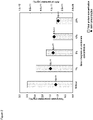
- the AAV concentration was measured using AAV titer measurement kit ("AAVpro (R) Titration Kit (for Real Time PCR) Ver. 2" manufactured by Takara Bio), and the total protein concentration was measured using BSA as a standard and protein colorimetric assay reagent ("Pierce 660 nm Protein Assay Reagent" manufactured by Thermo Fisher Scientific). The measurement result is shown in Table 1 and Figure 1 .
- the total protein concentration was low but the AAV concentration was high in the liquid into which basic magnesium carbonate as a water-insoluble magnesium salt was added in accordance with the result shown in Table 1 and Figure 1 . It was found by the result that an impurity protein can be remarkably removed and AAV can be recovered without loss by using a water-insoluble magnesium salt.
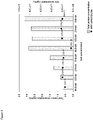
- the pre-treated liquid was prepared similarly to Example 1, and PBS was added thereto in a ratio of 100 v/v%. Then, 1, 5, 10 or 20 w/v% of basic magnesium carbonate to the volume of each solution was added, and the AAV amount and the mass of total proteins were measured. In addition, the pre-treated liquid was diluted using PBS without adding an additive as control and similarly evaluated. The result is shown in Table 2 and Figure 2 . Table 2 Additive amount of basic magnesium carbonate (w/v%) AAV concentration Total protein concentaration (vg/mL) (mg/mL) Without addition 3.2E+11 2.99 1% 4.2E+11 2.42 5% 3.7E+11 1.75 10% 3.5E+11 1.30 20% 2.8E+11 1.05
- a phosphate buffer of pH 7.4 (0.2 g/L dipotassium hydrogen phosphate, 2.9 g/L disodium hydrogen phosphate-dodecahydrate) and 1 M sodium chloride-phosphate buffer of pH 7.4 (0.2 g/L dipotassium hydrogen phosphate, 2.9 g/L disodium hydrogen phosphate ⁇ dodecahydrate, 58.4 g/L sodium chloride) were prepared.
- the pre-treated liquid was prepared similarly to Example 1, and AAV solution having a final concentration of sodium chloride of 68.5 mM, 137 mM, 274 mM or 548 mM was prepared using the above-described 2 kinds of phosphate buffers in place of 100 v/v% of PBS.
- Basic magnesium carbonate was added to the solution in a concentration of 10 mass%, and the AAV amount and the mass of total proteins were measured.
- the pre-treated liquid was diluted using PBS without adding basic magnesium carbonate as control and similarly tested. The result is shown in Table 3 and Figure 3 .
- the pre-treated liquid was prepared similarly to Example 1, and 100 v/v% of PBS or PBS containing 2 mass% of activated carbon was added thereto. Then, 10 mass% of water-insoluble inorganic compound to the volume of each solution was added, and the AAV amount and the mass of total proteins were measured. Basic magnesium carbonate, magnesium oxide, magnesium hydroxide, calcium sulfate or aluminum oxide was used as a water-insoluble inorganic compound. In addition, the pre-treated liquid was diluted using PBS without adding a water-insoluble inorganic compound as control and similarly tested. The result is shown in Table 4 and Figure 4 .
- the AAV-producing cell obtained in Example 1(1) was suspended in PBS containing 0.1% Triton (R) X-100. The suspension was stirred in ice for 20 minutes to disrupt the cell. To the obtained disrupted cell suspension, 1 M magnesium chloride solution in a concentration of 75 v/v% and 250 U/mL nuclease aqueous solution ("KANEKA Endonuclease" manufactured by KANEKA) in a concentration of 0.1 v/v% or 0.01 v/v% were added. The mixture was allowed to stand at 37°C for 30 minutes to decompose the nucleic acid derived from the cell.
- 0.5 M EDTA was added to the reaction mixture in the concentration of 15 v/v% to obtain a pre-treated liquid.
- Two kinds of liquid were prepared without adding a water-insoluble inorganic compound to the pre-treated liquid or by adding basic magnesium carbonate only in a concentration of 10 mass%, and were shaken at 25°C for 1 hour.
- the treated liquid was centrifuged after stirring to obtain a supernatant.
- the AAV concentration and the total protein concentration in the supernatant were measured similarly to Example 1.
- the remaining DNA derived from HEK293 cell in the supernatant was measured in reference to the method described in J. Phrama. Biomed. Anal. (2014), 100, 145-149 .
- primer 1 GAGGCGGGCGGATCA (SEQ ID NO. 1)
- primer 2 CCCGGCTAATTTTTGTATTTTTAGTAG (SEQ ID NO. 2)
- real-time PCR reagent set (“Power SYBR TM Green PCR Master Mix” manufactured by Life Technologies)
- QuantStudio3 real-time PCR system manufactured by Life Technologies
- a standard curve was prepared using Human Genomic DNA (manufactured by GenScript) as DNA standard product derived from human to determine an amount of DNA. The result is shown in Table 5 and Figure 5 .
- a plasmid that produced AAV and that expressed VENUS (GenBank: ACQ43955.1), which is a modified fluorescent protein GFP, was prepared using AAV vector production kit ("AAVpro (R) Helper Free System” manufactured by Takara Bio). Any one of AAV1, AAV2, AAV5 and AAV6 in the kit was used as the serotype of AAV.
- the cultivated HEK293 was transfected with the prepared plasmid using transfection reagent ("Polyethylenimine MAX” manufactured by Polysciences, MW: 40,000) to produce AAV.
- transfection reagent Polyethylenimine MAX manufactured by Polysciences, MW: 40,000
- a surfactant (“Triton (R) X-100") was added to the AAV culture fluid obtained in the above (1) in a concentration of 0.1 v/v%, and the mixture was stirred in ice for 20 minutes to dissolve the cell.
- 1 M magnesium chloride aqueous solution and endonuclease 250 KU/mL, manufactured by KANEKA was added in concentrations of 7.5 v/v% and 0.1 v/v% respectively.
- the mixture was allowed to stand at 37°C for 30 minutes to decompose the nucleic acid derived from the cell.
- the resulting liquid was referred to as the nucleic acid decomposition treatment liquid.
- the AAV amount and the mass of total proteins in the liquid were measured.
- the result is shown in Table 6.
- the AAV concentration was measured using AAV titer measurement kit ("AAVpro (R) Titration Kit (for Real Time PCR) Ver. 2” manufactured by Takara Bio), and the mass of the total proteins was measured using bovine serum albumin (BSA) as a standard and protein colorimetric assay reagent ("Pierce 660 nm Protein Assay Reagent” manufactured by Thermo Fisher Scientific).
- the above mixture was filrated using a polyether sulfone filter ("Nalgene Rapid-Flow Sterile Disposable Filter Units" manufactured by Thermo Scientific, pore diameter: 0.2 ⁇ m).
- the obtained filtrate was referred to as the first filtrate.
- PBS (59 mL) was added to the remaining residue and filtrated.
- the obtained filtrate was referred to as the second filtrate.
- the first filtrate and the second filtrate were mixed.
- the mixture was referred to as the pre-treated liquid 1, and the AAV amount and the mass of total proteins were measured similarly to the above.
- the AAV amount and the mass of total proteins in the nucleic acid decomposition treatment liquid were similarly measured. The result is shown in Table 6.
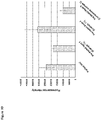
- Example 6(3) Light basic magnesium carbonate used in Example 6(3) was suspended in water, and particle size distribution was evaluated with a wet method using a particle size distribution measurement apparatus ("Partica LA-960" manufactured by HORIBA). The result is shown in Figure 6 .
- the median diameter was 7.9 ⁇ m and 10% diameter in the volume-based cumulative particle size distribution was 5.2 ⁇ m.
- 90% or more of the above basic magnesium carbonate may be separated. Since AAV passed through a filter having a pore diameter of 0.2 ⁇ m in Example 6(3), basic magnesium carbonate particle can be separated from AAV by using a filter of 0.2 to 5 ⁇ m.
- Comparative example 1 Rough purification of virus using depth filter and ultrafiltration membrane
- a depth filter ("Supracap 50 capsule with V100P” manufactured by PALL, effective filtering area: 22 cm 2 , pore diameter: 1 to 3 ⁇ m) was rinsed using 20 mM Tris + 120 mM NaCl aqueous solution (pH 8.0). Then, the nucleic acid decomposition treatment liquid obtained in Example 1(2) (592 g) was filtrated using the depth filter, and the obtained filtrate was referred to as the first filtrate. Further, 20 mM Tris + 120 mM NaCl aqueous solution (pH 8.0, 50 mL) was allowed to pass through the depth filter, and the obtained filtrate was referred to as the second filtrate. The first filtrate and the second filtrate were mixed to be the purified liquid.
- the purified liquid (647 mL) was concentrated to about 50 mL using a pomp system ("AKTA flux S” manufactured by GE Healthcare) and an ultrafiltration membrane ("Suspended-Screen Ultrafiltration Cassettes with Omegatm Membrane: Centramate” manufactured by PALL, membrane area: 0.02 m 2 , nominal molecular weight cut off: 300 K).
- the buffer was exchanged by continuously adding about 8 times the amount of 20 mM Tris + 120 mM NaCl + 0.005% Tween20 + 1 mM MgCl 2 aqueous solution (pH 8.1) as a dialysate to the concentrated liquid while the amount of the concentrated liquid was maintained.
- the dialyzed liquid was obtained with washing the inside of the system after the dialysis.
- the dialyzed liquid was filtrated using a polyether sulfone filter ("Nalgene Rapid-Flow Sterile Disposable Filter Units" manufactured by Thermo Scientific, pore diameter: 0.2 ⁇ m), and the filtrate was referred to as the pre-treated liquid 2.
- the AAV amount and the mass of total proteins in the pre-treated liquid 2 were measured similarly to Example 6(1). The result is shown in Table 7.
- the AAV amount was not changed, the concentration of the total proteins was not remarkably reduced and the most part of an impurity protein remained after the filtration using a depth filter as the result shown in Table 7.
- An impurity protein could be removed as the total protein concentration was remarkably reduced but the AAV amount was also decreased after the treatment using an ultrafiltration membrane. In addition, AAV was also observed in the filtrate. AAV might pass through the membrane, since the pore diameter of the ultrafiltration membrane was too large.
- Example 7 Purification of virus by affinity chromatography
- the nucleic acid decomposition treatment liquid obtained in Example 6(2) was centrifuged, and the supernatant was filtrated using a polyether sulfone filter ("Nalgene Rapid-Flow Sterile Disposable Filter Units" manufactured by Thermo Scientific, pore diameter: 0.2 ⁇ m).
- the filtrate was referred to as the purified liquid without pre-treatment.
- the liquid was taken out from the purified liquid without pre-treatment in an amount in which 1 ⁇ 10 12 vg of AAV was contained, and 9 times volume of an equilibration buffer was mixed. The mixture was filtrated using a filter.
- the obtained filtrate was subjected to affinity chromatography in the following condition to purify AAV.
- the amount of AAV in the solution was measured by quantitative PCR, and a recovery rate to the loaded AAV amount was calculated.
- Liquids were taken out from the pre-treated liquid 1 of Example 1 and the pre-treated liquid 2 of Comparative example 1 in an amount in which 1 ⁇ 10 12 vg of AAV was contained, and 9 times volume of an equilibration buffer was mixed. The mixture was filtrated using a filter. The filtrates were also subjected to affinity chromatography in the same condition to measure the amount of AAV and calculate recovery rate of AAV. The result is shown in Table 8.
- the AAV culture fluid was treated by using water-insoluble magnesium compounds in the condition shown in Table 4, specifically additive amount, treatment time and nuclease concentration, to evaluate AAV recovery rate, protein removal rate and DNA removal rate.
- a surfactant (“Triton (R) X-100") was added to the AAV culture fluid obtained in Example 6(1) in a concentration of 0.1 v/v%, and the mixture was stirred in ice for 20 minutes to dissolve the cells.
- 1 M magnesium chloride aqueous solution in a concentration of 7.5 v/v% and endonuclease (manufactured by KANEKA) in a final concentration of 50 U/mL, 5 U/mL or 0.5 U/mL were added.
- the mixture was allowed to stand at 37°C for 30 minutes to decompose the nucleic acid derived from the cell.
- the mixture was referred to as the nucleic acid decomposition treatment liquid.
- the first filtrate and the second filtrate were mixed.
- the mixture is hereinafter referred to as the pre-treated liquid 3.
- the AAV amount and the mass of total proteins in the pre-treated liquid 3 were measured in the same condition of Example 6(2).
- the remaining amount of the DNA derived from the host was measured by the same method of Example 5.
- the AAV amount, the protein mass and the DNA amount in the nucleic acid decomposition treatment liquid treated with 50 U/mL of endonuclease without being treated with basic magnesium carbonate were measured in the same condition as control.
- the AAV recovery rate of each treated liquid in the case where the AAV amount of the control was taken as a base of 100% was calculated.
- the protein removal rate and the DNA removal rate were calculated on the assumption that the each removal rate about the protein mass and the DNA amount of the control was taken as 0%. The result is shown in Table 9, Figure 7 and Figure 8 . Table 9 Test No.
- the peak estimated to be that of AAV was confirmed around 30 nm in the measurement result of particle size distribution for purified AAV.
- the peak of similar size was confirmed for the pre-treated liquid 1. It was assumed from the result that AAV can be purified as a particle having a similar size by removing an impurity with basic magnesium carbonate.
- the peak estimated to be that of AAV was confirmed around 40 nm in the measurement result of the pre-treated liquid 2.
- the reason why the particle diameter was larger than that of the purified AAV may be that the protein and the DNA derived from the host were adsorbed on the AAV particle and the AAV particle was observed as a large particle.
- Example 7 by affinity chromatography from the pre-treated liquid 1 was higher than that from the pre-treated liquid 2 may be that the pore of the beads carrier was difficult to be filled with the AAV and the impurity due to the smaller size of AAV particle on which the impurity was not adsorbed.
- Example 10 Evaluation of infectivity titer of purified virus
- the infectivity titers of AAV contained in the pre-treated liquid 1 treated with light basic magnesium carbonate in Example 6(3) and the pre-treated liquid 2 treated with a depth filter and an ultrafiltration membrane in Comparative example 1 were evaluated.
- AAV was purified by affinity chromatography from the pre-treated liquid 1 or the pre-treated liquid 2.
- HEK293 cell was cultivated and seeded in a rate of 4 ⁇ 10 4 cells/well on 96 well plate coated using high purity collagen acidic solution ("AteloCell" manufactured by KOKEN). The cell was cultivated at 37°C overnight and attached on the coated plate.
- the AAV purified from the pre-treated liquid 1 or the pre-treated liquid 2 was diluted with Dulbecco's modified Eagle medium (DMEM, manufactured by Thermo Fisher Scientific). The medium was removed and replaced with each diluted AAV liquid to be cultivated at 37°C.
- the MOI Multiplicity Of Infection
- the fluorescence intensity of fluorescent protein Venus produced by HEK293 cell infected by AAV was measured using Cytation1 cell imaging multimode reader (manufactured by BioTek) in the conditions of excitation wavelength of 485 nm and fluorescence wavelength of 528 nm after cultivation.
- the fluorescence intensity in the case of the infection by AAV purified from the pre-treated 1 was 98392 ⁇ 6247.
- the fluorescence intensity was 72580 ⁇ 23300.
- Example 11 Removal of impurity from culture of AAV having various serotypes
- the cell dissolution liquids of AAV1, AAV2, AAV5 and AAV6 were obtained by the method described in Example 6. To 5 mL of each cell dissolution liquid, 50 mg of basic magnesium carbonate was added. The mixture was shaken at room temperature for 1 hour. Each cell dissolution liquid without an additive was also shaken in the same condition as control. The supernatant was obtained by centrifugation, and the AAV concentration, the protein concentration and the concentration of DNA derived from the host in the supernatant were measured. The result was shown in Table 11.
- a disrupted cell suspension was prepared in the same condition as Example 6, and endonuclease (250 kU/mL, manufactured by KANEKA) was added thereto in a final concentration of 5 U/mL.
- the mixture was allowed to stand at 37°C for 30 minutes to decompose the nucleic acid derived from the cell.
- the obtained nucleic acid decomposition treatment liquid (260 g) and light basic magnesium carbonate (manufactured by Wako Pure Chemical Industries, 2.6 g) were mixed, and the mixture was stirred at room temperature for 10 minutes.
- the ratio of light basic magnesium carbonate to the nucleic acid decomposition treatment liquid was 1 w/w%.
- the above mixture was filtrated using a polyether sulfone filter ("Nalgene Rapid-Flow Sterile Disposable Filter Units" manufactured by Thermo Scientific, pore diameter: 0.2 ⁇ m), and the obtained filtrate was referred to as the first filtrate.
- PBS 26 mL
- the obtained filtrate was referred to as the second filtrate.
- the first filtrate and the second filtrate were mixed, and the mixture was referred to as the pre-treated liquid 3.
- the AAV amount, the total protein mass and the remaining DNA concentration in the pre-treated liquid 3 were measured.
- a disrupted cell suspension was prepared in the same condition as Example 6, and endonuclease (250 kU/mL, manufactured by KANEKA) was added thereto in a final concentration of 50 U/mL. The mixture was allowed to stand at 37°C for 30 minutes to decompose the nucleic acid derived from the cell.
- the nucleic acid decomposition liquid (532 g) was filtrated in the same condition as Comparative example 1 to obtain a purified liquid.
- the liquid was concentrated and the buffer was exchanged in the same condition as Comparative example 2 using a pump system ("AKTA flux S” manufactured by GE Healthcare) and an ultrafiltration membrane ("Suspended-Screen Ultrafiltration Cassettes with Omegatm Membrane: Centramate” manufactured by PALL, membrane area: 0.02 m 2 , nominal molecular weight cut off: 100 K).
- the liquid was referred to as the pre-treated liquid 5, and the AAV amount, the total protein mass and the remaining DNA concentration were measured. The result is shown in Table 14.
- AAV was purified from the pre-treated liquids obtained in Example 12 and Comparative example 2 using affinity chromatography by the same method as Example 7.
- the elution buffer was 0.1 M citrate + 0.5 M NaCl (pH 2.1).
- the infectivity titer of the purified AAV was measured.
- HEK293 cell was cultivated and seeded in a rate of 4 ⁇ 10 4 cells/well on 96 well plate coated using collagen for cell culture ("AteloCell" manufactured by KOKEN). The cell was cultivated at 37°C overnight and attached on the coated plate.
- the purified AAV was diluted with DMEM (manufactured by Thermo Fisher Scientific). The medium was removed and replaced with diluted AAV to be cultivated at 37°C.
- the MOI Multiplicity Of Infection
- the fluorescence intensity of fluorescent protein Venus produced by HEK293 cell infected by AAV was measured using Cytation1 cell imaging multimode reader (manufactured by BioTek) in the conditions of excitation wavelength of 485 nm and fluorescence wavelength of 528 nm after cultivation.
- the infectivity titer of the AAV purified by subjecting the pre-treated liquid obtained in Comparative example 2 to affinity chromatography might be low, since the fluorescence intensity thereof was lower than that of the AAV purified by an ultracentrifugation method.
- Example 14 Impurity removal from lentivirus culture fluid (1) Preparation of lentivirus culture supernatant
- Cultured Lenti-X293T cell (manufactured by Takara Bio) was seeded in a concentration of 1.5 to 1.8 ⁇ 10 6 cells/well on a 6 well plate coated using collagen for cell culture ("AteloCell” manufactured by KOKEN) and incubated at 37°C for 24 hours.
- the cell was transfected with transfer plasmid CS VI-CMV-Venus (reference document: WO 2018/088519 ) and packaging plasmid ("3rd Generation pLenti Combo Mix” manufactured by Applied Biological) using lipofectamine and incubated at 37°C for 6 hours. Then, the culture medium was exchanged, and the cell was cultivated at 37°C for 72 hours to produce lentivirus.
- the culture supernatant was recovered and filtrated using a syringe filter having a pore diameter of 0.8 ⁇ m to remove the cell and obtain the culture supernatant containing lentivirus.
- Example 1 To 5 mL of the culture supernatant, 50 mg or 500 mg of basic magnesium carbonate was added. The mixture was shaken at room temperature for 1 minute or 1 hour. Each cell dissolution liquid without an additive was shaken in the same condition as control. The supernatant was obtained by centrifugation, and the lentivirus amount in the obtained supernatant was measured using an easy lentivirus amount measurement reagent ("Lenti-X GoStix Plus" manufactured by Takara Bio). In addition, the protein concentration was measured by the same method as Example 1. Furthermore, the obtained supernatant was centrifuged at 18,000 rpm and at 4°C for 2 hours to precipitate lentivirus.
- the lentivirus was suspended in 1/10 amount of PBS to the centrifuged obtained supernatant after the supernatant was removed.
- the suspension was referred to as the virus concentration liquid, and the protein concentration was measured.
- the result is shown in Table 16.
- Table 16 No. Treatment time Additive amount of water-insoluble inorganic compound Protein concentration (mg/mL) Recovered liquid Virus concentrate 1 1 min - 1.2 0.2 2 1% 0.9 0.2 3 10% 0.3 0 4 60 min - 1.1 0.4 5 1% 0.9 0.2 6 10% 0.4 0
- the amount of lentivirus in each recovered liquid was measured using an easy lentivirus amount measurement reagent; as a result, it was confirmed that lentivirus could be recovered from any recovered liquids, since there were the bands of lentivirus. Since the difference between the band intensities could not be visually recognized, it was judged that similar amounts of lentivirus could be recovered.
- the protein concentrations in the recovered liquid and the virus concentration liquid were measured; as a result, the protein concentration in the sample to which basic magnesium carbonate was added was low as the result shown in Table 16.
- the impurity removal method using basic magnesium carbonate according to the present invention can be utilized for an envelope virus such as lentivirus.
Landscapes
- Chemical & Material Sciences (AREA)
- Life Sciences & Earth Sciences (AREA)
- Health & Medical Sciences (AREA)
- Organic Chemistry (AREA)
- Genetics & Genomics (AREA)
- Engineering & Computer Science (AREA)
- Wood Science & Technology (AREA)
- Zoology (AREA)
- Bioinformatics & Cheminformatics (AREA)
- General Health & Medical Sciences (AREA)
- Biochemistry (AREA)
- Medicinal Chemistry (AREA)
- Biotechnology (AREA)
- General Engineering & Computer Science (AREA)
- Biomedical Technology (AREA)
- Analytical Chemistry (AREA)
- Biophysics (AREA)
- Molecular Biology (AREA)
- Virology (AREA)
- Microbiology (AREA)
- Proteomics, Peptides & Aminoacids (AREA)
- Chemical Kinetics & Catalysis (AREA)
- Immunology (AREA)
- Physics & Mathematics (AREA)
- Plant Pathology (AREA)
- Micro-Organisms Or Cultivation Processes Thereof (AREA)
- Peptides Or Proteins (AREA)
Abstract
Description
- The present invention relates to a method capable of purifying a virus or a virus-like particle easily.
- In general, a genome is purified using a commercially available kit from a sample and a base sequence of the genome is determined in order to identify a virus. The data has been established as to what virus has what genome sequence, and the genus of a virus can be identified by determining the genome sequence. It is necessary to purify the virus with high purity for that purpose. In addition, a virus is used as a vector for introducing a specific gene into a cell in gene therapy, and the virus used in gene therapy must be of course highly purified. A virus without toxicity and an inactive virus-like particle are used as vaccine, and must be purified to a high degree of purity.
- A virus and a virus-like particle are produced by a transformed cell, a hen egg or the like, and purified from a disrupted cell suspension and a chorioallantoic fluid. Such disrupted cell suspension and chorioallantoic fluid contain many impurities. For example, a virus and a virus-like particle are purified by ultracentrifugation, membrane separation and chromatography. An ultracentrifugation method, however, requires a dedicated device and is difficult to be carried out in large scale. Membrane separation and chromatography require an expensive material, much trouble and a long time to set a condition for high purification. An easier purification method is, therefore, developed in place of the above-described purification methods or in order to be preliminarily conducted before the above-described purification methods are performed.
- For example,
Patent document 1 discloses a method for purifying a virus by adjusting a concentration of an inorganic salt and pH of a sample liquid containing the virus in order to easily adsorb humic acid, which is a mixture of high molecular organic acids synthesized chemically/biologically from degradant derived from a residue of a plant and remains of a microorganism or plankton, on the surface of hydrophobic beads. A disrupted cell suspension and a chorioallantoic fluid which contain a virus also contain an impurity such as a protein and a nucleic acid; therefore, it is unclear whether or not a virus can be purified from such protein and nucleic acid by the above-described method. -
Patent document 2 discloses a method for capturing a virus-like particle to be purified on an extension bed of an adsorbent. An insoluble inorganic compound such as magnesium oxide is exemplified as a material for an adsorbent. Such an insoluble inorganic compound is merely exemplified as an inactive core material for an adsorbent, and the adsorbent which is actually used in the experiment is an adsorbent having an ion exchanger such as diethylaminoethyl (DEAE) on the surface as a ligand. It may be therefore needed to adjust a condition such as a salt concentration and pH of each sample containing a virus-like particle in order to selectively adsorb the target virus-like particle and not to adsorb the other protein and nucleic acid on an adsorbent. -
- Patent document 1:
WO 2015/111606 - Patent document 2:
JP 2017-55766 A - A method for easily purifying a virus or a virus-like particle from an impurity such as the other protein and nucleic acid has not been established as described above.
- Accordingly, the objective of the present invention is to provide a method capable of purifying a virus or a virus-like particle easily.
- The inventors of the present invention repeated intensive studies in order to solve the above-described problems. As a result, the inventors completed the present invention by finding that a virus and a virus-like particle can be easily purified at a low cost, since a virus and a virus-like particle are hardly adsorbed on the specific water-insoluble inorganic compound but the other protein and nucleic acid are selectively and easily adsorbed among the components contained in a disrupted cell suspension containing the virus or the virus-like particle.
- The present invention is hereinafter described.
-
- [1] A method for purifying a virus or a virus-like particle, comprising the step of contacting a liquid comprising the virus or the virus-like particle with a water-insoluble inorganic compound,
wherein the water-insoluble inorganic compound comprises one or more elements selected from magnesium, calcium and aluminum. - [2] A method for producing a virus or a virus-like particle, comprising the step of purifying the virus or the virus-like particle by contacting a liquid comprising the virus or the virus-like particle with a water-insoluble inorganic compound,
wherein the water-insoluble inorganic compound comprises one or more elements selected from magnesium, calcium and aluminum. - [3] The method according to the above [1] or [2], wherein the water-insoluble inorganic compound is one or more selected from magnesium carbonate, magnesium hydroxide, magnesium oxide, calcium sulfate and aluminum oxide.
- [4] The method according to any one of the above [1] to [3], further comprising the step of contacting the liquid comprising the virus or the virus-like particle with an activated carbon.
- [5] The method according to any one of the above [1] to [4], further comprising the step of purifying the virus or the virus-like particle by chromatography.
- [6] The method according to the above [5], wherein the chromatography is affinity chromatography.
- [7] The method according to any one of the above [1] to [6], wherein the virus or the virus-like particle is an adeno-associated virus or a virus-like particle derived from an adeno-associated virus.
- [8] The method according to any one of the above [1] to [7], wherein a protein and/or a nucleic acid other than the virus or the virus-like particle is adsorbed on the water-insoluble inorganic compound.
- [9] The method according to any one of the above [1] to [8], wherein the liquid is an animal cell culture fluid or a processed material thereof.
- The adsorbent used in the present invention method is very inexpensive and does not require the time and effort needed by an adsorbent having a ligand on the surface, since the present invention adsorbent is the specific water-insoluble inorganic compound to which an ion-exchange group and a ligand are not needed to be bound. In addition, a virus and a virus-like particle can be purified by the adsorbent used in the present invention method, since the total amount of a protein and a nucleic acid contained in a disrupted cell suspension containing a virus or a virus-like particle can be reduced by the adsorbent used in the present invention method but the adsorbent used in the present invention method has low affinity for a virus and a virus-like particle. The present invention is, therefore, industrially very useful as a technology to identify a virus, and easily and efficiently purify a virus or a virus-like particle needed for gene therapy, vaccine therapy or the like.
-
-
Figure 1 is a graph to show the quantitative value results of total proteins and adeno-associated virus in the case where the adeno-associated virus was purified from a disrupted cell liquid using water-insoluble or water-soluble inorganic compound. -
Figure 2 is a graph to show the quantitative value results of total proteins and adeno-associated virus in the case where the adeno-associated virus was purified from a disrupted cell liquid using basic magnesium carbonate as a water-insoluble inorganic compound and the concentration thereof was variously changed. -
Figure 3 is a graph to show the quantitative value results of total proteins and adeno-associated virus in the case where the adeno-associated virus was purified using basic magnesium carbonate as a water-insoluble inorganic compound from disrupted cell liquids having various salt concentrations. -
Figure 4 is a graph to show the quantitative value results of total proteins and adeno-associated virus in the case where the adeno-associated virus was purified from a disrupted cell liquid using a water-insoluble inorganic compound with or without an activated carbon. -
Figure 5 is a graph to show the quantitative value results of total proteins, adeno-associated virus and DNA in the case where the adeno-associated virus was purified using basic magnesium carbonate as a water-insoluble inorganic compound from a disrupted cell liquid treated by an endonuclease. -
Figure 6 is a particle size distribution of light basic magnesium carbonate used in the Example described later. -
Figure 7 is a graph to show the amounts of adeno-associated virus, protein and DNA in the case where a nucleolytic treatment liquid by an endonuclease was further treated or not treated using basic magnesium carbonate of the present invention. -
Figure 8 is a graph to show the relation between an amount of basic magnesium carbonate and a protein removal rate in the case where a nucleolytic treatment liquid by an endonuclease was further treated using basic magnesium carbonate according to the present invention. -
Figure 9 are graphs to show particle size distributions of a purified AAV liquid, thepre-treated liquid 1 of Example 6 treated with light basic magnesium carbonate, and thepre-treated liquid 2 of Comparative example 1 treated with a depth filter and an ultrafiltration membrane. -
Figure 10 is a graph to show the infectivity titers of the adeno-associated virus purified by affinity chromatography from a purified AAV liquid, thepre-treated liquid 3 and thepre-treated liquid 4 of Example 11 treated by light basic magnesium carbonate, and thepre-treated liquid 5 of Comparative example 2 treated with a depth filter and an ultrafiltration membrane. - Each of step of the present invention method is hereinafter described, and the present invention is not restricted to the following specific examples.
- The liquid containing a virus or a virus-like particle to be subjected to purification is prepared in this step. This step may be arbitrarily implemented, and when the liquid containing a virus or a virus-like particle is already obtained, this step is not needed to be implemented.
- A virus-like particle is mainly all or a part of a virus outer shell protein that constitutes a capsid. Since a virus-like particle does not contain a nucleic acid, a virus-like particle is not contagious. On the one hand, since a virus-like particle causes an immune reaction, a virus-like particle can be used as an active ingredient of vaccine. The "virus or virus-like particle" in this disclosure means not only "either of a virus or a virus-like particle" but also "both of a virus and a virus-like particle" in the case where both of a virus and a virus-like particle may be produced in the preparation step and a virus and a virus-like particle may be mixed.
- The virus is not particularly restricted as long as the virus itself or a part of the virus should be purified. An example of a non-enveloped virus includes adeno-associated virus, adeno virus, enterovirus, parvovirus, papovavirus, human papilloma virus, rotavirus, coxsackievirus, sapovirus, norovirus, poliovirus, echovirus, hepatitis A virus, hepatitis E virus, rhinovirus and astrovirus. Adeno-associated virus has an AAV capsid serotype selected from the group consisting of AAV-1, AAV-2, AAV-3, AAV-4, AAV-5, AAV-6, AAV-7, AAV-8, AAV-9, AAV-10, AAV-11, AAV-12, AAV-13, AAV-14, AAV-15 and AAV-16. An example of an enveloped virus includes retrovirus, lentivirus, Sendai virus, herpes simplex virus, vaccinia virus, measles virus, baculovirus and influenza virus.
- The liquid containing a virus may be produced by an ordinary method. For example, a hen egg is disinfected and then incubated for 10 to 12 days. A specific amount of a virus strain is inoculated into an allantoic cavity and cultivated for 2 to 3 days. Next, the egg is cooled for about half a day to bring viral proliferation to a stop. Then, a chorioallantoic fluid in which a virus is proliferated can be used as the virus-containing liquid.
- The virus-containing liquid can be produced by a transformation method similarly to a virus-like particle-containing liquid. Specifically, a nucleic acid that encodes a virus or a virus-like particle is introduced into a host cell using a vector containing the nucleic acid to transform the host cell, and the transformed cell is cultivated. Then, the transformed cell is separated from a culture medium by centrifugation or filtration, and the separated cell is disrupted in a buffer solution containing a surfactant and the like. The obtained disrupted cell suspension may be treated with a nuclease to decompose the nucleic acid derived from the host cell; on the one hand, a usage amount of an expensive nuclease can be reduced, since an impurity can be efficiently removed by the present invention method. The obtained disrupted cell suspension is subjected to centrifugation or filtration, and the obtained supernatant can be used as the virus-containing liquid or the virus-like particle-containing liquid. The concentration of the virus or the virus-like particle in the virus-containing liquid or the virus-like particle-containing liquid is preferably adjusted to 104 vg/mL or more and 1015 vg/mL or less using a buffer solution or the like.
- A conventionally known cell can be used as a host cell to be transformed. For example, an example of such a conventionally known cell includes an animal cell such as HEK293 cell, CHO cell, COS cell, HeLa cell, C127 cell, 3T3 cell and BHK cell; an insect cell such as S2 cell and Sf cell; a bacterial cell such as Escherichia coli, Bacillus subtilis and bacteria of genus Bacillus; a fungus cell such as yeast and aspergillus; and a plant cell.
- The virus or virus-like particle is purified in this step by contacting a liquid containing the virus or virus-like particle with a water-insoluble inorganic compound containing one or more elements selected from magnesium, calcium and aluminum to selectively adsorb an impurity other than the virus and virus-like particle on the water-insoluble inorganic compound. The term "purification" means that a ratio of an impurity to the virus or virus-like particle in the liquid before the liquid is contacted with the water-insoluble inorganic compound is reduced.
- The term "water-insoluble" in this disclosure means that a degree to which an inorganic compound powder is dissolved within 30 minutes under a condition where the powder is added in water and the mixture is strongly shaken at 20 ± 5°C for 30 seconds every 5 minutes, and specifically means an amount of water required to dissolve 1 g of the inorganic compound is 400 mL or more.
- The water-insoluble inorganic compound contains one or more elements selected from magnesium, calcium and aluminum, is exemplified by an insoluble carbonate salt, an insoluble sulfate salt and an oxide, and is preferably one or more selected from magnesium carbonate, magnesium hydroxide, magnesium oxide, calcium sulfate and aluminum oxide. For example, basic magnesium carbonate, which is a mixture of magnesium hydroxide and magnesium carbonate, is also preferably used. A phosphate salt is, however, not preferred, since such a phosphate salt has relatively high water-solubility and may possibly adsorb the target virus or virus-like particle.
- The size of the water-insoluble inorganic compound may be appropriately adjusted, and for example, the average particle diameter may be adjusted to 0.1 µm or more and 1000 µm or less. When the average particle diameter is 1000 µm or less, the water-insoluble inorganic compound can adsorb an impurity more efficiently due to the sufficiently large specific surface area. When the average particle diameter is 0.1 µm or more, excessive energy for breakage is not needed. The average particle diameter is preferably 10 µm or more from the viewpoint of the handling property at the time of the filling in a column. The average particle diameter in this disclosure is measured by a laser diffraction particle size distribution measurement device. Volume, weight, number or the like are known as the base of an average particle diameter, and volume is preferred.
- The shape and the structure of the water-soluble inorganic compound are not restricted, and for example, particle, flake, needle and tube can be used. The porous water-insoluble inorganic compound is advantageous to the removal of an impurity due to the large specific surface area thereof. For example, γ alumina, tubular basic magnesium carbonate, and spherical basic magnesium carbonate (see
JP 2008-137827 A - A usage amount of the water-insoluble inorganic compound may be adjusted depending on the concentration of the virus-containing liquid or the virus-like particle-containing liquid, and for example, 1 g or more and 20 g or less of the water-insoluble inorganic compound to 100 mL of the virus-containing liquid or the virus-like particle-containing liquid may be used. The ratio is preferably 15 g/100 mL or less. In addition, 1 mass% or more and 20 mass% or less of the water-insoluble inorganic compound to the virus-containing liquid or the virus-like particle-containing liquid is preferably used, and the ratio is preferably 15 mass% or less.
- A method for contacting the virus-containing liquid or the virus-like particle-containing liquid with the water-insoluble inorganic compound may be appropriately selected. For example, the water-insoluble inorganic compound may be added to the virus-containing liquid or the virus-like particle-containing liquid, and the mixture may be shaken or stirred. The temperature at the time may be an atmospheric temperature, and may be specifically adjusted to 1°C or higher or 30°C or lower or 15°C or higher or 25°C or lower. The contact time may be adjusted to 5 seconds or more and 10 hours or less.
- The water-insoluble inorganic compound may be separated from the virus-containing liquid or the virus-like particle-containing liquid by centrifugation or filtration after the contact. The virus or the virus-like particle is mainly dispersed in the liquid part and all of or a part of the other impurity is mainly adsorbed on the water-insoluble inorganic compound at the time. Though a part of the virus or the virus-like particle may be adsorbed on the water-insoluble inorganic compound and a part of the other impurity may be dissolved in the liquid part in some cases, at least a total amount of the impurity in the liquid part can be reduced and the virus or the virus-like particle can be concentrated in the liquid part.
- An impurity that is adsorbed on the water-insoluble inorganic compound in this step is not particularly restricted as long as the impurity is not the virus and the virus-like particle, and is exemplified by a disrupted virus, a disrupted virus-like particle, a contaminant derived from a host cell and a contaminant derived from cell culture. An example of such a contaminant derived from a host cell includes a nucleic acid derived from a host cell, plasmid and a protein derived from a host cell. An example of such a contaminant derived from cell culture includes a culture medium component, serum albumin, the other serum protein and a plasmid DNA for transfection.
- A column may be filled with the water-insoluble inorganic compound and the virus-containing liquid or the virus-like particle-containing liquid may be passed through the column to adsorb an impurity other than the virus or the virus-like particle on the water-insoluble inorganic compound. The adsorption of an impurity and the separation of the liquid part from the water-insoluble inorganic compound can be simultaneously carried out in such a case. An amount of the water-insoluble inorganic compound to fill a column and a flow rate of the virus-containing liquid or the virus-like particle-containing liquid are preferably adjusted within the range that an impurity is sufficiently adsorbed on the water-insoluble inorganic compound.
- A filter having a layer containing the water-insoluble inorganic compound may be prepared and the virus-containing liquid or the virus-like particle-containing liquid may be filtrated to adsorb an impurity other than the virus or the virus-like particle on the filter. The water-insoluble inorganic compound may be merely deposited on a support material as a water-insoluble inorganic compound-containing layer or a water-insoluble inorganic compound-containing layer may be sandwiched between support materials from the upper and the lower sides. An example of a raw material of the support material includes one or more water-insoluble media selected from an activated carbon; a polysaccharide such as cellulose, cellulose acetate, nitrocellulose, agarose and chitosan; a synthetic polymer such as polyacrylonitrile, polyester, polyether sulfone, polypropylene and polytetrafluoroethylene; and an inorganic substance such as diatomite, pearlite, glass, silica, alumina, zirconia and barium titanate.
- The liquid containing the virus or the virus-like particle is contacted with an activated carbon in this step. This step may be carried out before or after the above-described step to contact with the water-insoluble inorganic compound, or the steps may simultaneously be carried out by using the water-insoluble inorganic compound and an activated carbon in combination.
- An activated carbon is obtained by burning a charcoal, a palm shell or the like to develop a pore to be porous, and is excellent in adsorption performance. A general specific surface area of an activated carbon is about 800 m2/g or more and about 2500 m2/g or less.
- An example of an activated carbon includes a mineral activated carbon and a plant activated carbon. An example of such a mineral activated carbon includes a coal activated carbon and a petroleum activated carbon. An example of such a plant activated carbon includes a wood activated carbon and a palm shell activated carbon, and a wood activated carbon is preferred.
- A raw material of an activated carbon is not particularly restricted as long as the raw material is a carbonaceous substance, and is exemplified by a woodiness such as sawdust, charcoal, ash, herbaceous peat, peat and wood chip; palm shell; a coal such as lignite, brown coal and anthracite; petroleum pitch; and an organic compound such as rayon, acrylonitrile and a phenolic resin.
- A method for producing an activated carbon is not particularly restricted and is exemplified by a chemical liquid activation method and a gas activation method. In a chemical liquid activation method, zinc chloride, phosphoric acid or the like is added to a raw material at high temperature and a mixture is subjected to carbonization reaction at high temperature. In a gas activation method, a mixture of a carbonized raw material and a gas such as water vapor, carbon dioxide, air and combustion gas is reacted at high temperature. An example of the method preferably includes a zinc chloride activation method, an acid activation method using phosphoric acid, and a water vapor activation method.
- A figure of an activated carbon is not particularly restricted, and an example of an activated carbon includes a granular activated carbon such as pulverized charcoal, granular charcoal, spherical charcoal and pellet charcoal; a fibrous activated carbon such as fiber and cloth; a specially formed activated carbon such as sheet, formed body and honeycomb; and a powder activated carbon.
- Also, an activated carbon to which a charge of plus or minus is added and an activated carbon which is modified with a surface-modifying agent such as poly(hydroxyethyl methacrylate) (PHEMA), heparin, cellulose and polyurethane can be used in the purification method of the present invention. In addition, a carbon gel prepared by sol-gel method is included in the activated carbon usable in the purification method of the present invention. An example of a raw material used in the sol-gel method includes phenol, melamine, resorcinol and formaldehyde.
- An average pore diameter of an activated carbon is not particularly restricted, and is generally 0.1 nm or more and 20 nm or less, preferably 0.5 nm or more and 5.0 nm or less, more preferably 2.0 nm or more and 5.0 nm or less, and even more preferably 3.0 nm or more and 5.0 nm or less. An average pore diameter of an activated carbon can be calculated from an adsorption isothermal curve of nitrogen gas using BJH method.
- A means of a purification method using an activated carbon according to the present invention is not particularly restricted, and is exemplified by a batch method, a membrane treatment method and a column chromatography method. An appropriate figure of an activated carbon is selected depending on each of means. An activated carbon may be used in the forms of a particle prepared by enclosing an activated carbon in porous polymer or gel, a membrane prepared by adsorbing, immobilizing or forming an activated carbon using a fiber or a supporting agent such as polypropylene and cellulose, and a cartridge, as needed.
- A membrane or a cartridge containing an activated carbon is specifically exemplified by CUNO(R) activated carbon filter cartridge and Zeta Plus(R) activated carbon filter cartridge (manufactured by Sumitomo 3M); Millistak+(R) activated carbon filter (manufactured by Merck Millipore); Supra AKS1 filter, AKS1 filter, Stax™, AKS1 (manufactured by Pall); Ad'All (manufactured by UNITIKA); K filter(R), activated carbon sheet (manufactured by TOYOBO); Hemax (manufactured by Kuraray); Hemosorba(R) (manufactured by Asahi Kasei Medical); Hemocolumn (manufactured by TERUMO); and Hemocells (manufactured by TEIJIN), and is not restricted thereto. An example of a membrane or a cartridge containing a wood-based activated carbon among the above examples includes Zeta Plus(R) activated carbon filter cartridge (manufactured by Sumitomo 3M); Supra AKS1 filter, AKS1 filter, Stax™ and AKS1 (manufactured by Pall).
- A packing density, a particle size, a hardness, a weight loss on drying, an ignition residue, a specific surface area, a pore volume or the like of an activated carbon to be used can be appropriately selected.
- A usage amount of an activated carbon may be adjusted depending on a concentration or the like of the virus-containing liquid or the virus-like particle-containing liquid, and for example, 0.5 g or more and 5 g or less of an activated carbon to 100 mL of the virus-containing liquid or the virus-like particle-containing liquid may be used.
- As a method for contacting the virus-containing liquid or the virus-like particle-containing liquid with an activated carbon, similarly to the case of the water-insoluble inorganic compound, an activated carbon may be added to the virus-containing liquid or the virus-like particle-containing liquid and the mixture may be shaken or stirred, or a column may be filled with an activated carbon. When this step and the above-described step to contact with the water-insoluble inorganic compound are simultaneously carried out, the water-insoluble inorganic compound and an activated carbon may be mixed to be used.
- The above-described step to contact with the water-insoluble inorganic compound or the combination of the step to contact with water-insoluble inorganic compound and the step to contact with an activated carbon may be repeated two or more times in the case where the virus or the virus-like particle is not sufficiently purified by one time implementation. The upper limit of the repeat number is not particularly restricted, and for example, may be 10 times or less and is preferably 5 times or less. In addition, when the virus or the virus-like particle is not sufficiently purified, a conventional purification method may be carried out after the step to contact with the water-insoluble inorganic compound or the combination of the step to contact with an activated carbon and the step to contact with the water-insoluble inorganic compound. A load on a conventional purification method can be remarkably reduced in such a case, since a concentration of an impurity can be reduced and the target virus or the virus-like particle can be concentrated by the step of the present invention. An example of a conventional purification method includes an ultracentrifugal method, membrane separation and chromatography, and membrane separation and chromatography are preferred in the view point of mass production. In addition, a nucleic acid that is contained in the liquid containing the virus or the virus-like particle and that is derived from a host may be treated by a nuclease to be decomposed after the step to contact with the water-insoluble inorganic compound. On the one hand, a usage amount of an expensive nuclease can be reduced by the present invention method, since an impurity can be effectively removed by the present invention.
- Chromatography is exemplified by affinity chromatography and ion exchange chromatography, and is particularly preferably affinity chromatography. Since a pH and a salt concentration of an eluent are not needed to be preliminarily adjusted in affinity chromatography, purification by affinity chromatography is efficient.
- In general, there are a small amount of virus and a large amount of an impurity in a cell culture fluid; therefore, when the virus or the virus-like particle is purified by chromatography, an impurity is preliminarily removed by ultrafiltration and the virus or the virus-like particle is preliminarily concentrated. On the one hand, a virus or a virus-like particle can be purified by chromatography without preliminary ultrafiltration after the liquid containing a virus or a virus-like particle is treated with the water-insoluble inorganic compound according to the present invention.
- After a virus or a virus-like particle is purified, the virus or the virus-like particle may be concentrated by reducing an amount of a solvent or a solvent may be exchanged.
- A virus or a virus-like particle having higher purity can be efficiently produced by the above-described purification method of the present invention.
- The present application claims the benefit of the priority dates of
Japanese patent application No. 2019-125243 filed on July 4, 2019 Japanese patent application No. 2019-125243 filed on July 4, 2019 - The examples are hereinafter described to demonstrate the present invention more specifically, but the present invention is in no way restricted by the examples, and the examples can be appropriately modified to be carried out within a range which adapts to the contents of this specification. Such a modified example is also included in the range of the present invention.
- A plasmid that produced AAV2 and that expressed VENUS (GenBank:ACQ43955.1), which is an altered fluorescent protein GFP, was prepared using AAV vector preparation kit ("AAVpro(R) Helper Free System" manufactured by Takara Bio).
- The cultured HEK293 cell was transfected with the prepared plasmid using transfection reagent ("Polyethylenimine MAX" manufactured by Polysciences, MW: 40,000) to produce AAV. The cell was released after the cultivation, and the cell culture fluid was recovered. The cell culture fluid was centrifuged to remove the supernatant and to obtain AAV-producing cell.
- The AAV-producing cell obtained as the above (1) was suspended in Dulbecco's Phosphate Buffered Saline (manufactured by Sigma-Aldrich, hereinafter abbreviated as "PBS") containing 0.1% Triton(R) X-100, and the suspension was stirred in ice for 20 minutes to disrupt the cell. To the obtained disrupted cell suspension, 1 M magnesium chloride aqueous solution was added in a concentration of 7.5 v/v% and 25 KU/mL endonuclease aqueous solution (manufactured by KANEKA) was added in a concentration of 0.1v/v%. The mixture was allowed to stand still at 37°C for 30 minutes to decompose the nucleic acid derived from the cell. After the reaction, 0.5 M EDTA solution was added to the reaction mixture in a concentration of 15 v/v%. Then, the mixture was centrifuged to recover the supernatant. The obtained supernatant was referred to as the pre-treated liquid. Into the pre-treated liquid, 100 v/v% of PBS to the pre-treated liquid, and 20 w/v% of magnesium sulfate heptahydrate, magnesium chloride or light basic magnesium carbonate (manufactured by Wako Pure Chemical Industries) to the pre-treated liquid were respectively added. The mixture was shaken at 25°C for 1 hour. The pre-treated liquid was diluted with PBS without adding an additive thereto, and the diluted liquid was similarly shaken as control. The mixture was centrifuged after shaking to obtain supernatant, and the amount of AAV and the mass of total proteins were measured. The AAV concentration was measured using AAV titer measurement kit ("AAVpro(R) Titration Kit (for Real Time PCR) Ver. 2" manufactured by Takara Bio), and the total protein concentration was measured using BSA as a standard and protein colorimetric assay reagent ("Pierce 660 nm Protein Assay Reagent" manufactured by Thermo Fisher Scientific). The measurement result is shown in Table 1 and
Figure 1 .Table 1 Additive AAV concentration Total protein concentaration (vg/mL) (mg/mL) Control (without additive) 3.2E+11 2.99 Basic magnesium carbonate 3.5E+11 1.30 Magnesium sulfate 1.9E+11 3.15 Magnesium chloride 2.5E+11 3.09 - The total protein concentration was low but the AAV concentration was high in the liquid into which basic magnesium carbonate as a water-insoluble magnesium salt was added in accordance with the result shown in Table 1 and
Figure 1 . It was found by the result that an impurity protein can be remarkably removed and AAV can be recovered without loss by using a water-insoluble magnesium salt. - On the one hand, an impurity protein reducing effect could not be confirmed in the control case in which an additive was not added and the cases in which magnesium sulfate heptahydrate or magnesium chloride as a water-soluble magnesium salt was added. In addition, AAV concentration was low in the case where a water-soluble magnesium salt was added.
- The pre-treated liquid was prepared similarly to Example 1, and PBS was added thereto in a ratio of 100 v/v%. Then, 1, 5, 10 or 20 w/v% of basic magnesium carbonate to the volume of each solution was added, and the AAV amount and the mass of total proteins were measured. In addition, the pre-treated liquid was diluted using PBS without adding an additive as control and similarly evaluated. The result is shown in Table 2 and
Figure 2 .Table 2 Additive amount of basic magnesium carbonate (w/v%) AAV concentration Total protein concentaration (vg/mL) (mg/mL) Without addition 3.2E+11 2.99 1% 4.2E+11 2.42 5% 3.7E+11 1.75 10% 3.5E+11 1.30 20% 2.8E+11 1.05 - When the additive amount of basic magnesium carbonate was larger in the range of 1 to 20 w/v% to the solution, the total protein concentration was low and the effect to reduce an impurity was high as the result shown in Table 2 and
Figure 2 . In addition, when an additive amount of basic magnesium carbonate was larger, AAV concentration tended to be lower; however, AAV with higher concentration than that without the additive could be obtained in the case of the concentration of 10 w/v% or less. - A phosphate buffer of pH 7.4 (0.2 g/L dipotassium hydrogen phosphate, 2.9 g/L disodium hydrogen phosphate-dodecahydrate) and 1 M sodium chloride-phosphate buffer of pH 7.4 (0.2 g/L dipotassium hydrogen phosphate, 2.9 g/L disodium hydrogen phosphate·dodecahydrate, 58.4 g/L sodium chloride) were prepared. The pre-treated liquid was prepared similarly to Example 1, and AAV solution having a final concentration of sodium chloride of 68.5 mM, 137 mM, 274 mM or 548 mM was prepared using the above-described 2 kinds of phosphate buffers in place of 100 v/v% of PBS. Basic magnesium carbonate was added to the solution in a concentration of 10 mass%, and the AAV amount and the mass of total proteins were measured. In addition, the pre-treated liquid was diluted using PBS without adding basic magnesium carbonate as control and similarly tested. The result is shown in Table 3 and
Figure 3 .Table 3 Additive NaCl concentaration of buffer AAV concentration Total protein concentaration (mM) (vg/mL) (mg/mL) Basic magnesium carbonate 68.5 mM 1.5E+11 0.62 137 mM 2.0E+11 0.80 274 mM 1.9E+11 1.24 548 mM 1.8E+11 1.49 Control (without additive) 68.5 mM 3.7E+10 2.87 137 mM 2.0E+11 2.65 274 mM 2.2E+11 2.72 548 mM 2.0E+11 3.15 - When the sodium chloride concentration before basic magnesium carbonate was added was lower in the sodium chloride concentration range of 68.5 to 548 mM, total protein concentration tended to be lower and the effect to reduce an impurity was higher as the result shown in Table 3 and
Figure 3 . In addition, AAV concentration did not seem to correlate with sodium chloride concentration. - The pre-treated liquid was prepared similarly to Example 1, and 100 v/v% of PBS or PBS containing 2 mass% of activated carbon was added thereto. Then, 10 mass% of water-insoluble inorganic compound to the volume of each solution was added, and the AAV amount and the mass of total proteins were measured. Basic magnesium carbonate, magnesium oxide, magnesium hydroxide, calcium sulfate or aluminum oxide was used as a water-insoluble inorganic compound. In addition, the pre-treated liquid was diluted using PBS without adding a water-insoluble inorganic compound as control and similarly tested. The result is shown in Table 4 and
Figure 4 .Table 4 Additive Activated carbon AAV concentration Total protein concentaration (vg/mL) (mg/mL) None without 3.9E+11 2.83 Basic magnesium carbonate without 3.2E+11 0.88 Basic magnesium carbonate with 4.6E+11 0.14 Magnesium oxide without 3.6E+11 2.11 Magnesium oxide with 1.1E+12 0.86 Magnesium hydroxide without 3.8E+11 1.59 Magnesium hydroxide with 8.2E+11 0.61 Calcium sulfate without 3.1E+11 1.61 Calcium sulfate with 2.6E+11 0.41 Aluminum oxide without 3.2E+11 1.99 Aluminum oxide with 7.4E+11 1.14 None with 6.5E+11 1.52 - An impurity protein removal effect of not only basic magnesium carbonate but also the other water-insoluble inorganic compound of magnesium oxide, magnesium hydroxide, calcium sulfate and aluminum oxide was confirmed as the result shown in Table 4 and
Figure 4 . Any of the compounds are inorganic compounds that are used for a pharmaceutical product and medical use and that are suitable for producing a bio-pharmaceutical product. In addition, it was found that an impurity removal effect becomes higher in combination with an activated carbon. - The AAV-producing cell obtained in Example 1(1) was suspended in PBS containing 0.1% Triton(R) X-100. The suspension was stirred in ice for 20 minutes to disrupt the cell. To the obtained disrupted cell suspension, 1 M magnesium chloride solution in a concentration of 75 v/v% and 250 U/mL nuclease aqueous solution ("KANEKA Endonuclease" manufactured by KANEKA) in a concentration of 0.1 v/v% or 0.01 v/v% were added. The mixture was allowed to stand at 37°C for 30 minutes to decompose the nucleic acid derived from the cell. After the reaction, 0.5 M EDTA was added to the reaction mixture in the concentration of 15 v/v% to obtain a pre-treated liquid. Two kinds of liquid were prepared without adding a water-insoluble inorganic compound to the pre-treated liquid or by adding basic magnesium carbonate only in a concentration of 10 mass%, and were shaken at 25°C for 1 hour. The treated liquid was centrifuged after stirring to obtain a supernatant. The AAV concentration and the total protein concentration in the supernatant were measured similarly to Example 1. The remaining DNA derived from HEK293 cell in the supernatant was measured in reference to the method described in J. Phrama. Biomed. Anal. (2014), 100, 145-149. Specifically, primer 1: GAGGCGGGCGGATCA (SEQ ID NO. 1), primer 2: CCCGGCTAATTTTTGTATTTTTAGTAG (SEQ ID NO. 2) and real-time PCR reagent set ("Power SYBR™ Green PCR Master Mix" manufactured by Life Technologies) were used for the analysis using QuantStudio3 real-time PCR system (manufactured by Life Technologies). A standard curve was prepared using Human Genomic DNA (manufactured by GenScript) as DNA standard product derived from human to determine an amount of DNA. The result is shown in Table 5 and
Figure 5 .Table 5 Enzyme concentration Water-insoluble inorganic compound AAV concentration Total protein concentaration Concentration of DNA derived from host (vg/mL) (mg/mL) (µg/mL) 2.5U/mL without 5.0E+11 1.77 2.88 2.5U/mL with 3.7E+11 0.42 0.10 25U/mL without 3.3E+11 1.97 0.10 25U/mL with 3.0E+11 0.52 0.06 - When 25 U/mL of nuclease was used and when 2.5 U/mL of nuclease was used and basic magnesium carbonate was added, remaining amounts of DNA derived from the host were nearly equal as the result shown in Table 5 and
Figure 5 . It was found by the result that even when a usage amount of expensive nuclease is reduced to 1/10 amount, DNA derived from a host can be efficiently removed by using a water-insoluble inorganic compound. - A plasmid that produced AAV and that expressed VENUS (GenBank: ACQ43955.1), which is a modified fluorescent protein GFP, was prepared using AAV vector production kit ("AAVpro(R) Helper Free System" manufactured by Takara Bio). Any one of AAV1, AAV2, AAV5 and AAV6 in the kit was used as the serotype of AAV.
- The cultivated HEK293 was transfected with the prepared plasmid using transfection reagent ("Polyethylenimine MAX" manufactured by Polysciences, MW: 40,000) to produce AAV. The cell was released after the cultivation to obtain the cell culture fluid.
- A surfactant ("Triton(R) X-100") was added to the AAV culture fluid obtained in the above (1) in a concentration of 0.1 v/v%, and the mixture was stirred in ice for 20 minutes to dissolve the cell. To the obtained cell lysate, 1 M magnesium chloride aqueous solution and endonuclease (250 KU/mL, manufactured by KANEKA) was added in concentrations of 7.5 v/v% and 0.1 v/v% respectively. The mixture was allowed to stand at 37°C for 30 minutes to decompose the nucleic acid derived from the cell. The resulting liquid was referred to as the nucleic acid decomposition treatment liquid. The AAV amount and the mass of total proteins in the liquid were measured. The result is shown in Table 6. The AAV concentration was measured using AAV titer measurement kit ("AAVpro(R) Titration Kit (for Real Time PCR) Ver. 2" manufactured by Takara Bio), and the mass of the total proteins was measured using bovine serum albumin (BSA) as a standard and protein colorimetric assay reagent ("Pierce 660 nm Protein Assay Reagent" manufactured by Thermo Fisher Scientific).
- Light basic magnesium carbonate (manufactured by Wako Pure Chemical Industries, 59 g) and a stirrer bar were added into a cylindrical polyethylene vessel of outside diameter 12.7 cm × overall height 23.5 cm. The nucleic acid decomposition treatment liquid obtained in the above (2) (590 g) was further added, and the mixture was stirred at room temperature for 1 hour. The ratio of light basic magnesium carbonate to the nucleic acid decomposition treatment liquid was 10 w/w%.
- Then, the above mixture was filrated using a polyether sulfone filter ("Nalgene Rapid-Flow Sterile Disposable Filter Units" manufactured by Thermo Scientific, pore diameter: 0.2 µm). The obtained filtrate was referred to as the first filtrate. PBS (59 mL) was added to the remaining residue and filtrated. The obtained filtrate was referred to as the second filtrate. The first filtrate and the second filtrate were mixed. The mixture was referred to as the
pre-treated liquid 1, and the AAV amount and the mass of total proteins were measured similarly to the above. The AAV amount and the mass of total proteins in the nucleic acid decomposition treatment liquid were similarly measured. The result is shown in Table 6.Table 6 Liquid weight (g) Protein concentration (mg/mL) AAV concentration (vg/mL) AAV amount (vg) Nucleic acid decomposition treatment liquid 590 0.37 1.73E+10 1.02E+13 Pre-treated liquid 1 (Example 6) 605 0.02 1.98E+10 1.20E+13 - A decrease of AAV amount after the treatment was not observed as the result shown in Table 6. On the one hand, a mass of total proteins was remarkably reduced. Thus, it was confirmed that an impurity protein derived from a cell can be easily removed by the present invention method.
- In addition, it was confirmed that not only a cell lysate but also basic magnesium carbonate particle on which an impurity protein may be adsorbed can be separated from the target AAV using a 0.2 µm filter.
- Light basic magnesium carbonate used in Example 6(3) was suspended in water, and particle size distribution was evaluated with a wet method using a particle size distribution measurement apparatus ("Partica LA-960" manufactured by HORIBA). The result is shown in
Figure 6 . - As a result, the median diameter was 7.9 µm and 10% diameter in the volume-based cumulative particle size distribution was 5.2 µm. In other words, when a filter having a pore diameter of 5 µm or less is used, 90% or more of the above basic magnesium carbonate may be separated. Since AAV passed through a filter having a pore diameter of 0.2 µm in Example 6(3), basic magnesium carbonate particle can be separated from AAV by using a filter of 0.2 to 5 µm.
- A depth filter ("Supracap 50 capsule with V100P" manufactured by PALL, effective filtering area: 22 cm2, pore diameter: 1 to 3 µm) was rinsed using 20 mM Tris + 120 mM NaCl aqueous solution (pH 8.0). Then, the nucleic acid decomposition treatment liquid obtained in Example 1(2) (592 g) was filtrated using the depth filter, and the obtained filtrate was referred to as the first filtrate. Further, 20 mM Tris + 120 mM NaCl aqueous solution (pH 8.0, 50 mL) was allowed to pass through the depth filter, and the obtained filtrate was referred to as the second filtrate. The first filtrate and the second filtrate were mixed to be the purified liquid.
- The purified liquid (647 mL) was concentrated to about 50 mL using a pomp system ("AKTA flux S" manufactured by GE Healthcare) and an ultrafiltration membrane ("Suspended-Screen Ultrafiltration Cassettes with Omegatm Membrane: Centramate" manufactured by PALL, membrane area: 0.02 m2, nominal molecular weight cut off: 300 K). The buffer was exchanged by continuously adding about 8 times the amount of 20 mM Tris + 120 mM NaCl + 0.005% Tween20 + 1 mM MgCl2 aqueous solution (pH 8.1) as a dialysate to the concentrated liquid while the amount of the concentrated liquid was maintained. The dialyzed liquid was obtained with washing the inside of the system after the dialysis.
- The dialyzed liquid was filtrated using a polyether sulfone filter ("Nalgene Rapid-Flow Sterile Disposable Filter Units" manufactured by Thermo Scientific, pore diameter: 0.2 µm), and the filtrate was referred to as the
pre-treated liquid 2. The AAV amount and the mass of total proteins in thepre-treated liquid 2 were measured similarly to Example 6(1). The result is shown in Table 7.Table 7 Liquid weight (g) Protein concntration (mg/mL) AAV concentration (vg/mL) AAV amount (vg) Nucleic acid decomposition treatment liquid 592 0.37 1.73E+10 1.02E+13 Purified liquid 646 0.29 1.77E+10 1.15E+13 Concentrated liquid 577 0.22 8.57E+09 4.94E+12 Dialyzed liquid 422 0.03 8.38E+09 3.54E+12 Pre-treated liquid 2 (Comparative example 1) 102 <0.01 2.49E+10 2.55E+12 - The AAV amount was not changed, the concentration of the total proteins was not remarkably reduced and the most part of an impurity protein remained after the filtration using a depth filter as the result shown in Table 7.
- An impurity protein could be removed as the total protein concentration was remarkably reduced but the AAV amount was also decreased after the treatment using an ultrafiltration membrane. In addition, AAV was also observed in the filtrate. AAV might pass through the membrane, since the pore diameter of the ultrafiltration membrane was too large.
- It was found from the above result that crude purification using a depth filter and an ultrafiltration membrane requires multistep procedures and cumbersome, and a total protein mass can be reduced but there is a risk for the development of a decrease of AAV recovery rate by crude purification using a depth filter and an ultrafiltration membrane.
- The nucleic acid decomposition treatment liquid obtained in Example 6(2) was centrifuged, and the supernatant was filtrated using a polyether sulfone filter ("Nalgene Rapid-Flow Sterile Disposable Filter Units" manufactured by Thermo Scientific, pore diameter: 0.2 µm). The filtrate was referred to as the purified liquid without pre-treatment. The liquid was taken out from the purified liquid without pre-treatment in an amount in which 1 × 10¹² vg of AAV was contained, and 9 times volume of an equilibration buffer was mixed. The mixture was filtrated using a filter.
- The obtained filtrate was subjected to affinity chromatography in the following condition to purify AAV. The amount of AAV in the solution was measured by quantitative PCR, and a recovery rate to the loaded AAV amount was calculated.
-
- Column:
Tricron 5/50 (manufactured by GE Healthcare) - Carrier: POROS Capture Select AAVX (manufactured by Thermo Scientific), 1 mL
- Flow rate: 0.5 mL/min
- Equilibration buffer: 20 mM tris(hydroxymethyl)aminomethane - hydrochloride buffer, 0.5 M sodium chloride (pH 8.0)
- Elution buffer: 0.1 M citrate buffer (pH 2.1)
- Liquids were taken out from the
pre-treated liquid 1 of Example 1 and thepre-treated liquid 2 of Comparative example 1 in an amount in which 1 × 10¹² vg of AAV was contained, and 9 times volume of an equilibration buffer was mixed. The mixture was filtrated using a filter. The filtrates were also subjected to affinity chromatography in the same condition to measure the amount of AAV and calculate recovery rate of AAV. The result is shown in Table 8.Table 8 AAV amount before treatment (vg) AAV amount after treatment (vg) Recovery rate Purified liquid without pre-treatment 1.1E+12 6.0E+11 57% Pre-treated liquid 1 (Example 6) 8.0E+11 7.2E+11 90% Pre-treated liquid 2 (Comparative example 1) 8.6E+11 6.1E+11 71% - It was found from the result of Table 8 that a recovery rate by affinity chromatography in the latter stage becomes higher in the case of the purified liquid obtained by the pre-treatment of the present invention example than those of the pre-treated liquid obtained by a depth filter and ultrafiltration (Comparative example 1) and the purified liquid without pre-treatment (Comparative example 2).
- The AAV culture fluid was treated by using water-insoluble magnesium compounds in the condition shown in Table 4, specifically additive amount, treatment time and nuclease concentration, to evaluate AAV recovery rate, protein removal rate and DNA removal rate.
- A surfactant ("Triton(R) X-100") was added to the AAV culture fluid obtained in Example 6(1) in a concentration of 0.1 v/v%, and the mixture was stirred in ice for 20 minutes to dissolve the cells. To the obtained cell dissolution liquid, 1 M magnesium chloride aqueous solution in a concentration of 7.5 v/v% and endonuclease (manufactured by KANEKA) in a final concentration of 50 U/mL, 5 U/mL or 0.5 U/mL were added. The mixture was allowed to stand at 37°C for 30 minutes to decompose the nucleic acid derived from the cell. The mixture was referred to as the nucleic acid decomposition treatment liquid. Light basic magnesium carbonate (manufactured by Wako Pure Chemical Industries) was added to 20 mL of each nucleic acid decomposition treatment liquid in a concentration of 10 w/v%, 5 w/v% or 1 w/v%, and the mixture was shaken and stirred at room temperature for 1 minute, 10 minutes or 60 minutes. The treated liquid was filtrated using a polyether sulfone filter ("Nalgene Rapid-Flow Sterile Disposable Filter Units" manufactured by Thermo Scientific, pore diameter: 0.2 µm). The obtained filtrate is hereinafter referred to the first filtrate. PBS (2 mL) was added to the filtration residue, and the mixture was filtrated. The obtained filtrate is hereinafter referred to the second filtrate. The first filtrate and the second filtrate were mixed. The mixture is hereinafter referred to as the
pre-treated liquid 3. The AAV amount and the mass of total proteins in thepre-treated liquid 3 were measured in the same condition of Example 6(2). In addition, the remaining amount of the DNA derived from the host was measured by the same method of Example 5. - Furthermore, the AAV amount, the protein mass and the DNA amount in the nucleic acid decomposition treatment liquid treated with 50 U/mL of endonuclease without being treated with basic magnesium carbonate were measured in the same condition as control. In addition, the AAV recovery rate of each treated liquid in the case where the AAV amount of the control was taken as a base of 100% was calculated. Furthermore, the protein removal rate and the DNA removal rate were calculated on the assumption that the each removal rate about the protein mass and the DNA amount of the control was taken as 0%. The result is shown in Table 9,
Figure 7 andFigure 8 .Table 9 Test No. Nuclease concentration (U/mL) Treatment with water-insoluble inorganic compound AAV recovery rate Protein removal rate DNA removal rate Additive amount Treatment time 1 0.5 1% 1min 90% 22% 94% 2 0.5 5% 10min 90% 58% 95% 3 0.5 10% 60min 108% 86% 89% 4 5 1% 10min 73% 37% 84% 5 5 5% 60min 90% 72% 96% 6 5 10% 1min 79% 77% 96% 7 50 1% 60min 99% 44% 96% 8 50 5% 1min 82% 61% 97% 9 50 10% 10min 92% 83% 92% Control 50 - - 100% 0% 0% - It was found that 84% or more of removal rate was obtained in any conditions with respect to DNA removal rate, and DNA can be efficiently removed in each condition of additive amount, treatment time and nuclease concentration even at lowest standard. The protein removal rate tended to become higher in the case where the additive amount of basic magnesium carbonate was larger with respect to a protein concentration as shown in
Figure 8 . The larger additive amount is, therefore, preferred, in order to efficiently remove a protein. - The particle size distributions of the
pre-treated liquid 1 treated with light basic magnesium carbonate in Example 6, thepre-treated liquid 2 treated with a depth filter and an ultrafiltration membrane in Comparative example 1, and the purified AAV liquid purified with cation exchange chromatography and anion exchange chromatography were measured using a particle diameter / molecular size measurement device ("Zetasizer NanoZS" manufactured by Malvern). The result is shown in Table 10 andFigure 9 .Table 10 Particle diameter Purified AAV 32.67±10.96 nm Pre-treated liquid 1 (Example 6) 34.03±7.826 nm Pre-treated liquid 2 (Comparative example 1) 45.64±11.30 nm - The peak estimated to be that of AAV was confirmed around 30 nm in the measurement result of particle size distribution for purified AAV. In addition, the peak of similar size was confirmed for the
pre-treated liquid 1. It was assumed from the result that AAV can be purified as a particle having a similar size by removing an impurity with basic magnesium carbonate. On the one hand, the peak estimated to be that of AAV was confirmed around 40 nm in the measurement result of thepre-treated liquid 2. The reason why the particle diameter was larger than that of the purified AAV may be that the protein and the DNA derived from the host were adsorbed on the AAV particle and the AAV particle was observed as a large particle. - In addition, the reason why the purification yield of Example 7 by affinity chromatography from the
pre-treated liquid 1 was higher than that from thepre-treated liquid 2 may be that the pore of the beads carrier was difficult to be filled with the AAV and the impurity due to the smaller size of AAV particle on which the impurity was not adsorbed. - The infectivity titers of AAV contained in the
pre-treated liquid 1 treated with light basic magnesium carbonate in Example 6(3) and thepre-treated liquid 2 treated with a depth filter and an ultrafiltration membrane in Comparative example 1 were evaluated. - Specifically, AAV was purified by affinity chromatography from the
pre-treated liquid 1 or thepre-treated liquid 2. HEK293 cell was cultivated and seeded in a rate of 4 × 10⁴ cells/well on 96 well plate coated using high purity collagen acidic solution ("AteloCell" manufactured by KOKEN). The cell was cultivated at 37°C overnight and attached on the coated plate. The AAV purified from thepre-treated liquid 1 or thepre-treated liquid 2 was diluted with Dulbecco's modified Eagle medium (DMEM, manufactured by Thermo Fisher Scientific). The medium was removed and replaced with each diluted AAV liquid to be cultivated at 37°C. The MOI (Multiplicity Of Infection) at the time was 10000. Each of the experiment was respectively carried out in 3 cases. The fluorescence intensity of fluorescent protein Venus produced by HEK293 cell infected by AAV was measured using Cytation1 cell imaging multimode reader (manufactured by BioTek) in the conditions of excitation wavelength of 485 nm and fluorescence wavelength of 528 nm after cultivation. - As a result, the fluorescence intensity in the case of the infection by AAV purified from the pre-treated 1 was 98392 ± 6247. When AAV was purified from the pre-treated 2, the fluorescence intensity was 72580 ± 23300. Thus, it was confirmed that there was not a significant difference in the fluorescence intensities and the AAV purified by the present invention method has a similar infectivity titer to that of the AAV purified by a conventional method.
- The cell dissolution liquids of AAV1, AAV2, AAV5 and AAV6 were obtained by the method described in Example 6. To 5 mL of each cell dissolution liquid, 50 mg of basic magnesium carbonate was added. The mixture was shaken at room temperature for 1 hour. Each cell dissolution liquid without an additive was also shaken in the same condition as control. The supernatant was obtained by centrifugation, and the AAV concentration, the protein concentration and the concentration of DNA derived from the host in the supernatant were measured. The result was shown in Table 11.
Table 11 Serotype Additive AAV amount (vg) Protein concentration (mg/mL) DNA concentration (ng/mL) AAV recovery rate (%) Protein removal rate (%) DNA removal rate (%) AAV1 - 2.4E+11 0.21 7201 100 0 0 1% 1.7E+11 0.08 40 72 64 99 AAV2 - 2.0E+11 0.18 4916 100 0 0 1% 1.9E+11 0.04 21 94 79 100 AAV5 - 2.3E+11 0.16 3513 100 0 0 1% 1.8E+11 0.04 29 78 74 99 AAV6 - 1.5E+11 0.21 6436 100 0 0 1% 1.6E+11 0.08 56 106 62 99 - It was found from the result shown in Table 11 that a protein and DNA derived from a host can be efficiently removed by using a water-insoluble inorganic compound in any cases of serotypes. The present invention method can be considered to be broadly applicable regardless of a serotype of AAV on the basis of the above result.
- A disrupted cell suspension was prepared in the same condition as Example 6, and endonuclease (250 kU/mL, manufactured by KANEKA) was added thereto in a final concentration of 5 U/mL. The mixture was allowed to stand at 37°C for 30 minutes to decompose the nucleic acid derived from the cell. The obtained nucleic acid decomposition treatment liquid (260 g) and light basic magnesium carbonate (manufactured by Wako Pure Chemical Industries, 2.6 g) were mixed, and the mixture was stirred at room temperature for 10 minutes. The ratio of light basic magnesium carbonate to the nucleic acid decomposition treatment liquid was 1 w/w%.
- Then, the above mixture was filtrated using a polyether sulfone filter ("Nalgene Rapid-Flow Sterile Disposable Filter Units" manufactured by Thermo Scientific, pore diameter: 0.2 µm), and the obtained filtrate was referred to as the first filtrate. PBS (26 mL) was added to the filtration residue, and the mixture was filtrated. The obtained filtrate was referred to as the second filtrate. The first filtrate and the second filtrate were mixed, and the mixture was referred to as the
pre-treated liquid 3. The AAV amount, the total protein mass and the remaining DNA concentration in thepre-treated liquid 3 were measured. - In addition, light basic magnesium carbonate (manufactured by Wako Pure Chemical Industries, 26 g) and the nucleic acid decomposition treatment liquid (264 g) were mixed, and the mixture was stirred at room temperature for 10 minutes. The
pre-treated liquid 4 was similarly obtained, and the AAV amount, the total protein mass and the remaining DNA concentration were measured. The ratio of light basic magnesium carbonate to the nucleic acid decomposition treatment liquid was 10 w/w%. The result is shown in Table 12 and Table 13.Table 12 Liquid weight Protein concentration DNA concentration AAV concentration AAV amount Before treatment 260g 0.502mg/mL 15.3ng/mL 7.06E+10vg/mL 1.84E+13vg Pre-treated liquid 3 (Example 11) 256g 0.312mg/mL 0.01ng/mL 7.46E+10vg/mL 1.91E+13vg Table 13 'Liquid' weight Protein concentration DNA concentration AAV concentration AAV amount Before treatment 264g 0.502mg/mL 15.3ng/mL 7.06E+10vg/mL 1.86E+13vg Pre-treated liquid 4 (Example 11) 280g 0.359mg/mL 0.01ng/mL 5.83E+10vg/mL 1.63E+13vg - A disrupted cell suspension was prepared in the same condition as Example 6, and endonuclease (250 kU/mL, manufactured by KANEKA) was added thereto in a final concentration of 50 U/mL. The mixture was allowed to stand at 37°C for 30 minutes to decompose the nucleic acid derived from the cell. The nucleic acid decomposition liquid (532 g) was filtrated in the same condition as Comparative example 1 to obtain a purified liquid. The liquid was concentrated and the buffer was exchanged in the same condition as Comparative example 2 using a pump system ("AKTA flux S" manufactured by GE Healthcare) and an ultrafiltration membrane ("Suspended-Screen Ultrafiltration Cassettes with Omegatm Membrane: Centramate" manufactured by PALL, membrane area: 0.02 m2, nominal molecular weight cut off: 100 K). The liquid was referred to as the
pre-treated liquid 5, and the AAV amount, the total protein mass and the remaining DNA concentration were measured. The result is shown in Table 14.Table 14 Liquid weight Protein concentration DNA concentration AAV concentration AAV amount Before treatment 532g 0.502mg/mL 15.3ng/mL 7.06E+10vg/mL 3.75E+13vg Pre-treated liquid 5 (Comparative example 2) 69g 0.275mg/mL 0.01ng/mL 3.87E+11vg/mL 2.67E+13vg - It was found by the result shown in Tables 12 to 14 that even when an endonuclease amount is adjusted to 1/10 amount, a remaining DNA amount can be reduced to a similar degree to that of the
pre-treated liquid 5 by the impurity removal method using light basic magnesium carbonate (pre-treated liquid 3 and pre-treated liquid 4). - AAV was purified from the pre-treated liquids obtained in Example 12 and Comparative example 2 using affinity chromatography by the same method as Example 7. The elution buffer was 0.1 M citrate + 0.5 M NaCl (pH 2.1).
- The infectivity titer of the purified AAV was measured. HEK293 cell was cultivated and seeded in a rate of 4 × 10⁴ cells/well on 96 well plate coated using collagen for cell culture ("AteloCell" manufactured by KOKEN). The cell was cultivated at 37°C overnight and attached on the coated plate. The purified AAV was diluted with DMEM (manufactured by Thermo Fisher Scientific). The medium was removed and replaced with diluted AAV to be cultivated at 37°C. The MOI (Multiplicity Of Infection) at the time was 10000. Each of the experiment was respectively carried out in 3 cases. The fluorescence intensity of fluorescent protein Venus produced by HEK293 cell infected by AAV was measured using Cytation1 cell imaging multimode reader (manufactured by BioTek) in the conditions of excitation wavelength of 485 nm and fluorescence wavelength of 528 nm after cultivation.
- In addition, the infectivity titer of AAV purified by ultracentrifugation was evaluated as control. The result is shown in Table 15 and
Figure 10 .Table 15 Sample before chromatography Fluorescence intensity Average value Standard error Example 11 Pre-treated liquid 3240730 65381 Example 11 Pre-treated liquid 4183836 6463 Comparative example 2 Pre-treated liquid 5308309 110199 Control AAV purified by ultracentrifugation 103941 21767 - There was not a significant difference of fluorescence intensities and infectivity titers were similar between the cases where a cell was infected with AAV purified by subjecting the pre-treated liquid obtained in Example 12 to affinity chromatography and a cell was infected with AAV purified by an ultracentrifugation method.
- On the one hand, the infectivity titer of the AAV purified by subjecting the pre-treated liquid obtained in Comparative example 2 to affinity chromatography might be low, since the fluorescence intensity thereof was lower than that of the AAV purified by an ultracentrifugation method.
- It was clearly demonstrated from the above-described result that the impurity removal method using light basic magnesium carbonate has little effect on an infectivity titer of AAV.
- Cultured Lenti-X293T cell (manufactured by Takara Bio) was seeded in a concentration of 1.5 to 1.8 × 10⁶ cells/well on a 6 well plate coated using collagen for cell culture ("AteloCell" manufactured by KOKEN) and incubated at 37°C for 24 hours. The cell was transfected with transfer plasmid CS VI-CMV-Venus (reference document:
WO 2018/088519 ) and packaging plasmid ("3rd Generation pLenti Combo Mix" manufactured by Applied Biological) using lipofectamine and incubated at 37°C for 6 hours. Then, the culture medium was exchanged, and the cell was cultivated at 37°C for 72 hours to produce lentivirus. The culture supernatant was recovered and filtrated using a syringe filter having a pore diameter of 0.8 µm to remove the cell and obtain the culture supernatant containing lentivirus. - To 5 mL of the culture supernatant, 50 mg or 500 mg of basic magnesium carbonate was added. The mixture was shaken at room temperature for 1 minute or 1 hour. Each cell dissolution liquid without an additive was shaken in the same condition as control. The supernatant was obtained by centrifugation, and the lentivirus amount in the obtained supernatant was measured using an easy lentivirus amount measurement reagent ("Lenti-X GoStix Plus" manufactured by Takara Bio). In addition, the protein concentration was measured by the same method as Example 1. Furthermore, the obtained supernatant was centrifuged at 18,000 rpm and at 4°C for 2 hours to precipitate lentivirus. The lentivirus was suspended in 1/10 amount of PBS to the centrifuged obtained supernatant after the supernatant was removed. The suspension was referred to as the virus concentration liquid, and the protein concentration was measured. The result is shown in Table 16.
Table 16 No. Treatment time Additive amount of water-insoluble inorganic compound Protein concentration (mg/mL) Recovered liquid Virus concentrate 1 1 min - 1.2 0.2 2 1% 0.9 0.2 3 10% 0.3 0 4 60 min - 1.1 0.4 5 1% 0.9 0.2 6 10% 0.4 0 - The amount of lentivirus in each recovered liquid was measured using an easy lentivirus amount measurement reagent; as a result, it was confirmed that lentivirus could be recovered from any recovered liquids, since there were the bands of lentivirus. Since the difference between the band intensities could not be visually recognized, it was judged that similar amounts of lentivirus could be recovered. In addition, the protein concentrations in the recovered liquid and the virus concentration liquid were measured; as a result, the protein concentration in the sample to which basic magnesium carbonate was added was low as the result shown in Table 16.
- It was clearly found from the above result that the impurity removal method using basic magnesium carbonate according to the present invention can be utilized for an envelope virus such as lentivirus.

Claims (9)
- A method for purifying a virus or a virus-like particle,comprising the step of contacting a liquid comprising the virus or the virus-like particle with a water-insoluble inorganic compound,wherein the water-insoluble inorganic compound comprises one or more elements selected from magnesium, calcium and aluminum.
- A method for producing a virus or a virus-like particle,comprising the step of purifying the virus or the virus-like particle by contacting a liquid comprising the virus or the virus-like particle with a water-insoluble inorganic compound,wherein the water-insoluble inorganic compound comprises one or more elements selected from magnesium, calcium and aluminum.
- The method according to claim 1 or 2, wherein the water-insoluble inorganic compound is one or more selected from magnesium carbonate, magnesium hydroxide, magnesium oxide, calcium sulfate and aluminum oxide.
- The method according to any one of claims 1 to 3, further comprising the step of contacting the liquid comprising the virus or the virus-like particle with an activated carbon.
- The method according to any one of claims 1 to 4, further comprising the step of purifying the virus or the virus-like particle by chromatography.
- The method according to claim 5, wherein the chromatography is affinity chromatography.
- The method according to any one of claims 1 to 6, wherein the virus or the virus-like particle is an adeno-associated virus or a virus-like particle derived from an adeno-associated virus.
- The method according to any one of claims 1 to 7, wherein a protein and/or a nucleic acid other than the virus or the virus-like particle is adsorbed on the water-insoluble inorganic compound.
- The method according to any one of claims 1 to 8, wherein the liquid is an animal cell culture fluid or a processed material thereof.
Applications Claiming Priority (2)
| Application Number | Priority Date | Filing Date | Title |
|---|---|---|---|
| JP2019125243 | 2019-07-04 | ||
| PCT/JP2020/024804 WO2021002257A1 (en) | 2019-07-04 | 2020-06-24 | Method for purifying virus or virus-like particle |
Publications (2)
| Publication Number | Publication Date |
|---|---|
| EP3995504A1 true EP3995504A1 (en) | 2022-05-11 |
| EP3995504A4 EP3995504A4 (en) | 2023-07-12 |
Family
ID=74101043
Family Applications (1)
| Application Number | Title | Priority Date | Filing Date |
|---|---|---|---|
| EP20834280.8A Pending EP3995504A4 (en) | 2019-07-04 | 2020-06-24 | Method for purifying virus or virus-like particle |
Country Status (5)
| Country | Link |
|---|---|
| US (1) | US20220364064A1 (en) |
| EP (1) | EP3995504A4 (en) |
| JP (1) | JP7576544B2 (en) |
| CN (1) | CN114008067B (en) |
| WO (1) | WO2021002257A1 (en) |
Families Citing this family (2)
| Publication number | Priority date | Publication date | Assignee | Title |
|---|---|---|---|---|
| KR20220148223A (en) * | 2020-02-28 | 2022-11-04 | 가부시키가이샤 가네카 | Nucleic acid reduction method and adsorption filter |
| CN115948351B (en) * | 2022-12-01 | 2023-11-14 | 杭州养生堂生物医药有限公司 | Method for separating and purifying CVB1 |
Family Cites Families (16)
| Publication number | Priority date | Publication date | Assignee | Title |
|---|---|---|---|---|
| DE2212909A1 (en) * | 1972-03-17 | 1973-09-27 | Joachim Prof Dr Drescher | Optimisation of the activity of influenza virus/alumina - adsorbate vaccines - by photometric virus strain selection and calc |
| WO1997008298A1 (en) * | 1995-08-30 | 1997-03-06 | Genzyme Corporation | Chromatographic purification of adenovirus and aav |
| JP2000262280A (en) * | 1999-03-18 | 2000-09-26 | Asahi Optical Co Ltd | Method for purifying virus or viral antigen and method for producing vaccine |
| AU2003274397A1 (en) * | 2002-06-05 | 2003-12-22 | University Of Florida | Production of pseudotyped recombinant aav virions |
| WO2005058453A1 (en) * | 2003-12-15 | 2005-06-30 | Preentec Ag | Method for the concentration and purification of biological compounds |
| US20060281075A1 (en) * | 2004-12-22 | 2006-12-14 | Large Scale Biology Corporation | Purification of viruses, proteins and nucleic acids |
| JP2008137827A (en) | 2006-11-30 | 2008-06-19 | Nittetsu Mining Co Ltd | Method for producing basic magnesium carbonate particles, spherical basic magnesium carbonate particles |
| WO2008113011A2 (en) * | 2007-03-14 | 2008-09-18 | Ligocyte Pharmaceuticals, Inc. | Virus like particle purification |
| JP5389342B2 (en) * | 2007-08-09 | 2014-01-15 | デンカ生研株式会社 | Adsorption carrier and production method of adsorption carrier |
| JP5137491B2 (en) * | 2007-08-09 | 2013-02-06 | デンカ生研株式会社 | Method for modifying adsorbability and / or elution of aluminum hydroxide adsorbent |
| CA2816190C (en) | 2010-10-27 | 2020-03-24 | Philip Morris Products S.A. | Methods for capturing virus like particles from plants using expanded bed chromatography |
| WO2015111606A1 (en) | 2014-01-23 | 2015-07-30 | Dic株式会社 | Method for producing virus solution and method for detecting virus |
| CN105018435A (en) * | 2015-06-01 | 2015-11-04 | 长春百克生物科技股份公司 | A method for purifying virus-like particles |
| WO2018088519A1 (en) | 2016-11-10 | 2018-05-17 | 株式会社カネカ | Method for producing transgenic cells |
| CN108330147A (en) * | 2017-01-20 | 2018-07-27 | 上海吉凯基因化学技术有限公司 | A kind of foundation of recombined glandulae correlation viral vectors production technology |
| JP2019125243A (en) | 2018-01-18 | 2019-07-25 | 株式会社日立製作所 | Malware detecting system and malware detecting method |
-
2020
- 2020-06-24 WO PCT/JP2020/024804 patent/WO2021002257A1/en not_active Ceased
- 2020-06-24 CN CN202080047182.1A patent/CN114008067B/en active Active
- 2020-06-24 EP EP20834280.8A patent/EP3995504A4/en active Pending
- 2020-06-24 US US17/619,316 patent/US20220364064A1/en not_active Abandoned
- 2020-06-24 JP JP2021529980A patent/JP7576544B2/en active Active
Also Published As
| Publication number | Publication date |
|---|---|
| US20220364064A1 (en) | 2022-11-17 |
| JP7576544B2 (en) | 2024-10-31 |
| WO2021002257A1 (en) | 2021-01-07 |
| CN114008067A (en) | 2022-02-01 |
| CN114008067B (en) | 2025-08-05 |
| EP3995504A4 (en) | 2023-07-12 |
| JPWO2021002257A1 (en) | 2021-01-07 |
Similar Documents
| Publication | Publication Date | Title |
|---|---|---|
| EP3277802B1 (en) | Aseptic purification process for viruses | |
| EP3995504A1 (en) | Method for purifying virus or virus-like particle | |
| EP3172317B1 (en) | Process for the purification of poliovirus from cell cultures | |
| JP2018196382A (en) | Biodegradable immobilized enzyme and method for producing the same | |
| HK1248763A1 (en) | Aseptic purification process for viruses | |
| JP7678791B2 (en) | Method for reducing nucleic acid and nucleic acid adsorption filter | |
| CN108779242A (en) | The method for purifying poloxamer | |
| Wu et al. | A photo-enzyme coupling catalysis system with high enzyme loading for the efficient degradation of BPA in water | |
| ES2532637T3 (en) | Procedure for reducing the viral and microbial load of extracts containing solids obtained from the animal pancreas | |
| EP2622067B1 (en) | Method for the purification of viruses from liquids containing contaminants | |
| Maity et al. | Dendritic fibrous nanosilica (DFNS) for RNA extraction from cells | |
| JP4606524B2 (en) | Polylysine, polylysine production method, polylysine composition, and pharmaceutical production method for removing endotoxin | |
| LT3667B (en) | A process for the production of non-alcoholic malt beverage | |
| JP2024509172A (en) | Stable storage of enzymes | |
| CN109153978B (en) | Method for isolating adeno-associated virus using polydiallyldialkylammonium salts | |
| JP5137491B2 (en) | Method for modifying adsorbability and / or elution of aluminum hydroxide adsorbent | |
| Heldt et al. | A generalized purification step for viral particles using mannitol flocculation | |
| JP3784251B2 (en) | Immobilized enzyme and method for producing optically active cyanohydrin | |
| RU2851844C1 (en) | Method for culturing and purifying bacteriophages | |
| JPS6167489A (en) | Immobilized cell of hay bacillus,immobilizing and use of product to separation of 3-acetoxy group for 7-beta-acylamide cepharosporane | |
| JP2001149717A (en) | Auxiliary chemical for filtering liquid and its use for removing contamination due to microorganism | |
| RU2445271C2 (en) | Peroxidase enzymatic activity stabiliser | |
| JP2005110832A (en) | Blood purification module and blood purification method | |
| Agarwal et al. | Comparative studies on simultaneous adsorption and biodegradation, adsorption and biodegradation for treatment of wastewater containing cyanide and phenol | |
| CA3023473C (en) | Methods for isolating adeno-associated virus using a polydiallyldialkylammonium salt |
Legal Events
| Date | Code | Title | Description |
|---|---|---|---|
| STAA | Information on the status of an ep patent application or granted ep patent |
Free format text: STATUS: THE INTERNATIONAL PUBLICATION HAS BEEN MADE |
|
| PUAI | Public reference made under article 153(3) epc to a published international application that has entered the european phase |
Free format text: ORIGINAL CODE: 0009012 |
|
| STAA | Information on the status of an ep patent application or granted ep patent |
Free format text: STATUS: REQUEST FOR EXAMINATION WAS MADE |
|
| 17P | Request for examination filed |
Effective date: 20211213 |
|
| AK | Designated contracting states |
Kind code of ref document: A1 Designated state(s): AL AT BE BG CH CY CZ DE DK EE ES FI FR GB GR HR HU IE IS IT LI LT LU LV MC MK MT NL NO PL PT RO RS SE SI SK SM TR |
|
| DAV | Request for validation of the european patent (deleted) | ||
| DAX | Request for extension of the european patent (deleted) | ||
| A4 | Supplementary search report drawn up and despatched |
Effective date: 20230613 |
|
| RIC1 | Information provided on ipc code assigned before grant |
Ipc: C12N 7/02 20060101ALI20230606BHEP Ipc: C07K 1/14 20060101AFI20230606BHEP |