EP3991533B1 - Working vehicle, obstacle detection method, and obstacle detection program - Google Patents
Working vehicle, obstacle detection method, and obstacle detection program Download PDFInfo
- Publication number
- EP3991533B1 EP3991533B1 EP20833468.0A EP20833468A EP3991533B1 EP 3991533 B1 EP3991533 B1 EP 3991533B1 EP 20833468 A EP20833468 A EP 20833468A EP 3991533 B1 EP3991533 B1 EP 3991533B1
- Authority
- EP
- European Patent Office
- Prior art keywords
- image
- obstacle
- surrounding area
- detection
- driving
- Prior art date
- Legal status (The legal status is an assumption and is not a legal conclusion. Google has not performed a legal analysis and makes no representation as to the accuracy of the status listed.)
- Active
Links
Images



Classifications
-
- G—PHYSICS
- G08—SIGNALLING
- G08G—TRAFFIC CONTROL SYSTEMS
- G08G1/00—Traffic control systems for road vehicles
- G08G1/16—Anti-collision systems
- G08G1/165—Anti-collision systems for passive traffic, e.g. including static obstacles, trees
-
- G—PHYSICS
- G06—COMPUTING OR CALCULATING; COUNTING
- G06N—COMPUTING ARRANGEMENTS BASED ON SPECIFIC COMPUTATIONAL MODELS
- G06N3/00—Computing arrangements based on biological models
- G06N3/02—Neural networks
- G06N3/04—Architecture, e.g. interconnection topology
-
- A—HUMAN NECESSITIES
- A01—AGRICULTURE; FORESTRY; ANIMAL HUSBANDRY; HUNTING; TRAPPING; FISHING
- A01B—SOIL WORKING IN AGRICULTURE OR FORESTRY; PARTS, DETAILS, OR ACCESSORIES OF AGRICULTURAL MACHINES OR IMPLEMENTS, IN GENERAL
- A01B69/00—Steering of agricultural machines or implements; Guiding agricultural machines or implements on a desired track
- A01B69/001—Steering by means of optical assistance, e.g. television cameras
-
- A—HUMAN NECESSITIES
- A01—AGRICULTURE; FORESTRY; ANIMAL HUSBANDRY; HUNTING; TRAPPING; FISHING
- A01B—SOIL WORKING IN AGRICULTURE OR FORESTRY; PARTS, DETAILS, OR ACCESSORIES OF AGRICULTURAL MACHINES OR IMPLEMENTS, IN GENERAL
- A01B69/00—Steering of agricultural machines or implements; Guiding agricultural machines or implements on a desired track
- A01B69/007—Steering or guiding of agricultural vehicles, e.g. steering of the tractor to keep the plough in the furrow
- A01B69/008—Steering or guiding of agricultural vehicles, e.g. steering of the tractor to keep the plough in the furrow automatic
-
- B—PERFORMING OPERATIONS; TRANSPORTING
- B60—VEHICLES IN GENERAL
- B60K—ARRANGEMENT OR MOUNTING OF PROPULSION UNITS OR OF TRANSMISSIONS IN VEHICLES; ARRANGEMENT OR MOUNTING OF PLURAL DIVERSE PRIME-MOVERS IN VEHICLES; AUXILIARY DRIVES FOR VEHICLES; INSTRUMENTATION OR DASHBOARDS FOR VEHICLES; ARRANGEMENTS IN CONNECTION WITH COOLING, AIR INTAKE, GAS EXHAUST OR FUEL SUPPLY OF PROPULSION UNITS IN VEHICLES
- B60K35/00—Instruments specially adapted for vehicles; Arrangement of instruments in or on vehicles
- B60K35/10—Input arrangements, i.e. from user to vehicle, associated with vehicle functions or specially adapted therefor
-
- B—PERFORMING OPERATIONS; TRANSPORTING
- B60—VEHICLES IN GENERAL
- B60K—ARRANGEMENT OR MOUNTING OF PROPULSION UNITS OR OF TRANSMISSIONS IN VEHICLES; ARRANGEMENT OR MOUNTING OF PLURAL DIVERSE PRIME-MOVERS IN VEHICLES; AUXILIARY DRIVES FOR VEHICLES; INSTRUMENTATION OR DASHBOARDS FOR VEHICLES; ARRANGEMENTS IN CONNECTION WITH COOLING, AIR INTAKE, GAS EXHAUST OR FUEL SUPPLY OF PROPULSION UNITS IN VEHICLES
- B60K35/00—Instruments specially adapted for vehicles; Arrangement of instruments in or on vehicles
- B60K35/20—Output arrangements, i.e. from vehicle to user, associated with vehicle functions or specially adapted therefor
- B60K35/21—Output arrangements, i.e. from vehicle to user, associated with vehicle functions or specially adapted therefor using visual output, e.g. blinking lights or matrix displays
- B60K35/22—Display screens
-
- B—PERFORMING OPERATIONS; TRANSPORTING
- B60—VEHICLES IN GENERAL
- B60K—ARRANGEMENT OR MOUNTING OF PROPULSION UNITS OR OF TRANSMISSIONS IN VEHICLES; ARRANGEMENT OR MOUNTING OF PLURAL DIVERSE PRIME-MOVERS IN VEHICLES; AUXILIARY DRIVES FOR VEHICLES; INSTRUMENTATION OR DASHBOARDS FOR VEHICLES; ARRANGEMENTS IN CONNECTION WITH COOLING, AIR INTAKE, GAS EXHAUST OR FUEL SUPPLY OF PROPULSION UNITS IN VEHICLES
- B60K35/00—Instruments specially adapted for vehicles; Arrangement of instruments in or on vehicles
- B60K35/80—Arrangements for controlling instruments
-
- G—PHYSICS
- G05—CONTROLLING; REGULATING
- G05D—SYSTEMS FOR CONTROLLING OR REGULATING NON-ELECTRIC VARIABLES
- G05D1/00—Control of position, course, altitude or attitude of land, water, air or space vehicles, e.g. using automatic pilots
- G05D1/02—Control of position or course in two dimensions
- G05D1/021—Control of position or course in two dimensions specially adapted to land vehicles
- G05D1/0231—Control of position or course in two dimensions specially adapted to land vehicles using optical position detecting means
- G05D1/0246—Control of position or course in two dimensions specially adapted to land vehicles using optical position detecting means using a video camera in combination with image processing means
-
- G—PHYSICS
- G06—COMPUTING OR CALCULATING; COUNTING
- G06N—COMPUTING ARRANGEMENTS BASED ON SPECIFIC COMPUTATIONAL MODELS
- G06N20/00—Machine learning
-
- G—PHYSICS
- G06—COMPUTING OR CALCULATING; COUNTING
- G06N—COMPUTING ARRANGEMENTS BASED ON SPECIFIC COMPUTATIONAL MODELS
- G06N3/00—Computing arrangements based on biological models
- G06N3/02—Neural networks
- G06N3/08—Learning methods
-
- G—PHYSICS
- G06—COMPUTING OR CALCULATING; COUNTING
- G06T—IMAGE DATA PROCESSING OR GENERATION, IN GENERAL
- G06T11/00—Two-dimensional [2D] image generation
-
- G—PHYSICS
- G06—COMPUTING OR CALCULATING; COUNTING
- G06V—IMAGE OR VIDEO RECOGNITION OR UNDERSTANDING
- G06V10/00—Arrangements for image or video recognition or understanding
- G06V10/70—Arrangements for image or video recognition or understanding using pattern recognition or machine learning
- G06V10/82—Arrangements for image or video recognition or understanding using pattern recognition or machine learning using neural networks
-
- G—PHYSICS
- G06—COMPUTING OR CALCULATING; COUNTING
- G06V—IMAGE OR VIDEO RECOGNITION OR UNDERSTANDING
- G06V20/00—Scenes; Scene-specific elements
- G06V20/50—Context or environment of the image
- G06V20/56—Context or environment of the image exterior to a vehicle by using sensors mounted on the vehicle
- G06V20/58—Recognition of moving objects or obstacles, e.g. vehicles or pedestrians; Recognition of traffic objects, e.g. traffic signs, traffic lights or roads
-
- G—PHYSICS
- G08—SIGNALLING
- G08G—TRAFFIC CONTROL SYSTEMS
- G08G1/00—Traffic control systems for road vehicles
- G08G1/16—Anti-collision systems
-
- G—PHYSICS
- G08—SIGNALLING
- G08G—TRAFFIC CONTROL SYSTEMS
- G08G1/00—Traffic control systems for road vehicles
- G08G1/16—Anti-collision systems
- G08G1/166—Anti-collision systems for active traffic, e.g. moving vehicles, pedestrians, bikes
-
- B—PERFORMING OPERATIONS; TRANSPORTING
- B60—VEHICLES IN GENERAL
- B60K—ARRANGEMENT OR MOUNTING OF PROPULSION UNITS OR OF TRANSMISSIONS IN VEHICLES; ARRANGEMENT OR MOUNTING OF PLURAL DIVERSE PRIME-MOVERS IN VEHICLES; AUXILIARY DRIVES FOR VEHICLES; INSTRUMENTATION OR DASHBOARDS FOR VEHICLES; ARRANGEMENTS IN CONNECTION WITH COOLING, AIR INTAKE, GAS EXHAUST OR FUEL SUPPLY OF PROPULSION UNITS IN VEHICLES
- B60K2360/00—Indexing scheme associated with groups B60K35/00 or B60K37/00 relating to details of instruments or dashboards
- B60K2360/16—Type of output information
-
- B—PERFORMING OPERATIONS; TRANSPORTING
- B60—VEHICLES IN GENERAL
- B60K—ARRANGEMENT OR MOUNTING OF PROPULSION UNITS OR OF TRANSMISSIONS IN VEHICLES; ARRANGEMENT OR MOUNTING OF PLURAL DIVERSE PRIME-MOVERS IN VEHICLES; AUXILIARY DRIVES FOR VEHICLES; INSTRUMENTATION OR DASHBOARDS FOR VEHICLES; ARRANGEMENTS IN CONNECTION WITH COOLING, AIR INTAKE, GAS EXHAUST OR FUEL SUPPLY OF PROPULSION UNITS IN VEHICLES
- B60K35/00—Instruments specially adapted for vehicles; Arrangement of instruments in or on vehicles
- B60K35/20—Output arrangements, i.e. from vehicle to user, associated with vehicle functions or specially adapted therefor
- B60K35/28—Output arrangements, i.e. from vehicle to user, associated with vehicle functions or specially adapted therefor characterised by the type of the output information, e.g. video entertainment or vehicle dynamics information; characterised by the purpose of the output information, e.g. for attracting the attention of the driver
-
- G—PHYSICS
- G06—COMPUTING OR CALCULATING; COUNTING
- G06N—COMPUTING ARRANGEMENTS BASED ON SPECIFIC COMPUTATIONAL MODELS
- G06N3/00—Computing arrangements based on biological models
- G06N3/02—Neural networks
Definitions
- the present invention relates to a working vehicle, an obstacle detection method, and an obstacle detection program that detect an obstacle using a captured image of the surroundings of a vehicle body.
- a working vehicle that operates while being driven may detect obstacles in the surroundings of the vehicle body by capturing an image of the vehicle body surroundings while being driven and operating using a plurality of cameras and using the captured image of the vehicle body surroundings. Obstacles are detected via an analysis of the captured image by a CPU, ECU, or the like.
- Patent Document 1 JP 2019-49918A EP 3 272 586 A1 discloses a working vehicle according to the preamble of claim 1
- US 2019/146511 A1 discloses a safety system for autonomous operation of off-road and agricultural vehicles using machine learning for detection and identification of obstacles
- Lim, Chong Wui et al "Obstacle Avoidance for Autonomous Driving using Neuro-Fuzzy Architecture in an Urban Landscape”
- 2018 International conference on intelligent rail transportation, IEE, 12 Dec. 2018 relates to techniques to allow a car to be aware of its immediate surroundings in front of it while moving autonomously.
- the captured images of the vehicle body surroundings captured using the plurality of cameras corresponds to a very large amount of data.
- a processor with high processing power is required.
- the present invention is directed at using captured images of vehicle body surroundings to detect obstacles with high accuracy and within a short amount of time.
- a working vehicle is a working vehicle, as defined in claim 1, capable of operation and driving that includes a plurality of image capture devices that capture an image of surroundings of a vehicle body; a direction detection unit that detects an advancement direction of the operation and driving; an image selection unit that acquires, as a detection image, a surrounding area image captured by one image capture device of the plurality of image capture devices capturing a front advancement direction detected by the direction detection unit; and a detection unit that analyzes the detection image acquired by the image selection unit and detects an obstacle.
- Obstacles in the surroundings of the vehicle body can be detected by image analysis of the images captured by the image capture devices.
- the plurality of cameras may capture images of different sections of the surroundings of the vehicle body, the plurality of surrounding area images may be combined to generate a surroundings image, and the situation of the surroundings of the vehicle body may be displayed via a single image.
- the analysis device has limits on its performance, and using the surroundings image to detect obstacles with a high accuracy when the amount of data is large is difficult.
- the surrounding area image captured by the image capture device capturing the front advancement direction necessary for obstacle detection can be selectively used as the detection image in image analysis.
- obstacle detection can be executed using only the minimum required amount of data for the detection image, the data amount can be reduced, and obstacles can be easily detected with high accuracy in a short time.
- an automated driving control unit executes automated driving control of the operation and driving so that pre-set actions are executed in order.
- the automated driving control unit preferably changes a pre-set next one of the actions.
- the image selection unit may selectively acquire, as the detection image, the surrounding area image captured by one image capture device of the plurality of image capture devices capturing a front advancement direction of a next one of the actions a predetermined amount of time before the next one of the actions is started.
- the image selection unit selectively acquires, as the detection image, the surrounding area image captured by one image capture device of the plurality of image capture devices capturing a front advancement direction of a next one of the actions a predetermined distance behind a position where the next one of the actions is started.
- the automated driving control unit stops transition between the actions, and optionally stops the operation and driving.
- the image selection unit may selectively acquire, as the detection image, the surrounding area image capturing a front advancement direction and the surrounding area image captured by one image capture device of the plurality of image capture devices capturing a region to a side of the vehicle body adjacent to a captured region of the surrounding area image capturing a front advancement direction.
- the data amount of the detection image can be reduced, a detection image with an optimized area can be efficiently selected, and obstacles can be detected with higher accuracy.
- the detection unit may detect an obstacle using a neural network trained by machine learning.
- an image processing unit may be provided that combines the surrounding area images captured by the plurality of image capture devices and generates a surroundings image of an entire surroundings of the vehicle body; and a display device may be provided where the surroundings image is displayed.
- an obstacle detection method for when a working vehicle performs operation and driving that includes capturing images of a surroundings of a vehicle body as a plurality of surrounding area images; detecting an advancement direction of the operation and driving; acquiring, from the plurality of surrounding area images, the surrounding area image capturing a front advancement direction as a detection image; and analyzing the detection image and detecting an obstacle.
- an obstacle detection program for when a working vehicle performs operation and driving that causes a processor to execute processing to acquire a plurality of surrounding area images capturing a surroundings of a vehicle body; processing to detect an advancement direction of the operation and driving; processing to select, from the plurality of surrounding area images, the surrounding area image capturing a front advancement direction as a detection image; and processing to analyze the detection image and detect an obstacle.
- Obstacles in the surroundings of the vehicle body can be detected by image analysis of the images captured by the image capture devices.
- the plurality of cameras may capture images of different sections of the surroundings of the vehicle body, the plurality of surrounding area images may be combined to generate a surroundings image, and the situation of the surroundings of the vehicle body may be displayed via a single image.
- the analysis device has limits on its performance, and using the surroundings image to detect obstacles with a high accuracy when the amount of data is large is difficult.
- the surrounding area image capturing the front advancement direction necessary for obstacle detection can be selectively used as the detection image in image analysis.
- obstacle detection can be executed using only the minimum required amount of data for the detection image, the data amount can be reduced, and obstacles can be easily detected with high accuracy in a short time.
- the operation and driving are automated driving controlled so that pre-set actions are executed in order.
- a pre-set next one of the actions is preferably changed.
- the surrounding area image capturing a front advancement direction of a next one of the actions may be selectively acquired a predetermined amount of time before the next one of the actions is started.
- the surrounding area image capturing a front advancement direction of a next one of the actions is selectively acquired a predetermined distance behind a position where the next one of the actions is started.
- transition between the actions is stopped, and optionally the operation and driving is stopped.
- the surrounding area image capturing a front advancement direction and the surrounding area image capturing a region to a side of the vehicle body adjacent to a captured region of the surrounding area image capturing a front advancement direction may be selectively acquired.
- the data amount of the detection image can be reduced, a detection image with an optimized area can be efficiently selected, and obstacles can be detected with higher accuracy.
- an obstacle may be detected using a neural network trained by machine learning.
- the plurality of surrounding area images may be combined and a surroundings image of an entire surroundings of the vehicle body may be generated; and the surroundings image may be displayed.
- a standard combine harvester (hereinafter, simply referred to as a combine harvester) is described below with reference to the drawings as an example of a working vehicle according to the present invention.
- the direction of arrow F in FIG. 1 is defined as the front
- the direction of arrow B is defined as back
- the direction to the front of the paper in FIG. 1 is defined as left
- the direction of the depth of the paper is defined as right.
- the direction of arrow U in FIG. 1 is defined as up
- the direction of arrow D is defined as down.
- a combine harvester is provided with a crawler-type propulsion device 11, a driving section 12, a threshing device 13, a grain tank 14, a harvesting unit H, a conveying device 16, a grain discharge device 18, and a satellite positioning module 80.
- the conveying device 16, the threshing device 13, and the harvesting unit H are examples of work devices.
- the propulsion device 11 is provided on the lower portion of a vehicle body 10.
- the combine harvester is configured to be self-propelled via the propulsion device 11.
- the driving section 12 is provided with a driver seat 31 and a cabin 3 covering the driver seat 31.
- the driver seat 31 is where the operator of the combine harvester or an observer who monitors the work can sit. Note that the observer may monitor the work of the combine harvester from outside of the combine harvester.
- a display device 2 is disposed in the driving section 12.
- the grain discharge device 18 is provided above the grain tank 14. Also, the satellite positioning module 80 is provided on the upper surface of the driving section 12.
- the harvesting unit H is provided on the front portion of the combine harvester. Also, the conveying device 16 is provided to the back of the harvesting unit H. Also, the harvesting unit H includes a cutting mechanism 15 and a reel 17.
- the grain stalk reaped by the cutting mechanism 15 is conveyed to the threshing device 13 via the conveying device 16.
- the reaped grain stalk is threshed at the threshing device 13.
- the grain obtained by threshing is stored in the grain tank 14.
- the grain stored in the grain tank 14 is discharged out of the vehicle by the grain discharge device 18 as necessary.
- the harvesting unit H, the propulsion device 11, the conveying device 16, and the threshing device 13 are driven by an engine 8, which is an example of a power source.
- the vehicle body 10 of the combine harvester is provided with a plurality of cameras 4 (corresponding to image capture devices) that capture images of the surroundings of the vehicle body.
- the plurality of cameras 4 each capture an image (surrounding area image) of a predetermined region of the surroundings of the vehicle body 10, and these images are combined to generate an image (surroundings image) of the surroundings in all directions of the vehicle body 10.
- a front camera 41 an example of an image capture device
- a back camera 42 an example of an image capture device
- a right camera 43 an example of an image capture device
- a left camera 44 an example of an image capture device
- the front camera 41, the back camera 42, the right camera 43, and the left camera 44 each capture an image of the surrounding area of the vehicle body 10, generate a surrounding area image, and output the surrounding area image to an image processing unit 70 described below (see FIG. 4 ).
- the surrounding area images in the present embodiment may be still images or may be moving images.
- the cameras 4 are not limited to numbering four, and it is only required that the number of cameras 4 is sufficient to capture the entire surroundings of the vehicle body 10.
- the front camera 41 is provided at the front portion of the driving section 12. Specifically, the front camera 41 is provided at the front upper portion of the cabin 3. The front camera 41 is located at or near the left end portion of the cabin 3 in the vehicle body left-and-right direction and located at a central portion of the vehicle body 10 in the vehicle body left-and-right direction. The front camera 41 is orientated to face diagonally forward and downward and captures images to the front of the vehicle body 10.
- the back camera 42 is provided at the upper portion of the back end portion of the grain tank 14.
- the back camera 42 is located at or near the left end portion of the grain tank 14 in the vehicle body left-and-right direction and located at a central portion of the vehicle body 10 in the vehicle body left-and-right direction.
- the back camera 42 is orientated to face diagonally backward and downward and captures images to the back of the vehicle body 10.
- the right camera 43 is provided at an upper corner portion of the right side portion of the cabin 3.
- the right camera 43 is located at the back end portion of the cabin 3 and located at or near the central portion of the vehicle body 10 in the vehicle body front-and-back direction.
- the right camera 43 is orientated to face diagonally downward and right and captures images to the right of the vehicle body 10.
- the left camera 44 is provided at an upper corner portion of the left side portion of the threshing device 13.
- the left camera 44 is located at or near the front end portion of the threshing device 13 in the vehicle body front-and-back direction and located at or near the central portion in the vehicle body front-and-back direction.
- the position of the left camera 44 in the vehicle body front-and-back direction is roughly the same as the position of the right camera 43 in the vehicle body front-and-back direction.
- the left camera 44 is orientated to face diagonally downward and left and captures images to the left of the vehicle body 10.
- the display device 2 is provided in the driving section 12. A composite image based on the surrounding area images captured by the front camera 41, the back camera 42, the right camera 43, and the left camera 44 is generated, and the composite image is displayed on the display device 2.
- the display device 2 is disposed diagonally left and forward of the driver seat 31.
- the control system of the embodiment includes a control unit 6 and is constituted of multiple electronic control units (processors), i.e., ECUs, various operation devices, sensor groups, switch groups, and a wiring network such as an in-vehicle LAN for data transmission between these devices.
- processors i.e., ECUs
- various operation devices i.e., sensor groups, switch groups
- a wiring network such as an in-vehicle LAN for data transmission between these devices.
- the control unit 6 may be constituted by such hardware, or one or all of the configurations may be constituted by software that execute the appropriate process.
- such configurations may be implemented via a program executed by a processor. In this case, the program is stored in a discretionary storage device installed in the combine harvester.
- the control unit 6 is a key element of the control system and is represented as an assembly of ECUs.
- the control unit 6 is connected to the various operation devices, sensor groups, switch groups, and the like via the wiring network. Furthermore, the control unit 6 is connected to various devices provided outside of the combine harvester via a communication unit 9 in a data communication enabled state.
- the communication unit 9 is used by the control system of the combine harvester for exchanging data with a cloud computer system 100 remotely installed, a mobile communication terminal 200, and the like.
- the mobile communication terminal 200 in this example is a tablet computer operated by an observer (including a driver and worker) at the site of operation and driving.
- the positioning data from the satellite positioning module 80 and the image data from the cameras 4 described above are input to the control unit 6 via the wiring network.
- the control unit 6 is provided with an input processing unit 6A and an output processing unit 6B as an I/O interface.
- a driving system detection sensor group 8A, an operation system detection sensor group 8B, and the like are connected to the input processing unit 6A.
- the driving system detection sensor group 8A may include an engine speed adjustment unit, an accelerator pedal, a brake pedal, a transmission operation unit, and other sensors and the like that detect states.
- the operation system detection sensor group 8B may include sensors and the like that detect the device state of the harvesting unit H, the threshing device 13, the grain discharge device 18, and the conveying device 16 and the state of the grain stalk and the grain.
- a vehicle driving device group 7A and a work device device group 7B are connected to the output processing unit 6B.
- the vehicle driving device group 7A may include control devices relating to vehicle driving, such as an engine control device, a transmission control device, a braking control device, a steering control device, and the like.
- the work device device group 7B may include, for example, a power control device for the harvesting unit H, the threshing device 13, the grain discharge device 18, the conveying device 16.
- the control unit 6 is provided with an operation and driving control module 60, the image processing unit 70, an obstacle detection unit 5, and a vehicle body position calculation unit 66.
- the vehicle body position calculation unit 66 calculates the vehicle body position, which corresponds to map coordinates of the vehicle body 10, on the basis of positioning data successively sent from the satellite positioning module 80.
- the combine harvester of the embodiment is capable of being driven via both automated driving (automated steering) and manual driving (manual steering).
- the operation and driving control module 60 is provided with an automated driving control unit 63 and a travel path setting unit 64, in addition to a driving control unit 61 and an operation control unit 62.
- the driving section 12 is provided with a driving mode switch (not illustrated) for selecting either an automated driving mode in which the vehicle is driven with automated steering or a manual steering mode in which the vehicle is driven with manual steering. By operating the driving mode switch, the driving can transition from manual steering driving to automated steering driving or from automated steering driving to manual steering driving.
- the driving control unit 61 includes an engine control function, a steering control function, a vehicle speed control function, and the like and sends a driving control signal to the vehicle driving device group 7A.
- the operation control unit 62 sends an operation control signal to the work device device group 7B in order to control the movement of the harvesting unit H, the threshing device 13, the grain discharge device 18, the conveying device 16, and the like.
- the driving control unit 61 In a case where the manual steering mode is selected, the driving control unit 61 generates a control signal on the basis of operation by the driver and controls the vehicle driving device group 7A. Also, on the basis of operation by the driver, the operation control unit 62 generates a control signal and controls the work device device group 7B. In a case where the automated steering mode is selected, the driving control unit 61 controls the vehicle driving device group 7A relating to steering and the vehicle driving device group 7A relating to vehicle speed on the basis of an automated driving command sent by the automated driving control unit 63. Also, on the basis of an automated driving command sent by the automated driving control unit 63, the operation control unit 62 controls the work device device group 7B.
- the travel path setting unit 64 loads a travel path for the automated driving generated at the control unit 6, the mobile communication terminal 200, the cloud computer system 100, or the like on a memory (not illustrated) built in the travel path setting unit 64.
- the travel path loaded on the memory (not illustrated) is sequentially used as a target travel path for the automated driving.
- the travel path can be used in the guidance of the combine harvester to guide it to drive along the travel path even in the case of manual driving.
- the target travel path and the drive state of the work device device group 7B executed in turn corresponding to the target travel path are set in advance as the action relating to automated driving.
- the automated driving control unit 63 more specifically, generates an automated steering command and a vehicle speed command and sends these commands to the driving control unit 61.
- the automated steering command is generated to eliminate any orientation discrepancy and any position discrepancy between the travel path from the travel path setting unit 64 and the vehicle position calculated by the vehicle body position calculation unit 66.
- the vehicle speed command is generated on the basis of a pre-set vehicle speed value.
- the automated driving control unit 63 sends a work device action command to the operation control unit 62 in accordance with the vehicle position and the drive state of the vehicle.
- the image processing unit 70 acquires the surrounding area images captured by the front camera 41, the back camera 42, the right camera 43, and the left camera 44. Specifically, the image processing unit 70 is input with a front surrounding area image of the front area of the vehicle body 10 from the front camera 41, input with a back surrounding area image of the back area of the vehicle body 10 from the back camera 42, input with a right surrounding area image of the right area of the vehicle body 10 from the right camera 43, and input with a left surrounding area image of the left area of the vehicle body 10 from the left camera 44.
- the image processing unit 70 generates a surroundings image representing the entire surroundings of the vehicle body 10 on the basis of the surrounding area images and outputs the surroundings image to the display device 2.
- the display device 2 displays the surroundings image output by the image processing unit 70.
- the image processing unit 70 is provided with a storage unit 72 and an image combining unit 73.
- the storage unit 72 stores the vehicle body data indicating the external shape of the vehicle body 10.
- the vehicle body data may be data indicating the shape of the vehicle body 10 in a plan view, may be data indicating the three-dimensional shape of the vehicle body 10, or may be data indicating a 3D model of the vehicle body 10, for example.
- the vehicle body data includes data indicating the external shape of the harvesting unit H, data indicating the external shape of the grain discharge device 18, and data indicating the external shape of the grain tank 14.
- the image combining unit 73 generates a surroundings image, which is an image representing the vehicle body 10 and the surroundings of the vehicle body 10, on the basis of the four surrounding area images input from the front camera 41, the back camera 42, the right camera 43, and the left camera 44 and the vehicle body data stored in the storage unit 72 and outputs the surroundings image to the display device 2.
- the harvesting unit H, the grain discharge device 18, and the grain tank 14 are displayed in the surroundings image.
- FIG. 5 is a diagram illustrating an example of a surroundings image 300 of a case where the combine harvester is advancing through a field and performing harvesting.
- the surroundings image 300 is generated by the image combining unit 73.
- the image combining unit 73 generates a surroundings composite image 301 from the four surrounding area images input from the front camera 41, the back camera 42, the right camera 43, and the left camera 44.
- the surroundings image 300 is generated by the image combining unit 73 combining a vehicle body image 302 stored in advance in the storage unit 72 and the surroundings composite image 301.
- a reaped area P to the right and the back of the vehicle body 10 and an unreaped area S to the left and the front of the vehicle body 10 are displayed.
- the obstacle detection unit 5 is provided with a direction detection unit 51, an image selection unit 52, and a detection unit 53.
- the direction detection unit 51 determines the state of the operation and driving acquired from the operation and driving control module 60, a change in the vehicle body position calculated by the vehicle body position calculation unit 66, or determines all of these comprehensively and obtains the advancement direction of the vehicle body 10.
- the image selection unit 52 determines which one from among the front camera 41, the back camera 42, the right camera 43, the left camera 44 (see FIG. 1 for all) is the camera 4 capturing an image of the advancement direction of the vehicle body 10 (see FIG. 1 for this and all following instances) obtained by the direction detection unit 51.
- the image selection unit 52 acquires the surrounding area image captured by the camera 4 determined to be the camera 4 capturing the advancement direction of the vehicle body 10. For example, in a case where the front is determined to be the advancement direction of the vehicle body 10, the image selection unit 52 selectively acquires a front surrounding area image captured by the front camera 41 (see FIG. 1 ) as a detection image 303 (see FIG. 6 for this and all following instances).
- the acquired detection image 303 is passed to the detection unit 53.
- the detection unit 53 analyzes the detection image 303 received from the image selection unit 52 and detects obstacles. Obstacles can be detected using various image analysis devices or image analysis methods. For example, obstacles can be detected via image analysis using artificial intelligence. Specifically, the detection unit 53 may use trained data of a neural network or the like trained via machine learning (deep learning) to detect obstacles. In a case where the detection result corresponds to the presence or absence of obstacles or whether an obstacle can be detected, the detection unit 53 transmits the position and type of the obstacle/s to the operation and driving control module 60.
- the detection image 303 includes an image of the field in front of the harvesting unit H and the vehicle body 10.
- the detection unit 53 detects foreign objects as obstacles.
- a person F3 is detected as an obstacle.
- the surrounding area image corresponding to the advancement direction of the vehicle body 10 is selectively acquired as the detection image 303 for analysis.
- the analysis capability including analysis accuracy, analysis speed, and the like, is reduced due to performance constraints of the analysis device or the like.
- the surrounding area image corresponding to the advancement direction of the vehicle body 10 is the target for analysis, i.e., the detection image 303, and thus the load on the analysis device or the like is reduced.
- the analysis capability including analysis accuracy, analysis speed, and the like, can be enhanced, and obstacles can be detected with a higher accuracy in a shorter time.
- the area of the detection image 303 is narrowed so that the resolution of the detection image 303 can be easily increased. This also allows the detection accuracy of obstacles to be enhanced. Furthermore, by detecting obstacles using only the surrounding area image in the advancement direction of the operation and driving, the detection of obstacles that do not impede the operation and driving can be minimized or prevented, and obstacles with a high likelihood of impeding the operation and driving can be appropriately detected.
- the automated driving control unit 63 of the operation and driving control module 60 receives an obstacle detection result and changes the action which has been set in accordance with the detection result.
- the automated driving control unit 63 executes control of the operation and driving so that the combine harvester drives along the travel path set by the travel path setting unit 64 and the actions for controlling the work device device group 7B are transitioned through in a pre-set order.
- the automated driving control unit 63 changes the pre-set actions. For example, when a detection result indicating that an obstacle has been detected is received, the automated driving control unit 63 stops the vehicle, changes the travel path, stops the work device device group 7B, and changes the state of the work device device group 7B.
- the actions relating to automated driving are changed. This helps prevent appropriate operation and driving being impeded by an obstacle. For example, by stopping operation and driving, the obstacle can be removed before operation and driving is once again started. This allows appropriate operation and driving to continue even when there is an obstacle.
- the present invention can be applied to a standard combine harvester, a head-feeding combine harvester, as well as an agricultural vehicle and other working vehicles.
Landscapes
- Engineering & Computer Science (AREA)
- Physics & Mathematics (AREA)
- Theoretical Computer Science (AREA)
- General Physics & Mathematics (AREA)
- Mechanical Engineering (AREA)
- Evolutionary Computation (AREA)
- Life Sciences & Earth Sciences (AREA)
- Software Systems (AREA)
- Transportation (AREA)
- Chemical & Material Sciences (AREA)
- Combustion & Propulsion (AREA)
- Multimedia (AREA)
- Computing Systems (AREA)
- Artificial Intelligence (AREA)
- General Health & Medical Sciences (AREA)
- Health & Medical Sciences (AREA)
- Computer Vision & Pattern Recognition (AREA)
- Medical Informatics (AREA)
- Data Mining & Analysis (AREA)
- Mathematical Physics (AREA)
- General Engineering & Computer Science (AREA)
- Environmental Sciences (AREA)
- Databases & Information Systems (AREA)
- Soil Sciences (AREA)
- Molecular Biology (AREA)
- Computational Linguistics (AREA)
- Biophysics (AREA)
- Biomedical Technology (AREA)
- Electromagnetism (AREA)
- Aviation & Aerospace Engineering (AREA)
- Radar, Positioning & Navigation (AREA)
- Remote Sensing (AREA)
- Automation & Control Theory (AREA)
- Guiding Agricultural Machines (AREA)
- Traffic Control Systems (AREA)
- Combines (AREA)
- Control Of Position, Course, Altitude, Or Attitude Of Moving Bodies (AREA)
Description
- The present invention relates to a working vehicle, an obstacle detection method, and an obstacle detection program that detect an obstacle using a captured image of the surroundings of a vehicle body.
- A working vehicle that operates while being driven may detect obstacles in the surroundings of the vehicle body by capturing an image of the vehicle body surroundings while being driven and operating using a plurality of cameras and using the captured image of the vehicle body surroundings. Obstacles are detected via an analysis of the captured image by a CPU, ECU, or the like.
- Patent Document 1:
JP 2019-49918A
EP 3 272 586 A1claim 1,US 2019/146511 A1 discloses a safety system for autonomous operation of off-road and agricultural vehicles using machine learning for detection and identification of obstacles, and Lim, Chong Wui et al, "Obstacle Avoidance for Autonomous Driving using Neuro-Fuzzy Architecture in an Urban Landscape", 2018 International conference on intelligent rail transportation, IEE, 12 Dec. 2018, relates to techniques to allow a car to be aware of its immediate surroundings in front of it while moving autonomously. - The captured images of the vehicle body surroundings captured using the plurality of cameras corresponds to a very large amount of data. To analyze such a large amount of data of captured images with high accuracy, a processor with high processing power is required. However, there is a limit as to how much processing power a processor installed in a working vehicle can have, making a highly accurate analysis of the captured images of the vehicle body surroundings difficult to perform within a short amount of time.
- The present invention is directed at using captured images of vehicle body surroundings to detect obstacles with high accuracy and within a short amount of time.
- In order to achieve the object described above, a working vehicle according to an embodiment of the present invention is a working vehicle, as defined in
claim 1, capable of operation and driving that includes a plurality of image capture devices that capture an image of surroundings of a vehicle body; a direction detection unit that detects an advancement direction of the operation and driving; an image selection unit that acquires, as a detection image, a surrounding area image captured by one image capture device of the plurality of image capture devices capturing a front advancement direction detected by the direction detection unit; and a detection unit that analyzes the detection image acquired by the image selection unit and detects an obstacle. - Obstacles in the surroundings of the vehicle body can be detected by image analysis of the images captured by the image capture devices. Also, the plurality of cameras may capture images of different sections of the surroundings of the vehicle body, the plurality of surrounding area images may be combined to generate a surroundings image, and the situation of the surroundings of the vehicle body may be displayed via a single image. By using the surroundings image for image analysis in this manner, obstacles in the surroundings of the vehicle body can be detected. However, the analysis device has limits on its performance, and using the surroundings image to detect obstacles with a high accuracy when the amount of data is large is difficult. In regards to this, with the configuration described above, from among the surrounding area images used to generate the surroundings image, the surrounding area image captured by the image capture device capturing the front advancement direction necessary for obstacle detection can be selectively used as the detection image in image analysis. By efficiently optimizing the detection image, obstacle detection can be executed using only the minimum required amount of data for the detection image, the data amount can be reduced, and obstacles can be easily detected with high accuracy in a short time.
- Also, an automated driving control unit is provided that executes automated driving control of the operation and driving so that pre-set actions are executed in order.
- With such a configuration, even with automated driving, obstacles can be easily detected with high accuracy in a short time.
- Also, in a case where an obstacle is detected by the detection unit, the automated driving control unit preferably changes a pre-set next one of the actions.
- With such a configuration, situations such as the working vehicle colliding with an obstacle can be avoided, and appropriate operation and driving can be continued.
- Also, the image selection unit may selectively acquire, as the detection image, the surrounding area image captured by one image capture device of the plurality of image capture devices capturing a front advancement direction of a next one of the actions a predetermined amount of time before the next one of the actions is started.
- With such a configuration, before action transition, obstacles in the advancement direction of the next action can be detected, the action transition being performed regardless of the obstacle can be prevented, and situations such as the working vehicle colliding with an obstacle can be avoided.
- Also, the image selection unit selectively acquires, as the detection image, the surrounding area image captured by one image capture device of the plurality of image capture devices capturing a front advancement direction of a next one of the actions a predetermined distance behind a position where the next one of the actions is started.
- With such a configuration, before action transition, the presence of obstacles can be identified, the action transition being performed regardless of the obstacle can be prevented, and situations such as the working vehicle colliding with an obstacle can be avoided.
- Also, in a case where an obstacle is detected by the detection unit, the automated driving control unit stops transition between the actions, and optionally stops the operation and driving.
- With such a configuration, the working vehicle colliding with an obstacle can be reliably avoided. Also, when the obstacle is no longer present, the operation and driving can be restarted or there can be transition between actions. This allows appropriate operation and driving to be continued.
- Also, the image selection unit may selectively acquire, as the detection image, the surrounding area image capturing a front advancement direction and the surrounding area image captured by one image capture device of the plurality of image capture devices capturing a region to a side of the vehicle body adjacent to a captured region of the surrounding area image capturing a front advancement direction.
- With such a configuration, the data amount of the detection image can be reduced, a detection image with an optimized area can be efficiently selected, and obstacles can be detected with higher accuracy.
- Also, the detection unit may detect an obstacle using a neural network trained by machine learning.
- With such a configuration, obstacles can be detected more efficiently and with high accuracy.
- Also, an image processing unit may be provided that combines the surrounding area images captured by the plurality of image capture devices and generates a surroundings image of an entire surroundings of the vehicle body; and a display device may be provided where the surroundings image is displayed.
- With such a configuration, the driver or worker can easily check on the situation of the surroundings of the vehicle body.
- Furthermore, an obstacle detection method according to an embodiment of the present invention, as defined in
claim 8, is an obstacle detection method for when a working vehicle performs operation and driving that includes capturing images of a surroundings of a vehicle body as a plurality of surrounding area images; detecting an advancement direction of the operation and driving; acquiring, from the plurality of surrounding area images, the surrounding area image capturing a front advancement direction as a detection image; and analyzing the detection image and detecting an obstacle. - Also, an obstacle detection program according to an embodiment of the present invention, as defined in
claim 15, is an obstacle detection program for when a working vehicle performs operation and driving that causes a processor to execute processing to acquire a plurality of surrounding area images capturing a surroundings of a vehicle body; processing to detect an advancement direction of the operation and driving; processing to select, from the plurality of surrounding area images, the surrounding area image capturing a front advancement direction as a detection image; and processing to analyze the detection image and detect an obstacle. - Obstacles in the surroundings of the vehicle body can be detected by image analysis of the images captured by the image capture devices. Also, the plurality of cameras may capture images of different sections of the surroundings of the vehicle body, the plurality of surrounding area images may be combined to generate a surroundings image, and the situation of the surroundings of the vehicle body may be displayed via a single image. By using the surroundings image for image analysis in this manner, obstacles in the surroundings of the vehicle body can be detected. However, the analysis device has limits on its performance, and using the surroundings image to detect obstacles with a high accuracy when the amount of data is large is difficult. In regards to this, with the configuration described above, from among the surrounding area images used to generate the surroundings image, the surrounding area image capturing the front advancement direction necessary for obstacle detection can be selectively used as the detection image in image analysis. By efficiently optimizing the detection image, obstacle detection can be executed using only the minimum required amount of data for the detection image, the data amount can be reduced, and obstacles can be easily detected with high accuracy in a short time.
- Also, the operation and driving are automated driving controlled so that pre-set actions are executed in order.
- With such a configuration, even with automated driving, obstacles can be easily detected with high accuracy in a short time.
- Also, in a case where an obstacle is detected, a pre-set next one of the actions is preferably changed.
- With such a configuration, situations such as the working vehicle colliding with an obstacle can be avoided, and appropriate operation and driving can be continued.
- Also, as the detection image, the surrounding area image capturing a front advancement direction of a next one of the actions may be selectively acquired a predetermined amount of time before the next one of the actions is started.
- With such a configuration, before action transition, obstacles in the advancement direction of the next action can be detected, the action transition being performed regardless of the obstacle can be prevented, and situations such as the working vehicle colliding with an obstacle can be avoided.
- Also, as the detection image, the surrounding area image capturing a front advancement direction of a next one of the actions is selectively acquired a predetermined distance behind a position where the next one of the actions is started.
- With such a configuration, before action transition, the presence of obstacles can be identified, the action transition being performed regardless of the obstacle can be prevented, and situations such as the working vehicle colliding with an obstacle can be avoided.
- Also, when an obstacle is detected, transition between the actions is stopped, and optionally the operation and driving is stopped.
- With such a configuration, the working vehicle colliding with an obstacle can be reliably avoided. Also, when the obstacle is no longer present, the operation and driving can be restarted or there can be transition between actions. This allows appropriate operation and driving to be continued
- Also, as the detection image, the surrounding area image capturing a front advancement direction and the surrounding area image capturing a region to a side of the vehicle body adjacent to a captured region of the surrounding area image capturing a front advancement direction may be selectively acquired.
- With such a configuration, the data amount of the detection image can be reduced, a detection image with an optimized area can be efficiently selected, and obstacles can be detected with higher accuracy.
- Also, an obstacle may be detected using a neural network trained by machine learning.
- With such a configuration, obstacles can be detected more efficiently and with high accuracy.
- Also, the plurality of surrounding area images may be combined and a surroundings image of an entire surroundings of the vehicle body may be generated; and the surroundings image may be displayed.
- With such a configuration, the driver or worker can easily check on the situation of the surroundings of the vehicle body.
-
-
FIG. 1 is a right side view of a vehicle body of a standard combine harvester. -
FIG. 2 is a plan view of a vehicle body of a standard combine harvester. -
FIG. 3 is a left side view of a vehicle body of a standard combine harvester. -
FIG. 4 is a functional block diagram illustrating a control system of a combine harvester. -
FIG. 5 is a diagram illustrating an example of a surroundings image. -
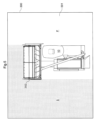
FIG. 6 is a diagram for describing an example of detecting an obstacle in a detection image. - A standard combine harvester (hereinafter, simply referred to as a combine harvester) is described below with reference to the drawings as an example of a working vehicle according to the present invention. Note that hereinafter, the direction of arrow F in
FIG. 1 is defined as the front, the direction of arrow B is defined as back, the direction to the front of the paper inFIG. 1 is defined as left, and the direction of the depth of the paper is defined as right. Also, the direction of arrow U inFIG. 1 is defined as up, and the direction of arrow D is defined as down. - First, the overall configuration of a combine harvester will be described using
FIGS. 1 to 3 . A combine harvester is provided with a crawler-type propulsion device 11, a drivingsection 12, a threshingdevice 13, agrain tank 14, a harvesting unit H, a conveyingdevice 16, agrain discharge device 18, and asatellite positioning module 80. The conveyingdevice 16, the threshingdevice 13, and the harvesting unit H are examples of work devices. - The
propulsion device 11 is provided on the lower portion of avehicle body 10. The combine harvester is configured to be self-propelled via thepropulsion device 11. - Also, the driving
section 12, the threshingdevice 13, and thegrain tank 14 are provided above thepropulsion device 11. The drivingsection 12 is provided with adriver seat 31 and acabin 3 covering thedriver seat 31. Thedriver seat 31 is where the operator of the combine harvester or an observer who monitors the work can sit. Note that the observer may monitor the work of the combine harvester from outside of the combine harvester. Adisplay device 2 is disposed in thedriving section 12. - The
grain discharge device 18 is provided above thegrain tank 14. Also, thesatellite positioning module 80 is provided on the upper surface of the drivingsection 12. - The harvesting unit H is provided on the front portion of the combine harvester. Also, the conveying
device 16 is provided to the back of the harvesting unit H. Also, the harvesting unit H includes acutting mechanism 15 and areel 17. - The grain stalk reaped by the
cutting mechanism 15 is conveyed to the threshingdevice 13 via the conveyingdevice 16. The reaped grain stalk is threshed at the threshingdevice 13. The grain obtained by threshing is stored in thegrain tank 14. The grain stored in thegrain tank 14 is discharged out of the vehicle by thegrain discharge device 18 as necessary. The harvesting unit H, thepropulsion device 11, the conveyingdevice 16, and the threshingdevice 13 are driven by anengine 8, which is an example of a power source. - The
vehicle body 10 of the combine harvester is provided with a plurality of cameras 4 (corresponding to image capture devices) that capture images of the surroundings of the vehicle body. The plurality ofcameras 4 each capture an image (surrounding area image) of a predetermined region of the surroundings of thevehicle body 10, and these images are combined to generate an image (surroundings image) of the surroundings in all directions of thevehicle body 10. For example, as thecameras 4, a front camera 41 (an example of an image capture device), a back camera 42 (an example of an image capture device), a right camera 43 (an example of an image capture device), and a left camera 44 (an example of an image capture device) are provided. Thefront camera 41, theback camera 42, theright camera 43, and theleft camera 44 each capture an image of the surrounding area of thevehicle body 10, generate a surrounding area image, and output the surrounding area image to animage processing unit 70 described below (seeFIG. 4 ). Note that the surrounding area images in the present embodiment may be still images or may be moving images. Also, thecameras 4 are not limited to numbering four, and it is only required that the number ofcameras 4 is sufficient to capture the entire surroundings of thevehicle body 10. - As illustrated
FIGS. 1 to 3 , thefront camera 41 is provided at the front portion of the drivingsection 12. Specifically, thefront camera 41 is provided at the front upper portion of thecabin 3. Thefront camera 41 is located at or near the left end portion of thecabin 3 in the vehicle body left-and-right direction and located at a central portion of thevehicle body 10 in the vehicle body left-and-right direction. Thefront camera 41 is orientated to face diagonally forward and downward and captures images to the front of thevehicle body 10. - The
back camera 42 is provided at the upper portion of the back end portion of thegrain tank 14. Theback camera 42 is located at or near the left end portion of thegrain tank 14 in the vehicle body left-and-right direction and located at a central portion of thevehicle body 10 in the vehicle body left-and-right direction. Theback camera 42 is orientated to face diagonally backward and downward and captures images to the back of thevehicle body 10. - The
right camera 43 is provided at an upper corner portion of the right side portion of thecabin 3. Theright camera 43 is located at the back end portion of thecabin 3 and located at or near the central portion of thevehicle body 10 in the vehicle body front-and-back direction. Theright camera 43 is orientated to face diagonally downward and right and captures images to the right of thevehicle body 10. - The
left camera 44 is provided at an upper corner portion of the left side portion of the threshingdevice 13. Theleft camera 44 is located at or near the front end portion of the threshingdevice 13 in the vehicle body front-and-back direction and located at or near the central portion in the vehicle body front-and-back direction. The position of theleft camera 44 in the vehicle body front-and-back direction is roughly the same as the position of theright camera 43 in the vehicle body front-and-back direction. Theleft camera 44 is orientated to face diagonally downward and left and captures images to the left of thevehicle body 10. - The
display device 2 is provided in thedriving section 12. A composite image based on the surrounding area images captured by thefront camera 41, theback camera 42, theright camera 43, and theleft camera 44 is generated, and the composite image is displayed on thedisplay device 2. Thedisplay device 2 is disposed diagonally left and forward of thedriver seat 31. - Next, the configuration of a control system of a combine harvester will be described using
FIGS. 1 to 4 . The control system of the embodiment includes acontrol unit 6 and is constituted of multiple electronic control units (processors), i.e., ECUs, various operation devices, sensor groups, switch groups, and a wiring network such as an in-vehicle LAN for data transmission between these devices. Note that thecontrol unit 6 may be constituted by such hardware, or one or all of the configurations may be constituted by software that execute the appropriate process. Also, such configurations may be implemented via a program executed by a processor. In this case, the program is stored in a discretionary storage device installed in the combine harvester. - The
control unit 6 is a key element of the control system and is represented as an assembly of ECUs. Thecontrol unit 6 is connected to the various operation devices, sensor groups, switch groups, and the like via the wiring network. Furthermore, thecontrol unit 6 is connected to various devices provided outside of the combine harvester via acommunication unit 9 in a data communication enabled state. - The
communication unit 9 is used by the control system of the combine harvester for exchanging data with acloud computer system 100 remotely installed, amobile communication terminal 200, and the like. Themobile communication terminal 200 in this example is a tablet computer operated by an observer (including a driver and worker) at the site of operation and driving. - The positioning data from the
satellite positioning module 80 and the image data from thecameras 4 described above are input to thecontrol unit 6 via the wiring network. - The
control unit 6 is provided with aninput processing unit 6A and anoutput processing unit 6B as an I/O interface. A driving systemdetection sensor group 8A, an operation systemdetection sensor group 8B, and the like are connected to theinput processing unit 6A. The driving systemdetection sensor group 8A may include an engine speed adjustment unit, an accelerator pedal, a brake pedal, a transmission operation unit, and other sensors and the like that detect states. The operation systemdetection sensor group 8B may include sensors and the like that detect the device state of the harvesting unit H, the threshingdevice 13, thegrain discharge device 18, and the conveyingdevice 16 and the state of the grain stalk and the grain. - A vehicle
driving device group 7A and a workdevice device group 7B are connected to theoutput processing unit 6B. The vehicledriving device group 7A may include control devices relating to vehicle driving, such as an engine control device, a transmission control device, a braking control device, a steering control device, and the like. The workdevice device group 7B may include, for example, a power control device for the harvesting unit H, the threshingdevice 13, thegrain discharge device 18, the conveyingdevice 16. - The
control unit 6 is provided with an operation and drivingcontrol module 60, theimage processing unit 70, anobstacle detection unit 5, and a vehicle bodyposition calculation unit 66. - The vehicle body
position calculation unit 66 calculates the vehicle body position, which corresponds to map coordinates of thevehicle body 10, on the basis of positioning data successively sent from thesatellite positioning module 80. - The combine harvester of the embodiment is capable of being driven via both automated driving (automated steering) and manual driving (manual steering). The operation and driving
control module 60 is provided with an automateddriving control unit 63 and a travelpath setting unit 64, in addition to a drivingcontrol unit 61 and anoperation control unit 62. The drivingsection 12 is provided with a driving mode switch (not illustrated) for selecting either an automated driving mode in which the vehicle is driven with automated steering or a manual steering mode in which the vehicle is driven with manual steering. By operating the driving mode switch, the driving can transition from manual steering driving to automated steering driving or from automated steering driving to manual steering driving. - The driving
control unit 61 includes an engine control function, a steering control function, a vehicle speed control function, and the like and sends a driving control signal to the vehicledriving device group 7A. Theoperation control unit 62 sends an operation control signal to the workdevice device group 7B in order to control the movement of the harvesting unit H, the threshingdevice 13, thegrain discharge device 18, the conveyingdevice 16, and the like. - In a case where the manual steering mode is selected, the driving
control unit 61 generates a control signal on the basis of operation by the driver and controls the vehicledriving device group 7A. Also, on the basis of operation by the driver, theoperation control unit 62 generates a control signal and controls the workdevice device group 7B. In a case where the automated steering mode is selected, the drivingcontrol unit 61 controls the vehicledriving device group 7A relating to steering and the vehicledriving device group 7A relating to vehicle speed on the basis of an automated driving command sent by the automateddriving control unit 63. Also, on the basis of an automated driving command sent by the automateddriving control unit 63, theoperation control unit 62 controls the workdevice device group 7B. - The travel
path setting unit 64 loads a travel path for the automated driving generated at thecontrol unit 6, themobile communication terminal 200, thecloud computer system 100, or the like on a memory (not illustrated) built in the travelpath setting unit 64. The travel path loaded on the memory (not illustrated) is sequentially used as a target travel path for the automated driving. The travel path can be used in the guidance of the combine harvester to guide it to drive along the travel path even in the case of manual driving. In a case where the automated steering mode is selected, the target travel path and the drive state of the workdevice device group 7B executed in turn corresponding to the target travel path are set in advance as the action relating to automated driving. - The automated
driving control unit 63, more specifically, generates an automated steering command and a vehicle speed command and sends these commands to the drivingcontrol unit 61. The automated steering command is generated to eliminate any orientation discrepancy and any position discrepancy between the travel path from the travelpath setting unit 64 and the vehicle position calculated by the vehicle bodyposition calculation unit 66. The vehicle speed command is generated on the basis of a pre-set vehicle speed value. Furthermore, the automateddriving control unit 63 sends a work device action command to theoperation control unit 62 in accordance with the vehicle position and the drive state of the vehicle. - The
image processing unit 70 acquires the surrounding area images captured by thefront camera 41, theback camera 42, theright camera 43, and theleft camera 44. Specifically, theimage processing unit 70 is input with a front surrounding area image of the front area of thevehicle body 10 from thefront camera 41, input with a back surrounding area image of the back area of thevehicle body 10 from theback camera 42, input with a right surrounding area image of the right area of thevehicle body 10 from theright camera 43, and input with a left surrounding area image of the left area of thevehicle body 10 from theleft camera 44. Theimage processing unit 70 generates a surroundings image representing the entire surroundings of thevehicle body 10 on the basis of the surrounding area images and outputs the surroundings image to thedisplay device 2. Thedisplay device 2 displays the surroundings image output by theimage processing unit 70. - The
image processing unit 70 is provided with astorage unit 72 and animage combining unit 73. - The
storage unit 72 stores the vehicle body data indicating the external shape of thevehicle body 10. The vehicle body data may be data indicating the shape of thevehicle body 10 in a plan view, may be data indicating the three-dimensional shape of thevehicle body 10, or may be data indicating a 3D model of thevehicle body 10, for example. The vehicle body data includes data indicating the external shape of the harvesting unit H, data indicating the external shape of thegrain discharge device 18, and data indicating the external shape of thegrain tank 14. - The
image combining unit 73 generates a surroundings image, which is an image representing thevehicle body 10 and the surroundings of thevehicle body 10, on the basis of the four surrounding area images input from thefront camera 41, theback camera 42, theright camera 43, and theleft camera 44 and the vehicle body data stored in thestorage unit 72 and outputs the surroundings image to thedisplay device 2. The harvesting unit H, thegrain discharge device 18, and thegrain tank 14 are displayed in the surroundings image. - Next, an example of the surroundings image will be described using
FIG. 5 as well as referencingFIGS. 1 and4 .FIG. 5 is a diagram illustrating an example of asurroundings image 300 of a case where the combine harvester is advancing through a field and performing harvesting. - The
surroundings image 300 is generated by theimage combining unit 73. First, theimage combining unit 73 generates a surroundingscomposite image 301 from the four surrounding area images input from thefront camera 41, theback camera 42, theright camera 43, and theleft camera 44. Thesurroundings image 300 is generated by theimage combining unit 73 combining avehicle body image 302 stored in advance in thestorage unit 72 and the surroundingscomposite image 301. In the surroundingscomposite image 301 around thevehicle body image 302, a reaped area P to the right and the back of thevehicle body 10 and an unreaped area S to the left and the front of thevehicle body 10 are displayed. - As illustrated in
FIG. 4 , theobstacle detection unit 5 is provided with adirection detection unit 51, animage selection unit 52, and adetection unit 53. - The
direction detection unit 51 determines the state of the operation and driving acquired from the operation and drivingcontrol module 60, a change in the vehicle body position calculated by the vehicle bodyposition calculation unit 66, or determines all of these comprehensively and obtains the advancement direction of thevehicle body 10. - The
image selection unit 52 determines which one from among thefront camera 41, theback camera 42, theright camera 43, the left camera 44 (seeFIG. 1 for all) is thecamera 4 capturing an image of the advancement direction of the vehicle body 10 (seeFIG. 1 for this and all following instances) obtained by thedirection detection unit 51. Theimage selection unit 52 acquires the surrounding area image captured by thecamera 4 determined to be thecamera 4 capturing the advancement direction of thevehicle body 10. For example, in a case where the front is determined to be the advancement direction of thevehicle body 10, theimage selection unit 52 selectively acquires a front surrounding area image captured by the front camera 41 (seeFIG. 1 ) as a detection image 303 (seeFIG. 6 for this and all following instances). The acquireddetection image 303 is passed to thedetection unit 53. - The
detection unit 53 analyzes thedetection image 303 received from theimage selection unit 52 and detects obstacles. Obstacles can be detected using various image analysis devices or image analysis methods. For example, obstacles can be detected via image analysis using artificial intelligence. Specifically, thedetection unit 53 may use trained data of a neural network or the like trained via machine learning (deep learning) to detect obstacles. In a case where the detection result corresponds to the presence or absence of obstacles or whether an obstacle can be detected, thedetection unit 53 transmits the position and type of the obstacle/s to the operation and drivingcontrol module 60. - Next, a specific example of obstacle detection will be described using an example of the
detection image 303 in a case where thevehicle body 10 is advancing usingFIG. 6 and referencingFIG. 4 . - Because in this case the
vehicle body 10 is advancing, thedetection image 303 includes an image of the field in front of the harvesting unit H and thevehicle body 10. In a case where there are foreign objects other than crops in the field, thedetection unit 53 detects foreign objects as obstacles. In thedetection image 303, a person F3 is detected as an obstacle. - In this manner, in the present embodiment, when an obstacle is detected, from among the surrounding area images captured by the plurality of
cameras 4, the surrounding area image corresponding to the advancement direction of thevehicle body 10 is selectively acquired as thedetection image 303 for analysis. Typically, when the data amount of the image for analysis is large, the analysis capability, including analysis accuracy, analysis speed, and the like, is reduced due to performance constraints of the analysis device or the like. In regards to this, in the present embodiment, the surrounding area image corresponding to the advancement direction of thevehicle body 10 is the target for analysis, i.e., thedetection image 303, and thus the load on the analysis device or the like is reduced. As a result, the analysis capability, including analysis accuracy, analysis speed, and the like, can be enhanced, and obstacles can be detected with a higher accuracy in a shorter time. Also, the area of thedetection image 303 is narrowed so that the resolution of thedetection image 303 can be easily increased. This also allows the detection accuracy of obstacles to be enhanced. Furthermore, by detecting obstacles using only the surrounding area image in the advancement direction of the operation and driving, the detection of obstacles that do not impede the operation and driving can be minimized or prevented, and obstacles with a high likelihood of impeding the operation and driving can be appropriately detected. - Furthermore, when an obstacle is detected, the automated
driving control unit 63 of the operation and drivingcontrol module 60 receives an obstacle detection result and changes the action which has been set in accordance with the detection result. When the combine harvester is being automatically driven, the automateddriving control unit 63 executes control of the operation and driving so that the combine harvester drives along the travel path set by the travelpath setting unit 64 and the actions for controlling the workdevice device group 7B are transitioned through in a pre-set order. Also, when an obstacle is detected, the automateddriving control unit 63 changes the pre-set actions. For example, when a detection result indicating that an obstacle has been detected is received, the automateddriving control unit 63 stops the vehicle, changes the travel path, stops the workdevice device group 7B, and changes the state of the workdevice device group 7B. - As described above, when an obstacle is detected in the advancement direction, the actions relating to automated driving are changed. This helps prevent appropriate operation and driving being impeded by an obstacle. For example, by stopping operation and driving, the obstacle can be removed before operation and driving is once again started. This allows appropriate operation and driving to continue even when there is an obstacle.
-
- 1. As described above, with operation and driving controlled by automated driving, one action transitions to the next action in a pre-set order of actions. Here, in the embodiment described above, a surrounding area image corresponding to an image captured in the front advancement direction during an action (a surrounding area image captured by the
camera 4 capturing the front advancement direction) is selected as the detection image. When an action is transitioned to, from before the transition, the surrounding area image corresponding to the image capturing the front advancement direction of the next action may be selected as the detection image. For example, in a case where the action transition is from driving straight into a left turn, in the final stage of driving straight, the surrounding area image selected as the detection image is switched from the front surrounding area image captured by thefront camera 41 to the left surrounding area image captured by theleft camera 44. The timing of the switch may be a predetermined amount of time before the next action is started, or may be when the combine harvester reaches a predetermined distance behind the position where the next action is started. Here, as illustrated inFIG. 4 , theobstacle detection unit 5 is provided with an action starttime detection unit 54 in addition to thedirection detection unit 51, theimage selection unit 52, and thedetection unit 53. The action starttime detection unit 54 detects a predetermined amount of time before when the action transitions or when the combine harvester has reached a predetermined distance behind the position where the action transitions and transmits this to theimage selection unit 52. Then, theimage selection unit 52 selects and obtains the surrounding area image of the front advancement direction of the next action as the detection image. Note that the advancement direction is not limited to being the front of thevehicle body 10 in a case where the vehicle is driven forward, and, in a case where the vehicle is driven backward, the back of thevehicle body 10 corresponds to the advancement direction. Also, in a case of a left turn, the left direction of thevehicle body 10 corresponds to the advancement direction.
In this manner, before an action is transitioned to, the surrounding area image captured by thecamera 4 capturing the front advancement direction of the next action is selected as the detection image, and obstacles are detected using the detection image. Thus, even when after action transition, obstacles present in the front advancement direction after transition can be detected from before the transition. This allows obstacles that will impede operation and driving to be appropriately detected when transitioning between actions. Furthermore, in a case where an obstacle is detected in the front advancement direction of the next action before action transition, operation and driving can be stopped and action transition can be stopped. Accordingly, action transition can be held off until the obstacle in the advancement direction of the next action is no longer present, and the appropriate operation and driving can be continued. - 2. In the embodiments described above, in addition to the surrounding area image corresponding to the captured image of the front advancement direction, the surrounding area image corresponding to the image adjacent to the captured image of the front advancement direction can be used as the detection image. For example, when the combine harvester is driving straight, the front surrounding area image captured by the
front camera 41 and the left surrounding area image captured by theleft camera 44 may be selected as detection images for obstacle detection.
With such a configuration, because all of the surrounding area images are not used as detection images, obstacles can be detected with high accuracy and the obstacle detection range can be efficiently increased. This allows for obstacles to be more appropriately detected. - 3. In the embodiments described above, the
detection unit 53 transmits the obstacle detection result to the operation and drivingcontrol module 60, and the operation and drivingcontrol module 60 changes the action in accordance with the presence/absence, position, and type of obstacles. However, for the embodiments described above, as long as obstacles can be detected, the following processing is discretionary. For example, according to the obstacle detection result, thecontrol unit 6 may display thedetection image 303 showing the obstacle/s and/or information indicating the presence of an obstacle on thedisplay device 2, may display thisdetection image 303 and/or information of themobile communication terminal 200, or may send a warning to a non-illustrated notification unit.
In this manner, the worker can be made aware of the presence of an obstacle and manually take the appropriate measures as necessary. This allows operation and driving to be appropriately continued. - 4. In the embodiments described above, the
front camera 41, theback camera 42, theright camera 43, and theleft camera 44 may constantly capture surrounding area images, and theimage selection unit 52 may selectively acquire one or two or more of the surrounding area images as the detection image. However, a configuration may be used in which thefront camera 41, theback camera 42, theright camera 43, and theleft camera 44 are not required to constantly capture surrounding area images, and at least only thecamera 4 capturing the surrounding area image selected by theimage selection unit 52 capture images. Furthermore, the detection image may be selected per surrounding area image, or an image of a necessary region may be extracted from a surrounding area image or a surroundings image. - 5. The placement positions of the
front camera 41, theback camera 42, theright camera 43, and theleft camera 44 are not limited to the placement positions in the embodiments described above. Thefront camera 41, theback camera 42, theright camera 43, and theleft camera 44 may be placed anywhere as long as they can capture an image of a least a portion of the surroundings of thevehicle body 10. For example, theback camera 42 may be provided at the back end portion of the upper portion of the threshingdevice 13, and theright camera 43 may be provided at the front side portion of the right end portion of the upper portion of thegrain tank 14. Also, thecameras 4 are not limited to being directly provided on thevehicle body 10 and may be provided on a stay or the like to enable capturing of a more appropriate surrounding area image. Furthermore, thecameras 4 are not limited to four, and cameras numbering a discretionary number of one or more may be provided. Also, the surroundings image is not required to include the entire area around thevehicle body 10 and a portion of the surrounding region may be missing. - 6. The foreign object may be an abnormality in the crops as well as the person F3, and an abnormality in the crops can be detected as a type of obstacle. In the
detection image 303 illustrated inFIG. 6 , weeds F1 and flattened crops F2 are detected as obstacles. - The present invention can be applied to a standard combine harvester, a head-feeding combine harvester, as well as an agricultural vehicle and other working vehicles.
-
- 2: Display device
- 4: Camera (image capture device)
- 10: Vehicle body
- 51: Direction detection unit
- 52: Image selection unit
- 53: Detection unit
- 63: Automated driving control unit
- 70: Image processing unit
- 300: Surroundings image
- 303: Detection image
- F1: Weeds (obstacle)
- F2: Flattened crops (obstacle)
- F3: Person (obstacle)
Claims (15)
- A working vehicle capable of operation and driving, comprising:a plurality of image capture devices (4) configured to capture an image of surroundings of a vehicle body (10); anda direction detection unit (51) configured to detect an advancement direction of the operation and driving;characterized in that the working vehicle further comprises:an image selection unit (52) configured to acquire, as a detection image (303), a surrounding area image captured by one image capture device of the plurality of image capture devices (4) capturing a front advancement direction detected by the direction detection unit (51);a detection unit (53) configured to analyse the detection image (303) acquired by the image selection unit (52) and to detect an obstacle (F1, F2, F3); andan automated driving control unit (63) configured to execute automated driving control of the operation and driving so that pre-set actions are executed in order, whereinthe image selection unit (52) is configured to selectively acquire, as the detection image (303), the surrounding area image captured by one image capture device of the plurality of image capture devices (4) capturing a front advancement direction of a next one of the actions a predetermined distance behind a position where the next one of the actions is started, and whereinin a case where an obstacle is detected by the detection unit (53) in the image front advancement direction of the next action, the automated driving control unit (63) is configured to stop transition to the next action until the obstacle is no longer detected.
- The working vehicle according to claim 1, wherein
in a case where an obstacle (F1, F2, F3) is detected by the detection unit (53), the automated driving control unit (63) is configured to change a pre-set next one of the actions. - The working vehicle according to claim 1 or 2, wherein
the image selection unit (52) is configured to selectively acquire, as the detection image (303), the surrounding area image captured by one image capture device of the plurality of image capture devices (4) capturing a front advancement direction of a next one of the actions a predetermined amount of time before the next one of the actions is started. - The working vehicle according to any one of claims 1 to 3, wherein
in a case where an obstacle is detected by the detection unit (53), the automated driving control unit (63) is configured to stop the operation and driving. - The working vehicle according to any one of claims 1 to 4, wherein
the image selection unit (52) is configured to selectively acquire, as the detection image (303), the surrounding area image capturing a front advancement direction and the surrounding area image captured by one image capture device of the plurality of image capture devices (4) capturing a region to a side of the vehicle body adjacent to a captured region of the surrounding area image capturing a front advancement direction. - The working vehicle according to any one of claims 1 to 5, wherein
the detection unit (53) is configured to detect an obstacle (F1, F2, F3) using a neural network trained by machine learning. - The working vehicle according to any one of claims 1 to 6, further comprising:an image processing unit (70) configured to combine the surrounding area images captured by the plurality of image capture devices (4) and to generate a surroundings image (300) of an entire surroundings of the vehicle body (10); anda display device (2) where the surroundings image (300) is displayed.
- An obstacle detection method for when a working vehicle performs operation and driving, comprising:capturing images of a surroundings of a vehicle body (10) as a plurality of surrounding area images; anddetecting an advancement direction of the operation and driving;characterized in that the method further comprises:acquiring, from the plurality of surrounding area images, the surrounding area image capturing a front advancement direction as a detection image;analyzing the detection image and detecting an obstacle (F1, F2, F3), wherein
the operation and driving is automated driving controlled so that pre-set actions are executed in order, whereinas the detection image (303), the surrounding area image capturing a front advancement direction of a next one of the actions is selectively acquired a predetermined distance behind a position where the next one of the actions is started, and whereinwhen an obstacle (F1, F2, F3) is detected in the image in the front advancement direction of the next action, transition to the next action is stopped until the obstacle is no longer detected. - The obstacle detection method according to claim 8, wherein
in a case where an obstacle (F1, F2, F3) is detected, a pre-set next one of the actions is changed. - The obstacle detection method according to claim 8 or 9, wherein
as the detection image (303), the surrounding area image capturing a front advancement direction of a next one of the actions is selectively acquired a predetermined amount of time before the next one of the actions is started. - The obstacle detection method according to any one of claims 8 to 10, wherein
when an obstacle (F1, F2, F3) is detected, the operation and driving is stopped. - The obstacle detection method according to any one of claims 8 to 11, wherein
as the detection image (303), the surrounding area image capturing a front advancement direction and the surrounding area image capturing a region to a side of the vehicle body adjacent to a captured region of the surrounding area image capturing a front advancement direction are selectively acquired. - The obstacle detection method according to any one of claims 8 to 12, wherein
an obstacle (F1, F2, F3) is detected using a neural network trained by machine learning. - The obstacle detection method according to any one of claims 8 to 13, further comprising:combining the plurality of surrounding area images and generating a surroundings image (300) of an entire surroundings of the vehicle body (10); anddisplaying the surroundings image (300).
- An obstacle detection program for when a working vehicle performs operation and driving that causes a processor to execute:processing to acquire a plurality of surrounding area images capturing a surroundings of a vehicle body (10); andprocessing to detect an advancement direction of the operation and driving;characterized in that it further causes the processor to execute:processing to select, from the plurality of surrounding area images, the surrounding area image capturing a front advancement direction as a detection image (303); andprocessing to analyze the detection image (303) and detect an obstacle (F1, F2, F3), whereinthe operation and driving is automated driving controlled so that pre-set actions are executed in order, whereinas the detection image (303), the surrounding area image capturing a front advancement direction of a next one of the actions is selectively acquired a predetermined distance behind a position where the next one of the actions is started, and whereinwhen an obstacle (F1, F2, F3) is detected in the image in the front advancement direction of the next action, transition to the next action is stopped until the obstacle is no longer detected.
Applications Claiming Priority (2)
| Application Number | Priority Date | Filing Date | Title |
|---|---|---|---|
| JP2019117488A JP7183121B2 (en) | 2019-06-25 | 2019-06-25 | work vehicle |
| PCT/JP2020/019933 WO2020261824A1 (en) | 2019-06-25 | 2020-05-20 | Working vehicle, obstacle detection method, and obstacle detection program |
Publications (3)
| Publication Number | Publication Date |
|---|---|
| EP3991533A1 EP3991533A1 (en) | 2022-05-04 |
| EP3991533A4 EP3991533A4 (en) | 2023-10-11 |
| EP3991533B1 true EP3991533B1 (en) | 2025-02-12 |
Family
ID=74060257
Family Applications (1)
| Application Number | Title | Priority Date | Filing Date |
|---|---|---|---|
| EP20833468.0A Active EP3991533B1 (en) | 2019-06-25 | 2020-05-20 | Working vehicle, obstacle detection method, and obstacle detection program |
Country Status (5)
| Country | Link |
|---|---|
| US (1) | US12190602B2 (en) |
| EP (1) | EP3991533B1 (en) |
| JP (1) | JP7183121B2 (en) |
| CN (1) | CN113874874A (en) |
| WO (1) | WO2020261824A1 (en) |
Families Citing this family (8)
| Publication number | Priority date | Publication date | Assignee | Title |
|---|---|---|---|---|
| GB202020174D0 (en) * | 2020-12-18 | 2021-02-03 | Agco Int Gmbh | System and method of assisted or automated grain unload synchronization |
| JP7635616B2 (en) * | 2021-04-06 | 2025-02-26 | 株式会社タダノ | Crane travel support device |
| WO2023276340A1 (en) * | 2021-06-29 | 2023-01-05 | 株式会社クボタ | Management system for agricultural machines |
| JP7783160B2 (en) * | 2022-12-13 | 2025-12-09 | 株式会社クボタ | Field work vehicle |
| DE102023109872A1 (en) * | 2023-04-19 | 2024-10-24 | Claas E-Systems Gmbh | agricultural work machine |
| US20250013245A1 (en) * | 2023-07-07 | 2025-01-09 | Yanmar Holdings Co., Ltd. | Vehicle control method, vehicle control program, and vehicle control system |
| CN116691502B (en) * | 2023-08-01 | 2023-11-10 | 北京芯驰半导体科技有限公司 | Safety detection method and device for vehicle environment, electronic equipment and storage medium |
| JP7539747B1 (en) | 2024-03-01 | 2024-08-26 | 株式会社ブルー・スターR&D | Cellulose production method |
Family Cites Families (17)
| Publication number | Priority date | Publication date | Assignee | Title |
|---|---|---|---|---|
| JP4186908B2 (en) * | 2004-10-28 | 2008-11-26 | アイシン精機株式会社 | Moving object periphery monitoring device |
| JP2007094045A (en) * | 2005-09-29 | 2007-04-12 | Matsushita Electric Ind Co Ltd | Navigation device, navigation method, and vehicle |
| JP4960114B2 (en) | 2007-02-09 | 2012-06-27 | Juki株式会社 | Cover opening / closing device |
| AU2012268476B2 (en) * | 2011-06-07 | 2014-05-15 | Komatsu Ltd. | Perimeter monitoring device for work vehicle |
| DE102012213344B4 (en) * | 2012-07-30 | 2025-08-21 | Robert Bosch Gmbh | Traffic sign recognition |
| JP5825323B2 (en) * | 2013-11-01 | 2015-12-02 | アイシン精機株式会社 | Vehicle periphery monitoring device |
| JP5776995B2 (en) * | 2014-03-11 | 2015-09-09 | クラリオン株式会社 | Vehicle periphery monitoring device |
| US10152891B2 (en) * | 2016-05-02 | 2018-12-11 | Cnh Industrial America Llc | System for avoiding collisions between autonomous vehicles conducting agricultural operations |
| JP6727971B2 (en) * | 2016-07-19 | 2020-07-22 | 株式会社クボタ | Work vehicle |
| JP6794801B2 (en) * | 2016-11-29 | 2020-12-02 | 井関農機株式会社 | Agricultural work machine |
| JP6739364B2 (en) * | 2017-01-20 | 2020-08-12 | 株式会社クボタ | Self-driving work vehicle |
| CN107169468A (en) * | 2017-05-31 | 2017-09-15 | 北京京东尚科信息技术有限公司 | Method for controlling a vehicle and device |
| JP7068781B2 (en) * | 2017-06-23 | 2022-05-17 | 株式会社クボタ | Harvester |
| JP6878221B2 (en) | 2017-09-12 | 2021-05-26 | 日立建機株式会社 | Obstacle detection system for work machines |
| AU2018365091B2 (en) * | 2017-11-13 | 2021-03-04 | Raven Industries, Inc. | Safety system for autonomous operation of off-road and agricultural vehicles using machine learning for detection and identification of obstacles |
| US11277956B2 (en) * | 2018-07-26 | 2022-03-22 | Bear Flag Robotics, Inc. | Vehicle controllers for agricultural and industrial applications |
| JP7044694B2 (en) * | 2018-12-27 | 2022-03-30 | ヤンマーパワーテクノロジー株式会社 | Obstacle detection system for work vehicles |
-
2019
- 2019-06-25 JP JP2019117488A patent/JP7183121B2/en active Active
-
2020
- 2020-05-20 EP EP20833468.0A patent/EP3991533B1/en active Active
- 2020-05-20 CN CN202080040074.1A patent/CN113874874A/en active Pending
- 2020-05-20 WO PCT/JP2020/019933 patent/WO2020261824A1/en not_active Ceased
- 2020-05-20 US US17/603,452 patent/US12190602B2/en active Active
Also Published As
| Publication number | Publication date |
|---|---|
| US20220207882A1 (en) | 2022-06-30 |
| WO2020261824A1 (en) | 2020-12-30 |
| EP3991533A1 (en) | 2022-05-04 |
| CN113874874A (en) | 2021-12-31 |
| JP2021003014A (en) | 2021-01-14 |
| US12190602B2 (en) | 2025-01-07 |
| JP7183121B2 (en) | 2022-12-05 |
| EP3991533A4 (en) | 2023-10-11 |
Similar Documents
| Publication | Publication Date | Title |
|---|---|---|
| EP3991533B1 (en) | Working vehicle, obstacle detection method, and obstacle detection program | |
| US12223739B2 (en) | Obstacle detection system, agricultural work vehicle, obstacle detection program, recording medium on which obstacle detection program is recorded, and obstacle detection method | |
| CN112740895B (en) | Vehicle connection guide | |
| US12457913B2 (en) | Automatic traveling system, automatic traveling method, and automatic traveling program | |
| CN114270283A (en) | Obstacle detection system | |
| CN110582198A (en) | harvester | |
| US12245548B2 (en) | Agricultural work machine such as harvester | |
| JP7068781B2 (en) | Harvester | |
| KR20200053659A (en) | Task vehicle control system | |
| KR20220027811A (en) | Automatic driving system, agricultural equipment, program, recording medium and method recording the program | |
| JP2022103238A (en) | Travel route generation system | |
| EP3409097B1 (en) | Agricultural working machine | |
| KR20250008464A (en) | Vehicle control method, vehicle control program, and vehicle control system | |
| US12460379B2 (en) | Collision avoidance system and method for avoiding collision of work machine with obstacles | |
| JP7670209B2 (en) | Work vehicle control system | |
| JP7814295B2 (en) | Work vehicle | |
| EP4614273A1 (en) | Obstacle detection system | |
| EP4621143A1 (en) | Work machine and method for object detection including identifying and ignoring a moveable work implement | |
| JP2024082938A (en) | Vehicle control system and work vehicle | |
| JP6765349B2 (en) | Harvester | |
| CN119200578A (en) | Control system and operating machine | |
| JP2025010483A (en) | VEHICLE CONTROL METHOD, VEHICLE CONTROL PROGRAM, AND VEHICLE CONTROL SYSTEM | |
| JP2022097149A (en) | Traveling vehicle | |
| CN119136659A (en) | Aircraft control system | |
| CN120196097A (en) | Display control method, display control program, and display control system |
Legal Events
| Date | Code | Title | Description |
|---|---|---|---|
| STAA | Information on the status of an ep patent application or granted ep patent |
Free format text: STATUS: THE INTERNATIONAL PUBLICATION HAS BEEN MADE |
|
| PUAI | Public reference made under article 153(3) epc to a published international application that has entered the european phase |
Free format text: ORIGINAL CODE: 0009012 |
|
| STAA | Information on the status of an ep patent application or granted ep patent |
Free format text: STATUS: REQUEST FOR EXAMINATION WAS MADE |
|
| 17P | Request for examination filed |
Effective date: 20211012 |
|
| AK | Designated contracting states |
Kind code of ref document: A1 Designated state(s): AL AT BE BG CH CY CZ DE DK EE ES FI FR GB GR HR HU IE IS IT LI LT LU LV MC MK MT NL NO PL PT RO RS SE SI SK SM TR |
|
| DAV | Request for validation of the european patent (deleted) | ||
| DAX | Request for extension of the european patent (deleted) | ||
| REG | Reference to a national code |
Ref country code: DE Ref legal event code: R079 Free format text: PREVIOUS MAIN CLASS: A01B0069000000 Ipc: G05D0001020000 Ref country code: DE Ref legal event code: R079 Ref document number: 602020046048 Country of ref document: DE Free format text: PREVIOUS MAIN CLASS: A01B0069000000 Ipc: G05D0001020000 |
|
| A4 | Supplementary search report drawn up and despatched |
Effective date: 20230908 |
|
| RIC1 | Information provided on ipc code assigned before grant |
Ipc: G06V 20/58 20220101ALI20230904BHEP Ipc: G06V 10/82 20220101ALI20230904BHEP Ipc: G06N 3/02 20060101ALI20230904BHEP Ipc: G08G 1/16 20060101ALI20230904BHEP Ipc: A01B 69/00 20060101ALI20230904BHEP Ipc: G05D 1/02 20200101AFI20230904BHEP |
|
| REG | Reference to a national code |
Ref country code: DE Ref legal event code: R079 Free format text: PREVIOUS MAIN CLASS: G05D0001020000 Ipc: G05D0001000000 Ref country code: DE Ref legal event code: R079 Ref document number: 602020046048 Country of ref document: DE Free format text: PREVIOUS MAIN CLASS: G05D0001020000 Ipc: G05D0001000000 |
|
| GRAP | Despatch of communication of intention to grant a patent |
Free format text: ORIGINAL CODE: EPIDOSNIGR1 |
|
| STAA | Information on the status of an ep patent application or granted ep patent |
Free format text: STATUS: GRANT OF PATENT IS INTENDED |
|
| RIC1 | Information provided on ipc code assigned before grant |
Ipc: G08G 1/16 20060101ALI20240731BHEP Ipc: G06V 20/58 20220101ALI20240731BHEP Ipc: G06V 10/82 20220101ALI20240731BHEP Ipc: G06N 3/02 20060101ALI20240731BHEP Ipc: A01B 69/00 20060101ALI20240731BHEP Ipc: G05D 1/00 20060101AFI20240731BHEP |
|
| INTG | Intention to grant announced |
Effective date: 20240829 |
|
| GRAS | Grant fee paid |
Free format text: ORIGINAL CODE: EPIDOSNIGR3 |
|
| GRAA | (expected) grant |
Free format text: ORIGINAL CODE: 0009210 |
|
| STAA | Information on the status of an ep patent application or granted ep patent |
Free format text: STATUS: THE PATENT HAS BEEN GRANTED |
|
| AK | Designated contracting states |
Kind code of ref document: B1 Designated state(s): AL AT BE BG CH CY CZ DE DK EE ES FI FR GB GR HR HU IE IS IT LI LT LU LV MC MK MT NL NO PL PT RO RS SE SI SK SM TR |
|
| REG | Reference to a national code |
Ref country code: GB Ref legal event code: FG4D |
|
| REG | Reference to a national code |
Ref country code: CH Ref legal event code: EP |
|
| REG | Reference to a national code |
Ref country code: DE Ref legal event code: R096 Ref document number: 602020046048 Country of ref document: DE |
|
| REG | Reference to a national code |
Ref country code: IE Ref legal event code: FG4D |
|
| REG | Reference to a national code |
Ref country code: NL Ref legal event code: MP Effective date: 20250212 |
|
| PG25 | Lapsed in a contracting state [announced via postgrant information from national office to epo] |
Ref country code: RS Free format text: LAPSE BECAUSE OF FAILURE TO SUBMIT A TRANSLATION OF THE DESCRIPTION OR TO PAY THE FEE WITHIN THE PRESCRIBED TIME-LIMIT Effective date: 20250512 |
|
| PG25 | Lapsed in a contracting state [announced via postgrant information from national office to epo] |
Ref country code: FI Free format text: LAPSE BECAUSE OF FAILURE TO SUBMIT A TRANSLATION OF THE DESCRIPTION OR TO PAY THE FEE WITHIN THE PRESCRIBED TIME-LIMIT Effective date: 20250212 |
|
| PG25 | Lapsed in a contracting state [announced via postgrant information from national office to epo] |
Ref country code: PL Free format text: LAPSE BECAUSE OF FAILURE TO SUBMIT A TRANSLATION OF THE DESCRIPTION OR TO PAY THE FEE WITHIN THE PRESCRIBED TIME-LIMIT Effective date: 20250212 |
|
| PGFP | Annual fee paid to national office [announced via postgrant information from national office to epo] |
Ref country code: DE Payment date: 20250513 Year of fee payment: 6 |
|
| PG25 | Lapsed in a contracting state [announced via postgrant information from national office to epo] |
Ref country code: ES Free format text: LAPSE BECAUSE OF FAILURE TO SUBMIT A TRANSLATION OF THE DESCRIPTION OR TO PAY THE FEE WITHIN THE PRESCRIBED TIME-LIMIT Effective date: 20250212 |
|
| REG | Reference to a national code |
Ref country code: LT Ref legal event code: MG9D |
|
| PG25 | Lapsed in a contracting state [announced via postgrant information from national office to epo] |
Ref country code: NO Free format text: LAPSE BECAUSE OF FAILURE TO SUBMIT A TRANSLATION OF THE DESCRIPTION OR TO PAY THE FEE WITHIN THE PRESCRIBED TIME-LIMIT Effective date: 20250512 Ref country code: IS Free format text: LAPSE BECAUSE OF FAILURE TO SUBMIT A TRANSLATION OF THE DESCRIPTION OR TO PAY THE FEE WITHIN THE PRESCRIBED TIME-LIMIT Effective date: 20250612 |
|
| PG25 | Lapsed in a contracting state [announced via postgrant information from national office to epo] |
Ref country code: NL Free format text: LAPSE BECAUSE OF FAILURE TO SUBMIT A TRANSLATION OF THE DESCRIPTION OR TO PAY THE FEE WITHIN THE PRESCRIBED TIME-LIMIT Effective date: 20250212 |
|
| PG25 | Lapsed in a contracting state [announced via postgrant information from national office to epo] |
Ref country code: HR Free format text: LAPSE BECAUSE OF FAILURE TO SUBMIT A TRANSLATION OF THE DESCRIPTION OR TO PAY THE FEE WITHIN THE PRESCRIBED TIME-LIMIT Effective date: 20250212 |
|
| PG25 | Lapsed in a contracting state [announced via postgrant information from national office to epo] |
Ref country code: LV Free format text: LAPSE BECAUSE OF FAILURE TO SUBMIT A TRANSLATION OF THE DESCRIPTION OR TO PAY THE FEE WITHIN THE PRESCRIBED TIME-LIMIT Effective date: 20250212 Ref country code: PT Free format text: LAPSE BECAUSE OF FAILURE TO SUBMIT A TRANSLATION OF THE DESCRIPTION OR TO PAY THE FEE WITHIN THE PRESCRIBED TIME-LIMIT Effective date: 20250612 |
|
| PG25 | Lapsed in a contracting state [announced via postgrant information from national office to epo] |
Ref country code: GR Free format text: LAPSE BECAUSE OF FAILURE TO SUBMIT A TRANSLATION OF THE DESCRIPTION OR TO PAY THE FEE WITHIN THE PRESCRIBED TIME-LIMIT Effective date: 20250513 Ref country code: BG Free format text: LAPSE BECAUSE OF FAILURE TO SUBMIT A TRANSLATION OF THE DESCRIPTION OR TO PAY THE FEE WITHIN THE PRESCRIBED TIME-LIMIT Effective date: 20250212 |
|
| REG | Reference to a national code |
Ref country code: AT Ref legal event code: MK05 Ref document number: 1766638 Country of ref document: AT Kind code of ref document: T Effective date: 20250212 |
|
| PG25 | Lapsed in a contracting state [announced via postgrant information from national office to epo] |
Ref country code: SE Free format text: LAPSE BECAUSE OF FAILURE TO SUBMIT A TRANSLATION OF THE DESCRIPTION OR TO PAY THE FEE WITHIN THE PRESCRIBED TIME-LIMIT Effective date: 20250212 |
|
| PG25 | Lapsed in a contracting state [announced via postgrant information from national office to epo] |
Ref country code: SM Free format text: LAPSE BECAUSE OF FAILURE TO SUBMIT A TRANSLATION OF THE DESCRIPTION OR TO PAY THE FEE WITHIN THE PRESCRIBED TIME-LIMIT Effective date: 20250212 |
|
| PG25 | Lapsed in a contracting state [announced via postgrant information from national office to epo] |
Ref country code: DK Free format text: LAPSE BECAUSE OF FAILURE TO SUBMIT A TRANSLATION OF THE DESCRIPTION OR TO PAY THE FEE WITHIN THE PRESCRIBED TIME-LIMIT Effective date: 20250212 |
|
| PG25 | Lapsed in a contracting state [announced via postgrant information from national office to epo] |
Ref country code: IT Free format text: LAPSE BECAUSE OF FAILURE TO SUBMIT A TRANSLATION OF THE DESCRIPTION OR TO PAY THE FEE WITHIN THE PRESCRIBED TIME-LIMIT Effective date: 20250212 |
|
| PG25 | Lapsed in a contracting state [announced via postgrant information from national office to epo] |
Ref country code: AT Free format text: LAPSE BECAUSE OF FAILURE TO SUBMIT A TRANSLATION OF THE DESCRIPTION OR TO PAY THE FEE WITHIN THE PRESCRIBED TIME-LIMIT Effective date: 20250212 |
|
| PG25 | Lapsed in a contracting state [announced via postgrant information from national office to epo] |
Ref country code: EE Free format text: LAPSE BECAUSE OF FAILURE TO SUBMIT A TRANSLATION OF THE DESCRIPTION OR TO PAY THE FEE WITHIN THE PRESCRIBED TIME-LIMIT Effective date: 20250212 Ref country code: CZ Free format text: LAPSE BECAUSE OF FAILURE TO SUBMIT A TRANSLATION OF THE DESCRIPTION OR TO PAY THE FEE WITHIN THE PRESCRIBED TIME-LIMIT Effective date: 20250212 |
|
| PG25 | Lapsed in a contracting state [announced via postgrant information from national office to epo] |
Ref country code: RO Free format text: LAPSE BECAUSE OF FAILURE TO SUBMIT A TRANSLATION OF THE DESCRIPTION OR TO PAY THE FEE WITHIN THE PRESCRIBED TIME-LIMIT Effective date: 20250212 |
|
| PG25 | Lapsed in a contracting state [announced via postgrant information from national office to epo] |
Ref country code: SK Free format text: LAPSE BECAUSE OF FAILURE TO SUBMIT A TRANSLATION OF THE DESCRIPTION OR TO PAY THE FEE WITHIN THE PRESCRIBED TIME-LIMIT Effective date: 20250212 |
|
| REG | Reference to a national code |
Ref country code: DE Ref legal event code: R097 Ref document number: 602020046048 Country of ref document: DE |
|
| PLBE | No opposition filed within time limit |
Free format text: ORIGINAL CODE: 0009261 |
|
| STAA | Information on the status of an ep patent application or granted ep patent |
Free format text: STATUS: NO OPPOSITION FILED WITHIN TIME LIMIT |
|
| REG | Reference to a national code |
Ref country code: CH Ref legal event code: H13 Free format text: ST27 STATUS EVENT CODE: U-0-0-H10-H13 (AS PROVIDED BY THE NATIONAL OFFICE) Effective date: 20251223 |
|
| REG | Reference to a national code |
Ref country code: CH Ref legal event code: L10 Free format text: ST27 STATUS EVENT CODE: U-0-0-L10-L00 (AS PROVIDED BY THE NATIONAL OFFICE) Effective date: 20251224 |
|
| PG25 | Lapsed in a contracting state [announced via postgrant information from national office to epo] |
Ref country code: LU Free format text: LAPSE BECAUSE OF NON-PAYMENT OF DUE FEES Effective date: 20250520 |
|
| PG25 | Lapsed in a contracting state [announced via postgrant information from national office to epo] |
Ref country code: CH Free format text: LAPSE BECAUSE OF NON-PAYMENT OF DUE FEES Effective date: 20250531 |
|
| 26N | No opposition filed |
Effective date: 20251113 |
|
| GBPC | Gb: european patent ceased through non-payment of renewal fee |
Effective date: 20250520 |
|
| REG | Reference to a national code |
Ref country code: BE Ref legal event code: MM Effective date: 20250531 |
|
| PG25 | Lapsed in a contracting state [announced via postgrant information from national office to epo] |
Ref country code: MC Free format text: LAPSE BECAUSE OF FAILURE TO SUBMIT A TRANSLATION OF THE DESCRIPTION OR TO PAY THE FEE WITHIN THE PRESCRIBED TIME-LIMIT Effective date: 20250212 |
|
| PG25 | Lapsed in a contracting state [announced via postgrant information from national office to epo] |
Ref country code: GB Free format text: LAPSE BECAUSE OF NON-PAYMENT OF DUE FEES Effective date: 20250520 |
|
| PG25 | Lapsed in a contracting state [announced via postgrant information from national office to epo] |
Ref country code: IE Free format text: LAPSE BECAUSE OF NON-PAYMENT OF DUE FEES Effective date: 20250520 |
|
| PG25 | Lapsed in a contracting state [announced via postgrant information from national office to epo] |
Ref country code: BE Free format text: LAPSE BECAUSE OF NON-PAYMENT OF DUE FEES Effective date: 20250531 |
|
| PG25 | Lapsed in a contracting state [announced via postgrant information from national office to epo] |
Ref country code: FR Free format text: LAPSE BECAUSE OF NON-PAYMENT OF DUE FEES Effective date: 20250531 |