EP3989639A1 - Frequency band switching method, base station and readable storage medium - Google Patents
Frequency band switching method, base station and readable storage medium Download PDFInfo
- Publication number
- EP3989639A1 EP3989639A1 EP20881265.1A EP20881265A EP3989639A1 EP 3989639 A1 EP3989639 A1 EP 3989639A1 EP 20881265 A EP20881265 A EP 20881265A EP 3989639 A1 EP3989639 A1 EP 3989639A1
- Authority
- EP
- European Patent Office
- Prior art keywords
- target terminal
- band
- power transmission
- high power
- switching control
- Prior art date
- Legal status (The legal status is an assumption and is not a legal conclusion. Google has not performed a legal analysis and makes no representation as to the accuracy of the status listed.)
- Granted
Links
Images




Classifications
-
- H—ELECTRICITY
- H04—ELECTRIC COMMUNICATION TECHNIQUE
- H04W—WIRELESS COMMUNICATION NETWORKS
- H04W36/00—Hand-off or reselection arrangements
- H04W36/0005—Control or signalling for completing the hand-off
- H04W36/0011—Control or signalling for completing the hand-off for data sessions of end-to-end connection
- H04W36/0022—Control or signalling for completing the hand-off for data sessions of end-to-end connection for transferring data sessions between adjacent core network technologies
-
- H—ELECTRICITY
- H04—ELECTRIC COMMUNICATION TECHNIQUE
- H04W—WIRELESS COMMUNICATION NETWORKS
- H04W52/00—Power management, e.g. Transmission Power Control [TPC] or power classes
- H04W52/04—Transmission power control [TPC]
- H04W52/30—Transmission power control [TPC] using constraints in the total amount of available transmission power
- H04W52/36—Transmission power control [TPC] using constraints in the total amount of available transmission power with a discrete range or set of values, e.g. step size, ramping or offsets
- H04W52/367—Power values between minimum and maximum limits, e.g. dynamic range
-
- H—ELECTRICITY
- H04—ELECTRIC COMMUNICATION TECHNIQUE
- H04W—WIRELESS COMMUNICATION NETWORKS
- H04W36/00—Hand-off or reselection arrangements
- H04W36/0005—Control or signalling for completing the hand-off
- H04W36/0055—Transmission or use of information for re-establishing the radio link
- H04W36/0072—Transmission or use of information for re-establishing the radio link of resource information of target access point
-
- H—ELECTRICITY
- H04—ELECTRIC COMMUNICATION TECHNIQUE
- H04W—WIRELESS COMMUNICATION NETWORKS
- H04W52/00—Power management, e.g. Transmission Power Control [TPC] or power classes
- H04W52/04—Transmission power control [TPC]
- H04W52/18—TPC being performed according to specific parameters
- H04W52/24—TPC being performed according to specific parameters using SIR [Signal to Interference Ratio] or other wireless path parameters
- H04W52/242—TPC being performed according to specific parameters using SIR [Signal to Interference Ratio] or other wireless path parameters taking into account path loss
-
- H—ELECTRICITY
- H04—ELECTRIC COMMUNICATION TECHNIQUE
- H04W—WIRELESS COMMUNICATION NETWORKS
- H04W52/00—Power management, e.g. Transmission Power Control [TPC] or power classes
- H04W52/04—Transmission power control [TPC]
- H04W52/18—TPC being performed according to specific parameters
- H04W52/24—TPC being performed according to specific parameters using SIR [Signal to Interference Ratio] or other wireless path parameters
- H04W52/245—TPC being performed according to specific parameters using SIR [Signal to Interference Ratio] or other wireless path parameters taking into account received signal strength
-
- H—ELECTRICITY
- H04—ELECTRIC COMMUNICATION TECHNIQUE
- H04W—WIRELESS COMMUNICATION NETWORKS
- H04W72/00—Local resource management
- H04W72/04—Wireless resource allocation
- H04W72/044—Wireless resource allocation based on the type of the allocated resource
- H04W72/0453—Resources in frequency domain, e.g. a carrier in FDMA
-
- H—ELECTRICITY
- H04—ELECTRIC COMMUNICATION TECHNIQUE
- H04W—WIRELESS COMMUNICATION NETWORKS
- H04W72/00—Local resource management
- H04W72/50—Allocation or scheduling criteria for wireless resources
- H04W72/56—Allocation or scheduling criteria for wireless resources based on priority criteria
Definitions
- the present invention relates to the field of communication technologies, in particular to a band switching control method, a base station and a readable storage medium.
- the 4th generation mobile communication technology (4G) gives a technical specification of high-power terminal in the R13 standard
- the 5th generation mobile communication technology (5G) gives a technical specification of high-power terminal in the R15 standard, i.e., a mainstream mobile communication technology has supported in the standard the improvement of the uplink performance.
- Different terminals from different terminal manufacturers support different functions of high power transmission. For example, some terminals support signal uplink transmission with the high power only in a certain band or several bands, not in all bands.
- the terminal when it performs cell selecting, it generally selects a cell with the best connection signal strength. In this case, it may occur that a band of a cell to which a terminal configured with the high power transmission function is connected is not a high power transmission applicable band corresponding to the terminal, thus a high power transmission capability of the terminal cannot be fully utilized.
- Embodiments of the present invention provide a band switching control method, a base station and a readable storage medium, which solve a problem that a band of a cell to which a terminal configured with a high power transmission class is connected does not match a high power transmission applicable band corresponding to the terminal.
- Embodiments of the present invention provide a band switching control method, including: in response to a target terminal being configured with a high power transmission class but not operating in a high power transmission applicable band corresponding to the target terminal, determining whether an accessible band of the target terminal includes at least one high power transmission applicable band; and in response to determining that the accessible band of the target terminal includes the at least one high power transmission applicable band, selecting one of the at least one high power transmission applicable band that is accessible as a target band, and sending a first switching control instruction to the target terminal, wherein the first switching control instruction is configured to control the target terminal to switch to the target band for operation.
- Embodiments of the present invention further provide a readable storage medium storing a program, wherein the program is executed to perform steps in the band switching control method provided in the above embodiments.
- Embodiments of the present invention further provide a base station including one or more processors; a memory storing one or more programs; wherein the one or more programs are executed by the one or more processors to cause the one or more processors to perform steps in the band switching control method provided in the above embodiments.
- band in the present invention refers to a band divided by a long term evolution (LTE) technology.
- LTE is a technical standard of a universal mobile telecommunications system (UMTS).
- UMTS universal mobile telecommunications system
- LTE divides a communication frequency into a plurality of bands, and specifies a frequency usage range corresponding to each of the bands.
- FIG. 1 is a flowchart of a band switching control method according to an embodiment of the present invention. As shown in FIG. 1 , the band switching control method includes the following steps.
- Terminal capabilities include a radio access-related capability and a core network-related capability, such as a power transmission class configured for the target terminal, and the high power transmission applicable band corresponding to the target terminal when the target terminal is configured with the high power transmission class.
- a default conventional power transmission class is power class 3
- the high power transmission class includes power class 2 and power class 1
- the maximum transmission power corresponding to power class 2 is 26dbm
- the maximum transmission power corresponding to power class 1 is 31dbm.
- the terminal capability information records that the power transmission class configured for the 4G terminal includes not only power class 3 but also at least one of power class 2 and power class 1, it can be identified that the 4G terminal is configured with the high power transmission class (i.e., supporting the high power transmission function).
- the principle for identifying whether a 5G terminal is configured with the high power transmission class is consistent with the principle for identifying whether the 4G terminal is configured with the high power transmission class, which thus will not be described in detail herein.
- the target terminal further sends cell information to the base station, and the cell information includes information (e.g., cell identification, signal strength, band, etc.) about a cell to which the target terminal is currently connected and information about other cells to which the target terminal is able to be currently connected.
- information e.g., cell identification, signal strength, band, etc.
- the target terminal Based on the terminal capability information and the cell information, it is possible to effectively identify whether the target terminal is configured with the high power transmission class, and identify whether the target terminal operates in the high power transmission applicable band corresponding to the target terminal in response to the target terminal being configured with the high power transmission class.
- the target terminal In response to the target terminal being configured with the high power transmission class but not operating in the high power transmission applicable band corresponding to the target terminal, it may be determined whether the accessible band (i.e., a band of a cell to which the terminal is able to be connected) includes at least one high power transmission applicable band based on the cell information sent by the target terminal. In response to determining that the accessible band includes the at least one high power transmission applicable band corresponding to the target terminal, the step S2 is performed. And in response to determining that the accessible band does not include the high power transmission applicable band corresponding to the target terminal, there is no need to control the target terminal to perform band switching.
- the accessible band i.e., a band of a cell to which the terminal is able to be connected
- one of the at least one high power transmission applicable band that is accessible is selected as a target band.
- One of the at least one high power transmission applicable band that is accessible is randomly selected as the target band, or one of the at least one high power transmission applicable band that is accessible is selected as the target band based on related information of a cell corresponding to the at least one high power transmission applicable band that is accessible and by a particular selection algorithm.
- a band with the best signal strength is selected as the target band from the at least one high power transmission applicable band that is accessible. It should be noted that a specific algorithm for selecting the target band is not limited in the technical solution of the present invention.
- the first switching control instruction is configured to control the target terminal to switch to the target band for operation.
- the first switching control instruction is sent to the target terminal in response to the target terminal being configured with the high power transmission class but not operating in the high power transmission applicable band corresponding to the target terminal, so as to control the target terminal to switch to operate in the high power transmission applicable band corresponding to the target terminal, thereby fully utilizing the high power transmission capability of the terminal.
- FIG. 2 is a flowchart of another band switching control method according to an embodiment of the present invention. As shown in FIG. 2 , the method further includes step S2a in addition to the above steps S1 to S3.
- step S2 in response to determining that the accessible band includes the at least one high power transmission applicable band corresponding to the target terminal, step S2 is performed; in response to determining that the accessible band does not include the high power transmission applicable band corresponding to the target terminal, there is no need to control the target terminal to perform band switching.
- one of the at least one high power transmission applicable band that is accessible is selected as a target band.
- S2a it is determined whether a switching control instruction event needs to be triggered according to a pre-acquired channel quality evaluation parameter of the target terminal.
- the channel quality evaluation parameter (within the related information of a cell to which the terminal is currently connected and reported by the terminal) of the cell to which the target terminal is currently connected is acquired, and it is determined whether the switching control instruction event needs to be triggered based on the channel quality evaluation parameter.
- the channel quality evaluation parameter refers to a parameter that is able to be used to evaluate the radio channel communication quality, i.e., the radio channel communication quality is able to be evaluated based on the channel quality evaluation parameter.
- the switching control instruction event needs to be triggered so that the target terminal switches to the high power transmission applicable band, thereby improving the radio channel communication quality.
- the radio channel communication quality does not need to be further improved.
- the radio channel communication quality of the target terminal does not obviously improve, thereby resulting in meaningless band switching of the target terminal while wasting channel resources, so that the switching control instruction event does not need to be triggered.
- step S3 in response to determining that the switching control instruction event needs to be triggered, step S3 is performed; in response to determining that the switching control instruction event does not need to be triggered, there is no need to control the target terminal to perform the band switching.
- the channel quality evaluation parameter refers to a parameter that is able to be used to evaluate the radio channel communication quality.
- the channel quality evaluation parameter includes at least one of a signal to interference plus noise ratio (SINR, the larger the value, the better the radio channel communication quality), a modulation and coding scheme (MCS, the larger the value, the better the radio channel communication quality) index value, a reference signal received power (RSRP, the larger the value, the better the radio channel communication quality), a path loss (PL, the smaller the value, the better the radio channel communication quality), a transmit power headroom report (PHR, the smaller the value, the better the radio channel communication quality), a rank indication (RI, the larger the value, the better the radio channel communication quality), and a block error rate (BLER, the smaller the value, the better the radio channel communication quality).
- SINR signal to interference plus noise ratio
- MCS modulation and coding scheme
- RSRP reference signal received power
- PL path loss
- PHR transmit power headroom report
- RI the larger the value
- FIG. 3 is a flowchart of an alternative implementation method of step S2a according to an embodiment of the present invention. As shown in FIG. 3 , in some embodiments, step S2a includes the following steps.
- step S2a may not include step S201a, and step S201a exists as an independent step in the flow.
- Step S201a may be executed before step S2, or may be executed after step S2. In the present invention, it is only necessary to ensure that step S201a is executed after step S202a.
- step S3 In response to identifying that the channel quality evaluation parameter meets the preset switching trigger condition, it is determined that the switching control instruction event needs to be triggered, and then step S3 is performed. In response to identifying that the channel quality evaluation parameter does not meet the switching trigger condition, it is determined that the switching control instruction event does not need to be triggered, and there is no need to control the target terminal to perform the band switching.
- the channel quality evaluation parameter includes only PHR, and a preset switching trigger condition for PHR may be set as 'the value of the PHR is greater than or equal to a threshold value A'.
- a preset switching trigger condition for PHR may be set as 'the value of the PHR is greater than or equal to a threshold value A'.
- PHR when PHR is acquired, PHR fluctuates with time, and stable PHR value is able to be acquired through filtering processing.
- the channel quality evaluation parameters include three parameters of BLER, MCS, and PHR.
- a switching trigger condition preset for the three parameters may be set as 'BLER is greater than 0, MCS is not the maximum value, and PHR is greater than the threshold A'.
- the 'switching trigger condition' may be designed and adjusted according to the selected channel quality evaluation parameters and actual needs.
- FIG. 4 is a flowchart of another alternative implementation method of step S2a according to an embodiment of the present invention, which includes the following steps.
- step S203a is performed. In response to identifying that the channel quality evaluation parameter meets the switching trigger condition, there is no need to control the target terminal to perform the band switching.
- the preset cumulative time duration is able to be designed and adjusted according to actual needs.
- step S201a in response to determining that the cumulative time duration does not reach the preset cumulative time duration, step S201a is continued; in response to determining that the cumulative time duration reaches the preset cumulative time duration, it is determined that the switching control instruction event needs to be triggered, and then step S3 is performed.
- FIG. 5 is a flowchart of another band switching control method according to an embodiment of the present invention. As shown in FIG. 5 , the method further includes steps S2a and S2b in addition to the above steps S1 to S3.
- step S2 in response to determining that the accessible band includes the at least one high power transmission applicable band corresponding to the target terminal, the step S2 is performed. And in response to determining that the accessible band does not include the high power transmission applicable band corresponding to the target terminal, there is no need to control the target terminal to perform band switching.
- one of the at least one high power transmission applicable band that is accessible is selected as a target band.
- a channel quality evaluation parameter of the target terminal is acquired, and it is determined whether a switching control instruction event needs to be triggered according to the channel quality evaluation parameter.
- step S2b in response to determining that the switching control instruction event needs to be triggered, step S2b is performed; in response to determining that the switching control instruction event does not need to be triggered, there is no need to control the target terminal to perform the band switching.
- the capacity threshold is able to be designed and adjusted according to actual needs.
- step S3 in response to determining that the carried capacity is less than the preset capacity threshold, step S3 is performed; in response to determining that the carried capacity is greater than or equal to the preset capacity threshold, there is no need to control the target terminal to perform band switching.
- FIG. 6 is a flowchart of yet another band switching control method according to an embodiment of the present invention. As shown in FIG. 6 , the method further includes steps S2a to S2e in addition to steps S1 to S3.
- step S2 in response to determining that the accessible band includes the at least one high power transmission applicable band corresponding to the target terminal, step S2 is performed. And in response to determining that the accessible band does not include the high power transmission applicable band corresponding to the target terminal, there is no need to control the target terminal to perform band switching.
- one of the at least one high power transmission applicable band that is accessible is selected as a target band.
- a channel quality evaluation parameter of the target terminal is acquired, and it is determined whether a switching control instruction event needs to be triggered according to the channel quality evaluation parameter.
- step S2b in response to determining that the switching control instruction event needs to be triggered, step S2b is performed; in response to determining that the switching control instruction event does not need to be triggered, there is no need to control the target terminal to perform the band switching.
- step S3 in response to determining that the carried capacity is less than the preset capacity threshold, step S3 is performed; in response to determining that the carried capacity is greater than or equal to the preset capacity threshold, step S2c is performed.
- the access priority of the terminal is determined according to at least one of a service priority, a user priority, and a 5G slice hierarchical priority of the terminal.
- the access priority is positively correlated with the service priority
- the access priority is positively correlated with the user priority
- the access priority is positively correlated with the 5G slice hierarchical priority.
- a corresponding weight value may be configured for each type of priority
- a corresponding score may be set for each class included in each type of priority (the higher the class is, the higher the score is)
- scores of the three types of priorities are weighted and summed to obtain a comprehensive score
- the comprehensive score is mapped to the class corresponding to the access priority according to a preset mapping rule (which records a mapping relationship between the comprehensive score and the access priority).
- the access priority may also be determined based on one or a combination of two of the service priority, the user priority, and the 5G slice hierarchical priority, which are not illustrated in details herein.
- step S2e in response to determining that there is the at least one of the other terminals whose access priority is lower than that of the target terminal, step S2e is performed. In response to determining that there is no other terminal whose access priority is lower than that of the target terminal, there is no need to control the target terminal to perform band switching.
- one of the at least one of the other terminals whose access priority is lower than that of the target terminal is selected as a terminal to be adjusted, and a second switching control instruction is sent to the terminal to be adjusted.
- the second switching control instruction is configured to control the terminal to be adjusted to switch from the target band to another band for operation.
- one terminal is randomly selected as the terminal to be adjusted from the at least one of the other terminals whose access priority is lower than that of the target terminal, or one terminal is selected as the terminal to be adjusted based on a particular selection rule. In some embodiments, a terminal having the lowest access priority is selected as the terminal to be adjusted. It should be noted that the technical solution of the present invention does not limit the specific algorithm for selecting the terminal to be adjusted.
- step S3 is performed.
- FIG. 7 is a flowchart of still yet another band switching control method according to an embodiment of the present invention. As shown in FIG. 7 , the method further includes steps S01 and S02 in addition to steps S1 to S3.
- S01 it is determined whether the target terminal is configured with a high power transmission class according to terminal capability information reported by the target terminal.
- step S02 in response to determining that the target terminal is configured with the high power transmission class, step S02 is performed; in response to determining that the target terminal is not configured with the high power transmission class, there is no need to control the target terminal to perform band switching.
- step S 1 in response to identifying that the target terminal is not operating in the high power transmission applicable band corresponding to the target terminal, step S 1 is performed; in response to identifying that the target terminal is operating in the high power transmission applicable band corresponding to the target terminal, there is no need to control the target terminal to perform band switching.
- step S2 in response to determining that the accessible band includes the at least one high power transmission applicable band corresponding to the target terminal, step S2 is performed; in response to determining that the accessible band does not include the high power transmission applicable band corresponding to the target terminal, there is no need to control the target terminal to perform band switching.
- one of the at least one high power transmission applicable band that is accessible is selected as a target band.
- An embodiment of the present invention further provides a base station including one or more processors and a memory storing one or more programs.
- a base station including one or more processors and a memory storing one or more programs.
- the one or more processors When the one or more programs are executed by the one or more processors, the one or more processors perform the steps in the band switching control method provided in the above embodiments.
- An embodiment of the present invention further provides a readable storage medium storing a program, and the program is executed to perform the steps in the band switching control method provided in the above embodiments.
- a physical component may have multiple functions, or a function or step may be performed by several physical components in cooperation.
- Some or all of that physical components may be implemented as software executed by a processor, such as a central processing unit, digital signal processor or microprocessor, or as hardware, or as an integrated circuit, such as an application-specific integrated circuit.
- Such software may be distributed over computer readable media, which may include computer storage media (or non-transitory media) and communication media (or transitory media).
- computer storage media or non-transitory media
- communication media or transitory media
- the term 'computer storage medium' includes volatile and non-volatile, removable and non-removable media implemented in any method or technique for storing information, such as computer readable instructions, data structures, program modules or other data.
- Computer storage media include, but are not limited to, a random access memory (RAM), read only memory (ROM), electrically erasable programmable read-only memory (EEPROM), flash memory or other memory technologies, compact disc read-only memory (CD-ROM), digital versatile disk (DVD) or other optical disk storage, magnetic cassette, magnetic tape, magnetic disk storage or other magnetic storage devices, or any other media that may be used to store desired information and that may be accessed by a computer.
- a communication medium typically contains computer readable instructions, data structures, program modules, or other data in a modulated data signal such as a carrier wave or other transmission mechanism, and may include any information delivery medium.
Landscapes
- Engineering & Computer Science (AREA)
- Computer Networks & Wireless Communication (AREA)
- Signal Processing (AREA)
- Mobile Radio Communication Systems (AREA)
Abstract
Description
- The present invention claims the priority of
Chinese Patent Application No. 201911044200.6 filed on October 30, 2019 - The present invention relates to the field of communication technologies, in particular to a band switching control method, a base station and a readable storage medium.
- Increasing a signal transmission power of a user terminal improves the uplink experience of the user to some extent. At present, the 4th generation mobile communication technology (4G) gives a technical specification of high-power terminal in the R13 standard, and the 5th generation mobile communication technology (5G) gives a technical specification of high-power terminal in the R15 standard, i.e., a mainstream mobile communication technology has supported in the standard the improvement of the uplink performance.
- Different terminals from different terminal manufacturers support different functions of high power transmission. For example, some terminals support signal uplink transmission with the high power only in a certain band or several bands, not in all bands.
- It is found in practical application that when the terminal performs cell selecting, it generally selects a cell with the best connection signal strength. In this case, it may occur that a band of a cell to which a terminal configured with the high power transmission function is connected is not a high power transmission applicable band corresponding to the terminal, thus a high power transmission capability of the terminal cannot be fully utilized.
- Embodiments of the present invention provide a band switching control method, a base station and a readable storage medium, which solve a problem that a band of a cell to which a terminal configured with a high power transmission class is connected does not match a high power transmission applicable band corresponding to the terminal.
- Embodiments of the present invention provide a band switching control method, including: in response to a target terminal being configured with a high power transmission class but not operating in a high power transmission applicable band corresponding to the target terminal, determining whether an accessible band of the target terminal includes at least one high power transmission applicable band; and in response to determining that the accessible band of the target terminal includes the at least one high power transmission applicable band, selecting one of the at least one high power transmission applicable band that is accessible as a target band, and sending a first switching control instruction to the target terminal, wherein the first switching control instruction is configured to control the target terminal to switch to the target band for operation.
- Embodiments of the present invention further provide a readable storage medium storing a program, wherein the program is executed to perform steps in the band switching control method provided in the above embodiments.
- Embodiments of the present invention further provide a base station including one or more processors; a memory storing one or more programs; wherein the one or more programs are executed by the one or more processors to cause the one or more processors to perform steps in the band switching control method provided in the above embodiments.
-
-
FIG. 1 is a flowchart of a band switching control method according to an embodiment of the present invention; -
FIG. 2 is a flowchart of another band switching control method according to an embodiment of the present invention; -
FIG. 3 is a flowchart of an alternative implementation method of step S2a according to an embodiment of the present invention; -
FIG. 4 is a flowchart of another alternative implementation method of step S2a according to an embodiment of the present invention; -
FIG. 5 is a flowchart of still another band switching control method according to an embodiment of the present invention; -
FIG. 6 is a flowchart of yet another band switching control method according to an embodiment of the present invention; and -
FIG. 7 is a flowchart of still yet another band switching control method according to an embodiment of the present invention. - In order for those skilled in the art to better understand the technical solutions of the present invention, a band switching control method, a base station and a readable storage medium provided in the present invention are described in detail below with reference to the accompanying drawings.
- Exemplary embodiments are described more fully below with reference to the accompanying drawings, but these embodiments may be embodied in different forms and should not be construed to be limited to the embodiments described herein. On the contrary, these embodiments are provided for the purpose of making the present invention thorough and complete and will enable those skilled in the art to fully understand the scope of the present invention.
- The terms used herein are intended to describe specific embodiments only and are not intended to limit the present invention. As used herein, singular forms "a" and "this" are also intended to include plural forms, unless the context clearly indicates otherwise. It should also be understood that, when the terms "including" and/or "consisting of' are used in this specification, the presence of said features, integers, steps, operations, elements, and/or components is specified, without excluding the presence or addition of one or more other features, integers, steps, operations, elements, components, and/or groups thereof.
- It should be understood that while various elements may be described herein using the terms first, second, or the like, these elements should not be limited to these terms, which are used only to distinguish one object from another.
- Unless otherwise defined, all terms (including technical and scientific terms) used herein have the same meanings as those generally understood by those of ordinary skill in the art. It should also be understood that terms such as those defined in commonly used dictionaries should be interpreted as having meanings consistent with their meanings in the context of the related art and the present invention, and should not be interpreted as having an idealized or overly formal meaning unless expressly so defined herein.
- The term "band" in the present invention refers to a band divided by a long term evolution (LTE) technology. LTE is a technical standard of a universal mobile telecommunications system (UMTS). LTE divides a communication frequency into a plurality of bands, and specifies a frequency usage range corresponding to each of the bands.
-
FIG. 1 is a flowchart of a band switching control method according to an embodiment of the present invention. As shown inFIG. 1 , the band switching control method includes the following steps. - In
S 1, in response to a target terminal being configured with a high power transmission class but not operating in a high power transmission applicable band corresponding to the target terminal, it is determined that whether an accessible band of the target terminal includes at least one high power transmission applicable band. - When establishing a connection with a base station, the target terminal reports terminal capability information to the base station. Terminal capabilities include a radio access-related capability and a core network-related capability, such as a power transmission class configured for the target terminal, and the high power transmission applicable band corresponding to the target terminal when the target terminal is configured with the high power transmission class.
- Take provisions in the 4G standard as an example, a default conventional power transmission class is power class 3, the high power transmission class includes
power class 2 andpower class 1, the maximum transmission power corresponding topower class 2 is 26dbm, and the maximum transmission power corresponding topower class 1 is 31dbm. When the terminal capability information reported by a 4G terminal records that the power transmission class configured for the 4G terminal includes only power class 3, it can be identified that the 4G terminal is not configured with the high power transmission class (i.e., not supporting a high power transmission function). When the terminal capability information records that the power transmission class configured for the 4G terminal includes not only power class 3 but also at least one ofpower class 2 andpower class 1, it can be identified that the 4G terminal is configured with the high power transmission class (i.e., supporting the high power transmission function). - Although the content specified in the 5G standard for the high power transmission class is different from the content specified in the 4G standard, the principle for identifying whether a 5G terminal is configured with the high power transmission class is consistent with the principle for identifying whether the 4G terminal is configured with the high power transmission class, which thus will not be described in detail herein.
- The target terminal further sends cell information to the base station, and the cell information includes information (e.g., cell identification, signal strength, band, etc.) about a cell to which the target terminal is currently connected and information about other cells to which the target terminal is able to be currently connected.
- Based on the terminal capability information and the cell information, it is possible to effectively identify whether the target terminal is configured with the high power transmission class, and identify whether the target terminal operates in the high power transmission applicable band corresponding to the target terminal in response to the target terminal being configured with the high power transmission class.
- In response to the target terminal being configured with the high power transmission class but not operating in the high power transmission applicable band corresponding to the target terminal, it may be determined whether the accessible band (i.e., a band of a cell to which the terminal is able to be connected) includes at least one high power transmission applicable band based on the cell information sent by the target terminal. In response to determining that the accessible band includes the at least one high power transmission applicable band corresponding to the target terminal, the step S2 is performed. And in response to determining that the accessible band does not include the high power transmission applicable band corresponding to the target terminal, there is no need to control the target terminal to perform band switching.
- In S2, one of the at least one high power transmission applicable band that is accessible is selected as a target band.
- One of the at least one high power transmission applicable band that is accessible is randomly selected as the target band, or one of the at least one high power transmission applicable band that is accessible is selected as the target band based on related information of a cell corresponding to the at least one high power transmission applicable band that is accessible and by a particular selection algorithm. In some embodiments, a band with the best signal strength is selected as the target band from the at least one high power transmission applicable band that is accessible. It should be noted that a specific algorithm for selecting the target band is not limited in the technical solution of the present invention.
- In S3, a first switching control instruction is sent to the target terminal.
- The first switching control instruction is configured to control the target terminal to switch to the target band for operation.
- In the technical solution of the present invention, the first switching control instruction is sent to the target terminal in response to the target terminal being configured with the high power transmission class but not operating in the high power transmission applicable band corresponding to the target terminal, so as to control the target terminal to switch to operate in the high power transmission applicable band corresponding to the target terminal, thereby fully utilizing the high power transmission capability of the terminal.
-
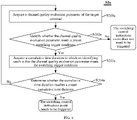
FIG. 2 is a flowchart of another band switching control method according to an embodiment of the present invention. As shown inFIG. 2 , the method further includes step S2a in addition to the above steps S1 to S3. - In
S 1, in response to a target terminal being configured with a high power transmission class but not operating in a high power transmission applicable band corresponding to the target terminal, it is determined that whether an accessible band of the target terminal includes at least one high power transmission applicable band. - In S1, in response to determining that the accessible band includes the at least one high power transmission applicable band corresponding to the target terminal, step S2 is performed; in response to determining that the accessible band does not include the high power transmission applicable band corresponding to the target terminal, there is no need to control the target terminal to perform band switching.
- In S2, one of the at least one high power transmission applicable band that is accessible is selected as a target band.
- In S2a, it is determined whether a switching control instruction event needs to be triggered according to a pre-acquired channel quality evaluation parameter of the target terminal.
- In S2a, the channel quality evaluation parameter (within the related information of a cell to which the terminal is currently connected and reported by the terminal) of the cell to which the target terminal is currently connected is acquired, and it is determined whether the switching control instruction event needs to be triggered based on the channel quality evaluation parameter.
- The channel quality evaluation parameter refers to a parameter that is able to be used to evaluate the radio channel communication quality, i.e., the radio channel communication quality is able to be evaluated based on the channel quality evaluation parameter. When a current radio channel communication quality of the target terminal is poor, the switching control instruction event needs to be triggered so that the target terminal switches to the high power transmission applicable band, thereby improving the radio channel communication quality. When the current radio channel communication quality of the target terminal is good (or reaches the best), the radio channel communication quality does not need to be further improved. In this case, if the target terminal is controlled to switch to the high power transmission applicable band, the radio channel communication quality of the target terminal does not obviously improve, thereby resulting in meaningless band switching of the target terminal while wasting channel resources, so that the switching control instruction event does not need to be triggered.
- In S2a, in response to determining that the switching control instruction event needs to be triggered, step S3 is performed; in response to determining that the switching control instruction event does not need to be triggered, there is no need to control the target terminal to perform the band switching.
- In the present invention, the channel quality evaluation parameter refers to a parameter that is able to be used to evaluate the radio channel communication quality. In some embodiments, the channel quality evaluation parameter includes at least one of a signal to interference plus noise ratio (SINR, the larger the value, the better the radio channel communication quality), a modulation and coding scheme (MCS, the larger the value, the better the radio channel communication quality) index value, a reference signal received power (RSRP, the larger the value, the better the radio channel communication quality), a path loss (PL, the smaller the value, the better the radio channel communication quality), a transmit power headroom report (PHR, the smaller the value, the better the radio channel communication quality), a rank indication (RI, the larger the value, the better the radio channel communication quality), and a block error rate (BLER, the smaller the value, the better the radio channel communication quality).
-
FIG. 3 is a flowchart of an alternative implementation method of step S2a according to an embodiment of the present invention. As shown inFIG. 3 , in some embodiments, step S2a includes the following steps. - In S201a, a channel quality evaluation parameter of the target terminal is acquired.
- In S202a, it is identified whether the channel quality evaluation parameter meets a preset switching trigger condition.
- It should be noted that, in some embodiments, step S2a may not include step S201a, and step S201a exists as an independent step in the flow. Step S201a may be executed before step S2, or may be executed after step S2. In the present invention, it is only necessary to ensure that step S201a is executed after step S202a.
- In response to identifying that the channel quality evaluation parameter meets the preset switching trigger condition, it is determined that the switching control instruction event needs to be triggered, and then step S3 is performed. In response to identifying that the channel quality evaluation parameter does not meet the switching trigger condition, it is determined that the switching control instruction event does not need to be triggered, and there is no need to control the target terminal to perform the band switching.
- In some embodiments, the channel quality evaluation parameter includes only PHR, and a preset switching trigger condition for PHR may be set as 'the value of the PHR is greater than or equal to a threshold value A'. When it is identified in step S202 that the value of PHR acquired in step S201 is greater than or equal to the threshold value A, it is determined that the switching control instruction event needs to be triggered. When it is identified in step S202 that the value of PHR acquired in step S201 is less than the threshold value A, it is determined that there is no need to trigger the switching control instruction event.
- It should be noted that when PHR is acquired, PHR fluctuates with time, and stable PHR value is able to be acquired through filtering processing.
- In some embodiments, the channel quality evaluation parameters include three parameters of BLER, MCS, and PHR. In this case, a switching trigger condition preset for the three parameters may be set as 'BLER is greater than 0, MCS is not the maximum value, and PHR is greater than the threshold A'. When it is identified in step S202 that the value of BLER acquired in step S201 is greater than 0, MCS is not the maximum value, and PHR is greater than the threshold value A, it is determined that the switching control instruction event needs to be triggered. Otherwise, it is determined that the switching control instruction event does not need to be triggered.
- It should be noted that there may be one or more channel quality evaluation parameters in the present invention, and the 'switching trigger condition' may be designed and adjusted according to the selected channel quality evaluation parameters and actual needs.
-
FIG. 4 is a flowchart of another alternative implementation method of step S2a according to an embodiment of the present invention, which includes the following steps. - In S201a, a channel quality evaluation parameter of the target terminal is acquired.
- In S202a, it is identified whether the channel quality evaluation parameter meets a preset switching trigger condition.
- In response to identifying that the channel quality evaluation parameter meets the switching trigger condition, step S203a is performed. In response to identifying that the channel quality evaluation parameter does not meet the switching trigger condition, there is no need to control the target terminal to perform the band switching.
- In S203a, a cumulative time duration in which an identifying result is that the channel quality evaluation parameter meets the switching trigger condition is acquired.
- In S204a, it is determined whether the cumulative time duration reaches a preset cumulative time duration.
- The preset cumulative time duration is able to be designed and adjusted according to actual needs.
- In S204a, in response to determining that the cumulative time duration does not reach the preset cumulative time duration, step S201a is continued; in response to determining that the cumulative time duration reaches the preset cumulative time duration, it is determined that the switching control instruction event needs to be triggered, and then step S3 is performed.
- In S3, a first switching control instruction is sent to the target terminal.
-
FIG. 5 is a flowchart of another band switching control method according to an embodiment of the present invention. As shown inFIG. 5 , the method further includes steps S2a and S2b in addition to the above steps S1 to S3. - In
S 1, in response to a target terminal being configured with a high power transmission class but not operating in a high power transmission applicable band corresponding to the target terminal, it is determined that whether an accessible band of the target terminal includes at least one high power transmission applicable band. - In S1, in response to determining that the accessible band includes the at least one high power transmission applicable band corresponding to the target terminal, the step S2 is performed. And in response to determining that the accessible band does not include the high power transmission applicable band corresponding to the target terminal, there is no need to control the target terminal to perform band switching.
- In S2, one of the at least one high power transmission applicable band that is accessible is selected as a target band.
- In S2a, a channel quality evaluation parameter of the target terminal is acquired, and it is determined whether a switching control instruction event needs to be triggered according to the channel quality evaluation parameter.
- In S2a, in response to determining that the switching control instruction event needs to be triggered, step S2b is performed; in response to determining that the switching control instruction event does not need to be triggered, there is no need to control the target terminal to perform the band switching.
- In S2b, it is determined whether a carried capacity of the target band is less than a preset capacity threshold.
- The capacity threshold is able to be designed and adjusted according to actual needs.
- In S2b, in response to determining that the carried capacity is less than the preset capacity threshold, step S3 is performed; in response to determining that the carried capacity is greater than or equal to the preset capacity threshold, there is no need to control the target terminal to perform band switching.
- In S3, a first switching control instruction is sent to the target terminal.
-
FIG. 6 is a flowchart of yet another band switching control method according to an embodiment of the present invention. As shown inFIG. 6 , the method further includes steps S2a to S2e in addition to steps S1 to S3. - In
S 1, in response to a target terminal being configured with a high power transmission class but not operating in a high power transmission applicable band corresponding to the target terminal, it is determined that whether an accessible band of the target terminal includes at least one high power transmission applicable band. - In S1, in response to determining that the accessible band includes the at least one high power transmission applicable band corresponding to the target terminal, step S2 is performed. And in response to determining that the accessible band does not include the high power transmission applicable band corresponding to the target terminal, there is no need to control the target terminal to perform band switching.
- In S2, one of the at least one high power transmission applicable band that is accessible is selected as a target band.
- In S2a, a channel quality evaluation parameter of the target terminal is acquired, and it is determined whether a switching control instruction event needs to be triggered according to the channel quality evaluation parameter.
- In S2a, in response to determining that the switching control instruction event needs to be triggered, step S2b is performed; in response to determining that the switching control instruction event does not need to be triggered, there is no need to control the target terminal to perform the band switching.
- In S2b, it is determined whether a carried capacity of the target band is less than a preset capacity threshold.
- In S2b, in response to determining that the carried capacity is less than the preset capacity threshold, step S3 is performed; in response to determining that the carried capacity is greater than or equal to the preset capacity threshold, step S2c is performed.
- In S2c, access priorities of the target terminal and other terminals operating in the target band are determined.
- In S2c, the access priority of the terminal is determined according to at least one of a service priority, a user priority, and a 5G slice hierarchical priority of the terminal. The access priority is positively correlated with the service priority, the access priority is positively correlated with the user priority, and the access priority is positively correlated with the 5G slice hierarchical priority.
- In some embodiments, when the access priority of the terminal is determined according to the service priority, the user priority, and the 5G slice hierarchical priority of the terminal, a corresponding weight value may be configured for each type of priority, a corresponding score may be set for each class included in each type of priority (the higher the class is, the higher the score is), then scores of the three types of priorities are weighted and summed to obtain a comprehensive score, and then the comprehensive score is mapped to the class corresponding to the access priority according to a preset mapping rule (which records a mapping relationship between the comprehensive score and the access priority).
- Of course, in other embodiments, the access priority may also be determined based on one or a combination of two of the service priority, the user priority, and the 5G slice hierarchical priority, which are not illustrated in details herein.
- In S2d, it is determined whether there is at least one of the other terminals whose access priority is lower than that of the target terminal.
- In S2d, in response to determining that there is the at least one of the other terminals whose access priority is lower than that of the target terminal, step S2e is performed. In response to determining that there is no other terminal whose access priority is lower than that of the target terminal, there is no need to control the target terminal to perform band switching.
- In S2e, one of the at least one of the other terminals whose access priority is lower than that of the target terminal is selected as a terminal to be adjusted, and a second switching control instruction is sent to the terminal to be adjusted.
- The second switching control instruction is configured to control the terminal to be adjusted to switch from the target band to another band for operation.
- In S2e, one terminal is randomly selected as the terminal to be adjusted from the at least one of the other terminals whose access priority is lower than that of the target terminal, or one terminal is selected as the terminal to be adjusted based on a particular selection rule. In some embodiments, a terminal having the lowest access priority is selected as the terminal to be adjusted. It should be noted that the technical solution of the present invention does not limit the specific algorithm for selecting the terminal to be adjusted.
- After performing of step S2e is completed, step S3 is performed.
- In S3, a first switching control instruction is sent to the target terminal.
-
FIG. 7 is a flowchart of still yet another band switching control method according to an embodiment of the present invention. As shown inFIG. 7 , the method further includes steps S01 and S02 in addition to steps S1 to S3. - In S01, it is determined whether the target terminal is configured with a high power transmission class according to terminal capability information reported by the target terminal.
- In S01, in response to determining that the target terminal is configured with the high power transmission class, step S02 is performed; in response to determining that the target terminal is not configured with the high power transmission class, there is no need to control the target terminal to perform band switching.
- In S02, it is identified whether the target terminal is operating in the high power transmission applicable band corresponding to the target terminal.
- In S02, in response to identifying that the target terminal is not operating in the high power transmission applicable band corresponding to the target terminal,
step S 1 is performed; in response to identifying that the target terminal is operating in the high power transmission applicable band corresponding to the target terminal, there is no need to control the target terminal to perform band switching. - In S1, it is determined whether an accessible band of the target terminal includes at least one high power transmission applicable band.
- In S1, in response to determining that the accessible band includes the at least one high power transmission applicable band corresponding to the target terminal, step S2 is performed; in response to determining that the accessible band does not include the high power transmission applicable band corresponding to the target terminal, there is no need to control the target terminal to perform band switching.
- In S2, one of the at least one high power transmission applicable band that is accessible is selected as a target band.
- In S3, a first switching control instruction is sent to the target terminal.
- It should be noted that different steps in the above embodiments may be combined with each other to obtain new embodiments, and the technical solutions corresponding to the embodiments shall also fall within the protection scope of the present invention.
- An embodiment of the present invention further provides a base station including one or more processors and a memory storing one or more programs. When the one or more programs are executed by the one or more processors, the one or more processors perform the steps in the band switching control method provided in the above embodiments.
- An embodiment of the present invention further provides a readable storage medium storing a program, and the program is executed to perform the steps in the band switching control method provided in the above embodiments.
- Those of ordinary skill in the art should appreciate that all or some of the steps in the method disclosed above and functional modules/units in the apparatus may be implemented as software, firmware, hardware, and appropriate combinations thereof. In a hardware implementation, partitioning between functional modules/units mentioned in the above description does not necessarily correspond to partitioning of physical components. For example, a physical component may have multiple functions, or a function or step may be performed by several physical components in cooperation. Some or all of that physical components may be implemented as software executed by a processor, such as a central processing unit, digital signal processor or microprocessor, or as hardware, or as an integrated circuit, such as an application-specific integrated circuit. Such software may be distributed over computer readable media, which may include computer storage media (or non-transitory media) and communication media (or transitory media). As known to those of ordinary skill in the art, the term 'computer storage medium' includes volatile and non-volatile, removable and non-removable media implemented in any method or technique for storing information, such as computer readable instructions, data structures, program modules or other data. Computer storage media include, but are not limited to, a random access memory (RAM), read only memory (ROM), electrically erasable programmable read-only memory (EEPROM), flash memory or other memory technologies, compact disc read-only memory (CD-ROM), digital versatile disk (DVD) or other optical disk storage, magnetic cassette, magnetic tape, magnetic disk storage or other magnetic storage devices, or any other media that may be used to store desired information and that may be accessed by a computer. Furthermore, as is well known to those of ordinary skill in the art, a communication medium typically contains computer readable instructions, data structures, program modules, or other data in a modulated data signal such as a carrier wave or other transmission mechanism, and may include any information delivery medium.
- Exemplary embodiments have been disclosed herein, and although specific terms are used, they are configured for and should only be interpreted as general illustrative meanings, and are not for purposes of limitation. In some examples, it will be apparent to those skilled in the art that features, characteristics and/or elements described in connection with particular embodiments may be used alone or in combination with features, characteristics and/or elements described in connection with other embodiments, unless otherwise expressly indicated. Accordingly, those skilled in the art should appreciate that various changes in form and detail may be made without departing from the scope of the present invention as set out in the appended set of claims.
Claims (10)
- A band switching control method, comprising:in response to a target terminal being configured with a high power transmission class but not operating in a high power transmission applicable band corresponding to the target terminal, determining whether an accessible band of the target terminal includes at least one high power transmission applicable band; andin response to determining that the accessible band of the target terminal includes the at least one high power transmission applicable band, selecting one of the at least one high power transmission applicable band that is accessible as a target band, and sending a first switching control instruction to the target terminal, wherein the first switching control instruction is configured to control the target terminal to switch to the target band for operation.
- The method according to claim 1, wherein after determining that accessible band of the target terminal includes the at least one high power transmission applicable band, and before sending the first switching control instruction to the target terminal, the method further comprises:determining whether a switching control instruction event needs to be triggered according to a pre-acquired channel quality evaluation parameter of the target terminal; andin response to determining that the switching control instruction event needs to be triggered, performing the step of sending the first switching control instruction to the target terminal.
- The method according to claim 2, wherein the channel quality evaluation parameter comprises at least one of a signal to interference plus noise ratio, a modulation and coding scheme index value, a reference signal received power, a path loss, a transmit power headroom report, a rank indication, and a block error rate.
- The method according to claim 2, wherein determining whether the switching control instruction event needs to be triggered according to the pre-acquired channel quality evaluation parameter of the target terminal comprises:identifying whether the pre-acquired channel quality evaluation parameter meets a preset switching trigger condition; andin response to identifying that the pre-acquired channel quality evaluation parameter meets the switching trigger condition, determining that the switching control instruction event needs to be triggered.
- The method according to claim 2, wherein determining whether the switching control instruction event needs to be triggered according to the pre-acquired channel quality evaluation parameter of the target terminal comprises:detecting whether the pre-acquired channel quality evaluation parameter always satisfies a preset switching trigger condition within a preset cumulative time duration; andin response to detecting that the pre-acquired channel quality evaluation parameter always satisfies the preset switching trigger condition within the preset cumulative time duration, determining that the switching control instruction event needs to be triggered.
- The method according to any one of claims 2 to 5, wherein after determining that the switching control instruction event needs to be triggered and before sending the first switching control instruction to the target terminal, the method further comprises:determining whether a carried capacity of the target band is less than a preset capacity threshold; andin response to determining that the carried capacity is less than the preset capacity threshold, performing the step of sending the first switching control instruction to the target terminal.
- The method according to claim 6, wherein after determining whether the carried capacity of the target band is less than the preset capacity threshold, the method further comprises:in response to determining that the carried capacity is greater than or equal to the preset capacity threshold, determining access priorities of the target terminal and other terminals operating in the target band; anddetermining whether there is at least one of the other terminals whose access priority is lower than that of the target terminal;in response to determining that there is the at least one of the other terminals whose access priority is lower than that of the target terminal, selecting one of the at least one of the other terminals whose access priority is lower than that of the target terminal as a terminal to be adjusted, and sending a second switching control instruction to the terminal to be adjusted, wherein the second switching control instruction is configured to control the terminal to be adjusted to switch from the target band to another band for operation; andperforming the step of sending the first switching control instruction to the target terminal.
- The method according to claim 1, wherein before determining whether the accessible band of the target terminal includes the at least one high power transmission applicable band, the method further comprises:determining whether the target terminal is configured with a high power transmission class according to terminal capability information reported by the target terminal;in response to determining that the target terminal is configured with the high power transmission class, identifying whether the target terminal is operating in the high power transmission applicable band corresponding to the target terminal; andin response to identifying that the target terminal is not operating in the high power transmission applicable band corresponding to the target terminal, performing the step of determining whether the accessible band of the target terminal includes the at least one high power transmission applicable band.
- A readable storage medium storing a program, wherein the program is executed to perform steps in the method according to any one of claims 1 to 8.
- A base station, comprising:one or more processors;a memory storing one or more programs;wherein the one or more programs are executed by the one or more processors to cause the one or more processors to perform steps in the method according to any one of claims 1 to 8.
Applications Claiming Priority (2)
| Application Number | Priority Date | Filing Date | Title |
|---|---|---|---|
| CN201911044200.6A CN112752313A (en) | 2019-10-30 | 2019-10-30 | Frequency band switching control method, base station and readable storage medium |
| PCT/CN2020/122268 WO2021082993A1 (en) | 2019-10-30 | 2020-10-20 | Frequency band switching method, base station and readable storage medium |
Publications (3)
| Publication Number | Publication Date |
|---|---|
| EP3989639A1 true EP3989639A1 (en) | 2022-04-27 |
| EP3989639A4 EP3989639A4 (en) | 2022-08-17 |
| EP3989639B1 EP3989639B1 (en) | 2025-12-10 |
Family
ID=75640537
Family Applications (1)
| Application Number | Title | Priority Date | Filing Date |
|---|---|---|---|
| EP20881265.1A Active EP3989639B1 (en) | 2019-10-30 | 2020-10-20 | Band switching control method and base station |
Country Status (3)
| Country | Link |
|---|---|
| EP (1) | EP3989639B1 (en) |
| CN (1) | CN112752313A (en) |
| WO (1) | WO2021082993A1 (en) |
Families Citing this family (3)
| Publication number | Priority date | Publication date | Assignee | Title |
|---|---|---|---|---|
| CN113260063B (en) * | 2021-06-11 | 2021-11-05 | 广州朗国电子科技有限公司 | Method for controlling frequency band by hot spot and related equipment |
| CN113422572B (en) * | 2021-07-22 | 2022-12-27 | 江苏中信博新能源科技股份有限公司 | Cleaning machine control method and system applied to photovoltaic support array |
| CN120049899B (en) * | 2025-04-24 | 2025-09-30 | 河北东森电子科技有限公司 | Variable frequency system switching control method and system, electronic equipment and storage medium |
Family Cites Families (9)
| Publication number | Priority date | Publication date | Assignee | Title |
|---|---|---|---|---|
| CN102752824B (en) * | 2012-06-29 | 2015-09-09 | 中国联合网络通信集团有限公司 | Different-system switching method and device |
| CN105517128B (en) * | 2015-11-28 | 2018-06-29 | 广东欧珀移动通信有限公司 | A network switching method, device and terminal |
| CN105357405B (en) * | 2015-11-28 | 2018-09-04 | 广东欧珀移动通信有限公司 | A kind of method for switching network, device and terminal |
| CN107426769A (en) * | 2016-05-23 | 2017-12-01 | 中国移动通信有限公司研究院 | A kind of interference elimination method and user equipment |
| CN108306718B (en) * | 2016-08-31 | 2020-11-24 | 中国电信股份有限公司 | Carrier aggregation method, system and base station |
| US9999000B1 (en) * | 2017-05-25 | 2018-06-12 | Sprint Spectrum L.P. | Minimizing interference caused by high-powered uplink transmissions |
| CN107682928A (en) * | 2017-10-20 | 2018-02-09 | 维沃移动通信有限公司 | Method for determining working frequency band and mobile terminal |
| CN110351054B (en) * | 2018-04-04 | 2021-01-22 | 中国移动通信有限公司研究院 | Information transmission method and device, network equipment and terminal |
| WO2019202649A1 (en) * | 2018-04-16 | 2019-10-24 | 株式会社Nttドコモ | User device and base station |
-
2019
- 2019-10-30 CN CN201911044200.6A patent/CN112752313A/en not_active Withdrawn
-
2020
- 2020-10-20 WO PCT/CN2020/122268 patent/WO2021082993A1/en not_active Ceased
- 2020-10-20 EP EP20881265.1A patent/EP3989639B1/en active Active
Also Published As
| Publication number | Publication date |
|---|---|
| EP3989639A4 (en) | 2022-08-17 |
| CN112752313A (en) | 2021-05-04 |
| WO2021082993A1 (en) | 2021-05-06 |
| EP3989639B1 (en) | 2025-12-10 |
Similar Documents
| Publication | Publication Date | Title |
|---|---|---|
| US11552773B2 (en) | Uplink channel resource indication method, uplink channel resource determination method, base station, terminal and medium | |
| US20230066109A1 (en) | Communication method and related devices | |
| EP3989639B1 (en) | Band switching control method and base station | |
| US8175594B2 (en) | Active set management with hotspot carriers | |
| EP2958388B1 (en) | Method and device for scheduling frequency band resource | |
| CN105577338B (en) | method and device for switching main carrier and auxiliary carrier in asymmetric uplink carrier aggregation | |
| CN110099435B (en) | Method and device for power adjustment in UE and base station | |
| EP3694168B1 (en) | Dynamic configuration method, terminal device, network device and computer storage medium | |
| EP1501231A1 (en) | Method for determining a transmission rate on the reverse signalling channel of a wireless system | |
| EP2916574A1 (en) | Method and base station for sharing frequency spectrum | |
| DE102013104532A1 (en) | Communication devices and method for selecting a radio access mode | |
| EP3048752B1 (en) | Method and apparatus for management of frequency-division-duplex and time-division-duplex carrier aggregation | |
| CN103813462B (en) | Method and device for co-cell resource distribution of multiple remote radio units | |
| US20250048363A1 (en) | Resource indication method, user equipment, network device and computer storage medium | |
| EP4120761A1 (en) | Spectrum resource scheduling method and apparatus, and computer device and computer-readable medium | |
| US12418864B2 (en) | Method for reducing spurious-emission interference, and communication device and readable storage medium | |
| CN108306718B (en) | Carrier aggregation method, system and base station | |
| EP3361776A1 (en) | Transmission time interval switching method, communication system, user equipment and evolved node b | |
| US9888483B2 (en) | Method and apparatus for converting communication modes | |
| US11617113B2 (en) | Method and apparatus for managing handovers in wireless communication system | |
| EP4358444A1 (en) | Outer loop initial value adjustment method, device, and computer readable storage medium | |
| CN111866933B (en) | Method and device for determining data transmission mode | |
| US20150071083A1 (en) | Adapting a system bandwidth to be used by a user equipment for an uplink communication channel | |
| EP4593475A1 (en) | Power headroom indication information reporting method, electronic device, and storage medium | |
| EP4353025A1 (en) | Method and network node for uplink power control in wireless communication networks |
Legal Events
| Date | Code | Title | Description |
|---|---|---|---|
| STAA | Information on the status of an ep patent application or granted ep patent |
Free format text: STATUS: THE INTERNATIONAL PUBLICATION HAS BEEN MADE |
|
| PUAI | Public reference made under article 153(3) epc to a published international application that has entered the european phase |
Free format text: ORIGINAL CODE: 0009012 |
|
| STAA | Information on the status of an ep patent application or granted ep patent |
Free format text: STATUS: REQUEST FOR EXAMINATION WAS MADE |
|
| 17P | Request for examination filed |
Effective date: 20220121 |
|
| AK | Designated contracting states |
Kind code of ref document: A1 Designated state(s): AL AT BE BG CH CY CZ DE DK EE ES FI FR GB GR HR HU IE IS IT LI LT LU LV MC MK MT NL NO PL PT RO RS SE SI SK SM TR |
|
| A4 | Supplementary search report drawn up and despatched |
Effective date: 20220715 |
|
| RIC1 | Information provided on ipc code assigned before grant |
Ipc: H04W 36/00 20090101AFI20220711BHEP |
|
| DAV | Request for validation of the european patent (deleted) | ||
| DAX | Request for extension of the european patent (deleted) | ||
| STAA | Information on the status of an ep patent application or granted ep patent |
Free format text: STATUS: EXAMINATION IS IN PROGRESS |
|
| 17Q | First examination report despatched |
Effective date: 20240313 |
|
| GRAP | Despatch of communication of intention to grant a patent |
Free format text: ORIGINAL CODE: EPIDOSNIGR1 |
|
| STAA | Information on the status of an ep patent application or granted ep patent |
Free format text: STATUS: GRANT OF PATENT IS INTENDED |
|
| INTG | Intention to grant announced |
Effective date: 20250901 |
|
| GRAS | Grant fee paid |
Free format text: ORIGINAL CODE: EPIDOSNIGR3 |
|
| GRAA | (expected) grant |
Free format text: ORIGINAL CODE: 0009210 |
|
| STAA | Information on the status of an ep patent application or granted ep patent |
Free format text: STATUS: THE PATENT HAS BEEN GRANTED |
|
| AK | Designated contracting states |
Kind code of ref document: B1 Designated state(s): AL AT BE BG CH CY CZ DE DK EE ES FI FR GB GR HR HU IE IS IT LI LT LU LV MC MK MT NL NO PL PT RO RS SE SI SK SM TR |
|
| REG | Reference to a national code |
Ref country code: CH Ref legal event code: F10 Free format text: ST27 STATUS EVENT CODE: U-0-0-F10-F00 (AS PROVIDED BY THE NATIONAL OFFICE) Effective date: 20251210 Ref country code: GB Ref legal event code: FG4D |
|
| REG | Reference to a national code |
Ref country code: DE Ref legal event code: R096 Ref document number: 602020063826 Country of ref document: DE |
|
| REG | Reference to a national code |
Ref country code: IE Ref legal event code: FG4D |
|
| PG25 | Lapsed in a contracting state [announced via postgrant information from national office to epo] |
Ref country code: ES Free format text: LAPSE BECAUSE OF FAILURE TO SUBMIT A TRANSLATION OF THE DESCRIPTION OR TO PAY THE FEE WITHIN THE PRESCRIBED TIME-LIMIT Effective date: 20251210 |
|
| REG | Reference to a national code |
Ref country code: LT Ref legal event code: MG9D |
|
| PG25 | Lapsed in a contracting state [announced via postgrant information from national office to epo] |
Ref country code: NO Free format text: LAPSE BECAUSE OF FAILURE TO SUBMIT A TRANSLATION OF THE DESCRIPTION OR TO PAY THE FEE WITHIN THE PRESCRIBED TIME-LIMIT Effective date: 20260310 |
|
| PG25 | Lapsed in a contracting state [announced via postgrant information from national office to epo] |
Ref country code: HR Free format text: LAPSE BECAUSE OF FAILURE TO SUBMIT A TRANSLATION OF THE DESCRIPTION OR TO PAY THE FEE WITHIN THE PRESCRIBED TIME-LIMIT Effective date: 20251210 Ref country code: FI Free format text: LAPSE BECAUSE OF FAILURE TO SUBMIT A TRANSLATION OF THE DESCRIPTION OR TO PAY THE FEE WITHIN THE PRESCRIBED TIME-LIMIT Effective date: 20251210 |
|
| REG | Reference to a national code |
Ref country code: NL Ref legal event code: MP Effective date: 20251210 |
|
| PG25 | Lapsed in a contracting state [announced via postgrant information from national office to epo] |
Ref country code: RS Free format text: LAPSE BECAUSE OF FAILURE TO SUBMIT A TRANSLATION OF THE DESCRIPTION OR TO PAY THE FEE WITHIN THE PRESCRIBED TIME-LIMIT Effective date: 20260310 |
|
| PG25 | Lapsed in a contracting state [announced via postgrant information from national office to epo] |
Ref country code: LV Free format text: LAPSE BECAUSE OF FAILURE TO SUBMIT A TRANSLATION OF THE DESCRIPTION OR TO PAY THE FEE WITHIN THE PRESCRIBED TIME-LIMIT Effective date: 20251210 |
|
| PG25 | Lapsed in a contracting state [announced via postgrant information from national office to epo] |
Ref country code: BG Free format text: LAPSE BECAUSE OF FAILURE TO SUBMIT A TRANSLATION OF THE DESCRIPTION OR TO PAY THE FEE WITHIN THE PRESCRIBED TIME-LIMIT Effective date: 20251210 |