EP3989467A1 - Device of handling a harq retransmission - Google Patents
Device of handling a harq retransmission Download PDFInfo
- Publication number
- EP3989467A1 EP3989467A1 EP21203365.8A EP21203365A EP3989467A1 EP 3989467 A1 EP3989467 A1 EP 3989467A1 EP 21203365 A EP21203365 A EP 21203365A EP 3989467 A1 EP3989467 A1 EP 3989467A1
- Authority
- EP
- European Patent Office
- Prior art keywords
- communication device
- harq feedback
- channel
- dci
- pusch
- Prior art date
- Legal status (The legal status is an assumption and is not a legal conclusion. Google has not performed a legal analysis and makes no representation as to the accuracy of the status listed.)
- Pending
Links
Images








Classifications
-
- H—ELECTRICITY
- H04—ELECTRIC COMMUNICATION TECHNIQUE
- H04W—WIRELESS COMMUNICATION NETWORKS
- H04W72/00—Local resource management
- H04W72/12—Wireless traffic scheduling
- H04W72/1263—Mapping of traffic onto schedule, e.g. scheduled allocation or multiplexing of flows
- H04W72/1268—Mapping of traffic onto schedule, e.g. scheduled allocation or multiplexing of flows of uplink data flows
-
- H—ELECTRICITY
- H04—ELECTRIC COMMUNICATION TECHNIQUE
- H04L—TRANSMISSION OF DIGITAL INFORMATION, e.g. TELEGRAPHIC COMMUNICATION
- H04L1/00—Arrangements for detecting or preventing errors in the information received
- H04L1/12—Arrangements for detecting or preventing errors in the information received by using return channel
- H04L1/16—Arrangements for detecting or preventing errors in the information received by using return channel in which the return channel carries supervisory signals, e.g. repetition request signals
- H04L1/18—Automatic repetition systems, e.g. Van Duuren systems
- H04L1/1829—Arrangements specially adapted for the receiver end
- H04L1/1854—Scheduling and prioritising arrangements
-
- H—ELECTRICITY
- H04—ELECTRIC COMMUNICATION TECHNIQUE
- H04L—TRANSMISSION OF DIGITAL INFORMATION, e.g. TELEGRAPHIC COMMUNICATION
- H04L5/00—Arrangements affording multiple use of the transmission path
- H04L5/003—Arrangements for allocating sub-channels of the transmission path
- H04L5/0053—Allocation of signalling, i.e. of overhead other than pilot signals
- H04L5/0055—Physical resource allocation for ACK/NACK
-
- H—ELECTRICITY
- H04—ELECTRIC COMMUNICATION TECHNIQUE
- H04L—TRANSMISSION OF DIGITAL INFORMATION, e.g. TELEGRAPHIC COMMUNICATION
- H04L1/00—Arrangements for detecting or preventing errors in the information received
- H04L1/08—Arrangements for detecting or preventing errors in the information received by repeating transmission, e.g. Verdan system
-
- H—ELECTRICITY
- H04—ELECTRIC COMMUNICATION TECHNIQUE
- H04L—TRANSMISSION OF DIGITAL INFORMATION, e.g. TELEGRAPHIC COMMUNICATION
- H04L1/00—Arrangements for detecting or preventing errors in the information received
- H04L1/12—Arrangements for detecting or preventing errors in the information received by using return channel
- H04L1/16—Arrangements for detecting or preventing errors in the information received by using return channel in which the return channel carries supervisory signals, e.g. repetition request signals
- H04L1/1607—Details of the supervisory signal
-
- H—ELECTRICITY
- H04—ELECTRIC COMMUNICATION TECHNIQUE
- H04L—TRANSMISSION OF DIGITAL INFORMATION, e.g. TELEGRAPHIC COMMUNICATION
- H04L1/00—Arrangements for detecting or preventing errors in the information received
- H04L1/12—Arrangements for detecting or preventing errors in the information received by using return channel
- H04L1/16—Arrangements for detecting or preventing errors in the information received by using return channel in which the return channel carries supervisory signals, e.g. repetition request signals
- H04L1/1607—Details of the supervisory signal
- H04L1/1671—Details of the supervisory signal the supervisory signal being transmitted together with control information
-
- H—ELECTRICITY
- H04—ELECTRIC COMMUNICATION TECHNIQUE
- H04L—TRANSMISSION OF DIGITAL INFORMATION, e.g. TELEGRAPHIC COMMUNICATION
- H04L1/00—Arrangements for detecting or preventing errors in the information received
- H04L1/12—Arrangements for detecting or preventing errors in the information received by using return channel
- H04L1/16—Arrangements for detecting or preventing errors in the information received by using return channel in which the return channel carries supervisory signals, e.g. repetition request signals
- H04L1/18—Automatic repetition systems, e.g. Van Duuren systems
- H04L1/1812—Hybrid protocols; Hybrid automatic repeat request [HARQ]
-
- H—ELECTRICITY
- H04—ELECTRIC COMMUNICATION TECHNIQUE
- H04L—TRANSMISSION OF DIGITAL INFORMATION, e.g. TELEGRAPHIC COMMUNICATION
- H04L1/00—Arrangements for detecting or preventing errors in the information received
- H04L1/12—Arrangements for detecting or preventing errors in the information received by using return channel
- H04L1/16—Arrangements for detecting or preventing errors in the information received by using return channel in which the return channel carries supervisory signals, e.g. repetition request signals
- H04L1/18—Automatic repetition systems, e.g. Van Duuren systems
- H04L1/1812—Hybrid protocols; Hybrid automatic repeat request [HARQ]
- H04L1/1819—Hybrid protocols; Hybrid automatic repeat request [HARQ] with retransmission of additional or different redundancy
-
- H—ELECTRICITY
- H04—ELECTRIC COMMUNICATION TECHNIQUE
- H04L—TRANSMISSION OF DIGITAL INFORMATION, e.g. TELEGRAPHIC COMMUNICATION
- H04L1/00—Arrangements for detecting or preventing errors in the information received
- H04L1/12—Arrangements for detecting or preventing errors in the information received by using return channel
- H04L1/16—Arrangements for detecting or preventing errors in the information received by using return channel in which the return channel carries supervisory signals, e.g. repetition request signals
- H04L1/18—Automatic repetition systems, e.g. Van Duuren systems
- H04L1/1829—Arrangements specially adapted for the receiver end
- H04L1/1861—Physical mapping arrangements
-
- H—ELECTRICITY
- H04—ELECTRIC COMMUNICATION TECHNIQUE
- H04L—TRANSMISSION OF DIGITAL INFORMATION, e.g. TELEGRAPHIC COMMUNICATION
- H04L1/00—Arrangements for detecting or preventing errors in the information received
- H04L1/12—Arrangements for detecting or preventing errors in the information received by using return channel
- H04L1/16—Arrangements for detecting or preventing errors in the information received by using return channel in which the return channel carries supervisory signals, e.g. repetition request signals
- H04L1/18—Automatic repetition systems, e.g. Van Duuren systems
- H04L1/1867—Arrangements specially adapted for the transmitter end
- H04L1/1887—Scheduling and prioritising arrangements
-
- H—ELECTRICITY
- H04—ELECTRIC COMMUNICATION TECHNIQUE
- H04L—TRANSMISSION OF DIGITAL INFORMATION, e.g. TELEGRAPHIC COMMUNICATION
- H04L1/00—Arrangements for detecting or preventing errors in the information received
- H04L1/12—Arrangements for detecting or preventing errors in the information received by using return channel
- H04L1/16—Arrangements for detecting or preventing errors in the information received by using return channel in which the return channel carries supervisory signals, e.g. repetition request signals
- H04L1/18—Automatic repetition systems, e.g. Van Duuren systems
- H04L1/1867—Arrangements specially adapted for the transmitter end
- H04L1/1896—ARQ related signaling
-
- H—ELECTRICITY
- H04—ELECTRIC COMMUNICATION TECHNIQUE
- H04L—TRANSMISSION OF DIGITAL INFORMATION, e.g. TELEGRAPHIC COMMUNICATION
- H04L5/00—Arrangements affording multiple use of the transmission path
- H04L5/003—Arrangements for allocating sub-channels of the transmission path
- H04L5/0053—Allocation of signalling, i.e. of overhead other than pilot signals
-
- H—ELECTRICITY
- H04—ELECTRIC COMMUNICATION TECHNIQUE
- H04W—WIRELESS COMMUNICATION NETWORKS
- H04W28/00—Network traffic management; Network resource management
- H04W28/02—Traffic management, e.g. flow control or congestion control
- H04W28/04—Error control
-
- H—ELECTRICITY
- H04—ELECTRIC COMMUNICATION TECHNIQUE
- H04W—WIRELESS COMMUNICATION NETWORKS
- H04W72/00—Local resource management
- H04W72/04—Wireless resource allocation
- H04W72/11—Semi-persistent scheduling
-
- H—ELECTRICITY
- H04—ELECTRIC COMMUNICATION TECHNIQUE
- H04W—WIRELESS COMMUNICATION NETWORKS
- H04W72/00—Local resource management
- H04W72/12—Wireless traffic scheduling
- H04W72/1263—Mapping of traffic onto schedule, e.g. scheduled allocation or multiplexing of flows
- H04W72/1273—Mapping of traffic onto schedule, e.g. scheduled allocation or multiplexing of flows of downlink data flows
-
- H—ELECTRICITY
- H04—ELECTRIC COMMUNICATION TECHNIQUE
- H04W—WIRELESS COMMUNICATION NETWORKS
- H04W72/00—Local resource management
- H04W72/20—Control channels or signalling for resource management
- H04W72/23—Control channels or signalling for resource management in the downlink direction of a wireless link, i.e. towards a terminal
-
- H—ELECTRICITY
- H04—ELECTRIC COMMUNICATION TECHNIQUE
- H04W—WIRELESS COMMUNICATION NETWORKS
- H04W72/00—Local resource management
- H04W72/20—Control channels or signalling for resource management
- H04W72/23—Control channels or signalling for resource management in the downlink direction of a wireless link, i.e. towards a terminal
- H04W72/232—Control channels or signalling for resource management in the downlink direction of a wireless link, i.e. towards a terminal the control data signalling from the physical layer, e.g. DCI signalling
-
- H—ELECTRICITY
- H04—ELECTRIC COMMUNICATION TECHNIQUE
- H04W—WIRELESS COMMUNICATION NETWORKS
- H04W72/00—Local resource management
- H04W72/50—Allocation or scheduling criteria for wireless resources
- H04W72/56—Allocation or scheduling criteria for wireless resources based on priority criteria
-
- H—ELECTRICITY
- H04—ELECTRIC COMMUNICATION TECHNIQUE
- H04W—WIRELESS COMMUNICATION NETWORKS
- H04W72/00—Local resource management
- H04W72/50—Allocation or scheduling criteria for wireless resources
- H04W72/56—Allocation or scheduling criteria for wireless resources based on priority criteria
- H04W72/566—Allocation or scheduling criteria for wireless resources based on priority criteria of the information or information source or recipient
Definitions
- the present invention relates to a device of handling a hybrid automatic repeat request (HARQ) retransmission.
- HARQ hybrid automatic repeat request
- LTE long-term evolution
- 3GPP 3rd Generation Partnership Project
- 3GPP Rel-8 3rd Generation Partnership Project
- 3GPP Rel-9 3rd Generation Partnership Project
- UMTS universal mobile telecommunication system
- the LTE system includes a new radio interface and a new radio network architecture that provides high data rate, low latency, packet optimization, and improved system capacity and coverage.
- LTE-A LTE-advanced
- eNB evolved Node-B
- LAA licensed-assisted access
- a next generation radio access network is developed for further enhancing the LTE-A system.
- the NG-RAN includes one or more next generation Node-Bs (gNBs), and has properties of wider operation bands, different numerologies for different frequency ranges, massive MIMO, advanced channel codings, etc.
- gNBs next generation Node-Bs
- a user equipment may not be able to transmit a hybrid automatic repeat request (HARQ) feedback due to a certain cause.
- HARQ hybrid automatic repeat request
- Communication between the UE and the gNB cannot proceed regularly if the HARQ feedback is not received by the gNB correctly.
- a retransmission of the HARQ feedback is an important problem to be solved.
- the present invention therefore provides a device for handling a hybrid automatic repeat request (HARQ) retransmission to solve the abovementioned problem.
- HARQ hybrid automatic repeat request
- the claimed communication device for handling a hybrid automatic repeat request (HARQ) retransmission comprises at least one storage device; and at least one processing circuit, coupled to the at least one storage device.
- the at least one storage device stores instructions, and the at least one processing circuit is configured to execute the instructions of receiving a first physical downlink (DL) shared channel (PDSCH) from a network, wherein a first HARQ feedback corresponding to the first PDSCH is allocated in a first uplink (UL) channel and the first UL channel is corresponding to a first priority index; determining not to transmit the first HARQ feedback in the first UL channel; determining a second UL channel for the first HARQ feedback, wherein the second UL channel is corresponding to a second priority index; and transmitting the first HARQ feedback in the second UL channel.
- DL physical downlink
- UL uplink
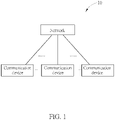
- Fig. 1 is a schematic diagram of a wireless communication system 10 according to an example of the present invention.
- the wireless communication system 10 is briefly composed of a network and a plurality of communication devices.
- the wireless communication system 10 may support a time-division duplexing (TDD) mode, a frequency-division duplexing (FDD) mode, a TDD-FDD joint operation mode, a non-terrestrial network (NTN) mode or a licensed-assisted access (LAA) mode. That is, the network and a communication device may communicate with each other via FDD carrier(s), TDD carrier(s), licensed carrier(s) (licensed serving cell(s)) and/or unlicensed carrier(s) (unlicensed serving cell(s)).
- TDD time-division duplexing
- FDD frequency-division duplexing
- NTN non-terrestrial network
- LAA licensed-assisted access
- the wireless communication system 10 may support a carrier aggregation (CA). That is, the network and a communication device may communicate with each other via multiple serving cells (e.g., multiple serving carriers) including a primary cell (e.g., primary component carrier) and one or more secondary cells (e.g., secondary component carriers).
- CA carrier aggregation
- the network and the communication devices are simply utilized for illustrating the structure of the wireless communication system 10.
- the network may be a universal terrestrial radio access network (UTRAN) including at least one Node-B (NB) in a universal mobile telecommunications system (UMTS).
- the network may be an evolved UTRAN (E-UTRAN) including at least one evolved NB (eNB) and/or at least one relay node in a long term evolution (LTE) system, a LTE-Advanced (LTE-A) system, an evolution of the LTE-A system, etc.
- LTE long term evolution
- LTE-A LTE-Advanced
- LTE-A evolution of the LTE-A system
- the network may be a next generation radio access network (NG-RAN) including at least one next generation Node-B (gNB) and/or at least one fifth generation (5G) base station (BS).
- NG-RAN next generation radio access network
- gNB next generation Node-B
- 5G fifth generation
- the network may be any BS conforming to a specific communication standard to communicate with a communication device.
- a NR is a standard defined for a 5G system (or 5G network) to provide a unified air interface with better performance.
- gNBs are deployed to realize the 5G system, which supports advanced features such as enhanced Mobile Broadband (eMBB), Ultra Reliable Low Latency Communications (URLLC), massive Machine Type Communications (mMTC), etc.
- eMBB provides broadband services with a greater bandwidth and a low/moderate latency.
- URLLC provides applications (e.g., end-to-end communication) with properties of a higher reliability and a low latency.
- the examples of the applications include an industrial internet, smart grids, infrastructure protection, remote surgery and an intelligent transportation system (ITS).
- the mMTC is able to support internet-of-things (IoT) of the 5G system which include billions of connected devices and/or sensors.
- IoT internet-of-things
- the network may also include at least one of the UTRAN/E-UTRAN/NG-RAN and a core network, wherein the core network may include network entities such as Mobility Management Entity (MME), Serving Gateway (S-GW), Packet Data Network (PDN) Gateway (P-GW), Self-Organizing Networks (SON) server and/or Radio Network Controller (RNC), etc.
- MME Mobility Management Entity
- S-GW Serving Gateway
- PDN Packet Data Network
- P-GW Packet Data Network Gateway
- SON Self-Organizing Networks
- RNC Radio Network Controller
- the UTRAN/E-UTRAN/NG-RAN may forward the information to the core network, and the decisions corresponding to the information are made at the core network after the core network processes the information.
- the information may be processed by both the UTRAN/E-UTRAN/NG-RAN and the core network, and the decisions are made after coordination and/or cooperation are performed by the UTRAN/E-UTRAN/NG-RAN and the core network.
- a communication device may be a user equipment (UE), a low cost device (e.g., machine type communication (MTC) device), a device-to-device (D2D) communication device, a narrow-band internet of things (IoT) (NB-IoT), a mobile phone, a laptop, a tablet computer, an electronic book, a portable computer system, or combination thereof.
- the network and the communication device can be seen as a transmitter or a receiver according to direction (i.e., transmission direction), e.g., for an uplink (UL), the communication device is the transmitter and the network is the receiver, and for a downlink (DL), the network is the transmitter and the communication device is the receiver.
- direction i.e., transmission direction
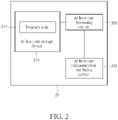
- Fig. 2 is a schematic diagram of a communication device 20 according to an example of the present invention.
- the communication device 20 may be a communication device or the network shown in Fig. 1 , but is not limited herein.
- the communication device 20 may include at least one processing circuit 200 such as a microprocessor or Application Specific Integrated Circuit (ASIC), at least one storage device 210 and at least one communication interfacing device 220.
- the at least one storage device 210 may be any data storage device that may store program codes 214, accessed and executed by the at least one processing circuit 200.
- Examples of the at least one storage device 210 include but are not limited to a subscriber identity module (SIM), read-only memory (ROM), flash memory, random-access memory (RAM), Compact Disc Read-Only Memory (CD-ROM), digital versatile disc-ROM (DVD-ROM), Blu-ray Disc-ROM (BD-ROM), magnetic tape, hard disk, optical data storage device, non-volatile storage device, non-transitory computer-readable medium (e.g., tangible media), etc.
- SIM subscriber identity module
- ROM read-only memory
- flash memory random-access memory
- RAM Compact Disc Read-Only Memory
- DVD-ROM digital versatile disc-ROM
- BD-ROM Blu-ray Disc-ROM
- magnetic tape hard disk
- optical data storage device non-volatile storage device
- non-transitory computer-readable medium e.g., tangible media
- the at least one communication interfacing device 220 is preferably at least one transceiver and is used to transmit and receive signals (e.g., data, messages and/
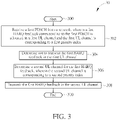
- Fig. 3 is a flowchart of a process 30 according to an example of the present invention.
- the process 30 may be utilized in a communication device, to handle a hybrid automatic repeat request (HARQ) retransmission.
- HARQ hybrid automatic repeat request
- the process 30 may be compiled into the program codes 214 and includes the following steps:
- the communication device receives a first PDSCH from a network, wherein a first HARQ feedback corresponding to the first PDSCH is allocated in a first UL channel and the first UL channel is corresponding to (e.g., configured with or indicated with) a first priority index.
- the communication device determines (e.g., is configured to) not to transmit the first HARQ feedback in the first UL channel.
- the communication device determines (e.g., selects) a second UL channel for the first HARQ feedback, wherein the second UL channel is corresponding to (e.g., configured with) a second priority index.
- the communication device transmits the first HARQ feedback in the second UL channel.
- the communication device transmits (e.g., retransmission) the first HARQ feedback in the second UL channel, since the communication device cannot transmit (e.g., initial transmission) the first HARQ feedback in the first UL channel.
- the problem of the retransmission of the HARQ feedback is solved.
- Realization of the process 30 is not limited to the above description. The following examples may be applied for realizing the process 30.
- the second UL channel is indicated (e.g., scheduled) by a first DL control information (DCI).
- DCI DL control information
- a location of the first HARQ feedback in the second UL channel is determined according to the first DCI.
- a first payload size reserved for transmitting the first HARQ feedback is determined according to the first DCI.
- a first control resource set (CORSET) pool index of the first DCI and a second CORESET pool index of a second DCI indicating the first PDSCH are the same.
- the first DCI does not indicate any PDSCH. That is, the first DCI may be for a specific purpose.
- the first DCI comprises a first downlink assignment index (DAI) corresponding to the first priority index and a second DAI corresponding to the second priority index.
- DAI downlink assignment index
- the first DCI is received after the first UL channel. In one example, the first DCI is received after determining not to transmit the first HARQ feedback in the first UL channel.
- the second UL channel is a second repetition of a physical UL shared channel (PUSCH) after a first repetition of the PUSCH, and the first UL channel is the first repetition of the PUSCH.
- PUSCH physical UL shared channel
- the communication device determines not to transmit the first HARQ feedback in the first UL channel and transmits the first HARQ feedback in the second UL channel according to an indication transmitted by the network. That is, not all HARQ feedback can be retransmitted after being cancelled in the first UL channel, and the communication device is allowed to retransmit the firs HARQ feedback according to the indication.
- the indication may be a radio resource control (RRC) signaling or a DCI.
- RRC radio resource control
- the first priority index and the second priority index are the same.
- a first location of the first HARQ feedback in the second UL channel is after a second location of a second HARQ feedback
- the second HARQ feedback is an initial transmission in the second UL channel. That is, the initial transmission and the retransmission of the HARQ feedbacks are jointly transmitted in the second UL channel.
- the first HARQ feedback is a HARQ feedback corresponding to a semi-persistent scheduling (SPS) PDSCH, or is a HARQ feedback corresponding to a PDSCH indicated (or scheduled) by a DCI.
- SPS semi-persistent scheduling
- a first location of the first HARQ feedback in the second UL channel is determined according to the first priority index and the second priority index.
- a first payload size reserved for transmitting the first HARQ feedback is a fixed value, or is determined according to a configuration of the network.
- a time distance between the first UL channel and the second UL channel is not greater than a threshold.
- the threshold is indicated by the network.
- the communication device transmits the first HARQ feedback in the second UL channel, before a timer corresponding to the threshold expires. That is, the communication device transmits the first HARQ feedback within a specific time period. The communication device may drop the first HARQ feedback, if the first HARQ feedback cannot be transmitted before the timer expires.
- the first PDSCH is scheduled by a second DCI. In one example, the first PDSCH is scheduled by a semi-persistent scheduling (SPS). In one example, the communication device determines not to transmit the first HARQ feedback according to an indication (e.g., transmitted by the network). That is, the communication device drops (or stops transmitting) the first HARQ feedback according to the indication.
- the indication may be a cancellation indication (CI).
- the communication device determines not to transmit the first HARQ feedback, when the first UL channel is collided (e.g., overlapped) with a third UL channel and the third UL channel is corresponding to (e.g., configured with or indicated with) a third priority index higher than the first priority index.
- the first UL channel and the third UL channel may be in a same slot (or a same sub-slot).
- the second UL channel comprises a second HARQ feedback corresponding to (e.g., configured with) a third priority index different from the first priority index.
- a second payload size reserved for transmitting a second HARQ feedback in the second UL channel is determined according to a third DCI indicating the second UL channel.
- the second priority index of the second UL channel is determined according to a third DCI indicating the second UL channel.
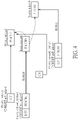
- Fig. 4 is a schematic diagram of a retransmission of a HARQ feedback according to an example of the present invention.
- the communication device receives a DCI DCI0, and the DCI DCI0 indicates (e.g., schedules) a reception of a PDSCH PDSCHO.
- the communication device prepares (e.g., is scheduled) to transmit a HARQ feedback HARQO in a PUCCH PUCCHO, after receiving the PDSCH PDSCHO.
- the PDSCH PDSCHO may be a SPS PDSCH, i.e., not scheduled by a DCI.
- the communication device may multiplex the HARQ feedback HARQO of the PUCCH PUCCHO with a PUSCH PUSCHO, if the PUSCH PUSCHO is collided with the PUCCH PUCCHO (e.g., in a time period). In this situation, the communication device may not transmit the PUCCH PUCCHO since the HARQ feedback HARQO has been multiplexed and transmitted in the PUSCH PUSCHO.
- the PUSCH PUSCHO may be scheduled by a DCI (e.g., a DCI DCI1), or the PUSCH PUSCHO may be a configured grant (CG) transmission.
- a DCI e.g., a DCI DCI1
- CG configured grant
- the communication device may determine not to transmit (e.g., cancel) the HARQ feedback HARQO.
- the communication device receives an indication (e.g., a CI CI0) indicating not to transmit the PUSCH PUSCHO, after receiving the DCI DCI1.
- the communication device receives an indication (e.g., the CI CI0), and determines not to transmit the PUSCH PUSCHO according to the indication.
- the communication device determines not to transmit (e.g., cancel) the PUSCH PUSCHO, if the PUSCH PUSCHO is collided with an UL transmission (e.g., a PUSCH or a PUCCH) and a priority index of the UL transmission is higher than a priority index of the PUSCH PUSCHO.
- the PUSCH PUSCHO including the HARQ feedback HARQO may not be transmitted.
- the communication device receives a DCI DCI2 after receiving the indication (e.g., the CI CI0), and the DCI DCI2 indicates (e.g., schedules) a reception of a PDSCH PDSCH1.
- the DCI DCI2 may be a latest DCI after the indication.
- the communication device prepares to transmit a HARQ feedback HARQ1 in a PUCCH PUCCH1 in response to the reception of the PDSCH PDSCH1. Then, the communication device transmits the HARQ feedbacks HARQO and HARQ1 in the PUCCH PUCCH1.
- a priority index of the PUCCH PUCCH1 may be indicated by (or determined according to) the DCI DCI2. In one example, the priority index of the PUCCH PUCCH1 may be indicated by a RRC signaling, if the PDSCH PDSCHO is a SPS PDSCH.
- a time instant at which the communication device receives the DCI DCI2 is not limited to the content of the figure.
- the DCI DCI2 is received after the PUSCH PUSCHO.
- the DCI DCI2 is received after the communication device determines not to transmit the HARQ feedback HARQO in the PUSCH PUSCHO (e.g., after the CI CI0).
- a priority index of the PUCCH PUCCHO and a priority index of the PUCCH PUCCH1 are the same (or a priority index of the PDSCH PDSCHO and a priority index of the PDSCH PDSCH1 are the same), e.g., 0.
- the HARQ feedback HARQO may not be transmitted in the PUCCH PUCCH1, if the priority indices of the PUCCH PUCCHO and the PUCCH PUCCH1 are different (or if the priority indices of the PDSCH PDSCHO and the PDSCH PDSCH1 are different).
- the priority index of the PUCCH PUCCHO may be indicated by the DCI DCI0 scheduling the PDSCH PDSCHO.
- the priority index of the PUCCH PUCCH1 may be indicated by the DCI DCI2 scheduling the PDSCH PDSCH1.
- a first CORSET pool index of a first COREST for transmitting the DCI DCI0 and a second CORESET index of a second CORESET for transmitting the DCI DCI2 are the same, e.g., 0.
- the HARQ feedback HARQO may not be transmitted in the PUCCH PUCCH1, if the first CORSET pool index of the first COREST and the second CORESET index of the second CORESET are different.
- the communication device determines not to transmit the HARQ feedback HARQO in the PUSCH PUSCHO, and determines to transmit the HARQ feedback HARQO in the PUCCH PUCCH1. Whether the communication device can perform such operation may depend on a capability (e.g., UE capability) of the communication device. The communication device may report the capability regarding the retransmission of the HARQ feedback to the network.
- a capability e.g., UE capability
- the communication device may receive the DCI DCI2 and the PDSCH PDSCH1 before receiving the indication.
- the HARQ feedback HARQ1 is not for a retransmission.
- the HARQ feedback HARQO may be appended to (i.e., located after) the HARQ feedback HARQ1, when the HARQ feedbacks HARQO and HARQ1 are transmitted in the PUCCH PUCCH1.
- the communication device may transmit the HARQ feedback HARQO, when a value of a DAI DAI0 (i.e., 1) of the PDSCH PDSCHO is smaller than a value of a DAI DAI1 (i.e., 2) of the PDSCH PDSCH1, as shown in Fig. 4 .
- DAI1 DAI0+1. That is, the communication device transmits the HARQ feedback HARQO and the HARQ feedback HARQ1 in the PUCCH PUCCH1.
- the HARQ feedback HARQO may be appended to (i.e., located after) the HARQ feedback HARQ1 (i.e., not according to the DAI), when the HARQ feedbacks HARQO and HARQ1 are transmitted in the PUCCH PUCCH1.
- the communication device may not transmit the HARQ feedback HARQO, when the priorities of the PDSCH PDSCHO and the PDSCH PDSCH1 are different.
- DAI0 and DAI1 are 1 and 1, respectively.
- the communication device may transmit the HARQ feedbacks HARQO and HARQ1 in the PUCCH PUCCH1 according to the DAIs DAI0 and DAI1.
- the communication device transmits the HARQ feedback HARQO in the PUCCH PUCCH1 with a different priority index. Whether the communication device can perform such operation may depend on a capability (e.g., UE capability) of the communication device.
- the communication device may report the capability regarding the different priority index to the network. For example, the communication device may report a capability regarding to whether a HARQ feedback can be transmit in a UL channel, and the HARQ feedback and the UL channel are corresponding to different priorities.
- a time instant at which the communication device receives the DCI DCI2 is not limited to the content of the figure.
- the DCI DCI2 is received after the PUSCH PUSCHO.
- the DCI DCI2 is received after the communication device determines not to transmit the HARQ feedback HARQO in the PUSCH PUSCHO (e.g., after the CI CI0).
- Fig. 6 is a schematic diagram of timing relation of an indication (e.g., a CI) and a DCI for a HARQ retransmission according to an example of the present invention.
- Timing relation between the indication CI0 and the DCI DCI2 in Fig. 4 is discussed in the present example.
- a start and an end of the indication CI0 are time instants t1 and t2, respectively.
- a start and an end of the DCI DCI2 are time instants t3 and t4, respectively.
- Several examples for explaining the situation "the DCI DCI2 is received after the indication CI0" are stated as follows. In the case (a), the start of the DCI DCI2 (t3) is after the end of the indication CI0 (t2). In the case (b), the start of the DCI DCI2 (t3) is after the start of the indication CI0 (t1). In the case (c), the end of the DCI DCI2 (t4) is after the end of the indication CI0 (
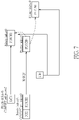
- Fig. 7 is a schematic diagram of a retransmission of a HARQ feedback according to an example of the present invention.
- the communication device receives a DCI DCI0, and the DCI DCI0 indicates (e.g., schedules) a reception of a PDSCH PDSCHO.
- the communication device prepares (e.g., is scheduled) to transmit a HARQ feedback HARQO in a PUCCH PUCCHO, after receiving the PDSCH PDSCHO.
- the PDSCH PDSCHO may be a SPS PDSCH, i.e., not scheduled by a DCI.
- the communication device may multiplex the HARQ feedback HARQO of the PUCCH PUCCHO with a PUSCH PUSCHO, if the PUSCH PUSCHO is collided with the PUCCH PUCCHO (e.g., in a time period). In this situation, the communication device may not transmit the PUCCH PUCCHO since the HARQ feedback HARQO has been multiplexed and transmitted in the PUSCH PUSCHO.
- the PUSCH PUSCHO may be scheduled by a DCI (e.g., a DCI DCI1), or the PUSCH PUSCHO may be a CG transmission.
- the communication device may determine not to transmit (e.g., cancel) the HARQ feedback HARQO.
- the communication device receives an indication (e.g., a CI CI0) indicating not to transmit the PUSCH PUSCHO, after receiving the DCI DCI1.
- the communication device receives the indication (e.g., the CI CI0), and determines not to transmit the PUSCH PUSCHO according to the indication.
- the communication device determines not to transmit (e.g., cancel) the PUSCH PUSCHO, if the PUSCH PUSCHO is collided with an UL transmission (e.g., a PUSCH or a PUCCH) and a priority index of the UL transmission is higher than a priority index of the PUSCH PUSCHO.
- the PUSCH PUSCHO including the HARQ feedback HARQO may not be transmitted.
- the communication device does not need to find another DCI indicating another UL resource (e.g., a PUCCH) for transmitting the HARQ feedback HARQO.
- the communication device may determine a PUCCH PUCCH1 for transmitting the HARQ feedback HARQO according to the indication (e.g., CI CI0). Then, the communication device transmits the HARQ feedback HARQO in the PUCCH PUCCH1.
- the PUCCH PUCCH1 is not overlapped with both the PUCCH PUCCHO and the PUSCH PUSCHO.
- a priority index of the PUCCH PUCCH1 may be indicated by (or determined according to) the indication.
- a priority index of the PUCCH PUCCHO and a priority index of the PUCCH PUCCH1 are the same (or a priority index of the PDSCH PDSCHO and a priority index of the PUCCH PUCCH1 are the same), e.g., 0.
- the HARQ feedback HARQO may not be transmitted in the PUCCH PUCCH1, if the priority indices of the PUCCH PUCCHO and the PUCCH PUCCH1 are different (or if the priority indices of the PDSCH PDSCHO and the PUCCH PUCCH1 are different).
- a first CORSET pool index of a first COREST for transmitting the DCI DCI0 and a second CORESET index of a second CORESET for transmitting the indication are the same, e.g., 0.
- the HARQ feedback HARQO may not be transmitted in the PUCCH PUCCH1, if the first CORSET pool index of the first COREST and the second CORESET index of the second CORESET are different.
- Fig. 8 is a schematic diagram of a retransmission of a HARQ feedback according to an example of the present invention.
- the communication device receives a DCI DCI0, and the DCI DCI0 indicates (e.g., schedules) a reception of a PDSCH PDSCHO.
- the communication device prepares (e.g., is scheduled) to transmit a HARQ feedback HARQO in a PUCCH PUCCHO, after receiving the PDSCH PDSCHO.
- the PDSCH PDSCHO may be a SPS PDSCH, i.e., not scheduled by a DCI.
- the communication device may multiplex the HARQ feedback HARQO of the PUCCH PUCCHO with a PUSCH PUSCHO, if the PUSCH PUSCHO is collided with the PUCCH PUCCHO (e.g., in a time period). In this situation, the communication device may not transmit the PUCCH PUCCHO since the HARQ feedback HARQO has been multiplexed and transmitted in the PUSCH PUSCHO.
- the PUSCH PUSCHO may be scheduled by a DCI (e.g., a DCI DCI1), or the PUSCH PUSCHO may be a CG transmission.
- the communication device may determine not to transmit (e.g., cancel) the HARQ feedback HARQO.
- the communication device receives an indication (e.g., a CI CI0) indicating not to transmit the PUSCH PUSCHO, after receiving the DCI DCI1.
- the communication device receives an indication (e.g., the CI CI0), and determines not to transmit the PUSCH PUSCHO according to the indication.
- the communication device determines not to transmit (e.g., cancel) the PUSCH PUSCHO, if the PUSCH PUSCHO is collided with an UL transmission (e.g., a PUSCH or a PUCCH) and a priority index of the UL transmission is higher than a priority index of the PUSCH PUSCHO.
- the PUSCH PUSCHO including the HARQ feedback HARQO may not be transmitted.
- the communication device receives a DCI DCI2 after receiving the indication (e.g., the CI CI0), and the DCI DCI2 indicates a PUCCH PUCCH1 and may not indicate any PDSCH.
- the DCI DCI2 may be a latest DCI after the indication (e.g., the CI CI0).
- the communication device transmits the HARQ feedback HARQO in the PUCCH PUCCH1.
- the PUCCH PUCCH1 is not overlapped with the PUCCH PUCCHO and the PUSCH PUSCHO.
- a priority index of the PUCCH PUCCH1 may be indicated by (or determined according to) the DCI DCI2. In one example, the priority index of the PUCCH PUCCH1 may be indicated by a RRC signaling, if the PDSCH PDSCHO is a SPS PDSCH.
- a time instant at which the communication device receives the DCI DCI2 is not limited to the content of the figure.
- the DCI DCI2 is received after the PUSCH PUSCHO.
- the DCI DCI2 is received after the communication device determines not to transmit the HARQ feedback HARQO in the PUSCH PUSCHO (e.g., after the CI CI0).
- a number of bits for a HARQ feedback may be indicated by the DCI DCI2 and/or a configuration of the network.
- a priority index of the PUCCH PUCCHO and a priority index of the PUCCH PUCCH1 are the same, e.g., 0.
- the HARQ feedback HARQO may not be transmitted in the PUCCH PUCCH1, if the priority indices of the PDSCH PDSCHO and the PUCCH PUCCH1 are different.
- a first CORSET pool index of a first COREST for transmitting the DCI DCI0 and a second CORESET index of a second CORESET for transmitting the DCI DCI2 are the same, e.g., 0.
- the HARQ feedback HARQO may not be transmitted in the PUCCH PUCCH1, if the first CORSET pool index of the first COREST and the second CORESET index of the second CORESET are different.
- Fig. 9 is a schematic diagram of a retransmission of a HARQ feedback according to an example of the present invention.
- the communication device receives a DCI DCI0, and the DCI DCI0 indicates (e.g., schedules) a reception of a PDSCH PDSCHO.
- the communication device prepares (e.g., is scheduled) to transmit a HARQ feedback HARQO in a PUCCH PUCCHO, after receiving the PDSCH PDSCHO.
- the communication device may multiplex the HARQ feedback HARQO of the PUCCH PUCCHO with a PUSCH PUSCHO, if the PUSCH PUSCHO is collided with the PUCCH PUCCHO (e.g., in a time period). In this situation, the communication device may not transmit the PUCCH PUCCHO since the HARQ feedback HARQO has been multiplexed and transmitted in the PUSCH PUSCHO.
- the PUSCH PUSCHO may be scheduled by a DCI (e.g., a DCI DCI1), or the PUSCH PUSCHO may be a CG transmission.
- the communication device may determine not to transmit (e.g., cancel) the HARQ feedback HARQO. In one example, the communication device determines not to transmit (e.g., cancel) the PUSCH PUSCHO, if the PUSCH PUSCHO is collided with an UL transmission (e.g., a PUSCH PUSCH1) and a priority index of the UL transmission is higher than a priority index of the PUSCH PUSCHO.
- the UL transmission may be scheduled by a DCI (e.g., a DCI DCI2), or may be a CG transmission.
- the communication device receives a DCI DCI3 indicating a PUSCH PUSCH2 (e.g., after receiving the DCI DCI2).
- the communication device multiplexes the HARQ feedback HARQO of the PUCCH PUCCHO with the PUSCH PUSCH2, since priority indices of the PDSCH PDSCHO and the PUSCH PUSCH2 are the same. Then, the communication device transmits the HARQ feedback HARQO in the PUSCH PUSCH2. Note that the PUCCH PUSCH2 is not overlapped with the PUCCH PUCCHO and the PUSCH PUSCHO.
- a time instant at which the communication device receives the DCI DCI3 is not limited to the content of the figure.
- the DCI DCI3 is received after the PUSCH PUSCHO.
- the DCI DCI3 is received after the communication device determines not to transmit the HARQ feedback HARQO in the PUSCH PUSCHO (e.g., after the DCI DCI2).
- a priority index of the PUCCH PUCCHO and a priority index of the PUSCH PUSCH2 are the same, e.g., 0.
- the HARQ feedback HARQO may not be transmitted in the PUSCH PUSCH2, if the priority indices of the PUCCH PUCCHO and the PUSCH PUSCH2 are different.
- the HARQ feedback HARQO may be transmitted in the PUSCH PUSCH2 even if the priority indices of the PUCCH PUCCHO and the PUSCH PUSCH2 are different.
- the PDSCH PDSCHO may be a SPS PDSCH, i.e., not scheduled by a DCI.
- the PUSCH PUSCH2 may be a CG PUSCH, i.e., not scheduled by a DCI.
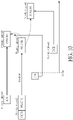
- Fig. 10 is a schematic diagram of a retransmission of a HARQ feedback according to an example of the present invention.
- the communication device receives a DCI DCI0, and the DCI DCI0 indicates (e.g., schedules) a reception of a PDSCH PDSCHO.
- the communication device prepares (e.g., is scheduled) to transmit a HARQ feedback HARQO in a PUCCH PUCCHO, after receiving the PDSCH PDSCHO.
- the PDSCH PDSCHO may be a SPS PDSCH, i.e., not scheduled by a DCI.
- the communication device may multiplex the HARQ feedback HARQO of the PUCCH PUCCHO with a PUSCH PUSCHO, if the PUSCH PUSCHO is collided with the PUCCH PUCCHO (e.g., in a time period). In this situation, the communication device may not transmit the PUCCH PUCCHO since the HARQ feedback HARQO has been multiplexed and transmitted in the PUSCH PUSCHO.
- the PUSCH PUSCHO may be scheduled by a DCI (e.g., a DCI DCI1), or the PUSCH PUSCHO may be a CG transmission.
- the communication device may determine not to transmit (e.g., cancel) the HARQ feedback HARQO.
- the communication device receives an indication (e.g., a CI CI0) indicating not to transmit the PUSCH PUSCHO, after receiving the DCI DCI1.
- the communication device receives an indication (e.g., the CI CI0), and determines not to transmit the PUSCH PUSCHO according to the indication.
- the communication device determines not to transmit (e.g., cancel) the PUSCH PUSCHO, if the PUSCH PUSCHO is collided with an UL transmission (e.g., a PUSCH or a PUCCH) and a priority index of the UL transmission is higher than a priority index of the PUSCH PUSCHO.
- the PUSCH PUSCHO including the HARQ feedback HARQO may not be transmitted.
- the communication device may start a timer when receiving the indication (e.g., the CI CI0).
- the communication device receives a DCI DCI2 indicating a PUSCH PUSCH1 after receiving the DCI DCI1.
- the communication device multiplexes the PUCCH PUCCHO and the PUSCH PUSCH1, since the timer does not expire at a time instant of transmitting the PUSCH PUSCH1. That is, a time distance between a first time instant of receiving the CI and a second time instant of transmitting the PUSCH PUSCH1 is smaller than a threshold.
- the communication device transmits the HARQ feedback HARQO in the PUSCH PUSCH1. Note that the PUSCH PUSCH1 is not overlapped with the PUCCH PUCCHO and the PUSCH PUSCHO.
- the threshold may be a number of slots, a number of sub-slots or a number of symbols.
- the threshold may be indicated by the network (e.g., gNB), e.g., via a RRC signaling.
- the threshold may be determined according to at least one HARQ feedback timing configured by the network.
- the threshold may be a maximum value of the at least one HARQ feedback timing.
- a time instant at which the communication device receives the DCI DCI2 is not limited to the content of the figure.
- the DCI DCI2 is received after the PUSCH PUSCHO.
- the DCI DCI2 is received after the communication device determines not to transmit the HARQ feedback HARQO in the PUSCH PUSCHO (e.g., after the CI CI0).
- the communication device may start a timer when receiving the PDSCH PDSCHO, if the HARQ feedback HARQO of the PDSCH PDSCHO is determined not to be transmitted (e.g., cancelled).
- the communication device receives a DCI DCI2 indicating a PUSCH PUSCH1 after receiving the DCI DCI1.
- the communication device multiplexes the PUCCH PUCCHO and the PUSCH PUSCH1, since the timer does not expire at a time instant of transmitting the PUSCH PUSCH1. That is, a time distance between a first time instant of receiving the PDSCH PDSCHO and a second time instant of transmitting the PUSCH PUSCH1 is smaller than a threshold. Then, the communication device transmits the HARQ feedback HARQO in the PUSCH PUSCH1. Note that the PUSCH PUSCH1 is not overlapped with the PUCCH PUCCHO and the PUSCH PUSCHO.
- the threshold may be a number of slots, a number of sub-slots or a number of symbols.
- the threshold may be indicated by the network (e.g., gNB), e.g., via a RRC signaling.
- the threshold may be determined according to at least one HARQ feedback timing configured by the network.
- the threshold may be a maximum value of the at least one HARQ feedback timing.
- a priority index of the PUCCH PUCCHO and a priority index of the PUSCH PUSCH1 are the same, e.g., 0.
- the HARQ feedback HARQO may not be transmitted in the PUSCH PUSCH1, if the priority indices of the PUCCH PUCCHO and the PUSCH PUSCH1 are different.
- the HARQ feedback HARQO may be transmitted in the PUSCH PUSCH1 even if the priority indices of the PUCCH PUCCHO and the PUSCH PUSCH1 are different.
- the PDSCH PDSCHO may be a SPS PDSCH, i.e., not scheduled by a DCI.
- the PUSCH PUSCH1 may be a CG PDSCH, i.e., not scheduled by a DCI.
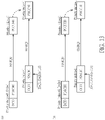
- Fig. 11 is a schematic diagram of a retransmission of a HARQ feedback according to an example of the present invention.
- the communication device receives a DCI DCI0, and the DCI DCI0 indicates (e.g., schedules) a reception of a PDSCH PDSCHO.
- the communication device prepares (e.g., is scheduled) to transmit a HARQ feedback HARQO in a PUCCH PUCCHO, after receiving the PDSCH PDSCHO.
- the communication device may multiplex the HARQ feedback HARQO of the PUCCH PUCCHO with a PUSCH PUSCHO, if the PUSCH PUSCHO is collided with the PUCCH PUCCHO (e.g., in a time period). In this situation, the communication device may not transmit the PUCCH PUCCHO since the HARQ feedback HARQO has been multiplexed and transmitted in the PUSCH PUSCHO.
- the PUSCH PUSCHO may be scheduled by a DCI (e.g., a DCI DCI1), or the PUSCH PUSCHO may be a CG transmission.
- the communication device may determine not to transmit (e.g., cancel) the HARQ feedback HARQO.
- the communication device receives an indication (e.g., a CI CI0) indicating not to transmit the PUSCH PUSCHO, after receiving the DCI DCI1.
- the communication device receives an indication (e.g., the CI CI0), and determines not to transmit the PUSCH PUSCHO according to the indication.
- the communication device determines not to transmit (e.g., cancel) the PUSCH PUSCHO, if the PUSCH PUSCHO is collided with an UL transmission (e.g., a PUSCH or a PUCCH) and a priority index of the UL transmission is higher than a priority index of the PUSCH PUSCHO.
- the PUSCH PUSCHO including the HARQ feedback HARQO may not be transmitted.
- the communication device may start a timer according to a (e.g., scheduled) time instant (e.g., time slot) of the PUSCH PUSCHO.
- the communication device receives a DCI DCI2 indicating a PUSCH PUSCH1 after receiving the DCI DCI1.
- the communication device multiplexes the HARQ feedback HARQO of the PUCCH PUCCHO with the PUSCH PUSCH1, since the timer does not expire at a time instant of transmitting the PUSCH PUSCH1. That is, a time distance between a first time instant of transmitting the PUSCH PUSCHO and a second time instant of transmitting the PUSCH PUSCH1 is smaller than a threshold. Then, the communication device transmits the HARQ feedback HARQO in the PUSCH PUSCH1. Note that the PUCCH PUSCH1 is not overlapped with the PUCCH PUCCHO and the PUSCH PUSCHO.
- the threshold may be a number of slots, a number of sub-slots or a number of symbols.
- the threshold may be indicated by the network (e.g., gNB), e.g., via a RRC signaling.
- the threshold may be determined according to at least one HARQ feedback timing configured by the network.
- the threshold may be a maximum value of the at least one HARQ feedback timing.
- a time instant at which the communication device receives the DCI DCI2 is not limited to the content of the figure.
- the DCI DCI2 is received after the PUSCH PUSCHO.
- the DCI DCI2 is received after the communication device determines not to transmit the HARQ feedback HARQO in the PUSCH PUSCHO.
- a priority index of the PUCCH PUCCHO and a priority index of the PUSCH PUSCH1 are the same, e.g., 0.
- the HARQ feedback HARQO may not be transmitted in the PUSCH PUSCH1, if the priority indices of the PUCCH PUCCHO and the PUSCH PUSCH1 are different.
- the HARQ feedback HARQO may be transmitted in the PUSCH PUSCH1 even if the priority indices of the PUCCH PUCCHO and the PUSCH PUSCH1 are different.
- the PDSCH PDSCHO may be a SPS PDSCH, i.e., not scheduled by a DCI.
- the PUSCH PUSCH1 may be a CG PDSCH, i.e., not scheduled by a DCI.
- Fig. 12 is a schematic diagram of a retransmission of a HARQ feedback according to an example of the present invention.
- the communication device receives a DCI DCI0, and the DCI DCI0 indicates (e.g., schedules) a reception of a PDSCH PDSCHO.
- the communication device prepares (e.g., is scheduled) to transmit a HARQ feedback HARQO in a PUCCH PUCCHO, after receiving the PDSCH PDSCHO.
- the communication device receives a DCI DCI1, and the DCI DCI1 indicates (e.g., schedules) transmissions of PUSCHs PUSCH0-PUSCH3.
- the PUSCHs PUSCH0-PUSCH3 are CG transmissions.
- the PUSCHs PUSCH1-PUSCH3 are repetitions of the PUSCH PUSCHO.
- the communication device intends to multiplex the HARQ feedback HARQO of the PUCCH PUCCHO with the PUSCH PUSCHO, since the PUCCH PUCCHO and the PUSCH PUSCHO are overlapped.
- the communication device receives a CI CI0 which cancels the transmission of the PUSCH PUSCHO, after receiving the DCI DCI1. Accordingly, the PUSCH PUSCHO including the HARQ feedback HARQO cannot be transmitted.
- the communication device may multiplex the HARQ feedback HARQO with a latest UL resource. For example, the communication device multiplexes the HARQ feedback HARQO of the PUCCH PUCCHO with the PUSCH PUSCH1 to transmit the HARQ feedback HARQO in the PUSCH PUSCH1.
- a priority index of the PUCCH PUCCHO and priority indices of the PUSCHs PUSCH0-PUSCH3 are the same, e.g., 0.
- the HARQ feedback HARQO may not be transmitted in the PUSCH PUSCH1, if the priority indices of the PUCCH PUCCHO and the PUSCHs PUSCH0-PUSCH3 are different.
- the HARQ feedback HARQO may be transmitted in the PUSCH PUSCH1 even if the priority indices of the PUCCH PUCCHO and the PUSCHs PUSCH0-PUSCH3 are different.
- the PDSCH PDSCHO may be a SPS PDSCH, i.e., not scheduled by a DCI.
- the PUSCHs PUSCH0-PUSCH3 may be CG PUSCHs, i.e., not scheduled by a DCI.
- Fig. 13 is a schematic diagram of a retransmission of a HARQ feedback according to an example of the present invention.
- the communication device receives a DCI DCI0, and the DCI DCI0 indicates (e.g., schedules) a reception of a PDSCH PDSCHO.
- the communication device prepares (e.g., is scheduled) to transmit a HARQ feedback HARQO in a PUCCH PUCCHO, after receiving the PDSCH PDSCHO.
- the communication device receives a DCI DCI1 after receiving the DCI DCI0, and the DCI DCI1 indicates (e.g., schedules) a reception of a PDSCH PDSCH1.
- the DCI DCI1 may be a latest DCI after the DCI DCI0.
- the communication device prepares to transmit a HARQ feedback HARQ1 in a PUCCH PUCCH1 in response to the reception of the PDSCH PDSCH1.
- the PDSCH PDSCHO may be a SPS PDSCH, i.e., not scheduled by a DCI.
- a priority index of the PUCCH PUCCHO and a priority index of the PUCCH PUCCH1 are different (or a priority index of the PDSCH PDSCHO and a priority index of the PDSCH PDSCH1 are different).
- DAIs for the PDSCHs PDSCHO and PDSCH1 are DAI0 and DAI1, respectively, and may be transmitted in the DCI DCI1.
- values of the DAIs DAI0 and DAI1 are 1 and 1, respectively.
- the communication device may transmit the HARQ feedbacks HARQO and HARQ1 in the PUCCH PUCCH1 according to the DAIs DAI0 and DAI1.
- values of the DAIs DAI0 and DAI1 are 0 and 1, respectively.
- the communication device may drop the HARQ feedback HARQO and may transmit the HARQ feedback HARQ1 in the PUCCH PUCCH1.
- Fig. 14 is a schematic diagram of a retransmission of a HARQ feedback according to an example of the present invention.
- the communication device receives a DCI DCI0, and the DCI DCI0 indicates (e.g., schedules) a reception of a PDSCH PDSCHO.
- the communication device prepares (e.g., is scheduled) to transmit a HARQ feedback HARQO in a PUCCH PUCCHO, after receiving the PDSCH PDSCHO.
- the PDSCH PDSCHO may be a SPS PDSCH, i.e., not scheduled by a DCI.
- the communication device may multiplex the HARQ feedback HARQO of the PUCCH PUCCHO with a PUSCH PUSCHO, if the PUSCH PUSCHO is collided with the PUCCH PUCCHO (e.g., in a time period). In this situation, the communication device may not transmit the PUCCH PUCCHO since the HARQ feedback HARQO has been multiplexed and transmitted in the PUSCH PUSCHO.
- the PUSCH PUSCHO may be scheduled by a DCI (e.g., a DCI DCI1), or the PUSCH PUSCHO may be a CG transmission.
- the communication device may determine not to transmit (e.g., cancel) the HARQ feedback HARQO. In one example, the communication device determines not to transmit (e.g., cancel) the PUSCH PUSCHO, if the PUSCH PUSCHO is collided with an UL transmission (e.g., a PUSCH PUSCH1) and a priority index of the UL transmission is higher than a priority index of the PUSCH PUSCHO.
- the UL transmission may be scheduled by a DCI (e.g., a DCI DCI2), or may be a CG transmission.
- the communication device receives a DCI DCI3, and the DCI DCI3 indicates (e.g., schedules) a reception of a PDSCH PDSCH1.
- the communication device prepares (e.g., is scheduled) to transmit a HARQ feedback HARQ1 in a PUCCH PUCCH1, after receiving the PDSCH PDSCH1.
- the HARQ feedback HARQ1 is not for a retransmission.
- the PDSCH PDSCH1 may be a SPS PDSCH, i.e., not scheduled by a DCI.
- a time instant at which the communication device receives the DCI DCI3 is not limited to the content of the figure.
- the DCI DCI3 is received after the PUSCH PUSCHO.
- the DCI DCI3 is received after the communication device determines not to transmit the HARQ feedback HARQO in the PUSCH PUSCHO (e.g., after the DCI DCI2).
- the communication device multiplexes the HARQ feedback HARQO of the PUCCH PUCCHO with the PUCCH PUCCH1, even if priority indices of the PDSCHs PDSCHO and PDSCH1 are different. Then, the communication device transmits the HARQ feedback HARQO in the PUCCH PUCCH1. Note that the PUCCH PUCCH1 is not overlapped with the PUCCH PUCCHO and the PUSCH PUSCHO.
- the HARQ feedback HARQO is appended to (i.e., located after) the HARQ feedback HARQ1, when the HARQ feedbacks HARQO and HARQ1 are transmitted in the PUCCH PUCCH1.
- Fig. 15 is a schematic diagram of a retransmission of a HARQ feedback according to an example of the present invention.
- the communication device receives a DCI DCI0, and the DCI DCI0 indicates (e.g., schedules) a reception of a PDSCH PDSCHO.
- the communication device prepares (e.g., is scheduled) to transmit a HARQ feedback HARQO in a PUCCH PUCCHO, after receiving the PDSCH PDSCHO.
- the PDSCH PDSCHO may be a SPS PDSCH, i.e., not scheduled by a DCI.
- the communication device may multiplex the HARQ feedback HARQO of the PUCCH PUCCHO with a PUSCH PUSCHO, if the PUSCH PUSCHO is collided with the PUCCH PUCCHO (e.g., in a time period). In this situation, the communication device may not transmit the PUCCH PUCCHO since the HARQ feedback HARQO has been multiplexed and transmitted in the PUSCH PUSCHO.
- the PUSCH PUSCHO may be scheduled by a DCI (e.g., a DCI DCI1), or the PUSCH PUSCHO may be a CG transmission.
- the communication device may determine not to transmit (e.g., cancel) the HARQ feedback HARQO. In one example, the communication device determines not to transmit (e.g., cancel) the PUSCH PUSCHO, if the PUSCH PUSCHO is collided with an UL transmission (e.g., a PUSCH PUSCH1) and a priority index of the UL transmission is higher than a priority index of the PUSCH PUSCHO.
- the UL transmission may be scheduled by a DCI (e.g., a DCI DCI2), or may be a CG transmission.
- the communication device multiplexes the HARQ feedback HARQO of the PUCCH PUCCHO with a PUSCH PUSCH2 which is a CG transmission, since priority indices of the PDSCH PDSCHO and the PUSCH PUSCH2 are the same. Then, the communication device transmits the HARQ feedback HARQO in the PUSCH PUSCH2. Note that the PUSCH PUSCH2 is not overlapped with the PUCCH PUCCHO and the PUSCH PUSCHO.
- HARQ may also be termed as a HARQ acknowledgement (HARQ-ACK).
- HARQ-ACK HARQ acknowledgement
- Examples of the hardware may include analog circuit(s), digital circuit(s) and/or mixed circuit(s).
- the hardware may include ASIC(s), field programmable gate array(s) (FPGA(s)), programmable logic device(s), coupled hardware components or combination thereof.
- the hardware may include general-purpose processor(s), microprocessor(s), controller(s), digital signal processor(s) (DSP(s)) or combination thereof.
- Examples of the software may include set(s) of codes, set(s) of instructions and/or set(s) of functions retained (e.g., stored) in a storage unit, e.g., a computer-readable medium.
- the computer-readable medium may include SIM, ROM, flash memory, RAM, CD-ROM/DVD-ROM/BD-ROM, magnetic tape, hard disk, optical data storage device, non-volatile storage unit, or combination thereof.
- the computer-readable medium (e.g., storage unit) may be coupled to at least one processor internally (e.g., integrated) or externally (e.g., separated).
- the at least one processor which may include one or more modules may (e.g., be configured to) execute the software in the computer-readable medium.
- the set(s) of codes, the set(s) of instructions and/or the set(s) of functions may cause the at least one processor, the module(s), the hardware and/or the electronic system to perform the related steps.
- Examples of the electronic system may include a system on chip (SoC), system in package (SiP), a computer on module (CoM), a computer program product, an apparatus, a mobile phone, a laptop, a tablet computer, an electronic book or a portable computer system, and the communication device 20.
- SoC system on chip
- SiP system in package
- CoM computer on module
- a computer program product an apparatus, a mobile phone, a laptop, a tablet computer, an electronic book or a portable computer system, and the communication device 20.
- the present invention provides a communication device and a method for handling a HARQ retransmission.
- a HARQ feedback can be transmitted in a later channel to a network according to the above examples, if a scheduled transmission of the HARQ feedback is cancelled.
- the retransmission of the HARQ feedback is solved.
- communication between the communication device and the network can proceed regularly.
Landscapes
- Engineering & Computer Science (AREA)
- Signal Processing (AREA)
- Computer Networks & Wireless Communication (AREA)
- Mobile Radio Communication Systems (AREA)
- Detection And Prevention Of Errors In Transmission (AREA)
- Communication Control (AREA)
Abstract
Description
- The present invention relates to a device of handling a hybrid automatic repeat request (HARQ) retransmission.
- A long-term evolution (LTE) system supporting the 3rd Generation Partnership Project (3GPP) Rel-8 standard and/or the 3GPP Rel-9 standard are developed by the 3GPP as a successor of the universal mobile telecommunication system (UMTS) for further enhancing performance of the UMTS to satisfy increasing needs of users. The LTE system includes a new radio interface and a new radio network architecture that provides high data rate, low latency, packet optimization, and improved system capacity and coverage.
- A LTE-advanced (LTE-A) system, as its name implies, is an evolution of the LTE system. The LTE-A system targets faster switching between power states, improves performance at the coverage edge of an evolved Node-B (eNB), increases peak data rate and throughput, and includes advanced techniques, such as carrier aggregation (CA), coordinated multipoint (CoMP) transmissions/reception, uplink (UL) multiple-input multiple-output (UL-MIMO), licensed-assisted access (LAA) (e.g., using LTE), etc.
- A next generation radio access network (NG-RAN) is developed for further enhancing the LTE-A system. The NG-RAN includes one or more next generation Node-Bs (gNBs), and has properties of wider operation bands, different numerologies for different frequency ranges, massive MIMO, advanced channel codings, etc.
- A user equipment (UE) may not be able to transmit a hybrid automatic repeat request (HARQ) feedback due to a certain cause. Communication between the UE and the gNB cannot proceed regularly if the HARQ feedback is not received by the gNB correctly. Thus, a retransmission of the HARQ feedback is an important problem to be solved.
- The present invention therefore provides a device for handling a hybrid automatic repeat request (HARQ) retransmission to solve the abovementioned problem.
- This is achieved by a communication device for handling the HARQ retransmission according to the independent claim here below. The dependent claims pertain to corresponding further developments and improvements.
- As will be seen more clearly from the detailed description following below, the claimed communication device for handling a hybrid automatic repeat request (HARQ) retransmission, comprises at least one storage device; and at least one processing circuit, coupled to the at least one storage device. The at least one storage device stores instructions, and the at least one processing circuit is configured to execute the instructions of receiving a first physical downlink (DL) shared channel (PDSCH) from a network, wherein a first HARQ feedback corresponding to the first PDSCH is allocated in a first uplink (UL) channel and the first UL channel is corresponding to a first priority index; determining not to transmit the first HARQ feedback in the first UL channel; determining a second UL channel for the first HARQ feedback, wherein the second UL channel is corresponding to a second priority index; and transmitting the first HARQ feedback in the second UL channel.
-
-
Fig. 1 is a schematic diagram of a wireless communication system according to an example of the present invention. -
Fig. 2 is a schematic diagram of a communication device according to an example of the present invention. -
Fig. 3 is a flowchart of a process according to an example of the present invention. -
Fig. 4 is a schematic diagram of a retransmission of a HARQ feedback according to an example of the present invention. -
Fig. 5 is a schematic diagram of timing relation of a CI and a DCI for a HARQ retransmission according to an example of the present invention. -
Fig. 6 is a schematic diagram of a retransmission of a HARQ feedback according to an example of the present invention. -
Fig. 7 is a schematic diagram of a retransmission of a HARQ feedback according to an example of the present invention. -
Fig. 8 is a schematic diagram of a retransmission of a HARQ feedback according to an example of the present invention. -
Fig. 9 is a schematic diagram of a retransmission of a HARQ feedback according to an example of the present invention. -
Fig. 10 is a schematic diagram of a retransmission of a HARQ feedback according to an example of the present invention. -
Fig. 11 is a schematic diagram of a retransmission of a HARQ feedback according to an example of the present invention. -
Fig. 12 is a schematic diagram of a retransmission of a HARQ feedback according to an example of the present invention. -
Fig. 13 is a schematic diagram of a retransmission of a HARQ feedback according to an example of the present invention. -
Fig. 14 is a schematic diagram of a retransmission of a HARQ feedback according to an example of the present invention. -
Fig. 15 is a schematic diagram of a retransmission of a HARQ feedback according to an example of the present invention. -
Fig. 1 is a schematic diagram of awireless communication system 10 according to an example of the present invention. Thewireless communication system 10 is briefly composed of a network and a plurality of communication devices. Thewireless communication system 10 may support a time-division duplexing (TDD) mode, a frequency-division duplexing (FDD) mode, a TDD-FDD joint operation mode, a non-terrestrial network (NTN) mode or a licensed-assisted access (LAA) mode. That is, the network and a communication device may communicate with each other via FDD carrier(s), TDD carrier(s), licensed carrier(s) (licensed serving cell(s)) and/or unlicensed carrier(s) (unlicensed serving cell(s)). In addition, thewireless communication system 10 may support a carrier aggregation (CA). That is, the network and a communication device may communicate with each other via multiple serving cells (e.g., multiple serving carriers) including a primary cell (e.g., primary component carrier) and one or more secondary cells (e.g., secondary component carriers). - In
Fig. 1 , the network and the communication devices are simply utilized for illustrating the structure of thewireless communication system 10. Practically, the network may be a universal terrestrial radio access network (UTRAN) including at least one Node-B (NB) in a universal mobile telecommunications system (UMTS). In one example, the network may be an evolved UTRAN (E-UTRAN) including at least one evolved NB (eNB) and/or at least one relay node in a long term evolution (LTE) system, a LTE-Advanced (LTE-A) system, an evolution of the LTE-A system, etc. In one example, the network may be a next generation radio access network (NG-RAN) including at least one next generation Node-B (gNB) and/or at least one fifth generation (5G) base station (BS). In one example, the network may be any BS conforming to a specific communication standard to communicate with a communication device. - A NR is a standard defined for a 5G system (or 5G network) to provide a unified air interface with better performance. gNBs are deployed to realize the 5G system, which supports advanced features such as enhanced Mobile Broadband (eMBB), Ultra Reliable Low Latency Communications (URLLC), massive Machine Type Communications (mMTC), etc. The eMBB provides broadband services with a greater bandwidth and a low/moderate latency. The URLLC provides applications (e.g., end-to-end communication) with properties of a higher reliability and a low latency. The examples of the applications include an industrial internet, smart grids, infrastructure protection, remote surgery and an intelligent transportation system (ITS). The mMTC is able to support internet-of-things (IoT) of the 5G system which include billions of connected devices and/or sensors.
- Furthermore, the network may also include at least one of the UTRAN/E-UTRAN/NG-RAN and a core network, wherein the core network may include network entities such as Mobility Management Entity (MME), Serving Gateway (S-GW), Packet Data Network (PDN) Gateway (P-GW), Self-Organizing Networks (SON) server and/or Radio Network Controller (RNC), etc. In one example, after the network receives information transmitted by a communication device, the information may be processed only by the UTRAN/E-UTRAN/NG-RAN and decisions corresponding to the information are made at the UTRAN/E-UTRAN/NG-RAN. In one example, the UTRAN/E-UTRAN/NG-RAN may forward the information to the core network, and the decisions corresponding to the information are made at the core network after the core network processes the information. In one example, the information may be processed by both the UTRAN/E-UTRAN/NG-RAN and the core network, and the decisions are made after coordination and/or cooperation are performed by the UTRAN/E-UTRAN/NG-RAN and the core network.
- A communication device may be a user equipment (UE), a low cost device (e.g., machine type communication (MTC) device), a device-to-device (D2D) communication device, a narrow-band internet of things (IoT) (NB-IoT), a mobile phone, a laptop, a tablet computer, an electronic book, a portable computer system, or combination thereof. In addition, the network and the communication device can be seen as a transmitter or a receiver according to direction (i.e., transmission direction), e.g., for an uplink (UL), the communication device is the transmitter and the network is the receiver, and for a downlink (DL), the network is the transmitter and the communication device is the receiver.
-
Fig. 2 is a schematic diagram of acommunication device 20 according to an example of the present invention. Thecommunication device 20 may be a communication device or the network shown inFig. 1 , but is not limited herein. Thecommunication device 20 may include at least oneprocessing circuit 200 such as a microprocessor or Application Specific Integrated Circuit (ASIC), at least onestorage device 210 and at least onecommunication interfacing device 220. The at least onestorage device 210 may be any data storage device that may storeprogram codes 214, accessed and executed by the at least oneprocessing circuit 200. Examples of the at least onestorage device 210 include but are not limited to a subscriber identity module (SIM), read-only memory (ROM), flash memory, random-access memory (RAM), Compact Disc Read-Only Memory (CD-ROM), digital versatile disc-ROM (DVD-ROM), Blu-ray Disc-ROM (BD-ROM), magnetic tape, hard disk, optical data storage device, non-volatile storage device, non-transitory computer-readable medium (e.g., tangible media), etc. The at least onecommunication interfacing device 220 is preferably at least one transceiver and is used to transmit and receive signals (e.g., data, messages and/or packets) according to processing results of the at least oneprocessing circuit 200. -
Fig. 3 is a flowchart of aprocess 30 according to an example of the present invention. Theprocess 30 may be utilized in a communication device, to handle a hybrid automatic repeat request (HARQ) retransmission. Theprocess 30 may be compiled into theprogram codes 214 and includes the following steps: - Step 300:
- Start.
- Step 302:
- Receive a first physical DL shared channel (PDSCH) from a network, wherein a first HARQ feedback corresponding to the first PDSCH is allocated in a first UL channel and the first UL channel is corresponding to a first priority index.
- Step 304:
- Determine not to transmit the first HARQ feedback in the first UL channel.
- Step 306:
- Determine a second UL channel for the first HARQ feedback, wherein the second UL channel is corresponding to a second priority index.
- Step 308:
- Transmit the first HARQ feedback in the second UL channel.
- Step 310:
- End.
- According to the
process 30, the communication device receives a first PDSCH from a network, wherein a first HARQ feedback corresponding to the first PDSCH is allocated in a first UL channel and the first UL channel is corresponding to (e.g., configured with or indicated with) a first priority index. The communication device determines (e.g., is configured to) not to transmit the first HARQ feedback in the first UL channel. Then, the communication device determines (e.g., selects) a second UL channel for the first HARQ feedback, wherein the second UL channel is corresponding to (e.g., configured with) a second priority index. The communication device transmits the first HARQ feedback in the second UL channel. That is, the communication device transmits (e.g., retransmission) the first HARQ feedback in the second UL channel, since the communication device cannot transmit (e.g., initial transmission) the first HARQ feedback in the first UL channel. Thus, the problem of the retransmission of the HARQ feedback is solved. - Realization of the
process 30 is not limited to the above description. The following examples may be applied for realizing theprocess 30. - In one example, the second UL channel is indicated (e.g., scheduled) by a first DL control information (DCI). In one example, a location of the first HARQ feedback in the second UL channel is determined according to the first DCI. In one example, a first payload size reserved for transmitting the first HARQ feedback is determined according to the first DCI. In one example, a first control resource set (CORSET) pool index of the first DCI and a second CORESET pool index of a second DCI indicating the first PDSCH are the same. In one example, the first DCI does not indicate any PDSCH. That is, the first DCI may be for a specific purpose. In one example, the first DCI comprises a first downlink assignment index (DAI) corresponding to the first priority index and a second DAI corresponding to the second priority index.
- In one example, the first DCI is received after the first UL channel. In one example, the first DCI is received after determining not to transmit the first HARQ feedback in the first UL channel.
- In one example, the second UL channel is a second repetition of a physical UL shared channel (PUSCH) after a first repetition of the PUSCH, and the first UL channel is the first repetition of the PUSCH.
- In one example, the communication device determines not to transmit the first HARQ feedback in the first UL channel and transmits the first HARQ feedback in the second UL channel according to an indication transmitted by the network. That is, not all HARQ feedback can be retransmitted after being cancelled in the first UL channel, and the communication device is allowed to retransmit the firs HARQ feedback according to the indication. In one example, the indication may be a radio resource control (RRC) signaling or a DCI.
- In one example, the first priority index and the second priority index are the same.
- In one example, a first location of the first HARQ feedback in the second UL channel is after a second location of a second HARQ feedback, and the second HARQ feedback is an initial transmission in the second UL channel. That is, the initial transmission and the retransmission of the HARQ feedbacks are jointly transmitted in the second UL channel. For example, the first HARQ feedback is a HARQ feedback corresponding to a semi-persistent scheduling (SPS) PDSCH, or is a HARQ feedback corresponding to a PDSCH indicated (or scheduled) by a DCI.
- In one example, a first location of the first HARQ feedback in the second UL channel is determined according to the first priority index and the second priority index.
- In one example, a first payload size reserved for transmitting the first HARQ feedback is a fixed value, or is determined according to a configuration of the network.
- In one example, a time distance between the first UL channel and the second UL channel is not greater than a threshold. In one example, the threshold is indicated by the network. For example, the communication device transmits the first HARQ feedback in the second UL channel, before a timer corresponding to the threshold expires. That is, the communication device transmits the first HARQ feedback within a specific time period. The communication device may drop the first HARQ feedback, if the first HARQ feedback cannot be transmitted before the timer expires.
- In one example, the first PDSCH is scheduled by a second DCI. In one example, the first PDSCH is scheduled by a semi-persistent scheduling (SPS). In one example, the communication device determines not to transmit the first HARQ feedback according to an indication (e.g., transmitted by the network). That is, the communication device drops (or stops transmitting) the first HARQ feedback according to the indication. The indication may be a cancellation indication (CI).
- In one example, the communication device determines not to transmit the first HARQ feedback, when the first UL channel is collided (e.g., overlapped) with a third UL channel and the third UL channel is corresponding to (e.g., configured with or indicated with) a third priority index higher than the first priority index. Note that the first UL channel and the third UL channel may be in a same slot (or a same sub-slot).
- In one example, the second UL channel comprises a second HARQ feedback corresponding to (e.g., configured with) a third priority index different from the first priority index.
- In one example, a second payload size reserved for transmitting a second HARQ feedback in the second UL channel is determined according to a third DCI indicating the second UL channel. In one example, the second priority index of the second UL channel is determined according to a third DCI indicating the second UL channel.
-
Fig. 4 is a schematic diagram of a retransmission of a HARQ feedback according to an example of the present invention. The communication device receives a DCI DCI0, and the DCI DCI0 indicates (e.g., schedules) a reception of a PDSCH PDSCHO. In addition, the DCI DCI0 may indicate a DAI (e.g., DAI0=1) for the PDSCH PDSCHO. The communication device prepares (e.g., is scheduled) to transmit a HARQ feedback HARQO in a PUCCH PUCCHO, after receiving the PDSCH PDSCHO. In one example, the PDSCH PDSCHO may be a SPS PDSCH, i.e., not scheduled by a DCI. - In addition, the communication device may multiplex the HARQ feedback HARQO of the PUCCH PUCCHO with a PUSCH PUSCHO, if the PUSCH PUSCHO is collided with the PUCCH PUCCHO (e.g., in a time period). In this situation, the communication device may not transmit the PUCCH PUCCHO since the HARQ feedback HARQO has been multiplexed and transmitted in the PUSCH PUSCHO. For example, the PUSCH PUSCHO may be scheduled by a DCI (e.g., a DCI DCI1), or the PUSCH PUSCHO may be a configured grant (CG) transmission.
- However, the communication device may determine not to transmit (e.g., cancel) the HARQ feedback HARQO. In one example, the communication device receives an indication (e.g., a CI CI0) indicating not to transmit the PUSCH PUSCHO, after receiving the DCI DCI1. In one example, the communication device receives an indication (e.g., the CI CI0), and determines not to transmit the PUSCH PUSCHO according to the indication. In one example, the communication device determines not to transmit (e.g., cancel) the PUSCH PUSCHO, if the PUSCH PUSCHO is collided with an UL transmission (e.g., a PUSCH or a PUCCH) and a priority index of the UL transmission is higher than a priority index of the PUSCH PUSCHO. In the above examples, the PUSCH PUSCHO including the HARQ feedback HARQO may not be transmitted.
- In the present example, the communication device receives a DCI DCI2 after receiving the indication (e.g., the CI CI0), and the DCI DCI2 indicates (e.g., schedules) a reception of a PDSCH PDSCH1. In addition, the DCI DCI2 may indicate a DAI (e.g., DAI1 =2) for the PDSCH PDSCH1. The DCI DCI2 may be a latest DCI after the indication. The communication device prepares to transmit a HARQ feedback HARQ1 in a PUCCH PUCCH1 in response to the reception of the PDSCH PDSCH1. Then, the communication device transmits the HARQ feedbacks HARQO and HARQ1 in the PUCCH PUCCH1. Note that the PUCCH PUCCH1 is not overlapped with the PUCCH PUCCHO and the PUSCH PUSCHO. A priority index of the PUCCH PUCCH1 may be indicated by (or determined according to) the DCI DCI2. In one example, the priority index of the PUCCH PUCCH1 may be indicated by a RRC signaling, if the PDSCH PDSCHO is a SPS PDSCH.
- It should be noted that a time instant at which the communication device receives the DCI DCI2 is not limited to the content of the figure. In one example, the DCI DCI2 is received after the PUSCH PUSCHO. In one example, the DCI DCI2 is received after the communication device determines not to transmit the HARQ feedback HARQO in the PUSCH PUSCHO (e.g., after the CI CI0).
- In the present example, a priority index of the PUCCH PUCCHO and a priority index of the PUCCH PUCCH1 are the same (or a priority index of the PDSCH PDSCHO and a priority index of the PDSCH PDSCH1 are the same), e.g., 0. The HARQ feedback HARQO may not be transmitted in the PUCCH PUCCH1, if the priority indices of the PUCCH PUCCHO and the PUCCH PUCCH1 are different (or if the priority indices of the PDSCH PDSCHO and the PDSCH PDSCH1 are different). In one example, the priority index of the PUCCH PUCCHO may be indicated by the DCI DCI0 scheduling the PDSCH PDSCHO. In one example, the priority index of the PUCCH PUCCH1 may be indicated by the DCI DCI2 scheduling the PDSCH PDSCH1.
- In the present example, a first CORSET pool index of a first COREST for transmitting the DCI DCI0 and a second CORESET index of a second CORESET for transmitting the DCI DCI2 are the same, e.g., 0. The HARQ feedback HARQO may not be transmitted in the PUCCH PUCCH1, if the first CORSET pool index of the first COREST and the second CORESET index of the second CORESET are different.
- In the present example, the communication device determines not to transmit the HARQ feedback HARQO in the PUSCH PUSCHO, and determines to transmit the HARQ feedback HARQO in the PUCCH PUCCH1. Whether the communication device can perform such operation may depend on a capability (e.g., UE capability) of the communication device. The communication device may report the capability regarding the retransmission of the HARQ feedback to the network.
- In one example, the communication device may receive the DCI DCI2 and the PDSCH PDSCH1 before receiving the indication. The HARQ feedback HARQ1 is not for a retransmission. The HARQ feedback HARQO may be appended to (i.e., located after) the HARQ feedback HARQ1, when the HARQ feedbacks HARQO and HARQ1 are transmitted in the PUCCH PUCCH1.
- The communication device may transmit the HARQ feedback HARQO, when a value of a DAI DAI0 (i.e., 1) of the PDSCH PDSCHO is smaller than a value of a DAI DAI1 (i.e., 2) of the PDSCH PDSCH1, as shown in
Fig. 4 . For example, DAI1 =DAI0+ 1. That is, the communication device transmits the HARQ feedback HARQO and the HARQ feedback HARQ1 in the PUCCH PUCCH1. The locations of the HARQ feedback HARQO and HARQ feedback HARQ1 in the PUCCH PUCCH1 may be determined according to the DAI DAI0 and DAI DAI1, respectively. For example, the first location is for the HARQ feedback HARQO since the DAI DAI0=1 and the second location is for the HARQ feedback HARQ1 since the DAI DAI1=2. - In one example, when the PDSCH PDSCHO is a SPS PDSCH, the HARQ feedback HARQO may be appended to (i.e., located after) the HARQ feedback HARQ1 (i.e., not according to the DAI), when the HARQ feedbacks HARQO and HARQ1 are transmitted in the PUCCH PUCCH1.
- The communication device may not transmit the HARQ feedback HARQO, when the priorities of the PDSCH PDSCHO and the PDSCH PDSCH1 are different.
-
Fig. 5 is a schematic diagram of a retransmission of a HARQ feedback according to an example of the present invention. Operations of the communication device are similar to those inFig. 4 . Differences betweenFig. 4 andFig. 5 include that the priority indices of the PUCCH PUCCHO (priority index = 0) and the PUCCH PUCCH1 (priority index = 1) are different, and that DAIs corresponding to the priority index=0 and the priority index=1 are DAI0 and DAI1, respectively, and may be transmitted in the DCI DCI2. - Values of the DAIs DAI0 and DAI1 are 1 and 1, respectively. DAI0=1 means that there is resource for the priority index=0 (e.g., a HARQ feedback of the PDSCH PDSCHO) in the PUCCH PUCCH1. DAI1=1 means that there is resource for the priority index =1 (e.g., a HARQ feedback of the PDSCH PDSCH1) in the PUCCH PUCCH1. That is, the values of the DAIs DAI0 and DAI1 mean that the communication device can multiplex the HARQ feedback HARQO with the PUCCH PUCCH1. Thus, the communication device may transmit the HARQ feedbacks HARQO and HARQ1 in the PUCCH PUCCH1 according to the DAIs DAI0 and DAI1. In one example, the communication device may not transmit the HARQ feedback HARQO in the PUCCH PUCCH1, when the DCI DCI2 indicates the DAI DAI0=0.
- In one example, a location of the HARQ feedback HARQO in the PUCCH PUCCH1 may be determined according to the priority index. For example, a first HARQ feedback corresponding to the priority index=0 is located before (e.g., in front of) a second HARQ feedback corresponding to the priority index=1. For example, the second HARQ feedback corresponding to the priority index=1 is located before (e.g., in front of) the first HARQ feedback corresponding to the priority index=0.
- In the present example, the communication device transmits the HARQ feedback HARQO in the PUCCH PUCCH1 with a different priority index. Whether the communication device can perform such operation may depend on a capability (e.g., UE capability) of the communication device. The communication device may report the capability regarding the different priority index to the network. For example, the communication device may report a capability regarding to whether a HARQ feedback can be transmit in a UL channel, and the HARQ feedback and the UL channel are corresponding to different priorities.
- It should be noted that a time instant at which the communication device receives the DCI DCI2 is not limited to the content of the figure. In one example, the DCI DCI2 is received after the PUSCH PUSCHO. In one example, the DCI DCI2 is received after the communication device determines not to transmit the HARQ feedback HARQO in the PUSCH PUSCHO (e.g., after the CI CI0).
-
Fig. 6 is a schematic diagram of timing relation of an indication (e.g., a CI) and a DCI for a HARQ retransmission according to an example of the present invention. Timing relation between the indication CI0 and the DCI DCI2 inFig. 4 is discussed in the present example. A start and an end of the indication CI0 are time instants t1 and t2, respectively. A start and an end of the DCI DCI2 are time instants t3 and t4, respectively. Several examples for explaining the situation "the DCI DCI2 is received after the indication CI0" are stated as follows. In the case (a), the start of the DCI DCI2 (t3) is after the end of the indication CI0 (t2). In the case (b), the start of the DCI DCI2 (t3) is after the start of the indication CI0 (t1). In the case (c), the end of the DCI DCI2 (t4) is after the end of the indication CI0 (t2). -
Fig. 7 is a schematic diagram of a retransmission of a HARQ feedback according to an example of the present invention. The communication device receives a DCI DCI0, and the DCI DCI0 indicates (e.g., schedules) a reception of a PDSCH PDSCHO. The communication device prepares (e.g., is scheduled) to transmit a HARQ feedback HARQO in a PUCCH PUCCHO, after receiving the PDSCH PDSCHO. In one example, the PDSCH PDSCHO may be a SPS PDSCH, i.e., not scheduled by a DCI. - In addition, the communication device may multiplex the HARQ feedback HARQO of the PUCCH PUCCHO with a PUSCH PUSCHO, if the PUSCH PUSCHO is collided with the PUCCH PUCCHO (e.g., in a time period). In this situation, the communication device may not transmit the PUCCH PUCCHO since the HARQ feedback HARQO has been multiplexed and transmitted in the PUSCH PUSCHO. For example, the PUSCH PUSCHO may be scheduled by a DCI (e.g., a DCI DCI1), or the PUSCH PUSCHO may be a CG transmission.
- However, the communication device may determine not to transmit (e.g., cancel) the HARQ feedback HARQO. In one example, the communication device receives an indication (e.g., a CI CI0) indicating not to transmit the PUSCH PUSCHO, after receiving the DCI DCI1. In one example, the communication device receives the indication (e.g., the CI CI0), and determines not to transmit the PUSCH PUSCHO according to the indication. In one example, the communication device determines not to transmit (e.g., cancel) the PUSCH PUSCHO, if the PUSCH PUSCHO is collided with an UL transmission (e.g., a PUSCH or a PUCCH) and a priority index of the UL transmission is higher than a priority index of the PUSCH PUSCHO. In the above examples, the PUSCH PUSCHO including the HARQ feedback HARQO may not be transmitted.
- In the present example, the communication device does not need to find another DCI indicating another UL resource (e.g., a PUCCH) for transmitting the HARQ feedback HARQO. The communication device may determine a PUCCH PUCCH1 for transmitting the HARQ feedback HARQO according to the indication (e.g., CI CI0). Then, the communication device transmits the HARQ feedback HARQO in the PUCCH PUCCH1. Note that the PUCCH PUCCH1 is not overlapped with both the PUCCH PUCCHO and the PUSCH PUSCHO. A priority index of the PUCCH PUCCH1 may be indicated by (or determined according to) the indication.
- In the present example, a priority index of the PUCCH PUCCHO and a priority index of the PUCCH PUCCH1 are the same (or a priority index of the PDSCH PDSCHO and a priority index of the PUCCH PUCCH1 are the same), e.g., 0. The HARQ feedback HARQO may not be transmitted in the PUCCH PUCCH1, if the priority indices of the PUCCH PUCCHO and the PUCCH PUCCH1 are different (or if the priority indices of the PDSCH PDSCHO and the PUCCH PUCCH1 are different).
- In the present example, a first CORSET pool index of a first COREST for transmitting the DCI DCI0 and a second CORESET index of a second CORESET for transmitting the indication (e.g., the CI CI0) are the same, e.g., 0. The HARQ feedback HARQO may not be transmitted in the PUCCH PUCCH1, if the first CORSET pool index of the first COREST and the second CORESET index of the second CORESET are different.
-
Fig. 8 is a schematic diagram of a retransmission of a HARQ feedback according to an example of the present invention. The communication device receives a DCI DCI0, and the DCI DCI0 indicates (e.g., schedules) a reception of a PDSCH PDSCHO. The communication device prepares (e.g., is scheduled) to transmit a HARQ feedback HARQO in a PUCCH PUCCHO, after receiving the PDSCH PDSCHO. In one example, the PDSCH PDSCHO may be a SPS PDSCH, i.e., not scheduled by a DCI. - In addition, the communication device may multiplex the HARQ feedback HARQO of the PUCCH PUCCHO with a PUSCH PUSCHO, if the PUSCH PUSCHO is collided with the PUCCH PUCCHO (e.g., in a time period). In this situation, the communication device may not transmit the PUCCH PUCCHO since the HARQ feedback HARQO has been multiplexed and transmitted in the PUSCH PUSCHO. For example, the PUSCH PUSCHO may be scheduled by a DCI (e.g., a DCI DCI1), or the PUSCH PUSCHO may be a CG transmission.
- However, the communication device may determine not to transmit (e.g., cancel) the HARQ feedback HARQO. In one example, the communication device receives an indication (e.g., a CI CI0) indicating not to transmit the PUSCH PUSCHO, after receiving the DCI DCI1. In one example, the communication device receives an indication (e.g., the CI CI0), and determines not to transmit the PUSCH PUSCHO according to the indication. In one example, the communication device determines not to transmit (e.g., cancel) the PUSCH PUSCHO, if the PUSCH PUSCHO is collided with an UL transmission (e.g., a PUSCH or a PUCCH) and a priority index of the UL transmission is higher than a priority index of the PUSCH PUSCHO. In the above examples, the PUSCH PUSCHO including the HARQ feedback HARQO may not be transmitted.
- The communication device receives a DCI DCI2 after receiving the indication (e.g., the CI CI0), and the DCI DCI2 indicates a PUCCH PUCCH1 and may not indicate any PDSCH. The DCI DCI2 may be a latest DCI after the indication (e.g., the CI CI0). Then, the communication device transmits the HARQ feedback HARQO in the PUCCH PUCCH1. Note that the PUCCH PUCCH1 is not overlapped with the PUCCH PUCCHO and the PUSCH PUSCHO. A priority index of the PUCCH PUCCH1 may be indicated by (or determined according to) the DCI DCI2. In one example, the priority index of the PUCCH PUCCH1 may be indicated by a RRC signaling, if the PDSCH PDSCHO is a SPS PDSCH.
- It should be noted that a time instant at which the communication device receives the DCI DCI2 is not limited to the content of the figure. In one example, the DCI DCI2 is received after the PUSCH PUSCHO. In one example, the DCI DCI2 is received after the communication device determines not to transmit the HARQ feedback HARQO in the PUSCH PUSCHO (e.g., after the CI CI0).
- In the present example, a number of bits for a HARQ feedback may be indicated by the DCI DCI2 and/or a configuration of the network.
- In the present example, a priority index of the PUCCH PUCCHO and a priority index of the PUCCH PUCCH1 are the same, e.g., 0. The HARQ feedback HARQO may not be transmitted in the PUCCH PUCCH1, if the priority indices of the PDSCH PDSCHO and the PUCCH PUCCH1 are different.
- In the present example, a first CORSET pool index of a first COREST for transmitting the DCI DCI0 and a second CORESET index of a second CORESET for transmitting the DCI DCI2 are the same, e.g., 0. The HARQ feedback HARQO may not be transmitted in the PUCCH PUCCH1, if the first CORSET pool index of the first COREST and the second CORESET index of the second CORESET are different.
-
Fig. 9 is a schematic diagram of a retransmission of a HARQ feedback according to an example of the present invention. The communication device receives a DCI DCI0, and the DCI DCI0 indicates (e.g., schedules) a reception of a PDSCH PDSCHO. The communication device prepares (e.g., is scheduled) to transmit a HARQ feedback HARQO in a PUCCH PUCCHO, after receiving the PDSCH PDSCHO. - In addition, the communication device may multiplex the HARQ feedback HARQO of the PUCCH PUCCHO with a PUSCH PUSCHO, if the PUSCH PUSCHO is collided with the PUCCH PUCCHO (e.g., in a time period). In this situation, the communication device may not transmit the PUCCH PUCCHO since the HARQ feedback HARQO has been multiplexed and transmitted in the PUSCH PUSCHO. For example, the PUSCH PUSCHO may be scheduled by a DCI (e.g., a DCI DCI1), or the PUSCH PUSCHO may be a CG transmission.
- However, the communication device may determine not to transmit (e.g., cancel) the HARQ feedback HARQO. In one example, the communication device determines not to transmit (e.g., cancel) the PUSCH PUSCHO, if the PUSCH PUSCHO is collided with an UL transmission (e.g., a PUSCH PUSCH1) and a priority index of the UL transmission is higher than a priority index of the PUSCH PUSCHO. In one example, the UL transmission may be scheduled by a DCI (e.g., a DCI DCI2), or may be a CG transmission.
- The communication device receives a DCI DCI3 indicating a PUSCH PUSCH2 (e.g., after receiving the DCI DCI2). The communication device multiplexes the HARQ feedback HARQO of the PUCCH PUCCHO with the PUSCH PUSCH2, since priority indices of the PDSCH PDSCHO and the PUSCH PUSCH2 are the same. Then, the communication device transmits the HARQ feedback HARQO in the PUSCH PUSCH2. Note that the PUCCH PUSCH2 is not overlapped with the PUCCH PUCCHO and the PUSCH PUSCHO.
- It should be noted that a time instant at which the communication device receives the DCI DCI3 is not limited to the content of the figure. In one example, the DCI DCI3 is received after the PUSCH PUSCHO. In one example, the DCI DCI3 is received after the communication device determines not to transmit the HARQ feedback HARQO in the PUSCH PUSCHO (e.g., after the DCI DCI2).
- In the present example, a priority index of the PUCCH PUCCHO and a priority index of the PUSCH PUSCH2 are the same, e.g., 0. The HARQ feedback HARQO may not be transmitted in the PUSCH PUSCH2, if the priority indices of the PUCCH PUCCHO and the PUSCH PUSCH2 are different.
- In one example, according to a network configuration (e.g., gNB configuration) and/or a capability (e.g., UE capability) of the communication device, the HARQ feedback HARQO may be transmitted in the PUSCH PUSCH2 even if the priority indices of the PUCCH PUCCHO and the PUSCH PUSCH2 are different.
- In one example, the PDSCH PDSCHO may be a SPS PDSCH, i.e., not scheduled by a DCI. In one example, the PUSCH PUSCH2 may be a CG PUSCH, i.e., not scheduled by a DCI.
-
Fig. 10 is a schematic diagram of a retransmission of a HARQ feedback according to an example of the present invention. The communication device receives a DCI DCI0, and the DCI DCI0 indicates (e.g., schedules) a reception of a PDSCH PDSCHO. The communication device prepares (e.g., is scheduled) to transmit a HARQ feedback HARQO in a PUCCH PUCCHO, after receiving the PDSCH PDSCHO. In one example, the PDSCH PDSCHO may be a SPS PDSCH, i.e., not scheduled by a DCI. - In addition, the communication device may multiplex the HARQ feedback HARQO of the PUCCH PUCCHO with a PUSCH PUSCHO, if the PUSCH PUSCHO is collided with the PUCCH PUCCHO (e.g., in a time period). In this situation, the communication device may not transmit the PUCCH PUCCHO since the HARQ feedback HARQO has been multiplexed and transmitted in the PUSCH PUSCHO. For example, the PUSCH PUSCHO may be scheduled by a DCI (e.g., a DCI DCI1), or the PUSCH PUSCHO may be a CG transmission.
- However, the communication device may determine not to transmit (e.g., cancel) the HARQ feedback HARQO. In one example, the communication device receives an indication (e.g., a CI CI0) indicating not to transmit the PUSCH PUSCHO, after receiving the DCI DCI1. In one example, the communication device receives an indication (e.g., the CI CI0), and determines not to transmit the PUSCH PUSCHO according to the indication. In one example, the communication device determines not to transmit (e.g., cancel) the PUSCH PUSCHO, if the PUSCH PUSCHO is collided with an UL transmission (e.g., a PUSCH or a PUCCH) and a priority index of the UL transmission is higher than a priority index of the PUSCH PUSCHO. In the above examples, the PUSCH PUSCHO including the HARQ feedback HARQO may not be transmitted.
- Accordingly, the PUCCH PUCCHO including the HARQ feedback HARQO cannot be transmitted. The communication device may start a timer when receiving the indication (e.g., the CI CI0).
- The communication device receives a DCI DCI2 indicating a PUSCH PUSCH1 after receiving the DCI DCI1. The communication device multiplexes the PUCCH PUCCHO and the PUSCH PUSCH1, since the timer does not expire at a time instant of transmitting the PUSCH PUSCH1. That is, a time distance between a first time instant of receiving the CI and a second time instant of transmitting the PUSCH PUSCH1 is smaller than a threshold. Then, the communication device transmits the HARQ feedback HARQO in the PUSCH PUSCH1. Note that the PUSCH PUSCH1 is not overlapped with the PUCCH PUCCHO and the PUSCH PUSCHO. For example, the threshold may be a number of slots, a number of sub-slots or a number of symbols. For example, the threshold may be indicated by the network (e.g., gNB), e.g., via a RRC signaling. For example, the threshold may be determined according to at least one HARQ feedback timing configured by the network. For example, the threshold may be a maximum value of the at least one HARQ feedback timing.
- It should be noted that a time instant at which the communication device receives the DCI DCI2 is not limited to the content of the figure. In one example, the DCI DCI2 is received after the PUSCH PUSCHO. In one example, the DCI DCI2 is received after the communication device determines not to transmit the HARQ feedback HARQO in the PUSCH PUSCHO (e.g., after the CI CI0).
- In other example, the communication device may start a timer when receiving the PDSCH PDSCHO, if the HARQ feedback HARQO of the PDSCH PDSCHO is determined not to be transmitted (e.g., cancelled).
- The communication device receives a DCI DCI2 indicating a PUSCH PUSCH1 after receiving the DCI DCI1. The communication device multiplexes the PUCCH PUCCHO and the PUSCH PUSCH1, since the timer does not expire at a time instant of transmitting the PUSCH PUSCH1. That is, a time distance between a first time instant of receiving the PDSCH PDSCHO and a second time instant of transmitting the PUSCH PUSCH1 is smaller than a threshold. Then, the communication device transmits the HARQ feedback HARQO in the PUSCH PUSCH1. Note that the PUSCH PUSCH1 is not overlapped with the PUCCH PUCCHO and the PUSCH PUSCHO. For example, the threshold may be a number of slots, a number of sub-slots or a number of symbols. For example, the threshold may be indicated by the network (e.g., gNB), e.g., via a RRC signaling. For example, the threshold may be determined according to at least one HARQ feedback timing configured by the network. For example, the threshold may be a maximum value of the at least one HARQ feedback timing.
- In the present example, a priority index of the PUCCH PUCCHO and a priority index of the PUSCH PUSCH1 are the same, e.g., 0. The HARQ feedback HARQO may not be transmitted in the PUSCH PUSCH1, if the priority indices of the PUCCH PUCCHO and the PUSCH PUSCH1 are different.
- In one example, according to a network configuration (e.g., gNB configuration) and/or a capability (e.g., UE capability) of the communication device, the HARQ feedback HARQO may be transmitted in the PUSCH PUSCH1 even if the priority indices of the PUCCH PUCCHO and the PUSCH PUSCH1 are different.
- In one example, the PDSCH PDSCHO may be a SPS PDSCH, i.e., not scheduled by a DCI. In one example, the PUSCH PUSCH1 may be a CG PDSCH, i.e., not scheduled by a DCI.
-
Fig. 11 is a schematic diagram of a retransmission of a HARQ feedback according to an example of the present invention. The communication device receives a DCI DCI0, and the DCI DCI0 indicates (e.g., schedules) a reception of a PDSCH PDSCHO. The communication device prepares (e.g., is scheduled) to transmit a HARQ feedback HARQO in a PUCCH PUCCHO, after receiving the PDSCH PDSCHO. - In addition, the communication device may multiplex the HARQ feedback HARQO of the PUCCH PUCCHO with a PUSCH PUSCHO, if the PUSCH PUSCHO is collided with the PUCCH PUCCHO (e.g., in a time period). In this situation, the communication device may not transmit the PUCCH PUCCHO since the HARQ feedback HARQO has been multiplexed and transmitted in the PUSCH PUSCHO. For example, the PUSCH PUSCHO may be scheduled by a DCI (e.g., a DCI DCI1), or the PUSCH PUSCHO may be a CG transmission.
- However, the communication device may determine not to transmit (e.g., cancel) the HARQ feedback HARQO. In one example, the communication device receives an indication (e.g., a CI CI0) indicating not to transmit the PUSCH PUSCHO, after receiving the DCI DCI1. In one example, the communication device receives an indication (e.g., the CI CI0), and determines not to transmit the PUSCH PUSCHO according to the indication. In one example, the communication device determines not to transmit (e.g., cancel) the PUSCH PUSCHO, if the PUSCH PUSCHO is collided with an UL transmission (e.g., a PUSCH or a PUCCH) and a priority index of the UL transmission is higher than a priority index of the PUSCH PUSCHO. In the above examples, the PUSCH PUSCHO including the HARQ feedback HARQO may not be transmitted.
- Accordingly, the PUSCH PUSCHO including the HARQ feedback HARQO cannot be transmitted. The communication device may start a timer according to a (e.g., scheduled) time instant (e.g., time slot) of the PUSCH PUSCHO.
- The communication device receives a DCI DCI2 indicating a PUSCH PUSCH1 after receiving the DCI DCI1. The communication device multiplexes the HARQ feedback HARQO of the PUCCH PUCCHO with the PUSCH PUSCH1, since the timer does not expire at a time instant of transmitting the PUSCH PUSCH1. That is, a time distance between a first time instant of transmitting the PUSCH PUSCHO and a second time instant of transmitting the PUSCH PUSCH1 is smaller than a threshold. Then, the communication device transmits the HARQ feedback HARQO in the PUSCH PUSCH1. Note that the PUCCH PUSCH1 is not overlapped with the PUCCH PUCCHO and the PUSCH PUSCHO. For example, the threshold may be a number of slots, a number of sub-slots or a number of symbols. For example, the threshold may be indicated by the network (e.g., gNB), e.g., via a RRC signaling. For example, the threshold may be determined according to at least one HARQ feedback timing configured by the network. For example, the threshold may be a maximum value of the at least one HARQ feedback timing.
- It should be noted that a time instant at which the communication device receives the DCI DCI2 is not limited to the content of the figure. In one example, the DCI DCI2 is received after the PUSCH PUSCHO. In one example, the DCI DCI2 is received after the communication device determines not to transmit the HARQ feedback HARQO in the PUSCH PUSCHO.
- In the present example, a priority index of the PUCCH PUCCHO and a priority index of the PUSCH PUSCH1 are the same, e.g., 0. The HARQ feedback HARQO may not be transmitted in the PUSCH PUSCH1, if the priority indices of the PUCCH PUCCHO and the PUSCH PUSCH1 are different.
- In one example, according to a network configuration (e.g., gNB configuration) and/or a capability (e.g., UE capability) of the communication device, the HARQ feedback HARQO may be transmitted in the PUSCH PUSCH1 even if the priority indices of the PUCCH PUCCHO and the PUSCH PUSCH1 are different.
- In one example, the PDSCH PDSCHO may be a SPS PDSCH, i.e., not scheduled by a DCI. In one example, the PUSCH PUSCH1 may be a CG PDSCH, i.e., not scheduled by a DCI.
-
Fig. 12 is a schematic diagram of a retransmission of a HARQ feedback according to an example of the present invention. The communication device receives a DCI DCI0, and the DCI DCI0 indicates (e.g., schedules) a reception of a PDSCH PDSCHO. The communication device prepares (e.g., is scheduled) to transmit a HARQ feedback HARQO in a PUCCH PUCCHO, after receiving the PDSCH PDSCHO. In one example, the communication device receives a DCI DCI1, and the DCI DCI1 indicates (e.g., schedules) transmissions of PUSCHs PUSCH0-PUSCH3. In one example, the PUSCHs PUSCH0-PUSCH3 are CG transmissions. The PUSCHs PUSCH1-PUSCH3 are repetitions of the PUSCH PUSCHO. The communication device intends to multiplex the HARQ feedback HARQO of the PUCCH PUCCHO with the PUSCH PUSCHO, since the PUCCH PUCCHO and the PUSCH PUSCHO are overlapped. - However, the communication device receives a CI CI0 which cancels the transmission of the PUSCH PUSCHO, after receiving the DCI DCI1. Accordingly, the PUSCH PUSCHO including the HARQ feedback HARQO cannot be transmitted.
- Then, the communication device may multiplex the HARQ feedback HARQO with a latest UL resource. For example, the communication device multiplexes the HARQ feedback HARQO of the PUCCH PUCCHO with the PUSCH PUSCH1 to transmit the HARQ feedback HARQO in the PUSCH PUSCH1.
- In the present example, a priority index of the PUCCH PUCCHO and priority indices of the PUSCHs PUSCH0-PUSCH3 are the same, e.g., 0. The HARQ feedback HARQO may not be transmitted in the PUSCH PUSCH1, if the priority indices of the PUCCH PUCCHO and the PUSCHs PUSCH0-PUSCH3 are different.
- In one example, according to a network configuration (e.g., gNB configuration) and/or a capability (e.g., UE capability) of the communication device, the HARQ feedback HARQO may be transmitted in the PUSCH PUSCH1 even if the priority indices of the PUCCH PUCCHO and the PUSCHs PUSCH0-PUSCH3 are different.
- In one example, the PDSCH PDSCHO may be a SPS PDSCH, i.e., not scheduled by a DCI. In one example, the PUSCHs PUSCH0-PUSCH3 may be CG PUSCHs, i.e., not scheduled by a DCI.
-
Fig. 13 is a schematic diagram of a retransmission of a HARQ feedback according to an example of the present invention. The communication device receives a DCI DCI0, and the DCI DCI0 indicates (e.g., schedules) a reception of a PDSCH PDSCHO. In addition, the DCI DCI0 may indicate a DAI (e.g., DAI=1) for the PDSCH PDSCHO. The communication device prepares (e.g., is scheduled) to transmit a HARQ feedback HARQO in a PUCCH PUCCHO, after receiving the PDSCH PDSCHO. In addition, the communication device receives a DCI DCI1 after receiving the DCI DCI0, and the DCI DCI1 indicates (e.g., schedules) a reception of a PDSCH PDSCH1. The DCI DCI1 may be a latest DCI after the DCI DCI0. The communication device prepares to transmit a HARQ feedback HARQ1 in a PUCCH PUCCH1 in response to the reception of the PDSCH PDSCH1. In one example, the PDSCH PDSCHO may be a SPS PDSCH, i.e., not scheduled by a DCI. - In the present example, a priority index of the PUCCH PUCCHO and a priority index of the PUCCH PUCCH1 are different (or a priority index of the PDSCH PDSCHO and a priority index of the PDSCH PDSCH1 are different). DAIs for the PDSCHs PDSCHO and PDSCH1 are DAI0 and DAI1, respectively, and may be transmitted in the DCI DCI1.
- In the case (a), values of the DAIs DAI0 and DAI1 are 1 and 1, respectively. DAI0=1 means that there is resource for the priority index=0 (e.g., a HARQ feedback of the PDSCH PDSCHO) in the PUCCH PUCCH1. DAI1 =1 means that there is resource for the priority index=1 (e.g., a HARQ feedback of the PDSCH PDSCH1) in the PUCCH PUCCH1. That is, the values of the DAIs DAI0 and DAI1 mean that the communication device can multiplex the HARQ feedback HARQO with the PUCCH PUCCH1. Thus, the communication device may transmit the HARQ feedbacks HARQO and HARQ1 in the PUCCH PUCCH1 according to the DAIs DAI0 and DAI1.
- In the case (b), values of the DAIs DAI0 and DAI1 are 0 and 1, respectively. DAI0=0 means that there is no resource for the priority index=0 (e.g., a HARQ feedback of the PDSCH PDSCHO) in the PUCCH PUCCH1. DAI1 =1 means that there is resource for the priority index=1 (e.g., a HARQ feedback of the PDSCH PDSCH1) in the PUCCH PUCCH1. That is, the values of the DAIs DAI0 and DAI1 mean that the communication device cannot multiplex the HARQ feedback HARQO with the PUCCH PUCCH1. Thus, the communication device may drop the HARQ feedback HARQO and may transmit the HARQ feedback HARQ1 in the PUCCH PUCCH1.
-
Fig. 14 is a schematic diagram of a retransmission of a HARQ feedback according to an example of the present invention. The communication device receives a DCI DCI0, and the DCI DCI0 indicates (e.g., schedules) a reception of a PDSCH PDSCHO. The communication device prepares (e.g., is scheduled) to transmit a HARQ feedback HARQO in a PUCCH PUCCHO, after receiving the PDSCH PDSCHO. In one example, the PDSCH PDSCHO may be a SPS PDSCH, i.e., not scheduled by a DCI. - In addition, the communication device may multiplex the HARQ feedback HARQO of the PUCCH PUCCHO with a PUSCH PUSCHO, if the PUSCH PUSCHO is collided with the PUCCH PUCCHO (e.g., in a time period). In this situation, the communication device may not transmit the PUCCH PUCCHO since the HARQ feedback HARQO has been multiplexed and transmitted in the PUSCH PUSCHO. For example, the PUSCH PUSCHO may be scheduled by a DCI (e.g., a DCI DCI1), or the PUSCH PUSCHO may be a CG transmission.
- However, the communication device may determine not to transmit (e.g., cancel) the HARQ feedback HARQO. In one example, the communication device determines not to transmit (e.g., cancel) the PUSCH PUSCHO, if the PUSCH PUSCHO is collided with an UL transmission (e.g., a PUSCH PUSCH1) and a priority index of the UL transmission is higher than a priority index of the PUSCH PUSCHO. In one example, the UL transmission may be scheduled by a DCI (e.g., a DCI DCI2), or may be a CG transmission.
- The communication device receives a DCI DCI3, and the DCI DCI3 indicates (e.g., schedules) a reception of a PDSCH PDSCH1. The communication device prepares (e.g., is scheduled) to transmit a HARQ feedback HARQ1 in a PUCCH PUCCH1, after receiving the PDSCH PDSCH1. The HARQ feedback HARQ1 is not for a retransmission. In one example, the PDSCH PDSCH1 may be a SPS PDSCH, i.e., not scheduled by a DCI.
- It should be noted that a time instant at which the communication device receives the DCI DCI3 is not limited to the content of the figure. In one example, the DCI DCI3 is received after the PUSCH PUSCHO. In one example, the DCI DCI3 is received after the communication device determines not to transmit the HARQ feedback HARQO in the PUSCH PUSCHO (e.g., after the DCI DCI2).
- The communication device multiplexes the HARQ feedback HARQO of the PUCCH PUCCHO with the PUCCH PUCCH1, even if priority indices of the PDSCHs PDSCHO and PDSCH1 are different. Then, the communication device transmits the HARQ feedback HARQO in the PUCCH PUCCH1. Note that the PUCCH PUCCH1 is not overlapped with the PUCCH PUCCHO and the PUSCH PUSCHO. The HARQ feedback HARQO is appended to (i.e., located after) the HARQ feedback HARQ1, when the HARQ feedbacks HARQO and HARQ1 are transmitted in the PUCCH PUCCH1.
-
Fig. 15 is a schematic diagram of a retransmission of a HARQ feedback according to an example of the present invention. The communication device receives a DCI DCI0, and the DCI DCI0 indicates (e.g., schedules) a reception of a PDSCH PDSCHO. The communication device prepares (e.g., is scheduled) to transmit a HARQ feedback HARQO in a PUCCH PUCCHO, after receiving the PDSCH PDSCHO. In one example, the PDSCH PDSCHO may be a SPS PDSCH, i.e., not scheduled by a DCI. - In addition, the communication device may multiplex the HARQ feedback HARQO of the PUCCH PUCCHO with a PUSCH PUSCHO, if the PUSCH PUSCHO is collided with the PUCCH PUCCHO (e.g., in a time period). In this situation, the communication device may not transmit the PUCCH PUCCHO since the HARQ feedback HARQO has been multiplexed and transmitted in the PUSCH PUSCHO. For example, the PUSCH PUSCHO may be scheduled by a DCI (e.g., a DCI DCI1), or the PUSCH PUSCHO may be a CG transmission.
- However, the communication device may determine not to transmit (e.g., cancel) the HARQ feedback HARQO. In one example, the communication device determines not to transmit (e.g., cancel) the PUSCH PUSCHO, if the PUSCH PUSCHO is collided with an UL transmission (e.g., a PUSCH PUSCH1) and a priority index of the UL transmission is higher than a priority index of the PUSCH PUSCHO. In one example, the UL transmission may be scheduled by a DCI (e.g., a DCI DCI2), or may be a CG transmission.
- The communication device multiplexes the HARQ feedback HARQO of the PUCCH PUCCHO with a PUSCH PUSCH2 which is a CG transmission, since priority indices of the PDSCH PDSCHO and the PUSCH PUSCH2 are the same. Then, the communication device transmits the HARQ feedback HARQO in the PUSCH PUSCH2. Note that the PUSCH PUSCH2 is not overlapped with the PUCCH PUCCHO and the PUSCH PUSCHO.
- It should be noted that a HARQ may also be termed as a HARQ acknowledgement (HARQ-ACK).
- The operation of "determine" described above may be replaced by the operation of "compute", "calculate", "obtain", "generate", "output, "use", "choose/select", "decide" or "is configured to". The term of "according to" described above may be replaced by "in response to". The phrase of "associated with" described above may be replaced by "of" or "corresponding to". The term of "via" described above may be replaced by "on", "in" or "at".
- Those skilled in the art should readily make combinations, modifications and/or alterations on the abovementioned description and examples. The abovementioned description, steps and/or processes including suggested steps can be realized by means that could be hardware, software, firmware (known as a combination of a hardware device and computer instructions and data that reside as read-only software on the hardware device), an electronic system, or combination thereof. An example of the means may be the
communication device 20. - Examples of the hardware may include analog circuit(s), digital circuit(s) and/or mixed circuit(s). For example, the hardware may include ASIC(s), field programmable gate array(s) (FPGA(s)), programmable logic device(s), coupled hardware components or combination thereof. In another example, the hardware may include general-purpose processor(s), microprocessor(s), controller(s), digital signal processor(s) (DSP(s)) or combination thereof.
- Examples of the software may include set(s) of codes, set(s) of instructions and/or set(s) of functions retained (e.g., stored) in a storage unit, e.g., a computer-readable medium. The computer-readable medium may include SIM, ROM, flash memory, RAM, CD-ROM/DVD-ROM/BD-ROM, magnetic tape, hard disk, optical data storage device, non-volatile storage unit, or combination thereof. The computer-readable medium (e.g., storage unit) may be coupled to at least one processor internally (e.g., integrated) or externally (e.g., separated). The at least one processor which may include one or more modules may (e.g., be configured to) execute the software in the computer-readable medium. The set(s) of codes, the set(s) of instructions and/or the set(s) of functions may cause the at least one processor, the module(s), the hardware and/or the electronic system to perform the related steps.
- Examples of the electronic system may include a system on chip (SoC), system in package (SiP), a computer on module (CoM), a computer program product, an apparatus, a mobile phone, a laptop, a tablet computer, an electronic book or a portable computer system, and the
communication device 20. - To sum up, the present invention provides a communication device and a method for handling a HARQ retransmission. A HARQ feedback can be transmitted in a later channel to a network according to the above examples, if a scheduled transmission of the HARQ feedback is cancelled. Thus, the retransmission of the HARQ feedback is solved. As a result, communication between the communication device and the network can proceed regularly.
Claims (19)
- A communication device (20) for handling a hybrid automatic repeat request (HARQ) retransmission, characterized by the communication device comprising:at least one storage device (210); andat least one processing circuit (200), coupled to the at least one storage device, wherein the at least one storage device stores instructions, and the at least one processing circuit is configured to execute the instructions of:receiving a first physical downlink (DL) shared channel (PDSCH) from a network, wherein a first HARQ feedback corresponding to the first PDSCH is allocated in a first uplink (UL) channel and the first UL channel is corresponding to a first priority index (302);determining not to transmit the first HARQ feedback in the first UL channel (304);determining a second UL channel for the first HARQ feedback, wherein the second UL channel is corresponding to a second priority index (306); andtransmitting the first HARQ feedback in the second UL channel (308).
- The communication device of claim 1, characterized in that the second UL channel is indicated by a first DL control information (DCI).
- The communication device of claim 2, characterized in that a location of the first HARQ feedback in the second UL channel is determined according to the first DCI.
- The communication device of claim 2 or 3, characterized in that a first payload size reserved for transmitting the first HARQ feedback is determined according to the first DCI.
- The communication device of any of claims 2-4, characterized in that a first control resource set (CORSET) pool index of the first DCI and a second CORESET pool index of a second DCI indicating the first PDSCH are the same.
- The communication device of any of claims 2-5, characterized in that the first DCI does not indicate any PDSCH, or the first DCI comprises a first DL assignment index (DAI) corresponding to the first priority index and a second DAI corresponding to the second priority index.
- The communication device of claim 2-6, characterized in that the first DCI is received after the first UL channel, or the first DCI is received after determining not to transmit the first HARQ feedback in the first UL channel.
- The communication device of any of claims 1-7, characterized in that the second UL channel is a second repetition of a physical UL shared channel (PUSCH) after a first repetition of the PUSCH, and the first UL channel is the first repetition of the PUSCH.
- The communication device of any of claims 1-8, characterized in that the communication device determines not to transmit the first HARQ feedback in the first UL channel and transmits the first HARQ feedback in the second UL channel according to an indication transmitted by the network.
- The communication device of any of claims 1-9, characterized in that the first priority index and the second priority index are the same.
- The communication device of any of claims 1-10, characterized in that a first location of the first HARQ feedback in the second UL channel is after a second location of a second HARQ feedback and the second HARQ feedback is an initial transmission in the second UL channel, or a first location of the first HARQ feedback in the second UL channel is determined according to the first priority index and the second priority index.
- The communication device of any of claims 1-11, characterized in that a first payload size reserved for transmitting the first HARQ feedback is a fixed value, or is determined according to a configuration of the network.
- The communication device of any of claims 1-12, characterized in that a time distance between the first UL channel and the second UL channel is not greater than a threshold.
- The communication device of claim 13, characterized in that the threshold is indicated by the network.
- The communication device of any of claims 1-14, characterized in that the first PDSCH is scheduled by a second DCI, or the first PDSCH is scheduled by a semi-persistent scheduling (SPS).
- The communication device of any of claims 1-15, characterized in that the communication device determines not to transmit the first HARQ feedback according to an indication, or the communication device determines not to transmit the first HARQ feedback when the first UL channel is collided with a third UL channel and the third UL channel is corresponding to a third priority index higher than the first priority index.
- The communication device of any of claims 1-16, characterized in that the second UL channel comprises a second HARQ feedback corresponding to a third priority index different from the first priority index.
- The communication device of any of claims 1-17, characterized in that a second payload size reserved for transmitting a second HARQ feedback in the second UL channel is determined according to a third DCI indicating the second UL channel.
- The communication device of any of claims 1-18, characterized in that the second priority index of the second UL channel is determined according to a third DCI indicating the second UL channel.
Applications Claiming Priority (2)
| Application Number | Priority Date | Filing Date | Title |
|---|---|---|---|
| US202063094912P | 2020-10-22 | 2020-10-22 | |
| US17/503,379 US11902967B2 (en) | 2020-10-22 | 2021-10-18 | Device of handling a HARQ retransmission |
Publications (1)
| Publication Number | Publication Date |
|---|---|
| EP3989467A1 true EP3989467A1 (en) | 2022-04-27 |
Family
ID=78516514
Family Applications (1)
| Application Number | Title | Priority Date | Filing Date |
|---|---|---|---|
| EP21203365.8A Pending EP3989467A1 (en) | 2020-10-22 | 2021-10-19 | Device of handling a harq retransmission |
Country Status (7)
| Country | Link |
|---|---|
| US (1) | US11902967B2 (en) |
| EP (1) | EP3989467A1 (en) |
| JP (1) | JP7277539B2 (en) |
| KR (1) | KR102702188B1 (en) |
| CN (1) | CN114389780B (en) |
| AU (1) | AU2021254591B2 (en) |
| TW (1) | TWI784764B (en) |
Families Citing this family (2)
| Publication number | Priority date | Publication date | Assignee | Title |
|---|---|---|---|---|
| CN117793935B (en) * | 2019-04-15 | 2026-06-12 | 华为技术有限公司 | Uplink transmission method and communication device |
| CN121174298A (en) * | 2023-01-12 | 2025-12-19 | 上海移远通信技术股份有限公司 | Wireless communication method and device |
Family Cites Families (29)
| Publication number | Priority date | Publication date | Assignee | Title |
|---|---|---|---|---|
| PL2087630T3 (en) * | 2006-10-02 | 2017-04-28 | Nokia Technologies Oy | A device, method and product of a computer program that provides hybrid ARQ feedback for HSDPA MIMO |
| TW201215027A (en) * | 2010-08-19 | 2012-04-01 | Htc Corp | Method of handling uplink reporting trigger and configuration and related communication device |
| CN107104761B (en) * | 2011-05-12 | 2020-07-31 | Lg电子株式会社 | Method and device for sending control information |
| US9553685B2 (en) * | 2012-09-28 | 2017-01-24 | Nokia Solutions And Networks Oy | PHICH-less operation for uplink-downlink configuration zero |
| US9479293B2 (en) * | 2013-07-10 | 2016-10-25 | Industrial Technology Research Institute | Method of handling HARQ feedbacks and related communication device |
| CN104283655B (en) * | 2013-07-10 | 2018-05-18 | 财团法人工业技术研究院 | Method for sending and receiving HARQ feedback |
| US20150200751A1 (en) * | 2014-01-10 | 2015-07-16 | Sharp Laboratories Of America, Inc. | Enhanced pucch reporting for carrier aggregation |
| US9686064B2 (en) * | 2015-01-21 | 2017-06-20 | Intel IP Corporation | Devices and methods for HARQ-ACK feedback scheme on PUSCH in wireless communication systems |
| US10225837B2 (en) * | 2015-04-29 | 2019-03-05 | Htc Corporation | Device and method of handling HARQ operation for unlicensed band |
| US10355830B2 (en) * | 2015-12-07 | 2019-07-16 | Telefonaktiebolaget Lm Ericsson (Publ) | Uplink mac protocol aspects |
| US11452091B2 (en) * | 2016-02-04 | 2022-09-20 | Acer Incorporated | Device and method of handling hybrid automatic repeat request transmission |
| US10237863B2 (en) * | 2016-03-04 | 2019-03-19 | Htc Corporation | Device and method of handling a hybrid automatic repeat request process in a licensed assisted access secondary cell |
| US10779308B2 (en) * | 2016-08-11 | 2020-09-15 | Qualcomm Incorporated | Priority based resource selection in a device-to-device communication system |
| TWI678897B (en) * | 2017-06-16 | 2019-12-01 | 宏碁股份有限公司 | Device and method of handling code block group-based communication operation |
| US10855403B2 (en) * | 2018-02-13 | 2020-12-01 | Mediatek Singapore Pte. Ltd. | Method and apparatus for reducing uplink overhead in mobile communications |
| CA3034014A1 (en) * | 2018-02-15 | 2019-08-15 | Comcast Cable Communications, Llc | Beam failure report |
| US11172543B2 (en) * | 2018-06-15 | 2021-11-09 | Acer Incorporated | Device and method of handling physical downlink shared channels in bandwidth parts |
| US11212057B2 (en) * | 2018-06-15 | 2021-12-28 | Acer Incorporated | Device and method for handling physical downlink shared channels in bandwidth parts |
| US11881953B2 (en) * | 2018-08-08 | 2024-01-23 | Beijing Xiaomi Mobile Software Co., Ltd. | Hybrid automatic repeat request (HARQ) feedback method and apparatus |
| CN117040709A (en) * | 2018-11-28 | 2023-11-10 | 株式会社Ntt都科摩 | Terminal, wireless communication method of terminal, base station and system |
| WO2020145460A1 (en) * | 2019-01-10 | 2020-07-16 | 엘지전자 주식회사 | Method for operating terminal and base station in wireless communication system supporting unlicensed band, and device supporting same |
| TWI800719B (en) * | 2019-04-03 | 2023-05-01 | 宏碁股份有限公司 | Equipment for hybrid automatic repeat request and method thereof |
| US11356995B2 (en) * | 2019-07-01 | 2022-06-07 | FG Innovation Company Limited | Method and apparatus for performing repetition transmissions in wireless communication system |
| EP3997824A1 (en) * | 2019-07-11 | 2022-05-18 | Sony Group Corporation | Methods, communications devices, and infrastructure equipment |
| CN116667989A (en) | 2019-07-31 | 2023-08-29 | 中兴通讯股份有限公司 | Signal transmission method, device, network equipment and storage medium |
| KR102251731B1 (en) * | 2019-08-14 | 2021-05-14 | 엘지전자 주식회사 | Method for transmitting and receiving downlink data in wireless communication system, and apparatus therefor |
| JP7599495B2 (en) * | 2020-07-31 | 2024-12-13 | 株式会社Nttドコモ | Terminal, wireless communication method, base station and system |
| JPWO2022079804A1 (en) * | 2020-10-13 | 2022-04-21 | ||
| US11868971B2 (en) * | 2021-08-02 | 2024-01-09 | Arch Systems Inc. | Method for manufacturing system analysis and/or maintenance |
-
2021
- 2021-10-18 US US17/503,379 patent/US11902967B2/en active Active
- 2021-10-19 EP EP21203365.8A patent/EP3989467A1/en active Pending
- 2021-10-20 AU AU2021254591A patent/AU2021254591B2/en active Active
- 2021-10-21 JP JP2021172065A patent/JP7277539B2/en active Active
- 2021-10-21 KR KR1020210140804A patent/KR102702188B1/en active Active
- 2021-10-21 TW TW110139082A patent/TWI784764B/en active
- 2021-10-22 CN CN202111232673.6A patent/CN114389780B/en active Active
Non-Patent Citations (5)
| Title |
|---|
| ASIA PACIFIC TELECOM: "Discussion on HARQ-ACK enhancements", vol. RAN WG1, no. e-Meeting; 20200817 - 20200828, 8 August 2020 (2020-08-08), XP051918162, Retrieved from the Internet <URL:https://ftp.3gpp.org/tsg_ran/WG1_RL1/TSGR1_102-e/Docs/R1-2006639.zip R1-2006639 Discussion on HARQ-ACK enhancements.docx> [retrieved on 20200808] * |
| ERICSSON: "Remaining Issue of Scheduling/HARQ for NR URLLC", vol. RAN WG1, no. e-Meeting; 20200224 - 20200306, 15 February 2020 (2020-02-15), XP051853229, Retrieved from the Internet <URL:https://ftp.3gpp.org/tsg_ran/WG1_RL1/TSGR1_100_e/Docs/R1-2000233.zip R1-2000233 Remaining Issue of SchedulingHARQ for NR URLLC.docx> [retrieved on 20200215] * |
| OPPO: "Remaining issues on Multi-TRP and panel Transmission", vol. RAN WG1, no. e-Meeting; 20200525 - 20200605, 15 May 2020 (2020-05-15), XP051885810, Retrieved from the Internet <URL:https://ftp.3gpp.org/tsg_ran/WG1_RL1/TSGR1_101-e/Docs/R1-2004051.zip R1-2004051.doc> [retrieved on 20200515] * |
| QUALCOMM: "Remaining Issues on UCI Enhancements for URLLC", vol. RAN WG1, no. 20200525 - 20200605, 16 May 2020 (2020-05-16), XP051886187, Retrieved from the Internet <URL:https://ftp.3gpp.org/tsg_ran/WG1_RL1/TSGR1_101-e/Docs/R1-2004458.zip R1-2004458 Remaining issues on UCI Enhancements for URLLC.docx> [retrieved on 20200516] * |
| VIVO: "Enhancement for Scheduling/HARQ", vol. RAN WG1, no. e-Meeting; 20200817 - 20200828, 8 August 2020 (2020-08-08), XP051917375, Retrieved from the Internet <URL:https://ftp.3gpp.org/tsg_ran/WG1_RL1/TSGR1_102-e/Docs/R1-2005350.zip R1-2005350.docx> [retrieved on 20200808] * |
Also Published As
| Publication number | Publication date |
|---|---|
| CN114389780B (en) | 2023-08-08 |
| TWI784764B (en) | 2022-11-21 |
| TW202218366A (en) | 2022-05-01 |
| JP2022068858A (en) | 2022-05-10 |
| US20220132535A1 (en) | 2022-04-28 |
| CN114389780A (en) | 2022-04-22 |
| AU2021254591B2 (en) | 2022-11-24 |
| KR102702188B1 (en) | 2024-09-02 |
| US11902967B2 (en) | 2024-02-13 |
| AU2021254591A1 (en) | 2022-05-12 |
| JP7277539B2 (en) | 2023-05-19 |
| KR20220053495A (en) | 2022-04-29 |
Similar Documents
| Publication | Publication Date | Title |
|---|---|---|
| US12273774B2 (en) | Method and apparatus for pre-empting a resource | |
| EP3211813B1 (en) | Device and method of handling hybrid automatic repeat request transmission | |
| EP3582432A1 (en) | Device and method of handling physical downlink shared channels in bandwidth parts | |
| US11044053B2 (en) | Device and method of handling code block group-based communication operation | |
| EP3190740A2 (en) | Device and method of handling transmission/reception for serving cell | |
| EP3883168A1 (en) | Device and method of handling an uplink transmission with sounding reference signals | |
| US11902967B2 (en) | Device of handling a HARQ retransmission | |
| US20250261206A1 (en) | Device and Method for Handling a Hybrid Automatic Repeat Request Transmission | |
| EP4535706A1 (en) | Method and communication device for handling a communication with a serving cell | |
| EP4535707A1 (en) | Method and communication device for handling a communication with a serving cell | |
| US11647507B2 (en) | Device and method for handling physical uplink control channel collision | |
| EP4535705A1 (en) | Method and communication device for handling a communication with a serving cell | |
| EP4535884A1 (en) | Method and communication device for handling a communication with a serving cell |
Legal Events
| Date | Code | Title | Description |
|---|---|---|---|
| PUAI | Public reference made under article 153(3) epc to a published international application that has entered the european phase |
Free format text: ORIGINAL CODE: 0009012 |
|
| STAA | Information on the status of an ep patent application or granted ep patent |
Free format text: STATUS: THE APPLICATION HAS BEEN PUBLISHED |
|
| AK | Designated contracting states |
Kind code of ref document: A1 Designated state(s): AL AT BE BG CH CY CZ DE DK EE ES FI FR GB GR HR HU IE IS IT LI LT LU LV MC MK MT NL NO PL PT RO RS SE SI SK SM TR |
|
| STAA | Information on the status of an ep patent application or granted ep patent |
Free format text: STATUS: REQUEST FOR EXAMINATION WAS MADE |
|
| 17P | Request for examination filed |
Effective date: 20220523 |
|
| RBV | Designated contracting states (corrected) |
Designated state(s): AL AT BE BG CH CY CZ DE DK EE ES FI FR GB GR HR HU IE IS IT LI LT LU LV MC MK MT NL NO PL PT RO RS SE SI SK SM TR |
|
| STAA | Information on the status of an ep patent application or granted ep patent |
Free format text: STATUS: EXAMINATION IS IN PROGRESS |
|
| 17Q | First examination report despatched |
Effective date: 20230213 |