EP3989121A1 - Video classification model construction method and apparatus, video classification method and apparatus, and device and medium - Google Patents
Video classification model construction method and apparatus, video classification method and apparatus, and device and medium Download PDFInfo
- Publication number
- EP3989121A1 EP3989121A1 EP20889214.1A EP20889214A EP3989121A1 EP 3989121 A1 EP3989121 A1 EP 3989121A1 EP 20889214 A EP20889214 A EP 20889214A EP 3989121 A1 EP3989121 A1 EP 3989121A1
- Authority
- EP
- European Patent Office
- Prior art keywords
- video
- classification model
- module
- video frames
- training
- Prior art date
- Legal status (The legal status is an assumption and is not a legal conclusion. Google has not performed a legal analysis and makes no representation as to the accuracy of the status listed.)
- Granted
Links
Images




Classifications
-
- G—PHYSICS
- G06—COMPUTING OR CALCULATING; COUNTING
- G06V—IMAGE OR VIDEO RECOGNITION OR UNDERSTANDING
- G06V20/00—Scenes; Scene-specific elements
- G06V20/40—Scenes; Scene-specific elements in video content
- G06V20/41—Higher-level, semantic clustering, classification or understanding of video scenes, e.g. detection, labelling or Markovian modelling of sport events or news items
-
- G—PHYSICS
- G06—COMPUTING OR CALCULATING; COUNTING
- G06F—ELECTRIC DIGITAL DATA PROCESSING
- G06F18/00—Pattern recognition
- G06F18/20—Analysing
- G06F18/21—Design or setup of recognition systems or techniques; Extraction of features in feature space; Blind source separation
- G06F18/214—Generating training patterns; Bootstrap methods, e.g. bagging or boosting
-
- G—PHYSICS
- G06—COMPUTING OR CALCULATING; COUNTING
- G06F—ELECTRIC DIGITAL DATA PROCESSING
- G06F18/00—Pattern recognition
- G06F18/20—Analysing
- G06F18/24—Classification techniques
- G06F18/241—Classification techniques relating to the classification model, e.g. parametric or non-parametric approaches
- G06F18/2413—Classification techniques relating to the classification model, e.g. parametric or non-parametric approaches based on distances to training or reference patterns
-
- G—PHYSICS
- G06—COMPUTING OR CALCULATING; COUNTING
- G06F—ELECTRIC DIGITAL DATA PROCESSING
- G06F18/00—Pattern recognition
- G06F18/20—Analysing
- G06F18/24—Classification techniques
- G06F18/241—Classification techniques relating to the classification model, e.g. parametric or non-parametric approaches
- G06F18/2415—Classification techniques relating to the classification model, e.g. parametric or non-parametric approaches based on parametric or probabilistic models, e.g. based on likelihood ratio or false acceptance rate versus a false rejection rate
-
- G—PHYSICS
- G06—COMPUTING OR CALCULATING; COUNTING
- G06N—COMPUTING ARRANGEMENTS BASED ON SPECIFIC COMPUTATIONAL MODELS
- G06N3/00—Computing arrangements based on biological models
- G06N3/02—Neural networks
- G06N3/04—Architecture, e.g. interconnection topology
- G06N3/045—Combinations of networks
-
- G—PHYSICS
- G06—COMPUTING OR CALCULATING; COUNTING
- G06N—COMPUTING ARRANGEMENTS BASED ON SPECIFIC COMPUTATIONAL MODELS
- G06N3/00—Computing arrangements based on biological models
- G06N3/02—Neural networks
- G06N3/04—Architecture, e.g. interconnection topology
- G06N3/0464—Convolutional networks [CNN, ConvNet]
-
- G—PHYSICS
- G06—COMPUTING OR CALCULATING; COUNTING
- G06N—COMPUTING ARRANGEMENTS BASED ON SPECIFIC COMPUTATIONAL MODELS
- G06N3/00—Computing arrangements based on biological models
- G06N3/02—Neural networks
- G06N3/04—Architecture, e.g. interconnection topology
- G06N3/047—Probabilistic or stochastic networks
-
- G—PHYSICS
- G06—COMPUTING OR CALCULATING; COUNTING
- G06N—COMPUTING ARRANGEMENTS BASED ON SPECIFIC COMPUTATIONAL MODELS
- G06N3/00—Computing arrangements based on biological models
- G06N3/02—Neural networks
- G06N3/08—Learning methods
-
- G—PHYSICS
- G06—COMPUTING OR CALCULATING; COUNTING
- G06N—COMPUTING ARRANGEMENTS BASED ON SPECIFIC COMPUTATIONAL MODELS
- G06N3/00—Computing arrangements based on biological models
- G06N3/02—Neural networks
- G06N3/08—Learning methods
- G06N3/09—Supervised learning
-
- G—PHYSICS
- G06—COMPUTING OR CALCULATING; COUNTING
- G06V—IMAGE OR VIDEO RECOGNITION OR UNDERSTANDING
- G06V10/00—Arrangements for image or video recognition or understanding
- G06V10/40—Extraction of image or video features
- G06V10/44—Local feature extraction by analysis of parts of the pattern, e.g. by detecting edges, contours, loops, corners, strokes or intersections; Connectivity analysis, e.g. of connected components
- G06V10/443—Local feature extraction by analysis of parts of the pattern, e.g. by detecting edges, contours, loops, corners, strokes or intersections; Connectivity analysis, e.g. of connected components by matching or filtering
- G06V10/449—Biologically inspired filters, e.g. difference of Gaussians [DoG] or Gabor filters
- G06V10/451—Biologically inspired filters, e.g. difference of Gaussians [DoG] or Gabor filters with interaction between the filter responses, e.g. cortical complex cells
- G06V10/454—Integrating the filters into a hierarchical structure, e.g. convolutional neural networks [CNN]
-
- G—PHYSICS
- G06—COMPUTING OR CALCULATING; COUNTING
- G06V—IMAGE OR VIDEO RECOGNITION OR UNDERSTANDING
- G06V10/00—Arrangements for image or video recognition or understanding
- G06V10/70—Arrangements for image or video recognition or understanding using pattern recognition or machine learning
- G06V10/77—Processing image or video features in feature spaces; using data integration or data reduction, e.g. principal component analysis [PCA] or independent component analysis [ICA] or self-organising maps [SOM]; Blind source separation
- G06V10/774—Generating sets of training patterns; Bootstrap methods, e.g. bagging or boosting
-
- G—PHYSICS
- G06—COMPUTING OR CALCULATING; COUNTING
- G06V—IMAGE OR VIDEO RECOGNITION OR UNDERSTANDING
- G06V10/00—Arrangements for image or video recognition or understanding
- G06V10/70—Arrangements for image or video recognition or understanding using pattern recognition or machine learning
- G06V10/82—Arrangements for image or video recognition or understanding using pattern recognition or machine learning using neural networks
-
- G—PHYSICS
- G06—COMPUTING OR CALCULATING; COUNTING
- G06V—IMAGE OR VIDEO RECOGNITION OR UNDERSTANDING
- G06V20/00—Scenes; Scene-specific elements
- G06V20/40—Scenes; Scene-specific elements in video content
- G06V20/46—Extracting features or characteristics from the video content, e.g. video fingerprints, representative shots or key frames
-
- G—PHYSICS
- G06—COMPUTING OR CALCULATING; COUNTING
- G06N—COMPUTING ARRANGEMENTS BASED ON SPECIFIC COMPUTATIONAL MODELS
- G06N3/00—Computing arrangements based on biological models
- G06N3/02—Neural networks
- G06N3/04—Architecture, e.g. interconnection topology
- G06N3/048—Activation functions
-
- Y—GENERAL TAGGING OF NEW TECHNOLOGICAL DEVELOPMENTS; GENERAL TAGGING OF CROSS-SECTIONAL TECHNOLOGIES SPANNING OVER SEVERAL SECTIONS OF THE IPC; TECHNICAL SUBJECTS COVERED BY FORMER USPC CROSS-REFERENCE ART COLLECTIONS [XRACs] AND DIGESTS
- Y02—TECHNOLOGIES OR APPLICATIONS FOR MITIGATION OR ADAPTATION AGAINST CLIMATE CHANGE
- Y02T—CLIMATE CHANGE MITIGATION TECHNOLOGIES RELATED TO TRANSPORTATION
- Y02T10/00—Road transport of goods or passengers
- Y02T10/10—Internal combustion engine [ICE] based vehicles
- Y02T10/40—Engine management systems
Definitions
- This application relates to the field of data processing technologies, specifically, to the field of video data processing technologies, and in particular, to a video classification model construction method and apparatus, a video classification method and apparatus, a device, and a medium.
- a plurality of convolutional layers are generally disposed in the convolutional neural network.
- the convolutional layer obtains a feature in each video frame of a to-be-classified video, to obtain a feature map, and classifies the video based on the feature map.
- the feature map is obtained based on information about each pixel within each frame of image in the video frame, which limits richness of content information of the feature map between frames, resulting in less accurate classification.
- this disclosure provides a video classification model construction method and apparatus, a video classification method and apparatus, a device, and a medium, so that a constructed video classification model can improve the accuracy of video classification.
- an embodiment of this disclosure provides a video classification model construction method, performed by a computer device, the method including:
- an embodiment of this disclosure provides a video classification method, performed by a computer device, the method including:
- an embodiment of this disclosure provides a video classification model construction apparatus, including:
- an embodiment of this disclosure provides a video classification apparatus, including:
- an embodiment of the present disclosure provides a computer device, including:
- an embodiment of this disclosure provides a computer-readable storage medium, storing a computer program, the computer program, when executed by a processor, implementing the methods according to the first aspect and the second aspect.
- FIG. 1 is an architectural diagram of an implementation environment for video classification model construction and video classification according to an embodiment of this disclosure. As shown in FIG. 1 , an architecture of the implementation environment may include a terminal 100 and a server 200.
- a video classification model construction apparatus may be the terminal 100 or the server 200.
- the terminal 100 or the server 200 obtains a video in a video database, and trains, optimizes, and tests a to-be-trained video classification model, to construct a video classification model.
- a process of video classification may be performed either on the terminal 100 or on the server 200.
- the terminal 100 receives a to-be-classified video and performs corresponding preprocessing on the to-be-classified video. Further, when the video classification is performed on the terminal 100, the terminal 100 directly inputs the to-be-classified video into the video classification model to classify the video.
- the terminal 100 transmits the preprocessed to-be-classified video to the server 200, and the server 200 receives the preprocessed to-be-classified video, and inputs the to-be-classified video into the video classification model to classify the to-be-classified video.
- the to-be-classified video may be a short video.
- the terminal 100 may display an application interface. Through the interface, a to-be-classified video uploaded by a user may be obtained or an uploaded to-be-classified video may be transmitted to the server 200.
- the type of the terminal 100 may include but is not limited to a smartphone, a tablet computer, a television, a notebook computer, or a desktop computer. This is not specifically limited in this embodiment of this disclosure.
- the server 200 may transmit a classification result to the terminal 100, for the terminal 100 to display the classification result on the application interface. Further, the server 200 may be one server, a server cluster including a plurality of servers, or a cloud computing service center.
- the terminal 100 and the server 200 may establish a communication connection through a wired or wireless network.
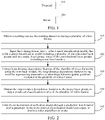
- FIG. 2 is a flowchart of a video classification model construction method according to an embodiment of this disclosure.
- the method is performed by a video classification model construction apparatus, and the video classification model construction apparatus is an execution entity.
- the video classification model construction apparatus may be integrated in a computer device such as a server or a terminal. Therefore, the computer device shown in FIG. 11 may also be used as the execution entity of the method shown in FIG. 2 .
- the video classification model construction apparatus may be hardware or may be a software module. This solution may be performed by a single terminal or server or by a combination thereof.
- the method may include the following steps: Step 101: Obtain a training dataset, the training dataset including a plurality of video frames.
- the training dataset may be obtained from an existing video database such as a Kinetics video database.
- Each video in the video database may be determined as a training sample, and training dataset is obtained after the training sample is processed accordingly.
- the training dataset may be obtained through the following steps: Step 1011: Extract a plurality of video frames from a to-be-processed video according to a temporal position.
- the to-be-processed video is a training sample selected for obtaining the training dataset.
- Step 1011 may be: randomly determining a temporal position in the to-be-processed video, and extracting several frames of images around the determined temporal position, to obtain the plurality of video frames. Further, when the length of the to-be-processed video is not enough to extract the plurality of video frames, the plurality of video frames may be obtained through a loop operation.
- a quantity of frames of the plurality of video frames may be a fixed quantity of frames, for example, 16, or may be a quantity of frames that is determined according to actual situations. For example, when the to-be-processed video is longer, more video frames may be obtained, and when the to-be-processed video is shorter, fewer video frames may be obtained.
- Step 1012 Determine a spatial position of each video frame in the plurality of video frames.
- Step 1013 Perform, according to a predetermined spatial size, multi-scale cropping on a video frame after a spatial position of the video frame is determined.
- the generalization of a to-be-trained sample can be enhanced by performing the multi-scale cropping on the video frame, so as to improve classification performance of a to-be-trained classification model.
- a video frame is cropped by randomly selecting four corner points or one center point of the video frame as a reference, or a video frame is cropped by selecting a spatial size.
- the selected size is as follows: 1 1 2 1 / 4 1 2 1 2 3 / 4 1 2
- the size of 1 indicates that the width and height of a video frame obtained after a video frame is cropped are both the same as the size of a short side of the video frame before cropping.
- the size of 0.5 indicates that the width and height of a video frame obtained after a video frame is cropped are both half of the size of a short side of the video frame before cropping.
- Other values are analogous to the above forms.
- each video frame is cropped by using only one scale. After the plurality of video frames are cropped by using different scales, a plurality of video frames with different cropping scales are obtained, thereby obtaining generalized video frames.
- Step 1014 Scale and flip a video frame obtained after the cropping, to obtain the training dataset.
- video frames obtained after cropping may have different sizes. Therefore, all video frames obtained after cropping need to be scaled to the same preset size to facilitate the processing of the plurality of video frames by the to-be-trained classification model, for example, scaled to 112 ⁇ 112.
- the video frames may further be flipped according to a preset flipping probability, for example, flipped horizontally, to further enhance data and improve the generalization of the training sample.
- the preset flipping probability may be any probability set as required.
- the flipping probability is 0.5.
- Step 102 Input the training dataset into a to-be-trained classification model, the to-be-trained classification model including a plurality of convolutional layer groups and one output layer group, some of the convolutional layer groups including a non-local module.
- the plurality of convolutional layer groups are five convolutional layer groups, which are a first convolutional layer group, a second convolutional layer group, a third convolutional layer group, a fourth convolutional layer group, and a fifth convolutional layer group in sequence in an input and output order.
- the third convolutional layer group and the fourth convolutional layer group include a non-local module.
- the non-local module may be further arranged in another convolutional layer group.
- the third convolutional layer group and the fourth convolutional layer group are only used as an example herein.
- the non-local module may be defined by using the following method. Assuming that X is a video frame inputted into the non-local module and Xi is a parameter (of a single pixel) in a specific video frame, the non-local module may determine a weight of an association relationship between parameters included in all video frames inputted into the non-local module and Xi, and the weight is used as a response at a position of Xi. Further, responses of the parameters included in all the video frames are used as outputs of the non-local module, and the "parameters included in all video frames inputted into the non-local module" herein include spatial parameters, temporal parameters, and spatiotemporal parameters. Therefore, the non-local module is configured to extract long-distance dependency features of the plurality of video frames, and the long-distance dependency features are used for representing association relationships between spatial positions included in the plurality of video frames.
- the first convolutional layer group may include a convolution calculation layer with a convolution kernel size of 7 ⁇ 7 ⁇ 7, a quantity of output channels of 64, a step size of 1 in a temporal dimension, and a step size of 2 in a spatial dimension.
- the second convolutional layer group, the third convolutional layer group, the fourth convolutional layer group, and the fifth convolutional layer group include at least one convolution calculation layer.
- Convolution kernel sizes of the second convolutional layer group, the third convolutional layer group, the fourth convolutional layer group, and the fifth convolutional layer group are determined according to specific convolution calculation layers included therein.
- the convolution calculation layer may be a bottleneck module, which is not specifically limited.
- a quantity of channels of the second convolutional layer group is 128, a quantity of channels of the third convolutional layer group is 256, a quantity of channels of the fourth convolutional layer group is 512, and a quantity of channels of the fifth convolutional layer group is 1024.
- Maximum pooling layer down-sampling with a size of 3 ⁇ 3 ⁇ 3, a step size of 2 in a temporal dimension, and a step size of 2 in a spatial dimension is included in the front of the second convolutional layer group.
- Maximum pooling layer down-sampling with a size of 2 ⁇ 2 ⁇ 2, a step size of 2 in a temporal dimension, and a step size of 2 in a spatial dimension is included in the front of each of the third convolutional layer group, the fourth convolutional layer group, and the fifth convolutional layer group.
- the output layer group sequentially may include a global pooling layer and a fully-connected layer in an input and output order. That is, a feature map outputted from the fifth convolutional layer group is inputted into the global pooling layer, and then inputted into the fully-connected layer.
- the output layer group of the to-be-trained classification model may further include a classification module.
- the classification module is configured to: receive an output of the fully-connected layer as an input of the classification module, calculate, according to the input, a probability value that the training dataset belongs to each video type, and determine the training dataset as at least one video type according to the probability value.
- Each convolutional layer group included in the to-be-trained classification model may include at least one bottleneck module, and the bottleneck module and the non-local module are alternately arranged in a case that the bottleneck module and the non-local module are in the same convolutional layer group.
- No bottleneck module is arranged in the first convolutional layer group, and there may be three bottleneck modules in the second convolutional layer group, four bottleneck modules in the third convolutional layer group, six bottleneck modules in the fourth convolutional layer group, and three bottleneck modules in the fifth convolutional layer group.
- Each bottleneck module may include a preset quantity of convolution calculation layers, and at least one convolution calculation layer is a depthwise separable convolution calculation layer.
- the depthwise separable convolution is used to reduce a quantity of parameters of convolution calculation while keeping performance of a convolution calculation result unchanged, so as to reduce a calculation burden.
- each bottleneck module may include three convolution calculation layers, namely, a first convolution calculation layer, a second convolution calculation layer, and a third convolution calculation layer.
- the first convolution calculation layer and the third convolution calculation layer may include convolution calculation layers with a convolution kernel size of 1 ⁇ 1 ⁇ 1, and the second convolution calculation layer may be a depthwise separable convolution calculation layer.
- the feature map After being outputted from the convolution calculation layers, the feature map is inputted into a batch normalization layer and a rectified linear unit (ReLU) activation function layer, and normalization operations and ReLU activation operations are respectively performed on the feature map.
- ReLU rectified linear unit
- the depthwise separable convolution calculation may include the following steps: Step 1: Perform convolution calculation in which a convolution kernel size is 3 ⁇ 3 ⁇ 3 on each channel of the inputted feature map, to obtain a feature map of each channel.
- This step may include: determining a quantity of channels of the feature map, decomposing the feature map according to the channels, splitting the feature map into the quantity of channels, and performing convolution calculation in which a convolution kernel size is 3 ⁇ 3 ⁇ 3, a quantity of input channels is 1, and a quantity of output channels is 1 on each split channel feature map, to obtain a channel quantity of new channel feature maps.
- the size of the feature map is N ⁇ H ⁇ W ⁇ C1, where N represents the size of a temporal dimension, H ⁇ W represents the size of a spatial dimension, and C1 represents a quantity of input channels.
- the feature map is split into C1 channel feature maps, and the convolution calculation in which the convolution kernel size is 3 ⁇ 3 ⁇ 3, the quantity of input channels is 1, and the quantity of output channels is 1 is performed on the C1 channel feature maps, to obtain the channel quantity of new channel feature maps.
- Step 2 Merge all the new channel feature maps to obtain a merged feature map.
- the C1 channel feature maps are merged to obtain a merged feature map.
- Step 3 Perform convolution calculation in which a convolution kernel size is 1 ⁇ 1 ⁇ 1 on the merged feature map, to obtain an output of the depthwise separable convolution calculation layer.
- Step 1023 may be: performing convolution calculation in which a convolution kernel size is 1 ⁇ 1 ⁇ 1, a quantity of input channels is C1, and a quantity of output channels is C2 on the merged feature map.
- the depthwise separable convolution calculation used herein can greatly reduce the calculation burden. For example, for a feature map with a size of N ⁇ H ⁇ W ⁇ C1, convolution calculation in which a convolution kernel size is 3 ⁇ 3 ⁇ 3 and a quantity of output channels is C2 is performed, and a quantity of parameters calculated through the convolution calculation is C1 ⁇ 3 ⁇ 3 ⁇ 3 ⁇ C2. However, if the depthwise separable convolution calculation is performed, a quantity of parameters included is C1 ⁇ 3 ⁇ 3 ⁇ 3+C1 ⁇ 1 ⁇ 1 ⁇ 1 ⁇ C2, which is significantly smaller than C1 ⁇ 3 ⁇ 3 ⁇ 3 ⁇ C2. Therefore, the depthwise separable convolution calculation can greatly reduce the calculation burden.
- a convolutional layer group may include bottleneck modules and non-local modules that are arranged at an interval
- specific positions of the bottleneck modules and non-local modules arranged at an interval may be determined according to a quantity of the bottleneck modules and the non-local modules, which are not specifically limited.
- the two non-local modules in the third convolutional layer group may be arranged at any two of the positions between the first bottleneck module and the second bottleneck module, between the second bottleneck module and the third bottleneck module, and between the third bottleneck module and the fourth bottleneck module.
- the two non-local modules in the third convolutional layer group are respectively arranged between the first bottleneck module and the second bottleneck module and between the second bottleneck module and the third bottleneck module.
- a convolutional layer group may include a bottleneck module and a non-local module that are arranged at an interval
- the to-be-trained classification model performs the following processing steps on the plurality of video frames to obtain a feature map group.
- Step 1021 Perform depthwise separable convolution on feature maps corresponding to the plurality of video frames by using the bottleneck module, and perform channel doubling on the feature maps obtained after the depthwise separable convolution, to obtain a first feature map group.
- the channel doubling refers to changing a quantity of channels to several times the quantity of original channels, generally an integer multiple, to improve the effect of convolution calculation, thereby improving classification performance of the to-be-trained classification model.
- the quantity of channels of the feature map is increased, the classification performance is improved, and a quantity of parameters is reduced by using depthwise separable convolution calculation. Therefore, this method improves the classification performance without increasing the quantity of parameters.
- Step 1022 Input the first feature map group into the non-local module, and calculate, by the non-local module, correspondences between spatial positions included in each feature map as long-distance dependency features, to output a second feature map group including the long-distance dependency features.
- Step 103 Extract long-distance dependency features of the plurality of video frames by using the non-local module, the long-distance dependency features being used for representing association relationships between spatial positions included in the plurality of video frames.
- the long-distance dependency features may be association relationships between different pixels in the same feature map, or the association relationships between different feature maps.
- Z represents an output of the non-local module
- X i represents an input of the non-local module, which may be a pixel on a feature map
- W z is a coefficient, which may be initialized randomly
- Y is used for establishing an association relationship between the pixel X i and a pixel related to X i in the feature map.
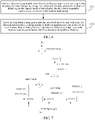
- FIG. 7 a network structure of the non-local module is shown in FIG. 7 .
- An input is T ⁇ H ⁇ W ⁇ 1024, where T represents a temporal dimension, H ⁇ W represents a spatial dimension, and 1024 represents a quantity of channels of an inputted feature map.
- the non-local module can obtain a long-distance dependency feature of the feature map, compared with the current method of using stacked convolution calculations to obtain surrounding information, the non-local module can improve the classification performance of the classification model.
- Step 104 Output the long-distance dependency features to the output layer group, to output predicted classification results of the plurality of video frames.
- content of the feature map outputted to an output layer further may include features extracted by the bottleneck module.
- Step 105 Train the to-be-trained classification model through a prediction loss function until a parameter in the to-be-trained classification model converges, to obtain a video classification model.
- y' represents that a value range of a probability value outputted by the to-be-trained classification model is greater than or equal to 0 and less than or equal to 1 in a case that a training sample is a positive sample.
- y is a value set according to actual situations, for example, set to 0.5, 1, or 2.
- calculating the loss value by using Formula (4) may reduce loss of a sample that is easy to be classified. In this way, the loss value of the model contributed by a large quantity of samples that are easy to be classified is avoided, thereby raising concerns of the model about samples that are difficult to be classified.
- the positive sample when y is equal to 2, for a positive sample, if a prediction result is 0.9, the positive sample is considered to be a simple that is easy to be classified, and loss of the positive sample obtained by using Formula (4) is 0.01 times loss of an ordinary cross-entropy loss function. If the prediction result is 0.1, the positive sample is considered to be a sample that is difficult to be classified, and the loss of the positive sample obtained by using Formula (4) is 0.81 times loss of an ordinary cross-entropy loss function. It may be seen that when calculating the loss value by using Formula (4), for the sample that is easy to be classified, the loss is higher, and for the sample that is difficult to be classified, the loss is lower. In this way, the loss value of the to-be-trained classification module provided by the large quantity of samples that are easy to be classified is avoided, thereby raising concerns of the model about samples that are difficult to be classified.
- the improved cross-entropy loss function is used.
- a stochastic gradient algorithm is used for optimization.
- a momentum is set to 0.9
- a weight decay is set to 0.001
- a learning rate is initialized to 0.1
- a total of 150 rounds of iterations are set.
- loss of a training set does not decrease in 10 consecutive iterations
- the learning rate is reduced by 10 times
- the learning rate is reduced by 10 times only twice. That is, if the loss of the training set does not decrease in 10 consecutive iterations for the third time, the learning rate remains unchanged and is no longer reduced by 10 times.
- an initial learning rate is 0.001
- the weight decay is 0.00001
- other conditions are the same as those of training the pre-trained model.
- a test process is as follows: For a to-be-tested video, a plurality of groups of test samples are generated in a sliding window manner. For example, five groups of test samples are generated. Each test sample may include several frames of images. For example, each test sample may include 16 frames of images. For each group of test samples, the test samples are inputted into a to-be-tested model, for the to-be-tested model to output probability values that the groups of test samples belong to video types, the probability values of the video type are averaged to obtain an average probability value, and a video type corresponding to a maximum average probability value is used as a video type to which the to-be-tested video belongs.
- the foregoing Kinetics video database may include 400 video types with a total of 300,000 video clips, which is a relatively large video database.
- the to-be-trained classification model is trained by using the video database, to obtain a video classification model with better performance.
- the video classification model needs to be retrained on the specific video dataset, to fine-tune the video classification model, and obtain a classification model suitable for a feature of the video dataset.
- the specific video dataset may be a part of a video set that needs to be classified, for example, may be a video dataset corresponding to application software. In this way, after being fine-tuned by using the video dataset of the application software, the video classification model can classify other videos of the application software.
- the non-local module is arranged in a three-dimensional convolutional neural network, and the non-local module is used to obtain the long-distance dependency feature.
- the non-local module is used to obtain the long-distance dependency feature.
- some of the convolution calculation layers in the bottleneck module are replaced by depthwise separable convolution calculation layers to reduce a quantity of parameters, reduce a calculation burden during classification, and improve efficiency of video classification.
- the quantity of channels of the feature map is appropriately increased to improve performance of feature extraction of the feature map, thereby improving the classification performance of the classification model.
- a loss function in a training stage of the classification model is also improved.
- the loss value of the model is prevented from being contributed by a large quantity of samples that are easy to be classified, thereby raising the concerns of the model about samples that are difficult to be classified.
- FIG. 8 is a flowchart of a video classification method according to an embodiment of this disclosure.
- the method shown in FIG. 8 may be performed by a video classification apparatus, and the video classification apparatus is an execution entity.
- the video classification apparatus may be integrated in a computer device such as a server or a terminal, and may be hardware or may be a software module. This solution can be performed by a single terminal or server, or by a combination thereof.
- the method may include the following steps: Step 301: Obtain a to-be-classified video.
- Step 302 Obtain a plurality of video frames from the video according to a preset temporal position.
- Video frame data may be obtained by using the following method: obtaining the to-be-classified video; and obtaining several frames of images from the to-be-classified video according to a preset method to obtain the video frame data.
- the preset method may be randomly obtaining several frames of images from the to-be-classified video. Further, the randomly obtaining several frames of images may include: randomly determining a temporal position in the to-be-classified video, and obtaining several frames of images around the temporal position, to obtain the video frame data. Further, when the length of the to-be-classified video is not enough to obtain the several frames of images, the several frames of images may be obtained through a loop operation.
- a quantity of frames of the several frames of images may be a fixed quantity of frames, for example, 16, or may be a quantity of frames that is determined according to actual situations. For example, when the video is longer, more frames of images may be obtained, and when the video is shorter, fewer frames of imadges may be obtained.
- Step 303 Input the plurality of video frames into a pre-trained video classification model, and output at least one classification label of the plurality of video frames.
- the pre-trained video classification model is a three-dimensional convolutional neural network. Further, a feature map of the video frame data is obtained by using the three-dimensional convolutional neural network, and the to-be-classified video is classified according to the feature map.
- the to-be-classified video can belong to only one video type.
- the to-be-classified video may belong to one video type or a plurality of video types.
- the classification result may be determined according to a probability that the to-be-classified video belongs to each video type. Further, in the classification result, when the to-be-classified video can belong to only one specific video type, a video type corresponding to the highest probability is determined as the video type to which the to-be-classified video belongs. Further, when the to-be-classified video may belong to one video type or a plurality of video types, if a probability that the to-be-classified video belongs to a specific video type is significantly higher than a probability that the to-be-classified video belongs to another video type, it is determined that the to-be-classified video belongs to the specific video type.
- a pre-trained classification module calculates that probability values that the to-be-classified video belongs to the video types are [0.1, 0.35, 0.05, 0.05, 0.45], the pre-trained classification module determines that the to-be-classified video is classified as the fifth video type.
- the calculated probability values are [0.1, 0.35, 0.05, 0.15, 0.35]
- the pre-trained classification module determines that the to-be-classified video is classified as the second video type and fifth video type.
- the video classification model is obtained through training by using any video classification model construction method shown in FIG. 2 and FIG. 3 .
- Step 304 Identify a category of the video according to the at least one classification label of the plurality of video frames.
- the non-local module is arranged in a three-dimensional convolutional neural network, and the non-local module is used to obtain the long-distance dependency feature.
- the non-local module is used to obtain the long-distance dependency feature.
- some of the convolution calculation layers in the bottleneck module are replaced by depthwise separable convolution calculation layers to reduce a quantity of parameters, reduce a calculation burden during classification, and improve efficiency of video classification.
- the quantity of channels of the feature map is appropriately increased to improve performance of feature extraction of the feature map, thereby improving the classification performance of the classification model.
- a loss function in a training stage of the classification model is also improved.
- the loss value of the model is prevented from being contributed by a large quantity of samples that are easy to be classified, thereby raising the concerns of the model about samples that are difficult to be classified.
- FIG. 9 is a block diagram of a video classification model construction apparatus according to an embodiment of this disclosure.
- the apparatus shown in FIG. 9 may be disposed on a terminal.
- the apparatus may include:
- Each convolutional layer group included in the to-be-trained classification model may include at least one bottleneck module, and the bottleneck module and the non-local module are alternately arranged in a case that the bottleneck module and the non-local module are in the same convolutional layer group.
- extraction module 803 is further configured to:
- the first obtaining module 801 is further configured to:
- the non-local module is arranged in a three-dimensional convolutional neural network, and the non-local module is used to obtain the long-distance dependency feature.
- the non-local module is used to obtain the long-distance dependency feature.
- some of the convolution calculation layers in the bottleneck module are replaced by depthwise separable convolution calculation layers to reduce a quantity of parameters, reduce a calculation amount during classification, and improve efficiency of video classification.
- the quantity of channels of the feature map is appropriately increased to improve performance of feature extraction of the feature map, thereby improving the classification performance of the classification model.
- a loss function in a training stage of the classification model is also improved.
- the loss value of the model is prevented from being contributed by a large quantity of samples that are easy to be classified, thereby raising the concerns of the model about samples that are difficult to be classified.
- FIG. 10 is a block diagram of a video classification apparatus according to an embodiment of this disclosure.
- the apparatus shown in FIG. 10 may be disposed on a terminal.
- the apparatus may include:
- the non-local module is arranged in a three-dimensional convolutional neural network, and the non-local module is used to obtain the long-distance dependency feature.
- the non-local module is used to obtain the long-distance dependency feature.
- some of the convolution calculation layers in the bottleneck module are replaced by depthwise separable convolution calculation layers to reduce a quantity of parameters, reduce a calculation burden during classification, and improve efficiency of video classification.
- the quantity of channels of the feature map is appropriately increased to improve performance of feature extraction of the feature map, thereby improving the classification performance of the classification model.
- a loss function in a training stage of the classification model is also improved.
- the loss value of the model is prevented from being contributed by a large quantity of samples that are easy to be classified, thereby raising the concerns of the model about samples that are difficult to be classified.
- FIG. 11 is a schematic structural diagram of a computer device 1000 according to an embodiment of this disclosure.
- the computer device may include a central processing unit (CPU) 1001, which can perform various proper actions and processing according to a program stored in a read-only memory (ROM) 1002 or a program loaded from a storage part into a random-access memory (RAM) 1003.
- the RAM 1003 also stores various programs and data required to operate the system.
- the CPU 1001, the ROM 1002, and the RAM 1003 are connected to each other by using a bus 1004.
- An input/output (I/O) interface 1005 is also connected to the bus 1004.
- the following components are connected to the I/O interface 1005: an input part 1006 including a keyboard, a mouse, or the like; an output part including a cathode ray tube (CRT), a liquid crystal display (LCD), a speaker, or the like; a storage part 1008 including a hard disk, or the like; and a communication part 1009 including a network interface card such as a LAN card or a modem.
- the communication part 1009 performs communication processing via a network such as the Internet.
- a driver is also connected to the I/O interface 1005 as required.
- a removable medium 1011 such as a magnetic disk, an optical disc, a magneto-optical disk, or a semiconductor memory, is installed on the drive 1010 as required, so that a computer program read from the removable medium is installed into the storage part 1008 as required.
- the processes described in the flowcharts may be implemented as computer software programs.
- the method embodiments of this disclosure include a computer program product
- the computer program product may include a computer program carried on a computer-readable medium
- the computer program may include program code used for performing the methods shown in the flowcharts.
- the computer program may be downloaded and installed from the network through the communication portion, and/or installed from the removable medium.
- the computer-readable medium shown in this disclosure may be a computer-readable signal medium or a computer-readable storage medium or any combination of the two.
- the computer-readable storage medium may be, for example, but is not limited to, an electric, magnetic, optical, electromagnetic, infrared, or semi-conductive system, apparatus, or component, or any combination thereof. More specifically, the computer-readable storage medium may include, for example, but is not limited to, an electrical connection having one or more wires, a portable computer disk, a hard disk, a RAM, a ROM, an erasable programmable read-only memory (EPROM or flash memory), an optical fiber, a portable compact disc read-only memory (CD-ROM), an optical storage device, a magnetic storage device, or any suitable combination thereof.
- the computer-readable storage medium may be any tangible medium including or storing a program, and the program may be used by or in combination with an instruction execution system, apparatus, or device.
- a computer-readable signal medium may include a data signal being in a baseband or propagated as a part of a carrier wave, the data signal carrying computer-readable program code. Such a propagated data signal may be in a plurality of forms, including but not limited to an electromagnetic signal, an optical signal, or any suitable combination thereof.
- the computer-readable signal medium may be further any computer-readable medium in addition to a computer-readable storage medium.
- the computer-readable medium may send, propagate, or transmit a program that is used by or used in conjunction with an instruction execution system, an apparatus, or a device.
- the program code included in the computer-readable medium may be transmitted by using any appropriate medium, including but not limited to: wireless transmission, a wire, an optical cable, radio frequency (RF), or the like, or any other suitable combination thereof.
- RF radio frequency
- each box in a flowchart or a block diagram may represent a module, a program segment, or a part of code.
- the module, the program segment, or the part of code may include one or more executable instructions used for implementing designated logic functions.
- functions annotated in boxes may alternatively occur in a sequence different from that annotated in an accompanying drawing. For example, actually two boxes shown in succession may be performed basically in parallel, and sometimes the two boxes may be performed in a reverse sequence. This is determined by a related function.
- Each box in a block diagram and/or a flowchart and a combination of boxes in the block diagram and/or the flowchart may be implemented by using a dedicated hardware-based system configured to perform a specified function or operation, or may be implemented by using a combination of dedicated hardware and a computer instruction.
- Related units in the embodiments of this disclosure may be implemented in a software manner, or may be implemented in a hardware manner, and the unit described can also be set in a processor. Names of the units do not constitute a limitation on the units in a specific case.
- the described units or modules may be disposed in a processor, which, for example, may be described as: a processor including a first obtaining module, an input module, an extraction module, an output module, and a training module. Names of the units or modules do not constitute a limitation on the units or modules in a specific case.
- this disclosure further provides a computer-readable medium.
- the computer-readable medium may be the computer-readable medium included in the computer device described in the foregoing embodiments, or a stand-alone computer-readable medium not assembled into the computer device.
- the computer-readable medium carries one or more programs, the one or more programs, when executed by the computer device, causing the computer device to implement the video classification model construction method described in the foregoing embodiments.
- the computer device may implement the steps shown in FIG. 2 :
- Step 101 Obtain a training dataset, the training dataset including a plurality of video frames.
- Step 102 Input the training dataset into a to-be-trained classification model, the to-be-trained classification model including a plurality of convolutional layer groups and one output layer group, some of the convolutional layer groups including a non-local module.
- Step 103 Extract long-distance dependency features of the plurality of video frames by using the non-local module, the long-distance dependency features being used for representing association relationships between spatial positions included in the plurality of video frames.
- Step 104 Output the long-distance dependency features to the output layer group, to output predicted classification results of the plurality of video frames.
- Step 105 Train the to-be-trained classification model through a prediction loss function until a parameter in the to-be-trained classification model converges, to obtain a video classification model.
- the computer device may implement the steps shown in FIG. 2 , FIG. 3 , and FIG. 8 .
- modules or units of a device for action execution are mentioned in the foregoing detailed descriptions, the division is not mandatory. Actually, according to the implementations of this disclosure, the features and functions of two or more modules or units described above may be specified in one module or unit. Conversely, features and functions of one module or unit described above may be further divided into a plurality of modules or units to be specified.
- the non-local module is arranged in a three-dimensional convolutional neural network, and the non-local module is used to obtain the long-distance dependency feature.
- the non-local module is used to obtain the long-distance dependency feature.
Landscapes
- Engineering & Computer Science (AREA)
- Theoretical Computer Science (AREA)
- Physics & Mathematics (AREA)
- General Physics & Mathematics (AREA)
- Data Mining & Analysis (AREA)
- Evolutionary Computation (AREA)
- Artificial Intelligence (AREA)
- Life Sciences & Earth Sciences (AREA)
- General Engineering & Computer Science (AREA)
- Software Systems (AREA)
- Health & Medical Sciences (AREA)
- General Health & Medical Sciences (AREA)
- Computational Linguistics (AREA)
- Computing Systems (AREA)
- Molecular Biology (AREA)
- Biomedical Technology (AREA)
- Mathematical Physics (AREA)
- Biophysics (AREA)
- Computer Vision & Pattern Recognition (AREA)
- Multimedia (AREA)
- Evolutionary Biology (AREA)
- Bioinformatics & Computational Biology (AREA)
- Bioinformatics & Cheminformatics (AREA)
- Probability & Statistics with Applications (AREA)
- Databases & Information Systems (AREA)
- Medical Informatics (AREA)
- Biodiversity & Conservation Biology (AREA)
- Image Analysis (AREA)
- Information Retrieval, Db Structures And Fs Structures Therefor (AREA)
Abstract
Description
- This application claims priority to
Chinese Patent Application No. 201911134005.2 - This application relates to the field of data processing technologies, specifically, to the field of video data processing technologies, and in particular, to a video classification model construction method and apparatus, a video classification method and apparatus, a device, and a medium.
- At present, when a video is classified by using a three-dimensional convolutional neural network, a plurality of convolutional layers are generally disposed in the convolutional neural network. The convolutional layer obtains a feature in each video frame of a to-be-classified video, to obtain a feature map, and classifies the video based on the feature map.
- It may be learned from the description that currently the feature map is obtained based on information about each pixel within each frame of image in the video frame, which limits richness of content information of the feature map between frames, resulting in less accurate classification.
- In view of a current problem that it is not easy to accurately classify a video , this disclosure provides a video classification model construction method and apparatus, a video classification method and apparatus, a device, and a medium, so that a constructed video classification model can improve the accuracy of video classification.
- According to a first aspect, an embodiment of this disclosure provides a video classification model construction method, performed by a computer device, the method including:
- obtaining a training dataset, the training dataset including a plurality of video frames;
- inputting the training dataset into a to-be-trained classification model, the to-be-trained classification model including a plurality of convolutional layer groups and one output layer group, some of the convolutional layer groups including a non-local module;
- extracting long-distance dependency features of the plurality of video frames by using the non-local module, the long-distance dependency features representing association relationships between spatial positions included in the plurality of video frames;
- outputting the long-distance dependency features to the output layer group, to output predicted classification results of the plurality of video frames; and
- training the to-be-trained classification model through a prediction loss function until a parameter in the to-be-trained classification model converges, to obtain a video classification model.
- According to a second aspect, an embodiment of this disclosure provides a video classification method, performed by a computer device, the method including:
- obtaining a to-be-classified video;
- obtaining a plurality of video frames from the video according to a preset temporal position;
- inputting the plurality of video frames into a pre-trained video classification model, and outputting at least one classification label of the plurality of video frames, the video classification model being obtained through training by using the video classification model construction method according to the first aspect; and
- identifying a category of the video according to the at least one classification label of the plurality of video frames.
- According to a third aspect, an embodiment of this disclosure provides a video classification model construction apparatus, including:
- a first obtaining module, configured to obtain a training dataset, the training dataset including a plurality of video frames;
- an input module, configured to input the training dataset into a to-be-trained classification model, the to-be-trained classification model including a plurality of convolutional layer groups and one output layer group, some of the convolutional layer groups including a non-local module;
- an extraction module, configured to extract long-distance dependent features of the plurality of video frames by using the non-local module, the long-distance dependent features representing association relationships between spatial positions included in the plurality of video frames;
- an output module, configured to output the long-distance dependency features to the output layer group, to output predicted classification results of the plurality of video frames; and
- a training module, configured to train the to-be-trained classification model through a prediction loss function until a parameter in the to-be-trained classification model converges, to obtain a video classification model.
- According to a fourth aspect, an embodiment of this disclosure provides a video classification apparatus, including:
- a second obtaining module, configured to obtain a to-be-classified video;
- a third obtaining module, configured to obtain a plurality of video frames from the video according to a preset temporal position;
- an input and output module, configured to: input the plurality of video frames into a pre-trained video classification model, and output at least one classification label of the plurality of video frames, the video classification model being obtained through training by using the video classification model construction apparatus according to the third aspect; and
- an identification module, configured to identify a category of the video according to the at least one classification label of the plurality of video frames.
- According to a fifth aspect, an embodiment of the present disclosure provides a computer device, including:
- one or more processors; and
- a memory, configured to store one or more programs,
- the one or more programs, when executed by the one or more processors, causing the one or more processors to implement the methods according to the first aspect and the second aspect.
- According to a sixth aspect, an embodiment of this disclosure provides a computer-readable storage medium, storing a computer program, the computer program, when executed by a processor, implementing the methods according to the first aspect and the second aspect.
- To describe the technical solutions in the embodiments of this disclosure more clearly, the following briefly describes the accompanying drawings illustrating the embodiments of this disclosure or in the related art. Apparently, the accompanying drawings are merely used for illustrating the preferred implementations and are not intended to constitute a limitation on this disclosure. In addition, for ease of description, the accompanying drawings only show parts relevant to this disclosure rather than entire structures.
-
FIG. 1 is an architectural diagram of an implementation environment for video classification model construction and video classification according to an embodiment of this disclosure. -
FIG. 2 is a flowchart of a video classification model construction method according to an embodiment of this disclosure. -
FIG. 3 is a flowchart of a method for obtaining a training dataset according to an embodiment of this disclosure. -
FIG. 4 is a schematic structural diagram of a to-be-trained classification model according to an embodiment of this disclosure. -
FIG. 5 is a schematic structural diagram of another to-be-trained classification model according to an embodiment of this disclosure. -
FIG. 6 is a flowchart of a method for extracting a feature map according to an embodiment of this disclosure. -
FIG. 7 is a diagram of a network structure of a non-local module according to an embodiment of this disclosure. -
FIG. 8 is a flowchart of another video classification method according to an embodiment of this disclosure. -
FIG. 9 is a block diagram of a video classification model construction apparatus according to an embodiment of this disclosure. -
FIG. 10 is a block diagram of another video classification apparatus according to an embodiment of this disclosure. -
FIG. 11 is a schematic structural diagram of a computer device according to an embodiment of this disclosure. - This disclosure is further described in detail below with reference to the accompanying drawings and embodiments. It may be understood that specific embodiments described herein are only used to explain the relevant principles of this disclosure, but not to limit the scope of this disclosure. In addition, for ease of description, the accompanying drawings only show parts relevant to this disclosure.
- The embodiments in this disclosure and the features in the embodiments may be combined with each other in case of no conflicts. This disclosure is described in detail below with reference to the accompanying drawings and the embodiments.
-
FIG. 1 is an architectural diagram of an implementation environment for video classification model construction and video classification according to an embodiment of this disclosure. As shown inFIG. 1 , an architecture of the implementation environment may include aterminal 100 and aserver 200. - A video classification model construction apparatus may be the
terminal 100 or theserver 200. Theterminal 100 or theserver 200 obtains a video in a video database, and trains, optimizes, and tests a to-be-trained video classification model, to construct a video classification model. - A process of video classification may be performed either on the
terminal 100 or on theserver 200. Theterminal 100 receives a to-be-classified video and performs corresponding preprocessing on the to-be-classified video. Further, when the video classification is performed on theterminal 100, theterminal 100 directly inputs the to-be-classified video into the video classification model to classify the video. When the video classification is performed on theserver 200, the terminal 100 transmits the preprocessed to-be-classified video to theserver 200, and theserver 200 receives the preprocessed to-be-classified video, and inputs the to-be-classified video into the video classification model to classify the to-be-classified video. - The to-be-classified video may be a short video.
- In addition, the terminal 100 may display an application interface. Through the interface, a to-be-classified video uploaded by a user may be obtained or an uploaded to-be-classified video may be transmitted to the
server 200. - The type of the terminal 100 may include but is not limited to a smartphone, a tablet computer, a television, a notebook computer, or a desktop computer. This is not specifically limited in this embodiment of this disclosure.
- The
server 200 may transmit a classification result to the terminal 100, for the terminal 100 to display the classification result on the application interface. Further, theserver 200 may be one server, a server cluster including a plurality of servers, or a cloud computing service center. - The terminal 100 and the
server 200 may establish a communication connection through a wired or wireless network. -
FIG. 2 is a flowchart of a video classification model construction method according to an embodiment of this disclosure. As shown inFIG. 2 , the method is performed by a video classification model construction apparatus, and the video classification model construction apparatus is an execution entity. The video classification model construction apparatus may be integrated in a computer device such as a server or a terminal. Therefore, the computer device shown inFIG. 11 may also be used as the execution entity of the method shown inFIG. 2 . The video classification model construction apparatus may be hardware or may be a software module. This solution may be performed by a single terminal or server or by a combination thereof. - The method may include the following steps:
Step 101: Obtain a training dataset, the training dataset including a plurality of video frames. - The training dataset may be obtained from an existing video database such as a Kinetics video database.
- Each video in the video database may be determined as a training sample, and training dataset is obtained after the training sample is processed accordingly.
- Referring to
FIG. 3 , for each training sample, the training dataset may be obtained through the following steps:
Step 1011: Extract a plurality of video frames from a to-be-processed video according to a temporal position. - The to-be-processed video is a training sample selected for obtaining the training dataset.
-
Step 1011 may be: randomly determining a temporal position in the to-be-processed video, and extracting several frames of images around the determined temporal position, to obtain the plurality of video frames. Further, when the length of the to-be-processed video is not enough to extract the plurality of video frames, the plurality of video frames may be obtained through a loop operation. - A quantity of frames of the plurality of video frames may be a fixed quantity of frames, for example, 16, or may be a quantity of frames that is determined according to actual situations. For example, when the to-be-processed video is longer, more video frames may be obtained, and when the to-be-processed video is shorter, fewer video frames may be obtained.
- Step 1012: Determine a spatial position of each video frame in the plurality of video frames.
- Step 1013: Perform, according to a predetermined spatial size, multi-scale cropping on a video frame after a spatial position of the video frame is determined.
- The generalization of a to-be-trained sample can be enhanced by performing the multi-scale cropping on the video frame, so as to improve classification performance of a to-be-trained classification model.
- During training, different types of cropping may be performed on different video frames. For example, a video frame is cropped by randomly selecting four corner points or one center point of the video frame as a reference, or a video frame is cropped by selecting a spatial size. For example, the selected size is as follows:

- The size of 1 indicates that the width and height of a video frame obtained after a video frame is cropped are both the same as the size of a short side of the video frame before cropping. The size of 0.5 indicates that the width and height of a video frame obtained after a video frame is cropped are both half of the size of a short side of the video frame before cropping. Other values are analogous to the above forms.
- When multi-scale cropping is performed on video frame data, each video frame is cropped by using only one scale. After the plurality of video frames are cropped by using different scales, a plurality of video frames with different cropping scales are obtained, thereby obtaining generalized video frames.
- Step 1014: Scale and flip a video frame obtained after the cropping, to obtain the training dataset.
- After the video frame is cropped in
step 1013, video frames obtained after cropping may have different sizes. Therefore, all video frames obtained after cropping need to be scaled to the same preset size to facilitate the processing of the plurality of video frames by the to-be-trained classification model, for example, scaled to 112∗112. - After being scaled to the preset size, the video frames may further be flipped according to a preset flipping probability, for example, flipped horizontally, to further enhance data and improve the generalization of the training sample.
- The preset flipping probability may be any probability set as required. For example, the flipping probability is 0.5.
- Step 102: Input the training dataset into a to-be-trained classification model, the to-be-trained classification model including a plurality of convolutional layer groups and one output layer group, some of the convolutional layer groups including a non-local module.
- Referring to
FIG. 4 , the plurality of convolutional layer groups are five convolutional layer groups, which are a first convolutional layer group, a second convolutional layer group, a third convolutional layer group, a fourth convolutional layer group, and a fifth convolutional layer group in sequence in an input and output order. The third convolutional layer group and the fourth convolutional layer group include a non-local module. The non-local module may be further arranged in another convolutional layer group. The third convolutional layer group and the fourth convolutional layer group are only used as an example herein. - The non-local module may be defined by using the following method. Assuming that X is a video frame inputted into the non-local module and Xi is a parameter (of a single pixel) in a specific video frame, the non-local module may determine a weight of an association relationship between parameters included in all video frames inputted into the non-local module and Xi, and the weight is used as a response at a position of Xi. Further, responses of the parameters included in all the video frames are used as outputs of the non-local module, and the "parameters included in all video frames inputted into the non-local module" herein include spatial parameters, temporal parameters, and spatiotemporal parameters. Therefore, the non-local module is configured to extract long-distance dependency features of the plurality of video frames, and the long-distance dependency features are used for representing association relationships between spatial positions included in the plurality of video frames.
- The first convolutional layer group may include a convolution calculation layer with a convolution kernel size of 7∗7∗7, a quantity of output channels of 64, a step size of 1 in a temporal dimension, and a step size of 2 in a spatial dimension.
- The second convolutional layer group, the third convolutional layer group, the fourth convolutional layer group, and the fifth convolutional layer group include at least one convolution calculation layer. Convolution kernel sizes of the second convolutional layer group, the third convolutional layer group, the fourth convolutional layer group, and the fifth convolutional layer group are determined according to specific convolution calculation layers included therein. The convolution calculation layer may be a bottleneck module, which is not specifically limited.
- A quantity of channels of the second convolutional layer group is 128, a quantity of channels of the third convolutional layer group is 256, a quantity of channels of the fourth convolutional layer group is 512, and a quantity of channels of the fifth convolutional layer group is 1024.
- Maximum pooling layer down-sampling with a size of 3∗3∗3, a step size of 2 in a temporal dimension, and a step size of 2 in a spatial dimension is included in the front of the second convolutional layer group.
- Maximum pooling layer down-sampling with a size of 2∗2∗2, a step size of 2 in a temporal dimension, and a step size of 2 in a spatial dimension is included in the front of each of the third convolutional layer group, the fourth convolutional layer group, and the fifth convolutional layer group.
- Further, still referring to
FIG. 4 , the output layer group sequentially may include a global pooling layer and a fully-connected layer in an input and output order. That is, a feature map outputted from the fifth convolutional layer group is inputted into the global pooling layer, and then inputted into the fully-connected layer. - Further, the output layer group of the to-be-trained classification model may further include a classification module. The classification module is configured to: receive an output of the fully-connected layer as an input of the classification module, calculate, according to the input, a probability value that the training dataset belongs to each video type, and determine the training dataset as at least one video type according to the probability value.
- Each convolutional layer group included in the to-be-trained classification model may include at least one bottleneck module, and the bottleneck module and the non-local module are alternately arranged in a case that the bottleneck module and the non-local module are in the same convolutional layer group.
- No bottleneck module is arranged in the first convolutional layer group, and there may be three bottleneck modules in the second convolutional layer group, four bottleneck modules in the third convolutional layer group, six bottleneck modules in the fourth convolutional layer group, and three bottleneck modules in the fifth convolutional layer group.
- Each bottleneck module may include a preset quantity of convolution calculation layers, and at least one convolution calculation layer is a depthwise separable convolution calculation layer. The depthwise separable convolution is used to reduce a quantity of parameters of convolution calculation while keeping performance of a convolution calculation result unchanged, so as to reduce a calculation burden.
- For example, each bottleneck module may include three convolution calculation layers, namely, a first convolution calculation layer, a second convolution calculation layer, and a third convolution calculation layer. The first convolution calculation layer and the third convolution calculation layer may include convolution calculation layers with a convolution kernel size of 1∗1∗1, and the second convolution calculation layer may be a depthwise separable convolution calculation layer.
- After being outputted from the convolution calculation layers, the feature map is inputted into a batch normalization layer and a rectified linear unit (ReLU) activation function layer, and normalization operations and ReLU activation operations are respectively performed on the feature map.
- The depthwise separable convolution calculation may include the following steps:
Step 1: Perform convolution calculation in which a convolution kernel size is 3∗3∗3 on each channel of the inputted feature map, to obtain a feature map of each channel. - This step may include: determining a quantity of channels of the feature map, decomposing the feature map according to the channels, splitting the feature map into the quantity of channels, and performing convolution calculation in which a convolution kernel size is 3∗3∗3, a quantity of input channels is 1, and a quantity of output channels is 1 on each split channel feature map, to obtain a channel quantity of new channel feature maps.
- For example, the size of the feature map is N∗H∗W∗C1, where N represents the size of a temporal dimension, H∗W represents the size of a spatial dimension, and C1 represents a quantity of input channels. The feature map is split into C1 channel feature maps, and the convolution calculation in which the convolution kernel size is 3∗3∗3, the quantity of input channels is 1, and the quantity of output channels is 1 is performed on the C1 channel feature maps, to obtain the channel quantity of new channel feature maps.
- Step 2: Merge all the new channel feature maps to obtain a merged feature map.
- For example, the foregoing example is still used as an example. The C1 channel feature maps are merged to obtain a merged feature map.
- Step 3: Perform convolution calculation in which a convolution kernel size is 1∗1∗1 on the merged feature map, to obtain an output of the depthwise separable convolution calculation layer.
- Step 1023 may be: performing convolution calculation in which a convolution kernel size is 1∗1∗1, a quantity of input channels is C1, and a quantity of output channels is C2 on the merged feature map.
- Compared with conventional convolution calculation, the depthwise separable convolution calculation used herein can greatly reduce the calculation burden. For example, for a feature map with a size of N∗H∗W∗C1, convolution calculation in which a convolution kernel size is 3∗3∗3 and a quantity of output channels is C2 is performed, and a quantity of parameters calculated through the convolution calculation is C1∗3∗3∗3∗C2. However, if the depthwise separable convolution calculation is performed, a quantity of parameters included is C1∗3 ∗3 ∗3+
C1 ∗1∗1∗1∗C2, which is significantly smaller than C1∗3∗3∗3∗C2. Therefore, the depthwise separable convolution calculation can greatly reduce the calculation burden. - When a convolutional layer group may include bottleneck modules and non-local modules that are arranged at an interval, specific positions of the bottleneck modules and non-local modules arranged at an interval may be determined according to a quantity of the bottleneck modules and the non-local modules, which are not specifically limited.
- For example, when the third convolutional layer group and the fourth convolutional layer group include the bottleneck modules and the non-local modules that are arranged at an interval, and there are four bottleneck modules and two non-local modules in the third convolutional layer group and there are six bottleneck modules and three non-local modules in the fourth convolutional layer group, the two non-local modules in the third convolutional layer group may be arranged at any two of the positions between the first bottleneck module and the second bottleneck module, between the second bottleneck module and the third bottleneck module, and between the third bottleneck module and the fourth bottleneck module. For example, in
FIG. 5 , the two non-local modules in the third convolutional layer group are respectively arranged between the first bottleneck module and the second bottleneck module and between the second bottleneck module and the third bottleneck module. - Further, referring to
FIG. 6 , when a convolutional layer group may include a bottleneck module and a non-local module that are arranged at an interval, the to-be-trained classification model performs the following processing steps on the plurality of video frames to obtain a feature map group. - Step 1021: Perform depthwise separable convolution on feature maps corresponding to the plurality of video frames by using the bottleneck module, and perform channel doubling on the feature maps obtained after the depthwise separable convolution, to obtain a first feature map group.
- The channel doubling refers to changing a quantity of channels to several times the quantity of original channels, generally an integer multiple, to improve the effect of convolution calculation, thereby improving classification performance of the to-be-trained classification model.
- Compared with a general convolution calculation layer, in this embodiment of this disclosure, the quantity of channels of the feature map is increased, the classification performance is improved, and a quantity of parameters is reduced by using depthwise separable convolution calculation. Therefore, this method improves the classification performance without increasing the quantity of parameters.
- Step 1022: Input the first feature map group into the non-local module, and calculate, by the non-local module, correspondences between spatial positions included in each feature map as long-distance dependency features, to output a second feature map group including the long-distance dependency features.
- Step 103: Extract long-distance dependency features of the plurality of video frames by using the non-local module, the long-distance dependency features being used for representing association relationships between spatial positions included in the plurality of video frames.
- The long-distance dependency features may be association relationships between different pixels in the same feature map, or the association relationships between different feature maps.
- In this embodiment of this disclosure, a non-local module is defined by using the following Formula (1):

where Z, represents an output of the non-local module, Xi represents an input of the non-local module, which may be a pixel on a feature map, W z is a coefficient, which may be initialized randomly, and Y, is used for establishing an association relationship between the pixel Xi and a pixel related to Xi in the feature map. Y, is calculated by using the following Formula (2):
- where C(x) is a normalization parameter, C(x) in this embodiment of this disclosure is equal to N, and N represents a quantity of positions related to Xi
- g(Xj) is used for calculating a feature value of an input signal at a position j,
- and ƒ((Xi,Xj) is used for calculating a degree of association between a position i and the position j. For example, if a distance between i and j is farther, the value of ƒ is smaller, indicating that the position j has less impact on position i.
- Further, ƒ(Xi,Xj) may be calculated by using the following Formula (3):

where θ represents performing convolution calculation with a convolution kernel of 1∗1∗1 on the inputted Xi and ϕ represents performing convolution calculation with a convolution kernel of 1∗1∗1 on the inputted Xj. - Further, a network structure of the non-local module is shown in
FIG. 7 . An input is T∗H∗W∗1024, where T represents a temporal dimension, H∗W represents a spatial dimension, and 1024 represents a quantity of channels of an inputted feature map. - Because the non-local module can obtain a long-distance dependency feature of the feature map, compared with the current method of using stacked convolution calculations to obtain surrounding information, the non-local module can improve the classification performance of the classification model.
- Step 104: Output the long-distance dependency features to the output layer group, to output predicted classification results of the plurality of video frames.
- When the to-be-trained classification model may further include the bottleneck module, content of the feature map outputted to an output layer further may include features extracted by the bottleneck module.
- Step 105: Train the to-be-trained classification model through a prediction loss function until a parameter in the to-be-trained classification model converges, to obtain a video classification model.
- The prediction loss function may be represented by the following Formula (4):

- Formula (4) is an improved cross-entropy loss function, where y=1 represents that a training sample is a positive sample, and y=0 represents that a training sample is a negative sample.
- y' represents that a value range of a probability value outputted by the to-be-trained classification model is greater than or equal to 0 and less than or equal to 1 in a case that a training sample is a positive sample.
- y is a value set according to actual situations, for example, set to 0.5, 1, or 2.
- An existing cross-entropy loss function is represented by the following Formula (5):

- It may be seen from Formula (4) and Formula (5) that compared with calculating a loss value by using Formula (5), calculating the loss value by using Formula (4) may reduce loss of a sample that is easy to be classified. In this way, the loss value of the model contributed by a large quantity of samples that are easy to be classified is avoided, thereby raising concerns of the model about samples that are difficult to be classified.
- For example, when y is equal to 2, for a positive sample, if a prediction result is 0.9, the positive sample is considered to be a simple that is easy to be classified, and loss of the positive sample obtained by using Formula (4) is 0.01 times loss of an ordinary cross-entropy loss function. If the prediction result is 0.1, the positive sample is considered to be a sample that is difficult to be classified, and the loss of the positive sample obtained by using Formula (4) is 0.81 times loss of an ordinary cross-entropy loss function. It may be seen that when calculating the loss value by using Formula (4), for the sample that is easy to be classified, the loss is higher, and for the sample that is difficult to be classified, the loss is lower. In this way, the loss value of the to-be-trained classification module provided by the large quantity of samples that are easy to be classified is avoided, thereby raising concerns of the model about samples that are difficult to be classified.
- In addition, during training, the improved cross-entropy loss function is used. For acquisition of a pre-trained model, a stochastic gradient algorithm is used for optimization. A momentum is set to 0.9, a weight decay is set to 0.001, a learning rate is initialized to 0.1, and a total of 150 rounds of iterations are set. Meanwhile, if loss of a training set does not decrease in 10 consecutive iterations, the learning rate is reduced by 10 times, and the learning rate is reduced by 10 times only twice. That is, if the loss of the training set does not decrease in 10 consecutive iterations for the third time, the learning rate remains unchanged and is no longer reduced by 10 times. When the model is fine-tuned, an initial learning rate is 0.001, the weight decay is 0.00001, and other conditions are the same as those of training the pre-trained model.
- After training, the to-be-trained classification model further needs to be tested. A test process is as follows:
For a to-be-tested video, a plurality of groups of test samples are generated in a sliding window manner. For example, five groups of test samples are generated. Each test sample may include several frames of images. For example, each test sample may include 16 frames of images. For each group of test samples, the test samples are inputted into a to-be-tested model, for the to-be-tested model to output probability values that the groups of test samples belong to video types, the probability values of the video type are averaged to obtain an average probability value, and a video type corresponding to a maximum average probability value is used as a video type to which the to-be-tested video belongs. - In addition, the foregoing Kinetics video database may include 400 video types with a total of 300,000 video clips, which is a relatively large video database. The to-be-trained classification model is trained by using the video database, to obtain a video classification model with better performance. However, there is still an error in the video classification model in this case for another specific video dataset. Therefore, when using the video classification model, the video classification model needs to be retrained on the specific video dataset, to fine-tune the video classification model, and obtain a classification model suitable for a feature of the video dataset. The specific video dataset may be a part of a video set that needs to be classified, for example, may be a video dataset corresponding to application software. In this way, after being fine-tuned by using the video dataset of the application software, the video classification model can classify other videos of the application software.
- In the video classification model construction method provided in the embodiments of this disclosure, the non-local module is arranged in a three-dimensional convolutional neural network, and the non-local module is used to obtain the long-distance dependency feature. Compared with performing video classification depending on a feature map after the feature map is extracted by using a plurality of convolutional layers currently, in the embodiments of this disclosure, correlations between different pixels or between different feature maps may be obtained, which enriches content of the feature map, thereby improving the accuracy of video classification.
- In addition, in the video classification model construction method provided in the embodiments of this disclosure, some of the convolution calculation layers in the bottleneck module are replaced by depthwise separable convolution calculation layers to reduce a quantity of parameters, reduce a calculation burden during classification, and improve efficiency of video classification.
- In addition, in the video classification model construction method provided in the embodiments of this disclosure, the quantity of channels of the feature map is appropriately increased to improve performance of feature extraction of the feature map, thereby improving the classification performance of the classification model.
- In addition, in the video classification model construction method provided in the embodiments of this disclosure, a loss function in a training stage of the classification model is also improved. By adding hyperparameters, the loss value of the model is prevented from being contributed by a large quantity of samples that are easy to be classified, thereby raising the concerns of the model about samples that are difficult to be classified.
-
FIG. 8 is a flowchart of a video classification method according to an embodiment of this disclosure. The method shown inFIG. 8 may be performed by a video classification apparatus, and the video classification apparatus is an execution entity. The video classification apparatus may be integrated in a computer device such as a server or a terminal, and may be hardware or may be a software module. This solution can be performed by a single terminal or server, or by a combination thereof. As shown inFIG. 8 , the method may include the following steps:
Step 301: Obtain a to-be-classified video. - Step 302: Obtain a plurality of video frames from the video according to a preset temporal position.
- Video frame data may be obtained by using the following method: obtaining the to-be-classified video; and obtaining several frames of images from the to-be-classified video according to a preset method to obtain the video frame data.
- The preset method may be randomly obtaining several frames of images from the to-be-classified video. Further, the randomly obtaining several frames of images may include: randomly determining a temporal position in the to-be-classified video, and obtaining several frames of images around the temporal position, to obtain the video frame data. Further, when the length of the to-be-classified video is not enough to obtain the several frames of images, the several frames of images may be obtained through a loop operation.
- A quantity of frames of the several frames of images may be a fixed quantity of frames, for example, 16, or may be a quantity of frames that is determined according to actual situations. For example, when the video is longer, more frames of images may be obtained, and when the video is shorter, fewer frames of imadges may be obtained.
- Step 303: Input the plurality of video frames into a pre-trained video classification model, and output at least one classification label of the plurality of video frames.
- The pre-trained video classification model is a three-dimensional convolutional neural network. Further, a feature map of the video frame data is obtained by using the three-dimensional convolutional neural network, and the to-be-classified video is classified according to the feature map.
- In a classification result, the to-be-classified video can belong to only one video type.
- Alternatively, the to-be-classified video may belong to one video type or a plurality of video types.
- Further, the classification result may be determined according to a probability that the to-be-classified video belongs to each video type. Further, in the classification result, when the to-be-classified video can belong to only one specific video type, a video type corresponding to the highest probability is determined as the video type to which the to-be-classified video belongs. Further, when the to-be-classified video may belong to one video type or a plurality of video types, if a probability that the to-be-classified video belongs to a specific video type is significantly higher than a probability that the to-be-classified video belongs to another video type, it is determined that the to-be-classified video belongs to the specific video type. When probabilities that the to-be-classified video belongs to a plurality of video types are basically the same, and are significantly higher than a probability that the to-be-classified video belongs to another video type, it is determined that the to-be-classified video belongs to the plurality of video types.
- For example, there are five
video types - In addition, the video classification model is obtained through training by using any video classification model construction method shown in
FIG. 2 andFIG. 3 . - Step 304: Identify a category of the video according to the at least one classification label of the plurality of video frames.
- In conclusion, in the video classification method provided in the embodiments of this disclosure, the non-local module is arranged in a three-dimensional convolutional neural network, and the non-local module is used to obtain the long-distance dependency feature. Compared with performing video classification depending on a feature map after the feature map is extracted by using a plurality of convolutional layers currently, in the embodiments of this disclosure, correlations between different pixels or between different feature maps may be obtained, thereby improving the accuracy of video classification.
- In addition, in the video classification method provided in the embodiments of this disclosure, some of the convolution calculation layers in the bottleneck module are replaced by depthwise separable convolution calculation layers to reduce a quantity of parameters, reduce a calculation burden during classification, and improve efficiency of video classification.
- In addition, in the video classification method provided in the embodiments of this disclosure, the quantity of channels of the feature map is appropriately increased to improve performance of feature extraction of the feature map, thereby improving the classification performance of the classification model.
- In addition, in the video classification method provided in the embodiments of this disclosure, a loss function in a training stage of the classification model is also improved. By adding hyperparameters, the loss value of the model is prevented from being contributed by a large quantity of samples that are easy to be classified, thereby raising the concerns of the model about samples that are difficult to be classified.
- The embodiments in this specification are all described in a progressive manner, and similar parts among the embodiments may be mutually referenced. The embodiment under each step focuses on the specific method under the step. The foregoing described implementations are merely examples, and specific embodiments are merely exemplary description of this disclosure. A person skilled in the art to which this disclosure belongs may make several improvements and refinements without departing from the principle described in the embodiments of this disclosure, and the improvements shall fall within the protection scope of this disclosure.
-
FIG. 9 is a block diagram of a video classification model construction apparatus according to an embodiment of this disclosure. The apparatus shown inFIG. 9 may be disposed on a terminal. As shown inFIG. 9 , the apparatus may include: - a first obtaining
module 801, configured to obtain a training dataset, the training dataset including a plurality of video frames; - an
input module 802, configured to input the training dataset into a to-be-trained classification model, the to-be-trained classification model including a plurality of convolutional layer groups and one output layer group, some of the convolutional layer groups including a non-local module; - an
extraction module 803, configured to extract long-distance dependent features of the plurality of video frames by using the non-local module, the long-distance dependent features being used for representing association relationships between spatial positions included in the plurality of video frames; - an
output module 804, configured to output the long-distance dependency features to the output layer group, to output predicted classification results of the plurality of video frames; and - a
training module 805, configured to train the to-be-trained classification model through a prediction loss function until a parameter in the to-be-trained classification model converges, to obtain a video classification model. - Each convolutional layer group included in the to-be-trained classification model may include at least one bottleneck module, and the bottleneck module and the non-local module are alternately arranged in a case that the bottleneck module and the non-local module are in the same convolutional layer group.
- Further, the
extraction module 803 is further configured to: - perform depthwise separable convolution on feature maps corresponding to the plurality of video frames by using the bottleneck module, and perform channel doubling on the feature maps obtained after the depthwise separable convolution, to obtain a first feature map group; and
- input the first feature map group into the non-local module, and calculate, by the non-local module, correspondences between spatial positions included in each feature map as long-distance dependency features, to output a second feature map group including the long-distance dependency features.
- The prediction loss function may include:
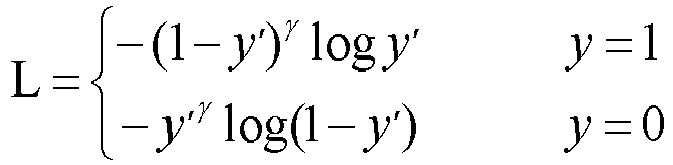
- The first obtaining
module 801 is further configured to: - extract a plurality of video frames from a to-be-processed video according to a temporal position;
- determine a spatial position of each video frame in the plurality of video frames;
- perform, according to a predetermined spatial size, multi-scale cropping on a video frame after a spatial position of the video frame is determined; and
- scale and flip a video frame obtained after the cropping, to obtain the training dataset.
- In addition, for related content in the apparatus embodiments, refer to the method embodiments, and details are not described herein.
- In conclusion, in the video classification model construction apparatus provided in the embodiments of this disclosure, the non-local module is arranged in a three-dimensional convolutional neural network, and the non-local module is used to obtain the long-distance dependency feature. Compared with performing video classification depending on a feature map after the feature map is extracted by using a plurality of convolutional layers currently, in the embodiments of this disclosure, correlations between different pixels or between different feature maps may be obtained, thereby improving the accuracy of video classification.
- In addition, in the video classification model construction apparatus provided in the embodiments of this disclosure, some of the convolution calculation layers in the bottleneck module are replaced by depthwise separable convolution calculation layers to reduce a quantity of parameters, reduce a calculation amount during classification, and improve efficiency of video classification.
- In addition, in the video classification model construction apparatus provided in the embodiments of this disclosure, the quantity of channels of the feature map is appropriately increased to improve performance of feature extraction of the feature map, thereby improving the classification performance of the classification model.
- In addition, in the video classification model construction apparatus provided in the embodiments of this disclosure, a loss function in a training stage of the classification model is also improved. By adding hyperparameters, the loss value of the model is prevented from being contributed by a large quantity of samples that are easy to be classified, thereby raising the concerns of the model about samples that are difficult to be classified.
-
FIG. 10 is a block diagram of a video classification apparatus according to an embodiment of this disclosure. The apparatus shown inFIG. 10 may be disposed on a terminal. As shown inFIG. 10 , the apparatus may include: - a second obtaining
module 901, configured to obtain a to-be-classified video; - a third obtaining
module 902, configured to obtain a plurality of video frames from the video according to a preset temporal position; - an input and
output module 903, configured to: input the plurality of video frames into a pre-trained video classification model, and output at least one classification label of the plurality of video frames, - the video classification model being obtained through training by using any video classification model construction apparatus shown in
FIG. 9 ; and - an
identification module 904, configured to identify a category of the video according to the at least one classification label of the plurality of video frames. - In addition, for related content in the apparatus embodiments, refer to the method embodiments, and details are not described herein.
- In conclusion, in the video classification apparatus provided in the embodiments of this disclosure, the non-local module is arranged in a three-dimensional convolutional neural network, and the non-local module is used to obtain the long-distance dependency feature. Compared with performing video classification depending on a feature map after the feature map is extracted by using a plurality of convolutional layers currently, in the embodiments of this disclosure, correlations between different pixels or between different feature maps may be obtained, thereby improving the accuracy of video classification.
- In addition, in the video classification apparatus provided in the embodiments of this disclosure, some of the convolution calculation layers in the bottleneck module are replaced by depthwise separable convolution calculation layers to reduce a quantity of parameters, reduce a calculation burden during classification, and improve efficiency of video classification.
- In addition, in the video classification apparatus provided in the embodiments of this disclosure, the quantity of channels of the feature map is appropriately increased to improve performance of feature extraction of the feature map, thereby improving the classification performance of the classification model.
- In addition, in the video classification apparatus provided in the embodiments of this disclosure, a loss function in a training stage of the classification model is also improved. By adding hyperparameters, the loss value of the model is prevented from being contributed by a large quantity of samples that are easy to be classified, thereby raising the concerns of the model about samples that are difficult to be classified.
-
FIG. 11 is a schematic structural diagram of acomputer device 1000 according to an embodiment of this disclosure. The computer device may include a central processing unit (CPU) 1001, which can perform various proper actions and processing according to a program stored in a read-only memory (ROM) 1002 or a program loaded from a storage part into a random-access memory (RAM) 1003. TheRAM 1003 also stores various programs and data required to operate the system. TheCPU 1001, theROM 1002, and theRAM 1003 are connected to each other by using abus 1004. An input/output (I/O)interface 1005 is also connected to thebus 1004. - The following components are connected to the I/O interface 1005: an
input part 1006 including a keyboard, a mouse, or the like; an output part including a cathode ray tube (CRT), a liquid crystal display (LCD), a speaker, or the like; astorage part 1008 including a hard disk, or the like; and acommunication part 1009 including a network interface card such as a LAN card or a modem. Thecommunication part 1009 performs communication processing via a network such as the Internet. A driver is also connected to the I/O interface 1005 as required. A removable medium 1011, such as a magnetic disk, an optical disc, a magneto-optical disk, or a semiconductor memory, is installed on thedrive 1010 as required, so that a computer program read from the removable medium is installed into thestorage part 1008 as required. - Particularly, according to an embodiment of this disclosure, the processes described in the flowcharts may be implemented as computer software programs. For example, the method embodiments of this disclosure include a computer program product, the computer program product may include a computer program carried on a computer-readable medium, and the computer program may include program code used for performing the methods shown in the flowcharts. In such an embodiment, the computer program may be downloaded and installed from the network through the communication portion, and/or installed from the removable medium. When the computer program is executed by the
CPU 1001, the above functions defined in the system of this disclosure are performed. - The computer-readable medium shown in this disclosure may be a computer-readable signal medium or a computer-readable storage medium or any combination of the two. The computer-readable storage medium may be, for example, but is not limited to, an electric, magnetic, optical, electromagnetic, infrared, or semi-conductive system, apparatus, or component, or any combination thereof. More specifically, the computer-readable storage medium may include, for example, but is not limited to, an electrical connection having one or more wires, a portable computer disk, a hard disk, a RAM, a ROM, an erasable programmable read-only memory (EPROM or flash memory), an optical fiber, a portable compact disc read-only memory (CD-ROM), an optical storage device, a magnetic storage device, or any suitable combination thereof. In this disclosure, the computer-readable storage medium may be any tangible medium including or storing a program, and the program may be used by or in combination with an instruction execution system, apparatus, or device. In this disclosure, a computer-readable signal medium may include a data signal being in a baseband or propagated as a part of a carrier wave, the data signal carrying computer-readable program code. Such a propagated data signal may be in a plurality of forms, including but not limited to an electromagnetic signal, an optical signal, or any suitable combination thereof. The computer-readable signal medium may be further any computer-readable medium in addition to a computer-readable storage medium. The computer-readable medium may send, propagate, or transmit a program that is used by or used in conjunction with an instruction execution system, an apparatus, or a device. The program code included in the computer-readable medium may be transmitted by using any appropriate medium, including but not limited to: wireless transmission, a wire, an optical cable, radio frequency (RF), or the like, or any other suitable combination thereof.
- The flowcharts and block diagrams in the accompanying drawings illustrate possible system architectures, functions and operations that may be implemented by a system, a method, and a computer program product according to various embodiments of this disclosure. In this regard, each box in a flowchart or a block diagram may represent a module, a program segment, or a part of code. The module, the program segment, or the part of code may include one or more executable instructions used for implementing designated logic functions. In some implementations used as substitutes, functions annotated in boxes may alternatively occur in a sequence different from that annotated in an accompanying drawing. For example, actually two boxes shown in succession may be performed basically in parallel, and sometimes the two boxes may be performed in a reverse sequence. This is determined by a related function. Each box in a block diagram and/or a flowchart and a combination of boxes in the block diagram and/or the flowchart may be implemented by using a dedicated hardware-based system configured to perform a specified function or operation, or may be implemented by using a combination of dedicated hardware and a computer instruction.
- Related units in the embodiments of this disclosure may be implemented in a software manner, or may be implemented in a hardware manner, and the unit described can also be set in a processor. Names of the units do not constitute a limitation on the units in a specific case. The described units or modules may be disposed in a processor, which, for example, may be described as: a processor including a first obtaining module, an input module, an extraction module, an output module, and a training module. Names of the units or modules do not constitute a limitation on the units or modules in a specific case.
- In another aspect, this disclosure further provides a computer-readable medium. The computer-readable medium may be the computer-readable medium included in the computer device described in the foregoing embodiments, or a stand-alone computer-readable medium not assembled into the computer device. The computer-readable medium carries one or more programs, the one or more programs, when executed by the computer device, causing the computer device to implement the video classification model construction method described in the foregoing embodiments.
- For example, the computer device may implement the steps shown in
FIG. 2 : Step 101: Obtain a training dataset, the training dataset including a plurality of video frames. Step 102: Input the training dataset into a to-be-trained classification model, the to-be-trained classification model including a plurality of convolutional layer groups and one output layer group, some of the convolutional layer groups including a non-local module. Step 103: Extract long-distance dependency features of the plurality of video frames by using the non-local module, the long-distance dependency features being used for representing association relationships between spatial positions included in the plurality of video frames. Step 104: Output the long-distance dependency features to the output layer group, to output predicted classification results of the plurality of video frames. Step 105: Train the to-be-trained classification model through a prediction loss function until a parameter in the to-be-trained classification model converges, to obtain a video classification model. In another example, the computer device may implement the steps shown inFIG. 2 ,FIG. 3 , andFIG. 8 . - Although several modules or units of a device for action execution are mentioned in the foregoing detailed descriptions, the division is not mandatory. Actually, according to the implementations of this disclosure, the features and functions of two or more modules or units described above may be specified in one module or unit. Conversely, features and functions of one module or unit described above may be further divided into a plurality of modules or units to be specified.
- In addition, although the various steps of the method in this disclosure are described in a specific order in the accompanying drawings, this does not require or imply that the steps are bound to be performed in the specific order, or all the steps shown are bound to be performed to achieve the desired result. Additionally or alternatively, some steps may be omitted, a plurality of steps may be combined into one step for execution, and/or one step may be decomposed into a plurality of steps for execution, and the like.
- Through descriptions of the foregoing implementations, it is easy for a person skilled in the art to understand that the exemplary implementations described herein can be implemented by software or by combining software with necessary hardware.
- In conclusion, in the video classification computer device or computer-readable medium provided in the embodiments of this disclosure, the non-local module is arranged in a three-dimensional convolutional neural network, and the non-local module is used to obtain the long-distance dependency feature. Compared with performing video classification depending on a feature map after the feature map is extracted by using a plurality of convolutional layers currently, in the embodiments of this disclosure, correlations between different pixels or between different feature maps may be obtained, thereby improving the accuracy of video classification.
- The foregoing descriptions are merely exemplary embodiments of this disclosure and examples of the technical principles used. A person having ordinary skill in the art understands that the scope of this disclosure is not limited to the example technical solutions that are formed by the foregoing particular combinations of technical features, but shall also encompass other technical solutions formed by arbitrarily combining the foregoing technical features or equivalent features thereof without departing from the foregoing application concept. For example, technical solutions formed by replacing the foregoing features with technical features having similar functions disclosed in this disclosure (but not limited thereto) are also included.
Claims (12)
- A video classification model construction method, executable by a computer device, the method comprising:obtaining a training dataset, the training dataset comprising a plurality of video frames;inputting the training dataset into a to-be-trained classification model, the to-be-trained classification model comprising a plurality of convolutional layer groups and one output layer group, at least one of the convolutional layer groups comprising a non-local module;extracting long-distance dependency features of the plurality of video frames by using the non-local module, the long-distance dependency features representing association relationships between spatial positions in the plurality of video frames;outputting the long-distance dependency features to the output layer group, to output predicted classification results of the plurality of video frames; andtraining the to-be-trained classification model through a prediction loss function until a parameter in the to-be-trained classification model converges, to obtain a video classification model.
- The video classification model construction method according to claim 1, wherein each convolutional layer group of the to-be-trained classification model comprises at least one bottleneck module, and the bottleneck module and the non-local module are alternately arranged when the bottleneck module and the non-local module are present in the same convolutional layer group, and the method further comprises:performing depthwise separable convolution on feature maps corresponding to the plurality of video frames by using the bottleneck module, and performing channel doubling on the feature maps obtained after the depthwise separable convolution to obtain a first feature map group; andinputting the first feature map group into the non-local module, and calculating, by the non-local module, correspondences between spatial positions in each feature map as the long-distance dependency features, to output a second feature map group comprising the long-distance dependency features.
- The video classification model construction method according to claim 1, wherein the prediction loss function comprises:

- The video classification model construction method according to claim 1, wherein obtaining the training dataset comprises:extracting a plurality of video frames from a to-be-processed video according to a temporal position;determining a spatial position of each video frame in the plurality of video frames;performing, according to a predetermined spatial size, multi-scale cropping on a video frame after a spatial position of the video frame is determined; andscaling and flipping a video frame obtained after the cropping, to obtain the training dataset.
- A video classification method, executable by a computer device, the method comprising:obtaining a to-be-classified video;obtaining a plurality of video frames from the video according to a preset temporal position;inputting the plurality of video frames into a pre-trained video classification model, and outputting at least one classification label of the plurality of video frames, the video classification model being obtained through training by using the video classification model construction method according to any one of claims 1 to 4; andidentifying a category of the video according to the at least one classification label of the plurality of video frames.
- A video classification model construction apparatus, comprising:a first obtaining module, configured to obtain a training dataset, the training dataset comprising a plurality of video frames;an input module, configured to input the training dataset into a to-be-trained classification model, the to-be-trained classification model comprising a plurality of convolutional layer groups and one output layer group, at least one of the convolutional layer groups comprising a non-local module;an extraction module, configured to extract long-distance dependency features of the plurality of video frames by using the non-local module, the long-distance dependency features representing association relationships between spatial positions in the plurality of video frames;an output module, configured to output the long-distance dependency features to the output layer group, to output predicted classification results of the plurality of video frames; anda training module, configured to train the to-be-trained classification model through a prediction loss function until a parameter in the to-be-trained classification model converges, to obtain a video classification model.
- The video classification model construction apparatus according to claim 6, wherein each convolutional layer group of the to-be-trained classification model comprises at least one bottleneck module, and the bottleneck module and the non-local module are alternately arranged when the bottleneck module and the non-local module are present in the same convolutional layer group, and the extraction module is further configured to:perform depthwise separable convolution on feature maps corresponding to the plurality of video frames by using the bottleneck module, and perform channel doubling on the feature maps obtained after the depthwise separable convolution, to obtain a first feature map group; andinput the first feature map group into the non-local module, and calculate, by the non-local module, correspondences between spatial positions in each feature map as the long-distance dependency features, to output a second feature map group comprising the long-distance dependency features.
- The video classification model construction apparatus according to claim 6, wherein the prediction loss function comprises:

- The video classification model construction apparatus according to claim 6, wherein the first obtaining module is further configured to:extract a plurality of video frames from a to-be-processed video according to a temporal position;determine a spatial position of each video frame in the plurality of video frames;perform, according to a predetermined spatial size, multi-scale cropping on a video frame after a spatial position of the video frame is determined; andscale and flip a video frame obtained after the cropping, to obtain the training dataset.
- A video classification apparatus, comprising:a second obtaining module, configured to obtain a to-be-classified video;a third obtaining module, configured to obtain a plurality of video frames from the video according to a preset temporal position;an input and output module, configured to: input the plurality of video frames into a pre-trained video classification model, and output at least one classification label of the plurality of video frames, the video classification model being obtained through training by using the video classification model construction apparatus according to any one of claims 6 to 9; andan identification module, configured to identify a category of the video according to the at least one classification label of the plurality of video frames.
- A computer device, comprising:one or more processors; anda memory, configured to store one or more programs,the one or more programs, when executed by the one or more processors, causing the one or more processors to implement the method according to any one of claims 1 to 5.
- A computer-readable storage medium, storing a computer program, the computer program, when executed by a processor, implementing the method according to any one of claims 1 to 5.
Applications Claiming Priority (2)
| Application Number | Priority Date | Filing Date | Title |
|---|---|---|---|
| CN201911134005.2A CN110929780B (en) | 2019-11-19 | 2019-11-19 | Video classification model construction method, video classification device, video classification equipment and medium |
| PCT/CN2020/115772 WO2021098362A1 (en) | 2019-11-19 | 2020-09-17 | Video classification model construction method and apparatus, video classification method and apparatus, and device and medium |
Publications (3)
| Publication Number | Publication Date |
|---|---|
| EP3989121A1 true EP3989121A1 (en) | 2022-04-27 |
| EP3989121A4 EP3989121A4 (en) | 2022-08-03 |
| EP3989121B1 EP3989121B1 (en) | 2026-04-08 |
Family
ID=69853612
Family Applications (1)
| Application Number | Title | Priority Date | Filing Date |
|---|---|---|---|
| EP20889214.1A Active EP3989121B1 (en) | 2019-11-19 | 2020-09-17 | Video classification model construction method and apparatus, video classification method and apparatus, and corresponding computer-readable storage medium |
Country Status (4)
| Country | Link |
|---|---|
| US (1) | US11967152B2 (en) |
| EP (1) | EP3989121B1 (en) |
| CN (1) | CN110929780B (en) |
| WO (1) | WO2021098362A1 (en) |
Families Citing this family (26)
| Publication number | Priority date | Publication date | Assignee | Title |
|---|---|---|---|---|
| CN110929780B (en) | 2019-11-19 | 2023-07-11 | 腾讯科技(深圳)有限公司 | Video classification model construction method, video classification device, video classification equipment and medium |
| CN111815604B (en) * | 2020-07-08 | 2023-07-28 | 讯飞智元信息科技有限公司 | Blast furnace tuyere monitoring method, device, electronic equipment and storage medium |
| CN112035701A (en) * | 2020-08-11 | 2020-12-04 | 南京烽火星空通信发展有限公司 | Internet short video source tracing method and system |
| CN112153320B (en) * | 2020-09-23 | 2022-11-08 | 北京京东振世信息技术有限公司 | Method and device for measuring size of article, electronic equipment and storage medium |
| CN112380392A (en) * | 2020-11-17 | 2021-02-19 | 北京百度网讯科技有限公司 | Method, apparatus, electronic device and readable storage medium for classifying video |
| CN112464831B (en) * | 2020-12-01 | 2021-07-30 | 马上消费金融股份有限公司 | Video classification method, training method of video classification model and related equipment |
| CN112749685B (en) * | 2021-01-28 | 2023-11-03 | 北京百度网讯科技有限公司 | Video classification methods, equipment and media |
| CN112926472A (en) * | 2021-03-05 | 2021-06-08 | 深圳先进技术研究院 | Video classification method, device and equipment |
| CN116635895A (en) * | 2021-04-08 | 2023-08-22 | 华为技术有限公司 | An image processing method, training method and device |
| CN113411425B (en) * | 2021-06-21 | 2023-11-07 | 深圳思谋信息科技有限公司 | Video super-division model construction processing method, device, computer equipment and medium |
| TWI778749B (en) * | 2021-08-17 | 2022-09-21 | 睿至股份有限公司 | Transmission method, processing device, and generating system of video for virtual reality |
| CN113852858A (en) * | 2021-08-19 | 2021-12-28 | 阿里巴巴(中国)有限公司 | Video processing method and electronic equipment |
| CN115797818B (en) * | 2021-09-08 | 2025-12-30 | 香港大学 | Video Timing Action Nomination Generation Method and System |
| CN114120093B (en) * | 2021-12-01 | 2024-04-16 | 安徽理工大学 | A coal gangue target detection method based on improved YOLOv5 algorithm |
| CN114462491B (en) * | 2021-12-29 | 2025-11-04 | 浙江大华技术股份有限公司 | A method for training a behavior analysis model, a behavior analysis method, and an apparatus thereof. |
| CN114882399A (en) * | 2022-04-26 | 2022-08-09 | 北京快乐茄信息技术有限公司 | Video classification method, device and equipment for constructing classification model |
| CN114821185B (en) * | 2022-05-10 | 2024-06-28 | 平安科技(深圳)有限公司 | Image classification method, device, equipment and medium |
| CN117710845A (en) * | 2022-09-05 | 2024-03-15 | 腾讯科技(深圳)有限公司 | Video labeling method, video labeling device, computer equipment and computer readable storage medium |
| CN115511668B (en) * | 2022-10-12 | 2023-09-08 | 金华智扬信息技术有限公司 | Case supervision method, device, equipment and medium based on artificial intelligence |
| CN116401552A (en) * | 2023-04-14 | 2023-07-07 | 华为技术有限公司 | A classification model training method and related device |
| CN116630868B (en) * | 2023-07-26 | 2023-11-14 | 上海蜜度信息技术有限公司 | Video classification method, video classification device, medium and electronic equipment |
| CN117152834B (en) * | 2023-08-11 | 2026-03-24 | 深圳数联康健智能科技有限公司 | Human motion recognition methods and their training methods for recognition models, electronic devices |
| CN117036831B (en) * | 2023-10-09 | 2024-03-22 | 视睿(杭州)信息科技有限公司 | Method, system and medium for detecting splash screen based on time sequence feature modeling |
| CN118537556B (en) * | 2024-05-30 | 2025-01-14 | 汕头大学 | Semi-supervised training method, equipment and medium for video semantic segmentation network |
| CN118840687B (en) * | 2024-07-03 | 2025-01-14 | 南京航空航天大学 | Abnormal behavior detection algorithm based on deep learning |
| CN120724110B (en) * | 2025-08-28 | 2025-12-02 | 中国人民解放军海军工程大学 | A signal recognition method based on gradient proof-of-stake mechanism convolution |
Family Cites Families (23)
| Publication number | Priority date | Publication date | Assignee | Title |
|---|---|---|---|---|
| US7035804B2 (en) | 2001-04-26 | 2006-04-25 | Stenograph, L.L.C. | Systems and methods for automated audio transcription, translation, and transfer |
| US8917907B2 (en) * | 2011-02-28 | 2014-12-23 | Seiko Epson Corporation | Continuous linear dynamic systems |
| US9881380B2 (en) * | 2016-02-16 | 2018-01-30 | Disney Enterprises, Inc. | Methods and systems of performing video object segmentation |
| CN110832596B (en) * | 2017-10-16 | 2021-03-26 | 因美纳有限公司 | Deep Learning-Based Deep Convolutional Neural Network Training Method |
| US11562243B2 (en) * | 2017-11-17 | 2023-01-24 | Meta Platforms, Inc. | Machine-learning models based on non-local neural networks |
| CN107995536B (en) * | 2017-11-28 | 2020-01-21 | 百度在线网络技术(北京)有限公司 | Method, device and equipment for extracting video preview and computer storage medium |
| CA3065939A1 (en) * | 2018-01-15 | 2019-07-18 | Illumina, Inc. | Deep learning-based variant classifier |
| CN108334861A (en) * | 2018-03-02 | 2018-07-27 | 北京未来媒体科技股份有限公司 | A kind of video content recognition method and device based on machine learning |
| CN109255392B (en) * | 2018-09-30 | 2020-11-24 | 百度在线网络技术(北京)有限公司 | Video classification method, device and equipment based on non-local neural network |
| CN109948425B (en) * | 2019-01-22 | 2023-06-09 | 中国矿业大学 | A pedestrian search method and device based on structure-aware self-attention and online instance aggregation and matching |
| CN110032926B (en) * | 2019-02-22 | 2021-05-11 | 哈尔滨工业大学(深圳) | A deep learning-based video classification method and device |
| CN110136703A (en) | 2019-03-25 | 2019-08-16 | 视联动力信息技术股份有限公司 | A kind of fuzzy answer method and view networked system |
| CN110084151B (en) * | 2019-04-10 | 2023-02-28 | 东南大学 | Video abnormal behavior discrimination method based on non-local network deep learning |
| CN110070067B (en) * | 2019-04-29 | 2021-11-12 | 北京金山云网络技术有限公司 | Video classification method, training method and device of video classification method model and electronic equipment |
| CN110222829A (en) * | 2019-06-12 | 2019-09-10 | 北京字节跳动网络技术有限公司 | Feature extracting method, device, equipment and medium based on convolutional neural networks |
| CN110299152A (en) | 2019-06-28 | 2019-10-01 | 北京猎户星空科技有限公司 | Interactive output control method, device, electronic equipment and storage medium |
| CN110491370A (en) | 2019-07-15 | 2019-11-22 | 北京大米科技有限公司 | A kind of voice stream recognition method, device, storage medium and server |
| CN110956085A (en) * | 2019-10-22 | 2020-04-03 | 中山大学 | A human action recognition method based on deep learning |
| CN110826462A (en) * | 2019-10-31 | 2020-02-21 | 上海海事大学 | Human body behavior identification method of non-local double-current convolutional neural network model |
| CN110929780B (en) * | 2019-11-19 | 2023-07-11 | 腾讯科技(深圳)有限公司 | Video classification model construction method, video classification device, video classification equipment and medium |
| CN110971685B (en) | 2019-11-29 | 2021-01-01 | 腾讯科技(深圳)有限公司 | Content processing method, content processing device, computer equipment and storage medium |
| CN111028166B (en) * | 2019-11-30 | 2022-07-22 | 温州大学 | A video deblurring method based on iterative neural network |
| CN111598067B (en) * | 2020-07-24 | 2020-11-10 | 浙江大华技术股份有限公司 | Re-recognition training method, re-recognition method and storage device in video |
-
2019
- 2019-11-19 CN CN201911134005.2A patent/CN110929780B/en active Active
-
2020
- 2020-09-17 WO PCT/CN2020/115772 patent/WO2021098362A1/en not_active Ceased
- 2020-09-17 EP EP20889214.1A patent/EP3989121B1/en active Active
-
2021
- 2021-11-05 US US17/520,293 patent/US11967152B2/en active Active
Also Published As
| Publication number | Publication date |
|---|---|
| US20220058396A1 (en) | 2022-02-24 |
| EP3989121A4 (en) | 2022-08-03 |
| CN110929780B (en) | 2023-07-11 |
| EP3989121B1 (en) | 2026-04-08 |
| CN110929780A (en) | 2020-03-27 |
| WO2021098362A1 (en) | 2021-05-27 |
| US11967152B2 (en) | 2024-04-23 |
Similar Documents
| Publication | Publication Date | Title |
|---|---|---|
| US11967152B2 (en) | Video classification model construction method and apparatus, video classification method and apparatus, device, and medium | |
| JP7331171B2 (en) | Methods and apparatus for training image recognition models, methods and apparatus for recognizing images, electronic devices, storage media, and computer programs | |
| US11734851B2 (en) | Face key point detection method and apparatus, storage medium, and electronic device | |
| US12437521B2 (en) | Few-shot object detection method | |
| US11978241B2 (en) | Image processing method and apparatus, computer-readable medium, and electronic device | |
| EP3968179A1 (en) | Place recognition method and apparatus, model training method and apparatus for place recognition, and electronic device | |
| US12361696B2 (en) | Multi-layer perceptron-based computer vision neural networks | |
| EP4220555B1 (en) | Training method and apparatus for image segmentation model, image segmentation method and apparatus, and device | |
| US20250384560A1 (en) | Model construction method and apparatus, image segmentation method and apparatus, device and medium | |
| CN111488985A (en) | Deep neural network model compression training method, device, equipment, medium | |
| CN111932529A (en) | Image segmentation method, device and system | |
| EP4471662A1 (en) | Expression recognition method and apparatus | |
| CN115082920B (en) | Deep learning model training method, image processing method and device | |
| CN113762327B (en) | Machine learning method, machine learning system and non-transitory computer readable medium | |
| EP3848857A1 (en) | Neural network architecture search system and method, and computer readable recording medium | |
| US11417096B2 (en) | Video format classification and metadata injection using machine learning | |
| US20250046054A1 (en) | Method, apparatus, storage medium, and electronic device for feature extraction | |
| CN115311550A (en) | Method and device for detecting semantic change of remote sensing image, electronic equipment and storage medium | |
| CN110781413A (en) | Interest point determining method and device, storage medium and electronic equipment | |
| CN108229680A (en) | Nerve network system, remote sensing images recognition methods, device, equipment and medium | |
| EP4447008A1 (en) | Facial recognition method and apparatus | |
| Leokhin et al. | Computer Vision Methods in Applied Problems of Classifying Objects in Images | |
| US11593621B2 (en) | Information processing apparatus, information processing method, and computer program product | |
| EP4447006A1 (en) | Font recognition method and apparatus, readable medium, and electronic device | |
| CN120257217B (en) | Multi-mode feature dynamic fusion method and system based on uncertainty estimation |
Legal Events
| Date | Code | Title | Description |
|---|---|---|---|
| STAA | Information on the status of an ep patent application or granted ep patent |
Free format text: STATUS: THE INTERNATIONAL PUBLICATION HAS BEEN MADE |
|
| PUAI | Public reference made under article 153(3) epc to a published international application that has entered the european phase |
Free format text: ORIGINAL CODE: 0009012 |
|
| STAA | Information on the status of an ep patent application or granted ep patent |
Free format text: STATUS: REQUEST FOR EXAMINATION WAS MADE |
|
| 17P | Request for examination filed |
Effective date: 20220124 |
|
| AK | Designated contracting states |
Kind code of ref document: A1 Designated state(s): AL AT BE BG CH CY CZ DE DK EE ES FI FR GB GR HR HU IE IS IT LI LT LU LV MC MK MT NL NO PL PT RO RS SE SI SK SM TR |
|
| REG | Reference to a national code |
Ref country code: DE Ref legal event code: R079 Free format text: PREVIOUS MAIN CLASS: G06K0009620000 Ipc: G06N0003040000 Ref document number: 602020070206 Country of ref document: DE |
|
| RAP3 | Party data changed (applicant data changed or rights of an application transferred) |
Owner name: TENCENT TECHNOLOGY (SHENZHEN) COMPANY LIMITED |
|
| A4 | Supplementary search report drawn up and despatched |
Effective date: 20220701 |
|
| RIC1 | Information provided on ipc code assigned before grant |
Ipc: G06K 9/62 20220101ALI20220628BHEP Ipc: G06V 20/40 20220101ALI20220628BHEP Ipc: G06V 10/774 20220101ALI20220628BHEP Ipc: G06V 10/82 20220101ALI20220628BHEP Ipc: G06V 10/44 20220101ALI20220628BHEP Ipc: G06N 3/08 20060101ALI20220628BHEP Ipc: G06N 3/04 20060101AFI20220628BHEP |
|
| DAV | Request for validation of the european patent (deleted) | ||
| DAX | Request for extension of the european patent (deleted) | ||
| STAA | Information on the status of an ep patent application or granted ep patent |
Free format text: STATUS: EXAMINATION IS IN PROGRESS |
|
| 17Q | First examination report despatched |
Effective date: 20240627 |
|
| REG | Reference to a national code |
Ref country code: DE Ref legal event code: R079 Free format text: PREVIOUS MAIN CLASS: G06N0003040000 Ipc: G06V0020400000 Ref document number: 602020070206 Country of ref document: DE |
|
| GRAP | Despatch of communication of intention to grant a patent |
Free format text: ORIGINAL CODE: EPIDOSNIGR1 |
|
| STAA | Information on the status of an ep patent application or granted ep patent |
Free format text: STATUS: GRANT OF PATENT IS INTENDED |
|
| RIC1 | Information provided on ipc code assigned before grant |
Ipc: G06V 20/40 20220101AFI20251022BHEP Ipc: G06V 10/774 20220101ALI20251022BHEP Ipc: G06N 3/04 20060101ALI20251022BHEP Ipc: G06N 3/08 20060101ALI20251022BHEP Ipc: G06V 10/44 20220101ALI20251022BHEP Ipc: G06V 10/82 20220101ALI20251022BHEP Ipc: G06N 3/045 20230101ALI20251022BHEP Ipc: G06N 3/047 20230101ALI20251022BHEP Ipc: G06N 3/0464 20230101ALI20251022BHEP Ipc: G06N 3/09 20230101ALI20251022BHEP |
|
| INTG | Intention to grant announced |
Effective date: 20251104 |
|
| GRAS | Grant fee paid |
Free format text: ORIGINAL CODE: EPIDOSNIGR3 |
|
| GRAA | (expected) grant |
Free format text: ORIGINAL CODE: 0009210 |
|
| STAA | Information on the status of an ep patent application or granted ep patent |
Free format text: STATUS: THE PATENT HAS BEEN GRANTED |
|
| AK | Designated contracting states |
Kind code of ref document: B1 Designated state(s): AL AT BE BG CH CY CZ DE DK EE ES FI FR GB GR HR HU IE IS IT LI LT LU LV MC MK MT NL NO PL PT RO RS SE SI SK SM TR |
|
| REG | Reference to a national code |
Ref country code: CH Ref legal event code: F10 Free format text: ST27 STATUS EVENT CODE: U-0-0-F10-F00 (AS PROVIDED BY THE NATIONAL OFFICE) Effective date: 20260408 Ref country code: GB Ref legal event code: FG4D |
|
| REG | Reference to a national code |
Ref country code: DE Ref legal event code: R096 Ref document number: 602020070206 Country of ref document: DE |