EP3989104A1 - Verfahren und einrichtung zum trainieren eines modells zur gesichtsmerkmalsextraktion, gesichtsmerkmalextraktionsverfahren und -einrichtung, vorrichtung und speichermedium - Google Patents
Verfahren und einrichtung zum trainieren eines modells zur gesichtsmerkmalsextraktion, gesichtsmerkmalextraktionsverfahren und -einrichtung, vorrichtung und speichermedium Download PDFInfo
- Publication number
- EP3989104A1 EP3989104A1 EP19919545.4A EP19919545A EP3989104A1 EP 3989104 A1 EP3989104 A1 EP 3989104A1 EP 19919545 A EP19919545 A EP 19919545A EP 3989104 A1 EP3989104 A1 EP 3989104A1
- Authority
- EP
- European Patent Office
- Prior art keywords
- face
- facial feature
- image set
- images
- candidate
- Prior art date
- Legal status (The legal status is an assumption and is not a legal conclusion. Google has not performed a legal analysis and makes no representation as to the accuracy of the status listed.)
- Withdrawn
Links
Images




Classifications
-
- G—PHYSICS
- G06—COMPUTING OR CALCULATING; COUNTING
- G06F—ELECTRIC DIGITAL DATA PROCESSING
- G06F18/00—Pattern recognition
- G06F18/20—Analysing
- G06F18/24—Classification techniques
- G06F18/241—Classification techniques relating to the classification model, e.g. parametric or non-parametric approaches
-
- G—PHYSICS
- G06—COMPUTING OR CALCULATING; COUNTING
- G06V—IMAGE OR VIDEO RECOGNITION OR UNDERSTANDING
- G06V40/00—Recognition of biometric, human-related or animal-related patterns in image or video data
- G06V40/10—Human or animal bodies, e.g. vehicle occupants or pedestrians; Body parts, e.g. hands
- G06V40/16—Human faces, e.g. facial parts, sketches or expressions
- G06V40/161—Detection; Localisation; Normalisation
-
- G—PHYSICS
- G06—COMPUTING OR CALCULATING; COUNTING
- G06V—IMAGE OR VIDEO RECOGNITION OR UNDERSTANDING
- G06V10/00—Arrangements for image or video recognition or understanding
- G06V10/70—Arrangements for image or video recognition or understanding using pattern recognition or machine learning
- G06V10/77—Processing image or video features in feature spaces; using data integration or data reduction, e.g. principal component analysis [PCA] or independent component analysis [ICA] or self-organising maps [SOM]; Blind source separation
- G06V10/774—Generating sets of training patterns; Bootstrap methods, e.g. bagging or boosting
-
- G—PHYSICS
- G06—COMPUTING OR CALCULATING; COUNTING
- G06T—IMAGE DATA PROCESSING OR GENERATION, IN GENERAL
- G06T7/00—Image analysis
- G06T7/10—Segmentation; Edge detection
- G06T7/11—Region-based segmentation
-
- G—PHYSICS
- G06—COMPUTING OR CALCULATING; COUNTING
- G06V—IMAGE OR VIDEO RECOGNITION OR UNDERSTANDING
- G06V10/00—Arrangements for image or video recognition or understanding
- G06V10/40—Extraction of image or video features
- G06V10/44—Local feature extraction by analysis of parts of the pattern, e.g. by detecting edges, contours, loops, corners, strokes or intersections; Connectivity analysis, e.g. of connected components
-
- G—PHYSICS
- G06—COMPUTING OR CALCULATING; COUNTING
- G06V—IMAGE OR VIDEO RECOGNITION OR UNDERSTANDING
- G06V10/00—Arrangements for image or video recognition or understanding
- G06V10/40—Extraction of image or video features
- G06V10/46—Descriptors for shape, contour or point-related descriptors, e.g. scale invariant feature transform [SIFT] or bags of words [BoW]; Salient regional features
- G06V10/469—Contour-based spatial representations, e.g. vector-coding
-
- G—PHYSICS
- G06—COMPUTING OR CALCULATING; COUNTING
- G06V—IMAGE OR VIDEO RECOGNITION OR UNDERSTANDING
- G06V10/00—Arrangements for image or video recognition or understanding
- G06V10/70—Arrangements for image or video recognition or understanding using pattern recognition or machine learning
- G06V10/77—Processing image or video features in feature spaces; using data integration or data reduction, e.g. principal component analysis [PCA] or independent component analysis [ICA] or self-organising maps [SOM]; Blind source separation
- G06V10/776—Validation; Performance evaluation
-
- G—PHYSICS
- G06—COMPUTING OR CALCULATING; COUNTING
- G06V—IMAGE OR VIDEO RECOGNITION OR UNDERSTANDING
- G06V10/00—Arrangements for image or video recognition or understanding
- G06V10/70—Arrangements for image or video recognition or understanding using pattern recognition or machine learning
- G06V10/82—Arrangements for image or video recognition or understanding using pattern recognition or machine learning using neural networks
-
- G—PHYSICS
- G06—COMPUTING OR CALCULATING; COUNTING
- G06V—IMAGE OR VIDEO RECOGNITION OR UNDERSTANDING
- G06V40/00—Recognition of biometric, human-related or animal-related patterns in image or video data
- G06V40/10—Human or animal bodies, e.g. vehicle occupants or pedestrians; Body parts, e.g. hands
- G06V40/16—Human faces, e.g. facial parts, sketches or expressions
- G06V40/168—Feature extraction; Face representation
-
- G—PHYSICS
- G06—COMPUTING OR CALCULATING; COUNTING
- G06V—IMAGE OR VIDEO RECOGNITION OR UNDERSTANDING
- G06V40/00—Recognition of biometric, human-related or animal-related patterns in image or video data
- G06V40/10—Human or animal bodies, e.g. vehicle occupants or pedestrians; Body parts, e.g. hands
- G06V40/16—Human faces, e.g. facial parts, sketches or expressions
- G06V40/172—Classification, e.g. identification
-
- G—PHYSICS
- G06—COMPUTING OR CALCULATING; COUNTING
- G06T—IMAGE DATA PROCESSING OR GENERATION, IN GENERAL
- G06T2207/00—Indexing scheme for image analysis or image enhancement
- G06T2207/20—Special algorithmic details
- G06T2207/20081—Training; Learning
-
- G—PHYSICS
- G06—COMPUTING OR CALCULATING; COUNTING
- G06T—IMAGE DATA PROCESSING OR GENERATION, IN GENERAL
- G06T2207/00—Indexing scheme for image analysis or image enhancement
- G06T2207/30—Subject of image; Context of image processing
- G06T2207/30196—Human being; Person
- G06T2207/30201—Face
Definitions
- the present application relates to the technical field of biological recognition, and more particularly to a method and an apparatus for training facial feature extraction model, a method and an apparatus for extracting facial features, a device, and a storage medium.
- Face recognition technology is a technique that is utilized to extract facial features by a feature extraction model, and perform identity recognition or target detection based on the facial features.
- the existing feature extraction model has poor extraction accuracy, which cannot be satisfy the use requirements of actual application scenarios.
- the present application provides a method and an apparatus for training facial feature extraction model, a method and an apparatus for extracting facial features, a device, and a storage medium, so as to improve the feature extraction accuracy of the facial feature extraction model and to provide an important reference for the facial motion recognition.
- the present application provides a method for training a facial feature extraction model.
- the method comprises:
- the present application further provides a method for extracting facial features.
- the method comprises:
- the present application further provides an apparatus for training a facial feature extraction model, comprising:
- the present application further provides an apparatus for extracting facial features, comprising:
- the present application further provides a computer device.
- the computer device comprises a memory and a processor.
- the memory is configured for storing a computer program.
- the processor is configured for executing the computer program and implementing the above-described method for training a facial feature extraction model or the above-described method for extracting facial features when executing the computer program.
- the present application further provides a computer-readable storage medium.
- the computer-readable storage medium stores with a computer program.
- the processor is enabled to implement the above-described method for training a facial feature extraction model or the above-described method for extracting facial features when executing the computer program.
- the present application provides a method and an apparatus for training facial feature extraction model, a method and an apparatus for extracting facial features, a device, and a storage medium, in which, face training data are input into a plurality of original student networks for model training, respectively, to obtain candidate student networks corresponding to the original student networks; face verification data are input into the candidate student networks, respectively, to output verified facial feature data corresponding to the respective candidate student networks; the verified facial feature data are input into a preset teacher network to output candidate facial feature data corresponding to the respective verified facial feature data; and the candidate facial feature data are screened based on preset feature screening rules to obtain target sample features, and a candidate student network corresponding to the target sample features is determined as a facial feature extraction model. Therefore, the feature extraction accuracy of the facial feature extraction model is improved.
- the embodiments of the present application provide a method and an apparatus for training facial feature extraction model, a method and an apparatus for extracting facial features, a device, and a storage medium.
- the facial feature extraction model may be configured to perform facial feature extraction on the face motion in a face motion recognition scenario.
- the face sample images are directly annotated to obtain the corresponding face training data.
- the training of such annotated images not only fails to achieve the desired effect, but also wastes a lot of manpower for the annotation, which decreases the overall efficiency of the machine learning.
- the original face image refers to a large number of images obtained from the Internet. These images are unprocessed images. Machine learning can recognize these images and obtain recognition results, or select corresponding images for testing and training so as to obtain data that is more suitable for machine learning, such that the machine learning is performed according to preset goals to obtain a better machine leaning model.
- all face sample images constitute a face sample image set.
- Selection rules are preset, and images may be select from a specific image generation source as face sample images, for example, face images are selected from a preset channel, for example, Yale face database, as the face sample images. It can be understood that the images may also be selected according to the generation time thereof, for example, face images during a legal holiday are selected as the face sample images.
- a set of the face sample images constitute as a face sample image set.
- the face sample image set comprises a plurality of unannotated images.
- the step of performing uncertainty analysis on the face sample image set to obtain analysis results specifically comprises: performing at least one analysis of least confidence analysis, margin sampling analysis, and information entrophy analysis on the images of the face sample image set, to obtain uncertainty value of each image of the face sample image set.
- the uncertainty of the image is also called image annotation value.
- the analysis result comprises uncertainty values corresponding to each image of the face sample image set.
- step S130 specifically comprises sub-steps S131 and S134.
- the first uncertainty value corresponding to such analysis method can be obtained.
- the images of the face sample image set are screened according to the first uncertainty value to obtain the corresponding first screened image set.
- the second uncertainty value corresponding to such analysis method can be obtained.
- the images of the face sample image set are screened according to the second uncertainty value to obtain the corresponding second screened image set.
- the first screened image set, the second screened image set, and the third screened image set construct the image set to be annotated.
- the number of the images in the image set to be annotated is increased, and in the meanwhile, the image diversity of the image set to be annotated is increased, which finally enriches the images of the image set to be annotated, increases the training efficiency of the model, effectively reduces the training time, and makes the model robuster.
- the preset number can be correspondingly selected according to the application environment, or the preset number can be set according to a certain ratio. For example, 85% of the total image number of the face sample image set can be selected as the images to be annotated, in such condition, the preset number is 85% of the total number.
- step S131 specifically comprises: sub-steps S1311, S1312, and S1313.
- the uncertainty value is set according to the actual working environment.
- Annotation processing is to form one-to-one correspondence between each of the images to be annotated and their corresponding categories, so as to obtain the corresponding annotated images.
- the annotated images are face verification data.
- the step of annotating the images to be annotated may comprise: receiving an annotation information that corresponds to the images to be annotated and that is arbitrarily input by annotation; forming a correspondence relationship between the annotation information and the images to be annotated according to review results to obtain an annotated face image set; in which, the review results are obtained by review processing of the annotation information by the reviewer.
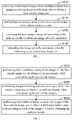
- FIG. 5 is a schematic flowchart of steps of a method for training a facial feature extraction model provided by an embodiment of the present application.
- the training method can select multiple original student networks for model training to obtain corresponding candidate student networks.
- the “multiple” may be two, three, or more.
- the original student networks can be YOLO9000, AlexNet, or VGGNet, etc.
- the “multiple” being interpreted as "two” and the two original student networks being YOLO9000 network and VGGNet network as an example.
- the method for training a facial feature extraction model specifically includes: step S210 to step S240.
- the face training data are used to perform model training on the original student network, which includes training sub-data and testing sub-data.
- the testing sub-data are the data obtained by annotating using the above image annotation method, and are configured to test the candidate student networks in order to determine whether the candidate student networks satisfy the leaning requirement.
- the face training data are input into the YOLO9000 network for model training, thereby obtaining a first candidate student network.
- the face training data are input to the VGGNet network for model training, thereby obtaining a second candidate student network.
- the face verification data may also be data that are obtain by using the above image annotation method.
- the face verification data are input into the first candidate student network to obtain the first verified facial feature data.
- the face verification data is input into the second candidate student network to obtain the second verified facial feature data.
- the teacher network can be pre-trained YOLO9000.
- the first verified facial feature data are input to the teacher network to output first candidate facial feature data.
- the second verified facial feature data are input to the teacher network to output second candidate facial feature data.
- the preset feature screening rules can be set according to specific application scenarios.
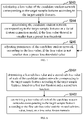
- screening multiple candidate facial feature data based on preset feature screening rules to obtain target sample features includes sub-steps S241 and S242.
- the check face image can be set according to a specific scene.
- a first accuracy rate is calculated according to the first candidate facial feature data.
- a second accuracy rate is calculated according to the second candidate facial feature data, the.
- the second candidate facial feature data corresponding to the second accuracy rate are determined as the target sample features.
- the second candidate student network corresponding to the second candidate facial feature data is determined as the facial feature extraction model.
- the first sub-loss value of each of the candidate student network corresponding to the target sample features is determined according to the target sample features.
- the second sub-loss value of the candidate student network corresponding to the target sample features is determined according to the target sample features.
- the first loss function and the second loss function are combined as the loss function for retraining the facial feature extraction model, in this way, the trained facial feature extraction model is cohesive.
- the feature data may be accurately extracted even in the absence of massive high-quality face training data set, and in the meanwhile, the slow convergence speed and over-fitting phenomenon are avoided during the retraining of facial feature extraction model.
- the loss value is smaller than the preset loss threshold, it indicates that the candidate student network corresponding to the target sample features has been converged, and the candidate student network is determined as the facial feature extraction model.
- S245 adjusting parameters of the candidate student network according to the loss value, if the loss value is not smaller than a preset loss threshold value.
- the loss value is not smaller than the preset loss threshold, it indicates that the candidate student network corresponding to the target sample features is not converged, and the candidate student network needs to continue to be trained, and the parameters of the candidate student network are adjusted according to the loss value until the loss value is smaller than the loss threshold, and the candidate student network corresponding to the target sample features is determined as the facial feature extraction model, that is, step S244 is executed.
- the multiple original student networks are performed with model training by the face training data annotated by the above-described annotation method, and screened by using the teacher network and the face verification data, such that the candidate student network with the best feature extraction accuracy is obtained as the facial feature extraction model.
- the training methods enriches the diversities of the partial face training data and face verification data, improves the efficiency of model training, and improves the accuracy of facial features extraction by the model, thus providing an important reference for human facial action recognition.
- FIG. 9 is a schematic flowchart of steps of a method for extracting facial features provided by an embodiment of the present application.
- FIG. 10 which is a schematic diagram of an application scenario of a method for extracting facial features provided by an embodiment of the present application.
- the method for extracting facial features may be applied to a system including terminal devices 610 and 620, a network 630, and a server 640.
- the network 640 is used to provide a medium for communication links between the terminal devices 610 and 620 and the server 640.
- the network 630 may include various connection types, such as wired, wireless communication links, or fiber optic cables.
- the method for extracting facial feature specifically includes: step S310 to step S330.
- the image to be recognized includes a face target to be recognized, which may be a visible light image, such as an image in a Red Green Blue (RGB) mode. It can be understood that the aforementioned image to be recognized may also be a near infrared (Near Infrared, NIR) image.
- a visible light image such as an image in a Red Green Blue (RGB) mode.
- RGB Red Green Blue
- NIR near infrared
- the execution subject of this embodiment may be installed with a camera for collecting visible light images or a camera for collecting near infrared images.
- the user can select the camera to be turned on, and then use the selected camera to take a picture (using a self-portrait of the user's head or face) to obtain the image to be recognized.
- the image processing operations include: size adjustment, cropping processing, rotation processing, and image algorithm processing, etc.
- the image algorithm processing includes: color temperature adjustment algorithm, exposure adjustment algorithm, etc. These image processing operations may make the target image closer to the real picture.
- picture parameters include: the size information, the pixel size, the contrast, the sharpness, and the natural saturation.
- the facial feature extraction model is a model trained according to the method for training a facial feature extraction model as described in the above.
- a target image is acquired, image processing is performed on the target image to obtain a target processed image, and the target processed image are input into a facial feature extraction model to output target facial features.
- the accuracy of the facial feature extraction is high, which is convenient for the method to be applied into actual application scenarios.
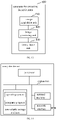
- FIG. 11 is a schematic block diagram of an apparatus for training a facial feature extraction model provided by an embodiment of the present application.
- the apparatus for training a facial feature extraction model is configured to execute the above-described method for training a facial feature extraction model.
- the apparatus for training a facial feature extraction model may be configured in a server or a terminal.
- the server may be an independent server or a server cluster.
- the terminal may be an electronic device, such as a mobile phone, a tablet computer, a notebook computer, a desktop computer, a personal digital assistant, and a wearable device.
- an apparatus 400 for training a facial feature extraction model comprises: a model training unit 410, a data output unit 420, a data input unit 430, and a model determination unit 440.
- the model training unit 410 is configured for inputting face training data into a plurality of original student networks for model training, respectively, to obtain candidate student networks corresponding to the original student networks.
- the data output unit 420 is configured for inputting face verification data into the candidate student networks, respectively, to output verified facial feature data corresponding to the respective candidate student networks.
- the data input unit 430 is configured for inputting the verified facial feature data into a preset teacher network to output candidate facial feature data corresponding to the respective verified facial feature data.
- the model determination unit 440 is configured for screening the candidate facial feature data based on preset feature screening rules to obtain target sample features and determining the candidate student network corresponding to the target sample features as a facial feature extraction model.
- the apparatus 400 for training a facial feature extraction model further comprises: a result acquisition unit 450, an image screen unit 460, and an image annotation unit 470.
- the result acquisition unit 450 is configured for performing uncertainty analysis on a face sample image set to obtain analysis results, where the face sample image set comprises a plurality of unannotated images.
- the image annotation unit 470 is configured for annotating the image set to be annotated to obtain the face verification data.
- the model determination unit 440 comprises: an accuracy rate calculation sub-unit 441 and a feature determination sub-unit 442.
- the feature determination sub-unit 442 is configured for determining the candidate facial features corresponding to a highest accuracy rate as the target sample features.
- the model determination unit 440 comprises: a loss value determination sub-unit 443 and a model determination sub-unit 444.
- the loss value determination sub-unit 443 is configured for determining a loss value of each of the candidate student networks corresponding to the target sample features according to the target sample features.
- the model determination sub-unit 444 is configured for determining the candidate student network corresponding to the target sample features as a facial feature extraction model, if the loss value thereof is smaller than a preset loss threshold.
- the loss value determination sub-unit 443 comprises: a sub-loss value determination sub-unit 4431 and a loss value fusion sub-unit 4432.
- the sub-loss value determination sub-unit 4431 is configured for determining a first sub-loss value and a second sub-loss value of each of the candidate student networks corresponding to the target sample features according to the target sample features, based on a first loss function and a second loss function.
- the loss value fusion sub-unit 4432 is configured for determining a loss value of each of the candidate student networks corresponding to the target sample features according to the first sub-loss value and the second sub-loss value, based on a loss value fusion formula.
- FIG. 13 is a schematic block diagram of an apparatus for extracting facial features according to an embodiment of the present application.
- the apparatus for extracting facial features is configured to execute the above-described method for extracting facial feature.
- the apparatus for extracting facial features may be configured in a server or a terminal.
- the apparatus 500 for extracting facial features comprises: an image acquisition unit 510, an image processing unit 520, and an image input unit 530.
- the image acquisition unit 510 is configured for acquiring a target image.
- the image input unit 530 is configured for inputting the target processed image into a facial feature extraction model to output target facial features.
- the facial feature extraction model is a model trained according to the above-described method for training a facial feature extraction model.
- the apparatus for training a facial feature extraction model and the specific working process of each unit described in the above may refer to corresponding processes in the method for training a facial feature extraction model as described in the forgoing embodiments, thereby not being repeated herein.
- the above apparatus may be implemented in the form of a computer program, which can be operated in the computer device as shown in FIG. 14 .
- FIG. 14 is a schematic block diagram of a computer device according to an embodiment of the present application.
- the computer device may be a server or a terminal.
- the non-volatile storage medium can store an operating system and a computer program.
- the computer program comprises program instructions, and when the program instructions are executed, the processor is enabled to execute a method for training a facial feature extraction model.
- the processor is configured to provide calculation and control capabilities and support the operation of the entire computer equipment.
- the internal memory provides an environment for the operation of the computer program in the non-volatile storage medium, and when the computer program is executed by the processor, the processor is enabled to execute a method for training a facial feature extraction model.
- the network interface is configured for network communication, such as sending assigned tasks.
- the network interface is configured for network communication, such as sending assigned tasks.
- FIG. 14 is only a block diagram of a part of the structure that is related to the technical solution of the present application, and does not constitute a limitation on the computer device where the technical solution of the present application is applied.
- the specific computer device may include more or less parts than shown in the figure, or combine with some parts, or have a different part arrangement.
- the processor may be a central processing unit (CPU), the processor may also be other general-purpose processors, digital signal processors (DSP), and application specific integrated circuits (ASIC), Field-Programmable Gate Array (FPGA), or other programmable logic devices, discrete gates, or transistor logic devices, and discrete hardware components, etc.
- the general-purpose processor may be a microprocessor, or the processor may also be any conventional processor.
- the processor is configured to execute a computer program stored in the memory, so as to implement the following steps: inputting face training data into a plurality of original student networks for model training, respectively, to obtain candidate student networks corresponding to the original student networks; inputting face verification data into the candidate student networks, respectively, to output verified facial feature data corresponding to the respective candidate student networks; inputting the verified facial feature data into a preset teacher network to output candidate facial feature data corresponding to the respective verified facial feature data; and screening the candidate facial feature data based on preset feature screening rules to obtain target sample features, and determining the candidate student network corresponding to the target sample features as a facial feature extraction model.
- the processor before implementing the step of inputting face verification data into the candidate student networks, respectively, to output verified facial feature data corresponding to the respective candidate student networks, the processor is further configured to implement: performing uncertainty analysis on a face sample image set to obtain analysis results, where the face sample image set comprises a plurality of unannotated images; screening the face sample image set according to the analysis results to obtain an image set to be annotated; and annotating the image set to be annotated to obtain the face verification data.
- the processor when implementing the step of screening the candidate facial feature data based on preset feature screening rules to obtain target sample features, is configured to implement: calculating an accuracy rate of each of the candidate facial feature data according to each of the candidate facial feature data and check facial feature data of a preset check face image; and determining the candidate facial features corresponding to a highest accuracy rate as the target sample features.
- the processor when implementing the step of calculating a loss value of the candidate student network corresponding to the target sample features according to the target sample features, is configured to implement: determining a first sub-loss value and a second sub-loss value of each of the candidate student networks corresponding to the target sample features according to the target sample features, based on a first loss function and a second loss function; and determining a loss value of each of the candidate student networks corresponding to the target sample features according to the first sub-loss value and the second sub-loss value, based on a loss value fusion formula.
Landscapes
- Engineering & Computer Science (AREA)
- Theoretical Computer Science (AREA)
- Physics & Mathematics (AREA)
- General Physics & Mathematics (AREA)
- Health & Medical Sciences (AREA)
- Computer Vision & Pattern Recognition (AREA)
- Multimedia (AREA)
- General Health & Medical Sciences (AREA)
- Oral & Maxillofacial Surgery (AREA)
- Evolutionary Computation (AREA)
- Artificial Intelligence (AREA)
- Human Computer Interaction (AREA)
- Computing Systems (AREA)
- Databases & Information Systems (AREA)
- Medical Informatics (AREA)
- Software Systems (AREA)
- Data Mining & Analysis (AREA)
- Life Sciences & Earth Sciences (AREA)
- Bioinformatics & Cheminformatics (AREA)
- Bioinformatics & Computational Biology (AREA)
- Evolutionary Biology (AREA)
- General Engineering & Computer Science (AREA)
- Image Analysis (AREA)
- Image Processing (AREA)
Applications Claiming Priority (3)
| Application Number | Priority Date | Filing Date | Title |
|---|---|---|---|
| CN201910542712 | 2019-06-21 | ||
| CN201910606508.9A CN110472494A (zh) | 2019-06-21 | 2019-07-05 | 脸部特征提取模型训练方法、脸部特征提取方法、装置、设备及存储介质 |
| PCT/CN2019/122165 WO2020253127A1 (zh) | 2019-06-21 | 2019-11-29 | 脸部特征提取模型训练方法、脸部特征提取方法、装置、设备及存储介质 |
Publications (2)
| Publication Number | Publication Date |
|---|---|
| EP3989104A1 true EP3989104A1 (de) | 2022-04-27 |
| EP3989104A4 EP3989104A4 (de) | 2022-10-26 |
Family
ID=68507127
Family Applications (1)
| Application Number | Title | Priority Date | Filing Date |
|---|---|---|---|
| EP19919545.4A Withdrawn EP3989104A4 (de) | 2019-06-21 | 2019-11-29 | Verfahren und einrichtung zum trainieren eines modells zur gesichtsmerkmalsextraktion, gesichtsmerkmalextraktionsverfahren und -einrichtung, vorrichtung und speichermedium |
Country Status (6)
| Country | Link |
|---|---|
| US (1) | US20230119593A1 (de) |
| EP (1) | EP3989104A4 (de) |
| JP (1) | JP6994588B2 (de) |
| KR (1) | KR102385463B1 (de) |
| CN (1) | CN110472494A (de) |
| WO (1) | WO2020253127A1 (de) |
Families Citing this family (20)
| Publication number | Priority date | Publication date | Assignee | Title |
|---|---|---|---|---|
| CN110472494A (zh) * | 2019-06-21 | 2019-11-19 | 深圳壹账通智能科技有限公司 | 脸部特征提取模型训练方法、脸部特征提取方法、装置、设备及存储介质 |
| US11443235B2 (en) * | 2019-11-14 | 2022-09-13 | International Business Machines Corporation | Identifying optimal weights to improve prediction accuracy in machine learning techniques |
| CN111062995B (zh) * | 2019-11-28 | 2024-02-23 | 重庆中星微人工智能芯片技术有限公司 | 生成人脸图像的方法、装置、电子设备和计算机可读介质 |
| CN112561080B (zh) * | 2020-12-18 | 2023-03-03 | Oppo(重庆)智能科技有限公司 | 样本筛选方法、样本筛选装置及终端设备 |
| CN115203813A (zh) * | 2021-04-08 | 2022-10-18 | 淘宝(中国)软件有限公司 | 数据处理系统、资源调度方法及装置 |
| CN113065512B (zh) * | 2021-04-21 | 2025-07-01 | 深圳壹账通智能科技有限公司 | 人脸微表情识别方法、装置、设备及存储介质 |
| CN113128522B (zh) * | 2021-05-11 | 2024-04-05 | 四川云从天府人工智能科技有限公司 | 目标识别方法、装置、计算机设备和存储介质 |
| CN112990161A (zh) * | 2021-05-17 | 2021-06-18 | 江苏数兑科技有限公司 | 电子证照识别方法及装置 |
| CN115511072A (zh) * | 2021-06-23 | 2022-12-23 | 北京字跳网络技术有限公司 | 模型训练方法、装置及可读存储介质 |
| CN113469977B (zh) * | 2021-07-06 | 2024-01-12 | 浙江霖研精密科技有限公司 | 一种基于蒸馏学习机制的瑕疵检测装置、方法、存储介质 |
| CN113657468A (zh) * | 2021-07-29 | 2021-11-16 | 北京百度网讯科技有限公司 | 预训练模型的生成方法、装置、电子设备和存储介质 |
| CN113610028B (zh) * | 2021-08-13 | 2024-08-06 | 广联达科技股份有限公司 | 行人重识别方法、装置、计算机设备及存储介质 |
| CN113902899A (zh) * | 2021-09-29 | 2022-01-07 | 北京百度网讯科技有限公司 | 训练方法、目标检测方法、装置、电子设备以及存储介质 |
| CN114049289B (zh) * | 2021-11-10 | 2024-03-05 | 合肥工业大学 | 基于对比学习与StyleGAN2的近红外-可见光人脸图像合成方法 |
| CN114332556B (zh) * | 2021-11-19 | 2025-01-14 | 腾讯科技(深圳)有限公司 | 训练样本筛选方法、装置、计算机设备和存储介质 |
| CN114494809B (zh) * | 2021-12-30 | 2025-10-21 | 深圳云天励飞技术股份有限公司 | 特征提取模型优化方法、装置及电子设备 |
| CN116543426A (zh) * | 2022-01-21 | 2023-08-04 | 小米科技(武汉)有限公司 | 图像处理方法、装置、电子设备以及存储介质 |
| CN114842457B (zh) * | 2022-06-29 | 2023-09-26 | 小米汽车科技有限公司 | 模型训练及特征提取方法、装置、电子设备和介质 |
| CN118116087B (zh) * | 2024-04-29 | 2024-07-30 | 广东康软科技股份有限公司 | 应用于数字化医疗服务的活体身份验证方法及系统 |
| CN119963913A (zh) * | 2025-01-13 | 2025-05-09 | 北京市生态环境保护科学研究院 | 一种生物多样性图像数据的归纳方法、设备及介质 |
Family Cites Families (19)
| Publication number | Priority date | Publication date | Assignee | Title |
|---|---|---|---|---|
| US20150206064A1 (en) * | 2014-01-19 | 2015-07-23 | Jacob Levman | Method for supervised machine learning |
| AU2014240213B2 (en) * | 2014-09-30 | 2016-12-08 | Canon Kabushiki Kaisha | System and Method for object re-identification |
| KR102477190B1 (ko) * | 2015-08-10 | 2022-12-13 | 삼성전자주식회사 | 얼굴 인식 방법 및 장치 |
| CN106372581B (zh) * | 2016-08-25 | 2020-09-04 | 中国传媒大学 | 构建及训练人脸识别特征提取网络的方法 |
| CN108334934B (zh) * | 2017-06-07 | 2021-04-13 | 赛灵思公司 | 基于剪枝和蒸馏的卷积神经网络压缩方法 |
| CN111797928B (zh) * | 2017-09-08 | 2025-02-28 | 第四范式(北京)技术有限公司 | 生成机器学习样本的组合特征的方法及系统 |
| CN108062394A (zh) * | 2017-12-18 | 2018-05-22 | 北京中关村科金技术有限公司 | 一种数据集的标注方法及相关装置 |
| CN108764024B (zh) * | 2018-04-09 | 2020-03-24 | 平安科技(深圳)有限公司 | 人脸识别模型的生成装置、方法及计算机可读存储介质 |
| CN108875912A (zh) * | 2018-05-29 | 2018-11-23 | 天津科技大学 | 一种用于图像识别的神经网络模型 |
| CN110598840B (zh) * | 2018-06-13 | 2023-04-18 | 富士通株式会社 | 知识迁移方法、信息处理设备以及存储介质 |
| CN108875833B (zh) * | 2018-06-22 | 2021-07-16 | 北京儒博科技有限公司 | 神经网络的训练方法、人脸识别方法及装置 |
| CN109241988A (zh) * | 2018-07-16 | 2019-01-18 | 北京市商汤科技开发有限公司 | 特征提取方法和装置、电子设备、存储介质、程序产品 |
| CN109409196A (zh) * | 2018-08-30 | 2019-03-01 | 深圳壹账通智能科技有限公司 | 基于人脸的性格预测方法、装置、电子设备 |
| CN109145854A (zh) * | 2018-08-31 | 2019-01-04 | 东南大学 | 一种基于级联卷积神经网络结构的人脸检测方法 |
| CN109118119A (zh) * | 2018-09-06 | 2019-01-01 | 多点生活(成都)科技有限公司 | 风控模型生成方法及装置 |
| CN109447169B (zh) * | 2018-11-02 | 2020-10-27 | 北京旷视科技有限公司 | 图像处理方法及其模型的训练方法、装置和电子系统 |
| CN109711544A (zh) * | 2018-12-04 | 2019-05-03 | 北京市商汤科技开发有限公司 | 模型压缩的方法、装置、电子设备及计算机存储介质 |
| US11494637B2 (en) * | 2019-03-28 | 2022-11-08 | International Business Machines Corporation | Layer-wise distillation for protecting pre-trained neural network models |
| CN110472494A (zh) * | 2019-06-21 | 2019-11-19 | 深圳壹账通智能科技有限公司 | 脸部特征提取模型训练方法、脸部特征提取方法、装置、设备及存储介质 |
-
2019
- 2019-07-05 CN CN201910606508.9A patent/CN110472494A/zh active Pending
- 2019-07-05 US US16/981,192 patent/US20230119593A1/en not_active Abandoned
- 2019-11-29 JP JP2020560486A patent/JP6994588B2/ja not_active Expired - Fee Related
- 2019-11-29 EP EP19919545.4A patent/EP3989104A4/de not_active Withdrawn
- 2019-11-29 KR KR1020207026394A patent/KR102385463B1/ko not_active Expired - Fee Related
- 2019-11-29 WO PCT/CN2019/122165 patent/WO2020253127A1/zh not_active Ceased
Also Published As
| Publication number | Publication date |
|---|---|
| KR20200145827A (ko) | 2020-12-30 |
| KR102385463B1 (ko) | 2022-04-12 |
| WO2020253127A1 (zh) | 2020-12-24 |
| CN110472494A (zh) | 2019-11-19 |
| JP6994588B2 (ja) | 2022-01-14 |
| US20230119593A1 (en) | 2023-04-20 |
| JP2021532434A (ja) | 2021-11-25 |
| EP3989104A4 (de) | 2022-10-26 |
Similar Documents
| Publication | Publication Date | Title |
|---|---|---|
| EP3989104A1 (de) | Verfahren und einrichtung zum trainieren eines modells zur gesichtsmerkmalsextraktion, gesichtsmerkmalextraktionsverfahren und -einrichtung, vorrichtung und speichermedium | |
| CN108197525B (zh) | 人脸图像生成方法及装置 | |
| CN108829900B (zh) | 一种基于深度学习的人脸图像检索方法、装置及终端 | |
| EP3772036A1 (de) | Erkennung eines beinahe-duplikatbildes | |
| US11270099B2 (en) | Method and apparatus for generating facial feature | |
| EP2806374A1 (de) | Verfahren und System zur automatischen Auswahl von einem oder mehreren Bildverarbeitungsalgorithmen | |
| CN112381104B (zh) | 一种图像识别方法、装置、计算机设备及存储介质 | |
| US20220375225A1 (en) | Video Segmentation Method and Apparatus, Device, and Medium | |
| JP2023541752A (ja) | ニューラルネットワークモデルのトレーニング方法、画像検索方法、機器及び媒体 | |
| US20220237917A1 (en) | Video comparison method and apparatus, computer device, and storage medium | |
| EP4607458A1 (de) | Verfahren und vorrichtung zur dreidimensionalen industriellen anomaliedetektion, speichermedium und elektronische vorrichtung | |
| CN111401374A (zh) | 基于多任务的模型训练方法、字符识别方法及装置 | |
| CN112395979A (zh) | 基于图像的健康状态识别方法、装置、设备及存储介质 | |
| CN107679466A (zh) | 信息输出方法和装置 | |
| CN108229418B (zh) | 人体关键点检测方法和装置、电子设备、存储介质和程序 | |
| CN112633221B (zh) | 一种人脸方向的检测方法及相关装置 | |
| CN113505854A (zh) | 一种人脸图像质量评价模型构建方法、装置、设备及介质 | |
| CN113192028B (zh) | 人脸图像的质量评价方法、装置、电子设备及存储介质 | |
| CN106339719A (zh) | 一种图像识别方法及装置 | |
| CN108764176A (zh) | 一种动作序列识别方法、系统及设备和存储介质 | |
| CN108446688B (zh) | 人脸图像性别判断方法、装置、计算机设备及存储介质 | |
| CN111126347B (zh) | 人眼状态识别方法、装置、终端及可读存储介质 | |
| CN116977692A (zh) | 一种数据处理方法、设备以及计算机可读存储介质 | |
| CN115115868A (zh) | 一种基于三元组的多模态协同场景识别方法 | |
| CN110263779A (zh) | 文本区域检测方法及装置、文本检测方法、计算机可读介质 |
Legal Events
| Date | Code | Title | Description |
|---|---|---|---|
| STAA | Information on the status of an ep patent application or granted ep patent |
Free format text: STATUS: UNKNOWN |
|
| STAA | Information on the status of an ep patent application or granted ep patent |
Free format text: STATUS: THE INTERNATIONAL PUBLICATION HAS BEEN MADE |
|
| PUAI | Public reference made under article 153(3) epc to a published international application that has entered the european phase |
Free format text: ORIGINAL CODE: 0009012 |
|
| STAA | Information on the status of an ep patent application or granted ep patent |
Free format text: STATUS: REQUEST FOR EXAMINATION WAS MADE |
|
| 17P | Request for examination filed |
Effective date: 20220215 |
|
| AK | Designated contracting states |
Kind code of ref document: A1 Designated state(s): AL AT BE BG CH CY CZ DE DK EE ES FI FR GB GR HR HU IE IS IT LI LT LU LV MC MK MT NL NO PL PT RO RS SE SI SK SM TR |
|
| DAV | Request for validation of the european patent (deleted) | ||
| DAX | Request for extension of the european patent (deleted) | ||
| A4 | Supplementary search report drawn up and despatched |
Effective date: 20220926 |
|
| RIC1 | Information provided on ipc code assigned before grant |
Ipc: G06V 40/16 20220101ALI20220920BHEP Ipc: G06V 10/82 20220101ALI20220920BHEP Ipc: G06V 10/776 20220101ALI20220920BHEP Ipc: G06V 10/774 20220101AFI20220920BHEP |
|
| STAA | Information on the status of an ep patent application or granted ep patent |
Free format text: STATUS: THE APPLICATION HAS BEEN WITHDRAWN |
|
| 18W | Application withdrawn |
Effective date: 20221027 |