EP3988372B1 - Electric leakage detection apparatus, electric leakage detection method, and electric vehicle - Google Patents
Electric leakage detection apparatus, electric leakage detection method, and electric vehicle Download PDFInfo
- Publication number
- EP3988372B1 EP3988372B1 EP20881848.4A EP20881848A EP3988372B1 EP 3988372 B1 EP3988372 B1 EP 3988372B1 EP 20881848 A EP20881848 A EP 20881848A EP 3988372 B1 EP3988372 B1 EP 3988372B1
- Authority
- EP
- European Patent Office
- Prior art keywords
- node
- state
- switching circuit
- switch
- voltage
- Prior art date
- Legal status (The legal status is an assumption and is not a legal conclusion. Google has not performed a legal analysis and makes no representation as to the accuracy of the status listed.)
- Active
Links
Images



Classifications
-
- G—PHYSICS
- G01—MEASURING; TESTING
- G01R—MEASURING ELECTRIC VARIABLES; MEASURING MAGNETIC VARIABLES
- G01R31/00—Arrangements for testing electric properties; Arrangements for locating electric faults; Arrangements for electrical testing characterised by what is being tested not provided for elsewhere
- G01R31/36—Arrangements for testing, measuring or monitoring the electrical condition of accumulators or electric batteries, e.g. capacity or state of charge [SoC]
- G01R31/3644—Constructional arrangements
- G01R31/3648—Constructional arrangements comprising digital calculation means, e.g. for performing an algorithm
-
- B—PERFORMING OPERATIONS; TRANSPORTING
- B60—VEHICLES IN GENERAL
- B60L—PROPULSION OF ELECTRICALLY-PROPELLED VEHICLES; SUPPLYING ELECTRIC POWER FOR AUXILIARY EQUIPMENT OF ELECTRICALLY-PROPELLED VEHICLES; ELECTRODYNAMIC BRAKE SYSTEMS FOR VEHICLES IN GENERAL; MAGNETIC SUSPENSION OR LEVITATION FOR VEHICLES; MONITORING OPERATING VARIABLES OF ELECTRICALLY-PROPELLED VEHICLES; ELECTRIC SAFETY DEVICES FOR ELECTRICALLY-PROPELLED VEHICLES
- B60L3/00—Electric devices on electrically-propelled vehicles for safety purposes; Monitoring operating variables, e.g. speed, deceleration or energy consumption
- B60L3/0023—Detecting, eliminating, remedying or compensating for drive train abnormalities, e.g. failures within the drive train
- B60L3/0069—Detecting, eliminating, remedying or compensating for drive train abnormalities, e.g. failures within the drive train relating to the isolation, e.g. ground fault or leak current
-
- B—PERFORMING OPERATIONS; TRANSPORTING
- B60—VEHICLES IN GENERAL
- B60L—PROPULSION OF ELECTRICALLY-PROPELLED VEHICLES; SUPPLYING ELECTRIC POWER FOR AUXILIARY EQUIPMENT OF ELECTRICALLY-PROPELLED VEHICLES; ELECTRODYNAMIC BRAKE SYSTEMS FOR VEHICLES IN GENERAL; MAGNETIC SUSPENSION OR LEVITATION FOR VEHICLES; MONITORING OPERATING VARIABLES OF ELECTRICALLY-PROPELLED VEHICLES; ELECTRIC SAFETY DEVICES FOR ELECTRICALLY-PROPELLED VEHICLES
- B60L58/00—Methods or circuit arrangements for monitoring or controlling batteries or fuel cells, specially adapted for electric vehicles
- B60L58/10—Methods or circuit arrangements for monitoring or controlling batteries or fuel cells, specially adapted for electric vehicles for monitoring or controlling batteries
- B60L58/18—Methods or circuit arrangements for monitoring or controlling batteries or fuel cells, specially adapted for electric vehicles for monitoring or controlling batteries of two or more battery modules
- B60L58/19—Switching between serial connection and parallel connection of battery modules
-
- G—PHYSICS
- G01—MEASURING; TESTING
- G01R—MEASURING ELECTRIC VARIABLES; MEASURING MAGNETIC VARIABLES
- G01R31/00—Arrangements for testing electric properties; Arrangements for locating electric faults; Arrangements for electrical testing characterised by what is being tested not provided for elsewhere
- G01R31/36—Arrangements for testing, measuring or monitoring the electrical condition of accumulators or electric batteries, e.g. capacity or state of charge [SoC]
- G01R31/382—Arrangements for monitoring battery or accumulator variables, e.g. SoC
-
- G—PHYSICS
- G01—MEASURING; TESTING
- G01R—MEASURING ELECTRIC VARIABLES; MEASURING MAGNETIC VARIABLES
- G01R31/00—Arrangements for testing electric properties; Arrangements for locating electric faults; Arrangements for electrical testing characterised by what is being tested not provided for elsewhere
- G01R31/36—Arrangements for testing, measuring or monitoring the electrical condition of accumulators or electric batteries, e.g. capacity or state of charge [SoC]
- G01R31/382—Arrangements for monitoring battery or accumulator variables, e.g. SoC
- G01R31/3835—Arrangements for monitoring battery or accumulator variables, e.g. SoC involving only voltage measurements
-
- G—PHYSICS
- G01—MEASURING; TESTING
- G01R—MEASURING ELECTRIC VARIABLES; MEASURING MAGNETIC VARIABLES
- G01R31/00—Arrangements for testing electric properties; Arrangements for locating electric faults; Arrangements for electrical testing characterised by what is being tested not provided for elsewhere
- G01R31/50—Testing of electric apparatus, lines, cables or components for short-circuits, continuity, leakage current or incorrect line connections
- G01R31/52—Testing for short-circuits, leakage current or ground faults
-
- G—PHYSICS
- G01—MEASURING; TESTING
- G01R—MEASURING ELECTRIC VARIABLES; MEASURING MAGNETIC VARIABLES
- G01R27/00—Arrangements for measuring resistance, reactance, impedance, or electric characteristics derived therefrom
- G01R27/02—Measuring real or complex resistance, reactance, impedance, or other two-pole characteristics derived therefrom, e.g. time constant
- G01R27/025—Measuring very high resistances, e.g. isolation resistances, i.e. megohm-meters
-
- G—PHYSICS
- G01—MEASURING; TESTING
- G01R—MEASURING ELECTRIC VARIABLES; MEASURING MAGNETIC VARIABLES
- G01R31/00—Arrangements for testing electric properties; Arrangements for locating electric faults; Arrangements for electrical testing characterised by what is being tested not provided for elsewhere
- G01R31/005—Testing of electric installations on transport means
- G01R31/006—Testing of electric installations on transport means on road vehicles, e.g. automobiles or trucks
-
- Y—GENERAL TAGGING OF NEW TECHNOLOGICAL DEVELOPMENTS; GENERAL TAGGING OF CROSS-SECTIONAL TECHNOLOGIES SPANNING OVER SEVERAL SECTIONS OF THE IPC; TECHNICAL SUBJECTS COVERED BY FORMER USPC CROSS-REFERENCE ART COLLECTIONS [XRACs] AND DIGESTS
- Y02—TECHNOLOGIES OR APPLICATIONS FOR MITIGATION OR ADAPTATION AGAINST CLIMATE CHANGE
- Y02T—CLIMATE CHANGE MITIGATION TECHNOLOGIES RELATED TO TRANSPORTATION
- Y02T10/00—Road transport of goods or passengers
- Y02T10/60—Other road transportation technologies with climate change mitigation effect
- Y02T10/70—Energy storage systems for electromobility, e.g. batteries
-
- Y—GENERAL TAGGING OF NEW TECHNOLOGICAL DEVELOPMENTS; GENERAL TAGGING OF CROSS-SECTIONAL TECHNOLOGIES SPANNING OVER SEVERAL SECTIONS OF THE IPC; TECHNICAL SUBJECTS COVERED BY FORMER USPC CROSS-REFERENCE ART COLLECTIONS [XRACs] AND DIGESTS
- Y02—TECHNOLOGIES OR APPLICATIONS FOR MITIGATION OR ADAPTATION AGAINST CLIMATE CHANGE
- Y02T—CLIMATE CHANGE MITIGATION TECHNOLOGIES RELATED TO TRANSPORTATION
- Y02T90/00—Enabling technologies or technologies with a potential or indirect contribution to GHG emissions mitigation
- Y02T90/10—Technologies relating to charging of electric vehicles
- Y02T90/14—Plug-in electric vehicles
Definitions
- the present disclosure relates to technology for detection of electric leakage between a battery and chassis.
- the battery includes a single rechargeable cell, but in many cases, a plurality of batteries is connected in series and/or in parallel to supply high voltage.
- the battery implemented to supply high voltage need to be kept in a fully electrically insulated state from the chassis of an electric vehicle.
- insulation breakdown i.e., an electric leakage
- a flow path of leakage currents is formed between the battery and the chassis, causing a failure or malfunction of an electric device connected to the battery, and especially, accidents such as electric shocks.
- Patent Literature 1 uses the chassis as the ground (an electrical location as the reference for voltage measurement) for sampling a voltage value required to determine the electric leakage. Accordingly, when instead of the chassis, the negative terminal of the battery is used as the ground, it is difficult to apply the technology of Patent Literature 1.
- Patent Literature 1 KR 10-2015-0081988 A (published on July 15, 2015 )
- the present disclosure is designed to solve the above-described problem, and therefore the present disclosure is directed to providing an electric leakage detection apparatus using the negative terminal of a battery instead of the chassis as the ground for detecting voltage required for electric leakage detection, an electric leakage detection method and an electric vehicle comprising the electric leakage detection apparatus.
- the present disclosure is further directed to providing an electric leakage detection apparatus for determining an electric leakage location in a battery when the electric leakage of the battery is detected, an electric leakage detection method and an electric vehicle comprising the electric leakage detection apparatus.
- An electric leakage detection apparatus suitable for a battery included in an electric vehicle includes a first switch connected between a first node suitable for being connected to a negative terminal of the battery and a second node; a second switch connected between a third node suitable for being connected to a positive terminal of the battery and a fourth node; a first resistor connected between a fifth node suitable for being connected to a chassis of the electric vehicle and the second node; a second resistor connected between the fourth node and the fifth node; a capacitor connected between a sixth node and a seventh node; a first switching circuit configured to selectively connect the first resistor to the capacitor in parallel; a second switching circuit configured to selectively connect the resistor to the capacitor in parallel; a third switching circuit provided to selectively connect the capacitor between the first node and an eighth node; an analog-to-digital converter (ADC) configured to generate a digital signal indicating a voltage between the first node and the eighth node; and a control unit operably coupled to the ADC
- the control unit is configured to execute a first switching mode during a first period, the first switching mode in which the control unit controls the first switch to an ON state, the second switch to an OFF state, the first switching circuit to the ON state, the second switching circuit to the OFF state, and the third switching circuit to the OFF state.
- the control unit is configured to execute a second switching mode during a second period, the second switching mode in which the control unit controls the first switching circuit to the OFF state, the second switching circuit to the OFF state, and the third switching circuit to the ON state.
- the control unit is configured to determine a first voltage indicating a voltage of the first resistor, based on the digital signal generated by the analog-to-digital converter within the second period.
- the control unit is configured to execute a third switching mode during a third period, the third switching mode in which the control unit controls the first switch to the OFF state, the second switch to the ON state, the first switching circuit to the OFF state, the second switching circuit to the ON state, and the third switching circuit to the OFF state.
- the control unit is configured to execute the second switching mode during a fourth period, the second switching mode in which the control unit controls the first switching circuit to the OFF state, the second switching circuit to the OFF state, and the third switching circuit to the ON state.
- the control unit is configured to determine a second voltage indicating a voltage of the second resistor, based on the digital signal by the analog-to-digital converter within the fourth period.
- the control unit is configured to determine occurrence of an electric leakage between the battery and the chassis occurred, based on the first voltage and the second voltage.
- the first switching circuit includes a third switch connected between the second node and the sixth node; and a fourth switch connected between the fifth node and the seventh node.
- the second switching circuit includes a fifth switch connected between the fifth node and the sixth node; a sixth switch connected between the fourth node and the seventh node.
- the third switching circuit includes a seventh switch connected between the sixth node and the first node; and an eighth switch connected between the seventh node and the eighth node.
- the electric leakage detection apparatus may further include a third resistor electrically connected in series to the first switch between the first node and the second node; and a fourth resistor electrically connected in series to the second switch between the third node and the fourth node.
- a resistance of the first resistor may be equal to a resistance of the second resistor.
- a resistance of the third resistor may be equal to a resistance of the fourth resistor.
- the control unit may be configured to determine that an electric leakage between the battery and the chassis occurred when the insulation resistance is less than a predetermined threshold value.
- An electric leakage detection apparatus suitable for a battery included in an electric vehicle includes a first switch connected between a first node suitable for being connected to a negative terminal of the battery and a second node; a second switch connected between a third node suitable for being connected to a positive terminal of the battery and a fourth node; a first resistor connected between a fifth node suitable for being connected to a chassis of the electric vehicle and the second node; a second resistor connected between the fourth node and the fifth node; a first capacitor connected between a sixth node and a seventh node; a second capacitor connected between an eighth node and a ninth node; a first switching circuit provided to selectively connect the first resistor to the first capacitor in parallel; a second switching circuit provided to selectively connect the second resistor to the second capacitor in parallel; a third switching circuit provided to selectively connect the first capacitor between the first node and a tenth node; a fourth switching circuit provided to selectively connect the second capacitor between the first node
- the control unit is configured to execute a first switching mode during a first period, the first switching mode in which the control unit controls the first switch to an ON state, the second switch to an OFF state, the first switching circuit to the ON state, the second switching circuit to the OFF state, and the third switching circuit to the OFF state.
- the control unit is configured to execute a second switching mode during a second period, the second switching mode in which the control unit controls the first switching circuit to the OFF state and the third switching circuit to the ON state.
- the control unit is configured to determine a first voltage indicating a voltage of the first resistor, based on the first digital signal generated within the second period.
- the control unit is configured to execute a third switching mode during a third period, the third switching mode in which the control units controls the first switch to the OFF state, the second switch to the ON state, the first switching circuit to the OFF state, the second switching circuit to the ON state, and the fourth switching circuit to the OFF state.
- the control unit is configured to execute a fourth switching mode during a fourth period, the fourth switching mode in which the control units controls the second switching circuit to the OFF state and the fourth switching circuit to the ON state.
- the control unit is configured to determine a second voltage indicating a voltage of the second resistor, based on the second digital signal generated within the fourth period.
- the control unit is configured to determine occurrence of an electric leakage between the battery and the chassis occurred, based on the first voltage and the second voltage.
- the first switching circuit includes a third switch electrically connected between the second node and the sixth node; and a fourth switch electrically connected between the fifth node and the seventh node.
- the second switching circuit includes a fifth switch electrically connected between the fifth node and the eighth node; and a sixth switch electrically connected between the fourth node and the ninth node.
- the third switching circuit includes a seventh switch electrically connected between the sixth node and the first node; and an eighth switch electrically connected between the seventh node and the tenth node.
- the fourth switching circuit includes a ninth switch electrically connected between the fifth node and the eighth node; and a tenth switch electrically connected between the fourth node and the eleventh node.
- the electric leakage detection apparatus may further include a third resistor electrically connected in series to the first switch between the first node and the second node; and a fourth resistor electrically connected in series to the second switch between the third node and the fourth node.
- a resistance of the first resistor may be equal to a resistance of the second resistor.
- a resistance of the third resistor may be equal to a resistance of the fourth resistor.
- the control unit may be configured to determine that an electric leakage between the battery and the chassis occurred, when the insulation resistance is less than a predetermined threshold value.
- An electric vehicle includes the electric leakage detection apparatus according to the first or second embodiment.
- An electric leakage detection method which is executable by the electric leakage detection apparatus according to the first embodiment, according to still another aspect of the present disclosure, includes executing a first switching mode during a first period, the first switching mode for controlling the first switch to an ON state, the second switch to an OFF state, the first switching circuit to the ON state, the second switching circuit to the OFF state, and the third switching circuit to the OFF state; when the first switching mode ends, executing a second switching mode during a second period, the second switching mode for controlling the first switching circuit to the OFF state, the second switching circuit to the OFF state, and the third switching circuit to the ON state; determining a first voltage indicating a voltage of the first resistor at a first time point, based on the digital signal generated by the ADC at the first time point within the second period; executing a third switching mode during a third period, the third switching mode for controlling the first switch to the OFF state, the second switch to the ON state, the first switching circuit to the OFF state, the second switching circuit to the ON state
- An electric leakage detection method which is executable by the electric leakage detection apparatus according to the second embodiment, according to yet another aspect of the present disclosure, includes executing a first switching mode during a first period, the first switching mode for controlling the first switch to the ON state, the second switch to the OFF state, the first switching circuit to the ON state, the second switching circuit to the OFF state, and the third switching circuit to the OFF state; when the first switching mode ends, executing a second switching mode during a second period, the second switching mode for controlling the first switching circuit to the OFF state, and the third switching circuit to the ON state; determining a first voltage indicating a voltage of the first resistor at a first time point, based on the first digital signal generated at the first time point within the second period; executing a third switching mode during a third period, the third switching mode for controlling the first switch to the OFF state, the second switch to the ON state, the first switching circuit to the OFF state, the second switching circuit to the ON state, and the fourth switching circuit to the OFF state; when
- control unit refers to a processing unit of at least one function or operation, and may be implemented by hardware or software alone or in combination.
- the electric vehicle 1 includes a chassis 2, an inverter 3, anelectric motor 4, a battery 10 and an electric leakage detection apparatus 100.
- a relay which opens and closes a power path between the battery 10 and the inverter 3 is omitted.
- the inverter 3 is provided to convert direct current (DC) from the battery to alternating current (AC) in response to a command from the electric leakage detection apparatus 100.
- the electric motor 4 is a 3-phase AC motor, and operates with the AC produced by the inverter 3.
- the electric vehicle 1 travels by the driving power produced during the operation of the electric motor 4.
- the battery 10 includes a plurality of battery cells B 1 ⁇ B n connected in series between a negative terminal P 1 and a positive terminal P 2 .
- n is a natural number of 2 or greater.
- i is a natural number of 1 ⁇ (n-1).
- the plurality of battery cells B 1 ⁇ B n may include repeatedly rechargeable ones such as lithium ion cells, and is not limited to a particular type.
- the battery cell B x may be disposed at further downstream side than the battery cell B y
- the battery cell B y may be disposed at further upstream side than the battery cell B x .
- the negative terminal P 1 may be a negative terminal of the battery cell B 1 .
- the positive terminal P 2 may be a positive terminal of the battery cell B n .
- the insulation resistance R Leak will have a very small value that is equal to or less than the threshold value.
- the threshold value may be a preset value to prevent an electric shock accident.
- the electric leakage detection apparatus 100 includes first to eighth nodes N1, N2, N3, N4, N5, N6, N7, N8, a first resistor 11, a second resistor 12, a first switch 21, a second switch 22, a capacitor C, a first switching circuit 110, a second switching circuit 120, a third switching circuit 130, an analog-to-digital converter (ADC) 150 and a control unit 160.
- the electric leakage detection apparatus 100 may further include a third resistor 13 and a fourth resistor 14.
- the first to eighth nodes N1-N8 may be part of a conductor such as a busbar or a wire for electrical connection between each component of the electric leakage detection apparatus 100, and the battery 10 and the chassis 2.
- the first switch 21 is electrically connected between the first node N1 and the second node N2.
- the first node N1 has the same potential as the negative terminal P 1 of the battery 10.
- the third resistor 13 may be electrically connected in series to the first switch 21 between the first node N1 and the second node N2.
- the first resistor 11 is electrically connected between the second node N2 and the fifth node N5.
- the fifth node N5 is a node that is electrically connected to the chassis 2 of the electric vehicle 1 and has the same potential as the chassis 2.
- the second resistor 12 is electrically connected between the fourth node N4 and the fifth node N5. That is, the first resistor 11 and the second resistor 12 are electrically connected in series through the fifth node N5 between the second node N2 and the fourth node N4.
- the resistance of the first resistor 11 may be equal to the resistance of the second resistor 12.
- the resistance of the third resistor 13 may be a few to a few hundred times higher than the resistance of the first resistor 11.
- the second switching circuit 120 is provided to selectively electrically connect the second resistor 12 to the capacitor C in parallel.
- the second switching circuit 120 may include a fifth switch 121 and a sixth switch 122.
- the fifth switch 121 is electrically connected between the fifth node N5 and the sixth node N6.
- the sixth switch 122 is electrically connected between the fourth node N4 and the seventh node N7.
- the second switching circuit 120 in the ON state indicates the fifth switch 121 and the sixth switch 122 in the ON state in response to a fifth switching signal S 5 and a sixth switching signal S 6 respectively.
- the second switching circuit 120 in the OFF state indicates at least one of the fifth switch 121 or the sixth switch 122 in the OFF state.
- the third switching circuit 130 is provided to selectively electrically connect the capacitor C between the first node N1 and the eighth node N8.
- the third switching circuit 130 may include a seventh switch 131 and an eighth switch 132.
- the seventh switch 131 is electrically connected between the sixth node N6 and the first node N1.
- the eighth switch 132 is electrically connected between the seventh node N7 and the eighth node N8.
- the third switching circuit 130 in the ON state indicates the seventh switch 131 and the eighth switch 132 in the ON state in response to a seventh switching signal S 7 and an eighth switching signal S 8 respectively.
- the first switch 21, the second switch 22, the third switch 111, the fourth switch 112, the fifth switch 121, the sixth switch 122, the seventh switch 131 and the eighth switch 132 may be known switching devices such as Metal Oxide Semiconductor Field Effect Transistors (MOSFETs).
- MOSFETs Metal Oxide Semiconductor Field Effect Transistors
- the ADC 150 is electrically connected to the first node N1 and the eighth node N8 through a pair of input terminals I 1 , I 2 . That is, one input terminal is electrically connected to the first node N1 and the other input terminal is electrically connected to the eighth node N8.
- the ADC 150 is configured to generate a digital signal indicating voltage between the first node N1 and the eighth node N8 provided as input voltage using the first node N1 having the same potential as the negative terminal P 1 as the ground.
- control unit 160 When the control unit 160 is executing a third switching mode, the control unit 160 controls the first switch 21 to the OFF state, the second switch 22 to the ON state, the first switching circuit 110 to the OFF state, the second switching circuit 120 to the ON state, and the third switching circuit 130 to the OFF state.
- the time length of each of the first period, the second period, the third period, the fourth period, the fifth period and the sixth period may be preset. Additionally, a time difference between the start time of the earliest one of the first period, the second period, the third period, the fourth period, the fifth period and the sixth period and the end time of the last one may be equal to or smaller than a preset diagnostic execution time.
- connection point P Leak between the battery cell B i and the battery cell Bi+i is electrically shorted to the chassis 2.
- the connection point P Leak may be an electric leakage location between the battery 10 and the chassis 2.
- the connection point P Leak between the battery cell B i and the battery cell Bi+i is a connection point between the positive terminal of the battery cell B i and the negative terminal of the battery cell B i+1 .
- a closed loop circuit is formed by the connection point P Leak , the insulation resistance R Leak , the chassis 2, the first resistor 11, the first switch 21, the third resistor 13, the negative terminal P 1 and the battery cells B 1 -B i .
- a closed loop circuit is formed by the positive terminal P 2 , the fourth resistor 14, the second switch 22, the second resistor 12, the chassis 2, the insulation resistance R Leak , the connection point P Leak and the battery cells B i+1 ⁇ B n .
- Equations 1 and 2 only V A , V B and R Leak are unknown.
- V Batt V A + V B .
- Equations 3 to 5 are derived from Equations 1 and 2.
- R Leak V Batt ⁇ R 1 V 1 + V 2 ⁇ R 1 + R 3
- V A V 1 ⁇ V Batt V 1 + V 2
- V B V 2 ⁇ V Batt V 1 + V 2
- the control unit 160 may determine the negative terminal P 1 as the electric leakage location.
- the control unit 160 may determine the positive terminal P 2 as the electric leakage location.
- the control unit 160 may determine that the electric leakage detection apparatus 100 is faulty.
- the second switch 42 is electrically connected between the third node M3 and the fourth node M4.
- the third node M3 has the same potential as the positive terminal P2 of the battery 10.
- the fourth resistor 34 may be electrically connected in series to the second switch 42 between the third node M3 and the fourth node M4. That is, one end of the fourth resistor 34 and one end of the second switch 42 are connected in common, and any one of the other end of the fourth resistor 34 and the other end of the second switch 42 is electrically connected to the third node M3 and the other is electrically connected to the fourth node M4.
- the fourth resistor 34 is provided to prevent an inrush current when the second switch 42 is controlled to the ON state.
- the resistance of the third resistor 33 may be equal to the resistance of the fourth resistor 34. While the second switch 42 is controlled to the ON state in response to a second switching signal S2 from the control unit 260, the third node M3 is electrically connected to the fifth node M5 through the second switch 42, the fourth resistor 34
- the resistance of the first resistor 31 may be equal to the resistance of the second resistor 32.
- the resistance of the third resistor 33 may be a few to a few hundred times higher than the resistance of the first resistor 31.
- the capacitance of the first capacitor C 1 may be equal to the capacitance of the second capacitor C 2 .
- the second switching circuit 220 is provided to selectively electrically connect the second resistor 32 to the second capacitor C 2 in parallel.
- the second switching circuit 220 may include a fifth switch 221 and a sixth switch 222.
- the fifth switch 221 is electrically connected between the fifth node M5 and the eighth node M8.
- the sixth switch 222 is electrically connected between the fourth node M4 and the ninth node M9.
- the first switch 41, the second switch 42, the third switch 211, the fourth switch 212, the fifth switch 221, the sixth switch 222, the seventh switch 231, the eighth switch 232, the ninth switch 241 and the tenth switch 242 may be well-known switching devices such as Metal Oxide Semiconductor Field Effect Transistors ((MOSFETs).
- MOSFETs Metal Oxide Semiconductor Field Effect Transistors
- the ADC 250 includes four input terminals I 1 , I 2 , I 3 , I 4 . Each of the input terminal I 1 and the input terminal I 3 is electrically connected to the first node M1, the input terminal I 2 is electrically connected to the tenth node M10, and the input terminal I 4 is electrically connected to the eleventh node M11.
- the ADC 250 is configured to selectively generate a first digital signal indicating the voltage between the first node M1 and the tenth node M10 provided as the first input and a second digital signal indicating the voltage between the first node M1 and the eleventh node M11 provided as the second input, using the first node M1 having the same potential as the negative terminal P 1 as the ground.
- the control unit 260 may be configured substantially equally to the control unit 160 shown in FIG. 1 .
- the control unit 260 is operably coupled to the inverter 3, the first switch 41, the second switch 42, the first switching circuit 210, the second switching circuit 220, the third switching circuit 230, the fourth switching circuit 240 and the ADC 250.
- the control unit 260 may selectively output each of the first to tenth switching signals S 1 ⁇ S 10 , to independently control the first switch 41, the second switch 42, the first switching circuit 210, the second switching circuit 220, the third switching circuit 230 and the fourth switching circuit 240.
- a ratio of voltage of the second resistor 32 to voltage between the third node M3 and the fifth node M5 is equal to a ratio of resistance of the second resistor 32 to the sum of resistance of the second resistor 32 and the fourth resistor 34.
- the second switching mode is a mode for detecting the voltage across the first capacitor C 1 .
- the control unit 260 controls the first switching circuit 210 to the OFF state and the third switching circuit 230 to the ON state.
- the control unit 260 may control each of the first switch 41, the second switch 42, the second switching circuit 220 and the fourth switching circuit 240 to the ON or OFF state.
- the control unit 260 may execute the first switching mode during the first period, and then execute the second switching mode during the second period.
- the control unit 260 may determine a first voltage based on the first digital signal generated by the ADC 250 at the first time point within the second period.
- the first voltage indicates voltage V 1 across the first resistor 31 at the first time point.
- the control unit 260 may execute the third switching mode during the third period, and then execute the fourth switching mode during the fourth period.
- the control unit 260 may determine a second voltage based on the second digital signal generated by the ADC 250 at the second time point within the fourth period.
- the second voltage indicates voltage V 2 across the second resistor 32 at the second time point.
- the four switching modes may be executed in the order of the third switching mode, the fourth switching mode, the first switching mode and the second switching mode.
- the fourth period and the first period may be equal or may overlap at least in part. While the voltage across the second capacitor C 2 is detected, the first capacitor C 1 may be charged with the voltage across the first resistor 31.
- the time length of each of the first period, the second period, the third period, the fourth period, the fifth period and the sixth period may be preset. Additionally, a time difference between the start time of the earliest one of the first period, the second period, the third period, the fourth period, the fifth period and the sixth period and the end time of the last one may be equal to or smaller than the preset diagnostic execution time. As shown in FIG. 2 , assume that the connection point P Leak between the battery cell B i and the battery cell B i+1 is electrically shorted to the chassis 2.
- the control unit 260 may determine that an electric leakage between the battery 10 and the chassis occurred, and generate an electric leakage alarm signal.
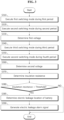
- an electric leakage detection method that may be performed by the electric leakage detection apparatus 100 according to the first embodiment and an electric leakage detection method that may be performed by the electric leakage detection apparatus 200 according to the second embodiment will be described.
- Each electric leakage detection method as described below will start in response to an occurrence of a predetermined event (for example, key-off of the electric vehicle 1).
- step S310 the control unit 160 executes a first switching mode during a first period. Accordingly, during the first period, the capacitor C is charged with the voltage of the first resistor 11.
- step S320 the control unit 160 executes a second switching mode during asecond period. Accordingly, during the second period, the capacitor C is electrically separated from the first switching circuit 110 and the second switching circuit 120 but is electrically connected between the first node N1 and the eighth node N8.
- step S330 the control unit 160 determines a first voltage V 1 based on the digital signal generated by the ADC 150 at the first time point within the second period.
- step S340 the control unit 160 executes a third switching mode during a third period. Accordingly, during the third period, the capacitor C is charged with the voltage of the second resistor 12.
- step S350 the control unit 160 executes the second switching mode during a fourth period. Accordingly, during the second period, the capacitor C is electrically separated from the first switching circuit 110 and the second switching circuit 120 but is electrically connected between the first node N1 and the eighth node N8.
- step S360 the control unit 160 determines a second voltage V 2 based on the digital signal generated by the ADC 150 at the second time point within the fourth period.
- step S370 the control unit 160 determines an insulation resistance R Leak 20 indicating an insulation state (insulation breakdown) between the battery 10 and the chassis 2 based on the first voltage V 1 and the second voltage V 2 (see Equation 3).
- step S380 the control unit 160 determines whether the insulation resistance R Leak is less than the threshold. When a value of the step S380 is "Yes", step S385 may be performed.
- step S385 the control unit 160 determines an electric leakage location of the battery 10 relative to the chassis 2. That is, in the step S385, the control unit 160 determines at least one of the first diagnosis voltage V A or the second diagnosis voltage V B (see Equations 4 and 5), and determines whether the battery 10 is electrically disconnected from the chassis 2.
- the step S385 may be omitted from the method of FIG. 3 . That is, when the value of the step S380 is "Yes", step S390 may be performed.
- step S410 the control unit 260 executes a first switching mode during a first period. Accordingly, during the first period, the first capacitor C 1 is charged with the voltage of the first resistor 31.
- step S440 the control unit 260 executes a third switching mode during a third period. Accordingly, during the third period, the second capacitor C 2 is charged with the voltage of the second resistor 32.
- the step S440 may be performed at the same time as step S420 or S430.
- step S460 the control unit 260 determines a second voltage V 2 based on the second digital signal generated by the ADC 250 at the second time point within the fourth period.
- step S470 the control unit 260 determines an insulation resistance R Leak indicating an insulation state (insulation breakdown) between the battery 10 and the chassis 2 based on the first voltage V 1 and the second voltage V 2 (see Equation 3).
- step S480 the control unit 260 determines whether the insulation resistance R Leak is less than the threshold value. When a value of the step S480 is "Yes", step S485 may be performed.
- step S485 the control unit 260 determines an electric leakage location of the battery 10 relative to the chassis 2. That is, in the step S485, the control unit 260 determines at least one of the first diagnosis voltage V A or the second diagnosis voltage V B (see Equations 4 and 5), and determines a location within the battery 10 that is electrically disconnected from the chassis 2.
- the step S485 may be omitted from the method of FIG.4 . That is, when the value of the step S480 is "Yes", step S490 may be performed.
- step S490 the control unit 260 generates an electric leakage alarm signal.
- FIGS. 3 and 4 show that the steps for determining the first voltage V 1 precede the steps for determining the second voltage V 2 , the steps for determining the second voltage V 2 may precede the steps for determining the first voltage V 1 .
- the embodiments of the present disclosure described hereinabove are not implemented only through the apparatus and method, and may be implemented through programs that realize the functions corresponding to the configurations of the embodiments of the present disclosure or recording media having the programs recorded thereon, and such implementation may be easily achieved by those skilled in the art from the disclosure of the embodiments previously described.
Landscapes
- Engineering & Computer Science (AREA)
- General Physics & Mathematics (AREA)
- Physics & Mathematics (AREA)
- Power Engineering (AREA)
- Sustainable Development (AREA)
- Sustainable Energy (AREA)
- Life Sciences & Earth Sciences (AREA)
- Transportation (AREA)
- Mechanical Engineering (AREA)
- Testing Of Short-Circuits, Discontinuities, Leakage, Or Incorrect Line Connections (AREA)
- Electric Propulsion And Braking For Vehicles (AREA)
- Emergency Protection Circuit Devices (AREA)
- Protection Of Static Devices (AREA)
- Charge And Discharge Circuits For Batteries Or The Like (AREA)
Description
- The present disclosure relates to technology for detection of electric leakage between a battery and chassis.
- Recently, there has been a dramatic increase in demand for portable electronic products such as laptop computers, video cameras and mobile phones, and with the extensive development of electric vehicles, accumulators for energy storage, robots and satellites, many studies are being made on high performance batteries that can be recharged repeatedly.
- Currently, commercially available batteries include nickel-cadmium batteries, nickel-hydrogen batteries, nickel-zinc batteries, lithium batteries and the like, and among them, lithium batteries have little or no memory effect, and thus they are gaining more attention than nickel-based batteries for their advantages that recharging can be done whenever it is convenient, the self-discharge rate is very low and the energy density is high.
- Meanwhile, in some cases, the battery includes a single rechargeable cell, but in many cases, a plurality of batteries is connected in series and/or in parallel to supply high voltage.
- The battery implemented to supply high voltage need to be kept in a fully electrically insulated state from the chassis of an electric vehicle. When insulation breakdown (i.e., an electric leakage) occurs between at least one of a positive terminal or a negative terminal of the battery and the chassis, a flow path of leakage currents is formed between the battery and the chassis, causing a failure or malfunction of an electric device connected to the battery, and especially, accidents such as electric shocks.
- To detect the electric leakage of the battery, it is necessary to measure the voltage between at least two nodes electrically connected to the battery using a voltage detection means. The related art including
Patent Literature 1 uses the chassis as the ground (an electrical location as the reference for voltage measurement) for sampling a voltage value required to determine the electric leakage. Accordingly, when instead of the chassis, the negative terminal of the battery is used as the ground, it is difficult to apply the technology ofPatent Literature 1. - Meanwhile, the related art only detects the electric leakage of the battery but cannot provide a user with information about which part of the battery is in a poor insulation state. Further examples of background art can be found in
US2015168497A1 which describes a leakage detection circuit with integral circuit robustness check and inUS8421466B2 which describes an apparatus and method for sensing leakage current of battery. - (Patent Literature 1)
KR 10-2015-0081988 A (published on July 15, 2015 - The present disclosure is designed to solve the above-described problem, and therefore the present disclosure is directed to providing an electric leakage detection apparatus using the negative terminal of a battery instead of the chassis as the ground for detecting voltage required for electric leakage detection, an electric leakage detection method and an electric vehicle comprising the electric leakage detection apparatus.
- The present disclosure is further directed to providing an electric leakage detection apparatus for determining an electric leakage location in a battery when the electric leakage of the battery is detected, an electric leakage detection method and an electric vehicle comprising the electric leakage detection apparatus.
- These and other objects and advantages of the present disclosure may be understood by the following description and will be apparent from the embodiments of the present disclosure. In addition, it will be easily understood that the objects and advantages of the present disclosure may be realized by the means set forth in the appended claims and a combination thereof.
- An electric leakage detection apparatus suitable for a battery included in an electric vehicle, according to
independent claim 1, includes a first switch connected between a first node suitable for being connected to a negative terminal of the battery and a second node; a second switch connected between a third node suitable for being connected to a positive terminal of the battery and a fourth node; a first resistor connected between a fifth node suitable for being connected to a chassis of the electric vehicle and the second node; a second resistor connected between the fourth node and the fifth node; a capacitor connected between a sixth node and a seventh node; a first switching circuit configured to selectively connect the first resistor to the capacitor in parallel; a second switching circuit configured to selectively connect the resistor to the capacitor in parallel; a third switching circuit provided to selectively connect the capacitor between the first node and an eighth node; an analog-to-digital converter (ADC) configured to generate a digital signal indicating a voltage between the first node and the eighth node; and a control unit operably coupled to the ADC. The control unit is configured to execute a first switching mode during a first period, the first switching mode in which the control unit controls the first switch to an ON state, the second switch to an OFF state, the first switching circuit to the ON state, the second switching circuit to the OFF state, and the third switching circuit to the OFF state. When the first switching mode ends, the control unit is configured to execute a second switching mode during a second period, the second switching mode in which the control unit controls the first switching circuit to the OFF state, the second switching circuit to the OFF state, and the third switching circuit to the ON state. The control unit is configured to determine a first voltage indicating a voltage of the first resistor, based on the digital signal generated by the analog-to-digital converter within the second period. The control unit is configured to execute a third switching mode during a third period, the third switching mode in which the control unit controls the first switch to the OFF state, the second switch to the ON state, the first switching circuit to the OFF state, the second switching circuit to the ON state, and the third switching circuit to the OFF state. When the third switching mode ends, the control unit is configured to execute the second switching mode during a fourth period, the second switching mode in which the control unit controls the first switching circuit to the OFF state, the second switching circuit to the OFF state, and the third switching circuit to the ON state. The control unit is configured to determine a second voltage indicating a voltage of the second resistor, based on the digital signal by the analog-to-digital converter within the fourth period. The control unit is configured to determine occurrence of an electric leakage between the battery and the chassis occurred, based on the first voltage and the second voltage. - The first switching circuit includes a third switch connected between the second node and the sixth node; and a fourth switch connected between the fifth node and the seventh node. The second switching circuit includes a fifth switch connected between the fifth node and the sixth node; a sixth switch connected between the fourth node and the seventh node. The third switching circuit includes a seventh switch connected between the sixth node and the first node; and an eighth switch connected between the seventh node and the eighth node.
- The electric leakage detection apparatus may further include a third resistor electrically connected in series to the first switch between the first node and the second node; and a fourth resistor electrically connected in series to the second switch between the third node and the fourth node.
- A resistance of the first resistor may be equal to a resistance of the second resistor. A resistance of the third resistor may be equal to a resistance of the fourth resistor. The control unit may be configured to determine an insulation resistance indicating an insulation state between the battery and the chassis using a following Equation 1:

- The control unit may be configured to determine a diagnosis voltage indicating an electric leakage location between the battery and the chassis using a following Equation 2:

- An electric leakage detection apparatus suitable for a battery included in an electric vehicle, according to a the independent claim 7, includes a first switch connected between a first node suitable for being connected to a negative terminal of the battery and a second node; a second switch connected between a third node suitable for being connected to a positive terminal of the battery and a fourth node; a first resistor connected between a fifth node suitable for being connected to a chassis of the electric vehicle and the second node; a second resistor connected between the fourth node and the fifth node; a first capacitor connected between a sixth node and a seventh node; a second capacitor connected between an eighth node and a ninth node; a first switching circuit provided to selectively connect the first resistor to the first capacitor in parallel; a second switching circuit provided to selectively connect the second resistor to the second capacitor in parallel; a third switching circuit provided to selectively connect the first capacitor between the first node and a tenth node; a fourth switching circuit provided to selectively connect the second capacitor between the first node and an eleventh node; an ADC configured to generate a first digital signal indicating a voltage between the first node and the tenth node and a second digital signal indicating a voltage between the first node and the eleventh node; and a control unit operably coupled to the ADC. The control unit is configured to execute a first switching mode during a first period, the first switching mode in which the control unit controls the first switch to an ON state, the second switch to an OFF state, the first switching circuit to the ON state, the second switching circuit to the OFF state, and the third switching circuit to the OFF state. When the first switching mode ends, the control unit is configured to execute a second switching mode during a second period, the second switching mode in which the control unit controls the first switching circuit to the OFF state and the third switching circuit to the ON state. The control unit is configured to determine a first voltage indicating a voltage of the first resistor, based on the first digital signal generated within the second period. The control unit is configured to execute a third switching mode during a third period, the third switching mode in which the control units controls the first switch to the OFF state, the second switch to the ON state, the first switching circuit to the OFF state, the second switching circuit to the ON state, and the fourth switching circuit to the OFF state. When the third switching mode ends, the control unit is configured to execute a fourth switching mode during a fourth period, the fourth switching mode in which the control units controls the second switching circuit to the OFF state and the fourth switching circuit to the ON state. The control unit is configured to determine a second voltage indicating a voltage of the second resistor, based on the second digital signal generated within the fourth period. The control unit is configured to determine occurrence of an electric leakage between the battery and the chassis occurred, based on the first voltage and the second voltage.
- The first switching circuit includes a third switch electrically connected between the second node and the sixth node; and a fourth switch electrically connected between the fifth node and the seventh node. The second switching circuit includes a fifth switch electrically connected between the fifth node and the eighth node; and a sixth switch electrically connected between the fourth node and the ninth node. The third switching circuit includes a seventh switch electrically connected between the sixth node and the first node; and an eighth switch electrically connected between the seventh node and the tenth node. The fourth switching circuit includes a ninth switch electrically connected between the fifth node and the eighth node; and a tenth switch electrically connected between the fourth node and the eleventh node.
- The electric leakage detection apparatus may further include a third resistor electrically connected in series to the first switch between the first node and the second node; and a fourth resistor electrically connected in series to the second switch between the third node and the fourth node.
- A resistance of the first resistor may be equal to a resistance of the second resistor. A resistance of the third resistor may be equal to a resistance of the fourth resistor. The control unit may be configured to determine an insulation resistance indicating an insulation state between the battery and the chassis using a following Equation 3:

- The control unit may be configured to determine that an electric leakage between the battery and the chassis occurred, when the insulation resistance is less than a predetermined threshold value.
- The control unit may be configured to determine a diagnosis voltage indicating an electric leakage location between the battery and the chassis, using a following Equation 4:

- An electric vehicle according to another aspect of the present disclosure includes the electric leakage detection apparatus according to the first or second embodiment.
- An electric leakage detection method which is executable by the electric leakage detection apparatus according to the first embodiment, according to still another aspect of the present disclosure, includes executing a first switching mode during a first period, the first switching mode for controlling the first switch to an ON state, the second switch to an OFF state, the first switching circuit to the ON state, the second switching circuit to the OFF state, and the third switching circuit to the OFF state; when the first switching mode ends, executing a second switching mode during a second period, the second switching mode for controlling the first switching circuit to the OFF state, the second switching circuit to the OFF state, and the third switching circuit to the ON state; determining a first voltage indicating a voltage of the first resistor at a first time point, based on the digital signal generated by the ADC at the first time point within the second period; executing a third switching mode during a third period, the third switching mode for controlling the first switch to the OFF state, the second switch to the ON state, the first switching circuit to the OFF state, the second switching circuit to the ON state, and the third switching circuit to the OFF state; when the third switching mode ends, executing the second switching mode during a fourth period, the second switching mode for controlling the first switching circuit to the OFF state, the second switching circuit to the OFF state, and the third switching circuit to the ON state; determining a second voltage indicating a voltage of the second resistor at a second time point, based on the digital signal generated by the ADC at the second time point within the fourth period; and determining occurrence of an electric leakage between the battery and the chassis occurred, based on the first voltage and the second voltage.
- An electric leakage detection method which is executable by the electric leakage detection apparatus according to the second embodiment, according to yet another aspect of the present disclosure, includes executing a first switching mode during a first period, the first switching mode for controlling the first switch to the ON state, the second switch to the OFF state, the first switching circuit to the ON state, the second switching circuit to the OFF state, and the third switching circuit to the OFF state; when the first switching mode ends, executing a second switching mode during a second period, the second switching mode for controlling the first switching circuit to the OFF state, and the third switching circuit to the ON state; determining a first voltage indicating a voltage of the first resistor at a first time point, based on the first digital signal generated at the first time point within the second period; executing a third switching mode during a third period, the third switching mode for controlling the first switch to the OFF state, the second switch to the ON state, the first switching circuit to the OFF state, the second switching circuit to the ON state, and the fourth switching circuit to the OFF state; when the third switching mode ends, executing a fourth switching mode during a fourth period, the fourth switching mode for controlling the second switching circuit to the OFF state, and the fourth switching circuit to the ON state; determining a second voltage indicating a voltage of the second resistor at a second time point, based on the second digital signal generated at the second time point within the fourth period; and determining occurrence of an electric leakage between the battery and the chassis occurred, based on the first voltage and the second voltage.
- According to at least one of the embodiments of the present disclosure, it is possible to detect an electric leakage between a battery and a chassis using the negative terminal of the battery instead of the chassis as the ground for detecting voltage required for electric leakage detection.
- In addition, according to at least one of the embodiments of the present disclosure, it is possible to determine an electric leakage location in a battery when the electric leakage of the battery is detected.
- The effects of the present disclosure are not limited to the above-mentioned effects, and these and other effects will be clearly understood by those skilled in the art from the appended claims.
- The accompanying drawings illustrate a preferred embodiment of the present disclosure, and together with the detailed description of the present disclosure described below, serve to provide a further understanding of the technical aspects of the present disclosure, and thus the present disclosure should not be construed as being limited to the drawings.
-
FIG. 1 is a diagram exemplarily showing a configuration of an electric vehicle including an electric leakage detection apparatus according to a first embodiment of the present disclosure. -
FIG. 2 is a diagram exemplarily showing a configuration of an electric vehicle including an electric leakage detection apparatus according to a second embodiment of the present disclosure. -
FIG. 3 is a flowchart exemplarily showing an electric leakage detection method that may be performed by the electric leakage detection apparatus according to the first embodiment as shown inFIG. 1 . -
FIG. 4 is a flowchart exemplarily showing an electric leakage detection method that may be performed by the electric leakage detection apparatus according to the second embodiment as shown inFIG. 2 . - Hereinafter, the preferred embodiments of the present disclosure will be described in detail with reference to the accompanying drawings. Prior to the description, it should be understood that the terms or words used in the specification and the appended claims should not be construed as being limited to general and dictionary meanings, but rather interpreted based on the meanings and concepts corresponding to the technical aspects of the present disclosure on the basis of the principle that the inventor is allowed to define the terms appropriately for the best explanation.
- Therefore, the embodiments described herein and illustrations shown in the drawings are just a most preferred embodiment of the present disclosure, but not intended to fully describe the technical aspects of the present disclosure, so it should be understood that a variety of other equivalents and modifications could have been made thereto at the time that the application was filed.
- The terms including the ordinal number such as "first", "second" and the like, are used to distinguish one element from another among various elements, but not intended to limit the elements by the terms.
- Unless the context clearly indicates otherwise, it will be understood that the term "comprises" when used in this specification, specifies the presence of stated elements, but does not preclude the presence or addition of one or more other elements. Additionally, the term "control unit" as used herein refers to a processing unit of at least one function or operation, and may be implemented by hardware or software alone or in combination.
- In addition, throughout the specification, it will be further understood that when an element is referred to as being "connected to" another element, it can be directly connected to the other element or intervening elements may be present.
FIG. 1 is a diagram exemplarily showing a configuration of an electric vehicle including an electric leakage detection apparatus according to a first embodiment of the present disclosure. - Referring to
FIG. 1 , theelectric vehicle 1 includes a chassis 2, aninverter 3,anelectric motor 4, abattery 10 and an electricleakage detection apparatus 100. For convenience of description, the illustration of a relay which opens and closes a power path between thebattery 10 and theinverter 3 is omitted. - The
inverter 3 is provided to convert direct current (DC) from the battery to alternating current (AC) in response to a command from the electricleakage detection apparatus 100. Theelectric motor 4 is a 3-phase AC motor, and operates with the AC produced by theinverter 3. Theelectric vehicle 1 travels by the driving power produced during the operation of theelectric motor 4. - The
battery 10 includes a plurality of battery cells B1~Bn connected in series between a negative terminal P1 and a positive terminal P2. n is a natural number of 2 or greater. i is a natural number of 1~(n-1). The plurality of battery cells B1~Bn may include repeatedly rechargeable ones such as lithium ion cells, and is not limited to a particular type. When x and y are natural numbers and 1 < x < y < n, the battery cell Bx may be disposed at further downstream side than the battery cell By, and the battery cell By may be disposed at further upstream side than the battery cell Bx. The negative terminal P1 may be a negative terminal of the battery cell B1. The positive terminal P2 may be a positive terminal of the battery cell Bn. - The electric
leakage detection apparatus 100 is provided to be electrically connected to the negative terminal Pi, the positive terminal P2 and the chassis 2.
RLeak shown inFIG. 1 is virtual resistance (hereinafter referred to as 'insulation resistance') indicating how well thebattery 10 is insulated from the chassis 2. While an electric leakage does not occur in thebattery 10, the insulation resistance RLeak has a very large value beyond a predetermined threshold value. On the contrary, when a short between a specific location (for example, '11', '12' or 'B') of thebattery 10 and the chassis 2 is formed (i.e., when an electric leakage occurs in the battery 10) due to infiltration of moisture from the outside or water leakage in thebattery 10, the insulation resistance RLeak will have a very small value that is equal to or less than the threshold value. - Here, the threshold value may be a preset value to prevent an electric shock accident. The electric
leakage detection apparatus 100 includes first to eighth nodes N1, N2, N3, N4, N5, N6, N7, N8, a first resistor 11, a second resistor 12, afirst switch 21, asecond switch 22, a capacitor C, afirst switching circuit 110, asecond switching circuit 120, athird switching circuit 130, an analog-to-digital converter (ADC) 150 and acontrol unit 160. The electricleakage detection apparatus 100 may further include athird resistor 13 and afourth resistor 14. - The first to eighth nodes N1-N8 may be part of a conductor such as a busbar or a wire for electrical connection between each component of the electric
leakage detection apparatus 100, and thebattery 10 and the chassis 2. Thefirst switch 21 is electrically connected between the first node N1 and the second node N2. The first node N1 has the same potential as the negative terminal P1 of thebattery 10. Thethird resistor 13 may be electrically connected in series to thefirst switch 21 between the first node N1 and the second node N2. That is, one end of thethird resistor 13 and one end of thefirst switch 21 are connected in common, and any one of the other end of thethird resistor 13 and the other end of thefirst switch 21 is electrically connected to the first node N1, and the other is electrically connected to the second node N2. Thethird resistor 13 is provided to prevent an inrush current when thefirst switch 21 is controlled to an ON state. While thefirst switch 21 is controlled to the ON state in response to a first switching signal S1 from thecontrol unit 160, the first node N1 is electrically connected to the fifth node N5 through thefirst switch 21, thethird resistor 13 and the first resistor 11. - The
second switch 22 is electrically connected between the third node N3 and the
fourth node N4. The third node N3 has the same potential as the positive terminal of thebattery 10. Thefourth resistor 14 may be electrically connected in series to thesecond switch 22 between the third node N3 and the fourth node N4. That is, one end of thefourth resistor 14 and one end of thesecond switch 22 are connected in common, and any one of the other end of thefourth resistor 14 and the other end of thesecond switch 22 is electrically connected to the third node N3, and the other is electrically connected to the fourth node N4. Thefourth resistor 14 is provided to prevent an inrush current when thesecond switch 22 is controlled to the ON state. The resistance of thethird resistor 13 may be equal to the resistance of thefourth resistor 14. While thesecond switch 22 is controlled to the ON state in response to a second switching signal S2 from thecontrol unit 160, the third node N3 is electrically connected to the fifth node N5 through thesecond switch 22, thefourth resistor 14 and the second resistor 12. - The first resistor 11 is electrically connected between the second node N2 and the fifth node N5. The fifth node N5 is a node that is electrically connected to the chassis 2 of the
electric vehicle 1 and has the same potential as the chassis 2.
The second resistor 12 is electrically connected between the fourth node N4 and the fifth node N5. That is, the first resistor 11 and the second resistor 12 are electrically connected in series through the fifth node N5 between the second node N2 and the fourth node N4. - The resistance of the first resistor 11 may be equal to the resistance of the second resistor 12. The resistance of the
third resistor 13 may be a few to a few hundred times higher than the resistance of the first resistor 11. - The
first switching circuit 110 is provided to selectively electrically connect the
first resistor 11 to the capacitor C in parallel. Thefirst switching circuit 110 may include a third switch 111 and afourth switch 112. The third switch 111 is electrically connected between the second node N2 and the sixth node N6. Thefourth switch 112 is electrically connected between the fifth node N5 and the seventh node N7. Thefirst switching circuit 110 in the ON state indicates each of the third switch 111 and thefourth switch 112 in the ON state in response to a third switching signal S3 and a fourth switching signal S4. Thefirst switching circuit 110 in an OFF state indicates at least one of the third switch 111 or thefourth switch 112 in an OFF state. While thefirst switching circuit 110 is in the ON state, the first resistor 11 is electrically connected in parallel to the capacitor C, so voltage equal to the voltage applied to the first resistor 11 is charged across the capacitor C. - The
second switching circuit 120 is provided to selectively electrically connect the second resistor 12 to the capacitor C in parallel. Thesecond switching circuit 120 may include afifth switch 121 and asixth switch 122. Thefifth switch 121 is electrically connected between the fifth node N5 and the sixth node N6. Thesixth switch 122 is electrically connected between the fourth node N4 and the seventh node N7. Thesecond switching circuit 120 in the ON state indicates thefifth switch 121 and thesixth switch 122 in the ON state in response to a fifth switching signal S5 and a sixth switching signal S6 respectively. Thesecond switching circuit 120 in the OFF state indicates at least one of thefifth switch 121 or thesixth switch 122 in the OFF state. While thesecond switching circuit 120 is in the ON state, the second resistor 12 is electrically connected in parallel to the capacitor C, so voltage equal to the voltage applied to the second resistor 12 is charged across the capacitor C.
Thethird switching circuit 130 is provided to selectively electrically connect the capacitor C between the first node N1 and the eighth node N8. Thethird switching circuit 130 may include aseventh switch 131 and aneighth switch 132. Theseventh switch 131 is electrically connected between the sixth node N6 and the first node N1. Theeighth switch 132 is electrically connected between the seventh node N7 and the eighth node N8. Thethird switching circuit 130 in the ON state indicates theseventh switch 131 and theeighth switch 132 in the ON state in response to a seventh switching signal S7 and an eighth switching signal S8 respectively. Thethird switching circuit 130 in the OFF state indicates at least one of theseventh switch 131 or theeighth switch 132 in the OFF state. While thethird switching circuit 130 is in the ON state, the capacitor C is electrically connected in parallel between the first node N1 and the eighth node N8, so voltage that is equal to the voltage applied to the capacitor C is provided as input of theADC 150. - The
first switch 21, thesecond switch 22, the third switch 111, thefourth switch 112, thefifth switch 121, thesixth switch 122, theseventh switch 131 and theeighth switch 132 may be known switching devices such as Metal Oxide Semiconductor Field Effect Transistors (MOSFETs). - The
ADC 150 is electrically connected to the first node N1 and the eighth node N8 through a pair of input terminals I1, I2. That is, one input terminal is electrically connected to the first node N1 and the other input terminal is electrically connected to the eighth node N8. TheADC 150 is configured to generate a digital signal indicating voltage between the first node N1 and the eighth node N8 provided as input voltage using the first node N1 having the same potential as the negative terminal P1 as the ground. - The
control unit 160 may be implemented in hardware using at least one of application specific integrated circuits (ASICs), digital signal processors (DSPs), digital signal processing devices (DSPDs), programmable logic devices (PLDs), field programmable gate arrays (FPGAs), microprocessors or electrical units for performing other functions. Thecontrol unit 160 may include a memory embedded therein. The memory may store programs and data required for performing a method as described below. The memory may include, for example, at least one type of storage medium of flash memory type, hard disk type, Solid State Disk (SSD) type, Silicon Disk Drive (SDD) type, multimedia card micro type, random access memory (RAM), static random access memory (SRAM), read-only memory (ROM), electrically erasable programmable read-only memory (EEPROM) or programmable read-only memory (PROM)
Thecontrol unit 160 is operably coupled to theinverter 3, thefirst switch 21, thesecond switch 22, thefirst switching circuit 110, thesecond switching circuit 120, thethird switching circuit 130 and theADC 150. Thecontrol unit 160 may selectively output each of the first to eighth switching signals S1~S8 to independently control the first switch thesecond switch 22, thefirst switching circuit 110, thesecond switching circuit 120 and thethird switching circuit 130. That is, each of thefirst switch 21, the second switch thefirst switching circuit 110, thesecond switching circuit 120 and thethird switching circuit 130 may be controlled to the ON or OFF state. - The value indicating the resistance of each of the first resistor 11, the second resistor 12, the
third resistor 13 and thefourth resistor 14 is pre-stored in the memory. While thefirst switch 21 has the ON state, a ratio of voltage of the first resistor 11 to voltage between the first node N1 and the fifth node N5 is equal to a ratio of resistance of the first resistor 11 to the sum of resistance of the first resistor 11 and thethird resistor 13. For example, when the voltage between the first node N1 and the fifth node N5 is 200V, the resistance of thethird resistor 13 is 5.98MΩ and the resistance of the first resistor 11 is 0.02MS2, the voltage of the first resistor 11 is 200×0.02/(5.98+0.02) V. While thesecond switch 22 has the ON state, a ratio of voltage of the second resistor 12 to voltage between the third node N3 and the fifth node N5 is equal to a ratio of resistance of the second resistor 12 to the sum of resistance of the second resistor 12 and thefourth resistor 14. - While the
control unit 160 is executing a first switching mode, thecontrol unit 160 controls thefirst switch 21 to the ON state, thesecond switch 22 to the OFF state, thefirst switching circuit 110 to the ON state, thesecond switching circuit 120 to the OFF state, and thethird switching circuit 130 to the OFF state. - When the
control unit 160 is executing a second switching mode, thecontrol unit 160 controls thefirst switching circuit 110 to the OFF sate, thesecond switching circuit 120 to the OFF state, and thethird switching circuit 130 to the ON state. In the second switching mode, thefirst switch 21 and thesecond switch 22 may be controlled to the OFF state. - When the
control unit 160 is executing a third switching mode, thecontrol unit 160 controls thefirst switch 21 to the OFF state, thesecond switch 22 to the ON state, thefirst switching circuit 110 to the OFF state, thesecond switching circuit 120 to the ON state, and thethird switching circuit 130 to the OFF state. - The
control unit 160 may execute the first switching mode during a first period, and then execute the second switching mode during a second period. Thecontrol unit 160 may determine a first voltage based on the digital signal generated by theADC 150 at a first time point within the second period. The first voltage indicates voltage across the first resistor 11 at the first time point. - The
control unit 160 may execute the third switching mode during a third period, and then execute the second switching mode during a fourth period. Thecontrol unit 160 may determine a second voltage based on the digital signal generated by theADC 150 at a second time point within the fourth period. The second voltage indicates voltage across the second resistor 12 at the second time point. - Before or after determining the first voltage and the second voltage, the
control unit 160 may determine the voltage of thebattery 10 by executing a fourth switching mode during a fifth period and then executing the second switching mode during a sixth period. When thecontrol unit 160 executes the fourth switching mode, thecontrol unit 160 controls thefirst switch 21 to the ON state, thesecond switch 22 to the ON state, thefirst switching circuit 110 to the ON state, thesecond switching circuit 120 to the OFF state, and thethird switching circuit 130 to the OFF state. Thecontrol unit 160 may determine the voltage of thebattery 10 based on the digital signal generated by theADC 150 at a third time point within the sixth period. For example, the digital signal at the third time point indicates that the voltage of the capacitor C is 10V, and when the resistance of the first tofourth resistors battery 10 = {2(R1+R3)}/ R1×10 V. - Alternatively, before or after determining the first voltage and the second voltage, the
control unit 160 may measure the voltage of each of the plurality of battery cells B1-Bn and the voltage (hereinafter referred to as 'VBatt') of thebattery 10 using a voltage detection circuit (not shown, included in the electric leakage detection apparatus 100) electrically connected to each of the plurality of battery cells B1-Bn. - The time length of each of the first period, the second period, the third period, the fourth period, the fifth period and the sixth period may be preset. Additionally, a time difference between the start time of the earliest one of the first period, the second period, the third period, the fourth period, the fifth period and the sixth period and the end time of the last one may be equal to or smaller than a preset diagnostic execution time.
- As shown in
FIG. 1 , assume that a connection point PLeak between the battery cell Bi and the battery cell Bi+i is electrically shorted to the chassis 2. The connection point PLeak may be an electric leakage location between thebattery 10 and the chassis 2. The connection point PLeak between the battery cell Bi and the battery cell Bi+i is a connection point between the positive terminal of the battery cell Bi and the negative terminal of the battery cell Bi+1. - When the voltage of the first resistor 11 is equal to the voltage of the capacitor C while the
control unit 160 is executing the first switching mode, a closed loop circuit is formed by the connection point PLeak, the insulation resistance RLeak, the chassis 2, the first resistor 11, thefirst switch 21, thethird resistor 13, the negative terminal P1 and the battery cells B1-Bi. - The voltage across the
first switch 21 is so low to be negligible. Accordingly, the voltage VA between the connection point PLeak and the negative terminal Pi, the insulation resistance RLeak and the first voltage have a relationship of the followingEquation 1.
- When the voltage of the second resistor 12 is equal to the voltage of the capacitor C while the
control unit 160 is executing the third switching mode, a closed loop circuit is formed by the positive terminal P2, thefourth resistor 14, thesecond switch 22, the second resistor 12, the chassis 2, the insulation resistance RLeak, the connection point PLeak and the battery cells Bi+1~Bn. - The voltage across the
second switch 22 is so low to be negligible. Accordingly, when the resistance of the first resistor 11 is equal to the resistance of the second resistor 12 and the resistance of thethird resistor 13 is equal to the resistance of thefourth resistor 14, the voltage VB between the positive terminal P2 and the connection point PLeak, the insulation resistance RLeak and the second voltage have a relationship of the following Equation 2.
- In
Equations 1 and 2, V1 is the first voltage, V2 is the second voltage, R1 is the resistance of the first resistor 11, and R3 is the resistance of thethird resistor 13. - In
Equations 1 and 2, only VA, VB and RLeak are unknown. When the voltage across thebattery 10 is VBatt, VBatt = VA + VB. Accordingly, the followingEquations 3 to 5 are derived fromEquations 1 and 2.


- When the insulation resistance RLeak is less than the predetermined threshold value, the
control unit 160 may determine that an electric leakage between thebattery 10 and the chassis 2 occurred, and generate an electric leakage alarm signal. InEquations 4 and 5, the voltage VA and the voltage VB indicate the electric leakage location of thebattery 10 relative to the chassis 2, and may be referred to as 'a first diagnosis voltage' and 'a second diagnosis voltage' respectively. - When the first diagnosis voltage VA is equal to or higher than the sum of voltage of the first to ith battery cells Bi-Bi and less than the sum of voltage of the first to i+1th 15 battery cells Bi-Bi+i, the
control unit 160 may determine the connection point PLeak between the battery cell Bi and the battery cell Bi+i as the electric leakage location. - When the second diagnosis voltage VB is equal to or higher than the sum of voltage of the i+1th to nth battery cells Bi+1-Bn and less than the sum of voltage of the ith to nth battery cells Bi-Bn, the
control unit 160 may determine the connection point PLeak between the battery cell Bi and the battery cell Bi+i as the electric leakage location. - When the first diagnosis voltage VA is 0V and the second diagnosis voltage VB is higher than 0V, the
control unit 160 may determine the negative terminal P1 as the electric leakage location. When the first diagnosis voltage VA is higher than 0V and the second diagnosis voltage VB is 0V, thecontrol unit 160 may determine the positive terminal P2 as the electric leakage location. When the first diagnosis voltage VA is 0V and the second diagnosis voltage VB is 0V, thecontrol unit 160 may determine that the electricleakage detection apparatus 100 is faulty. - The electric
leakage detection apparatus 100 may further includes aninterface unit 170. Theinterface unit 170 may include at least one of a display or a speaker to output the electric leakage alarm signal from thecontrol unit 160 into a signal in a format that can be recognized by a user. The electric leakage alarm signal may include information indicating the electric leakage location. -
FIG. 2 is a diagram exemplarily showing a configuration of an electric vehicle including an electric leakage detection apparatus according to a second embodiment of the present disclosure. The chassis 2, theinverter 3, theelectric motor 4 and thebattery 10 shown inFIG. 2 are the same as those described with reference toFIG. 1 and redundant descriptions are omitted herein. - The electric
leakage detection apparatus 200 according to the second embodiment using two capacitors Ci, Cz to measure voltage values Vi, V2 required for electric leakage detection is different from the electricleakage detection apparatus 100 according to the first embodiment using a single capacitor C. - Referring to
FIG. 2 , the electricleakage detection apparatus 200 according to the second embodiment includes first to eleventh nodes M1, M2, M3, M4, M5, M6, M7, M8, M9, M10, M11, a first resistor 31, a second resistor 32, afirst switch 41, asecond switch 42, a first capacitor Ci, a second capacitor C2, afirst switching circuit 210, asecond switching circuit 220, athird switching circuit 230, afourth switching circuit 240, anADC 250 and acontrol unit 260. The electricleakage detection apparatus 200 may further include athird resistor 33 and afourth resistor 34. The first to eleventh nodes M1~M11 may be part of a conductor such as a busbar or a wire for electrical connection between each component of the electricleakage detection apparatus 200, thebattery 10 and the chassis 2. - The
first switch 41 is electrically connected between the first node M1 and the second node M2. The first node M1 has the same potential as the negative terminal P1 of thebattery 10. Thethird resistor 33 may be electrically connected in series to thefirst switch 41 between the first node M1 and the second node M2. That is, one end of thethird resistor 33 and one end of thefirst switch 41 are connected in common, and any one of the other end of thethird resistor 33 and the other end of thefirst switch 41 is electrically connected to the first node M1 and the other is electrically connected to the second node M2. Thethird resistor 33 is provided to prevent an inrush current when thefirst switch 41 is controlled to the ON state. While thefirst switch 41 is controlled to the ON state in response to a first switching signal S1 from thecontrol unit 260, the first node M1 is electrically connected to the fifth node M5 through thefirst switch 41, thethird resistor 33 and the first resistor 31. - The
second switch 42 is electrically connected between the third node M3 and the fourth node M4. The third node M3 has the same potential as the positive terminal P2 of thebattery 10. Thefourth resistor 34 may be electrically connected in series to thesecond switch 42 between the third node M3 and the fourth node M4. That is, one end of thefourth resistor 34 and one end of thesecond switch 42 are connected in common, and any one of the other end of thefourth resistor 34 and the other end of thesecond switch 42 is electrically connected to the third node M3 and the other is electrically connected to the fourth node M4. Thefourth resistor 34 is provided to prevent an inrush current when thesecond switch 42 is controlled to the ON state. The resistance of thethird resistor 33 may be equal to the resistance of thefourth resistor 34. While thesecond switch 42 is controlled to the ON state in response to a second switching signal S2 from thecontrol unit 260, the third node M3 is electrically connected to the fifth node M5 through thesecond switch 42, thefourth resistor 34 and the second resistor 32. - The first resistor 31 is electrically connected between the second node M2 and the fifth node M5. The fifth node M5 is a node that is electrically connected to the chassis 2 of the
electric vehicle 1 and has the same potential as the chassis 2. - The second resistor 32 is electrically connected between the fourth node M4 and the fifth node M5. That is, the first resistor 31 and the second resistor 32 are electrically connected in series through the fifth node M5 between the second node M2 and the fourth node M4.
- The resistance of the first resistor 31 may be equal to the resistance of the second resistor 32. The resistance of the
third resistor 33 may be a few to a few hundred times higher than the resistance of the first resistor 31. The capacitance of the first capacitor C1 may be equal to the capacitance of the second capacitor C2. - The
first switching circuit 210 is provided to selectively electrically connect the first resistor 31 to the first capacitor C1 in parallel. Thefirst switching circuit 210 may include athird switch 211 and afourth switch 212. Thethird switch 211 is electrically connected between the second node M2 and the sixth node M6. Thefourth switch 212 is electrically connected between the fifth node M5 and the seventh node M7. Thefirst switching circuit 210 in the ON state indicates thethird switch 211 and thefourth switch 212 in the ON state in response to a third switching signal S3 and a fourth switching signal S4 respectively. Thefirst switching circuit 210 in the OFF state indicates at least one of thethird switch 211 or thefourth switch 212 in the OFF state. While thefirst switching circuit 210 is in the ON state, the first resistor 31 is electrically connected in parallel to the first capacitor Ci, so voltage equal to the voltage applied to the first resistor 31 is charged across of the first capacitor C1. - The
second switching circuit 220 is provided to selectively electrically connect the second resistor 32 to the second capacitor C2 in parallel. Thesecond switching circuit 220 may include a fifth switch 221 and asixth switch 222. The fifth switch 221 is electrically connected between the fifth node M5 and the eighth node M8. Thesixth switch 222 is electrically connected between the fourth node M4 and the ninth node M9. - The
second switching circuit 220 in the ON state indicates the fifth switch 221 and thesixth switch 222 in the ON state in response to a fifth switching signal S5 and a sixth switching signal S6 respectively. Thesecond switching circuit 220 in the OFF state indicates at least one of the fifth switch 221 or thesixth switch 222 in the OFF state. While thesecond switching circuit 220 is in the ON state, the second resistor 32 is electrically connected in parallel to the second capacitor C2, so voltage equal to the voltage applied to the second resistor 32 is charged across the second capacitor C2. - The
third switching circuit 230 is provided to selectively electrically connect the first capacitor C1 between the first node M1 and the tenth node M10. Thethird switching circuit 230 may include aseventh switch 231 and aneighth switch 232. Theseventh switch 231 is electrically connected between the sixth node M6 and the first node M1. Theeighth switch 232 is electrically connected between the seventh node M7 and the tenth node M10. Thethird switching circuit 230 in the ON state indicates theseventh switch 231 and theeighth switch 232 in the ON state in response to a seventh switching signal S7 and an eighth switching signal S8 respectively. Thethird switching circuit 230 in the OFF state indicates at least one of theseventh switch 231 or theeighth switch 232 in the OFF state. While thethird switching circuit 230 is in the ON state, the first capacitor C1 is electrically connected in parallel between the first node M1 and the tenth node M10, so voltage equal to the voltage applied to the first capacitor C1 is provided to a first input of theADC 250. - The
fourth switching circuit 240 is provided to selectively electrically connect the second capacitor C2 between the first node M1 and the eleventh node M11. Thefourth switching circuit 240 may include aninth switch 241 and atenth switch 242. Theninth switch 241 is electrically connected between the eighth node M8 and the first node M1. Thetenth switch 242 is electrically connected between the ninth node M9 and the eleventh node M11. Thefourth switching circuit 240 in the ON state indicates theninth switch 241 and thetenth switch 242 in the ON state in response to a ninth switching signal S9 and a tenth switching signal S10 respectively. Thefourth switching circuit 240 in the OFF state indicates at least one of theninth switch 241 or thetenth switch 242 in the OFF state. While thefourth switching circuit 240 is in the ON state, the second capacitor C2) is electrically connected in parallel between the first node M1 and the eleventh node M11, so voltage equal to the voltage applied to the second capacitor C2 is provided as a second input of theADC 250. - The
first switch 41, thesecond switch 42, thethird switch 211, thefourth switch 212, the fifth switch 221, thesixth switch 222, theseventh switch 231, theeighth switch 232, theninth switch 241 and thetenth switch 242 may be well-known switching devices such as Metal Oxide Semiconductor Field Effect Transistors ((MOSFETs). - The
ADC 250 includes four input terminals I1, I2, I3, I4. Each of the input terminal I1 and the input terminal I3 is electrically connected to the first node M1, the input terminal I2 is electrically connected to the tenth node M10, and the input terminal I4 is electrically connected to the eleventh node M11. TheADC 250 is configured to selectively generate a first digital signal indicating the voltage between the first node M1 and the tenth node M10 provided as the first input and a second digital signal indicating the voltage between the first node M1 and the eleventh node M11 provided as the second input, using the first node M1 having the same potential as the negative terminal P1 as the ground. - The
control unit 260 may be configured substantially equally to thecontrol unit 160 shown inFIG. 1 . Thecontrol unit 260 is operably coupled to theinverter 3, thefirst switch 41, thesecond switch 42, thefirst switching circuit 210, thesecond switching circuit 220, thethird switching circuit 230, thefourth switching circuit 240 and theADC 250. Thecontrol unit 260 may selectively output each of the first to tenth switching signals S1~S10, to independently control thefirst switch 41, thesecond switch 42, thefirst switching circuit 210, thesecond switching circuit 220, thethird switching circuit 230 and thefourth switching circuit 240. That is, each of thefirst switch 41, thesecond switch 42, thefirst switching circuit 210, thesecond switching circuit 220, thethird switching circuit 230 and thefourth switching circuit 240 may be controlled to the ON state or the OFF state. The value indicating the resistance of each of the first resistor 31, the second resistor 32, thethird resistor 33 and thefourth resistor 34 may be pre-stored in the memory. The first resistor 31, the second resistor 32, the first resistor 11 and the second resistor 12 may have equal resistance. Thethird resistor 33, thefourth resistor 34, thethird resistor 13 and thefourth resistor 14 may have equal resistance. - While the
first switch 41 has the ON state, a ratio of voltage of the first resistor 31 to voltage between the first node M1 and the fifth node M5 is equal to a ratio of resistance of the first resistor 31 to the sum of resistance of the first resistor 31 and thethird resistor 33. - While the
second switch 42 has the ON state, a ratio of voltage of the second resistor 32 to voltage between the third node M3 and the fifth node M5 is equal to a ratio of resistance of the second resistor 32 to the sum of resistance of the second resistor 32 and thefourth resistor 34. - The first switching mode is a mode for charging the first capacitor C1 with the voltage across the first resistor 31. When the
control unit 260 executes the first switching mode, thecontrol unit 260 controls thefirst switch 41 to the ON state, thesecond switch 42 to the OFF state, thefirst switching circuit 210 to the ON state, thesecond switching circuit 220 to the OFF state, and thethird switching circuit 230 to the OFF state. When thecontrol unit 260 executes the first switching mode, thecontrol unit 260 may control thefourth switching circuit 240 to the ON or OFF state. - The second switching mode is a mode for detecting the voltage across the first capacitor C1. When the
control unit 260 executes the second switching mode, thecontrol unit 260 controls thefirst switching circuit 210 to the OFF state and thethird switching circuit 230 to the ON state. When thecontrol unit 260 executes the second switching mode, thecontrol unit 260 may control each of thefirst switch 41, thesecond switch 42, thesecond switching circuit 220 and thefourth switching circuit 240 to the ON or OFF state. - The third switching mode is a mode for charging the second capacitor C2 with the voltage across the second resistor 32. When the
control unit 260 executes the third switching mode, thecontrol unit 260 controls thefirst switch 41 to the OFF state, thesecond switch 42 to the ON state, thefirst switching circuit 210 to the OFF state, thesecond switching circuit 220 to the ON state, and thefourth switching circuit 240 to the OFF state. When thecontrol unit 260 executes the third switching mode, thecontrol unit 260 may control thethird switching circuit 230 to the ON or OFF state.The fourth switching mode is a mode for detecting the voltage across the second capacitor C2. When thecontrol unit 260 executes the fourth switching mode, thecontrol unit 260 controls thesecond switching circuit 220 to the OFF state and thefourth switching circuit 240 to the ON state. When thecontrol unit 260 executes the fourth switching mode, thecontrol unit 260 may control each of thefirst switch 41, thesecond switch 42, thefirst switching circuit 210 and thethird switching circuit 230 to the ON or OFF state. - The
control unit 260 may execute the first switching mode during the first period, and then execute the second switching mode during the second period. Thecontrol unit 260 may determine a first voltage based on the first digital signal generated by theADC 250 at the first time point within the second period. The first voltage indicates voltage V1 across the first resistor 31 at the first time point. - The
control unit 260 may execute the third switching mode during the third period, and then execute the fourth switching mode during the fourth period. Thecontrol unit 260 may determine a second voltage based on the second digital signal generated by theADC 250 at the second time point within the fourth period. The second voltage indicates voltage V2 across the second resistor 32 at the second time point. - The four switching modes may be executed in the order of the first switching mode, the second switching mode, the third switching mode and the fourth switching mode. In this case, the second period and the third period may be equal or may overlap at least in part. While the voltage across the first capacitor C1 is detected, the second capacitor C2 may be charged with the voltage across the second resistor 32.
- Alternatively, the four switching modes may be executed in the order of the third switching mode, the fourth switching mode, the first switching mode and the second switching mode. In this case, the fourth period and the first period may be equal or may overlap at least in part. While the voltage across the second capacitor C2 is detected, the first capacitor C1 may be charged with the voltage across the first resistor 31.
- Before or after determining the first voltage and the second voltage, the
control unit 260 may determine the voltage VBatt of thebattery 10 by executing a fifth switching mode during the fifth period and then executing the second switching mode during the sixth period. When thecontrol unit 260 executes the fifth switching mode, thecontrol unit 260 controls thefirst switch 41 to the ON state, thesecond switch 42 to the ON state, thefirst switching circuit 210 to the ON state, thesecond switching circuit 220 to the OFF state, thethird switching circuit 230 to the OFF state, and thefourth switching circuit 240 to the OFF state. Thecontrol unit 260 may determine the voltage VBatt of thebattery 10 based on the first digital signal generated by theADC 250 at the third time point within the sixth period. - Alternatively, before or after determining the first voltage and the second voltage, the
control unit 260 may measure the voltage of each of the plurality of battery cells B1~Bn and the voltage of thebattery 10 using the voltage detection circuit (not shown, included in the electric leakage detection apparatus 200) electrically connected to each of the plurality of battery cells B1~Bn. - The time length of each of the first period, the second period, the third period, the fourth period, the fifth period and the sixth period may be preset. Additionally, a time difference between the start time of the earliest one of the first period, the second period, the third period, the fourth period, the fifth period and the sixth period and the end time of the last one may be equal to or smaller than the preset diagnostic execution time. As shown in
FIG. 2 , assume that the connection point PLeak between the battery cell Bi and the battery cell Bi+1 is electrically shorted to the chassis 2. - When the voltage of the first resistor 31 is equal to the voltage of the first capacitor C1 while the
control unit 260 is executing the first switching mode, a closed loop circuit is formed by the connection point PLeak, the insulation resistance RLeak, the chassis 2, the first resistor 31, thefirst switch 41, thethird resistor 33, the negative terminal P1 and the battery cells B1~Bi. Accordingly, the voltage VA between the connection point PLeak and the negative terminal Pi, the insulation resistance RLeak and the first voltage V1 have a relationship of the above-describedEquation 1. - When the voltage of the second resistor 32 is equal to the voltage of the second capacitor C2 while the
control unit 260 is executing the third switching mode, a closed loop circuit is formed by the positive terminal P2, thefourth resistor 34, thesecond switch 42, the second resistor 32, the chassis 2, the insulation resistance RLeak, the connection point Pleak and the battery cells Bi+1~Bn. Accordingly, when the resistance of each of the first resistor 31 and the second resistor 32 is R1 and the resistance of each of thethird resistor 33 and thefourth resistor 34 is R3, the voltage VB between the positive terminal P2 and the connection point Pleak, the insulation resistance RLeak and the second voltage V2 have a relationship of the above-described Equation 2. Accordingly, the above-describedEquations 3 to 5 are also applied to the electricleakage detection apparatus 200 according to the second embodiment in common. - When the insulation resistance RLeak is less than the predetermined threshold value, the
control unit 260 may determine that an electric leakage between thebattery 10 and the chassis occurred, and generate an electric leakage alarm signal. Hereinafter, an electric leakage detection method that may be performed by the electricleakage detection apparatus 100 according to the first embodiment and an electric leakage detection method that may be performed by the electricleakage detection apparatus 200 according to the second embodiment will be described. Each electric leakage detection method as described below will start in response to an occurrence of a predetermined event (for example, key-off of the electric vehicle 1). -
FIG. 3 is a flowchart exemplarily showing the electric leakage detection method that may be performed by the electric leakage detection apparatus according to the first embodiment as shown inFIG. 1 . - Referring to
FIGS. 1 and3 , in step S310, thecontrol unit 160 executes a first switching mode during a first period. Accordingly, during the first period, the capacitor C is charged with the voltage of the first resistor 11. - In step S320, the
control unit 160 executes a second switching mode during asecond period. Accordingly, during the second period, the capacitor C is electrically separated from thefirst switching circuit 110 and thesecond switching circuit 120 but is electrically connected between the first node N1 and the eighth node N8. - In step S330, the
control unit 160 determines a first voltage V1 based on the digital signal generated by theADC 150 at the first time point within the second period. In step S340, thecontrol unit 160 executes a third switching mode during a third period. Accordingly, during the third period, the capacitor C is charged with the voltage of the second resistor 12.In step S350, thecontrol unit 160 executes the second switching mode during a fourth period. Accordingly, during the second period, the capacitor C is electrically separated from thefirst switching circuit 110 and thesecond switching circuit 120 but is electrically connected between the first node N1 and the eighth node N8. In step S360, thecontrol unit 160 determines a second voltage V2 based on the digital signal generated by theADC 150 at the second time point within the fourth period. In step S370, thecontrol unit 160 determines an insulation resistance RLeak 20 indicating an insulation state (insulation breakdown) between thebattery 10 and the chassis 2 based on the first voltage V1 and the second voltage V2 (see Equation 3). In step S380, thecontrol unit 160 determines whether the insulation resistance RLeak is less than the threshold. When a value of the step S380 is "Yes", step S385 may be performed. - In step S385, the
control unit 160 determines an electric leakage location of thebattery 10 relative to the chassis 2. That is, in the step S385, thecontrol unit 160 determines at least one of the first diagnosis voltage VA or the second diagnosis voltage VB (seeEquations 4 and 5), and determines whether thebattery 10 is electrically disconnected from the chassis 2. The step S385 may be omitted from the method ofFIG. 3 . That is, when the value of the step S380 is "Yes", step S390 may be performed. - In step S390, the
control unit 160 generates an electric leakage alarm signal. The electric leakage alarm signal includes information indicating the electric leakage location.FIG. 4 is a flowchart exemplarily showing the electric leakage detection method that may be performed by the electric leakage detection apparatus according to the second embodiment as shown inFIG. 2 . - Referring to
FIGS. 2 and4 , in step S410, thecontrol unit 260 executes a first switching mode during a first period. Accordingly, during the first period, the first capacitor C1 is charged with the voltage of the first resistor 31. - In step S420, the
control unit 260 executes a second switching mode during a second period. Accordingly, during the second period, the first capacitor C1 is electrically separated from thefirst switching circuit 210 but is electrically connected between the first node M1 and the tenth node M10. In step S430, thecontrol unit 260 determines a first voltage V1 based on the first digital signal generated by theADC 250 at the first time point within the second period. - In step S440, the
control unit 260 executes a third switching mode during a third period. Accordingly, during the third period, the second capacitor C2 is charged with the voltage of the second resistor 32. The step S440 may be performed at the same time as step S420 or S430. - In step S450, the
control unit 260 executes a fourth switching mode during a fourth period. Accordingly, during the fourth period, the second capacitor C2 is electrically separated from thesecond switching circuit 220, but is electrically connected between the first node M1 and the eleventh node M11. - In step S460, the
control unit 260 determines a second voltage V2 based on the second digital signal generated by theADC 250 at the second time point within the fourth period. - In step S470, the
control unit 260 determines an insulation resistance RLeak indicating an insulation state (insulation breakdown) between thebattery 10 and the chassis 2 based on the first voltage V1 and the second voltage V2 (see Equation 3). - In step S480, the
control unit 260 determines whether the insulation resistance RLeak is less than the threshold value. When a value of the step S480 is "Yes", step S485 may be performed. - In step S485, the
control unit 260 determines an electric leakage location of thebattery 10 relative to the chassis 2. That is, in the step S485, thecontrol unit 260 determines at least one of the first diagnosis voltage VA or the second diagnosis voltage VB (seeEquations 4 and 5), and determines a location within thebattery 10 that is electrically disconnected from the chassis 2. The step S485 may be omitted from the method ofFIG.4 . That is, when the value of the step S480 is "Yes", step S490 may be performed. - In step S490, the
control unit 260 generates an electric leakage alarm signal. AlthoughFIGS. 3 and4 show that the steps for determining the first voltage V1 precede the steps for determining the second voltage V2, the steps for determining the second voltage V2 may precede the steps for determining the first voltage V1. The embodiments of the present disclosure described hereinabove are not implemented only through the apparatus and method, and may be implemented through programs that realize the functions corresponding to the configurations of the embodiments of the present disclosure or recording media having the programs recorded thereon, and such implementation may be easily achieved by those skilled in the art from the disclosure of the embodiments previously described. - While the present disclosure has been hereinabove described with regard to a limited number of embodiments and drawings, the present disclosure is not limited thereto and it is obvious to those skilled in the art that a variety of modifications and changes may be made without departing from the technical aspect of the present disclosure and the equivalent scope of the appended claims.
- Additionally, as many substitutions, modifications and changes may be made to the present disclosure by those skilled in the art without departing from the technical aspects of the present disclosure, the present disclosure is not limited by the foregoing embodiments and the accompanying drawings, and some or all of the embodiments may be selectively combined to make various modifications to the present disclosure.
Claims (15)
- An electric leakage detection apparatus (100) suitable for a battery (10) included in an electric vehicle (1), the electric leakage detection apparatus (100) comprising:a first switch (21) connected between a first node (N1) suitable for being connected to a negative terminal (P1) of the battery (10) and a second node (N2);a second switch (22) connected between a third node (N3) suitable for being connected to a positive terminal (P2) of the battery (10) and a fourth node (N4);a first resistor (11) connected between a fifth node (N5) suitable for being connected to a chassis (2) of the electric vehicle (1) and the second node (N2);a second resistor (12) connected between the fourth node (N4) and the fifth node (N5);a capacitor (C) connected between a sixth node (N6) and a seventh node (N7);a first switching circuit (110) configured to selectively connect the first resistor (11) to the capacitor (C) in parallel;a second switching circuit (120) configured to selectively connect the second resistor (12) to the capacitor (C) in parallel;a third switching circuit (130) provided to selectively connect the capacitor (C) between the first node (N1) and an eighth node (N8);an analog-to-digital converter (ADC) (150) configured to generate a digital signal indicating a voltage between the first node (N1) and the eighth node (N8);and a control unit (160) operably coupled to the ADC (150),wherein the control unit (160) is configured to: execute a first switching mode during a first period, the first switching mode in which the control unit (160) controls the first switch (21) to an ON state, the second switch (22) to an OFF state, the first switching circuit (110) to the ON state, the second switching circuit (120) to the OFF state, and the third switching circuit (130) to the OFF state, when the first switching mode ends, execute a second switching mode during a second period, the second switching mode in which the control unit (160) controls the first switching circuit (110) to the OFF state, the second switching circuit (120) to the OFF state, and the third switching circuit (130) to the ON state, determine a first voltage (V1) indicating a voltage of the first resistor (11), based on the digital signal generated by the analog-to-digital converter (ADC) (150) within the second period, execute a third switching mode during a third period, the third switching mode in which the control unit controls (160) the first switch (21) to the OFF state, the second switch (22) to the ON state, the first switching circuit (110) to the OFF state, the second switching circuit (120) to the ON state, and the third switching circuit (130) to the OFF state, when the third switching mode ends, execute the second switching mode during a fourth period, the second switching mode in which the control unit (160) controls the first switching circuit (110) to the OFF state, the second switching circuit (120) to the OFF state, and the third switching circuit (130) to the ON state, determine a second voltage (V2) indicating a voltage of the second resistor (12), based on the digital signal generated by the analog-to-digital converter (ADC) (150) within the fourth period, and determine occurrence of an electric leakage between the battery (10) and the chassis (2) occurred, based on the first voltage (V1) and the second voltage (V2).
- The electric leakage detection apparatus (100) according to claim 1, wherein the first switching circuit (110) includesa third switch (111) connected between the second node (N2) and the sixth node (N6); anda fourth switch (112) connected between the fifth node (N5) and the seventh node (N7), the second switching circuit (120) includes:
a fifth switch (121) connected between the fifth node (N5) and the sixth node (N6); and a sixth switch (122) connected between the fourth node (N4) and the seventh node (N7), and the third switching circuit (130) includes:a seventh switch (131) connected between the sixth node (N6) and the first node (N1); andan eighth switch (132) connected between the seventh node (M7) and the eighth node (M8). - The electric leakage detection apparatus (100) according to claim 1, further comprising:a third resistor (13) electrically connected in series to the first switch (21) between the first node (N1) and the second node (N2); anda fourth resistor (14) electrically connected in series to the second switch (22) between the third node (N3) and the fourth node (N4).
- The electric leakage detection apparatus (100) according to claim 3, wherein a resistance of the first resistor (11) is equal to a resistance of the second resistor (12), and a resistance of the third resistor (13) is equal to a resistance of the fourth resistor (14), and
wherein the control unit (160) is configured to determine an insulation resistance indicating an insulation state between the battery (10) and the chassis (2) using a following Equation 1:
- The electric leakage detection apparatus (100) according to claim 4, wherein the control unit (160) is configured to determine that an electric leakage between the battery (10) and the chassis (2) in response to the insulation resistance being less than a predetermined threshold value.
- The electric leakage detection apparatus (100) according to claim 4, wherein the control unit (160) is configured to determine a diagnosis voltage indicating an electric leakage location between the battery (10) and the chassis (2) using a following Equation 2:

- An electric leakage detection apparatus (200) suitable for a battery (10) included in an electric vehicle (1), the electric leakage detection apparatus (200) comprising:a first switch (41) connected between a first node (M1) suitable for being connected to a negative terminal (P1) of the battery (10) and a second node (M2);a second switch (42) connected between a third node (M3) suitable for being connected to a positive terminal (P2) of the battery (10) and a fourth node (M4);a first resistor (31) connected between a fifth node (M5) suitable for being connected to a chassis (2) of the electric vehicle (1)and the second node (M2);a second resistor (32) connected between the fourth node (M4) and the fifth node (M5);a first capacitor (Ci) connected between a sixth node (M6) and a seventh node (M7);a second capacitor (Cz) connected between an eighth node (M8) and a ninth node;a first switching circuit (210) provided to selectively connect the first resistor (31) to the first capacitor (Ci) in parallel;a second switching circuit (220) provided to selectively connect the second resistor (32) to the second capacitor (C2) in parallel;a third switching circuit (230) provided to selectively connect the first capacitor (Ci) between the first node (M1) and a tenth node (M10);a fourth switching circuit (240) provided to selectively connect the second capacitor (C2) between the first node (M1) and an eleventh node (M11);an analog-to-digital converter (ADC) (250) configured to generate a first digital signal indicating a voltage between the first node (M1) and the tenth node (M10) and a second digital signal indicating a voltage between the first node (M1) and the eleventh node (M11); anda control unit (260) operably coupled to the ADC (250),wherein the control unit (260) is configured to:execute a first switching mode during a first period, the first switching mode in which the control unit (260) controls the first switch (41) to an ON state, the second switch (42) to an OFF state, the first switching circuit (210) to the ON state, the second switching circuit (220) to the OFF state, and the third switching circuit (230) to the OFF state, when the first switching mode ends, execute a second switching mode during a second period, the second switching mode in which the control unit controls (260) the first switching circuit (210) to the OFF state and the third switching circuit (230) to the ON state, determine a first voltage (V1) indicating a voltage of the first resistor (31), based on the first digital signal generated within the second period, execute a third switching mode during a third period, the third switching mode in which the control units (260) controls the first switch (41) to the OFF state, the second switch (42) to the ON state, the first switching circuit (210) to the OFF state, the second switching circuit (220) to the ON state, and the fourth switching circuit (240) to the OFF state, when the third switching mode ends, execute a fourth switching mode during a fourth period, the fourth switching mode in which the control units (260) controls the second switching circuit (220) to the OFF state and the fourth switching circuit (240) to the ON state, determine a second voltage (V2) indicating a voltage of the second resistor (32), based on the second digital signal generated within the fourth period, and determine occurrence of an electric leakage between the battery (10) and the chassis (2) occurred, based on the first voltage (V1) and the second voltage (V2).
- The electric leakage detection apparatus (200) according to claim 7, wherein the first switching circuit (210) includes:a third switch (211) electrically connected between the second node (M2) and the sixth node (M6); anda fourth switch (212) electrically connected between the fifth node (M5) and the seventh node (M7), the second switching circuit (220) includesa fifth switch (221) electrically connected between the fifth node (M5) and the eighth node (M8); anda sixth switch (222) electrically connected between the fourth node (M4) and the ninth node, the third switching circuit (230) includes:a seventh switch (231) electrically connected between the sixth node (M6) and the first node (M1); andan eighth switch electrically connected between the seventh node (M7) and the tenth node (M10), andthe fourth switching circuit (240) includes:a ninth switch electrically connected between the eighth node (M8) and the first node (M1); anda tenth switch electrically connected between the ninth node (M9) and the eleventh node (M11).
- The electric leakage detection apparatus (200) according to claim 7, further comprising:a third resistor (33) electrically connected in series to the first switch (41) between the first node (M1) and the second node (M2); anda fourth resistor (34) electrically connected in series to the second switch (42) between the third node (M3) and the fourth node (M4).
- The electric leakage detection apparatus (200) according to claim 9, wherein a resistance of the first resistor (31) is equal to a resistance of the second resistor (32), and a resistance of the third resistor (33) is equal to a resistance of the fourth resistor, wherein the control unit (260) is configured to determine an insulation resistance indicating an insulation state between the battery (10) and the chassis (2) using a following Equation 3:

- The electric leakage detection apparatus (200) according to claim 10, wherein the control unit (260) is configured to determine an electric leakage between the battery (10) and the chassis (2) in response to the insulation resistance being less than a predetermined threshold value.
- The electric leakage detection apparatus (200) according to claim 10, wherein the control unit (260) is configured to determine a diagnosis voltage indicating an electric leakage location between the battery (10) and the chassis (2), using a following Equation 4:

- An electric vehicle comprising the electric leakage detection apparatus (100, 200) according to any one of claims 1 to 12.
- An electric leakage detection method which is executable by the electric leakage detection apparatus (100) according to any one of claims 1 to 6, comprising: executing a first switching mode during a first period, the first switching mode for controlling the first switch (21) to an ON state, the second switch (22) to an OFF state, the first switching circuit (110) to the ON state, the second switching circuit (120) to the OFF state, and the third switching circuit (130) to the OFF state;when the first switching mode ends, executing a second switching mode during a second period, the second switching mode for controlling the first switching circuit (110) to the OFF state, the second switching circuit (120) to the OFF state, and the third switching circuit (130) to the ON state; determining a first voltage (V1) indicating a voltage of the first resistor (11) at a first time point, based on the digital signal generated by the ADC (150) at the first time point within the second period; executing a third switching mode during a third period, the third switching mode for controlling the first switch (41) to the OFF state, the second switch (22) to the ON state, the first switching circuit (110) to the OFF state, the second switching circuit (120) to the ON state, and the third switching circuit (130) to the OFF state; when the third switching mode ends, executing the second switching mode during a fourth period, the second switching mode for controlling the first switching circuit (110) to the OFF state, the second switching circuit (120) to the OFF state, and the third switching circuit (130) to the ON state; determining a second voltage (V2) indicating a voltage of the second resistor (12) at a second time point, based on the digital signal generated by the ADC (150) at the second time point within the fourth period; and determining occurrence of an electric leakage between the battery (10) and the chassis (2) occurred, based on the first voltage (V1) and the second voltage (V2).
- An electric leakage detection method which is executable by the electric leakage detection apparatus (200) according to any one of claims 7 to 12, comprising:executing a first switching mode during a first period, the first switching mode forcontrolling the first switch (41) to the ON state, the second switch (42) to the OFF state, the first switching circuit to the ON state, the second switching circuit (220) to the OFF state, and the third switching circuit (230) to the OFF state;when the first switching mode ends, executing a second switching mode during a second period, the second switching mode for controlling the first switching circuit (210) to the OFF state, and the third switching circuit (230) to the ON state;determining a first voltage (V1) indicating a voltage of the first resistor ( 31) at a first time point, based on the first digital signal generated at the first time point within the second period;executing a third switching mode during a third period, the third switching mode for controlling the first switch (41) to the OFF state, the second switch (42) to the ON state, the first switching circuit to the OFF state, the second switching circuit (220) to the ON state, and the fourth switching circuit (240) to the OFF state;when the third switching mode ends, executing a fourth switching mode during a fourth period, the fourth switching mode for controlling the second switching circuit (220) to the OFF state, and the fourth switching circuit (240) to the ON state;determining a second voltage (V2) indicating a voltage of the second resistor (32) at a second time point, based on the second digital signal generated at the second time point within the fourth period; and determining occurrence of an electric leakage between the battery (10) and the chassis (2) occurred, based on the first voltage (V1) and the second voltage (V2).
Applications Claiming Priority (4)
| Application Number | Priority Date | Filing Date | Title |
|---|---|---|---|
| KR20190135660 | 2019-10-29 | ||
| KR20190135661 | 2019-10-29 | ||
| KR1020200127292A KR102734066B1 (en) | 2019-10-29 | 2020-09-29 | Electric leakage detecting apparatus, electric leakage detecting method, and electric vehicle |
| PCT/KR2020/013691 WO2021085885A1 (en) | 2019-10-29 | 2020-10-07 | Leakage current detecting device, leakage current detecting method, and electric vehicle |
Publications (3)
| Publication Number | Publication Date |
|---|---|
| EP3988372A1 EP3988372A1 (en) | 2022-04-27 |
| EP3988372A4 EP3988372A4 (en) | 2022-10-05 |
| EP3988372B1 true EP3988372B1 (en) | 2024-11-27 |
Family
ID=75716406
Family Applications (1)
| Application Number | Title | Priority Date | Filing Date |
|---|---|---|---|
| EP20881848.4A Active EP3988372B1 (en) | 2019-10-29 | 2020-10-07 | Electric leakage detection apparatus, electric leakage detection method, and electric vehicle |
Country Status (7)
| Country | Link |
|---|---|
| US (1) | US11762022B2 (en) |
| EP (1) | EP3988372B1 (en) |
| JP (1) | JP7323260B2 (en) |
| CN (1) | CN113874738B (en) |
| ES (1) | ES2998450T3 (en) |
| HU (1) | HUE069448T2 (en) |
| WO (1) | WO2021085885A1 (en) |
Families Citing this family (6)
| Publication number | Priority date | Publication date | Assignee | Title |
|---|---|---|---|---|
| CN115248362A (en) * | 2021-12-22 | 2022-10-28 | 中科芯集成电路有限公司 | Capacitive insulation detection circuit and detection method thereof |
| CN114325474B (en) * | 2021-12-28 | 2024-03-19 | 万帮数字能源股份有限公司 | Leakage detection circuit |
| CN116224159A (en) * | 2023-03-21 | 2023-06-06 | 立讯精密科技(西安)有限公司 | Leakage current detection circuit, method, device and system |
| DE102024001301A1 (en) * | 2024-04-24 | 2025-10-30 | Mercedes-Benz Group AG | Method for operating a high-voltage battery of a motor vehicle and associated high-voltage battery |
| US20250388124A1 (en) * | 2024-06-21 | 2025-12-25 | GM Global Technology Operations LLC | Diagnosing and locating battery pack failures |
| FR3165325A1 (en) * | 2024-08-01 | 2026-02-06 | Stellantis Auto Sas | Method for controlling electrical insulation performance |
Family Cites Families (40)
| Publication number | Priority date | Publication date | Assignee | Title |
|---|---|---|---|---|
| JPH06153301A (en) | 1992-10-30 | 1994-05-31 | Matsushita Electric Ind Co Ltd | Leak detector |
| JP3957598B2 (en) * | 2002-09-10 | 2007-08-15 | 松下電器産業株式会社 | Insulation resistance detection method and apparatus |
| JP4326415B2 (en) | 2004-07-06 | 2009-09-09 | 三洋電機株式会社 | Power supply for vehicle |
| US7161355B1 (en) | 2005-06-30 | 2007-01-09 | Yazaki Corporation | Voltage detection device and insulation detecting apparatus for non-grounded power supply including the voltage detection device |
| JP4874034B2 (en) | 2006-08-30 | 2012-02-08 | 三洋電機株式会社 | Battery pack for electric vehicles |
| JP4989205B2 (en) | 2006-12-05 | 2012-08-01 | 三洋電機株式会社 | Electric leakage detection method for electric vehicle |
| KR100968350B1 (en) | 2007-08-08 | 2010-07-08 | 주식회사 엘지화학 | Battery leakage current detection device and method |
| JP5334500B2 (en) | 2008-08-29 | 2013-11-06 | 三洋電機株式会社 | Power supply for vehicle |
| JP5674662B2 (en) | 2008-09-01 | 2015-02-25 | エルジー・ケム・リミテッド | Battery leakage current sensing device and method, and battery driving device and battery pack including the device |
| US8040139B2 (en) * | 2009-02-16 | 2011-10-18 | Maxim Integrated Products, Inc. | Fault detection method for detecting leakage paths between power sources and chassis |
| JP5239975B2 (en) | 2009-03-19 | 2013-07-17 | 株式会社デンソー | Earth leakage detection system |
| US8427167B2 (en) * | 2009-04-08 | 2013-04-23 | Analog Devices, Inc. | Architecture and method to determine leakage impedance and leakage voltage node |
| JP5450144B2 (en) | 2010-02-10 | 2014-03-26 | 三洋電機株式会社 | Power supply device for vehicle and vehicle equipped with this power supply device |
| JP2012137422A (en) | 2010-12-27 | 2012-07-19 | Primearth Ev Energy Co Ltd | Voltage detection circuit |
| KR101251831B1 (en) | 2011-06-09 | 2013-04-09 | 삼성전기주식회사 | Protection circuit and insulation resistance measuring apparatus comprising the same |
| JP5767077B2 (en) | 2011-10-24 | 2015-08-19 | 株式会社ケーヒン | Earth leakage detector |
| JP2013157282A (en) | 2012-01-31 | 2013-08-15 | Sanyo Electric Co Ltd | Power supply device, and vehicle and power storage device having the same |
| PL2796887T3 (en) | 2012-03-27 | 2020-05-18 | Lg Chem, Ltd. | Isolation resistance measurement apparatus having fault self-diagnosis function and fault self-diagnosing method using the same |
| KR101416816B1 (en) | 2012-11-28 | 2014-08-06 | 에스케이씨앤씨 주식회사 | Apparatus for measuring insulation resistance and method thereof |
| JP5642146B2 (en) | 2012-12-19 | 2014-12-17 | オムロンオートモーティブエレクトロニクス株式会社 | Earth leakage detector |
| US9194918B2 (en) | 2013-12-12 | 2015-11-24 | Ford Global Technologies, Llc | Leakage detection circuit with integral circuit robustness check |
| US9308826B2 (en) | 2013-12-19 | 2016-04-12 | Continental Automotive Systems, Inc. | Method and apparatus to detect leakage current between power sources |
| KR101984326B1 (en) * | 2014-01-07 | 2019-09-03 | 에스케이이노베이션 주식회사 | Apparatus and method for measuring insulation resistance of battery |
| JP6460306B2 (en) | 2014-08-20 | 2019-01-30 | 三菱自動車工業株式会社 | Earth leakage detector |
| KR101619328B1 (en) | 2014-11-17 | 2016-05-10 | 현대오트론 주식회사 | Apparatus for measuring isolation resistance and method thereof |
| KR101610906B1 (en) | 2014-11-17 | 2016-04-08 | 현대오트론 주식회사 | Apparatus for measuring isolation resistance using capacitor and method thereof |
| KR101637768B1 (en) * | 2014-12-08 | 2016-07-07 | 현대자동차주식회사 | Method for Diagnosing Leakage of Electric Parts and Servicing Guide of Driving State for Vehicle in Battery Management System |
| US9579977B2 (en) * | 2015-01-28 | 2017-02-28 | Ford Global Technologies, Llc | Bus leakage resistance estimation for electric vehicle |
| US10126344B2 (en) * | 2015-12-18 | 2018-11-13 | Faraday&Future Inc. | Method for measuring electrical isolation of a vehicle chassis |
| JP6563347B2 (en) | 2016-01-28 | 2019-08-21 | 株式会社デンソーテン | Insulation abnormality detection device and insulation abnormality detection method |
| JP6772720B2 (en) | 2016-09-23 | 2020-10-21 | 三菱自動車工業株式会社 | Leakage detector |
| KR102042756B1 (en) | 2016-10-10 | 2019-11-08 | 주식회사 엘지화학 | Diagnostic appratus and power system including the same |
| KR101991910B1 (en) | 2016-11-16 | 2019-06-21 | 주식회사 엘지화학 | Apparatus and method for measuring isolation resistance of battery |
| KR102474362B1 (en) | 2017-11-17 | 2022-12-05 | 현대자동차 주식회사 | Leakage current cancellation apparatus and vehicle system including the same |
| KR102259382B1 (en) * | 2017-12-15 | 2021-06-01 | 주식회사 엘지에너지솔루션 | Method and apparatus for detecting a battery leakage |
| KR102116349B1 (en) | 2018-05-29 | 2020-05-28 | 이문구 | planetary gears and magnet using bicycle |
| KR20190135661A (en) | 2018-05-29 | 2019-12-09 | 엘지이노텍 주식회사 | Wireless Power Transmission Method and Apparatus |
| KR20200127292A (en) | 2019-05-01 | 2020-11-11 | 일리움 주식회사 | Service block mathod |
| WO2021040900A1 (en) * | 2019-08-23 | 2021-03-04 | Stafl Systems, LLC | Location-determinant fault monitoring for battery management system |
| US11264651B2 (en) * | 2020-02-28 | 2022-03-01 | Delphi Technologies Ip Limited | Method to detect current leakage from a vehicle battery |
-
2020
- 2020-10-07 WO PCT/KR2020/013691 patent/WO2021085885A1/en not_active Ceased
- 2020-10-07 JP JP2021552805A patent/JP7323260B2/en active Active
- 2020-10-07 CN CN202080030870.7A patent/CN113874738B/en active Active
- 2020-10-07 HU HUE20881848A patent/HUE069448T2/en unknown
- 2020-10-07 US US17/631,914 patent/US11762022B2/en active Active
- 2020-10-07 EP EP20881848.4A patent/EP3988372B1/en active Active
- 2020-10-07 ES ES20881848T patent/ES2998450T3/en active Active
Also Published As
| Publication number | Publication date |
|---|---|
| ES2998450T3 (en) | 2025-02-20 |
| JP2022524032A (en) | 2022-04-27 |
| HUE069448T2 (en) | 2025-03-28 |
| CN113874738B (en) | 2024-05-07 |
| EP3988372A1 (en) | 2022-04-27 |
| JP7323260B2 (en) | 2023-08-08 |
| WO2021085885A1 (en) | 2021-05-06 |
| EP3988372A4 (en) | 2022-10-05 |
| US11762022B2 (en) | 2023-09-19 |
| US20220283231A1 (en) | 2022-09-08 |
| CN113874738A (en) | 2021-12-31 |
Similar Documents
| Publication | Publication Date | Title |
|---|---|---|
| EP3988372B1 (en) | Electric leakage detection apparatus, electric leakage detection method, and electric vehicle | |
| US12036875B2 (en) | Electric leakage detection apparatus, electric leakage detection method and electric vehicle | |
| US11774499B2 (en) | Relay diagnosis device, relay diagnosis method, battery system, and electric vehicle | |
| US12203987B2 (en) | Relay diagnosis apparatus, relay diagnosis method, battery system and electric vehicle | |
| US10782350B2 (en) | Apparatus and method for diagnosing failure of switch element | |
| KR102065737B1 (en) | Charging or discharging system and method for diagnosing state of contactor | |
| EP3780324B1 (en) | Battery management system, battery pack and electric vehicle | |
| EP3624250B1 (en) | Battery pack | |
| CN110568366A (en) | An insulating circuit, battery pack leakage detection method and hardware detection method | |
| JP7222488B2 (en) | Switch diagnostic device and method | |
| US20190195942A1 (en) | Apparatus And Method For Diagnosing Current Sensor | |
| KR102734066B1 (en) | Electric leakage detecting apparatus, electric leakage detecting method, and electric vehicle | |
| JP2001201548A (en) | Battery voltage detection device and detection method | |
| KR102702762B1 (en) | Appartus and method for diagnosing relay | |
| CN116819303A (en) | Switch detection circuit and method for high-voltage battery pack and electric vehicle | |
| KR102767781B1 (en) | Electric leakage detecting apparatus, electric leakage detecting method, and electric vehicle | |
| US11255915B2 (en) | Switch control apparatus and method |
Legal Events
| Date | Code | Title | Description |
|---|---|---|---|
| STAA | Information on the status of an ep patent application or granted ep patent |
Free format text: STATUS: THE INTERNATIONAL PUBLICATION HAS BEEN MADE |
|
| PUAI | Public reference made under article 153(3) epc to a published international application that has entered the european phase |
Free format text: ORIGINAL CODE: 0009012 |
|
| STAA | Information on the status of an ep patent application or granted ep patent |
Free format text: STATUS: REQUEST FOR EXAMINATION WAS MADE |
|
| 17P | Request for examination filed |
Effective date: 20220121 |
|
| AK | Designated contracting states |
Kind code of ref document: A1 Designated state(s): AL AT BE BG CH CY CZ DE DK EE ES FI FR GB GR HR HU IE IS IT LI LT LU LV MC MK MT NL NO PL PT RO RS SE SI SK SM TR |
|
| A4 | Supplementary search report drawn up and despatched |
Effective date: 20220906 |
|
| RIC1 | Information provided on ipc code assigned before grant |
Ipc: G01R 31/52 20200101ALI20220831BHEP Ipc: G01R 31/36 20200101ALI20220831BHEP Ipc: G01R 27/02 20060101ALI20220831BHEP Ipc: G01R 31/00 20060101ALI20220831BHEP Ipc: G01R 31/50 20200101ALI20220831BHEP Ipc: B60L 53/20 20190101ALI20220831BHEP Ipc: B60L 50/40 20190101ALI20220831BHEP Ipc: B60L 58/19 20190101ALI20220831BHEP Ipc: B60L 3/00 20190101AFI20220831BHEP |
|
| DAV | Request for validation of the european patent (deleted) | ||
| DAX | Request for extension of the european patent (deleted) | ||
| GRAP | Despatch of communication of intention to grant a patent |
Free format text: ORIGINAL CODE: EPIDOSNIGR1 |
|
| STAA | Information on the status of an ep patent application or granted ep patent |
Free format text: STATUS: GRANT OF PATENT IS INTENDED |
|
| INTG | Intention to grant announced |
Effective date: 20240725 |
|
| P01 | Opt-out of the competence of the unified patent court (upc) registered |
Free format text: CASE NUMBER: APP_44514/2024 Effective date: 20240731 |
|
| GRAS | Grant fee paid |
Free format text: ORIGINAL CODE: EPIDOSNIGR3 |
|
| GRAA | (expected) grant |
Free format text: ORIGINAL CODE: 0009210 |
|
| STAA | Information on the status of an ep patent application or granted ep patent |
Free format text: STATUS: THE PATENT HAS BEEN GRANTED |
|
| AK | Designated contracting states |
Kind code of ref document: B1 Designated state(s): AL AT BE BG CH CY CZ DE DK EE ES FI FR GB GR HR HU IE IS IT LI LT LU LV MC MK MT NL NO PL PT RO RS SE SI SK SM TR |
|
| REG | Reference to a national code |
Ref country code: GB Ref legal event code: FG4D |
|
| REG | Reference to a national code |
Ref country code: CH Ref legal event code: EP |
|
| REG | Reference to a national code |
Ref country code: IE Ref legal event code: FG4D |
|
| REG | Reference to a national code |
Ref country code: DE Ref legal event code: R096 Ref document number: 602020042270 Country of ref document: DE |
|
| REG | Reference to a national code |
Ref country code: ES Ref legal event code: FG2A Ref document number: 2998450 Country of ref document: ES Kind code of ref document: T3 Effective date: 20250220 |
|
| REG | Reference to a national code |
Ref country code: LT Ref legal event code: MG9D |
|
| REG | Reference to a national code |
Ref country code: HU Ref legal event code: AG4A Ref document number: E069448 Country of ref document: HU |
|
| REG | Reference to a national code |
Ref country code: NL Ref legal event code: MP Effective date: 20241127 |
|
| PG25 | Lapsed in a contracting state [announced via postgrant information from national office to epo] |
Ref country code: PT Free format text: LAPSE BECAUSE OF FAILURE TO SUBMIT A TRANSLATION OF THE DESCRIPTION OR TO PAY THE FEE WITHIN THE PRESCRIBED TIME-LIMIT Effective date: 20250327 Ref country code: HR Free format text: LAPSE BECAUSE OF FAILURE TO SUBMIT A TRANSLATION OF THE DESCRIPTION OR TO PAY THE FEE WITHIN THE PRESCRIBED TIME-LIMIT Effective date: 20241127 Ref country code: IS Free format text: LAPSE BECAUSE OF FAILURE TO SUBMIT A TRANSLATION OF THE DESCRIPTION OR TO PAY THE FEE WITHIN THE PRESCRIBED TIME-LIMIT Effective date: 20250327 |
|
| PG25 | Lapsed in a contracting state [announced via postgrant information from national office to epo] |
Ref country code: FI Free format text: LAPSE BECAUSE OF FAILURE TO SUBMIT A TRANSLATION OF THE DESCRIPTION OR TO PAY THE FEE WITHIN THE PRESCRIBED TIME-LIMIT Effective date: 20241127 Ref country code: NL Free format text: LAPSE BECAUSE OF FAILURE TO SUBMIT A TRANSLATION OF THE DESCRIPTION OR TO PAY THE FEE WITHIN THE PRESCRIBED TIME-LIMIT Effective date: 20241127 |
|
| REG | Reference to a national code |
Ref country code: AT Ref legal event code: MK05 Ref document number: 1745405 Country of ref document: AT Kind code of ref document: T Effective date: 20241127 |
|
| PG25 | Lapsed in a contracting state [announced via postgrant information from national office to epo] |
Ref country code: BG Free format text: LAPSE BECAUSE OF FAILURE TO SUBMIT A TRANSLATION OF THE DESCRIPTION OR TO PAY THE FEE WITHIN THE PRESCRIBED TIME-LIMIT Effective date: 20241127 |
|
| PG25 | Lapsed in a contracting state [announced via postgrant information from national office to epo] |
Ref country code: NO Free format text: LAPSE BECAUSE OF FAILURE TO SUBMIT A TRANSLATION OF THE DESCRIPTION OR TO PAY THE FEE WITHIN THE PRESCRIBED TIME-LIMIT Effective date: 20250227 |
|
| PG25 | Lapsed in a contracting state [announced via postgrant information from national office to epo] |
Ref country code: LV Free format text: LAPSE BECAUSE OF FAILURE TO SUBMIT A TRANSLATION OF THE DESCRIPTION OR TO PAY THE FEE WITHIN THE PRESCRIBED TIME-LIMIT Effective date: 20241127 Ref country code: GR Free format text: LAPSE BECAUSE OF FAILURE TO SUBMIT A TRANSLATION OF THE DESCRIPTION OR TO PAY THE FEE WITHIN THE PRESCRIBED TIME-LIMIT Effective date: 20250228 Ref country code: AT Free format text: LAPSE BECAUSE OF FAILURE TO SUBMIT A TRANSLATION OF THE DESCRIPTION OR TO PAY THE FEE WITHIN THE PRESCRIBED TIME-LIMIT Effective date: 20241127 |
|
| PG25 | Lapsed in a contracting state [announced via postgrant information from national office to epo] |
Ref country code: PL Free format text: LAPSE BECAUSE OF FAILURE TO SUBMIT A TRANSLATION OF THE DESCRIPTION OR TO PAY THE FEE WITHIN THE PRESCRIBED TIME-LIMIT Effective date: 20241127 |
|
| PG25 | Lapsed in a contracting state [announced via postgrant information from national office to epo] |
Ref country code: RS Free format text: LAPSE BECAUSE OF FAILURE TO SUBMIT A TRANSLATION OF THE DESCRIPTION OR TO PAY THE FEE WITHIN THE PRESCRIBED TIME-LIMIT Effective date: 20250227 |
|
| PG25 | Lapsed in a contracting state [announced via postgrant information from national office to epo] |
Ref country code: SM Free format text: LAPSE BECAUSE OF FAILURE TO SUBMIT A TRANSLATION OF THE DESCRIPTION OR TO PAY THE FEE WITHIN THE PRESCRIBED TIME-LIMIT Effective date: 20241127 |
|
| PG25 | Lapsed in a contracting state [announced via postgrant information from national office to epo] |
Ref country code: DK Free format text: LAPSE BECAUSE OF FAILURE TO SUBMIT A TRANSLATION OF THE DESCRIPTION OR TO PAY THE FEE WITHIN THE PRESCRIBED TIME-LIMIT Effective date: 20241127 |
|
| PGFP | Annual fee paid to national office [announced via postgrant information from national office to epo] |
Ref country code: BE Payment date: 20250520 Year of fee payment: 6 |
|
| PG25 | Lapsed in a contracting state [announced via postgrant information from national office to epo] |
Ref country code: EE Free format text: LAPSE BECAUSE OF FAILURE TO SUBMIT A TRANSLATION OF THE DESCRIPTION OR TO PAY THE FEE WITHIN THE PRESCRIBED TIME-LIMIT Effective date: 20241127 |
|
| PG25 | Lapsed in a contracting state [announced via postgrant information from national office to epo] |
Ref country code: RO Free format text: LAPSE BECAUSE OF FAILURE TO SUBMIT A TRANSLATION OF THE DESCRIPTION OR TO PAY THE FEE WITHIN THE PRESCRIBED TIME-LIMIT Effective date: 20241127 |
|
| PG25 | Lapsed in a contracting state [announced via postgrant information from national office to epo] |
Ref country code: SK Free format text: LAPSE BECAUSE OF FAILURE TO SUBMIT A TRANSLATION OF THE DESCRIPTION OR TO PAY THE FEE WITHIN THE PRESCRIBED TIME-LIMIT Effective date: 20241127 |
|
| PG25 | Lapsed in a contracting state [announced via postgrant information from national office to epo] |
Ref country code: CZ Free format text: LAPSE BECAUSE OF FAILURE TO SUBMIT A TRANSLATION OF THE DESCRIPTION OR TO PAY THE FEE WITHIN THE PRESCRIBED TIME-LIMIT Effective date: 20241127 |
|
| PG25 | Lapsed in a contracting state [announced via postgrant information from national office to epo] |
Ref country code: IT Free format text: LAPSE BECAUSE OF FAILURE TO SUBMIT A TRANSLATION OF THE DESCRIPTION OR TO PAY THE FEE WITHIN THE PRESCRIBED TIME-LIMIT Effective date: 20241127 |
|
| REG | Reference to a national code |
Ref country code: DE Ref legal event code: R097 Ref document number: 602020042270 Country of ref document: DE |
|
| PG25 | Lapsed in a contracting state [announced via postgrant information from national office to epo] |
Ref country code: SE Free format text: LAPSE BECAUSE OF FAILURE TO SUBMIT A TRANSLATION OF THE DESCRIPTION OR TO PAY THE FEE WITHIN THE PRESCRIBED TIME-LIMIT Effective date: 20241127 |
|
| PLBE | No opposition filed within time limit |
Free format text: ORIGINAL CODE: 0009261 |
|
| STAA | Information on the status of an ep patent application or granted ep patent |
Free format text: STATUS: NO OPPOSITION FILED WITHIN TIME LIMIT |
|
| PGFP | Annual fee paid to national office [announced via postgrant information from national office to epo] |
Ref country code: GB Payment date: 20250922 Year of fee payment: 6 |
|
| PGFP | Annual fee paid to national office [announced via postgrant information from national office to epo] |
Ref country code: FR Payment date: 20250925 Year of fee payment: 6 |
|
| 26N | No opposition filed |
Effective date: 20250828 |
|
| PGFP | Annual fee paid to national office [announced via postgrant information from national office to epo] |
Ref country code: HU Payment date: 20251029 Year of fee payment: 6 |
|
| PGFP | Annual fee paid to national office [announced via postgrant information from national office to epo] |
Ref country code: DE Payment date: 20250922 Year of fee payment: 6 |
|
| PGFP | Annual fee paid to national office [announced via postgrant information from national office to epo] |
Ref country code: ES Payment date: 20251117 Year of fee payment: 6 |