EP3988360B1 - Vehicle - Google Patents
Vehicle Download PDFInfo
- Publication number
- EP3988360B1 EP3988360B1 EP21198188.1A EP21198188A EP3988360B1 EP 3988360 B1 EP3988360 B1 EP 3988360B1 EP 21198188 A EP21198188 A EP 21198188A EP 3988360 B1 EP3988360 B1 EP 3988360B1
- Authority
- EP
- European Patent Office
- Prior art keywords
- vehicle
- transmission
- motor
- casing
- inverter
- Prior art date
- Legal status (The legal status is an assumption and is not a legal conclusion. Google has not performed a legal analysis and makes no representation as to the accuracy of the status listed.)
- Active
Links
Images



Classifications
-
- B—PERFORMING OPERATIONS; TRANSPORTING
- B60—VEHICLES IN GENERAL
- B60K—ARRANGEMENT OR MOUNTING OF PROPULSION UNITS OR OF TRANSMISSIONS IN VEHICLES; ARRANGEMENT OR MOUNTING OF PLURAL DIVERSE PRIME-MOVERS IN VEHICLES; AUXILIARY DRIVES FOR VEHICLES; INSTRUMENTATION OR DASHBOARDS FOR VEHICLES; ARRANGEMENTS IN CONNECTION WITH COOLING, AIR INTAKE, GAS EXHAUST OR FUEL SUPPLY OF PROPULSION UNITS IN VEHICLES
- B60K6/00—Arrangement or mounting of plural diverse prime-movers for mutual or common propulsion, e.g. hybrid propulsion systems comprising electric motors and internal combustion engines
- B60K6/20—Arrangement or mounting of plural diverse prime-movers for mutual or common propulsion, e.g. hybrid propulsion systems comprising electric motors and internal combustion engines the prime-movers consisting of electric motors and internal combustion engines, e.g. HEVs
- B60K6/42—Arrangement or mounting of plural diverse prime-movers for mutual or common propulsion, e.g. hybrid propulsion systems comprising electric motors and internal combustion engines the prime-movers consisting of electric motors and internal combustion engines, e.g. HEVs characterised by the architecture of the hybrid electric vehicle
- B60K6/46—Series type
-
- B—PERFORMING OPERATIONS; TRANSPORTING
- B60—VEHICLES IN GENERAL
- B60K—ARRANGEMENT OR MOUNTING OF PROPULSION UNITS OR OF TRANSMISSIONS IN VEHICLES; ARRANGEMENT OR MOUNTING OF PLURAL DIVERSE PRIME-MOVERS IN VEHICLES; AUXILIARY DRIVES FOR VEHICLES; INSTRUMENTATION OR DASHBOARDS FOR VEHICLES; ARRANGEMENTS IN CONNECTION WITH COOLING, AIR INTAKE, GAS EXHAUST OR FUEL SUPPLY OF PROPULSION UNITS IN VEHICLES
- B60K6/00—Arrangement or mounting of plural diverse prime-movers for mutual or common propulsion, e.g. hybrid propulsion systems comprising electric motors and internal combustion engines
- B60K6/20—Arrangement or mounting of plural diverse prime-movers for mutual or common propulsion, e.g. hybrid propulsion systems comprising electric motors and internal combustion engines the prime-movers consisting of electric motors and internal combustion engines, e.g. HEVs
- B60K6/22—Arrangement or mounting of plural diverse prime-movers for mutual or common propulsion, e.g. hybrid propulsion systems comprising electric motors and internal combustion engines the prime-movers consisting of electric motors and internal combustion engines, e.g. HEVs characterised by apparatus, components or means specially adapted for HEVs
- B60K6/40—Arrangement or mounting of plural diverse prime-movers for mutual or common propulsion, e.g. hybrid propulsion systems comprising electric motors and internal combustion engines the prime-movers consisting of electric motors and internal combustion engines, e.g. HEVs characterised by apparatus, components or means specially adapted for HEVs characterised by the assembly or relative disposition of components
-
- B—PERFORMING OPERATIONS; TRANSPORTING
- B60—VEHICLES IN GENERAL
- B60K—ARRANGEMENT OR MOUNTING OF PROPULSION UNITS OR OF TRANSMISSIONS IN VEHICLES; ARRANGEMENT OR MOUNTING OF PLURAL DIVERSE PRIME-MOVERS IN VEHICLES; AUXILIARY DRIVES FOR VEHICLES; INSTRUMENTATION OR DASHBOARDS FOR VEHICLES; ARRANGEMENTS IN CONNECTION WITH COOLING, AIR INTAKE, GAS EXHAUST OR FUEL SUPPLY OF PROPULSION UNITS IN VEHICLES
- B60K11/00—Arrangement in connection with cooling of propulsion units
- B60K11/02—Arrangement in connection with cooling of propulsion units with liquid cooling
-
- B—PERFORMING OPERATIONS; TRANSPORTING
- B60—VEHICLES IN GENERAL
- B60K—ARRANGEMENT OR MOUNTING OF PROPULSION UNITS OR OF TRANSMISSIONS IN VEHICLES; ARRANGEMENT OR MOUNTING OF PLURAL DIVERSE PRIME-MOVERS IN VEHICLES; AUXILIARY DRIVES FOR VEHICLES; INSTRUMENTATION OR DASHBOARDS FOR VEHICLES; ARRANGEMENTS IN CONNECTION WITH COOLING, AIR INTAKE, GAS EXHAUST OR FUEL SUPPLY OF PROPULSION UNITS IN VEHICLES
- B60K13/00—Arrangement in connection with combustion air intake or gas exhaust of propulsion units
- B60K13/04—Arrangement in connection with combustion air intake or gas exhaust of propulsion units concerning exhaust
-
- B—PERFORMING OPERATIONS; TRANSPORTING
- B60—VEHICLES IN GENERAL
- B60K—ARRANGEMENT OR MOUNTING OF PROPULSION UNITS OR OF TRANSMISSIONS IN VEHICLES; ARRANGEMENT OR MOUNTING OF PLURAL DIVERSE PRIME-MOVERS IN VEHICLES; AUXILIARY DRIVES FOR VEHICLES; INSTRUMENTATION OR DASHBOARDS FOR VEHICLES; ARRANGEMENTS IN CONNECTION WITH COOLING, AIR INTAKE, GAS EXHAUST OR FUEL SUPPLY OF PROPULSION UNITS IN VEHICLES
- B60K6/00—Arrangement or mounting of plural diverse prime-movers for mutual or common propulsion, e.g. hybrid propulsion systems comprising electric motors and internal combustion engines
- B60K6/20—Arrangement or mounting of plural diverse prime-movers for mutual or common propulsion, e.g. hybrid propulsion systems comprising electric motors and internal combustion engines the prime-movers consisting of electric motors and internal combustion engines, e.g. HEVs
- B60K6/22—Arrangement or mounting of plural diverse prime-movers for mutual or common propulsion, e.g. hybrid propulsion systems comprising electric motors and internal combustion engines the prime-movers consisting of electric motors and internal combustion engines, e.g. HEVs characterised by apparatus, components or means specially adapted for HEVs
- B60K6/24—Arrangement or mounting of plural diverse prime-movers for mutual or common propulsion, e.g. hybrid propulsion systems comprising electric motors and internal combustion engines the prime-movers consisting of electric motors and internal combustion engines, e.g. HEVs characterised by apparatus, components or means specially adapted for HEVs characterised by the combustion engines
-
- B—PERFORMING OPERATIONS; TRANSPORTING
- B60—VEHICLES IN GENERAL
- B60K—ARRANGEMENT OR MOUNTING OF PROPULSION UNITS OR OF TRANSMISSIONS IN VEHICLES; ARRANGEMENT OR MOUNTING OF PLURAL DIVERSE PRIME-MOVERS IN VEHICLES; AUXILIARY DRIVES FOR VEHICLES; INSTRUMENTATION OR DASHBOARDS FOR VEHICLES; ARRANGEMENTS IN CONNECTION WITH COOLING, AIR INTAKE, GAS EXHAUST OR FUEL SUPPLY OF PROPULSION UNITS IN VEHICLES
- B60K6/00—Arrangement or mounting of plural diverse prime-movers for mutual or common propulsion, e.g. hybrid propulsion systems comprising electric motors and internal combustion engines
- B60K6/20—Arrangement or mounting of plural diverse prime-movers for mutual or common propulsion, e.g. hybrid propulsion systems comprising electric motors and internal combustion engines the prime-movers consisting of electric motors and internal combustion engines, e.g. HEVs
- B60K6/22—Arrangement or mounting of plural diverse prime-movers for mutual or common propulsion, e.g. hybrid propulsion systems comprising electric motors and internal combustion engines the prime-movers consisting of electric motors and internal combustion engines, e.g. HEVs characterised by apparatus, components or means specially adapted for HEVs
- B60K6/26—Arrangement or mounting of plural diverse prime-movers for mutual or common propulsion, e.g. hybrid propulsion systems comprising electric motors and internal combustion engines the prime-movers consisting of electric motors and internal combustion engines, e.g. HEVs characterised by apparatus, components or means specially adapted for HEVs characterised by the motors or the generators
-
- B—PERFORMING OPERATIONS; TRANSPORTING
- B60—VEHICLES IN GENERAL
- B60K—ARRANGEMENT OR MOUNTING OF PROPULSION UNITS OR OF TRANSMISSIONS IN VEHICLES; ARRANGEMENT OR MOUNTING OF PLURAL DIVERSE PRIME-MOVERS IN VEHICLES; AUXILIARY DRIVES FOR VEHICLES; INSTRUMENTATION OR DASHBOARDS FOR VEHICLES; ARRANGEMENTS IN CONNECTION WITH COOLING, AIR INTAKE, GAS EXHAUST OR FUEL SUPPLY OF PROPULSION UNITS IN VEHICLES
- B60K6/00—Arrangement or mounting of plural diverse prime-movers for mutual or common propulsion, e.g. hybrid propulsion systems comprising electric motors and internal combustion engines
- B60K6/20—Arrangement or mounting of plural diverse prime-movers for mutual or common propulsion, e.g. hybrid propulsion systems comprising electric motors and internal combustion engines the prime-movers consisting of electric motors and internal combustion engines, e.g. HEVs
- B60K6/22—Arrangement or mounting of plural diverse prime-movers for mutual or common propulsion, e.g. hybrid propulsion systems comprising electric motors and internal combustion engines the prime-movers consisting of electric motors and internal combustion engines, e.g. HEVs characterised by apparatus, components or means specially adapted for HEVs
- B60K6/36—Arrangement or mounting of plural diverse prime-movers for mutual or common propulsion, e.g. hybrid propulsion systems comprising electric motors and internal combustion engines the prime-movers consisting of electric motors and internal combustion engines, e.g. HEVs characterised by apparatus, components or means specially adapted for HEVs characterised by the transmission gearings
-
- B—PERFORMING OPERATIONS; TRANSPORTING
- B60—VEHICLES IN GENERAL
- B60K—ARRANGEMENT OR MOUNTING OF PROPULSION UNITS OR OF TRANSMISSIONS IN VEHICLES; ARRANGEMENT OR MOUNTING OF PLURAL DIVERSE PRIME-MOVERS IN VEHICLES; AUXILIARY DRIVES FOR VEHICLES; INSTRUMENTATION OR DASHBOARDS FOR VEHICLES; ARRANGEMENTS IN CONNECTION WITH COOLING, AIR INTAKE, GAS EXHAUST OR FUEL SUPPLY OF PROPULSION UNITS IN VEHICLES
- B60K6/00—Arrangement or mounting of plural diverse prime-movers for mutual or common propulsion, e.g. hybrid propulsion systems comprising electric motors and internal combustion engines
- B60K6/20—Arrangement or mounting of plural diverse prime-movers for mutual or common propulsion, e.g. hybrid propulsion systems comprising electric motors and internal combustion engines the prime-movers consisting of electric motors and internal combustion engines, e.g. HEVs
- B60K6/22—Arrangement or mounting of plural diverse prime-movers for mutual or common propulsion, e.g. hybrid propulsion systems comprising electric motors and internal combustion engines the prime-movers consisting of electric motors and internal combustion engines, e.g. HEVs characterised by apparatus, components or means specially adapted for HEVs
- B60K6/40—Arrangement or mounting of plural diverse prime-movers for mutual or common propulsion, e.g. hybrid propulsion systems comprising electric motors and internal combustion engines the prime-movers consisting of electric motors and internal combustion engines, e.g. HEVs characterised by apparatus, components or means specially adapted for HEVs characterised by the assembly or relative disposition of components
- B60K6/405—Housings
-
- B—PERFORMING OPERATIONS; TRANSPORTING
- B60—VEHICLES IN GENERAL
- B60K—ARRANGEMENT OR MOUNTING OF PROPULSION UNITS OR OF TRANSMISSIONS IN VEHICLES; ARRANGEMENT OR MOUNTING OF PLURAL DIVERSE PRIME-MOVERS IN VEHICLES; AUXILIARY DRIVES FOR VEHICLES; INSTRUMENTATION OR DASHBOARDS FOR VEHICLES; ARRANGEMENTS IN CONNECTION WITH COOLING, AIR INTAKE, GAS EXHAUST OR FUEL SUPPLY OF PROPULSION UNITS IN VEHICLES
- B60K6/00—Arrangement or mounting of plural diverse prime-movers for mutual or common propulsion, e.g. hybrid propulsion systems comprising electric motors and internal combustion engines
- B60K6/20—Arrangement or mounting of plural diverse prime-movers for mutual or common propulsion, e.g. hybrid propulsion systems comprising electric motors and internal combustion engines the prime-movers consisting of electric motors and internal combustion engines, e.g. HEVs
- B60K6/42—Arrangement or mounting of plural diverse prime-movers for mutual or common propulsion, e.g. hybrid propulsion systems comprising electric motors and internal combustion engines the prime-movers consisting of electric motors and internal combustion engines, e.g. HEVs characterised by the architecture of the hybrid electric vehicle
- B60K6/48—Parallel type
-
- B—PERFORMING OPERATIONS; TRANSPORTING
- B60—VEHICLES IN GENERAL
- B60K—ARRANGEMENT OR MOUNTING OF PROPULSION UNITS OR OF TRANSMISSIONS IN VEHICLES; ARRANGEMENT OR MOUNTING OF PLURAL DIVERSE PRIME-MOVERS IN VEHICLES; AUXILIARY DRIVES FOR VEHICLES; INSTRUMENTATION OR DASHBOARDS FOR VEHICLES; ARRANGEMENTS IN CONNECTION WITH COOLING, AIR INTAKE, GAS EXHAUST OR FUEL SUPPLY OF PROPULSION UNITS IN VEHICLES
- B60K6/00—Arrangement or mounting of plural diverse prime-movers for mutual or common propulsion, e.g. hybrid propulsion systems comprising electric motors and internal combustion engines
- B60K6/20—Arrangement or mounting of plural diverse prime-movers for mutual or common propulsion, e.g. hybrid propulsion systems comprising electric motors and internal combustion engines the prime-movers consisting of electric motors and internal combustion engines, e.g. HEVs
- B60K6/50—Architecture of the driveline characterised by arrangement or kind of transmission units
- B60K6/52—Driving a plurality of drive axles, e.g. four-wheel drive
-
- B—PERFORMING OPERATIONS; TRANSPORTING
- B60—VEHICLES IN GENERAL
- B60L—PROPULSION OF ELECTRICALLY-PROPELLED VEHICLES; SUPPLYING ELECTRIC POWER FOR AUXILIARY EQUIPMENT OF ELECTRICALLY-PROPELLED VEHICLES; ELECTRODYNAMIC BRAKE SYSTEMS FOR VEHICLES IN GENERAL; MAGNETIC SUSPENSION OR LEVITATION FOR VEHICLES; MONITORING OPERATING VARIABLES OF ELECTRICALLY-PROPELLED VEHICLES; ELECTRIC SAFETY DEVICES FOR ELECTRICALLY-PROPELLED VEHICLES
- B60L50/00—Electric propulsion with power supplied within the vehicle
- B60L50/10—Electric propulsion with power supplied within the vehicle using propulsion power supplied by engine-driven generators, e.g. generators driven by combustion engines
- B60L50/11—Electric propulsion with power supplied within the vehicle using propulsion power supplied by engine-driven generators, e.g. generators driven by combustion engines using DC generators and DC motors
-
- F—MECHANICAL ENGINEERING; LIGHTING; HEATING; WEAPONS; BLASTING
- F16—ENGINEERING ELEMENTS AND UNITS; GENERAL MEASURES FOR PRODUCING AND MAINTAINING EFFECTIVE FUNCTIONING OF MACHINES OR INSTALLATIONS; THERMAL INSULATION IN GENERAL
- F16N—LUBRICATING
- F16N31/00—Means for collecting, retaining, or draining-off lubricant in or on machines or apparatus
-
- H—ELECTRICITY
- H02—GENERATION; CONVERSION OR DISTRIBUTION OF ELECTRIC POWER
- H02M—APPARATUS FOR CONVERSION BETWEEN AC AND AC, BETWEEN AC AND DC, OR BETWEEN DC AND DC, AND FOR USE WITH MAINS OR SIMILAR POWER SUPPLY SYSTEMS; CONVERSION OF DC OR AC INPUT POWER INTO SURGE OUTPUT POWER; CONTROL OR REGULATION THEREOF
- H02M7/00—Conversion of AC power input into DC power output; Conversion of DC power input into AC power output
- H02M7/003—Constructional details, e.g. physical layout, assembly, wiring or busbar connections
-
- H—ELECTRICITY
- H02—GENERATION; CONVERSION OR DISTRIBUTION OF ELECTRIC POWER
- H02M—APPARATUS FOR CONVERSION BETWEEN AC AND AC, BETWEEN AC AND DC, OR BETWEEN DC AND DC, AND FOR USE WITH MAINS OR SIMILAR POWER SUPPLY SYSTEMS; CONVERSION OF DC OR AC INPUT POWER INTO SURGE OUTPUT POWER; CONTROL OR REGULATION THEREOF
- H02M7/00—Conversion of AC power input into DC power output; Conversion of DC power input into AC power output
- H02M7/42—Conversion of DC power input into AC power output without possibility of reversal
- H02M7/44—Conversion of DC power input into AC power output without possibility of reversal by static converters
- H02M7/48—Conversion of DC power input into AC power output without possibility of reversal by static converters using discharge tubes with control electrode or semiconductor devices with control electrode
-
- B—PERFORMING OPERATIONS; TRANSPORTING
- B60—VEHICLES IN GENERAL
- B60K—ARRANGEMENT OR MOUNTING OF PROPULSION UNITS OR OF TRANSMISSIONS IN VEHICLES; ARRANGEMENT OR MOUNTING OF PLURAL DIVERSE PRIME-MOVERS IN VEHICLES; AUXILIARY DRIVES FOR VEHICLES; INSTRUMENTATION OR DASHBOARDS FOR VEHICLES; ARRANGEMENTS IN CONNECTION WITH COOLING, AIR INTAKE, GAS EXHAUST OR FUEL SUPPLY OF PROPULSION UNITS IN VEHICLES
- B60K6/00—Arrangement or mounting of plural diverse prime-movers for mutual or common propulsion, e.g. hybrid propulsion systems comprising electric motors and internal combustion engines
- B60K6/20—Arrangement or mounting of plural diverse prime-movers for mutual or common propulsion, e.g. hybrid propulsion systems comprising electric motors and internal combustion engines the prime-movers consisting of electric motors and internal combustion engines, e.g. HEVs
- B60K6/42—Arrangement or mounting of plural diverse prime-movers for mutual or common propulsion, e.g. hybrid propulsion systems comprising electric motors and internal combustion engines the prime-movers consisting of electric motors and internal combustion engines, e.g. HEVs characterised by the architecture of the hybrid electric vehicle
- B60K6/48—Parallel type
- B60K2006/4825—Electric machine connected or connectable to gearbox input shaft
-
- B—PERFORMING OPERATIONS; TRANSPORTING
- B60—VEHICLES IN GENERAL
- B60L—PROPULSION OF ELECTRICALLY-PROPELLED VEHICLES; SUPPLYING ELECTRIC POWER FOR AUXILIARY EQUIPMENT OF ELECTRICALLY-PROPELLED VEHICLES; ELECTRODYNAMIC BRAKE SYSTEMS FOR VEHICLES IN GENERAL; MAGNETIC SUSPENSION OR LEVITATION FOR VEHICLES; MONITORING OPERATING VARIABLES OF ELECTRICALLY-PROPELLED VEHICLES; ELECTRIC SAFETY DEVICES FOR ELECTRICALLY-PROPELLED VEHICLES
- B60L2210/00—Converter types
- B60L2210/10—DC to DC converters
-
- B—PERFORMING OPERATIONS; TRANSPORTING
- B60—VEHICLES IN GENERAL
- B60Y—INDEXING SCHEME RELATING TO ASPECTS CROSS-CUTTING VEHICLE TECHNOLOGY
- B60Y2200/00—Type of vehicle
- B60Y2200/90—Vehicles comprising electric prime movers
- B60Y2200/92—Hybrid vehicles
-
- B—PERFORMING OPERATIONS; TRANSPORTING
- B60—VEHICLES IN GENERAL
- B60Y—INDEXING SCHEME RELATING TO ASPECTS CROSS-CUTTING VEHICLE TECHNOLOGY
- B60Y2306/00—Other features of vehicle sub-units
- B60Y2306/05—Cooling
-
- B—PERFORMING OPERATIONS; TRANSPORTING
- B60—VEHICLES IN GENERAL
- B60Y—INDEXING SCHEME RELATING TO ASPECTS CROSS-CUTTING VEHICLE TECHNOLOGY
- B60Y2400/00—Special features of vehicle units
- B60Y2400/61—Arrangements of controllers for electric machines, e.g. inverters
-
- Y—GENERAL TAGGING OF NEW TECHNOLOGICAL DEVELOPMENTS; GENERAL TAGGING OF CROSS-SECTIONAL TECHNOLOGIES SPANNING OVER SEVERAL SECTIONS OF THE IPC; TECHNICAL SUBJECTS COVERED BY FORMER USPC CROSS-REFERENCE ART COLLECTIONS [XRACs] AND DIGESTS
- Y02—TECHNOLOGIES OR APPLICATIONS FOR MITIGATION OR ADAPTATION AGAINST CLIMATE CHANGE
- Y02T—CLIMATE CHANGE MITIGATION TECHNOLOGIES RELATED TO TRANSPORTATION
- Y02T10/00—Road transport of goods or passengers
- Y02T10/60—Other road transportation technologies with climate change mitigation effect
- Y02T10/62—Hybrid vehicles
Definitions
- the present invention relates to a vehicle, particularly to a vehicle including an engine and a motor as drive sources for vehicle traveling.
- hybrid vehicles have been spreading which include a motor as a drive source for vehicle traveling in addition to an engine.
- JP 2015 220830 A discloses a vehicle including an engine and a motor as drive sources for vehicle traveling.
- the engine is a four-cylinder engine and is installed in the vehicle by longitudinal placement in which the cylinders are arrayed in a vehicle front-rear direction.
- the motor is arranged in the rear with respect to the engine in the vehicle front-rear direction and is connected with an output shaft of the engine via a clutch.
- a transmission is arranged further in the rear of the motor.
- JP 2020 090172 A discloses a transmission which is not arranged adjacent to the electric motor but is separated therefrom by the propeller shaft.
- an electric power conversion apparatus including an inverter is mounted on a side portion of a transmission casing in the transmission. Direct-current electric power from a battery is converted to alternating-current electric power by the inverter and supplied to the motor.
- a vehicle disclosed in JP 2015 220830 A of above has a problem that because of an electric power conversion apparatus mounted on a side portion of a transmission, an occupant space becomes narrow in a vehicle width direction. That is, in a case where a longitudinal engine is employed, the transmission is arranged below a floor tunnel, and in a case where the electric power conversion apparatus is mounted on the side portion of a transmission casing, the width (the dimension in the vehicle width direction) of the floor tunnel needs to be increased by the size of the electric power conversion apparatus.
- the present invention has been made to solve the above problems, and an object of the present invention is to provide a vehicle that can reduce an influence on an occupant space due to arrangement of an inverter.
- a vehicle according to one aspect of the present invention includes the features of claim 1More particularly, the inverter may be positioned between an upper portion of the floor panel defining said floor tunnel and said upper portion of the transmission casing.
- the inverter may be mounted in said floor tunnel at a region below an upper portion of the floor panel defining the floor tunnel and above the upper portion of the transmission casing.
- the inverter is mounted on the upper portion of the transmission casing below the floor tunnel.
- the width (the dimension in a vehicle width direction) of the floor tunnel can be inhibited from being increased. Consequently, in the vehicle according to the above aspect, a foot space of an occupant is less likely to be constricted, and the positions of pedals to be operated by a driver are easily arranged in ergonomically ideal positions. Thus, in the vehicle according to the above aspect, the driver is less likely to be fatigued.
- the motor may have a rotor, a stator, and a motor casing housing the rotor and the stator, and the upper portion of the transmission casing may be placed in a lower position in a vehicle up-down direction than an upper end portion in an outer peripheral surface of the motor casing.
- the upper portion of the transmission casing is placed in a lower position than the upper end portion in the outer peripheral surface of the motor casing. Consequently, in the vehicle according to the above aspect, the inverter is arranged by effectively using a level difference between the upper end portion in the outer peripheral surface of the motor casing and the upper portion of the transmission casing, and arrangement of the inverter with high space efficiency can thereby be realized.
- the inverter when an imaginary line in parallel with an axis of a rotation shaft in the motor is drawn from the upper end portion of the outer peripheral surface of the motor casing, the inverter may be arranged to fall within a portion below the imaginary line.
- the inverter is arranged to fall within a portion below the imaginary line, a situation can be avoided in which the floor tunnel protrudes upward in a portion in which the inverter is arranged. Consequently, in the vehicle according to the above aspect, in a vehicle cabin, a space for a section (a front console, a center console) arranged above the floor tunnel can be inhibited from being constricted.
- an exhaust pipe that is connected with the longitudinal engine, guides exhaust gas exhausted from the longitudinal engine to a vehicle rear side, and discharges the exhaust gas, and a front propeller shaft for transmitting a driving force output from the transmission to a front wheel may further be included, and around the transmission casing, the exhaust pipe may be arranged on one lateral side in a vehicle width direction and the front propeller shaft may be arranged on another lateral side in the vehicle width direction.
- the inverter can be prevented from interfering with those. That is, because the inverter is mounted on the upper portion of the transmission casing, interference with the exhaust pipe and the front propeller shaft can be avoided. Further, the inverter is mounted on the upper portion of the transmission casing, the exhaust pipe is arranged on the lateral side of the transmission casing, and heat from the exhaust pipe can thereby also be inhibited from influencing the inverter.
- the transmission may further have an oil pan that is mounted on a lower portion of the transmission casing and is for storing hydraulic oil.
- the oil pan is mounted on the lower portion of the transmission casing
- the inverter is mounted on the upper portion of the transmission casing, and interference between the inverter and the oil pan can thus also be avoided.
- a DC-DC converter that converts a voltage of input direct-current electric power and outputs the direct-current electric power to a load of the vehicle may further be included, and the DC-DC converter may be arranged below the floor panel and in a region adjacent to the floor tunnel in a vehicle width direction.
- the DC-DC converter is arranged in the region adjacent to the floor tunnel, and the width of the floor tunnel thereby does not need to be increased for disposing the DC-DC converter.
- the DC-DC converter does not output electric power to the motor and thus does not necessarily need to be arranged in a vicinity region of the motor. Consequently, as described above, the DC-DC converter is capable of being arranged in the region adjacent to the floor tunnel.
- an engine room may be provided in a front portion of the vehicle, the floor tunnel may be provided to extend from the engine room toward a vehicle rear side, and the longitudinal engine and the motor may be installed in the engine room provided in the front portion of the vehicle.
- the longitudinal engine and the motor are installed in the engine room in the front portion of the vehicle.
- the transmission arranged below the floor tunnel is positioned around foot parts of front seats, the inverter is mounted on the upper portion of the transmission casing as described above, and it thereby becomes possible to inhibit foot spaces of occupants (such as a driver) to be seated on the front seats from being constricted.
- a vehicle according to each of the above aspects can reduce an influence on an occupant space due to arrangement of an inverter.
- FR denotes the vehicle front side
- RE denotes the vehicle rear side
- UP denotes the vehicle upper side
- LO denotes the vehicle lower side
- RI denotes the vehicle right side
- L denotes the vehicle left side.
- FIG. 1 An outline configuration of a vehicle 1 according to the present embodiment will be described by using FIG. 1 .
- the vehicle 1 includes an engine 10 and a motor 12 as drive sources for vehicle traveling.
- the engine 10 and the motor 12 are installed in an engine room 1a provided in a front portion of the vehicle 1.
- the engine 10 has plural cylinders 10a and is arranged by longitudinal placement such that the plural cylinders 10a are aligned in a front-rear direction of the vehicle 1. That is, in the present embodiment, the engine 10 is a longitudinal engine or an inline engine with longitudinal installation.
- the cylinders 10a may be arranged in one or two rows substantially parallel to the front rear direction of the vehicle and may have substantially upright cylinder access.
- vehicle 1 is capable of employing either one of a gasoline engine and a diesel engine as the engine 10.
- the motor 12 is arranged in the rear with respect to the engine 10 in the front-rear direction of the vehicle 1. Furthermore, a rotation shaft of the motor 12 is coupled with an output shaft of the engine 10 via a damper 11. Either one or both of the engine 10 and the motor 12 generate a driving force for vehicle traveling in accordance with a traveling condition of the vehicle 1. Note that the damper 11 provided between the engine 10 and the motor 12 is a device for buffering an impact torque between the engine 10 and the motor 12.
- the vehicle 1 also includes a transmission 13, a transfer case 14, propeller shafts 15 and 16, differential gears 17 and 21, drive shafts 18 and 22, and wheels 19, 20, 23, and 24.
- the transmission 13 is coupled with the motor 12.
- the transmission 13 changes the speed of the driving force at a ratio corresponding to the traveling condition and outputs the driving force to the transfer case 14.
- vehicle 1 is capable of employing either one of a manual transmission and an automatic transmission as the transmission 13.
- the transfer case 14 is a motive power division apparatus and is a device that divides the driving force output from the transmission 13 into a driving force for front wheels 23 and 24 and a driving force for rear wheels 19 and 20. With the transfer case 14, a rear (R) propeller shaft 15 and a front (F) propeller shaft 16 are coupled.
- the ratio of distribution of the driving forces by the transfer case 14 may successively be changed in accordance with a road surface ⁇ or the like.
- the R propeller shaft 15 is provided to extend rearward from the transfer case 14 in a vehicle front-rear direction. A back end of the R propeller shaft 15 is coupled with a rear (R) differential gear 17. A rear (R) drive shaft 18 extends from the R differential gear 17 toward both sides in a vehicle width direction. The rear wheels 19 and 20 are mounted on both ends of the R drive shaft 18.
- the F propeller shaft 16 is provided to extend forward in the vehicle front-rear direction through a lateral side of the transmission 13, the motor 12, and the damper 11 in the vehicle width direction.
- a front end of the F propeller shaft 16 is coupled with a front (F) differential gear 21.
- a front (F) drive shaft 22 extends from the F differential gear 21 toward both sides in the vehicle width direction.
- the front wheels 23 and 24 are mounted on both ends of the F drive shaft 22.
- the vehicle 1 includes a battery 25 and an electric power conversion unit 26.
- the battery 25 is a battery module configured with plural batteries each of which is a lithium-ion battery.
- the electric power conversion unit 26 is connected with the battery 25.
- the electric power conversion unit 26 has an inverter 27 and a DC-DC converter 28.
- the inverter 27 is a device that converts direct-current electric power input from the battery 25 to alternating-current electric power and outputs the electric power to the motor 12.
- the DC-DC converter 28 is a device that converts (steps up or down) a voltage of the direct-current electric power input from the battery 25 and outputs the electric power to various kinds of loads of the vehicle 1.
- the transmission 13 and a peripheral structure thereof in the vehicle 1 will be described by using FIG. 2 to FIG. 4 .
- the motor 12 has a motor casing 12a
- the transmission 13 has a transmission casing 13a.
- the motor casing 12a is a tubular outer shell member and houses a rotor and a stator (not illustrated) in an internal portion.
- the transmission casing 13a is a tubular outer shell member which has a smaller diameter and is longer than the motor casing 12a and houses a transmission mechanism (not illustrated) in an internal portion.
- the inverter 27 is mounted on an upper portion of the transmission casing 13a.
- the inverter 27 is arranged to fall within the upper portion of the transmission casing 13a in the vehicle front-rear direction. That is, the inverter 27 is arranged not to stick out from the transmission casing 13a in the vehicle front-rear direction and the vehicle width direction.
- a terminal block 29 is mounted on a region from the upper portion of the transmission casing 13a to an upper portion of the motor casing 12a.
- the terminal block 29 is a member which houses a terminal and a bus bar for electrically connecting the inverter 27 and the motor 12 together.
- the DC-DC converter 28 is set apart from the transmission casing 13a on one lateral side in the vehicle width direction and is placed below a lower portion of the transmission casing 13a in a vehicle up-down direction. An arrangement form of the DC-DC converter 28 will be described later.
- the F propeller shaft 16 is disposed in a state where a gap or a recess or an indentation is provided with respect to the transmission casing 13a and the motor casing 12a. More particularly, the transmission casing 13a and/or the motor casing 12a may be provided with a trough-like concavity or an elongated indentation extending in the front rear direction at a side of the transmission casing 13a and/or motor casing 12a, wherein the F propeller shaft 16 may be arranged at least partly in the space surrounded by such concavity/indentation.
- the F propeller shaft 16 When considering an imaginary vertical plane extending in the front rear direction of the vehicle and touching the transmission casing 13a and/or the motor casing 12a at a side thereof, the F propeller shaft 16 may be arranged, at least partly, between such imaginary vertical plane and the transmission casing 13a and/or the motor casing 12a.
- the F propeller shaft 16 is arranged on the same side as the side in the vehicle width direction on which the DC-DC converter 28 is arranged.
- the F propeller shaft 16 is arranged in a region closer to the transmission casing 13a and so forth than the DC-DC converter 28. More particularly, the F propeller shaft 16 may be arranged at a height level above the DC-DC converter 28. Irrespective of the height arrangement, when considering a top view of the motor and transmission along a vertical axis of view, the F propeller shaft 16 may be arranged between the DC-DC converter 28 and the transmission/motor casing 13a/12a.
- an exhaust pipe 30 is arranged in a lateral side region on an opposite side, with respect to the transmission casing 13a, to a side in the vehicle width direction on which the DC-DC converter 28 and the F propeller shaft 16 are arranged.
- the exhaust pipe 30 is connected with an exhaust manifold of the engine 10 and is provided to extend rearward in the vehicle front-rear direction.
- an oil pan 31 is mounted on the lower portion of the transmission casing 13a.
- the oil pan 31 is a container for storing hydraulic oil of the transmission 13.
- the engine room 1a is partitioned from a vehicle cabin by a dash panel 1b.
- a floor panel 1c continuous with the dash panel 1b is provided in a lower portion of the vehicle cabin.
- the floor tunnel 1d is provided which bulges upward (toward a vehicle cabin inside) in the vehicle up-down direction and extends in the vehicle front-rear direction.
- the engine 10 In the vehicle 1, the engine 10, the damper 11, and the motor 12 are arranged in the engine room 1a.
- the transmission 13 and the inverter 27 are arranged below the floor tunnel 1d.
- an upper portion 13b of the transmission casing 13a is placed in a lower position than an upper end portion 12b in an outer peripheral surface of the motor casing 12a. That is, a level difference G is provided in the vehicle up-down direction between the upper portion 13b of the transmission casing 13a and the upper end portion 12b in the outer peripheral surface of the motor casing 12a.
- the inverter 27 is arranged by effectively using the level difference G. More particularly, a bottom side of the inverter 27 may be arranged lower than said upper end portion 12b of the motor casing 12a. Furthermore, depending on the thickness or height of the inverter 27, a top side of said inverter 27 may be arranged lower than said upper end portion 12b or substantially at the same height as said upper end portion 12b or higher than said upper end portion 12b.
- the inverter 27 is mounted on the upper portion 13b of the transmission casing 13a such that in the vehicle up-down direction, the inverter 27 falls within a portion below the imaginary line LN12 in the vehicle up-down direction.
- the floor tunnel 1d does not need to be partially swollen to protrude upward in a portion in which the inverter 27 is arranged. Consequently, in the vehicle 1, in the vehicle cabin, a space for a section (a front console, a center console) 1e arranged above the floor tunnel 1d can be inhibited from being constricted.
- the oil pan 31 is mounted on a lower portion 13c of the transmission casing 13a and thus does not influence the floor tunnel 1d.
- the inverter 27 is mounted on the upper portion 13b of the transmission casing 13a below the floor tunnel 1d.
- the inverter 27 compared to a case where the inverter 27 is placed on a lateral side 1f or 1g in the vehicle width direction by mounting the inverter 27 on a side portion of the transmission casing 13a, the dimension (width) of the floor tunnel 1d in the vehicle width direction does not have to be increased.
- the F propeller shaft 16 is arranged below the floor tunnel 1d and on the lateral side 1g of the transmission casing 13a. Meanwhile, the inverter 27 is mounted on the upper portion 13b of the transmission casing 13a and thus does not interfere with the F propeller shaft 16.
- the DC-DC converter 28 is arranged below the floor panel 1c and in a left vicinity region 1h in the vehicle width direction with respect to the floor tunnel 1d.
- the inverter 27 is mounted on the upper portion 13b of the transmission casing 13a and thus does not interfere with the DC-DC converter 28.
- the exhaust pipe 30 is arranged below the floor panel 1c and in a right vicinity region 1i in the vehicle width direction with respect to the floor tunnel 1d.
- the inverter 27 is mounted on the upper portion 13b of the transmission casing 13a and thus does not interfere with the exhaust pipe 30 either. Further, the inverter 27 is mounted on the upper portion of the transmission casing 13b below the floor tunnel 1d and is less likely to be influenced by heat from the exhaust pipe 30 arranged in the right vicinity region 1i in the vehicle width direction with respect to the floor tunnel 1d.
- the oil pan 31 is mounted on the lower portion 13c of the transmission casing 13a.
- the inverter 27 is mounted on the upper portion 13b of the transmission casing 13a and thus does not interfere with the oil pan 31 either.
- the inverter 27 is mounted on the upper portion 13b of the transmission casing 13a below the floor tunnel 1d.
- the width (the dimension in the vehicle width direction) of the floor tunnel 1d can be inhibited from being increased. Consequently, in the vehicle 1, a foot space of an occupant is less likely to be constricted, the positions of pedals to be operated by a driver are easily arranged in ergonomically ideal positions, and the driver is less likely to be fatigued.
- the upper portion 13b of the transmission casing 13a is placed in a lower position than an upper end portion 13b in the outer peripheral surface of the motor casing 12a. Consequently, in the vehicle 1, the inverter 27 is arranged by effectively using a level difference between the upper end portion 12b in the outer peripheral surface of the motor casing 12a and the upper portion 13b of the transmission casing 13a, and arrangement of the inverter with high space efficiency can thereby be realized.
- the inverter 27 is arranged to fall within a region between the imaginary line LN12 and the upper portion 13b of the transmission casing 13a, a situation can be avoided in which the floor tunnel 1d protrudes upward in a portion in which the inverter 27 is arranged. Consequently, in the vehicle 1, in the vehicle cabin, the space for the section (front or center console 1e) arranged above the floor tunnel 1d can be inhibited from being constricted.
- the exhaust pipe 30 is arranged in the right vicinity region 1i below the floor panel 1c, and the F propeller shaft 16 is arranged on the lateral side (left side) 1g of the transmission casing 13a below the floor tunnel 1d. Consequently, in the vehicle 1, the inverter 27 mounted on the upper portion 13b of the transmission casing 13a can be prevented from interfering with the exhaust pipe 30 and the F propeller shaft 16.
- the inverter 27 is mounted on the upper portion 13b of the transmission casing 13a which is positioned apart from the exhaust pipe 30, heat from the exhaust pipe 30 can also be inhibited from influencing the inverter 27.
- the oil pan 31 is mounted on the lower portion 13c of the transmission casing 13a
- the inverter 27 is mounted on the upper portion 13b with the transmission casing 13a interposed therebetween, and interference between the inverter 27 and the oil pan 31 can thus also be avoided.
- the DC-DC converter 28 is arranged below the floor panel 1c and in the left vicinity region 1h adjacent to the floor tunnel 1d, and the width of the floor tunnel 1d thereby does not need to be increased for disposing the DC-DC converter 28.
- the DC-DC converter 28 does not output electric power to the motor 12 and thus does not necessarily need to be arranged in a vicinity region of the motor 12 (in the floor tunnel 1d). Consequently, as in the present embodiment, the DC-DC converter 28 is capable of being arranged in the left vicinity region 1h.
- the longitudinally placed engine (longitudinal engine) 10 and the motor 12 are installed in the engine room 1a in the front portion of the vehicle 1.
- the inverter 27 is mounted on the upper portion 13b of the transmission casing 13a, and it thereby becomes possible to inhibit foot spaces of occupants (such as a driver) to be seated on the front seats from being constricted.
- the vehicle 1 according to the present embodiment can reduce an influence on an occupant space due to arrangement of the inverter 27.
- the four-cylinder engine 10 is employed as one example, but the present invention is not limited to this.
- a four-wheel drive vehicle in which the driving force generated by the engine 10 and the motor 12 is transmitted also to the front wheels 23 and 24 is raised as one example, but the present invention is not limited to this.
- application to an FR vehicle front-engine, rear-wheel-drive layout
- FR vehicle front-engine, rear-wheel-drive layout
- the exhaust pipe 30 is arranged on a right side of the transmission casing 13a, and the DC-DC converter 28 is arranged on a left side; however, the present invention is not limited to this.
- the exhaust pipe 30 may be arranged on the left side of the transmission casing 13a, and the DC-DC converter 28 may be arranged on the right side.
- the DC-DC converter 28 does not necessarily need to be arranged below the floor panel 1c but may be arranged above the floor panel 1c.
- the damper 11 is provided between the engine 10 and the motor 12, and as the damper 11, various dampers employed for hybrid vehicles are capable of being used.
- a damper with a limiter can also be employed which has a function of causing a slip in a case where a predetermined torque is exceeded.
- the electric power conversion unit 26 has the inverter 27 and the DC-DC converter 28, but in the present invention, the DC-DC converter 28 is not an essential feature.
- a configuration is employed in which the engine 10 to the motor 12 are arranged in the engine room 1a, but the present invention is not limited to this.
- the motor 12 is arranged below the floor tunnel 1d.
Landscapes
- Engineering & Computer Science (AREA)
- Mechanical Engineering (AREA)
- Transportation (AREA)
- Chemical & Material Sciences (AREA)
- Combustion & Propulsion (AREA)
- Power Engineering (AREA)
- General Engineering & Computer Science (AREA)
- Hybrid Electric Vehicles (AREA)
- Arrangement Or Mounting Of Propulsion Units For Vehicles (AREA)
- Inverter Devices (AREA)
Description
- The present invention relates to a vehicle, particularly to a vehicle including an engine and a motor as drive sources for vehicle traveling.
- In recent years, for the purpose of decreasing environmental loads and so forth, hybrid vehicles have been spreading which include a motor as a drive source for vehicle traveling in addition to an engine.
-
JP 2015 220830 A JP 2015 220830 A
JP 2020 090172 A - In the vehicle disclosed in
JP 2015 220830 A - However, a vehicle disclosed in
JP 2015 220830 A - In a case where the width of the floor tunnel is increased, foot spaces of occupants including a driver are influenced. Consequently, in the vehicle of the above
JP 2015 220830 A JP 2015 220830 A - The present invention has been made to solve the above problems, and an object of the present invention is to provide a vehicle that can reduce an influence on an occupant space due to arrangement of an inverter.
- A vehicle according to one aspect of the present invention includes the features of claim 1More particularly, the inverter may be positioned between an upper portion of the floor panel defining said floor tunnel and said upper portion of the transmission casing. In other words, the inverter may be mounted in said floor tunnel at a region below an upper portion of the floor panel defining the floor tunnel and above the upper portion of the transmission casing.
- In the vehicle according to the above aspect, the inverter is mounted on the upper portion of the transmission casing below the floor tunnel. Thus, in the vehicle according to the above aspect, compared to a vehicle which is disclosed in the
JP 2015 220830 A - In the vehicle according to the above aspect, the motor may have a rotor, a stator, and a motor casing housing the rotor and the stator, and the upper portion of the transmission casing may be placed in a lower position in a vehicle up-down direction than an upper end portion in an outer peripheral surface of the motor casing.
- In the vehicle according to the above aspect, the upper portion of the transmission casing is placed in a lower position than the upper end portion in the outer peripheral surface of the motor casing. Consequently, in the vehicle according to the above aspect, the inverter is arranged by effectively using a level difference between the upper end portion in the outer peripheral surface of the motor casing and the upper portion of the transmission casing, and arrangement of the inverter with high space efficiency can thereby be realized.
- In the vehicle according to the above aspect, when an imaginary line in parallel with an axis of a rotation shaft in the motor is drawn from the upper end portion of the outer peripheral surface of the motor casing, the inverter may be arranged to fall within a portion below the imaginary line.
- In the vehicle according to the above aspect, because the inverter is arranged to fall within a portion below the imaginary line, a situation can be avoided in which the floor tunnel protrudes upward in a portion in which the inverter is arranged. Consequently, in the vehicle according to the above aspect, in a vehicle cabin, a space for a section (a front console, a center console) arranged above the floor tunnel can be inhibited from being constricted.
- In the vehicle according to the above aspect, an exhaust pipe that is connected with the longitudinal engine, guides exhaust gas exhausted from the longitudinal engine to a vehicle rear side, and discharges the exhaust gas, and a front propeller shaft for transmitting a driving force output from the transmission to a front wheel may further be included, and around the transmission casing, the exhaust pipe may be arranged on one lateral side in a vehicle width direction and the front propeller shaft may be arranged on another lateral side in the vehicle width direction.
- In the vehicle according to the above aspect, although the exhaust pipe is arranged on one lateral side of the transmission casing and the front propeller shaft is arranged on the other lateral side, the inverter can be prevented from interfering with those. That is, because the inverter is mounted on the upper portion of the transmission casing, interference with the exhaust pipe and the front propeller shaft can be avoided. Further, the inverter is mounted on the upper portion of the transmission casing, the exhaust pipe is arranged on the lateral side of the transmission casing, and heat from the exhaust pipe can thereby also be inhibited from influencing the inverter.
- In the vehicle according to the above aspect, the transmission may further have an oil pan that is mounted on a lower portion of the transmission casing and is for storing hydraulic oil.
- In the vehicle according to the above aspect, although the oil pan is mounted on the lower portion of the transmission casing, the inverter is mounted on the upper portion of the transmission casing, and interference between the inverter and the oil pan can thus also be avoided.
- In the vehicle according to the above aspect, a DC-DC converter that converts a voltage of input direct-current electric power and outputs the direct-current electric power to a load of the vehicle may further be included, and the DC-DC converter may be arranged below the floor panel and in a region adjacent to the floor tunnel in a vehicle width direction.
- In the vehicle according to the above aspect, the DC-DC converter is arranged in the region adjacent to the floor tunnel, and the width of the floor tunnel thereby does not need to be increased for disposing the DC-DC converter. Note that the DC-DC converter does not output electric power to the motor and thus does not necessarily need to be arranged in a vicinity region of the motor. Consequently, as described above, the DC-DC converter is capable of being arranged in the region adjacent to the floor tunnel.
- In the vehicle according to the above aspect, an engine room may be provided in a front portion of the vehicle, the floor tunnel may be provided to extend from the engine room toward a vehicle rear side, and the longitudinal engine and the motor may be installed in the engine room provided in the front portion of the vehicle.
- In the vehicle according to the above aspect, the longitudinal engine and the motor are installed in the engine room in the front portion of the vehicle. In this form, although the transmission arranged below the floor tunnel is positioned around foot parts of front seats, the inverter is mounted on the upper portion of the transmission casing as described above, and it thereby becomes possible to inhibit foot spaces of occupants (such as a driver) to be seated on the front seats from being constricted.
- A vehicle according to each of the above aspects can reduce an influence on an occupant space due to arrangement of an inverter.
-
-
FIG. 1 is a schematic diagram illustrating a configuration of a vehicle according to an embodiment of the present invention. -
FIG. 2 is a perspective view of a transmission in the vehicle and a peripheral structure thereof as seen from an obliquely upper side. -
FIG. 3 is a perspective view of the transmission in the vehicle and the peripheral structure thereof as seen from an obliquely lower side. -
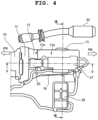
FIG. 4 is a plan view of the transmission in the vehicle and the peripheral structure thereof as seen from above. -
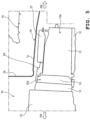
FIG. 5 is a cross-sectional view illustrating a cross section taken along line V-V inFIG. 4 . -
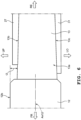
FIG. 6 is a schematic diagram illustrating the positional relationship among a motor, the transmission, and an inverter. -
FIG. 7 is a cross-sectional view illustrating a cross section taken along line VII-VII inFIG. 4 . - An embodiment of the present invention will hereinafter be described with reference to drawings. Note that the embodiment described in the following is one example of the present invention, and the present invention is not limited by the following embodiment at all except inherent configurations of the present invention.
- In the drawings used in the following description, "FR" denotes the vehicle front side, "RE" denotes the vehicle rear side, "UP" denotes the vehicle upper side, "LO" denotes the vehicle lower side, "RI" denotes the vehicle right side, and "LE" denotes the vehicle left side.
- An outline configuration of a
vehicle 1 according to the present embodiment will be described by usingFIG. 1 . - As illustrated in
FIG. 1 , thevehicle 1 includes anengine 10 and amotor 12 as drive sources for vehicle traveling. Theengine 10 and themotor 12 are installed in anengine room 1a provided in a front portion of thevehicle 1. Theengine 10 hasplural cylinders 10a and is arranged by longitudinal placement such that theplural cylinders 10a are aligned in a front-rear direction of thevehicle 1. That is, in the present embodiment, theengine 10 is a longitudinal engine or an inline engine with longitudinal installation. Thecylinders 10a may be arranged in one or two rows substantially parallel to the front rear direction of the vehicle and may have substantially upright cylinder access. - Note that the
vehicle 1 according to the present embodiment is capable of employing either one of a gasoline engine and a diesel engine as theengine 10. - The
motor 12 is arranged in the rear with respect to theengine 10 in the front-rear direction of thevehicle 1. Furthermore, a rotation shaft of themotor 12 is coupled with an output shaft of theengine 10 via adamper 11. Either one or both of theengine 10 and themotor 12 generate a driving force for vehicle traveling in accordance with a traveling condition of thevehicle 1. Note that thedamper 11 provided between theengine 10 and themotor 12 is a device for buffering an impact torque between theengine 10 and themotor 12. - The
vehicle 1 also includes atransmission 13, atransfer case 14,propeller shafts differential gears drive shafts wheels transmission 13 is coupled with themotor 12. To thetransmission 13, in addition to the driving force from themotor 12, the driving force from theengine 10 is also input through themotor 12. Thetransmission 13 changes the speed of the driving force at a ratio corresponding to the traveling condition and outputs the driving force to thetransfer case 14. - Note that the
vehicle 1 according to the present embodiment is capable of employing either one of a manual transmission and an automatic transmission as thetransmission 13. - The
transfer case 14 is a motive power division apparatus and is a device that divides the driving force output from thetransmission 13 into a driving force forfront wheels rear wheels transfer case 14, a rear (R)propeller shaft 15 and a front (F)propeller shaft 16 are coupled. - Note that the ratio of distribution of the driving forces by the
transfer case 14 may successively be changed in accordance with a road surface µ or the like. - The
R propeller shaft 15 is provided to extend rearward from thetransfer case 14 in a vehicle front-rear direction. A back end of theR propeller shaft 15 is coupled with a rear (R)differential gear 17. A rear (R) driveshaft 18 extends from theR differential gear 17 toward both sides in a vehicle width direction. Therear wheels R drive shaft 18. - The
F propeller shaft 16 is provided to extend forward in the vehicle front-rear direction through a lateral side of thetransmission 13, themotor 12, and thedamper 11 in the vehicle width direction. A front end of theF propeller shaft 16 is coupled with a front (F)differential gear 21. A front (F) driveshaft 22 extends from the Fdifferential gear 21 toward both sides in the vehicle width direction. Thefront wheels F drive shaft 22. - In addition, the
vehicle 1 includes abattery 25 and an electricpower conversion unit 26. Thebattery 25 is a battery module configured with plural batteries each of which is a lithium-ion battery. The electricpower conversion unit 26 is connected with thebattery 25. - The electric
power conversion unit 26 has aninverter 27 and a DC-DC converter 28. Theinverter 27 is a device that converts direct-current electric power input from thebattery 25 to alternating-current electric power and outputs the electric power to themotor 12. The DC-DC converter 28 is a device that converts (steps up or down) a voltage of the direct-current electric power input from thebattery 25 and outputs the electric power to various kinds of loads of thevehicle 1. - The
transmission 13 and a peripheral structure thereof in thevehicle 1 will be described by usingFIG. 2 to FIG. 4 . - As illustrated in
FIG. 2 to FIG. 4 , themotor 12 has amotor casing 12a, and thetransmission 13 has atransmission casing 13a. Themotor casing 12a is a tubular outer shell member and houses a rotor and a stator (not illustrated) in an internal portion. Thetransmission casing 13a is a tubular outer shell member which has a smaller diameter and is longer than themotor casing 12a and houses a transmission mechanism (not illustrated) in an internal portion. - The
inverter 27 is mounted on an upper portion of thetransmission casing 13a. Theinverter 27 is arranged to fall within the upper portion of thetransmission casing 13a in the vehicle front-rear direction. That is, theinverter 27 is arranged not to stick out from thetransmission casing 13a in the vehicle front-rear direction and the vehicle width direction. - As illustrated in
FIG. 2 andFIG. 4 , aterminal block 29 is mounted on a region from the upper portion of thetransmission casing 13a to an upper portion of themotor casing 12a. Theterminal block 29 is a member which houses a terminal and a bus bar for electrically connecting theinverter 27 and themotor 12 together. - As illustrated in
FIG. 2 to FIG. 4 , the DC-DC converter 28 is set apart from thetransmission casing 13a on one lateral side in the vehicle width direction and is placed below a lower portion of thetransmission casing 13a in a vehicle up-down direction. An arrangement form of the DC-DC converter 28 will be described later. - The
F propeller shaft 16 is disposed in a state where a gap or a recess or an indentation is provided with respect to thetransmission casing 13a and themotor casing 12a. More particularly, thetransmission casing 13a and/or themotor casing 12a may be provided with a trough-like concavity or an elongated indentation extending in the front rear direction at a side of thetransmission casing 13a and/ormotor casing 12a, wherein theF propeller shaft 16 may be arranged at least partly in the space surrounded by such concavity/indentation. When considering an imaginary vertical plane extending in the front rear direction of the vehicle and touching thetransmission casing 13a and/or themotor casing 12a at a side thereof, theF propeller shaft 16 may be arranged, at least partly, between such imaginary vertical plane and thetransmission casing 13a and/or themotor casing 12a. TheF propeller shaft 16 is arranged on the same side as the side in the vehicle width direction on which the DC-DC converter 28 is arranged. TheF propeller shaft 16 is arranged in a region closer to thetransmission casing 13a and so forth than the DC-DC converter 28. More particularly, theF propeller shaft 16 may be arranged at a height level above the DC-DC converter 28. Irrespective of the height arrangement, when considering a top view of the motor and transmission along a vertical axis of view, theF propeller shaft 16 may be arranged between the DC-DC converter 28 and the transmission/motor casing 13a/12a. - As illustrated in
FIG. 4 , anexhaust pipe 30 is arranged in a lateral side region on an opposite side, with respect to thetransmission casing 13a, to a side in the vehicle width direction on which the DC-DC converter 28 and theF propeller shaft 16 are arranged. Although not illustrated in detail, theexhaust pipe 30 is connected with an exhaust manifold of theengine 10 and is provided to extend rearward in the vehicle front-rear direction. - As illustrated in
FIG. 3 , anoil pan 31 is mounted on the lower portion of thetransmission casing 13a. Theoil pan 31 is a container for storing hydraulic oil of thetransmission 13. - A description will be made about arrangement of the
transmission 13 and theinverter 27 in afloor tunnel 1d by usingFIG. 5 andFIG. 6 . - As illustrated in
FIG. 5 , in thevehicle 1, theengine room 1a is partitioned from a vehicle cabin by adash panel 1b. Afloor panel 1c continuous with thedash panel 1b is provided in a lower portion of the vehicle cabin. Furthermore, in a central region of thefloor panel 1c in the vehicle width direction, thefloor tunnel 1d is provided which bulges upward (toward a vehicle cabin inside) in the vehicle up-down direction and extends in the vehicle front-rear direction. - In the
vehicle 1, theengine 10, thedamper 11, and themotor 12 are arranged in theengine room 1a. Thetransmission 13 and theinverter 27 are arranged below thefloor tunnel 1d. - Here, as illustrated in
FIG. 6 , in the vehicle up-down direction, anupper portion 13b of thetransmission casing 13a is placed in a lower position than anupper end portion 12b in an outer peripheral surface of themotor casing 12a. That is, a level difference G is provided in the vehicle up-down direction between theupper portion 13b of thetransmission casing 13a and theupper end portion 12b in the outer peripheral surface of themotor casing 12a. In thevehicle 1 according to the present embodiment, theinverter 27 is arranged by effectively using the level difference G. More particularly, a bottom side of theinverter 27 may be arranged lower than saidupper end portion 12b of themotor casing 12a. Furthermore, depending on the thickness or height of theinverter 27, a top side of saidinverter 27 may be arranged lower than saidupper end portion 12b or substantially at the same height as saidupper end portion 12b or higher than saidupper end portion 12b. - In addition, when an imaginary line LN12 in parallel with an axis Ax12 of the rotation shaft (not illustrated) of the
motor 12 is drawn from theupper end portion 12b in the outer peripheral surface of themotor casing 12a, theinverter 27 is mounted on theupper portion 13b of thetransmission casing 13a such that in the vehicle up-down direction, theinverter 27 falls within a portion below the imaginary line LN12 in the vehicle up-down direction. In thevehicle 1 according to the present embodiment, because theinverter 27 is arranged to fall within the level difference G in the vehicle up-down direction, thefloor tunnel 1d does not need to be partially swollen to protrude upward in a portion in which theinverter 27 is arranged. Consequently, in thevehicle 1, in the vehicle cabin, a space for a section (a front console, a center console) 1e arranged above thefloor tunnel 1d can be inhibited from being constricted. - Note that as illustrated in
FIG. 6 , theoil pan 31 is mounted on alower portion 13c of thetransmission casing 13a and thus does not influence thefloor tunnel 1d. - A description will be made about the arrangement relationship between the DC-
DC converter 28, theexhaust pipe 30, and theoil pan 31 and theinverter 27 by usingFIG. 7 . - As illustrated in
FIG. 7 , in thevehicle 1, theinverter 27 is mounted on theupper portion 13b of thetransmission casing 13a below thefloor tunnel 1d. Thus, in thevehicle 1, compared to a case where theinverter 27 is placed on alateral side 1f or 1g in the vehicle width direction by mounting theinverter 27 on a side portion of thetransmission casing 13a, the dimension (width) of thefloor tunnel 1d in the vehicle width direction does not have to be increased. - The
F propeller shaft 16 is arranged below thefloor tunnel 1d and on the lateral side 1g of thetransmission casing 13a. Meanwhile, theinverter 27 is mounted on theupper portion 13b of thetransmission casing 13a and thus does not interfere with theF propeller shaft 16. - The DC-
DC converter 28 is arranged below thefloor panel 1c and in aleft vicinity region 1h in the vehicle width direction with respect to thefloor tunnel 1d. Theinverter 27 is mounted on theupper portion 13b of thetransmission casing 13a and thus does not interfere with the DC-DC converter 28. - The
exhaust pipe 30 is arranged below thefloor panel 1c and in a right vicinity region 1i in the vehicle width direction with respect to thefloor tunnel 1d. Theinverter 27 is mounted on theupper portion 13b of thetransmission casing 13a and thus does not interfere with theexhaust pipe 30 either. Further, theinverter 27 is mounted on the upper portion of thetransmission casing 13b below thefloor tunnel 1d and is less likely to be influenced by heat from theexhaust pipe 30 arranged in the right vicinity region 1i in the vehicle width direction with respect to thefloor tunnel 1d. - The
oil pan 31 is mounted on thelower portion 13c of thetransmission casing 13a. Theinverter 27 is mounted on theupper portion 13b of thetransmission casing 13a and thus does not interfere with theoil pan 31 either. - In the
vehicle 1 according to the present embodiment, theinverter 27 is mounted on theupper portion 13b of thetransmission casing 13a below thefloor tunnel 1d. Thus, in thevehicle 1, compared to a vehicle which is disclosed inJP 2015 220830 A floor tunnel 1d can be inhibited from being increased. Consequently, in thevehicle 1, a foot space of an occupant is less likely to be constricted, the positions of pedals to be operated by a driver are easily arranged in ergonomically ideal positions, and the driver is less likely to be fatigued. - Further, in the
vehicle 1 according to the present embodiment, as illustrated inFIG. 6 , theupper portion 13b of thetransmission casing 13a is placed in a lower position than anupper end portion 13b in the outer peripheral surface of themotor casing 12a. Consequently, in thevehicle 1, theinverter 27 is arranged by effectively using a level difference between theupper end portion 12b in the outer peripheral surface of themotor casing 12a and theupper portion 13b of thetransmission casing 13a, and arrangement of the inverter with high space efficiency can thereby be realized. In particular, in the present embodiment, because theinverter 27 is arranged to fall within a region between the imaginary line LN12 and theupper portion 13b of thetransmission casing 13a, a situation can be avoided in which thefloor tunnel 1d protrudes upward in a portion in which theinverter 27 is arranged. Consequently, in thevehicle 1, in the vehicle cabin, the space for the section (front orcenter console 1e) arranged above thefloor tunnel 1d can be inhibited from being constricted. - Further, in the
vehicle 1 according to the present embodiment, as illustrated inFIG. 7 , theexhaust pipe 30 is arranged in the right vicinity region 1i below thefloor panel 1c, and theF propeller shaft 16 is arranged on the lateral side (left side) 1g of thetransmission casing 13a below thefloor tunnel 1d. Consequently, in thevehicle 1, theinverter 27 mounted on theupper portion 13b of thetransmission casing 13a can be prevented from interfering with theexhaust pipe 30 and theF propeller shaft 16. - Further, in the present embodiment, because the
inverter 27 is mounted on theupper portion 13b of thetransmission casing 13a which is positioned apart from theexhaust pipe 30, heat from theexhaust pipe 30 can also be inhibited from influencing theinverter 27. - Further, in the
vehicle 1 according to the present embodiment, as illustrated inFIG. 6 andFIG. 7 , although theoil pan 31 is mounted on thelower portion 13c of thetransmission casing 13a, theinverter 27 is mounted on theupper portion 13b with thetransmission casing 13a interposed therebetween, and interference between theinverter 27 and theoil pan 31 can thus also be avoided. - Further, in the
vehicle 1 according to the present embodiment, as illustrated inFIG. 7 , the DC-DC converter 28 is arranged below thefloor panel 1c and in theleft vicinity region 1h adjacent to thefloor tunnel 1d, and the width of thefloor tunnel 1d thereby does not need to be increased for disposing the DC-DC converter 28. Note that the DC-DC converter 28 does not output electric power to themotor 12 and thus does not necessarily need to be arranged in a vicinity region of the motor 12 (in thefloor tunnel 1d). Consequently, as in the present embodiment, the DC-DC converter 28 is capable of being arranged in theleft vicinity region 1h. - Further, in the
vehicle 1 according to the present embodiment, the longitudinally placed engine (longitudinal engine) 10 and themotor 12 are installed in theengine room 1a in the front portion of thevehicle 1. Thus, in thevehicle 1 according to the present embodiment, although thetransmission 13 is positioned around foot parts of front seats, theinverter 27 is mounted on theupper portion 13b of thetransmission casing 13a, and it thereby becomes possible to inhibit foot spaces of occupants (such as a driver) to be seated on the front seats from being constricted. - As described above, the
vehicle 1 according to the present embodiment can reduce an influence on an occupant space due to arrangement of theinverter 27. - In the above embodiment, as illustrated in
FIG. 1 , the four-cylinder engine 10 is employed as one example, but the present invention is not limited to this. For example, it is possible to employ an engine with five or more cylinders, a V-type multi-cylinder engine, or a W-type multi-cylinder engine as well. - Further, in the above embodiment, a four-wheel drive vehicle in which the driving force generated by the
engine 10 and themotor 12 is transmitted also to thefront wheels - Further, in the above embodiment, as illustrated in
FIG. 7 , theexhaust pipe 30 is arranged on a right side of thetransmission casing 13a, and the DC-DC converter 28 is arranged on a left side; however, the present invention is not limited to this. For example, theexhaust pipe 30 may be arranged on the left side of thetransmission casing 13a, and the DC-DC converter 28 may be arranged on the right side. Further, the DC-DC converter 28 does not necessarily need to be arranged below thefloor panel 1c but may be arranged above thefloor panel 1c. - Further, in the above embodiment, the
damper 11 is provided between theengine 10 and themotor 12, and as thedamper 11, various dampers employed for hybrid vehicles are capable of being used. For example, a damper with a limiter can also be employed which has a function of causing a slip in a case where a predetermined torque is exceeded. - Further, in the above embodiment, the electric
power conversion unit 26 has theinverter 27 and the DC-DC converter 28, but in the present invention, the DC-DC converter 28 is not an essential feature. - Further, in the above embodiment, a configuration is employed in which the
engine 10 to themotor 12 are arranged in theengine room 1a, but the present invention is not limited to this. For example, it is also possible to employ a form in which themotor 12 is arranged below thefloor tunnel 1d. -
- 1
- vehicle
- 1c
- floor panel
- 1d
- floor tunnel
- 10
- engine (longitudinal engine)
- 12
- motor
- 12a
- motor casing
- 12b
- upper end portion
- 13
- transmission
- 13a
- transmission casing
- 13b
- upper portion
- 16
- front propeller shaft
- 27
- inverter
- 28
- DC-DC converter
- 30
- exhaust pipe
- 31
- oil pan
Claims (12)
- A vehicle (1) comprising:a longitudinal engine (10) that has plural cylinders and is installed such that the plural cylinders are arrayed in a vehicle front-rear direction;a motor (12) that is arranged in rear with respect to the longitudinal engine (10) in the vehicle front-rear direction and is capable of generating a driving force for vehicle traveling;a transmission (13) that has a transmission mechanism and a transmission casing (13a) housing the transmission mechanism and is coupled with the motor (12); andan inverter (27) that converts input direct-current electric power to alternating-current electric power and outputs the alternating-current electric power to the motor (12), whereina floor tunnel (1d) bulging toward an inside of a vehicle cabin and extending in the vehicle front-rear direction is formed in a floor panel (1c) of the vehicle (1),the transmission (13) is arranged in and/or below the floor tunnel (1d), andthe transmission (13) further has an oil pan (31) that is mounted on a lower portion (13c) of the transmission casing (13a) and is for storing hydraulic oil,characterized in that,the inverter (27) is mounted in and/or below the floor tunnel (1d) and on an upper portion (13b) of the transmission casing (13a),the transmission (13) is adjacently arranged in rear with respect to the motor (12) in the vehicle front-rear direction, andthe transmission casing (13a) is interposed between the inverter (27) being mounted on the upper portion (13b) of the transmission casing (13a) and the oil pan (31) being mounted on the lower portion (13c) of the transmission casing (13a).
- The vehicle (1) according to claim 1, whereinthe motor (12) has a rotor, a stator, and a motor casing (12a) housing the motor (12) and the stator, andthe upper portion (13b) of the transmission casing (13a) is placed in a lower position in a vehicle up-down direction than an upper end portion (12b) in an outer peripheral surface of the motor casing (12a).
- The vehicle (1) according to claim 2, wherein
a bottom side of said inverter (27) is arranged lower than said upper end portion (12b) of the outer peripheral surface of the motor casing (12b), wherein a top side of said inverter (27) is arranged lower or higher than or at substantially the same height as the upper end portion (12b) of the outer peripheral surface of the motor casing (12a). - The vehicle (1) according to claim 2 or 3, wherein
when an imaginary line in parallel with an axis of a rotation shaft in the motor (12) is drawn from the upper end portion (12b) of the outer peripheral surface of the motor casing (12a), the inverter (27) is arranged to fall within a portion below the imaginary line. - The vehicle (1) according to anyone of the preceding claims, wherein,
when considering a top view of the motor (12) and transmission(13) along a vertical axis of view, said inverter (27) is arranged inside the outer contours of the transmission casing (13a), and/or the inverter (27) does not protrude beyond the outer contours of the transmission casing (13a) towards the right and left sides and towards the front and rear sides thereof. - The vehicle (1) according to anyone of the preceding claims, further comprising:an exhaust pipe (30) that is connected with the longitudinal engine (10), guides exhaust gas exhausted from the longitudinal engine (10) to a vehicle rear side, and discharges the exhaust gas; anda front propeller shaft (16) for transmitting a driving force output from the transmission (13) to a front wheel, whereinaround the transmission casing (13a), the exhaust pipe (30) is arranged on one lateral side in a vehicle width direction and the front propeller shaft (16) is arranged on another lateral side in the vehicle width direction.
- The vehicle (1) according to anyone of the preceding claims, wherein
the transmission (13) further has an oil pan (31) that is mounted on a lower portion (13c) of the transmission casing (13a) and is for storing hydraulic oil. - The vehicle (1) according to the two preceding claims, wherein
said exhaust pipe (30) is arranged substantially at the height of the oil pan (31), whereas the front propeller shaft (16) is arranged higher than said oil pan (31). - The vehicle (1) according to anyone of the preceding claims, further comprisinga DC-DC converter (28) that converts a voltage of input direct-current electric power and outputs the direct-current electric power to a load of the vehicle (1), whereinthe DC-DC converter (28) is arranged below the floor panel (1c) and in a region adjacent to the floor tunnel (1d) in a vehicle width direction.
- The vehicle (1) according to the preceding claim in combination with claim 6 and 7, wherein
said DC-DC converter (28) and said exhaust pipe (30) are arranged at substantially the same height as said oil pan (31) at opposite sides thereof. - The vehicle (1) according to anyone of the preceding claims, whereinan engine room is provided in a front portion of the vehicle (1),the floor tunnel (1d) is formed to extend from the engine room toward a vehicle rear side, andthe longitudinal engine (10) and the motor (12) are installed in the engine room.
- The vehicle (1) according to anyone of the preceding claims, wherein
a/the front propeller shaft (16) for transmitting driving force output from the transmission (13) to a front wheel is arranged, at least partly, between a lateral side of a/the transmission casing (13a) and an imaginary vertical plane extending in the front rear direction of the vehicle (1) and touching said lateral side of the transmission casing (13a), wherein more particularly the front propeller shaft (16) is at least partly accommodated in a space surrounded by an elongated concavity in said lateral side of said transmission casing (13a).
Applications Claiming Priority (1)
| Application Number | Priority Date | Filing Date | Title |
|---|---|---|---|
| JP2020177370A JP7567355B2 (en) | 2020-10-22 | 2020-10-22 | vehicle |
Publications (2)
| Publication Number | Publication Date |
|---|---|
| EP3988360A1 EP3988360A1 (en) | 2022-04-27 |
| EP3988360B1 true EP3988360B1 (en) | 2025-06-04 |
Family
ID=77897542
Family Applications (1)
| Application Number | Title | Priority Date | Filing Date |
|---|---|---|---|
| EP21198188.1A Active EP3988360B1 (en) | 2020-10-22 | 2021-09-22 | Vehicle |
Country Status (4)
| Country | Link |
|---|---|
| US (1) | US11772478B2 (en) |
| EP (1) | EP3988360B1 (en) |
| JP (1) | JP7567355B2 (en) |
| CN (1) | CN114379354B (en) |
Families Citing this family (1)
| Publication number | Priority date | Publication date | Assignee | Title |
|---|---|---|---|---|
| CN115648921A (en) * | 2022-11-14 | 2023-01-31 | 中国第一汽车股份有限公司 | Power system and vehicle giving consideration to longitudinal rear-drive car and four-drive car of engine |
Family Cites Families (13)
| Publication number | Priority date | Publication date | Assignee | Title |
|---|---|---|---|---|
| JP2004153897A (en) * | 2002-10-29 | 2004-05-27 | Hitachi Unisia Automotive Ltd | Electric machine with inverter |
| JP2005291330A (en) | 2004-03-31 | 2005-10-20 | Jatco Ltd | Oil path structure of parallel hybrid vehicle |
| JP4285405B2 (en) | 2004-12-17 | 2009-06-24 | 日産自動車株式会社 | Hybrid car |
| JP5842328B2 (en) | 2010-12-16 | 2016-01-13 | いすゞ自動車株式会社 | Semi-trailer hybrid vehicle |
| JP5810058B2 (en) * | 2012-09-18 | 2015-11-11 | 本田技研工業株式会社 | Hybrid vehicle |
| JP6111916B2 (en) | 2013-07-19 | 2017-04-12 | アイシン・エィ・ダブリュ株式会社 | Vehicle drive device |
| JP5792867B1 (en) | 2014-05-16 | 2015-10-14 | 三菱電機株式会社 | Automotive power converter |
| JP6481193B2 (en) | 2014-06-13 | 2019-03-13 | 三菱自動車工業株式会社 | Electric vehicle |
| JP2019131043A (en) | 2018-01-31 | 2019-08-08 | トヨタ自動車株式会社 | Drive unit for four-wheel drive vehicles |
| JP7146168B2 (en) | 2018-03-20 | 2022-10-04 | マツダ株式会社 | vehicle drive |
| JP7070240B2 (en) * | 2018-08-23 | 2022-05-18 | トヨタ自動車株式会社 | Hybrid vehicle |
| JP7170966B2 (en) | 2018-10-10 | 2022-11-15 | マツダ株式会社 | vehicle drive |
| JP7118363B2 (en) | 2018-12-05 | 2022-08-16 | マツダ株式会社 | vehicle drive |
-
2020
- 2020-10-22 JP JP2020177370A patent/JP7567355B2/en active Active
-
2021
- 2021-09-06 CN CN202111036675.8A patent/CN114379354B/en active Active
- 2021-09-22 EP EP21198188.1A patent/EP3988360B1/en active Active
- 2021-10-14 US US17/500,967 patent/US11772478B2/en active Active
Also Published As
| Publication number | Publication date |
|---|---|
| EP3988360A1 (en) | 2022-04-27 |
| US20220126672A1 (en) | 2022-04-28 |
| JP7567355B2 (en) | 2024-10-16 |
| US11772478B2 (en) | 2023-10-03 |
| JP2022068599A (en) | 2022-05-10 |
| CN114379354B (en) | 2023-11-17 |
| CN114379354A (en) | 2022-04-22 |
Similar Documents
| Publication | Publication Date | Title |
|---|---|---|
| US11155148B2 (en) | Integrated mounting systems for mounting electric drive components within electrified vehicles | |
| JP5459511B2 (en) | Vehicle battery mounting structure | |
| JP5499055B2 (en) | Engine electric hybrid vehicle battery and fuel tank mounting structure | |
| CN109795430B (en) | Battery pack connector assembly and method of connection | |
| EP3023281B1 (en) | Hybrid vehicle | |
| CN107921854A (en) | Electric automobile | |
| KR102141108B1 (en) | Structure of mounting power converter in vehicle | |
| EP4549208A1 (en) | Vehicle driving device and vehicle | |
| US11584215B2 (en) | Drive unit and vehicle | |
| KR20120112815A (en) | Drive train of a motor vehicle | |
| CN115180028B (en) | Lower structure of electric vehicle | |
| EP3978287B1 (en) | Hybrid electric vehicle | |
| CN110877539A (en) | Motorized vehicle with vibration isolator in frame and corresponding method | |
| EP2017117B1 (en) | Motive power output device, and secondary cell setting method | |
| EP3988360B1 (en) | Vehicle | |
| EP3590793B1 (en) | Engine cover and work vehicle | |
| CN114340934B (en) | Mounting structure of drive motor and battery for vehicle | |
| US9714606B2 (en) | Vehicle power generating apparatus | |
| US20140299394A1 (en) | Hybrid vehicle with internal combustion engine and electric machine | |
| US20170158045A1 (en) | Hybrid vehicle with internal combustion engine and electric machine | |
| JP7480673B2 (en) | vehicle | |
| CN216033730U (en) | Power assembly and vehicle with same | |
| EP4707010A1 (en) | Plug-in hybrid electric vehicle | |
| JP2026043734A (en) | Plug-in hybrid vehicles | |
| JP2000190747A (en) | Reinforcement structure of automotive power train |
Legal Events
| Date | Code | Title | Description |
|---|---|---|---|
| PUAI | Public reference made under article 153(3) epc to a published international application that has entered the european phase |
Free format text: ORIGINAL CODE: 0009012 |
|
| STAA | Information on the status of an ep patent application or granted ep patent |
Free format text: STATUS: THE APPLICATION HAS BEEN PUBLISHED |
|
| AK | Designated contracting states |
Kind code of ref document: A1 Designated state(s): AL AT BE BG CH CY CZ DE DK EE ES FI FR GB GR HR HU IE IS IT LI LT LU LV MC MK MT NL NO PL PT RO RS SE SI SK SM TR |
|
| STAA | Information on the status of an ep patent application or granted ep patent |
Free format text: STATUS: REQUEST FOR EXAMINATION WAS MADE |
|
| 17P | Request for examination filed |
Effective date: 20220913 |
|
| RBV | Designated contracting states (corrected) |
Designated state(s): AL AT BE BG CH CY CZ DE DK EE ES FI FR GB GR HR HU IE IS IT LI LT LU LV MC MK MT NL NO PL PT RO RS SE SI SK SM TR |
|
| STAA | Information on the status of an ep patent application or granted ep patent |
Free format text: STATUS: EXAMINATION IS IN PROGRESS |
|
| 17Q | First examination report despatched |
Effective date: 20241015 |
|
| GRAP | Despatch of communication of intention to grant a patent |
Free format text: ORIGINAL CODE: EPIDOSNIGR1 |
|
| STAA | Information on the status of an ep patent application or granted ep patent |
Free format text: STATUS: GRANT OF PATENT IS INTENDED |
|
| INTG | Intention to grant announced |
Effective date: 20250310 |
|
| GRAS | Grant fee paid |
Free format text: ORIGINAL CODE: EPIDOSNIGR3 |
|
| GRAA | (expected) grant |
Free format text: ORIGINAL CODE: 0009210 |
|
| STAA | Information on the status of an ep patent application or granted ep patent |
Free format text: STATUS: THE PATENT HAS BEEN GRANTED |
|
| AK | Designated contracting states |
Kind code of ref document: B1 Designated state(s): AL AT BE BG CH CY CZ DE DK EE ES FI FR GB GR HR HU IE IS IT LI LT LU LV MC MK MT NL NO PL PT RO RS SE SI SK SM TR |
|
| REG | Reference to a national code |
Ref country code: GB Ref legal event code: FG4D |
|
| REG | Reference to a national code |
Ref country code: CH Ref legal event code: EP |
|
| REG | Reference to a national code |
Ref country code: DE Ref legal event code: R096 Ref document number: 602021031663 Country of ref document: DE |
|
| REG | Reference to a national code |
Ref country code: IE Ref legal event code: FG4D |
|
| REG | Reference to a national code |
Ref country code: NL Ref legal event code: MP Effective date: 20250604 |
|
| PG25 | Lapsed in a contracting state [announced via postgrant information from national office to epo] |
Ref country code: FI Free format text: LAPSE BECAUSE OF FAILURE TO SUBMIT A TRANSLATION OF THE DESCRIPTION OR TO PAY THE FEE WITHIN THE PRESCRIBED TIME-LIMIT Effective date: 20250604 Ref country code: ES Free format text: LAPSE BECAUSE OF FAILURE TO SUBMIT A TRANSLATION OF THE DESCRIPTION OR TO PAY THE FEE WITHIN THE PRESCRIBED TIME-LIMIT Effective date: 20250604 |
|
| PGFP | Annual fee paid to national office [announced via postgrant information from national office to epo] |
Ref country code: DE Payment date: 20250730 Year of fee payment: 5 |
|
| REG | Reference to a national code |
Ref country code: LT Ref legal event code: MG9D |
|
| PG25 | Lapsed in a contracting state [announced via postgrant information from national office to epo] |
Ref country code: NO Free format text: LAPSE BECAUSE OF FAILURE TO SUBMIT A TRANSLATION OF THE DESCRIPTION OR TO PAY THE FEE WITHIN THE PRESCRIBED TIME-LIMIT Effective date: 20250904 Ref country code: GR Free format text: LAPSE BECAUSE OF FAILURE TO SUBMIT A TRANSLATION OF THE DESCRIPTION OR TO PAY THE FEE WITHIN THE PRESCRIBED TIME-LIMIT Effective date: 20250905 |
|
| PG25 | Lapsed in a contracting state [announced via postgrant information from national office to epo] |
Ref country code: PL Free format text: LAPSE BECAUSE OF FAILURE TO SUBMIT A TRANSLATION OF THE DESCRIPTION OR TO PAY THE FEE WITHIN THE PRESCRIBED TIME-LIMIT Effective date: 20250604 |
|
| PG25 | Lapsed in a contracting state [announced via postgrant information from national office to epo] |
Ref country code: BG Free format text: LAPSE BECAUSE OF FAILURE TO SUBMIT A TRANSLATION OF THE DESCRIPTION OR TO PAY THE FEE WITHIN THE PRESCRIBED TIME-LIMIT Effective date: 20250604 |
|
| PG25 | Lapsed in a contracting state [announced via postgrant information from national office to epo] |
Ref country code: HR Free format text: LAPSE BECAUSE OF FAILURE TO SUBMIT A TRANSLATION OF THE DESCRIPTION OR TO PAY THE FEE WITHIN THE PRESCRIBED TIME-LIMIT Effective date: 20250604 |
|
| PGFP | Annual fee paid to national office [announced via postgrant information from national office to epo] |
Ref country code: AT Payment date: 20251020 Year of fee payment: 5 |
|
| PG25 | Lapsed in a contracting state [announced via postgrant information from national office to epo] |
Ref country code: RS Free format text: LAPSE BECAUSE OF FAILURE TO SUBMIT A TRANSLATION OF THE DESCRIPTION OR TO PAY THE FEE WITHIN THE PRESCRIBED TIME-LIMIT Effective date: 20250904 |
|
| PG25 | Lapsed in a contracting state [announced via postgrant information from national office to epo] |
Ref country code: LV Free format text: LAPSE BECAUSE OF FAILURE TO SUBMIT A TRANSLATION OF THE DESCRIPTION OR TO PAY THE FEE WITHIN THE PRESCRIBED TIME-LIMIT Effective date: 20250604 |
|
| PG25 | Lapsed in a contracting state [announced via postgrant information from national office to epo] |
Ref country code: NL Free format text: LAPSE BECAUSE OF FAILURE TO SUBMIT A TRANSLATION OF THE DESCRIPTION OR TO PAY THE FEE WITHIN THE PRESCRIBED TIME-LIMIT Effective date: 20250604 |
|
| PG25 | Lapsed in a contracting state [announced via postgrant information from national office to epo] |
Ref country code: PT Free format text: LAPSE BECAUSE OF FAILURE TO SUBMIT A TRANSLATION OF THE DESCRIPTION OR TO PAY THE FEE WITHIN THE PRESCRIBED TIME-LIMIT Effective date: 20251006 |
|
| REG | Reference to a national code |
Ref country code: AT Ref legal event code: MK05 Ref document number: 1800033 Country of ref document: AT Kind code of ref document: T Effective date: 20250604 |
|
| PG25 | Lapsed in a contracting state [announced via postgrant information from national office to epo] |
Ref country code: IS Free format text: LAPSE BECAUSE OF FAILURE TO SUBMIT A TRANSLATION OF THE DESCRIPTION OR TO PAY THE FEE WITHIN THE PRESCRIBED TIME-LIMIT Effective date: 20251004 |
|
| PG25 | Lapsed in a contracting state [announced via postgrant information from national office to epo] |
Ref country code: AT Free format text: LAPSE BECAUSE OF FAILURE TO SUBMIT A TRANSLATION OF THE DESCRIPTION OR TO PAY THE FEE WITHIN THE PRESCRIBED TIME-LIMIT Effective date: 20250604 Ref country code: SM Free format text: LAPSE BECAUSE OF FAILURE TO SUBMIT A TRANSLATION OF THE DESCRIPTION OR TO PAY THE FEE WITHIN THE PRESCRIBED TIME-LIMIT Effective date: 20250604 |
|
| PG25 | Lapsed in a contracting state [announced via postgrant information from national office to epo] |
Ref country code: CZ Free format text: LAPSE BECAUSE OF FAILURE TO SUBMIT A TRANSLATION OF THE DESCRIPTION OR TO PAY THE FEE WITHIN THE PRESCRIBED TIME-LIMIT Effective date: 20250604 |
|
| PG25 | Lapsed in a contracting state [announced via postgrant information from national office to epo] |
Ref country code: EE Free format text: LAPSE BECAUSE OF FAILURE TO SUBMIT A TRANSLATION OF THE DESCRIPTION OR TO PAY THE FEE WITHIN THE PRESCRIBED TIME-LIMIT Effective date: 20250604 |
|
| PG25 | Lapsed in a contracting state [announced via postgrant information from national office to epo] |
Ref country code: SK Free format text: LAPSE BECAUSE OF FAILURE TO SUBMIT A TRANSLATION OF THE DESCRIPTION OR TO PAY THE FEE WITHIN THE PRESCRIBED TIME-LIMIT Effective date: 20250604 Ref country code: RO Free format text: LAPSE BECAUSE OF FAILURE TO SUBMIT A TRANSLATION OF THE DESCRIPTION OR TO PAY THE FEE WITHIN THE PRESCRIBED TIME-LIMIT Effective date: 20250604 |
|
| PG25 | Lapsed in a contracting state [announced via postgrant information from national office to epo] |
Ref country code: IT Free format text: LAPSE BECAUSE OF FAILURE TO SUBMIT A TRANSLATION OF THE DESCRIPTION OR TO PAY THE FEE WITHIN THE PRESCRIBED TIME-LIMIT Effective date: 20250604 |
|
| REG | Reference to a national code |
Ref country code: DE Ref legal event code: R097 Ref document number: 602021031663 Country of ref document: DE |
|
| PLBE | No opposition filed within time limit |
Free format text: ORIGINAL CODE: 0009261 |
|
| STAA | Information on the status of an ep patent application or granted ep patent |
Free format text: STATUS: NO OPPOSITION FILED WITHIN TIME LIMIT |
|
| PG25 | Lapsed in a contracting state [announced via postgrant information from national office to epo] |
Ref country code: DK Free format text: LAPSE BECAUSE OF FAILURE TO SUBMIT A TRANSLATION OF THE DESCRIPTION OR TO PAY THE FEE WITHIN THE PRESCRIBED TIME-LIMIT Effective date: 20250604 |
|
| REG | Reference to a national code |
Ref country code: CH Ref legal event code: L10 Free format text: ST27 STATUS EVENT CODE: U-0-0-L10-L00 (AS PROVIDED BY THE NATIONAL OFFICE) Effective date: 20260416 |