EP3988358B1 - Structure for mounting electronic device module on vehicle - Google Patents
Structure for mounting electronic device module on vehicle Download PDFInfo
- Publication number
- EP3988358B1 EP3988358B1 EP19933252.9A EP19933252A EP3988358B1 EP 3988358 B1 EP3988358 B1 EP 3988358B1 EP 19933252 A EP19933252 A EP 19933252A EP 3988358 B1 EP3988358 B1 EP 3988358B1
- Authority
- EP
- European Patent Office
- Prior art keywords
- electrical component
- component module
- vehicle
- cross
- unit
- Prior art date
- Legal status (The legal status is an assumption and is not a legal conclusion. Google has not performed a legal analysis and makes no representation as to the accuracy of the status listed.)
- Active
Links
Images






Classifications
-
- B—PERFORMING OPERATIONS; TRANSPORTING
- B60—VEHICLES IN GENERAL
- B60K—ARRANGEMENT OR MOUNTING OF PROPULSION UNITS OR OF TRANSMISSIONS IN VEHICLES; ARRANGEMENT OR MOUNTING OF PLURAL DIVERSE PRIME-MOVERS IN VEHICLES; AUXILIARY DRIVES FOR VEHICLES; INSTRUMENTATION OR DASHBOARDS FOR VEHICLES; ARRANGEMENTS IN CONNECTION WITH COOLING, AIR INTAKE, GAS EXHAUST OR FUEL SUPPLY OF PROPULSION UNITS IN VEHICLES
- B60K1/00—Arrangement or mounting of electrical propulsion units
-
- B—PERFORMING OPERATIONS; TRANSPORTING
- B60—VEHICLES IN GENERAL
- B60K—ARRANGEMENT OR MOUNTING OF PROPULSION UNITS OR OF TRANSMISSIONS IN VEHICLES; ARRANGEMENT OR MOUNTING OF PLURAL DIVERSE PRIME-MOVERS IN VEHICLES; AUXILIARY DRIVES FOR VEHICLES; INSTRUMENTATION OR DASHBOARDS FOR VEHICLES; ARRANGEMENTS IN CONNECTION WITH COOLING, AIR INTAKE, GAS EXHAUST OR FUEL SUPPLY OF PROPULSION UNITS IN VEHICLES
- B60K1/00—Arrangement or mounting of electrical propulsion units
- B60K1/04—Arrangement or mounting of electrical propulsion units of the electric storage means for propulsion
-
- B—PERFORMING OPERATIONS; TRANSPORTING
- B60—VEHICLES IN GENERAL
- B60H—ARRANGEMENTS OF HEATING, COOLING, VENTILATING OR OTHER AIR-TREATING DEVICES SPECIALLY ADAPTED FOR PASSENGER OR GOODS SPACES OF VEHICLES
- B60H1/00—Heating, cooling or ventilating devices
- B60H1/00007—Combined heating, ventilating, or cooling devices
- B60H1/00021—Air flow details of HVAC devices
- B60H1/00028—Constructional lay-out of the devices in the vehicle
-
- B—PERFORMING OPERATIONS; TRANSPORTING
- B62—LAND VEHICLES FOR TRAVELLING OTHERWISE THAN ON RAILS
- B62D—MOTOR VEHICLES; TRAILERS
- B62D25/00—Superstructure or monocoque structure sub-units; Parts or details thereof not otherwise provided for
- B62D25/08—Front or rear portions
- B62D25/082—Engine compartments
-
- B—PERFORMING OPERATIONS; TRANSPORTING
- B60—VEHICLES IN GENERAL
- B60K—ARRANGEMENT OR MOUNTING OF PROPULSION UNITS OR OF TRANSMISSIONS IN VEHICLES; ARRANGEMENT OR MOUNTING OF PLURAL DIVERSE PRIME-MOVERS IN VEHICLES; AUXILIARY DRIVES FOR VEHICLES; INSTRUMENTATION OR DASHBOARDS FOR VEHICLES; ARRANGEMENTS IN CONNECTION WITH COOLING, AIR INTAKE, GAS EXHAUST OR FUEL SUPPLY OF PROPULSION UNITS IN VEHICLES
- B60K1/00—Arrangement or mounting of electrical propulsion units
- B60K1/04—Arrangement or mounting of electrical propulsion units of the electric storage means for propulsion
- B60K2001/0405—Arrangement or mounting of electrical propulsion units of the electric storage means for propulsion characterised by their position
- B60K2001/0411—Arrangement in the front part of the vehicle
-
- B—PERFORMING OPERATIONS; TRANSPORTING
- B60—VEHICLES IN GENERAL
- B60Y—INDEXING SCHEME RELATING TO ASPECTS CROSS-CUTTING VEHICLE TECHNOLOGY
- B60Y2306/00—Other features of vehicle sub-units
- B60Y2306/01—Reducing damages in case of crash, e.g. by improving battery protection
Definitions
- a vehicle with an installation structure of an electrical component according to the invention is defined by the appended claim 1. Specific embodiments are defined by the dependent claims.
- the electrical component module electrically connected with a battery unit that stores electricity for driving the vehicle is installed in a front section of the vehicle.
- the electrical component module is supported by a vehicle body structure member that extends in a lateral direction of the vehicle.
- the cross-member doesn't overlap with the electrical component module when viewed in any horizontal direction perpendicular to a vertical direction of the vehicle.
- a release mechanism that releases supporting of the electrical component module by the vehicle body structure member when receiving an impact force from an opposite side to the passenger compartment is provided between the vehicle body structure member and the electrical component module.
- the installation structure also includes a cross-member 2 extending in a lateral direction of the vehicle in addition to the electrical component module 1.
- the cross-member 2 is a vehicle body structure member.
- the electrical component module 1 has a pair of first brackets 1a (see Fig. 2 ) and a pair of second brackets 1b. A rear portion of the electrical component module 1 is supported by the cross-member 2 via the first brackets 1a.
- a front portion of the electrical component module 1 is supported by a radiator support member 3 via the pair of the second brackets 1b.
- the radiator support member 3 is also a vehicle body structure member.
- the MG, the inverter for the MG and so on are liquid-cooled, and thereby a radiator therefor is supported by the radiator support member 3.
- the cross-member 2 is a tower bar (tower brace) that connects a pair of front suspension towers 7a.
- the cross-member 2 improves rigidity of the vehicle body.
- the cross-member 2 of the present embodiment is made of aluminum alloy. Both ends of the cross-member 2 are fixed with the front suspension towers 7a, respectively, by bolts or nuts.
- the cross-member 2 has a pair of intermediate brackets 2a, and the pair of the intermediate brackets 2a constructs an after-explained release mechanism 4 together with the above-mentioned first brackets 1a (see Fig. 2 and Fig. 3 ).
- the intermediate brackets 2a are also made of aluminum alloy, and fixed with a main body of the cross-member 2 by bolts 2b (see Fig. 2 and Fig. 3 ).
- the cross-member 2 is disposed more closely to the passenger compartment than the electrical component module 1 in a longitudinal direction of the vehicle. The passenger compartment and the motor room are separated from each other by a bulkhead 6.
- the intermediate bracket 2a has a shape in which a box portion 2d is protruded laterally from the center of its oval main body 2c.
- the oval main body 2c is fastened to the main body of the cross-member 2 by bolts 2b.
- the box portion 2d is protruded also downward from the oval main body 2c.
- the upper plane of the box portion 2d is opened.
- a cutout bolt hole 2e is formed from a bottom plate to a back plate (a plate on a side of the passenger compartment) of the box portion 2d.
- the front side members 7b and the intermediate members 7f that connect the radiator support member 3 with front upper members 7e collapse, and then the impact force acts on the electrical component module 1 via the second brackets 1b.
- the impact force may act directly on the electrical component module 1 due to collapses of the second brackets 1b.
- the supporting of the electrical component module 1 by the cross-member 2 is released by the release mechanism 4. Since the electrical component module 1 is offset downward to the cross-member 2 (with no overlap), the electrical component module 1 is displaced backward relative to the vehicle body without colliding against the cross-member 2. In other words, the cross-member 2 never inhibit the backward displacement of the electrical component module 1.
- the installation structure of the present embodiment further includes the auxiliary device (A/C unit) 5 whose rigidity is lower than that of the electrical component module 1 between the electrical component module 1 and the passenger compartment. Therefore, the electrical component module 1 collapses the auxiliary device 5 and is displaced backward while absorbing the impact energy. As the result, the impact energy can be absorbed efficiently.
- the auxiliary device (A/C unit) 5 whose rigidity is lower than that of the electrical component module 1 between the electrical component module 1 and the passenger compartment. Therefore, the electrical component module 1 collapses the auxiliary device 5 and is displaced backward while absorbing the impact energy. As the result, the impact energy can be absorbed efficiently.
- the auxiliary device 5 is the A/C unit 5. Therefore, the installation structure can be constructed effectively in the front section of the vehicle in a case where the vehicle is an EV or an HEV, and thereby it becomes possible to construct a front section structure of the vehicle that has superior impact energy absorbing property.
- the A/C unit 5 is disposed in the motor room, comfortability in the passenger compartment is improved.
- the vehicle body structure member 2 is the cross-member 2 that connects the pair of the front suspension towers 7a.
- the electrical component module 1 is installed in the front section of the vehicle, and is offset downward to the cross-member 2 (positions beneath it and doesn't overlap with it when viewed in the horizontal direction).
- the A/C unit 5 is disposed on a fore side from the bulkhead 6.
- a front suspension mechanism and a drivetrain such as drive wheels (front wheels) that are steered and the MG connected with drive shafts, is disposed at a lower area in the motor room. Therefore, by hanging the electrical component module 1 down from the cross-member (tower bar) 2 to support it, space efficiency in the motor room can be improved.
- the A/C unit 5 is received by the bulkhead 6 on its rear side when the A/C unit 5 collapses. As a result, the A/C unit 5 can be collapsed surely, and thereby can absorb the impact energy more efficiently.
- the A/C unit 5 has the tube-fin type heat exchanger (condenser) 5a made of metal in its inside. Therefore, the condenser 5a receives, while it collapses, the electrical component module 1 that is displaced backward. As a result, the electrical component module 1 can be surely received at the terminative end of the crushable stroke.
- a release mechanism 4 in the installation structure according to the present embodiment is the same as the release mechanism 4 of the above-explained first embodiment. Therefore, the same configurational elements of the electrical component module 1 and the release mechanism 4 are labelled with identical reference sign, and their detailed explanations will be omitted.
- the electrical component module 1 is installed in a rear section of the vehicle by reversing its front and rear. In other words, the electrical component module 1 installed in the rear section receives an impact force at its same side face at a collision of the vehicle.
- the electrical component module 1 is (not supported by being hung down but) supported from beneath. Therefore, the first brackets 1a and the second brackets 1b are attached to the housing of the electrical component module 1 upside down. In other words, as explained in the first embodiment, versatility is given to the installation of the electrical component module 1 by the first brackets 1a and the second brackets 1b.
- the installation structure of the present embodiment is constructed in the rear section of the vehicle (a section on a rear side from the passenger compartment), specifically in a luggage room.
- the above-mentioned electrical component module 1 is installed in the luggage room.
- the MG is installed beneath the electrical component module 1.
- the MG as an electric motor mechanically connected with the drive wheels (rear wheels) of the vehicle is electrically connected with the electrical component module 1.
- the powertrain such as a four-wheel drive HEV in which its front wheels are driven by the internal combustion engine and an MG and its rear wheels are driven only by an MG, and a four-wheel drive EV in which its front wheels and its rear wheels are driven by an MG.
- the installation structure of the present embodiment includes a cross-member 2 extending in the lateral direction of the vehicle in addition to the electrical component module 1.
- the cross-member 2 is the vehicle body structure member.
- the electrical component module 1 has the pair of the first brackets 1a and the pair of the second brackets 1b.
- a front portion of the electrical component module 1 is supported by the cross-member 2 via the first brackets 1a.
- a rear portion of the electrical component module 1 is supported by a rear-side cross-member 13 via the pair of the second brackets 1b.
- the rear-side cross-member 13 is also the vehicle body structure member.
- the cross-member 2 connects a pair of rear side members 17b (see Fig. 9 ), and also improves the rigidity of the vehicle body.
- the cross-member 2 of the present embodiment is made of aluminum alloy. Both ends of the cross-member 2 are fixed with the rear side members 17b, respectively, by bolts or nuts.
- the cross-member 2 of the present embodiment doesn't have the intermediate brackets 2a of the first embodiment, but has box portions 2d monolithically at its main body (see Fig. 7 ).
- the box portions 2d of the cross-member 2 construct the release mechanism 4 (see Fig. 7 and Fig. 8 ) together with the first brackets 1a of the electrical component module 1.
- the cross-member 2 is disposed more closely to the passenger compartment than the electrical component module 1. As shown in Fig. 9 , the cross-member 2 is offset to the electrical component module 1 in the vertical direction (they don't overlap when viewed in the horizontal direction).
- the front portion of the electrical component module 1 is supported from beneath by the cross-member 2 via the first brackets 1a.
- the rear portion of the electrical component module 1 is also supported by the rear-side cross-member 13 via the second brackets 1b.
- an audio unit 15 is disposed between the electrical component module 1 and the passenger compartment.
- the audio unit 15 is disposed just behind rear seats 8, and its front lower end is fixed with a front-side cross-member 16. Audio components such as speakers and a woofer duct is housed within the audio unit 15, and the audio unit 15 is the auxiliary device that would collapse when receiving an impact from outside. That is, the rigidity of the audio unit 15 (auxiliary device) is lower than the rigidity of the electrical component module 1, and thereby the audio unit 15 collapses more easily (deforms more easily) than the electrical component module 1.
- An amplifier unit 15a is also housed within the audio unit 15.
- the amplifier unit 15a has a housing made of metal (aluminum alloy).
- the housing also functions as a heatsink for radiating heats of the amplifier.
- the amplifier unit 15a is disposed at a position that overlaps with the electrical component module 1 in the vertical position. Note that a bulkhead that separates the passenger compartment and the luggage room may be disposed at a position of the front-side cross-member 16.
- the release mechanism 4 has a similar structure of the release mechanism 4 of the first embodiment as shown in Figs. 8 and 9 .
- FIG. 9 shows a state before the collision
- Fig. 10 shows a state after the collision (or, during the collision).
- the impact force acts on a rear bumper reinforcement 17d attached to a pair of rear side members 17b via crush boxes 17c (see Fig. 6 ) at first.
- the crush boxes 17c collapse to absorb the impact energy, and then the impact force acts on the rear side members 17b and the rear-side cross-member 13.
- the rear side members 17b collapse, and then the impact force acts on the electrical component module 1 via the second brackets 1b.
- the impact force may act directly on the electrical component module 1 due to collapses of the second brackets 1b.
- the supporting of the electrical component module 1 by the cross-member 2 is released by the release mechanism 4. Since the electrical component module 1 is offset upward with respect to the cross-member 2 (with no overlap), the electrical component module 1 is displaced forward relative to the vehicle body without colliding against the cross-member 2. In other words, the cross-member 2 never inhibit the forward displacement of the electrical component module 1.
- the audio unit 15 as the auxiliary device is disposed between the electrical component module 1 and the passenger compartment, i.e. in front of the electrical component module 1.
- the electrical component module 1 is displaced forward while collapsing the audio unit 15 to absorb the impact energy. Therefore, the impact energy can be absorbed efficiently.
- the forward displacement of the audio unit 15 is limited by the front-side cross-member 16 and the rear seats 8. As a result, the audio unit 15 can be collapsed surely, and thereby can absorb the impact energy more efficiently.
- the audio unit 15 has the amplifier unit 15a that has the metal housing within it.
- the audio unit 15 as the auxiliary device is collapsed by the impact from outside and absorbs the impact energy, but its amplifier unit 15a is relatively hard to collapse.
- the amplifier unit 15a receives the first brackets 1a while being deformed similarly to the condenser 5a of the first embodiment. Even when the amplifier unit 15a is displaced forward, it can be received by the front-side cross-member 16 and the rear seats 8. Asa result, the electrical component module 1 can be received surely at a terminative end of the crushable stroke.
- the electric motor mechanically connected with the output shaft of the internal combustion engine may be electrically connected with the electrical component module 1.
- the electric motor installed in the front section of the vehicle is electrically connected with the electrical component module 1 installed in the rear section of the vehicle by a wiring harness.
- the installation structure of the present embodiment includes the electrical component module 1 that is installed in the rear section of the vehicle and is electrically connected with the battery unit that stores electricity for driving the vehicle, and the vehicle body structure member (cross-member) 2 that extends in the lateral direction and supports the electrical component module 1.
- the vehicle body structure member 2 is disposed on a side of the passenger compartment (i.e. in front of) the electrical component module 1 in the longitudinal direction, and is offset to the electrical component module 1 in the vertical direction (they don't overlap when viewed in the horizontal direction).
- the release mechanism 4 that releases the supporting of the electrical component module 1 by the vehicle body structure member 2 when receiving an impact force from an opposite side to the passenger compartment (i.e. the rear side) is provided between the vehicle body structure member 2 and the electrical component module 1.
- the electrical component module 1 receives the impact force, the supporting of the electrical component module 1 by the vehicle body structure member 2 is released by the release mechanism 4.
- the electrical component module 1 whose supporting has been released is displaced forward without being inhibited by the vehicle body structure member 2.
- the crushable stroke of the rear section of the vehicle body can be ensured sufficiently, and thereby the impact energy can be absorbed.
- the vehicle body structure member 2 is the cross-member 2 that connects the pair of the rear side members 17b.
- the electrical component module 1 is offset upward to the cross-member 2 (positions above it and doesn't overlap with it when viewed in the horizontal direction).
- the audio unit 15 has the amplifier unit 15a made of metal in its inside. Therefore, the amplifier unit 15a receives, while it collapses, the electrical component module 1 that is displaced forward. As a result, the electrical component module 1 can be surely received at the terminative end of the crushable stroke.
- the auxiliary device is the A/C unit 15. Therefore, the installation structure can be constructed effectively in the rear section of the vehicle in a case where the vehicle is an EV or an HEV, and thereby it becomes possible to construct a rear section structure of the vehicle that has superior impact energy absorbing property.
- the A/C unit 15 has the tube-fin type heat exchanger (condenser) 15a made of metal within it. Therefore, the condenser 15a receives, while it collapses, the electrical component module 1 that is displaced forward. As a result, the electrical component module 1 can be surely received at the terminative end of the crushable stroke.
- a vehicle of the present embodiment is also an EV, and includes the battery unit B beneath the floor of the passenger compartment.
- the auxiliary device is a battery thermo-control unit 25 that controls temperature of the battery unit B.
- the inverter unit as the electrical component module 1, the cross-member 2 as the vehicle body structure member, and structures of the vehicle body surrounding them are the same as those of the above-explained second embodiment. Therefore, these identical configurational elements are labelled with identical reference signs and thereby their detailed explanations will be omitted.
- the battery unit B for the EV is warmed or cooled according to its operating environment.
- the battery unit B is warmed at a start-up under the low temperature environment, and cooled under high-load continuous operation.
- the battery thermo-control unit 25 of the present embodiment controls the temperature of the battery unit B by using coolant.
- the battery thermo-control unit 25 has a cooler 25a for cooling the coolant and a heater 25b for heating the coolant in its inside.
- the cooler 25a and the battery unit B is connected with each other by cooler circulation pipes.
- the heater 25b and the battery unit B is connected with each other by heater circulation pipes.
- the cooler 25a of the present embodiment is a heat exchanger made of metal, and utilizes refrigerant. Therefore, the cooler 25a is connected with a compressor 25d via refrigerant circulation pipes.
- the compressor 25d functions also as a pump for recirculating the refrigerant. In the inside of the cooler 25a, heats of the coolant is transferred to the refrigerant, and thereby the coolant is cooled.
- the cooler 25a and the compressor 25d of the present embodiment function also as an evaporator and a compressor of the air-conditioning system. (The evaporator and the compressor of the air-conditioning system are utilized as the cooler 25a and the compressor 25d.)
- the heater 25b may be a heater that generates heats by using electrical power, or may use a heat pump system installed in the vehicle. In a case of using the heat pump system, the heater 25b may be a heat exchanger made of metal.
- the cooler 25a (and the heater 25b) is disposed at a position that overlaps with the electrical component module 1 in the vertical direction.
- a pump 25c for recirculating the coolant and a valve (not shown in the drawing) for switching recirculation paths are provided on the recirculation pipes of the coolant. Components such as pipes and a reservoir tank of the coolant are also housed in the battery thermo-control unit 25, and the battery thermo-control unit 25 collapses when receiving an impact from outside.
- the battery thermo-control unit 25 is disposed between the electrical component module 1 and the passenger compartment.
- the battery thermo-control unit 25 is disposed just behind rear seats 8, and its front lower end is fixed with the front-side cross-member 16. Note that a bulkhead that separates the passenger compartment and the luggage room may be disposed at a position of the front-side cross-member 16.
- the battery thermo-control unit 25 that is the auxiliary device having the lower rigidity than that of the electrical component module 1 is disposed between the electrical component module 1 and the passenger compartment, i.e. in front of the electrical component module 1.
- the electrical component module 1 is displaced forward while collapsing the battery thermo-control unit 25 to absorb the impact energy.
- the forward displacement of the battery thermo-control unit 25 is limited by the front-side cross-member 16 and the rear seats 8. As a result, the battery thermo-control unit 25 can be collapsed surely, and thereby can absorb the impact energy more efficiently.
- the battery thermo-control unit 25 has the cooler 25a (and the heater 25b) that is the heat exchanger made of metal within it.
- the battery thermo-control unit 25 as the auxiliary device is collapsed by the impact from outside and absorbs the impact energy, but its cooler 25a (and the heater 25b) is relatively hard to collapse.
- the cooler 25a (and the heater 25b) receives the first brackets 1a while being deformed similarly to the condenser 5a of the first embodiment. Even when the cooler 25a (and the heater 25b) is displaced forward, it can be received by the front-side cross-member 16 and the rear seats 8. As a result, the electrical component module 1 can be received surely at a terminative end of the crushable stroke.
- the electric motor mechanically connected with the output shaft of the internal combustion engine may be electrically connected with the electrical component module 1.
- the electrical component module 1 when the electrical component module 1 receives the impact force from the rear, the supporting of the electrical component module 1 by the vehicle body structure member 2 is released by the release mechanism 4.
- the electrical component module 1 whose supporting has been released is displaced forward without being inhibited by the vehicle body structure member 2.
- the crushable stroke of the rear section of the vehicle body can be ensured sufficiently, and thereby the impact energy can be absorbed.
- the installation structure of the present embodiment further includes the auxiliary device (battery thermo-control unit) 25 whose rigidity is lower than that of the electrical component module 1 between the electrical component module 1 and the passenger compartment. Therefore, the electrical component module 1 collapses the auxiliary device 25 and is displaced forward while absorbing the impact energy. As a result, the impact energy can be absorbed efficiently.
- the auxiliary device battery thermo-control unit
- the electrical component module 1 is installed in the rear section of the vehicle, and the auxiliary device 25 is the battery thermo-control unit 25. Therefore, the installation structure can be constructed effectively in the rear section of the vehicle in a case where the vehicle is an EV or an HEV, and thereby it becomes possible to construct a rear section structure of the vehicle that has superior impact energy absorbing property.
- the vehicle body structure member 2 is the cross-member 2 that connects the pair of the rear side members 17b.
- the electrical component module 1 is offset upward to the cross-member 2.
- a rear suspension mechanism and a drivetrain, such as drive wheels (rear wheels) and the MG connected with drive shafts, is disposed beneath the luggage room (the rear side members 17b). Therefore, by supporting the electrical component module 1 from beneath by the cross-member 2 that connects the rear side members 17b, space efficiency beneath the floor of the luggage room can be improved.
- the electrical component module 1 of the first embodiment may be an inverter unit as in the second embodiment.
- the cross-member 2 in the second and third embodiments is fixed with the pair of the rear side members 17b by bolts or the like.
- the cross-member 2 as the vehicle body structure member may be a cross-member welded between the rear side members 17b.
- the release mechanism 4 in the above embodiment(s) is a slide drop-off mechanism in which its bolts 4a slide and then drops off from the intermediate brackets 2a through the cutoff bolt holes 2e.
- the bolt(s) 4a may be formed monolithically with the first bracket(s) 1a.
- the bolt(s) 4a in this case is not a "bolt” but an engagement protrusion(s) protruded upward from the first bracket(s) 1a, but this engagement protrusion is a portion of the release mechanism 4 and not a part of the first bracket 1a (i.e. the electrical component module 1).
- the bolt 4a and the engagement protrusion can overlap with the cross-member 2 (the intermediate bracket 2a) when viewed in the horizontal direction.
- the above-mentioned engagement protrusion is pressed into the intermediate bracket 2a through the cutoff bolt hole 2e.
- the release mechanism 4 in the above embodiment(s) is a slide drop-off mechanism as explained above.
- a combined body of the first bracket 1a and the intermediate bracket 2a may be insert-molded such that the first bracket 1a and the intermediate bracket 2a are integrally jointed with each other by engineering plastic, for example.
- It may be a release mechanism such that the engineering plastic is broken when it receives the impact force from the opposite side to the passenger compartment and then the supporting of the electrical component module 1 by the cross-member (vehicle body structure member) 2 is released.
- the release mechanism may be such a breakage drop-off mechanism.
- the breakage drop-off mechanism may be constructed by a weaken portion formed on a metal portion without using the engineering plastic.
Landscapes
- Engineering & Computer Science (AREA)
- Mechanical Engineering (AREA)
- Chemical & Material Sciences (AREA)
- Combustion & Propulsion (AREA)
- Transportation (AREA)
- Physics & Mathematics (AREA)
- Thermal Sciences (AREA)
- Arrangement Or Mounting Of Propulsion Units For Vehicles (AREA)
- Body Structure For Vehicles (AREA)
- Air-Conditioning For Vehicles (AREA)
- Fittings On The Vehicle Exterior For Carrying Loads, And Devices For Holding Or Mounting Articles (AREA)
Description
- The present invention relates to an installation structure of an electrical component module in a vehicle.
- A
Patent Literature - The inverter unit disclosed in the
Patent Literature 1 is installed in a front section of the vehicle body, and attached to a tray firmly fixed with the vehicle body via brackets. When an impact force acts on the inverter unit from its fore side due to a collision in the accident of the vehicle, the brackets are disengaged from the tray together with the inverter unit. - Patent Literature 1:
Japanese Patent Application Publication No. 2013-86681 Japanese Patent Document No. 2012-96746 A - However, the disengaged inverter unit (or the brackets) contacts with the tray, and thereby rearward displacement of the inverter unit is inhibited. If the rearward displacement of the inverter unit is inhibited, a crushable stroke of the front section of the vehicle body cannot be ensured, so that absorption of the impact energy is inhibited.
- Therefore, an object of the present invention is to provide a vehicle with an installation structure of an electrical component module electrically connected with a battery unit that stores electricity for driving the vehicle that can absorb impact energy adequately.
- A vehicle with an installation structure of an electrical component according to the invention is defined by the appended
claim 1. Specific embodiments are defined by the dependent claims. In such an installation structure, the electrical component module electrically connected with a battery unit that stores electricity for driving the vehicle is installed in a front section of the vehicle. The electrical component module is supported by a vehicle body structure member that extends in a lateral direction of the vehicle. The cross-member doesn't overlap with the electrical component module when viewed in any horizontal direction perpendicular to a vertical direction of the vehicle. A release mechanism that releases supporting of the electrical component module by the vehicle body structure member when receiving an impact force from an opposite side to the passenger compartment is provided between the vehicle body structure member and the electrical component module. -
- [
Fig. 1] Fig. 1 is a perspective view of an installation structure according to a first embodiment. - [
Fig. 2] Fig. 2 is a partially cross-sectioned perspective view showing a release mechanism in the installation structure. - [
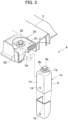
Fig. 3] Fig. 3 is an exploded perspective view of the release mechanism. - [
Fig. 4] Fig. 4 is a cross-sectioned side view (before collision) showing the installation structure. - [
Fig. 5] Fig. 5 is a cross-sectioned side view (after collision) showing the installation structure. - [
Fig. 6] Fig. 6 is a perspective view of an installation structure according to a second embodiment. - [
Fig. 7] Fig. 7 is a partially cross-sectioned perspective view showing a release mechanism in the installation structure. - [
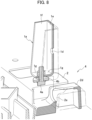
Fig. 8] Fig. 8 is an exploded perspective view of the release mechanism. - [
Fig. 9] Fig. 9 is a cross-sectioned side view (before collision) showing the installation structure. - [
Fig. 10] Fig. 10 is a cross-sectioned side view (after collision) showing the installation structure. - [
Fig. 11] Fig. 11 is a cross-sectioned side view (before collision) showing an installation structure according to a third embodiment. - An installation structure of an electrical component module in a vehicle according to embodiments with reference to the drawings. The second and third embodiments are not encompassed by the wording of the claims but are considered as useful for understanding the invention.
- An installation structure of a first embodiment will be explained with reference to
Fig. 1 to Fig. 5 . As shown inFig. 1 , the installation structure of the present embodiment is constructed in a front section (a section on a fore side from a passenger compartment) of a vehicle, specifically in a so-called engine compartment. But, the vehicle of the present embodiment is an electric vehicle (EV), and not an internal engine but a motor generator (MG) (not shown in the drawings) or the like is installed in the engine compartment. The MG functions as an electric motor, and also functions as an electric generator that regenerates electricity while the vehicle reduces its speed. Therefore, a term "motor room" is used hereinafter instead of the term "engine compartment". - In the motor room, an
electrical component module 1 for the above-mentioned MG is installed. Theelectrical component module 1 of the present embodiment is a charge/discharge unit, and accommodates an AC/DC charger that charges a battery unit (see a third embodiment explained later) for driving the MG by an external electrical power source, a DC/DC converter and a junction box. That is, theelectrical component module 1 is electrically connected with the above-mentioned battery unit installed in the vehicle. The MG is installed beneath theelectrical component module 1. Theelectrical component module 1 includes a housing made of aluminum alloy, and thereby (hardly) collapses even when receiving an impact from outside (e.g. when the vehicle has an accident). - The installation structure also includes a
cross-member 2 extending in a lateral direction of the vehicle in addition to theelectrical component module 1. Thecross-member 2 is a vehicle body structure member. Theelectrical component module 1 has a pair offirst brackets 1a (seeFig. 2 ) and a pair ofsecond brackets 1b. A rear portion of theelectrical component module 1 is supported by thecross-member 2 via thefirst brackets 1a. In addition, a front portion of theelectrical component module 1 is supported by aradiator support member 3 via the pair of thesecond brackets 1b. Theradiator support member 3 is also a vehicle body structure member. In the vehicle of the present embodiment, the MG, the inverter for the MG and so on are liquid-cooled, and thereby a radiator therefor is supported by theradiator support member 3. - The
cross-member 2 is a tower bar (tower brace) that connects a pair offront suspension towers 7a. Thecross-member 2 improves rigidity of the vehicle body. Thecross-member 2 of the present embodiment is made of aluminum alloy. Both ends of thecross-member 2 are fixed with thefront suspension towers 7a, respectively, by bolts or nuts. Thecross-member 2 has a pair ofintermediate brackets 2a, and the pair of theintermediate brackets 2a constructs an after-explainedrelease mechanism 4 together with the above-mentionedfirst brackets 1a (seeFig. 2 andFig. 3 ). Theintermediate brackets 2a are also made of aluminum alloy, and fixed with a main body of thecross-member 2 bybolts 2b (seeFig. 2 andFig. 3 ). Thecross-member 2 is disposed more closely to the passenger compartment than theelectrical component module 1 in a longitudinal direction of the vehicle. The passenger compartment and the motor room are separated from each other by abulkhead 6. - As shown in
Fig. 4 , thecross-member 2 does not overlap with theelectrical component module 1 when viewed in any horizontal direction perpendicular to a vertical direction of the vehicle. Hereinafter, this non-overlapping state is also stated as "being offset to each other in the vertical direction". The rear portion of theelectrical component module 1 is supported by thecross-member 2 so as to be hung down from thecross-member 2 via thefirst brackets 1a. Note that the front portion of theelectrical component module 1 is also supported by theradiator support member 3 so as to be hung down from theradiator support member 3 via thesecond brackets 1b. Thefirst brackets 1a and thesecond brackets 1b are made of steel, and fastened to the housing of theelectrical component module 1 bybolts 1c. - In the present embodiment, an air-conditioning (A/C)
unit 5 of an air-conditioning system is disposed between theelectrical component module 1 and the passenger compartment, more specifically, between theelectrical component module 1 and thebulkhead 6. The A/C unit 5 is installed so as to be made close to thebulkhead 6. A/C components 5c such as ducts and a blower fan that are made of plastics are housed in a plastic A/C housing 5b of the A/C unit 5, so that the A/C unit 5 is an auxiliary device that collapses when receiving an impact from outside. Thus, rigidity of the A/C unit 5 (the auxiliary device) is lower than the rigidity of theelectrical component module 1, and thereby the A/C unit 5 is collapsed (deformed) easier than theelectrical component module 1. - In other words, when the
electrical component module 1 is displaced in the longitudinal direction and then pressed onto the fixed A/C unit 5 from a state where theelectrical component module 1 and the A/C unit 5 position their installation positions, respectively, a deformation amount of the A/C unit 5 becomes obviously larger than a deformation amount (including a case with no deformation) of theelectrical component module 1. Similarly to the static loading explained above, a deformation amount of the A/C unit 5 becomes obviously larger than a deformation amount of theelectrical component module 1 also by dynamic loading such as a collision. - Other components such as a
condenser 5a are also housed in the A/C housing 5b. Thecondenser 5a is a tube-fin type heat exchanger made of metal, and is disposed closer to thebulkhead 6 at a position that overlaps with theelectrical component module 1 in the vertical direction. An opening for introducing conditioned air having passed through thecondenser 5a into the passenger compartment is also formed on thebulkhead 6. The A/C component 5c, such as an air shutter that is made of plastic and controls airflow toward thecondenser 5a, is also housed in the A/C housing 5b. - The above-mentioned
release mechanism 4 will be explained in detail with reference toFig. 2 andFig. 3 . Therelease mechanism 4 is constructed between the cross-member 2 and theelectrical component module 1. Therelease mechanism 4 releases supporting of theelectrical component module 1 by thecross-member 2 when receiving an impact force from an opposite side to the passenger compartment (from a fore side in the present embodiment). Although a pair of therelease mechanisms 4 is provided in the present embodiment, they have the same structure and thereby one of them will be explained as their representative. Therelease mechanism 4 is constructed mainly by thefirst bracket 1a of theelectrical component module 1 and theintermediate bracket 2a of thecross-member 2. Thefirst bracket 1a is an angled member comprised of afront plate 1e, a pair ofside plates 1f and anupper plate 1g. Thefront plate 1e and the pair of theside plates 1f of thefirst bracket 1a has a horizontal cross-sectional shape having an angled U-shape. Bolt holes 1d into which the above-mentionedbolts 1c are to be inserted are formed on thefront plate 1e. Theupper plate 1g of thefirst bracket 1a and theintermediate bracket 2a are fastened together with other by abolt 4a and a nut. Therefore, a bolt hole into which thebolt 4a is to be inserted is formed on theupper plate 1g. Although thebolt 4a is one of the component parts of therelease mechanism 4, it is not a portion of theelectrical component module 1 and is not a portion of thecross-member 2, neither. - On the other hand, the
intermediate bracket 2a has a shape in which abox portion 2d is protruded laterally from the center of its ovalmain body 2c. The ovalmain body 2c is fastened to the main body of thecross-member 2 bybolts 2b. Thebox portion 2d is protruded also downward from the ovalmain body 2c. The upper plane of thebox portion 2d is opened. Acutout bolt hole 2e is formed from a bottom plate to a back plate (a plate on a side of the passenger compartment) of thebox portion 2d. Thecutout bolt hole 2e has a shape formed by cutting out a bolt hole into which thebolt 4a is to be inserted at the bottom plate so as to be expanded to the back plate, and has an enough size to pass the head of thebolt 4a (and awasher 4b) though the back plate. Thecutout bolt hole 2e is one of important elements of therelease mechanism 4. - By inserting the
bolt 4a to which thewasher 4b is attached into thecutout bolt hole 2e and the bolt hole formed on theupper plate 1g and then fastening it by the nut, therelease mechanism 4 is fastened. The fastening of therelease mechanism 4 is not released under an ordinary use of the vehicle. However, when an impact force acts on theelectrical component module 1 from an opposite side to the passenger compartment (from a fore side in the present embodiment) (e.g. at an accident of the vehicle), the impact force displaces the head of thebolt 4a backward with respect to theintermediate bracket 2a. As the result, the head of thebolt 4a is displaced backward through thecutout bolt hole 2e, and then thebolt 4a and thefirst bracket 1a are disengaged from theintermediate bracket 2a. In other words, the supporting of theelectrical component module 1 by thecross-member 2 is released. Thewasher 4b provides stable fastening by thebolt 4a while preventing denting of its seating face, and promotes sliding of the head of thebolt 4a while the release. - Note that the
first bracket 1a may be configured by being integrated with the housing of theelectrical component module 1. However, by providing thefirst bracket 1a independently as explained above, adaptation to an installation structure having different layout dimensions can be easily achieved. In other words, versatility can be given to the installation of theelectrical component module 1. It can be given similarly by thesecond bracket 1b. In addition, the housing of theelectrical component module 1 and the cross-member 2 (including theintermediate brackets 2a) are made of aluminum alloy in the present embodiment. Here, by fastening the housing of theelectrical component module 1 to thecross-member 2 via thefirst brackets 1a (and thesecond brackets 1b) made of steel that is more flexible as metal than aluminum alloy, minute displacements and vibrations can be absorbed by thefirst brackets 1a (and thesecond brackets 1b). (Durability and damping of aluminum-based metal [aluminum alloy] with respect to vibrations are lower than those of iron-based metal [steel].) - It will be explained with reference to
Fig. 4 andFig. 5 how the above-explained installation structure functions when the vehicle comes into collision (when receiving an impact force from its fore side).Fig. 4 shows a state before the collision, in which theelectrical component module 1, thecross-member 2 and the A/C unit 5 present the above-explained positional relationship. On the other hand,Fig. 5 shows a state after the collision (or, during the collision). When the vehicle receives the impact force from its fore side, the impact force acts on afront bumper reinforcement 7d attached to a pair offront side members 7b viacrush boxes 7c at first. As the result, thecrush boxes 7c collapse to absorb the impact energy, and then the impact force acts on thefront side members 7b and theradiator support members 3. - Subsequently, the
front side members 7b and theintermediate members 7f that connect theradiator support member 3 with frontupper members 7e collapse, and then the impact force acts on theelectrical component module 1 via thesecond brackets 1b. Here, the impact force may act directly on theelectrical component module 1 due to collapses of thesecond brackets 1b. When theelectrical component module 1 receives the impact force, the supporting of theelectrical component module 1 by thecross-member 2 is released by therelease mechanism 4. Since theelectrical component module 1 is offset downward to the cross-member 2 (with no overlap), theelectrical component module 1 is displaced backward relative to the vehicle body without colliding against thecross-member 2. In other words, thecross-member 2 never inhibit the backward displacement of theelectrical component module 1. Therefore, a crushable stroke of the front section of the vehicle can be ensured sufficiently by the backward displacement of theelectrical component module 1, and thereby the absorption of the impact energy is promoted. If thecross-member 2 that is the vehicle body structure member inhibits the backward displacement of theelectrical component module 1, the impact energy cannot be absorbed sufficiently due to an insufficient crushable stroke. - Further, the A/
C unit 5 as the auxiliary device is disposed between theelectrical component module 1 and the passenger compartment, i.e. behind theelectrical component module 1. Theelectrical component module 1 is displaced backward while collapsing the A/C unit 5 to absorb the impact energy. Therefore, the impact energy can be absorbed efficiently. Especially in the present embodiment, the A/C unit 5 is disposed closer to thebulkhead 6, and thereby the backward displacement of the A/C unit 5 is limited by thebulkhead 6. As the result, the A/C unit 5 is collapsed surely, and the impact energy can be absorbed more efficiently. Note that, by disposing the A/C unit 5 on a fore side from thebulkhead 6 in the motor room, a space volume of the passenger compartment is enlarged and comfortability in the passenger compartment is improved. - In addition, with respect to the A/
C unit 5, thecondenser 5a that is a tube-fin type heat exchanger made of metal is disposed closest to thebulkhead 6 within it. The A/C unit 5 as the auxiliary device is collapsed by the impact from outside and absorbs the impact energy, but itscondenser 5a is relatively hard to collapse. If thefirst brackets 1a of theelectrical component module 1 reach thebulkhead 6, the impact force acts on thebulkhead 6 in a concentrated manner and it is deformed toward the passenger compartment. However, thecondenser 5a is disposed closest to thebulkhead 6 in the present embodiment, and thereby thecondenser 5a receives thefirst brackets 1a while being deformed. As the result, theelectrical component module 1 can be received surely at a terminative end of the above-mentioned crushable stroke. - In addition, in the inside of the A/
C unit 5, the A/C component 5c made of plastic and disposed in front of thecondenser 5a made of meatal collapses during the process where theelectrical component module 1 is received by thecondenser 5a, and thereby absorbs the impact energy. In other words, the above-explained A/C component 5c of the A/C unit 5 as the auxiliary device that absorbs the impact energy functions as an energy absorbing component. Note that a compressor for refrigerant of the air-conditioning system may be disposed within the motor room but outside the A/C unit 5 similarly in a conventional internal combustion engine vehicle, or may be disposed within the A/C unit 5. In a case of disposing the compressor that is made of metal and hardly collapses within the A/C unit 5, the compressor is not disposed in front of thecondenser 5a, but is offset laterally to thecondenser 5a so as not to overlap with thecondenser 5a when viewed from the fore side. - Note that, in the vehicle (EV) of the present embodiment, the MG as an electric motor mechanically connected with drive wheels of the vehicle is electrically connected with the
electrical component module 1. However, in a case where the vehicle is a hybrid electric vehicle (HEV), an electric motor mechanically connected with an output shaft of an internal combustion engine may be electrically connected with theelectrical component module 1. In this case, the electric motor mechanically connected with the drive wheels of the vehicle and the electric motor mechanically connected with the output shaft of the internal combustion engine may be integrated with each other as a single motor, or provided independently from each other as separated electric motors. These electric motors may be motor generators that can regenerate electricity. - The installation structure of the present embodiment includes the
electrical component module 1 that is installed in the front section of the vehicle and is electrically connected with the battery unit that stores electricity for driving the vehicle, and the vehicle body structure member (cross-member) 2 that extends in the lateral direction and supports theelectrical component module 1. The vehiclebody structure member 2 is disposed on a side of the passenger compartment from (i.e. behind) theelectrical component module 1 in the longitudinal direction, and is offset to theelectrical component module 1 in the vertical direction (they don't overlap when viewed in the horizontal direction). In addition, therelease mechanism 4 that releases the supporting of theelectrical component module 1 by the vehiclebody structure member 2 when receiving an impact force from an opposite side to the passenger compartment (i.e. the fore side) is provided between the vehiclebody structure member 2 and theelectrical component module 1. Therefore, when theelectrical component module 1 receives the impact force, the supporting of theelectrical component module 1 by the vehiclebody structure member 2 is released by therelease mechanism 4. Theelectrical component module 1 whose supporting has been released is displaced backward without being inhibited by the vehiclebody structure member 2. As the result, the crushable stroke of the front section of the vehicle body can be ensured sufficiently, and thereby the impact energy can be absorbed. - Since the battery unit that stores electricity for driving the vehicle is generally uses high voltage, the
electrical component module 1 electrically connected with the battery unit also uses high voltage. Therefore, theelectrical component module 1 has the high-rigidity housing so as not to easily collapse. However, theelectrical component module 1 that has the high-rigidity housing cannot absorbs the impact energy, because it doesn't collapse. In addition, theelectrical component module 1 generates a large peak load when it contacts with another rigid component during the vehicle body deformation at the collision, because it doesn't collapse. But, theelectrical component module 1 of the present embodiment is released from the supporting by the vehiclebody structure member 2 at the collision, and thereby can be displaced backward without contacting with the other rigid component. - In addition, the installation structure of the present embodiment further includes the auxiliary device (A/C unit) 5 whose rigidity is lower than that of the
electrical component module 1 between theelectrical component module 1 and the passenger compartment. Therefore, theelectrical component module 1 collapses theauxiliary device 5 and is displaced backward while absorbing the impact energy. As the result, the impact energy can be absorbed efficiently. - In addition, in the installation structure of the present embodiment, the
auxiliary device 5 is the A/C unit 5. Therefore, the installation structure can be constructed effectively in the front section of the vehicle in a case where the vehicle is an EV or an HEV, and thereby it becomes possible to construct a front section structure of the vehicle that has superior impact energy absorbing property. In addition, since the A/C unit 5 is disposed in the motor room, comfortability in the passenger compartment is improved. - Here in the present embodiment, the vehicle
body structure member 2 is the cross-member 2 that connects the pair of thefront suspension towers 7a. Theelectrical component module 1 is installed in the front section of the vehicle, and is offset downward to the cross-member 2 (positions beneath it and doesn't overlap with it when viewed in the horizontal direction). The A/C unit 5 is disposed on a fore side from thebulkhead 6. A front suspension mechanism and a drivetrain, such as drive wheels (front wheels) that are steered and the MG connected with drive shafts, is disposed at a lower area in the motor room. Therefore, by hanging theelectrical component module 1 down from the cross-member (tower bar) 2 to support it, space efficiency in the motor room can be improved. In addition, the A/C unit 5 is received by thebulkhead 6 on its rear side when the A/C unit 5 collapses. As a result, the A/C unit 5 can be collapsed surely, and thereby can absorb the impact energy more efficiently. - Further in the present embodiment, the A/
C unit 5 has the tube-fin type heat exchanger (condenser) 5a made of metal in its inside. Therefore, thecondenser 5a receives, while it collapses, theelectrical component module 1 that is displaced backward. As a result, theelectrical component module 1 can be surely received at the terminative end of the crushable stroke. - An installation structure of a second embodiment will be explained with reference to
Fig. 6 to Fig. 10 . Anelectrical component module 1 in the installation structure according to the present embodiment is an inverter unit for an MG connected with rear wheels. The electrical component unit (inverter unit) 1 is electrically connected with the above-mentioned battery unit (see the third embodiment explained later) that stores electricity for driving the vehicle. Theelectrical component module 1 includes a box-shaped housing made of aluminum alloy, and thereby (hardly) collapses even when receiving an impact from outside (e.g. when the vehicle has an accident). Electrical components, such as power modules and smoothing capacitors, are housed in the housing. In addition, the electrical component module (inverter unit) 1 is electrically connected with the MG (electric motor) that is mechanically connected with the drive wheels or with the output shaft of the internal combustion engine. - In addition, a
release mechanism 4 in the installation structure according to the present embodiment is the same as therelease mechanism 4 of the above-explained first embodiment. Therefore, the same configurational elements of theelectrical component module 1 and therelease mechanism 4 are labelled with identical reference sign, and their detailed explanations will be omitted. But, in the present embodiment, theelectrical component module 1 is installed in a rear section of the vehicle by reversing its front and rear. In other words, theelectrical component module 1 installed in the rear section receives an impact force at its same side face at a collision of the vehicle. In addition, theelectrical component module 1 is (not supported by being hung down but) supported from beneath. Therefore, thefirst brackets 1a and thesecond brackets 1b are attached to the housing of theelectrical component module 1 upside down. In other words, as explained in the first embodiment, versatility is given to the installation of theelectrical component module 1 by thefirst brackets 1a and thesecond brackets 1b. - As shown in
Fig. 6 , the installation structure of the present embodiment is constructed in the rear section of the vehicle (a section on a rear side from the passenger compartment), specifically in a luggage room. The above-mentionedelectrical component module 1 is installed in the luggage room. The MG is installed beneath theelectrical component module 1. In the present embodiment, the MG as an electric motor mechanically connected with the drive wheels (rear wheels) of the vehicle is electrically connected with theelectrical component module 1. Note that there may be variations for its powertrain, such as a four-wheel drive HEV in which its front wheels are driven by the internal combustion engine and an MG and its rear wheels are driven only by an MG, and a four-wheel drive EV in which its front wheels and its rear wheels are driven by an MG. - The installation structure of the present embodiment includes a
cross-member 2 extending in the lateral direction of the vehicle in addition to theelectrical component module 1. Thecross-member 2 is the vehicle body structure member. As explained above, theelectrical component module 1 has the pair of thefirst brackets 1a and the pair of thesecond brackets 1b. A front portion of theelectrical component module 1 is supported by thecross-member 2 via thefirst brackets 1a. In addition, a rear portion of theelectrical component module 1 is supported by a rear-side cross-member 13 via the pair of thesecond brackets 1b. The rear-side cross-member 13 is also the vehicle body structure member. Thecross-member 2 connects a pair ofrear side members 17b (seeFig. 9 ), and also improves the rigidity of the vehicle body. Thecross-member 2 of the present embodiment is made of aluminum alloy. Both ends of thecross-member 2 are fixed with therear side members 17b, respectively, by bolts or nuts. Thecross-member 2 of the present embodiment doesn't have theintermediate brackets 2a of the first embodiment, but hasbox portions 2d monolithically at its main body (seeFig. 7 ). - The
box portions 2d of thecross-member 2 construct the release mechanism 4 (seeFig. 7 andFig. 8 ) together with thefirst brackets 1a of theelectrical component module 1. Thecross-member 2 is disposed more closely to the passenger compartment than theelectrical component module 1. As shown inFig. 9 , thecross-member 2 is offset to theelectrical component module 1 in the vertical direction (they don't overlap when viewed in the horizontal direction). The front portion of theelectrical component module 1 is supported from beneath by thecross-member 2 via thefirst brackets 1a. The rear portion of theelectrical component module 1 is also supported by the rear-side cross-member 13 via thesecond brackets 1b. - In the present embodiment, an
audio unit 15 is disposed between theelectrical component module 1 and the passenger compartment. Theaudio unit 15 is disposed just behindrear seats 8, and its front lower end is fixed with a front-side cross-member 16. Audio components such as speakers and a woofer duct is housed within theaudio unit 15, and theaudio unit 15 is the auxiliary device that would collapse when receiving an impact from outside. That is, the rigidity of the audio unit 15 (auxiliary device) is lower than the rigidity of theelectrical component module 1, and thereby theaudio unit 15 collapses more easily (deforms more easily) than theelectrical component module 1. Anamplifier unit 15a is also housed within theaudio unit 15. Theamplifier unit 15a has a housing made of metal (aluminum alloy). The housing also functions as a heatsink for radiating heats of the amplifier. Theamplifier unit 15a is disposed at a position that overlaps with theelectrical component module 1 in the vertical position. Note that a bulkhead that separates the passenger compartment and the luggage room may be disposed at a position of the front-side cross-member 16. - Although the
first brackets 1a (and thesecond brackets 1b) are fastened to the housing of theelectrical component module 1 upside down as explained above, therelease mechanism 4 has a similar structure of therelease mechanism 4 of the first embodiment as shown inFigs. 8 and9 . - It will be explained with reference to
Fig. 9 andFig. 10 how the above-explained installation mechanism functions when another vehicle comes into collision from rear (when receiving an impact force from the rear side).Fig. 9 shows a state before the collision, andFig. 10 shows a state after the collision (or, during the collision). When the vehicle receives the impact force from its rear side, the impact force acts on arear bumper reinforcement 17d attached to a pair ofrear side members 17b viacrush boxes 17c (seeFig. 6 ) at first. As a result, thecrush boxes 17c collapse to absorb the impact energy, and then the impact force acts on therear side members 17b and the rear-side cross-member 13. - Subsequently, the
rear side members 17b collapse, and then the impact force acts on theelectrical component module 1 via thesecond brackets 1b. Here, the impact force may act directly on theelectrical component module 1 due to collapses of thesecond brackets 1b. When theelectrical component module 1 receives the impact force, the supporting of theelectrical component module 1 by thecross-member 2 is released by therelease mechanism 4. Since theelectrical component module 1 is offset upward with respect to the cross-member 2 (with no overlap), theelectrical component module 1 is displaced forward relative to the vehicle body without colliding against thecross-member 2. In other words, thecross-member 2 never inhibit the forward displacement of theelectrical component module 1. Therefore, a crushable stroke of the rear section of the vehicle can be ensured sufficiently by the forward displacement of theelectrical component module 1, and thereby the absorption of the impact energy is promoted. If thecross-member 2 that is the vehicle body structure member inhibits the forward displacement of theelectrical component module 1, the impact energy cannot be absorbed sufficiently due to an insufficient crushable stroke. - Further, the
audio unit 15 as the auxiliary device is disposed between theelectrical component module 1 and the passenger compartment, i.e. in front of theelectrical component module 1. Theelectrical component module 1 is displaced forward while collapsing theaudio unit 15 to absorb the impact energy. Therefore, the impact energy can be absorbed efficiently. The forward displacement of theaudio unit 15 is limited by the front-side cross-member 16 and therear seats 8. As a result, theaudio unit 15 can be collapsed surely, and thereby can absorb the impact energy more efficiently. - In addition, the
audio unit 15 has theamplifier unit 15a that has the metal housing within it. Theaudio unit 15 as the auxiliary device is collapsed by the impact from outside and absorbs the impact energy, but itsamplifier unit 15a is relatively hard to collapse. Theamplifier unit 15a receives thefirst brackets 1a while being deformed similarly to thecondenser 5a of the first embodiment. Even when theamplifier unit 15a is displaced forward, it can be received by the front-side cross-member 16 and therear seats 8. Asa result, theelectrical component module 1 can be received surely at a terminative end of the crushable stroke. Note that, also in the present embodiment, the electric motor mechanically connected with the output shaft of the internal combustion engine may be electrically connected with theelectrical component module 1. For example, the electric motor installed in the front section of the vehicle is electrically connected with theelectrical component module 1 installed in the rear section of the vehicle by a wiring harness. - The installation structure of the present embodiment includes the
electrical component module 1 that is installed in the rear section of the vehicle and is electrically connected with the battery unit that stores electricity for driving the vehicle, and the vehicle body structure member (cross-member) 2 that extends in the lateral direction and supports theelectrical component module 1. The vehiclebody structure member 2 is disposed on a side of the passenger compartment (i.e. in front of) theelectrical component module 1 in the longitudinal direction, and is offset to theelectrical component module 1 in the vertical direction (they don't overlap when viewed in the horizontal direction). In addition, therelease mechanism 4 that releases the supporting of theelectrical component module 1 by the vehiclebody structure member 2 when receiving an impact force from an opposite side to the passenger compartment (i.e. the rear side) is provided between the vehiclebody structure member 2 and theelectrical component module 1. Therefore, when theelectrical component module 1 receives the impact force, the supporting of theelectrical component module 1 by the vehiclebody structure member 2 is released by therelease mechanism 4. Theelectrical component module 1 whose supporting has been released is displaced forward without being inhibited by the vehiclebody structure member 2. As a result, the crushable stroke of the rear section of the vehicle body can be ensured sufficiently, and thereby the impact energy can be absorbed. - In addition, the installation structure of the present embodiment further includes the auxiliary device (audio unit) 15 whose rigidity is lower than that of the
electrical component module 1 between theelectrical component module 1 and the passenger compartment. Therefore, theelectrical component module 1 collapses theauxiliary device 15 and is displaced forward while absorbing the impact energy. As a result, the impact energy can be absorbed efficiently. - In addition, in the installation structure of the present embodiment, the
electrical component module 1 is installed in the rear section of the vehicle, and theauxiliary device 15 is theaudio unit 15. Therefore, the installation structure can be constructed effectively in the rear section of the vehicle in a case where the vehicle is an EV or an HEV, and thereby it becomes possible to construct a rear section structure of the vehicle that has superior impact energy absorbing property. - Here in the present embodiment, the vehicle
body structure member 2 is the cross-member 2 that connects the pair of therear side members 17b. In addition, theelectrical component module 1 is offset upward to the cross-member 2 (positions above it and doesn't overlap with it when viewed in the horizontal direction). A rear suspension mechanism and a drivetrain, such as drive wheels (rear wheels) and the MG connected with drive shafts, is disposed beneath the luggage room (therear side members 17b). Therefore, by supporting theelectrical component module 1 from beneath by thecross-member 2 that connects therear side members 17b, space efficiency beneath the floor of the luggage room can be improved. - Further in the present embodiment, the
audio unit 15 has theamplifier unit 15a made of metal in its inside. Therefore, theamplifier unit 15a receives, while it collapses, theelectrical component module 1 that is displaced forward. As a result, theelectrical component module 1 can be surely received at the terminative end of the crushable stroke. - The auxiliary device in the second embodiment is the
audio unit 15. However, an A/C unit may be installed in the rear section of the vehicle as the auxiliary device whose rigidity is lower than that of theelectrical component module 1. Recently, sold is a vehicle in which an A/C unit for rear seats is stalled in addition to an A/C unit for front seats. In such a vehicle, there may be a case where the A/C unit for rear seats is stalled in the rear section of the vehicle. According to the present embodiment, in theFig. 6 to Fig. 10 , thereference sign 15 indicates the A/C unit, and thereference sign 15a indicates the condenser (tube-fin type heat exchanger made of metal). Therefore, the above-explained advantages brought by the second embodiment can be also brought by the present modified example similarly. - Especially in the present modified example, the auxiliary device is the A/
C unit 15. Therefore, the installation structure can be constructed effectively in the rear section of the vehicle in a case where the vehicle is an EV or an HEV, and thereby it becomes possible to construct a rear section structure of the vehicle that has superior impact energy absorbing property. - In addition, the A/
C unit 15 has the tube-fin type heat exchanger (condenser) 15a made of metal within it. Therefore, thecondenser 15a receives, while it collapses, theelectrical component module 1 that is displaced forward. As a result, theelectrical component module 1 can be surely received at the terminative end of the crushable stroke. - An installation structure of a third embodiment will be explained with reference to
Fig. 11 . A vehicle of the present embodiment is also an EV, and includes the battery unit B beneath the floor of the passenger compartment. In the resent embodiment, the auxiliary device is a battery thermo-control unit 25 that controls temperature of the battery unit B. The inverter unit as theelectrical component module 1, thecross-member 2 as the vehicle body structure member, and structures of the vehicle body surrounding them are the same as those of the above-explained second embodiment. Therefore, these identical configurational elements are labelled with identical reference signs and thereby their detailed explanations will be omitted. - The battery unit B for the EV is warmed or cooled according to its operating environment. For example, the battery unit B is warmed at a start-up under the low temperature environment, and cooled under high-load continuous operation. The battery thermo-
control unit 25 of the present embodiment controls the temperature of the battery unit B by using coolant. The battery thermo-control unit 25 has a cooler 25a for cooling the coolant and aheater 25b for heating the coolant in its inside. The cooler 25a and the battery unit B is connected with each other by cooler circulation pipes. Theheater 25b and the battery unit B is connected with each other by heater circulation pipes. Although the pipes within the battery unit B are not shown in the drawing, the coolant flows though the pipes in the battery unit B, and thereby the temperature of the battery unit B is controlled. - The cooler 25a of the present embodiment is a heat exchanger made of metal, and utilizes refrigerant. Therefore, the cooler 25a is connected with a
compressor 25d via refrigerant circulation pipes. Thecompressor 25d functions also as a pump for recirculating the refrigerant. In the inside of the cooler 25a, heats of the coolant is transferred to the refrigerant, and thereby the coolant is cooled. The cooler 25a and thecompressor 25d of the present embodiment function also as an evaporator and a compressor of the air-conditioning system. (The evaporator and the compressor of the air-conditioning system are utilized as the cooler 25a and thecompressor 25d.) - The
heater 25b may be a heater that generates heats by using electrical power, or may use a heat pump system installed in the vehicle. In a case of using the heat pump system, theheater 25b may be a heat exchanger made of metal. The cooler 25a (and theheater 25b) is disposed at a position that overlaps with theelectrical component module 1 in the vertical direction. Apump 25c for recirculating the coolant and a valve (not shown in the drawing) for switching recirculation paths are provided on the recirculation pipes of the coolant. Components such as pipes and a reservoir tank of the coolant are also housed in the battery thermo-control unit 25, and the battery thermo-control unit 25 collapses when receiving an impact from outside. - In the present embodiment, the battery thermo-
control unit 25 is disposed between theelectrical component module 1 and the passenger compartment. The battery thermo-control unit 25 is disposed just behindrear seats 8, and its front lower end is fixed with the front-side cross-member 16. Note that a bulkhead that separates the passenger compartment and the luggage room may be disposed at a position of the front-side cross-member 16. - When the above-explained installation structure suffers a collision from rear by another vehicle (when it receives an impact force from the rear side), an impact force acts on the
rear bumper reinforcement 17d at first, and then the impact energy is absorbed while thecrush boxes 17c collapse. Subsequently, therear side members 17b collapse, and then the impact force acts on theelectrical component module 1 via thesecond brackets 1b. Here, the impact force may act directly on theelectrical component module 1 due to collapses of thesecond brackets 1b. When theelectrical component module 1 receives the impact force, the supporting of theelectrical component module 1 by thecross-member 2 is released by therelease mechanism 4. Theelectrical component module 1 is displaced forward relative to the vehicle body without colliding against thecross-member 2. A crushable stroke of the rear section of the vehicle can be ensured sufficiently by the forward displacement of theelectrical component module 1, and thereby the absorption of the impact energy is promoted. - Further, the battery thermo-
control unit 25 that is the auxiliary device having the lower rigidity than that of theelectrical component module 1 is disposed between theelectrical component module 1 and the passenger compartment, i.e. in front of theelectrical component module 1. Theelectrical component module 1 is displaced forward while collapsing the battery thermo-control unit 25 to absorb the impact energy. The forward displacement of the battery thermo-control unit 25 is limited by the front-side cross-member 16 and therear seats 8. As a result, the battery thermo-control unit 25 can be collapsed surely, and thereby can absorb the impact energy more efficiently. - In addition, the battery thermo-
control unit 25 has the cooler 25a (and theheater 25b) that is the heat exchanger made of metal within it. The battery thermo-control unit 25 as the auxiliary device is collapsed by the impact from outside and absorbs the impact energy, but its cooler 25a (and theheater 25b) is relatively hard to collapse. The cooler 25a (and theheater 25b) receives thefirst brackets 1a while being deformed similarly to thecondenser 5a of the first embodiment. Even when the cooler 25a (and theheater 25b) is displaced forward, it can be received by the front-side cross-member 16 and therear seats 8. As a result, theelectrical component module 1 can be received surely at a terminative end of the crushable stroke. Note that, also in the present embodiment, the electric motor mechanically connected with the output shaft of the internal combustion engine may be electrically connected with theelectrical component module 1. - Also in the installation structure of the present embodiment, when the
electrical component module 1 receives the impact force from the rear, the supporting of theelectrical component module 1 by the vehiclebody structure member 2 is released by therelease mechanism 4. Theelectrical component module 1 whose supporting has been released is displaced forward without being inhibited by the vehiclebody structure member 2. As a result, the crushable stroke of the rear section of the vehicle body can be ensured sufficiently, and thereby the impact energy can be absorbed. - In addition, the installation structure of the present embodiment further includes the auxiliary device (battery thermo-control unit) 25 whose rigidity is lower than that of the
electrical component module 1 between theelectrical component module 1 and the passenger compartment. Therefore, theelectrical component module 1 collapses theauxiliary device 25 and is displaced forward while absorbing the impact energy. As a result, the impact energy can be absorbed efficiently. - In addition, in the installation structure of the present embodiment, the
electrical component module 1 is installed in the rear section of the vehicle, and theauxiliary device 25 is the battery thermo-control unit 25. Therefore, the installation structure can be constructed effectively in the rear section of the vehicle in a case where the vehicle is an EV or an HEV, and thereby it becomes possible to construct a rear section structure of the vehicle that has superior impact energy absorbing property. - Here in the present embodiment, the vehicle
body structure member 2 is the cross-member 2 that connects the pair of therear side members 17b. In addition, theelectrical component module 1 is offset upward to thecross-member 2. A rear suspension mechanism and a drivetrain, such as drive wheels (rear wheels) and the MG connected with drive shafts, is disposed beneath the luggage room (therear side members 17b). Therefore, by supporting theelectrical component module 1 from beneath by thecross-member 2 that connects therear side members 17b, space efficiency beneath the floor of the luggage room can be improved. - Further in the present embodiment, the battery thermo-
control unit 25 has the cooler 25a (and theheater 25b) made of metal in its inside. Therefore, the cooler 25a (and theheater 25b) receives, while it collapses, theelectrical component module 1 that is displaced forward. As a result, theelectrical component module 1 can be surely received at the terminative end of the crushable stroke. - Note that the present invention is not limited to the above-explained embodiment. For example, the
electrical component module 1 of the first embodiment may be an inverter unit as in the second embodiment. In addition, thecross-member 2 in the second and third embodiments is fixed with the pair of therear side members 17b by bolts or the like. However, thecross-member 2 as the vehicle body structure member may be a cross-member welded between therear side members 17b. - In addition, the
release mechanism 4 in the above embodiment(s) is a slide drop-off mechanism in which itsbolts 4a slide and then drops off from theintermediate brackets 2a through thecutoff bolt holes 2e. In such a slide drop-off mechanism, the bolt(s) 4a may be formed monolithically with the first bracket(s) 1a. Note that the bolt(s) 4a in this case is not a "bolt" but an engagement protrusion(s) protruded upward from the first bracket(s) 1a, but this engagement protrusion is a portion of therelease mechanism 4 and not a part of thefirst bracket 1a (i.e. the electrical component module 1). In other words, thebolt 4a and the engagement protrusion can overlap with the cross-member 2 (theintermediate bracket 2a) when viewed in the horizontal direction. The above-mentioned engagement protrusion is pressed into theintermediate bracket 2a through thecutoff bolt hole 2e. - Further, the
release mechanism 4 in the above embodiment(s) is a slide drop-off mechanism as explained above. However, a combined body of thefirst bracket 1a and theintermediate bracket 2a may be insert-molded such that thefirst bracket 1a and theintermediate bracket 2a are integrally jointed with each other by engineering plastic, for example. It may be a release mechanism such that the engineering plastic is broken when it receives the impact force from the opposite side to the passenger compartment and then the supporting of theelectrical component module 1 by the cross-member (vehicle body structure member) 2 is released. The release mechanism may be such a breakage drop-off mechanism. The breakage drop-off mechanism may be constructed by a weaken portion formed on a metal portion without using the engineering plastic. -
- 1
- electrical component module
- 1a
- first bracket
- 1b
- second bracket
- 2
- cross-member (vehicle body structure member)
- 4
- release mechanism
- 5
- air-conditioning unit (auxiliary device)
- 5a
- condenser (tube-fin type heat exchanger)
- 6
- bulkhead
- 15
- audio unit (auxiliary device)
- 15a
- amplifier unit
- 25
- battery thermo-control unit (auxiliary device)
- 25a
- cooler (heat exchanger)
- 25b
- heater
- B
- battery unit
Claims (4)
- A vehicle with an installation structure of an electrical component module (1), the structure comprising:the electrical component module (1) that is installed in a front section of the vehicle, and connected with a battery unit (B) that stores electricity for driving the vehicle; anda vehicle body structure member (2) that extends in a lateral direction of the vehicle, and supports the electrical component module (1),wherein the vehicle body structure member (2) is disposed closer to a passenger compartment of the vehicle than the electrical component module (1), and doesn't overlap with the electrical component module (1) when viewed in any horizontal direction perpendicular to a vertical direction of the vehicle, andwherein a release mechanism (4) is provided between the vehicle body structure member (2) and the electrical component module (1), and the release mechanism (4) is configured to release supporting of the electrical component module (1) by the vehicle body structure member (2) when receiving an impact force from an opposite side to the passenger compartment,characterized in that the vehicle further comprises: an auxiliary device (5) on a drop-off side on which the electrical component module (1) drops off from the vehicle body structure member (2) with respect to the electrical component module (1) being supported by the vehicle body structure member (2) when the supporting of the electrical component module (1) is released by the release mechanism (4), wherein the rigidity of the auxiliary device (5) is lower than that of the electrical component module (1).
- The vehicle with an installation structure according to claim 1, wherein
the auxiliary device (5) is an air-conditioning unit (5). - The vehicle with an installation structure according to claim 2, whereinthe vehicle body structure member (2) is a cross-member (2) that connects a pair of front suspension towers (7a) of the vehicle,the electrical component module (1) is positioned beneath the cross-member (2) not to overlap with the cross-member (2) when viewed in the horizontal direction, andthe air-conditioning unit (5) is disposed on a fore side from a bulkhead (6) of the vehicle.
- The vehicle with an installation structure according to claim 2 or 3, wherein
the air-conditioning unit (5) has a tube-fin type heat exchanger (5a) made of metal therewithin.
Applications Claiming Priority (1)
| Application Number | Priority Date | Filing Date | Title |
|---|---|---|---|
| PCT/IB2019/000636 WO2020254846A1 (en) | 2019-06-19 | 2019-06-19 | Structure for mounting electronic device module on vehicle |
Publications (3)
| Publication Number | Publication Date |
|---|---|
| EP3988358A1 EP3988358A1 (en) | 2022-04-27 |
| EP3988358A4 EP3988358A4 (en) | 2022-06-22 |
| EP3988358B1 true EP3988358B1 (en) | 2025-04-16 |
Family
ID=74040137
Family Applications (1)
| Application Number | Title | Priority Date | Filing Date |
|---|---|---|---|
| EP19933252.9A Active EP3988358B1 (en) | 2019-06-19 | 2019-06-19 | Structure for mounting electronic device module on vehicle |
Country Status (5)
| Country | Link |
|---|---|
| US (1) | US12059949B2 (en) |
| EP (1) | EP3988358B1 (en) |
| JP (1) | JP7294418B2 (en) |
| CN (1) | CN114072300A (en) |
| WO (1) | WO2020254846A1 (en) |
Families Citing this family (9)
| Publication number | Priority date | Publication date | Assignee | Title |
|---|---|---|---|---|
| EP3988358B1 (en) * | 2019-06-19 | 2025-04-16 | NISSAN MOTOR Co., Ltd. | Structure for mounting electronic device module on vehicle |
| JP7478908B2 (en) * | 2021-05-25 | 2024-05-07 | 日産自動車株式会社 | Mounting structure for high-voltage components mounted at the front of the vehicle |
| EP4427324A4 (en) * | 2021-11-02 | 2025-09-17 | Divergent Tech Inc | MOTOR NODES |
| FR3128685A1 (en) * | 2021-11-04 | 2023-05-05 | Psa Automobiles Sa | RIGIDIFICATION STRUCTURE OF A MOTOR VEHICLE CHASSIS |
| FR3133045A1 (en) * | 2022-02-28 | 2023-09-01 | Psa Automobiles Sa | Stiffening structure including a junction box |
| JP2024007745A (en) * | 2022-07-06 | 2024-01-19 | 株式会社Subaru | fuel cell car |
| US20240183630A1 (en) * | 2022-10-10 | 2024-06-06 | Divergent Technologies, Inc. | Crash rail with integrated heat exchanging core |
| FR3145920A1 (en) * | 2023-02-21 | 2024-08-23 | Psa Automobiles Sa | DEVICE FOR MOUNTING AN ELECTROMOTIVE GROUP ON MOTOR VEHICLES |
| EP4520637A1 (en) * | 2023-09-08 | 2025-03-12 | Volvo Car Corporation | Panel structure for noise, vibration and harshness reduction inside a front compartment of a vehicle |
Family Cites Families (41)
| Publication number | Priority date | Publication date | Assignee | Title |
|---|---|---|---|---|
| JP2932133B2 (en) * | 1993-03-19 | 1999-08-09 | トヨタ自動車株式会社 | Auxiliary parts arrangement structure for electric vehicles |
| JP3533979B2 (en) * | 1999-03-05 | 2004-06-07 | 日産自動車株式会社 | Power head mounting structure for electric vehicles |
| JP3923281B2 (en) * | 2001-06-13 | 2007-05-30 | 本田技研工業株式会社 | Mounting structure for vehicle equipment |
| US6755461B2 (en) * | 2001-10-16 | 2004-06-29 | Aloca Inc. | Modular front end for a motor vehicle |
| JP3842204B2 (en) * | 2002-11-11 | 2006-11-08 | 本田技研工業株式会社 | Front body structure |
| JP2007203912A (en) * | 2006-02-02 | 2007-08-16 | Toyota Auto Body Co Ltd | Car body rear structure |
| JP4935112B2 (en) * | 2006-02-28 | 2012-05-23 | トヨタ自動車株式会社 | In-vehicle structure of power storage pack |
| US20080202741A1 (en) * | 2007-02-23 | 2008-08-28 | Daewoong Lee | Battery cooling device for vehicles and control method thereof |
| JP2009252688A (en) * | 2008-04-10 | 2009-10-29 | Toyota Motor Corp | Temperature control system of storage battery for vehicle |
| JP2009262739A (en) * | 2008-04-24 | 2009-11-12 | Pioneer Electronic Corp | Speaker system |
| JP5652604B2 (en) | 2010-11-05 | 2015-01-14 | 三菱自動車工業株式会社 | Electric vehicle body structure |
| US8720627B2 (en) * | 2010-12-20 | 2014-05-13 | Mazda Motor Corporation | Battery arrangement structure of vehicle |
| DE102011050707B4 (en) * | 2011-05-30 | 2026-03-26 | Dr. Ing. H.C. F. Porsche Aktiengesellschaft | Storage of an electrical or electronic component in the engine compartment of a motor vehicle |
| DE112011105463B4 (en) * | 2011-07-26 | 2017-02-23 | Toyota Jidosha Kabushiki Kaisha | Automobile with vehicle drive engine |
| JP5683408B2 (en) * | 2011-08-09 | 2015-03-11 | トヨタ自動車株式会社 | Automobile having vehicle drive motor |
| CN103796877B (en) * | 2011-09-13 | 2015-10-21 | 丰田自动车株式会社 | The operator guards of mobile unit |
| JP5733153B2 (en) | 2011-10-19 | 2015-06-10 | トヨタ自動車株式会社 | On-board equipment mounting structure |
| CN104114396B (en) * | 2012-02-07 | 2016-08-31 | 本田技研工业株式会社 | Fuel-cell vehicle |
| WO2013168227A1 (en) * | 2012-05-08 | 2013-11-14 | トヨタ自動車株式会社 | Electric vehicle |
| JP5880724B2 (en) * | 2012-10-05 | 2016-03-09 | 日産自動車株式会社 | Mounting structure for vehicle equipment |
| JP5704142B2 (en) * | 2012-10-09 | 2015-04-22 | トヨタ自動車株式会社 | In-vehicle device protection structure and electric vehicle |
| JP6082602B2 (en) * | 2013-01-18 | 2017-02-15 | 本田技研工業株式会社 | Vehicle with fuel cell |
| JP6063406B2 (en) * | 2014-03-06 | 2017-01-18 | 本田技研工業株式会社 | Fuel cell stack mounting structure |
| JP6213331B2 (en) * | 2014-03-24 | 2017-10-18 | トヨタ自動車株式会社 | Electric vehicle |
| JP6102953B2 (en) * | 2015-01-16 | 2017-03-29 | マツダ株式会社 | Subframe structure of vehicle |
| JP6222178B2 (en) * | 2015-07-16 | 2017-11-01 | トヨタ自動車株式会社 | Electric vehicle |
| JP6299699B2 (en) * | 2015-07-30 | 2018-03-28 | トヨタ自動車株式会社 | In-vehicle structure of power control unit |
| US9517686B1 (en) * | 2015-09-03 | 2016-12-13 | Ford Global Technologies, Llc | Traction battery dual-stage mounting bracket |
| JP6260797B2 (en) * | 2015-10-13 | 2018-01-17 | トヨタ自動車株式会社 | Fuel cell vehicle |
| JP6529888B2 (en) * | 2015-10-22 | 2019-06-12 | 本田技研工業株式会社 | Fuel cell stack mounting structure |
| JP6414095B2 (en) * | 2016-02-17 | 2018-10-31 | トヨタ自動車株式会社 | Fuel cell vehicle |
| KR102120664B1 (en) * | 2016-05-25 | 2020-06-09 | 닛산 지도우샤 가부시키가이샤 | Mounting structure of power converter |
| JP6658500B2 (en) * | 2016-12-26 | 2020-03-04 | トヨタ自動車株式会社 | Fuel cell mounting structure |
| JP6939040B2 (en) * | 2017-04-18 | 2021-09-22 | トヨタ自動車株式会社 | vehicle |
| JP6819439B2 (en) * | 2017-04-21 | 2021-01-27 | トヨタ自動車株式会社 | Fuel cell vehicle |
| JP2020035836A (en) * | 2018-08-28 | 2020-03-05 | トヨタ自動車株式会社 | Electrical machine |
| JP7196752B2 (en) * | 2019-04-25 | 2022-12-27 | トヨタ自動車株式会社 | electric vehicle |
| EP3738808B1 (en) * | 2019-05-13 | 2021-07-21 | FCA Italy S.p.A. | Luggage compartment of an electric traction vehicle |
| EP3988358B1 (en) * | 2019-06-19 | 2025-04-16 | NISSAN MOTOR Co., Ltd. | Structure for mounting electronic device module on vehicle |
| JP2021009833A (en) * | 2019-07-03 | 2021-01-28 | 本田技研工業株式会社 | Fuel cell system |
| JP2024007745A (en) * | 2022-07-06 | 2024-01-19 | 株式会社Subaru | fuel cell car |
-
2019
- 2019-06-19 EP EP19933252.9A patent/EP3988358B1/en active Active
- 2019-06-19 US US17/620,283 patent/US12059949B2/en active Active
- 2019-06-19 CN CN201980097650.3A patent/CN114072300A/en active Pending
- 2019-06-19 JP JP2021528008A patent/JP7294418B2/en active Active
- 2019-06-19 WO PCT/IB2019/000636 patent/WO2020254846A1/en not_active Ceased
Also Published As
| Publication number | Publication date |
|---|---|
| EP3988358A4 (en) | 2022-06-22 |
| US12059949B2 (en) | 2024-08-13 |
| JP7294418B2 (en) | 2023-06-20 |
| EP3988358A1 (en) | 2022-04-27 |
| JPWO2020254846A1 (en) | 2020-12-24 |
| US20220363119A1 (en) | 2022-11-17 |
| CN114072300A (en) | 2022-02-18 |
| WO2020254846A1 (en) | 2020-12-24 |
Similar Documents
| Publication | Publication Date | Title |
|---|---|---|
| EP3988358B1 (en) | Structure for mounting electronic device module on vehicle | |
| US8020656B2 (en) | Cooling conduit arrangement for hybrid vehicle with two radiators | |
| US10029552B2 (en) | Rear-drive electric vehicle | |
| JP6414021B2 (en) | Fuel cell mounting structure | |
| US7819172B2 (en) | Cooling apparatus for vehicle electrical packaging unit | |
| JP5018837B2 (en) | Electric vehicle mounting structure | |
| US10967915B2 (en) | Vehicle front portion structure | |
| JP4924671B2 (en) | Electric vehicle mounting structure | |
| JP2011020625A (en) | Mounting structure for electric vehicle | |
| JP2013193634A (en) | Electric vehicle | |
| CN101389501A (en) | Structure for mounting electricity storage box on vehicle | |
| JP4968292B2 (en) | Electric vehicle mounting structure | |
| US10525811B2 (en) | Parts arrangement structure of fuel cell electric vehicle | |
| JP2011235761A (en) | Cooling device for vehicle battery | |
| CN110920366A (en) | Structure of power unit compartment for vehicle | |
| JP2004243892A (en) | Auxiliary equipment mounting structure for fuel cell vehicles | |
| JP2019177747A (en) | Arrangement structure of electrical apparatus in electric automobile | |
| CN111284565A (en) | Front body structure of the vehicle | |
| JP2013095153A (en) | Front structure for vehicle | |
| JP2018118591A (en) | Vehicle structure | |
| JP2015024779A (en) | Attachment structure for vehicular electric component | |
| JP7767846B2 (en) | Body structure | |
| CN212098446U (en) | Protective structure for vehicle electrical equipment | |
| JP2018122691A (en) | Arrangement structure of vehicle heat exchanger | |
| JP7732309B2 (en) | Sub-tank arrangement structure for vehicle |
Legal Events
| Date | Code | Title | Description |
|---|---|---|---|
| STAA | Information on the status of an ep patent application or granted ep patent |
Free format text: STATUS: THE INTERNATIONAL PUBLICATION HAS BEEN MADE |
|
| PUAI | Public reference made under article 153(3) epc to a published international application that has entered the european phase |
Free format text: ORIGINAL CODE: 0009012 |
|
| STAA | Information on the status of an ep patent application or granted ep patent |
Free format text: STATUS: REQUEST FOR EXAMINATION WAS MADE |
|
| 17P | Request for examination filed |
Effective date: 20220107 |
|
| AK | Designated contracting states |
Kind code of ref document: A1 Designated state(s): AL AT BE BG CH CY CZ DE DK EE ES FI FR GB GR HR HU IE IS IT LI LT LU LV MC MK MT NL NO PL PT RO RS SE SI SK SM TR |
|
| A4 | Supplementary search report drawn up and despatched |
Effective date: 20220520 |
|
| RIC1 | Information provided on ipc code assigned before grant |
Ipc: B62D 25/08 20060101ALI20220516BHEP Ipc: B60R 11/02 20060101ALI20220516BHEP Ipc: B60H 1/00 20060101ALI20220516BHEP Ipc: B60K 1/00 20060101AFI20220516BHEP |
|
| RAP3 | Party data changed (applicant data changed or rights of an application transferred) |
Owner name: RENAULT S.A.S Owner name: NISSAN MOTOR CO., LTD. |
|
| DAV | Request for validation of the european patent (deleted) | ||
| DAX | Request for extension of the european patent (deleted) | ||
| GRAP | Despatch of communication of intention to grant a patent |
Free format text: ORIGINAL CODE: EPIDOSNIGR1 |
|
| STAA | Information on the status of an ep patent application or granted ep patent |
Free format text: STATUS: GRANT OF PATENT IS INTENDED |
|
| INTG | Intention to grant announced |
Effective date: 20250127 |
|
| GRAS | Grant fee paid |
Free format text: ORIGINAL CODE: EPIDOSNIGR3 |
|
| GRAA | (expected) grant |
Free format text: ORIGINAL CODE: 0009210 |
|
| STAA | Information on the status of an ep patent application or granted ep patent |
Free format text: STATUS: THE PATENT HAS BEEN GRANTED |
|
| AK | Designated contracting states |
Kind code of ref document: B1 Designated state(s): AL AT BE BG CH CY CZ DE DK EE ES FI FR GB GR HR HU IE IS IT LI LT LU LV MC MK MT NL NO PL PT RO RS SE SI SK SM TR |
|
| REG | Reference to a national code |
Ref country code: GB Ref legal event code: FG4D |
|
| REG | Reference to a national code |
Ref country code: CH Ref legal event code: EP |
|
| REG | Reference to a national code |
Ref country code: IE Ref legal event code: FG4D |
|
| REG | Reference to a national code |
Ref country code: DE Ref legal event code: R096 Ref document number: 602019068885 Country of ref document: DE |
|
| PGFP | Annual fee paid to national office [announced via postgrant information from national office to epo] |
Ref country code: DE Payment date: 20250604 Year of fee payment: 7 |
|
| PGFP | Annual fee paid to national office [announced via postgrant information from national office to epo] |
Ref country code: GB Payment date: 20250529 Year of fee payment: 7 |
|
| PGFP | Annual fee paid to national office [announced via postgrant information from national office to epo] |
Ref country code: FR Payment date: 20250519 Year of fee payment: 7 |
|
| REG | Reference to a national code |
Ref country code: NL Ref legal event code: MP Effective date: 20250416 |
|
| PG25 | Lapsed in a contracting state [announced via postgrant information from national office to epo] |
Ref country code: NL Free format text: LAPSE BECAUSE OF FAILURE TO SUBMIT A TRANSLATION OF THE DESCRIPTION OR TO PAY THE FEE WITHIN THE PRESCRIBED TIME-LIMIT Effective date: 20250416 |
|
| REG | Reference to a national code |
Ref country code: AT Ref legal event code: MK05 Ref document number: 1785379 Country of ref document: AT Kind code of ref document: T Effective date: 20250416 |
|
| PG25 | Lapsed in a contracting state [announced via postgrant information from national office to epo] |
Ref country code: ES Free format text: LAPSE BECAUSE OF FAILURE TO SUBMIT A TRANSLATION OF THE DESCRIPTION OR TO PAY THE FEE WITHIN THE PRESCRIBED TIME-LIMIT Effective date: 20250416 Ref country code: PT Free format text: LAPSE BECAUSE OF FAILURE TO SUBMIT A TRANSLATION OF THE DESCRIPTION OR TO PAY THE FEE WITHIN THE PRESCRIBED TIME-LIMIT Effective date: 20250818 Ref country code: FI Free format text: LAPSE BECAUSE OF FAILURE TO SUBMIT A TRANSLATION OF THE DESCRIPTION OR TO PAY THE FEE WITHIN THE PRESCRIBED TIME-LIMIT Effective date: 20250416 |
|
| REG | Reference to a national code |
Ref country code: LT Ref legal event code: MG9D |
|
| PG25 | Lapsed in a contracting state [announced via postgrant information from national office to epo] |
Ref country code: GR Free format text: LAPSE BECAUSE OF FAILURE TO SUBMIT A TRANSLATION OF THE DESCRIPTION OR TO PAY THE FEE WITHIN THE PRESCRIBED TIME-LIMIT Effective date: 20250717 Ref country code: NO Free format text: LAPSE BECAUSE OF FAILURE TO SUBMIT A TRANSLATION OF THE DESCRIPTION OR TO PAY THE FEE WITHIN THE PRESCRIBED TIME-LIMIT Effective date: 20250716 |
|
| PG25 | Lapsed in a contracting state [announced via postgrant information from national office to epo] |
Ref country code: PL Free format text: LAPSE BECAUSE OF FAILURE TO SUBMIT A TRANSLATION OF THE DESCRIPTION OR TO PAY THE FEE WITHIN THE PRESCRIBED TIME-LIMIT Effective date: 20250416 |
|
| PG25 | Lapsed in a contracting state [announced via postgrant information from national office to epo] |
Ref country code: BG Free format text: LAPSE BECAUSE OF FAILURE TO SUBMIT A TRANSLATION OF THE DESCRIPTION OR TO PAY THE FEE WITHIN THE PRESCRIBED TIME-LIMIT Effective date: 20250416 |
|
| PG25 | Lapsed in a contracting state [announced via postgrant information from national office to epo] |
Ref country code: HR Free format text: LAPSE BECAUSE OF FAILURE TO SUBMIT A TRANSLATION OF THE DESCRIPTION OR TO PAY THE FEE WITHIN THE PRESCRIBED TIME-LIMIT Effective date: 20250416 |
|
| PG25 | Lapsed in a contracting state [announced via postgrant information from national office to epo] |
Ref country code: AT Free format text: LAPSE BECAUSE OF FAILURE TO SUBMIT A TRANSLATION OF THE DESCRIPTION OR TO PAY THE FEE WITHIN THE PRESCRIBED TIME-LIMIT Effective date: 20250416 |
|
| PG25 | Lapsed in a contracting state [announced via postgrant information from national office to epo] |
Ref country code: RS Free format text: LAPSE BECAUSE OF FAILURE TO SUBMIT A TRANSLATION OF THE DESCRIPTION OR TO PAY THE FEE WITHIN THE PRESCRIBED TIME-LIMIT Effective date: 20250716 |
|
| PG25 | Lapsed in a contracting state [announced via postgrant information from national office to epo] |
Ref country code: IS Free format text: LAPSE BECAUSE OF FAILURE TO SUBMIT A TRANSLATION OF THE DESCRIPTION OR TO PAY THE FEE WITHIN THE PRESCRIBED TIME-LIMIT Effective date: 20250816 |
|
| PG25 | Lapsed in a contracting state [announced via postgrant information from national office to epo] |
Ref country code: LV Free format text: LAPSE BECAUSE OF FAILURE TO SUBMIT A TRANSLATION OF THE DESCRIPTION OR TO PAY THE FEE WITHIN THE PRESCRIBED TIME-LIMIT Effective date: 20250416 |
|
| PG25 | Lapsed in a contracting state [announced via postgrant information from national office to epo] |
Ref country code: DK Free format text: LAPSE BECAUSE OF FAILURE TO SUBMIT A TRANSLATION OF THE DESCRIPTION OR TO PAY THE FEE WITHIN THE PRESCRIBED TIME-LIMIT Effective date: 20250416 Ref country code: SM Free format text: LAPSE BECAUSE OF FAILURE TO SUBMIT A TRANSLATION OF THE DESCRIPTION OR TO PAY THE FEE WITHIN THE PRESCRIBED TIME-LIMIT Effective date: 20250416 |
|
| REG | Reference to a national code |
Ref country code: DE Ref legal event code: R097 Ref document number: 602019068885 Country of ref document: DE |
|
| PG25 | Lapsed in a contracting state [announced via postgrant information from national office to epo] |
Ref country code: CZ Free format text: LAPSE BECAUSE OF FAILURE TO SUBMIT A TRANSLATION OF THE DESCRIPTION OR TO PAY THE FEE WITHIN THE PRESCRIBED TIME-LIMIT Effective date: 20250416 |
|
| PG25 | Lapsed in a contracting state [announced via postgrant information from national office to epo] |
Ref country code: EE Free format text: LAPSE BECAUSE OF FAILURE TO SUBMIT A TRANSLATION OF THE DESCRIPTION OR TO PAY THE FEE WITHIN THE PRESCRIBED TIME-LIMIT Effective date: 20250416 |
|
| PG25 | Lapsed in a contracting state [announced via postgrant information from national office to epo] |
Ref country code: SK Free format text: LAPSE BECAUSE OF FAILURE TO SUBMIT A TRANSLATION OF THE DESCRIPTION OR TO PAY THE FEE WITHIN THE PRESCRIBED TIME-LIMIT Effective date: 20250416 Ref country code: RO Free format text: LAPSE BECAUSE OF FAILURE TO SUBMIT A TRANSLATION OF THE DESCRIPTION OR TO PAY THE FEE WITHIN THE PRESCRIBED TIME-LIMIT Effective date: 20250416 |
|
| REG | Reference to a national code |
Ref country code: CH Ref legal event code: H13 Free format text: ST27 STATUS EVENT CODE: U-0-0-H10-H13 (AS PROVIDED BY THE NATIONAL OFFICE) Effective date: 20260127 |
|
| PG25 | Lapsed in a contracting state [announced via postgrant information from national office to epo] |
Ref country code: IT Free format text: LAPSE BECAUSE OF FAILURE TO SUBMIT A TRANSLATION OF THE DESCRIPTION OR TO PAY THE FEE WITHIN THE PRESCRIBED TIME-LIMIT Effective date: 20250416 |
|
| PG25 | Lapsed in a contracting state [announced via postgrant information from national office to epo] |
Ref country code: MC Free format text: LAPSE BECAUSE OF FAILURE TO SUBMIT A TRANSLATION OF THE DESCRIPTION OR TO PAY THE FEE WITHIN THE PRESCRIBED TIME-LIMIT Effective date: 20250416 |
|
| PG25 | Lapsed in a contracting state [announced via postgrant information from national office to epo] |
Ref country code: LU Free format text: LAPSE BECAUSE OF NON-PAYMENT OF DUE FEES Effective date: 20250619 |
|
| PLBE | No opposition filed within time limit |
Free format text: ORIGINAL CODE: 0009261 |
|
| STAA | Information on the status of an ep patent application or granted ep patent |
Free format text: STATUS: NO OPPOSITION FILED WITHIN TIME LIMIT |
|
| REG | Reference to a national code |
Ref country code: CH Ref legal event code: L10 Free format text: ST27 STATUS EVENT CODE: U-0-0-L10-L00 (AS PROVIDED BY THE NATIONAL OFFICE) Effective date: 20260225 |
|
| REG | Reference to a national code |
Ref country code: BE Ref legal event code: MM Effective date: 20250630 |
|
| 26N | No opposition filed |
Effective date: 20260119 |
|
| PG25 | Lapsed in a contracting state [announced via postgrant information from national office to epo] |
Ref country code: IE Free format text: LAPSE BECAUSE OF NON-PAYMENT OF DUE FEES Effective date: 20250619 |
|
| PG25 | Lapsed in a contracting state [announced via postgrant information from national office to epo] |
Ref country code: BE Free format text: LAPSE BECAUSE OF NON-PAYMENT OF DUE FEES Effective date: 20250630 |
|
| PG25 | Lapsed in a contracting state [announced via postgrant information from national office to epo] |
Ref country code: CH Free format text: LAPSE BECAUSE OF NON-PAYMENT OF DUE FEES Effective date: 20250630 |