EP3986724B1 - Tire having a modular tread - Google Patents
Tire having a modular tread Download PDFInfo
- Publication number
- EP3986724B1 EP3986724B1 EP20827783.0A EP20827783A EP3986724B1 EP 3986724 B1 EP3986724 B1 EP 3986724B1 EP 20827783 A EP20827783 A EP 20827783A EP 3986724 B1 EP3986724 B1 EP 3986724B1
- Authority
- EP
- European Patent Office
- Prior art keywords
- tire
- annular tire
- annular
- rim
- module
- Prior art date
- Legal status (The legal status is an assumption and is not a legal conclusion. Google has not performed a legal analysis and makes no representation as to the accuracy of the status listed.)
- Active
Links
Images






Classifications
-
- B—PERFORMING OPERATIONS; TRANSPORTING
- B60—VEHICLES IN GENERAL
- B60B—VEHICLE WHEELS; CASTORS; AXLES FOR WHEELS OR CASTORS; INCREASING WHEEL ADHESION
- B60B21/00—Rims
- B60B21/10—Rims characterised by the form of tyre-seat or flange, e.g. corrugated
-
- B—PERFORMING OPERATIONS; TRANSPORTING
- B60—VEHICLES IN GENERAL
- B60C—VEHICLE TYRES; TYRE INFLATION; TYRE CHANGING; CONNECTING VALVES TO INFLATABLE ELASTIC BODIES IN GENERAL; DEVICES OR ARRANGEMENTS RELATED TO TYRES
- B60C11/00—Tyre tread bands; Tread patterns; Anti-skid inserts
- B60C11/02—Replaceable treads
-
- B—PERFORMING OPERATIONS; TRANSPORTING
- B60—VEHICLES IN GENERAL
- B60C—VEHICLE TYRES; TYRE INFLATION; TYRE CHANGING; CONNECTING VALVES TO INFLATABLE ELASTIC BODIES IN GENERAL; DEVICES OR ARRANGEMENTS RELATED TO TYRES
- B60C11/00—Tyre tread bands; Tread patterns; Anti-skid inserts
- B60C11/03—Tread patterns
- B60C11/0306—Patterns comprising block rows or discontinuous ribs
-
- B—PERFORMING OPERATIONS; TRANSPORTING
- B60—VEHICLES IN GENERAL
- B60C—VEHICLE TYRES; TYRE INFLATION; TYRE CHANGING; CONNECTING VALVES TO INFLATABLE ELASTIC BODIES IN GENERAL; DEVICES OR ARRANGEMENTS RELATED TO TYRES
- B60C11/00—Tyre tread bands; Tread patterns; Anti-skid inserts
- B60C11/03—Tread patterns
- B60C11/12—Tread patterns characterised by the use of narrow slits or incisions, e.g. sipes
- B60C11/1204—Tread patterns characterised by the use of narrow slits or incisions, e.g. sipes with special shape of the sipe
-
- B—PERFORMING OPERATIONS; TRANSPORTING
- B60—VEHICLES IN GENERAL
- B60C—VEHICLE TYRES; TYRE INFLATION; TYRE CHANGING; CONNECTING VALVES TO INFLATABLE ELASTIC BODIES IN GENERAL; DEVICES OR ARRANGEMENTS RELATED TO TYRES
- B60C11/00—Tyre tread bands; Tread patterns; Anti-skid inserts
- B60C11/03—Tread patterns
- B60C11/12—Tread patterns characterised by the use of narrow slits or incisions, e.g. sipes
- B60C11/1236—Tread patterns characterised by the use of narrow slits or incisions, e.g. sipes with special arrangements in the tread pattern
-
- B—PERFORMING OPERATIONS; TRANSPORTING
- B60—VEHICLES IN GENERAL
- B60C—VEHICLE TYRES; TYRE INFLATION; TYRE CHANGING; CONNECTING VALVES TO INFLATABLE ELASTIC BODIES IN GENERAL; DEVICES OR ARRANGEMENTS RELATED TO TYRES
- B60C7/00—Non-inflatable or solid tyres
- B60C7/10—Non-inflatable or solid tyres characterised by means for increasing resiliency
- B60C7/102—Tyres built-up with separate rubber parts
-
- B—PERFORMING OPERATIONS; TRANSPORTING
- B60—VEHICLES IN GENERAL
- B60C—VEHICLE TYRES; TYRE INFLATION; TYRE CHANGING; CONNECTING VALVES TO INFLATABLE ELASTIC BODIES IN GENERAL; DEVICES OR ARRANGEMENTS RELATED TO TYRES
- B60C7/00—Non-inflatable or solid tyres
- B60C7/10—Non-inflatable or solid tyres characterised by means for increasing resiliency
- B60C7/107—Non-inflatable or solid tyres characterised by means for increasing resiliency comprising lateral openings
-
- B—PERFORMING OPERATIONS; TRANSPORTING
- B60—VEHICLES IN GENERAL
- B60C—VEHICLE TYRES; TYRE INFLATION; TYRE CHANGING; CONNECTING VALVES TO INFLATABLE ELASTIC BODIES IN GENERAL; DEVICES OR ARRANGEMENTS RELATED TO TYRES
- B60C7/00—Non-inflatable or solid tyres
- B60C7/10—Non-inflatable or solid tyres characterised by means for increasing resiliency
- B60C7/14—Non-inflatable or solid tyres characterised by means for increasing resiliency using springs
-
- B—PERFORMING OPERATIONS; TRANSPORTING
- B60—VEHICLES IN GENERAL
- B60C—VEHICLE TYRES; TYRE INFLATION; TYRE CHANGING; CONNECTING VALVES TO INFLATABLE ELASTIC BODIES IN GENERAL; DEVICES OR ARRANGEMENTS RELATED TO TYRES
- B60C7/00—Non-inflatable or solid tyres
- B60C7/10—Non-inflatable or solid tyres characterised by means for increasing resiliency
- B60C7/14—Non-inflatable or solid tyres characterised by means for increasing resiliency using springs
- B60C7/146—Non-inflatable or solid tyres characterised by means for increasing resiliency using springs extending substantially radially, e.g. like spokes
-
- B—PERFORMING OPERATIONS; TRANSPORTING
- B60—VEHICLES IN GENERAL
- B60C—VEHICLE TYRES; TYRE INFLATION; TYRE CHANGING; CONNECTING VALVES TO INFLATABLE ELASTIC BODIES IN GENERAL; DEVICES OR ARRANGEMENTS RELATED TO TYRES
- B60C7/00—Non-inflatable or solid tyres
- B60C7/10—Non-inflatable or solid tyres characterised by means for increasing resiliency
- B60C7/14—Non-inflatable or solid tyres characterised by means for increasing resiliency using springs
- B60C7/16—Non-inflatable or solid tyres characterised by means for increasing resiliency using springs of helical or flat coil form
- B60C7/18—Non-inflatable or solid tyres characterised by means for increasing resiliency using springs of helical or flat coil form disposed radially relative to wheel axis
-
- B—PERFORMING OPERATIONS; TRANSPORTING
- B60—VEHICLES IN GENERAL
- B60C—VEHICLE TYRES; TYRE INFLATION; TYRE CHANGING; CONNECTING VALVES TO INFLATABLE ELASTIC BODIES IN GENERAL; DEVICES OR ARRANGEMENTS RELATED TO TYRES
- B60C7/00—Non-inflatable or solid tyres
- B60C7/24—Non-inflatable or solid tyres characterised by means for securing tyres on rim or wheel body
-
- B—PERFORMING OPERATIONS; TRANSPORTING
- B60—VEHICLES IN GENERAL
- B60B—VEHICLE WHEELS; CASTORS; AXLES FOR WHEELS OR CASTORS; INCREASING WHEEL ADHESION
- B60B9/00—Wheels of high resiliency, e.g. with conical interacting pressure-surfaces
-
- B—PERFORMING OPERATIONS; TRANSPORTING
- B60—VEHICLES IN GENERAL
- B60C—VEHICLE TYRES; TYRE INFLATION; TYRE CHANGING; CONNECTING VALVES TO INFLATABLE ELASTIC BODIES IN GENERAL; DEVICES OR ARRANGEMENTS RELATED TO TYRES
- B60C11/00—Tyre tread bands; Tread patterns; Anti-skid inserts
- B60C11/03—Tread patterns
- B60C11/12—Tread patterns characterised by the use of narrow slits or incisions, e.g. sipes
-
- B—PERFORMING OPERATIONS; TRANSPORTING
- B60—VEHICLES IN GENERAL
- B60C—VEHICLE TYRES; TYRE INFLATION; TYRE CHANGING; CONNECTING VALVES TO INFLATABLE ELASTIC BODIES IN GENERAL; DEVICES OR ARRANGEMENTS RELATED TO TYRES
- B60C11/00—Tyre tread bands; Tread patterns; Anti-skid inserts
- B60C11/03—Tread patterns
- B60C2011/0337—Tread patterns characterised by particular design features of the pattern
- B60C2011/0339—Grooves
- B60C2011/0341—Circumferential grooves
-
- B—PERFORMING OPERATIONS; TRANSPORTING
- B60—VEHICLES IN GENERAL
- B60C—VEHICLE TYRES; TYRE INFLATION; TYRE CHANGING; CONNECTING VALVES TO INFLATABLE ELASTIC BODIES IN GENERAL; DEVICES OR ARRANGEMENTS RELATED TO TYRES
- B60C11/00—Tyre tread bands; Tread patterns; Anti-skid inserts
- B60C11/03—Tread patterns
- B60C2011/0337—Tread patterns characterised by particular design features of the pattern
- B60C2011/0339—Grooves
- B60C2011/0341—Circumferential grooves
- B60C2011/0346—Circumferential grooves with zigzag shape
-
- B—PERFORMING OPERATIONS; TRANSPORTING
- B60—VEHICLES IN GENERAL
- B60C—VEHICLE TYRES; TYRE INFLATION; TYRE CHANGING; CONNECTING VALVES TO INFLATABLE ELASTIC BODIES IN GENERAL; DEVICES OR ARRANGEMENTS RELATED TO TYRES
- B60C11/00—Tyre tread bands; Tread patterns; Anti-skid inserts
- B60C11/03—Tread patterns
- B60C11/12—Tread patterns characterised by the use of narrow slits or incisions, e.g. sipes
- B60C11/1204—Tread patterns characterised by the use of narrow slits or incisions, e.g. sipes with special shape of the sipe
- B60C2011/1213—Tread patterns characterised by the use of narrow slits or incisions, e.g. sipes with special shape of the sipe sinusoidal or zigzag at the tread surface
Definitions
- the present invention relates to a tire and rim assembly for a tire, with a tire having multiple components. More particularly, the present invention relates to a tire and rim assembly for a non-pneumatic tire having modular components.
- a non-pneumatic tire is mounted to a rim and affixed with adhesive, such that the rim it is difficult to remove the rim from the tire without causing damage to the rim or tire. If the rim is removed from the tire, it is difficult to remove any remaining adhesive from the rim. Thus, when the tire reaches its end of life, it may be resource intensive or expensive to recover the rim. As tires and tire designs become larger, the cost of the non-reusable rims will also increase.
- US 4 287 927 A describes a tire having axially spaced rings of elastomeric material with different spring rates and tread configurations to provide variable operating characteristics at axially spaced positions across the tire.
- Each of the rings has an inner bead portion and an outer belt portion connected by a load-carrying and cushioning intermediate structure which may have radially extending strap members reinforced by a ply of reinforcing cords.
- Also described herein is a method of assembling a tire and rim assembly, the method including a step of providing a plurality of annular tire modules.
- Each annular tire module has an inner ring, an outer ring, support structure extending between the inner ring and the outer ring, and a circumferential tread extending about the outer ring.
- the method further includes steps of providing a rim, selecting a first annular tire module from the plurality of annular tire modules, and sliding the first annular tire module onto the rim.
- the method also includes steps of selecting a second annular tire module from the plurality of annular tire modules and sliding the second annular tire module onto the rim.
- the method further includes steps of providing a locking ring and sliding the locking ring onto the rim.
- a modular non-pneumatic tire that includes a first annular tire module and a second annular tire module coaxial with the first annular tire module.
- the first annular tire module includes a first inner ring, a first outer ring coaxial with the first inner ring, first support structure extending between the first inner ring and the first outer ring, and a first circumferential tread extending about the first outer ring.
- the second annular tire module includes a second inner ring, a second outer ring coaxial with the second inner ring, second support structure extending between the second inner ring and the second outer ring, and a second circumferential tread extending about the second outer ring.
- the first and second circumferential treads are asymmetrical.
- the first circumferential tread has a first orientation and the second circumferential tread has a second orientation that is different from the first orientation.
- Figures 1 and 2 provide a perspective view and front view, respectively, of one embodiment of a non-pneumatic tire and rim assembly 100.
- the assembly 100 includes a non-pneumatic tire 105 having a first annular tire module 110a that is coaxial with a second annular tire module 110b.
- the annular tire modules 110a,b are mounted on a rim 115. While two annular tire modules are shown in the illustrated embodiment, alternative embodiments may include three or more tire modules.
- the first annular tire module 110a includes a first circumferential tread 120a and the second annular tire module 110b includes a second circumferential tread 120b.
- Each circumferential tread 120a,b includes a tread pattern composed of tread elements such as grooves, ribs, blocks, lugs, and sipes.
- the tread patterns shown in the illustrated embodiment are merely exemplary.
- the tread pattern of the first circumferential tread 120a is substantially the same as the tread pattern of the second circumferential tread 120b, and the treads are aligned in opposite orientations.
- the tread pattern of the first circumferential tread is substantially the same as the tread pattern of the second circumferential tread, and the treads are aligned in the same orientation.
- the first and second circumferential treads have different tread patterns.
- first and second circumferential treads 120a, 120b have asymmetrical tread patterns. In an alternative embodiment, one or both of the first and second circumferential treads has a symmetrical tread pattern.
- first annular tire module 110a is axially spaced apart from the second annular tire module 110b. In an alternative embodiment, the first annular tire module contacts the second annular tire module.
- Spacing apart the annular tire modules may have several benefits, as illustrated in the schematic cross-sectional view of Figures 3A and 3B . Spacing apart the annular tire modules 110a,b reduces the mass of the tire 105, while maintaining wide footprint stability. Additionally, as shown in Figure 3A , when the tire 105 is cornering, the outer forces on the first annular tire module 110a are isolated from the inner forces on the second annular tire module 110b, so that the first annular tire module 110a deflects by a different amount than the second annular tire module 110b. As shown in Figure 3B , spacing apart the annular tire modules 110a,b allows for improved air flow A, resulting in improved cooling of the tire 105 as it rotates. Additionally, spacing apart the annular tire modules 110a,b result in higher contact pressure in the footprint of the tire, which reduces hydroplaning when the tire 105 contacts water W.
- Each tire module 200, 300 includes an inner ring 210, 310, an outer ring 220, 320, and support structure 230, 330 extending between the inner ring 210, 310 and the outer ring 220, 320.
- both the inner surface of the inner ring 210, 310 and the outer surface of the outer ring 220, 320 are smooth surfaces.
- one or more of these surfaces may include grooves, ribs, or other features.
- the support structure 230, 330 is a web.
- the support structure includes a plurality of spokes.
- the support structure is a solid structure.
- the inner ring 210, 310, outer ring 220, 320, and support structure 230, 330 are constructed of the same material. In an alternative example, the inner ring 210, 310, outer ring 220, 320, and support structure 230, 330 are constructed of different materials. Exemplary materials include polymeric materials and metal. One or more of the inner ring 210, 310, outer ring 220, 320, and support structure 230, 330 may include reinforcements.
- a circumferential tread 240, 340 extends about the outer ring 220, 320.
- the circumferential tread 240, 340 may include a shear element, such as a shear band.
- a shear layer may be disposed between the circumferential tread and the outer ring.
- the circumferential tread includes a tread pattern composed of tread elements such as grooves, ribs, blocks, lugs, and sipes.
- the circumferential tread 240, 340 may be affixed to the outer ring 220, 320 by an adhesive.
- the circumferential tread 240, 340 may be affixed to the outer ring 220, 320 by a bonding process, such as by curing.
- the separate circumferential tread is omitted and a tread pattern is instead formed directly in the outer ring.
- an inner hoop 250, 350 is affixed to the inner ring 210, 310.
- An inner surface of the inner hoop 250, 350 has a plurality of axial grooves 260, 360 that define a plurality of axial ridges 270, 370.
- the grooves 260, 360 and ridges 270, 370 may have a rectangular, trapezoidal, triangular, or rounded profile. Alternatively, the grooves and ridges may form any geometric shape. In one example, each of the grooves 260, 360 has the same shape and each of the ridges 270, 370 has the same shape. In an alternative example, the shapes may vary.
- the inner hoop 250, 350 may be constructed of metal or a polymeric material.
- the inner hoop 250, 350 may also include reinforcements.
- the an inner hoop 250, 350 is constructed of the same material as the inner ring 210, 310.
- the inner hoop 250, 350 and inner ring 210, 310 are constructed of different materials.
- the inner hoop 250, 350 may be affixed to the inner ring 210, 310 by an adhesive.
- the inner hoop 250, 350 may be affixed to the inner ring 210, 310 by a bonding process, such as by curing.
- the separate inner hoop is omitted and axial grooves and ridges are instead formed directly on the inner surface of the inner ring.
- Figure 5 is a perspective view of one example of a rim 400.
- the rim 115 of Figure 1 may share the same features of the rim 400 of Figure 5 , or it may depart from the design in any of the manners discussed below.
- the second rib 830c has a plurality of lateral grooves 860c that divide the second rib 830c into a second plurality of blocks. Each of the second plurality of blocks has a pair of zigzag sipes 870c that extend across the block in a lateral direction.
- the first rib 820c has a non-linear sidewall, while the second rib 830c has a linear sidewall.
- the first annular tire module 1110a is oriented such that its second rib 830a forms an outer rib of the non-pneumatic tire 1100a.
- the second annular tire module 1120a is oriented such that its second rib 830c is adjacent to the first rib 820a of the first annular tire module 1110a.
- the third annular tire module 1130a is oriented such that its first rib 820c is adjacent to the first rib 820c of the second annular tire module 1120a.
- the fourth annular tire module 1140a is oriented such that its first rib 820a is adjacent to the second rib 830c of the third annular tire module 1130a.
- the second rib 830a of the fourth annular tire module 1140a forms an outer rib of the non-pneumatic tire 1100a.
- the tire modules 1110a, 1120a, 1130a, 1140a may be arranged in any order and any orientation.
- the first annular tire module 1110b is oriented such that its second rib 830c forms an outer rib of the non-pneumatic tire 1100b.
- the second annular tire module 1120b is oriented such that its second rib 830b is adjacent to the first rib 820c of the first annular tire module 1110b.
- the third annular tire module 1130b is oriented such that its first rib 820b is adjacent to the first rib 820b of the second annular tire module 1120b.
- the fourth annular tire module 1140b is oriented such that its first rib 820c is adjacent to the second rib 830b of the third annular tire module 1130b.
- the second rib 830c of the fourth annular tire module 1140b forms an outer rib of the non-pneumatic tire 1100b.
- the tire modules 1110b, 1120b, 1130b, 1140b may be arranged in any order and any orientation.
- a user is provided a plurality of annular tire modules.
- Each annular tire module has an inner ring, an outer ring, support structure extending between the inner ring and the outer ring, and a circumferential tread extending about the outer ring.
- the user is also provided a rim.
- the user selects a first annular tire module from the plurality of annular tire modules.
- the user may select an orientation of the first annular tire module and slide the first annular tire module onto the rim while the first annular tire module is in the selected orientation.
- the user selects a second annular tire module from the plurality of annular tire modules.
- the user may select an orientation of the second annular tire module and slide the second annular tire module onto the rim while the second annular tire module is in the selected orientation.
- the user is also provided a locking ring, and slides the locking ring onto the rim.
- a user may wish to build a different tire and rim assembly.
- the user selects a third annular tire module from the plurality of annular tire modules and slides the third annular tire module onto the rim.
- the user also selects a fourth annular tire module from the plurality of annular tire modules and slides the fourth annular tire module onto the rim.
- the user may select the orientation of the third and fourth annular tire modules before sliding them onto the rim.
- the user may also slid spacer rings and any additional annular tire modules onto the rim. The user then slides the locking ring onto the rim.
Landscapes
- Engineering & Computer Science (AREA)
- Mechanical Engineering (AREA)
- Tires In General (AREA)
Description
- The present invention relates to a tire and rim assembly for a tire, with a tire having multiple components. More particularly, the present invention relates to a tire and rim assembly for a non-pneumatic tire having modular components.
- Various tire constructions have been developed which enable a tire to run in an uninflated or underinflated condition. Non-pneumatic tires do not require inflation, while "run flat tires" may continue to operate after receiving a puncture and a complete or partial loss of pressurized air, for extended periods of time and at relatively high speeds. Non-pneumatic tires may include a plurality of spokes, a webbing, or other support structure that connects an inner ring to an outer ring.
- In current mounting methods, a non-pneumatic tire is mounted to a rim and affixed with adhesive, such that the rim it is difficult to remove the rim from the tire without causing damage to the rim or tire. If the rim is removed from the tire, it is difficult to remove any remaining adhesive from the rim. Thus, when the tire reaches its end of life, it may be resource intensive or expensive to recover the rim. As tires and tire designs become larger, the cost of the non-reusable rims will also increase.
- According to its abstract,
US 4 287 927 A describes a tire having axially spaced rings of elastomeric material with different spring rates and tread configurations to provide variable operating characteristics at axially spaced positions across the tire. Each of the rings has an inner bead portion and an outer belt portion connected by a load-carrying and cushioning intermediate structure which may have radially extending strap members reinforced by a ply of reinforcing cords. - According to its title and abstract,
US 5 676 900 A describes a process for making a multiple non-pneumatic tire. Plural non-pneumatic (NPTs) are unitarily fitted, side-by-side, on a wheel rim, forming a multiple NPT (MNPT) to carry a load by sharing the load between the side-by-side NPTs. By "unitarily" it is meant that the NPTs are fitted to the rim as a whole, without cutting or sectioning. - According to its abstract,
US 2018/354216 A1 describes a tire that includes a central region configured to be mounted to a wheel and a crown region including a circumferential tread. A plurality of voids are disposed in the crown region, below a surface of the circumferential tread. The tire further includes an intermediate region extending from the central region to the crown region. - According to its abstract,
US 2018/170107 A1 describes a nonpneumatic tire that includes an upper ring and a plurality of spokes extending from the upper ring. At least one reinforcement embedded in each spoke, wherein each reinforcement is constructed of a material that shrinks in length by 0.1% to 10% when subjected to a temperature between 38° C. to 260° C. and a pressure between 0.10 mPa to 0.70 mPa. - According to its abstract,
US 2009/211677 A1 describes a tire assembly comprising a plurality of non-pneumatic tires removably disposed on a single rim. - According to its opening statement,
US 2 620 845 A describes a cushion tire in which the tread is connected to the rim through a cushion free to yield preferably locally. - Aspects of the present invention are defined by the appended independent claims. Preferred embodiments of the present invention are defined by the appended dependent claims.
- Described herein is a non-pneumatic tire and rim assembly that includes a non-pneumatic tire having a plurality of annular tire modules. The non-pneumatic tire has a first annular tire module coaxial with a second annular tire module. The first annular tire module includes a first inner ring, a first outer ring, first support structure extending between the first inner ring and the first outer ring, and a first circumferential tread extending about the first outer ring. The second annular tire module includes a second inner ring, a second outer ring, second support structure extending between the second inner ring and the second outer ring, and a second circumferential tread extending about the second outer ring. The first circumferential tread has a first tread pattern and the second circumferential tread has a second tread pattern that is different from the first tread pattern. The non-pneumatic tire and rim assembly also includes a rim having an outer annular surface that engages the first inner ring and the second inner ring.
- Also described herein is a method of assembling a tire and rim assembly, the method including a step of providing a plurality of annular tire modules. Each annular tire module has an inner ring, an outer ring, support structure extending between the inner ring and the outer ring, and a circumferential tread extending about the outer ring. The method further includes steps of providing a rim, selecting a first annular tire module from the plurality of annular tire modules, and sliding the first annular tire module onto the rim. The method also includes steps of selecting a second annular tire module from the plurality of annular tire modules and sliding the second annular tire module onto the rim. The method further includes steps of providing a locking ring and sliding the locking ring onto the rim.
- Also described herein is a modular non-pneumatic tire that includes a first annular tire module and a second annular tire module coaxial with the first annular tire module. The first annular tire module includes a first inner ring, a first outer ring coaxial with the first inner ring, first support structure extending between the first inner ring and the first outer ring, and a first circumferential tread extending about the first outer ring. The second annular tire module includes a second inner ring, a second outer ring coaxial with the second inner ring, second support structure extending between the second inner ring and the second outer ring, and a second circumferential tread extending about the second outer ring. The first and second circumferential treads are asymmetrical. The first circumferential tread has a first orientation and the second circumferential tread has a second orientation that is different from the first orientation.
- In the accompanying drawings, structures are illustrated that, together with the detailed description provided below, describe examples and exemplary embodiments of a non-pneumatic tire and rim assembly. Like elements are identified with the same reference numerals. It should be understood that elements shown as a single component may be replaced with multiple components, and elements shown as multiple components may be replaced with a single component. The drawings are not to scale and the proportion of certain elements may be exaggerated for the purpose of illustration. The embodiments according to
fig. 1-7 are not encompassed by the wording of the claims but are considered as useful for understanding the invention. -
Figure 1 is a perspective view of one embodiment of a non-pneumatic tire and rim assembly; -
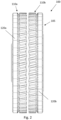
Figure 2 is a front view of the non-pneumatic tire and rim assembly ofFigure 1 ; -
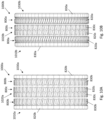
Figures 3A and 3B are schematic cross-sectional views of the non-pneumatic tire and rim assembly ofFigure 1 ; -
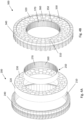
Figure 4A is an exploded perspective view of one example of an annular tire module; -
Figure 4B is a perspective view of an alternative example of an annular tire module; -
Figure 5 is a perspective view of one example of a rim; -
Figure 6 is partial cross-section of one example of a tire and rim assembly; -
Figure 7 is an exploded cutaway view of one example of a tire and rim assembly; -
Figures 8A-8C are partial front views of exemplary treads for annular tire modules; -
Figures 9A-9D are front views of exemplary non-pneumatic tires having two annular tire modules; -
Figures 10A-10C are front views of exemplary non-pneumatic tires having three annular tire modules; and -
Figures 11A and11B are front views of exemplary non-pneumatic tires having four annular tire modules. -
Figures 1 and2 provide a perspective view and front view, respectively, of one embodiment of a non-pneumatic tire andrim assembly 100. Theassembly 100 includes anon-pneumatic tire 105 having a firstannular tire module 110a that is coaxial with a secondannular tire module 110b. Theannular tire modules 110a,b are mounted on arim 115. While two annular tire modules are shown in the illustrated embodiment, alternative embodiments may include three or more tire modules. - The first
annular tire module 110a includes a firstcircumferential tread 120a and the secondannular tire module 110b includes a secondcircumferential tread 120b. Eachcircumferential tread 120a,b includes a tread pattern composed of tread elements such as grooves, ribs, blocks, lugs, and sipes. The tread patterns shown in the illustrated embodiment are merely exemplary. In the illustrated embodiment, the tread pattern of the firstcircumferential tread 120a is substantially the same as the tread pattern of the secondcircumferential tread 120b, and the treads are aligned in opposite orientations. In an alternative embodiment, the tread pattern of the first circumferential tread is substantially the same as the tread pattern of the second circumferential tread, and the treads are aligned in the same orientation. In another alternative embodiment, the first and second circumferential treads have different tread patterns. - In the illustrated embodiment, the first and second
circumferential treads - In the illustrated embodiment, the first
annular tire module 110a is axially spaced apart from the secondannular tire module 110b. In an alternative embodiment, the first annular tire module contacts the second annular tire module. - Spacing apart the annular tire modules may have several benefits, as illustrated in the schematic cross-sectional view of
Figures 3A and 3B . Spacing apart theannular tire modules 110a,b reduces the mass of thetire 105, while maintaining wide footprint stability. Additionally, as shown inFigure 3A , when thetire 105 is cornering, the outer forces on the firstannular tire module 110a are isolated from the inner forces on the secondannular tire module 110b, so that the firstannular tire module 110a deflects by a different amount than the secondannular tire module 110b. As shown inFigure 3B , spacing apart theannular tire modules 110a,b allows for improved air flow A, resulting in improved cooling of thetire 105 as it rotates. Additionally, spacing apart theannular tire modules 110a,b result in higher contact pressure in the footprint of the tire, which reduces hydroplaning when thetire 105 contacts water W. - Additional details of the annular tire modules are shown in
Figures 4A and 4B. Figure 4A is an exploded perspective view of one example of anannular tire module 200 andFigure 4B is a perspective view of another example of anannular tire module 300. Some details differ between theannular tire module 200 and theannular tire module 300. For example, theannular tire module 200 has a different tread pattern from theannular tire module 300. However, the basic components of thetire modules - Each
tire module inner ring outer ring support structure inner ring outer ring inner ring outer ring - In the illustrated example, the
support structure - In one example, the
inner ring outer ring support structure inner ring outer ring support structure inner ring outer ring support structure - A
circumferential tread outer ring circumferential tread - As explained above, the circumferential tread includes a tread pattern composed of tread elements such as grooves, ribs, blocks, lugs, and sipes. The
circumferential tread outer ring circumferential tread outer ring - In the illustrated example, an
inner hoop inner ring inner hoop axial grooves axial ridges grooves ridges grooves ridges - The
inner hoop inner hoop inner hoop inner ring inner hoop inner ring - The
inner hoop inner ring inner hoop inner ring -
Figure 5 is a perspective view of one example of arim 400. Therim 115 ofFigure 1 may share the same features of therim 400 ofFigure 5 , or it may depart from the design in any of the manners discussed below. - The
rim 400 has an outer annular surface configured to engage the inner surfaces of the annular tire modules. For example, the outer annular surface of therim 400 may engage the inner surfaces of a first inner ring and a second inner ring, or the inner surfaces of a first inner hoop and a second inner hoop. In the illustrated example, the outer annular surface of therim 400 has a plurality ofaxial grooves 410 that define a plurality ofaxial ridges 420. Thegrooves 410 andridges 420 may have a rectangular, trapezoidal, triangular, or rounded profile. Alternatively, the grooves and ridges may form any geometric shape. In one example, each of thegrooves 410 has the same shape and each of theridges 420 has the same shape. In an alternative example, the shapes may vary. In an alternative embodiment, which is used in a non-pneumatic tire and rim assembly according to the present invention, the outer annular surface of the rim assembly is a smooth surface. In yet another alternative example, the rim is perforated. - In the illustrated example, the
rim 400 has aflange 430 at a first axial end. The second axial end of therim 400 has no flange. The diameter of theflange 420 varies around its circumference. In an alternative example, the flange has a consistent diameter. In another alternative example, neither end of the rim has a flange. -
Figure 6 is partial cross-section of one example of a tire andrim assembly 500 including therim 400 ofFigure 5 , and anannular tire module 600. Theannular tire module 600 may be substantially the same as one of theannular tire modules annular tire module 600 includes a plurality ofaxial grooves 610 that define a plurality ofaxial ridges 620. - As can be seen from this view, the shapes of the
grooves 410 of therim 400 correspond to the shapes ofridges 620 of the inner surface of theannular tire module 600. Likewise, the shapes of theridges 420 of therim 400 correspond to the shapes ofgrooves 610 on the inner surface of the annular tire module. Thus, thetire module 600 may slide onto therim 400. Lubricant may be applied to one or more of the surfaces to assist in assembling therim 400 and theannular tire module 600. - Any number of annular tire modules may be placed onto the rim. For example,
Figure 7 is an exploded cutaway view of one example of a tire andrim assembly 700 including therim 400 and fourannular tire modules annular tire modules grooves 720 andridges 730 that correspond to theridges 420 andgrooves 410 of therim 400 in the manner described above. Thegrooves 720 andridges 730 of each of theannular tire modules - In the illustrated example, each of the four
annular tire modules same support structure 740. In alternative examples, one or more of the annular tire modules may have a different diameter. In another alternative example, one or more of the annular tire modules may have a different axial width. In yet another alternative example, one or more of the annular tire modules may have a different support structure. For example, the support structure of one or more annular tire modules may be constructed of a different material than the other annular tire modules. As another example, the geometry of the support structure of one or more annular tire modules may be different from the geometry of the other annular tire modules. In one specific example, one of the annular tire modules has spokes as a support structure, while the other annular tire modules have webbing. - The diameter and support structure of each annular tire module may be selected to tune the footprint and the performance of the tire. For example, it may be desirable for certain portions of a tire to have a higher stiffness than other portions. It may likewise be desirable for certain portions of a tire to have a greater diameter. Such factors may affect the performance of the assembled tire. The desired characteristics of an assembled tire may depend on other factors, such as the load on the tire and driving conditions, including temperature and precipitation. Thus a user may select tire modules and assemble a tire according to the desired characteristics of the resulting tire.
- In the illustrated example, the outer
annular tire modules circumferential tread pattern 750a, and the innerannular tire modules circumferential tread pattern 750b. In this example, the outerannular tire modules rim 400 such that the firstcircumferential tread patterns 750a are oriented in opposite orientations. In an alternative example, the outer annular tire modules are placed on the rim such that the first circumferential tread patterns are oriented in the same direction. In other alternative examples, the tread patterns may be varied in any combination. - A plurality of spacer rings 760 are also disposed on the
rim 400. Eachspacer ring 760 includes a plurality ofaxial grooves 770 that define a plurality ofaxial ridges 780. Theaxial grooves 770 andaxial ridges 780 of the spacer rings 760 are substantially the same as theaxial grooves 720 andaxial ridges 730 of theannular tire modules rim 400 in the same manner as theannular tire modules spacer ring 760 is less than the diameter of each of theannular tire modules - In the illustrated example, each
spacer ring 760 has the same axial width. The spacer rings 760 are disposed between each pair ofannular tire modules annular tire modules - The tire and
rim assembly 700 further includes alocking ring 790 that is disposed at the second axial end of therim 400, opposite theflange 430 at the first axial end of therim 400. Thelocking ring 790 includes a plurality ofaxial grooves 792 that define a plurality ofaxial ridges 794. Theaxial grooves 792 andaxial ridges 794 of thelocking ring 790 are substantially the same as theaxial grooves 720 andaxial ridges 730 of theannular tire modules locking ring 790 can slide onto therim 400 in the same manner as theannular tire modules locking ring 790 is less than the diameter of each of theannular tire modules locking ring 790 may be variable, such that thelocking ring 790 can be tightened and remain fixed in place at the second axial end of therim 400. Alternatively, the locking ring may be crimped, adhered, or otherwise bonded to the second axial end of therim 400. Examples of bonding methods include brazing, welding, or chemical bonding. As another alternative, mechanical fasteners such as bolts or screws may extend through holes in the locking ring and engage with threaded holes in the rim to lock the locking rim in place. - The
locking ring 790 is fixed onto the second axial end of therim 400 in a temporary or permanent manner. If thelocking ring 790 is fixed to the second axial end of therim 400 in a temporary manner, the tire andrim assembly 700 may be disassembled when desired. In such an embodiment, one or more of the tire modules and spacer rings may be replaced or rearranged, and the tire and rim assembly may then be assembled in a different orientation. - In examples where the rim does not include a flange at either end, two locking rings may be employed. A first locking ring is locked onto a first axial end of the rim and a second locking ring is locked onto a second axial end of the rim.
- In the examples shown in
Figures 4-7 , all of the ridges and grooves on the outer surface of the rim and the inner surface of the annular tire modules, spacer rings, and locking ring extend in axial directions. In alternative examples (not shown), the ridges and grooves may be spiraled or helical shaped. Such grooves and ridges may be referred to as "rifled" grooves. The direction of the ridges and grooves of the rim, tire modules, spacer rings, and locking ring would correspond to each other, such that the tire modules, spacer rings, and locking ring may be twisted onto the rim. - As described above, a variety of different tread patterns may be employed on the tire modules. Each tread pattern may exhibit different performances under different conditions such as wet, dry, or snow conditions. The stiffness of each tread pattern may also differ. Thus, certain tread patterns may be more desirable for an end portion of a tire in certain conditions and other tread patterns may be more desirable for a central portion of a tire in certain conditions.
Figures 8A-8C are partial front views of exemplary treads for annular tire modules. These examples a not intended to be limiting. It should be understood that the tread patterns may vary in any number of ways. -
Figure 8A illustrates one example of a solidrib tire tread 800a. The solidrib tire tread 800a includes acircumferential groove 810a that defines afirst rib 820a and asecond rib 830a. Thefirst rib 820a has a first plurality ofsipes 840a extending laterally across the entirefirst rib 820a. Thesecond rib 830a has a second plurality ofsipes 850a that partially extend into thesecond rib 830a in a lateral direction. Both of the first andsecond ribs -
Figure 8B illustrates one example of a hybridrib tire tread 800b. The hybridrib tire tread 800b includes acircumferential groove 810b that defines afirst rib 820b and asecond rib 830b. In the illustrated embodiment, thefirst rib 820b has a first plurality ofsipes 840b partially extending into thefirst rib 820b in a lateral direction. Thesecond rib 830b has a plurality oflateral grooves 850b that divide thesecond rib 830a into a plurality of blocks. Each block has a pair ofzigzag sipes 860b that extend across the block in a lateral direction. Both of the first andsecond ribs -
Figure 8C illustrates one example of a blockedrib tire tread 800c. The blockedrib tire tread 800c includes acircumferential groove 810c that defines afirst rib 820c and asecond rib 830c. Thecircumferential groove 810c extends around the tread in a zigzag configuration. In the illustrated embodiment, thefirst rib 820c has a first plurality oflateral grooves 840c that divide thefirst rib 820c into a first plurality of blocks. Each of the first plurality of blocks has a pair ofzigzag sipes 850c that extend across the block in a lateral direction. Thesecond rib 830c has a plurality oflateral grooves 860c that divide thesecond rib 830c into a second plurality of blocks. Each of the second plurality of blocks has a pair ofzigzag sipes 870c that extend across the block in a lateral direction. Thefirst rib 820c has a non-linear sidewall, while thesecond rib 830c has a linear sidewall. - While each of the exemplary tread patterns shown in
Figures 8A-8C illustrate a tread pattern having a single circumferential groove defining two ribs, it should be understood that any number of grooves and ribs may be employed. For example, it may be desirable to provide a wider tire module with three or more ribs. It also may be desirable to provide a narrower tire module with a single rib. - The tire modules and rims described herein are modular, such that they may be assembled in any number of desirable combinations. Using the three exemplary tread patterns provided in
Figures 8A-8C ,Figures 9-11 illustrate some of the different combinations that can be formed. The same nomenclature and reference numerals ofFigures 8A-8C are used for convenience inFigures 9-11 . It should be understood that the illustrated combinations are not limiting, and that any number of tread patterns can be assembled as any desirable combination. -
Figures 9A-9D are front views of exemplary non-pneumatic tires having two annular tire modules.Figure 9A illustrates one embodiment of anon-pneumatic tire 900a that is constructed of first and secondannular tire modules rib tire tread 800a. The first and secondannular tire modules first rib 820a of the firstannular tire module 910a is adjacent to thefirst rib 820a of the secondannular tire module 920a. Thesecond ribs 830a of the first and secondannular tire modules non-pneumatic tire 900a. In alternative embodiments (not shown), the first and second annular tire modules are reversed such that the second rib of the first annular tire module is adjacent to the second rib of the second annular tire module, and the first ribs of the first and second annular tire modules form the outer ribs of the non-pneumatic tire. In another alternative embodiment, the first and second annular tire modules are oriented in the same direction. -
Figure 9B illustrates an alternative embodiment of anon-pneumatic tire 900b that is constructed of first and secondannular tire modules rib tire tread 800c. The first and secondannular tire modules second rib 830c of the firstannular tire module 910b is adjacent to thefirst rib 830c of the secondannular tire module 920b. Thefirst ribs 820c of the first and secondannular tire modules non-pneumatic tire 900b. In alternative embodiments (not shown), the first and second annular tire modules are reversed such that the first rib of the first annular tire module is adjacent to the first rib of the second annular tire module, and the second ribs of the first and second annular tire modules form the outer ribs of the non-pneumatic tire. In another alternative embodiment, the first and second annular tire modules are oriented in the same direction. -
Figure 9C illustrates another alternative embodiment of anon-pneumatic tire 900c that is constructed of first and secondannular tire modules rib tire tread 800b. The first and secondannular tire modules first rib 820b of the firstannular tire module 910c is adjacent to thefirst rib 820b of the secondannular tire module 920c. Thesecond ribs 830b of the first and secondannular tire modules non-pneumatic tire 900c. In another alternative embodiment, the first and second annular tire modules are oriented in the same direction. -
Figure 9D illustrates yet another alternative embodiment of anon-pneumatic tire 900d that is constructed of first and secondannular tire modules rib tire tread 800b. The first and secondannular tire modules second rib 830b of the firstannular tire module 910d is adjacent to thesecond rib 830b of the secondannular tire module 920d. Thefirst ribs 820b of the first and secondannular tire modules non-pneumatic tire 900d. - In still other alternative embodiments, an annular tire module having a solid rib tread may be used with an annular tire module having a blocked rib tread or a hybrid rib tread, in any orientation. Likewise, an annular tire module having a blocked rib tread may be used with an annular tire module having a hybrid rib tread in any orientation.
-
Figures 10A-10C are front views of exemplary non-pneumatic tires having three annular tire modules.Figure 10A illustrates one embodiment of anon-pneumatic tire 1000a that is constructed of a firstannular tire module 1010a having a hybridrib tire tread 800b, a secondannular tire module 1020a having a blockedrib tire tread 800c, and a thirdannular tire module 1030a having a hybridrib tire tread 800b. Theannular tire modules - The first
annular tire module 1010a is oriented such that itsfirst rib 820b forms an outer rib of thenon-pneumatic tire 1000a. The secondannular tire module 1020a is oriented such that itssecond rib 830c is adjacent to thesecond rib 830b of the firstannular tire module 1010a. The thirdannular tire module 1030a is oriented such that itssecond rib 830b is adjacent to thefirst rib 820c of the secondannular tire module 1020a. Thus, thefirst rib 820b of the thirdannular tire module 1030a forms an outer rib of thenon-pneumatic tire 1000a. In alternative embodiments, thetire modules -
Figure 10B illustrates an alternative embodiment of anon-pneumatic tire 1000b that is constructed of a firstannular tire module 1010b having a solidrib tire tread 800a, a secondannular tire module 1020b having a blockedrib tire tread 800c, and a thirdannular tire module 1030b having a solidrib tire tread 800a. Theannular tire modules - The first
annular tire module 1010b is oriented such that itssecond rib 830a forms an outer rib of thenon-pneumatic tire 1000b. The secondannular tire module 1020b is oriented such that itsfirst rib 820c is adjacent to thefirst rib 820a of the firstannular tire module 1010b. The thirdannular tire module 1030b is oriented such that itsfirst rib 820a is adjacent to thesecond rib 830c of the secondannular tire module 1020b. Thus, thesecond rib 830a of the thirdannular tire module 1030b forms an outer rib of thenon-pneumatic tire 1000b. In alternative embodiments, thetire modules -
Figure 10C illustrates another alternative embodiment of anon-pneumatic tire 1000c that is constructed of first, second, and thirdannular tire modules rib tire tread 800a. Theannular tire modules - The first
annular tire module 1010c is oriented such that itssecond rib 830a forms an outer rib of thenon-pneumatic tire 1000c. The secondannular tire module 1020c is oriented such that itssecond rib 830a is adjacent to thefirst rib 820a of the firstannular tire module 1010c. The thirdannular tire module 1030c is oriented such that itsfirst rib 820a is adjacent to thefirst rib 820a of the secondannular tire module 1020c. Thus, thesecond rib 830a of the thirdannular tire module 1030c forms an outer rib of thenon-pneumatic tire 1000c. In alternative embodiments, thetire modules - In still other alternative embodiments, three tire modules having any tread pattern may be arranged in any order and in any orientation.
-
Figures 11A and11B are front views of exemplary non-pneumatic tires having four annular tire modules.Figure 11A illustrates one embodiment of anon-pneumatic tire 1100a that is constructed of a firstannular tire module 1110a having a solidrib tire tread 800a, a secondannular tire module 1120a having a blockedrib tire tread 800c, a thirdannular tire module 1130a having a blockedrib tire tread 800c, and a fourthannular tire module 1140a having a solidrib tire tread 800a. Theannular tire modules - The first
annular tire module 1110a is oriented such that itssecond rib 830a forms an outer rib of thenon-pneumatic tire 1100a. The secondannular tire module 1120a is oriented such that itssecond rib 830c is adjacent to thefirst rib 820a of the firstannular tire module 1110a. The thirdannular tire module 1130a is oriented such that itsfirst rib 820c is adjacent to thefirst rib 820c of the secondannular tire module 1120a. The fourthannular tire module 1140a is oriented such that itsfirst rib 820a is adjacent to thesecond rib 830c of the thirdannular tire module 1130a. Thus, thesecond rib 830a of the fourthannular tire module 1140a forms an outer rib of thenon-pneumatic tire 1100a. In alternative embodiments, thetire modules -
Figure 11B illustrates an alternative embodiment of anon-pneumatic tire 1100b that is constructed of a firstannular tire module 1110b having a blockedrib tire tread 800c, a secondannular tire module 1120b having a hybridrib tire tread 800b, a thirdannular tire module 1130b having a hybridrib tire tread 800b, and a fourthannular tire module 1140b having a blockedrib tire tread 800c. Theannular tire modules - The first
annular tire module 1110b is oriented such that itssecond rib 830c forms an outer rib of thenon-pneumatic tire 1100b. The secondannular tire module 1120b is oriented such that itssecond rib 830b is adjacent to thefirst rib 820c of the firstannular tire module 1110b. The thirdannular tire module 1130b is oriented such that itsfirst rib 820b is adjacent to thefirst rib 820b of the secondannular tire module 1120b. The fourthannular tire module 1140b is oriented such that itsfirst rib 820c is adjacent to thesecond rib 830b of the thirdannular tire module 1130b. Thus, thesecond rib 830c of the fourthannular tire module 1140b forms an outer rib of thenon-pneumatic tire 1100b. In alternative embodiments, thetire modules - In still other alternative embodiments, four tire modules having any tread pattern may be arranged in any order and in any orientation.
- To assemble a non-pneumatic tire and rim using the principles discussed herein, a user is provided a plurality of annular tire modules. Each annular tire module has an inner ring, an outer ring, support structure extending between the inner ring and the outer ring, and a circumferential tread extending about the outer ring. The user is also provided a rim.
- As discussed above, the circumferential tread of the first annular tire module may be an asymmetrical tread. Likewise, the circumferential tread of the second annular tire module may be an asymmetrical tread.
- The user then selects a first annular tire module from the plurality of annular tire modules. The user may select an orientation of the first annular tire module and slide the first annular tire module onto the rim while the first annular tire module is in the selected orientation. The user then selects a second annular tire module from the plurality of annular tire modules. The user may select an orientation of the second annular tire module and slide the second annular tire module onto the rim while the second annular tire module is in the selected orientation. The user is also provided a locking ring, and slides the locking ring onto the rim.
- In one embodiment, the user is provided a spacer ring. In such an embodiment, the user slides the spacer ring onto the rim. The user may slide the spacer ring onto the rim after sliding the first annular tire module onto the rim, but before sliding the second annular tire module onto the rim. Alternatively, the user may slide the spacer ring onto the rim after sliding the second annular tire modules onto the rim.
- As should be understood from the disclosure above, certain steps of this method may be repeated, to build a tire and rim assembly having three or more annular tire modules or two or more spacer rings.
- After the tire and rim assembly has been assembled, a user may wish to disassemble the tire and rim assembly. For example, a user may desire to perform maintenance on one or more of the components, or replace one or more of the components. The user may also wish to replace all of the annular tire modules. To disassemble the tire and rim assembly, a user removes the locking ring from the rim, and remove the second annular tire module from the rim, and removes the first annular tire module from the rim. If spacer rings have been placed on the rim, they are also removed from the rim. If any additional annular tire modules have been placed on the rim, they are also removed from the rim.
- After the tire and rim assembly has been disassembled, a user may wish to build a different tire and rim assembly. In such instances, the user selects a third annular tire module from the plurality of annular tire modules and slides the third annular tire module onto the rim. The user also selects a fourth annular tire module from the plurality of annular tire modules and slides the fourth annular tire module onto the rim. As with the initial assembly, the user may select the orientation of the third and fourth annular tire modules before sliding them onto the rim. The user may also slid spacer rings and any additional annular tire modules onto the rim. The user then slides the locking ring onto the rim.
- To the extent that the term "includes" or "including" is used in the specification or the claims, it is intended to be inclusive in a manner similar to the term "comprising" as that term is interpreted when employed as a transitional word in a claim. Furthermore, to the extent that the term "or" is employed (e.g., A or B) it is intended to mean "A or B or both." When the applicants intend to indicate "only A or B but not both" then the term "only A or B but not both" will be employed. Thus, use of the term "or" herein is the inclusive, and not the exclusive use. See, Bryan A. Garner, A Dictionary of Modern Legal Usage 624 (2d. Ed. 1995). Also, to the extent that the terms "in" or "into" are used in the specification or the claims, it is intended to additionally mean "on" or "onto." Furthermore, to the extent the term "connect" is used in the specification or claims, it is intended to mean not only "directly connected to," but also "indirectly connected to" such as connected through another component or components.
- While the present application has been illustrated by the description of embodiments thereof, and while the embodiments have been described in considerable detail, it is not the intention of the applicants to restrict or in any way limit the scope of the appended claims to such detail. Additional advantages and modifications will readily appear to those skilled in the art. Therefore, the application, in its broader aspects, is not limited to the specific details, the representative apparatus and method, and illustrative examples shown and described.
Claims (4)
- A non-pneumatic tire (105; 900a; 900b; 900c; 900d; 1000a; 1000b; 1000c; 1100a; 1100b) and rim (115; 400) assembly (100; 500; 700) comprising:a non-pneumatic tire having a plurality of annular tire modules (110a, 110b; 200; 300; 600; 710a, 710b, 710c, 710d; 910a, 910b, 910c, 910d, 920a, 920b, 920c, 920d; 1010a, 1010b, 1010c, 1020a, 1020b, 1020c, 1030a, 1030b, 1030c; 1110a, 1110b, 1110c), including a first annular tire module (110a; 710a; 910a, 910b, 910c, 910d; 1010a, 1010b, 1010c; 1110a) coaxial with a second annular tire module (110b; 710b; 920a, 920b, 920c, 920d; 1020a, 1020b, 1020c; 1110b),wherein the first annular tire module (110a; 710a; 910a, 910b, 910c, 910d; 1010a, 1010b, 1010c; 1110a) includes a first inner ring (210; 310), a first outer ring (220; 320), first support structure (230; 330; 740) extending between the first inner ring (210; 310) and the first outer ring (220; 320), and a first circumferential tread (120a; 240; 340; 750a; 800a; 800b; 800c) extending about the first outer ring (220; 320),wherein the first annular tire module (110a; 710a; 910a, 910b, 910c, 910d; 1010a, 1010b, 1010c; 1110a) has a first diameter,wherein the second annular tire module (110b; 710b; 920a, 920b, 920c, 920d; 1020a, 1020b, 1020c; 1110b) includes a second inner ring (210; 310), a second outer ring (220; 320), second support structure (230; 330; 740) extending between the second inner ring (210; 310) and the second outer ring (220; 320), and a second circumferential tread (120b; 240; 340; 750b; 800a; 800b; 800c) extending about the second outer ring (220; 320),wherein the second annular tire module (110b; 710b; 920a, 920b, 920c, 920d; 1020a, 1020b, 1020c; 1110b) has a second diameter substantially equal to the first diameter,wherein the first circumferential tread (120a; 240; 340; 750a; 800a; 800b; 800c) has a first tread pattern and the second circumferential tread has a second tread pattern that is different from the first tread pattern;a rim (115; 400) having an outer annular surface that engages the first inner ring (210; 310) and the second inner ring (210; 310), wherein the rim has a flange (430) at a first axial end;a spacer ring (760) disposed about the rim (115; 400), wherein the spacer ring (760) is disposed between the first annular tire module (110a; 710a; 910a, 910b, 910c, 910d; 1010a, 1010b, 1010c; 1110a) and the second annular tire module (110b; 710b; 920a, 920b, 920c, 920d; 1020a, 1020b, 1020c; 1110b), such that the first annular tire module (110a; 710a; 910a, 910b, 910c, 910d; 1010a, 1010b, 1010c; 1110a) is axially spaced from the second annular tire module (110b; 710b; 920a, 920b, 920c, 920d; 1020a, 1020b, 1020c; 1110b),wherein the spacer ring (760) has a third diameter that is less than the first diameter and less than the second diameter; anda locking ring (790) disposed at a second axial end of the rim (115; 300), such that the first annular tire module (110a; 710a; 910a, 910b, 910c, 910d; 1010a, 1010b, 1010c; 1110a) and the second annular tire module (110b; 710b; 920a, 920b, 920c, 920d; 1020a, 1020b, 1020c; 1110b) are disposed between the flange (430) and the locking ring (790),characterised in that
the outer annular surface of the rim (115; 400) is a smooth surface. - The non-pneumatic tire (105; 900a; 900b; 900c; 900d; 1000a; 1000b; 1000c; 1100a; 1100b) and rim (115; 400) assembly (100; 500; 700) of claim 1, wherein the plurality of annular tire modules (110a, 110b; 200; 300; 600; 710a, 710b, 710c, 710d; 910a, 910b, 910c, 910d, 920a, 920b, 920c, 920d; 1010a, 1010b, 1010c, 1020a, 1020b, 1020c, 1030a, 1030b, 1030c; 1110a, 1110b, 1110c) further includes a third annular tire module (710c; 1030a, 1030b, 1030c; 1110c) having a third inner ring (210; 310), a third outer ring (220; 320), third support structure (230; 330; 740) extending between the third inner ring (210; 310) and the third outer ring (220; 320), and a third circumferential tread (240; 340; 800a; 800b; 800c) extending about the third outer ring (220; 320).
- A method of assembling a tire (105; 900a; 900b; 900c; 900d; 1000a; 1000b; 1000c; 1100a; 1100b) and rim (115; 400) assembly (100; 500; 700), wherein the non-pneumatic tire and rim assembly is a non-pneumatic tire and rim assembly according to claim 1.
- The method of claim 3, wherein the first circumferential tread (120b; 240; 340; 750b; 800a; 800b; 800c) of the first annular tire module (110a; 710a; 910a, 910b, 910c, 910d; 1010a, 1010b, 1010c; 1110a) is an asymmetrical tread, and wherein the second circumferential tread (120b; 240; 340; 750b; 800a; 800b; 800c) of the second annular tire module (110b; 710b; 920a, 920b, 920c, 920d; 1020a, 1020b, 1020c; 1110b) is an asymmetrical tread.
Applications Claiming Priority (2)
| Application Number | Priority Date | Filing Date | Title |
|---|---|---|---|
| US201962864166P | 2019-06-20 | 2019-06-20 | |
| PCT/US2020/034524 WO2020256895A1 (en) | 2019-06-20 | 2020-05-26 | Tire having a modular tread |
Publications (3)
| Publication Number | Publication Date |
|---|---|
| EP3986724A1 EP3986724A1 (en) | 2022-04-27 |
| EP3986724A4 EP3986724A4 (en) | 2023-07-12 |
| EP3986724B1 true EP3986724B1 (en) | 2025-07-09 |
Family
ID=74037009
Family Applications (1)
| Application Number | Title | Priority Date | Filing Date |
|---|---|---|---|
| EP20827783.0A Active EP3986724B1 (en) | 2019-06-20 | 2020-05-26 | Tire having a modular tread |
Country Status (5)
| Country | Link |
|---|---|
| US (1) | US12103335B2 (en) |
| EP (1) | EP3986724B1 (en) |
| JP (1) | JP7374229B2 (en) |
| CN (1) | CN113905903A (en) |
| WO (1) | WO2020256895A1 (en) |
Families Citing this family (5)
| Publication number | Priority date | Publication date | Assignee | Title |
|---|---|---|---|---|
| JP7418197B2 (en) * | 2019-12-13 | 2024-01-19 | Toyo Tire株式会社 | non-pneumatic tires |
| CN115972820B (en) * | 2022-12-30 | 2024-04-12 | 南京工程学院 | Non-pneumatic tire |
| USD1119742S1 (en) * | 2024-06-27 | 2026-03-24 | Compagnie Generale Des Etablissements Michelin | Wheel |
| USD1119740S1 (en) * | 2024-06-27 | 2026-03-24 | Compagnie Generale Des Etablissements Michelin | Wheel |
| USD1119741S1 (en) * | 2024-06-27 | 2026-03-24 | Compagnie Generale Des Etablissements Michelin | Wheel |
Family Cites Families (21)
| Publication number | Priority date | Publication date | Assignee | Title |
|---|---|---|---|---|
| US2620845A (en) | 1949-05-09 | 1952-12-09 | Lord Mfg Co | Cushioned tire |
| US4226273A (en) | 1978-06-30 | 1980-10-07 | The Goodyear Tire & Rubber Company | Nonpneumatic tire and rim assembly |
| US4287927A (en) | 1978-06-30 | 1981-09-08 | The Goodyear Tire & Rubber Company | Multiple ring tire |
| CA1239854A (en) | 1984-04-16 | 1988-08-02 | Uniroyal, Inc. | Non-pneumatic tire with supporting and cushioning members |
| US4784201A (en) * | 1986-05-13 | 1988-11-15 | The Uniroyal Goodrich Tire Company | Non-pneumatic tire with vibration reducing features |
| US5460213A (en) | 1992-03-18 | 1995-10-24 | Uniroyal Goodrich Licensing Services, Inc. | Multiple non-pneumatic tire and process for making it |
| JP3966895B1 (en) * | 2006-08-29 | 2007-08-29 | 横浜ゴム株式会社 | Non-pneumatic tire |
| AP2009004883A0 (en) | 2006-11-03 | 2009-06-30 | Bpt Technologies Propritary Ltd | A wheel |
| US20090211677A1 (en) | 2008-02-25 | 2009-08-27 | Palinkas Richard L | Modular tire assembly |
| JP2009234361A (en) | 2008-03-26 | 2009-10-15 | Cci Corp | Solid tire |
| JP5789498B2 (en) | 2011-11-25 | 2015-10-07 | 株式会社ブリヂストン | Non pneumatic tire |
| CN104582980A (en) * | 2012-08-30 | 2015-04-29 | 卡特彼勒公司 | Non-pneumatic tire |
| JP6061625B2 (en) * | 2012-11-05 | 2017-01-18 | 株式会社ブリヂストン | Non pneumatic tire |
| JP6051037B2 (en) | 2012-12-26 | 2016-12-21 | 株式会社ブリヂストン | Non pneumatic tire |
| DE202015107054U1 (en) * | 2015-02-04 | 2016-05-10 | Blickle Räder + Rollen GmbH & Co. KG | Multi-tread |
| JP6645105B2 (en) | 2015-10-06 | 2020-02-12 | 住友ゴム工業株式会社 | Non-pneumatic tire |
| JP6577824B2 (en) | 2015-10-26 | 2019-09-18 | 住友ゴム工業株式会社 | Airless tire |
| WO2017116824A1 (en) | 2015-12-29 | 2017-07-06 | Bridgestone Americas Tire Operations, Llc | Tire with shaped tread |
| WO2017116825A1 (en) * | 2015-12-29 | 2017-07-06 | Bridgestone Americas Tire Operations, Llc | Composite layer tire |
| JP6805660B2 (en) | 2016-09-09 | 2020-12-23 | 住友ゴム工業株式会社 | Airless tire |
| EP3339055B1 (en) | 2016-12-21 | 2020-03-04 | Bridgestone Americas Tire Operations, LLC | Tire with tensioned spokes |
-
2020
- 2020-05-26 JP JP2021574331A patent/JP7374229B2/en active Active
- 2020-05-26 US US17/612,643 patent/US12103335B2/en active Active
- 2020-05-26 CN CN202080040914.4A patent/CN113905903A/en active Pending
- 2020-05-26 EP EP20827783.0A patent/EP3986724B1/en active Active
- 2020-05-26 WO PCT/US2020/034524 patent/WO2020256895A1/en not_active Ceased
Also Published As
| Publication number | Publication date |
|---|---|
| JP7374229B2 (en) | 2023-11-06 |
| US20220234391A1 (en) | 2022-07-28 |
| US12103335B2 (en) | 2024-10-01 |
| EP3986724A1 (en) | 2022-04-27 |
| JP2022536783A (en) | 2022-08-18 |
| WO2020256895A1 (en) | 2020-12-24 |
| EP3986724A4 (en) | 2023-07-12 |
| CN113905903A (en) | 2022-01-07 |
Similar Documents
| Publication | Publication Date | Title |
|---|---|---|
| EP3986724B1 (en) | Tire having a modular tread | |
| EP3562688B1 (en) | Non-pneumatic tire | |
| US20140299242A1 (en) | Tread pattern for tires for a civil engineering vehicle | |
| US4702292A (en) | High performance all-season tire tread | |
| JP6189320B2 (en) | Combination of tire structure and tread pattern for heavy goods transport vehicles | |
| JP5843418B2 (en) | Off-road tire | |
| EP2570271B1 (en) | High mileage tire tread | |
| WO2011025491A1 (en) | A non-pneumatic wheel assembly with removable hub | |
| EP3808550B1 (en) | Vulcanization mold for a tire and method for manufacturing a tire | |
| US4726408A (en) | Pneumatic tire bead portion structure | |
| KR20220089649A (en) | Non-pneumatic tire and wheel assembly with reinforced spoke structure | |
| US10953697B2 (en) | Tire for sand traction | |
| GB2051694A (en) | Pneumatic tire treads | |
| CN112770917A (en) | Non-pneumatic tire with multiple shear rings | |
| US9393841B2 (en) | Tyre tread having cavities and incisions | |
| EP4079543B1 (en) | Tire | |
| EP3300927B1 (en) | Heavy duty tire and tread | |
| US5524686A (en) | Heavy duty tire including narrow circumferential grooves | |
| JP7684404B2 (en) | TIRE BAND HAVING FILAMENTS WITH NON-CIRCULAR CROSS SECTION - Patent application | |
| JP7464382B2 (en) | Pneumatic tires | |
| EP1836060B1 (en) | Pneumatic vehicle tire having a bead reinforcing element | |
| JPH0740705A (en) | Pneumatic tire | |
| JP4905963B2 (en) | Pneumatic tire | |
| EP4177077B1 (en) | Non-pneumatic tire and wheel assembly and method of manufacturing | |
| WO2014210406A1 (en) | Bead lock with wheel flange protection |
Legal Events
| Date | Code | Title | Description |
|---|---|---|---|
| STAA | Information on the status of an ep patent application or granted ep patent |
Free format text: STATUS: THE INTERNATIONAL PUBLICATION HAS BEEN MADE |
|
| PUAI | Public reference made under article 153(3) epc to a published international application that has entered the european phase |
Free format text: ORIGINAL CODE: 0009012 |
|
| STAA | Information on the status of an ep patent application or granted ep patent |
Free format text: STATUS: REQUEST FOR EXAMINATION WAS MADE |
|
| 17P | Request for examination filed |
Effective date: 20220103 |
|
| AK | Designated contracting states |
Kind code of ref document: A1 Designated state(s): AL AT BE BG CH CY CZ DE DK EE ES FI FR GB GR HR HU IE IS IT LI LT LU LV MC MK MT NL NO PL PT RO RS SE SI SK SM TR |
|
| DAV | Request for validation of the european patent (deleted) | ||
| DAX | Request for extension of the european patent (deleted) | ||
| REG | Reference to a national code |
Ref country code: DE Ref legal event code: R079 Free format text: PREVIOUS MAIN CLASS: B60C0007180000 Ipc: B60C0007140000 Ref document number: 602020054308 Country of ref document: DE |
|
| A4 | Supplementary search report drawn up and despatched |
Effective date: 20230609 |
|
| RIC1 | Information provided on ipc code assigned before grant |
Ipc: B60B 9/00 20060101ALI20230602BHEP Ipc: B60B 21/10 20060101ALI20230602BHEP Ipc: B60C 11/02 20060101ALI20230602BHEP Ipc: B60B 9/02 20060101ALI20230602BHEP Ipc: B60C 7/10 20060101ALI20230602BHEP Ipc: B60C 7/18 20060101ALI20230602BHEP Ipc: B60C 7/24 20060101ALI20230602BHEP Ipc: B60C 7/08 20060101ALI20230602BHEP Ipc: B60C 7/14 20060101AFI20230602BHEP |
|
| STAA | Information on the status of an ep patent application or granted ep patent |
Free format text: STATUS: EXAMINATION IS IN PROGRESS |
|
| 17Q | First examination report despatched |
Effective date: 20240627 |
|
| GRAP | Despatch of communication of intention to grant a patent |
Free format text: ORIGINAL CODE: EPIDOSNIGR1 |
|
| STAA | Information on the status of an ep patent application or granted ep patent |
Free format text: STATUS: GRANT OF PATENT IS INTENDED |
|
| INTG | Intention to grant announced |
Effective date: 20250305 |
|
| GRAS | Grant fee paid |
Free format text: ORIGINAL CODE: EPIDOSNIGR3 |
|
| GRAA | (expected) grant |
Free format text: ORIGINAL CODE: 0009210 |
|
| STAA | Information on the status of an ep patent application or granted ep patent |
Free format text: STATUS: THE PATENT HAS BEEN GRANTED |
|
| P01 | Opt-out of the competence of the unified patent court (upc) registered |
Free format text: CASE NUMBER: APP_22585/2025 Effective date: 20250513 |
|
| AK | Designated contracting states |
Kind code of ref document: B1 Designated state(s): AL AT BE BG CH CY CZ DE DK EE ES FI FR GB GR HR HU IE IS IT LI LT LU LV MC MK MT NL NO PL PT RO RS SE SI SK SM TR |
|
| REG | Reference to a national code |
Ref country code: GB Ref legal event code: FG4D |
|
| REG | Reference to a national code |
Ref country code: CH Ref legal event code: EP |
|
| REG | Reference to a national code |
Ref country code: IE Ref legal event code: FG4D |
|
| REG | Reference to a national code |
Ref country code: DE Ref legal event code: R096 Ref document number: 602020054308 Country of ref document: DE |
|
| REG | Reference to a national code |
Ref country code: NL Ref legal event code: MP Effective date: 20250709 |
|
| PG25 | Lapsed in a contracting state [announced via postgrant information from national office to epo] |
Ref country code: PT Free format text: LAPSE BECAUSE OF FAILURE TO SUBMIT A TRANSLATION OF THE DESCRIPTION OR TO PAY THE FEE WITHIN THE PRESCRIBED TIME-LIMIT Effective date: 20251110 |
|
| PG25 | Lapsed in a contracting state [announced via postgrant information from national office to epo] |
Ref country code: NL Free format text: LAPSE BECAUSE OF FAILURE TO SUBMIT A TRANSLATION OF THE DESCRIPTION OR TO PAY THE FEE WITHIN THE PRESCRIBED TIME-LIMIT Effective date: 20250709 |
|
| REG | Reference to a national code |
Ref country code: AT Ref legal event code: MK05 Ref document number: 1811539 Country of ref document: AT Kind code of ref document: T Effective date: 20250709 |
|
| PG25 | Lapsed in a contracting state [announced via postgrant information from national office to epo] |
Ref country code: IS Free format text: LAPSE BECAUSE OF FAILURE TO SUBMIT A TRANSLATION OF THE DESCRIPTION OR TO PAY THE FEE WITHIN THE PRESCRIBED TIME-LIMIT Effective date: 20251109 |
|
| PG25 | Lapsed in a contracting state [announced via postgrant information from national office to epo] |
Ref country code: NO Free format text: LAPSE BECAUSE OF FAILURE TO SUBMIT A TRANSLATION OF THE DESCRIPTION OR TO PAY THE FEE WITHIN THE PRESCRIBED TIME-LIMIT Effective date: 20251009 |
|
| REG | Reference to a national code |
Ref country code: LT Ref legal event code: MG9D |
|
| PG25 | Lapsed in a contracting state [announced via postgrant information from national office to epo] |
Ref country code: AT Free format text: LAPSE BECAUSE OF FAILURE TO SUBMIT A TRANSLATION OF THE DESCRIPTION OR TO PAY THE FEE WITHIN THE PRESCRIBED TIME-LIMIT Effective date: 20250709 |
|
| PG25 | Lapsed in a contracting state [announced via postgrant information from national office to epo] |
Ref country code: FI Free format text: LAPSE BECAUSE OF FAILURE TO SUBMIT A TRANSLATION OF THE DESCRIPTION OR TO PAY THE FEE WITHIN THE PRESCRIBED TIME-LIMIT Effective date: 20250709 |
|
| PG25 | Lapsed in a contracting state [announced via postgrant information from national office to epo] |
Ref country code: HR Free format text: LAPSE BECAUSE OF FAILURE TO SUBMIT A TRANSLATION OF THE DESCRIPTION OR TO PAY THE FEE WITHIN THE PRESCRIBED TIME-LIMIT Effective date: 20250709 |
|
| PG25 | Lapsed in a contracting state [announced via postgrant information from national office to epo] |
Ref country code: GR Free format text: LAPSE BECAUSE OF FAILURE TO SUBMIT A TRANSLATION OF THE DESCRIPTION OR TO PAY THE FEE WITHIN THE PRESCRIBED TIME-LIMIT Effective date: 20251010 |
|
| PG25 | Lapsed in a contracting state [announced via postgrant information from national office to epo] |
Ref country code: SE Free format text: LAPSE BECAUSE OF FAILURE TO SUBMIT A TRANSLATION OF THE DESCRIPTION OR TO PAY THE FEE WITHIN THE PRESCRIBED TIME-LIMIT Effective date: 20250709 |
|
| PG25 | Lapsed in a contracting state [announced via postgrant information from national office to epo] |
Ref country code: LV Free format text: LAPSE BECAUSE OF FAILURE TO SUBMIT A TRANSLATION OF THE DESCRIPTION OR TO PAY THE FEE WITHIN THE PRESCRIBED TIME-LIMIT Effective date: 20250709 |
|
| PG25 | Lapsed in a contracting state [announced via postgrant information from national office to epo] |
Ref country code: BG Free format text: LAPSE BECAUSE OF FAILURE TO SUBMIT A TRANSLATION OF THE DESCRIPTION OR TO PAY THE FEE WITHIN THE PRESCRIBED TIME-LIMIT Effective date: 20250709 Ref country code: PL Free format text: LAPSE BECAUSE OF FAILURE TO SUBMIT A TRANSLATION OF THE DESCRIPTION OR TO PAY THE FEE WITHIN THE PRESCRIBED TIME-LIMIT Effective date: 20250709 |
|
| PG25 | Lapsed in a contracting state [announced via postgrant information from national office to epo] |
Ref country code: RS Free format text: LAPSE BECAUSE OF FAILURE TO SUBMIT A TRANSLATION OF THE DESCRIPTION OR TO PAY THE FEE WITHIN THE PRESCRIBED TIME-LIMIT Effective date: 20251009 |
|
| PG25 | Lapsed in a contracting state [announced via postgrant information from national office to epo] |
Ref country code: ES Free format text: LAPSE BECAUSE OF FAILURE TO SUBMIT A TRANSLATION OF THE DESCRIPTION OR TO PAY THE FEE WITHIN THE PRESCRIBED TIME-LIMIT Effective date: 20250709 |
|
| PG25 | Lapsed in a contracting state [announced via postgrant information from national office to epo] |
Ref country code: SM Free format text: LAPSE BECAUSE OF FAILURE TO SUBMIT A TRANSLATION OF THE DESCRIPTION OR TO PAY THE FEE WITHIN THE PRESCRIBED TIME-LIMIT Effective date: 20250709 |
|
| PG25 | Lapsed in a contracting state [announced via postgrant information from national office to epo] |
Ref country code: DK Free format text: LAPSE BECAUSE OF FAILURE TO SUBMIT A TRANSLATION OF THE DESCRIPTION OR TO PAY THE FEE WITHIN THE PRESCRIBED TIME-LIMIT Effective date: 20250709 |
|
| PG25 | Lapsed in a contracting state [announced via postgrant information from national office to epo] |
Ref country code: IT Free format text: LAPSE BECAUSE OF FAILURE TO SUBMIT A TRANSLATION OF THE DESCRIPTION OR TO PAY THE FEE WITHIN THE PRESCRIBED TIME-LIMIT Effective date: 20250709 |
|
| PG25 | Lapsed in a contracting state [announced via postgrant information from national office to epo] |
Ref country code: CZ Free format text: LAPSE BECAUSE OF FAILURE TO SUBMIT A TRANSLATION OF THE DESCRIPTION OR TO PAY THE FEE WITHIN THE PRESCRIBED TIME-LIMIT Effective date: 20250709 |
|
| PG25 | Lapsed in a contracting state [announced via postgrant information from national office to epo] |
Ref country code: SK Free format text: LAPSE BECAUSE OF FAILURE TO SUBMIT A TRANSLATION OF THE DESCRIPTION OR TO PAY THE FEE WITHIN THE PRESCRIBED TIME-LIMIT Effective date: 20250709 Ref country code: EE Free format text: LAPSE BECAUSE OF FAILURE TO SUBMIT A TRANSLATION OF THE DESCRIPTION OR TO PAY THE FEE WITHIN THE PRESCRIBED TIME-LIMIT Effective date: 20250709 |