EP3986019B1 - Verfahren zur kontrolle der dienstgüte und sitzungsverwaltungsfunktionseinheit - Google Patents
Verfahren zur kontrolle der dienstgüte und sitzungsverwaltungsfunktionseinheit Download PDFInfo
- Publication number
- EP3986019B1 EP3986019B1 EP21186467.3A EP21186467A EP3986019B1 EP 3986019 B1 EP3986019 B1 EP 3986019B1 EP 21186467 A EP21186467 A EP 21186467A EP 3986019 B1 EP3986019 B1 EP 3986019B1
- Authority
- EP
- European Patent Office
- Prior art keywords
- qos
- sdf
- qos flow
- level
- session management
- Prior art date
- Legal status (The legal status is an assumption and is not a legal conclusion. Google has not performed a legal analysis and makes no representation as to the accuracy of the status listed.)
- Active
Links
Images




Classifications
-
- H—ELECTRICITY
- H04—ELECTRIC COMMUNICATION TECHNIQUE
- H04L—TRANSMISSION OF DIGITAL INFORMATION, e.g. TELEGRAPHIC COMMUNICATION
- H04L47/00—Traffic control in data switching networks
- H04L47/10—Flow control; Congestion control
- H04L47/24—Traffic characterised by specific attributes, e.g. priority or QoS
- H04L47/2441—Traffic characterised by specific attributes, e.g. priority or QoS relying on flow classification, e.g. using integrated services [IntServ]
-
- H—ELECTRICITY
- H04—ELECTRIC COMMUNICATION TECHNIQUE
- H04W—WIRELESS COMMUNICATION NETWORKS
- H04W28/00—Network traffic management; Network resource management
- H04W28/02—Traffic management, e.g. flow control or congestion control
-
- H—ELECTRICITY
- H04—ELECTRIC COMMUNICATION TECHNIQUE
- H04W—WIRELESS COMMUNICATION NETWORKS
- H04W28/00—Network traffic management; Network resource management
- H04W28/02—Traffic management, e.g. flow control or congestion control
- H04W28/0252—Traffic management, e.g. flow control or congestion control per individual bearer or channel
- H04W28/0263—Traffic management, e.g. flow control or congestion control per individual bearer or channel involving mapping traffic to individual bearers or channels, e.g. traffic flow template [TFT]
-
- H—ELECTRICITY
- H04—ELECTRIC COMMUNICATION TECHNIQUE
- H04W—WIRELESS COMMUNICATION NETWORKS
- H04W28/00—Network traffic management; Network resource management
- H04W28/02—Traffic management, e.g. flow control or congestion control
- H04W28/0268—Traffic management, e.g. flow control or congestion control using specific QoS parameters for wireless networks, e.g. QoS class identifier [QCI] or guaranteed bit rate [GBR]
-
- H—ELECTRICITY
- H04—ELECTRIC COMMUNICATION TECHNIQUE
- H04W—WIRELESS COMMUNICATION NETWORKS
- H04W28/00—Network traffic management; Network resource management
- H04W28/16—Central resource management; Negotiation of resources or communication parameters, e.g. negotiating bandwidth or QoS [Quality of Service]
- H04W28/24—Negotiating SLA [Service Level Agreement]; Negotiating QoS [Quality of Service]
-
- H—ELECTRICITY
- H04—ELECTRIC COMMUNICATION TECHNIQUE
- H04W—WIRELESS COMMUNICATION NETWORKS
- H04W48/00—Access restriction; Network selection; Access point selection
- H04W48/18—Selecting a network or a communication service
-
- H—ELECTRICITY
- H04—ELECTRIC COMMUNICATION TECHNIQUE
- H04W—WIRELESS COMMUNICATION NETWORKS
- H04W76/00—Connection management
- H04W76/20—Manipulation of established connections
Definitions
- This application relates to the field of communications technologies, and in particular, to a QoS (Quality of service, quality of service) control method and a related session management function entity as well as a computer-readable storage medium and computer program product.
- QoS Quality of service, quality of service
- Wireless networks have been used by more people or machines, and more services are carried on the wireless networks.
- Various services such as a call, a conference call, an emergency call, and a public warning in the wireless networks have respective clear service assurance requirements.
- Due to limited radio resources if a relatively large quantity of services need to be simultaneously processed, access, resource scheduling, and the like need to be controlled based on a QoS rule and a priority of each service. For example, when a user A is in a call, a user B starts downloading a file. Due to limited radio resources, if the download service of the user B preempts a radio resource of the call service of the user A, user experience is extremely serious. Therefore, a priority higher than that of the download service needs to be set for the call service, to preferentially ensure radio resource scheduling of the call service when radio resources are insufficient.
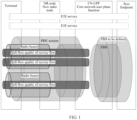
- a QoS architecture may be shown in FIG. 1 .
- a terminal may establish one or more PDU (Packet Data Unit, packet data unit) sessions with a 5G core network, and a RAN (Radio Access Network, radio access network) establishes one or more data radio bearers (Data Radio Bearer, DRB) for each PDU session.
- DRB Data Radio Bearer
- One DRB includes one or more QoS flows, and each QoS flow is corresponding to one or more packet filters (packet filter). For example, if a QoS flow 1 is corresponding to a packet filter 1 and a packet filter 2, only a data packet that can pass through the packet filter 1 or the packet filter 2 can be transmitted by using the QoS flow 1.
- one QoS flow is corresponding to one group of QoS parameters, and same QoS processing is performed on data packets transmitted by using a same QoS flow.
- Different services are corresponding to different SDFs (Service Data Flow, service data packet flow), and one SDF may be corresponding to one or more packet filters or one application detection filter. For example, if a service 1 is corresponding to an SDF 1, and the SDF 1 is corresponding to a packet filter 3 and a packet filter 4, a data packet belonging to the service 1 can pass through the packet filter 3 or the packet filter 4.
- SDFs Service Data Flow, service data packet flow
- one SDF may be corresponding to one or more packet filters or one application detection filter. For example, if a service 1 is corresponding to an SDF 1, and the SDF 1 is corresponding to a packet filter 3 and a packet filter 4, a data packet belonging to the service 1 can pass through the packet filter 3 or the packet filter 4.
- Mapping rules are different when QoS control is performed on an uplink/downlink data packet on a terminal side and a network side, to be specific, when the uplink/downlink data packet is mapped to a QoS flow. Therefore, in some particular cases, the uplink/downlink data packet may be mapped to different QoS flows on the terminal side and the network side, causing a packet loss.
- Embodiments of this application provide a QoS control method and a related session management function entity, computer-readable storage medium and computer program product, to perform QoS control on an uplink data packet.
- the present invention is defined by the method of independent claim 1, the session management function entity of independent claim 10, the computer-readable storage medium of independent claim 19 and the computer program product of independent claim 20. Additional features of the invention are presented in the dependent claims 2 to 9 and 11 to 18. In the following, parts of the description and drawings referring to embodiments, which are not covered by the claims are not presented as embodiments of the invention, but as examples useful for understanding the invention.
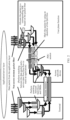
- a NAS (non-access stratum) of the terminal and a UPF (User Plane Function, user plane function) on the network side map the uplink/downlink data packet to a QoS flow based on a packet filter (packet filter); and an AS (access stratum) of the terminal and a RAN associate an uplink/downlink QoS flow with a DRB.
- a specific mapping mechanism may be shown in FIG. 2 . Details are as follows:
- each QoS flow is corresponding to one QoS flow template
- each QoS flow template is corresponding to one or more packet filters
- each QoS flow template has one priority.
- the terminal sequentially performs matching between the data packet and QoS flow templates in descending order of priorities of the QoS flow templates, and stops matching when a corresponding QoS flow template is found through matching. Specifically, matching is first performed between the data packet and a QoS flow template with a highest priority.
- the matching succeeds, and the data packet is transmitted by using a QoS flow corresponding to the QoS flow template; otherwise, matching continues to be performed between the data packet and a QoS flow template with a lower priority, until a corresponding QoS flow template is found through matching.
- each SDF is corresponding to one or more packet filters, and each SDF is corresponding to one priority.
- a network device sequentially performs matching between the data packet and packet filters of SDFs based on priorities of the SDFs, and stops matching when a packet filter of a corresponding SDF is found through matching. Specifically, matching is first performed between the data packet and a packet filter of an SDF with a highest priority. If the data packet can pass through the packet filter of the SDF, the matching succeeds, and the data packet is transmitted by using a QoS flow corresponding to the packet filter of the SDF; otherwise, matching continues to be performed between the data packet and a packet filter of an SDF with a lower priority.
- the data packet is discarded on the network side.
- the embodiments of this application provide a QoS control method and a device.
- the terminal in this application may include a handheld device, an in-vehicle device, a wearable device, or a computing device that has a wireless communication function, or another processing device connected to a wireless modem, and various forms of UEs (User Equipment, user equipment), MSs (Mobile Station, mobile station), terminal devices (Terminal Equipment), and the like.
- UEs User Equipment, user equipment
- MSs Mobile Station, mobile station
- Terminal Equipment Terminal Equipment
- the QoS control method provided in the embodiments of this application may be applied to a 5G network architecture shown in FIG. 4 .
- UPF User Plane Function
- user plane function Main functions of a UPF include: data packet routing and transmission, packet detection, service usage reporting, QoS processing, lawful interception, uplink packet detection, downlink data packet storage, and other user plane related functions.
- Access and Mobility Management Function includes: connection management, mobility management, registration management, access authentication and authorization, accessibility management, security context management, and other access and mobility related functions.
- Main functions of an SMF Session Management function, session management function
- session management for example, session establishment, modification, and release, including tunnel maintenance between a UPF and an AN
- UPF selection and control UPF selection and control
- SSC Service and Session Continuity, service and session continuity
- Main functions of a PCF include: unified policy development, policy control provisioning, obtaining policy and decision related subscription information from a UDR, and other policy related functions.
- a main function of an AUSF includes: authenticating whether user equipment is authorized.
- a main function of an AF is service provisioning, and specifically includes: service routing, access network capability enablement, and interaction with a policy architecture.
- UDM Unified Data Management, unified data management
- a main function of a DN is providing a specific data service, such as an operator service, an Internet access service, or a third-party service.
- FIG. 4 shows merely an example of an application scenario of the embodiments of this application, and constitutes no limitation to the application scenario of the embodiments of this application.
- a system architecture applicable to the embodiments of this application may include more or fewer network elements than those shown in FIG. 4 , or may be a different system architecture such as an EPS system architecture or a CUPS architecture.
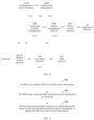
- FIG. 5 is a schematic flowchart of a QoS control method according to an embodiment of this application. As shown in the figure, the method includes the following steps:
- the SDF-level QoS control information obtained by the SMF entity is used to perform QoS control on an SDF.
- the SMF entity sends the SDF-level QoS control information to the terminal, so that the terminal performs the QoS control on the uplink data packet.
- the SDF-level QoS control information indicates that at least one packet filter corresponding to one SDF is corresponding to a same QoS flow, to be specific, is corresponding to a same QoS parameter, and each packet filter has a same SDF-level priority.
- different SDFs are corresponding to different priorities. Different SDFs may be corresponding to a same QoS parameter, to be specific, may be corresponding to a same QoS flow, but priorities of packet filters corresponding to the different SDFs are different.
- the SDF-level QoS control information includes any one of or any combination of following: an SDF-level identifier, at least one SDF-level packet filter, an SDF-level priority (namely, a priority of the SDF-level packet filter), a QoS flow identifier, and a QoS parameter.
- the SDF-level identifier may have a plurality of representation forms, for example, an SDF identifier (SDF ID), a QoS rule ID, or other various forms of identifiers that can embody an SDF level.
- the SDF-level QoS control information obtained by the SMF entity has various specific representation forms, including but not limited to the following three manners.
- the QoS control information obtained by the SMF entity is of an SDF level, but has various representation forms.
- an SDF is used as a control unit.
- the SDF-level QoS control information may include any one of or any combination of following: an SDF identifier, at least one packet filter corresponding to the SDF, a priority, a QoS flow identifier, and a QoS parameter.
- a new SDF is added.
- the SDF-level QoS control information obtained by the SMF entity includes: an identifier of the newly added SDF;
- the SDF-level QoS control information includes a QoS parameter: a QoS parameter corresponding to the QoS flow, for example, a packet delay, a bit rate, or a packet loss rate.
- the QoS parameter may further include a 5QI (5G QoS Indicator, 5G QoS indicator).
- the QoS parameter may include a 5QI, a notification (notification), a GFBR (Guaranteed Flow Bit Rate, guaranteed flow bit rate), and an MFBR (Maximum Flow Bit Rate, maximum flow bit rate).
- the SDF-level QoS control information obtained by the SMF entity includes at least an identifier of the to-be-modified SDF, and further includes any one of or any combination of the following information:
- the QoS parameter may further include a 5QI. If the QoS flow is a GBR QoS flow, the QoS parameter may include a 5QI, a notification, a GFBR, and an MFBR.
- an existing SDF is deleted.
- the SDF-level QoS control information obtained by the SMF entity may include only an identifier of the to-be-deleted SDF.
- an SDF in a QoS flow is used as a control unit.
- the SDF-level QoS control information may include any one of or any combination of following: a QoS flow identifier, at least one SDF identifier, at least one packet filter corresponding to the at least one SDF, a priority corresponding to the at least one SDF, and a QoS parameter corresponding to the QoS flow.
- the QoS flow is used as a QoS control unit, the following three scenarios may be included.
- a new QoS flow is established.
- the SDF-level QoS control information obtained by the SMF entity includes an identifier of the newly established QoS flow, and may further include:
- the SDF-level QoS control information includes a QoS parameter: a QoS parameter corresponding to the newly established QoS flow.
- the QoS parameter may further include a 5QI. If the newly established QoS flow is a GBR QoS flow, the QoS parameter may include a 5QI, a notification, a GFBR, and an MFBR.
- the QoS control information obtained by the SMF entity includes at least an identifier of the to-be-modified QoS flow, and further includes any one of or any combination of the following information:
- the QoS parameter may further include a 5QI. If the modified QoS flow is a GBR QoS flow, the QoS parameter may include a 5QI, a notification, a GFBR, and an MFBR.
- the SDF-level QoS control information obtained by the SMF entity may include an identifier of the to-be-deleted QoS flow.
- a QoS rule is used as a control unit.
- the SDF-level QoS control information may include any one of or any combination of the following: a QoS rule identifier, at least one packet filter corresponding to the QoS rule, a priority, a QoS flow identifier, and a QoS parameter.
- the QoS flow is used as a QoS control unit, the following three scenarios may be included.
- a QoS rule is added.
- the SDF-level QoS control information obtained by the SMF entity includes an identifier of the newly added QoS rule, and further includes the following information:
- the SDF-level QoS control information includes a QoS parameter: a QoS parameter corresponding to the QoS flow.
- the QoS parameter may further include a 5QI. If the QoS flow corresponding to the added QoS rule is a GBR QoS flow, the QoS parameter may include a 5QI, a notification, a GFBR, and an MFBR.
- the SDF-level QoS control information obtained by the SMF entity includes at least an identifier of the to-be-modified QoS rule, and further includes any one of or any combination of the following information:
- the QoS parameter may further include a 5QI. If the modified QoS flow is a GBR QoS flow, the QoS parameter may include a 5QI, a notification, a GFBR, and an MFBR.
- the SDF-level QoS control information obtained by the SMF entity may include only an identifier of the to-be-deleted QoS rule.
- the SDF-level QoS control information is sent to the terminal, so that the terminal performs the QoS control on the uplink data packet based on the SDF-level QoS control information.
- the SMF entity may further send the SDF-level QoS control information to a UPF entity, so that the UPF entity verifies the QoS control on the uplink data packet based on the SDF-level QoS control information.
- the SMF entity sends the SDF-level QoS control information to the terminal and the UPF entity, so that the terminal and the UPF can separately perform the QoS control on the uplink data packet based on the same QoS control information, thereby avoiding a packet loss caused by different QoS control performed by the terminal and the UPF on uplink data.
- the SMF entity may further send, to an access network device, the following two types of information: the QoS flow identifier, or the QoS flow identifier and the QoS parameter corresponding to the QoS flow, so that the access network device establishes, deletes, or binds to a corresponding air interface resource based on the foregoing information.
- step 501 performed by the SMF entity is specifically: receiving a policy control rule or a QoS control rule sent by a PCF entity, and obtaining, by the SMF, the SDF-level QoS control information based on the received policy control rule or QoS control rule.
- the PCF entity may send a PDU-CAN session modification instruction to the SMF entity, where the policy control rule or the QoS control rule is carried in the PDU session modification instruction.
- step 501 performed by the SMF entity is specifically: obtaining the SDF-level QoS control information based on a policy stored in the SMF entity.
- a policy stored in the PCF entity or the policy stored in the SMF entity includes a basis of updating the SDF-level QoS control information. For example, when network load meets a preset condition, the PCF entity or the SMF entity needs to update the SDF-level QoS control information, to ensure that QoS of an important service is not affected.
- step 503 that the terminal performs QoS control on an uplink data packet specifically includes: determining, by the terminal, a matching order of SDF-level packet filters based on the priority in the received SDF-level QoS control information; and performing data packet matching based on the matching order of the SDF-level packet filters, and performing the QoS control based on a QoS flow corresponding to a packet filter that successfully matches the uplink data packet.
- Step 601 A PCF entity sends a PDU-CAN (PDU-Connectivity Access Network, PDU-connectivity access network) session modification request to an SMF entity, where the request includes a policy control rule.
- PDU-CAN PDU-Connectivity Access Network, PDU-connectivity access network
- the request may further include a QoS requirement.
- the policy control rule information is used to establish a new policy control rule; or the policy control rule information is used to modify an existing policy control rule; or the policy control rule information is used to delete an existing policy control rule.
- Step 602 After receiving the PDU-CAN session modification request, the SMF entity determines to perform a PDU session update procedure.
- Step 603 The SMF entity sends a session management request to an AMF entity, where the session management request includes NAS signaling (for example, a PDU session modification command, where the PDU session modification command is used as an example for description in the figure), and the NAS signaling includes the foregoing SDF-level QoS control information, namely, SDF information.
- NAS signaling for example, a PDU session modification command, where the PDU session modification command is used as an example for description in the figure
- the NAS signaling includes the foregoing SDF-level QoS control information, namely, SDF information.
- the SDF-level QoS control information includes: an identifier (SDF ID) of the newly established SDF, at least one packet filter corresponding to the SDF, a priority, and a QoS parameter.
- SDF ID an identifier
- a format of the SDF-level QoS control information may be: SDF ID, QoS parameters, QFI, Precedence value, Filters.
- the SDF-level QoS control information further includes an identifier (QoS flow ID, QFI for short) of the established QoS flow. If no established QoS flow can meet a QoS requirement of the newly established SDF, the SDF-level QoS control information further includes an identifier QFI of a newly established QoS flow. Further, if the newly established QoS flow is a non-GBR QoS flow, the QoS parameter may include a 5QI. If the newly established QoS flow is a GBR QoS flow, the QoS parameter may include a 5QI, a notification, a GFBR, and an MFBR.
- the SDF-level QoS control information includes an ID of the to-be-modified SDF. If an established QoS flow can meet a modified QoS requirement, the SDF-level QoS control information includes a QFI of the established QoS flow. If no established QoS flow can meet a modified QoS requirement, the SDF-level QoS control information includes a QFI of a newly established QoS flow and a QoS parameter corresponding to the new QoS flow.
- a format of the SDF-level QoS control information may be: Update-SDF QoS: SDF ID, QFI, QoS parameters.
- the QoS parameter may include a 5QI.
- the QoS parameter may include a 5QI, a notification, a GFBR, and an MFBR.
- the QoS parameter is optional.
- the SDF-level QoS control information includes an ID of the to-be-modified SDF, and a modified priority and/or a modified packet filter.
- a format of the SDF-level QoS control information may be: Update-SDF Filters/Precedence: SDF ID, Filters/Precedence value.
- the SDF-level QoS control information includes an ID of the to-be-deleted SDF.
- a format of the SDF-level QoS control information may be: Delete-SDF: SDF ID, delete operation.
- the session management request further independently includes QoS flow information, where the QoS flow information includes a QFI and a QoS parameter and is used to instruct a RAN/AN to store the QoS flow information and establish a corresponding air interface resource or bind the QoS flow to an existing air interface resource.
- the session management request further independently includes a QFI of the QoS flow, where the QFI is used to instruct the RAN/AN to release an air interface resource.
- Step 604 The AMF sends an N2 session request message to a RAN/AN by using an N2 interface, where the N2 session message includes NAS signaling (for example, a PDU session modification command, where the PDU session modification command is used as an example for description in the figure), and the NAS signaling includes the SDF-level QoS control information.
- NAS signaling for example, a PDU session modification command, where the PDU session modification command is used as an example for description in the figure
- the NAS signaling includes the SDF-level QoS control information.
- the N2 session request message further includes that the RAN/AN needs to store information about the newly established QoS flow, and establish a corresponding air interface resource with a terminal or bind the newly established QoS flow to an existing air interface resource. If a QoS flow needs to be deleted, the N2 session request message further includes that the RAN/AN needs to delete corresponding QoS flow information, so that the RAN/AN releases an air interface resource with the terminal.
- Step 605 The AN sends a radio resource control request to a terminal, where the request includes a PDU session modification command, and the PDU session modification command includes the SDF-level QoS control information, so that the terminal performs QoS control on an uplink data packet based on the SDF-level QoS control information, or deletes the corresponding SDF information.
- Step 606 The terminal returns an acknowledgement message to the AN after receiving the SDF-level QoS control information.
- the terminal stores the SDF-level QoS control information, and performs the QoS control on the uplink data packet based on the SDF-level QoS control information, or deletes the locally stored SDF-level QoS control information.
- the SDF-level QoS control information may be stored in the terminal in the following forms:
- Step 607 The AN returns an N2 session response to the AMF by using the N2 interface.
- Step 608 The AMF returns a session management response to the SMF, where the response includes a PDU session modification acknowledgement message.
- Step 609 The SMF sends an N4 session modification request to the UPF by using an N4 interface, where the request optionally includes the SDF-level QoS control information.
- the UPF When the session modification request is used to add an SDF, the UPF generates, based on the SDF-level QoS control information, at least one SDF-level packet filter in a QoS flow corresponding to the added SDF, and the at least one generated SDF-level packet filter has a same priority.
- the UPF modifies the information about the SDF. For example, to modify a priority of the existing SDF, the UPF modifies a priority of a packet filter corresponding to the SDF.
- Step 610 The UPF returns an N4 session modification response to the SMF by using the N4 interface.
- Step 611 The SMF returns a PDU-CAN session modification acknowledgement message to the PCF.
- step 601 to step 611 the QoS control information stored in the terminal and the UPF is modified, so that the terminal and the UPF can perform QoS control on an uplink/downlink data packet based on the same SDF-level QoS control information.
- the SMF may actively initiate a process of modifying the SDF-level QoS control information, to be specific, step 601 and step 611 may not be performed.
- the terminal When needing to send an uplink data packet, the terminal performs, based on SDF-level priorities, matching between the uplink data packet and a packet filter corresponding to an SDF with a highest priority. If the matching between the uplink data packet and the packet filter corresponding to the SDF with the highest priority succeeds, the terminal transmits the uplink data packet by using a QoS flow corresponding to the filter; otherwise, continues to perform matching between the uplink data packet and a packet filter corresponding to an SDF with a second highest priority, until an appropriate packet filter is found through matching.
- the UPF When receiving the uplink data packet, the UPF performs data packet matching based on the same SDF-level QoS control information. Therefore, a QoS flow that is corresponding to the data packet and that is determined by the UPF is the same as a QoS flow determined by the terminal, so that a packet loss can be avoided.
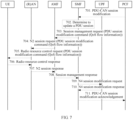
- Step 701 A PCF entity sends a PDU-CAN session modification request to an SMF entity, where the request includes a policy control rule.
- the policy control rule information is used to establish a new policy control rule; or the policy control rule information is used to modify an existing policy control rule; or the policy control rule information is used to delete an existing policy control rule.
- Step 702 After receiving the PDU-CAN session modification request, the SMF determines to perform a PDU session update procedure.
- Step 703 The SMF sends a session management request to an AMF, where the session management request includes NAS signaling (for example, a PDU session modification command, where the PDU session modification command is used as an example for description in the figure), and the NAS signaling includes the foregoing SDF-level QoS control information, namely, QoS flow information.
- NAS signaling for example, a PDU session modification command, where the PDU session modification command is used as an example for description in the figure
- the NAS signaling includes the foregoing SDF-level QoS control information, namely, QoS flow information.
- the SDF-level QoS control information includes a QFI of the newly established QoS flow, an ID of an SDF, a priority of the SDF, and a packet filter.
- the SDF corresponding to the newly established QoS flow may be an existing SDF or a newly established SDF.
- a format of the SDF-level QoS control information may be: QFI, QoS parameters, SDF ID, Precedence value, Filters.
- the QoS parameter may include a 5QI. If the newly established QoS flow is a GBR QoS flow, the QoS parameter may include a 5QI, a notification, a GFBR, and an MFBR.
- the QoS parameter is optional.
- the SDF-level QoS control information includes a QFI of the to-be-modified QoS flow, an ID of an SDF, a priority of the SDF, and a packet filter.
- a modified SDF corresponding to the QoS flow a new SDF may be added, or an existing SDF may be deleted, or a new SDF may not be added and an existing SDF may not be deleted, but only a priority and/or a packet filter of the existing SDF is modified.
- a format of the SDF-level QoS control information may be: QFI, SDF ID, Filters/Precedence value.
- the SDF-level QoS control information may include only an identifier of the to-be-deleted QoS flow.
- the session management request further independently includes QoS flow information, where the QoS flow information includes a QFI and a QoS parameter and is used to instruct a RAN/AN to store the QoS flow information and establish a corresponding air interface resource or bind the QoS flow to an existing air interface resource.
- the session management request further independently includes a QFI of the QoS flow, where the QFI is used to instruct the RAN/AN to release an air interface resource.
- Step 704 The AMF sends an N2 session request to an AN by using an N2 interface, where the N2 session message includes NAS signaling (for example, a PDU session modification command, where the PDU session modification command is used as an example for description in the figure), and the NAS signaling includes the SDF-level QoS control information.
- NAS signaling for example, a PDU session modification command, where the PDU session modification command is used as an example for description in the figure
- the NAS signaling includes the SDF-level QoS control information.
- the N2 session request message further includes that the RAN/AN needs to store information about the newly established QoS flow, and establish a corresponding air interface resource with a terminal or bind the newly established QoS flow to an existing air interface resource. If a QoS flow needs to be deleted, the N2 session request message further includes that the RAN/AN needs to delete corresponding QoS flow information, so that the RAN/AN releases an air interface resource with the terminal.
- Step 705 The AN sends a radio resource control request to a terminal, where the request includes a PDU session modification command, and the PDU session modification command includes the SDF-level QoS control information, so that the terminal performs QoS control on an uplink data packet based on the SDF-level QoS control information, or deletes the corresponding QoS flow information.
- Step 706 The terminal returns an acknowledgement message to the AN after receiving the SDF-level QoS control information.
- the terminal stores the SDF-level QoS control information, and performs the QoS control on the uplink data packet based on the SDF-level QoS control information, or deletes the locally stored SDF-level QoS control information.
- the SDF-level QoS control information may be stored in the terminal in the following forms:
- the UPF When tire session modification request is used to add a QoS flow, the UPF generates, in the added QoS flow based on the SDF-level QoS control information, at least one SDF-level packet filter of an SDF corresponding to the QoS flow, and the at least one generated SDF-level packet filter has a same priority.
- the UPF modifies the information about the QoS flow.
- the UPF deletes information about the QoS flow.
- Step 710 The UPF returns an N4 session modification response to the SMF by using the N4 interface.
- Step 711 The SMF returns a PDU-CAN modification acknowledgement message to the PCF.
- both the terminal and the UPF perform QoS control on an uplink/downlink data packet based on the same SDF-level QoS control information.
- the terminal When needing to send an uplink data packet, the terminal performs, based on SDF-level priorities, matching between the uplink data packet and a packet filter corresponding to an SDF with a highest priority. If the matching between the uplink data packet and the packet filter corresponding to the SDF with the highest priority succeeds, the terminal transmits the uplink data packet by using a QoS flow corresponding to the filter; otherwise, continues to perform matching between the uplink data packet and a packet filter corresponding to an SDF with a second highest priority, until an appropriate packet filter is found through matching.
- the UPF When receiving the uplink data packet, the UPF performs data packet matching based on the same SDF-level QoS control information. Therefore, a QoS flow that is corresponding to the data packet and that is determined by the UPF is the same as a QoS flow determined by the terminal, so that a packet loss can be avoided.
- the SMF may actively initiate a process of modifying the SDF-level QoS control information, to be specific, step 701 and step 711 may not be performed.
- the SDF-level QoS control information in Embodiment 2 is slightly different from the SDF-level QoS control information in Embodiment 1 in specific information content and an information format.
- the QoS control information in Embodiment 1 and the QoS control information in Embodiment 2 are both implemented based on an SDF level, and different SDFs are corresponding to different priorities. Therefore, in Embodiment 2, a process of performing the QoS control on the uplink/downlink data packet by the terminal is the same as a process of performing the QoS control on the uplink/downlink data packet by the UPF.
- the terminal When needing to send an uplink data packet, the terminal performs, based on SDF-level priorities, matching between the uplink data packet and a packet filter corresponding to an SDF with a highest priority. If the matching between the uplink data packet and the packet filter corresponding to the SDF with the highest priority succeeds, the terminal transmits the uplink data packet by using a QoS flow corresponding to the filter; otherwise, continues to perform matching between the uplink data packet and a packet filter corresponding to an SDF with a second highest priority, until an appropriate packet filter is found through matching.
- the UPF When receiving the uplink data packet, the UPF performs data packet matching based on the same SDF-level QoS control information. Therefore, a QoS flow that is corresponding to the data packet and that is determined by the UPF is the same as a QoS flow determined by the terminal, so that a packet loss can be avoided.
- Step 801 A PCF sends a PDU-CAN session modification request to an SMF, where the request includes policy rule information.
- the policy control rule information is used to establish a new policy control rule; or the policy control rule information is used to modify an existing policy control rule; or the policy control rule information is used to delete an existing policy control rule.
- Step 802 After receiving the PDU session modification request, the SMF determines to perform a PDU session update procedure.
- Step 803 The SMF sends a session management request to an AMF, where the session management request includes NAS signaling (for example, a PDU session modification command, where the PDU session modification command is used as an example for description in the figure), and the NAS signaling includes the foregoing SDF-level QoS control information, namely, a QoS rule.
- NAS signaling for example, a PDU session modification command, where the PDU session modification command is used as an example for description in the figure
- the NAS signaling includes the foregoing SDF-level QoS control information, namely, a QoS rule.
- the SDF-level QoS control information includes an identifier (QoS rule ID) of the newly established QoS rule, a packet filter, a priority, a QFI, and a QoS parameter.
- QoS rule ID an identifier
- a format of the SDF-level QoS control information may be: QoS rule ID, QFI, QoS parameters, Precedence value, Filters. If there is an existing QoS flow that can meet a QoS requirement corresponding to the newly established QoS rule, the QFI is a QFI of the existing QoS flow.
- the QoS parameter may include a 5QI. If the newly established QoS flow is a GBR QoS flow, the QoS parameter may include a 5QI, a notification, a GFBR, and an MFBR. The QoS parameter is optional.
- the SDF-level QoS control information includes an ID of the to-be-modified QoS rule. If an established QoS flow can meet a modified QoS requirement, the SDF-level QoS control information includes a QFI of the established QoS flow. If no established QoS flow can meet a modified QoS requirement, the SDF-level QoS control information includes a QFI of a newly established QoS flow and a QoS parameter corresponding to the new QoS flow.
- a format of the SDF-level QoS control information may be: QoS rule ID, QoS flow ID, QoS parameters.
- the SDF-level QoS control information includes an ID of the to-be-modified QoS rule, and a modified priority and/or a modified packet filter.
- the SDF-level QoS control information includes an ID of the to-be-deleted SDF.
- the session management request further independently includes QoS flow information, where the QoS flow information includes a QFI and a QoS parameter and is used to instruct a RAN/AN to store the QoS flow information and establish a corresponding air interface resource or bind the QoS flow to an existing air interface resource.
- the session management request further independently includes a QFI of the QoS flow, where the QFI is used to instruct the RAN/AN to release an air interface resource.
- Step 804 The AMF sends an N2 session request to a RAN/AN by using an N2 interface, where the N2 session message includes NAS signaling (for example, a PDU session modification command, where the PDU session modification command is used as an example for description in the figure), and the NAS signaling includes the SDF-level QoS control information.
- NAS signaling for example, a PDU session modification command, where the PDU session modification command is used as an example for description in the figure
- the NAS signaling includes the SDF-level QoS control information.
- the N2 session request message further includes that the RAN/AN needs to store information about the newly established QoS flow, and establish a corresponding air interface resource with a terminal or bind the newly established QoS flow to an existing air interface resource. If a QoS flow needs to be deleted, the N2 session request message further includes that the RAN/AN needs to delete corresponding QoS flow information, so that the RAN/AN releases an air interface resource with the terminal.
- Step 805 The AN sends a radio resource control request to a terminal, where the request includes a PDU session modification command, and the PDU session modification command includes the SDF-level QoS control information, so that the terminal performs QoS control on an uplink data packet based on the SDF-level QoS control information, or deletes corresponding QoS rule information.
- Step 806 The terminal returns an acknowledgement message to the AN after receiving the SDF-level QoS control information.
- the terminal stores the SDF-level QoS control information, and performs the QoS control on the uplink data packet based on the SDF-level QoS control information, or deletes the locally stored SDF-level QoS control information.
- the SDF-level QoS control information may be stored in the terminal in the following forms:
- Step 807 The AN returns an N2 session response to the AMF by using the N2 interface.
- Step 808 The AMF returns a session management response to the SMF, where the response includes a PDU session modification acknowledgement message.
- Step 809 The SMF sends an N4 session modification request to the UPF by using an N4 interface, where the request optionally includes the SDF-level QoS control information.
- the UPF When the session modification request is used to add a QoS rule, the UPF generates, for a QoS flow corresponding to the added QoS rule based on the SDF-level QoS control information, at least one SDF-level packet filter of an SDF corresponding to the QoS flow, and the at least one generated SDF-level packet filter has a same priority.
- the UPF modifies information of the QoS rule.
- the UPF deletes all information of the QoS rule.
- Step 810 The UPF returns an N4 session modification response to the SMF by using the N4 interface.
- Step 811 The SMF returns a PDU-CAN modification acknowledgement message to the PCF.
- both the terminal and the UPF perform QoS control on an uplink/downlink data packet based on the same SDF-level QoS control information.
- the terminal When needing to send an uplink data packet, the terminal performs, based on SDF-level priorities, matching between the uplink data packet and a packet filter corresponding to an SDF with a highest priority. If the matching between the uplink data packet and the packet filter corresponding to the SDF with the highest priority succeeds, the terminal transmits the uplink data packet by using a QoS flow corresponding to the filter; otherwise, continues to perform matching between the uplink data packet and a packet filter corresponding to an SDF with a second highest priority, until an appropriate packet filter is found through matching.
- the UPF When receiving the uplink data packet, the UPF performs data packet matching based on the same SDF-level QoS control information. Therefore, a QoS flow that is corresponding to the data packet and that is determined by the UPF is the same as a QoS flow determined by the terminal, so that a packet loss can be avoided.
- the SMF may actively initiate a process of modifying the SDF-level QoS control information, to be specific, step 801 and step 811 may not be performed.
- the SDF-level QoS control information in Embodiment 3 is slightly different from the SDF-level QoS control information in Embodiment 1 and the SDF-level QoS control information in Embodiment 2 in specific information content and an information format.
- the QoS control information in Embodiment 1, the QoS control information in Embodiment 2, and the QoS control information in Embodiment 3 are all implemented based on an SDF level, and different SDFs are corresponding to different priorities. Therefore, in Embodiment 3, a process of performing the QoS control on the uplink/downlink data packet by the terminal is the same as a process of performing the QoS control on the uplink/downlink data packet by the UPF. Details are not described herein again.
- FIG. 9 is a possible schematic structural diagram of the session management function SMF entity in the foregoing embodiments.
- the SMF entity 900 can also implement a function of the SMF entity shown in FIG. 5 , FIG. 6 , FIG. 7 , or FIG. 8 .
- the SMF entity 900 includes a processing unit 902 and a communications unit 903.
- the processing unit 902 is configured to control and manage actions of the SMF entity.
- the processing unit 902 is configured to support the SMF entity in performing the processes 501 to 503 in FIG. 5 , the processes 602, 603, and 609 in FIG. 6 , the processes 702, 703, and 709 in FIG. 7 , or the processes 802, 803, and 809 in FIG. 8 , and/or another process used for the technologies described in this specification.
- the communications unit 903 is configured to support communication between the SMF entity and another network entity, for example, communication between the SMF entity and a functional module or a network entity shown in FIG. 5 , FIG. 6 , FIG. 7 , or FIG. 8 .
- the SMF entity may further include a storage unit 901, configured to store program code and data of the SMF entity.
- unit division in this embodiment of the present invention is an example and is merely logical function division. During actual implementation, there may be another division manner.
- the functional units in this embodiment of the present invention may be integrated into one processing unit, or each of the units may exist alone physically, or two or more units are integrated into one unit.
- a first obtaining unit and a second obtaining unit may be a same unit, or may be different units.
- the integrated unit may be implemented in a form of hardware, or may be implemented in a form of a software functional unit.
- the processing unit 902 may be a processor or a controller, for example, may be a central processing unit (Central Processing Unit, CPU), a general purpose processor, a digital signal processor (Digital Signal Processor, DSP), an application-specific integrated circuit (Application-Specific Integrated Circuit, ASIC), a field programmable gate array (Field Programmable Gate Array, FPGA) or another programmable logic device, a transistor logic device, a hardware component, or any combination thereof.
- the processing unit 902 may implement or execute examples of various logical blocks, modules, and circuits that are described with reference to the content disclosed in the present invention.
- the processor may be a combination implementing a computing function, for example, a combination including one or more microprocessors, or a combination of a DSP and a microprocessor.
- the communications unit 903 may be a transceiver.
- the storage unit 901 may be a memory.
- the SMF entity in this embodiment of the present invention may be an SMF entity shown in FIG. 10 .
- FIG. 10 is another possible schematic structural diagram of the SMF entity in the foregoing embodiments.
- the SMF entity includes a processor 1001, and a memory 1002 and a transceiver 1003 that are separately connected to the processor 1001.
- the processor 1001 is configured to invoke a computer program pre-stored in the memory 1002 to perform the following steps:
- the processor 1001 is further configured to send the SDF-level QoS control information to a UPF entity by using the transceiver 1003, so that the UPF verifies QoS control on an uplink data packet based on the SDF-level QoS control information, or deletes the SDF-level QoS control information.
- the processor 1001 when obtaining the SDF-level QoS control information, is specifically configured to: obtain the SDF-level QoS control information based on a session management request sent by a PCF entity; or obtain the SDF-level QoS control information based on a local policy.
- the SDF-level QoS control information includes: an SDF identifier; or an SDF identifier, and at least one of or any combination of the following: at least one packet filter corresponding to the SDF, a priority, a QoS flow identifier, and a QoS parameter.
- the SDF-level QoS control information includes: a QoS flow identifier; or a QoS flow identifier, and at least one of or any combination of the following: at least one SDF identifier, at least one packet filter corresponding to the at least one SDF, a priority corresponding to the at least one SDF, and a QoS parameter corresponding to the QoS flow.
- the SDF-level QoS control information includes: a QoS rule identifier; or a QoS rule identifier, and at least one of or any combination of the following: at least one packet filter corresponding to the QoS rule, a priority, a QoS flow identifier, and a QoS parameter.
- the processor 1001 is further configured to send, to an access network device by using the transceiver 1003, the QoS flow identifier and the QoS parameter corresponding to the QoS flow, so that the access network device establishes a corresponding air interface resource.
- FIG. 11 is a possible schematic structural diagram of the terminal in the foregoing embodiments.
- the terminal 1100 can also implement a function of the terminal shown in FIG. 6 , FIG. 7 , or FIG. 8 .
- the terminal 1100 includes a processing unit 1102 and a communications unit 1103.
- the processing unit 1102 is configured to control and manage actions of the terminal.
- the processing unit 1102 is configured to support the terminal in performing the process 606 in FIG. 6 , the process 706 in FIG. 7 , the process 806 in FIG. 8 , and/or another process used for the technologies described in this specification.
- the communications unit 1103 is configured to support communication between the terminal and another network entity, for example, communication between the terminal and a functional module or a network entity shown in FIG. 6 , FIG. 7 , or FIG. 8 .
- the terminal may further include a storage unit 1101, configured to store program code and data of the terminal.
- unit division in this embodiment of the present invention is an example and is merely logical function division. During actual implementation, there may be another division manner.
- the functional units in this embodiment of the present invention may be integrated into one processing unit, or each of the units may exist alone physically, or two or more units are integrated into one unit.
- a first obtaining unit and a second obtaining unit may be a same unit, or may be different units.
- the integrated unit may be implemented in a form of hardware, or may be implemented in a form of a software functional unit.
- the processing unit 1102 may be a processor or a controller, for example, may be a central processing unit (Central Processing Unit, CPU), a general purpose processor, a digital signal processor (Digital Signal Processor, DSP), an application-specific integrated circuit (Application-Specific Integrated Circuit, ASIC), a field programmable gate array (Field Programmable Gate Array, FPGA) or another programmable logic device, a transistor logic device, a hardware component, or any combination thereof.
- the processing unit 1102 may implement or execute examples of various logical blocks, modules, and circuits that are described with reference to the content disclosed in the present invention.
- the processor may be a combination implementing a computing function, for example, a combination including one or more microprocessors, or a combination of a DSP and a microprocessor.
- the communications unit 1103 may be a transceiver.
- the storage unit 1101 may be a memory.
- the terminal in this embodiment of the present invention may be a terminal shown in FIG. 10 .
- FIG. 12 is another possible schematic structural diagram of the terminal in the foregoing embodiments.
- the terminal includes a processor 1201, and a memory 1202 and a transceiver 1203 that are separately connected to the processor 1201.
- the processor 1201 is configured to invoke a computer program pre-stored in the memory 1202 to perform the following steps:
- the SDF-level QoS control information includes: an SDF identifier; or an SDF identifier, and one of or any combination of the following: at least one packet filter corresponding to the SDF, a priority, a QoS flow identifier, and a QoS parameter.
- the SDF-level QoS control information includes: a QoS flow identifier; or a QoS flow identifier, and at least one of or any combination of the following: at least one SDF identifier, at least one packet filter corresponding to the at least one SDF, a priority corresponding to the at least one SDF, and a QoS parameter corresponding to the QoS flow.
- the SDF-level QoS control information includes: a QoS rule identifier; or a QoS rule identifier, and at least one of or any combination of the following: at least one packet filter corresponding to the QoS rule, a priority, a QoS flow identifier, and a QoS parameter.
- the processor 1201 when performing the QoS control on the uplink data packet based on the SDF-level QoS control information, is specifically configured to: determine a matching order of SDF-level packet filters based on the priority in the SDF-level QoS control information; and perform data packet matching based on the matching order of the SDF-level packet filters, and perform the QoS control based on a QoS flow corresponding to a packet filter that successfully matches the uplink data packet.
- this application may be provided as a method, a system, or a computer program product. Therefore, this application may use a form of hardware only embodiments, software only embodiments, or embodiments with a combination of software and hardware. Moreover, this application may use a form of a computer program product that is implemented on one or more computer-usable storage media (including but not limited to a magnetic disk storage, a CD-ROM, an optical memory, and the like) that include computer usable program code.
- computer-usable storage media including but not limited to a magnetic disk storage, a CD-ROM, an optical memory, and the like
- These computer program instructions may be provided for a general-purpose computer, a dedicated computer, an embedded processor, or a processor of another programmable data processing device to generate a machine, so that the instructions executed by a computer or a processor of another programmable data processing device generate an apparatus for implementing a specific function in one or more processes in the flowcharts and/or in one or more blocks in the block diagrams.
- These computer program instructions may be stored in a computer readable memory that can instruct the computer or another programmable data processing device to work in a specific manner, so that the instructions stored in the computer readable memory generate an artifact that includes an instruction apparatus.
- the instruction apparatus implements a specific function in one or more processes in the flowcharts and/or in one or more blocks in the block diagrams.
- These computer program instructions may be loaded onto a computer or another programmable data processing device, so that a series of operations and steps are performed on the computer or another programmable device, thereby generating computer-implemented processing. Therefore, the instructions executed on the computer or another programmable device provide steps for implementing a specific function in one or more processes in the flowcharts and/or in one or more blocks in the block diagrams.
Landscapes
- Engineering & Computer Science (AREA)
- Computer Networks & Wireless Communication (AREA)
- Signal Processing (AREA)
- Quality & Reliability (AREA)
- Computer Security & Cryptography (AREA)
- Mobile Radio Communication Systems (AREA)
- Data Exchanges In Wide-Area Networks (AREA)
Claims (20)
- Dienstgüte- bzw. QoS-Steuerverfahren, das Folgendes umfasst:Erhalten (501), durch eine Sitzungsverwaltungsfunktionsentität, einer oder mehrerer QoS-Regeln, wobei eine QoS-Regel einem Dienstdatenfluss bzw. SDF entspricht und jede QoS-Regel eine QoS-Regel-Kennung, mindestens einen Paketfilter, der dem SDF entspricht, eine SDF-Ebenen-QoS-Regel-Priorität, die dem SDF entspricht, und eine QoS-Fluss-Kennung umfasst, undSenden (502), durch die Sitzungsverwaltungsfunktionsentität, der einen oder der mehreren QoS-Regeln an ein Endgerät.
- Verfahren nach Anspruch 1, wobei der mindestens eine Paketfilter mehrere Paketfilter umfasst, die einem gleichen QoS-Fluss entsprechen, und wobei der gleiche QoS-Fluss durch die QoS-Fluss-Kennung identifiziert wird.
- Verfahren nach Anspruch 1 oder 2, wobei der mindestens eine Paketfilter mehrere Paketfilter mit einer gleichen SDF-Ebenen-Priorität umfasst und wobei die gleiche SDF-Ebenen-Priorität die SDF-Ebenen-Priorität ist, die dem SDF in der QoS-Regel entspricht.
- Verfahren nach einem der Ansprüche 1 bis 3, wobei die QoS-Regel-Kennung eine SDF-Ebenen-Kennung ist.
- Verfahren nach einem der Ansprüche 1 bis 4, wobei unterschiedliche SDFs einem gleichen QoS-Fluss entsprechen.
- Verfahren nach einem der Ansprüche 1 bis 5, wobei die SDF-Ebenen-Prioritäten, die unterschiedlichen SDFs entsprechen, unterschiedlich sind.
- Verfahren nach einem der Ansprüche 1 bis 6, wobei das Erhalten der einen oder der mehreren QoS-Regeln Folgendes umfasst:Erhalten, durch die Sitzungsverwaltungsfunktionsentität, der einen oder der mehreren QoS-Regeln basierend auf Richtliniensteuerregelinformationen oder einer von einer Richtliniensteuerfunktionsentität empfangenen QoS-Steuerregel; oderErhalten, durch die Sitzungsverwaltungsfunktionsentität, der einen oder der mehreren QoS-Regeln basierend auf einer lokalen Richtlinie, die in der Sitzungsverwaltungsfunktionsentität gespeichert ist.
- Verfahren nach einem der Ansprüche 1 bis 7, das ferner Folgendes umfasst:
Senden, durch die Sitzungsverwaltungsfunktionsentität an eine Benutzerebenenfunktionsentität, des mindestens einen Paketfilters, der SDF-Ebenen-QoS-Regel-Priorität und der QoS-Fluss-Kennung zur Verifizierung auf einem Uplink-Datenpaket. - Verfahren nach Anspruch 8, das ferner Folgendes umfasst:
Senden, durch die Sitzungsverwaltungsfunktionsentität an eine Zugangsnetzvorrichtung, der QoS-Fluss-Kennung oder der QoS-Fluss-Kennung und eines QoS-Parameters, der dem QoS-Fluss entspricht. - Sitzungsverwaltungsfunktionsentität (900), die Folgendes umfasst: eine Verarbeitungseinheit (902) und eine Kommunikationseinheit (903), wobeidie Verarbeitungseinheit (902) ausgelegt ist zum Erhalten einer oder mehrerer Dienstgüte- bzw. QoS-Regeln, wobei eine QoS-Regel einem Dienstdatenfluss bzw. SDF entspricht und jede QoS-Regel eine QoS-Regel-Kennung, mindestens einen Paketfilter, der dem SDF entspricht, eine SDF-Ebenen-QoS-Regel-Priorität, die dem SDF entspricht, und eine QoS-Fluss-Kennung umfasst; unddie Kommunikationseinheit (903) ausgelegt ist zum Senden der einen oder der mehreren QoS-Regeln an ein Endgerät.
- Sitzungsverwaltungsfunktionsentität (900) nach Anspruch 10, wobei der mindestens eine Paketfilter mehrere Paketfilter umfasst, die einem gleichen QoS-Fluss entsprechen, und wobei der gleiche QoS-Fluss durch die QoS-Fluss-Kennung identifiziert wird.
- Sitzungsverwaltungsfunktionsentität (900) nach Anspruch 10 oder 11, wobei der mindestens eine Paketfilter mehrere Paketfilter mit einer gleichen SDF-Ebenen-Priorität umfasst und wobei die gleiche SDF-Ebenen-Priorität die SDF-Ebenen-Priorität ist, die dem SDF in der QoS-Regel entspricht.
- Sitzungsverwaltungsfunktionsentität (900) nach einem der Ansprüche 10 bis 12, wobei die QoS-Regel-Kennung eine SDF-Ebenen-Kennung ist.
- Sitzungsverwaltungsfunktionsentität (900) nach einem der Ansprüche 10 bis 13, wobei unterschiedliche SDFs einem gleichen QoS-Fluss entsprechen.
- Sitzungsverwaltungsfunktionsentität (900) nach einem der Ansprüche 10 bis 14, wobei die SDF-Ebenen-Prioritäten, die unterschiedlichen SDFs entsprechen, unterschiedlich sind.
- Sitzungsverwaltungsfunktionsentität (900) nach einem der Ansprüche 10 bis 15, wobei die Verarbeitungseinheit (902) beim Erhalten der einen oder der mehreren QoS-Regeln insbesondere zu Folgendem ausgelegt ist:Erhalten der einen oder der mehreren QoS-Regeln basierend auf Richtliniensteuerregelinformationen oder einer von einer Richtliniensteuerfunktionsentität empfangenen QoS-Steuerregel; oderErhalten der einen oder der mehreren QoS-Regeln basierend auf einer lokalen Richtlinie, die in der Sitzungsverwaltungsfunktionsentität gespeichert ist.
- Sitzungsverwaltungsfunktionsentität (900) nach einem der Ansprüche 10 bis 16, wobei die Kommunikationseinheit (903) ferner zu Folgendem ausgelegt ist:
Senden des mindestens einen Paketfilters, der SDF-Ebenen-QoS-Regel-Priorität und der QoS-Fluss-Kennung zur Verifizierung auf einem Uplink-Datenpaket an eine Benutzerebenenfunktionsentität zur Verifizierung auf einem Uplink-Datenpaket. - Sitzungsverwaltungsfunktionsentität (900) nach einem der Ansprüche 10 bis 17, wobei die Kommunikationseinheit (903) ferner zu Folgendem ausgelegt ist:
Senden, an eine Zugangsnetzvorrichtung, der QoS-Fluss-Kennung oder der QoS-Fluss-Kennung und eines QoS-Parameters, der dem QoS-Fluss entspricht. - Computerlesbares Speichermedium, das Anweisungen umfasst, die bei Ausführung durch eine Computereinheit einer Sitzungsverwaltungsfunktion bewirken, dass die Sitzungsverwaltungsfunktion das Verfahren nach einem der Ansprüche 1 bis 9 ausführt.
- Computerprogrammprodukt, das Anweisungen umfasst, die bei Ausführung durch eine Computereinheit einer Sitzungsverwaltungsfunktion bewirken, dass die Sitzungsverwaltungsfunktion das Verfahren nach einem der Ansprüche 1 bis 9 ausführt.
Priority Applications (2)
| Application Number | Priority Date | Filing Date | Title |
|---|---|---|---|
| EP24197985.5A EP4496287A3 (de) | 2017-05-09 | 2017-05-09 | Qos-steuerungsverfahren und -vorrichtung |
| EP21186467.3A EP3986019B1 (de) | 2017-05-09 | 2017-05-09 | Verfahren zur kontrolle der dienstgüte und sitzungsverwaltungsfunktionseinheit |
Applications Claiming Priority (3)
| Application Number | Priority Date | Filing Date | Title |
|---|---|---|---|
| PCT/CN2017/083671 WO2018205155A1 (zh) | 2017-05-09 | 2017-05-09 | 一种QoS控制方法及设备 |
| EP21186467.3A EP3986019B1 (de) | 2017-05-09 | 2017-05-09 | Verfahren zur kontrolle der dienstgüte und sitzungsverwaltungsfunktionseinheit |
| EP17909069.1A EP3624500B1 (de) | 2017-05-09 | 2017-05-09 | Verfahren zur kontrolle der dienstgüte und vorrichtung |
Related Parent Applications (2)
| Application Number | Title | Priority Date | Filing Date |
|---|---|---|---|
| EP17909069.1A Division EP3624500B1 (de) | 2017-05-09 | 2017-05-09 | Verfahren zur kontrolle der dienstgüte und vorrichtung |
| EP17909069.1A Division-Into EP3624500B1 (de) | 2017-05-09 | 2017-05-09 | Verfahren zur kontrolle der dienstgüte und vorrichtung |
Related Child Applications (1)
| Application Number | Title | Priority Date | Filing Date |
|---|---|---|---|
| EP24197985.5A Division EP4496287A3 (de) | 2017-05-09 | 2017-05-09 | Qos-steuerungsverfahren und -vorrichtung |
Publications (3)
| Publication Number | Publication Date |
|---|---|
| EP3986019A1 EP3986019A1 (de) | 2022-04-20 |
| EP3986019C0 EP3986019C0 (de) | 2024-09-25 |
| EP3986019B1 true EP3986019B1 (de) | 2024-09-25 |
Family
ID=64104041
Family Applications (3)
| Application Number | Title | Priority Date | Filing Date |
|---|---|---|---|
| EP21186467.3A Active EP3986019B1 (de) | 2017-05-09 | 2017-05-09 | Verfahren zur kontrolle der dienstgüte und sitzungsverwaltungsfunktionseinheit |
| EP24197985.5A Pending EP4496287A3 (de) | 2017-05-09 | 2017-05-09 | Qos-steuerungsverfahren und -vorrichtung |
| EP17909069.1A Active EP3624500B1 (de) | 2017-05-09 | 2017-05-09 | Verfahren zur kontrolle der dienstgüte und vorrichtung |
Family Applications After (2)
| Application Number | Title | Priority Date | Filing Date |
|---|---|---|---|
| EP24197985.5A Pending EP4496287A3 (de) | 2017-05-09 | 2017-05-09 | Qos-steuerungsverfahren und -vorrichtung |
| EP17909069.1A Active EP3624500B1 (de) | 2017-05-09 | 2017-05-09 | Verfahren zur kontrolle der dienstgüte und vorrichtung |
Country Status (9)
| Country | Link |
|---|---|
| US (3) | US10772004B2 (de) |
| EP (3) | EP3986019B1 (de) |
| JP (2) | JP7250700B2 (de) |
| KR (1) | KR102305716B1 (de) |
| CN (4) | CN113923715A (de) |
| BR (1) | BR112019023333A2 (de) |
| PL (1) | PL3624500T3 (de) |
| RU (1) | RU2744907C1 (de) |
| WO (1) | WO2018205155A1 (de) |
Families Citing this family (27)
| Publication number | Priority date | Publication date | Assignee | Title |
|---|---|---|---|---|
| EP4274373A3 (de) | 2016-10-17 | 2024-01-17 | Sk Telecom Co., Ltd. | Basisstationsvorrichtung und dienstgütekontrollverfahren in einem drahtlosen abschnitt |
| CN108882367B (zh) * | 2017-05-11 | 2020-10-30 | 维沃移动通信有限公司 | 数据传输的控制方法及装置 |
| US20200112894A1 (en) * | 2017-06-16 | 2020-04-09 | Ntt Docomo, Inc. | User device, radio communication system, and radio communication method |
| CN109392042B (zh) * | 2017-08-14 | 2021-10-26 | 华为技术有限公司 | 一种会话管理方法、异系统互操作的方法及网络装置 |
| CN110035401B (zh) * | 2018-01-12 | 2020-06-23 | 电信科学技术研究院有限公司 | 一种默认服务质量QoS控制方法及设备 |
| US20190313311A1 (en) | 2018-04-09 | 2019-10-10 | Mediatek Inc. | Apparatuses, service networks, and methods for handling plmn-specific parameters for an inter-plmn handover |
| PL3583800T3 (pl) | 2018-04-28 | 2023-12-27 | Telefonaktiebolaget Lm Ericsson (Publ) | Sygnalizowanie parametrów sterowania przepływem qos |
| US11026124B2 (en) | 2018-07-02 | 2021-06-01 | Mediatek Inc. | Enhanced handling on 5G QoS operations |
| US11039369B2 (en) | 2018-08-10 | 2021-06-15 | Mediatek Inc. | Handling 5G QoS rules on QoS operation errors |
| WO2020099128A1 (en) * | 2018-11-13 | 2020-05-22 | Telefonaktiebolaget Lm Ericsson (Publ) | Sidelink quality of service flow management in wireless communications systems and related methods and apparatuses |
| CN111200565B (zh) * | 2018-11-19 | 2022-05-06 | 大唐移动通信设备有限公司 | 一种信息传输方法、终端及网络设备 |
| CN114867130A (zh) | 2018-11-20 | 2022-08-05 | 华为技术有限公司 | 一种v2x消息的传输方法、设备及系统 |
| US10448268B1 (en) * | 2019-01-30 | 2019-10-15 | Cisco Technology, Inc. | Preservation of policy and charging for a subscriber following a user-plane element failover |
| CN111565422B (zh) * | 2019-02-13 | 2022-04-05 | 华为技术有限公司 | 策略控制方法、装置及系统 |
| WO2020191684A1 (zh) * | 2019-03-27 | 2020-10-01 | Oppo广东移动通信有限公司 | QoS规则的优先级处理方法、设备及存储介质 |
| KR102792951B1 (ko) * | 2019-03-29 | 2025-04-11 | 삼성전자 주식회사 | NAS 프로토콜을 이용한 QoS 관리 방법 및 장치 |
| WO2020204522A1 (ko) | 2019-03-29 | 2020-10-08 | 삼성전자 주식회사 | Nas 프로토콜을 이용한 qos 관리 방법 및 장치 |
| CN110225555B (zh) | 2019-05-06 | 2024-10-15 | 腾讯科技(深圳)有限公司 | 副链路通信的服务质量控制方法、装置、介质及电子设备 |
| KR102808487B1 (ko) | 2019-09-11 | 2025-05-16 | 삼성전자주식회사 | 무선 통신 시스템에서 트래픽을 처리하기 위한 장치 및 방법 |
| CN113473541B (zh) * | 2020-03-30 | 2025-08-19 | 华为技术有限公司 | 一种通信方法及装置 |
| CN114173384B (zh) * | 2020-09-10 | 2025-02-11 | 大唐移动通信设备有限公司 | QoS控制方法、装置及处理器可读存储介质 |
| CN113038527B (zh) | 2021-02-25 | 2024-09-24 | 腾讯科技(深圳)有限公司 | 应用程序的控制方法、装置、设备及存储介质 |
| KR20220152868A (ko) * | 2021-05-10 | 2022-11-17 | 삼성전자주식회사 | 무선 통신 시스템에서 서비스 품질을 관리하는 방법 및 장치 |
| EP4346273A4 (de) * | 2021-08-04 | 2024-07-24 | Guangdong Oppo Mobile Telecommunications Corp., Ltd. | Datenübertragungsverfahren und -vorrichtung, vorrichtung und speichermedium |
| US12439291B2 (en) * | 2021-09-02 | 2025-10-07 | Apple Inc. | Quality of service framework enhancements for 5G service |
| CN118201114A (zh) * | 2022-12-13 | 2024-06-14 | 华为技术有限公司 | 一种业务流调度方法及装置 |
| WO2025020092A1 (zh) * | 2023-07-25 | 2025-01-30 | 北京小米移动软件有限公司 | 信息处理方法、网络实体及终端 |
Family Cites Families (22)
| Publication number | Priority date | Publication date | Assignee | Title |
|---|---|---|---|---|
| US20060045128A1 (en) * | 2004-09-01 | 2006-03-02 | Lila Madour | Per flow quality of service (QoS) enforcement for downlink data traffic |
| JP2007180889A (ja) * | 2005-12-28 | 2007-07-12 | Nec Corp | 無線LANシステム、制御装置、無線基地局及びそれらに用いるQoS制御方法 |
| CN101009631A (zh) * | 2006-01-24 | 2007-08-01 | 华为技术有限公司 | 一种QoS控制方法和系统 |
| DE602006010606D1 (de) * | 2006-06-02 | 2009-12-31 | Ericsson Telefon Ab L M | Einrichtungen und verfahren zum garantieren einer dienstgüte pro dienstdatenfluss durch die trägerschicht |
| CN101094509B (zh) * | 2006-06-20 | 2010-09-08 | 华为技术有限公司 | 演进网络及用户设备锚点迁移的方法 |
| US8194540B2 (en) * | 2007-08-08 | 2012-06-05 | Samsung Electronics Co., Ltd. | Apparatus and method for managing quality of service of service flow in wireless communication system |
| US8903059B2 (en) * | 2010-10-05 | 2014-12-02 | Tekelec, Inc. | Methods, systems, and computer readable media for service data flow (SDF) based subscription profile repository (SPR) selection |
| EP2445266B1 (de) | 2010-10-25 | 2016-03-16 | Alcatel Lucent | Steuerung der Zugangsnetzwerk-/Zugangstechnologieauswahl zum Routen eines IP-Verkehrs durch ein Benutzergerät sowie QoS-Unterstützung in einem Kommunikationssystem mit Mehrfachzugriff |
| US8649286B2 (en) | 2011-01-18 | 2014-02-11 | Apple Inc. | Quality of service (QoS)-related fabric control |
| CN103582171B (zh) * | 2012-07-27 | 2017-02-22 | 阿尔卡特朗讯 | 一种用于确定终止计费会话的设备与系统 |
| CN104683956B (zh) * | 2013-11-27 | 2018-01-26 | 普天信息技术研究院有限公司 | QoS控制方法和系统 |
| US9756088B2 (en) | 2015-09-08 | 2017-09-05 | Qualcomm Incorporated | IMS over soft AP admission control and resource management |
| WO2018070689A1 (ko) * | 2016-10-11 | 2018-04-19 | 엘지전자(주) | 무선 통신 시스템에서의 반영형 서비스 퀄리티 적용 방법 및 이를 위한 장치 |
| WO2018075828A1 (en) * | 2016-10-19 | 2018-04-26 | Convida Wireless, Llc | Apparatus |
| EP3536095A1 (de) * | 2016-11-04 | 2019-09-11 | Telefonaktiebolaget LM Ericsson (publ) | Reflektierende zuordnung von strömen zu funkträgern |
| EP3547769B1 (de) * | 2016-11-27 | 2021-05-12 | LG Electronics Inc. | Abmeldeverfahren in einem drahtloskommunikationssystem und vorrichtung dafür |
| EP3331270B1 (de) * | 2016-12-05 | 2019-11-27 | NTT DoCoMo, Inc. | Verfahren zur datenübertragung und kommunikationsvorrichtung |
| WO2018124810A1 (ko) * | 2016-12-29 | 2018-07-05 | 엘지전자 주식회사 | Drb를 확립하는 방법 및 장치 |
| EP3469828B1 (de) * | 2017-02-01 | 2022-08-17 | LG Electronics Inc. | Verfahren zur durchführung einer reflektiven dienstgüte (qos) in drahtloskommunikationssystem und vorrichtung dafür |
| US10542454B2 (en) * | 2017-02-10 | 2020-01-21 | Mediatek Inc. | Control and management of reflective QoS |
| KR102265907B1 (ko) * | 2017-03-22 | 2021-06-16 | 엘지전자 주식회사 | 무선 통신 시스템에서 서비스 품질 (QoS) 구조 기반으로 상향링크 패킷을 전송하는 방법 및 이를 위한 장치 |
| US20180324631A1 (en) * | 2017-05-05 | 2018-11-08 | Mediatek Inc. | Using sdap headers for handling of as/nas reflective qos and to ensure in-sequence packet delivery during remapping in 5g communication systems |
-
2017
- 2017-05-09 EP EP21186467.3A patent/EP3986019B1/de active Active
- 2017-05-09 WO PCT/CN2017/083671 patent/WO2018205155A1/zh not_active Ceased
- 2017-05-09 CN CN202111209772.2A patent/CN113923715A/zh active Pending
- 2017-05-09 RU RU2019139836A patent/RU2744907C1/ru active
- 2017-05-09 CN CN202111209592.4A patent/CN113923714A/zh active Pending
- 2017-05-09 EP EP24197985.5A patent/EP4496287A3/de active Pending
- 2017-05-09 CN CN201780038531.1A patent/CN109314921B/zh active Active
- 2017-05-09 EP EP17909069.1A patent/EP3624500B1/de active Active
- 2017-05-09 JP JP2019561743A patent/JP7250700B2/ja active Active
- 2017-05-09 KR KR1020197036331A patent/KR102305716B1/ko active Active
- 2017-05-09 PL PL17909069T patent/PL3624500T3/pl unknown
- 2017-05-09 CN CN201910168204.9A patent/CN109982377B/zh active Active
- 2017-05-09 BR BR112019023333-4A patent/BR112019023333A2/pt active IP Right Grant
-
2019
- 2019-04-30 US US16/398,937 patent/US10772004B2/en active Active
-
2020
- 2020-09-03 US US17/011,349 patent/US11259207B2/en active Active
-
2021
- 2021-12-30 US US17/565,829 patent/US12302168B2/en active Active
-
2022
- 2022-03-29 JP JP2022054074A patent/JP7578640B2/ja active Active
Also Published As
| Publication number | Publication date |
|---|---|
| BR112019023333A2 (pt) | 2020-06-16 |
| US20190261211A1 (en) | 2019-08-22 |
| JP7250700B2 (ja) | 2023-04-03 |
| US12302168B2 (en) | 2025-05-13 |
| US20220201542A1 (en) | 2022-06-23 |
| EP3624500A1 (de) | 2020-03-18 |
| JP2022093339A (ja) | 2022-06-23 |
| CN109314921B (zh) | 2021-10-15 |
| EP4496287A3 (de) | 2025-04-02 |
| EP3986019C0 (de) | 2024-09-25 |
| US20200404534A1 (en) | 2020-12-24 |
| WO2018205155A1 (zh) | 2018-11-15 |
| EP3624500B1 (de) | 2021-09-22 |
| CN109314921A (zh) | 2019-02-05 |
| US11259207B2 (en) | 2022-02-22 |
| EP3624500A4 (de) | 2020-05-06 |
| JP7578640B2 (ja) | 2024-11-06 |
| JP2020520171A (ja) | 2020-07-02 |
| KR20200004397A (ko) | 2020-01-13 |
| KR102305716B1 (ko) | 2021-09-27 |
| US10772004B2 (en) | 2020-09-08 |
| RU2744907C1 (ru) | 2021-03-17 |
| CN113923715A (zh) | 2022-01-11 |
| CN113923714A (zh) | 2022-01-11 |
| CN109982377A (zh) | 2019-07-05 |
| CN109982377B (zh) | 2020-03-10 |
| PL3624500T3 (pl) | 2022-01-31 |
| EP4496287A2 (de) | 2025-01-22 |
| EP3986019A1 (de) | 2022-04-20 |
Similar Documents
| Publication | Publication Date | Title |
|---|---|---|
| US12302168B2 (en) | QoS control method and device | |
| US20260095962A1 (en) | User Plane Function Selection for Isolated Network Slice | |
| EP3518596B1 (de) | Kommunikationsverfahren und zugangsnetzwerkvorrichtung | |
| CN110831243B (zh) | 一种用户面安全策略实现方法、装置及系统 | |
| US12375970B2 (en) | Quality of service implementations for separating user plane | |
| CN110035437B (zh) | 一种用户面数据安全保护方法及装置 | |
| CN112087777B (zh) | 一种mdbv的确定方法、装置及系统 | |
| CN111226452B (zh) | 一种业务策略创建方法及装置 | |
| CN111200565A (zh) | 一种信息传输方法、终端及网络设备 | |
| CN114286394B (zh) | 数据传输的方法及装置 | |
| US9647935B2 (en) | Inter-layer quality of service preservation | |
| CN115190452B (zh) | 侧行链路承载的管理方法、装置、终端和介质 | |
| HK40116429A (en) | Qos control method and device | |
| CN117376900A (zh) | 一种通信方法及装置 |
Legal Events
| Date | Code | Title | Description |
|---|---|---|---|
| PUAI | Public reference made under article 153(3) epc to a published international application that has entered the european phase |
Free format text: ORIGINAL CODE: 0009012 |
|
| STAA | Information on the status of an ep patent application or granted ep patent |
Free format text: STATUS: THE APPLICATION HAS BEEN PUBLISHED |
|
| AC | Divisional application: reference to earlier application |
Ref document number: 3624500 Country of ref document: EP Kind code of ref document: P |
|
| AK | Designated contracting states |
Kind code of ref document: A1 Designated state(s): AL AT BE BG CH CY CZ DE DK EE ES FI FR GB GR HR HU IE IS IT LI LT LU LV MC MK MT NL NO PL PT RO RS SE SI SK SM TR |
|
| STAA | Information on the status of an ep patent application or granted ep patent |
Free format text: STATUS: REQUEST FOR EXAMINATION WAS MADE |
|
| 17P | Request for examination filed |
Effective date: 20221020 |
|
| RBV | Designated contracting states (corrected) |
Designated state(s): AL AT BE BG CH CY CZ DE DK EE ES FI FR GB GR HR HU IE IS IT LI LT LU LV MC MK MT NL NO PL PT RO RS SE SI SK SM TR |
|
| GRAP | Despatch of communication of intention to grant a patent |
Free format text: ORIGINAL CODE: EPIDOSNIGR1 |
|
| STAA | Information on the status of an ep patent application or granted ep patent |
Free format text: STATUS: GRANT OF PATENT IS INTENDED |
|
| RIC1 | Information provided on ipc code assigned before grant |
Ipc: H04W 28/24 20090101ALN20240419BHEP Ipc: H04L 47/2441 20220101ALI20240419BHEP Ipc: H04W 76/20 20180101ALI20240419BHEP Ipc: H04W 28/02 20090101AFI20240419BHEP |
|
| INTG | Intention to grant announced |
Effective date: 20240515 |
|
| GRAS | Grant fee paid |
Free format text: ORIGINAL CODE: EPIDOSNIGR3 |
|
| GRAA | (expected) grant |
Free format text: ORIGINAL CODE: 0009210 |
|
| STAA | Information on the status of an ep patent application or granted ep patent |
Free format text: STATUS: THE PATENT HAS BEEN GRANTED |
|
| AC | Divisional application: reference to earlier application |
Ref document number: 3624500 Country of ref document: EP Kind code of ref document: P |
|
| AK | Designated contracting states |
Kind code of ref document: B1 Designated state(s): AL AT BE BG CH CY CZ DE DK EE ES FI FR GB GR HR HU IE IS IT LI LT LU LV MC MK MT NL NO PL PT RO RS SE SI SK SM TR |
|
| REG | Reference to a national code |
Ref country code: GB Ref legal event code: FG4D |
|
| REG | Reference to a national code |
Ref country code: CH Ref legal event code: EP |
|
| REG | Reference to a national code |
Ref country code: DE Ref legal event code: R096 Ref document number: 602017085167 Country of ref document: DE |
|
| REG | Reference to a national code |
Ref country code: IE Ref legal event code: FG4D |
|
| U01 | Request for unitary effect filed |
Effective date: 20240925 |
|
| U07 | Unitary effect registered |
Designated state(s): AT BE BG DE DK EE FI FR IT LT LU LV MT NL PT RO SE SI Effective date: 20241004 |
|
| PG25 | Lapsed in a contracting state [announced via postgrant information from national office to epo] |
Ref country code: NO Free format text: LAPSE BECAUSE OF FAILURE TO SUBMIT A TRANSLATION OF THE DESCRIPTION OR TO PAY THE FEE WITHIN THE PRESCRIBED TIME-LIMIT Effective date: 20241225 |
|
| PG25 | Lapsed in a contracting state [announced via postgrant information from national office to epo] |
Ref country code: GR Free format text: LAPSE BECAUSE OF FAILURE TO SUBMIT A TRANSLATION OF THE DESCRIPTION OR TO PAY THE FEE WITHIN THE PRESCRIBED TIME-LIMIT Effective date: 20241226 |
|
| PG25 | Lapsed in a contracting state [announced via postgrant information from national office to epo] |
Ref country code: RS Free format text: LAPSE BECAUSE OF FAILURE TO SUBMIT A TRANSLATION OF THE DESCRIPTION OR TO PAY THE FEE WITHIN THE PRESCRIBED TIME-LIMIT Effective date: 20241225 |
|
| PG25 | Lapsed in a contracting state [announced via postgrant information from national office to epo] |
Ref country code: RS Free format text: LAPSE BECAUSE OF FAILURE TO SUBMIT A TRANSLATION OF THE DESCRIPTION OR TO PAY THE FEE WITHIN THE PRESCRIBED TIME-LIMIT Effective date: 20241225 Ref country code: NO Free format text: LAPSE BECAUSE OF FAILURE TO SUBMIT A TRANSLATION OF THE DESCRIPTION OR TO PAY THE FEE WITHIN THE PRESCRIBED TIME-LIMIT Effective date: 20241225 Ref country code: GR Free format text: LAPSE BECAUSE OF FAILURE TO SUBMIT A TRANSLATION OF THE DESCRIPTION OR TO PAY THE FEE WITHIN THE PRESCRIBED TIME-LIMIT Effective date: 20241226 |
|
| PG25 | Lapsed in a contracting state [announced via postgrant information from national office to epo] |
Ref country code: IS Free format text: LAPSE BECAUSE OF FAILURE TO SUBMIT A TRANSLATION OF THE DESCRIPTION OR TO PAY THE FEE WITHIN THE PRESCRIBED TIME-LIMIT Effective date: 20250125 |
|
| PG25 | Lapsed in a contracting state [announced via postgrant information from national office to epo] |
Ref country code: SM Free format text: LAPSE BECAUSE OF FAILURE TO SUBMIT A TRANSLATION OF THE DESCRIPTION OR TO PAY THE FEE WITHIN THE PRESCRIBED TIME-LIMIT Effective date: 20240925 |
|
| PG25 | Lapsed in a contracting state [announced via postgrant information from national office to epo] |
Ref country code: ES Free format text: LAPSE BECAUSE OF FAILURE TO SUBMIT A TRANSLATION OF THE DESCRIPTION OR TO PAY THE FEE WITHIN THE PRESCRIBED TIME-LIMIT Effective date: 20240925 |
|
| PG25 | Lapsed in a contracting state [announced via postgrant information from national office to epo] |
Ref country code: PL Free format text: LAPSE BECAUSE OF FAILURE TO SUBMIT A TRANSLATION OF THE DESCRIPTION OR TO PAY THE FEE WITHIN THE PRESCRIBED TIME-LIMIT Effective date: 20240925 Ref country code: CZ Free format text: LAPSE BECAUSE OF FAILURE TO SUBMIT A TRANSLATION OF THE DESCRIPTION OR TO PAY THE FEE WITHIN THE PRESCRIBED TIME-LIMIT Effective date: 20240925 |
|
| PG25 | Lapsed in a contracting state [announced via postgrant information from national office to epo] |
Ref country code: SK Free format text: LAPSE BECAUSE OF FAILURE TO SUBMIT A TRANSLATION OF THE DESCRIPTION OR TO PAY THE FEE WITHIN THE PRESCRIBED TIME-LIMIT Effective date: 20240925 |
|
| U20 | Renewal fee for the european patent with unitary effect paid |
Year of fee payment: 9 Effective date: 20250602 |
|
| PLBE | No opposition filed within time limit |
Free format text: ORIGINAL CODE: 0009261 |
|
| STAA | Information on the status of an ep patent application or granted ep patent |
Free format text: STATUS: NO OPPOSITION FILED WITHIN TIME LIMIT |
|
| 26N | No opposition filed |
Effective date: 20250626 |
|
| REG | Reference to a national code |
Ref country code: CH Ref legal event code: H13 Free format text: ST27 STATUS EVENT CODE: U-0-0-H10-H13 (AS PROVIDED BY THE NATIONAL OFFICE) Effective date: 20251223 |
|
| PG25 | Lapsed in a contracting state [announced via postgrant information from national office to epo] |
Ref country code: HR Free format text: LAPSE BECAUSE OF FAILURE TO SUBMIT A TRANSLATION OF THE DESCRIPTION OR TO PAY THE FEE WITHIN THE PRESCRIBED TIME-LIMIT Effective date: 20240925 |
|
| PG25 | Lapsed in a contracting state [announced via postgrant information from national office to epo] |
Ref country code: CH Free format text: LAPSE BECAUSE OF NON-PAYMENT OF DUE FEES Effective date: 20250531 |
|
| PG25 | Lapsed in a contracting state [announced via postgrant information from national office to epo] |
Ref country code: MC Free format text: LAPSE BECAUSE OF FAILURE TO SUBMIT A TRANSLATION OF THE DESCRIPTION OR TO PAY THE FEE WITHIN THE PRESCRIBED TIME-LIMIT Effective date: 20240925 |
|
| PGFP | Annual fee paid to national office [announced via postgrant information from national office to epo] |
Ref country code: GB Payment date: 20260325 Year of fee payment: 10 |
|
| PG25 | Lapsed in a contracting state [announced via postgrant information from national office to epo] |
Ref country code: IE Free format text: LAPSE BECAUSE OF NON-PAYMENT OF DUE FEES Effective date: 20250509 |