EP3984548A1 - Generation of lentiviral vectors enabling routing antigens to mhc-ii pathway and inducing cd4+ and cd8+ t-cell responses immune response in a host - Google Patents
Generation of lentiviral vectors enabling routing antigens to mhc-ii pathway and inducing cd4+ and cd8+ t-cell responses immune response in a host Download PDFInfo
- Publication number
- EP3984548A1 EP3984548A1 EP20306235.1A EP20306235A EP3984548A1 EP 3984548 A1 EP3984548 A1 EP 3984548A1 EP 20306235 A EP20306235 A EP 20306235A EP 3984548 A1 EP3984548 A1 EP 3984548A1
- Authority
- EP
- European Patent Office
- Prior art keywords
- lentiviral vector
- collectin
- polypeptide
- vector
- cell
- Prior art date
- Legal status (The legal status is an assumption and is not a legal conclusion. Google has not performed a legal analysis and makes no representation as to the accuracy of the status listed.)
- Withdrawn
Links
- 239000013598 vector Substances 0.000 title claims abstract description 300
- 239000000427 antigen Substances 0.000 title claims description 89
- 102000036639 antigens Human genes 0.000 title claims description 87
- 108091007433 antigens Proteins 0.000 title claims description 87
- 230000028993 immune response Effects 0.000 title claims description 26
- 230000005867 T cell response Effects 0.000 title description 23
- 230000001939 inductive effect Effects 0.000 title description 13
- 230000037361 pathway Effects 0.000 title description 9
- 108090000765 processed proteins & peptides Proteins 0.000 claims abstract description 193
- 102000004196 processed proteins & peptides Human genes 0.000 claims abstract description 183
- 229920001184 polypeptide Polymers 0.000 claims abstract description 174
- 230000000890 antigenic effect Effects 0.000 claims abstract description 79
- 239000012634 fragment Substances 0.000 claims abstract description 70
- 102000004405 Collectins Human genes 0.000 claims abstract description 67
- 108090000909 Collectins Proteins 0.000 claims abstract description 67
- 108091033319 polynucleotide Proteins 0.000 claims abstract description 60
- 102000040430 polynucleotide Human genes 0.000 claims abstract description 60
- 239000002157 polynucleotide Substances 0.000 claims abstract description 60
- 230000004927 fusion Effects 0.000 claims abstract description 52
- 102100032937 CD40 ligand Human genes 0.000 claims abstract description 36
- 108010029697 CD40 Ligand Proteins 0.000 claims abstract description 35
- 230000027455 binding Effects 0.000 claims abstract description 18
- 102000005962 receptors Human genes 0.000 claims abstract description 17
- 108020003175 receptors Proteins 0.000 claims abstract description 17
- 239000008194 pharmaceutical composition Substances 0.000 claims abstract description 10
- 210000004899 c-terminal region Anatomy 0.000 claims abstract description 8
- 101100059511 Homo sapiens CD40LG gene Proteins 0.000 claims abstract description 6
- 238000001338 self-assembly Methods 0.000 claims abstract description 5
- 210000004027 cell Anatomy 0.000 claims description 130
- 239000002245 particle Substances 0.000 claims description 86
- 239000013612 plasmid Substances 0.000 claims description 73
- 102100036011 T-cell surface glycoprotein CD4 Human genes 0.000 claims description 60
- 230000014509 gene expression Effects 0.000 claims description 53
- 108020004414 DNA Proteins 0.000 claims description 48
- 241000713772 Human immunodeficiency virus 1 Species 0.000 claims description 36
- 244000052769 pathogen Species 0.000 claims description 31
- 102100034349 Integrase Human genes 0.000 claims description 29
- 230000002163 immunogen Effects 0.000 claims description 29
- 230000001717 pathogenic effect Effects 0.000 claims description 28
- 108010087870 Mannose-Binding Lectin Proteins 0.000 claims description 27
- 102000009112 Mannose-Binding Lectin Human genes 0.000 claims description 27
- 101710091045 Envelope protein Proteins 0.000 claims description 26
- 101710188315 Protein X Proteins 0.000 claims description 26
- 238000012546 transfer Methods 0.000 claims description 23
- 108010061833 Integrases Proteins 0.000 claims description 21
- 210000000612 antigen-presenting cell Anatomy 0.000 claims description 21
- 239000000203 mixture Substances 0.000 claims description 21
- 238000004806 packaging method and process Methods 0.000 claims description 21
- 230000001105 regulatory effect Effects 0.000 claims description 21
- 241000713666 Lentivirus Species 0.000 claims description 19
- 101000713099 Homo sapiens C-C motif chemokine 20 Proteins 0.000 claims description 18
- 102100036848 C-C motif chemokine 20 Human genes 0.000 claims description 16
- 101100091490 Caenorhabditis elegans hrp-1 gene Proteins 0.000 claims description 15
- 230000010354 integration Effects 0.000 claims description 15
- 238000002360 preparation method Methods 0.000 claims description 15
- 230000001681 protective effect Effects 0.000 claims description 14
- 229960005486 vaccine Drugs 0.000 claims description 14
- 241000711975 Vesicular stomatitis virus Species 0.000 claims description 13
- 230000002950 deficient Effects 0.000 claims description 13
- 230000006698 induction Effects 0.000 claims description 12
- 208000015181 infectious disease Diseases 0.000 claims description 12
- 239000002773 nucleotide Substances 0.000 claims description 12
- 125000003729 nucleotide group Chemical group 0.000 claims description 12
- 108010007127 Pulmonary Surfactant-Associated Protein D Proteins 0.000 claims description 10
- 102100027845 Pulmonary surfactant-associated protein D Human genes 0.000 claims description 10
- 230000035772 mutation Effects 0.000 claims description 10
- 238000004519 manufacturing process Methods 0.000 claims description 9
- 108010012236 Chemokines Proteins 0.000 claims description 8
- 102000019034 Chemokines Human genes 0.000 claims description 8
- 210000004443 dendritic cell Anatomy 0.000 claims description 8
- 210000004962 mammalian cell Anatomy 0.000 claims description 8
- 101000937544 Homo sapiens Beta-2-microglobulin Proteins 0.000 claims description 7
- 239000013600 plasmid vector Substances 0.000 claims description 7
- 230000024932 T cell mediated immunity Effects 0.000 claims description 6
- 230000001404 mediated effect Effects 0.000 claims description 6
- 238000000034 method Methods 0.000 claims description 6
- 108010089520 pol Gene Products Proteins 0.000 claims description 6
- 230000001124 posttranscriptional effect Effects 0.000 claims description 6
- 241000712461 unidentified influenza virus Species 0.000 claims description 6
- 241000187479 Mycobacterium tuberculosis Species 0.000 claims description 5
- 230000001580 bacterial effect Effects 0.000 claims description 5
- 238000004132 cross linking Methods 0.000 claims description 5
- 102000047279 human B2M Human genes 0.000 claims description 5
- 238000006467 substitution reaction Methods 0.000 claims description 5
- 101710198595 Hypoxic response protein 1 Proteins 0.000 claims description 4
- 108010007100 Pulmonary Surfactant-Associated Protein A Proteins 0.000 claims description 4
- 102000007615 Pulmonary Surfactant-Associated Protein A Human genes 0.000 claims description 4
- 101000772372 Salmonella typhimurium (strain LT2 / SGSC1412 / ATCC 700720) tRNA threonylcarbamoyladenosine biosynthesis protein TsaB Proteins 0.000 claims description 4
- 241001492404 Woodchuck hepatitis virus Species 0.000 claims description 4
- 125000000539 amino acid group Chemical group 0.000 claims description 4
- 239000000546 pharmaceutical excipient Substances 0.000 claims description 4
- 102220036548 rs140382474 Human genes 0.000 claims description 4
- 241001678559 COVID-19 virus Species 0.000 claims description 3
- 241000711573 Coronaviridae Species 0.000 claims description 3
- 230000003197 catalytic effect Effects 0.000 claims description 3
- 239000002131 composite material Substances 0.000 claims description 3
- 210000003734 kidney Anatomy 0.000 claims description 3
- 210000004185 liver Anatomy 0.000 claims description 3
- 244000045947 parasite Species 0.000 claims description 3
- 102100032367 C-C motif chemokine 5 Human genes 0.000 claims description 2
- 102100025248 C-X-C motif chemokine 10 Human genes 0.000 claims description 2
- 102100036170 C-X-C motif chemokine 9 Human genes 0.000 claims description 2
- 101000797762 Homo sapiens C-C motif chemokine 5 Proteins 0.000 claims description 2
- 101000858088 Homo sapiens C-X-C motif chemokine 10 Proteins 0.000 claims description 2
- 101000947172 Homo sapiens C-X-C motif chemokine 9 Proteins 0.000 claims description 2
- 101000864780 Homo sapiens Pulmonary surfactant-associated protein A1 Proteins 0.000 claims description 2
- 101000651017 Homo sapiens Pulmonary surfactant-associated protein A2 Proteins 0.000 claims description 2
- 102100030060 Pulmonary surfactant-associated protein A1 Human genes 0.000 claims description 2
- 102100027773 Pulmonary surfactant-associated protein A2 Human genes 0.000 claims description 2
- 108010046722 Thrombospondin 1 Proteins 0.000 claims description 2
- 102100036034 Thrombospondin-1 Human genes 0.000 claims description 2
- 150000001720 carbohydrates Chemical class 0.000 claims description 2
- 230000036755 cellular response Effects 0.000 claims description 2
- 108010018927 conglutinin Proteins 0.000 claims description 2
- 238000012258 culturing Methods 0.000 claims description 2
- 230000008348 humoral response Effects 0.000 claims description 2
- 210000002826 placenta Anatomy 0.000 claims description 2
- 230000000770 proinflammatory effect Effects 0.000 claims description 2
- 230000000069 prophylactic effect Effects 0.000 claims description 2
- 230000001173 tumoral effect Effects 0.000 claims description 2
- 244000052613 viral pathogen Species 0.000 claims description 2
- -1 CXCL20 Proteins 0.000 claims 1
- 108700020129 Human immunodeficiency virus 1 p31 integrase Proteins 0.000 claims 1
- 108091093126 WHP Posttrascriptional Response Element Proteins 0.000 claims 1
- 108020001507 fusion proteins Proteins 0.000 abstract description 8
- 102000037865 fusion proteins Human genes 0.000 abstract description 8
- 210000001744 T-lymphocyte Anatomy 0.000 description 93
- 108090000623 proteins and genes Proteins 0.000 description 59
- 102100034922 T-cell surface glycoprotein CD8 alpha chain Human genes 0.000 description 42
- 102000004169 proteins and genes Human genes 0.000 description 35
- 235000018102 proteins Nutrition 0.000 description 34
- 241000699670 Mus sp. Species 0.000 description 29
- 150000007523 nucleic acids Chemical class 0.000 description 29
- 102000039446 nucleic acids Human genes 0.000 description 28
- 108020004707 nucleic acids Proteins 0.000 description 28
- 150000001413 amino acids Chemical class 0.000 description 20
- 210000004072 lung Anatomy 0.000 description 20
- 241000725303 Human immunodeficiency virus Species 0.000 description 18
- 102100034347 Integrase Human genes 0.000 description 18
- 235000001014 amino acid Nutrition 0.000 description 18
- 238000013518 transcription Methods 0.000 description 18
- 238000011740 C57BL/6 mouse Methods 0.000 description 17
- 102100037850 Interferon gamma Human genes 0.000 description 17
- 108010074328 Interferon-gamma Proteins 0.000 description 17
- 230000035897 transcription Effects 0.000 description 17
- 241000701022 Cytomegalovirus Species 0.000 description 16
- 102000043129 MHC class I family Human genes 0.000 description 15
- 108091054437 MHC class I family Proteins 0.000 description 15
- 239000000969 carrier Substances 0.000 description 15
- 230000005847 immunogenicity Effects 0.000 description 15
- 238000007920 subcutaneous administration Methods 0.000 description 15
- 108700019146 Transgenes Proteins 0.000 description 14
- 101150013553 CD40 gene Proteins 0.000 description 13
- 108060008682 Tumor Necrosis Factor Proteins 0.000 description 13
- 102000000852 Tumor Necrosis Factor-alpha Human genes 0.000 description 13
- 238000002649 immunization Methods 0.000 description 13
- 230000010076 replication Effects 0.000 description 13
- 210000004988 splenocyte Anatomy 0.000 description 13
- 230000003612 virological effect Effects 0.000 description 13
- 108091028043 Nucleic acid sequence Proteins 0.000 description 12
- 239000012636 effector Substances 0.000 description 12
- 230000003053 immunization Effects 0.000 description 12
- MZOFCQQQCNRIBI-VMXHOPILSA-N (3s)-4-[[(2s)-1-[[(2s)-1-[[(1s)-1-carboxy-2-hydroxyethyl]amino]-4-methyl-1-oxopentan-2-yl]amino]-5-(diaminomethylideneamino)-1-oxopentan-2-yl]amino]-3-[[2-[[(2s)-2,6-diaminohexanoyl]amino]acetyl]amino]-4-oxobutanoic acid Chemical compound OC[C@@H](C(O)=O)NC(=O)[C@H](CC(C)C)NC(=O)[C@H](CCCN=C(N)N)NC(=O)[C@H](CC(O)=O)NC(=O)CNC(=O)[C@@H](N)CCCCN MZOFCQQQCNRIBI-VMXHOPILSA-N 0.000 description 11
- 108020004705 Codon Proteins 0.000 description 11
- 108010003533 Viral Envelope Proteins Proteins 0.000 description 11
- 241000700605 Viruses Species 0.000 description 11
- 210000004408 hybridoma Anatomy 0.000 description 11
- 239000006228 supernatant Substances 0.000 description 11
- 108010002350 Interleukin-2 Proteins 0.000 description 10
- 239000002671 adjuvant Substances 0.000 description 10
- 238000003114 enzyme-linked immunosorbent spot assay Methods 0.000 description 10
- 230000006870 function Effects 0.000 description 10
- 125000005647 linker group Chemical group 0.000 description 10
- 241000699666 Mus <mouse, genus> Species 0.000 description 9
- 102100040245 Tumor necrosis factor receptor superfamily member 5 Human genes 0.000 description 9
- 108010027225 gag-pol Fusion Proteins Proteins 0.000 description 9
- 239000000178 monomer Substances 0.000 description 9
- 108700004029 pol Genes Proteins 0.000 description 9
- 238000003556 assay Methods 0.000 description 8
- 230000015572 biosynthetic process Effects 0.000 description 8
- 108700004025 env Genes Proteins 0.000 description 8
- 230000035800 maturation Effects 0.000 description 8
- 238000005457 optimization Methods 0.000 description 8
- 230000004044 response Effects 0.000 description 8
- 238000010839 reverse transcription Methods 0.000 description 8
- 230000028327 secretion Effects 0.000 description 8
- 108010050970 Type VII Secretion Systems Proteins 0.000 description 7
- 239000004480 active ingredient Substances 0.000 description 7
- 230000030741 antigen processing and presentation Effects 0.000 description 7
- 239000000872 buffer Substances 0.000 description 7
- 150000001875 compounds Chemical class 0.000 description 7
- 208000037265 diseases, disorders, signs and symptoms Diseases 0.000 description 7
- 238000001727 in vivo Methods 0.000 description 7
- 238000002347 injection Methods 0.000 description 7
- 239000007924 injection Substances 0.000 description 7
- 101150088264 pol gene Proteins 0.000 description 7
- 210000000952 spleen Anatomy 0.000 description 7
- 230000000638 stimulation Effects 0.000 description 7
- 238000010361 transduction Methods 0.000 description 7
- 210000005166 vasculature Anatomy 0.000 description 7
- 108091032973 (ribonucleotides)n+m Proteins 0.000 description 6
- 241001529936 Murinae Species 0.000 description 6
- 238000010790 dilution Methods 0.000 description 6
- 239000012895 dilution Substances 0.000 description 6
- 201000010099 disease Diseases 0.000 description 6
- 239000003623 enhancer Substances 0.000 description 6
- 210000005260 human cell Anatomy 0.000 description 6
- 238000011534 incubation Methods 0.000 description 6
- 238000003780 insertion Methods 0.000 description 6
- 230000037431 insertion Effects 0.000 description 6
- 238000012360 testing method Methods 0.000 description 6
- NHBKXEKEPDILRR-UHFFFAOYSA-N 2,3-bis(butanoylsulfanyl)propyl butanoate Chemical compound CCCC(=O)OCC(SC(=O)CCC)CSC(=O)CCC NHBKXEKEPDILRR-UHFFFAOYSA-N 0.000 description 5
- 101710177291 Gag polyprotein Proteins 0.000 description 5
- 108700026244 Open Reading Frames Proteins 0.000 description 5
- 108020005067 RNA Splice Sites Proteins 0.000 description 5
- 238000004458 analytical method Methods 0.000 description 5
- 210000003719 b-lymphocyte Anatomy 0.000 description 5
- 239000013613 expression plasmid Substances 0.000 description 5
- 229910052739 hydrogen Inorganic materials 0.000 description 5
- 230000001976 improved effect Effects 0.000 description 5
- 238000000338 in vitro Methods 0.000 description 5
- 230000001965 increasing effect Effects 0.000 description 5
- 230000003834 intracellular effect Effects 0.000 description 5
- 210000004779 membrane envelope Anatomy 0.000 description 5
- 230000012223 nuclear import Effects 0.000 description 5
- 229920000642 polymer Polymers 0.000 description 5
- 238000003752 polymerase chain reaction Methods 0.000 description 5
- 230000026683 transduction Effects 0.000 description 5
- 239000013638 trimer Substances 0.000 description 5
- 102000014914 Carrier Proteins Human genes 0.000 description 4
- 108010078791 Carrier Proteins Proteins 0.000 description 4
- 108091026890 Coding region Proteins 0.000 description 4
- 208000035473 Communicable disease Diseases 0.000 description 4
- 102100025137 Early activation antigen CD69 Human genes 0.000 description 4
- 102000004190 Enzymes Human genes 0.000 description 4
- 108090000790 Enzymes Proteins 0.000 description 4
- 101000934374 Homo sapiens Early activation antigen CD69 Proteins 0.000 description 4
- 101001056128 Homo sapiens Mannose-binding protein C Proteins 0.000 description 4
- 101710125418 Major capsid protein Proteins 0.000 description 4
- 241000711973 Vesicular stomatitis Indiana virus Species 0.000 description 4
- 241000711959 Vesicular stomatitis New Jersey virus Species 0.000 description 4
- 230000032823 cell division Effects 0.000 description 4
- 238000003501 co-culture Methods 0.000 description 4
- XUJNEKJLAYXESH-UHFFFAOYSA-N cysteine Natural products SCC(N)C(O)=O XUJNEKJLAYXESH-UHFFFAOYSA-N 0.000 description 4
- 238000013461 design Methods 0.000 description 4
- 229940088598 enzyme Drugs 0.000 description 4
- 238000002474 experimental method Methods 0.000 description 4
- 210000000987 immune system Anatomy 0.000 description 4
- 230000003993 interaction Effects 0.000 description 4
- 239000011159 matrix material Substances 0.000 description 4
- 108020004999 messenger RNA Proteins 0.000 description 4
- 210000004940 nucleus Anatomy 0.000 description 4
- 230000002516 postimmunization Effects 0.000 description 4
- 108010066381 preproinsulin Proteins 0.000 description 4
- 229940031626 subunit vaccine Drugs 0.000 description 4
- 229940125575 vaccine candidate Drugs 0.000 description 4
- 239000013603 viral vector Substances 0.000 description 4
- 102100028990 C-X-C chemokine receptor type 3 Human genes 0.000 description 3
- 102100032912 CD44 antigen Human genes 0.000 description 3
- 241000713756 Caprine arthritis encephalitis virus Species 0.000 description 3
- 101710167800 Capsid assembly scaffolding protein Proteins 0.000 description 3
- 108090000746 Chymosin Proteins 0.000 description 3
- 102000008186 Collagen Human genes 0.000 description 3
- 108010035532 Collagen Proteins 0.000 description 3
- 102100037840 Dehydrogenase/reductase SDR family member 2, mitochondrial Human genes 0.000 description 3
- 241000713800 Feline immunodeficiency virus Species 0.000 description 3
- 108091006027 G proteins Proteins 0.000 description 3
- 102000030782 GTP binding Human genes 0.000 description 3
- 108091000058 GTP-Binding Proteins 0.000 description 3
- 101000916050 Homo sapiens C-X-C chemokine receptor type 3 Proteins 0.000 description 3
- 101000868273 Homo sapiens CD44 antigen Proteins 0.000 description 3
- 101000632467 Homo sapiens Pulmonary surfactant-associated protein D Proteins 0.000 description 3
- 241000713340 Human immunodeficiency virus 2 Species 0.000 description 3
- 206010061218 Inflammation Diseases 0.000 description 3
- 102000043131 MHC class II family Human genes 0.000 description 3
- 108091054438 MHC class II family Proteins 0.000 description 3
- 241000124008 Mammalia Species 0.000 description 3
- 206010028980 Neoplasm Diseases 0.000 description 3
- 101710130420 Probable capsid assembly scaffolding protein Proteins 0.000 description 3
- 101710188053 Protein D Proteins 0.000 description 3
- 101710132893 Resolvase Proteins 0.000 description 3
- 101710204410 Scaffold protein Proteins 0.000 description 3
- 241000713311 Simian immunodeficiency virus Species 0.000 description 3
- 238000013459 approach Methods 0.000 description 3
- 229940080701 chymosin Drugs 0.000 description 3
- 229920001436 collagen Polymers 0.000 description 3
- 239000002299 complementary DNA Substances 0.000 description 3
- 235000018417 cysteine Nutrition 0.000 description 3
- 241001493065 dsRNA viruses Species 0.000 description 3
- 238000001943 fluorescence-activated cell sorting Methods 0.000 description 3
- 238000009472 formulation Methods 0.000 description 3
- 108700004026 gag Genes Proteins 0.000 description 3
- 230000004054 inflammatory process Effects 0.000 description 3
- 230000000977 initiatory effect Effects 0.000 description 3
- 230000015788 innate immune response Effects 0.000 description 3
- 229940124590 live attenuated vaccine Drugs 0.000 description 3
- 229940023012 live-attenuated vaccine Drugs 0.000 description 3
- 210000004698 lymphocyte Anatomy 0.000 description 3
- 229920002521 macromolecule Polymers 0.000 description 3
- 230000015654 memory Effects 0.000 description 3
- GNOLWGAJQVLBSM-UHFFFAOYSA-N n,n,5,7-tetramethyl-1,2,3,4-tetrahydronaphthalen-1-amine Chemical compound C1=C(C)C=C2C(N(C)C)CCCC2=C1C GNOLWGAJQVLBSM-UHFFFAOYSA-N 0.000 description 3
- 239000013642 negative control Substances 0.000 description 3
- 230000037452 priming Effects 0.000 description 3
- 238000012545 processing Methods 0.000 description 3
- 230000007420 reactivation Effects 0.000 description 3
- 230000035945 sensitivity Effects 0.000 description 3
- 125000006850 spacer group Chemical group 0.000 description 3
- 238000010186 staining Methods 0.000 description 3
- 230000008093 supporting effect Effects 0.000 description 3
- 239000004094 surface-active agent Substances 0.000 description 3
- 238000003786 synthesis reaction Methods 0.000 description 3
- 230000008685 targeting Effects 0.000 description 3
- 238000001890 transfection Methods 0.000 description 3
- 238000013519 translation Methods 0.000 description 3
- 238000005829 trimerization reaction Methods 0.000 description 3
- 241001430294 unidentified retrovirus Species 0.000 description 3
- JKMHFZQWWAIEOD-UHFFFAOYSA-N 2-[4-(2-hydroxyethyl)piperazin-1-yl]ethanesulfonic acid Chemical compound OCC[NH+]1CCN(CCS([O-])(=O)=O)CC1 JKMHFZQWWAIEOD-UHFFFAOYSA-N 0.000 description 2
- 102100040623 60S ribosomal protein L41 Human genes 0.000 description 2
- IJGRMHOSHXDMSA-UHFFFAOYSA-N Atomic nitrogen Chemical compound N#N IJGRMHOSHXDMSA-UHFFFAOYSA-N 0.000 description 2
- 238000011725 BALB/c mouse Methods 0.000 description 2
- 241001674094 Boteke virus Species 0.000 description 2
- 102100025074 C-C chemokine receptor-like 2 Human genes 0.000 description 2
- 102000003930 C-Type Lectins Human genes 0.000 description 2
- 108090000342 C-Type Lectins Proteins 0.000 description 2
- 102100027207 CD27 antigen Human genes 0.000 description 2
- 241000219076 Calchaqui virus Species 0.000 description 2
- 241000702749 Carajas virus Species 0.000 description 2
- 241000036569 Carp sprivivirus Species 0.000 description 2
- 241000711969 Chandipura virus Species 0.000 description 2
- 241000501789 Cocal virus Species 0.000 description 2
- 102000015833 Cystatin Human genes 0.000 description 2
- 102000004127 Cytokines Human genes 0.000 description 2
- 108090000695 Cytokines Proteins 0.000 description 2
- 230000006820 DNA synthesis Effects 0.000 description 2
- 239000006144 Dulbecco’s modified Eagle's medium Substances 0.000 description 2
- 241001460770 Eel virus American Species 0.000 description 2
- 102100021062 Ferritin light chain Human genes 0.000 description 2
- 101710099785 Ferritin, heavy subunit Proteins 0.000 description 2
- 101000834253 Gallus gallus Actin, cytoplasmic 1 Proteins 0.000 description 2
- DHMQDGOQFOQNFH-UHFFFAOYSA-N Glycine Chemical compound NCC(O)=O DHMQDGOQFOQNFH-UHFFFAOYSA-N 0.000 description 2
- 108010017213 Granulocyte-Macrophage Colony-Stimulating Factor Proteins 0.000 description 2
- 102100039620 Granulocyte-macrophage colony-stimulating factor Human genes 0.000 description 2
- 241000172083 Gray Lodge virus Species 0.000 description 2
- 208000031886 HIV Infections Diseases 0.000 description 2
- 108010058597 HLA-DR Antigens Proteins 0.000 description 2
- 102000006354 HLA-DR Antigens Human genes 0.000 description 2
- 108010067802 HLA-DR alpha-Chains Proteins 0.000 description 2
- 101000674326 Homo sapiens 60S ribosomal protein L41 Proteins 0.000 description 2
- 101000716068 Homo sapiens C-C chemokine receptor type 6 Proteins 0.000 description 2
- 101000914511 Homo sapiens CD27 antigen Proteins 0.000 description 2
- 101000818390 Homo sapiens Ferritin light chain Proteins 0.000 description 2
- 101001046686 Homo sapiens Integrin alpha-M Proteins 0.000 description 2
- 101001018097 Homo sapiens L-selectin Proteins 0.000 description 2
- 101000914484 Homo sapiens T-lymphocyte activation antigen CD80 Proteins 0.000 description 2
- 102100022338 Integrin alpha-M Human genes 0.000 description 2
- 102100022297 Integrin alpha-X Human genes 0.000 description 2
- 108020004684 Internal Ribosome Entry Sites Proteins 0.000 description 2
- 241001109688 Isfahan virus Species 0.000 description 2
- 241001481498 Jurona vesiculovirus Species 0.000 description 2
- 241000897510 Klamath virus Species 0.000 description 2
- 241000172088 Kwatta virus Species 0.000 description 2
- FFEARJCKVFRZRR-BYPYZUCNSA-N L-methionine Chemical compound CSCC[C@H](N)C(O)=O FFEARJCKVFRZRR-BYPYZUCNSA-N 0.000 description 2
- 102100033467 L-selectin Human genes 0.000 description 2
- 241000172089 La Joya virus Species 0.000 description 2
- 241001481497 Malpais Spring vesiculovirus Species 0.000 description 2
- 241001372913 Maraba virus Species 0.000 description 2
- 241000479161 Mount Elgon bat virus Species 0.000 description 2
- 101100136062 Mycobacterium tuberculosis (strain ATCC 25618 / H37Rv) PE10 gene Proteins 0.000 description 2
- 108010062010 N-Acetylmuramoyl-L-alanine Amidase Proteins 0.000 description 2
- 241001481499 Perinet vesiculovirus Species 0.000 description 2
- 241001641514 Pike fry sprivivirus Species 0.000 description 2
- 241000711965 Piry virus Species 0.000 description 2
- 241000172084 Porton virus Species 0.000 description 2
- 102000004245 Proteasome Endopeptidase Complex Human genes 0.000 description 2
- 108090000708 Proteasome Endopeptidase Complex Proteins 0.000 description 2
- 101710150344 Protein Rev Proteins 0.000 description 2
- 108010076504 Protein Sorting Signals Proteins 0.000 description 2
- 230000006819 RNA synthesis Effects 0.000 description 2
- 241001481504 Radi vesiculovirus Species 0.000 description 2
- 108010008281 Recombinant Fusion Proteins Proteins 0.000 description 2
- 102000007056 Recombinant Fusion Proteins Human genes 0.000 description 2
- PXIPVTKHYLBLMZ-UHFFFAOYSA-N Sodium azide Chemical compound [Na+].[N-]=[N+]=[N-] PXIPVTKHYLBLMZ-UHFFFAOYSA-N 0.000 description 2
- FAPWRFPIFSIZLT-UHFFFAOYSA-M Sodium chloride Chemical compound [Na+].[Cl-] FAPWRFPIFSIZLT-UHFFFAOYSA-M 0.000 description 2
- 102100027222 T-lymphocyte activation antigen CD80 Human genes 0.000 description 2
- 241001329715 Tupaia virus Species 0.000 description 2
- ISAKRJDGNUQOIC-UHFFFAOYSA-N Uracil Natural products O=C1C=CNC(=O)N1 ISAKRJDGNUQOIC-UHFFFAOYSA-N 0.000 description 2
- 241001517166 Vesicular stomatitis Alagoas virus Species 0.000 description 2
- 241000711970 Vesiculovirus Species 0.000 description 2
- 108010067390 Viral Proteins Proteins 0.000 description 2
- 108010052104 Viral Regulatory and Accessory Proteins Proteins 0.000 description 2
- 241001481505 Yug Bogdanovac vesiculovirus Species 0.000 description 2
- 230000003213 activating effect Effects 0.000 description 2
- 230000001154 acute effect Effects 0.000 description 2
- 230000033289 adaptive immune response Effects 0.000 description 2
- 239000000443 aerosol Substances 0.000 description 2
- 230000003321 amplification Effects 0.000 description 2
- 210000000234 capsid Anatomy 0.000 description 2
- 210000002421 cell wall Anatomy 0.000 description 2
- 239000002975 chemoattractant Substances 0.000 description 2
- 238000010276 construction Methods 0.000 description 2
- 230000001276 controlling effect Effects 0.000 description 2
- 239000012228 culture supernatant Substances 0.000 description 2
- 108050004038 cystatin Proteins 0.000 description 2
- 210000001151 cytotoxic T lymphocyte Anatomy 0.000 description 2
- 230000007423 decrease Effects 0.000 description 2
- 230000001419 dependent effect Effects 0.000 description 2
- 230000000694 effects Effects 0.000 description 2
- 230000012202 endocytosis Effects 0.000 description 2
- 108010078428 env Gene Products Proteins 0.000 description 2
- 102000034356 gene-regulatory proteins Human genes 0.000 description 2
- 108091006104 gene-regulatory proteins Proteins 0.000 description 2
- 102000045734 human CCL20 Human genes 0.000 description 2
- 210000002865 immune cell Anatomy 0.000 description 2
- 239000012642 immune effector Substances 0.000 description 2
- 230000009851 immunogenic response Effects 0.000 description 2
- 229940121354 immunomodulator Drugs 0.000 description 2
- 229960001438 immunostimulant agent Drugs 0.000 description 2
- 239000003022 immunostimulating agent Substances 0.000 description 2
- 230000003308 immunostimulating effect Effects 0.000 description 2
- 238000001990 intravenous administration Methods 0.000 description 2
- 108010028930 invariant chain Proteins 0.000 description 2
- 239000002523 lectin Substances 0.000 description 2
- 238000013507 mapping Methods 0.000 description 2
- 229930182817 methionine Natural products 0.000 description 2
- 230000004048 modification Effects 0.000 description 2
- 238000012986 modification Methods 0.000 description 2
- 238000010172 mouse model Methods 0.000 description 2
- LWGJTAZLEJHCPA-UHFFFAOYSA-N n-(2-chloroethyl)-n-nitrosomorpholine-4-carboxamide Chemical compound ClCCN(N=O)C(=O)N1CCOCC1 LWGJTAZLEJHCPA-UHFFFAOYSA-N 0.000 description 2
- 238000003199 nucleic acid amplification method Methods 0.000 description 2
- 108010089193 pattern recognition receptors Proteins 0.000 description 2
- 102000007863 pattern recognition receptors Human genes 0.000 description 2
- 239000011148 porous material Substances 0.000 description 2
- 239000013641 positive control Substances 0.000 description 2
- 239000000047 product Substances 0.000 description 2
- 230000007115 recruitment Effects 0.000 description 2
- 230000002441 reversible effect Effects 0.000 description 2
- DAEPDZWVDSPTHF-UHFFFAOYSA-M sodium pyruvate Chemical compound [Na+].CC(=O)C([O-])=O DAEPDZWVDSPTHF-UHFFFAOYSA-M 0.000 description 2
- UCSJYZPVAKXKNQ-HZYVHMACSA-N streptomycin Chemical compound CN[C@H]1[C@H](O)[C@@H](O)[C@H](CO)O[C@H]1O[C@@H]1[C@](C=O)(O)[C@H](C)O[C@H]1O[C@@H]1[C@@H](NC(N)=N)[C@H](O)[C@@H](NC(N)=N)[C@H](O)[C@H]1O UCSJYZPVAKXKNQ-HZYVHMACSA-N 0.000 description 2
- 230000009885 systemic effect Effects 0.000 description 2
- RWQNBRDOKXIBIV-UHFFFAOYSA-N thymine Chemical compound CC1=CNC(=O)NC1=O RWQNBRDOKXIBIV-UHFFFAOYSA-N 0.000 description 2
- 210000001519 tissue Anatomy 0.000 description 2
- 230000002463 transducing effect Effects 0.000 description 2
- 230000004614 tumor growth Effects 0.000 description 2
- 230000003827 upregulation Effects 0.000 description 2
- 238000011144 upstream manufacturing Methods 0.000 description 2
- 230000001018 virulence Effects 0.000 description 2
- MTCFGRXMJLQNBG-REOHCLBHSA-N (2S)-2-Amino-3-hydroxypropansäure Chemical compound OC[C@H](N)C(O)=O MTCFGRXMJLQNBG-REOHCLBHSA-N 0.000 description 1
- HKZAAJSTFUZYTO-LURJTMIESA-N (2s)-2-[[2-[[2-[[2-[(2-aminoacetyl)amino]acetyl]amino]acetyl]amino]acetyl]amino]-3-hydroxypropanoic acid Chemical group NCC(=O)NCC(=O)NCC(=O)NCC(=O)N[C@@H](CO)C(O)=O HKZAAJSTFUZYTO-LURJTMIESA-N 0.000 description 1
- IHPYMWDTONKSCO-UHFFFAOYSA-N 2,2'-piperazine-1,4-diylbisethanesulfonic acid Chemical compound OS(=O)(=O)CCN1CCN(CCS(O)(=O)=O)CC1 IHPYMWDTONKSCO-UHFFFAOYSA-N 0.000 description 1
- VLEIUWBSEKKKFX-UHFFFAOYSA-N 2-amino-2-(hydroxymethyl)propane-1,3-diol;2-[2-[bis(carboxymethyl)amino]ethyl-(carboxymethyl)amino]acetic acid Chemical compound OCC(N)(CO)CO.OC(=O)CN(CC(O)=O)CCN(CC(O)=O)CC(O)=O VLEIUWBSEKKKFX-UHFFFAOYSA-N 0.000 description 1
- 229920001817 Agar Polymers 0.000 description 1
- 206010002091 Anaesthesia Diseases 0.000 description 1
- 108010083359 Antigen Receptors Proteins 0.000 description 1
- 102000006306 Antigen Receptors Human genes 0.000 description 1
- 101100272788 Arabidopsis thaliana BSL3 gene Proteins 0.000 description 1
- 241000304886 Bacilli Species 0.000 description 1
- 241000193830 Bacillus <bacterium> Species 0.000 description 1
- 241000894006 Bacteria Species 0.000 description 1
- 241000172078 BeAn 157575 virus Species 0.000 description 1
- 102220638993 Beta-enolase_H16C_mutation Human genes 0.000 description 1
- 241001446316 Bohle iridovirus Species 0.000 description 1
- 108010041397 CD4 Antigens Proteins 0.000 description 1
- 108010032795 CD8 receptor Proteins 0.000 description 1
- 108090000565 Capsid Proteins Proteins 0.000 description 1
- 101710132601 Capsid protein Proteins 0.000 description 1
- 239000004215 Carbon black (E152) Substances 0.000 description 1
- 102100035882 Catalase Human genes 0.000 description 1
- 108010053835 Catalase Proteins 0.000 description 1
- 102000000844 Cell Surface Receptors Human genes 0.000 description 1
- 108010001857 Cell Surface Receptors Proteins 0.000 description 1
- 102100023321 Ceruloplasmin Human genes 0.000 description 1
- 108010077544 Chromatin Proteins 0.000 description 1
- 101710094648 Coat protein Proteins 0.000 description 1
- 108010062580 Concanavalin A Proteins 0.000 description 1
- 108091035707 Consensus sequence Proteins 0.000 description 1
- 241000252230 Ctenopharyngodon idella Species 0.000 description 1
- 244000026610 Cynodon dactylon var. affinis Species 0.000 description 1
- BWGNESOTFCXPMA-UHFFFAOYSA-N Dihydrogen disulfide Chemical compound SS BWGNESOTFCXPMA-UHFFFAOYSA-N 0.000 description 1
- 238000002965 ELISA Methods 0.000 description 1
- UPEZCKBFRMILAV-JNEQICEOSA-N Ecdysone Natural products O=C1[C@H]2[C@@](C)([C@@H]3C([C@@]4(O)[C@@](C)([C@H]([C@H]([C@@H](O)CCC(O)(C)C)C)CC4)CC3)=C1)C[C@H](O)[C@H](O)C2 UPEZCKBFRMILAV-JNEQICEOSA-N 0.000 description 1
- 238000011510 Elispot assay Methods 0.000 description 1
- 101710170658 Endogenous retrovirus group K member 10 Gag polyprotein Proteins 0.000 description 1
- 101710186314 Endogenous retrovirus group K member 21 Gag polyprotein Proteins 0.000 description 1
- 101710162093 Endogenous retrovirus group K member 24 Gag polyprotein Proteins 0.000 description 1
- 102100038132 Endogenous retrovirus group K member 6 Pro protein Human genes 0.000 description 1
- 101710094596 Endogenous retrovirus group K member 8 Gag polyprotein Proteins 0.000 description 1
- 101710177443 Endogenous retrovirus group K member 9 Gag polyprotein Proteins 0.000 description 1
- 101710121417 Envelope glycoprotein Proteins 0.000 description 1
- 241000283073 Equus caballus Species 0.000 description 1
- 241000588724 Escherichia coli Species 0.000 description 1
- 108700039887 Essential Genes Proteins 0.000 description 1
- 108700039691 Genetic Promoter Regions Proteins 0.000 description 1
- WQZGKKKJIJFFOK-GASJEMHNSA-N Glucose Natural products OC[C@H]1OC(O)[C@H](O)[C@@H](O)[C@@H]1O WQZGKKKJIJFFOK-GASJEMHNSA-N 0.000 description 1
- 239000004471 Glycine Substances 0.000 description 1
- 102000003886 Glycoproteins Human genes 0.000 description 1
- 108090000288 Glycoproteins Proteins 0.000 description 1
- 102100021181 Golgi phosphoprotein 3 Human genes 0.000 description 1
- 206010018691 Granuloma Diseases 0.000 description 1
- 239000007995 HEPES buffer Substances 0.000 description 1
- 108010027412 Histocompatibility Antigens Class II Proteins 0.000 description 1
- 102000018713 Histocompatibility Antigens Class II Human genes 0.000 description 1
- 241000282412 Homo Species 0.000 description 1
- 101000868215 Homo sapiens CD40 ligand Proteins 0.000 description 1
- 101000917826 Homo sapiens Low affinity immunoglobulin gamma Fc region receptor II-a Proteins 0.000 description 1
- 101000917824 Homo sapiens Low affinity immunoglobulin gamma Fc region receptor II-b Proteins 0.000 description 1
- 241000701024 Human betaherpesvirus 5 Species 0.000 description 1
- UFHFLCQGNIYNRP-UHFFFAOYSA-N Hydrogen Chemical compound [H][H] UFHFLCQGNIYNRP-UHFFFAOYSA-N 0.000 description 1
- 206010021143 Hypoxia Diseases 0.000 description 1
- 102100034353 Integrase Human genes 0.000 description 1
- 101710203526 Integrase Proteins 0.000 description 1
- YQEZLKZALYSWHR-UHFFFAOYSA-N Ketamine Chemical compound C=1C=CC=C(Cl)C=1C1(NC)CCCCC1=O YQEZLKZALYSWHR-UHFFFAOYSA-N 0.000 description 1
- 102100029204 Low affinity immunoglobulin gamma Fc region receptor II-a Human genes 0.000 description 1
- 101710110798 Mannose-binding protein C Proteins 0.000 description 1
- 102100026553 Mannose-binding protein C Human genes 0.000 description 1
- 241000283923 Marmota monax Species 0.000 description 1
- 241001465754 Metazoa Species 0.000 description 1
- 102220485636 Mitogen-activated protein kinase 15_K42A_mutation Human genes 0.000 description 1
- 241000699660 Mus musculus Species 0.000 description 1
- 108090001074 Nucleocapsid Proteins Proteins 0.000 description 1
- 101710141454 Nucleoprotein Proteins 0.000 description 1
- 102220497402 Oxysterol-binding protein-related protein 3_K71A_mutation Human genes 0.000 description 1
- 239000007990 PIPES buffer Substances 0.000 description 1
- 208000030852 Parasitic disease Diseases 0.000 description 1
- 229930182555 Penicillin Natural products 0.000 description 1
- JGSARLDLIJGVTE-MBNYWOFBSA-N Penicillin G Chemical compound N([C@H]1[C@H]2SC([C@@H](N2C1=O)C(O)=O)(C)C)C(=O)CC1=CC=CC=C1 JGSARLDLIJGVTE-MBNYWOFBSA-N 0.000 description 1
- 108091005804 Peptidases Proteins 0.000 description 1
- 208000037581 Persistent Infection Diseases 0.000 description 1
- 244000046052 Phaseolus vulgaris Species 0.000 description 1
- 235000010627 Phaseolus vulgaris Nutrition 0.000 description 1
- 101710083689 Probable capsid protein Proteins 0.000 description 1
- 239000004365 Protease Substances 0.000 description 1
- 101800004937 Protein C Proteins 0.000 description 1
- 102000017975 Protein C Human genes 0.000 description 1
- 108010041520 Pulmonary Surfactant-Associated Proteins Proteins 0.000 description 1
- 102000000528 Pulmonary Surfactant-Associated Proteins Human genes 0.000 description 1
- 230000004570 RNA-binding Effects 0.000 description 1
- 108010092799 RNA-directed DNA polymerase Proteins 0.000 description 1
- 239000012980 RPMI-1640 medium Substances 0.000 description 1
- 238000011529 RT qPCR Methods 0.000 description 1
- 108020003564 Retroelements Proteins 0.000 description 1
- 240000004808 Saccharomyces cerevisiae Species 0.000 description 1
- 101800001700 Saposin-D Proteins 0.000 description 1
- MTCFGRXMJLQNBG-UHFFFAOYSA-N Serine Natural products OCC(N)C(O)=O MTCFGRXMJLQNBG-UHFFFAOYSA-N 0.000 description 1
- 102220509593 Small integral membrane protein 10_H51A_mutation Human genes 0.000 description 1
- 101800001707 Spacer peptide Chemical group 0.000 description 1
- 238000000692 Student's t-test Methods 0.000 description 1
- 229930006000 Sucrose Natural products 0.000 description 1
- CZMRCDWAGMRECN-UGDNZRGBSA-N Sucrose Chemical compound O[C@H]1[C@H](O)[C@@H](CO)O[C@@]1(CO)O[C@@H]1[C@H](O)[C@@H](O)[C@H](O)[C@@H](CO)O1 CZMRCDWAGMRECN-UGDNZRGBSA-N 0.000 description 1
- 101800001271 Surface protein Proteins 0.000 description 1
- 230000006044 T cell activation Effects 0.000 description 1
- 230000006043 T cell recruitment Effects 0.000 description 1
- 239000004098 Tetracycline Substances 0.000 description 1
- 101710120037 Toxin CcdB Proteins 0.000 description 1
- 208000025865 Ulcer Diseases 0.000 description 1
- 241000700618 Vaccinia virus Species 0.000 description 1
- 102220635504 Vacuolar protein sorting-associated protein 33A_D41A_mutation Human genes 0.000 description 1
- 108020005202 Viral DNA Proteins 0.000 description 1
- 108700010756 Viral Polyproteins Proteins 0.000 description 1
- 108020000999 Viral RNA Proteins 0.000 description 1
- 208000010094 Visna Diseases 0.000 description 1
- 241000713325 Visna/maedi virus Species 0.000 description 1
- 230000004913 activation Effects 0.000 description 1
- 239000012190 activator Substances 0.000 description 1
- 230000006978 adaptation Effects 0.000 description 1
- 230000003044 adaptive effect Effects 0.000 description 1
- 230000004721 adaptive immunity Effects 0.000 description 1
- 239000008272 agar Substances 0.000 description 1
- UPEZCKBFRMILAV-UHFFFAOYSA-N alpha-Ecdysone Natural products C1C(O)C(O)CC2(C)C(CCC3(C(C(C(O)CCC(C)(C)O)C)CCC33O)C)C3=CC(=O)C21 UPEZCKBFRMILAV-UHFFFAOYSA-N 0.000 description 1
- 230000004075 alteration Effects 0.000 description 1
- 230000037005 anaesthesia Effects 0.000 description 1
- 208000007502 anemia Diseases 0.000 description 1
- NOFOAYPPHIUXJR-APNQCZIXSA-N aphidicolin Chemical compound C1[C@@]23[C@@]4(C)CC[C@@H](O)[C@@](C)(CO)[C@@H]4CC[C@H]3C[C@H]1[C@](CO)(O)CC2 NOFOAYPPHIUXJR-APNQCZIXSA-N 0.000 description 1
- SEKZNWAQALMJNH-YZUCACDQSA-N aphidicolin Natural products C[C@]1(CO)CC[C@]23C[C@H]1C[C@@H]2CC[C@H]4[C@](C)(CO)[C@H](O)CC[C@]34C SEKZNWAQALMJNH-YZUCACDQSA-N 0.000 description 1
- 230000008901 benefit Effects 0.000 description 1
- 239000013060 biological fluid Substances 0.000 description 1
- 239000012620 biological material Substances 0.000 description 1
- 230000000903 blocking effect Effects 0.000 description 1
- 210000004369 blood Anatomy 0.000 description 1
- 239000008280 blood Substances 0.000 description 1
- 210000001185 bone marrow Anatomy 0.000 description 1
- 230000000981 bystander Effects 0.000 description 1
- 230000034303 cell budding Effects 0.000 description 1
- 230000010261 cell growth Effects 0.000 description 1
- 230000001413 cellular effect Effects 0.000 description 1
- 238000005119 centrifugation Methods 0.000 description 1
- 150000005829 chemical entities Chemical class 0.000 description 1
- 238000006243 chemical reaction Methods 0.000 description 1
- 239000003795 chemical substances by application Substances 0.000 description 1
- TVWHTOUAJSGEKT-UHFFFAOYSA-N chlorine trioxide Chemical compound [O]Cl(=O)=O TVWHTOUAJSGEKT-UHFFFAOYSA-N 0.000 description 1
- 210000003483 chromatin Anatomy 0.000 description 1
- 210000000349 chromosome Anatomy 0.000 description 1
- 238000003776 cleavage reaction Methods 0.000 description 1
- 238000010367 cloning Methods 0.000 description 1
- 238000012761 co-transfection Methods 0.000 description 1
- 230000024203 complement activation Effects 0.000 description 1
- 125000000151 cysteine group Chemical group N[C@@H](CS)C(=O)* 0.000 description 1
- 230000016396 cytokine production Effects 0.000 description 1
- 238000004163 cytometry Methods 0.000 description 1
- 210000000805 cytoplasm Anatomy 0.000 description 1
- 210000005220 cytoplasmic tail Anatomy 0.000 description 1
- 210000000172 cytosol Anatomy 0.000 description 1
- 230000034994 death Effects 0.000 description 1
- 230000003247 decreasing effect Effects 0.000 description 1
- 230000002939 deleterious effect Effects 0.000 description 1
- 238000012217 deletion Methods 0.000 description 1
- 230000037430 deletion Effects 0.000 description 1
- QCUFYOBGGZSFHY-UHFFFAOYSA-N depsidomycin Chemical compound O=C1C(C(C)C)NC(=O)C(CC(C)C)NC(=O)C(NC(=O)C(NC=O)C(C)CC)C(C)OC(=O)C2CCCNN2C(=O)C(CC(C)C)NC(=O)C2CCCNN21 QCUFYOBGGZSFHY-UHFFFAOYSA-N 0.000 description 1
- 238000001514 detection method Methods 0.000 description 1
- 238000011161 development Methods 0.000 description 1
- 230000018109 developmental process Effects 0.000 description 1
- 239000008121 dextrose Substances 0.000 description 1
- 238000009792 diffusion process Methods 0.000 description 1
- 230000029087 digestion Effects 0.000 description 1
- 238000006073 displacement reaction Methods 0.000 description 1
- 230000005059 dormancy Effects 0.000 description 1
- 238000009510 drug design Methods 0.000 description 1
- 238000001035 drying Methods 0.000 description 1
- UPEZCKBFRMILAV-JMZLNJERSA-N ecdysone Chemical compound C1[C@@H](O)[C@@H](O)C[C@]2(C)[C@@H](CC[C@@]3([C@@H]([C@@H]([C@H](O)CCC(C)(C)O)C)CC[C@]33O)C)C3=CC(=O)[C@@H]21 UPEZCKBFRMILAV-JMZLNJERSA-N 0.000 description 1
- 210000003162 effector t lymphocyte Anatomy 0.000 description 1
- 230000008030 elimination Effects 0.000 description 1
- 238000003379 elimination reaction Methods 0.000 description 1
- 210000002472 endoplasmic reticulum Anatomy 0.000 description 1
- 210000003743 erythrocyte Anatomy 0.000 description 1
- 239000003797 essential amino acid Substances 0.000 description 1
- 235000020776 essential amino acid Nutrition 0.000 description 1
- 239000013022 formulation composition Substances 0.000 description 1
- 231100000221 frame shift mutation induction Toxicity 0.000 description 1
- 230000037433 frameshift Effects 0.000 description 1
- 101150098622 gag gene Proteins 0.000 description 1
- 108700010758 gag-pro Proteins 0.000 description 1
- 101150081889 gag-pro gene Proteins 0.000 description 1
- 108700010759 gag-pro-pol Proteins 0.000 description 1
- 101150061559 gag-pro-pol gene Proteins 0.000 description 1
- 238000001502 gel electrophoresis Methods 0.000 description 1
- 238000001415 gene therapy Methods 0.000 description 1
- 230000002068 genetic effect Effects 0.000 description 1
- 230000013595 glycosylation Effects 0.000 description 1
- 238000006206 glycosylation reaction Methods 0.000 description 1
- 210000002288 golgi apparatus Anatomy 0.000 description 1
- 238000000265 homogenisation Methods 0.000 description 1
- 102000043411 human MBL2 Human genes 0.000 description 1
- 235000003642 hunger Nutrition 0.000 description 1
- 239000001257 hydrogen Substances 0.000 description 1
- 230000007954 hypoxia Effects 0.000 description 1
- 230000001900 immune effect Effects 0.000 description 1
- 230000036039 immunity Effects 0.000 description 1
- 230000006054 immunological memory Effects 0.000 description 1
- 230000008975 immunomodulatory function Effects 0.000 description 1
- 239000012678 infectious agent Substances 0.000 description 1
- 230000002458 infectious effect Effects 0.000 description 1
- 230000002757 inflammatory effect Effects 0.000 description 1
- 206010022000 influenza Diseases 0.000 description 1
- 230000004073 interleukin-2 production Effects 0.000 description 1
- 238000007918 intramuscular administration Methods 0.000 description 1
- 238000005304 joining Methods 0.000 description 1
- 229930027917 kanamycin Natural products 0.000 description 1
- 229960000318 kanamycin Drugs 0.000 description 1
- SBUJHOSQTJFQJX-NOAMYHISSA-N kanamycin Chemical compound O[C@@H]1[C@@H](O)[C@H](O)[C@@H](CN)O[C@@H]1O[C@H]1[C@H](O)[C@@H](O[C@@H]2[C@@H]([C@@H](N)[C@H](O)[C@@H](CO)O2)O)[C@H](N)C[C@@H]1N SBUJHOSQTJFQJX-NOAMYHISSA-N 0.000 description 1
- 229930182823 kanamycin A Natural products 0.000 description 1
- 229960003299 ketamine Drugs 0.000 description 1
- 210000003292 kidney cell Anatomy 0.000 description 1
- 239000003446 ligand Substances 0.000 description 1
- 150000002632 lipids Chemical class 0.000 description 1
- 230000005923 long-lasting effect Effects 0.000 description 1
- 210000005210 lymphoid organ Anatomy 0.000 description 1
- 239000006166 lysate Substances 0.000 description 1
- 230000002934 lysing effect Effects 0.000 description 1
- 230000028744 lysogeny Effects 0.000 description 1
- 230000002101 lytic effect Effects 0.000 description 1
- 239000000463 material Substances 0.000 description 1
- 201000001441 melanoma Diseases 0.000 description 1
- 239000012528 membrane Substances 0.000 description 1
- 230000003641 microbiacidal effect Effects 0.000 description 1
- 244000005700 microbiome Species 0.000 description 1
- 230000034778 micropinocytosis Effects 0.000 description 1
- 230000005012 migration Effects 0.000 description 1
- 238000013508 migration Methods 0.000 description 1
- 230000003278 mimic effect Effects 0.000 description 1
- 238000009126 molecular therapy Methods 0.000 description 1
- 210000004877 mucosa Anatomy 0.000 description 1
- 210000004898 n-terminal fragment Anatomy 0.000 description 1
- 239000006199 nebulizer Substances 0.000 description 1
- 238000006386 neutralization reaction Methods 0.000 description 1
- 229910052757 nitrogen Inorganic materials 0.000 description 1
- 229920001542 oligosaccharide Polymers 0.000 description 1
- 150000002482 oligosaccharides Chemical class 0.000 description 1
- 230000014207 opsonization Effects 0.000 description 1
- 230000001575 pathological effect Effects 0.000 description 1
- 239000008188 pellet Substances 0.000 description 1
- 229940049954 penicillin Drugs 0.000 description 1
- 230000002688 persistence Effects 0.000 description 1
- 230000003094 perturbing effect Effects 0.000 description 1
- 210000001539 phagocyte Anatomy 0.000 description 1
- 210000000680 phagosome Anatomy 0.000 description 1
- 238000006116 polymerization reaction Methods 0.000 description 1
- 230000023603 positive regulation of transcription initiation, DNA-dependent Effects 0.000 description 1
- 230000004481 post-translational protein modification Effects 0.000 description 1
- 230000003389 potentiating effect Effects 0.000 description 1
- 230000008569 process Effects 0.000 description 1
- 230000002062 proliferating effect Effects 0.000 description 1
- 230000001737 promoting effect Effects 0.000 description 1
- 229960000856 protein c Drugs 0.000 description 1
- 235000004252 protein component Nutrition 0.000 description 1
- 230000002685 pulmonary effect Effects 0.000 description 1
- 208000008128 pulmonary tuberculosis Diseases 0.000 description 1
- 238000000746 purification Methods 0.000 description 1
- 230000006798 recombination Effects 0.000 description 1
- 238000005215 recombination Methods 0.000 description 1
- 230000002829 reductive effect Effects 0.000 description 1
- 230000022532 regulation of transcription, DNA-dependent Effects 0.000 description 1
- 238000007634 remodeling Methods 0.000 description 1
- 230000003362 replicative effect Effects 0.000 description 1
- 108091008146 restriction endonucleases Proteins 0.000 description 1
- 238000012552 review Methods 0.000 description 1
- 229940069575 rompun Drugs 0.000 description 1
- 102200052245 rs199469625 Human genes 0.000 description 1
- 102220128858 rs200860772 Human genes 0.000 description 1
- 102220139188 rs35702995 Human genes 0.000 description 1
- 102220237139 rs376184349 Human genes 0.000 description 1
- 102220045124 rs587781846 Human genes 0.000 description 1
- 102220146256 rs886059153 Human genes 0.000 description 1
- 230000007017 scission Effects 0.000 description 1
- 238000012163 sequencing technique Methods 0.000 description 1
- 238000013207 serial dilution Methods 0.000 description 1
- 230000011664 signaling Effects 0.000 description 1
- 239000011780 sodium chloride Substances 0.000 description 1
- 229940054269 sodium pyruvate Drugs 0.000 description 1
- 241000894007 species Species 0.000 description 1
- 230000010473 stable expression Effects 0.000 description 1
- 230000037351 starvation Effects 0.000 description 1
- 230000004936 stimulating effect Effects 0.000 description 1
- 229960005322 streptomycin Drugs 0.000 description 1
- 239000005720 sucrose Substances 0.000 description 1
- 230000000153 supplemental effect Effects 0.000 description 1
- 239000000725 suspension Substances 0.000 description 1
- 238000012353 t test Methods 0.000 description 1
- 229930101283 tetracycline Natural products 0.000 description 1
- 229960002180 tetracycline Drugs 0.000 description 1
- 235000019364 tetracycline Nutrition 0.000 description 1
- 150000003522 tetracyclines Chemical class 0.000 description 1
- 229940113082 thymine Drugs 0.000 description 1
- 238000004613 tight binding model Methods 0.000 description 1
- 238000004448 titration Methods 0.000 description 1
- 230000000699 topical effect Effects 0.000 description 1
- 210000003412 trans-golgi network Anatomy 0.000 description 1
- 230000002103 transcriptional effect Effects 0.000 description 1
- 238000012250 transgenic expression Methods 0.000 description 1
- 102000035160 transmembrane proteins Human genes 0.000 description 1
- 108091005703 transmembrane proteins Proteins 0.000 description 1
- 230000001960 triggered effect Effects 0.000 description 1
- 201000008827 tuberculosis Diseases 0.000 description 1
- 238000005199 ultracentrifugation Methods 0.000 description 1
- 229940023147 viral vector vaccine Drugs 0.000 description 1
- 230000007923 virulence factor Effects 0.000 description 1
- 239000000304 virulence factor Substances 0.000 description 1
- BPICBUSOMSTKRF-UHFFFAOYSA-N xylazine Chemical compound CC1=CC=CC(C)=C1NC1=NCCCS1 BPICBUSOMSTKRF-UHFFFAOYSA-N 0.000 description 1
- 229960001600 xylazine Drugs 0.000 description 1
- QYEFBJRXKKSABU-UHFFFAOYSA-N xylazine hydrochloride Chemical compound Cl.CC1=CC=CC(C)=C1NC1=NCCCS1 QYEFBJRXKKSABU-UHFFFAOYSA-N 0.000 description 1
- DGVVWUTYPXICAM-UHFFFAOYSA-N β‐Mercaptoethanol Chemical compound OCCS DGVVWUTYPXICAM-UHFFFAOYSA-N 0.000 description 1
Images


Classifications
-
- A—HUMAN NECESSITIES
- A61—MEDICAL OR VETERINARY SCIENCE; HYGIENE
- A61K—PREPARATIONS FOR MEDICAL, DENTAL OR TOILETRY PURPOSES
- A61K39/00—Medicinal preparations containing antigens or antibodies
- A61K39/02—Bacterial antigens
- A61K39/04—Mycobacterium, e.g. Mycobacterium tuberculosis
-
- A—HUMAN NECESSITIES
- A61—MEDICAL OR VETERINARY SCIENCE; HYGIENE
- A61K—PREPARATIONS FOR MEDICAL, DENTAL OR TOILETRY PURPOSES
- A61K39/00—Medicinal preparations containing antigens or antibodies
-
- A—HUMAN NECESSITIES
- A61—MEDICAL OR VETERINARY SCIENCE; HYGIENE
- A61K—PREPARATIONS FOR MEDICAL, DENTAL OR TOILETRY PURPOSES
- A61K39/00—Medicinal preparations containing antigens or antibodies
- A61K39/39—Medicinal preparations containing antigens or antibodies characterised by the immunostimulating additives, e.g. chemical adjuvants
-
- A—HUMAN NECESSITIES
- A61—MEDICAL OR VETERINARY SCIENCE; HYGIENE
- A61P—SPECIFIC THERAPEUTIC ACTIVITY OF CHEMICAL COMPOUNDS OR MEDICINAL PREPARATIONS
- A61P31/00—Antiinfectives, i.e. antibiotics, antiseptics, chemotherapeutics
- A61P31/04—Antibacterial agents
- A61P31/06—Antibacterial agents for tuberculosis
-
- C—CHEMISTRY; METALLURGY
- C07—ORGANIC CHEMISTRY
- C07K—PEPTIDES
- C07K14/00—Peptides having more than 20 amino acids; Gastrins; Somatostatins; Melanotropins; Derivatives thereof
- C07K14/195—Peptides having more than 20 amino acids; Gastrins; Somatostatins; Melanotropins; Derivatives thereof from bacteria
- C07K14/35—Peptides having more than 20 amino acids; Gastrins; Somatostatins; Melanotropins; Derivatives thereof from bacteria from Mycobacteriaceae (F)
-
- C—CHEMISTRY; METALLURGY
- C07—ORGANIC CHEMISTRY
- C07K—PEPTIDES
- C07K14/00—Peptides having more than 20 amino acids; Gastrins; Somatostatins; Melanotropins; Derivatives thereof
- C07K14/435—Peptides having more than 20 amino acids; Gastrins; Somatostatins; Melanotropins; Derivatives thereof from animals; from humans
- C07K14/46—Peptides having more than 20 amino acids; Gastrins; Somatostatins; Melanotropins; Derivatives thereof from animals; from humans from vertebrates
- C07K14/47—Peptides having more than 20 amino acids; Gastrins; Somatostatins; Melanotropins; Derivatives thereof from animals; from humans from vertebrates from mammals
- C07K14/4701—Peptides having more than 20 amino acids; Gastrins; Somatostatins; Melanotropins; Derivatives thereof from animals; from humans from vertebrates from mammals not used
- C07K14/4726—Lectins
-
- C—CHEMISTRY; METALLURGY
- C07—ORGANIC CHEMISTRY
- C07K—PEPTIDES
- C07K14/00—Peptides having more than 20 amino acids; Gastrins; Somatostatins; Melanotropins; Derivatives thereof
- C07K14/435—Peptides having more than 20 amino acids; Gastrins; Somatostatins; Melanotropins; Derivatives thereof from animals; from humans
- C07K14/52—Cytokines; Lymphokines; Interferons
- C07K14/521—Chemokines
-
- C—CHEMISTRY; METALLURGY
- C07—ORGANIC CHEMISTRY
- C07K—PEPTIDES
- C07K14/00—Peptides having more than 20 amino acids; Gastrins; Somatostatins; Melanotropins; Derivatives thereof
- C07K14/435—Peptides having more than 20 amino acids; Gastrins; Somatostatins; Melanotropins; Derivatives thereof from animals; from humans
- C07K14/52—Cytokines; Lymphokines; Interferons
- C07K14/521—Chemokines
- C07K14/522—Alpha-chemokines, e.g. NAP-2, ENA-78, GRO-alpha/MGSA/NAP-3, GRO-beta/MIP-2alpha, GRO-gamma/MIP-2beta, IP-10, GCP-2, MIG, PBSF, PF-4, KC
-
- C—CHEMISTRY; METALLURGY
- C07—ORGANIC CHEMISTRY
- C07K—PEPTIDES
- C07K14/00—Peptides having more than 20 amino acids; Gastrins; Somatostatins; Melanotropins; Derivatives thereof
- C07K14/435—Peptides having more than 20 amino acids; Gastrins; Somatostatins; Melanotropins; Derivatives thereof from animals; from humans
- C07K14/705—Receptors; Cell surface antigens; Cell surface determinants
- C07K14/70575—NGF/TNF-superfamily, e.g. CD70, CD95L, CD153, CD154
-
- C—CHEMISTRY; METALLURGY
- C12—BIOCHEMISTRY; BEER; SPIRITS; WINE; VINEGAR; MICROBIOLOGY; ENZYMOLOGY; MUTATION OR GENETIC ENGINEERING
- C12N—MICROORGANISMS OR ENZYMES; COMPOSITIONS THEREOF; PROPAGATING, PRESERVING, OR MAINTAINING MICROORGANISMS; MUTATION OR GENETIC ENGINEERING; CULTURE MEDIA
- C12N15/00—Mutation or genetic engineering; DNA or RNA concerning genetic engineering, vectors, e.g. plasmids, or their isolation, preparation or purification; Use of hosts therefor
- C12N15/09—Recombinant DNA-technology
- C12N15/63—Introduction of foreign genetic material using vectors; Vectors; Use of hosts therefor; Regulation of expression
- C12N15/79—Vectors or expression systems specially adapted for eukaryotic hosts
- C12N15/85—Vectors or expression systems specially adapted for eukaryotic hosts for animal cells
- C12N15/86—Viral vectors
-
- A—HUMAN NECESSITIES
- A61—MEDICAL OR VETERINARY SCIENCE; HYGIENE
- A61K—PREPARATIONS FOR MEDICAL, DENTAL OR TOILETRY PURPOSES
- A61K39/00—Medicinal preparations containing antigens or antibodies
- A61K2039/51—Medicinal preparations containing antigens or antibodies comprising whole cells, viruses or DNA/RNA
- A61K2039/525—Virus
- A61K2039/5256—Virus expressing foreign proteins
-
- A—HUMAN NECESSITIES
- A61—MEDICAL OR VETERINARY SCIENCE; HYGIENE
- A61K—PREPARATIONS FOR MEDICAL, DENTAL OR TOILETRY PURPOSES
- A61K39/00—Medicinal preparations containing antigens or antibodies
- A61K2039/51—Medicinal preparations containing antigens or antibodies comprising whole cells, viruses or DNA/RNA
- A61K2039/525—Virus
- A61K2039/5258—Virus-like particles
-
- A—HUMAN NECESSITIES
- A61—MEDICAL OR VETERINARY SCIENCE; HYGIENE
- A61K—PREPARATIONS FOR MEDICAL, DENTAL OR TOILETRY PURPOSES
- A61K39/00—Medicinal preparations containing antigens or antibodies
- A61K2039/51—Medicinal preparations containing antigens or antibodies comprising whole cells, viruses or DNA/RNA
- A61K2039/53—DNA (RNA) vaccination
-
- A—HUMAN NECESSITIES
- A61—MEDICAL OR VETERINARY SCIENCE; HYGIENE
- A61K—PREPARATIONS FOR MEDICAL, DENTAL OR TOILETRY PURPOSES
- A61K39/00—Medicinal preparations containing antigens or antibodies
- A61K2039/60—Medicinal preparations containing antigens or antibodies characteristics by the carrier linked to the antigen
- A61K2039/6031—Proteins
-
- A—HUMAN NECESSITIES
- A61—MEDICAL OR VETERINARY SCIENCE; HYGIENE
- A61K—PREPARATIONS FOR MEDICAL, DENTAL OR TOILETRY PURPOSES
- A61K39/00—Medicinal preparations containing antigens or antibodies
- A61K2039/64—Medicinal preparations containing antigens or antibodies characterised by the architecture of the carrier-antigen complex, e.g. repetition of carrier-antigen units
-
- C—CHEMISTRY; METALLURGY
- C07—ORGANIC CHEMISTRY
- C07K—PEPTIDES
- C07K2318/00—Antibody mimetics or scaffolds
- C07K2318/20—Antigen-binding scaffold molecules wherein the scaffold is not an immunoglobulin variable region or antibody mimetics
-
- C—CHEMISTRY; METALLURGY
- C07—ORGANIC CHEMISTRY
- C07K—PEPTIDES
- C07K2319/00—Fusion polypeptide
-
- C—CHEMISTRY; METALLURGY
- C07—ORGANIC CHEMISTRY
- C07K—PEPTIDES
- C07K2319/00—Fusion polypeptide
- C07K2319/70—Fusion polypeptide containing domain for protein-protein interaction
- C07K2319/735—Fusion polypeptide containing domain for protein-protein interaction containing a domain for self-assembly, e.g. a viral coat protein (includes phage display)
-
- C—CHEMISTRY; METALLURGY
- C12—BIOCHEMISTRY; BEER; SPIRITS; WINE; VINEGAR; MICROBIOLOGY; ENZYMOLOGY; MUTATION OR GENETIC ENGINEERING
- C12N—MICROORGANISMS OR ENZYMES; COMPOSITIONS THEREOF; PROPAGATING, PRESERVING, OR MAINTAINING MICROORGANISMS; MUTATION OR GENETIC ENGINEERING; CULTURE MEDIA
- C12N2740/00—Reverse transcribing RNA viruses
- C12N2740/00011—Details
- C12N2740/10011—Retroviridae
- C12N2740/15011—Lentivirus, not HIV, e.g. FIV, SIV
- C12N2740/15034—Use of virus or viral component as vaccine, e.g. live-attenuated or inactivated virus, VLP, viral protein
-
- C—CHEMISTRY; METALLURGY
- C12—BIOCHEMISTRY; BEER; SPIRITS; WINE; VINEGAR; MICROBIOLOGY; ENZYMOLOGY; MUTATION OR GENETIC ENGINEERING
- C12N—MICROORGANISMS OR ENZYMES; COMPOSITIONS THEREOF; PROPAGATING, PRESERVING, OR MAINTAINING MICROORGANISMS; MUTATION OR GENETIC ENGINEERING; CULTURE MEDIA
- C12N2740/00—Reverse transcribing RNA viruses
- C12N2740/00011—Details
- C12N2740/10011—Retroviridae
- C12N2740/15011—Lentivirus, not HIV, e.g. FIV, SIV
- C12N2740/15041—Use of virus, viral particle or viral elements as a vector
- C12N2740/15043—Use of virus, viral particle or viral elements as a vector viral genome or elements thereof as genetic vector
-
- C—CHEMISTRY; METALLURGY
- C12—BIOCHEMISTRY; BEER; SPIRITS; WINE; VINEGAR; MICROBIOLOGY; ENZYMOLOGY; MUTATION OR GENETIC ENGINEERING
- C12N—MICROORGANISMS OR ENZYMES; COMPOSITIONS THEREOF; PROPAGATING, PRESERVING, OR MAINTAINING MICROORGANISMS; MUTATION OR GENETIC ENGINEERING; CULTURE MEDIA
- C12N2740/00—Reverse transcribing RNA viruses
- C12N2740/00011—Details
- C12N2740/10011—Retroviridae
- C12N2740/15011—Lentivirus, not HIV, e.g. FIV, SIV
- C12N2740/15051—Methods of production or purification of viral material
- C12N2740/15052—Methods of production or purification of viral material relating to complementing cells and packaging systems for producing virus or viral particles
-
- C—CHEMISTRY; METALLURGY
- C12—BIOCHEMISTRY; BEER; SPIRITS; WINE; VINEGAR; MICROBIOLOGY; ENZYMOLOGY; MUTATION OR GENETIC ENGINEERING
- C12N—MICROORGANISMS OR ENZYMES; COMPOSITIONS THEREOF; PROPAGATING, PRESERVING, OR MAINTAINING MICROORGANISMS; MUTATION OR GENETIC ENGINEERING; CULTURE MEDIA
- C12N2740/00—Reverse transcribing RNA viruses
- C12N2740/00011—Details
- C12N2740/10011—Retroviridae
- C12N2740/15011—Lentivirus, not HIV, e.g. FIV, SIV
- C12N2740/15061—Methods of inactivation or attenuation
- C12N2740/15062—Methods of inactivation or attenuation by genetic engineering
-
- C—CHEMISTRY; METALLURGY
- C12—BIOCHEMISTRY; BEER; SPIRITS; WINE; VINEGAR; MICROBIOLOGY; ENZYMOLOGY; MUTATION OR GENETIC ENGINEERING
- C12N—MICROORGANISMS OR ENZYMES; COMPOSITIONS THEREOF; PROPAGATING, PRESERVING, OR MAINTAINING MICROORGANISMS; MUTATION OR GENETIC ENGINEERING; CULTURE MEDIA
- C12N2740/00—Reverse transcribing RNA viruses
- C12N2740/00011—Details
- C12N2740/10011—Retroviridae
- C12N2740/15011—Lentivirus, not HIV, e.g. FIV, SIV
- C12N2740/15071—Demonstrated in vivo effect
-
- C—CHEMISTRY; METALLURGY
- C12—BIOCHEMISTRY; BEER; SPIRITS; WINE; VINEGAR; MICROBIOLOGY; ENZYMOLOGY; MUTATION OR GENETIC ENGINEERING
- C12N—MICROORGANISMS OR ENZYMES; COMPOSITIONS THEREOF; PROPAGATING, PRESERVING, OR MAINTAINING MICROORGANISMS; MUTATION OR GENETIC ENGINEERING; CULTURE MEDIA
- C12N2740/00—Reverse transcribing RNA viruses
- C12N2740/00011—Details
- C12N2740/10011—Retroviridae
- C12N2740/16011—Human Immunodeficiency Virus, HIV
- C12N2740/16032—Use of virus as therapeutic agent, other than vaccine, e.g. as cytolytic agent
-
- C—CHEMISTRY; METALLURGY
- C12—BIOCHEMISTRY; BEER; SPIRITS; WINE; VINEGAR; MICROBIOLOGY; ENZYMOLOGY; MUTATION OR GENETIC ENGINEERING
- C12N—MICROORGANISMS OR ENZYMES; COMPOSITIONS THEREOF; PROPAGATING, PRESERVING, OR MAINTAINING MICROORGANISMS; MUTATION OR GENETIC ENGINEERING; CULTURE MEDIA
- C12N2740/00—Reverse transcribing RNA viruses
- C12N2740/00011—Details
- C12N2740/10011—Retroviridae
- C12N2740/16011—Human Immunodeficiency Virus, HIV
- C12N2740/16041—Use of virus, viral particle or viral elements as a vector
- C12N2740/16043—Use of virus, viral particle or viral elements as a vector viral genome or elements thereof as genetic vector
-
- C—CHEMISTRY; METALLURGY
- C12—BIOCHEMISTRY; BEER; SPIRITS; WINE; VINEGAR; MICROBIOLOGY; ENZYMOLOGY; MUTATION OR GENETIC ENGINEERING
- C12N—MICROORGANISMS OR ENZYMES; COMPOSITIONS THEREOF; PROPAGATING, PRESERVING, OR MAINTAINING MICROORGANISMS; MUTATION OR GENETIC ENGINEERING; CULTURE MEDIA
- C12N2830/00—Vector systems having a special element relevant for transcription
- C12N2830/48—Vector systems having a special element relevant for transcription regulating transport or export of RNA, e.g. RRE, PRE, WPRE, CTE
Definitions
- the invention relates to lentiviral vectors designed to provide a new generation of multifunctional vectors leveraged to target and activate Dendritic Cells, to route immunogens to MHC-II pathway, and to induce both CD4 + and CD8 + T-cell responses.
- the invention relates to such lentiviral vectors expressing antigen(s) selected for their interest in eliciting an immunological response in a host, in particular a human host in need thereof wherein the immunological response encompassing a CD4+ T cell response.
- the antigens may be expressed from an insert in the lentiviral backbone of the vector consisting of a polynucleotide encoding a single antigen or from a polynucleotide encoding multiple antigens.
- the polynucleotide encoding the single or multiple antigens is provided in the vector by means of a scaffold carrier.
- the lentiviral vector of the invention is provided for use in the design of immunological compositions, preferably of a vaccine candidate, in particular a vaccine suitable for a human host.
- Lentiviral Vectors provide one of the most efficient vaccine platforms, relied on their outstanding potential of gene transfer to the nuclei of the host cells, including notably Antigen Presenting Cells (APC).
- APC Antigen Presenting Cells
- MHC-I Major Histocompatibility Complex Class-I
- proteasome i.e., proteasome
- viral vectors including LV, are barely effective or inoperative in delivery of non-secreted antigens to the endosomal MHC-II compartment (MIIC) and unable to trigger CD4 + T cells.
- CD4 + T cells are the major immune players.
- CD4 + T cells orchestrate the immune system by regulating innate immunity, tailoring B-cell responses and supporting CD8 + T-cell effector functions 4 . Therefore, leveraging the potential of LV to induce CD4 + T cells will maximize their success rate in vaccine strategies.
- the present invention relates to a recombinant lentiviral vector genome comprising a polynucleotide encoding a fusion polypeptide, wherein said fusion polypeptide comprises arranged from N-terminal to C-terminal ends a first recombinant polypeptide and a second polypeptide, wherein:
- the present invention further relates to a DNA plasmid comprising the recombinant vector genome according to the invention.
- the present invention also relates to a recombinant lentiviral vector or a recombinant lentiviral vector particle which comprises the recombinant lentiviral vector genome according to the invention.
- the present invention also relates to a fusion polypeptide comprising arranged from N-terminal to C-terminal ends a first recombinant polypeptide and a second polypeptide, wherein:
- the invention further relates to a host cell, preferably a mammalian host cell, in particular a human host, transfected with a DNA plasmid according to the invention, in particular wherein said host cell is a HEK-293T cell line or a K562 cell line.
- a host cell preferably a mammalian host cell, in particular a human host, transfected with a DNA plasmid according to the invention, in particular wherein said host cell is a HEK-293T cell line or a K562 cell line.
- the invention relates to a pharmaceutical composition, in particular a vaccine composition, suitable for administration to a mammalian host, in particular a human host, comprising a recombinant lentiviral vector of the invention, a recombinant lentiviral vector particle of the invention, or a host cell of the invention together with one or more pharmaceutically acceptable excipient(s) suitable for administration to a host in need thereof, in particular a human host.
- a pharmaceutical composition in particular a vaccine composition, suitable for administration to a mammalian host, in particular a human host, comprising a recombinant lentiviral vector of the invention, a recombinant lentiviral vector particle of the invention, or a host cell of the invention together with one or more pharmaceutically acceptable excipient(s) suitable for administration to a host in need thereof, in particular a human host.
- the invention relates to the pharmaceutical composition for use in the elicitation of a protective, preferentially prophylactic, immune response by the elicitation of T-cell responses directed against epitopes contained in the antigenic polypeptide or immunogenic fragments thereof, and/or cellular and/or humoral response in a host in need thereof, in particular a human host.
- Another aspect of the invention relates to a method for the preparation of recombinant lentiviral vector particles suitable for the preparation of a pharmaceutical composition, in particular a vaccine, comprising the following steps:
- the inventors have designed and prepared a platform of lentiviral vector encoding a recombinant secreted protein monomer based on soluble collagen-containing C-type lectins (collectins), such as Mannan-Binding Lectin (MBL) or Surfactant-associated Protein D (SPD), as scaffold protein carriers.
- collectiveins such as Mannan-Binding Lectin (MBL) or Surfactant-associated Protein D (SPD)
- MBL Mannan-Binding Lectin
- SPD Surfactant-associated Protein D
- the invention hence discloses a recombinant lentiviral vector genome comprising a polynucleotide encoding a fusion polypeptide expressed as a recombinant carrier protein.
- the recombinant carrier protein is encoded by a polynucleotide that is recombined in the backbone of the lentiviral transfer vector in order to enable preparing lentiviral vector particles expressing the protein carrier harboring the antigen(s) for elicitation of an immunological response.
- the recombinant protein carrier expressed by the lentiviral vector of the invention is obtained as a fusion polypeptide or as a multimer of such fusion polypeptide carrying single or multiple distinct antigens suitable for the elicitation of an immunogenic response, in particular a protective immunogenic response or advantageously a sterile protection against the pathogen providing the antigen(s).
- the invention thus relates to a recombinant lentiviral vector genome comprising a polynucleotide encoding a fusion polypeptide, comprising, arranged from N-terminal to C-terminal ends a first recombinant polypeptide and a second polypeptide, wherein:
- a multimerization scaffold refers to a polypeptide chain that is capable of self-assembling, thereby inducing the formation of multimeric proteins.
- the nucleotide sequences encoding the two polypeptides are ligated to each other in-frame to create a chimeric gene encoding a fusion protein.
- the nucleotide sequence of the antigenic polypeptide may be ligated in 5' or 3' position with respect to the nucleotide sequence of the collectin or fragment thereof. Preferably, it is inserted, i.e.
- the second polypeptide comprises CD40 ligand (CD40L) or a receptor binding fragment thereof capable of binding to the CD40 receptor when contained in the fusion polypeptide of the invention, in particular a CD40L ectodomain or a receptor binding fragment thereof.
- CD40L is preferably human CD40L.
- the CD40L ectodomain is preferably the ectodomain of human CD40L.
- the CD40L ectodomain has the sequence set forth in SEQ ID No. 19.
- the second polypeptide may also comprise any receptor binding fragment or region of CD40L or its ectodomain, i.e. a fragment or region capable of binding CD40.
- the collectin or its fragment acts as a carrier for the antigenic polypeptide.
- the collectin also acts as a multimerization scaffold which promotes the formation of collectin-CD40L multimers, which are competent to bind CD40 receptor at the surface of the Antigen Presenting Cells (APCs) which will become activated.
- APCs Antigen Presenting Cells
- the invention also relates to the fusion polypeptide, in a monomer or multimer form.
- the collectin or its fragment is able to induce a trimerization of the fusion polypeptide.
- Collectin trimers are also able to further multimerize, inducing the formation of dodecamers (tetramers of trimers) or octodecamers (hexamers of trimers).
- the fusion polypeptide expressed as a multimer is in particular a soluble macromolecule carrier that is able to circulate in the blood of the host or able to be taken up by APCs.
- Collectins are typically composed of four distinct regions: (i) a crosslinking region, (ii) a collagen-like region, (iii) a neck region, and (iv) a Carbohydrate-Recognition Domain (CRD).
- the collectin or collectin fragment comprises the following regions of a collectin, from N-terminal to C-terminal ends: at least one crosslinking region; at least one collagen-like region of a collectin; and at least one neck region of a collectin.
- the carbohydrate recognition domain (CRD) of the collectin is absent from the fusion protein.
- the second polypeptide comprising the ectodomain of CD40L or a receptor binding fragment thereof may replace the CRD of the collectin, i.e. the second polypeptide may be fused to the neck region of the collectin, optionally with a linker or a spacer.
- the CD40L ectodomain or its fragment may be fused with the neck region via a rigid spacer such as a coiled coil region which prevents interaction between CD40L ectodomain and the antigenic polypeptide to be expressed.
- the collectin may be selected from mannan-binding lectin (MBL), surfactant protein D (SP-D), surfactant protein A (SP-A), collectin liver 1 (CL-L1), collectin placenta 1 (CL-P1), conglutinin, collectin of 43 kDa (CL-43), collectin of 46 kDa (CL-46), and collectin kidney 1 (CL-K1).
- MBL mannan-binding lectin
- SP-D surfactant protein D
- SP-A surfactant protein A
- collectin liver 1 CL-L1
- CL-P1 collectin placenta 1
- conglutinin collectin of 43 kDa
- CL-46 collectin of 46 kDa
- kidney 1 C
- the collectin is a human collectin selected from human MBL (UniProtKB - P11226), SP-D (UniProtKB - P35247), CL-L1 (UniProtKB - Q9Y6Z7), SP-A1 (UniProtKB - Q8IWL2), SP-A2 (UniProtKB - Q8IWL1), CL-P1 (UniProtKB - Q5KU26) and CL-K1 (UniProtKB - Q9BWP8).
- the collectin is MBL or SP-D, especially human MBL or human SP-D, such as human MBL of SEQ ID no. 17 or human SP-D of SEQ ID No. 18.
- the collectin or collectin fragment in the fusion polypeptide of the invention is a chimeric collectin or a fragment thereof.
- a chimeric collectin comprises two or more collectin fragments originating from different collectins.
- the chimeric collectin comprises a fragment of human Pulmonary surfactant-associated protein D (SP-D, UniProtKB - P35247) in particular amino acids 1-106 comprising a signal peptide ensuring secretion, a cysteine-rich region and a collagen-like domain, and a fragment of human Mannose-binding protein C (MBL, UniProtKB - P11226), in particular amino acids 65-130 comprising a collagen-like domain and a coiled-coil region.
- the antigenic polypeptide is preferably fused to the chimeric collectin between the SP-D fragment and the MBL fragment.
- An exemplary structure of a fusion protein comprising a chimeric cellectin is shown in Figure 13 .
- the polynucleotide(s) encoding the antigenic polypeptide(s) is or are inserted within the nucleotide sequence of the collagen-like region of said collectin, in particular it is fused in frame within this sequence.
- the antigenic polypeptide may be linked within the collagen-like region of said collectin via linkers, in particular flexible peptide linkers, such as "GS" linkers made of stretches of glycine and serine, in particular the (Gly-Gly-Gly-Gly-Ser) n linker. Suitable linkers are also shown in the Examples, in particular in Tables S2 and S3.
- the fusion polypeptide carries one or several antigens or antigenic polypeptides.
- the fusion polypeptide provides at least 2, in particular at least 3 or at least 4 or at least 5 and in particular are especially 2, 3, 4 or 5, and accordingly encompass at least 2, at least 3 or at least 4 antigens (and/or antigenic fragments or mutated antigens with respect to a native or wild type determined antigen of a pathogen).
- the antigenic polypeptide contained in the fusion polypeptide comprises or consists of a fusion of up to 6 antigens or antigenic fragments or mutated fragments thereof.
- antigen or immunogenic fragment thereof is selected from a bacterial, parasite or viral pathogen, or is a tumoral antigen or immunogenic fragment thereof, in particular wherein the at least two antigens or immunogenic fragments thereof are selected from distinct pathogens.
- the pathogen is selected from Mycobacterium tuberculosis (Mtb), an influenza virus in particular a type A, type B or type C influenza virus, more specifically an H1N1, H2N2 or H3N2 influenza virus, or a coronavirus, in particular SARS-CoV-2.
- the antigenic polypeptide may comprise one or more Mycobacterium tuberculosis (Mtb) antigens, in particular selected from EsxA (UniProtKB - P9WNK7), EspC (UniProtKB - P9WJD7), EsxH (UniProtKB - P9WNK3), PE19 (UniProtKB - Q79FK4), Hypoxic response protein 1 (Hrp1) (UniProtKB - P9WJA3) and Resuscitation promoting factor D (RpfD) (UniProtKB - P9WG27), or immunogenic fragments thereof, e.g. a fragment lacking the initial methionine.
- the immunogenic fragment of RpfD is the RpfD 42-154 ectodomain.
- the antigenic polypeptide may comprise one of the following Mtb antigenic combinations:
- the fusion polypeptide further comprises polypeptides, in particular via 2A self-cleaving peptides, ensuring other immuno-modulatory functions like that of CXCL9, CXCL10, CCL3, CCL4 and/or CCL5 as pro-inflammatory Th1-related chemokines, or CXCL20 as Th17-promoting chemokine.
- the fusion polypeptide further comprises a polypeptide comprising CCL20, or a receptor binding domain thereof. CCL20, or the receptor binding domain thereof, may be in particular inserted within the collagen-like domain of the collectin.
- the polypeptide comprises human CCL20 or a receptor binding domain thereof.
- the polypeptide comprises the human CCL20 sequence set forth in SEQ ID No. 20.
- the fusion polypeptide has the sequence set forth in SEQ ID NO: 24 and in Figure 13 , wherein the sequence of the antigenic polypeptide EsxH may be replaced by another antigenic polypeptide of interest.
- the invention accordingly also relates to a nucleic acid molecule encoding the fusion polypeptide defined herein.
- the nucleic acid may be DNA, in particular cDNA or may be RNA, in particular stabilized RNA.
- the RNA sequences are deducted from the DNA sequences wherein the Thymine (T) nucleobase is replaced by an Uracile (U) nucleobase.
- RNA polynucleotides may be obtained by transcription of DNA or cDNA or may be synthesized.
- the nucleic acid molecule may further comprise control nucleotide sequences for the transcription or for the expression of the fusion polypeptide comprising the antigen(s). It may also be modified, in order to be operably ligated to a distinct polynucleotide such as a plasmid or a vector genome (transfer plasmid), in particular a lentiviral vector genome. It may also be modified, in particular to be rendered more stable such as for use as RNA.
- the nucleic acid is a mammalian codon-optimized, in particular a human codon-optimized sequence for expression in mammalian, respectively human cells.
- the invention also relates to a plasmid vector recombined with a nucleic acid molecule encoding the fusion polypeptide carrying antigen(s) selected for the elicitation of an immune response in a host.
- the plasmid vector is a transfer vector in particular a lentiviral transfer vector suitable to provide the genome of a lentiviral vector of the invention.
- the lentiviral vector expresses the selected antigenic polypeptides with their carrier protein as a secreted monomer or multimer when expressed in vivo in a host.
- a fragment of the wild type or the native antigen advantageously keeps the immunogenic properties of the polypeptide from which it derives or shows improved immunogenic properties when it is expressed by the lentiviral vector of the invention and advantageously shows immune protective properties when expressed in a host.
- a fragment of an antigen has an amino acid sequence which is sufficient to provide one or several epitope(s) in particular T cell epitopes and more particularly CD4+ or CD8+ T cell epitopes or both and which keeps the immunogenic, especially the protective properties leading to the protective activity of the antigenic polypeptide from which it derives and/or exhibits such protective properties when expressed by the lentiviral vector of the invention.
- T-cell epitope refers to antigenic determinants that are involved in the adaptive immune response driven by T cells. In particular said T-cell epitopes elicit T cells, when delivered to the host in suitable conditions.
- the antigenic polypeptides targeted according to the invention and the polypeptide derivatives of these antigenic polypeptides comprise epitope(s) mediating CD4+ T cell response and advantageously also CD8 + T cell response.
- Polypeptides and antigens described and used in the invention may have at least 50% amino acid identity with the native protein, in particular at least 60%, in particular at least 70%, in particular at least 80%, more particularly at least 90 or 95%, more particularly at least 99% identity.
- the nucleic acid molecule containing the genome of the transfer vector is provided as a plasmid comprising the lentiviral backbone vector recombined with a polynucleotide encoding the selected antigen(s) of the pathogen, for their expression as a monomeric fusion polypeptide or as a multimeric, preferably soluble carrier protein when said vector genome is provided in a lentiviral vector particle that is used for administration to a host.
- nucleic acid molecule may contain sequences for the control of transcription and/or for the control of expression, and/or may contain sequences for ligation to a distinct nucleic acid such as for ligation to a plasmid or a vector genome.
- nucleic acid may contain one or more of sequences for restriction site(s), Kozak sequence, promoter or other sequences as disclosed herein and illustrated in the examples.
- vector relates to biological or chemical entities suitable for the delivery of the polynucleotides encoding the antigenic polypeptides of the combination of compounds to the cells of the host administered with such vectors.
- Vectors are well known in the art and may be viral vectors as those described herein such as lentiviruses which infect human.
- the invention relates in particular to the use of HIV vectors, especially HIV-1 vectors which are illustrated in the Examples. Details for the construction for HIV-1 vectors are known in the art and provided in the examples.
- lentiviral vectors expressing antigenic polypeptides are provided wherein the vectors have or comprise in their genome (vector genome) a recombinant polynucleotide which encodes a fusion polypeptide according to the invention, wherein said fusion polypeptide comprises at least one antigenic polypeptide, in particular of a pathogen.
- the lentiviral vectors of the invention especially the preferred HIV-1 based vectors, replication-incompetent pseudotyped lentiviral vector, in particular a replication-incompetent pseudotyped HIV-1 lentiviral vector, wherein said vector contains a genome comprising a mammal codon-optimized synthetic nucleic acid, in particular a human-codon optimized synthetic nucleic acid, wherein said synthetic nucleic acid encodes a fusion polypeptide according to the invention, comprising an antigenic polypeptide, in particular the antigenic polypeptide(s) of a determined pathogen infecting a mammal, in particular a human host.
- codon-optimized sequences in the genome of the vector particles allows in particular strong expression of the antigenic polypeptide in the cells of the host administered with the vector, especially by improving mRNA stability or reducing secondary structures.
- the expressed antigenic polypeptide undergoes post translational modifications which are suitable for processing of the antigenic polypeptide in the cells of the host, in particular by modifying translation modification sites (such as glycosylation sites) in the encoded polypeptide.
- Codon optimization tools are well known in the art, including algorithms and services such as those made available by GeneArt (Life technologies-USA) and DNA2.0 (Menlo Park, California - USA).
- codon-optimization is carried out on the open reading frame (ORF) sequence encoding the antigenic polypeptide and the optimization is carried out prior to the introduction of the sequence encoding the ORF into the plasmid intended for the preparation of the vector genome.
- ORF open reading frame
- additional sequences of the vector genome are also codon-optimized.
- the active ingredients consisting of the viral vectors may be integrative pseudotyped lentiviral vectors, especially replication-incompetent integrative pseudotyped lentiviral vectors, in particular a HIV-1 vector.
- Such lentiviral vectors may in addition contain a genome comprising a mammal-codon optimized synthetic nucleic acid, in particular a human-codon optimized synthetic nucleic acid, wherein said synthetic nucleic acid encodes the antigenic polypeptide(s) of a determined pathogen infecting a mammal such as disclosed herein, in particular a virus or a bacteria or a parasite infecting a human host.
- the lentiviral vector and in particular the HIV-1 based vector may be a non-integrative replication-incompetent pseudotyped lentiviral vector.
- a particular embodiment of a lentiviral vector suitable to achieve the invention relates to a lentiviral vector whose genome is obtained from the pTRIP vector plasmid, in particular the pTRIP vector plasmid of nucleotide sequence SEQ ID No. 21, wherein the nucleic acid encoding the fusion polypeptide has been cloned under control of a promoter functional in mammalian cells, in particular the CMV promoter, the human beta-2 microglobulin promoter, the composite "BCUAG" promoter as disclosed herein (SEQ ID No. 22) and wherein the vector optionally comprises post-transcriptional regulatory element of the woodchuck hepatitis virus (WPRE), wild type or mutated.
- the WPRE is a mutant WPRE as set forth in SEQ ID No. 23.
- the lentiviral vector particle expressing the fusion polypeptide according to the features herein described is pseudotyped with the glycoprotein G from a Vesicular Stomatitis Virus (V-SVG) of Indiana or of New-Jersey serotype.
- V-SVG Vesicular Stomatitis Virus
- the particular features of such lentiviral vectors will be further discussed in detail below.
- the invention also relates to a DNA plasmid comprising the recombinant lentiviral vector genome according to the definitions provided herein, in particular wherein said genome is inserted within the pTRIP vector plasmid of nucleotide sequence SEQ ID No. 21.
- the invention further relates to a host cell, preferably a mammalian host cell, transfected with a DNA plasmid according to the invention.
- a host cell preferably a mammalian host cell, transfected with a DNA plasmid according to the invention.
- said host cell is a HEK-293T cell line or a K562 cell line.
- the invention further relates to a culture of said host cells.
- the invention also relates to a formulation or pharmaceutical composition, in particular a vaccine composition, suitable for administration to a mammalian host, comprising a recombinant lentiviral vector of the invention together with one or more pharmaceutically acceptable excipient(s) suitable for administration to a host in need thereof, in particular a human host.
- the invention also relates to a formulation suitable for administration to a mammalian host, in particular a human host comprising as an active ingredient lentiviral vector particles as defined herein for protection against a pathogen infection or against the pathogen-induced condition or disease, together with excipient(s) suitable for administration to a host in need thereof, in particular a human host.
- the disease may be tuberculosis, influenza, in particular caused by a type A, type B or type C influenza virus, more specifically an H1N1, H2N2 or H3N2 influenza virus.
- the disease may also be a coronavirus disease, in particular caused by SARS-CoV-2.
- the active ingredient or the composition or the formulation comprising the same is for use in the protective immunization against a pathogenic infection or against pathogen-induced condition or disease, in a mammalian host, especially a human host, optionally in association with an appropriate delivery vehicle and optionally with an adjuvant component and/or with an immunostimulant component.
- the active ingredient, or the composition, in particular the lentiviral vector particles of the invention when administered to a host in needs thereof, especially to a mammalian in particular to a human host, elicits an immune response, encompassing activation of naive lymphocytes and generation of effector T-cell response and generation of immune memory antigen-specific T-cell response against antigen(s) of the pathogen.
- the immune response involves the induction of MHC-II restricted presentation of the antigenic polypeptide or immunogenic fragments thereof, by an antigen-presenting cell, in particular a dendritic cell, and the induction of a CD4+-T-cell immune response.
- the immune response may either prevent the infection by the pathogen or may prevent the onset or the development of a pathological state resulting from infection.
- Physiologically acceptable vehicles may be chosen with respect to the administration route of the immunization composition.
- administration may be carried out by injection, in particular intramuscularly, intradermally, subcutaneously, or, by intranasal administration or topical skin application.
- Recombinant lentiviral vector particles of the invention are used for elicitation in a host, in particular a human host, of an immune response against the pathogen providing the antigens expressed by the particles, said use involving an immunization pattern comprising administering an effective amount of the LV vector particles that elicits the cellular immune response of the host, especially as an effective amount of said active ingredients to boost the cellular immune response of the host previously elicited by a priming dose of a selected active ingredient against said pathogen, and optionally repeating (once or several times) said administration step for boosting.
- the pseudotyping envelope protein(s) of the vector particles is(are) different from the one used in the other step(s), especially originate from different viruses, in particular different VSVs.
- the administered combination of compounds of each step comprises lentiviral vectors as defined herein.
- Priming and boosting steps are separated in time by at least 2 weeks, in particular 6 weeks, in particular by at least 8 weeks. Details on the administration regimen will be discussed further below.
- the LV particles provides a cellular immune response (T-cell immune response), particularly a CD4+T-cell immune response and advantageously a CD8+- T-cell immune response, i.e., an adaptive immune response which is mediated by activated cells harbouring respectively CD4 or CD8 receptors.
- T-cell immune response particularly a CD4+T-cell immune response and advantageously a CD8+- T-cell immune response, i.e., an adaptive immune response which is mediated by activated cells harbouring respectively CD4 or CD8 receptors.
- the immune response conferred by the LV particles is a long-lasting immune response i.e., said immune response encompasses memory cells response and in particular central memory cells response; in a particular embodiment it can be still detected at least several months.
- lentiviral vector particles are provided which are pseudotyped with a first determined pseudotyping envelope G protein obtained from the VSV, strain Indiana or New-Jersey, and later administered lentiviral vector particles are provided which are pseudotyped with a second determined pseudotyping envelope G protein obtained from a VSV, strain New Jersey or Indiana.
- the order of use in the prime-boost regimen of the first and second compounds thus described may alternatively be inversed.
- the lentiviral vector particles contained in the separate active ingredients/compounds of the combinations or compositions of the invention when intended for use in a prime-boost regiment are distinct from each other, at least due to the particular pseudotyping envelope protein(s) used for pseudotyping the vector particles.
- Doses of lentiviral vectors intended for elicitation of the cellular immune response which is used in the administration pattern may comprise from 10 5 TU to 10 10 TU of recombinant lentiviral particles especially from 10 5 to 10 8 , when integrative vectors are used.
- the dose intended for administration to the host may comprise from 10 8 to 10 10 of each type of recombinant lentiviral vector particles when integrative-incompetent vectors are used.
- the invention also concerns a method of providing immunization in a mammalian host, especially in a human host, comprising the step of administering, as a prime or as a boost, the recombinant lentiviral vector particles of the invention to elicit the immune response, and optionally repeating the administration steps one or several times, in particular to boost said response, in accordance with the present disclosure.
- the recombinant lentiviral vector particles may be used in association with an adjuvant compound suitable for administration to a mammalian, especially a human host, and/or with an immunostimulant compound, together with an appropriate delivery vehicle.
- the recombinant lentiviral vector particles of the invention may also be used without adjuvant, since the CD40L ectodomain already acts as a slight adjuvant.
- the recombinant lentiviral vector particles can be administered to the host via injection through different routes including subcutaneous (s.c.), intradermal (i.d.), intramuscular (i.m.) or intravenous (i.v.) injection, or may be administered orally to topically trough mucosal or skin administration, especially intranasal administration or inhalation.
- the quantity to be administered depends on the subject to be treated, including considering the condition of the patient, the state of the individual's immune system, the route of administration and the size of the host. Suitable dosages range may be determined with respect to the content in equivalent transducing units of HIV-1-derived lentiviral vector particles.
- the invention accordingly involves lentiviral vector which are recombinant lentiviral particles (i.e. recombinant vector particles), and which may be replication-incompetent lentiviral vectors, especially replication-incompetent HIV-1 based vectors characterized in that: (i) they are pseudotyped with a determined heterologous viral envelope protein or viral envelope proteins originating from a RNA virus which is not HIV, and (ii) they comprise in their genome at least one recombinant polynucleotide encoding at least one antigenic polypeptide (or polypeptide derivative thereof) carrying epitope(s) of an antigen of a pathogen wherein the pathogen is capable of infecting a mammalian host, and wherein said epitopes encompass T-cell epitope(s), in particular both CD4+ T-cell epitopes and CD8+ T-cell epitopes.
- lentiviral vector which are recombinant lentiviral particles (i.e. recombin
- the lentiviral vectors are either designed to express proficient (i.e., integrative-competent) or deficient (i.e., integrative-incompetent) particles.
- the recombinant lentiviral vector particles are both integration-incompetent and replication-incompetent.
- the preparation of the lentiviral vectors is well known from the skilled person and has been extensively disclosed in the literature (confer for review Sakuma T. et al (Biochem. J. (2012) 443, 603-618 ). The preparation of such vectors is also illustrated herein in the Examples.
- the polynucleotide(s) encoding the antigenic polypeptides (ORF) of the lentiviral vector has(have) been mammal-codon optimized (CO) in particular human-codon optimized.
- CO mammal-codon optimized
- the lentiviral sequences of the genome of said particles have also a mammal-codon optimized nucleotide sequence.
- the codon optimization has been carried out for expression in mouse cells.
- the sequence of the polynucleotide(s) encoding the antigenic polypeptides of the lentiviral vector has(have) been human-codon optimized (CO).
- the recombinant lentiviral vector i.e., lentiviral vectors particles or lentiviral-based vector particles
- lentiviral vectors particles or lentiviral-based vector particles are pseudotyped lentiviral vectors consisting of vector particles bearing envelope protein or envelope proteins which originate from a virus different from the particular lentivirus (especially a virus different from HIV, in particular HIV-1), which provides the vector genome of the lentiviral vector particles.
- said envelope protein or envelope proteins are "heterologous" viral envelope protein or viral envelope proteins with respect to the vector genome of the particles.
- envelope protein(s) to encompass any type of envelope protein or envelope proteins suitable to perform the invention.
- lentiviral vectors lentiviral-based vectors
- the lentiviral vectors suitable to perform the invention are so-called replacement vectors, meaning that the sequences of the original lentivirus encoding the lentiviral proteins are essentially deleted in the genome of the vector or, when present, are modified, and especially mutated, especially truncated, to prevent expression of biologically active lentiviral proteins, in particular, in the case of HIV, to prevent the expression by said transfer vector providing the genome of the recombinant lentiviral vector particles, of functional ENV, GAG, and POL proteins and optionally of further structural and/or accessory and/or regulatory proteins of the lentivirus, especially of HIV.
- the lentiviral vector is built from a first-generation vector, in particular a first-generation of a HIV-based vector which is characterized in that it is obtained using separate plasmids to provide (i) the packaging construct, (ii) the envelope and (iii) the transfer vector genome.
- a second-generation vector in particular a second-generation of a HIV-based vector which in addition, is devoid of viral accessory proteins (such as in the case of HIV-1, Vif, Vpu, Vpr or Nef) and therefore includes only four out of nine HIV full genes: gag, pol, tat and rev.
- the vector is built from a third-generation vector, in particular a third-generation of a HIV-based vector which is furthermore devoid of said viral accessory proteins and also is Tat-independent; these third-generation vectors may be obtained using 4 plasmids to provide the functional elements of the vector, including one plasmid encoding the Rev protein of HIV when the vector is based on HIV-1.
- a third-generation vector in particular a third-generation of a HIV-based vector which is furthermore devoid of said viral accessory proteins and also is Tat-independent; these third-generation vectors may be obtained using 4 plasmids to provide the functional elements of the vector, including one plasmid encoding the Rev protein of HIV when the vector is based on HIV-1.
- Such vector system comprises only three of the nine genes of HIV-1. The structure and design of such generations of HIV-based vectors is well known in the art.
- modifications are additionally provided according to the invention by insertion in the vector backbone of the collectin scaffold as described herein, fused with the ectodomain of CD40L or a receptor binding fragment thereof, to provide a LV vector leveraged to target and activate APC, in particular dendritic cells to route immunogens to MHC-II pathway and to induce both CD4+ and CD8+ T-cell responses.
- the "vector genome” of the vector particles is a recombinant nucleic acid which also comprises as a recombined sequence the polynucleotide or transgene of interest encoding the fusion polypeptide according to the invention comprising one or more antigenic polypeptide(s), in particular of pathogen as disclosed herein.
- the lentiviral-based sequence and polynucleotide/transgene of the vector genome are borne by a plasmid vector thus giving rise to the "transfer vector” also referred to as "sequence vector”. Accordingly, these expressions are used interchangeably in the present description.
- a vector genome prepared for the invention comprises a nucleic acid having a sequence selected in the group of SEQ ID No. 21, in which the polynucleotide encoding the fusion polypeptide of the invention is inserted.
- the vector genome as defined herein accordingly contains, apart from the so-called recombinant polynucleotide(s) encoding the fusion polypeptide of the invention comprising the antigenic polypeptide(s) placed under control of proper regulatory sequences for its expression, the sequences of the original lentiviral genome which are non-coding regions of said genome, and are necessary to provide recognition signals for DNA or RNA synthesis and processing (mini-viral genome).
- sequences are cis-acting sequences necessary for packaging ( ⁇ ), reverse transcription (LTRs possibly mutated with respect to the original ones) and transcription and optionally integration (RRE) and furthermore for the particular purpose of the invention, they contain a functional sequence favouring nuclear import in cells and accordingly transgene transfer efficiency in said cells, which element is described as a DNA Flap element that contains or consists of the so-called central cPPT-CTS nucleotidic domain present in lentiviral genome sequences especially in HIV-1 or in some retroelements such as those of yeasts.
- the structure and composition of the vector genome used to prepare the lentiviral vectors of the invention are based on the principles described in the art and on examples of such lentiviral vectors primarily disclosed in (Zennou et al, 2000; Firat H. et al, 2002; VandenDriessche T. et al). Constructs of this type have been deposited at the CNCM (Institut Pasteur, France) as will be referred to herein. In this respect reference is also made to the disclosure, including to the deposited biological material, in patent applications WO 99/55892 , WO 01/27300 and WO 01/27304 .
- a vector genome may be a replacement vector in which all the viral protein coding sequences between the 2 long terminal repeats (LTRs) have been replaced by the recombinant polynucleotide encoding the fusion polypeptide of the invention comprising the antigenic polypeptide(s) as disclosed herein, and wherein the DNA-Flap element has been reinserted in association with the required cis-acting sequences described herein.
- LTRs 2 long terminal repeats
- a lentiviral vector of the invention may comprise in its genome one or more than one recombinant polynucleotide encoding a fusion polypeptide according to the invention.
- said vector genome comprises two polynucleotides which are consecutive or separated on the genome and which encode different polypeptides of either the same or distinct antigens of the pathogen or of distinct pathogens.
- the lentiviral vector particles are pseudotyped with a heterologous viral envelope protein or viral polyprotein of envelope originating from an RNA virus which is not the lentivirus providing the lentiviral sequences of the genome of the lentiviral particles.
- the invention relates to viral transmembrane glycosylated (so-called G proteins) envelope protein(s) of a Vesicular Stomatitis Virus (VSV), which is(are) for example chosen in the group of VSV-G protein(s) of the Indiana strain and VSV-G protein(s) of the New Jersey strain.
- VSV Vesicular Stomatitis Virus
- VSV-G proteins that may be used to pseudotype the lentiviral vectors of the invention encompass VSV-G glycoprotein may especially be chosen among species classified in the vesiculovirus genus: Carajas virus (CJSV), Chandipura virus (CHPV), Cocal virus (COCV), Isfahan virus (ISFV), Maraba virus (MARAV), Piry virus (PIRYV), Vesicular stomatitis Alagoas virus (VSAV), Vesicular stomatitis Indiana virus (VSIV) and Vesicular stomatitis New Jersey virus (VSNJV) and/or stains provisionally classified in the vesiculovirus genus as Grass carp rhabdovirus, BeAn 157575 virus (BeAn 157575), Boteke virus (BTKV), Calchaqui virus (CQIV), Eel virus American (EVA), Gray Lodge virus (GLOV), Jurona virus (JURV), Klamath virus (CJ
- VSV-G vesicular stomatitis virus
- the envelope glycoprotein of the vesicular stomatitis virus is a transmembrane protein that functions as the surface coat of the wild type viral particles. It is also a suitable coat protein for engineered lentiviral vectors.
- virus species are definitively classified in the VSV gender, and nineteen rhabdoviruses are provisionally classified in this gender, all showing various degrees of cross-neutralisation.
- the protein G genes indicate sequence similarities.
- the VSV-G protein presents an N-terminal ectodomain, a transmembrane region and a C-terminal cytoplasmic tail.
- VSV-G proteins are disclosed in GenBank, where several strains are presented.
- VSV-G New Jersey strain reference is especially made to the sequence having accession number V01214.
- VSV-G of the Indiana strain reference is made to the sequence having accession number AAA48370.1 in Genbank corresponding to strain JO2428.
- Said viral envelope protein(s) are capable of uptake by antigen presenting cells and especially by dendritic cells including by liver dendritic cells by mean of fusion and/or of endocytosis.
- the efficiency of the uptake may be used as a feature to choose the envelope of a VSV for pseudotyping.
- the relative titer of transduction Tier DC/Titer of other transduced cells e.g. 293T cells
- APC Antigen Presenting Cells
- DC Dentritic cells
- DC Dentritic cells
- the VSV-G envelope protein(s) are expressed from a polynucleotide containing the coding sequence for said protein(s), which polynucleotide is inserted in a plasmid (designated envelope expression plasmid or pseudotyping env plasmid) used for the preparation of the lentiviral vector particles of the invention.
- the polynucleotide encoding the envelope protein(s) is under the control of regulatory sequences for the transcription and/or expression of the coding sequence (including optionally post-transcriptional regulatory elements (PRE) especially a polynucleotide such as the element of the Woodchuck hepatitis virus, i.e.
- PRE post-transcriptional regulatory elements
- a nucleic acid construct which comprises an internal promoter suitable for the use in mammalian cells, especially in human cells in vivo and the nucleic acid encoding the envelope protein under the control of said promoter.
- a plasmid containing this construct is used for transfection of cells suitable for the preparation of vector particles. Promoters may in particular be selected for their properties as constitutive promoters, tissue-specific promoters, or inducible promoters.
- suitable promoters encompass the promoters of the following genes: MHC Class-I promoters, human beta-2 microglobulin gene ( ⁇ 2M promoter), EF1 ⁇ , human PGK, PPI (preproinsulin), thiodextrin, HLA DR invariant chain (P33), HLA DR alpha chain, Ferritin L chain or Ferritin H chain, Chymosin beta 4, Chymosin beta 10, Cystatin Ribosomal Protein L41, CMVie or chimeric promoters such as GAG(CMV early enhancer / chicken ⁇ actin) disclosed in Jones S. et al ( Jones S.
- the internal promoter to express the envelope protein(s) is advantageously an inducible promoter such as one disclosed in Cockrell A.S. et al. (Mol. Biotechnol. (2007) 36:184-204 ).
- the packaging cell line may be the STAR packaging cell line (ref Cockrell A.S. et al (2007), Ikedia Y. et al (2003) Nature Biotechnol. 21: 569-572 ) or a SODk packaging cell line, such as SODk0 derived cell lines, including SODk1 and SODk3 (ref Cockrell A.S. et al (2007), Cockrell A;S.et al (2006) Molecular Therapy, 14: 276-284 , Xu K. et al. (2001) , Kafri T. et al (1999) Journal of Virol. 73:576-584 ).
- the lentiviral vectors are the product recovered from co-transfection of mammalian cells, with:
- the polynucleotide encodes the fusion polypeptide according to the invention, which comprises at least one antigenic polypeptide of a pathogen according to any embodiment disclosed in the present specification.
- it encodes a polypeptide which is a truncated mammalian, especially human, codon-optimized sequence coding for such antigenic polypeptide of a pathogen.
- the vector plasmid may comprise one or several expression cassettes for the expression of the various antigenic polypeptides or may comprise bi-cistronic or multi-cistronic expression cassettes where the polynucleotides encoding the fusion polypeptide comprising the antigenic polypeptide(s) and optionally additional various polypeptides are separated by an IRES sequence of viral origin (Internal Ribosome Entry Site), or it may encode fusion protein(s).
- IRES sequence of viral origin Internal Ribosome Entry Site
- the internal promoter contained in the vector genome and controlling the expression of the polynucleotide encoding an antigenic polypeptide of the pathogen may be selected from the promoters of the following genes: MHC Class I promoters, such as human beta-2 microglobulin gene ( ⁇ 2M promoter), or EF1 ⁇ , human PGK, PPI (preproinsulin), thiodextrin, HLA DR invariant chain (P33), HLA DR alpha chain, Ferritin L chain or Ferritin H chain, Chymosin beta 4, Chimosin beta 10, or Cystatin Ribosomal Protein L41 CMVie or chimeric promoters such as GAG(CMV early enhancer / chicken ⁇ actin) disclosed in Jones S. et al (2009) or BCUAG.
- a promoter among the above-cited internal promoters may also be selected for the expression of the envelope protein(s) and packaging ( gag-pol derived) proteins.
- the genome of the lentiviral vector is derived from a human lentivirus, especially from the HIV lentivirus.
- the pseudotyped lentiviral vector is an HIV-based vector, such as an HIV-1, or HIV-2 based vector, in particular is derived from HIV-1M, for example from the BRU or LAI isolates.
- the lentiviral vector providing the necessary sequences for the vector genome may be originating from lentiviruses such as EIAV, CAEV, VISNA, FIV, BIV, SIV, HIV-2, HIV-O which are capable of transducing mammalian cells.
- lentiviruses such as EIAV, CAEV, VISNA, FIV, BIV, SIV, HIV-2, HIV-O which are capable of transducing mammalian cells.
- the vector genome is a replacement vector in which the nucleic acid between the 2 long terminal repeats (LTRs) in the original lentivirus genome have been restricted to cis-acting sequences for DNA or RNA synthesis and processing, including for the efficient delivery of the transgene to the nuclear of cells in the host, or at least are deleted or mutated for essential nucleic acid segments that would enable the expression of lentiviral structure proteins including biological functional GAG polyprotein and possibly POL and ENV proteins.
- LTRs 2 long terminal repeats
- the 5' LTR and 3' LTR sequences of the lentivirus are used in the vector genome, but the 3'-LTR at least is modified with respect to the 3'LTR of the original lentivirus at least in the U3 region which for example can be deleted or partially deleted for the enhancer (delta U3).
- the 5'LTR may also be modified, especially in its promoter region where for example a Tat-independent promoter may be substituted for the U3 endogenous promoter.
- the vector genome comprises one or several of the coding sequences for Vif-, Vpr, Vpu- and Nef-accessory genes (for HIV-1 lentiviral vectors).
- sequences can be deleted independently or each other or can be non-functional (second-generation lentiviral vector).
- the vector genome of the lentiviral vector particles comprises, as an inserted cis-acting fragment, at least one polynucleotide consisting in the DNA flap element or containing such DNA flap element.
- the DNA flap is inserted upstream of the polynucleotide encoding the fusion polypeptide of the invention carrying the antigenic polypeptide(s) and is advantageously - although not necessarily - located in an approximate central position in the vector genome.
- a DNA flap suitable for the invention may be obtained from a retrovirus, especially from a lentivirus, in particular a human lentivirus especially a HIV-1 retrovirus, or from a retrovirus-like organism such as retrotransposon. It may be alternatively obtained from the CAEV (Caprine Arthritis Encephalitis Virus) virus, the EIAV (Equine Infectious Anaemia Virus) virus, the VISNA virus, the SIV (Simian Immunodeficiency Virus) virus or the FIV (Feline Immunodeficiency Virus) virus.
- the DNA flap may be either prepared synthetically (chemical synthesis) or by amplification of the DNA providing the DNA Flap from the appropriate source as defined above such as by Polymerase chain reaction (PCR).
- the DNA flap is obtained from an HIV retrovirus, for example HIV-1 or HIV-2 virus including any isolate of these two types.
- the DNA flap (also designated cPPT/CTS) (defined in Zennou V. et al. ref 27, 2000, Cell vol 101, 173-185 or in WO 99/55892 and WO 01/27304 ), is a structure which is central in the genome of some lentiviruses especially in HIV, where it gives rise to a 3-stranded DNA structure normally synthesized during especially HIV reverse transcription and which acts as a cis-determinant of HIV genome nuclear import.
- the DNA flap enables a central strand displacement event controlled in cis by the central polypurine tract (cPPT) and the central termination sequence (CTS) during reverse transcription.
- DNA flaps When inserted in lentiviral-derived vectors, the polynucleotide enabling the DNA flap to be produced during reverse-transcription, stimulates gene transfer efficiency and complements the level of nuclear import to wild-type levels ( Zennou et al., Cell, 2000 Cell vol 101, 173-185 or in WO 99/55892 and WO 01/27304 ). Sequences of DNA flaps have been disclosed in the prior art, especially in the above cited patent applications. These sequences are also disclosed in the sequence of the pTRIP vector herein described. They are preferably inserted as a fragment, optionally with additional flanking sequences, in the vector genome, in a position which is preferably near the centre of said vector genome.
- a DNA flap may have a sequence of about 80 to about 200 bp, depending on its origin and preparation.
- a DNA flap has a nucleotide sequence of about 90 to about 140 nucleotides.
- the DNA flap is a stable 99-nucleotide-long plus strand overlap.
- a particular appropriate polynucleotide comprising the structure providing the DNA flap is a 124-base pair polymerase chain reaction (PCR) fragment encompassing the cPPT and CTS regions of the HIV-1 DNA.
- PCR polymerase chain reaction
- the DNA flap used in the genome vector and the polynucleotides of the encapsidation plasmid encoding the GAG and POL polyproteins should originate from the same lentivirus sub-family or from the same retrovirus-like organism.
- the other cis-activating sequences of the genome vector also originate from the same lentivirus or retrovirus-like organism, as the one providing the DNA flap.
- the vector genome may further comprise one or several unique restriction site(s) for cloning the recombinant polynucleotide.
- the 3' LTR sequence of the lentiviral vector genome is devoid of at least the activator (enhancer) and possibly the promoter of the U3 region.
- the 3' LTR region is devoid of the U3 region (delta U3).
- the U3 region of the LTR 5' is replaced by a non lentiviral U3 or by a promoter suitable to drive tat-independent primary transcription.
- the vector is independent of tat transactivator (third generation vector).
- the vector genome also comprises the psi ( ⁇ ) packaging signal.
- the packaging signal is derived from the N-terminal fragment of the gag ORF.
- its sequence could be modified by frameshift mutation(s) in order to prevent any interference of a possible transcription/translation of gag peptide, with that of the transgene.
- the vector genome may optionally also comprise elements selected among a splice donor site (SD), a splice acceptor site (SA) and/or a Rev-responsive element (RRE).
- SD splice donor site
- SA splice acceptor site
- RRE Rev-responsive element
- the vector plasmid (or added genome vector) comprises the following cis-acting sequences for a transgenic expression cassette:
- the polynucleotide encoding the fusion polypeptide of the invention, comprising at least one antigenic polypeptide is structurally modified and/or chemically modified.
- a polynucleotide comprises a Kozak consensus sequence in its 5' region.
- Other nucleic acid sequences that are not of lentiviral origin may be present in the vector genome are IRES sequence(s) (Internal Ribosome entry site) suitable to initiate polypeptide synthesis WPRE sequence as post-transcriptional regulatory element to stabilize the produced RNA.
- the coding sequences may optionally be separated by a linker moiety which is either a nucleic acid-based molecule or a non-nucleic acid-based molecule.
- a linker moiety which is either a nucleic acid-based molecule or a non-nucleic acid-based molecule.
- Such a molecule may be a functionalized linker molecule aimed at recognizing a 3' functionalized nucleic acid to which it shall be linked.
- a sequence suitable to function as a linker may alternatively be a nucleic acid which encodes a self-cleaving peptide, such as a 2A peptide.
- Lentiviral Vectors provide one of the most efficient vaccine platforms, relied on their outstanding potential of gene transfer to the nuclei of the host cells, including notably Antigen Presenting Cells (APC).
- APC Antigen Presenting Cells
- MHC-I Major Histocompatibility Complex Class-I
- proteasome i.e., proteasome
- viral vectors including LV, are barely effective or inoperative in delivery of non-secreted antigens to the endosomal MHC-II compartment (MIIC) and unable to trigger CD4 + T cells.
- CD4 + T cells are the major immune players.
- CD4 + T cells orchestrate the immune system by regulating innate immunity, tailoring B-cell responses and supporting CD8 + T-cell effector functions 4 . Therefore, leveraging the potential of LV to induce CD4 + T cells will maximize their success rate in vaccine strategies.
- Implication of CD4 + T cells is notably of utmost importance in the immune protection against the leading cause of death from a single infectious agent, Mycobacterium tuberculosis (Mtb), the etiologic agent of human pulmonary tuberculosis (TB) 5 .
- Mtb Mycobacterium tuberculosis
- TB human pulmonary tuberculosis
- this intracellular bacillus is lodged inside the phagosomes of infected phagocytes, which results in the presentation of its antigens essentially by MHC-II molecules. Consequently, it is via MHC-II that the adaptive immune effector cells can recognize the infected cells to eradicate them or to strengthen their intracellular microbicidal arsenal 6, 7 .
- Such monomers can spontaneously self-assemble into helicoidal trimers, as the first structural units. This leads potentially to a CD40L homo-trimeric configuration, required to cluster CD40.
- the trimers can further tetra- or hexamerize to form soluble macromolecule carriers, able to circulate in biological fluids or be locally taken up by bystander APC. Therefore, such macromolecule carriers can be more efficiently delivered to CD40 + APC and notably dendritic cells (DC), in which they gain access to MIIC.
- DC dendritic cells
- the C-ter CD40L trimeric motifs will mimic the trivalent membrane CD40L on CD4 + T cells to activate DC, similar to an adjuvant.
- EsxA EspC (ESX-1 secretion-associated protein C), EsxH, PE19, Hypoxic response protein 1 (Hrp1), and Resuscitation promoting factor D (RpfD) immunogens from Mtb (Table 1).
- EsxA and EspC virulence factors are strongly immunogenic, due to their small size and their active secretion through the ESX-1 Type VII Secretion System (T7SS), which favor their access to MHC presentation machineries of the host phagocytes 12, 13 .
- T7SS Type VII Secretion System
- the highly immunogenic EsxH 14-16 secreted through the ESX-3 T7SS, has shown protective potential in several subunit vaccine candidates. EsxH, and its close relative EsxR, are present in all the Mtb clinical isolates so far studied 17 .
- Mtb evolves from acute to persistence phase, its adaptation to starvation, hypoxia, nitrogen stress or host immune pressure, is regulated by the dosRS two-component regulatory system 26 , which initiates transcription of 48 genes, including rv2626c, among the most strongly induced 27 .
- the resulted Hrp1 can be target of the host adaptive immunity when the bacilli are quiescent within the granuloma 28 . Immunity to Hrp1 may dampen latent TB reactivation.
- Mtb possesses five Resuscitation promoting factors (RpfA-E). Rpf are cell-wall associated or secreted enzymes with peptidoglycan hydrolase, trans-glycosylase and lytic activities.
- Collectins are soluble Pattern Recognition Receptors (PRRs), able to bind oligosaccharides or lipids at the surface of microorganisms and thereby contributing to their elimination by opsonization or complement activation 34 .
- PRRs Pattern Recognition Receptors
- MBL and SPD are composed of four distinct segments: (i) N-terminal cysteine-rich crosslinking domain, (ii) collagen-like domain, (iii) ⁇ -helical neck domain, and (iv) Carbohydrate-Recognition Domain (CRD) ( Figure 1A ).
- a self-assembled collagen-like triple helix forms the first structural MBL or SPD unit ( Figure 1B ).
- SPD triple-subunits themselves can tetramerize to form cross-shaped dodecamer ( Figure 1C ). SPD or MBL triple-subunit can also hexamerize to form "tulip-like nano-bouquet" octodecamer ( Figure 1D ).
- the resulted secreted polymers are soluble 34 .
- the prospective MBL polymers will be referred to as "M40-H", “M40-HA”, “M40-HAP”, or "M40-HAPE", respectively ( Figure 1E , Table S1).
- DCs H-2 d or H-2 b were directly transduced with LV::M40-H, -HA, -HAP or -HAPE, using the BCUAG promoter.
- Control DC were transduced with a conventional LV encoding for EsxH without being inserted into an engineered scaffold.
- the DCs were co-cultured with T-cell hybridomas, specific to the immunodominant epitopes of each of the Mtb antigens.
- the DCs transduced with either LV were largely able to induce presentation of EsxH via MHC-I ( Figure 2A ).
- BM-DCs were incubated with supernatants from HEK-293T cells transduced with LV::M40-H or LV::S40-H.
- DCs were incubated with supernatants from HEK-293T cells transduced with the conventional LV::H, as a negative control or were infected with Mtb, as a positive control.
- the expression of surface co-stimulatory and MHC molecules was assessed on CD11b + CD11c + cells at day 1 post incubation ( Figure 3A, B ).
- ⁇ 2m human ⁇ 2-microglobulin
- CMV CytoMegaloVirus
- CMV immediate early enhancer and promoter
- BCUAG composite ⁇ 2m-CMV promoter
- CD8 + T cells effectors were mainly distributed among IFN- ⁇ + (single positive), IFN- ⁇ + TNF- ⁇ + (double positive), or IFN- ⁇ + TNF- ⁇ + IL-2 + (triple positive) subsets, while CD4 + T cells were essentially IFN- ⁇ + (single positive), or IFN- ⁇ + TNF- ⁇ + IL-2 + (triple positive) ( Figure 4C ). It is noteworthy that conventional LV encoding EsxH as single do not induce such CD4 + T-cell responses 39 .
- CD8 + and CD4 + T splenocyte responses specific to EsxH:3-11 (MHC-I), EsxA:1-20 (MHC-II), PE19:1-18 (MHC-II), or EspC:45-54 (MHC-I and -II) 39 , were detected in all mice, as assessed by ELISPOT ( Figure 5A ).
- CD8 + T cell effectors were again mainly distributed among IFN- ⁇ + single positive, IFN- ⁇ + TNF- ⁇ + double positive, or IFN- ⁇ + TNF- ⁇ + IL-2 + triple positive subsets.
- CD4 + T cells specific to EsxA, PE10 or EspC antigen were preferentially distributed among IFN- ⁇ + single positive, IFN- ⁇ + TNF- ⁇ + double positive or IFN- ⁇ + TNF- ⁇ + IL-2 + triple positive subsets ( Figure 5D, E ).
- the lung interstitial (CD45 i.v.- ) CD4 + ( Figure 7A ) or CD8 + ( Figure 8A ) T cells of these LV::S40-HAPEHR- or LV::S40-HAPEHR20-vaccinated mice contained increased frequencies of CD27 - CD45RB - CD62L - migrant effectors and CD69 + CD103 + resident cells ( Figure 7B , Figure 8B ) compared to their PBS-injected counterparts. Most of the CD69 + CD103 + CD4 + or CD8 + T cells were CD44 + CXCR3 + .
- Prime-boost strategies using BCG or an improved live-attenuated vaccine for priming, and subunit vaccine candidates for boosting, is a promising approach to improve the incomplete efficacy of BCG.
- C57BL/6 mice were left unvaccinated or were immunized s.c. at week 0 with 1 ⁇ 10 6 CFU of a genetically improved BCG, i.e., BCG::ESX-1 Mmar vaccine candidate 41 ( Figure 9A ).
- the latter provide the opportunity to perform a prime-boost with the developed LV vaccine as this live-attenuated vaccine actively secretes EsxA and EspC.
- mice A group of BCG::ESX-1 Mmar -primed mice was boosted s.c. with 1 ⁇ 10 8 TU of LV::S40-HAPEHR-20 at week 5, and then again boosted i.n. at week 10 with the same LV to recruit the induced immune effectors to the lung mucosa.
- mice were challenged with ⁇ 200 CFU of Mtb H37Rv via aerosol and lung and spleen mycobacterial burdens were determined at week 17 ( Figure 9B ).
- the LV::S40-HAPEHR-20 boost resulted in a tendency to reduce in the spleen Mtb loads, which was however not statistical significance. An explanation for this is the particularly strong protective effect of ESX-1-complemented BCG strains against dissemination to the spleen 12, 42, 43 .
- LV multifunctional LV which, in comparison to the conventional vector, has been leveraged to: (i) facilitate poly-antigen delivery, (ii) target antigens to APC that it activates, (iii) route antigens through MHC-II pathway, and (iv) induce, in addition to CD8 + T cells, robust and polyfunctional CD4 + T-cell response.
- Such LV are tailored to induce secretion of multimeric protein carriers formed by truncated collectin-based scaffolds, able to harbor several antigens, as well as protein components with adjuvant or chemo-attracting properties.
- LV The capacity of LV to induce transitorily minute levels of IFN-I in vivo and IFN-I signaling in DC in vivo is not linked either to its outstanding T-cell immunogenicity 39 .
- the new generation of LV described here induces some degrees of DC maturation, via CD40 clustering by the trimeric extremities of M40 or S40 carriers. Therefore, these vectors assemble: (i) the intrinsic and outstanding CD8 + T-cell immunogenicity of the conventional LV and (ii) the properties of slight adjuvantation, antigen delivery to DC surface receptors, antigen routing to MHC-II and CD4 + T-cell immunogenicity of the secreted multimeric scaffolds that they encode.
- TB is a disease primarily controlled by CD4 + T responses
- these optimized LV for their potential at inducing T-cell responses against selected Mtb antigens with preferential expression at distinct infection phases.
- S40-HAPEHR also harbors a segment of CCL20, a strong chemo-attracting chemokine.
- the receptor for CCL20, CCR6 is expressed on lymphocytes and DC, thus S40-HAPEHR-20 should reinforce the recruitment of immune cells. It is admitted that prime immunization with improved live-attenuated vaccine candidates and boosting with subunit vaccines is a promising approach.
- LV::S40-HAPEHR-20 as subunit booster in the mouse TB model after prime with BCG::ESX-1 Mmar vaccine candidate, with largely improved protective potential compared to the parental BCG 41 .
- a plasmid DNA encoding SPD-CD40L has been already used as an adjuvant when mixed with another plasmid DNA encoding for the HIV-1 Gag protein and led to a significant enhancement of CD8 + T cell responses (43). In net contrast to the LV platform developed here, this plasmid adjuvant was unable to induce CD4 + T-cell proliferative or cytokine production. Insertion of SPD-Gag-CD40L into an adenoviral vector serotype 5 (Ad5) has been more recently demonstrated to elicit much stronger Gag-specific CD8 + T-cell responses and a protection from a Gag-expressing vaccinia virus in the mouse model 47 .
- Ad5 adenoviral vector serotype 5
- CD4 + T cells are major immune players, based on their: (i) long lifespan, (ii) direct effector functions, (iii) capacity at orchestrating the immune system by regulating innate immunity, (iv) helper functions at tailoring B-cell responses, and (v) helper functions at supporting CD8 + T-cell effector pathways 4 .
- the human ⁇ 2-microglobulin promoter has been previously described 50 .
- the BCUAG promoter is a hybrid promoter comprising CMV enhancer, inflammation-related cis-regulating region and ⁇ 2m core promoter ( Figure 11 ).
- the pFLAP ⁇ U3 plasmid contains also a mutated WPRE (Woodchuck Posttranscriptional Regulatory Element) sequence to improve protein expression.
- Plasmid DNA were amplified in DH5 ⁇ Escherichia coli in Lysogeny Broth (LB) completed with 50 ⁇ g/ml of kanamycin.
- the plasmid DNA was then purified by use of the NucleoBond Xtra Maxi EF Kit (Macherey Nagel). After drying, the DNA pellets were resuspended in Tris-EDTA Endotoxin-Free (TE-EF) buffer overnight, quantitated in a NanoDrop 2000c spectrophotometer (Thermo Scientific), adjusted to 1 ⁇ g/ ⁇ l in TE-EF buffer, aliquoted and stored at -20°C.
- TE-EF Tris-EDTA Endotoxin-Free
- the quality of the plasmid DNA was controlled: (i) either undigested or subsequent to digestion with a mixture of 2 plasm id-specific appropriate restriction enzymes prior to gel electrophoresis, and (ii) by sequencing the inserts in each pFLAP plasmid.
- Non-replicative integrative LV were produced in Human Embryonic Kidney (HEK)-293T cells, as previously detailed (Zennou et al., 2000). Briefly, 1 ⁇ 10 7 cells/Petri dish were cultured in DMEM and were co-transfected in a tripartite manner with 1 ml of a mixture of: (i) 2.5 ⁇ g/ml of the pSD-GP-NDK packaging plasmid, encoding for codon optimized gag-pol-tat-rre-rev, (ii) 10 ⁇ g/ml of VSV-G Indiana envelop plasmid, and (iii) 10 ⁇ g/ml of "transfer" pFLAP plasmid in Hepes 1X containing 125 mM of Ca(ClO 3 ) 2 .
- HEK-293T were distributed at 4 ⁇ 10 4 cell/well in flat-bottom 96-well-plates in complete DMEM in the presence of 8 ⁇ M aphidicolin (Sigma) to blocks the cell growth. The cells were then transduced with serial dilutions of concentrated LV.
- the titers proportional to efficacy of the nuclear gene transfer, were determined as "Transduction Unit” (TU)/ml by quantitative real-time PCR on total lysates at day 3 post-transduction, by use of forward 5'-TGG AGG AGG AGA TAT GAG GG-3' and reverse 5'-CTG CTG CAC TAT ACC AGA CA-3' primers, specific to pFLAP plasmid and forward 5'-TCT CCT CTG ACT TCA ACA GC-3' and reverse 5'-CCC TGC ACT TTT TAA GAG CC-3' primers specific to the host housekeeping gene gadph, as described else where 51 .
- TU Transduction Unit
- mice C57BL/6JRj or BALB/cJ mice (Janvier, Le Genest Saint Isle, France) were used between the age of 7 and 10 weeks. Experimentation on mice was performed in accordance with the European and French guidelines (Directive 86/609/CEE and Decree 87-848 of 19 October 1987) subsequent to approval by the Institut Pasteur Safety, Animal Care and Use Committee, under local ethical committee protocol agreement # CETEA 2013-0036, # CETEA DAP180030, and CETEA 2012-0005 (APAFIS#14638-2018041214002048). Mice were immunized subcutaneously (s.c.) at the basis of the tail with the indicated amounts of LV contained in 200 ⁇ l.
- mice When indicated, mice were immunized intranasally (i.n.) with the indicated amounts of LV contained in 20 ⁇ l, as previously detailed 52 .
- the i.n. administration was realized under anesthesia, obtained by peritoneal injection of a mixture of Xylazine (Rompun, 10 mg/kg) and Ketamine (Imalgene, 100 mg/kg).
- splenocytes from individual mice were homogenized and filtered through 100 ⁇ m-pore filters and centrifuged at 1300 rpm during 5 minutes. Cells were then treated with Red Blood Cell Lysing Buffer (Sigma), washed twice in PBS and counted in a MACSQuant10 cytometric system (Miltenyi Biotec).
- Splenocytes were then seeded at 0.5 - 1 ⁇ 10 5 cells /well in 200 ⁇ l of RPMI-GlutaMAX, containing 10% heat-inactivated FBS, 100 U/ml penicillin and 100 ⁇ g/ml streptomycin, 1 ⁇ 10 -4 M non-essential amino-acids, 1% vol/vol HEPES, 1 ⁇ 10 -3 M sodium pyruvate and 5 ⁇ 10 -5 M of ⁇ -mercapto-ethanol in the wells of IFN-y or TNF- ⁇ ELISPOT plates (Mouse ELISPOT PLUS , Mabtech).
- Cells were left unstimulated or were stimulated with 2 ⁇ g/ml of synthetic peptide (Proteogenix, France), harboring the well-defined MHC-I-, or -II-restricted T-cell epitopes of each mycobacterial antigen.
- synthetic peptide Proteogenix, France
- splenocytes were stimulated with 2.5 ⁇ g/ml of Concanavalin A (Sigma), as a functionality control.
- the assays were run in technical triplicates, following Mabtech's recommendations. Spots were quantified in an ELR04 ELISPOT reader (AID, Strassberg, Germany).
- Splenocytes from immunized mice were obtained by tissue homogenization and passage through 100 ⁇ m-pore filter and were cultured during 6h at 8 ⁇ 10 6 cells/well in 24-well plates in the presence of 10 ⁇ g/ml of homologous or control peptide, 1 ⁇ g/ml of anti-CD28 (clone 37.51) and 1 ⁇ g/ml of anti-CD49d (clone 9C10-MFR4.B) mAbs (BD Pharmingen). During the last 3h of incubation, cells were added with a mixture of Golgi Plug and Golgi Stop (BD Pharmingen).
- Bone-marrow derived DC were plated at 5 ⁇ 10 5 cells/well in 24-well plates in RPMI 1640 containing 5% FBS. Cells were transduced with LV or were loaded homologous or control synthetic peptides. At 24 h post infection 5 ⁇ 10 5 appropriate T-cell hybridomas 53 were added and the culture supernatants were quantitated for IL-2 production at 24h by ELISA. Synthetic peptides were synthesized by Proteogenix (Schiltigheim, France).
- Mtb H37Rv strain or BCG::ESX-1 Mmar 41 were cultured in Dubos broth, complemented with Albumine, Dextrose and Catalase (ADC, Difco, Becton Dickinson, Le Pont-de-Claix, France). Experiments with pathogenic mycobacteria were performed in BSL3, following the hygiene and security recommendations of Institut Pasteur. C57BL/6 mice were primed s.c. with 1 ⁇ 10 6 CFU/mouse of BCG::ESX-1 Mmar 41 at day 0, boosted s.c. with 5 ⁇ 10 8 TU of SPD40-HAPEHR-20 at week 5, and boosted i.n. with 5 ⁇ 10 8 TU of SPD40-HAPEHR-20 at week 10.
- mice were challenged 2 weeks after the mucosal boost by use of a homemade nebulizer via aerosol, as previously described 52 .
- 5 ml of a suspension of 1.7 ⁇ 10 6 CFU/ml of Mtb H37Rv strain were aerosolized in order to deliver an inhaled dose of ⁇ 200 CFU/mouse.
- the mice were then placed in isolator.
- lungs or spleen of the infected mice were homogenized by using a MillMixer homogenizer (Qiagen, Courtaboeuf, France) and serial 5-fold dilutions prepared in PBS were plated on 7H11 Agar complemented with ADC (Difco, Becton Dickinson).
- CFU were counted after 3 weeks of incubation at 37°C.
- Statistical significance of inter-group Mtb load differences was determined by Mann-Whitney t-test by use of Prism v8.01 (GraphPad Software, Inc.).
- Mtb proteins rationally selected as target antigens to be incorporated in the prospective multistage anti-TB LV.
- Sequences of MBL fused with selected Mtb antigens and CCL20 as coded by LV Poly-antigenic LV Inser t lengt h (a.a.) Sequence LV::M40- EsxH (LV::M40-H) 414 LV::M40- EsxH- EsxA (LV::M40-HA) 556 LV::M40- EsxH- EsxA -PE19 (LV::M40-HAP) 721 LV::M40- EsxH- EsxA -PE19- EspC (LV::M40-HAPE) 885 Table S3.
- Sequences of SPD fused with selected Mtb antigens and CCL20 as coded by LV Polyantigenic LV Insert lengt h (a.a.) Sequence LV::S40- EsxH (LV::S40-H) 506 LV::S40- EsxH- EsxA -PE19- EspC (LV::S40-HAPE) 736 LV::S40- EsxH- EsxA -PE19- EspC -Hrp1- RpfD LV::S40-HAPEHR 1004 LV::S40- EsxH- EsxA -PE19- EspC Hrp1 - RpfD - CCL20 LV::S40 HAPEHR-20 1128
Landscapes
- Health & Medical Sciences (AREA)
- Life Sciences & Earth Sciences (AREA)
- Chemical & Material Sciences (AREA)
- Organic Chemistry (AREA)
- General Health & Medical Sciences (AREA)
- Genetics & Genomics (AREA)
- Medicinal Chemistry (AREA)
- Zoology (AREA)
- Molecular Biology (AREA)
- Biophysics (AREA)
- Biochemistry (AREA)
- Microbiology (AREA)
- Immunology (AREA)
- Proteomics, Peptides & Aminoacids (AREA)
- Gastroenterology & Hepatology (AREA)
- Public Health (AREA)
- Animal Behavior & Ethology (AREA)
- Pharmacology & Pharmacy (AREA)
- Veterinary Medicine (AREA)
- Mycology (AREA)
- Epidemiology (AREA)
- Engineering & Computer Science (AREA)
- Toxicology (AREA)
- Wood Science & Technology (AREA)
- Biomedical Technology (AREA)
- Bioinformatics & Cheminformatics (AREA)
- General Engineering & Computer Science (AREA)
- Biotechnology (AREA)
- Pulmonology (AREA)
- Communicable Diseases (AREA)
- Virology (AREA)
- Cell Biology (AREA)
- Physics & Mathematics (AREA)
- Plant Pathology (AREA)
- General Chemical & Material Sciences (AREA)
- Chemical Kinetics & Catalysis (AREA)
- Nuclear Medicine, Radiotherapy & Molecular Imaging (AREA)
- Oncology (AREA)
- Micro-Organisms Or Cultivation Processes Thereof (AREA)
- Medicines Containing Antibodies Or Antigens For Use As Internal Diagnostic Agents (AREA)
Abstract
The invention relates to a recombinant lentiviral vector genome comprising a polynucleotide encoding a fusion polypeptide, wherein said fusion protein comprises arranged from N-terminal to C-terminal ends: (i) a first polypeptide comprising a multimerization scaffold which comprises at least one collectin or a fragment thereof suitable to enable self-assembly of multimers of the first polypeptide, fused with at least one antigenic polypeptide ; (ii) a second polypeptide comprising a CD40L ectodomain or a receptor binding fragment thereof, in particular the CD40L ectodomain of the human CD40L. The invention also relates to a lentiviral vector and pharmaceutical compositions comprising it.
Description
- The invention relates to lentiviral vectors designed to provide a new generation of multifunctional vectors leveraged to target and activate Dendritic Cells, to route immunogens to MHC-II pathway, and to induce both CD4+ and CD8+ T-cell responses.
- In particular the invention relates to such lentiviral vectors expressing antigen(s) selected for their interest in eliciting an immunological response in a host, in particular a human host in need thereof wherein the immunological response encompassing a CD4+ T cell response. The antigens may be expressed from an insert in the lentiviral backbone of the vector consisting of a polynucleotide encoding a single antigen or from a polynucleotide encoding multiple antigens. The polynucleotide encoding the single or multiple antigens is provided in the vector by means of a scaffold carrier.
- The lentiviral vector of the invention is provided for use in the design of immunological compositions, preferably of a vaccine candidate, in particular a vaccine suitable for a human host.
- Lentiviral Vectors (LV) provide one of the most efficient vaccine platforms, relied on their outstanding potential of gene transfer to the nuclei of the host cells, including notably Antigen Presenting Cells (APC). Such nuclear transfer of genes initiates expression of antigens which readily access the Major Histocompatibility Complex Class-I (MHC-I) presentation machinery, i.e., proteasome, for further triggering of CD8+ T cells1-3. In net contrast with their substantial ability at routing the endogenously produced antigens into the MHC-I pathway, viral vectors, including LV, are barely effective or inoperative in delivery of non-secreted antigens to the endosomal MHC-II compartment (MIIC) and unable to trigger CD4+ T cells. Although CD8+ T cells contribute largely to the immune control of infectious diseases or tumor growth, CD4+ T cells are the major immune players. In addition to their long lifespan and their own direct effector functions, CD4+ T cells orchestrate the immune system by regulating innate immunity, tailoring B-cell responses and supporting CD8+ T-cell effector functions4. Therefore, leveraging the potential of LV to induce CD4+ T cells will maximize their success rate in vaccine strategies.
- In one aspect, the present invention relates to a recombinant lentiviral vector genome comprising a polynucleotide encoding a fusion polypeptide, wherein said fusion polypeptide comprises arranged from N-terminal to C-terminal ends a first recombinant polypeptide and a second polypeptide, wherein:
- (i) said first recombinant polypeptide comprises a multimerization scaffold which comprises at least one collectin or a fragment thereof suitable to enable self-assembly of multimers of the first polypeptide, fused with at least one antigenic polypeptide;
- (ii) said second polypeptide comprises a CD40L ectodomain or a receptor binding fragment thereof, in particular the CD40L ectodomain of the human CD40L.
- The present invention further relates to a DNA plasmid comprising the recombinant vector genome according to the invention.
- The present invention also relates to a recombinant lentiviral vector or a recombinant lentiviral vector particle which comprises the recombinant lentiviral vector genome according to the invention.
- The present invention also relates to a fusion polypeptide comprising arranged from N-terminal to C-terminal ends a first recombinant polypeptide and a second polypeptide, wherein:
- (i) said first recombinant polypeptide comprises a multimerization scaffold which comprises at least one collectin or a fragment thereof suitable to enable self-assembly of multimers of the first polypeptide, fused with at least one antigenic polypeptide;
- (ii) said second polypeptide comprises a CD40L ectodomain or a receptor binding fragment thereof, in particular the CD40L ectodomain of the human CD40L.
- The invention further relates to a host cell, preferably a mammalian host cell, in particular a human host, transfected with a DNA plasmid according to the invention, in particular wherein said host cell is a HEK-293T cell line or a K562 cell line.
- In another aspect, the invention relates to a pharmaceutical composition, in particular a vaccine composition, suitable for administration to a mammalian host, in particular a human host, comprising a recombinant lentiviral vector of the invention, a recombinant lentiviral vector particle of the invention, or a host cell of the invention together with one or more pharmaceutically acceptable excipient(s) suitable for administration to a host in need thereof, in particular a human host.
- In particular, the invention relates to the pharmaceutical composition for use in the elicitation of a protective, preferentially prophylactic, immune response by the elicitation of T-cell responses directed against epitopes contained in the antigenic polypeptide or immunogenic fragments thereof, and/or cellular and/or humoral response in a host in need thereof, in particular a human host.
- Another aspect of the invention relates to a method for the preparation of recombinant lentiviral vector particles suitable for the preparation of a pharmaceutical composition, in particular a vaccine, comprising the following steps:
- a) transfecting the recombinant lentiviral transfer vector carrying the lentiviral vector genome according to the invention, or the DNA plasmid according to the invention in a host cell, for example a HEK-293T cell line or a K562 cell line;
- b) co-transfecting the cell of step a) with: (i) a plasmid vector encoding envelope proteins and with a plasmid vector encoding the lentiviral GAG and POL or mutated POL protein as packaging construct; and (ii) a plasmid encoding VSV-G Indiana or New Jersey envelope ;
- c) culturing the host cell under conditions suitable for the production of recombinant lentiviral vector particles expressing the antigenic polypeptide, or an immunogenic fragment thereof;
- d) recovering the recombinant lentiviral particles expressing the antigenic polypeptide, or an immunogenic fragment thereof.
- The inventors have designed and prepared a platform of lentiviral vector encoding a recombinant secreted protein monomer based on soluble collagen-containing C-type lectins (collectins), such as Mannan-Binding Lectin (MBL) or Surfactant-associated Protein D (SPD), as scaffold protein carriers. The inventors have discovered that these scaffold protein carriers, when fused with the CD40L ectodomain, could elicit an MHC-II antigen presentation, and a strong CD4-mediated immune response. This was unexpected, since the T-cell immunogenicity of the existing lentiviral platforms were mostly restricted to a CD8+ T-cell-mediated immune response.
The invention hence discloses a recombinant lentiviral vector genome comprising a polynucleotide encoding a fusion polypeptide expressed as a recombinant carrier protein.
The recombinant carrier protein is encoded by a polynucleotide that is recombined in the backbone of the lentiviral transfer vector in order to enable preparing lentiviral vector particles expressing the protein carrier harboring the antigen(s) for elicitation of an immunological response. - The recombinant protein carrier expressed by the lentiviral vector of the invention is obtained as a fusion polypeptide or as a multimer of such fusion polypeptide carrying single or multiple distinct antigens suitable for the elicitation of an immunogenic response, in particular a protective immunogenic response or advantageously a sterile protection against the pathogen providing the antigen(s).
- In one aspect, the invention thus relates to a recombinant lentiviral vector genome comprising a polynucleotide encoding a fusion polypeptide, comprising, arranged from N-terminal to C-terminal ends a first recombinant polypeptide and a second polypeptide, wherein:
- (i) said first recombinant polypeptide comprises a multimerization scaffold which comprises at least one collectin or a fragment thereof suitable to enable self-assembly of multimers of the first polypeptide, fused with at least one antigenic polypeptide;
- (ii) said second polypeptide comprises a CD40L ectodomain or a receptor binding fragment thereof.
- As used herein, a multimerization scaffold refers to a polypeptide chain that is capable of self-assembling, thereby inducing the formation of multimeric proteins.
According to the invention, when a polypeptide is fused with another polypeptide, the nucleotide sequences encoding the two polypeptides are ligated to each other in-frame to create a chimeric gene encoding a fusion protein. In the invention, the nucleotide sequence of the antigenic polypeptide may be ligated in 5' or 3' position with respect to the nucleotide sequence of the collectin or fragment thereof. Preferably, it is inserted, i.e. fused in-frame within the nucleotide sequence of the collectin or fragment thereof, such that the collectin or its fragment harbors the antigenic polypeptide within its polypeptide chain. Preferably, the antigenic polypeptide is harbored within the collagen-like domain of the collectin. The fusion between two polypeptides may be direct or indirect. In particular, a linker or spacer peptide or polypeptide chain may be present between the two fused polypeptides.
According to the invention, the second polypeptide comprises CD40 ligand (CD40L) or a receptor binding fragment thereof capable of binding to the CD40 receptor when contained in the fusion polypeptide of the invention, in particular a CD40L ectodomain or a receptor binding fragment thereof. CD40L is preferably human CD40L.
The CD40L ectodomain is preferably the ectodomain of human CD40L. In particular, the CD40L ectodomain has the sequence set forth in SEQ ID No. 19. The second polypeptide may also comprise any receptor binding fragment or region of CD40L or its ectodomain, i.e. a fragment or region capable of binding CD40.
In this fusion protein, the collectin or its fragment acts as a carrier for the antigenic polypeptide. The collectin also acts as a multimerization scaffold which promotes the formation of collectin-CD40L multimers, which are competent to bind CD40 receptor at the surface of the Antigen Presenting Cells (APCs) which will become activated. - The invention also relates to the fusion polypeptide, in a monomer or multimer form. Preferably, the collectin or its fragment is able to induce a trimerization of the fusion polypeptide. Collectin trimers are also able to further multimerize, inducing the formation of dodecamers (tetramers of trimers) or octodecamers (hexamers of trimers). The fusion polypeptide expressed as a multimer is in particular a soluble macromolecule carrier that is able to circulate in the blood of the host or able to be taken up by APCs.
- Collectins are typically composed of four distinct regions: (i) a crosslinking region, (ii) a collagen-like region, (iii) a neck region, and (iv) a Carbohydrate-Recognition Domain (CRD). Preferably, the collectin or collectin fragment comprises the following regions of a collectin, from N-terminal to C-terminal ends: at least one crosslinking region; at least one collagen-like region of a collectin; and at least one neck region of a collectin. In one embodiment, the carbohydrate recognition domain (CRD) of the collectin is absent from the fusion protein. In this embodiment, the second polypeptide comprising the ectodomain of CD40L or a receptor binding fragment thereof, may replace the CRD of the collectin, i.e. the second polypeptide may be fused to the neck region of the collectin, optionally with a linker or a spacer. In particular, the CD40L ectodomain or its fragment may be fused with the neck region via a rigid spacer such as a coiled coil region which prevents interaction between CD40L ectodomain and the antigenic polypeptide to be expressed.
The collectin may be selected from mannan-binding lectin (MBL), surfactant protein D (SP-D), surfactant protein A (SP-A), collectin liver 1 (CL-L1), collectin placenta 1 (CL-P1), conglutinin, collectin of 43 kDa (CL-43), collectin of 46 kDa (CL-46), and collectin kidney 1 (CL-K1). Preferably, the collectin is a human collectin selected from human MBL (UniProtKB - P11226), SP-D (UniProtKB - P35247), CL-L1 (UniProtKB - Q9Y6Z7), SP-A1 (UniProtKB - Q8IWL2), SP-A2 (UniProtKB - Q8IWL1), CL-P1 (UniProtKB - Q5KU26) and CL-K1 (UniProtKB - Q9BWP8). Preferably, the collectin is MBL or SP-D, especially human MBL or human SP-D, such as human MBL of SEQ ID no. 17 or human SP-D of SEQ ID No. 18.
In one embodiment, the collectin or collectin fragment in the fusion polypeptide of the invention is a chimeric collectin or a fragment thereof. A chimeric collectin comprises two or more collectin fragments originating from different collectins. In one embodiment, the chimeric collectin comprises a fragment of human Pulmonary surfactant-associated protein D (SP-D, UniProtKB - P35247) in particular amino acids 1-106 comprising a signal peptide ensuring secretion, a cysteine-rich region and a collagen-like domain, and a fragment of human Mannose-binding protein C (MBL, UniProtKB - P11226), in particular amino acids 65-130 comprising a collagen-like domain and a coiled-coil region. The antigenic polypeptide is preferably fused to the chimeric collectin between the SP-D fragment and the MBL fragment. An exemplary structure of a fusion protein comprising a chimeric cellectin is shown inFigure 13 . - Preferably, the polynucleotide(s) encoding the antigenic polypeptide(s) is or are inserted within the nucleotide sequence of the collagen-like region of said collectin, in particular it is fused in frame within this sequence.
The antigenic polypeptide may be linked within the collagen-like region of said collectin via linkers, in particular flexible peptide linkers, such as "GS" linkers made of stretches of glycine and serine, in particular the (Gly-Gly-Gly-Gly-Ser)n linker. Suitable linkers are also shown in the Examples, in particular in Tables S2 and S3. - According to the invention the fusion polypeptide carries one or several antigens or antigenic polypeptides. In a particular embodiment the fusion polypeptide provides at least 2, in particular at least 3 or at least 4 or at least 5 and in particular are especially 2, 3, 4 or 5, and accordingly encompass at least 2, at least 3 or at least 4 antigens (and/or antigenic fragments or mutated antigens with respect to a native or wild type determined antigen of a pathogen). In a particular embodiment the antigenic polypeptide contained in the fusion polypeptide comprises or consists of a fusion of up to 6 antigens or antigenic fragments or mutated fragments thereof.
In one embodiment, antigen or immunogenic fragment thereof is selected from a bacterial, parasite or viral pathogen, or is a tumoral antigen or immunogenic fragment thereof, in particular wherein the at least two antigens or immunogenic fragments thereof are selected from distinct pathogens. In one embodiment, the pathogen is selected from Mycobacterium tuberculosis (Mtb), an influenza virus in particular a type A, type B or type C influenza virus, more specifically an H1N1, H2N2 or H3N2 influenza virus, or a coronavirus, in particular SARS-CoV-2.
In particular, the antigenic polypeptide may comprise one or more Mycobacterium tuberculosis (Mtb) antigens, in particular selected from EsxA (UniProtKB - P9WNK7), EspC (UniProtKB - P9WJD7), EsxH (UniProtKB - P9WNK3), PE19 (UniProtKB - Q79FK4), Hypoxic response protein 1 (Hrp1) (UniProtKB - P9WJA3) and Resuscitation promoting factor D (RpfD) (UniProtKB - P9WG27), or immunogenic fragments thereof, e.g. a fragment lacking the initial methionine. Preferably, the immunogenic fragment of RpfD is the RpfD42-154 ectodomain. In one embodiment, the antigenic polypeptide may comprise one of the following Mtb antigenic combinations: - (a) EsxH;
- (b) EsxH and EsxA;
- (c) EsxH, EsxA and PE19;
- (d) EsxH, EsxA, PE19 and EspC;
- (e) EsxH, EsxA, PE19, EspC, Hrp1 and RpfD;
- In one embodiment, the fusion polypeptide further comprises polypeptides, in particular via 2A self-cleaving peptides, ensuring other immuno-modulatory functions like that of CXCL9, CXCL10, CCL3, CCL4 and/or CCL5 as pro-inflammatory Th1-related chemokines, or CXCL20 as Th17-promoting chemokine.
In one embodiment, the fusion polypeptide further comprises a polypeptide comprising CCL20, or a receptor binding domain thereof. CCL20, or the receptor binding domain thereof, may be in particular inserted within the collagen-like domain of the collectin.
In one embodiment, the polypeptide comprises human CCL20 or a receptor binding domain thereof. In particular, the polypeptide comprises the human CCL20 sequence set forth in SEQ ID No. 20.
In one embodiment, the fusion polypeptide has the sequence set forth in SEQ ID NO: 24 and inFigure 13 , wherein the sequence of the antigenic polypeptide EsxH may be replaced by another antigenic polypeptide of interest.
The invention accordingly also relates to a nucleic acid molecule encoding the fusion polypeptide defined herein. The nucleic acid may be DNA, in particular cDNA or may be RNA, in particular stabilized RNA. The RNA sequences are deducted from the DNA sequences wherein the Thymine (T) nucleobase is replaced by an Uracile (U) nucleobase. RNA polynucleotides may be obtained by transcription of DNA or cDNA or may be synthesized.
The nucleic acid molecule may further comprise control nucleotide sequences for the transcription or for the expression of the fusion polypeptide comprising the antigen(s). It may also be modified, in order to be operably ligated to a distinct polynucleotide such as a plasmid or a vector genome (transfer plasmid), in particular a lentiviral vector genome. It may also be modified, in particular to be rendered more stable such as for use as RNA. In a further embodiment, the nucleic acid is a mammalian codon-optimized, in particular a human codon-optimized sequence for expression in mammalian, respectively human cells. - The invention also relates to a plasmid vector recombined with a nucleic acid molecule encoding the fusion polypeptide carrying antigen(s) selected for the elicitation of an immune response in a host.
- In a further embodiment, the plasmid vector is a transfer vector in particular a lentiviral transfer vector suitable to provide the genome of a lentiviral vector of the invention. The lentiviral vector expresses the selected antigenic polypeptides with their carrier protein as a secreted monomer or multimer when expressed in vivo in a host.
- An "antigen" or an "antigenic polypeptide" as defined herein as a wild type or native antigen of a pathogenic organism or as a fragment of such wild type a native antigen or as a mutated polypeptide comprising less than 5% of mutated especially substituted amino acid residues with respect to the wild type or native antigen. Mutations are in particular point mutations of 1, 2, 3 or 4 amino acid residues of the amino acid sequence of the wild type or native antigen. A fragment of the wild type or the native antigen advantageously keeps the immunogenic properties of the polypeptide from which it derives or shows improved immunogenic properties when it is expressed by the lentiviral vector of the invention and advantageously shows immune protective properties when expressed in a host. A fragment of an antigen has an amino acid sequence which is sufficient to provide one or several epitope(s) in particular T cell epitopes and more particularly CD4+ or CD8+ T cell epitopes or both and which keeps the immunogenic, especially the protective properties leading to the protective activity of the antigenic polypeptide from which it derives and/or exhibits such protective properties when expressed by the lentiviral vector of the invention.
The expression "T-cell epitope" refers to antigenic determinants that are involved in the adaptive immune response driven by T cells. In particular said T-cell epitopes elicit T cells, when delivered to the host in suitable conditions. According to a particular embodiment the antigenic polypeptides targeted according to the invention and the polypeptide derivatives of these antigenic polypeptides comprise epitope(s) mediating CD4+ T cell response and advantageously also CD8+ T cell response.
Polypeptides and antigens described and used in the invention may have at least 50% amino acid identity with the native protein, in particular at least 60%, in particular at least 70%, in particular at least 80%, more particularly at least 90 or 95%, more particularly at least 99% identity. - In a particular embodiment, the nucleic acid molecule containing the genome of the transfer vector is provided as a plasmid comprising the lentiviral backbone vector recombined with a polynucleotide encoding the selected antigen(s) of the pathogen, for their expression as a monomeric fusion polypeptide or as a multimeric, preferably soluble carrier protein when said vector genome is provided in a lentiviral vector particle that is used for administration to a host.
- Additionally, the nucleic acid molecule may contain sequences for the control of transcription and/or for the control of expression, and/or may contain sequences for ligation to a distinct nucleic acid such as for ligation to a plasmid or a vector genome. Hence the nucleic acid may contain one or more of sequences for restriction site(s), Kozak sequence, promoter or other sequences as disclosed herein and illustrated in the examples.
- The expression "vector" relates to biological or chemical entities suitable for the delivery of the polynucleotides encoding the antigenic polypeptides of the combination of compounds to the cells of the host administered with such vectors. Vectors are well known in the art and may be viral vectors as those described herein such as lentiviruses which infect human. The invention relates in particular to the use of HIV vectors, especially HIV-1 vectors which are illustrated in the Examples. Details for the construction for HIV-1 vectors are known in the art and provided in the examples.
- In accordance with the invention, lentiviral vectors expressing antigenic polypeptides are provided wherein the vectors have or comprise in their genome (vector genome) a recombinant polynucleotide which encodes a fusion polypeptide according to the invention, wherein said fusion polypeptide comprises at least one antigenic polypeptide, in particular of a pathogen.
- The lentiviral vectors of the invention, especially the preferred HIV-1 based vectors, replication-incompetent pseudotyped lentiviral vector, in particular a replication-incompetent pseudotyped HIV-1 lentiviral vector, wherein said vector contains a genome comprising a mammal codon-optimized synthetic nucleic acid, in particular a human-codon optimized synthetic nucleic acid, wherein said synthetic nucleic acid encodes a fusion polypeptide according to the invention, comprising an antigenic polypeptide, in particular the antigenic polypeptide(s) of a determined pathogen infecting a mammal, in particular a human host.
- Use of codon-optimized sequences in the genome of the vector particles allows in particular strong expression of the antigenic polypeptide in the cells of the host administered with the vector, especially by improving mRNA stability or reducing secondary structures. In addition, the expressed antigenic polypeptide undergoes post translational modifications which are suitable for processing of the antigenic polypeptide in the cells of the host, in particular by modifying translation modification sites (such as glycosylation sites) in the encoded polypeptide. Codon optimization tools are well known in the art, including algorithms and services such as those made available by GeneArt (Life technologies-USA) and DNA2.0 (Menlo Park, California - USA). In a particular embodiment codon-optimization is carried out on the open reading frame (ORF) sequence encoding the antigenic polypeptide and the optimization is carried out prior to the introduction of the sequence encoding the ORF into the plasmid intended for the preparation of the vector genome. In another embodiment additional sequences of the vector genome are also codon-optimized.
- The active ingredients consisting of the viral vectors may be integrative pseudotyped lentiviral vectors, especially replication-incompetent integrative pseudotyped lentiviral vectors, in particular a HIV-1 vector. Such lentiviral vectors may in addition contain a genome comprising a mammal-codon optimized synthetic nucleic acid, in particular a human-codon optimized synthetic nucleic acid, wherein said synthetic nucleic acid encodes the antigenic polypeptide(s) of a determined pathogen infecting a mammal such as disclosed herein, in particular a virus or a bacteria or a parasite infecting a human host.
- Alternatively, the lentiviral vector and in particular the HIV-1 based vector may be a non-integrative replication-incompetent pseudotyped lentiviral vector.
- A particular embodiment of a lentiviral vector suitable to achieve the invention relates to a lentiviral vector whose genome is obtained from the pTRIP vector plasmid, in particular the pTRIP vector plasmid of nucleotide sequence SEQ ID No. 21, wherein the nucleic acid encoding the fusion polypeptide has been cloned under control of a promoter functional in mammalian cells, in particular the CMV promoter, the human beta-2 microglobulin promoter, the composite "BCUAG" promoter as disclosed herein (SEQ ID No. 22) and wherein the vector optionally comprises post-transcriptional regulatory element of the woodchuck hepatitis virus (WPRE), wild type or mutated. In particular, the WPRE is a mutant WPRE as set forth in SEQ ID No. 23.
- In a further embodiment of the invention, the lentiviral vector particle expressing the fusion polypeptide according to the features herein described is pseudotyped with the glycoprotein G from a Vesicular Stomatitis Virus (V-SVG) of Indiana or of New-Jersey serotype.
The particular features of such lentiviral vectors will be further discussed in detail below.
The invention also relates to a DNA plasmid comprising the recombinant lentiviral vector genome according to the definitions provided herein, in particular wherein said genome is inserted within the pTRIP vector plasmid of nucleotide sequence SEQ ID No. 21. - The invention further relates to a host cell, preferably a mammalian host cell, transfected with a DNA plasmid according to the invention. In particular, said host cell is a HEK-293T cell line or a K562 cell line. The invention further relates to a culture of said host cells.
- The invention also relates to a formulation or pharmaceutical composition, in particular a vaccine composition, suitable for administration to a mammalian host, comprising a recombinant lentiviral vector of the invention together with one or more pharmaceutically acceptable excipient(s) suitable for administration to a host in need thereof, in particular a human host.
The invention also relates to a formulation suitable for administration to a mammalian host, in particular a human host comprising as an active ingredient lentiviral vector particles as defined herein for protection against a pathogen infection or against the pathogen-induced condition or disease, together with excipient(s) suitable for administration to a host in need thereof, in particular a human host. The disease may be tuberculosis, influenza, in particular caused by a type A, type B or type C influenza virus, more specifically an H1N1, H2N2 or H3N2 influenza virus. The disease may also be a coronavirus disease, in particular caused by SARS-CoV-2. - In another aspect of the invention the active ingredient or the composition or the formulation comprising the same is for use in the protective immunization against a pathogenic infection or against pathogen-induced condition or disease, in a mammalian host, especially a human host, optionally in association with an appropriate delivery vehicle and optionally with an adjuvant component and/or with an immunostimulant component.
- Accordingly, the active ingredient, or the composition, in particular the lentiviral vector particles of the invention, when administered to a host in needs thereof, especially to a mammalian in particular to a human host, elicits an immune response, encompassing activation of naive lymphocytes and generation of effector T-cell response and generation of immune memory antigen-specific T-cell response against antigen(s) of the pathogen.
The immune response involves the induction of MHC-II restricted presentation of the antigenic polypeptide or immunogenic fragments thereof, by an antigen-presenting cell, in particular a dendritic cell, and the induction of a CD4+-T-cell immune response. The immune response may either prevent the infection by the pathogen or may prevent the onset or the development of a pathological state resulting from infection. - Physiologically acceptable vehicles may be chosen with respect to the administration route of the immunization composition. In a preferred embodiment administration may be carried out by injection, in particular intramuscularly, intradermally, subcutaneously, or, by intranasal administration or topical skin application.
- Recombinant lentiviral vector particles of the invention are used for elicitation in a host, in particular a human host, of an immune response against the pathogen providing the antigens expressed by the particles, said use involving an immunization pattern comprising administering an effective amount of the LV vector particles that elicits the cellular immune response of the host, especially as an effective amount of said active ingredients to boost the cellular immune response of the host previously elicited by a priming dose of a selected active ingredient against said pathogen, and optionally repeating (once or several times) said administration step for boosting.
- For each step of administration of the lentiviral vector particles, in particular in a regimen that encompasses multiple administration steps, it is preferred that the pseudotyping envelope protein(s) of the vector particles is(are) different from the one used in the other step(s), especially originate from different viruses, in particular different VSVs. In the prime-boost regimen, the administered combination of compounds of each step comprises lentiviral vectors as defined herein.
- Priming and boosting steps are separated in time by at least 2 weeks, in particular 6 weeks, in particular by at least 8 weeks.
Details on the administration regimen will be discussed further below. - The LV particles provides a cellular immune response (T-cell immune response), particularly a CD4+T-cell immune response and advantageously a CD8+- T-cell immune response, i.e., an adaptive immune response which is mediated by activated cells harbouring respectively CD4 or CD8 receptors.
- In a particularly advantageous embodiment, the immune response conferred by the LV particles, is a long-lasting immune response i.e., said immune response encompasses memory cells response and in particular central memory cells response; in a particular embodiment it can be still detected at least several months.
- In accordance with the invention when the lentiviral particles are used in a prime-boost regimen or a multiple steps administration regimen, lentiviral vector particles are provided which are pseudotyped with a first determined pseudotyping envelope G protein obtained from the VSV, strain Indiana or New-Jersey, and later administered lentiviral vector particles are provided which are pseudotyped with a second determined pseudotyping envelope G protein obtained from a VSV, strain New Jersey or Indiana. The order of use in the prime-boost regimen of the first and second compounds thus described may alternatively be inversed. Thus, the lentiviral vector particles contained in the separate active ingredients/compounds of the combinations or compositions of the invention when intended for use in a prime-boost regiment are distinct from each other, at least due to the particular pseudotyping envelope protein(s) used for pseudotyping the vector particles.
- Doses of lentiviral vectors intended for elicitation of the cellular immune response which is used in the administration pattern, may comprise from 105 TU to 1010 TU of recombinant lentiviral particles especially from 105 to 108, when integrative vectors are used. The dose intended for administration to the host may comprise from 108 to 1010 of each type of recombinant lentiviral vector particles when integrative-incompetent vectors are used.
- The invention also concerns a method of providing immunization in a mammalian host, especially in a human host, comprising the step of administering, as a prime or as a boost, the recombinant lentiviral vector particles of the invention to elicit the immune response, and optionally repeating the administration steps one or several times, in particular to boost said response, in accordance with the present disclosure.
- Optionally, the recombinant lentiviral vector particles may be used in association with an adjuvant compound suitable for administration to a mammalian, especially a human host, and/or with an immunostimulant compound, together with an appropriate delivery vehicle. In a preferred embodiment, the recombinant lentiviral vector particles of the invention may also be used without adjuvant, since the CD40L ectodomain already acts as a slight adjuvant.
- The recombinant lentiviral vector particles can be administered to the host via injection through different routes including subcutaneous (s.c.), intradermal (i.d.), intramuscular (i.m.) or intravenous (i.v.) injection, or may be administered orally to topically trough mucosal or skin administration, especially intranasal administration or inhalation. The quantity to be administered (dosage) depends on the subject to be treated, including considering the condition of the patient, the state of the individual's immune system, the route of administration and the size of the host. Suitable dosages range may be determined with respect to the content in equivalent transducing units of HIV-1-derived lentiviral vector particles.
- Other examples and features of the invention will be apparent when reading the examples and the figures which illustrate the preparation and application of the lentiviral vector particles with features that may be individually combined with the definitions given in the present description.
- The invention accordingly involves lentiviral vector which are recombinant lentiviral particles (i.e. recombinant vector particles), and which may be replication-incompetent lentiviral vectors, especially replication-incompetent HIV-1 based vectors characterized in that: (i) they are pseudotyped with a determined heterologous viral envelope protein or viral envelope proteins originating from a RNA virus which is not HIV, and (ii) they comprise in their genome at least one recombinant polynucleotide encoding at least one antigenic polypeptide (or polypeptide derivative thereof) carrying epitope(s) of an antigen of a pathogen wherein the pathogen is capable of infecting a mammalian host, and wherein said epitopes encompass T-cell epitope(s), in particular both CD4+ T-cell epitopes and CD8+ T-cell epitopes.
- According to a particular embodiment of the invention, the lentiviral vectors are either designed to express proficient (i.e., integrative-competent) or deficient (i.e., integrative-incompetent) particles. According to a particular embodiment of the invention, the recombinant lentiviral vector particles are both integration-incompetent and replication-incompetent.
The preparation of the lentiviral vectors is well known from the skilled person and has been extensively disclosed in the literature (confer for review Sakuma T. et al (Biochem. J. (2012) 443, 603-618). The preparation of such vectors is also illustrated herein in the Examples.
In a particular embodiment of the invention, the polynucleotide(s) encoding the antigenic polypeptides (ORF) of the lentiviral vector has(have) been mammal-codon optimized (CO) in particular human-codon optimized. Optionally the lentiviral sequences of the genome of said particles have also a mammal-codon optimized nucleotide sequence. In a particular aspect of the invention the codon optimization has been carried out for expression in mouse cells. In another embodiment the sequence of the polynucleotide(s) encoding the antigenic polypeptides of the lentiviral vector has(have) been human-codon optimized (CO). - It has been observed that codon optimized nucleotide sequences, especially when optimized for expression in mammalian and in particular in human cells, enable the production of higher yield of particles in such mammalian or human cells. Production cells are illustrated in the examples. Accordingly, when lentiviral vector particles of the invention are administered to a mammalian, especially to a human host, higher amounts of particles are produced in said host which favour the elicitation of a strong immune response.
The recombinant lentiviral vector (i.e., lentiviral vectors particles or lentiviral-based vector particles) defined in the present invention are pseudotyped lentiviral vectors consisting of vector particles bearing envelope protein or envelope proteins which originate from a virus different from the particular lentivirus (especially a virus different from HIV, in particular HIV-1), which provides the vector genome of the lentiviral vector particles. Accordingly, said envelope protein or envelope proteins, are "heterologous" viral envelope protein or viral envelope proteins with respect to the vector genome of the particles. In the following pages, reference will also be made to "envelope protein(s)" to encompass any type of envelope protein or envelope proteins suitable to perform the invention.
When reference is made to "lentiviral" vectors (lentiviral-based vectors) in the application, it relates in particular, to HIV-based vectors and especially HIV-1-based vectors.
The lentiviral vectors suitable to perform the invention are so-called replacement vectors, meaning that the sequences of the original lentivirus encoding the lentiviral proteins are essentially deleted in the genome of the vector or, when present, are modified, and especially mutated, especially truncated, to prevent expression of biologically active lentiviral proteins, in particular, in the case of HIV, to prevent the expression by said transfer vector providing the genome of the recombinant lentiviral vector particles, of functional ENV, GAG, and POL proteins and optionally of further structural and/or accessory and/or regulatory proteins of the lentivirus, especially of HIV.
In a particular embodiment, the lentiviral vector is built from a first-generation vector, in particular a first-generation of a HIV-based vector which is characterized in that it is obtained using separate plasmids to provide (i) the packaging construct, (ii) the envelope and (iii) the transfer vector genome. Alternatively, it may be built from a second-generation vector, in particular a second-generation of a HIV-based vector which in addition, is devoid of viral accessory proteins (such as in the case of HIV-1, Vif, Vpu, Vpr or Nef) and therefore includes only four out of nine HIV full genes: gag, pol, tat and rev. In another embodiment, the vector is built from a third-generation vector, in particular a third-generation of a HIV-based vector which is furthermore devoid of said viral accessory proteins and also is Tat-independent; these third-generation vectors may be obtained using 4 plasmids to provide the functional elements of the vector, including one plasmid encoding the Rev protein of HIV when the vector is based on HIV-1. Such vector system comprises only three of the nine genes of HIV-1. The structure and design of such generations of HIV-based vectors is well known in the art. - In any of these generations of the vector, modifications are additionally provided according to the invention by insertion in the vector backbone of the collectin scaffold as described herein, fused with the ectodomain of CD40L or a receptor binding fragment thereof, to provide a LV vector leveraged to target and activate APC, in particular dendritic cells to route immunogens to MHC-II pathway and to induce both CD4+ and CD8+ T-cell responses.
- The "vector genome" of the vector particles is a recombinant nucleic acid which also comprises as a recombined sequence the polynucleotide or transgene of interest encoding the fusion polypeptide according to the invention comprising one or more antigenic polypeptide(s), in particular of pathogen as disclosed herein. The lentiviral-based sequence and polynucleotide/transgene of the vector genome are borne by a plasmid vector thus giving rise to the "transfer vector" also referred to as "sequence vector". Accordingly, these expressions are used interchangeably in the present description. According to a particular embodiment, a vector genome prepared for the invention comprises a nucleic acid having a sequence selected in the group of SEQ ID No. 21, in which the polynucleotide encoding the fusion polypeptide of the invention is inserted.
- The vector genome as defined herein accordingly contains, apart from the so-called recombinant polynucleotide(s) encoding the fusion polypeptide of the invention comprising the antigenic polypeptide(s) placed under control of proper regulatory sequences for its expression, the sequences of the original lentiviral genome which are non-coding regions of said genome, and are necessary to provide recognition signals for DNA or RNA synthesis and processing (mini-viral genome). These sequences are cis-acting sequences necessary for packaging (ψ), reverse transcription (LTRs possibly mutated with respect to the original ones) and transcription and optionally integration (RRE) and furthermore for the particular purpose of the invention, they contain a functional sequence favouring nuclear import in cells and accordingly transgene transfer efficiency in said cells, which element is described as a DNA Flap element that contains or consists of the so-called central cPPT-CTS nucleotidic domain present in lentiviral genome sequences especially in HIV-1 or in some retroelements such as those of yeasts.
The structure and composition of the vector genome used to prepare the lentiviral vectors of the invention are based on the principles described in the art and on examples of such lentiviral vectors primarily disclosed in (Zennou et al, 2000; Firat H. et al, 2002; VandenDriessche T. et al). Constructs of this type have been deposited at the CNCM (Institut Pasteur, France) as will be referred to herein. In this respect reference is also made to the disclosure, including to the deposited biological material, in patent applicationsWO 99/55892 WO 01/27300 WO 01/27304
According to a particular embodiment of the invention, a vector genome may be a replacement vector in which all the viral protein coding sequences between the 2 long terminal repeats (LTRs) have been replaced by the recombinant polynucleotide encoding the fusion polypeptide of the invention comprising the antigenic polypeptide(s) as disclosed herein, and wherein the DNA-Flap element has been reinserted in association with the required cis-acting sequences described herein. Further features relating to the composition of the vector genome are disclosed in relation to the preparation of the particles. - In a particular embodiment, a lentiviral vector of the invention may comprise in its genome one or more than one recombinant polynucleotide encoding a fusion polypeptide according to the invention. In particular, said vector genome comprises two polynucleotides which are consecutive or separated on the genome and which encode different polypeptides of either the same or distinct antigens of the pathogen or of distinct pathogens.
- Particular features of the lentiviral vectors used in accordance with the various embodiments of the invention are also disclosed in the Examples, such features being either taken alone or in combination to produce the vectors.
According to the invention, the lentiviral vector particles are pseudotyped with a heterologous viral envelope protein or viral polyprotein of envelope originating from an RNA virus which is not the lentivirus providing the lentiviral sequences of the genome of the lentiviral particles.
As examples of typing envelope proteins for the preparation of the lentiviral vector, the invention relates to viral transmembrane glycosylated (so-called G proteins) envelope protein(s) of a Vesicular Stomatitis Virus (VSV), which is(are) for example chosen in the group of VSV-G protein(s) of the Indiana strain and VSV-G protein(s) of the New Jersey strain.
Other examples of VSV-G proteins that may be used to pseudotype the lentiviral vectors of the invention encompass VSV-G glycoprotein may especially be chosen among species classified in the vesiculovirus genus: Carajas virus (CJSV), Chandipura virus (CHPV), Cocal virus (COCV), Isfahan virus (ISFV), Maraba virus (MARAV), Piry virus (PIRYV), Vesicular stomatitis Alagoas virus (VSAV), Vesicular stomatitis Indiana virus (VSIV) and Vesicular stomatitis New Jersey virus (VSNJV) and/or stains provisionally classified in the vesiculovirus genus as Grass carp rhabdovirus, BeAn 157575 virus (BeAn 157575), Boteke virus (BTKV), Calchaqui virus (CQIV), Eel virus American (EVA), Gray Lodge virus (GLOV), Jurona virus (JURV), Klamath virus (KLAV), Kwatta virus (KWAV), La Joya virus (LJV), Malpais Spring virus (MSPV), Mount Elgon bat virus (MEBV), Perinet virus (PERV), Pike fry rhabdovirus (PFRV), Porton virus (PORV), Radi virus (RADIV), Spring viremia of carp virus (SVCV), Tupaia virus (TUPV), Ulcerative disease rhabdovirus (UDRV) and Yug Bogdanovac virus (YBV).
The envelope glycoprotein of the vesicular stomatitis virus (VSV-G) is a transmembrane protein that functions as the surface coat of the wild type viral particles. It is also a suitable coat protein for engineered lentiviral vectors. Presently, nine virus species are definitively classified in the VSV gender, and nineteen rhabdoviruses are provisionally classified in this gender, all showing various degrees of cross-neutralisation. When sequenced, the protein G genes indicate sequence similarities. The VSV-G protein presents an N-terminal ectodomain, a transmembrane region and a C-terminal cytoplasmic tail. It is exported to the cell surface via the trans-Golgi network (endoplasmic reticulum and Golgi apparatus).
Vesicular stomatitis Indiana virus (VSIV) and Vesicular stomatitis New Jersey virus (VSNJV) are preferred strains to pseudotype the lentiviral vectors of the invention, or to design recombinant envelope protein(s) to pseudotype the lentiviral vectors. Their VSV-G proteins are disclosed in GenBank, where several strains are presented. For VSV-G New Jersey strain reference is especially made to the sequence having accession number V01214. For VSV-G of the Indiana strain, reference is made to the sequence having accession number AAA48370.1 in Genbank corresponding to strain JO2428.
Said viral envelope protein(s) are capable of uptake by antigen presenting cells and especially by dendritic cells including by liver dendritic cells by mean of fusion and/or of endocytosis. In a particular embodiment, the efficiency of the uptake may be used as a feature to choose the envelope of a VSV for pseudotyping. In this respect the relative titer of transduction (Titer DC/Titer of other transduced cells e.g. 293T cells) may be considered as a test and envelope having a relatively good ability to fuse with DC would be preferred.
Antigen Presenting Cells (APC) and especially Dentritic cells (DC) are proper target cells for pseudotyped lentiviral vectors which are used as immune compositions accordingly.
The VSV-G envelope protein(s) are expressed from a polynucleotide containing the coding sequence for said protein(s), which polynucleotide is inserted in a plasmid (designated envelope expression plasmid or pseudotyping env plasmid) used for the preparation of the lentiviral vector particles of the invention. The polynucleotide encoding the envelope protein(s) is under the control of regulatory sequences for the transcription and/or expression of the coding sequence (including optionally post-transcriptional regulatory elements (PRE) especially a polynucleotide such as the element of the Woodchuck hepatitis virus, i.e. the WPRE sequence, obtainable from Invitrogen or a mutant sequence of WPRE as set forth in SEQ ID No. 23.
Accordingly, a nucleic acid construct is provided which comprises an internal promoter suitable for the use in mammalian cells, especially in human cells in vivo and the nucleic acid encoding the envelope protein under the control of said promoter. A plasmid containing this construct is used for transfection of cells suitable for the preparation of vector particles. Promoters may in particular be selected for their properties as constitutive promoters, tissue-specific promoters, or inducible promoters. Examples of suitable promoters encompass the promoters of the following genes: MHC Class-I promoters, human beta-2 microglobulin gene (β2M promoter), EF1α, human PGK, PPI (preproinsulin), thiodextrin, HLA DR invariant chain (P33), HLA DR alpha chain, Ferritin L chain or Ferritin H chain,Chymosin beta 4,Chymosin beta 10, Cystatin Ribosomal Protein L41, CMVie or chimeric promoters such as GAG(CMV early enhancer / chicken β actin) disclosed in Jones S. et al (Jones S. et al Human Gene Therapy, 20:630-640(June 2009)) or beta-2m-CMV (BCUAG) as disclosed herein.
These promoters may also be used in regulatory expression sequences involved in the expression of gag-pol derived proteins from the encapsidation plasm ids, and/or to express the antigenic polypeptides from the transfer vector.
Alternatively, when the envelope expression plasmid is intended for expression in stable packaging cell lines, especially for stable expression as continuously expressed viral particles, the internal promoter to express the envelope protein(s) is advantageously an inducible promoter such as one disclosed in Cockrell A.S. et al. (Mol. Biotechnol. (2007) 36:184-204). As examples of such promoters, reference is made to tetracycline and ecdysone inducible promoters. The packaging cell line may be the STAR packaging cell line (ref Cockrell A.S. et al (2007), Ikedia Y. et al (2003) Nature Biotechnol. 21: 569-572) or a SODk packaging cell line, such as SODk0 derived cell lines, including SODk1 and SODk3 (ref Cockrell A.S. et al (2007), Cockrell A;S.et al (2006) Molecular Therapy, 14: 276-284, Xu K. et al. (2001) ,Kafri T. et al (1999) Journal of Virol. 73:576-584).
According to the invention, the lentiviral vectors are the product recovered from co-transfection of mammalian cells, with: - a vector plasmid comprising (i) lentiviral, especially HIV-1, cis-active sequences necessary for packaging, reverse transcription, and transcription and further comprising a functional lentiviral, especially derived from HIV-1, DNA flap element and (ii) a polynucleotide encoding the fusion polypeptide of the invention, itself comprising one or more antigenic polypeptide(s) of one or more pathogens against which an immune response is sought under the control of regulatory expression sequences, and optionally comprising sequences for integration into the genome of the host cell;
- an expression plasmid encoding a pseudotyping envelope derived from an RNA virus, said expression plasmid comprising a polynucleotide encoding an envelope protein or proteins for pseudotyping, wherein said envelope pseudotyping protein is advantageously from a VSV and is in particular a VSV-G of the Indianan strain or of the New Jersey strain and,
- an encapsidation plasmid, which either comprises lentiviral, especially HIV-1, gag-pol packaging sequences suitable for the production of integration-competent vector particles or modified gag-pol packaging sequences suitable for the production of integration-deficient vector particles.
- a vector plasmid comprising (i) lentiviral, especially HIV-1, cis-active sequences necessary for packaging, reverse transcription, and transcription and further comprising a functional lentiviral, especially HIV-1, DNA flap element and optionally comprising cis-active sequences necessary for integration, said vector plasmid further comprising, (ii) a polynucleotide of a codon-optimized sequence for murine or for human of the gene encoding the fusion polypeptide of the invention, comprising one or more antigenic polypeptide(s) of one or more pathogens as disclosed herein, under the control of regulatory expression sequences, especially a promoter;
- a VSV-G envelope expression plasmid comprising a polynucleotide encoding a VSV-G envelope protein in particular VSV-G of the Indiana strain or of the New Jersey strain, wherein said polynucleotide is under the control of regulating expression sequences, in particular regulatory expression sequences comprising a promoter, and;
- an encapsidation plasmid, wherein the encapsidation plasmid either comprises lentiviral, especially HIV-1, gag-pol coding sequences suitable for the production of integration-competent vector particles or modified gag-pol coding sequences suitable for the production of integration-deficient vector particles, wherein said gag-pol sequences are from the same lentivirus sub-family as the DNA flap element, wherein said lentiviral gag-pol or modified gag-pol sequence is under the control of regulating expression sequences.
- The polynucleotide encodes the fusion polypeptide according to the invention, which comprises at least one antigenic polypeptide of a pathogen according to any embodiment disclosed in the present specification. In particular, it encodes a polypeptide which is a truncated mammalian, especially human, codon-optimized sequence coding for such antigenic polypeptide of a pathogen.
Accordingly, the vector plasmid may comprise one or several expression cassettes for the expression of the various antigenic polypeptides or may comprise bi-cistronic or multi-cistronic expression cassettes where the polynucleotides encoding the fusion polypeptide comprising the antigenic polypeptide(s) and optionally additional various polypeptides are separated by an IRES sequence of viral origin (Internal Ribosome Entry Site), or it may encode fusion protein(s).
The internal promoter contained in the vector genome and controlling the expression of the polynucleotide encoding an antigenic polypeptide of the pathogen (as a transgene or in an expression cassette) may be selected from the promoters of the following genes: MHC Class I promoters, such as human beta-2 microglobulin gene (β2M promoter), or EF1α, human PGK, PPI (preproinsulin), thiodextrin, HLA DR invariant chain (P33), HLA DR alpha chain, Ferritin L chain or Ferritin H chain,Chymosin beta 4,Chimosin beta 10, or Cystatin Ribosomal Protein L41 CMVie or chimeric promoters such as GAG(CMV early enhancer / chicken β actin) disclosed in Jones S. et al (2009) or BCUAG.
A promoter among the above-cited internal promoters may also be selected for the expression of the envelope protein(s) and packaging (gag-pol derived) proteins. - The following particular embodiments may be carried out when preparing the lentiviral vector based on human lentivirus, and especially based on HIV-1 virus.
According to the invention, the genome of the lentiviral vector is derived from a human lentivirus, especially from the HIV lentivirus. In particular, the pseudotyped lentiviral vector is an HIV-based vector, such as an HIV-1, or HIV-2 based vector, in particular is derived from HIV-1M, for example from the BRU or LAI isolates. Alternatively, the lentiviral vector providing the necessary sequences for the vector genome may be originating from lentiviruses such as EIAV, CAEV, VISNA, FIV, BIV, SIV, HIV-2, HIV-O which are capable of transducing mammalian cells.
As stated above, when considering it apart from the recombinant polynucleotide that it finally contains, the vector genome is a replacement vector in which the nucleic acid between the 2 long terminal repeats (LTRs) in the original lentivirus genome have been restricted to cis-acting sequences for DNA or RNA synthesis and processing, including for the efficient delivery of the transgene to the nuclear of cells in the host, or at least are deleted or mutated for essential nucleic acid segments that would enable the expression of lentiviral structure proteins including biological functional GAG polyprotein and possibly POL and ENV proteins.
In a particular embodiment, the 5' LTR and 3' LTR sequences of the lentivirus are used in the vector genome, but the 3'-LTR at least is modified with respect to the 3'LTR of the original lentivirus at least in the U3 region which for example can be deleted or partially deleted for the enhancer (delta U3). The 5'LTR may also be modified, especially in its promoter region where for example a Tat-independent promoter may be substituted for the U3 endogenous promoter.
In a particular embodiment the vector genome comprises one or several of the coding sequences for Vif-, Vpr, Vpu- and Nef-accessory genes (for HIV-1 lentiviral vectors). Alternatively, these sequences can be deleted independently or each other or can be non-functional (second-generation lentiviral vector).
The vector genome of the lentiviral vector particles comprises, as an inserted cis-acting fragment, at least one polynucleotide consisting in the DNA flap element or containing such DNA flap element. In a particular embodiment, the DNA flap is inserted upstream of the polynucleotide encoding the fusion polypeptide of the invention carrying the antigenic polypeptide(s) and is advantageously - although not necessarily - located in an approximate central position in the vector genome. A DNA flap suitable for the invention may be obtained from a retrovirus, especially from a lentivirus, in particular a human lentivirus especially a HIV-1 retrovirus, or from a retrovirus-like organism such as retrotransposon. It may be alternatively obtained from the CAEV (Caprine Arthritis Encephalitis Virus) virus, the EIAV (Equine Infectious Anaemia Virus) virus, the VISNA virus, the SIV (Simian Immunodeficiency Virus) virus or the FIV (Feline Immunodeficiency Virus) virus. The DNA flap may be either prepared synthetically (chemical synthesis) or by amplification of the DNA providing the DNA Flap from the appropriate source as defined above such as by Polymerase chain reaction (PCR). In a more preferred embodiment, the DNA flap is obtained from an HIV retrovirus, for example HIV-1 or HIV-2 virus including any isolate of these two types. - The DNA flap (also designated cPPT/CTS) (defined in Zennou V. et al. or in
WO 99/55892 WO 01/27304 WO 99/55892 WO 01/27304
Sequences of DNA flaps have been disclosed in the prior art, especially in the above cited patent applications. These sequences are also disclosed in the sequence of the pTRIP vector herein described. They are preferably inserted as a fragment, optionally with additional flanking sequences, in the vector genome, in a position which is preferably near the centre of said vector genome. Alternatively they may be inserted immediately upstream from the promoter controlling the expression of the polynucleotide(s) encoding the fusion polypeptide of the invention. Said fragments comprising the DNA flap, inserted in the vector genome may have a sequence of about 80 to about 200 bp, depending on its origin and preparation.
According to a particular embodiment, a DNA flap has a nucleotide sequence of about 90 to about 140 nucleotides.
In HIV-1, the DNA flap is a stable 99-nucleotide-long plus strand overlap. When used in the genome vector of the lentiviral vector of the invention, it may be inserted as a longer sequence, especially when it is prepared as a PCR fragment. A particular appropriate polynucleotide comprising the structure providing the DNA flap is a 124-base pair polymerase chain reaction (PCR) fragment encompassing the cPPT and CTS regions of the HIV-1 DNA.
It is specified that the DNA flap used in the genome vector and the polynucleotides of the encapsidation plasmid encoding the GAG and POL polyproteins should originate from the same lentivirus sub-family or from the same retrovirus-like organism.
Preferably, the other cis-activating sequences of the genome vector also originate from the same lentivirus or retrovirus-like organism, as the one providing the DNA flap. - The vector genome may further comprise one or several unique restriction site(s) for cloning the recombinant polynucleotide.
In a preferred embodiment, in said vector genome, the 3' LTR sequence of the lentiviral vector genome is devoid of at least the activator (enhancer) and possibly the promoter of the U3 region. In another particular embodiment, the 3' LTR region is devoid of the U3 region (delta U3). In this respect, reference is made to the description inWO 01/27300 WO 01/27304
In a particular embodiment, in the vector genome, the U3 region of the LTR 5' is replaced by a non lentiviral U3 or by a promoter suitable to drive tat-independent primary transcription. In such a case, the vector is independent of tat transactivator (third generation vector).
The vector genome also comprises the psi (ψ) packaging signal. The packaging signal is derived from the N-terminal fragment of the gag ORF. In a particular embodiment, its sequence could be modified by frameshift mutation(s) in order to prevent any interference of a possible transcription/translation of gag peptide, with that of the transgene.
The vector genome may optionally also comprise elements selected among a splice donor site (SD), a splice acceptor site (SA) and/or a Rev-responsive element (RRE). According to a particular embodiment, the vector plasmid (or added genome vector) comprises the following cis-acting sequences for a transgenic expression cassette: - 1. The LTR sequence (Long-Terminal Repeat), required for reverse transcription, the sequences required for transcription and including optionally sequences for viral DNA integration. The 3' LTR is deleted in the U3 region at least for the promoter to provide SIN vectors (Self-inactivating), without perturbing the functions necessary for gene transfer, for two major reasons: first, to avoid trans-activation of a host gene, once the DNA is integrated in the genome and secondly to allow self-inactivation of the viral cis-sequences after retrotranscription. Optionally, the tat-dependent U3 sequence from the 5'-LTR which drives transcription of the genome is replaced by a non endogenous promoter sequence. Thus, in target cells only sequences from the internal promoter will be transcribed (transgene).
- 2. The ψ region, necessary for viral RNA encapsidation.
- 3. The RRE sequence (REV Responsive Element) allowing export of viral messenger RNA from the nucleus to the cytosol after binding of the Rev protein.
- 4. The DNA flap element (cPPT/CTS) to facilitate nuclear import.
- 5. Optionally post-transcriptional regulatory elements, especially elements that improve the expression of fusion polypeptide and/or antigenic polypeptide in dendritic cells, such as the WPRE cis-active sequence (Woodchuck hepatitis B virus Post-Responsive Element) also added to optimize stability of mRNA (Zufferey et al., 1999), the matrix or scaffold attachment regions (SAR and MAR sequences) such as those of the immunoglobulin-kappa gene (Park F. et al Mol Ther 2001; 4: 164-173).
- 1. GAG proteins for building of the matrix (MA, with apparent Molecular Weight p17), the capsid (CA, p24) and nucleocapsid (NC, p6).
- 2. POL encoded enzymes: integrase, protease and reverse transcriptase.
- 3. TAT and REV regulatory proteins, when TAT is necessary for the initiation of LTR-mediated transcription; TAT expression may be omitted if the U3 region of 5'LTR is substituted for a promoter driving tat-independent transcription. REV may be modified and accordingly used for example in a recombinant protein which would enable recognition of a domain replacing the RRE sequence in the vector genome, or used as a fragment enabling binding to the RRE sequence through its RBD (RNA Binding Domain).
- (i) lentiviral vector particles of the invention which are pseudotyped with a first determined heterologous viral envelope pseudotyping protein or viral envelope pseudotyping proteins; such first pseudotyping protein may be from the New-Jersey strain of VSV;
- (ii) provided separately from lentiviral vector particles in (i), lentiviral vector particles of the invention which are pseudotyped with a second determined heterologous viral envelope pseudotyping protein or viral envelope pseudotyping proteins distinct from said first heterologous viral envelope pseudotyping protein(s); such second pseudotyping protein may be from the Indiana strain of VSV.
- In another embodiment of the invention, possibly in combination with the above disclosed alternative forms of the nucleic acid, the polynucleotide encoding the fusion polypeptide of the invention, comprising at least one antigenic polypeptide is structurally modified and/or chemically modified. Illustrative thereof a polynucleotide comprises a Kozak consensus sequence in its 5' region. Other nucleic acid sequences that are not of lentiviral origin may be present in the vector genome are IRES sequence(s) (Internal Ribosome entry site) suitable to initiate polypeptide synthesis WPRE sequence as post-transcriptional regulatory element to stabilize the produced RNA.
According to another embodiment of the invention, if multiple heterologous polypeptides are encoded by one vector genome, the coding sequences may optionally be separated by a linker moiety which is either a nucleic acid-based molecule or a non-nucleic acid-based molecule. Such a molecule may be a functionalized linker molecule aimed at recognizing a 3' functionalized nucleic acid to which it shall be linked. A sequence suitable to function as a linker may alternatively be a nucleic acid which encodes a self-cleaving peptide, such as a 2A peptide. - Further features and properties of the present invention, including features to be used in the embodiments described above will be described in the examples and figures which follow and may accordingly be used to characterise the invention.
-
- SEQ ID No. 1: M40-H amino acid sequence
- SEQ ID No. 2: M40-H DNA sequence
- SEQ ID No. 3: M40-HA amino acid sequence
- SEQ ID No. 4: M40-HA DNA sequence
- SEQ ID No. 5: M40-HAP amino acid sequence
- SEQ ID No. 6: M40-HAP DNA sequence
- SEQ ID No. 7: M40-HAPE amino acid sequence
- SEQ ID No. 8: M40-HAPE DNA sequence
- SEQ ID No. 9: S40-H amino acid sequence
- SEQ ID No. 10: S40-H DNA sequence
- SEQ ID No. 11: S40-HAPE amino acid sequence
- SEQ ID No. 12: S40-HAPE DNA sequence
- SEQ ID No. 13: S40-HAPEHR amino acid sequence
- SEQ ID No. 14: S40-HAPEHR DNA sequence
- SEQ ID No. 15: S40-HAPEHR-20 amino acid sequence
- SEQ ID No. 16: S40-HAPEHR-20 DNA sequence
- SEQ ID No. 17: Human Mannose-binding protein (UniProtKB - P11226), amino acid sequence
- SEQ ID No. 18: HUMAN Pulmonary surfactant-associated protein (UniProtKB - P35247), amino acid sequence
- SEQ ID No. 19: human homolog of ectodomain CD40L115-260 (UniProtKB - P29965), amino acid sequence
- SEQ ID No. 20: human homolog of CCL20 segment 28-97 (UniprotKB - P78556), amino acid sequence
- SEQ ID No. 21: pTRIP vector used for subcloning the constructs (pFlapDeltaU3 kpnl to AscI (no promoter, no transgene and no WPRE)
- SEQ ID No. 22: BCuag promoter
- SEQ ID No. 23: mutant WPRE
- SEQ ID No. : 24: hSPD40-ESXH amino acid sequence
-
-
Figure 1 . Schematic structure of MBL or SPD collectin polymers. (A) Structural domains of MBL or SPD. CRD = Carbohydrate-Recognition Domain. (B) MBL or SPD self-assembled, collagen-like triple helixes, formed by interchain cysteine bonds. (C) SPD cross-shaped dodecamer. (D) SPD or MBL "tulip-bouquet" octodecamer. Adapted from34. (E-F) Schematic primary structure of the designed M40 (E) or S40 (F) monomers, harboring selected Mtb antigens. Crosslinking region (S), Collagen-like region (Coll), Neck region (N). -
Figure 2 . Properties of LV::M40 at inducing antigenic presentation by both MHC-I and-II pathways. (A) BM-DC from BALB/c (H-2d) or C57BL/6 (H-2b) mice were transduced (MOI = 20) with LV::M40-H, -HA, -HAP or -HAPE, under the transcriptional control of BCUAG promoter. Control cells were transduced with LV::EsxH alone. (B) BM-DC from BALB/c or C57BL/6 mice were incubated with successive dilutions of supernatants of HEK-293T cells, transduced (MOI = 20) for 48h by each of the indicated LV. (C) Atday 3 after the addition of LV, or atday 1 after incubation with the HEK-293T cell supernatants or peptides, presentation of MHC-I- or -II-restricted epitopes of the EsxH, EsxA, PE19 or EspC mycobacterial antigens by DC were assessed by their co-culture with T-cell hybridomas specific to EsxH:20-28 (YB8 cell line, restricted by Kd), EsxH:74-88 (1G1 cell line, restricted by I-Ad), EsxA:1-20 (NB11 cell line, restricted by I-Ab), PE:19:1-18 (IF6 cell line, restricted by I-Ab), or EspC:45:54 (IF1 cell line, restricted by I-Ab). (D) BM-DC from BALB/c or C57BL/6 mice were incubated with successive dilutions of supernatants of HEK-293T cells, transduced (MOI = 20) for 48h by each of the indicated LV. Results are concentrations of IL-2 produced by T-cell hybridomas 24h after the beginning of the co-cultures. The amounts of IL-2 produced in the co-culture supernatants are proportional to the efficacy of antigenic presentation by DC and TCR triggering. -
Figure 3 . Phenotypic Maturation of DC Induced by M40 or S40. (A-B) Phenotypic maturation of BM-DC from C57BL/6 mice infected at MOI of 5 with Mtb, as positive control, or incubated with supernatants from HEK-293T cells transduced (MOI = 20) with LV::EsxH alone (H = Ctrl), LV::M40-H or LV::S40-H. Expression of co-stimulatory or MHC molecules were assessed by cytometry on CD11b+ CD11c+ cells at 24 h p.i. (B) Heatmaps recapitulating the Mean Fluorescence Intensity (MFI) of CD40 or CD80 surface expression or percentages of CD86hi, MHC-Ihi, or MHC-IIhi DCs. -
Figure 4 . T-cell immunogenicity of LV encoding for M40-H. (A) IFN-γ- or TNF-α-producing CD8+ (top) or CD4+ (bottom) T-cell responses, as assessed by ELISPOT at day 13 post-immunization, in the spleen of individual BALB/c mice (n = 3), immunized s.c. with 1 × 10⁸ TU/mouse of LV::M40-H, harboring β2m, CMV or BCUAG promoters. Frequencies of Spot Forming Cells (SFC) were determined subsequent to in vitro stimulation of splenocytes with EsxH:20-28 (top) or EsxH:74-88 (bottom) synthetic peptide. Shown are Median with two tailed values and 95% confidence. Quantitative differences between various groups were not statistically significant (non-parametric Mann & Whitney test, p < 0.05). (B) Cytometric gating strategy of CD4+ or CD8+ T splenocytes and Representative IFN-γ+ or IFN-γ- CD8+ or CD4+ T cells, expressing TNF-α and/or IL-2. (C) Recapitulative percentages of each functional subsets within the CD8+ or CD4+ T-cell population from the mice immunized with LV::M40-H harboring β2m, CMV or BCUAG promoters. Shown are Mean +/- SD Quantitative differences between various groups were not statistically significant (non-parametric Mann & Whitney test, p < 0.05). -
Figure 5 . Immunogenicity of the poly-antigenic LV::M40-HAPE. (A) IFN-γ T-cell responses, as assessed by ELISPOT atday 14 post-immunization, in the spleen of individual C57BL/6 mice (n = 3), immunized s.c. with 1 × 10⁸ TU/mouse of LV::M40-HAPE harboring β2m, CMV or BCUAG promoters. The frequencies of responding T cells were determined subsequent to in vitro stimulation with EsxH:3-11 (containing MHC-I-restricted epitope) or EsxA:1-20 (containing MHC-II-restricted epitope), PE10:-1-18 (containing MHC-II-restricted epitope), or EspC:45-54 (containing MHC-I and II-restricted epitopes) synthetic peptide. Shown are Median with two tailed values and 95% confidence. Quantitative differences among the groups of mice immunized with LV::M40-HAPE, harboring β2m, CMV or BCUAG promoter, were not statistically significant (non-parametric Mann & Whitney, p < 0.05). (B) Representative gating strategy (C) and dot plots of TNF-α+ vs IFN-γ+ or IL-2+ vs IFN-γ+ inside the CD8+ T splenocyte subset, subsequent to stimulation with a negative control, EsxH:3-11, or EspC:45-54 peptide. (D-E) Heatmap CD8+ (D) recapitulating percentages of each CD4+ (E) or functional subsets specific to EsxH or EspC antigens in mice immunized with LV::M40-HAPE, harboring β2m, CMV or BCUAG promoters or injected with PBS. Quantitative differences among the groups of mice immunized with LV::M40-HAPE, harboring distinct promoter were not statistically significant (non-parametric Mann & Whitney, p < 0.05). The immunized C57BL/6 mice were those detailed in theFigure 7 . -
Figure 6 . Immunogenicity of the Multi-Antigenic LV::S40-HAPEHR or LV::S40-HAPEHR-20. (A) IFN-γ T-cell responses, as assessed by ELISPOT at day 13 post-immunization, in the spleen of individual C57BL/6 mice (n = 3), immunized s.c. with 1 × 10⁸ TU/mouse of LV::S40-HAPEHR or LV::S40-HAPEHR-20. The frequencies of responding T cells were determined following in vitro stimulation with the indicated synthetic peptides. Shown are Median with two tailed values and 95% confidence. Quantitative differences among the groups of mice immunized with LV::S40-HAPEHR or LV::S40-HAPEHR-20, were not statistically significant (non-parametric Mann & Whitney, p < 0.05). (B) Epitope mapping of Hrp-1 and RfpD as determined by the pooled splenocytes from C57BL/6 mice, injected with PBS or immunized s.c. with 1 × 10⁸ TU/mouse of LV::S40-HAPEHR, subsequent to stimulation with each of the individual peptides from the Hrp-1- or RfpD-derived overlapping 15-mers offset by 5 a.a.. (C) Cytometric analysis of intracellular IFN-γ versus IL-2 staining of CD4+ T splenocytes after stimulation with 10 µg/ml of the indicated peptides encompassing the immunodominant epitopes, identified in (B). -
Figure 7 . Features of mucosal CD4+ T cells triggered by i.n. immunization with LV::S40-HAPEHR or LV::S40-HAPEHR-20. C57BL/6 mice were immunized i.n. with 1 × 10⁸ TU of LV::S40-HAPEHR or LV::S40-HAPEHR-20. At 14 dpi, lung CD4+ T cells were distinguished for their location within the interstitium (CD45i.v -) or in the vasculature (CD45i.v +) by an i.v. PE-anti-CD45 mAb injection. (A) Profile of CD27 versus CD62L or CD45RB, and (B) CD103 vs CD69, or CD44 vs CXCR3 of the lung CD4+ T cells of the interstitium or vasculature. (C) Heatmap recapitulating percentages of (poly)functional CD4+ T cells specific to EsxA, PE19 or EspC in the lung interstitium or vasculature, as determined by ICS. Results, representative of 2 independent experiments, are from pooled lungs per group to reach enough cells for accurate cytometric analyses. -
Figure 8 . Features of mucosal CD8+ T cells induced by i.n. immunization with LV::S40-HAPEHR or LV::S40-HAPEHR-20. The immunized C57BL/6 mice are those studied in theFigure 7 . (A) Shown are lung CD8+ T cells, distinguished for their location within the interstitium (CD45i.v -) or in the vasculature (CD45i.v +). Profile of CD27 versus CD62L or CD45RB, and (B) CD103 vs CD69, or CD44 vs CXCR3 of the lung CD8+ T cells from the interstitium or vasculature. (C) Heatmap recapitulating percentages of (poly)functional CD8+ T cells specific to EsxH or EspC in the lung interstitium or vasculature, as determined by ICS. Results, representative of 2 independent experiments, are from pooled lungs per group to reach enough cells for accurate cytometric analyses. -
Figure 9 . Protective potential of an optimized poly-antigenic LV as a booster against Mtb. (A) Time line of prime-boost-challenge performed in C57BL/6 mice (n = 5-9/group). (B) Mtb burdens as quantitated by CFU counting in the lungs and spleen of mice atweek 5 post challenge. NS = not significant, *, **, *** = statistically significant, as determined by One Tail Mann Whitney test, p = 0.0415, p = 0.0040, p = 0.00105, respectively. -
Figure 10 . Sensitivity of the T-cell hybridomas used in the Mtb antigen presentation assays. BM-DC from BALB/c (H-2d) or C57BL/6 (H-2b) mice were incubated with various concentrations of homologous or negative control peptides. Atday 1, presentation of MHC-I- or -II-restricted epitopes were assessed by use of T-cell hybridomas specific to EsxH:20-28 (YB8, restricted by Kd), EsxH:74-88 (1G1, restricted by I-Ad), EsxA:1-20 (NB11, restricted by I-Ab), PE:19:1-18 (IF6, restricted by I-Ab), or EspC:45:54 (IF1, restricted by I-Ab). Results are concentrations of IL-2 produced by T-cell hybridomas 24h after the T-cell addition. -
Figure 11 (A) Schematic description of the three used promoters. β2m promoter (RefSeq: LRG-1215; from 4556 to 5070), hCMV promoter (RefSeq: MN920393.1; from 174188 to 174714), BCUAG is a combination of β2m and hCMV promoters with the addition of "Inf" (Inflammation-related) cluster, a set of cis-regulating motifs associated with inflammation. (B) Sequence of Inf Cluster. Cis regulating motifs and associated transcriptional factor are indicated under the sequence. -
Figure 12 . Map of the segment of the pFLAP plasmid containing M40 or S40 harboring the selected mycobacterial antigens, under β2m, CMV or BCUAG promoter. The codon-optimized cDNA sequences, encoding for EsxH variants or poly-antigenic fusion proteins of vaccine interest, were inserted under the SP1-β2m promoter36 in a pFLAP backbone plasmid. -
Figure 13 . Structure of a human SPD-40 polypeptide harboring the antigen EsxH. P1-106: fragment of Pulmonary surfactant-associated protein D (UniProtKB - P35247 p1-106), ensures secretion via signal peptide (p1-20), enables antigen access to APC surrounding transduced cells and 2 levels of multimerization: collagen-like domain (p46-106), generates a trimerization with hydrogen bounds and cystein-rich region (p21-45), generates a covalent multimerization (n>3) via disulfide bounds. The scaffold is expected to increased bioavailability and CD40L functionality mimicking its natural trimerization. P208-273: fragment from Mannose-binding protein C (UniProtKB - P11226 p65-130). Multimerization via collagen-like domain (p208-243) and coiled-coil region (p244-273). Coiled-coil region is also a rigid spacer between transgene and CD40L ectodomain preventing deleterious interactions. P277-422: fragment of CD40L ectodomain (UniProtKB - P29965 p116-261). Ensures APC targeting and maturation through interaction with its native receptor CD40. Peptide sequence starts after EMQK motif preventing the natural methionine cleavage that occurs in wild type CD40L full-length. - Lentiviral Vectors (LV) provide one of the most efficient vaccine platforms, relied on their outstanding potential of gene transfer to the nuclei of the host cells, including notably Antigen Presenting Cells (APC). Such nuclear transfer of genes initiates expression of antigens which readily access the Major Histocompatibility Complex Class-I (MHC-I) presentation machinery, i.e., proteasome, for further triggering of CD8+ T cells1-3. In net contrast with their substantial ability at routing the endogenously produced antigens into the MHC-I pathway, viral vectors, including LV, are barely effective or inoperative in delivery of non-secreted antigens to the endosomal MHC-II compartment (MIIC) and unable to trigger CD4+ T cells. Although CD8+ T cells contribute largely to the immune control of infectious diseases or tumor growth, CD4+ T cells are the major immune players. In addition to their long lifespan and their own direct effector functions, CD4+ T cells orchestrate the immune system by regulating innate immunity, tailoring B-cell responses and supporting CD8+ T-cell effector functions4. Therefore, leveraging the potential of LV to induce CD4+ T cells will maximize their success rate in vaccine strategies.
- Implication of CD4+ T cells is notably of utmost importance in the immune protection against the leading cause of death from a single infectious agent, Mycobacterium tuberculosis (Mtb), the etiologic agent of human pulmonary tuberculosis (TB)5. During the chronic infection, this intracellular bacillus is lodged inside the phagosomes of infected phagocytes, which results in the presentation of its antigens essentially by MHC-II molecules. Consequently, it is via MHC-II that the adaptive immune effector cells can recognize the infected cells to eradicate them or to strengthen their intracellular microbicidal arsenal6, 7. In order to develop a poly-antigenic and multistage anti-TB subunit vaccine, we engineered a new generation of LV able to induce MHC-II antigen presentation, resulting in CD4+ T-cell initiation. In our rational design, we also took into the account the fact that direct delivery of antigens to APC, by their addressing to appropriate co-stimulatory cell surface receptors, substantially increases the immunogenicity by lowering the threshold of required antigen amounts and by providing a slight and local adjuvant effect8, 9.
- We generated a platform of LV encoding for secreted monomers of collagen-containing C-type lectins (collectins), i.e., Mannan-Binding Lectin (MBL) or Surfactant-associated Protein D (SPD)10, as scaffold protein carriers. The latter are engineered to harbor multiple Mtb immunogens and the ectodomain of the Tumor Necrosis Factor (TNF) family member CD40 ligand (CD40L, CD154), with the perspective of targeting and activating APC via the co-stimulatory receptor CD4011. Transduction of host cells with such LV results in secretion of antigen-bearing MBL-CD40L ("M40") or SPD-CD40L ("S40") monomers. Such monomers can spontaneously self-assemble into helicoidal trimers, as the first structural units. This leads potentially to a CD40L homo-trimeric configuration, required to cluster CD40. In their turn, the trimers can further tetra- or hexamerize to form soluble macromolecule carriers, able to circulate in biological fluids or be locally taken up by bystander APC. Therefore, such macromolecule carriers can be more efficiently delivered to CD40+ APC and notably dendritic cells (DC), in which they gain access to MIIC. Moreover, the C-ter CD40L trimeric motifs will mimic the trivalent membrane CD40L on CD4+ T cells to activate DC, similar to an adjuvant. Our results provided proof-of-concept evidences that, in contrast to conventional LV, this new generation of LV encoding for M40 or S40 carriers which bear multistage Mtb immunogens: (i) induces MHC-II-restricted antigen presentation, (ii) triggers CD4+ - and CD8+ - T cells when used in systemic or intranasal (i.n.) immunization, and (iii) displays a significant booster protective effect in the TB mouse model. This innovating approach can be largely extended to LV-based vaccine candidates against numerous other bacterial or viral infectious diseases or cancers, with the critical advantage of inducing robust CD4+ T-cell responses, a rare property for a viral vector vaccine.
- To generate an LV-based vaccine vector encoding for M40 or S40 antigen carriers and potentially usable in an infectious disease controllable by CD4+ T cells, we selected EsxA, EspC (ESX-1 secretion-associated protein C), EsxH, PE19, Hypoxic response protein 1 (Hrp1), and Resuscitation promoting factor D (RpfD) immunogens from Mtb (Table 1). EsxA and EspC virulence factors are strongly immunogenic, due to their small size and their active secretion through the ESX-1 Type VII Secretion System (T7SS), which favor their access to MHC presentation machineries of the host phagocytes12, 13. The highly immunogenic EsxH14-16, secreted through the ESX-3 T7SS, has shown protective potential in several subunit vaccine candidates. EsxH, and its close relative EsxR, are present in all the Mtb clinical isolates so far studied17. Inclusion of PE19 from the large family of PE/PPE Mtb proteins, secreted through ESX-5 T7SS13, 18-23, was based on its contents in T-cell epitopes, shared by numerous homologous members of the large PE multigenic family, with various expression profiles at the distinct stages of infection, which may generate a constant display of such shared T-cell epitopes during the course of infection20, 23-25.
- As Mtb evolves from acute to persistence phase, its adaptation to starvation, hypoxia, nitrogen stress or host immune pressure, is regulated by the dosRS two-component regulatory system26, which initiates transcription of 48 genes, including rv2626c, among the most strongly induced27. The resulted Hrp1 can be target of the host adaptive immunity when the bacilli are quiescent within the granuloma28. Immunity to Hrp1 may dampen latent TB reactivation. In addition, Mtb possesses five Resuscitation promoting factors (RpfA-E). Rpf are cell-wall associated or secreted enzymes with peptidoglycan hydrolase, trans-glycosylase and lytic activities. These enzymes contribute to biosynthesis of muropeptides, involved in cell wall remodeling during the bacterial division, at both acute or reactivation phases29-31. We selected RpfD because of its demonstrated immunogenicity in both mice32 and latent TB humans33. Both Hrp-1 and Rpf lack human homologs.
- Collectins are soluble Pattern Recognition Receptors (PRRs), able to bind oligosaccharides or lipids at the surface of microorganisms and thereby contributing to their elimination by opsonization or complement activation34. Among collectins, MBL and SPD are composed of four distinct segments: (i) N-terminal cysteine-rich crosslinking domain, (ii) collagen-like domain, (iii) α-helical neck domain, and (iv) Carbohydrate-Recognition Domain (CRD) (
Figure 1A ). A self-assembled collagen-like triple helix forms the first structural MBL or SPD unit (Figure 1B ). SPD triple-subunits themselves can tetramerize to form cross-shaped dodecamer (Figure 1C ). SPD or MBL triple-subunit can also hexamerize to form "tulip-like nano-bouquet" octodecamer (Figure 1D ). The resulted secreted polymers are soluble34. We first engineered the murine MBL to harbor complete sequences of: (i) EsxH alone, (ii) EsxH and EsxA, (iii) EsxH, EsxA, and PE19, or (iv) EsxH, EsxA, PE19 and EspC within the collagen-like region, while replacing its CRD by the murine CD40L115-260 ectodomain. The prospective MBL polymers will be referred to as "M40-H", "M40-HA", "M40-HAP", or "M40-HAPE", respectively (Figure 1E , Table S1). - In parallel, we engineered SPD to harbor: (i) EsxH alone, (ii) EsxH, EsxA, PE19, EspC, or (iii) EsxH, EsxA, PE19, EspC, Hrp1 and RpfD42-154 within the collagen-like region and we substituted its CRD by CD40L115-260 (
Figure 1F , Table S1). The expected SPD polymers are referred to as "S40-H", "S40-HAPE", or "S40-HAPEHR", respectively. To confer some chemo-attracting properties to the resultant fusion protein, we also designed an S40-HAPEHR, which harbors the murine CCL2028-97 segment within the collagen-like domain ("S40-HAPEHR-20"). CCL20 is the CCR6 ligand, largely involved in the migration and recruitment of DC and lymphocytes35. - DCs (H-2d or H-2b) were directly transduced with LV::M40-H, -HA, -HAP or -HAPE, using the BCUAG promoter. Control DC were transduced with a conventional LV encoding for EsxH without being inserted into an engineered scaffold. Three days post-transduction, the DCs were co-cultured with T-cell hybridomas, specific to the immunodominant epitopes of each of the Mtb antigens. The DCs transduced with either LV were largely able to induce presentation of EsxH via MHC-I (
Figure 2A ). In contrast to the conventional LV::EsxH, the LV encoding for M40-H, -HA, -HAP or-HAPE induced the presentation of EsxH, EsxA and PE19, when these antigens were included. No MHC-II presentation of EspC was detected in this context, which can be explained by the relatively weak sensitivity of the anti-EspC T-cell hybridoma (Figure 10 ). To evaluate whether M40 or S40 carriers secreted by transduced cells induce presentation through MHC-II, DC were incubated with successive dilutions of M40-H-, -HA-, -HAP-, or -HAPE-containing supernatants from transduced HEK-293T cells (Figure 2B ). Atday 1 after incubation, co-culture of the DCs with T-cell hybridomas, showed that these DCs were unable to present EsxH via MHC-I, strongly suggesting that endocytosis/micropinocytosis or CD40-mediated cell entry of the M40 carrier does not allow their access to MHC-I machinery, in contrast to observations made by others 38. In net contrast, DCs incubated with M40-H-, -HA-, -HAP-, or -HAPE-containing supernatants were very efficient at inducing presentation of the respective antigens via MHC-II, including EspC. It was noticed that the intensity of antigen presentation had a propensity to decrease with growing number of antigens carried by the M40 scaffold (Figure 2A, B ). In a mutually non-exclusive manner, this may result from: (i) a slight structural instability of the carriers with the insertion of increasing number of antigens, (ii) a competition among the multiple T-cell epitopes for the available MHC presentation sites. - Direct transduction of DCs with LV::S40-HAPE, -HAPEHR or -HAPEHR-20 induced also efficacious MHC-I- or -II-restricted presentation of the selected Mtb antigens (
Figure 2C ). Incubation of DC with successive dilutions of supernatants from HEK-293T cells transduced with LV::S40-HAPE, -HAPEHR or -HAPEHR-20 induced MHC-II-restricted presentation of the Mtb antigens (Figure 2D ). In the absence of identified T-cell epitope or T-cell hybridoma specific to Hrp1 or RpfD, the immunogenicity of these antigens in the context of the developed vectors was studied in vivo, as detailed below. Notably, the addition of Hrp1 and RpfD and CCL20 to the S40 scaffold did not impact the efficacy of the presentation of the other antigens. The assay performed with DC incubated with synthetic peptides harboring the homologous T-cell epitopes showed the sensitivity of the T-cell hybridoma-based presentation assay (Figure 10 ). - These results showed that, in net opposition to conventional LV, this new generation of LV encoding for secreted scaffolds which can incorporate numerous antigens and immune mediators, possess a strong capacity at inducing MHC-II-restricted antigen presentation and thus provide a valuable platform for both CD4+ and CD8+ T cell induction.
- To evaluate the potential of M40 and S40 carriers to induce DC maturation, BM-DCs were incubated with supernatants from HEK-293T cells transduced with LV::M40-H or LV::S40-H. In parallel, DCs were incubated with supernatants from HEK-293T cells transduced with the conventional LV::H, as a negative control or were infected with Mtb, as a positive control. The expression of surface co-stimulatory and MHC molecules was assessed on CD11b+ CD11c+ cells at
day 1 post incubation (Figure 3A, B ). On DCs incubated with M40-H or S40-H, no increase of CD40 surface expression was detected, probably as a consequence of direct interaction of CD40 with M40-H or S40-H (Figure 3A, B ). CD80 upregulation was only detected on DCs incubated with S40-H, while CD86 upregulation and increase in the percentages of MHC-Ihi or MHC-IIhi cells was detected on DCs incubated with M40-H or S40-H. Therefore, through induction of M40 or S40 secretion, this new generation of LV is able to induce DC maturation, instrumental for appropriate T-cell activation. - To assess the immunogenicity of this new generation of LV, BALB/c mice (n = 3/group) were immunized s.c. with LV::M40-H harboring human β2-microglobulin (β2m) promoter36, human CytoMegaloVirus (CMV) immediate early enhancer and promoter (CMV)37, or a composite β2m-CMV promoter ("BCUAG") to get insights on possible consequences of distinct antigen carrier transcription profile on the induction of immune responses (
Figure 11 ). At day 13 post injection (dpi), stimulation of the splenocytes with EsxH:20-28 (MHC-I) or EsxH:74-88 (MHC-II) peptides15, 16 detected both CD8+ T and CD4+ T cells by ELISPOT (Figure 4A ). Intracellular Cytokine Staining (ICS) showed the multifunctional properties of these CD8+ or CD4+ (Figure 4B, C ) T cells. Functional CD8+ T cells effectors were mainly distributed among IFN-γ+ (single positive), IFN-γ+ TNF-α+ (double positive), or IFN-γ+ TNF-α+ IL-2+ (triple positive) subsets, while CD4+ T cells were essentially IFN-γ+ (single positive), or IFN-γ+ TNF-α+ IL-2+ (triple positive) (Figure 4C ). It is noteworthy that conventional LV encoding EsxH as single do not induce such CD4+ T-cell responses 39. - To evaluate the immunogenic potential of the developed poly-antigenic LV::M40-HAPE, C57BL/6 mice (n = 3/group) were immunized s.c. with LV::M40-HAPE harboring β2m, CMV or BCUAG promoter. At 14 dpi, CD8+ and CD4+ T splenocyte responses, specific to EsxH:3-11 (MHC-I), EsxA:1-20 (MHC-II), PE19:1-18 (MHC-II), or EspC:45-54 (MHC-I and -II)39, were detected in all mice, as assessed by ELISPOT (
Figure 5A ). ICS analysis of the splenocytes from the same mice showed the multifunctional properties of the induced CD8+ (Figure 5B ) or CD4+ (Figure 5C ) T cells. Functional CD8+ T cell effectors were again mainly distributed among IFN-γ+ single positive, IFN-γ+ TNF-α+ double positive, or IFN-γ+ TNF-α+ IL-2+ triple positive subsets. CD4+ T cells specific to EsxA, PE10 or EspC antigen were preferentially distributed among IFN-γ+ single positive, IFN-γ+ TNF-α+ double positive or IFN-γ+ TNF-α+ IL-2+ triple positive subsets (Figure 5D, E ). No consistent quantitative or qualitative differences were detected in the T-cell responses in the mice immunized with LV::M40 harboring each of the distinct promoters. Again, conventional LV encoding for these Mtb proteins as a poly-antigen, is unable to induce CD4+ T-cell responses39. - We further established the induction of both CD8+ and CD4+ T cells specific to EsxH, EsxA, PE19 and EspC in C57BL/6 mice (n = 3/group) immunized s.c. with LV::S40-HAPEHR or LV::S40-HAPEHR-20 (
Figure 6A ). The immunogenicity of Hrp-1 and RpfD was assessed by their epitope mapping by use of splenocytes from LV::S40-HAPEHR-immunized mice in ELISPOT assay (Figure 6B ). Hrp-1:77-91 (SIYYVDANASIQEML), RpfD:57-71 (IAQCESGGNWAANT) and RpfD:87-101 (SNGGVGSPAAASPQQ) immunogenic regions were identified. - Altogether, these results provide evidence of the induction of robust, polyfunctional CD4+ T-cell responses by immunization with the developed new generation of LV.
- We then evaluated the immunogenicity of LV::S40-HAPEHR or LV::S40-HAPEHR20 in C57BL/6 mice immunized (i.n.) with 1 × 10⁸ TU. At 14 dpi, intravenous (i.v.) injection of the immunized mice with PE-anti-CD45 mAb, 3 min before sacrifice, allowed detection of massive T-cell recruitment to the lung interstitium distinct from those in the vasculature40. The lung interstitial (CD45i.v.-) CD4+ (
Figure 7A ) or CD8+ (Figure 8A ) T cells of these LV::S40-HAPEHR- or LV::S40-HAPEHR20-vaccinated mice contained increased frequencies of CD27- CD45RB- CD62L- migrant effectors and CD69+ CD103+ resident cells (Figure 7B ,Figure 8B ) compared to their PBS-injected counterparts. Most of the CD69+ CD103+ CD4+ or CD8+ T cells were CD44+ CXCR3+. ICS analysis of these cells indicated the presence of (poly)functional CD4+ (Figure 7C ) or CD8+ (Figure 8C ) T cells specific to EsxA, EspC, EsxH or PE19, and essentially located in the lung interstitium. - Prime-boost strategies using BCG or an improved live-attenuated vaccine for priming, and subunit vaccine candidates for boosting, is a promising approach to improve the incomplete efficacy of BCG. To assess the booster potential of LV::S40-HAPEHR-20, C57BL/6 mice were left unvaccinated or were immunized s.c. at
week 0 with 1 × 10⁶ CFU of a genetically improved BCG, i.e., BCG::ESX-1Mmar vaccine candidate41 (Figure 9A ). The latter provide the opportunity to perform a prime-boost with the developed LV vaccine as this live-attenuated vaccine actively secretes EsxA and EspC. A group of BCG::ESX-1Mmar-primed mice was boosted s.c. with 1 × 10⁸ TU of LV::S40-HAPEHR-20 atweek 5, and then again boosted i.n. atweek 10 with the same LV to recruit the induced immune effectors to the lung mucosa. Atweek 12, mice were challenged with ≈ 200 CFU of Mtb H37Rv via aerosol and lung and spleen mycobacterial burdens were determined at week 17 (Figure 9B ). The average lung Mtb load in the primed-boosted mice was decreased by ≈ 2.5 log10 compared to unvaccinated controls (Mann-Whitney test, p value = 0,0005), and by ≈ 1 log10 compared to their BCG::ESX-1Mmar-vaccinated counterparts (Mann-Whitney test, p value = 0,0415). The LV::S40-HAPEHR-20 boost resulted in a tendency to reduce in the spleen Mtb loads, which was however not statistical significance. An explanation for this is the particularly strong protective effect of ESX-1-complemented BCG strains against dissemination to the spleen12, 42, 43. - We developed a new generation of multifunctional LV which, in comparison to the conventional vector, has been leveraged to: (i) facilitate poly-antigen delivery, (ii) target antigens to APC that it activates, (iii) route antigens through MHC-II pathway, and (iv) induce, in addition to CD8+ T cells, robust and polyfunctional CD4+ T-cell response. Such LV are tailored to induce secretion of multimeric protein carriers formed by truncated collectin-based scaffolds, able to harbor several antigens, as well as protein components with adjuvant or chemo-attracting properties. This is achieved by insertion of potent immunogens within the collagen-rich regions of MBL or SPD, substituted with CD40L ectodomain at their CRD region. Self-assemblage and polymerization of the monomers produced in the LV-transduced cells in vitro or in vivo, results in secreted multimeric carriers able to interact with CD40+ cells, including APC and notably DC. It is known that antigen delivery to appropriate surface receptors of DC improves the efficacy of antigenic presentation by several orders of magnitude8, 44, 45. The conventional LV per se, as prepared in our conditions, is barely inflammatory and induces almost no DC phenotypic or functional maturation, even used at very high doses. The capacity of LV to induce transitorily minute levels of IFN-I in vivo and IFN-I signaling in DC in vivo is not linked either to its outstanding T-cell immunogenicity 39. Unlike the conventional LV, the new generation of LV described here, induces some degrees of DC maturation, via CD40 clustering by the trimeric extremities of M40 or S40 carriers. Therefore, these vectors assemble: (i) the intrinsic and outstanding CD8+ T-cell immunogenicity of the conventional LV and (ii) the properties of slight adjuvantation, antigen delivery to DC surface receptors, antigen routing to MHC-II and CD4+ T-cell immunogenicity of the secreted multimeric scaffolds that they encode.
- Since TB is a disease primarily controlled by CD4+ T responses, as a first application, we investigated these optimized LV for their potential at inducing T-cell responses against selected Mtb antigens with preferential expression at distinct infection phases. We demonstrated in vitro a slight DC activating property of the secreted M40 or S40 carriers and their large efficiency at MHC-II- (and -I)-restricted presentation of the Mtb antigens inserted within their collagen-like domains. We then evidenced in vivo efficient induction of both (poly)functional CD8+ and CD4+ T-cell effectors, at the both systemic or mucosal levels, following s.c. or i.n. immunization. Notably only one shot of i.n. immunization generates high quality CD8+ and CD4+ T-cell effectors, with activated/effector/resident memory phenotype and located at the pulmonary interstitium. In future experiments, it will be informative to determine whether such T cells are located in the lung tertiary lymphoid organs46.
- One of the multimeric carriers, i.e., S40-HAPEHR also harbors a segment of CCL20, a strong chemo-attracting chemokine. The receptor for CCL20, CCR6 is expressed on lymphocytes and DC, thus S40-HAPEHR-20 should reinforce the recruitment of immune cells. It is admitted that prime immunization with improved live-attenuated vaccine candidates and boosting with subunit vaccines is a promising approach. We used LV::S40-HAPEHR-20 as subunit booster in the mouse TB model after prime with BCG::ESX-1Mmar vaccine candidate, with largely improved protective potential compared to the parental BCG41. We observed that the lung Mtb burdens were statistically reduced by ∼1 log10 after LV::S40-HAPEHR-20 boosting.
- A plasmid DNA encoding SPD-CD40L has been already used as an adjuvant when mixed with another plasmid DNA encoding for the HIV-1 Gag protein and led to a significant enhancement of CD8+ T cell responses (43). In net contrast to the LV platform developed here, this plasmid adjuvant was unable to induce CD4+ T-cell proliferative or cytokine production. Insertion of SPD-Gag-CD40L into an adenoviral vector serotype 5 (Ad5) has been more recently demonstrated to elicit much stronger Gag-specific CD8+ T-cell responses and a protection from a Gag-expressing vaccinia virus in the mouse model47. Co-immunization with a plasmid DNA encoding for SPD-gp100-CD40L, bearing the tumor gp100 antigen, and plasmids encoding for IL-12p70 and Granulocyte-Macrophage Colony Stimulating Factor (GM-CSF), increased immune control of the melanoma cells in mice48. However, induction of MHC-II-restricted antigenic presentation or CD4+ T-cell initiation have not been addressed in these studies. Compared to these previous studies, our project used polymers of M40 or S40 to generate, not only CD8+ T cells, but also notably (poly)functional CD4+ T-cell responses and some constructs harbor the CCL20 chemoattractant component, without need for additional other adjuvant or immune-stimulatory molecules. This new property of LV at inducing CD4+ T cells is of utmost importance, as CD4+ T cells are major immune players, based on their: (i) long lifespan, (ii) direct effector functions, (iii) capacity at orchestrating the immune system by regulating innate immunity, (iv) helper functions at tailoring B-cell responses, and (v) helper functions at supporting CD8+ T-cell effector pathways4.
- Altogether, we set up a new generation of LV vector leveraged to target and activate DCs, to route immunogens to MHC-II pathway and to induce both CD4+ and CD8+ T-cell responses. The applications of this innovating strategy are much larger and can be extended to vaccine LV against multiple other bacterial, viral, parasitic infectious diseases or cancers.
- Genes encoding for Mus musculus Mannan-Binding Lectin (MBL) or Surfactant-associated Protein D (SPD), engineered to harbor selected mycobacterial antigens and/or CCL20 within their collagen-like domains, and murine CD40L ectodomain instead of their CRD, were synthetized by GenScript after codon optimisation. Each of these genes were inserted into the sites BamHI and Xhol of the transfer pFLAPΔU3 plasmid49. Transcription is under control of the native human CMV, human β2-microglobulin β2m or BCUAG promoters, the two latter replacing CMV promoter after insertion between Mlul and BamHI sites. The human β2-microglobulin promoter has been previously described50. The BCUAG promoter is a hybrid promoter comprising CMV enhancer, inflammation-related cis-regulating region and β2m core promoter (
Figure 11 ). The pFLAPΔU3 plasmid contains also a mutated WPRE (Woodchuck Posttranscriptional Regulatory Element) sequence to improve protein expression. - Plasmid DNA were amplified in DH5α Escherichia coli in Lysogeny Broth (LB) completed with 50 µg/ml of kanamycin. The plasmid DNA was then purified by use of the NucleoBond Xtra Maxi EF Kit (Macherey Nagel). After drying, the DNA pellets were resuspended in Tris-EDTA Endotoxin-Free (TE-EF) buffer overnight, quantitated in a NanoDrop 2000c spectrophotometer (Thermo Scientific), adjusted to 1 µg/µl in TE-EF buffer, aliquoted and stored at -20°C. The quality of the plasmid DNA was controlled: (i) either undigested or subsequent to digestion with a mixture of 2 plasm id-specific appropriate restriction enzymes prior to gel electrophoresis, and (ii) by sequencing the inserts in each pFLAP plasmid.
- Non-replicative integrative LV were produced in Human Embryonic Kidney (HEK)-293T cells, as previously detailed (Zennou et al., 2000). Briefly, 1 × 10⁷ cells/Petri dish were cultured in DMEM and were co-transfected in a tripartite manner with 1 ml of a mixture of: (i) 2.5 µg/ml of the pSD-GP-NDK packaging plasmid, encoding for codon optimized gag-pol-tat-rre-rev, (ii) 10 µg/ml of VSV-G Indiana envelop plasmid, and (iii) 10 µg/ml of "transfer" pFLAP plasmid in Hepes 1X containing 125 mM of Ca(ClO3)2. Supernatants were harvested at 48h post-transfection, clarified by 6-minute centrifugation at 2500 rpm and concentrated by 1-hour ultracentrifugation at 22,000 rpm at 4°C. LV were then aliquoted in PBS 1X,
PIPES 20 mM, sucrose 2.5%, NaCl 75 mM and conserved at -80°C. - To determine the titers of the produced LV, HEK-293T were distributed at 4 × 10⁴ cell/well in flat-bottom 96-well-plates in complete DMEM in the presence of 8 µM aphidicolin (Sigma) to blocks the cell growth. The cells were then transduced with serial dilutions of concentrated LV. The titers, proportional to efficacy of the nuclear gene transfer, were determined as "Transduction Unit" (TU)/ml by quantitative real-time PCR on total lysates at
day 3 post-transduction, by use of forward 5'-TGG AGG AGG AGA TAT GAG GG-3' and reverse 5'-CTG CTG CAC TAT ACC AGA CA-3' primers, specific to pFLAP plasmid and forward 5'-TCT CCT CTG ACT TCA ACA GC-3' and reverse 5'-CCC TGC ACT TTT TAA GAG CC-3' primers specific to the host housekeeping gene gadph, as described else where51. - C57BL/6JRj or BALB/cJ mice (Janvier, Le Genest Saint Isle, France) were used between the age of 7 and 10 weeks. Experimentation on mice was performed in accordance with the European and French guidelines (Directive 86/609/CEE and Decree 87-848 of 19 October 1987) subsequent to approval by the Institut Pasteur Safety, Animal Care and Use Committee, under local ethical committee protocol agreement # CETEA 2013-0036, # CETEA DAP180030, and CETEA 2012-0005 (APAFIS#14638-2018041214002048). Mice were immunized subcutaneously (s.c.) at the basis of the tail with the indicated amounts of LV contained in 200 µl. When indicated, mice were immunized intranasally (i.n.) with the indicated amounts of LV contained in 20 µl, as previously detailed52. The i.n. administration was realized under anesthesia, obtained by peritoneal injection of a mixture of Xylazine (Rompun, 10 mg/kg) and Ketamine (Imalgene, 100 mg/kg).
- At day 11-14 post-immunization, splenocytes from individual mice (n = 3/group) were homogenized and filtered through 100 µm-pore filters and centrifuged at 1300 rpm during 5 minutes. Cells were then treated with Red Blood Cell Lysing Buffer (Sigma), washed twice in PBS and counted in a MACSQuant10 cytometric system (Miltenyi Biotec). Splenocytes were then seeded at 0.5 - 1 × 10⁵ cells /well in 200 µl of RPMI-GlutaMAX, containing 10% heat-inactivated FBS, 100 U/ml penicillin and 100 µg/ml streptomycin, 1 × 10⁻⁴ M non-essential amino-acids, 1% vol/vol HEPES, 1 × 10⁻³ M sodium pyruvate and 5 × 10⁻⁵ M of β-mercapto-ethanol in the wells of IFN-y or TNF-α ELISPOT plates (Mouse ELISPOTPLUS, Mabtech). Cells were left unstimulated or were stimulated with 2 µg/ml of synthetic peptide (Proteogenix, Strasbourg, France), harboring the well-defined MHC-I-, or -II-restricted T-cell epitopes of each mycobacterial antigen. In parallel, splenocytes were stimulated with 2.5 µg/ml of Concanavalin A (Sigma), as a functionality control. For each individual, the assays were run in technical triplicates, following Mabtech's recommendations. Spots were quantified in an ELR04 ELISPOT reader (AID, Strassberg, Germany).
- Splenocytes from immunized mice were obtained by tissue homogenization and passage through 100 µm-pore filter and were cultured during 6h at 8 × 10⁶ cells/well in 24-well plates in the presence of 10 µg/ml of homologous or control peptide, 1 µg/ml of anti-CD28 (clone 37.51) and 1 µg/ml of anti-CD49d (clone 9C10-MFR4.B) mAbs (BD Pharmingen). During the last 3h of incubation, cells were added with a mixture of Golgi Plug and Golgi Stop (BD Pharmingen). Cells were then collected, washed with PBS containing 3% heat-inactivated FBS and 0.1% NaN3 (FACS buffer) and incubated for 25 minutes at 4°C with a mixture of Fcγll/III receptor blocking anti-CD16/CD32 (clone 2.4G2), APC eF780-anti-CD3ε (clone 17A2), eFluor450-anti-CD4 (RM4-5) and BV711-anti-CD8α (53-6.7), mAbs (BD Pharmingen and eBioscience). Cells were then washed twice in FACS buffer, permeabilized by use of Cytofix/Cytoperm kit (BD Pharmingen). Cells were then washed twice with
PermWash 1x buffer from the Cytofix/Cytoperm kit and incubated with a mixture of FITC-anti-IL-2 (clone JES6-5H4, eBioscience), PE-Dazzle-anti-TNF-α (MP6-XT22, Biolegend) and APC-anti-IFN-y (clone XMG1.2, BD Pharmingen) mAbs or a mixture of appropriate control Ig isotypes, during 30 minutes at 4°C. Cells were then washed twice in PermWash and once in FACS buffer and then fixed with Cytofix (BD Pharmingen) overnight at 4°C. The cells were acquired in an Attune NxT cytometer system (Invitrogen). Data were analyzed by FlowJo software (Treestar, OR, USA). Lung T-cell phenotyping was performed as recently described39. - Bone-marrow derived DC were plated at 5 × 10⁵ cells/well in 24-well plates in RPMI 1640 containing 5% FBS. Cells were transduced with LV or were loaded homologous or control synthetic peptides. At 24
h post infection 5 × 10⁵ appropriate T-cell hybridomas53 were added and the culture supernatants were quantitated for IL-2 production at 24h by ELISA. Synthetic peptides were synthesized by Proteogenix (Schiltigheim, France). - Mtb H37Rv strain or BCG::ESX-1Mmar 41, were cultured in Dubos broth, complemented with Albumine, Dextrose and Catalase (ADC, Difco, Becton Dickinson, Le Pont-de-Claix, France). Experiments with pathogenic mycobacteria were performed in BSL3, following the hygiene and security recommendations of Institut Pasteur. C57BL/6 mice were primed s.c. with 1 × 10⁶ CFU/mouse of BCG::ESX-1Mmar 41 at
day 0, boosted s.c. with 5 × 10⁸ TU of SPD40-HAPEHR-20 atweek 5, and boosted i.n. with 5 × 10⁸ TU of SPD40-HAPEHR-20 atweek 10. The mice were challenged 2 weeks after the mucosal boost by use of a homemade nebulizer via aerosol, as previously described52. Briefly, 5 ml of a suspension of 1.7 × 10⁶ CFU/ml of Mtb H37Rv strain were aerosolized in order to deliver an inhaled dose of ≈ 200 CFU/mouse. The mice were then placed in isolator. Five weeks later, lungs or spleen of the infected mice were homogenized by using a MillMixer homogenizer (Qiagen, Courtaboeuf, France) and serial 5-fold dilutions prepared in PBS were plated on 7H11 Agar complemented with ADC (Difco, Becton Dickinson). CFU were counted after 3 weeks of incubation at 37°C. Statistical significance of inter-group Mtb load differences was determined by Mann-Whitney t-test by use of Prism v8.01 (GraphPad Software, Inc.). -
Table 1. Mtb proteins rationally selected as target antigens to be incorporated in the prospective multistage anti-TB LV. Mtb immunogen Locus in H37Rv Size a.a Major characteristics EsxA rv3875 95 Early Secreted Antigenic Target 6 kDa (ESAT-6) secreted by ESX-1 T7SSEspC rv3615c 103 ESX-1 secretion-associated proteins C secreted by ESX-1 T7SS EsxH rv0288 96 Virulence-related factor (TB10.4) secreted by ESX-3 T7SS PE19 rv1791 99 Virulence-related factor, with numerous homologous secreted by ESX-5 T7SS Hrp1 rv2626c 143 Dormancy-related Hypoxic response protein 1RpfD rv2389c 154 (42-154)* Reactivation-related Resuscitation promoting factor D (mb) *Only the RpfD42-154 ectodomain was included to minimize the hydrophobicity of the resulted protein. Supplemental Table 1. Various M40 and S40 scaffolds designed to harbor the selected Mtb antigens and/or CCL20. Carrier Antigens Chemo-attractant Nomenclature Monomer Lenght (a.a) MBL40 EsxH - M40-H 414 EsxH-EsxA - M40-HA 556 EsxH-EsxA-PE19 - M40-HAP 721 EsxH-EsxA-PE19-EspC - M40-HAPE 885 SPD40 EsxH - S40-H xx EsxH-EsxA-PE19-EspC - S40-HAPE 736 EsxH-EsxA-PE19-EspC-Hrp1-RpfD - S40-HAPEHR 1004 EsxH-EsxA-PE19-EspC-Hrp1-RpfD CCL20 S40-HAPEHR-20 1128 Table S2. Sequences of MBL fused with selected Mtb antigens and CCL20 as coded by LV Poly-antigenic LV Inser t lengt h (a.a.) Sequence LV::M40-EsxH (LV::M40-H) 414 
LV::M40-EsxH-EsxA (LV::M40-HA) 556 
LV::M40-EsxH- EsxA-PE19 (LV::M40-HAP) 721 
LV::M40-EsxH- EsxA-PE19- EspC (LV::M40-HAPE) 885 

Table S3. Sequences of SPD fused with selected Mtb antigens and CCL20 as coded by LV Polyantigenic LV Insert lengt h (a.a.) Sequence LV::S40-EsxH (LV::S40-H) 506 
LV::S40-EsxH- EsxA-PE19- EspC (LV::S40-HAPE) 736 
LV::S40-EsxH- EsxA-PE19- EspC -Hrp1-RpfD LV::S40-HAPEHR 1004 

LV::S40-EsxH- EsxA-PE19- EspC Hrp1- RpfD -CCL20 LV::S40 HAPEHR-20 1128 
-
- 1. Di Nunzio, F, Felix, T, Arhel, NJ, Nisole, S, Charneau, P, and Beignon, AS (2012). HIV-derived vectors for therapy and vaccination against HIV. Vaccine 30: 2499-2509.
- 2. Hu, B, Tai, A, and Wang, P (2011). Immunization delivered by lentiviral vectors for cancer and infectious diseases. Immunol Rev 239: 45-61.
- 3. Rowe, HM, Lopes, L, Ikeda, Y, Bailey, R, Barde, I, Zenke, M, et al. (2006). Immunization with a lentiviral vector stimulates both CD4 and CD8 T cell responses to an ovalbumin transgene. Mol Ther 13: 310-319.
- 4. Zhu, J, and Paul, WE (2010). Heterogeneity and plasticity of T helper cells. Cell Res 20: 4-12.
- 5. WHO (2018). https://www.who.int/tb/global-report-2019.
- 6. Lewinsohn, DA, Lewinsohn, DM, and Scriba, TJ (2017). Polyfunctional CD4(+) T Cells As Targets for Tuberculosis Vaccination. Front Immunol 8: 1262.
- 7. Mayer-Barber, KD, and Barber, DL (2015). Innate and Adaptive Cellular Immune Responses to Mycobacterium tuberculosis Infection. Cold Spring .
- 8. Dong, H, Stanek, O, Salvador, FR, Langer, U, Morillon, E, Ung, C, et al. (2013). Induction of protective immunity against Mycobacterium tuberculosis by delivery of ESX antigens into airway dendritic cells. Mucosal Immunol 6: 522-534.
- 9. Gornati, L, Zanoni, I, and Granucci, F (2018). Dendritic Cells in the Cross Hair for the Generation of Tailored Vaccines. Front Immunol 9: 1484.
- 10. Presanis, JS, Kojima, M, and Sim, RB (2003). Biochemistry and genetics of mannan-binding lectin (MBL). Biochem Soc Trans 31: 748-752.
- 11. Laman, JD, Claassen, E, and Noelle, RJ (2017). Functions of CD40 and Its Ligand, gp39 (CD40L). Crit Rev Immunol 37: 371-420.
- 12. Groschel, MI, Sayes, F, Simeone, R, Majlessi, L, and Brosch, R (2016). ESX secretion systems: mycobacterial evolution to counter host immunity. Nat Rev Microbiol 14: 677-691.
- 13. Majlessi, L, Prados-Rosales, R, Casadevall, A, and Brosch, R (2015). Release of mycobacterial antigens. Immunol Rev 264: 25-45.
- 14. Billeskov, R, Vingsbo-Lundberg, C, Andersen, P, and Dietrich, J (2007). Induction of CD8 T cells against a novel epitope in TB10.4: correlation with mycobacterial virulence and the presence of a functional region of difference-1. J Immunol 179: 3973-3981.
- 15. Hervas-Stubbs, S, Majlessi, L, Simsova, M, Morova, J, Rojas, MJ, Nouze, C, et al. (2006). High frequency of CD4+ T cells specific for the TB10.4 protein correlates with protection against Mycobacterium tuberculosis infection. Infect Immun 74: 3396-3407.
- 16. Majlessi, L, Rojas, MJ, Brodin, P, and Leclerc, C (2003). CD8+-T-cell responses of Mycobacterium-infected mice to a newly identified major histocompatibility complex class I-restricted epitope shared by proteins of the ESAT-6 family. Infect Immun 71: 7173-7177.
- 17. Tufariello, JM, Chapman, JR, Kerantzas, CA, Wong, KW, Vilcheze, C, Jones, CM, et al. (2016). Separable roles for Mycobacterium tuberculosis ESX-3 effectors in iron acquisition and virulence. Proc Natl Acad Sci U S A 113: E348-357.
- 18. Abdallah, AM, Verboom, T, Weerdenburg, EM, Gey van Pittius, NC, Mahasha, PW, Jimenez, C, et al. (2009). PPE and PE_PGRS proteins of Mycobacterium marinum are transported via the type VII secretion system ESX-5. Molecular Microbiology 73: 329-340.
- 19. Banu, S, Honore, N, Saint-Joanis, B, Philpott, D, Prevost, MC, and Cole, ST (2002). Are the PE-PGRS proteins of Mycobacterium tuberculosis variable surface antigens? Mol Microbiol 44: 9-19.
- 20. Bottai, D, Di Luca, M, Majlessi, L, Frigui, W, Simeone, R, Sayes, F, et al. (2012). Disruption of the ESX-5 system of Mycobacterium tuberculosis causes loss of PPE protein secretion, reduction of cell wall integrity and strong attenuation. Mol Microbiol 83: 1195-1209.
- 21. Cole, ST, Brosch, R, Parkhill, J, Garnier, T, Churcher, C, Harris, D, et al. (1998). Deciphering the biology of Mycobacterium tuberculosis from the complete genome sequence. Nature 393: 537-544.
- 22. lantomasi, R, Sali, M, Cascioferro, A, Palucci, I, Zumbo, A, Soldini, S, et al. (2011). PE_PGRS30 is required for the full virulence of Mycobacterium tuberculosis. Cell Microbiol: doi: 10.1111/j.1462-5822.
- 23. Sayes, F, Sun, L, Di Luca, M, Simeone, R, Degaiffier, N, Fiette, L, et al. (2012). Strong immunogenicity and cross-reactivity of Mycobacterium tuberculosis ESX-5 type VII secretion: encoded PE-PPE proteins predicts vaccine potential. Cell Host Microbe 11: 352-363.
- 24. Fishbein, S, van Wyk, N, Warren, RM, and Sampson, SL (2015). Phylogeny to function: PE/PPE protein evolution and impact on Mycobacterium tuberculosis pathogenicity. Mol Microbiol 96: 901-916.
- 25. Gey van Pittius, NC, Sampson, SL, Lee, H, Kim, Y, van Helden, PD, and Warren, RM (2006). Evolution and expansion of the Mycobacterium tuberculosis PE and PPE multigene families and their association with the duplication of the ESAT-6 (esx) gene cluster regions. BMC Evol Biol 6: 95.
- 26. Roupie, V, Romano, M, Zhang, L, Korf, H, Lin, MY, Franken, KL, et al. (2007). Immunogenicity of eight dormancy regulon-encoded proteins of Mycobacterium tuberculosis in DNA-vaccinated and tuberculosis-infected mice. Infect Immun 75: 941-949.
- 27. Shi, L, Jung, YJ, Tyagi, S, Gennaro, ML, and North, RJ (2003). Expression of Th1-mediated immunity in mouse lungs induces a Mycobacterium tuberculosis transcription pattern characteristic of nonreplicating persistence. Proc Natl Acad Sci U S A 100: 241-246.
- 28. Cunningham, AF, and Spreadbury, CL (1998). Mycobacterial stationary phase induced by low oxygen tension: cell wall thickening and localization of the 16-kilodalton alpha-crystallin homolog. J Bacteriol 180: 801-808.
- 29. Nikitushkin, VD, Demina, GR, and Kaprelyants, AS (2016). Rpf Proteins Are the Factors of Reactivation of the Dormant Forms of Actinobacteria. Biochemistry (Mosc) 81: 1719-1734.
- 30. Romano, M, Aryan, E, Korf, H, Bruffaerts, N, Franken, CL, Ottenhoff, TH, et al. (2012). Potential of Mycobacterium tuberculosis resuscitation-promoting factors as antigens in novel tuberculosis sub-unit vaccines. Microbes Infect 14: 86-95.
- 31. Rosser, A, Stover, C, Pareek, M, and Mukamolova, GV (2017). Resuscitation-promoting factors are important determinants of the pathophysiology in Mycobacterium tuberculosis infection. Crit Rev Microbiol 43: 621-630.
- 32. Yeremeev, W, Kondratieva, TK, Rubakova, EI, Petrovskaya, SN, Kazarian, KA, Telkov, MV, et al. (2003). Proteins of the Rpf family: immune cell reactivity and vaccination efficacy against tuberculosis in mice. Infect Immun 71: 4789-4794.
- 33. Commandeur, S, van Meijgaarden, KE, Lin, MY, Franken, KL, Friggen, AH, Drijfhout, JW, et al. (2011). Identification of human T-cell responses to Mycobacterium tuberculosis resuscitation-promoting factors in long-term latently infected individuals. Clin Vaccine Immunol 18: 676-683.
- 34. Gupta, G, and Surolia, A (2007). Collectins: sentinels ofinnate immunity. BioEssays 29.5: 452-464.
- 35. Lee, AY, Eri, R, Lyons, AB, Grimm, MC, and Korner, H (2013). .
- 36. Ku, MW, Authié, P, Souque, P, Bourgine, M, Romano, M, Charneau, P, et al. (manuscript in preparation). Lentiviral vector-induced high-quality memory T cells via programmed antigen expression in dendritic cells.
- 37. Boshart, M, Weber, F, Jahn, G, Dorsch-Hasler, K, Fleckenstein, B, and Schaffner, W (1985). A very strong enhancer is located upstream of an immediate early gene of human cytomegalovirus. Cell 41: 521-530.
- 38. Chatterjee, B, Smed-Sorensen, A, Cohn, L, Chalouni, C, Vandlen, R, Lee, BC, et al. (2012). Internalization and endosomal degradation of receptor-bound antigens regulate the efficiency of cross presentation by human dendritic cells. Blood 120: 2011-2020.
- 39. Lopez, J, Anna, F, Authié, P, Pawlik, A, Ku, MW, Blanc, C, et al. (in preparation). An Optimized Poly-antigenic Lentiviral Vector Induces Protective CD4+ T-Cell Immunity and Predicts a Booster Vaccine against Mycobacterium tuberculosis.
- 40. Anderson, KG, Mayer-Barber, K, Sung, H, Beura, L, James, BR, Taylor, JJ, et al. (2014). Intravascular staining for discrimination of vascular and tissue leukocytes. Nat Protoc 9: 209-222.
- 41. Groschel, MI, Sayes, F, Shin, SJ, Frigui, W, Pawlik, A, Orgeur, M, et al. (2017). Recombinant BCG Expressing ESX-1 of Mycobacterium marinum Combines Low Virulence with Cytosolic Immune Signaling and Improved TB Protection. Cell Rep 18: 2752-2765.
- 42. Majlessi, L, Brodin, P, Brosch, R, Rojas, MJ, Khun, H, Huerre, M, et al. (2005). Influence of ESAT-6 secretion system 1 (RD1) of Mycobacterium tuberculosis on the interaction between mycobacteria and the host immune system. J Immunol 174: 3570-3579.
- 43. Pym, AS, Brodin, P, Majlessi, L, Brosch, R, Demangel, C, Williams, A, et al. (2003). Recombinant BCG exporting ESAT-6 confers enhanced protection against tuberculosis. Nat Med 9: 533-539.
- 44. Macri, C, Dumont, C, Johnston, AP, and Mintern, JD (2016). Targeting dendritic cells: a promising strategy to improve vaccine effectiveness. Clin Transl Immunology 5: e66.
- 45. Stanek, O, Linhartova, I, Majlessi, L, Leclerc, C, and Sebo, P (2012). Complexes of streptavidin-fused antigens with biotinylated antibodies targeting receptors on dendritic cell surface: a novel tool for induction of specific T-cell immune responses Mol Biotechnol Jul;51(3): 221-232.
- 46. Jones, GW, Hill, DG, and Jones, SA (2016). Understanding Immune Cells in Tertiary Lymphoid Organ Development: It Is All Starting to Come Together. Front Immunol 7: 401.
- 47. Gupta, S, Termini, JM, Raffa, FN, Williams, CA, Kornbluth, RS, and Stone, GW (2014). Vaccination with a fusion protein that introduces HIV-1 gag antigen into a multitrimer CD40L construct results in enhanced CD8+ T cell responses and protection from viral challenge by vaccinia-gag. J Virol 88: 1492-1501.
- 48. Gupta, S, Termini, JM, Rivas, Y, Otero, M, Raffa, FN, Bhat, V, et al. (2015). A multi-trimeric fusion of CD40L and gp100 tumor antigen activates dendritic cells and enhances survival in a B16-F10 melanoma DNA vaccine model. Vaccine 33: 4798-4806.
- 49. Zennou, V, Petit, C, Guetard, D, Nerhbass, U, Montagnier, L, and Charneau, P (2000). HIV-1 genome nuclear import is mediated by a central DNA flap. Cell 101: 173-185.
- 50. Gussow, D, Rein, R, Ginjaar, I, Hochstenbach, F, Seemann, G, Kottman, A, et al. (1987). The human beta 2-microglobulin gene. Primary structure and definition of the transcriptional unit. J Immunol 139: 3132-3138.
- 51. Iglesias, MC, Frenkiel, MP, Mollier, K, Souque, P, Despres, P, and Charneau, P (2006). A single immunization with a minute dose of a lentiviral vector-based vaccine is highly effective at eliciting protective humoral immunity against West Nile virus. J Gene Med 8: 265-274.
- 52. Sayes, F, Pawlik, A, Frigui, W, Groschel, MI, Crommelynck, S, Fayolle, C, et al. (2016). CD4+ T Cells Recognizing PE/PPE Antigens Directly or via Cross Reactivity Are Protective against Pulmonary Mycobacterium tuberculosis Infection. PLoS Pathog 12: e1005770.
- 53. Sayes, F, Blanc, C, Ates, LS, Deboosere, N, Orgeur, M, Le Chevalier, F, et al. (2018). Multiplexed Quantitation of Intraphagocyte Mycobacterium tuberculosis Secreted Protein Effectors. Cell Rep 23: 1072-1084.
By "functional" it is meant a gene that is correctly transcribed, and/or correctly expressed. Thus, if present in the lentiviral vector genome of the invention in this embodiment contains sequences of the gag, pol, or env are individually either not transcribed or incompletely transcribed; the expression "incompletely transcribed" refers to the alteration in the transcripts gag, gag-pro or gag-pro-pol, one of these or several of these being not transcribed. Other sequences involved in lentiviral replication may also be mutated in the vector genome, in order to achieve this status. The absence of replication of the lentiviral vector should be distinguished from the replication of the lentiviral genome. Indeed, as described before, the lentiviral genome may contain an origin of replication ensuring the replication of the lentiviral vector genome without ensuring necessarily the replication of the vector particles.
In order to obtain lentiviral vectors according to the invention, the vector genome (as a vector plasmid) must be encapsidated in particles or pseudo-particles. Accordingly, lentiviral proteins, except the envelope proteins, have to be provided in trans to the vector genome in the producing system, especially in producing cells, together with the vector genome, having recourse to at least one encapsidation plasmid carrying the gag gene and either the pol lentiviral gene or an integrative-incompetent pol gene, and preferably lacking some or all of the coding sequences for Vif-, Vpr, Vpu- and Nef-accessory genes and optionally lacking Tat (for HIV-1 lentiviral vectors).
A further plasmid is used, which carries a polynucleotide encoding the envelope pseudotyping protein(s) selected for pseudotyping lentiviral vector particles.
In a preferred embodiment, the packaging plasmid encodes only the lentiviral proteins essential for viral particle synthesis. Accessory genes whose presence in the plasmid could raise safety concerns are accordingly removed. Accordingly, viral proteins brought in trans for packaging are respectively as illustrated for those originating from HIV-1:
The envelope plasmid encodes the envelope protein(s) for pseudotyping which are disclosed herein, under the control of an internal promoter, as disclosed herein.
Any or all the described plasm ids for the preparation of the lentiviral vector particles of the invention may be codon optimized (CO) in the segment encoding proteins. Codon optimization according to the invention is preferably performed to improve translation of the coding sequences contained in the plasmids, in mammalian cells, murine or especially human cells. According to the invention, codon optimization is especially suited to directly or indirectly improve the preparation of the vector particles or to improve their uptake by the cells of the host to whom they are administered, or to improve the efficiency of the transfer of the polynucleotide encoding the fusion polypeptide comprising the antigenic polypeptide (transgene) in the genome of the transduced cells of the host. Methods for optimizing codons are well known in the art and codon optimization is especially performed using available programs to that effect. Codon optimization is illustrated for the coding sequences used in the examples.
In a particular embodiment of the invention, the pseudotyped lentiviral vector is also, or alternatively, integrative-competent, thus enabling the integration of the vector genome and of the recombinant polynucleotide which it contains into the genome of the transduced cells or in the cells of the host to whom it has been administered.
In another particular embodiment of the invention, the pseudotyped lentiviral vector is also, or alternatively, integrative-incompetent. In such a case, the vector genome and thus the recombinant polynucleotide which it contains do not integrate into the genome of the transduced cells or in the cells of the host to whom it has been administered.
The present invention relates to the use of a lentiviral vector wherein the expressed integrase protein is defective and which further comprises a polynucleotide especially encoding the fusion polypeptide of the invention, in particular comprising at least one antigenic polypeptide carrying epitope(s) of a pathogen, in an immunogenic composition.
By "integration-incompetent", it is meant that the integrase, preferably of lentiviral origin, is devoid of the capacity of integration of the lentiviral genome into the genome of the host cells i.e., an integrase protein mutated to specifically alter its integrase activity.
Integration-incompetent lentiviral vectors are obtained by modifying the pol gene encoding the Integrase, resulting in a mutated pol gene encoding an integrative deficient integrase, said modified pol gene being contained in the encapsidation plasmid. Such integration-incompetent lentiviral vectors have been described in patent application
In a particular embodiment of the invention, the defective integrase results from a mutation of
Other mutations in the pol gene which are suitable to affect the integrase capacity of the integrase of HIV-1 are the following: H12N, H12C, H16C, H16V, S81 R, D41A, K42A, H51A, Q53C, D55V, D64E, D64V, E69A, K71A, E85A, E87A, D116N, D116I, D116A, N120G, N120I, N120E, E152G, E152A, D-35-E, K156E, K156A, E157A, K159E, K159A, K160A, R166A, D167A, E170A, H171A, K173A, K186Q, K186T, K188T, E198A, R199C, R199T, R199A, D202A, K211A, Q214L, Q216L, Q221 L, W235F, W235E, K236S, K236A, K246A, G247W, D253A, R262A, R263A and K264H. In a particular embodiment, mutation in the pol gene is performed at either of the following positions D64, D116 or E152, or at several of these positions which are in the catalytic site of the protein. Any substitution at these positions is suitable, including those described above.
Another proposed substitution is the replacement of the amino acid residues RRK (positions 262 to 264) by the amino acids residues AAH.
In a particular embodiment of the invention, when the lentiviral vector is integration-incompetent, the lentiviral genome further comprises an origin of replication (ori), whose sequence is dependent on the nature of cells where the lentiviral genome has to be expressed. Said origin of replication may be from eukaryotic origin, preferably of mammalian origin, most preferably of human origin. It may alternatively be of viral origin, especially coming from DNA circular episomic viruses, such as SV40 or RPS. It is an advantageous embodiment of the invention to have an origin or replication inserted in the lentiviral genome of the lentiviral vector of the invention. Indeed, when the lentiviral genome does not integrate into the cell host genome (because of the defective integrase), the lentiviral genome is lost in cells that undergo frequent cell divisions; this is particularly the case in immune cells, such as B or T cells. The presence of an origin of replication ensures that at least one lentiviral genome is present in each cell, even after cell division, accordingly maximizing the efficiency of the immune response.
The lentiviral vector genome of said lentiviral vectors of the invention may especially be derived from HIV-1 plasmid pTRIPΔU3.CMV-GFP deposited at the CNCM (Paris, France) on October 11, 1999 under number I-2330 (also described in
When the vector genome is derived from these particular plasmids, a sequence of a recombinant polynucleotide encoding the fusion polypeptide of the invention, in particular comprising an antigenic polypeptide of a pathogen as disclosed in the present application, is inserted therein, in addition or in replacement of the GFP coding fragment. The CMV promoter may also be substituted by another promoter, especially one of the promoters disclosed above, especially in relation to the expression of the transgene.
The WPRE sequence also contained in the particular deposited pTRIP vectors may optionally be deleted.
Vector particles may be produced after transfection of appropriate cells (such as mammalian cells or human cells, such as Human Embryonic Kidney cells illustrated by 293 T cells) by said plasmids, or by other processes. In the cells used for the expression of the lentiviral particles, all or some of the plasmids may be used to stably express their coding polynucleotides, or to transiently or semi-stably express their coding polynucleotides.
The concentration of particles produced can be determined by measuring the P24 (capsid protein for HIV-1) content of cell supernatants.
The lentiviral vector of the invention, once administered into the host, infects cells of the host, possibly specific cells, depending on the envelope proteins it was pseudotyped with. The infection leads to the release of the lentiviral vector genome into the cytoplasm of the host cell where the retro-transcription takes place. Once under a triplex form (via the DNA flap), the lentiviral vector genome is imported into the nucleus, where the polynucleotide(s) encoding polypeptide(s) of antigen(s) of the pathogen is (are) expressed via the cellular machinery. When non-dividing cells are transduced (such as DC), the expression may be stable. When dividing cells are transduced, such as B cells, the expression is temporary in absence of origin of replication in the lentiviral genome, because of nucleic acid dilution and cell division. The expression may be longer by providing an origin of replication ensuring a proper diffusion of the lentiviral vector genome into daughter cells after cell division. The stability and/or expression may also be increased by insertion of MAR (Matrix Associated Region) or SAR (Scaffold Associated Region) elements in the vector genome.
Indeed, these SAR or MAR regions are AT-rich sequences and enable to anchor the lentiviral genome to the matrix of the cell chromosome, thus regulating the transcription of the polynucleotide encoding the fusion polypeptide of the invention comprising at least one antigenic polypeptide, and particularly stimulating gene expression of the transgene and improving chromatin accessibility.
If the lentiviral genome is non integrative, it does not integrate into the host cell genome. Nevertheless, the at least one polypeptide encoded by the transgene is sufficiently expressed and longer enough to be processed, associated with MHC molecules and finally directed towards the cell surface. Depending on the nature of the polynucleotide(s) encoding antigenic polypeptide(s) of a pathogen, the at least one polypeptide epitope associated with the MHC molecule triggers a cellular immune response.
Unless otherwise stated, or unless technically not relevant, the characteristics disclosed in the present application with respect to any of the various features, embodiments or examples of the structure or use of the lentiviral particles, especially regarding their envelope protein(s), or the recombinant polynucleotide, may be combined according to any possible combinations.
The invention further relates to a combination of compounds for separate administration to a mammalian host, which comprises at least:


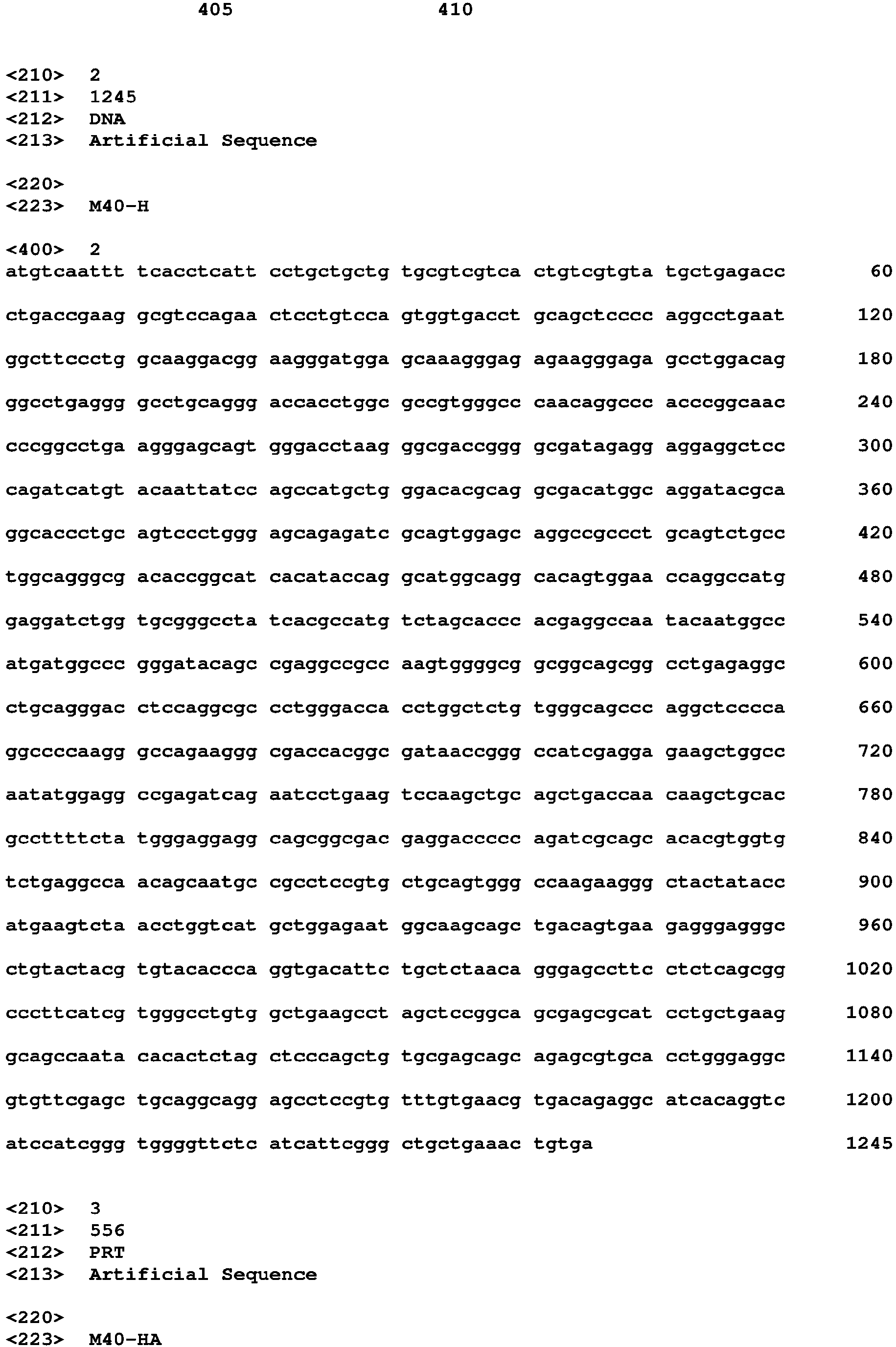


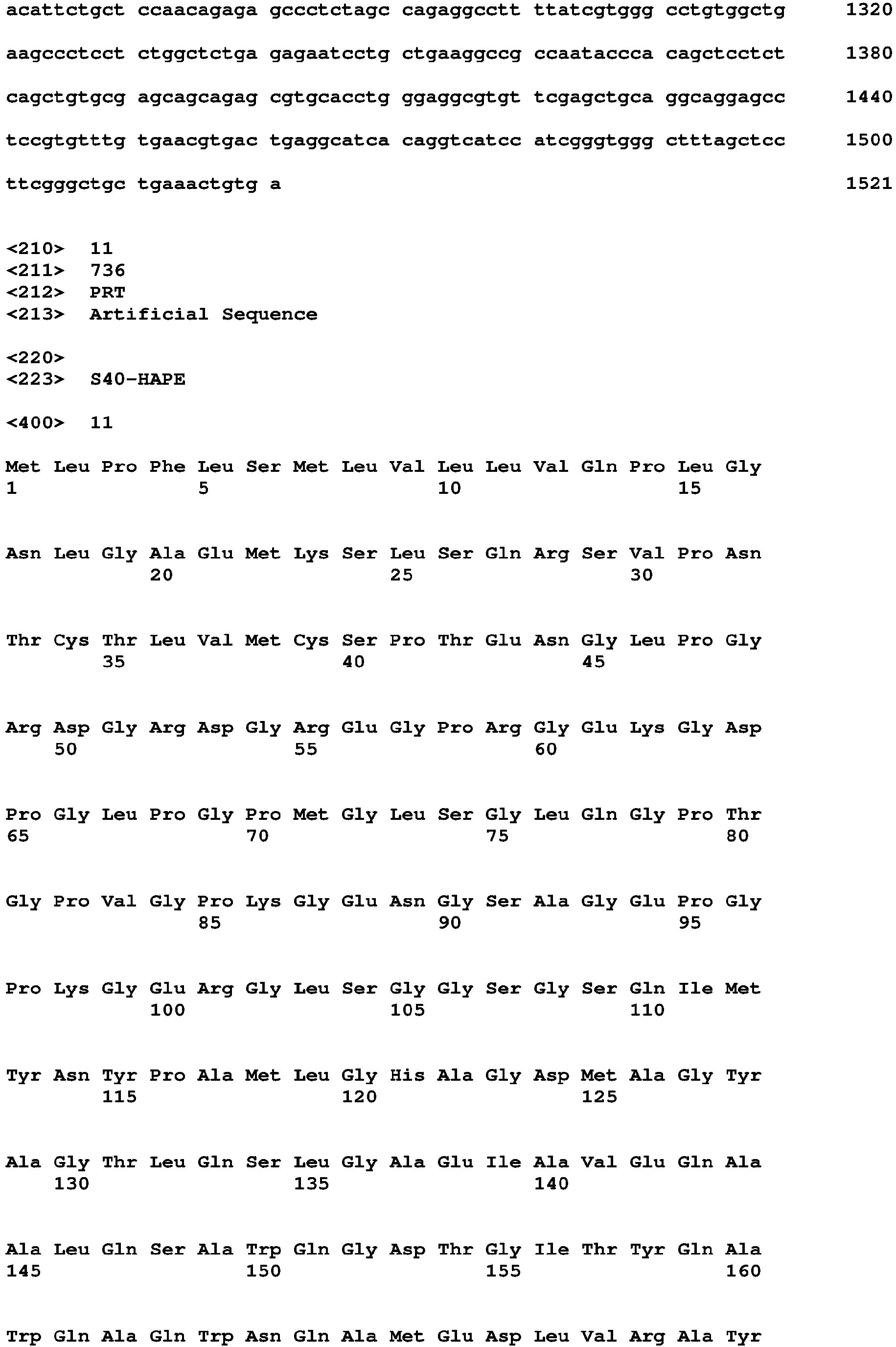

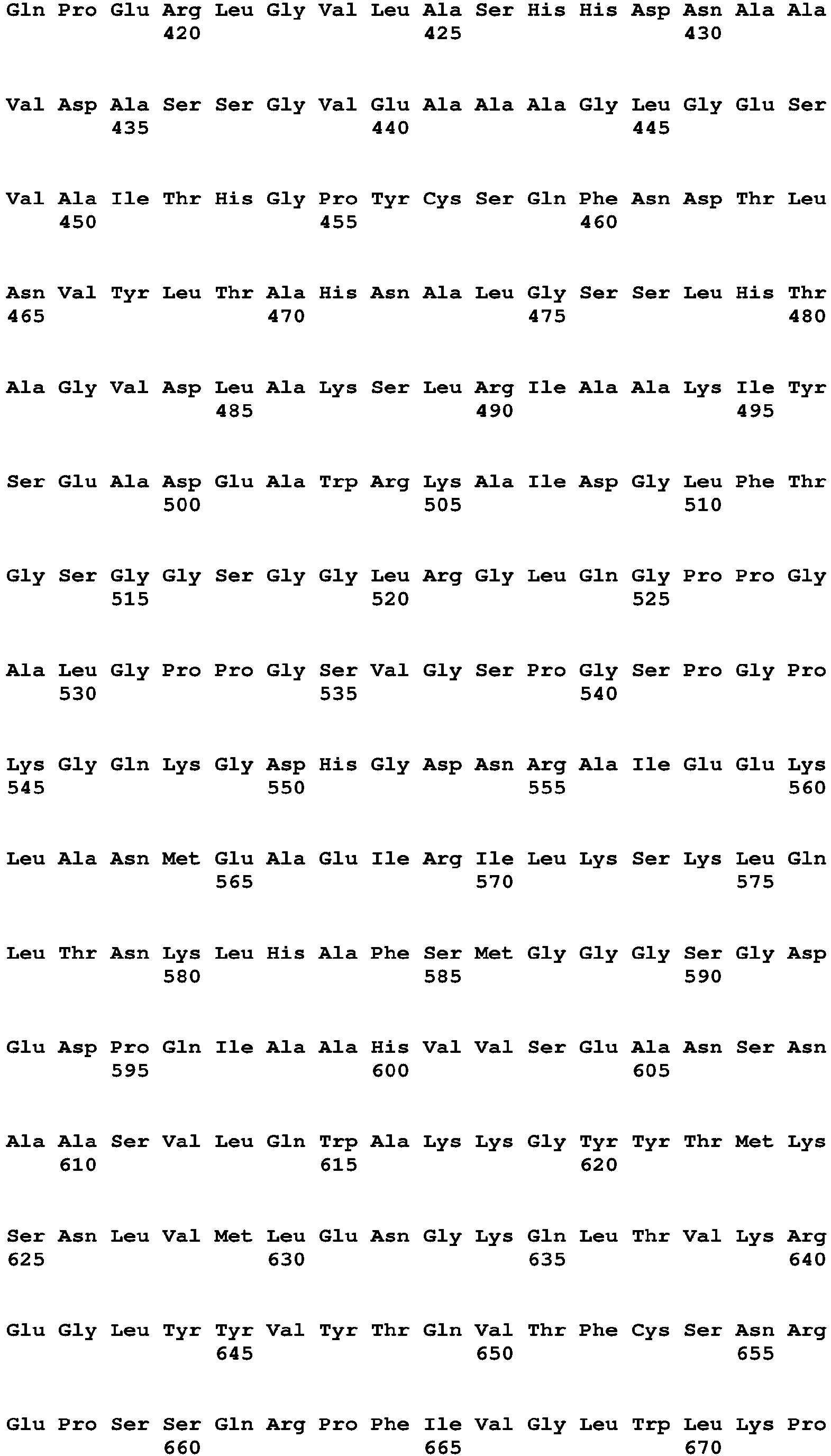


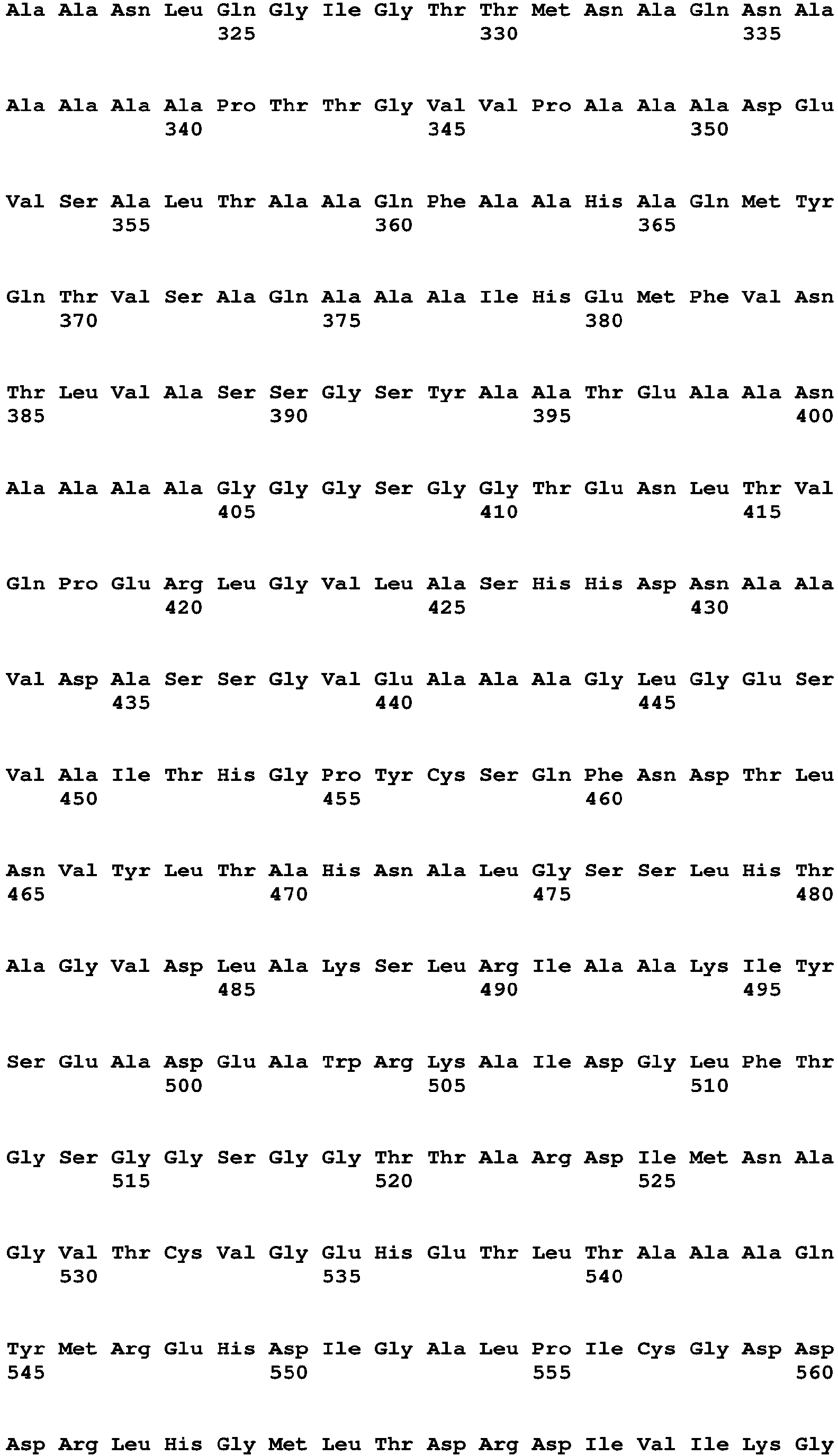


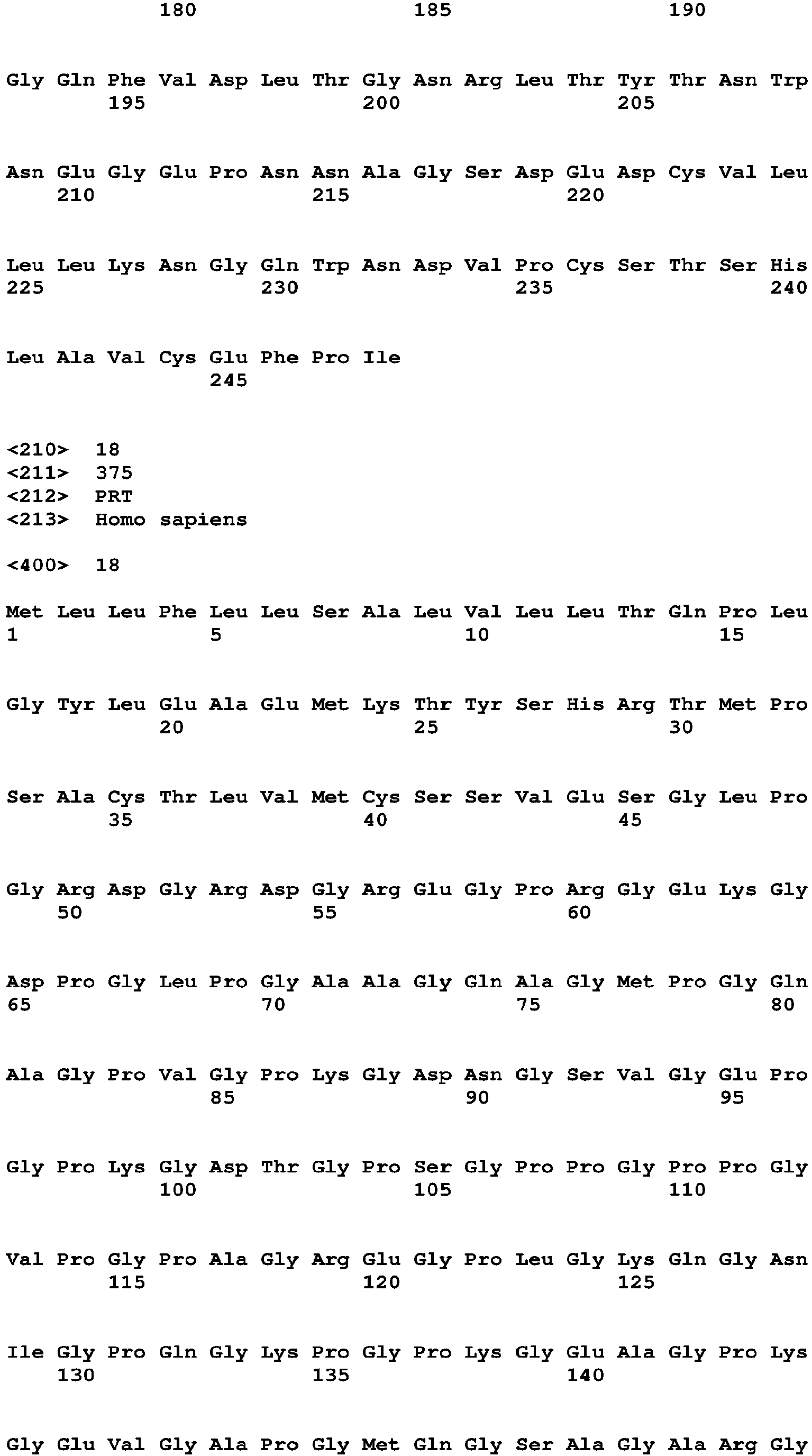


Claims (20)
- A recombinant lentiviral vector genome comprising a polynucleotide encoding a fusion polypeptide, wherein said fusion polypeptide comprises arranged from N-terminal to C-terminal ends a first recombinant polypeptide and a second polypeptide, wherein:(i) said first recombinant polypeptide comprises a multimerization scaffold which comprises at least one collectin or a fragment thereof suitable to enable self-assembly of multimers of the first polypeptide, fused with at least one antigenic polypeptide ;(ii) said second polypeptide comprises a CD40L ectodomain or a receptor binding fragment thereof, in particular the CD40L ectodomain of the human CD40L, preferably the CD40L ectodomain of SEQ ID No. 19.
- The recombinant lentiviral vector genome according to claim 1, wherein said collectin or fragment thereof comprises arranged from N-terminal to C-terminal ends:- at least one crosslinking region of a collectin;- at least one collagen-like region of a collectin; and- at least one neck region of a collectin.
- The recombinant lentiviral vector genome according to claim 2, wherein the polynucleotide encoding the said at least one antigenic polypeptide is fused in-frame within the nucleotide sequence of the collagen-like region of said collectin.
- The recombinant lentiviral vector genome according to any one of claims 1 to 3, wherein said collectin or fragment thereof is a carbohydrate recognition domain (CRD)-truncated form of collectin, wherein said at least one antigenic polypeptide is inserted within the collagen-like region of the collectin.
- The recombinant lentiviral vector genome according to any one of claims 1 to 4, wherein said fusion polypeptide further comprises a polypeptide comprising a chemokine, in particular selected from CCL20, a pro-inflammatory Th1-related chemokine such as CXCL9, CXCL10, CCL3, CCL4 and/or CCL5, and/or a Th17-promoting chemokine such as CXCL20, or a receptor binding domain thereof, preferably wherein said chemokine is the CCL20 domain of SEQ ID No. 20, in particular wherein said chemokine or fragment thereof is inserted within the collagen-like domain of said collectin.
- The recombinant lentiviral vector genome according to any one of claims 1 to 5, wherein said collectin is selected from mannan-binding lectin (MBL), surfactant protein D (SP-D), surfactant protein A (SP-A), collectin liver 1 (CL-L1), collectin placenta 1 (CL-P1), conglutinin collectin of 43 kDa (CL-43), collectin of 46 kDa (CL-46),and collectin kidney 1 (CL-K1), preferably wherein said collectin is a human collectin selected from MBL (UniProtKB - P11226), SP-D (UniProtKB - P35247), CL-L1 (UniProtKB - Q9Y6Z7), SP-A1 (UniProtKB - Q8IWL2), SP-A2 (UniProtKB - Q8IWL1), CL-P1 (UniProtKB - Q5KU26) and CL-K1 (UniProtKB - Q9BWP8).
- The recombinant lentiviral vector genome according to any one of claims 1 to 6, wherein said antigenic polypeptide is a mono-antigenic polypeptide comprising one antigen or immunogenic fragment thereof, or is a poly-antigenic polypeptide comprising at least two antigens or immunogenic fragments thereof.
- The recombinant lentiviral vector genome according to any one of claims 1 to 7, wherein the at least one antigen or immunogenic fragment thereof is selected from a bacterial, parasite or viral pathogen, in particular from Mycobacterium tuberculosis, an influenza virus or a coronavirus such as SARS-CoV-2 or is a tumoral antigen or immunogenic fragment thereof.
- The recombinant lentiviral vector genome according to any one of claims 1 to 8, wherein said antigenic polypeptide comprises one or more Mycobacterium tuberculosis (Mtb) antigens selected from EsxA, EspC, EsxH, PE19, Hypoxic response protein 1 (Hrp1) and Resuscitation promoting factor D (RpfD), or an immunogenic fragment thereof, in particular one of the following Mtb antigenic combinations:(a) EsxH;(b) EsxH and EsxA;(c) EsxH, EsxA and PE19;(d) EsxH, EsxA, PE19 and EspC;(e) EsxA, PE19, EspC, HRp1 and RpfD;or an immunogenic fragment thereof.
- The recombinant lentiviral vector genome, wherein said genome is obtained from the pTRIP vector plasmid of nucleotide sequence SEQ ID No. 21, wherein the polynucleotide encoding the fusion polypeptide has been cloned under control of a promoter functional in mammalian cells, in particular the CMV promoter, the human beta-2 microglobulin promoter, the composite BCUAG promoter of SEQ ID No. 22 and wherein the vector optionally comprises post-transcriptional regulatory element of the woodchuck hepatitis virus (WPRE).
- A DNA plasmid comprising the recombinant vector genome according to any one of claims 1 to 10, in particular wherein said genome is inserted within the pTRIP vector plasmid of nucleotide sequence SEQ ID No.21.
- A recombinant lentiviral vector particle which comprises the recombinant lentiviral vector genome according to any one of claims 1 to 10.
- The recombinant lentiviral vector particle according to claim 12 which is a recombinant integration-deficient lentiviral vector particle, in particular the recombinant integration-deficient lentiviral vector is a HIV-1 based vector and is integrase deficient as a result of a mutation of the integrase gene encoded in the genome of the lentivirus in such a way that the integrase is not expressed or not functionally expressed, in particular the mutation in the integrase gene leads to the expression of an integrase substituted on its amino acid residue 64, in particular the substitution is D64V in the catalytic domain of the HIV-1 integrase encoded by Pol.
- The recombinant lentiviral vector particle according to any one of claim 12 or 13, wherein said recombinant lentiviral vector genome is the genome of a replication-incompetent pseudotyped lentiviral vector, in particular a replication-incompetent pseudotyped HIV-1 lentiviral vector, in particular wherein the vector is pseudotyped with the glycoprotein G from a Vesicular Stomatitis Virus (V-SVG) of Indiana or of New-Jersey serotype.
- A host cell, preferably a mammalian host cell, transfected with a DNA plasmid according to claim 11, in particular wherein said host cell is a HEK-293T cell line or a K562 cell line.
- A pharmaceutical composition, in particular a vaccine composition, suitable for administration to a mammalian host, comprising a recombinant lentiviral vector particle of any one of claims 12 to 14 together with one or more pharmaceutically acceptable excipient(s) suitable for administration to a host in need thereof, in particular a human host.
- The pharmaceutical composition of claim 16, for use in the elicitation of a protective, preferentially prophylactic, immune response by the elicitation of antibodies directed against the antigenic polypeptide or immunogenic fragments thereof, and/or cellular and/or humoral response in a host in need thereof, in particular a human host.
- The pharmaceutical composition of claim 16 or 17, wherein the immune response involves the induction of MHC-II restricted presentation of the antigenic polypeptide or immunogenic fragments thereof, by an antigen-presenting cell, in particular a dendritic cell, and the induction of a CD4-mediated cellular immune response.
- The pharmaceutical composition of any one of claims 16 to 18, for preventing and/or treating an infection by a pathogen in a mammalian host in need thereof, in particular a human host.
- A method for the preparation of recombinant lentiviral vector particles suitable for the preparation of a pharmaceutical composition, in particular a vaccine, comprising the following steps:a) transfecting the recombinant lentiviral transfer vector carrying the lentiviral vector genome according to any one of claims 1 to 10, or the DNA plasmid according to claim 11 in a host cell, for example a HEK-293T cell line or a K562 cell line;b) co-transfecting the cell of step a) with: (i) a plasmid vector encoding envelope proteins and with a plasmid vector encoding the lentiviral GAG and POL or mutated POL protein as packaging construct; and (ii) a plasmid encoding VSV-G Indiana or New Jersey envelope,c) culturing the host cell under conditions suitable for the production of recombinant lentiviral vector particles expressing the antigenic polypeptide, or an immunogenic fragment thereof;d) recovering the recombinant lentiviral particles expressing the antigenic polypeptide, or an immunogenic fragment thereof.
Priority Applications (9)
| Application Number | Priority Date | Filing Date | Title |
|---|---|---|---|
| EP20306235.1A EP3984548A1 (en) | 2020-10-16 | 2020-10-16 | Generation of lentiviral vectors enabling routing antigens to mhc-ii pathway and inducing cd4+ and cd8+ t-cell responses immune response in a host |
| CN202180085160.9A CN116782928A (en) | 2020-10-16 | 2021-10-15 | Lentiviral vectors capable of delivering antigens to the MHC-II pathway and inducing CD4+ and CD8+ T cell responses in the host |
| AU2021360241A AU2021360241A1 (en) | 2020-10-16 | 2021-10-15 | Lentiviral vectors enabling routing antigens to mhc-ii pathway and inducing cd4+ and cd8+ t-cell responses in a host |
| JP2023523523A JP2023548786A (en) | 2020-10-16 | 2021-10-15 | Lentiviral vectors capable of delivering antigens to the MHC-II pathway and inducing CD4+ and CD8+ T cell responses in the host |
| US18/030,102 US20230364216A1 (en) | 2020-10-16 | 2021-10-15 | Lentiviral vectors enabling routing antigens to mhc-ii pathway and inducing cd4+ and cd8+ t-cell responses in a host |
| CA3195830A CA3195830A1 (en) | 2020-10-16 | 2021-10-15 | Lentiviral vectors enabling routing antigens to mhc-ii pathway and inducing cd4+ and cd8+ t-cell responses in a host |
| PCT/EP2021/078715 WO2022079303A1 (en) | 2020-10-16 | 2021-10-15 | Lentiviral vectors enabling routing antigens to mhc-ii pathway and inducing cd4+ and cd8+ t-cell responses in a host |
| EP21805380.9A EP4228689A1 (en) | 2020-10-16 | 2021-10-15 | Lentiviral vectors enabling routing antigens to mhc-ii pathway and inducing cd4+ and cd8+ t-cell responses in a host |
| KR1020237016375A KR20230087583A (en) | 2020-10-16 | 2021-10-15 | A new generation of lentiviral vectors that deliver antigen to the MHC-II pathway and induce CD4+ and CD8+ T-cell responses in the host |
Applications Claiming Priority (1)
| Application Number | Priority Date | Filing Date | Title |
|---|---|---|---|
| EP20306235.1A EP3984548A1 (en) | 2020-10-16 | 2020-10-16 | Generation of lentiviral vectors enabling routing antigens to mhc-ii pathway and inducing cd4+ and cd8+ t-cell responses immune response in a host |
Publications (1)
| Publication Number | Publication Date |
|---|---|
| EP3984548A1 true EP3984548A1 (en) | 2022-04-20 |
Family
ID=73554341
Family Applications (2)
| Application Number | Title | Priority Date | Filing Date |
|---|---|---|---|
| EP20306235.1A Withdrawn EP3984548A1 (en) | 2020-10-16 | 2020-10-16 | Generation of lentiviral vectors enabling routing antigens to mhc-ii pathway and inducing cd4+ and cd8+ t-cell responses immune response in a host |
| EP21805380.9A Pending EP4228689A1 (en) | 2020-10-16 | 2021-10-15 | Lentiviral vectors enabling routing antigens to mhc-ii pathway and inducing cd4+ and cd8+ t-cell responses in a host |
Family Applications After (1)
| Application Number | Title | Priority Date | Filing Date |
|---|---|---|---|
| EP21805380.9A Pending EP4228689A1 (en) | 2020-10-16 | 2021-10-15 | Lentiviral vectors enabling routing antigens to mhc-ii pathway and inducing cd4+ and cd8+ t-cell responses in a host |
Country Status (8)
| Country | Link |
|---|---|
| US (1) | US20230364216A1 (en) |
| EP (2) | EP3984548A1 (en) |
| JP (1) | JP2023548786A (en) |
| KR (1) | KR20230087583A (en) |
| CN (1) | CN116782928A (en) |
| AU (1) | AU2021360241A1 (en) |
| CA (1) | CA3195830A1 (en) |
| WO (1) | WO2022079303A1 (en) |
Cited By (2)
| Publication number | Priority date | Publication date | Assignee | Title |
|---|---|---|---|---|
| WO2023215828A1 (en) * | 2022-05-04 | 2023-11-09 | Tonix Pharmacueticlals Holding Corp. | Nanoparticles for inducing a th1 t cell immune response |
| WO2025194221A1 (en) * | 2024-03-22 | 2025-09-25 | The University Of Sydney | A pulmonary vaccine to prevent tuberculosis |
Families Citing this family (2)
| Publication number | Priority date | Publication date | Assignee | Title |
|---|---|---|---|---|
| EP4680753A2 (en) * | 2023-03-17 | 2026-01-21 | Kelonia Therapeutics, Inc. | Dual targeted gene therapy |
| CN118240731A (en) * | 2024-04-01 | 2024-06-25 | 华中农业大学 | A Mycobacterium tuberculosis Rv1088-Rv1089 double gene deletion strain and its preparation and application |
Citations (5)
| Publication number | Priority date | Publication date | Assignee | Title |
|---|---|---|---|---|
| WO1999055892A1 (en) | 1998-04-24 | 1999-11-04 | Institut Pasteur | Use of triplex structure dna sequences for transferring nucleotide sequences |
| WO2001027304A2 (en) | 1999-10-12 | 2001-04-19 | Institut Pasteur | Lentiviral triplex dna, and vectors and recombinant cells containing lentiviral triplex dna |
| WO2001027300A1 (en) | 1999-10-11 | 2001-04-19 | Institut Pasteur | Lentiviral vectors for the preparation of immunotherapeutical compositions |
| WO2006010834A1 (en) | 2004-06-25 | 2006-02-02 | Centre National De La Recherche Scientifique | Non-integrative and non-replicative lentivirus, preparation and uses thereof |
| US20160122412A1 (en) * | 2013-03-15 | 2016-05-05 | Geoffrey Stone | Composition comprised of antigen linked to a tnf superfamily ligand |
Family Cites Families (1)
| Publication number | Priority date | Publication date | Assignee | Title |
|---|---|---|---|---|
| WO2016120489A2 (en) * | 2015-02-01 | 2016-08-04 | Theravectys | Lentiviral vectors for expression of mycobacterium tuberculosis antigens |
-
2020
- 2020-10-16 EP EP20306235.1A patent/EP3984548A1/en not_active Withdrawn
-
2021
- 2021-10-15 CA CA3195830A patent/CA3195830A1/en active Pending
- 2021-10-15 CN CN202180085160.9A patent/CN116782928A/en active Pending
- 2021-10-15 AU AU2021360241A patent/AU2021360241A1/en active Pending
- 2021-10-15 JP JP2023523523A patent/JP2023548786A/en active Pending
- 2021-10-15 US US18/030,102 patent/US20230364216A1/en active Pending
- 2021-10-15 WO PCT/EP2021/078715 patent/WO2022079303A1/en not_active Ceased
- 2021-10-15 KR KR1020237016375A patent/KR20230087583A/en active Pending
- 2021-10-15 EP EP21805380.9A patent/EP4228689A1/en active Pending
Patent Citations (5)
| Publication number | Priority date | Publication date | Assignee | Title |
|---|---|---|---|---|
| WO1999055892A1 (en) | 1998-04-24 | 1999-11-04 | Institut Pasteur | Use of triplex structure dna sequences for transferring nucleotide sequences |
| WO2001027300A1 (en) | 1999-10-11 | 2001-04-19 | Institut Pasteur | Lentiviral vectors for the preparation of immunotherapeutical compositions |
| WO2001027304A2 (en) | 1999-10-12 | 2001-04-19 | Institut Pasteur | Lentiviral triplex dna, and vectors and recombinant cells containing lentiviral triplex dna |
| WO2006010834A1 (en) | 2004-06-25 | 2006-02-02 | Centre National De La Recherche Scientifique | Non-integrative and non-replicative lentivirus, preparation and uses thereof |
| US20160122412A1 (en) * | 2013-03-15 | 2016-05-05 | Geoffrey Stone | Composition comprised of antigen linked to a tnf superfamily ligand |
Non-Patent Citations (64)
| Title |
|---|
| "Genbank", Database accession no. J02428 |
| "UniProtKB", Database accession no. P29965 |
| ABDALLAH, AMVERBOOM, TWEERDENBURG, EMGEY VAN PITTIUS, NCMAHASHA, PWJIMENEZ, C ET AL.: "PPE and PE_PGRS proteins of Mycobacterium marinum are transported via the type VII secretion system ESX-5", MOLECULAR MICROBIOLOGY, vol. 73, 2009, pages 329 - 340 |
| ANDERSON, KGMAYER-BARBER, KSUNG, HBEURA, LJAMES, BRTAYLOR, JJ ET AL.: "Intravascular staining for discrimination of vascular and tissue leukocytes", NAT PROTOC, vol. 9, 2014, pages 209 - 222 |
| BANU, SHONORE, NSAINT-JOANIS, BPHILPOTT, DPREVOST, MCCOLE, ST: "Are the PE-PGRS proteins of Mycobacterium tuberculosis variable surface antigens?", MOL MICROBIOL, vol. 44, 2002, pages 9 - 19 |
| BILLESKOV, RVINGSBO-LUNDBERG, CANDERSEN, PDIETRICH, J: "Induction of CD8 T cells against a novel epitope in TB10.4: correlation with mycobacterial virulence and the presence of a functional region of difference-1", J IMMUNOL, vol. 179, 2007, pages 3973 - 3981 |
| BOSHART, MWEBER, FJAHN, GDORSCH-HASLER, KFLECKENSTEIN, BSCHAFFNER, W: "A very strong enhancer is located upstream of an immediate early gene of human cytomegalovirus", CELL, vol. 41, 1985, pages 521 - 530, XP023913263, DOI: 10.1016/S0092-8674(85)80025-8 |
| BOTTAI, DDI LUCA, MMAJLESSI, LFRIGUI, WSIMEONE, RSAYES, F ET AL.: "Disruption of the ESX-5 system of Mycobacterium tuberculosis causes loss of PPE protein secretion, reduction of cell wall integrity and strong attenuation", MOL MICROBIOL, vol. 83, 2012, pages 1195 - 1209 |
| CHATTERJEE, BSMED-SORENSEN, ACOHN, LCHALOUNI, CVANDLEN, RLEE, BC ET AL.: "Internalization and endosomal degradation of receptor-bound antigens regulate the efficiency of cross presentation by human dendritic cells", BLOOD, vol. 120, 2012, pages 2011 - 2020 |
| COCKRELL A.S. ET AL., MOL. BIOTECHNOL., vol. 36, 2007, pages 184 - 204 |
| COCKRELL A;S. ET AL., MOLECULAR THERAPY, vol. 14, 2006, pages 276 - 284 |
| COLE, STBROSCH, RPARKHILL, JGAMIER, TCHURCHER, CHARRIS, D ET AL.: "Deciphering the biology of Mycobacterium tuberculosis from the complete genome sequence", NATURE, vol. 393, 1998, pages 537 - 544, XP055642843, DOI: 10.1038/31159 |
| COMMANDEUR, SVAN MEIJGAARDEN, KELIN, MYFRANKEN, KLFRIGGEN, AHDRIJFHOUT, JW ET AL.: "Identification of human T-cell responses to Mycobacterium tuberculosis resuscitation-promoting factors in long-term latently infected individuals", CLIN VACCINE IMMUNOL, vol. 18, 2011, pages 676 - 683 |
| CUNNINGHAM, AFSPREADBURY, CL: "Mycobacterial stationary phase induced by low oxygen tension: cell wall thickening and localization of the 16-kilodalton alpha-crystallin homolog", J BACTERIOL, vol. 180, 1998, pages 801 - 808, XP002217752 |
| DI NUNZIO, FFELIX, TARHEL, NJNISOLE, SCHARNEAU, PBEIGNON, AS: "HIV-derived vectors for therapy and vaccination against HIV", VACCINE, vol. 30, 2012, pages 2499 - 2509, XP008165763, DOI: 10.1016/j.vaccine.2012.01.089 |
| DONG, HSTANEK, OSALVADOR, FRLANGER, UMORILLON, EUNG, C ET AL.: "Induction of protective immunity against Mycobacterium tuberculosis by delivery of ESX antigens into airway dendritic cells", MUCOSAL IMMUNOL, vol. 6, 2013, pages 522 - 534, XP055682177, DOI: 10.1038/mi.2012.92 |
| FISHBEIN, SVAN WYK, NWARREN, RMSAMPSON, SL: "Phylogeny to function: PE/PPE protein evolution and impact on Mycobacterium tuberculosis pathogenicity", MOL MICROBIOL, vol. 96, 2015, pages 901 - 916 |
| GEY VAN PITTIUS, NCSAMPSON, SLLEE, HKIM, YVAN HELDEN, PDWARREN, RM: "Evolution and expansion of the Mycobacterium tuberculosis PE and PPE multigene families and their association with the duplication of the ESAT-6 (esx) gene cluster regions", BMC EVOL BIOL, vol. 6, 2006, pages 95, XP021022074, DOI: 10.1186/1471-2148-6-95 |
| GORNATI, LZANONI, IGRANUCCI, F: "Dendritic Cells in the Cross Hair for the Generation of Tailored Vaccines", FRONT IMMUNOL, vol. 9, 2018, pages 1484 |
| GROSCHEL, MISAYES, FSHIN, SJFRIGUI, WPAWLIK, AORGEUR, M ET AL.: "Recombinant BCG Expressing ESX-1 of Mycobacterium marinum Combines Low Virulence with Cytosolic Immune Signaling and Improved TB Protection", CELL REP, vol. 18, 2017, pages 2752 - 2765, XP055408012, DOI: 10.1016/j.celrep.2017.02.057 |
| GROSCHEL, MISAYES, FSIMEONE, RMAJLESSI, LBROSCH, R: "ESX secretion systems: mycobacterial evolution to counter host immunity", NAT REV MICROBIOL, vol. 14, 2016, pages 677 - 691 |
| GUPTA SACHIN ET AL: "A multi-trimeric fusion of CD40L and gp100 tumor antigen activates dendritic cells and enhances survival in a B16-F10 melanoma DNA vaccine model", VACCINE, vol. 33, no. 38, 1 August 2015 (2015-08-01), pages 4798 - 4806, XP029269805, ISSN: 0264-410X, DOI: 10.1016/J.VACCINE.2015.07.081 * |
| GUPTA SACHIN ET AL: "Vaccination with a fusion protein that introduces HIV-1 gag antigen into a multitrimer CD40L construct results in enhanced CD8+ T cell responses and protection from viral challenge by vaccinia-gag", JOURNAL OF VIROLOGY (ONLINE), AMERICAN SOCIETY FOR MICROBIOLOGY, US, vol. 88, no. 3, 1 February 2014 (2014-02-01), pages 1492 - 1501, XP009179457, ISSN: 1098-5514, DOI: 10.1128/JVI.02229-13 * |
| GUPTA, GSUROLIA, A: "Collectins: sentinels ofinnate immunity", BIOESSAYS, vol. 29, no. 5, 2007, pages 452 - 464 |
| GUPTA, STERMINI, JMRAFFA, FNWILLIAMS, CAKORNBLUTH, RSSTONE, GW: "Vaccination with a fusion protein that introduces HIV-1 gag antigen into a multitrimer CD40L construct results in enhanced CD8+ T cell responses and protection from viral challenge by vaccinia-gag", J VIROL, vol. 88, 2014, pages 1492 - 1501, XP009179457, DOI: 10.1128/JVI.02229-13 |
| GUPTA, STERMINI, JMRIVAS, YOTERO, MRAFFA, FNBHAT, V ET AL.: "A multi-trimeric fusion of CD40L and gp100 tumor antigen activates dendritic cells and enhances survival in a B16-F10 melanoma DNA vaccine model", VACCINE, vol. 33, 2015, pages 4798 - 4806, XP029269805, DOI: 10.1016/j.vaccine.2015.07.081 |
| GUSSOW, DREIN, RGINJAAR, IHOCHSTENBACH, FSEEMANN, GKOTTMAN, A ET AL.: "The human beta 2-microglobulin gene. Primary structure and definition of the transcriptional unit", J IMMUNOL, vol. 139, 1987, pages 3132 - 3138, XP002214372 |
| HERVAS-STUBBS, SMAJLESSI, LSIMSOVA, MMOROVA, JROJAS, MJNOUZE, C ET AL.: "High frequency of CD4+ T cells specific for the TB10.4 protein correlates with protection against Mycobacterium tuberculosis infection", INFECT IMMUN, vol. 74, 2006, pages 3396 - 3407 |
| HU B ET AL: "Immunization delivered by lentiviral vectors for cancer and infectious diseases", IMMUNOLOGICAL REVIEWS, WILEY-BLACKWELL PUBLISHING, INC, US; BIOSCIENCES INFORMATION SERVICE, PHILADELPHIA, PA, US, vol. 239, no. 1, 1 January 2011 (2011-01-01), pages 45 - 61, XP002726300, ISSN: 0105-2896, [retrieved on 20101228], DOI: 10.1111/J.1600-065X.2010.00967.X * |
| HU, BTAI, AWANG, P: "Immunization delivered by lentiviral vectors for cancer and infectious diseases", IMMUNOL REV, vol. 239, 2011, pages 45 - 61, XP002726300, DOI: 10.1111/j.1600-065X.2010.00967.x |
| IGLESIAS, MCFRENKIEL, MPMOLLIER, KSOUQUE, PDESPRES, PCHARNEAU, P: "A single immunization with a minute dose of a lentiviral vector-based vaccine is highly effective at eliciting protective humoral immunity against West Nile virus", J GENE MED, vol. 8, 2006, pages 265 - 274, XP002443147, DOI: 10.1002/jgm.837 |
| IKEDIA Y. ET AL., NATURE BIOTECHNOL., vol. 21, 2003, pages 569 - 572 |
| JONES S. ET AL., HUMAN GENE THERAPY, vol. 20, June 2009 (2009-06-01), pages 630 - 640 |
| JONES, GWHILL, DGJONES, SA: "Understanding Immune Cells in Tertiary Lymphoid Organ Development: It Is All Starting to Come Together", FRONT IMMUNOL, vol. 7, 2016, pages 401, XP055639886, DOI: 10.3389/fimmu.2016.00401 |
| KAFRI T. ET AL., JOURNAL OF VIROL, vol. 73, 1999, pages 576 - 584 |
| KU, MWAUTHIE, PSOUQUE, PBOURGINE, MROMANO, MCHARNEAU, P ET AL., LENTIVIRAL VECTOR-INDUCED HIGH-QUALITY MEMORY T CELLS VIA PROGRAMMED ANTIGEN EXPRESSION IN DENDRITIC CELLS |
| LAMAN, JDCLAASSEN, ENOELLE, RJ: "Functions of CD40 and Its Ligand, gp39 (CD40L", CRIT REV IMMUNOL, vol. 37, 2017, pages 371 - 420 |
| LANTOMASI, RSALI, MCASCIOFERRO, APALUCCI, IZUMBO, ASOLDINI, S ET AL.: "PE_PGRS30 is required for the full virulence of Mycobacterium tuberculosis", CELL MICROBIOL, 2011 |
| LEE, AYERI, RLYONS, ABGRIMM, MCKORNER, H: "CC Chemokine Ligand 20 and Its Cognate Receptor CCR6 in Mucosal T Cell Immunology and Inflammatory Bowel Disease: Odd Couple or Axis of Evil?", FRONT IMMUNOL, vol. 4, 2013, pages 194 |
| LEWINSOHN, DALEWINSOHN, DMSCRIBA, TJ: "Polyfunctional CD4(+) T Cells As Targets for Tuberculosis Vaccination", FRONT IMMUNOL, vol. 8, 2017, pages 1262 |
| LOPEZ, JANNA, FAUTHIE, PPAWLIK, AKU, MWBLANC, C ET AL., AN OPTIMIZED POLY-ANTIGENIC LENTIVIRAL VECTOR INDUCES PROTECTIVE CD4+ T-CELL IMMUNITY AND PREDICTS A BOOSTER VACCINE AGAINST MYCOBACTERIUM TUBERCULOSIS |
| MACRI, CDUMONT, CJOHNSTON, APMINTERN, JD: "Targeting dendritic cells: a promising strategy to improve vaccine effectiveness", CLIN TRANSL IMMUNOLOGY, vol. 5, 2016, pages e66 |
| MAJLESSI, LBRODIN, PBROSCH, RROJAS, MJKHUN, HHUERRE, M ET AL.: "Influence of ESAT-6 secretion system 1 (RD1) of Mycobacterium tuberculosis on the interaction between mycobacteria and the host immune system", J IMMUNOL, vol. 174, 2005, pages 3570 - 3579, XP002429485 |
| MAJLESSI, LPRADOS-ROSALES, RCASADEVALL, ABROSCH, R: "Release of mycobacterial antigens", IMMUNOL REV, vol. 264, 2015, pages 25 - 45 |
| MAJLESSI, LROJAS, MJBRODIN, PLECLERC, C: "CD8+-T-cell responses of Mycobacterium-infected mice to a newly identified major histocompatibility complex class I-restricted epitope shared by proteins of the ESAT-6 family", INFECT IMMUN, vol. 71, 2003, pages 7173 - 7177 |
| MAYER-BARBER, KDBARBER, DL: "Innate and Adaptive Cellular Immune Responses to Mycobacterium tuberculosis Infection", COLD SPRING HARB PERSPECT MED, 2015, pages 5 |
| NIKITUSHKIN, VDDEMINA, GRKAPRELYANTS, AS: "Rpf Proteins Are the Factors of Reactivation of the Dormant Forms of Actinobacteria", BIOCHEMISTRY (MOSC, vol. 81, 2016, pages 1719 - 1734, XP036126700, DOI: 10.1134/S0006297916130095 |
| PARK F. ET AL., MOL THER, vol. 4, 2001, pages 164 - 173 |
| PRESANIS, JSKOJIMA, MSIM, RB: "Biochemistry and genetics of mannan-binding lectin (MBL", BIOCHEM SOC TRANS, vol. 31, 2003, pages 748 - 752, XP009058758, DOI: 10.1042/BST0310748 |
| PYM, ASBRODIN, PMAJLESSI, LBROSCH, RDEMANGEL, CWILLIAMS, A ET AL.: "Recombinant BCG exporting ESAT-6 confers enhanced protection against tuberculosis", NAT MED, vol. 9, 2003, pages 533 - 539, XP037115769, DOI: 10.1038/nm859 |
| ROMANO, MARYAN, EKORF, HBRUFFAERTS, NFRANKEN, CLOTTENHOFF, TH ET AL.: "Potential of Mycobacterium tuberculosis resuscitation-promoting factors as antigens in novel tuberculosis sub-unit vaccines", MICROBES INFECT, vol. 14, 2012, pages 86 - 95, XP055080935, DOI: 10.1016/j.micinf.2011.08.011 |
| ROSSER, ASTOVER, CPAREEK, MMUKAMOLOVA, GV: "Resuscitation-promoting factors are important determinants of the pathophysiology in Mycobacterium tuberculosis infection", CRIT REV MICROBIOL, vol. 43, 2017, pages 621 - 630 |
| ROUPIE, VROMANO, MZHANG, LKORF, HLIN, MYFRANKEN, KL ET AL.: "Immunogenicity of eight dormancy regulon-encoded proteins of Mycobacterium tuberculosis in DNA-vaccinated and tuberculosis-infected mice", INFECT IMMUN, vol. 75, 2007, pages 941 - 949, XP055172747, DOI: 10.1128/IAI.01137-06 |
| ROWE, HMLOPES, LIKEDA, YBAILEY, RBARDE, IZENKE, M ET AL.: "Immunization with a lentiviral vector stimulates both CD4 and CD8 T cell responses to an ovalbumin transgene", MOL THER, vol. 13, 2006, pages 310 - 319, XP005252890, DOI: 10.1016/j.ymthe.2005.08.025 |
| SAKUMA T. ET AL., BIOCHEM. J., vol. 443, 2012, pages 603 - 618 |
| SAYES, FBLANC, CATES, LSDEBOOSERE, NORGEUR, MLE CHEVALIER, F ET AL.: "Multiplexed Quantitation of Intraphagocyte Mycobacterium tuberculosis Secreted Protein Effectors", CELL REP, vol. 23, 2018, pages 1072 - 1084 |
| SAYES, FPAWLIK, AFRIGUI, WGROSCHEL, MICROMMELYNCK, SFAYOLLE, C ET AL.: "CD4+ T Cells Recognizing PE/PPE Antigens Directly or via Cross Reactivity Are Protective against Pulmonary Mycobacterium tuberculosis Infection", PLOS PATHOG, vol. 12, 2016, pages e1005770 |
| SAYES, FSUN, LDI LUCA, MSIMEONE, RDEGAIFFIER, NFIETTE, L ET AL.: "Strong immunogenicity and cross-reactivity of Mycobacterium tuberculosis ESX-5 type VII secretion: encoded PE-PPE proteins predicts vaccine potential", CELL HOST MICROBE, vol. 11, 2012, pages 352 - 363 |
| SHI, LJUNG, YJTYAGI, SGENNARO, MLNORTH, RJ: "Expression of Th1-mediated immunity in mouse lungs induces a Mycobacterium tuberculosis transcription pattern characteristic of nonreplicating persistence", PROC NATL ACAD SCI U S A, vol. 100, 2003, pages 241 - 246 |
| STANEK, OLINHARTOVA, IMAJLESSI, LLECLERC, CSEBO, P: "Complexes of streptavidin-fused antigens with biotinylated antibodies targeting receptors on dendritic cell surface: a novel tool for induction of specific T-cell immune responses", MOL BIOTECHNOL, vol. 51, no. 3, 2012, pages 221 - 232, XP035059784, DOI: 10.1007/s12033-011-9459-6 |
| TUFARIELLO, JMCHAPMAN, JRKERANTZAS, CAWONG, KWVILCHEZE, CJONES, CM ET AL.: "Separable roles for Mycobacterium tuberculosis ESX-3 effectors in iron acquisition and virulence", PROC NATL ACAD SCI U S A, vol. 113, 2016, pages E348 - 357 |
| YEREMEEV, WKONDRATIEVA, TKRUBAKOVA, EIPETROVSKAYA, SNKAZARIAN, KATELKOV, MV ET AL.: "Proteins of the Rpf family: immune cell reactivity and vaccination efficacy against tuberculosis in mice", INFECT IMMUN, vol. 71, 2003, pages 4789 - 4794, XP055080939, DOI: 10.1128/IAI.71.8.4789-4794.2003 |
| ZENNOU, VPETIT, CGUETARD, DNERHBASS, UMONTAGNIER, LCHARNEAU, P: "HIV-1 genome nuclear import is mediated by a central DNA flap", CELL, vol. 101, 2000, pages 173 - 185, XP002168292, DOI: 10.1016/S0092-8674(00)80828-4 |
| ZHU, JPAUL, WE: "Heterogeneity and plasticity of T helper cells", CELL RES, vol. 20, 2010, pages 4 - 12 |
Cited By (2)
| Publication number | Priority date | Publication date | Assignee | Title |
|---|---|---|---|---|
| WO2023215828A1 (en) * | 2022-05-04 | 2023-11-09 | Tonix Pharmacueticlals Holding Corp. | Nanoparticles for inducing a th1 t cell immune response |
| WO2025194221A1 (en) * | 2024-03-22 | 2025-09-25 | The University Of Sydney | A pulmonary vaccine to prevent tuberculosis |
Also Published As
| Publication number | Publication date |
|---|---|
| KR20230087583A (en) | 2023-06-16 |
| AU2021360241A1 (en) | 2023-06-08 |
| CA3195830A1 (en) | 2022-04-21 |
| CN116782928A (en) | 2023-09-19 |
| EP4228689A1 (en) | 2023-08-23 |
| US20230364216A1 (en) | 2023-11-16 |
| AU2021360241A9 (en) | 2024-05-23 |
| JP2023548786A (en) | 2023-11-21 |
| WO2022079303A1 (en) | 2022-04-21 |
Similar Documents
| Publication | Publication Date | Title |
|---|---|---|
| US20230364216A1 (en) | Lentiviral vectors enabling routing antigens to mhc-ii pathway and inducing cd4+ and cd8+ t-cell responses in a host | |
| CN1840204B (en) | Lentiviral vectors for use in the preparation of immunotherapeutic compositions | |
| AU2002303934B2 (en) | Molecular clones with mutated HIV gag/pol, SIV gag and SIV env genes | |
| JP2016520316A (en) | Lentiviral vectors containing MHC class I, MHC class II or β2 microglobulin upstream promoter sequences | |
| AU2002303934A1 (en) | Molecular clones with mutated HIV gag/pol, SIV gag and SIV env genes | |
| JP5938143B2 (en) | Lentiviral vectors containing MHC class I promoters | |
| EP2116605B1 (en) | Plasmid having three complete transcriptional units and immunogenic compositions for inducing an immune response to HIV | |
| EP1246913B1 (en) | Molecular clones with mutated hiv gag/pol, siv gag and siv env genes | |
| WO1999043841A1 (en) | Self-replicating vector for dna immunization against hiv | |
| US20250319173A1 (en) | Lentiviral vectors targeting antigens to mhc-ii pathway and inducing protective cd8+ and cd4+ t-cell immunity in a host | |
| HK1211837B (en) | Lentiviral vectors containing an mhc class i promoter | |
| WO2005103302A2 (en) | Mutant viral nucleic acids and vaccine containing same |
Legal Events
| Date | Code | Title | Description |
|---|---|---|---|
| PUAI | Public reference made under article 153(3) epc to a published international application that has entered the european phase |
Free format text: ORIGINAL CODE: 0009012 |
|
| STAA | Information on the status of an ep patent application or granted ep patent |
Free format text: STATUS: THE APPLICATION HAS BEEN PUBLISHED |
|
| AK | Designated contracting states |
Kind code of ref document: A1 Designated state(s): AL AT BE BG CH CY CZ DE DK EE ES FI FR GB GR HR HU IE IS IT LI LT LU LV MC MK MT NL NO PL PT RO RS SE SI SK SM TR |
|
| STAA | Information on the status of an ep patent application or granted ep patent |
Free format text: STATUS: THE APPLICATION IS DEEMED TO BE WITHDRAWN |
|
| 18D | Application deemed to be withdrawn |
Effective date: 20221021 |