EP3982278A1 - Hardware blockchain acceleration - Google Patents
Hardware blockchain acceleration Download PDFInfo
- Publication number
- EP3982278A1 EP3982278A1 EP21210919.3A EP21210919A EP3982278A1 EP 3982278 A1 EP3982278 A1 EP 3982278A1 EP 21210919 A EP21210919 A EP 21210919A EP 3982278 A1 EP3982278 A1 EP 3982278A1
- Authority
- EP
- European Patent Office
- Prior art keywords
- hsm
- security
- api
- request
- hardware
- Prior art date
- Legal status (The legal status is an assumption and is not a legal conclusion. Google has not performed a legal analysis and makes no representation as to the accuracy of the status listed.)
- Granted
Links
Images






Classifications
-
- H—ELECTRICITY
- H04—ELECTRIC COMMUNICATION TECHNIQUE
- H04L—TRANSMISSION OF DIGITAL INFORMATION, e.g. TELEGRAPHIC COMMUNICATION
- H04L9/00—Cryptographic mechanisms or cryptographic arrangements for secret or secure communications; Network security protocols
- H04L9/30—Public key, i.e. encryption algorithm being computationally infeasible to invert or user's encryption keys not requiring secrecy
-
- G—PHYSICS
- G06—COMPUTING OR CALCULATING; COUNTING
- G06F—ELECTRIC DIGITAL DATA PROCESSING
- G06F21/00—Security arrangements for protecting computers, components thereof, programs or data against unauthorised activity
- G06F21/10—Protecting distributed programs or content, e.g. vending or licensing of copyrighted material ; Digital rights management [DRM]
-
- G—PHYSICS
- G06—COMPUTING OR CALCULATING; COUNTING
- G06F—ELECTRIC DIGITAL DATA PROCESSING
- G06F21/00—Security arrangements for protecting computers, components thereof, programs or data against unauthorised activity
- G06F21/70—Protecting specific internal or peripheral components, in which the protection of a component leads to protection of the entire computer
- G06F21/71—Protecting specific internal or peripheral components, in which the protection of a component leads to protection of the entire computer to assure secure computing or processing of information
- G06F21/72—Protecting specific internal or peripheral components, in which the protection of a component leads to protection of the entire computer to assure secure computing or processing of information in cryptographic circuits
-
- G—PHYSICS
- G06—COMPUTING OR CALCULATING; COUNTING
- G06F—ELECTRIC DIGITAL DATA PROCESSING
- G06F9/00—Arrangements for program control, e.g. control units
- G06F9/06—Arrangements for program control, e.g. control units using stored programs, i.e. using an internal store of processing equipment to receive or retain programs
- G06F9/46—Multiprogramming arrangements
- G06F9/54—Interprogram communication
-
- H—ELECTRICITY
- H04—ELECTRIC COMMUNICATION TECHNIQUE
- H04L—TRANSMISSION OF DIGITAL INFORMATION, e.g. TELEGRAPHIC COMMUNICATION
- H04L63/00—Network architectures or network communication protocols for network security
- H04L63/04—Network architectures or network communication protocols for network security for providing a confidential data exchange among entities communicating through data packet networks
-
- H—ELECTRICITY
- H04—ELECTRIC COMMUNICATION TECHNIQUE
- H04L—TRANSMISSION OF DIGITAL INFORMATION, e.g. TELEGRAPHIC COMMUNICATION
- H04L63/00—Network architectures or network communication protocols for network security
- H04L63/08—Network architectures or network communication protocols for network security for authentication of entities
-
- H—ELECTRICITY
- H04—ELECTRIC COMMUNICATION TECHNIQUE
- H04L—TRANSMISSION OF DIGITAL INFORMATION, e.g. TELEGRAPHIC COMMUNICATION
- H04L63/00—Network architectures or network communication protocols for network security
- H04L63/08—Network architectures or network communication protocols for network security for authentication of entities
- H04L63/0853—Network architectures or network communication protocols for network security for authentication of entities using an additional device, e.g. smartcard, SIM or a different communication terminal
-
- H—ELECTRICITY
- H04—ELECTRIC COMMUNICATION TECHNIQUE
- H04L—TRANSMISSION OF DIGITAL INFORMATION, e.g. TELEGRAPHIC COMMUNICATION
- H04L9/00—Cryptographic mechanisms or cryptographic arrangements for secret or secure communications; Network security protocols
- H04L9/06—Cryptographic mechanisms or cryptographic arrangements for secret or secure communications; Network security protocols the encryption apparatus using shift registers or memories for block-wise or stream coding, e.g. DES systems or RC4; Hash functions; Pseudorandom sequence generators
- H04L9/0618—Block ciphers, i.e. encrypting groups of characters of a plain text message using fixed encryption transformation
- H04L9/0637—Modes of operation, e.g. cipher block chaining [CBC], electronic codebook [ECB] or Galois/counter mode [GCM]
-
- H—ELECTRICITY
- H04—ELECTRIC COMMUNICATION TECHNIQUE
- H04L—TRANSMISSION OF DIGITAL INFORMATION, e.g. TELEGRAPHIC COMMUNICATION
- H04L9/00—Cryptographic mechanisms or cryptographic arrangements for secret or secure communications; Network security protocols
- H04L9/08—Key distribution or management, e.g. generation, sharing or updating, of cryptographic keys or passwords
- H04L9/0861—Generation of secret information including derivation or calculation of cryptographic keys or passwords
-
- H—ELECTRICITY
- H04—ELECTRIC COMMUNICATION TECHNIQUE
- H04L—TRANSMISSION OF DIGITAL INFORMATION, e.g. TELEGRAPHIC COMMUNICATION
- H04L9/00—Cryptographic mechanisms or cryptographic arrangements for secret or secure communications; Network security protocols
- H04L9/08—Key distribution or management, e.g. generation, sharing or updating, of cryptographic keys or passwords
- H04L9/0894—Escrow, recovery or storing of secret information, e.g. secret key escrow or cryptographic key storage
- H04L9/0897—Escrow, recovery or storing of secret information, e.g. secret key escrow or cryptographic key storage involving additional devices, e.g. trusted platform module [TPM], smartcard or USB
-
- H—ELECTRICITY
- H04—ELECTRIC COMMUNICATION TECHNIQUE
- H04L—TRANSMISSION OF DIGITAL INFORMATION, e.g. TELEGRAPHIC COMMUNICATION
- H04L9/00—Cryptographic mechanisms or cryptographic arrangements for secret or secure communications; Network security protocols
- H04L9/14—Cryptographic mechanisms or cryptographic arrangements for secret or secure communications; Network security protocols using a plurality of keys or algorithms
-
- H—ELECTRICITY
- H04—ELECTRIC COMMUNICATION TECHNIQUE
- H04L—TRANSMISSION OF DIGITAL INFORMATION, e.g. TELEGRAPHIC COMMUNICATION
- H04L9/00—Cryptographic mechanisms or cryptographic arrangements for secret or secure communications; Network security protocols
- H04L9/32—Cryptographic mechanisms or cryptographic arrangements for secret or secure communications; Network security protocols including means for verifying the identity or authority of a user of the system or for message authentication, e.g. authorization, entity authentication, data integrity or data verification, non-repudiation, key authentication or verification of credentials
- H04L9/3236—Cryptographic mechanisms or cryptographic arrangements for secret or secure communications; Network security protocols including means for verifying the identity or authority of a user of the system or for message authentication, e.g. authorization, entity authentication, data integrity or data verification, non-repudiation, key authentication or verification of credentials using cryptographic hash functions
- H04L9/3239—Cryptographic mechanisms or cryptographic arrangements for secret or secure communications; Network security protocols including means for verifying the identity or authority of a user of the system or for message authentication, e.g. authorization, entity authentication, data integrity or data verification, non-repudiation, key authentication or verification of credentials using cryptographic hash functions involving non-keyed hash functions, e.g. modification detection codes [MDCs], MD5, SHA or RIPEMD
-
- H—ELECTRICITY
- H04—ELECTRIC COMMUNICATION TECHNIQUE
- H04L—TRANSMISSION OF DIGITAL INFORMATION, e.g. TELEGRAPHIC COMMUNICATION
- H04L9/00—Cryptographic mechanisms or cryptographic arrangements for secret or secure communications; Network security protocols
- H04L9/32—Cryptographic mechanisms or cryptographic arrangements for secret or secure communications; Network security protocols including means for verifying the identity or authority of a user of the system or for message authentication, e.g. authorization, entity authentication, data integrity or data verification, non-repudiation, key authentication or verification of credentials
- H04L9/3247—Cryptographic mechanisms or cryptographic arrangements for secret or secure communications; Network security protocols including means for verifying the identity or authority of a user of the system or for message authentication, e.g. authorization, entity authentication, data integrity or data verification, non-repudiation, key authentication or verification of credentials involving digital signatures
-
- H—ELECTRICITY
- H04—ELECTRIC COMMUNICATION TECHNIQUE
- H04L—TRANSMISSION OF DIGITAL INFORMATION, e.g. TELEGRAPHIC COMMUNICATION
- H04L9/00—Cryptographic mechanisms or cryptographic arrangements for secret or secure communications; Network security protocols
- H04L9/32—Cryptographic mechanisms or cryptographic arrangements for secret or secure communications; Network security protocols including means for verifying the identity or authority of a user of the system or for message authentication, e.g. authorization, entity authentication, data integrity or data verification, non-repudiation, key authentication or verification of credentials
- H04L9/3263—Cryptographic mechanisms or cryptographic arrangements for secret or secure communications; Network security protocols including means for verifying the identity or authority of a user of the system or for message authentication, e.g. authorization, entity authentication, data integrity or data verification, non-repudiation, key authentication or verification of credentials involving certificates, e.g. public key certificate [PKC] or attribute certificate [AC]; Public key infrastructure [PKI] arrangements
-
- H—ELECTRICITY
- H04—ELECTRIC COMMUNICATION TECHNIQUE
- H04L—TRANSMISSION OF DIGITAL INFORMATION, e.g. TELEGRAPHIC COMMUNICATION
- H04L9/00—Cryptographic mechanisms or cryptographic arrangements for secret or secure communications; Network security protocols
- H04L9/50—Cryptographic mechanisms or cryptographic arrangements for secret or secure communications; Network security protocols using hash chains, e.g. blockchains or hash trees
-
- H—ELECTRICITY
- H04—ELECTRIC COMMUNICATION TECHNIQUE
- H04W—WIRELESS COMMUNICATION NETWORKS
- H04W12/00—Security arrangements; Authentication; Protecting privacy or anonymity
- H04W12/10—Integrity
-
- H—ELECTRICITY
- H04—ELECTRIC COMMUNICATION TECHNIQUE
- H04L—TRANSMISSION OF DIGITAL INFORMATION, e.g. TELEGRAPHIC COMMUNICATION
- H04L2209/00—Additional information or applications relating to cryptographic mechanisms or cryptographic arrangements for secret or secure communication H04L9/00
- H04L2209/12—Details relating to cryptographic hardware or logic circuitry
- H04L2209/122—Hardware reduction or efficient architectures
-
- H—ELECTRICITY
- H04—ELECTRIC COMMUNICATION TECHNIQUE
- H04L—TRANSMISSION OF DIGITAL INFORMATION, e.g. TELEGRAPHIC COMMUNICATION
- H04L9/00—Cryptographic mechanisms or cryptographic arrangements for secret or secure communications; Network security protocols
- H04L9/08—Key distribution or management, e.g. generation, sharing or updating, of cryptographic keys or passwords
- H04L9/0861—Generation of secret information including derivation or calculation of cryptographic keys or passwords
- H04L9/0877—Generation of secret information including derivation or calculation of cryptographic keys or passwords using additional device, e.g. trusted platform module [TPM], smartcard, USB or hardware security module [HSM]
-
- H—ELECTRICITY
- H04—ELECTRIC COMMUNICATION TECHNIQUE
- H04L—TRANSMISSION OF DIGITAL INFORMATION, e.g. TELEGRAPHIC COMMUNICATION
- H04L9/00—Cryptographic mechanisms or cryptographic arrangements for secret or secure communications; Network security protocols
- H04L9/32—Cryptographic mechanisms or cryptographic arrangements for secret or secure communications; Network security protocols including means for verifying the identity or authority of a user of the system or for message authentication, e.g. authorization, entity authentication, data integrity or data verification, non-repudiation, key authentication or verification of credentials
- H04L9/3234—Cryptographic mechanisms or cryptographic arrangements for secret or secure communications; Network security protocols including means for verifying the identity or authority of a user of the system or for message authentication, e.g. authorization, entity authentication, data integrity or data verification, non-repudiation, key authentication or verification of credentials involving additional secure or trusted devices, e.g. TPM, smartcard, USB or software token
Definitions
- This disclosure relates to computer hardware acceleration of software processes. This disclosure also relates to hardware security support for software processes that support transaction chains, including blockchains.
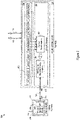
- Figure 1 shows an example hardware accelerated transaction architecture 100 (“architecture" 100) that provides efficient and secure execution of complex transactions between entities.
- the entities may vary widely, and may be, as a few examples, hardware systems, software processes, or individuals.
- the smartphones 102 and 104 are shown as an example hardware platforms that permit entities to engage In transactions with support by the architecture 100.
- Entity A is associated with the smartphone 102
- Entity B is associated with the smartphone 104.
- Entity A will engage in a digital exchange with Entity B.
- the digital exchange may be, e.g., a transfer of value between accounts held at different financial institutions.
- Figure 1 provides one technological backdrop for a discussion of the technical solutions in hardware acceleration, but note that the hardware acceleration may be implemented in many other system contexts to support transactions of widely varying types.
- a smartphone application 106 accepts transaction input from Entity A that specifies a transaction amount and a transaction recipient: Entity B in this example.
- Smartphone 102 and 104 store an enrollment certificate 108 which the smartphone application 106 passes, e.g., in a transaction request 110, to an authentication system 112.
- the authentication system 112 may, as one example, implement a hyperledger fabric client (HFC) 113, e.g., in dedicated hardware or in a virtual machine or docker container for a virtual machine.
- An authentication interface 114 includes an exposed authentication application programming interface (API)) that receives the transaction request 110.
- the authentication system 112 may provide further layers of security, e.g., by requiring the transaction request 110 to travel over hypertext transfer protocol secure sockets (HTTPS), secured by transport layer security (TLS). (Logic flow (1) in Figure 1 .)
- the enrolment certificate achieves authentication by encrypting the payload from the smartphone 102 with a public key associated with the enrolment certificate.
- the counterpart private key is securely held within the HFC certificate authority (CA) 116.
- CA HFC certificate authority
- the private key allows the authentication system 112 to verify the request.
- a membership service running at a system node may verify the account for Entity A that is specified in the transaction request 110.
- a transaction CA generates a unique transaction token.
- the transaction token uniquely identifies each transaction and is used to sign the request.
- the certificate allows the request to be passed into the validating peer node for Entity A 132 (e.g., an on-site server supporting operations for Entity A), where is it received at security controller circuitry 134.
- the security controller circuitry 134 responsively invokes the processing chaincodes.
- Chaincodes are the programmatic logic implemented to specifically support an implementation of the data storage layer, e.g., a blockchain shared ledger.
- the chaincode is called to update the balances of two accounts in the shared global ledger. These accounts are stored in a serialized, encrypted format to provide separation of concerns for the systems. In other words, all of the accounts for the sender are encrypted with the sender's peer node (e.g., bank A) keys, and cannot be decrypted by the receiver's peer noted (e.g., bank B) keys, and vice versa. Accordingly, a request for encryption or decryption is sent to the relevant system hardware security module (HSM), e.g., the HSM 128 which supports the peer node for Entity A 132.
- HSM system hardware security module
- Example HSMs include, but are not limited to, the nShield Solo (TM), nShield Edge (TM), and nShield Connect (TM) devices available from Thales e-Security.
- TM nShield Solo
- TM nShield Edge
- TM nShield Connect
- the serialized, encrypted format is a Java script object notation (JSON) file, but other representations are also suitable.
- the format includes the account data (e.g., sender, recipient, quantity, timestamp, and other data) and a 'cipher' field.
- the peer node Upon encryption, the account data within the account is encrypted in the peer node HSM and the output is placed in the 'cipher' field.
- the peer node then resets selected fields within the account data, e.g., by setting pre-determined sensitive data fields to zero.
- the security controller circuitry 134 may employ symmetric cryptography, with all keys remaining securely in the HSMs.
- Each account includes a uniform resource locator (URL) field that specifies the URL for the security manager with which it was onboarded. Accordingly, any peer node may view the account and locate the API (via the URL field) to request encryption/decryption of an acoount.
- URL uniform resource locator
- the chaincode sends a network request 122 to the security controller interface 124 which (preferably) has a hardware support interface 126 to the HSM 128.
- the interfaces 124 and 126 may include hardwired or wireless connections over proprietary or non-proprietary buses or communication networks, for instance.
- the network request 122 asks for the HSM 128 to decrypt a specific account so that the chaincode can alter the account balance.
- the authentication system 112 abstracts the global world state stored in the blockchain by two exposed functions, putState() and getState().
- the authentication system 112 also mirrors a key/value store in the peer nodes, with the key/value store containing a list of the encrypted, serialized format account objects, linked by their unique identifier.
- the cryptographic functions are executed by a high security hardware device: the HSM 128, and are not limited to implementation in software.
- the HSM 128, the implementation of the data storage layer no longer needs to directly perform encryption and decryption of data.
- the implementation show in Figure 1 has increased security and scalability as compared to, for example, software only based security systems, and returns control to the enterprises that support the transactions.
- the security controller circuitry 134 which controls the HSM 128 is physically housed with or near the HSM 128, e.g., in an enterprise secure data center. (Logic flow (4) in Figure 1 .)
- the updated accounts are re-encrypted before being saved into the serialized encrypted data structure (e.g., the JSON file).
- the chaincode sends the encryption request 130 for the account to the security manager interface 124, which passes it to the HSM 128 for encryption.
- the encryption results return to the chaincode, and a new transaction is created within the bank's node, and the transaction is submitted / requested for inclusion in a new block in the blockchain.
- both the Entity A account and the Entity B account are modified as a result of actions taken by the peer node which receives the transaction request. For instance, assume Bank A receives a request from their member Entity A to transfer value to Entity B associated with Bank B. Then, the Bank A peer node will request the authentication system 112 to identify update the accounts. In response, the authentication system 112 will call the security manager API (via the URL fields noted above) to request decryption for both accounts. The chaincode then modifies the balances of both accounts, and uses the same API previously identified to request encryption from the same HSMs. After modification and encryption, the chaincode requests submission of the updated accounts to the blockchain and consensus is run to ensure that all nodes share the same account state. Finally, update accounts are mirrored between all nodes.
- Every node in the system checks that its version of the world state is identical to ensure that there are no compromised nodes. After consensus is reached (e.g., all nodes have the same copy of the data structure), the new transaction is formally injected into the blockchain.
- the authentication system 112 may implement, for instance, the Practical Byzantine Fault Tolerance (PBFT) algorithm to provide increased speed and scalability to reach consensus in a private, permission blockchain system. (Logic flow (6) in Figure 1 .)
- PBFT Practical Byzantine Fault Tolerance
- GCM Google Cloud Messaging
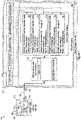
- FIG. 2 shows an expanded view 200 of the hardware accelerated transaction architecture.
- the Entity A peer node 132 includes the security controller circuitry 134.
- the security controller circuitry 134 defines an HSM interface 250 that includes a security manager API 202 and an API-to-API mapping 206.
- the security manager API 202 exposes a set of security manager functions, e.g., the security manager function 204 to request that the peer node 132 execute specified security functions (e.g., encrypt or decrypt data).
- the API-to-API mapping 206 implements, explicitly or implicitly, a security manager API to HSM API-to-API mapping tailored to the particular HSM in use, as described further below.
- FIG 2 also shows an example architecture 200 illustrating that the HSM 128 provides a secure execution environment (SEE) in which dedicated hardware security circuitry 208 performs encryption, decryption, key generation, key storage, key management, and other security functions.
- the HSM 128 defines an HSM API 210 that exposes a set of security functions, e.g., the HSM security function 212.
- the HSM security functions execute on the native HSM hardware to carry out the requested security functions 214 (e.g., decrypt data), and return security responses 216 (e.g., the decrypted data).
- the API-to-API mapping 206 transforms incoming security requests received at the peer node 132 into an HSM specific function.
- the security controller circuitry 134 transmits the HSM specific functions to the HSM 128 in the form of the requested security functions 214. Similarly, the security controller circuitry 134 receives the security responses 216 from the HSM 128 after the HSM 128 executes the requested security function.
- the HSM interface 250 provides a highly flexible and reconfiguration technical solution the problem of connecting a peer node to a wide range of possible HSMs.
- the peer node 132 may be efficiently adapted for use with a wide range of security hardware.
- multiple instances of the HSM interface 250, each with different API-to-API mappings for different HSMs, may be implemented in any given peer node to simultaneously support multiple different HSMs, e.g., for redundant operation and fault tolerance.
- Figure 3 shows an implementation example 300 in which the security controller circuitry 134 exposes five specific security manager functions as the security manager API 302.
- This function encrypts data with a symmetric key.
- Table 2 symmetricEncrypt Input: Parameter Description Mandatory / Optional Header /Url / Body Type callerIdentifier Identifier of the caller system O B String hsmKeyAlias Alias of the key to use (if not provided a default one will be used) O B String dataToEncryp t Data to encrypt (hex encoded) M B String Table 3: symmetricEncrypt Output: Parameter Description Mandatory / Optional Type resultCode The Result code of the task M String errorManagement Object identifying the error O* Object errorCode Code that identifies error occurred M String errorDescription Error description M String encrypted Data The encrypted data M String * included if resultCode is FAILED Table 4: symmetricEncrypt Results Result Code Result Description SUCCESS Service executed successfully FAILED Service execution failed Table 5: symmetricEncrypt Example Protocol REST Path [IP:PORT]/cxf/securityManager/symmetricEncrypt Method POST Content
- This function decrypts data with a symmetric key.
- Table 6 symmetricDecrypt Input: Parameter Description Mandatory / Optional Header /Url / Body Type callerIdentifier Identifier of the caller system O B String hsmKeyAlias Alias of the symmetric key to use (if not provided a default one will be used) O B String dataToDecrypt Data to decrypt (hex encoded) M B String Table 7: symmetricDecrypt Output: Parameter Description Mandatory / Optional Type resultCode The Result code of the task M String errorManagement Object identifying the error O* Object errorCode Code that identifies error occurred M String errorDescription Error description M String decrypted Data The decrypted data M String * included if resultCode is FAILED Table 8: symmetricDecrypt Results Result Code Result Description SUCCESS Service executed successfully FAILED Service execution failed Table 9: symmetricDecrypt Example Protocol REST Path [IP:PORT]/cxf/securityManager/symmetricDecrypt Method P
- the function transformations 306 implement a mapping from the security manager functions and corresponding objects to HSM specific requested security functions 308 defined in the HSM chosen or configured to perform the security manager function in question.
- FIG. 4 shows an implementation example 400 in which the HSM interface 402 defines a security circuitry API 404 that includes the five functions noted above.
- the HSM interface 402 further includes the API-to-API mapping 406.
- the API-to-API mapping 406 has implemented the symmetricDecrypt function transformation 408, the symmetricDecrypt function transformation 410, the applyDigitalSignature function transformation 412, the generateECKeyPair function transformation 414, and the verifyDigitalSignature function transformation 416.
- the function transformations 408 - 416 map each of the five functions available from security circuitry API 404 to HSM specific functions 418 defined for the particular HSM in use, in this case the HSM 420.
- the API for the HSM 420 implements the functions called “aesEncryption” (used for both encryption and decryption), "applyDigitalSignature”, “verifyDigitalSignature”, and “generateEllipitcCurveKeyPair”.
- an API call to the symmetricDecrypt function maps to the aesEncryption HSM API function. Table 10 summarizes the mapping from the security circuitry API 404 to the HSM 420 for this particular example.
- Table 10 Mapping for HSM 420 symmetricEncrypt HSM specific function Package: com.comp.cpaas.dcpp.hsm.integration.nshield Object: NShieldlnterface Method: aesEncryption symmetricDecrypt HSM specific function Package: com. comp.cpaas.dcpp.hsm.integration.nshield Object: NShieldInterface Method: aesEncryption applyDigitalSignature HSM specific function Package: com. comp.cpaas.dcpp.hsm.integration.nshield Object: NShieldlnterface Method: applyDigitalSignature verifyDigitalSignature HSM specific function Package: com.
- FIG. 5 shows another implementation example 500 In which the HSM interface 502 defines a security circuitry API 504 that also includes the five functions noted above.
- the HSM interface 502 includes the API-to-API mapping 506.
- the API-to-API mapping 506 has Implemented the symmetricDecrypt function transformation 508 and the symmetricDecrypt function transformation 510.
- the API-to-API mapping 506 need not provide a mapping for every function, and in this case no mapping is defined for the applyDigitialSignature function, the generateECKeyPair function, or the verifyDigitalSignature function. Calls to those functions may be unsupported, may return an error code, may be handled by software in the peer node, may be passed to other systems, or may be handled in other manners.
- the function transformations 508 and 510 map two of the five functions available from security circuitry API 504 to HSM specific functions 518 defined in the particular HSM in use, in this case the HSM 520.
- the API for the HSM 520 implements the functions called "encrypt" for symmetric encryption and "decrypt” for symmetric decryption.
- an API call to the symmetricEncrypt function maps to the "encrypt" HSM API function. Table 11 summarizes the mapping from the security circuitry API 504 to the HSM 520 for this particular example.
- Table 11 Mapping for HSM 520 symmetricEncrypt HSM specific function Package: com.comp.cpaas.dcpp.enabler.securitymanager.manager.util Object: KeyManager Method: encrypt symmetricDecrypt HSM specific function Package: com.comp.cpaas.dcpp.enabler.securitymanager.manager.util Object: KeyManager Method: decrypt applyDigitalSignature HSM specific function None verifyDigitalSignature HSM specific function None generateECKeyPair HSM specific function None
- FIG. 6 shows a third implementation example 600 in which the HSM interface 602 defines a security circuitry API 604.
- the security circuitry API 604 includes the five functions noted above.
- the HSM interface 602 includes the API-to-API mapping 606.
- the API-to-API mapping 606 has implemented the symmetricDecrypt function transformation 608 and the symmetricDecrypt function transformation 610.
- the function transformations 608 and 610 map two of the five functions available from security circuitry API 604 to software. That is, in this example, the peer node will rely on software implemented security functions, and an HSM is not called to provide hardware execution of the security functions. To that end, the function transformations 608 and 610 specify a software function to execute in response to API calls to the symmetricDecrypt function: the "decryptSw" function, and a software function to execute in response to API calls to the symmetricEncrypt function: the "encryptSw" function.
- Table 12 summarizes the mapping from the security circuitry API 604 to the HSM 620 for this particular example.
- Table 12 Mapping for HSM 620 symmetricEncrypt HSM specific function Package: com.accenture.cpaas.dcpp.enabler.securitymanager.manager.util Object: SecurityManager Method: encryptSw symmetricDecrypt HSM specific function Package: com.accenture.cpaas.dcpp.enabler.securitymanager.manager.util Object: SecurityManager Method: decryptSw applyDigitalSignature HSM specific function None verifyDigitalSignature HSM specific function None generateECKeyPair HSM specific function None
- Figure 7 shows a hybrid Implementation example 700 of the HSM interface 702 implementing a security circuitry API 704.
- the API-to-API mapping 706 has implemented the symmetricDecrypt function transformation 708, the symmetricDecrypt function transformation 710, the applyDigitialSignature function transformation 712, the generateECKeyPair function transformation 714, and the verifyDigitalSignature function transformation 716.
- the API-to-API mapping 706 uses a mix of HSM and software functions to carry out the calls to the security circuitry API 704.
- the function transformations 708, 710, and 714 map three of the five functions available from security circuitry API 704 to HSM specific functions 718 for the HSM 720. More specifically, the calls to symmetricDecrypt, symmetricEncrypt, and generateECKeyPair are mapped to their counterpart functions in the HSM 720. On the other hand, the function transformations 712 and 716 handle calls to apply or verify a digital signature by mapping the calls to software functions: sWapplyDigitalSignature and sWverifyDigitalSignature, respectively. Table 13 summarizes the mapping from the security circuitry API 704 to the HSM 720 for this particular example.
- Table 13 Mapping for HSM 720 symmetricEncrypt HSM specific function Package: com.comp.cpaas.dcpp.hsm.integration.nshield Object: NShieldInterface Method: aesEncryption symmetricDecrypt HSM specific function Package: com.
- FIG 8 shows another implementation example 800 of the HSM interface 802 including the security circuitry API 804.
- the HSM interface 802 supports multiple HSMs 820 for a single peer node, e.g., the HSMs 1 through HSM 'n'.
- the HSMs may be the same or different HSMs, and may be provided for redundancy, load balancing, fault tolerance, or for other reasons.
- the HSM interface 802 defines multiple API-to-API mappings 806, one for each unique HSM. Then, as the HSM interface 802 switches between different HSMs, the HSM interface 802 performs mappings according to the HSM in use at the time.
- configuration files 850 specify the API-to-API mappings for any pre-determined HSMs.
- the security controller circuitry may load one or more corresponding configuration files to define the API-to-API mappings to quickly and efficiently establish the mapping to whichever HSM the security controller circuitry will have assist with security functions.
- FIG. 9 shows logic 900 that a hardware accelerated transaction processing system may implement.
- a hardware transaction processing system receives, at an authentication interface, a transaction request and an enrollment certificate (902). The system verifies a sender account linked to the transaction request (904) and may return a verification error message if verification fails (906).
- the system issues a decryption request to a hardware security module for hardware decryption of the sender account (908).
- security manager circuitry may receive a decryption request function call (910), map the function call to the HSM API (912), and transmit the HSM specific function call to the HSM (914).
- the security manager circuitry receives decrypted data for the sender account from the hardware security module (916), e.g., as a return value from the HSM specific API function call.
- the security manager circuitry may then perform a data update on the decrypted data. For instance, the security manager circuitry may generate updated account data responsive to the transaction request, e.g., by debiting or crediting an account (918). Once updated, the system issues an encryption request to the hardware security module for hardware encryption of the updated sender account data (920). The encryption request may pass to the HSM through an API function call, for instance. As with decryption, the API may implement a pre-determined mapping to a method implemented by one or more different HSMs for encryption. That Is, the security manager circuitry receives an encryption request function call (922), translates the function call to the HSM API (924), and transmits the HSM specific function call to the HSM (926).
- the system then adds the updated account data to a serialized encrypted transaction chain data structure.
- the system may issue a request for inclusion of the encrypted updated account data that reflects the transaction request in a block in the serialized encrypted transaction chain data structure (928).
- consensus e.g., all nodes have the same copy of the data structure
- the new transaction is handed out to all other bank nodes and is formally injected into the blockchain.
- the system may implement, for instance, the Practical Byzantine Fault Tolerance (PBFT) algorithm to provide increased speed and scalability to reach consensus in a private, permission blockchain system.
- PBFT Practical Byzantine Fault Tolerance
- a polling mechanism at the system and other like systems consistently checks for new blocks that have been added to the data structure (930).
- circuitry that includes an instruction processor, such as a Central Processing Unit (CPU), microcontroller, or a microprocessor; or as an Application Specific Integrated Circuit (ASIC), Programmable Logic Device (PLD), or Field Programmable Gate Array (FPGA); or as circuitry that includes discrete logic or other circuit components, including analog circuit components, digital circuit components or both; or any combination thereof.
- instruction processor such as a Central Processing Unit (CPU), microcontroller, or a microprocessor
- ASIC Application Specific Integrated Circuit
- PLD Programmable Logic Device
- FPGA Field Programmable Gate Array
- the circuitry may include discrete interconnected hardware components or may be combined on a single integrated circuit die, distributed among multiple integrated circuit dies, or implemented in a Multiple Chip Module (MCM) of multiple integrated circuit dies in a common package, as examples.
- MCM Multiple Chip Module
- the circuitry may store or access instructions for execution, or may implement its functionality in hardware alone.
- the instructions may be stored in a tangible storage medium that is other than a transitory signal, such as a flash memory, a Random Access Memory (RAM), a Read Only Memory (ROM), an Erasable Programmable Read Only Memory (EPROM); or on a magnetic or optical disc, such as a Compact Disc Read Only Memory (CDROM), Hard Disk Drive (HDD), or other magnetic or optical disk; or in or on another machine-readable medium.
- a product such as a computer program product, may include a storage medium and Instructions stored in or on the medium, and the instructions when executed by the circuitry in a device may cause the device to implement any of the processing described above or illustrated in the drawings.
- the circuitry may include multiple distinct system components, such as multiple processors and memories, and may span multiple distributed processing systems.
- Parameters, databases, and other data structures may be separately stored and managed, may be incorporated into a single memory or database, may be logically and physically organized in many different ways, and may be implemented in many different ways.
- Example implementations include linked lists, program variables, hash tables, arrays, records (e.g., database records), objects, and implicit storage mechanisms. Instructions may form parts (e.g., subroutines or other code sections) of a single program, may form multiple separate programs, may be distributed across multiple memories and processors, and may be implemented in many different ways.
- Example implementations include stand-alone programs, and as part of a library, such as a shared library like a Dynamic Link Library (DLL).
- the library may contain shared data and one or more shared programs that include instructions that perform any of the processing described above or illustrated in the drawings, when executed by the circuitry.
- any of the components and functionality in the architecture may be hosted in virtual machines managed by a cloud services provider. That is, while some implementations may be completely localized within a given enterprise, other implementations are completely migrated into the cloud, or are hybrid implementations with mixed local and cloud implementation.
- querying devices the smartphones applications and desktop computers noted above are just particular examples, and other querying devices may be used, including hands-free systems in vehicles, digital personal assistants in smartphones or desktop PCs, hands-free control systems for the home, and many other types of devices.
Landscapes
- Engineering & Computer Science (AREA)
- Computer Security & Cryptography (AREA)
- Signal Processing (AREA)
- Computer Networks & Wireless Communication (AREA)
- Theoretical Computer Science (AREA)
- Computer Hardware Design (AREA)
- General Engineering & Computer Science (AREA)
- Software Systems (AREA)
- Computing Systems (AREA)
- Physics & Mathematics (AREA)
- General Physics & Mathematics (AREA)
- Technology Law (AREA)
- Multimedia (AREA)
- Mathematical Physics (AREA)
- Telephone Function (AREA)
- Financial Or Insurance-Related Operations Such As Payment And Settlement (AREA)
- Storage Device Security (AREA)
Abstract
Description
- This application claims priority to
European application number 17425005.0, filed 27-January-2017 - This disclosure relates to computer hardware acceleration of software processes. This disclosure also relates to hardware security support for software processes that support transaction chains, including blockchains.
- Rapid advances in electronics and communication technologies, driven by immense customer demand, have resulted in newly emerging complex network transaction chains. Improvements in the hardware and software implementations of the underlying processing for the transaction chains will increase the security, features, and speed of the implementations.
-
-
Figure 1 shows a hardware accelerated transaction architecture. -
Figure 2 illustrates an expanded view of the hardware accelerated transaction architecture. -
Figure 3 shows an implementation example in which security manager circuitry exposes specific security manager functions as a security manager API. -
Figure 4 shows another implementation example in which security manager circuitry exposes specific security manager functions as a security manager API. -
Figure 5 illustrates an additional implementation example in which security manager circuitry exposes specific security manager functions. -
Figure 6 illustrates an additional implementation example in which security manager circuitry exposes specific security manager functions. -
Figure 7 shows a hybrid implementation example of the HSM interface implementing a security circuitry API. -
Figure 8 shows an implementation example of theHSM interface 802 supporting multiple HSMs. -
Figure 9 shows logic that a hardware accelerated transaction processing system may implement. -
Figure 1 shows an example hardware accelerated transaction architecture 100 ("architecture" 100) that provides efficient and secure execution of complex transactions between entities. The entities may vary widely, and may be, as a few examples, hardware systems, software processes, or individuals. InFigure 1 , thesmartphones architecture 100. In this example, Entity A is associated with thesmartphone 102 and Entity B is associated with thesmartphone 104. In the example ofFigure 1 , Entity A will engage in a digital exchange with Entity B. The digital exchange may be, e.g., a transfer of value between accounts held at different financial institutions.Figure 1 provides one technological backdrop for a discussion of the technical solutions in hardware acceleration, but note that the hardware acceleration may be implemented in many other system contexts to support transactions of widely varying types. - In the example in
Figure 1 , asmartphone application 106 accepts transaction input from Entity A that specifies a transaction amount and a transaction recipient: Entity B in this example.Smartphone enrollment certificate 108 which thesmartphone application 106 passes, e.g., in atransaction request 110, to anauthentication system 112. Theauthentication system 112 may, as one example, implement a hyperledger fabric client (HFC) 113, e.g., in dedicated hardware or in a virtual machine or docker container for a virtual machine. Anauthentication interface 114 includes an exposed authentication application programming interface (API)) that receives thetransaction request 110. Theauthentication system 112 may provide further layers of security, e.g., by requiring thetransaction request 110 to travel over hypertext transfer protocol secure sockets (HTTPS), secured by transport layer security (TLS). (Logic flow (1) inFigure 1 .) - The enrolment certificate achieves authentication by encrypting the payload from the
smartphone 102 with a public key associated with the enrolment certificate. The counterpart private key is securely held within the HFC certificate authority (CA) 116. The private key allows theauthentication system 112 to verify the request. (Logic flow (2) inFigure 1 .) - A membership service running at a system node, e.g., the
system node 118, may verify the account for Entity A that is specified in thetransaction request 110. In addition, a transaction CA generates a unique transaction token. The transaction token uniquely identifies each transaction and is used to sign the request. The certificate allows the request to be passed into the validating peer node for Entity A 132 (e.g., an on-site server supporting operations for Entity A), where is it received atsecurity controller circuitry 134. Thesecurity controller circuitry 134 responsively invokes the processing chaincodes. Chaincodes are the programmatic logic implemented to specifically support an implementation of the data storage layer, e.g., a blockchain shared ledger. In the example noted regarding transferring value, the chaincode is called to update the balances of two accounts in the shared global ledger. These accounts are stored in a serialized, encrypted format to provide separation of concerns for the systems. In other words, all of the accounts for the sender are encrypted with the sender's peer node (e.g., bank A) keys, and cannot be decrypted by the receiver's peer noted (e.g., bank B) keys, and vice versa. Accordingly, a request for encryption or decryption is sent to the relevant system hardware security module (HSM), e.g., theHSM 128 which supports the peer node forEntity A 132. (Logic flow (3) inFigure 1 .) Example HSMs include, but are not limited to, the nShield Solo (TM), nShield Edge (TM), and nShield Connect (TM) devices available from Thales e-Security. - In one implementation, the serialized, encrypted format is a Java script object notation (JSON) file, but other representations are also suitable. The format includes the account data (e.g., sender, recipient, quantity, timestamp, and other data) and a 'cipher' field. Upon encryption, the account data within the account is encrypted in the peer node HSM and the output is placed in the 'cipher' field. The peer node then resets selected fields within the account data, e.g., by setting pre-determined sensitive data fields to zero. The
security controller circuitry 134 may employ symmetric cryptography, with all keys remaining securely in the HSMs. Each account includes a uniform resource locator (URL) field that specifies the URL for the security manager with which it was onboarded. Accordingly, any peer node may view the account and locate the API (via the URL field) to request encryption/decryption of an acoount. - In more detail, the chaincode sends a
network request 122 to thesecurity controller interface 124 which (preferably) has ahardware support interface 126 to the HSM 128. Theinterfaces network request 122 asks for theHSM 128 to decrypt a specific account so that the chaincode can alter the account balance. In support of obtaining the account to decrypt, theauthentication system 112 abstracts the global world state stored in the blockchain by two exposed functions, putState() and getState(). Theauthentication system 112 also mirrors a key/value store in the peer nodes, with the key/value store containing a list of the encrypted, serialized format account objects, linked by their unique identifier. - Expressed another way, the cryptographic functions are executed by a high security hardware device: the HSM 128, and are not limited to implementation in software. With the
HSM 128, the implementation of the data storage layer no longer needs to directly perform encryption and decryption of data. As a result, the implementation show inFigure 1 has increased security and scalability as compared to, for example, software only based security systems, and returns control to the enterprises that support the transactions. In some secure environments, thesecurity controller circuitry 134 which controls the HSM 128 is physically housed with or near the HSM 128, e.g., in an enterprise secure data center. (Logic flow (4) inFigure 1 .) - Once the accounts for Entity A and Entity B are in decrypted format and following the balance updates in the respective accounts, the updated accounts are re-encrypted before being saved into the serialized encrypted data structure (e.g., the JSON file). To that end, the chaincode sends the
encryption request 130 for the account to thesecurity manager interface 124, which passes it to theHSM 128 for encryption. The encryption results return to the chaincode, and a new transaction is created within the bank's node, and the transaction is submitted / requested for inclusion in a new block in the blockchain. (Logic flow (5) inFigure 1 .) - Note that in this example implementation, both the Entity A account and the Entity B account are modified as a result of actions taken by the peer node which receives the transaction request. For instance, assume Bank A receives a request from their member Entity A to transfer value to Entity B associated with Bank B. Then, the Bank A peer node will request the
authentication system 112 to identify update the accounts. In response, theauthentication system 112 will call the security manager API (via the URL fields noted above) to request decryption for both accounts. The chaincode then modifies the balances of both accounts, and uses the same API previously identified to request encryption from the same HSMs. After modification and encryption, the chaincode requests submission of the updated accounts to the blockchain and consensus is run to ensure that all nodes share the same account state. Finally, update accounts are mirrored between all nodes. - Before the new block with the updated accounts can be added to the blockchain, every node in the system checks that its version of the world state is identical to ensure that there are no compromised nodes. After consensus is reached (e.g., all nodes have the same copy of the data structure), the new transaction is formally injected into the blockchain. The
authentication system 112 may implement, for instance, the Practical Byzantine Fault Tolerance (PBFT) algorithm to provide increased speed and scalability to reach consensus in a private, permission blockchain system. (Logic flow (6) inFigure 1 .) - After consensus has been reached and the transaction is included in the blockchain, there is a polling mechanism which consistently checks for new blocks that have been added to the data structure. If a new transaction has been added to the ledger, a message is sent to the respective parties informing them of their account changes. In one implementation, Google Cloud Messaging (GCM) performs the notification to the
smartphones Figure 1 .) -
Figure 2 shows an expandedview 200 of the hardware accelerated transaction architecture. InFigure 2 , the EntityA peer node 132 includes thesecurity controller circuitry 134. Thesecurity controller circuitry 134 defines anHSM interface 250 that includes asecurity manager API 202 and an API-to-API mapping 206. Thesecurity manager API 202 exposes a set of security manager functions, e.g., thesecurity manager function 204 to request that thepeer node 132 execute specified security functions (e.g., encrypt or decrypt data). The API-to-API mapping 206 implements, explicitly or implicitly, a security manager API to HSM API-to-API mapping tailored to the particular HSM in use, as described further below. -
Figure 2 also shows anexample architecture 200 illustrating that theHSM 128 provides a secure execution environment (SEE) in which dedicatedhardware security circuitry 208 performs encryption, decryption, key generation, key storage, key management, and other security functions. TheHSM 128 defines anHSM API 210 that exposes a set of security functions, e.g., theHSM security function 212. The HSM security functions execute on the native HSM hardware to carry out the requested security functions 214 (e.g., decrypt data), and return security responses 216 (e.g., the decrypted data). - The API-to-
API mapping 206 transforms incoming security requests received at thepeer node 132 into an HSM specific function. Thesecurity controller circuitry 134 transmits the HSM specific functions to theHSM 128 in the form of the requested security functions 214. Similarly, thesecurity controller circuitry 134 receives thesecurity responses 216 from theHSM 128 after theHSM 128 executes the requested security function. - The
HSM interface 250 provides a highly flexible and reconfiguration technical solution the problem of connecting a peer node to a wide range of possible HSMs. By reconfiguring the API-to-API mapping 206 to point to particular functions exposed in any given HSM, thepeer node 132 may be efficiently adapted for use with a wide range of security hardware. Further, multiple instances of theHSM interface 250, each with different API-to-API mappings for different HSMs, may be implemented in any given peer node to simultaneously support multiple different HSMs, e.g., for redundant operation and fault tolerance. -
Figure 3 shows an implementation example 300 in which thesecurity controller circuitry 134 exposes five specific security manager functions as thesecurity manager API 302. Table 1, below, describes the security manager functions and indicates, in this one example, where mappings may be provided to specific HSMs or to software. That is, thesecurity manager API 302, in concert with the API-to-API mapping 304, supports connection and messaging between multiple different HSMs. Note further that the API-to-API mapping 304 may provide redirection not only to HSM functions, but also to software implemented security functions, e.g., in cases where no HSM communicates with the peer node.Table 1 API Security Manager Function Description HSM Connection symmetricEncrypt Encrypt data with a symmetric key Mapping to HSM 1Mapping to HSM 2Mapping to Software symmetricDecrypt Decrypt data with a symmetric key Mapping to HSM 1Mapping to HSM 2Mapping to Software applyDigitalSignature Apply a Digital Signature to a message Mapping to HSM 1verifyDigitalSignature Verify the Digital Signature of a message Mapping to HSM 1generateECKeyPair Generate a key pair using the Elliptic Curve algorithm Mapping to HSM 1 - A specific Implementation example of the security manager function symmetricEncrypt is provided below in Tables 2 - 5 and a specific implementation example of the security manager function symmetricDecrypt is provided below in Tables 6 - 9.
- This function encrypts data with a symmetric key.
Table 2: symmetricEncrypt Input: Parameter Description Mandatory / Optional Header /Url / Body Type callerIdentifier Identifier of the caller system O B String hsmKeyAlias Alias of the key to use (if not provided a default one will be used) O B String dataToEncryp t Data to encrypt (hex encoded) M B String Table 3: symmetricEncrypt Output: Parameter Description Mandatory / Optional Type resultCode The Result code of the task M String errorManagement Object identifying the error O* Object errorCode Code that identifies error occurred M String errorDescription Error description M String encrypted Data The encrypted data M String * included if resultCode is FAILED Table 4: symmetricEncrypt Results Result Code Result Description SUCCESS Service executed successfully FAILED Service execution failed Table 5: symmetricEncrypt Example Protocol REST Path [IP:PORT]/cxf/securityManager/symmetricEncrypt Method POST Content type application/json Example JSON request: { "callerIdentifier": "bankA", "hsmKeyAlias":"aeskey", "dataToEncrypt": "33363231" } Example JSON response: { "baseResponse": { "result": "SUCCESS" }, "encryptedData": "C8BF4E043AFA5595D21F56E16DD15571" } } - This function decrypts data with a symmetric key.
Table 6: symmetricDecrypt Input: Parameter Description Mandatory / Optional Header /Url / Body Type callerIdentifier Identifier of the caller system O B String hsmKeyAlias Alias of the symmetric key to use (if not provided a default one will be used) O B String dataToDecrypt Data to decrypt (hex encoded) M B String Table 7: symmetricDecrypt Output: Parameter Description Mandatory / Optional Type resultCode The Result code of the task M String errorManagement Object identifying the error O* Object errorCode Code that identifies error occurred M String errorDescription Error description M String decrypted Data The decrypted data M String * included if resultCode is FAILED Table 8: symmetricDecrypt Results Result Code Result Description SUCCESS Service executed successfully FAILED Service execution failed Table 9: symmetricDecrypt Example Protocol REST Path [IP:PORT]/cxf/securityManager/symmetricDecrypt Method POST Content type application/json Example JSON request: { "callerIdentifier": "bankA", "hsmKeyAlias":"aeskey", "dataToDecrypt": "C8BF4E043AFA5595D21F56E16DD15571" } } Example JSON response: { "baseResponse": { "result": "SUCCESS" }, "decryptedData": 33363231 } } - The
function transformations 306 implement a mapping from the security manager functions and corresponding objects to HSM specific requestedsecurity functions 308 defined in the HSM chosen or configured to perform the security manager function in question. -
Figure 4 shows an implementation example 400 in which theHSM interface 402 defines asecurity circuitry API 404 that includes the five functions noted above. TheHSM interface 402 further includes the API-to-API mapping 406. In this particular example, the API-to-API mapping 406 has implemented thesymmetricDecrypt function transformation 408, thesymmetricDecrypt function transformation 410, theapplyDigitalSignature function transformation 412, thegenerateECKeyPair function transformation 414, and theverifyDigitalSignature function transformation 416. The function transformations 408 - 416 map each of the five functions available fromsecurity circuitry API 404 to HSMspecific functions 418 defined for the particular HSM in use, in this case theHSM 420. Here, the API for theHSM 420 implements the functions called "aesEncryption" (used for both encryption and decryption), "applyDigitalSignature", "verifyDigitalSignature", and "generateEllipitcCurveKeyPair". As one specific example, an API call to the symmetricDecrypt function maps to the aesEncryption HSM API function. Table 10 summarizes the mapping from thesecurity circuitry API 404 to theHSM 420 for this particular example.Table 10: Mapping for HSM 420symmetricEncrypt HSM specific function Package: com.comp.cpaas.dcpp.hsm.integration.nshield Object: NShieldlnterface Method: aesEncryption symmetricDecrypt HSM specific function Package: com. comp.cpaas.dcpp.hsm.integration.nshield Object: NShieldInterface Method: aesEncryption applyDigitalSignature HSM specific function Package: com. comp.cpaas.dcpp.hsm.integration.nshield Object: NShieldlnterface Method: applyDigitalSignature verifyDigitalSignature HSM specific function Package: com. comp.cpaas.dcpp.hsm.integration.nshield Object: NShieldInterface Method: verifyDigitalSignature generateECKeyPair HSM specific function Package: com. comp.cpaas.dcpp.hsm.integration.nshield Object: NShieldlnterface Method: generateEllipticCurveKeyPair -
Figure 5 shows another implementation example 500 In which theHSM interface 502 defines asecurity circuitry API 504 that also includes the five functions noted above. TheHSM interface 502 includes the API-to-API mapping 506. In this particular example, the API-to-API mapping 506 has Implemented thesymmetricDecrypt function transformation 508 and thesymmetricDecrypt function transformation 510. Note that the API-to-API mapping 506 need not provide a mapping for every function, and in this case no mapping is defined for the applyDigitialSignature function, the generateECKeyPair function, or the verifyDigitalSignature function. Calls to those functions may be unsupported, may return an error code, may be handled by software in the peer node, may be passed to other systems, or may be handled in other manners. - The
function transformations security circuitry API 504 to HSMspecific functions 518 defined in the particular HSM in use, in this case theHSM 520. Here, the API for theHSM 520 implements the functions called "encrypt" for symmetric encryption and "decrypt" for symmetric decryption. As one specific example, an API call to the symmetricEncrypt function maps to the "encrypt" HSM API function. Table 11 summarizes the mapping from thesecurity circuitry API 504 to theHSM 520 for this particular example.Table 11: Mapping for HSM 520symmetricEncrypt HSM specific function Package: com.comp.cpaas.dcpp.enabler.securitymanager.manager.util Object: KeyManager Method: encrypt symmetricDecrypt HSM specific function Package: com.comp.cpaas.dcpp.enabler.securitymanager.manager.util Object: KeyManager Method: decrypt applyDigitalSignature HSM specific function None verifyDigitalSignature HSM specific function None generateECKeyPair HSM specific function None -
Figure 6 shows a third implementation example 600 in which theHSM interface 602 defines asecurity circuitry API 604. As before, thesecurity circuitry API 604 includes the five functions noted above. TheHSM interface 602 includes the API-to-API mapping 606. In this particular example, the API-to-API mapping 606 has implemented thesymmetricDecrypt function transformation 608 and thesymmetricDecrypt function transformation 610. - The
function transformations security circuitry API 604 to software. That is, in this example, the peer node will rely on software implemented security functions, and an HSM is not called to provide hardware execution of the security functions. To that end, thefunction transformations - Table 12 summarizes the mapping from the
security circuitry API 604 to theHSM 620 for this particular example.Table 12: Mapping for HSM 620symmetricEncrypt HSM specific function Package: com.accenture.cpaas.dcpp.enabler.securitymanager.manager.util Object: SecurityManager Method: encryptSw symmetricDecrypt HSM specific function Package: com.accenture.cpaas.dcpp.enabler.securitymanager.manager.util Object: SecurityManager Method: decryptSw applyDigitalSignature HSM specific function None verifyDigitalSignature HSM specific function None generateECKeyPair HSM specific function None -
Figure 7 shows a hybrid Implementation example 700 of theHSM interface 702 implementing asecurity circuitry API 704. In this particular example, the API-to-API mapping 706 has implemented thesymmetricDecrypt function transformation 708, thesymmetricDecrypt function transformation 710, theapplyDigitialSignature function transformation 712, thegenerateECKeyPair function transformation 714, and theverifyDigitalSignature function transformation 716. However, in this example, the API-to-API mapping 706 uses a mix of HSM and software functions to carry out the calls to thesecurity circuitry API 704. - The
function transformations security circuitry API 704 to HSMspecific functions 718 for theHSM 720. More specifically, the calls to symmetricDecrypt, symmetricEncrypt, and generateECKeyPair are mapped to their counterpart functions in theHSM 720. On the other hand, thefunction transformations security circuitry API 704 to theHSM 720 for this particular example.Table 13: Mapping for HSM 720symmetricEncrypt HSM specific function Package: com.comp.cpaas.dcpp.hsm.integration.nshield Object: NShieldInterface Method: aesEncryption symmetricDecrypt HSM specific function Package: com. comp.cpaas.dcpp.hsm.integration.nshield Object: NShieldlnterface Method: aesEncryption applyDigitalSignature HSM specific function Package: com.accenture.cpaas.dcpp.enabler.securitymanager.manager.util Object: SecurityManager Method: sWapplyDigitalSignature verifyDigitalSignature HSM specific function Package: com.accenture.cpaas.dcpp.enabler.securitymanager.manager.util Object: SecurityManager Method: sWverifyDigitalSignature generateECKeyPair HSM specific function Package: com. comp.cpaas.dcpp.hsm.integration.nshield Object: NShieldInterface Method: generateEllipticCurveKeyPair -
Figure 8 shows another implementation example 800 of theHSM interface 802 including thesecurity circuitry API 804. In this example, theHSM interface 802 supportsmultiple HSMs 820 for a single peer node, e.g., theHSMs 1 through HSM 'n'. The HSMs may be the same or different HSMs, and may be provided for redundancy, load balancing, fault tolerance, or for other reasons. In support of themultiple HSMs 820, theHSM interface 802 defines multiple API-to-API mappings 806, one for each unique HSM. Then, as theHSM interface 802 switches between different HSMs, theHSM interface 802 performs mappings according to the HSM in use at the time. In some implementations, configuration files 850 specify the API-to-API mappings for any pre-determined HSMs. The security controller circuitry may load one or more corresponding configuration files to define the API-to-API mappings to quickly and efficiently establish the mapping to whichever HSM the security controller circuitry will have assist with security functions. -
Figure 9 shows logic 900 that a hardware accelerated transaction processing system may implement. A hardware transaction processing system receives, at an authentication interface, a transaction request and an enrollment certificate (902). The system verifies a sender account linked to the transaction request (904) and may return a verification error message if verification fails (906). - The system issues a decryption request to a hardware security module for hardware decryption of the sender account (908). To that end, security manager circuitry may receive a decryption request function call (910), map the function call to the HSM API (912), and transmit the HSM specific function call to the HSM (914). The security manager circuitry receives decrypted data for the sender account from the hardware security module (916), e.g., as a return value from the HSM specific API function call.
- The security manager circuitry may then perform a data update on the decrypted data. For instance, the security manager circuitry may generate updated account data responsive to the transaction request, e.g., by debiting or crediting an account (918). Once updated, the system issues an encryption request to the hardware security module for hardware encryption of the updated sender account data (920). The encryption request may pass to the HSM through an API function call, for instance. As with decryption, the API may implement a pre-determined mapping to a method implemented by one or more different HSMs for encryption. That Is, the security manager circuitry receives an encryption request function call (922), translates the function call to the HSM API (924), and transmits the HSM specific function call to the HSM (926).
- The system then adds the updated account data to a serialized encrypted transaction chain data structure. For instance, the system may issue a request for inclusion of the encrypted updated account data that reflects the transaction request in a block in the serialized encrypted transaction chain data structure (928). In one implementation, after consensus is reached (e.g., all nodes have the same copy of the data structure), the new transaction is handed out to all other bank nodes and is formally injected into the blockchain. The system may implement, for instance, the Practical Byzantine Fault Tolerance (PBFT) algorithm to provide increased speed and scalability to reach consensus in a private, permission blockchain system. After consensus has been reached and the transaction is included in the blockchain, a polling mechanism at the system and other like systems consistently checks for new blocks that have been added to the data structure (930).
- The methods, devices, architectures, processing, circuitry, and logic described above may be implemented in many different ways and in many different combinations of hardware and software. For example, all or parts of the implementations may be circuitry that includes an instruction processor, such as a Central Processing Unit (CPU), microcontroller, or a microprocessor; or as an Application Specific Integrated Circuit (ASIC), Programmable Logic Device (PLD), or Field Programmable Gate Array (FPGA); or as circuitry that includes discrete logic or other circuit components, including analog circuit components, digital circuit components or both; or any combination thereof. The circuitry may include discrete interconnected hardware components or may be combined on a single integrated circuit die, distributed among multiple integrated circuit dies, or implemented in a Multiple Chip Module (MCM) of multiple integrated circuit dies in a common package, as examples.
- Accordingly, the circuitry may store or access instructions for execution, or may implement its functionality in hardware alone. The instructions may be stored in a tangible storage medium that is other than a transitory signal, such as a flash memory, a Random Access Memory (RAM), a Read Only Memory (ROM), an Erasable Programmable Read Only Memory (EPROM); or on a magnetic or optical disc, such as a Compact Disc Read Only Memory (CDROM), Hard Disk Drive (HDD), or other magnetic or optical disk; or in or on another machine-readable medium. A product, such as a computer program product, may include a storage medium and Instructions stored in or on the medium, and the instructions when executed by the circuitry in a device may cause the device to implement any of the processing described above or illustrated in the drawings.
- The implementations may be distributed. For instance, the circuitry may include multiple distinct system components, such as multiple processors and memories, and may span multiple distributed processing systems. Parameters, databases, and other data structures may be separately stored and managed, may be incorporated into a single memory or database, may be logically and physically organized in many different ways, and may be implemented in many different ways. Example implementations include linked lists, program variables, hash tables, arrays, records (e.g., database records), objects, and implicit storage mechanisms. Instructions may form parts (e.g., subroutines or other code sections) of a single program, may form multiple separate programs, may be distributed across multiple memories and processors, and may be implemented in many different ways. Example implementations include stand-alone programs, and as part of a library, such as a shared library like a Dynamic Link Library (DLL). The library, for example, may contain shared data and one or more shared programs that include instructions that perform any of the processing described above or illustrated in the drawings, when executed by the circuitry.
- Various implementations have been specifically described. However, many other implementations are also possible. For instance, any of the components and functionality in the architecture may be hosted in virtual machines managed by a cloud services provider. That is, while some implementations may be completely localized within a given enterprise, other implementations are completely migrated into the cloud, or are hybrid implementations with mixed local and cloud implementation. Regarding querying devices, the smartphones applications and desktop computers noted above are just particular examples, and other querying devices may be used, including hands-free systems in vehicles, digital personal assistants in smartphones or desktop PCs, hands-free control systems for the home, and many other types of devices.
- Further features, aspects and embodiments are provided in the following numbered items:
-
Item 1. A method comprising:
in a hardware security system:- establishing a communication connection with a hardware security module (HSM);
- providing security controller circuitry comprising:
- an HSM interface that includes:
- a security circuitry application programming interface (API); and
- an API-to-API mapping;
- an HSM interface that includes:
- receiving, at the security controller circuitry, a security function call made to the security circuitry API;
- mapping the security function call to an HSM specific function call, the mapping performed via the API-to-API mapping;
- transmitting the HSM specific function call to the HSM; and
- receiving a security response from the HSM,
- the security response received over the communication connection, and
- the security response received in response to the HSM specific function call.
-
Item 2. The method ofitem 1, further comprising:
exposing the security function call in the security circuitry API. - Item 3. The method of any one of the preceding items, where:
exposing multiple security function calls in the security circuitry API,- the multiple security function calls including:
- a data encryption function call; and
- a data decryption function call; and/or
- the multiple security function calls including:
- a signature application function call; and
- a signature verification function call; and/or
- the multiple security function calls including:
a key pair generation function call.
- the multiple security function calls including:
- Item 4. The method of any one of the preceding items, where:
the API-to-API mapping implements a redirection of the security function call to the HSM specific function call. - Item 5. The method of any one of the preceding items, where:
- the API-to-API mapping implements redirection of the security function call to the HSM specific function call; and
- the API-to-API mapping also implements redirection of a different security function call to a software process.
- Item 6. The method of any one of the preceding items, where:
- the HSM is one of multiple different HSMs in communication with the security controller circuitry; and
- the HSM interface is one of multiple HSM interfaces assigned to the different HSMs.
- Item 7. The method of any one of the preceding items, further comprising: loading a configuration file that defines the API-to-API mapping for the HSM.
- Item 8. A security system comprising:
- a communication interface configured to connect to a hardware security module (HSM);
- an HSM interface comprising:
- a security circuitry programming interface (API); and
- an API-to-API mapping; and
- security controller circuitry configured to:
- receive, at the security controller circuitry, a security function call made to the security circuitry API;
- map the security function call to an HSM specific function call,
the mapping performed via the API-to-API mapping; - transmit the HSM specific function call to the HSM; and
- receive a security response from the HSM,
- the security response received over the communication interface, and
- the security response received in response to the HSM specific function call.
- Item 9. The system of item 8, where:
the security API is configured to expose the security function call to external entities. - Item 10. The system of item 8 or 9, where:
the security circuitry API comprises multiple security function calls,- the multiple security function calls including:
- a data encryption function call; and
- a data decryption function call; and/or
- the multiple security function calls including:
- a signature application function call; and
- a signature verification function call; and/or
- the multiple security function calls including:
a key pair generation function call.
- the multiple security function calls including:
- Item 11. The system of any one of the preceding items 8 to 10, where:
the API-to-API mapping comprises a redirection of the security function call to the HSM specific function call. - Item 12. The system of any one of the preceding items 8 to 11, where:
the API-to-API mapping comprises:- a redirection of the security function call to the HSM specific function call; and
- a redirection of a different security function call to a software process; and/or where the HSM interface is one of multiple HSM interfaces assigned to different HSMs.
- Item 13. The system of any one of the preceding items 8 to 12, where:
the security controller circuitry is further configured to load a configuration file that defines the API-to-API mapping for the HSM. - Item 14. A security system comprising:
- a hardware support interface to a hardware security module (HSM) defining an HSM application programming interface (API) that exposes HSM functions;
- a security controller interface configured to receive a security request function call; and
- security controller circuitry in communication with the security controller interface and the hardware support interface, the security controller circuitry comprising an HSM function interface including:
- a security circuitry API that exposes security circuitry functions; and
- an API-to-API mapping between the security circuitry functions and the HSM
- functions;
- the security controller circuitry configured to:
- receive, at the security controller interface, a security function call made via the security circuitry API;
- translate, via the API-to-API mapping , the security function call to an HSM specific function call;
- transmit the HSM specific function call to the HSM; and
- receive a security response from the HSM over the hardware support interface in response to the HSM specific function call.
- Item 15. The system of item 14, where:
- the security circuitry functions include an encryption request function and a decryption request function;
- the API-to-API mapping is configured to redirect the encryption request function to an HSM specific hardware implemented encryption function; and
- the API-to-API mapping is configured to redirect the encryption request function to an HSM specific hardware implemented decryption function.
Claims (12)
- A computer-implemented method for providing hardware security support for software processes that support blockchains, comprising:receiving (902), at an authentication system (112) of a hardware transaction processing system, a transaction request and an enrollment certificate;verifying (904) a sender account linked to the transaction request;issuing (908) a decryption request to a hardware security module, HSM, for hardware decryption of the sender account;receiving (916) decrypted data for the sender account from the HSM;updating (918) the decrypted data;issuing (920) an encryption request to the HSM for hardware encryption of the updated data;adding (928) the updated data to a serialized, encrypted blockchain.
- The method of claim 1, further comprising:
returning (906) a verification error message if verifying the sender account fails. - The method of claim 1 or 2, further comprising:receiving (910), by security manager circuitry, a decryption request function call;mapping (912) the decryption request function call to an API of the HSM;transmitting (914) the HSM specific function call to the HSM;wherein the decrypted data for the sender account is received by the security manager circuitry.
- The method of claim 3, wherein the security manager circuitry updates the decrypted data.
- The method of claim 3 or 4, further comprising:receiving (922), by the security manager circuitry, an encryption request function call;mapping (924) the encryption request function call to the HSM API;transmitting (926) an HSM specific function call to the HSM based on the translating.
- The method of any one claims 3 to 5, wherein the HSM is one of multiple different HSMs in communication with the security manager circuitry,
wherein the HSM includes an HSM interface. - The method of any one of claims 3 to 6, further comprising:
loading a configuration file that defines the mapping. - The method of any one of the preceding claims, wherein decryption and encryption are carried out using symmetric cryptography, with all keys remaining in the HSM.
- The method of any one of the preceding claims, wherein chaincode implemented to support the blockchain issues the encryption request,
wherein the method further comprises returning encryption results to the chaincode. - The method of any one of the preceding claims, wherein the HSM supports a peer node,
wherein receiving (902) the transaction request and the enrollment certificate at the authentication system comprises receiving the transaction request and the enrollment certificate at the peer node and sending the request to the authentication system. - A computer program product comprising a storage medium storing instructions, which when executed by circuitry in a device, cause the device to implement processing according to any one of the preceding claims.
- A hardware transaction processing system for providing hardware security support for software processes that support blockchains, comprising:
an authentication system configured to:receive a transaction request and an enrollment certificate;verify a sender account linked to the transaction request;issue a description request to a hardware security module for hardware description of the sender account;receive decrypted data for the sender account from the HSM;update the decrypted data;issue an encryption request to the HSM for hardware encryption of the updated data;add the updated data to a serialized, encrypted blockchain.
Applications Claiming Priority (2)
| Application Number | Priority Date | Filing Date | Title |
|---|---|---|---|
| EP17425005 | 2017-01-27 | ||
| EP17208368.5A EP3355217B1 (en) | 2017-01-27 | 2017-12-19 | Hardware blockchain acceleration |
Related Parent Applications (1)
| Application Number | Title | Priority Date | Filing Date |
|---|---|---|---|
| EP17208368.5A Division EP3355217B1 (en) | 2017-01-27 | 2017-12-19 | Hardware blockchain acceleration |
Publications (3)
| Publication Number | Publication Date |
|---|---|
| EP3982278A1 true EP3982278A1 (en) | 2022-04-13 |
| EP3982278B1 EP3982278B1 (en) | 2025-08-27 |
| EP3982278B8 EP3982278B8 (en) | 2025-10-08 |
Family
ID=58428237
Family Applications (2)
| Application Number | Title | Priority Date | Filing Date |
|---|---|---|---|
| EP21210919.3A Active EP3982278B8 (en) | 2017-01-27 | 2017-12-19 | Hardware blockchain acceleration |
| EP17208368.5A Active EP3355217B1 (en) | 2017-01-27 | 2017-12-19 | Hardware blockchain acceleration |
Family Applications After (1)
| Application Number | Title | Priority Date | Filing Date |
|---|---|---|---|
| EP17208368.5A Active EP3355217B1 (en) | 2017-01-27 | 2017-12-19 | Hardware blockchain acceleration |
Country Status (4)
| Country | Link |
|---|---|
| US (2) | US10243731B2 (en) |
| EP (2) | EP3982278B8 (en) |
| AU (2) | AU2017276160A1 (en) |
| CA (1) | CA2989600C (en) |
Families Citing this family (40)
| Publication number | Priority date | Publication date | Assignee | Title |
|---|---|---|---|---|
| US10764270B2 (en) * | 2017-11-20 | 2020-09-01 | Allstate Insurance Company | Cryptographically transmitting and storing identity tokens and/or activity data among spatially distributed computing devices |
| US11251937B2 (en) * | 2018-01-21 | 2022-02-15 | CipherTrace, Inc. | Distributed security mechanism for blockchains and distributed ledgers |
| US12481987B2 (en) * | 2018-01-21 | 2025-11-25 | CipherTrace, Inc | Verification systems for blockchains and distributed ledgers |
| US11153069B2 (en) * | 2018-02-27 | 2021-10-19 | Bank Of America Corporation | Data authentication using a blockchain approach |
| US11296864B2 (en) | 2018-05-16 | 2022-04-05 | International Business Machines Corporation | Identifying faults in a blockchain ordering service |
| US10985907B2 (en) * | 2018-05-16 | 2021-04-20 | International Business Machines Corporation | Identifying faults in a blockchain ordering service |
| US11836718B2 (en) | 2018-05-31 | 2023-12-05 | CipherTrace, Inc. | Systems and methods for crypto currency automated transaction flow detection |
| CN109242483A (en) * | 2018-08-07 | 2019-01-18 | 阿里巴巴集团控股有限公司 | A kind of dual trading method and system based on centralization and decentralization |
| US11379828B2 (en) * | 2018-08-30 | 2022-07-05 | International Business Machines Corporation | Distributed computing and storage network implementing high integrity, high bandwidth, low latency, secure processing |
| US11521202B2 (en) | 2018-08-30 | 2022-12-06 | International Business Machines Corporation | Distributed computing and storage network implementing high integrity, high bandwidth, low latency, secure processing |
| US10432405B1 (en) | 2018-09-05 | 2019-10-01 | Accelor Ltd. | Systems and methods for accelerating transaction verification by performing cryptographic computing tasks in parallel |
| US10404473B1 (en) | 2018-09-05 | 2019-09-03 | Accelor Ltd. | Systems and methods for processing transaction verification operations in decentralized applications |
| CN109347804B (en) * | 2018-09-19 | 2020-02-07 | 电子科技大学 | Byzantine fault-tolerant consensus optimization method for block chain |
| US10333694B1 (en) | 2018-10-15 | 2019-06-25 | Accelor Ltd. | Systems and methods for secure smart contract execution via read-only distributed ledger |
| CN109544354B (en) * | 2018-10-19 | 2024-06-11 | 中国平安人寿保险股份有限公司 | Block chain based reinsurance method, electronic device and readable storage medium |
| US11023490B2 (en) * | 2018-11-20 | 2021-06-01 | Chicago Mercantile Exchange Inc. | Selectively replicated trustless persistent store |
| US11546373B2 (en) | 2018-11-20 | 2023-01-03 | CipherTrace, Inc. | Cryptocurrency based malware and ransomware detection systems and methods |
| US11128459B2 (en) * | 2018-11-28 | 2021-09-21 | Its, Inc. | Mitigating service disruptions in key maintenance |
| US11057240B2 (en) * | 2018-12-20 | 2021-07-06 | Rolls-Royce North American Technologies Inc. | Method and process for securing an executable image |
| EP3560144B1 (en) | 2018-12-21 | 2021-05-05 | Advanced New Technologies Co., Ltd. | Blockchain data protection based on generic account model and homomorphic encryption |
| CN111602161B (en) * | 2018-12-21 | 2023-08-22 | 创新先进技术有限公司 | Blockchain Data Protection Based on Universal Account Model and Homomorphic Encryption |
| MY199310A (en) | 2018-12-29 | 2023-10-24 | Advanced New Technologies Co Ltd | System and method for implementing native contract on blockchain |
| US10733152B2 (en) * | 2018-12-29 | 2020-08-04 | Alibaba Group Holding Limited | System and method for implementing native contract on blockchain |
| US11461565B2 (en) * | 2019-01-03 | 2022-10-04 | Blockchain Innovation, Llc | Apparatus and methods for remote controlled cold storage of digital assets using near field communication tags |
| WO2019120316A2 (en) | 2019-03-26 | 2019-06-27 | Alibaba Group Holding Limited | System and method for implementing different types of blockchain contracts |
| CN110012015B (en) * | 2019-04-09 | 2021-04-13 | 中国科学院沈阳计算技术研究所有限公司 | Block chain-based Internet of things data sharing method and system |
| US20200334677A1 (en) * | 2019-04-16 | 2020-10-22 | Nokia Solutions And Networks Oy | Transparent blockchain sidechains to support blockchain processing heterogeneity |
| US11526487B2 (en) * | 2019-05-17 | 2022-12-13 | International Business Machines Corporation | Database world state integrity validation |
| JP7372527B2 (en) * | 2019-09-26 | 2023-11-01 | 富士通株式会社 | Communication relay program, relay device, and communication relay method |
| WO2021076868A1 (en) * | 2019-10-16 | 2021-04-22 | Coinbase, Inc. | Systems and methods for re-using cold storage keys |
| US11316683B2 (en) * | 2019-11-18 | 2022-04-26 | Ciot | Systems and methods for providing IoT security service using hardware security module |
| US12099997B1 (en) | 2020-01-31 | 2024-09-24 | Steven Mark Hoffberg | Tokenized fungible liabilities |
| CN111343249A (en) * | 2020-02-14 | 2020-06-26 | 哈希未来(北京)科技有限公司 | Data sharing method and device based on block chain system and storage medium |
| US12664556B1 (en) | 2020-08-30 | 2026-06-23 | CipherTrace, Inc. | Tracing Monero transaction chains using non-deterministic algorithms based on random simulation |
| US12705622B1 (en) | 2020-08-30 | 2026-08-11 | CipherTrace, Inc. | Systems for tracing Monero transaction chains using ordering of inputs and outputs |
| WO2022154957A1 (en) | 2020-12-29 | 2022-07-21 | CipherTrace, Inc. | Systems and methods for correlating cryptographic addresses between blockchain networks |
| US12026789B2 (en) | 2021-02-08 | 2024-07-02 | CipherTrace, Inc. | Systems and methods of forensic analysis of cryptocurrency transactions |
| CN113014387B (en) * | 2021-04-09 | 2022-07-19 | 杭州云象网络技术有限公司 | Method for improving multidimensional encryption interface based on hardware encryption machine and encryption device |
| US11886854B1 (en) * | 2021-06-30 | 2024-01-30 | Xilinx, Inc. | Acceleration-ready program development and deployment for computer systems and hardware acceleration |
| US12242619B2 (en) | 2022-05-16 | 2025-03-04 | Bank Of America Corporation | System and method for updating a distributed ledger of a blockchain based on detecting anomalies in blockchain transactions |
Citations (1)
| Publication number | Priority date | Publication date | Assignee | Title |
|---|---|---|---|---|
| US20160260169A1 (en) * | 2015-03-05 | 2016-09-08 | Goldman, Sachs & Co. | Systems and methods for updating a distributed ledger based on partial validations of transactions |
Family Cites Families (52)
| Publication number | Priority date | Publication date | Assignee | Title |
|---|---|---|---|---|
| US7316030B2 (en) * | 2001-04-30 | 2008-01-01 | Activcard Ireland, Limited | Method and system for authenticating a personal security device vis-à-vis at least one remote computer system |
| US7369657B2 (en) | 2002-11-14 | 2008-05-06 | Broadcom Corporation | Cryptography accelerator application program interface |
| US9600216B2 (en) * | 2004-07-22 | 2017-03-21 | Ca, Inc. | System and method for managing jobs in heterogeneous environments |
| US7644266B2 (en) | 2004-09-23 | 2010-01-05 | International Business Machines Corporation | Apparatus, system, and method for message level security |
| US7565553B2 (en) * | 2005-01-14 | 2009-07-21 | Microsoft Corporation | Systems and methods for controlling access to data on a computer with a secure boot process |
| US8713667B2 (en) | 2005-07-08 | 2014-04-29 | Hewlett-Packard Development Company, L.P. | Policy based cryptographic application programming interface in secure memory |
| US8386768B2 (en) * | 2006-02-08 | 2013-02-26 | Safenet, Inc. | High performance data encryption server and method for transparently encrypting/decrypting data |
| US9053480B1 (en) * | 2008-09-30 | 2015-06-09 | Amazon Technologies, Inc. | Secure validation using hardware security modules |
| US8892868B1 (en) * | 2008-09-30 | 2014-11-18 | Amazon Technologies, Inc. | Hardening tokenization security and key rotation |
| US20100156888A1 (en) * | 2008-12-23 | 2010-06-24 | Intel Corporation | Adaptive mapping for heterogeneous processing systems |
| GB2471282B (en) * | 2009-06-22 | 2015-02-18 | Barclays Bank Plc | Method and system for provision of cryptographic services |
| SG177596A1 (en) * | 2009-07-10 | 2012-03-29 | Certicom Corp | System and method for managing electronic assets |
| WO2011120421A1 (en) | 2010-03-31 | 2011-10-06 | 北京飞天诚信科技有限公司 | Method for implementing encryption engine |
| US9356916B2 (en) * | 2010-04-30 | 2016-05-31 | T-Central, Inc. | System and method to use a cloud-based platform supported by an API to authenticate remote users and to provide PKI- and PMI-based distributed locking of content and distributed unlocking of protected content |
| US8639745B2 (en) * | 2010-07-01 | 2014-01-28 | Red Hat, Inc. | Providing a neutral interface to multiple cloud computing systems |
| US8639938B2 (en) * | 2011-05-03 | 2014-01-28 | International Business Machines Corporation | Personal identification number security enhancement |
| US9781205B2 (en) * | 2011-09-12 | 2017-10-03 | Microsoft Technology Licensing, Llc | Coordination engine for cloud selection |
| US8694781B1 (en) * | 2012-03-30 | 2014-04-08 | Emc Corporation | Techniques for providing hardware security module operability |
| US9426154B2 (en) * | 2013-03-14 | 2016-08-23 | Amazon Technologies, Inc. | Providing devices as a service |
| US10043029B2 (en) * | 2014-04-04 | 2018-08-07 | Zettaset, Inc. | Cloud storage encryption |
| US10298555B2 (en) * | 2014-04-04 | 2019-05-21 | Zettaset, Inc. | Securing files under the semi-trusted user threat model using per-file key encryption |
| US9571279B2 (en) * | 2014-06-05 | 2017-02-14 | Cavium, Inc. | Systems and methods for secured backup of hardware security modules for cloud-based web services |
| TW201546649A (en) | 2014-06-05 | 2015-12-16 | Cavium Inc | Systems and methods for cloud-based WEB service security management based on hardware security module |
| US9344455B2 (en) * | 2014-07-30 | 2016-05-17 | Motorola Solutions, Inc. | Apparatus and method for sharing a hardware security module interface in a collaborative network |
| US9513941B2 (en) | 2014-09-17 | 2016-12-06 | International Business Machines Corporation | Codeless generation of APIs |
| US20160098723A1 (en) * | 2014-10-01 | 2016-04-07 | The Filing Cabinet, LLC | System and method for block-chain verification of goods |
| GB2531844B (en) * | 2014-10-31 | 2019-06-26 | Hewlett Packard Development Co | Hardware-protective data processing systems and methods using an application executing in a secure domain |
| US10560441B2 (en) * | 2014-12-17 | 2020-02-11 | Amazon Technologies, Inc. | Data security operations with expectations |
| US10541811B2 (en) * | 2015-03-02 | 2020-01-21 | Salesforce.Com, Inc. | Systems and methods for securing data |
| US9984238B1 (en) * | 2015-03-30 | 2018-05-29 | Amazon Technologies, Inc. | Intelligent storage devices with cryptographic functionality |
| US11200564B2 (en) * | 2015-03-31 | 2021-12-14 | Nasdaq, Inc. | Systems and methods of blockchain transaction recordation |
| US20160321751A1 (en) * | 2015-04-28 | 2016-11-03 | Domus Tower, Inc. | Real-time settlement of securities trades over append-only ledgers |
| US10992469B2 (en) * | 2015-07-14 | 2021-04-27 | Fmr Llc | Seed splitting and firmware extension for secure cryptocurrency key backup, restore, and transaction signing platform apparatuses, methods and systems |
| US10778439B2 (en) * | 2015-07-14 | 2020-09-15 | Fmr Llc | Seed splitting and firmware extension for secure cryptocurrency key backup, restore, and transaction signing platform apparatuses, methods and systems |
| US9660970B1 (en) * | 2015-12-03 | 2017-05-23 | Amazon Technologies, Inc. | Cryptographic key distribution |
| US10693658B2 (en) * | 2016-02-12 | 2020-06-23 | Visa International Service Association | Methods and systems for using digital signatures to create trusted digital asset transfers |
| CA3015697C (en) * | 2016-02-29 | 2022-11-22 | Securekey Technologies Inc. | Systems and methods for distributed identity verification |
| US10346428B2 (en) * | 2016-04-08 | 2019-07-09 | Chicago Mercantile Exchange Inc. | Bilateral assertion model and ledger implementation thereof |
| US10764067B2 (en) * | 2016-05-23 | 2020-09-01 | Pomian & Corella, Llc | Operation of a certificate authority on a distributed ledger |
| US10447478B2 (en) * | 2016-06-06 | 2019-10-15 | Microsoft Technology Licensing, Llc | Cryptographic applications for a blockchain system |
| US10417217B2 (en) * | 2016-08-05 | 2019-09-17 | Chicago Mercantile Exchange Inc. | Systems and methods for blockchain rule synchronization |
| US10572315B1 (en) * | 2016-08-29 | 2020-02-25 | Amazon Technologies, Inc. | Application programming interface state management |
| US10552442B1 (en) * | 2016-08-29 | 2020-02-04 | Amazon Technologies, Inc. | Stateful database application programming interface |
| US10460118B2 (en) * | 2016-08-30 | 2019-10-29 | Workday, Inc. | Secure storage audit verification system |
| EP3510546A4 (en) * | 2016-09-12 | 2020-05-06 | Baton Systems, Inc. | Financial management systems and methods |
| US10447668B1 (en) * | 2016-11-14 | 2019-10-15 | Amazon Technologies, Inc. | Virtual cryptographic module with load balancer and cryptographic module fleet |
| US10102526B1 (en) * | 2017-03-31 | 2018-10-16 | Vijay K. Madisetti | Method and system for blockchain-based combined identity, ownership, integrity and custody management |
| US11887115B2 (en) * | 2017-04-17 | 2024-01-30 | Jeff STOLLMAN | Systems and methods to validate transactions for inclusion in electronic blockchains |
| US10637662B2 (en) * | 2017-08-28 | 2020-04-28 | International Business Machines Corporation | Identity verification using biometric data and non-invertible functions via a blockchain |
| US10601911B2 (en) * | 2017-11-16 | 2020-03-24 | International Business Machines Corporation | Partitioning of a blockchain ledger |
| US10790964B2 (en) * | 2017-11-17 | 2020-09-29 | International Business Machines Corporation | Peer voting on a blockchain |
| US10057243B1 (en) * | 2017-11-30 | 2018-08-21 | Mocana Corporation | System and method for securing data transport between a non-IP endpoint device that is connected to a gateway device and a connected service |
-
2017
- 2017-12-05 US US15/832,729 patent/US10243731B2/en active Active
- 2017-12-11 AU AU2017276160A patent/AU2017276160A1/en not_active Abandoned
- 2017-12-19 EP EP21210919.3A patent/EP3982278B8/en active Active
- 2017-12-19 EP EP17208368.5A patent/EP3355217B1/en active Active
- 2017-12-20 CA CA2989600A patent/CA2989600C/en active Active
-
2019
- 2019-02-01 US US16/265,748 patent/US10742395B2/en active Active
- 2019-05-10 AU AU2019203284A patent/AU2019203284B2/en active Active
Patent Citations (1)
| Publication number | Priority date | Publication date | Assignee | Title |
|---|---|---|---|---|
| US20160260169A1 (en) * | 2015-03-05 | 2016-09-08 | Goldman, Sachs & Co. | Systems and methods for updating a distributed ledger based on partial validations of transactions |
Non-Patent Citations (1)
| Title |
|---|
| DAVID CROSS: "Operating System Windows 2000 Server and PKI: Using the nCipher Hardware Security Module", 7 April 2001 (2001-04-07), XP055663886, Retrieved from the Internet <URL:http://www.di-srv.unisa.it/professori/ads/corso-security/www/CORSO-0001/win2000/pki/winpkihsm.doc> [retrieved on 20220203] * |
Also Published As
| Publication number | Publication date |
|---|---|
| US20190182031A1 (en) | 2019-06-13 |
| US10243731B2 (en) | 2019-03-26 |
| EP3982278B1 (en) | 2025-08-27 |
| AU2017276160A1 (en) | 2018-08-16 |
| US20180219671A1 (en) | 2018-08-02 |
| EP3982278B8 (en) | 2025-10-08 |
| CA2989600C (en) | 2025-09-23 |
| US10742395B2 (en) | 2020-08-11 |
| CA2989600A1 (en) | 2018-07-27 |
| EP3355217B1 (en) | 2021-12-08 |
| AU2019203284B2 (en) | 2021-06-24 |
| EP3355217A1 (en) | 2018-08-01 |
| AU2019203284A1 (en) | 2019-05-30 |
Similar Documents
| Publication | Publication Date | Title |
|---|---|---|
| EP3355217B1 (en) | Hardware blockchain acceleration | |
| US11650955B2 (en) | Systems and methods for distributed data storage and delivery using blockchain | |
| US20230163967A1 (en) | Decentralized authorization of user access requests in a multi-tenant distributed service architecture | |
| US11422981B2 (en) | Information management and access control in a database | |
| US10909250B2 (en) | Key management and hardware security integration | |
| US10623272B2 (en) | Authenticating connections and program identity in a messaging system | |
| US20190342084A1 (en) | Blockchain for on-chain management of off-chain storage | |
| US10873586B2 (en) | Systems and methods for secure data access control | |
| WO2004008676A2 (en) | Network attached encryption | |
| US20250322083A1 (en) | Highly-available cryptographic keys | |
| EP3918748A1 (en) | System and method for key recovery and verification in blockchain based networks | |
| AU2017225932A1 (en) | Systems and methods for distributed identity verification | |
| US11044079B2 (en) | Enhanced key availability for data services | |
| CN111740826A (en) | Encryption method, decryption method, device and device based on encryption proxy gateway | |
| US12248460B2 (en) | Transaction processing failover | |
| US11764948B1 (en) | Cryptographic service interface | |
| US11336438B2 (en) | Remote approval and execution of restricted operations | |
| US20150358296A1 (en) | Cloud-based secure information storage and transfer system | |
| WO2025193707A1 (en) | Encryption key distribution system | |
| US12438700B1 (en) | Threshold encryption and decryption using a key management service in a provider network | |
| US12120101B2 (en) | Inflight network data encryption | |
| US20240422196A1 (en) | Multi-tenant hardware-backed transport layer security key management | |
| US11368305B2 (en) | Hardware security module extension | |
| WO2015188246A1 (en) | Cloud-based secure information storage and transfer system | |
| HK40030712B (en) | Encryption method and decryption method based on encryption proxy gateway, apparatus and device |
Legal Events
| Date | Code | Title | Description |
|---|---|---|---|
| PUAI | Public reference made under article 153(3) epc to a published international application that has entered the european phase |
Free format text: ORIGINAL CODE: 0009012 |
|
| STAA | Information on the status of an ep patent application or granted ep patent |
Free format text: STATUS: THE APPLICATION HAS BEEN PUBLISHED |
|
| AC | Divisional application: reference to earlier application |
Ref document number: 3355217 Country of ref document: EP Kind code of ref document: P |
|
| AK | Designated contracting states |
Kind code of ref document: A1 Designated state(s): AL AT BE BG CH CY CZ DE DK EE ES FI FR GB GR HR HU IE IS IT LI LT LU LV MC MK MT NL NO PL PT RO RS SE SI SK SM TR |
|
| STAA | Information on the status of an ep patent application or granted ep patent |
Free format text: STATUS: REQUEST FOR EXAMINATION WAS MADE |
|
| 17P | Request for examination filed |
Effective date: 20220811 |
|
| RBV | Designated contracting states (corrected) |
Designated state(s): AL AT BE BG CH CY CZ DE DK EE ES FI FR GB GR HR HU IE IS IT LI LT LU LV MC MK MT NL NO PL PT RO RS SE SI SK SM TR |
|
| STAA | Information on the status of an ep patent application or granted ep patent |
Free format text: STATUS: EXAMINATION IS IN PROGRESS |
|
| 17Q | First examination report despatched |
Effective date: 20241105 |
|
| REG | Reference to a national code |
Ref country code: DE Ref legal event code: R079 Free format text: PREVIOUS MAIN CLASS: G06F0021100000 Ipc: H04L0009080000 Ref country code: DE Ref legal event code: R079 Ref document number: 602017091531 Country of ref document: DE Free format text: PREVIOUS MAIN CLASS: G06F0021100000 Ipc: H04L0009080000 |
|
| GRAP | Despatch of communication of intention to grant a patent |
Free format text: ORIGINAL CODE: EPIDOSNIGR1 |
|
| STAA | Information on the status of an ep patent application or granted ep patent |
Free format text: STATUS: GRANT OF PATENT IS INTENDED |
|
| RIC1 | Information provided on ipc code assigned before grant |
Ipc: H04W 12/10 20210101ALI20250515BHEP Ipc: H04L 9/40 20220101ALI20250515BHEP Ipc: G06F 21/10 20130101ALI20250515BHEP Ipc: H04L 9/00 20220101ALI20250515BHEP Ipc: H04L 9/32 20060101ALI20250515BHEP Ipc: H04L 9/08 20060101AFI20250515BHEP |
|
| INTG | Intention to grant announced |
Effective date: 20250523 |
|
| GRAS | Grant fee paid |
Free format text: ORIGINAL CODE: EPIDOSNIGR3 |
|
| GRAA | (expected) grant |
Free format text: ORIGINAL CODE: 0009210 |
|
| STAA | Information on the status of an ep patent application or granted ep patent |
Free format text: STATUS: THE PATENT HAS BEEN GRANTED |
|
| P01 | Opt-out of the competence of the unified patent court (upc) registered |
Free format text: CASE NUMBER: UPC_APP_0455_3982278/2025 Effective date: 20250716 |
|
| AC | Divisional application: reference to earlier application |
Ref document number: 3355217 Country of ref document: EP Kind code of ref document: P |
|
| AK | Designated contracting states |
Kind code of ref document: B1 Designated state(s): AL AT BE BG CH CY CZ DE DK EE ES FI FR GB GR HR HU IE IS IT LI LT LU LV MC MK MT NL NO PL PT RO RS SE SI SK SM TR |
|
| REG | Reference to a national code |
Ref country code: CH Ref legal event code: EP |
|
| GRAT | Correction requested after decision to grant or after decision to maintain patent in amended form |
Free format text: ORIGINAL CODE: EPIDOSNCDEC |
|
| REG | Reference to a national code |
Ref country code: CH Ref legal event code: PK Free format text: BERICHTIGUNG B8 |
|
| REG | Reference to a national code |
Ref country code: DE Ref legal event code: R096 Ref document number: 602017091531 Country of ref document: DE |
|
| REG | Reference to a national code |
Ref country code: IE Ref legal event code: FG4D |
|
| REG | Reference to a national code |
Ref country code: NL Ref legal event code: MP Effective date: 20250827 |
|
| PG25 | Lapsed in a contracting state [announced via postgrant information from national office to epo] |
Ref country code: IS Free format text: LAPSE BECAUSE OF FAILURE TO SUBMIT A TRANSLATION OF THE DESCRIPTION OR TO PAY THE FEE WITHIN THE PRESCRIBED TIME-LIMIT Effective date: 20251227 |
|
| PGFP | Annual fee paid to national office [announced via postgrant information from national office to epo] |
Ref country code: DE Payment date: 20250930 Year of fee payment: 9 |
|
| PGFP | Annual fee paid to national office [announced via postgrant information from national office to epo] |
Ref country code: GB Payment date: 20251001 Year of fee payment: 9 |
|
| PG25 | Lapsed in a contracting state [announced via postgrant information from national office to epo] |
Ref country code: NO Free format text: LAPSE BECAUSE OF FAILURE TO SUBMIT A TRANSLATION OF THE DESCRIPTION OR TO PAY THE FEE WITHIN THE PRESCRIBED TIME-LIMIT Effective date: 20251127 |
|
| REG | Reference to a national code |
Ref country code: LT Ref legal event code: MG9D |
|
| PG25 | Lapsed in a contracting state [announced via postgrant information from national office to epo] |
Ref country code: PT Free format text: LAPSE BECAUSE OF FAILURE TO SUBMIT A TRANSLATION OF THE DESCRIPTION OR TO PAY THE FEE WITHIN THE PRESCRIBED TIME-LIMIT Effective date: 20251229 |
|
| PG25 | Lapsed in a contracting state [announced via postgrant information from national office to epo] |
Ref country code: FI Free format text: LAPSE BECAUSE OF FAILURE TO SUBMIT A TRANSLATION OF THE DESCRIPTION OR TO PAY THE FEE WITHIN THE PRESCRIBED TIME-LIMIT Effective date: 20250827 |
|
| PG25 | Lapsed in a contracting state [announced via postgrant information from national office to epo] |
Ref country code: HR Free format text: LAPSE BECAUSE OF FAILURE TO SUBMIT A TRANSLATION OF THE DESCRIPTION OR TO PAY THE FEE WITHIN THE PRESCRIBED TIME-LIMIT Effective date: 20250827 Ref country code: NL Free format text: LAPSE BECAUSE OF FAILURE TO SUBMIT A TRANSLATION OF THE DESCRIPTION OR TO PAY THE FEE WITHIN THE PRESCRIBED TIME-LIMIT Effective date: 20250827 |
|
| PGFP | Annual fee paid to national office [announced via postgrant information from national office to epo] |
Ref country code: FR Payment date: 20251008 Year of fee payment: 9 |
|
| PG25 | Lapsed in a contracting state [announced via postgrant information from national office to epo] |
Ref country code: GR Free format text: LAPSE BECAUSE OF FAILURE TO SUBMIT A TRANSLATION OF THE DESCRIPTION OR TO PAY THE FEE WITHIN THE PRESCRIBED TIME-LIMIT Effective date: 20251128 |
|
| PG25 | Lapsed in a contracting state [announced via postgrant information from national office to epo] |
Ref country code: SE Free format text: LAPSE BECAUSE OF FAILURE TO SUBMIT A TRANSLATION OF THE DESCRIPTION OR TO PAY THE FEE WITHIN THE PRESCRIBED TIME-LIMIT Effective date: 20250827 |
|
| PGFP | Annual fee paid to national office [announced via postgrant information from national office to epo] |
Ref country code: IE Payment date: 20251001 Year of fee payment: 9 |
|
| PG25 | Lapsed in a contracting state [announced via postgrant information from national office to epo] |
Ref country code: LV Free format text: LAPSE BECAUSE OF FAILURE TO SUBMIT A TRANSLATION OF THE DESCRIPTION OR TO PAY THE FEE WITHIN THE PRESCRIBED TIME-LIMIT Effective date: 20250827 |
|
| PG25 | Lapsed in a contracting state [announced via postgrant information from national office to epo] |
Ref country code: PL Free format text: LAPSE BECAUSE OF FAILURE TO SUBMIT A TRANSLATION OF THE DESCRIPTION OR TO PAY THE FEE WITHIN THE PRESCRIBED TIME-LIMIT Effective date: 20250827 Ref country code: BG Free format text: LAPSE BECAUSE OF FAILURE TO SUBMIT A TRANSLATION OF THE DESCRIPTION OR TO PAY THE FEE WITHIN THE PRESCRIBED TIME-LIMIT Effective date: 20250827 |
|
| PG25 | Lapsed in a contracting state [announced via postgrant information from national office to epo] |
Ref country code: RS Free format text: LAPSE BECAUSE OF FAILURE TO SUBMIT A TRANSLATION OF THE DESCRIPTION OR TO PAY THE FEE WITHIN THE PRESCRIBED TIME-LIMIT Effective date: 20251127 |
|
| PG25 | Lapsed in a contracting state [announced via postgrant information from national office to epo] |
Ref country code: ES Free format text: LAPSE BECAUSE OF FAILURE TO SUBMIT A TRANSLATION OF THE DESCRIPTION OR TO PAY THE FEE WITHIN THE PRESCRIBED TIME-LIMIT Effective date: 20250827 |
|
| REG | Reference to a national code |
Ref country code: AT Ref legal event code: MK05 Ref document number: 1831363 Country of ref document: AT Kind code of ref document: T Effective date: 20250827 |
|
| PG25 | Lapsed in a contracting state [announced via postgrant information from national office to epo] |
Ref country code: RO Free format text: LAPSE BECAUSE OF FAILURE TO SUBMIT A TRANSLATION OF THE DESCRIPTION OR TO PAY THE FEE WITHIN THE PRESCRIBED TIME-LIMIT Effective date: 20250827 |
|
| PG25 | Lapsed in a contracting state [announced via postgrant information from national office to epo] |
Ref country code: SM Free format text: LAPSE BECAUSE OF FAILURE TO SUBMIT A TRANSLATION OF THE DESCRIPTION OR TO PAY THE FEE WITHIN THE PRESCRIBED TIME-LIMIT Effective date: 20250827 |
|
| PG25 | Lapsed in a contracting state [announced via postgrant information from national office to epo] |
Ref country code: DK Free format text: LAPSE BECAUSE OF FAILURE TO SUBMIT A TRANSLATION OF THE DESCRIPTION OR TO PAY THE FEE WITHIN THE PRESCRIBED TIME-LIMIT Effective date: 20250827 |
|
| PG25 | Lapsed in a contracting state [announced via postgrant information from national office to epo] |
Ref country code: AT Free format text: LAPSE BECAUSE OF FAILURE TO SUBMIT A TRANSLATION OF THE DESCRIPTION OR TO PAY THE FEE WITHIN THE PRESCRIBED TIME-LIMIT Effective date: 20250827 |
|
| PG25 | Lapsed in a contracting state [announced via postgrant information from national office to epo] |
Ref country code: IT Free format text: LAPSE BECAUSE OF FAILURE TO SUBMIT A TRANSLATION OF THE DESCRIPTION OR TO PAY THE FEE WITHIN THE PRESCRIBED TIME-LIMIT Effective date: 20250827 |
|
| PG25 | Lapsed in a contracting state [announced via postgrant information from national office to epo] |
Ref country code: CZ Free format text: LAPSE BECAUSE OF FAILURE TO SUBMIT A TRANSLATION OF THE DESCRIPTION OR TO PAY THE FEE WITHIN THE PRESCRIBED TIME-LIMIT Effective date: 20250827 |
|
| PG25 | Lapsed in a contracting state [announced via postgrant information from national office to epo] |
Ref country code: SK Free format text: LAPSE BECAUSE OF FAILURE TO SUBMIT A TRANSLATION OF THE DESCRIPTION OR TO PAY THE FEE WITHIN THE PRESCRIBED TIME-LIMIT Effective date: 20250827 |
|
| REG | Reference to a national code |
Ref country code: DE Ref legal event code: R097 Ref document number: 602017091531 Country of ref document: DE |
|
| PG25 | Lapsed in a contracting state [announced via postgrant information from national office to epo] |
Ref country code: LT Free format text: LAPSE BECAUSE OF FAILURE TO SUBMIT A TRANSLATION OF THE DESCRIPTION OR TO PAY THE FEE WITHIN THE PRESCRIBED TIME-LIMIT Effective date: 20250827 |
|
| PLBE | No opposition filed within time limit |
Free format text: ORIGINAL CODE: 0009261 |
|
| STAA | Information on the status of an ep patent application or granted ep patent |
Free format text: STATUS: NO OPPOSITION FILED WITHIN TIME LIMIT |
|
| PG25 | Lapsed in a contracting state [announced via postgrant information from national office to epo] |
Ref country code: MC Free format text: LAPSE BECAUSE OF FAILURE TO SUBMIT A TRANSLATION OF THE DESCRIPTION OR TO PAY THE FEE WITHIN THE PRESCRIBED TIME-LIMIT Effective date: 20250827 |
|
| REG | Reference to a national code |
Ref country code: CH Ref legal event code: L10 Free format text: ST27 STATUS EVENT CODE: U-0-0-L10-L00 (AS PROVIDED BY THE NATIONAL OFFICE) Effective date: 20260708 |
|
| REG | Reference to a national code |
Ref country code: CH Ref legal event code: H13 Free format text: ST27 STATUS EVENT CODE: U-0-0-H10-H13 (AS PROVIDED BY THE NATIONAL OFFICE) Effective date: 20260723 |
|
| 26N | No opposition filed |
Effective date: 20260528 |