EP3982257B1 - Controlling runtime access to application programming interfaces - Google Patents
Controlling runtime access to application programming interfaces Download PDFInfo
- Publication number
- EP3982257B1 EP3982257B1 EP21212020.8A EP21212020A EP3982257B1 EP 3982257 B1 EP3982257 B1 EP 3982257B1 EP 21212020 A EP21212020 A EP 21212020A EP 3982257 B1 EP3982257 B1 EP 3982257B1
- Authority
- EP
- European Patent Office
- Prior art keywords
- api
- application programming
- programming interface
- visibility
- apis
- Prior art date
- Legal status (The legal status is an assumption and is not a legal conclusion. Google has not performed a legal analysis and makes no representation as to the accuracy of the status listed.)
- Active
Links
Images


Classifications
-
- G—PHYSICS
- G06—COMPUTING OR CALCULATING; COUNTING
- G06F—ELECTRIC DIGITAL DATA PROCESSING
- G06F8/00—Arrangements for software engineering
- G06F8/30—Creation or generation of source code
- G06F8/31—Programming languages or programming paradigms
-
- G—PHYSICS
- G06—COMPUTING OR CALCULATING; COUNTING
- G06F—ELECTRIC DIGITAL DATA PROCESSING
- G06F8/00—Arrangements for software engineering
- G06F8/30—Creation or generation of source code
- G06F8/31—Programming languages or programming paradigms
- G06F8/315—Object-oriented languages
-
- G—PHYSICS
- G06—COMPUTING OR CALCULATING; COUNTING
- G06F—ELECTRIC DIGITAL DATA PROCESSING
- G06F9/00—Arrangements for program control, e.g. control units
- G06F9/06—Arrangements for program control, e.g. control units using stored programs, i.e. using an internal store of processing equipment to receive or retain programs
- G06F9/44—Arrangements for executing specific programs
-
- G—PHYSICS
- G06—COMPUTING OR CALCULATING; COUNTING
- G06F—ELECTRIC DIGITAL DATA PROCESSING
- G06F9/00—Arrangements for program control, e.g. control units
- G06F9/06—Arrangements for program control, e.g. control units using stored programs, i.e. using an internal store of processing equipment to receive or retain programs
- G06F9/44—Arrangements for executing specific programs
- G06F9/448—Execution paradigms, e.g. implementations of programming paradigms
-
- G—PHYSICS
- G06—COMPUTING OR CALCULATING; COUNTING
- G06F—ELECTRIC DIGITAL DATA PROCESSING
- G06F9/00—Arrangements for program control, e.g. control units
- G06F9/06—Arrangements for program control, e.g. control units using stored programs, i.e. using an internal store of processing equipment to receive or retain programs
- G06F9/44—Arrangements for executing specific programs
- G06F9/448—Execution paradigms, e.g. implementations of programming paradigms
- G06F9/4488—Object-oriented
- G06F9/449—Object-oriented method invocation or resolution
-
- G—PHYSICS
- G06—COMPUTING OR CALCULATING; COUNTING
- G06F—ELECTRIC DIGITAL DATA PROCESSING
- G06F9/00—Arrangements for program control, e.g. control units
- G06F9/06—Arrangements for program control, e.g. control units using stored programs, i.e. using an internal store of processing equipment to receive or retain programs
- G06F9/46—Multiprogramming arrangements
- G06F9/54—Interprogram communication
- G06F9/541—Interprogram communication via adapters, e.g. between incompatible applications
Definitions
- default visibility rules 108 define that dynamic access is removed for APIs indicated as private or internal.
- a library developer can use development environment 101 to apply an attribute to the private or internal API.
- the applied attribute can indicate that dynamic access is to be permitted for the private or internal API.
- visibility calculation module 109 can determine that the applied attribute overrides the default visibility (of removed dynamic access) for the private or internal API. As such, the dynamic call is permitted access to the private or internal API.
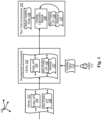
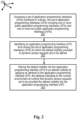
- Figure 2 illustrates a flow chart of an example method 200 for controlling access to an application programming interface (API). Method 200 will be described with respect to the components and data of computer architecture 100.
- API application programming interface
- Method 200 includes accessing a set of application programming interfaces (APIs) combined in a library, the set of application programming interfaces (APIs) including one or more public application programming interfaces (APIs) and one or more non-public application programming interfaces (APIs) (201).
- APIs application programming interfaces
- development environment 101 can access library 103.
- Library 103 includes one or more public APIs including public API 104.
- Library 103 includes one or more nob-public (e.g., private or internal) APIs including non-public API 106.
- Method 200 includes identifying an application programming interface (API) from among the set of application programming interfaces (APIs) for which the default visibility provided to dynamic access requests is to be altered (202). For example, development environment 101 (possibly in response to author input) can identify that the default visibility for dynamic access requests (e.g., using reflection or other dynamic calling techniques) into non-public API 106 is to be altered.
- API application programming interface
- Method 200 includes altering the default visibility into the application programming interface (API) to an altered visibility by applying an attribute to the application programming interface (API), the attribute indicating to the runtime environment at runtime that dynamic access requests are to be provided the altered visibility into the application programming interface (API) (203).
- author 113 can enter visibility input 112 at development environment 101.
- development environment 101 can apply attribute 107 to non-public API 106.
- Attribute 107 can indicate to runtime environment 102 that the default visibility for non-public APIs defined in default visibility rules 108 is to be altered for non-public API 106.
- Figure 3 illustrates an example computer architecture 100 that facilitates reducing the default visibility into an accessible application programming interface (API).
- computer architecture 300 includes development environment 301 and runtime environment 302.
- development environment 301 and runtime environment 302 can be connected to one another over (or be part of) a network, such as, for example, a system bus, a Local Area Network ("LAN”), a Wide Area Network (“WAN”), and even the Internet.
- LAN Local Area Network
- WAN Wide Area Network
- development environment 301 and runtime environment 302 can create message related data and exchange message related data (e.g., Internet Protocol (“IP”) datagrams and other higher layer protocols that utilize IP datagrams, such as, Transmission Control Protocol (“TCP”), Hypertext Transfer Protocol (“HTTP”), Simple Mail Transfer Protocol (“SMTP”), etc. or using other non-datagram protocols) over the network.
- IP Internet Protocol
- TCP Transmission Control Protocol
- HTTP Hypertext Transfer Protocol
- SMTP Simple Mail Transfer Protocol
- Development environment 301 can be a software application that provides facilities for software development, including but not limited to: a source code editor, build automation, a debugger, a version control system, a class browser, an object inspector, a class hierarchy diagram, etc.
- development environment 301 includes or is included in an Integrated Development Environment (IDE).
- IDE Integrated Development Environment
- An application developer can use development environment 301 to apply an attribute to code referencing an accessible API (e.g., included in a third party library). Attributes applied to code referencing an accessible API can be used to reduce default visibility into the accessible API.
- Runtime environment 302 can be a software application that provides facilities for software execution.
- Runtime environment can include a compiler (e.g., a just-in-time (JIT) compiler) and/or an interpreter for executing code developed in software development environment 301.
- runtime environment 302 includes or is included in an Integrated Development Environment (IDE).
- IDE Integrated Development Environment
- Runtime environment 302 can include mechanisms (e.g., reflection) for dynamically requesting access to an API.
- Development environment 301 and execution environment 302 can be integrated into the same environment or can be resident in separate environments.
- Runtime environment 302 includes visibility calculation module 309.
- Visibility calculation module 309 is configured to calculate the visibility into an accessible API (e.g., public API or non-public API attributed to permit dynamic access) based on attributes applied to code referencing the accessible API.
- Default visibility rules 308 can permit dynamic access to accessible APIs.
- applied attributes give an application developer a mechanism to exclude otherwise accessible APIs (e.g., included in a third party library) from dynamic access. Excluding an otherwise accessible API from dynamic access minimizes runtime support overhead (e.g., metadata generation) and thereby conserves resources.
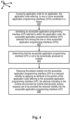
- Figure 4 illustrates a flow chart of an example method 400 for reducing the default visibility into an accessible application programming interface (API). Method 400 will be described with respect to the components and data of computer architecture 300.
- API application programming interface
- Method 400 includes accessing application code for an application, the application code referring to one or more accessible application programming interfaces (APIs) combined in a library (401).
- application code referring to one or more accessible application programming interfaces (APIs) combined in a library (401).
- development environment 301 can access application code 314.
- Development environment 310 can also access library 30.
- Application code 314 can refer to one or more APIs, such as, for example, APIs 304 and 306, included in library 303.
- Method 400 includes identifying an accessible application programming interface (API) referred to within the application code, the accessible application programming interface (API) selected from among the one or more accessible application programming interfaces (APIs) (402).
- API accessible application programming interface
- APIs accessible application programming interfaces
- development environment 301 can identify API 306 referred to by API reference 316.
- Method 400 includes determining that the accessible application programming interface (API) is not to be dynamically accessed at runtime (403). For example, development environment 301 (possibly in response to author input) can determine that dynamic access to API 306 is to be prevented.
- API application programming interface
- Method 400 includes reducing the default visibility into the accessible application programming interface (API) to a reduced visibility by applying an attribute to the portion of the application code referring to the accessible application programming interface (API), the attribute indicating to the runtime environment at runtime that dynamic access requests are to be provided the reduced visibility into the accessible application programming interface (API) (404).
- author 313 can enter visibility input 312 at development environment 301.
- development environment 301 can apply attribute 317 to API reference 316 (a reference to API 306).
- Attribute 317 can indicate to runtime environment 302 that the default visibility for API 306 is to be reduced.
- application code 314 and library 303 can be compiled along (possibly with other source code) into executable code 311.
- visibility calculation module 309 can consider both default visibility rules 308 and attribute 317 when calculating visibility into API 306.
- attribute 317 indicates the dynamic access to API 306 is prevented even though default visibility rules 308 indicate that dynamic access to accessible APIs is to be allowed.
- Limited visibility into an API can include not generating metadata for the API.
- metadata is not generated for API 306.
- metadata 319 can be generated for API 304 (another accessible API referenced form application code 314).
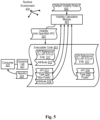
- Figure 5 illustrates an example runtime environment 500 that facilitates providing a consumer with specified visibility into an application programming interface (API).
- runtime environment 500 includes visibility calculation module 501 and consumer 531.
- Visibility calculation module 501 and consumer 531 can be connected to one another over (or be part of) a network, such as, for example, a system bus, a Local Area Network ("LAN”), a Wide Area Network (“WAN”), and even the Internet.
- LAN Local Area Network
- WAN Wide Area Network
- visibility calculation module 501 and consumer 531as well as any other connected computer systems and their components can create message related data and exchange message related data (e.g., Internet Protocol (“IP”) datagrams and other higher layer protocols that utilize IP datagrams, such as, Transmission Control Protocol (“TCP”), Hypertext Transfer Protocol (“HTTP”), Simple Mail Transfer Protocol (“SMTP”), etc. or using other non-datagram protocols) over the network.
- IP Internet Protocol
- TCP Transmission Control Protocol
- HTTP Hypertext Transfer Protocol
- SMTP Simple Mail Transfer Protocol
- Runtime environment 500 can be a software application that provides facilities for software execution.
- Runtime environment can include a compiler (e.g., a just-in-time (JIT) compiler) and/or an interpreter for executing code developed in software development environment 500.
- JIT just-in-time
- runtime environment 500 includes or is included in an Integrated Development Environment (IDE).
- IDE Integrated Development Environment
- Runtime environment 500 can include mechanisms (e.g., reflection) for dynamically requesting access to an API.
- Runtime environment 500 includes visibility calculation module 501.
- Visibility calculation module 501 is configured to calculate the visibility into an each of a plurality of APIs grouped together in a library. Visibility can be calculated for an API based on an API type (e.g., internal, private, public), attributes applied (e.g., a library author) to the API, and attributes applied to application that references the API. Applied attributes can be used to alter, override, reduce, etc. a default visibility.
- API type e.g., internal, private, public
- attributes applied e.g., a library author
- Applied attributes can be used to alter, override, reduce, etc. a default visibility.
- default visibility rules 502 define that dynamic access is removed for non-public (e.g., private or internal) APIs and that dynamic access is permitted for public APIs.
- the author of a non-public API e.g., a library author
- the author of a public API e.g., a library author
- Other default visibility rules are also possible.
- a third party author e.g., an application author
- an application author can apply an attribute to code referencing the dynamically accessible API to remove dynamic access from the API.
- an application author can minimize runtime support overhead (e.g., metadata generation) and thereby conserves resources.
- Figure 6 illustrates a flow chart of an example method 600 for providing a consumer with specified visibility into an application programming interface (API). Method 600 will be described with respect to the components and data of runtime environment 500.
- API application programming interface
- Method 600 incudes executing executable code in the runtime environment, the executable code derived from application code (601).
- executable code can be executed in runtime environment 500.
- Executable code 503 can be derived from application code that includes references to APIs contained in a library.
- API references 511 and 517 can reference APIs contained in a library.
- the APIs contained in the library can include APIs 513 and 518.
- Method 600 includes during execution of the executable code, method 600 includes receiving a dynamic call from a consumer to execute a portion of the executable code, the portion of the executable code derived from a portion of the application code that refers to an application program interface (API) within a library (602).
- API application program interface
- dynamic call 521 can be received from consumer 531.
- Dynamic call 521 can be a call to execute a portion of executable code 503.
- dynamic call 521 is a call to execute executable code that includes API reference 511.
- API reference 511 can reference either API 513 or API 518.
- dynamic call 521 is a call to execute executable code that includes API reference 517.
- API reference 517 can reference either API 513 or API 518.
- Method 600 incudes accessing a runtime default visibility into the application program interface (API) based on the type of the application program interface (API) (603).
- API 513 is a non-public API.
- a runtime default visibility for (e.g., preventing dynamic access to) non-public APIs can be accessed from default visibility rules 502 (for API 513).
- API 518 is a public API.
- a runtime default visibility for (e.g., allowing dynamic access to) public APIs can be accessed from default visibility rules 502 (for API 518).
- Method 600 incudes accessing any attributes applied to the application program interface (API), attributes applied to the application program interface (API) indicative of a desire by the author of application program interface (API) to alter the runtime default visibility into the application program interface (API) (604).
- attribute 516 can be accessed.
- Attribute 516 can indicate a desire by the library author to alter the runtime default visibility (as defined in default visibility rules 502) into API 513. For example, by default, dynamic access to non-public APIs can be prevented. However, attribute 513 can indicate that dynamic access to API 513 is to be permitted.
- Method 600 incudes accessing any attributes applied to the portion of the application code that refers to the application program interface (API), attributes applied to the portion of the application code indicative of a desire by the author of the application code to provide visibility into the application program interface (API) to a lesser extent than indicated by the runtime default visibility as altered by any attributes applied to the application program interface (API) (605).
- attributes applied to the portion of the application code indicative of a desire by the author of the application code to provide visibility into the application program interface (API) to a lesser extent than indicated by the runtime default visibility as altered by any attributes applied to the application program interface (API) (605).
- attribute 512 can be accessed.
- Attribute 512 can indicate a desire by an application author to reduce visibility into a reference API (e.g., API 513 or API 518).
- attribute 512 can indicate that dynamic access to the references API (e.g., API 513 or API 518) is to be prevented. As such, even if the library author otherwise permits dynamic access to an API, the application developer can apply attribute 512 to prevent dynamic access to the API.
- Method 600 incudes determining a calculated visibility into the application program interface (API) based on one or more of: the runtime default visibility into the application program interface (API), any attributes applied to the an application program interface (API), and any attributes applied to the portion of the application code that refers to the application program interface (API) (606).
- visibility calculation module 501 can determine a calculated visibility 522 into an API based on a default visibility for the API's type (as defined in default visibility rules 502), any attributes applied to the API, and any attributes applied to an API reference that references the API.
- Method 600 incudes providing the dynamic call with visibility into the application program interface (API) in accordance with the calculated visibility (607).
- API application program interface
- consumer 531 can be provided with visibility 522 into a dynamically called API in executable code 503.
- Results 524 of dynamic call 521 can also be returned to consumer 531.
- Results 524 may indicate that the dynamic access to the dynamically called API is not permitted.
- dynamical call 521 uses API reference 511 to call API 513.
- visibility 522 is determined from a default visibility for API type 514 (e.g., as defined in default visibility rules 502), attribute 512, and attribute 516.
- dynamical call 521 uses API reference 511 to call API 518.
- visibility 522 is determined from a default visibility for API type 519 (e.g., as defined in default visibility rules 502) and attribute 512.
Landscapes
- Engineering & Computer Science (AREA)
- Software Systems (AREA)
- Theoretical Computer Science (AREA)
- General Engineering & Computer Science (AREA)
- Physics & Mathematics (AREA)
- General Physics & Mathematics (AREA)
- Computing Systems (AREA)
- Stored Programmes (AREA)
- User Interface Of Digital Computer (AREA)
Applications Claiming Priority (3)
| Application Number | Priority Date | Filing Date | Title |
|---|---|---|---|
| US13/867,143 US8990839B2 (en) | 2013-04-22 | 2013-04-22 | Controlling runtime access to application programming interfaces |
| PCT/US2014/034739 WO2014176137A1 (en) | 2013-04-22 | 2014-04-21 | Controlling runtime access to application programming interfaces |
| EP14725877.6A EP2989539B1 (en) | 2013-04-22 | 2014-04-21 | Controlling runtime access to application programming interfaces |
Related Parent Applications (2)
| Application Number | Title | Priority Date | Filing Date |
|---|---|---|---|
| EP14725877.6A Division-Into EP2989539B1 (en) | 2013-04-22 | 2014-04-21 | Controlling runtime access to application programming interfaces |
| EP14725877.6A Division EP2989539B1 (en) | 2013-04-22 | 2014-04-21 | Controlling runtime access to application programming interfaces |
Publications (2)
| Publication Number | Publication Date |
|---|---|
| EP3982257A1 EP3982257A1 (en) | 2022-04-13 |
| EP3982257B1 true EP3982257B1 (en) | 2025-07-09 |
Family
ID=50771633
Family Applications (2)
| Application Number | Title | Priority Date | Filing Date |
|---|---|---|---|
| EP21212020.8A Active EP3982257B1 (en) | 2013-04-22 | 2014-04-21 | Controlling runtime access to application programming interfaces |
| EP14725877.6A Active EP2989539B1 (en) | 2013-04-22 | 2014-04-21 | Controlling runtime access to application programming interfaces |
Family Applications After (1)
| Application Number | Title | Priority Date | Filing Date |
|---|---|---|---|
| EP14725877.6A Active EP2989539B1 (en) | 2013-04-22 | 2014-04-21 | Controlling runtime access to application programming interfaces |
Country Status (11)
| Country | Link |
|---|---|
| US (3) | US8990839B2 (enExample) |
| EP (2) | EP3982257B1 (enExample) |
| JP (1) | JP6473442B2 (enExample) |
| KR (1) | KR102183185B1 (enExample) |
| CN (1) | CN105229603B (enExample) |
| AU (2) | AU2014257298B2 (enExample) |
| BR (1) | BR112015026327B1 (enExample) |
| CA (1) | CA2907904A1 (enExample) |
| MX (1) | MX357050B (enExample) |
| RU (1) | RU2658190C2 (enExample) |
| WO (1) | WO2014176137A1 (enExample) |
Families Citing this family (14)
| Publication number | Priority date | Publication date | Assignee | Title |
|---|---|---|---|---|
| US9195440B2 (en) * | 2013-11-26 | 2015-11-24 | International Business Machines Corporation | Intelligent data source selection in application development |
| US9430200B1 (en) * | 2015-06-04 | 2016-08-30 | Microsoft Technology Licensing Llc | Cross-library framework architecture feature sets |
| US10104090B2 (en) * | 2015-08-25 | 2018-10-16 | Oracle International Corporation | Restrictive access control for modular reflection |
| US10360008B2 (en) | 2016-09-16 | 2019-07-23 | Oracle International Corporation | Metadata application constraints within a module system based on modular encapsulation |
| US10352717B2 (en) * | 2017-02-28 | 2019-07-16 | Google Llc | Navigation application programming interface |
| US10664943B2 (en) * | 2017-06-02 | 2020-05-26 | Apple Inc. | Compound shader object and use thereof |
| US10572275B2 (en) * | 2017-06-15 | 2020-02-25 | Microsoft Technology Licensing, Llc | Compatible dictionary layout |
| EP3428793A1 (de) * | 2017-07-10 | 2019-01-16 | Siemens Aktiengesellschaft | Verfahren zur unterstützung eines anwenders bei einer erstellung einer software-applikation und computerprogramm mit einer implementation des verfahrens sowie im rahmen eines solchen verfahrens verwendbare programmierschnittstelle |
| US10817280B1 (en) * | 2018-05-21 | 2020-10-27 | Amazon Technologies, Inc. | Overriding shared service interfaces |
| CN108897533A (zh) * | 2018-06-06 | 2018-11-27 | 北京奇虎科技有限公司 | 一种函数调用的方法、装置及终端 |
| EP3582103A1 (en) * | 2018-06-14 | 2019-12-18 | QlikTech International AB | Methods and systems for application program interface management |
| US10467062B1 (en) * | 2019-03-11 | 2019-11-05 | Coupang, Corp. | Systems and methods for managing application programming interface information |
| CN112612508B (zh) * | 2020-12-24 | 2024-08-06 | 新华三云计算技术有限公司 | Api网关中的api版本控制方法、装置及存储介质 |
| US12061900B2 (en) | 2022-05-16 | 2024-08-13 | Datastax, Inc. | Web application configuration settings for execution in a cloud computing environment |
Family Cites Families (36)
| Publication number | Priority date | Publication date | Assignee | Title |
|---|---|---|---|---|
| US6199117B1 (en) | 1992-03-30 | 2001-03-06 | International Business Machines Corporation | Generalized control for starting of tasks (processes and threads) |
| WO1998038587A1 (en) * | 1997-02-26 | 1998-09-03 | Siebel Systems, Inc. | Method of using a cache to determine the visibility to a remote database client of a plurality of database transactions |
| FR2801118B1 (fr) * | 1999-11-17 | 2001-12-21 | Bull Cp8 | Procede de chargement d'applications dans un systeme embarque multi-application, systeme embarque correspondant, et procede d'execution d'une application du systeme embarque |
| US20050091576A1 (en) * | 2003-10-24 | 2005-04-28 | Microsoft Corporation | Programming interface for a computer platform |
| US20030018694A1 (en) | 2000-09-01 | 2003-01-23 | Shuang Chen | System, method, uses, products, program products, and business methods for distributed internet and distributed network services over multi-tiered networks |
| US7028305B2 (en) | 2001-05-16 | 2006-04-11 | Softricity, Inc. | Operating system abstraction and protection layer |
| US6964033B2 (en) * | 2001-06-20 | 2005-11-08 | Sun Microsystems, Inc. | Object band customization of Java runtime environments |
| US20030188183A1 (en) * | 2001-08-27 | 2003-10-02 | Lee Lane W. | Unlocking method and system for data on media |
| WO2003021427A2 (en) * | 2001-08-29 | 2003-03-13 | Globespanvirata Incorporated | Secure access to software functionalities |
| US7162721B2 (en) * | 2001-12-03 | 2007-01-09 | Sun Microsystems, Inc. | Application-independent API for distributed component collaboration |
| US7305469B2 (en) * | 2001-12-18 | 2007-12-04 | Ebay Inc. | Prioritization of third party access to an online commerce site |
| US20050050057A1 (en) * | 2003-08-25 | 2005-03-03 | Microsoft Corporation | System and method for integrating management of resources between application services and applications |
| US7409676B2 (en) * | 2003-10-20 | 2008-08-05 | International Business Machines Corporation | Systems, methods and computer programs for determining dependencies between logical components in a data processing system or network |
| US20060031681A1 (en) * | 2004-08-05 | 2006-02-09 | Motorola, Inc. | Method and system for controlling access to a wireless client device |
| US8302178B2 (en) * | 2005-03-07 | 2012-10-30 | Noam Camiel | System and method for a dynamic policies enforced file system for a data storage device |
| US7657871B2 (en) * | 2005-07-22 | 2010-02-02 | Sbc Knowledge Ventures, L.P. | Method and system of managing configuration profiles of a plurality of deployed network elements |
| US20070074033A1 (en) * | 2005-09-29 | 2007-03-29 | Research In Motion Limited | Account management in a system and method for providing code signing services |
| CN100498697C (zh) * | 2005-09-29 | 2009-06-10 | 腾讯科技(深圳)有限公司 | 一种应用编程接口控制方法和控制功能模块 |
| US7730539B2 (en) * | 2005-10-21 | 2010-06-01 | Microsoft Corporation | Authenticating third party products via a secure extensibility model |
| US8074231B2 (en) * | 2005-10-26 | 2011-12-06 | Microsoft Corporation | Configuration of isolated extensions and device drivers |
| US7716246B2 (en) * | 2005-11-30 | 2010-05-11 | Microsoft Corporation | Dynamic mechanism for providing metadata |
| US7680866B2 (en) * | 2006-01-31 | 2010-03-16 | Siemens Corporation | System and method for managing relational numerical data for monitoring systems |
| US9027039B2 (en) | 2007-01-29 | 2015-05-05 | Intel Corporation | Methods for analyzing, limiting, and enhancing access to an internet API, web service, and data |
| US20090007068A1 (en) * | 2007-06-27 | 2009-01-01 | Microsoft Corporation | Accessing Non-Public Code |
| US8209675B2 (en) | 2007-07-25 | 2012-06-26 | Sap Ag | Method and system for customizing a software application |
| US8312425B2 (en) * | 2008-03-31 | 2012-11-13 | International Business Machines Corporation | Dynamic template instantiation |
| US8239340B2 (en) | 2008-04-11 | 2012-08-07 | Trevor Hanson | Message conduit systems with algorithmic data stream control and methods for processing thereof |
| US8397290B2 (en) * | 2008-06-27 | 2013-03-12 | Microsoft Corporation | Granting least privilege access for computing processes |
| US20110055744A1 (en) * | 2009-08-28 | 2011-03-03 | Ryan Christopher N | Visual Linking of Elements to Model Attributes |
| US8438294B2 (en) * | 2010-04-07 | 2013-05-07 | Apple Inc. | Application programming interface, system, and method for collaborative online applications |
| JP5318830B2 (ja) * | 2010-08-25 | 2013-10-16 | 株式会社日立ソリューションズ | WebAPIサーバプログラム、WebAPI公開方法 |
| US8681630B1 (en) * | 2010-09-21 | 2014-03-25 | Google Inc. | Configurable rate limiting using static token buckets, and applications thereof |
| US8863156B1 (en) * | 2011-01-04 | 2014-10-14 | AppCentric Solutions, LLC | API wizard |
| US20120260233A1 (en) | 2011-04-07 | 2012-10-11 | Infosys Technologies Limited | Method and system for automating development and customization of business applications |
| US8997069B2 (en) | 2011-04-13 | 2015-03-31 | Microsoft Technology Licensing, Llc | API descriptions |
| US20120290560A1 (en) * | 2011-05-13 | 2012-11-15 | Kushal Das | Mechanism for efficiently querying application binary interface/application programming interface-related information |
-
2013
- 2013-04-22 US US13/867,143 patent/US8990839B2/en active Active
-
2014
- 2014-04-21 KR KR1020157033296A patent/KR102183185B1/ko not_active Expired - Fee Related
- 2014-04-21 CA CA2907904A patent/CA2907904A1/en not_active Abandoned
- 2014-04-21 EP EP21212020.8A patent/EP3982257B1/en active Active
- 2014-04-21 BR BR112015026327-5A patent/BR112015026327B1/pt active IP Right Grant
- 2014-04-21 RU RU2015145292A patent/RU2658190C2/ru active
- 2014-04-21 MX MX2015014870A patent/MX357050B/es active IP Right Grant
- 2014-04-21 CN CN201480022956.XA patent/CN105229603B/zh active Active
- 2014-04-21 EP EP14725877.6A patent/EP2989539B1/en active Active
- 2014-04-21 JP JP2016510711A patent/JP6473442B2/ja active Active
- 2014-04-21 AU AU2014257298A patent/AU2014257298B2/en not_active Ceased
- 2014-04-21 WO PCT/US2014/034739 patent/WO2014176137A1/en not_active Ceased
-
2015
- 2015-03-03 US US14/636,196 patent/US9785483B2/en active Active
-
2017
- 2017-09-19 US US15/709,460 patent/US11003511B2/en active Active
-
2019
- 2019-09-13 AU AU2019229450A patent/AU2019229450B2/en not_active Ceased
Also Published As
| Publication number | Publication date |
|---|---|
| KR102183185B1 (ko) | 2020-11-25 |
| US11003511B2 (en) | 2021-05-11 |
| CN105229603A (zh) | 2016-01-06 |
| AU2019229450A1 (en) | 2019-10-03 |
| US20190095256A1 (en) | 2019-03-28 |
| US20140317641A1 (en) | 2014-10-23 |
| EP2989539B1 (en) | 2022-08-17 |
| RU2015145292A3 (enExample) | 2018-03-27 |
| US20150169387A1 (en) | 2015-06-18 |
| WO2014176137A1 (en) | 2014-10-30 |
| AU2014257298B2 (en) | 2019-06-13 |
| BR112015026327A2 (pt) | 2017-07-25 |
| BR112015026327B1 (pt) | 2022-05-17 |
| US8990839B2 (en) | 2015-03-24 |
| AU2014257298A1 (en) | 2015-10-15 |
| MX357050B (es) | 2018-06-25 |
| CA2907904A1 (en) | 2014-10-30 |
| KR20160003023A (ko) | 2016-01-08 |
| MX2015014870A (es) | 2016-03-09 |
| EP2989539A1 (en) | 2016-03-02 |
| RU2015145292A (ru) | 2017-04-26 |
| JP2016517120A (ja) | 2016-06-09 |
| RU2658190C2 (ru) | 2018-06-19 |
| CN105229603B (zh) | 2019-03-22 |
| AU2019229450B2 (en) | 2020-12-10 |
| US9785483B2 (en) | 2017-10-10 |
| JP6473442B2 (ja) | 2019-02-20 |
| BR112015026327A8 (pt) | 2019-12-24 |
| EP3982257A1 (en) | 2022-04-13 |
Similar Documents
| Publication | Publication Date | Title |
|---|---|---|
| AU2019229450B2 (en) | Controlling runtime access to application programming interfaces | |
| JP5934094B2 (ja) | データ並列スレッドを有する処理論理の複数のプロセッサにわたるマッピング | |
| EP2950206B1 (en) | Extracting source code | |
| EP2153344B1 (en) | Dynamically loading scripts | |
| EP3035191A1 (en) | Identifying source code used to build executable files | |
| McKenna et al. | Using the OpenSees interpreter on parallel computers | |
| US8938712B2 (en) | Cross-platform virtual machine and method | |
| JP5367379B2 (ja) | バイナリコード解析 | |
| CN114721659A (zh) | 函数服务处理方法、装置及电子设备 | |
| JP6385471B2 (ja) | 移行および遠隔ランタイム統合 | |
| US20150220375A1 (en) | Systems and methods of interface description language (idl) compilers | |
| US10409762B2 (en) | Remote direct memory access-based on static analysis of asynchronous blocks | |
| CN118093089B (zh) | 一种基于WebAssembly扩展Kubernetes调度器的方法和装置 | |
| Zhang et al. | SNC: A cloud service platform for symbolic-numeric computation using just-in-time compilation | |
| US20120324457A1 (en) | Using compiler-generated tasks to represent programming elements | |
| US9015728B2 (en) | Methods, apparatus, and systems to access runtime values of object instances | |
| US7908375B2 (en) | Transparently externalizing plug-in computation to cluster | |
| CN109144566B (zh) | 实时操作系统、实时内核的访问方法及设备 | |
| US10101920B2 (en) | Disk I/O attribution |
Legal Events
| Date | Code | Title | Description |
|---|---|---|---|
| PUAI | Public reference made under article 153(3) epc to a published international application that has entered the european phase |
Free format text: ORIGINAL CODE: 0009012 |
|
| STAA | Information on the status of an ep patent application or granted ep patent |
Free format text: STATUS: THE APPLICATION HAS BEEN PUBLISHED |
|
| AC | Divisional application: reference to earlier application |
Ref document number: 2989539 Country of ref document: EP Kind code of ref document: P |
|
| AK | Designated contracting states |
Kind code of ref document: A1 Designated state(s): AL AT BE BG CH CY CZ DE DK EE ES FI FR GB GR HR HU IE IS IT LI LT LU LV MC MK MT NL NO PL PT RO RS SE SI SK SM TR |
|
| STAA | Information on the status of an ep patent application or granted ep patent |
Free format text: STATUS: REQUEST FOR EXAMINATION WAS MADE |
|
| 17P | Request for examination filed |
Effective date: 20221013 |
|
| RBV | Designated contracting states (corrected) |
Designated state(s): AL AT BE BG CH CY CZ DE DK EE ES FI FR GB GR HR HU IE IS IT LI LT LU LV MC MK MT NL NO PL PT RO RS SE SI SK SM TR |
|
| GRAP | Despatch of communication of intention to grant a patent |
Free format text: ORIGINAL CODE: EPIDOSNIGR1 |
|
| STAA | Information on the status of an ep patent application or granted ep patent |
Free format text: STATUS: GRANT OF PATENT IS INTENDED |
|
| INTG | Intention to grant announced |
Effective date: 20250226 |
|
| P01 | Opt-out of the competence of the unified patent court (upc) registered |
Free format text: CASE NUMBER: APP_10893/2025 Effective date: 20250305 |
|
| GRAS | Grant fee paid |
Free format text: ORIGINAL CODE: EPIDOSNIGR3 |
|
| GRAA | (expected) grant |
Free format text: ORIGINAL CODE: 0009210 |
|
| STAA | Information on the status of an ep patent application or granted ep patent |
Free format text: STATUS: THE PATENT HAS BEEN GRANTED |
|
| AC | Divisional application: reference to earlier application |
Ref document number: 2989539 Country of ref document: EP Kind code of ref document: P |
|
| AK | Designated contracting states |
Kind code of ref document: B1 Designated state(s): AL AT BE BG CH CY CZ DE DK EE ES FI FR GB GR HR HU IE IS IT LI LT LU LV MC MK MT NL NO PL PT RO RS SE SI SK SM TR |
|
| REG | Reference to a national code |
Ref country code: GB Ref legal event code: FG4D |
|
| REG | Reference to a national code |
Ref country code: CH Ref legal event code: EP |
|
| REG | Reference to a national code |
Ref country code: IE Ref legal event code: FG4D |
|
| REG | Reference to a national code |
Ref country code: DE Ref legal event code: R096 Ref document number: 602014092132 Country of ref document: DE |
|
| REG | Reference to a national code |
Ref country code: NL Ref legal event code: MP Effective date: 20250709 |
|
| PG25 | Lapsed in a contracting state [announced via postgrant information from national office to epo] |
Ref country code: PT Free format text: LAPSE BECAUSE OF FAILURE TO SUBMIT A TRANSLATION OF THE DESCRIPTION OR TO PAY THE FEE WITHIN THE PRESCRIBED TIME-LIMIT Effective date: 20251110 |
|
| PG25 | Lapsed in a contracting state [announced via postgrant information from national office to epo] |
Ref country code: NL Free format text: LAPSE BECAUSE OF FAILURE TO SUBMIT A TRANSLATION OF THE DESCRIPTION OR TO PAY THE FEE WITHIN THE PRESCRIBED TIME-LIMIT Effective date: 20250709 |
|
| REG | Reference to a national code |
Ref country code: AT Ref legal event code: MK05 Ref document number: 1812461 Country of ref document: AT Kind code of ref document: T Effective date: 20250709 |