EP3982079A1 - Generating a point cloud capture plan - Google Patents
Generating a point cloud capture plan Download PDFInfo
- Publication number
- EP3982079A1 EP3982079A1 EP21200384.2A EP21200384A EP3982079A1 EP 3982079 A1 EP3982079 A1 EP 3982079A1 EP 21200384 A EP21200384 A EP 21200384A EP 3982079 A1 EP3982079 A1 EP 3982079A1
- Authority
- EP
- European Patent Office
- Prior art keywords
- scanner
- point cloud
- view
- capture
- plan
- Prior art date
- Legal status (The legal status is an assumption and is not a legal conclusion. Google has not performed a legal analysis and makes no representation as to the accuracy of the status listed.)
- Withdrawn
Links
Images


Classifications
-
- G—PHYSICS
- G01—MEASURING; TESTING
- G01B—MEASURING LENGTH, THICKNESS OR SIMILAR LINEAR DIMENSIONS; MEASURING ANGLES; MEASURING AREAS; MEASURING IRREGULARITIES OF SURFACES OR CONTOURS
- G01B11/00—Measuring arrangements characterised by the use of optical techniques
- G01B11/24—Measuring arrangements characterised by the use of optical techniques for measuring contours or curvatures
-
- G—PHYSICS
- G05—CONTROLLING; REGULATING
- G05D—SYSTEMS FOR CONTROLLING OR REGULATING NON-ELECTRIC VARIABLES
- G05D1/00—Control of position, course, altitude or attitude of land, water, air or space vehicles, e.g. using automatic pilots
- G05D1/02—Control of position or course in two dimensions
- G05D1/021—Control of position or course in two dimensions specially adapted to land vehicles
- G05D1/0231—Control of position or course in two dimensions specially adapted to land vehicles using optical position detecting means
- G05D1/0246—Control of position or course in two dimensions specially adapted to land vehicles using optical position detecting means using a video camera in combination with image processing means
- G05D1/0251—Control of position or course in two dimensions specially adapted to land vehicles using optical position detecting means using a video camera in combination with image processing means extracting 3D information from a plurality of images taken from different locations, e.g. stereo vision
-
- G—PHYSICS
- G01—MEASURING; TESTING
- G01B—MEASURING LENGTH, THICKNESS OR SIMILAR LINEAR DIMENSIONS; MEASURING ANGLES; MEASURING AREAS; MEASURING IRREGULARITIES OF SURFACES OR CONTOURS
- G01B15/00—Measuring arrangements characterised by the use of electromagnetic waves or particle radiation, e.g. by the use of microwaves, X-rays, gamma rays or electrons
- G01B15/04—Measuring arrangements characterised by the use of electromagnetic waves or particle radiation, e.g. by the use of microwaves, X-rays, gamma rays or electrons for measuring contours or curvatures
-
- G—PHYSICS
- G01—MEASURING; TESTING
- G01C—MEASURING DISTANCES, LEVELS OR BEARINGS; SURVEYING; NAVIGATION; GYROSCOPIC INSTRUMENTS; PHOTOGRAMMETRY OR VIDEOGRAMMETRY
- G01C11/00—Photogrammetry or videogrammetry, e.g. stereogrammetry; Photographic surveying
- G01C11/02—Picture taking arrangements specially adapted for photogrammetry or photographic surveying, e.g. controlling overlapping of pictures
- G01C11/025—Picture taking arrangements specially adapted for photogrammetry or photographic surveying, e.g. controlling overlapping of pictures by scanning the object
-
- G—PHYSICS
- G01—MEASURING; TESTING
- G01C—MEASURING DISTANCES, LEVELS OR BEARINGS; SURVEYING; NAVIGATION; GYROSCOPIC INSTRUMENTS; PHOTOGRAMMETRY OR VIDEOGRAMMETRY
- G01C15/00—Surveying instruments or accessories not provided for in groups G01C1/00 - G01C13/00
- G01C15/002—Active optical surveying means
-
- G—PHYSICS
- G01—MEASURING; TESTING
- G01S—RADIO DIRECTION-FINDING; RADIO NAVIGATION; DETERMINING DISTANCE OR VELOCITY BY USE OF RADIO WAVES; LOCATING OR PRESENCE-DETECTING BY USE OF THE REFLECTION OR RERADIATION OF RADIO WAVES; ANALOGOUS ARRANGEMENTS USING OTHER WAVES
- G01S17/00—Systems using the reflection or reradiation of electromagnetic waves other than radio waves, e.g. lidar systems
- G01S17/02—Systems using the reflection of electromagnetic waves other than radio waves
- G01S17/06—Systems determining position data of a target
- G01S17/42—Simultaneous measurement of distance and other co-ordinates
-
- G—PHYSICS
- G01—MEASURING; TESTING
- G01S—RADIO DIRECTION-FINDING; RADIO NAVIGATION; DETERMINING DISTANCE OR VELOCITY BY USE OF RADIO WAVES; LOCATING OR PRESENCE-DETECTING BY USE OF THE REFLECTION OR RERADIATION OF RADIO WAVES; ANALOGOUS ARRANGEMENTS USING OTHER WAVES
- G01S17/00—Systems using the reflection or reradiation of electromagnetic waves other than radio waves, e.g. lidar systems
- G01S17/88—Lidar systems specially adapted for specific applications
- G01S17/89—Lidar systems specially adapted for specific applications for mapping or imaging
-
- G—PHYSICS
- G05—CONTROLLING; REGULATING
- G05D—SYSTEMS FOR CONTROLLING OR REGULATING NON-ELECTRIC VARIABLES
- G05D1/00—Control of position, course, altitude or attitude of land, water, air or space vehicles, e.g. using automatic pilots
- G05D1/02—Control of position or course in two dimensions
- G05D1/021—Control of position or course in two dimensions specially adapted to land vehicles
- G05D1/0268—Control of position or course in two dimensions specially adapted to land vehicles using internal positioning means
- G05D1/0274—Control of position or course in two dimensions specially adapted to land vehicles using internal positioning means using mapping information stored in a memory device
-
- G—PHYSICS
- G06—COMPUTING OR CALCULATING; COUNTING
- G06T—IMAGE DATA PROCESSING OR GENERATION, IN GENERAL
- G06T17/00—Three-dimensional [3D] modelling for computer graphics
-
- G—PHYSICS
- G06—COMPUTING OR CALCULATING; COUNTING
- G06T—IMAGE DATA PROCESSING OR GENERATION, IN GENERAL
- G06T7/00—Image analysis
- G06T7/50—Depth or shape recovery
- G06T7/521—Depth or shape recovery from laser ranging, e.g. using interferometry; from the projection of structured light
-
- G—PHYSICS
- G01—MEASURING; TESTING
- G01B—MEASURING LENGTH, THICKNESS OR SIMILAR LINEAR DIMENSIONS; MEASURING ANGLES; MEASURING AREAS; MEASURING IRREGULARITIES OF SURFACES OR CONTOURS
- G01B2210/00—Aspects not specifically covered by any group under G01B, e.g. of wheel alignment, caliper-like sensors
- G01B2210/54—Revolving an optical measuring instrument around a body
-
- G—PHYSICS
- G06—COMPUTING OR CALCULATING; COUNTING
- G06T—IMAGE DATA PROCESSING OR GENERATION, IN GENERAL
- G06T17/00—Three-dimensional [3D] modelling for computer graphics
- G06T17/05—Geographic models
-
- G—PHYSICS
- G06—COMPUTING OR CALCULATING; COUNTING
- G06T—IMAGE DATA PROCESSING OR GENERATION, IN GENERAL
- G06T2207/00—Indexing scheme for image analysis or image enhancement
- G06T2207/10—Image acquisition modality
- G06T2207/10028—Range image; Depth image; 3D point clouds
Definitions
- a three-dimensional (3D) scanner may capture a point cloud associated with an object and/or environment to obtain spatial information concerning the object and/or environment.
- the point cloud may be used by another device, such as a user device, to render a digital 3D representation of the object and/or environment.
- a method includes receiving, by a device, a two-dimensional layout of an area to be captured by a scanner; receiving, by the device, scanner parameters associated with the scanner; calculating, by the device, a reduced field of view for the scanner based on the scanner parameters; calculating, by the device and based on the two-dimensional layout and the reduced field of view, a point cloud capture plan identifying a minimum quantity of locations in the area to position the scanner to capture all of the area; modifying, by the device, the point cloud capture plan, based on obstructions identified in the two-dimensional layout and based on the reduced field of view, to generate a modified point cloud capture plan; optimizing, by the device, the modified point cloud capture plan, based on the obstructions identified in the two-dimensional layout and based on the reduced field of view, to generate a final point cloud capture plan; and performing, by the device, one or more actions based on the final point cloud capture plan.
- a device includes one or more memories and one or more processors, communicatively coupled to the one or more memories, configured to: receive a two-dimensional layout of an area to be captured by a scanner; receive scanner parameters associated with the scanner; calculate a width of a field of view for the scanner based on a horizontal field of view parameter and an optimal distance parameter provided in the scanner parameters; calculate a height of the field of view based on a vertical field of view parameter and the optimal distance parameter provided in the scanner parameters; calculate a reduced field of view for the scanner based on the width of the field of view, the height of the field of view, and a reduction coefficient; calculate, based on the two-dimensional layout and the reduced field of view, a point cloud capture plan identifying a minimum quantity of locations in the area to position the scanner to capture all of the area; modify the point cloud capture plan, based on obstructions identified in the two-dimensional layout and based on the reduced field of view, to generate a modified point cloud capture plan; optimize the modified point cloud capture plan, based on
- a non-transitory computer-readable medium storing a set of instructions includes one or more instructions that, when executed by one or more processors of a device, cause the device to: receive a two-dimensional layout of an area to be captured by a scanner; receive scanner parameters associated with the scanner; calculate a reduced field of view for the scanner based on the scanner parameters; calculate, based on the two-dimensional layout and the reduced field of view, a point cloud capture plan identifying a minimum quantity of locations in the area to position the scanner to capture all of the area; modify the point cloud capture plan, based on obstructions identified in the two-dimensional layout and based on the reduced field of view, to generate a modified point cloud capture plan; optimize the modified point cloud capture plan, based on the obstructions identified in the two-dimensional layout and based on the reduced field of view, to generate a final point cloud capture plan; cause the scanner to capture point clouds at locations of the area identified in the final point cloud capture plan; and generate a three-dimensional digital layout based on the point clouds.
- a scanner may capture multiple point clouds associated with an environment to be able to obtain enough data (e.g., enough points) that can be used to accurately render a digital 3D layout of the environment. Ensuring a high quality capture of point clouds associated with the environment can be a difficult and time-intensive process. Moreover, individual point clouds are often associated with one or more of the same portions of the environment (e.g., individual point clouds often overlap), which creates duplicate data (e.g., duplicate points).
- a device e.g., the scanner and/or another computing device
- processes the data associated with the multiple point clouds e.g., to generate a digital 3D layout
- the device also processes multiple sets of duplicate data, which causes the device to unnecessarily consume computing resources (e.g., processing resources, memory resources, power resources, and/or the like) of the device.
- computing resources e.g., processing resources, memory resources, power resources, and/or the like
- additional point clouds are often captured in order to cover the zones of the environment from different angles, which increases a likelihood of obtaining even more duplicate data and further unnecessary use of computing resources.
- Some implementations described herein provide a capture optimization system that obtains a layout (e.g., a 2D layout) of an area and scanner parameters (e.g., a field of view of the scanner, an optimal optical distance of the scanner, and/or a resolution of the scanner, among other examples).
- the capture optimization system may calculate a reduced field of view for the scanner (e.g., a portion of the field of view of the scanner associated with high quality, accurate capture of point clouds) based on the scanner parameters.
- the capture optimization system may calculate, based on the 2D layout and the reduced field of view, a point cloud capture plan that identifies a minimum quantity of locations in the area to position the scanner in order to capture all of the area.
- the device may modify the point cloud capture plan, based on obstructions identified in the two-dimensional layout and based on the reduced field of view, to generate a modified point cloud capture plan, and may optimize the modified point cloud capture plan to generate a final point cloud capture plan.
- the device may then perform one or more actions based on the final point cloud capture plan, such as providing instructions to an autonomous vehicle or a technician to cause the scanner to capture point clouds according to the final point cloud capture plan.
- the capture optimization system facilitates an efficient (e.g., in terms of a number of point clouds to be captured, an amount of time to capture the number of point clouds, and/or an amount of time to position and/or align the scanner, among other examples) capture of point clouds associated with the area.
- the final point cloud capture plan generated by the capture optimization system may be used by the scanner to obtain an optimal amount of point clouds to cover the area, including zones of the area that are obstructed by obstructions, with a minimal amount of overlap between point clouds.
- a total amount of data (e.g., a total amount of points) captured by the scanner is less than (and includes less duplicate data than) an amount of data that would otherwise be captured by the scanner.
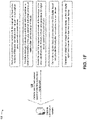
- Figs. 1A-1F are diagrams of an example 100 associated with generating a high quality point cloud capture plan.
- example 100 includes a scanner, a server device, and a capture optimization system.
- the scanner, the server device, and/or the capture optimization system may be connected via a network, such as a wired network (e.g., the Internet or another data network), a wireless network (e.g., a wireless local area network, a wireless wide area network, a cellular network, and/or the like), and/or the like.
- a network such as a wired network (e.g., the Internet or another data network), a wireless network (e.g., a wireless local area network, a wireless wide area network, a cellular network, and/or the like), and/or the like.
- a network such as a wired network (e.g., the Internet or another data network), a wireless network (e.g., a wireless local area network, a wireless wide area network, a
- the capture optimization system may include a computing device, a server device, a cloud computing device, and/or the like.
- the scanner may include a 3D scanner (e.g., that comprises a camera, a LIDAR sensor, a radar sensor, and/or a sonar sensor, among other examples) that is capable of capturing a point cloud concerning an environment (e.g., determining and/or generating distance and/or position measurements of points associated with the environment).
- the server device may include a communication and/or computing device, such as a server, a web server, a server in a cloud computing environment, and/or the like.
- the capture optimization system may receive a layout of an area to be captured by the scanner (e.g., an area of which the scanner is to capture one or more point clouds).
- the area may include some or all of an environment, such as one or more rooms of a building.
- the layout may be a two-dimensional (2D) layout of the area that indicates 2D spatial information related to area, such as one or more dimensions (e.g., location coordinates, lengths, widths, and/or distances, among other examples) associated with objects that define and/or are included in the area.
- the 2D layout may be an overhead (e.g., birds-eye-view) map of the area that indicates one or more features of the area, such as walls, doors, windows, and/or walking paths.
- the server device may maintain and/or store the layout in a data structure (e.g., a database, an electronic file system, and/or one or more electronic files, among other examples) and may provide the layout to the capture optimization system (e.g., via the network that connects the server device and the capture optimization system).
- a data structure e.g., a database, an electronic file system, and/or one or more electronic files, among other examples
- the capture optimization system may receive scanner parameters associated with the scanner.
- the scanner parameters may include a field of view of the scanner, a range of the scanner, and/or a resolution of the scanner, among other examples.
- the field of view of the scanner may comprise a horizontal field of view parameter of the scanner (e.g., that indicates a horizontal angle of perception of the scanner) and/or a vertical field of view parameter of the scanner (e.g., that indicates a vertical angle of perception of the scanner).
- the horizontal field of view parameter may indicate that the scanner is able to capture a point cloud associated with a horizontal angle of 75 degrees, 120 degrees, and/or 360 degrees, among other examples.
- the range of the scanner may include a minimum capture distance parameter (e.g., a minimum capture distance of the scanner), a maximum capture distance parameter (e.g., a maximum capture distance of the scanner), and/or an optimal distance parameter (e.g., one or more optimal optical distances of the scanner for capturing a point cloud associated with an area), among other examples.
- the resolution of the scanner may indicate a distance (e.g., in microns, millimeters, centimeters, and/or the like) between points that comprise a point cloud captured by the scanner.
- the scanner may provide the scanner parameters to the capture optimization system (e.g., via the network that connects the scanner and the capture optimization system).
- a user of the capture optimization system may interact with a user interface of the capture optimization system to input the scanner parameters into the capture optimization system.
- the capture optimization system may calculate a reduced field of view for the scanner based on the scanner parameters.
- the capture optimization system may calculate a representative width of the field of view for the scanner based on the horizontal field of view parameter and the optimal distance parameter and/or may calculate a representative height of the field of view based on the vertical field of view parameter and the optimal distance parameter.
- the capture optimization system may thereby calculate the reduced field of view based on the representative width of the field of view, the representative height of the field of view, and a reduction coefficient (e.g., where the reduction coefficient is greater than 0 and less than 1).
- the capture optimization system may determine the reduction coefficient based on the range of the scanner (e.g., the reduction coefficient may be determined by dividing the minimum capture distance parameter by the maximum capture distance parameter, by dividing the minimum capture distance parameter by the optimal distance parameter, or dividing the optical distance parameter by the maximum capture distance parameter, among other examples).
- the capture optimization system may apply the reduction coefficient to the horizontal field of view parameter and/or the vertical field of view parameter to calculate the reduced field of view of the scanner.
- the capture optimization system may calculate a reduced field of view to facilitate high quality point cloud capture of the area.
- the reduced field of view may minimize overlap between point clouds captured by the scanner (e.g., when the scanner captures point clouds according to a point cloud capture plan, described herein, that is calculated by the capture optimization system based on the reduced field of view).
- the reduced field of view may be associated with points, of a point cloud, that have greater measurement accuracy, thereby further facilitating the high quality point cloud capture of the area.
- the capture optimization system may calculate a point cloud capture plan (e.g., for the scanner to capture one or more point clouds related to the area).
- the point cloud capture plan identifies a minimum quantity of locations in the area in which to position the scanner to allow the scanner to capture all of the area (e.g., in one or more point clouds).
- the capture optimization system may calculate the point cloud capture plan based on the layout and the reduced field of view of the scanner. For example, the capture optimization system may overlay a geometrical object (e.g., shown as a triangle or a circle in Fig. 1C ) that represents the reduced field of view of the scanner on the layout multiple times until the layout is filled with multiple geometrical objects (e.g., without any "gaps" between the geometrical objects and with a minimal amount of overlap between geometrical objects). The capture optimization system may calculate the point cloud capture plan based on respective locations of the multiple geometrical objects on the layout.
- a geometrical object e.g., shown as a triangle or a circle in Fig. 1C
- the capture optimization system may calculate the point cloud capture plan based on respective locations of the multiple geometrical objects on the layout.
- the capture optimization system may determine that a respective point of the multiple geometric objects, such as a vertex point of a triangle and/or a center point of a circle, indicates a placement location for the scanner. Further, the capture optimization system may determine that a respective dimension of the multiple geometric objects, such as a length of a triangle and/or a radius of a circle, indicates a horizontal field of view parameter and/or a vertical field of view parameter of a reduced field of view of the scanner.
- the capture optimization system may modify the point cloud capture plan (e.g., that was calculated by the capture optimization system as described herein in relation to Fig. 1C and reference number 115) to generate a modified point cloud capture plan.
- the capture optimization system may modify the point cloud capture plan based on one or more obstructions identified in the layout and the reduced field of view of the scanner. For example, the capture optimization system may identify one or more zones in the layout (e.g., wherein a zone is shown as a diagonally patterned portion in the left example layout of Fig.
- the capture optimization system may determine, for a zone associated with an obstruction, one or more additional points for overlaying the geometrical object (e.g., the triangle or the circle described above in relation to Fig. 1C and reference number 115, for example) that cover the zone and avoid the obstruction.
- the capture optimization system may modify the point cloud capture plan to include the one or more additional points and to generate the modified point cloud capture plan.
- the one or more additional points may respectively indicate additional placement locations for the scanner and thereby enable the scanner to capture one or more additional point clouds of the zone (e.g., without obstruction by the one or more obstructions).
- the capture optimization system may optimize the modified point cloud capture plan to generate a final point cloud capture plan.
- the capture optimization system may optimize the modified point cloud capture plan based on the one or more obstructions identified in the layout and the reduced field of view of the scanner. For example, the capture optimization system may identify points in the modified point cloud capture plan that cause associated geometrical objects (e.g., the triangles or the circles described above in relation to Fig. 1C and reference number 115, for example) to overlap one another.
- the capture optimization system may modify or eliminate one or more points, of the identified points, in the modified point cloud capture plan to generate the final modified point cloud capture plan (e.g., to reduce and/or eliminate overlapping of the geometrical objects on the layout). In this way, the capture optimization system may identify points in the modified point cloud capture plan that cause capture of overlapping point clouds of the area and may modify or eliminate one or more of the points that cause capture of the overlapping point clouds.
- the capture optimization system may perform one or more actions based on the final point cloud capture plan.
- the one or more actions may include instructing an autonomous vehicle (e.g., a robot, a drone, and/or the like) with the scanner to travel to locations of the area, identified in the final point cloud capture plan, and capture point clouds concerning the area.
- the capture optimization system may generate one or more instructions and send the one or more instructions to the autonomous vehicle (e.g., via the network) to cause the autonomous vehicle to use the scanner to capture the point clouds according to the final point cloud capture plan.
- the one or more actions may include providing a message (e.g., to a user device) instructing a technician with the scanner to travel to the locations of the area, identified in the final point cloud capture plan, and capture point clouds concerning the area.
- the capture optimization system facilitates obtaining as few point clouds as possible to cover the area, which minimizes an amount of data that needs to be processed and an amount of computing resources (e.g., processing resources, memory resources, and/or power resources, among other examples) that needs to be utilized to process the data (e.g., to render the area as a 3D digital layout).
- the capture optimization system provides an optimal path for the autonomous vehicle or technician to take, which minimizes an amount of travel time needed to capture the point clouds concerning the area and allows for more efficient capture of the point clouds. This may also reduce an amount of wear-and-tear or amount of utilization of other resources (e.g., power resources) of the autonomous vehicle, which facilitates a high quality performance of the autonomous vehicle.
- the one or more actions include causing the scanner to capture point clouds at the locations of the area, identified in the final point cloud capture plan, to generate a 3D digital layout based on the point clouds.
- the capture optimization system reduces an amount of cloud points to cover the area, which reduces an amount of data that needs to be processed and an amount of computing resources (e.g., processing resources, memory resources, and/or power resources, among other examples) that needs to be utilized to process the data (e.g., to render the area as the 3D digital layout).
- computing resources e.g., processing resources, memory resources, and/or power resources, among other examples
- the one or more actions include generating navigation instructions based on the 3D digital layout and providing the navigation instructions to a user device. Additionally, or alternatively, the one or more actions may include generating a virtual tour through the area based on the 3D digital layout and providing the virtual tour to a user device. In this way, the capture optimization system may facilitate a physical or virtual exploration of the area by a user and may conserve computing resources of the user device that would otherwise be consumed to facilitate the user exploring the area or the 3D digital layout.
- Figs. 1A-1F are provided as an example. Other examples may differ from what is described with regard to Figs. 1A-1F .
- the number and arrangement of devices shown in Figs. 1A-1F are provided as an example. In practice, there may be additional devices, fewer devices, different devices, or differently arranged devices than those shown in Figs. 1A-1F .
- two or more devices shown in Figs. 1A-1F may be implemented within a single device, or a single device shown in Figs. 1A-1F may be implemented as multiple, distributed devices.
- a set of devices (e.g., one or more devices) shown in Figs. 1A-1F may perform one or more functions described as being performed by another set of devices shown in Figs. 1A-1F .
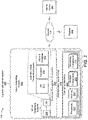
- Fig. 2 is a diagram of an example environment 200 in which systems and/or methods described herein may be implemented.
- environment 200 may include a capture optimization system 201, which may include one or more elements of and/or may execute within a cloud computing system 202.
- the cloud computing system 202 may include one or more elements 203-213, as described in more detail below.
- environment 200 may include a network 220, a scanner 230, and/or a server device 240. Devices and/or elements of environment 200 may interconnect via wired connections and/or wireless connections.
- the cloud computing system 202 includes computing hardware 203, a resource management component 204, a host operating system (OS) 205, and/or one or more virtual computing systems 206.
- the resource management component 204 may perform virtualization (e.g., abstraction) of computing hardware 203 to create the one or more virtual computing systems 206.
- virtualization e.g., abstraction
- the resource management component 204 enables a single computing device (e.g., a computer, a server, and/or the like) to operate like multiple computing devices, such as by creating multiple isolated virtual computing systems 206 from computing hardware 203 of the single computing device.
- computing hardware 203 can operate more efficiently, with lower power consumption, higher reliability, higher availability, higher utilization, greater flexibility, and lower cost than using separate computing devices.
- Computing hardware 203 includes hardware and corresponding resources from one or more computing devices.
- computing hardware 203 may include hardware from a single computing device (e.g., a single server) or from multiple computing devices (e.g., multiple servers), such as multiple computing devices in one or more data centers.
- computing hardware 203 may include one or more processors 207, one or more memories 208, one or more storage components 209, and/or one or more networking components 210. Examples of a processor, a memory, a storage component, and a networking component (e.g., a communication component) are described elsewhere herein.
- the resource management component 204 includes a virtualization application (e.g., executing on hardware, such as computing hardware 203) capable of virtualizing computing hardware 203 to start, stop, and/or manage one or more virtual computing systems 206.
- the resource management component 204 may include a hypervisor (e.g., a bare-metal or Type 1 hypervisor, a hosted or Type 2 hypervisor, and/or the like) or a virtual machine monitor, such as when the virtual computing systems 206 are virtual machines 211.
- the resource management component 204 may include a container manager, such as when the virtual computing systems 206 are containers 212.
- the resource management component 204 executes within and/or in coordination with a host operating system 205.
- a virtual computing system 206 includes a virtual environment that enables cloud-based execution of operations and/or processes described herein using computing hardware 203.
- a virtual computing system 206 may include a virtual machine 211, a container 212, a hybrid environment 213 that includes a virtual machine and a container, and/or the like.
- a virtual computing system 206 may execute one or more applications using a file system that includes binary files, software libraries, and/or other resources required to execute applications on a guest operating system (e.g., within the virtual computing system 206) or the host operating system 205.
- the capture optimization system 201 may include one or more elements 203-213 of the cloud computing system 202, may execute within the cloud computing system 202, and/or may be hosted within the cloud computing system 202, in some implementations, the capture optimization system 201 may not be cloud-based (e.g., may be implemented outside of a cloud computing system) or may be partially cloud-based.
- the capture optimization system 201 may include one or more devices that are not part of the cloud computing system 202, such as device 300 of Fig. 3 , which may include a standalone server or another type of computing device.
- the capture optimization system 201 may perform one or more operations and/or processes described in more detail elsewhere herein.
- Network 220 includes one or more wired and/or wireless networks.
- network 220 may include a cellular network, a public land mobile network (PLMN), a local area network (LAN), a wide area network (WAN), a private network, the Internet, and/or the like, and/or a combination of these or other types of networks.
- PLMN public land mobile network
- LAN local area network
- WAN wide area network
- private network the Internet, and/or the like, and/or a combination of these or other types of networks.
- the network 220 enables communication among the devices of environment 200.
- Scanner 230 includes one or more devices capable of capturing one or more point clouds associated with an environment, as described elsewhere herein.
- the scanner 230 may include a stationary scanner or a mobile scanner.
- the scanner 230 may have a field of view defined by one or more parameters, such as a horizontal field of view parameter (e.g., that indicates a horizontal angle of perception of the scanner 230) and/or a vertical field of view parameter of the scanner 230 (e.g., that indicates a vertical angle of perception of the scanner 230).
- the horizontal field of view parameter may indicate that the scanner 230 is able to capture a point cloud associated with a horizontal angle of 75 degrees, 120 degrees, and/or 360 degrees, among other examples.
- a range of the scanner 230 may include a minimum capture distance parameter (e.g., a minimum capture distance of the scanner 230), a maximum capture distance parameter (e.g., a maximum capture distance of the scanner 230), and/or an optimal distance parameter (e.g., one or more optimal optical distances of the scanner 230 for capturing a point cloud associated with an area), among other examples.
- a resolution of the scanner 230 may indicate a distance (e.g., in microns, millimeters, centimeters, and/or the like) between points that comprise a point cloud captured by the scanner 230.
- the server device 240 includes one or more devices capable of receiving, generating, storing, processing, providing, and/or routing information, as described elsewhere herein.
- the server device 240 may include a communication device and/or a computing device.
- the server device 240 may include a server, an application server, a client server, a web server, a database server, a host server, a proxy server, a virtual server (e.g., executing on computing hardware), a server in a cloud computing system, a device that includes computing hardware used in a cloud computing environment, or a similar type of device.
- the server device 240 may communicate with one or more other devices of environment 200, as described elsewhere herein.
- the server device 240 may provide a layout (e.g., a 2D layout) of an area to the capture optimization system 201.
- the number and arrangement of devices and networks shown in Fig. 2 are provided as an example. In practice, there may be additional devices and/or networks, fewer devices and/or networks, different devices and/or networks, or differently arranged devices and/or networks than those shown in Fig. 2 . Furthermore, two or more devices shown in Fig. 2 may be implemented within a single device, or a single device shown in Fig. 2 may be implemented as multiple, distributed devices. Additionally, or alternatively, a set of devices (e.g., one or more devices) of environment 200 may perform one or more functions described as being performed by another set of devices of environment 200.
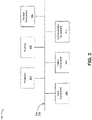
- Fig. 3 is a diagram of example components of a device 300, which may correspond to capture optimization system 201, computing hardware 203, scanner 230, and/or server device 240.
- capture optimization system 201, computing hardware 203, scanner 230, and/or server device 240 may include one or more devices 300 and/or one or more components of device 300.
- device 300 may include a bus 310, a processor 320, a memory 330, a storage component 340, an input component 350, an output component 360, and a communication component 370.
- Bus 310 includes a component that enables wired and/or wireless communication among the components of device 300.
- Processor 320 includes a central processing unit, a graphics processing unit, a microprocessor, a controller, a microcontroller, a digital signal processor, a field-programmable gate array, an application-specific integrated circuit, and/or another type of processing component.
- Processor 320 is implemented in hardware, firmware, or a combination of hardware and software.
- processor 320 includes one or more processors capable of being programmed to perform a function.
- Memory 330 includes a random access memory, a read only memory, and/or another type of memory (e.g., a flash memory, a magnetic memory, and/or an optical memory).
- Storage component 340 stores information and/or software related to the operation of device 300.
- storage component 340 may include a hard disk drive, a magnetic disk drive, an optical disk drive, a solid state disk drive, a compact disc, a digital versatile disc, and/or another type of non-transitory computer-readable medium.
- Input component 350 enables device 300 to receive input, such as user input and/or sensed inputs.
- input component 350 may include a touch screen, a keyboard, a keypad, a mouse, a button, a microphone, a switch, a sensor, a global positioning system component, an accelerometer, a gyroscope, an actuator, and/or the like.
- Output component 360 enables device 300 to provide output, such as via a display, a speaker, and/or one or more light-emitting diodes.
- Communication component 370 enables device 300 to communicate with other devices, such as via a wired connection and/or a wireless connection.
- communication component 370 may include a receiver, a transmitter, a transceiver, a modem, a network interface card, an antenna, and/or the like.
- Device 300 may perform one or more processes described herein.
- a non-transitory computer-readable medium e.g., memory 330 and/or storage component 340
- may store a set of instructions e.g., one or more instructions, code, software code, program code, and/or the like
- Processor 320 may execute the set of instructions to perform one or more processes described herein.
- execution of the set of instructions, by one or more processors 320 causes the one or more processors 320 and/or the device 300 to perform one or more processes described herein.
- hardwired circuitry may be used instead of or in combination with the instructions to perform one or more processes described herein.
- implementations described herein are not limited to any specific combination of hardware circuitry and software.
- Device 300 may include additional components, fewer components, different components, or differently arranged components than those shown in Fig. 3 . Additionally, or alternatively, a set of components (e.g., one or more components) of device 300 may perform one or more functions described as being performed by another set of components of device 300.
- a set of components e.g., one or more components
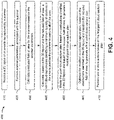
- Fig. 4 is a flowchart of an example process 400 associated with generating a point cloud capture plan.
- one or more process blocks of Fig. 4 may be performed by a device (e.g., capture optimization system 201).
- one or more process blocks of Fig. 4 may be performed by another device or a group of devices separate from or including the device, such as a scanner (e.g., scanner 230) and/or a server device (e.g., server device 240).
- a scanner e.g., scanner 230
- server device e.g., server device 240
- one or more process blocks of Fig. 4 may be performed by one or more components of device 300, such as processor 320, memory 330, storage component 340, input component 350, output component 360, and/or communication component 370.
- process 400 may include receiving a two-dimensional layout of an area to be captured by a scanner (block 410).
- the device may receive a two-dimensional layout of an area to be captured by a scanner, as described above.
- process 400 may include receiving scanner parameters associated with the scanner (block 420).
- the device may receive scanner parameters associated with the scanner, as described above.
- process 400 may include calculating a reduced field of view for the scanner based on the scanner parameters (block 430).
- the device may calculate a reduced field of view for the scanner based on the scanner parameters, as described above.
- process 400 may include calculating, based on the two-dimensional layout and the reduced field of view, a point cloud capture plan identifying a minimum quantity of locations in the area to position the scanner to capture all of the area (block 440).
- the device may calculate, based on the two-dimensional layout and the reduced field of view, a point cloud capture plan identifying a minimum quantity of locations in the area to position the scanner to capture all of the area, as described above.
- process 400 may include modifying the point cloud capture plan, based on obstructions identified in the two-dimensional layout and based on the reduced field of view, to generate a modified point cloud capture plan (block 450).
- the device may modify the point cloud capture plan, based on obstructions identified in the two-dimensional layout and based on the reduced field of view, to generate a modified point cloud capture plan, as described above.
- process 400 may include optimizing the modified point cloud capture plan, based on the obstructions identified in the two-dimensional layout and based on the reduced field of view, to generate a final point cloud capture plan (block 460).
- the device may optimize the modified point cloud capture plan, based on the obstructions identified in the two-dimensional layout and based on the reduced field of view, to generate a final point cloud capture plan, as described above.
- process 400 may include performing one or more actions based on the final point cloud capture plan (block 470).
- the device may perform one or more actions based on the final point cloud capture plan, as described above.
- Process 400 may include additional implementations, such as any single implementation or any combination of implementations described below and/or in connection with one or more other processes described elsewhere herein.
- calculating the reduced field of view for the scanner comprises calculating a width of a field of view for the scanner based on a horizontal field of view parameter and an optimal distance parameter, calculating a height of the field of view based on a vertical field of view parameter and the optimal distance parameter, and calculating the reduced field of view based on the width of the field of view, the height of the field of view, and a reduction coefficient.
- the reduced field of view minimizes overlap between point clouds captured by the scanner in the area based on the final point cloud capture plan.
- calculating the point cloud capture plan comprises overlaying a geometrical object, representing the reduced field of view, on the two-dimensional layout of the area multiple times until the two-dimensional layout of the area is filled with multiple geometrical objects, and calculating the point cloud capture plan based on locations of the multiple geometrical objects on the two-dimensional layout of the area.
- the geometrical object includes at least one of a triangle, or a circle.
- modifying the point cloud capture plan, based on the obstructions identified in the two-dimensional layout and based on the reduced field of view, to generate the modified point cloud capture plan comprises identifying zones in the two-dimensional layout that are obstructed by the obstructions, determining additional points, for the point cloud capture plan, that enable capturing point clouds of the zones that are obstructed by the obstructions, and modifying the point cloud capture plan to include the additional points and to generate the modified point cloud capture plan.
- optimizing the modified point cloud capture plan, based on the obstructions identified in the two-dimensional layout and based on the reduced field of view, to generate the final point cloud capture plan comprises identifying points in the modified point cloud capture plan that cause capture of overlapping point clouds of the area, and modifying or eliminating one or more of the points in the modified point cloud capture plan, that cause capture of the overlapping point clouds, to generate the final point cloud capture plan.
- performing the one or more actions comprises instructing an autonomous vehicle with the scanner to travel to locations of the area, identified in the final point cloud capture plan, and capture point clouds; providing a message instructing a technician with the scanner to travel to the locations of the area, identified in the final point cloud capture plan, and capture point clouds; or causing the scanner to capture point clouds at the locations of the area, identified in the final point cloud capture plan, to generate a three-dimensional digital layout based on the point clouds.
- performing the one or more actions comprises causing the scanner to capture point clouds at locations of the area identified in the final point cloud capture plan, generating a three-dimensional digital layout based on the point clouds, generating navigation instructions based on the three-dimensional digital layout, and providing the navigation instructions to a user device.
- performing the one or more actions includes causing the scanner to capture point clouds at locations of the area identified in the final point cloud capture plan, and generating a three-dimensional digital layout based on the point clouds. In some implementations, performing the one or more actions further comprises generating a virtual tour through the area based on the three-dimensional digital layout, and providing the virtual tour to a user device.
- the scanner includes one of a stationary scanner, or a three-hundred and sixty degree scanner.
- performing the one or more actions includes instructing an autonomous vehicle with the scanner to travel to locations of the area, identified in the final point cloud capture plan, and capture point clouds, receiving the point clouds from the scanner, and generating a three-dimensional digital layout based on the point clouds.
- the scanner parameters include one or more of a field of view of the scanner, a range of the scanner, or a resolution of the scanner.
- process 400 may include additional blocks, fewer blocks, different blocks, or differently arranged blocks than those depicted in Fig. 4 . Additionally, or alternatively, two or more of the blocks of process 400 may be performed in parallel.
- the term "component” is intended to be broadly construed as hardware, firmware, or a combination of hardware and software. It will be apparent that systems and/or methods described herein may be implemented in different forms of hardware, firmware, and/or a combination of hardware and software. The actual specialized control hardware or software code used to implement these systems and/or methods is not limiting of the implementations. Thus, the operation and behavior of the systems and/or methods are described herein without reference to specific software code - it being understood that software and hardware can be used to implement the systems and/or methods based on the description herein.
- the terms “has,” “have,” “having,” or the like are intended to be open-ended terms. Further, the phrase “based on” is intended to mean “based, at least in part, on” unless explicitly stated otherwise. Also, as used herein, the term “or” is intended to be inclusive when used in a series and may be used interchangeably with “and/or,” unless explicitly stated otherwise (e.g., if used in combination with “either” or “only one of').
Landscapes
- Engineering & Computer Science (AREA)
- Physics & Mathematics (AREA)
- General Physics & Mathematics (AREA)
- Radar, Positioning & Navigation (AREA)
- Remote Sensing (AREA)
- Electromagnetism (AREA)
- Computer Vision & Pattern Recognition (AREA)
- Multimedia (AREA)
- Automation & Control Theory (AREA)
- Aviation & Aerospace Engineering (AREA)
- Theoretical Computer Science (AREA)
- Computer Networks & Wireless Communication (AREA)
- Optics & Photonics (AREA)
- Computer Graphics (AREA)
- Geometry (AREA)
- Software Systems (AREA)
- Traffic Control Systems (AREA)
- Length Measuring Devices By Optical Means (AREA)
Abstract
Description
- A three-dimensional (3D) scanner may capture a point cloud associated with an object and/or environment to obtain spatial information concerning the object and/or environment. The point cloud may be used by another device, such as a user device, to render a digital 3D representation of the object and/or environment.
- In some implementations, a method includes receiving, by a device, a two-dimensional layout of an area to be captured by a scanner; receiving, by the device, scanner parameters associated with the scanner; calculating, by the device, a reduced field of view for the scanner based on the scanner parameters; calculating, by the device and based on the two-dimensional layout and the reduced field of view, a point cloud capture plan identifying a minimum quantity of locations in the area to position the scanner to capture all of the area; modifying, by the device, the point cloud capture plan, based on obstructions identified in the two-dimensional layout and based on the reduced field of view, to generate a modified point cloud capture plan; optimizing, by the device, the modified point cloud capture plan, based on the obstructions identified in the two-dimensional layout and based on the reduced field of view, to generate a final point cloud capture plan; and performing, by the device, one or more actions based on the final point cloud capture plan.
- In some implementations, a device includes one or more memories and one or more processors, communicatively coupled to the one or more memories, configured to: receive a two-dimensional layout of an area to be captured by a scanner; receive scanner parameters associated with the scanner; calculate a width of a field of view for the scanner based on a horizontal field of view parameter and an optimal distance parameter provided in the scanner parameters; calculate a height of the field of view based on a vertical field of view parameter and the optimal distance parameter provided in the scanner parameters; calculate a reduced field of view for the scanner based on the width of the field of view, the height of the field of view, and a reduction coefficient; calculate, based on the two-dimensional layout and the reduced field of view, a point cloud capture plan identifying a minimum quantity of locations in the area to position the scanner to capture all of the area; modify the point cloud capture plan, based on obstructions identified in the two-dimensional layout and based on the reduced field of view, to generate a modified point cloud capture plan; optimize the modified point cloud capture plan, based on the obstructions identified in the two-dimensional layout and based on the reduced field of view, to generate a final point cloud capture plan; and perform one or more actions based on the final point cloud capture plan.
- In some implementations, a non-transitory computer-readable medium storing a set of instructions includes one or more instructions that, when executed by one or more processors of a device, cause the device to: receive a two-dimensional layout of an area to be captured by a scanner; receive scanner parameters associated with the scanner; calculate a reduced field of view for the scanner based on the scanner parameters; calculate, based on the two-dimensional layout and the reduced field of view, a point cloud capture plan identifying a minimum quantity of locations in the area to position the scanner to capture all of the area; modify the point cloud capture plan, based on obstructions identified in the two-dimensional layout and based on the reduced field of view, to generate a modified point cloud capture plan; optimize the modified point cloud capture plan, based on the obstructions identified in the two-dimensional layout and based on the reduced field of view, to generate a final point cloud capture plan; cause the scanner to capture point clouds at locations of the area identified in the final point cloud capture plan; and generate a three-dimensional digital layout based on the point clouds.
-
-
Figs. 1A-1F are diagrams of an example implementation described herein. -
Fig. 2 is a diagram of an example environment in which systems and/or methods described herein may be implemented. -
Fig. 3 is a diagram of example components of one or more devices ofFig. 2 . -
Fig. 4 is a flowchart of an example process relating to generating a point cloud capture plan. - The following detailed description of example implementations refers to the accompanying drawings. The same reference numbers in different drawings may identify the same or similar elements.
- Typically, a scanner may capture multiple point clouds associated with an environment to be able to obtain enough data (e.g., enough points) that can be used to accurately render a digital 3D layout of the environment. Ensuring a high quality capture of point clouds associated with the environment can be a difficult and time-intensive process. Moreover, individual point clouds are often associated with one or more of the same portions of the environment (e.g., individual point clouds often overlap), which creates duplicate data (e.g., duplicate points). In many cases, when a device (e.g., the scanner and/or another computing device) processes the data associated with the multiple point clouds (e.g., to generate a digital 3D layout), the device also processes multiple sets of duplicate data, which causes the device to unnecessarily consume computing resources (e.g., processing resources, memory resources, power resources, and/or the like) of the device. Furthermore, when the environment includes obstacles that obstruct zones of the environment from particular capture angles, additional point clouds are often captured in order to cover the zones of the environment from different angles, which increases a likelihood of obtaining even more duplicate data and further unnecessary use of computing resources.
- Some implementations described herein provide a capture optimization system that obtains a layout (e.g., a 2D layout) of an area and scanner parameters (e.g., a field of view of the scanner, an optimal optical distance of the scanner, and/or a resolution of the scanner, among other examples). The capture optimization system may calculate a reduced field of view for the scanner (e.g., a portion of the field of view of the scanner associated with high quality, accurate capture of point clouds) based on the scanner parameters. The capture optimization system may calculate, based on the 2D layout and the reduced field of view, a point cloud capture plan that identifies a minimum quantity of locations in the area to position the scanner in order to capture all of the area. The device may modify the point cloud capture plan, based on obstructions identified in the two-dimensional layout and based on the reduced field of view, to generate a modified point cloud capture plan, and may optimize the modified point cloud capture plan to generate a final point cloud capture plan. The device may then perform one or more actions based on the final point cloud capture plan, such as providing instructions to an autonomous vehicle or a technician to cause the scanner to capture point clouds according to the final point cloud capture plan.
- In this way, the capture optimization system facilitates an efficient (e.g., in terms of a number of point clouds to be captured, an amount of time to capture the number of point clouds, and/or an amount of time to position and/or align the scanner, among other examples) capture of point clouds associated with the area. The final point cloud capture plan generated by the capture optimization system may be used by the scanner to obtain an optimal amount of point clouds to cover the area, including zones of the area that are obstructed by obstructions, with a minimal amount of overlap between point clouds. Accordingly, when the scanner obtains point clouds according to the final point cloud capture plan, a total amount of data (e.g., a total amount of points) captured by the scanner is less than (and includes less duplicate data than) an amount of data that would otherwise be captured by the scanner. This reduces use of computing resources (e.g., processing resources, memory resources, power resources, and/or the like) of a device (e.g., the scanner and/or a computing device) to process the data captured by the scanner (e.g., to render a 3D layout of the area) and reduces and/or eliminates unnecessary use of the computing resources to process duplicate data.
-
Figs. 1A-1F are diagrams of an example 100 associated with generating a high quality point cloud capture plan. As shown inFig. 1A , example 100 includes a scanner, a server device, and a capture optimization system. In some implementations, the scanner, the server device, and/or the capture optimization system may be connected via a network, such as a wired network (e.g., the Internet or another data network), a wireless network (e.g., a wireless local area network, a wireless wide area network, a cellular network, and/or the like), and/or the like. - The capture optimization system may include a computing device, a server device, a cloud computing device, and/or the like. The scanner may include a 3D scanner (e.g., that comprises a camera, a LIDAR sensor, a radar sensor, and/or a sonar sensor, among other examples) that is capable of capturing a point cloud concerning an environment (e.g., determining and/or generating distance and/or position measurements of points associated with the environment). The server device may include a communication and/or computing device, such as a server, a web server, a server in a cloud computing environment, and/or the like.
- As shown in
Fig. 1A and byreference number 105, the capture optimization system may receive a layout of an area to be captured by the scanner (e.g., an area of which the scanner is to capture one or more point clouds). The area may include some or all of an environment, such as one or more rooms of a building. The layout may be a two-dimensional (2D) layout of the area that indicates 2D spatial information related to area, such as one or more dimensions (e.g., location coordinates, lengths, widths, and/or distances, among other examples) associated with objects that define and/or are included in the area. For example, the 2D layout may be an overhead (e.g., birds-eye-view) map of the area that indicates one or more features of the area, such as walls, doors, windows, and/or walking paths. In some implementations, the server device may maintain and/or store the layout in a data structure (e.g., a database, an electronic file system, and/or one or more electronic files, among other examples) and may provide the layout to the capture optimization system (e.g., via the network that connects the server device and the capture optimization system). - In some implementations, the capture optimization system may receive scanner parameters associated with the scanner. The scanner parameters may include a field of view of the scanner, a range of the scanner, and/or a resolution of the scanner, among other examples. The field of view of the scanner may comprise a horizontal field of view parameter of the scanner (e.g., that indicates a horizontal angle of perception of the scanner) and/or a vertical field of view parameter of the scanner (e.g., that indicates a vertical angle of perception of the scanner). For example the horizontal field of view parameter may indicate that the scanner is able to capture a point cloud associated with a horizontal angle of 75 degrees, 120 degrees, and/or 360 degrees, among other examples. The range of the scanner may include a minimum capture distance parameter (e.g., a minimum capture distance of the scanner), a maximum capture distance parameter (e.g., a maximum capture distance of the scanner), and/or an optimal distance parameter (e.g., one or more optimal optical distances of the scanner for capturing a point cloud associated with an area), among other examples. The resolution of the scanner may indicate a distance (e.g., in microns, millimeters, centimeters, and/or the like) between points that comprise a point cloud captured by the scanner. In some implementations, the scanner may provide the scanner parameters to the capture optimization system (e.g., via the network that connects the scanner and the capture optimization system). Alternatively, a user of the capture optimization system may interact with a user interface of the capture optimization system to input the scanner parameters into the capture optimization system.
- Turning to
Fig. 1B andreference number 110, the capture optimization system may calculate a reduced field of view for the scanner based on the scanner parameters. In some implementations, the capture optimization system may calculate a representative width of the field of view for the scanner based on the horizontal field of view parameter and the optimal distance parameter and/or may calculate a representative height of the field of view based on the vertical field of view parameter and the optimal distance parameter. For example, the capture optimization system may use formulas of the following form to calculate the representative width of the field of view and the representative height of the field of view:

- In some implementations, the capture optimization system may apply the reduction coefficient to the horizontal field of view parameter and/or the vertical field of view parameter to calculate the reduced field of view of the scanner. For example the capture optimization system may use the formulas of the following form to calculate a reduced horizontal field of view parameter and/or a reduced vertical field of view parameter associated with the reduced field of view: Reduced_HFoV = HFoV × C, and Reduced_VFoV = VFoV × C.
- In this way, the capture optimization system may calculate a reduced field of view to facilitate high quality point cloud capture of the area. For example, the reduced field of view may minimize overlap between point clouds captured by the scanner (e.g., when the scanner captures point clouds according to a point cloud capture plan, described herein, that is calculated by the capture optimization system based on the reduced field of view). Moreover, the reduced field of view may be associated with points, of a point cloud, that have greater measurement accuracy, thereby further facilitating the high quality point cloud capture of the area.
- Turning to
Fig. 1C andreference number 115, the capture optimization system may calculate a point cloud capture plan (e.g., for the scanner to capture one or more point clouds related to the area). In some implementations, the point cloud capture plan identifies a minimum quantity of locations in the area in which to position the scanner to allow the scanner to capture all of the area (e.g., in one or more point clouds). - In some implementations, the capture optimization system may calculate the point cloud capture plan based on the layout and the reduced field of view of the scanner. For example, the capture optimization system may overlay a geometrical object (e.g., shown as a triangle or a circle in
Fig. 1C ) that represents the reduced field of view of the scanner on the layout multiple times until the layout is filled with multiple geometrical objects (e.g., without any "gaps" between the geometrical objects and with a minimal amount of overlap between geometrical objects). The capture optimization system may calculate the point cloud capture plan based on respective locations of the multiple geometrical objects on the layout. For example, the capture optimization system may determine that a respective point of the multiple geometric objects, such as a vertex point of a triangle and/or a center point of a circle, indicates a placement location for the scanner. Further, the capture optimization system may determine that a respective dimension of the multiple geometric objects, such as a length of a triangle and/or a radius of a circle, indicates a horizontal field of view parameter and/or a vertical field of view parameter of a reduced field of view of the scanner. - Turning to Fig. ID and
reference number 120, the capture optimization system may modify the point cloud capture plan (e.g., that was calculated by the capture optimization system as described herein in relation toFig. 1C and reference number 115) to generate a modified point cloud capture plan. In some implementations, the capture optimization system may modify the point cloud capture plan based on one or more obstructions identified in the layout and the reduced field of view of the scanner. For example, the capture optimization system may identify one or more zones in the layout (e.g., wherein a zone is shown as a diagonally patterned portion in the left example layout ofFig. 1D ) that are obstructed by the one or more obstructions (e.g., wherein an obstruction is shown as a shaded square in the left and right example layouts of Fig. ID). The capture optimization system may determine, for a zone associated with an obstruction, one or more additional points for overlaying the geometrical object (e.g., the triangle or the circle described above in relation toFig. 1C andreference number 115, for example) that cover the zone and avoid the obstruction. The capture optimization system may modify the point cloud capture plan to include the one or more additional points and to generate the modified point cloud capture plan. The one or more additional points may respectively indicate additional placement locations for the scanner and thereby enable the scanner to capture one or more additional point clouds of the zone (e.g., without obstruction by the one or more obstructions). - Turning to Fig. IE and
reference number 125, the capture optimization system may optimize the modified point cloud capture plan to generate a final point cloud capture plan. In some implementations, the capture optimization system may optimize the modified point cloud capture plan based on the one or more obstructions identified in the layout and the reduced field of view of the scanner. For example, the capture optimization system may identify points in the modified point cloud capture plan that cause associated geometrical objects (e.g., the triangles or the circles described above in relation toFig. 1C andreference number 115, for example) to overlap one another. The capture optimization system may modify or eliminate one or more points, of the identified points, in the modified point cloud capture plan to generate the final modified point cloud capture plan (e.g., to reduce and/or eliminate overlapping of the geometrical objects on the layout). In this way, the capture optimization system may identify points in the modified point cloud capture plan that cause capture of overlapping point clouds of the area and may modify or eliminate one or more of the points that cause capture of the overlapping point clouds. - Turning to Fig. IF and
reference number 130, the capture optimization system may perform one or more actions based on the final point cloud capture plan. - In some implementations, the one or more actions may include instructing an autonomous vehicle (e.g., a robot, a drone, and/or the like) with the scanner to travel to locations of the area, identified in the final point cloud capture plan, and capture point clouds concerning the area. For example, the capture optimization system may generate one or more instructions and send the one or more instructions to the autonomous vehicle (e.g., via the network) to cause the autonomous vehicle to use the scanner to capture the point clouds according to the final point cloud capture plan. Additionally, or alternatively, the one or more actions may include providing a message (e.g., to a user device) instructing a technician with the scanner to travel to the locations of the area, identified in the final point cloud capture plan, and capture point clouds concerning the area.
- In this way, the capture optimization system facilitates obtaining as few point clouds as possible to cover the area, which minimizes an amount of data that needs to be processed and an amount of computing resources (e.g., processing resources, memory resources, and/or power resources, among other examples) that needs to be utilized to process the data (e.g., to render the area as a 3D digital layout). Moreover, the capture optimization system provides an optimal path for the autonomous vehicle or technician to take, which minimizes an amount of travel time needed to capture the point clouds concerning the area and allows for more efficient capture of the point clouds. This may also reduce an amount of wear-and-tear or amount of utilization of other resources (e.g., power resources) of the autonomous vehicle, which facilitates a high quality performance of the autonomous vehicle.
- In some implementations, the one or more actions include causing the scanner to capture point clouds at the locations of the area, identified in the final point cloud capture plan, to generate a 3D digital layout based on the point clouds. In this way, the capture optimization system reduces an amount of cloud points to cover the area, which reduces an amount of data that needs to be processed and an amount of computing resources (e.g., processing resources, memory resources, and/or power resources, among other examples) that needs to be utilized to process the data (e.g., to render the area as the 3D digital layout).
- In some implementations, the one or more actions include generating navigation instructions based on the 3D digital layout and providing the navigation instructions to a user device. Additionally, or alternatively, the one or more actions may include generating a virtual tour through the area based on the 3D digital layout and providing the virtual tour to a user device. In this way, the capture optimization system may facilitate a physical or virtual exploration of the area by a user and may conserve computing resources of the user device that would otherwise be consumed to facilitate the user exploring the area or the 3D digital layout.
- As indicated above,
Figs. 1A-1F are provided as an example. Other examples may differ from what is described with regard toFigs. 1A-1F . The number and arrangement of devices shown inFigs. 1A-1F are provided as an example. In practice, there may be additional devices, fewer devices, different devices, or differently arranged devices than those shown inFigs. 1A-1F . Furthermore, two or more devices shown inFigs. 1A-1F may be implemented within a single device, or a single device shown inFigs. 1A-1F may be implemented as multiple, distributed devices. Additionally, or alternatively, a set of devices (e.g., one or more devices) shown inFigs. 1A-1F may perform one or more functions described as being performed by another set of devices shown inFigs. 1A-1F . -
Fig. 2 is a diagram of anexample environment 200 in which systems and/or methods described herein may be implemented. As shown inFig. 2 ,environment 200 may include acapture optimization system 201, which may include one or more elements of and/or may execute within acloud computing system 202. Thecloud computing system 202 may include one or more elements 203-213, as described in more detail below. As further shown inFig. 2 ,environment 200 may include anetwork 220, ascanner 230, and/or aserver device 240. Devices and/or elements ofenvironment 200 may interconnect via wired connections and/or wireless connections. - The
cloud computing system 202 includescomputing hardware 203, aresource management component 204, a host operating system (OS) 205, and/or one or morevirtual computing systems 206. Theresource management component 204 may perform virtualization (e.g., abstraction) ofcomputing hardware 203 to create the one or morevirtual computing systems 206. Using virtualization, theresource management component 204 enables a single computing device (e.g., a computer, a server, and/or the like) to operate like multiple computing devices, such as by creating multiple isolatedvirtual computing systems 206 from computinghardware 203 of the single computing device. In this way, computinghardware 203 can operate more efficiently, with lower power consumption, higher reliability, higher availability, higher utilization, greater flexibility, and lower cost than using separate computing devices. -
Computing hardware 203 includes hardware and corresponding resources from one or more computing devices. For example,computing hardware 203 may include hardware from a single computing device (e.g., a single server) or from multiple computing devices (e.g., multiple servers), such as multiple computing devices in one or more data centers. As shown,computing hardware 203 may include one ormore processors 207, one ormore memories 208, one ormore storage components 209, and/or one ormore networking components 210. Examples of a processor, a memory, a storage component, and a networking component (e.g., a communication component) are described elsewhere herein. - The
resource management component 204 includes a virtualization application (e.g., executing on hardware, such as computing hardware 203) capable of virtualizingcomputing hardware 203 to start, stop, and/or manage one or morevirtual computing systems 206. For example, theresource management component 204 may include a hypervisor (e.g., a bare-metal or Type 1 hypervisor, a hosted or Type 2 hypervisor, and/or the like) or a virtual machine monitor, such as when thevirtual computing systems 206 arevirtual machines 211. Additionally, or alternatively, theresource management component 204 may include a container manager, such as when thevirtual computing systems 206 arecontainers 212. In some implementations, theresource management component 204 executes within and/or in coordination with ahost operating system 205. - A
virtual computing system 206 includes a virtual environment that enables cloud-based execution of operations and/or processes described herein usingcomputing hardware 203. As shown, avirtual computing system 206 may include avirtual machine 211, acontainer 212, ahybrid environment 213 that includes a virtual machine and a container, and/or the like. Avirtual computing system 206 may execute one or more applications using a file system that includes binary files, software libraries, and/or other resources required to execute applications on a guest operating system (e.g., within the virtual computing system 206) or thehost operating system 205. - Although the
capture optimization system 201 may include one or more elements 203-213 of thecloud computing system 202, may execute within thecloud computing system 202, and/or may be hosted within thecloud computing system 202, in some implementations, thecapture optimization system 201 may not be cloud-based (e.g., may be implemented outside of a cloud computing system) or may be partially cloud-based. For example, thecapture optimization system 201 may include one or more devices that are not part of thecloud computing system 202, such asdevice 300 ofFig. 3 , which may include a standalone server or another type of computing device. Thecapture optimization system 201 may perform one or more operations and/or processes described in more detail elsewhere herein. -
Network 220 includes one or more wired and/or wireless networks. For example,network 220 may include a cellular network, a public land mobile network (PLMN), a local area network (LAN), a wide area network (WAN), a private network, the Internet, and/or the like, and/or a combination of these or other types of networks. Thenetwork 220 enables communication among the devices ofenvironment 200. -
Scanner 230 includes one or more devices capable of capturing one or more point clouds associated with an environment, as described elsewhere herein. Thescanner 230 may include a stationary scanner or a mobile scanner. Thescanner 230 may have a field of view defined by one or more parameters, such as a horizontal field of view parameter (e.g., that indicates a horizontal angle of perception of the scanner 230) and/or a vertical field of view parameter of the scanner 230 (e.g., that indicates a vertical angle of perception of the scanner 230). For example, the horizontal field of view parameter may indicate that thescanner 230 is able to capture a point cloud associated with a horizontal angle of 75 degrees, 120 degrees, and/or 360 degrees, among other examples. A range of thescanner 230 may include a minimum capture distance parameter (e.g., a minimum capture distance of the scanner 230), a maximum capture distance parameter (e.g., a maximum capture distance of the scanner 230), and/or an optimal distance parameter (e.g., one or more optimal optical distances of thescanner 230 for capturing a point cloud associated with an area), among other examples. A resolution of thescanner 230 may indicate a distance (e.g., in microns, millimeters, centimeters, and/or the like) between points that comprise a point cloud captured by thescanner 230. - The
server device 240 includes one or more devices capable of receiving, generating, storing, processing, providing, and/or routing information, as described elsewhere herein. Theserver device 240 may include a communication device and/or a computing device. For example, theserver device 240 may include a server, an application server, a client server, a web server, a database server, a host server, a proxy server, a virtual server (e.g., executing on computing hardware), a server in a cloud computing system, a device that includes computing hardware used in a cloud computing environment, or a similar type of device. Theserver device 240 may communicate with one or more other devices ofenvironment 200, as described elsewhere herein. In some implementations, theserver device 240 may provide a layout (e.g., a 2D layout) of an area to thecapture optimization system 201. - The number and arrangement of devices and networks shown in
Fig. 2 are provided as an example. In practice, there may be additional devices and/or networks, fewer devices and/or networks, different devices and/or networks, or differently arranged devices and/or networks than those shown inFig. 2 . Furthermore, two or more devices shown inFig. 2 may be implemented within a single device, or a single device shown inFig. 2 may be implemented as multiple, distributed devices. Additionally, or alternatively, a set of devices (e.g., one or more devices) ofenvironment 200 may perform one or more functions described as being performed by another set of devices ofenvironment 200. -
Fig. 3 is a diagram of example components of adevice 300, which may correspond to captureoptimization system 201,computing hardware 203,scanner 230, and/orserver device 240. In some implementations,capture optimization system 201,computing hardware 203,scanner 230, and/orserver device 240 may include one ormore devices 300 and/or one or more components ofdevice 300. As shown inFig. 3 ,device 300 may include abus 310, aprocessor 320, amemory 330, astorage component 340, aninput component 350, anoutput component 360, and acommunication component 370. -
Bus 310 includes a component that enables wired and/or wireless communication among the components ofdevice 300.Processor 320 includes a central processing unit, a graphics processing unit, a microprocessor, a controller, a microcontroller, a digital signal processor, a field-programmable gate array, an application-specific integrated circuit, and/or another type of processing component.Processor 320 is implemented in hardware, firmware, or a combination of hardware and software. In some implementations,processor 320 includes one or more processors capable of being programmed to perform a function.Memory 330 includes a random access memory, a read only memory, and/or another type of memory (e.g., a flash memory, a magnetic memory, and/or an optical memory). -
Storage component 340 stores information and/or software related to the operation ofdevice 300. For example,storage component 340 may include a hard disk drive, a magnetic disk drive, an optical disk drive, a solid state disk drive, a compact disc, a digital versatile disc, and/or another type of non-transitory computer-readable medium.Input component 350 enablesdevice 300 to receive input, such as user input and/or sensed inputs. For example,input component 350 may include a touch screen, a keyboard, a keypad, a mouse, a button, a microphone, a switch, a sensor, a global positioning system component, an accelerometer, a gyroscope, an actuator, and/or the like.Output component 360 enablesdevice 300 to provide output, such as via a display, a speaker, and/or one or more light-emitting diodes.Communication component 370 enablesdevice 300 to communicate with other devices, such as via a wired connection and/or a wireless connection. For example,communication component 370 may include a receiver, a transmitter, a transceiver, a modem, a network interface card, an antenna, and/or the like. -
Device 300 may perform one or more processes described herein. For example, a non-transitory computer-readable medium (e.g.,memory 330 and/or storage component 340) may store a set of instructions (e.g., one or more instructions, code, software code, program code, and/or the like) for execution byprocessor 320.Processor 320 may execute the set of instructions to perform one or more processes described herein. In some implementations, execution of the set of instructions, by one ormore processors 320, causes the one ormore processors 320 and/or thedevice 300 to perform one or more processes described herein. In some implementations, hardwired circuitry may be used instead of or in combination with the instructions to perform one or more processes described herein. Thus, implementations described herein are not limited to any specific combination of hardware circuitry and software. - The number and arrangement of components shown in
Fig. 3 are provided as an example.Device 300 may include additional components, fewer components, different components, or differently arranged components than those shown inFig. 3 . Additionally, or alternatively, a set of components (e.g., one or more components) ofdevice 300 may perform one or more functions described as being performed by another set of components ofdevice 300. -
Fig. 4 is a flowchart of anexample process 400 associated with generating a point cloud capture plan. In some implementations, one or more process blocks ofFig. 4 may be performed by a device (e.g., capture optimization system 201). In some implementations, one or more process blocks ofFig. 4 may be performed by another device or a group of devices separate from or including the device, such as a scanner (e.g., scanner 230) and/or a server device (e.g., server device 240). Additionally, or alternatively, one or more process blocks ofFig. 4 may be performed by one or more components ofdevice 300, such asprocessor 320,memory 330,storage component 340,input component 350,output component 360, and/orcommunication component 370. - As shown in
Fig. 4 ,process 400 may include receiving a two-dimensional layout of an area to be captured by a scanner (block 410). For example, the device may receive a two-dimensional layout of an area to be captured by a scanner, as described above. - As further shown in
Fig. 4 ,process 400 may include receiving scanner parameters associated with the scanner (block 420). For example, the device may receive scanner parameters associated with the scanner, as described above. - As further shown in
Fig. 4 ,process 400 may include calculating a reduced field of view for the scanner based on the scanner parameters (block 430). For example, the device may calculate a reduced field of view for the scanner based on the scanner parameters, as described above. - As further shown in
Fig. 4 ,process 400 may include calculating, based on the two-dimensional layout and the reduced field of view, a point cloud capture plan identifying a minimum quantity of locations in the area to position the scanner to capture all of the area (block 440). For example, the device may calculate, based on the two-dimensional layout and the reduced field of view, a point cloud capture plan identifying a minimum quantity of locations in the area to position the scanner to capture all of the area, as described above. - As further shown in
Fig. 4 ,process 400 may include modifying the point cloud capture plan, based on obstructions identified in the two-dimensional layout and based on the reduced field of view, to generate a modified point cloud capture plan (block 450). For example, the device may modify the point cloud capture plan, based on obstructions identified in the two-dimensional layout and based on the reduced field of view, to generate a modified point cloud capture plan, as described above. - As further shown in
Fig. 4 ,process 400 may include optimizing the modified point cloud capture plan, based on the obstructions identified in the two-dimensional layout and based on the reduced field of view, to generate a final point cloud capture plan (block 460). For example, the device may optimize the modified point cloud capture plan, based on the obstructions identified in the two-dimensional layout and based on the reduced field of view, to generate a final point cloud capture plan, as described above. - As further shown in
Fig. 4 ,process 400 may include performing one or more actions based on the final point cloud capture plan (block 470). For example, the device may perform one or more actions based on the final point cloud capture plan, as described above. -
Process 400 may include additional implementations, such as any single implementation or any combination of implementations described below and/or in connection with one or more other processes described elsewhere herein. - In a first implementation, calculating the reduced field of view for the scanner comprises calculating a width of a field of view for the scanner based on a horizontal field of view parameter and an optimal distance parameter, calculating a height of the field of view based on a vertical field of view parameter and the optimal distance parameter, and calculating the reduced field of view based on the width of the field of view, the height of the field of view, and a reduction coefficient.
- In a second implementation, alone or in combination with the first implementation, the reduced field of view minimizes overlap between point clouds captured by the scanner in the area based on the final point cloud capture plan.
- In a third implementation, alone or in combination with one or more of the first and second implementations, calculating the point cloud capture plan comprises overlaying a geometrical object, representing the reduced field of view, on the two-dimensional layout of the area multiple times until the two-dimensional layout of the area is filled with multiple geometrical objects, and calculating the point cloud capture plan based on locations of the multiple geometrical objects on the two-dimensional layout of the area.
- In a fourth implementation, alone or in combination with one or more of the first through third implementations, the geometrical object includes at least one of a triangle, or a circle.
- In a fifth implementation, alone or in combination with one or more of the first through fourth implementations, modifying the point cloud capture plan, based on the obstructions identified in the two-dimensional layout and based on the reduced field of view, to generate the modified point cloud capture plan comprises identifying zones in the two-dimensional layout that are obstructed by the obstructions, determining additional points, for the point cloud capture plan, that enable capturing point clouds of the zones that are obstructed by the obstructions, and modifying the point cloud capture plan to include the additional points and to generate the modified point cloud capture plan.
- In a sixth implementation, alone or in combination with one or more of the first through fifth implementations, optimizing the modified point cloud capture plan, based on the obstructions identified in the two-dimensional layout and based on the reduced field of view, to generate the final point cloud capture plan comprises identifying points in the modified point cloud capture plan that cause capture of overlapping point clouds of the area, and modifying or eliminating one or more of the points in the modified point cloud capture plan, that cause capture of the overlapping point clouds, to generate the final point cloud capture plan.
- In a seventh implementation, alone or in combination with one or more of the first through sixth implementations, performing the one or more actions comprises instructing an autonomous vehicle with the scanner to travel to locations of the area, identified in the final point cloud capture plan, and capture point clouds; providing a message instructing a technician with the scanner to travel to the locations of the area, identified in the final point cloud capture plan, and capture point clouds; or causing the scanner to capture point clouds at the locations of the area, identified in the final point cloud capture plan, to generate a three-dimensional digital layout based on the point clouds.
- In an eighth implementation, alone or in combination with one or more of the first through seventh implementations, performing the one or more actions comprises causing the scanner to capture point clouds at locations of the area identified in the final point cloud capture plan, generating a three-dimensional digital layout based on the point clouds, generating navigation instructions based on the three-dimensional digital layout, and providing the navigation instructions to a user device.
- In a ninth implementation, alone or in combination with one or more of the first through eighth implementations, performing the one or more actions includes causing the scanner to capture point clouds at locations of the area identified in the final point cloud capture plan, and generating a three-dimensional digital layout based on the point clouds. In some implementations, performing the one or more actions further comprises generating a virtual tour through the area based on the three-dimensional digital layout, and providing the virtual tour to a user device.
- In a tenth implementation, alone or in combination with one or more of the first through ninth implementations, the scanner includes one of a stationary scanner, or a three-hundred and sixty degree scanner.
- In an eleventh implementation, alone or in combination with one or more of the first through tenth implementations, performing the one or more actions includes instructing an autonomous vehicle with the scanner to travel to locations of the area, identified in the final point cloud capture plan, and capture point clouds, receiving the point clouds from the scanner, and generating a three-dimensional digital layout based on the point clouds.
- In a twelfth implementation, alone or in combination with one or more of the first through eleventh implementations, the scanner parameters include one or more of a field of view of the scanner, a range of the scanner, or a resolution of the scanner.
- Although
Fig. 4 shows example blocks ofprocess 400, in some implementations,process 400 may include additional blocks, fewer blocks, different blocks, or differently arranged blocks than those depicted inFig. 4 . Additionally, or alternatively, two or more of the blocks ofprocess 400 may be performed in parallel. - The foregoing disclosure provides illustration and description, but is not intended to be exhaustive or to limit the implementations to the precise form disclosed. Modifications may be made in light of the above disclosure or may be acquired from practice of the implementations.
- As used herein, the term "component" is intended to be broadly construed as hardware, firmware, or a combination of hardware and software. It will be apparent that systems and/or methods described herein may be implemented in different forms of hardware, firmware, and/or a combination of hardware and software. The actual specialized control hardware or software code used to implement these systems and/or methods is not limiting of the implementations. Thus, the operation and behavior of the systems and/or methods are described herein without reference to specific software code - it being understood that software and hardware can be used to implement the systems and/or methods based on the description herein.
- Although particular combinations of features are recited in the claims and/or disclosed in the specification, these combinations are not intended to limit the disclosure of various implementations. In fact, many of these features may be combined in ways not specifically recited in the claims and/or disclosed in the specification. Although each dependent claim listed below may directly depend on only one claim, the disclosure of various implementations includes each dependent claim in combination with every other claim in the claim set.
- No element, act, or instruction used herein should be construed as critical or essential unless explicitly described as such. Also, as used herein, the articles "a" and "an" are intended to include one or more items, and may be used interchangeably with "one or more." Further, as used herein, the article "the" is intended to include one or more items referenced in connection with the article "the" and may be used interchangeably with "the one or more." Furthermore, as used herein, the term "set" is intended to include one or more items (e.g., related items, unrelated items, a combination of related and unrelated items, etc.), and may be used interchangeably with "one or more." Where only one item is intended, the phrase "only one" or similar language is used. Also, as used herein, the terms "has," "have," "having," or the like are intended to be open-ended terms. Further, the phrase "based on" is intended to mean "based, at least in part, on" unless explicitly stated otherwise. Also, as used herein, the term "or" is intended to be inclusive when used in a series and may be used interchangeably with "and/or," unless explicitly stated otherwise (e.g., if used in combination with "either" or "only one of').
- In view of the above, the present application discloses aspects and/or embodiments as described in the following itemized list:
- 1. A method, comprising:
- receiving, by a device, a two-dimensional layout of an area to be captured by a scanner;
- receiving, by the device, scanner parameters associated with the scanner;
- calculating, by the device, a reduced field of view for the scanner based on the scanner parameters;
- calculating, by the device and based on the two-dimensional layout and the reduced field of view, a point cloud capture plan identifying a minimum quantity of locations in the area to position the scanner to capture all of the area;
- modifying, by the device, the point cloud capture plan, based on obstructions identified in the two-dimensional layout and based on the reduced field of view, to generate a modified point cloud capture plan;
- optimizing, by the device, the modified point cloud capture plan, based on the obstructions identified in the two-dimensional layout and based on the reduced field of view, to generate a final point cloud capture plan; and
- performing, by the device, one or more actions based on the final point cloud capture plan.
- 2. The method of item 1, wherein calculating the reduced field of view for the scanner comprises:
- calculating a width of a field of view for the scanner based on a horizontal field of view parameter and an optimal distance parameter;
- calculating a height of the field of view based on a vertical field of view parameter and the optimal distance parameter; and
- calculating the reduced field of view based on the width of the field of view, the height of the field of view, and a reduction coefficient.
- 3. The method of any one of the preceding items, wherein the reduced field of view minimizes overlap between point clouds captured by the scanner in the area when the scanner captures the point clouds based on the final point cloud capture plan.
- 4. The method of any one of the preceding items, wherein calculating the point cloud capture plan comprises:
- overlaying a geometrical object, representing the reduced field of view, on the two-dimensional layout of the area multiple times until the two-dimensional layout of the area is filled with multiple geometrical objects; and
- calculating the point cloud capture plan based on locations of the multiple geometrical objects on the two-dimensional layout of the area.
- 5. The method of any one of the preceding items, wherein the geometrical object includes at least one of:
- a triangle, or
- a circle.
- 6. The method of any one of the preceding items, wherein modifying the point cloud capture plan, based on the obstructions identified in the two-dimensional layout and based on the reduced field of view, to generate the modified point cloud capture plan comprises:
- identifying zones in the two-dimensional layout that are obstructed by the obstructions;
- determining additional points, for the point cloud capture plan, that enable capturing point clouds of the zones that are obstructed by the obstructions; and
- modifying the point cloud capture plan to include the additional points and to generate the modified point cloud capture plan.
- 7. The method of any one of the preceding items, wherein optimizing the modified point cloud capture plan, based on the obstructions identified in the two-dimensional layout and based on the reduced field of view, to generate the final point cloud capture plan comprises:
- identifying points in the modified point cloud capture plan that cause capture of overlapping point clouds of the area; and
- modifying or eliminating one or more of the points in the modified point cloud capture plan, that cause capture of the overlapping point clouds, to generate the final point cloud capture plan.
- 8. A device, comprising:
- one or more memories; and
- one or more processors, communicatively coupled to the one or more memories, configured to:
- receive a two-dimensional layout of an area to be captured by a scanner;
- receive scanner parameters associated with the scanner;
- calculate a width of a field of view for the scanner based on a horizontal field of view parameter and an optimal distance parameter provided in the scanner parameters;
- calculate a height of the field of view based on a vertical field of view parameter and the optimal distance parameter provided in the scanner parameters;
- calculate a reduced field of view for the scanner based on the width of the field of view, the height of the field of view, and a reduction coefficient;
- calculate, based on the two-dimensional layout and the reduced field of view, a point cloud capture plan identifying a minimum quantity of locations in the area to position the scanner to capture all of the area;
- modify the point cloud capture plan, based on obstructions identified in the two-dimensional layout and based on the reduced field of view, to generate a modified point cloud capture plan;
- optimize the modified point cloud capture plan, based on the obstructions identified in the two-dimensional layout and based on the reduced field of view, to generate a final point cloud capture plan; and
- perform one or more actions based on the final point cloud capture plan.
- 9. The device of item 7, wherein the one or more processors, when performing the one or more actions, are configured to one or more of:
- instruct an autonomous vehicle with the scanner to travel to locations of the area, identified in the final point cloud capture plan, and capture point clouds;
- provide a message instructing a technician with the scanner to travel to the locations of the area, identified in the final point cloud capture plan, and capture point clouds; or
- cause the scanner to capture point clouds at the locations of the area, identified in the final point cloud capture plan, to generate a three-dimensional digital layout based on the point clouds.
- 10. The device of any one of items 8 or 9, wherein the one or more processors, when performing the one or more actions, are configured to:
- cause the scanner to capture point clouds at locations of the area identified in the final point cloud capture plan;
- generate a three-dimensional digital layout based on the point clouds;
- generate navigation instructions based on the three-dimensional digital layout; and
- provide the navigation instructions to a user device.
- 11. The device of any one of items 8-10, wherein the one or more processors, when performing the one or more actions, are configured to:
- cause the scanner to capture point clouds at locations of the area identified in the final point cloud capture plan;
- generate a three-dimensional digital layout based on the point clouds;
- generate a virtual tour through the area based on the three-dimensional digital layout;
and - provide the virtual tour to a user device.
- 12. The device of any one of items 8-11, wherein the scanner includes one of:
- a stationary scanner, or
- a three-hundred and sixty degree scanner.
- 13. The device of any one of items 8-12, wherein the one or more processors, when performing the one or more actions, are configured to:
- instruct an autonomous vehicle with the scanner to travel to locations of the area, identified in the final point cloud capture plan, and capture point clouds;
- receive the point clouds from the scanner; and
- generate a three-dimensional digital layout based on the point clouds.
- 14. The device of any one of items 8-13, wherein the scanner parameters include one or more of:
- a field of view of the scanner,
- a range of the scanner, or
- a resolution of the scanner.
- 15. A non-transitory computer-readable medium storing a set of instructions, the set of instructions comprising:
one or more instructions that, when executed by one or more processors of a device, cause the device to:- receive a two-dimensional layout of an area to be captured by a scanner;
- receive scanner parameters associated with the scanner;
- calculate a reduced field of view for the scanner based on the scanner parameters;
- calculate, based on the two-dimensional layout and the reduced field of view, a point cloud capture plan identifying a minimum quantity of locations in the area to position the scanner to capture all of the area;
- modify the point cloud capture plan, based on obstructions identified in the two-dimensional layout and based on the reduced field of view, to generate a modified point cloud capture plan;
- optimize the modified point cloud capture plan, based on the obstructions identified in the two-dimensional layout and based on the reduced field of view, to generate a final point cloud capture plan;
- cause the scanner to capture point clouds at locations of the area identified in the final point cloud capture plan; and
- generate a three-dimensional digital layout based on the point clouds.
- 16. The non-transitory computer-readable medium of item 12, wherein the one or more instructions, that cause the device to calculate the reduced field of view for the scanner, cause the device to:
- calculate a width of a field of view for the scanner based on a horizontal field of view parameter and an optimal distance parameter;
- calculate a height of the field of view based on a vertical field of view parameter and the optimal distance parameter; and
- calculate the reduced field of view based on the width of a field of view, the height of a field of view, and a reduction coefficient.
- 17. The non-transitory computer-readable medium of any one of items 15 or 16, wherein the one or more instructions, that cause the device to calculate the point cloud capture plan, cause the device to:
- overlay a geometrical object, representing the reduced field of view, on the two-dimensional layout of the area multiple times until the two-dimensional layout of the area is filled with multiple geometrical objects; and
- calculate the point cloud capture plan based on locations of the multiple geometrical objects on the two-dimensional layout of the area.
- 18. The non-transitory computer-readable medium of any one of items 15-17, wherein the one or more instructions, that cause the device to modify the point cloud capture plan, based on the obstructions identified in the two-dimensional layout and based on the reduced field of view, to generate the modified point cloud capture plan, cause the device to:
- identify zones in the two-dimensional layout that are obstructed by the obstructions;
- determine additional points, for the point cloud capture plan, that enable capturing point clouds of the zones that are obstructed by the obstructions; and
- modify the point cloud capture plan to include the additional points and to generate the modified point cloud capture plan.
- 19. The non-transitory computer-readable medium of any one of items 15-18, wherein the one or more instructions, that cause the device to optimize the modified point cloud capture plan, based on the obstructions identified in the two-dimensional layout and based on the reduced field of view, to generate the final point cloud capture plan, cause the device to:
- identify points in the modified point cloud capture plan that cause capture of overlapping point clouds of the area; and
- modify or eliminate one or more of the points in the modified point cloud capture plan, that cause capture of the overlapping point clouds, to generate the final point cloud capture plan.
- 20. The non-transitory computer-readable medium of any one of items 15-19, wherein the one or more instructions further cause the device to:
instruct an autonomous vehicle with the scanner to travel to locations of the area, identified in the final point cloud capture plan, and capture point clouds; or provide a message instructing a technician with the scanner to travel to the locations of the area, identified in the final point cloud capture plan, and capture point clouds.
Claims (15)
- A method, comprising:receiving, by a device, a two-dimensional layout of an area to be captured by a scanner;receiving, by the device, scanner parameters associated with the scanner;calculating, by the device, a reduced field of view for the scanner based on the scanner parameters;calculating, by the device and based on the two-dimensional layout and the reduced field of view, a point cloud capture plan identifying a minimum quantity of locations in the area to position the scanner to capture all of the area;modifying, by the device, the point cloud capture plan, based on obstructions identified in the two-dimensional layout and based on the reduced field of view, to generate a modified point cloud capture plan;optimizing, by the device, the modified point cloud capture plan, based on the obstructions identified in the two-dimensional layout and based on the reduced field of view, to generate a final point cloud capture plan; andperforming, by the device, one or more actions based on the final point cloud capture plan.
- The method of claim 1, wherein calculating the reduced field of view for the scanner comprises:calculating a width of a field of view for the scanner based on a horizontal field of view parameter and an optimal distance parameter;calculating a height of the field of view based on a vertical field of view parameter and the optimal distance parameter; andcalculating the reduced field of view based on the width of the field of view, the height of the field of view, and a reduction coefficient.
- The method of any one of the preceding claims, wherein the reduced field of view minimizes overlap between point clouds captured by the scanner in the area when the scanner captures the point clouds based on the final point cloud capture plan.
- The method of any one of the preceding claims, wherein calculating the point cloud capture plan comprises:overlaying a geometrical object, representing the reduced field of view, on the two-dimensional layout of the area multiple times until the two-dimensional layout of the area is filled with multiple geometrical objects; andcalculating the point cloud capture plan based on locations of the multiple geometrical objects on the two-dimensional layout of the area, wherein, preferably, the geometrical object includes at least one of:a triangle, ora circle.
- The method of any one of the preceding claims, wherein modifying the point cloud capture plan, based on the obstructions identified in the two-dimensional layout and based on the reduced field of view, to generate the modified point cloud capture plan comprises:identifying zones in the two-dimensional layout that are obstructed by the obstructions;determining additional points, for the point cloud capture plan, that enable capturing point clouds of the zones that are obstructed by the obstructions; andmodifying the point cloud capture plan to include the additional points and to generate the modified point cloud capture plan.
- The method of any one of the preceding claims, wherein optimizing the modified point cloud capture plan, based on the obstructions identified in the two-dimensional layout and based on the reduced field of view, to generate the final point cloud capture plan comprises:identifying points in the modified point cloud capture plan that cause capture of overlapping point clouds of the area; andmodifying or eliminating one or more of the points in the modified point cloud capture plan, that cause capture of the overlapping point clouds, to generate the final point cloud capture plan.
- A device, comprising:one or more memories; andone or more processors, communicatively coupled to the one or more memories, configured to:receive a two-dimensional layout of an area to be captured by a scanner;receive scanner parameters associated with the scanner;calculate a width of a field of view for the scanner based on a horizontal field of view parameter and an optimal distance parameter provided in the scanner parameters;calculate a height of the field of view based on a vertical field of view parameter and the optimal distance parameter provided in the scanner parameters;calculate a reduced field of view for the scanner based on the width of the field of view, the height of the field of view, and a reduction coefficient;calculate, based on the two-dimensional layout and the reduced field of view, a point cloud capture plan identifying a minimum quantity of locations in the area to position the scanner to capture all of the area;modify the point cloud capture plan, based on obstructions identified in the two-dimensional layout and based on the reduced field of view, to generate a modified point cloud capture plan;optimize the modified point cloud capture plan, based on the obstructions identified in the two-dimensional layout and based on the reduced field of view, to generate a final point cloud capture plan; andperform one or more actions based on the final point cloud capture plan.
- The device of claim 7, wherein the one or more processors, when performing the one or more actions, are configured to one or more of:instruct an autonomous vehicle with the scanner to travel to locations of the area, identified in the final point cloud capture plan, and capture point clouds;provide a message instructing a technician with the scanner to travel to the locations of the area, identified in the final point cloud capture plan, and capture point clouds; orcause the scanner to capture point clouds at the locations of the area, identified in the final point cloud capture plan, to generate a three-dimensional digital layout based on the point clouds.
- The device of any one of claims 7 or 8, wherein the one or more processors, when performing the one or more actions, are configured to:cause the scanner to capture point clouds at locations of the area identified in the final point cloud capture plan;generate a three-dimensional digital layout based on the point clouds;generate navigation instructions based on the three-dimensional digital layout; andprovide the navigation instructions to a user device.
- The device of any one of claims 7-9, wherein the one or more processors, when performing the one or more actions, are configured to:cause the scanner to capture point clouds at locations of the area identified in the final point cloud capture plan;generate a three-dimensional digital layout based on the point clouds;generate a virtual tour through the area based on the three-dimensional digital layout;
andprovide the virtual tour to a user device, and/orwherein the one or more processors, when performing the one or more actions, are further configured to:instruct an autonomous vehicle with the scanner to travel to locations of the area, identified in the final point cloud capture plan, and capture point clouds;receive the point clouds from the scanner; andgenerate a three-dimensional digital layout based on the point clouds. - The device of any one of claims 7-10, wherein the scanner includes one of:a stationary scanner, ora three-hundred and sixty degree scanner, and/orwherein the scanner parameters include one or more of:a field of view of the scanner,a range of the scanner, ora resolution of the scanner.
- A non-transitory computer-readable medium storing a set of instructions, the set of instructions comprising:one or more instructions that, when executed by one or more processors of a device, cause the device to:receive a two-dimensional layout of an area to be captured by a scanner;receive scanner parameters associated with the scanner;calculate a reduced field of view for the scanner based on the scanner parameters;calculate, based on the two-dimensional layout and the reduced field of view, a point cloud capture plan identifying a minimum quantity of locations in the area to position the scanner to capture all of the area;modify the point cloud capture plan, based on obstructions identified in the two-dimensional layout and based on the reduced field of view, to generate a modified point cloud capture plan;optimize the modified point cloud capture plan, based on the obstructions identified in the two-dimensional layout and based on the reduced field of view, to generate a final point cloud capture plan;cause the scanner to capture point clouds at locations of the area identified in the final point cloud capture plan; andgenerate a three-dimensional digital layout based on the point clouds.
- The non-transitory computer-readable medium of claim 12, wherein the one or more instructions, that cause the device to calculate the reduced field of view for the scanner, cause the device to:calculate a width of a field of view for the scanner based on a horizontal field of view parameter and an optimal distance parameter;calculate a height of the field of view based on a vertical field of view parameter and the optimal distance parameter; andcalculate the reduced field of view based on the width of a field of view, the height of a field of view, and a reduction coefficient.
- The non-transitory computer-readable medium of any one of claims 12 or 13, wherein the one or more instructions, that cause the device to calculate the point cloud capture plan, cause the device to:overlay a geometrical object, representing the reduced field of view, on the two-dimensional layout of the area multiple times until the two-dimensional layout of the area is filled with multiple geometrical objects; andcalculate the point cloud capture plan based on locations of the multiple geometrical objects on the two-dimensional layout of the area, and/orwherein the one or more instructions, that cause the device to modify the point cloud capture plan, based on the obstructions identified in the two-dimensional layout and based on
the reduced field of view, to generate the modified point cloud capture plan, cause the device to:identify zones in the two-dimensional layout that are obstructed by the obstructions;determine additional points, for the point cloud capture plan, that enable capturing point clouds of the zones that are obstructed by the obstructions; andmodify the point cloud capture plan to include the additional points and to generate the modified point cloud capture plan. - The non-transitory computer-readable medium of any one of claims 12-14, wherein the one or more instructions, that cause the device to optimize the modified point cloud capture plan, based on the obstructions identified in the two-dimensional layout and based on the reduced field of view, to generate the final point cloud capture plan, cause the device to:identify points in the modified point cloud capture plan that cause capture of overlapping point clouds of the area; andmodify or eliminate one or more of the points in the modified point cloud capture plan, that cause capture of the overlapping point clouds, to generate the final point cloud capture plan, and/orwherein the one or more instructions further cause the device to:instruct an autonomous vehicle with the scanner to travel to locations of the area, identified in the final point cloud capture plan, and capture point clouds; orprovide a message instructing a technician with the scanner to travel to the locations of the area, identified in the final point cloud capture plan, and capture point clouds.
Applications Claiming Priority (1)
| Application Number | Priority Date | Filing Date | Title |
|---|---|---|---|
| US16/948,931 US11216005B1 (en) | 2020-10-06 | 2020-10-06 | Generating a point cloud capture plan |
Publications (1)
| Publication Number | Publication Date |
|---|---|
| EP3982079A1 true EP3982079A1 (en) | 2022-04-13 |
Family
ID=78332457
Family Applications (1)
| Application Number | Title | Priority Date | Filing Date |
|---|---|---|---|
| EP21200384.2A Withdrawn EP3982079A1 (en) | 2020-10-06 | 2021-10-01 | Generating a point cloud capture plan |
Country Status (2)
| Country | Link |
|---|---|
| US (1) | US11216005B1 (en) |
| EP (1) | EP3982079A1 (en) |
Cited By (1)
| Publication number | Priority date | Publication date | Assignee | Title |
|---|---|---|---|---|
| WO2025215363A1 (en) * | 2024-04-10 | 2025-10-16 | V-Nova International Ltd | Determining a point of a three-dimensional representation of a scene |
Citations (2)
| Publication number | Priority date | Publication date | Assignee | Title |
|---|---|---|---|---|
| US20130054187A1 (en) * | 2010-04-09 | 2013-02-28 | The Trustees Of The Stevens Institute Of Technology | Adaptive mechanism control and scanner positioning for improved three-dimensional laser scanning |
| US20170206648A1 (en) * | 2016-01-20 | 2017-07-20 | Ez3D, Llc | System and method for structural inspection and construction estimation using an unmanned aerial vehicle |
Family Cites Families (28)
| Publication number | Priority date | Publication date | Assignee | Title |
|---|---|---|---|---|
| US5831621A (en) * | 1996-10-21 | 1998-11-03 | The Trustees Of The University Of Pennyslvania | Positional space solution to the next best view problem |
| US6759979B2 (en) * | 2002-01-22 | 2004-07-06 | E-Businesscontrols Corp. | GPS-enhanced system and method for automatically capturing and co-registering virtual models of a site |
| US20060017720A1 (en) * | 2004-07-15 | 2006-01-26 | Li You F | System and method for 3D measurement and surface reconstruction |
| US8184157B2 (en) * | 2005-12-16 | 2012-05-22 | Siemens Corporation | Generalized multi-sensor planning and systems |
| JP5204955B2 (en) * | 2006-02-09 | 2013-06-05 | 大成建設株式会社 | Scanning method for 3D laser scanner |
| JP5465128B2 (en) * | 2010-08-11 | 2014-04-09 | 株式会社トプコン | Point cloud position data processing device, point cloud position data processing system, point cloud position data processing method, and point cloud position data processing program |
| US8442306B2 (en) * | 2010-08-13 | 2013-05-14 | Mitsubishi Electric Research Laboratories, Inc. | Volume-based coverage analysis for sensor placement in 3D environments |
| WO2012068329A1 (en) * | 2010-11-17 | 2012-05-24 | Omron Scientific Technologies, Inc. | A method and apparatus for monitoring zones |
| US8934017B2 (en) * | 2011-06-01 | 2015-01-13 | Honeywell International Inc. | System and method for automatic camera placement |
| US8705893B1 (en) * | 2013-03-14 | 2014-04-22 | Palo Alto Research Center Incorporated | Apparatus and method for creating floor plans |
| HUE043828T2 (en) * | 2013-03-15 | 2019-09-30 | Univ Carnegie Mellon | A supervised autonomous robotic system for complex surface inspection and processing |
| FR3025918B1 (en) * | 2014-09-11 | 2018-04-06 | Snapkin | METHOD AND SYSTEM FOR AUTOMATED MODELING OF A PART |
| EP3086283B1 (en) * | 2015-04-21 | 2019-01-16 | Hexagon Technology Center GmbH | Providing a point cloud using a surveying instrument and a camera device |
| US10565786B1 (en) * | 2016-06-30 | 2020-02-18 | Google Llc | Sensor placement interface |
| US10265850B2 (en) * | 2016-11-03 | 2019-04-23 | General Electric Company | Robotic sensing apparatus and methods of sensor planning |
| US20190285412A1 (en) * | 2016-11-03 | 2019-09-19 | Datumate Ltd. | System and method for automatically acquiring two-dimensional images and three-dimensional point cloud data of a field to be surveyed |
| EP3333538B1 (en) * | 2016-12-07 | 2020-09-09 | Hexagon Technology Center GmbH | Scanner vis |
| CN106778856A (en) * | 2016-12-08 | 2017-05-31 | 深圳大学 | A kind of object identification method and device |
| US20180350152A1 (en) * | 2017-05-31 | 2018-12-06 | United States Of America As Represented By Secretary Of The Navy | 3D Scanning Large Structures in Parallel by Scanning an Individual Space Plus Overlapping Geometry of Adjacent Space |
| US10445913B2 (en) * | 2018-03-05 | 2019-10-15 | Faro Technologies, Inc. | System and method of scanning and editing two dimensional floorplans |
| US10447991B1 (en) * | 2018-06-15 | 2019-10-15 | Faro Technologies, Inc. | System and method of mapping elements inside walls |
| CN110631581B (en) * | 2018-06-22 | 2023-08-04 | 华为技术有限公司 | Method for establishing indoor 3D map and unmanned aerial vehicle |
| US10877155B2 (en) * | 2018-09-25 | 2020-12-29 | Topcon Corporation | Survey data processing device, survey data processing method, and survey data processing program |
| US11624833B2 (en) * | 2019-05-29 | 2023-04-11 | Faro Technologies, Inc. | System and method for automatically generating scan locations for performing a scan of an environment |
| KR102275300B1 (en) * | 2019-07-05 | 2021-07-08 | 엘지전자 주식회사 | Moving robot and control method thereof |
| KR102302575B1 (en) * | 2019-07-16 | 2021-09-14 | 엘지전자 주식회사 | Moving robot and control method thereof |
| CN110703747B (en) * | 2019-10-09 | 2021-08-03 | 武汉大学 | A robot autonomous exploration method based on simplified generalized Voronoi diagram |
| US11727582B2 (en) * | 2019-12-16 | 2023-08-15 | Faro Technologies, Inc. | Correction of current scan data using pre-existing data |
-
2020
- 2020-10-06 US US16/948,931 patent/US11216005B1/en active Active
-
2021
- 2021-10-01 EP EP21200384.2A patent/EP3982079A1/en not_active Withdrawn
Patent Citations (2)
| Publication number | Priority date | Publication date | Assignee | Title |
|---|---|---|---|---|
| US20130054187A1 (en) * | 2010-04-09 | 2013-02-28 | The Trustees Of The Stevens Institute Of Technology | Adaptive mechanism control and scanner positioning for improved three-dimensional laser scanning |
| US20170206648A1 (en) * | 2016-01-20 | 2017-07-20 | Ez3D, Llc | System and method for structural inspection and construction estimation using an unmanned aerial vehicle |
Non-Patent Citations (1)
| Title |
|---|
| PILEUN KIM ET AL: "UAV-UGV Cooperative 3D Environmental Mapping", COMPUTING IN CIVIL ENGINEERING 2019, 13 June 2019 (2019-06-13), Reston, VA, pages 384 - 392, XP055736429, ISBN: 978-0-7844-8243-8, DOI: 10.1061/9780784482438.049 * |
Cited By (1)
| Publication number | Priority date | Publication date | Assignee | Title |
|---|---|---|---|---|
| WO2025215363A1 (en) * | 2024-04-10 | 2025-10-16 | V-Nova International Ltd | Determining a point of a three-dimensional representation of a scene |
Also Published As
| Publication number | Publication date |
|---|---|
| US11216005B1 (en) | 2022-01-04 |
Similar Documents
| Publication | Publication Date | Title |
|---|---|---|
| US20230185292A1 (en) | Industrial safety monitoring configuration using a digital twin | |
| EP3506212B1 (en) | Method and apparatus for generating raster map | |
| JP7282080B2 (en) | 3D bounding boxes from 2D images and point cloud data | |
| EP4083336B1 (en) | Method and apparatus for detecting operating terrain, and engineering equipment for detecting operating terrain | |
| KR102315535B1 (en) | Method and apparatus for determining rotation angle of engineering mechanical device | |
| KR102212825B1 (en) | Method and system for updating map for pose estimation based on images | |
| JP7351892B2 (en) | Obstacle detection method, electronic equipment, roadside equipment, and cloud control platform | |
| CN114092660B (en) | High-precision map generation method, apparatus, and vehicle for map generation | |
| EP3754501B1 (en) | System and method to operate 3d applications through positional virtualization technology | |
| CN113378760A (en) | Training target detection model and method and device for detecting target | |
| CN112184914B (en) | Method and device for determining three-dimensional position of target object and road side equipment | |
| CN113448326A (en) | Robot positioning method and device, computer storage medium and electronic equipment | |
| US11880209B2 (en) | Electronic apparatus and controlling method thereof | |
| US20240062528A1 (en) | Spatial localization design service | |
| KR101650269B1 (en) | System and method for provding efficient interface for display control | |
| KR20230006628A (en) | method and device for processing image, electronic equipment, storage medium and computer program | |
| CN113887400A (en) | Obstacle detection method, model training method and device and automatic driving vehicle | |
| AU2022427045B2 (en) | Method and device for optimizing three-dimensional map display | |
| CN113361379B (en) | Generating target detection system and method and device for detecting target | |
| EP3982079A1 (en) | Generating a point cloud capture plan | |
| WO2024036984A1 (en) | Target localization method and related system, and storage medium | |
| US20230281975A1 (en) | Systems and methods for generating three-dimensional annotations for training a machine learning model | |
| Shafiqul Islam et al. | A survey on lidar-based slam technique for an autonomous model using particle filters | |
| CN118068355A (en) | Laser radar data merging method, electronic device and storage medium | |
| Portugal et al. | A guide for 3D mapping with low-cost sensors using ROS |
Legal Events
| Date | Code | Title | Description |
|---|---|---|---|
| PUAI | Public reference made under article 153(3) epc to a published international application that has entered the european phase |
Free format text: ORIGINAL CODE: 0009012 |
|
| STAA | Information on the status of an ep patent application or granted ep patent |
Free format text: STATUS: THE APPLICATION HAS BEEN PUBLISHED |
|
| AK | Designated contracting states |
Kind code of ref document: A1 Designated state(s): AL AT BE BG CH CY CZ DE DK EE ES FI FR GB GR HR HU IE IS IT LI LT LU LV MC MK MT NL NO PL PT RO RS SE SI SK SM TR |
|
| STAA | Information on the status of an ep patent application or granted ep patent |
Free format text: STATUS: REQUEST FOR EXAMINATION WAS MADE |
|
| 17P | Request for examination filed |
Effective date: 20220915 |
|
| RBV | Designated contracting states (corrected) |
Designated state(s): AL AT BE BG CH CY CZ DE DK EE ES FI FR GB GR HR HU IE IS IT LI LT LU LV MC MK MT NL NO PL PT RO RS SE SI SK SM TR |
|
| STAA | Information on the status of an ep patent application or granted ep patent |
Free format text: STATUS: EXAMINATION IS IN PROGRESS |
|
| 17Q | First examination report despatched |
Effective date: 20231117 |
|
| STAA | Information on the status of an ep patent application or granted ep patent |
Free format text: STATUS: THE APPLICATION IS DEEMED TO BE WITHDRAWN |
|
| 18D | Application deemed to be withdrawn |
Effective date: 20250917 |