EP3979451A2 - Service logiciel basé sur l'ia pour réduire les pics de consommation d'électricité - Google Patents
Service logiciel basé sur l'ia pour réduire les pics de consommation d'électricité Download PDFInfo
- Publication number
- EP3979451A2 EP3979451A2 EP21200412.1A EP21200412A EP3979451A2 EP 3979451 A2 EP3979451 A2 EP 3979451A2 EP 21200412 A EP21200412 A EP 21200412A EP 3979451 A2 EP3979451 A2 EP 3979451A2
- Authority
- EP
- European Patent Office
- Prior art keywords
- energy storage
- peak
- battery
- load
- grid
- Prior art date
- Legal status (The legal status is an assumption and is not a legal conclusion. Google has not performed a legal analysis and makes no representation as to the accuracy of the status listed.)
- Pending
Links
Images



Classifications
-
- H—ELECTRICITY
- H02—GENERATION; CONVERSION OR DISTRIBUTION OF ELECTRIC POWER
- H02J—ELECTRIC POWER NETWORKS; CIRCUIT ARRANGEMENTS OR SYSTEMS FOR SUPPLYING OR DISTRIBUTING ELECTRIC POWER; SYSTEMS FOR STORING ELECTRIC ENERGY
- H02J3/00—Circuit arrangements for AC mains or AC distribution networks
- H02J3/003—Load forecast, e.g. methods or systems for forecasting future load demand
-
- H—ELECTRICITY
- H02—GENERATION; CONVERSION OR DISTRIBUTION OF ELECTRIC POWER
- H02J—ELECTRIC POWER NETWORKS; CIRCUIT ARRANGEMENTS OR SYSTEMS FOR SUPPLYING OR DISTRIBUTING ELECTRIC POWER; SYSTEMS FOR STORING ELECTRIC ENERGY
- H02J3/00—Circuit arrangements for AC mains or AC distribution networks
- H02J3/001—Arrangements for handling faults or abnormalities, e.g. emergencies or contingencies
- H02J3/0014—Arrangements for handling faults or abnormalities, e.g. emergencies or contingencies for preventing or reducing power oscillations in networks
-
- H—ELECTRICITY
- H02—GENERATION; CONVERSION OR DISTRIBUTION OF ELECTRIC POWER
- H02J—ELECTRIC POWER NETWORKS; CIRCUIT ARRANGEMENTS OR SYSTEMS FOR SUPPLYING OR DISTRIBUTING ELECTRIC POWER; SYSTEMS FOR STORING ELECTRIC ENERGY
- H02J3/00—Circuit arrangements for AC mains or AC distribution networks
- H02J3/004—Generation forecast, e.g. methods or systems for forecasting future energy generation
-
- H—ELECTRICITY
- H02—GENERATION; CONVERSION OR DISTRIBUTION OF ELECTRIC POWER
- H02J—ELECTRIC POWER NETWORKS; CIRCUIT ARRANGEMENTS OR SYSTEMS FOR SUPPLYING OR DISTRIBUTING ELECTRIC POWER; SYSTEMS FOR STORING ELECTRIC ENERGY
- H02J3/00—Circuit arrangements for AC mains or AC distribution networks
- H02J3/28—Arrangements for balancing of the load in networks by storage of energy
-
- H—ELECTRICITY
- H02—GENERATION; CONVERSION OR DISTRIBUTION OF ELECTRIC POWER
- H02J—ELECTRIC POWER NETWORKS; CIRCUIT ARRANGEMENTS OR SYSTEMS FOR SUPPLYING OR DISTRIBUTING ELECTRIC POWER; SYSTEMS FOR STORING ELECTRIC ENERGY
- H02J3/00—Circuit arrangements for AC mains or AC distribution networks
- H02J3/28—Arrangements for balancing of the load in networks by storage of energy
- H02J3/32—Arrangements for balancing of the load in networks by storage of energy using batteries or super capacitors with converting means
-
- H—ELECTRICITY
- H02—GENERATION; CONVERSION OR DISTRIBUTION OF ELECTRIC POWER
- H02J—ELECTRIC POWER NETWORKS; CIRCUIT ARRANGEMENTS OR SYSTEMS FOR SUPPLYING OR DISTRIBUTING ELECTRIC POWER; SYSTEMS FOR STORING ELECTRIC ENERGY
- H02J7/00—Circuit arrangements for charging or discharging batteries or for supplying loads from batteries
- H02J7/90—Regulation of charging or discharging current or voltage
- H02J7/933—Regulation of charging or discharging current or voltage the cycle being controlled or terminated in response to electric parameters
-
- Y—GENERAL TAGGING OF NEW TECHNOLOGICAL DEVELOPMENTS; GENERAL TAGGING OF CROSS-SECTIONAL TECHNOLOGIES SPANNING OVER SEVERAL SECTIONS OF THE IPC; TECHNICAL SUBJECTS COVERED BY FORMER USPC CROSS-REFERENCE ART COLLECTIONS [XRACs] AND DIGESTS
- Y04—INFORMATION OR COMMUNICATION TECHNOLOGIES HAVING AN IMPACT ON OTHER TECHNOLOGY AREAS
- Y04S—SYSTEMS INTEGRATING TECHNOLOGIES RELATED TO POWER NETWORK OPERATION, COMMUNICATION OR INFORMATION TECHNOLOGIES FOR IMPROVING THE ELECTRICAL POWER GENERATION, TRANSMISSION, DISTRIBUTION, MANAGEMENT OR USAGE, i.e. SMART GRIDS
- Y04S10/00—Systems supporting electrical power generation, transmission or distribution
- Y04S10/50—Systems or methods supporting the power network operation or management, involving a certain degree of interaction with the load-side end user applications
Definitions
- This invention relates to a system and method of shaving electricity consumption peak. Specifically, this invention relates to a system and method of shaving electricity consumption peak using Al-based software service. More specifically, this invention relates to a system and method of shaving electricity consumption peak in order to optimise usage of electricity from the grid and energy storage.
- BESS battery energy storage system
- BESS Battery Energy Automation
- BESS can be operated manually, there is no shortage of software service in the market, integrated with artificial intelligence, to automate the operation.
- the software service needs to be able to forecast future electrical demand and optimize battery actions accordingly in order to achieve highest savings.
- a first advantage of the system and method in accordance with this invention is that the system and method is a plug-and-play Software as a service (SaaS) which is fully automated and readily deployable to existing system with minimum disruption to customers.
- SaaS Software as a service
- a second advantage of the system and method in accordance with this invention is that the system and method is able to optimise energy to be imported from the grid based on historical energy consumption over a period of time. Since there are significant peak/off-peak electricity price differences, the system and method is able to control drawing of energy from the grid in a more cost effective manner. Further, the system and method also consider the condition of the energy storage system to optimise charging and discharging of the energy storage system.
- a first aspect of the disclosure describes a method for optimising usage of electricity from the grid and energy storage.
- the method comprising: forecasting a predetermined number of hours of load at a predetermined interval to determine a forecasted load profile; subtracting a peak load from the forecasted load profile by a maximum amount of electricity that can be charged into or discharged from the energy storage to determine a subtracted peak; smoothening peaks within 30 minutes period that are more than the subtracted peak to obtain a final forecast; and determining optimised battery setpoint actions based on the final smoothed forecast result and energy storage operating constraints.
- t ⁇ T refers to a set of time steps in optimization horizon
- P grid,t refers to electricity drawn from power grid at time step t
- kWh P bat,t refers to electricity charged into/discharged from battery at time step t
- P grid , t ⁇ T peak refers to peak electricity drawn from power grid during optimization horizon
- kWh ⁇ t refers to electricity price at time step t
- Currency unit/kWh ⁇ refers to battery lifespan coefficient, Currency unit/kWh.
- the objective function is minimised by optimising P grid,t and P bat,t .
- the step of applying the energy storage operating constraints comprises: determine time period and amount the energy storage needs to be charged or discharged based on the energy storage operating constraints wherein the energy storage operating constraints include upper and lower bound of battery capacity and upper and lower bound of charge and discharge amount within every 30 minutes.
- the setpoint actions comprises an amount of energy to be charged or discharged by the energy storage in the next 48 time slots of 30 minutes.
- the method further comprises controlling the energy storage to charge or discharge a specified amount of energy in a 30-minute time window based on the setpoint actions.
- the step of controlling the energy storage to charge or discharge the specified amount of energy in a 30-minute time slot based on the setpoint actions comprises: summing of an estimated consumption for the 30-minute window and the specified amount of energy to charge for the 30-minute window; and in response to the summation exceeding a current month observed peak consumption, stopping the energy storage from continuing to charge.
- the step of forecasting a predetermined number of hours of load at the predetermined interval to determine the forecasted load profile comprises: applying a multilinear regression model to run in sequence at 30-min interval to generate a 30-min load forecasting for the next 24 hours.
- every run of the multilinear regression model will include a raw 30-min consumption data over past 8 days and the 30-min load forecasting for the next 24 hours.
- a second aspect of the disclosure describes a system for optimising usage of electricity from the grid and energy storage.
- the system comprises: a load forecast module configured to forecast a predetermined number of hours of load at a predetermined interval to determine a forecasted load profile; a load forecast smoothing module configured to: subtract a peak load from the forecasted load profile by a maximum amount of electricity that can be charged into or discharged from the energy storage to determine a subtracted peak; smoothen peaks within 30 minutes period that are more than the subtracted peak to obtain a final forecast result; and a battery optimisation module configured to determine optimised battery setpoint actions based on the final forecast result and energy storage operating constraints.
- t ⁇ T refers to a set of time steps in optimization horizon
- P grid,t refers to electricity drawn from power grid at time step t
- kWh P grid
- t ⁇ T peak refers to peak electricity drawn from power grid during optimization horizon
- kWh ⁇ t refers to electricity price at time step t
- Currency unit/kWh ⁇ refers to battery lifespan coefficient, Currency unit/kWh.
- the battery optimisation module is configured to minimise the objective function by optimising P grid,t and P bat,t .
- the battery optimisation module is further configured to: determine time period and amount the energy storage needs to be charged or discharged based on the energy storage operating constraints wherein the energy storage operating constraints include upper and lower bound of battery capacity and upper and lower bound of charge and discharge amount within every 30 minutes.
- the setpoint actions comprises an amount of energy to be charged or discharged by the energy storage in the next 48 time slots of 30 minutes.
- system further comprises: a scheduler configured to control the energy storage to charge or discharge a specified amount of energy in a 30-minute time window based on the setpoint actions.
- the scheduler is further configured to: sum up an estimated consumption for the 30-minute window and the specified amount of energy to charge for the 30-minute window; and in response to the sum exceeding a current month observed peak consumption, stop the energy storage from continuing to charge.
- the load forecast module is configured to: apply a multilinear regression model to run in sequence at 30-min interval to generate a 30-min load forecasting for the next 24 hours.
- every run of the multilinear regression model will include a raw 30-min consumption data over past 8 days and the 30-min load forecasting for the next 24 hours.
- This invention relates to a system and method of shaving electricity consumption peak. Specifically, this invention relates to a system and method of shaving electricity consumption peak using Al-based software service. More specifically, this invention relates to a system and method of shaving electricity consumption peak in order to optimise usage of electricity from the grid and energy storage.
- FIG. 1 outlines the overall architecture 100 of the invention which can be broken down into three main paths, namely Data Ingestion Path 101, Peak Shaving Engine path 102 (also known as Energy Brain Path) and Visualization Path 103.
- the Data Ingestion Path 101 begins with time-series data collection of all onsite equipment 131 via SPUG Edge 130. The collected time-series data are then stored in the Aurora Database 140 via SPUG Cloud 120.
- the Energy Brain Path 102 begins with querying overall consumption data from the Aurora Database 140 which are then consumed by the Peak Shaving Engine to output a sequence of optimized battery actions.
- the Aurora API 141 receives the output from the Peak Shaving Engine 150 and pushes the battery action instruction to SPUG Edge 130 via SPUG Cloud 120. The SPUG Edge 130 then executes the instruction to control the onsite battery 131 accordingly.
- the Visualization Path 103 begins with querying data from the Aurora Database 140 via the Aurora API 140 to display data to users.
- Aurora database 140 is an energy management system that runs in the cloud with the following main capabilities:
- the Aurora database makes use of SPUG comprising SPUG Cloud 120 and SPUG Edge 130.
- SPUG Edges 130 are deployed on the field near to the target devices 131. In one embodiment, they are connected to the target devices 131 through Ethernet or serial connection. In another embodiment, they are connected to SPUG Cloud 120 through 3G connection. Apps are deployed on SPUG Edge 130 to handle the communication with the target devices 131 and with Aurora database 140, and to run different types of purpose-built algorithms written in Golang programming language. These apps are called the SPUG apps.
- the programming language is a design choice and the actual programming language to be implemented is left to those skilled in the art.
- a Peak Shaving SPUG app is provided and described in detail below that runs the algorithm for controlling the battery based on the recommendations from Aurora database 140, with local safeguard rules in place, for the purpose of shaving the energy consumption peak.
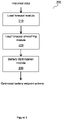
- FIG. 2 shows the mechanism 200 inside Peak Shaving Engine 150.
- the Peak Shaving Engine 150 is called two minutes before every new 30-minute window. This 30-minute window is predetermined by the authority or by market players. In short, the Peak Shaving Engine 150 takes in historical consumption data and gives out optimized battery setpoint actions which minimize the potential overall cost for the next 24 hours consumption.
- the Peak Shaving Engine 150 comprises three strongly dependent modules, namely Load Forecast 210, Load Forecast Smoothing 220 and Battery Optimization 230. Outputs from the Load Forecast module 210 are inputs to the Load Forecast Smoothing module 220, and outputs from the Load Forecast Smoothing module 220 are inputs to the Battery Optimization module 230.
- the Load Forecast module 210 forecasts a predetermined number of hours of load at a predetermined interval to determine a forecasted load profile. Specifically, the Load Forecast module 210 forecasts 30-min consumption intervals for the next 24 hours in absolute values. It requires continuous days of 30-minute historical consumption data and a set of engineered features to train a forecast model. The Load Forecast Smoothing module 220 then smooths the absolute value in the forecasted load profile to compensate for the possible unforeseen circumstances in the future. Finally, the Battery Optimization module 230 optimizes the overall cost function by determining optimised battery setpoint actions based on the Load Forecast Smoothing module 220 outputs and the battery operating constraints. In the next section, each module's components are elaborated in detail.
- gRPC Remote Procedure Calls
- the Load Forecast module 210 in accordance with this invention contains a multilinear regression model trained in Python language using LinearRegression module from scikit-learn machine learning library.
- the multilinear regression model has a total of 124 inputs which are generated from the raw 30-min electricity consumption data over past 8 days via feature engineering.
- the input features include, but not limited to, lag features, date and time features, difference between different lag features and some interaction features.
- the output of the model is the forecasted electricity consumption for the next 30min in the future.
- the forecast horizon can range from minutes to days or even months.
- forecasting horizon In order to properly manage batteries to ensure they get charged/discharged in an optimum manner via optimization, it is important to ensure that the forecasting and optimization horizon captures the likely peak consumption in the future. Given that for most industrial customers, their daily load profiles have repetitive patterns, forecasting horizon of 24 hours is used. This means that one skilled in the art may vary the forecasting to other period other than 24 hours as that as there is a repetitive pattern. Hence, when the invention triggers the forecaster to run, the multilinear regression model within the forecaster will run repetitively for 48 times in sequence (result from the previous run becomes the last 30-min data of the input to the following run) to generate 30-min load forecasting for the next 24 hours.
- Every run of the forecaster will input raw 30-min consumption data over past 8 days and output forecasted 30-min consumption data for the next 24 hours.
- the forecasting model is retrained on a monthly basis such as at the end of each month.
- the forecasting model is retrained as and when manually triggered.
- Each retraining requires past 185 days of raw consumption data as training data.
- the retraining can be conducted with other number of days of raw consumption data as training data without departing from the invention.
- the inventors of this invention has tried various number of days and 185 days turned out to give the best performance. That said, the actual number of days of raw consumption data that can be implemented to initiate retraining may vary from project to project and this is left as a design choice for the person skilled in the art.
- Figure 3 depicts a comparison between actual load 310, forecasted load 320 and forecasted load with smoothing 330 over a period of time from 12:00am to 11:30pm.
- the peak timings are different in both morning and afternoon.
- the actual peak 310a timing precedes the forecasted peak 320a timing in the morning, while the actual peak timing 310b lags behind the forecasted peak 320b timing.
- RMSE root mean square error
- MPE mean percentage error
- smoothing technique is utilized in this invention to flatten out the consumption profile around the forecasted peak so that the flattened period will cover the actual peak and subsequently the optimization will suggest optimum battery action at actual peak.
- the forecasted load 320 profile after smoothing has two smoothed periods (morning and afternoon) and they both cover the respective actual peak.
- this invention successfully mitigates the adverse impacts resulting from the discrepancy between actual and forecasted peak and also allows for a more robust control over batteries even when the forecasting results are unreliable.
- peak shaving may vary from project to project depending on the forecasted load profile and the actual implementation is left to those skilled in the art.
- the optimization problem in this invention is framed as a mixed-integer programming problem which allows the decision variables (battery status) to be constrained as integer values to represent different battery modes (charge, discharge, idle).
- CVXPY a python package for convex optimization problems, is utilized in this invention to frame the economic dispatch optimization problem.
- the battery optimization module 230 receives the next 24 hour forecasted loads from the load forecast smoothing module 220, applies the battery operating constraints and then minimizes the objective function in order to output recommended battery setpoint actions for the next 24 hours.
- the objective is to find the minimized value of the objective function while fulfilling all battery operating constraints.
- the objective function is minimized by optimising P grid,t and P bat,t .
- the objective function normally in peak shaving use cases, is the total incurred costs consisting of electricity usage cost and UCC cost.
- the objective function not only considers the above costs, but also includes the battery life cost associated with battery operation. Battery is not a light investment and usually has a limited life cycle. Every charge/discharge is associated with a reduction in lifespan. Combining electricity usage cost, UCC cost and battery life cost in a single objective function allows the optimizer to suggest most economical and sustainable actions (battery to stay in idle mode when necessary) by maximizing the reduction in UCC and, in the meanwhile, minimizing the battery operating wastage.
- the battery operating constraints include upper/lower bound of battery capacity and upper/lower bound of charge/discharge amount within every 30 min. Hence, the optimizer is able to determine the time and amount to charge or discharge while operating within the battery operating constraints.
- the optimizer is robust enough to decide when and how much the battery needs to be discharged to achieve the best overall performance.
- the difference between morning and afternoon peak is larger than the upper bound of battery charge/discharge amount within every 30 min, no discharge action during lower peak period is needed and hence the optimizer will suggest the battery to stay in idle mode during this period.
- the difference is smaller than the upper bound, discharge actions are needed during both peak periods and hence the optimizer will suggest the battery to discharge accordingly during both periods.
- the Peak Shaving SPUG app Upon receiving each of these data, the Peak Shaving SPUG app stores the data to the app internal database.
- a scheduler would be running inside the Peak Shaving SPUG app. At the beginning of each 30-minute time slot, the scheduler runs the following actions:
- FIG. 4 outlines one of the four condition checks called the Battery Safeguard Rule.
- the motivation of the rule is to eliminate or minimize additional cost which can potentially arise from a battery charge instruction.
- the Safeguard Rule is defined as the summation of:
- the battery control logic will intervene and stop the battery from continuing to charge.
- the Safeguard Rule itself can abruptly stop the battery from charging at any 5-min within a 30-minute window.
- the battery will stay in idle mode for the remaining time of the 30-minute window.
- a customer has a monthly contracted capacity of 4MW and a current month's observed peak consumption of 5.4MW.
- all four condition checks are not met from 12:00PM to 12:04:50PM.
- the battery control logic inside Operation Service is triggered to check for the four conditions again.
- the Battery Safeguard Rule check is then triggered.
- the estimated consumption for the 30-minute window is 4.8MW. This is calculated by extrapolating the past five minute's consumption of 0.8MW.
- the instructed energy to charge for the 30-minute window is simply the setpoint of 1.2MW received from the Scheduler.
- the summation of the two components equates to 6MW which exceeds the current month's observed peak consumption of 5.4MW.
- the battery will then stop charging at 12:05PM since it is estimated that at a constant rate of consumption for the next 25 minutes, the overall consumption for the 30-minute window will create a new peak of 6MW which is undesirable.
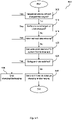
- FIG. 5 illustrates a process flow 500 on the Operation Service inside the Peak Shaving SPUG app which is responsible for controlling the battery to charge or discharge a specified amount of energy in a 30-minute time slot.
- Process 500 is triggered at the beginning of the 30-minute time slot by the Scheduler which passes the amount of energy to charge or discharge in that particular 30-minute time slot.
- the Operation Service executes process 500 every 10 seconds in the following manner.
- Process 500 begins with step 505 to check whether the requested amount of energy has been charged or discharged in this 30-minute time slot. This is done by querying the battery for the current cumulative charged or discharged energy. If yes, process 500 sends a command to the battery to stop charging or discharging in step 535 and ends thereafter. If no, process 500 proceeds to step 510.
- step 510 process 500 checks whether the minimum/maximum state of charge (SOC) limit is reached. This is done by querying the battery for the current SOC. If yes, process 500 sends a command to the battery to stop charging or discharging in step 535 and ends thereafter. If no, process 500 proceeds to step 515.
- SOC state of charge
- step 515 Process 500 checks whether any historical load data point for the current 30-minute time slot is missing. The historical load data is retrieved from the app internal database. If yes, the Operation Service is unable to proceed to the next step confidently and hence, process 500 sends a command to the battery to stop charging or discharging in step 535. If no, process 500 proceeds to step 520.
- step 520 process 500 calculates the estimated load for the current 30-minute time slot by extrapolating the historical load data points.
- the historical load data is retrieved from the app internal database.
- process 500 evaluates the Battery Safeguard Rule as described above is satisfied in step 525 using the following information: estimated load calculated in step 520; requested amount of energy to charge or discharge; and current month's observed peak energy consumption retrieved from the app internal database. If yes, process 500 sends a command to the battery to stop charging or discharging ends thereafter. If no, process 500 proceeds to step 530.
- step 530 process 500 sends a command to the battery to continue charging or discharging.
- step 535 process 500 sends a command to the battery to stop charging or discharging. Process 500 ends after step 530 or step 535.
- FIG. 6 illustrates a data flow 600 of a typical use case in accordance of this invention.
- Data flow 600 begins with clients 610 passing relevant information (e.g. battery initial capacity, signed contracted capacity (CC) value, battery operating constraints) to the Aurora database 140 via the Aurora Dashboard 142.
- the Aurora database 140 retrieves past 185 days of load data from a time series database and sends the data to the Energy Brain 150.
- the Load forecasting module 210 uses the 185 days of load data to train a forecasting model. Load forecasting module 210 then saves the trained model to Model Repo.
- the forecasting model is retrained on a monthly basis or at other predetermined intervals.
- the Energy Brain 150 will call the mechanism 200 to forecast the next 24 hour load using past 8 days of historical data.
- the battery optimization module 230 will then send the command (optimised battery setpoint actions) that is derived based on the forecasting results to the clients.
- This invention is packaged as a plug-and-play Software as a service (SaaS), which is well suited to be used in modern architecture, and fully automated and readily deployable using different management approaches with minimum efforts from customers.
- SaaS Software as a service
- the invention could be sold to consumers who are facing growth in electrical demand but are not able to change contracted capacity scheme signed with the electricity supplier in a timely manner. It could also be sold to energy storage system (ESS) vendors as a new AI feature integrated into their systems. For countries which have significant peak/off-peak electricity price difference or have plenty of renewable energy (e.g. solar, geothermal and wind) to charge the ESS, this invention is most beneficial and is able to generate most cost savings.
- ESS energy storage system
- a typical computing system comprises a processor, memory and instructions stored on the memory and executable by the processor.
- the processor may be a processor, microprocessor, microcontroller, application specific integrated circuit, digital signal processor (DSP), programmable logic circuit, or other data processing device that executes instructions to perform the processes in accordance with the present invention.
- DSP digital signal processor
- the processor has the capability to execute various applications that are stored in the memory.
- the memory may include read-only memory (ROM), random-access memory (RAM), electrically erasable programmable ROM (EEPROM), flash cards, or any storage medium. Instructions are computing codes, software applications such as the Peak Shaving SPUG app that are stored on the memory and executable by the processor to perform the processes in accordance with this invention.
- Such computing system is well known in the art and hence only briefly described herein.
Landscapes
- Engineering & Computer Science (AREA)
- Power Engineering (AREA)
- Charge And Discharge Circuits For Batteries Or The Like (AREA)
- Supply And Distribution Of Alternating Current (AREA)
- Secondary Cells (AREA)
Applications Claiming Priority (1)
| Application Number | Priority Date | Filing Date | Title |
|---|---|---|---|
| SG10202009796Y | 2020-10-01 |
Publications (2)
| Publication Number | Publication Date |
|---|---|
| EP3979451A2 true EP3979451A2 (fr) | 2022-04-06 |
| EP3979451A3 EP3979451A3 (fr) | 2022-04-27 |
Family
ID=78535945
Family Applications (1)
| Application Number | Title | Priority Date | Filing Date |
|---|---|---|---|
| EP21200412.1A Pending EP3979451A3 (fr) | 2020-10-01 | 2021-10-01 | Service logiciel basé sur l'ia pour réduire les pics de consommation d'électricité |
Country Status (4)
| Country | Link |
|---|---|
| US (1) | US11870256B2 (fr) |
| EP (1) | EP3979451A3 (fr) |
| CN (1) | CN114268109A (fr) |
| AU (1) | AU2021229123A1 (fr) |
Cited By (2)
| Publication number | Priority date | Publication date | Assignee | Title |
|---|---|---|---|---|
| CN118137497A (zh) * | 2024-05-06 | 2024-06-04 | 佰聆数据股份有限公司 | 一种高压用户负荷管理方法、设备及介质 |
| CN119831446A (zh) * | 2025-03-14 | 2025-04-15 | 国网浙江省电力有限公司金华供电公司 | 一种配电网分布式新能源承载力评估方法及装置 |
Families Citing this family (4)
| Publication number | Priority date | Publication date | Assignee | Title |
|---|---|---|---|---|
| CN114549095B (zh) * | 2022-04-25 | 2022-08-09 | 江西师范大学 | 一种基于时间序列的滑动窗口式售电量预测方法 |
| TR2022021794A1 (tr) * | 2022-12-30 | 2024-02-21 | Bma Teknoloji Anonim Sirketi | Bi̇r hi̇bri̇d şaft jeneratör si̇stemi̇ ve bunun kontrol yöntemi̇ |
| US12562572B2 (en) * | 2023-01-26 | 2026-02-24 | Siemens Aktiengesellschaft | Method and system for unsupervised identification of behind-the-meter battery energy storage systems |
| TR2023019199A1 (tr) * | 2023-12-28 | 2025-07-21 | Dogus Bilgi Islem Ve Teknoloji Hizmetleri Anonim Sirketi | Yazilimlarin enerji̇ tüketi̇mi̇ni̇n en düşük sevi̇yeye çeki̇lerek karbon ayak i̇zi̇ni̇n küçültülmesi̇ni̇ sağlayan bi̇r si̇stem |
Family Cites Families (8)
| Publication number | Priority date | Publication date | Assignee | Title |
|---|---|---|---|---|
| US20130030590A1 (en) * | 2011-07-29 | 2013-01-31 | Green Charge Networks Llc | Peak Mitigation Extension Using Energy Storage and Load Shedding |
| US9692234B2 (en) * | 2013-10-21 | 2017-06-27 | Stc.Unm | Systems and methods for distributing power using photovoltaic resources and a shifting battery system |
| US10389165B2 (en) * | 2014-11-25 | 2019-08-20 | Nec Corporation | Energy management apparatus, energy management method and program recording medium |
| CN104993522B (zh) * | 2015-06-30 | 2018-01-19 | 中国电力科学研究院 | 一种基于mpc的主动配电网多时间尺度协调优化调度方法 |
| US10592833B2 (en) * | 2016-04-01 | 2020-03-17 | Enel X North America, Inc. | Extended control in control systems and methods for economical optimization of an electrical system |
| US11404875B2 (en) * | 2017-02-08 | 2022-08-02 | Battelle Energy Alliance, Llc | Energy management system, method of controlling one or more energy storage devices and control unit for one or more power storage units |
| KR102014201B1 (ko) * | 2018-02-26 | 2019-08-26 | 김영일 | 피크감축 및 평활화를 수행하기 위한 에너지 저장시스템 |
| US11159022B2 (en) * | 2018-08-28 | 2021-10-26 | Johnson Controls Tyco IP Holdings LLP | Building energy optimization system with a dynamically trained load prediction model |
-
2021
- 2021-09-06 AU AU2021229123A patent/AU2021229123A1/en active Pending
- 2021-09-28 US US17/487,096 patent/US11870256B2/en active Active
- 2021-09-30 CN CN202111164796.0A patent/CN114268109A/zh active Pending
- 2021-10-01 EP EP21200412.1A patent/EP3979451A3/fr active Pending
Cited By (2)
| Publication number | Priority date | Publication date | Assignee | Title |
|---|---|---|---|---|
| CN118137497A (zh) * | 2024-05-06 | 2024-06-04 | 佰聆数据股份有限公司 | 一种高压用户负荷管理方法、设备及介质 |
| CN119831446A (zh) * | 2025-03-14 | 2025-04-15 | 国网浙江省电力有限公司金华供电公司 | 一种配电网分布式新能源承载力评估方法及装置 |
Also Published As
| Publication number | Publication date |
|---|---|
| US20220109298A1 (en) | 2022-04-07 |
| EP3979451A3 (fr) | 2022-04-27 |
| CN114268109A (zh) | 2022-04-01 |
| US11870256B2 (en) | 2024-01-09 |
| AU2021229123A1 (en) | 2022-04-21 |
Similar Documents
| Publication | Publication Date | Title |
|---|---|---|
| US11870256B2 (en) | AI-based software service to shave electricity consumption peak | |
| US12015275B2 (en) | Hybrid power plant | |
| US11720831B2 (en) | Optimal control technology for distributed energy resources | |
| CN111492559B (zh) | 用于能量存储系统的最佳控制的系统和方法 | |
| US12525799B2 (en) | Building energy system with stochastic model predictive control and demand charge incorporation | |
| US11163271B2 (en) | Cloud based building energy optimization system with a dynamically trained load prediction model | |
| US11159022B2 (en) | Building energy optimization system with a dynamically trained load prediction model | |
| US9692233B2 (en) | Method for controlling an energy storage system | |
| US20200004212A1 (en) | Systems and methods to aggregate distributed energy resources | |
| US20190228481A1 (en) | Intelligent energy management system for distributed energy resources and energy storage systems using machine learning | |
| CN108930632A (zh) | 适应性发电管理 | |
| US20220407310A1 (en) | Intelligent energy management system for distributed energy resources and energy storage systems using machine learning | |
| CN120433319B (zh) | 一种基于多场景协同的台区源荷储智能调节系统 | |
| CN120073893A (zh) | 一种应用于多能源微网的调度方法 | |
| HK40068788A (en) | Ai-based software service to shave electricity consumption peak | |
| CN120810784B (zh) | 基于模糊机会约束转换的电力电量平衡方法及计算机设备 | |
| US20260128590A1 (en) | Building energy system with stochastic optimization | |
| Shukla et al. | AI-Based Energy Management for Vehicle-to-Grid Systems | |
| Nafeez et al. | Adaptive Battery Control in PV Systems using Deep Learning and Swarm Intelligence Algorithms | |
| Kumar et al. | AI-Driven Climate-Resilient Scheduling of V2G and G2V Operations in Higher Educational Institution Microgrids | |
| CN121039918A (zh) | 向可控负载输送高容量因子的双构型可并网可再生能源发电厂 | |
| CN121602446A (zh) | 一种电网数据中心一体化供电协同控制与保障方法、设备及介质 | |
| CA3095832A1 (fr) | Systeme de gestion intelligent de l'energie pour ressources energetiquesdecentralisees et systeme de stockage d'energie a base d'apprentissage automatique | |
| Rahman et al. | Adaptive Battery Control in PV Systems Using Deep Learning and Swarm Intelligence Algorithms | |
| Naik et al. | A Hybrid Machine Learning-Iterative Predictive Control Framework for Resilient EV Charging in Sustainable DC Microgrids |
Legal Events
| Date | Code | Title | Description |
|---|---|---|---|
| PUAI | Public reference made under article 153(3) epc to a published international application that has entered the european phase |
Free format text: ORIGINAL CODE: 0009012 |
|
| STAA | Information on the status of an ep patent application or granted ep patent |
Free format text: STATUS: REQUEST FOR EXAMINATION WAS MADE |
|
| PUAL | Search report despatched |
Free format text: ORIGINAL CODE: 0009013 |
|
| 17P | Request for examination filed |
Effective date: 20211001 |
|
| AK | Designated contracting states |
Kind code of ref document: A2 Designated state(s): AL AT BE BG CH CY CZ DE DK EE ES FI FR GB GR HR HU IE IS IT LI LT LU LV MC MK MT NL NO PL PT RO RS SE SI SK SM TR |
|
| AK | Designated contracting states |
Kind code of ref document: A3 Designated state(s): AL AT BE BG CH CY CZ DE DK EE ES FI FR GB GR HR HU IE IS IT LI LT LU LV MC MK MT NL NO PL PT RO RS SE SI SK SM TR |
|
| RIC1 | Information provided on ipc code assigned before grant |
Ipc: H02J 7/00 20060101ALI20220321BHEP Ipc: H02J 3/32 20060101ALI20220321BHEP Ipc: H02J 3/00 20060101AFI20220321BHEP |