EP3975007A1 - Method for harmonizing the content of functional units of training courses - Google Patents
Method for harmonizing the content of functional units of training courses Download PDFInfo
- Publication number
- EP3975007A1 EP3975007A1 EP19955787.7A EP19955787A EP3975007A1 EP 3975007 A1 EP3975007 A1 EP 3975007A1 EP 19955787 A EP19955787 A EP 19955787A EP 3975007 A1 EP3975007 A1 EP 3975007A1
- Authority
- EP
- European Patent Office
- Prior art keywords
- fragments
- fragment
- substituting
- training
- main
- Prior art date
- Legal status (The legal status is an assumption and is not a legal conclusion. Google has not performed a legal analysis and makes no representation as to the accuracy of the status listed.)
- Pending
Links
Images





Classifications
-
- G—PHYSICS
- G06—COMPUTING OR CALCULATING; COUNTING
- G06Q—INFORMATION AND COMMUNICATION TECHNOLOGY [ICT] SPECIALLY ADAPTED FOR ADMINISTRATIVE, COMMERCIAL, FINANCIAL, MANAGERIAL OR SUPERVISORY PURPOSES; SYSTEMS OR METHODS SPECIALLY ADAPTED FOR ADMINISTRATIVE, COMMERCIAL, FINANCIAL, MANAGERIAL OR SUPERVISORY PURPOSES, NOT OTHERWISE PROVIDED FOR
- G06Q10/00—Administration; Management
- G06Q10/06—Resources, workflows, human or project management; Enterprise or organisation planning; Enterprise or organisation modelling
- G06Q10/063—Operations research, analysis or management
- G06Q10/0639—Performance analysis of employees; Performance analysis of enterprise or organisation operations
-
- G—PHYSICS
- G06—COMPUTING OR CALCULATING; COUNTING
- G06Q—INFORMATION AND COMMUNICATION TECHNOLOGY [ICT] SPECIALLY ADAPTED FOR ADMINISTRATIVE, COMMERCIAL, FINANCIAL, MANAGERIAL OR SUPERVISORY PURPOSES; SYSTEMS OR METHODS SPECIALLY ADAPTED FOR ADMINISTRATIVE, COMMERCIAL, FINANCIAL, MANAGERIAL OR SUPERVISORY PURPOSES, NOT OTHERWISE PROVIDED FOR
- G06Q10/00—Administration; Management
- G06Q10/06—Resources, workflows, human or project management; Enterprise or organisation planning; Enterprise or organisation modelling
-
- G—PHYSICS
- G06—COMPUTING OR CALCULATING; COUNTING
- G06Q—INFORMATION AND COMMUNICATION TECHNOLOGY [ICT] SPECIALLY ADAPTED FOR ADMINISTRATIVE, COMMERCIAL, FINANCIAL, MANAGERIAL OR SUPERVISORY PURPOSES; SYSTEMS OR METHODS SPECIALLY ADAPTED FOR ADMINISTRATIVE, COMMERCIAL, FINANCIAL, MANAGERIAL OR SUPERVISORY PURPOSES, NOT OTHERWISE PROVIDED FOR
- G06Q50/00—Information and communication technology [ICT] specially adapted for implementation of business processes of specific business sectors, e.g. utilities or tourism
- G06Q50/10—Services
- G06Q50/20—Education
-
- G—PHYSICS
- G06—COMPUTING OR CALCULATING; COUNTING
- G06Q—INFORMATION AND COMMUNICATION TECHNOLOGY [ICT] SPECIALLY ADAPTED FOR ADMINISTRATIVE, COMMERCIAL, FINANCIAL, MANAGERIAL OR SUPERVISORY PURPOSES; SYSTEMS OR METHODS SPECIALLY ADAPTED FOR ADMINISTRATIVE, COMMERCIAL, FINANCIAL, MANAGERIAL OR SUPERVISORY PURPOSES, NOT OTHERWISE PROVIDED FOR
- G06Q50/00—Information and communication technology [ICT] specially adapted for implementation of business processes of specific business sectors, e.g. utilities or tourism
- G06Q50/10—Services
- G06Q50/20—Education
- G06Q50/205—Education administration or guidance
- G06Q50/2057—Career enhancement or continuing education service
Definitions
- the invention relates to training and knowledge testing and may be used in auxiliary technical equipment in the professional spheres requiring continuous knowledge update including changes in regulatory documents directly used by personnel in their professional activities.
- the invention may be used, for instance, to ensure flight safety during training and retraining of flight personnel and support personnel.
- the invention may be used for the creation of training programs, update of existing programs, and for the creation of study guides and examination materials.
- a method for advanced training of flight personnel is known, as described in Russian patent application 97101416 published on February 20, 1999 , describing the utilization of a training model that considers the personal experience of the personnel being trained.
- the known method is not universal and may be used only for psychological correction of the personnel behavior, if required.
- Russian patent 2158965 published on November 10, 2000 describes a method for the creation of a training program being the nearest equivalent to the proposed invention that uses computational analysis of a training program based on a matrix of concepts.
- a list of conventional knowledge units is compiled and recorded upon implementation of the known method, which include the concepts contained in the original training program; the significance of each concept in the list is assessed by linking it to other concepts, and then an updated list of concepts is compiled including the most significant concepts, and an optimal training program is created based on the updated list.
- the known method is intended for the creation of a training program that is optimal in terms of mastering the taught material, and is not intended for quick modification of the contents of the training materials.
- the above circumstance is not a significant drawback in multiple applications of the known method, since the objective of most of the training programs is to provide basic knowledge and skills to the students as required for further independent work.
- the proposed invention allows overcoming at least some of the drawbacks of the prior art and utilizing the advantages specified in the description.
- the objective of the proposed method is to eliminate the drawbacks of the methods known from the prior art while achieving a technical result implying higher flight safety and lower time and effort required for the update of training, certification and examination programs, addressing modifications in regulatory documents and promptly addressing both positive and negative work experience of the personnel who are responsible for flight safety.
- the invention allows automatically modifying the parameters of training programs without significant participation of personnel, which significantly reduces the financial expenditures on creation and support of workplaces, and reduces the computing efforts for tracing and introduction of changes.
- each of the individual functional units is split into fragments with individual and complete meaning with assignment of a unique identification attribute to each fragment; fragments with similar meaning are identified, and the first groups of identification attributes with similar meaning are created; fragments with related forms of presentation are identified, and the second groups of fragment identification attributes with related forms of presentation are created; when a request for modification of the main modifiable fragment is received, the identification attribute of the first modifiable fragment is determined, the main substituting fragment is created by introduction of the requested changes into the main modifiable fragment with assignment of a unique identification attribute to the substituting fragment; the main substituting fragment is classified into one of the first groups of identification attributes and into one of the second groups of identification attributes, the source fragments with the identification attributes of the second group to which the identification attribute of the main modifiable fragment belongs are identified, such source fragments require modification of the narrative form according to the narrative form and content of the main substituting fragment, and the identified fragment
- a collection of regulatory documents with a similar meaning to the fragments is additionally assigned; upon a revision of a regulatory document, the main source fragment of the training courses that requires modification is determined, and a request for modification of the main source fragment of the training courses requiring modification is formulated.
- the main source fragment of the training courses may be represented by at least the details or a quote from a regulatory document used in the functional unit that describes the sources of information used for the preparation of the training courses.
- the training program in this description involves a set of training, curricular and testing materials defining the contents, scope and procedure of learning and teaching of a subject or a section thereof.
- module may refer to hardware, e.g. a device or part of a device, in particular, including at least one processor, microcontroller, etc., or software, e.g. a computer program, firmware or some other set of a sequence of control commands enabling the hardware of a computing system to perform calculations or control functions being a combination of commands and data.
- hardware e.g. a device or part of a device, in particular, including at least one processor, microcontroller, etc.
- software e.g. a computer program, firmware or some other set of a sequence of control commands enabling the hardware of a computing system to perform calculations or control functions being a combination of commands and data.
- the described invention may be used for vocational training and knowledge testing of the flight personnel of an airline, vocational training of specialists in any other disciplines in areas where receiving and applying dynamically changing information (content) is an important part of the activities that significantly affect work safety.
- the electronically created content of training materials and examination questions for an automated information system of vocational training for flight personnel has a multilevel structure.
- the structure of educational and examination content may include four levels of different scale.
- the lowest (first) level of the digital content of training materials/examination questions represents original development of training materials which comprise the contents of individual topics intended for vocational training and examination of the flight personnel of an airline.
- Original training materials include different forms of information presentation: digital texts written by training course developers, fragments of textbooks, diagrams, pictures, tables, presentations, videos, references to flight regulations.
- a set of examination questions in a digital format has been developed to check the quality of knowledge obtained by the pilots.
- each examination question is linked to a particular training material through an electronic link. This significantly reduces the time required to search for necessary pages in textbooks, required video materials or quotes from flight regulations during preparation for an exam.
- a pilot gets an opportunity to quickly refresh only (or at least) the training materials required to pass the exam and to confirm pilot qualification using the provided references.
- a higher (second) level of digital content is combining individual topics into the content of different subjects.
- a set of subjects is also an original authored set created for a particular airline.
- the third level of digital content is the creation of an original "tree" of a training course based on a set of subjects, which is used for training and passing of exams by pilots of an airline.
- the set of subjects forms the "tree" trunk, and the training materials and associated questions are located in the "tree" nodes.
- the highest (fourth) level represents a combined "tree" of courses covering the whole required training and examination content that a pilot must know to confirm the pilot qualification.
- Such a constructed "tree” of courses meets the main requirements for vocational training of flight personnel as detailed in Federal Aviation Regulations (FAR).
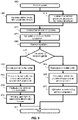
- FIG. 1 - FIG. 4 show flowcharts of exemplary embodiments of automated processes associated with the creation of a library of documents.
- the first group of automated processes shown in FIG. 1 - FIG. 4 is related to the creation of a library of documents, the content of which may change over time.
- the content of each of the documents may be structured and converted to the XML format.
- the documents are grouped by classifiers, and established document classes are linked to nodes of the table of contents of the document library. When a new or modified version of the document appears, the new document version is uploaded into the same node of the table of contents. A comparison is performed for the old and new versions of the document, and a comparison report is created containing a list of DUs (document units) that distinguish the new version from the old one.
- the differences found during the comparison can be marked depending on their nature. For example, when color marking is used, “deleted” is marked blue, “added” is marked green, “modified” is marked red. Training materials and examination questions marked as “deleted” are marked as conditionally blocked and may not be used further. Thus, for example, such training materials and examination questions can not be used during exams taken by the students. More particularly, the materials may be used after their revision, including after substitution of fragments, as described in this description. For other materials, the references used in the documents are replaced by the references related to the new or current versions of the documents where the substitution was made, at least in the fragments, in order to update the new information, for example, if an outdated document version can be useful in terms of the logic of the training process structure.
- Verified and approved training materials and questions can be used at least in the training process or in the advanced training of personnel.
- the aforementioned materials can be published on the learning portal, wherein the publication can be performed immediately or delayed for a specified time period, for example, as shown in FIG. 8 .
- a fixed time can also be set for such publications.
- FIG. 1 shows a flowchart of an exemplary embodiment of an automated process of uploading a document into a library ("Uploading a document into a library").
- step 102 the document uploading process begins.
- document uploading is selected, in particular, uploading of a new document or uploading of a new version is selected.
- the document type is selected.
- PDF document type with bookmarks (148) is selected at step 106, then splitting into topics is performed at step 150 depending on the bookmarks in the document (filing).
- step 152 an XML representation is created (filing), and next, at step 154, a table of contents is generated based on the bookmarks (filing), and the document uploading process ends at step 160.
- RRJ document type (138) is selected at step 106, then, at step 140, the document is broken down into chapters and pages (filing). Next, at step 142, an XML representation is created (filing), and next, at step 144, a table of contents is generated based on the pages (filing), and the document uploading process ends at step 160.
- FOM document type (128) is selected at step 106, then, at step 130, the document is broken down into chapters and topics (filing), and next, at step 132, an XML representation is created (filing). Next, at step 134, a table of contents is generated by topics (filing), and the document uploading process ends at step 160.
- step 106 If Boeing document type (118) is selected at step 106, then the Boeing format is uploaded at step 120. Next, at step 122, the documents are copied. Next, at step 123, the Boeing representation is copied and the document uploading process ends at step 160.
- Airbus document type (108) is selected at step 106, then the Airbus format is uploaded at step 110. Next, at step 112, the documents are copied. Next, at step 114, the Airbus representation is copied, after which, at step 116, the images are converted, and the document uploading process ends at step 160.
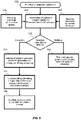
- FIG. 2 shows a flowchart of an exemplary embodiment of an automated process of uploading a new document version ("Uploading a new document version").
- step 207 the PDF representation is uploaded, and then, at step 209, the XML representation is uploaded.
- Step 211 includes a comparison that depends on the document type, in particular, an aircraft model to which the document refers can be selected, e.g., Airbus (213), Boeing (215), FOM (217), RRJ (219), or a document type, e.g. PDF with bookmarks (221).
- an aircraft model to which the document refers can be selected, e.g., Airbus (213), Boeing (215), FOM (217), RRJ (219), or a document type, e.g. PDF with bookmarks (221).
- a type can be defined for each bookmark, for example, aircraft model.
- the comparison report is published, and next, at step 225, the comparison results are saved to the database.
- the comparison ends at step 227.
- the aforementioned comparison results and other data, including the documents, substituting fragments, i.e. the fragments requiring an update with new information, etc. can be stored in a physical data storage, logically arranged and ordered in the database (DB).
- DB database
- the aforementioned storage can be a temporary data storage, e.g. random access memory (RAM), read-only memory, e.g. (programmable) read-only memory (ROM/PROM), including that represented by at least one chip or a set of chips, etc.
- the aforementioned data storage is a device for storage of information/data and can be represented by at least one hard (magnetic) disk drive (HDD), solid-state drive (SSD), solid-state hybrid drive (SSHD), Storage Area Network (SAN), Network Attached Storage (NAS), and/or any other device or multiple devices enabling at least recording to and reading from the device, and/or data storage on the device.
- Data in the storage can be stored in any known data format, for example, in the form of at least one table or a set of related or unrelated database tables.
- FIG. 3 shows a flowchart of an exemplary embodiment of an automated process of comparison of document versions and processing of the comparison results ("Comparison of document versions and processing of the comparison results").
- step 305 processing of the comparison results starts.
- step 310 the previously created report on the comparison results is analyzed.
- step 315 the differences of particular DUs are displayed.
- step 320 the list of questions affected by the modifications is processed.
- the modification type is checked, i.e. whether the change is related to modification or deletion.
- step 330 checks whether the essence of the question is affected.
- step 330 If it is found at step 330 that the essence of the question is not affected, then the hint changes at step 335, and the processing ends at step 370.
- step 330 If it is found at step 330 that the essence of the question is affected, then the question is blocked at step 340, and the processing ends at step 370.
- step 325 If it is found at step 325 that the change is related to deletion, then, at step 340, the question effective earlier (or other meaningful part of the document) is blocked, and the processing ends at step 370.
- the list of materials affected by the modifications is processed.
- each of the materials affected by the changes is checked. If the changes are related to references or parts of the library representing the document, and the changes can be introduced into a new document, and are present in a new document, then step 360 is performed. If it is found at step 350 that the changes are related to the whole document, i.e. are an asset, or if it is found at step 355 that the changes have not been introduced into a new document, then the document is blocked at step 365, and the document is excluded from the training program, and the processing ends at step 370. Otherwise, if it is found at step 350 that the changes are related to references or parts of the library ("reference/part of library"), then presence in a new document is checked. If the presence in a new document is confirmed at step 355, then the reference is replaced at step 360, and the processing ends at step 370.
- FIG. 4 shows a flowchart of an exemplary embodiment of an automated process of updating the comparison results according to the method disclosed in FIG. 3 .
- FIG. 4 shows the process of processing documents, including the contents of documents with modification (revision) of contents that includes at least the replacement of the content fragments and information related to such contents (and documents).
- the aforementioned fragments in particular, the substituted fragments, i.e. fragments requiring update of new information, are replaced by substituting fragments, i.e. fragments with updated information, wherein such fragments may be the results of comparison, including at least one part of the comparison results.
- the comparison results update process starts at step 405.
- the aforementioned update process is a process of replacing some fragments (those being substituted) with other (substituting) fragments.
- the list of blocked questions is processed, after which, at step 415, violations of the exam creation algorithm are identified, if any.
- Violations of the exam creation algorithm may include insufficient number of questions, absence of questions that are key questions for a training course, or absence of the required number of questions in the examination cards.
- step 455 it is determined (e.g. by a training course developer and/or using the described system) whether to unblock the question or to delete the question from the test, and, depending on the decision of the training course developer, the process proceeds to step 425 if the training course developer has decided to unblock the question, or to step 460 if the training course developer has decided to exclude the question from the test, after which the process proceeds to step 430.
- step 415 If a violation of the exam creation algorithm is identified at step 415, then, at step 420, the question is modified or replaced.
- step 420 the question is modified or replaced.
- step 425 the question is unblocked in case of request modification, or to step 460, where, in case of the question replacement, the question is excluded from the test, and then the update process proceeds to step 430.
- the hint is replaced with a new one, after which the process proceeds to publication on the portal 435.
- step 440 checks whether there is a need for immediate or delayed publication.
- step 440 If it is found at step 440 that immediate publication is required, then immediate publication is performed at step 450, and the update process ends at step 490.
- step 440 If it is found at step 440 that immediate publication is not required, but a delayed publication is required, then a publication is performed from a certain date at step 445, and the update process ends at step 490.
- step 465 Processing of a list of blocked documents starts at step 462, and next, at step 465, a verification is performed whether the substitution is performed only by replacing a reference or the substitution relates to the essence of the document, i.e. is an asset. If the substitution involves the replacement of a reference (if "reference"), then the reference is replaced at step 475, and the update process proceeds to step 435. Otherwise, if the substitution is related to the document essence (is an "asset"), then editing is performed at step 470, and the update process proceeds to step 435.
- FIG. 5 - FIG. 7 show flowcharts of exemplary embodiments of automated processes associated with the creation of a content tree.
- the second group of automated processes shown in FIG. 5 - FIG. 7 is related to the creation of a content tree: the tree structure is created reflecting the content of the training courses, the main content of the tree is generated in its terminal nodes, and a set of questions and a set of training materials (both standardized in the form of complete documents, and non-standard, i.e.
- FIG. 5 shows a flowchart of an exemplary embodiment of an automated process of creating a content tree ("Creating a content tree");
- the process of creating a content tree starts at step 505.
- the structure is created at step 510.
- the materials are linked to node 560 at step 560.
- step 565 the material type is defined.
- step 565 If, at step 565, the type of material was found to be an author's file (590), then, at step 592, the document will be selected from the library. Next, at step 589, the materials are saved to storage, and the tree creation process ends at step 596.
- step 565 If it is found at step 565 that the material is of the asset type (580), then an asset editor is called at step 582, after which, at step 584, the document is selected from the library. Next, at step 586, DUs are selected from the document structure. At step 588, the author's corrections are introduced, and, at step 589, the result is saved in storage, and, at step 596, the creation of a content tree is completed.
- step 565 If it is found at step 565 that the type of material is a library reference (570), then the process of tree creation proceeds to step 572.
- the document is selected from the library at step 572, after which a reference node is selected at step 574, and then the training content is generated at step 576.
- step 589 the materials are saved to storage, and the tree creation process ends at step 596.
- the questions are linked to the node at step 515.
- New questions are created in the Unified Data Storage (UDS) database at step 535.
- UDS Unified Data Storage
- step 540 the content tree creation process proceeds to step 540.
- a link with the DUs is established at step 540, and next, at step 545, the DUs are selected from the document structure.
- the content tree creation process ends at step 596.
- FIG. 6 shows a flowchart of an exemplary embodiment of an automated process of creating a training course ("Creating a training course").
- the training course creation process starts at step 605.
- the course structure is created on the portal at step 610, after which, at step 615, a node is selected from the content tree.
- the training materials are uploaded at step 645, and a list of materials linked to the tree node is uploaded at step 650.
- step 655 the materials for publication are selected at step 655, and a course and course section are selected at step 660.
- a list of modifications for update (new data, information) is compiled at step 670, with replacement of fragments on the industrial portal, and publication on the industrial portal is performed at step 675 at a scheduled time, and next, at step 680, the training course creation process ends.
- test questions are uploaded at step 620, and a list of questions linked to the tree node is uploaded at step 625.
- the questions for publication are selected at step 630, and next the course and course section are selected at step 635.
- step 640 the question is published on the buffer portal, and the training course creation process proceeds to step 670.
- FIG. 7 shows an exemplary flowchart of an automated process of creating an exam.
- the process of exam creation starts at step 705.
- an examination course is created in the specific provisions of a training course at step 715.
- test question categories are defined at step 720.
- a random number of questions from the category are selected for each of the selected categories (725) at step 730, and the blocked questions are checked at step 735, wherein, if blocked questions are absent, the number of questions is redefined at step 740, and after that, creation of an exam is considered completed (not reflected in the flowchart), otherwise, if blocked questions exist, the process ends at step 775.
- step 775 if the exam structure (745) has been corrected, violations of the standard number of questions are checked.
- step 760 For the categories with a violation of the standard number of questions, an alternative is selected at step 760 - whether the number of questions needs to be changed or the structure of the exam needs to be reformatted. If it is found at step 760 that the exam structure needs reformatting, then the exam structure is reformatted at step 770 and the process ends at step 775. If it is found at step 760 that the number of questions needs to be changed, then the number of questions is changed at step 765, after which the process ends at step 775.
- FIG. 8 - FIG. 10 show flowcharts of exemplary embodiments of the automated processes related to an update of dynamic educational/examination content.
- the third group of automated processes shown in FIG. 8 - FIG. 10 is related to an update of dynamic educational / examination content: a table of updates is generated including two types of updates (of questions and of training materials), a list of required updates of the original source is compiled in the dashboard program; if potentially blocked questions exist, the possibility of creating an exam is checked (to this end, all blocked questions are collected into a separate category titled "blocked questions", and a training course developer can edit them or re-link the questions to maintain the standard number of questions for the exam), a news item containing information on the document being updated is automatically generated and, in a particular embodiment, fragments that were replaced (or requiring replacement but not replaced), and on the document version, publication of the update on an industrial portal is performed by a bot launched during the nearest technical break (at a specified time), the information on the modifications in the documents is published in the newsfeed with a possibility of detailed viewing of all proposed replacements in a preview mode, and notifications are sent to the users.
- FIG. 8 shows an exemplary flowchart of an automated process of an update of the training/examination content ("Update of the training/examination content").
- the update process starts at step 805.
- the data associated with the document version is updated at step 810.
- the questions and materials are updated at the training course developer's initiative at step 815.
- a list of updates is compiled at step 820, after which at least one list of news for publication is compiled at step 825, and the lists get processed at step 830.
- the need for immediate or delayed update is checked at step 835 depending on the importance of the updates.
- the updates in particular those containing important data/information
- an immediate update in particular, by replacement of the substituted fragments requiring an update with new information by substituting fragments containing the updated information
- other updates may be introduced as required upon processing of the documents.
- step 865 links are generated for a preview of the updates from the industrial portal, after which, at step 870, the news is published with a preview of the updates, and the update process ends at step 875.
- step 845 a request for publication on the industrial portal during the nearest technical break is generated at step 845, after which the news on the content update is published at step 850.
- step 855 messages are sent to the users subscribed to the courses, and the update process ends at step 875.
- FIG. 9 shows an exemplary flowchart of an automated process of processing blocked questions ("Processing blocked questions").
- the process of processing blocked questions starts at step 905 and a bank of blocked questions ("blocked questions" category) is generated at step 910 by blocking of questions upon a content update at step 915 and upon blocking of questions by a training course developer at step 920.
- step 925 a check for correction or deletion of a question is performed, and in case of correction, blocked questions are edited at step 930 (standard question editing and linking procedure), after which, at step 935, the question is edited (the question returns to the initial category for use in educational content).
- step 940 a request to publish the updated content is generated. Otherwise, in case of deletion, the question is permanently deleted from the database of questions at step 945.
- FIG. 10 shows a flowchart of an exemplary embodiment of an automated process of automated subsystem (bot) functioning - publishing of the updates of training materials and questions with further creation and publication of a newsfeed on the content update.
- bot automated subsystem
- Processing a queue of requests for a content update starts at step 1010, and a check for critical updates and a delayed update are performed at step 1020.
- a publication for preview is performed at step 1070, after which, at step 1080, news is generated, and the newsfeed is updated with information on the educational content update.
- step 1030 If critical updates are present, blocked exams are checked and confirmed at step 1030, after which the fact of publication for preview is checked at step 1040. If a preview has not been published, then the updates of the training materials and test questions are published at step 1060, after which the news is generated, and the newsfeed is updated with information on the educational content update at step 1080. Otherwise, if a preview has been published, then the preview links are deleted at step 1050, and the training materials and test questions are updated (in particular, with a change of fragments), after which news is generated and the newsfeed is updated with information on the educational content update at step 1080.
- FIG. 11 shows a simplified example of a hardware embodiment of the proposed invention.
- a computer network may represent a geographically distributed collection of nodes connected by communication lines and segments for data transmission between terminal nodes such as personal computers, workstations or peripheral devices such as printers or scanners. Many types of networks can be used, from local (LAN) to wide (WAN) area networks.
- an exemplary computer network 1100 may contain multiple network devices, such as routers, switches, computers, etc. interconnected by communication lines.
- client devices end-user devices
- the communication channels connecting different network devices can be wirelines or common environments (e.g.
- wireless lines where certain devices may maintain communication with other devices based on the distance, signal level, current operating status, location, etc.
- the communication channels may connect different network devices in any possible configuration.
- One or several servers 1120 e.g. host servers, web servers, databases, etc.
- client devices 1110 e.g., client devices, etc.
- FIG. 11 is a simplified example of the hardware embodiment of the system.
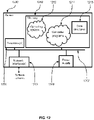
- FIG. 12 shows an example of a computer system suitable for the embodiment of the elements of proposed invention.
- the computer system contains a computing device 1200 that can be used as an end-user device or a server, the memory 1240 of which stores operating system 1242, computer programs 1244 and data structures 1245.
- Memory 1240 of device 1200 is linked, via bus 1250, with power supply 1260, at least one processor 1220 and at least one networking device 1210 transmitting data to network 1100 ( FIG. 11 ) and from network 1100 ( FIG.11 ).
- FIG. 13 shows a flowchart of an exemplary embodiment of the method of the present invention according to the independent claim.
- each of the individual functional units is split (in particular, by the described system) into fragments with an individual and complete meaning, with assignment of a unique identification attribute (IA) to each fragment.
- IA unique identification attribute
- the fragments with similar meaning are identified, and the first groups of identification attributes with a similar meaning are created.
- fragments with related forms of presentation are identified, and the second groups of identification attributes of the fragments with the related forms of presentation are created.
- the identification attribute of the first modifiable fragment is defined, the main substituting fragment is created by introduction of the requested changes into the main modifiable fragment with assignment of a unique identification attribute to the substituting fragment.
- the main substituting fragment is classified into one of the first groups of identification attributes and into one of the second groups of identification attributes.
- the source fragments with the identification attributes of the second group to which the identification attribute of the main modifiable fragment belongs are identified, such source fragments require modification of the narrative form according to the narrative form and content of the main substituting fragment, and the identified fragments of the second group are replaced with the substituting fragments, with assignment of a unique identification attribute to each substituting fragment of the second group, the identification attributes of the modified fragments are excluded from the first and the second groups of fragments.
- the main source fragment of training courses may be represented by at least the details or a quote from a regulatory document used in the functional unit that describes the sources of information used for the preparation of the training courses.
- a collection of regulatory documents with a similar meaning to the fragments is additionally assigned; upon a revision of a regulatory document, the main source fragment of the training courses that requires modification is determined, and a request for modification of the main source fragment of the training courses requiring modification is formulated.
- the source fragments with identification attributes of the first group to which the identification attribute of the main modifiable fragment belongs are replaced with substituting fragments of the first group modified according to the contents of the substituting fragment with assignment of unique identification attributes to the substituting fragments of the first group, the identification attributes of the modified fragments are excluded from the first groups of fragments.
- fragments with similar meaning are identified with inclusion of the identification attributes of the substituting fragments into the corresponding first groups of the identification attributes of the fragments with similar meaning.
- the fragments with related forms of presentation are identified, with inclusion of the identification attributes of the substituting fragments into the corresponding second groups of identification attributes of the fragments with related forms of presentation.
Landscapes
- Business, Economics & Management (AREA)
- Engineering & Computer Science (AREA)
- Human Resources & Organizations (AREA)
- Educational Administration (AREA)
- Strategic Management (AREA)
- Economics (AREA)
- Tourism & Hospitality (AREA)
- Marketing (AREA)
- Entrepreneurship & Innovation (AREA)
- Theoretical Computer Science (AREA)
- Educational Technology (AREA)
- General Physics & Mathematics (AREA)
- Physics & Mathematics (AREA)
- General Business, Economics & Management (AREA)
- Development Economics (AREA)
- Primary Health Care (AREA)
- General Health & Medical Sciences (AREA)
- Health & Medical Sciences (AREA)
- Game Theory and Decision Science (AREA)
- Operations Research (AREA)
- Quality & Reliability (AREA)
- Management, Administration, Business Operations System, And Electronic Commerce (AREA)
- Electrically Operated Instructional Devices (AREA)
Abstract
The invention relates to a method for harmonizing the content of functional units of training courses. The method includes the steps of uploading, comparing, updating comparison results, processing fragments, and generating a content tree, an instructional course and an examination. The invention allows the automatic adjustment of training programme parameters.
Description
- The invention relates to training and knowledge testing and may be used in auxiliary technical equipment in the professional spheres requiring continuous knowledge update including changes in regulatory documents directly used by personnel in their professional activities. The invention may be used, for instance, to ensure flight safety during training and retraining of flight personnel and support personnel. The invention may be used for the creation of training programs, update of existing programs, and for the creation of study guides and examination materials.
- A method for advanced training of flight personnel is known, as described in
Russian patent application 97101416 published on February 20, 1999 -
Russian patent 2158965 published on November 10, 2000 - The known method is intended for the creation of a training program that is optimal in terms of mastering the taught material, and is not intended for quick modification of the contents of the training materials. The above circumstance is not a significant drawback in multiple applications of the known method, since the objective of most of the training programs is to provide basic knowledge and skills to the students as required for further independent work.
- When the method is used for continuous improvement of knowledge and skills of the persons responsible for flight safety, impossibility of quick automatic update of training programs becomes a significant drawback.
- The proposed invention allows overcoming at least some of the drawbacks of the prior art and utilizing the advantages specified in the description.
- The objective of the proposed method is to eliminate the drawbacks of the methods known from the prior art while achieving a technical result implying higher flight safety and lower time and effort required for the update of training, certification and examination programs, addressing modifications in regulatory documents and promptly addressing both positive and negative work experience of the personnel who are responsible for flight safety. The invention allows automatically modifying the parameters of training programs without significant participation of personnel, which significantly reduces the financial expenditures on creation and support of workplaces, and reduces the computing efforts for tracing and introduction of changes.
- To achieve the aforementioned technical results, a method for harmonizing the content of functional units of training courses is proposed, wherein: each of the individual functional units is split into fragments with individual and complete meaning with assignment of a unique identification attribute to each fragment; fragments with similar meaning are identified, and the first groups of identification attributes with similar meaning are created; fragments with related forms of presentation are identified, and the second groups of fragment identification attributes with related forms of presentation are created; when a request for modification of the main modifiable fragment is received, the identification attribute of the first modifiable fragment is determined, the main substituting fragment is created by introduction of the requested changes into the main modifiable fragment with assignment of a unique identification attribute to the substituting fragment; the main substituting fragment is classified into one of the first groups of identification attributes and into one of the second groups of identification attributes, the source fragments with the identification attributes of the second group to which the identification attribute of the main modifiable fragment belongs are identified, such source fragments require modification of the narrative form according to the narrative form and content of the main substituting fragment, and the identified fragments of the second group are replaced with the substituting fragments, with assignment of a unique identification attribute to each substituting fragment of the second group, the identification attributes of modified fragments are excluded from the first and the second groups of fragments; the source fragments with the identification attributes of the first group, to which the identification attribute of the main modifiable fragment belongs, are replaced with substituting fragments of the first group modified according to the contents of the substituting fragment with assignment of unique identification attributes to the substituting fragments of the first group, the identification attributes of the modified fragments are excluded from the first groups of fragments; and for substituting fragments: fragments with similar meaning are identified with inclusion of the identification attributes of the substituting fragments into the corresponding first groups of the identification attributes of fragments with similar meaning; and the fragments with related forms of presentation are identified, with inclusion of the identification attributes of the substituting fragments into the corresponding second groups of identification attributes of fragments with related forms of presentation.
- In a particular embodiment, a collection of regulatory documents with a similar meaning to the fragments is additionally assigned; upon a revision of a regulatory document, the main source fragment of the training courses that requires modification is determined, and a request for modification of the main source fragment of the training courses requiring modification is formulated.
- In a particular embodiment, the main source fragment of the training courses may be represented by at least the details or a quote from a regulatory document used in the functional unit that describes the sources of information used for the preparation of the training courses.
- The training program in this description involves a set of training, curricular and testing materials defining the contents, scope and procedure of learning and teaching of a subject or a section thereof.
-
-
FIG. 1 shows a flowchart of an exemplary embodiment of an automated process of uploading a document into a library; -
FIG. 2 shows a flowchart of an exemplary embodiment of an automated process of uploading a new document version; -
FIG. 3 shows a flowchart of an exemplary embodiment of an automated process of comparison of document versions and processing of the comparison results; -
FIG. 4 shows a flowchart of an exemplary embodiment of an automated process of updating the comparison results (blocking/unblocking of questions and training materials); -
FIG. 5 shows a flowchart of an exemplary embodiment of an automated process of creating a content tree; -
FIG. 6 shows a flowchart of an exemplary embodiment of an automated process of creating a training course; -
FIG. 7 shows an exemplary flowchart of an automated process of creating an exam; -
FIG. 8 shows an exemplary flowchart of an automated process of updating training/examination content; -
FIG. 9 shows an exemplary flowchart of an automated process of processing blocked questions; -
FIG. 10 shows a flowchart of an exemplary embodiment of an automated process of automated subsystem (bot) functioning - publishing of updates of training materials and questions with subsequent creation and publication of a newsfeed on the content update; -
FIG. 11 shows a simplified example of hardware implementation of the proposed invention; -
FIG. 12 shows an example of a computer system suitable for implementation of the elements of proposed invention; -
FIG. 13 shows a flowchart of an exemplary embodiment of the present invention. - The subject matters and aspects of the present invention, and methods for achieving these subject matters and aspects, will become apparent by means of references to exemplary embodiments. However, the present invention is not limited to the exemplary embodiments disclosed below and may have other different embodiments. The essence of the description is nothing other than particular details provided to assist persons skilled in the art in getting an exhaustive understanding of the invention, and the present invention is defined only in the scope of the appended claims.
- The terms "module", "component", "element", "part", "block", "constituent part" and the like used herein to define computer entities may refer to hardware, e.g. a device or part of a device, in particular, including at least one processor, microcontroller, etc., or software, e.g. a computer program, firmware or some other set of a sequence of control commands enabling the hardware of a computing system to perform calculations or control functions being a combination of commands and data.
- The described invention may be used for vocational training and knowledge testing of the flight personnel of an airline, vocational training of specialists in any other disciplines in areas where receiving and applying dynamically changing information (content) is an important part of the activities that significantly affect work safety.
- The electronically created content of training materials and examination questions for an automated information system of vocational training for flight personnel has a multilevel structure. The structure of educational and examination content may include four levels of different scale. The lowest (first) level of the digital content of training materials/examination questions represents original development of training materials which comprise the contents of individual topics intended for vocational training and examination of the flight personnel of an airline. Original training materials include different forms of information presentation: digital texts written by training course developers, fragments of textbooks, diagrams, pictures, tables, presentations, videos, references to flight regulations. A set of examination questions in a digital format has been developed to check the quality of knowledge obtained by the pilots. In order to expedite the process of pilot training or exams that must be passed for annual confirmation of pilot qualification, each examination question is linked to a particular training material through an electronic link. This significantly reduces the time required to search for necessary pages in textbooks, required video materials or quotes from flight regulations during preparation for an exam. A pilot gets an opportunity to quickly refresh only (or at least) the training materials required to pass the exam and to confirm pilot qualification using the provided references. A higher (second) level of digital content is combining individual topics into the content of different subjects. A set of subjects is also an original authored set created for a particular airline. The third level of digital content is the creation of an original "tree" of a training course based on a set of subjects, which is used for training and passing of exams by pilots of an airline. The set of subjects forms the "tree" trunk, and the training materials and associated questions are located in the "tree" nodes.
- The highest (fourth) level represents a combined "tree" of courses covering the whole required training and examination content that a pilot must know to confirm the pilot qualification. Such a constructed "tree" of courses meets the main requirements for vocational training of flight personnel as detailed in Federal Aviation Regulations (FAR).
-
FIG. 1 - FIG. 4 show flowcharts of exemplary embodiments of automated processes associated with the creation of a library of documents. - The first group of automated processes shown in
FIG. 1 - FIG. 4 is related to the creation of a library of documents, the content of which may change over time. The content of each of the documents may be structured and converted to the XML format. The documents are grouped by classifiers, and established document classes are linked to nodes of the table of contents of the document library. When a new or modified version of the document appears, the new document version is uploaded into the same node of the table of contents. A comparison is performed for the old and new versions of the document, and a comparison report is created containing a list of DUs (document units) that distinguish the new version from the old one. - The differences found during the comparison can be marked depending on their nature. For example, when color marking is used, "deleted" is marked blue, "added" is marked green, "modified" is marked red. Training materials and examination questions marked as "deleted" are marked as conditionally blocked and may not be used further. Thus, for example, such training materials and examination questions can not be used during exams taken by the students. More particularly, the materials may be used after their revision, including after substitution of fragments, as described in this description. For other materials, the references used in the documents are replaced by the references related to the new or current versions of the documents where the substitution was made, at least in the fragments, in order to update the new information, for example, if an outdated document version can be useful in terms of the logic of the training process structure. Verified and approved training materials and questions can be used at least in the training process or in the advanced training of personnel. The aforementioned materials can be published on the learning portal, wherein the publication can be performed immediately or delayed for a specified time period, for example, as shown in
FIG. 8 . A fixed time can also be set for such publications. - Thus,
FIG. 1 shows a flowchart of an exemplary embodiment of an automated process of uploading a document into a library ("Uploading a document into a library"). - At
step 102, the document uploading process begins. - At
step 104, document uploading is selected, in particular, uploading of a new document or uploading of a new version is selected. - At
step 106, the document type is selected. - If PDF document type with bookmarks (148) is selected at
step 106, then splitting into topics is performed atstep 150 depending on the bookmarks in the document (filing). Next, atstep 152, an XML representation is created (filing), and next, atstep 154, a table of contents is generated based on the bookmarks (filing), and the document uploading process ends atstep 160. - If RRJ document type (138) is selected at
step 106, then, atstep 140, the document is broken down into chapters and pages (filing). Next, atstep 142, an XML representation is created (filing), and next, atstep 144, a table of contents is generated based on the pages (filing), and the document uploading process ends atstep 160. - If FOM document type (128) is selected at
step 106, then, atstep 130, the document is broken down into chapters and topics (filing), and next, atstep 132, an XML representation is created (filing). Next, atstep 134, a table of contents is generated by topics (filing), and the document uploading process ends atstep 160. - If Boeing document type (118) is selected at
step 106, then the Boeing format is uploaded atstep 120. Next, atstep 122, the documents are copied. Next, at step 123, the Boeing representation is copied and the document uploading process ends atstep 160. - If Airbus document type (108) is selected at
step 106, then the Airbus format is uploaded atstep 110. Next, atstep 112, the documents are copied. Next, atstep 114, the Airbus representation is copied, after which, atstep 116, the images are converted, and the document uploading process ends atstep 160. -
FIG. 2 shows a flowchart of an exemplary embodiment of an automated process of uploading a new document version ("Uploading a new document version"). - Uploading a new document version starts at
step 203, and next, the document is filed atstep 205. - Next, at
step 207, the PDF representation is uploaded, and then, atstep 209, the XML representation is uploaded. - Step 211 includes a comparison that depends on the document type, in particular, an aircraft model to which the document refers can be selected, e.g., Airbus (213), Boeing (215), FOM (217), RRJ (219), or a document type, e.g. PDF with bookmarks (221). For a document with bookmarks, a type can be defined for each bookmark, for example, aircraft model.
- At
step 223, the comparison report is published, and next, atstep 225, the comparison results are saved to the database. - The comparison ends at
step 227. - The aforementioned comparison results and other data, including the documents, substituting fragments, i.e. the fragments requiring an update with new information, etc. can be stored in a physical data storage, logically arranged and ordered in the database (DB).
- The aforementioned storage can be a temporary data storage, e.g. random access memory (RAM), read-only memory, e.g. (programmable) read-only memory (ROM/PROM), including that represented by at least one chip or a set of chips, etc. In a particular embodiment, the aforementioned data storage is a device for storage of information/data and can be represented by at least one hard (magnetic) disk drive (HDD), solid-state drive (SSD), solid-state hybrid drive (SSHD), Storage Area Network (SAN), Network Attached Storage (NAS), and/or any other device or multiple devices enabling at least recording to and reading from the device, and/or data storage on the device. Data in the storage can be stored in any known data format, for example, in the form of at least one table or a set of related or unrelated database tables.
-
FIG. 3 shows a flowchart of an exemplary embodiment of an automated process of comparison of document versions and processing of the comparison results ("Comparison of document versions and processing of the comparison results"). - At
step 305, processing of the comparison results starts. - At
step 310, the previously created report on the comparison results is analyzed. - At
step 315, the differences of particular DUs are displayed. - At
step 320, the list of questions affected by the modifications is processed. - Next, at
step 325, the modification type is checked, i.e. whether the change is related to modification or deletion. - If it is found at
step 325 that a modification was performed, then step 330 checks whether the essence of the question is affected. - If it is found at
step 330 that the essence of the question is not affected, then the hint changes atstep 335, and the processing ends atstep 370. - If it is found at
step 330 that the essence of the question is affected, then the question is blocked atstep 340, and the processing ends atstep 370. - If it is found at
step 325 that the change is related to deletion, then, atstep 340, the question effective earlier (or other meaningful part of the document) is blocked, and the processing ends atstep 370. - At
step 345, the list of materials affected by the modifications is processed. - Next, at
step 350, each of the materials affected by the changes is checked. If the changes are related to references or parts of the library representing the document, and the changes can be introduced into a new document, and are present in a new document, then step 360 is performed. If it is found atstep 350 that the changes are related to the whole document, i.e. are an asset, or if it is found atstep 355 that the changes have not been introduced into a new document, then the document is blocked atstep 365, and the document is excluded from the training program, and the processing ends atstep 370. Otherwise, if it is found atstep 350 that the changes are related to references or parts of the library ("reference/part of library"), then presence in a new document is checked. If the presence in a new document is confirmed atstep 355, then the reference is replaced atstep 360, and the processing ends atstep 370. -
FIG. 4 shows a flowchart of an exemplary embodiment of an automated process of updating the comparison results according to the method disclosed inFIG. 3 .FIG. 4 shows the process of processing documents, including the contents of documents with modification (revision) of contents that includes at least the replacement of the content fragments and information related to such contents (and documents). The aforementioned fragments, in particular, the substituted fragments, i.e. fragments requiring update of new information, are replaced by substituting fragments, i.e. fragments with updated information, wherein such fragments may be the results of comparison, including at least one part of the comparison results. - The comparison results update process starts at
step 405. The aforementioned update process is a process of replacing some fragments (those being substituted) with other (substituting) fragments. - At
step 410, the list of blocked questions is processed, after which, atstep 415, violations of the exam creation algorithm are identified, if any. Violations of the exam creation algorithm may include insufficient number of questions, absence of questions that are key questions for a training course, or absence of the required number of questions in the examination cards. - If no violation of the exam creation algorithm is found at
step 415, then, atstep 455, it is determined (e.g. by a training course developer and/or using the described system) whether to unblock the question or to delete the question from the test, and, depending on the decision of the training course developer, the process proceeds to step 425 if the training course developer has decided to unblock the question, or to step 460 if the training course developer has decided to exclude the question from the test, after which the process proceeds to step 430. - If a violation of the exam creation algorithm is identified at
step 415, then, atstep 420, the question is modified or replaced. Next, the update process proceeds to step 425, where the question is unblocked in case of request modification, or to step 460, where, in case of the question replacement, the question is excluded from the test, and then the update process proceeds to step 430. - At
step 430, the hint is replaced with a new one, after which the process proceeds to publication on the portal 435. - Next, step 440 checks whether there is a need for immediate or delayed publication.
- If it is found at
step 440 that immediate publication is required, then immediate publication is performed atstep 450, and the update process ends atstep 490. - If it is found at
step 440 that immediate publication is not required, but a delayed publication is required, then a publication is performed from a certain date atstep 445, and the update process ends atstep 490. - Processing of a list of blocked documents starts at
step 462, and next, atstep 465, a verification is performed whether the substitution is performed only by replacing a reference or the substitution relates to the essence of the document, i.e. is an asset. If the substitution involves the replacement of a reference (if "reference"), then the reference is replaced atstep 475, and the update process proceeds to step 435. Otherwise, if the substitution is related to the document essence (is an "asset"), then editing is performed atstep 470, and the update process proceeds to step 435. -
FIG. 5 - FIG. 7 show flowcharts of exemplary embodiments of automated processes associated with the creation of a content tree. - The second group of automated processes shown in
FIG. 5 - FIG. 7 is related to the creation of a content tree: the tree structure is created reflecting the content of the training courses, the main content of the tree is generated in its terminal nodes, and a set of questions and a set of training materials (both standardized in the form of complete documents, and non-standard, i.e. created by the author in the form of assets) are linked to each terminal node; a number of functions are available for the creation of the tree structure (adding a new node, replacing the node name, node deletion, moving the node through the tree structure); exam questions are linked to each tree node through DUs of the documents present in the library; there is a function for viewing the questions linked to the tree node; a function of creating a new training course and a new exam is available, which are collected on an individual (buffer) portal. -
FIG. 5 shows a flowchart of an exemplary embodiment of an automated process of creating a content tree ("Creating a content tree"); - The process of creating a content tree starts at
step 505. - The structure is created at
step 510. - The materials are linked to
node 560 atstep 560. - Next, at
step 565, the material type is defined. - If, at
step 565, the type of material was found to be an author's file (590), then, atstep 592, the document will be selected from the library. Next, atstep 589, the materials are saved to storage, and the tree creation process ends atstep 596. - If it is found at
step 565 that the material is of the asset type (580), then an asset editor is called atstep 582, after which, atstep 584, the document is selected from the library. Next, atstep 586, DUs are selected from the document structure. Atstep 588, the author's corrections are introduced, and, atstep 589, the result is saved in storage, and, atstep 596, the creation of a content tree is completed. - If it is found at
step 565 that the type of material is a library reference (570), then the process of tree creation proceeds to step 572. - The document is selected from the library at
step 572, after which a reference node is selected atstep 574, and then the training content is generated atstep 576. - Next, at
step 589, the materials are saved to storage, and the tree creation process ends atstep 596. - The questions are linked to the node at
step 515. - New questions (530) are created in the Unified Data Storage (UDS) database at
step 535. - Next, the content tree creation process proceeds to step 540.
- For the existing questions (520), questions are imported from the portal at
step 525, and the content tree creation process proceeds to step 540. - A link with the DUs is established at
step 540, and next, atstep 545, the DUs are selected from the document structure. - The content tree creation process ends at
step 596. -
FIG. 6 shows a flowchart of an exemplary embodiment of an automated process of creating a training course ("Creating a training course"). - The training course creation process starts at
step 605. - The course structure is created on the portal at
step 610, after which, atstep 615, a node is selected from the content tree. - The training materials are uploaded at
step 645, and a list of materials linked to the tree node is uploaded atstep 650. - Next, the materials for publication are selected at
step 655, and a course and course section are selected atstep 660. - Next, the materials are published on the buffer portal at
step 665. - Next, a list of modifications for update (new data, information) is compiled at
step 670, with replacement of fragments on the industrial portal, and publication on the industrial portal is performed atstep 675 at a scheduled time, and next, atstep 680, the training course creation process ends. - The test questions are uploaded at
step 620, and a list of questions linked to the tree node is uploaded atstep 625. - The questions for publication are selected at
step 630, and next the course and course section are selected atstep 635. - Next, at
step 640, the question is published on the buffer portal, and the training course creation process proceeds to step 670. -
FIG. 7 shows an exemplary flowchart of an automated process of creating an exam. - The process of exam creation starts at
step 705. - If a new exam (710) is created, an examination course is created in the specific provisions of a training course at
step 715. - Next, test question categories are defined at
step 720. - Next, a random number of questions from the category are selected for each of the selected categories (725) at
step 730, and the blocked questions are checked atstep 735, wherein, if blocked questions are absent, the number of questions is redefined atstep 740, and after that, creation of an exam is considered completed (not reflected in the flowchart), otherwise, if blocked questions exist, the process ends atstep 775. - At
step 775, if the exam structure (745) has been corrected, violations of the standard number of questions are checked. - Next, for the categories with a violation of the standard number of questions, an alternative is selected at step 760 - whether the number of questions needs to be changed or the structure of the exam needs to be reformatted. If it is found at
step 760 that the exam structure needs reformatting, then the exam structure is reformatted atstep 770 and the process ends atstep 775. If it is found atstep 760 that the number of questions needs to be changed, then the number of questions is changed atstep 765, after which the process ends atstep 775. -
FIG. 8 - FIG. 10 show flowcharts of exemplary embodiments of the automated processes related to an update of dynamic educational/examination content. - The third group of automated processes shown in
FIG. 8 - FIG. 10 is related to an update of dynamic educational / examination content: a table of updates is generated including two types of updates (of questions and of training materials), a list of required updates of the original source is compiled in the dashboard program; if potentially blocked questions exist, the possibility of creating an exam is checked (to this end, all blocked questions are collected into a separate category titled "blocked questions", and a training course developer can edit them or re-link the questions to maintain the standard number of questions for the exam), a news item containing information on the document being updated is automatically generated and, in a particular embodiment, fragments that were replaced (or requiring replacement but not replaced), and on the document version, publication of the update on an industrial portal is performed by a bot launched during the nearest technical break (at a specified time), the information on the modifications in the documents is published in the newsfeed with a possibility of detailed viewing of all proposed replacements in a preview mode, and notifications are sent to the users. -
FIG. 8 shows an exemplary flowchart of an automated process of an update of the training/examination content ("Update of the training/examination content"). - The update process starts at
step 805. - The data associated with the document version is updated at
step 810. - The questions and materials are updated at the training course developer's initiative at
step 815. - Next, a list of updates is compiled at
step 820, after which at least one list of news for publication is compiled atstep 825, and the lists get processed atstep 830. - The need for immediate or delayed update is checked at
step 835 depending on the importance of the updates. For example, the updates (in particular those containing important data/information) created based on the results of an analysis of emergency situations require an immediate update (in particular, by replacement of the substituted fragments requiring an update with new information by substituting fragments containing the updated information), while other updates may be introduced as required upon processing of the documents. - If an immediate update is required (and/or if a delayed update is impossible) publication on the buffer portal is performed at
step 860. - Next, at
step 865, links are generated for a preview of the updates from the industrial portal, after which, atstep 870, the news is published with a preview of the updates, and the update process ends atstep 875. - If a delayed update is possible (or required), publication on the buffer portal is performed at
step 840. - Next, at
step 845, a request for publication on the industrial portal during the nearest technical break is generated atstep 845, after which the news on the content update is published atstep 850. - Next, at
step 855, messages are sent to the users subscribed to the courses, and the update process ends atstep 875. -
FIG. 9 shows an exemplary flowchart of an automated process of processing blocked questions ("Processing blocked questions"). - The process of processing blocked questions starts at
step 905 and a bank of blocked questions ("blocked questions" category) is generated atstep 910 by blocking of questions upon a content update atstep 915 and upon blocking of questions by a training course developer atstep 920. - Next, at
step 925, a check for correction or deletion of a question is performed, and in case of correction, blocked questions are edited at step 930 (standard question editing and linking procedure), after which, atstep 935, the question is edited (the question returns to the initial category for use in educational content). Next, atstep 940, a request to publish the updated content is generated. Otherwise, in case of deletion, the question is permanently deleted from the database of questions atstep 945. -
FIG. 10 shows a flowchart of an exemplary embodiment of an automated process of automated subsystem (bot) functioning - publishing of the updates of training materials and questions with further creation and publication of a newsfeed on the content update. - Processing a queue of requests for a content update starts at
step 1010, and a check for critical updates and a delayed update are performed atstep 1020. - In case of a delayed update, a publication for preview is performed at
step 1070, after which, atstep 1080, news is generated, and the newsfeed is updated with information on the educational content update. - If critical updates are present, blocked exams are checked and confirmed at
step 1030, after which the fact of publication for preview is checked atstep 1040. If a preview has not been published, then the updates of the training materials and test questions are published atstep 1060, after which the news is generated, and the newsfeed is updated with information on the educational content update atstep 1080. Otherwise, if a preview has been published, then the preview links are deleted atstep 1050, and the training materials and test questions are updated (in particular, with a change of fragments), after which news is generated and the newsfeed is updated with information on the educational content update atstep 1080. -
FIG. 11 shows a simplified example of a hardware embodiment of the proposed invention. A computer network may represent a geographically distributed collection of nodes connected by communication lines and segments for data transmission between terminal nodes such as personal computers, workstations or peripheral devices such as printers or scanners. Many types of networks can be used, from local (LAN) to wide (WAN) area networks. As shown inFig. 11 , anexemplary computer network 1100 may contain multiple network devices, such as routers, switches, computers, etc. interconnected by communication lines. For example, many network devices can be connected by one or several end-user devices (client devices) 1110, which may be used by the user, such as personal computers, smartphones, tablet PCs, etc. The communication channels connecting different network devices can be wirelines or common environments (e.g. wireless lines), where certain devices may maintain communication with other devices based on the distance, signal level, current operating status, location, etc. The communication channels may connect different network devices in any possible configuration. One or several servers 1120 (e.g. host servers, web servers, databases, etc.) may maintain communication withnetwork 1100 and, thus, with a plurality ofclient devices 1110. It will be clear for persons skilled in the art that any amount and layout of nodes, devices, communication lines, etc. can be used in a computer network, and the illustration shown inFIG. 11 is a simplified example of the hardware embodiment of the system. -
FIG. 12 shows an example of a computer system suitable for the embodiment of the elements of proposed invention. As shown inFig. 12 , the computer system contains acomputing device 1200 that can be used as an end-user device or a server, thememory 1240 of which storesoperating system 1242,computer programs 1244 anddata structures 1245.Memory 1240 ofdevice 1200 is linked, viabus 1250, withpower supply 1260, at least oneprocessor 1220 and at least onenetworking device 1210 transmitting data to network 1100 (FIG. 11 ) and from network 1100 (FIG.11 ). -
FIG. 13 shows a flowchart of an exemplary embodiment of the method of the present invention according to the independent claim. - At
step 1310, each of the individual functional units is split (in particular, by the described system) into fragments with an individual and complete meaning, with assignment of a unique identification attribute (IA) to each fragment. - At
step 1320, the fragments with similar meaning are identified, and the first groups of identification attributes with a similar meaning are created. - At
step 1330, fragments with related forms of presentation are identified, and the second groups of identification attributes of the fragments with the related forms of presentation are created. - At
step 1340, when a request for modification of the main modifiable fragment is received, the identification attribute of the first modifiable fragment is defined, the main substituting fragment is created by introduction of the requested changes into the main modifiable fragment with assignment of a unique identification attribute to the substituting fragment. - At
step 1350, the main substituting fragment is classified into one of the first groups of identification attributes and into one of the second groups of identification attributes. - At
step 1360, the source fragments with the identification attributes of the second group to which the identification attribute of the main modifiable fragment belongs are identified, such source fragments require modification of the narrative form according to the narrative form and content of the main substituting fragment, and the identified fragments of the second group are replaced with the substituting fragments, with assignment of a unique identification attribute to each substituting fragment of the second group, the identification attributes of the modified fragments are excluded from the first and the second groups of fragments. - In a particular embodiment, the main source fragment of training courses may be represented by at least the details or a quote from a regulatory document used in the functional unit that describes the sources of information used for the preparation of the training courses.
- In a particular embodiment, a collection of regulatory documents with a similar meaning to the fragments is additionally assigned; upon a revision of a regulatory document, the main source fragment of the training courses that requires modification is determined, and a request for modification of the main source fragment of the training courses requiring modification is formulated.
- At
step 1370, the source fragments with identification attributes of the first group to which the identification attribute of the main modifiable fragment belongs, are replaced with substituting fragments of the first group modified according to the contents of the substituting fragment with assignment of unique identification attributes to the substituting fragments of the first group, the identification attributes of the modified fragments are excluded from the first groups of fragments. - At
step 1380, for substituting fragments: fragments with similar meaning are identified with inclusion of the identification attributes of the substituting fragments into the corresponding first groups of the identification attributes of the fragments with similar meaning. - At
step 1390, for substituting fragments: the fragments with related forms of presentation are identified, with inclusion of the identification attributes of the substituting fragments into the corresponding second groups of identification attributes of the fragments with related forms of presentation. - In conclusion, the information contained in the description is based on the examples that do not limit the scope of the present invention as defined in the claims. It will be clear to persons skilled in the art that other embodiments of the present invention may exist consistent with the essence and the scope of the present invention.
Claims (3)
- A method for harmonizing the content of functional units of training courses, wherein:each of the individual functional units is split into fragments with individual and complete meaning with assignment of a unique identification attribute to each of the fragments;fragments with similar meaning are identified, and the first groups of identification attributes of fragments with similar meaning are created;fragments with related forms of presentation are identified, and the second groups of identification attributes of the fragments with related forms of presentation are created;when a request for modification of the main modifiable fragment is received, the identification attribute of the first modifiable fragment is defined, the main substituting fragment is created by introduction of the requested changes into the main modifiable fragment with assignment of a unique identification attribute to the substituting fragment;the main substituting fragment is classified into one of the first groups of identification attributes and into one of the second groups of identification attributes,the source fragments with the identification attributes of the second group to which the identification attribute of the main modifiable fragment belongs are identified, such source fragments require modification of the narrative form according to the narrative form andcontent of the main substituting fragment, and the identified fragments of the second group are replaced with the substituting fragments, with assignment of a unique identification attribute to each substituting fragment of the second group, the identification attributes of the modified fragments are excluded from the first and the second groups of fragments;the source fragments with identification attributes of the first group to which the identification attribute of the main modifiable fragment belongs, are replaced with substituting fragments of the first group modified according to the contents of the substituting fragment with assignment of unique identification attributes to the substituting fragments of the first group,the identification attributes of the modified fragments are excluded from the first groups of fragments; andfor substituting fragments:fragments with similar meaning are identified with inclusion of the identification attributes of the substituting fragments into the corresponding first groups of the identification attributes of fragments with similar meaning; andthe fragments with related forms of presentation are identified, with inclusion of the identification attributes of the substituting fragments into the corresponding second groups of identification attributes of fragments with related forms of presentation.
- A method of Claim 1, wherein a collection of regulatory documents with a similar meaning to the fragments is additionally assigned; upon a revision of a regulatory document, the main source fragment of the training courses that requires modification is determined, and a request for modification of the main source fragment of the training courses requiring modification is formulated.
- A method of Claim 2, wherein the main source fragment of the training courses may be represented by at least the details or a quote from a regulatory document used in the functional unit that describes the sources of information used for the preparation of the training courses.
Applications Claiming Priority (2)
| Application Number | Priority Date | Filing Date | Title |
|---|---|---|---|
| RU2019140655A RU2715006C1 (en) | 2019-12-10 | 2019-12-10 | Method of coordinating content of functional units of training courses |
| PCT/RU2019/000931 WO2021118389A1 (en) | 2019-12-10 | 2019-12-11 | Method for harmonizing the content of functional units of training courses |
Publications (1)
| Publication Number | Publication Date |
|---|---|
| EP3975007A1 true EP3975007A1 (en) | 2022-03-30 |
Family
ID=69631077
Family Applications (1)
| Application Number | Title | Priority Date | Filing Date |
|---|---|---|---|
| EP19955787.7A Pending EP3975007A1 (en) | 2019-12-10 | 2019-12-11 | Method for harmonizing the content of functional units of training courses |
Country Status (4)
| Country | Link |
|---|---|
| EP (1) | EP3975007A1 (en) |
| EA (1) | EA202193163A1 (en) |
| RU (1) | RU2715006C1 (en) |
| WO (1) | WO2021118389A1 (en) |
Family Cites Families (7)
| Publication number | Priority date | Publication date | Assignee | Title |
|---|---|---|---|---|
| US4541056A (en) * | 1983-07-13 | 1985-09-10 | At&T Bell Laboratories | Instruction system topic-interpreting method |
| RU2119357C1 (en) | 1997-01-24 | 1998-09-27 | Николай Федорович Михайлик | Method for improvement of professional training of flying personnel |
| RU2158965C1 (en) * | 1999-09-14 | 2000-11-10 | Современный гуманитарный институт | Method for optimization of curriculum |
| US20090305217A1 (en) * | 2008-06-10 | 2009-12-10 | Microsoft Corporation | Computerized educational resource presentation and tracking system |
| US8122005B1 (en) * | 2009-10-22 | 2012-02-21 | Google Inc. | Training set construction for taxonomic classification |
| GB201210167D0 (en) * | 2012-06-08 | 2012-07-25 | Macat Internat Ltd | A system and method for assembling educational materials |
| RU2649289C1 (en) * | 2017-06-01 | 2018-03-30 | Татьяна Семеновна Хныкина | Method of correction of content and quantity of information of educational material |
-
2019
- 2019-12-10 RU RU2019140655A patent/RU2715006C1/en active
- 2019-12-11 WO PCT/RU2019/000931 patent/WO2021118389A1/en not_active Ceased
- 2019-12-11 EA EA202193163A patent/EA202193163A1/en unknown
- 2019-12-11 EP EP19955787.7A patent/EP3975007A1/en active Pending
Also Published As
| Publication number | Publication date |
|---|---|
| WO2021118389A1 (en) | 2021-06-17 |
| EA202193163A1 (en) | 2022-02-15 |
| RU2715006C1 (en) | 2020-02-21 |
Similar Documents
| Publication | Publication Date | Title |
|---|---|---|
| US20070100829A1 (en) | Content manager system and method | |
| US20070094594A1 (en) | Redaction system, method and computer program product | |
| US20060286536A1 (en) | System and method for regulating use of content and content styles in a distributed learning system | |
| US8661059B1 (en) | Compliance framework database schema | |
| US20220406210A1 (en) | Automatic generation of lectures derived from generic, educational or scientific contents, fitting specified parameters | |
| US20190272071A1 (en) | Automatic generation of a hierarchically layered collaboratively edited document view | |
| US20250238811A1 (en) | Automated compliance verification of regulated content items in a content page | |
| Semeler et al. | Data librarianship as a field study | |
| US12211396B2 (en) | Digital assignment administration | |
| Nakayama et al. | Note-taking evaluation using network illustrations based on term Co-occurrence in a blended learning environment | |
| EP3975007A1 (en) | Method for harmonizing the content of functional units of training courses | |
| Scerbakov et al. | Plagiarism detection in SQL student assignments | |
| Chebanyuk | Software reuse approach based on review and analysis of reuse risks from projects uploaded to GitHub | |
| RU2721414C1 (en) | Method of accounting for changes in content of normative documents while ensuring safety of flights | |
| Dombrowski | Drupal for humanists | |
| RU2715152C1 (en) | Method for automated formation of a training course containing basic independent sections | |
| Garefalakis et al. | Towards a Supervised Remote Laboratory Platform for Teaching Microcontroller Programming. Information 2024, 15, 209. h ps | |
| WO2021118396A2 (en) | Method for generating a list of an examination group from among users requiring a statutory proficiency check | |
| KR20220138163A (en) | Offline Lecture Operations Management Systems and Methods | |
| WO2023096522A1 (en) | Distance learning method | |
| KUCUK YILMAZ et al. | Developing conceptual model for safety risk management in aviation as building capacity and resilience strategy | |
| KR20230091339A (en) | The system to run offline classes and how they are handled | |
| Abekawa et al. | QRDP: A System that Facilitates the Selection of English Materials for Translator Education | |
| Frontini et al. | Designing a Repository for FAIR Learning Objects: H2IOSC Training Library | |
| Stoyles | The unfulfilled promise: Use of computers by and for legislatures |
Legal Events
| Date | Code | Title | Description |
|---|---|---|---|
| STAA | Information on the status of an ep patent application or granted ep patent |
Free format text: STATUS: THE INTERNATIONAL PUBLICATION HAS BEEN MADE |
|
| PUAI | Public reference made under article 153(3) epc to a published international application that has entered the european phase |
Free format text: ORIGINAL CODE: 0009012 |
|
| STAA | Information on the status of an ep patent application or granted ep patent |
Free format text: STATUS: REQUEST FOR EXAMINATION WAS MADE |
|
| 17P | Request for examination filed |
Effective date: 20211220 |
|
| AK | Designated contracting states |
Kind code of ref document: A1 Designated state(s): AL AT BE BG CH CY CZ DE DK EE ES FI FR GB GR HR HU IE IS IT LI LT LU LV MC MK MT NL NO PL PT RO RS SE SI SK SM TR |
|
| DAV | Request for validation of the european patent (deleted) | ||
| DAX | Request for extension of the european patent (deleted) |