EP3974367A1 - Method of calibraring a load weighing device of an elevator system and elevator system - Google Patents
Method of calibraring a load weighing device of an elevator system and elevator system Download PDFInfo
- Publication number
- EP3974367A1 EP3974367A1 EP20198412.7A EP20198412A EP3974367A1 EP 3974367 A1 EP3974367 A1 EP 3974367A1 EP 20198412 A EP20198412 A EP 20198412A EP 3974367 A1 EP3974367 A1 EP 3974367A1
- Authority
- EP
- European Patent Office
- Prior art keywords
- elevator
- car
- load
- load information
- elevator system
- Prior art date
- Legal status (The legal status is an assumption and is not a legal conclusion. Google has not performed a legal analysis and makes no representation as to the accuracy of the status listed.)
- Granted
Links
Images
Classifications
-
- B—PERFORMING OPERATIONS; TRANSPORTING
- B66—HOISTING; LIFTING; HAULING
- B66B—ELEVATORS; ESCALATORS OR MOVING WALKWAYS
- B66B1/00—Control systems of elevators in general
- B66B1/34—Details, e.g. call counting devices, data transmission from car to control system, devices giving information to the control system
- B66B1/3407—Setting or modification of parameters of the control system
-
- B—PERFORMING OPERATIONS; TRANSPORTING
- B66—HOISTING; LIFTING; HAULING
- B66B—ELEVATORS; ESCALATORS OR MOVING WALKWAYS
- B66B1/00—Control systems of elevators in general
- B66B1/24—Control systems with regulation, i.e. with retroactive action, for influencing travelling speed, acceleration, or deceleration
- B66B1/28—Control systems with regulation, i.e. with retroactive action, for influencing travelling speed, acceleration, or deceleration electrical
- B66B1/30—Control systems with regulation, i.e. with retroactive action, for influencing travelling speed, acceleration, or deceleration electrical effective on driving gear, e.g. acting on power electronics, on inverter or rectifier controlled motor
-
- B—PERFORMING OPERATIONS; TRANSPORTING
- B66—HOISTING; LIFTING; HAULING
- B66B—ELEVATORS; ESCALATORS OR MOVING WALKWAYS
- B66B1/00—Control systems of elevators in general
- B66B1/34—Details, e.g. call counting devices, data transmission from car to control system, devices giving information to the control system
- B66B1/3415—Control system configuration and the data transmission or communication within the control system
-
- B—PERFORMING OPERATIONS; TRANSPORTING
- B66—HOISTING; LIFTING; HAULING
- B66B—ELEVATORS; ESCALATORS OR MOVING WALKWAYS
- B66B1/00—Control systems of elevators in general
- B66B1/34—Details, e.g. call counting devices, data transmission from car to control system, devices giving information to the control system
- B66B1/3476—Load weighing or car passenger counting devices
-
- B—PERFORMING OPERATIONS; TRANSPORTING
- B66—HOISTING; LIFTING; HAULING
- B66B—ELEVATORS; ESCALATORS OR MOVING WALKWAYS
- B66B5/00—Applications of checking, fault-correcting, or safety devices in elevators
- B66B5/02—Applications of checking, fault-correcting, or safety devices in elevators responsive to abnormal operating conditions
- B66B5/14—Applications of checking, fault-correcting, or safety devices in elevators responsive to abnormal operating conditions in case of excessive loads
Definitions
- This invention relates to a solution for operating an elevator system in a safe and efficient way. More particularly, the solution makes it possible to obtain correct information about the status of the elevator system while it is being operated.
- Elevator brakes are dimensioned for a specific full load rating, which should not be exceeded for safety reasons and for the comfort of the passengers. Additionally, elevator systems are utilizing solutions for automatic monitoring and testing of brakes. In order to obtain reliable data from this monitoring and testing it is important to know what the actual load is during the testing of brakes.
- elevator systems are provided with load weighing devices (LWD) to measure the elevator car-load.
- LWD load weighing devices
- the car-load information is provided to an elevator control unit, which is provided with a user interface having manual potentiometers or other means facilitating, that service personnel may calibrate the car-load measurement result manually at different elevator-car positions and with different loads. This requires, that different reference weights are loaded to the elevator car in turns, in order to obtain required measurement results for different loads at different positions.
- An object of the present invention is to solve the above-mentioned drawback and to provide a simple and efficient solution for obtaining correct information about the status of an elevator system. This object is obtained with a method according to independent claim 1 and an elevator system according to independent claim 5, where calibration data for the car-load information is calculated based on motor-load information by taking into account the unbalance and uncompensation at the position.
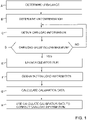
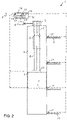
- Figure 1 illustrates a method for operating an elevator system which is suitable for use in the elevator system 1 illustrated in Figure 2 , for instance.
- step A the unbalance between the weight of an elevator counterweight 2 and the weight of an empty elevator car 3 is determined. This can be done by measuring motor 4 current, in other words motor-load, during up and down test runs of the empty elevator 3 car before launching said first elevator run (for transportation use) and by storing the determined unbalance information into a memory 16 of the elevator system 1.
- the unbalance may be determined for the first time when the elevator system in question is taken into use after installation. If needed, the measurements can be later repeated.
- step B the uncompensation of the elevator system masses at different positions of the elevator shaft is determined. Also this step can be done before launching a first elevator run (for transportation use) after installation of the elevator system, at which stage the unbalance information is stored into a memory of the elevator system, such as into a memory 16 of a calibration unit 14.
- the uncompensation of the elevator system depends on the weight difference of hosting ropes 6, 7 hanging on different sides of a traction sheave 5, for instance.
- the uncompensation changes. Consequently, the uncompensation is different when the elevator is at different positions.
- step B the uncompensation can be determined from US2019330016A1 equation 3.2. (referred to as compensation error ⁇ B therein).
- the measurements may be carried out at at least two different positions with the load weighting device 11 or with other suitable measuring means, such as by means of the motor-load information while holding the elevator car standstill at the positions 9 and 10 during measurement, it is assumed that the uncompensation varies linearly between these positions. This makes it possible to calculate the uncompensation at any point between these positions 9 and 10 by taking into account the distance between these points.
- step B it may be sufficient in step B to determine this and that the uncompensation is zero or so small that it can be neglected.
- step C car-load information is obtained from the load weighting device before launching the first elevator run (for transportation use).
- the weighting device 11 is a load cell connected to a rope hitch of elevator hoisting ropes 6, while the second alternative illustrated position for a load weighting device 12 is in connection with the elevator car 3 floor, which may be suspended by springs, for instance, such that it becomes possible to measure the load on the elevator floor.
- the car-load information may be obtained from the load weighting device 11 or 12 to an input 13 of a calibration unit 14 included in an elevator control 15.
- step D a check may be performed to ensure that the car-load is below an overload threshold value. This check may be carried out by the elevator control 15. In case the car-load is not below the overload threshold value, a launch of an elevator run may be prevented.
- Elevator systems are manufactured with a rated load and operation of the elevator system should not be allowed in case the car-load is too big. Consequently, the elevator control may maintain in a memory 16 an overload threshold value, which is compared to the obtained car-load information to determine if launch of the elevator run is allowed. In some cases, it may be preferable to set the overload threshold value slightly above the rated load of the elevator system. One alternative is to set the overload threshold value to be 110% of the rated load of the elevator system. In some alternative cases the overload threshold value is set just higher that the rated load but less that the 110 % limit.
- step E the first elevator run (for transportation use) is launched.
- step F motor-load information is obtained an elevator drive unit 17 based on realized motor current during launch of the first elevator run.
- the elevator drive unit 17 may be a part of the elevator control 15 and it may include a frequency controller for controlling the electric motor 4 of the elevator system, for instance.
- One alternative is that, after launch of the first elevator run, the elevator car is kept standstill at the launch position with torque from the elevator drive unit 4, 17.
- said holding torque is consistent with the motor current. This is in particular the case with synchronous permanent magnet motors.
- step G calibration data is calculated for the car-load information based on a difference between the car-load information and the motor-load information.
- the elevator system is provided with one or more position sensors 17 providing an input 18 of the calibration unit 14 with an indication of the position of the elevator car 3.
- the location or type of the position sensor or sensors may vary depending on the implementation.
- step H the calculated calibration data is utilized to correct car-load information from the load weighting device 11, 12 in connection with subsequent runs, preferably during normal elevator operation. Consequently, an inaccuracy regarding the weight of the loaded elevator car can be minimized and eliminated, which makes the elevator run more comfortable for the user, improves the safety of the brakes during use and also makes automatic testing of the brakes more reliable.
- the illustrated calibration unit may be configured to automatically repeat calculation of the calibration data for the car-load information and take into use the new calculated calibration data. Such calculations may be carried out for each run, or periodically according to a predefined schedule, for instance.
- the elevator system may be provided with a user interface 19 connected to the elevator control 15 such that maintenance personnel can provide a control command via the user interface 19 to control the calibration unit to repeat the calculation of the calibration data.
Landscapes
- Engineering & Computer Science (AREA)
- Automation & Control Theory (AREA)
- Computer Networks & Wireless Communication (AREA)
- Mechanical Engineering (AREA)
- Maintenance And Inspection Apparatuses For Elevators (AREA)
- Elevator Control (AREA)
Abstract
Description
- This invention relates to a solution for operating an elevator system in a safe and efficient way. More particularly, the solution makes it possible to obtain correct information about the status of the elevator system while it is being operated.
- In order to operate an elevator in a safe and efficient way, information is needed about the load of the operated elevator car. This information is needed to ensure smooth movement, but it is also essential for safety. Elevator brakes are dimensioned for a specific full load rating, which should not be exceeded for safety reasons and for the comfort of the passengers. Additionally, elevator systems are utilizing solutions for automatic monitoring and testing of brakes. In order to obtain reliable data from this monitoring and testing it is important to know what the actual load is during the testing of brakes.
- In order to obtain information about the current load, elevator systems are provided with load weighing devices (LWD) to measure the elevator car-load. The car-load information is provided to an elevator control unit, which is provided with a user interface having manual potentiometers or other means facilitating, that service personnel may calibrate the car-load measurement result manually at different elevator-car positions and with different loads. This requires, that different reference weights are loaded to the elevator car in turns, in order to obtain required measurement results for different loads at different positions.
- A drawback with the previously known solution is that it is very laborious and time-consuming, in particular as the calibration occasionally needs to be repeated. This may become necessary in case modifications are done to the elevator car, to the counterweight or to the ropes of the elevator system, for instance.
- An object of the present invention is to solve the above-mentioned drawback and to provide a simple and efficient solution for obtaining correct information about the status of an elevator system. This object is obtained with a method according to
independent claim 1 and an elevator system according toindependent claim 5, where calibration data for the car-load information is calculated based on motor-load information by taking into account the unbalance and uncompensation at the position. - Preferred embodiments of the invention are disclosed in the dependent claims.
- In the following the present invention will be described in closer detail by way of example and with reference to the attached drawings, in which
-
Figure 1 is a flow diagram of a method for operating an elevator system, and -
Figure 2 illustrates an elevator system. -
Figure 1 illustrates a method for operating an elevator system which is suitable for use in theelevator system 1 illustrated inFigure 2 , for instance. - In step A the unbalance between the weight of an
elevator counterweight 2 and the weight of anempty elevator car 3 is determined. This can be done by measuringmotor 4 current, in other words motor-load, during up and down test runs of theempty elevator 3 car before launching said first elevator run (for transportation use) and by storing the determined unbalance information into amemory 16 of theelevator system 1. In praxis the unbalance may be determined for the first time when the elevator system in question is taken into use after installation. If needed, the measurements can be later repeated. - A solution for determining unbalance of an elevator system is previously known and disclosed in
US2019330016A1 , especially in equation 1.4. (referred to as elevator system balance mb therein). Step A can be implemented by utilizing such a solution, for instance. - In step B the uncompensation of the elevator system masses at different positions of the elevator shaft is determined. Also this step can be done before launching a first elevator run (for transportation use) after installation of the elevator system, at which stage the unbalance information is stored into a memory of the elevator system, such as into a
memory 16 of acalibration unit 14. - The uncompensation of the elevator system depends on the weight difference of
hosting ropes traction sheave 5, for instance. When theelevator car 3 and thecounterweight 2 move between different positions in theelevator shaft 8, such as betweendifferent floors - In step B the uncompensation can be determined from
US2019330016A1 equation 3.2. (referred to as compensation error ΔB therein). Alternatively or additionally, the measurements may be carried out at at least two different positions with theload weighting device 11 or with other suitable measuring means, such as by means of the motor-load information while holding the elevator car standstill at thepositions positions - In some elevator systems so called compensation ropes have been mounted below the elevator car and counterweight to reduce the uncompensation. In case such compensation ropes are in use, it may be sufficient in step B to determine this and that the uncompensation is zero or so small that it can be neglected.
- In step C car-load information is obtained from the load weighting device before launching the first elevator run (for transportation use). In the illustrated example, two different locations of load weighting devices are illustrated by way of example, though in praxis it is sufficient to utilize only one load weighting device for an elevator car. The
weighting device 11 is a load cell connected to a rope hitch ofelevator hoisting ropes 6, while the second alternative illustrated position for aload weighting device 12 is in connection with theelevator car 3 floor, which may be suspended by springs, for instance, such that it becomes possible to measure the load on the elevator floor. The car-load information may be obtained from theload weighting device input 13 of acalibration unit 14 included in anelevator control 15. - In step D a check may be performed to ensure that the car-load is below an overload threshold value. This check may be carried out by the
elevator control 15. In case the car-load is not below the overload threshold value, a launch of an elevator run may be prevented. - Elevator systems are manufactured with a rated load and operation of the elevator system should not be allowed in case the car-load is too big. Consequently, the elevator control may maintain in a
memory 16 an overload threshold value, which is compared to the obtained car-load information to determine if launch of the elevator run is allowed. In some cases, it may be preferable to set the overload threshold value slightly above the rated load of the elevator system. One alternative is to set the overload threshold value to be 110% of the rated load of the elevator system. In some alternative cases the overload threshold value is set just higher that the rated load but less that the 110 % limit. - In step E the first elevator run (for transportation use) is launched. At this stage in step F motor-load information is obtained an
elevator drive unit 17 based on realized motor current during launch of the first elevator run. Theelevator drive unit 17 may be a part of theelevator control 15 and it may include a frequency controller for controlling theelectric motor 4 of the elevator system, for instance. One alternative is that, after launch of the first elevator run, the elevator car is kept standstill at the launch position with torque from theelevator drive unit - In step G calibration data is calculated for the car-load information based on a difference between the car-load information and the motor-load information.
- In order to improve the accuracy of the needed calibration, the determined unbalance and also the uncompensation at the position of the launch of the first elevator run have been taken into account. A highly accurate second value for car load information will be established by substracting these known factors of unbalance and uncompensation from the motor-load information, which second value for car load information may then be used as a reference for the car-load information in generating the calibration data.
- For this purpose the elevator system is provided with one or
more position sensors 17 providing aninput 18 of thecalibration unit 14 with an indication of the position of theelevator car 3. Naturally, the location or type of the position sensor or sensors may vary depending on the implementation. - In step H the calculated calibration data is utilized to correct car-load information from the
load weighting device - The illustrated calibration unit may be configured to automatically repeat calculation of the calibration data for the car-load information and take into use the new calculated calibration data. Such calculations may be carried out for each run, or periodically according to a predefined schedule, for instance. Alternatively, the elevator system may be provided with a
user interface 19 connected to theelevator control 15 such that maintenance personnel can provide a control command via theuser interface 19 to control the calibration unit to repeat the calculation of the calibration data. - It is to be understood that the above description and the accompanying figures are only intended to illustrate the present invention. It will be obvious to a person skilled in the art that the invention can be varied and modified without departing from the scope of the invention.
Claims (12)
maintaining in a memory (16) an overload threshold value,
the elevator system (1) comprises a memory (16) maintaining an overload threshold value,
the elevator system compares the car-load information the overload threshold value, and
the elevator system prevents launch of elevator runs when the car-load information indicates a car-load that exceeds the overload threshold value.
Priority Applications (2)
| Application Number | Priority Date | Filing Date | Title |
|---|---|---|---|
| EP20198412.7A EP3974367B1 (en) | 2020-09-25 | 2020-09-25 | Method of calibraring a load weighing device of an elevator system and elevator system |
| CN202111097213.7A CN114249198B (en) | 2020-09-25 | 2021-09-18 | Method for operating an elevator system and elevator system |
Applications Claiming Priority (1)
| Application Number | Priority Date | Filing Date | Title |
|---|---|---|---|
| EP20198412.7A EP3974367B1 (en) | 2020-09-25 | 2020-09-25 | Method of calibraring a load weighing device of an elevator system and elevator system |
Publications (2)
| Publication Number | Publication Date |
|---|---|
| EP3974367A1 true EP3974367A1 (en) | 2022-03-30 |
| EP3974367B1 EP3974367B1 (en) | 2024-01-17 |
Family
ID=72659642
Family Applications (1)
| Application Number | Title | Priority Date | Filing Date |
|---|---|---|---|
| EP20198412.7A Active EP3974367B1 (en) | 2020-09-25 | 2020-09-25 | Method of calibraring a load weighing device of an elevator system and elevator system |
Country Status (2)
| Country | Link |
|---|---|
| EP (1) | EP3974367B1 (en) |
| CN (1) | CN114249198B (en) |
Cited By (1)
| Publication number | Priority date | Publication date | Assignee | Title |
|---|---|---|---|---|
| WO2025185833A1 (en) * | 2024-03-08 | 2025-09-12 | Kone Corporation | Calibration of a load weighing device of an elevator |
Families Citing this family (1)
| Publication number | Priority date | Publication date | Assignee | Title |
|---|---|---|---|---|
| CN115432526B (en) * | 2022-07-29 | 2025-02-18 | 上海辛格林纳新时达电机有限公司 | Elevator starting method and device, electronic equipment and storage medium |
Citations (4)
| Publication number | Priority date | Publication date | Assignee | Title |
|---|---|---|---|---|
| US5343003A (en) * | 1992-05-29 | 1994-08-30 | Otis Elevator Company | Recalibration of hitch load weighing using dynamic tare |
| EP2998259A1 (en) * | 2014-09-18 | 2016-03-23 | Kone Corporation | An elevator system and a method for controlling elevator safety |
| WO2018083739A1 (en) * | 2016-11-01 | 2018-05-11 | 三菱電機株式会社 | Elevator device and calibration method for weighing device |
| US20190330016A1 (en) | 2017-02-08 | 2019-10-31 | Kone Corporation | Method for determining the weight of the car and counterweight in an elevator |
Family Cites Families (8)
| Publication number | Priority date | Publication date | Assignee | Title |
|---|---|---|---|---|
| GB663766A (en) * | 1948-09-06 | 1951-12-27 | Samuel Williams & Sons Ltd | Improvements in or relating to automatic weighing gear |
| DE822615C (en) * | 1950-10-28 | 1951-11-26 | Friedrich Dominick | Scales for cranes |
| US4754850A (en) * | 1987-07-29 | 1988-07-05 | Westinghouse Electric Corp. | Method for providing a load compensation signal for a traction elevator system |
| US5407030A (en) * | 1993-03-04 | 1995-04-18 | Otis Elevator Company | Recalibrating an elevator loadweighing system |
| JP2005170537A (en) * | 2003-12-08 | 2005-06-30 | Mitsubishi Electric Corp | Elevator control device |
| JP2012240796A (en) * | 2011-05-19 | 2012-12-10 | Hitachi Building Systems Co Ltd | Control device of elevator |
| CN108910726A (en) * | 2018-06-27 | 2018-11-30 | 浙江省建设机械集团有限公司 | A kind of system and bearing calibration of derrick crane load-carrying correction |
| CN109250597A (en) * | 2018-11-06 | 2019-01-22 | 广州绰立科技有限公司 | Elevator car loading device antidote |
-
2020
- 2020-09-25 EP EP20198412.7A patent/EP3974367B1/en active Active
-
2021
- 2021-09-18 CN CN202111097213.7A patent/CN114249198B/en active Active
Patent Citations (4)
| Publication number | Priority date | Publication date | Assignee | Title |
|---|---|---|---|---|
| US5343003A (en) * | 1992-05-29 | 1994-08-30 | Otis Elevator Company | Recalibration of hitch load weighing using dynamic tare |
| EP2998259A1 (en) * | 2014-09-18 | 2016-03-23 | Kone Corporation | An elevator system and a method for controlling elevator safety |
| WO2018083739A1 (en) * | 2016-11-01 | 2018-05-11 | 三菱電機株式会社 | Elevator device and calibration method for weighing device |
| US20190330016A1 (en) | 2017-02-08 | 2019-10-31 | Kone Corporation | Method for determining the weight of the car and counterweight in an elevator |
Cited By (1)
| Publication number | Priority date | Publication date | Assignee | Title |
|---|---|---|---|---|
| WO2025185833A1 (en) * | 2024-03-08 | 2025-09-12 | Kone Corporation | Calibration of a load weighing device of an elevator |
Also Published As
| Publication number | Publication date |
|---|---|
| CN114249198B (en) | 2025-12-19 |
| EP3974367B1 (en) | 2024-01-17 |
| CN114249198A (en) | 2022-03-29 |
Similar Documents
| Publication | Publication Date | Title |
|---|---|---|
| US6325179B1 (en) | Determining elevator brake, traction and related performance parameters | |
| US7971688B2 (en) | Adjustment of transport system parameters using a power model | |
| JP3936578B2 (en) | Elevator hoisting machine and control system | |
| US12091285B2 (en) | Method for determining the weight of the car and counterweight in an elevator | |
| EP3974367B1 (en) | Method of calibraring a load weighing device of an elevator system and elevator system | |
| US20260116703A1 (en) | Method for testing safety characteristics of an elevator | |
| CN109890740B (en) | Elevator device and method for correcting scale device | |
| US12545553B2 (en) | Method for testing a brake of a hoisting machine and system | |
| TWI377168B (en) | Automatic inspecting device for an elevator and automatic inspecting method for an elevator | |
| KR20120046278A (en) | Elevator control device | |
| KR100958298B1 (en) | Unbalance load and max load measurement method and device for elevator | |
| CA3185562A1 (en) | A drive system and method for controlling a drive system | |
| JP2005145620A (en) | Characteristic measuring system for elevator weighing device | |
| EP3733579A1 (en) | Method and apparatus for detecting the position of an elevator car | |
| HK40067073B (en) | Method of operating an elevator system and elevator system | |
| HK40067073A (en) | Method of operating an elevator system and elevator system | |
| KR101015054B1 (en) | Elevator unbalanced load and maximum load measurement method and device | |
| JP4727234B2 (en) | Elevator equipment | |
| CN111348511A (en) | Elevator braking force accurate detection method based on elevator balance coefficient | |
| US20250296806A1 (en) | Method for determining torque constant of hoisting motor of elevator, elevator control unit, elevator system, and computer-readable memory medium | |
| JP7261190B2 (en) | Elevator diagnostic device, diagnostic method for elevator load detector, and elevator system | |
| EP4488211A1 (en) | Method for detecting overload condition, overload monitoring system and elevator | |
| HK40062528A (en) | A method for testing safety characteristics of an elevator | |
| CN118382591A (en) | Method for determining the pre-holding torque of elevator equipment | |
| HK40014663B (en) | Method for determining the weight of the car and counterweight in an elevator |
Legal Events
| Date | Code | Title | Description |
|---|---|---|---|
| PUAI | Public reference made under article 153(3) epc to a published international application that has entered the european phase |
Free format text: ORIGINAL CODE: 0009012 |
|
| STAA | Information on the status of an ep patent application or granted ep patent |
Free format text: STATUS: REQUEST FOR EXAMINATION WAS MADE |
|
| 17P | Request for examination filed |
Effective date: 20210708 |
|
| AK | Designated contracting states |
Kind code of ref document: A1 Designated state(s): AL AT BE BG CH CY CZ DE DK EE ES FI FR GB GR HR HU IE IS IT LI LT LU LV MC MK MT NL NO PL PT RO RS SE SI SK SM TR |
|
| STAA | Information on the status of an ep patent application or granted ep patent |
Free format text: STATUS: EXAMINATION IS IN PROGRESS |
|
| 17Q | First examination report despatched |
Effective date: 20220926 |
|
| P01 | Opt-out of the competence of the unified patent court (upc) registered |
Effective date: 20230525 |
|
| GRAP | Despatch of communication of intention to grant a patent |
Free format text: ORIGINAL CODE: EPIDOSNIGR1 |
|
| STAA | Information on the status of an ep patent application or granted ep patent |
Free format text: STATUS: GRANT OF PATENT IS INTENDED |
|
| INTG | Intention to grant announced |
Effective date: 20230829 |
|
| GRAS | Grant fee paid |
Free format text: ORIGINAL CODE: EPIDOSNIGR3 |
|
| GRAA | (expected) grant |
Free format text: ORIGINAL CODE: 0009210 |
|
| STAA | Information on the status of an ep patent application or granted ep patent |
Free format text: STATUS: THE PATENT HAS BEEN GRANTED |
|
| AK | Designated contracting states |
Kind code of ref document: B1 Designated state(s): AL AT BE BG CH CY CZ DE DK EE ES FI FR GB GR HR HU IE IS IT LI LT LU LV MC MK MT NL NO PL PT RO RS SE SI SK SM TR |
|
| REG | Reference to a national code |
Ref country code: GB Ref legal event code: FG4D |
|
| REG | Reference to a national code |
Ref country code: CH Ref legal event code: EP |
|
| REG | Reference to a national code |
Ref country code: DE Ref legal event code: R096 Ref document number: 602020024418 Country of ref document: DE |
|
| REG | Reference to a national code |
Ref country code: IE Ref legal event code: FG4D |
|
| REG | Reference to a national code |
Ref country code: LT Ref legal event code: MG9D |
|
| REG | Reference to a national code |
Ref country code: NL Ref legal event code: MP Effective date: 20240117 |
|
| REG | Reference to a national code |
Ref country code: AT Ref legal event code: MK05 Ref document number: 1650436 Country of ref document: AT Kind code of ref document: T Effective date: 20240117 |
|
| PG25 | Lapsed in a contracting state [announced via postgrant information from national office to epo] |
Ref country code: NL Free format text: LAPSE BECAUSE OF FAILURE TO SUBMIT A TRANSLATION OF THE DESCRIPTION OR TO PAY THE FEE WITHIN THE PRESCRIBED TIME-LIMIT Effective date: 20240117 |
|
| PG25 | Lapsed in a contracting state [announced via postgrant information from national office to epo] |
Ref country code: NL Free format text: LAPSE BECAUSE OF FAILURE TO SUBMIT A TRANSLATION OF THE DESCRIPTION OR TO PAY THE FEE WITHIN THE PRESCRIBED TIME-LIMIT Effective date: 20240117 |
|
| PG25 | Lapsed in a contracting state [announced via postgrant information from national office to epo] |
Ref country code: IS Free format text: LAPSE BECAUSE OF FAILURE TO SUBMIT A TRANSLATION OF THE DESCRIPTION OR TO PAY THE FEE WITHIN THE PRESCRIBED TIME-LIMIT Effective date: 20240517 |
|
| PG25 | Lapsed in a contracting state [announced via postgrant information from national office to epo] |
Ref country code: LT Free format text: LAPSE BECAUSE OF FAILURE TO SUBMIT A TRANSLATION OF THE DESCRIPTION OR TO PAY THE FEE WITHIN THE PRESCRIBED TIME-LIMIT Effective date: 20240117 |
|
| PG25 | Lapsed in a contracting state [announced via postgrant information from national office to epo] |
Ref country code: GR Free format text: LAPSE BECAUSE OF FAILURE TO SUBMIT A TRANSLATION OF THE DESCRIPTION OR TO PAY THE FEE WITHIN THE PRESCRIBED TIME-LIMIT Effective date: 20240418 |
|
| PG25 | Lapsed in a contracting state [announced via postgrant information from national office to epo] |
Ref country code: RS Free format text: LAPSE BECAUSE OF FAILURE TO SUBMIT A TRANSLATION OF THE DESCRIPTION OR TO PAY THE FEE WITHIN THE PRESCRIBED TIME-LIMIT Effective date: 20240417 Ref country code: HR Free format text: LAPSE BECAUSE OF FAILURE TO SUBMIT A TRANSLATION OF THE DESCRIPTION OR TO PAY THE FEE WITHIN THE PRESCRIBED TIME-LIMIT Effective date: 20240117 |
|
| PG25 | Lapsed in a contracting state [announced via postgrant information from national office to epo] |
Ref country code: ES Free format text: LAPSE BECAUSE OF FAILURE TO SUBMIT A TRANSLATION OF THE DESCRIPTION OR TO PAY THE FEE WITHIN THE PRESCRIBED TIME-LIMIT Effective date: 20240117 |
|
| PG25 | Lapsed in a contracting state [announced via postgrant information from national office to epo] |
Ref country code: AT Free format text: LAPSE BECAUSE OF FAILURE TO SUBMIT A TRANSLATION OF THE DESCRIPTION OR TO PAY THE FEE WITHIN THE PRESCRIBED TIME-LIMIT Effective date: 20240117 |
|
| PG25 | Lapsed in a contracting state [announced via postgrant information from national office to epo] |
Ref country code: RS Free format text: LAPSE BECAUSE OF FAILURE TO SUBMIT A TRANSLATION OF THE DESCRIPTION OR TO PAY THE FEE WITHIN THE PRESCRIBED TIME-LIMIT Effective date: 20240417 Ref country code: NO Free format text: LAPSE BECAUSE OF FAILURE TO SUBMIT A TRANSLATION OF THE DESCRIPTION OR TO PAY THE FEE WITHIN THE PRESCRIBED TIME-LIMIT Effective date: 20240417 Ref country code: LT Free format text: LAPSE BECAUSE OF FAILURE TO SUBMIT A TRANSLATION OF THE DESCRIPTION OR TO PAY THE FEE WITHIN THE PRESCRIBED TIME-LIMIT Effective date: 20240117 Ref country code: IS Free format text: LAPSE BECAUSE OF FAILURE TO SUBMIT A TRANSLATION OF THE DESCRIPTION OR TO PAY THE FEE WITHIN THE PRESCRIBED TIME-LIMIT Effective date: 20240517 Ref country code: HR Free format text: LAPSE BECAUSE OF FAILURE TO SUBMIT A TRANSLATION OF THE DESCRIPTION OR TO PAY THE FEE WITHIN THE PRESCRIBED TIME-LIMIT Effective date: 20240117 Ref country code: GR Free format text: LAPSE BECAUSE OF FAILURE TO SUBMIT A TRANSLATION OF THE DESCRIPTION OR TO PAY THE FEE WITHIN THE PRESCRIBED TIME-LIMIT Effective date: 20240418 Ref country code: FI Free format text: LAPSE BECAUSE OF FAILURE TO SUBMIT A TRANSLATION OF THE DESCRIPTION OR TO PAY THE FEE WITHIN THE PRESCRIBED TIME-LIMIT Effective date: 20240117 Ref country code: ES Free format text: LAPSE BECAUSE OF FAILURE TO SUBMIT A TRANSLATION OF THE DESCRIPTION OR TO PAY THE FEE WITHIN THE PRESCRIBED TIME-LIMIT Effective date: 20240117 Ref country code: BG Free format text: LAPSE BECAUSE OF FAILURE TO SUBMIT A TRANSLATION OF THE DESCRIPTION OR TO PAY THE FEE WITHIN THE PRESCRIBED TIME-LIMIT Effective date: 20240117 Ref country code: AT Free format text: LAPSE BECAUSE OF FAILURE TO SUBMIT A TRANSLATION OF THE DESCRIPTION OR TO PAY THE FEE WITHIN THE PRESCRIBED TIME-LIMIT Effective date: 20240117 |
|
| PG25 | Lapsed in a contracting state [announced via postgrant information from national office to epo] |
Ref country code: PL Free format text: LAPSE BECAUSE OF FAILURE TO SUBMIT A TRANSLATION OF THE DESCRIPTION OR TO PAY THE FEE WITHIN THE PRESCRIBED TIME-LIMIT Effective date: 20240117 Ref country code: PT Free format text: LAPSE BECAUSE OF FAILURE TO SUBMIT A TRANSLATION OF THE DESCRIPTION OR TO PAY THE FEE WITHIN THE PRESCRIBED TIME-LIMIT Effective date: 20240517 |
|
| PG25 | Lapsed in a contracting state [announced via postgrant information from national office to epo] |
Ref country code: SE Free format text: LAPSE BECAUSE OF FAILURE TO SUBMIT A TRANSLATION OF THE DESCRIPTION OR TO PAY THE FEE WITHIN THE PRESCRIBED TIME-LIMIT Effective date: 20240117 Ref country code: PT Free format text: LAPSE BECAUSE OF FAILURE TO SUBMIT A TRANSLATION OF THE DESCRIPTION OR TO PAY THE FEE WITHIN THE PRESCRIBED TIME-LIMIT Effective date: 20240517 Ref country code: PL Free format text: LAPSE BECAUSE OF FAILURE TO SUBMIT A TRANSLATION OF THE DESCRIPTION OR TO PAY THE FEE WITHIN THE PRESCRIBED TIME-LIMIT Effective date: 20240117 Ref country code: LV Free format text: LAPSE BECAUSE OF FAILURE TO SUBMIT A TRANSLATION OF THE DESCRIPTION OR TO PAY THE FEE WITHIN THE PRESCRIBED TIME-LIMIT Effective date: 20240117 |
|
| PG25 | Lapsed in a contracting state [announced via postgrant information from national office to epo] |
Ref country code: DK Free format text: LAPSE BECAUSE OF FAILURE TO SUBMIT A TRANSLATION OF THE DESCRIPTION OR TO PAY THE FEE WITHIN THE PRESCRIBED TIME-LIMIT Effective date: 20240117 |
|
| PG25 | Lapsed in a contracting state [announced via postgrant information from national office to epo] |
Ref country code: SM Free format text: LAPSE BECAUSE OF FAILURE TO SUBMIT A TRANSLATION OF THE DESCRIPTION OR TO PAY THE FEE WITHIN THE PRESCRIBED TIME-LIMIT Effective date: 20240117 |
|
| REG | Reference to a national code |
Ref country code: DE Ref legal event code: R097 Ref document number: 602020024418 Country of ref document: DE |
|
| PG25 | Lapsed in a contracting state [announced via postgrant information from national office to epo] |
Ref country code: EE Free format text: LAPSE BECAUSE OF FAILURE TO SUBMIT A TRANSLATION OF THE DESCRIPTION OR TO PAY THE FEE WITHIN THE PRESCRIBED TIME-LIMIT Effective date: 20240117 Ref country code: CZ Free format text: LAPSE BECAUSE OF FAILURE TO SUBMIT A TRANSLATION OF THE DESCRIPTION OR TO PAY THE FEE WITHIN THE PRESCRIBED TIME-LIMIT Effective date: 20240117 |
|
| PG25 | Lapsed in a contracting state [announced via postgrant information from national office to epo] |
Ref country code: SK Free format text: LAPSE BECAUSE OF FAILURE TO SUBMIT A TRANSLATION OF THE DESCRIPTION OR TO PAY THE FEE WITHIN THE PRESCRIBED TIME-LIMIT Effective date: 20240117 |
|
| PG25 | Lapsed in a contracting state [announced via postgrant information from national office to epo] |
Ref country code: DK Free format text: LAPSE BECAUSE OF FAILURE TO SUBMIT A TRANSLATION OF THE DESCRIPTION OR TO PAY THE FEE WITHIN THE PRESCRIBED TIME-LIMIT Effective date: 20240117 Ref country code: CZ Free format text: LAPSE BECAUSE OF FAILURE TO SUBMIT A TRANSLATION OF THE DESCRIPTION OR TO PAY THE FEE WITHIN THE PRESCRIBED TIME-LIMIT Effective date: 20240117 Ref country code: SM Free format text: LAPSE BECAUSE OF FAILURE TO SUBMIT A TRANSLATION OF THE DESCRIPTION OR TO PAY THE FEE WITHIN THE PRESCRIBED TIME-LIMIT Effective date: 20240117 Ref country code: SK Free format text: LAPSE BECAUSE OF FAILURE TO SUBMIT A TRANSLATION OF THE DESCRIPTION OR TO PAY THE FEE WITHIN THE PRESCRIBED TIME-LIMIT Effective date: 20240117 Ref country code: RO Free format text: LAPSE BECAUSE OF FAILURE TO SUBMIT A TRANSLATION OF THE DESCRIPTION OR TO PAY THE FEE WITHIN THE PRESCRIBED TIME-LIMIT Effective date: 20240117 Ref country code: EE Free format text: LAPSE BECAUSE OF FAILURE TO SUBMIT A TRANSLATION OF THE DESCRIPTION OR TO PAY THE FEE WITHIN THE PRESCRIBED TIME-LIMIT Effective date: 20240117 |
|
| PLBE | No opposition filed within time limit |
Free format text: ORIGINAL CODE: 0009261 |
|
| STAA | Information on the status of an ep patent application or granted ep patent |
Free format text: STATUS: NO OPPOSITION FILED WITHIN TIME LIMIT |
|
| PG25 | Lapsed in a contracting state [announced via postgrant information from national office to epo] |
Ref country code: IT Free format text: LAPSE BECAUSE OF FAILURE TO SUBMIT A TRANSLATION OF THE DESCRIPTION OR TO PAY THE FEE WITHIN THE PRESCRIBED TIME-LIMIT Effective date: 20240117 |
|
| 26N | No opposition filed |
Effective date: 20241018 |
|
| PG25 | Lapsed in a contracting state [announced via postgrant information from national office to epo] |
Ref country code: IT Free format text: LAPSE BECAUSE OF FAILURE TO SUBMIT A TRANSLATION OF THE DESCRIPTION OR TO PAY THE FEE WITHIN THE PRESCRIBED TIME-LIMIT Effective date: 20240117 |
|
| PG25 | Lapsed in a contracting state [announced via postgrant information from national office to epo] |
Ref country code: SI Free format text: LAPSE BECAUSE OF FAILURE TO SUBMIT A TRANSLATION OF THE DESCRIPTION OR TO PAY THE FEE WITHIN THE PRESCRIBED TIME-LIMIT Effective date: 20240117 Ref country code: MC Free format text: LAPSE BECAUSE OF FAILURE TO SUBMIT A TRANSLATION OF THE DESCRIPTION OR TO PAY THE FEE WITHIN THE PRESCRIBED TIME-LIMIT Effective date: 20240117 |
|
| REG | Reference to a national code |
Ref country code: CH Ref legal event code: PL |
|
| PG25 | Lapsed in a contracting state [announced via postgrant information from national office to epo] |
Ref country code: LU Free format text: LAPSE BECAUSE OF NON-PAYMENT OF DUE FEES Effective date: 20240925 |
|
| REG | Reference to a national code |
Ref country code: BE Ref legal event code: MM Effective date: 20240930 |
|
| PG25 | Lapsed in a contracting state [announced via postgrant information from national office to epo] |
Ref country code: BE Free format text: LAPSE BECAUSE OF NON-PAYMENT OF DUE FEES Effective date: 20240930 |
|
| PG25 | Lapsed in a contracting state [announced via postgrant information from national office to epo] |
Ref country code: CH Free format text: LAPSE BECAUSE OF NON-PAYMENT OF DUE FEES Effective date: 20240930 |
|
| PG25 | Lapsed in a contracting state [announced via postgrant information from national office to epo] |
Ref country code: IE Free format text: LAPSE BECAUSE OF NON-PAYMENT OF DUE FEES Effective date: 20240925 |
|
| PGFP | Annual fee paid to national office [announced via postgrant information from national office to epo] |
Ref country code: DE Payment date: 20250919 Year of fee payment: 6 |
|
| PGFP | Annual fee paid to national office [announced via postgrant information from national office to epo] |
Ref country code: GB Payment date: 20250919 Year of fee payment: 6 |
|
| PGFP | Annual fee paid to national office [announced via postgrant information from national office to epo] |
Ref country code: FR Payment date: 20250922 Year of fee payment: 6 |
|
| PG25 | Lapsed in a contracting state [announced via postgrant information from national office to epo] |
Ref country code: CY Free format text: LAPSE BECAUSE OF FAILURE TO SUBMIT A TRANSLATION OF THE DESCRIPTION OR TO PAY THE FEE WITHIN THE PRESCRIBED TIME-LIMIT; INVALID AB INITIO Effective date: 20200925 |
|
| PG25 | Lapsed in a contracting state [announced via postgrant information from national office to epo] |
Ref country code: HU Free format text: LAPSE BECAUSE OF FAILURE TO SUBMIT A TRANSLATION OF THE DESCRIPTION OR TO PAY THE FEE WITHIN THE PRESCRIBED TIME-LIMIT; INVALID AB INITIO Effective date: 20200925 |