EP3974228B1 - Vehicle drive route instruction system - Google Patents
Vehicle drive route instruction system Download PDFInfo
- Publication number
- EP3974228B1 EP3974228B1 EP21192353.7A EP21192353A EP3974228B1 EP 3974228 B1 EP3974228 B1 EP 3974228B1 EP 21192353 A EP21192353 A EP 21192353A EP 3974228 B1 EP3974228 B1 EP 3974228B1
- Authority
- EP
- European Patent Office
- Prior art keywords
- vehicle
- driving
- soc amount
- boundary
- soc
- Prior art date
- Legal status (The legal status is an assumption and is not a legal conclusion. Google has not performed a legal analysis and makes no representation as to the accuracy of the status listed.)
- Active
Links
Images




Classifications
-
- B—PERFORMING OPERATIONS; TRANSPORTING
- B60—VEHICLES IN GENERAL
- B60K—ARRANGEMENT OR MOUNTING OF PROPULSION UNITS OR OF TRANSMISSIONS IN VEHICLES; ARRANGEMENT OR MOUNTING OF PLURAL DIVERSE PRIME-MOVERS IN VEHICLES; AUXILIARY DRIVES FOR VEHICLES; INSTRUMENTATION OR DASHBOARDS FOR VEHICLES; ARRANGEMENTS IN CONNECTION WITH COOLING, AIR INTAKE, GAS EXHAUST OR FUEL SUPPLY OF PROPULSION UNITS IN VEHICLES
- B60K6/00—Arrangement or mounting of plural diverse prime-movers for mutual or common propulsion, e.g. hybrid propulsion systems comprising electric motors and internal combustion engines
- B60K6/20—Arrangement or mounting of plural diverse prime-movers for mutual or common propulsion, e.g. hybrid propulsion systems comprising electric motors and internal combustion engines the prime-movers consisting of electric motors and internal combustion engines, e.g. HEVs
- B60K6/42—Arrangement or mounting of plural diverse prime-movers for mutual or common propulsion, e.g. hybrid propulsion systems comprising electric motors and internal combustion engines the prime-movers consisting of electric motors and internal combustion engines, e.g. HEVs characterised by the architecture of the hybrid electric vehicle
- B60K6/44—Series-parallel type
- B60K6/445—Differential gearing distribution type
-
- B—PERFORMING OPERATIONS; TRANSPORTING
- B60—VEHICLES IN GENERAL
- B60W—CONJOINT CONTROL OF VEHICLE SUB-UNITS OF DIFFERENT TYPE OR DIFFERENT FUNCTION; CONTROL SYSTEMS SPECIALLY ADAPTED FOR HYBRID VEHICLES; ROAD VEHICLE DRIVE CONTROL SYSTEMS FOR PURPOSES NOT RELATED TO THE CONTROL OF A PARTICULAR SUB-UNIT
- B60W20/00—Control systems specially adapted for hybrid vehicles
- B60W20/10—Controlling the power contribution of each of the prime movers to meet required power demand
- B60W20/12—Controlling the power contribution of each of the prime movers to meet required power demand using control strategies taking into account route information
-
- B—PERFORMING OPERATIONS; TRANSPORTING
- B60—VEHICLES IN GENERAL
- B60K—ARRANGEMENT OR MOUNTING OF PROPULSION UNITS OR OF TRANSMISSIONS IN VEHICLES; ARRANGEMENT OR MOUNTING OF PLURAL DIVERSE PRIME-MOVERS IN VEHICLES; AUXILIARY DRIVES FOR VEHICLES; INSTRUMENTATION OR DASHBOARDS FOR VEHICLES; ARRANGEMENTS IN CONNECTION WITH COOLING, AIR INTAKE, GAS EXHAUST OR FUEL SUPPLY OF PROPULSION UNITS IN VEHICLES
- B60K6/00—Arrangement or mounting of plural diverse prime-movers for mutual or common propulsion, e.g. hybrid propulsion systems comprising electric motors and internal combustion engines
- B60K6/20—Arrangement or mounting of plural diverse prime-movers for mutual or common propulsion, e.g. hybrid propulsion systems comprising electric motors and internal combustion engines the prime-movers consisting of electric motors and internal combustion engines, e.g. HEVs
- B60K6/42—Arrangement or mounting of plural diverse prime-movers for mutual or common propulsion, e.g. hybrid propulsion systems comprising electric motors and internal combustion engines the prime-movers consisting of electric motors and internal combustion engines, e.g. HEVs characterised by the architecture of the hybrid electric vehicle
- B60K6/46—Series type
-
- B—PERFORMING OPERATIONS; TRANSPORTING
- B60—VEHICLES IN GENERAL
- B60W—CONJOINT CONTROL OF VEHICLE SUB-UNITS OF DIFFERENT TYPE OR DIFFERENT FUNCTION; CONTROL SYSTEMS SPECIALLY ADAPTED FOR HYBRID VEHICLES; ROAD VEHICLE DRIVE CONTROL SYSTEMS FOR PURPOSES NOT RELATED TO THE CONTROL OF A PARTICULAR SUB-UNIT
- B60W10/00—Conjoint control of vehicle sub-units of different type or different function
- B60W10/04—Conjoint control of vehicle sub-units of different type or different function including control of propulsion units
- B60W10/06—Conjoint control of vehicle sub-units of different type or different function including control of propulsion units including control of combustion engines
-
- B—PERFORMING OPERATIONS; TRANSPORTING
- B60—VEHICLES IN GENERAL
- B60W—CONJOINT CONTROL OF VEHICLE SUB-UNITS OF DIFFERENT TYPE OR DIFFERENT FUNCTION; CONTROL SYSTEMS SPECIALLY ADAPTED FOR HYBRID VEHICLES; ROAD VEHICLE DRIVE CONTROL SYSTEMS FOR PURPOSES NOT RELATED TO THE CONTROL OF A PARTICULAR SUB-UNIT
- B60W10/00—Conjoint control of vehicle sub-units of different type or different function
- B60W10/04—Conjoint control of vehicle sub-units of different type or different function including control of propulsion units
- B60W10/08—Conjoint control of vehicle sub-units of different type or different function including control of propulsion units including control of electric propulsion units, e.g. motors or generators
-
- B—PERFORMING OPERATIONS; TRANSPORTING
- B60—VEHICLES IN GENERAL
- B60W—CONJOINT CONTROL OF VEHICLE SUB-UNITS OF DIFFERENT TYPE OR DIFFERENT FUNCTION; CONTROL SYSTEMS SPECIALLY ADAPTED FOR HYBRID VEHICLES; ROAD VEHICLE DRIVE CONTROL SYSTEMS FOR PURPOSES NOT RELATED TO THE CONTROL OF A PARTICULAR SUB-UNIT
- B60W10/00—Conjoint control of vehicle sub-units of different type or different function
- B60W10/24—Conjoint control of vehicle sub-units of different type or different function including control of energy storage means
- B60W10/26—Conjoint control of vehicle sub-units of different type or different function including control of energy storage means for electrical energy, e.g. batteries or capacitors
-
- B—PERFORMING OPERATIONS; TRANSPORTING
- B60—VEHICLES IN GENERAL
- B60W—CONJOINT CONTROL OF VEHICLE SUB-UNITS OF DIFFERENT TYPE OR DIFFERENT FUNCTION; CONTROL SYSTEMS SPECIALLY ADAPTED FOR HYBRID VEHICLES; ROAD VEHICLE DRIVE CONTROL SYSTEMS FOR PURPOSES NOT RELATED TO THE CONTROL OF A PARTICULAR SUB-UNIT
- B60W20/00—Control systems specially adapted for hybrid vehicles
- B60W20/10—Controlling the power contribution of each of the prime movers to meet required power demand
- B60W20/11—Controlling the power contribution of each of the prime movers to meet required power demand using model predictive control [MPC] strategies, i.e. control methods based on models predicting performance
-
- B—PERFORMING OPERATIONS; TRANSPORTING
- B60—VEHICLES IN GENERAL
- B60W—CONJOINT CONTROL OF VEHICLE SUB-UNITS OF DIFFERENT TYPE OR DIFFERENT FUNCTION; CONTROL SYSTEMS SPECIALLY ADAPTED FOR HYBRID VEHICLES; ROAD VEHICLE DRIVE CONTROL SYSTEMS FOR PURPOSES NOT RELATED TO THE CONTROL OF A PARTICULAR SUB-UNIT
- B60W20/00—Control systems specially adapted for hybrid vehicles
- B60W20/10—Controlling the power contribution of each of the prime movers to meet required power demand
- B60W20/13—Controlling the power contribution of each of the prime movers to meet required power demand in order to stay within battery power input or output limits; in order to prevent overcharging or battery depletion
-
- B—PERFORMING OPERATIONS; TRANSPORTING
- B60—VEHICLES IN GENERAL
- B60W—CONJOINT CONTROL OF VEHICLE SUB-UNITS OF DIFFERENT TYPE OR DIFFERENT FUNCTION; CONTROL SYSTEMS SPECIALLY ADAPTED FOR HYBRID VEHICLES; ROAD VEHICLE DRIVE CONTROL SYSTEMS FOR PURPOSES NOT RELATED TO THE CONTROL OF A PARTICULAR SUB-UNIT
- B60W20/00—Control systems specially adapted for hybrid vehicles
- B60W20/10—Controlling the power contribution of each of the prime movers to meet required power demand
- B60W20/15—Control strategies specially adapted for achieving a particular effect
- B60W20/16—Control strategies specially adapted for achieving a particular effect for reducing engine exhaust emissions
-
- B—PERFORMING OPERATIONS; TRANSPORTING
- B60—VEHICLES IN GENERAL
- B60W—CONJOINT CONTROL OF VEHICLE SUB-UNITS OF DIFFERENT TYPE OR DIFFERENT FUNCTION; CONTROL SYSTEMS SPECIALLY ADAPTED FOR HYBRID VEHICLES; ROAD VEHICLE DRIVE CONTROL SYSTEMS FOR PURPOSES NOT RELATED TO THE CONTROL OF A PARTICULAR SUB-UNIT
- B60W20/00—Control systems specially adapted for hybrid vehicles
- B60W20/40—Controlling the engagement or disengagement of prime movers, e.g. for transition between prime movers
-
- B—PERFORMING OPERATIONS; TRANSPORTING
- B60—VEHICLES IN GENERAL
- B60W—CONJOINT CONTROL OF VEHICLE SUB-UNITS OF DIFFERENT TYPE OR DIFFERENT FUNCTION; CONTROL SYSTEMS SPECIALLY ADAPTED FOR HYBRID VEHICLES; ROAD VEHICLE DRIVE CONTROL SYSTEMS FOR PURPOSES NOT RELATED TO THE CONTROL OF A PARTICULAR SUB-UNIT
- B60W40/00—Estimation or calculation of non-directly measurable driving parameters for road vehicle drive control systems not related to the control of a particular sub unit, e.g. by using mathematical models
- B60W40/10—Estimation or calculation of non-directly measurable driving parameters for road vehicle drive control systems not related to the control of a particular sub unit, e.g. by using mathematical models related to vehicle motion
-
- B—PERFORMING OPERATIONS; TRANSPORTING
- B60—VEHICLES IN GENERAL
- B60W—CONJOINT CONTROL OF VEHICLE SUB-UNITS OF DIFFERENT TYPE OR DIFFERENT FUNCTION; CONTROL SYSTEMS SPECIALLY ADAPTED FOR HYBRID VEHICLES; ROAD VEHICLE DRIVE CONTROL SYSTEMS FOR PURPOSES NOT RELATED TO THE CONTROL OF A PARTICULAR SUB-UNIT
- B60W40/00—Estimation or calculation of non-directly measurable driving parameters for road vehicle drive control systems not related to the control of a particular sub unit, e.g. by using mathematical models
- B60W40/10—Estimation or calculation of non-directly measurable driving parameters for road vehicle drive control systems not related to the control of a particular sub unit, e.g. by using mathematical models related to vehicle motion
- B60W40/1005—Driving resistance
-
- B—PERFORMING OPERATIONS; TRANSPORTING
- B60—VEHICLES IN GENERAL
- B60W—CONJOINT CONTROL OF VEHICLE SUB-UNITS OF DIFFERENT TYPE OR DIFFERENT FUNCTION; CONTROL SYSTEMS SPECIALLY ADAPTED FOR HYBRID VEHICLES; ROAD VEHICLE DRIVE CONTROL SYSTEMS FOR PURPOSES NOT RELATED TO THE CONTROL OF A PARTICULAR SUB-UNIT
- B60W40/00—Estimation or calculation of non-directly measurable driving parameters for road vehicle drive control systems not related to the control of a particular sub unit, e.g. by using mathematical models
- B60W40/10—Estimation or calculation of non-directly measurable driving parameters for road vehicle drive control systems not related to the control of a particular sub unit, e.g. by using mathematical models related to vehicle motion
- B60W40/105—Speed
-
- B—PERFORMING OPERATIONS; TRANSPORTING
- B60—VEHICLES IN GENERAL
- B60W—CONJOINT CONTROL OF VEHICLE SUB-UNITS OF DIFFERENT TYPE OR DIFFERENT FUNCTION; CONTROL SYSTEMS SPECIALLY ADAPTED FOR HYBRID VEHICLES; ROAD VEHICLE DRIVE CONTROL SYSTEMS FOR PURPOSES NOT RELATED TO THE CONTROL OF A PARTICULAR SUB-UNIT
- B60W50/00—Details of control systems for road vehicle drive control not related to the control of a particular sub-unit, e.g. process diagnostic or vehicle driver interfaces
- B60W50/0097—Predicting future conditions
-
- B—PERFORMING OPERATIONS; TRANSPORTING
- B60—VEHICLES IN GENERAL
- B60W—CONJOINT CONTROL OF VEHICLE SUB-UNITS OF DIFFERENT TYPE OR DIFFERENT FUNCTION; CONTROL SYSTEMS SPECIALLY ADAPTED FOR HYBRID VEHICLES; ROAD VEHICLE DRIVE CONTROL SYSTEMS FOR PURPOSES NOT RELATED TO THE CONTROL OF A PARTICULAR SUB-UNIT
- B60W50/00—Details of control systems for road vehicle drive control not related to the control of a particular sub-unit, e.g. process diagnostic or vehicle driver interfaces
- B60W50/08—Interaction between the driver and the control system
- B60W50/14—Means for informing the driver, warning the driver or prompting a driver intervention
-
- B—PERFORMING OPERATIONS; TRANSPORTING
- B60—VEHICLES IN GENERAL
- B60W—CONJOINT CONTROL OF VEHICLE SUB-UNITS OF DIFFERENT TYPE OR DIFFERENT FUNCTION; CONTROL SYSTEMS SPECIALLY ADAPTED FOR HYBRID VEHICLES; ROAD VEHICLE DRIVE CONTROL SYSTEMS FOR PURPOSES NOT RELATED TO THE CONTROL OF A PARTICULAR SUB-UNIT
- B60W60/00—Drive control systems specially adapted for autonomous road vehicles
-
- B—PERFORMING OPERATIONS; TRANSPORTING
- B60—VEHICLES IN GENERAL
- B60W—CONJOINT CONTROL OF VEHICLE SUB-UNITS OF DIFFERENT TYPE OR DIFFERENT FUNCTION; CONTROL SYSTEMS SPECIALLY ADAPTED FOR HYBRID VEHICLES; ROAD VEHICLE DRIVE CONTROL SYSTEMS FOR PURPOSES NOT RELATED TO THE CONTROL OF A PARTICULAR SUB-UNIT
- B60W60/00—Drive control systems specially adapted for autonomous road vehicles
- B60W60/001—Planning or execution of driving tasks
-
- B—PERFORMING OPERATIONS; TRANSPORTING
- B60—VEHICLES IN GENERAL
- B60W—CONJOINT CONTROL OF VEHICLE SUB-UNITS OF DIFFERENT TYPE OR DIFFERENT FUNCTION; CONTROL SYSTEMS SPECIALLY ADAPTED FOR HYBRID VEHICLES; ROAD VEHICLE DRIVE CONTROL SYSTEMS FOR PURPOSES NOT RELATED TO THE CONTROL OF A PARTICULAR SUB-UNIT
- B60W60/00—Drive control systems specially adapted for autonomous road vehicles
- B60W60/001—Planning or execution of driving tasks
- B60W60/0011—Planning or execution of driving tasks involving control alternatives for a single driving scenario, e.g. planning several paths to avoid obstacles
-
- B—PERFORMING OPERATIONS; TRANSPORTING
- B60—VEHICLES IN GENERAL
- B60W—CONJOINT CONTROL OF VEHICLE SUB-UNITS OF DIFFERENT TYPE OR DIFFERENT FUNCTION; CONTROL SYSTEMS SPECIALLY ADAPTED FOR HYBRID VEHICLES; ROAD VEHICLE DRIVE CONTROL SYSTEMS FOR PURPOSES NOT RELATED TO THE CONTROL OF A PARTICULAR SUB-UNIT
- B60W60/00—Drive control systems specially adapted for autonomous road vehicles
- B60W60/001—Planning or execution of driving tasks
- B60W60/0023—Planning or execution of driving tasks in response to energy consumption
-
- G—PHYSICS
- G01—MEASURING; TESTING
- G01C—MEASURING DISTANCES, LEVELS OR BEARINGS; SURVEYING; NAVIGATION; GYROSCOPIC INSTRUMENTS; PHOTOGRAMMETRY OR VIDEOGRAMMETRY
- G01C21/00—Navigation; Navigational instruments not provided for in groups G01C1/00 - G01C19/00
- G01C21/26—Navigation; Navigational instruments not provided for in groups G01C1/00 - G01C19/00 specially adapted for navigation in a road network
- G01C21/34—Route searching; Route guidance
- G01C21/3453—Special cost functions, i.e. other than distance or default speed limit of road segments
- G01C21/3469—Fuel consumption; Energy use; Emission aspects
-
- G—PHYSICS
- G01—MEASURING; TESTING
- G01C—MEASURING DISTANCES, LEVELS OR BEARINGS; SURVEYING; NAVIGATION; GYROSCOPIC INSTRUMENTS; PHOTOGRAMMETRY OR VIDEOGRAMMETRY
- G01C21/00—Navigation; Navigational instruments not provided for in groups G01C1/00 - G01C19/00
- G01C21/26—Navigation; Navigational instruments not provided for in groups G01C1/00 - G01C19/00 specially adapted for navigation in a road network
- G01C21/34—Route searching; Route guidance
- G01C21/36—Input/output arrangements for on-board computers
- G01C21/3626—Details of the output of route guidance instructions
- G01C21/3629—Guidance using speech or audio output, e.g. text-to-speech
-
- B—PERFORMING OPERATIONS; TRANSPORTING
- B60—VEHICLES IN GENERAL
- B60W—CONJOINT CONTROL OF VEHICLE SUB-UNITS OF DIFFERENT TYPE OR DIFFERENT FUNCTION; CONTROL SYSTEMS SPECIALLY ADAPTED FOR HYBRID VEHICLES; ROAD VEHICLE DRIVE CONTROL SYSTEMS FOR PURPOSES NOT RELATED TO THE CONTROL OF A PARTICULAR SUB-UNIT
- B60W50/00—Details of control systems for road vehicle drive control not related to the control of a particular sub-unit, e.g. process diagnostic or vehicle driver interfaces
- B60W50/08—Interaction between the driver and the control system
- B60W50/14—Means for informing the driver, warning the driver or prompting a driver intervention
- B60W2050/143—Alarm means
-
- B—PERFORMING OPERATIONS; TRANSPORTING
- B60—VEHICLES IN GENERAL
- B60W—CONJOINT CONTROL OF VEHICLE SUB-UNITS OF DIFFERENT TYPE OR DIFFERENT FUNCTION; CONTROL SYSTEMS SPECIALLY ADAPTED FOR HYBRID VEHICLES; ROAD VEHICLE DRIVE CONTROL SYSTEMS FOR PURPOSES NOT RELATED TO THE CONTROL OF A PARTICULAR SUB-UNIT
- B60W50/00—Details of control systems for road vehicle drive control not related to the control of a particular sub-unit, e.g. process diagnostic or vehicle driver interfaces
- B60W50/08—Interaction between the driver and the control system
- B60W50/14—Means for informing the driver, warning the driver or prompting a driver intervention
- B60W2050/146—Display means
-
- B—PERFORMING OPERATIONS; TRANSPORTING
- B60—VEHICLES IN GENERAL
- B60W—CONJOINT CONTROL OF VEHICLE SUB-UNITS OF DIFFERENT TYPE OR DIFFERENT FUNCTION; CONTROL SYSTEMS SPECIALLY ADAPTED FOR HYBRID VEHICLES; ROAD VEHICLE DRIVE CONTROL SYSTEMS FOR PURPOSES NOT RELATED TO THE CONTROL OF A PARTICULAR SUB-UNIT
- B60W2420/00—Indexing codes relating to the type of sensors based on the principle of their operation
- B60W2420/40—Photo, light or radio wave sensitive means, e.g. infrared sensors
- B60W2420/403—Image sensing, e.g. optical camera
-
- B—PERFORMING OPERATIONS; TRANSPORTING
- B60—VEHICLES IN GENERAL
- B60W—CONJOINT CONTROL OF VEHICLE SUB-UNITS OF DIFFERENT TYPE OR DIFFERENT FUNCTION; CONTROL SYSTEMS SPECIALLY ADAPTED FOR HYBRID VEHICLES; ROAD VEHICLE DRIVE CONTROL SYSTEMS FOR PURPOSES NOT RELATED TO THE CONTROL OF A PARTICULAR SUB-UNIT
- B60W2420/00—Indexing codes relating to the type of sensors based on the principle of their operation
- B60W2420/40—Photo, light or radio wave sensitive means, e.g. infrared sensors
- B60W2420/408—Radar; Laser, e.g. lidar
-
- B—PERFORMING OPERATIONS; TRANSPORTING
- B60—VEHICLES IN GENERAL
- B60W—CONJOINT CONTROL OF VEHICLE SUB-UNITS OF DIFFERENT TYPE OR DIFFERENT FUNCTION; CONTROL SYSTEMS SPECIALLY ADAPTED FOR HYBRID VEHICLES; ROAD VEHICLE DRIVE CONTROL SYSTEMS FOR PURPOSES NOT RELATED TO THE CONTROL OF A PARTICULAR SUB-UNIT
- B60W2510/00—Input parameters relating to a particular sub-units
- B60W2510/24—Energy storage means
- B60W2510/242—Energy storage means for electrical energy
- B60W2510/244—Charge state
-
- B—PERFORMING OPERATIONS; TRANSPORTING
- B60—VEHICLES IN GENERAL
- B60W—CONJOINT CONTROL OF VEHICLE SUB-UNITS OF DIFFERENT TYPE OR DIFFERENT FUNCTION; CONTROL SYSTEMS SPECIALLY ADAPTED FOR HYBRID VEHICLES; ROAD VEHICLE DRIVE CONTROL SYSTEMS FOR PURPOSES NOT RELATED TO THE CONTROL OF A PARTICULAR SUB-UNIT
- B60W2520/00—Input parameters relating to overall vehicle dynamics
- B60W2520/10—Longitudinal speed
-
- B—PERFORMING OPERATIONS; TRANSPORTING
- B60—VEHICLES IN GENERAL
- B60W—CONJOINT CONTROL OF VEHICLE SUB-UNITS OF DIFFERENT TYPE OR DIFFERENT FUNCTION; CONTROL SYSTEMS SPECIALLY ADAPTED FOR HYBRID VEHICLES; ROAD VEHICLE DRIVE CONTROL SYSTEMS FOR PURPOSES NOT RELATED TO THE CONTROL OF A PARTICULAR SUB-UNIT
- B60W2555/00—Input parameters relating to exterior conditions, not covered by groups B60W2552/00, B60W2554/00
- B60W2555/60—Traffic rules, e.g. speed limits or right of way
-
- B—PERFORMING OPERATIONS; TRANSPORTING
- B60—VEHICLES IN GENERAL
- B60W—CONJOINT CONTROL OF VEHICLE SUB-UNITS OF DIFFERENT TYPE OR DIFFERENT FUNCTION; CONTROL SYSTEMS SPECIALLY ADAPTED FOR HYBRID VEHICLES; ROAD VEHICLE DRIVE CONTROL SYSTEMS FOR PURPOSES NOT RELATED TO THE CONTROL OF A PARTICULAR SUB-UNIT
- B60W2556/00—Input parameters relating to data
- B60W2556/45—External transmission of data to or from the vehicle
- B60W2556/50—External transmission of data to or from the vehicle of positioning data, e.g. GPS [Global Positioning System] data
-
- B—PERFORMING OPERATIONS; TRANSPORTING
- B60—VEHICLES IN GENERAL
- B60W—CONJOINT CONTROL OF VEHICLE SUB-UNITS OF DIFFERENT TYPE OR DIFFERENT FUNCTION; CONTROL SYSTEMS SPECIALLY ADAPTED FOR HYBRID VEHICLES; ROAD VEHICLE DRIVE CONTROL SYSTEMS FOR PURPOSES NOT RELATED TO THE CONTROL OF A PARTICULAR SUB-UNIT
- B60W2710/00—Output or target parameters relating to a particular sub-units
- B60W2710/08—Electric propulsion units
-
- B—PERFORMING OPERATIONS; TRANSPORTING
- B60—VEHICLES IN GENERAL
- B60W—CONJOINT CONTROL OF VEHICLE SUB-UNITS OF DIFFERENT TYPE OR DIFFERENT FUNCTION; CONTROL SYSTEMS SPECIALLY ADAPTED FOR HYBRID VEHICLES; ROAD VEHICLE DRIVE CONTROL SYSTEMS FOR PURPOSES NOT RELATED TO THE CONTROL OF A PARTICULAR SUB-UNIT
- B60W2710/00—Output or target parameters relating to a particular sub-units
- B60W2710/20—Steering systems
-
- B—PERFORMING OPERATIONS; TRANSPORTING
- B60—VEHICLES IN GENERAL
- B60Y—INDEXING SCHEME RELATING TO ASPECTS CROSS-CUTTING VEHICLE TECHNOLOGY
- B60Y2200/00—Type of vehicle
- B60Y2200/90—Vehicles comprising electric prime movers
- B60Y2200/92—Hybrid vehicles
-
- Y—GENERAL TAGGING OF NEW TECHNOLOGICAL DEVELOPMENTS; GENERAL TAGGING OF CROSS-SECTIONAL TECHNOLOGIES SPANNING OVER SEVERAL SECTIONS OF THE IPC; TECHNICAL SUBJECTS COVERED BY FORMER USPC CROSS-REFERENCE ART COLLECTIONS [XRACs] AND DIGESTS
- Y02—TECHNOLOGIES OR APPLICATIONS FOR MITIGATION OR ADAPTATION AGAINST CLIMATE CHANGE
- Y02T—CLIMATE CHANGE MITIGATION TECHNOLOGIES RELATED TO TRANSPORTATION
- Y02T10/00—Road transport of goods or passengers
- Y02T10/60—Other road transportation technologies with climate change mitigation effect
- Y02T10/62—Hybrid vehicles
Definitions
- the present invention relates to a vehicle drive route instruction system.
- a hybrid vehicle provided with a power generation use or drive use internal combustion engine, a battery charged by the power generation action of the generator driven by the internal combustion engine or regenerative control, and a battery driven electric motor, wherein when the vehicle passes through the inside of a strengthened air pollution prevention region, the internal combustion engine is made to stop operating and the electric motor is used to drive the vehicle (for example, see Japanese Unexamined Patent Publication No. 7-75210 ).
- US 8301323 B2 makes reference to a navigation system, hybrid vehicle, and method of searching for a route for a hybrid vehicle.
- ECU acquires a current SOC of a power storage device, and estimates a required energy quantity for passing through the road pricing area where an exhaust gas emission vehicle is subjected to billing by EV traveling. Further, a determination is made whether or not the vehicle can pass through the road pricing area by EV traveling based on the current SOC and the required energy quantity as estimated.
- ECU executes steps of guiding a route to an adjacent charging station and/or steps of guiding a bypass.
- US 2013/0158870 A1 makes reference to a method and apparatus for vehicle routing
- US005815824A makes reference to a navigation system for electric automobile.
- the present invention provides a vehicle drive route instruction system able to avoid the occurrence of such a situation.
- a vehicle drive route instruction system in a hybrid vehicle driven by only an electric motor or driven by both an electric motor and an internal combustion engine comprising:
- a vehicle drive route instruction system in a hybrid vehicle driven by only an electric motor or driven by both an electric motor and an internal combustion engine comprising:
- the vehicle operation is controlled so that the vehicle does not become unable to be driven inside the engine drive restriction zone.
- FIG. 1 shows a hybrid vehicle driven by only an electric motor or driven by both an electric motor and an internal combustion engine.
- 2 indicates a vehicle drive unit for providing drive force to the drive wheels
- 3 indicates a battery
- 4 indicates an electronic control unit mounted in the vehicle 1.
- the electronic control unit 4 is comprised of a digital computer provided with a CPU (microprocessor) 6, a memory 7 comprised of a ROM and RAM, and an input/output port 8, which are connected to each other via a bidirectional bus 5.
- a GPS (global positioning system) receiving device 9 for receiving signals from satellites to detect the current position of the vehicle 1, a map database storage device 10 storing a map database etc., and a guidance device 11 comprised of a navigation system for guiding the vehicle 1 to a destination are mounted. Furthermore, inside the vehicle 1, an accelerator opening degree sensor, engine rotational speed sensor, vehicle speed sensor, atmospheric temperature sensor, atmospheric pressure sensor, or other various sensors 12 are mounted. These GPS receiving device 9, map database storage device 10, guidance device 11, and various sensors 12 are connected to the electronic control unit 4.
- FIG. 2A and FIG. 2B are views of the configuration of the vehicle drive unit 2 shown in FIG. 1 , showing typical hybrid systems of respectively different formats. These hybrid systems are well known, so will be explained extremely simply.
- the vehicle drive unit 2 is provided with an internal combustion engine 20, an electric motor 21, a generator 23, a power distribution mechanism 24 comprised of for example a planetary gear mechanism, and a motor control device 25.
- the electric motor 21 performs the role of a generator, so is usually called a "motor-generator".
- the vehicle 1 is driven by the electric motor 21.
- electric power is supplied from the battery 3 through the motor control device 25 to the electric motor 21 while the output of the electric motor 21 is transmitted by the power distribution mechanism 24 to the drive wheels.
- the vehicle 1 is driven by the internal combustion engine 20 and electric motor 21.
- part of the output of the internal combustion engine 20 is transmitted by the power distribution mechanism 24 to the drive wheels, while on the other hand, part of the output of the internal combustion engine 20 is used to drive the generator 23, the generated electric power of the generator 23 is used to drive the electric motor 21, and the output of the electric motor 21 is transmitted by the power distribution mechanism 24 to the drive wheels.
- the electric motor 21 functions as a generator, and a regenerative control in which the battery 3 is charged by the generated electric power of the electric motor 21 is performed. Further, if the amount of charge of the battery 3 falls, the generator 23 is driven through the power distribution mechanism 24 by the internal combustion engine 20, and the battery 3 is charged by the generated electric power of the generator 23.
- the vehicle drive unit 2 is provided with the internal combustion engine 20, electric motor 21, generator 23, and motor control device 25.
- the electric motor 21 performs the role of a generator, so usually is called a "motor-generator".
- the vehicle 1 is constantly driven by the electric motor 21.
- the generator 23 is driven by the internal combustion engine 20, and the battery 3 is charged by the generated electric power of the generator 23.
- the electric motor 21 functions as a generator, and a regenerative control in which the battery 3 is charged by the generated electric power of the electric motor 21 is performed.
- the internal combustion engine 20 and the power distribution mechanism 24 are controlled by the output signal of the electronic control unit 4 while the electric motor 21 and generator 23 are controlled by the motor control device 25 based on the output signals of the electronic control unit 4.
- the mode is selectively switched to either of the EV mode and the HV mode.
- the hybrid vehicle 1 provided with a hybrid system shown in FIG. 2B the vehicle 1 is driven by only the electric motor 21, and the internal combustion engine 20 is used only for driving the generator 23 and charging the battery 3, so in this vehicle 1, the drive mode of the vehicle 1 is always made the EV mode.
- the hybrid system shown in FIG. 2A and FIG. 2B is a typical example. In the present invention, various types of hybrid systems can be used. Note that, below, the present invention will be explained centered about the case of using the hybrid system shown in FIG. 2A .
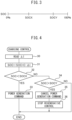
- FIG. 3 shows the SOC (state of charge) amount expressing the amount of charge of the battery 3.
- SOC state of charge
- FIG. 3 when the amount of charge of the battery 3 is a full charge, the SOC amount becomes 100% while when the amount of charge of the battery 3 is zero, the SOC amount becomes 0%.
- the generator 23 is driven by the internal combustion engine 20 until the amount of charge rises to a preset upper limit value SOCY, and a charging action of the battery 3 is performed by the generated electric power of the generator 23.
- the SOC amount will sometimes be simply expressed by "SOC”.
- the amounts of current outflow from and inflow to the battery 3 and the output voltage of the battery 3 are constantly detected, and the SOC amount is calculated based on the detected amounts of current outflow from and inflow to the battery 3 etc. in the electronic control unit 4.
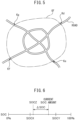
- FIG. 4 shows the charging control routine of a battery 3 performed by the electronic control unit 4. This charging control routine is executed by interruption every fixed time period.
- step 30 the amount of inflow of current ⁇ I to the battery 3 in a fixed time period is read.
- step 31 the product of the amount of inflow of current ⁇ I to the battery 3 in a fixed time period and a constant C is added to the SOC amount SOC. Note that, when current flows out from the battery 3, the amount of inflow of current ⁇ I becomes a minus value. Note that, the method of calculation of the SOC amount SOC is only shown by an extremely simple example. Various known methods of calculation of the SOC amount SOC can be used.
- step 32 it is judged if the SOC amount SOC falls below the preset lower limit value SOCX.
- the routine proceeds to step 33 where a power generation command is issued. If the power generation command is issued, the generator 23 is driven by the internal combustion engine 20 and the action of charging the battery 3 is performed by the generated electric power of the generator 23.
- the routine proceeds to step 34 where it is judged if the SOC amount SOC exceeds the preset upper limit value SOCY.
- step 35 the routine proceeds to step 35 where the power generation command is cancelled. If the power generation command is cancelled, drive of the generator 23 by the internal combustion engine 20 is stopped and the action of charging the battery 3 by the generator 23 is stopped. Next, at step 36, regenerative control is stopped.
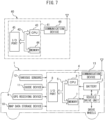
- FIG. 5 schematically shows a boundary GF between an inside of an engine drive restriction zone and an outside of the engine drive restriction zone, which is set in a certain region.
- the inside of this boundary GF is made the engine drive restriction zone.
- This boundary GF is usually called "geofencing". This boundary GF is sometimes fixed and sometime fluctuates in position due to the state of air pollution or some other reason.
- Kd, Ke, Kf, and Kg show positions of the roads on the boundary GF.
- the road positions Kd, Ke, Kf, and Kg positioned on the boundary GF are sometimes provided with gates.
- the occupant of the vehicle 1 can recognize he or she has entered an engine drive restriction zone by the vehicle 1 passing through these gates.
- an apparatus installed at the gate emits a signal showing that the vehicle 1 has entered inside the engine drive restriction zone, it is possible to recognize that the vehicle 1 has entered the inside of the engine drive restriction zone by receiving this signal.
- electronic boundary position data showing the position of this boundary GF can be acquired, for example, it is possible to recognize that the vehicle 1 has entered the inside of the engine drive restriction zone by displaying the boundary position on the map screen based on this boundary position data.
- the shortest route from the current position to the boundary GF continues to be searched, and the decreased SOC amount when driving the vehicle through the searched shortest route from the current position to the boundary GF continues to be calculated, it continues to be judged from the current SOC and the calculated decreased SOC amount whether the vehicle 1 can reach the boundary GF before the SOC amount falls below the preset lower limit value SOCX when driving the vehicle 1 through the searched shortest route from the current position toward the boundary GF, that is, whether the SOC amount will fall to a preset judgment standard slightly larger than the preset lower limit value SOCX when driving the vehicle 1 through the searched shortest route from the current position to the boundary GF, and when it is judged that the SOC amount will fall to the judgment standard when driving the vehicle 1 through the searched shortest route from the current position to the boundary GF, the occupant of the vehicle 1 is given information and
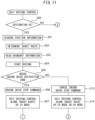
- FIG. 6 shows the relationship among the current SOC amount, the decreased SOC amount ⁇ SOC, and the judgment standard SOCZ when it is judged that the SOC amount will fall to the judgment standard when driving the vehicle 1 through the searched shortest route from the current position to the boundary GF.
- FIG. 6 shows the SOC amount similar to FIG. 3 , and accordingly, as explained referring to FIG. 3 , if the SOC amount falls to the preset lower limit value SOCX, the generator 23 is driven by the internal combustion engine 20 until the SOC rises to the preset upper limit value SOCY.
- the SOC amount when the vehicle 1 reaches boundary GF is the value of the current SOC minus the decreased SOC amount ⁇ SOC (current SOC- ⁇ SOC). Therefore, in the first embodiment according to the present invention, when the SOC amount when the vehicle 1 reaches the boundary GF (current SOC- ⁇ SOC) becomes the judgment standard SOCZ such as shown in FIG. 6 , the occupant of the vehicle 1 is given information and the vehicle 1 is guided from the current position through the searched shortest route to the boundary GF. In this case, in the first embodiment according to the present invention, the decreased SOC amount ⁇ SOC is found by calculation considering the road conditions of the shortest route from the current position to the boundary GF.
- the internal combustion engine 20 can be used to drive the generator 23, so it is also possible to use the preset lower limit value SOCX as the judgment standard SOCZ.
- the value of the preset lower limit value SOCX plus a fixed value is made the judgment standard SOCZ so that the judgment standard SOCZ does not become below the preset lower limit value SOCX even if the calculated value of the decreased SOC amount ⁇ SOC deviates somewhat from the actual decreased SOC amount.
- this fixed value is made a predetermined percentage of 10% or less. Therefore, in FIG. 3 , the judgment standard SOCZ is made the value of the preset lower limit value SOCX plus a predetermined percentage of 10% or less.
- the SOC amount (current SOC- ⁇ SOC) when the vehicle 1 reaches the boundary GF becoming the judgment standard SOCZ means that the current SOC becomes the value (SOCZ+ ⁇ SOC) of the judgment standard SOCZ plus the decreased SOC amount ⁇ SOC. Therefore, in the first embodiment according to the present invention, by judging whether the current SOC becomes lower than the value (SOCZ+ ⁇ SOC) of the judgment standard SOCZ plus the decreased SOC amount ⁇ SOC, it is judged whether the SOC amount will fall to the preset judgment standard SOCZ when driving the vehicle 1 through the searched shortest route from the current position to the boundary GF.
- the guidance device 11 is comprised of a navigation system.
- the guidance device 11 When it is judged that the SOC amount will fall to the preset judgment standard SOCZ when driving the vehicle 1 through the searched shortest route from the current position to the boundary GF, the guidance device 11 imparts information to the occupant of the vehicle 1 to guide the vehicle 1 from the current position through the searched shortest route to the boundary GF.
- the guidance device 11 is provided with a display unit displaying the driving route of the vehicle 1, that is, a display screen of the navigation system.
- this display unit that is, the display screen of the navigation system, is made to display the searched shortest route and to display the fact that the vehicle 1 should head toward the outside of the engine drive restriction zone since it is liable to become unable to be driven.
- the guidance device 11 is provided with a speech generating unit explaining the driving route of the vehicle by voice.
- a speech generating unit explaining the driving route of the vehicle by voice.
- the loss Ef due to friction becomes the integral value of the loss "f” due to friction at any instant from the current position until reaching the boundary GF.
- v is the vehicle speed
- the decreased SOC amount ⁇ SOC is calculated. Note that, in calculating the decreased SOC amount ⁇ SOC, the difference in altitude ⁇ h is calculated based on the map database stored in the map database storage device 10 and the vehicle speed "v" is made the legal speed on the searched shortest route.
- the conversion efficiency that is, the constant ⁇
- ⁇ Eb becomes a function of the drive output and the vehicle speed "v” of the vehicle 1
- V of the battery 3 depends on the SOC amount, so Eq becomes a function of the SOC amount. Therefore, when strictly finding the decreased SOC amount ⁇ SOC, the decreased SOC amount ⁇ SOC is calculated considering the changes in the drive output, the vehicle speed "v", and the SOC of the vehicle 1. Note that, the explanation of the method of calculation of the decreased SOC amount ⁇ SOC when strictly finding the decreased SOC amount will be omitted here.
- FIG. 7 shows the case where in addition to the vehicle 1, a server 40 is set outside of the vehicle 1 and where the vehicle 1 and the server 40 communicate.
- the vehicle drive unit 2, battery 3, electronic control unit 4, GPS receiving device 9, map database storage device 10, guidance device 11 comprised of a navigation system, and various sensors 12 are mounted in the vehicle 1, a communication device 13 for communicating with the server 40 is mounted.
- an electronic control unit 41 is set inside the server 40.
- This electronic control unit 41 is comprised of a digital computer provided with a CPU (microprocessor) 43, a memory 44 comprised of a ROM and RAM, and an input/output port 45, which are connected to each other via a bidirectional bus 42.
- a communication device 46 for communicating with the vehicle 1 is set inside the server 40.
- information relating to the boundary GF of the inside of the engine drive restriction zone and the outside of the engine drive restriction zone that is, information relating to the geofencing
- the information relating to the boundary GF that is, the geofencing, is transmitted from the server 40 to the vehicle 1.
- FIG. 8 is a view of the functional configuration of the first embodiment according to the present invention.
- an SOC amount acquiring unit 50 acquiring an SOC amount of the battery 3 which is a source of supply of electric power to the electric motor 21, a vehicle position detecting unit 51 detecting the current position of the vehicle 1, a zone judging unit 52 judging if currently the vehicle 1 is driving through the inside of the engine drive restriction zone where driving by the internal combustion engine 20 is restricted, an operation control unit 53 making the internal combustion engine 20 stop operating and making the electric motor 21 drive the vehicle 1 when it is judged that currently the vehicle 1 is driving through the engine drive restriction zone, a shortest route searching unit 54 searching for a shortest route from the current position to the boundary of the inside of the engine drive restriction zone and the outside of the engine drive restriction zone when it is judged that currently the vehicle 1
- the guidance device 11 is mounted for providing information to an occupant of the vehicle 1 to guide the vehicle 1 from the current position through the searched shortest route to the boundary GF in case where it is judged that the SOC amount will fall to the judgment standard SOCZ when driving the vehicle 1 through the searched shortest route from the current position to the boundary GF.
- FIG. 9 shows a vehicle control routine performed in the CPU 6 of the electronic control unit 4 mounted in the vehicle 1 for working the first embodiment according to the present invention. This routine is performed by interruption every fixed time period.
- the current position of the vehicle 1 is acquired based on received signals received from the GPS receiving device 9 and the map database stored in the map database storage device 10.
- the road positions Kd, Ke, Kf, Kg, etc. positioned on the boundary GF between the inside of the engine drive restriction zone and the outside of the engine drive restriction zone and other information relating to the boundary GF is read.
- the information relating to this boundary GF is stored in the map database storage device 10. Therefore, in the example shown in FIG. 1 , at step 101, the information relating to the boundary GF stored in the map database storage device 10 is read.
- the information relating to the boundary GF is stored in the server 40. Therefore, in the example shown in FIG. 7 , information relating to the boundary GF transmitted from the server 40 to the vehicle 1 is read in at step 101.
- step 102 it is judged if currently the vehicle 1 is driving through the inside of the engine drive restriction zone where driving by the internal combustion engine 20 is restricted based on the acquired current position of the vehicle 1 and information relating to the boundary GF.
- the routine proceeds to step 103 where a command for stopping driving by the internal combustion engine 20 is issued. If the command for stopping driving by the internal combustion engine 20 is issued, the routine proceeds to step 104 where operational control where the internal combustion engine 20 is made to stop operating and the electric motor 21 is used to drive the vehicle 1 is continued until the command for stopping driving by the internal combustion engine 20 is cancelled. That is, at this time, operational control is performed in the EV mode where the vehicle 1 is driven by only the electric motor 21.
- step 105 the routes from the current position to the boundary GF are searched through.
- the search operation of these routes is performed by the navigation system.
- step 106 the shortest route from the current position to the boundary GF is selected from these routes. That is, at step 105 and step 106, the shortest route from the current position to the boundary GF is searched. If the shortest route from the current position to the boundary GF is searched, the routine proceeds to step 107 where the decreased SOC amount ⁇ SOC is calculated by using the above-mentioned method of calculation.
- step 108 the current SOC amount SOC calculated in the charging control routine of the battery 3 shown in the FIG. 4 is read and it is judged if the current SOC amount SOC is less than the value (SOCZ+ ⁇ SOC) of the judgment standard SOCZ plus the calculated decreased SOC amount ⁇ SOC.
- the routine proceeds to step 109 where guidance processing is performed to use the guidance device 11 to provide information to the occupant of the vehicle 1 by an image or voice and guide the vehicle 1 from the current position through the searched shortest route to the boundary GF.
- the processing cycle is ended.
- step 102 determines whether currently the vehicle 1 is not driving through the inside of the engine drive restriction zone. If at step 102 it is judged that currently the vehicle 1 is not driving through the inside of the engine drive restriction zone, the routine proceeds to step 110 where the command for stopping driving by the internal combustion engine 20 is cancelled. If the command for stopping driving by the internal combustion engine 20 is cancelled, driving by the internal combustion engine 20 becomes possible.
- step 111 drive control is performed in accordance with the drive state of the vehicle 1 by either mode of the EV mode where the vehicle 1 is driven by only the electric motor 21 and the HV mode where the vehicle 1 is driven by both of the internal combustion engine 20 and electric motor 21. Note that, at this time, the internal combustion engine 20 can be used to drive the generator 23 to charge the battery 3.
- FIG. 10 to FIG. 12 show an example not falling within the subject matter for which protection is sought, where the vehicle drive route instruction system is applied to a self driving hybrid vehicle provided with a self driving device.
- a self driving device is mounted in the vehicle 1 shown in FIG. 1 and FIG. 7 .
- a forward capture camera, side capture cameras, rear capture camera, radar, LIDAR, etc. required for self driving are mounted.
- a steering control device is mounted.
- the vehicle 1 is autonomously driven by the self driving device from the current position through the searched shortest route to the boundary GF.
- FIG. 10 is a view of the functional configuration of this example.
- an SOC amount acquiring unit 50 acquiring an SOC amount of the battery 3 which is a source of supply of electric power to the electric motor 21, a vehicle position detecting unit 51 detecting the current position of the vehicle 1, a zone judging unit 52 judging if currently the vehicle 1 is driving through the inside of the engine drive restriction zone where driving by the internal combustion engine 20 is restricted, an operation control unit 53 making the internal combustion engine 20 stop operating and making the electric motor 21 drive the vehicle 1 when it is judged that currently the vehicle 1 is driving through the engine drive restriction zone, a shortest route searching unit 54 searching for a shortest route from the current position to the boundary of the inside of the engine drive restriction zone and the outside of the engine drive restriction zone when it is judged that currently the vehicle 1 is
- a self driving device 14 is mounted for autonomously driving the vehicle 1 from the current position through the searched shortest route to the boundary GF in case where it is judged that the SOC amount will fall to the preset judgment standard SOCZ when driving the vehicle through the searched shortest route from the current position to the boundary GF.
- This self driving device 14 is controlled by the electronic control unit 4.
- FIG. 11 and FIG. 12 show a self driving control routine performed in the CPU 6 of the electronic control unit 4 mounted in the vehicle 1 for working this example. This routine is performed by interruption every fixed time period.
- step 200 it is judged if an occupant has set a destination on the operating screen of the self driving device 14.
- the processing cycle is ended.
- the routine proceeds to step 201 where the current position of the vehicle 1 is acquired based on received signals received from the GPS receiving device 9 and the map database stored in the map database storage device 10.
- step 202 the target route is determined by the navigation system.
- step 203 information relating to the boundary GF stored in the map database storage device 10 or the information relating to the boundary GF transmitted from the server 40 to the vehicle 1 are read.
- step 204 the vehicle 1 starts to be driven by self driving. If the vehicle 1 starts to be driven, the routine proceeds to step 205 where it is judged if currently the vehicle 1 is driving through the inside of the engine drive restriction zone where driving by the internal combustion engine 20 is restricted based on the acquired current position of the vehicle 1 and information relating to the boundary GF. When it is judged that currently the vehicle 1 is driving through the inside of the engine drive restriction zone, the routine proceeds to step 206 where a command for stopping driving by the internal combustion engine 20 is issued.
- step 207 the self driving control where the internal combustion engine 20 is made to stop operating and the electric motor 21 is used to drive the vehicle 1 is continued until the command for stopping driving by the internal combustion engine 20 is cancelled. That is, at this time, self driving control is performed in the EV mode where the vehicle 1 is driven by only the electric motor 21.
- the routes from the current position to the boundary GF are searched through.
- the search operation of these routes is performed by the navigation system.
- the shortest route from the current position to the boundary GF is selected from these routes. That is, at step 208 and step 209, the shortest route from the current position to the boundary GF is searched. If the shortest route from the current position to the boundary GF is searched, the routine proceeds to step 210 where the decreased SOC amount ⁇ SOC is calculated by using the above-mentioned method of calculation.
- the current SOC amount SOC calculated in the charging control routine of the battery 3 shown in the FIG. 4 is read and it is judged if the current SOC amount SOC is less than the value (SOCZ+ ⁇ SOC) of the judgment standard SOCZ plus the calculated decreased SOC amount ⁇ SOC.
- the processing cycle is ended.
- the routine proceeds to step 212 where the target route is changed to the searched shortest route and self driving control is performed for autonomously driving the vehicle 1 from the current position through the searched shortest route to the boundary GF.
- the processing cycle is ended.
- step 205 when at step 205 it is judged that currently the vehicle 1 is not driven through the inside of the engine drive restriction zone, the routine proceeds to step 213 where the command stopping the drive operation by the internal combustion engine 20 is cancelled. If the command stopping the drive operation by the internal combustion engine 20 is cancelled, the drive operation by the internal combustion engine 20 becomes possible.
- step 214 in accordance with the operating state of the vehicle 1, self driving is controlled by either of the modes of an EV mode where the vehicle 1 is driven by only the electric motor 21 and an HV mode where the vehicle 1 is driven by both of the internal combustion engine 20 and the electric motor 21.
Landscapes
- Engineering & Computer Science (AREA)
- Automation & Control Theory (AREA)
- Transportation (AREA)
- Mechanical Engineering (AREA)
- Combustion & Propulsion (AREA)
- Chemical & Material Sciences (AREA)
- Radar, Positioning & Navigation (AREA)
- Remote Sensing (AREA)
- Human Computer Interaction (AREA)
- Physics & Mathematics (AREA)
- Mathematical Physics (AREA)
- General Physics & Mathematics (AREA)
- Health & Medical Sciences (AREA)
- Audiology, Speech & Language Pathology (AREA)
- General Health & Medical Sciences (AREA)
- Multimedia (AREA)
- Hybrid Electric Vehicles (AREA)
- Electric Propulsion And Braking For Vehicles (AREA)
- Navigation (AREA)
- Traffic Control Systems (AREA)
Description
- The present invention relates to a vehicle drive route instruction system.
- Known in the art has been a hybrid vehicle provided with a power generation use or drive use internal combustion engine, a battery charged by the power generation action of the generator driven by the internal combustion engine or regenerative control, and a battery driven electric motor, wherein when the vehicle passes through the inside of a strengthened air pollution prevention region, the internal combustion engine is made to stop operating and the electric motor is used to drive the vehicle (for example, see
Japanese Unexamined Patent Publication No. 7-75210 -
US 8301323 B2 makes reference to a navigation system, hybrid vehicle, and method of searching for a route for a hybrid vehicle. When passage through a road pricing area where an exhaust gas emission vehicle is subjected to billing is predicted, ECU acquires a current SOC of a power storage device, and estimates a required energy quantity for passing through the road pricing area where an exhaust gas emission vehicle is subjected to billing by EV traveling. Further, a determination is made whether or not the vehicle can pass through the road pricing area by EV traveling based on the current SOC and the required energy quantity as estimated. When a determination is made that the vehicle cannot pass through the road pricing area by EV traveling, ECU executes steps of guiding a route to an adjacent charging station and/or steps of guiding a bypass. -
US 2013/0158870 A1 makes reference to a method and apparatus for vehicle routing, andUS005815824A makes reference to a navigation system for electric automobile. - However, even if the lower limit value of the amount of charge of the battery is set high in this way, for example, if the vehicle continues to be driven inside the strengthened air pollution prevention region, the amount of charge of the battery will fall, that is, the SOC (state of charge) amount showing the amount of charge of the battery will fall while the vehicle is driven through the inside of the strengthened air pollution prevention region and a situation is liable to arise where driving the vehicle by the electric motor will become difficult so long as not driving the internal combustion engine. However, the above Patent Publication does not suggest at all a method for avoiding the occurrence of such a situation.
The present invention provides a vehicle drive route instruction system able to avoid the occurrence of such a situation. - According to the present invention, there is provided a vehicle drive route instruction system in a hybrid vehicle driven by only an electric motor or driven by both an electric motor and an internal combustion engine, the vehicle drive route instruction system comprising:
- an SOC amount acquiring unit acquiring an SOC amount of a battery which is a source of supply of electric power to the electric motor,
- a vehicle position detecting unit detecting a current position of the vehicle,
- a zone judging unit judging if currently the vehicle is driving through an inside of an engine drive restriction zone where driving by the internal combustion engine is restricted,
- an operation control unit making the internal combustion engine stop operating and making the electric motor drive the vehicle when it is judged that currently the vehicle is driving through the engine drive restriction zone,
- a shortest route searching unit searching for a shortest route from the current position to a boundary of an inside of the engine drive restriction zone and an outside of the engine drive restriction zone when it is judged that currently the vehicle is driving through the inside of the engine drive restriction zone,
- a decreased SOC amount calculating unit calculating a decreased SOC amount when driving the vehicle through the searched shortest route from the current position to the boundary,
- an SOC amount judging unit judging if the SOC amount will fall to a preset judgment standard based on the current SOC amount and the calculated decreased SOC amount when driving the vehicle through the searched shortest route from the current position to the boundary based, and
- a guidance device giving information to an occupant of the vehicle to guide the vehicle from the current position through the searched shortest route to the boundary in case where it is judged that the SOC amount will fall to the judgment standard when driving the vehicle through the searched shortest route from the current position to the boundary.
- Further, according to an example not falling within the subject-matter for which protection is sought, there is provided a vehicle drive route instruction system in a hybrid vehicle driven by only an electric motor or driven by both an electric motor and an internal combustion engine, the vehicle drive route instruction system comprising:
- an SOC amount acquiring unit acquiring an SOC amount of a battery which is a source of supply of electric power to the electric motor,
- a vehicle position detecting unit detecting a current position of the vehicle,
- a zone judging unit judging if currently the vehicle is driving through an inside of an engine drive restriction zone where driving by the internal combustion engine is restricted,
- an operation control unit making the internal combustion engine stop operating and making the electric motor drive the vehicle when it is judged that currently the vehicle is driving through the engine drive restriction zone,
- a shortest route searching unit searching for a shortest route from the current position to a boundary of an inside of the engine drive restriction zone and an outside of the engine drive restriction zone when it is judged that currently the vehicle is driving through the inside of the engine drive restriction zone,
- a decreased SOC amount calculating unit calculating a decreased SOC amount when driving the vehicle through the searched shortest route from the current position to the boundary,
- an SOC amount judging unit judging if the SOC amount will fall to a preset judgment standard based on the current SOC amount and the calculated decreased SOC amount when driving the vehicle through the searched shortest route from the current position to the boundary based, and
- a self driving device autonomously driving the vehicle through the searched shortest route from the current position to the boundary in case where it is judged that the SOC amount will fall to the judgment standard when driving the vehicle through the searched shortest route from the current position to the boundary.
- In the invention, it is possible to guide the vehicle so that the vehicle does not become unable to be driven inside the engine drive restriction zone, while in the example not falling within the subject-matter for which protection is sought, the vehicle operation is controlled so that the vehicle does not become unable to be driven inside the engine drive restriction zone.
-
-
FIG. 1 is an overall view of a vehicle schematically shown. -
FIG. 2A and FIG. 2B are views of the configuration of a vehicle drive unit. -
FIG. 3 is a view for explaining an SOC amount. -
FIG. 4 is a flow chart for charging control. -
FIG. 5 is a view schematically showing a road map. -
FIG. 6 is a view showing the SOC amount. -
FIG. 7 is a view showing a vehicle and server shown schematically. -
FIG. 8 is a view of the functional configuration of a vehicle drive route instruction system according to the present invention. -
FIG. 9 is a flow chart for vehicle control. -
FIG. 10 is a view of the functional configuration of another embodiment of the vehicle drive route instruction system according to the present invention. -
FIG. 11 is a flow chart for self driving control. -
FIG. 12 is a flow chart for self driving control. - Referring to
FIG. 1, 1 shows a hybrid vehicle driven by only an electric motor or driven by both an electric motor and an internal combustion engine. Further, inFIG. 1, 2 indicates a vehicle drive unit for providing drive force to the drive wheels, 3 indicates a battery, and 4 indicates an electronic control unit mounted in thevehicle 1. As shown inFIG. 1 , theelectronic control unit 4 is comprised of a digital computer provided with a CPU (microprocessor) 6, amemory 7 comprised of a ROM and RAM, and an input/output port 8, which are connected to each other via abidirectional bus 5. - Further, inside the
vehicle 1, a GPS (global positioning system) receiving device 9 for receiving signals from satellites to detect the current position of thevehicle 1, a mapdatabase storage device 10 storing a map database etc., and aguidance device 11 comprised of a navigation system for guiding thevehicle 1 to a destination are mounted. Furthermore, inside thevehicle 1, an accelerator opening degree sensor, engine rotational speed sensor, vehicle speed sensor, atmospheric temperature sensor, atmospheric pressure sensor, or othervarious sensors 12 are mounted. These GPS receiving device 9, mapdatabase storage device 10,guidance device 11, andvarious sensors 12 are connected to theelectronic control unit 4. -
FIG. 2A and FIG. 2B are views of the configuration of thevehicle drive unit 2 shown inFIG. 1 , showing typical hybrid systems of respectively different formats. These hybrid systems are well known, so will be explained extremely simply. First, referring toFIG. 2A , thevehicle drive unit 2 is provided with aninternal combustion engine 20, anelectric motor 21, agenerator 23, apower distribution mechanism 24 comprised of for example a planetary gear mechanism, and amotor control device 25. Theelectric motor 21 performs the role of a generator, so is usually called a "motor-generator". For example, at the time of low speed driving, thevehicle 1 is driven by theelectric motor 21. At this time, electric power is supplied from thebattery 3 through themotor control device 25 to theelectric motor 21 while the output of theelectric motor 21 is transmitted by thepower distribution mechanism 24 to the drive wheels. - On the other hand, at the time of medium or high speed driving, the
vehicle 1 is driven by theinternal combustion engine 20 andelectric motor 21. At this time, on the one hand, part of the output of theinternal combustion engine 20 is transmitted by thepower distribution mechanism 24 to the drive wheels, while on the other hand, part of the output of theinternal combustion engine 20 is used to drive thegenerator 23, the generated electric power of thegenerator 23 is used to drive theelectric motor 21, and the output of theelectric motor 21 is transmitted by thepower distribution mechanism 24 to the drive wheels. Further, at the time of braking thevehicle 1, theelectric motor 21 functions as a generator, and a regenerative control in which thebattery 3 is charged by the generated electric power of theelectric motor 21 is performed. Further, if the amount of charge of thebattery 3 falls, thegenerator 23 is driven through thepower distribution mechanism 24 by theinternal combustion engine 20, and thebattery 3 is charged by the generated electric power of thegenerator 23. - Next, referring to
FIG. 2B , thevehicle drive unit 2 is provided with theinternal combustion engine 20,electric motor 21,generator 23, andmotor control device 25. In the hybrid system shown inFIG. 2B , theelectric motor 21 performs the role of a generator, so usually is called a "motor-generator". In this hybrid system, thevehicle 1 is constantly driven by theelectric motor 21. On the other hand, if the amount of charge ofbattery 3 falls, thegenerator 23 is driven by theinternal combustion engine 20, and thebattery 3 is charged by the generated electric power of thegenerator 23. Further, in this hybrid system as well, at the time of braking thevehicle 1, theelectric motor 21 functions as a generator, and a regenerative control in which thebattery 3 is charged by the generated electric power of theelectric motor 21 is performed. In the hybrid system shown in either ofFIG. 2A and FIG. 2B as well, theinternal combustion engine 20 and thepower distribution mechanism 24 are controlled by the output signal of theelectronic control unit 4 while theelectric motor 21 andgenerator 23 are controlled by themotor control device 25 based on the output signals of theelectronic control unit 4. - In this regard, if referring to the mode where the
vehicle 1 is driven by only theelectric motor 21 as the EV mode and referring to the mode where thevehicle 1 is driven by both of theinternal combustion engine 20 andelectric motor 21 as the HV mode, in thehybrid vehicle 1 provided with the hybrid system shown inFIG. 2A , the mode is selectively switched to either of the EV mode and the HV mode. On the other hand, in thehybrid vehicle 1 provided with a hybrid system shown inFIG. 2B , thevehicle 1 is driven by only theelectric motor 21, and theinternal combustion engine 20 is used only for driving thegenerator 23 and charging thebattery 3, so in thisvehicle 1, the drive mode of thevehicle 1 is always made the EV mode. Note that, the hybrid system shown inFIG. 2A and FIG. 2B is a typical example. In the present invention, various types of hybrid systems can be used. Note that, below, the present invention will be explained centered about the case of using the hybrid system shown inFIG. 2A . -
FIG. 3 shows the SOC (state of charge) amount expressing the amount of charge of thebattery 3. InFIG. 3 , when the amount of charge of thebattery 3 is a full charge, the SOC amount becomes 100% while when the amount of charge of thebattery 3 is zero, the SOC amount becomes 0%. Further, in the hybrid system shown inFIG. 2A and FIG. 2B , for example, if the amount of charge falls to a preset lower limit value SOCX, thegenerator 23 is driven by theinternal combustion engine 20 until the amount of charge rises to a preset upper limit value SOCY, and a charging action of thebattery 3 is performed by the generated electric power of thegenerator 23. Note that, below, the SOC amount will sometimes be simply expressed by "SOC". Note that, the amounts of current outflow from and inflow to thebattery 3 and the output voltage of thebattery 3 are constantly detected, and the SOC amount is calculated based on the detected amounts of current outflow from and inflow to thebattery 3 etc. in theelectronic control unit 4. -
FIG. 4 shows the charging control routine of abattery 3 performed by theelectronic control unit 4. This charging control routine is executed by interruption every fixed time period. - Referring to
FIG. 4 , first, atstep 30, the amount of inflow of current ΔI to thebattery 3 in a fixed time period is read. Next, atstep 31, the product of the amount of inflow of current ΔI to thebattery 3 in a fixed time period and a constant C is added to the SOC amount SOC. Note that, when current flows out from thebattery 3, the amount of inflow of current ΔI becomes a minus value. Note that, the method of calculation of the SOC amount SOC is only shown by an extremely simple example. Various known methods of calculation of the SOC amount SOC can be used. - Next, at
step 32, it is judged if the SOC amount SOC falls below the preset lower limit value SOCX. When it is judged that the SOC amount SOC falls below the preset lower limit value SOCX, the routine proceeds to step 33 where a power generation command is issued. If the power generation command is issued, thegenerator 23 is driven by theinternal combustion engine 20 and the action of charging thebattery 3 is performed by the generated electric power of thegenerator 23. On the other hand, when it is judged atstep 32 that the SOC amount SOC does not fall below the preset lower limit value SOCX, the routine proceeds to step 34 where it is judged if the SOC amount SOC exceeds the preset upper limit value SOCY. When it is judged that the SOC amount SOC exceeds the preset upper limit value SOCY, the routine proceeds to step 35 where the power generation command is cancelled. If the power generation command is cancelled, drive of thegenerator 23 by theinternal combustion engine 20 is stopped and the action of charging thebattery 3 by thegenerator 23 is stopped. Next, atstep 36, regenerative control is stopped. - Now then, in recent years, from the viewpoint of prevention of air pollution, from the viewpoint of noise prevention, or from other viewpoints, an increasing number of countries have been establishing engine drive restriction zones restricting driving by internal combustion engines and drafting regulations prohibiting driving by internal combustion engines in such engine drive restriction zones.
FIG. 5 schematically shows a boundary GF between an inside of an engine drive restriction zone and an outside of the engine drive restriction zone, which is set in a certain region. The inside of this boundary GF is made the engine drive restriction zone. This boundary GF is usually called "geofencing". This boundary GF is sometimes fixed and sometime fluctuates in position due to the state of air pollution or some other reason. - In
FIG. 5 , Kd, Ke, Kf, and Kg show positions of the roads on the boundary GF. The road positions Kd, Ke, Kf, and Kg positioned on the boundary GF are sometimes provided with gates. In this case, the occupant of thevehicle 1 can recognize he or she has entered an engine drive restriction zone by thevehicle 1 passing through these gates. Further, at this time, if an apparatus installed at the gate emits a signal showing that thevehicle 1 has entered inside the engine drive restriction zone, it is possible to recognize that thevehicle 1 has entered the inside of the engine drive restriction zone by receiving this signal. Further, if electronic boundary position data showing the position of this boundary GF can be acquired, for example, it is possible to recognize that thevehicle 1 has entered the inside of the engine drive restriction zone by displaying the boundary position on the map screen based on this boundary position data. - In this regard, when the
vehicle 1 enters inside the engine drive restriction zone, driving by theinternal combustion engine 20 is prohibited, so theinternal combustion engine 20 must be made to stop operating and theelectric motor 21 must be used to drive thevehicle 1. In this regard, if using theelectric motor 21 to drive thevehicle 1, if the SOC amount SOC falls below the preset lower limit value SOCX while thevehicle 1 is driving through the inside of the engine drive restriction zone, theinternal combustion engine 20 has to be used to drive thegenerator 23 to charge thebattery 3 by the electric power generated by thegenerator 23. However, inside the engine drive restriction zone, driving by theinternal combustion engine 20 is prohibited, so it is not possible to drive theinternal combustion engine 20 and as a result there is the problem that it is no longer possible to drive thevehicle 1. - Therefore, in the first embodiment according to the present invention, to keep such a problem from arising, when it is judged that the
vehicle 1 is driving through the inside of the engine drive restriction zone, the shortest route from the current position to the boundary GF continues to be searched, and the decreased SOC amount when driving the vehicle through the searched shortest route from the current position to the boundary GF continues to be calculated, it continues to be judged from the current SOC and the calculated decreased SOC amount whether thevehicle 1 can reach the boundary GF before the SOC amount falls below the preset lower limit value SOCX when driving thevehicle 1 through the searched shortest route from the current position toward the boundary GF, that is, whether the SOC amount will fall to a preset judgment standard slightly larger than the preset lower limit value SOCX when driving thevehicle 1 through the searched shortest route from the current position to the boundary GF, and when it is judged that the SOC amount will fall to the judgment standard when driving thevehicle 1 through the searched shortest route from the current position to the boundary GF, the occupant of thevehicle 1 is given information and thevehicle 1 is guided from the current position through the searched shortest route to the boundary GF. -
FIG. 6 shows the relationship among the current SOC amount, the decreased SOC amount ΔSOC, and the judgment standard SOCZ when it is judged that the SOC amount will fall to the judgment standard when driving thevehicle 1 through the searched shortest route from the current position to the boundary GF. Note that,FIG. 6 shows the SOC amount similar toFIG. 3 , and accordingly, as explained referring toFIG. 3 , if the SOC amount falls to the preset lower limit value SOCX, thegenerator 23 is driven by theinternal combustion engine 20 until the SOC rises to the preset upper limit value SOCY. - Now then, the SOC amount when the
vehicle 1 reaches boundary GF is the value of the current SOC minus the decreased SOC amount ΔSOC (current SOC-ΔSOC). Therefore, in the first embodiment according to the present invention, when the SOC amount when thevehicle 1 reaches the boundary GF (current SOC-ΔSOC) becomes the judgment standard SOCZ such as shown inFIG. 6 , the occupant of thevehicle 1 is given information and thevehicle 1 is guided from the current position through the searched shortest route to the boundary GF. In this case, in the first embodiment according to the present invention, the decreased SOC amount ΔSOC is found by calculation considering the road conditions of the shortest route from the current position to the boundary GF. - In this regard, if the
vehicle 1 reaches the boundary GF and is positioned outside of the engine drive restriction zone, theinternal combustion engine 20 can be used to drive thegenerator 23, so it is also possible to use the preset lower limit value SOCX as the judgment standard SOCZ. However, as an actual problem, it is difficult to accurately calculate the decreased SOC amount ΔSOC. Therefore, in the first embodiment according to the present invention, the value of the preset lower limit value SOCX plus a fixed value is made the judgment standard SOCZ so that the judgment standard SOCZ does not become below the preset lower limit value SOCX even if the calculated value of the decreased SOC amount ΔSOC deviates somewhat from the actual decreased SOC amount. In this case, in the first embodiment according to the present invention, this fixed value is made a predetermined percentage of 10% or less. Therefore, inFIG. 3 , the judgment standard SOCZ is made the value of the preset lower limit value SOCX plus a predetermined percentage of 10% or less. - On the other hand, as will be understood from
FIG. 6 , the SOC amount (current SOC-ΔSOC) when thevehicle 1 reaches the boundary GF becoming the judgment standard SOCZ means that the current SOC becomes the value (SOCZ+ΔSOC) of the judgment standard SOCZ plus the decreased SOC amount ΔSOC. Therefore, in the first embodiment according to the present invention, by judging whether the current SOC becomes lower than the value (SOCZ+ΔSOC) of the judgment standard SOCZ plus the decreased SOC amount ΔSOC, it is judged whether the SOC amount will fall to the preset judgment standard SOCZ when driving thevehicle 1 through the searched shortest route from the current position to the boundary GF. When it is judged that the current SOC falls below the value (SOCZ+ΔSOC) of the judgment standard plus the calculated decreased SOC, the occupant of thevehicle 1 is given information to guide thevehicle 1 from the current position through the searched shortest route to the boundary GF. - On the other hand, as explained above, the
guidance device 11 is comprised of a navigation system. When it is judged that the SOC amount will fall to the preset judgment standard SOCZ when driving thevehicle 1 through the searched shortest route from the current position to the boundary GF, theguidance device 11 imparts information to the occupant of thevehicle 1 to guide thevehicle 1 from the current position through the searched shortest route to the boundary GF. In this case, as one example, theguidance device 11 is provided with a display unit displaying the driving route of thevehicle 1, that is, a display screen of the navigation system. When it is judged that the SOC amount will fall to the preset judgment standard SOCZ when driving thevehicle 1 through the searched shortest route from the current position to the boundary GF, this display unit, that is, the display screen of the navigation system, is made to display the searched shortest route and to display the fact that thevehicle 1 should head toward the outside of the engine drive restriction zone since it is liable to become unable to be driven. - Further, in another example, the
guidance device 11 is provided with a speech generating unit explaining the driving route of the vehicle by voice. When it is judged that the SOC amount will fall to the preset judgment standard SOCZ when driving the vehicle through the searched shortest route from the current position to the boundary GF, thevehicle 1 is liable to become unable to be driven, so a warning is issued by voice to the effect that the vehicle should head to outside of the engine drive restriction zone and the searched shortest route is guided along by voice. - Next, one example of the method of calculation of the decreased SOC amount ΔSOC will be explained. The energy EX consumed through the searched shortest route from the current position to the boundary GF, as shown by the following formula, becomes the sum of the loss Ef due to friction from the current position until reaching the boundary GF, the amount of change ΔEh of the potential energy, and the amount of change ΔEv of the kinetic energy:

- Now then, the loss Ef due to friction becomes the integral value of the loss "f" due to friction at any instant from the current position until reaching the boundary GF. Here, if "v" is the vehicle speed, the loss "f" due to friction at any instant is expressed by a quadratic expression of the vehicle speed "v" as in the following formula:

- On the other hand, the amount of change ΔEh of the potential energy becomes as in the following formula by the difference in altitude Δh between the current position and the reached position:

- Further, the amount of change ΔEv of the kinetic energy becomes as in the following formula when designating the current vehicle speed as v0 and the vehicle speed when reaching the designation as "v":

- On the other hand, if approximating the conversion efficiency when the output of the
battery 3 is converted to mechanical output by the constant µ, the energy ΔEb taken out from thebattery 3 until reaching the boundary GF from the current position becomes as in the following formula:
- On the other hand, if the charge capacity of the
battery 3 is designated as Q and the output voltage of thebattery 3 is approximated by the constant V, the energy Eq held by thebattery 3 becomes as in the following formula:
- Therefore, the decreased SOC amount ΔSOC is expressed by the following formula:

- In this way, the decreased SOC amount ΔSOC is calculated. Note that, in calculating the decreased SOC amount ΔSOC, the difference in altitude Δh is calculated based on the map database stored in the map
database storage device 10 and the vehicle speed "v" is made the legal speed on the searched shortest route. - Note that, strictly speaking, the conversion efficiency, that is, the constant µ, depends on the drive output and the vehicle speed "v" of the
vehicle 1, so ΔEb becomes a function of the drive output and the vehicle speed "v" of thevehicle 1, and the output voltage V of thebattery 3 depends on the SOC amount, so Eq becomes a function of the SOC amount. Therefore, when strictly finding the decreased SOC amount ΔSOC, the decreased SOC amount ΔSOC is calculated considering the changes in the drive output, the vehicle speed "v", and the SOC of thevehicle 1. Note that, the explanation of the method of calculation of the decreased SOC amount ΔSOC when strictly finding the decreased SOC amount will be omitted here. -
FIG. 7 shows the case where in addition to thevehicle 1, aserver 40 is set outside of thevehicle 1 and where thevehicle 1 and theserver 40 communicate. Referring toFIG. 7 , in the same way as thevehicle 1 shown inFIG. 1 , in thevehicle 1, thevehicle drive unit 2,battery 3,electronic control unit 4, GPS receiving device 9, mapdatabase storage device 10,guidance device 11 comprised of a navigation system, andvarious sensors 12 are mounted. Further, in thevehicle 1, acommunication device 13 for communicating with theserver 40 is mounted. - On the other hand, inside the
server 40, anelectronic control unit 41 is set. Thiselectronic control unit 41 is comprised of a digital computer provided with a CPU (microprocessor) 43, amemory 44 comprised of a ROM and RAM, and an input/output port 45, which are connected to each other via abidirectional bus 42. Further, inside theserver 40, acommunication device 46 for communicating with thevehicle 1 is set. In the example shown inFIG. 7 , information relating to the boundary GF of the inside of the engine drive restriction zone and the outside of the engine drive restriction zone, that is, information relating to the geofencing, is stored in thememory 44 of theserver 40. The information relating to the boundary GF, that is, the geofencing, is transmitted from theserver 40 to thevehicle 1. -
FIG. 8 is a view of the functional configuration of the first embodiment according to the present invention. If referring toFIG. 8 , in this first embodiment according to the present invention, in the hybrid vehicle 1 driven by only the electric motor 21 or driven by both of the electric motor 21 and the internal combustion engine 20, there are provided in the electronic control unit 4 an SOC amount acquiring unit 50 acquiring an SOC amount of the battery 3 which is a source of supply of electric power to the electric motor 21, a vehicle position detecting unit 51 detecting the current position of the vehicle 1, a zone judging unit 52 judging if currently the vehicle 1 is driving through the inside of the engine drive restriction zone where driving by the internal combustion engine 20 is restricted, an operation control unit 53 making the internal combustion engine 20 stop operating and making the electric motor 21 drive the vehicle 1 when it is judged that currently the vehicle 1 is driving through the engine drive restriction zone, a shortest route searching unit 54 searching for a shortest route from the current position to the boundary of the inside of the engine drive restriction zone and the outside of the engine drive restriction zone when it is judged that currently the vehicle 1 is driving through the inside of the engine drive restriction zone, a decreased SOC amount calculating unit 55 calculating the decreased SOC amount when driving the vehicle 1 through the searched shortest route from the current position to the boundary GF, and an SOC amount judging unit 56 judging if the SOC amount will fall to the preset judgment standard SOCZ when driving the vehicle 1 through the searched shortest route from the current position to the boundary GF based on the current SOC amount and the calculated decreased SOC amount. Further, inside thevehicle 1, theguidance device 11 is mounted for providing information to an occupant of thevehicle 1 to guide thevehicle 1 from the current position through the searched shortest route to the boundary GF in case where it is judged that the SOC amount will fall to the judgment standard SOCZ when driving thevehicle 1 through the searched shortest route from the current position to the boundary GF. -
FIG. 9 shows a vehicle control routine performed in theCPU 6 of theelectronic control unit 4 mounted in thevehicle 1 for working the first embodiment according to the present invention. This routine is performed by interruption every fixed time period. - Referring to
FIG. 9 , first, atstep 100, the current position of thevehicle 1 is acquired based on received signals received from the GPS receiving device 9 and the map database stored in the mapdatabase storage device 10. Next, atstep 101, the road positions Kd, Ke, Kf, Kg, etc. positioned on the boundary GF between the inside of the engine drive restriction zone and the outside of the engine drive restriction zone and other information relating to the boundary GF is read. In this case, in the example shown inFIG. 1 , the information relating to this boundary GF is stored in the mapdatabase storage device 10. Therefore, in the example shown inFIG. 1 , atstep 101, the information relating to the boundary GF stored in the mapdatabase storage device 10 is read. On the other hand, in the example shown inFIG. 7 , the information relating to the boundary GF is stored in theserver 40. Therefore, in the example shown inFIG. 7 , information relating to the boundary GF transmitted from theserver 40 to thevehicle 1 is read in atstep 101. - Next, at
step 102, it is judged if currently thevehicle 1 is driving through the inside of the engine drive restriction zone where driving by theinternal combustion engine 20 is restricted based on the acquired current position of thevehicle 1 and information relating to the boundary GF. When it is judged that currently thevehicle 1 is driving through the inside of an engine drive restriction zone, the routine proceeds to step 103 where a command for stopping driving by theinternal combustion engine 20 is issued. If the command for stopping driving by theinternal combustion engine 20 is issued, the routine proceeds to step 104 where operational control where theinternal combustion engine 20 is made to stop operating and theelectric motor 21 is used to drive thevehicle 1 is continued until the command for stopping driving by theinternal combustion engine 20 is cancelled. That is, at this time, operational control is performed in the EV mode where thevehicle 1 is driven by only theelectric motor 21. - Next, at
step 105, the routes from the current position to the boundary GF are searched through. The search operation of these routes is performed by the navigation system. Next, atstep 106, the shortest route from the current position to the boundary GF is selected from these routes. That is, atstep 105 and step 106, the shortest route from the current position to the boundary GF is searched. If the shortest route from the current position to the boundary GF is searched, the routine proceeds to step 107 where the decreased SOC amount ΔSOC is calculated by using the above-mentioned method of calculation. Next, atstep 108, the current SOC amount SOC calculated in the charging control routine of thebattery 3 shown in theFIG. 4 is read and it is judged if the current SOC amount SOC is less than the value (SOCZ+ΔSOC) of the judgment standard SOCZ plus the calculated decreased SOC amount ΔSOC. - When it is judged that the current SOC amount SOC is not less than the value (SOCZ+ΔSOC) of the judgment standard SOCZ plus the calculated decreased SOC amount ΔSOC, that is, when there is an extra margin of the SOC amount SOC when driving the
vehicle 1 from the current position to the boundary GF from the judgment standard SOCZ, the processing cycle is ended. As opposed to this, when it is judged that the current SOC amount SOC is less than the value (SOCZ+ΔSOC) of the judgment standard SOCZ plus the calculated decreased SOC amount ΔSOC, the routine proceeds to step 109 where guidance processing is performed to use theguidance device 11 to provide information to the occupant of thevehicle 1 by an image or voice and guide thevehicle 1 from the current position through the searched shortest route to the boundary GF. Next, the processing cycle is ended. - On the other hand, if at
step 102 it is judged that currently thevehicle 1 is not driving through the inside of the engine drive restriction zone, the routine proceeds to step 110 where the command for stopping driving by theinternal combustion engine 20 is cancelled. If the command for stopping driving by theinternal combustion engine 20 is cancelled, driving by theinternal combustion engine 20 becomes possible. Next, atstep 111, drive control is performed in accordance with the drive state of thevehicle 1 by either mode of the EV mode where thevehicle 1 is driven by only theelectric motor 21 and the HV mode where thevehicle 1 is driven by both of theinternal combustion engine 20 andelectric motor 21. Note that, at this time, theinternal combustion engine 20 can be used to drive thegenerator 23 to charge thebattery 3. -
FIG. 10 to FIG. 12 show an example not falling within the subject matter for which protection is sought, where the vehicle drive route instruction system is applied to a self driving hybrid vehicle provided with a self driving device. In this example, a self driving device is mounted in thevehicle 1 shown inFIG. 1 andFIG. 7 . As thevarious sensors 12, a forward capture camera, side capture cameras, rear capture camera, radar, LIDAR, etc. required for self driving are mounted. Also, a steering control device is mounted. - In this example as well, in the same way as the first embodiment, it continues to be judged if the SOC amount will fall to the judgment standard SOCZ shown in
FIG. 6 when driving thevehicle 1 through the searched shortest route from the current position to the boundary GF. On the other hand, when it is judged that the SOC amount will fall to the judgment standard SOCZ, in this example, unlike the first embodiment, thevehicle 1 is autonomously driven by the self driving device from the current position through the searched shortest route to the boundary GF. -
FIG. 10 is a view of the functional configuration of this example. If referring toFIG. 10 , in this example as well, in the same way as the first embodiment, in the hybrid vehicle 1 driven by only the electric motor 21 or driven by both of the electric motor 21 and the internal combustion engine 20, there are provided in the electronic control unit 4 an SOC amount acquiring unit 50 acquiring an SOC amount of the battery 3 which is a source of supply of electric power to the electric motor 21, a vehicle position detecting unit 51 detecting the current position of the vehicle 1, a zone judging unit 52 judging if currently the vehicle 1 is driving through the inside of the engine drive restriction zone where driving by the internal combustion engine 20 is restricted, an operation control unit 53 making the internal combustion engine 20 stop operating and making the electric motor 21 drive the vehicle 1 when it is judged that currently the vehicle 1 is driving through the engine drive restriction zone, a shortest route searching unit 54 searching for a shortest route from the current position to the boundary of the inside of the engine drive restriction zone and the outside of the engine drive restriction zone when it is judged that currently the vehicle 1 is driving through the inside of the engine drive restriction zone, a decreased SOC amount calculating unit 55 calculating the decreased SOC amount when driving the vehicle 1 through the searched shortest route from the current position to the boundary GF, and an SOC amount judging unit 56 judging if the SOC amount will fall to the preset judgment standard SOCZ when driving the vehicle 1 through the searched shortest route from the current position to the boundary GF based on the current SOC amount and the calculated decreased SOC amount. - On the other hand, in this example, unlike the first embodiment, inside the
vehicle 1, aself driving device 14 is mounted for autonomously driving thevehicle 1 from the current position through the searched shortest route to the boundary GF in case where it is judged that the SOC amount will fall to the preset judgment standard SOCZ when driving the vehicle through the searched shortest route from the current position to the boundary GF. Thisself driving device 14 is controlled by theelectronic control unit 4. -
FIG. 11 andFIG. 12 show a self driving control routine performed in theCPU 6 of theelectronic control unit 4 mounted in thevehicle 1 for working this example. This routine is performed by interruption every fixed time period. - Referring to
FIG. 11 , first, atstep 200, for example, it is judged if an occupant has set a destination on the operating screen of theself driving device 14. When it is judged that a destination has not been set, the processing cycle is ended. As opposed to this, when it is judged that a destination has been set, the routine proceeds to step 201 where the current position of thevehicle 1 is acquired based on received signals received from the GPS receiving device 9 and the map database stored in the mapdatabase storage device 10. Next, atstep 202, the target route is determined by the navigation system. Next, atstep 203, information relating to the boundary GF stored in the mapdatabase storage device 10 or the information relating to the boundary GF transmitted from theserver 40 to thevehicle 1 are read. - Next, at
step 204, thevehicle 1 starts to be driven by self driving. If thevehicle 1 starts to be driven, the routine proceeds to step 205 where it is judged if currently thevehicle 1 is driving through the inside of the engine drive restriction zone where driving by theinternal combustion engine 20 is restricted based on the acquired current position of thevehicle 1 and information relating to the boundary GF. When it is judged that currently thevehicle 1 is driving through the inside of the engine drive restriction zone, the routine proceeds to step 206 where a command for stopping driving by theinternal combustion engine 20 is issued. If the command for stopping driving by theinternal combustion engine 20 is issued, the routine proceeds to step 207 where the self driving control where theinternal combustion engine 20 is made to stop operating and theelectric motor 21 is used to drive thevehicle 1 is continued until the command for stopping driving by theinternal combustion engine 20 is cancelled. That is, at this time, self driving control is performed in the EV mode where thevehicle 1 is driven by only theelectric motor 21. - Next, at
step 208, the routes from the current position to the boundary GF are searched through. The search operation of these routes is performed by the navigation system. Next, atstep 209, the shortest route from the current position to the boundary GF is selected from these routes. That is, atstep 208 and step 209, the shortest route from the current position to the boundary GF is searched. If the shortest route from the current position to the boundary GF is searched, the routine proceeds to step 210 where the decreased SOC amount ΔSOC is calculated by using the above-mentioned method of calculation. Next, atstep 211, the current SOC amount SOC calculated in the charging control routine of thebattery 3 shown in theFIG. 4 is read and it is judged if the current SOC amount SOC is less than the value (SOCZ+ΔSOC) of the judgment standard SOCZ plus the calculated decreased SOC amount ΔSOC. - When it is judged that the current SOC amount SOC is not less than the value (SOCZ+ΔSOC) of the judgment standard SOCZ plus the calculated decreased SOC amount ΔSOC, that is, when there is an extra margin of the SOC amount SOC when driving the
vehicle 1 from the current position to the boundary GF from the judgment standard SOCZ, the processing cycle is ended. As opposed to this, when it is judged that the current SOC amount SOC is less than the value (SOCZ+ΔSOC) of the judgment standard SOCZ plus the calculated decreased SOC amount ΔSOC, the routine proceeds to step 212 where the target route is changed to the searched shortest route and self driving control is performed for autonomously driving thevehicle 1 from the current position through the searched shortest route to the boundary GF. Next, the processing cycle is ended. - On the other hand, when at
step 205 it is judged that currently thevehicle 1 is not driven through the inside of the engine drive restriction zone, the routine proceeds to step 213 where the command stopping the drive operation by theinternal combustion engine 20 is cancelled. If the command stopping the drive operation by theinternal combustion engine 20 is cancelled, the drive operation by theinternal combustion engine 20 becomes possible. Next, atstep 214, in accordance with the operating state of thevehicle 1, self driving is controlled by either of the modes of an EV mode where thevehicle 1 is driven by only theelectric motor 21 and an HV mode where thevehicle 1 is driven by both of theinternal combustion engine 20 and theelectric motor 21.
Claims (6)
- A vehicle drive route instruction system in a hybrid vehicle (1) driven by only an electric motor (21) or driven by both an electric motor and an internal combustion engine (20), said vehicle drive route instruction system comprising:an SOC amount acquiring unit (50) acquiring an SOC amount of a battery (3) which is a source of supply of electric power to the electric motor,a vehicle position detecting unit (51) detecting a current position of the vehicle,a zone judging unit (52) judging if currently the vehicle is driving through an inside of an engine drive restriction zone where driving by the internal combustion engine is restricted,an operation control unit (53) making the internal combustion engine stop operating and making the electric motor drive the vehicle when it is judged that currently the vehicle is driving through the engine drive restriction zone,the system being characterized by further comprising :a shortest route searching unit (54) searching for a shortest route from the current position to a boundary of an inside of the engine drive restriction zone and an outside of the engine drive restriction zone when it is judged that currently the vehicle is driving through the inside of the engine drive restriction zone,a decreased SOC amount calculating unit (55) calculating a decreased SOC amount when driving the vehicle through the searched shortest route from the current position to the boundary,an SOC amount judging unit (56) judging if the SOC amount will fall to a preset judgment standard based on the current SOC amount and the calculated decreased SOC amount when driving the vehicle through the searched shortest route from the current position to the boundary based, anda guidance device (11) giving information to an occupant of the vehicle to guide the vehicle from the current position through the searched shortest route to the boundary in case where it is judged that the SOC amount will fall to the judgment standard when driving the vehicle through the searched shortest route from the current position to the boundary.
- The vehicle drive route instruction system according to claim 1 wherein the hybrid vehicle (1) is a vehicle which is selectively switched to either mode of a mode where the vehicle is driven by only the electric motor (21) and a mode where the vehicle is driven by both of the internal combustion engine (20) and electric motor or a vehicle which is driven by only the electric motor and the internal combustion engine is used only for driving a generator to charge the battery (3).
- The vehicle drive route instruction system according to claim 1 wherein the judgment standard is set to a value larger than a preset lower limit value of the SOC amount by exactly a fixed value.
- The vehicle drive route instruction system according to claim 1 wherein the SOC amount judging uni1 (56) judges that the SOC amount will fall to the preset judgment standard when driving the vehicle through the searched shortest route from the current position to the boundary by judging if the current SOC amount falls below a value of the judgment standard plus the calculated decreased SOC amount, and the guidance device (11) gives information to an occupant of the vehicle to guide the vehicle from the current position through the searched shortest route to the boundary when it is judged that the current SOC amount falls below the value of the judgment standard plus the calculated decreased SOC amount.
- The vehicle drive route instruction system according to claim 1 wherein the guidance device (11) is provided with a display unit displaying a driving route of the vehicle, and the guidance device displays the searched shortest route at the display unit in case where it is judged by the SOC amount judging unit (56) that the SOC amount will fall to the judgment standard when driving the vehicle through the searched shortest route from the current position to the boundary.
- The vehicle drive route instruction system according to claim 1 wherein the guidance device (11) is provided with a speech generating unit explaining a drive route of the vehicle by voice and the guidance device provides voice guidance of the searched shortest route in case where it is judged by the SOC amount judging unit (56) that the SOC amount will fall to the judgment standard when driving the vehicle through the searched shortest route from the current position to the boundary.
Applications Claiming Priority (1)
| Application Number | Priority Date | Filing Date | Title |
|---|---|---|---|
| JP2020158623A JP7314894B2 (en) | 2020-09-23 | 2020-09-23 | Vehicle driving route indicator |
Publications (2)
| Publication Number | Publication Date |
|---|---|
| EP3974228A1 EP3974228A1 (en) | 2022-03-30 |
| EP3974228B1 true EP3974228B1 (en) | 2024-05-29 |
Family
ID=77431196
Family Applications (1)
| Application Number | Title | Priority Date | Filing Date |
|---|---|---|---|
| EP21192353.7A Active EP3974228B1 (en) | 2020-09-23 | 2021-08-20 | Vehicle drive route instruction system |
Country Status (4)
| Country | Link |
|---|---|
| US (1) | US20220089142A1 (en) |
| EP (1) | EP3974228B1 (en) |
| JP (1) | JP7314894B2 (en) |
| CN (1) | CN114291066B (en) |
Families Citing this family (2)
| Publication number | Priority date | Publication date | Assignee | Title |
|---|---|---|---|---|
| KR102804931B1 (en) * | 2022-06-15 | 2025-05-13 | 주식회사 피엠그로우 | Method for path scheduling of moving object based on battery state |
| US12409829B2 (en) | 2023-01-09 | 2025-09-09 | Caterpillar Paving Products Inc. | Suppressing switching operation of a machine from an electric mode to an engine mode |
Family Cites Families (17)
| Publication number | Priority date | Publication date | Assignee | Title |
|---|---|---|---|---|
| JP3092403B2 (en) | 1993-09-06 | 2000-09-25 | 三菱自動車工業株式会社 | Hybrid electric vehicle |
| JP3264123B2 (en) * | 1995-03-06 | 2002-03-11 | 三菱自動車工業株式会社 | Navigation system for hybrid electric vehicles |
| JP3632634B2 (en) * | 2001-07-18 | 2005-03-23 | 日産自動車株式会社 | Control device for hybrid vehicle |
| JP4331905B2 (en) * | 2001-09-28 | 2009-09-16 | パイオニア株式会社 | Hybrid car and control method of hybrid car |
| DE602006008743D1 (en) * | 2006-04-03 | 2009-10-08 | Harman Becker Automotive Sys | Method and system for controlling a hybrid vehicle |
| JP4324186B2 (en) * | 2006-10-11 | 2009-09-02 | トヨタ自動車株式会社 | Automobile and control method thereof |
| EP2231455A1 (en) * | 2008-01-16 | 2010-09-29 | Nissan Motor Co., Ltd. | Drive control apparatus and drive control method for hybrid vehicle |
| JP4927016B2 (en) * | 2008-03-31 | 2012-05-09 | トヨタ自動車株式会社 | Navigation system and hybrid vehicle equipped with the same |
| FR2943822B1 (en) * | 2009-03-24 | 2016-01-29 | Valeo Securite Habitacle | REMOTE IDENTIFICATION DEVICE ASSOCIATED WITH A MOTOR VEHICLE COMPRISING REMOTE COMMUNICATION MEANS WITH THE ASSOCIATED VEHICLE. |
| JP6069850B2 (en) * | 2012-02-29 | 2017-02-01 | 日産自動車株式会社 | Control device for hybrid vehicle |
| WO2013137298A1 (en) * | 2012-03-16 | 2013-09-19 | 日産自動車株式会社 | Driving power control apparatus for hybrid vehicle, and driving power control method for hybrid vehicle |
| WO2014099354A1 (en) * | 2012-12-18 | 2014-06-26 | Emerald Automotive, Llc | Optimization of extended range electric vehicle |
| JP6128103B2 (en) * | 2014-11-27 | 2017-05-17 | トヨタ自動車株式会社 | Vehicle control device |
| KR20190068785A (en) * | 2017-12-11 | 2019-06-19 | 현대자동차주식회사 | Vehicle and method for controlling thereof |
| CN108382186B (en) * | 2018-02-09 | 2020-09-22 | 浙江吉利控股集团有限公司 | Series-parallel hybrid power system and vehicle working mode decision method |
| US10852737B2 (en) * | 2018-03-22 | 2020-12-01 | Micron Technology, Inc. | Power management, dynamic routing and memory management for autonomous driving vehicles |
| JP2020117134A (en) * | 2019-01-25 | 2020-08-06 | トヨタ自動車株式会社 | Hybrid vehicle |
-
2020
- 2020-09-23 JP JP2020158623A patent/JP7314894B2/en active Active
-
2021
- 2021-07-27 US US17/443,458 patent/US20220089142A1/en not_active Abandoned
- 2021-08-20 EP EP21192353.7A patent/EP3974228B1/en active Active
- 2021-08-23 CN CN202110967914.5A patent/CN114291066B/en active Active
Also Published As
| Publication number | Publication date |
|---|---|
| EP3974228A1 (en) | 2022-03-30 |
| US20220089142A1 (en) | 2022-03-24 |
| CN114291066B (en) | 2023-07-25 |
| JP2022052315A (en) | 2022-04-04 |
| CN114291066A (en) | 2022-04-08 |
| JP7314894B2 (en) | 2023-07-26 |
Similar Documents
| Publication | Publication Date | Title |
|---|---|---|
| CN101981412B (en) | Navigation system, hybrid vehicle equipped with same, and route search method thereof | |
| EP2272728B1 (en) | Hybrid vehicle, and method for controlling the same | |
| CN107340769B (en) | Vehicle control system, vehicle control method, and recording medium of program thereof | |
| US5778326A (en) | Hybrid vehicle with battery charge control relative to a driving route | |
| JP3624839B2 (en) | Control device for hybrid vehicle | |
| JP4909863B2 (en) | Control device for hybrid vehicle | |
| JP4051911B2 (en) | Control device for hybrid vehicle | |
| CN102085811B (en) | Driving support system and method | |
| EP3974228B1 (en) | Vehicle drive route instruction system | |
| KR102751064B1 (en) | Vehicle and method for controlling the same | |
| CN109927728A (en) | Utilize the method for the traveling of traveling ahead environmental information control Cleaning Equipment | |
| JP2017144801A (en) | Electric car | |
| KR102518600B1 (en) | Method for controlling deceleration of environmentally friendly vehicle | |
| CN107972664A (en) | Drive assistance device and driving assistance method | |
| EP4056953A1 (en) | Ridesharing management system | |
| JP2019047687A (en) | Electric vehicle and control method of the same | |
| EP4005887A1 (en) | Vehicle control device | |
| EP3871058B1 (en) | A method for controlling a platoon of vehicles | |
| CN119301009A (en) | Electric vehicle operation method | |
| JP4200995B2 (en) | Automobile and control method thereof | |
| JP3786082B2 (en) | Control device for hybrid vehicle | |
| KR20230024494A (en) | Apparatus for controlling regeneratuve braking for vehicle and method thereof | |
| JP2005137135A (en) | Hybrid vehicle controlling device | |
| JP7548184B2 (en) | Travel speed control device and vehicle equipped with same | |
| JP2023173443A (en) | Vehicle control device, vehicle control method, and program |
Legal Events
| Date | Code | Title | Description |
|---|---|---|---|
| PUAI | Public reference made under article 153(3) epc to a published international application that has entered the european phase |
Free format text: ORIGINAL CODE: 0009012 |
|
| STAA | Information on the status of an ep patent application or granted ep patent |
Free format text: STATUS: REQUEST FOR EXAMINATION WAS MADE |
|
| 17P | Request for examination filed |
Effective date: 20210904 |
|
| AK | Designated contracting states |
Kind code of ref document: A1 Designated state(s): AL AT BE BG CH CY CZ DE DK EE ES FI FR GB GR HR HU IE IS IT LI LT LU LV MC MK MT NL NO PL PT RO RS SE SI SK SM TR |
|
| REG | Reference to a national code |
Ref country code: DE Ref legal event code: R079 Free format text: PREVIOUS MAIN CLASS: B60K0006445000 Ipc: B60W0020160000 Ref document number: 602021013755 Country of ref document: DE |
|
| GRAP | Despatch of communication of intention to grant a patent |
Free format text: ORIGINAL CODE: EPIDOSNIGR1 |
|
| STAA | Information on the status of an ep patent application or granted ep patent |
Free format text: STATUS: GRANT OF PATENT IS INTENDED |
|
| RIC1 | Information provided on ipc code assigned before grant |
Ipc: B60W 50/00 20060101ALI20231206BHEP Ipc: B60W 50/14 20200101ALI20231206BHEP Ipc: B60W 40/105 20120101ALI20231206BHEP Ipc: B60W 40/10 20120101ALI20231206BHEP Ipc: B60W 10/26 20060101ALI20231206BHEP Ipc: B60W 60/00 20200101ALI20231206BHEP Ipc: B60W 10/08 20060101ALI20231206BHEP Ipc: B60W 10/06 20060101ALI20231206BHEP Ipc: B60K 6/46 20071001ALI20231206BHEP Ipc: B60K 6/445 20071001ALI20231206BHEP Ipc: B60W 20/12 20160101ALI20231206BHEP Ipc: B60W 20/11 20160101ALI20231206BHEP Ipc: B60W 20/13 20160101ALI20231206BHEP Ipc: B60W 20/40 20160101ALI20231206BHEP Ipc: B60W 20/16 20160101AFI20231206BHEP |
|
| INTG | Intention to grant announced |
Effective date: 20240109 |
|
| GRAS | Grant fee paid |
Free format text: ORIGINAL CODE: EPIDOSNIGR3 |
|
| GRAA | (expected) grant |
Free format text: ORIGINAL CODE: 0009210 |
|
| STAA | Information on the status of an ep patent application or granted ep patent |
Free format text: STATUS: THE PATENT HAS BEEN GRANTED |
|
| AK | Designated contracting states |
Kind code of ref document: B1 Designated state(s): AL AT BE BG CH CY CZ DE DK EE ES FI FR GB GR HR HU IE IS IT LI LT LU LV MC MK MT NL NO PL PT RO RS SE SI SK SM TR |
|
| P01 | Opt-out of the competence of the unified patent court (upc) registered |
Effective date: 20240419 |
|
| REG | Reference to a national code |
Ref country code: CH Ref legal event code: EP |
|
| REG | Reference to a national code |
Ref country code: IE Ref legal event code: FG4D |
|
| REG | Reference to a national code |
Ref country code: DE Ref legal event code: R096 Ref document number: 602021013755 Country of ref document: DE |
|
| REG | Reference to a national code |
Ref country code: LT Ref legal event code: MG9D |
|
| REG | Reference to a national code |
Ref country code: NL Ref legal event code: MP Effective date: 20240529 |
|
| PG25 | Lapsed in a contracting state [announced via postgrant information from national office to epo] |
Ref country code: IS Free format text: LAPSE BECAUSE OF FAILURE TO SUBMIT A TRANSLATION OF THE DESCRIPTION OR TO PAY THE FEE WITHIN THE PRESCRIBED TIME-LIMIT Effective date: 20240929 |
|
| PG25 | Lapsed in a contracting state [announced via postgrant information from national office to epo] |
Ref country code: BG Free format text: LAPSE BECAUSE OF FAILURE TO SUBMIT A TRANSLATION OF THE DESCRIPTION OR TO PAY THE FEE WITHIN THE PRESCRIBED TIME-LIMIT Effective date: 20240529 |
|
| PG25 | Lapsed in a contracting state [announced via postgrant information from national office to epo] |
Ref country code: FI Free format text: LAPSE BECAUSE OF FAILURE TO SUBMIT A TRANSLATION OF THE DESCRIPTION OR TO PAY THE FEE WITHIN THE PRESCRIBED TIME-LIMIT Effective date: 20240529 Ref country code: HR Free format text: LAPSE BECAUSE OF FAILURE TO SUBMIT A TRANSLATION OF THE DESCRIPTION OR TO PAY THE FEE WITHIN THE PRESCRIBED TIME-LIMIT Effective date: 20240529 |
|
| PG25 | Lapsed in a contracting state [announced via postgrant information from national office to epo] |
Ref country code: GR Free format text: LAPSE BECAUSE OF FAILURE TO SUBMIT A TRANSLATION OF THE DESCRIPTION OR TO PAY THE FEE WITHIN THE PRESCRIBED TIME-LIMIT Effective date: 20240830 |
|
| REG | Reference to a national code |
Ref country code: AT Ref legal event code: MK05 Ref document number: 1690390 Country of ref document: AT Kind code of ref document: T Effective date: 20240529 |
|
| PG25 | Lapsed in a contracting state [announced via postgrant information from national office to epo] |
Ref country code: ES Free format text: LAPSE BECAUSE OF FAILURE TO SUBMIT A TRANSLATION OF THE DESCRIPTION OR TO PAY THE FEE WITHIN THE PRESCRIBED TIME-LIMIT Effective date: 20240529 |
|
| PG25 | Lapsed in a contracting state [announced via postgrant information from national office to epo] |
Ref country code: AT Free format text: LAPSE BECAUSE OF FAILURE TO SUBMIT A TRANSLATION OF THE DESCRIPTION OR TO PAY THE FEE WITHIN THE PRESCRIBED TIME-LIMIT Effective date: 20240529 |
|
| PG25 | Lapsed in a contracting state [announced via postgrant information from national office to epo] |
Ref country code: PL Free format text: LAPSE BECAUSE OF FAILURE TO SUBMIT A TRANSLATION OF THE DESCRIPTION OR TO PAY THE FEE WITHIN THE PRESCRIBED TIME-LIMIT Effective date: 20240529 |
|
| PG25 | Lapsed in a contracting state [announced via postgrant information from national office to epo] |
Ref country code: LV Free format text: LAPSE BECAUSE OF FAILURE TO SUBMIT A TRANSLATION OF THE DESCRIPTION OR TO PAY THE FEE WITHIN THE PRESCRIBED TIME-LIMIT Effective date: 20240529 |
|
| PG25 | Lapsed in a contracting state [announced via postgrant information from national office to epo] |
Ref country code: PL Free format text: LAPSE BECAUSE OF FAILURE TO SUBMIT A TRANSLATION OF THE DESCRIPTION OR TO PAY THE FEE WITHIN THE PRESCRIBED TIME-LIMIT Effective date: 20240529 Ref country code: NO Free format text: LAPSE BECAUSE OF FAILURE TO SUBMIT A TRANSLATION OF THE DESCRIPTION OR TO PAY THE FEE WITHIN THE PRESCRIBED TIME-LIMIT Effective date: 20240829 Ref country code: LV Free format text: LAPSE BECAUSE OF FAILURE TO SUBMIT A TRANSLATION OF THE DESCRIPTION OR TO PAY THE FEE WITHIN THE PRESCRIBED TIME-LIMIT Effective date: 20240529 Ref country code: IS Free format text: LAPSE BECAUSE OF FAILURE TO SUBMIT A TRANSLATION OF THE DESCRIPTION OR TO PAY THE FEE WITHIN THE PRESCRIBED TIME-LIMIT Effective date: 20240929 Ref country code: HR Free format text: LAPSE BECAUSE OF FAILURE TO SUBMIT A TRANSLATION OF THE DESCRIPTION OR TO PAY THE FEE WITHIN THE PRESCRIBED TIME-LIMIT Effective date: 20240529 Ref country code: GR Free format text: LAPSE BECAUSE OF FAILURE TO SUBMIT A TRANSLATION OF THE DESCRIPTION OR TO PAY THE FEE WITHIN THE PRESCRIBED TIME-LIMIT Effective date: 20240830 Ref country code: FI Free format text: LAPSE BECAUSE OF FAILURE TO SUBMIT A TRANSLATION OF THE DESCRIPTION OR TO PAY THE FEE WITHIN THE PRESCRIBED TIME-LIMIT Effective date: 20240529 Ref country code: ES Free format text: LAPSE BECAUSE OF FAILURE TO SUBMIT A TRANSLATION OF THE DESCRIPTION OR TO PAY THE FEE WITHIN THE PRESCRIBED TIME-LIMIT Effective date: 20240529 Ref country code: BG Free format text: LAPSE BECAUSE OF FAILURE TO SUBMIT A TRANSLATION OF THE DESCRIPTION OR TO PAY THE FEE WITHIN THE PRESCRIBED TIME-LIMIT Effective date: 20240529 Ref country code: AT Free format text: LAPSE BECAUSE OF FAILURE TO SUBMIT A TRANSLATION OF THE DESCRIPTION OR TO PAY THE FEE WITHIN THE PRESCRIBED TIME-LIMIT Effective date: 20240529 Ref country code: RS Free format text: LAPSE BECAUSE OF FAILURE TO SUBMIT A TRANSLATION OF THE DESCRIPTION OR TO PAY THE FEE WITHIN THE PRESCRIBED TIME-LIMIT Effective date: 20240829 |
|
| PG25 | Lapsed in a contracting state [announced via postgrant information from national office to epo] |
Ref country code: NL Free format text: LAPSE BECAUSE OF FAILURE TO SUBMIT A TRANSLATION OF THE DESCRIPTION OR TO PAY THE FEE WITHIN THE PRESCRIBED TIME-LIMIT Effective date: 20240529 |
|
| PG25 | Lapsed in a contracting state [announced via postgrant information from national office to epo] |
Ref country code: NL Free format text: LAPSE BECAUSE OF FAILURE TO SUBMIT A TRANSLATION OF THE DESCRIPTION OR TO PAY THE FEE WITHIN THE PRESCRIBED TIME-LIMIT Effective date: 20240529 |
|
| REG | Reference to a national code |
Ref country code: DE Ref legal event code: R084 Ref document number: 602021013755 Country of ref document: DE |
|
| PG25 | Lapsed in a contracting state [announced via postgrant information from national office to epo] |
Ref country code: DK Free format text: LAPSE BECAUSE OF FAILURE TO SUBMIT A TRANSLATION OF THE DESCRIPTION OR TO PAY THE FEE WITHIN THE PRESCRIBED TIME-LIMIT Effective date: 20240529 |
|
| PG25 | Lapsed in a contracting state [announced via postgrant information from national office to epo] |
Ref country code: EE Free format text: LAPSE BECAUSE OF FAILURE TO SUBMIT A TRANSLATION OF THE DESCRIPTION OR TO PAY THE FEE WITHIN THE PRESCRIBED TIME-LIMIT Effective date: 20240529 |
|
| PG25 | Lapsed in a contracting state [announced via postgrant information from national office to epo] |
Ref country code: CZ Free format text: LAPSE BECAUSE OF FAILURE TO SUBMIT A TRANSLATION OF THE DESCRIPTION OR TO PAY THE FEE WITHIN THE PRESCRIBED TIME-LIMIT Effective date: 20240529 |
|
| PG25 | Lapsed in a contracting state [announced via postgrant information from national office to epo] |
Ref country code: RO Free format text: LAPSE BECAUSE OF FAILURE TO SUBMIT A TRANSLATION OF THE DESCRIPTION OR TO PAY THE FEE WITHIN THE PRESCRIBED TIME-LIMIT Effective date: 20240529 Ref country code: SK Free format text: LAPSE BECAUSE OF FAILURE TO SUBMIT A TRANSLATION OF THE DESCRIPTION OR TO PAY THE FEE WITHIN THE PRESCRIBED TIME-LIMIT Effective date: 20240529 |
|
| PG25 | Lapsed in a contracting state [announced via postgrant information from national office to epo] |
Ref country code: SM Free format text: LAPSE BECAUSE OF FAILURE TO SUBMIT A TRANSLATION OF THE DESCRIPTION OR TO PAY THE FEE WITHIN THE PRESCRIBED TIME-LIMIT Effective date: 20240529 |
|
| PG25 | Lapsed in a contracting state [announced via postgrant information from national office to epo] |
Ref country code: SM Free format text: LAPSE BECAUSE OF FAILURE TO SUBMIT A TRANSLATION OF THE DESCRIPTION OR TO PAY THE FEE WITHIN THE PRESCRIBED TIME-LIMIT Effective date: 20240529 Ref country code: SK Free format text: LAPSE BECAUSE OF FAILURE TO SUBMIT A TRANSLATION OF THE DESCRIPTION OR TO PAY THE FEE WITHIN THE PRESCRIBED TIME-LIMIT Effective date: 20240529 Ref country code: RO Free format text: LAPSE BECAUSE OF FAILURE TO SUBMIT A TRANSLATION OF THE DESCRIPTION OR TO PAY THE FEE WITHIN THE PRESCRIBED TIME-LIMIT Effective date: 20240529 Ref country code: EE Free format text: LAPSE BECAUSE OF FAILURE TO SUBMIT A TRANSLATION OF THE DESCRIPTION OR TO PAY THE FEE WITHIN THE PRESCRIBED TIME-LIMIT Effective date: 20240529 Ref country code: DK Free format text: LAPSE BECAUSE OF FAILURE TO SUBMIT A TRANSLATION OF THE DESCRIPTION OR TO PAY THE FEE WITHIN THE PRESCRIBED TIME-LIMIT Effective date: 20240529 Ref country code: CZ Free format text: LAPSE BECAUSE OF FAILURE TO SUBMIT A TRANSLATION OF THE DESCRIPTION OR TO PAY THE FEE WITHIN THE PRESCRIBED TIME-LIMIT Effective date: 20240529 |
|
| PG25 | Lapsed in a contracting state [announced via postgrant information from national office to epo] |
Ref country code: IT Free format text: LAPSE BECAUSE OF FAILURE TO SUBMIT A TRANSLATION OF THE DESCRIPTION OR TO PAY THE FEE WITHIN THE PRESCRIBED TIME-LIMIT Effective date: 20240529 |
|
| REG | Reference to a national code |
Ref country code: DE Ref legal event code: R097 Ref document number: 602021013755 Country of ref document: DE |
|
| REG | Reference to a national code |
Ref country code: CH Ref legal event code: PL |
|
| PLBE | No opposition filed within time limit |
Free format text: ORIGINAL CODE: 0009261 |
|
| STAA | Information on the status of an ep patent application or granted ep patent |
Free format text: STATUS: NO OPPOSITION FILED WITHIN TIME LIMIT |
|
| PG25 | Lapsed in a contracting state [announced via postgrant information from national office to epo] |
Ref country code: LU Free format text: LAPSE BECAUSE OF NON-PAYMENT OF DUE FEES Effective date: 20240820 |
|
| REG | Reference to a national code |
Ref country code: GB Ref legal event code: 746 Effective date: 20250402 |
|
| PG25 | Lapsed in a contracting state [announced via postgrant information from national office to epo] |
Ref country code: CH Free format text: LAPSE BECAUSE OF NON-PAYMENT OF DUE FEES Effective date: 20240831 Ref country code: MC Free format text: LAPSE BECAUSE OF FAILURE TO SUBMIT A TRANSLATION OF THE DESCRIPTION OR TO PAY THE FEE WITHIN THE PRESCRIBED TIME-LIMIT Effective date: 20240529 Ref country code: SI Free format text: LAPSE BECAUSE OF FAILURE TO SUBMIT A TRANSLATION OF THE DESCRIPTION OR TO PAY THE FEE WITHIN THE PRESCRIBED TIME-LIMIT Effective date: 20240529 |
|
| 26N | No opposition filed |
Effective date: 20250303 |
|
| REG | Reference to a national code |
Ref country code: BE Ref legal event code: MM Effective date: 20240831 |
|
| PGFP | Annual fee paid to national office [announced via postgrant information from national office to epo] |
Ref country code: GB Payment date: 20250626 Year of fee payment: 5 |
|
| PG25 | Lapsed in a contracting state [announced via postgrant information from national office to epo] |
Ref country code: BE Free format text: LAPSE BECAUSE OF NON-PAYMENT OF DUE FEES Effective date: 20240831 |
|
| PGFP | Annual fee paid to national office [announced via postgrant information from national office to epo] |
Ref country code: FR Payment date: 20250610 Year of fee payment: 5 |
|
| PG25 | Lapsed in a contracting state [announced via postgrant information from national office to epo] |
Ref country code: IE Free format text: LAPSE BECAUSE OF NON-PAYMENT OF DUE FEES Effective date: 20240820 |
|
| PG25 | Lapsed in a contracting state [announced via postgrant information from national office to epo] |
Ref country code: SE Free format text: LAPSE BECAUSE OF FAILURE TO SUBMIT A TRANSLATION OF THE DESCRIPTION OR TO PAY THE FEE WITHIN THE PRESCRIBED TIME-LIMIT Effective date: 20240529 |
|
| PGFP | Annual fee paid to national office [announced via postgrant information from national office to epo] |
Ref country code: DE Payment date: 20250624 Year of fee payment: 5 |
|
| PG25 | Lapsed in a contracting state [announced via postgrant information from national office to epo] |
Ref country code: CY Free format text: LAPSE BECAUSE OF FAILURE TO SUBMIT A TRANSLATION OF THE DESCRIPTION OR TO PAY THE FEE WITHIN THE PRESCRIBED TIME-LIMIT; INVALID AB INITIO Effective date: 20210820 |
|
| PG25 | Lapsed in a contracting state [announced via postgrant information from national office to epo] |
Ref country code: HU Free format text: LAPSE BECAUSE OF FAILURE TO SUBMIT A TRANSLATION OF THE DESCRIPTION OR TO PAY THE FEE WITHIN THE PRESCRIBED TIME-LIMIT; INVALID AB INITIO Effective date: 20210820 |