EP3974022A1 - Determining a frequency for ttfields treatment based on a physical parameter of targeted cancer cells - Google Patents
Determining a frequency for ttfields treatment based on a physical parameter of targeted cancer cells Download PDFInfo
- Publication number
- EP3974022A1 EP3974022A1 EP21208106.1A EP21208106A EP3974022A1 EP 3974022 A1 EP3974022 A1 EP 3974022A1 EP 21208106 A EP21208106 A EP 21208106A EP 3974022 A1 EP3974022 A1 EP 3974022A1
- Authority
- EP
- European Patent Office
- Prior art keywords
- subject
- frequency
- cancer
- ttfields
- electrical characteristic
- Prior art date
- Legal status (The legal status is an assumption and is not a legal conclusion. Google has not performed a legal analysis and makes no representation as to the accuracy of the status listed.)
- Granted
Links
Images


Classifications
-
- A—HUMAN NECESSITIES
- A61—MEDICAL OR VETERINARY SCIENCE; HYGIENE
- A61N—ELECTROTHERAPY; MAGNETOTHERAPY; RADIATION THERAPY; ULTRASOUND THERAPY
- A61N1/00—Electrotherapy; Circuits therefor
- A61N1/18—Applying electric currents by contact electrodes
- A61N1/32—Applying electric currents by contact electrodes alternating or intermittent currents
- A61N1/36—Applying electric currents by contact electrodes alternating or intermittent currents for stimulation
- A61N1/36002—Cancer treatment, e.g. tumour
-
- A—HUMAN NECESSITIES
- A61—MEDICAL OR VETERINARY SCIENCE; HYGIENE
- A61B—DIAGNOSIS; SURGERY; IDENTIFICATION
- A61B5/00—Measuring for diagnostic purposes; Identification of persons
- A61B5/05—Detecting, measuring or recording for diagnosis by means of electric currents or magnetic fields; Measuring using microwaves or radio waves
- A61B5/053—Measuring electrical impedance or conductance of a portion of the body
-
- A—HUMAN NECESSITIES
- A61—MEDICAL OR VETERINARY SCIENCE; HYGIENE
- A61N—ELECTROTHERAPY; MAGNETOTHERAPY; RADIATION THERAPY; ULTRASOUND THERAPY
- A61N1/00—Electrotherapy; Circuits therefor
- A61N1/18—Applying electric currents by contact electrodes
- A61N1/32—Applying electric currents by contact electrodes alternating or intermittent currents
- A61N1/36—Applying electric currents by contact electrodes alternating or intermittent currents for stimulation
- A61N1/36014—External stimulators, e.g. with patch electrodes
- A61N1/3603—Control systems
- A61N1/36031—Control systems using physiological parameters for adjustment
-
- A—HUMAN NECESSITIES
- A61—MEDICAL OR VETERINARY SCIENCE; HYGIENE
- A61N—ELECTROTHERAPY; MAGNETOTHERAPY; RADIATION THERAPY; ULTRASOUND THERAPY
- A61N1/00—Electrotherapy; Circuits therefor
- A61N1/40—Applying electric fields by inductive or capacitive coupling ; Applying radio-frequency signals
-
- G—PHYSICS
- G01—MEASURING; TESTING
- G01N—INVESTIGATING OR ANALYSING MATERIALS BY DETERMINING THEIR CHEMICAL OR PHYSICAL PROPERTIES
- G01N27/00—Investigating or analysing materials by the use of electric, electrochemical, or magnetic means
- G01N27/02—Investigating or analysing materials by the use of electric, electrochemical, or magnetic means by investigating impedance
- G01N27/22—Investigating or analysing materials by the use of electric, electrochemical, or magnetic means by investigating impedance by investigating capacitance
- G01N27/221—Investigating or analysing materials by the use of electric, electrochemical, or magnetic means by investigating impedance by investigating capacitance by investigating the dielectric properties
-
- G—PHYSICS
- G01—MEASURING; TESTING
- G01N—INVESTIGATING OR ANALYSING MATERIALS BY DETERMINING THEIR CHEMICAL OR PHYSICAL PROPERTIES
- G01N27/00—Investigating or analysing materials by the use of electric, electrochemical, or magnetic means
- G01N27/26—Investigating or analysing materials by the use of electric, electrochemical, or magnetic means by investigating electrochemical variables; by using electrolysis or electrophoresis
- G01N27/416—Systems
- G01N27/447—Systems using electrophoresis
-
- G—PHYSICS
- G01—MEASURING; TESTING
- G01N—INVESTIGATING OR ANALYSING MATERIALS BY DETERMINING THEIR CHEMICAL OR PHYSICAL PROPERTIES
- G01N33/00—Investigating or analysing materials by specific methods not covered by groups G01N1/00 - G01N31/00
- G01N33/48—Biological material, e.g. blood, urine; Haemocytometers
- G01N33/483—Physical analysis of biological material
- G01N33/4833—Physical analysis of biological material of solid biological material, e.g. tissue samples, cell cultures
-
- G—PHYSICS
- G01—MEASURING; TESTING
- G01N—INVESTIGATING OR ANALYSING MATERIALS BY DETERMINING THEIR CHEMICAL OR PHYSICAL PROPERTIES
- G01N33/00—Investigating or analysing materials by specific methods not covered by groups G01N1/00 - G01N31/00
- G01N33/48—Biological material, e.g. blood, urine; Haemocytometers
- G01N33/483—Physical analysis of biological material
- G01N33/487—Physical analysis of biological material of liquid biological material
- G01N33/48707—Physical analysis of biological material of liquid biological material by electrical means
- G01N33/48728—Investigating individual cells, e.g. by patch clamp, voltage clamp
Definitions
- Tumor Treating Fields are an effective anti-neoplastic treatment modality delivered via application of low intensity (e.g., 1-5 V/cm), intermediate frequency (e.g., 100-300 kHz), alternating electric fields.
- TTFields therapy has received FDA approval for treating Glioblastoma Multiforme brain tumors and appears to be very promising for many other types of tumors.
- TTFields therapy is delivered using a wearable and portable device (Optune ® ).
- the delivery system includes four adhesive, non-invasive, insulated "transducer arrays", an electric field generator, rechargeable batteries, and a carrying case. The transducer arrays are applied to the skin in the vicinity of the tumor and are connected to the field generator.
- TTFields can be applied in vitro using the Inovitro TM system by means of perpendicular pairs of electrodes insulated by a high dielectric constant ceramic.
- Inovitro TM (TTFields lab bench system) is comprised of a TTFields generator and base plate containing 8 ceramic dishes per plate.
- One aspect of the invention is directed to a first method of treating cancer in a subject having a cancerous tissue.
- the first method comprises obtaining a sample of the cancerous tissue from the subject, the sample having at least one cancer cell; determining an electrical characteristic of the at least one cancer cell; determining a frequency of alternating electric fields to apply to the subject in order to treat the cancer based on the determined electrical characteristic; and treating the cancer by applying an alternating electric field to the subject at the determined frequency of alternating electric fields.
- the determining of the electrical characteristic comprises measuring dielectrophoretic forces of the at least one cancer cell at each of a plurality of frequencies below 35 kHz. In some instances of the first method, the determining of the frequency comprises choosing a frequency that is effective in treating reference cancer cells that have a known electrical characteristic, wherein the known electrical characteristic matches the determined electrical characteristic. In some instances of the first method, the determining of the electrical characteristic comprises determining cell membrane capacitance.
- Another aspect of the invention is directed to a second method of treating cancer in a subject having a cancerous tissue.
- the second method comprises obtaining a sample of the cancerous tissue from the subject, the sample having at least one cancer cell; measuring at least one physical parameter of the at least one cancer cell, wherein an electrical characteristic of the at least one cancer cell can be determined from the at least one physical parameter; determining a frequency of alternating electric fields to apply to the subject in order to treat the cancer based on the measured at least one physical parameter; and treating the cancer by applying an alternating electric field to the subject at the determined frequency of alternating electric fields.
- the cell membrane capacitance of the at least one cancer cell can be determined from the at least one physical parameter.
- Another aspect of the invention is directed to a third method of treating cancer in a subject having a cancerous tissue.
- the third method comprises obtaining a sample of the cancerous tissue from the subject, the sample having at least one cancer cell; determining an electrical characteristic of the at least one cancer cell; predicting whether application of alternating electric fields to the subject would be effective to treat the cancer based on the determined electrical characteristic; and treating the cancer by applying an alternating electric field to the subject if the predicting indicates that application of alternating electric fields to the subject would be effective to treat the cancer.
- the determining of the electrical characteristic comprises measuring dielectrophoretic forces of the at least one cancer cell at each of a plurality of frequencies below 35 kHz. In some instances of the third method, the predicting is based on whether reference cancer cells that have an electrical characteristic that matches the determined electrical characteristic are susceptible to treatment using alternating electric fields. In some instances of the third method, the determining of the electrical characteristic comprises determining cell membrane capacitance.
- Another aspect of the invention is directed to a fourth method of treating cancer in a subject having a cancerous tissue.
- the fourth method comprises obtaining a sample of the cancerous tissue from the subject, the sample having at least one cancer cell; measuring at least one physical parameter of the at least one cancer cell, wherein an electrical characteristic of the at least one cancer cell can be determined from the at least one physical parameter; predicting whether application of alternating electric fields to the subject would be effective to treat the cancer based on the measured at least one physical parameter; and treating the cancer by applying an alternating electric field to the subject if the predicting indicates that application of alternating electric fields to the subject would be effective to treat the cancer.
- the cell membrane capacitance of the at least one cancer cell can be determined from the at least one physical parameter.
- Another aspect of the invention is directed to a fifth method of selecting a frequency of alternating electric fields to be used for treating cancer in a subject having a cancerous tissue.
- the fifth method comprises determining an electrical characteristic of at least one cancer cell extracted from a sample of the cancerous tissue obtained from the subject; and determining a frequency of alternating electric fields to apply to the subject in order to treat the cancer based on the determined electrical characteristic.
- the determining of the electrical characteristic comprises measuring dielectrophoretic forces of the at least one cancer cell at each of a plurality of frequencies below 35 kHz. In some instances of the fifth method, the determining of the frequency comprises choosing a frequency that is effective in treating reference cancer cells that have a known electrical characteristic, wherein the known electrical characteristic matches the determined electrical characteristic. In some instances of the fifth method, the determining of the electrical characteristic comprises determining cell membrane capacitance.
- Another aspect of the invention is directed to a sixth method of selecting a frequency of alternating electric fields to be used for treating cancer in a subject having a cancerous tissue.
- the sixth method comprises measuring at least one physical parameter of at least one cancer cell extracted from a sample of the cancerous tissue obtained from the subject, wherein an electrical characteristic of the at least one cancer cell can be determined from the at least one physical parameter; and determining a frequency of alternating electric fields to apply to the subject in order to treat the cancer based on the measured at least one physical parameter.
- the cell membrane capacitance of the at least one cancer cell can be determined from the at least one physical parameter.
- the frequency at which the TTFields were applied to the subject was based on the particular type of tumor that was being treated. For example, 200 kHz is the recommended frequency for TTFields when treating GBM; and 150 kHz is the recommended frequency for TTFields when treating gastric cancer. But using a single frequency for all subjects may not provide the best results in each and every one of those subjects. More specifically, while 200 kHz may be the best frequency for most subjects with GBM, certain individuals with GBM might respond better to a different frequency (e.g., 175 kHz or 225 kHz). Until now, there were no predictive markers for determining the optimal frequency that should be used for any given individual subject.
- Some of the embodiments described herein can provide improved results for many subjects by customizing the frequency at which TTFields are applied to each individual subject.
- the decision of which frequency to use for any given individual subject is based on at least one electrical characteristic of cancer cells extracted from the individual subject.
- the decision of which frequency to use for any given individual subject may be based on a physical parameter from which it is possible to determine an electrical characteristic of extracted cancer cells.
- the ability to predict, in advance, the best frequency at which to apply TTFields for each individual subject can advantageously improve the efficacy of TTFields treatment.
- TTFields are no predictive markers to determine whether TTFields will be effective for any given individual subject.
- Some of the embodiments described herein can make a prediction of whether TTFields will be effective for a given individual subject.
- the prediction is based on at least one electrical characteristic of cancer cells extracted from the individual subject.
- the prediction may be based on a physical parameter from which it is possible to determine an electrical characteristic of extracted cancer cells.
- the ability to predict, in advance, the efficacy of TTFields treatment for any given subject can advantageously improve outcomes (e.g., by selecting the most effective treatment for each individual subject).
- Examples of electrical characteristics that can be used to make these predictions include but are not limited to dielectrophoretic force, cell membrane capacitance, cell membrane resistance, cytoplasm conductivity, as well as other measures of permittivity, conductivity, capacitance, etc. of various cellular structures.
- the electrical characteristic that is used to make the predictions may be measured directly.
- the electrical characteristic may be measured indirectly (e.g., by measuring an other physical characteristic, which could be either a different electrical characteristic or a non-electrical characteristics such as light intensity) and determining the electrical characteristic from the other physical characteristic.
- the electrical characteristic that is used to make the predictions noted above is the dielectrophoretic force on the cancer cells.
- Any of a variety of commercially available systems for measuring the dielectrophoretic force may be used, including but not limited to the 3DEP TM 3D Dielectrophoresis Cell Analysis System.
- Dielectrophoresis is a physical effect that generates a force on polarizable particles experiencing a non-homogeneous electric field and can therefore be used as a technique to analyze the way cells move within electric fields at different frequencies.
- the baseline electrical properties (permittivity and conductivity) of 18 cell lines from different tumor types were determined using a 3DEP TM Cell Analysis System.
- TTFields were most vulnerable to treatment using TTFields at a frequency of 150 kHz; and 8 of those cell lines (A172, A2780, U87, A375, LN18, LN229, DKMG, and U251) were most vulnerable to treatment using TTFields at a frequency of 200 kHz.
- the optimal TTFields frequency for all 18 cell lines was determined by testing the cytotoxic effect of TTFields at various frequencies, using the Inovitro TM system.
- each of the cell lines were then compared with the optimal TTFields frequency and sensitivity of each cell line.
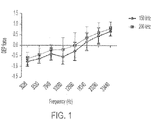
- the results of this comparison are depicted in FIG. 1 , which demonstrates the differences of the lower frequency range (3-35 kHz) of the dielectrophoretic force vs. frequency curves of cells between the first group of 10 cell lines (for which the optimal TTFields frequency is 150kHz) and the second group of 8 cell lines (for which the optimal TTFields frequency is 200 kHz).
- the curves were analyzed using 2-way ANOVA.
- a comparison of the dielectrophoretic force of the first group of cell lines with the dielectrophoretic force of the second group of cell lines reveals that there was a significant difference between the dielectrophoretic force of those two groups at the lower frequency range of the dielectrophoretic force vs. frequency curves. More specifically, these results demonstrate significant differences (p ⁇ 0.001) between the lower frequency range of the dielectrophoretic force vs. frequency curves as between the first and second groups of cell lines. Based on the differences in the curves in this low frequency range, the inventors have concluded that the electrical characteristic of dielectrophoretic force in this low frequency range is a good predictor for the optimal frequency for TTFields treatment.
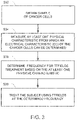
- FIG. 2 depicts a process that takes advantage of this difference.
- tumor cells are extracted from a subject (e.g., taken from resection/biopsy/circulating tumor cells).
- the electrical characteristics of the cancer cells are determined.
- One way to do this is to dissociate the extracted tumor cells into single cells suspensions (using a method such as a tumor dissociation kit).
- the electrical properties of the cells in the single cell suspension could either be tested directly using a device which measures the electrical properties (e.g.
- the frequency of TTFields that should be applied to the subject in order to treat the subject's cancer can be determined based on the determined electrical characteristic in step S26. For example, in a situation where the electrical characteristic being analyzed is dielectric force, if the dielectric force measurements on the tumor cells from the subject more closely matches the dielectric forces for the first group of cell lines, treatment for that subject should proceed using TTFields at a frequency of 150 kHz. On the other hand, if the dielectric force measurements on the tumor cells from the subject more closely matches the second group of cell lines, treatment for that subject should proceed using TTFields at a frequency of 200 kHz.
- the cancer is treated by applying TTFields to the subject at the determined frequency in step S28.
- the cell membrane capacitance can be determined from dielectrophoretic force vs. frequency data (such as the data depicted in FIG. 1 ). Thus, the inventors have concluded that the electrical characteristic of cell membrane capacitance is also a good predictor for the optimal frequency for TTFields treatment.
- using cell membrane capacitance as a predictor for the optimal frequency for TTFields treatment is an example of indirectly determining a second electrical characteristic (i.e., cell membrane capacitance) based on a first electrical characteristic (i.e., dielectrophoretic force), and then using the second electrical characteristic as a predictor for the optimal frequency for TTFields treatment.
- a second electrical characteristic i.e., cell membrane capacitance
- a first electrical characteristic i.e., dielectrophoretic force
- step S22 tumor cells are extracted from a subject in step S22 (e.g., as described above).
- step S24 the cell membrane capacitance of the cancer cells is determined. This may be accomplished, for example, using a 3DEP TM device to measure dielectrophoretic forces, and then determining the cell membrane capacitance based on the measured dielectrophoretic forces. A mapping between cell membrane capacitance and the optimal TTFields frequency is then made in step S26.
- TTFields For example, if the cell membrane capacitance of the tumor cells from the subject more closely matches the cell membrane capacitance for the first group of cell lines, treatment for that subject should proceed using TTFields at a frequency of 150 kHz. On the other hand, if the cell membrane capacitance of the tumor cells from the subject more closely matches the second group of cell lines, treatment for that subject should proceed using TTFields at a frequency of 200 kHz. The cancer is then treated by applying TTFields to the subject at the determined frequency in step S28.
- dielectrophoretic force data can be used to predict the optimal frequency for TTFields treatment.
- One way to measure dielectrophoretic force (which is used in the 3DEP TM system) is to first make optical measurements to determine how far extracted cancer cells move in an electric field, then convert those optical measurements into dielectrophoretic force data (which is an electrical characteristic), and then map the dielectrophoretic force data to the optimal frequency. It is therefore possible to omit the converting step, and to make a direct mapping from the underlying optical measurements to the optimal frequency for TTFields treatment.
- an electrical characteristic i.e., dielectrophoretic force
- tumor cells are extracted from a subject in step S32 (e.g., as described above in connection with step S22).
- step S34 physical characteristics of the cancer cells (e.g., movement within a well in the 3DEP TM system as determined by measuring light intensity) are determined.
- a mapping between the measured light intensity and the optimal TTFields frequency is then made in step S36. For example, if the light intensity measured for the tumor cells from the subject more closely matches the light intensity measured for the first group of cell lines, treatment for that subject should proceed using TTFields at a frequency of 150 kHz.
- treatment for that subject should proceed using TTFields at a frequency of 200 kHz.
- the cancer is then treated by applying TTFields to the subject at the determined frequency in step S38.
- a prediction can be made as to whether TTFields treatment will be effective for any given individual subject based on an electrical characteristic of cancer cells in the body of the given individual subject.
- the electrical characteristic of the cancer cells from the given individual subject may be determined using any of the approaches (e.g., 3DEP TM ) described above in connection with the frequency-selecting embodiment.
- 3DEP TM measurements were made on a first group of 7 distinct cell lines that were known to experience high cytotoxicity when TTFields were applied to those cell lines (LN18, LN229, A375, A2780, MDA231, LLC-1, and AGS), and on a second group of 6 distinct cell lines that were known to experience low cytotoxicity when TTFields were applied to those cell lines (MCF7, U251, DKMG, KATO III, CT26, and RN5).
- MCF7, U251, DKMG, KATO III, CT26, and RN5 The cytotoxic effect of TTFields on the various cell lines was determined using the Inovitro TM system.
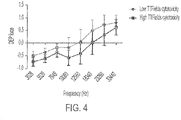
- FIG. 4 demonstrates the differences of the lower frequency range (3-35 kHz) of the dielectrophoretic force vs. frequency curves of cells between the first group of cell lines and the second group of cell lines. And as noted above, this lower range of these curves corresponds to membrane capacitance.
- This distinction can be used to help decide whether a given subject should be treated with TTFields, not treated, or treated using TTFields in combination with another modality.
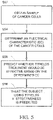
- FIG. 5 depicts a process that takes advantage of this difference.
- tumor cells are extracted from a subject (e.g., taken from resection/biopsy/circulating tumor cells).
- the electrical characteristics of the cancer cells are determined (e.g., as described above in connection with step S24).
- the electrical characteristic being analyzed is dielectric force
- the dielectric force measurements on the tumor cells from the subject more closely matches the first group of cell lines (that were known to experience high cytotoxicity when TTFields were applied)
- treatment for that subject using TTFields has a high probability of effectiveness.
- the dielectric force measurements on the tumor cells from the subject more closely matches the second group of cell lines, the probability of effectiveness using TTFields is low, and treatment for that subject should proceed using an alternative approach.
- step S58 the cancer is treated in step S58 by applying TTFields to the subject at an appropriate frequency.
- the cell membrane capacitance can be determined from dielectrophoretic force vs. frequency data (such as the data depicted in FIG. 4 ). Thus, the inventors have concluded that the electrical characteristic of cell membrane capacitance is also a good predictor for the effectiveness of TTFields treatment.
- using cell membrane capacitance as a predictor for the effectiveness of TTFields treatment is an example of indirectly determining a second electrical characteristic (i.e., cell membrane capacitance) based on a first electrical characteristic (i.e., dielectrophoretic force), and then using the second electrical characteristic as a predictor for the effectiveness of TTFields treatment.
- a second electrical characteristic i.e., cell membrane capacitance
- a first electrical characteristic i.e., dielectrophoretic force
- step S52 tumor cells are extracted from a subject in step S52 (e.g., as described above in connection with step S22). Then, in step S54, the cell membrane capacitance of the cancer cells is determined (e.g., as described above in connection with step S24). Next, in step S56, a prediction of whether TTFields treatment would be effective is made based on the determined cell membrane capacitance.
- step S58 the cancer is treated in step S58 by applying TTFields to the subject at an appropriate frequency.
- dielectrophoretic force data can be used to predict whether TTFields treatment will be effective (as described above in connection with FIG. 4-5 ); and (b) optical measurements can be converted into dielectrophoretic force data (as described above in connection with FIG. 3 ), it is possible to make a prediction directly from the underlying optical measurements as to whether treatment with TTFields will be effective for a particular subject without ever making the intermediate step of determining the dielectrophoretic force data.
- an electrical characteristic i.e., dielectrophoretic force
- tumor cells are extracted from a subject in step S62 (e.g., as described above in connection with step S22).
- step S64 physical characteristics of the cancer cells (e.g., movement within a well in the 3DEP TM system as determined by measuring light intensity) are determined.
- a mapping between the measured light intensity and the prediction as to whether TTFields treatment will be effective is then made in step S66. For example, if the measured light intensity for the tumor cells from the subject more closely matches the first group of cell lines (that were known to experience high cytotoxicity when TTFields were applied), treatment for that subject using TTFields has a high probability of effectiveness.
- step S66 determines whether the cancer is treated in step S68 by applying TTFields to the subject at an appropriate frequency.
Landscapes
- Health & Medical Sciences (AREA)
- Life Sciences & Earth Sciences (AREA)
- Engineering & Computer Science (AREA)
- Biomedical Technology (AREA)
- Chemical & Material Sciences (AREA)
- Physics & Mathematics (AREA)
- General Health & Medical Sciences (AREA)
- Pathology (AREA)
- Molecular Biology (AREA)
- Biophysics (AREA)
- Immunology (AREA)
- General Physics & Mathematics (AREA)
- Biochemistry (AREA)
- Analytical Chemistry (AREA)
- Animal Behavior & Ethology (AREA)
- Public Health (AREA)
- Veterinary Medicine (AREA)
- Nuclear Medicine, Radiotherapy & Molecular Imaging (AREA)
- Radiology & Medical Imaging (AREA)
- Hematology (AREA)
- Urology & Nephrology (AREA)
- Chemical Kinetics & Catalysis (AREA)
- Electrochemistry (AREA)
- Food Science & Technology (AREA)
- Medicinal Chemistry (AREA)
- Heart & Thoracic Surgery (AREA)
- Hospice & Palliative Care (AREA)
- Oncology (AREA)
- Optics & Photonics (AREA)
- Surgery (AREA)
- Medical Informatics (AREA)
- Physiology (AREA)
- Investigating Or Analyzing Materials By The Use Of Electric Means (AREA)
- Investigating Or Analysing Biological Materials (AREA)
- Electrotherapy Devices (AREA)
- Neurology (AREA)
- Human Computer Interaction (AREA)
Abstract
Description
- Tumor Treating Fields (TTFields) are an effective anti-neoplastic treatment modality delivered via application of low intensity (e.g., 1-5 V/cm), intermediate frequency (e.g., 100-300 kHz), alternating electric fields. TTFields therapy has received FDA approval for treating Glioblastoma Multiforme brain tumors and appears to be very promising for many other types of tumors. TTFields therapy is delivered using a wearable and portable device (Optune®). The delivery system includes four adhesive, non-invasive, insulated "transducer arrays", an electric field generator, rechargeable batteries, and a carrying case. The transducer arrays are applied to the skin in the vicinity of the tumor and are connected to the field generator.
- In the preclinical setting, TTFields can be applied in vitro using the Inovitro™ system by means of perpendicular pairs of electrodes insulated by a high dielectric constant ceramic. Inovitro™ (TTFields lab bench system) is comprised of a TTFields generator and base plate containing 8 ceramic dishes per plate.
- One aspect of the invention is directed to a first method of treating cancer in a subject having a cancerous tissue. The first method comprises obtaining a sample of the cancerous tissue from the subject, the sample having at least one cancer cell; determining an electrical characteristic of the at least one cancer cell; determining a frequency of alternating electric fields to apply to the subject in order to treat the cancer based on the determined electrical characteristic; and treating the cancer by applying an alternating electric field to the subject at the determined frequency of alternating electric fields.
- In some instances of the first method, the determining of the electrical characteristic comprises measuring dielectrophoretic forces of the at least one cancer cell at each of a plurality of frequencies below 35 kHz. In some instances of the first method, the determining of the frequency comprises choosing a frequency that is effective in treating reference cancer cells that have a known electrical characteristic, wherein the known electrical characteristic matches the determined electrical characteristic. In some instances of the first method, the determining of the electrical characteristic comprises determining cell membrane capacitance.
- Another aspect of the invention is directed to a second method of treating cancer in a subject having a cancerous tissue. The second method comprises obtaining a sample of the cancerous tissue from the subject, the sample having at least one cancer cell; measuring at least one physical parameter of the at least one cancer cell, wherein an electrical characteristic of the at least one cancer cell can be determined from the at least one physical parameter; determining a frequency of alternating electric fields to apply to the subject in order to treat the cancer based on the measured at least one physical parameter; and treating the cancer by applying an alternating electric field to the subject at the determined frequency of alternating electric fields.
- In some instances of the second method, the cell membrane capacitance of the at least one cancer cell can be determined from the at least one physical parameter.
- Another aspect of the invention is directed to a third method of treating cancer in a subject having a cancerous tissue. The third method comprises obtaining a sample of the cancerous tissue from the subject, the sample having at least one cancer cell; determining an electrical characteristic of the at least one cancer cell; predicting whether application of alternating electric fields to the subject would be effective to treat the cancer based on the determined electrical characteristic; and treating the cancer by applying an alternating electric field to the subject if the predicting indicates that application of alternating electric fields to the subject would be effective to treat the cancer.
- In some instances of the third method, the determining of the electrical characteristic comprises measuring dielectrophoretic forces of the at least one cancer cell at each of a plurality of frequencies below 35 kHz. In some instances of the third method, the predicting is based on whether reference cancer cells that have an electrical characteristic that matches the determined electrical characteristic are susceptible to treatment using alternating electric fields. In some instances of the third method, the determining of the electrical characteristic comprises determining cell membrane capacitance.
- Another aspect of the invention is directed to a fourth method of treating cancer in a subject having a cancerous tissue. The fourth method comprises obtaining a sample of the cancerous tissue from the subject, the sample having at least one cancer cell; measuring at least one physical parameter of the at least one cancer cell, wherein an electrical characteristic of the at least one cancer cell can be determined from the at least one physical parameter; predicting whether application of alternating electric fields to the subject would be effective to treat the cancer based on the measured at least one physical parameter; and treating the cancer by applying an alternating electric field to the subject if the predicting indicates that application of alternating electric fields to the subject would be effective to treat the cancer.
- In some instances of the fourth method, the cell membrane capacitance of the at least one cancer cell can be determined from the at least one physical parameter.
- Another aspect of the invention is directed to a fifth method of selecting a frequency of alternating electric fields to be used for treating cancer in a subject having a cancerous tissue. The fifth method comprises determining an electrical characteristic of at least one cancer cell extracted from a sample of the cancerous tissue obtained from the subject; and determining a frequency of alternating electric fields to apply to the subject in order to treat the cancer based on the determined electrical characteristic.
- In some instances of the fifth method, the determining of the electrical characteristic comprises measuring dielectrophoretic forces of the at least one cancer cell at each of a plurality of frequencies below 35 kHz. In some instances of the fifth method, the determining of the frequency comprises choosing a frequency that is effective in treating reference cancer cells that have a known electrical characteristic, wherein the known electrical characteristic matches the determined electrical characteristic. In some instances of the fifth method, the determining of the electrical characteristic comprises determining cell membrane capacitance.
- Another aspect of the invention is directed to a sixth method of selecting a frequency of alternating electric fields to be used for treating cancer in a subject having a cancerous tissue. The sixth method comprises measuring at least one physical parameter of at least one cancer cell extracted from a sample of the cancerous tissue obtained from the subject, wherein an electrical characteristic of the at least one cancer cell can be determined from the at least one physical parameter; and determining a frequency of alternating electric fields to apply to the subject in order to treat the cancer based on the measured at least one physical parameter.
- In some instances of the sixth method, the cell membrane capacitance of the at least one cancer cell can be determined from the at least one physical parameter.
-
-
FIG. 1 depicts variations in dielectrophoretic forces between two groups of cell lines for which the optimal TTFields frequency is 150kHz and 200 kHz, respectively. -
FIG. 2 depicts a process for selecting a frequency for TTFields treatment based on dielectrophoretic force measurements. -
FIG. 3 depicts a process for selecting a frequency for TTFields treatment based on optical measurements, when it is possible to determine an electrical characteristic (e.g., dielectrophoretic force or cell membrane capacitance) from the optical measurements. -
FIG. 4 depicts variations in dielectrophoretic forces between two groups of cell lines, one of which is sensitive to TTFields and one of which is not sensitive to TTFields. -
FIG. 5 depicts a process for determining whether to treat a particular subject with TTFields based on dielectrophoretic force measurements. -
FIG. 6 depicts a process for determining whether to treat a particular subject with TTFields based on optical measurements, when it is possible to determine an electrical characteristic (e.g., dielectrophoretic force or cell membrane capacitance) from the optical measurements. - Various embodiments are described in detail below with reference to the accompanying drawings, wherein like reference numerals represent like elements.
- Traditionally, once a decision to use TTFields to treat a given subject was made, the frequency at which the TTFields were applied to the subject was based on the particular type of tumor that was being treated. For example, 200 kHz is the recommended frequency for TTFields when treating GBM; and 150 kHz is the recommended frequency for TTFields when treating gastric cancer. But using a single frequency for all subjects may not provide the best results in each and every one of those subjects. More specifically, while 200 kHz may be the best frequency for most subjects with GBM, certain individuals with GBM might respond better to a different frequency (e.g., 175 kHz or 225 kHz). Until now, there were no predictive markers for determining the optimal frequency that should be used for any given individual subject.
- Some of the embodiments described herein can provide improved results for many subjects by customizing the frequency at which TTFields are applied to each individual subject. The decision of which frequency to use for any given individual subject is based on at least one electrical characteristic of cancer cells extracted from the individual subject. In alternative embodiments, the decision of which frequency to use for any given individual subject may be based on a physical parameter from which it is possible to determine an electrical characteristic of extracted cancer cells. The ability to predict, in advance, the best frequency at which to apply TTFields for each individual subject can advantageously improve the efficacy of TTFields treatment.
- In addition, traditionally, there were no predictive markers to determine whether TTFields will be effective for any given individual subject. Some of the embodiments described herein can make a prediction of whether TTFields will be effective for a given individual subject. The prediction is based on at least one electrical characteristic of cancer cells extracted from the individual subject. In alternative embodiments, the prediction may be based on a physical parameter from which it is possible to determine an electrical characteristic of extracted cancer cells. The ability to predict, in advance, the efficacy of TTFields treatment for any given subject can advantageously improve outcomes (e.g., by selecting the most effective treatment for each individual subject).
- Examples of electrical characteristics that can be used to make these predictions include but are not limited to dielectrophoretic force, cell membrane capacitance, cell membrane resistance, cytoplasm conductivity, as well as other measures of permittivity, conductivity, capacitance, etc. of various cellular structures. The electrical characteristic that is used to make the predictions may be measured directly. Alternatively, the electrical characteristic may be measured indirectly (e.g., by measuring an other physical characteristic, which could be either a different electrical characteristic or a non-electrical characteristics such as light intensity) and determining the electrical characteristic from the other physical characteristic. In situations where an electrical characteristic can be determined from an other physical characteristic, it may be possible to make a mapping from the other physical characteristic directly to the desired TTFields frequency (or the effectiveness prediction) without making an intermediate calculation of the relevant electrical characteristic, as explained in more detail below.
- In some embodiments, the electrical characteristic that is used to make the predictions noted above is the dielectrophoretic force on the cancer cells. Any of a variety of commercially available systems for measuring the dielectrophoretic force may be used, including but not limited to the 3DEP™ 3D Dielectrophoresis Cell Analysis System. (Dielectrophoresis is a physical effect that generates a force on polarizable particles experiencing a non-homogeneous electric field and can therefore be used as a technique to analyze the way cells move within electric fields at different frequencies.) Note that in place of determining the electrical characteristic by measuring the dielectrophoretic force on the cancer cells (as in the 3DEP™ system), a variety of alternative approaches for determining an electrical characteristic of the cancer cells that will be apparent to persons skilled in the relevant art may also be used.
- To establish how a measured electrical characteristic can be used to determine the frequency of TTFields that should be applied to a subject in order to treat the subject's cancer, the baseline electrical properties (permittivity and conductivity) of 18 cell lines from different tumor types were determined using a 3DEP™ Cell Analysis System. Of those 18 cell lines, it was first established that 10 of those cell lines (HepG2, A549, H1299, MDA231, LLC-1, C3A, AGS, KATO III, H2052, and RN5) were most vulnerable to treatment using TTFields at a frequency of 150 kHz; and 8 of those cell lines (A172, A2780, U87, A375, LN18, LN229, DKMG, and U251) were most vulnerable to treatment using TTFields at a frequency of 200 kHz. The optimal TTFields frequency for all 18 cell lines was determined by testing the cytotoxic effect of TTFields at various frequencies, using the Inovitro™ system.
- The electrical properties of each of the cell lines were then compared with the optimal TTFields frequency and sensitivity of each cell line. The results of this comparison are depicted in
FIG. 1 , which demonstrates the differences of the lower frequency range (3-35 kHz) of the dielectrophoretic force vs. frequency curves of cells between the first group of 10 cell lines (for which the optimal TTFields frequency is 150kHz) and the second group of 8 cell lines (for which the optimal TTFields frequency is 200 kHz). - The curves were analyzed using 2-way ANOVA. A comparison of the dielectrophoretic force of the first group of cell lines with the dielectrophoretic force of the second group of cell lines reveals that there was a significant difference between the dielectrophoretic force of those two groups at the lower frequency range of the dielectrophoretic force vs. frequency curves. More specifically, these results demonstrate significant differences (p<0.001) between the lower frequency range of the dielectrophoretic force vs. frequency curves as between the first and second groups of cell lines. Based on the differences in the curves in this low frequency range, the inventors have concluded that the electrical characteristic of dielectrophoretic force in this low frequency range is a good predictor for the optimal frequency for TTFields treatment.
-
FIG. 2 depicts a process that takes advantage of this difference. In step S22, tumor cells are extracted from a subject (e.g., taken from resection/biopsy/circulating tumor cells). Then, in step S24, the electrical characteristics of the cancer cells are determined. One way to do this is to dissociate the extracted tumor cells into single cells suspensions (using a method such as a tumor dissociation kit). The electrical properties of the cells in the single cell suspension could either be tested directly using a device which measures the electrical properties (e.g. using a 3DEP™ device to measure dielectrophoretic forces) or could be further purified to create a more homogenous cell population by sorting out other infiltrating cells, using a method such as Fluorescence-activated cell sorting (FACS) or using cell specific beads and then measuring the electrical properties by a device such as 3DEP™. - After the electrical characteristic of the at least one cancer cell from the subject is determined, the frequency of TTFields that should be applied to the subject in order to treat the subject's cancer can be determined based on the determined electrical characteristic in step S26. For example, in a situation where the electrical characteristic being analyzed is dielectric force, if the dielectric force measurements on the tumor cells from the subject more closely matches the dielectric forces for the first group of cell lines, treatment for that subject should proceed using TTFields at a frequency of 150 kHz. On the other hand, if the dielectric force measurements on the tumor cells from the subject more closely matches the second group of cell lines, treatment for that subject should proceed using TTFields at a frequency of 200 kHz.
- After the frequency for TTFields treatment has been determined, the cancer is treated by applying TTFields to the subject at the determined frequency in step S28.
- Because the lower frequency range of the dielectrophoretic force vs. frequency curves corresponds to membrane capacitance of cells, the cell membrane capacitance can be determined from dielectrophoretic force vs. frequency data (such as the data depicted in
FIG. 1 ). Thus, the inventors have concluded that the electrical characteristic of cell membrane capacitance is also a good predictor for the optimal frequency for TTFields treatment. In a situation where cell membrane capacitance is calculated based on dielectrophoretic force measurements, using cell membrane capacitance as a predictor for the optimal frequency for TTFields treatment is an example of indirectly determining a second electrical characteristic (i.e., cell membrane capacitance) based on a first electrical characteristic (i.e., dielectrophoretic force), and then using the second electrical characteristic as a predictor for the optimal frequency for TTFields treatment. - The process depicted in
FIG. 2 also applies to the situation where cell membrane capacitance is used as the electrical characteristic. In this situation, tumor cells are extracted from a subject in step S22 (e.g., as described above). Then, in step S24, the cell membrane capacitance of the cancer cells is determined. This may be accomplished, for example, using a 3DEP™ device to measure dielectrophoretic forces, and then determining the cell membrane capacitance based on the measured dielectrophoretic forces. A mapping between cell membrane capacitance and the optimal TTFields frequency is then made in step S26. For example, if the cell membrane capacitance of the tumor cells from the subject more closely matches the cell membrane capacitance for the first group of cell lines, treatment for that subject should proceed using TTFields at a frequency of 150 kHz. On the other hand, if the cell membrane capacitance of the tumor cells from the subject more closely matches the second group of cell lines, treatment for that subject should proceed using TTFields at a frequency of 200 kHz. The cancer is then treated by applying TTFields to the subject at the determined frequency in step S28. - As described above, dielectrophoretic force data can be used to predict the optimal frequency for TTFields treatment. One way to measure dielectrophoretic force (which is used in the 3DEP™ system) is to first make optical measurements to determine how far extracted cancer cells move in an electric field, then convert those optical measurements into dielectrophoretic force data (which is an electrical characteristic), and then map the dielectrophoretic force data to the optimal frequency. It is therefore possible to omit the converting step, and to make a direct mapping from the underlying optical measurements to the optimal frequency for TTFields treatment. This is an example of measuring a physical (i.e., optical) parameter of extracted cancer cells, where an electrical characteristic (i.e., dielectrophoretic force) of the cancer cells can be determined from the physical parameter, and then determining the TTFields frequency based on the physical parameter (even though the dielectrophoretic force value was never actually determined).
- The process depicted in
FIG. 3 applies in this situation. Here, tumor cells are extracted from a subject in step S32 (e.g., as described above in connection with step S22). Then, in step S34, physical characteristics of the cancer cells (e.g., movement within a well in the 3DEP™ system as determined by measuring light intensity) are determined. A mapping between the measured light intensity and the optimal TTFields frequency is then made in step S36. For example, if the light intensity measured for the tumor cells from the subject more closely matches the light intensity measured for the first group of cell lines, treatment for that subject should proceed using TTFields at a frequency of 150 kHz. On the other hand, if the light intensity measured for tumor cells from the subject more closely matches the light intensity measured for the second group of cell lines, treatment for that subject should proceed using TTFields at a frequency of 200 kHz. The cancer is then treated by applying TTFields to the subject at the determined frequency in step S38. - In other embodiments, a prediction can be made as to whether TTFields treatment will be effective for any given individual subject based on an electrical characteristic of cancer cells in the body of the given individual subject. The electrical characteristic of the cancer cells from the given individual subject may be determined using any of the approaches (e.g., 3DEP™) described above in connection with the frequency-selecting embodiment.
- To establish how this prediction can be made, 3DEP™ measurements were made on a first group of 7 distinct cell lines that were known to experience high cytotoxicity when TTFields were applied to those cell lines (LN18, LN229, A375, A2780, MDA231, LLC-1, and AGS), and on a second group of 6 distinct cell lines that were known to experience low cytotoxicity when TTFields were applied to those cell lines (MCF7, U251, DKMG, KATO III, CT26, and RN5). The cytotoxic effect of TTFields on the various cell lines was determined using the Inovitro™ system.
- The electrical properties of these two groups of cell lines were then compared. The results of this comparison are depicted in
FIG. 4 , which demonstrates the differences of the lower frequency range (3-35 kHz) of the dielectrophoretic force vs. frequency curves of cells between the first group of cell lines and the second group of cell lines. And as noted above, this lower range of these curves corresponds to membrane capacitance. - This distinction can be used to help decide whether a given subject should be treated with TTFields, not treated, or treated using TTFields in combination with another modality.
- These results demonstrate significant differences (2-way ANOVA p<0.001) between the lower frequency range of the dielectrophoretic force vs. frequency curves (which corresponds to membrane capacitance of cells) as between the first and second groups of cell lines. Based on the differences in the curves in this low frequency range, the inventors have concluded that the electrical characteristic of dielectrophoretic force in this low frequency range is a good predictor as to whether a given set of cancer cells will respond well to TTFields treatment.
-
FIG. 5 depicts a process that takes advantage of this difference. In step S52, tumor cells are extracted from a subject (e.g., taken from resection/biopsy/circulating tumor cells). Then, in step S54, the electrical characteristics of the cancer cells are determined (e.g., as described above in connection with step S24). - After the electrical characteristic of the at least one cancer cell from the subject is determined, a prediction is made as to whether application of TTFields to the subject would be effective to treat the cancer based on the determined electrical characteristic in step S56. For example, in a situation where the electrical characteristic being analyzed is dielectric force, if the dielectric force measurements on the tumor cells from the subject more closely matches the first group of cell lines (that were known to experience high cytotoxicity when TTFields were applied), treatment for that subject using TTFields has a high probability of effectiveness. On the other hand, if the dielectric force measurements on the tumor cells from the subject more closely matches the second group of cell lines, the probability of effectiveness using TTFields is low, and treatment for that subject should proceed using an alternative approach.
- Finally, if the results of the prediction in step S56 reveal that treatment using TTFields has a high probability of effectiveness, the cancer is treated in step S58 by applying TTFields to the subject at an appropriate frequency.
- Because the lower frequency range of the dielectrophoretic force vs. frequency curves corresponds to membrane capacitance of cells, the cell membrane capacitance can be determined from dielectrophoretic force vs. frequency data (such as the data depicted in
FIG. 4 ). Thus, the inventors have concluded that the electrical characteristic of cell membrane capacitance is also a good predictor for the effectiveness of TTFields treatment. In a situation where cell membrane capacitance is calculated based on dielectrophoretic force measurements, using cell membrane capacitance as a predictor for the effectiveness of TTFields treatment is an example of indirectly determining a second electrical characteristic (i.e., cell membrane capacitance) based on a first electrical characteristic (i.e., dielectrophoretic force), and then using the second electrical characteristic as a predictor for the effectiveness of TTFields treatment. - The process depicted in
FIG. 5 also applies to the situation where cell membrane capacitance is used as the electrical characteristic. In this situation, tumor cells are extracted from a subject in step S52 (e.g., as described above in connection with step S22). Then, in step S54, the cell membrane capacitance of the cancer cells is determined (e.g., as described above in connection with step S24). Next, in step S56, a prediction of whether TTFields treatment would be effective is made based on the determined cell membrane capacitance. For example, if the cell membrane capacitance of the tumor cells from the subject more closely matches the cell membrane capacitance for the first group of cell lines (that were known to experience high cytotoxicity when TTFields were applied), treatment for that subject using TTFields has a high probability of effectiveness. On the other hand, if the cell membrane capacitance of the tumor cells from the subject more closely matches the second group of cell lines, the probability of effectiveness using TTFields is low, and treatment for that subject should proceed using an alternative approach. Finally, if the results of the prediction in step S56 reveal that treatment using TTFields has a high probability of effectiveness, the cancer is treated in step S58 by applying TTFields to the subject at an appropriate frequency. - Because (a) dielectrophoretic force data can be used to predict whether TTFields treatment will be effective (as described above in connection with
FIG. 4-5 ); and (b) optical measurements can be converted into dielectrophoretic force data (as described above in connection withFIG. 3 ), it is possible to make a prediction directly from the underlying optical measurements as to whether treatment with TTFields will be effective for a particular subject without ever making the intermediate step of determining the dielectrophoretic force data. This is an example of measuring a physical (i.e., optical) parameter of extracted cancer cells, wherein an electrical characteristic (i.e., dielectrophoretic force) of the cancer cells can be determined from the physical parameter, and then predicting whether applying TTFields would be effective to treat the subject's cancer based on the physical parameter (even though the dielectrophoretic force value was never actually determined). - The process depicted in
FIG. 6 applies in this situation. Here, tumor cells are extracted from a subject in step S62 (e.g., as described above in connection with step S22). Then, in step S64, physical characteristics of the cancer cells (e.g., movement within a well in the 3DEP™ system as determined by measuring light intensity) are determined. A mapping between the measured light intensity and the prediction as to whether TTFields treatment will be effective is then made in step S66. For example, if the measured light intensity for the tumor cells from the subject more closely matches the first group of cell lines (that were known to experience high cytotoxicity when TTFields were applied), treatment for that subject using TTFields has a high probability of effectiveness. On the other hand, if the light intensity for the tumor cells from the subject more closely matches the second group of cell lines, the probability of effectiveness using TTFields is low, and treatment for that subject should proceed using an alternative approach. Finally, if the results of the prediction in step S66 reveal that treatment using TTFields has a high probability of effectiveness, the cancer is treated in step S68 by applying TTFields to the subject at an appropriate frequency. - While the present invention has been disclosed with reference to certain embodiments, numerous modifications, alterations, and changes to the described embodiments are possible without departing from the sphere and scope of the present invention, as defined in the appended claims. Accordingly, it is intended that the present invention not be limited to the described embodiments, but that it has the full scope defined by the language of the following claims, and equivalents thereof.
- Furthermore, the present invention is represented by the following statements of invention.
- 1. A method of treating cancer in a subject having a cancerous tissue, the method comprising:
- obtaining a sample of the cancerous tissue from the subject, the sample having at least one cancer cell;
- determining an electrical characteristic of the at least one cancer cell;
- determining a frequency of alternating electric fields to apply to the subject in order to treat the cancer based on the determined electrical characteristic; and
- treating the cancer by applying an alternating electric field to the subject at the determined frequency of alternating electric fields.
- 2. The method of statement 1, wherein the determining of the electrical characteristic comprises measuring dielectrophoretic forces of the at least one cancer cell at each of a plurality of frequencies below 35 kHz.
- 3. The method of statement 1, wherein the determining of the frequency comprises choosing a frequency that is effective in treating reference cancer cells that have a known electrical characteristic, wherein the known electrical characteristic matches the determined electrical characteristic.
- 4. The method of statement 1, wherein the determining of the electrical characteristic comprises determining cell membrane capacitance.
- 5. A method of treating cancer in a subject having a cancerous tissue, the method comprising:
- obtaining a sample of the cancerous tissue from the subject, the sample having at least one cancer cell;
- measuring at least one physical parameter of the at least one cancer cell, wherein
- an electrical characteristic of the at least one cancer cell can be determined from the at least one physical parameter;
- determining a frequency of alternating electric fields to apply to the subject in order to treat the cancer based on the measured at least one physical parameter; and
- treating the cancer by applying an alternating electric field to the subject at the determined frequency of alternating electric fields.
- 6. The method of statement 5, wherein the cell membrane capacitance of the at least one cancer cell can be determined from the at least one physical parameter.
- 7. A method of treating cancer in a subject having a cancerous tissue, the method comprising:
- obtaining a sample of the cancerous tissue from the subject, the sample having at least one cancer cell;
- determining an electrical characteristic of the at least one cancer cell;
- predicting whether application of alternating electric fields to the subject would be effective to treat the cancer based on the determined electrical characteristic; and
- treating the cancer by applying an alternating electric field to the subject if the predicting indicates that application of alternating electric fields to the subject would be effective to treat the cancer.
- 8. The method of statement 7, wherein the determining of the electrical characteristic comprises measuring dielectrophoretic forces of the at least one cancer cell at each of a plurality of frequencies below 35 kHz.
- 9. The method of statement 7, wherein the predicting is based on whether reference cancer cells that have an electrical characteristic that matches the determined electrical characteristic are susceptible to treatment using alternating electric fields.
- 10. The method of statement 7, wherein the determining of the electrical characteristic comprises determining cell membrane capacitance.
- 11. A method of treating cancer in a subject having a cancerous tissue, the method comprising:
- obtaining a sample of the cancerous tissue from the subject, the sample having at least one cancer cell;
- measuring at least one physical parameter of the at least one cancer cell, wherein an electrical characteristic of the at least one cancer cell can be determined from the at least one physical parameter;
- predicting whether application of alternating electric fields to the subject would be effective to treat the cancer based on the measured at least one physical parameter; and
- treating the cancer by applying an alternating electric field to the subject if the predicting indicates that application of alternating electric fields to the subject would be effective to treat the cancer.
- 12. The method of statement 11, wherein the cell membrane capacitance of the at least one cancer cell can be determined from the at least one physical parameter.
- 13. A method of selecting a frequency of alternating electric fields to be used for treating cancer in a subject having a cancerous tissue, the method comprising:
- determining an electrical characteristic of at least one cancer cell extracted from a sample of the cancerous tissue obtained from the subject; and
- determining a frequency of alternating electric fields to apply to the subject in order to treat the cancer based on the determined electrical characteristic.
- 14. The method of statement 13, wherein the determining of the electrical characteristic comprises measuring dielectrophoretic forces of the at least one cancer cell at each of a plurality of frequencies below 35 kHz.
- 15. The method of statement 13, wherein the determining of the frequency comprises choosing a frequency that is effective in treating reference cancer cells that have a known electrical characteristic, wherein the known electrical characteristic matches the determined electrical characteristic.
- 16. The method of statement 13, wherein the determining of the electrical characteristic comprises determining cell membrane capacitance.
- 17. A method of selecting a frequency of alternating electric fields to be used for treating cancer in a subject having a cancerous tissue, the method comprising:
- measuring at least one physical parameter of at least one cancer cell extracted from a sample of the cancerous tissue obtained from the subject, wherein an electrical characteristic of the at least one cancer cell can be determined from the at least one physical parameter; and
- determining a frequency of alternating electric fields to apply to the subject in order to treat the cancer based on the measured at least one physical parameter.
- 18. The method of statement 17, wherein the cell membrane capacitance of the at least one cancer cell can be determined from the at least one physical parameter.
Claims (4)
- A method of selecting a frequency of alternating electric fields to be used for treating cancer in a subject having a cancerous tissue, the method comprising:determining a physical parameter of at least one cancer cell extracted from a sample of the cancerous tissue obtained from the subject; anddetermining a frequency of alternating electric fields to apply to the subject in order to treat the cancer based on the determined physical parameter;characterized in that the physical parameter is determined by optical measurement.
- The method of claim 1, wherein the optical measurement is of movement of the at least one cancer cell.
- The method of claim 1, wherein the optical measurement is of light intensity of the at least one cancer cell.
- The method of claim 1, wherein the frequency of alternating electric fields to apply to the subject is chosen as a frequency that is effective in treating reference cancer cells that have a known physical parameter, wherein the known physical parameter matches the determined physical parameter.
Applications Claiming Priority (3)
| Application Number | Priority Date | Filing Date | Title |
|---|---|---|---|
| US201962810823P | 2019-02-26 | 2019-02-26 | |
| EP20710600.6A EP3930824B1 (en) | 2019-02-26 | 2020-02-25 | Determining a frequency for ttfields treatment based on an electrical characteristic of targeted cancer cells |
| PCT/IB2020/051613 WO2020174403A1 (en) | 2019-02-26 | 2020-02-25 | Determining a frequency for ttfields treatment based on an electrical characteristic of targeted cancer cells |
Related Parent Applications (2)
| Application Number | Title | Priority Date | Filing Date |
|---|---|---|---|
| EP20710600.6A Division EP3930824B1 (en) | 2019-02-26 | 2020-02-25 | Determining a frequency for ttfields treatment based on an electrical characteristic of targeted cancer cells |
| EP20710600.6A Division-Into EP3930824B1 (en) | 2019-02-26 | 2020-02-25 | Determining a frequency for ttfields treatment based on an electrical characteristic of targeted cancer cells |
Publications (3)
| Publication Number | Publication Date |
|---|---|
| EP3974022A1 true EP3974022A1 (en) | 2022-03-30 |
| EP3974022B1 EP3974022B1 (en) | 2024-04-17 |
| EP3974022C0 EP3974022C0 (en) | 2024-04-17 |
Family
ID=69784486
Family Applications (2)
| Application Number | Title | Priority Date | Filing Date |
|---|---|---|---|
| EP20710600.6A Active EP3930824B1 (en) | 2019-02-26 | 2020-02-25 | Determining a frequency for ttfields treatment based on an electrical characteristic of targeted cancer cells |
| EP21208106.1A Active EP3974022B1 (en) | 2019-02-26 | 2020-02-25 | Determining a frequency for ttfields treatment based on a physical parameter of targeted cancer cells |
Family Applications Before (1)
| Application Number | Title | Priority Date | Filing Date |
|---|---|---|---|
| EP20710600.6A Active EP3930824B1 (en) | 2019-02-26 | 2020-02-25 | Determining a frequency for ttfields treatment based on an electrical characteristic of targeted cancer cells |
Country Status (7)
| Country | Link |
|---|---|
| US (1) | US11554262B2 (en) |
| EP (2) | EP3930824B1 (en) |
| JP (2) | JP2022522602A (en) |
| KR (2) | KR102727585B1 (en) |
| CN (2) | CN122006105A (en) |
| IL (1) | IL284284B2 (en) |
| WO (1) | WO2020174403A1 (en) |
Families Citing this family (31)
| Publication number | Priority date | Publication date | Assignee | Title |
|---|---|---|---|---|
| US10779875B2 (en) | 2013-05-06 | 2020-09-22 | Novocure Gmbh | Optimizing treatment using TTfields by changing the frequency during the course of long term tumor treatment |
| US10188851B2 (en) | 2015-10-28 | 2019-01-29 | Novocure Limited | TTField treatment with optimization of electrode positions on the head based on MRI-based conductivity measurements |
| US10821283B2 (en) | 2016-04-04 | 2020-11-03 | Novocure Gmbh | Reducing motility of cancer cells using tumor treating fields (TTFields) |
| WO2018134733A1 (en) | 2017-01-19 | 2018-07-26 | Moshe Giladi | System for viewing cell cultures under a microscope whilst applying ttfields |
| US11986647B2 (en) | 2018-09-07 | 2024-05-21 | Novocure Gmbh | Treating autoinflammatory and mitochondrial diseases using an alternating electric field |
| JP7148722B2 (en) | 2018-10-25 | 2022-10-05 | ゼーヴ・ボンゾン | Delivery of an alternating electric field (e.g., TTField) to the spinal structures of a subject |
| IL280843B2 (en) | 2018-11-19 | 2025-10-01 | Novocure Gmbh | Arrays for delivering tumor treating fields (ttfields) with selectively addressable sub-elements |
| EP3961565A1 (en) | 2019-01-08 | 2022-03-02 | Novocure GmbH | Evaluating quality of segmentation of an image into different types of tissue for planning treatment using tumor treating fields (ttfields) |
| IL284284B2 (en) * | 2019-02-26 | 2026-03-01 | Novocure Gmbh | Determining a frequency for ttfields treatment based on an electrical characteristic of targeted cancer cells |
| US11654279B2 (en) | 2019-07-31 | 2023-05-23 | Novocure Gmbh | Applying tumor treating fields (TTFields) via electrodes embedded into skull implants |
| WO2021024170A1 (en) | 2019-08-05 | 2021-02-11 | Voloshin Sela Tali | Increasing cancer cells' sensitivity to tumor treating fields (ttfields) by inhibiting il11 activity |
| US11890467B2 (en) | 2019-08-30 | 2024-02-06 | Novocure Gmbh | Delivering tumor treating fields (TTFields) to the neck |
| EP4091665B1 (en) | 2019-12-31 | 2024-10-30 | Novocure GmbH | High voltage, high efficiency sine wave generator that prevents spikes during amplitude adjustments and switching of channels |
| US12121739B2 (en) | 2019-12-31 | 2024-10-22 | Novocure Gmbh | Methods, systems, and apparatuses for managing temperatures induced by alternating fields |
| ES2950234T3 (en) | 2019-12-31 | 2023-10-06 | Novocure Gmbh | Arrays for delivering tumor treatment fields (TT fields) with individually accessible electrode elements and temperature sensors |
| US20210299440A1 (en) | 2020-03-30 | 2021-09-30 | Novocure Gmbh | Intravenous / Intra-Spinal / Intra-Cavity / Intraventricular Delivery of TTFields (Tumor Treating Fields) for Treating Cancer and Metastases |
| BR112022021484A2 (en) | 2020-04-24 | 2022-12-13 | Novocure Gmbh | USE OF ALTERNATING ELECTRIC FIELDS TO INCREASE THE PERMEABILITY OF THE BLOOD-BRAIN BARRIER |
| US11818943B2 (en) | 2020-06-25 | 2023-11-14 | Novocure Gmbh | Fabricating organic light emitting diodes (OLEDs) using tubulin |
| WO2023095111A1 (en) * | 2021-11-29 | 2023-06-01 | Novocure Gmbh | Methods of reducing ciliogenesis with alternating electric fields |
| US12599765B2 (en) | 2021-12-14 | 2026-04-14 | Novocure Gmbh | Shifting of transducer array to reduce skin irritation |
| EP4456971A1 (en) | 2021-12-30 | 2024-11-06 | Novocure GmbH | Selecting values of parameters for treatment using tumor treating fields (ttfields) |
| US12478793B2 (en) | 2022-03-30 | 2025-11-25 | Novocure Gmbh | Reducing electrosensation whilst treating a subject using alternating electric fields by pairing transducer arrays together |
| EP4460361B1 (en) | 2022-03-30 | 2025-03-19 | Novocure GmbH | Using interleaved cooling periods to increase the peak intensity of tumor treating fields |
| EP4696363A3 (en) * | 2022-03-31 | 2026-03-25 | Novocure GmbH | Alternating electric field waveform for electrosensation reduction |
| CN115554602B (en) * | 2022-10-13 | 2023-10-27 | 云禾智能科技(天津)有限公司 | Tumor therapeutic apparatus combining alternating electric field and interference electricity |
| CN120529939A (en) * | 2022-12-29 | 2025-08-22 | 诺沃库勒有限责任公司 | Determining the frequency of Tumor Treating Fields (TTFields) therapy based on testing on tumor cells |
| US12268863B2 (en) | 2023-02-06 | 2025-04-08 | Novocure Gmbh | Shiftable transducer array with anisotropic material layer |
| KR102953371B1 (en) | 2023-04-05 | 2026-04-17 | 주식회사 뉴아인 | Electric field focusing device for apoptosis |
| KR102953368B1 (en) | 2023-04-05 | 2026-04-17 | 주식회사 뉴아인 | Apparartus of apoptosis using electric field |
| KR20240149472A (en) | 2023-04-05 | 2024-10-15 | 주식회사 뉴아인 | Electric field focusing device for apoptosis |
| CN121925295A (en) | 2023-09-29 | 2026-04-24 | 诺沃库勒有限责任公司 | Using alternating variations in amplitude and frequency to improve electrosensory sensation during therapy with alternating electric fields. |
Citations (4)
| Publication number | Priority date | Publication date | Assignee | Title |
|---|---|---|---|---|
| US20120283726A1 (en) * | 2004-04-23 | 2012-11-08 | Palti Yoram Prof | Treating a tumor or the like with electric fields at different frequencies |
| US20140330268A1 (en) * | 2013-05-06 | 2014-11-06 | Novocure Ltd | Optimizing treatment using ttfields by changing the frequency during the course of long term tumor treatment |
| US20170281934A1 (en) * | 2016-04-04 | 2017-10-05 | Novocure Limited | Reducing Motility of Cancer Cells Using Tumor Treating Fields (TTFields) |
| WO2018160751A1 (en) * | 2017-02-28 | 2018-09-07 | Anixa Diagnostics Corporation | Systems and methods using artificial neural network analysis on flow cytometry data for cancer diagnosis |
Family Cites Families (52)
| Publication number | Priority date | Publication date | Assignee | Title |
|---|---|---|---|---|
| US6868289B2 (en) | 2002-10-02 | 2005-03-15 | Standen Ltd. | Apparatus for treating a tumor or the like and articles incorporating the apparatus for treatment of the tumor |
| US7599746B2 (en) | 2000-02-17 | 2009-10-06 | Standen Ltd | Apparatus and method for preventing the spread of cancerous metastases and for elimination of metastases |
| US7016725B2 (en) | 2001-11-06 | 2006-03-21 | Standen Ltd. | Method and apparatus for destroying dividing cells |
| US8175698B2 (en) | 2000-02-17 | 2012-05-08 | Novocure Ltd. | Treating bacteria with electric fields |
| US7146210B2 (en) * | 2000-02-17 | 2006-12-05 | Standen Ltd. | Apparatus and method for optimizing tumor treatment efficiency by electric fields |
| US8447395B2 (en) | 2000-02-17 | 2013-05-21 | Novocure Ltd | Treating bacteria with electric fields |
| US7089054B2 (en) | 2002-10-02 | 2006-08-08 | Standen Ltd. | Apparatus and method for treating a tumor or the like |
| US7136699B2 (en) | 2002-10-02 | 2006-11-14 | Standen, Ltd. | Apparatus for destroying dividing cells |
| EP2335776A1 (en) | 2000-02-17 | 2011-06-22 | Yoram Palti | Method and apparatus for destroying dividing cells |
| AU2002327779B2 (en) | 2001-09-28 | 2008-06-26 | Angiodynamics, Inc. | Impedance controlled tissue ablation apparatus and method |
| TWI278327B (en) * | 2002-12-17 | 2007-04-11 | Hakuju Inst For Health Science | An apparatus for treating disorders by altering ion flux across cell membranes with electric fields |
| ES2344215T3 (en) | 2004-12-07 | 2010-08-20 | Standen Ltd. | ELECTRODES TO APPLY A LIVE ELECTRIC FIELD DURING A DILATED TIME PERIOD. |
| JP5559460B2 (en) | 2004-12-27 | 2014-07-23 | スタンデン・リミテッド | Method for treating tumors or the like using electric fields of different orientations |
| EP1764418B1 (en) * | 2005-09-14 | 2012-08-22 | STMicroelectronics Srl | Method and device for the treatment of biological samples using dielectrophoresis |
| CA2624624C (en) | 2005-10-03 | 2016-07-19 | Novocure Limited | Optimizing characteristics of an electric field to increase the field's effect on proliferating cells |
| US8019414B2 (en) | 2006-04-05 | 2011-09-13 | Novocure Ltd. | Treating cancer using electromagnetic fields in combination with other treatment regimens |
| CN101583722A (en) * | 2006-07-14 | 2009-11-18 | 阿维瓦生物科学股份有限公司 | Methods and compositions for detecting rare cells from a biological sample |
| WO2009044289A1 (en) | 2007-03-06 | 2009-04-09 | Novocure Ltd. | Treating cancer using electromagnetic fields in combination with photodynamic therapy |
| CN101820947A (en) | 2007-08-14 | 2010-09-01 | 诺沃库勒有限公司 | Treating parasites with electric fields |
| US8715203B2 (en) | 2007-09-17 | 2014-05-06 | Novocure Limited | Composite electrode |
| US20140339088A1 (en) | 2009-03-09 | 2014-11-20 | Virginia Tech Intellectual Properties, Inc. | Dielectrophoresis methods for determining a property of a plurality of cancer cells |
| US9655699B2 (en) * | 2009-07-23 | 2017-05-23 | Lieh-Tang Chen | Artificial teethridge and fang |
| ES2746058T3 (en) * | 2011-12-14 | 2020-03-04 | Univ Texas | Gene inactivation collateral biomarkers and targets for cancer treatment |
| US9358380B2 (en) * | 2012-11-30 | 2016-06-07 | University Of Tennessee Research Foundation | Methods and systems combining AC electroosmosis with dielectrophoresis to enhance delivery of active agents into intraoral structures |
| US10779875B2 (en) | 2013-05-06 | 2020-09-22 | Novocure Gmbh | Optimizing treatment using TTfields by changing the frequency during the course of long term tumor treatment |
| EP3139166A4 (en) | 2014-05-02 | 2017-04-19 | Osaka Prefecture University Public Corporation | Polymer film for detection of cancer cells and manufacturing method thereof, and cancer cell detection device using such polymer film |
| US20190117963A1 (en) | 2014-07-25 | 2019-04-25 | Loyalty Based Innovations, LLC | Apparatus and method for treating multiple tumors in patients with metastatic disease by electric fields |
| JP2018138870A (en) | 2015-07-15 | 2018-09-06 | シャープ株式会社 | Electrophoresis device |
| US9910453B2 (en) | 2015-09-25 | 2018-03-06 | Novocure Limited | High voltage, high efficiency sine wave generator with pre-set frequency and adjustable amplitude |
| US10188851B2 (en) | 2015-10-28 | 2019-01-29 | Novocure Limited | TTField treatment with optimization of electrode positions on the head based on MRI-based conductivity measurements |
| WO2017201394A1 (en) * | 2016-05-20 | 2017-11-23 | Pulse Biosciences, Inc. | Optimizing total energy delivered in nanosecond pulses for triggering apoptosis in cultured cells |
| US20180001075A1 (en) | 2016-06-30 | 2018-01-04 | Novocure Limited | Arrays for Longitudinal Delivery of TTFields to a Body |
| US20180008708A1 (en) * | 2016-07-10 | 2018-01-11 | Novocure Limited | Synchronizing Tumor Cells to the G2/M Phase Using TTFields Combined with Taxane or Other Anti-Microtubule Agents |
| CN116747440A (en) | 2016-08-18 | 2023-09-15 | 诺沃库勒有限责任公司 | Temperature measurement in an array for delivering tumor treatment electric fields |
| DK3554631T3 (en) | 2016-12-13 | 2022-05-30 | Novocure Gmbh | TREATMENT OF PATIENTS WITH TTFIELDS WITH ELECTRODEPOSITIONS OPTIMIZED USING DEFORMABLE TEMPLATES |
| WO2018134733A1 (en) | 2017-01-19 | 2018-07-26 | Moshe Giladi | System for viewing cell cultures under a microscope whilst applying ttfields |
| US10758151B2 (en) * | 2017-01-23 | 2020-09-01 | NovaScan, Inc. | Techniques for detecting cancerous cells in excised tissue samples using impedance detection |
| EP3773726B1 (en) | 2018-04-09 | 2024-06-05 | Novocure GmbH | Treating tumors with ttfields and an aurora kinase inhibitor |
| EP3775956B1 (en) | 2018-04-10 | 2022-03-23 | Novocure GmbH | Low frequency (<1 mhz) ac conductivity estimates derived from two mri images having different repetition times |
| ES3047748T3 (en) | 2018-07-03 | 2025-12-04 | Univ Leland Stanford Junior | Using alternating electric fields to increase cell membrane permeability |
| US11179322B2 (en) | 2018-07-10 | 2021-11-23 | Novocure Gmbh | Methods and compositions for treating tumors with TTFields and sorafenib |
| MX2020013431A (en) | 2018-07-18 | 2021-05-27 | Novocure Gmbh | Using power loss density and related measures to quantify the dose of tumor treating fields (ttfields). |
| EP3878389B1 (en) | 2018-08-23 | 2025-08-06 | Novocure GmbH | Using alternating electric fields to increase permeability of the blood brain barrier |
| US11160977B2 (en) | 2018-09-04 | 2021-11-02 | Novocure Gmbh | Delivering tumor treating fields (TTFields) to the infratentorial brain |
| WO2020049482A1 (en) | 2018-09-07 | 2020-03-12 | Yaniv Alon | Treating autoimmune diseases using an alternating electric field to reduce the proliferation of t-cells |
| US20200108031A1 (en) | 2018-10-05 | 2020-04-09 | Novocure Gmbh | Treating Tumors Using TTFields Combined with ABT-751 |
| CN113164525B (en) | 2018-10-23 | 2025-03-14 | 利兰·斯坦福青年大学托管委员会 | Using alternating electric fields in stem cell-based therapy to prevent and treat teratoma formation |
| JP7148722B2 (en) | 2018-10-25 | 2022-10-05 | ゼーヴ・ボンゾン | Delivery of an alternating electric field (e.g., TTField) to the spinal structures of a subject |
| US20200146586A1 (en) | 2018-11-14 | 2020-05-14 | Novocure Gmbh | Creating Accurate Computational Head Models of Patients Using Datasets Combining MRI and CT Images |
| IL280843B2 (en) | 2018-11-19 | 2025-10-01 | Novocure Gmbh | Arrays for delivering tumor treating fields (ttfields) with selectively addressable sub-elements |
| SG11202101810SA (en) | 2018-11-29 | 2021-03-30 | Novocure Gmbh | Enhanced-flexibility transducer arrays for delivering ttfields (tumor treating fields) |
| IL284284B2 (en) * | 2019-02-26 | 2026-03-01 | Novocure Gmbh | Determining a frequency for ttfields treatment based on an electrical characteristic of targeted cancer cells |
-
2020
- 2020-02-25 IL IL284284A patent/IL284284B2/en unknown
- 2020-02-25 KR KR1020217029119A patent/KR102727585B1/en active Active
- 2020-02-25 JP JP2021539352A patent/JP2022522602A/en active Pending
- 2020-02-25 CN CN202610182750.8A patent/CN122006105A/en active Pending
- 2020-02-25 CN CN202080016983.1A patent/CN113573774B/en active Active
- 2020-02-25 KR KR1020247001811A patent/KR102847999B1/en active Active
- 2020-02-25 US US16/800,737 patent/US11554262B2/en active Active
- 2020-02-25 EP EP20710600.6A patent/EP3930824B1/en active Active
- 2020-02-25 EP EP21208106.1A patent/EP3974022B1/en active Active
- 2020-02-25 WO PCT/IB2020/051613 patent/WO2020174403A1/en not_active Ceased
-
2023
- 2023-07-06 JP JP2023111560A patent/JP7609930B2/en active Active
Patent Citations (4)
| Publication number | Priority date | Publication date | Assignee | Title |
|---|---|---|---|---|
| US20120283726A1 (en) * | 2004-04-23 | 2012-11-08 | Palti Yoram Prof | Treating a tumor or the like with electric fields at different frequencies |
| US20140330268A1 (en) * | 2013-05-06 | 2014-11-06 | Novocure Ltd | Optimizing treatment using ttfields by changing the frequency during the course of long term tumor treatment |
| US20170281934A1 (en) * | 2016-04-04 | 2017-10-05 | Novocure Limited | Reducing Motility of Cancer Cells Using Tumor Treating Fields (TTFields) |
| WO2018160751A1 (en) * | 2017-02-28 | 2018-09-07 | Anixa Diagnostics Corporation | Systems and methods using artificial neural network analysis on flow cytometry data for cancer diagnosis |
Also Published As
| Publication number | Publication date |
|---|---|
| KR102727585B1 (en) | 2024-11-06 |
| IL284284B1 (en) | 2025-11-01 |
| IL284284A (en) | 2021-08-31 |
| JP2023145480A (en) | 2023-10-11 |
| US20200269042A1 (en) | 2020-08-27 |
| KR20240013279A (en) | 2024-01-30 |
| CN113573774B (en) | 2026-03-06 |
| JP2022522602A (en) | 2022-04-20 |
| EP3974022B1 (en) | 2024-04-17 |
| CN122006105A (en) | 2026-05-12 |
| CN113573774A (en) | 2021-10-29 |
| WO2020174403A1 (en) | 2020-09-03 |
| EP3930824C0 (en) | 2024-04-03 |
| KR20210126083A (en) | 2021-10-19 |
| CA3127276A1 (en) | 2020-09-03 |
| EP3974022C0 (en) | 2024-04-17 |
| EP3930824A1 (en) | 2022-01-05 |
| EP3930824B1 (en) | 2024-04-03 |
| JP7609930B2 (en) | 2025-01-07 |
| US11554262B2 (en) | 2023-01-17 |
| KR102847999B1 (en) | 2025-08-21 |
| IL284284B2 (en) | 2026-03-01 |
Similar Documents
| Publication | Publication Date | Title |
|---|---|---|
| EP3930824B1 (en) | Determining a frequency for ttfields treatment based on an electrical characteristic of targeted cancer cells | |
| CN108700536B (en) | Methods and systems for determining at least one cell type and/or condition | |
| CN108680608A (en) | Cell detection method based on broad band of frequencies detection chip | |
| Wu et al. | Dielectric response—A nondestructive approach to probing the micro‐interface of aluminium hydroxide filled silicone rubber composites for outdoor insulation | |
| Ibrahim et al. | Skin layer classification by feedforward neural network in bioelectrical impedance spectroscopy | |
| Caselli et al. | EIT-inspired microfluidic cytometer for single-cell dielectric spectroscopy | |
| CA3127276C (en) | Determining a frequency for ttfields treatment based on an electrical characteristic of targeted cancer cells | |
| HK40062745A (en) | Determining a frequency for ttfields treatment based on a physical parameter of targeted cancer cells | |
| WO1996010742A1 (en) | Electrochemical assessment of cell behaviour and metabolic activity | |
| HK40056650A (en) | Determining a frequency for ttfields treatment based on an electrical characteristic of targeted cancer cells | |
| HK40056650B (en) | Determining a frequency for ttfields treatment based on an electrical characteristic of targeted cancer cells | |
| HK40062745B (en) | Determining a frequency for ttfields treatment based on a physical parameter of targeted cancer cells | |
| CN120529939A (en) | Determining the frequency of Tumor Treating Fields (TTFields) therapy based on testing on tumor cells | |
| US10969365B2 (en) | Nanopore analysis of glycosaminoglycan compositions | |
| WO2023141633A2 (en) | Modified cells as multimodal standards for cytometry and separation | |
| US20180252677A1 (en) | Ultrasound-assisted electrochemical distinction of normal and cancerous cells | |
| Riera et al. | Reply to Gratiy et al. | |
| Gao et al. | Machine Learning-Assisted Cell Identification Based on Ion Current Fingerprints of Single Cells at the Orifice of a Nanopipette | |
| Azimi | From Spatial Patterns to Prognosis: Decoding Single-Cell Architecture in Cancer with Hyperplex Immunofluorescence Imaging | |
| Arbeiter et al. | Improving Four-Electrode Impedance Measurements by Numerical Simulations | |
| Schneider et al. | Rtasxod, Rodbhehb OVssdqmr ne Stlnq Otqhsx Vmc LtsVshnm InVc Rtffdrs SqdVsldms HlokhbVshnmr | |
| WO2018133553A1 (en) | Method for establishing quantitative reference range for healthy person urinary proteome and acquiring disease-related urinary protein marker | |
| Mumtaz et al. | Determination of reference ranges of plasma glycosaminoglycans in a tertiary care centre | |
| Hamayun Mumtaz et al. | Determination of reference ranges of plasma glycosaminoglycans in a tertiary care centre | |
| Furfari et al. | Biomarkers of susceptibility to radiation-related toxicities. |
Legal Events
| Date | Code | Title | Description |
|---|---|---|---|
| PUAI | Public reference made under article 153(3) epc to a published international application that has entered the european phase |
Free format text: ORIGINAL CODE: 0009012 |
|
| STAA | Information on the status of an ep patent application or granted ep patent |
Free format text: STATUS: THE APPLICATION HAS BEEN PUBLISHED |
|
| STAA | Information on the status of an ep patent application or granted ep patent |
Free format text: STATUS: REQUEST FOR EXAMINATION WAS MADE |
|
| AC | Divisional application: reference to earlier application |
Ref document number: 3930824 Country of ref document: EP Kind code of ref document: P |
|
| AK | Designated contracting states |
Kind code of ref document: A1 Designated state(s): AL AT BE BG CH CY CZ DE DK EE ES FI FR GB GR HR HU IE IS IT LI LT LU LV MC MK MT NL NO PL PT RO RS SE SI SK SM TR |
|
| 17P | Request for examination filed |
Effective date: 20220303 |
|
| RBV | Designated contracting states (corrected) |
Designated state(s): AL AT BE BG CH CY CZ DE DK EE ES FI FR GB GR HR HU IE IS IT LI LT LU LV MC MK MT NL NO PL PT RO RS SE SI SK SM TR |
|
| REG | Reference to a national code |
Ref country code: HK Ref legal event code: DE Ref document number: 40062745 Country of ref document: HK |
|
| RIC1 | Information provided on ipc code assigned before grant |
Ipc: A61N 1/40 20060101ALN20231010BHEP Ipc: A61N 1/36 20060101AFI20231010BHEP |
|
| GRAP | Despatch of communication of intention to grant a patent |
Free format text: ORIGINAL CODE: EPIDOSNIGR1 |
|
| STAA | Information on the status of an ep patent application or granted ep patent |
Free format text: STATUS: GRANT OF PATENT IS INTENDED |
|
| GRAS | Grant fee paid |
Free format text: ORIGINAL CODE: EPIDOSNIGR3 |
|
| INTG | Intention to grant announced |
Effective date: 20231122 |
|
| GRAJ | Information related to disapproval of communication of intention to grant by the applicant or resumption of examination proceedings by the epo deleted |
Free format text: ORIGINAL CODE: EPIDOSDIGR1 |
|
| GRAL | Information related to payment of fee for publishing/printing deleted |
Free format text: ORIGINAL CODE: EPIDOSDIGR3 |
|
| STAA | Information on the status of an ep patent application or granted ep patent |
Free format text: STATUS: REQUEST FOR EXAMINATION WAS MADE |
|
| GRAP | Despatch of communication of intention to grant a patent |
Free format text: ORIGINAL CODE: EPIDOSNIGR1 |
|
| STAA | Information on the status of an ep patent application or granted ep patent |
Free format text: STATUS: GRANT OF PATENT IS INTENDED |
|
| INTC | Intention to grant announced (deleted) | ||
| RIC1 | Information provided on ipc code assigned before grant |
Ipc: A61N 1/40 20060101ALN20240102BHEP Ipc: A61N 1/36 20060101AFI20240102BHEP |
|
| INTG | Intention to grant announced |
Effective date: 20240129 |
|
| GRAA | (expected) grant |
Free format text: ORIGINAL CODE: 0009210 |
|
| STAA | Information on the status of an ep patent application or granted ep patent |
Free format text: STATUS: THE PATENT HAS BEEN GRANTED |
|
| AC | Divisional application: reference to earlier application |
Ref document number: 3930824 Country of ref document: EP Kind code of ref document: P |
|
| AK | Designated contracting states |
Kind code of ref document: B1 Designated state(s): AL AT BE BG CH CY CZ DE DK EE ES FI FR GB GR HR HU IE IS IT LI LT LU LV MC MK MT NL NO PL PT RO RS SE SI SK SM TR |
|
| REG | Reference to a national code |
Ref country code: GB Ref legal event code: FG4D |
|
| REG | Reference to a national code |
Ref country code: CH Ref legal event code: EP |
|
| REG | Reference to a national code |
Ref country code: IE Ref legal event code: FG4D Ref country code: DE Ref legal event code: R096 Ref document number: 602020029367 Country of ref document: DE |
|
| U01 | Request for unitary effect filed |
Effective date: 20240509 |
|
| U07 | Unitary effect registered |
Designated state(s): AT BE BG DE DK EE FI FR IT LT LU LV MT NL PT SE SI Effective date: 20240522 |
|
| PG25 | Lapsed in a contracting state [announced via postgrant information from national office to epo] |
Ref country code: IS Free format text: LAPSE BECAUSE OF FAILURE TO SUBMIT A TRANSLATION OF THE DESCRIPTION OR TO PAY THE FEE WITHIN THE PRESCRIBED TIME-LIMIT Effective date: 20240817 |
|
| PG25 | Lapsed in a contracting state [announced via postgrant information from national office to epo] |
Ref country code: HR Free format text: LAPSE BECAUSE OF FAILURE TO SUBMIT A TRANSLATION OF THE DESCRIPTION OR TO PAY THE FEE WITHIN THE PRESCRIBED TIME-LIMIT Effective date: 20240417 |
|
| PG25 | Lapsed in a contracting state [announced via postgrant information from national office to epo] |
Ref country code: GR Free format text: LAPSE BECAUSE OF FAILURE TO SUBMIT A TRANSLATION OF THE DESCRIPTION OR TO PAY THE FEE WITHIN THE PRESCRIBED TIME-LIMIT Effective date: 20240718 |
|
| PG25 | Lapsed in a contracting state [announced via postgrant information from national office to epo] |
Ref country code: ES Free format text: LAPSE BECAUSE OF FAILURE TO SUBMIT A TRANSLATION OF THE DESCRIPTION OR TO PAY THE FEE WITHIN THE PRESCRIBED TIME-LIMIT Effective date: 20240417 |
|
| PG25 | Lapsed in a contracting state [announced via postgrant information from national office to epo] |
Ref country code: PL Free format text: LAPSE BECAUSE OF FAILURE TO SUBMIT A TRANSLATION OF THE DESCRIPTION OR TO PAY THE FEE WITHIN THE PRESCRIBED TIME-LIMIT Effective date: 20240417 |
|
| PG25 | Lapsed in a contracting state [announced via postgrant information from national office to epo] |
Ref country code: PL Free format text: LAPSE BECAUSE OF FAILURE TO SUBMIT A TRANSLATION OF THE DESCRIPTION OR TO PAY THE FEE WITHIN THE PRESCRIBED TIME-LIMIT Effective date: 20240417 Ref country code: NO Free format text: LAPSE BECAUSE OF FAILURE TO SUBMIT A TRANSLATION OF THE DESCRIPTION OR TO PAY THE FEE WITHIN THE PRESCRIBED TIME-LIMIT Effective date: 20240717 Ref country code: IS Free format text: LAPSE BECAUSE OF FAILURE TO SUBMIT A TRANSLATION OF THE DESCRIPTION OR TO PAY THE FEE WITHIN THE PRESCRIBED TIME-LIMIT Effective date: 20240817 Ref country code: HR Free format text: LAPSE BECAUSE OF FAILURE TO SUBMIT A TRANSLATION OF THE DESCRIPTION OR TO PAY THE FEE WITHIN THE PRESCRIBED TIME-LIMIT Effective date: 20240417 Ref country code: GR Free format text: LAPSE BECAUSE OF FAILURE TO SUBMIT A TRANSLATION OF THE DESCRIPTION OR TO PAY THE FEE WITHIN THE PRESCRIBED TIME-LIMIT Effective date: 20240718 Ref country code: ES Free format text: LAPSE BECAUSE OF FAILURE TO SUBMIT A TRANSLATION OF THE DESCRIPTION OR TO PAY THE FEE WITHIN THE PRESCRIBED TIME-LIMIT Effective date: 20240417 Ref country code: RS Free format text: LAPSE BECAUSE OF FAILURE TO SUBMIT A TRANSLATION OF THE DESCRIPTION OR TO PAY THE FEE WITHIN THE PRESCRIBED TIME-LIMIT Effective date: 20240717 |
|
| REG | Reference to a national code |
Ref country code: DE Ref legal event code: R097 Ref document number: 602020029367 Country of ref document: DE |
|
| PG25 | Lapsed in a contracting state [announced via postgrant information from national office to epo] |
Ref country code: CZ Free format text: LAPSE BECAUSE OF FAILURE TO SUBMIT A TRANSLATION OF THE DESCRIPTION OR TO PAY THE FEE WITHIN THE PRESCRIBED TIME-LIMIT Effective date: 20240417 |
|
| PG25 | Lapsed in a contracting state [announced via postgrant information from national office to epo] |
Ref country code: SK Free format text: LAPSE BECAUSE OF FAILURE TO SUBMIT A TRANSLATION OF THE DESCRIPTION OR TO PAY THE FEE WITHIN THE PRESCRIBED TIME-LIMIT Effective date: 20240417 Ref country code: RO Free format text: LAPSE BECAUSE OF FAILURE TO SUBMIT A TRANSLATION OF THE DESCRIPTION OR TO PAY THE FEE WITHIN THE PRESCRIBED TIME-LIMIT Effective date: 20240417 |
|
| PG25 | Lapsed in a contracting state [announced via postgrant information from national office to epo] |
Ref country code: SM Free format text: LAPSE BECAUSE OF FAILURE TO SUBMIT A TRANSLATION OF THE DESCRIPTION OR TO PAY THE FEE WITHIN THE PRESCRIBED TIME-LIMIT Effective date: 20240417 |
|
| PG25 | Lapsed in a contracting state [announced via postgrant information from national office to epo] |
Ref country code: SM Free format text: LAPSE BECAUSE OF FAILURE TO SUBMIT A TRANSLATION OF THE DESCRIPTION OR TO PAY THE FEE WITHIN THE PRESCRIBED TIME-LIMIT Effective date: 20240417 Ref country code: SK Free format text: LAPSE BECAUSE OF FAILURE TO SUBMIT A TRANSLATION OF THE DESCRIPTION OR TO PAY THE FEE WITHIN THE PRESCRIBED TIME-LIMIT Effective date: 20240417 Ref country code: RO Free format text: LAPSE BECAUSE OF FAILURE TO SUBMIT A TRANSLATION OF THE DESCRIPTION OR TO PAY THE FEE WITHIN THE PRESCRIBED TIME-LIMIT Effective date: 20240417 Ref country code: CZ Free format text: LAPSE BECAUSE OF FAILURE TO SUBMIT A TRANSLATION OF THE DESCRIPTION OR TO PAY THE FEE WITHIN THE PRESCRIBED TIME-LIMIT Effective date: 20240417 |
|
| PLBE | No opposition filed within time limit |
Free format text: ORIGINAL CODE: 0009261 |
|
| STAA | Information on the status of an ep patent application or granted ep patent |
Free format text: STATUS: NO OPPOSITION FILED WITHIN TIME LIMIT |
|
| 26N | No opposition filed |
Effective date: 20250120 |
|
| U20 | Renewal fee for the european patent with unitary effect paid |
Year of fee payment: 6 Effective date: 20250224 |
|
| U1H | Name or address of the proprietor changed after the registration of the unitary effect |
Owner name: NOVOCURE GMBH; CH |
|
| PG25 | Lapsed in a contracting state [announced via postgrant information from national office to epo] |
Ref country code: MC Free format text: LAPSE BECAUSE OF FAILURE TO SUBMIT A TRANSLATION OF THE DESCRIPTION OR TO PAY THE FEE WITHIN THE PRESCRIBED TIME-LIMIT Effective date: 20240417 |
|
| REG | Reference to a national code |
Ref country code: CH Ref legal event code: PL |
|
| PG25 | Lapsed in a contracting state [announced via postgrant information from national office to epo] |
Ref country code: CH Free format text: LAPSE BECAUSE OF NON-PAYMENT OF DUE FEES Effective date: 20250228 |
|
| PG25 | Lapsed in a contracting state [announced via postgrant information from national office to epo] |
Ref country code: IE Free format text: LAPSE BECAUSE OF NON-PAYMENT OF DUE FEES Effective date: 20250225 |
|
| U20 | Renewal fee for the european patent with unitary effect paid |
Year of fee payment: 7 Effective date: 20260224 |
|
| PGFP | Annual fee paid to national office [announced via postgrant information from national office to epo] |
Ref country code: GB Payment date: 20260223 Year of fee payment: 7 |