EP3973392B1 - Systems and methods for virtual session connection using component-based connection leases - Google Patents
Systems and methods for virtual session connection using component-based connection leases Download PDFInfo
- Publication number
- EP3973392B1 EP3973392B1 EP20726587.7A EP20726587A EP3973392B1 EP 3973392 B1 EP3973392 B1 EP 3973392B1 EP 20726587 A EP20726587 A EP 20726587A EP 3973392 B1 EP3973392 B1 EP 3973392B1
- Authority
- EP
- European Patent Office
- Prior art keywords
- lease
- virtual
- connection
- appliance
- published
- Prior art date
- Legal status (The legal status is an assumption and is not a legal conclusion. Google has not performed a legal analysis and makes no representation as to the accuracy of the status listed.)
- Active
Links
Images






Classifications
-
- G—PHYSICS
- G06—COMPUTING OR CALCULATING; COUNTING
- G06F—ELECTRIC DIGITAL DATA PROCESSING
- G06F9/00—Arrangements for program control, e.g. control units
- G06F9/06—Arrangements for program control, e.g. control units using stored programs, i.e. using an internal store of processing equipment to receive or retain programs
- G06F9/44—Arrangements for executing specific programs
- G06F9/451—Execution arrangements for user interfaces
- G06F9/452—Remote windowing, e.g. X-Window System, desktop virtualisation
-
- G—PHYSICS
- G06—COMPUTING OR CALCULATING; COUNTING
- G06F—ELECTRIC DIGITAL DATA PROCESSING
- G06F9/00—Arrangements for program control, e.g. control units
- G06F9/06—Arrangements for program control, e.g. control units using stored programs, i.e. using an internal store of processing equipment to receive or retain programs
- G06F9/44—Arrangements for executing specific programs
- G06F9/455—Emulation; Interpretation; Software simulation, e.g. virtualisation or emulation of application or operating system execution engines
- G06F9/45533—Hypervisors; Virtual machine monitors
- G06F9/45558—Hypervisor-specific management and integration aspects
-
- G—PHYSICS
- G06—COMPUTING OR CALCULATING; COUNTING
- G06F—ELECTRIC DIGITAL DATA PROCESSING
- G06F9/00—Arrangements for program control, e.g. control units
- G06F9/06—Arrangements for program control, e.g. control units using stored programs, i.e. using an internal store of processing equipment to receive or retain programs
- G06F9/46—Multiprogramming arrangements
- G06F9/468—Specific access rights for resources, e.g. using capability register
-
- G—PHYSICS
- G06—COMPUTING OR CALCULATING; COUNTING
- G06F—ELECTRIC DIGITAL DATA PROCESSING
- G06F9/00—Arrangements for program control, e.g. control units
- G06F9/06—Arrangements for program control, e.g. control units using stored programs, i.e. using an internal store of processing equipment to receive or retain programs
- G06F9/46—Multiprogramming arrangements
- G06F9/50—Allocation of resources, e.g. of the central processing unit [CPU]
- G06F9/5061—Partitioning or combining of resources
- G06F9/5077—Logical partitioning of resources; Management or configuration of virtualized resources
-
- H—ELECTRICITY
- H04—ELECTRIC COMMUNICATION TECHNIQUE
- H04L—TRANSMISSION OF DIGITAL INFORMATION, e.g. TELEGRAPHIC COMMUNICATION
- H04L47/00—Traffic control in data switching networks
- H04L47/70—Admission control; Resource allocation
- H04L47/82—Miscellaneous aspects
- H04L47/826—Involving periods of time
-
- H—ELECTRICITY
- H04—ELECTRIC COMMUNICATION TECHNIQUE
- H04L—TRANSMISSION OF DIGITAL INFORMATION, e.g. TELEGRAPHIC COMMUNICATION
- H04L67/00—Network arrangements or protocols for supporting network services or applications
- H04L67/01—Protocols
- H04L67/10—Protocols in which an application is distributed across nodes in the network
-
- H—ELECTRICITY
- H04—ELECTRIC COMMUNICATION TECHNIQUE
- H04L—TRANSMISSION OF DIGITAL INFORMATION, e.g. TELEGRAPHIC COMMUNICATION
- H04L67/00—Network arrangements or protocols for supporting network services or applications
- H04L67/01—Protocols
- H04L67/10—Protocols in which an application is distributed across nodes in the network
- H04L67/1097—Protocols in which an application is distributed across nodes in the network for distributed storage of data in networks, e.g. transport arrangements for network file system [NFS], storage area networks [SAN] or network attached storage [NAS]
-
- H—ELECTRICITY
- H04—ELECTRIC COMMUNICATION TECHNIQUE
- H04L—TRANSMISSION OF DIGITAL INFORMATION, e.g. TELEGRAPHIC COMMUNICATION
- H04L67/00—Network arrangements or protocols for supporting network services or applications
- H04L67/14—Session management
-
- H—ELECTRICITY
- H04—ELECTRIC COMMUNICATION TECHNIQUE
- H04L—TRANSMISSION OF DIGITAL INFORMATION, e.g. TELEGRAPHIC COMMUNICATION
- H04L67/00—Network arrangements or protocols for supporting network services or applications
- H04L67/14—Session management
- H04L67/141—Setup of application sessions
-
- H—ELECTRICITY
- H04—ELECTRIC COMMUNICATION TECHNIQUE
- H04L—TRANSMISSION OF DIGITAL INFORMATION, e.g. TELEGRAPHIC COMMUNICATION
- H04L67/00—Network arrangements or protocols for supporting network services or applications
- H04L67/14—Session management
- H04L67/142—Managing session states for stateless protocols; Signalling session states; State transitions; Keeping-state mechanisms
-
- H—ELECTRICITY
- H04—ELECTRIC COMMUNICATION TECHNIQUE
- H04L—TRANSMISSION OF DIGITAL INFORMATION, e.g. TELEGRAPHIC COMMUNICATION
- H04L67/00—Network arrangements or protocols for supporting network services or applications
- H04L67/14—Session management
- H04L67/146—Markers for unambiguous identification of a particular session, e.g. session cookie or URL-encoding
-
- H—ELECTRICITY
- H04—ELECTRIC COMMUNICATION TECHNIQUE
- H04L—TRANSMISSION OF DIGITAL INFORMATION, e.g. TELEGRAPHIC COMMUNICATION
- H04L67/00—Network arrangements or protocols for supporting network services or applications
- H04L67/50—Network services
- H04L67/55—Push-based network services
-
- G—PHYSICS
- G06—COMPUTING OR CALCULATING; COUNTING
- G06F—ELECTRIC DIGITAL DATA PROCESSING
- G06F9/00—Arrangements for program control, e.g. control units
- G06F9/06—Arrangements for program control, e.g. control units using stored programs, i.e. using an internal store of processing equipment to receive or retain programs
- G06F9/44—Arrangements for executing specific programs
- G06F9/455—Emulation; Interpretation; Software simulation, e.g. virtualisation or emulation of application or operating system execution engines
- G06F9/45533—Hypervisors; Virtual machine monitors
- G06F9/45558—Hypervisor-specific management and integration aspects
- G06F2009/45595—Network integration; Enabling network access in virtual machine instances
Definitions
- desktop virtualization a user's computing environment (e.g., operating system, applications, and/or user settings) may be separated from the user's physical computing device (e.g., smartphone, laptop, desktop computer).
- a "virtualized desktop" may be stored in and administered by a remote server, rather than in the local storage of the client device.
- VDI Virtual Desktop Infrastructure
- Virtualization systems may also be implemented in a cloud computing environment, or cloud system, in which a pool of computing resources (e.g., desktop virtualization servers), storage disks, networking hardware, and other physical resources may be used to provision virtual desktops, and/or provide access to shared applications.
- WO 2013/122977 Al discloses brokering hosted resources in a virtual desktop infrastructure (VDI) using connection leases to reduce demand on connection brokers and to allow hosted services to be maintained even in the event of a broker outage.
- VDI virtual desktop infrastructure
- WO 2013/122977 Al discloses that when a client device desires to connect to a hosted resource, the client device may present a lease token to the session host, which lease token is a self-sustaining package of data from which a session host can determine whether the requesting client device is authorized to access one or more resources hosted by that session host.
- WO 01/86423 A2 discloses a system and method for providing message-based leasing of resources in a distributed computing environment.
- WO 01/86423 A2 discloses that services may issue leases to clients and provide operations on those leases, that the lease functionality of a service may be defined in an XML message schema, and that gates may be used to perform lease operations.
- WO 01/86423 A2 further discloses that leases may be granted for a period that may be negotiated, and that leasing messages for performing leasing operations may be defined, which leasing messages may include messages to renew a lease and to cancel a lease.
- a computing device includes a memory and a processor cooperating with the memory and configured to generate connection leases for published resources selected by client devices.
- the connection leases provide instructions for connecting the client devices to virtual computing sessions corresponding to the published resources.
- Each connection lease includes a published resource lease component unique to the selected published resource, and a common lease component shared by a plurality of different published resources.
- the client devices may be connected to the virtual computing sessions by at least one virtual delivery appliance, and the common lease component may comprise a network address associated with the at least one virtual delivery appliance. Furthermore, the client devices may be connected to the virtual delivery appliance by at least one gateway appliance, and the common lease component may further comprise a network address associated with the at least one gateway appliance, for example.
- at least some of the virtual computing sessions may comprise cloud-based virtual computing sessions, and the client devices may be connected to the cloud-based virtual computing sessions by the at least one cloud interface appliance.
- the common lease component may comprise a network address associated with the at least one cloud interface appliance.
- the client devices may be connected to the virtual computing sessions by a plurality of virtual delivery appliances grouped into different zones, and the common lease component may comprise a zone designation for a given group of virtual delivery appliances. In some example embodiments, and the common lease component may comprise different ordered lists of the virtual delivery appliances.
- the common lease component may comprise at least one of network transport type settings, audio settings, display resolution settings, security settings, and drive mapping enablement settings.
- the virtual computing sessions may comprise at least one of virtual application sessions, virtual desktop sessions, web application sessions, Software as a Service (SaaS) application sessions, and Desktop as a Service (DaaS) sessions.
- the processor may also be configured to update the published resource lease component and the common lease component independent from one another.
- the published resource lease component may comprise at least one of a resource key global unique identifier (GUID), a user identifier, and an expiration time.
- GUID resource key global unique identifier
- a related method includes generating connection leases at a server for published resources selected by client devices, wherein the connection leases provide instructions for connecting the client devices to virtual computing sessions corresponding to the published resources.
- Each connection lease includes a published resource lease component unique to the selected published resource, and a common lease component shared by a plurality of different published resources.
- a related computing system may include a plurality of client devices configured to select published resources corresponding to virtual computing sessions, and a server configured to generate connection leases for published resources selected by the client devices.
- Each connection lease may include a published resource lease component unique to the selected published resource, and a common lease component shared by a plurality of different published resources.
- the computing system may further include at least one virtual delivery appliance configured to connect the client devices to respective virtual computing sessions based upon the connection leases.
- connection lease generation may be an expensive process because it involves multiple query and processing operations. Furthermore, the process may also be fairly complicated when it comes to delivering published apps and desktops, involving managing virtual delivery appliances, catalogues, delivery groups, application groups, and published resources, for example.
- connection leases are a static snapshot of user entitlements that are refreshed relatively infrequently, the user will typically not have the latest real-time information at time of connection.
- using one-time legacy connection files e.g., Independent Computing Architecture (ICA) files
- ICA Independent Computing Architecture
- connection leases only when the system is down may also help address these gaps.
- this may also result in different code paths being executed, and therefore potentially inconsistent user experience (e.g., long vs. short logon time), and the risk of malfunction when a rarely executed connection lease code path is relied upon for resiliency.
- the systems and methods disclosed herein advantageously help address these technical challenges by providing composite and/or template-based connection lease generation approaches, resulting in less processing operations and real or near real-time lease updating capabilities.
- aspects described herein may be embodied as a device, a method or a computer program product (e.g., a non-transitory computer-readable medium having computer executable instruction for performing the noted operations or steps). Accordingly, those aspects may take the form of an entirely hardware embodiment, an entirely software embodiment, or an embodiment combining software and hardware aspects.
- Such aspects may take the form of a computer program product stored by one or more computer-readable storage media having computer-readable program code, or instructions, embodied in or on the storage media.
- Any suitable computer readable storage media may be utilized, including hard disks, CD-ROMs, optical storage devices, magnetic storage devices, and/or any combination thereof.
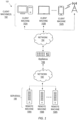
- a non-limiting network environment 101 in which various aspects of the disclosure may be implemented includes one or more client machines 102A-102N, one or more remote machines 106A-106N, one or more networks 104, 104', and one or more appliances 108 installed within the computing environment 101.
- the client machines 102A-102N communicate with the remote machines 106A-106N via the networks 104, 104'.
- the client machines 102A-102N communicate with the remote machines 106A-106N via an intermediary appliance 108.
- the illustrated appliance 108 is positioned between the networks 104, 104' and may also be referred to as a network interface or gateway.
- the appliance 108 may operate as an application delivery controller (ADC) to provide clients with access to business applications and other data deployed in a datacenter, the cloud, or delivered as Software as a Service (SaaS) across a range of client devices, and/or provide other functionality such as load balancing, etc.
- ADC application delivery controller
- SaaS Software as a Service
- multiple appliances 108 may be used, and the appliance(s) 108 may be deployed as part of the network 104 and/or 104'.
- the client machines 102A-102N may be generally referred to as client machines 102, local machines 102, clients 102, client nodes 102, client computers 102, client devices 102, computing devices 102, endpoints 102, or endpoint nodes 102.
- the remote machines 106A-106N may be generally referred to as servers 106 or a server farm 106.
- a client device 102 may have the capacity to function as both a client node seeking access to resources provided by a server 106 and as a server 106 providing access to hosted resources for other client devices 102A-102N.
- the networks 104, 104' may be generally referred to as a network 104.
- the networks 104 may be configured in any combination of wired and wireless networks.
- a server 106 may be any server type such as, for example: a file server; an application server; a web server; a proxy server; an appliance; a network appliance; a gateway; an application gateway; a gateway server; a virtualization server; a deployment server; a Secure Sockets Layer Virtual Private Network (SSL VPN) server; a firewall; a web server; a server executing an active directory; a cloud server; or a server executing an application acceleration program that provides firewall functionality, application functionality, or load balancing functionality.
- SSL VPN Secure Sockets Layer Virtual Private Network
- a server 106 may execute, operate or otherwise provide an application that may be any one of the following: software; a program; executable instructions; a virtual machine; a hypervisor; a web browser; a web-based client; a client-server application; a thin-client computing client; an ActiveX control; a Java applet; software related to voice over internet protocol (VoIP) communications like a soft IP telephone; an application for streaming video and/or audio; an application for facilitating real-time-data communications; a HTTP client; a FTP client; an Oscar client; a Telnet client; or any other set of executable instructions.
- VoIP voice over internet protocol
- a server 106 may execute a remote presentation services program or other program that uses a thin-client or a remote-display protocol to capture display output generated by an application executing on a server 106 and transmit the application display output to a client device 102.
- a server 106 may execute a virtual machine providing, to a user of a client device 102, access to a computing environment.
- the client device 102 may be a virtual machine.
- the virtual machine may be managed by, for example, a hypervisor, a virtual machine manager (VMM), or any other hardware virtualization technique within the server 106.
- VMM virtual machine manager
- the network 104 may be: a local-area network (LAN); a metropolitan area network (MAN); a wide area network (WAN); software-defined networking in a wide area network (SD-WAN); a primary public network 104; and a primary private network 104.
- Additional embodiments may include a network 104 of mobile telephone networks that use various protocols to communicate among mobile devices. For short range communications within a wireless local-area network (WLAN), the protocols may include 802.11, Bluetooth, and Near Field Communication (NFC).
- WLAN wireless local-area network
- NFC Near Field Communication
- Citrix SD-WAN allows enterprises to render their WANs with more scalability, and in a cost-effective that is ready to connect to the cloud.
- Citrix SD-WAN contains an integrated database and deep packet inspection to identify applications, including individual SaaS applications, and intelligently steer traffic from the branch to the internet, cloud, or SaaS.
- Citrix SD-WAN also provides the ability to route traffic from the branch to the internet via a secure web gateway, delivering cloud-based security including firewall, URL filtering, and usage accounting.
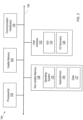
- FIG. 2 depicts a block diagram of a computing device 100 useful for practicing an embodiment of client devices 102, appliances 108 and/or servers 106.
- the computing device 100 includes one or more processors 103, volatile memory 122 (e.g., random access memory (RAM)), non-volatile memory 128, user interface (UI) 123, one or more communications interfaces 118, and a communications bus 150.
- volatile memory 122 e.g., random access memory (RAM)
- UI user interface
- the non-volatile memory 128 may include: one or more hard disk drives (HDDs) or other magnetic or optical storage media; one or more solid state drives (SSDs), such as a flash drive or other solid-state storage media; one or more hybrid magnetic and solid-state drives; and/or one or more virtual storage volumes, such as a cloud storage, or a combination of such physical storage volumes and virtual storage volumes or arrays thereof.
- HDDs hard disk drives
- SSDs solid state drives
- virtual storage volumes such as a cloud storage, or a combination of such physical storage volumes and virtual storage volumes or arrays thereof.
- the user interface 123 may include a graphical user interface (GUI) 124 (e.g., a touchscreen, a display, etc.) and one or more input/output (I/O) devices 126 (e.g., a mouse, a keyboard, a microphone, one or more speakers, one or more cameras, one or more biometric scanners, one or more environmental sensors, and one or more accelerometers, etc.).
- GUI graphical user interface
- I/O input/output
- the non-volatile memory 128 stores an operating system 115, one or more applications 116, and data 117 such that, for example, computer instructions of the operating system 115 and/or the applications 116 are executed by processor(s) 103 out of the volatile memory 122.
- the volatile memory 122 may include one or more types of RAM and/or a cache memory that may offer a faster response time than a main memory.
- Data may be entered using an input device of the GUI 124 or received from the I/O device(s) 126.
- Various elements of the computer 100 may communicate via the communications bus 150.
- the illustrated computing device 100 is shown merely as an example client device or server, and may be implemented by any computing or processing environment with any type of machine or set of machines that may have suitable hardware and/or software capable of operating as described herein.
- the processor(s) 103 may be implemented by one or more programmable processors to execute one or more executable instructions, such as a computer program, to perform the functions of the system.
- processor describes circuitry that performs a function, an operation, or a sequence of operations. The function, operation, or sequence of operations may be hard coded into the circuitry or soft coded by way of instructions held in a memory device and executed by the circuitry.
- a processor may perform the function, operation, or sequence of operations using digital values and/or using analog signals.
- the processor can be embodied in one or more application specific integrated circuits (ASICs), microprocessors, digital signal processors (DSPs), graphics processing units (GPUs), microcontrollers, field programmable gate arrays (FPGAs), programmable logic arrays (PLAs), multicore processors, or general-purpose computers with associated memory.
- ASICs application specific integrated circuits
- DSPs digital signal processors
- GPUs graphics processing units
- FPGAs field programmable gate arrays
- PDAs programmable logic arrays
- multicore processors or general-purpose computers with associated memory.
- the processor 103 may be analog, digital or mixed-signal. In some embodiments, the processor 103 may be one or more physical processors, or one or more virtual (e.g., remotely located or cloud) processors.
- a processor including multiple processor cores and/or multiple processors may provide functionality for parallel, simultaneous execution of instructions or for parallel, simultaneous execution of one instruction on more than one piece of data.
- the communications interfaces 118 may include one or more interfaces to enable the computing device 100 to access a computer network such as a LAN, a WAN or SD-WAN, a Personal Area Network (PAN), or the Internet through a variety of wired and/or wireless connections, including cellular connections.
- a computer network such as a LAN, a WAN or SD-WAN, a Personal Area Network (PAN), or the Internet through a variety of wired and/or wireless connections, including cellular connections.
- the computing device 100 may execute an application on behalf of a user of a client device.
- the computing device 100 may execute one or more virtual machines managed by a hypervisor. Each virtual machine may provide an execution session within which applications execute on behalf of a user or a client device, such as a hosted desktop session.
- the computing device 100 may also execute a terminal services session to provide a hosted desktop environment.
- the computing device 100 may provide access to a remote computing environment including one or more applications, one or more desktop applications, and one or more desktop sessions in which one or more applications may execute.
- An example virtualization server 106 may be implemented using Citrix Hypervisor provided by Citrix Systems, Inc., of Fort Lauderdale, Florida ("Citrix Systems").
- Virtual app and desktop sessions may further be provided by Citrix Virtual Apps and Desktops, also from Citrix Systems.
- Citrix Virtual Apps and Desktops is an application virtualization solution that enhances productivity with universal access to virtual sessions including virtual app, desktop, and data sessions from any device, plus the option to implement a scalable VDI solution.
- Virtual sessions may further include Software as a Service (SaaS) and Desktop as a Service (DaaS) sessions, for example.
- SaaS Software as a Service
- DaaS Desktop as a Service
- a cloud computing environment 160 is depicted, which may also be referred to as a cloud environment, cloud computing or cloud network.
- the cloud computing environment 160 can provide the delivery of shared computing services and/or resources to multiple users or tenants.
- the shared resources and services can include, but are not limited to, networks, network bandwidth, servers, processing, memory, storage, applications, virtual machines, databases, software, hardware, analytics, and intelligence.
- one or more clients 162A-162C are in communication with a cloud network 164.
- the cloud network 164 may include back-end platforms, e.g., servers, storage, server farms or data centers.
- the users or clients 162A-162C can correspond to a single organization/tenant or multiple organizations/tenants. More particularly, in one example implementation the cloud computing environment 160 may provide a private cloud serving a single organization (e.g., enterprise cloud). In another example, the cloud computing environment 160 may provide a community or public cloud serving multiple organizations/tenants.
- a gateway appliance(s) or service may be utilized to provide access to cloud computing resources and virtual sessions.
- Citrix Gateway provided by Citrix Systems, Inc.
- Citrix Systems, Inc. may be deployed on-premises or on public clouds to provide users with secure access and single sign-on to virtual, SaaS and web applications.
- a gateway such as Citrix Secure Web Gateway may be used.
- Citrix Secure Web Gateway uses a cloud-based service and a local cache to check for URL reputation and category.
- the cloud computing environment 160 may provide a hybrid cloud that is a combination of a public cloud and a private cloud.
- Public clouds may include public servers that are maintained by third parties to the clients 162A-162C or the enterprise/tenant.
- the servers may be located off-site in remote geographical locations or otherwise.
- Citrix PVS is a software-streaming technology that delivers patches, updates, and other configuration information to multiple virtual desktop endpoints through a shared desktop image.
- the cloud computing environment 160 can provide an elasticity to dynamically scale out or scale in responsive to different demands from one or more clients 162.
- the cloud computing environment 160 can include or provide monitoring services to monitor, control and/or generate reports corresponding to the provided shared services and resources.
- the cloud computing environment 160 may provide cloud-based delivery of different types of cloud computing services, such as Software as a service (SaaS) 170, Platform as a Service (PaaS) 172, Infrastructure as a Service (IaaS) 174, and Desktop as a Service (DaaS) 176, for example.
- SaaS Software as a service
- PaaS Platform as a Service
- IaaS Infrastructure as a Service
- DaaS Desktop as a Service
- IaaS may refer to a user renting the use of infrastructure resources that are needed during a specified time period.
- IaaS providers may offer storage, networking, servers or virtualization resources from large pools, allowing the users to quickly scale up by accessing more resources as needed.
- IaaS examples include AMAZON WEB SERVICES provided by Amazon.com, Inc., of Seattle, Washington, RACKSPACE CLOUD provided by Rackspace US, Inc., of San Antonio, Texas, Google Compute Engine provided by Google Inc. of Mountain View, California, or RIGHTSCALE provided by RightScale, Inc., of Santa Barbara, California.
- PaaS providers may offer functionality provided by IaaS, including, e.g., storage, networking, servers or virtualization, as well as additional resources such as, e.g., the operating system, middleware, or runtime resources.
- IaaS examples include WINDOWS AZURE provided by Microsoft Corporation of Redmond, Washington, Google App Engine provided by Google Inc., and HEROKU provided by Heroku, Inc. of San Francisco, California.
- SaaS providers may offer the resources that PaaS provides, including storage, networking, servers, virtualization, operating system, middleware, or runtime resources. In some embodiments, SaaS providers may offer additional resources including, e.g., data and application resources. Examples of SaaS include GOOGLE APPS provided by Google Inc., SALESFORCE provided by Salesforce.com Inc. of San Francisco, California, or OFFICE 365 provided by Microsoft Corporation. Examples of SaaS may also include data storage providers, e.g. Citrix ShareFile from Citrix Systems, DROPBOX provided by Dropbox, Inc. of San Francisco, California, Microsoft SKYDRIVE provided by Microsoft Corporation, Google Drive provided by Google Inc., or Apple ICLOUD provided by Apple Inc.
- Citrix ShareFile from Citrix Systems
- DROPBOX provided by Dropbox, Inc. of San Francisco, California
- Microsoft SKYDRIVE provided by Microsoft Corporation
- Google Drive Google Inc.
- Apple ICLOUD provided by Apple Inc.
- DaaS which is also known as hosted desktop services
- VDI virtual desktop infrastructure
- Citrix Cloud from Citrix Systems is one example of a DaaS delivery platform.
- DaaS delivery platforms may be hosted on a public cloud computing infrastructure such as AZURE CLOUD from Microsoft Corporation of Redmond, Washington (herein "Azure"), or AMAZON WEB SERVICES provided by Amazon.com, Inc., of Seattle, Washington (herein “AWS”), for example.
- AWS AMAZON WEB SERVICES
- Citrix Workspace app may be used as a single-entry point for bringing apps, files and desktops together (whether on-premises or in the cloud) to deliver a unified experience.
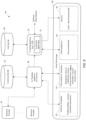
- FIG. 4 a computing system 40 which advantageously provides an efficient composite (modular) connection lease (CL) design for connecting client devices to virtual computing sessions is first described.
- Citrix Virtual Apps and Desktops (CVAD) from the present Applicant Citrix Systems, Inc.
- Citrix Virtual Apps is an application virtualization platform that helps optimize productivity with universal access to virtual apps and server-based desktops from different client devices.
- CVAD carries all the same functionality as Citrix Virtual Apps, plus the option to implement a scalable Virtual Desktop Infrastructure (VDI).
- VDI Virtual Desktop Infrastructure
- Citrix Virtual Apps/CVAD are available as a cloud service or an on-prem configuration.
- ICA Independent Computing Architecture
- ICA is a protocol designed for transmitting Windows graphical display data as well as keyboard and mouse input over a network.
- ICA files contain short-lived Secure Ticket Authority (STA) and logon tickets.
- STA ticket may be used to authorize a connection to a virtual delivery appliance (e.g., Citrix Virtual Delivery Agent (VDA)) via a Gateway (e.g., Citrix Gateway).
- VDA Citrix Virtual Delivery Agent
- the logon ticket may single-sign-on (SSOn) the user into the virtual computing session.
- HDX high-definition experience
- connection leases are long-lived, e.g., a few hours to weeks based on policies, and therefore the attack opportunity window is much longer, the security requirements can be more critical. Therefore, connection leases are encrypted and signed. Connection leases may also be revoked to cope with events such as a stolen device, compromised user account, closed user account, etc. Connection lease revocation can only be applied when a client/endpoint device or host (e.g., virtual delivery appliance) is online with respect to a CL Issuing Service (CLIS) or Broker, which is not a requirement for use of a connection lease, since connection leases are meant to be used in offline mode.
- CLIS CL Issuing Service
- Connection lease generation may be an expensive process because it involves multiple query and processing operations.
- a broker performs operations, including running multiple store procedures and checking static as well as real-time data, when a single user triggers a launch of a single app.
- the process may be fairly complicated when it comes to delivering published apps and desktops, involving managing virtual delivery appliances, catalogues, delivery groups, application groups, and published resources, for example.
- connection leases for a single user would involve the determination of all possible apps, desktops, resource locations and associated configurations the user is entitled to, including various connection circumstances (internal, external). In terms of load on the broker and connection lease management services, this will be the equivalent of a user launching all their apps and desktops at the same time from different locations, e.g., 100 apps times 2. Multiplied by the number of users in an organization, e.g., 10,000 users, results in 2 million effective launch requests to the broker.
- API Application Programming Interface
- Connection lease data per published resource may be relatively small, e.g., in the order of kilobytes.
- users may be entitled to a relatively large number of apps. Although rare, entitlements may reach thousands of apps.
- kiosk/shared devices may host multiple users, and thin clients may have a small amount of available memory and thus difficulty dealing with the large amount of data associated with numerous entitlements.
- sending a large monolithic connection lease upon every launch, e.g., a Citrix HDX launch would consume more bandwidth and slow down the connection process for the given user.
- connection leases are a static snapshot of user entitlements, which is being refreshed relatively infrequently (e.g., once a week), the user would not have the latest real-time information at connection time that does not reflect updates to published resources or connection infrastructure, for example.
- this information may include one or more of the following: user entitlement updates, e.g., an administrator has added or removed an app; virtual delivery appliance power or load management updates (e.g., virtual delivery appliances are up, down or overloaded); user session location (including in some cases pooled desktops); information on all currently running apps that have been launched in a session from a different device, etc.
- user entitlement updates e.g., an administrator has added or removed an app
- virtual delivery appliance power or load management updates e.g., virtual delivery appliances are up, down or overloaded
- user session location including in some cases pooled desktops
- connection leases may also help address these gaps.
- this may also result in different code paths being executed, and therefore potentially inconsistent user experience, e.g., long vs. short logon time, and the risk of malfunction when a rarely executed connection lease code path is relied upon for resiliency.
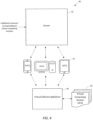
- the system 40 of FIG. 4 illustratively includes a plurality of client devices 41 (such as those noted above) configured to select published resources corresponding to virtual computing sessions 43.
- the published resources are the available desktop, apps, etc., that users are able to remotely access on the client devices 41 within virtual computing sessions 43 that are hosted by an on-prem or cloud-based virtualization server.
- the system 40 further illustratively includes a server 42 configured to generate connection leases for the published resources that are selected by the client devices 41.
- each connection lease includes a published resource lease component unique to the selected published resource, and a common lease component shared by a plurality of different published resources, as will be discussed further below.
- the computing system 40 also illustratively includes one or more virtual delivery appliances 44 configured to connect the client devices 41 to respective virtual computing sessions 43 based upon the connection leases.
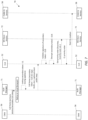
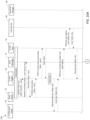
- connection lease management system 50 and associated operations illustrated in the sequence diagram 70, which are implemented within the Citrix Workspace platform.
- this is but one example virtualization platform in which the connection lease techniques described herein may be utilized, and that other platforms or implementations may be used in different embodiments.
- the system 50 advantageously provides for efficient composite connection lease management in a background mode, meaning portions of the connection lease management may be performed ahead of time and do not have to be performed immediately responsive to a connection lese request (on demand), with autonomous synchronization of connection leases. As will be discussed further below, this autonomous synchronization may of lease updates may be performed by the system 50 after the lease has been generated and is still active, yet without having to re-generate the entire lease.
- the above-described lease issuing server 42 is implemented using the Connection lease Issuing Service (CLIS) 52, which is part of Citrix Workspace. Client devices 51 interface with the CLIS 52 via Citrix Workspace StoreFront 55, as well as a gateway connection lease service 59.
- CLIS Connection lease Issuing Service
- the client device 51 runs an endpoint management application, which in this example is Citrix Workspace App (CWA) 56, which allows the client device to interface with Workspace StoreFront 55.
- CWA 56 enumerates published resources through a Workspace Store Service 72, which may be done on an independent and asynchronous basis.
- the system 50 further illustratively includes a shared memory (here cloud file storage 68) associated with the CLIS 52 which may be utilized in the connection lease generation process, as will be discussed further below.
- both the CLIS 52 and the connection lease service 58 (for CVAD) have their own respective CLIS database 66 (e.g., SQL) and CVAD CL Service database 67 (e.g., SQL) in the illustrated example.
- the CLIS 52 includes business logic 69 to perform the noted processing operations described herein.
- CWA 56 calls home to the CLIS 52, and the CLIS orchestrates connection lease creation by calling into resource providers hosting the published resources, as will be discussed further below.
- this process begins when CWA 56 initiates the call home to an authentication (auth) manager 71, which may include a primary session key/token that is relatively long-lived, and a secondary token associated with the CLIS 52.
- the authentication manager 71 may be embedded in a native or cloud-based (hosted) browser, for example, and upon receiving the call home it performs a lookup of the secondary token.
- the auth manager provides to the CLIS 52 the secondary token, and optionally a public key associated with the client device 51. Alternatively, the client device 51 public key may previously be stored in the cloud as part of device registration for long-lived refresh tokens.
- the CLIS 52 validates a signature of the secondary token and decrypts is contents to perform entitlement checks (e.g., what published resource the client device 51 is entitled to) and determine the type of connection lease that is required (e.g., CL Type GUID, etc.).
- the CLIS 52 may then obtain a priority order for the connection leases from Workspace Store Service 72, and then trigger a CVAD connection lease service 58 to perform background connection lease creation in the cloud, as will be discussed further below.
- the system 50 further illustratively includes a CVAD SQL database 67 associated with the CVAD connection lease service 58.
- connection lease types Specifying the connection lease types a user-client device 51 is interested in may also be important. For example, desktop device 1 of user A may require desktop connection leases only, while mobile device 2 of the same user A may require a mobile connection lease.
- the client device 51 may call home periodically, which may provide a relatively robust approach in situations such as a cloud platform failure, REDIS (an open source, in-memory data structure store) is cleared, or any other internal failure in cloud services occurs.
- a progressive web app (web component) or supply-side platform (SSP) (native component) may be utilized for calls home.
- PWA offers the benefit of code sharing and updates from the Cloud.
- PWA may call home every time it is loaded.
- Another approach is for a periodic or event-based call home, which may utilize additional PWA Service Worker support, which runs in background.
- a call home may be performed periodically, upon store refresh, or upon PWA (re)start, for example.
- CWA 56 may check if connection leases are available. For example, a failure might have occurred during the sync or in the cloud. If the required connection leases are not found after a certain timeout, CWA 56 may then proactively perform a call home.
- a call home may not trigger a refresh or creation of connection leases every time it is performed. For example, if a final user-device connection lease already exists, or creation of intermediate connection leases for the user is in progress, as will be discussed further below, then the CLIS 52 does nothing. Otherwise, the CLIS 52 triggers CL creation.
- each connection lease includes a published resource lease component (PRLC), and one or more common lease components (CLCs).
- PRLC is a relatively small published resource lease component (PRLC) that is unique to the particular public resource for which the connection lease is being created.
- PRLC points to other CLCs, which are shared by multiple different published resources (and therefore PRLCs), and may include information such as common parameters, direct resource locations, gateway resource locations, resource location ordering, etc., for example.
- the PRLC and CLC lease components are implemented as linked JSON docs.
- a modular lease structure may help reduce the need for client device 51 (e.g., CWA 56) software updates with respect to connection leases, and many needed changes may be implemented through updates to the lease components JSON docs) themselves.
- client device 51 e.g., CWA 56
- connection leases are implemented as composite JSON documents which are linked together
- a respective PRLC is generated for each client device 51 per published resource, such as a published desktop or a published app in the case of CVAD.
- a PRLC may be implemented as a relatively small JSON document that references other (CLC) JSON documents.
- CLC master/aggregating JSON file
- a connection lease may be considered to be a composite made of a master/aggregating JSON file (the PRLC) that references CLCs, which are also JSON files.
- each connection lease JSON file includes a cryptographic signature from the CLIS 52.
- Each connection lease file may also include a manifest that is in cleartext. Relevant sections of a connection lease may also be encrypted for security reasons.
- Examples of CLCs that may be referenced by a PRLC include: common parameters (e.g., common ICA parameters for CVAD such as network transport type, audio settings, display resolution settings, security settings, drive mapping enablement settings, etc.), also known as "Comp-Params"; resource locations direct (e.g., locations of resources when a gateway connection lease service 59 is not present or available), also known as “Comp-ResLocsDirect”; resource locations gateway (e.g., locations of resources when the gateway connection lease service 59 is present), also known as "Comp-ResLocsGateway”; and resource locations order (e.g., defining the order of resource locations), also known as "Comp-ResLocsOrder".
- the PRLC includes a reference section that lists the filenames of the CLCs that it references.
- a CLC may be referenced by multiple PRLCs. This may provide several technical advantages. For example, a CLC may be updated without having to update the (potentially numerous) PRLCs that reference it. Furthermore, this approach may also reduce the storage space needed for the CLCs, since CLCs are common among potentially many PRLCs and therefore only need to be stored once (not multiple times for different connection leases).
- CLCs need to be sent to all entities (e.g., client devices 51, a gateway 60, virtual delivery appliance 53 (e.g., Citrix VDA), the CVAD broker 57, etc.)
- a common parameters CLC may be utilized by the client device 51 but not other entities, which helps to reduce network traffic compared to having one monolithic connection lease.
- each signed connection lease may include a JSON member named "filename" that includes the name of the JSON file of the connection lease.
- filename The filename of a PRLC may follow the pattern: CL- ⁇ [App/Desk]Name>- ⁇ ResourceKey (GUID)>.V ⁇ N>.json
- the PRLC files may be versioned (with a dot notation in the form of .V1, .V2,tinct .VN) before the JSON file extension (.json).
- the filename of a CLC may follow the pattern: CL-Comp- ⁇ CompType>- ⁇ GUID>.V ⁇ N>.json, where ⁇ CompType> can be "Params", "ResLocsDirect”, “ResLocsGateway” or "ResLocsOrder", for example.
- the CLC files are versioned (with a dot notation in the form of .V1, .V2,tinct .VN) before the JSON file extension (.json).
- JSON object An example of a PRLC reference section is the following (JSON object):
- connection lease files may follow a specific format, which in the present example is JSON.
- JSON Java
- other structured type/value formats e.g., XML, ASN.1, etc.
- object means "JSON object”
- array means "JSON array” Top-level (unnamed) object
- the payload may be encrypted with a symmetric key.
- the symmetric key may be encrypted with the public key of the entity that receives the connection lease.
- the symmetric key since multiple entities may receive the connection lease successively (e.g., client device 51, gateway 60, virtual delivery appliance 53, etc.), the symmetric key is accordingly encrypted multiple times with the public keys of the destination entities.
- the symmetric key may be initially encrypted for the client device 51 only.
- the initiating entity e.g., the client device 51 of the gateway
- the receiving entity's public key e.g., the gateway or virtual delivery appliance public key respectively
- each PRLCs and CLCs may include a manifest (e.g., JSON object) that is in cleartext and may include one or more of the following common members: Lease Identifier (leaseId), which is a unique GUID per connection lease; Lease Type (leaseType), which is a descriptive name of the type of connection lease (e.g., Resource, Resource-Comp-Params, Resource-Comp-ResLocsDirect, Resource-Comp-ResLocsGateway, Resource-Comp-ResLocsOrder); Lease Type Key (leaseTypeKey), which is a unique GUID per connection lease; File Name (fileName), which is the name of the file including the current connection (this is to prevent connection lease file renaming since each connection lease file includes a signature); From Template (fromTemplate), which is optional and contain the name of the template file that was used to generate the current connection lease (if any), as will be discussed further below; Workspace URL (workspaceUrl), which is the URL of the workspace the
- a PRLC manifest may also include one or more specific members, such as: Resource Key (resourceKey), which is a unique GUID per published resource (e.g. desktop or app for CVAD), and the resource key may be included in a PRLC JSON file name; valid from (validFrom), which is the date a PRLC becomes valid (e.g., in RFC 3339 format); Valid To (validTo) which is the date a resource CL becomes invalid (in RFC 3339 format); User Identity (userId), which is a unique identifier of the user for which the current resource connection lease applies to; Endpoint Device ID (endpointDeviceId), which is a unique identifier of the client or endpoint device the current resource connection lease applies to; Endpoint Device Public Key Thumbprint (endpoint device public thumbprint) which is a hash (e.g.
- Broker Public Keys which is an array of JWK containing the broker(s) public key(s).
- KkerPublicKeys is an array of JWK containing the broker(s) public key(s).
- One or more of these members may be helpful to support signed allow, deny and redirect-target responses from the CVAD Broker 57 and virtual delivery appliance 53 in some implementations, if desired.
- connection lease files are versioned.
- the version is included as part of the filename of each connection lease. Versioning of the connection lease files advantageously provides the ability to update a CLC (or multiple CLCs) without the need to update the PRLCs that reference it.
- the CWA 56 when resolving the references of a PRLC (which the CWA finds initially with the resource key that is included in the PRLC filename) performs a lookup for the referenced CLC filename and also any filenames with a newer version. If a newer version is found (or more than one), the latest version of a CLC is selected. For example, if a PRLC reference section includes the following:
- the CLC may be backward-compatible with its previous version. If the resolution of the references of a PRLC fails, then if there is a PRLC with an earlier version present, the CWA 56 attempts to use it, and starts resolving its references. If this fails or there is no earlier version present, then the CWA may perform a standard ICA launch using a conventional (non-modular) leasing approach, if desired. If a CLC needs to be updated in such a way that it is not backward compatible, then a new CLC (with a different Lease ID) may be issued and the associated PRLCs may be updated accordingly (with a newer version that reference the new CLC), for example.
- CLCs may be set to never expire. If a CLC is out of date (e.g., new resource locations have been added), then it is replaced by a newer version of the file or an entirely different file (with a different Lease ID). Keeping previous versions of the connection leases in the synchronization folder 61 in conjunction with the connection lease reference resolution mechanism described previously (although the latest CLC is typically selected, if present) allows updating connection lease files (PRLCs and CLCs) without the need for a locking mechanism. For instance, the previous version of a PRLC (and its dependent CLC) may be kept when new connection lease files are being synchronized.
- the CWA defaults to the previous version of the PRLC that is still present. If that too fails then an ICA launch may performed, as noted above.
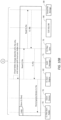
- a locking mechanism may be used. More particularly, during synchronization of connection lease files, a lock on the synchronization folder 61 is acquired by a Sync Engine 62 (which will be discussed further below with reference to FIGS. 10A-10B ). The lock is released when the sync is complete. If the lock cannot be acquired (e.g., a CWA resource launch is being performed), then the Sync Engine 62 waits to be able to do so. Similarly, when the CWA 56 launches a published app or desktop, a lock on the synchronization folder 61 is acquired by the CWA 56.
- the lock is released when the connection lease files are not needed anymore (e.g., they can be copied to a dedicated location to hold the lock for the shortest possible amount of time). If the lock cannot be acquired (e.g., a sync is in progress), the CWA 56 waits to be able to do so for a set amount of time before giving up and performing an ICA launch, as described above.
- the CLIS 52 maintains a virtual folder 63 including the connection leases for each user, which further illustratively includes sub-folders 64 with the leases for each of the user's respective devices provisioned for use with the system 50. That is, the contents of the synchronization folder 61 stored in a local secure storage at the client device 51 will correspond to those of the respective sub-folder 64 at the CLIS 52.
- the synchronization folder 61 illustratively includes two PRLCs (PRLC1 and PRLC2), as well as six CLCs (CLC1-CLC6).
- each of the PRLCs corresponds to a respective published resource (e.g., app or desktop), and includes the appropriate resource key GUID, user ID, expiration time, etc., appropriate for the associated resource.
- the first two CLCs include a grouping of the appropriate entity addresses (e.g., virtual delivery appliance 53, gateway 60, connector 65, etc.) in a given zone or geographical region assigned to the client device 51 for accessing the particular resource.
- the PRLC1 references the CLC1 (Zone 1 addresses), while the PRLC2 references the CLC2 (Zone 2 addresses).
- Such assignments could vary based upon the physical location of the client device 51 at a given time.
- these addresses need not be grouped by zones, and different CLCs may be used for respective types of entities (e.g., virtual delivery appliance 53, gateway 60, connector 65, etc.). While only two PRLCs are shown in the illustrated example, it will be appreciated that other PRLCs may be included and also share CLC1 and/or CLC2, and that other CLC address files may also be included.
- CLC3-CLC6 are shared by both the PRLC1 and PRLC2. More particularly, the CLC3 includes the locations of respective virtual computing sessions 73 (e.g., the location of the virtualization server or host running the virtual computing session), which the CLIS 52 may advantageously update responsive to changes in the locations.
- the CLC4 illustratively includes status indicators for active and disconnected virtual computing sessions 73, which allows the virtual delivery appliance 53 to re-connect the client device 51 to previously established active and disconnected sessions when applicable.
- updates to the CLC4 may similarly be performed in real-time as virtual computing sessions 73 are closed, etc.
- the CLC5 includes an ordered list of the virtual delivery appliances 53 to which the client device 51 should connect to obtain a given virtual computing session 73.
- different client devices 51 may be assigned different ordered lists of virtual delivery appliances 53 to help provide load balancing and/or desired availability across a group of virtual delivery appliances.
- the CLC6 includes common parameters as noted above, which may include network transport types (e.g., User Datagram Protocol (UDP) vs. Transmission Control Protocol (TCP), etc.), audio setting display resolution settings, security settings, drive mapping settings (e.g., enabled/not enabled), etc.
- UDP User Datagram Protocol
- TCP Transmission Control Protocol
- these CLCs may also be updated in real-time as changes occur (e.g., new virtual delivery appliances 53 come online, common parameters are changed, etc.).
- connection lease creation and updating may be prioritized.
- the CLIS 52 may communicate with the Workspace Store Service 72 to retrieve a user connection priority order, e.g. favorites and recently used published resources.
- the CLIS 52 may also feed this priority order into the connection lease service 58. Thus, the most important connection leases will get created first.
- the method begins (Block 211) with generating CLCs as described above, at Block 212. That is, since the CLCs are shared among different published resources, they may be generated before it is time to create the final connection lease, which may advantageously allow CLC processing to be performed at off-peak times and accordingly provide load balancing and/or more efficient use of computing resources, for example.
- the server 42 receives published resourceselections by the client devices 41, at Blocks 213, and may generate the connection leases including the unique PRLCs and the associated CLCs based thereon and provides them to the client device, as discussed above, at Block 214, which illustratively concludes the method of FIG. 11 .
- the connection leases provide the appropriate instructions for connecting the client devices 41 to virtual computing sessions 43 corresponding to the published resources (e.g., virtual apps and desktops, Web/SaaS apps, etc.) via the virtual delivery appliance 44.
- the computing system 80 illustratively includes a plurality of client devices 81 that are configured to select published resources corresponding to virtual computing sessions 83 that are to be remotely accessed at the client device.
- the computing system 80 further illustratively includes a connection lease template appliance 89 configured to generate a plurality of connection lease templates corresponding to the published resources, and store the connection lease templates in a shared memory 88 (e.g., a cloud-based storage system).
- the computing system 80 also illustratively includes a connection lease issuing appliance 82 configured to access the connection lease templates stored in the shared memory 88 and provision connection leases for respective client devices 81 based upon the connection lease templates.
- the connection leases are provisioned by the connection lease issuing appliance 82 on demand responsive to selection of the published resources by the client devices 81, as will be discussed further below.
- the computing system 80 also illustratively includes one or more virtual delivery appliances 84, which are configured to connect the client devices 81 to respective virtual computing sessions 83 based upon the connection leases, as similarly discussed above.
- FIGS. 9-10B This example implementation shown in the system 90 of FIG. 9 and sequence diagram 230 of FIGS. 10A-10B is implemented using the Citrix Workspace and Citrix Cloud platforms and shares several of the same components utilized in the system 50 discussed above.
- this is but one example platform in which the template-based connection lease operations may be utilized, and that these techniques may be incorporated in other suitable virtualization platforms as well.
- connection lease issuing appliance 52 is once again implemented using the Connection lease Issuing Service (CLIS) of Citrix Workspace.
- CLIS Connection lease Issuing Service
- the CLIS 52 orchestrates connection lease creation by calling into resource providers 91 via the connection lease template appliance 58, which in this example is provided by the connection lease service described above.
- the transfer of connection leases in the pipeline between the resource providers 91 and CLIS 52 may be via the connection lease services REST APIs 74, for example.
- connection lease service 58 creates initial connection lease templates 92 and intermediate connection lease templates 93 in the shared memory, which in this example is the above-noted cloud file storage 68. Furthermore, the CLIS 52 subsequently accesses the initial connection lease templates 92 and/or the intermediate connection lease templates in the cloud file storage 68 and generates or provisions intermediate connection leases 94 and final connection leases 95.
- the templates 92, 93 and connection leases 94, 95 may conceptually be considered as a "factory" assembly line for lease generation, in which the initial templates 92 are at the beginning of the assembly line, and the final connection leases are the completed leases at the end of the assembly line (that is, the final connection lease that may be used to connect a given client device 51 with a respective virtual computing session 73, as shown in FIG. 5 ).
- an advantage of this approach is that it provides connection leases at various stages of implementation so that new leases may be created or old leases updated more easily and quickly than having to re-create each lease from scratch.
- the initial connection lease templates 92 may include relatively high-level lease information, such as resource delivery groups (RDGs) and common connection parameters, for example.
- RDGs resource delivery groups
- a delivery group is a collection of machines selected from one or more machine catalogs.
- the RDGs specify which users can use which virtual machines, plus the applications and/or desktops available to those users.
- common connection parameters may include network transport type, audio/display settings, security settings, drive mapping settings, etc.
- the intermediate connection lease templates 93 incorporate the information from a respective initial template, plus additional specialization information.
- the additional information may include: app group designations; resource entitlements (e.g., apps the user is entitled to, number of desktops the user is allowed to launch, etc.); session sharing restrictions; tagging; and resource location order per user.
- Other parameters may also be included in the initial and/or intermediate connection lease templates 92, 93 in different embodiments.
- intermediate connection leases may further include: user-specific connection leases that may be re-encrypted for different user devices; resource locations gateway connection leases, so that the assigned gateway 60 (see FIG. 6 ) does not have to be queried by the CLIS 52 every time a connection is initiated.
- Resource location direct connection leases may be provided to the gateway 60 so that it may encrypt virtual delivery appliance 53 addresses with a key that only the gateway 60 instances understand. This may be implemented as an additional security measure to help prevent the virtual delivery appliance 53 information from being exposed to client devices 51.
- the final connection leases 95 include the information of the respective intermediate connection leases 94, in addition to the specific information associated with a given client device 51. More particularly, this device-specific information may include the above-describe PRLC and CLC components encrypted and signed for a specific user-device. Moreover, additional information may also be included to facilitate autonomous sync, supportability, etc.
- connection lease template appliance 58 and the CLIS 52 use the same shared cloud file storage 68.
- the connection lease template appliance 58 and the CLIS 52 may be assigned different partitions within the cloud file storage 68, or use different file storage altogether. That is, reference to a "shared" memory herein means that the connection lease template appliance 58 stores the templates 92 and/or 93 in a location that is accessible to (or shared with) the CLIS 52 so that it may access the templates, but the CLIS does not necessarily need write access to the template storage area nor have to save its connection leases 94 and/or 95 there.
- connection lease template appliance 58 and the CLIS 52 advantageously helps to reduce cloud load and storage, and the allocation of the particular cloud file storage 68 used for the connection lease template appliance 58 and the CLIS 52 may be selected as appropriate in different implementations to help further these goals.
- the use of the cloud file storage 68 may be abstracted, if desired.
- a bridge design pattern may be implemented over Azure, AWS or Citrix ShareFile in a shared library that abstracts the file storage.
- the shared API may be used by the different services at the programming level without an entirely new shared service, or a shared cloud file storage service with a REST API may be used, for example.
- connection lease template appliance 58 and the CLIS 52 use separate databases 67, 66.
- the databases 67, 66 may also share an abstract API. Connection lease indexes help find a connection lease by GUID, or by user-device information, or through the use of database foreign keys, etc. Then a pointer is found to where a connection lease is stored in the cloud file storage 68.
- Citrix ShareFile which has a persistent user DB, may be used to implement the database 66 and/or 67.
- REDIS + SQL DB may be used based upon their performance, resiliency and persistence capabilities, although other platforms may be used in different embodiments.
- Updates in configuration, entitlements, machine state, session state, connection lease expiry, revocation, etc. may be propagated from different stages in the "factory" chain of resource providers 91 to the CLIS 52 to advantageously result in partial or complete connection lease updates. That is, events may be sent from the resource providers 91 to the to the CLIS 52, which is done via the connection lease template appliance 58 in the present example.
- connection lease updates may include: machine catalogue, delivery group, app group, or other changes; apps addition/removal; user entitlement updates; virtual deliver appliance 53 power management updates: virtual delivery appliance down/up status (e.g., online or offline); pooled virtual delivery appliance power management; virtual delivery appliance load changes; user session location (e.g., pooled virtual delivery appliances, etc.); and Workspace roaming, e.g., to allow currently running apps that the user might have launched from a first client device 51 to be migrated to another one of the user's client devices.
- updates may include: machine catalogue, delivery group, app group, or other changes; apps addition/removal; user entitlement updates; virtual deliver appliance 53 power management updates: virtual delivery appliance down/up status (e.g., online or offline); pooled virtual delivery appliance power management; virtual delivery appliance load changes; user session location (e.g., pooled virtual delivery appliances, etc.); and Workspace roaming, e.g., to allow currently running apps that the user might have launched from a first client device 51 to
- the CLIS 52 may also check for connection lease expiration and renew connection leases, e.g. based upon recent user activity (an active user), a recent device call home, recent logon, etc.
- the CLIS 52 in some embodiments may renew some or all of the final connection leases 95 associated with a given user based upon one of the user's client devices 51 having been recently used. For example, a user may not have used her laptop for an extended period, but her desktop device has been used regularly within that period. As such, the CLIS 52 knows the user is still active and may therefore be configured to renew the lease for the laptop based upon the use of the desktop device demonstrating the user is still active.
- the CLIS 52 may check expiration/renew leases periodically, e.g., every 7 days (although other time periods may also be used).
- the CLIS 52 may tie the connection lease renewal to a cadence of call home, e.g., it may stop generating new connection leases per user-device if no call home has happened in a certain amount of time (e.g., one month to account for a long vacation time, etc.).
- the CLIS 52 may keep a timestamp per user-device for this purpose.
- connection lease revocation may also be used for connection lease revocation.
- no connection lease revocation is performed per user, but bulk revocation may be supported in case a cloud implementation gets hacked, etc.
- individual connection lease revocation may be enabled.
- the CLIS 52 may send to the virtual delivery appliance 53 and gateway 60 a GUID to be revoked, similar to patterns of certificate revocation lists.
- the intermediate and/or final connection leases 94, 95 may be removed from the cloud file storage, and the CL sync engine 62 may accordingly remove them from the client device 51 as well.
- the CWA sync engine 62 may autonomously sync connection leases from the user's virtual folder 63 into the connection lease files synchronization folder 61 at the client device 51.
- the process beings with the client 51 requesting synchronization to the root synch folder location for the user's virtual folder 63 (and sub-folder 64) from the connection lease sync engine 62.
- the client device 51 further requests a secondary token synch based upon a session key from the authentication manager 71, which is returned to the client by the auth manager.
- the client device 51 then initializes with the connection lease sync engine 62 based upon the synched secondary token, and the connection lease sync engine sends an auth to the connection lease files synch server 75, which return an auth token accordingly. This allows the connection lease sync engine 62 to start the synchronization process.
- connection lease sync engine 62 retrieves the local sync folder from the connection lease files synchronization folder 61, and then issues a request to the connection lease files sync server 75 based upon the auth token.
- the connection lease files sync server 75 then retrieves the user-device synch folder info from the CLIS SQL database 66 and returns it to the connection lease sync engine 62.
- the connection lease sync engine 62 then checks the folder change/date list of connection lease file info, and compares that with the local synchronization folder 61 info.
- connection lease sync engine 62 may then iteratively cooperate with the connection lease files synch server 75 to read the connection lease file info from the cloud file storage 68 and store, update, or delete the appropriate connection lease files at the local synchronization folder 61 of the client device 51.
- the sync engine 62 may be activated upon store refresh.
- a background refresh may also be performed, e.g., from a Progressive Web App (PWA) service worker.
- PWA Progressive Web App
- the foregoing approaches may advantageously be used to provide efficient composite (modular) connection lease design. Moreover, these approaches also provide a "factory" pattern for connection lease background event-based generation and management using template, intermediate and final user-device CLs. As a result, a hierarchical opportunistic approach is afforded for enhanced resiliency and accurate real-time data on entitlements and connection steering. Other advantages of the approaches set forth herein may include one or more of improved resiliency, scalability, security and user experience of connection technology.
- advantages of the foregoing approaches may include an autonomous one-way sync of CLs to client devices, as well as mechanisms to: reduce overall size of connection leases on client devices/endpoints and cloud; reduce network traffic; reduce load on cloud, including the broker 57, Workspace 55, CLIS 52, etc.; facilitate telemetry and supportability; keep endpoints (e.g., CWA) relatively simple, while the complexity and incremental improvements occur in the cloud; improve resiliency, security and user experience with connection leases.
- endpoints e.g., CWA
- the method illustratively includes accessing connection lease templates corresponding to published resources 91, which are stored in a shared memory 68, using the connection lease issuing appliance 82, at Block 223.
- the method further illustratively includes provisioning connection leases for respective client devices 81 using the connection lease issuing appliance 82 based upon the stored connection lease templates, at Block 224, which concludes the illustrated method (Block 225).
- the connection leases may be provisioned on demand responsive to selection of the published resources by the client devices 81, and the connection leases may provide instructions for connecting the client devices to virtual computing sessions 83 corresponding to the published resources.
Landscapes
- Engineering & Computer Science (AREA)
- Software Systems (AREA)
- Theoretical Computer Science (AREA)
- Computer Networks & Wireless Communication (AREA)
- Signal Processing (AREA)
- Physics & Mathematics (AREA)
- General Engineering & Computer Science (AREA)
- General Physics & Mathematics (AREA)
- Human Computer Interaction (AREA)
- Information Transfer Between Computers (AREA)
Description
- Many organizations are now using application and/or desktop virtualization to provide a more flexible option to address the varying needs of their users. In desktop virtualization, a user's computing environment (e.g., operating system, applications, and/or user settings) may be separated from the user's physical computing device (e.g., smartphone, laptop, desktop computer). Using client-server technology, a "virtualized desktop" may be stored in and administered by a remote server, rather than in the local storage of the client device.
- There are several different types of desktop virtualization systems. As an example, Virtual Desktop Infrastructure (VDI) refers to the process of running a user desktop and/or application inside a virtual machine that resides on a server. Virtualization systems may also be implemented in a cloud computing environment, or cloud system, in which a pool of computing resources (e.g., desktop virtualization servers), storage disks, networking hardware, and other physical resources may be used to provision virtual desktops, and/or provide access to shared applications.
-
WO 2013/122977 Al discloses brokering hosted resources in a virtual desktop infrastructure (VDI) using connection leases to reduce demand on connection brokers and to allow hosted services to be maintained even in the event of a broker outage.WO 2013/122977 Al discloses that when a client device desires to connect to a hosted resource, the client device may present a lease token to the session host, which lease token is a self-sustaining package of data from which a session host can determine whether the requesting client device is authorized to access one or more resources hosted by that session host. -
WO 01/86423 A2 WO 01/86423 A2 WO 01/86423 A2 - A computing device includes a memory and a processor cooperating with the memory and configured to generate connection leases for published resources selected by client devices. The connection leases provide instructions for connecting the client devices to virtual computing sessions corresponding to the published resources. Each connection lease includes a published resource lease component unique to the selected published resource, and a common lease component shared by a plurality of different published resources.
- In one example implementation, the client devices may be connected to the virtual computing sessions by at least one virtual delivery appliance, and the common lease component may comprise a network address associated with the at least one virtual delivery appliance. Furthermore, the client devices may be connected to the virtual delivery appliance by at least one gateway appliance, and the common lease component may further comprise a network address associated with the at least one gateway appliance, for example. In accordance with another example, at least some of the virtual computing sessions may comprise cloud-based virtual computing sessions, and the client devices may be connected to the cloud-based virtual computing sessions by the at least one cloud interface appliance. As such, the common lease component may comprise a network address associated with the at least one cloud interface appliance.
- In some example implementations, the client devices may be connected to the virtual computing sessions by a plurality of virtual delivery appliances grouped into different zones, and the common lease component may comprise a zone designation for a given group of virtual delivery appliances. In some example embodiments, and the common lease component may comprise different ordered lists of the virtual delivery appliances.
- By way of example, the common lease component may comprise at least one of network transport type settings, audio settings, display resolution settings, security settings, and drive mapping enablement settings. Also by way of example, the virtual computing sessions may comprise at least one of virtual application sessions, virtual desktop sessions, web application sessions, Software as a Service (SaaS) application sessions, and Desktop as a Service (DaaS) sessions.
- Furthermore, the processor may also be configured to update the published resource lease component and the common lease component independent from one another. By way of example, the published resource lease component may comprise at least one of a resource key global unique identifier (GUID), a user identifier, and an expiration time.
- A related method includes generating connection leases at a server for published resources selected by client devices, wherein the connection leases provide instructions for connecting the client devices to virtual computing sessions corresponding to the published resources. Each connection lease includes a published resource lease component unique to the selected published resource, and a common lease component shared by a plurality of different published resources.
- A related computing system may include a plurality of client devices configured to select published resources corresponding to virtual computing sessions, and a server configured to generate connection leases for published resources selected by the client devices. Each connection lease may include a published resource lease component unique to the selected published resource, and a common lease component shared by a plurality of different published resources. The computing system may further include at least one virtual delivery appliance configured to connect the client devices to respective virtual computing sessions based upon the connection leases.
-
-
FIG. 1 is a schematic block diagram of a network environment of computing devices in which various aspects of the disclosure may be implemented. -
FIG. 2 is a schematic block diagram of a computing device useful for practicing an embodiment of the client machines or the remote machines illustrated inFIG. 1 . -
FIG. 3 is a schematic block diagram of a cloud computing environment in which various aspects of the disclosure may be implemented. -
FIG. 4 is a schematic block diagram of a computing system providing virtual computing session access based upon component-based connection leases in accordance with an example embodiment. -
FIG. 5 is a schematic block diagram of an example implementation of the system ofFIG. 4 . -
FIG. 6 is a schematic block diagram of the client device shown inFIG. 5 illustrating the connection lease file sharing folder and connection lease components thereof in accordance with an example implementation. -
FIG. 7 is a sequence flow diagram illustrating a client device call home sequence that may be performed within the system ofFIG. 5 to trigger connection lease creation in accordance with an example embodiment. -
FIG. 8 is a schematic block diagram of a computing system providing virtual computing session access based upon template-based connection lease generation in accordance with an example embodiment. -
FIG. 9 is a schematic block diagram of an example implementation of the system ofFIG. 8 . -
FIGS. 10A and10B are first and second portions of a sequence flow diagram illustrating connection lease synchronization operations that may be performed within the system ofFIG. 9 in accordance with an example embodiment. -
FIG. 11 is a flow diagram illustrating example method aspects associated with the server of the system ofFIG. 4 . -
FIG. 12 is a flow diagram illustrating example method aspects associated with the connection lease issuing appliance of the system ofFIG. 8 - A goal of using connection leases is to allow users to connect to their virtual leased workloads and/or services even if the connection lease infrastructure is not reachable, which could be for a variety of reasons. However, connection lease generation may be an expensive process because it involves multiple query and processing operations. Furthermore, the process may also be fairly complicated when it comes to delivering published apps and desktops, involving managing virtual delivery appliances, catalogues, delivery groups, application groups, and published resources, for example.
- In addition, since connection leases are a static snapshot of user entitlements that are refreshed relatively infrequently, the user will typically not have the latest real-time information at time of connection. As an alternative, using one-time legacy connection files (e.g., Independent Computing Architecture (ICA) files) while the system is reachable, and using connection leases only when the system is down, may also help address these gaps. Yet, this may also result in different code paths being executed, and therefore potentially inconsistent user experience (e.g., long vs. short logon time), and the risk of malfunction when a rarely executed connection lease code path is relied upon for resiliency. The systems and methods disclosed herein advantageously help address these technical challenges by providing composite and/or template-based connection lease generation approaches, resulting in less processing operations and real or near real-time lease updating capabilities.
- The present description is made with reference to the accompanying drawings, in which example embodiments are shown. However, many different embodiments may be used, and thus the description should not be construed as limited to the particular embodiments set forth herein. Like numbers refer to like elements throughout.
- As will be appreciated by one of skill in the art upon reading the following disclosure, various aspects described herein may be embodied as a device, a method or a computer program product (e.g., a non-transitory computer-readable medium having computer executable instruction for performing the noted operations or steps). Accordingly, those aspects may take the form of an entirely hardware embodiment, an entirely software embodiment, or an embodiment combining software and hardware aspects.
- Furthermore, such aspects may take the form of a computer program product stored by one or more computer-readable storage media having computer-readable program code, or instructions, embodied in or on the storage media. Any suitable computer readable storage media may be utilized, including hard disks, CD-ROMs, optical storage devices, magnetic storage devices, and/or any combination thereof.
- Referring initially to
FIG. 1 , anon-limiting network environment 101 in which various aspects of the disclosure may be implemented includes one ormore client machines 102A-102N, one or moreremote machines 106A-106N, one ormore networks 104, 104', and one ormore appliances 108 installed within thecomputing environment 101. Theclient machines 102A-102N communicate with theremote machines 106A-106N via thenetworks 104, 104'. - In some embodiments, the
client machines 102A-102N communicate with theremote machines 106A-106N via anintermediary appliance 108. The illustratedappliance 108 is positioned between thenetworks 104, 104' and may also be referred to as a network interface or gateway. In some embodiments, theappliance 108 may operate as an application delivery controller (ADC) to provide clients with access to business applications and other data deployed in a datacenter, the cloud, or delivered as Software as a Service (SaaS) across a range of client devices, and/or provide other functionality such as load balancing, etc. In some embodiments,multiple appliances 108 may be used, and the appliance(s) 108 may be deployed as part of thenetwork 104 and/or 104'. - The
client machines 102A-102N may be generally referred to asclient machines 102,local machines 102,clients 102,client nodes 102,client computers 102,client devices 102,computing devices 102,endpoints 102, orendpoint nodes 102. Theremote machines 106A-106N may be generally referred to asservers 106 or aserver farm 106. In some embodiments, aclient device 102 may have the capacity to function as both a client node seeking access to resources provided by aserver 106 and as aserver 106 providing access to hosted resources forother client devices 102A-102N. Thenetworks 104, 104' may be generally referred to as anetwork 104. Thenetworks 104 may be configured in any combination of wired and wireless networks. - A
server 106 may be any server type such as, for example: a file server; an application server; a web server; a proxy server; an appliance; a network appliance; a gateway; an application gateway; a gateway server; a virtualization server; a deployment server; a Secure Sockets Layer Virtual Private Network (SSL VPN) server; a firewall; a web server; a server executing an active directory; a cloud server; or a server executing an application acceleration program that provides firewall functionality, application functionality, or load balancing functionality. - A
server 106 may execute, operate or otherwise provide an application that may be any one of the following: software; a program; executable instructions; a virtual machine; a hypervisor; a web browser; a web-based client; a client-server application; a thin-client computing client; an ActiveX control; a Java applet; software related to voice over internet protocol (VoIP) communications like a soft IP telephone; an application for streaming video and/or audio; an application for facilitating real-time-data communications; a HTTP client; a FTP client; an Oscar client; a Telnet client; or any other set of executable instructions. - In some embodiments, a
server 106 may execute a remote presentation services program or other program that uses a thin-client or a remote-display protocol to capture display output generated by an application executing on aserver 106 and transmit the application display output to aclient device 102. - In yet other embodiments, a
server 106 may execute a virtual machine providing, to a user of aclient device 102, access to a computing environment. Theclient device 102 may be a virtual machine. The virtual machine may be managed by, for example, a hypervisor, a virtual machine manager (VMM), or any other hardware virtualization technique within theserver 106. - In some embodiments, the
network 104 may be: a local-area network (LAN); a metropolitan area network (MAN); a wide area network (WAN); software-defined networking in a wide area network (SD-WAN); a primarypublic network 104; and a primaryprivate network 104. Additional embodiments may include anetwork 104 of mobile telephone networks that use various protocols to communicate among mobile devices. For short range communications within a wireless local-area network (WLAN), the protocols may include 802.11, Bluetooth, and Near Field Communication (NFC). - One particularly advantageous implementation of SD-WAN enterprises is provided by Citrix SD-WAN, which allows enterprises to render their WANs with more scalability, and in a cost-effective that is ready to connect to the cloud. Citrix SD-WAN contains an integrated database and deep packet inspection to identify applications, including individual SaaS applications, and intelligently steer traffic from the branch to the internet, cloud, or SaaS. Moreover, Citrix SD-WAN also provides the ability to route traffic from the branch to the internet via a secure web gateway, delivering cloud-based security including firewall, URL filtering, and usage accounting.
-
FIG. 2 depicts a block diagram of acomputing device 100 useful for practicing an embodiment ofclient devices 102,appliances 108 and/orservers 106. Thecomputing device 100 includes one ormore processors 103, volatile memory 122 (e.g., random access memory (RAM)),non-volatile memory 128, user interface (UI) 123, one ormore communications interfaces 118, and acommunications bus 150. - The
non-volatile memory 128 may include: one or more hard disk drives (HDDs) or other magnetic or optical storage media; one or more solid state drives (SSDs), such as a flash drive or other solid-state storage media; one or more hybrid magnetic and solid-state drives; and/or one or more virtual storage volumes, such as a cloud storage, or a combination of such physical storage volumes and virtual storage volumes or arrays thereof. - The
user interface 123 may include a graphical user interface (GUI) 124 (e.g., a touchscreen, a display, etc.) and one or more input/output (I/O) devices 126 (e.g., a mouse, a keyboard, a microphone, one or more speakers, one or more cameras, one or more biometric scanners, one or more environmental sensors, and one or more accelerometers, etc.). - The
non-volatile memory 128 stores anoperating system 115, one ormore applications 116, anddata 117 such that, for example, computer instructions of theoperating system 115 and/or theapplications 116 are executed by processor(s) 103 out of thevolatile memory 122. In some embodiments, thevolatile memory 122 may include one or more types of RAM and/or a cache memory that may offer a faster response time than a main memory. Data may be entered using an input device of theGUI 124 or received from the I/O device(s) 126. Various elements of thecomputer 100 may communicate via thecommunications bus 150. - The illustrated
computing device 100 is shown merely as an example client device or server, and may be implemented by any computing or processing environment with any type of machine or set of machines that may have suitable hardware and/or software capable of operating as described herein. - The processor(s) 103 may be implemented by one or more programmable processors to execute one or more executable instructions, such as a computer program, to perform the functions of the system. As used herein, the term "processor" describes circuitry that performs a function, an operation, or a sequence of operations. The function, operation, or sequence of operations may be hard coded into the circuitry or soft coded by way of instructions held in a memory device and executed by the circuitry. A processor may perform the function, operation, or sequence of operations using digital values and/or using analog signals.
- In some embodiments, the processor can be embodied in one or more application specific integrated circuits (ASICs), microprocessors, digital signal processors (DSPs), graphics processing units (GPUs), microcontrollers, field programmable gate arrays (FPGAs), programmable logic arrays (PLAs), multicore processors, or general-purpose computers with associated memory.
- The
processor 103 may be analog, digital or mixed-signal. In some embodiments, theprocessor 103 may be one or more physical processors, or one or more virtual (e.g., remotely located or cloud) processors. A processor including multiple processor cores and/or multiple processors may provide functionality for parallel, simultaneous execution of instructions or for parallel, simultaneous execution of one instruction on more than one piece of data. - The communications interfaces 118 may include one or more interfaces to enable the
computing device 100 to access a computer network such as a LAN, a WAN or SD-WAN, a Personal Area Network (PAN), or the Internet through a variety of wired and/or wireless connections, including cellular connections. - In described embodiments, the
computing device 100 may execute an application on behalf of a user of a client device. For example, thecomputing device 100 may execute one or more virtual machines managed by a hypervisor. Each virtual machine may provide an execution session within which applications execute on behalf of a user or a client device, such as a hosted desktop session. Thecomputing device 100 may also execute a terminal services session to provide a hosted desktop environment. Thecomputing device 100 may provide access to a remote computing environment including one or more applications, one or more desktop applications, and one or more desktop sessions in which one or more applications may execute. - An
example virtualization server 106 may be implemented using Citrix Hypervisor provided by Citrix Systems, Inc., of Fort Lauderdale, Florida ("Citrix Systems"). Virtual app and desktop sessions may further be provided by Citrix Virtual Apps and Desktops, also from Citrix Systems. Citrix Virtual Apps and Desktops is an application virtualization solution that enhances productivity with universal access to virtual sessions including virtual app, desktop, and data sessions from any device, plus the option to implement a scalable VDI solution. Virtual sessions may further include Software as a Service (SaaS) and Desktop as a Service (DaaS) sessions, for example. - Referring to
FIG. 3 , acloud computing environment 160 is depicted, which may also be referred to as a cloud environment, cloud computing or cloud network. Thecloud computing environment 160 can provide the delivery of shared computing services and/or resources to multiple users or tenants. For example, the shared resources and services can include, but are not limited to, networks, network bandwidth, servers, processing, memory, storage, applications, virtual machines, databases, software, hardware, analytics, and intelligence. - In the
cloud computing environment 160, one ormore clients 162A-162C (such as those described above) are in communication with acloud network 164. Thecloud network 164 may include back-end platforms, e.g., servers, storage, server farms or data centers. The users orclients 162A-162C can correspond to a single organization/tenant or multiple organizations/tenants. More particularly, in one example implementation thecloud computing environment 160 may provide a private cloud serving a single organization (e.g., enterprise cloud). In another example, thecloud computing environment 160 may provide a community or public cloud serving multiple organizations/tenants. - In some embodiments, a gateway appliance(s) or service may be utilized to provide access to cloud computing resources and virtual sessions. By way of example, Citrix Gateway, provided by Citrix Systems, Inc., may be deployed on-premises or on public clouds to provide users with secure access and single sign-on to virtual, SaaS and web applications. Furthermore, to protect users from web threats, a gateway such as Citrix Secure Web Gateway may be used. Citrix Secure Web Gateway uses a cloud-based service and a local cache to check for URL reputation and category.
- In still further embodiments, the
cloud computing environment 160 may provide a hybrid cloud that is a combination of a public cloud and a private cloud. Public clouds may include public servers that are maintained by third parties to theclients 162A-162C or the enterprise/tenant. The servers may be located off-site in remote geographical locations or otherwise. - The
cloud computing environment 160 can provide resource pooling to serve multiple users viaclients 162A-162C through a multi-tenant environment or multi-tenant model with different physical and virtual resources dynamically assigned and reassigned responsive to different demands within the respective environment. The multi-tenant environment can include a system or architecture that can provide a single instance of software, an application or a software application to serve multiple users. In some embodiments, thecloud computing environment 160 can provide on-demand self-service to unilaterally provision computing capabilities (e.g., server time, network storage) across a network formultiple clients 162A-162C. By way of example, provisioning services may be provided through a system such as Citrix Provisioning Services (Citrix PVS). Citrix PVS is a software-streaming technology that delivers patches, updates, and other configuration information to multiple virtual desktop endpoints through a shared desktop image. Thecloud computing environment 160 can provide an elasticity to dynamically scale out or scale in responsive to different demands from one or more clients 162. In some embodiments, thecloud computing environment 160 can include or provide monitoring services to monitor, control and/or generate reports corresponding to the provided shared services and resources. - In some embodiments, the
cloud computing environment 160 may provide cloud-based delivery of different types of cloud computing services, such as Software as a service (SaaS) 170, Platform as a Service (PaaS) 172, Infrastructure as a Service (IaaS) 174, and Desktop as a Service (DaaS) 176, for example. IaaS may refer to a user renting the use of infrastructure resources that are needed during a specified time period. IaaS providers may offer storage, networking, servers or virtualization resources from large pools, allowing the users to quickly scale up by accessing more resources as needed. Examples of IaaS include AMAZON WEB SERVICES provided by Amazon.com, Inc., of Seattle, Washington, RACKSPACE CLOUD provided by Rackspace US, Inc., of San Antonio, Texas, Google Compute Engine provided by Google Inc. of Mountain View, California, or RIGHTSCALE provided by RightScale, Inc., of Santa Barbara, California. - PaaS providers may offer functionality provided by IaaS, including, e.g., storage, networking, servers or virtualization, as well as additional resources such as, e.g., the operating system, middleware, or runtime resources. Examples of PaaS include WINDOWS AZURE provided by Microsoft Corporation of Redmond, Washington, Google App Engine provided by Google Inc., and HEROKU provided by Heroku, Inc. of San Francisco, California.
- SaaS providers may offer the resources that PaaS provides, including storage, networking, servers, virtualization, operating system, middleware, or runtime resources. In some embodiments, SaaS providers may offer additional resources including, e.g., data and application resources. Examples of SaaS include GOOGLE APPS provided by Google Inc., SALESFORCE provided by Salesforce.com Inc. of San Francisco, California, or OFFICE 365 provided by Microsoft Corporation. Examples of SaaS may also include data storage providers, e.g. Citrix ShareFile from Citrix Systems, DROPBOX provided by Dropbox, Inc. of San Francisco, California, Microsoft SKYDRIVE provided by Microsoft Corporation, Google Drive provided by Google Inc., or Apple ICLOUD provided by Apple Inc. of Cupertino, California. Similar to SaaS, DaaS (which is also known as hosted desktop services) is a form of virtual desktop infrastructure (VDI) in which virtual desktop sessions are typically delivered as a cloud service along with the apps used on the virtual desktop. Citrix Cloud from Citrix Systems is one example of a DaaS delivery platform. DaaS delivery platforms may be hosted on a public cloud computing infrastructure such as AZURE CLOUD from Microsoft Corporation of Redmond, Washington (herein "Azure"), or AMAZON WEB SERVICES provided by Amazon.com, Inc., of Seattle, Washington (herein "AWS"), for example. In the case of Citrix Cloud, Citrix Workspace app may be used as a single-entry point for bringing apps, files and desktops together (whether on-premises or in the cloud) to deliver a unified experience.
- Turning now to
FIG. 4 , acomputing system 40 which advantageously provides an efficient composite (modular) connection lease (CL) design for connecting client devices to virtual computing sessions is first described. One example architecture for providing access to virtual computing sessions is Citrix Virtual Apps and Desktops (CVAD) from the present Applicant Citrix Systems, Inc. Citrix Virtual Apps is an application virtualization platform that helps optimize productivity with universal access to virtual apps and server-based desktops from different client devices. CVAD carries all the same functionality as Citrix Virtual Apps, plus the option to implement a scalable Virtual Desktop Infrastructure (VDI). Citrix Virtual Apps/CVAD are available as a cloud service or an on-prem configuration. - Such computer virtualization infrastructures may utilize Independent Computing Architecture (ICA) files for authenticating client devices to access respective virtual sessions and computing resources. ICA is a protocol designed for transmitting Windows graphical display data as well as keyboard and mouse input over a network. ICA files contain short-lived Secure Ticket Authority (STA) and logon tickets. The STA ticket may be used to authorize a connection to a virtual delivery appliance (e.g., Citrix Virtual Delivery Agent (VDA)) via a Gateway (e.g., Citrix Gateway). The logon ticket may single-sign-on (SSOn) the user into the virtual computing session. In the case of CVAD, this is done through a "high-definition" experience (HDX) session, which may be available to users of centralized applications and desktops, on different client devices and over different networks. Citrix HDX is built on top of the ICA remoting protocol. With any network infrastructure, remote or otherwise, security from external attacks (e.g., interception and replay attacks) is always a significant concern. For example, connection leases provide long-lived authorization to establish a network connection to a virtual delivery appliance.
- Since connection leases are long-lived, e.g., a few hours to weeks based on policies, and therefore the attack opportunity window is much longer, the security requirements can be more critical. Therefore, connection leases are encrypted and signed. Connection leases may also be revoked to cope with events such as a stolen device, compromised user account, closed user account, etc. Connection lease revocation can only be applied when a client/endpoint device or host (e.g., virtual delivery appliance) is online with respect to a CL Issuing Service (CLIS) or Broker, which is not a requirement for use of a connection lease, since connection leases are meant to be used in offline mode.
- Connection lease generation may be an expensive process because it involves multiple query and processing operations. For example, in some virtualization systems a broker performs operations, including running multiple store procedures and checking static as well as real-time data, when a single user triggers a launch of a single app. The process may be fairly complicated when it comes to delivering published apps and desktops, involving managing virtual delivery appliances, catalogues, delivery groups, application groups, and published resources, for example.
- Configurations and policies such as various one-to-one or one-to-many associations, priorities, zones and preferences, session sharing, tagging, etc., complicate the resolution of a single launch request to a connection (e.g., ICA) file. Furthermore, the generation of connection leases for a single user would involve the determination of all possible apps, desktops, resource locations and associated configurations the user is entitled to, including various connection circumstances (internal, external). In terms of load on the broker and connection lease management services, this will be the equivalent of a user launching all their apps and desktops at the same time from different locations, e.g., 100 apps times 2. Multiplied by the number of users in an organization, e.g., 10,000 users, results in 2 million effective launch requests to the broker. For example, everyone would come to work on Monday, connects to the system, which triggers connection lease renewals. This could result in service failures from overloading the system with too many requests at once. Even for a single active user, published resource enumeration (e.g., providing client devices with a listing of available apps and desktops) could become very slow, timeout or fail, resulting in a poor or broken user experience (UX) as it would require generation of many leases for the user.
- Techniques such as Application Programming Interface (API) throttling or having the endpoints request connection leases at various (including random) times could potentially help smooth out the load on the broker, although resulting in added complexity.
- Connection lease data per published resource may be relatively small, e.g., in the order of kilobytes. However, in some circumstances, users may be entitled to a relatively large number of apps. Although rare, entitlements may reach thousands of apps. Furthermore, kiosk/shared devices may host multiple users, and thin clients may have a small amount of available memory and thus difficulty dealing with the large amount of data associated with numerous entitlements. In addition, sending a large monolithic connection lease upon every launch, e.g., a Citrix HDX launch, would consume more bandwidth and slow down the connection process for the given user.
- As noted above, a goal of using connection leases is to allow users to connect to their leased workloads and/or services even if the system is not reachable. However, since connection leases are a static snapshot of user entitlements, which is being refreshed relatively infrequently (e.g., once a week), the user would not have the latest real-time information at connection time that does not reflect updates to published resources or connection infrastructure, for example. For example, this information may include one or more of the following: user entitlement updates, e.g., an administrator has added or removed an app; virtual delivery appliance power or load management updates (e.g., virtual delivery appliances are up, down or overloaded); user session location (including in some cases pooled desktops); information on all currently running apps that have been launched in a session from a different device, etc.
- Alternatively, using one-time legacy connection files (e.g., ICA files) while the system is reachable, and using connection leases only when the system is down, may also help address these gaps. However, this may also result in different code paths being executed, and therefore potentially inconsistent user experience, e.g., long vs. short logon time, and the risk of malfunction when a rarely executed connection lease code path is relied upon for resiliency.
- The systems and methods disclosed herein advantageously help address the above-noted technical challenges, as well as providing additional benefits. The
system 40 ofFIG. 4 illustratively includes a plurality of client devices 41 (such as those noted above) configured to select published resources corresponding tovirtual computing sessions 43. As will be discussed further below, the published resources are the available desktop, apps, etc., that users are able to remotely access on theclient devices 41 withinvirtual computing sessions 43 that are hosted by an on-prem or cloud-based virtualization server. Thesystem 40 further illustratively includes aserver 42 configured to generate connection leases for the published resources that are selected by theclient devices 41. More particularly, each connection lease includes a published resource lease component unique to the selected published resource, and a common lease component shared by a plurality of different published resources, as will be discussed further below. Thecomputing system 40 also illustratively includes one or morevirtual delivery appliances 44 configured to connect theclient devices 41 to respectivevirtual computing sessions 43 based upon the connection leases. - Referring additionally to
FIGS. 5-7 , the foregoing will be further understood with reference to an example connectionlease management system 50 and associated operations illustrated in the sequence diagram 70, which are implemented within the Citrix Workspace platform. However, it will be appreciated that this is but one example virtualization platform in which the connection lease techniques described herein may be utilized, and that other platforms or implementations may be used in different embodiments. - The
system 50 advantageously provides for efficient composite connection lease management in a background mode, meaning portions of the connection lease management may be performed ahead of time and do not have to be performed immediately responsive to a connection lese request (on demand), with autonomous synchronization of connection leases. As will be discussed further below, this autonomous synchronization may of lease updates may be performed by thesystem 50 after the lease has been generated and is still active, yet without having to re-generate the entire lease. In the illustrated example, the above-describedlease issuing server 42 is implemented using the Connection lease Issuing Service (CLIS) 52, which is part of Citrix Workspace.Client devices 51 interface with theCLIS 52 viaCitrix Workspace StoreFront 55, as well as a gatewayconnection lease service 59. Also in the illustrated example, theclient device 51 runs an endpoint management application, which in this example is Citrix Workspace App (CWA) 56, which allows the client device to interface withWorkspace StoreFront 55.CWA 56 enumerates published resources through aWorkspace Store Service 72, which may be done on an independent and asynchronous basis. Thesystem 50 further illustratively includes a shared memory (here cloud file storage 68) associated with theCLIS 52 which may be utilized in the connection lease generation process, as will be discussed further below. Furthermore, both theCLIS 52 and the connection lease service 58 (for CVAD) have their own respective CLIS database 66 (e.g., SQL) and CVAD CL Service database 67 (e.g., SQL) in the illustrated example. Moreover, theCLIS 52 includesbusiness logic 69 to perform the noted processing operations described herein. - Furthermore, in this
example CWA 56 calls home to theCLIS 52, and the CLIS orchestrates connection lease creation by calling into resource providers hosting the published resources, as will be discussed further below. As seen inFIG. 7 , this process begins whenCWA 56 initiates the call home to an authentication (auth)manager 71, which may include a primary session key/token that is relatively long-lived, and a secondary token associated with theCLIS 52. Theauthentication manager 71 may be embedded in a native or cloud-based (hosted) browser, for example, and upon receiving the call home it performs a lookup of the secondary token. The auth manager provides to theCLIS 52 the secondary token, and optionally a public key associated with theclient device 51. Alternatively, theclient device 51 public key may previously be stored in the cloud as part of device registration for long-lived refresh tokens. - The
CLIS 52 validates a signature of the secondary token and decrypts is contents to perform entitlement checks (e.g., what published resource theclient device 51 is entitled to) and determine the type of connection lease that is required (e.g., CL Type GUID, etc.). TheCLIS 52 may then obtain a priority order for the connection leases fromWorkspace Store Service 72, and then trigger a CVADconnection lease service 58 to perform background connection lease creation in the cloud, as will be discussed further below. Thesystem 50 further illustratively includes aCVAD SQL database 67 associated with the CVADconnection lease service 58. - Use of the call home operation from
CWA 56 advantageously reduces load on system resources by reserving the creation of connection leases for active users and theirregistered devices 51, as opposed to all licensed users. Moreover, this may advantageously help to simplify operations performed byCWA 56, in that it will not be required to provide a long list of resource key GUIDs, etc. Moreover, not everyone who enumerates the store may be entitled to receive connection leases. Specifying the connection lease types a user-client device 51 is interested in may also be important. For example,desktop device 1 of user A may require desktop connection leases only, whilemobile device 2 of the same user A may require a mobile connection lease. - In one example implementation, the
client device 51 may call home periodically, which may provide a relatively robust approach in situations such as a cloud platform failure, REDIS (an open source, in-memory data structure store) is cleared, or any other internal failure in cloud services occurs. In some embodiments, a progressive web app (PWA) (web component) or supply-side platform (SSP) (native component) may be utilized for calls home. PWA offers the benefit of code sharing and updates from the Cloud. PWA may call home every time it is loaded. Another approach is for a periodic or event-based call home, which may utilize additional PWA Service Worker support, which runs in background. In one approach, a call home may be performed periodically, upon store refresh, or upon PWA (re)start, for example. In other approaches, CWA 56 (PWA or SSP) may check if connection leases are available. For example, a failure might have occurred during the sync or in the cloud. If the required connection leases are not found after a certain timeout,CWA 56 may then proactively perform a call home. - A call home may not trigger a refresh or creation of connection leases every time it is performed. For example, if a final user-device connection lease already exists, or creation of intermediate connection leases for the user is in progress, as will be discussed further below, then the
CLIS 52 does nothing. Otherwise, theCLIS 52 triggers CL creation. - As noted above,
CLIS 52 generates connection leases in a composite or component (e.g., modular) fashion. More particularly, each connection lease includes a published resource lease component (PRLC), and one or more common lease components (CLCs). A PRLC is a relatively small published resource lease component (PRLC) that is unique to the particular public resource for which the connection lease is being created. A PRLC points to other CLCs, which are shared by multiple different published resources (and therefore PRLCs), and may include information such as common parameters, direct resource locations, gateway resource locations, resource location ordering, etc., for example. The PRLC and CLC lease components are implemented as linked JSON docs. Among others, one advantage of a modular lease structure is that it may help reduce the need for client device 51 (e.g., CWA 56) software updates with respect to connection leases, and many needed changes may be implemented through updates to the lease components JSON docs) themselves. - Continuing with the example in which the connection leases are implemented as composite JSON documents which are linked together, a respective PRLC is generated for each
client device 51 per published resource, such as a published desktop or a published app in the case of CVAD. A PRLC may be implemented as a relatively small JSON document that references other (CLC) JSON documents. As a whole, a connection lease may be considered to be a composite made of a master/aggregating JSON file (the PRLC) that references CLCs, which are also JSON files. - In an example implementation, each connection lease JSON file includes a cryptographic signature from the
CLIS 52. Each connection lease file may also include a manifest that is in cleartext. Relevant sections of a connection lease may also be encrypted for security reasons. Examples of CLCs that may be referenced by a PRLC include: common parameters (e.g., common ICA parameters for CVAD such as network transport type, audio settings, display resolution settings, security settings, drive mapping enablement settings, etc.), also known as "Comp-Params"; resource locations direct (e.g., locations of resources when a gatewayconnection lease service 59 is not present or available), also known as "Comp-ResLocsDirect"; resource locations gateway (e.g., locations of resources when the gatewayconnection lease service 59 is present), also known as "Comp-ResLocsGateway"; and resource locations order (e.g., defining the order of resource locations), also known as "Comp-ResLocsOrder". A reference mechanism used to link a PRLC to a CLC is the filename of the CLC. - More particularly, the PRLC includes a reference section that lists the filenames of the CLCs that it references. As noted above, a CLC may be referenced by multiple PRLCs. This may provide several technical advantages. For example, a CLC may be updated without having to update the (potentially numerous) PRLCs that reference it. Furthermore, this approach may also reduce the storage space needed for the CLCs, since CLCs are common among potentially many PRLCs and therefore only need to be stored once (not multiple times for different connection leases). Additionally, not all CLCs need to be sent to all entities (e.g.,
client devices 51, agateway 60, virtual delivery appliance 53 (e.g., Citrix VDA), theCVAD broker 57, etc.) For instance, a common parameters CLC may be utilized by theclient device 51 but not other entities, which helps to reduce network traffic compared to having one monolithic connection lease. - To avoid tampering via connection lease file renaming, in some embodiments each signed connection lease may include a JSON member named "filename" that includes the name of the JSON file of the connection lease. The filename of a PRLC may follow the pattern:
CL-<[App/Desk]Name>-<ResourceKey (GUID)>.V<N>.json - The following is an example of a PRLC filename:
CL-Desktop1-9D47CB39-BCD6-4668-8BEB-AE135CCB4D10.V1.json - In one example embodiment, the PRLC files may be versioned (with a dot notation in the form of .V1, .V2, [...] .VN) before the JSON file extension (.json). The filename of a CLC may follow the pattern:
CL-Comp-<CompType>-<GUID>.V<N>.json,
where <CompType> can be "Params", "ResLocsDirect", "ResLocsGateway" or "ResLocsOrder", for example. - The following is an example of a CLC filename:
CL-Comp-Params-BB009218-98F6-4AB2-A4D7-0F007C2672C7.V2.json - The CLC files are versioned (with a dot notation in the form of .V1, .V2, [...] .VN) before the JSON file extension (.json). An example of a PRLC reference section is the following (JSON object):
   "comp-references": {
     "r1": "CL-Comp-Params-BB009218-98F6-4AB2-A4D7-
     0F007C2672C7.V2.json",
     "r2": "CL-Comp_ResLocsDirect-8ED78F81-AFD7-46E0-B19E-
     E6291FB7AD1F.V1.json",
     "r3": "CL-Comp_ResLocsGateway-9CA78F81-BAD7-46E7-B19E-
     E6291FB7BC2F.V1.json",
     "r4": CL-Comp-ResLocsOrder-4DD357F4-C310-4FA9-A7E1-
     862650FCD853.V5.json"
   }
The reference member names are in the form r<N>, for instance r1, r2, r3, etc. Each reference is a JSON filename that is in the same sync folder.
Top-level (unnamed) object
- Document object
- Manifest object (cleartext)
- Component References object (cleartext, optional)
- Payload (encrypted with symmetric key)
- Signatures - array of objects
- Encrypted Symmetric Key - array of objects
   "compReferences": {
     "r2": "CL-Comp_ResLocsDirect-8ED78F81-AFD7-46E0-B19E-
     E6291FB7AD1F.V1.json",
   }
with a CWA connection lease - CL-Comp_ResLocsDirect-8ED78F81-AFD7-46E0-B19E-E6291FB7AD1F.V1.json, and
- CL-Comp_ResLocsDirect-8ED78F81-AFD7-46E0-B19E-E6291FB7AD1F.V2.json,
Claims (15)
- A computing system (40; 50; 80) comprising:published resources (91);client devices (41; 51; 81), wherein each client device runs an endpoint management application which enumerates the published resources (91);a computing device, comprising a memory and a processor cooperating with the memory and configured togenerate connection leases (94; 95) for the published resources (91) selected by the client devices (41; 51; 81), the connection leases (94; 95) providing instructions for connecting the client devices (41; 51; 81) to virtual computing sessions (43; 73; 83) corresponding to the published resources (91),each connection lease (94; 95) comprising a published resource lease component unique to the selected published resource (91), and a common lease component referenced by the published resource lease component and shared by a plurality of different published resources (91), the common lease component and the published resource lease component being JSON documents and being linked together as JSON documents,wherein the published resource lease component includes a reference section that lists filenames of common lease components that it references, each filename comprising a version number of that common lease component, andwherein the endpoint management application resolves the references of the published resource lease component by performing a lookup for a referenced common lease component filename and also any filenames with a newer version to select the latest version of that common lease component.
- The computing system (40; 50; 80) of claim 1, further comprising at least one virtual delivery appliance (44; 53), wherein the client devices (41; 51; 81) are connected to the virtual computing session (43; 73; 83) by the at least one virtual delivery appliance (44; 53); and wherein the common lease component comprises a network address associated with the at least one virtual delivery appliance (44; 53).
- The computing system (40; 50; 80) of claim 2, further comprising at least one gateway appliance (60), wherein the client devices (41; 51; 81) are connected to the virtual delivery appliance (44; 53) by the at least one gateway appliance (60); and wherein the common lease component comprises a network address associated with the at least one gateway appliance (60).
- The computing system (40; 50; 80) of claim 1, further comprising at least one cloud interface appliance, wherein at least some of the virtual computing sessions (43; 73; 83) comprise cloud-based virtual computing sessions; wherein the client devices (41; 51; 81) are connected to the cloud-based virtual computing sessions by the at least one cloud interface appliance; and wherein the common lease component comprises a network address associated with the at least one cloud interface appliance.
- The computing system (40; 50; 80) of claim 1, further comprising a plurality of virtual delivery appliances (44; 53) grouped into different zones, wherein the client devices (41; 51; 81) are connected to the virtual computing session (43; 73; 83) by the plurality of virtual delivery appliances (44; 53) grouped into different zones; and wherein the common lease component comprises a zone designation for a given group of virtual delivery appliances (44; 53).
- The computing system (40; 50; 80) of claim 1, further comprising at least one virtual delivery appliance (44; 53), wherein the at least one virtual delivery appliance (44; 53) comprises a plurality of virtual delivery appliances; and wherein the common lease component comprises an ordered list of at least some of the virtual delivery appliances.
- The computing system (40; 50; 80) of claim 1 wherein the common lease components comprise at least one of network transport type settings, audio settings, display resolution settings, security settings, and drive mapping enablement settings.
- The computing system (40; 50; 80) of claim 1 wherein the published resource lease component comprises at least one of a resource key global unique identifier, GUID, a user identifier, and an expiration time.
- A computing device (100) configured to be used in a computing system according to any one of claims 1-8.
- A method comprising:generating connection leases (94; 95) at a server (42) for published resources (91) selected by client devices (41; 51; 81), the connection leases (94; 95) providing instructions for connecting the client devices (41; 51; 81) to virtual computing sessions (43; 73; 83) corresponding to the published resources;wherein each client device runs an endpoint management application which enumerates the published resources (91),wherein each connection lease (94; 95) comprises a published resource lease component unique to the selected published resource, and a common lease component referenced by the published resource lease component and shared by a plurality of different published resources, the common lease component and the published resource lease component being JSON documents and being linked together as JSON documents,wherein the published resource lease component includes a reference section that lists filenames of common lease components that it references, each filename comprising a version number of that common lease component, andwherein the endpoint management application resolves the references of the published resource lease component by performing a lookup for a referenced common lease component filename and also any filenames with a newer version to select the latest version of that common lease component.
- The method of claim 10 wherein the client devices (41; 51; 81) are connected to the virtual computing session (43; 73; 83) by at least one virtual delivery appliance (44; 53); and wherein the common lease component comprises a network address associated with the at least one virtual delivery appliance (44; 53).
- The method of claim 11 wherein the client devices (41; 51; 81) are connected to the virtual delivery appliance (44; 53) by at least one gateway appliance (60); and wherein the common lease component comprises a network address associated with the at least one gateway appliance (60).
- The method of claim 10 wherein at least some of the virtual computing sessions (43; 73; 83) comprise cloud-based virtual computing sessions; wherein the client devices (41; 51; 81) are connected to the cloud-based virtual computing sessions by the at least one cloud interface appliance; and wherein the common lease component comprises a network address associated with the at least one cloud interface appliance.
- The method of claim 10 wherein the client devices (41; 51; 81) are connected to the virtual computing session (43; 73; 83) by a plurality of virtual delivery appliances (44; 53) grouped into different zones; and wherein the common lease component comprises zone designations for the different groups of virtual delivery appliances (44; 53).
- The method of claim 10 wherein the common lease components comprise at least one of network transport type settings, audio settings, display resolution settings, security settings, and drive mapping enablement settings.
Priority Applications (2)
| Application Number | Priority Date | Filing Date | Title |
|---|---|---|---|
| EP21216406.5A EP3998530A1 (en) | 2019-05-20 | 2020-04-22 | Systems and methods for virtual session connection using component-based connection leases |
| EP21216444.6A EP3998531A1 (en) | 2019-05-20 | 2020-04-22 | Systems and methods for virtual session connection using component-based connection leases |
Applications Claiming Priority (2)
| Application Number | Priority Date | Filing Date | Title |
|---|---|---|---|
| US16/416,481 US11012374B2 (en) | 2019-05-20 | 2019-05-20 | Systems and methods for virtual session connection using component-based connection leases |
| PCT/US2020/029224 WO2020236382A1 (en) | 2019-05-20 | 2020-04-22 | Systems and methods for virtual session connection using component-based connection leases |
Related Child Applications (4)
| Application Number | Title | Priority Date | Filing Date |
|---|---|---|---|
| EP21216406.5A Division EP3998530A1 (en) | 2019-05-20 | 2020-04-22 | Systems and methods for virtual session connection using component-based connection leases |
| EP21216406.5A Division-Into EP3998530A1 (en) | 2019-05-20 | 2020-04-22 | Systems and methods for virtual session connection using component-based connection leases |
| EP21216444.6A Division EP3998531A1 (en) | 2019-05-20 | 2020-04-22 | Systems and methods for virtual session connection using component-based connection leases |
| EP21216444.6A Division-Into EP3998531A1 (en) | 2019-05-20 | 2020-04-22 | Systems and methods for virtual session connection using component-based connection leases |
Publications (2)
| Publication Number | Publication Date |
|---|---|
| EP3973392A1 EP3973392A1 (en) | 2022-03-30 |
| EP3973392B1 true EP3973392B1 (en) | 2025-03-05 |
Family
ID=70740746
Family Applications (3)
| Application Number | Title | Priority Date | Filing Date |
|---|---|---|---|
| EP20726587.7A Active EP3973392B1 (en) | 2019-05-20 | 2020-04-22 | Systems and methods for virtual session connection using component-based connection leases |
| EP21216406.5A Withdrawn EP3998530A1 (en) | 2019-05-20 | 2020-04-22 | Systems and methods for virtual session connection using component-based connection leases |
| EP21216444.6A Withdrawn EP3998531A1 (en) | 2019-05-20 | 2020-04-22 | Systems and methods for virtual session connection using component-based connection leases |
Family Applications After (2)
| Application Number | Title | Priority Date | Filing Date |
|---|---|---|---|
| EP21216406.5A Withdrawn EP3998530A1 (en) | 2019-05-20 | 2020-04-22 | Systems and methods for virtual session connection using component-based connection leases |
| EP21216444.6A Withdrawn EP3998531A1 (en) | 2019-05-20 | 2020-04-22 | Systems and methods for virtual session connection using component-based connection leases |
Country Status (7)
| Country | Link |
|---|---|
| US (3) | US11012374B2 (en) |
| EP (3) | EP3973392B1 (en) |
| JP (3) | JP7111912B2 (en) |
| CN (3) | CN113614695A (en) |
| AU (3) | AU2020279011B2 (en) |
| CA (1) | CA3135197A1 (en) |
| WO (1) | WO2020236382A1 (en) |
Families Citing this family (10)
| Publication number | Priority date | Publication date | Assignee | Title |
|---|---|---|---|---|
| US11601402B1 (en) * | 2018-05-03 | 2023-03-07 | Cyber Ip Holdings, Llc | Secure communications to multiple devices and multiple parties using physical and virtual key storage |
| US11012374B2 (en) * | 2019-05-20 | 2021-05-18 | Citrix Systems, Inc. | Systems and methods for virtual session connection using component-based connection leases |
| US11032381B2 (en) * | 2019-06-19 | 2021-06-08 | Servicenow, Inc. | Discovery and storage of resource tags |
| JP7233342B2 (en) * | 2019-08-08 | 2023-03-06 | 株式会社日立製作所 | Service cooperation support system and its method |
| US11853100B2 (en) * | 2021-04-12 | 2023-12-26 | EMC IP Holding Company LLC | Automated delivery of cloud native application updates using one or more user-connection gateways |
| US11474840B1 (en) * | 2021-05-17 | 2022-10-18 | Citrix Systems, Inc. | Computing device and related methods providing virtual session launching from previously cached assets |
| US12236398B2 (en) * | 2021-09-15 | 2025-02-25 | Six. One, LLC | Systems and methods for an enterprise computing platform |
| US12362936B2 (en) | 2022-03-15 | 2025-07-15 | Y.E. Hub Armenia LLC | Methods and systems for authenticating a candidate user of a first and as second electronic service |
| JP7340663B1 (en) | 2022-07-13 | 2023-09-07 | 株式会社三菱Ufj銀行 | Resource application system |
| US20240354729A1 (en) * | 2023-04-18 | 2024-10-24 | Bank Of America Corporation | Universal self-service kiosk platform |
Family Cites Families (22)
| Publication number | Priority date | Publication date | Assignee | Title |
|---|---|---|---|---|
| US6917976B1 (en) | 2000-05-09 | 2005-07-12 | Sun Microsystems, Inc. | Message-based leasing of resources in a distributed computing environment |
| JP2008507928A (en) | 2004-07-23 | 2008-03-13 | サイトリックス システムズ, インコーポレイテッド | System and method for optimizing communication between network nodes |
| US8732182B2 (en) * | 2004-12-02 | 2014-05-20 | Desktopsites Inc. | System and method for launching a resource in a network |
| US9009327B2 (en) | 2007-08-03 | 2015-04-14 | Citrix Systems, Inc. | Systems and methods for providing IIP address stickiness in an SSL VPN session failover environment |
| US8856783B2 (en) | 2010-10-12 | 2014-10-07 | Citrix Systems, Inc. | Allocating virtual machines according to user-specific virtual machine metrics |
| US9703609B2 (en) * | 2009-05-29 | 2017-07-11 | Red Hat, Inc. | Matching resources associated with a virtual machine to offered resources |
| JP5403448B2 (en) * | 2010-03-20 | 2014-01-29 | 株式会社Pfu | Virtual machine management apparatus, virtual machine management method, and program |
| JP5403447B2 (en) * | 2010-03-20 | 2014-01-29 | 株式会社Pfu | Virtual machine management apparatus, virtual machine management system, virtual machine management method, and program |
| US8886806B2 (en) * | 2010-04-07 | 2014-11-11 | Accenture Global Services Limited | Generic control layer in a cloud environment |
| US8812688B2 (en) * | 2010-09-28 | 2014-08-19 | Nokia Corporation | Method and apparatus for providing shared connectivity |
| US8699499B2 (en) * | 2010-12-08 | 2014-04-15 | At&T Intellectual Property I, L.P. | Methods and apparatus to provision cloud computing network elements |
| JP5772127B2 (en) * | 2011-03-25 | 2015-09-02 | 富士通株式会社 | Virtual machine management method, information processing apparatus, and virtual machine management program |
| US8990898B2 (en) * | 2012-02-16 | 2015-03-24 | Citrix Systems, Inc. | Connection leasing for hosted services |
| JP5606477B2 (en) * | 2012-03-13 | 2014-10-15 | 株式会社東芝 | Client management system |
| JP5439559B2 (en) * | 2012-08-10 | 2014-03-12 | 株式会社日立製作所 | Security management apparatus and method, and program |
| KR20140098919A (en) * | 2013-01-31 | 2014-08-11 | 한국전자통신연구원 | Method of providing virtual machine for real time virtual desktop service and service gateway of the same |
| JP6258135B2 (en) * | 2014-06-25 | 2018-01-10 | 株式会社東芝 | Information processing apparatus and operation control method |
| US10474485B2 (en) * | 2014-08-07 | 2019-11-12 | Vmware, Inc. | Individualizing virtual hardware configurations of deployed desktop virtual machines using custom resource templates |
| JP6519273B2 (en) * | 2015-03-30 | 2019-05-29 | 日本電気株式会社 | Virtual machine and remote desktop system |
| US10075537B2 (en) * | 2015-08-27 | 2018-09-11 | Accenture Global Services Limited | Action execution architecture for virtual machines |
| JP6803777B2 (en) * | 2017-03-15 | 2020-12-23 | キヤノン株式会社 | Information processing equipment, control methods and programs |
| US11012374B2 (en) * | 2019-05-20 | 2021-05-18 | Citrix Systems, Inc. | Systems and methods for virtual session connection using component-based connection leases |
-
2019
- 2019-05-20 US US16/416,481 patent/US11012374B2/en active Active
- 2019-05-24 US US16/421,846 patent/US11018992B2/en active Active
-
2020
- 2020-04-22 CA CA3135197A patent/CA3135197A1/en not_active Abandoned
- 2020-04-22 WO PCT/US2020/029224 patent/WO2020236382A1/en not_active Ceased
- 2020-04-22 AU AU2020279011A patent/AU2020279011B2/en not_active Ceased
- 2020-04-22 CN CN202080026699.2A patent/CN113614695A/en active Pending
- 2020-04-22 JP JP2021558668A patent/JP7111912B2/en active Active
- 2020-04-22 CN CN202211115528.4A patent/CN115469952A/en active Pending
- 2020-04-22 CN CN202211115013.4A patent/CN115454582A/en active Pending
- 2020-04-22 EP EP20726587.7A patent/EP3973392B1/en active Active
- 2020-04-22 EP EP21216406.5A patent/EP3998530A1/en not_active Withdrawn
- 2020-04-22 EP EP21216444.6A patent/EP3998531A1/en not_active Withdrawn
-
2021
- 2021-05-11 US US17/316,821 patent/US11483255B2/en active Active
-
2022
- 2022-07-21 JP JP2022116391A patent/JP2022160493A/en active Pending
- 2022-07-21 JP JP2022116392A patent/JP2022160494A/en active Pending
- 2022-08-15 AU AU2022215325A patent/AU2022215325B2/en not_active Expired - Fee Related
- 2022-08-17 AU AU2022218514A patent/AU2022218514B2/en not_active Expired - Fee Related
Also Published As
| Publication number | Publication date |
|---|---|
| AU2022215325A1 (en) | 2022-09-08 |
| AU2020279011B2 (en) | 2022-06-16 |
| US20200374239A1 (en) | 2020-11-26 |
| US11483255B2 (en) | 2022-10-25 |
| JP7111912B2 (en) | 2022-08-02 |
| JP2022160494A (en) | 2022-10-19 |
| AU2020279011A1 (en) | 2021-10-28 |
| US11018992B2 (en) | 2021-05-25 |
| WO2020236382A1 (en) | 2020-11-26 |
| AU2022215325B2 (en) | 2022-12-01 |
| JP2022160493A (en) | 2022-10-19 |
| EP3998530A1 (en) | 2022-05-18 |
| JP2022528532A (en) | 2022-06-14 |
| US20200374351A1 (en) | 2020-11-26 |
| EP3998531A1 (en) | 2022-05-18 |
| US11012374B2 (en) | 2021-05-18 |
| CN115469952A (en) | 2022-12-13 |
| AU2022218514A1 (en) | 2022-09-08 |
| US20210266271A1 (en) | 2021-08-26 |
| EP3973392A1 (en) | 2022-03-30 |
| CN113614695A (en) | 2021-11-05 |
| CN115454582A (en) | 2022-12-09 |
| CA3135197A1 (en) | 2020-11-26 |
| AU2022218514B2 (en) | 2022-12-01 |
Similar Documents
| Publication | Publication Date | Title |
|---|---|---|
| AU2022218514B2 (en) | Systems and methods for virtual session connection using component-based connection leases | |
| CN112035215B (en) | Node autonomous method, system and device of node cluster and electronic equipment | |
| JP2023134679A (en) | System and method for providing interface for blockchain cloud service | |
| US10574644B2 (en) | Stateful session manager | |
| CN108780407B (en) | Application streaming using access and execution environments | |
| US11822932B2 (en) | Provisioning services (PVS) cloud streaming with read cache | |
| CN113906392A (en) | System and method for providing different versions of virtual applications | |
| EP3772686A1 (en) | Automatic restore for a failed virtual computing session | |
| US11922190B2 (en) | Systems and methods for autonomous provision of desktop as a service (DAAS) | |
| US11297065B2 (en) | Technology for computing resource liaison | |
| EP4115282A1 (en) | Provisioning services (pvs) cloud streaming with read cache | |
| US12217076B2 (en) | Virtual device enrollment and management |
Legal Events
| Date | Code | Title | Description |
|---|---|---|---|
| STAA | Information on the status of an ep patent application or granted ep patent |
Free format text: STATUS: UNKNOWN |
|
| STAA | Information on the status of an ep patent application or granted ep patent |
Free format text: STATUS: THE INTERNATIONAL PUBLICATION HAS BEEN MADE |
|
| PUAI | Public reference made under article 153(3) epc to a published international application that has entered the european phase |
Free format text: ORIGINAL CODE: 0009012 |
|
| STAA | Information on the status of an ep patent application or granted ep patent |
Free format text: STATUS: REQUEST FOR EXAMINATION WAS MADE |
|
| 17P | Request for examination filed |
Effective date: 20210927 |
|
| AK | Designated contracting states |
Kind code of ref document: A1 Designated state(s): AL AT BE BG CH CY CZ DE DK EE ES FI FR GB GR HR HU IE IS IT LI LT LU LV MC MK MT NL NO PL PT RO RS SE SI SK SM TR |
|
| DAV | Request for validation of the european patent (deleted) | ||
| DAX | Request for extension of the european patent (deleted) | ||
| STAA | Information on the status of an ep patent application or granted ep patent |
Free format text: STATUS: EXAMINATION IS IN PROGRESS |
|
| 17Q | First examination report despatched |
Effective date: 20221214 |
|
| P01 | Opt-out of the competence of the unified patent court (upc) registered |
Effective date: 20230521 |
|
| GRAP | Despatch of communication of intention to grant a patent |
Free format text: ORIGINAL CODE: EPIDOSNIGR1 |
|
| STAA | Information on the status of an ep patent application or granted ep patent |
Free format text: STATUS: GRANT OF PATENT IS INTENDED |
|
| RIC1 | Information provided on ipc code assigned before grant |
Ipc: G06F 9/50 20060101ALI20240916BHEP Ipc: H04L 67/14 20220101ALI20240916BHEP Ipc: H04L 67/10 20220101ALI20240916BHEP Ipc: G06F 9/46 20060101AFI20240916BHEP |
|
| INTG | Intention to grant announced |
Effective date: 20241009 |
|
| GRAS | Grant fee paid |
Free format text: ORIGINAL CODE: EPIDOSNIGR3 |
|
| GRAA | (expected) grant |
Free format text: ORIGINAL CODE: 0009210 |
|
| STAA | Information on the status of an ep patent application or granted ep patent |
Free format text: STATUS: THE PATENT HAS BEEN GRANTED |
|
| AK | Designated contracting states |
Kind code of ref document: B1 Designated state(s): AL AT BE BG CH CY CZ DE DK EE ES FI FR GB GR HR HU IE IS IT LI LT LU LV MC MK MT NL NO PL PT RO RS SE SI SK SM TR |
|
| REG | Reference to a national code |
Ref country code: GB Ref legal event code: FG4D |
|
| REG | Reference to a national code |
Ref country code: CH Ref legal event code: EP |
|
| REG | Reference to a national code |
Ref country code: IE Ref legal event code: FG4D |
|
| REG | Reference to a national code |
Ref country code: DE Ref legal event code: R096 Ref document number: 602020047181 Country of ref document: DE |
|
| PG25 | Lapsed in a contracting state [announced via postgrant information from national office to epo] |
Ref country code: RS Free format text: LAPSE BECAUSE OF FAILURE TO SUBMIT A TRANSLATION OF THE DESCRIPTION OR TO PAY THE FEE WITHIN THE PRESCRIBED TIME-LIMIT Effective date: 20250605 |
|
| PG25 | Lapsed in a contracting state [announced via postgrant information from national office to epo] |
Ref country code: FI Free format text: LAPSE BECAUSE OF FAILURE TO SUBMIT A TRANSLATION OF THE DESCRIPTION OR TO PAY THE FEE WITHIN THE PRESCRIBED TIME-LIMIT Effective date: 20250305 |
|
| PGFP | Annual fee paid to national office [announced via postgrant information from national office to epo] |
Ref country code: DE Payment date: 20250319 Year of fee payment: 6 |
|
| REG | Reference to a national code |
Ref country code: NL Ref legal event code: MP Effective date: 20250305 |
|
| PG25 | Lapsed in a contracting state [announced via postgrant information from national office to epo] |
Ref country code: ES Free format text: LAPSE BECAUSE OF FAILURE TO SUBMIT A TRANSLATION OF THE DESCRIPTION OR TO PAY THE FEE WITHIN THE PRESCRIBED TIME-LIMIT Effective date: 20250305 |
|
| REG | Reference to a national code |
Ref country code: LT Ref legal event code: MG9D |
|
| PG25 | Lapsed in a contracting state [announced via postgrant information from national office to epo] |
Ref country code: NO Free format text: LAPSE BECAUSE OF FAILURE TO SUBMIT A TRANSLATION OF THE DESCRIPTION OR TO PAY THE FEE WITHIN THE PRESCRIBED TIME-LIMIT Effective date: 20250605 |
|
| PG25 | Lapsed in a contracting state [announced via postgrant information from national office to epo] |
Ref country code: HR Free format text: LAPSE BECAUSE OF FAILURE TO SUBMIT A TRANSLATION OF THE DESCRIPTION OR TO PAY THE FEE WITHIN THE PRESCRIBED TIME-LIMIT Effective date: 20250305 |
|
| PG25 | Lapsed in a contracting state [announced via postgrant information from national office to epo] |
Ref country code: LV Free format text: LAPSE BECAUSE OF FAILURE TO SUBMIT A TRANSLATION OF THE DESCRIPTION OR TO PAY THE FEE WITHIN THE PRESCRIBED TIME-LIMIT Effective date: 20250305 |
|
| PG25 | Lapsed in a contracting state [announced via postgrant information from national office to epo] |
Ref country code: GR Free format text: LAPSE BECAUSE OF FAILURE TO SUBMIT A TRANSLATION OF THE DESCRIPTION OR TO PAY THE FEE WITHIN THE PRESCRIBED TIME-LIMIT Effective date: 20250606 Ref country code: BG Free format text: LAPSE BECAUSE OF FAILURE TO SUBMIT A TRANSLATION OF THE DESCRIPTION OR TO PAY THE FEE WITHIN THE PRESCRIBED TIME-LIMIT Effective date: 20250305 |
|
| REG | Reference to a national code |
Ref country code: AT Ref legal event code: MK05 Ref document number: 1773537 Country of ref document: AT Kind code of ref document: T Effective date: 20250305 |
|
| PG25 | Lapsed in a contracting state [announced via postgrant information from national office to epo] |
Ref country code: NL Free format text: LAPSE BECAUSE OF FAILURE TO SUBMIT A TRANSLATION OF THE DESCRIPTION OR TO PAY THE FEE WITHIN THE PRESCRIBED TIME-LIMIT Effective date: 20250305 |
|
| PG25 | Lapsed in a contracting state [announced via postgrant information from national office to epo] |
Ref country code: SE Free format text: LAPSE BECAUSE OF FAILURE TO SUBMIT A TRANSLATION OF THE DESCRIPTION OR TO PAY THE FEE WITHIN THE PRESCRIBED TIME-LIMIT Effective date: 20250305 |
|
| PG25 | Lapsed in a contracting state [announced via postgrant information from national office to epo] |
Ref country code: SM Free format text: LAPSE BECAUSE OF FAILURE TO SUBMIT A TRANSLATION OF THE DESCRIPTION OR TO PAY THE FEE WITHIN THE PRESCRIBED TIME-LIMIT Effective date: 20250305 |
|
| PG25 | Lapsed in a contracting state [announced via postgrant information from national office to epo] |
Ref country code: PT Free format text: LAPSE BECAUSE OF FAILURE TO SUBMIT A TRANSLATION OF THE DESCRIPTION OR TO PAY THE FEE WITHIN THE PRESCRIBED TIME-LIMIT Effective date: 20250707 |
|
| PG25 | Lapsed in a contracting state [announced via postgrant information from national office to epo] |
Ref country code: IT Free format text: LAPSE BECAUSE OF FAILURE TO SUBMIT A TRANSLATION OF THE DESCRIPTION OR TO PAY THE FEE WITHIN THE PRESCRIBED TIME-LIMIT Effective date: 20250305 Ref country code: PL Free format text: LAPSE BECAUSE OF FAILURE TO SUBMIT A TRANSLATION OF THE DESCRIPTION OR TO PAY THE FEE WITHIN THE PRESCRIBED TIME-LIMIT Effective date: 20250305 |
|
| PG25 | Lapsed in a contracting state [announced via postgrant information from national office to epo] |
Ref country code: AT Free format text: LAPSE BECAUSE OF FAILURE TO SUBMIT A TRANSLATION OF THE DESCRIPTION OR TO PAY THE FEE WITHIN THE PRESCRIBED TIME-LIMIT Effective date: 20250305 |
|
| PG25 | Lapsed in a contracting state [announced via postgrant information from national office to epo] |
Ref country code: CZ Free format text: LAPSE BECAUSE OF FAILURE TO SUBMIT A TRANSLATION OF THE DESCRIPTION OR TO PAY THE FEE WITHIN THE PRESCRIBED TIME-LIMIT Effective date: 20250305 Ref country code: EE Free format text: LAPSE BECAUSE OF FAILURE TO SUBMIT A TRANSLATION OF THE DESCRIPTION OR TO PAY THE FEE WITHIN THE PRESCRIBED TIME-LIMIT Effective date: 20250305 |
|
| PG25 | Lapsed in a contracting state [announced via postgrant information from national office to epo] |
Ref country code: RO Free format text: LAPSE BECAUSE OF FAILURE TO SUBMIT A TRANSLATION OF THE DESCRIPTION OR TO PAY THE FEE WITHIN THE PRESCRIBED TIME-LIMIT Effective date: 20250305 |
|
| PG25 | Lapsed in a contracting state [announced via postgrant information from national office to epo] |
Ref country code: SK Free format text: LAPSE BECAUSE OF FAILURE TO SUBMIT A TRANSLATION OF THE DESCRIPTION OR TO PAY THE FEE WITHIN THE PRESCRIBED TIME-LIMIT Effective date: 20250305 |
|
| PG25 | Lapsed in a contracting state [announced via postgrant information from national office to epo] |
Ref country code: IS Free format text: LAPSE BECAUSE OF FAILURE TO SUBMIT A TRANSLATION OF THE DESCRIPTION OR TO PAY THE FEE WITHIN THE PRESCRIBED TIME-LIMIT Effective date: 20250705 |
|
| REG | Reference to a national code |
Ref country code: CH Ref legal event code: H13 Free format text: ST27 STATUS EVENT CODE: U-0-0-H10-H13 (AS PROVIDED BY THE NATIONAL OFFICE) Effective date: 20251125 |
|
| REG | Reference to a national code |
Ref country code: DE Ref legal event code: R097 Ref document number: 602020047181 Country of ref document: DE |
|
| PG25 | Lapsed in a contracting state [announced via postgrant information from national office to epo] |
Ref country code: LU Free format text: LAPSE BECAUSE OF NON-PAYMENT OF DUE FEES Effective date: 20250422 |
|
| PG25 | Lapsed in a contracting state [announced via postgrant information from national office to epo] |
Ref country code: MC Free format text: LAPSE BECAUSE OF FAILURE TO SUBMIT A TRANSLATION OF THE DESCRIPTION OR TO PAY THE FEE WITHIN THE PRESCRIBED TIME-LIMIT Effective date: 20250305 |
|
| REG | Reference to a national code |
Ref country code: BE Ref legal event code: MM Effective date: 20250430 |
|
| PLBE | No opposition filed within time limit |
Free format text: ORIGINAL CODE: 0009261 |
|
| STAA | Information on the status of an ep patent application or granted ep patent |
Free format text: STATUS: NO OPPOSITION FILED WITHIN TIME LIMIT |
|
| PG25 | Lapsed in a contracting state [announced via postgrant information from national office to epo] |
Ref country code: DK Free format text: LAPSE BECAUSE OF FAILURE TO SUBMIT A TRANSLATION OF THE DESCRIPTION OR TO PAY THE FEE WITHIN THE PRESCRIBED TIME-LIMIT Effective date: 20250305 |
|
| REG | Reference to a national code |
Ref country code: CH Ref legal event code: L10 Free format text: ST27 STATUS EVENT CODE: U-0-0-L10-L00 (AS PROVIDED BY THE NATIONAL OFFICE) Effective date: 20260114 |
|
| PG25 | Lapsed in a contracting state [announced via postgrant information from national office to epo] |
Ref country code: BE Free format text: LAPSE BECAUSE OF NON-PAYMENT OF DUE FEES Effective date: 20250430 |
|
| PG25 | Lapsed in a contracting state [announced via postgrant information from national office to epo] |
Ref country code: CH Free format text: LAPSE BECAUSE OF NON-PAYMENT OF DUE FEES Effective date: 20250430 |