EP3973391B1 - Système informatique de véhicule automobile avec hyperviseur ainsi que véhicule automobile - Google Patents
Système informatique de véhicule automobile avec hyperviseur ainsi que véhicule automobile Download PDFInfo
- Publication number
- EP3973391B1 EP3973391B1 EP20723053.3A EP20723053A EP3973391B1 EP 3973391 B1 EP3973391 B1 EP 3973391B1 EP 20723053 A EP20723053 A EP 20723053A EP 3973391 B1 EP3973391 B1 EP 3973391B1
- Authority
- EP
- European Patent Office
- Prior art keywords
- virtual
- processor cores
- computer system
- virtual machines
- hypervisor
- Prior art date
- Legal status (The legal status is an assumption and is not a legal conclusion. Google has not performed a legal analysis and makes no representation as to the accuracy of the status listed.)
- Active
Links
Images

Classifications
-
- G—PHYSICS
- G06—COMPUTING OR CALCULATING; COUNTING
- G06F—ELECTRIC DIGITAL DATA PROCESSING
- G06F9/00—Arrangements for program control, e.g. control units
- G06F9/06—Arrangements for program control, e.g. control units using stored programs, i.e. using an internal store of processing equipment to receive or retain programs
- G06F9/44—Arrangements for executing specific programs
- G06F9/455—Emulation; Interpretation; Software simulation, e.g. virtualisation or emulation of application or operating system execution engines
- G06F9/45533—Hypervisors; Virtual machine monitors
- G06F9/45558—Hypervisor-specific management and integration aspects
-
- G—PHYSICS
- G06—COMPUTING OR CALCULATING; COUNTING
- G06F—ELECTRIC DIGITAL DATA PROCESSING
- G06F9/00—Arrangements for program control, e.g. control units
- G06F9/06—Arrangements for program control, e.g. control units using stored programs, i.e. using an internal store of processing equipment to receive or retain programs
- G06F9/46—Multiprogramming arrangements
- G06F9/50—Allocation of resources, e.g. of the central processing unit [CPU]
- G06F9/5061—Partitioning or combining of resources
- G06F9/5077—Logical partitioning of resources; Management or configuration of virtualized resources
-
- G—PHYSICS
- G06—COMPUTING OR CALCULATING; COUNTING
- G06F—ELECTRIC DIGITAL DATA PROCESSING
- G06F9/00—Arrangements for program control, e.g. control units
- G06F9/06—Arrangements for program control, e.g. control units using stored programs, i.e. using an internal store of processing equipment to receive or retain programs
- G06F9/44—Arrangements for executing specific programs
- G06F9/455—Emulation; Interpretation; Software simulation, e.g. virtualisation or emulation of application or operating system execution engines
- G06F9/45533—Hypervisors; Virtual machine monitors
- G06F9/45558—Hypervisor-specific management and integration aspects
- G06F2009/4557—Distribution of virtual machine instances; Migration and load balancing
Definitions
- the invention relates to a computer system for a motor vehicle.
- the computer system can have a processor device with multiple processor cores and a hypervisor device. Using the hypervisor device, multiple virtual machines can be run simultaneously on the processor cores.
- the invention also includes a motor vehicle with such a computer system.
- a processor device with a number of processor cores is operated.
- Such a processor device can be formed from a single processor chip (CPU—Central Processing Unit) or a combination of a plurality of processor chips.
- CPU Central Processing Unit
- a virtual machine represents a virtual computer, ie it is a software package that can contain at least one virtual processor core and an operating system that can be executed on the at least one virtual processor core.
- hypervisor In order to be able to operate the multiple virtual machines on the processor device, it is known to provide a so-called hypervisor or a hypervisor device.
- a hypervisor device is set up to operate the virtual machines on the processor device simultaneously and for this purpose to assign the real processor cores of the processor device to the virtual machines according to a predetermined assignment scheme.
- at least one real processor core is permanently assigned to the processor device for each virtual machine. This assignment is usually fixed, ie a real processor core of the processor device remains assigned to exactly one virtual machine during the operation of the computer system.
- a hardware resource such as access to a terminal, exclusively and continuously is assigned to only one virtual machine of a computer system of a motor vehicle and that data transmission between two virtual machines can be made possible by a hypervisor device.
- the invention is based on the object, in a computer system of a motor vehicle, of distributing the available computing power of a plurality of processor cores to virtual machines of the computer system.
- the invention provides a computer system for a motor vehicle.
- the computer system has a processor device with a number of real processor cores. These processor cores are referred to here as real processor cores, which means that they are actually implemented in terms of circuitry (as integrated circuits) and not just as software-based virtual processor cores.
- the processor device can be based on a CPU or a cluster of multiple CPUs, wherein each CPU can have one processor core or multiple processor cores.
- a number of virtual machines are provided in the computer system, each of which has at least one virtual processor core for executing software programs.
- respective software packages are provided in the computer system as virtual machines, which can be operated or executed by means of the processor device.
- Such an operated or executed virtual machine then provides a predetermined, fixed number of virtual processor cores within the virtual machine, on which or on which an operating system of the virtual machine is executed.
- a total number of virtual processor cores (all virtual machines taken together) is greater than a total number of real processor cores of the processor device. In other words, one real processor core cannot be assigned to each virtual processor core at a given point in time.
- a hypervisor device (also called hypervisor or virtualization layer) is provided for the operation of the virtual machines on the processor device.
- the hypervisor device is set up to operate the virtual machines on the processor device at the same time and for this purpose to exclusively assign the real processor cores to the virtual machines according to a predetermined assignment scheme.
- exclusive means that a real processor core is only assigned to exactly one virtual machine at a given point in time. In other words, virtual machines never share a processor core.
- a computing power of the at least one virtual processor core is defined or determined in each virtual machine in that the at least one virtual processor core is implemented or operated by the at least one real processor core which is exclusively assigned to this virtual machine is.
- a hypervisor scheduler is provided in the hypervisor device.
- a scheduler includes a circuit and/or software that can adapt the allocation of the real process cores to the virtual machines during operation as a function of a requirement for computing power or generally as a function of a scheduling rule.
- a hypervisor scheduler is now provided, through which, in addition to said assignment scheme (assignment of the real processor cores to the virtual machines according to a predetermined configuration), at least one further assignment scheme is also provided, which provides a different or further exclusive assignment of the real processor cores to the virtual machines. In other words, there are at least two different assignment schemes.
- Each allocation scheme specifies which real processor core is allocated or used for which virtual machine to operate its virtual processor cores.
- the hypervisor scheduler is now set up to switch between the assignment schemes depending on a need signal when the computer system is operating.
- the requirement signal thus specifies which of the assignment schemes is to be currently set in the hypervisor device.
- the allocation of the real processor cores to the virtual machines is then adjusted according to the selected allocation scheme.
- one of the virtual machines is set up to operate a display device, for example a screen or a head-up display.
- the virtual machine has a display control program, that is to say a software program that is set up to set image content on a display device on the basis of graphics data.
- the image content may be pixel-based and the graphics data may specify the pixel values (color and/or brightness) for the pixels of the image content.
- Application programs are provided in the virtual machines for generating the graphics data, ie the graphics data can be generated by more than one application program.
- the display control program can then combine or merge or overlay the graphic data of the different application programs, which can be carried out according to a given display scheme.
- the display control program is set up to determine a respective participation share or share of the application programs in the image content on the basis of a predetermined share calculation rule and to use the demand signal to distribute the computing power according to the respective determined share of cooperation among the virtual machines by selecting a suitable assignment scheme using the demand signal becomes.
- the display control program thus determines which application program contributes to what extent in the generation of the image content, ie how large the computing effort of the respective application program is. The greater the participation share of an application program, the more computing power it requires.
- an allocation scheme is then selected by means of the requirement signal, through which computing power is allocated to the virtual machine that operates or executes the respective application program in accordance with the contribution share.
- Said display control program for controlling the display device can then, for example can also be said software program, which outputs the demand signal to the hypervisor device via the control interface.
- the display control program When the display control program has thus determined the need signal, it transmits this to the hypervisor device via the control interface.
- hypervisor device that not only provides a static assignment or binding of real processor cores to virtual machines once at the start, but the hypervisor device can be switched during operation and has the hypervisor scheduler for this purpose, which switches between different assignment schemes depending on the requirement signal. In addition, the required computing power of a virtual machine can be guaranteed depending on the situation.
- the advantage resulting from the invention is that the computing power of the real processor cores can be distributed variably or dynamically to the multiple virtual machines.
- the invention also includes embodiments that result in additional advantages.
- one of the virtual machines has a control interface for transmitting the demand signal from this virtual machine into the hypervisor device.
- the control interface is configured to receive the demand signal from a software program running on the virtual machine or on another virtual machine.
- a software program can generate the requirement signal and have this transmitted to the hypervisor device via the control interface.
- the hypervisor device can then receive the demand signal and activate the allocation scheme requested or selected by the demand signal.
- the transmission to the hypervisor device by means of the control interface can be based, for example, on a shared memory (a memory area of the main memory of the processor device that can be accessed or activated for at least two program processes) and/or via a register (e.g a processor register) and/or by means of an interrupt.
- the advantage resulting from the control interface is that the hypervisor scheduler can be controlled by a software program from a virtual machine in relation to the selection of the assignment scheme.
- Some embodiments deal with the question of how the share calculation for the participation share can be carried out.
- the respective participation share of a respective application program is determined by a respective image area share of the image content by the share calculation rule.
- the respective contribution share can be defined by a rate of change of the graphic data of the respective application program. The more frequently or with a higher repetition rate or an areal change in the graphics data or the graphics portion of the application program per unit of time, the greater the contribution portion.
- the participation percentage of an application program that displays a video and/or a graphic animation can be estimated or rated higher than an application program that displays a static, time-invariant graphic or a photo or image.
- an areal contribution to the visibly displayed image foreground can be used as a basis for participation.
- the foreground of the image can be a predetermined partial area of the display area of the display device.
- the remaining visible image content, which results after overlaying the graphic data of the different application programs can be used as the image foreground. For example, it can be provided or it can happen that the graphics data of an application program are no longer displayed at all after overlaying all graphics data, ie the application program is covered or overlaid by the graphics data of at least one other application program. In this case, there is also no contribution share for this application program.
- the measures described for determining the participation share have proven to be reliable indicators for the current Application program required computing power proven.
- the measures described can also be used in combination, for example by means of a weighted summation.
- the total number of assignment schemes from which the need signal is used to select is less than 10. In particular, this total number is less than 7 or less than 6 or 5. In particular, only two or only three assignment schemes can be provided. This results in the advantage that the frequency of change or rate of change in the assignment schemes is correspondingly low, since the rasterization of possible assignment cases is correspondingly coarse due to the small total number of assignment schemes. This saves a loss of time in the operation of the hypervisor device, which can be caused by too frequent switching. In particular, such a switching takes place less than, for example, once per minute.
- a static binding of each of the processor cores to one of the virtual machines is maintained during activity of one of the allocation schemes.
- each of the real processor cores for the respective virtual machine is retained or bound throughout the course of the entire assignment scheme.
- a change or context change between individual processes and/or threads of the virtual machine can then take place within the virtual machine.
- the virtual machine retains the computing power of each real processor core allocated by the allocation scheme. This avoids performance fluctuations within the virtual machines in relation to the computing power made available.
- all said allocation schemes have a common allocation portion, through which at least one of the virtual processor cores is allocated to one of the real processor cores.
- a real processor core in particular always the same real processor core, is and/or remains assigned to it.
- the computing power thus remains allocated for this virtual processor core even after a change in the allocation scheme.
- a safety-relevant software program (with regard to safety and/or security) can be guaranteed to be supplied with a predetermined computing power continuously, independently of the assignment scheme currently selected.
- the principle of the hypervisor is further extended by the computer system having at least one graphics processor unit or GPU (graphical processing unit) and/or at least one hardware resource (e.g. a hardware acceleration unit for video decoding/video encoding and/or an NPU (neural processing unit ) is exclusively assigned to one of the virtual machines by the hypervisor scheduler according to the currently active assignment scheme, a GPU and/or another hardware resource can also be made available exclusively for a virtual machine and the assignment can also be dynamically adjusted or changed by changing the assignment scheme.
- at least one graphics processor unit or GPU graphical processing unit
- at least one hardware resource e.g. a hardware acceleration unit for video decoding/video encoding and/or an NPU (neural processing unit ) is exclusively assigned to one of the virtual machines by the hypervisor scheduler according to the currently active assignment scheme
- a GPU and/or another hardware resource can also be made available exclusively for a virtual machine and the assignment can also be dynamically adjusted or changed by changing the assignment scheme.
- the computer system described is particularly advantageous for use in a motor vehicle. Accordingly, the invention also includes a motor vehicle with an embodiment of the computer system according to the invention.
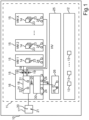
- a motor vehicle 10 which can be a motor vehicle, in particular a passenger car or truck.
- a computer system 11 can be provided in motor vehicle 10, which can be designed, for example, as a central computer system or so-called head unit, in order to be able to provide computing power for a number of different uses or applications.
- the computer system 11 can also be provided independently of the motor vehicle 10 .
- the computer system 11 can have a processor device 12 which can include a plurality of processor cores 13 .
- the processing cores 13 can be provided in a single CPU or in a cluster of multiple CPUs.
- several different software programs 14 are provided in the computer system 11 and/or are executed during operation of the computer system 11 .
- several different virtual machines 15 may be provided, which can be executed on the processor device 12.
- one of the virtual machines 15 can represent an infrastructure controller 16, by means of which in particular a display device 17 or a plurality of display devices (not shown) can be controlled.
- a display control program 18 can be provided in the virtual machine 15 of the infrastructure controller 16, which can receive graphics data 19 from the software programs 14, through which an image content 20 can be defined on a display area 21 of the display device 17.
- the display control program 18 can provide a composition 22 of the graphics data 19 for generating the image content 20 .
- the software programs 14 can each represent an application program 23, for example, which provides, for example, an operating menu for selecting and activating a number of vehicle functions and/or media playback (e.g. playing audio data and/or video data) and/or surfing the Internet and/or a telephony functionality can, to name just a few examples.
- a corresponding image output can be controlled by the graphic data 19 by the respective application program 23 via the display control program 18 on the display device 17 .
- the display device 17 can include a respective screen, for example of a center console and/or an instrument cluster and/or as a head-up display unit (head-up display) and/or a passenger screen and/or a rear seat screen and/or a door side screen .
- a respective screen for example of a center console and/or an instrument cluster and/or as a head-up display unit (head-up display) and/or a passenger screen and/or a rear seat screen and/or a door side screen .
- the processor device 12 with its processor cores 13 can be represented or represented in virtualized form in the virtual machines 15, in that virtual processor cores 24 can be provided or implemented for each virtual machine 15, which are represented for the software programs 14 as CPUs or processor cores on which the respective software program 14 is running or can run.
- the number of virtual processor cores 24 can be fixed or unchangeable.
- a hypervisor or a hypervisor device 25 can be provided in the computer system 11, which, for example, is based on a hardware circuit (for example an integrated circuit or IC) and /or may be software based.
- the hypervisor device 25 can have a scheduler for the allocation of the real processor cores 13 to the virtual processor cores 24, i.e. a Hypervisor scheduler 26.
- the hypervisor scheduler 26 can assign the real processor cores 13 to the virtual processor cores 24 on the basis of an assignment scheme 27, with only one assignment scheme 27 being set as the active allocation scheme 28 at any given time.
- a conventional supervisor device 25 can only execute a single assignment scheme 27 at the start, ie the hypervisor scheduler 26 is missing.
- the assignment scheme 27 can now be changed while the computer system 11 is running.
- the change between the assignment schemes 27 can take place as a function of a requirement signal 29 which the hypervisor scheduler 26 can receive for example from one of the virtual machines, for example the virtual machine 15 for the display control program 18 .
- a control interface 30 can be provided in the virtual machine 15 for the display control program 18, which enables a software program, for example the display control program 18, to generate the demand signal 29 and to provide it via the control interface 30 to the hypervisor device 25 and there in particular to the hypervisor scheduler 26 or to transmit.
- the display control program 18 can determine what computing requirements are currently necessary for the individual application programs 23 to generate the graphics data 19 .
- the display control program 18 can, for example, execute or use as a basis a proportion calculation rule 31 which determines how large a respective participation proportion of the respective application program 23 in the image content 20 is.
- an assignment scheme 27 can then be selected using the demand signal 29, which assigns more computing power to the real processor cores 13 of the respective virtual machine 15, on which the respective application program 23 runs or is being executed, according to the contribution share.
- the participation shares of several application programs 23 of a virtual machine 15 add up accordingly to form a total participation share per virtual machine 15 .
- real processor cores 13 can be alternately assigned to virtual processor cores 24 of a number of different virtual machines 15 by means of a number of assignment schemes.
- the virtual machine VM1 can, for example, manage the computer system 11 and, for this purpose, can have a software version of the hypervisor scheduler 26 and/or the display control program 18 .
- an assignment part 32 common to all assignment schemes 27 is provided, through which the virtual processor cores 24 of the virtual machine VM1 with the designations VCPU0 and VCPU1 (These are only given as examples) is always assigned to a respective real processor core 13 (eg CPU0 and CPU1).
- processor2 to CPU7 can be assigned to the six virtual processor cores 24 (VCPU0 to VCPU5) of the virtual machine VM2, with the number of assigned real CPU processor cores 13 depending on the assignment scheme 27 being different. Also for the four virtual processor cores 24 (VCPU0 to VCPU3) of the virtual machine VM3, one to four real processor cores 13 (in 2 the processor cores CPU4 to CPU7).
- a real processor core 13 is assigned to one or more virtual processor cores 24, arithmetic operations of the respective virtual processor core 24 are executed or implemented by the at least one assigned real processor core 13.
- the respective software program of a virtual machine 15 only sees the virtual processor cores 24.
- the constellation shown can provide the highest priority for the virtual machine VM1, ie a priority for the virtual machines VM2, VM3 is lower.
- Each assignment scheme 27 can be designed in the manner known from the prior art. However, switching between a plurality of assignment schemes 27 using a hypervisor scheduler 26 is not known from the prior art.
- Switching can be provided not only for the real processor cores described, but an extension can be provided to the effect that the allocation schemes 27 also include at least one GPU as a virtual GPU is provided in each of the virtual machines 15 and a real GPU is assigned by a mapping scheme 27 to one of the virtual GPUs.
- an assignment by an assignment scheme can also be provided for a further computing resource or another computing resource of the computer system 11, or generally a hardware resource, such as a hardware accelerator for video decoding and/or an NPU.
- These are then also represented in each case as virtual hardware resources in the virtual machines 15 in order to enable a real hardware resource to be assigned to the virtual resource by means of an assignment scheme and the hypervisor device 25 .
- Switching between different allocation schemes can be done, for example, by stopping the processing of program instructions on some or all real processor cores and allocating the virtual machines to the real processor cores according to the new allocation scheme. After that, processing can be restarted in the real processor cores.
Landscapes
- Engineering & Computer Science (AREA)
- Software Systems (AREA)
- Theoretical Computer Science (AREA)
- Physics & Mathematics (AREA)
- General Engineering & Computer Science (AREA)
- General Physics & Mathematics (AREA)
- Stored Programmes (AREA)
- Microcomputers (AREA)
Claims (8)
- Système informatique (11) pour un véhicule à moteur (10), comportant :- un dispositif à processeur (12) comportant plusieurs coeurs de processeurs réels (13), mis en oeuvre dans des circuits,- plusieurs machines virtuelles (15), dont chacune comporte respectivement au moins un coeur de processeur virtuel (24) pour exécuter des programmes logiciels (14), de telle sorte qu'à l'intérieur de la machine virtuelle (15), un nombre fixe prédéfini de coeurs de processeurs virtuels (24) est disponible, un nombre total des coeurs de processeurs virtuels (14) étant supérieur à un nombre total des coeurs de processeurs réels (13),- un hyperviseur (25) configuré pour faire fonctionner simultanément les machines virtuelles (15) sur le dispositif à processeur (12) et pour affecter ainsi de manière exclusive les coeurs de processeurs réels (13) aux machines virtuelles (15) selon un schéma d'allocation (27) prédéfini, de telle sorte que dans chaque machine virtuelle (15), une puissance de calcul de ses au moins un coeur de processeur virtuel (15) est réalisée par le au moins un coeur de processeur réel (13) qui est exclusivement affecté à la machine virtuelle (15) respective, les coeurs de processeurs réels (15) étant affectés aux coeurs de processeurs virtuels (24) sur la base d'un schéma d'allocation (27),un gestionnaire de machine virtuelle (26) étant inclus dans l'hyperviseur (25), gestionnaire au moyen duquel, en plus du schéma d'allocation (27), est fourni au moins un schéma d'allocation supplémentaire (27) qui prévoit une affectation exclusive supplémentaire des coeurs de processeurs réels (13) aux machines virtuelles (15), et le gestionnaire de machine virtuelle (26) étant configuré pour changer les schémas d'affectation (27) en fonction d'un signal de demande (29) pendant le fonctionnement du système informatique (11),chaque schéma d'allocation (27) définissant quel coeur de processeur réel (13) est affecté à quelle machine virtuelle (15) pendant le fonctionnement des coeurs de processeurs virtuels (24) etun circuit et/ou un logiciel étant disponible dans le gestionnaire de machine virtuelle (26), lequel circuit et/ou logiciel adapte une distribution des coeurs de processeurs réels (13) aux machines virtuelles (15) pendant le fonctionnement, en fonction d'une demande en puissance de calcul,caractérisé en ce quel'une des machines virtuelles (15) comporte un programme de commande d'affichage (18) configuré pour régler un contenu d'image (20) sur un dispositif d'affichage (17) sur la base de données graphiques (19), des programmes d'application (23) étant prévus pour générer les données graphiques (19) dans les machines virtuelles (15), et le programme de commande d'affichage (18) étant configuré pour déterminer, sur la base d'une règle de calcul de proportion prédéfinie (31), une part de contribution respective des programmes d'application (23) au contenu d'image (20), et pour allouer aux machines (15) respectives, au moyen du signal de demande (29), la puissance de calcul des coeurs de processeurs réels (13) en fonction de la part de contribution déterminée respective.
- Système informatique (11) selon la revendication 1, dans lequel l'une des machines virtuelles (15) comporte une interface de commande (30) pour transmettre le signal de demande (29) à partir de cette machine virtuelle (15) dans l'hyperviseur (25), l'interface de commande (30) étant configurée pour recevoir le signal de demande (29) provenant d'un programme logiciel (14) exécuté sur la machine virtuelle (15) ou sur une autre des machines virtuelles (15).
- Système informatique (11) selon l'une des revendications précédentes, dans lequel la règle de calcul de proportion (31) définit la part de contribution respective de l'un des programmes d'application (23) respectifs par :- une part de surface d'image respective dans le contenu d'image (20),- une vitesse de changement des données graphiques du programme d'application (23) respectif,- une contribution à l'arrière-plan d'image affiché de manière visible.
- Système informatique (11) selon l'une des revendications précédentes, dans lequel un nombre total des schémas d'affectation (27) est inférieur à 10.
- Système informatique (11) selon l'une des revendications précédentes, dans lequel pendant une activité de l'un des schémas d'affectation (27), un lien statique de chacun des coeurs de processeurs réels (15) avec l'une des machines virtuelles (15) est maintenu.
- Système informatique (11) selon l'une des revendications précédentes, dans lequel tous les schémas d'affectation (27) ont une partie d'affectation commune (32), au moyen de laquelle au moins un des coeurs de processeurs virtuels (24) est respectivement associé à l'un des coeurs de processeurs réels (13).
- Système informatique (11) selon l'une des revendications précédentes, dans lequel le système informatique (11) comporte au moins une unité centrale graphique, GPU, et/ou au moins une ressource matérielle qui est affectée de manière exclusive par le gestionnaire de machine virtuelle (26) à l'une des machines virtuelles (15) respectivement, en fonction du schéma d'allocation (28) actif, et la ressource matérielle représente une ressource de calcul du système informatique (11) et/ou un accélérateur de matériel pour un décodage vidéo et/ou une unité de traitement neuronal.
- Véhicule à moteur (10) comportant un système informatique (11) selon l'une des revendications précédentes.
Applications Claiming Priority (2)
| Application Number | Priority Date | Filing Date | Title |
|---|---|---|---|
| DE102019209086.9A DE102019209086B3 (de) | 2019-06-24 | 2019-06-24 | Kraftfahrzeug-Computersystem mit Hypervisor sowie Kraftfahrzeug |
| PCT/EP2020/061587 WO2020259897A1 (fr) | 2019-06-24 | 2020-04-27 | Système informatique de véhicule automobile avec hyperviseur ainsi que véhicule automobile |
Publications (2)
| Publication Number | Publication Date |
|---|---|
| EP3973391A1 EP3973391A1 (fr) | 2022-03-30 |
| EP3973391B1 true EP3973391B1 (fr) | 2023-07-19 |
Family
ID=70480246
Family Applications (1)
| Application Number | Title | Priority Date | Filing Date |
|---|---|---|---|
| EP20723053.3A Active EP3973391B1 (fr) | 2019-06-24 | 2020-04-27 | Système informatique de véhicule automobile avec hyperviseur ainsi que véhicule automobile |
Country Status (5)
| Country | Link |
|---|---|
| US (1) | US12373234B2 (fr) |
| EP (1) | EP3973391B1 (fr) |
| CN (1) | CN113950668B (fr) |
| DE (1) | DE102019209086B3 (fr) |
| WO (1) | WO2020259897A1 (fr) |
Families Citing this family (3)
| Publication number | Priority date | Publication date | Assignee | Title |
|---|---|---|---|---|
| DE102020213373A1 (de) | 2020-10-22 | 2022-04-28 | Robert Bosch Gesellschaft mit beschränkter Haftung | Vorrichtung und Verfahren zur Steuerung eines technischen Systems |
| EP4246882A4 (fr) * | 2020-11-04 | 2024-09-25 | LG Electronics Inc. | Dispositif d'affichage destiné à un véhicule |
| EP4686145A1 (fr) * | 2023-03-23 | 2026-01-28 | LG Electronics Inc. | Appareil de traitement de signal et appareil d'affichage équipé de celui-ci pour véhicules |
Family Cites Families (12)
| Publication number | Priority date | Publication date | Assignee | Title |
|---|---|---|---|---|
| US8418177B2 (en) * | 2010-10-01 | 2013-04-09 | Microsoft Corporation | Virtual machine and/or multi-level scheduling support on systems with asymmetric processor cores |
| US9514507B2 (en) * | 2011-11-29 | 2016-12-06 | Citrix Systems, Inc. | Methods and systems for maintaining state in a virtual machine when disconnected from graphics hardware |
| DE102012205301A1 (de) | 2012-03-30 | 2013-10-02 | Bayerische Motoren Werke Aktiengesellschaft | Rechner-Architektur zur Steuerung einer elektronischen Datenverarbeitung in einem Fahrzeug |
| DE102013007676A1 (de) | 2013-05-03 | 2014-11-06 | All4Ip Management Gmbh | Dynamische App-Rechenlast-Verteilung und nahtlose Netzwerkausfallverarbeitung zwischen Smartphone, Fahrzeug und Cloud |
| DE102013226700A1 (de) | 2013-12-19 | 2015-06-25 | Continental Automotive Gmbh | Fahrzeugelektronikeinheit |
| WO2015103376A1 (fr) * | 2014-01-06 | 2015-07-09 | Johnson Controls Technology Company | Véhicule ayant de multiples domaines d'exploitation d'interface utilisateur |
| US9753770B2 (en) * | 2014-04-03 | 2017-09-05 | Strato Scale Ltd. | Register-type-aware scheduling of virtual central processing units |
| CN104715202B (zh) * | 2015-03-31 | 2018-06-12 | 北京奇虎科技有限公司 | 一种虚拟机中的隐藏进程检测方法和装置 |
| US11221875B2 (en) * | 2016-03-31 | 2022-01-11 | Intel Corporation | Cooperative scheduling of virtual machines |
| CN107807840B (zh) * | 2016-09-09 | 2022-01-25 | 阿里巴巴集团控股有限公司 | 一种应用于虚拟机网络的设备直通方法以及装置 |
| US10372498B2 (en) * | 2016-09-26 | 2019-08-06 | Intel Corporation | Dynamic virtual CPU core allocation |
| US10387992B2 (en) * | 2017-04-07 | 2019-08-20 | Intel Corporation | Apparatus and method for dynamic provisioning, quality of service, and prioritization in a graphics processor |
-
2019
- 2019-06-24 DE DE102019209086.9A patent/DE102019209086B3/de active Active
-
2020
- 2020-04-27 WO PCT/EP2020/061587 patent/WO2020259897A1/fr not_active Ceased
- 2020-04-27 CN CN202080043466.3A patent/CN113950668B/zh active Active
- 2020-04-27 EP EP20723053.3A patent/EP3973391B1/fr active Active
- 2020-04-27 US US17/621,536 patent/US12373234B2/en active Active
Non-Patent Citations (1)
| Title |
|---|
| DULCARDO ARTEAGA ET AL: "Cooperative Virtual Machine Scheduling on Multi-core Multi-threading Systems — A Feasibility Study", WORKSHOP ON MICRO ARCHITECTURAL SUPPORT FOR VIRTUALIZATION, DATA CENTER COMPUTING, AND CLOUD, 31 December 2010 (2010-12-31), XP055709989, Retrieved from the Internet <URL:https://pdfs.semanticscholar.org/1471/23ea99c26b5e1af040a1f11941f18d267c91.pdf> [retrieved on 20200630] * |
Also Published As
| Publication number | Publication date |
|---|---|
| US20220357970A1 (en) | 2022-11-10 |
| CN113950668A (zh) | 2022-01-18 |
| CN113950668B (zh) | 2025-04-22 |
| DE102019209086B3 (de) | 2020-08-13 |
| WO2020259897A1 (fr) | 2020-12-30 |
| US12373234B2 (en) | 2025-07-29 |
| EP3973391A1 (fr) | 2022-03-30 |
Similar Documents
| Publication | Publication Date | Title |
|---|---|---|
| DE3607889C2 (fr) | ||
| DE102019209086B3 (de) | Kraftfahrzeug-Computersystem mit Hypervisor sowie Kraftfahrzeug | |
| EP2678796B1 (fr) | Procédé d'échange de données dans un environnement d'exécution sécurisé | |
| DE102012205301A1 (de) | Rechner-Architektur zur Steuerung einer elektronischen Datenverarbeitung in einem Fahrzeug | |
| DE112020004661T5 (de) | Ermitteln einer optimalen Anzahl von Threads pro Kern in einem Mehrkern-Prozessorkomplex | |
| DE112007002201T5 (de) | Quality-of-Service-Implementierung für Plattformressourcen | |
| EP2677425A1 (fr) | Dispositif d'accélération avec assistance pour machines virtuelles | |
| DE10296959T5 (de) | System und Verfahren zum Steuern der Buszuteilung während Cache-Speicher-Burstzyklen | |
| DE102012220267A1 (de) | Rechenarbeitsverteilungs - Referenzzähler | |
| DE102013208041A1 (de) | Serverbasierte Grafikverarbeitungstechniken | |
| DE102015002191A1 (de) | Sicherheits-Hypervisor-Funktion | |
| DE112020001974B4 (de) | Fahrzeugvorrichtung und Fahrzeugvorrichtungssteuerungsverfahren | |
| DE102019101853B4 (de) | Dynamische Partitionierung von Ausführungsressourcen | |
| DE112019002853T5 (de) | Informationsverarbeitungsvorrichtung, informationsverarbeitungsverfahren und programm | |
| EP3867749B1 (fr) | Appareil pour la commande d'un système d'information | |
| DE102015210539A1 (de) | Speicherschutzeinheit, Speicherverwaltungseinheit und Mikrocontroller | |
| EP2126700B1 (fr) | Régulation du comportement de processus en cours d'exploitation | |
| WO2012152326A1 (fr) | Système et procédé pour fournir et faire fonctionner une ou plusieurs machines virtuelles en temps réel sur un ordinateur multicœur | |
| EP3693856A1 (fr) | Procédé de transmission d'un message dans un système de calcul et système de calcul | |
| DE112015000216T5 (de) | Auswählen eines Hosts für eine virtuelle Maschine unter Verwendung einers Hardware-Multithreading-Parameters | |
| DE102014221247A1 (de) | Computersystem für ein Kraftfahrzeug | |
| DE102017206626A1 (de) | Verfahren und Vorrichtung zum Steuern von Prozessen | |
| DE102018123563B4 (de) | Verfahren zur Zwischenkernkommunikation in einem Mehrkernprozessor | |
| DE102019206028B3 (de) | Grafiksystem für ein Fahrzeug | |
| DE102019219260A1 (de) | Verfahren zum Betreiben einer Recheneinheit |
Legal Events
| Date | Code | Title | Description |
|---|---|---|---|
| STAA | Information on the status of an ep patent application or granted ep patent |
Free format text: STATUS: UNKNOWN |
|
| STAA | Information on the status of an ep patent application or granted ep patent |
Free format text: STATUS: THE INTERNATIONAL PUBLICATION HAS BEEN MADE |
|
| PUAI | Public reference made under article 153(3) epc to a published international application that has entered the european phase |
Free format text: ORIGINAL CODE: 0009012 |
|
| STAA | Information on the status of an ep patent application or granted ep patent |
Free format text: STATUS: REQUEST FOR EXAMINATION WAS MADE |
|
| 17P | Request for examination filed |
Effective date: 20210922 |
|
| AK | Designated contracting states |
Kind code of ref document: A1 Designated state(s): AL AT BE BG CH CY CZ DE DK EE ES FI FR GB GR HR HU IE IS IT LI LT LU LV MC MK MT NL NO PL PT RO RS SE SI SK SM TR |
|
| DAV | Request for validation of the european patent (deleted) | ||
| DAX | Request for extension of the european patent (deleted) | ||
| GRAP | Despatch of communication of intention to grant a patent |
Free format text: ORIGINAL CODE: EPIDOSNIGR1 |
|
| STAA | Information on the status of an ep patent application or granted ep patent |
Free format text: STATUS: GRANT OF PATENT IS INTENDED |
|
| INTG | Intention to grant announced |
Effective date: 20230228 |
|
| GRAS | Grant fee paid |
Free format text: ORIGINAL CODE: EPIDOSNIGR3 |
|
| GRAA | (expected) grant |
Free format text: ORIGINAL CODE: 0009210 |
|
| STAA | Information on the status of an ep patent application or granted ep patent |
Free format text: STATUS: THE PATENT HAS BEEN GRANTED |
|
| P01 | Opt-out of the competence of the unified patent court (upc) registered |
Effective date: 20230529 |
|
| AK | Designated contracting states |
Kind code of ref document: B1 Designated state(s): AL AT BE BG CH CY CZ DE DK EE ES FI FR GB GR HR HU IE IS IT LI LT LU LV MC MK MT NL NO PL PT RO RS SE SI SK SM TR |
|
| REG | Reference to a national code |
Ref country code: GB Ref legal event code: FG4D Free format text: NOT ENGLISH |
|
| REG | Reference to a national code |
Ref country code: CH Ref legal event code: EP |
|
| REG | Reference to a national code |
Ref country code: DE Ref legal event code: R096 Ref document number: 502020004261 Country of ref document: DE |
|
| REG | Reference to a national code |
Ref country code: IE Ref legal event code: FG4D Free format text: LANGUAGE OF EP DOCUMENT: GERMAN |
|
| REG | Reference to a national code |
Ref country code: LT Ref legal event code: MG9D |
|
| REG | Reference to a national code |
Ref country code: NL Ref legal event code: MP Effective date: 20230719 |
|
| PG25 | Lapsed in a contracting state [announced via postgrant information from national office to epo] |
Ref country code: NL Free format text: LAPSE BECAUSE OF FAILURE TO SUBMIT A TRANSLATION OF THE DESCRIPTION OR TO PAY THE FEE WITHIN THE PRESCRIBED TIME-LIMIT Effective date: 20230719 |
|
| PG25 | Lapsed in a contracting state [announced via postgrant information from national office to epo] |
Ref country code: GR Free format text: LAPSE BECAUSE OF FAILURE TO SUBMIT A TRANSLATION OF THE DESCRIPTION OR TO PAY THE FEE WITHIN THE PRESCRIBED TIME-LIMIT Effective date: 20231020 |
|
| PG25 | Lapsed in a contracting state [announced via postgrant information from national office to epo] |
Ref country code: IS Free format text: LAPSE BECAUSE OF FAILURE TO SUBMIT A TRANSLATION OF THE DESCRIPTION OR TO PAY THE FEE WITHIN THE PRESCRIBED TIME-LIMIT Effective date: 20231119 |
|
| PG25 | Lapsed in a contracting state [announced via postgrant information from national office to epo] |
Ref country code: SE Free format text: LAPSE BECAUSE OF FAILURE TO SUBMIT A TRANSLATION OF THE DESCRIPTION OR TO PAY THE FEE WITHIN THE PRESCRIBED TIME-LIMIT Effective date: 20230719 Ref country code: RS Free format text: LAPSE BECAUSE OF FAILURE TO SUBMIT A TRANSLATION OF THE DESCRIPTION OR TO PAY THE FEE WITHIN THE PRESCRIBED TIME-LIMIT Effective date: 20230719 Ref country code: PT Free format text: LAPSE BECAUSE OF FAILURE TO SUBMIT A TRANSLATION OF THE DESCRIPTION OR TO PAY THE FEE WITHIN THE PRESCRIBED TIME-LIMIT Effective date: 20231120 Ref country code: NO Free format text: LAPSE BECAUSE OF FAILURE TO SUBMIT A TRANSLATION OF THE DESCRIPTION OR TO PAY THE FEE WITHIN THE PRESCRIBED TIME-LIMIT Effective date: 20231019 Ref country code: LV Free format text: LAPSE BECAUSE OF FAILURE TO SUBMIT A TRANSLATION OF THE DESCRIPTION OR TO PAY THE FEE WITHIN THE PRESCRIBED TIME-LIMIT Effective date: 20230719 Ref country code: LT Free format text: LAPSE BECAUSE OF FAILURE TO SUBMIT A TRANSLATION OF THE DESCRIPTION OR TO PAY THE FEE WITHIN THE PRESCRIBED TIME-LIMIT Effective date: 20230719 Ref country code: IS Free format text: LAPSE BECAUSE OF FAILURE TO SUBMIT A TRANSLATION OF THE DESCRIPTION OR TO PAY THE FEE WITHIN THE PRESCRIBED TIME-LIMIT Effective date: 20231119 Ref country code: HR Free format text: LAPSE BECAUSE OF FAILURE TO SUBMIT A TRANSLATION OF THE DESCRIPTION OR TO PAY THE FEE WITHIN THE PRESCRIBED TIME-LIMIT Effective date: 20230719 Ref country code: GR Free format text: LAPSE BECAUSE OF FAILURE TO SUBMIT A TRANSLATION OF THE DESCRIPTION OR TO PAY THE FEE WITHIN THE PRESCRIBED TIME-LIMIT Effective date: 20231020 Ref country code: FI Free format text: LAPSE BECAUSE OF FAILURE TO SUBMIT A TRANSLATION OF THE DESCRIPTION OR TO PAY THE FEE WITHIN THE PRESCRIBED TIME-LIMIT Effective date: 20230719 |
|
| PG25 | Lapsed in a contracting state [announced via postgrant information from national office to epo] |
Ref country code: PL Free format text: LAPSE BECAUSE OF FAILURE TO SUBMIT A TRANSLATION OF THE DESCRIPTION OR TO PAY THE FEE WITHIN THE PRESCRIBED TIME-LIMIT Effective date: 20230719 |
|
| REG | Reference to a national code |
Ref country code: DE Ref legal event code: R097 Ref document number: 502020004261 Country of ref document: DE |
|
| PG25 | Lapsed in a contracting state [announced via postgrant information from national office to epo] |
Ref country code: ES Free format text: LAPSE BECAUSE OF FAILURE TO SUBMIT A TRANSLATION OF THE DESCRIPTION OR TO PAY THE FEE WITHIN THE PRESCRIBED TIME-LIMIT Effective date: 20230719 |
|
| PG25 | Lapsed in a contracting state [announced via postgrant information from national office to epo] |
Ref country code: SM Free format text: LAPSE BECAUSE OF FAILURE TO SUBMIT A TRANSLATION OF THE DESCRIPTION OR TO PAY THE FEE WITHIN THE PRESCRIBED TIME-LIMIT Effective date: 20230719 Ref country code: RO Free format text: LAPSE BECAUSE OF FAILURE TO SUBMIT A TRANSLATION OF THE DESCRIPTION OR TO PAY THE FEE WITHIN THE PRESCRIBED TIME-LIMIT Effective date: 20230719 Ref country code: ES Free format text: LAPSE BECAUSE OF FAILURE TO SUBMIT A TRANSLATION OF THE DESCRIPTION OR TO PAY THE FEE WITHIN THE PRESCRIBED TIME-LIMIT Effective date: 20230719 Ref country code: EE Free format text: LAPSE BECAUSE OF FAILURE TO SUBMIT A TRANSLATION OF THE DESCRIPTION OR TO PAY THE FEE WITHIN THE PRESCRIBED TIME-LIMIT Effective date: 20230719 Ref country code: DK Free format text: LAPSE BECAUSE OF FAILURE TO SUBMIT A TRANSLATION OF THE DESCRIPTION OR TO PAY THE FEE WITHIN THE PRESCRIBED TIME-LIMIT Effective date: 20230719 Ref country code: CZ Free format text: LAPSE BECAUSE OF FAILURE TO SUBMIT A TRANSLATION OF THE DESCRIPTION OR TO PAY THE FEE WITHIN THE PRESCRIBED TIME-LIMIT Effective date: 20230719 Ref country code: SK Free format text: LAPSE BECAUSE OF FAILURE TO SUBMIT A TRANSLATION OF THE DESCRIPTION OR TO PAY THE FEE WITHIN THE PRESCRIBED TIME-LIMIT Effective date: 20230719 |
|
| PLBE | No opposition filed within time limit |
Free format text: ORIGINAL CODE: 0009261 |
|
| STAA | Information on the status of an ep patent application or granted ep patent |
Free format text: STATUS: NO OPPOSITION FILED WITHIN TIME LIMIT |
|
| PG25 | Lapsed in a contracting state [announced via postgrant information from national office to epo] |
Ref country code: IT Free format text: LAPSE BECAUSE OF FAILURE TO SUBMIT A TRANSLATION OF THE DESCRIPTION OR TO PAY THE FEE WITHIN THE PRESCRIBED TIME-LIMIT Effective date: 20230719 |
|
| 26N | No opposition filed |
Effective date: 20240422 |
|
| PG25 | Lapsed in a contracting state [announced via postgrant information from national office to epo] |
Ref country code: SI Free format text: LAPSE BECAUSE OF FAILURE TO SUBMIT A TRANSLATION OF THE DESCRIPTION OR TO PAY THE FEE WITHIN THE PRESCRIBED TIME-LIMIT Effective date: 20230719 |
|
| PG25 | Lapsed in a contracting state [announced via postgrant information from national office to epo] |
Ref country code: BG Free format text: LAPSE BECAUSE OF FAILURE TO SUBMIT A TRANSLATION OF THE DESCRIPTION OR TO PAY THE FEE WITHIN THE PRESCRIBED TIME-LIMIT Effective date: 20230719 |
|
| PG25 | Lapsed in a contracting state [announced via postgrant information from national office to epo] |
Ref country code: MC Free format text: LAPSE BECAUSE OF FAILURE TO SUBMIT A TRANSLATION OF THE DESCRIPTION OR TO PAY THE FEE WITHIN THE PRESCRIBED TIME-LIMIT Effective date: 20230719 |
|
| PG25 | Lapsed in a contracting state [announced via postgrant information from national office to epo] |
Ref country code: MC Free format text: LAPSE BECAUSE OF FAILURE TO SUBMIT A TRANSLATION OF THE DESCRIPTION OR TO PAY THE FEE WITHIN THE PRESCRIBED TIME-LIMIT Effective date: 20230719 Ref country code: BG Free format text: LAPSE BECAUSE OF FAILURE TO SUBMIT A TRANSLATION OF THE DESCRIPTION OR TO PAY THE FEE WITHIN THE PRESCRIBED TIME-LIMIT Effective date: 20230719 |
|
| REG | Reference to a national code |
Ref country code: CH Ref legal event code: PL |
|
| PG25 | Lapsed in a contracting state [announced via postgrant information from national office to epo] |
Ref country code: LU Free format text: LAPSE BECAUSE OF NON-PAYMENT OF DUE FEES Effective date: 20240427 |
|
| REG | Reference to a national code |
Ref country code: BE Ref legal event code: MM Effective date: 20240430 |
|
| PG25 | Lapsed in a contracting state [announced via postgrant information from national office to epo] |
Ref country code: LU Free format text: LAPSE BECAUSE OF NON-PAYMENT OF DUE FEES Effective date: 20240427 |
|
| PG25 | Lapsed in a contracting state [announced via postgrant information from national office to epo] |
Ref country code: BE Free format text: LAPSE BECAUSE OF NON-PAYMENT OF DUE FEES Effective date: 20240430 |
|
| PG25 | Lapsed in a contracting state [announced via postgrant information from national office to epo] |
Ref country code: BE Free format text: LAPSE BECAUSE OF NON-PAYMENT OF DUE FEES Effective date: 20240430 Ref country code: CH Free format text: LAPSE BECAUSE OF NON-PAYMENT OF DUE FEES Effective date: 20240430 |
|
| PG25 | Lapsed in a contracting state [announced via postgrant information from national office to epo] |
Ref country code: IE Free format text: LAPSE BECAUSE OF NON-PAYMENT OF DUE FEES Effective date: 20240427 |
|
| PGFP | Annual fee paid to national office [announced via postgrant information from national office to epo] |
Ref country code: DE Payment date: 20250430 Year of fee payment: 6 |
|
| PGFP | Annual fee paid to national office [announced via postgrant information from national office to epo] |
Ref country code: FR Payment date: 20250426 Year of fee payment: 6 |
|
| PGFP | Annual fee paid to national office [announced via postgrant information from national office to epo] |
Ref country code: AT Payment date: 20250721 Year of fee payment: 5 |
|
| PG25 | Lapsed in a contracting state [announced via postgrant information from national office to epo] |
Ref country code: CY Free format text: LAPSE BECAUSE OF FAILURE TO SUBMIT A TRANSLATION OF THE DESCRIPTION OR TO PAY THE FEE WITHIN THE PRESCRIBED TIME-LIMIT; INVALID AB INITIO Effective date: 20200427 |
|
| PG25 | Lapsed in a contracting state [announced via postgrant information from national office to epo] |
Ref country code: HU Free format text: LAPSE BECAUSE OF FAILURE TO SUBMIT A TRANSLATION OF THE DESCRIPTION OR TO PAY THE FEE WITHIN THE PRESCRIBED TIME-LIMIT; INVALID AB INITIO Effective date: 20200427 |
|
| PGFP | Annual fee paid to national office [announced via postgrant information from national office to epo] |
Ref country code: GB Payment date: 20260324 Year of fee payment: 7 |