EP3972004B1 - Tray for loading battery cap - Google Patents
Tray for loading battery cap Download PDFInfo
- Publication number
- EP3972004B1 EP3972004B1 EP20837143.5A EP20837143A EP3972004B1 EP 3972004 B1 EP3972004 B1 EP 3972004B1 EP 20837143 A EP20837143 A EP 20837143A EP 3972004 B1 EP3972004 B1 EP 3972004B1
- Authority
- EP
- European Patent Office
- Prior art keywords
- tray
- grooves
- groove
- battery
- trays
- Prior art date
- Legal status (The legal status is an assumption and is not a legal conclusion. Google has not performed a legal analysis and makes no representation as to the accuracy of the status listed.)
- Active
Links
Images


Classifications
-
- B—PERFORMING OPERATIONS; TRANSPORTING
- B65—CONVEYING; PACKING; STORING; HANDLING THIN OR FILAMENTARY MATERIAL
- B65D—CONTAINERS FOR STORAGE OR TRANSPORT OF ARTICLES OR MATERIALS, e.g. BAGS, BARRELS, BOTTLES, BOXES, CANS, CARTONS, CRATES, DRUMS, JARS, TANKS, HOPPERS, FORWARDING CONTAINERS; ACCESSORIES, CLOSURES, OR FITTINGS THEREFOR; PACKAGING ELEMENTS; PACKAGES
- B65D1/00—Rigid or semi-rigid containers having bodies formed in one piece, e.g. by casting metallic material, by moulding plastics, by blowing vitreous material, by throwing ceramic material, by moulding pulped fibrous material or by deep-drawing operations performed on sheet material
- B65D1/34—Trays or like shallow containers
- B65D1/36—Trays or like shallow containers with moulded compartments or partitions
-
- H—ELECTRICITY
- H01—ELECTRIC ELEMENTS
- H01M—PROCESSES OR MEANS, e.g. BATTERIES, FOR THE DIRECT CONVERSION OF CHEMICAL ENERGY INTO ELECTRICAL ENERGY
- H01M50/00—Constructional details or processes of manufacture of the non-active parts of electrochemical cells other than fuel cells, e.g. hybrid cells
- H01M50/20—Mountings; Secondary casings or frames; Racks, modules or packs; Suspension devices; Shock absorbers; Transport or carrying devices; Holders
-
- B—PERFORMING OPERATIONS; TRANSPORTING
- B65—CONVEYING; PACKING; STORING; HANDLING THIN OR FILAMENTARY MATERIAL
- B65D—CONTAINERS FOR STORAGE OR TRANSPORT OF ARTICLES OR MATERIALS, e.g. BAGS, BARRELS, BOTTLES, BOXES, CANS, CARTONS, CRATES, DRUMS, JARS, TANKS, HOPPERS, FORWARDING CONTAINERS; ACCESSORIES, CLOSURES, OR FITTINGS THEREFOR; PACKAGING ELEMENTS; PACKAGES
- B65D19/00—Pallets or like platforms, with or without side walls, for supporting loads to be lifted or lowered
- B65D19/38—Details or accessories
- B65D19/44—Elements or devices for locating articles on platforms
-
- B—PERFORMING OPERATIONS; TRANSPORTING
- B65—CONVEYING; PACKING; STORING; HANDLING THIN OR FILAMENTARY MATERIAL
- B65D—CONTAINERS FOR STORAGE OR TRANSPORT OF ARTICLES OR MATERIALS, e.g. BAGS, BARRELS, BOTTLES, BOXES, CANS, CARTONS, CRATES, DRUMS, JARS, TANKS, HOPPERS, FORWARDING CONTAINERS; ACCESSORIES, CLOSURES, OR FITTINGS THEREFOR; PACKAGING ELEMENTS; PACKAGES
- B65D19/00—Pallets or like platforms, with or without side walls, for supporting loads to be lifted or lowered
- B65D19/0002—Platforms, i.e. load supporting devices without provision for handling by a forklift
-
- B—PERFORMING OPERATIONS; TRANSPORTING
- B65—CONVEYING; PACKING; STORING; HANDLING THIN OR FILAMENTARY MATERIAL
- B65D—CONTAINERS FOR STORAGE OR TRANSPORT OF ARTICLES OR MATERIALS, e.g. BAGS, BARRELS, BOTTLES, BOXES, CANS, CARTONS, CRATES, DRUMS, JARS, TANKS, HOPPERS, FORWARDING CONTAINERS; ACCESSORIES, CLOSURES, OR FITTINGS THEREFOR; PACKAGING ELEMENTS; PACKAGES
- B65D21/00—Nestable, stackable or joinable containers; Containers of variable capacity
- B65D21/02—Containers specially shaped, or provided with fittings or attachments, to facilitate nesting, stacking, or joining together
- B65D21/0209—Containers specially shaped, or provided with fittings or attachments, to facilitate nesting, stacking, or joining together stackable or joined together one-upon-the-other in the upright or upside-down position
-
- B—PERFORMING OPERATIONS; TRANSPORTING
- B65—CONVEYING; PACKING; STORING; HANDLING THIN OR FILAMENTARY MATERIAL
- B65D—CONTAINERS FOR STORAGE OR TRANSPORT OF ARTICLES OR MATERIALS, e.g. BAGS, BARRELS, BOTTLES, BOXES, CANS, CARTONS, CRATES, DRUMS, JARS, TANKS, HOPPERS, FORWARDING CONTAINERS; ACCESSORIES, CLOSURES, OR FITTINGS THEREFOR; PACKAGING ELEMENTS; PACKAGES
- B65D21/00—Nestable, stackable or joinable containers; Containers of variable capacity
- B65D21/02—Containers specially shaped, or provided with fittings or attachments, to facilitate nesting, stacking, or joining together
- B65D21/0209—Containers specially shaped, or provided with fittings or attachments, to facilitate nesting, stacking, or joining together stackable or joined together one-upon-the-other in the upright or upside-down position
- B65D21/0213—Containers presenting a continuous stacking profile along the upper or lower edge of at least two opposite side walls
-
- B—PERFORMING OPERATIONS; TRANSPORTING
- B65—CONVEYING; PACKING; STORING; HANDLING THIN OR FILAMENTARY MATERIAL
- B65D—CONTAINERS FOR STORAGE OR TRANSPORT OF ARTICLES OR MATERIALS, e.g. BAGS, BARRELS, BOTTLES, BOXES, CANS, CARTONS, CRATES, DRUMS, JARS, TANKS, HOPPERS, FORWARDING CONTAINERS; ACCESSORIES, CLOSURES, OR FITTINGS THEREFOR; PACKAGING ELEMENTS; PACKAGES
- B65D25/00—Details of other kinds or types of rigid or semi-rigid containers
- B65D25/02—Internal fittings
- B65D25/10—Devices to locate articles in containers
-
- B—PERFORMING OPERATIONS; TRANSPORTING
- B65—CONVEYING; PACKING; STORING; HANDLING THIN OR FILAMENTARY MATERIAL
- B65D—CONTAINERS FOR STORAGE OR TRANSPORT OF ARTICLES OR MATERIALS, e.g. BAGS, BARRELS, BOTTLES, BOXES, CANS, CARTONS, CRATES, DRUMS, JARS, TANKS, HOPPERS, FORWARDING CONTAINERS; ACCESSORIES, CLOSURES, OR FITTINGS THEREFOR; PACKAGING ELEMENTS; PACKAGES
- B65D25/00—Details of other kinds or types of rigid or semi-rigid containers
- B65D25/02—Internal fittings
- B65D25/10—Devices to locate articles in containers
- B65D25/107—Grooves, ribs, or the like, situated on opposed walls and between which the articles are located
-
- B—PERFORMING OPERATIONS; TRANSPORTING
- B65—CONVEYING; PACKING; STORING; HANDLING THIN OR FILAMENTARY MATERIAL
- B65D—CONTAINERS FOR STORAGE OR TRANSPORT OF ARTICLES OR MATERIALS, e.g. BAGS, BARRELS, BOTTLES, BOXES, CANS, CARTONS, CRATES, DRUMS, JARS, TANKS, HOPPERS, FORWARDING CONTAINERS; ACCESSORIES, CLOSURES, OR FITTINGS THEREFOR; PACKAGING ELEMENTS; PACKAGES
- B65D85/00—Containers, packaging elements or packages, specially adapted for particular articles or materials
- B65D85/68—Containers, packaging elements or packages, specially adapted for particular articles or materials for machines, engines or vehicles in assembled or dismantled form
-
- H—ELECTRICITY
- H01—ELECTRIC ELEMENTS
- H01M—PROCESSES OR MEANS, e.g. BATTERIES, FOR THE DIRECT CONVERSION OF CHEMICAL ENERGY INTO ELECTRICAL ENERGY
- H01M10/00—Secondary cells; Manufacture thereof
- H01M10/04—Construction or manufacture in general
- H01M10/0404—Machines for assembling batteries
- H01M10/0409—Machines for assembling batteries for cells with wound electrodes
-
- H—ELECTRICITY
- H01—ELECTRIC ELEMENTS
- H01M—PROCESSES OR MEANS, e.g. BATTERIES, FOR THE DIRECT CONVERSION OF CHEMICAL ENERGY INTO ELECTRICAL ENERGY
- H01M50/00—Constructional details or processes of manufacture of the non-active parts of electrochemical cells other than fuel cells, e.g. hybrid cells
- H01M50/10—Primary casings; Jackets or wrappings
- H01M50/147—Lids or covers
-
- H—ELECTRICITY
- H01—ELECTRIC ELEMENTS
- H01M—PROCESSES OR MEANS, e.g. BATTERIES, FOR THE DIRECT CONVERSION OF CHEMICAL ENERGY INTO ELECTRICAL ENERGY
- H01M50/00—Constructional details or processes of manufacture of the non-active parts of electrochemical cells other than fuel cells, e.g. hybrid cells
- H01M50/10—Primary casings; Jackets or wrappings
- H01M50/147—Lids or covers
- H01M50/148—Lids or covers characterised by their shape
- H01M50/152—Lids or covers characterised by their shape for cells having curved cross-section, e.g. round or elliptic
-
- H—ELECTRICITY
- H01—ELECTRIC ELEMENTS
- H01M—PROCESSES OR MEANS, e.g. BATTERIES, FOR THE DIRECT CONVERSION OF CHEMICAL ENERGY INTO ELECTRICAL ENERGY
- H01M50/00—Constructional details or processes of manufacture of the non-active parts of electrochemical cells other than fuel cells, e.g. hybrid cells
- H01M50/20—Mountings; Secondary casings or frames; Racks, modules or packs; Suspension devices; Shock absorbers; Transport or carrying devices; Holders
- H01M50/256—Carrying devices, e.g. belts
-
- B—PERFORMING OPERATIONS; TRANSPORTING
- B65—CONVEYING; PACKING; STORING; HANDLING THIN OR FILAMENTARY MATERIAL
- B65D—CONTAINERS FOR STORAGE OR TRANSPORT OF ARTICLES OR MATERIALS, e.g. BAGS, BARRELS, BOTTLES, BOXES, CANS, CARTONS, CRATES, DRUMS, JARS, TANKS, HOPPERS, FORWARDING CONTAINERS; ACCESSORIES, CLOSURES, OR FITTINGS THEREFOR; PACKAGING ELEMENTS; PACKAGES
- B65D2585/00—Containers, packaging elements or packages specially adapted for particular articles or materials
- B65D2585/68—Containers, packaging elements or packages specially adapted for particular articles or materials for machines, engines, or vehicles in assembled or dismantled form
- B65D2585/86—Containers, packaging elements or packages specially adapted for particular articles or materials for machines, engines, or vehicles in assembled or dismantled form for electrical components
- B65D2585/88—Batteries
-
- Y—GENERAL TAGGING OF NEW TECHNOLOGICAL DEVELOPMENTS; GENERAL TAGGING OF CROSS-SECTIONAL TECHNOLOGIES SPANNING OVER SEVERAL SECTIONS OF THE IPC; TECHNICAL SUBJECTS COVERED BY FORMER USPC CROSS-REFERENCE ART COLLECTIONS [XRACs] AND DIGESTS
- Y02—TECHNOLOGIES OR APPLICATIONS FOR MITIGATION OR ADAPTATION AGAINST CLIMATE CHANGE
- Y02E—REDUCTION OF GREENHOUSE GAS [GHG] EMISSIONS, RELATED TO ENERGY GENERATION, TRANSMISSION OR DISTRIBUTION
- Y02E60/00—Enabling technologies; Technologies with a potential or indirect contribution to GHG emissions mitigation
- Y02E60/10—Energy storage using batteries
Definitions
- the present invention relates to a tray for loading a battery cap, which stores and transfers a battery cap coupled to an upper end of a can of a cylindrical battery, and more particularly, to a tray for loading a battery cap, in which more battery caps are capable of being loaded, and the battery caps are capable of being stacked in more stages.
- rechargeable secondary batteries are being developed not only for digital devices but also for vehicles such as electric vehicles.
- Secondary batteries are variously classified according to materials and external shapes of a positive electrode and a negative electrode. Among them, since such a lithium secondary battery using a lithium compound material has large capacity and a low self-discharge rate, the lithium secondary battery is being widely used instead of a nickelcadmium secondary battery according to the related art.
- the lithium secondary battery may be manufactured in various shapes.
- the lithium secondary battery may be manufactured in a cylinder type, a prismatic type, or a pouch type.
- a disk-shaped battery cap is coupled to an upper end of a can.
- the battery cap has a structure in which a safety vent that is broken to discharge a gas at a predetermined pressure so as to prevent explosion when a gas pressure inside a can increases, a PTC element that interrupts current at a high temperature, a current interrupt device (CID) that interrupts current when an internal pressure increases, and a top cap connected to a positive electrode tab of an electrode assembly to serve as a positive electrode terminal and disposed at the uppermost end are mounted.
- a safety vent that is broken to discharge a gas at a predetermined pressure so as to prevent explosion when a gas pressure inside a can increases
- a PTC element that interrupts current at a high temperature
- a current interrupt device (CID) that interrupts current when an internal pressure increases
- a top cap connected to a positive electrode tab of an electrode assembly to serve as a positive electrode terminal and disposed at the uppermost end are mounted.
- the battery cap is coupled to an upper end of the can in a state in which several components are mounted, the battery cap is manufactured in a process that is separated from processes for manufacturing the can and is transported as a combination device of the can and the battery cap in a state of being seated on the tray.
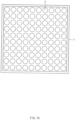
- the tray 1 As illustrated in FIGS. 1a and 1b , which illustrate the tray for transport and storage according to the related art, the tray 1 according to the related art has a rectangular plate shape and has a structure in which a plurality of grooves 2 are defined along horizontal and vertical rows so that a battery cap 3 is laid horizontally and seated on a top surface of the tray 1.
- the structure of the tray 1 according to the related art has been difficult to supply a sufficient quantity of battery caps 3 at once as a production rate in a production line increases. That is, when a predetermined quantity of battery caps 3 has to be provided in the production line, the number of battery caps 3 mounted on each tray decreases, and thus, more trays 1 are required. As a result, a large space and much time are required for transporting and storing the trays 1.
- KR 2010 0123828 A Further prior art is described in KR 2010 0123828 A .
- a main object of the present invention is to provide a tray for loading battery caps, which is capable of mounting more battery caps per unit volume when compared to the structure according to the related art.
- a tray for loading battery caps, on which the battery caps are mountable, according to the present invention for achieving the above object comprises: first trays, each having a top surface, in which first grooves are defined, and a bottom surface, in which second grooves are defined; and second trays, each having a top surface, in which third grooves are defined, and a bottom surface, in which fourth grooves are defined and disposed above or below the first tray, wherein, when the first tray is disposed above the second tray, each of the second grooves and each of the third grooves communicate with each other to provide a communication space, and when the first tray is disposed below the second tray, each of the first grooves and each of the fourth grooves communicate with each other to provide a communication space, wherein the battery caps are mountable in a vertically erect state in the first tray and the second tray.
- the battery cap may mean a disk-shaped battery cap coupled to an upper end of a can of the cylindrical secondary battery.
- the battery cap may be replaced with a button-type secondary battery or different disk-shaped components of the secondary battery, such as a top cap placed at the uppermost end of the battery cap.
- the battery cap may be a plate-shaped component that is mounted vertically with an area greater than a thickness thereof.
- the first grooves and the second grooves are alternately arranged so that the second grooves are disposed between the first grooves adjacent to each other in the first tray, and the third grooves and the fourth grooves may be alternately arranged so that the fourth grooves are disposed between the third grooves adjacent to each other in the second tray.
- the first tray may have a rectangular plate shape in which the first grooves and the second grooves are alternately arranged along a vertical line, wherein the first trays having the same shape may be continuously arranged along a horizontal line, and the second tray may have a rectangular plate shape in which the third grooves and the fourth grooves are arranged along the vertical line, wherein the second trays having the same shape may be continuously arranged along the horizontal line.
- the first tray may have a zigzag-shaped cross-section vertically along the vertical line in a region in which the first grooves and the second grooves are alternately arranged
- the second tray may have a zigzag-shaped cross-section vertically along the vertical line in a region in which the third grooves and the fourth grooves are alternately arranged.
- the first tray and the second tray may have the same area, and the first trays and the second trays may be alternately and continuously stacked.
- each of the first grooves and the second grooves may have a width in which the battery caps are maintainable in the erect state.
- the number of first grooves arranged in the vertical line and the number of first grooves arranged in the horizontal line may be the same, and in the second tray, the number of third grooves arranged in the vertical line and the number of third grooves arranged in the horizontal line may be the same.
- the uppermost ends of the battery caps may not contact the first tray or the second tray.
- each of the first tray and the second tray may be made of a material having hardness less than that of the battery cap.
- the first tray may have one of a protrusion or a groove at a portion having a shape protruding upward by the second groove between the first grooves adjacent to each other, and the other of the protrusion or the groove at a portion having a shape protruding downward by the first groove between the second grooves adjacent to each other
- the second tray may have one of a protrusion or a groove, which is engaged with the protrusion or the groove disposed at a lower portion of the first tray, at a portion having a shape protruding upward by the fourth groove between the third grooves, and the other of the protrusion or the groove at a portion having a shape protruding downward by the third groove between the fourth grooves adjacent to each other.
- a magnet may be attached to a portion at which the first tray and the second tray contact each other to guide the first tray and the second tray to be disposed in position by magnetism when the first tray and the second tray are stacked.
- the battery cap stacked below may be disposed between the battery caps stacked above to reduce the stacked height. That is, in the present invention, one of the first trays and one of the second trays may be stacked in two layers, and the height of the battery caps mounted on the stacked trays may be lower than twice the diameter of the battery cap. Therefore, the number of stacked trays may be further increased.
- the upper end of the battery cap may be restricted in the second groove or the fourth groove, and the lower end of the battery cap may be restricted in the first groove or the third groove to prevent the first tray and the second tray from being separated. That is, it is possible to more robustly prevent the trays from falling down by an impact applied from a lateral direction.
- each of the first groove and the third groove of the first tray and the second tray has a width in which the battery cap is maintained in the erect state when the battery caps are seated in the erect state, the dispensing equipment may more easily dispense one or multiple battery caps when compared to the state in which the dispensing equipment is laid in the production process.
- each of the first tray and the second tray is made of the material having hardness less than that of the battery case, when the trays and the battery cap collide with each other, it may be prevented that the battery caps are scratched or damaged.
- the seated positions of the first tray and the second tray may be guided by the protrusion and the groove or by the magnet and thus be prevented from being shaken after being seated.
- the present invention relates to a tray for loading a battery cap, on which a disk-shaped battery cap 30 is mounted, i.e., a tray for loading a battery cap 30, in which the battery cap 30 is mounted in a vertically erect state so that more battery caps 30 per unit volume are capable of being mounted when compared to the structure of the battery cap according to the related art, and thus, the battery caps 30 are more easily stored, transported, and dispensed.
- FIGS. 2 to 5 illustrate a configuration of a first tray and a second tray according to a first embodiment of the present invention.
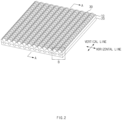
- FIG. 2 is a perspective view illustrating a state in which the first tray is stacked on the second tray in a state in which a battery cap is mounted on the first tray and the second tray according to a first embodiment of the present invention
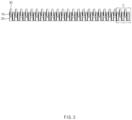
- FIG. 3 is a cross-sectional view taken along line A-A in FIG. 2
- FIG. 4 is an enlarged view of a portion C in FIG. 3
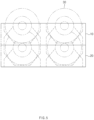
- FIG. 5 is a see-through view illustrating a portion B in FIG. 2 .
- the tray according to the first embodiment of the present invention comprises a first tray 10 and a second tray 20.
- the first tray 10 and the second tray 20 are alternately and continuously stacked.
- the first tray 10 has a structure in which a first groove 11 is defined in a top surface thereof, and a second groove 12 is defined in a bottom surface thereof, and the second tray 20 has a structure in which a third groove 23 is defined in a top surface thereof, and a fourth groove 24 is defined in a bottom surface thereof.
- the second tray 20 may be stacked above and below the first tray 10.
- the first tray 10 When the first tray 10 is disposed above the second tray 20, the second groove 12 and the third groove 23 communicate with each other to provide a communication space, and when the first tray 10 is disposed below the second tray 20, the first groove 11 and the fourth groove 24 communicate with each other to provide a communication space.
- the battery cap 30 is mounted in a vertically erect state in the first tray 10 and the second tray 20. That is, the battery cap 30 is mounted in the vertically erect state within the first groove 11 and the third groove 23, i.e., in the communication space between the second groove 12 and the third groove 23 and the communication space between the first groove 11 and the fourth groove 24.
- the battery cap 30 means a disk-shaped battery cap coupled to an upper end of a can of a cylindrical secondary battery.
- the battery cap 30 may be replaced with a button-type secondary battery or different disk-shaped components of the secondary battery, such as a top cap placed at the uppermost end of the battery cap 30.
- the first tray having the same shape are continuously arranged along a horizontal line, ad as illustrated in FIGS. 3 and 4 , the first tray 10 has a rectangular plate shape in which the first grooves 11 and the second grooves 12 are alternately arranged along a vertical line.
- the second tray 20 has a rectangular plate shape in which the third grooves 23 and the fourth grooves 24 are arranged along the vertical line, and the second trays 20 having the same shape are continuously arranged along the horizontal line.
- the second tray 20 is different from the first tray 10 in the positions of the grooves 11 and 12 so that the third groove 23 and the fourth groove 24 of the second tray 20 respectively communicate with the second groove 12 and the first groove 11.
- first tray 10 and the second tray 20 have the rectangular plate shapes having the same area, respectively, the first trays 10 and the second trays 20 may be alternately and continuously stacked.
- the number of first grooves 11 provided in the vertical line and the number of first grooves 11 provided in the horizontal line may be the same, and in the second tray 20, the number of third grooves 23 provided in the vertical line and the number of third grooves 23 provided in the horizontal line may be the same (however, the arrangement and number of grooves may be different according to a shape and size of the tray).
- first grooves 11 and the second grooves 12 may be alternately arranged so that the second groove 12 is disposed between the first grooves 11 adjacent to each other in the first tray 10
- the third grooves 23 and the fourth grooves 24 may be alternately arranged so that the fourth groove 24 is disposed between the third grooves 23 adjacent to each other in the second tray 20.
- the second groove 12 and the third groove 23 may communicate with each other
- the first groove 11 and the fourth groove 24 may communicate with each other according to the stacked positions of the first tray 10 and the second tray 20.
- the first tray 10 has a zigzag-shaped cross-section vertically along the vertical line in the region in which the first grooves 11 and the second grooves 12 are alternately arranged
- the second tray 20 has a zigzag-shaped cross-section vertically along the vertical line in the region in which the third grooves 23 and the fourth grooves 24 are alternately arranged
- the battery cap 30 may be mounted in the space between the grooves, and thus, the space may have a size greater than that of the battery cap 30.
- each of the first groove 11 and the third groove 23 has a width in which the battery cap 30 is maintained in the erect state when the battery cap 30 is seated in the erect state.
- the uppermost end of the battery cap 30 does not contact the first tray 10 or the second tray 20.
- each of the first tray 10 and the second tray 20 are made of a material having hardness less than that of the battery cap 30.
- the each of the first tray 10 and the second tray 20 is made of a relatively soft material when compared to the battery cap 30 so as to suppress or minimize an occurrence of scratch or deformation of the battery cap 30.
- the battery cap 30 since the battery cap 30 is mounted in the vertically erect state in the first tray 10 and the second tray 20, more battery caps 30 per unit area may be loaded when compared to the tray mounted to be laid horizontally according to the related art.
- the battery caps 30 stacked below may be placed between the battery caps 30 stacked above to reduce a stacked height. That is, as illustrated in FIG. 5 , when the first tray 10 is stacked above the second tray 20, the total height may be less than twice a diameter of the battery cap 30. Therefore, the number of stacked trays may further increase.
- each of the first tray 10 and the second tray 20 is made of the material having the hardness less than that of the battery cap 30, the occurrence of the stretch or damage of the battery cap 30 may be prevented when the trays 10 and 20 collide with the battery cap 30.
- a structure which is capable of fixing a first tray 10 and a second tray 20 to prevent the first tray 10 and the second tray 20 from being shaken in a state in which a battery cap 30 is mounted between the first tray 10 and the second tray 20, is provided.
- the first tray 10 has a groove 14 in a portion having a shape protruding upward by a second groove 12 between first grooves 11 adjacent to each other. Also, a protrusion 15 is disposed to protrude downward at a portion having a shape protruding downward by the first groove 11 between the second grooves 12 adjacent to each other.
- the second tray 20 has a groove 25, which is engaged with the protrusion 15 disposed at a lower portion of the first tray 10, in a portion having a shape protruding upward by a fourth groove 24 between third grooves 23, and a protrusion 26 is disposed at a portion having a shape protruding downward by the third groove 23 between the fourth grooves 24 adjacent to each other.
- the protrusions 15 and 26 may be fitted into the grooves 14 and 25 and thus be prevented from being separated from the grooves 14 and 25 by a weight of each of the tray and the battery cap 30, which are disposed above the first and second trays 10 and 20, thereby stably stacking the trays in more stages.
- a structure that is capable of preventing a first tray 10 and a second tray 20 from being shaken and capable of guiding the first tray 10 and the second tray 20 to be disposed in position when seated.
- a magnet 50 may be attached to one of portions contacting each other when the first tray 10 and the second tray 20 are seated in position, and a metal may be placed on the other portion to be in contact with the magnet 50 so as to be magnetized to generate attraction force or may be coated with a predetermined thickness.
- magnets 50 may be respectively disposed at each of portions at which the first tray 10 and the second tray contact each other to generate the attraction force at the positions contacting each other so that the portions having opposite polarities face each other, thereby guiding the first tray 10 and the second tray 20 to be disposed in position.
- the positions of the first and second trays 10 and 20, which are to be seated may be guided by magnetism.
- the first and second trays 10 and 20 may be prevented from being shaken.
Landscapes
- Engineering & Computer Science (AREA)
- Mechanical Engineering (AREA)
- Chemical & Material Sciences (AREA)
- Chemical Kinetics & Catalysis (AREA)
- Electrochemistry (AREA)
- General Chemical & Material Sciences (AREA)
- Manufacturing & Machinery (AREA)
- Ceramic Engineering (AREA)
- Stackable Containers (AREA)
- Battery Mounting, Suspending (AREA)
Description
- The present application claims the benefit of the priority of
Korean Patent Application No. 10-2019-0082166, filed on July 08, 2019 - The present invention relates to a tray for loading a battery cap, which stores and transfers a battery cap coupled to an upper end of a can of a cylindrical battery, and more particularly, to a tray for loading a battery cap, in which more battery caps are capable of being loaded, and the battery caps are capable of being stacked in more stages.
- Unlike primary batteries, rechargeable secondary batteries are being developed not only for digital devices but also for vehicles such as electric vehicles.
- Secondary batteries are variously classified according to materials and external shapes of a positive electrode and a negative electrode. Among them, since such a lithium secondary battery using a lithium compound material has large capacity and a low self-discharge rate, the lithium secondary battery is being widely used instead of a nickelcadmium secondary battery according to the related art.
- Also, the lithium secondary battery may be manufactured in various shapes. Representatively, the lithium secondary battery may be manufactured in a cylinder type, a prismatic type, or a pouch type.
- Among them, in the case of the cylindrical type, when a cylindrical electrode assembly having a circular tube shape with an opened upper side and a closed bottom side is mounted, a disk-shaped battery cap is coupled to an upper end of a can.
- In general, the battery cap has a structure in which a safety vent that is broken to discharge a gas at a predetermined pressure so as to prevent explosion when a gas pressure inside a can increases, a PTC element that interrupts current at a high temperature, a current interrupt device (CID) that interrupts current when an internal pressure increases, and a top cap connected to a positive electrode tab of an electrode assembly to serve as a positive electrode terminal and disposed at the uppermost end are mounted.
- As described above, since the battery cap is coupled to an upper end of the can in a state in which several components are mounted, the battery cap is manufactured in a process that is separated from processes for manufacturing the can and is transported as a combination device of the can and the battery cap in a state of being seated on the tray.
- As illustrated in
FIGS. 1a and1b , which illustrate the tray for transport and storage according to the related art, the tray 1 according to the related art has a rectangular plate shape and has a structure in which a plurality ofgrooves 2 are defined along horizontal and vertical rows so that abattery cap 3 is laid horizontally and seated on a top surface of the tray 1. - However, the structure of the tray 1 according to the related art has been difficult to supply a sufficient quantity of
battery caps 3 at once as a production rate in a production line increases. That is, when a predetermined quantity ofbattery caps 3 has to be provided in the production line, the number ofbattery caps 3 mounted on each tray decreases, and thus, more trays 1 are required. As a result, a large space and much time are required for transporting and storing the trays 1. - Further prior art is described in
KR 2010 0123828 A - Accordingly, a main object of the present invention is to provide a tray for loading battery caps, which is capable of mounting more battery caps per unit volume when compared to the structure according to the related art.
- The invention is defined in the appended set of claims.
- A tray for loading battery caps, on which the battery caps are mountable, according to the present invention for achieving the above object comprises: first trays, each having a top surface, in which first grooves are defined, and a bottom surface, in which second grooves are defined; and second trays, each having a top surface, in which third grooves are defined, and a bottom surface, in which fourth grooves are defined and disposed above or below the first tray, wherein, when the first tray is disposed above the second tray, each of the second grooves and each of the third grooves communicate with each other to provide a communication space, and when the first tray is disposed below the second tray, each of the first grooves and each of the fourth grooves communicate with each other to provide a communication space, wherein the battery caps are mountable in a vertically erect state in the first tray and the second tray.
- Here, as described above, the battery cap may mean a disk-shaped battery cap coupled to an upper end of a can of the cylindrical secondary battery. Alternatively, the battery cap may be replaced with a button-type secondary battery or different disk-shaped components of the secondary battery, such as a top cap placed at the uppermost end of the battery cap. Also, it is not necessarily limited to the circular shape, and the battery cap may be a plate-shaped component that is mounted vertically with an area greater than a thickness thereof.
- The first grooves and the second grooves are alternately arranged so that the second grooves are disposed between the first grooves adjacent to each other in the first tray, and the third grooves and the fourth grooves may be alternately arranged so that the fourth grooves are disposed between the third grooves adjacent to each other in the second tray.
- When the first tray and the second tray are stacked, and the battery caps are mounted in the space between the second groove and the third groove or the space between the first groove and the fourth groove, upper ends of the battery caps are restrictable in the second grooves or the fourth grooves, and lower ends of the battery caps are restricteable in the first grooves or the third grooves to prevent the first tray and the second tray from being separated.
- The first tray may have a rectangular plate shape in which the first grooves and the second grooves are alternately arranged along a vertical line, wherein the first trays having the same shape may be continuously arranged along a horizontal line, and the second tray may have a rectangular plate shape in which the third grooves and the fourth grooves are arranged along the vertical line, wherein the second trays having the same shape may be continuously arranged along the horizontal line.
- The first tray may have a zigzag-shaped cross-section vertically along the vertical line in a region in which the first grooves and the second grooves are alternately arranged, and the second tray may have a zigzag-shaped cross-section vertically along the vertical line in a region in which the third grooves and the fourth grooves are alternately arranged.
- The first tray and the second tray may have the same area, and the first trays and the second trays may be alternately and continuously stacked.
- When the battery caps are seated in the erect state, each of the first grooves and the second grooves may have a width in which the battery caps are maintainable in the erect state.
- In the first tray, the number of first grooves arranged in the vertical line and the number of first grooves arranged in the horizontal line may be the same, and in the second tray, the number of third grooves arranged in the vertical line and the number of third grooves arranged in the horizontal line may be the same.
- When the first tray is placed above the second tray so that the battery caps are placeable in the vertically erect state in the space defined between the second groove and the third groove; and the first tray is placed below the second tray so that the battery caps are placeable in the vertically erect state in the space defined between the first groove and the fourth groove, the uppermost ends of the battery caps may not contact the first tray or the second tray.
- Also, each of the first tray and the second tray may be made of a material having hardness less than that of the battery cap.
- Furthermore, the first tray may have one of a protrusion or a groove at a portion having a shape protruding upward by the second groove between the first grooves adjacent to each other, and the other of the protrusion or the groove at a portion having a shape protruding downward by the first groove between the second grooves adjacent to each other, and the second tray may have one of a protrusion or a groove, which is engaged with the protrusion or the groove disposed at a lower portion of the first tray, at a portion having a shape protruding upward by the fourth groove between the third grooves, and the other of the protrusion or the groove at a portion having a shape protruding downward by the third groove between the fourth grooves adjacent to each other.
- Also, according to another embodiment, a magnet may be attached to a portion at which the first tray and the second tray contact each other to guide the first tray and the second tray to be disposed in position by magnetism when the first tray and the second tray are stacked.
- In the present invention having the above technical characteristics, since the battery cap is mounted vertically in the first tray and the second tray, more battery caps per unit area may be loaded.
- Since the first grooves and the second grooves are alternately arranged so that the second groove is disposed between the first grooves adjacent to each other in the first tray, and the third grooves and the fourth grooves are alternately arranged so that the fourth groove is disposed between the third grooves adjacent to each other, the battery cap stacked below may be disposed between the battery caps stacked above to reduce the stacked height. That is, in the present invention, one of the first trays and one of the second trays may be stacked in two layers, and the height of the battery caps mounted on the stacked trays may be lower than twice the diameter of the battery cap. Therefore, the number of stacked trays may be further increased.
- Also, when the first tray and the second tray are stacked, and the battery cap is mounted in the space between the second groove and the third groove or the space between the first groove and the fourth groove, the upper end of the battery cap may be restricted in the second groove or the fourth groove, and the lower end of the battery cap may be restricted in the first groove or the third groove to prevent the first tray and the second tray from being separated. That is, it is possible to more robustly prevent the trays from falling down by an impact applied from a lateral direction.
- Since each of the first groove and the third groove of the first tray and the second tray has a width in which the battery cap is maintained in the erect state when the battery caps are seated in the erect state, the dispensing equipment may more easily dispense one or multiple battery caps when compared to the state in which the dispensing equipment is laid in the production process.
- Since each of the first tray and the second tray is made of the material having hardness less than that of the battery case, when the trays and the battery cap collide with each other, it may be prevented that the battery caps are scratched or damaged.
- Furthermore, the seated positions of the first tray and the second tray may be guided by the protrusion and the groove or by the magnet and thus be prevented from being shaken after being seated.
-
-
FIG. 1a is a plan view of a tray according to a related art. -
FIG. 1b is a cross-sectional view illustrating a state of a side surface on which a battery cap is seated on the tray according to the related art in a laid (horizontal) state. -
FIG. 2 is a perspective view illustrating a state in which a first tray is stacked on a second tray in a state in which battery caps are mounted on the first tray and the second tray according to a first embodiment of the present invention. -
FIG. 3 is a cross-sectional view taken along line A-A inFIG. 2 . -
FIG. 4 is an enlarged view of a portion C inFIG. 3 . -
FIG. 5 is a see-through view illustrating a portion B inFIG. 2 . -
FIG. 6 is a cross-sectional view illustrating shapes of a first tray and a second tray according to a second embodiment of the present invention. -
FIG. 7 is a cross-sectional view illustrating shapes of a first tray and a second tray according to a third embodiment of the present invention. - Hereinafter, preferred embodiments of the present invention will be described in detail with reference to the accompanying drawings in such a manner that the technical idea of the present invention may easily be carried out by a person with ordinary skill in the art to which the invention pertains. The present invention may, however, be embodied in different forms and should not be construed as limited to the embodiments set forth herein.
- In order to clearly illustrate the present invention, parts that are not related to the description are omitted, and the same or similar components are denoted by the same reference numerals throughout the specification.
- Also, terms or words used in this specification and claims should not be restrictively interpreted as ordinary meanings or dictionary-based meanings, but should be interpreted as meanings and concepts conforming to the scope of the present invention on the basis of the principle that an inventor can properly define the concept of a term to describe and explain his or her invention in the best ways.
- The present invention relates to a tray for loading a battery cap, on which a disk-
shaped battery cap 30 is mounted, i.e., a tray for loading abattery cap 30, in which thebattery cap 30 is mounted in a vertically erect state so thatmore battery caps 30 per unit volume are capable of being mounted when compared to the structure of the battery cap according to the related art, and thus, thebattery caps 30 are more easily stored, transported, and dispensed. Hereinafter, embodiments according to the present invention will be described with reference to the accompanying drawings. -
FIGS. 2 to 5 illustrate a configuration of a first tray and a second tray according to a first embodiment of the present invention.FIG. 2 is a perspective view illustrating a state in which the first tray is stacked on the second tray in a state in which a battery cap is mounted on the first tray and the second tray according to a first embodiment of the present invention,FIG. 3 is a cross-sectional view taken along line A-A inFIG. 2 ,FIG. 4 is an enlarged view of a portion C inFIG. 3 , andFIG. 5 is a see-through view illustrating a portion B inFIG. 2 . - Referring to the accompanying drawings, the tray according to the first embodiment of the present invention comprises a
first tray 10 and asecond tray 20. Thefirst tray 10 and thesecond tray 20 are alternately and continuously stacked. - The
first tray 10 has a structure in which afirst groove 11 is defined in a top surface thereof, and asecond groove 12 is defined in a bottom surface thereof, and thesecond tray 20 has a structure in which athird groove 23 is defined in a top surface thereof, and afourth groove 24 is defined in a bottom surface thereof. - Also, the
second tray 20 may be stacked above and below thefirst tray 10. When thefirst tray 10 is disposed above thesecond tray 20, thesecond groove 12 and thethird groove 23 communicate with each other to provide a communication space, and when thefirst tray 10 is disposed below thesecond tray 20, thefirst groove 11 and thefourth groove 24 communicate with each other to provide a communication space. - Furthermore, the
battery cap 30 is mounted in a vertically erect state in thefirst tray 10 and thesecond tray 20. That is, thebattery cap 30 is mounted in the vertically erect state within thefirst groove 11 and thethird groove 23, i.e., in the communication space between thesecond groove 12 and thethird groove 23 and the communication space between thefirst groove 11 and thefourth groove 24. - As described above, the
battery cap 30 means a disk-shaped battery cap coupled to an upper end of a can of a cylindrical secondary battery. Alternatively, thebattery cap 30 may be replaced with a button-type secondary battery or different disk-shaped components of the secondary battery, such as a top cap placed at the uppermost end of thebattery cap 30. - As illustrated in the state in which the
battery cap 30 is seated inFIG. 2 , the first tray having the same shape are continuously arranged along a horizontal line, ad as illustrated inFIGS. 3 and4 , thefirst tray 10 has a rectangular plate shape in which thefirst grooves 11 and thesecond grooves 12 are alternately arranged along a vertical line. - Likewise, the
second tray 20 has a rectangular plate shape in which thethird grooves 23 and thefourth grooves 24 are arranged along the vertical line, and thesecond trays 20 having the same shape are continuously arranged along the horizontal line. However, as described above, thesecond tray 20 is different from thefirst tray 10 in the positions of thegrooves third groove 23 and thefourth groove 24 of thesecond tray 20 respectively communicate with thesecond groove 12 and thefirst groove 11. - Also, since the
first tray 10 and thesecond tray 20 have the rectangular plate shapes having the same area, respectively, thefirst trays 10 and thesecond trays 20 may be alternately and continuously stacked. Also, in thefirst tray 10, the number offirst grooves 11 provided in the vertical line and the number offirst grooves 11 provided in the horizontal line may be the same, and in thesecond tray 20, the number ofthird grooves 23 provided in the vertical line and the number ofthird grooves 23 provided in the horizontal line may be the same (however, the arrangement and number of grooves may be different according to a shape and size of the tray). - That is, the
first grooves 11 and thesecond grooves 12 may be alternately arranged so that thesecond groove 12 is disposed between thefirst grooves 11 adjacent to each other in thefirst tray 10, and thethird grooves 23 and thefourth grooves 24 may be alternately arranged so that thefourth groove 24 is disposed between thethird grooves 23 adjacent to each other in thesecond tray 20. Also, thesecond groove 12 and thethird groove 23 may communicate with each other, and thefirst groove 11 and thefourth groove 24 may communicate with each other according to the stacked positions of thefirst tray 10 and thesecond tray 20. - Furthermore, as illustrated more clearly in
FIG. 4 , when thefirst tray 10 and thesecond tray 20 are stacked, and thebattery cap 30 is mounted in the space between thesecond groove 12 and thethird groove 23 or the space between thefirst groove 11 and thefourth groove 24, an upper end of thebattery cap 30 may be restricted in thesecond groove 12 or thefourth groove 24, and a lower end of thebattery cap 30 may be restricted in thefirst groove 11 or thethird groove 23 to prevent the first tray and the second tray from being separated. - That is, the
first tray 10 has a zigzag-shaped cross-section vertically along the vertical line in the region in which thefirst grooves 11 and thesecond grooves 12 are alternately arranged, and thesecond tray 20 has a zigzag-shaped cross-section vertically along the vertical line in the region in which thethird grooves 23 and thefourth grooves 24 are alternately arranged. Here, thebattery cap 30 may be mounted in the space between the grooves, and thus, the space may have a size greater than that of thebattery cap 30. Also, each of thefirst groove 11 and thethird groove 23 has a width in which thebattery cap 30 is maintained in the erect state when thebattery cap 30 is seated in the erect state. - Thus, when the
first tray 10 is placed above thesecond tray 20 so that thebattery cap 30 is placed in the vertically erect state in the space defined between thesecond groove 12 and thethird groove 23; and thefirst tray 10 is placed below thesecond tray 20 so that thebattery cap 30 is placed in the vertically erect state in the space defined between thefirst groove 11 and thefourth groove 24, the uppermost end of thebattery cap 30 does not contact thefirst tray 10 or thesecond tray 20. - It is preferable that each of the
first tray 10 and thesecond tray 20 are made of a material having hardness less than that of thebattery cap 30. - That is, since even a small impact occurs between the first and
second trays battery cap 30 while thebattery cap 30 is mounted or dispensed and transported, it is preferable that the each of thefirst tray 10 and thesecond tray 20 is made of a relatively soft material when compared to thebattery cap 30 so as to suppress or minimize an occurrence of scratch or deformation of thebattery cap 30. - In the tray having the configuration as described above according to the present invention, since the
battery cap 30 is mounted in the vertically erect state in thefirst tray 10 and thesecond tray 20, more battery caps 30 per unit area may be loaded when compared to the tray mounted to be laid horizontally according to the related art. - Since The
first groove 11 and thesecond groove 12 are alternately arranged so that thesecond groove 12 is disposed between the adjacentfirst grooves 11 in thefirst tray 10, and thethird groove 23 and thefourth groove 24 are alternately disposed so that thefourth groove 24 is disposed between the adjacentthird grooves 23 in thesecond tray 20, the battery caps 30 stacked below may be placed between the battery caps 30 stacked above to reduce a stacked height. That is, as illustrated inFIG. 5 , when thefirst tray 10 is stacked above thesecond tray 20, the total height may be less than twice a diameter of thebattery cap 30. Therefore, the number of stacked trays may further increase. - Since each of the
first tray 10 and thesecond tray 20 is made of the material having the hardness less than that of thebattery cap 30, the occurrence of the stretch or damage of thebattery cap 30 may be prevented when thetrays battery cap 30. - In a second embodiment of the present invention, a structure, which is capable of fixing a
first tray 10 and asecond tray 20 to prevent thefirst tray 10 and thesecond tray 20 from being shaken in a state in which abattery cap 30 is mounted between thefirst tray 10 and thesecond tray 20, is provided. - Referring to
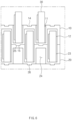
FIG. 6 that illustrates a cross-sectional view of the first tray and the second tray according to the second embodiment of the present invention, in this embodiment, thefirst tray 10 has agroove 14 in a portion having a shape protruding upward by asecond groove 12 betweenfirst grooves 11 adjacent to each other. Also, aprotrusion 15 is disposed to protrude downward at a portion having a shape protruding downward by thefirst groove 11 between thesecond grooves 12 adjacent to each other. - Similarly, the
second tray 20 has agroove 25, which is engaged with theprotrusion 15 disposed at a lower portion of thefirst tray 10, in a portion having a shape protruding upward by afourth groove 24 betweenthird grooves 23, and aprotrusion 26 is disposed at a portion having a shape protruding downward by thethird groove 23 between thefourth grooves 24 adjacent to each other. - Thus, when the
second tray 20 or thefirst tray 10 are sequentially stacked above thefirst tray 10 or thesecond tray 20, which is disposed below, theprotrusions grooves grooves battery cap 30, which are disposed above the first andsecond trays - Furthermore, in a third embodiment of the present invention, a structure that is capable of preventing a
first tray 10 and asecond tray 20 from being shaken and capable of guiding thefirst tray 10 and thesecond tray 20 to be disposed in position when seated. - As illustrated in
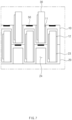
FIG. 7 that illustrates a cross-sectional view of afirst tray 10 and asecond tray 20 according to the third embodiment, in this embodiment, amagnet 50 may be attached to one of portions contacting each other when thefirst tray 10 and thesecond tray 20 are seated in position, and a metal may be placed on the other portion to be in contact with themagnet 50 so as to be magnetized to generate attraction force or may be coated with a predetermined thickness. - Alternatively,
magnets 50 may be respectively disposed at each of portions at which thefirst tray 10 and the second tray contact each other to generate the attraction force at the positions contacting each other so that the portions having opposite polarities face each other, thereby guiding thefirst tray 10 and thesecond tray 20 to be disposed in position. - Therefore, when the
first tray 10 and thesecond tray 20 are stacked, the positions of the first andsecond trays second trays second trays - Although the coupling structure of the
grooves protrusions magnet 50 according to the third embodiment is disposed are separately described as described above, only one of the above two structures may be applied, or both the structures may be applied at the same time.
Claims (11)
- A tray for loading battery caps (30), on which the battery caps (30) are mountable, the tray comprising:first trays (10), each having a top surface, in which first grooves (11) are defined, and a bottom surface, in which second grooves (12) are defined; andsecond trays (20), each having a top surface, in which third grooves (23) are defined, and a bottom surface, in which fourth grooves (24) are defined and disposed above or below the first tray (10), wherein, when the first tray (10) is disposed above the second tray (20), each of the second grooves (12) and each of the third grooves (23) communicate with each other to provide a communication space, and when the first tray (10) is disposed below the second tray (20), each of the first grooves (11) and each of the fourth grooves (24) communicate with each other to provide a communication space,characterized in that the battery caps (30) are mountable in a vertically erect state in the first tray (10) and the second tray (20),wherein the first grooves (11) and the second grooves (12) are alternately arranged so that the second grooves (12) are disposed between the first grooves (11) adjacent to each other in the first tray (10), andthe third grooves (23) and the fourth grooves (24) are alternately arranged so that the fourth grooves (24) are disposed between the third grooves (23) adjacent to each other in the second tray (20), andwherein, when the first tray (10) and the second tray (20) are stacked, and the battery caps (30) are mounted in the space between the second groove (12) and the third groove (23) or the space between the first groove (11) and the fourth groove (24), upper ends of the battery caps (30)are restrictable in the second grooves (12) or the fourth grooves (24), and lower ends of the battery caps (30) are restrictable in the first grooves (11) or the third grooves (23) to prevent the first tray (10) and the second tray (20) from being separated.
- The tray according to claim 1, wherein the first tray (10) has a rectangular plate shape in which the first grooves (11) and the second grooves (12) are alternately arranged along a vertical line, wherein the first trays (10) having the same shape are continuously arranged along a horizontal line, and
the second tray (20) has a rectangular plate shape in which the third grooves (23) and the fourth grooves (24) are arranged along the vertical line, wherein the second trays (20) having the same shape are continuously arranged along the horizontal line. - The tray according to claim 2, wherein the first tray (10) has a zigzag-shaped cross-section vertically along the vertical line in a region in which the first grooves (11) and the second grooves (12) are alternately arranged, and the second tray (20) has a zigzag-shaped cross-section vertically along the vertical line in a region in which the third grooves (23) and the fourth grooves (24) are alternately arranged.
- The tray according to claim 2, wherein the first tray (10) and the second tray (20) have the same area.
- The tray according to claim 4, wherein the first trays (10) and the second trays (20) are alternately and continuously stacked.
- The tray according to claim 1, wherein, when the battery caps (30) are seated in the erect state, each of the first grooves (11) and the second grooves (12) have a width in which the battery caps (30) are maintainable in the erect state.
- The tray according to claim 1, wherein, in the first tray (10), the number of first grooves (11) arranged in the vertical line and the number of first grooves (11) arranged in the horizontal line are the same, and
in the second tray (20), the number of third grooves (23) arranged in the vertical line and the number of third grooves (23) arranged in the horizontal line are the same. - The tray according to claim 1, wherein, when the first tray (10) is placed above the second tray (20) so that the battery caps (30) are placeable in the vertically erect state in the space defined between the second groove (12) and the third groove (23); and the first tray (10) is placed below the second tray (20) so that the battery caps (30) are placeable in the vertically erect state in the space defined between the first groove (11) and the fourth groove (24), the uppermost ends of the battery caps (30) do not contact the first tray (10) or the second tray (20).
- The tray according to claim 1, wherein each of the first tray (10) and the second tray (20) is made of a material having hardness less than that of the battery caps (30).
- The tray according to claim 1, wherein the first tray (10) has one of a protrusion (15) or a groove (14) at a portion having a shape protruding upward by the second groove (12) between the first grooves (11) adjacent to each other, and the other of the protrusion (15) or the groove (14) at a portion having a shape protruding downward by the first groove (11) between the second grooves (12) adjacent to each other, and
the second tray (20) has one of a protrusion (26) or a groove (25), which is engaged with the protrusion (15) or the groove (14) disposed at a lower portion of the first tray (10), at a portion having a shape protruding upward by the fourth groove (24) between the third grooves (23), and the other of the protrusion (26) or the groove (25) at a portion having a shape protruding downward by the third groove (23) between the fourth grooves (24) adjacent to each other. - The tray according to claim 1, wherein a magnet (50) is attached to a portion at which the first tray (10) and the second tray (20) contact each other.
Applications Claiming Priority (2)
| Application Number | Priority Date | Filing Date | Title |
|---|---|---|---|
| KR1020190082166A KR102841897B1 (en) | 2019-07-08 | 2019-07-08 | Tray for loading cell cap |
| PCT/KR2020/008765 WO2021006572A1 (en) | 2019-07-08 | 2020-07-03 | Battery cap loading tray |
Publications (3)
| Publication Number | Publication Date |
|---|---|
| EP3972004A1 EP3972004A1 (en) | 2022-03-23 |
| EP3972004A4 EP3972004A4 (en) | 2022-07-06 |
| EP3972004B1 true EP3972004B1 (en) | 2025-06-04 |
Family
ID=74114290
Family Applications (1)
| Application Number | Title | Priority Date | Filing Date |
|---|---|---|---|
| EP20837143.5A Active EP3972004B1 (en) | 2019-07-08 | 2020-07-03 | Tray for loading battery cap |
Country Status (7)
| Country | Link |
|---|---|
| US (1) | US20220355968A1 (en) |
| EP (1) | EP3972004B1 (en) |
| KR (1) | KR102841897B1 (en) |
| CN (1) | CN114007946A (en) |
| ES (1) | ES3034139T3 (en) |
| HU (1) | HUE071953T2 (en) |
| WO (1) | WO2021006572A1 (en) |
Families Citing this family (3)
| Publication number | Priority date | Publication date | Assignee | Title |
|---|---|---|---|---|
| CN115892675B (en) * | 2022-11-23 | 2024-06-28 | 厦门海辰储能科技股份有限公司 | Conveying device |
| US12275578B1 (en) | 2023-12-21 | 2025-04-15 | Solon Manufacturing Company | Product packaging for washers and method of use |
| WO2025160182A1 (en) * | 2024-01-23 | 2025-07-31 | Redwood Materials, Inc. | Battery storage and transport system |
Family Cites Families (16)
| Publication number | Priority date | Publication date | Assignee | Title |
|---|---|---|---|---|
| US2936922A (en) * | 1958-03-07 | 1960-05-17 | Keyes Fibre Co | Molded pulp packing tray |
| US3141596A (en) * | 1963-01-03 | 1964-07-21 | Waldorf Paper Prod Co | Dispensing containers |
| US3306462A (en) * | 1965-03-31 | 1967-02-28 | Cruz Edward Da | Storage case for disk-shaped objects |
| FR2768066B1 (en) * | 1997-09-08 | 1999-11-26 | Gilson Sa | RACK FOR MULTI-CHANNEL PIPETTE CONES |
| JP2003104476A (en) * | 2001-10-01 | 2003-04-09 | Mikiro Akigawa | Egg storage tray |
| US6662949B2 (en) * | 2001-12-28 | 2003-12-16 | Hon Hai Precision Ind. Co., Ltd. | Package for mechanical or electrical components |
| KR20070051296A (en) * | 2007-02-28 | 2007-05-17 | 스펜션 엘엘씨 | Carrier Configuration for Multilayer Semiconductor Device, Manufacturing Method Thereof and Manufacturing Method for Multilayer Semiconductor Device |
| CN201043034Y (en) * | 2007-04-27 | 2008-04-02 | 中山大洋电机股份有限公司 | Circulation recovery package of low-power motor |
| CN101952992A (en) * | 2008-02-12 | 2011-01-19 | 松下电器产业株式会社 | Battery storage tray and collection battery storage tray using the same |
| CN203127507U (en) * | 2013-01-31 | 2013-08-14 | 中山大洋电机制造有限公司 | Electric motor skin packaging structure |
| KR102210880B1 (en) * | 2014-03-31 | 2021-02-02 | 삼성에스디아이 주식회사 | Battery tray and loading means comprising the same |
| CH713290B1 (en) * | 2016-12-23 | 2020-08-31 | Varta Microbattery Gmbh | Multi-part transport and storage packaging for pre-assembled electrochemical cells. |
| JP6890809B2 (en) * | 2017-07-20 | 2021-06-18 | 三甲株式会社 | tray |
| CN207239610U (en) * | 2017-09-19 | 2018-04-17 | 科源(天津)电源部品有限公司 | A kind of lithium battery cap loading plate |
| CN108011062A (en) * | 2017-12-13 | 2018-05-08 | 北方奥钛纳米技术有限公司 | Button cell placement tray |
| CN208344912U (en) * | 2018-06-14 | 2019-01-08 | 湖北三江航天万峰科技发展有限公司 | A kind of electronic component purpose-made pallet |
-
2019
- 2019-07-08 KR KR1020190082166A patent/KR102841897B1/en active Active
-
2020
- 2020-07-03 EP EP20837143.5A patent/EP3972004B1/en active Active
- 2020-07-03 US US17/618,723 patent/US20220355968A1/en not_active Abandoned
- 2020-07-03 CN CN202080042320.7A patent/CN114007946A/en active Pending
- 2020-07-03 WO PCT/KR2020/008765 patent/WO2021006572A1/en not_active Ceased
- 2020-07-03 ES ES20837143T patent/ES3034139T3/en active Active
- 2020-07-03 HU HUE20837143A patent/HUE071953T2/en unknown
Also Published As
| Publication number | Publication date |
|---|---|
| EP3972004A4 (en) | 2022-07-06 |
| WO2021006572A1 (en) | 2021-01-14 |
| HUE071953T2 (en) | 2025-10-28 |
| EP3972004A1 (en) | 2022-03-23 |
| ES3034139T3 (en) | 2025-08-13 |
| US20220355968A1 (en) | 2022-11-10 |
| CN114007946A (en) | 2022-02-01 |
| KR102841897B1 (en) | 2025-08-04 |
| KR20210006181A (en) | 2021-01-18 |
Similar Documents
| Publication | Publication Date | Title |
|---|---|---|
| EP3972004B1 (en) | Tray for loading battery cap | |
| US20250140973A1 (en) | Battery module including cooling member, and battery pack and energy storage system including the same | |
| EP4468490B1 (en) | Battery pack and vehicle including the same | |
| JP6348327B2 (en) | Battery cell for secondary battery and battery pack including the same | |
| US20160149277A1 (en) | Frame for secondary battery and battery module including the same | |
| US20090061294A1 (en) | Battery case and battery pack using the same | |
| JP6305732B2 (en) | battery pack | |
| US20120231302A1 (en) | Case for battery pack and battery pack having the same | |
| US20250105440A1 (en) | Battery module, and battery pack and vehicle comprising the same | |
| KR102764768B1 (en) | Battery tray | |
| US20240113379A1 (en) | Power storage cell and power storage device | |
| KR20180007854A (en) | Tray for activating of battery cell | |
| EP3771018B1 (en) | Electrode assembly | |
| KR101127275B1 (en) | Tray of battery | |
| US20230099231A1 (en) | Power storage device | |
| KR200225219Y1 (en) | Charger | |
| US20240282999A1 (en) | Battery tray and method for manufacturing battery using same | |
| KR20190007969A (en) | Cell Assembly and Battery Module Having the Same | |
| US20100330412A1 (en) | Secondary battery | |
| US9806304B2 (en) | Secondary battery | |
| US12300804B2 (en) | Electrode assembly and secondary battery comprising same | |
| KR102751959B1 (en) | Cell tray | |
| US20260038920A1 (en) | Secondary battery and secondary battery case | |
| KR102759256B1 (en) | Transfer device for secondary battery | |
| US20250149621A1 (en) | Electrode Assembly Support Device |
Legal Events
| Date | Code | Title | Description |
|---|---|---|---|
| STAA | Information on the status of an ep patent application or granted ep patent |
Free format text: STATUS: THE INTERNATIONAL PUBLICATION HAS BEEN MADE |
|
| PUAI | Public reference made under article 153(3) epc to a published international application that has entered the european phase |
Free format text: ORIGINAL CODE: 0009012 |
|
| STAA | Information on the status of an ep patent application or granted ep patent |
Free format text: STATUS: REQUEST FOR EXAMINATION WAS MADE |
|
| 17P | Request for examination filed |
Effective date: 20211213 |
|
| AK | Designated contracting states |
Kind code of ref document: A1 Designated state(s): AL AT BE BG CH CY CZ DE DK EE ES FI FR GB GR HR HU IE IS IT LI LT LU LV MC MK MT NL NO PL PT RO RS SE SI SK SM TR |
|
| RAP3 | Party data changed (applicant data changed or rights of an application transferred) |
Owner name: LG ENERGY SOLUTION, LTD. |
|
| REG | Reference to a national code |
Ref country code: DE Ref legal event code: R079 Free format text: PREVIOUS MAIN CLASS: H99Z9999999999 Ipc: H01M0050152000 Ref country code: DE Ref legal event code: R079 Ref document number: 602020052402 Country of ref document: DE Free format text: PREVIOUS MAIN CLASS: H99Z9999999999 Ipc: H01M0050152000 |
|
| A4 | Supplementary search report drawn up and despatched |
Effective date: 20220608 |
|
| RIC1 | Information provided on ipc code assigned before grant |
Ipc: H01M 10/04 20060101ALI20220601BHEP Ipc: H01M 50/152 20210101AFI20220601BHEP |
|
| DAV | Request for validation of the european patent (deleted) | ||
| DAX | Request for extension of the european patent (deleted) | ||
| GRAP | Despatch of communication of intention to grant a patent |
Free format text: ORIGINAL CODE: EPIDOSNIGR1 |
|
| STAA | Information on the status of an ep patent application or granted ep patent |
Free format text: STATUS: GRANT OF PATENT IS INTENDED |
|
| INTG | Intention to grant announced |
Effective date: 20250321 |
|
| GRAS | Grant fee paid |
Free format text: ORIGINAL CODE: EPIDOSNIGR3 |
|
| GRAA | (expected) grant |
Free format text: ORIGINAL CODE: 0009210 |
|
| STAA | Information on the status of an ep patent application or granted ep patent |
Free format text: STATUS: THE PATENT HAS BEEN GRANTED |
|
| P01 | Opt-out of the competence of the unified patent court (upc) registered |
Free format text: CASE NUMBER: APP_16834/2025 Effective date: 20250407 |
|
| AK | Designated contracting states |
Kind code of ref document: B1 Designated state(s): AL AT BE BG CH CY CZ DE DK EE ES FI FR GB GR HR HU IE IS IT LI LT LU LV MC MK MT NL NO PL PT RO RS SE SI SK SM TR |
|
| REG | Reference to a national code |
Ref country code: GB Ref legal event code: FG4D |
|
| REG | Reference to a national code |
Ref country code: CH Ref legal event code: EP |
|
| REG | Reference to a national code |
Ref country code: DE Ref legal event code: R096 Ref document number: 602020052402 Country of ref document: DE |
|
| REG | Reference to a national code |
Ref country code: IE Ref legal event code: FG4D |
|
| PGFP | Annual fee paid to national office [announced via postgrant information from national office to epo] |
Ref country code: GB Payment date: 20250624 Year of fee payment: 6 |
|
| PGFP | Annual fee paid to national office [announced via postgrant information from national office to epo] |
Ref country code: BE Payment date: 20250623 Year of fee payment: 6 |
|
| PGFP | Annual fee paid to national office [announced via postgrant information from national office to epo] |
Ref country code: FR Payment date: 20250624 Year of fee payment: 6 |
|
| REG | Reference to a national code |
Ref country code: ES Ref legal event code: FG2A Ref document number: 3034139 Country of ref document: ES Kind code of ref document: T3 Effective date: 20250813 |
|
| REG | Reference to a national code |
Ref country code: NL Ref legal event code: MP Effective date: 20250604 |
|
| PG25 | Lapsed in a contracting state [announced via postgrant information from national office to epo] |
Ref country code: FI Free format text: LAPSE BECAUSE OF FAILURE TO SUBMIT A TRANSLATION OF THE DESCRIPTION OR TO PAY THE FEE WITHIN THE PRESCRIBED TIME-LIMIT Effective date: 20250604 |
|
| PGFP | Annual fee paid to national office [announced via postgrant information from national office to epo] |
Ref country code: ES Payment date: 20250822 Year of fee payment: 6 |
|
| PGFP | Annual fee paid to national office [announced via postgrant information from national office to epo] |
Ref country code: DE Payment date: 20250624 Year of fee payment: 6 |
|
| REG | Reference to a national code |
Ref country code: LT Ref legal event code: MG9D |
|
| PG25 | Lapsed in a contracting state [announced via postgrant information from national office to epo] |
Ref country code: NO Free format text: LAPSE BECAUSE OF FAILURE TO SUBMIT A TRANSLATION OF THE DESCRIPTION OR TO PAY THE FEE WITHIN THE PRESCRIBED TIME-LIMIT Effective date: 20250904 Ref country code: GR Free format text: LAPSE BECAUSE OF FAILURE TO SUBMIT A TRANSLATION OF THE DESCRIPTION OR TO PAY THE FEE WITHIN THE PRESCRIBED TIME-LIMIT Effective date: 20250905 |
|
| PG25 | Lapsed in a contracting state [announced via postgrant information from national office to epo] |
Ref country code: PL Free format text: LAPSE BECAUSE OF FAILURE TO SUBMIT A TRANSLATION OF THE DESCRIPTION OR TO PAY THE FEE WITHIN THE PRESCRIBED TIME-LIMIT Effective date: 20250604 |
|
| PG25 | Lapsed in a contracting state [announced via postgrant information from national office to epo] |
Ref country code: BG Free format text: LAPSE BECAUSE OF FAILURE TO SUBMIT A TRANSLATION OF THE DESCRIPTION OR TO PAY THE FEE WITHIN THE PRESCRIBED TIME-LIMIT Effective date: 20250604 |
|
| PGFP | Annual fee paid to national office [announced via postgrant information from national office to epo] |
Ref country code: HU Payment date: 20250929 Year of fee payment: 6 |
|
| PG25 | Lapsed in a contracting state [announced via postgrant information from national office to epo] |
Ref country code: HR Free format text: LAPSE BECAUSE OF FAILURE TO SUBMIT A TRANSLATION OF THE DESCRIPTION OR TO PAY THE FEE WITHIN THE PRESCRIBED TIME-LIMIT Effective date: 20250604 |
|
| PG25 | Lapsed in a contracting state [announced via postgrant information from national office to epo] |
Ref country code: RS Free format text: LAPSE BECAUSE OF FAILURE TO SUBMIT A TRANSLATION OF THE DESCRIPTION OR TO PAY THE FEE WITHIN THE PRESCRIBED TIME-LIMIT Effective date: 20250904 |
|
| REG | Reference to a national code |
Ref country code: HU Ref legal event code: AG4A Ref document number: E071953 Country of ref document: HU |
|
| PG25 | Lapsed in a contracting state [announced via postgrant information from national office to epo] |
Ref country code: LV Free format text: LAPSE BECAUSE OF FAILURE TO SUBMIT A TRANSLATION OF THE DESCRIPTION OR TO PAY THE FEE WITHIN THE PRESCRIBED TIME-LIMIT Effective date: 20250604 |
|
| PG25 | Lapsed in a contracting state [announced via postgrant information from national office to epo] |
Ref country code: NL Free format text: LAPSE BECAUSE OF FAILURE TO SUBMIT A TRANSLATION OF THE DESCRIPTION OR TO PAY THE FEE WITHIN THE PRESCRIBED TIME-LIMIT Effective date: 20250604 |
|
| PG25 | Lapsed in a contracting state [announced via postgrant information from national office to epo] |
Ref country code: PT Free format text: LAPSE BECAUSE OF FAILURE TO SUBMIT A TRANSLATION OF THE DESCRIPTION OR TO PAY THE FEE WITHIN THE PRESCRIBED TIME-LIMIT Effective date: 20251006 |
|
| REG | Reference to a national code |
Ref country code: AT Ref legal event code: MK05 Ref document number: 1801287 Country of ref document: AT Kind code of ref document: T Effective date: 20250604 |
|
| PG25 | Lapsed in a contracting state [announced via postgrant information from national office to epo] |
Ref country code: IS Free format text: LAPSE BECAUSE OF FAILURE TO SUBMIT A TRANSLATION OF THE DESCRIPTION OR TO PAY THE FEE WITHIN THE PRESCRIBED TIME-LIMIT Effective date: 20251004 |
|
| PG25 | Lapsed in a contracting state [announced via postgrant information from national office to epo] |
Ref country code: AT Free format text: LAPSE BECAUSE OF FAILURE TO SUBMIT A TRANSLATION OF THE DESCRIPTION OR TO PAY THE FEE WITHIN THE PRESCRIBED TIME-LIMIT Effective date: 20250604 Ref country code: SM Free format text: LAPSE BECAUSE OF FAILURE TO SUBMIT A TRANSLATION OF THE DESCRIPTION OR TO PAY THE FEE WITHIN THE PRESCRIBED TIME-LIMIT Effective date: 20250604 |
|
| PG25 | Lapsed in a contracting state [announced via postgrant information from national office to epo] |
Ref country code: CZ Free format text: LAPSE BECAUSE OF FAILURE TO SUBMIT A TRANSLATION OF THE DESCRIPTION OR TO PAY THE FEE WITHIN THE PRESCRIBED TIME-LIMIT Effective date: 20250604 |
|
| PG25 | Lapsed in a contracting state [announced via postgrant information from national office to epo] |
Ref country code: EE Free format text: LAPSE BECAUSE OF FAILURE TO SUBMIT A TRANSLATION OF THE DESCRIPTION OR TO PAY THE FEE WITHIN THE PRESCRIBED TIME-LIMIT Effective date: 20250604 |
|
| PG25 | Lapsed in a contracting state [announced via postgrant information from national office to epo] |
Ref country code: SK Free format text: LAPSE BECAUSE OF FAILURE TO SUBMIT A TRANSLATION OF THE DESCRIPTION OR TO PAY THE FEE WITHIN THE PRESCRIBED TIME-LIMIT Effective date: 20250604 Ref country code: RO Free format text: LAPSE BECAUSE OF FAILURE TO SUBMIT A TRANSLATION OF THE DESCRIPTION OR TO PAY THE FEE WITHIN THE PRESCRIBED TIME-LIMIT Effective date: 20250604 |
|
| PG25 | Lapsed in a contracting state [announced via postgrant information from national office to epo] |
Ref country code: IT Free format text: LAPSE BECAUSE OF FAILURE TO SUBMIT A TRANSLATION OF THE DESCRIPTION OR TO PAY THE FEE WITHIN THE PRESCRIBED TIME-LIMIT Effective date: 20250604 |
|
| REG | Reference to a national code |
Ref country code: CH Ref legal event code: H13 Free format text: ST27 STATUS EVENT CODE: U-0-0-H10-H13 (AS PROVIDED BY THE NATIONAL OFFICE) Effective date: 20260224 |
|
| REG | Reference to a national code |
Ref country code: DE Ref legal event code: R097 Ref document number: 602020052402 Country of ref document: DE |
|
| PG25 | Lapsed in a contracting state [announced via postgrant information from national office to epo] |
Ref country code: LU Free format text: LAPSE BECAUSE OF NON-PAYMENT OF DUE FEES Effective date: 20250703 |
|
| PG25 | Lapsed in a contracting state [announced via postgrant information from national office to epo] |
Ref country code: MC Free format text: LAPSE BECAUSE OF FAILURE TO SUBMIT A TRANSLATION OF THE DESCRIPTION OR TO PAY THE FEE WITHIN THE PRESCRIBED TIME-LIMIT Effective date: 20250604 |
|
| PLBE | No opposition filed within time limit |
Free format text: ORIGINAL CODE: 0009261 |
|
| STAA | Information on the status of an ep patent application or granted ep patent |
Free format text: STATUS: NO OPPOSITION FILED WITHIN TIME LIMIT |
|
| PG25 | Lapsed in a contracting state [announced via postgrant information from national office to epo] |
Ref country code: DK Free format text: LAPSE BECAUSE OF FAILURE TO SUBMIT A TRANSLATION OF THE DESCRIPTION OR TO PAY THE FEE WITHIN THE PRESCRIBED TIME-LIMIT Effective date: 20250604 |
|
| REG | Reference to a national code |
Ref country code: CH Ref legal event code: L10 Free format text: ST27 STATUS EVENT CODE: U-0-0-L10-L00 (AS PROVIDED BY THE NATIONAL OFFICE) Effective date: 20260416 |