EP3970046B1 - Vorrichtungen und verfahren zur unterstützung des schutzes eines eingangs-/ausgangskanals - Google Patents
Vorrichtungen und verfahren zur unterstützung des schutzes eines eingangs-/ausgangskanals Download PDFInfo
- Publication number
- EP3970046B1 EP3970046B1 EP20746198.9A EP20746198A EP3970046B1 EP 3970046 B1 EP3970046 B1 EP 3970046B1 EP 20746198 A EP20746198 A EP 20746198A EP 3970046 B1 EP3970046 B1 EP 3970046B1
- Authority
- EP
- European Patent Office
- Prior art keywords
- channel
- transaction
- cpe
- memory
- correlation
- Prior art date
- Legal status (The legal status is an assumption and is not a legal conclusion. Google has not performed a legal analysis and makes no representation as to the accuracy of the status listed.)
- Active
Links
Images




Classifications
-
- G—PHYSICS
- G06—COMPUTING OR CALCULATING; COUNTING
- G06F—ELECTRIC DIGITAL DATA PROCESSING
- G06F21/00—Security arrangements for protecting computers, components thereof, programs or data against unauthorised activity
- G06F21/70—Protecting specific internal or peripheral components, in which the protection of a component leads to protection of the entire computer
- G06F21/82—Protecting input, output or interconnection devices
- G06F21/85—Protecting input, output or interconnection devices interconnection devices, e.g. bus-connected or in-line devices
-
- G—PHYSICS
- G06—COMPUTING OR CALCULATING; COUNTING
- G06F—ELECTRIC DIGITAL DATA PROCESSING
- G06F21/00—Security arrangements for protecting computers, components thereof, programs or data against unauthorised activity
- G06F21/60—Protecting data
- G06F21/606—Protecting data by securing the transmission between two devices or processes
-
- G—PHYSICS
- G06—COMPUTING OR CALCULATING; COUNTING
- G06F—ELECTRIC DIGITAL DATA PROCESSING
- G06F13/00—Interconnection of, or transfer of information or other signals between, memories, input/output devices or central processing units
- G06F13/14—Handling requests for interconnection or transfer
- G06F13/20—Handling requests for interconnection or transfer for access to input/output bus
- G06F13/24—Handling requests for interconnection or transfer for access to input/output bus using interrupt
-
- G—PHYSICS
- G06—COMPUTING OR CALCULATING; COUNTING
- G06F—ELECTRIC DIGITAL DATA PROCESSING
- G06F16/00—Information retrieval; Database structures therefor; File system structures therefor
- G06F16/20—Information retrieval; Database structures therefor; File system structures therefor of structured data, e.g. relational data
- G06F16/23—Updating
- G06F16/2379—Updates performed during online database operations; commit processing
-
- G—PHYSICS
- G06—COMPUTING OR CALCULATING; COUNTING
- G06F—ELECTRIC DIGITAL DATA PROCESSING
- G06F21/00—Security arrangements for protecting computers, components thereof, programs or data against unauthorised activity
- G06F21/50—Monitoring users, programs or devices to maintain the integrity of platforms, e.g. of processors, firmware or operating systems
- G06F21/55—Detecting local intrusion or implementing counter-measures
- G06F21/56—Computer malware detection or handling, e.g. anti-virus arrangements
- G06F21/566—Dynamic detection, i.e. detection performed at run-time, e.g. emulation, suspicious activities
-
- G—PHYSICS
- G06—COMPUTING OR CALCULATING; COUNTING
- G06F—ELECTRIC DIGITAL DATA PROCESSING
- G06F21/00—Security arrangements for protecting computers, components thereof, programs or data against unauthorised activity
- G06F21/50—Monitoring users, programs or devices to maintain the integrity of platforms, e.g. of processors, firmware or operating systems
- G06F21/55—Detecting local intrusion or implementing counter-measures
- G06F21/56—Computer malware detection or handling, e.g. anti-virus arrangements
- G06F21/567—Computer malware detection or handling, e.g. anti-virus arrangements using dedicated hardware
-
- G—PHYSICS
- G06—COMPUTING OR CALCULATING; COUNTING
- G06F—ELECTRIC DIGITAL DATA PROCESSING
- G06F21/00—Security arrangements for protecting computers, components thereof, programs or data against unauthorised activity
- G06F21/70—Protecting specific internal or peripheral components, in which the protection of a component leads to protection of the entire computer
- G06F21/78—Protecting specific internal or peripheral components, in which the protection of a component leads to protection of the entire computer to assure secure storage of data
- G06F21/79—Protecting specific internal or peripheral components, in which the protection of a component leads to protection of the entire computer to assure secure storage of data in semiconductor storage media, e.g. directly-addressable memories
-
- G—PHYSICS
- G06—COMPUTING OR CALCULATING; COUNTING
- G06F—ELECTRIC DIGITAL DATA PROCESSING
- G06F2221/00—Indexing scheme relating to security arrangements for protecting computers, components thereof, programs or data against unauthorised activity
- G06F2221/03—Indexing scheme relating to G06F21/50, monitoring users, programs or devices to maintain the integrity of platforms
- G06F2221/034—Test or assess a computer or a system
Definitions
- the present disclosure relates generally to the field of data processing, and, more particularly, to supporting Input/Output (I/O) channel protection.
- the disclosure presents a device and a method for supporting IO channel protection.
- the device and the method may provide a Channel Protection Enclaves (CPE) mechanism, allowing the function to isolate memories assigned to different queues, process, containers, etc.
- CPE Channel Protection Enclaves
- IO devices typically communicate with other entities on a host platform using memory-mapped channels. For example, when using conventional IO device queues (rings), a technique to point to a buffer for a data write/read is based on using a descriptor (e.g., in Non-Remote Direct Memory Access (Non-RDMA)). Another technique is Non-Volatile Memory express (NVMe) queue (ring), which uses a similar communication technique as the IO device, however, in NVMe there is a special command instead of a descriptor, to point to the data read/write buffer.
- NVMe Non-Volatile Memory express
- SW Software
- a Software (SW) process may post any buffer pointer value on a descriptor or a command of a channel.
- SW Software
- an IO device is reading from a channel a descriptor or a command with an associated buffer pointer, there is no limitation accessing it, and the IOMMU is responsible for validating the access rights.
- BDF Bus Device Function
- RDMA Bus Device Function
- QP Queue Pair
- PD Protection Domain
- MR Memory Region
- SMR Shared Memory Region
- MW Memory Window
- PCIe Peripheral Component Interconnect express
- a critical computing platform mandates a dedicated network card, with the help of the logical devices (i.e., the functions), 8 different servers may see 8 different network cards, although, physically only one Network Interface Card (NIC) is present.
- NIC Network Interface Card
- each function might have a different functionality.
- ARI Alternative Routing-ID Interpretation
- the function number is 8 bit and a total of 256 functions are feasible, while, on the non ARI routing (e.g., the routing based on the BDF), a 3 bit function field are supported and a total of 8 functions may exist.
- VFs Virtual functions
- ADI Assignable Device Interface
- PASID ID Process Address Space Identifier
- US2019/0107965 A1 discloses memory enclaves that use process address space identifiers in a scalable input/output (I/O) virtualization architecture.
- I/O input/output
- a method is disclosed that protects the memory and the I/O transactions.
- US2019/0384923 A1 discloses a mechanism to enable secure memory sharing between enclaves and I/O adapters.
- embodiments of the present disclosure aim to improve conventional devices and methods for supporting I/O channel protection.
- An objective is to provide a new solution for providing channel isolation and protection of memory resources using a distinct identity management scheme.
- the solution should not rely on the BDF, the PASID, or the IOMMU protection.
- the solution should enhance capabilities and isolation granularity.
- a device and method according to embodiments of the disclosure should provide a transparent solution which shall not change the transport protocol or the packets, and the application data path interface should also stays the same.
- a first aspect of the present disclosure provides a device for supporting IO channel protection.
- the device is configured to maintain one or more CPEs, wherein each CPE is associated with a different I/O channel, wherein each I/O channel is associated with a different address space of a memory, and wherein each CPE is allocated verification information comprising the address space associated with its associated I/O channel, receive a transaction on a given I/O channel, the transaction comprising access information including one or more target addresses, determine a correlation of the transaction's access information and the verification information of the CPE associated with the given I/O channel, wherein the device comprises a context database configured to store the verification information, wherein the verification information is included in one or more of
- the device may be, or may be incorporated in, an electronic device such as a personal computer, a server computer, a client computer, a laptop and a notebook computer, a tablet device, a mobile phone, a smart phone, etc.
- an electronic device such as a personal computer, a server computer, a client computer, a laptop and a notebook computer, a tablet device, a mobile phone, a smart phone, etc.
- the device may provide (e.g., support) a CPE mechanism.
- the device may comprise an entity such as a SW, a FW, a HW, etc., which may create the one or more CPEs.
- the device e.g., the entity of the device
- the device may create the CPEs through an application programming interface (API) to the HW where an application or an infrastructure creates the CPE.
- API application programming interface
- the policies, a behavioral database (DB), and an identity manager may be given upon the creation of the CPE, or at a later stage, since their information may change during the execution.
- DB behavioral database
- any queue may be assigned to that CPE.
- the verification information may be, for instance, an address space access (for example, only the address space of a process that is configured on a given CPE may be allocated to that CPE).
- the address space access may have different rights (e.g., write, read, etc.), and a queue traffic might only access a CPE with a defined address and with a defined access right given to that address.
- an application does a tail bump or rings a doorbell of a queue that they do not belong to that application.
- the device may check in the CPE, and if it belongs to the CPE, the device may fetch the Tx descriptor. However, if it does not belong to the CPE, the device may ignore the tail bump or doorbell.
- the device may allow execution of the transaction, when the determined correlation meets the predefined criterion. For example, if an inbound packet arrives and an Rx descriptor points to a read only buffer, then the transaction may fail, the DB may be updated, and the drivers may be notified about the event. Furthermore, the queue may continue working afterwards, or it might stop working.
- the device may comprise another entity such as a HW, a FW, a SW, or any system entity which may, for example, whenever the device attempts to perform a memory access or a Direct Memory Access (DMA), and the target addresses for that access (whether it is a read or write access), originated from an untrusted/protected entity, the device may correlate the information in the CPE with the said access information.
- a HW a HW
- FW a FW
- SW any system entity which may, for example, whenever the device attempts to perform a memory access or a Direct Memory Access (DMA), and the target addresses for that access (whether it is a read or write access), originated from an untrusted/protected entity, the device may correlate the information in the CPE with the said access information.
- DMA Direct Memory Access
- the device of the first aspect may provide an interchangeable interface role remapping function (i.e., the interfaces may change, the roles of the interfaces may change, remapped, etc.), and may further solve an isolation issue.
- the device may provide isolation between the IO channels such as device queues that belong to the same function.
- the device may enhance security, increase performance, etc.
- the device may also enable isolating different process memory space, when queues associated with different processes, belong to the same function.
- the device may comprise a circuitry.
- the circuitry may comprise hardware and software.
- the hardware may comprise analog or digital circuitry, or both analog and digital circuitry.
- the circuitry comprises one or more processors and a non-volatile memory connected to the one or more processors.
- the non-volatile memory may carry executable program code which, when executed by the one or more processors, causes the device to perform the operations or methods described herein.
- the device is further configured to abort, when the determined correlation does not meet the predefined criterion, the transaction, and output a notification message, the notification message indicating that the transaction is aborted.
- the device may determine the correlation of the transaction's access information and the verification information of the CPE. Moreover, if a match is found, the device may process it, and if no match is found, the device may drop it and may further notify the different entities.
- the device may determine that there is no space for all CPEs on the memory. Moreover, the device may store the CPEs on a host memory chip (HMC), and may further use a caching mechanism to fetch and evict.
- HMC host memory chip
- the device further comprising a management plane configured to assign each I/O channel to a determined CPE, wherein a total number of the assigned I/O channels is equal to or smaller than a total number of the CPEs.
- the management plane is configured to assign each I/O channel to a determined CPE statically.
- the management plane is configured to assign each I/O channel to a determined CPE dynamically.
- the policy manager is configured to store verification information comprising at least one of
- the device is further configured to store, in the behavioral database, each aborted transaction, and update the behavioral database in the context database.
- the device is further configured to determine, whether an aborted transaction that is stored in the behavioral database, is a malicious transaction, and perform a protection exception procedure, when it is determined that the aborted transaction is a malicious transaction.
- the protection exception procedure comprises generating an interrupt notification to a control function, the interrupt notification indicating information that the aborted transaction is violating a channel enclave policy.
- each CPE is associated with an I/O channel implemented as a transmit (Tx) and a receive (Rx) ring queue flow.
- the received transaction comprises a Tx or an Rx descriptor, comprising the one or more target addresses
- the device is configured to determine the correlation by verifying a memory boundary, based on the Tx or the Rx descriptor and the verification information of the CPE associated with the one or more target addresses, and process or abort, the Tx or the Rx descriptor of the ring queue flow, based on the verifying result.
- each CPE is associated with an I/O channel comprising a non-volatile memory express flow.
- a second aspect of the disclosure provides a method for supporting IO channel protection, the method comprising maintaining one or more CPEs, wherein each CPE is associated with a different I/O channel, wherein each I/O channel is associated with a different address space of a memory, and wherein each CPE is allocated verification information comprising the address space associated with its associated I/O channel, receiving a transaction on a given I/O channel, the transaction comprising access information including one or more target addresses, determining a correlation of the transaction's access information and the verification information of the CPE associated with the given I/O channel, storing, in a context database (201), the verification information, wherein the verification information is included in one or more of
- the method further comprises aborting, when the determined correlation does not meet the predefined criterion, the transaction, and outputting a notification message, the notification message indicating that the transaction is aborted.
- the method further comprises assigning, by a management plane, each I/O channel to a determined CPE, wherein a total number of the assigned I/O channels is equal to or smaller than a total number of the CPEs.
- the method further comprises assigning, by the management plane, each I/O channel to a determined CPE statically.
- the method further comprises assigning, by the management plane, each I/O channel to a determined CPE dynamically.
- the method further comprises storing, by the policy manager, verification information comprising at least one of
- the method further comprises storing, in the behavioral database, each aborted transaction, and updating the behavioral database in the context database.
- the method further comprises determining, whether an aborted transaction that is stored in the behavioral database, is a malicious transaction, and performing a protection exception procedure, when it is determined that the aborted transaction is a malicious transaction.
- the method further comprises generating an interrupt notification to a control function, the interrupt notification indicating information that the aborted transaction is violating a channel enclave policy.
- the method further comprises associating each CPE with an I/O channel implemented as a Tx and a receive Rx ring queue flow.
- the received transaction comprises a Tx or an Rx descriptor, comprising the one or more target addresses
- the method further comprises determining the correlation by verifying a memory boundary, based on the Tx or the Rx descriptor and the verification information of the CPE associated with the one or more target addresses, and processing or abort, the Tx or the Rx descriptor of the ring queue flow, based on the verifying result.
- the method further comprises associating each CPE with an I/O channel comprising a non-volatile memory express flow.
- the method of the second aspect achieves the advantages and effects described for the device of the first aspect.
- a third aspect of the present disclosure provides a computer program comprising a program code for performing the method according to the second aspect or any of its implementation forms.
- a fourth aspect of the present disclosure provides a non-transitory storage medium storing executable program code which, when executed by a processor, causes the method according to the second aspect or any of its implementation forms to be performed.
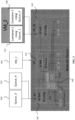
- FIG. 1 shows a device for supporting I/O channel protection, according to an embodiment of the disclosure.
- the device 100 is configured to maintain one or more CPEs 111, 112, 113, wherein each CPE 111, 112, 113 is associated with a different I/O channel 121, 122, 123, and wherein each I/O channel 121, 122, 123 is associated with a different address space of a memory 130. Further, each CPE 111, 112, 113 is allocated verification information comprising the address space associated with its associated I/O channel 121, 122, 123.
- the device 100 may comprise an entity (e.g., a SW) which may create the CPEs 111, 112, 113.
- the CPEs 111, 112, 113 may be created based on the memory 130, for example, one or more process memory spaces, or different spaces of the memory 130 associated with different processes, a memory function, a memory region, a memory window, etc.
- the device 100 may allocate verification information to the one or more CPEs 111, 112, 113 (e.g., the device 100 may fill each CPE with verification information).
- the verification information may be, for example, information related to the address space of the memory, a memory resource, an identity manager, a policy manager, etc.
- the device 100 is further configured to receive a transaction on a given I/O channel 121, 122, 123, the transaction comprising access information including one or more target addresses.
- the transactions may be a queue, a process, a container, etc.
- each transaction may comprise access information, for example, an identity information, address information, etc.
- Each transaction may be received on a given I/O channel 121, 122, 123, and the access information of each transaction may be used for determining the correlation between its access information and the verification information of the CPEs 111, 112, 113, in order to perform a memory access.
- the device 100 is further configured to determine a correlation of the transaction's access information and the verification information of the CPE 111, 112, 113 associated with the given I/O channel 121, 122, 123.
- the device 100 is further configured to allow execution of the transaction, when the determined correlation meets a predefined criterion.
- the correlation may be based on a matching process, and the predefined criterion may be the access information of the transaction that is received on a given I/O channel 121, 122, 123 matches the verification information of the CPE 111, 112, 113 that is associated with that given channel.
- the device 100 may provide a memory isolation, a memory protection. For example, when the device 100 determines that there is a correlation (e.g., the match is found) between the access information of the transaction and the verification information of the CPE 111, 112, 113, the transaction may be executed and the memory may be accessed.
- a correlation e.g., the match is found
- the device 100 may comprise a processing circuitry (not shown in FIG. 1 ) configured to perform, conduct or initiate the various operations of the device 100 described herein.
- the processing circuitry may comprise hardware and software.
- the hardware may comprise analog circuitry or digital circuitry, or both analog and digital circuitry.
- the digital circuitry may comprise components such as application-specific integrated circuits (ASICs), field-programmable arrays (FPGAs), digital signal processors (DSPs), or multi-purpose processors.
- the processing circuitry comprises one or more processors and a non-transitory memory connected to the one or more processors.
- the non-transitory memory may carry executable program code which, when executed by the one or more processors, causes the device 100 to perform, conduct or initiate the operations or methods described herein.
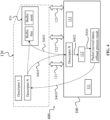
- FIG. 2 depicts a schematic view of a procedure 200 comprising providing memory isolation and protection based on identity management.
- the procedure 200 may be performed by the device 100, as it is described above.
- the device 100 may comprise a CPE context database 201 including an identity manager 203, a policy manager 204, and a behavioral database 205.
- the device 100 further comprises a CPE management plane 202.
- the device 100 may be based on an IO device, and the CPE context database 201 and the CPE management plane 202 may be registered to the memory resource allocation layer in the associated operating system.
- the CPE management plane 202 of the device 100 is configured to allow dynamically assigning the entries to any function, where the total number does not exceed the number of the queues. For example, a maximum number of entries may be assigned to one function.
- the CPE context database 201 of the device 100 may be configured to verify that the address space is within the specific transactor identity (e.g., in a PCIe IO device, the PCIe function, etc.) address space. The verification may be performed based on the system configuration and in order to prevent access violations.
- specific transactor identity e.g., in a PCIe IO device, the PCIe function, etc.
- the device 100 receives a new channel transaction, i.e. a transaction on any of the I/O channels 121, 122, 123.
- the device 100 extracts transactor identity.
- the device 100 may comprise the identity manager 201.
- the identity manager 201 may extract a transactor identity from the received transaction.
- the device 100 may extract an enclave policy.
- the device 100 may comprise the CPE policy manager 204.
- the CPE policy manager 204 may be configured to store, for example, detailed memory translation and ownership association for each channel 121, 122, 123 and its associated transactor identities, for implementing the isolation mechanism.
- the stored information may include, e.g., the PCIe function and process identity along with the memory translation information associated with the IO Channel 121, 122, 123 (e.g., a queue). Examples of the queues are a ring queue format, a direct queue, an indirect queue, etc.
- the PCIe function may be either a physical function or a virtual function of a PCIe device, and may have an identity according to ARI or non ARI mode.
- the device 100 may enforce through the CPE policy manager 204 various policy restrictions, e.g., the maximal amount of queues per process or function. Moreover, whenever the IO device is attempting to perform a memory access or a DMA to an IO channel, and the target addresses for that access (whether it being a read or a write access), originated from an untrusted or protected entity, the device may correlate the information in the CPE policy manager with said access information.
- various policy restrictions e.g., the maximal amount of queues per process or function.
- the device may correlate the information in the CPE policy manager with said access information.
- the device 100 determines a correlation of the transaction's access information and the verification information. Moreover, when it determines "Yes”, i.e., it complies and the correlation meets the predefined criterion, the device 100 goes to step S215. However, when it determines "NO”, i.e., the correlation does not meet the predefined criterion, the device 100 goes to step S216.
- the device 100 allows execution of the transaction, i.e., the determined correlation meets the predefined criterion. For example, when there is a correlation between the access attempt and the information in the CPE, the access may be executed normally.
- the device 100 aborts the transaction, i.e., the determined correlation does not meet the predefined criterion. For example, when there is no correlation between the access attempt and the information in the CPE policy manager 204 (e.g. the memory being accessed is not associated with the applicable queue), the transaction might not be executed, and consequently, at step S217, the transaction may be transferred for further behavioral DB query.
- the CPE policy manager 204 e.g. the memory being accessed is not associated with the applicable queue
- the device 100 stores the aborted transaction in the behavioral database 205 and updates the behavioral database 205 in the context database 201.
- the device 100 determines whether the aborted transaction that is stored in the behavioral database 205, is a malicious transaction or not. Moreover, when it is determined “Yes”, the device 100 goes to step S220, and when it is determined “No”, the device 100 goes to step S219.
- the device 100 retries the transaction notification.
- the device 100 performs a protection exception procedure, i.e., it is determined that the aborted transaction is a malicious transaction.
- the protection exception may include generating an interrupt or other indication to a supervising or control function with applicable information on the access violating the CPE programmed information.
- FIG. 3 depicts a schematic view of the device 100 allowing a physical function (PF) 301 or a plurality of virtual functions (VFs) 302, 303 to isolate memories assigned to different queues 304, 305, 306, 308, 309.
- PF physical function
- VFs virtual functions
- the device 100 of FIG. 3 is exemplary implemented in a network device comprising a PF 301, and a plurality of VFs 302, 303.
- the device 100 may support I/O channel protection based on providing the CPE mechanism that may allow the PF 301 or the plurality of VFs 302, 303 to isolate memories assigned to different queues 304, 305, 306, 307, 308 (or process or containers).
- the device 100 may enable entities including PF 301 or the plurality of VFs 302, 303 running on common servers (the network device in FIG. 3 ), with no Single I/O Virtualization (S-IOV) support (or when the S-IOV is not activated), to deliver isolation on a queue level.
- entities including PF 301 or the plurality of VFs 302, 303 running on common servers (the network device in FIG. 3 ), with no Single I/O Virtualization (S-IOV) support (or when the S-IOV is not activated), to deliver isolation on a queue level.
- S-IOV Single I/O Virtualization
- the device 100 of FIG. 3 may allow the PF 301 or the VFs 302, 303 to run many processes or containers, and may further isolate those using different queues 304, 305, 306, 307, 308.
- FIG. 4 is a schematic view of an exemplary CPE 111, 112, 113 associated with an I/O channel 121, 122, 123 implemented as a Tx and an Rx ring queue flow.
- Tx path procedure 400 (for example, the device 100 may fully or partially perform the procedure 400) is as follows:
- procedure 400 is exemplary discussed based on an Rx path procedure.
- Rx path procedure 400 (for example, the device 100 may fully or partially perform the procedure 400) is as follows:
- FIG. 5 is a schematic view of an exemplary CPE 111, 112, 113 that is associated with an I/O channel 121, 122, 123 comprising a non-volatile memory express flow.
- the device 100 may enable the isolation to the block devices by implementing the same over the NVMe interfaces such as queues.
- the memory 130 e.g., a host memory
- the memory 130 stores a command in a queue
- a ring doorbell is used to notify the device 100 (for example, the device 100 is exemplary implemented as an NVMe controller).
- the device 100 may fetch the command, and may further verify the command memory boundaries on the memory 130 (host memory) and on the destination NVMe device 100, for example, the device 100 may create and may further maintain the CPEs 111, 112, 113.
- the device 100 may verify the memory boundaries, and the verification may be based on the correlation of the transaction's (the command's) access information and the verification information associated with the CPEs 111, 112, 113. If this correlation meets the predefined criterion and passes successfully, then the device 100 (the controller) processes the command (i.e., the device 100 allows execution of the transaction), otherwise, the device 100 may drop the command, output a notification message (e.g., comprising an error) and may further generate an interrupt to the PF and/or the VF.
- the command i.e., the device 100 allows execution of the transaction
- the device 100 may drop the command, output a notification message (e.g., comprising an error) and may further generate an interrupt to the PF and/or the VF.
- the device 100 may comprise a submission queue tail doorbell 503 and a completion queue head doorbell 504.
- the interface from the device 100 (the NVMe controller) to the memory 130 (host memory) may include a completion queue, and an interrupt or the doorbell may be used by the controller to notify about a new completion.
- FIG. 6 shows a method 600 according to an embodiment of the disclosure for supporting IO channel protection.
- the method 600 may be carried out by the device 100, as it is described above.
- the method 600 comprises a step S601 of maintaining one or more CPEs 111, 112, 113, wherein each CPE 111, 112, 113 is associated with a different I/O channel 121, 122, 123, wherein each I/O channel 121, 122, 123 is associated with a different address space of a memory 130, and wherein each CPE 111, 112, 113 is allocated verification information comprising the address space associated with its associated I/O channel 121, 122, 123.
- the method 600 further comprises a step S602 of receiving a transaction on a given I/O channel 121, 122, 123, the transaction comprising access information including one or more target addresses.
- the method 600 further comprises a step S603 of determining a correlation of the transaction's access information and the verification information of the CPE 111, 112, 113 associated with the given I/O channel 121, 122, 123.
- the method 600 further comprises a step S604 of allowing execution of the transaction, when the determined correlation meets a predefined criterion.
Landscapes
- Engineering & Computer Science (AREA)
- Theoretical Computer Science (AREA)
- Computer Security & Cryptography (AREA)
- Computer Hardware Design (AREA)
- General Engineering & Computer Science (AREA)
- General Physics & Mathematics (AREA)
- Physics & Mathematics (AREA)
- Software Systems (AREA)
- Health & Medical Sciences (AREA)
- General Health & Medical Sciences (AREA)
- Databases & Information Systems (AREA)
- Virology (AREA)
- Data Mining & Analysis (AREA)
- Bioethics (AREA)
- Storage Device Security (AREA)
Claims (14)
- Vorrichtung (100) zum Unterstützen von Ein-/Ausgangs- bzw. E/A-Kanalschutz, wobei die Vorrichtung (100) konfiguriert ist zum:Aufrechterhalten einer oder mehrerer Kanalschutzenklaven, CPEs, (111, 112, 113), wobei jede CPE (111, 112, 113) mit einem verschiedenen E/A-Kanal (121, 122, 123) assoziiert ist, wobei jeder E/A-Kanal (121, 122, 123) mit einem verschiedenen Adressraum eines Speichers (130) assoziiert ist und wobei jeder CPE (111, 112, 113) Verifizierungsinformationen zugeteilt sind, die den Adressraum umfassen, der mit ihrem assoziierten E/A-Kanal (121, 122, 123) assoziiert ist;Empfangen einer Transaktion in einem gegebenen E/A-Kanal (121, 122, 123), wobei die Transaktion Zugangsinformationen umfasst, die eine oder mehrere Bestimmungsadressen enthalten;Bestimmen einer Korrelation der Zugangsinformationen der Transaktion und der Verifizierungsinformationen der CPE (111, 112, 113), die mit dem gegebenen E/A-Kanal (121, 122, 123) assoziiert sind;wobei die Vorrichtung eine Kontextdatenbank (201) umfasst, die konfiguriert ist, die Verifizierungsinformationen zu speichern, wobei die Verifizierungsinformationen in einem oder mehreren von Folgendem enthalten sind:- eine Identitätsverwaltungsvorrichtung (203),- eine Richtlinienverwaltungsvorrichtung (204),- eine Verhaltensdatenbank (205),und wobei die Vorrichtung ferner konfiguriert ist zum:Extrahieren, durch die Identitätsverwaltungsvorrichtung (203), einer Transaktoridentität aus der empfangenen Transaktion;Extrahieren, durch die Richtlinienverwaltungsvorrichtung (204), einer Kanalenklavenrichtlinie aus der empfangenen Transaktion;Bestimmen der Korrelation basierend auf der extrahierten Transaktoridentität und der extrahierten Kanalenklavenrichtlinie; undZulassen der Ausführung der Transaktion, wenn die bestimmte Korrelation ein im Voraus definiertes Kriterium erfüllt, oder Abbrechen der Transaktion, wenn die bestimmte Korrelation das im Voraus definiertes Kriterium nicht erfüllt.
- Vorrichtung (100) nach Anspruch 1, ferner konfiguriert zum:Abbrechen, wenn die bestimmte Korrelation das im Voraus definiertes Kriterium nicht erfüllt, der Transaktion; undAusgeben einer Benachrichtigungsmeldung, wobei die Benachrichtigungsmeldung angibt, dass die Transaktion abgebrochen wird.
- Vorrichtung (100) nach Anspruch 1 oder 2, ferner umfassend eine Verwaltungsebene (202), konfiguriert zum:
Zuweisen jedes E/A-Kanals (121, 122, 123) einer bestimmten CPE (111, 112, 113), wobei eine gesamte Anzahl der zugewiesenen E/A-Kanäle (121, 122, 123) gleich einer oder kleiner als eine gesamte Anzahl der CPEs (111, 112, 113) ist. - Vorrichtung (100) nach Anspruch 3, wobei die Verwaltungsebene konfiguriert ist zum:
statischen Zuweisen jedes E/A-Kanals (121, 122, 123) einer bestimmten CPE (111, 112, 113). - Vorrichtung (100) nach Anspruch 3, wobei die Verwaltungsebene konfiguriert ist zum:
dynamischen Zuweisen jedes E/A-Kanals (121, 122, 123) einer bestimmten CPE (111, 112, 113). - Vorrichtung (100) nach Anspruch 1, wobei:die Richtlinienverwaltungsvorrichtung (204) konfiguriert ist zum Speichern von Verifizierungsinformationen, die mindestens eines von Folgendem umfassen:- eine Übersetzungsinformation des Speichers,- eine Assoziationsinformation mindestens eines E/A-Kanals (121, 122, 123) zu einer CPE (111, 112, 113),eine Transaktoridentität mindestens eines E/A-Kanals (121, 122, 123).
- Vorrichtung (100) nach Anspruch 1, ferner konfiguriert zum:Speichern, in der Verhaltensdatenbank (205), jeder abgebrochenen Transaktion; undAktualisieren der Verhaltensdatenbank (205) in der Kontextdatenbank (201).
- Vorrichtung (100) nach Anspruch 7, ferner konfiguriert zum:Bestimmen, ob eine abgebrochene Transaktion, die in der Verhaltensdatenbank (205) gespeichert ist, eine bösartige Transaktion ist; undDurchführen einer Schutzausnahmeprozedur, wenn bestimmt wird, dass die abgebrochene Transaktion eine bösartige Transaktion ist.
- Vorrichtung (100) nach Anspruch 8, wobei:
die Schutzausnahmeprozedur umfasst, eine Unterbrechungsbenachrichtigung an eine Steuerfunktion zu erzeugen, wobei die Unterbrechungsbenachrichtigung Informationen angibt, dass die abgebrochene Transaktion eine Kanalenklavenrichtlinie verletzt. - Vorrichtung (100) nach einem der Ansprüche 1 bis 9, wobei:
jede CPE (111, 112, 113) mit einem E/A-Kanal (121, 122, 123) assoziiert ist, der als ein Sende- bzw. Tx- und ein Empfangs- bzw. Rx-Ringwarteschlangenfluss implementiert ist. - Vorrichtung (100) nach Anspruch 10, wobei:
die empfangene Transaktion einen Tx- oder einen Rx-Deskriptor umfasst, der die eine oder mehreren Bestimmungsadressen umfasst; und die Vorrichtung (100) konfiguriert ist zum:Bestimmen der Korrelation durch Verifizieren einer Speicherbegrenzung basierend auf dem Tx- oder dem Rx-Deskriptor und den Verifizierungsinformationen der CPE (111, 112, 113), die mit der einen oder den mehreren Bestimmungsadressen assoziiert sind; undVerarbeiten oder Abbrechen des Tx- oder des Rx-Deskriptors des Ringwarteschlangenflusses basierend auf dem Verifizierungsergebnis. - Vorrichtung (100) nach einem der Ansprüche 1 bis 11, wobei:
jede CPE (111, 112, 113) mit einem E/A-Kanal (121, 122, 123) assoziiert ist, der einen nichtflüchtigen Speicherexpressfluss umfasst. - Computerimplementiertes Verfahren (600) zum Unterstützen von Ein-/Ausgangs- bzw. E/A-Kanalschutz, das Verfahren (600) umfassend:Aufrechterhalten (S601) einer oder mehrerer Kanalschutzenklaven, CPEs, (111, 112, 113), wobei jede CPE (111, 112, 113) mit einem verschiedenen E/A-Kanal (121, 122, 123) assoziiert ist, wobei jeder E/A-Kanal (121, 122, 123) mit einem verschiedenen Adressraum eines Speichers (130) assoziiert ist und wobei jeder CPE (111, 112, 113) Verifizierungsinformationen zugeteilt sind, die den Adressraum umfassen, der mit ihrem assoziierten E/A-Kanal (121, 122, 123) assoziiert ist;Empfangen (S602) einer Transaktion in einem gegebenen E/A-Kanal (121, 122, 123), wobei die Transaktion Zugangsinformationen umfasst, die eine oder mehrere Bestimmungsadressen enthalten;Bestimmen (S603) einer Korrelation der Zugangsinformationen der Transaktion und der Verifizierungsinformationen der CPE (111, 112, 113), die mit dem gegebenen E/A-Kanal (121, 122, 123) assoziiert sind;Speichern, in einer Kontextdatenbank (201), der Verifizierungsinformationen, wobei die Verifizierungsinformationen in einem oder mehreren von Folgendem enthalten sind:- eine Identitätsverwaltungsvorrichtung (203),- eine Richtlinienverwaltungsvorrichtung (204),- eine Verhaltensdatenbank (205),Extrahieren, durch die Identitätsverwaltungsvorrichtung (203), einer Transaktoridentität aus der empfangenen Transaktion;Extrahieren, durch die Richtlinienverwaltungsvorrichtung (204), einer Kanalenklavenrichtlinie aus der empfangenen Transaktion;Bestimmen der Korrelation basierend auf der extrahierten Transaktoridentität und der extrahierten Kanalenklavenrichtlinie; undZulassen (S604) der Ausführung der Transaktion, wenn die bestimmte Korrelation ein im Voraus definiertes Kriterium erfüllt, oder Abbrechen der Transaktion, wenn die bestimmte Korrelation das im Voraus definiertes Kriterium nicht erfüllt.
- Computerprogrammprodukt, das Anweisungen umfasst, die, wenn sie durch einen Computer ausgeführt werden, veranlassen, dass das Verfahren (600) nach Anspruch 13 durchgeführt wird.
Applications Claiming Priority (1)
| Application Number | Priority Date | Filing Date | Title |
|---|---|---|---|
| PCT/EP2020/071011 WO2022017627A1 (en) | 2020-07-24 | 2020-07-24 | Devices and methods for supporting input/output channel protection |
Publications (2)
| Publication Number | Publication Date |
|---|---|
| EP3970046A1 EP3970046A1 (de) | 2022-03-23 |
| EP3970046B1 true EP3970046B1 (de) | 2023-10-04 |
Family
ID=71786968
Family Applications (1)
| Application Number | Title | Priority Date | Filing Date |
|---|---|---|---|
| EP20746198.9A Active EP3970046B1 (de) | 2020-07-24 | 2020-07-24 | Vorrichtungen und verfahren zur unterstützung des schutzes eines eingangs-/ausgangskanals |
Country Status (4)
| Country | Link |
|---|---|
| US (1) | US11977668B2 (de) |
| EP (1) | EP3970046B1 (de) |
| CN (1) | CN116113948A (de) |
| WO (1) | WO2022017627A1 (de) |
Families Citing this family (1)
| Publication number | Priority date | Publication date | Assignee | Title |
|---|---|---|---|---|
| CN117493344B (zh) * | 2023-11-09 | 2024-07-26 | 兰州大学 | 一种基于机密计算技术的数据组织方法 |
Family Cites Families (8)
| Publication number | Priority date | Publication date | Assignee | Title |
|---|---|---|---|---|
| US6934817B2 (en) * | 2000-03-31 | 2005-08-23 | Intel Corporation | Controlling access to multiple memory zones in an isolated execution environment |
| US9710622B2 (en) * | 2015-02-23 | 2017-07-18 | Intel Corporation | Instructions and logic to fork processes of secure enclaves and establish child enclaves in a secure enclave page cache |
| US10664179B2 (en) * | 2015-09-25 | 2020-05-26 | Intel Corporation | Processors, methods and systems to allow secure communications between protected container memory and input/output devices |
| WO2019168557A1 (en) * | 2018-02-27 | 2019-09-06 | Visa International Service Association | High-throughput data integrity via trusted computing |
| US11755753B2 (en) * | 2018-06-13 | 2023-09-12 | Kyndryl, Inc. | Mechanism to enable secure memory sharing between enclaves and I/O adapters |
| US20190114195A1 (en) * | 2018-08-22 | 2019-04-18 | Intel Corporation | Virtual device composition in a scalable input/output (i/o) virtualization (s-iov) architecture |
| US11126733B2 (en) * | 2018-08-27 | 2021-09-21 | Intel Corporation | System, apparatus and method for configurable trusted input/output access from authorized software |
| CN110032885B (zh) * | 2019-02-19 | 2020-03-06 | 阿里巴巴集团控股有限公司 | 区块链中实现隐私保护的方法、节点和存储介质 |
-
2020
- 2020-07-24 WO PCT/EP2020/071011 patent/WO2022017627A1/en not_active Ceased
- 2020-07-24 EP EP20746198.9A patent/EP3970046B1/de active Active
- 2020-07-24 CN CN202080105141.3A patent/CN116113948A/zh active Pending
-
2021
- 2021-06-15 US US17/348,352 patent/US11977668B2/en active Active
Also Published As
| Publication number | Publication date |
|---|---|
| EP3970046A1 (de) | 2022-03-23 |
| US20220027523A1 (en) | 2022-01-27 |
| US11977668B2 (en) | 2024-05-07 |
| WO2022017627A1 (en) | 2022-01-27 |
| CN116113948A (zh) | 2023-05-12 |
Similar Documents
| Publication | Publication Date | Title |
|---|---|---|
| US11625275B2 (en) | Technologies for controlling memory access transactions received from one or more I/O devices | |
| US11321452B2 (en) | Execution environment virtualization method and apparatus and virtual execution environment access method and apparatus | |
| US8631181B2 (en) | Validating message-signaled interrupts by tracking interrupt vectors assigned to devices | |
| US7139890B2 (en) | Methods and arrangements to interface memory | |
| JP7213879B2 (ja) | 間接アクセスメモリコントローラ用のメモリ保護装置 | |
| TW202518301A (zh) | 用於容許安全通訊之積體電路、方法及電腦系統 | |
| US9830457B2 (en) | Unified extensible firmware interface (UEFI) credential-based access of hardware resources | |
| US20080040566A1 (en) | NoDMA cache | |
| US9183391B2 (en) | Managing device driver cross ring accesses | |
| US9330026B2 (en) | Method and apparatus for preventing unauthorized access to contents of a register under certain conditions when performing a hardware table walk (HWTW) | |
| US7454787B2 (en) | Secure direct memory access through system controllers and similar hardware devices | |
| CN116583840A (zh) | 快速外围部件互连保护控制器 | |
| US20220092223A1 (en) | Technologies for filtering memory access transactions received from one or more i/o devices | |
| US20060085573A1 (en) | Multi-context selection with PCI express to support hardware partitioning | |
| US11977668B2 (en) | Devices and methods for supporting input/output channel protection | |
| CN110347616B (zh) | 基于iommu的计算机系统的置信带外存储器获取 | |
| CN118679476A (zh) | 基于应用安全上下文来优先化漏洞 | |
| CN109582603B (zh) | 用于向共享虚拟存储器提供访问保护的技术 | |
| EP3586234B1 (de) | Verfahren und vorrichtung zur steuerung des zugriffs auf sichere computerressourcen | |
| US20050033979A1 (en) | Method and system for secure direct memory access | |
| US10013385B2 (en) | Programmable validation of transaction requests | |
| US12432204B2 (en) | Hardware identity impersonation for target access control | |
| US11467983B1 (en) | Independently configurable interleaving for interconnect access requests | |
| US11546336B1 (en) | Independently configurable access device stages for processing interconnect access requests | |
| WO2025098042A1 (zh) | 一种虚拟机的安全管控方法、设备及存储介质 |
Legal Events
| Date | Code | Title | Description |
|---|---|---|---|
| STAA | Information on the status of an ep patent application or granted ep patent |
Free format text: STATUS: UNKNOWN |
|
| STAA | Information on the status of an ep patent application or granted ep patent |
Free format text: STATUS: THE INTERNATIONAL PUBLICATION HAS BEEN MADE |
|
| PUAI | Public reference made under article 153(3) epc to a published international application that has entered the european phase |
Free format text: ORIGINAL CODE: 0009012 |
|
| STAA | Information on the status of an ep patent application or granted ep patent |
Free format text: STATUS: REQUEST FOR EXAMINATION WAS MADE |
|
| 17P | Request for examination filed |
Effective date: 20210430 |
|
| AK | Designated contracting states |
Kind code of ref document: A1 Designated state(s): AL AT BE BG CH CY CZ DE DK EE ES FI FR GB GR HR HU IE IS IT LI LT LU LV MC MK MT NL NO PL PT RO RS SE SI SK SM TR |
|
| RIC1 | Information provided on ipc code assigned before grant |
Ipc: G06F 13/12 20060101ALI20230323BHEP Ipc: G06F 13/14 20060101ALI20230323BHEP Ipc: G06F 21/79 20130101ALI20230323BHEP Ipc: G06F 21/85 20130101ALI20230323BHEP Ipc: G06F 21/60 20130101AFI20230323BHEP |
|
| GRAP | Despatch of communication of intention to grant a patent |
Free format text: ORIGINAL CODE: EPIDOSNIGR1 |
|
| STAA | Information on the status of an ep patent application or granted ep patent |
Free format text: STATUS: GRANT OF PATENT IS INTENDED |
|
| DAV | Request for validation of the european patent (deleted) | ||
| DAX | Request for extension of the european patent (deleted) | ||
| RIN1 | Information on inventor provided before grant (corrected) |
Inventor name: BELKAR, BEN-SHAHAR |
|
| INTG | Intention to grant announced |
Effective date: 20230503 |
|
| GRAS | Grant fee paid |
Free format text: ORIGINAL CODE: EPIDOSNIGR3 |
|
| GRAA | (expected) grant |
Free format text: ORIGINAL CODE: 0009210 |
|
| STAA | Information on the status of an ep patent application or granted ep patent |
Free format text: STATUS: THE PATENT HAS BEEN GRANTED |
|
| AK | Designated contracting states |
Kind code of ref document: B1 Designated state(s): AL AT BE BG CH CY CZ DE DK EE ES FI FR GB GR HR HU IE IS IT LI LT LU LV MC MK MT NL NO PL PT RO RS SE SI SK SM TR |
|
| REG | Reference to a national code |
Ref country code: GB Ref legal event code: FG4D |
|
| REG | Reference to a national code |
Ref country code: CH Ref legal event code: EP |
|
| REG | Reference to a national code |
Ref country code: IE Ref legal event code: FG4D |
|
| REG | Reference to a national code |
Ref country code: DE Ref legal event code: R096 Ref document number: 602020018656 Country of ref document: DE |
|
| REG | Reference to a national code |
Ref country code: LT Ref legal event code: MG9D |
|
| REG | Reference to a national code |
Ref country code: NL Ref legal event code: MP Effective date: 20231004 |
|
| REG | Reference to a national code |
Ref country code: AT Ref legal event code: MK05 Ref document number: 1618482 Country of ref document: AT Kind code of ref document: T Effective date: 20231004 |
|
| PG25 | Lapsed in a contracting state [announced via postgrant information from national office to epo] |
Ref country code: NL Free format text: LAPSE BECAUSE OF FAILURE TO SUBMIT A TRANSLATION OF THE DESCRIPTION OR TO PAY THE FEE WITHIN THE PRESCRIBED TIME-LIMIT Effective date: 20231004 |
|
| PG25 | Lapsed in a contracting state [announced via postgrant information from national office to epo] |
Ref country code: GR Free format text: LAPSE BECAUSE OF FAILURE TO SUBMIT A TRANSLATION OF THE DESCRIPTION OR TO PAY THE FEE WITHIN THE PRESCRIBED TIME-LIMIT Effective date: 20240105 |
|
| PG25 | Lapsed in a contracting state [announced via postgrant information from national office to epo] |
Ref country code: IS Free format text: LAPSE BECAUSE OF FAILURE TO SUBMIT A TRANSLATION OF THE DESCRIPTION OR TO PAY THE FEE WITHIN THE PRESCRIBED TIME-LIMIT Effective date: 20240204 |
|
| PG25 | Lapsed in a contracting state [announced via postgrant information from national office to epo] |
Ref country code: LT Free format text: LAPSE BECAUSE OF FAILURE TO SUBMIT A TRANSLATION OF THE DESCRIPTION OR TO PAY THE FEE WITHIN THE PRESCRIBED TIME-LIMIT Effective date: 20231004 |
|
| PG25 | Lapsed in a contracting state [announced via postgrant information from national office to epo] |
Ref country code: AT Free format text: LAPSE BECAUSE OF FAILURE TO SUBMIT A TRANSLATION OF THE DESCRIPTION OR TO PAY THE FEE WITHIN THE PRESCRIBED TIME-LIMIT Effective date: 20231004 |
|
| PG25 | Lapsed in a contracting state [announced via postgrant information from national office to epo] |
Ref country code: ES Free format text: LAPSE BECAUSE OF FAILURE TO SUBMIT A TRANSLATION OF THE DESCRIPTION OR TO PAY THE FEE WITHIN THE PRESCRIBED TIME-LIMIT Effective date: 20231004 |
|
| PG25 | Lapsed in a contracting state [announced via postgrant information from national office to epo] |
Ref country code: LT Free format text: LAPSE BECAUSE OF FAILURE TO SUBMIT A TRANSLATION OF THE DESCRIPTION OR TO PAY THE FEE WITHIN THE PRESCRIBED TIME-LIMIT Effective date: 20231004 Ref country code: IS Free format text: LAPSE BECAUSE OF FAILURE TO SUBMIT A TRANSLATION OF THE DESCRIPTION OR TO PAY THE FEE WITHIN THE PRESCRIBED TIME-LIMIT Effective date: 20240204 Ref country code: GR Free format text: LAPSE BECAUSE OF FAILURE TO SUBMIT A TRANSLATION OF THE DESCRIPTION OR TO PAY THE FEE WITHIN THE PRESCRIBED TIME-LIMIT Effective date: 20240105 Ref country code: ES Free format text: LAPSE BECAUSE OF FAILURE TO SUBMIT A TRANSLATION OF THE DESCRIPTION OR TO PAY THE FEE WITHIN THE PRESCRIBED TIME-LIMIT Effective date: 20231004 Ref country code: BG Free format text: LAPSE BECAUSE OF FAILURE TO SUBMIT A TRANSLATION OF THE DESCRIPTION OR TO PAY THE FEE WITHIN THE PRESCRIBED TIME-LIMIT Effective date: 20240104 Ref country code: AT Free format text: LAPSE BECAUSE OF FAILURE TO SUBMIT A TRANSLATION OF THE DESCRIPTION OR TO PAY THE FEE WITHIN THE PRESCRIBED TIME-LIMIT Effective date: 20231004 Ref country code: PT Free format text: LAPSE BECAUSE OF FAILURE TO SUBMIT A TRANSLATION OF THE DESCRIPTION OR TO PAY THE FEE WITHIN THE PRESCRIBED TIME-LIMIT Effective date: 20240205 |
|
| PG25 | Lapsed in a contracting state [announced via postgrant information from national office to epo] |
Ref country code: SE Free format text: LAPSE BECAUSE OF FAILURE TO SUBMIT A TRANSLATION OF THE DESCRIPTION OR TO PAY THE FEE WITHIN THE PRESCRIBED TIME-LIMIT Effective date: 20231004 Ref country code: RS Free format text: LAPSE BECAUSE OF FAILURE TO SUBMIT A TRANSLATION OF THE DESCRIPTION OR TO PAY THE FEE WITHIN THE PRESCRIBED TIME-LIMIT Effective date: 20231004 Ref country code: PL Free format text: LAPSE BECAUSE OF FAILURE TO SUBMIT A TRANSLATION OF THE DESCRIPTION OR TO PAY THE FEE WITHIN THE PRESCRIBED TIME-LIMIT Effective date: 20231004 Ref country code: NO Free format text: LAPSE BECAUSE OF FAILURE TO SUBMIT A TRANSLATION OF THE DESCRIPTION OR TO PAY THE FEE WITHIN THE PRESCRIBED TIME-LIMIT Effective date: 20240104 Ref country code: LV Free format text: LAPSE BECAUSE OF FAILURE TO SUBMIT A TRANSLATION OF THE DESCRIPTION OR TO PAY THE FEE WITHIN THE PRESCRIBED TIME-LIMIT Effective date: 20231004 Ref country code: HR Free format text: LAPSE BECAUSE OF FAILURE TO SUBMIT A TRANSLATION OF THE DESCRIPTION OR TO PAY THE FEE WITHIN THE PRESCRIBED TIME-LIMIT Effective date: 20231004 |
|
| REG | Reference to a national code |
Ref country code: DE Ref legal event code: R097 Ref document number: 602020018656 Country of ref document: DE |
|
| PG25 | Lapsed in a contracting state [announced via postgrant information from national office to epo] |
Ref country code: DK Free format text: LAPSE BECAUSE OF FAILURE TO SUBMIT A TRANSLATION OF THE DESCRIPTION OR TO PAY THE FEE WITHIN THE PRESCRIBED TIME-LIMIT Effective date: 20231004 |
|
| PG25 | Lapsed in a contracting state [announced via postgrant information from national office to epo] |
Ref country code: CZ Free format text: LAPSE BECAUSE OF FAILURE TO SUBMIT A TRANSLATION OF THE DESCRIPTION OR TO PAY THE FEE WITHIN THE PRESCRIBED TIME-LIMIT Effective date: 20231004 |
|
| PG25 | Lapsed in a contracting state [announced via postgrant information from national office to epo] |
Ref country code: SK Free format text: LAPSE BECAUSE OF FAILURE TO SUBMIT A TRANSLATION OF THE DESCRIPTION OR TO PAY THE FEE WITHIN THE PRESCRIBED TIME-LIMIT Effective date: 20231004 |
|
| PG25 | Lapsed in a contracting state [announced via postgrant information from national office to epo] |
Ref country code: SM Free format text: LAPSE BECAUSE OF FAILURE TO SUBMIT A TRANSLATION OF THE DESCRIPTION OR TO PAY THE FEE WITHIN THE PRESCRIBED TIME-LIMIT Effective date: 20231004 Ref country code: SK Free format text: LAPSE BECAUSE OF FAILURE TO SUBMIT A TRANSLATION OF THE DESCRIPTION OR TO PAY THE FEE WITHIN THE PRESCRIBED TIME-LIMIT Effective date: 20231004 Ref country code: RO Free format text: LAPSE BECAUSE OF FAILURE TO SUBMIT A TRANSLATION OF THE DESCRIPTION OR TO PAY THE FEE WITHIN THE PRESCRIBED TIME-LIMIT Effective date: 20231004 Ref country code: IT Free format text: LAPSE BECAUSE OF FAILURE TO SUBMIT A TRANSLATION OF THE DESCRIPTION OR TO PAY THE FEE WITHIN THE PRESCRIBED TIME-LIMIT Effective date: 20231004 Ref country code: EE Free format text: LAPSE BECAUSE OF FAILURE TO SUBMIT A TRANSLATION OF THE DESCRIPTION OR TO PAY THE FEE WITHIN THE PRESCRIBED TIME-LIMIT Effective date: 20231004 Ref country code: DK Free format text: LAPSE BECAUSE OF FAILURE TO SUBMIT A TRANSLATION OF THE DESCRIPTION OR TO PAY THE FEE WITHIN THE PRESCRIBED TIME-LIMIT Effective date: 20231004 Ref country code: CZ Free format text: LAPSE BECAUSE OF FAILURE TO SUBMIT A TRANSLATION OF THE DESCRIPTION OR TO PAY THE FEE WITHIN THE PRESCRIBED TIME-LIMIT Effective date: 20231004 |
|
| PLBE | No opposition filed within time limit |
Free format text: ORIGINAL CODE: 0009261 |
|
| STAA | Information on the status of an ep patent application or granted ep patent |
Free format text: STATUS: NO OPPOSITION FILED WITHIN TIME LIMIT |
|
| 26N | No opposition filed |
Effective date: 20240705 |
|
| PG25 | Lapsed in a contracting state [announced via postgrant information from national office to epo] |
Ref country code: SI Free format text: LAPSE BECAUSE OF FAILURE TO SUBMIT A TRANSLATION OF THE DESCRIPTION OR TO PAY THE FEE WITHIN THE PRESCRIBED TIME-LIMIT Effective date: 20231004 |
|
| PG25 | Lapsed in a contracting state [announced via postgrant information from national office to epo] |
Ref country code: SI Free format text: LAPSE BECAUSE OF FAILURE TO SUBMIT A TRANSLATION OF THE DESCRIPTION OR TO PAY THE FEE WITHIN THE PRESCRIBED TIME-LIMIT Effective date: 20231004 |
|
| PG25 | Lapsed in a contracting state [announced via postgrant information from national office to epo] |
Ref country code: MC Free format text: LAPSE BECAUSE OF FAILURE TO SUBMIT A TRANSLATION OF THE DESCRIPTION OR TO PAY THE FEE WITHIN THE PRESCRIBED TIME-LIMIT Effective date: 20231004 |
|
| REG | Reference to a national code |
Ref country code: CH Ref legal event code: PL |
|
| PG25 | Lapsed in a contracting state [announced via postgrant information from national office to epo] |
Ref country code: LU Free format text: LAPSE BECAUSE OF NON-PAYMENT OF DUE FEES Effective date: 20240724 |
|
| PG25 | Lapsed in a contracting state [announced via postgrant information from national office to epo] |
Ref country code: LU Free format text: LAPSE BECAUSE OF NON-PAYMENT OF DUE FEES Effective date: 20240724 |
|
| PG25 | Lapsed in a contracting state [announced via postgrant information from national office to epo] |
Ref country code: BE Free format text: LAPSE BECAUSE OF NON-PAYMENT OF DUE FEES Effective date: 20240731 Ref country code: CH Free format text: LAPSE BECAUSE OF NON-PAYMENT OF DUE FEES Effective date: 20240731 |
|
| PG25 | Lapsed in a contracting state [announced via postgrant information from national office to epo] |
Ref country code: FR Free format text: LAPSE BECAUSE OF NON-PAYMENT OF DUE FEES Effective date: 20240731 |
|
| REG | Reference to a national code |
Ref country code: BE Ref legal event code: MM Effective date: 20240731 |
|
| PG25 | Lapsed in a contracting state [announced via postgrant information from national office to epo] |
Ref country code: IE Free format text: LAPSE BECAUSE OF NON-PAYMENT OF DUE FEES Effective date: 20240724 |
|
| PG25 | Lapsed in a contracting state [announced via postgrant information from national office to epo] |
Ref country code: FI Free format text: LAPSE BECAUSE OF FAILURE TO SUBMIT A TRANSLATION OF THE DESCRIPTION OR TO PAY THE FEE WITHIN THE PRESCRIBED TIME-LIMIT Effective date: 20231004 |
|
| PGFP | Annual fee paid to national office [announced via postgrant information from national office to epo] |
Ref country code: DE Payment date: 20250604 Year of fee payment: 6 |
|
| PG25 | Lapsed in a contracting state [announced via postgrant information from national office to epo] |
Ref country code: CY Free format text: LAPSE BECAUSE OF FAILURE TO SUBMIT A TRANSLATION OF THE DESCRIPTION OR TO PAY THE FEE WITHIN THE PRESCRIBED TIME-LIMIT; INVALID AB INITIO Effective date: 20200724 |
|
| PG25 | Lapsed in a contracting state [announced via postgrant information from national office to epo] |
Ref country code: HU Free format text: LAPSE BECAUSE OF FAILURE TO SUBMIT A TRANSLATION OF THE DESCRIPTION OR TO PAY THE FEE WITHIN THE PRESCRIBED TIME-LIMIT; INVALID AB INITIO Effective date: 20200724 |
|
| PG25 | Lapsed in a contracting state [announced via postgrant information from national office to epo] |
Ref country code: TR Free format text: LAPSE BECAUSE OF FAILURE TO SUBMIT A TRANSLATION OF THE DESCRIPTION OR TO PAY THE FEE WITHIN THE PRESCRIBED TIME-LIMIT Effective date: 20231004 |
|
| PGFP | Annual fee paid to national office [announced via postgrant information from national office to epo] |
Ref country code: GB Payment date: 20260608 Year of fee payment: 7 |