EP3968568B1 - Verfahren zur regelerkennung und zugehörige vorrichtung - Google Patents
Verfahren zur regelerkennung und zugehörige vorrichtung Download PDFInfo
- Publication number
- EP3968568B1 EP3968568B1 EP21194253.7A EP21194253A EP3968568B1 EP 3968568 B1 EP3968568 B1 EP 3968568B1 EP 21194253 A EP21194253 A EP 21194253A EP 3968568 B1 EP3968568 B1 EP 3968568B1
- Authority
- EP
- European Patent Office
- Prior art keywords
- rule
- node
- priority
- initial
- determining
- Prior art date
- Legal status (The legal status is an assumption and is not a legal conclusion. Google has not performed a legal analysis and makes no representation as to the accuracy of the status listed.)
- Active
Links
Images



Classifications
-
- H—ELECTRICITY
- H04—ELECTRIC COMMUNICATION TECHNIQUE
- H04L—TRANSMISSION OF DIGITAL INFORMATION, e.g. TELEGRAPHIC COMMUNICATION
- H04L63/00—Network architectures or network communication protocols for network security
- H04L63/02—Network architectures or network communication protocols for network security for separating internal from external traffic, e.g. firewalls
- H04L63/0227—Filtering policies
- H04L63/0263—Rule management
-
- H—ELECTRICITY
- H04—ELECTRIC COMMUNICATION TECHNIQUE
- H04L—TRANSMISSION OF DIGITAL INFORMATION, e.g. TELEGRAPHIC COMMUNICATION
- H04L63/00—Network architectures or network communication protocols for network security
- H04L63/02—Network architectures or network communication protocols for network security for separating internal from external traffic, e.g. firewalls
- H04L63/0227—Filtering policies
- H04L63/0236—Filtering by address, protocol, port number or service, e.g. IP-address or URL
-
- H—ELECTRICITY
- H04—ELECTRIC COMMUNICATION TECHNIQUE
- H04L—TRANSMISSION OF DIGITAL INFORMATION, e.g. TELEGRAPHIC COMMUNICATION
- H04L63/00—Network architectures or network communication protocols for network security
- H04L63/02—Network architectures or network communication protocols for network security for separating internal from external traffic, e.g. firewalls
- H04L63/0227—Filtering policies
- H04L63/0245—Filtering by information in the payload
-
- H—ELECTRICITY
- H04—ELECTRIC COMMUNICATION TECHNIQUE
- H04L—TRANSMISSION OF DIGITAL INFORMATION, e.g. TELEGRAPHIC COMMUNICATION
- H04L63/00—Network architectures or network communication protocols for network security
- H04L63/10—Network architectures or network communication protocols for network security for controlling access to devices or network resources
- H04L63/101—Access control lists [ACL]
Definitions
- Embodiments of this application relate to the data processing field, and in particular, to a rule detection method and a related device.
- ACL access control list
- the ACL is used to identify packets that need to be forwarded or directly shielded.
- a large quantity of rules are configured in the ACL.
- Each rule has a corresponding priority, corresponding packet space, and a corresponding forwarding action.
- a processor performs traversing from a rule with a highest priority to a rule with a low priority.
- the device uses a rule that has a highest priority and that matches the packet.
- configuration of the ACL may cause various anomalies, and consequently the actually used rule does not reflect a real intention of a user or a network administrator.
- the device may receive a packet that should not be received, in other words, receive an attack, or discard a packet that should not be discarded. Consequently, information is lost.
- anomaly detection needs to be performed on the configured ACL, so that the user or the network administrator can adjust a rule in the ACL based on an anomaly detection result.
- a theoretical rule detection method aims to create, by using a packet equivalence class (PEC, packet equivalence class) algorithm, a Hasse diagram constructed based on a PEC inclusion relationship, store a node corresponding to a rule in the ACL into the Hasse diagram, and detect an anomaly by identifying a quantity of packet space elements actually included by the node.
- PEC packet equivalence class
- the PEC algorithm provides only a theoretical framework and can detect only a limited quantity of types of anomalies between rules in the ACL.
- US 8 478 707 B1 discloses reducing an initial rule set, such as a packet forwarding table. Reduction includes identifying relationships of the rules, reassigning priorities and duplicating all rules into lower priority classes to then reduce the rule set by removing redundant rules.
- Embodiments of this application provide a computer implemented rule detection method and a related device, to increase rule anomaly detection coverage.
- a first aspect of the embodiments of this application provides a rule detection method according to claim 1.
- the method including;
- a first current priority corresponding to the first rule is determined based on the first initial priority, the second current priority, and the inclusion relationship.
- the first initial priority indicates a priority corresponding to the first rule configured in an ACL.
- the second current priority is a priority used by the second rule at a current moment, and the second current priority may be the same as or different from a second initial priority.
- the inclusion relationship between the first rule and the second rule indicates inclusion between initial packet space ranges corresponding to the rules.
- a source address corresponding to a rule 1 is 100.0.1.0/25, and a destination address corresponding to the rule 1 is 0.0.0.0/2; and a source address corresponding to a rule 2 is 100.0.1.0/24, and a destination address corresponding to the rule 2 is 0.0.0.0/0.
- Initial packet space ranges corresponding to the rule 1 and the rule 2 each include the source address and the destination address.
- the source address and the destination address corresponding to the rule 2 respectively include the source address and the destination address corresponding to the rule 1. Therefore, the initial packet space range corresponding to the rule 2 includes the initial packet space range corresponding to the rule 1.
- the rule 2 includes the rule 1.
- rule priority transfer is introduced in rule anomaly detection. This can be actually used to detect various rule anomalies in the ACL, and increase coverage in anomaly identification.
- the inclusion relationship between the first rule and the second rule may be determined based on initial packet space ranges.
- Each rule has an initial packet space range corresponding to the rule.
- the initial packet space range includes a value range of each feature, and the feature may be at least one of a source address, a destination address, a source port number, and a destination port number corresponding to the rule.
- the first rule corresponds to a first initial packet space range
- the second rule corresponds to a second initial packet space range. If the second initial packet space range includes the first initial packet space range, it may be determined that the second rule includes the first rule. Inclusion of an initial packet space range means that a value range of each feature is included.
- a second node corresponding to the second rule is an ancestor node of a first node corresponding to the first rule.
- the ancestor node may be a parent node, a grandfather node, or the like. This may be determined based on a specific case.
- an inclusion relationship between different rules and a location relationship between nodes that correspond to the rules and that are in a Hasse diagram may be determined based on initial packet space ranges corresponding to the rules. This improves feasibility of the solution.
- the first initial priority is compared with the second current priority, to determine the first current priority
- the second node is a node with a highest current priority in at least one parent node of the first node. If the second current priority is higher than the first initial priority, priority transfer occurs, and a current priority of the first node is changed to be the same as the second current priority. If the second current priority is lower than the first initial priority, a current priority of the first node is changed to be the same as the first initial priority.
- the first initial priority is compared with the second current priority corresponding to the node with the highest current priority in the at least one parent node of the first node, to determine the first current priority.
- This comparison manner is simple.
- a first target value may be further determined based on a first target node.
- the first target node is a node whose current priority is the same as the first initial priority.
- the first target value is a sum of packet space sizes corresponding to the first target node, and the packet space sizes corresponding to the first target node represent a quantity of non-overlapping elements between the first target node and a descendant node of the first target node.
- the first target value whether an anomaly occurs on the first rule may be determined based on the first initial priority, the first current priority, and the first target value.
- the first target value is 0, if the first initial priority is the same as the first current priority, it may be determined that an anomaly occurs between the first rule and a third rule corresponding to an ancestor node of the first node; or if the first initial priority is different from the first current priority, it may be determined that an anomaly occurs between the first rule and a fourth rule corresponding to a descendant node of the first node.
- a specific rule on which an anomaly occurs is further determined, where the anomaly occurs between the specific rule and the first rule. In this way, a specific type of the anomaly is further clarified.
- a first forwarding action may be compared with a second forwarding action, to determine a specific anomaly between the first rule and the third rule.
- the first forwarding action is an operation instruction corresponding to the first rule
- the second forwarding action is an operation instruction corresponding to the third rule.
- a current priority corresponding to the third rule is the same as the second current priority.
- the first forwarding action if the first forwarding action is the same as the second forwarding action, it may be determined that a first-type redundancy anomaly occurs between the first rule and the third rule; or if the first forwarding action is different from the second forwarding action, it may be determined that a shielding anomaly occurs between the first rule and the third rule.
- a specific type of an anomaly between the rules is further determined with reference to the forwarding actions between the rules, so that the solution can be applied to a plurality of scenarios. This enhances flexibility of the solution.
- the fourth rule may be determined based on a descendant node of the first node, and a fourth node corresponding to the fourth rule is a node whose current priority is higher than the first current priority in a descendant node of the first node. After the fourth rule is determined, it may be determined that a multi-rule shielding anomaly occurs between the first rule and the fourth rule.
- the fourth rule when it is determined that the first target value is 0, and that the first initial priority is the same as the first current priority, the fourth rule may be determined based on the fourth node, where the multi-rule shielding anomaly occurs between the fourth rule and the first rule. In this way, a type of an anomaly is further clarified, and accuracy of the solution for rule anomaly detection is improved.
- the first target value is obtained in a manner of a priority list, where the priority list includes K initial priorities, K target values, and K nodes, and is used to indicate a one-to-one correspondence between an initial priority, a target value, and a node, and K is an integer greater than or equal to 1.
- a fifth node may be added to the Hasse diagram.
- the priority list is updated.
- a specific location of the fifth node may be determined based on an initial packet space range corresponding to the fifth node, and a second target value corresponding to a second target node may be further determined.
- the second target node is a node whose current priority is the same as a fifth initial priority. Addition of the fifth node may affect a current priority or a target value corresponding to another node.
- an n th target value is determined based on a sum of packet space sizes corresponding to all nodes whose current priorities are n.
- the second target value is stored in a to-be-updated priority list. If another target value is changed, a changed result is stored in the to-be-updated priority list, and an updated priority list is finally determined.
- addition of a new node causes a change in the priority list.
- the priority list can be updated in a timely manner, and rule detection is more accurate.
- an alarm may be sent to a user or a network administrator, to notify the user or the network administrator to pay attention to the anomaly.
- the alarm may be represented in a form of a text or voice, provided that the alarm can attract an attention of the user or the network administrator.
- the alarm is sent to the user or the network administrator to notify anomaly information. This meets an actual use requirement better, and improves feasibility of the solution.
- Another aspect of the embodiments of this application provides a rule detection apparatus according to claim 8.
- the embodiments of this application provide a rule detection method, to increase rule anomaly detection coverage.
- An ACL is a packet filtering-based access control technology in which a data packet on an interface can be filtered based on a specified condition and the packet is allowed to pass or discarded, to improve network security.
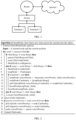
- the ACL may be applied to an architecture shown in FIG. 1 .
- the ACL may be configured in a plurality of network elements, may be applied to a router and a switch shown in FIG. 1 , or may be applied to a firewall. This is not specifically limited herein.
- the router and the switch are merely used as examples in the embodiments of this application.
- At least one rule is configured in the ACL. These rules are used to describe matching conditions of packets. Each rule has a corresponding priority, a corresponding packet space, and a corresponding forwarding action.
- the rules configured in the ACL may be shown in the following Table 1. It should be noted that these matching conditions may be a source address and a destination address of a packet, or may be a source address, a destination address, a source port number, a destination port number, a used protocol, and the like.
- the addresses in Table 1 are all in a mask form. Table 1 merely shows an example of rule configuration in the ACL, and a source address and a destination address are used for description. During actual application, configuration may be performed based on an actual requirement. This is not specifically limited herein.
- Table 1 Serial number Priority Source address Destination address Forwarding action 1 1 100.0.0.0/24 0.0.0.0/0 Forward 2 2 0.0.0.0/0 200.0.0.0/24 Reject 3 3 100.0.1.0/24 0.0.0.0/2 Forward 4 4 100.0.0.0/25 0.0.0.0/0 Reject 5 5 100.0.1.0/25 0.0.0.0/2 Forward 6 6 100.0.1.0/24 0.0.0.0/0 Forward 7 7 100.0.0.0/23 0.0.0.0/0 Reject 8 8 0.0.0.0/0 200.0.0.0/16 Forward
- ACL When the ACL is used to process a packet, traversing is performed from a rule with a highest priority to a rule with a low priority, and a device uses a rule that has a highest priority and that matches the packet, and performs a forwarding action corresponding to the rule.
- a smaller value indicates a higher priority.
- the priority may alternatively be represented in another form. For example, a larger value indicates a higher priority.
- 26 English letters are used to indicate priorities, and the priorities gradually decreases from "A" to "Z”. This is not specifically limited herein.
- configuration of the ACL may cause various anomalies, and consequently an action that is finally executed does not reflect a real intention of a user or a network administrator.
- a rule in the ACL includes the following anomaly cases:
- rule anomaly detection may be implemented by using a pseudocode shown in FIG. 2 .
- Lines 2 to 17 of the pseudocode shown in FIG. 2 may be used to determine a location of a node that is newly added to a Hasse diagram data structure, and used to determine whether an intersection node is generated between the newly added node and an existing node in the Hasse diagram data structure. If the intersection node is generated, a location of the intersection node in the Hasse diagram data structure may be determined.
- Lines 19 to 22 of the pseudo code shown in FIG. 2 may be used to update a current priority of the newly added node in a timely manner. If the current priority of the newly added node affects a priority of a child node of the newly added node, line 23 of the pseudo code is started, that is, the priority of the child node of the newly added node is updated.
- the pseudocode shown in FIG. 2 is merely an implementation in the embodiments of this application, and reflects a logic procedure in the embodiments of this application.
- a specific code form is to be optimized to some extent based on the pseudocode, so that an actually used code meets an actual application requirement better. This is not specifically limited herein.
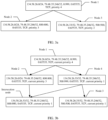
- FIG. 3a is a schematic diagram of a Hasse diagram data structure in the embodiments of this application.
- a transmission protocol used by the rule may be a transmission control protocol (TCP, transmission control protocol), a user datagram protocol (UDP, user datagram protocol), or an internet control message protocol (ICMP, internet control message protocol). This is not specifically limited herein.
- TCP transmission control protocol
- UDP user datagram protocol
- ICMP internet control message protocol
- a node 1 corresponds to the rule 1.
- a manner is that the rules are added to the entire data structure one by one.
- the rules in Table 2 as used as an example.
- the rule 1 may be added first, then the rule 3 may be added, and the rule 2 may be finally added.
- the rule 3 may be added first, then the rule 2 may be added, and the rule 1 may be finally added.
- a specific addition sequence is selected based on an actual application requirement. This is not specifically limited herein.
- a sequence that the rule 2 is added first, then the rule 1 is added, and the rule 3 is finally added is merely used as an example.
- the rule 1 it needs to be determined whether there is an inclusion relationship between the rule 1 and the rule 2. If the rule 2 includes the rule 1, the node 1 is a child node of a node 2 in the Hasse diagram. It can be learned, through comparison between source addresses, destination addresses, source port numbers, and destination port numbers corresponding to the rule 1 and the rule 2, that a packet space range corresponding to the rule 1 completely covers a packet space range corresponding to the rule 2. Therefore, the node 1 is a parent node of the node 2 in the Hasse diagram.
- traversing needs to be performed from a root node, namely, the node 1, to determine a location of a node 3.
- a finally obtained Hasse diagram is shown in FIG. 3a .
- a target value corresponding to an initial priority is changed.
- a priority list shown in the following Table 3 is independently created in the data structure, and an initial priority is used as an index to indicate a target value corresponding to each initial priority.
- the target value indicates a sum of packet space sizes corresponding to all rules whose current priorities are n (n is a positive integer greater than or equal to 1).
- a target value corresponding to a priority of 4 in Table 3 is used as an example. Because only the rule 1 has a current priority of 4, the target value is a packet space size corresponding to the rule 1.
- a calculation method is as follows: An initial packet space size corresponding to the rule 2 and an initial packet space size corresponding to the rule 3 are subtracted from an initial packet space size corresponding to the rule 1.
- the rule 1 with a lower priority includes the rule 2 with a higher priority and the rule 3 with a higher priority
- a forwarding action corresponding to the rule 1 is the same as a forwarding action corresponding to the rule 2
- the forwarding action corresponding to the rule 1 is different from the forwarding action corresponding to the rule 3. Therefore, a second-type redundancy anomaly occurs between the rule 1 and the rule 2, and a generalization anomaly occurs between the rule 1 and the rule 3.
- a processor may send an alarm to remind a user.
- FIG. 3b is a schematic diagram of an updated Hasse diagram data structure in the embodiments of this application.
- a node 4 corresponding to the rule 4 is first compared with a root node.
- a rule 1 includes the rule 4, and therefore the node 4 is a descendant node of a node 1.
- the rule 4 is separately compared with a rule 2 and a rule 3.
- the rule 2 and the rule 4 have no inclusion relationship, and the rule 4 includes the rule 3. Therefore, it is determined that the node 4 is a parent node of a node 3, and an intersection node is generated between the node 4 and a node 2.
- a current priority of the node 4 is the same as the initial priority of the node 4, that is, 1.
- the node 4 is a parent node of the node 3, and the current priority of the node 4 is higher than an initial priority of the node 3. Therefore, a priority of the node 3 is updated to a priority of the node 4.
- a current priority of the node 3 is the same as the current priority of the node 4, that is, 1.
- the intersection node is generated between the node 2 and the node 4, and a packet space range corresponding to the intersection node is a packet space range jointly covered by the node 2 and the node 4.
- the intersection node actually has no corresponding rule in the ACL, and therefore the intersection node does not have an initial priority.
- a current priority of the intersection node is a current priority of a node that is highest in at least one parent node of the intersection node. Both the node 2 and the node 4 are parent nodes of the intersection node, and the current priority of the node 4 is higher than a current priority of the node 2. Therefore, the current priority of the intersection node is the current priority of the node 4.
- a node in the Hasse diagram data structure not only stores initial information of a rule corresponding to the node, but also stores a current priority corresponding to the node at a current moment.
- the current priority of the node is changed, and therefore a target value corresponding to an initial priority is also changed.
- a target value corresponding to an initial priority of 2 is used as an example.
- In the current Hasse diagram there is no node whose current priority is 2, and therefore a target value is 0.
- a target value corresponding to an initial priority of 1 is used as an example.
- the target value is a sum of packet space sizes corresponding to the three nodes.
- the intersection node is generated between the rule 2 and the rule 4, and a correlation anomaly occurs between the rule 2 and the rule 4.
- a current priority corresponding to the rule 3 is different from an initial priority corresponding to the rule 3
- a forwarding action corresponding to the rule 3 is the same as a forwarding action corresponding to the rule 4
- a target value corresponding to the initial priority corresponding to the rule 3 is 0. Therefore, a first-type redundancy anomaly occurs between the rule 3 and the rule 4.
- a processor may send an alarm to remind a user.
- a specific type of an anomaly that occurs between a first rule and a rule corresponding to a parent node of a first node in a Hasse diagram data structure may be detected, or a specific type of an anomaly that occurs between a first rule and a rule corresponding to a descendant node of a first node in a Hasse diagram data structure may be detected.
- one node may have only one parent node or a plurality of parent nodes.
- Types of anomalies may vary in different cases. The following separately provides detailed descriptions.
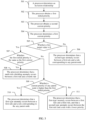
- an embodiment of rule detection in the embodiments of this application includes the following steps.
- a processor determines an inclusion relationship.
- An inclusion relationship between a first rule and a second rule is determined based on an inclusion relationship between a first initial packet space range corresponding to the first rule and a second initial packet space range corresponding to the second rule.
- An initial packet space range includes a value range of a plurality of features, and may include a source address and a destination address, or may include a source address, a destination address, a source port number, and a destination port number. This is not specifically limited herein.
- Inclusion of a packet space range means inclusion of a plurality of features. For example, a rule 1 corresponding to a source address 0.0.0.0/0 and a destination address 0.0.0.0/1 includes a rule 2 corresponding to a source address 100.0.0.1/32 and a destination address 0.0.0.0/2.
- a source address is the same as the source address corresponding to the rule 2, and a destination address is 0.0.0.0/0, because the destination address corresponding to the rule 3 is not included in the destination address corresponding to the rule 1, there is no inclusion relationship between the rule 3 and the rule 1.
- the second rule includes the first rule, it is determined that the second node corresponding to the second rule is a parent node of the first node corresponding to the first rule in a Hasse diagram data structure.
- that the rule 2 includes the rule 1 is used as an example for description.
- the processor obtains a first initial priority.
- Each rule in an ACL has a corresponding initial priority, and the initial priority indicates a corresponding priority during configuration of the rule.
- the processor may obtain the first initial priority in a plurality of manners.
- the processor may obtain the first initial priority from the ACL list, or may obtain the first initial priority from the first node corresponding to the first rule. This is not specifically limited herein.
- the processor obtains a second current priority.
- the second current priority indicates a priority corresponding to the second rule at a current moment, and the second current priority may be the same as or different from a second initial priority.
- step 402 may be performed first, or step 403 may be performed first. This is not specifically limited herein.
- the processor determines a first current priority.
- the first current priority indicates a priority corresponding to the first rule at the current moment, and the first current priority may be the same as or different from the first initial priority.
- the first current priority needs to be determined based on the inclusion relationship between the first rule and the second rule, the first initial priority, and the second current priority.
- the first current priority is the first initial priority, and no priority transfer occurs. If the first initial priority is lower than the second current priority, the first current priority is updated from the first initial priority to the second current priority, and priority transfer occurs.
- the processor determines whether a first target value is 0, and performs step 407 if the first target value is 0, or performs step 406 if the first target value is not 0.
- the first target value is determined based on a first target rule.
- a current priority corresponding to the first target rule is the first initial priority, and the first target value is equal to a sum of packet space sizes corresponding to the first target rule.
- a packet space size corresponding to a rule is determined based on an initial packet space size corresponding to the rule and a packet space size corresponding to a descendant node of a node corresponding to the rule in the Hasse diagram.
- the packet space size includes at least one element quantity. Each element quantity corresponds to one element type.
- the element type may be a source address, a destination address, or may be a source address, a destination address, a source port number, and a destination port number. This is not specifically limited herein.
- the processor determines that a second-type anomaly occurs between the first rule and a third rule.
- the first target value is not 0, it may be determined that the first initial priority is higher than the second current priority, and that the second-type anomaly occurs between the first rule and the third rule, where the second-type anomaly is a second-type redundancy anomaly or a generalization anomaly.
- the third rule may be the second rule, or may be a rule corresponding to an ancestor node of the second node. However, it needs to be determined that a third initial priority corresponding to the third rule is the same as the second current priority.
- a specific type of the second-type anomaly may be determined based on a forwarding action corresponding to the first rule and a forwarding action corresponding to the third rule. If the forwarding action corresponding to the first rule is the same as the forwarding action corresponding to the third rule, it may be determined that the second-type redundancy anomaly occurs between the first rule and the third rule. If the forwarding action corresponding to the first rule is different from the forwarding action corresponding to the third rule, it may be determined that the generalization anomaly occurs between the first rule and the third rule.
- the processor determines whether the first initial priority is the same as the first current priority, and performs step 408 if the first initial priority is the same as the first current priority, or performs step 409 if the first initial priority is different from the first current priority.
- the specific rule on which the anomaly occurs and a specific type of the anomaly further need to be determined based on a relationship between the first initial priority and the first current priority.
- the processor determines that a multi-rule shielding anomaly occurs between the first rule and a fourth rule.
- a node corresponding to the fourth rule is a descendant node of the first node, and a current priority corresponding to the fourth rule is higher than the first current priority.
- the processor determines that a first-type anomaly occurs between the first rule and a third rule.
- the first-type anomaly is a first-type redundancy anomaly or a shielding anomaly.
- the third rule may be the second rule, or may be a rule corresponding to an ancestor node of the second node.
- a third initial priority corresponding to the third rule needs to be the same as the second current priority.
- the first-type anomaly is the first-type redundancy anomaly or the shielding anomaly may be determined based on a forwarding action corresponding to the first rule and a forwarding action corresponding to the third rule. If the forwarding action corresponding to the first rule is the same as the forwarding action corresponding to the third rule, it may be determined that the first-type redundancy anomaly occurs between the first rule and the third rule. If the forwarding action corresponding to the first rule is different from the forwarding action corresponding to the third rule, it may be determined that the shielding anomaly occurs between the first rule and the third rule.
- a priority corresponding to a rule is introduced for rule anomaly detection. This increases rule anomaly detection coverage.
- a specific rule on which an anomaly occurs can be determined, where the anomaly occurs between the specific rule and the first rule, and a specific type of the anomaly can be determined. This improves rule anomaly identification accuracy.
- a second node is a node with a highest current priority in a plurality of parent nodes of a first node.
- an embodiment of rule detection in the embodiments of this application includes the following steps.
- a processor determines an inclusion relationship.
- the processor obtains a first initial priority.
- the processor obtains a second current priority.
- the processor determines a first current priority.
- the processor determines whether a first target value is 0, and performs step 507 if the first target value is 0, or performs step 506 if the first target value is not 0.
- step 501 to step 505 are similar to step 401 to step 405 in the foregoing embodiment in FIG. 4 . Details are not described herein again.
- the processor determines that a second-type anomaly occurs between the first rule and a rule corresponding to any parent node.
- the first target value is not 0, it indicates that the first current priority is the same as the first initial priority, and that a priority corresponding to the first rule is not changed, in other words, an initial priority of the first node is higher than the second current priority. Because the second current priority is the highest in current priorities corresponding to a plurality of parent nodes of the first node, it may indicate that the initial priority of the first node is higher than a current priority of any parent node, and it may be determined that the second-type anomaly occurs between the first rule and the rule corresponding to the any parent node.
- the second-type anomaly is a second-type redundancy anomaly or a generalization anomaly.
- a specific type of the second-type anomaly further needs to be determined based on forwarding actions corresponding to the rules. If a forwarding action corresponding to the first rule is the same as a forwarding action corresponding to the rule corresponding to the any parent node, it may be determined that the second-type redundancy anomaly occurs between the first rule and the rule corresponding to the parent node. If a forwarding action corresponding to the first rule is different from a forwarding action corresponding to the rule corresponding to the any parent node, it may be determined that the generalization anomaly occurs between the first rule and the rule corresponding to the parent node.
- the processor determines whether the first initial priority is the same as the first current priority, and performs step 508 if the first initial priority is the same as the first current priority, or performs step 509 if the first initial priority is different from the first current priority.
- the processor determines that a multi-rule shielding anomaly occurs between the first rule and a fourth rule.
- step 507 and step 508 are similar to step 407 and step 408 in the foregoing embodiment in FIG. 4 . Details are not described herein again.
- the processor determines whether a current priority of any parent node is higher than the first initial priority, and performs step 510 if the current priority of the any parent node is higher than the first initial priority, or performs step 511 if the current priority of the any parent node is not higher than the first initial priority.
- the first target value is 0 and the first initial priority is different from the first current priority, it may indicate that the first rule is included in a rule corresponding to a parent node of the first node. It is likely that the rule corresponding to the any parent node includes the first rule. Alternatively, it is likely that rules corresponding to some parent nodes each include the first rule. Different anomalies correspond to different cases, and a specific anomaly further needs to be determined based on a relationship between the current priority of the parent node and the first initial priority.
- the processor determines that a first-type anomaly occurs between the first rule and a rule corresponding to any parent node.
- a current priority of the any parent node is higher than the first initial priority, it indicates that the rule corresponding to the any parent node includes the first rule, and it may be determined that the first-type anomaly occurs between the first rule and the rule corresponding to the any parent node.
- the first-type anomaly is a first-type redundancy anomaly or a shielding anomaly.
- a specific type of the first-type anomaly further needs to be determined based on forwarding actions corresponding to the rules. If a forwarding action corresponding to the first rule is the same as a forwarding action corresponding to the rule corresponding to the any parent node, it may be determined that the first-type redundancy anomaly occurs between the first rule and the rule corresponding to the parent node. If a forwarding action corresponding to the first rule is different from a forwarding action corresponding to the rule corresponding to the any parent node, it may be determined that the shielding anomaly occurs between the first rule and the rule corresponding to the parent node.
- the processor determines that a first-type anomaly occurs between the first rule and a third rule and a second-type anomaly occurs between the first rule and a rule with a lower priority.
- the first target value is 0, and the first initial priority is different from the first current priority, if there is a parent node whose current priority is lower than the first initial priority, it indicates that different types of anomalies occur between the first rule and rules corresponding to different parent nodes.
- the third rule is a rule with a current priority that is a second current priority
- the first-type anomaly is a first-type redundancy anomaly or a shielding anomaly.
- a specific type of the first-type anomaly needs to be further determined based on forwarding actions corresponding to the rules. If a forwarding action corresponding to the first rule is the same as a forwarding action corresponding to the third rule, it may be determined that the first-type redundancy anomaly occurs between the first rule and the third rule. If a forwarding action corresponding to the first rule is different from a forwarding action corresponding to the third rule, it may be determined that the shielding anomaly occurs between the first rule and the third rule.
- the rule with the lower priority is a rule corresponding to a parent node whose current priority is lower than the first initial priority in the parent nodes of the first node
- the second-type anomaly is a second-type redundancy anomaly or a generalization anomaly.
- a specific type of the second-type anomaly may be determined based on forwarding actions corresponding to the rules. If a forwarding action corresponding to the first rule is the same as a forwarding action corresponding to the rule with the lower priority, it may be determined that the second-type redundancy anomaly occurs between the first rule and the rule with the lower priority. If a forwarding action corresponding to the first rule is different from a forwarding action corresponding to the rule with the lower priority, it may be determined that the generalization anomaly occurs between the first rule and the rule with the lower priority.
- a priority corresponding to a rule is introduced for rule anomaly detection. This increases rule anomaly detection coverage.
- the first rule corresponds to the plurality of parent nodes
- a relationship between a current priority of a parent node and the first initial priority is determined through comparison, and whether the forwarding actions corresponding to the rules are the same is compared, whether an anomaly occurs between the first rule and another rule can be determined, and a specific type of the anomaly can be determined. This improves rule anomaly identification accuracy.
- An anomaly occurs between a first rule and a rule corresponding to a descendant node.
- an embodiment of rule detection in the embodiments of this application includes the following steps.
- a processor obtains a first current priority.
- the first current priority corresponding to a first rule may be the same as or different from a first initial priority.
- the first current priority needs to be determined based on a current priority of a parent node of a first node in a Hasse diagram data structure.
- a specific determining process is similar to a determining process in step 404 in the embodiment shown in FIG. 4 . Details are not described herein again.
- the processor obtains a first initial priority.
- Each rule in an ACL has a corresponding initial priority, and the initial priority indicates a corresponding priority during configuration of the rule.
- the processor may obtain the first initial priority in a plurality of manners.
- the processor may obtain the first initial priority from the ACL list, or may obtain the first initial priority from the first node corresponding to the first rule. This is not specifically limited herein.
- Step 601 may be performed first, or step 602 may be performed first. This is not specifically limited herein.
- the processor determines whether the first current priority is the same as the first initial priority, and performs step 605 if the first current priority is the same as the first initial priority, or performs step 604 if the first current priority is different from the first initial priority.
- a current priority of the first node is related to the current priority of the parent node of the first node in the Hasse diagram data structure.
- the first current priority may be the same as or different from the first initial priority.
- the processor determines that an anomaly occurs between the first rule and a rule corresponding to the parent node.
- the first current priority is different from the first initial priority, it indicates that priority transfer occurs.
- a current priority of a parent node of the first node in the Hasse diagram data structure is transferred to the first node, so that the first current priority is different from the first initial priority.
- an anomaly occurs between the first rule and a rule corresponding to the parent node of the first node.
- a specific anomaly determining process is similar to a determining process in step 409 in the embodiment shown in FIG. 4 or in step 509 in the embodiment shown in FIG. 5 . Details are not described herein again.
- the processor determines whether a first target value is 0, and performs step 606 if the first target value is 0, or performs step 607 if the first target value is not 0.
- the first target value may be 0 or may not be 0, depending on an initial packet space range corresponding to the first node and a relationship between the initial packet space range corresponding to the first node and an initial packet space range corresponding to a descendant node of the first node.
- the processor determines that a multi-rule shielding anomaly occurs between the first rule and a fourth rule.
- the fourth rule is determined based on a fourth node.
- the fourth node is a descendant node of the first node in the Hasse diagram data structure, and a current priority corresponding to the fourth node is higher than the first current priority.
- a source port number is used to indicate a packet space range.
- a packet space range further includes a source address, a destination address, or a destination port number. This is not specifically limited herein.
- Table 5 Serial number Priority Source port number 1 1 301:500 2 2 201:300 3 3 0:200 4 4 0:500 5 5 201:500
- a node 4 is a parent node of a node 3 and a node 5
- the node 5 is a parent node of a node 1 and a node 2.
- Target values corresponding to a priority of 1, a priority of 2, and a priority of 3 are equal to initial packet space sizes corresponding to a rule 1, a rule 2, and a rule 3, and are 200, 100, and 201, respectively. Because a priority corresponding to a rule 5 is lower than a priority corresponding to a rule 4, and the rule 4 includes the rule 5, a current priority corresponding to the rule 5 is 4. Actually, there is no rule having a priority of 5, and therefore a target value corresponding to the priority of 5 is 0. In addition, an initial packet space range corresponding to the rule 5 is completely covered by the initial packet space sizes corresponding to the rule 1 and the rule 2, and the node 5 is the parent node of the node 1 and the node 2.
- a packet space size corresponding to the node 5 is 0.
- a target value corresponding to the rule 4 is a sum of packet space sizes corresponding to all rules with a current priority of 4, that is, a sum of packet space sizes corresponding to the rule 4 and the rule 5.
- a multi-rule shielding anomaly does not occur between the rule 4 and rules corresponding to all descendant nodes of the node 4.
- a first-type anomaly occurs between the rule 4 and the rule 5. Therefore, specific rules on which a multi-rule shielding anomaly occurs need to be clarified, where the multi-rule shielding anomaly occurs between the specific rules and the first rule.
- a restriction is that current priorities corresponding to these rules are higher than the first current priority.
- the processor determines that different anomalies occur between the first rule and rules corresponding to different descendant nodes.
- the first target value is not 0, it indicates that the initial packet space range corresponding to the first rule is not completely covered by the initial packet space range corresponding to the descendant node of the first node.
- an anomaly is not a multi-rule shielding anomaly, and a specific type of the anomaly needs to be determined based on a current priority of the descendant node.
- the processor may determine that a first-type anomaly occurs between the first rule and a rule corresponding to the descendant node.
- a specific type of the first-type anomaly may be determined based on forwarding actions corresponding to the two rules, and a specific step of determining the specific type of the first-type anomaly is similar to step 409 in the embodiment shown in FIG. 4 . Details are not described herein again. A difference is that in step 409, the first-type anomaly occurs between the first rule and the third rule, whereas in this embodiment, the first-type anomaly occurs between the first rule and the rule corresponding to the descendant node of the first node.
- the processor may determine that a second-type anomaly occurs between the first rule and a rule corresponding to the descendant node.
- a specific type of the second-type anomaly may be determined based on forwarding actions corresponding to the two rules, and a specific determining step is similar to step 406 in the embodiment shown in FIG. 4 . Details are not described herein again. A difference is that in step 406, the second-type anomaly occurs between the first rule and the third rule, whereas in this embodiment, the second-type anomaly occurs between the first rule and the rule corresponding to the descendant node of the first node.
- a priority corresponding to a rule is introduced for rule anomaly detection. This increases rule anomaly detection coverage.
- a specific type of the anomaly that occurs between the first rule and the rule corresponding to the child node can be determined. Different processing methods are used in different cases. This increases flexibility of the solution, and improves identification accuracy.
- the processor creates a priority list, and the priority list is updated as a node corresponding to a rule is added to the Hasse diagram.
- an embodiment of rule detection in the embodiments of this application includes the following steps.
- a processor determines a location of a fifth node.
- the fifth node corresponds to a fifth rule, and the location of the fifth node in a Hasse diagram is determined based on an initial packet space range corresponding to the fifth rule.
- traversing is started from a root node to a child node, and the location of the fifth node is determined through comparison between the initial packet space range corresponding to the fifth node and an initial packet space range corresponding to an existing node.
- the processor determines a current priority of the fifth node.
- a parent node of the fifth node is determined based on the location of the fifth node. If the fifth node has no parent node, it may be determined that a fifth current priority is a fifth initial priority. If the fifth node has a parent node, a fifth current priority needs to be determined based on a relationship between a fifth initial priority corresponding to the fifth rule and a current priority of the parent node of the fifth node.
- a specific determining manner is similar to a determining manner in step 404 in the embodiment shown in FIG. 4 . Details are not described herein again.
- the processor updates a priority list.
- a new index is created in the priority list, and is used to store the fifth initial priority and a target value corresponding to the fifth initial priority, and indicate a specific node that actually uses the fifth initial priority.
- a different current priority corresponding to the fifth node leads to a different updated priority list.
- Addition of the fifth node may change a current priority of a descendant node of the fifth node, and further change a priority corresponding to the descendant node before the fifth node is added. Alternatively, addition of the fifth node may not change a current priority of a descendant node of the fifth node. This is not specifically limited herein. Addition of the fifth node may further change the current priority of the fifth node.
- the current priority of the fifth node may be the same as or different from an initial priority of the fifth node, depending on the relationship between the fifth initial priority and the current priority of the parent node of the fifth node. This is not specifically limited herein.
- a target value corresponding to an initial priority of n is usually a sum of packet space sizes corresponding to all rules with a current priority of n.
- a priority corresponding to a rule is introduced for rule anomaly detection. This increases rule anomaly detection coverage.
- the target value is stored in the priority list, and the priority list is updated in a process of adding a node. This improves flexibility and feasibility of the solution.
- an anomaly may be further detected through comparison between initial priorities between a parent node and a child node.
- an embodiment of rule detection in the embodiments of this application includes the following steps.
- a processor obtains a first initial priority.
- Each rule in an ACL has a corresponding initial priority, and the initial priority indicates a corresponding priority during configuration of the rule.
- the processor may obtain the first initial priority in a plurality of manners.
- the processor may obtain the first initial priority from the ACL list, or may obtain the first initial priority from a first node corresponding to a first rule. This is not specifically limited herein.
- the processor obtains a second initial priority.
- the processor may obtain the second initial priority in a plurality of manners.
- the processor may obtain the second initial priority from the ACL list, or may obtain the second initial priority from a second node corresponding to a second rule. This is not specifically limited herein. It should be noted that the second node is a parent node of the first node in a Hasse diagram data structure.
- the processor determines whether the first initial priority is higher than the second initial priority, and performs step 804 if the first initial priority is higher than the second initial priority, or performs step 805 if the first initial priority is not higher than the second initial priority.
- the processor After obtaining the first initial priority and the second initial priority, the processor needs to determine a relationship between the first initial priority and the second initial priority.
- the processor determines that a second-type anomaly occurs between the first rule and the second rule.
- the second-type anomaly occurs between the first rule and the second rule.
- a specific type of the second-type anomaly may be further determined based on forwarding actions corresponding to the first node and the second node.
- a specific determining step is similar to step 406 in the embodiment shown in FIG. 4 . Details are not described herein again.
- the processor determines that a first-type anomaly occurs between the first rule and the second rule.
- first initial priority is lower than the second initial priority
- first-type anomaly occurs between the first rule and the second rule.
- a specific type of the first-type anomaly may be further determined based on forwarding actions corresponding to the first node and the second node.
- a specific determining step is similar to step 409 in the embodiment shown in FIG. 4 . Details are not described herein again.
- a priority corresponding to a rule is introduced for rule anomaly detection. This increases rule anomaly detection coverage.
- a relationship between the initial priority of the child node and the initial priority of the parent node is determined through comparison, whether a second-type anomaly occurs between a rule corresponding to the child node and a rule corresponding to the parent node may be determined.
- a manner of determining whether an anomaly occurs is simple, and fewer steps are required.
- FIG. 9 is a schematic diagram of a rule detection apparatus 900 in the embodiments of this application.
- An embodiment of the rule detection apparatus 900 in this application includes:
- the determining unit 902 is further configured to:
- the determining unit 902 is further configured to:
- the rule detection apparatus 900 further includes a processing unit 903.
- the determining unit 902 is further configured to: determine a first target node based on the Hasse diagram data structure, where a current priority corresponding to the first target node is the same as the first initial priority; and determine an initial packet space size corresponding to the first target node, where the initial packet space size is determined based on at least one element quantity corresponding to the first target node, and each element quantity corresponds to one element type.
- the obtaining unit 901 is further configured to obtain, based on the Hasse diagram data structure, a packet space size corresponding to a child node of the first target node, where the packet space size corresponding to the child node is determined based on a quantity of non-overlapping elements between the child node and a descendant node of the child node.
- the determining unit 902 is further configured to determine, based on the initial packet space size and the packet space size corresponding to the child node, a packet space size corresponding to the first target node, where the packet space size corresponding to the first target node is determined based on a quantity of non-overlapping elements between the first target node and a descendant node of the first target node.
- the processing unit 903 is configured to calculate a sum of packet space sizes corresponding to the first target node, to obtain a first target value corresponding to the first initial priority.
- the determining unit 902 is further configured to: determine, based on the first initial priority, the first current priority, and the first target value, whether an anomaly occurs on the first rule; and if the first initial priority is different from the first current priority, and the first target value is 0, determine that an anomaly occurs between the first rule and a third rule, where a third node corresponding to the third rule is an ancestor node of the first node in the Hasse diagram data structure; or if the first initial priority is the same as the first current priority, and the first target value is 0, determine that an anomaly occurs between the first rule and a fourth rule, where a fourth node corresponding to the fourth rule is a descendant node of the first node in the Hasse diagram.
- the determining unit 902 is further configured to determine the third rule based on the second current priority, where a third initial priority corresponding to the third rule is the same as the second current priority.
- the obtaining unit 901 is further configured to: obtain a first forwarding action corresponding to the first rule, and obtain a second forwarding action corresponding to the third rule.
- the determining unit 902 is further configured to: if the first initial priority is different from the first current priority, the first target value is 0, and the first forwarding action is the same as the second forwarding action, determine that a first-type redundancy anomaly occurs between the first rule and the third rule; or if the first initial priority is different from the first current priority, the first target value is 0, and the first forwarding action is different from the second forwarding action, determine that a shielding anomaly occurs between the first rule and the third rule.
- the determining unit 902 is further configured to: determine the fourth rule based on the fourth node, where the fourth node is a descendant node of the first node in the Hasse diagram data structure, and a fourth current priority corresponding to the fourth node is higher than the first current priority; and determine that a multi-rule shielding anomaly occurs between the first rule and the fourth rule.
- the obtaining unit 901 is further configured to obtain, based on a priority list, the first target value corresponding to the first initial priority, where the priority list includes K initial priorities, K target values, and K nodes, there are one-to-one correspondences between the initial priorities, the target values, and the K nodes, and K is an integer greater than or equal to 1.
- the processing unit 903 is further configured to add a fifth node corresponding to a fifth rule to the Hasse diagram data structure.
- the determining unit 902 is further configured to determine, based on a second target node, a second target value corresponding to a fifth initial priority, where a current priority of the second target node is the same as the fifth initial priority.
- the processing unit 903 is further configured to: store the fifth initial priority corresponding to the fifth node and the second target value in a to-be-updated priority list, and update the to-be-updated priority list based on the second target value, to obtain the priority list.
- the rule detection apparatus may perform the operations performed by the processor in the embodiment shown in FIG. 4 , FIG. 5 , FIG. 6 , or FIG. 7 . Details are not described herein again.
- FIG. 10 is a schematic diagram of a rule detection apparatus 1000 in the embodiments of this application.
- An embodiment of the rule detection apparatus 1000 in this application includes:
- the determining unit 1002 is further configured to: if the first initial priority is higher than the second initial priority, determine that an anomaly occurs between the first rule and the second rule.
- the obtaining unit 1001 is further configured to: obtain a first forwarding action corresponding to the first rule, and obtain a second forwarding action corresponding to the second rule.
- the determining unit 1002 is further configured to: if the first forwarding action is the same as the second forwarding action, determine that a second-type redundancy anomaly occurs between the first rule and the second rule; or if the first forwarding action is different from the second forwarding action, determine that a generalization anomaly occurs between the first rule and the second rule.
- the rule detection apparatus may perform the operations performed by the processor in the embodiment shown in FIG. 8 . Details are not described herein again.
- FIG. 11 is a schematic structural diagram of a computer device according to an embodiment of this application.
- the computer device 1100 may include one or more central processing units (central processing unit, CPU) 1101 and a memory 1105.
- the memory 1105 stores one or more application programs or data.
- the memory 1105 may be a volatile memory or a persistent memory.
- the programs stored in the memory 1105 may include one or more modules, and each module may include a series of instruction operations for the computer device.
- the central processing unit 1101 may be configured to: communicate with the memory 1105, and perform, on the computer device 1100, the series of instruction operations in the memory 1105.
- the computer device 1100 may further include one or more power supplies 1102, one or more wired or wireless network interfaces 1103, one or more input/output interfaces 1104, and/or one or more operating systems such as Windows ServerTM, Mac OS XTM, UnixTM, LinuxTM, and FreeBSDTM.
- power supplies 1102 one or more wired or wireless network interfaces 1103, one or more input/output interfaces 1104, and/or one or more operating systems such as Windows ServerTM, Mac OS XTM, UnixTM, LinuxTM, and FreeBSDTM.
- the computer device 1100 may perform the operations performed by the processor in the embodiments shown in FIG. 2 to FIG. 7 . Details are not described herein again.
- FIG. 12 is a schematic structural diagram of a computer device according to an embodiment of this application.
- the computer device 1200 may include one or more central processing units (central processing unit, CPU) 1201 and a memory 1205.
- the memory 1205 stores one or more application programs or data.
- the memory 1205 may be a volatile memory or a persistent memory.
- the programs stored in the memory 1205 may include one or more modules, and each module may include a series of instruction operations for the computer device.
- the central processing unit 1201 may be configured to: communicate with the memory 1205, and perform, on the computer device 1200, the series of instruction operations in the memory 1205.
- the computer device 1200 may further include one or more power supplies 1202, one or more wired or wireless network interfaces 1203, one or more input/output interfaces 1204, and/or one or more operating systems such as Windows ServerTM, Mac OS XTM, UnixTM, LinuxTM, and FreeBSDTM.
- power supplies 1202 one or more wired or wireless network interfaces 1203, one or more input/output interfaces 1204, and/or one or more operating systems such as Windows ServerTM, Mac OS XTM, UnixTM, LinuxTM, and FreeBSDTM.
- the computer device 1200 may perform the operations performed by the processor in the embodiment shown in FIG. 8 . Details are not described herein again.
- the disclosed system, apparatus, and method may be implemented in other manners.
- the foregoing described apparatus embodiment is merely an example.
- division into the units is merely logical function division and may be other division in an actual implementation.
- a plurality of units or components may be combined or integrated into another system, or some features may be ignored or not performed.
- the displayed or discussed mutual couplings or direct couplings or communication connections may be implemented through some interfaces.
- the indirect couplings or communication connections between the apparatuses or units may be implemented in electronic, mechanical, or other forms.
- the units described as separate parts may or may not be physically separate, and parts displayed as units may or may not be physical units, may be located in one position, or may be distributed on a plurality of network units. Some or all of the units may be selected based on actual requirements to achieve the objectives of the solutions of the embodiments.
- functional units in the embodiments of this application may be integrated into one processing unit, or each of the units may exist alone physically, or two or more units are integrated into one unit.
- the integrated unit may be implemented in a form of hardware, or may be implemented in a form of a software functional unit.
- the integrated unit When the integrated unit is implemented in the form of the software functional unit and sold or used as an independent product, the integrated unit may be stored in a computer-readable storage medium. Based on such an understanding, the technical solutions in this application essentially, or the part contributing to the conventional technology, or all or some of the technical solutions may be implemented in the form of a software product.
- the computer software product is stored in a storage medium and includes several instructions for instructing a computer device (which may be a personal computer, a server, a network device, or the like) to perform all or some of the steps of the methods described in the embodiments of this application.
- the foregoing storage medium includes any medium that can store program code, such as a USB flash drive, a removable hard disk drive, a read-only memory (ROM, read-only memory), a random access memory (RAM, random access memory), a magnetic disk, or an optical disc.
- program code such as a USB flash drive, a removable hard disk drive, a read-only memory (ROM, read-only memory), a random access memory (RAM, random access memory), a magnetic disk, or an optical disc.
Landscapes
- Engineering & Computer Science (AREA)
- Computer Networks & Wireless Communication (AREA)
- Signal Processing (AREA)
- Computer Hardware Design (AREA)
- Computer Security & Cryptography (AREA)
- Computing Systems (AREA)
- General Engineering & Computer Science (AREA)
- Business, Economics & Management (AREA)
- General Business, Economics & Management (AREA)
- Data Exchanges In Wide-Area Networks (AREA)
Claims (8)
- Computerimplementiertes Verfahren zum Erkennen von Regelanomalien in einer Zugriffskontrollliste, ACL, wobei die ACL eine Vielzahl von Regeln umfasst, von denen jede eine Priorität, einen Paketraumbereich und eine Weiterleitungsmaßnahme umfasst, wobei das Verfahren umfasst:Ermitteln (402) einer ersten anfänglichen Priorität, die einer ersten Regel der ACL entspricht;Ermitteln (403) einer zweiten aktuellen Priorität, die einer zweiten Regel der ACL entspricht;Bestimmen (401) einer Einschlussbeziehung zwischen der ersten Regel und der zweiten Regel basierend auf einem ersten anfänglichen Paketraumbereich entsprechend der ersten Regel und einem zweiten anfänglichen Paketraumbereich entsprechend der zweiten Regel, wobei der erste anfängliche Paketraumbereich einen Wertebereich jedes ersten Merkmals umfasst und der zweite anfängliche Paketraumbereich einen Wertebereich jedes zweiten Merkmals umfasst; undwenn der zweite anfängliche Paketraumbereich den ersten anfänglichen Paketraumbereich umfasst, Bestimmen, dass die zweite Regel die erste Regel umfasst, wobei ein zweiter Knoten ein Vorgängerknoten eines ersten Knotens in einer Hasse-Diagramm-Datenstruktur ist, die erste Regel dem ersten Knoten in der Hasse-Diagramm-Datenstruktur entspricht und die zweite Regel dem zweiten Knoten in der Hasse-Diagramm-Datenstruktur entspricht;Bestimmen einer ersten aktuellen Priorität, die der ersten Regel entspricht, basierend auf der ersten anfänglichen Priorität, der zweiten aktuellen Priorität und der Einschlussbeziehung zwischen der ersten Regel und der zweiten Regel; undBestimmen basierend auf der ersten anfänglichen Priorität und der ersten aktuellen Priorität, ob eine Anomalie bei der ersten Regel auftritt.
- Regelerkennungsverfahren gemäß Anspruch 1, wobei das Bestimmen einer ersten aktuellen Priorität, die der ersten Regel entspricht, basierend auf der ersten anfänglichen Priorität, der zweiten aktuellen Priorität und der Einschlussbeziehung zwischen der ersten Regel und der zweiten Regel Folgendes umfasst:wenn der zweite Knoten ein Elternknoten des ersten Knotens in der Hasse-Diagramm-Datenstruktur ist und der zweite Knoten ein Knoten mit einer höchsten aktuellen Priorität unter den Elternknoten des ersten Knotens ist, Bestimmen, ob die erste anfängliche Priorität höher als die zweite aktuelle Priorität ist; undwenn die erste anfängliche Priorität höher als die zweite aktuelle Priorität ist, Bestimmen, dass die erste aktuelle Priorität die erste anfängliche Priorität ist; oder wenn die erste anfängliche Priorität niedriger als die zweite aktuelle Priorität ist, Bestimmen, dass die erste aktuelle Priorität die zweite aktuelle Priorität ist.
- Regelerkennungsverfahren gemäß Anspruch 1 oder 2, wobei das Verfahren ferner nach dem Bestimmen einer ersten aktuellen Priorität, die der ersten Regel entspricht, Folgendes umfasst:Bestimmen eines ersten Zielknotens basierend auf der Hasse-Diagramm-Datenstruktur, wobei eine aktuelle Priorität, die dem ersten Zielknoten entspricht, gleich wie die erste anfängliche Priorität ist;Bestimmen einer anfänglichen Paketraumgröße, die dem ersten Zielknoten entspricht, wobei die anfängliche Paketraumgröße basierend auf mindestens einer dem ersten Zielknoten entsprechenden Elementmenge bestimmt wird und jede Elementmenge einem Elementtyp entspricht;Ermitteln, basierend auf der Hasse-Diagramm-Datenstruktur, einer Paketraumgröße, die einem Kindknoten des ersten Zielknotens entspricht, wobei die dem Kindknoten entsprechende Paketraumgröße basierend auf einer Menge von nicht-überlappenden Elementen zwischen dem Kindknoten und Nachfolgeknoten des Kindknotens bestimmt wird;Bestimmen einer dem ersten Zielknoten entsprechenden Paketraumgröße basierend auf der anfänglichen Paketraumgröße und der dem Kindknoten entsprechenden Paketraumgröße, wobei die dem ersten Zielknoten entsprechende Paketraumgröße basierend auf einer Menge von nicht-überlappenden Elementen zwischen dem ersten Zielknoten und Nachfolgeknoten des ersten Zielknotens bestimmt wird; undBerechnen einer Summe von dem ersten Zielknoten entsprechenden Paketraumgrößen, um einen ersten Zielwert zu erhalten, der der ersten anfänglichen Priorität entspricht; unddas Bestimmen basierend auf der ersten anfänglichen Priorität und der ersten aktuellen Priorität, ob eine Anomalie bei der ersten Regel auftritt, Folgendes umfasst:Bestimmen basierend auf der ersten anfänglichen Priorität, der ersten aktuellen Priorität und dem ersten Zielwert, ob eine Anomalie bei der ersten Regel auftritt; und wenn die erste anfängliche Priorität verschieden von der ersten aktuellen Priorität ist und der erste Zielwert 0 ist, Bestimmen, dass eine Anomalie zwischen der ersten Regel und einer dritten Regel auftritt, wobei ein der dritten Regel entsprechender dritter Knoten ein Vorgängerknoten des ersten Knotens in der Hasse-Diagramm-Datenstruktur ist; oderwenn die erste anfängliche Priorität gleich wie die erste aktuelle Priorität ist und der erste Zielwert 0 ist, Bestimmen, dass eine Anomalie zwischen der ersten Regel und einer vierten Regel auftritt, wobei ein der vierten Regel entsprechender vierter Knoten ein Nachfolgeknoten des ersten Knotens in der Hasse-Diagramm-Datenstruktur ist.
- Regelerkennungsverfahren gemäß Anspruch 3, wobei das Verfahren ferner umfasst:Bestimmen der dritten Regel basierend auf der zweiten aktuellen Priorität, wobei eine der dritten Regel entsprechende dritte aktuelle Priorität gleich wie die zweite aktuelle Priorität ist;Ermitteln einer der ersten Regel entsprechenden ersten Weiterleitungsmaßnahme; und Ermitteln einer der dritten Regel entsprechenden zweiten Weiterleitungsmaßnahme; unddas Bestimmen, dass eine Anomalie zwischen der ersten Regel und der dritten Regel auftritt, Folgendes umfasst:wenn die erste anfängliche Priorität verschieden von der ersten aktuellen Priorität ist, der erste Zielwert 0 ist und die erste Weiterleitungsmaßnahme gleich wie die zweite Weiterleitungsmaßnahme ist, Bestimmen, dass eine Redundanzanomalie ersten Typs zwischen der ersten Regel und der dritten Regel auftritt; oderwenn die erste anfängliche Priorität verschieden von der ersten aktuellen Priorität ist, der erste Zielwert 0 ist und die erste Weiterleitungsmaßnahme verschieden von der zweiten Weiterleitungsmaßnahme ist, Bestimmen, dass eine Abschirmungsanomalie zwischen der ersten Regel und der dritten Regel auftritt.
- Regelerkennungsverfahren gemäß Anspruch 3, wobei das Verfahren ferner umfasst:Bestimmen der vierten Regel basierend auf dem vierten Knoten, wobei der vierte Knoten ein Nachfolgeknoten des ersten Knotens in der Hasse-Diagramm-Datenstruktur ist und eine dem vierten Knoten entsprechende vierte aktuelle Priorität höher als die erste aktuelle Priorität ist; unddas Bestimmen, dass eine Anomalie zwischen der ersten Regel und einer vierten Regel auftritt, Folgendes umfasst:
Bestimmen, dass zwischen der ersten Regel und der vierten Regel eine Abschirmungsanomalie mehrerer Regeln auftritt. - Regelerkennungsverfahren gemäß einem der Ansprüche 1 bis 5, wobei das Ermitteln eines der ersten anfänglichen Priorität entsprechenden ersten Zielwertes Folgendes umfasst:
Ermitteln des der ersten anfänglichen Priorität entsprechenden ersten Zielwertes basierend auf einer Prioritätenliste, wobei die Prioritätenliste K anfängliche Prioritäten, K Zielwerte und K Knoten umfasst, eineindeutige Entsprechungen zwischen den anfänglichen Prioritäten, den Zielwerten und den K Knoten bestehen und K eine ganze Zahl größer als oder gleich 1 ist. - Regelerkennungsverfahren gemäß Anspruch 6, wobei das Verfahren ferner vor dem Ermitteln des der ersten anfänglichen Priorität entsprechenden ersten Zielwertes basierend auf einer Prioritätenliste Folgendes umfasst:Hinzufügen eines einer fünften Regel entsprechenden fünften Knotens zur Hasse-Diagramm Datenstruktur;Bestimmen, basierend auf einem zweiten Zielknoten, eines einer fünften anfänglichen Priorität entsprechenden zweiten Zielwertes, wobei eine aktuelle Priorität des zweiten Zielknotens gleich wie die fünfte anfängliche Priorität ist;Speichern der dem fünften Knoten und dem zweiten Zielwert entsprechenden fünften anfänglichen Priorität in einer zu aktualisierenden Prioritätenliste; undAktualisieren der zu aktualisierenden Prioritätenliste basierend auf dem zweiten Zielwert, um die Prioritätenliste zu erhalten.
- Computerbasierte Regelerkennungsvorrichtung (900, 1000), umfassend:eine Ermittlungseinheit (901, 1001), die dazu konfiguriert ist, eine erste anfängliche Priorität zu ermitteln, die einer ersten Regel entspricht, wobei die Ermittlungseinheit (901, 1001) ferner dazu konfiguriert ist, eine zweite aktuelle Priorität zu ermitteln, die einer zweiten Regel entspricht; undeine Bestimmungseinheit (902, 1002), die dazu konfiguriert ist, basierend auf der ersten anfänglichen Priorität, der zweiten aktuellen Priorität und einer Einschlussbeziehung zwischen der ersten Regel und der zweiten Regel eine der ersten Regel entsprechende erste aktuelle Priorität zu bestimmen, wobei die Bestimmungseinheit (902, 1002) ferner dazu konfiguriert ist, basierend auf der ersten anfänglichen Priorität und der ersten aktuellen Priorität zu bestimmen, ob eine Anomalie bei der ersten Regel auftritt;wobei die Bestimmungseinheit speziell dazu konfiguriert ist:die Einschlussbeziehung zwischen der ersten Regel und der zweiten Regel basierend auf einem ersten anfänglichen Paketraumbereich entsprechend der ersten Regel und einem zweiten anfänglichen Paketraumbereich entsprechend der zweiten Regel zu bestimmen, wobei der erste anfängliche Paketraumbereich einen Wertebereich jedes ersten Merkmals umfasst und der zweite anfängliche Paketraumbereich einen Wertebereich jedes zweiten Merkmals umfasst; undwenn der zweite anfängliche Paketraumbereich den ersten anfänglichen Paketraumbereich umfasst, zu bestimmen, dass die zweite Regel die erste Regel umfasst, wobei ein zweiter Knoten ein Vorgängerknoten eines ersten Knotens in einer Hasse-Diagramm-Datenstruktur ist, die erste Regel dem ersten Knoten in der Hasse-Diagramm-Datenstruktur entspricht, und die zweite Regel dem zweiten Knoten in der Hasse-Diagramm-Datenstruktur entspricht.
Applications Claiming Priority (1)
| Application Number | Priority Date | Filing Date | Title |
|---|---|---|---|
| CN202010962457.6A CN114268443B (zh) | 2020-09-14 | 2020-09-14 | 一种规则检测方法以及相关设备 |
Publications (2)
| Publication Number | Publication Date |
|---|---|
| EP3968568A1 EP3968568A1 (de) | 2022-03-16 |
| EP3968568B1 true EP3968568B1 (de) | 2024-11-06 |
Family
ID=77595387
Family Applications (1)
| Application Number | Title | Priority Date | Filing Date |
|---|---|---|---|
| EP21194253.7A Active EP3968568B1 (de) | 2020-09-14 | 2021-09-01 | Verfahren zur regelerkennung und zugehörige vorrichtung |
Country Status (3)
| Country | Link |
|---|---|
| US (1) | US11916881B2 (de) |
| EP (1) | EP3968568B1 (de) |
| CN (1) | CN114268443B (de) |
Families Citing this family (2)
| Publication number | Priority date | Publication date | Assignee | Title |
|---|---|---|---|---|
| CN115913661B (zh) * | 2022-10-31 | 2025-10-21 | 北京力控华康科技有限公司 | Acl规则排序调整方法、装置、计算机设备及介质 |
| CN120238197B (zh) * | 2025-05-30 | 2025-07-25 | 新华三人工智能科技有限公司 | 光模块故障检测方法、装置及电子设备 |
Family Cites Families (11)
| Publication number | Priority date | Publication date | Assignee | Title |
|---|---|---|---|---|
| US6381639B1 (en) * | 1995-05-25 | 2002-04-30 | Aprisma Management Technologies, Inc. | Policy management and conflict resolution in computer networks |
| US7958075B1 (en) * | 2006-06-29 | 2011-06-07 | At&T Intellectual Property Ii, Lp | Compressing rectilinear pictures and minimizing access control lists |
| EP2023567B1 (de) * | 2007-08-08 | 2011-03-16 | Mitsubishi Electric Corporation | Verwaltung von Konflikten in Sicherheitsregeln |
| US8478707B1 (en) * | 2010-11-01 | 2013-07-02 | Google Inc. | System and method for reducing flow rules in forwarding tables |
| CN104601526B (zh) * | 2013-10-31 | 2018-01-09 | 华为技术有限公司 | 一种冲突检测及解决的方法、装置 |
| CN104092676B (zh) * | 2014-06-30 | 2017-05-10 | 复旦大学 | 面向云数据中心环境防火墙即服务的并行防火墙规则异常检测的方法 |
| CN106817275B (zh) * | 2016-12-16 | 2020-05-08 | 江苏省未来网络创新研究院 | 一种自动化预防和编排处理策略冲突的系统和方法 |
| CN108540427B (zh) * | 2017-03-02 | 2021-09-07 | 株式会社理光 | 冲突检测方法和检测设备、访问控制方法和访问控制装置 |
| SG10201703959RA (en) * | 2017-05-15 | 2018-12-28 | Huawei Int Pte Ltd | System and method for detecting routing loops in a software defined network (sdn) |
| US10574582B2 (en) * | 2017-11-02 | 2020-02-25 | Fujitsu Limited | Network property verification |
| US10439926B2 (en) * | 2018-01-02 | 2019-10-08 | Fujitsu Limited | Network analysis |
-
2020
- 2020-09-14 CN CN202010962457.6A patent/CN114268443B/zh active Active
-
2021
- 2021-09-01 EP EP21194253.7A patent/EP3968568B1/de active Active
- 2021-09-10 US US17/471,414 patent/US11916881B2/en active Active
Also Published As
| Publication number | Publication date |
|---|---|
| CN114268443B (zh) | 2023-04-18 |
| US11916881B2 (en) | 2024-02-27 |
| US20220086126A1 (en) | 2022-03-17 |
| CN114268443A (zh) | 2022-04-01 |
| EP3968568A1 (de) | 2022-03-16 |
Similar Documents
| Publication | Publication Date | Title |
|---|---|---|
| US10742685B2 (en) | Flow control method and device | |
| US11838318B2 (en) | Data plane with connection validation circuits | |
| EP3057282A1 (de) | Netzwerkflusssteuerungsvorrichtung und sicherheitsstrategiekonfigurationsverfahren sowie vorrichtung dafür | |
| CN110291764B (zh) | 一种减少网络防火墙所采用的多个规则中的规则的数量的方法、系统及存储介质 | |
| EP3968568A1 (de) | Verfahren zur regelerkennung und zugehörige vorrichtung | |
| US11604877B1 (en) | Nested courses of action to support incident response in an information technology environment | |
| US10938721B2 (en) | Hash collision mitigation system | |
| US20170187731A1 (en) | Information processing system, information processing method and program | |
| WO2020046961A1 (en) | Flow cache support for crypto operations and offload | |
| EP4144048A1 (de) | Hardwarebasierter transaktionsaustausch | |
| CN109688237B (zh) | 一种nat转换方法、装置及nat设备 | |
| WO2017039576A1 (en) | Propagating belief information about malicious and benign nodes | |
| US12531832B2 (en) | Node isolation method, switching device, and ethernet storage system | |
| CN117728978A (zh) | 一种报文处理方法及装置 | |
| CN110971391B (zh) | 报文转发方法及网络设备 | |
| US20110055924A1 (en) | Graph structures for event matching | |
| CN116192506A (zh) | 云原生下应用主动欺骗防御方法和系统、设备及存储介质 | |
| EP3691200A1 (de) | Verfahren, vorrichtung und system zur bestimmung der verkehrsübertragungsstrecke in einem netzwerk | |
| CN112532610B (zh) | 一种基于tcp分段的入侵防御检测方法及装置 | |
| US11962516B1 (en) | Packet deduplication | |
| US20210243159A1 (en) | Persistent device identifier driven compromised device quarantine | |
| CN112437096A (zh) | 加速策略查找方法及系统 | |
| US20230064425A1 (en) | Network traffic engineering with multi-virtual routing and forwarding lookup | |
| WO2024164715A1 (zh) | 系统配置方法、装置、电子设备及存储介质 | |
| US7475095B2 (en) | Unread mark replication bounce-back prevention |
Legal Events
| Date | Code | Title | Description |
|---|---|---|---|
| PUAI | Public reference made under article 153(3) epc to a published international application that has entered the european phase |
Free format text: ORIGINAL CODE: 0009012 |
|
| STAA | Information on the status of an ep patent application or granted ep patent |
Free format text: STATUS: THE APPLICATION HAS BEEN PUBLISHED |
|
| AK | Designated contracting states |
Kind code of ref document: A1 Designated state(s): AL AT BE BG CH CY CZ DE DK EE ES FI FR GB GR HR HU IE IS IT LI LT LU LV MC MK MT NL NO PL PT RO RS SE SI SK SM TR |
|
| STAA | Information on the status of an ep patent application or granted ep patent |
Free format text: STATUS: REQUEST FOR EXAMINATION WAS MADE |
|
| 17P | Request for examination filed |
Effective date: 20220914 |
|
| RBV | Designated contracting states (corrected) |
Designated state(s): AL AT BE BG CH CY CZ DE DK EE ES FI FR GB GR HR HU IE IS IT LI LT LU LV MC MK MT NL NO PL PT RO RS SE SI SK SM TR |
|
| GRAP | Despatch of communication of intention to grant a patent |
Free format text: ORIGINAL CODE: EPIDOSNIGR1 |
|
| STAA | Information on the status of an ep patent application or granted ep patent |
Free format text: STATUS: GRANT OF PATENT IS INTENDED |
|
| INTG | Intention to grant announced |
Effective date: 20231212 |
|
| GRAJ | Information related to disapproval of communication of intention to grant by the applicant or resumption of examination proceedings by the epo deleted |
Free format text: ORIGINAL CODE: EPIDOSDIGR1 |
|
| STAA | Information on the status of an ep patent application or granted ep patent |
Free format text: STATUS: REQUEST FOR EXAMINATION WAS MADE |
|
| INTC | Intention to grant announced (deleted) | ||
| GRAS | Grant fee paid |
Free format text: ORIGINAL CODE: EPIDOSNIGR3 |
|
| STAA | Information on the status of an ep patent application or granted ep patent |
Free format text: STATUS: GRANT OF PATENT IS INTENDED |
|
| GRAP | Despatch of communication of intention to grant a patent |
Free format text: ORIGINAL CODE: EPIDOSNIGR1 |
|
| INTG | Intention to grant announced |
Effective date: 20240603 |
|
| GRAA | (expected) grant |
Free format text: ORIGINAL CODE: 0009210 |
|
| STAA | Information on the status of an ep patent application or granted ep patent |
Free format text: STATUS: THE PATENT HAS BEEN GRANTED |
|
| AK | Designated contracting states |
Kind code of ref document: B1 Designated state(s): AL AT BE BG CH CY CZ DE DK EE ES FI FR GB GR HR HU IE IS IT LI LT LU LV MC MK MT NL NO PL PT RO RS SE SI SK SM TR |
|
| REG | Reference to a national code |
Ref country code: GB Ref legal event code: FG4D |
|
| REG | Reference to a national code |
Ref country code: CH Ref legal event code: EP |
|
| REG | Reference to a national code |
Ref country code: DE Ref legal event code: R096 Ref document number: 602021021298 Country of ref document: DE |
|
| REG | Reference to a national code |
Ref country code: IE Ref legal event code: FG4D |
|
| REG | Reference to a national code |
Ref country code: LT Ref legal event code: MG9D |
|
| REG | Reference to a national code |
Ref country code: NL Ref legal event code: MP Effective date: 20241106 |
|
| PG25 | Lapsed in a contracting state [announced via postgrant information from national office to epo] |
Ref country code: HR Free format text: LAPSE BECAUSE OF FAILURE TO SUBMIT A TRANSLATION OF THE DESCRIPTION OR TO PAY THE FEE WITHIN THE PRESCRIBED TIME-LIMIT Effective date: 20241106 Ref country code: IS Free format text: LAPSE BECAUSE OF FAILURE TO SUBMIT A TRANSLATION OF THE DESCRIPTION OR TO PAY THE FEE WITHIN THE PRESCRIBED TIME-LIMIT Effective date: 20250306 Ref country code: PT Free format text: LAPSE BECAUSE OF FAILURE TO SUBMIT A TRANSLATION OF THE DESCRIPTION OR TO PAY THE FEE WITHIN THE PRESCRIBED TIME-LIMIT Effective date: 20250306 |
|
| PG25 | Lapsed in a contracting state [announced via postgrant information from national office to epo] |
Ref country code: NL Free format text: LAPSE BECAUSE OF FAILURE TO SUBMIT A TRANSLATION OF THE DESCRIPTION OR TO PAY THE FEE WITHIN THE PRESCRIBED TIME-LIMIT Effective date: 20241106 Ref country code: FI Free format text: LAPSE BECAUSE OF FAILURE TO SUBMIT A TRANSLATION OF THE DESCRIPTION OR TO PAY THE FEE WITHIN THE PRESCRIBED TIME-LIMIT Effective date: 20241106 |
|
| REG | Reference to a national code |
Ref country code: AT Ref legal event code: MK05 Ref document number: 1740582 Country of ref document: AT Kind code of ref document: T Effective date: 20241106 |
|
| PG25 | Lapsed in a contracting state [announced via postgrant information from national office to epo] |
Ref country code: BG Free format text: LAPSE BECAUSE OF FAILURE TO SUBMIT A TRANSLATION OF THE DESCRIPTION OR TO PAY THE FEE WITHIN THE PRESCRIBED TIME-LIMIT Effective date: 20241106 |
|
| PG25 | Lapsed in a contracting state [announced via postgrant information from national office to epo] |
Ref country code: ES Free format text: LAPSE BECAUSE OF FAILURE TO SUBMIT A TRANSLATION OF THE DESCRIPTION OR TO PAY THE FEE WITHIN THE PRESCRIBED TIME-LIMIT Effective date: 20241106 |
|
| PG25 | Lapsed in a contracting state [announced via postgrant information from national office to epo] |
Ref country code: NO Free format text: LAPSE BECAUSE OF FAILURE TO SUBMIT A TRANSLATION OF THE DESCRIPTION OR TO PAY THE FEE WITHIN THE PRESCRIBED TIME-LIMIT Effective date: 20250206 |
|
| PG25 | Lapsed in a contracting state [announced via postgrant information from national office to epo] |
Ref country code: LV Free format text: LAPSE BECAUSE OF FAILURE TO SUBMIT A TRANSLATION OF THE DESCRIPTION OR TO PAY THE FEE WITHIN THE PRESCRIBED TIME-LIMIT Effective date: 20241106 Ref country code: GR Free format text: LAPSE BECAUSE OF FAILURE TO SUBMIT A TRANSLATION OF THE DESCRIPTION OR TO PAY THE FEE WITHIN THE PRESCRIBED TIME-LIMIT Effective date: 20250207 Ref country code: AT Free format text: LAPSE BECAUSE OF FAILURE TO SUBMIT A TRANSLATION OF THE DESCRIPTION OR TO PAY THE FEE WITHIN THE PRESCRIBED TIME-LIMIT Effective date: 20241106 |
|
| PG25 | Lapsed in a contracting state [announced via postgrant information from national office to epo] |
Ref country code: PL Free format text: LAPSE BECAUSE OF FAILURE TO SUBMIT A TRANSLATION OF THE DESCRIPTION OR TO PAY THE FEE WITHIN THE PRESCRIBED TIME-LIMIT Effective date: 20241106 |
|
| PG25 | Lapsed in a contracting state [announced via postgrant information from national office to epo] |
Ref country code: RS Free format text: LAPSE BECAUSE OF FAILURE TO SUBMIT A TRANSLATION OF THE DESCRIPTION OR TO PAY THE FEE WITHIN THE PRESCRIBED TIME-LIMIT Effective date: 20250206 |
|
| PG25 | Lapsed in a contracting state [announced via postgrant information from national office to epo] |
Ref country code: SM Free format text: LAPSE BECAUSE OF FAILURE TO SUBMIT A TRANSLATION OF THE DESCRIPTION OR TO PAY THE FEE WITHIN THE PRESCRIBED TIME-LIMIT Effective date: 20241106 |
|
| PG25 | Lapsed in a contracting state [announced via postgrant information from national office to epo] |
Ref country code: DK Free format text: LAPSE BECAUSE OF FAILURE TO SUBMIT A TRANSLATION OF THE DESCRIPTION OR TO PAY THE FEE WITHIN THE PRESCRIBED TIME-LIMIT Effective date: 20241106 |
|
| PG25 | Lapsed in a contracting state [announced via postgrant information from national office to epo] |
Ref country code: EE Free format text: LAPSE BECAUSE OF FAILURE TO SUBMIT A TRANSLATION OF THE DESCRIPTION OR TO PAY THE FEE WITHIN THE PRESCRIBED TIME-LIMIT Effective date: 20241106 |
|
| PG25 | Lapsed in a contracting state [announced via postgrant information from national office to epo] |
Ref country code: RO Free format text: LAPSE BECAUSE OF FAILURE TO SUBMIT A TRANSLATION OF THE DESCRIPTION OR TO PAY THE FEE WITHIN THE PRESCRIBED TIME-LIMIT Effective date: 20241106 |
|
| PG25 | Lapsed in a contracting state [announced via postgrant information from national office to epo] |
Ref country code: SK Free format text: LAPSE BECAUSE OF FAILURE TO SUBMIT A TRANSLATION OF THE DESCRIPTION OR TO PAY THE FEE WITHIN THE PRESCRIBED TIME-LIMIT Effective date: 20241106 |
|
| PG25 | Lapsed in a contracting state [announced via postgrant information from national office to epo] |
Ref country code: CZ Free format text: LAPSE BECAUSE OF FAILURE TO SUBMIT A TRANSLATION OF THE DESCRIPTION OR TO PAY THE FEE WITHIN THE PRESCRIBED TIME-LIMIT Effective date: 20241106 |
|
| PG25 | Lapsed in a contracting state [announced via postgrant information from national office to epo] |
Ref country code: IT Free format text: LAPSE BECAUSE OF FAILURE TO SUBMIT A TRANSLATION OF THE DESCRIPTION OR TO PAY THE FEE WITHIN THE PRESCRIBED TIME-LIMIT Effective date: 20241106 |
|
| REG | Reference to a national code |
Ref country code: DE Ref legal event code: R097 Ref document number: 602021021298 Country of ref document: DE |
|
| PG25 | Lapsed in a contracting state [announced via postgrant information from national office to epo] |
Ref country code: SE Free format text: LAPSE BECAUSE OF FAILURE TO SUBMIT A TRANSLATION OF THE DESCRIPTION OR TO PAY THE FEE WITHIN THE PRESCRIBED TIME-LIMIT Effective date: 20241106 |
|
| PLBE | No opposition filed within time limit |
Free format text: ORIGINAL CODE: 0009261 |
|
| STAA | Information on the status of an ep patent application or granted ep patent |
Free format text: STATUS: NO OPPOSITION FILED WITHIN TIME LIMIT |
|
| PGFP | Annual fee paid to national office [announced via postgrant information from national office to epo] |
Ref country code: DE Payment date: 20250730 Year of fee payment: 5 |
|
| 26N | No opposition filed |
Effective date: 20250807 |
|
| REG | Reference to a national code |
Ref country code: CH Ref legal event code: H13 Free format text: ST27 STATUS EVENT CODE: U-0-0-H10-H13 (AS PROVIDED BY THE NATIONAL OFFICE) Effective date: 20260504 |